
Understanding the Global Trends of 2025 Through the Defly Compass Methodology



Abstract
1. Introduction
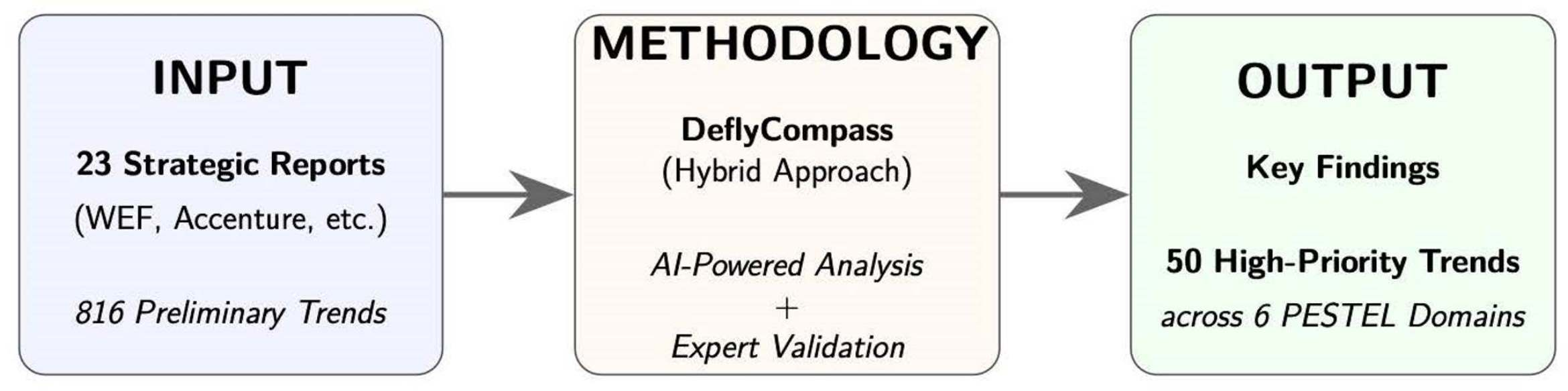
2. Methodology
2.1. The DeflyCompass Framework
2.1.1. Phase 1: Expert Source Selection
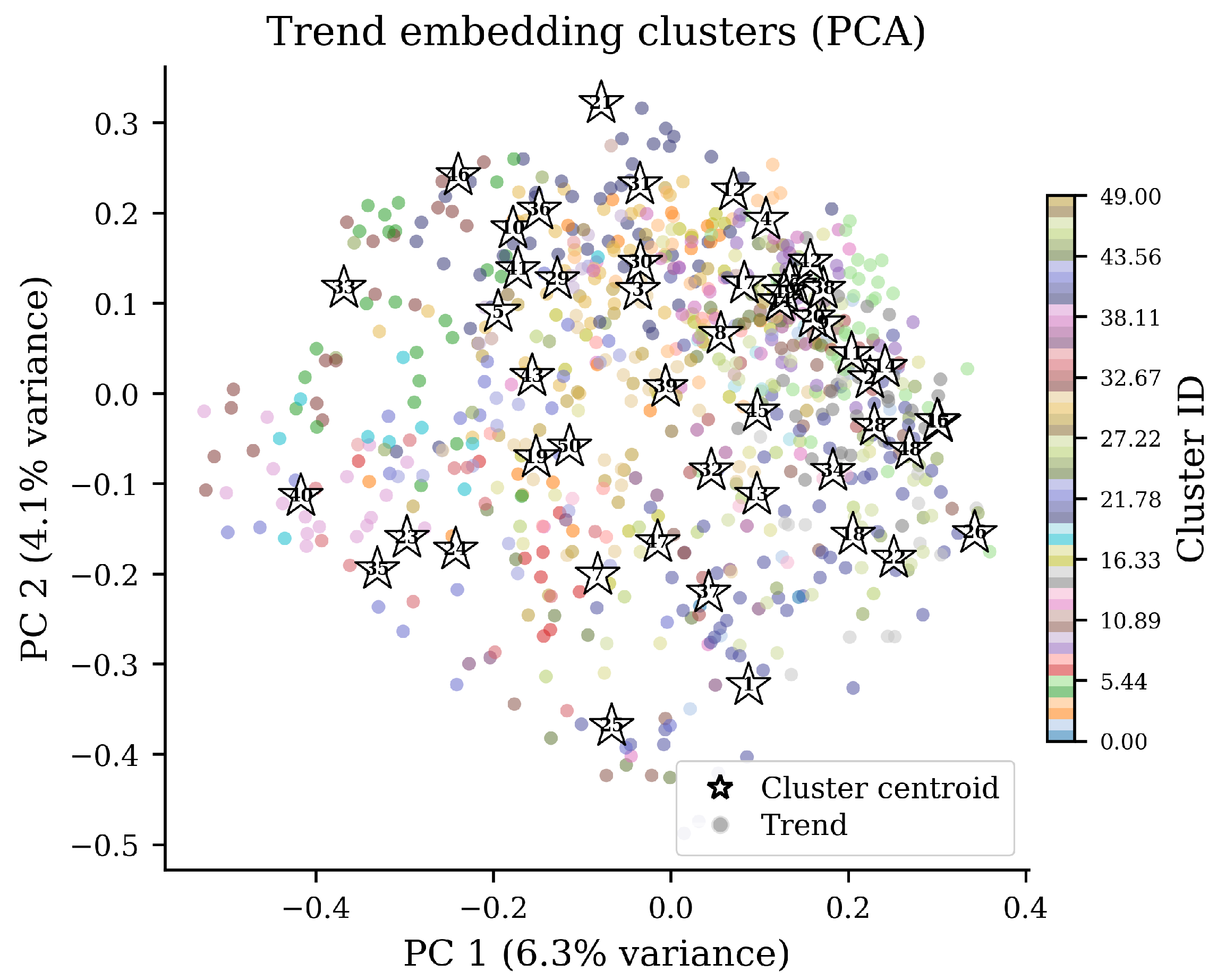
2.1.2. Phase 2: AI-Powered Document Processing
2.1.3. Phase 3: Co-Occurrence Search and Knowledge Graph Construction
- Co-Occurrence Matrix Construction
- Knowledge Graph Construction
- Vertices represent the 50 validated trends
- Edges represent empirically validated relationships
- Weights assign relationship strength to each edge
- Trend Impact Quantification
2.1.4. Phase 4: Expert Synthesis and Strategic Interpretation
2.2. Methodological Innovations
3. Results
3.1. Political Domain Analysis
3.2. Economic Domain Analysis
3.3. Social Domain Analysis
3.4. Technological Domain Analysis
3.5. Environmental Domain Analysis
3.6. Legal and Governance Domain Analysis
4. Discussion
4.1. Hypothesis Evaluation
4.2. Interpretation of Findings
4.3. Methodological Learnings
4.4. Implications for Strategic Foresight Practice
- Technology governance bodies and policymakers.
- Organizational strategists and executives.
- Academic and foresight research communities.
4.5. Limitations of This Study
4.6. Complete List of Validated Trends
4.6.1. Political Trends
- 1.
- AI-driven decision-making
- 2.
- Democratization of space access
- 3.
- Tech-driven change
- 4.
- Geopolitical Shifts
- 5.
- Real-time crisis management
- 6.
- Declining trust in institutions and democracy
- 7.
- Space-based communication global connectivity
4.6.2. Economic Trends
- 8.
- Trade tensions and supply chain risks
- 9.
- ICT supplier capability assessment
- 10.
- Innovative last-mile delivery solutions
- 11.
- Consumers value AI recommendations for shopping
- 12.
- Generation Alpha’s unique characteristics drive future market trends and consumer insights
- 13.
- Enterprise investment in AI
- 14.
- The Growth of Direct-to-Consumer Luxury Brands
4.6.3. Social Trends
- 15.
- Immersive Digital Identities
- 16.
- VR Travel Experiences
- 17.
- Internationalization of Sports Leagues
- 18.
- Social Rewilding Digital Physical Balance
- 19.
- The Rise of Slow
- 20.
- Music streaming layoffs due to competition
- 21.
- Autonomous vehicles impact transportation and urban planning
- 22.
- Aging population impact
- 23.
- Nostalgia Modern Design Trend
- 24.
- AI in urban planning smart cities
4.6.4. Technological Trends
- 25.
- The Democratization of Quantum Computing
- 26.
- Automation of newsroom task
- 27.
- AI Tools for Content Creation
- 28.
- AI enhancing patient experience and outcomes
- 29.
- AI-powered personalized mental health apps
- 30.
- Cloud-native applications
- 31.
- Emotional Intelligence Marketing
- 32.
- Custom AI chips
- 33.
- Zero-trust architectures
- 34.
- Future computing tech trends
- 35.
- Advanced Driver Assistance Systems (ADAS)
- 36.
- CRISPR tree optimization
- 37.
- Blockchain trust and transactions
- 38.
- Personalized Nutrition DNA-Based
- 39.
- Synthetic biology engineering
4.6.5. Environmental Trends
- 40.
- Energy-Efficient AI Computing Architectures
- 41.
- Green hydrogen production
- 42.
- Green and sustainable engineering practices
- 43.
- Energy Sector Transformation Climate Pressures Nuclear Energy
- 44.
- Global healthcare challenges and climate change impacts on health
- 45.
- Advanced Energy Storage
- 46.
- Engineered crops carbon capture
4.6.6. Legal and Governance Trends
- 47.
- Digital twins urban planning infrastructure maintenance
- 48.
- Urban sustainable resilient cities
- 49.
- Enhanced cybersecurity measures
- 50.
- Preserving essential public info in news deserts
5. Conclusions
Author Contributions
Funding
Institutional Review Board Statement
Informed Consent Statement
Data Availability Statement
Acknowledgments
Conflicts of Interest
Appendix A. Partial List of Preliminary Trends Identified via AI Processing
- Consumers prioritize long-term health by adopting preventive solutions
- Vitamin and supplement sales grow steadily as consumers seek targeted health benefits
- 54% of consumers actively choose vitamins and supplements aligned with personal health goals
- New online brands with cellular health attributes gain significant market share
- Health-focused snacks targeting brain, joint, and eye health show strong growth potential
- Only 18% of consumers frequently make impulse purchases as economic uncertainty influences buying habits
- 50% of consumers willing to pay for time-saving solutions despite rising costs
- Premium beauty products outsell mass alternatives as consumers value quality over cost
- Sustainability remains a key factor with 72% of consumers concerned about rising costs
- Sustainable product offerings expand across multiple sectors with over 5 million SKUs available online
- 35% of consumers desire simpler website navigation to enhance online shopping experiences
- 42% of consumers use live-streaming for clearer product information during purchases
- 1 in 4 consumers value AI-generated product recommendations as a key shopping advantage
- 65% of businesses plan to invest in generative AI technology over the next five years
- AI-mediated reality
- Quantum computing
- Enterprises are increasingly prioritizing scalable solutions that blend emerging technologies like AI, 5G, and edge computing.
- Customers expect vendors to articulate how different technologies can be integrated for added value.
- Businesses are dissatisfied with vendors’ use cases not adequately addressing sustainability needs.
- Vendors are falling short in explaining how 5G and IoT can be combined with other emerging technologies like AI and edge computing.
- Enterprises want vendors to provide more specific, tailored use cases rather than generic solutions.
- ICT providers must improve their understanding of customers’ business priorities and articulate technology capabilities better.
- Security, sustainability, and risk mitigation are becoming critical factors in vendor selection decisions.
- Businesses prioritize vendors that can orchestrate partner ecosystems and integrate multiple technologies.
- Enterprises expect vendors to emphasize differentiated expertise in areas like ESG and GenAI.
- Enterprises are increasing spending on emerging technologies like AI, IoT, and 5G-IoT.
- IoT and 5G-IoT investments are becoming critical for business growth.
- AI is being leveraged to drive innovation across industries.
- Sustainability benefits from emerging technologies are a key focus.
- Enterprises face challenges in implementing advanced tech solutions.
- Assessing ICT supplier capabilities is essential for successful tech adoption.
- Engagement with supplier ecosystems is crucial for tech strategy.
- Connectivity solutions are reshaping the digital society.
- Digital transformation acceleration is a top priority.
- Emerging technologies are being integrated into long-term strategies.
- Lunar resources.
- The global wellness economy is projected to reach $9 trillion by 2028, driven by increasing consumer demand for health and well-being solutions.
- Generative AI is becoming a critical tool for managers, enabling more efficient decision-making and problem-solving in the workplace.
- There is growing interest in voice user interfaces (Voice UI) as a natural and intuitive way to interact with technology, reshaping how people engage with devices.
- The integration of GPS and AI into shopping carts is revolutionizing retail experiences by enhancing navigation and personalization for consumers.
- Digital tools are playing a pivotal role in improving women’s health outcomes and promoting gender equality globally.
- A new generation of app-less AI smartphones is emerging, offering seamless and integrated AI capabilities without the need for multiple apps.
- Doctors are expressing concerns about the reliability and ethical implications of wearable devices in healthcare.
- Engineered biology is gaining traction as a transformative field, with applications across industries such as medicine, agriculture, and manufacturing.
- Public trust in bioengineering technologies is being closely monitored to ensure their responsible development and adoption.
- AI-powered wellness solutions are enabling personalized health benefits for employees, reflecting a shift toward holistic workplace well-being.
- The integration of face authentication into car displays is advancing biometric security and user experience in automotive technology.
- Emotional intelligence is becoming a key focus in marketing strategies, as brands seek to connect more deeply with their audiences.
- Pixel art design is increasingly incorporating emotional storytelling elements to create more impactful and engaging experiences.
- Personalized gifts are gaining popularity as consumers seek meaningful connections through tailored and thoughtful gifting options.
- The use of generative AI tools in customer service is expected to rise, with the potential to resolve issues efficiently across various industries.
- Quantum computing breakthroughs are poised to revolutionize fields such as cryptography, drug discovery, and optimization problems.
- Collaborations between financial institutions like American Express and other organizations are enhancing data-driven services for customers.
- NASA’s microgravity strategy is advancing research in space-based applications, contributing to scientific and technological advancements.
- Princeton University’s innovation in satellite design is improving the efficiency of Low Earth Orbit (LEO) constellations, supporting global communication needs.
Appendix B. Sources Used for AI Analysis and Processing
- Accenture. Accenture Life Trends 2025.
- MC&Co. 2025 Trends Design Show.
- Dentsu Creative. Trends 2025.
- ESPAS. Global Trends to 2040.
- Euromonitor International. Top Global Consumer Trends 2025.
- Copenhagen Institute for Futures Studies. Exploring the Futures of Technology.
- EY. Reimagining Industry Futures Study 2024.
- frog. Futurescape 2025 Insight Report.
- TRENDS Research & Advisory. Future Trends Report.
- Zukunftsinstitut. Megatrend Map.
- Dubai Future Foundation. Megatrends Report 2025.
- Dubai Future Foundation. Future Opportunities Report: The Global 50 (2025).
- NTT DATA. Technology Foresight 2025.
- Capgemini Research Institute. Top Technology Trends 2025.
- Future Today Institute. 2024 Technology Trends Report.
- World Economic Forum. The Global Risks Report 2025 (20th Edition).
- WGSN. Top Trends for 2025 and Beyond.
- Ecosistema Inova. What’s Next: Direction 2035.
- VML Intelligence. The Future 100: Trends and Change to Watch in 2025.
- Kinetic. Global Colors and Design Trends 2025.
- Suramericana. Megatendencias Informe.
- The State of Social Rewilding the Web.
- Infographic. Top Technology Trends 2025.
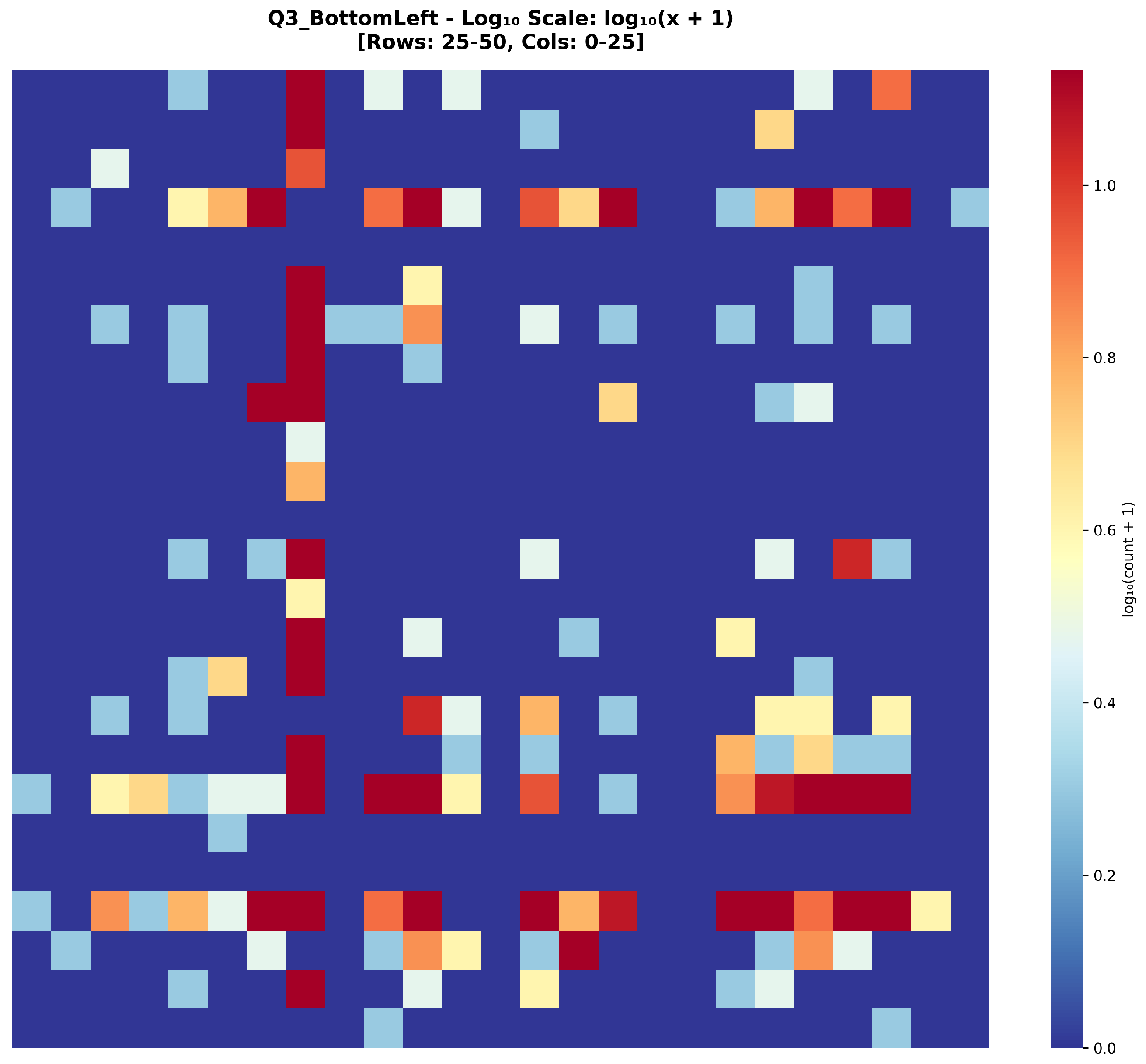
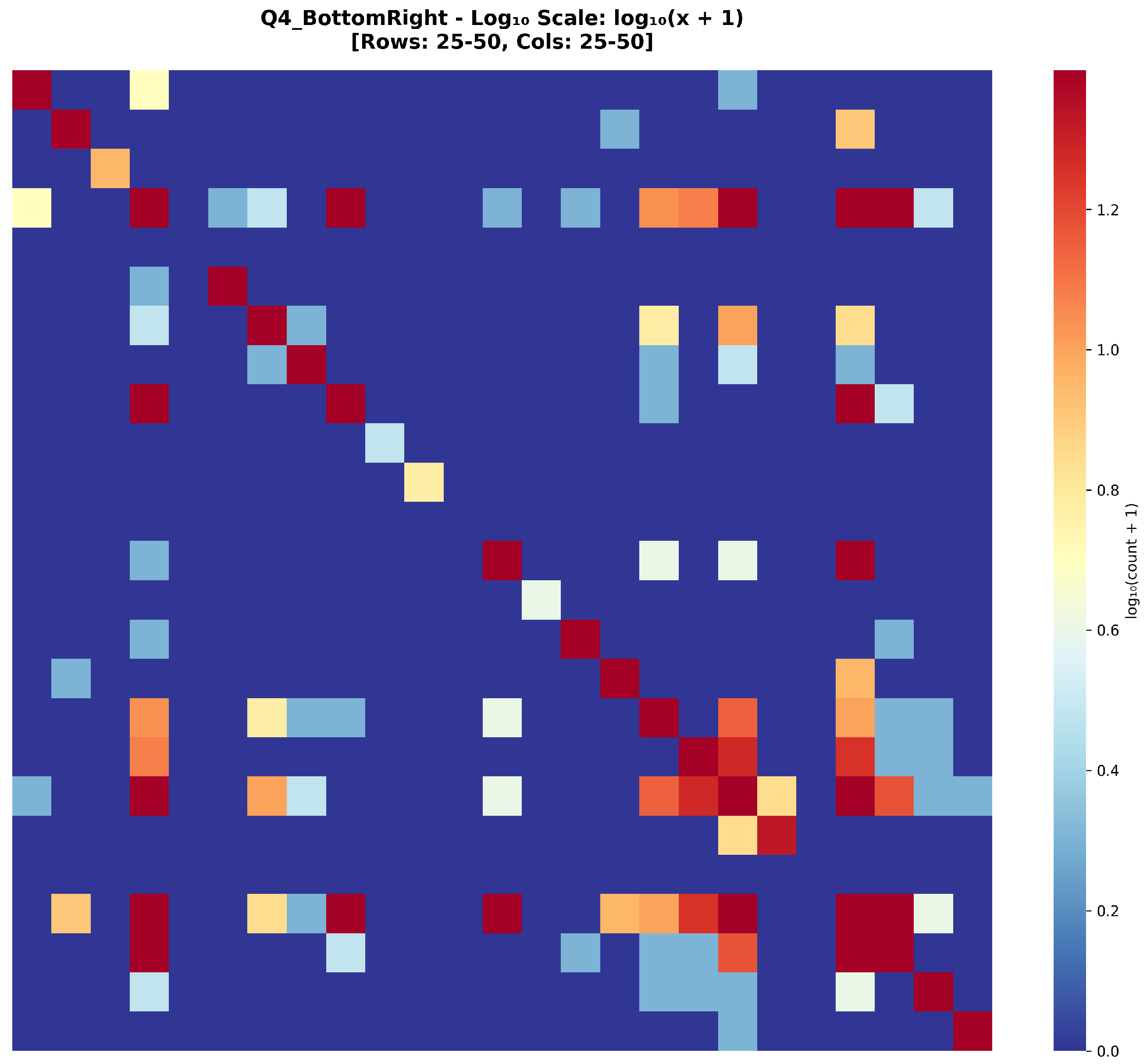
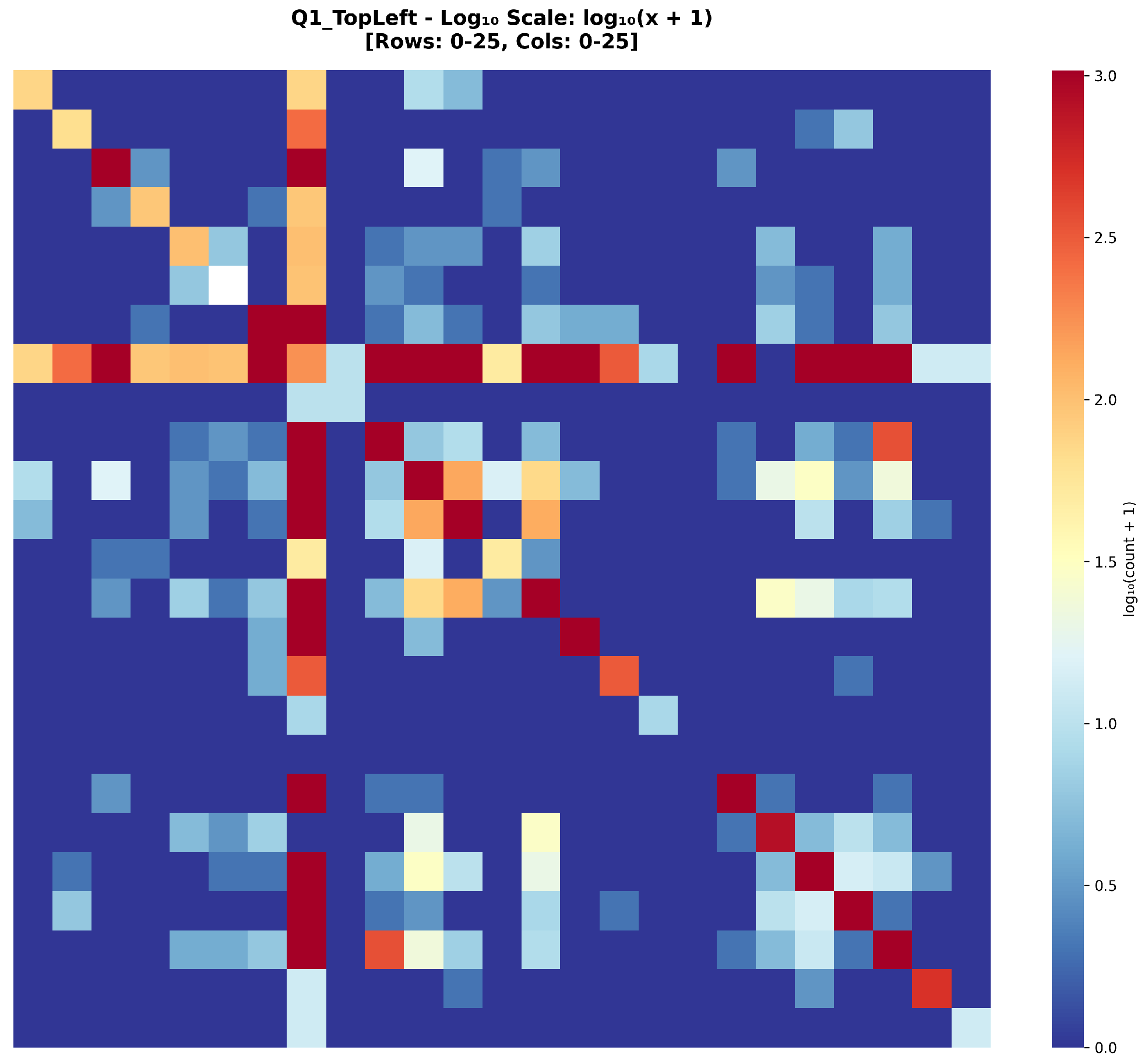
Appendix C. Co-Occurrence Matrix Visualization
Appendix C.1. Interpretation Guide
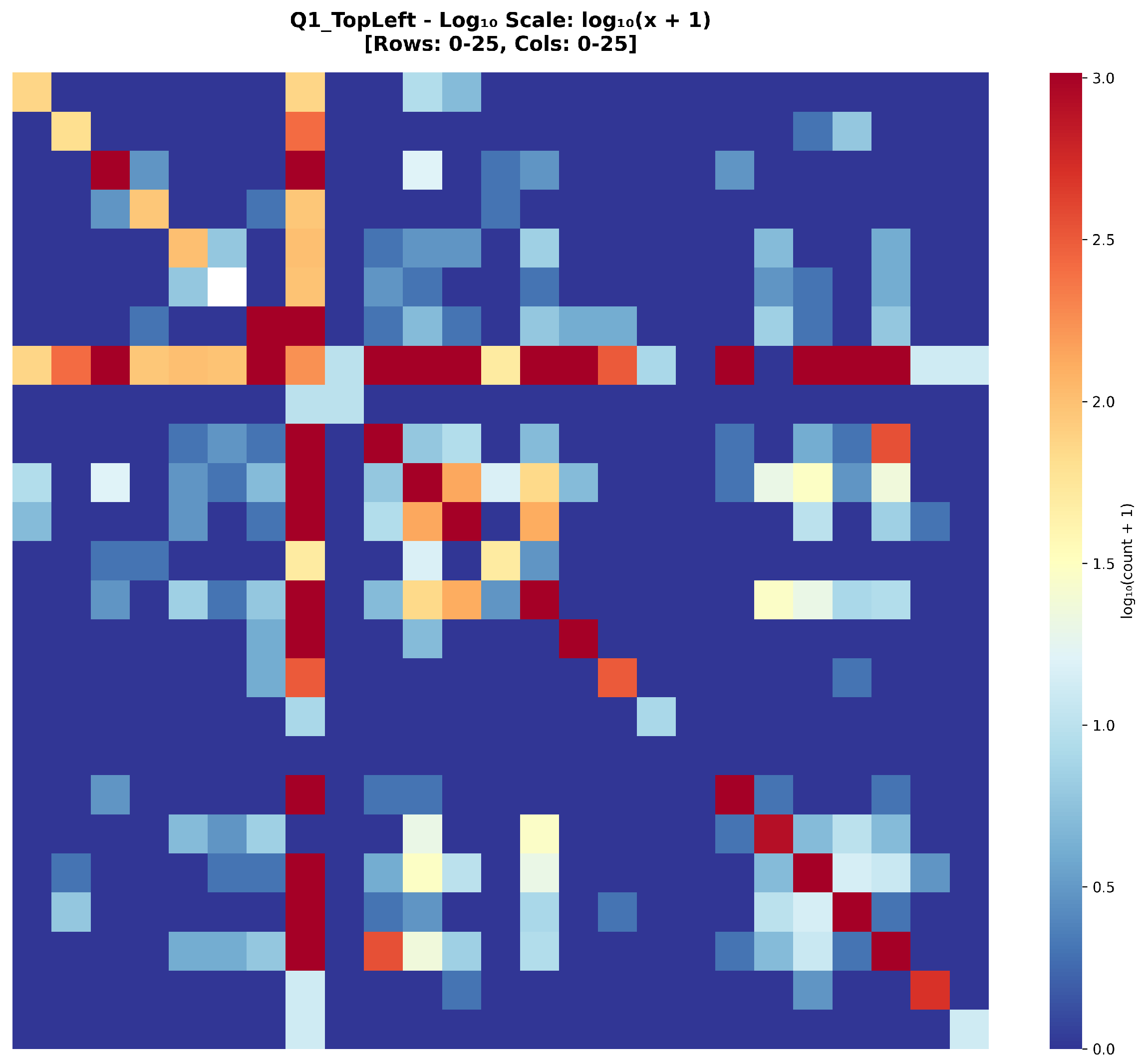
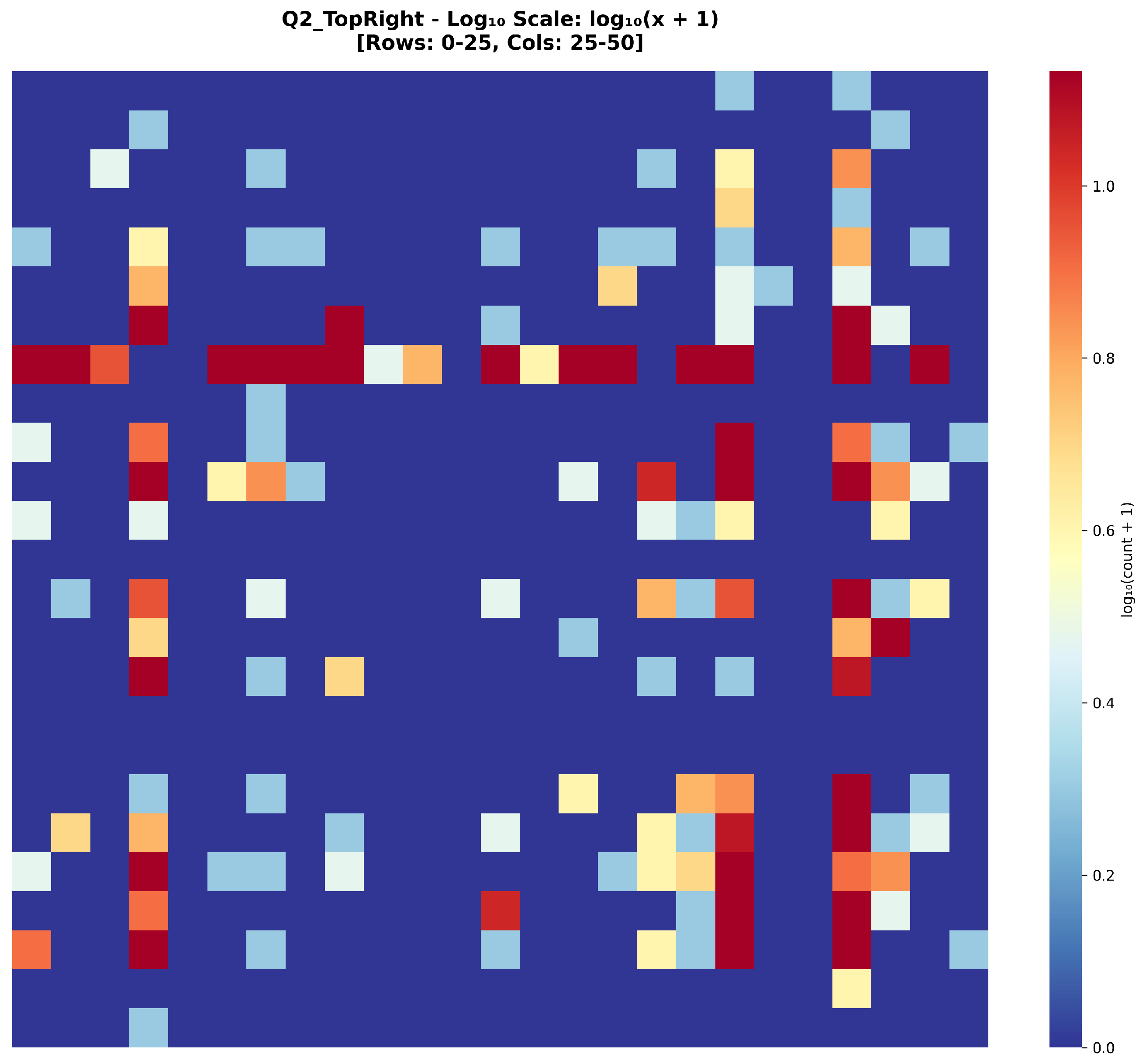
- Color scale: Darker red indicates stronger co-occurrence (higher publication counts), blue indicates weak or no co-occurrence
- Symmetry: The matrix is symmetric across the diagonal since (co-occurrence is bidirectional)
- Diagonal: Shows self-occurrence counts (total publications for each individual trend)
- Transformation: compresses the dynamic range while preserving zero values
Appendix C.2. Trend Index Reference
- 1.
- Energy-Efficient AI Computing ArchitecturesQuery: “(energy-efficient OR low-power) AND “AI computing architectures””
- 2.
- Digital Twins for Urban Planning and Infrastructure MaintenanceQuery: “digital twins” AND (“urban planning” OR “infrastructure maintenance”)
- 3.
- Urban Sustainable and Resilient CitiesQuery: “sustainable cities” OR “resilient urban”
- 4.
- Immersive Digital IdentitiesQuery: “immersive digital identities” AND (“virtual personas” OR “digital avatars”)
- 5.
- Trade Tensions and Supply Chain RisksQuery: (“trade tensions” OR “global trade conflicts”) AND (“supply chain risks”)
- 6.
- VR Travel ExperiencesQuery: (VR OR “virtual reality”) AND “travel experiences”
- 7.
- ICT Supplier Capability AssessmentQuery: “supplier capability assessment” AND “ICT”
- 8.
- Green Hydrogen ProductionQuery: “green hydrogen production” AND (“sustainable hydrogen”)
- 9.
- Innovative Last-Mile Delivery SolutionsQuery: “last-mile delivery” AND (innovative OR logistics)
- 10.
- Internationalization of Sports LeaguesQuery: “internationalization of sports leagues” AND (“global sports organizations”)
- 11.
- The Democratization of Quantum ComputingQuery: “quantum computing” AND (democratization OR accessibility)
- 12.
- Social Rewilding and Digital-Physical BalanceQuery: “Social Rewilding” AND “Digital Physical Balance”
- 13.
- AI Recommendations for ShoppingQuery: “AI recommendations” AND (shopping OR e-commerce)
- 14.
- Automation of Newsroom TasksQuery: “automation” AND (“newsroom” OR “newsroom tasks”)
- 15.
- AI Tools for Content CreationQuery: AI AND (“content creation” OR applications)
- 16.
- AI Enhancing Patient Experience and OutcomesQuery: AI AND (“patient experience” OR “patient outcomes”)
- 17.
- Green and Sustainable Engineering PracticesQuery: (green engineering OR sustainable engineering) AND “sustainable practices”
- 18.
- AI-Powered Personalized Mental Health AppsQuery: (AI OR “artificial intelligence”) AND “mental health apps”
- 19.
- Generation Alpha’s Market Trends and Consumer InsightsQuery: “Generation Alpha” AND (“market trends” OR “consumer insights”)
- 20.
- Cloud-Native ApplicationsQuery: “cloud-native applications” OR containerization
- 21.
- The Rise of Slow LivingQuery: “slow living” OR “slow movement”
- 22.
- AI-Driven Decision-MakingQuery: “AI-driven decision-making” OR “artificial intelligence decision-making”
- 23.
- Enhanced Cybersecurity MeasuresQuery: “cybersecurity measures” AND (enhanced OR improved)
- 24.
- Emotional Intelligence in MarketingQuery: (“Emotional Intelligence” OR EQ) AND Marketing
- 25.
- Enterprise Investment in AIQuery: “enterprise investment” AND (AI OR “artificial intelligence”)
- 26.
- Custom AI ChipsQuery: “custom AI chips” OR “AI accelerators”
- 27.
- Zero-Trust ArchitecturesQuery: (zero-trust OR “zero trust” OR “zero trust architecture”)
- 28.
- Future Computing Technology TrendsQuery: (“emerging technologies” OR “next-generation computing”) AND (“AI advancements”)
- 29.
- Music Streaming Industry Competition and LayoffsQuery: “music streaming” AND (layoffs OR competition)
- 30.
- Democratization of Space AccessQuery: “space access” AND (democratization OR “open access”)
- 31.
- The Growth of Direct-to-Consumer Luxury BrandsQuery: “direct-to-consumer” AND “luxury brands”
- 32.
- Tech-Driven ChangeQuery: “tech-driven change”
- 33.
- Geopolitical ShiftsQuery: “geopolitical shifts” OR “power dynamics”
- 34.
- Advanced Driver Assistance Systems (ADAS)Query: (“Advanced Driver Assistance Systems” OR ADAS) AND “vehicle safety technology”
- 35.
- Energy Sector Transformation and Climate PressuresQuery: “Energy Sector Transformation” AND (“Climate Pressures” OR “Nuclear Energy”)
- 36.
- Preserving Essential Public Information in News DesertsQuery: “information preservation” AND (“news deserts” OR “public data access”)
- 37.
- Autonomous Vehicles Impact on Transportation and Urban PlanningQuery: “autonomous vehicles” AND (transportation OR “urban planning”)
- 38.
- CRISPR Tree OptimizationQuery: CRISPR AND (“tree” OR “plant”)
- 39.
- Blockchain for Trust and TransactionsQuery: “blockchain” AND (trust OR transactions)
- 40.
- Aging Population ImpactQuery: “aging population” AND (effect OR consequence)
- 41.
- Global Healthcare Challenges and Climate Change Impacts on HealthQuery: “global healthcare challenges” AND “climate change impacts on health”
- 42.
- Personalized DNA-Based NutritionQuery: “personalized nutrition” AND (“DNA-based” OR genetic)
- 43.
- Nostalgia in Modern DesignQuery: (“nostalgic AND modern”) OR (“retro modern”)
- 44.
- Real-Time Crisis ManagementQuery: “real-time” AND “crisis management”
- 45.
- Advanced Energy StorageQuery: “energy storage” OR “renewable energy storage”
- 46.
- Declining Trust in Institutions and DemocracyQuery: “trust in institutions” AND (declining trust OR democracy)
- 47.
- Synthetic Biology EngineeringQuery: “synthetic biology” AND (engineering OR bioengineering)
- 48.
- AI in Urban Planning and Smart CitiesQuery: “artificial intelligence” AND (urban planning OR smart cities)
- 49.
- Engineered Crops for Carbon CaptureQuery: “engineered crops” AND “carbon capture”
- 50.
- Space-Based Communication and Global ConnectivityQuery: “space-based communication” AND (“global connectivity”)
Appendix C.3. Matrix Quadrant Visualizations


References
- World Economic Forum. The Global Risks Report 2026; Technical Report; World Economic Forum: Geneva, Switzerland, 2026. [Google Scholar]
- World Economic Forum. Global Risks Report 2026: Geopolitical and economic risks rise in new age of competition. Press Release, 14 January 2026.
- Brende, B.; Zahidi, S. Top 10 Risks in 2026: Geoeconomic Confrontation Tops the List. World Economic Forum. 2026. Available online: https://www.weforum.org/stories/2026/01/global-risks-2026-top-10-two-and-ten-year-horizon/ (accessed on 25 January 2026).
- Accenture. Technology Vision 2025: New Age of AI to Bring Unprecedented Autonomy to Business; Technical Report; Accenture: New York, NY, USA; Las Vegas, NV, USA, 2025. [Google Scholar]
- Accenture. Life Trends 2025: Predicts New Dynamics of Trust Will Reshape Relationships Between People and Businesses. 2025. Available online: https://newsroom.accenture.com/news/2024/accenture-life-trends-2025-predicts-new-dynamics-of-trust-will-reshape-relationships-between-people-and-businesses (accessed on 10 October 2025).
- Accenture. Pulse of Change: Business and Technology Trends; Technical Report; Accenture: Singapore, 2025. [Google Scholar]
- United Nations Department of Economic and Social Affairs. The Sustainable Development Goals Report 2025; Technical Report; United Nations: New York, NY, USA, 2025. [Google Scholar]
- Sachs, J.D.; Lafortune, G.; Fuller, G.; Iablonovski, G. Financing Sustainable Development to 2030 and Mid-Century: Sustainable Development Report 2025; Dublin University Press: Paris, France; Dublin, Republic of Ireland, 2025. [Google Scholar] [CrossRef]
- Guterres, A. The Sustainable Development Goals have improved millions of lives over the past decade, but progress remains insufficient, UN report finds. United Nations Press Release, 14 July 2025.
- Bornmann, L.; Mutz, R. Growth rates of modern science: A bibliometric analysis based on the number of publications and cited references. J. Assoc. Inf. Sci. Technol. 2015, 66, 2215–2222. [Google Scholar] [CrossRef]
- Shahrzadi, L.; Mansouri, A.; Alavi, M.; Shabani, A. Causes, consequences, and strategies to deal with information overload: A scoping review. Int. J. Inf. Manag. Data Insights 2024, 4, 100261. [Google Scholar] [CrossRef]
- Eppler, M.J.; Mengis, J. Information overload in the information age: A review of the literature from business administration, business psychology, and related disciplines with a bibliometric approach and framework development. Bus. Res. 2018, 12, 479–522. [Google Scholar] [CrossRef]
- Blair, A. Too Much to Know: Managing Scholarly Information Before the Modern Age; Yale University Press: New Haven, CT, USA, 2010. [Google Scholar]
- Wolff, M.; Knill, C. Dealing with information overload: A comprehensive review. Front. Psychol. 2020, 11, 1560. [Google Scholar] [CrossRef]
- OECD; World Economic Forum. AI in Strategic Foresight: Reshaping Anticipatory Governance; Technical Report; OECD Publishing: Paris, France, 2025. [Google Scholar]
- Pärnänen, D. The Dual Horizon: How AI is Reshaping Strategic Foresight for the Better and the Riskier. FIBRES Foresight. 2025. Available online: https://www.fibresonline.com/blog/dual-horizon-ai-reshaping-strategic-foresight (accessed on 10 October 2025).
- Bauhaus Luftfahrt. Trend Monitor: AI-Powered Strategic Foresight; Technical Report; Bauhaus Luftfahrt: Taufkirchen, Germany, 2024. [Google Scholar]
- Huang, L.; Yu, W.; Ma, W.; Zhong, W.; Feng, Z.; Wang, H.; Chen, Q.; Peng, W.; Feng, X.; Qin, B.; et al. A survey on hallucination in large language models: Principles, taxonomy, challenges, and open questions. ACM Trans. Inf. Syst. 2024, 43, 45. [Google Scholar] [CrossRef]
- Kalai, A.T.; Nachum, O.; Vempala, S.S.; Zhang, E. Why language models hallucinate. arXiv 2025, arXiv:2509.04664. [Google Scholar]
- Xu, Z.; Jain, S.; Kankanhalli, M. Hallucination is inevitable: An innate limitation of large language models. arXiv 2025, arXiv:2401.11817. [Google Scholar]
- Alansari, A.; Luqman, H. Large language models hallucination: A comprehensive survey. arXiv 2025, arXiv:2510.06265. [Google Scholar] [CrossRef]
- OpenAI Research. Why Language Models Hallucinate; OpenAI: San Francisco, CA, USA, 2025. [Google Scholar]
- Manetti, A. El Pensamiento de Diseño Aplicado al anàLisis de Tendencias Para Navegar en Futuros Inciertos. Una Propuesta Metodológica Para el Estudio, Análisis de Tendencias y Planificación estratéGica de Innovación Basada en el Design Thinking. Doctoral Thesis, Universitat Oberta de Catalunya, Barcelona, Spain, 2023. [Google Scholar]
- Manetti, A.; Ferrer-Sapena, A.; Sánchez-Pérez, E.A.; Lara-Navarra, P. Design Trend Forecasting by Combining Conceptual Analysis and Semantic Projections: New Tools for Open Innovation. J. Open Innov. Technol. Mark. Complex. 2021, 7, 92. [Google Scholar] [CrossRef]
- Ransbotham, S.; Vaccaro, K.; Malone, T.W. Roles of artificial intelligence in collaboration with humans: Automation, augmentation, and the future of work. Manag. Sci. 2024, 70, 3712–3728. [Google Scholar] [CrossRef]
- Vaccaro, K.; Zhou, D.; Malone, T.W.; Bernstein, M.S. When Humans and AI Work Best Together—And When Each Is Better Alone. MIT Sloan Management Review. 2025. Available online: https://mitsloan.mit.edu/ideas-made-to-matter/when-humans-and-ai-work-best-together-and-when-each-better-alone (accessed on 10 October 2025).
- Vössing, M.; Kühl, N.; Lind, M.; Satzger, G. Complementarity in human-AI collaboration: Concept, sources, and evidence. Inf. Syst. J. 2025, 35, 245–268. [Google Scholar] [CrossRef]
- Raftopoulos, M.; Hamari, J. Human-AI collaboration in organisations: A literature review on enabling value creation. In Proceedings of the ECIS 2023 Research Papers, Kristiansand, Norway, 11–16 June 2023; p. 381. [Google Scholar]
- Sophie, B.; Alina, T.; Greta, O.; Bjorn, G.; Corinna, P.; Annette, K. Defining human-AI teaming the human-centered way: A scoping review and network analysis. Front. Artif. Intell. 2023, 6, 1250725. [Google Scholar] [CrossRef]
- Zhou, J.; Chen, F.; Holzinger, A. Human and Machine Learning: Visible, Explainable, Trustworthy and Transparent; Springer: Berlin/Heidelberg, Germany, 2021. [Google Scholar]
- Licklider, J.C.R. Man-computer symbiosis. IRE Trans. Hum. Factors Electron. 1960, HFE-1, 4–11. [Google Scholar] [CrossRef]
- Tian, H.; Zhang, Y.; Wang, Y.; Li, X. Human-generative AI collaboration enhances task performance but undermines human’s intrinsic motivation. Sci. Rep. 2024, 15, 98385. [Google Scholar] [CrossRef]
- Andersen, P.D. The PESTEL framework and its variants for analysing the strategic environment: Evolution, limitations and adoption in energy policy research. SSRN Electron. J. 2025. [Google Scholar] [CrossRef]
- Yuksel, I. Developing a multi-criteria decision making model for PESTEL analysis. Int. J. Bus. Manag. 2012, 7, 52–66. [Google Scholar] [CrossRef]
- Sousa, M.J.; Castañeda-Ayarza, J.A. Sustainable development and PESTEL analysis: An integrated framework. Int. J. Sustain. High. Educ. 2022, 23, 1089–1108. [Google Scholar]
- López Bordao, M.; Ferrer Sapena, A.; Pérez, C.A.R.; Sánchez Pérez, E.A. Defly Compass Trend Analysis Methodology: Quantifying Trend Detection to Improve Foresight in Strategic Decision Making. Information 2025, 16, 605. [Google Scholar] [CrossRef]
- Guo, D.; Yang, D.; Zhang, H.; Song, J.; Wang, P.; Zhu, Q.; Xu, R.; Zhang, R.; Ma, S.; Bi, X.; et al. DeepSeek-R1 incentivizes reasoning in LLMs through reinforcement learning. Nature 2025, 645, 633–638. [Google Scholar] [CrossRef]
- Brynjolfsson, E.; McAfee, A. The Second Machine Age: Work, Progress, and Prosperity in a Time of Brilliant Technologies; W.W. Norton & Company: New York, NY, USA, 2014. [Google Scholar]
- Cockburn, I.M.; Henderson, R.; Stern, S. The Impact of Artificial Intelligence on Innovation. In The Economics of Artificial Intelligence: An Agenda; Agrawal, A., Gans, J., Goldfarb, A., Eds.; University of Chicago Press: Chicago, IL, USA, 2019; pp. 115–146. [Google Scholar]
- Farrell, H.; Newman, A.L. Weaponized Interdependence: How Global Economic Networks Shape State Coercion. Int. Secur. 2019, 44, 42–79. [Google Scholar] [CrossRef]
- Witt, M.A. De-Globalization: Theories, Predictions, and Opportunities for International Business Research. J. Int. Bus. Stud. 2019, 50, 1053–1077. [Google Scholar] [CrossRef]
- Perez, C. Technological Revolutions and Financial Capital: The Dynamics of Bubbles and Golden Ages; Edward Elgar: Cheltenham, UK, 2002. [Google Scholar]
- North, D.C. Institutions, Institutional Change and Economic Performance; Cambridge University Press: Cambridge, UK, 1990. [Google Scholar]
- Acemoglu, D.; Restrepo, P. Tasks, Automation, and the Rise in US Wage Inequality. Econometrica 2022, 90, 1973–2016. [Google Scholar] [CrossRef]
- Manyika, J.; Lund, S.; Chui, M.; Bughin, J.; Woetzel, J.; Batra, P.; Ko, R.; Sanghvi, S. Jobs Lost, Jobs Gained: Workforce Transitions in a Time of Automation; Technical Report; McKinsey Global Institute: San Francisco, CA, USA, 2017. [Google Scholar]
- IPCC. Climate Change 2023: Synthesis Report. Contribution of Working Groups I, II and III to the Sixth Assessment Report of the Intergovernmental Panel on Climate Change; Technical Report; Intergovernmental Panel on Climate Change: Geneva, Switzerland, 2023. [Google Scholar] [CrossRef]
- Rockström, J.; Steffen, W.; Noone, K.; Persson, R.; Chapin, F.S.; Lambin, E.F.; Lenton, T.M.; Scheffer, M.; Folke, C.; Schellnhuber, H.J.; et al. A Safe Operating Space for Humanity. Nature 2009, 461, 472–475. [Google Scholar] [CrossRef]
- Edelman. Edelman Trust Barometer 2025; Technical Report; Edelman: Chicago, IL, USA, 2025. [Google Scholar]
- Levi, M.; Stoker, L. Political Trust and Trustworthiness. Annu. Rev. Political Sci. 2000, 3, 475–507. [Google Scholar] [CrossRef]
- United Nations, Department of Economic and Social Affairs, Population Division. World Population Ageing 2023: Challenges and Opportunities of Population Ageing in the Least Developed Countries; Technical Report; United Nations: New York, NY, USA, 2023. [Google Scholar]
- McCrindle, M.; Fell, A.; Buckerfield, S. Generation Alpha: Understanding Our Children and Helping Them Thrive; Hachette Australia: Sydney, Australia, 2021. [Google Scholar]
- Challoumis, C. Economocracy: Global Economic Governance. Economies 2025, 13, 230. [Google Scholar] [CrossRef]


Disclaimer/Publisher’s Note: The statements, opinions and data contained in all publications are solely those of the individual author(s) and contributor(s) and not of MDPI and/or the editor(s). MDPI and/or the editor(s) disclaim responsibility for any injury to people or property resulting from any ideas, methods, instructions or products referred to in the content. |
© 2026 by the authors. Licensee MDPI, Basel, Switzerland. This article is an open access article distributed under the terms and conditions of the Creative Commons Attribution (CC BY) license.
Share and Cite
López Bordao, M.; Ferrer Sapena, A.; Reyes Pérez, C.A.; Sánchez Pérez, E.A. Understanding the Global Trends of 2025 Through the Defly Compass Methodology. Big Data Cogn. Comput. 2026, 10, 124. https://doi.org/10.3390/bdcc10040124
López Bordao M, Ferrer Sapena A, Reyes Pérez CA, Sánchez Pérez EA. Understanding the Global Trends of 2025 Through the Defly Compass Methodology. Big Data and Cognitive Computing. 2026; 10(4):124. https://doi.org/10.3390/bdcc10040124
Chicago/Turabian StyleLópez Bordao, Mabel, Antonia Ferrer Sapena, Carlos A. Reyes Pérez, and Enrique A. Sánchez Pérez. 2026. "Understanding the Global Trends of 2025 Through the Defly Compass Methodology" Big Data and Cognitive Computing 10, no. 4: 124. https://doi.org/10.3390/bdcc10040124
APA StyleLópez Bordao, M., Ferrer Sapena, A., Reyes Pérez, C. A., & Sánchez Pérez, E. A. (2026). Understanding the Global Trends of 2025 Through the Defly Compass Methodology. Big Data and Cognitive Computing, 10(4), 124. https://doi.org/10.3390/bdcc10040124