


Abstract
Job recommender systems support applicant–vacancy matching, but their reliability is uncertain when users or jobs are new or information is sparse. This scoping review maps cold-start and skill-aware job recommendation, emphasizing early-career populations. Following PRISMA-ScR, we searched Scopus, Web of Science, IEEE Xplore, and EBSCO for studies published from 2010 to 2026. We screened 1891 unique records, assessed 155 full texts, and included 76 primary studies. Among 58 studies that specified a cold-start scenario, 20 conducted a strict isolated test, 14 provided partial or near-condition evidence, and 24 did not isolate the claimed condition. Out of 48 studies framed around early-career users, 32 evaluated an identifiable early-career cohort and 16 provided intended use, simulated, prototype, or broader population evidence. Among 32 skill-explicit studies, structured forms appeared in 24, lexical and semantic forms in 14 each, and proxies in 12. None of the five field comparisons with reported real-world outcomes directly evaluated an early-career cohort. The evidence therefore supports task- and dataset-specific performance claims more strongly than claims of employment benefit for first-time or early-career job seekers. We propose a six-stage evaluation framework connecting population definition, cold-start construction, information assessment, controlled offline comparison, human assessment, and prospective outcomes.
1. Introduction
Online vacancy platforms create an information selection problem for applicants and recruiters. Recommenders attempt to rank relevant opportunities or candidates using profiles, resumes, job descriptions, interactions, skills, or graph relationships. Early-career seekers are a particularly important population because their employment histories and platform interactions may be sparse. Yet a method that works for experienced job seekers or for generic item recommendation need not transfer to recent graduates, and an offline relevance improvement need not produce more interviews or placements.
From an information systems perspective, job recommendation is a data availability problem as much as a model selection problem. Applicant, vacancy, skill, interaction, and relational data are generated by different actors at different times and with different levels of reliability. A technically strong model can therefore fail at deployment if it assumes information that is unavailable for a new applicant or a newly posted vacancy. This scoping review treats information availability as the organizing constraint and examines how representation choices, learning architectures, and evaluation designs interact under data-sparse conditions. Table 1 positions this contribution against the closest reviews.
Prior studies range from collaborative filtering and semantic matching to graph models, language models, and two-sided ranking. For example, a graduate-focused system combines resume–vacancy text and alumni relations [1], while another combines collaborative filtering with topic-based text representations in a graduate–enterprise setting [2]. Large-scale graph-based and platform studies show additional operational possibilities [3,4]. These examples also illustrate a recurring interpretive challenge: the populations, candidate pools, baselines, and reported outcomes differ.
Table 1.
Positioning against the closest surveys.
Prior reviews classify e-recruitment methods, information sources, and assessment types [5]; hybrid, temporal, reciprocal, and fairness issues [6]; domain-specific technical challenges [7]; internship–profile matching [8]; broad JRS methods and metrics [9]; explainable person–job recommendation [10]; job, skill, and job-seeker representations [11]; and contemporary machine learning and hybrid approaches [12]. We therefore do not claim to present the first JRS review or to introduce cold-start, skill modeling, fairness, or explainability as previously unrecognized concerns. Our contribution is a linked study-level analysis across four dimensions: (1) the information available for representing applicants and vacancies, (2) the cold-start condition actually specified, (3) the matching or ranking approach, and (4) the proximity of reported evidence to applicant and employer outcomes. This linkage supports three concrete outputs: a claim evidence ladder, a cross-study diagnosis of where early-career evidence remains weak, and a six-stage evaluation framework for future systems. Throughout, we distinguish direct early-career evidence from methods that are only potentially transferable.
We ask five questions: (RQ1) How are applicants, vacancies, skills, preferences, and interactions represented in job recommender systems? (RQ2) Which recommendation, matching, and ranking methods are used, and how do they depend on available information? (RQ3) How are new user, new job, sparse profile, and sparse interaction conditions defined and evaluated? (RQ4) How strong is the evaluation evidence, particularly for direct early-career populations and downstream employment outcomes? (RQ5) How are explainability, fairness, privacy, and reproducibility addressed? All numerical findings refer to the 76 included studies.
This scoping review makes four contributions. First, it provides a linked taxonomy connecting input data and representations to cold-start conditions, recommendation architectures, and evidence strength. Second, it distinguishes new user, new job, sparse profile, and sparse interaction settings instead of treating cold-start as a single condition. Third, it assesses whether reported evaluations support claims about ranking performance, user judgment, operational behavior, or employment outcomes. Fourth, it develops a six-stage evaluation framework for data-sparse and early-career job recommendation, including assessments of information availability, controlled baselines, explanation, fairness, and prospective applicant- and employer-centered outcomes.
2. Materials and Methods
2.1. Search-Informed Corpus Construction
This scoping review was reported in accordance with the PRISMA extension for Scoping Reviews (PRISMA-ScR) [13], and the study selection flow was adapted from the PRISMA 2020 flow diagram [14]. The implemented review protocol was retrospectively registered on the Open Science Framework (OSF) on 29 September 2026 (https://osf.io/x82dg). Because registration followed data extraction, it documents the implemented methods and is not presented as prospective registration. The eligibility criteria, classification rules, and synthesis plan recorded in the protocol were not amended after data extraction began. Searches covered publications dated 2010–2026 and used broad job recommender and early-career-focused concepts in Scopus, Web of Science, IEEE Xplore, and EBSCO. The searches were last updated on 29 August 2026. Appendix A reports the Boolean concepts and database-specific adaptations.
Eligible primary studies had to concern the recommendation or matching of actual jobs, vacancies, or employment candidates and provide either explicit early-career evidence or evaluated evidence transferable to a no history or cold-start setting. We excluded non-primary research, publications outside of the 2010–2026 period, and studies without a substantive job recommendation, vacancy recommendation, or candidate–job matching component. Studies limited to occupation exploration without actual vacancy or candidate–vacancy matching were also excluded. Primary journal and full conference publications were eligible. CEUR-indexed publications were eligible only when they were full peer-reviewed conference papers satisfying the same primary study criteria; venue format alone did not establish eligibility. Reviews were used only for contextual positioning and were not included as primary studies. Searches used English-language terms; no separate language exclusion was applied, but eligibility required sufficient full-text information for reliable extraction.
2.2. Selection of Technically Analyzable Studies
The database exports contained 3840 records. After removing 1949 duplicate or repeated export records, K.I.Y. and A.A.I. independently screened the titles and abstracts of 1891 unique records and classified each as Include, Exclude, or Uncertain. Before consensus, their decisions agreed for 1601 records (84.7%); Cohen’s κ was 0.71. Disagreements were resolved through discussion and reassessment, resulting in the exclusion of 1736 records and the advancement of 155 reports to full-text assessment.
The merge was performed in Microsoft Excel using a normalized master table. DOI strings were normalized before exact matching. Titles were normalized for case, punctuation, whitespace, and diacritics and were consolidated only when publication year also matched. For each duplicate group, the occurrence with the richest metadata was retained, while database, search stream, and occurrence provenance were aggregated. Near-title or adjacent-year pairs were flagged for review and were not removed automatically. The audit contains 1187 exact-match groups comprising 3136 source rows: 2776 rows matched on DOI and title, 307 on normalized title with matching year, and 53 on DOI despite title variation. Retaining one record per group removed 1949 repeated or duplicate occurrences and yielded 1891 unique records.
All 155 reports advanced from title and abstract screening were retrieved. The same two authors independently assessed the full texts and resolved disagreements through discussion and reassessment of the articles. Seventy-nine reports were excluded after full-text assessment: forty-seven did not provide early-career relevance or transferable cold-start evidence; twenty-seven did not evaluate actual vacancy recommendation or candidate–job matching; two lacked a substantive recommender or matching method or evaluation; one was non-primary research; one had unusable or insufficient full-text information; and one fell outside of the 2010–2026 publication window. Seventy-six primary studies met the criteria and were included in the synthesis (Figure 1).
Figure 1.
PRISMA-ScR flow diagram of record identification, screening, eligibility assessment, and inclusion. Adapted from the PRISMA 2020 flow diagram [14].
2.3. Data Extraction and Quality Appraisal
The same two authors independently extracted study aims, population, early-career relevance, recommendation direction, cold-start condition, data sources and sample size, representations, algorithms, baselines, evaluation setting and protocol, metrics, principal results, and limitations. Disagreements in substantive fields were resolved through discussion and adjudication against the full articles.
Methodological quality was assessed using 12 criteria covering the clarity of study aims, description of the population and context, data sources and sample, preprocessing and representation, methodological reproducibility, baseline selection, evaluation protocol, metric selection, transparency of results, acknowledgment of limitations, reporting of fairness, ethics and privacy, and consistency between the evidence and conclusions. Each criterion was rated Yes (2), Partial (1), or No (0), while criteria judged not applicable were excluded from the denominator. Normalized scores were classified as high (≥75%), moderate (50% to <75%), or low (<50%). These ratings informed the interpretation and sensitivity analyses but did not determine study eligibility.
The two authors also completed the 12-item methodological appraisal independently. Across 912 item-level ratings, they agreed on 725 decisions (79.5%); Cohen’s κ was 0.654, indicating substantial agreement. Supplementary Table S1 reports the item-level ratings, evidence locators, applicable item denominators, aggregation rules, operational coding definitions, final evidence tier, and strict, partial, or non-isolated cold-start coding for every included study. These fields support direct regeneration of Table 2, Table 3, Table 4 and Table 5 and the reported 20/14/24 cold-start and 32/16 early-career counts.
Table 2.
Non-exclusive technical characteristics in the 76-study review corpus.
Table 3.
Cold-start scenario by recommendation approach (non-exclusive counts).
Table 4.
Reporting and reproducibility indicators.
Table 5.
Evaluated population status and evaluation evidence.
2.4. Synthesis
We performed a narrative synthesis because study tasks and outcomes were heterogeneous. The reported counts and percentages describe the 76 included studies and should not be interpreted as estimates for the entire job recommender literature. The evaluation taxonomy distinguished offline direct recommendation tests, human assessments, component, prototype, or simulation evidence, operational outcomes with unclear comparison designs, field tests with unrecoverable effects, and field comparisons with reported outcomes. Descriptive counts were repeated after excluding the 10 low-quality studies. No meta-analysis or pooled effect estimate was undertaken. Two review-derived analytical abstractions were used to organize interpretation: an information parity formulation for comparing evidence available to the model and an exposure formulation for distinguishing recommendation quality from opportunity allocation. These are conceptual reporting devices, not validated predictive models.
2.5. Study Classification Rules and Validity Checks
The unit of synthesis was the primary study rather than each reported experiment. Non-exclusive labels were permitted for representations, cold-start scenarios, and method families because a single system may use several signals and components. Evidence tiers, in contrast, were mutually exclusive and reflected the strongest interpretable evaluation reported for the job recommendation component. This distinction prevents the addition of overlapping method counts and avoids counting several experiments from one paper as independent studies.
Population relevance was coded at two levels: the population for which a system was framed and the cohort actually evaluated. Direct evaluated early-career evidence required an identifiable sample or dataset of students, interns, current or recent graduates, first-time job seekers, or an equivalent group. Studies framed for early-career use but evaluated only through simulated profiles, prototypes, broader professional samples, or cohorts whose early-career status was not established were coded as intended population evidence only. Transferable evidence concerned broader populations evaluated under information constraints relevant to early-career cold start. These categories do not imply that every member of a graduate sample lacked employment history or that a transferable method will work unchanged for graduates.
We first coded the cold-start condition described by each study: a previously unseen applicant, a newly introduced job, limited applicant attributes, or limited interactions. We then coded experimental isolation separately. A strict test required an entity-, time-, or information-level split that withheld the claimed signal and reported scenario-specific results; Partial denoted a near-condition or incompletely isolated comparison; No denoted motivation or labeling without an isolated test. Target user behavioral history and behavioral evidence borrowed from other users were recorded separately. Skill representations were coded non-exclusively as lexical, semantic, structured, or proxy-based and provenance as observed, inferred, required, or missing/unclear.
Three measures were used to strengthen interpretive validity. First, substantive classifications were checked against relevant passages, tables, figures, or sections of the included studies; when primary reports did not support a definitive value, the field was coded as unclear or not reported rather than inferred. Second, disagreements concerning eligibility and high-impact variables were resolved by reassessing the full articles. Third, the principal descriptive findings were re-evaluated after excluding the ten low-quality studies; nine of these ten studies concerned direct early-career populations. These measures reduced classification error and overinterpretation, although publication bias, ambiguity in primary study reporting, and author judgment remain possible sources of uncertainty.
Because the review corpus was assembled through predefined eligibility and accessibility criteria rather than probability sampling, the quantitative synthesis was descriptive. Counts, percentages, and cross-tabulations were used to characterize patterns within the included studies, while conclusions were based on recurring methodological trends and consistently documented research gaps. No inferential population-level claims were made.
3. Results: Technical Taxonomy and Evidence Landscape
3.1. Review Corpus Profile
The database exports contained 3840 rows, of which 1949 were duplicate or repeated export rows. Screening of 1891 unique titles and abstracts excluded 1736 records and advanced 155 reports to full-text assessment. All 155 reports were retrieved. Seventy-nine were excluded after full-text assessment, and seventy-six studies were included (Figure 1). Title and abstract decisions agreed for 1601 records before consensus (84.7%; Cohen’s κ = 0.71). Forty-eight studies were framed around an early-career population. Source verification showed that 32 evaluated an identifiable early-career cohort, whereas 16 evaluated intended use prototypes, simulations, broader populations, or cohorts whose early-career status was not established. Within the 32 directly evaluated studies, methodological quality was high for 14, moderate for 15, and low for 3. Across the full corpus, quality was high for 32 studies, moderate for 34, and low for 10.
The included studies are temporally concentrated. Only 3 were published in 2010–2014 compared with 30 in 2015–2019 and 43 in 2020–2026. Peaks occurred in 2017 and 2023, with 12 studies in each year. These counts indicate growth within the included study set but should not be interpreted as a complete publication trend because database coverage and indexing may vary by year. The annual distribution is shown in Figure 2.
Figure 2.
Annual publication distribution of the 76 included studies. The 2026 count reflects the search cutoff of 29 August 2026 and is not a complete calendar-year total.
Methods included content and skill matching, collaborative filtering, hybrid models, graph-based methods, sequential recommendation, and language-model-based approaches. Study characteristics were synthesized thematically. Because task definitions differ, individual performance values were not ranked across papers.
3.2. Linked Taxonomy of Information, Models, Scenarios, and Evidence
We organize each system along four linked layers rather than assigning it a single algorithm label (Figure 3). The information layer identifies the applicant, the vacancy, the required skills, the interactions, and the relational evidence that is available to the model. The cold-start layer distinguishes new users, new jobs, sparse profiles, and sparse interactions. The approach layer identifies the matching or ranking mechanism, allowing multiple labels for hybrid systems. The evidence layer records whether evaluation is offline, human-assessed, prototype-based, operationally unclear, or based on a field comparison. This ordering makes the analytical logic explicit: the signals available or withheld define the cold-start condition, constrain feasible recommendation approaches, and determine what an evaluation must isolate. For example, collaborative and sequential methods generally require interaction evidence, whereas semantic profile–vacancy matching can operate before such evidence exists.
Figure 3.
Linked taxonomy used in this scoping review. Counts in the information, reported cold-start, and recommendation approach layers are non-exclusive; evaluation evidence tiers are mutually exclusive. The lower band shows the evidence distribution among the 32 studies that evaluated an identifiable early-career cohort. No field comparison with a reported outcome directly identified such a cohort.
Table 2 summarizes the non-exclusive technical characteristics identified across the included studies. Because individual systems may combine several representations or method families, a hybrid neural graph model may appear in multiple rows, and the column totals should not be added.
The representation counts reveal a recurring design tension. Profile and vacancy attributes are common, but only 32 studies explicitly encode skills or competencies under the working normalization. Within this skill-explicit subset, 24 use structured representations, 14 use lexical representations, 14 use semantic representations, and 12 use proxy representations; categories are non-exclusive. Consequently, a system described as skill-aware may range from surface token overlap to normalized competency entities, weighted skill matrices, embeddings, ontology-linked concepts, or education and occupation proxies. These alternatives are not technically interchangeable.
Methodologically, content/semantic/ontology matching is the broadest family (45 studies), while 32 studies use an explicitly hybrid or ensemble architecture. Deep neural or language model approaches appear in 28 studies and graph-based approaches in 18. These counts show convergence rather than simple replacement: newer neural and graph components are frequently combined with content, collaborative, heuristic, or multi-stage retrieval components. The appropriate comparison is therefore not “traditional versus deep learning” in isolation but the incremental contribution of each component under the same candidate set, split, negative sampling rule, and cold-start condition.
3.3. Applicant, Vacancy, and Skill Representations
The information layer is not merely an input catalogue; it determines which users can receive a recommendation and what kinds of similarity the system can express. Sixty-five studies use resume, CV, or profile attributes and 58 use vacancy text or structured job attributes. Fifty-one use some form of behavioral or interaction history. These three sources support different claims. Profile–vacancy models can score a previously unseen applicant if a usable profile is available, whereas interaction models can personalize from revealed behavior but are intrinsically weakest for a first visit [15,16,17]. Behavioral data also reflect what a platform previously exposed, so an interaction is evidence of both preference and opportunity [3,4,18]. Treating clicks or applications as unqualified preference can therefore preserve earlier ranking and exposure patterns.
Applicant representations range from demographic and educational fields to free-text resumes, inferred interests, historical applications, assessments, and social or institutional connections [1,19,20]. Structured fields simplify filtering and explanation but may be incomplete or institution-specific. Free text preserves richer experience but requires parsing, normalization, and decisions about document sections, language, and missing content [17,21,22]. Historical behavior can reveal latent preferences that are absent from a resume, yet it may be unavailable for new users and may encode short-term search behavior rather than durable career goals [15,23]. Relational information, such as alumni employment, candidate–employer interactions, or user–skill–job graphs, can propagate evidence beyond the focal applicant, but its usefulness depends on whether neighboring users and relations are substantively comparable [1,4,24].
Vacancy representations are similarly heterogeneous. Some studies treat a job as a bag of title, description, location, salary, company, and category fields; others learn representations from the full posting or from interactions with prior applicants [1,16,17]. The distinction matters for new job recommendations. A content representation can score a newly posted vacancy immediately, but an interaction-derived representation cannot do so without side information or transfers from related jobs [4,25]. Job descriptions may also omit important employment conditions, use organization-specific terminology, or combine requirements with aspirational language. A model can achieve high lexical or semantic similarity while matching candidates to requirements that are ambiguous, inflated, or unrelated to actual selection decisions.
Skill-aware recommendation is especially sensitive to representation choices. Thirty-two studies were normalized as explicitly using skills or competencies, with four non-exclusive operational forms. First, lexical approaches (14 studies) identify skills through keywords, dictionaries, TF–IDF weights, or token overlap [1,25,26]. Second, semantic approaches (14 studies) represent skill phrases or surrounding text with distributed vectors, topic models, or language model embeddings [15,27,28]. Third, structured approaches (24 studies) link mentions to taxonomies, ontologies, knowledge bases, or manually defined competency groups [18,29,30]. Fourth, proxy approaches (12 studies) substitute education, major, occupation, topic, or job category for a direct skill representation [2,31,32]. These approaches solve different problems and should not be compared as if “skill matching” were a single intervention.
Lexical methods are auditable and inexpensive, making them useful baselines, but exact terms can fail when applicants and employers use synonyms or different levels of specificity [25,26]. Embeddings improve recall across vocabulary variants, although similarity in a vector space does not guarantee equivalence in proficiency, context, or level [15,27]. Structured taxonomies can normalize terms and support explanations but require mapping accuracy, version control, and coverage of emerging occupations [29,30]. Proxy variables can be useful when resumes are sparse, yet degree program or occupation is not interchangeable with demonstrated competence. For early-career users, reliance on proxies can be particularly consequential because a graduate may possess project, volunteer, or course-based skills that are not reflected in an employment title.
A further distinction is needed among observed, inferred, required, and missing skills. Among the 32 skill-explicit studies, observed skills were retained in 31, inferred skills in 22, required skills in 27, and missing or unclear skills in 5; these provenance codes are non-exclusive. Observed skills are explicitly supplied in a profile or extracted from documented experience. Inferred skills are predicted from education, text, prior behavior, or neighboring entities. Required skills are extracted from the vacancy or employer criteria. Missing skills are requirements not supported by the current applicant representation. Collapsing these categories into one similarity score hides whether a recommendation is based on supplied evidence, model inference, or an unsupported requirement.
As summarized in Figure 4, the included studies also motivate a separation between fit and development potential. A strict fit model favors vacancies for which the current profile already resembles the posting. An early-career recommender may instead identify attainable opportunities and explain manageable skill gaps. This changes the objective from static similarity to constrained transition: the system must estimate which missing requirements are essential, which are learnable, and what evidence supports that assessment. None of the aggregate performance counts can establish this capability by itself. Future evaluations should therefore compare present fit rankings with development-aware rankings and measure whether users understand and act on the identified gaps.
Figure 4.
Skill provenance framework separating observed, inferred, required, and missing skills and distinguishing present fit recommendation from development potential recommendation.
3.4. Recommendation and Matching Architectures
The method taxonomy is deliberately non-exclusive because practical job recommenders are usually pipelines rather than single algorithms. A typical pipeline retrieves a candidate set, represents applicants and vacancies, estimates one or more compatibility signals, applies business or eligibility constraints, and produces a ranked list. The same paper may therefore contain content retrieval, collaborative similarity, a neural encoder, graph propagation, and a rule-based re-ranker. Assigning only the most modern component as the method label would obscure the contribution of the remaining pipeline. Figure 5 summarizes the seven non-exclusive method families and their principal information dependencies [2,4,15].
Figure 5.
Recommendation and matching architecture families represented in the reviewed corpus. Counts are non-exclusive because a single system may combine several families at different pipeline stages.
Content, semantic, and ontology approaches. Forty-five studies use content, semantic, or ontology-based matching. At the simplest level, candidate and job vectors are constructed from words or structured attributes and compared using cosine similarity, weighted overlap, or rules [16,17,25]. More elaborate systems use topic models, word embeddings, transformer-derived representations, or ontology distances [2,27,28]. The wider content-oriented group ranges from profile to job similarity and semantic retrieval to competency and ontology models [33,34,35,36,37]. Other studies in this group combine structured attributes or semantic representations with domain-specific matching rules [38,39,40,41]. Their primary advantage is immediate applicability to users and jobs without interaction histories. Their principal limitation is that textual similarity can conflate related vocabulary with suitability and may ignore recruiter behavior, applicant preferences, competition, or eligibility constraints. Rigorous evaluation should therefore include lexical baselines, controlled semantic ablations, and error analysis for synonymy, overspecialization, missing requirements, and spurious similarity.
Collaborative and neighborhood approaches. Twenty-three studies use collaborative or neighborhood evidence. These methods infer relevance from the behavior of similar users, similar jobs, or candidate–job interaction matrices [2,15,18]. The extracted implementations include user- and item-based filtering, matrix factorization variants, and neighborhood signals embedded in broader recommenders [42,43,44,45,46,47]. Related implementations use interaction matrices or similarity neighborhoods for student and general job-seeker settings [48,49,50,51,52]. They can capture latent preferences that are difficult to articulate in a profile, but they inherit the sparsity and exposure structure of the platform. In employment settings, a missing interaction is not necessarily negative feedback: a candidate may never have seen the vacancy, may have lacked time to apply, or may have self-selected out because of perceived barriers. Consequently, negative sampling and exposure logging are central design choices rather than minor implementation details. For early-career users, collaborative evidence should be reported separately for genuine first-use cases and for cases where the system borrows history from related users.
Hybrid and ensemble approaches. Thirty-two studies combine multiple signal or model families [1,2,15]. Additional implementations combine profile, content, collaborative, learned, or rule-based signals at different pipeline stages [53,54,55,56,57]. Hybridization is often technically appropriate because content features address cold starts while behavioral evidence improves personalization after interactions accumulate. However, the label “hybrid” provides little explanatory value unless the fusion mechanism is specified. Systems may concatenate features before learning, blend scores after independent models, cascade retrieval and ranking, switch models according to data availability, or impose heuristic rules after prediction. The evaluation should isolate each component under a shared data split and candidate pool. Without such ablation, an improvement cannot be attributed to the neural, collaborative, graph, semantic, or heuristic component that motivates the contribution.
Deep neural and language model approaches. Twenty-eight studies use deep neural or language model components. Neural encoders can learn nonlinear relations between resumes and vacancies, while sequence models can represent evolving search behavior [15,27,28]. Language models can improve semantic retrieval and support richer explanations or skill extraction [24,58]. The corpus also contains convolutional, recurrent, representation learning, and other neural matching designs [59,60,61,62,63]. Their flexibility increases the need for controls. Results should be compared against competitive sparse lexical retrieval and simpler learned baselines, not only against weak or outdated models. Studies should state pretraining data, fine-tuning objectives, input truncation, negative sampling, parameter selection, and inference costs. In job recommendation, performance gains may otherwise reflect greater model capacity or external pretraining rather than improved handling of early-career cold starts.
Graph-based approaches. Eighteen studies use graph structures involving candidates, jobs, companies, skills, education, applications, social links, or knowledge entities [3,4,24]. Across the remaining graph-oriented studies, the extracted structures include heterogeneous, knowledge, skill, and interaction graphs used for propagation or representation learning [64,65,66,67,68]. Other graph designs connect applicant, vacancy, education, or competency entities for recommendation and matching [69,70,71,72]. Graph propagation can connect a sparse applicant to informative neighboring nodes and can model multi-hop relationships that text-only similarity misses. Yet graph methods can also amplify degree advantages: popular jobs, well-connected institutions, and applicants with richer histories may receive stronger representation. Evaluations should report graph construction, edge direction and time, relation semantics, leakage controls, and performance by node degree. A randomly divided graph may allow information from future or test interactions to reach training nodes, making temporal and inductive evaluation especially important.
Classical, rule-based, and sequential approaches. Twenty studies use classical supervised, clustering, or rule-based techniques and eight use sequential, temporal, or online learning methods. The classical group includes classification, clustering, decision, optimization, and rule-driven systems applied to structured applicant or vacancy information [73,74,75,76,77]. Further implementations use conventional learning or decision procedures as the principal matching component [78,79,80,81]. Classical models remain valuable because they can be interpretable, computationally efficient, and strong on structured features. Sequential and temporal implementations model evolving choices or time-dependent recommendation signals [82,83]. These methods require timestamps and careful separation of training from future behavior. Online learning or bandit formulations additionally change what users see, so evaluation must account for exploration, position bias, and feedback loops. A lower offline score from an exploratory system may coexist with better long-term coverage or learning; conversely, a high click-through rate may reward attractive presentation rather than employment value.
Across families, the decisive comparison is not model name but information parity. Competing methods should receive the same training period, applicant and vacancy features, candidate set, and tuning budget. When a proposed model uses graph, text, and interaction information but the baseline uses only text, the experiment measures both algorithm and information advantage. The linked taxonomy therefore treats representation, cold-start condition, approach, and evidence as separate dimensions. This prevents architectural novelty from being mistaken for evidence of population benefit.
An availability-aware synthesis can express this principle formally. Let sk(u,j) denote the compatibility signal from information family k, mk be a binary indicator of whether that family is legitimately available for applicant u and vacancy j at prediction time, and αk ≥ 0 denote a prespecified or learned nonnegative weight. The normalized score in (1) prevents an unavailable signal from being silently imputed as observed evidence; if its denominator is zero, no compatibility score is returned, and the system must use an explicitly declared fallback rather than assigning a numerical match.
Equation (1) is a review-derived analytical abstraction rather than a newly validated recommender. Its purpose is to make information parity explicit: cold-start evaluation changes the availability vector m, while architectural comparison should hold the vector fixed.
3.5. Cold-Start Scenarios and Direct Evidence
Fifty-eight studies specified at least one cold-start scenario, while eighteen reported none or did not specify one. The non-exclusive reported scenario counts were 37 new user studies, 23 interaction sparsity studies, 16 new job or item studies, and 12 sparse profile studies. Source verification distinguished the scenario label from the evaluation design: 20 out of the 58 studies conducted a strict isolated cold-start test, 14 provided partial or near-condition evidence, and 24 did not isolate the claimed condition experimentally. The categories imply different information constraints and require different splits. A new user may still provide a detailed resume; a sparse profile user lacks sufficient attributes; a new vacancy may have rich text but no interactions; and interaction sparsity can affect established users or jobs. Table 3 cross-tabulates these non-exclusive scenarios by recommendation approach.
The cross-tabulation clarifies why a cold-start method is not a single technical category. Across the 58 scenario-labeled studies, 26 retained behavioral evidence from the target user in at least part of the evaluated setting while 41 used histories or aggregate interactions from other users; the categories overlap. Thus, a target applicant may be history-free while the model still relies on platform-level behavior, graph structure, or pretrained collaborative evidence. Scenario reports should therefore state which entity is new, which target user signals remain available, whether other user interactions enter training, and whether results are separately reported for the claimed condition.
The verified design audit confirms that scenario labels alone do not establish isolation: only 20 out of the 58 studies implemented a strict scenario-specific test, while 14 were partial and 24 did not isolate the condition. For example, Chen et al. [25] reports separate cold-start item results, Ozcan and Oguducu [84] compare cold-start and non-cold-start candidate sets, and Saito and Sugiyama [23] group users by interaction history. Other papers use aggregate results or cold start mainly as motivation; the three cited studies should not be described as lacking scenario-specific tests.
Yao et al. [1] provide direct graduate relevance and report improvements in graduate-rated job lists using semantic matching and alumni ties. The extracted result, however, measures applicants’ ratings of recommended jobs rather than observed employer acceptance or employment. Hao [2] reports bidirectional matching and outcomes for newly registered graduates, but the comparison assignment and distinct new vacancy effect remain unclear. These studies strengthen early-career coverage without resolving the need for transparent cold-start protocols. Figure 6 integrates these distinctions into a review-derived framework for cold-start- and skill-aware job recommendation.
Figure 6.
Review-derived framework for cold-start- and skill-aware job recommendation. The framework distinguishes available evidence, skill provenance, cold-start conditions, recommendation components, decision support outputs, and evaluation evidence; it is a synthesis framework rather than a validated deployed architecture.
3.6. Data Sources, Experimental Protocols, and Metrics
The evaluation data determine what a reported improvement means. Recruitment platform and interaction log data appear in several studies [4,15,18], institutional or university data support many graduate-focused studies [1,2,19], and resume–vacancy text collections occur across both direct and transferable settings [16,17,22]. Public or challenge datasets support comparison and reduce access barriers, whereas proprietary platforms can provide realistic scale and behavior. Neither is automatically superior. Public datasets may be old, decontextualized, or constructed for a challenge objective; proprietary datasets may be current but difficult to examine independently and may omit how users entered the sample.
Institutional datasets are valuable for studying graduates because student records, programs, alumni outcomes, and campus vacancies can be linked. They also create risks of narrow external validity. A model trained within one institution may learn program names, local employer relationships, or regional hiring patterns that do not transfer. University records may describe educational attainment better than informal skills or constraints, and historical placements can encode institutional prestige and employer selectivity. Studies should therefore report institution type, recruitment period, regional context, cohort definition, and whether employer or applicant eligibility rules pre-filtered the candidate set.
Platform logs contain behavior at a useful scale but require an explicit observation model. An impression, click, saved job, application, interview invitation, and placement represent progressively different stages. If impressions are unavailable, unclicked vacancies cannot safely be labeled irrelevant because they may not have been displayed. Applications reflect both interest and perceived qualification, while recruiter responses depend on employer decisions and competition. For reciprocal recommendation, a positive candidate-side signal is therefore insufficient: the system should state whether it predicts applicant interest, employer interest, mutual compatibility, or a sequential probability of advancing through the hiring funnel.
Sample size reporting was present for 68 studies, but the unit of analysis varied among applicants, vacancies, interactions, resumes, user–job pairs, survey respondents, and generated negatives. A large number of pairs can arise from a small number of users and does not provide the same independent evidence as a large user sample. Where multiple interactions belong to one person or job, uncertainty estimates should respect clustering. Papers should report counts of unique applicants, jobs, organizations, interactions, positive events, and evaluation queries separately rather than presenting only the largest derived number.
The corpus uses several evaluation regimes. Offline recommendation dominates, while user studies, prototypes, mixed evaluations, and a small number of field comparisons provide different forms of evidence. Offline evaluation is appropriate for controlled algorithm comparison, but it observes only logged outcomes and cannot establish that users understood recommendations or obtained better opportunities. User studies can assess usefulness, comprehension, or satisfaction but are sensitive to recruitment, scenario realism, and short exposure. Field comparisons can measure behavior and employment-proximate outcomes yet require credible allocation, concurrent controls, stable instrumentation, and reporting of attrition and observation windows.
Validation protocols were stated in 58 studies and were absent or not recoverable in 18. Even when a split was reported, the protocol did not necessarily recreate the claimed cold-start condition: only 20 scenario-labeled studies used a strict isolated test compared with 14 partial tests and 24 non-isolated cases. Randomly dividing interactions can place the same applicant and job in both training and test sets. A user-level split is needed for a strict new user test, a job-level split for a strict new job test, and time-based splitting for realistic arrival. Sparse profile evaluation should define which attributes are removed and preserve a comparable warm profile cohort. Interaction sparsity evaluation should specify the maximum history length and should not retain post-cutoff behavior or aggregate target user features calculated from the complete log.
Negative sampling is another major source of non-comparability. Ranking against a small random set of obviously irrelevant vacancies is easier than ranking against all active, eligible, and geographically feasible jobs. Similarly, treating non-applications as negatives mixes unseen, seen but rejected, and inaccessible positions. At minimum, studies should report the candidate pool construction, number and source of negatives, eligibility filters, temporal availability, and whether the same pool was supplied to every baseline. Full catalogue evaluation, when feasible, should accompany sampled results.
Metric choice should follow the decision task. Ranking or retrieval measures—precision, recall, NDCG, MRR, MAP, and hit rate—appear most frequently and are suitable for ordered recommendation lists. Classification measures such as accuracy, F1, and AUC occur in 30 studies, but their meaning depends on class balance and threshold selection. Error measures such as RMSE or MAE are appropriate for rating prediction but can obscure top-of-list quality. Sixteen studies report some form of user judgment, satisfaction, or usability measure, while six include operational or employment-related measures. Diversity or coverage measures are rare despite their relevance to opportunity access.
No single metric is adequate for employment recommendation. Candidate-centered evaluation should consider relevance, opportunity coverage, workload, comprehension, perceived control, and downstream progression. Employer-centered evaluation should consider candidate quality, shortlist burden, response, and time to fill. Platform evaluation should measure latency, catalogue coverage, novelty, and feedback effects. Social evaluation should examine exposure and outcome disparities. These levels can conflict: maximizing application probability may concentrate exposure on already popular jobs, while maximizing recruiter response may suppress exploratory opportunities for candidates with sparse profiles.
For this reason, we did not rank raw performance values across papers. A 0.90 NDCG on one candidate pool cannot be interpreted as stronger than a 0.80 NDCG on another, and neither establishes more interviews or placements. We also judged meta-analysis inappropriate because outcomes, denominators, interventions, and comparison designs were not sufficiently commensurable. Instead, we evaluate whether each study’s design supports its own claim and whether evidence can be transferred to early-career cold-start settings.
3.7. Evaluation Strength and Comparability
The evaluation taxonomy contains 49 offline direct recommendation studies, 7 human assessment studies without a deployed comparison, 11 component/prototype/simulation studies, 3 operational outcome studies with unclear design, 5 field comparisons with outcomes, and 1 further described field test whose treatment effect could not be recovered. The five outcome-reporting field comparisons are Nigam et al. [15], Shalaby et al. [4], Kwieciński et al. [18], Liu et al. [3], and Bied et al. [85]. Their reported designs and outcomes differ; inclusion in the same evidence tier does not imply equal causal validity. Yao et al. [1] was classified as human assessment without field comparison and Hao [2] as operational outcomes with unclear comparison design.
Offline metrics can establish performance on a defined benchmark but may not measure applicant understanding, recruiter acceptance, interview invitations, placement, or distributional harm. Conversely, activity and placement figures from a platform need an interpretable comparison design before they support causal effectiveness. The current evidence does not justify a pooled employment benefit estimate.
Reporting completeness also varies. Sixty studies name at least one baseline, 58 report some form of validation or split protocol, and 68 report a dataset or sample size. These are presence counts rather than judgments that the information is sufficient for replication. Ranking-oriented metrics such as precision, recall, NDCG, MRR, MAP, or hit rate appear in 46 studies, classification-oriented metrics such as accuracy, F1, or AUC appear in 30, 16 report user judgement, satisfaction, or usability measures, and only 6 include operational measures such as clicks, applications, employment, placement, or hiring-related outcomes. Metric families overlap. The imbalance illustrates why offline gains should not be translated directly into employment benefit. Table 4 summarizes the principal reporting and reproducibility indicators.
The reporting deficits are methodologically important. A random interaction split may leak later behavior into training for a nominally new user test, whereas a temporal split better reflects deployment but may change the job pool and candidate availability. Likewise, a named baseline is not informative unless candidate generation, negative sampling, tuning budget, and available features are held constant. Future comparative studies should report these elements as a minimum reproducibility block. Figure 7 presents the claim–evidence ladder used to interpret these differences.
Figure 7.
Claim–evidence ladder used to interpret the reviewed studies. Each stage supports a different class of conclusion; movement to a stronger claim requires the corresponding design evidence.
3.8. Cross-Study Technical Comparison
The population by evidence comparison reveals a consequential gap. Out of 48 studies framed around early-career users, 32 evaluated an identifiable early-career cohort: 22 reported offline direct recommendation tests, 6 used human assessment without a field comparison, 1 presented component, prototype, or simulation evidence, and 3 reported operational outcomes with unclear comparison designs. The other 16 studies comprised 7 offline evaluations, 1 human assessment, and 8 component, prototype, or simulation studies without an identifiable evaluated early-career cohort. None of the five field comparisons with reported outcomes directly evaluated an early-career cohort; all five were classified as Transferable [3,4,15,18,85]. This classification does not establish that their methods fail for first-time seekers. It means that their field results should not be presented as direct evidence of benefit for that population.
Technical comparability is limited even within a tier. The five field studies differ in intervention and endpoint: reported measures include click-through, tracked applications, application conversions, positive hearing back ratings, and user-rated estimated hiring chance rather than a common observed placement outcome. Allocation, exposure, observation window, and comparison detail are uneven in the extracted protocols. Offline studies likewise mix random, temporal, and unstated splits, and 18 out of 76 study matrix protocol fields are NR. New user, new vacancy, sparse profile, and sparse interaction settings are not interchangeable. Consequently, the synthesis compares design features and evidence strength, not raw accuracy, recall, or conversion values across unrelated tasks.
3.9. Responsible AI, Reciprocity, and Reproducibility
Two studies substantively assessed fairness or bias [3,85], while six provided partial treatment. No study conducted a complete explanation-specific assessment, although 28 addressed explanations partially. Privacy and ethics reporting was likewise incomplete: 17 studies provided partial discussion, and none met all appraisal criteria. Twenty-four studies named a reproducibility resource, whereas fifty-two did not. Because partial reporting can still contain relevant observations, these counts reflect the specified appraisal thresholds and should not be interpreted as complete absence of the topics in other studies.
Fairness in job recommendation is not confined to equal prediction error. A ranking allocates attention and opportunity, so relevant outcomes include exposure at each position, probability of being shortlisted, quality of recommended opportunities, and progression through the hiring funnel [3,85]. Applicant groups may differ in profile completeness, historical interaction volume, institution, geography, career interruption, language, or access to prestigious employers. A system can achieve similar aggregate accuracy while giving one group fewer viable opportunities. Evaluation should therefore report performance and exposure across justified groups, examine intersectional sample sizes, and distinguish disparities caused by eligibility constraints from those introduced by ranking.
A position-weighted exposure diagnostic is defined in (2). For group g in the set of comparison groups, Ug denotes its users. The indicator I{u, r} equals one when the item shown to user u at rank r satisfies the prespecified opportunity condition and zero otherwise; wr is a nonnegative position attention weight applied consistently across groups. The first line gives the mean top-K exposure Eg(K), and the second gives the largest absolute exposure gap across distinct groups. Comparisons require the same candidate pool, opportunity definition, cutoff K, and weighting scheme. This diagnostic is not a complete fairness definition, but it makes visible a distributional property that aggregate accuracy alone omits.
The diagnostic is positioned within the exposure fairness literature on constrained exposure allocation, equity of attention over repeated rankings, representative ranking in talent search, and expected exposure under stochastic rankings [86,87,88,89]. Unlike those optimization or evaluation frameworks, Equation (2) is a deliberately limited review-derived reporting diagnostic: it does not prescribe a fairness constraint, infer a normative target distribution, or optimize a ranking policy. It asks whether prespecified groups receive different amounts of opportunity-qualified top-K exposure under a common candidate pool, cutoff, and attention model. This distinction prevents the equation from being presented as a new general fairness metric.
The grouping variables, eligibility rules, attention weights, and confidence intervals must be justified for the deployment context. Exposure parity can also conflict with relevance or employer constraints, so the diagnostic should accompany—not replace—group-specific ranking and downstream outcome analysis.
Cold start and fairness interact directly. Sparse profiles are not randomly distributed, and missing information may correlate with institutional resources, labor market experience, language, or willingness to disclose. If the model interprets missing attributes as negative evidence, early-career and nontraditional candidates may be systematically under-ranked. If it replaces missing information with group-level or neighborhood estimates, it may reproduce historical patterns. Appropriate tests should vary profile completeness deliberately, measure rank stability and exposure, and state how missingness is encoded.
Explainability also requires a stronger criterion than displaying matched keywords [90]. A useful explanation should identify the evidence that influenced a recommendation, distinguish required from preferred qualifications, and communicate uncertainty without overstating the model’s knowledge. For skill gap explanations, fidelity requires that the cited skills actually affect the score; usefulness requires that applicants or recruiters understand and can act on the information. Human evaluation should measure comprehension, calibration, decision quality, reliance, and perceived control, not satisfaction alone. Explanations can also create harm if inferred sensitive attributes or uncertain deficiencies are presented as facts.
Privacy and governance are central because resumes, applications, educational records, location, assessments, and recruiter decisions can reveal sensitive personal information. Public release of raw data is neither necessary nor always ethical for reproducibility. Studies can instead disclose schemas, preprocessing logic, temporal split code, model configurations, synthetic examples, secure access procedures, and aggregate statistics. Consent, purpose limitation, retention, access control, and the lawful use of historical hiring data should be documented. When embeddings or external language models are used, authors should also state whether applicant text leaves the controlled environment and how memorization or unintended disclosure is mitigated.
Reciprocity creates an additional normative issue. Applicant preference and employer preference are not symmetric: employers control access to interviews and employment, while applicants may adapt behavior to perceived chances. A model that maximizes mutual predicted interest may learn and reinforce employer selectivity, causing qualified applicants to receive fewer ambitious opportunities. Two-sided evaluation should therefore report candidate benefit and employer utility separately before presenting a combined score, and it should include constraints that prevent one side’s historical preferences from becoming an unquestioned definition of fit.
Reproducibility should be understood as the ability to examine the decision pipeline, not merely to rerun code on an unavailable dataset. The minimum reproducibility record should specify data provenance, timestamps, units, eligibility filters, candidate generation, feature construction, missing data treatment, negative sampling, split logic, model and baseline tuning, random seeds, metrics, and subgroup analyses. Where data cannot be shared, an executable protocol on a lawful proxy dataset can still reveal implementation choices. Only 24 included studies named a reproducibility resource, so stronger reporting is needed even when confidentiality is legitimate.
Removing the 10 low-quality studies leaves 66 high- or moderate-quality studies. The directly evaluated early-career group decreases from 32 to 29 because 3 of its studies were low quality. Six further low-quality studies were in the intended-population-only group. All five field comparisons with outcomes remain, and none directly evaluates an identifiable early-career cohort. The technical distributions also remain qualitatively stable: for example, content/semantic/ontology methods decrease from 45 to 40, hybrid methods from 32 to 31, and graph methods from 18 to 16. All 20 strict isolated cold-start tests remain in the restricted set. The central interpretation is therefore unchanged after quality restriction. The complete before and after scenario by method matrices are provided in Supplementary Table S1; the largest changes were two fewer content/semantic and two fewer graph studies in the new user row, while the interaction sparsity and new job/item rows were unchanged.
3.10. Recommendation Direction, Population Transfer, and Geographic Validity
Recommendation direction is often hidden behind the generic label “job recommender.” Fifty-one studies were normalized directly as recommending jobs to candidates, while twelve were explicitly reciprocal or two-sided; the remaining records used related formulations such as internships to students, candidates to employers, or jobs and courses to candidates. Candidate-side ranking asks whether a job is relevant to the applicant. Employer-side ranking asks whether an applicant suits the vacancy. Reciprocal ranking attempts to combine both, but the two predictions are not equivalent and may use different evidence. A resume–vacancy similarity score cannot by itself establish employer interest, and a historical recruiter response model may encode past selection patterns rather than job requirements.
The direction determines the appropriate denominator and outcome. Candidate-side recall can be calculated over jobs with which the applicant interacted, while employer-side recall concerns candidates considered or selected by an organization. A combined score may conceal failure on one side; for example, a system can recommend jobs that applicants like but for which they are unlikely to be considered or candidates that employers prefer but who are unlikely to apply. Studies describing bidirectional or reciprocal recommendation should therefore report each side’s model, labels, candidate set, and metrics separately before evaluating joint matches.
Early-career transfer also demands more than technical similarity. A total of 32 studies evaluated an identifiable early-career cohort, including 29 with student data, 17 with recent or otherwise unspecified graduate data, and 2 with intern data; subgroup labels are non-exclusive. A further 16 studies were framed for early-career use but evaluated simulations, prototypes, broader professional samples, or cohorts whose early-career status was not established. Even within the directly evaluated group, university students, interns, current graduates, recent graduates, and young or inexperienced users have different information and decisions. Treating them as one cold-start population may mask which information is genuinely unavailable.
Within the directly evaluated cohort, the non-exclusive student subgroup comprised twenty offline direct, five human assessment, one prototype/simulation, and three operationally unclear studies; graduates comprised eleven, four, zero, and two, respectively; both intern studies were offline direct. No subgroup included a field comparison with reported outcomes or a field test with an unrecoverable effect.
The 26 transferable studies contribute valuable evidence on new users, sparse interactions, representation learning, and deployed ranking, but population transfer should be argued explicitly. At least four conditions matter: whether the same information is available, whether the vacancy pool is comparable, whether the outcome mechanism is similar, and whether the costs of error are aligned. A large-platform click model may demonstrate scalable sequence learning but not establish suitability for campus recruitment where the job pool, eligibility rules, and user experience differ. Conversely, a small graduate user study may reveal early-career needs while providing weak evidence of ranking performance at deployment scale.
Geographic context further limits unqualified transfer. Country or regional descriptions mentioned China in 33 studies, India in 11, the United States in 7, Indonesia and Germany in 6 each, France in 3, and Malaysia and Turkey in 2 each; these non-exclusive counts include multinational platforms and challenge datasets. Other settings appeared only once or were not reported. These distributions describe the included corpus rather than global publication shares. Labor markets differ in credential structures, campus recruitment, internship norms, language, platform penetration, disclosure practices, and employment regulation. A model that relies on degree major, salary, location, or alumni ties may therefore be context-dependent.
Cross-country benchmark use does not automatically establish geographic generalization. A study may be authored in one country, use a challenge dataset from another, and target a third deployment setting. The relevant location is therefore the origin and institutional context of the evaluated data, not author affiliation alone. Authors should report the language of resumes and vacancies, occupation taxonomy, salary normalization, geography filters, and whether data reflect one employer, one institution, one platform, or several markets.
For multilingual settings, translation and representation choices can alter skill matching. Directly translating a vacancy may normalize vocabulary but lose credential or occupation distinctions. Multilingual embeddings can align related phrases but may have unequal coverage across languages and local terminology. Evaluation should include language-stratified results and qualitative checks of skill and occupation mappings. This is particularly important for early-career applicants whose profiles may contain institution-specific course names, project descriptions, or mixed-language content.
Population and geographic validity should therefore be reported as part of the model claim. A defensible statement identifies the evaluated cohort, market, period, platform, and information condition. Broader transfer can then be proposed as a hypothesis supported by technical reasoning, not asserted from aggregate accuracy. This distinction allows both small context-rich studies and large transferable platform studies to contribute without treating either as universal evidence.
4. Discussion
4.1. Interpretation
The evidence supports a focused conclusion: several methods improve reported relevance, matching, or user rating outcomes within particular datasets and tasks, but evidence of employment benefit for first-time job seekers remains limited. Thirty-two studies evaluated an identifiable early-career cohort, yet none of the five field comparisons with reported outcomes did so. Cold-start claims were also stronger than their experimental support: among 58 scenario-labeled studies, 20 used a strict isolated test, 14 were partial, and 24 did not isolate the claimed condition.
As shown in Table 5, the evidence tier cross-tabulation sharpens this interpretation: direct early-career studies are concentrated in offline, human assessment, prototype, or operationally unclear evaluations, while all five field comparisons with reported outcomes concern transferable populations. This pattern identifies a specific gap among the included studies; it does not establish a field-wide absence or imply that offline approaches lack value.
Compared with the broad technique and challenge-based surveys [5,6,7,9,12] and the representation-focused review [11], the value of this scoping review lies chiefly in its population and evidence linkage rather than another inventory of algorithms. The internship-specific review [8] substantially overlaps the student segment, so internship coverage alone is not a novelty claim. The explainability review [10] covers XAI methods more deeply; our responsible AI analysis instead examines what the included early-career and cold-start studies actually evaluated. The contribution is therefore the linked analysis of information constraints, cold-start subtype, population relevance, and outcome proximity.
The linked view produces four broader interpretations. First, cold start is best understood as an information availability condition, not an algorithm category. The same neural, graph, collaborative, or hybrid label can describe systems with very different access to profile, text, interaction, and relational evidence. Performance claims become meaningful only when the available information is stated. This explains why apparently conflicting findings across method families cannot be resolved by ranking reported metrics.
Second, skill awareness is not a binary property. Systems differ in whether skills are observed or inferred, normalized or free text, applicant-supplied or behavior-derived, and treated as current evidence or development targets. These differences change both explainability and error risk. The field would benefit more from controlled comparisons of skill representations and provenance than from additional papers that add a skill-related feature without an ablation or mapping audit. The four-way distinction shown in Figure 4—observed, inferred, required, and missing skills—therefore provides a reproducible basis for separating evidence provenance from model inference and for comparing present fit with development potential recommendation.
Third, direct population relevance and strong outcome evidence do not presently coincide among the included studies. Graduate- and student-focused studies provide the clearest population alignment but are concentrated in offline, prototype, human assessment, or operationally unclear tiers. The five field comparisons with reported outcomes offer greater deployment proximity but evaluated transferable populations rather than directly defined early-career cohorts. This separation identifies a concrete research opportunity: prospective field evaluation with a predefined early-career cohort rather than another offline study followed by a general employment effectiveness claim.
Fourth, responsible AI weaknesses are connected to the same evidence problem. Fairness cannot be assessed credibly without exposure and outcome data; explanation usefulness cannot be inferred from a model diagram; and privacy cannot be reduced to withholding a dataset. Stronger field and user-centered protocols would therefore improve not only effectiveness claims but also the ability to assess distributional impact, autonomy, and governance.
These interpretations do not imply that offline experiments or small prototypes are unimportant. They are necessary stages for model development and can answer focused questions when candidate pools, splits, and baselines are controlled. The problem arises when evidence from one stage is used to support claims from another. A transparent scoping review should preserve this distinction rather than awarding one global score to technically and empirically different studies.
4.2. Directions for Future Research
First, studies should define early-career cohorts prospectively and compare outcomes with relevant experienced seeker groups. Second, new user, new job, sparse profile, and sparse interaction conditions should be evaluated separately with time-respecting splits, explicit candidate pools, negative sampling, and competitive baselines. Third, evaluation should connect relevance to applications, interviews, placements, applicant satisfaction, and recruiter outcomes, with allocation, attrition, and observation windows reported. Fourth, fairness and exposure should be assessed across relevant applicant groups and explanations tested for their effects on comprehension or decisions rather than merely implemented. Fifth, research should document consent, governance, and reproducible protocols for sensitive applicant data without assuming that public release of raw resumes is appropriate. Table 6 maps these recommendations to the evidence gaps from which they were derived.
Table 6.
Directions for future research derived from the linked evidence gaps.
The linked taxonomy suggests a concrete experimental standard. A cold-start study should report exactly which information is withheld, construct matching warm-start and cold-start cohorts, and compare a transparent lexical or content baseline, a semantic retrieval baseline, and the proposed model under an identical candidate pool. Skill-aware systems should distinguish observed skills, inferred skills, required skills, and missing skills. Explanations should be evaluated for fidelity and user usefulness rather than illustrated only through examples. Finally, ranking quality, coverage, exposure distribution, and at least one applicant- or employer-centered outcome should be reported together so that accuracy improvements are not considered independently of access and decision quality.
4.3. A Minimum Evaluation Framework for Early-Career Job Recommendation
The combined evidence suggests a staged evaluation framework that connects algorithmic validity to employment relevance. The framework is not a new recommender algorithm; it is a protocol for making claims comparable and falsifiable. It contains six stages: population definition, scenario construction, information audit, controlled offline comparison, human-centered assessment, and prospective outcome evaluation. A study may stop at an earlier stage, but its conclusions should be limited to the evidence reached. Figure 8 summarizes the resulting six-stage framework.
Figure 8.
Six-stage evaluation framework derived from the linked evidence gaps. The sequence connects population validity and cold-start construction to controlled comparison, user assessment, and prospective outcomes.
Stage 1—Define the target population and decision. Authors should state whether early career means final-year students, recent graduates, interns, first-time applicants, people below an experience threshold, or another prospectively defined group. The definition should be computable from information available before the recommendation. The decision task must also be explicit: ranking vacancies for applicants, ranking applicants for employers, reciprocal matching, career path guidance, or combined job and training recommendation. These tasks have different labels, harms, and success criteria.
The population description should include the recruitment channel, geography, educational context, relevant experience distribution, and observation period. A comparator group is useful when transfer claims are made. For example, comparing first-time and experienced seekers under the same vacancy pool can show whether sparse history changes performance. Merely evaluating a graduate-themed dataset does not isolate early-career effects if the system does not identify the cohort or if prior employment histories are unknown.
Stage 2—Construct the cold-start scenario explicitly. The test set should specify the target entity and the information withheld. A strict new-user evaluation removes all prior interactions for test applicants while preserving only the profile fields that would be available at registration. A strict new job evaluation withholds all interactions involving test vacancies and uses only posting-side information available at publication. Sparse profile tests should define controlled levels of attribute availability, and sparse interaction tests should cap histories at stated lengths. Each cold-start cohort should have a matched warm-start comparison so that the performance cost of missing information is visible.
Time should be respected whenever the application is temporal. Training data, feature aggregation, taxonomy versions, and graph edges must be limited to the cutoff. The active vacancy pool should reflect posting and closing dates. This prevents future interactions, later profile updates, and post-outcome features from entering the model. If random splits are also reported for comparability with earlier work, they should be labeled as secondary and not used as the primary deployment claim.
Stage 3—Audit information and representation. Every feature should be connected to its source, availability time, missingness rate, and intended meaning. Skill information should be separated into observed, extracted, inferred, and vacancy-required categories. Sensitive attributes should be excluded from optimization unless a justified and governed use is described, but they may be needed under appropriate controls for fairness auditing. Proxy risk should be discussed for institution, postcode, language, employment gap, or behavioral signals that may correlate with protected or socioeconomic characteristics.
Representation ablations should answer substantive questions. A lexical baseline tests whether semantic complexity is needed; a skills-only model tests the contribution of normalized competencies; a profile-only model tests independence from historical interaction; and an interaction-only model shows the value and exclusionary cost of behavior. Hybrid studies should report the incremental gain from each data family, not only each network component. These comparisons clarify whether success is due to the algorithm, additional information, or both.
Stage 4—Conduct controlled offline comparison. At minimum, the model should be compared with a non-personalized popularity or recency baseline when applicable, a transparent lexical/content baseline, and a competitive learned baseline appropriate to the available information. All systems should share eligibility filtering, candidate generation, training period, negative construction, and tuning resources. The paper should report unique applicants, vacancies, organizations, interactions, positives, and queries, along with class imbalance and catalogue coverage.
Offline results should be stratified by cold-start subtype, profile completeness, history length, and relevant population groups. Ranking quality should be accompanied by coverage and exposure measures. Confidence intervals or repeated-seed variability are preferable to isolated point estimates. Statistical tests should reflect the query or user unit and should not treat millions of correlated user–job pairs as independent observations. Error analysis should examine false positives, missed opportunities, over-specialization, and the consequences of uncertain skill inference.
Stage 5—Assess users and explanations. Before employment claims, applicants and recruiters should evaluate realistic recommendation lists under a predefined protocol. Applicant measures can include perceived relevance, comprehension, confidence, diversity, autonomy, and willingness to apply. Recruiter measures can include candidate relevance, shortlist effort, confidence, and reasons for rejection. Explanations should be compared with a no-explanation control and, where possible, with alternative explanation types. Their factual and model fidelity should be checked independently of perceived usefulness.
User studies should avoid asking participants only whether they “like” a prototype. Tasks, randomization, list positions, prior familiarity, compensation, and exclusion criteria should be reported. Qualitative feedback can reveal missing objectives and harms, while quantitative measures show whether explanation or ranking changes decisions. For early-career users, studies should also examine whether recommendations broaden perceived opportunities or simply reproduce the user’s initial, possibly incomplete search vocabulary.
Stage 6—Evaluate prospective outcomes. The strongest claim requires a field design with contemporaneous comparison and outcomes beyond clicks. Randomized experiments are ideal when ethical and operationally feasible; phased rollout, matched comparison, or interrupted time designs may be alternatives if assumptions are stated. Outcomes should follow the funnel from exposure to click, application, employer response, interview, offer, acceptance, and retention where feasible. The observation window, attrition, multiple applications, competing platform changes, and employer-side interventions should be documented.
Employment outcomes should not be collapsed into a single platform objective. A recommender might increase applications but reduce average job quality, increase recruiter workload, or concentrate exposure. The analysis should therefore report applicant and employer outcomes separately, alongside opportunity diversity and subgroup disparities. Longer-term outcomes such as retention or satisfaction are valuable but require additional controls and should not be attributed to ranking alone without an interpretable design.
Claim–evidence alignment. The final conclusion should match the highest completed stage. Offline ranking improvements support a claim about performance on the specified dataset and split. A user study supports a claim about measured perceptions or decisions in that study. Operational logs without a credible counterfactual support descriptive association. A prospective comparison can support an effect claim to the extent allowed by allocation and confounding controls. This graduated language would reduce the current tendency to translate accuracy, similarity, or clicks into generalized employment effectiveness.
Reproducible evaluation requires transparent reporting of the study population, recommendation scenario, methods, principal outcomes, and validity considerations. Detailed feature definitions, data partitions, hyperparameters, subgroup results, and executable configurations may be provided as supplementary materials. This reporting structure supports methodological transparency while allowing sensitive applicant-level data to remain protected.
4.4. Scope and Limitations
The synthesis comprises 76 studies selected from 1891 unique records. All 155 articles advanced to full-text assessment were retrieved, and 79 were excluded after full-text review. The findings may nevertheless be influenced by differences in publication venues, regions, methods, years, and database indexing. Heterogeneity in tasks, populations, outcomes, and evaluation designs also precludes direct comparison based solely on reported metric values.
The search covered Scopus, Web of Science, IEEE Xplore, and the UBD EBSCO Discovery Service using broad and early-career concepts. The EDS export was federated across the institution’s configured indexes rather than representing a single standalone bibliographic database. Database-specific syntax, wildcard restrictions, and batching requirements necessitated adaptations. Appendix A reports the documented Boolean concepts, field adaptations, export provenance, source-index evidence, and final search date.
The 2010–2026 boundary excludes earlier foundational work and includes records available during 2026, so the final year is not a complete calendar-year sample. Standalone searches of ACM Digital Library and DBLP were not conducted. Because the consolidated exports preserve database-level rather than EDS sub-index-level provenance, the ACM sub-index cannot be assigned directly to individual records. A source-provenance check showed that 15 of the 76 included studies appeared in the EBSCO search results, including three that were not identified by any other database. None of these three uniquely identified studies was published by ACM. Eight included studies were ACM publications identified by DOI prefix 10.1145, and all eight were captured through Scopus. Thus, no ACM-published study in the final corpus depended exclusively on the EBSCO route. DBLP is primarily a bibliographic index, and the absence of standalone ACM and DBLP searches may still have reduced retrieval of other computing conference records. Citation chaining from included studies was used for contextual positioning but not to claim exhaustive eligibility. Publication and database indexing biases may favor English-language and formally published work or vary by publisher, venue, year, and region. The observed distributions should not be used to estimate method prevalence across the entire field.
Screening and data extraction remain judgment-dependent. Concepts such as “early career,” “cold start,” “skill aware,” “field evaluation,” and “explainability” are not standardized in the primary literature. The classification framework makes these distinctions explicit, but alternative defensible thresholds may alter individual assignments. Non-exclusive method classification also compresses diverse architectures, and a count indicates the presence of a component rather than its centrality or quality. Independent replication is therefore necessary to test the robustness of the resulting taxonomy.
Quality appraisal evaluates reporting and design against the 12 appraisal criteria; it is not a validated universal risk-of-bias instrument for every experimental type represented. A high score does not prove causal validity, and a low score may reflect short conference reporting rather than poor underlying work. The sensitivity analysis shows that the central descriptive pattern persists after removing low-quality studies, but it cannot correct selective publication or misreported primary results.
The evaluation taxonomy orders studies by outcome proximity and interpretability, not by a single causal hierarchy. A field comparison may be closer to deployment but still suffer from confounding or incomplete allocation reporting, while a carefully controlled offline experiment may provide stronger evidence for a narrow algorithmic question. Similarly, user satisfaction and recruiter judgment are meaningful outcomes but do not equal placement. The narrative synthesis preserves these distinctions and intentionally avoids pooled effects.
Finally, we did not independently rerun models, inspect source code, or verify every dataset and resource link. Quantitative results were interpreted as reported in the included studies and within their stated protocols. Differences in reporting detail and resource availability therefore limit reproducibility judgments, while contextual survey evidence is used for positioning rather than pooled inference. These limitations narrow the conclusions, but they do not alter the linked taxonomy result: credible progress requires scenario-specific, population-valid, and outcome-proximate evaluation.
5. Conclusions
This scoping review identifies promising but uneven evidence for cold-start and early-career job recommendation. Among 58 studies that specified a cold-start scenario, only 20 implemented a strict isolated test, while 14 provided partial evidence and 24 did not isolate the claimed condition. Out of 48 studies framed around early-career users, 32 evaluated an identifiable early-career cohort, but none of the five field comparisons with reported outcomes did so. Skill-aware designs were similarly heterogeneous in representation form and provenance. Progress therefore requires explicit separation of new user, new job, sparse profile, and sparse interaction tests; transparent distinction among observed, inferred, required, and missing skills; and prospective outcomes meaningful to applicants and employers. These conclusions are bounded to the 76 included studies and their reported evaluation designs.
Supplementary Materials
The following supporting information can be downloaded at https://www.mdpi.com/article/10.3390/bdcc10120401/s1, The completed PRISMA-ScR checklist and Supplementary Table S1, containing per-study characteristics and quality appraisal results for the 76 included studies, accompany the submission.
Author Contributions
Conceptualization, K.I.Y., A.A.I. and R.A.A.; methodology, K.I.Y., A.A.I. and R.A.A.; validation, K.I.Y., A.A.I., R.A.A., N.M.I. and U.A.; formal analysis, K.I.Y., A.A.I. and R.A.A.; investigation, K.I.Y., A.A.I. and R.A.A.; data curation, K.I.Y., A.A.I. and R.A.A.; writing—original draft preparation, K.I.Y.; writing—review and editing, K.I.Y., A.A.I., R.A.A., N.M.I. and U.A.; visualization, K.I.Y.; supervision, A.A.I. and R.A.A.; project administration, K.I.Y. All authors have read and agreed to the published version of the manuscript.
Funding
This research received institutional research support from the School of Digital Science, Universiti Brunei Darussalam, under grant UBD/RSCH/URG/2026/005. The Islamic Development Bank (IsDB) supports K.I.Y.’s doctoral studies through the Merit Scholarship Program for IsDB Member Countries.
Institutional Review Board Statement
Not applicable. This study synthesized previously published literature and did not involve human participants or animals.
Informed Consent Statement
Not applicable.
Data Availability Statement
The retrospectively registered protocol is available through the Open Science Framework at https://osf.io/x82dg (accessed on 19 November 2026). The included study extraction matrix and quality appraisal scores are publicly available in Supplementary Table S1 through the associated OSF project at https://osf.io/dqu7c (accessed on 19 November 2026). Copyrighted full-text articles are not redistributed.
Acknowledgments
AI-assisted tools were used for language translation, language editing, and grammar checking. The authors reviewed and verified the resulting content and take responsibility for the publication.
Conflicts of Interest
The authors declare no conflicts of interest.
Abbreviations
The following abbreviations are used in this manuscript:
| ACM | Association for Computing Machinery |
| AI | Artificial intelligence |
| AUC | Area under the receiver operating characteristic curve |
| CSV | Comma-separated values |
| CV | Curriculum vitae |
| IEEE | Institute of Electrical and Electronics Engineers |
| JRS | Job recommender system |
| MAE | Mean absolute error |
| MAP | Mean average precision |
| MRR | Mean reciprocal rank |
| NDCG | Normalized discounted cumulative gain |
| RIS | Research Information Systems citation format |
| RMSE | Root mean squared error |
| XLS | Microsoft Excel spreadsheet format |
Appendix A. Documented Search Strategy and Export Provenance
The search covered publications dated 2010–2026 and was last updated on 29 August 2026. The retained exports establish the databases, search streams, dates, formats, and record counts. The Boolean concepts and database-specific adaptations below reconstruct the documented searches from the contemporaneous study records. They are presented to make the strategy reproducible; where an original interface history line was not preserved, the text is labeled as a documented adaptation rather than a verbatim system log. Table A1 summarizes the retained export provenance before cross-database deduplication.
Table A1.
Database export provenance before cross-database deduplication.
After cross-file and cross-database deduplication, 1891 unique records remained. Source row totals may contain repeated or batched exports and must not be interpreted as database search engine hit counts.
Appendix A.1. Broad Job Recommender Concept
Search A combined the following recommendation domain block with the technical action block. The recommendation domain block was “job recommender” OR “job recommendation” OR “employment recommender” OR “employment recommendation” OR “career recommender” OR “career recommendation” OR “vacancy recommender” OR “job matching” OR “candidate-job matching” OR “job-candidate matching” OR “person-job fit”. The technical-action block was: recommend OR match OR rank OR “information retrieval” OR “machine learning” OR “artificial intelligence”.
Scopus Search A (TITLE-ABS-KEY; publication-year limit 2010–2026 applied in the interface): TITLE-ABS-KEY((“job recommender*” OR “job recommendation*” OR “employment recommender*” OR “employment recommendation*” OR “career recommender*” OR “career recommendation*” OR “vacancy recommender*” OR “job matching” OR “candidate-job matching” OR “job-candidate matching” OR “person-job fit”) AND (recommend* OR match* OR rank* OR “information retrieval” OR “machine learning” OR “artificial intelligence”)).
Web of Science Search A adaptation (Topic field): TS=((“job recommender*” OR “job recommendation*” OR “employment recommender*” OR “employment recommendation*” OR “career recommender*” OR “career recommendation*” OR “vacancy recommender*” OR “job matching” OR “candidate-job matching” OR “job-candidate matching” OR “person-job fit”) AND (recommend* OR match* OR rank* OR “information retrieval” OR “machine learning” OR “artificial intelligence”)).
IEEE Xplore Search A documented adaptation (All Metadata; publication-year limit 2010–2026 applied in the interface): ((“job recommender*” OR “job recommendation*” OR “employment recommender*” OR “employment recommendation*” OR “career recommender*” OR “career recommendation*” OR “vacancy recommender*” OR “job matching” OR “candidate-job matching” OR “job-candidate matching” OR “person-job fit”) AND (recommend* OR match* OR rank* OR “information retrieval” OR “machine learning” OR “artificial intelligence”)). The retained Search A CSV contains 546 source rows.
EBSCO Discovery Service Search A documented field adaptation: (AB((“job recommender*” OR “job recommendation*” OR “employment recommender*” OR “employment recommendation*” OR “career recommender*” OR “career recommendation*” OR “vacancy recommender*” OR “job matching” OR “candidate-job matching” OR “job-candidate matching” OR “person-job fit”) AND (recommend* OR match* OR rank* OR “information retrieval” OR “machine learning” OR “artificial intelligence”))) OR (TI((“job recommender*” OR “job recommendation*” OR “employment recommender*” OR “employment recommendation*” OR “career recommender*” OR “career recommendation*” OR “vacancy recommender*” OR “job matching” OR “candidate-job matching” OR “job-candidate matching” OR “person-job fit”) AND (recommend* OR match* OR rank* OR “information retrieval” OR “machine learning” OR “artificial intelligence”))). The retained Search A exports contain 1266 source rows. EDS was federated across the institution’s configured indexes.
Appendix A.2. Early-Career-Focused Concept
Search B combined a job recommendation block with an early career block. The job-recommendation block was “job recommend” OR “employment recommend” OR “career recommend” OR “vacancy recommend” OR “job matching” OR “candidate-job matching” OR “job-candidate matching”. The early-career block was: “first-time job seeker” OR “first job” OR “early career” OR entry-level OR graduate OR “recent graduate” OR student OR undergraduate OR “campus recruitment” OR internship OR apprentice* OR “school-to-work” OR “education-to-employment”.
Scopus Search B (TITLE-ABS-KEY; publication-year limit 2010–2026 applied in the interface): TITLE-ABS-KEY((“job recommend*” OR “employment recommend*” OR “career recommend*” OR “vacancy recommend*” OR “job matching” OR “candidate-job matching” OR “job-candidate matching”) AND (“first-time job seeker*” OR “first job” OR “early career” OR entry-level OR graduate* OR “recent graduate*” OR student* OR undergraduate* OR “campus recruitment” OR internship* OR apprentice* OR “school-to-work” OR “education-to-employment”)).
Web of Science Search B adaptation (Topic field): TS=((“job recommend*” OR “employment recommend*” OR “career recommend*” OR “vacancy recommend*” OR “job matching” OR “candidate-job matching” OR “job-candidate matching”) AND (“first-time job seeker*” OR “first job” OR “early career” OR entry-level OR graduate* OR “recent graduate*” OR student* OR undergraduate* OR “campus recruitment” OR internship* OR apprentice* OR “school-to-work” OR “education-to-employment”)).
IEEE Xplore Search B was divided into two documented All Metadata adaptations to remain within the interface limit of 10 wildcard terms. B1: ((“job recommend*” OR “employment recommend*” OR “career recommend*” OR “vacancy recommend*” OR “job matching” OR “candidate-job matching” OR “job-candidate matching”) AND (“first-time job seeker*” OR graduate* OR “recent graduate*” OR student* OR internship* OR apprentice*)). B2: ((“job recommend*” OR “employment recommend*” OR “career recommend*” OR “vacancy recommend*” OR “job matching” OR “candidate-job matching” OR “job-candidate matching”) AND (“first job” OR “early career” OR entry-level OR undergraduate* OR “campus recruitment” OR “school-to-work” OR “education-to-employment”)). Their retained CSV exports contain 178 and 8 source rows, respectively.
EBSCO Discovery Service Search B documented field adaptation: (AB((“job recommend*” OR “employment recommend*” OR “career recommend*” OR “vacancy recommend*” OR “job matching” OR “candidate-job matching” OR “job-candidate matching”) AND (“first-time job seeker*” OR “first job” OR “early career” OR entry-level OR graduate* OR “recent graduate*” OR student* OR undergraduate* OR “campus recruitment” OR internship* OR apprentice* OR “school-to-work” OR “education-to-employment”))) OR (TI((“job recommend*” OR “employment recommend*” OR “career recommend*” OR “vacancy recommend*” OR “job matching” OR “candidate-job matching” OR “job-candidate matching”) AND (“first-time job seeker*” OR “first job” OR “early career” OR entry-level OR graduate* OR “recent graduate*” OR student* OR undergraduate* OR “campus recruitment” OR internship* OR apprentice* OR “school-to-work” OR “education-to-employment”))). The retained Search B export contains 149 source rows.
Appendix A.3. Search Implementation and Record Accounting
The retained merge audit comprises 21 input files and 3840 source rows: Scopus Search A, n = 1182, and Search B, n = 334; Web of Science Search A, n = 143, and Search B, n = 34; IEEE Xplore Search A, n = 546, Search B1, n = 178, and Search B2, n = 8; and EBSCO Discovery Service Search A, n = 1266, and Search B, n = 149. These are parsed export rows, not interface hit counts. The EDS metadata identify contributing indexes including Complementary Index, Academic Search Index, Scopus, Directory of Open Access Journals, ScienceDirect, Business Source Index, OpenAIRE, MEDLINE, Supplemental Index, ACM Full-Text Collection, Springer Nature Journals, ERIC, JSTOR Journals, and other institution-configured sources. Deduplication followed the audited DOI/title rules reported in Section 2.2 and left 1891 unique records for screening. The Web of Science values are retained export row counts rather than interface hit counts and should not be interpreted as comparative database yield. Because the original interface history was unavailable, the smaller retained total cannot be attributed reliably to database coverage or query behavior.
References
- Yao, J.; Xu, Y.; Gao, J. A Study of Reciprocal Job Recommendation for College Graduates Integrating Semantic Keyword Matching and Social Networking. Appl. Sci. 2023, 13, 12305. [Google Scholar] [CrossRef] [Scilit]
- Hao, D. A Hybrid Collaborative Filtering and LDA-Based Subject Model for Bidirectional Employment. J. Adv. Comput. Intell. Intell. Inform. 2026, 30, 566–578. [Google Scholar] [CrossRef] [Scilit]
- Liu, P.; Arora, R.; Shi, X.; Le, B.H.; Shen, Q.; Shen, J.; Jiang, C.; Zhiltsov, N.; Bannur, P.; Zhu, Y.; et al. A Scalable and Efficient Signal Integration System for Job Matching. In Proceedings of the ACM SIGKDD International Conference on Knowledge Discovery and Data Mining, Toronto, ON, Canada, 3–7 August 2025. [Google Scholar]
- Shalaby, W.; Alaila, B.; Korayem, M.; Pournajaf, L.; Aljadda, K.; Quinn, S.; Zadrozny, W. Help Me Find a Job: A Graph-Based Approach for Job Recommendation at Scale. In Proceedings of the 2017 IEEE International Conference on Big Data, Big Data 2017, Boston, MA, USA, 11–14 December 2017. [Google Scholar]
- Freire, M.N.; de Castro, L.N. E-Recruitment Recommender Systems: A Systematic Review. Knowl. Inf. Syst. 2021, 63, 1–20. [Google Scholar] [CrossRef] [Scilit]
- de Ruijt, C.; Bhulai, S. Job Recommender Systems: A Review. arXiv 2021, arXiv:2111.13576. [Google Scholar]
- Mashayekhi, Y.; Li, N.; Kang, B.; Lijffijt, J.; De Bie, T. A Challenge-Based Survey of e-Recruitment Recommendation Systems. ACM Comput. Surv. 2024, 56, 252. [Google Scholar] [CrossRef] [Scilit]
- Poncio, F.P. Navigating Techniques in Job Recommender Systems on Internship Profile Matching: A Systematic Review. J. Res. Innov. Teach. Learn. 2024, 17, 352–367. [Google Scholar] [CrossRef] [Scilit]
- Çelik Ertuğrul, D.; Bitirim, S. Job Recommender Systems: A Systematic Literature Review, Applications, Open Issues, and Challenges. J. Big Data 2025, 12, 140. [Google Scholar] [CrossRef] [Scilit]
- Tang, F.; Zhu, R.; Yao, F.; Wang, J.; Luo, L.; Li, B. Explainable Person–Job Recommendations: Challenges, Approaches, and Comparative Analysis. Front. Artif. Intell. 2025, 8, 1660548. [Google Scholar] [CrossRef] [Scilit] [PubMed]
- Spoladore, D.; Criscuolo, S.; Isgrò, F. Representing Jobs and Job Seekers in AI-Based Recommender Systems: A Literature Review. Eng. Appl. Artif. Intell. 2026, 174, 114450. [Google Scholar] [CrossRef] [Scilit]
- Yap, R.E.; Haw, S.C.; Al-Juboori, S. A Comprehensive Review on Machine Learning-Based Job Recommendation Systems. Int. J. Robot. Autom. Sci. 2025, 7, 36–55. [Google Scholar] [CrossRef] [Scilit]
- Tricco, A.C.; Lillie, E.; Zarin, W.; O’Brien, K.K.; Colquhoun, H.; Levac, D.; Moher, D.; Peters, M.D.J.; Horsley, T.; Weeks, L. PRISMA Extension for Scoping Reviews (PRISMA-ScR): Checklist and Explanation. Ann. Intern. Med. 2018, 169, 467–473. [Google Scholar] [CrossRef] [Scilit] [PubMed]
- Page, M.J.; McKenzie, J.E.; Bossuyt, P.M.; Boutron, I.; Hoffmann, T.C.; Mulrow, C.D.; Shamseer, L.; Tetzlaff, J.M.; Akl, E.A.; Brennan, S.E. The PRISMA 2020 Statement: An Updated Guideline for Reporting Systematic Reviews. BMJ 2021, 372, n71. [Google Scholar] [CrossRef] [Scilit] [PubMed]
- Nigam, A.; Roy, A.; Singh, H.; Waila, H. Job Recommendation through Progression of Job Selection. In Proceedings of the 2019 6th IEEE International Conference on Cloud Computing and Intelligence Systems, CCIS 2019, Singapore, 19–21 December 2019. [Google Scholar]
- Patel, B.; Kakuste, V.; Eirinaki, M. CaPaR: A Career Path Recommendation Framework. In Proceedings of the 3rd IEEE International Conference on Big Data Computing Service and Applications, BigDataService 2017, Redwood City, CA, USA, 6–9 April 2017. [Google Scholar]
- Prasad, B.L.; Srividya, K.; Kumar, K.N.; Chandra, L.K.; Dil, N.S.S.K.; Krishna, G.V. An Advanced Real-Time Job Recommendation System and Resume Analyser. In Proceedings of the International Conference on Self Sustainable Artificial Intelligence Systems, ICSSAS 2023—Proceedings, Erode, India, 18–20 October 2023. [Google Scholar]
- Kwiecinski, R.; Gorecki, T.; Melniczak, G. Comparison of Real-Time and Batch Job Recommendations. IEEE Access 2023, 11, 20553–20559. [Google Scholar] [CrossRef] [Scilit]
- Li, S.; Chuancheng, Y.; Hongguo, W.; Yanhui, D. An Employment Recommendation Algorithm Based on Historical Information of College Graduates. In Proceedings of the 9th International Conference on Information Technology in Medicine and Education, ITME 2018, Hangzhou, China, 19–21 October 2018. [Google Scholar]
- Wei, L.; Li, X.; Tang, L. History and Asymmetric Sierpinski Carpet Based Employment Recommendation. In Proceedings of the 2012 International Symposium on Information Technologies in Medicine and Education, ITME 2012, Hokkaido, Japan, 3–5 August 2012. [Google Scholar]
- Hughes, C.A.; Bilgats, B.; Darshan, S.; Ramya, M. A Hybrid Machine Learning and Natural Language Processing Approach for Career Recommendation Systems. In Proceedings of the 2026 9th International Conference on Circuit, Power & Computing Technologies (ICCPCT), Kollam, India, 6–7 August 2026. [Google Scholar]
- Saraswati, F.; Baizal, Z.K.A. Hierarchical TF-IDF for Tech Job Recommendation: Comparing ESCO and MIND Ontologies. In Proceedings of the 2025 2nd Beyond Technology Summit on Informatics International Conference (BTS-I2C), Jember, Indonesia, 18 December 2025. [Google Scholar]
- Saito, Y.; Sugiyama, K. Leveraging Multiple Behaviors and Explicit Preferences for Job Recommendation. Expert Syst. Appl. 2024, 258, 125149. [Google Scholar] [CrossRef] [Scilit]
- Nandi, A.; Das, A.K.; Sur, H.; Dutta, S.; Das, A.; Podder, S. AI-Driven Intelligent System for Personalized Job Recommendations Using Real-Time Skill Identification and Industry Trend Analysis. In Proceedings of the 2025 International Conference on Computing, Intelligence, and Application (CIACON), Durgapur, India, 18–19 July 2025. [Google Scholar]
- Chen, W.; Zhang, X.; Wang, H.; Xu, H. Hybrid Deep Collaborative Filtering for Job Recommendation. In Proceedings of the 2017 2nd IEEE International Conference on Computational Intelligence and Applications, ICCIA 2017, Beijing, China, 8–11 September 2017. [Google Scholar]
- Liao, H. The Research on College Student Employment Recommendation Method by Integrating Temporal Text and Collaborative Filtering. In Proceedings of the 2025 4th International Symposium on Computer Applications and Information Technology, ISCAIT 2025, Xi’an, China, 21–23 March 2025. [Google Scholar]
- Zhang, L.; Wei, L. College Student Employment Recommendation Algorithm Based on Convolutional Neural Network. In Proceedings of the 2022 International Conference on Education, Network and Information Technology, ICENIT 2022, Liverpool, UK, 2–3 September 2022. [Google Scholar]
- Zhang, S.; Zhang, G. Employment Recommendation System for College Students Based on Graph Neural Network. In Proceedings of the 2024 5th International Conference on Information Science and Education, ICISE-IE 2024, Zhanjiang, China, 20–22 December 2024. [Google Scholar]
- Zainuddin, M.I.; Wulandhari, L.A.; Girsang, A.S. Data Science Field Job Recommendations in Indonesia Using Content-Based Filtering. In Proceedings of the Proceeding—ISIBER 2026: International Seminar on Intelligent Business and Edge-Computing Research, Jakarta, Indonesia, 26 February 2026. [Google Scholar]
- Islam, M.T.; Rahman, A. Machine Learning-Based Job Recommendation Systems, Techniques and Approaches Based on Bangladesh. In Proceedings of the 2026 28th International Conference on Advanced Communications Technology (ICACT), Pyeongchang, Republic of Korea, 8–11 February 2026. [Google Scholar]
- Lan, Z. Design of Intelligent Recommendation System for Graduate Employment Based on Artificial Intelligence. In Proceedings of the 2023 International Conference on Evolutionary Algorithms and Soft Computing Techniques, EASCT 2023, Bengaluru, India, 20–21 October 2023. [Google Scholar]
- Yang, G.; Yang, J.; Wang, Y.; Zhang, Y. Research on Optimization of Intelligent Recommendation System for College Employment Guidance Based on Deep Learning. In Proceedings of the 2024 5th International Conference on Information Science and Education, ICISE-IE 2024, Zhanjiang, China, 20–22 December 2024. [Google Scholar]
- Sunil Kumar Aithal, S.; Santhosh, S.; Ashwin Shenoy, M.; Sandeep Kumar, S. Machine Learning Based Ideal Job Role Fit and Career Recommendation System. In Proceedings of the 7th International Conference on Computing Methodologies and Communication, ICCMC 2023, Erode, India, 23–25 February 2023. [Google Scholar]
- Gupta, S.; Kakde, V.; Dharamshi, R.R.; Sakarkar, G.; Abiyasa, A.P. Employment Prediction System Based on Recommender System Using NLP, Content Filtering & Collaborative Filtering. In Proceedings of the 2024 10th International Conference on Smart Computing and Communication, ICSCC 2024, Bali, Indonesia, 25–27 July 2024. [Google Scholar]
- Gadegaonkar, S.; Lakhwani, D.; Marwaha, S.; Salunke, P.A. Job Recommendation System Using Machine Learning. In Proceedings of the 3rd International Conference on Artificial Intelligence and Smart Energy, ICAIS 2023, Coimbatore, India, 2–4 February 2023. [Google Scholar]
- Olowolayemo, A.; Harun, K.; Mantoro, T. University Based Job Recommender & Alumni System. In Proceedings of the 2018 4th International Conference on Computing, Engineering, and Design, ICCED 2018, Bangkok, Thailand, 6–8 September 2019. [Google Scholar]
- Liu, R.; Rong, W.; Ouyang, Y.; Xiong, Z. A Hierarchical Similarity Based Job Recommendation Service Framework for University Students. Front. Comput. Sci. 2016, 11, 912–922. [Google Scholar] [CrossRef] [Scilit]
- Liu, R.; Ouyang, Y.; Rong, W.; Song, X.; Xie, W.; Xiong, Z. Employer Oriented Recruitment Recommender Service for University Students. In Intelligent Computing Methodologies. ICIC 2016; Lecture Notes in Computer Science; Springer: Cham, Switzerland, 2016. [Google Scholar] [CrossRef] [Scilit]
- Lian, J.; Zhang, F.; Hou, M.; Wang, H.; Xie, X.; Sun, G. Practical Lessons for Job Recommendations in the Cold-Start Scenario. In Proceedings of the ACM International Conference Proceeding Series, Como, Italy, 27 August 2017. [Google Scholar]
- Elsafty, A.; Riedl, M.; Biemann, C. Document-Based Recommender System for Job Postings Using Dense Representations. In Proceedings of the NAACL HLT 2018—2018 Conference of the North American Chapter of the Association for Computational Linguistics: Human Language Technologies—Proceedings of the Conference, New Orleans, LA, USA, 1–6 June 2018. [Google Scholar]
- Gu, Y.; Zhao, B.; Hardtke, D.; Sun, Y. Learning Global Term Weights for Content-Based Recommender Systems. In Proceedings of the 25th International World Wide Web Conference, WWW 2016, Montreal, QC, Canada, 11–15 April 2016. [Google Scholar]
- Zhu, Y. A Hybrid Job Recommendation Algorithm for Intelligent Employment System Using User Profile-Based Filtering. In Proceedings of the 2022 IEEE 2nd International Conference on Data Science and Computer Application, ICDSCA 2022, Dalian, China, 28–30 October 2022. [Google Scholar]
- Derick, P.B.; Madhan, K.; Vishwa, K.; Yamunathangam, D. Job and Course Recommendation System Using Collaborative Filtering and Naive Bayes Algorithms. In Proceedings of the 2023 2nd International Conference on Advancements in Electrical, Electronics, Communication, Computing and Automation (ICAECA), Coimbatore, India, 16–17 June 2023. [Google Scholar]
- Chen, Z.; Liang, W.; Gao, X.; Zhou, Z.; Wu, M. Research on the Accurate Recommendation Management System for Employment of College Graduates on Hadoop. In Proceedings of the 2019 5th International Conference on Big Data and Information Analytics, BigDIA 2019, Kunming, China, 8–10 July 2019. [Google Scholar]
- Zhou, Q.; Liao, F.; Ge, L.; Sun, J. Personalized Preference Collaborative Filtering: Job Recommendation for Graduates. In Proceedings of the 2019 IEEE SmartWorld, Ubiquitous Intelligence & Computing, Advanced & Trusted Computing, Scalable Computing & Communications, Cloud & Big Data Computing, Internet of People and Smart City Innovation (SmartWorld/SCALCOM/UIC/ATC/CBDCom/IOP/SCI), Leicester, UK, 19–23 August 2019. [Google Scholar] [CrossRef] [Scilit]
- Zhang, Y.; Yang, C.; Niu, Z. A Research of Job Recommendation System Based on Collaborative Filtering. In Proceedings of the 2014 7th International Symposium on Computational Intelligence and Design, ISCID 2014, Hangzhou, China, 13–14 December 2015. [Google Scholar]
- Li, C.; Yang, C. The Design of Employment Information Recommendation System. In Proceedings of the 2016 First IEEE International Conference on Computer Communication and the Internet (ICCCI), Wuhan, China, 13–15 October 2016. [Google Scholar]
- Li, Z.; Lin, Y.; Zhang, X. Hybrid Employment Recommendation Algorithm Based on Spark. Proc. J. Phys. Conf. Ser. 2017, 887, 012045. [Google Scholar] [CrossRef] [Scilit]
- Zhou, Q.; Liao, F.; Chen, C.; Ge, L. Job Recommendation Algorithm for Graduates Based on Personalized Preference. CCF Trans. Pervasive Comput. Interact. 2019, 1, 260–274. [Google Scholar] [CrossRef] [Scilit]
- Liu, R.; Ouyang, Y.; Rong, W.; Song, X.; Tang, C.; Xiong, Z. Rating Prediction Based Job Recommendation Service for College Students. In Computational Science and Its Applications—ICCSA 2016; Lecture Notes in Computer Science (including subseries Lecture Notes in Artificial Intelligence and Lecture Notes in Bioinformatics); Springer: Cham, Switzerland, 2016. [Google Scholar] [CrossRef] [Scilit]
- De Pessemier, T.; Vanhecke, K.; Martens, L. A Scalable, High-Performance Algorithm for Hybrid Job Recommendations. In Proceedings of the ACM International Conference Proceeding Series; Association for Computing Machinery: New York, NY, USA, 2016. [Google Scholar]
- Leksin, V.; Ostapets, A.; Kamenshikov, M.; Khodakov, D.; Rubtsov, V. Combination of Content-Based User Profiling and Local Collective Embeddings for Job Recommendation. In Proceedings of the CEUR Workshop Proceedings; University Library of Munich: Munich, Germany, 2017. [Google Scholar]
- Benitha Christinal, J.; Darshini, V.D.; Sridharshini, P.; Tharani, T.; Yudhika, K.; Ramyashree, R. Design and Integration of an Analytics and Job Recommendation System for the PGRKAM Employment Platform. In Proceedings of the 2026 1st International Electronics, Packaging, Design and Manufacturing Conference: Bridging Skills and Innovation for India’s Industry, EPDMC 2026, Faridabad, India, 2–3 March 2026. [Google Scholar]
- Shaikym, A.; Zhalgassova, Z.; Sadyk, U. Design and Evaluation of a Personalized Job Recommendation System for Computer Science Students Using Hybrid Approach. In Proceedings of the 2023 17th International Conference on Electronics Computer and Computation, ICECCO 2023, Kaskelen, Kazakhstan, 1–2 June 2023. [Google Scholar]
- Mathur, P.N.; Dixit, A.; Ramanathan, S. Career Recommender: A Novel Approach to Suggest Jobs and Post-Graduation Streams. Asian J. Pharm. Clin. Res. 2017, 10, 365–368. [Google Scholar] [CrossRef] [Scilit]
- Bianchi, M.; Cesaro, F.; Ciceri, F.; Dagrada, M.; Gasparin, A.; Grattarola, D.; Inajjar, I.; Metelli, A.M.; Cella, L. Content-Based Approaches for Cold-Start Job Recommendations. In Proceedings of the ACM International Conference Proceeding Series; Association for Computing Machinery: New York, NY, USA, 2017. [Google Scholar]
- Yagci, M.; Gurgen, F. A Ranker Ensemble for Multi-Objective Job Recommendation in an Item Cold Start Setting. In Proceedings of the ACM International Conference Proceeding Series; Association for Computing Machinery: New York, NY, USA, 2017. [Google Scholar]
- Artajaya, H.; Julieta; Giancarlos, J.; Moniaga, J.V.; Chowanda, A. Job Recommendation System Based on Resume Using Natural Language Processing and Distance-Based Algorithm. In Proceedings of the 2024 IEEE International Conference on Artificial Intelligence and Mechatronics Systems (AIMS), Bandung, Indonesia, 21–23 February 2024. [Google Scholar]
- Liao, Y. College Graduates’ Employment Recommendation Using Hybrid Deep Learning Based Convolutional Deep Semantic Structure Modelling. In Proceedings of the 2024 International Conference on Intelligent Algorithms for Computational Intelligence Systems (IACIS), Hassan, India, 23–24 August 2024. [Google Scholar]
- Feng, J.; Zhao, Y.; Zhong, X.; Zhang, L.; Peng, X.; Miao, Q. A Job-Seeking Assistance System by Integrating Interview Training with Job Recommendation. IEEE Trans. Learn. Technol. 2026, 19, 51–62. [Google Scholar] [CrossRef] [Scilit]
- Mishra, R.; Rathi, S. Enhanced DSSM (Deep Semantic Structure Modelling) Technique for Job Recommendation. J. King Saud Univ.-Comput. Inf. Sci. 2022, 34, 7790–7802. [Google Scholar] [CrossRef] [Scilit]
- Lacic, E.; Reiter-Haas, M.; Kowald, D.; Reddy Dareddy, M.; Cho, J.; Lex, E. Using Autoencoders for Session-Based Job Recommendations. User Model. User-Adapt. Interact. 2020, 30, 617–658. [Google Scholar] [CrossRef] [Scilit]
- Shi, S.; Zhang, M.; Lu, H.; Liu, Y.; Ma, S. Wide & Deep Learning in Job Recommendation: An Empirical Study. In Information Retrieval Technology. AIRS 2017; Lecture Notes in Computer Science (including subseries Lecture Notes in Artificial Intelligence and Lecture Notes in Bioinformatics); Springer: Cham, Switzerland, 2017. [Google Scholar] [CrossRef] [Scilit]
- Wang, Q. College Employment Recommendation Based on Improved K-Means Clustering and SimRank Algorithm in College Employment Management. IEEE Access 2024, 12, 154230–154243. [Google Scholar] [CrossRef] [Scilit]
- Ou, X. Deep Learning Based Hybrid Graph Reinforcement Framework for University Student Employment Recommendation System. In Proceedings of the 2026 2nd International Conference on Intelligent Systems and Computational Networks, ICISCN 2026, Bidar, India, 24–25 April 2026. [Google Scholar]
- Behar, E.; Romero, J.; Bouzeghoub, A.; Wegrzyn-Wolska, K. Timbre: Efficient Job Recommendation on Heterogeneous Graphs for Professional Recruiters. In Proceedings of the 2024 IEEE/WIC International Conference on Web Intelligence and Intelligent Agent Technology, WI-IAT 2024, Bangkok, Thailand, 9–12 December 2024. [Google Scholar]
- Lee, D.H.; Brusilovsky, P. Proactive: Comprehensive Access to Job Information. J. Inf. Process. Syst. 2012, 8, 721–738. [Google Scholar] [CrossRef] [Scilit]
- Riza, S.; Fuadi, W.; Afrillia, Y. Job Vacancy Recommendation System Using JACCARD Method On Graph Database. J. Sisfokom 2025, 14, 349–356. [Google Scholar] [CrossRef] [Scilit]
- Du, Y.; Luo, D.; Yan, R.; Wang, X.; Liu, H.; Zhu, H.; Song, Y.; Zhang, J. Enhancing Job Recommendation through LLM-Based Generative Adversarial Networks. In Proceedings of the AAAI Conference on Artificial Intelligence; AAAI Press: Washington, DC, USA, 2024. [Google Scholar]
- Behar, E.; Romero, J.; Bouzeghoub, A.; Wegrzyn-Wolska, K. Tackling Cold Start for Job Recommendation with Heterogeneous Graphs. In Proceedings of the CEUR Workshop Proceedings; University Library of Munich: Munich, Germany, 2023. [Google Scholar]
- Biancofiore, G.M.; Di Noia, T.; Di Sciascio, E.; Narducci, F.; Pastore, P. GUApp: A Knowledge-Aware Conversational Agent for Job Recommendation. In Proceedings of the CEUR Workshop Proceedings; University Library of Munich: Munich, Germany, 2021. [Google Scholar]
- Yang, C.; Hou, Y.; Song, Y.; Zhang, T.; Wen, J.-R.; Zhao, W.X. Modeling Two-Way Selection Preference for Person-Job Fit. In Proceedings of the RecSys 2022—Proceedings of the 16th ACM Conference on Recommender Systems; Association for Computing Machinery: New York, NY, USA, 2022. [Google Scholar]
- Wu, H.; Liu, Q.; Zhang, Z. Analysis of University Students Employment Recommendation System Based on Apriori Algorithm. In Proceedings of the 2020 Asia-Pacific Conference on Image Processing, Electronics and Computers, IPEC 2020, Dalian, China, 14–16 April 2020. [Google Scholar]
- Miao, Y.; Ma, S.; Xu, K.; Lu, Y.; Wang, Z.; Xu, K. An LLM-Based Term Matching and Semantic Bias-Aware for Zero-Shot Recommendation System. In Proceedings of the 2025 2nd International Seminar on Artificial Intelligence, Computer Technology and Control Engineering, ACTCE 2025, Wuhan, China, 27–28 September 2025. [Google Scholar]
- Singh, D.; Patel, N.; Singh, U. Method for Job Recommendation Based on Machine Learning and Deep Learning Model. In Proceedings of the 2nd International Conference on Automation, Computing and Renewable Systems, ICACRS 2023—Proceedings, Pudukkottai, India, 11–13 December 2023. [Google Scholar]
- Puspasari, B.D.; Damayanti, L.L.; Pramono, A.; Darmawan, A.K. Implementation K-Means Clustering Method in Job Recommendation System. In Proceedings of the 7th International Conference on Electrical, Electronics and Information Engineering: Technological Breakthrough for Greater New Life, ICEEIE 2021, Malang, Indonesia, 2 October 2021. [Google Scholar]
- Li, M.; Zhang, X.; Fang, N. Standardized Computer-Aided Design Mechanism of Intelligent Employment Recommendation System for International Business Students. In Proceedings of the 2023 IEEE 5th Eurasia Conference on IOT, Communication and Engineering, ECICE 2023, Yunlin, Taiwan, 27–29 October 2023. [Google Scholar]
- Yadav, V.; Gewali, U.; Khatri, S.; Rauniyar, S.R.; Shakya, A. Smart Job Recruitment Automation: Bridging Industry and University. In Proceedings of the International Conference on Artificial Intelligence for Transforming Business and Society, AITB 2019, Kathmandu, Nepal, 5 November 2019. [Google Scholar]
- Kusnawi, K.; Ipmawati, J.; Kusumandaru, D. Decision Support System Employee Recommendation Using Fuzzy Sugeno Method as a Job Search Service. In Proceedings of the 2019 International Conference on Information and Communications Technology, ICOIACT 2019, Yogyakarta, Indonesia, 24–25 July 2019. [Google Scholar]
- Yeh, C.-T.; Chen, T.-M. Ubiquitous Job Recommendation System for Graduates in Taiwan. Int. J. Electron. Commer. Stud. 2015, 6, 127–136. [Google Scholar] [CrossRef] [Scilit]
- Siraj, F.; Mustafa, N.; Haris, M.F.; Yusof, S.R.M.; Salahuddin, M.A.; Hasan, M.R. Pre-Selection of Recruitment Candidates Using Case Based Reasoning. In Proceedings of the CIMSim 2011: 3rd International Conference on Computational Intelligence, Modelling and Simulation, Langkawi, Malaysia, 20–22 September 2011. [Google Scholar]
- Chen, W.; Zhou, P.; Dong, S.; Gong, S.; Hu, M.; Wang, K.; Wu, D. Tree-Based Contextual Learning for Online Job or Candidate Recommendation with Big Data Support in Professional Social Networks. IEEE Access 2018, 6, 77725–77739. [Google Scholar] [CrossRef] [Scilit]
- Xiao, W.; Xu, X.; Liang, K.; Mao, J.; Wang, J. Job Recommendation with Hawkes Process. In Proceedings of the ACM International Conference Proceeding Series; Association for Computing Machinery: New York, NY, USA, 2016. [Google Scholar]
- Özcan, G.; Öguducu, S.G. Applying Different Classification Techniques in Reciprocal Job Recommender System for Considering Job Candidate Preferences. In Proceedings of the 2016 11th International Conference for Internet Technology and Secured Transactions, ICITST 2016, Barcelona, Spain, 5–7 December 2017. [Google Scholar]
- Bied, G.; Nathan, S.; Perennes, E.; Hoffmann, M.; Caillou, P.; Crépon, B.; Gaillac, C.; Sebag, M. Toward Job Recommendation for All. In Proceedings of the IJCAI International Joint Conference on Artificial Intelligence, Macao, China, 19–25 August 2023. [Google Scholar]
- Singh, A.; Joachims, T. Fairness of Exposure in Rankings. In Proceedings of the 24th ACM SIGKDD International Conference on Knowledge Discovery & Data Mining; ACM: London, UK, 2018; pp. 2219–2228. [Google Scholar] [CrossRef] [Scilit]
- Biega, A.J.; Gummadi, K.P.; Weikum, G. Equity of Attention: Amortizing Individual Fairness in Rankings. In Proceedings of the 41st International ACM SIGIR Conference on Research & Development in Information Retrieval; ACM: Ann Arbor, MI, USA, 2018; pp. 405–414. [Google Scholar] [CrossRef] [Scilit]
- Geyik, S.C.; Ambler, S.; Kenthapadi, K. Fairness-Aware Ranking in Search & Recommendation Systems with Application to LinkedIn Talent Search. In Proceedings of the 25th ACM SIGKDD International Conference on Knowledge Discovery & Data Mining; ACM: Anchorage, AK, USA, 2019; pp. 2221–2231. [Google Scholar] [CrossRef] [Scilit]
- Diaz, F.; Mitra, B.; Ekstrand, M.D.; Biega, A.J.; Carterette, B. Evaluating Stochastic Rankings with Expected Exposure. In Proceedings of the 29th ACM International Conference on Information & Knowledge Management; ACM: Virtual Event, Ireland, 2020; pp. 275–284. [Google Scholar] [CrossRef] [Scilit]
- Sribharathi, B.; Balamurugan, S.V.; Megavarmaraj, S.; Deepak, S.; Kajendhiran, S. Scopira: An AI-Driven Career Guidance System Using Resume Parsing, Skill Gap Analysis, and Intelligent Job Matching. In Proceedings of the 2025 10th International Conference on Smart Structures and Systems (ICSSS), Chennai, India, 12–13 December 2025; IEEE: New York, NY, USA, 2025; pp. 1–8. [Google Scholar] [CrossRef] [Scilit]
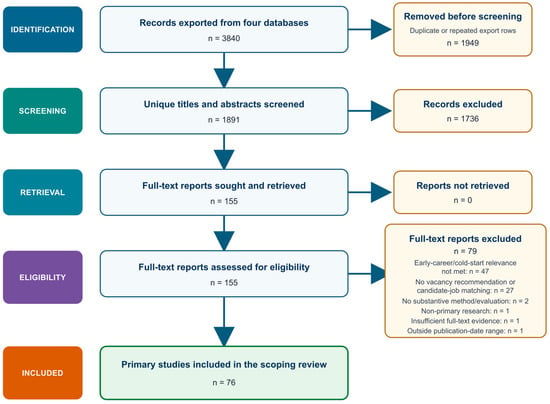
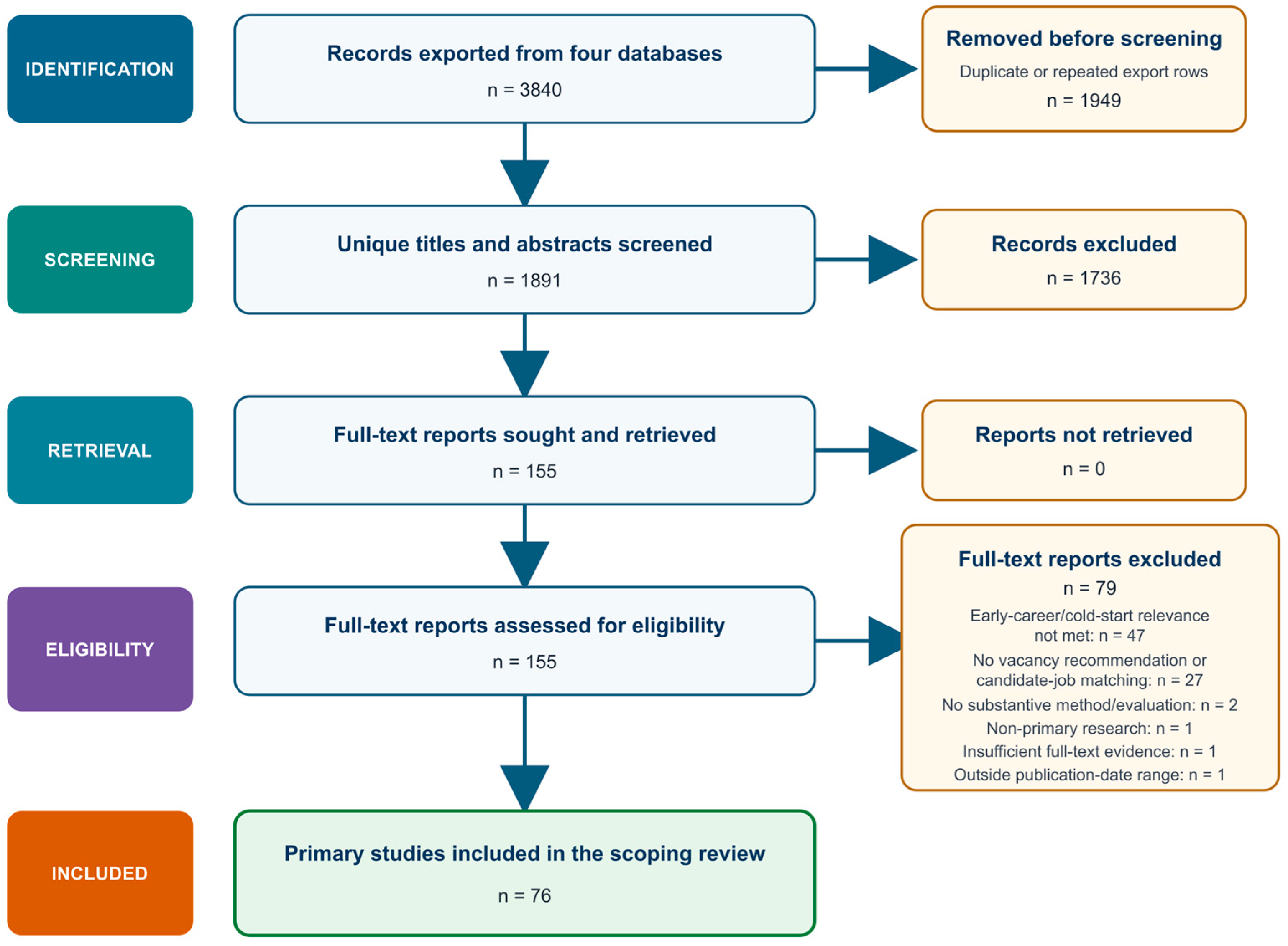
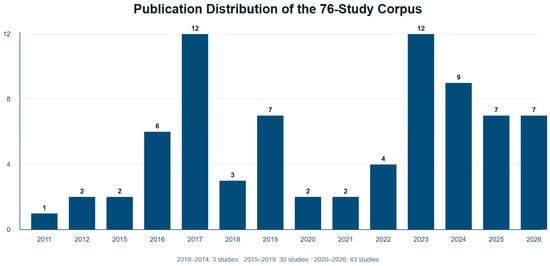
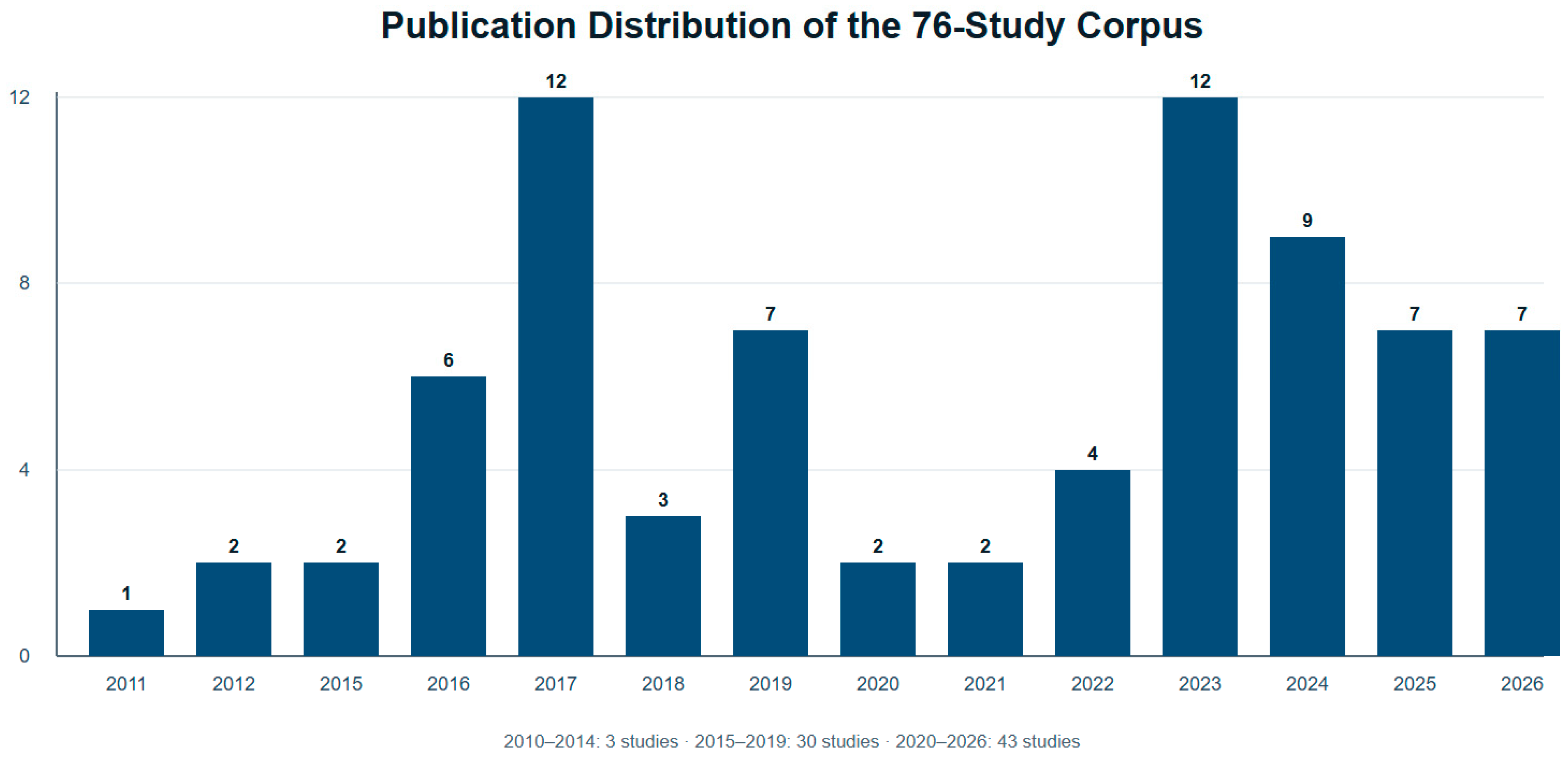
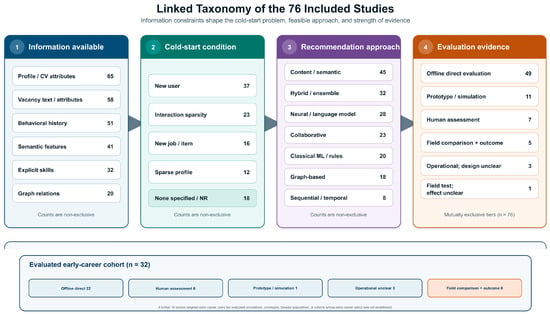
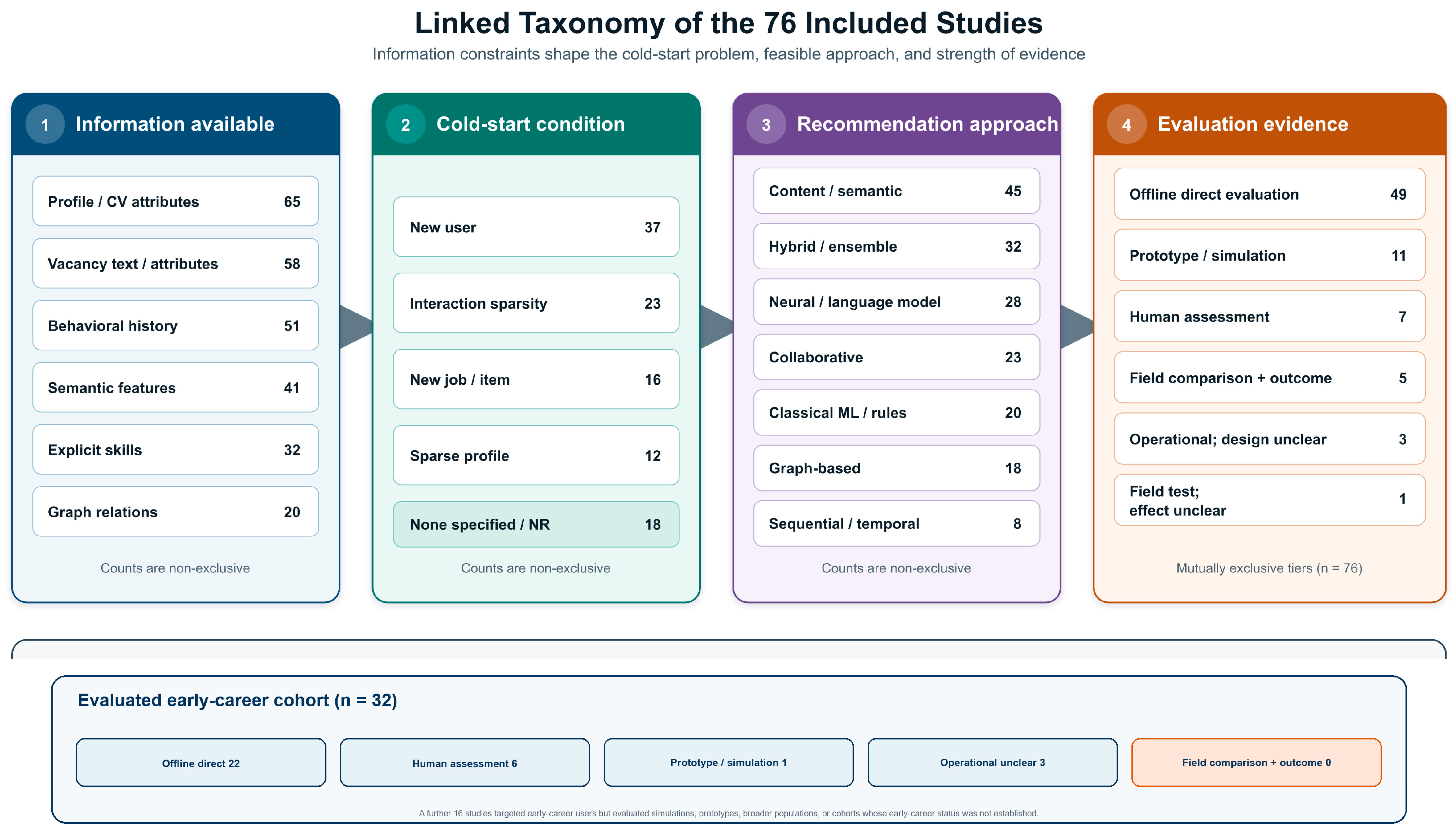
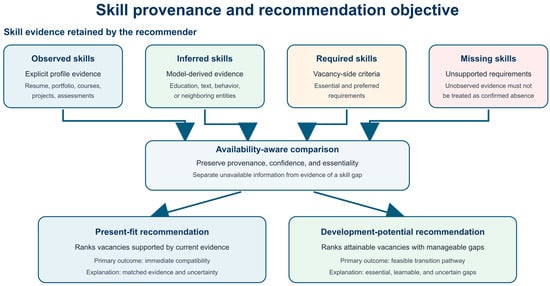
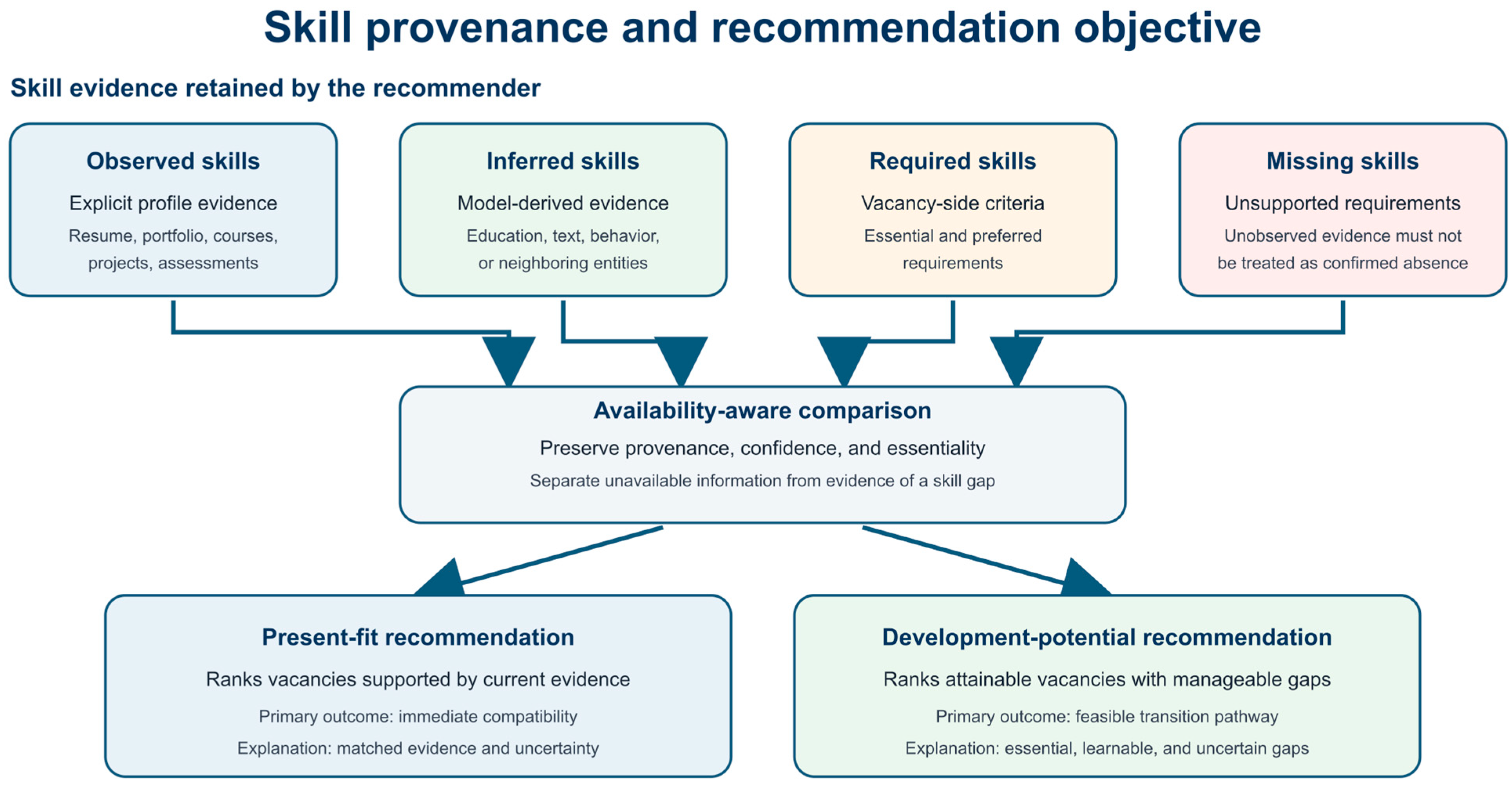
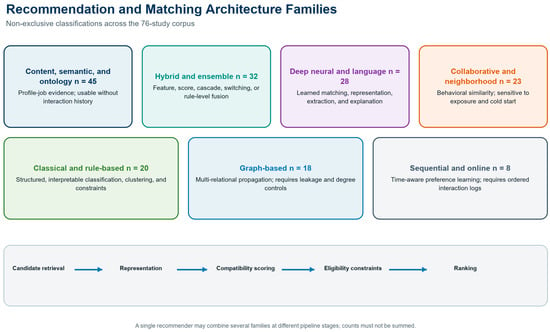
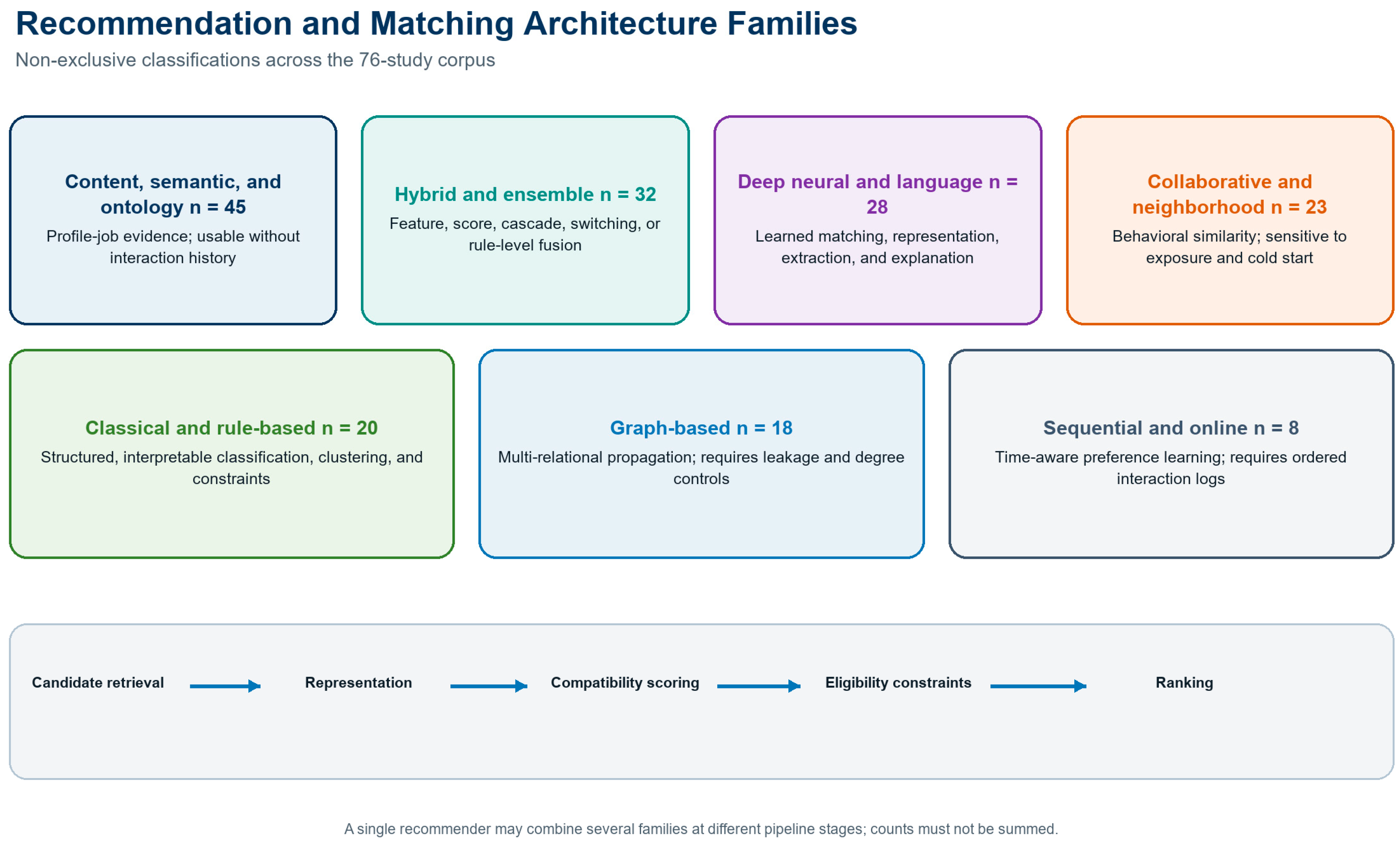
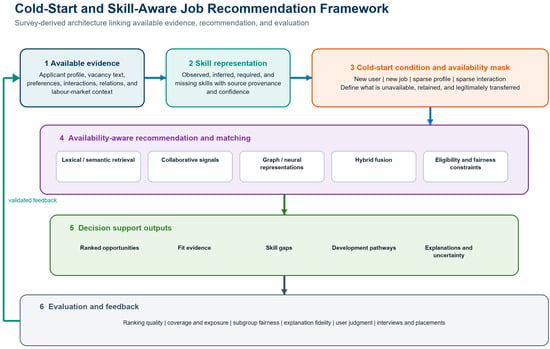
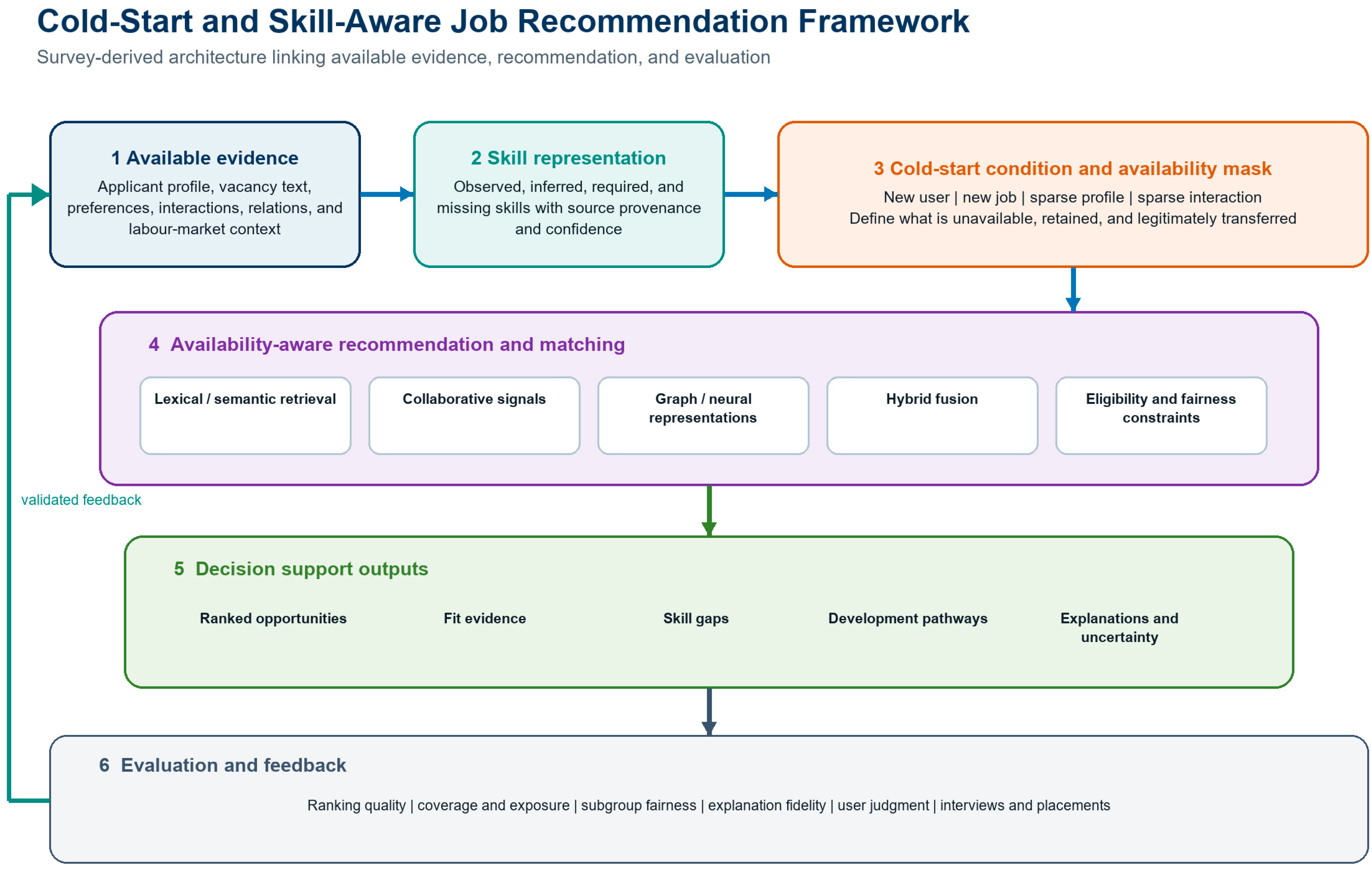
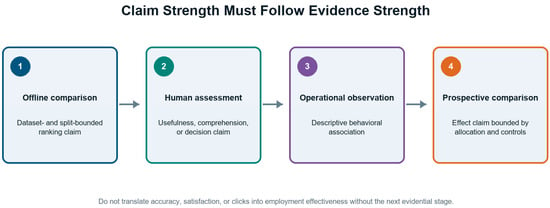
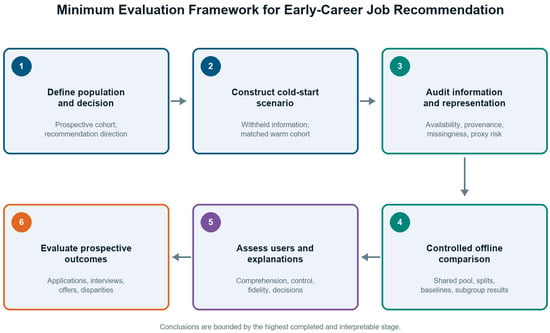

Disclaimer/Publisher’s Note: The statements, opinions and data contained in all publications are solely those of the individual author(s) and contributor(s) and not of MDPI and/or the editor(s). MDPI and/or the editor(s) disclaim responsibility for any injury to people or property resulting from any ideas, methods, instructions or products referred to in the content. |
© 2026 by the authors. Licensee MDPI, Basel, Switzerland. This article is an open access article distributed under the terms and conditions of the Creative Commons Attribution (CC BY) license.