


Abstract
Background and aims: High risk medications use is common at hospitals and poses a major risk for frail older adults. The study aims to determine the association between Potentially Inappropriate Prescriptions (PIPs) and hospital outcome among geriatric patients. Methods: A retrospective cohort study including 152 older adults (age ≥ 60 years). These patients were admitted to the intensive care unit (ICU) at Geriatrics hospital from August 1st, 2021 to January 1st, 2022. Age, sex, clinical data and medications used throughout admission were extracted for each patient. The target outcome was in-hospital mortality. PIPs were identified in accordance with Screening Tool of Older Persons’ potentially inappropriate Prescriptions version 2 (STOPP v. 2). Logistic regression analysis was done to test the association between use of PIPs and in-hospital mortality. Descriptive statistics was performed for PIPs and medications use near the end of life. Results: PIPs occurred in 67.8% (103 patients) of participants. Multivariate regression analysis revealed independent predictors of mortality including older age (OR = 1.075; 95% CI: 1.020-1.134; P .007), delirium/altered mental status on admission (OR = 2.688; 95% CI: 1.086-6.651; P .032), and utilizing of ≥ 3 PIPs (OR = 4.049; 95% CI: 1.320-12.421; P .014). Use of anticholinergics in patients with delirium or dementia was the most frequently reported PIPs among participants. Conclusions: PIPs are common and significantly associated with mortality among hospitalized older adults. The study provides an overview for high risk medications and recommends a structured medication reviews and de-prescribing practice for frail older adults.
INTRODUCTION
The World Health Organization (WHO) has identified medication harm as a global priority and considered medication without harm as the third WHO global patient safety challenge 1. Medication harm was defined as ‘any negative patient outcome or injury, due to medication use’ 2. Geriatric patients are at a higher risk of drug related problems (DRPs) due to age-related changes in pharmacokinetics and pharmacodynamics besides polypharmacy and multimorbidity 3. Polypharmacy among geriatric patients is a well-known risk factor for medication harm and DRPs 4. High alert medications are those with a high risk of causing significant harm if not used correctly, various lists have been proposed in clinical settings to assist clinicians in identifying and avoiding these medications, such as the list published by the Institute of Safe Medication Practices (ISMP) 5. Beers criteria are one of the most widely used and specified tools to guide medication use in older adults 6. Similarly, Screening Tool of Older Persons’ Prescriptions (STOPP) is a comprehensive and reliable tool to identify PIPs among older adults 7. STOPP v. 2 includes 80 clinical criteria to pick up PIPs in clinical sittings of geriatric patients 7. This study aims to determine the association between PIPs and in-hospital mortality and to describe PIPs and medications use near end of life among geriatric patients.
PATIENTS AND METHODS
A retrospective cohort study including older adults (aged ≥ 60 years) who were admitted to ICU at Geriatrics hospital at Ain Shams University, Egypt from August 1st, 2021 to January 1st, 2022. Despite accepting the chronological age of ≥ 65 years as a definition of a geriatric person, the situation doesn’t fit well in Africa including Egypt and it can be extended to the age of ≥ 60 years which is also the age of pension benefit 8, and the acceptable age for admission to the geriatrics hospital. The study included critically ill patients whose condition necessitated ICU admission, as these patients are the most vulnerable group of patients at the hospital and have the highest risk of utilizing PIPs with the occurrence of worse outcomes 9. Exclusion criteria involved patients with missing medication sheets and/or outcome including those transferred to another hospital or those discharged against medical advice before completion of treatment regimen.
Review of medication sheets and administrative data records at geriatrics hospital was done by the principal investigator to extract demographics including age and sex and clinical data including co-morbidities and initial diagnosis. Medications use was confirmed by records of clinical pharmacist sheets at clinical pharmacy unit at Geriatrics hospital. PIPs were identified in accordance with STOPP v. 2 criteria 7.
Applicability of STOPP v. 2 criteria among participants was described in Supplementary materials, Table SI. The total number of PIPs for each patient was calculated and patients were grouped accordingly. Target outcome was in-hospital mortality, based on the documented clinical status at the time of hospital discharge either death or discharge alive. Medications with anticholinergic properties were detected with assistance of anticholinergic list 10 and their total number was calculated for each patient. Because of the variability in the anticholinergic properties of different agents ranging from low to high anticholinergic effects, the cumulative anticholinergic burden (ACB) was estimated utilizing ACB calculator to estimate the total anticholinergic load for patients utilizing more than one agent with anticholinergic side effects 11.
STATISTICAL ANALYSIS
Values were presented as numbers and proportions or mean and standard deviation. The distribution of qualitative variables among patient groups were compared by Chi-square test or Fisher’s exact test, as indicated. Quantitative variables were checked for normality by Shapiro-Wilk test. As data were normally distributed, variables were compared between groups by independent t-test. Individual drugs with P values < 0.05 in univariate analysis were introduced in a logistic regression model to detect independent predictors of mortality. All tests were bilateral and a P value of 5% is the limit of statistical significance. Analysis was performed by statistical package software IBM-SPSS version 24.
RESULTS
A total of 152 geriatric patients were included. In-hospital mortality occurred in 101 (66.4%) patients with mean age of 76.9 ± 8.5 years. Participant’s characteristics were compared between the alive and dead group. Significant variables were age, delirium/altered mental status on admission, using PIPs-STOPP v. 2, number of PIPs per patient, use of ≥ 3 PIPs, using medications with anticholinergic properties and the number of anticholinergics per patient. The same was found when the variables were measured as odds ratio. A one-year increase in age would increase the odds of mortality by 1.0. By 95%, the one-year increase in age would increase the odds of mortality from 1.0 to 1.1. Using PIPs-STOPP would increase the odds by 5.3. By 95%, using PIPs-STOPP would increase the odds of mortality from 2.5-11.1. With each additional PIPs-STOPP utilized the odds would increase by 1.9 times and with each additional anticholinergic medication utilized the odds would increase by 1.7 times (Tab. I).
As numeric variables of PIPs-STOPP and anticholinergics did not fit the regression model, the following variables were entered into multivariate regression analysis: age, delirium/altered mental status on admission, use of PIPs-STOPP, use of ≥ 3 PIPs and use of anticholinergics. Significant predictors of mortality were age (OR = 1.075; 95% CI: 1.020-1.134; P. 007), presence of delirium/altered mental status on admission (OR = 2.688; 95% CI: 1.086-6.651; P. 032), and the use of ≥ 3 PIPs (OR = 4.049; 95% CI: 1.320-12.421; P .014). The model was able to explain 35.6% of the variability of mortality as indicated by Nagelkerke R Square value. It was able to correctly predict mortality by 80.1%. The results showed that taking ≥ 3 PIPs, the odds of mortality would increase by 4 times. With older age, the odds of mortality would increase by 1 time. Also, presence of delerium/altered mental status on admission would increase the odds of mortality by 2.7 times. The 95 CI means that by 95% we are confident that taking ≥ 3 PIPs would increase the odds of mortality from 1.3 to 12.4 times. While, an increase in age with one year would increase the mortality odds from 1.0 to 1.1 times. Also, presence of delirium/altered mental status on admission may increase the odds of mortality between 1.0-6.6 times as described in (Tab. II).
The distribution of PIPs-STOPP and anticholinergics are described in (Tabs. III-IV). Medications use near end of life and distribution of cardiovascular system (CVS) and central nervous system (CNS) acting medications are also described in (Figs. I-II). Apart of antibiotics, ranking of individual medication use near end of life including the top 10 commonly prescribed medications was performed; Omeprazole (9.4%), followed by dobutamine/noradrenaline/epinephrine (6.3%) and salbutamol/ipratropium/budesonide (5.9%) were the most frequently prescribed medications (Supplementary materials, Table SII).
DISCUSSION
Life expectancy in Egypt increased to 74.3 years and the total number of geriatric population reached 6.8 millions, representing 6.7% of the total population in 2021 with subsequent higher health care utilization and costs 12. The study included critically ill geriatric patients, because of the higher risk of utilizing PIPs with subsequent occurrence of DRPs and in-hospital mortality 8. PIPs occurred in (103 patients) 67.8% of participants. The increasing number of PIPs was associated with increased risk of death at hospital. This study utilized STOPP v. 2 criteria 7 to identify PIPs among hospitalized older patients and showed that using of ≥ 3 PIPs was a significant predictor of in-hospital mortality. This finding manifests the clinical impact of utilizing PIPs at acute care sittings on hospital outcome and it correlates with a previous study showed that utilizing ≥ 1 PIPs was associated with an increased risk of mortality at a longer term of 36-months’ follow-up 13. Similarly, another cohort study among community dewelling older adults in Bambuí, Brazil showed that PIPs, according to Beers criteria was a predictor of mortality with a significant association between the number of PIPs and risk of death 14.
The association between in-hospital mortality and every other socio-demographic and clinical variable was assessed by logistic regression analysis. Older age was also a significant predictor of mortality that could be attributed to higher prevalence of frailty in older age group 15.
Besides using of ≥ 3 PIPs and older age as significant predictors of mortality, the current study explored the prognostic effect of delirium/altered mental status on hospital admission. In the current study, 54.6% (83 patients) had delirium/altered mental status on admission. Delirium is a common condition among hospitalized geriatric patients and associated with poor outcomes 13. It necessitates a vigilant screening for its presence at the time of admission to provide the appropriate management and early non-pharmacologic interventions 16.
Based on the application of STOPP v. 2 criteria on the prescribed medications, study results reported the most frequently encountered PIPs to avoid as follows: anticholinergics/antimuscarinics use in patients with delirium or dementia (82 cases), use of regular opioids without concomitant laxative (21 cases), drugs likely to cause constipation such as aluminum antacids or anticholinergics in patients with chronic constipation (15 cases), aspirin plus clopidogrel as secondary prevention of stoke (13 cases), concurrent use of antiplatelets with a new oral anticoagulant (NOAC) (9 cases), aldosterone antagonists with concurrent use of angiotensin-converting enzyme (ACE) inhibitors (9 cases), and use of neuroleptics (8 cases). The study supports the special considerations that should be taken during prescribing for older adults including the high concerns about the presence of geriatric syndromes, reduced creatinine clearance and presence of Electrocardiogram (ECG) abnormalities such as QT prolongation. It is evidenced by the presence of several PIPs including the use of diuretics with concurrent urinary incontinence, Factor Xa inhibitors with an estimated glomerular filtration rate (eGFR) < 15 ml/min/1.73m2, and escitalopram with other drugs inducing QT prolongation. Geriatric syndromes such as delirium, dementia, falls, and urinary incontinence are common and render geriatric patients at high risk of poor quality of life, situational challenges and even death 17.
The current study highlights the prognostic value of utilizing medications with anticholinergic properties, as these medications could be associated with higher risk of delirium and in-hospital mortality in frail older adults 18. Another longitudinal study showed a dose-dependent association between anticholinergics use and the risk of cerebrovascular accidents and mortality in geriatric patients with dementia 19.
Our study showed that increasing number of anticholinergics was significantly associated with in-hospital mortality. There is a long list of drugs defined as having anticholinergic properties, many of these drugs are essential for some cases and cannot be easily stopped or substituted with subsequent risk of adverse drug effects and delirium 18,20. The most commonly encountered medications with anticholinergic properties in this study included the following: Ipratropium (67 cases), Furosemide (49), Hydrocortisone/Methylprednisolone/Prednisolone (34), Piperacillin (33), Fentanyl (20) and Digoxin (16).
The study also highlights the link between the aging brain, delirium/dementia and PIPs including anticholinergics. The study showed that only 12 (14.6%) out of 82 patients who utilized anticholinergic agents in the presence of delirium or dementia survived to discharge from the hospital. It coincides with previous studies showing the association between anicholinergics use and mortality in the presence of delirium 21 and especially in the presence of underling cognitive impairment 22. Because of these possible deleterious effects of anticholinergic agents in older adults, cost-benefit assessment and de-prescribing practice could markedly improve patient outcomes 23.
On the other side, the study described medications use near the end of life. A previous expert panel have reached consensus on 10 medication classes described as “often inadequate” for continuation during the last 3 months of life such as lipid-lowering agents, anti-dementia and osteoporosis drugs but it remained unaccomplished for others such as proton pump inhibitors, haloperidol, furosemide and selective serotonin reuptake inhibitors 24.
In this study, the most commonly utilized medication classes among the dead group included anti-infectives (12.5%) and GIT medications (12.5%), followed by CVS medications (11.9%). Medications use in terminally ill patients should be guided by a specified and patient-centered criterion such as STOPPFrail version 2 which is a promising tool for geriatric patients near end of life and includes a list of medication classes that may be inappropriate and have minimal or no benefits for frail and terminally ill older patients 25. This tool is mainly recommended for older patients with limited life expectancy for whom the target of management is to reduce DRPs and improve quality of life, these patients should have all of the following: functional dependency and/or severe chronic disorder and/or terminal condition, presence of irreversible frailty, poor outcome regarding 1-year survival 25. Our study did not include frailty assessment and involved critically ill patients who wouldn’t necessarily fullfil all the previously mentioned criteria. Accordingly, applying STOPP v. 2 criteria was more convenient for our analysis.
In this study, individual drug ranking among the dead group of patients was performed as described in the results section. The most frequently prescribed medications near end of life were; omeprazole (9.4%), dobutamine/noradrenaline/epinephrine (6.3%) and salbutamol/ipratropium/budesonide (5.9%). For the clinical significance, we analyzed CNS acting medications and showed the most commonly utilized medications: paracetamol (37%), followed by fentanyl (17%) and levetiracetam (9%). On the other side, analysis of CVS medications included dobutamine/noradrenaline/epinephrine (23%), followed by atorvastatin (16%) and furosemide/torsemide (15%). These data contradict previous studies reporting morphine, midazolam and haloperidol as the most frequently prescribed drugs near the end of life in one of the largest palliative care centers in the Netherlands 26. This difference in the patterns of medication use near the end of life could be attributed to the heterogeneity of the studied population and clinical sittings in various studies. The current study included ICU patients with relatively younger age. Also, it is worth reporting that omeprazole, atorvastatin and aspirin were among the top 10 prescribed medications among participants near end of life despite of the presence of these medications in STOPPFrail version 2 list 25. This conflict might also be related to ICU sitting, presence of a situational clinical necessity, and the “younger” cut-off for defining the geriatric patients in the study. These findings support shared decision making, reasonable justification of medication use and de-prescribing practice to reduce DRPs among frail older patients 25.
STRENGTHS AND LIMITATIONS
To the best of our knowledge, this is the first study assessing the association of PIPs in accordance with STOPP v. 2 criteria and mortality among critically ill older adults with description of a thorough overview of both PIPs and medication use near of life. The major limitation of the study is the non-applicability of certain items in STOPP v. 2 criteria with possible over- or underestimation of PIPs use. It is attributed to the retrospective design and lack of some information regarding physical examination, laboratory results and pre-hospitalization medication history. Similar limitations related to applying different explicit criteria have been reported in various studies 27,28.
The small sample size at a single institute and the missing assessment of potential confounders of mortality such as acute illness severity and functional/frailty status are additional limitations of the study. Further exploration of the interplay between PIPs, frailty status and mortality among older adults in different health care settings is needed.
CONCLUSIONS
PIPs are common and frequently associated with worse outcomes in hospitalized older adults. Meticulous medication selection is crucial and requires an evidence-based approach to detect and avoid high-risk medications. It includes structured medication reviews and de-prescribing practices to improve clinical outcomes and avoid futile management in acute care settings of geriatric patients. Also, the provision of novel, easily applicable tools and pop-up alerts in software to detect PIPs among frail older adults is of paramount importance in the meantime.
ETHICAL CONSIDERATION
The study protocol was revised and approved by Research Ethics Committee at Geriatrics hospital and Research Ethics Committee of the faculty of Medicine at Ain Shams University, Approval code: FMASU R 56/2022.
ACKNOWLEDGEMENTS
Authors thank Mohamed Abdelmenem at clinical pharmacy unit in Geriatrics hospital for facilitating the process of data collection.
CONFLICT OF INTEREST STATEMENT
The Authors declare no conflict of interest.
FUNDING
This research did not receive any specific grant from funding agencies in the public, commercial, or not-for-profit sectors.
AUTHORS’ CONTRIBUTION
All Authors have contributed to the study through data analysis and manuscript writing. Khalid E. Elsorady has also contributed to the study design/concept, data collection/entry and manuscript drafting. All authors read and approved the final manuscript.
Figures and tables
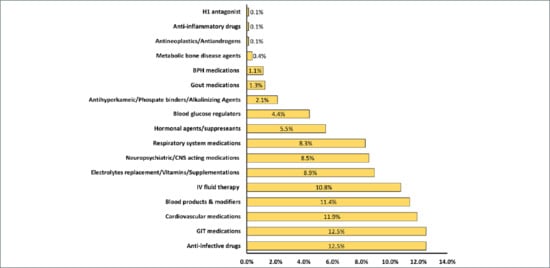
Figure 1.
Description of medications use near end of life: main categories of medications.
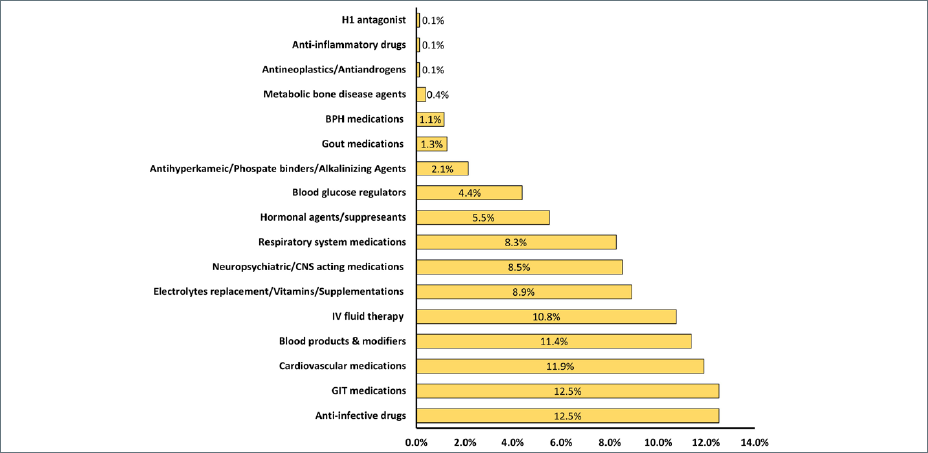
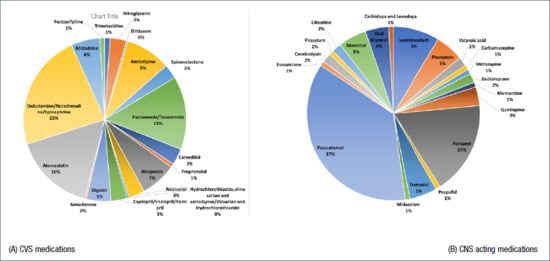
Figure 2.
Description of medications use near end of life.
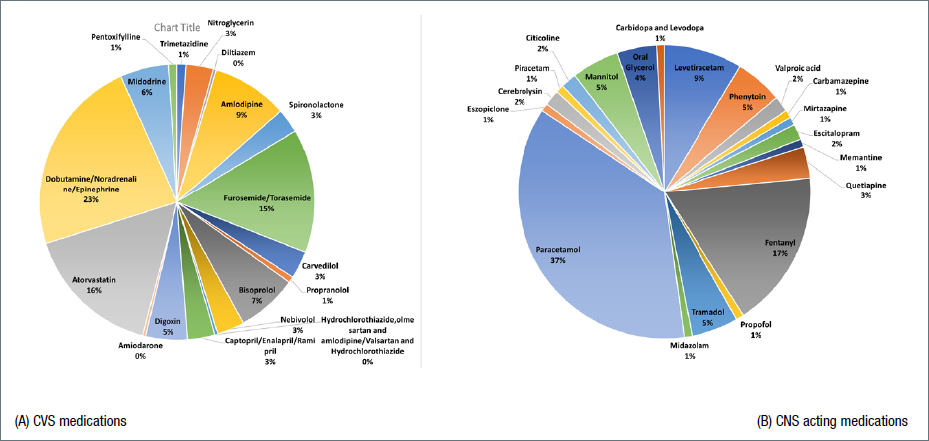

Table I.
Association between Socio-demographic/clinical characteristics and in-hospital mortality.
Table II.
Multivariate regression analysis of significant variables.
Table III.
Potentially inappropriate prescriptions-STOPP Criteria v. 2.
Table IV.
Medications with anticholinergic properties.
SUPPLEMENTARY MATERIALS
Table SI.
Applicability of STOPP v. 2 criteria among the studied sample.
Table SII.
Ranking of medication use near end of life.
References
- World Health Organization. Medication Without Harm (https://www.who.int/, Accessed 23 May 2022).
- Falconer N, Barras M, Martin J, et al. Defining and classifying terminology for medication harm: a call for consensus. Eur J Clin Pharmacol 2019;75:137-145.
- Hailu BY, Berhe DF, Gudina EK, et al. Drug related problems in admitted geriatric patients: the impact of clinical pharmacist interventions. BMC Geriatr 2020;20:13. https://doi.org/10.1186/s12877-020-1413-7 10.1186/s12877-020-1413-7
- Wang Y, Singh S, Bajorek B. Old age, high risk medication, polypharmacy: a ‘trilogy’ of risks in older patients with atrial fibrillation. Pharm Pract (Granada) 2016;14:706.
- Institute for Safe Medication Practices. High-alert medications in acute care settings (https://www.ismp.org/recommendations/high-alert-medications-acute-list,. 2018, Accessed 23 May 2022).
- By the 2019 American Geriatrics Society Beers Criteria® Update Expert Panel. American Geriatrics Society 2019 Updated AGS Beers Criteria® for potentially inappropriate medication use in older adults. J Am Geriatr Soc 2019;67:674-694. https://doi.org/10.1111/jgs.15767 10.1111/jgs.15767
- O'Mahony D, O'Sullivan D, Byrne S, et al STOPP/START criteria for potentially inappropriate prescribing in older people: version 2, Age Ageing 2015;44:213-218. https://doi.org/10.1093/ageing/afu145 10.1093/ageing/afu145
- World Health Organization. Proposed working definition of an older person in Africa for the MDS Project 2002 (http://www.who.int/healthinfo/survey/ageingdefnolder/en/, Accessed 26 June 2022).
- Floroff CK, Slattum PW, Harpe SE, et al. Potentially inappropriate medication use is associated with clinical outcomes in critically Ill elderly patients with neurological injury. Neurocrit Care 2014;21:526-533. https://doi.org/10.1007/s12028-014-9985-8 10.1007/s12028-014-9985-8
- ANTICHOLINERGICS: reference list of drugs with potential anticholinergic effects (https://www.rxfiles.ca/rxfiles/uploads/documents/Psyc-anticholinergic-Ref%20List%20SPDP-complete.pdf,. 2021, Accessed 23 June 2022).
- Anticholinergic Burden Calculator created by Dr Rebecca King and Steve Rabino (http://www.acbcalc.com, Aaccessed 23 June 2022).
- Life expectancy in Egypt rose to 74.3 years in 2021: CAPMAS (https://english.ahram.org.eg/NewsContent/1/1236/425099/Egypt/Health/Life-expectancy-in-Egypt-rose-to--years-in--CAPMAS.aspx, Accessed 26 June 2022).
- Cardwell K, Kerse N, Hughes CM, et al. Does potentially inappropriate prescribing predict an increased risk of admission to hospital and mortality? A longitudinal study of the ‘oldest old’. BMC Geriatr 2020;20:28. https://doi.org/10.1186/s12877-020-1432-4 10.1186/s12877-020-1432-4
- do Nascimento MMG, Mambrini JV, Lima-Costa MF, et al Potentially inappropriate medications: predictor for mortality in a cohort of community-dwelling older adults. Eur J Clin Pharmacol 2017;73:615-621. https://doi.org/10.1007/s00228-017-2202-x 10.1007/s00228-017-2202-x
- Pinheiro HA, Mucio AA, Oliveira LF. Prevalence and factors associated with the frailty syndrome in older adults in the Brazilian Federal District. Geriatr Gerontol Aging 2020;14:8-14.
- Garcez FB, Avelino-Silva TJ, Castro REV, et al. Delirium in older adults. Geriatr Gerontol Aging 2021;15: e0210032.
- Saraf AA, Petersen AW, Simmons SF, et al. Medications associated with geriatric syndromes and their prevalence in older hospitalized adults discharged to skilled nursing facilities. J Hosp Med 2016;11:694-700.
- Luukkanen MJ, Uusvaara J, Laurila JV, et al. Anticholinergic drugs and their effects on delirium and mortality in the elderly. Dement Geriatr Cogn Disord Extra 2011;1:43-50. https://doi.org/10.1159/000322883 10.1159/000322883
- Tan ECK, Eriksdotter M, Garcia-Ptacek S, et al. Anticholinergic burden and risk of stroke and death in people with different types of Dementia. J Alzheimers Dis 2018;65:589-596. https://doi.org/10.3233/JAD-180353 10.3233/JAD-180353
- Laurila JV, Laakkonen ML, Strandberg TE, et al. Predisposing and precipitating factors for delirium in a frail geriatric population. J Psychosom Res 2008;65:249-254.
- Mangoni AA, van Munster BC, Woodman RJ, et al. Measures of anticholinergic drug exposure, serum anticholinergic activity, and all-cause postdischarge mortality in older hospitalized patients with hip fractures. Am J Geriatr Psychiatry 2013;21:785-793. https://doi.org/10.1016/j.jagp.2013.01.012 10.1016/j.jagp.2013.01.012
- Lattanzio F, Corica F, Schepisi R, et al. Anticholinergic burden and 1-year mortality among older patients discharged from acute care hospital. Geriatr Gerontol Int 2018;18:705-713. https://doi.org/10.1111/ggi.13234 10.1111/ggi.13234
- López-Álvarez J, Sevilla-Llewellyn-Jones J, Agüera-Ortiz L. Anticholinergic drugs in geriatric psychopharmacology. Front Neurosci 2019;13:1309. https://doi.org/10.3389/fnins.2019.01309 10.3389/fnins.2019.01309
- Morin L, Laroche ML, Vetrano DL, et al. Adequate, questionable, and inadequate drug prescribing for older adults at the end of life: a European expert consensus. European journal of clinical pharmacology 2018;74:1333-1342. https://doi.org/10.1007/s00228-018-2507-4 10.1007/s00228-018-2507-4
- Curtin D, Gallagher P, O’Mahony D. Deprescribing in older people approaching end-of-life: development and validation of STOPP Frail version 2. Age Ageing 2021;50:465-471. https://doi.org/10.1093/ageing/afaa159 10.1093/ageing/afaa159
- Masman AD, van Dijk M, Tibboel D, et al. Medication use during end-of-life care in a palliative care centre. Int J Clin Pharm 2015;37:767-775. https://doi.org/10.1007/s11096-015-0094-3 10.1007/s11096-015-0094-3
- João Pedro Aguiar, João Gama Marques, da Costa Filipa Alves Utility and limitations of a screening tool of older person’s prescription among psychiatric elder patients: a comprehensive review, Aging Health Res 2021;1:100031. https://doi.org/10.1016/j.ahr.2021.100031 10.1016/j.ahr.2021.100031
- Cardwell K, Kerse N, Hughes CM, et al. Does potentially inappropriate prescribing predict an increased risk of admission to hospital and mortality? A longitudinal study of the ‘oldest old’. BMC Geriatrics 2020;20:28. https://doi.org/10.1186/s12877-020-1432-4 10.1186/s12877-020-1432-4
Società Italiana di Gerontologia e Geriatria (SIGG) This is an open access article distributed in accordance with the CC-BY-NC-ND (Creative Commons Attribution-NonCommercial-NoDerivatives 4.0 International) license. The article can be used by giving appropriate credit and mentioning the license, but only for non-commercial purposes and only in the original version. For further information: https://creativecommons.org/licenses/by-nc-nd/4.0/deed.en