


Abstract
Remediating and recovering valuable metals from metallurgical slags is a critical challenge and opportunity for sustainable resource management in the metal extraction industry. This study investigates a process to simultaneously recover nickel, copper, and cobalt from nickel converter slag from the Sudbury region, Canada, using carbon- and iron-based reducing agents. Experimental results show that, without additives, performing reduction settling at 1300 °C, a process similar to metal extraction from ore concentrates, yielded 62 wt% recovery of valuable metals, while after adding reducing additives, over 90% of entrained valuable metals were efficiently coalesced into a matte phase within one hour, significantly reducing the hazardous metal content in the residual slag leaving mainly iron and silicon oxides, which are stable and environmentally benign. X-ray diffraction and SEM-EDS analyses show that after treatment, the dominant phases in the residual slag are fayalite (Fe2SiO4) and glassy silicates, with almost no detectable sulfide or metallic inclusions or other leachable metal-bearing phases. Estimated total cost to increase and maintain slag temperature at 1300 °C for 1 h is $44.50 per tonne. The exothermic reaction of ferrosilicon with slag provides 14.60 kWh/tonne of energy, reducing the need for external heating, while the value of recovered metals is about 10 times higher than the estimated capital, processing, and transportation costs of the additional process treatment. An efficient and sustainable approach to recovering valuable metals from nickel slag, using innovative chemistry and process integration, delivered high metal recovery, reduced environmental impact, and clear economic benefits. The proposed approach aligns with the United Nations Sustainable Development Goals, as outlined in the document ‘Transforming Our World: the 2030 Agenda’, supports circular economy principles, enhances resource efficiency, and offers a practical pathway for remediating legacy slag deposits in existing metals extraction facilities.
1. Introduction
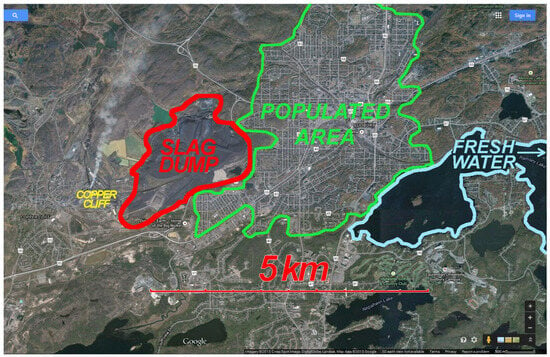
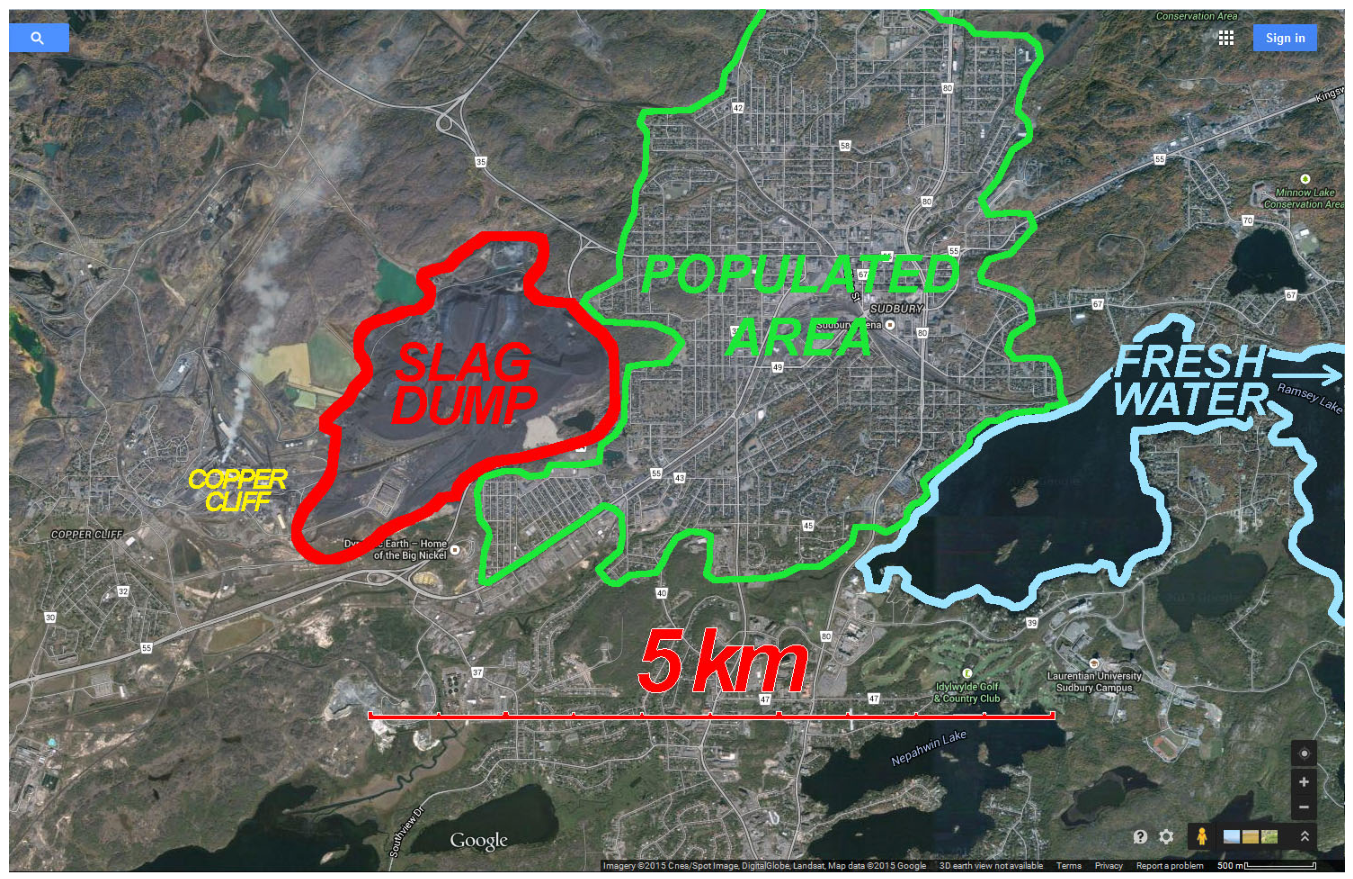
The ever-increasing demand for basic and valuable metals poses a significant environmental hazard in regions where such metals are mined, concentrated, and extracted [1,2]. Metallurgical processes employed in metals extraction consume and process vast quantities of toxic and/or hazardous materials that eventually transpire either in the atmosphere [3,4], rivers [5], or landfills [6]. One of the greatest environmental challenges in metal extraction is the generation of large amounts of slag containing heavy metals [7], which is typically disposed of close to populated areas and freshwater sources (Figure 1). In earlier years, metallurgical extraction processes and slag disposal were managed primarily based on economic interests rather than considering long-term health and environmental impacts [8,9]. The consequence of the unavoidable trade-off between the amount of metals in the slag and concentrate [10] during metals extraction is the accumulation of large quantities of slags rich in heavy metals in different regions worldwide [11]. For example, Vale, a leading world producer of nickel, disposes of 1.2 million tonnes of slag annually, whereas the total inventory of slag in the Sudbury area after nearly one century of company operation is 115 million tonnes [12]. With a forecasted increase in metals extraction processes, the environmental threat to vast land areas will persist. Fortunately, stricter regulations on slag disposal and treatment worldwide will inevitably spur the development of new environmentally friendly processes and procedures [13,14,15].
Figure 1.
Aerial image of the Sudbury basin in Canada depicting a large slag dump area and its proximity to the densely populated area and freshwater basins. Neary et al. [16] estimated that over 7000 lakes in an area of about 17,000 km2 surrounding the depicted slag dump have been acidified to pH < 6.0, either through aerial pollution or leaching through the soil.
Most of the heavy metals, confined in slags and disposed of in landfills, were considered valuable prior to extraction. If someone develops a process to efficiently recover metals entrained in slags formed during large metallurgical extraction processes, the economic value of the recovered metals can offset additional processing costs [17]. Preventing the disposal of heavy metals in landfills and eliminating the need for carbon–rich additives can further lead to the development of an environmentally friendly and sustainable metals extraction process from their ores [13,18]. Furthermore, an economically viable process for the recovery of heavy metals from disposed slags can reclaim large land areas currently threatened by leaching of toxic compounds from these slags. The simplest method for the recovery of valuable metals from slag is slow cooling, which allows the precipitation of matte and metals, with matte particles growing by coalescence from the slag solution. To enhance metal coalescence, slags could be treated with a chemical agent capable of reducing metal oxides to metallic or, in some cases, sulfide form [19]. Although chemical, heat, and mass transfer processes involved in metals extraction are extremely complex, the process itself is relatively simple, where the liquefied mixture of the slag with the injected chemical agent is left to settle in a controlled atmosphere for a set amount of time.
The current research gap lies in the lack of efficient, economical, and environmentally friendly processes to recover valuable heavy metals from metallurgical slags, a byproduct currently disposed of in ways that pose significant environmental hazards. While current slag disposal practices focus primarily on economic factors and often disregard long-term environmental and health impacts, methods that recover valuable metals and reduce environmental risks without requiring major changes or new capital investments from metal producers remain insufficiently developed.
The bridge between future environmentally sustainable extraction of metals [20,21] and current practices lies in developing an economical method that does not require additional capital costs or new know-how from current raw-metal producers. The aim of the current project is to implement new procedures to remediate heavy metals from slags in processes similar to extracting these metals from their ores, where, if recovered in significant quantities, they may become valuable. New practices can lead to both profitable and environmentally friendly process that requires less energy, eliminate CO2 emissions, and extract more valuable metals. The same procedure could be employed to process already disposed slags and implemented in the main extraction process. The effectiveness of new reducing agents is investigated by considering matte yield and the concentrations of valuable metals in the matte. The market value of recovered Cu, Ni, and Co is assessed and compared with the energy cost of the additional refining step.
2. Potential Value of Polymetallic Deposits
Ore bodies containing more than one valuable metal are known as polymetallic or complex ores. Although geological, volcanic, and impact events often gather various metal-containing minerals, mining operations focus on primary metals, whereas secondary metals are more often discarded as by-products rather than extracted for their economic value [22]. The most widely distributed polymetallic mineral worldwide is chalcopyrite (copper-iron sulfide), which is primarily processed for copper (Cu), with iron traditionally discarded as oxides in slag. More often, since chalcopyrite deposits are rich in gold, silver, and platinum, smelting processes are adjusted to recover these valuable trace metals rather than iron. Only recently, with advancements in direct reduction processes and zero-waste economy principles, some iron has been recovered [23].
Although cobalt (Co) is present in much smaller quantities compared to nickel (Ni) and copper (Cu), its market price has historically been significantly higher than either metal. More than 90% of the world’s cobalt is produced as a byproduct of copper and nickel mining, since it is rarely mined independently [24]. In processing Ni-Cu ores, accurately identifying where cobalt concentrates are located is crucial (pentlandite matrix, pyrrhotite, or silicate tails) since inefficient recovery can result in substantial lost revenue [25].
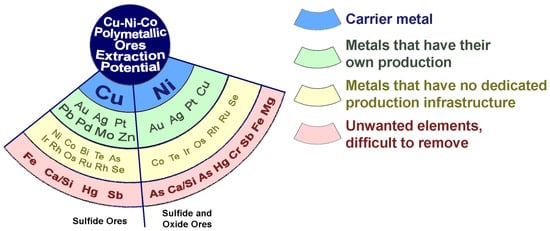
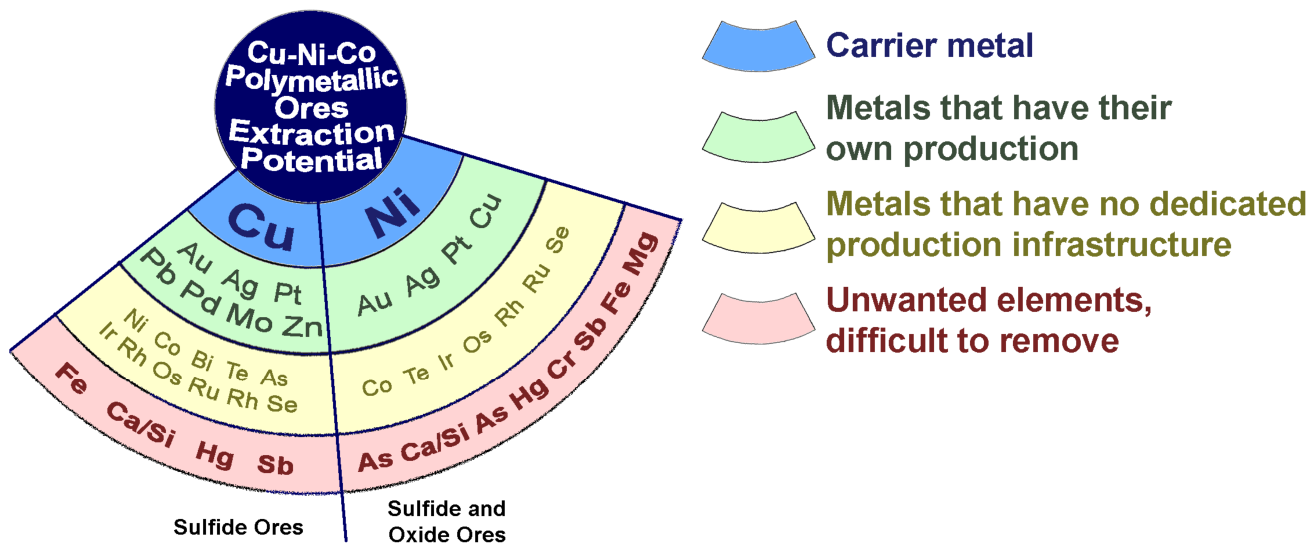
The Sudbury Basin, formed by an asteroid impact 1.85 billion years ago, is 62 km long, 30 km wide, and 15 km deep. It contains nickel and cobalt in the pentlandite mineral and copper in chalcopyrite, along with gold, silver, platinum, palladium, rhodium, iridium, ruthenium, and other precious and rare-earth elements [26]. Earlier, due to economic factors and technological limitations, mining operations focused on extracting a single metal that would yield the highest profit, often disregarding the potential value of other metals [27]. In some locations, these historical wastes now contain significant concentrations of these by-product metals. By-product metals originating from polymetallic ores may contain iron, aluminum, zinc, or other metals that have their own production from their ores, but also have highly valuable metals that have no own production but rather are obtained as co-elements of some more abundant metals. The typical interconnection among polymetallic ores, where copper and nickel are carrier metals, and other elements are shown in Figure 2. Slags originated from Nickel extraction in the Sudbury Basin, historically disposed of in slag dumps between the Copper Cliff smelting facility and residential area, contain significant concentrations of metals that have its own production such as copper, iron, or aluminum and certain elements that lack dedicated production infrastructure yet have market value such as cobalt, gold, silver, platinum metals, and recently gaining attention rare earth elements.
Figure 2.
The Cu-Ni-Co polymetallic ores interactions among different metals and the economical and thermodynamic recoverability of co-elements and metals for which no dedicated production infrastructure exists.
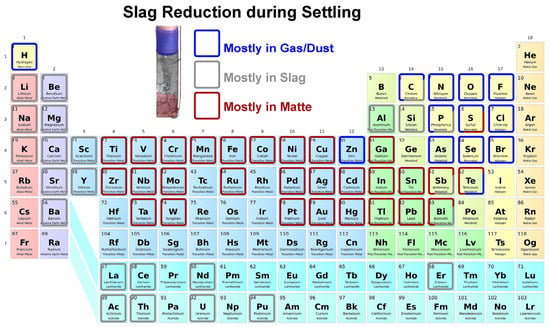
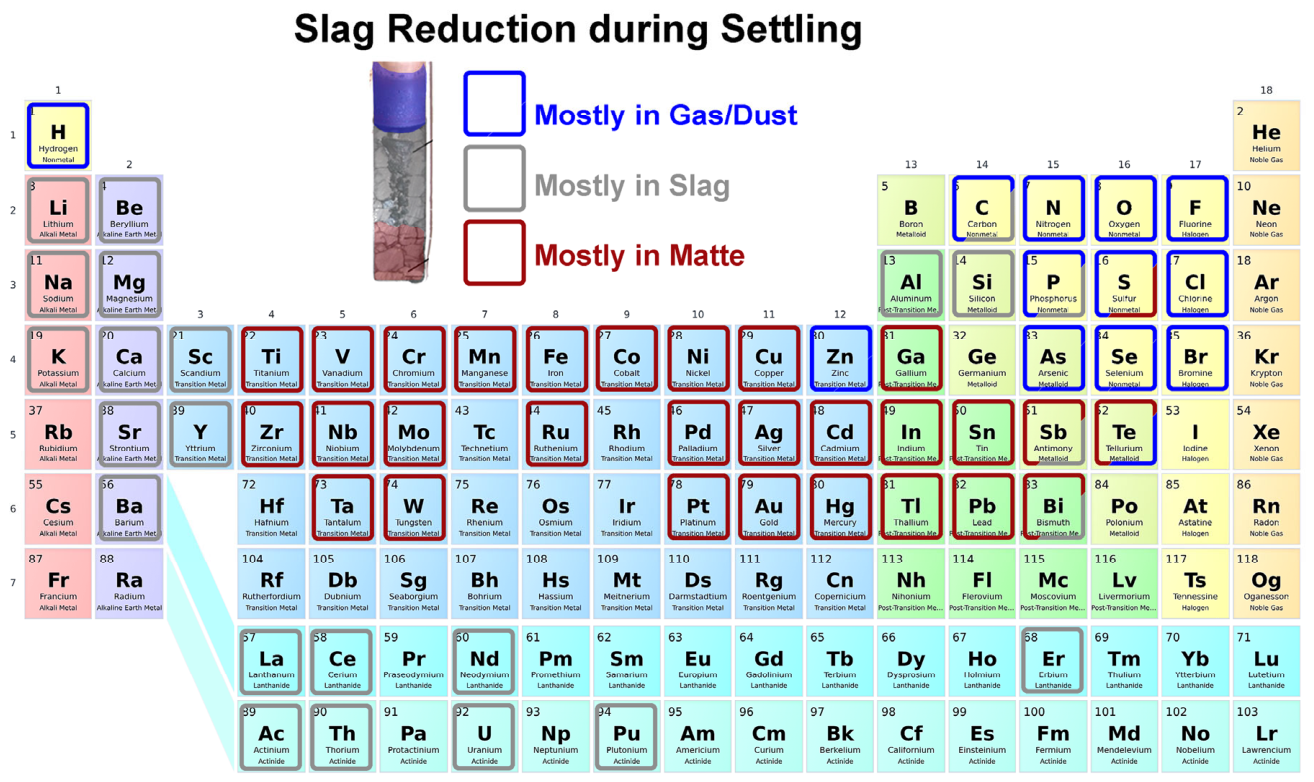
Given the complexity of polymetallic ores and the available extraction technologies, it is impossible to provide a single procedure; therefore, each mining and extraction site must develop the most beneficial and least environmentally harmful procedure. Sites that use pyrometallurgical processes to extract metals may use the same facilities and processes to further extract additional metals from polymetallic ores. Figure 3 shows which elements, dictated by their respective chemical properties, thermodynamics, and process technology, may be extracted by slag reduction during settling with or without using reducing additives.
Figure 3.
The destination of elements in metallurgical slags after the settling process using a reducing agent.
3. Materials and Methods
Ideal additives for reducing nickel slags have a low melting temperature, a slightly higher density than the slag, and the ability to facilitate exothermic reactions without producing gaseous products. Among commercially available additives, as shown in Table 1, the iron-containing additives are the closest to the required parameters [28].
Table 1.
Physical and cost-effectiveness parameters of reducing additives typically used in metal extraction from their ores and remediation of heavy metals from slags.
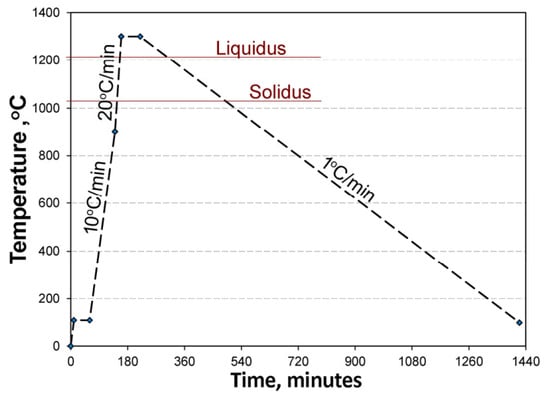
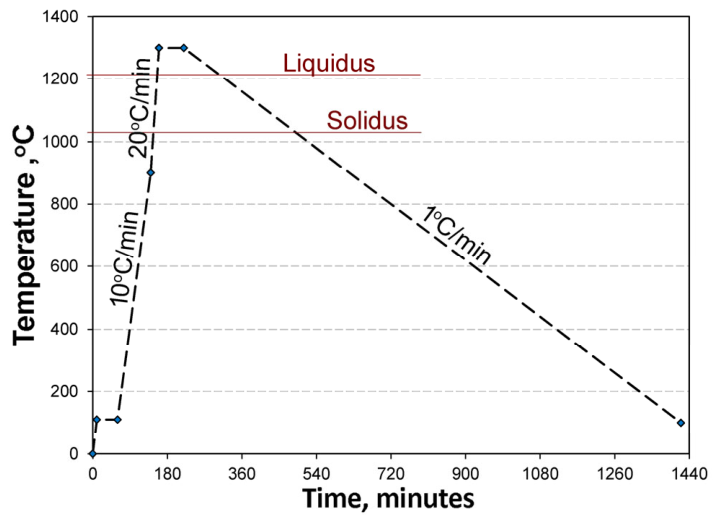
Converter slag was obtained from Vale S.A. in 1 kg batches and homogenized upon arrival. Pig iron with a carbon content of 5.02 wt% and ferrous sulfide with 5.01 wt% sulfur were obtained from the Copper Cliff smelting facility. Figure 4 shows the particle size distribution of both the converter slag and the additives used. The average chemical composition of converter slag from Vale’s Copper Cliff Smelter, expressed in weight percent, shows the dominance of iron and silicon oxides: iron (Fe) at 52.03%, oxygen (O) at 29.04%, and silicon (Si) at 10.76%, with significant amounts of Copper (Cu) and nickel (Ni) at 2.37% and 2.17%, respectively. Other elements occur in smaller amounts: cobalt (Co) at 0.58%, calcium (Ca) at 0.30%, aluminum (Al) at 0.32%, magnesium (Mg) at 0.17%, sulfur (S) at 2.07%, arsenic (As) at 0.01%, lead (Pb) at 0.03%, zinc (Zn) at 0.07%, manganese (Mn) at 0.02%, and chromium (Cr) at 0.06% [29]. Although iron, silicon, and oxygen constitute the bulk of converter slag, the combined market value of contained copper, nickel, and cobalt exceeds $600 per tonne [Supplemental S1].
Figure 4.
Experimental heating and cooling regime.
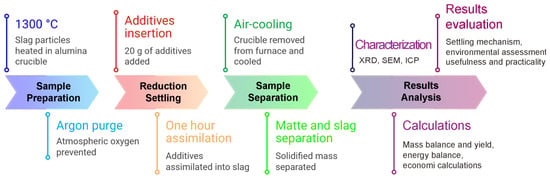
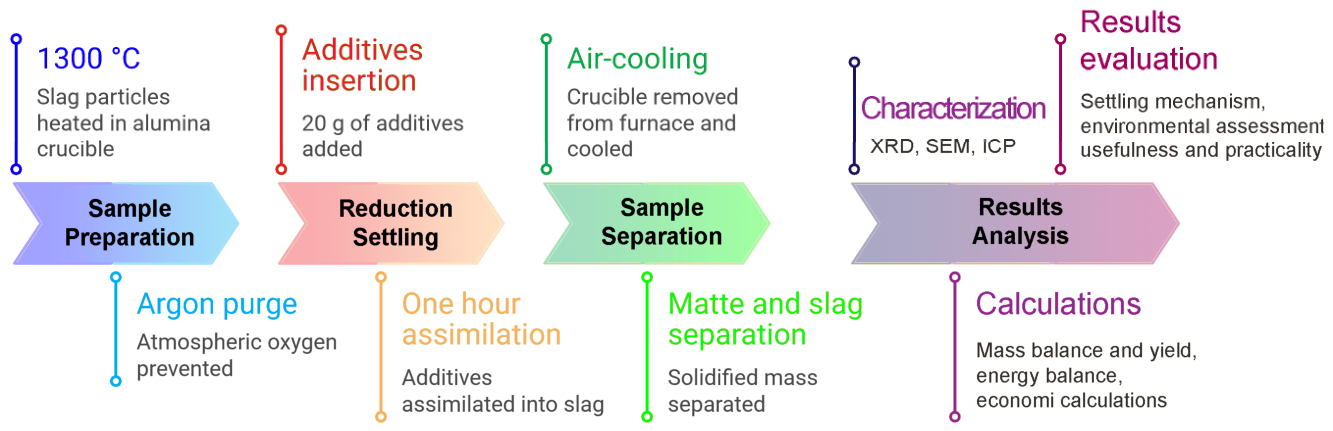
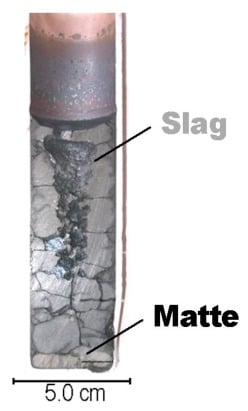
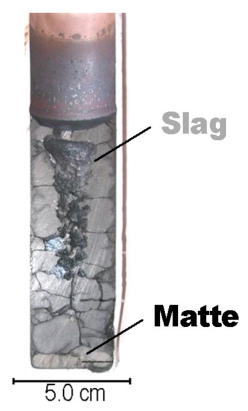
A flow chart of the experimental procedure and the analyses conducted is shown in Figure 5. Crushed slag particles were loaded into a cylindrical alumina crucible (17 cm high, 3.8 cm inner diameter), heated to 1300 °C, and purged with argon to prevent oxidation by atmospheric oxygen. Subsequently, 20 g of additives were evenly dispersed across the surface of the molten slag and allowed to assimilate. After one hour, the crucibles were removed from the furnace and left to air-cool to room temperature, thereby completing the settling process. As shown in Figure 6, the solidified sample comprised a matte layer settled at the bottom and newly formed slag, now depleted of heavy metals, at the top. The solidified mass was extracted from the crucible, and the matte and slag phases were separated at their interface for chemical and metallographic analysis.
Figure 5.
A flow chart of the experimental procedure and the analyses conducted.
Figure 6.
Solidified sample consists of reclaimed heavy metals settled in the matte at the bottom and newly formed slag depleted of these metals at the top.
Chemical analyses were performed on approximately 10 g of each phase at the Vale Technical Services at Sheridan Park, Mississauga, Ontario. As-received converter slag, along with matte and post-settling slag, were mounted in epoxy resin and prepared for metallographic examination. A Hitachi S-4500, from Tokyo Japan, field emission scanning electron microscope was used to obtain high-magnification images of all samples, while INCA microanalysis software, version 5.05, was used to obtain detailed X-ray maps of specific areas of each sample. Energy dispersion spectroscopy was then used to analyze the area of each sample to determine the approximate composition of each phase present. The mineralogical composition of the initial slag was analyzed using a PW 1830/40 X-ray Diffractometer (Philips, Almelo, The Netherlands) operated at 40 kV and 20 mA. Measurements were conducted over a 2Θ range of 0 to 90 degrees with a 0.1-degree step size.
4. Results and Discussion
Additives are essential for promoting the coalescence and growth of matte particles during pyrometallurgical processes. Adding specific additives to the slag decreases the interfacial tension between the matte and slag phases. This reduction in interfacial energy facilitates the merging of smaller matte droplets into larger particles, thereby enhancing coalescence. Furthermore, certain additives reduce slag viscosity, which allows matte droplets to move more freely and collide more frequently, further supporting the formation of larger matte particles. From a thermodynamic perspective, additives alter the chemical potential and activity coefficients of key species at the slag-matte interface, such as sulfur and oxygen. These changes stabilize the matte phase and promote matte particle growth rather than dissolution into the slag. Moreover, additives can serve as nucleation sites or promote heterogeneous nucleation, offering favorable locations for the initial formation and subsequent growth of matte droplets.
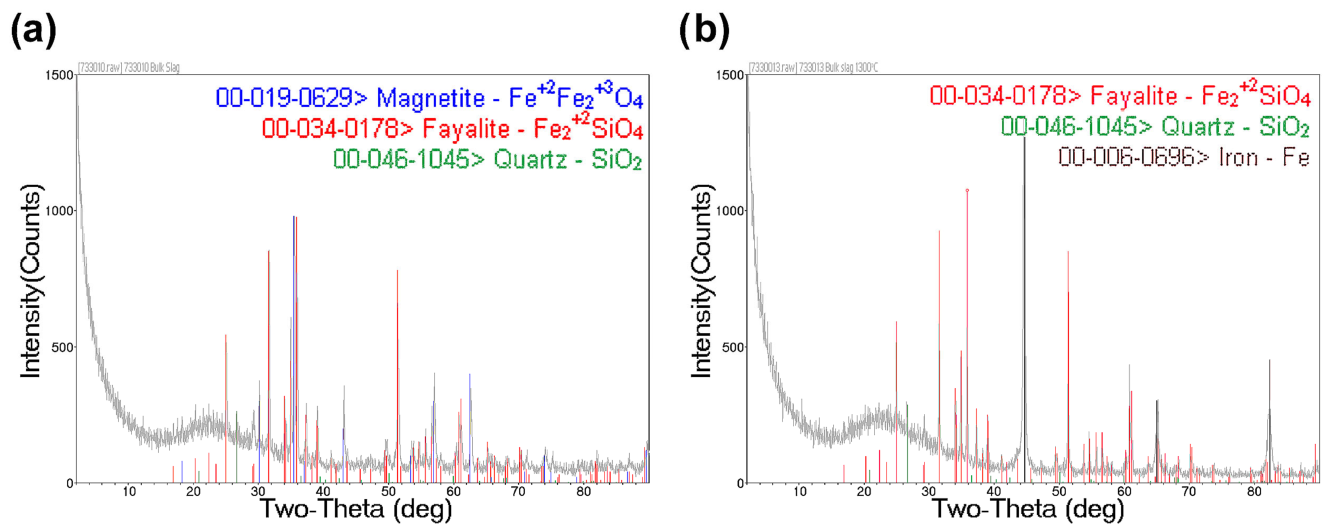
Mineralogical analyses shown in Figure 7a present the X-ray diffraction (XRD) analysis of the initial slag, which primarily consists of iron-containing oxides such as fayalite and magnetite. After keeping the slags at 1300 °C for one hour, regardless of the reducing agent employed, the XRD patterns indicate that magnetite is almost completely reduced, while fayalite persists as the predominant phase (Figure 7b). The settling process initiates several key trends: after reduction, metallic iron appears as a new phase in the slag, magnetite is absent, and fayalite remains the dominant constituent.
Figure 7.
XRD analyses of initial nickel slag (a) and newly formed slag after reduction settling at 1300 °C for one hour (b).
4.1. Coalescence Mechanism and Matte Formation
The major reclamation mechanism is based on the fact that metals with a more negative Gibbs free energy change in formation (ΔG°f) can reduce metals with a higher ΔG°f to metallic form from their oxide or sulfide compounds [30]. Temperature dependences of changes in the Gibbs free energies of reactions to produce oxides or sulfides of individual elements can be found in the overrepresented Ellingham–Richardson diagrams for either oxides [31] or sulfides [32], where the more negative the value of Gibbs free energy change, the more stable is the product. The order in which five key elements during heavy metals remediation at 1300 °C will oxidize is Si-Fe-Co-Ni-Cu [31], while sulfide formation will occur in the following order: Si-Ni-Fe-Co-Cu [32]. Based on thermodynamic principles, optimal process parameters should promote the oxidation of Fe and Si while retaining Ni, Co, and Cu as sulfides or elemental metals.
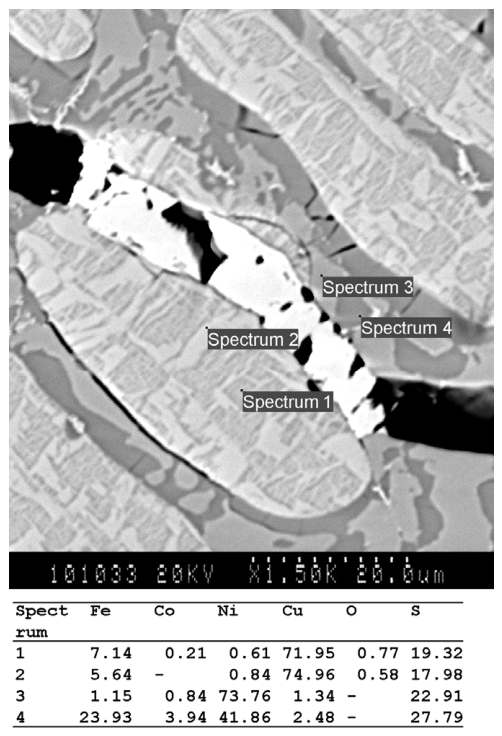
The first phase to form in the coalescence of valuable metals from fayalite-based slags is the one with the highest melting point. Hansen [33] described the mechanism of initial matte particle formation, in which Cu-S is the first phase to solidify during slow cooling. The Cu-Cu2S system contains 20.15 wt% sulfur and has a eutectic temperature of 1070 °C. Figure 8 shows the typical microstructures of the matte produced without a reducing agent. The first microconstituent that solidified can be approximated as a Cu-Cu2S system of about 75 wt% Cu, 20 wt% S, and 5 wt% Fe, with trace amounts of oxygen and nickel (Figure 8, Spectra 1 and 2), with a wide monotectic transformation starting at 810 °C. The matrix consists mainly of a light region, about 75% nickel and 25% sulfur, that can be approximated as a Ni3S2 phase with a melting temperature of around 800 °C [34] (Spectrum 3). The other phase in the matrix is darker and much sparser, with a composition of about 25% sulfur and iron and 40% nickel (Spectrum 4). This phase appears to be close to pentlandite (Fe,Ni)9S8, or perhaps a pentlandite–nickel mixture, and is the last to solidify at 600 °C [35]. Ideally, all coalesced metals would be gathered into large matte prills, as shown in Figure 8, and separated from the slag. However, some matte particles are small in size and remain entrained in slag. These trapped particles, together with the dissolved metals, constitute both a value loss and a major environmental concern, since they can leach out if disposed of together with the slag.
Figure 8.
Normalized Energy-Dispersive Spectroscopy analyses of matte formed after keeping the slag at 1300 °C for one hour.
4.2. Distribution of Valuable and Heavy Metals
Slag treatment at 1300 °C for 1 h, followed by slow cooling, results in significant coalescence of metals into the matte. In typical industrial treatment of the NiCuCo concentrate, about 95% of metals are extracted. Repetition of the industrial process, in which slag containing the remaining 5 wt% of unrecovered metals is charged instead of concentrate, resulted in a new trade-off, with 62 wt% of the investigated metals recovered. The bulk chemical compositions of mattes and newly formed slags, produced with various additives after settling at 1300 °C for one hour, are provided in Table S1 [36].
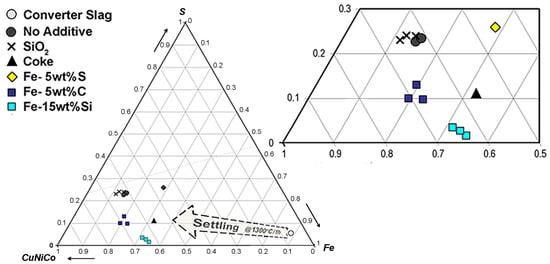
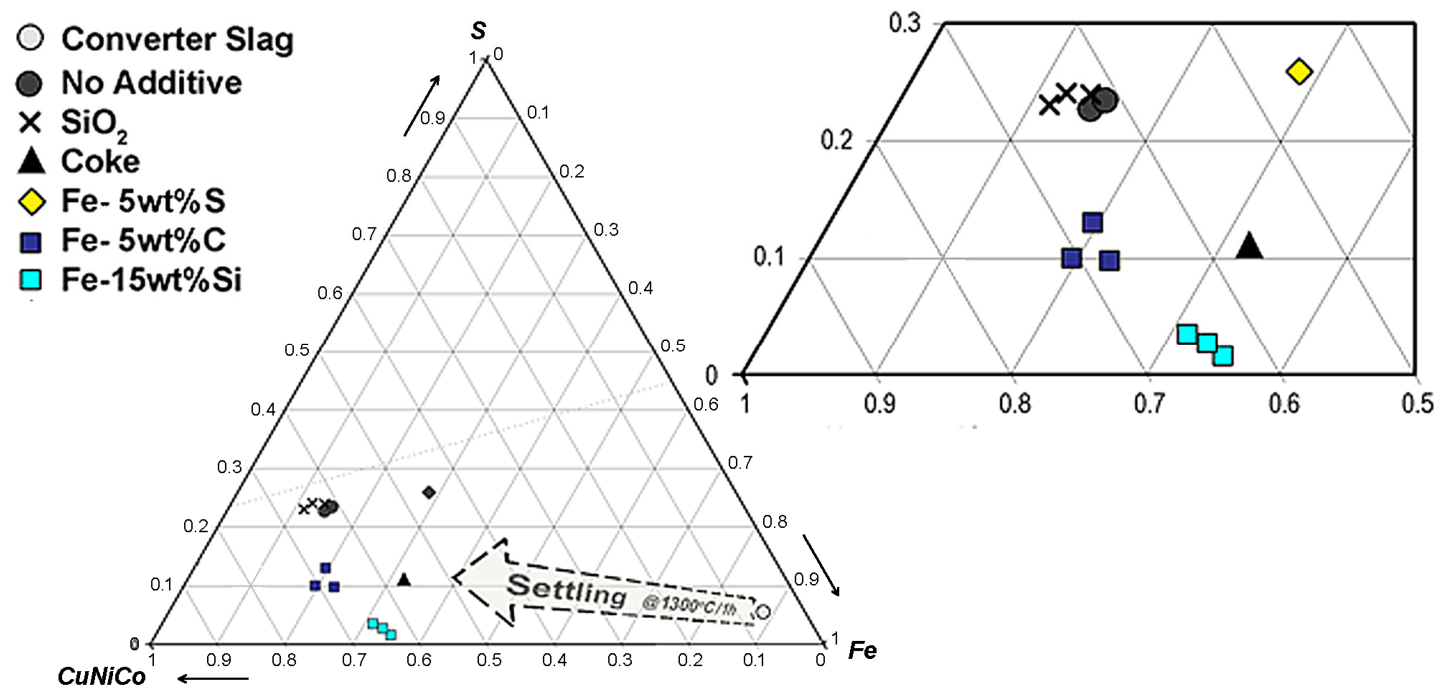
Adding exothermic additives to the treated slag increased heavy metal remediation to above 90%. Figure 9 shows the CuNiCo-Fe-S ternary diagram with the corresponding chemical compositions of the initial slag and mattes settled using various reducing agents. Copper, nickel, and cobalt were grouped to understand better how the specific reducing agent affects the recovery of valuable metals and the distribution of iron and sulfur between slag and matte. To produce a metalized matte, a reducing agent must obtain a matte below the sulfur saturation line. The dotted line that crosses the left axis at 23 wt% sulfur and the right axis at 64 wt% iron represents the stoichiometric sulfur content between FeS and Cu2S, Ni3S2 and Co9S8, i.e., the sulfur saturation line of the CuNiCo-Fe-S system.
Figure 9.
CuNiCo-Fe-S phase diagram indicating the bulk chemical composition of the matte formed from converter slag by reduction settling with various additives at 1300 °C for one hour. The dotted lines represent the sulfur saturation limits.
Adding ferrosilicon compounds formed mattes with the greatest degree of metallization and, therefore, the lowest sulfur content of any matte recovered in the investigation. The iron content of this matte is about 30–35 wt%, which is about twice that of matte formed without additives. Despite its higher iron content, the price, availability, and ability to recover nickel and cobalt in particular make ferrosilicon a very attractive reducing agent. The pig iron mattes show a higher degree of metallization, lower sulfur content, and a maximum increase in iron content of only 10 wt%. A 5 wt% addition of coke to converter slag resulted in a high degree of metallization and a low sulfur content. It also contains about 32 wt% iron, twice that of the other matte settled without additives. Unlike ferrosilicon, adding ferrous sulfide and silica did not further improve valuable metal recovery. Since silica is used as a flux in extraction processes and has no reducing potential, a significant improvement in valuable-metal recovery is not expected; only the iron concentration decreases from 15 wt% to about 11 wt%. However, making the slag more acidic could lead to metal losses due to the formation of alkaline CuO/NiO oxides [37].
Adding 5 wt% ferrous sulfide increased the matte’s iron and sulfur content while decreasing the matte grade and was, in fact, counterproductive. Adding a sulfurizing agent typically converts target metals into a dense sulfide phase (matte), facilitating separation from the oxide slag. In contrast to iron-silicon or carbon-containing compounds, ferrous sulfide is fully bonded with sulfur. It therefore cannot effectively reduce oxide forms of target metals, such as CuO or NiO, to their elemental state for efficient extraction [38]. Additionally, specific to settling processes, the substantial sulfur content introduced by ferrous sulfide stabilizes metal-containing droplets as micro-suspensions, preventing them from settling and ultimately resulting in their loss within the discarded slag [39,40].
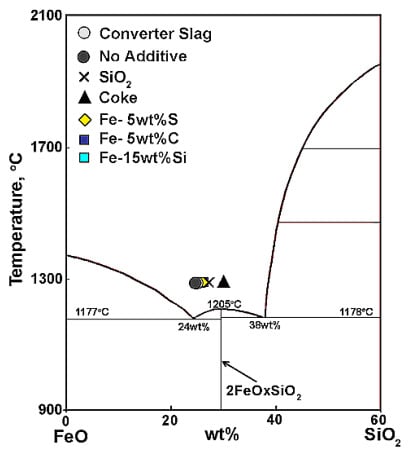
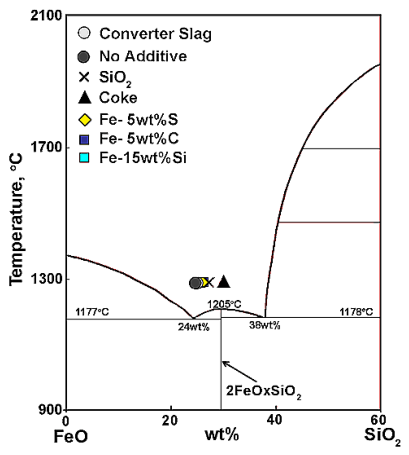
Simultaneously with the coalescence of valuable and heavy metals, all newly formed slags were depleted of these metals. Newly formed slags fall in the narrow range of 20 to 30 wt% SiO2, whose composition range corresponds to the 2FeO·SiO2 phase, which explains why fayalite was seen as the major constituent in newly formed slags in all instances. Figure 10 depicts the bulk chemical compositions of slags formed during settling on an FeO-SiO2 pseudo-binary phase diagram. Adding reducing agents increased the SiO2-to-FeO ratio in the new slag. This is an additional benefit, as some iron was recovered along with other valuable metals.
Figure 10.
FeO-SiO2 pseudo-binary phase diagram and projections of the slags’ bulk chemical compositions during settling at the 1300 °C for one hour.
4.3. Amount of Heavy Metals in Slag Converted into Valuable Metals
The quantity of matte formed following gravity separation may be calculated by comparing the mass of the matte to the combined mass of the initial slag and additive:
Matte Yield = Mass of Matte/(Mass of Slag + Mass of Additive) × 100 [%]
To calculate the recovery for a specific element, its chemical concentration in the matte is compared with its concentrations in the initial slag and additive. Equation (2) provides the recovery value for the specific element in the matte ([Me]Recovery), where [Me]Matte, [Me]Slag, and [Me]Additive denote the concentrations of the element in the matte, slag, and additive, respectively.
[Me]Recovery = Matte Yield/(Mass of Slag [Me]Slag + Mass of Additive [Me]Additive) [%]
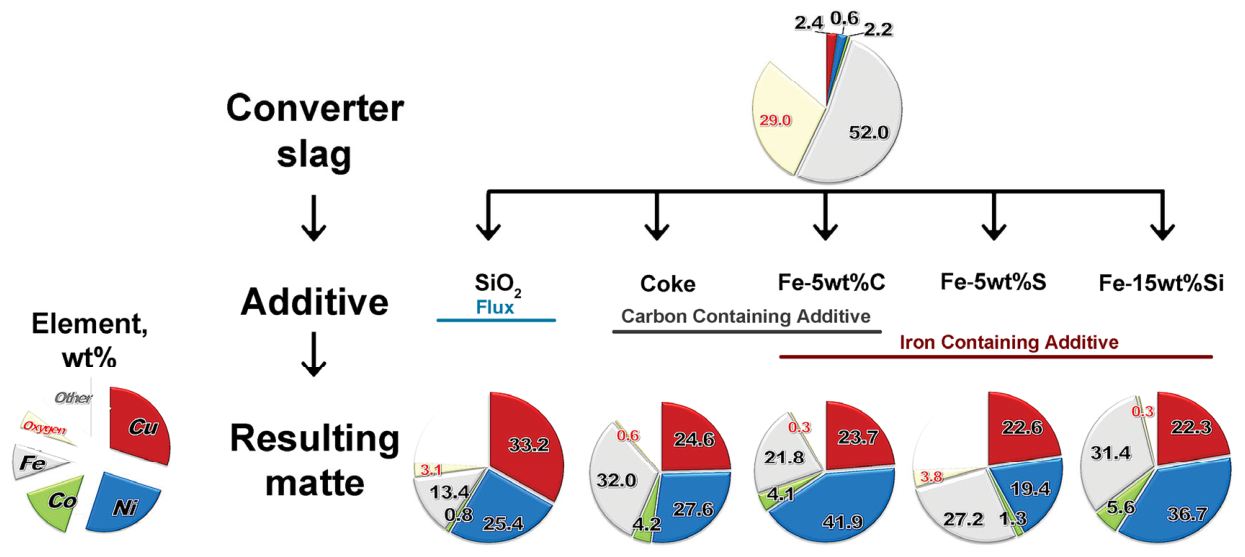
Matte formed at the bottom of the crucible can be forwarded to the final stage of metal refining, and such metals can be placed on the valuable metals market. The sum of average concentrations of three examined valuable metals in mattes is above 60 wt% for typical additives used in industry, such as coke and ferrocarbon (Figure 11). A high concentration of valuable metals in matte demonstrates the effectiveness of the settling process and supports further profitable treatment of the matte.
Figure 11.
The initial slag composition and compositions of the mattes formed after the reduction settling process.
High concentrations of heavy metals in disposed slags affect the chemical balance in soil and water. Reducing heavy metals disposed of in landfills by using these slags would be a huge environmental benefit for companies and regions involved in metal extraction processes. The major components of new slag depleted of metals are iron and silicon oxides. Such compounds are already abundant in Earth’s crust and, as such, would not impose a large environmental threat. Furthermore, these compounds have strong intermolecular bonds and, as such, are very stable and impervious to atmospheric conditions and can be further used as construction material [41,42]. Experimental evidence and material standard compliance assessments confirm that almost all slags, including Ground Granulated Blast Furnace Slag (GGBFS), Steel Slag (BOF/EAF), Copper Slag, and Zinc Slag, can effectively replace traditional construction materials [43]. Nickel slag creates a less porous matrix, reducing water absorption. Replacing natural coarse aggregates with nickel slag can increase compressive strength by up to 45%, splitting tensile strength by 24%, and the modulus of elasticity by 19% [44], while a 40% nickel slag substitution achieved a characteristic compressive strength of up to 69.73 MPa [45].
Direct leaching tests of treated residual slag from nickel laterite extraction generally demonstrate limited mobility of heavy metals. Elements such as nickel, cobalt, and other heavy metals are primarily retained within stable mineral phases, reducing their potential release into the environment [46]. Decomposing crystalline structures that encapsulate residual heavy metals typically requires high-pressure acid leaching (HPAL), which requires temperatures exceeding 250 °C, oxygen overpressure of approximately 520 kPa, and elapsing times between 60 and 90 min. Such conditions are uncommon at the Earth’s surface [47,48].
4.4. Energy Balance of Settling New Matte
If a reducing agent assimilates into the treated slag via an exothermic reaction that often increases the overall system temperature, adding energy from external sources is not required. Figure S2 [49] in the Supplemental Material shows the exothermic effect of a ferrosilicon additive during the settling of nickel slag. Simulating the settling process in an industrial environment, the molten slag would be transferred to a vessel similar to that of a converter, which is typically operated at 1250 °C. Table 2 shows the estimated energy required to raise the converter temperature from 1250 to 1300 °C, assuming equal amounts of the two most significant components, FeO and SiO2. The comparison between the energy required maintaining the process and the 14.60 kWh output from slag-reduction chemical reactions using iron-containing additives indicates that little external heating is required to remediate heavy metals from slags successfully.
Table 2.
Mass and energy balance of heating one tonne of slag from 1250 to 1300 °C. Data taken from the HSC software 8.
4.5. Economy of Settling New Matte
Since all analyses were conducted on slags received from Vale Sudbury, process parameters are taken based on internal reports for their short converter with max capacity close to 100 tonnes, in particular, the overall cost of power is at 0.15 U$/kWh, overall process efficiency at 10%, and 1440 kWh/h heat loss. Dividing heat loss and power cost by the converter capacity and process efficiency estimates the cost of maintaining the mixture at 1300 °C for one hour at 21.60 U$/Tonne. Further considering the cost of heating one tonne of FeO-SiO2 slag from 1250 °C to 1300 °C at 21.90 U$/Tonne (14.60 kWh/Tonne × 0.15 U$/kWh/0.1), the total cost of increasing by 50 °C and maintaining the temperature at 1300 °C for one hour is 44.50 U$/Tonne.
These estimates indicate that the value of the recovered metals is about 10 times the estimated capital, processing, and transportation costs of the additional process treatment. Furthermore, because its assimilation is exothermic or only slightly endothermic, reducing agents such as ferrosilicon may concentrate valuable metals without requiring an external heat source. An economically viable process for reclaiming valuable metals from converter slag can bring new revenue to the extraction process while further transforming large areas of disposed slag into profitable, resource-rich fields [50,51].
Additive prices vary over time and are influenced by trends in related markets that share the same feedstock. Ferrosilicon, used as an alloy additive in high-temperature metal extraction, typically costs between $1100 and $1300 per ton [52]. The required quantity depends primarily on the desired nickel grade and the initial iron-to-nickel ratio in the concentrate or ore. Usage typically ranges from 5 to 30 kg of ferrosilicon per ton of concentrate [53]. Given current prices and the potential for higher yields of valuable metals, using additives remains economically justified.
Scaling up the nickel slag settling process in large industrial vessels offers significant opportunities to increase throughput and improve process economics, provided key operational factors are carefully managed. Increased heat loss due to greater surface area, challenges in maintaining uniform mixing throughout the vessel, accelerated refractory corrosion from prolonged exposure to high temperatures, and difficulties in achieving effective matte-slag separation may be particularly significant. Addressing these scaling-related risks requires careful design considerations, advanced process control strategies, and ongoing monitoring to ensure optimal performance and longevity of the slag cleaning operation.
5. Conclusions
This study demonstrates that significant quantities of valuable metals can be efficiently recovered from nickel converter slag using reduction settling at 1300 °C with carbon- and iron-based additives. Over 90% of copper, nickel, and cobalt were successfully coalesced into a high-grade matte phase within one hour, while the residual slag was depleted of hazardous metals and consisted mainly of stable iron and silicon oxides. XRD and SEM-EDS analyses confirmed the near-complete conversion of magnetite to fayalite and the effective removal of leachable metal-bearing phases from the slag. The process is economically viable: the value of recovered metals is approximately ten times the additional processing costs, and the exothermic reactions from additives such as ferrosilicon significantly reduce external energy requirements. Implementing this approach in existing metallurgical facilities can promote sustainable resource management and remediate legacy slag deposits, providing both environmental and economic benefits to the metals extraction industry.
Overall, this work provides a practical and economically viable solution for sustainable metal recovery and heavy metal remediation in the metal extraction industries. The process supports circular economy principles, reduces the environmental footprint of slag disposal, and can be implemented in existing pyrometallurgical facilities with zero additional capital cost. Future research should explore the process’s scalability and its application to a wider range of slag types and industrial conditions.
Supplementary Materials
The following supporting information can be downloaded at https://www.mdpi.com/article/10.3390/sci8090260/s1, S1: Market value of the newly formed matte; S2: Technical analyses; S3: Energy release during assimilation of ferrosilicon and copper-silicon additives into fayalite slags; Figure S1: Historical market prices for three most abducting valuable metals in converter slags and total value of these metals recovered after settling on 1300 °C using different reducing agents; Figure S2: Thermal analysis curves after immersing 25 g of additives into 475 g FeO/SiO2-based liquid bath kept at 1518 K operational temperature; Table S1: Normalized Assays (wt%) of elemental concentrations in mattes and newly formed slags after settling at 1300 °C for one hour [36].
Author Contributions
Conceptualization, A.M. and J.N.; methodology, A.M. and J.N.; validation, A.M. and Ž.P.; formal analysis, A.M. and J.N.; investigation, A.M. and P.S.; resources, A.M. and Ž.P.; data curation, A.M. and J.I.; writing—original draft preparation, A.M. and J.N.; writing—review and editing, A.M. and J.I.; visualization, A.M. and P.S.; supervision, A.M. and S.P.; project administration, A.M. and S.P. All authors have read and agreed to the published version of the manuscript.
Funding
This research was funded by the Ministry of Science, Technological Development and Innovation, the Republic of Serbia, grant number 451-03-33/2026-03/200175.
Data Availability Statement
Data supporting the findings of this study are available from the corresponding author upon reasonable request.
Acknowledgments
This research supports the United Nations Sustainable Development Goals as outlined in the document Transforming Our World: the 2030 Agenda for Sustainable Development, particularly SDG 6 (Clean Water and Sanitation) and SDG 9 (Inclusive and sustainable industrialization and innovation).
Conflicts of Interest
The authors declare no conflicts of interest.
References
- Giljum, S.; Maus, V.; Sonter, L.; Luckeneder, S.; Werner, T.; Lutter, S.; Gershenzon, J.; Cole, M.J.; Siqueira-Gay, J.; Bebbington, A. Metal mining is a global driver of environmental change. Nat. Rev. Earth Environ. 2025, 6, 441–455. [Google Scholar] [CrossRef] [Scilit]
- Aska, B.; Sonter, L.J.; zu Ermgassen, S.O.; Franks, D.M.; Mingorria, S.; Iniesta-Arandia, I.; Lloyd, T.J.; Torres, A. Mining, biodiversity and social conflict in the renewable energy transition. Nat. Rev. Biodivers. 2025, 1, 597–614. [Google Scholar] [CrossRef] [Scilit]
- Sanchita, B.; Lolesh, P.; Barnali, S.; Chintey, C.; Dipankar, S. Heavy Metal Contamination in Vegetables and Their Amelioration: A Review. Agric. Rev. 2026, 47, 1–12. [Google Scholar] [CrossRef] [Scilit]
- Rausch, N.; Nieminen, T.; Ukonmaanaho, L.; Le Roux, G.; Krachler, M.; Cheburkin, A.K.; Bonani, G.; Shotyk, W. Comparison of Atmospheric Deposition of Copper, Nickel, Cobalt, Zinc, and Cadmium Recorded by Finnish Peat Cores with Monitoring Data and Emission Records. Environ. Sci. Technol. 2005, 39, 5989–5998. [Google Scholar] [CrossRef] [Scilit] [PubMed]
- Bayless, E.R.; Bullen, T.D.; Fitzpatrick, J.A. Use of 87Sr/86Sr and δ11B To Identify Slag-Affected Sediment in Southern Lake Michigan. Environ. Sci. Technol. 2004, 38, 1330–1337. [Google Scholar] [CrossRef] [Scilit] [PubMed]
- Velleux, M.L.; Julien, P.Y.; Rojas-Sanchez, R.; Clements, W.H.; England, J. Simulation of Metals Transport and Toxicity at a Mine-Impacted Watershed: California Gulch, Colorado. Environ. Sci. Technol. 2006, 40, 6996–7004. [Google Scholar] [CrossRef] [Scilit] [PubMed]
- Shen, H.; Forssberg, E. An overview of recovery of metals from slags. Waste Manag. 2003, 23, 933–949. [Google Scholar] [CrossRef] [Scilit] [PubMed]
- Bindler, R.; Yu, R.; Hansson, S.; Claßen, N.; Karlsson, J. Mining, Metallurgy and the Historical Origin of Mercury Pollution in Lakes and Watercourses in Central Sweden. Environ. Sci. Technol. 2012, 46, 7984–7991. [Google Scholar] [CrossRef] [Scilit] [PubMed]
- Rankin, W.J. Towards zero waste production in the minerals and metals sector. In REWAS 2013; Kvithyld, A., Meskers, C., Krumdick, G., Mishra, B., Reuter, M., Wang, W., Schlesinger, M., Gaustad, G., Lados, D., Spangenberger, J., Eds.; Springer: Cham, Switzerland, 2013. [Google Scholar] [CrossRef] [Scilit]
- Nakajima, K.; Takeda, O.; Miki, T.; Matsubae, K.; Nagasaka, T. Thermodynamic Analysis for the Controllability of Elements in the Recycling Process of Metals. Environ. Sci. Technol. 2011, 45, 4929–4936. [Google Scholar] [CrossRef] [Scilit] [PubMed]
- Zhou, Y.; Haynes, R.J. Sorption of heavy metals by inorganic and organic components of solid wastes: Significance to use of wastes as low-cost adsorbents and immobilizing agents. Crit. Rev. Environ. Sci. Technol. 2010, 40, 909–977. [Google Scholar] [CrossRef] [Scilit]
- Li, Y.; Perederiy, I.; Papangelakis, V.G. Cleaning of waste smelter slags and recovery of valuable metals by pressure oxidative leaching. J. Hazard. Mater. 2008, 152, 607–615. [Google Scholar] [CrossRef] [Scilit] [PubMed]
- Zhu, J.; Chertow, M. Greening Industrial Production through Waste Recovery: “Comprehensive Utilization of Resources” in China. Environ. Sci. Technol. 2016, 50, 2175–2182. [Google Scholar] [CrossRef] [Scilit] [PubMed]
- Dodson, J.R.; Parker, H.L.; Muñoz García, A.; Hicken, A.; Asemave, K.; Farmer, T.J.; He, H.; Clark, J.H.; Hunt, A.J. Bio-derived Materials as a Green Route for Precious & Critical Metal Recovery and Re-use. Green Chem. 2015, 17, 1951–1965. [Google Scholar] [CrossRef] [Scilit]
- Stuckey, J.W.; Neaman, A.; Ravella, R.; Komarneni, S.; Martínez, C.E. Highly Charged Swelling Mica Reduces Free and Extractable Cu Levels in Cu-Contaminated Soils. Environ. Sci. Technol. 2008, 42, 9197–9202. [Google Scholar] [CrossRef] [Scilit] [PubMed]
- Neary, B.P.; Dillon, P.J.; Munro, J.R.; Clark, B.J. The Acidification of Ontario Lakes: An Assessment of Their Sensitivity and Current Status with Respect to Biological Damage; Ontario Ministry of the Environment, Conservation and Parks: Toronto, ON, Canada, 1990; 170p. [Google Scholar]
- The need for government funding for green chemistry in the USA. Green Chem. 2003, 5, G14–G15. [CrossRef] [Scilit]
- Reck, B.K.; Graedel, T.E. Challenges in Metal Recycling. Science 2012, 337, 690–695. [Google Scholar] [CrossRef] [Scilit] [PubMed]
- Marrero, J.O.; Coto, O.; Goldmann, S.; Graupner, T.; Schippers, A. Recovery of Nickel and Cobalt from Laterite Tailings by Reductive Dissolution under Aerobic Conditions Using Acidithiobacillus Species. Environ. Sci. Technol. 2015, 49, 6674–6682. [Google Scholar] [CrossRef] [Scilit] [PubMed]
- Zou, Y.; Wang, X.; Khan, A.; Wang, P.; Liu, Y.; Alsaedi, A.; Hayat, T.; Wang, X. Environmental Remediation and Application of Nanoscale Zero-Valent Iron and Its Composites for the Removal of Heavy Metal Ions: A Review. Environ. Sci. Technol. 2016, 50, 7290–7304. [Google Scholar] [CrossRef] [Scilit] [PubMed]
- Lee, K.J.; Choi, S.; Park, S.; Moon, H.R. General Recyclable Redox-Metallothermic Reaction Route to Hierarchically Porous Carbon/Metal Composites. Chem. Mater. 2016, 28, 4403–4408. [Google Scholar] [CrossRef] [Scilit]
- Moore, K.R.; Marquis, E.; Shanks, K.; Wall, F. Mining of primary raw materials as the critical foundation of ‘sustainable’ metals: A wicked problem for technology innovation clusters. Phil. Trans. R. Soc. A 2024, 382, 20230241. [Google Scholar] [CrossRef] [Scilit] [PubMed]
- Peng, Y.; He, L.; Cai, G.; Zhang, Z. Metallurgical Recycling and Comprehensive Utilization of Copper Slag Towards Sustainable Metallurgy: A Critical Review. J. Sustain. Metall. 2026. [Google Scholar] [CrossRef] [Scilit]
- Picazo-Rodríguez, N.G.; Garza Román, M.R.; Carrillo Pedroza, F.R.; Soria-Aguilar, M.D.J.; Toro, N.; Galleguillos-Madrid, F.M.; Sales-Cruz, M.; Baltierra-Costeira, G.; Puente Siller, D.M. Geology, Reserves, Metallurgical Processing and Recycling of Cobalt—A Review. Minerals 2026, 16, 729. [Google Scholar] [CrossRef] [Scilit]
- Acquah, G.; Skinner, W.; Abaka-Wood, G.; Spiridonov, P.; Addai-Mensah, J.; Asamoah, R. Extraction of Nickel and Cobalt from Complex Low-Grade Lateritic Ores: Challenges and Opportunities. Minerals 2026, 16, 287. [Google Scholar] [CrossRef] [Scilit]
- Upadhyay, R.K. Metallic Minerals and Their Deposits. In Geology and Mineral Resources; Springer Geology: Singapore, 2025. [Google Scholar] [CrossRef] [Scilit]
- Andrieu, B.; Cervantes-Barrón, K.; Pant, R.; Barzin, S.; Heydari, M.; Parpan, G.; Cullen, J. The impact of mine ownership on trade of metal ores. Resour. Conserv. Recycl. 2026, 225, 108647. [Google Scholar] [CrossRef] [Scilit]
- Spiryagin, V.V.; Kravchenko, I.N.; Kuznetsov, Y.A.; Spiryagin, V.V. Review of International Experience in Substantiating the Technology of Smelting Copper Sulfide-Containing Concentrates Taking into Account the Criteria of Efficiency, Cost Effectiveness, and Environmental Friendliness. Surf. Eng. Appl. Electrochem. 2025, 61, 192–201. [Google Scholar] [CrossRef] [Scilit]
- Mitrašinović, A.M.; Wolf, A. Separation and Recovery of Valuable Metals from Nickel Slags Disposed in Landfills. Sep. Sci. Technol. 2015, 50, 2553–2558. [Google Scholar] [CrossRef] [Scilit]
- Marcuson, S.W.; Diaz, C.M. The changing Canadian nickel smelting landscape—Late 19th century to early 21st century. Can. Metall. Q. 2007, 46, 33–46. [Google Scholar] [CrossRef] [Scilit]
- Ellingham, T. Transactions and Communications. J. Soc. Chem. Ind. 1944, 63, 125. [Google Scholar] [CrossRef] [Scilit]
- Reed, T. Free Energy of Formation of Binary Compounds: An Atlas of Charts for High-Temperature Chemical Calculations; MIT Press: Cambridge, MA, USA, 1971; 81p. [Google Scholar]
- Hansen, M.; Anderko, K.; Salzberg, H.W. Constitution of Binary Alloys. J. Electrochem. Soc. 1958, 105, 260C–261C. [Google Scholar] [CrossRef] [Scilit]
- Cook, W.R., Jr. Case Western Reserve University, Phase Changes in Cu2S as a Function of Temperature, National Bureau of Standards Special Publication 364, Solid State Chemistry. In Proceedings of the 5th Materials Research Symposium, Gaithersburg, MD, USA, 18–21 October 1971. [Google Scholar]
- Kaneda, H.; Takenouchi, S.; Shoji, T. Stability of pentlandite in the Fe-Ni-Co-S system. Miner. Depos. 1986, 21, 169–180. [Google Scholar] [CrossRef] [Scilit]
- Wolf, A. Converter Slag Cleaning of CVRD-Inco’s Copper Cliff Smelter. Master’s Thesis, University of Toronto, Toronto, ON, Canada, 2007. [Google Scholar]
- Said, A.; El-Wahab, M.; Soliman, S.; Goda, M. Synthesis and Characterization of Nano CuO-NiO Mixed Oxides. Nanosci. Nanoeng. 2014, 2, 17–28. [Google Scholar] [CrossRef] [Scilit]
- Mitrašinović, A.M.; Yuankun, Y.; Stopic, S.; Radosavljević, M. Feasibility of Recovering Valuable and Toxic Metals from Copper Slag Using Iron-Containing Additives. Metals 2023, 13, 1467. [Google Scholar] [CrossRef] [Scilit]
- Wu, L.; Wang, H.; Dong, K. Effect of Sulfur Content on Copper Recovery in the Reduction Smelting Process. Metals 2022, 12, 857. [Google Scholar] [CrossRef] [Scilit]
- Tang, J.; Zhang, W.; Bai, K.; Zhang, F.; Jiang, J. Recent advances in iron sulfides for heavy metal reme-diation and their environmental behaviors. J. Environ. Chem. Eng. 2025, 13, 119370. [Google Scholar] [CrossRef] [Scilit]
- Bobrowski, A.; Gawlicki, M.; Małolepszy, J. Analytical Evaluation of Immobilization of Heavy Metals in Cement Matrices. Environ. Sci. Technol. 1997, 31, 745–749. [Google Scholar] [CrossRef] [Scilit]
- Islam, M.; Catalan, L.; Yanful, E. Effect of Remineralization on Heavy-Metal Leaching from Cement-Stabilized/Solidified Waste. Environ. Sci. Technol. 2004, 38, 1561–1568. [Google Scholar] [CrossRef] [Scilit] [PubMed]
- Salas, I.; Cifrian, E.; Lastra-González, P.; Castro-Fresno, D.; Andrés, A. Assessment of Dynamic Surface Leaching of Asphalt Mixtures Incorporating Electric Arc Furnace Steel Slag as Aggregate for Sustainable Road Construction. Sustainability 2025, 17, 3737. [Google Scholar] [CrossRef] [Scilit]
- Sjah, J.; Ferdani, J.F.; Rahmawaty, D.; Handika, N.; Astutiningsih, S.; Vincens, E. Evaluation of Elastic Modulus and Strain Characteristics of Sustainable Concrete With Ferronickel Slag Coarse Aggregate Using Digital Image Correlation. J. Eng. 2026, 1, 4673025. [Google Scholar] [CrossRef] [Scilit]
- Syarif, M.; Thoengsal, J.; Setiawan, R. Performance Evaluation of High-Strength Self-Compacting Concrete (SCC) with Nickel Slag as Partial Fine Aggregate Replacement. Struct. Infrastruct. Plan. Implement. Legis. 2026, 2, 67–75. [Google Scholar] [CrossRef] [Scilit]
- Guo, Z.; Zhu, D.; Pan, J.; Zhang, F. Mineralogical Characteristics and Preliminary Beneficiation of Nickel Slag from Reduction Roasting-Ammonia Leaching. Minerals 2017, 7, 98. [Google Scholar] [CrossRef] [Scilit]
- Baghalha, M.; Papangelakis, V.G.; Curlook, W. Factors affecting the leachability of Ni/Co/Cu slags at high tempera-ture. Hydrometallurgy 2007, 85, 42–52. [Google Scholar] [CrossRef] [Scilit]
- Tan, X.; Zhou, L.; He, Y.; Chen, M.; Wan, X. Green and synergistic process for high-efficiency recycling and valorization of nickel smelting slag. Sep. Purif. Technol. 2026, 392, 137205. [Google Scholar] [CrossRef] [Scilit]
- Mitrašinović, A.M. On the assimilation mechanism of additives used in non-ferrous metal extraction processes. Can. Metall. Q. 2015, 54, 494–499. [Google Scholar] [CrossRef] [Scilit]
- Godbole, P.; Deshpande, K.; Jawadand, S.; Meshram, P.; Dora, M.L.; Meshram, R.; Meshram, T.; Nandi, A.K.; Randive, K. Innovative Approach to Transform Mining Waste into Value Added Products. In Current Trends in Mineral-Based Products and Utilization of Wastes: Recent Studies from India. MBD 2022. Springer Proceedings in Earth and Environmental Sciences; Randive, K., Nandi, A.K., Jain, P.K., Jawadand, S., Eds.; Springer: Cham, Switzerland, 2024. [Google Scholar] [CrossRef] [Scilit]
- Czerwinski, F. Critical Minerals for Zero-Emission Transportation. Materials 2022, 15, 5539. [Google Scholar] [CrossRef] [Scilit] [PubMed]
- Shaojun, C. Ferrosilicon. In The ECPH Encyclopedia of Mining and Metallurgy; Springer Nature: Singapore, 2026; pp. 660–661. [Google Scholar] [CrossRef] [Scilit]
- Abdirashit, A.; Yessengaliyev, D.; Kelamanov, B.; Sariyev, O.; Abikenova, G.; Nurgali, N.; Almagambetov, M.; Zhuniskaliyev, T.; Kuatbay, Y.; Abylay, Z. Investigation of the Possibility of Obtaining Nickel-Containing Ferroalloys from Lateritic Nickel Ores by a Metallothermic Method. Metals 2025, 15, 428. [Google Scholar] [CrossRef] [Scilit]

Disclaimer/Publisher’s Note: The statements, opinions and data contained in all publications are solely those of the individual author(s) and contributor(s) and not of MDPI and/or the editor(s). MDPI and/or the editor(s) disclaim responsibility for any injury to people or property resulting from any ideas, methods, instructions or products referred to in the content. |
© 2026 by the authors. Licensee MDPI, Basel, Switzerland. This article is an open access article distributed under the terms and conditions of the Creative Commons Attribution (CC BY) license.