


Abstract
Trauma and substance use disorders commonly co-occur, are clinically complex, and are associated with poorer outcomes. This study applies mixture modeling methods in a co-occurring model to examine group membership patterns across trauma and substance use to identify differences in treatment outcomes. Using the constructs of trauma and substance use, a co-occurring model was conducted to examine group membership patterns at intake and identify differences in outcomes among court-mandated participants in a trauma-informed substance abuse treatment program. This approach uses a joint/cross-classification of two independent Latent Profile Analyses (LPAs) to examine patterns. Findings from the LPA identified three trauma and four substance use profiles. Classes from each LPA were regressed in the co-occurring model, resulting in 12 unique pattern combinations, which were then compared to examine the differences in graduate rates. The results demonstrated that those in the Minimal Trauma/Alcohol Use group were more likely to complete treatment than other higher drug-using populations. Given the complexity of the clinical treatment and the prevalence of co-occurring disorders, the application of this approach can provide a means to examine different grouping patterns across two diagnostic criteria that can guide and tailor treatment efforts.
1. Introduction
Mental health and substance use conditions often co-occur, with approximately 21.5 million adults falling into this category [1]. Co-occurrence can be difficult to diagnose, as symptoms of substance abuse can mask symptoms of mental illness and symptoms of mental illness can often be confused with symptoms of addiction. Of those with co-occurring disorders, only 18.6% received treatment for both conditions and 37.6% received no treatment at all [1].
Co-occurring disorders present many unique challenges and generally have a poorer prognosis compared to those with a single disorder [2,3]. Individuals with co-occurring disorders experience poorer medication compliance, a decreased likelihood for successful completion of treatment, higher rates of hospitalization and suicidal behavior, and more rapid recurrence of symptoms following release from treatment [3,4]. Undiagnosed and untreated co-occurring disorders are associated with an increased likelihood of additional difficulties such as homelessness, medical illness, suicide, incarceration, and early mortality [1]. Studies have demonstrated that more than half of jail inmates with mental disorders also have co-occurring substance use disorders [5,6]. Additionally, researchers and health care providers have come to recognize the heterogeneity among individuals with co-occurring disorders [7].
Studies have documented the high rates of co-occurrence between trauma and substance use disorders specifically, with a trauma history present in more than half of patients with a substance use disorder (SUD) [8,9] and nearly half of those with a PTSD diagnosis also meet the criteria for a SUD [10]. The association between trauma and substance use is clinically significant because of the frequency with which they co-occur and the difficulty to treat them, with such patients being reported as being extremely challenging, experiencing many crises, and requiring more complex and costly clinical courses of treatment [11,12,13].
Several theories have been developed to explain the functional association between trauma and substance use, varying in which diagnosis preceded the other. The most prominent theory is the self-medication theory, which posits that substance use serves as an attempt to alleviate trauma or PTSD symptoms [14]. Alternative theories, such as the high-risk hypothesis, suggest that the lifestyle accompanying substance use involves engaging in high-risk behaviors in dangerous environments, thereby increasing the likelihood of experiencing a traumatic event [15]. The susceptibility hypothesis proposes that increased anxiety and arousal occurs in tandem with chronic substance use and increases the biologic vulnerability to develop PTSD following trauma exposure [16]. The shared vulnerability hypothesis suggests that the shared risk factors may account for both PTSD and SUDs and, as such, the two are not causally related once shared risk factors are accounted for [17]. While research and theory have linked trauma and substance use, they remain distinct variables that impact treatment outcomes.
1.1. Mixture Models
Mixture modeling is an approach to examine patterns of data and can be used to explore trauma and substance use as distinct variables to capture how these co-occurring conditions can be best addressed in treatment. Mixture models refer to statistical approaches in which individuals are classified into unobserved subpopulations or latent classes, based on similar patterns of observed cross-sectional and/or longitudinal data. This is achieved by examining the profiles of responses from individuals to identify relationships between observed dependent variables and categorical or continuous latent variables [18]. Several methodologies fall under the umbrella term of mixture models, all of which are person-centered analytic approaches that focus on similarities and differences among people instead of relationships among variables [18,19]. Latent Profile Analysis (LPA) and Latent Class Analysis (LCA) are subsumed under this larger category of statistical mixture models and are ideal methods to model heterogeneity in populations by identifying different latent profiles or classes based on response patterns [18]. The statistical method is similar to cluster analysis, classifying responses into homogenous groups that have similar profiles for the variables of interest; however, the classification of individuals into groups is done using a latent variable, based on unobserved heterogeneity in the data [20]. These methods group individuals based on the shared response patterns of continuous (LPA) or categorical (LCA) observed variables in cross-sectional datasets. The resulting profiles of individuals are characterized by the means (LPA) or frequency of endorsement (LCA) for specific indicators [21]. The latent classes can then be used to examine differences in outcomes based on class membership.
1.2. Applying Mixture Models to Co-Occurring Conditions
Latent analysis can be used to identify different grouping patterns across a single construct. For example, Cleveland and colleagues conducted a LCA to examine substance use among 12th grade high school students [22]. The authors used five categorical indicators to measure lifetime and recent alcohol, tobacco, and marijuana use. They found six latent classes of substance use that differed by degree (non-user, user, heavy user) and type of use (i.e., alcohol, marijuana, tobacco). Thus, in this context, LCA helped to identify different classes or groupings of substance use and to support the value of distinguishing between moderate and problematic use, particularly for older adolescents [23]. Similarly, Breslau and colleagues used LCA to identify how persons who experience traumatic events might be sorted into classes based on posttraumatic stress disorder (PTSD) symptom profiles [24]. Seventeen indicators of PTSD were used and resulted in three classes of trauma that differed by level of disturbance (none, intermediate, and pervasive). In this trauma context, LCA shed light into the ordinal nature of PTSD and identified emotional numbing as differentiating the class with pervasive disturbance.
The examples above demonstrate how latent analysis can be used to identify different grouping patterns across a single construct. However, there may be contexts when multiple theoretically distinct variables are of interest. In these cases, combining the variables into a single latent class analysis may mask patterns. If two distinct constructs are combined, fewer classes may be found, as some indicators may be related and thereby would be grouped together in the same class. Vaughn and colleagues demonstrated this in their study, using LPA to identify subgroups of over 700 juvenile offenders based on clinically relevant measures of psychiatric symptoms (including past traumatic experiences), lifetime substance use, and drug- and alcohol-related problems [25]. Despite the range and number of variables used, only four profiles emerged representing a severity-based gradient of symptom and substance use endorsement, ranging from mild, to moderately low, to high, to severely distressed. The advantage of latent analysis is the ability to identify unique profiles based on response patterns; however, interesting profiles may be missed if items from distinct constructs are mixed.
1.2.1. Joint Model
Traditionally, LTA has been used as a longitudinal extension of LPAs or LCAs. LTA builds on LPAs or LCAs, using longitudinal data to identify movements across latent groups over time by regressing one latent class variable onto another [26]. The movement of individuals between latent classes is expressed using transition probabilities, which are the probability of being in a particular latent class during the second occasion, which is conditional on their status in a particular latent class during the previous occasion. The LTA model is used in a longitudinal context to model change over time in latent groupings; however, this framework can be applied to examine patterns across two independent latent class variables as a way to observe different patterns across latent groups. The relationship of latent variables can be expressed using the following equation:
where ikm is the transition probability for an individual i to be in latent class k at time point t, given that the individual was in latent class m at the preceding time point, t − 1 [19]. An examination of the statistical equation reveals that there is no requirement within the equation that the two latent class variables be longitudinal measures. Thus, we can use this framework as a way to study the relationship of two latent class variables that capture heterogeneity in distinct constructs, examining the probability of an individual i to be in latent class k for one construct, given that the individual was in a latent class m on another construct. That is, we apply this framework to conduct a joint/cross-classification model of two latent class variables. This allows us to examine patterns across two independent latent class variables as a way to observe different patterns across latent groups [19]. When working with distinct constructs, such as in co-occurring disorders, two latent profile analyses can be conducted for each theoretical construct, resulting in two sets of profiles. While the two profiles are distinct, given that the two conditions co-occur, the profiles can be cross-classified to examine patterns across construct groups.
τikm = P(Cit = k|Ci(t−1) = m)
1.3. Current Study
The purpose of this research was to apply a joint/cross-classification model to examine patterns across two independent latent profile variables. This approach will be referred to as the co-occurring model. Using the constructs of trauma and substance use, the co-occurring model examined group membership patterns to identify differences in treatment outcomes among individuals who were court-mandated to participate in a trauma-informed substance abuse treatment program. Two separate LPAs were conducted for trauma and substance use and then regressed in the co-occurring model, highlighting different membership patterns. It is anticipated that the trauma profiles will reflect the severity of trauma symptoms and that the substance use profiles will differ by drug of choice and extent of drug use. It is projected that by regressing each set of profiles onto each other, unique and interesting patterns will emerge, which will reflect the differential rates of treatment success. With the complexity of clinical treatment and prevalence of co-occurring disorders, this application provides a means to examine different grouping patterns across two diagnostic criteria, which can guide and tailor treatment efforts that would not have been identified if analyzed in a single LPA model.
2. Materials and Methods
2.1. Participants
The participants were 407 adults (n = 122 or 30% men and n = 285 or 70% women) who were court mandated to participate in a trauma-informed substance abuse treatment program located in Southern California. Approximately 57% of participants were living in a controlled environment (i.e., jail, psychiatric treatment, or alcohol or drug treatment). Over half of the participants identified as European American, 38% Latino, 4% Native American, 3% Asian, and 3% African American. Ages ranged from 18 to 59 (M = 30.24; SD = 8.72). Years of drug use ranged from 0 to 47 (M = 12.80; SD = 8.46). All participants received trauma-informed substance abuse treatment as a part of drug court.
2.2. Measures
2.2.1. Trauma
The Trauma Symptom Inventory (TSI) measures acute and chronic posttraumatic symptomatology, including the effects of abuse, assault, major accidents, and disasters [27]. The TSI assesses a range of symptoms, including symptoms associated with posttraumatic stress disorder (PTSD), as well as interpersonal difficulties that are often associated with more chronic psychological trauma. The TSI consists of 100 items, assessing each symptom item according to its frequency of occurrence over the past six months, using a four-point scale from 0 (“never”) to 3 (“often”). The measure yields ten clinical subscales: anxious arousal, depression, anger/irritability, intrusive experiences, defensive avoidance, dissociation, sexual concern, dysfunctional sexual behavior, impairs self-references, and tension reduction behavior. The raw scores for each subscale were converted to sex and age normalized T-scores. The TSI has been standardized across clinical, university and military samples and the ten clinical scales are internally consistent: 0.86, 0.87, and 0.84, respectively [28].
2.2.2. Substance Use
The Addiction Severity Index (ASI) is a semi-structured interview for substance abuse assessment and treatment planning [29]. The ASI examines seven potential problem areas—medical status, employment and support, drug use, alcohol use, legal status, family/social status, and psychiatric status—assessing both lifetime and use in the last 30 days. Since all participants were actively involved in treatment, 30-day composite scores were not used, as most were in sober/clean settings (residential program, jail, etc.). Lifetime drug use was transformed into a lifetime ratio to account for age differences, with years of drug use divided by age to determine a lifetime ratio of drug use. Ratios were continuous, ranging from 0 to 1.
2.2.3. Graduation
Graduation or completion of the mandated treatment program was captured as either terminating prematurely (0) or successfully graduating or completing the treatment program (1).
2.3. Procedures
All participants were enrolled in a Substance Abuse and Mental Health Services Administration (SAMHSA)-funded study examining trauma-informed substance abuse interventions. All staff members attended yearly training on the goals of trauma-informed treatment and counselors attended in-depth training on implementing Seeking Safety, a trauma-informed substance abuse treatment program. Seeking Safety is a cognitive-behavioral treatment program developed to build coping skills for adults with a trauma history and substance abuse problems [30]. Groups help clients to understand the co-occurrence of trauma and substance use, as well as the impact of both on daily functioning. Research has yielded promising results for the program in reducing trauma symptoms and substance use [31,32].
All participants were mandated to attend weekly Seeking Safety groups through drug court (n = 267) or a treatment program for perinatal women (n = 114). Participants in the drug court received court supervision and substance abuse treatment by a community-based treatment provider. The drug court followed the key guidelines established by the National Association of Drug Court Professionals, including the use of a non-adversarial approach toward offenders, frequent drug and alcohol testing, use of graded incentives and sanctions in response to compliance with treatment, and ongoing judicial involvement [33]. In addition to trauma-informed treatment groups, the program provided case management, relapse prevention groups, individual counseling, vocational assessment, and drug testing. The perinatal program was designed for women with substance abuse problems and their young children. It provided 6 months of residential treatment, followed by outpatient treatment. Interventions included individual and group counseling, parenting classes, childcare services, drug testing, relapse prevention groups, and case management and assessment and developmental interventions for the children as needed. All measures used in this analysis were gathered from intake assessments. Graduation was determined once the participant completed treatment or terminated.
2.4. Data Analysis
Prior to conducting the co-occurring model, data were screened for violations of multivariate assumptions. Visual inspections of graphical tests were conducted to examine the normality distribution for each variable and identify outliers. Cutoff values of |2.0| for skewness, and |7.0| for kurtosis were used [34,35]. All values of skewness and kurtosis were within the acceptable limits for each of the indicator variables. Descriptive statistics were conducted for the indicator and outcome variables (see Table 1).
Table 1.
Correlation matrix, means, and standard deviations for indicators (N = 407).
2.4.1. Latent Profile Analysis
The LPA and co-occurring models were estimated in Mplus, Version 7 [36], using full information maximum likelihood estimation, which allowed for item-level missing data [36,37]. Two latent profile analyses were conducted separately for each latent profile variable. Indicators of the LPA for the Trauma Severity Index (TSI) were: anxious arousal, depression, anger/irritability, intrusive experiences, defensive avoidance, dissociation, sexual concern, dysfunctional sexual behavior, impairs self-references, and tension reduction behavior. Based on the preliminary findings described below, the following five indicators were eventually used for the trauma LPA, as the additional variables did not assist in differentiating class: anxious arousal, depression, intrusive experiences, dissociation, and tension reduction behavior. Indicators for substance use assessed addiction over the course of the participant’s lifetime. The five indicators were: number of years using any drug, number of years using alcohol, number of years using marijuana, number of years using methamphetamines, and years using polysubstances. The five indicators were transformed, dividing years using the substance by age to create a ratio of lifetime use, controlling for age.
LPA models were fitted in a series of steps, starting with a one-class model and then increasing the number of classes. As the number of classes increased, each model was compared to the previous model. The model with the greatest number of classes was only selected if increasing the number of classes led to conceptually meaningful groups and provided a good statistical fit. Several indicators were used to determine the model fit, as no single indicator is recommended to assess the model fit, combining statistical indicators and substantive theory to determine the best fitting model [38]. The Bayesian Information Criterion (BIC) was used, as it is the most commonly used and trusted fit indices for model comparison, with lower values of the BIC indicating a better fit. In addition to the BIC, models were compared using the Lo–Mendell–Rubin (LMR) test and the bootstrap likelihood ratio test (BLRT) to determine if adding an additional class significantly improved the model fit [38,39]. Entropy values were also used, which ranged from 0 to 1, where 1 is a perfect classification and values approaching 1 indicate a clear delineation of classes [40].
2.4.2. Co-Occurring Model
The co-occurring model uses a joint/cross-classification model of two latent profile analyses to examine different membership patterns across two latent class variables: trauma and substance use. In the co-occurring model, the measurement parameters are the conditional item means and variances that are estimated for each class on the two different constructs. The latent class variables for each construct were regressed onto each other, producing the odds of being in a particular trauma class, given membership to a particular substance use class.
2.4.3. Column Proportions
After classifying patterns in the co-occurring model, pattern groups (i.e., individual drug and trauma statuses) were analyzed to examine differences in graduation (i.e., completed or did not complete treatment). A chi-square test was conducted to determine if the two categorical variables, the trauma and drug use groups, varied together. After conducting a chi-square test, column proportion tests were used to determine the relative ordering of categories of categorical variables tested against each other in terms of the proportions of successful graduation, comparing column proportions using a z-test. Finally, a logistic regression was conducted to control for demographic variables.
3. Results
3.1. Trauma Latent Profile Analysis
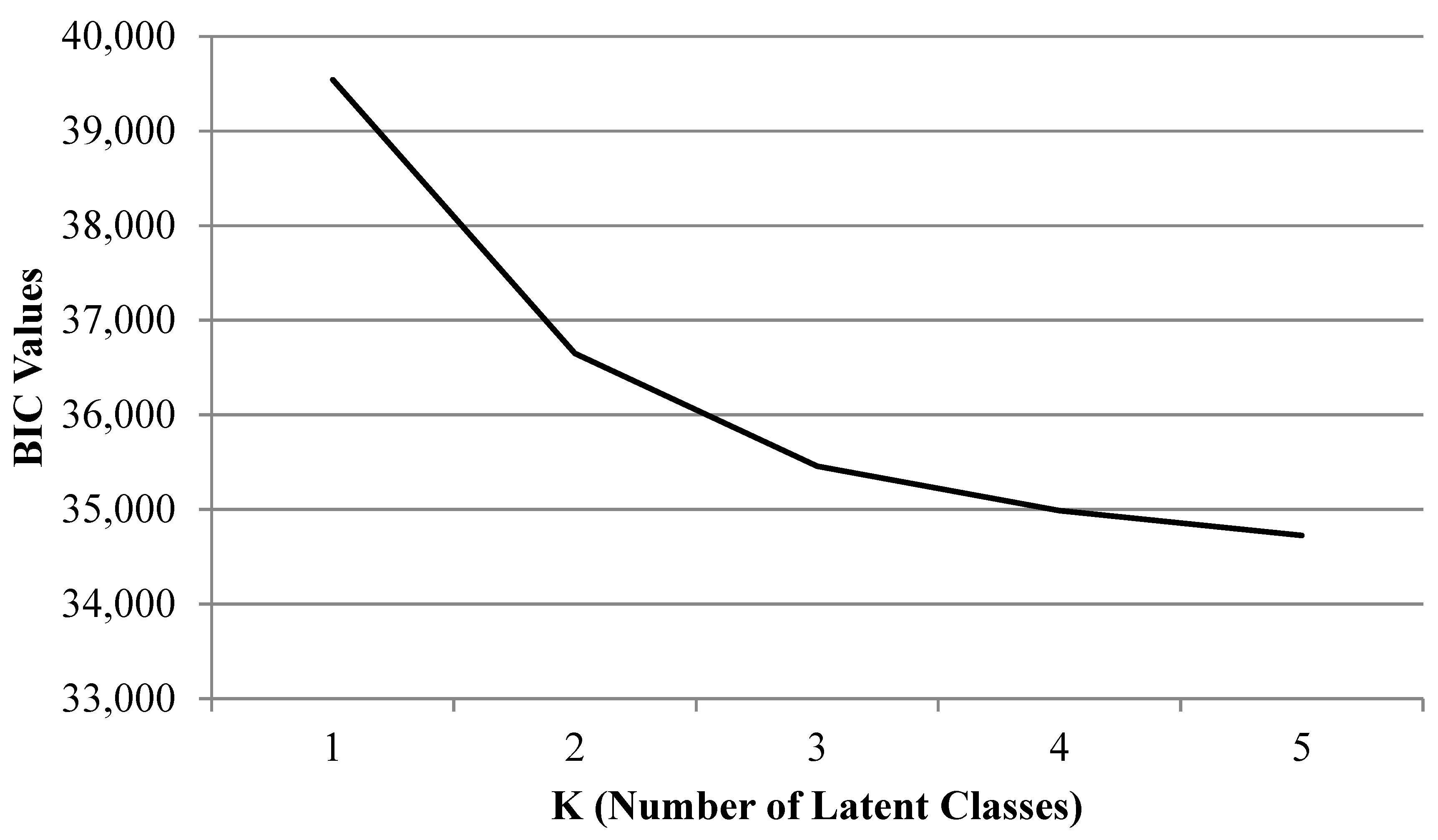
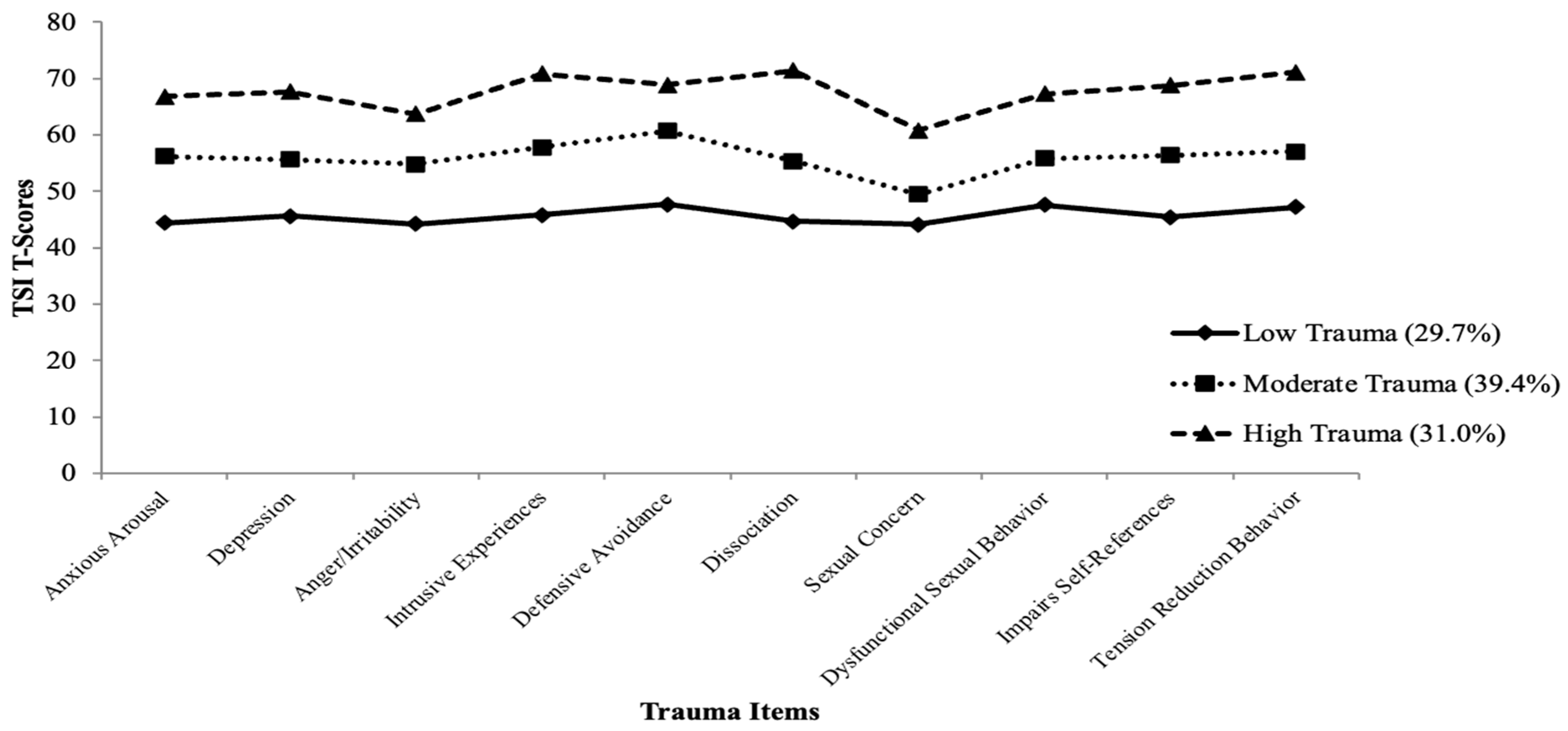
Two separate LPAs were conducted for trauma items. Table 2 presents model fit information for the trauma LPA models, with one to five latent classes for all indicators. In this analysis, the BIC never reached a minimum value (see Figure 1); however, the first non-significant p-value of the LMR occurred at the four-class model, suggesting that a three-class model was preferable. Figure 2 presents the item profile, with the TSI scales along the x-axis and the mean TSI T-scores on a given item along the y-axis. The profile helps us to understand and label the emergent latent classes. The figure demonstrates that the individual indicators did not help to classify the profiles, with all indicators varying by level of trauma (low, moderate, high). Given the number of parameters being estimated, the limited sample size, and the fact that indicators presented consistent patterns that did vary by profile, a more parsimonious analysis was conducted, selecting five of the indicators to see if the same profile classes would emerge.
Table 2.
Fit information for trauma LPA model with 10 subscales for 1–5 classes.
Figure 1.
BIC values for all 10 trauma subscales across classes.
Figure 2.
Conditional trauma means for 10 subscales by class and proportions.
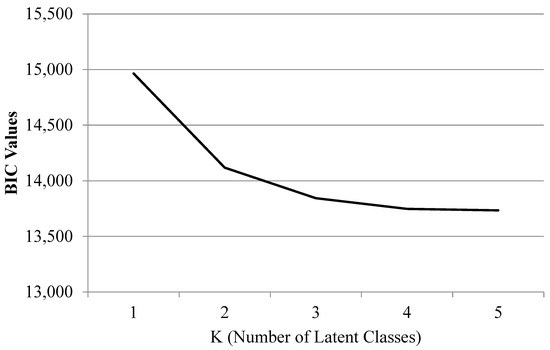
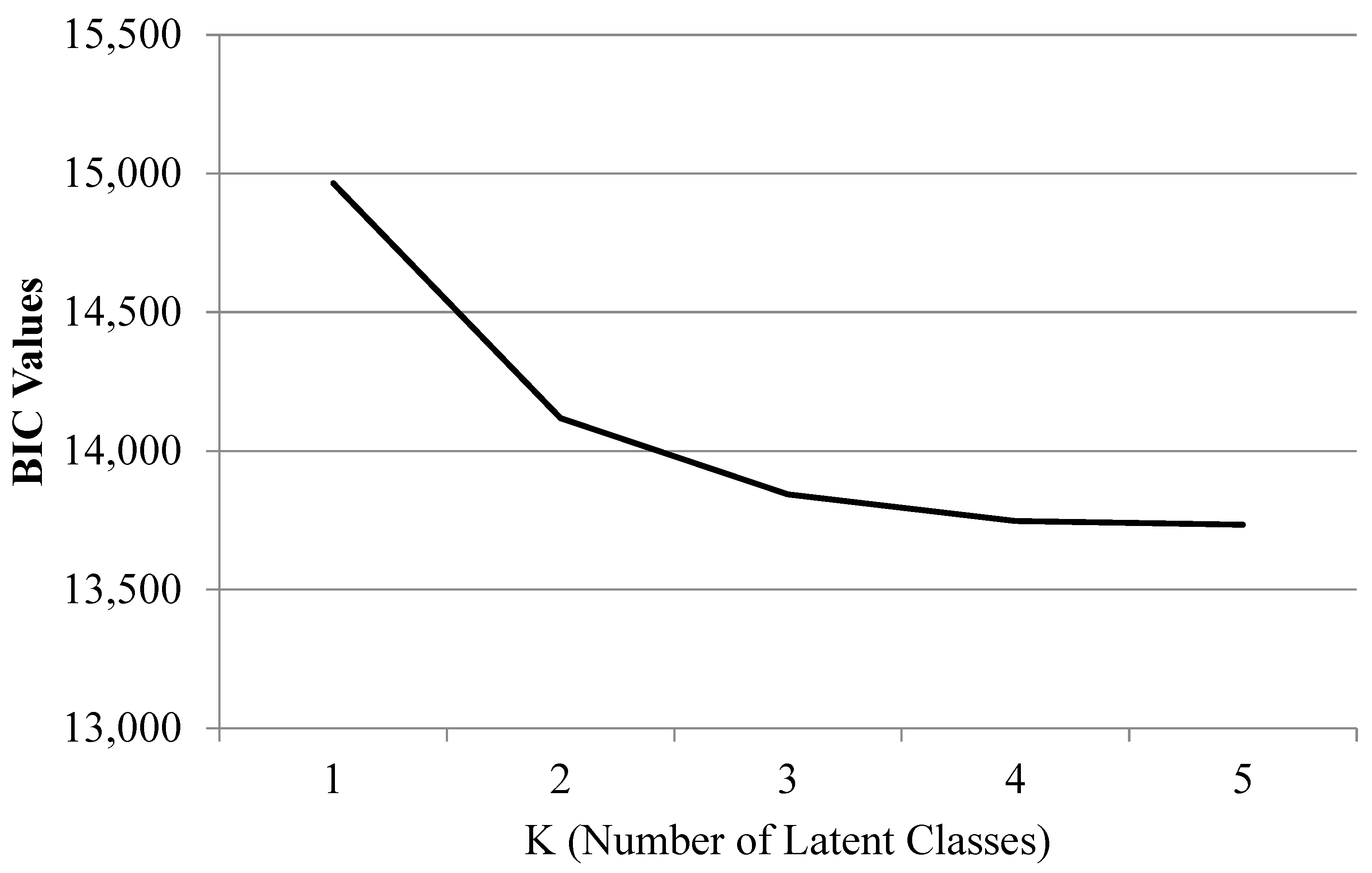
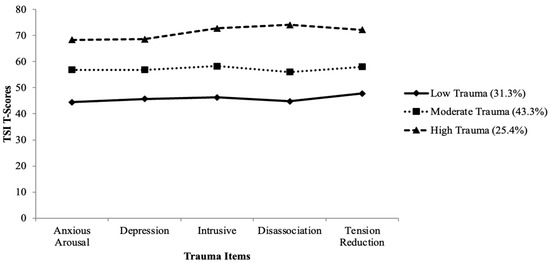
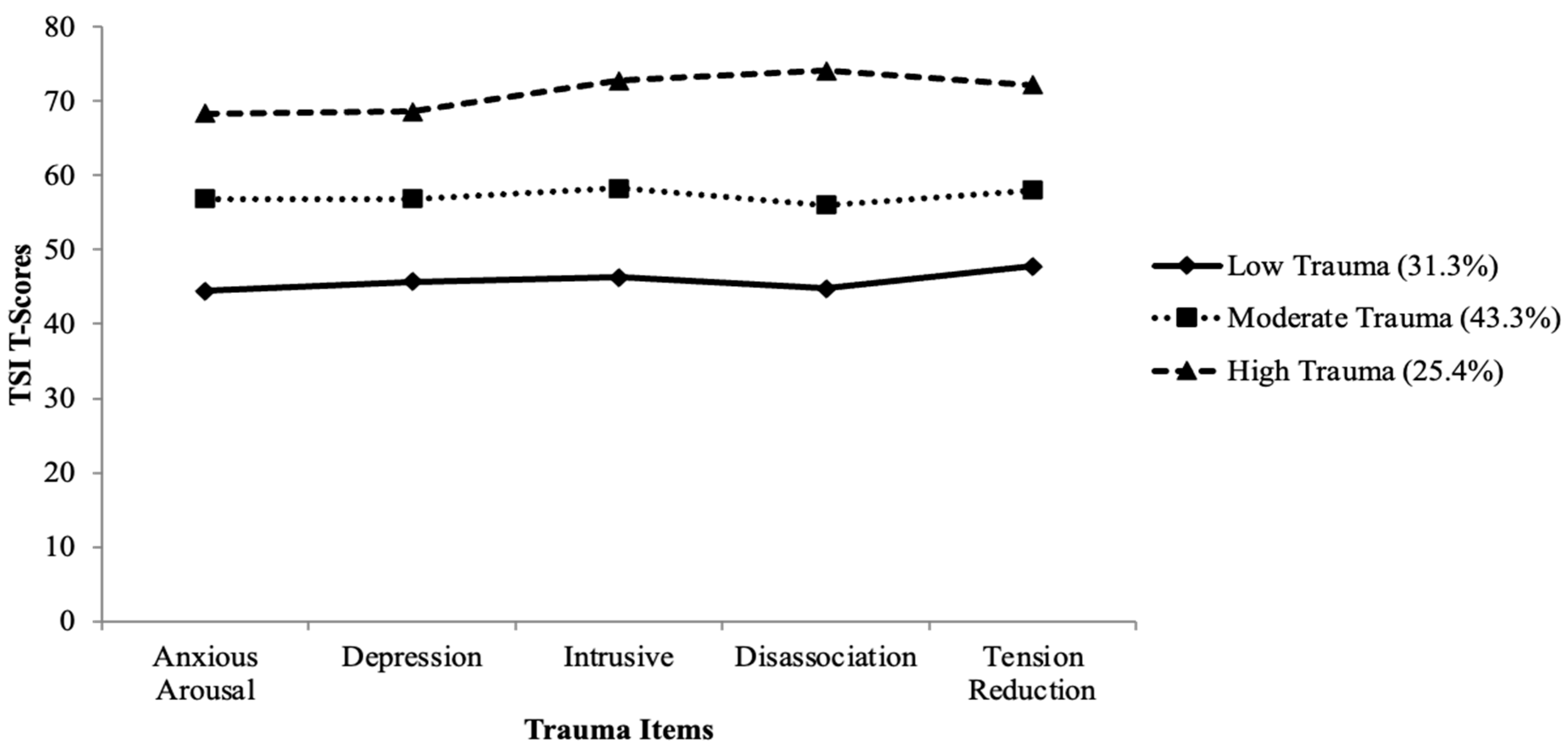
Table 3 presents model fit information for five indicators. In this analysis, the BIC never reached a minimum value; however, an “elbow” or the last relatively large decrease in the BIC value occurred within the three-class model (see Figure 3) [38]. The first non-significant p-value of the LMR occurred in the five-class model, suggesting that a four-class model was preferable. There was never a non-significant p-value for the BLRT, so this did not help to inform model selection. Examining item plots for the three-, four-, and five-class models revealed that the three-class model was the most parsimonious and best explained the heterogeneity in trauma experiences, and it aligned with the analysis that included all the indicators. Given the statistical support of the three-class model and the substantive plausibility of the solution, this model was considered the final model. The entropy for this model was 0.86, an acceptable value. Figure 4 presents the item profile with the five TSI scales along the x-axis and the mean TSI T-scores for a given item along the y-axis.
Table 3.
Fit information for trauma LPA model with 5 subscales for 1–5 classes.
Figure 3.
BIC values for the 5 trauma subscales across classes.
Figure 4.
Conditional trauma means for 5 subscales by class and proportions.
The latent profile analysis for the 10 subscales and five subscales both yielded a three-class solution and a visual inspection of the conditional trauma means demonstrated the same patterns. Therefore, to reduce the number of parameters being estimated in subsequent analyses, the three-class solution for the five indicators was used. The profile plot (Figure 4) was used to understand and label the emergent latent classes for the final model. When interpreting and labeling the class, both the means for each class on particular trauma symptoms (i.e., anxious arousal, depression, intrusive experiences, dissociation, and tension reduction behaviors) were examined, as well as how a given item differentiated across the classes. Starting with the extreme class, denoted with the dashed line, this class was labeled as the Severe Trauma class. This class comprised 25.4% of the total sample and had a high means of experiencing Severe Trauma scores across all trauma indicators. At the other extreme, the Minimal Trauma class (31.3% of the total sample) had Minimal Trauma means for all the TSI items and was denoted with a dotted line. The middle class was Moderate Trauma, with moderate TSI means for all items. This class was denoted with a black line (43.43%).
3.2. Substance Use Latent Profile Analysis
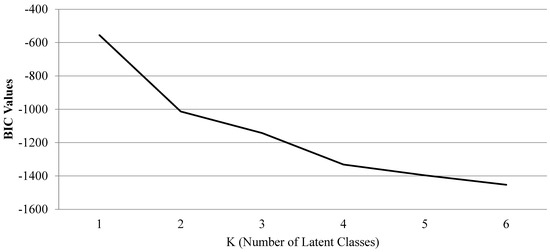
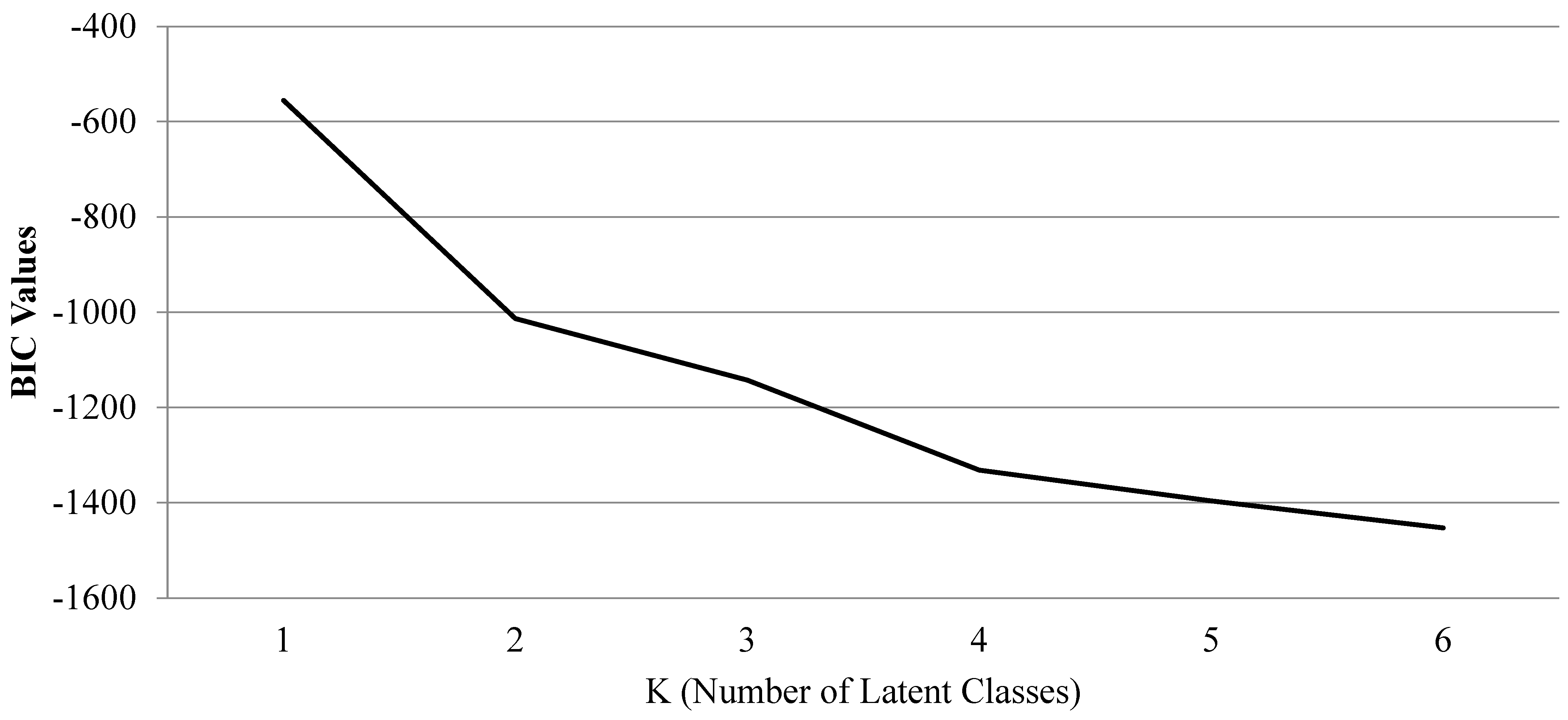
As described previously, a series of LPA models that varied in the number of latent classes was fit. For each model, the fit statistics were collected and used to help inform the decision about how many classes were sufficient to describe the heterogeneity in substance use. Table 4 presents model fit information for the LPA models, with one to six latent classes considered. As in the analysis above, the minimum BIC value was never reached; however, an “elbow” or the last relatively large decrease in the BIC value occurred within the four-class model (see Figure 5) [38]. The first significant p-value of the LMR occurred in the five-class model, indicating that a four-class model provided a superior fit to the five-class model. There was never a non-significant p-value for the BLRT, so this did not inform the model selection. Examining item plots for the three-, four-, and five-class models revealed that the four-class model best explained the heterogeneity in substance use. Given the statistical support of the four-class model and the substantive plausibility of the solution, this model was considered the final model. The entropy for this model was 0.9, an acceptable value.
Table 4.
Fit information for substance use LPA model with 1–6 classes.
Figure 5.
BIC values for substance use items across classes.
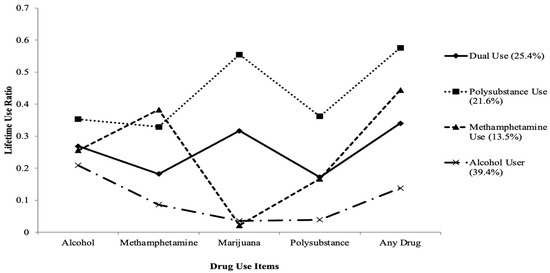
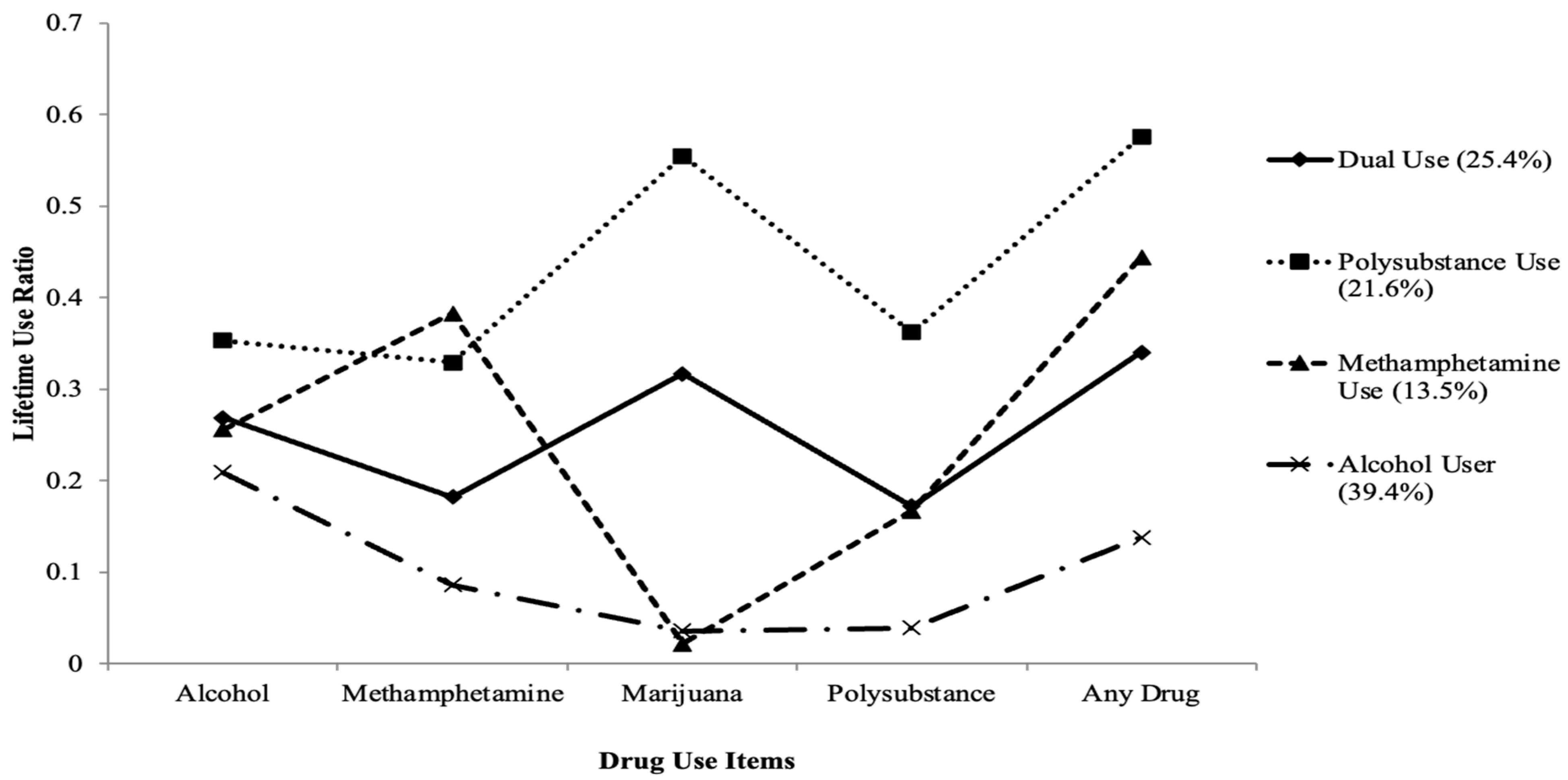
Figure 6 presents the item profiles with the five substance use items along the x-axis and the mean ratio of lifetime drug use along the y-axis. The profile plot was used to understand and label the emergent latent classes from the final model. When interpreting and labeling the class, the lifetime drug use ratios (i.e., alcohol, marijuana, methamphetamine) of a class were examined, as well as how a given item differentiated across the classes. Starting with the top extreme class, denoted with the dotted line, was the Polysubstance Use class. This class comprised 21.6% of the total sample, with the highest mean lifetime polysubstance, alcohol, marijuana, and any drug use. At the other extreme, the Alcohol Use class (39.4% of the total sample) primarily used alcohol with low lifetime drug use means across substance types and was denoted with a combined dashed and dotted line. The other classes demonstrated moderate drug use. One class, defined as Dual Use, primarily used alcohol and marijuana and had moderate lifetime drug use ratios on all items. The class was denoted with a black line (25.4%) and demonstrated moderate mean lifetime drug use. The final class was titled Methamphetamine Use and was moderate for most items, but had the highest mean lifetime methamphetamine use and the lowest marijuana use. This class was denoted by a dashed line (13.5%).
Figure 6.
Conditional substance use means by class and proportions.
3.3. Co-Occurring Model
The two LPAs conducted above identified two sets of unique profiles for both the trauma and substance use variables, based on statistical model fit information. After the number of profiles for each measurement model was identified, the co-occurring model was fit to estimate different patterns in class membership across the two constructs (trauma and substance use). The profiles for each construct were estimated and then regressed onto each other to create a matrix of latent transition probabilities based on the estimated model, demonstrating patterns of membership across constructs.
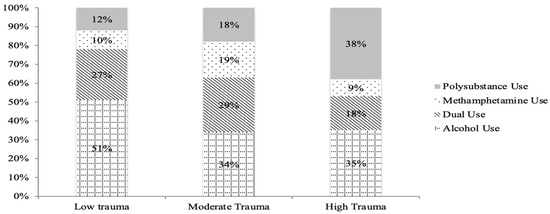
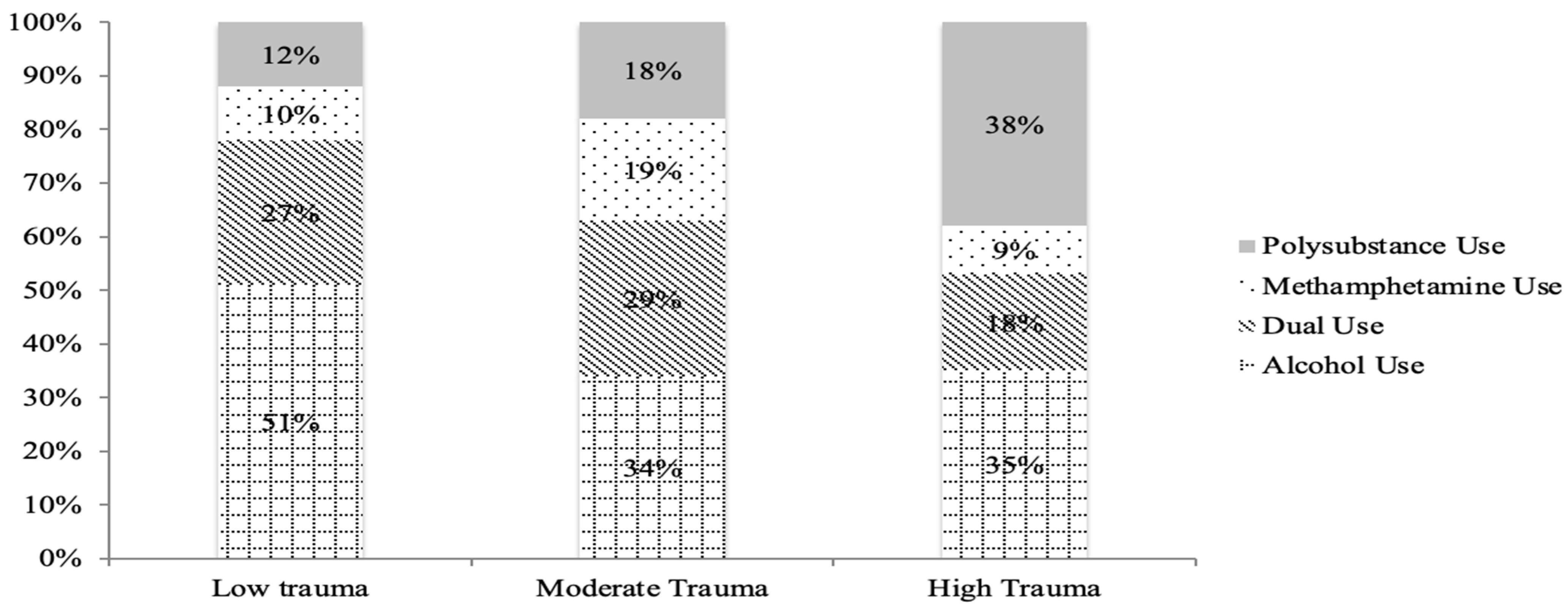
Several patterns emerged from the transition matrix (see Table 5 and Figure 7). Latent probabilities demonstrate the probability that an individual with a certain trauma profile will have a certain drug use profile. Looking at the upper left-hand corner in Table 5, the value of 0.51 can be interpreted as follows. The probability that an individual who has a Minimal Trauma history also has low lifetime drug use is 0.51. Alternatively, the value can be interpreted as follows: 51% of those who were in the Minimal Trauma class were also in the Alcohol Use class. Examining the probabilities of drug use classes for Minimal Trauma participants demonstrated a pattern that those with low levels of trauma tended to also fall into the Alcohol Use class. The next greatest group represented in the Minimal Trauma group was those with Dual Use (27%). A small percent of participants fell into the Polysubstance Use class (12%) and less than 10% of the Minimal Trauma participants fell into the Methamphetamine Use class (10%). The prevailing pattern that emerged was that participants in the Minimal Trauma class had the highest conditional probability of belonging to the Alcohol Use class.
Table 5.
Cross-tabulated co-occurring probability estimates for trauma and substance use classes.
Figure 7.
Proportions of substance users in each of the three trauma classes.
Looking at the probabilities of drug use classification across participants classified into the Moderate Trauma class, most participants with moderate levels of trauma had Alcohol Use (34%) or Dual Use (29.0%), with a smaller percent in the Methamphetamine Use (19%) and Polysubstance Use (18%) profiles.
Examining the probabilities of drug use classifications across participants classified in the Severe Trauma class demonstrated that those in this class had the highest conditional probability of belonging to Polysubstance Use (38%). The next most probable drug class for participants experiencing Severe Trauma was Alcohol Use (35%), followed by Dual Use (18%). A smaller percentage in the Severe Trauma group also fell into the Methamphetamine Use class (9%).
Overall examinations of the probabilities table demonstrate larger class patterns. Probabilities of trauma class membership across classes of drug use demonstrated that those who experienced Severe Trauma were most likely to have also had the highest lifetime rates of Polysubstance Use. Similarly, those with Minimal Trauma history had the highest conditional probability of belonging to the low drug use and were found in the Alcohol Use class. Those in the Methamphetamine Use class had the highest conditional probability of experiencing Moderate Trauma compared to the other trauma classes.
3.4. Column Proportions
After classifying patterns in the co-occurring model, the co-occurring grouping patterns were analyzed to examine differences in graduation by group (see Table 6). The chi-square test of goodness-of-fit was performed to determine whether the co-occurring groups were equally likely to graduate. Likelihood of graduation was not equally distributed in the population: X2 (11, N = 363) = 38.57, p < 0.01 (see Table 7 for observed vs. expected cell counts). The magnitude of the association between group patterns and graduation was moderate: Cramer’s V = 0.31.
Table 6.
Number and percent of graduates by co-occurring pattern group.
Table 7.
Observed number of graduates vs. expected by co-occurring pattern group.
Since the chi-square test revealed that graduation status and co-occurring groups were not independent, the column proportions were compared to determine which groups were responsible for this non-independent relationship. The results were based on two-sided tests with a significance level of 0.05 and area adjusted for all pairwise comparisons using the Bonferroni correction. A significant difference was found between the co-occurring groups. Participants in the Minimal Trauma/Alcohol Use group had the highest conditional probability of graduating compared to the following groups: Minimal Trauma/Dual Use, Minimal Trauma/Methamphetamine Use, Moderate Trauma/Polysubstance Use, Moderate Trauma/Alcohol Use, Moderate Trauma/Dual Use, and Severe Trauma/Polysubstance Use.
A logistic regression was completed to examine this finding further, controlling for relevant covariates (age, ethnicity, gender, and if the participant was living in a controlled environment at intake). The logistic regression model was statistically significant: 2 (19)= 34.5, p < 0.05. The model explained 13% (Nagelkerke R2) of the variance in graduation and correctly classified 73% of cases. Those in the Minimal Trauma/Alcohol Use group were 8.43 times more likely to graduate (OR =, 95% CI [1.80, 39.33], p < 0.05). No other variables were significant predictors for the model (p > 0.05).
4. Discussion
This paper applies a co-occurring model to better address the treatment complexities associated with trauma and substance use. Given the high rates of co-occurrence and the related treatment challenges of trauma and substance use, it is of great clinical importance to better understand how these co-conditions can be best addressed in treatment [7]. Results from the co-occurring model identified 12 unique grouping patterns with varying experiences of trauma and substance use.
Findings from the LPA identified three trauma and four substance use profiles. The trauma profiles were as hypothesized, reflecting the severity in trauma symptoms (Minimal Trauma, Moderate Trauma, and Severe Trauma). It is interesting to note that the largest percentage of participants fell into the Moderate Trauma class and over two-thirds of all participants fell into the Moderate Trauma and Severe Trauma classes. These findings are supported by previous studies, which demonstrate that inmates are more likely to experience trauma as children and young adults and subsequently often lead lifestyles in which violence and death are regularly confronted [41,42]. Furthermore, inmates report a higher prevalence of lifetime traumatic events compared to those in the general community [43]. Women in correctional settings are often disproportionally impacted by traumatic experiences, with some estimates as high as 85% (Gillece, 2009), and their PTSD rates are three times more higher than those of male prisoners [44,45]. Compared with the general population, PTSD rates are five times more likely for male inmates and up to eight times more likely for female inmates. Further, estimates suggest that of the 10.3 million prisoners worldwide, approximately 750,000 are likely to have a clinical diagnosis of PTSD. In the United States, this equates to roughly 300,000 of the 2.2 million prisoners in custody [45].
The substance use classes that emerged also reflected the anticipated profiles, differing in both the degree of lifetime use and substances of choice (Alcohol Use, Moderate Drug Use, High Methamphetamine Use, and Polysubstance Use). Nearly 50% of all participants fell into the Dual and Polysubstance Use classes. It is estimated that 65% of the U.S. prison population has an active substance use disorder, with another 20% who, while not meeting the diagnostic criteria, were under the influence of drugs or alcohol at the time of arrest [46]. Similarly, approximately half (52%) of those on probation and parole meet criteria for a substance use disorder [47]. Study findings further reflect the high rates of substance use among criminal justice populations.
The co-occurring model regressed the LPA classes, demonstrating 12 unique pattern combinations. As predicted, patterns demonstrated varying groupings of trauma and drug use. The highest percentage of Minimal Trauma participants fell into the Alcohol Use group. Among those with Moderate Trauma, participants were split between Alcohol and Dual Use. Finally, among those in the Severe Trauma group, participants were primarily split between the Alcohol and Polysubstance Use groups. Among all trauma groups, the largest representation of individuals in the Methamphetamine Use class was observed in the Moderate Trauma class. When examining patterned groups, over 40% of participants were in groups with Moderate to Severe Trauma and Dual or Polysubstance Use. This supports previous research, which has identified a trauma history occurring in 55–99% of patients with a substance use disorder [48].
The uncovered patterns of membership were compared to examine the differences in graduate rates. The findings highlighted that those in the Minimal Trauma/Alcohol Use group were more likely to graduate than any other group. The study results also suggest that the program employed was most successful for those in the Minimal Trauma/Alcohol Use group. The findings support the existing research, which has underscored the difficulty in treating co-occurring trauma and substance use disorders [49]. The results also indicate that more intensive programming or more specialized attention may be needed to address those with higher levels of trauma and greater and more complex drug use.
4.1. Limitations
This paper demonstrates the application of a joint latent model as a possible means to address the clinical complexities of co-occurring disorders; however, there are several limitations that are of note. The sample size is less than ideal, with just over 400 participants, and it lacked diversity, being predominately female and white. This may have been a contributing factor in the smaller cross-modeled groups. While the sample size needed to conduct the mixture models was not ideal, a larger sample size would be preferred. There are general “rules of thumb” (e.g., 5 to 10 observations per estimated parameter); however research suggests that these rules are not particularly useful and can lead to over- or underestimated samples [50]. Determining the sample size is complex and is dependent on many factors, including the size of the model, the distribution of variables, missing data, the reliability of variables and the strength of the relationships among variables [51]. Simulation studies have emerged as a method for estimating the sample size, with one simulation study examining the sample size for LCAs suggesting a sample of 500 as being sufficient [38]. Future studies using this co-occurring model would benefit from engaging in simulation studies to determine the optimal sample size.
Additionally, there were limitations within the variables. The fact that participants were court-mandated to receive treatment presents unique challenges, both in variable selection and interpretation. It is common to use 30-day measures for substance use; however, as many were in or coming from controlled environments, this was not a usable variable. The calculation of a lifetime ratio was less than ideal, as it can mask important differences, with individuals potentially having the same ratios but different cumulative exposure. This also presents the possibility that outcomes could be different with a population who are electing to seek treatment or are not from controlled environments, and 30-day measures can be used.
The comparison of graduation rates across the co-occurring model patterns looked at a dichotomous variable. To better examine the differences in outcomes, additional indicators of success would be beneficial, which would better inform treatment effectiveness. More thorough examination as to how the co-occurring model can be used to measure clinical progress and success is necessary. Despite these limitations, this paper helps to demonstrate the potential applications, using this methodology.
4.2. Clinical Applications
While this paper provides support for the use of an innovative methodological approach, perhaps one of the most compelling components of this approach is the ability to identify unique patterns of behavior. These patterns can be used to examine treatment outcomes to help individualize treatment and identify populations that may need more or less intensive treatment services. Clinical applications of the co-occurring model can extend to examinations of multiple distinct constructs, beyond trauma and substance use. This analysis method can help to direct treatment efforts to determine which clinical populations are in greater need. Given the difficulties in treating co-occurring disorders and the additional complications that can occur when untreated (homelessness, incarceration, medical illness, suicide, and early mortality), this approach can shed new light and specification in the treatment of such disorders [1,52].
This methodology can be applied to an array of coexisting conditions, which have become the increasing norm, with 4 in 10 Americans having two or more chronic conditions [53] (CDC, 2019). Comorbidity refers to the co-occurrence of mental and physical disorders within an individual. Within the United States, about 90% of the nation’s $3.5 trillion in annual health care expenditures are for people with chronic and mental health conditions [53,54]. Given the increase in comorbidity issues, there are many potential applications for this methodology. For example, bipolar disorder is highly prevalent and heterogeneous, with an increased likelihood of psychiatric comorbidity, impacting treatment [55]. Additionally, a majority of individuals with anxiety or mood disorders have at least one additional anxiety or mood disorder [56]. Research has highlighted the heterogeneity among those with comorbidity and the need to further examine variations in symptomatology to best guide treatment [57,58]. The co-occurring model provides a methodological approach to meet these clinical and research needs.
Funding
This research received no external funding.
Institutional Review Board Statement
The study was conducted in accordance with the Declaration of Helsinki and approved by the Institutional Review Board of University of California, Santa Barbara (protocol code 12-432, 7/3/12, date of approval: 6 July 2013).
Informed Consent Statement
The primary data were collected with the informed consent of all participants. This secondary data analysis was reviewed by the University of California, IRB, and determined to be exempt from further informed consent requirements, as it utilized de-identified existing data and posted no risk to participant privacy.
Data Availability Statement
The participants of this study did not provide written consent for their data to be shared publicly, so due to the sensitive nature of the research, supporting data are not available.
Conflicts of Interest
The author declares no conflicts of interest.
References
- Substance Abuse and Mental Health Services. Administration Key Substance Use and Mental Health Indicators in the United States: Results from the 2023 National Survey on Drug Use and Health; NSDUH Series H-59; Center for Behavioral Health Statistics and Quality, Substance Abuse and Mental Health Services Administration: Rockville, MD, USA, 2024.
- Flynn, P.M.; Brown, B.S. Co-Occurring Disorders in Substance Abuse Treatment: Issues and Prospects. J. Subst. Abus. Treat. 2008, 34, 36–47. [Google Scholar] [CrossRef] [Scilit]
- Hakobyan, S.; Vazirian, S.; Lee-Cheong, S.; Krausz, M.; Honer, W.G.; Schutz, C.G. Concurrent Disorder Management Guidelines. Systematic Review. J. Clin. Med. 2020, 9, 2406. [Google Scholar] [CrossRef] [Scilit]
- Choi, S.; Adams, S.M.; MacMaster, S.A.; Seiters, J. Predictors of Residential Treatment Retention among Individuals with Co-Occurring Substance Abuse and Mental Health Disorders. J. Psychoact. Drugs 2013, 45, 122–131. [Google Scholar] [CrossRef] [Scilit] [PubMed]
- Pew Charitable Trusts. More than 1 in 9 Adults with Co-Occurring Mental Illness and Substance Use Disorders Are Arrested Annually; Pew Charitable Trusts: Washington, DC, USA, 2023. [Google Scholar]
- Baranyi, G.; Fazel, S.; Langerfeldt, S.D.; Mundt, A.P. The Prevalence of Comorbid Serious Mental Illnesses and Substance Use Disorders in Prison Populations: A Systematic Review and Meta-Analysis. Lancet Public Health 2022, 7, e557–e568. [Google Scholar] [CrossRef] [Scilit] [PubMed]
- Yule, A. Integrating Treatment for Co-Occurring Mental Health Conditions. Alcohol Res. Curr. Rev. 2019, 40, 61–73. [Google Scholar] [CrossRef] [Scilit]
- Farrugia, P.L.; Mills, K.L.; Barrett, E.; Back, S.E.; Teesson, M.; Baker, A.; Sannibale, C.; Hopwood, S.; Merz, S.; Rosenfeld, J.; et al. Childhood Trauma among Individuals with Co-Morbid Substance Use and Post-Traumatic Stress Disorder. Ment. Health Subst. Use 2011, 4, 314–326. [Google Scholar] [CrossRef] [Scilit] [PubMed]
- Najavits, L.M.; Hyman, S.M.; Ruglass, L.M.; Hien, D.A.; Read, J.P. Substance Use Disorder and Trauma. In APA Handbook of Trauma Psychology: Foundations in Knowledge; American Psychological Association: Washington, DC, USA, 2017; Volume 1, pp. 195–213. [Google Scholar] [CrossRef] [Scilit]
- Pietrzak, R.H.; Goldstein, R.B.; Southwick, S.M.; Grant, B.F. Prevalence and Axis I Comorbidity of Full and Partial Posttraumatic Stress Disorder in the United States: Results from Wave 2 of the National Epidemiologic Survey on Alcohol and Related Conditions. J. Anxiety Disord. 2011, 25, 456–465. [Google Scholar] [CrossRef] [Scilit]
- Kihas, I.; Barrett, E.L.; Teesson, M.; Touyz, S.W.; Newton, N.C.; Mills, K.L. Co-Occurring Experiences of Traumatic Events and Substance Use among Young People. Child Abus. Negl. 2024, 156, 107003. [Google Scholar] [CrossRef] [Scilit]
- Najt, P.; Fusar-Poli, P.; Brambilla, P. Co-Occurring Mental and Substance Abuse Disorders: A Review on the Potential Predictors and Clinical Outcomes. Psychiatry Res. 2011, 186, 159–164. [Google Scholar] [CrossRef] [Scilit]
- Schumm, J.A.; Gore, W.L. Simultaneous Treatment of Co-Occurring Posttraumatic Stress Disorder and Substance Use Disorder. Curr. Treat. Options Psychiatry 2016, 3, 28–36. [Google Scholar] [CrossRef] [Scilit]
- Reed, P.L.; Anthony, J.C.; Breslau, N. Incidence of Drug Problems in Young Adults Exposed to Trauma and Posttraumatic Stress Disorder. Arch. Gen. Psychiatry 2007, 64, 1435. [Google Scholar] [CrossRef] [Scilit]
- Acierno, R.; Resnick, H.; Kilpatrick, D.G.; Saunders, B.; Best, C.L. Risk Factors for Rape, Physical Assault, and Posttraumatic Stress Disorder in Women. J. Anxiety Disord. 1999, 13, 541–563. [Google Scholar] [CrossRef] [Scilit]
- Jacobsen, L.K.; Southwick, S.M.; Kosten, T.R. Substance Use Disorders in Patients With Posttraumatic Stress Disorder: A Review of the Literature. Am. J. Psychiatry 2001, 158, 1184–1190. [Google Scholar] [CrossRef] [Scilit]
- Stewart, S.H.; Conrod, P.J. Psychosocial Models of Functional Associations between Posttraumatic Stress Disorder and Substance Use Disorder. In Trauma and Substance Abuse: Causes, Consequences, and Treatment of Comorbid Disorders; Ouimette, P., Brown, P.J., Eds.; American Psychological Association: Washington, DC, USA, 2003; pp. 29–55. ISBN 978-1-55798-938-3. [Google Scholar]
- Muthén, B.O. Latent Variable Hybrids: Overview of Old and New Models. In Advances in Latent Variable Mixture Models; Hancock, G.R., Samuelsen, K.M., Eds.; Information Age Publishing, Inc: Charlotte, NC, USA, 2008; pp. 1–24. [Google Scholar]
- Nylund, K.L. Latent Transition Analysis: Modeling Extensions and an Application to Peer Victimization. Ph.D. Thesis, University of California, Los Angeles, CA, USA, 2007. [Google Scholar]
- Schmiege, S.J.; Meek, P.; Bryan, A.D.; Petersen, H. Latent Variable Mixture Modeling: A Flexible Statistical Approach for Identifying and Classifying Heterogeneity. Nurs. Res. 2012, 61, 204–212. [Google Scholar] [CrossRef] [Scilit]
- Masyn, K.E. Latent Class Analysis and Finite Mixture Modeling. In The Oxford Handbook of Quantitative Methods: Statistical Analysis; Little, T.D., Ed.; Oxford University Press: Oxford, UK, 2013; pp. 551–611. [Google Scholar]
- Cleveland, M.J.; Collins, L.M.; Lanza, S.T.; Greenberg, M.T.; Feinberg, M.E. Does Individual Risk Moderate the Effect of Contextual-Level Protective Factors? A Latent Class Analysis of Substance Use. J. Prev. Interv. Community 2010, 38, 213–228. [Google Scholar] [CrossRef] [Scilit]
- Bryant Ludden, A.; Eccles, J.S. Psychosocial, Motivational, and Contextual Profiles of Youth Reporting Different Patterns of Substance Use during Adolescence. J. Res. Adolesc. 2007, 17, 51–88. [Google Scholar] [CrossRef] [Scilit]
- Breslau, N.; Reboussin, B.A.; Anthony, J.C.; Storr, C.L. The Structure of Posttraumatic Stress Disorder: Latent Class Analysis in 2 Community Samples. Arch. Gen. Psychiatry 2005, 62, 1343. [Google Scholar] [CrossRef] [Scilit]
- Vaughn, M.G.; Freedenthal, S.; Jenson, J.M.; Howard, M.O. Psychiatric Symptoms and Substance Use Among Juvenile Offenders. Crim. Justice Behav. 2007, 34, 1296–1312. [Google Scholar] [CrossRef] [Scilit]
- Lanza, S.T.; Flaherty, B.P.; Collins, L.M. Latent Class and Latent Transition Analysis. In Handbook of Psychology; John Wiley & Sons, Inc: Hoboken, NJ, USA, 2003; pp. 663–685. [Google Scholar] [CrossRef] [Scilit]
- Briere, J. Trauma Symptom Inventory. PsycTESTS Dataset 1995, 10, 387–401. [Google Scholar] [CrossRef] [Scilit]
- Briere, J. Psychometric Review of Trauma Symptom Inventory (TSI). In Measurement of Stress, Trauma, and Adaptation; Sidran Press: Lutherville, MD, USA, 1996; pp. 381–383. [Google Scholar]
- McLellan, A.T.; Kushner, H.; Metzger, D.; Peters, R.; Smith, I.; Grissom, G.; Pettinati, H.; Argeriou, M. The Fifth Edition of the Addiction Severity Index. J. Subst. Abus. Treat. 1992, 9, 199–213. [Google Scholar] [CrossRef] [Scilit] [PubMed]
- Najavits, L.M. Seeking Safety: A Treatment Manual for PTSD and Substance Abuse; The Guilford Substance Abuse Series; Guilford: New York, NY, USA, 2002; ISBN 978-1-57230-639-4. [Google Scholar]
- Desai, R.A.; Harpaz-Rotem, I.; Najavits, L.M.; Rosenheck, R.A. Impact of the Seeking Safety Program on Clinical Outcomes Among Homeless Female Veterans With Psychiatric Disorders. Psychiatr. Serv. 2008, 59, 996–1003. [Google Scholar] [CrossRef] [PubMed]
- Sherman, A.D.F.; Balthazar, M.; Zhang, W.; Febres-Cordero, S.; Clark, K.D.; Klepper, M.; Coleman, M.; Kelly, U. Seeking Safety Intervention for Comorbid Post-traumatic Stress and Substance Use Disorder: A Meta-analysis. Brain Behav. 2023, 13, e2999. [Google Scholar] [CrossRef] [Scilit]
- National Association of Drug Court Professionals; Drug Court Standards Committee, United States; Drug Courts Program Office. Defining Drug Courts: The Key Components; U.S. Dept. of Justice, Office of Justice Programs, Drug Courts Program Office: Washington, DC, USA, 1997.
- Chou, C.; Bentler, P.M. Estimates and Tests in Structural Equation Modeling. In Structural Equation Modeling: Concepts, Issues, and Applications; Hoyle, R.H., Ed.; Sage Publications, Inc: Thousand Oaks, CA, USA; pp. 37–55.
- Curran, P.J.; West, S.G.; Finch, J.F. The Robustness of Test Statistics to Nonnormality and Specification Error in Confirmatory Factor Analysis. Psychol. Methods 1996, 1, 16–29. [Google Scholar] [CrossRef]
- Muthén, L.K.; Muthén, B.O. Mplus; Muthén & Muthén: Los Angeles, CA, USA, 2013. [Google Scholar]
- Enders, C.K. Applied Missing Data Analysis, 2nd ed.; The Guilford Press: New York, NY, USA; London, UK, 2022; ISBN 978-1-4625-4986-3. [Google Scholar]
- Nylund, K.L.; Asparouhov, T.; Muthén, B.O. Deciding on the Number of Classes in Latent Class Analysis and Growth Mixture Modeling: A Monte Carlo Simulation Study. Struct. Equ. Model. A Multidiscip. J. 2007, 14, 535–569. [Google Scholar] [CrossRef] [Scilit]
- Schwarz, G. Estimating the Dimension of a Model. Ann. Stat. 1978, 6, 461–464. [Google Scholar] [CrossRef] [Scilit]
- Celeux, G.; Soromenho, G. An Entropy Criterion for Assessing the Number of Clusters in a Mixture Model. J. Classif. 1996, 13, 195–212. [Google Scholar] [CrossRef] [Scilit]
- Cantürk, M.; Faraji, H.; Tezcan, A. The Relationship between Childhood Traumas and Crime in Male Prisoners. Anatol. J. Psychiatry 2021, 22, 56–60. [Google Scholar] [CrossRef] [Scilit] [PubMed]
- Reavis, J.A.; Looman, J.; Franco, K.A.; Rojas, B. Adverse Childhood Experiences and Adult Criminality: How Long Must We Live before We Possess Our Own Lives? Perm. J. 2013, 17, 44–48. [Google Scholar] [CrossRef] [Scilit]
- Jäggi, L.J.; Mezuk, B.; Watkins, D.C.; Jackson, J.S. The Relationship between Trauma, Arrest, and Incarceration History among Black Americans. Soc. Ment. Health 2016, 6, 187–206. [Google Scholar] [CrossRef] [Scilit]
- Gillece, J.B. Understanding the Effects of Trauma on the Lives of Offenders. Correct. Today 2009, 71, 48. [Google Scholar]
- Baranyi, G.; Cassidy, M.; Fazel, S.; Priebe, S.; Mundt, A.P. Prevalence of Posttraumatic Stress Disorder in Prisoners. Epidemiol. Rev. 2018, 40, 134–145. [Google Scholar] [CrossRef] [Scilit]
- National Institute on Drug Abuse. Drug Facts: Criminal Justice; U.S. Department of Health and Human Services: Washington, DC, USA, 2020.
- Fearn, N.E.; Vaughn, M.G.; Nelson, E.J.; Salas-Wright, C.P.; DeLisi, M.; Qian, Z. Trends and Correlates of Substance Use Disorders among Probationers and Parolees in the United States 2002–2014. Drug Alcohol Depend. 2016, 167, 128–139. [Google Scholar] [CrossRef] [Scilit] [PubMed]
- Najavits, L.M.; Griffin, M.L.; Luborsky, L.; Frank, A.; Weiss, R.D.; Liese, B.S.; Thompson, H.; Nakayama, E.; Siqueland, L.; Daley, D.; et al. Therapists’ Emotional Reactions to Substance Abusers: A New Questionnaire and Initial Findings. Psychother. Theory Res. Pract. Train. 1995, 32, 669–677. [Google Scholar] [CrossRef] [Scilit]
- Flanagan, J.C.; Korte, K.J.; Killeen, T.K.; Back, S.E. Concurrent Treatment of Substance Use and PTSD. Curr. Psychiatry Rep. 2016, 18, 70. [Google Scholar] [CrossRef] [Scilit]
- Wolf, E.J.; Harrington, K.M.; Clark, S.L.; Miller, M.W. Sample Size Requirements for Structural Equation Models. Educ. Psychol. Meas. 2013, 73, 913–934. [Google Scholar] [CrossRef] [Scilit] [PubMed]
- Muthén, L.K.; Muthén, B.O. How to Use a Monte Carlo Study to Decide on Sample Size and Determine Power. Struct. Equ. Model. 2002, 9, 599–620. [Google Scholar] [CrossRef] [Scilit]
- Substance Abuse and Mental Health Services Administration. Key Substance Use and Mental Health Indicators in the United States: Results from the 2018 National Survey on Drug Use and Health; NSDUH Series H-54; Center for Behavioral Health Statistics and Quality, Substance Abuse and Mental Health Services Administration: Rockville, MD, USA, 2019.
- IEEE. CDC 2019 Welcome from the President of the IEEE Control Systems Society; IEEE: New York, NY, USA, 2019; pp. 3–6. [Google Scholar]
- Buttorff, C.; Ruder, T.; Bauman, M. Multiple Chronic Conditions in the United States; Rand: Santa Monica, CA, USA, 2017; Volume 10. [Google Scholar]
- Kessler, R. Comorbidity of Unipolar and Bipolar Depression with Other Psychiatric Disorders in a General Population Survey. In Comorbidity in Affective Disorders; Tohen, M., Ed.; Marcel Dekker Inc.: New York, NY, USA, 1999; pp. 1–25. [Google Scholar]
- Saha, S.; Lim, C.C.W.; Cannon, D.L.; Burton, L.; Bremner, M.; Cosgrove, P.; Huo, Y.; McGrath, J. Co-morbidity between Mood and Anxiety Disorders: A Systematic Review and Meta-analysis. Depress. Anxiety 2020, 38, 286–306. [Google Scholar] [CrossRef] [Scilit] [PubMed]
- Koskinen, M.; Salmi, J.K.; Loukola, A.; Mäkelä, M.J.; Sinisalo, J.; Carpén, O.; Renkonen, R. Data-Driven Comorbidity Analysis of 100 Common Disorders Reveals Patient Subgroups with Differing Mortality Risks and Laboratory Correlates. Sci. Rep. 2022, 12, 18492. [Google Scholar] [CrossRef] [Scilit]
- Unick, G.J.; Snowden, L.; Hastings, J. Heterogeneity in Comorbidity Between Major Depressive Disorder and Generalized Anxiety Disorder and Its Clinical Consequences. J. Nerv. Ment. Dis. 2009, 197, 215–224. [Google Scholar] [CrossRef] [Scilit]

Disclaimer/Publisher’s Note: The statements, opinions and data contained in all publications are solely those of the individual author(s) and contributor(s) and not of MDPI and/or the editor(s). MDPI and/or the editor(s) disclaim responsibility for any injury to people or property resulting from any ideas, methods, instructions or products referred to in the content. |
© 2026 by the author. Licensee MDPI, Basel, Switzerland. This article is an open access article distributed under the terms and conditions of the Creative Commons Attribution (CC BY) license.