


Abstract
Livestock systems are expected to convert human-inedible biomass into animal-source food while reducing their environmental footprint, and the circular economy (CE) provides a framework for this transition. This review argues that the circular value of a feed resource depends less on its availability than on three conditions: the processing required before it can be fed safely, the controllability of its variability and hazards, and the comparability of the life cycle assessment (LCA) evidence for its environmental benefit. Accordingly, resources are classified as suitable for direct feed use (e.g., oilseed meals, distillery co-products, former foodstuffs), requiring biological or technological upgrading (e.g., solid-state fermented residues, insect meal, single-cell protein), or better suited to non-feed valorisation. Nutritional evidence, LCA findings, One Health hazards and regulatory constraints are compared across these classes, distinguishing LCA values reported by original studies from qualitative estimates. A Mediterranean case study on olive mill by-products and phytogenic additives in swine, largely conducted by the authors, is presented separately, with its limits of generalisation. Linkages and trade-offs with the Sustainable Development Goals are examined, and precision livestock farming is evaluated as a conditional enabler rather than a prerequisite. Research priorities are proposed.
1. Introduction
The global food system faces a paradox of enormous proportions: it must feed a projected population of 9.8 billion people by 2050—demanding a 50–70% increase in food production—while simultaneously operating within planetary boundaries that are already under severe stress [1]. The livestock sector is both a critical contributor to human food security and one of the most resource-intensive components of the agri-food system, accounting for approximately 14.5% of total anthropogenic greenhouse gas (GHG) emissions, consuming around 33% of all crop-based calories, and using 70% of agricultural land directly or indirectly [2]. Reconciling this dual role—essential food producer and environmental pressure source—requires systemic transformation rather than incremental efficiency gains.
The circular economy (CE) concept has emerged as one of the most compelling frameworks for achieving this transformation. Rooted in industrial ecology, biomimicry, and regenerative design, the CE replaces linear ‘take–make–dispose’ models with closed-loop material and nutrient flows [3]. In agri-food systems, this translates into a hierarchy of strategies: prevention of food waste; reuse of surplus food and by-products; recycling of nutrients through animal feeding and composting; and recovery of energy from unavoidable residuals [4]. Livestock, historically serving as the ‘upcyclers’ of agricultural co-products inedible or unpalatable to humans, are natural partners in CE agri-food design.
Yet modern intensive livestock systems have progressively diverged from this CE logic. Large-scale grain and oilseed production dedicated to feeding livestock—particularly soybeans cultivated on deforested Amazonian land and maize grown with synthetic nitrogen fertilisers—has eroded the efficiency and environmental advantage that livestock once provided by consuming low-grade biomass [5]. Re-embedding livestock in CE nutrient loops, by deliberately diverting agro-industrial by-products, food waste, insect meal, algae, and fermented substrates from wasteful disposal pathways into animal diets, represents both an environmental imperative and an economic opportunity [6].
Mediterranean countries have particular CE potential in animal nutrition: the olive oil industry alone generates millions of tonnes of olive mill waste annually [7], and the polyphenol-rich composition of these by-products makes them especially promising as functional feed ingredients. Studies by the present author group have examined solid-state fermentation of olive mill stone waste and related residues and their use in pig diets [8,9]; these studies are discussed as a delimited case study (Section 3.7) rather than as representative of the field.
Precision livestock farming (PLF)—the data-driven, sensor-enabled management of individual animals using IoT devices, artificial intelligence, and decision-support systems—is increasingly recognised as an important enabling technology for CE-compatible nutrition [10]. Real-time monitoring of feed intake, body condition, and environmental conditions can allow farmers to match nutrient supply to animal requirements with minimal waste, reduce risks associated with compositional variability in unconventional CE feed ingredients, and generate data that may support verification of CE performance outcomes for regulatory and market purposes.
The central argument of this review is that the circular value of a feed resource is determined less by its availability than by three conditions: (i) the processing route required before it can be fed safely; (ii) the degree to which its compositional variability and associated hazards can be controlled; and (iii) whether its claimed environmental benefit is supported by LCA evidence that is comparable in functional unit and system boundary. To make this argument operational, CE-aligned resources are grouped into three classes. Class A comprises materials suitable for direct incorporation into compound feed after conventional processing (e.g., oilseed meals, cereal and distillery co-products, molasses, former foodstuffs). Class B comprises substrates that require biological or technological upgrading before they become nutritionally or hygienically acceptable feed ingredients (e.g., lignocellulosic residues upgraded by solid-state fermentation, insect meal reared on organic side-streams, single-cell protein and microalgae). Class C comprises residual streams for which non-feed valorisation (e.g., anaerobic digestion, acidogenic fermentation, composting) is more appropriate; these contribute to the circular bioeconomy without producing feed ingredients. Drawing on the authors’ experience with feeding trials in commercial pig herds, the review also identifies where experimental evidence stops short of conclusions that can be generalised across species, feedstocks and production systems, and treats PLF as a conditional enabler rather than a prerequisite for circular feeding.
This review provides a comprehensive, multidisciplinary synthesis of the current evidence base for CE-based animal nutrition. Section 2 establishes the conceptual and regulatory framework. Section 3 evaluates CE feed ingredient categories according to the classification above, presents the authors’ Mediterranean case study separately (Section 3.7), and discusses category-specific limitations. Section 4 examines sustainability assessment, including LCA and One Health hazards. Section 5 analyses linkages and trade-offs between CE-based animal nutrition and the UN SDGs. Section 6 evaluates PLF as an enabling technology. Section 7 addresses future challenges, and Section 8 provides conclusions.
Review Scope and Methodological Approach
This article is conceived as a narrative, evidence-integrative review rather than a formal systematic review, reflecting the breadth of an inherently interdisciplinary subject that spans animal nutrition, fermentation biotechnology, environmental life cycle assessment, digital agriculture, and sustainable development policy. A structured literature-search approach was nevertheless used to improve transparency and reproducibility. The review should therefore be interpreted as a structured narrative synthesis rather than a PRISMA-compliant systematic review [11,12].
Literature was identified through structured searches of PubMed, Scopus, and Web of Science, covering publications from 2014 to 2026, combined with a citation-chaining (‘snowballing’) step in which the reference lists of key studies and prior reviews were examined to capture foundational or highly cited works that a keyword search alone might miss. The core conceptual search terms combined (i) circular-economy vocabulary (‘circular economy’, ‘CE’, ‘upcycling’, ‘by-product valorisation’, ‘bioeconomy’); (ii) animal nutrition and target-ingredient terms (‘animal nutrition’, ‘livestock feed’, ‘swine’, ‘poultry’, ‘ruminant’, ‘olive mill waste’, ‘insect meal’, ‘microalgae’, ‘single-cell protein’, ‘solid-state fermentation’); and (iii) enabling-technology and outcome terms (‘precision livestock farming’, ‘life cycle assessment’, ‘sustainable development goals’), joined with Boolean operators (AND/OR) and adapted to the syntax of each database. To improve interpretation of heterogeneous evidence, findings were considered according to evidence type and maturity: (i) independent replicated animal or farm studies; (ii) single animal/farm studies or validated modelling/LCA studies; (iii) laboratory or in vitro evidence; and (iv) conceptual, policy, or exploratory evidence. Quantitative comparisons are interpreted cautiously where functional units, system boundaries, allocation procedures, animal species, or production systems differ.
Across the three databases, the search and citation-chaining process retrieved approximately 340 records. After removal of approximately 55 duplicates, approximately 285 records were screened by title and abstract, of which approximately 75 were excluded as out of scope. Approximately 210 records underwent full-text assessment; of these, approximately 139 were excluded because they lacked an animal nutrition or livestock feeding component, did not report primary data, LCA results or policy analysis relevant to the review, or duplicated evidence already represented by a more complete source. Of the remaining 71 eligible sources, six further studies by the author group were not cited, to limit self-citation (see below), so that the reference list comprises 65 sources: 53 peer-reviewed articles, reviews and proceedings papers, and 12 policy, regulatory or institutional documents. Two ISO standards on LCA methodology, cited in Section 4.1, are additionally included in the reference list. Of these, the six studies of the Mediterranean case (five by the author group, including one review, and one independent study [13]) are summarised in Section 3.8, and the LCA synthesis in Section 4.1 draws on 12 sources. The screening process is summarised in Supplementary Figure S1. These figures are approximate, reflecting the narrative rather than systematic nature of the review, and are not intended as a formally auditable PRISMA count.
Inclusion criteria comprised peer-reviewed primary research and review articles published in English that reported empirical data, life cycle assessment findings, or policy analysis directly relevant to CE-aligned feed ingredients, PLF technologies, or the SDG dimensions of animal nutrition; regulatory texts and UN policy documents were included where they defined the governing framework discussed in Section 2.3. Non-peer-reviewed sources, conference abstracts without full text, and studies addressing CE principles without any animal nutrition or livestock feeding component were excluded. Given the narrative rather than systematic design, we did not apply formal risk-of-bias scoring; instead, we qualitatively assessed each primary study for the clarity of its experimental or analytical design, the transparency of its reported methodology, and its relevance to the CE–animal nutrition nexus.
Given the direct involvement of several authors of this review in the primary research examined in Section 3.1, Section 3.2, Section 3.3, Section 3.4, Section 3.5, Section 3.6, Section 3.7, Section 3.8 and Section 4.3 [8,9,14,15,16], these studies were subjected to the same inclusion criteria and are presented alongside, and cross-checked against, the independent international literature rather than being treated as a privileged evidence stream; readers should note this potential source of emphasis when interpreting the relative weight given to Mediterranean olive by-product and Greek swine-production case studies throughout the review. To keep self-citation to a minimum, only one study per stage of the case study is cited, and related studies by the group on other substrates, formulations and species are not cited. In quantitative terms, five of the 67 references (approximately 7%) involve one or more authors of this article; the study by Gerasopoulos et al. [13] was conducted by an independent group and is not counted among them. To limit this emphasis, the authors’ studies are cited in Section 5 and Section 6 only where they add information not available from independent sources, and general conclusions are based on independent evidence wherever it exists.
During the preparation of this review, generative artificial intelligence tools (Claude, Anthropic, Claude Opus 5.5; ChatGPT, OpenAI, GPT-4o, May 2024 version) were used to assist in organising the literature corpus and in rendering figures from data and conceptual structures defined by the authors. The authors reviewed and edited all outputs, checked all figures against the cited source data, and take full responsibility for the content of this publication.
2. Conceptual and Regulatory Framework
2.1. Definitions, Principles, and Hierarchy
The Ellen MacArthur Foundation defines the circular economy as ‘an economic system aimed at eliminating waste and the continual use of resources through reuse, sharing, repair, refurbishment, remanufacturing, and recycling to create a closed-loop system, minimising the use of resource inputs and the creation of waste, pollution and carbon emissions’ [3]. Applied to agri-food, the CE framework overlaps substantially with, but is broader than, bioeconomy thinking: it encompasses not only biological materials but also water, packaging, energy, and inorganic nutrients such as phosphorus and potassium.
Three nested principles underpin the CE: (i) design out waste and pollution from systems from the outset; (ii) keep products and materials in use at their highest value for as long as possible; and (iii) regenerate natural systems through nutrient cycling and land restoration [3]. For animal nutrition, these map, respectively, to: (i) diverting agro-industrial residues, food waste, and surplus biomass from landfill, incineration, or anaerobic digestion into animal feed; (ii) extending the productive lifespan of nutrients by incorporating them into feed formulations that can be repeatedly cycled through animal metabolism and manure back to cropland; and (iii) using precision manure application and regenerative grazing to restore soil organic matter and biodiversity [17].
2.2. Livestock as CE Converters: The Upcycling Paradigm
Livestock have historically been the ‘waste managers’ of agrarian societies, consuming crop residues, kitchen scraps, and processing by-products that humans could not or would not eat. In doing so, they converted low-grade biomass into nutrient-dense foods—milk, meat, eggs—while simultaneously producing manure that fertilised the land from which the crops were grown, completing a virtuous CE cycle [5,18]. Wilkinson [18] proposed a ‘net food production’ lens for evaluating livestock CE value: species and production systems that convert human-inedible biomass into human-edible protein make a net positive contribution to food security; those that consume more human-edible protein than they produce represent a net competitive burden. Integrating high proportions of CE-derived, human-inedible feed materials into livestock rations is therefore both an environmental and a food security strategy.
Critically, closing the CE loop also requires managing livestock outputs efficiently. Nitrogen and phosphorus in animal manure represent the ‘recovered resources’ of the CE system. Precise quantification of manure nutrient output—enabled by PLF monitoring technologies—allows optimal field application of manure as a substitute for synthetic fertilisers, recovering embedded nutrients and reducing the energy-intensive Haber–Bosch synthesis of nitrogen fertilisers [19]. Innovative downstream technologies—struvite precipitation, biogas production, digestate valorisation—further extend the CE loop at the farm and landscape scale [20].
The convergence of circularity with animal and public health is increasingly framed as a One Health imperative rather than a purely environmental one. Shurson and Urriola [21] argue that sustainable swine feeding programmes require the simultaneous optimisation of nutrient-use efficiency, animal and human health, and socio-economic outcomes, and that circular feeding strategies—sourcing by-products, upcycling food waste, and precision-formulating diets—cannot be evaluated on environmental metrics alone without also accounting for feed safety, zoonotic risk, and antimicrobial stewardship. This multi-objective framing is directly compatible with, and reinforces, the CE hierarchy described above, and is revisited in Section 4.3 and Section 7.7 of this review.
2.3. Regulatory Context in the European Union
The EU has progressively built a regulatory architecture that increasingly supports CE-compatible animal nutrition. The Circular Economy Action Plan (2020) explicitly identifies the food system as a priority transition area and calls for measures to increase the use of agri-food by-products as animal feed [4]. The Farm-to-Fork Strategy (2020) sets 2030 targets of a 50% reduction in overall EU sales of antimicrobials for farmed animals and aquaculture, a reduction of nutrient losses by at least 50% and a reduction of fertiliser use by at least 20%, all of which favour feeding approaches that improve animal health and close nutrient loops [22]. Commission Regulation (EU) 2021/1372 re-authorised processed animal proteins (PAP) from non-ruminants—including insects—in pig and poultry diets [23]. Regulation (EU) 2023/1115 on deforestation-free supply chains creates indirect incentives to source feed from CE waste streams [24]. However, significant regulatory gaps persist, including heterogeneous national implementation of the Commission guidelines on the feed use of former foodstuffs, limited approval of insect species across all livestock categories, and no dedicated regulatory framework for SSF-upgraded agro-industrial by-products [25].
3. CE-Aligned Feed Ingredients: Classification and Evidence
The feed resources reviewed in this section differ less in their origin than in what must be done to them before they can be fed. Applying the classification introduced in Section 1, most oilseed meals, cereal, distillery and sugar-processing co-products, dried fruit and vegetable pulps and packaged former foodstuffs belong to Class A: they enter compound feed after conventional processing (drying, ensiling, unpacking, grinding) and are controlled through existing feed-quality systems. Olive cake straddles Classes A and B: it can be fed after drying and partial destoning, whereas stone-rich and lignified fractions require upgrading. Lignocellulosic residues upgraded by SSF, insect meal, microalgae and single-cell proteins belong to Class B, because their nutritional value and safety depend on a biological conversion step whose conditions must themselves be controlled. Seaweeds and phytogenic extracts are used as additives rather than bulk ingredients. Finally, Class C streams—very wet, perishable or contaminated residues, and the fractions remaining after feed use—are valorised through non-feed routes (Section 3.3). Because the evidence base, the hazards and the regulatory position differ between these classes, they are evaluated separately in Section 3.1, Section 3.2, Section 3.3, Section 3.4, Section 3.5, Section 3.6 and Section 3.9.
Table 1 provides a structured overview of the principal CE-aligned feed ingredient categories, their nutritional profiles, target species, CE benefits and class (A or B) as defined in Section 1.
Table 1.
Principal CE-aligned feed ingredient categories, nutritional highlights, target livestock species, and CE benefits. SSF = solid-state fermentation; OMSW = olive mill stone waste; BSFL = black soldier fly larvae; DDGS = dried distillers’ grains with solubles; CP = crude protein. Class A = suitable for direct feed use after conventional processing; Class B = requires biological or technological upgrading before feed use; Class C streams (non-feed valorisation) are not listed (see Section 3.3). ↑ = increase; ↓ = decrease.
3.1. Olive Mill By-Products and Mediterranean Agro-Industrial Residues
Southern European olive oil production generates several million tonnes of solid and liquid by-products annually [7]. Olive mill stone waste (OMSW), olive cake, and olive mill wastewater (OMW) are characterised by high polyphenol content—particularly hydroxytyrosol, oleuropein, tyrosol, and caffeic acid—which confers potent antioxidant, anti-inflammatory, and antimicrobial properties but also creates environmental toxicity if improperly disposed [8,13]. Solid-state fermentation (SSF) with white-rot fungi, particularly Pleurotus ostreatus, can biotransform these by-products, increasing crude protein content and generating enzymatic activities, although the magnitude and even the direction of changes in lignin and other fibre fractions depend on the substrate mixture [9,36].
The liquid fraction of olive processing, OMW, presents a distinct valorisation pathway to the solid OMSW and cake fractions, since its very high polyphenol concentration and biological oxygen demand make it simultaneously the most environmentally hazardous and the most bioactive of the olive by-product streams. Papatsiros et al. (2023) [16] evaluated a natural polyphenolic extract derived from OMW in weaned piglets under commercial field conditions and reported significant reductions in post-weaning diarrhoea incidence and in circulating oxidative stress biomarkers relative to untreated controls, indicating that OMW-derived polyphenols retain functional bioactivity when delivered as a feed extract rather than as a solid fermented substrate. Together with the independent study of Gerasopoulos et al. [13], who reported improved redox status in piglets fed an OMW-derived polyphenolic by-product, these results indicate that both solid and liquid olive by-products can be considered for pig nutrition, although most trials have assessed redox and health biomarkers rather than commercial performance or economic outcomes.
Eliopoulos et al. (2024) [8] conducted a controlled trial with 200 weaned piglets fed a diet containing 50 g/kg of a SSF mixture of OMSW and Lathyrus clymenum husks for 40 days. The supplemented group showed improved blood antioxidant parameters (Table 2). Complementary research by Eliopoulos et al. (2022) [9] demonstrated that SSF of pistachio shell combined with OMSW using Pleurotus ostreatus increased the crude protein content of pistachio shell, a hard agricultural waste resistant to conventional feed processing, whereas lignin decreased in mixtures with OMSW but increased in mixtures with L. clymenum pericarp.
This Mediterranean, olive-focused evidence base is consistent with, and reinforced by, independent international work on SSF-based feed upcycling. Sun et al. (2024) [37] reviewed bioprocessing routes—including SSF—for upcycling agro-industrial and food wastes into high-nutritional-value animal feed at a global scale, concluding that fermentation-based upgrading is among the most broadly applicable strategies for closing feed-sector nutrient loops regardless of substrate origin, while Šelo et al. (2021) [36] provide a comprehensive independent review of SSF valorisation of lignocellulosic agro-food residues more broadly, corroborating the substrate-selection and process-parameter principles (moisture, particle size, inoculum) that underlie the Mediterranean case studies reviewed above. These independent reviews support the general feasibility of SSF-based upgrading, but they also show that outcomes depend on substrate, strain and process conditions and that in vivo, scale-up and economic data remain scarce; the Mediterranean results should therefore be regarded as substrate-specific until independently replicated.
3.2. Oilseed Meal By-Products
The global oilseed crushing industry generates protein-rich meal constituting the primary plant-protein ingredient in livestock feeds worldwide. Soybean meal is the dominant protein ingredient worldwide, and part of its production is linked to tropical deforestation [5]. Rapeseed meal (32–38% CP) and sunflower meal (28–35% CP) from European oilseed crushing represent major Class A alternatives [26]; the environmental benefit of replacing imported soybean meal with locally produced meals depends largely on how land-use change is accounted for, and published estimates are not directly comparable [38,39].
3.3. Cereal Processing, Distillery, and Fruit Processing By-Products
Dried distillers’ grains with solubles (DDGS), brewers’ spent grain (BSG), tomato pomace, citrus pulp, apple pomace, and grape marc represent abundant CE feed materials generated by the food and beverage processing industries. DDGS contains approximately 27–30% crude protein and high digestible phosphorus; grape marc is rich in anthocyanins and other polyphenols, and fruit and vegetable co-products such as citrus pulp, tomato pomace and grape pomace have been used as functional ingredients to modify the fatty acid profile or oxidative stability of animal products [28]. Molasses—containing 45–65% total sugars—serves as a palatable energy supplement and illustrates the CE 3R principle (reduce, reuse, recycle) applied to sugar refining waste [27,29].
Not every food-industry residue should be directed to feed. Streams that are highly perishable, too dilute, chemically unsuitable or of uncertain safety (Class C) are often better valorised through non-feed routes that still contribute to the circular bioeconomy. Beyond SSF, which aims to improve the nutritional properties of a feed substrate, other fermentation-based routes target different bioproducts: acidogenic fermentation of food-industry by-products, for example, converts carbohydrate-rich residues into volatile fatty acids that can serve as precursors for biopolymers and other bio-based chemicals [40], while anaerobic digestion recovers energy and a nutrient-rich digestate [20]. These routes do not produce feed ingredients, but they compete for the same residues; the choice between feed and non-feed valorisation should therefore be based on the nutritional value, safety and local demand for each stream rather than on a default preference for feed use (see also Section 5.6).
3.4. Food Waste and Former Foodstuffs
Approximately 1.3 billion tonnes of food is lost or wasted globally each year [41]. Converting food waste and former foodstuffs into animal feed is consistently identified as one of the highest-value options in the food waste hierarchy [4]. Life cycle studies indicate that converting food waste into pig feed generally has lower environmental impacts than conventional feed production and alternative waste treatments, but the results depend strongly on the processing technology (e.g., heat treatment and drying) and on the avoided-disposal credits assumed [42]. A modelling analysis by zu Ermgassen et al. [30] estimated that, if heat-treated food waste (swill) were legally fed to pigs in the EU, as in Japan and South Korea, the land use of EU pork production could be reduced by about one fifth (approximately 1.8 million ha).
A review by the author group [15] grouped food-industry by-products for pig diets by principal nutrient contribution (energy-, protein- or fibre-dense) and identified batch-to-batch compositional variability, year-round supply logistics and heterogeneous national interpretation of EU former-foodstuff legislation as the main barriers to wider adoption (Section 2.3, Section 7.1 and Section 7.2).
3.5. Insect Meal, Microalgae, Seaweeds, and Single-Cell Proteins
Black soldier fly larvae (BSFL, Hermetia illucens) can bioconvert food waste and agro-industrial residues into biomass containing 40–45% crude protein and 25–35% ether extract, with antimicrobial peptides that modulate gut microbiota [31,32]. Microalgae—including Spirulina, Chlorella, and Nannochloropsis—provide 50–70% CP and can be cultivated on CO2 and nutrient-rich wastewater effluents, effectively acting as tertiary wastewater treatment organisms [33]. The red seaweed Asparagopsis taxiformis fed at 0.25% and 0.5% of organic matter intake for 147 days reduced enteric methane yield in beef steers by 45% and 68%, respectively, across diets, and by up to 80% on a low-forage diet [34]. Single-cell proteins produced by fermentation of yeast, bacteria, or fungi on agricultural residues or biogas can reach 40–60% CP and largely decouple protein supply from arable land use [35].
3.6. Phytogenic Feed Additives and Mycotoxin Management from CE Sources
Phytogenic feed additives sourced from agro-industrial by-products represent a rapidly expanding CE category. Curcumin is isolated from turmeric rhizomes and processing residues; silymarin from milk thistle seeds and marc; hydroxytyrosol and oleuropein from olive leaves and OMW; and resveratrol from grape marc.
Papatsiros et al. (2024) [14] evaluated a multi-component mycotoxin detoxifier—formulated with clay minerals, curcumin, silymarin, yeast cell wall, and hydrolysed yeast—in 300 weaned piglets challenged with fumonisin-contaminated feed across two independent commercial farm trials. The treated group showed significantly reduced plasma TBARS and CARBs and increased total antioxidant capacity at 45 and 70 days of age, alongside improved average daily gain and feed conversion ratio.
These findings are corroborated by independent trials outside the author group’s own network. Raj et al. (2025) [43] evaluated a comparable multi-component mycotoxin-detoxifying agent in weaned pigs under combined dietary exposure to deoxynivalenol and zearalenone, reporting improved health and performance outcomes consistent in direction with those reported in [14], despite differing formulations, mycotoxin challenges, and research groups. More broadly, Biswas and Kim (2024) [44] reviewed the evidence base for phytogenic feed additives as dietary enhancements in swine and poultry and concluded that antioxidant, antimicrobial, and growth-promoting benefits are consistently reported across formulations and production systems, though inclusion-rate standardisation and mechanism-of-action data remain comparatively limited. These independent sources support the generalisability of the CE-sourced phytogenic strategies discussed in this section beyond the specific formulations and farms studied by the author group.
3.7. A Mediterranean Case Study: Cumulative Evidence-Building from Fermentation Chemistry to Farm Systems
The studies summarised in Section 3.1, Section 3.4 and Section 3.6 form a coherent case study conducted by an overlapping author group spanning the University of Thessaly, the Hellenic Agricultural Organization-Demeter, and the Agricultural University of Athens. This programme traces a three-stage translational arc (Figure 1): (1) ingredient-level bioconversion, in which solid-state fermentation of olive mill stone waste and other agro-industrial residues using Pleurotus ostreatus increases crude protein and enriches bioactive polyphenol fractions [8,9]; (2) controlled and field animal trials, in which these SSF-upgraded substrates or related phytogenic additives improve antioxidant status and reduce oxidative stress markers in weaned piglets [8,14,16]; and (3) a systems-level review of food-industry by-products in pig diets and their environmental footprint [15]. This progression is presented as one illustration of cumulative evidence-building, not as representative of the wider field.
Figure 1.
The Mediterranean case study follows a three-stage translational sequence: laboratory bioprocessing of agro-industrial residues, animal trials under commercial conditions, and a systems-level review. Evidence tiers follow Section Review Scope and Methodological Approach. Sources: Stage 1, Eliopoulos et al. (2022) [9]; Stage 2, Eliopoulos et al. (2024) [8], Papatsiros et al. (2023) [16], Papatsiros et al. (2024) [14] and the independent study of Gerasopoulos et al. (2015) [13]; Stage 3, Papatsiros et al. (2025) [15]. Outcomes not yet assessed are shown in the lower panel. ↑ = increase; ↓ = decrease; horizontal arrows between panels indicate the sequence of stages.
Three limitations bound what this case study can support. First, most animal trials measured redox and health biomarkers over relatively short periods, and only one reported growth performance; none has yet assessed carcass quality, economic return or the environmental footprint of an SSF-upgraded ingredient under commercial conditions. Second, the SSF studies were conducted at laboratory scale with specific substrate ratios and a single fungal species, and the compositional response—particularly of lignin—differed between substrate mixtures [9]; the results cannot therefore be transferred to other feedstocks without testing. Third, the animal trials were conducted on Greek farms by overlapping teams, so independent, multi-site replication is lacking. Accordingly, the case study is used here to illustrate how evidence can be built from ingredient to farm level, whereas the general conclusions of this review on CE feed ingredients rest on the independent literature summarised in Section 3.1, Section 3.2, Section 3.3, Section 3.4, Section 3.5, Section 3.6 and Section 4.
3.8. Summary of the Primary Studies of the Mediterranean Case Study
Across CE feed categories, evidence maturity is heterogeneous. Commercially established co-products have a substantially larger practical evidence base than emerging ingredients such as SCP, microalgae, seaweeds, and some SSF-derived substrates. Claims concerning environmental benefits, health effects, or scalability should therefore be interpreted according to the maturity and independence of the supporting evidence.
Table 2 consolidates the design, scale, and principal quantitative findings of the primary studies of the case study (five by the author group and one independent study [13]) discussed narratively across Section 3.1, Section 3.4 and Section 3.6. Readers should note that the p-values reported in this table derive from single-study analyses without stated correction for multiple comparisons across simultaneously tested biomarkers, and that arm-level sample sizes and standardised effect sizes beyond the reported p-values are not uniformly available in the underlying publications; findings should be interpreted with this in mind.
Table 2.
Summary of the design, scale, and principal quantitative findings of the primary studies by the author group underpinning the translational case study of Section 3.7. FRSA = free radical scavenging activity; GSH = reduced glutathione; ADG = average daily gain; FCR = feed conversion ratio. Arrows indicate the direction of the reported effect in the treatment group relative to control. An Evidence Tier column, classifying each study against the four-tier evidence-maturity framework defined in Section Review Scope and Methodological Approach (Tier I: independent replicated studies; Tier II: single field/animal-farm studies; Tier III: laboratory/in vitro evidence; Tier IV: systems-level narrative synthesis), is included. Gerasopoulos et al. [13] is an independent study and is not co-authored by the present authors.
3.9. Limitations and Critical Considerations of CE-Aligned Feed Ingredients
The preceding sections have emphasised the nutritional and environmental promise of CE-aligned feed ingredients; a balanced assessment, however, requires equal attention to the practical limitations that currently constrain their routine use. Compositional variability is the most pervasive constraint: agro-industrial by-products, food waste streams, and SSF-upgraded substrates can vary substantially in nutrient content between batches, seasons, and suppliers, complicating precise ration formulation and creating a persistent risk of under- or over-supplementation relative to animal requirements. Storage stability is a related concern, since several CE materials—particularly OMW-derived polyphenolic extracts, insect meal, and moist food waste fractions—are prone to oxidative or microbial degradation if not adequately processed and stored, which can erode both nutritional value and safety over time. Microbial and chemical contamination risk is non-trivial for former foodstuffs and catering-derived materials in particular, requiring dedicated quality-assurance protocols that are not yet standardised across the sector. Seasonal and geographic availability further constrains several CE streams—olive by-products, grape marc, and certain fruit-processing residues are strongly seasonal—so that year-round diet formulation typically requires either storage infrastructure or a diversified portfolio of complementary by-products. Economic feasibility remains uncertain for smaller processors, since the capital costs of SSF bioreactors, drying, or pelleting infrastructure may not be recovered at low throughput volumes. Finally, farmer acceptance and regulatory uncertainty—particularly around former foodstuff legislation and the approval status of some SSF-upgraded materials—continue to slow commercial adoption even where the underlying nutritional and environmental case is strong.
These constraints do not apply equally to all categories. For conventional agro-industrial co-products (Class A; e.g., oilseed meals, DDGS, dried pulps), the main challenges are batch-to-batch nutrient variability, anti-nutritional factors and mycotoxin carry-over, which can largely be managed with existing feed-quality systems: supplier specifications, routine proximate and mycotoxin analysis, and NIR calibration. Heterogeneous food waste streams and former foodstuffs pose additional hazards—packaging residues, pathogen contamination, animal by-product content and highly variable fat and salt concentrations—so their use depends on source segregation, validated heat treatment, HACCP-based controls and traceability back to the generating site, within the limits of EU animal by-product legislation [15,30]. Biologically upgraded materials (Class B; SSF products, insect meal, SCP) additionally require control of the conversion process itself: safety of the substrate, identity of the strain or species, residual substrate and microbial metabolites, accumulation of heavy metals (in insects) and stable end-product composition, for which standardised specifications and approval routes are still being developed [32,36,37]. Table 3 therefore distinguishes advantages and limitations by category, and the corresponding One Health hazards are summarised in Section 4.3.
Table 3 summarises the principal advantages and limitations of the main CE feed ingredient categories reviewed in Section 3, to support a more critical, balanced reading of the evidence presented above.
Table 3.
Principal advantages and limitations of the main CE-aligned feed ingredient categories reviewed in Section 3, provided to support a balanced, critical reading of the evidence. BSFL = black soldier fly larvae; SCP = single-cell protein; SSF = solid-state fermentation; OMSW = olive mill stone waste; OMW = olive mill wastewater.
4. Sustainability Assessment of CE-Based Animal Nutrition
4.1. Life Cycle Assessment: Evidence Base
Life cycle assessment (LCA) is the ISO-standardised methodology (ISO 14040/14044 [45,46]) for quantifying environmental impacts across the entire product life cycle. Table 4 synthesises the key LCA findings for CE feed ingredients reviewed in this article. The most frequently reported impact category is global warming potential (GWP), but the direction and size of the effect differ between categories. For insect meal, land use is consistently lower than for soybean meal, whereas GWP and energy use can be higher, depending mainly on the rearing substrate and on the energy used for climate control and drying [31]. For food waste converted into pig feed, most LCAs report lower impacts than for conventional feed, provided that energy-intensive drying is avoided and avoided-disposal credits are included [30,42]. For SCP and microalgae, results depend largely on the energy source and are not reported in a directly comparable form in the sources reviewed here [33,35]. Asparagopsis supplementation reduced enteric methane yield in beef steers by 45–68% across diets and by up to 80% on a low-forage diet, but whole-diet GWP was not assessed [34].
These figures should be interpreted with appropriate caution regarding the methodological assumptions underlying them. LCA outcomes for CE feed ingredients are sensitive to the allocation method used to partition environmental burdens between a primary product and its by-product (economic, mass, or system-expansion allocation can shift reported impacts substantially for the same physical process); to the system boundary chosen (farm-gate versus full life-cycle, and whether avoided-disposal credits for diverted waste streams are included); and to regional differences in baseline energy mix, transport distance, and land-use reference scenarios, which mean that a GWP reduction reported for one country or production system may not transfer directly to another. Readers should therefore treat the ranges reported in Table 4 as indicative of direction and approximate magnitude rather than as precise, universally applicable coefficients. In Table 4, values reported directly by the cited studies are distinguished from qualitative statements, and numerical ranges that could not be traced to an original LCA have been removed. Figure 2 shows only directly reported values and is intended for qualitative orientation, not for quantitative comparison.
Figure 2.
Environmental evidence map for circular feed strategies. Panel (A) summarises the qualitative direction of feed-ingredient LCA findings for land use and GWP; Panel (B) shows farm- or product-level environmental outcomes reported under different functional units and system boundaries; Panel (C) shows the reduction in enteric methane yield with Asparagopsis taxiformis. Only values reported directly by the cited studies are shown; they derive from heterogeneous studies and are intended for qualitative contextualisation rather than direct quantitative comparison. Sources: Panel (A), van Huis and Oonincx (2017) [31], Pikaar et al. (2018) [35], Pereira et al. (2022) [33], Siddique et al. (2024) [42], zu Ermgassen et al. (2016) [30], van Zanten et al. (2016) [38] and FEFAC (2022) [39]; Panel (B), zu Ermgassen et al. (2016) [30] and McNicol et al. (2024) [47]; Panel (C), Roque et al. (2021) [34].
Table 4.
Summary of LCA findings for principal CE-aligned feed ingredients and strategies. GWP = global warming potential (kg CO2-eq); FCR = feed conversion ratio; DDGS = dried distillers’ grains with solubles; PLF = precision livestock farming. GWP reductions are relative to the conventional baseline ingredient replaced. The Functional Unit/System Boundary column reports the basis on which each estimate was calculated in the cited source(s); rows differ in functional unit, system boundary, and allocation method (see Section 4.1) and should therefore not be compared directly as if equivalent. “Reported” denotes a value taken directly from the cited study; “qualitative” denotes that the cited sources do not provide a directly comparable quantitative estimate.
4.2. Land Use, Biodiversity, and Economic Sustainability
Land-use change is the most potent driver of biodiversity loss globally, and livestock feed production—particularly soybean cultivation on deforested tropical land—is the single largest contributor. LCA studies indicate that insect meal requires substantially less land per kg of protein than soybean meal; SCP produced on renewable energy uses virtually no arable land; and food waste valorisation as pig feed ‘spares’ the land that would otherwise have grown the displaced conventional ingredient [30,31,35]. Farm-level economic evidence remains limited: one EU-wide analysis examined how alternative feeding strategies relate to total factor productivity growth in pig farming [48], but cost savings attributable specifically to CE feed ingredients have rarely been quantified. For SSF-processed olive mill by-products, no economic assessment is yet available, and potential savings from avoided OMSW disposal remain to be quantified.
4.3. Animal Health, Welfare, and One Health
CE-derived phytogenic additives can be incorporated safely into pig diets while actively improving antioxidant status, reducing mycotoxin-induced oxidative stress, and supporting growth performance under commercial field conditions [14,43,44]. The One Health framework demands systematic surveillance of CE feed materials for antimicrobial resistance gene dissemination, zoonotic pathogen contamination, heavy metal accumulation, and microplastic contamination—each representing a research priority for the next decade [49]. Table 5 summarises these hazards according to their current evidence level, the CE feed streams of greatest concern, and available mitigation measures, distinguishing established risks from emerging or plausible ones rather than presenting all four hazard categories as equally well-substantiated.
Table 5.
One Health hazard-evidence-mitigation framework for CE-aligned animal feed ingredients. Evidence levels distinguish hazards with established causal evidence from those that are emerging, plausible, or context-dependent; AMR dissemination through CE feed streams is presented as an emerging risk area requiring further surveillance rather than an established causal pathway. Microplastic contamination is listed as an emerging concern for which feed-specific evidence is still scarce.
Shurson and Urriola [21] argue that circular swine feeding strategies should be formally evaluated against a multi-objective scorecard spanning nutrient-use efficiency, animal and human health, and socio-economic viability simultaneously, rather than sequentially.
5. CE-Based Animal Nutrition and the Sustainable Development Goals
The 17 Sustainable Development Goals (SDGs), adopted by the United Nations in 2015 as part of the 2030 Agenda for Sustainable Development, provide the overarching normative framework within which the transition to CE-based animal nutrition must be evaluated [50]. The SDGs are explicitly designed as an integrated, indivisible system: progress in one goal generates co-benefits in others. The intersection of CE principles with animal nutrition can be linked to up to 12 of the 17 SDGs, although many of these linkages are indirect or conditional (Table 6) [51,52].
Figure 3 depicts the closed-loop flow of the CE in animal nutrition, showing how agro-industrial by-products, food waste, novel proteins (insects, SCP, algae), and PLF-enabled manure management interact to close nutrient cycles. Figure 4 presents the SDG linkage matrix, mapping four CE-AN strategy categories against 12 SDGs. Table 6 provides a detailed breakdown of mechanisms, evidence, and specific SDG target codes.
Figure 3.
Circular economy in animal nutrition: from waste valorisation to nutrient loop closure. Feed resources are grouped as Class A (direct feed use), Class B (upgrading required) and Class C (non-feed valorisation). Class A and B resources enter animal nutrition, with precision livestock farming as a conditional tool where ingredient variability is high; animal-source foods are produced, and manure, digestate and compost return nutrients to cropland and feed-crop production.
Figure 4.
Linkage of circular economy-based animal nutrition strategies with selected Sustainable Development Goals. Filled circles indicate direct contributions; open circles indicate indirect or conditional contributions; dashes indicate no specific linkage to the four strategy categories; SDG 17 is treated as a cross-cutting partnership linkage (Table 6). Assignments were revised to match the linkage strengths in Table 6. Linkages are indicative and should be interpreted alongside the evidence and caveats in Table 6.
5.1. SDG 1 (No Poverty) and SDG 2 (Zero Hunger)
By valorising biomass streams that would otherwise be discarded, CE feeding systems enhance the productive efficiency of livestock without competing with human food supplies. McAllister et al. (2025) [51] demonstrate that circular bioeconomy livestock systems support SDG 2 by transforming inedible biomass from non-arable lands, processing co-products, and food-loss streams into nutrient-dense ASF. For smallholder systems in low- and middle-income countries, locally available CE feed ingredients can reduce feed costs and improve livestock productivity, although evidence from these systems lies largely outside the scope of this review. The creation of CE feed ingredient value chains—through collection logistics, SSF processing, and quality assurance services—also generates new rural employment and income opportunities, contributing to SDG 1 poverty reduction [48,51].
5.2. SDG 3 (Good Health and Well-Being)
SDG 3 is supported through three CE-animal nutrition pathways. First, improved animal health through CE-derived phytogenic antioxidants and mycotoxin-detoxifying agents [43,44] may reduce the clinical burden of production disease and, potentially, therapeutic antimicrobial use, although a reduction in antimicrobial use has not been directly demonstrated for these additives. Second, CE feed additives rich in bioactive compounds (omega-3 fatty acids from algae, polyphenols from olive-derived additives, carotenoids from fruit pomace) can improve the human health credentials of meat, milk, and eggs [33]. Third, by reducing mycotoxin contamination in feed through multi-component CE-formulated detoxifiers, CE nutrition approaches may reduce mycotoxin carry-over into ASF, although carry-over into edible tissues has rarely been measured.
5.3. SDGs 6, 7, and 8 (Clean Water, Clean Energy, Decent Work)
SDG 6 is advanced by incorporating OMW and food processing effluents as CE feed ingredients or SSF substrates, diverting toxic high-strength liquid waste from water bodies and reducing livestock-driven eutrophication. Precision feeding systems further reduce nitrogen and phosphorus excretion per unit of animal product, supporting clean water targets [19]. SDG 7 is linked through SSF, a generally low-energy process compared with thermochemical treatment [36], and through biogas generation from manure and indigestible CE residuals [20]. SDG 8 is served by the new value chains and employment opportunities created in CE feed ingredient collection, insect rearing, SSF processing, and PLF service provision, although economic evidence specific to CE feed ingredients remains limited [48,53].
5.4. SDGs 9, 12, and 13 (Innovation, Responsible Consumption, Climate Action)
SDG 9 is expressed through the technological innovations enabling CE-compatible nutrition: PLF IoT ecosystems, AI-driven ration optimisation, SSF biotechnology, SCP fermentation, and digital twin modelling of CE feed scenarios [54,55,56]. SDG 12 is perhaps the most direct SDG expression of the CE principle: by substituting resource-intensive conventional feed ingredients with CE-derived by-products, the livestock sector demonstrates responsible production patterns at scale, as called for in the EU Circular Economy Action Plan [4]. SDG 13 is addressed mainly through enteric methane mitigation (reductions of 45–80% in methane yield with Asparagopsis, depending on dose and diet [34]), modelled GHG reductions of up to 6.8% at farm level and 12% per kg deadweight with PLF adoption in beef systems [47], and avoided land-use change when imported soybean meal is replaced [38]; for insect meal, a climate benefit has not been consistently demonstrated (Section 4.1) [31].
5.5. SDGs 14, 15, and 17 (Life Below Water, Life on Land, Partnerships)
SDG 14 is supported through reduced marine eutrophication—achieved via precision feeding that minimises phosphorus and nitrogen excretion—and through the sustainable cultivation of seaweeds and microalgae as CE feed ingredients that avoid overexploitation of natural fish stocks [33,34]. SDG 15 is served by the land-sparing potential of CE feed systems: replacing imported soybean meal with CE ingredients spares tropical forest and savanna from conversion, with modelled savings of about 1.8 million ha if heat-treated food waste were fed to EU pigs [30,38]. SDG 17 is embodied in the multi-stakeholder, transdisciplinary nature of CE animal nutrition research: the collaboration between veterinary science, food technology, agronomy, chemistry, data science, and policy, exemplified by initiatives such as the FAO LEAP Partnership [51], represents exactly the type of cross-sectoral partnership that SDG 17 calls for [39,51].
Table 6.
Linkages between CE-based animal nutrition (CE-AN) strategies and the UN Sustainable Development Goals (SDGs). CE-AN = CE-based animal nutrition; PLF = precision livestock farming; OMW = olive mill wastewater; ASF = animal-source foods; GHG = greenhouse gas; AMR = antimicrobial resistance; NCDs = non-communicable diseases. The Linkage Strength column classifies each contribution as Direct, Indirect, or Potential/conditional, following the direct (●) versus indirect (○) distinction shown in Figure 4; classifications are indicative. These classifications were assigned by consensus among the author team based on the mechanisms and evidence cited in the corresponding row; no independent or blinded scoring procedure was used.
5.6. Potential Trade-Offs Among SDGs
The preceding subsections have emphasised synergies between CE-based animal nutrition and the SDGs, but the relationship is not uniformly positive, and a balanced assessment should acknowledge genuine trade-offs. Productivity-oriented CE strategies that increase animal-source food output to advance SDG 2 (Zero Hunger) can, if pursued without land-use safeguards, increase absolute livestock numbers and associated grazing or feed-crop area, creating tension with SDG 15 (Life on Land) and biodiversity objectives, particularly where CE ingredient availability is not the binding constraint on herd size. Similarly, the pursuit of SDG 8 (Decent Work) through new CE value chains—insect rearing, SSF processing, collection logistics—can conflict with SDG 12 (Responsible Consumption and Production) if the resulting infrastructure itself has a significant material and energy footprint that offsets the waste-diversion benefit; this underscores the importance of the LCA system-boundary caveats discussed in Section 4.1. The SDG 6 (Clean Water) benefit of diverting OMW and food-processing effluent into feed use can, in principle, compete with SDG 7 (Affordable and Clean Energy) uses of the same waste stream, such as anaerobic digestion for biogas, since a given tonne of by-product can generally only be allocated to one valorisation pathway. Recognising these trade-offs does not undermine the overall case for CE-based animal nutrition made in this review, but it does argue against treating SDG alignment as an automatic, cost-free co-benefit; policy and investment decisions should be informed by context-specific analysis of which SDG objectives are prioritised locally, and by explicit acknowledgement of the second-order effects identified here.
5.7. From Plausible Linkages to Measurable Contributions
Most linkages summarised in Table 6 and Figure 4 are inferred from mechanisms rather than measured: few of the studies reviewed report outcomes that map onto the official SDG indicators, and none evaluates several SDGs simultaneously for the same CE feeding intervention. Three steps would make SDG claims testable. First, each claim should be tied to a specific target and indicator of the global framework [50], for example, the food loss index (indicator 12.3.1) for diverted food-industry residues, the proportion of agricultural area under productive and sustainable agriculture (indicator 2.4.1) for farm-level adoption, and ambient water quality (indicator 6.3.2) for nutrient losses from precision feeding. Second, livestock-specific metrics already used in feed-efficiency and LCA research—human-edible feed conversion efficiency, land-use ratio, nitrogen surplus and GHG intensity per unit of product—could serve as intermediate indicators that connect farm data to these targets [18,38,52]. Third, because many contributions are conditional (Section 5.6), the counterfactual should be stated explicitly: the same residue contributes differently to SDGs 7, 12 and 13 depending on whether it is fed, digested or composted. Until such measurements are available, the SDG linkages presented here should be read as hypotheses for evaluation rather than as demonstrated co-benefits [51,52].
6. Precision Livestock Farming as an Enabling Technology
6.1. Conceptual Links Between PLF and CE
Precision livestock farming (PLF) refers to the systematic, continuous, and automated monitoring and management of individual animals or groups using advanced sensor technologies, data analytics, machine learning, and decision-support systems [10]. The alignment between PLF and CE can be substantial, particularly in systems where ingredient variability and continuous monitoring create a need for data-driven management: PLF reduces nutrient overfeeding (minimising nitrogen and phosphorus excretion), monitors feed intake to detect and prevent waste, enables precise deployment of variable CE ingredients, can generate data that support CE performance verification, and links livestock nutrition to agronomic nutrient management through manure monitoring [60]. Figure 5 summarises this data-to-action pathway and separates commercially validated tools from those still at research or pilot stage.
Figure 5.
Precision livestock farming for circular feeding. (A) Steps from sensing to intervention and verification, separating tools already validated in commercial use from applications still at research or pilot stage for circular feed ingredients (Section 6.1). (B) Main barriers to implementation.
The maturity of these technologies differs considerably, and the distinction matters for CE applications. Technologies already validated and used commercially include electronic feeders that deliver individual or group-specific diets to growing pigs and dairy cows, automatic weighing systems, milk meters, accelerometer-based activity and rumination sensors, and NIR analysis of feeds and forages in feed mills and, increasingly, on farm [10,54,60,61]. Precision feeding of growing pigs in particular has been shown to reduce nitrogen and phosphorus excretion without impairing performance [60]. By contrast, most applications specific to circular feed ingredients—AI-based early warning of adverse responses to novel ingredients, digital twins for testing inclusion scenarios, continuous on-line sensing of slurry nutrients, and automated verification of methane-mitigating additives under commercial conditions—remain at the research or pilot stage, and their effectiveness in managing variable CE ingredients has not yet been demonstrated [55]. Three practical barriers recur. First, NIR and other spectroscopic methods require calibrations developed for each material; calibrations for unconventional by-products, food waste mixtures or SSF products are scarce, and their accuracy outside the calibration range is uncertain [61]. Second, data from feeders, sensors, laboratory analyses and farm-management software are rarely interoperable, which limits the integration needed for dynamic reformulation [55]. Third, the cost of monitoring is proportionally higher for variable ingredients, which require more frequent sampling and analysis, and it may outweigh the price advantage of the ingredient on small and medium-sized farms (Section 6.8). The examples in Section 6.2, Section 6.3, Section 6.4, Section 6.5, Section 6.6 and Section 6.7 and Table 7 should be read with this distinction in mind.
6.2. Real-Time Feed Monitoring and Precision Nutrition
Modern PLF feed monitoring systems employ weigh platforms, individual RFID-linked feeding stations, and near-infrared (NIR) spectroscopy to characterise feed intake and composition at near-real-time resolution. On-farm NIR analysis of incoming CE ingredient batches allows ration formulation to be adjusted dynamically—maintaining target amino acid and energy concentrations as ingredient composition fluctuates—without costly over-inclusion safety margins [61]. Precision nutrition tools for monogastric animals, based on dynamic nutrient requirement modelling, match dietary supply to the changing physiological requirements of individual animals across productive stages, minimising excretion of undigested nutrients [62].
6.3. IoT Ecosystems, Artificial Intelligence, and Digital Twins
Internet of Things (IoT) ecosystems on PLF farms integrate data from multiple sensor streams into centralised cloud platforms [54]. AI algorithms—including recurrent neural networks and gradient-boosting models—have been reported, mainly in research settings, to identify individual animals at risk of metabolic disorders or suboptimal feed utilisation days before clinical signs appear, enabling pre-emptive nutritional interventions. When CE feed ingredients are included in rations, AI monitoring of growth curves and health indicators could provide early warning of adverse responses and support rapid reformulation, although this has not yet been validated for CE ingredients [54]. Digital twin technology—virtual replicas of individual animals or farm systems that simulate biological processes using real-time data—enables farmers and nutritionists to evaluate CE feed inclusion scenarios in silico before committing to large-scale physical trials [55].
6.4. PLF-Enabled Monitoring of CE Feed Efficacy
PLF data streams—automatically recorded, continuous, and individual-level—provide the statistical substrate for powered, adequately replicated field studies of CE feed efficacy. Field trials of feed additives, which typically rely on periodic blood sampling and pen-level performance records [43], could be strengthened by automated, continuous performance monitoring. Automated body condition scoring (BCS) using 3D camera systems and machine-vision algorithms enables frequent, objective assessment of body reserve changes in response to dietary interventions without the labour cost and observer variability of manual scoring [63].
6.5. PLF for Manure and Nutrient Loop Closure
PLF sensors installed in slurry collection systems can measure total nitrogen, ammonium, phosphorus, and potassium continuously, enabling precision field application of manure as a substitute for synthetic fertiliser. Coupling PLF feed monitoring (quantifying nutrient intake) with PLF manure monitoring (quantifying nutrient excretion) delivers a complete nitrogen and phosphorus mass balance at the farm level—the foundation for CE accounting and regulatory compliance reporting [64]. GHG emission monitoring through PLF tools, particularly automated methane measurement systems, allows the antimethanogenic effects of feed additives to be quantified and, in principle, verified under commercial conditions [47,65].
6.6. PLF as a Joint Lever for Animal Welfare and Climate Mitigation
PLF can also help ensure that environmental optimisation does not compromise animal welfare, for instance, when by-product variability is not adequately monitored: the same sensor infrastructure—behavioural monitoring, environmental sensors and biometric tracking—can provide both welfare indicators and emission or resource-use data [54].
6.7. From Monitoring to Action: A CE-PLF Decision-Support Framework
Section 6.2, Section 6.3, Section 6.4, Section 6.5 and Section 6.6 describe the individual PLF technologies that generate the data needed to manage CE-inclusive diets safely and verify their sustainability benefits. Table 7 synthesises this material into a decision-oriented format, mapping specific CE-relevant management decisions to the PLF data sources that inform them, the indicative triggers or thresholds that would prompt action, and the realistic on-farm intervention that follows, together with the sections and references of this review from which each example is drawn. This format, adapted from a decision-support table structure recently applied to precision livestock farming in dairy sheep production [66], is intended to make the CE-PLF linkage concrete and actionable for farm advisors and nutritionists, rather than leaving it at the level of general principle.
Table 7.
Illustrative decision-support framework linking CE-related animal nutrition decisions to PLF data sources, indicative triggers, and realistic on-farm interventions, with the corresponding sections and references of this review. BCS = body condition score; NIR = near-infrared spectroscopy; SSF = solid-state fermentation; OMSW = olive mill stone waste; SCP = single-cell protein; TBARS = thiobarbituric acid-reactive substances.
6.8. Economic Barriers to PLF Adoption on Small and Medium-Sized Farms
The PLF-CE integration described throughout Section 6 presumes a level of sensor, connectivity, and data-analysis infrastructure that is not equally accessible across the sector. For small and medium-sized farms—which represent the majority of dairy sheep, small ruminant, and many pig operations in Mediterranean and other CE-relevant production systems—the upfront capital cost of PLF hardware (weigh platforms, RFID readers, NIR units, environmental sensors) is frequently the single largest barrier to adoption, compounded by the ongoing subscription and connectivity costs of cloud-based analytics platforms. Because the economic case for PLF-CE integration rests substantially on the value of the compositional and performance data it generates for verifying CE ingredient safety and sustainability claims (Section 6.2, Section 6.3, Section 6.4, Section 6.5, Section 6.6 and Section 6.7), smaller farms that cannot afford this infrastructure are effectively excluded from participating in the more data-intensive, higher-value CE feeding strategies, even where the underlying feed ingredients themselves are locally available and affordable. Shared-service and cooperative models—in which PLF hardware and analytical capacity are pooled across multiple smallholdings, or provided as a pay-per-use service by feed suppliers or veterinary practices—represent a promising route to decoupling PLF-enabled CE verification from individual farm capital constraints, though rigorous economic evaluation of such models specific to CE feeding contexts remains limited and is identified here as a priority for future research alongside the economic evidence gaps noted in Section 7.4.
7. Future Challenges and Research Priorities
Figure 6 provides an integrated overview of the priorities discussed throughout this section, presenting both the stage-wise decision pipeline that any candidate circular feed ingredient must pass through and the research priorities of this section by indicative time horizon (Table 8).
Figure 6.
Roadmap for the development and implementation of circular feed ingredients. (A) Decision pathway from source identification to approval and uptake; ingredients that fail the safety assessment or cannot be upgraded are redirected to non-feed valorisation (Class C). (B) Research priorities by indicative time horizon, as in Table 8.
7.1. Regulatory Harmonisation and Policy Coherence
Priority regulatory actions include harmonisation of former foodstuff definitions and approval pathways across EU member states; extension of the positive insect species list to all livestock categories; establishment of a dedicated regulatory framework for SSF-upgraded agro-industrial by-products; continued scientific and regulatory evaluation of the EU restrictions governing catering waste and swill feeding to pigs, with animal-health and biosecurity safeguards as the primary considerations; and development of proportionate approval pathways for SCP and precision fermentation-derived feed proteins [25,39]. A harmonised EU policy framework for CE feed ingredients, while maintaining rigorous feed-safety requirements, could potentially facilitate market uptake and reduce regulatory fragmentation.
7.2. Compositional Variability, Quality Assurance, and Standardisation
CE-derived materials are inherently variable across batches, sources, and seasons, representing the most significant practical barrier to widespread adoption in precision-formulated diets. Addressing this requires: development of rapid, low-cost, on-farm analytical technologies (portable NIR, Raman spectroscopy, lab-on-chip biosensors) capable of characterising CE ingredient composition at delivery; construction of standardised CE feed ingredient composition databases with variability ranges and seasonal correction factors; and development of CE ingredient certification schemes that guarantee minimum nutritional quality while tolerating expected natural variability [61].
7.3. Digital Integration: CE Feed Management Within PLF Platforms
Key R&D priorities include: CE-specific modules within PLF platforms tracking by-product sourcing provenance, processing parameters, batch nutritional composition, and animal responses; algorithms for dynamic ration re-optimisation triggered by CE ingredient batch compositional changes; blockchain-enabled digital traceability systems connecting agro-industrial waste generators, feed processors, farms, and crop nutrient managers in a verified CE loop; and regulatory acceptance of digital CE documentation as legally valid evidence for feed safety compliance [56].
7.4. Scaling Up: Infrastructure, Investment, and Value Chain Development
Scaling CE feed interventions to commercial production requires reliable, geographically distributed supply chains ensuring year-round availability; investment in dedicated CE feed processing infrastructure (insect rearing facilities, SSF bioreactors, SCP fermenters, food waste heat-treatment plants); and financial instruments—EU CAP green payments, Horizon Europe funds, private venture capital—to bridge the ‘valley of death’ between proof-of-concept research and commercial deployment [53].
7.5. Consumer Acceptance and Market Communication
Consumer attitudes towards animal products from CE-based feeding systems are complex and context-dependent. Transparency about CE ingredient sourcing combined with clear communication of environmental benefits significantly increases acceptance [67]. Reframing CE materials as ‘recovered biomass resources’ or ‘upcycled feed ingredients’—and developing CE certification labels for animal products analogous to organic or welfare assurance schemes—could create market premiums that incentivise CE feeding adoption and signal CE practices to value-conscious consumers.
7.6. Climate Change Adaptation of CE Feeding Systems
Climate change will alter both the supply of CE feed materials—drought and heat reducing crop yields and agro-industrial output—and the nutritional requirements of livestock—heat stress increasing maintenance energy requirements and oxidative stress burden. CE feeding systems must be designed with adaptive flexibility: the capacity to switch between CE ingredient sources as availability changes, adjust nutrient densities and antioxidant supplementation in response to PLF sensor data, and incorporate heat-tolerant CE ingredients—such as polyphenol-rich phytogenic additives [44]—as standard components of summer feeding programmes.
7.7. One Health: AMR Surveillance, Pathogen Safety, and Contaminant Monitoring
Important One Health considerations that warrant systematic assessment in CE feed systems include: AMR gene dissemination through food waste-based feeds carrying resistant bacteria; zoonotic pathogen contamination risks in improperly treated food waste or insect-rearing substrates; heavy metal and persistent organic pollutant accumulation in marine algae and industrial by-products; and microplastic contamination of marine-derived CE ingredients. Systematic surveillance of these hazards, integration of One Health risk assessment into CE feed approval pathways, and development of validated analytical methods for novel CE-specific hazards should be considered research and policy priorities, with the level of concern determined by the specific feed stream, processing method, exposure pathway, and available evidence [49,59].
7.8. Towards an Integrated CE–PLF–One Health Research Agenda
The seven preceding research priorities are best pursued not as parallel, independent tracks but as a single integrated agenda. Regulatory harmonisation (Section 7.1) determines which CE ingredients may legally be used; compositional standardisation (Section 7.2) determines whether they can be used safely and predictably at scale; PLF digital integration (Section 7.3) provides the monitoring infrastructure that makes both possible in commercial practice; infrastructure investment (Section 7.4) determines whether adequate supply volumes can be sustained; consumer communication (Section 7.5) determines market demand; climate adaptation (Section 7.6) determines the resilience of ingredient supply under a changing climate; and One Health surveillance (Section 7.7) provides the safety backstop across all of the above. Integrated evidence of this kind, spanning ingredient chemistry, animal trials, farm-system analyses and PLF-enabled verification and evaluated against multiple objectives [21], is what regulators, investors and consumers will require before CE-based animal nutrition can move from pilot studies to commercial practice.
7.9. Research Priorities by Time Horizon
To support strategic planning by funders, policymakers, and research groups, Table 8 organises the eight research priorities discussed in Section 7.1, Section 7.2, Section 7.3, Section 7.4, Section 7.5, Section 7.6, Section 7.7 and Section 7.8 according to a short-, medium-, and long-term time horizon, reflecting the relative technical and regulatory maturity of each priority area.
Table 8.
Research priorities identified in Section 7.1, Section 7.2, Section 7.3, Section 7.4, Section 7.5, Section 7.6, Section 7.7 and Section 7.8, organised by approximate time horizon to support strategic prioritisation by funders and policymakers.
8. Conclusions
The circular economy represents a paradigm shift for animal nutrition: from a sector characterised by linear resource consumption and waste generation to one that closes nutrient loops, valorises unavoidable by-products, and actively contributes to ecosystem regeneration. The evidence reviewed in this article indicates that CE-aligned feed ingredients—spanning agro-industrial residues, food waste, insect meal, microalgae, single-cell proteins, and fermented substrates—show considerable promise for meeting livestock nutrient requirements, although the depth and independence of the supporting evidence varies substantially by ingredient category and animal species. LCA evidence shows that environmental benefits are category-specific: lower land use is consistently reported for several novel proteins, whereas GWP benefits depend on processing energy, land-use accounting and system boundaries and have not been consistently demonstrated for insect meal (Section 4.1). The three-class distinction proposed here—materials for direct feed use, substrates requiring upgrading, and residual streams better suited to non-feed valorisation—clarifies that the circular contribution of a residue depends on the processing it requires, on the control of its variability and hazards, and on the comparability of the evidence for its environmental benefit.
The Mediterranean case study on olive mill by-products and phytogenic additives in swine illustrates how evidence can be built from ingredient chemistry to farm-level outcomes, but its findings are specific to the substrates, formulations and farms studied and require independent, multi-site replication before they can be generalised.
The analysis of SDG linkages indicates that CE-based animal nutrition can contribute to multiple sustainable development objectives, including food security (SDG 2), health-related outcomes (SDG 3), resource and water management (SDG 6), innovation (SDG 9), responsible consumption and production (SDG 12), climate action (SDG 13), ecosystem protection (SDGs 14 and 15), livelihoods (SDG 1 and SDG 8), and partnerships (SDG 17). These contributions are heterogeneous in strength and are frequently indirect, conditional, or dependent on local system characteristics, as detailed in Section 5.6 and Table 6.
For policymakers and industry stakeholders seeking an actionable summary, four take-home messages emerge from this review. First, CE-aligned feed ingredients show technical and nutritional promise across the major livestock species discussed here, with some categories (e.g., oilseed and cereal by-products, DDGS) already commercially established and others (e.g., insect meal, single-cell protein, seaweed) still constrained by regulatory, logistical, and economic barriers as well as by a narrower evidence base. Second, PLF is most useful where ingredient variability is high, but most CE-specific PLF applications have not yet been validated under commercial conditions; PLF should therefore be treated as a conditional enabler rather than a prerequisite, and its costs weighed against the value of the ingredient, particularly on small and medium-sized farms. Third, the environmental and SDG benefits of CE-based animal nutrition, while substantial, are not uniform or automatic: LCA assumptions, allocation methods, and potential SDG trade-offs (Section 4.1 and Section 5.6) must be made explicit in any policy or investment case rather than assumed. Fourth, closing the current gap between CE feed research and international independent replication—particularly for phytogenic additives and SSF-upgraded substrates—should be an explicit funding priority, both to strengthen the evidence base and to support the broader international adoption of the strategies reviewed here.
Supplementary Materials
The following supporting information can be downloaded at: https://www.mdpi.com/article/10.3390/sci8110342/s1, Figure S1: Literature identification and screening process for this structured narrative review.
Author Contributions
Conceptualization, V.G.P. and C.E.; methodology, V.G.P., C.E., L.F., D.A., and G.I.P.; validation, C.E., L.F., G.I.P., and V.G.P.; formal analysis, V.G.P., C.E., L.F., D.A., I.K., N.T., and G.I.P.; investigation, V.G.P., C.E., I.K., L.F., D.A., N.T., and G.I.P.; writing—original draft preparation, V.G.P., I.K., N.T., C.E., L.F., D.A., and G.I.P.; writing—review and editing, V.G.P. and G.I.P.; supervision, V.G.P. and C.E. All authors have read and agreed to the published version of the manuscript.
Funding
This research received no external funding.
Institutional Review Board Statement
Not applicable.
Informed Consent Statement
Not applicable.
Data Availability Statement
No new data were created or analysed in this study. Data sharing is not applicable to this article.
Acknowledgments
During the preparation of this manuscript, the authors used Claude (Anthropic; Claude Opus 5.5) and ChatGPT (OpenAI, GPT-4o, May 2024 version) for the purposes of organising the literature corpus and rendering figures from data and conceptual structures defined by the authors. The authors have reviewed and edited the output, checked all figures against the cited source data, and take full responsibility for the content of this publication.
Conflicts of Interest
The authors declare no conflicts of interest.
Abbreviations
The following abbreviations are used in this manuscript:
| ADG | Average daily gain |
| AI | Artificial intelligence |
| AMR | Antimicrobial resistance |
| ASF | Animal-source foods |
| BCS | Body condition score |
| BSFL | Black soldier fly larvae |
| BSG | Brewers’ spent grain |
| CAP | Common Agricultural Policy |
| CARBs | Protein carbonyls |
| CE | Circular economy |
| CE-AN | CE-based animal nutrition |
| CP | Crude protein |
| DDGS | Dried distillers’ grains with solubles |
| DHA | Docosahexaenoic acid |
| DMI | Dry matter intake |
| EPA | Eicosapentaenoic acid |
| EU | European Union |
| FAO | Food and Agriculture Organization of the United Nations |
| FCR | Feed conversion ratio |
| FEFAC | European Feed Manufacturers’ Federation |
| FRSA | Free radical scavenging activity |
| GHG | Greenhouse gas |
| GSH | Reduced glutathione |
| GWP | Global warming potential |
| HACCP | Hazard Analysis and Critical Control Points |
| IoT | Internet of Things |
| ISO | International Organization for Standardization |
| LCA | Life cycle assessment |
| LEAP | Livestock Environmental Assessment and Performance (FAO Partnership) |
| NCDs | Non-communicable diseases |
| NIR | Near-infrared (spectroscopy) |
| OMSW | Olive mill stone waste |
| OMW | Olive mill wastewater |
| PAP | Processed animal proteins |
| PLF | Precision livestock farming |
| PRISMA | Preferred Reporting Items for Systematic Reviews and Meta-Analyses |
| RFID | Radio-frequency identification |
| SCP | Single-cell protein(s) |
| SDG | Sustainable Development Goal |
| SSF | Solid-state fermentation |
| TBARS | Thiobarbituric acid-reactive substances |
| UN | United Nations |
References
- FAO. The Future of Food and Agriculture: Alternative Pathways to 2050; FAO: Rome, Italy, 2018. [Google Scholar]
- Gerber, P.J.; Steinfeld, H.; Henderson, B.; Mottet, A.; Opio, C.; Dijkman, J.; Falcucci, A.; Tempio, G. Tackling Climate Change Through Livestock; FAO: Rome, Italy, 2013. [Google Scholar]
- Ellen MacArthur Foundation. Towards the Circular Economy: Economic and Business Rationale for an Accelerated Transition; EMF: Isle of Wight, UK, 2013. [Google Scholar]
- European Commission. Circular Economy Action Plan: For a Cleaner and More Competitive Europe; COM(2020) 98 Final; European Commission: Brussels, Belgium, 2020. [Google Scholar]
- Mottet, A.; de Haan, C.; Falcucci, A.; Tempio, G.; Opio, C.; Gerber, P. Livestock: On our plates or eating at our table? A new analysis of the feed/food debate. Glob. Food Secur. 2017, 14, 1–8. [Google Scholar] [CrossRef] [Scilit]
- van Zanten, H.H.E.; Herrero, M.; van Hal, O.; Röös, E.; Muller, A.; Garnett, T.; Gerber, P.J.; Schader, C.; de Boer, I.J.M. Defining a land boundary for sustainable livestock consumption. Glob. Chang. Biol. 2018, 24, 4185–4194. [Google Scholar] [CrossRef] [Scilit] [PubMed]
- Ferlisi, F.; Tang, J.; Cappelli, K.; Trabalza-Marinucci, M. Dietary supplementation with olive oil co-products rich in polyphenols: A novel nutraceutical approach in monogastric animal nutrition. Front. Vet. Sci. 2023, 10, 1272274. [Google Scholar] [CrossRef] [Scilit] [PubMed]
- Eliopoulos, C.; Papadomichelakis, G.; Voitova, A.; Chorianopoulos, N.; Haroutounian, S.A.; Markou, G.; Arapoglou, D. Improved antioxidant blood parameters in piglets fed diets containing solid-state fermented mixture of olive mill stone waste and Lathyrus clymenum husks. Antioxidants 2024, 13, 630. [Google Scholar] [CrossRef] [Scilit] [PubMed]
- Eliopoulos, C.; Markou, G.; Kremmyda, A.; Haroutounian, S.A.; Arapoglou, D. Enrichment of pistachio shell with olive mill waste or Lathyrus clymenum pericarp mixtures via solid state fermentation with Pleurotus ostreatus. Fermentation 2022, 8, 59. [Google Scholar] [CrossRef] [Scilit]
- Berckmans, D. General introduction to precision livestock farming. Anim. Front. 2017, 7, 6–11. [Google Scholar] [CrossRef] [Scilit]
- Page, M.J.; McKenzie, J.E.; Bossuyt, P.M.; Boutron, I.; Hoffmann, T.C.; Mulrow, C.D.; Shamseer, L.; Tetzlaff, J.M.; Akl, E.A.; Brennan, S.E.; et al. The PRISMA 2020 statement: An updated guideline for reporting systematic reviews. BMJ 2021, 372, n71. [Google Scholar] [CrossRef] [Scilit] [PubMed]
- Page, M.J.; Moher, D.; Bossuyt, P.M.; Boutron, I.; Hoffmann, T.C.; Mulrow, C.D.; Shamseer, L.; Tetzlaff, J.M.; Akl, E.A.; Brennan, S.E.; et al. PRISMA 2020 explanation and elaboration: Updated guidance and exemplars for reporting systematic reviews. BMJ 2021, 372, n160. [Google Scholar] [CrossRef] [PubMed]
- Gerasopoulos, K.; Stagos, D.; Petrotos, K.; Kokkas, S.; Kantas, D.; Goulas, P.; Kouretas, D. Feed supplemented with polyphenolic by-product from olive mill wastewater processing improves the redox status in blood and tissues of piglets. Food Chem. Toxicol. 2015, 86, 319–327. [Google Scholar] [CrossRef] [Scilit] [PubMed]
- Papatsiros, V.G.; Papakonstantinou, G.I.; Voulgarakis, N.; Eliopoulos, C.; Marouda, C.; Meletis, E.; Valasi, I.; Kostoulas, P.; Arapoglou, D.; Riahi, I.; et al. Effects of a curcumin/silymarin/yeast-based mycotoxin detoxifier on redox status and growth performance of weaned piglets under field conditions. Toxins 2024, 16, 168. [Google Scholar] [CrossRef] [Scilit] [PubMed]
- Papatsiros, V.G.; Tsekouras, N.; Papakonstantinou, G.I.; Kamvysi, K.; Eliopoulos, C.; Fotos, L.; Arapoglou, D.; Meletis, E.; Michailidis, G.; Gougoulis, D. The Use of Food Industry By-Products in Pig Diets as a Strategy to Reduce Environmental Footprint. Agriculture 2025, 15, 2390. [Google Scholar] [CrossRef] [Scilit]
- Papatsiros, V.G.; Papakonstantinou, G.I.; Meletis, E.; Petrotos, K.; Kostoulas, P.; Tsekouras, N.; Kantere, M.C.; Voulgarakis, N.; Gougoulis, D.; Filippopoulos, L.; et al. Effects of a natural polyphenolic product from olive mill wastewater on oxidative stress and post-weaning diarrhea in piglets. Agriculture 2023, 13, 1356. [Google Scholar] [CrossRef] [Scilit]
- Jurgilevich, A.; Birge, T.; Federley, J.; Piippo, S.; Yli-Viikari, A. Transition towards circular economy in the food system. Sustainability 2016, 8, 69. [Google Scholar] [CrossRef] [Scilit]
- Wilkinson, J.M. Re-defining efficiency of feed use by livestock. Animal 2011, 5, 1014–1022. [Google Scholar] [CrossRef] [Scilit] [PubMed]
- Oenema, O.; Tamminga, S. Nitrogen in global animal production and management options for improving nitrogen use efficiency. Sci. China Ser. C Life Sci. 2005, 48, 871–887. [Google Scholar] [CrossRef] [Scilit] [PubMed]
- Chowdhury, R.B.; Moore, G.A.; Weatherley, A.J.; Arora, M. A review of recent substance flow analyses of phosphorus to identify priority management areas at different geographical scales. Resour. Conserv. Recycl. 2014, 83, 213–228. [Google Scholar] [CrossRef] [Scilit]
- Shurson, G.C.; Urriola, P.E. Sustainable swine feeding programs require the convergence of multiple dimensions of circular agriculture and food systems with One Health. Anim. Front. 2022, 12, 55–64. [Google Scholar] [CrossRef] [Scilit] [PubMed]
- European Commission. A Farm to Fork Strategy for a Fair, Healthy and Environmentally-Friendly Food System; COM(2020) 381 Final; European Commission: Brussels, Belgium, 2020. [Google Scholar]
- European Commission. Commission Regulation (EU) 2021/1372 of 17 August 2021 amending Annex IV to Regulation (EC) No 999/2001. Off. J. Eur. Union 2021, L 297, 1–10. [Google Scholar]
- European Parliament; Council of the EU. Regulation (EU) 2023/1115 on deforestation-free supply chains. Off. J. Eur. Union 2023, L 150, 206–264. [Google Scholar]
- European Commission. Commission Notice—Guidelines for the feed use of food no longer intended for human consumption (2018/C 133/02). Off. J. Eur. Union 2018, C 133, 2–18. [Google Scholar]
- Woyengo, T.A.; Beltranena, E.; Zijlstra, R.T. Nonruminant Nutrition Symposium: Controlling feed cost by including alternative ingredients into pig diets: A review. J. Anim. Sci. 2014, 92, 1293–1305. [Google Scholar] [CrossRef] [Scilit] [PubMed]
- Rosentrater, K.A.; Muthukumarappan, K. Corn ethanol coproducts: Generation, properties, and future prospects. Int. Sugar J. 2006, 108, 648–657. [Google Scholar]
- Kasapidou, E.; Sossidou, E.; Mitlianga, P. Fruit and vegetable co-products as functional feed ingredients in farm animal nutrition for improved product quality. Agriculture 2015, 5, 1020–1034. [Google Scholar] [CrossRef] [Scilit]
- Mordenti, A.L.; Brogna, N.; Fanti, M. A Review Regarding the Use of Molasses in Animal Nutrition. Animals 2021, 11, 115. [Google Scholar] [CrossRef] [Scilit] [PubMed]
- Zu Ermgassen, E.K.H.J.; Phalan, B.; Green, R.E.; Balmford, A. Reducing the land use of EU pork production: Where there’s swill, there’s a way. Food Policy 2016, 58, 35–48. [Google Scholar] [CrossRef] [Scilit] [PubMed]
- van Huis, A.; Oonincx, D.G.A.B. The environmental sustainability of insects as food and feed. A review. Agron. Sustain. Dev. 2017, 37, 43. [Google Scholar] [CrossRef] [Scilit]
- Sogari, G.; Amato, M.; Biasato, I.; Chiesa, S.; Gasco, L. The potential role of insects as feed: A multi-perspective review. Animals 2019, 9, 119. [Google Scholar] [CrossRef] [Scilit] [PubMed]
- Pereira, A.G.; Fraga-Corral, M.; Garcia-Oliveira, P.; Otero, P.; Soria-Lopez, A.; Cassani, L.; Cao, H.; Xiao, J.; Prieto, M.A.; Simal-Gandara, J. Single-cell proteins obtained by circular economy intended as a feed ingredient in aquaculture. Foods 2022, 11, 2831. [Google Scholar] [CrossRef] [Scilit] [PubMed]
- Roque, B.M.; Venegas, M.; Kinley, R.D.; de la Rosa, R.; Mackay, T.L.; Yang, X.; Kebreab, E. Red seaweed (Asparagopsis taxiformis) supplementation reduces enteric methane by over 80 percent in beef steers. PLoS ONE 2021, 16, e0247820. [Google Scholar] [CrossRef] [Scilit] [PubMed]
- Pikaar, I.; Matassa, S.; Bodirsky, B.L.; Weindl, I.; Humpenöder, F.; Rabaey, K.; Boon, N.; Bruschi, M.; Yuan, Z.; van Zanten, H.H.E.; et al. Decoupling livestock from land use through industrial feed production pathways. Environ. Sci. Technol. 2018, 52, 7351–7359. [Google Scholar] [CrossRef] [Scilit] [PubMed]
- Šelo, G.; Planinić, M.; Tišma, M.; Tomas, S.; Koceva Komlenić, D.; Bucić-Kojić, A. A comprehensive review on valorization of agro-food industrial residues by solid-state fermentation. Foods 2021, 10, 927. [Google Scholar] [CrossRef] [Scilit] [PubMed]
- Sun, X.; Dou, Z.; Shurson, G.C.; Hu, B. Bioprocessing to upcycle agro-industrial and food wastes into high-nutritional-value animal feed for sustainable food and agriculture systems. Resour. Conserv. Recycl. 2024, 201, 107325. [Google Scholar] [CrossRef] [Scilit]
- van Zanten, H.H.E.; Meerburg, B.G.; Bikker, P.; Herrero, M.; de Boer, I.J.M. Opinion paper: The role of livestock in a sustainable diet: A land-use perspective. Animal 2016, 10, 547–549. [Google Scholar] [CrossRef] [Scilit] [PubMed]
- FEFAC. Circular Feed: Optimised Nutrient Recovery Through Animal Nutrition; FEFAC: Brussels, Belgium, 2022. [Google Scholar]
- Marchetti, A.; Salvatori, G.; Astolfi, M.L.; Fabiani, M.; Fradinho, J.; Reis, M.A.M.; Gianico, A.; Bolzonella, D.; Villano, M. Evaluation of the acidogenic fermentation potential of food industry by-products. Biochem. Eng. J. 2023, 199, 109029. [Google Scholar] [CrossRef] [Scilit]
- Girotto, F.; Alibardi, L.; Cossu, R. Food waste generation and industrial uses: A review. Waste Manag. 2015, 45, 32–41. [Google Scholar] [CrossRef] [Scilit] [PubMed]
- Siddique, S.; Grassauer, F.; Arulnathan, V.; Sadiq, R.; Pelletier, N. A review of life cycle impacts of different pathways for converting food waste into livestock feed. Sustain. Prod. Consum. 2024, 46, 310–323. [Google Scholar] [CrossRef] [Scilit]
- Raj, J.; Tassis, P.; Männer, K.; Farkaš, H.; Jakovčević, Z.; Vasiljević, M. Effects of a multicomponent mycotoxin detoxifying agent on health and performance of weaned pigs under combined dietary exposure to deoxynivalenol (DON) and zearalenone (ZEN). Toxins 2025, 17, 146. [Google Scholar] [CrossRef] [Scilit] [PubMed]
- Biswas, S.; Kim, I.H. Assessing the potential of phytogenic feed additives: A comprehensive review on their effectiveness as a potent dietary enhancement for nonruminant in swine and poultry. J. Anim. Physiol. Anim. Nutr. 2024, 108, 711–723. [Google Scholar] [CrossRef] [Scilit] [PubMed]
- ISO 14040:2006; Environmental Management—Life Cycle Assessment—Principles and Framework. International Organization for Standardization: Geneva, Switzerland, 2006.
- ISO 14044:2006; Environmental Management—Life Cycle Assessment—Requirements and Guidelines. International Organization for Standardization: Geneva, Switzerland, 2006.
- McNicol, L.C.; Bowen, J.M.; Ferguson, H.J.; Bell, J.; Dewhurst, R.J.; Duthie, C.-A. Adoption of precision livestock farming technologies has the potential to mitigate greenhouse gas emissions from beef production. Front. Sustain. Food Syst. 2024, 8, 1414858. [Google Scholar] [CrossRef] [Scilit]
- Ait-Sidhoum, A.; Guesmi, B.; Cabas-Monje, J.; Roig, J.M.G. The impact of alternative feeding strategies on total factor productivity growth of pig farming: Empirical evidence from EU countries. Span. J. Agric. Res. 2021, 19, e0106. [Google Scholar] [CrossRef] [Scilit]
- Dou, Z.; Toth, J.D.; Westendorf, M.L. Food waste for livestock feeding: Feasibility, safety, and sustainability implications. Glob. Food Secur. 2018, 17, 154–161. [Google Scholar] [CrossRef] [Scilit]
- United Nations. Transforming Our World: The 2030 Agenda for Sustainable Development; Resolution A/RES/70/1; UN General Assembly: New York, NY, USA, 2015. [Google Scholar]
- McAllister, T.A.; Becquet, P.; Amon, B.; LEAP TAG; Lee, M.R.F. Livestock—an essential component of a circular bioeconomy. Anim. Front. 2025, 15, 3–6. [Google Scholar] [CrossRef] [Scilit]
- Schneider, F.; Tarawali, S. Sustainable development goals and livestock systems. Rev. Sci. Tech. 2021, 40, 585–595. [Google Scholar] [CrossRef] [Scilit] [PubMed]
- Donner, M.; Gohier, R.; de Vries, H. A new circular business model typology for creating value from agro-waste. Sci. Total Environ. 2020, 716, 137065. [Google Scholar] [CrossRef] [Scilit] [PubMed]
- Berckmans, D. Precision livestock farming technologies for welfare management in intensive livestock systems. Rev. Sci. Tech. 2014, 33, 189–196. [Google Scholar] [CrossRef] [Scilit] [PubMed]
- Tedeschi, L.O.; Greenwood, P.L.; Halachmi, I. Advancements in sensor technology and decision support intelligent tools to assist smart livestock farming. J. Anim. Sci. 2021, 99, skab038. [Google Scholar] [CrossRef] [Scilit] [PubMed]
- Buonaiuto, G.; Danese, T.; El-Sabrout, K.; Yıldırım, A. Bioactive feed additives in animal nutrition: Bridging innovation, health, and sustainability. Front. Vet. Sci. 2025, 12, 1727126. [Google Scholar] [CrossRef] [Scilit] [PubMed]
- IISD SDG Knowledge Hub. More Than Just SDG 12: How Circular Economy Can Bring Holistic Wellbeing; IISD: Geneva, Switzerland, 2021. [Google Scholar]
- Soccol, C.R.; Costa, E.S.F.; Letti, L.A.J.; Karp, S.G.; Woiciechowski, A.L.; de Vandenberghe, L.P.S. Recent developments and innovations in solid state fermentation. Biotechnol. Res. Innov. 2017, 1, 52–71. [Google Scholar] [CrossRef] [Scilit]
- EFSA Scientific Committee. Risk profile related to production and consumption of insects as food and feed. EFSA J. 2015, 13, 4257. [Google Scholar] [CrossRef] [Scilit]
- Pomar, C.; Remus, A. Precision pig feeding: A breakthrough toward sustainability. Anim. Front. 2019, 9, 52–59. [Google Scholar] [CrossRef] [Scilit] [PubMed]
- Evangelista, C.; Basiricò, L.; Bernabucci, U. An overview on the use of near infrared spectroscopy (NIRS) on farms for the management of dairy cows. Agriculture 2021, 11, 296. [Google Scholar] [CrossRef] [Scilit]
- Cambra-López, M.; Marín-García, P.J.; Pascual, J.J. Precision feeding technologies require multidisciplinary precision nutrition tools to boost efficiency in monogastric animals. In Proceedings of the 2nd U.S. Precision Livestock Farming Conference (USPLF 2023), Knoxville, TN, USA, 21–24 May 2023; University of Tennessee: Knoxville, TN, USA, 2023; Available online: https://plf.tennessee.edu/wp-content/uploads/sites/229/2024/01/Precision-feeding-technologies-require-multidisciplinary-precision-nutrition-tools-to-boost-efficiency-in-monogastric-animals.pdf (accessed on 26 October 2026).
- Fischer, A.; Luginbühl, T.; Delattre, L.; Delouard, J.M.; Faverdin, P. Rear shape in 3 dimensions summarized by principal component analysis is a good predictor of body condition score in Holstein dairy cows. J. Dairy Sci. 2015, 98, 4465–4476. [Google Scholar] [CrossRef] [Scilit] [PubMed]
- Webb, J.; Menzi, H.; Pain, B.F.; Misselbrook, T.H.; Dämmgen, U.; Hendriks, H.; Döhler, H. Managing ammonia emissions from livestock production in Europe. Environ. Pollut. 2005, 135, 399–406. [Google Scholar] [CrossRef] [Scilit] [PubMed]
- Roque, B.M.; Salwen, J.K.; Kinley, R.D.; Kebreab, E. Effect of Mootral—a garlic- and citrus-extract-based feed additive—on enteric methane emissions in feedlot cattle. Transl. Anim. Sci. 2019, 3, 1383–1388. [Google Scholar] [CrossRef] [Scilit] [PubMed]
- Mura, M.C.; Trimasse, O.; Carcangiu, V.; Luridiana, S. Precision livestock farming for dairy sheep: A literature review of IoT and decision-support systems for enhanced management and welfare. AgriEngineering 2026, 8, 58. [Google Scholar] [CrossRef] [Scilit]
- Verbeke, W. Profiling consumers who are ready to adopt insects as a meat substitute in a Western society. Food Qual. Prefer. 2015, 39, 147–155. [Google Scholar] [CrossRef] [Scilit]
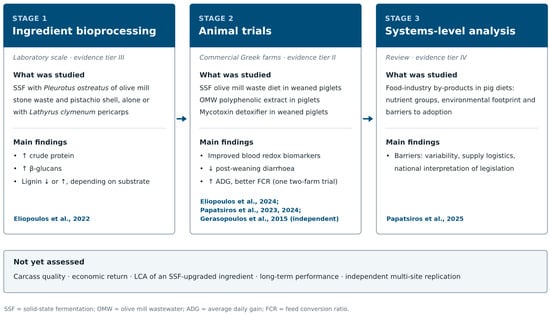
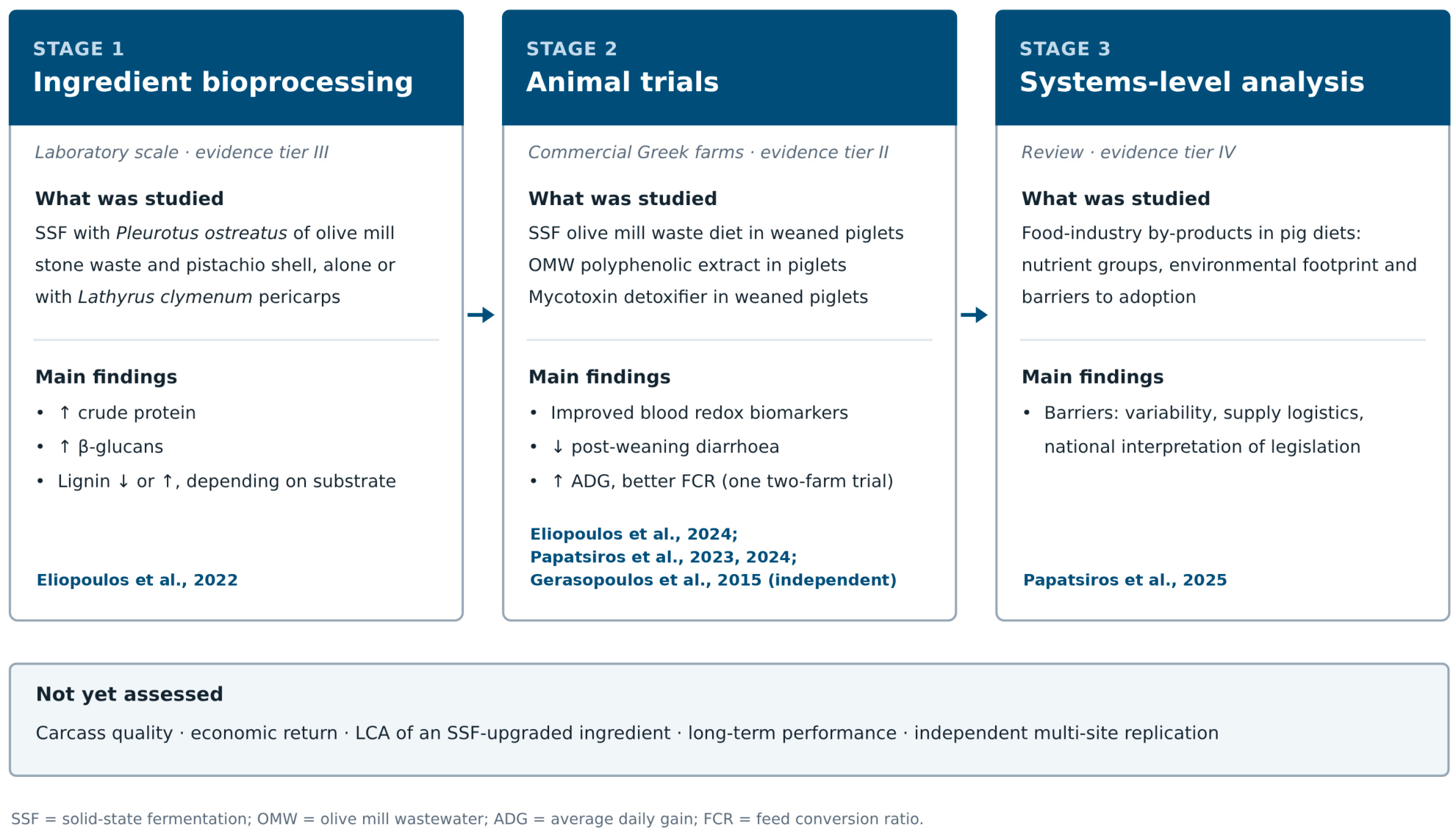
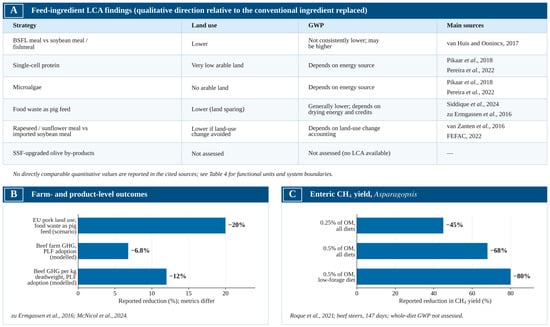
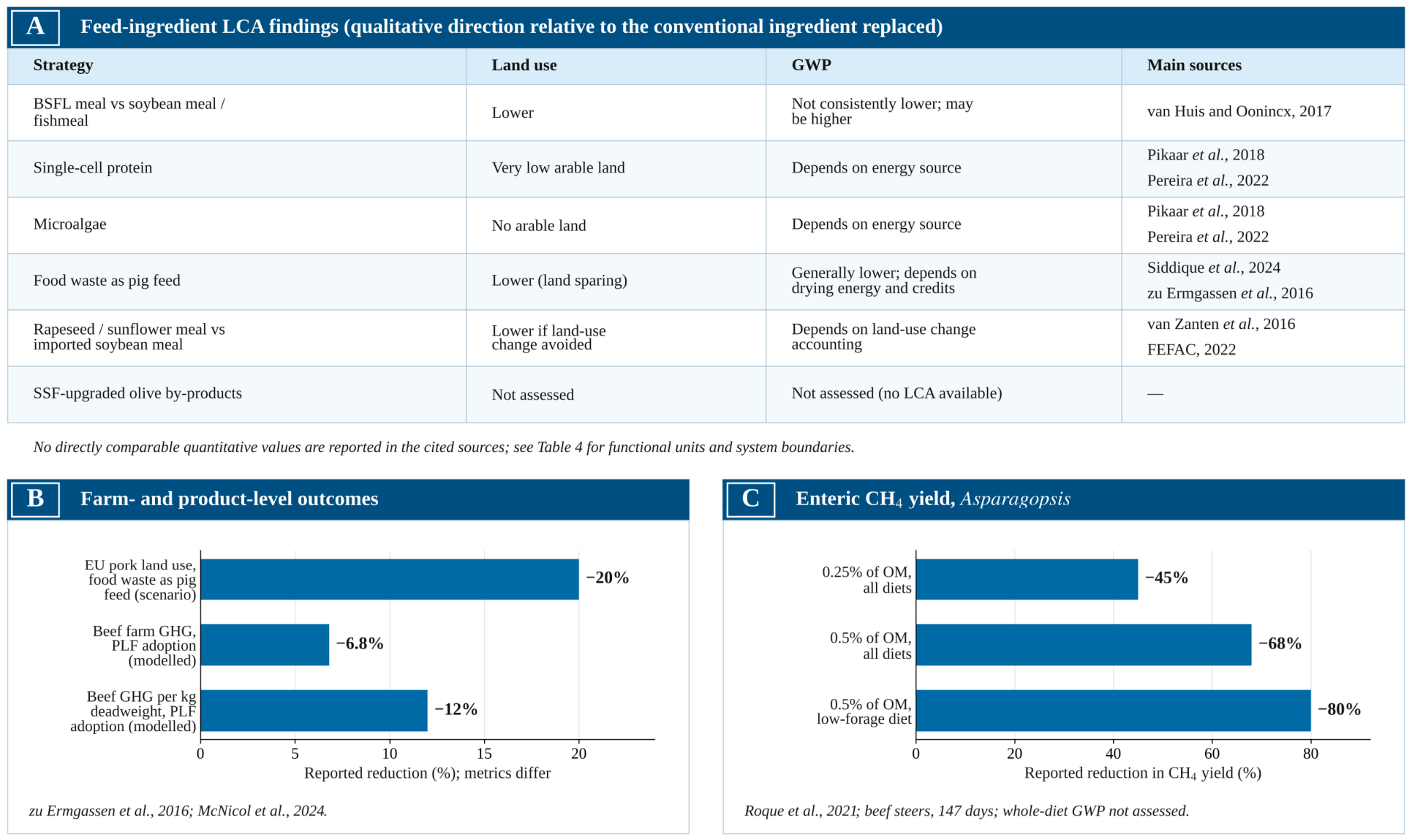
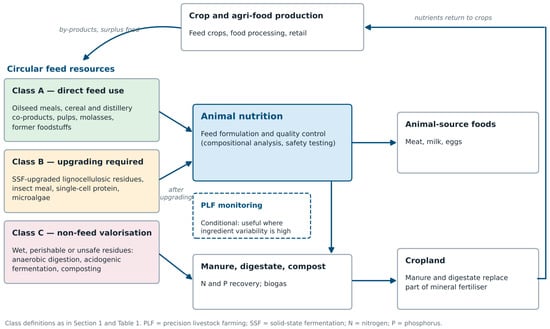
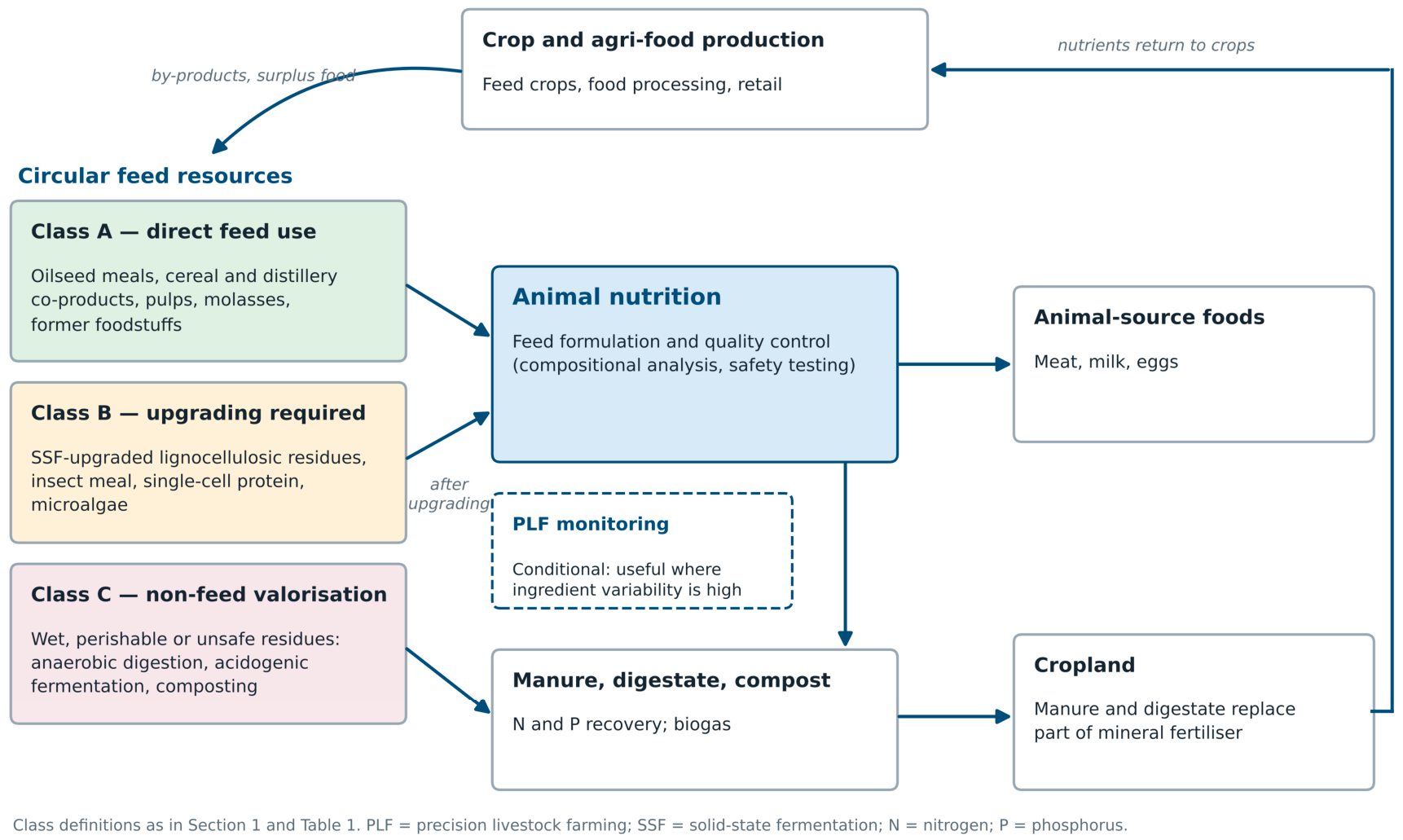
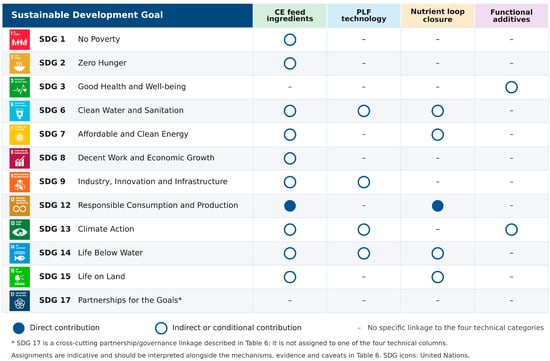
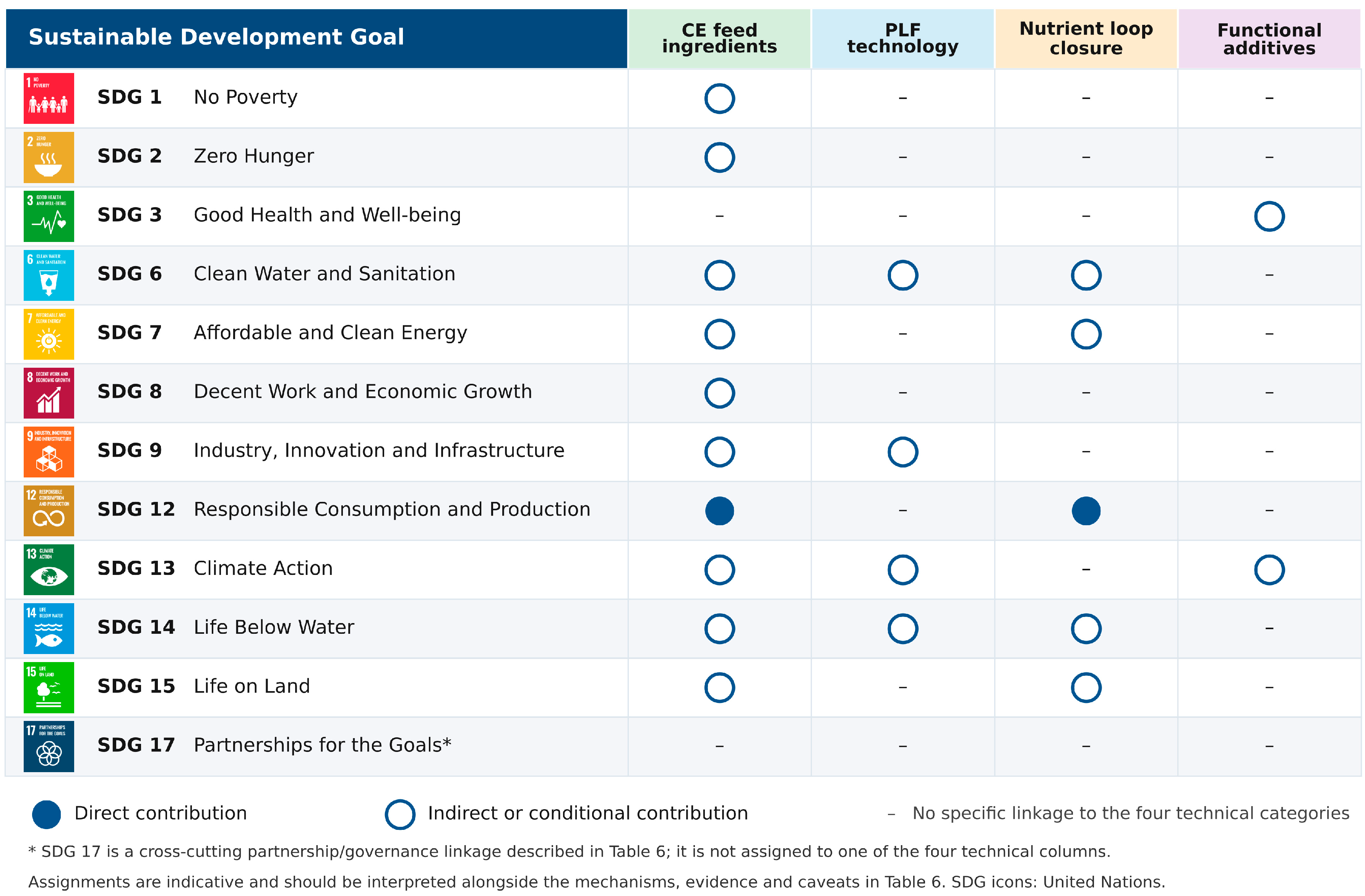
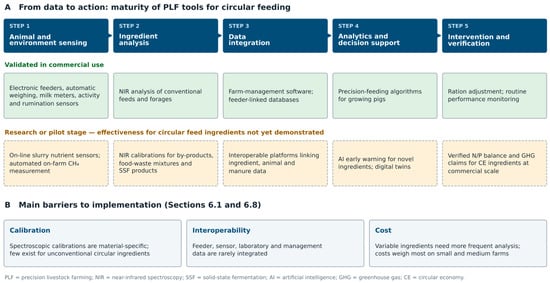
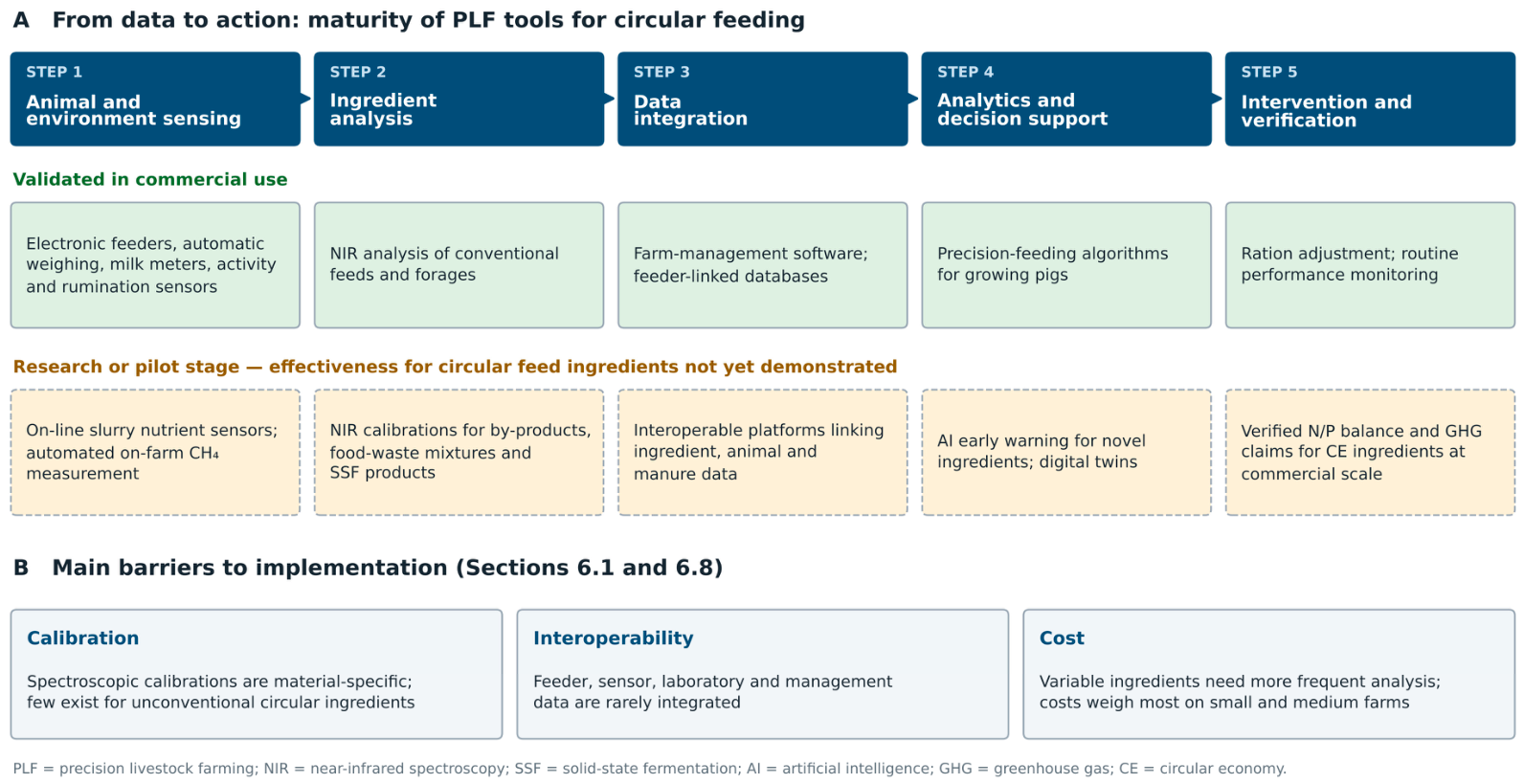
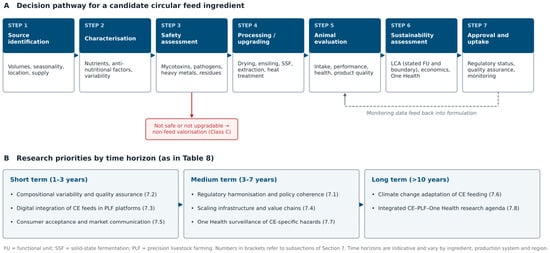
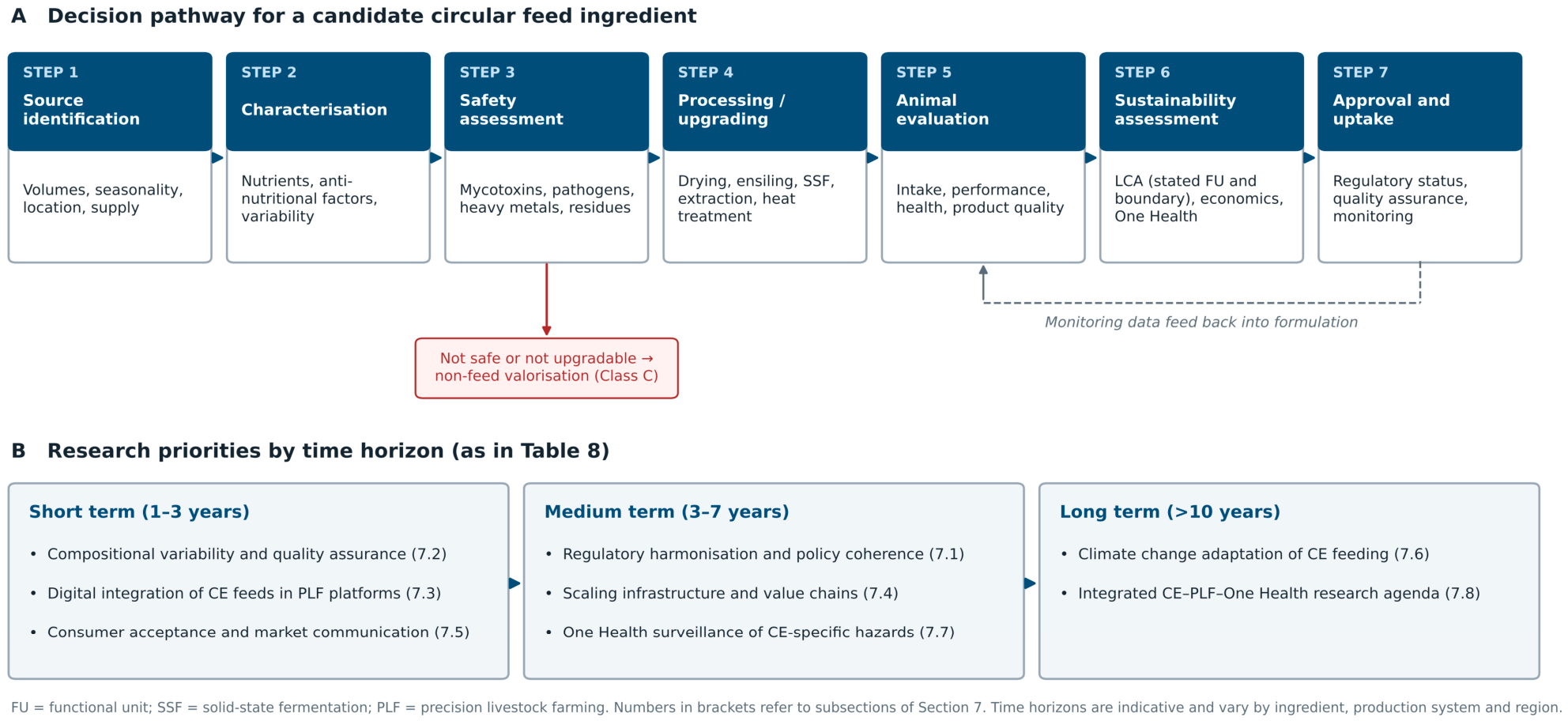
Disclaimer/Publisher’s Note: The statements, opinions and data contained in all publications are solely those of the individual author(s) and contributor(s) and not of MDPI and/or the editor(s). MDPI and/or the editor(s) disclaim responsibility for any injury to people or property resulting from any ideas, methods, instructions or products referred to in the content. |
© 2026 by the authors. Licensee MDPI, Basel, Switzerland. This article is an open access article distributed under the terms and conditions of the Creative Commons Attribution (CC BY) license.