


Abstract
Background: The application of blood flow restriction (BFR) training extends beyond traditional resistance, with targeted use in cardiovascular conditioning, performance priming, and clinical applications relevant to athletic populations. Part 3, the final paper of this series, focuses on the application of blood flow restriction (BFR) during cardiovascular exercise (BFR-CV), ischemic preconditioning (IPC), and therapeutic applications, including the management of joint pain, tendinopathy, and bone health. Methods: A narrative review of research examining BFR applications for cardiovascular conditioning, performance priming, and clinical management was conducted using structured searches of PubMed/MEDLINE, SPORTDiscus, Scopus, and Web of Science, supplemented by targeted literature searching and reference-list screening through May 2026. Search terms encompassed BFR and occlusion training alongside cardiovascular and aerobic exercise, anaerobic and interval training, sprint and sport-specific conditioning, ischemic preconditioning and intra-conditioning, pain and tendinopathy, and bone health. Evidence from trained and athletic populations was prioritized, with relevant clinical and mechanistic studies included where athlete-specific evidence was limited or unavailable. Findings were synthesized narratively across conditioning, IPC/IIC, pain-management, and bone-health applications. Results: Low-intensity BFR-CV (40–50% VO2max with 40–80% arterial occlusion pressure) may enhance aerobic capacity and muscular endurance in trained athletes while minimizing mechanical loading. Sport-specific BFR applications during soccer drills, basketball activities, and small-sided games have been associated with improvements in repeated-sprint ability and sport-specific endurance without impairing speed or power. IPC may produce small, context-dependent improvements (1–3%) in short-duration, high-intensity performance and may support recovery between repeated competitive bouts. Low-load BFR training (20–30% 1RM) may reduce joint and tendon pain while maintaining muscle strength and mass during rehabilitation. Evidence for bone health remains preliminary, with BFR showing potential to influence bone-turnover markers and preserve musculoskeletal function during periods of restricted osteogenic loading. Conclusions: BFR represents a versatile modality for conditioning, performance optimization, and athlete care when mechanical load or training time is constrained.
1. Introduction
Blood flow restriction (BFR) training has emerged as a versatile performance tool that extends well beyond resistance exercise encompassing cardiovascular-based conditioning, pre-competition priming, and therapeutic uses. In this three-part series, Parts 1 and 2 established BFR’s physiological foundations and resistance training applications, while Part 3 examines BFR applications in conditioning and therapeutic domains, which remain less systematically defined. Although much of the available evidence for BFR during aerobic or sport-specific conditioning is derived from apparently healthy, moderately trained populations, emerging studies in athletic populations demonstrate meaningful adaptations in aerobic capacity, repeated-sprint performance, and sport-specific endurance. In parallel, ischemic preconditioning (IPC) protocols, involving short cycles of occlusion and reperfusion applied before or between efforts, show potential as pre-competition or intra-session priming and recovery strategies [1,2,3,4,5,6]. Growing interest also surrounds the use of BFR as an adjunct for managing joint pain, tendon loading, and bone-stress-related injuries [7,8,9,10,11,12]. Understanding such applications is particularly relevant given the increasing demands on athlete availability [13], the need to maintain fitness during injury rehabilitation, and the growing emphasis on training load management in high-performance environments. Collectively, the aim of this paper is to provide an overview of the BFR literature specifically related to cardiovascular conditioning, performance priming, and therapeutic applications in clinical management of athletic populations, therefore providing evidence-informed guidance for practitioners.
Blood flow restriction during cardiovascular exercise (BFR-CV) has been extensively studied in clinical and general populations, demonstrating improvements in cardiorespiratory function [14,15], exercise capacity [16,17], muscle strength and hypertrophy [15,18,19,20]. However, the relevance of these findings to highly trained athletes requires careful consideration, as baseline fitness levels, training status, and performance demands differ substantially. BFR-CV protocols typically employ low intensities (approximately 40% VO2max or 45% heart rate reserve) [15,17,21], though higher intensities (>60%VO2max) have also demonstrated training effects [22,23]. The following sections examine low-intensity aerobic exercise, high-intensity and sport-specific applications, and practical programming considerations for each modality. The subsequent sections progress from low-intensity BFR-CV evidence through higher-intensity and sport-specific protocols, before transitioning to ischemic preconditioning (IPC) and clinical applications. Figure 1 provides a conceptual overview of the application of BFR-CV across the cardiovascular training continuum.
Figure 1.
Conceptual overview of blood flow restriction (BFR) applications across cardiovascular and sport-specific conditioning, highlighting modality-dependent mechanistic and performance-related effects. Abbreviations: VO2max, maximal oxygen uptake; ↑, increase; ↓, decrease; HRR, heart rate reserve; MSS, maximal sprint speed; SSG, small-sided game; HIIT, high-intensity interval training.
Throughout this review, practical recommendations are derived from the characteristics and outcomes of the available literature and are supplemented, where required, by author interpretation to support translation into practice. Where specific numerical thresholds, decision criteria, or session-integration strategies have not been directly evaluated in published studies, these should be interpreted as pragmatic, evidence-informed recommendations rather than independently validated cut-offs.
2. Methods
2.1. Search Strategy
A narrative review of research examining BFR applications for cardiovascular conditioning, performance priming, and clinical management in trained and athletic populations was conducted. A comprehensive literature search of PubMed/MEDLINE, SPORTDiscus, Scopus, and Web of Science was performed using combinations of search terms relevant to the major application areas examined within this review. Search syntax was modified where required to accommodate database-specific indexing and terminology. The literature search included studies available through May 2026.
For cardiovascular, anaerobic, and sport-specific conditioning, searches included combinations of: (“blood flow restriction” OR “BFR” OR “occlusion training” OR “KAATSU”) AND (“aerobic exercise” OR “cardiovascular exercise” OR “endurance” OR “cycling” OR “running” OR “rowing” OR “swimming” OR “sprint” OR “repeated sprint” OR “interval training” OR “HIIT” OR “sprint interval training” OR “anaerobic” OR “conditioning” OR “sport-specific” OR “small-sided games”) AND (“athletes” OR “athletic” OR “trained” OR “elite” OR “sport”).
To capture the literature examining performance priming, recovery, and intra-session occlusion strategies, additional searches included combinations of: (“ischemic preconditioning” OR “ischaemic preconditioning” OR “IPC” OR “ischemic conditioning” OR “ischaemic conditioning” OR “ischemic intra-conditioning” OR “ischaemic intra-conditioning” OR “post-exercise blood flow restriction”) AND (“exercise” OR “performance” OR “recovery” OR “training” OR “sport” OR “athlete”).
For joint and tendon pain and bone-health applications, additional searches included combinations of: (“blood flow restriction” OR “BFR” OR “occlusion training”) AND (“pain” OR “hypoalgesia” OR “analgesia” OR “tendinopathy” OR “patellofemoral” OR “low back pain” OR “rehabilitation” OR “bone” OR “bone mineral density” OR “bone turnover” OR “bone stress injury” OR “stress fracture” OR “relative energy deficiency in sport”).
The reference lists of retrieved primary studies, reviews, and relevant consensus or position statements were also manually searched to identify additional literature. Supplementary targeted searches were undertaken where required to identify mechanistic or clinical evidence relevant to the application areas examined. As this review was designed as a narrative synthesis focused on applied sport practice, studies were selected based on their relevance to BFR protocol design, physiological and performance adaptations, athlete management, and practical application.
2.2. Study Selection
Studies were included if they examined one or more of the following:
- Low-intensity BFR cardiovascular exercise;
- Moderate-to-high-intensity, anaerobic, sprint, or interval-based BFR conditioning;
- Sport-specific BFR conditioning, including small-sided games and mixed-modality training;
- Ischemic preconditioning (IPC) or ischemic intra-conditioning (IIC) for performance, recovery, or training adaptation;
- BFR for pain modulation, tendinopathy, rehabilitation, or maintenance of training capacity during periods of restricted loading;
- BFR-related bone metabolism, bone health, or bone stress injury management;
- Study designs including randomized controlled trials, controlled trials, crossover or within-subject designs, quasi-experimental studies, and relevant case studies;
- Studies involving trained or athletic populations participating in structured sport or exercise training and/or competitive sport.
For conditioning and performance applications, priority was given to studies involving trained individuals and competitive athletes. Where athlete-specific evidence was limited, studies involving physically active populations were considered when the intervention or outcome demonstrated clear relevance to athletic practice.
While the primary focus of this review was research conducted in trained or athletic populations, selected studies involving clinical or non-athletic populations were also considered where comparable athlete-specific evidence was limited or unavailable. This was particularly relevant to pain mechanisms, bone turnover, and bone health, where such studies provide mechanistic or clinical grounding from which potential applications to athletic populations may be cautiously extrapolated. These findings were not interpreted as direct evidence of equivalent responses in athletes.
Studies were excluded where BFR or occlusion methodology was insufficiently described, outcomes were unrelated to the application domains of this review, or the publication was not available in English. Animal and cellular studies were not included within the intervention study summaries but were considered where relevant to mechanistic interpretation.
A single reviewer (primary author) conducted the search and study selection, with consultation among all authors for ambiguous cases. We acknowledge that this selective approach may introduce selection and language biases and may favor studies with positive or applied outcomes.
2.3. Data Extraction and Synthesis
For each included primary study, we extracted:
- Population characteristics (training status, sport, sex, sample size);
- Study design;
- BFR or occlusion protocol details (cuff pressure, cuff width, restriction modality, and timing);
- Exercise protocol details (modality, intensity, volume, frequency, and intervention duration);
- Outcome measures (physiological, performance, pain, functional, and bone-related outcomes).
Where reported in the original publications, effect sizes were extracted to assist in the interpretation of the magnitude of responses. Standardized effect sizes were not calculated independently due to inconsistent reporting across studies and the limited availability of original data. Statistical significance was reported as presented by the original authors.
As this review was designed as a narrative synthesis, no formal quality assessment tool or pooled statistical analysis was applied. Findings were synthesized narratively and organized thematically according to low-intensity BFR cardiovascular exercise, moderate-to-high-intensity conditioning, sport-specific conditioning, IPC and IIC, joint and tendon pain management, and bone health and stress injury management.
2.4. Coverage of Available Literature
While this review is narrative in design, the multi-database search strategy and manual reference-list screening were intended to provide broad coverage of the literature relevant to the specific BFR applications examined. The available evidence varied considerably between domains. Athlete-specific research was more readily available for cardiovascular conditioning, sport-specific training, and performance applications, whereas direct evidence in athletic populations was considerably more limited for pain mechanisms, bone turnover, and bone health.
Accordingly, the intervention study summaries prioritize research with direct relevance to trained and athletic populations, while supporting clinical and mechanistic literature is incorporated where required to provide context and establish physiological or clinical plausibility. Where findings from non-athletic populations are discussed, these are interpreted as supportive or extrapolative evidence rather than direct evidence of efficacy in athletes.
This review was intentionally designed as a narrative rather than systematic review. Consequently, formal systematic-review procedures, including prospective protocol registration, duplicate independent screening, PRISMA reporting and flow-diagram construction, formal risk-of-bias assessment, and quantitative meta-analysis, were not undertaken. The aim was instead to provide a broad, applied synthesis of the available evidence and translate this evidence into practical considerations for strength and conditioning and sports medicine practitioners.
3. Low-Intensity Aerobic BFR Exercise
Low-intensity BFR-CV is typically performed at submaximal workloads (e.g., walking, cycling, rowing, or swimming) with cuffs inflated throughout the exercise bout. In athletic and well-trained populations, studies examining the addition of BFR to low-intensity aerobic exercise have established that even sub-threshold workloads can elicit cardiovascular and peripheral adaptations. For example, Park and colleagues [24] recruited collegiate basketball players to complete two weeks (twice daily, 6 days·week−1) of low-intensity walk training with or without BFR. The BFR group demonstrated significant increases in maximal oxygen capacity (+11.6%) and maximal minute ventilation (+10.6%), whereas no significant changes occurred in the non-BFR group. Held et al. extended this work in two endurance modalities. In international-level rowers, 5 weeks of low-intensity rowing (40–50% VO2max) with BFR significantly improved VO2max (+9%), maximal aerobic power (+15%), and rowing time-to-exhaustion in rowers [25]. In competitive swimmers, five weeks of low-intensity swimming performed below the first lactate threshold with upper-limb BFR increased VO2peak by approximately 0.3 L·min−1, whereas no meaningful change was observed in the non-BFR control group [26]. The swimming velocity corresponding to the first lactate threshold was largely unchanged, suggesting that the adaptations were primarily driven by improvements in maximal oxygen-transport capacity and peripheral oxidative support rather than a shift in submaximal lactate-threshold performance. Collectively, these studies confirm that low-load aerobic BFR can stimulate both central and peripheral improvements in oxygen delivery and utilization while minimizing additional musculoskeletal and mechanical training stress. Table 1 summarizes low-intensity BFR-CV interventions conducted in trained or competitive cohorts, including modality, dose (frequency and duration), and cuff prescription.
Table 1.
Low-intensity BFR-CV Training Studies in Athletic Populations.
These findings are particularly relevant for strength and conditioning (S&C) coaches managing athletes during periods of high training load, during injury rehabilitation requiring mechanical load reduction, or when maintaining aerobic capacity during strength-focused mesocycles. The ability to achieve meaningful cardiovascular adaptations with minimal musculoskeletal stress positions low-intensity BFR-CV as a strategic tool within periodized training programs.
From a programming standpoint, low-intensity BFR-CV appears most suitable as a short-term intervention (e.g., 3–6 weeks) embedded within preparatory macrocycles or as a substitute for higher-intensity conditioning when mechanical loading must be reduced. Coaches should note that improvements are not uniform across all endurance markers; VO2max/VO2peak is most consistently enhanced, whereas lactate-threshold velocity outcomes may require either longer interventions or concurrent higher-intensity work. Session design should prioritize controlled, continuous bouts at clearly defined sub-threshold intensities, with cuff pressures individually prescribed relative to arterial occlusion pressure to reduce variability in the hemodynamic stimulus.
Collectively, these data provide the evidence base underpinning the practical prescription parameters. To translate these findings into applied programming, Table 2 provides evidence-informed prescription ranges for low-intensity BFR-CV that accommodate both traditional 3–12-week blocks (2–3 sessions/week) and short “intensive” microcycles (1–2 sessions/day for 1–2 weeks) where coaches require a rapid aerobic stimulus. The prescription guidelines represent a synthesis of the available evidence alongside established BFR practice and should be interpreted as applied recommendations rather than prescriptive protocols.
Table 2.
Guidelines for Low-Intensity BFR-CV Exercise: Program Variables.
4. Moderate-to-High-Intensity BFR Conditioning
Research examining BFR during moderate-to-high-intensity cardiovascular exercise in trained populations is limited but growing (Table 3), with most evidence derived from cycling models [29,30,31]. Two studies have evaluated short-duration repeated-sprint cycling under BFR. Giovanna and colleagues employed a two-week protocol of repeated 10-s cycling sprints and reported improvements in peak aerobic power and oxygen deficit tolerance that were comparable to performing the same protocol under systemic hypoxic conditions [29]. However, in this short, 2-week intervention, there was no improvement in aerobic capacity measures. Bourgeois and colleagues [30] extended this repeated-sprint approach to three weeks using 15-s maximal cycling sprints and observed increases in maximal aerobic power of 4.5 percent and total mechanical work of 3.6 percent, with no change in VO2peak. These findings suggest that brief anaerobic BFR cycling primarily enhances local peripheral qualities and anaerobic performance without inducing substantial central cardiovascular adaptation.
Table 3.
Moderate-to-High BFR-CV Training Studies in Athletic Populations.
In contrast, Tangchaisuriya et al. (2021) implemented a 12-week high-intensity interval training (HIIT) program in trained masters’ cyclists using 4-min intervals at 80 percent of peak power output [31]. Both HIIT and HIIT with BFR improved VO2max, stroke volume, and maximal cardiac output; however, only the BFR group demonstrated increases in total lean mass, quadriceps muscle cross-sectional area, isokinetic knee extension torque, and vastus lateralis and rectus femoris thickness. These muscular adaptations are consistent with the broader BFR literature in healthy and clinical populations, where low–moderate-intensity BFR cycling stimulates hypertrophy through amplified metabolic stress and fast-twitch fiber recruitment [32]. The BFR group also exhibited a reduction in tissue saturation index (TSI), indicating a greater degree of local deoxygenation during work intervals. Reductions in TSI indicate an imbalance between oxygen delivery and utilization within the muscle and are used as an index of intramuscular metabolic stress [33]. This desaturation response is an important mechanistic signal, as local hypoxia and metabolite accumulation during BFR are proposed to stimulate mitochondrial biogenesis, upregulate glycolytic enzyme activity, and augment motor unit recruitment [34,35,36]. The observed decline in TSI therefore provides physiological evidence that BFR meaningfully intensified the internal load of each interval, consistent with the greater hypertrophic and strength gains observed only in the BFR condition [37,38].
Researchers have applied BFR to sprint-based training [23]. Six weeks of BFR sprint training in moderately trained individuals using repeated 100 metre efforts performed at 70 percent of maximal sprint intensity improved 100 metre performance by approximately 0.4 s. While this represents a measurable change, the absolute performances remained well outside competitive standards for elite sprinters [39]. Additionally, the program consisted solely of submaximal sprint repetitions without the complementary strength development, acceleration work, or maximal velocity exposures that underpin sprint progression in trained or elite athletes. While these findings demonstrate that BFR can augment metabolic stress during submaximal sprint training, the practical application for competitive sprinters remains limited. The protocol’s lack of maximal velocity exposure, acceleration development, and integrated strength work limits its transferability to elite performance contexts. However, BFR sprint training may serve as a useful adjunct during phases requiring reduced mechanical loading (e.g., early rehabilitation, deload periods) or as a metabolic stimulus within comprehensive speed development programs. Coaches should view this application as complementary rather than foundational to sprint training.
5. Sport-Specific BFR Conditioning
Beyond cycling and running models, data on BFR integration into sport-specific conditioning and small-sided game formats are emerging. Such approaches to sport-specific BFR allow athletes to accumulate technical and tactical practice while simultaneously increasing metabolic stress, thereby influencing both the training stimulus and resulting adaptations. In futsal players, three weeks (10 sessions) of small-sided games performed with BFR significantly improved knee extensor and flexor strength (↑ 30.9%, ↑ 23.8%, respectively) and resulted in a 12.2% improvement in Wingate average power compared with controls [40]. In basketball players, four weeks (eight sessions) of wearing BFR during 3-versus-3 small-sided games produced significantly greater improvements in Wingate cycling performance (↑ 4.6–9.5% vs. ↑ 0.3–4.6%), countermovement jump height (↑ 6.8% vs. ↓ 0.7%), and repeated sprint ability (↓ 1.1% vs. ↑ 1.7%) relative to controls [41]. Despite higher perceived exertion, these findings indicate that BFR can meaningfully intensify basketball-specific conditioning and improve neuromuscular performance. A broader application of BFR has been demonstrated in soccer. Hosseini and colleagues [42] applied BFR throughout multi-component training that included small-sided games, plyometrics, continuous running, and technical drills. After six weeks, the BFR group outperformed controls in strength endurance (29.2% vs. 2.0%), change of direction ability (8.1% vs. 2.8%), and soccer-specific aerobic capacity, evidenced by larger gains in both multistage fitness test distance (54.1% vs. 24.7%) and soccer-specific (Hoff) test performance (58.4% vs. 22.7%). These findings demonstrate that BFR may amplify the metabolic and neuromuscular stimulus of sport-specific conditioning while preserving technical and tactical exposures. Continuous BFR applications, such as those used in futsal and soccer, appear to produce robust strength and endurance adaptations and, during basketball play, can enhance repeated-sprint, jump performance and anaerobic performance.
When implementing BFR during sport-specific conditioning, coaches should consider several practical factors. First, BFR sessions should be strategically placed within the weekly microcycle to avoid interference with technical training or competition. Second, athletes require familiarization with BFR sensations before applying it to complex sport-specific movements. Third, monitoring perceived exertion and movement quality is essential, as the increased metabolic stress may compromise technical execution if intensity or pressure is excessive. Finally, BFR sport-specific conditioning appears most appropriate during preparatory phases or GPP blocks or as a maintenance strategy during competitive periods when training volume is reduced. When systematically incorporated, the strategic use of BFR in team-sport conditioning offers a practical method for elevating internal load and enhancing training outcomes without increasing mechanical stress. Table 4 presents guidelines for applying BFR during moderate-to-high-intensity conditioning and sport-specific drill formats. These guidelines align conventional HIIT/repeated-sprint prescription with BFR-specific considerations and should be interpreted as applied recommendations rather than prescriptive protocols.
Table 4.
Guidelines for Moderate-to-High-Intensity BFR-CV Exercise and Sports-Specific Training.
6. Ischemic Preconditioning
Ischemic preconditioning (IPC) represents a distinct application of BFR that differs fundamentally from the continuous occlusion methods described in preceding sections. Whereas BFR-CV involves sustained restriction during exercise, IPC consists of brief, intermittent cycles of limb occlusion followed by reperfusion without concurrent exercise. This passive preconditioning strategy technique has gained attention in sports science for two primary applications: (1) mitigation of muscle atrophy during immobilization periods and (2) augmenting subsequent athletic performance and recovery. While the protective effects of IPC during immobilization have been documented [43,44,45,46], this section focuses specifically on performance and recovery applications in trained athletes and competitive sport contexts. IPC protocols typically involve 3–4 cycles of 5-min occlusion alternating with 5-min reperfusion period using pneumatic cuffs inflated to high pressure (≥80% AOP or ~200–220 mmHg). The ergogenic effects are attributed to vascular adaptations (enhanced nitric oxide bioavailability, improved endothelial function, increased post-reperfusion blood flow), neuromuscular modulation (altered central nervous system excitability, reduced inhibitory signals), and metabolic priming (release of vasoactive substances and growth factors) [47,48,49].
6.1. Acute Pre-Competition IPC
When administered immediately before competition or training (0–45 min prior), IPC has shown mixed but often positive effects on anaerobic power, sprint performance, and strength outcomes (Table 5). The magnitude of benefit is typically small (1–3%), though potentially meaningful in high-performance contexts where marginal gains determine competitive outcomes [50,51]. For example, in high-intensity repeat running sprints, acute IPC produced non-significant but directionally positive changes in maximal power (+2.6%), mean power (+0.7%) and sprint time [52]. Sprint cycling studies report varied responses. Well-trained team athletes performing 5 × 6 s maximal cycle sprints showed no improvement in peak or total power following IPC at 220 mmHg [53], whereas physically active males using a similar IPC prior to performing 12 × 6 s maximal sprints demonstrated significant improvement in mean and peak power for sprints 1–3 relative to a low-pressure placebo [11]. These contrasting findings may reflect differences in timing (5 min vs. 30 min pre-exercise), training status, or individual response variability.
Table 5.
Acute Pre-Competition Intervention Studies on Ischemic Preconditioning (IPC) and Sports Performance.
In sport-specific tasks, IPC often attenuates physiological strain rather than directly enhancing performance. Elite male judo athletes performing a Special Judo Fitness Test did not show improved judo-specific performance following IPC, but experienced significantly lower heart rate and blood lactate responses compared to control, indicating reduced cardiovascular and metabolic strain during maximal efforts. IPC appears to hold greater potential in resistance exercise endurance [8,9]. In a randomized double-blind study, IPC (220 mmHg, 3 × 5 min ischemia/reperfusion, applied 4 h prior) resulted in significant increases in maximal repetitions performed at 50% 1RM for both bench press (11.3%) and 45° leg press (37.5%) [8]. Similarly, strength-trained men performing maximal effort knee extensions (3 sets × 12 reps @12RM) reported an increase in repetitions in sets 1 and 2 with IPC (200 mmHg, 3 × 5 min cycles) compared to a low-pressure placebo intervention [9]. The positive influence on performance was particularly noted in the lower limbs, suggesting that the size of the area subjected to ischemia (thigh vs. arm) may influence the magnitude of the effect.
6.2. IPC for Multi-Bout Performance and Recovery
While acute IPC may enhance isolated maximal efforts, many sporting contexts require repeated high-intensity efforts over the course of a day or tournament format. Research has examined repeated or intra-session IPC applications to investigate the ergogenic response and recovery across successive efforts. Two primary strategies have been identified: (i) prior to and between repeated maximal and (ii) ischemic intra-conditioning (IIC), where brief occlusion is applied during intra-session rest intervals to influence performance decay and recovery kinetics (Table 6).
Table 6.
Repeated-Bout, Intra-Session, and Post-Exercise Ischemic Preconditioning (IPC) and Sport and Exercise.
6.2.1. Repeat-Bout Efforts in Competition Format
In competitive environments requiring repeated bouts of high-intensity efforts separated by short recovery windows, IPC has demonstrated utility in maintaining performance capacity and enhancing recovery kinetics. To illustrate this, well-trained male kayak athletes completed two 1000-m time trials (TT1 and TT2) separated by 80 min under three experimental conditions: control (CON), IPC before TT1 only (IPC1), and IPC before TT1 and TT2 (IPC2). When IPC was administered prior to TT1 (IPC1 and IPC2 conditions), athletes demonstrated a significant improvement in performance relative to control, completing the first time trial 6.9–8.5 s faster (ES = −1.24 to −1.53, p < 0.01), with corresponding increases in average power (19–23.8 watts; ES = 0.89–1.12; p < 0.05). However, in the IPC1 condition, this ergogenic effect did not carry over to TT2, with no mean difference in 1000 m time or power output compared to control. In contrast, applying IPC before both efforts (IPC2) produced the most robust and sustained improvements. This performance advantage was retained for TT2, reducing 1000-m completion time by 6.3 s relative to control (ES: −1.26, p < 0.05) and increasing average power by 17.1 watts (ES = 1.18, p < 0.05). These findings suggest that while IPC applied prior to a single maximal bout can transiently enhance performance, the greatest and most sustained ergogenic effect occurs when IPC is repeated before each maximal effort during multi-bout competition formats.
6.2.2. Post-Exercise Recovery
IPC has shown potential as a post-exercise recovery modality, with some studies reporting both immediate and delayed benefits. When applied after strenuous lower-body exercise, IPC (220 vs. 15 mmHg; 2 × 3 min ischemia/reperfusion) improved immediate and subsequent performance 24 h later [60]. Immediately post-intervention, IPC produced a moderately beneficial effect on squat jump height (ES = 0.63). At 24 h post-exercise, IPC produced small-to-large beneficial effects across multiple jump-derived variables, including improved concentric (ES = 0.36) and eccentric (ES = 0.26) peak velocity in countermovement jump, and large improvements in squat jump eccentric power (ES = 1.38) and eccentric acceleration (ES = 1.24). Sprint recovery was also enhanced, with cumulative 10- and 40-m sprint times recovering more rapidly in the IPC condition.
In elite judo athletes, although IPC (3 × 5 min ischemia/reperfusion) did not influence Special Judo Fitness Test outputs, it produced recovery advantages post-exercise [61]. Compared with placebo (20 mmHg), IPC resulted in significantly improved heart rate recovery (14–18 beats per minute lower), 11.6% greater reduction in blood lactate, higher CMJ performance and reduced muscle soreness (−0.8 points) at 60 min post-test. In endurance contexts, IPC applied during short recovery windows (45 min) between repeated 5 km cycling time trials was equally effective as active recovery or neuromuscular electrical stimulation (NMES) in maintaining performance and restoring muscle blood volume [59]. These findings suggest that IPC may support neuromuscular and physiological readiness during periods of dense training or competition, although the available evidence remains limited and context-dependent.
Effective IPC implementation depends on the competitive format, recovery window, and the athlete’s tolerance to high-pressure occlusion. Table 7 provides applied guidelines for selecting IPC timing and cycle structure to support pre-event priming and between-bout recovery without disrupting standard preparation and should be interpreted as applied recommendations rather than prescriptive protocols.
Table 7.
IPC Guidelines for Performance and Recovery: Acute and Between-Bout Efforts.
6.2.3. Ischemic Intra-Conditioning
Beyond pre-competition priming and between-bout recovery, the occlusion–reperfusion stimulus can also be embedded within the training session itself as ischemic intra-conditioning (IIC). In this approach, an occlusion bout is applied during inter-repetition rest intervals and released before the subsequent work effort, with the intent of leveraging IPC-like vascular and metabolic signaling while preserving the external demands and technical quality of the session. Conceptually, IIC is designed to leverage the systemic and local protective and potentiating effects associated with transient ischemia during the high-metabolic-stress periods created between repeated efforts. The proposed objectives are twofold: first, to mitigate fatigue-induced performance decline across repeated efforts and, second, to potentiate molecular signaling pathways that contribute to physiological adaptations.
In acute resistance and sprint training studies, the effects of IIC appear to be minimal. Across six 30-m maximal sprints performed with 7-min recovery, well-trained athletes showed no improvement in sprint times with IIC (5 min at 60% or 80% AOP) compared with control [55]. In resistance-trained men performing bench press (8 sets × 2 repetitions at 20–90% 1RM), IIC applied before the first set and during subsequent inter-set rest intervals resulted in meaningful increases in peak bar velocity at light-to-moderate loads (20% and 50% 1RM) with small-to-moderate effects [57].
When examined over longer periods (2–4 weeks), IIC appears to stimulate meaningful physiological adaptation [14,62]. Two studies using the same protocol investigated 4 weeks (twice weekly) of cycling sprint-interval training (SIT) with IIC applied during each recovery interval. VO2max increased significantly (4.5–5.9%), whereas control groups reported no change. Despite these physiological improvements, neither study observed significant changes in time-trial performance, suggesting that improvements in maximal aerobic capacity did not translate to enhanced endurance performance within the relatively short training duration.
Both studies also identified favorable shifts in molecular and cellular markers associated with hypoxic signaling and physiological adaptations. In the IIC training groups only, increases were observed in hypoxia-inducible factor-1α (HIF-1α), implicating activation of angiogenic pathways, and Ki-67, indicating increased cellular proliferation associated with capillary expansion and muscle remodeling [62,63]. Collectively, these findings suggest that IIC during high-intensity training may provide an additional vascular and cellular signaling stimulus that contributes to the observed improvements in aerobic capacity.
Table 8 provides guidelines for integrating IIC within SIT/HIIT microcycles, emphasizing pressure selection, timing of inflation relative to work bouts, and occlusion duration that preserves interval quality. These recommendations align IIC-specific constraints with established interval-training principles while highlighting its primary role as a chronic signaling stimulus rather than an acute ergogenic strategy. The following guidelines represent a synthesis of the available evidence alongside established BFR practice and should be interpreted as applied recommendations rather than prescriptive protocols.
Table 8.
Guidelines for Ischemic Intra-Conditioning (IIC) During Training.
6.3. Summary and Recommendations
Ischemic preconditioning represents a distinct and potentially valuable application of blood flow restriction technology in athletic settings, though its effects are more nuanced than continuous BFR methods. For pre-performance use, IPC can be applied immediately before the standard warm-up, typically leaving approximately 30–45 min before short-duration, high-intensity efforts (30–90 s). IPC may also be used as a recovery strategy between bouts in tournament and multi-day competition formats. Performance improvements, when present, are typically small (1–3%) but may be meaningful in high-performance contexts where marginal gains are competitively significant.
However, several important limitations warrant consideration. Individual response is variable, with clear responders and non-responders across studies. Protocol parameters (cuff pressure, cycle duration, timing) vary widely in the literature, making specific recommendations challenging. The mechanisms underlying IPC’s ergogenic effects remain incompletely understood, and the relationship between acute performance enhancement and chronic training adaptations requires further investigation. Additionally, most research involves laboratory-based performance measures; evidence for sport-specific performance improvements in competitive settings is limited.
For S&C coaches, IPC should be viewed as a supplementary, context-specific tool rather than a primary training method. Successful implementation requires systematic individual testing during training periods to identify responders, careful protocol standardization, and realistic expectations regarding effect magnitude. Even in the absence of objective performance gains, athletes who perceive benefit from IPC may experience meaningful placebo or confidence effects that support its continued use, particularly in sports where psychological readiness is critical [64,65,66].
When applied judiciously in appropriate contexts with proper athlete selection and monitoring, IPC offers an evidence-informed strategy for pre-competition priming and between-bout recovery that complements the broader BFR toolkit outlined in this three-part series. However, coaches must balance the potential small performance gains against the time, equipment, and monitoring requirements, ensuring that IPC implementation does not compromise the fundamental aspects of training and competition preparation. Specific protocols for acute/between-bout IPC applications and ischemic intra-conditioning for chronic adaptations are summarized in Table 7 and Table 8, respectively.
7. BFR for Joint and Tendon Pain Management
Joint and tendon pain represent a significant challenge in athletic populations, often limiting training participation and reducing performance [67,68]. Traditional management varies depending on the injury; however, during critical training or competition periods, there is often a requirement to modify physical activity to manage symptoms, which can compromise preparation and performance [69,70].
BFR training has emerged as a potential solution, offering a method to attenuate pain whilst maintaining or improving muscle strength and function [6,71,72,73,74,75,76]. This is relevant for athletes with tendon or joint issues who experience clinically meaningful pain during exercise. In these cases, training intensity is often reduced to avoid symptom exacerbation, sometimes below the threshold required to elicit meaningful physiological adaptation [77]. The analgesic effects of BFR exercise appear to arise from multiple complementary mechanisms, including exercise-induced hypoalgesia via activation of endogenous opioid pathways and endorphin release [78,79], as well as potential anti-inflammatory effects through modulation of pro-inflammatory cytokines [80,81]. These mechanisms position BFR as a practical tool for managing pain during training while simultaneously addressing strength and muscle mass deficits that often accompany training load reduction [82,83].
Single-session studies demonstrate immediate analgesic effects of BFR exercise [6,71,84]. In individuals with anterior knee pain, one bout of low-load (4 sets @ 30% 1RM) knee extension exercise with BFR (80% AOP) significantly improved functional movements and reduced pain during and post-exercise, with effects sustained for at least 45 min [6]. In a randomized controlled trial of adults with patellofemoral pain, four weeks of low-load (30% 1RM) hip and knee strengthening with BFR produced reductions in pain and improvements in function comparable to conventional high-load training (70% 1RM), with significantly greater reductions in worst pain post-treatment and greater gains in knee extensor strength at follow-up in the BFR group [85].
Longitudinal studies demonstrate that low-load (30% 1RM) BFR training can produce meaningful improvements in pain, strength, and function across chronic musculoskeletal conditions while using substantially lower external loads than traditional resistance training [74,76,86]. In individuals with patellofemoral pain, eight weeks of quadriceps strengthening at 30% 1RM with BFR (3 sessions·wk−1) produced improvements in knee-related function scores and worst pain comparable to traditional training at 70% 1RM while yielding significantly greater reductions (p ≤ 0.02) in pain during activities of daily living and greater recovery of knee extensor strength [76].
In male collegiate athletes with chronic non-specific low back pain, four weeks of upper and lower body BFR resistance training at 30% 1RM significantly reduced pain intensity and disability (p < 0.001) and increased trunk flexor and extensor endurance, with no between-group differences relative to high-load training at 70% 1RM [86]. In an applied sport context, a collegiate decathlete with patellar tendinopathy completed a ten-week in-season lower-body BFR resistance training program (30% 1RM; 2 sessions·wk−1). The addition of the BFR intervention was associated with improvements in pain, self-reported knee function, lower-limb strength, and tendon structure, allowing the athlete to continue training and competition without symptom exacerbation [74]. Table 9 summarizes guidelines for integrating BFR as a pain-modulation strategy within athlete management and should be interpreted as applied recommendations rather than prescriptive protocols.
Table 9.
BFR Guidelines for Pain Management.
8. BFR for Bone Health and Stress Injury Management
Bone stress injuries represent a significant concern in athletic populations, particularly among endurance athletes and those in weight-sensitive sports, with injury burden amplified by repetitive loading demands and, in some cohorts, low energy availability and hormonal disruption [87,88,89]. Traditional management commonly requires a period of substantial load modification and staged return to activity, with return-to-sport timeframes ranging from several weeks to months depending on severity and anatomical site [88,89]. Beyond bone stress injuries, long-term bone health is a parallel concern in athletes with low bone mineral density (BMD), particularly those with menstrual dysfunction and/or Relative Energy Deficiency in Sport (RED-S), where low energy availability can impair endocrine function and subsequent bone health [87]. In these contexts, the applied challenge for S&C coaches is maintaining muscle mass and fitness while conventional osteogenic loading strategies are restricted.
The mechanisms by which BFR exercise might influence bone metabolism differ from traditional mechanical loading models, where peak strain magnitude and strain rate are key determinants of the osteogenic response [90]. In contrast, BFR applied during low-load exercise creates a unique physiological environment that may elicit bone adaptations through indirect signaling pathways. Evidence suggests two complementary mechanistic pathways may contribute to BFR-mediated bone adaptation: (1) muscle-to-bone endocrine signaling through myokine production and myogenic factors and (2) hypoxia-induced activation of transcriptional pathways regulating angiogenesis and osteogenesis [1,91].
During BFR training, metabolic stress stimulates skeletal muscle to produce myokines and growth factors, which regulate osteoblast and osteoclast function [92,93]. Additionally, venous outflow restriction has been proposed to alter the intraosseous fluid environment, with experimental work demonstrating that changes in intramedullary pressure can induce intracortical fluid flow and influence bone mechanotransduction pathways and osteocyte signaling [94,95]. A secondary complementary pathway is hypoxia-sensitive signaling, particularly activation of hypoxia-inducible factor-1α (HIF-1α), a master transcriptional regulator that increases vascular endothelial growth factor (VEGF) expression in osteoblasts, coupling angiogenesis to osteogenic differentiation during skeletal development and repair [96]. Although direct evidence that BFR activates these pathways within bone tissue in athletic populations is limited, BFR exercise has been reported to induce hypoxia-response transcripts in non-athletic populations, supporting mechanistic plausibility for a pro-angiogenic and pro-remodeling milieu when mechanical loading is constrained [97,98,99].
Bone turnover markers reflect dynamic remodeling processes and include formation markers (e.g., P1NP, bone alkaline phosphatase) and resorption markers (e.g., CTX) [100]. In older men, six weeks of low-intensity resistance training with vascular restriction increased bone alkaline phosphatase by approximately 21% and improved the bone alkaline phosphatase-to-CTX ratio, suggesting a shift favoring bone formation [101]. In postmenopausal women with osteoporosis or osteopenia, 12 weeks of low-intensity resistance training with BFR improved strength and increased P1NP [102].
Evidence for BMD change from BFR is limited and often constrained by study duration, with many interventions shorter than the time required for robust skeletal adaptation [100]. In applied clinical scenarios, the most defensible pattern is attenuation of bone loss rather than clear osteogenic gains. Accordingly, BFR should not be positioned as a substitute for impact or heavy resistance training where those are appropriate and tolerated [93,103]. Instead, BFR is best framed as a supplementary strategy when osteogenic loading is temporarily contraindicated [104]. In practice, this may include integrating low-load BFR resistance training during early rehabilitation phases, employing contralateral strength training when one limb is load-restricted, and using passive BFR protocols to attenuate disuse-related muscle loss during immobilization or severe unloading, before progressing toward conventional loading as clearance permits.
Key limitations warrant explicit acknowledgement: athlete-specific trials remain scarce, and bone-oriented protocols (pressure, load, frequency, and duration) are not established [1,105]. As such, BFR should be implemented within a multidisciplinary plan, with realistic expectations that long-term bone health improvements require restoration of energy availability and endocrine function alongside progressive reintroduction of osteogenic loading. Accordingly, implementation should prioritize interdisciplinary clearance, conservative prescription, and monitoring. Table 10 summarizes evidence-informed integration guidelines for strength and conditioning practitioners working with athletes affected by bone stress injury, low BMD, or RED-S. The following guidelines represent a synthesis of the available evidence alongside established BFR practice and should be interpreted as applied recommendations rather than prescriptive protocols.
Table 10.
BFR Guidelines for Bone Stress Injury and Bone Health.
9. Conclusions
Evidence suggests that BFR extends beyond resistance training to support cardiovascular conditioning, pre-performance priming, and selected clinical-management applications. Low-intensity BFR cardiovascular exercise provides a meaningful aerobic stimulus with minimal mechanical stress, which may be valuable during rehabilitation, deload phases, and periods of high running or impact exposure. Moderate- to high-intensity and sport-specific BFR applications may augment internal load during interval-based work and small-sided game formats, improving aerobic power, repeated-sprint qualities, and selected neuromuscular outcomes while preserving technical and tactical specificity. Ischemic preconditioning represents a related occlusion–reperfusion strategy that may produce small, context-dependent improvements in short-duration, high-intensity performance; however, variability in responsiveness supports individual trialing prior to competition use. Emerging therapeutic applications further position BFR as a versatile adjunct when pain or tissue tolerance constrains conventional loading. Across acute and longitudinal evidence, BFR can attenuate pain while maintaining or improving strength and functional outcomes in selected joint and tendon presentations, provided implementation remains within scope of practice and is coordinated with medical staff. In bone stress and low-BMD contexts, BFR should be framed as a bridge strategy to preserve muscle and conditioning when osteogenic loading is temporarily contraindicated, rather than as a primary method for increasing BMD.
S&C coaches should therefore treat BFR as a supplementary modality that complements, rather than replaces, established training and rehabilitation principles. Best practice requires individualized pressure prescription, conservative progression, appropriate integration within periodized plans, and systematic monitoring of symptoms, movement quality, and recovery. Key limitations include heterogeneous protocols, limited athlete-specific evidence across several domains, and uncertainty regarding long-term outcomes and optimal dose–response relationships. Future research should prioritize longer interventions, sport-specific endpoints, female and youth cohorts, and clinical trials in bone stress and RED-S populations. Together with Parts 1 and 2, this series provides recommendations based upon the current reviewed evidence for integrating BFR across performance, load management, and return-to-training contexts to support athlete health and performance. S&C coaches should therefore interpret the available evidence in the context of the individual athlete, training objectives, clinical considerations, and competitive environment when determining whether and how BFR is integrated into practice.
Author Contributions
C.G., C.J.C. and S.P.B., conceptualization; C.G., data collection, formal analysis and project administration; C.G., writing—original draft preparation; C.G., C.J.C. and S.P.B., writing—review and editing, visualization. All authors have read and agreed to the published version of the manuscript.
Funding
This research received no external funding.
Data Availability Statement
No new data were generated or anlyzed in this study. Data sharing is not applicable to this article.
Conflicts of Interest
The authors declare no conflicts of interest.
Abbreviations
The following abbreviations are used in this manuscript:
| Abbreviation/Notation | Definition |
| a–v | Arteriovenous (difference) |
| AOP | Arterial occlusion pressure |
| BFR | Blood flow restriction |
| BFR-CV | Blood flow restriction cardiovascular exercise |
| BFR-RE | Blood flow restriction resistance exercise |
| BMD | Bone mineral density |
| BSI | Bone stress injury |
| CMJ | Countermovement jump |
| COD | Change of direction |
| CO | Cardiac output |
| CSA | Cross-sectional area |
| CTX | C-terminal telopeptide (bone resorption marker) |
| DOMS | Delayed onset muscle soreness |
| ES | Effect size |
| FMD | Flow-mediated dilation |
| HIF-1α | Hypoxia-inducible factor-1 alpha |
| HIIT | High-intensity interval training |
| HR | Heart rate |
| HRmax | Maximal heart rate |
| HRR | Heart rate reserve |
| IGF-1 | Insulin-like growth factor 1 |
| IIC | Ischemic intra-conditioning |
| IPC | Ischemic preconditioning |
| LOP | Limb occlusion pressure |
| MAP | Maximal aerobic power |
| MAS | Maximal aerobic speed |
| mRNA | Messenger RNA |
| MSS | Maximal sprint speed |
| MSTN | Myostatin |
| NMES | Neuromuscular electrical stimulation |
| P1NP | Procollagen type I N-terminal propeptide |
| PPO | Peak power output |
| RFD | Rate of force development |
| RED-S | Relative energy deficiency in sport |
| S&C | Strength and conditioning |
| SBP | Systolic blood pressure |
| SIT | Sprint interval training |
| SSG | Small-sided game |
| SV | Stroke volume |
| TSI | Tissue saturation index |
| TT | Time trial |
| VCO2 | Carbon dioxide output |
| VE | Minute ventilation |
| VEmax | Maximal minute ventilation |
| VEGF | Vascular endothelial growth factor |
| VO2 | Oxygen uptake |
| VO2max | Maximal oxygen uptake |
| VO2peak | Peak oxygen uptake |
References
- Hughes, L.; Centner, C. Idiosyncratic bone responses to blood flow restriction exercise: New insights and future directions. J. Appl. Physiol. 2024, 136, 283–297. [Google Scholar] [CrossRef] [Scilit] [PubMed]
- Wan, C.; Gilbert, S.R.; Wang, Y.; Cao, X.; Shen, X.; Ramaswamy, G.; Jacobsen, K.A.; Alaql, Z.S.; Eberhardt, A.W.; Gerstenfeld, L.C.; et al. Activation of the hypoxia-inducible factor-1α pathway accelerates bone regeneration. Proc. Natl. Acad. Sci. USA 2008, 105, 686–691. [Google Scholar] [CrossRef] [Scilit] [PubMed]
- Centner, C.; Lauber, B.; Seynnes, O.R.; Jerger, S.; Sohnius, T.; Gollhofer, A.; König, D. Low-load blood flow restriction training induces similar morphological and mechanical achilles tendon adaptations compared with high-load resistance training. J. Appl. Physiol. 2019, 127, 1660–1667. [Google Scholar] [CrossRef] [Scilit] [PubMed]
- Kubo, K.; Komuro, T.; Ishiguro, N.; Tsunoda, N.; Sato, Y.; Ishii, N.; Kanehisa, H.; Fukunaga, T. Effects of low-load resistance training with vascular occlusion on the mechanical properties of muscle and tendon. J. Appl. Biomech. 2006, 22, 112–119. [Google Scholar] [CrossRef] [Scilit] [PubMed]
- Slysz, J.T.; Burr, J.F. Ischemic preconditioning: Modulating pain sensitivity and exercise performance. Front. Physiol. 2021, 12, 696488. [Google Scholar] [CrossRef] [Scilit] [PubMed]
- Korakakis, V.; Whiteley, R.; Epameinontidis, K. Blood flow restriction-induced analgesia in patients with anterior knee pain. J. Sci. Med. Sport 2017, 20, e100. [Google Scholar] [CrossRef] [Scilit]
- Cocking, S.; Wilson, M.G.; Nichols, D.; Cable, N.T.; Green, D.J.; Thijssen, D.J.; Jones, H. Is there an optimal ischemic-preconditioning dose to improve cycling performance? Int. J. Sports Physiol. Perform. 2018, 13, 274–282. [Google Scholar] [CrossRef] [Scilit] [PubMed]
- Santana, V.J.d.; de Oliveira Deângelo, C.E.; Salemi, V.M.C.; Miranda, D.P. The influence of ischemic preconditioning on neuromuscular performance. Rev. Bras. Med. Esporte 2021, 27, 207–211. [Google Scholar] [CrossRef] [Scilit]
- Marocolo, M.; Willardson, J.M.; Marocolo, I.C.; da Mota, G.R.; Simão, R.; Maior, A.S. Ischemic preconditioning and placebo intervention improves resistance exercise performance. J. Strength Cond. Res. 2016, 30, 1462–1469. [Google Scholar] [CrossRef] [Scilit] [PubMed]
- Incognito, A.V.; Burr, J.F.; Millar, P.J. The effects of ischemic preconditioning on human exercise performance. Sports Med. 2016, 46, 531–544. [Google Scholar] [CrossRef] [Scilit] [PubMed]
- Patterson, S.D.; Bezodis, N.E.; Glaister, M.; Pattison, J.R. The effect of ischemic preconditioning on repeated sprint cycling performance. Med. Sci. Sports Exerc. 2015, 47, 1652–1658. [Google Scholar] [CrossRef] [Scilit] [PubMed]
- da Mota, G.R.; Marocolo, M. The effects of ischemic preconditioning on human exercise performance: A counterpoint. Sports Med. 2016, 46, 1575–1576. [Google Scholar] [CrossRef] [Scilit] [PubMed]
- Calleja-González, J.; Mallo, J.; Cos, F.; Sampaio, J.; Jones, M.T.; Marqués-Jiménez, D.; Mielgo-Ayuso, J.; Freitas, T.T.; Alcaraz, P.E.; Vilamitjana, J. A commentary of factors related to player availability and its influence on performance in elite team sports. Front. Sports Act. Living 2023, 4, 1077934. [Google Scholar] [CrossRef] [Scilit] [PubMed]
- Taylor, C.W.; Ingham, S.A.; Ferguson, R.A. Acute and chronic effect of sprint interval training combined with postexercise blood-flow restriction in trained individuals. Exp. Physiol. 2016, 101, 143–154. [Google Scholar] [CrossRef] [Scilit] [PubMed]
- Abe, T.; Fujita, S.; Nakajima, T.; Sakamaki, M.; Ozaki, H.; Ogasawara, R.; Sugaya, M.; Kudo, M.; Kurano, M.; Yasuda, T.; et al. Effects of low-intensity cycle training with restricted leg blood flow on thigh muscle volume and VO2max in young men. J. Sports Sci. Med. 2010, 9, 452–458. [Google Scholar] [PubMed]
- Corvino, R.B.; Oliveira, M.F.M.d.; dos Santos, R.P.; Denadai, B.S.; Caputo, F. Four weeks of blood flow restricted training increases time to exhaustion at severe intensity cycling exercise. Rev. Bras. Cineantropometria Desempenho Hum. 2014, 16, 570–578. [Google Scholar]
- de Oliveira, M.F.M.; Caputo, F.; Corvino, R.B.; Denadai, B.S. Short-term low-intensity blood flow restricted interval training improves both aerobic fitness and muscle strength. Scand. J. Med. Sci. Sports 2016, 26, 1017–1025. [Google Scholar] [CrossRef] [Scilit] [PubMed]
- Abe, T.; Kearns, C.F.; Sato, Y. Muscle size and strength are increased following walk training with restricted venous blood flow from the leg muscle, Kaatsu-walk training. J. Appl. Physiol. 2006, 100, 1460–1466. [Google Scholar] [CrossRef] [Scilit] [PubMed]
- Ozaki, H.; Brechue, W.F.; Sakamaki, M.; Yasuda, T.; Nishikawa, M.; Aoki, N.; Ogita, F.; Abe, T. Metabolic and cardiovascular responses to upright cycle exercise with leg blood flow reduction. J. Sports Sci. Med. 2010, 9, 224–230. [Google Scholar] [PubMed]
- Kim, D.; Singh, H.; Loenneke, J.P.; Thiebaud, R.S.; Fahs, C.A.; Rossow, L.M.; Young, K.; Seo, D.I.; Bemben, D.A.; Bemben, M.G. Comparative effects of vigorous-intensity and low-intensity blood flow restricted cycle training and detraining on muscle mass, strength, and aerobic capacity. J. Strength Cond. Res. 2016, 30, 1453–1461. [Google Scholar] [CrossRef] [Scilit] [PubMed]
- Conceicao, M.S.; Junior, E.M.M.; Telles, G.D.; Libardi, C.A.; Castro, A.; Andrade, A.L.L.; Brum, P.C.; Urias, Ú.; Kurauti, M.A.; Júnior, J.M.C. Augmented anabolic responses after 8-wk cycling with blood flow restriction. Med. Sci. Sports Exerc. 2019, 51, 84–93. [Google Scholar] [CrossRef] [Scilit] [PubMed]
- Behi, A.; Fahey, T.D.; Afsharnezhad, T.; Amani, A.R. Effect of high intensity interval training with blood restriction on anaerobic performance. Int. J. Appl. Exerc. Physiol. 2017, 6, 45–52. [Google Scholar] [CrossRef] [Scilit]
- Behringer, M.; Behlau, D.; Montag, J.C.K.; McCourt, M.L.; Mester, J. Low-intensity sprint training with blood flow restriction improves 100-m dash. J. Strength Cond. Res. 2017, 31, 2462–2472. [Google Scholar] [CrossRef] [Scilit] [PubMed]
- Park, S.; Kim, J.K.; Choi, H.M.; Kim, H.G.; Beekley, M.D.; Nho, H. Increase in maximal oxygen uptake following 2-week walk training with blood flow occlusion in athletes. Eur. J. Appl. Physiol. 2010, 109, 591–600. [Google Scholar] [CrossRef] [Scilit] [PubMed]
- Held, S.; Behringer, M.; Donath, L. Low intensity rowing with blood flow restriction over 5 weeks increases V·O2max in elite rowers: A randomized controlled trial. J. Sci. Med. Sport 2020, 23, 304–308. [Google Scholar] [CrossRef] [Scilit] [PubMed]
- Held, S.; Rappelt, L.; Deutsch, J.-P.; Rein, R.; Wiedenmann, T.; Schiffer, A.; Bieder, A.; Staub, I.; Donath, L. Low-intensity swimming with blood flow restriction over 5 weeks increases VO2peak: A randomized controlled trial using bayesian informative prior distribution. Eur. J. Sport Sci. 2023, 23, 1622–1628. [Google Scholar] [CrossRef] [Scilit] [PubMed]
- Chen, Y.-T.; Hsieh, Y.-Y.; Ho, J.-Y.; Lin, T.-Y.; Lin, J.-C. Running training combined with blood flow restriction increases cardiopulmonary function and muscle strength in endurance athletes. J. Strength Cond. Res. 2022, 36, 1228–1237. [Google Scholar] [CrossRef] [Scilit] [PubMed]
- Thompson, K.M.A.; Pethick, W.A.; Clarke, J.; Winegarden, A.; Johnson, E.; Coates, A.M.; Stellingwerff, T.; Burr, J.F. Blood flow-restricted training and time trial performance: A cohort study of world-class rowers. Med. Sci. Sports Exerc. 2024, 56, 1606–1614. [Google Scholar] [CrossRef] [Scilit] [PubMed]
- Giovanna, M.; Solsona, R.; Sanchez, A.M.J.; Borrani, F. Effects of short-term repeated sprint training in hypoxia or with blood flow restriction on response to exercise. J. Physiol. Anthropol. 2022, 41, 32. [Google Scholar] [CrossRef] [Scilit] [PubMed]
- Bourgeois, H.; Paradis-Deschênes, P.; Billaut, F. High-intensity interval training with blood-flow restriction enhances sprint and maximal aerobic power in male endurance athletes. Appl. Physiol. Nutr. Metab. 2024, 50, 1–11. [Google Scholar] [CrossRef] [Scilit] [PubMed]
- Tangchaisuriya, P.; Chuensiri, N.; Tanaka, H.; Suksom, D. Physiological adaptations to high-intensity interval training combined with blood flow restriction in masters road cyclists. Med. Sci. Sports Exerc. 2021, 54, 830–840. [Google Scholar] [CrossRef] [Scilit] [PubMed]
- Loenneke, J.P.; Wilson, J.M.; Marín, P.J.; Zourdos, M.C.; Bemben, M.G. low intensity blood flow restriction training: A meta-analysis. Eur. J. Appl. Physiol. 2012, 112, 1849–1859. [Google Scholar] [CrossRef] [Scilit] [PubMed]
- Scheeren, T.W.L.; Schober, P.; Schwarte, L.A. Monitoring tissue oxygenation by near infrared spectroscopy (NIRS): Background and current applications. J. Clin. Monit. Comput. 2012, 26, 279–287. [Google Scholar] [CrossRef] [Scilit] [PubMed]
- Ferguson, R.A.; Mitchell, E.A.; Taylor, C.W.; Bishop, D.J.; Christiansen, D. Blood-flow-restricted exercise: Strategies for enhancing muscle adaptation and performance in the endurance-trained athlete. Exp. Physiol. 2021, 106, 837–860. [Google Scholar] [CrossRef] [Scilit] [PubMed]
- Scott, B.R.; Loenneke, J.P.; Slattery, K.M.; Dascombe, B.J. Exercise with blood flow restriction: An updated evidence-based approach for enhanced muscular development. Sports Med. 2015, 45, 313–325. [Google Scholar] [CrossRef] [Scilit] [PubMed]
- Suga, T.; Okita, K.; Takada, S.; Omokawa, M.; Kadoguchi, T.; Yokota, T.; Hirabayashi, K.; Takahashi, M.; Morita, N.; Horiuchi, M. Effect of multiple set on intramuscular metabolic stress during low-intensity resistance exercise with blood flow restriction. Eur. J. Appl. Physiol. 2012, 112, 3915–3920. [Google Scholar] [CrossRef] [Scilit] [PubMed]
- Su, C.; Zhang, Z.; Liang, B.; Zhou, S.; Long, X. Effects of blood flow restriction combined with high-load training on muscle strength and sports performance in athletes: A systematic review and meta-analysis. Front. Physiol. 2025, 16, 1603568. [Google Scholar] [CrossRef] [Scilit] [PubMed]
- Early, K.S.; Rockhill, M.; Bryan, A.; Tyo, B.; Buuck, D.; McGinty, J. Effect of blood flow restriction training on muscular performance, pain and vascular function. Int. J. Sports Phys. Ther. 2020, 15, 892–900. [Google Scholar] [CrossRef] [Scilit] [PubMed]
- Haugen, T.; Seiler, S.; Sandbakk, Ø.; Tønnessen, E. The training and development of elite sprint performance: An integration of scientific and best practice literature. Sports Med.-Open 2019, 5, 44. [Google Scholar] [CrossRef] [Scilit] [PubMed]
- Amani-Shalamzari, S.; Sarikhani, A.; Paton, C.; Rajabi, H.; Bayati, M.; Nikolaidis, P.T.; Knechtle, B. Occlusion training during specific futsal training improves aspects of physiological and physical performance. J. Sports Sci. Med. 2020, 19, 374–382. [Google Scholar] [PubMed]
- Liu, H.; Yin, M.; Xu, K.; Deng, S.; Mckee, J.R.; Scott, B.R.; Girard, O.; Zhang, M. Blood flow restriction during small-sided games enhances physiological adaptations and performance improvements in well-trained basketball players: A randomized controlled trial. J. Sports Sci. 2025, 44, 372–386. [Google Scholar] [CrossRef] [Scilit] [PubMed]
- Kakhak, S.A.H.; Kianigul, M.; Haghighi, A.-H.; Nooghabi, M.J.; Scott, B.R. Performing soccer-specific training with blood flow restriction enhances physical capacities in youth soccer players. J. Strength Cond. Res. 2022, 36, 1972–1977. [Google Scholar] [CrossRef] [Scilit] [PubMed]
- Kubota, A.; Sakuraba, K.; Sawaki, K.; Sumide, T.; Tamura, Y. Prevention of disuse muscular weakness by restriction of blood flow. Med. Sci. Sports Exerc. 2008, 40, 529–534. [Google Scholar] [CrossRef] [Scilit] [PubMed]
- Kubota, A.; Sakuraba, K.; Koh, S.; Ogura, Y.; Tamura, Y. Blood flow restriction by low compressive force prevents disuse muscular weakness. J. Sci. Med. Sport 2011, 14, 95–99. [Google Scholar] [CrossRef] [Scilit] [PubMed]
- Lejkowski, P.M.; Pajaczkowski, J.A. Utilization of vascular restriction training in post-surgical knee rehabilitation: A case report and introduction to an under-reported training technique. J. Can. Chiropr. Assoc. 2011, 55, 280–287. [Google Scholar] [PubMed]
- Takarada, Y.; Takazawa, H.; Ishii, N. Applications of vascular occlusion diminish disuse atrophy of knee extensor muscles. Med. Sci. Sports Exerc. 2000, 32, 2035–2039. [Google Scholar] [CrossRef] [Scilit] [PubMed]
- Paradis-Deschênes, P.; Joanisse, D.R.; Billaut, F. Ischemic preconditioning increases muscle perfusion, oxygen uptake, and force in strength-trained athletes. Appl. Physiol. Nutr. Metab. 2016, 41, 938–944. [Google Scholar] [CrossRef] [Scilit] [PubMed]
- Salvador, A.F.; De Aguiar, R.A.; Lisbôa, F.D.; Pereira, K.L.; Cruz, R.S.d.O.; Caputo, F. Ischemic preconditioning and exercise performance: A systematic review and meta-analysis. Int. J. Sports Physiol. Perform. 2016, 11, 4–14. [Google Scholar] [CrossRef] [Scilit] [PubMed]
- Meng, R.; Asmaro, K.; Meng, L.; Liu, Y.; Ma, C.; Xi, C.; Li, G.; Ren, C.; Luo, Y.; Ling, F. Upper limb ischemic preconditioning prevents recurrent stroke in intracranial arterial stenosis. Neurology 2012, 79, 1853–1861. [Google Scholar] [CrossRef] [Scilit] [PubMed]
- Hopkins, W.G.; Hawley, J.A.; Burke, L.M. Design and analysis of research on sport performance enhancement. Med. Sci. Sports Exerc. 1999, 31, 472–485. [Google Scholar] [CrossRef] [Scilit] [PubMed]
- Joyner, M.J. Training elite athletes: 50 years of thinking about practice and research for endurance sports. Scand. J. Med. Sci. Sports 2025, 35, e70013. [Google Scholar] [CrossRef] [Scilit] [PubMed]
- Dantas, P.A.M.; Novaes, J.D.S.; Paz, C.R.; Paz, N.H.; Júnior, A.T.A.; Lucena, P.H.M.; de Sousa Brito, A.T.; Souza, T.S.P.; Bittar, S.T.; do Socorro Cirilo-Sousa, M. Acute effect of ischemic preconditioning in different blood flow restriction compressions on the an-aerobic performance of trained individuals. Retos 2024, 54, 721–727. [Google Scholar] [CrossRef] [Scilit]
- Gibson, N.; Mahony, B.; Tracey, C.; Fawkner, S.; Murray, A. Effect of ischemic preconditioning on repeated sprint ability in team sport athletes. J. Sports Sci. 2015, 33, 1182–1188. [Google Scholar] [CrossRef] [Scilit] [PubMed]
- Ceylan, B.; Franchini, E. Ischemic preconditioning does not improve judo-specific performance but leads to better recovery in elite judo athletes. Sci. Sports 2022, 37, 322.e1–322.e7. [Google Scholar] [CrossRef] [Scilit]
- Fostiak, K.; Bichowska, M.; Trybulski, R.; Trabka, B.; Krzysztofik, M.; Rolnick, N.; Filip-Stachnik, A.; Wilk, M. Acute effects of ischemic intra-conditioning on 30 m sprint performance. Int. J. Environ. Res. Public Health 2022, 19, 12633. [Google Scholar] [CrossRef] [Scilit] [PubMed]
- Pugh, C.F.; Paton, C.D.; Ferguson, R.A.; Driller, M.W.; Martyn Beaven, C. Acute physiological responses of blood flow restriction between high-intensity interval repetitions in trained cyclists. Eur. J. Sport Sci. 2024, 24, 777–787. [Google Scholar] [CrossRef] [Scilit] [PubMed]
- Jarosz, J.; Trybulski, R.; Krzysztofik, M.; Tsoukos, A.; Filip-Stachnik, A.; Zajac, A.; Bogdanis, G.C.; Wilk, M. The effects of ischemia during rest intervals on bar velocity in the bench press exercise with different external loads. Front. Physiol. 2021, 12, 715096. [Google Scholar] [CrossRef] [Scilit] [PubMed]
- Halley, S.L.; Peeling, P.; Brown, H.; Sim, M.; Mallabone, J.; Dawson, B.; Binnie, M.J. Repeat application of ischemic preconditioning improves maximal 1,000-m kayak ergometer performance in a simulated competition format. J. Strength Cond. Res. 2020. Publish Ahead of Print. [Google Scholar] [CrossRef] [Scilit] [PubMed]
- Paradis-Deschênes, P.; Lapointe, J.; Joanisse, D.R.; Billaut, F. Similar recovery of maximal cycling performance after ischemic preconditioning, neuromuscular electrical stimulation or active recovery in endurance athletes. J. Sports Sci. Med. 2020, 19, 761–771. [Google Scholar] [PubMed]
- Beaven, C.M.; Cook, C.J.; Kilduff, L.; Drawer, S.; Gill, N. Intermittent lower-limb occlusion enhances recovery after strenuous exercise. Appl. Physiol. Nutr. Metab. 2012, 37, 1132–1139. [Google Scholar] [CrossRef] [Scilit] [PubMed]
- Ceylan, B.; Taşkın, H.B.; Šimenko, J. Effect of ischemic preconditioning on acute recovery in elite judo athletes: A randomized, single-blind, crossover trial. Int. J. Sports Physiol. Perform. 2023, 18, 180–186. [Google Scholar] [CrossRef] [Scilit] [PubMed]
- Mitchell, E.A.; Martin, N.R.W.; Turner, M.C.; Taylor, C.W.; Ferguson, R.A. The combined effect of sprint interval training and postexercise blood flow restriction on critical power, capillary growth, and mitochondrial proteins in trained cyclists. J. Appl. Physiol. 2019, 126, 51–59. [Google Scholar] [CrossRef] [Scilit] [PubMed]
- Zimna, A.; Kurpisz, M. Hypoxia-inducible factor-1 in physiological and pathophysiological angiogenesis: Applications and therapies. BioMed Res. Int. 2015, 2015, 549412. [Google Scholar] [CrossRef] [Scilit] [PubMed]
- Beedie, C.J. Placebo effects in competitive sport: Qualitative data. J. Sports Sci. Med. 2007, 6, 21–28. [Google Scholar] [PubMed]
- Marocolo, M.; Da Mota, G.R.; Pelegrini, V.; Coriolano, H.-J.A. Are the beneficial effects of ischemic preconditioning on performance partly a placebo effect? Int. J. Sports Med. 2015, 36, 822–825. [Google Scholar] [CrossRef] [Scilit] [PubMed]
- Raglin, J.; Szabo, A.; Lindheimer, J.B.; Beedie, C. Understanding placebo and nocebo effects in the context of sport: A psychological perspective. Eur. J. Sport Sci. 2020, 20, 293–301. [Google Scholar] [CrossRef] [Scilit] [PubMed]
- Aicale, R.; Tarantino, D.; Maffulli, N. Overuse injuries in sport: A comprehensive overview. J. Orthop. Surg. Res. 2018, 13, 309. [Google Scholar] [CrossRef] [Scilit] [PubMed]
- Cook, J.L.; Purdam, C.R. The challenge of managing tendinopathy in competing athletes. Br. J. Sports Med. 2014, 48, 506–509. [Google Scholar] [CrossRef] [Scilit] [PubMed]
- Harle, C.A.; Danielson, E.C.; Derman, W.; Stuart, M.; Dvorak, J.; Smith, L.; Hainline, B. analgesic management of pain in elite athletes: A systematic review. Clin. J. Sport Med. 2018, 28, 417–426. [Google Scholar] [CrossRef] [Scilit] [PubMed]
- Kjær, M.; Petersen, J.; Dünweber, M.R.; Andersen, J.L.; Engebretsen, L.; Magnusson, S.P. Dilemma in the treatment of sports injuries in athletes: Tendon overuse, muscle strain, and tendon rupture. Scand. J. Med. Sci. Sports 2025, 35, e70026. [Google Scholar] [CrossRef] [Scilit] [PubMed]
- Korakakis, V.; Whiteley, R.; Giakas, G. Low load resistance training with blood flow restriction decreases anterior knee pain more than resistance training alone. A pilot randomised controlled trial. Phys. Ther. Sport 2018, 34, 121–128. [Google Scholar] [CrossRef] [Scilit] [PubMed]
- Burton, I. blood flow restriction training for tendinopathy rehabilitation: A potential alternative to traditional heavy-load resistance training. Rheumato 2022, 3, 23–50. [Google Scholar] [CrossRef] [Scilit]
- Karanasios, S.; Korakakis, V.; Moutzouri, M.; Xergia, S.A.; Tsepis, E.; Gioftsos, G. Low-load resistance training with blood flow restriction is effective for managing lateral elbow tendinopathy: A randomized, sham-controlled trial. J. Orthop. Sports Phys. Ther. 2022, 52, 803–825. [Google Scholar] [CrossRef] [Scilit] [PubMed]
- Cuddeford, T.; Brumitt, J. In-season rehabilitation program using blood flow restriction therapy for two decathletes with patellar tendinopathy: A case report. Int. J. Sports Phys. Ther. 2020, 15, 1184–1195. [Google Scholar] [CrossRef] [Scilit] [PubMed]
- Ferraz, R.B.; Gualano, B.; Rodrigues, R.; Kurimori, C.O.; Fuller, R.; Lima, F.R.; de Sá-Pinto, A.L.; Roschel, H. Benefits of resistance training with blood flow restriction in knee osteoarthritis. Med. Sci. Sports Exerc. 2018, 50, 897–905. [Google Scholar] [CrossRef] [Scilit] [PubMed]
- Giles, L.; Webster, K.E.; McClelland, J.; Cook, J.L. Quadriceps strengthening with and without blood flow restriction in the treatment of patellofemoral pain: A double-blind randomised trial. Br. J. Sports Med. 2017, 51, 1688–1694. [Google Scholar] [CrossRef] [Scilit] [PubMed]
- Chiu, J.K.W.; Wong, Y.M.; Yung, P.S.H.; Ng, G.Y.F. The effects of quadriceps strengthening on pain, function, and patellofemoral joint contact area in persons with patellofemoral pain. Am. J. Phys. Med. Rehabil. 2012, 91, 98–106. [Google Scholar] [CrossRef] [Scilit] [PubMed]
- Hughes, L.; Paterson, S.D. The effect of blood flow restriction exercise on exercise-induced hypoalgesia and endogenous opioid and endocannabinoid mechanisms of pain modulation. J. Appl. Physiol. 2020, 128, 914–924. [Google Scholar] [CrossRef] [Scilit] [PubMed]
- Hughes, L.; Grant, I.; Patterson, S.D. Aerobic exercise with blood flow restriction causes local and systemic hypoalgesia and increases circulating opioid and endocannabinoid levels. J. Appl. Physiol. 2021, 131, 1460–1468. [Google Scholar] [CrossRef] [Scilit] [PubMed]
- Rossi, F.E.; De Freitas, M.C.; Zanchi, N.E.; Lira, F.S.; Cholewa, J.M. The role of inflammation and immune cells in blood flow restriction training adaptation: A review. Front. Physiol. 2018, 9, 1376. [Google Scholar] [CrossRef] [Scilit] [PubMed]
- Nielsen, J.L.; Aagaard, P.; Prokhorova, T.A.; Nygaard, T.; Bech, R.D.; Suetta, C.; Frandsen, U. Blood flow restricted training leads to myocellular macrophage infiltration and upregulation of heat shock proteins, but no apparent muscle damage. J. Physiol. 2017, 595, 4857–4873. [Google Scholar] [CrossRef] [Scilit] [PubMed]
- Kannus, P.; Jozsa, L.; Natri, A.; Järvinen, M. Effects of training, immobilization and remobilization on tendons. Scand. J. Med. Sci. Sports 1997, 7, 67–71. [Google Scholar] [CrossRef] [Scilit] [PubMed]
- Sole, G.; Milosavljevic, S.; Nicholson, H.; Sullivan, S.J. Selective strength loss and decreased muscle activity in hamstring injury. J. Orthop. Sports Phys. Ther. 2011, 41, 354–363. [Google Scholar] [CrossRef] [Scilit] [PubMed]
- Karanasios, S.; Lignos, I.; Kouvaras, K.; Moutzouri, M.; Gioftsos, G. Low-intensity blood flow restriction exercises modulate pain sensitivity in healthy adults: A systematic review. Healthcare 2023, 11, 726. [Google Scholar] [CrossRef] [Scilit] [PubMed]
- Constantinou, A.; Mamais, I.; Papathanasiou, G.; Lamnisos, D.; Stasinopoulos, D. Comparing hip and knee focused exercises versus hip and knee focused exercises with the use of blood flow restriction training in adults with patellofemoral pain. Eur. J. Phys. Rehabil. Med. 2022, 58, 225–235. [Google Scholar] [CrossRef] [Scilit] [PubMed]
- Liu, Y.; Liu, J.; Liu, M.; Wang, M. The effect of blood flow restriction training on core muscle strength and pain in male collegiate athletes with chronic non-specific low back pain. Front. Public Health 2025, 12, 1496482. [Google Scholar] [CrossRef] [Scilit] [PubMed]
- Mountjoy, M.; Sundgot-Borgen, J.K.; Burke, L.M.; Ackerman, K.E.; Blauwet, C.; Constantini, N.; Lebrun, C.; Lundy, B.; Melin, A.K.; Meyer, N.L.; et al. IOC consensus statement on relative energy deficiency in sport (RED-S): 2018 update. Br. J. Sports Med. 2018, 52, 687–697. [Google Scholar] [CrossRef] [Scilit] [PubMed]
- Beck, B.; Drysdale, L. Risk factors, diagnosis and management of bone stress injuries in adolescent athletes: A narrative review. Sports 2021, 9, 52. [Google Scholar] [CrossRef] [Scilit] [PubMed]
- Warden, S.J.; Davis, I.S.; Fredericson, M. Management and prevention of bone stress injuries in long-distance runners. J. Orthop. Sports Phys. Ther. 2014, 44, 749–765. [Google Scholar] [CrossRef] [Scilit] [PubMed]
- Fritton, S.P.; Weinbaum, S. Fluid and solute transport in bone: Flow-induced mechanotransduction. Annu. Rev. Fluid Mech. 2009, 41, 347–374. [Google Scholar] [CrossRef] [Scilit] [PubMed]
- Loenneke, J.P.; Young, K.C.; Fahs, C.; Rossow, L.M.; Bemben, D.A.; Bemben, M.G. Blood flow restriction: Rationale for improving bone. Med. Hypotheses 2012, 78, 523–527. [Google Scholar] [CrossRef] [Scilit] [PubMed]
- Severinsen, M.C.K.; Pedersen, B.K. Muscle–organ crosstalk: The emerging roles of myokines. Endocr. Rev. 2020, 41, 594–609. [Google Scholar] [CrossRef] [Scilit] [PubMed]
- Bemben, D.A.; Sherk, V.D.; Buchanan, S.R.; Kim, S.; Sherk, K.; Bemben, M.G. Acute and chronic bone marker and endocrine responses to resistance exercise with and without blood flow restriction in young men. Front. Physiol. 2022, 13, 837631. [Google Scholar] [CrossRef] [Scilit] [PubMed]
- Kelly, P.J.; Bronk, J.T. Venous pressure and bone formation. Microvasc. Res. 1990, 39, 364–375. [Google Scholar] [CrossRef] [Scilit] [PubMed]
- Park, S.H.; Silva, M. Effect of intermittent pneumatic soft-tissue compression on fracture-healing in an animal model. J. Bone Jt. Surg. Am. 2003, 85, 1446–1453. [Google Scholar] [CrossRef] [Scilit] [PubMed]
- Araldi, E.; Schipani, E. Hypoxia, hifs and bone development. Bone 2010, 47, 190–196. [Google Scholar] [CrossRef] [Scilit] [PubMed]
- Larkin, K.A.; Macneil, R.G.; Dirain, M.; Sandesara, B.; Manini, T.M.; Buford, T.W. Blood flow restriction enhances post–resistance exercise angiogenic gene expression. Med. Sci. Sports Exerc. 2012, 44, 2077–2083. [Google Scholar] [CrossRef] [Scilit] [PubMed]
- Barjaste, A.; Mirzaei, B.; Rahmani-Nia, F.; Haghniyaz, R.; Brocherie, F. Concomitant aerobic-and hypertrophy-related skeletal muscle cell signaling following blood flow-restricted walking. Sci. Sports 2021, 36, e51–e58. [Google Scholar] [CrossRef] [Scilit]
- Ferguson, R.A.; Hunt, J.E.A.; Lewis, M.P.; Martin, N.R.W.; Player, D.J.; Stangier, C.; Taylor, C.W.; Turner, M.C. The acute angiogenic signalling response to low-load resistance exercise with blood flow restriction. Eur. J. Sport Sci. 2018, 18, 397–406. [Google Scholar] [CrossRef] [Scilit] [PubMed]
- Schini, M.; Vilaca, T.; Gossiel, F.; Salam, S.; Eastell, R. Bone turnover markers: Basic biology to clinical applications. Endocr. Rev. 2023, 44, 417–473. [Google Scholar] [CrossRef] [Scilit] [PubMed]
- Karabulut, M.; Bemben, D.A.; Sherk, V.D.; Anderson, M.A.; Abe, T.; Michael, G.B. Effects of high-intensity resistance training and low-intensity resistance training with vascular restriction on bone markers in older men. Eur. J. Appl. Physiol. 2011, 111, 1659–1667. [Google Scholar] [CrossRef] [Scilit] [PubMed]
- Linero, C.; Choi, S.-J. Effect of blood flow restriction during low-intensity resistance training on bone markers and physical functions in postmenopausal women. J. Exerc. Sci. Fit. 2021, 19, 57–65. [Google Scholar] [CrossRef] [Scilit] [PubMed]
- Watson, S.L.; Weeks, B.K.; Weis, L.J.; Harding, A.T.; Horan, S.A.; Beck, B.R. High-intensity resistance and impact training improves bone mineral density and physical function in postmenopausal women with osteopenia and osteoporosis: The liftmor randomized controlled trial. J. Bone Miner. Res. 2018, 33, 211–220. [Google Scholar] [CrossRef] [Scilit] [PubMed]
- Patterson, S.D.; Hughes, L.; Warmington, S.; Burr, J.; Scott, B.R.; Owens, J.; Abe, T.; Nielsen, J.L.; Libardi, C.A.; Laurentino, G.; et al. Blood flow restriction exercise position stand: Considerations of methodology, application, and safety. Front. Physiol. 2019, 10, 533. [Google Scholar] [CrossRef] [Scilit] [PubMed]
- Wang, X.; Wang, Y.; Yang, X.; Mohd Nasiruddin, N.J.B.; Dong, D.; Samsudin, S.B.; Qin, X.-M. Effects of blood flow restriction training on bone metabolism: A systematic review and meta-analysis. Front. Physiol. 2023, 14, 1212927. [Google Scholar] [CrossRef] [Scilit] [PubMed]
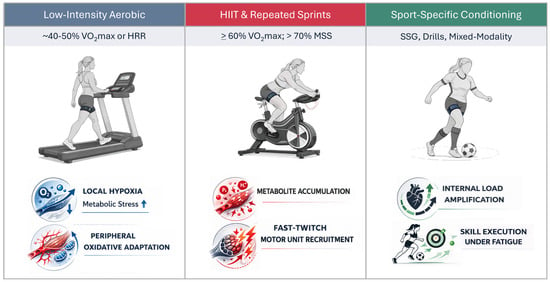
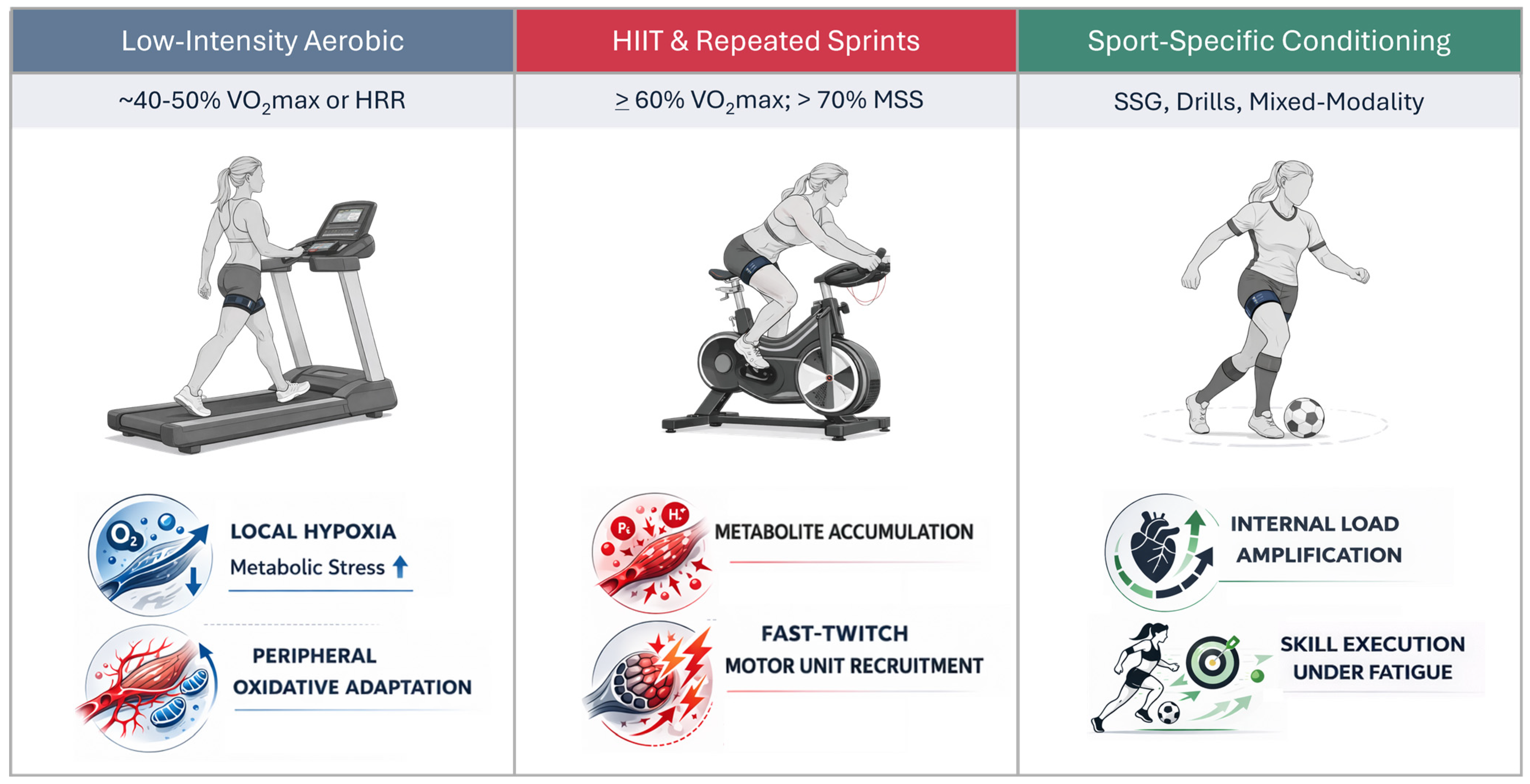

Disclaimer/Publisher’s Note: The statements, opinions and data contained in all publications are solely those of the individual author(s) and contributor(s) and not of MDPI and/or the editor(s). MDPI and/or the editor(s) disclaim responsibility for any injury to people or property resulting from any ideas, methods, instructions or products referred to in the content. |
© 2026 by the authors. Licensee MDPI, Basel, Switzerland. This article is an open access article distributed under the terms and conditions of the Creative Commons Attribution (CC BY) license.