


Abstract
Parent–adolescent sexual communication influences adolescent sexual health, yet no validated Spanish measure was available. This study culturally adapted the five-item Parent–Adolescent Communication Scale (PACS) and examined its internal structure, reliability, measurement invariance across sex and convergent validity with maternal and paternal Parent–Teen Sexual Risk Communication Scale (PTSRC-III) scores. Following translation, back-translation and expert review, 804 adolescents aged 14–18 years from four secondary schools completed the PACS in a 2018 cross-sectional study. Complete cases were randomly divided into exploratory and confirmatory subsamples. Parallel analysis supported one factor. In the confirmatory subsample, the initial one-factor model showed inadequate fit (robust comparative fit index, CFI = 0.927; robust root mean square error of approximation, RMSEA = 0.242; standardised root mean square residual, SRMR = 0.047), whereas a post hoc model with two content-related residual covariances identified in full-sample diagnostics showed improved fit (robust CFI = 0.998; robust RMSEA = 0.050; SRMR = 0.010). Configural, threshold and metric invariance across sex were supported. Internal consistency was good to excellent (α = 0.88; ordinal α = 0.92), and PACS scores correlated with maternal (ρ = 0.76) and paternal (ρ = 0.57) PTSRC-III scores. Communication was infrequent, particularly about condom use. The Spanish PACS showed promising initial psychometric performance as a brief measure of perceived parent–adolescent sexual-communication frequency.
1. Introduction
Sexuality is an important dimension of human life and includes biological sex, gender identities and roles, sexual orientation, eroticism, pleasure, intimacy and reproduction. It is shaped by biological, psychological, social, cultural, legal and spiritual factors [1,2]. Consistent with this multidimensional view, sexual health refers to physical, emotional, mental and social well-being in relation to sexuality and requires a positive and respectful approach to sexuality and sexual relationships, together with protection from coercion and violence and respect for sexual rights [2]. In adolescence, promoting sexual health from this comprehensive perspective represents a relevant area for research, education and nursing practice [3,4]. Within this context, conversations between parents and adolescents constitute an important family process through which sexuality, relationships, preventive behaviours and healthy sexual development can be addressed. This process, referred to here as parent–adolescent sexual communication, is the focus of the present study and has been associated with adolescents’ sexual experiences and health-related behaviours [5,6,7,8,9].
More broadly, parental understanding of adolescents’ problems and parental monitoring have been linked to lower odds of sexual activity and, among sexually active adolescents, with lower odds of early sexual initiation, multiple sexual partners and condom non-use. These findings were observed in an international analysis of 156,649 school-going adolescents from 50 countries [10] and suggest that the family may represent a potentially modifiable context for sexual-health promotion.
Despite this potential, adolescents often report receiving limited information from their parents and rarely discussing sexuality with them [11]. Parent–adolescent communication patterns vary according to family role, with discussions occurring most often between mothers and daughters [6,12]. Some evidence also suggests that these exchanges may be more effective for girls than for boys [6]. Relationship quality may further shape their extent and nature, as positive family relationships have been associated with greater openness and favourable sexual-health outcomes [7,9,13].
Family communication operates alongside sexuality education provided through schools and health services and should be understood as complementary to, rather than a substitute for, these sources of education. Comprehensive sexuality-education programmes can improve sexual-health knowledge, attitudes and preventive behaviours, although interventions vary considerably in their content, intensity and delivery, and relatively few incorporate a family-communication component [14]. School-based programmes conducted in Spain have also shown improvements in knowledge and preventive attitudes and behaviours [15,16,17,18]. However, changes in attitudes may be more difficult to achieve than improvements in knowledge [16], and international reports continue to identify important gaps in the coverage, content and delivery of sexuality education [19]. These findings support approaches that consider the interpersonal and family contexts in which sexual-health information is discussed.
Sexually transmitted infections remain an important public-health concern in Europe and Spain. European surveillance data show substantial notification rates for chlamydia, gonorrhoea and syphilis, while Spanish surveillance data indicate a continuing need for prevention and health promotion among adolescents and young people [20,21,22,23]. National survey data also indicate that a substantial proportion of Spanish adolescents report having had sexual intercourse and that condom use has changed over time [24]. Nurses working in schools and primary care are well placed to address adolescent sexual health. Nevertheless, health professionals do not routinely discuss sexuality with adolescents, and when these conversations occur, they may focus predominantly on contraception and sexually transmitted infection prevention [25,26]. Fear of causing offence, limited time, unclear professional roles, insufficient training, concerns about stigma and confidentiality, and a lack of standardised materials and institutional guidance have been identified as recurrent barriers [27,28]. Addressing these barriers requires not only individual willingness but also institutional support and professional training that enable nurses to engage in ongoing, developmentally appropriate conversations about sexuality beyond these topics [29,30].
Validated instruments for assessing sexuality-related communication between parents and adolescents remain limited. Researchers frequently use study-specific measures that vary considerably in content, format, number of items and parental referent, thereby limiting comparability across populations and settings [8,31]. Among the brief tools available, the five-item Parent–Adolescent Communication Scale (PACS) assesses adolescents’ reports of how often they discussed key sexual-health topics with their parents during the previous six months [32]. Its brevity, coverage of core sexual-health topics and focus on adolescents’ perceptions may facilitate its use in school, primary-care and family-centred research. However, the PACS captures how often these discussions occur rather than their quality or content, parental attitudes or adolescent sexual-health behaviours and should therefore be understood as a focused rather than comprehensive measure. To our knowledge, this five-item sexuality-related scale had not previously been culturally adapted or psychometrically evaluated among adolescents in Spain. Accordingly, such adaptation and evaluation were required before its wider use in the Spanish context.
This study aimed to culturally adapt the Parent–Adolescent Communication Scale for use among Spanish adolescents and to examine its internal structure, internal consistency, measurement invariance across sex and convergent validity with maternal and paternal scores on the Parent–Teen Sexual Risk Communication Scale (PTSRC-III). A secondary aim was to describe how frequently adolescents discussed sexuality with their parents and its associations with selected sociodemographic and behavioural characteristics. On the basis of previous validation studies [32,33], it was hypothesised that the Spanish version of the PACS would show a one-factor structure and internal-consistency coefficients of at least 0.70. Its scores were also expected to correlate positively and at least moderately (ρ ≥ 0.50) with maternal and paternal PTSRC-III scores, with a stronger correlation expected for maternal communication.
2. Materials and Methods
2.1. Design
A cross-sectional instrument-adaptation and psychometric validation study was conducted between 15 January and 25 May 2018. This design was chosen because adapting a self-report measure requires its internal structure, reliability and validity to be examined in a sufficiently large sample from the target population. Ordinal factor-analytic methods were selected, as the PACS items are rated on a 4-point scale. The study is reported in accordance with the Strengthening the Reporting of Observational Studies in Epidemiology (STROBE) guideline [34] (Checklist S1), and the completed checklist is provided in the Supplementary Materials.
2.2. Setting and Participants
The study population comprised adolescents enrolled in secondary schools in the urban area of Oviedo, Spain. Participants were eligible if they were aged 14–18 years, attended a participating school and provided informed consent. Adolescents with insufficient comprehension of Spanish were excluded. Questionnaires with fewer than 80% of items completed (>20% missing) were also excluded to avoid analysing substantially incomplete records, consistent with published approaches to item-level missingness [35]. Recruitment was limited to compulsory secondary education classes; no upper-secondary or vocational education classes were included, and students aged 17–18 years remained enrolled in compulsory secondary education after repeating one or more school years.
A non-probability, school-based sampling strategy was used. Oviedo was selected for pragmatic reasons because it is the regional capital of Asturias and was geographically accessible to the research team. All 22 schools providing compulsory secondary education in the urban area during the 2017–2018 academic year were individually invited to participate by telephone and email. These included 9 public schools and 13 state-subsidised private schools. Participation at school level was voluntary. Four schools (three public and one state-subsidised private) agreed to participate, resulting in a school participation rate of 18.2%. Within each participating school, all compulsory secondary education classes containing potentially eligible students were approached, and all eligible adolescents were invited to participate; no class- or student-level random selection was performed. No formal a priori sample-size calculation was performed. The final sample size was determined by the number of eligible adolescents recruited from participating schools who provided valid questionnaires.
2.3. Instruments
The study questionnaire comprised a data collection form covering sociodemographic variables (adolescent age and sex, maternal and paternal age, school type, relationship status and cohabitation arrangement) and sexuality-related variables (having had full sexual intercourse and, where applicable, age at first intercourse), together with the PACS [32] and the Parent–Teen Sexual Risk Communication Scale (PTSRC-III) [36].
The PACS was originally developed and validated in the United States [32] and was subsequently translated, culturally adapted and validated in Brazilian Portuguese [33]. It assesses adolescents’ perceived frequency of communication with their parents about sexuality during the previous six months. The scale comprises five items addressing sex, condom use, protection from sexually transmitted infections (STIs), HIV/AIDS and pregnancy prevention, each rated on a 4-point Likert scale (from 1 = never to 4 = often); total scores range from 5 to 20, with higher scores indicating more frequent parent–adolescent communication. The original and Brazilian validation studies reported good internal consistency, with Cronbach’s alpha values of 0.88 and 0.86, respectively [32,33].
The PTSRC-III [36] comprises two parallel scales assessing adolescents’ level of sexual risk communication with each parent (biological parent, step-parent, guardian or other adult figure), each with eight items rated from 1 (none) to 5 (extensive). In the original validation study, internal consistency was excellent for communication with mothers and fathers, with Cronbach’s alpha values greater than 0.93 and 0.88, respectively [36].
2.4. Translation and Cultural Adaptation
Permission to translate, culturally adapt and use the PACS was obtained from the author of the original scale. Translation and back-translation of the PACS and PTSRC-III followed Jones et al.’s [37] adaptation of Brislin’s model, chosen because its iterative translation, back-translation and committee review are designed to establish cross-cultural equivalence. Two bilingual translators, one with and one without expertise in the subject area, independently translated the original English version into Spanish, and the resulting versions were back-translated into English by two additional translators. The four translators then met to resolve discrepancies and produce a single Spanish version, which underwent a second round of translation and back-translation by two further bilingual translators. Finally, six professionals (two nurses, two psychologists and two paediatricians), together with a teacher, evaluated the items for cultural, linguistic, conceptual and semantic equivalence. The expert-panel assessment was qualitative, and no quantitative content-validity index was calculated. The final Spanish version of the PACS is provided in Table S1 in the Supplementary Materials. The Spanish items used the wording tus padres. This expression was intended as a collective reference to parents, but respondents were not given additional instructions specifying whether they should consider one or both parents (see Section 4.2).
Before data collection, the questionnaire was informally pretested with 10 adolescents recruited through the researchers’ personal networks to assess its comprehensibility and acceptability. Participants rated the overall comprehensibility of the questionnaire using a 5-point scale and were invited to suggest any changes. All ratings ranged from 4 to 5, and no changes were suggested. Consequently, the questionnaire was administered without modification. These participants were not included in the analytical sample. No cognitive interviews or item-level comprehensibility ratings were conducted.
2.5. Data Collection
Following authorisation from the management teams of the participating schools, the questionnaire was self-administered in paper format during school hours, with a teacher and a member of the research team present to clarify procedural questions. Participants were informed that participation was voluntary and anonymous, and the questionnaire contained no identifying information. Completion took approximately 10–20 min.
2.6. Ethical Considerations
The study protocol was approved by the Research Ethics Committee of the Principality of Asturias on 7 November 2017 (ref. 133/17) and the governing body of each participating school. The study was conducted in accordance with the Declaration of Helsinki. At the time of data collection, Article 13 of Spanish Royal Decree 1720/2007 allowed minors aged 14 years or older to consent to the processing of their personal data, except where parental or guardian assistance was legally required. Given the participants’ age and the anonymous, non-interventional nature of the study, the Research Ethics Committee confirmed that parental consent and notification to the Public Prosecutor’s Office were not required. Written informed consent was obtained from each participant after they had been informed about the study’s aims, procedures and anonymous, voluntary nature.
2.7. Data Analysis
Data were analysed using R (R Foundation for Statistical Computing, Vienna, Austria) with the psych version 2.6.5, lavaan version 0.7-2 and semTools version 0.5-9 packages. Complete responses to all five PACS items were required for the factor and reliability analyses. No item-level values were imputed because PACS missingness affected only two eligible records; complete-case analysis therefore resulted in negligible sample loss while avoiding additional assumptions in the estimation of polychoric correlations and reliability coefficients. Descriptive statistics were calculated using all available observations for each variable; consequently, sample sizes varied across indicators. Association and convergent-validity analyses used observations with complete data for the variables included in each analysis, corresponding to pairwise deletion in bivariate analyses.
To characterise the sample and contextualise PACS scores, a descriptive analysis was performed of adolescents’ age and sex, parents’ age, school type, relationship status, living arrangements, previous sexual intercourse and age at first intercourse, as well as sexuality-related communication variables, including the individual PACS items, the PACS total score and the maternal and paternal PTSRC-III scores. Categorical variables were summarised using absolute frequencies and percentages. As quantitative variables and scale scores did not meet normality assumptions, medians and interquartile ranges (IQR) were reported together with means and standard deviations (SD). The Wilcoxon rank-sum test, Kruskal–Wallis test and Spearman’s rank correlation were used in exploratory analyses of associations between PACS scores and participant characteristics. Rank-biserial correlations were calculated as effect-size estimates for Wilcoxon comparisons, and eta-squared estimates based on the Kruskal–Wallis statistic were calculated for comparisons involving more than two groups.
For the assessment of internal structure, participants with complete responses to all five PACS items were randomly divided in equal numbers into two non-overlapping subsamples using a fixed random seed. In the exploratory subsample, the suitability of the PACS items for factor analysis was examined using the Kaiser–Meyer–Olkin index and Bartlett’s test of sphericity. Exploratory factor analysis (EFA) was conducted on the polychoric correlation matrix using minimum-residual extraction. The number of factors was examined using parallel analysis based on 500 resampled datasets and the 95th-percentile criterion.
The theoretically expected one-factor structure was subsequently evaluated in the confirmatory subsample using ordinal confirmatory factor analysis (CFA)with the weighted least-squares mean- and variance-adjusted estimator and theta parameterisation. The initial model did not include residual covariances. A post hoc model included residual covariances between items 1 and 2 and between items 3 and 4, which had been identified in the previous full-sample diagnostics and were specified before examining the confirmatory subsample. No additional modification indices were examined and no further parameters were added. Model fit was evaluated using the scaled chi-square statistic, robust comparative fit index (CFI), robust Tucker–Lewis index (TLI), robust root mean square error of approximation (RMSEA) with its 90% confidence interval (CI), and standardised root mean square residual (SRMR). Standardised factor loadings, item-level explained variance and standardised estimates of the two freely estimated residual covariances were reported. Because the residual covariances had originally been identified using the full dataset, the post hoc model requires replication in an independent sample.
Measurement invariance across sex was examined using multigroup ordinal confirmatory factor analysis based on the post hoc model. Configural invariance was examined first, followed by threshold invariance and metric invariance, in which item thresholds and factor loadings were constrained to equality across groups. Nested models were compared using the scaled chi-square difference test and changes in the scaled comparative fit index, root mean square error of approximation and standardised root mean square residual. Robust fit indices were reported for the single-group CFA, whereas scaled indices were used consistently for measurement-invariance testing as robust indices were not available for all nested models.
Internal consistency was assessed in the full sample of participants with complete PACS responses using conventional Cronbach’s alpha, ordinal alpha calculated from the polychoric correlation matrix and model-based omega derived from the categorical one-factor model with the two residual covariances fitted to the sample. Omega was estimated for both the observed ordinal composite and the underlying latent-response composite. Percentile 95% confidence intervals were obtained using 1000 non-parametric bootstrap resamples.
Convergent validity was assessed using Spearman’s rank correlations between the PACS total score and the maternal and paternal PTSRC-III scores. A priori, positive correlations of at least moderate magnitude (ρ ≥ 0.50) were expected for both scores, with a stronger correlation expected for maternal communication, based on previous research indicating that mothers communicate more frequently with adolescents about sexuality. Because the PTSRC-III has not been formally validated in Spanish adolescents, these analyses were interpreted as providing preliminary evidence of convergent validity.
All tests were two-sided; p values are reported exactly (or as p < 0.001), and interpretation emphasised the magnitude of effect sizes rather than dichotomous significance thresholds.
2.8. Use of Generative Artificial Intelligence
Claude (Claude 5.5) (Anthropic, San Francisco, CA, USA) and ChatGPT (GPT-6) (OpenAI, San Francisco, CA, USA) were used to assist with drafting and editing selected sections of the manuscript and with the preparation and troubleshooting of R code. All statistical analyses were executed by the authors, and all code, outputs and artificial intelligence (AI)-assisted text were critically reviewed and verified. These tools were not used to generate or modify the study data.
3. Results
3.1. Sample Characteristics
A total of 809 questionnaires were returned. The number of questionnaires distributed was not recorded; therefore, an individual response rate could not be calculated. Three were excluded because less than 80% of the questionnaire had been completed. Of the remaining 806 records, two lacked complete responses to the five PACS items, resulting in an analytical sample of 804 adolescents, most of whom attended one of three public schools (76.0%). The mean age was 15.47 years (SD = 1.06), and 54.2% of those with available sex data were boys. Most participants reported having no partner (76.2%) and living with their entire nuclear family (74.5%). Overall, 28.5% had experienced sexual intercourse, most commonly beginning at 15–16 years of age (Table 1).
Table 1.
Sociodemographic and behavioural characteristics of the sample (n = 804).
3.2. Frequency of Parent–Adolescent Communication
The PACS total score ranged from 5 to 20, with a median of 8 (IQR 5–11) and a mean of 8.56 (SD = 3.60). Sex in general was the most frequently discussed topic, with a mean item score of 1.91 (SD = 0.88). It was the only item for which fewer than half of participants reported never having discussed the topic with their parents; 316 participants (39.3%) selected never.
Condom use was the least frequently discussed topic, with a mean item score of 1.47 (SD = 0.78). More than two-thirds of participants, 545 (67.8%), reported never having discussed condom use with their parents. Item-level response distributions are presented in Table 2.
Table 2.
Response frequencies for the Parent–Adolescent Communication Scale items (n = 804).
The median PACS total score was 8 (IQR 5–11), and 216 participants (26.9%) obtained the minimum possible score of 5, indicating a substantial floor effect. Sex-specific response distributions are presented in Table S2. All response categories were observed in both groups, although the “often” category was sparse, ranging from 9 to 25 boys and from 9 to 36 girls across items.
3.3. Exploratory Factor Analysis
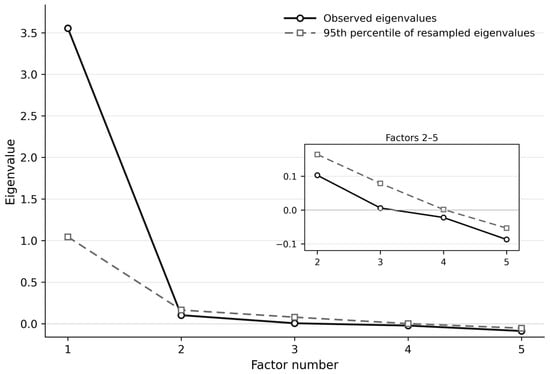
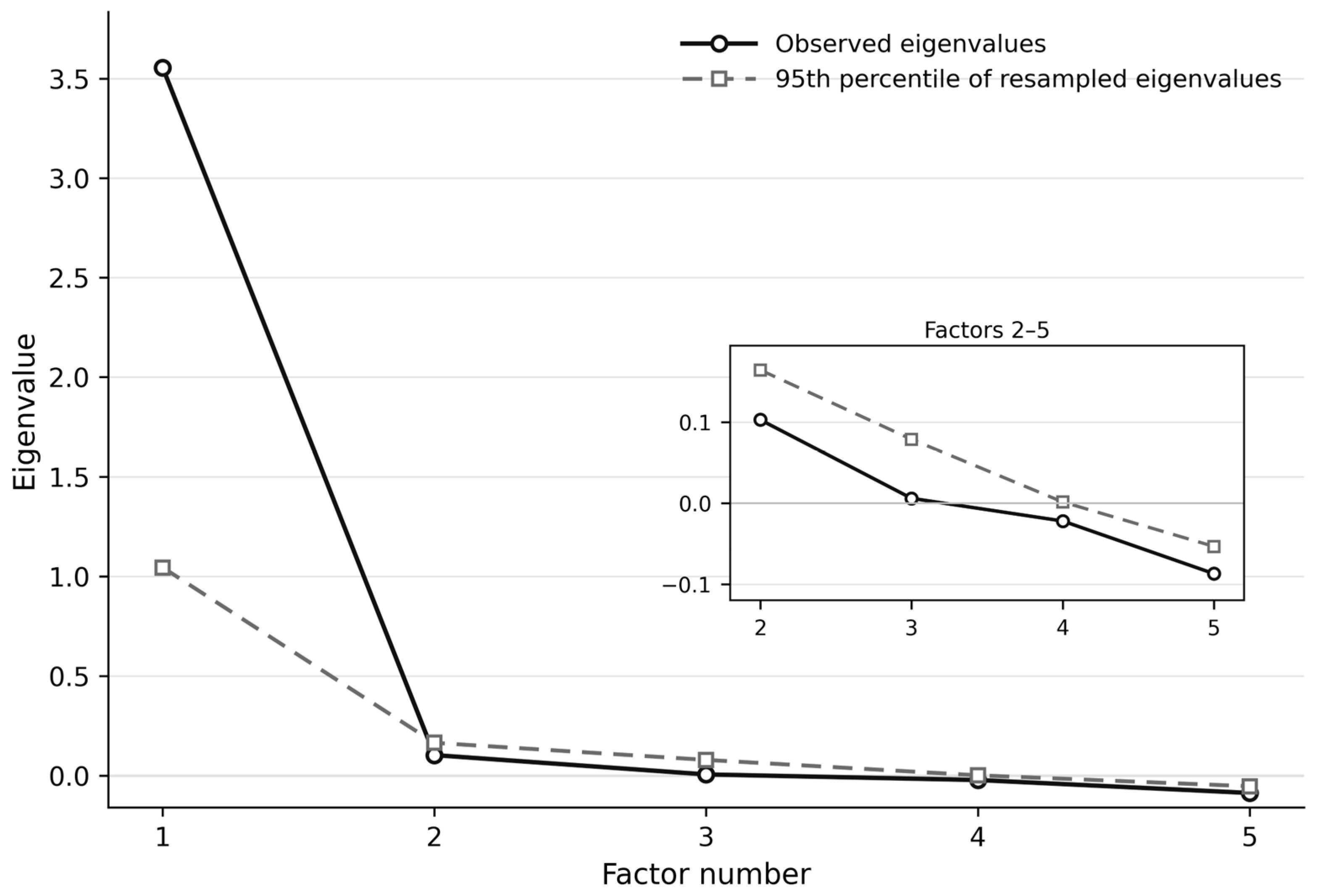
Psychometric analyses included 804 adolescents with complete responses to all five PACS items, who were randomly divided into two equal, non-overlapping subsamples. In the exploratory subsample (n = 402), the Kaiser–Meyer–Olkin index was 0.87 and Bartlett’s test of sphericity was statistically significant, χ2(10) = 1573.00, p < 0.001, supporting factor analysis of the polychoric correlation matrix. Parallel analysis supported a one-factor solution (Figure 1). The minimum-residual solution accounted for 71.1% of the variance, with standardised loadings ranging from 0.728 to 0.918 and communalities ranging from 0.530 to 0.844 (Table 3). Fit indices were mixed: the root mean square residual (RMSR) was 0.022 and the TLI was 0.945, whereas the RMSEA was 0.146, 90% CI [0.110, 0.185]. Although small, the two largest positive residual correlations in the exploratory subsample were observed between items 1 and 2 (0.055) and between items 3 and 4 (0.048), providing partial empirical support for specifying the same content-related pairs in the confirmatory model.
Figure 1.
Scree plot from the exploratory factor analysis, with the parallel-analysis outcome.
Table 3.
Item-level results from the exploratory and confirmatory factor analyses.
3.4. Confirmatory Factor Analysis
In the confirmatory subsample (n = 402), the initial one-factor ordinal model showed inadequate fit, scaled χ2(5) = 48.08, p < 0.001, robust CFI = 0.927, robust TLI = 0.853, robust RMSEA = 0.242, 90% CI [0.179, 0.310], and SRMR = 0.047.
A post hoc model including the two previously identified residual covariances between items 1 and 2 and between items 3 and 4 showed substantially improved fit, scaled χ2(3) = 4.04, p = 0.257, robust CFI = 0.998, robust TLI = 0.994, robust RMSEA = 0.050, 90% CI [0.000, 0.152], and SRMR = 0.010 (Table 4). The wide 90% confidence interval indicates that the robust RMSEA estimate was imprecise, given the model’s three degrees of freedom and the confirmatory subsample size (n = 402). No additional modification indices were examined and no further parameters were added in the confirmatory subsample. Because these residual covariances had originally been identified using the full dataset, the post hoc model requires replication in an independent sample.
Table 4.
Fit of the ordinal confirmatory factor models in the confirmatory subsample.
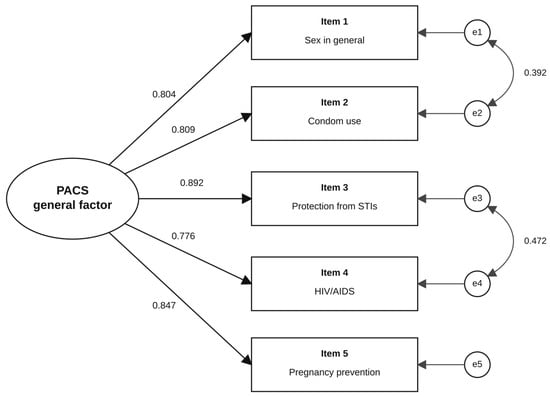
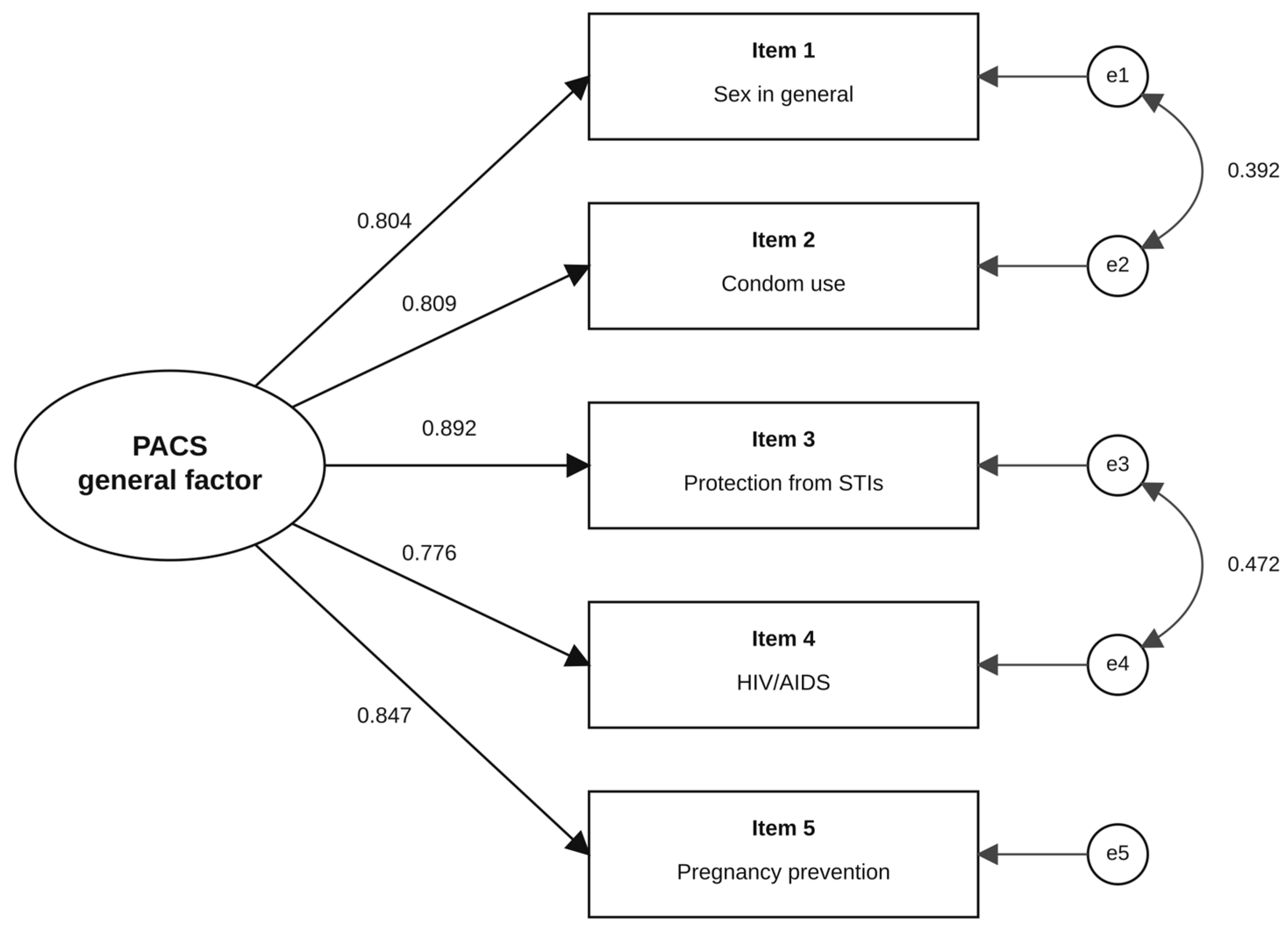
Standardised factor loadings ranged from 0.776 to 0.892, and item R2 values ranged from 0.602 to 0.795. The standardised estimates of the two freely estimated residual covariances were 0.392 between items 1 and 2 and 0.472 between items 3 and 4 (Figure 2). These values represent parameters estimated in the post hoc model, rather than residuals remaining after model estimation. Their magnitude suggests non-negligible content-related local dependence. In each pair, a relatively broad item was associated with a more specific, partially overlapping topic: sex in general with condom use, and protection from sexually transmitted infections with HIV/AIDS.
Figure 2.
Standardised path diagram of the post hoc confirmatory factor model in the confirmatory subsample (n = 402), including two freely estimated residual covariances between items 1–2 and items 3–4.
3.5. Measurement Invariance Across Sex
Measurement-invariance analyses included 797 adolescents with complete PACS and sex data (432 boys and 365 girls). The configural model showed good fit, scaled χ2(6) = 4.90, p = 0.557, scaled CFI = 1.000, scaled TLI = 1.001, scaled RMSEA = 0.000, 90% CI [0.000, 0.058], and SRMR = 0.008. Constraining item thresholds to equality across sex did not significantly worsen fit, scaled χ2(11) = 11.33, p = 0.416; Δχ2(5) = 6.09, p = 0.298, ΔCFI = 0.000, ΔRMSEA = 0.009 and ΔSRMR = 0.000. Additionally constraining factor loadings produced no significant decrement relative to the threshold-invariance model, scaled χ2(15) = 12.60, p = 0.633; Δχ2(4) = 2.09, p = 0.720, ΔCFI = 0.000, ΔRMSEA = −0.009 and ΔSRMR = 0.001. These findings supported configural invariance and equality of item thresholds and factor loadings across sex.
3.6. Internal Consistency and Convergent Validity
The PACS showed good-to-excellent internal consistency. Conventional Cronbach’s alpha was 0.88, 95% CI [0.86, 0.89], and ordinal alpha was 0.92, 95% CI [0.91, 0.93]. Model-based omega, estimated by fitting the categorical one-factor model with the two residual covariances to the full sample, was 0.86, 95% CI [0.84, 0.88], for the observed ordinal composite and 0.91, 95% CI [0.89, 0.92], for the latent-response composite (Table 5). The slightly lower omega estimate for the observed ordinal composite than conventional alpha may reflect the two residual covariances retained in the post hoc CFA model, as model-based omega distinguishes variance attributable to the general factor from residual item covariance.
Table 5.
Internal consistency estimates for the PACS.
Among participants with available PTSRC-III data, maternal scores had a median of 15 (IQR 10–21), a mean of 16.55 (SD = 7.17) and a range of 8–39 (n = 782). Paternal scores had a median of 11 (IQR 8–18), a mean of 13.52 (SD = 6.61) and a range of 8–40 (n = 756).
The maternal and paternal PTSRC-III scores showed high internal consistency, with Cronbach’s alpha values of 0.904 (n = 782) and 0.919 (n = 756), respectively.
The PACS total score correlated positively with both the maternal PTSRC-III score, ρ = 0.762, p < 0.001, n = 782, and the paternal PTSRC-III score, ρ = 0.565, p < 0.001, n = 756, providing preliminary evidence of convergent validity.
3.7. Associations with Sociodemographic and Behavioural Variables
PACS total scores were associated with sex, relationship status, previous sexual intercourse and living arrangements, although the effect sizes were small or negligible (Table 6). Girls reported more frequent communication with their parents than boys (rank-biserial r = 0.196, p < 0.001), as did adolescents who reported previous sexual intercourse (r = 0.165, p < 0.001) and those not living with their entire nuclear family (r = 0.182, p < 0.001). PACS scores also differed by relationship status, although the effect was negligible (η2 = 0.010, p = 0.007); as no post hoc comparisons were performed, no specific between-group differences were inferred. Adolescent age was not associated with PACS scores (Spearman’s ρ = 0.037, p = 0.291), whereas small negative correlations were observed with maternal age (ρ = −0.120, p < 0.001) and paternal age (ρ = −0.129, p < 0.001).
Table 6.
Associations between PACS total scores and sociodemographic and behavioural variables.
4. Discussion
This study provides initial evidence on the psychometric properties of the Spanish PACS, and the findings largely align with the a priori hypotheses. Parallel analysis in the exploratory subsample indicated a one-factor solution, in line with the general structure proposed by Sales et al. [32] and examined in the Brazilian adaptation [33]. However, the initial one-factor model showed inadequate fit in the separate confirmatory subsample; therefore, the hypothesis of a strictly one-factor structure was only partially supported. A post hoc model including residual covariances between the items on sex and condom use and between those on sexually transmitted infections and HIV/AIDS showed improved fit. The covariance between items 1 and 2 may reflect that condom use is a specific topic within broader conversations about sex, while HIV/AIDS represents a specific component of communication about STI protection. These residual covariance estimates may therefore reflect broad-specific content clustering rather than random local dependence. Nevertheless, given the five-item structure, these estimates do not establish distinct topic-specific dimensions. Because the covariances were originally identified using full-sample diagnostics, the post hoc model requires replication in an independent sample. Internal consistency was good to excellent; configural, threshold and metric invariance were supported across sex; and positive correlations with maternal and paternal PTSRC-III scores, of at least moderate magnitude and stronger for the maternal score as hypothesised, provided preliminary evidence of convergent validity, although the PTSRC-III has not been formally validated in Spanish adolescents.
Substantively, adolescents reported infrequent communication with their parents about sexuality, particularly regarding condom use, consistent with previous research [11]. The proportion who had experienced sexual intercourse (28.5%) was somewhat lower than national estimates for Spanish adolescents (35.1% in 2018; 34.8% in 2022), and very few indicated first intercourse before age 13 (0.9%), although the modal age range was similar [24]; differences in age composition, sampling and context may partly explain this discrepancy. Because the original validation sample comprised only adolescent girls [32], the fairest comparison is with girls in the present sample, whose mean PACS score (M = 9.22, SD = 3.77) was lower than the mean found in the original study (M = 14.20, SD = 4.79) [32] and the means observed in the Brazilian adaptation for public-school (M = 12.06) and private-school participants (M = 13.50) [33]. This is consistent with the pattern of more frequent communication with and about girls than boys [6,12], although this pattern does not itself explain between-study differences.
In this sample, sex in general was the topic raised most frequently. By contrast, other studies identified pregnancy prevention as the most common subject [32,33]. Condom use was addressed least often in our sample. In the Brazilian adaptation, fewer than one in four adolescents reported never discussing condom use, while sexually transmitted infection prevention was covered least often [33]. Taken together with the small but consistent associations found in this study, these findings suggest that sexuality-related communication depends not only on whether conversations occur, but also on who is involved (mother, father, son or daughter) and on the family and relational context [9,38,39,40].
4.1. Implications for Measurement, Research and Practice
From a measurement perspective, the findings support conceptualising adolescents’ perceived frequency of sexual communication with parents as a single general construct with some clustering of related topics. The invariance results provide a basis for comparing PACS scores between boys and girls.
Further measurement evidence is needed in three areas. First, a parallel Spanish parent-report version of the items could be evaluated in parent–adolescent dyads. Maternal and adolescent accounts of sexual communication and related family variables have shown low congruence, with adolescents’ perceptions more predictive of their sexual behaviour than maternal reports [41], and qualitative dyadic research has shown that parents and their emerging adult children may give concordant or discordant accounts of the same family communication [42]. Dyadic data would therefore provide convergent-validity evidence less dependent on a single informant and method. Second, future studies should clarify whether adolescents include conversations held through text messaging or social media when answering the PACS, as some parents and their emerging adult children use written messaging to address sensitive topics [42]. Third, sexual risk rarely occurs in isolation. In the 2017–2018 Health Behaviour in School-aged Children survey, which included Spain, early sexual intercourse clustered with smoking, cannabis use and drunkenness in the risk component explaining the largest share of variance among 15-year-olds [43], and specific substances were associated with risky sexual behaviour differently in boys and girls [44]. Because a general item on ease of talking with parents was not independently associated with these outcomes in an analysis of that survey [44], relating topic-specific PACS scores to these broader risk profiles would provide evidence of predictive validity.
In practice, the Spanish PACS may help educators and health professionals, including school and primary-care nurses, to characterise adolescents’ perceived family communication about sexuality, identify rarely discussed topics such as condom use and tailor family-centred interventions. Because no clinically established cut-off points exist, the scale is suited to descriptive use rather than screening, and it is intended to complement, not replace, professional assessment and confidential counselling. The concentration of scores at the lower boundary may limit differentiation among adolescents reporting very low communication and preclude detection of further decreases. Although substantial room remains for upward change, the scale’s responsiveness has not been established; consequently, the PACS is not yet suitable as an outcome measure for evaluating interventions.
Family-centred sexuality-education programmes could also use digital parent-support resources [45] and encourage parents to use messaging channels already familiar to their children as an additional route for initiating these conversations [42]. Whether the Spanish PACS is sufficiently responsive to evaluate changes resulting from such programmes remains to be determined.
4.2. Limitations
This study has several limitations. First, although the exploratory and confirmatory analyses were conducted in separate, non-overlapping subsamples, the two residual covariances included in the post hoc confirmatory model had originally been identified using full-sample diagnostics. The confirmatory test was therefore not fully independent of the data used to specify the model, and the post hoc model requires replication in an independent sample. The five-item structure did not permit a sufficiently stable evaluation of a bifactor or topic-specific model, as each potential specific factor would have been represented by only two items and the pregnancy-prevention item did not map clearly onto either grouping; consequently, explained common variance was not estimated. A substantial floor effect was also observed, with 26.9% of participants obtaining the minimum score, and “often” responses were sparse in the sex-specific distributions. Although no response category was empty, these distributions may have reduced discrimination at the lower end of the scale and the precision of threshold and measurement-invariance estimates.
Second, test–retest reliability was not assessed owing to logistical constraints related to simultaneous administration across schools. Third, the cultural-adaptation process relied on qualitative expert review and a small convenience pretest using a single overall comprehensibility rating; no cognitive interviews or quantitative content-validity index was conducted. In addition, the PACS does not distinguish which parent was involved in the described communication, although this may differ between mothers and fathers [9,38,39], and parents’ own perceptions, which may differ from adolescents’ reports, were not captured [38], as parents were not involved in the anonymous school-based data collection; dyadic parent–adolescent data would be needed to examine agreement between informants. Although padres is commonly understood in Spanish as a collective reference to parents, respondents were not instructed whether to consider one or both parents; consequently, variation in the interpretation of the parental referent, including a possible father-specific reading, cannot be excluded.
Fourth, because the PTSRC-III has not been formally validated among Spanish adolescents and both instruments were adolescent self-reports administered during the same session and covering overlapping sexual-risk content, shared method and content may have inflated the correlations; consequently, the evidence of convergent validity is preliminary. Fifth, discriminant validity was not assessed, as measures of related but distinct constructs, such as general parent–adolescent communication or relationship quality, were not included. Sixth, the cross-sectional design precluded assessment of predictive validity and causal or directional interpretation of the observed associations; longitudinal studies are needed to examine whether PACS scores predict subsequent condom use or other safer sexual behaviours.
Seventh, data were collected in 2018. An initial adaptation and validation analysis was undertaken in 2019, but completion of the psychometric evaluation and dissemination of the findings were delayed following an interruption of the research project. All analyses reported in this manuscript were updated before submission. As the data predate the coronavirus disease 2019 (COVID-19) pandemic, subsequent social and educational changes may have affected parent–adolescent sexual communication. The descriptive findings should therefore be interpreted as historical estimates rather than as reflecting present-day practices. Replication in a contemporary adolescent sample is also needed to confirm the continued applicability of the psychometric findings. The digital delivery of parenting and family support has also expanded since data collection, a shift accelerated by the COVID-19 pandemic [45]. Finally, the sample was recruited from four schools in a single urban area through voluntary, non-probability school participation; the low school participation rate may have introduced selection bias and may limit generalisability to other schools, rural areas and Spanish regions. In addition, the exploratory comparisons of sociodemographic and behavioural groups did not account for the clustering of participants within schools. With only four participating schools, school-level effects could not be estimated reliably, and the corresponding p values may be overly precise.
5. Conclusions
This study achieved its aim of culturally adapting the PACS for Spanish adolescents. The Spanish version is a brief instrument with good-to-excellent internal consistency, preliminary evidence of convergent validity, and configural, threshold and metric invariance across sex. The split-sample analyses supported a dominant general communication factor with local dependence between two pairs of content-related items. However, because the two residual covariances had originally been identified using full-sample diagnostics, the post hoc confirmatory model requires replication in an independent sample. Adolescents reported infrequent discussions about sexuality, particularly about condom use. The Spanish PACS may therefore be used as a brief descriptive indicator of adolescents’ perceived frequency of sexual-health communication with parents, for example to compare boys and girls or to identify rarely discussed topics. Until its temporal stability, discriminant and predictive validity, responsiveness and performance in more diverse Spanish populations have been established, its use should remain descriptive and research-oriented; future studies should address these properties using independent samples and longitudinal designs.
Supplementary Materials
The following supporting information can be downloaded at https://www.mdpi.com/article/10.3390/sexes7040064/s1: Table S1: Spanish version of the Parent–Adolescent Communication Scale (PACS) and Table S2: PACS item response distributions by sex.; Checklist S1, Completed STROBE checklist.
Author Contributions
Conceptualisation, M.S.-Z., A.G.-F. and M.-P.M.-D.; methodology, M.S.-Z., L.A.-O., M.-P.M.-D., A.M.-G. and D.Z.-R.; formal analysis, M.S.-Z. and A.M.-G.; investigation, M.S.-Z., L.A.-O. and D.Z.-R.; writing—original draft preparation, M.S.-Z., A.G.-F. and M.-P.M.-D.; writing—review and editing, M.S.-Z., L.A.-O., A.G.-F., M.-P.M.-D., A.M.-G. and D.Z.-R.; supervision, D.Z.-R. All authors have read and agreed to the published version of the manuscript.
Funding
This research received no external funding.
Institutional Review Board Statement
The study was conducted in accordance with the Declaration of Helsinki and approved by the Research Ethics Committee of the Principality of Asturias (Spain) (reference 133/17; date of approval: 7 November 2017) and by the governing body of each participating school.
Informed Consent Statement
Written informed consent was obtained from all individual participants included in the study. In accordance with Article 13 of Spanish Royal Decree 1720/2007, in force at the time of data collection, minors aged 14 years or older were legally entitled to consent to the processing of their personal data, except where parental or guardian assistance was otherwise legally required. Given the participants’ age and the anonymous, non-interventional nature of the study, the Research Ethics Committee of the Principality of Asturias confirmed that parental consent and notification to the Public Prosecutor’s Office were not required.
Data Availability Statement
The participant-level dataset is not publicly available because it contains sensitive information concerning minors, including data on sexual behaviour and family communication, and the informed consent obtained did not specifically cover public deposition of individual-level data. Requests for access to de-identified data may be directed to the corresponding author and will be considered in accordance with applicable ethical and data-protection requirements.
Acknowledgments
During the preparation of this manuscript, the authors used Claude (Anthropic) and ChatGPT (OpenAI) for the purposes described in the Materials and Methods. The authors reviewed and edited the output and take full responsibility for the content of this publication.
Conflicts of Interest
The authors declare no conflicts of interest.
Abbreviations
The following abbreviations are used in this manuscript:
| CFA | Confirmatory factor analysis |
| CFI | Comparative fit index |
| CI | Confidence interval |
| EFA | Exploratory factor analysis |
| HIV/AIDS | Human immunodeficiency virus/acquired immunodeficiency syndrome |
| IQR | Interquartile range |
| PACS | Parent–Adolescent Communication Scale |
| PTSRC-III | Parent–Teen Sexual Risk Communication Scale |
| RMSEA | Root mean square error of approximation |
| RMSR | Root mean square residual |
| SD | Standard deviation |
| SRMR | Standardised root mean square residual |
| STI | Sexually transmitted infection |
| STROBE | Strengthening the Reporting of Observational Studies in Epidemiology |
| TLI | Tucker–Lewis index |
References
- World Association for Sexual Health. WAS Declaration on Sexual Rights. 2014. Available online: https://www.worldsexualhealth.net/was-declaration-on-sexual-rights (accessed on 15 October 2026).
- World Health Organization. Defining Sexual Health: Report of a Technical Consultation on Sexual Health, 28–31 January 2002, Geneva. Geneva: World Health Organization. 2006. Available online: https://www.who.int/publications/m/item/defining-sexual-health (accessed on 15 October 2026).
- Ghebreyesus, T.A.; Allotey, P.; Narasimhan, M. Advancing the “sexual” in sexual and reproductive health and rights: A global health, gender equality and human rights imperative. Bull. World Health Organ. 2024, 102, 77–78. [Google Scholar] [CrossRef] [Scilit] [PubMed]
- Singh, S.; Tandon, S.; Esiet, U.U.; Kågesten, A.E.; Gruskin, S.; Shaikat, S.M.; Bain, L.E.; El Kak, F.; Logie, C.; RamPrakash, R.; et al. Advancing sexual health and well-being for all. Bull. World Health Organ. 2024, 102, 843–843A. [Google Scholar] [CrossRef] [Scilit] [PubMed]
- Klein, V.; Becker, I.; Štulhofer, A. Parenting, communication about sexuality, and the development of adolescent womens’ sexual agency: A longitudinal assessment. J. Youth Adolesc. 2018, 47, 1486–1498. [Google Scholar] [CrossRef] [Scilit] [PubMed]
- Saftner, M.A.; Pruitt, K.S.; McRee, A.L. Conversation, condoms, and contraception: How does communication with sexual partners affect safer sexual behaviors among American Indian youth? J. Sch. Nurs. 2021, 37, 109–116. [Google Scholar] [CrossRef] [Scilit] [PubMed]
- Verbeek, M.; van de Bongardt, D.; Reitz, E.; Deković, M. A warm nest or ‘the talk’? Exploring and explaining relations between general and sexuality-specific parenting and adolescent sexual emotions. J. Adolesc. Health 2020, 66, 210–216. [Google Scholar] [CrossRef] [Scilit] [PubMed]
- Widman, L.; Choukas-Bradley, S.; Noar, S.M.; Nesi, J.; Garrett, K. Parent-adolescent sexual communication and adolescent safer sex behavior: A meta-analysis. JAMA Pediatr. 2016, 170, 52–61. [Google Scholar] [CrossRef] [Scilit] [PubMed]
- Wortel, S.N.; Milan, S. Mother–daughter sexual communication: Differences by maternal sexual victimization history. Child Maltreat. 2019, 24, 319–323. [Google Scholar] [CrossRef] [Scilit] [PubMed]
- Shawon, M.S.R.; Huda, N.N.; Rouf, R.R.; Hossain, F.B.; Kibria, G.M.A. Associations of parents-adolescent relationship with adolescent sexual risk behaviors: A global analysis based on 156,649 school-going adolescents from 50 countries. Int. J. Sex. Health 2024, 36, 15–31. [Google Scholar] [CrossRef] [Scilit] [PubMed]
- Edwards, L.L.; Hunt, A.; Cope-Barnes, D.; Hensel, D.J.; Ott, M.A. Parent-child sexual communication among middle school youth. J. Pediatr. 2018, 199, 260–262. [Google Scholar] [CrossRef] [Scilit] [PubMed]
- Jiménez-Iglesias, A.; Moreno, C.; García-Moya, I.; Rivera, F. Prevalence of emergency contraceptive pill use among Spanish adolescent girls and their family and psychological profiles. BMC Womens Health 2018, 18, 67. [Google Scholar] [CrossRef] [Scilit] [PubMed]
- Jensen, T.M.; Harris, K.M. A longitudinal analysis of stepfamily relationship quality and adolescent physical health. J. Adolesc. Health 2017, 61, 486–492. [Google Scholar] [CrossRef] [Scilit] [PubMed]
- Rodríguez-García, A.; Botello-Hermosa, A.; Borrallo-Riego, Á.; Guerra-Martín, M.D. Effectiveness of comprehensive sexuality education to reduce risk sexual behaviours among adolescents: A systematic review. Sexes 2025, 6, 6. [Google Scholar] [CrossRef] [Scilit]
- Barriuso-Ortega, S.; Fernández-Hawrylak, M.; Heras-Sevilla, D. Sex education in adolescence: A systematic review of programmes and meta-analysis. Child. Youth Serv. Rev. 2024, 166, 107926. [Google Scholar] [CrossRef] [Scilit]
- García-Vázquez, J.; Quintó, L.; Agulló-Tomás, E. Impact of a sex education programme in terms of knowledge, attitudes and sexual behaviour among adolescents in Asturias (Spain). Glob. Health Promot. 2020, 27, 122–130. [Google Scholar] [CrossRef] [Scilit] [PubMed]
- Jiménez Candel, M.I.; Mansilla Collado, J.; Aranda García, E.; Muñoz Jaramillo, P. Sexualidad saludable en nuestros jóvenes: Un programa de intervención escolar. Rev. Pediatr. Aten. Primaria 2015, 17, e33–e37. (In Spanish) [Google Scholar] [CrossRef] [Scilit]
- Sanz-Martos, S.; López-Medina, I.M.; Álvarez-García, C.; Álvarez-Nieto, C. Efectividad de las intervenciones educativas para la prevención del embarazo en la adolescencia. Aten. Primaria. 2019, 51, 424–434. (In Spanish) [Google Scholar] [CrossRef] [Scilit] [PubMed]
- UNESCO; United Nations Children’s Fund; Joint United Nations Programme on HIV/AIDS; United Nations Population Fund; World Health Organization; United Nations Entity for Gender Equality and the Empowerment of Women. The Journey Towards Comprehensive Sexuality Education: Global Status Report; UNESCO: Paris, France, 2021; Available online: https://unesdoc.unesco.org/ark:/48223/pf0000379607.locale=en (accessed on 15 October 2026).
- European Centre for Disease Prevention and Control. Chlamydia: Annual Epidemiological Report for 2024. Stockholm: ECDC. 2026. Available online: https://www.ecdc.europa.eu/en/publications-data/chlamydia-annual-epidemiological-report-2024 (accessed on 15 October 2026).
- European Centre for Disease Prevention and Control. Gonorrhoea: Annual Epidemiological Report for 2024. Stockholm: ECDC. 2026; Available online: https://www.ecdc.europa.eu/en/publications-data/gonorrhoea-annual-epidemiological-report-2024 (accessed on 15 October 2026).
- European Centre for Disease Prevention and Control. Syphilis: Annual Epidemiological Report for 2024. Stockholm: ECDC. 2026; Available online: https://www.ecdc.europa.eu/en/publications-data/syphilis-annual-epidemiological-report-2024 (accessed on 15 October 2026).
- Hernando, V.; Simón, L.; Diaz, A. Vigilancia Epidemiológica de las Infecciones de Transmisión Sexual en España, 2024; Centro Nacional de Epidemiología, Instituto de Salud Carlos III/División de Control de VIH, ITS, Hepatitis Virales y Tuberculosis, Dirección General de Salud Pública y Equidad en Salud: Madrid, Spain, 2025. [Google Scholar]
- Moreno, C.; Rivera, F.; Sánchez-Queija, I.; Ramos, P.; Jiménez-Iglesias, A.; García-Moya, I.; Moreno-Maldonado, C.; Paniagua, C.; Villafuerte-Díaz, A.; Ciria-Barreiro, E.; et al. Resultados del Estudio HBSC-2022 en España Sobre Conducta Sexual: Análisis de Tendencias; Ministerio de Sanidad: Madrid, Spain, 2026. (In Spanish) [Google Scholar]
- Fuzzell, L.; Shields, C.G.; Alexander, S.C.; Fortenberry, J.D. Physicians talking about sex, sexuality, and protection with adolescents. J. Adolesc. Health 2017, 61, 6–23. [Google Scholar] [CrossRef] [Scilit] [PubMed]
- Messina, A.; El Motarajji, S.; Leo, L.; Libretti, A.; Masturzo, B. Contraceptive counseling: Navigating strengths, gaps, and opportunities in patient-centered practice—A narrative literature review. Adolescents 2026, 6, 49. [Google Scholar] [CrossRef] [Scilit]
- Åling, M.; Lindgren, A.; Löfall, H.; Okenwa-Emegwa, L. A scoping review to identify barriers and enabling factors for nurse–patient discussions on sexuality and sexual health. Nurs. Rep. 2021, 11, 253–266. [Google Scholar] [CrossRef] [Scilit] [PubMed]
- Nymo, B.; Eriksen, S.B.; Øygarden, A.M.U. The role of school nurses in promoting positive sexual health education: A scoping review. J. Sch. Nurs. 2026, 42, 6–18. [Google Scholar] [CrossRef] [Scilit] [PubMed]
- Aaberg, V. The state of sexuality education in baccalaureate nursing programs. Nurse Educ. Today 2016, 44, 14–19. [Google Scholar] [CrossRef] [Scilit] [PubMed]
- World Health Organization. Brief Sexuality-Related Communication: Recommendations for a Public Health Approach. Geneva: World Health Organization. 2015; Available online: https://www.who.int/publications/i/item/9789241549004 (accessed on 15 October 2026).
- Milhausen, R.R.; Sakaluk, J.K.; Fisher, T.D.; Davis, C.M.; Yarber, W.L. (Eds.) Handbook of Sexuality-Related Measures, 4th ed.; Routledge: New York, NY, USA, 2019. [Google Scholar]
- Sales, J.M.; Milhausen, R.R.; Wingood, G.M.; DiClemente, R.J.; Salazar, L.F.; Crosby, R.A. Validation of a parent-adolescent communication scale for use in STD/HIV prevention interventions. Health Educ. Behav. 2008, 35, 332–345. [Google Scholar] [CrossRef] [Scilit] [PubMed]
- Gubert, F.A.; Vieira, N.F.C.; Pinheiro, P.N.C.; Oriá, M.O.B.; de Almeida, P.C.; de Araújo, T.S. Translation and validation of the Parent-adolescent Communication Scale: Technology for DST/HIV prevention. Rev. Lat. Am. Enferm. 2013, 21, 851–859. [Google Scholar] [CrossRef] [Scilit] [PubMed]
- von Elm, E.; Altman, D.G.; Egger, M.; Pocock, S.J.; Gotzsche, P.C.; Vandenbroucke, J.P.; STROBE Initiative. The Strengthening the Reporting of Observational Studies in Epidemiology (STROBE) statement: Guidelines for reporting observational studies. J. Clin. Epidemiol. 2008, 61, 344–349. [Google Scholar] [CrossRef] [Scilit]
- Parent, M.C. Handling item-level missing data: Simpler is just as good. Couns. Psychol. 2013, 41, 568–600. [Google Scholar] [CrossRef] [Scilit]
- Hutchinson, M.K. The Parent-Teen Sexual Risk Communication Scale (PTSRC-III): Instrument development and psychometrics. Nurs. Res. 2007, 56, 1–8. [Google Scholar] [CrossRef] [Scilit] [PubMed]
- Jones, P.S.; Lee, J.W.; Phillips, L.R.; Zhang, X.E.; Jaceldo, K.B. An adaptation of Brislin’s translation model for cross-cultural research. Nurs. Res. 2001, 50, 300–304. [Google Scholar] [CrossRef] [Scilit] [PubMed]
- Bonafide, K.E.; Vanable, P.A.; Carey, M.P. The association between African American parent–child sex communication and adolescent condomless sex. AIDS Behav. 2020, 24, 847–853. [Google Scholar] [CrossRef] [Scilit] [PubMed]
- Breuner, C.C.; Mattson, G.; Committee on Adolescence; Committee on Psychosocial Aspects of Child and Family Health; Adelman, W.P.; Alderman, E.M.; Garofalo, R.; Marcell, A.V.; Powers, M.E.; Mph; et al. Sexuality education for children and adolescents. Pediatrics 2016, 138, e20161348. [Google Scholar] [CrossRef] [Scilit] [PubMed]
- Mashia, E.O.; van Wyk, N.C.; Leech, R. Support of adolescents to resist peer pressure and coercion to sexual activity. Int. Nurs. Rev. 2019, 66, 416–424. [Google Scholar] [CrossRef] [Scilit] [PubMed]
- Jaccard, J.; Dittus, P.J.; Gordon, V.V. Parent-adolescent congruency in reports of adolescent sexual behavior and in communications about sexual behavior. Child Dev. 1998, 69, 247–261. [Google Scholar] [CrossRef] [Scilit]
- Barrie, C.K.; Bartkowski, J.P.; Haverda, T. The digital divide among parents and their emerging adult children: Intergenerational accounts of technologically assisted family communication. Soc. Sci. 2019, 8, 83. [Google Scholar] [CrossRef] [Scilit]
- Walsh, S.D.; Sela, T.; De Looze, M.; Craig, W.; Cosma, A.; Harel-Fisch, Y.; Boniel-Nissim, M.; Malinowska-Cieślik, M.; Vieno, A.; Molcho, M.; et al. Clusters of contemporary risk and their relationship to mental well-being among 15-year-old adolescents across 37 countries. J. Adolesc. Health 2020, 66, S40–S49. [Google Scholar] [CrossRef] [Scilit] [PubMed]
- Safo Oduro, M.; Adeleye, K.K.; Agyemang-Duah, W.; Peprah, P. Substance use and risky sexual behavior among adolescents: A cross-national clustered analysis of 35 European and North American countries. Int. J. Sex. Health 2025, 37, 284–296. [Google Scholar] [CrossRef] [Scilit] [PubMed]
- Canário, A.C.; Byrne, S.; Creasey, N.; Kodyšová, E.; Kömürcü Akik, B.; Lewandowska-Walter, A.; Stanke, K.M.; Pećnik, N.; Leijten, P. The use of information and communication technologies in family support across Europe: A narrative review. Int. J. Environ. Res. Public Health 2022, 19, 1488. [Google Scholar] [CrossRef] [Scilit] [PubMed]

Disclaimer/Publisher’s Note: The statements, opinions and data contained in all publications are solely those of the individual author(s) and contributor(s) and not of MDPI and/or the editor(s). MDPI and/or the editor(s) disclaim responsibility for any injury to people or property resulting from any ideas, methods, instructions or products referred to in the content. |
© 2026 by the authors. Licensee MDPI, Basel, Switzerland. This article is an open access article distributed under the terms and conditions of the Creative Commons Attribution (CC BY) license.