


Abstract
Breast cancer frequently affects sexual well-being, with long-lasting consequences for intimacy, relationship functioning, and quality of life. Although couple-based psychosexual interventions are increasingly recommended within survivorship care, little is known about the therapeutic principles underpinning these programs. This systematic review aimed to identify, describe, and critically synthesize couple-based psychosexual interventions designed to improve sexual well-being after breast cancer, with particular emphasis on their therapeutic architecture, core components, and methodological characteristics. Following PRISMA 2020 guidelines, a systematic search was conducted in Web of Science Core Collection, PubMed, PsycINFO, and Cochrane Library. Five studies met the eligibility criteria. Methodological quality was assessed using the Mixed Methods Appraisal Tool (MMAT 2018). Despite substantial methodological heterogeneity, the interventions consistently involved both partners and shared key therapeutic components, including psychoeducation, communication skills training, intimacy enhancement, and partner support. More recent interventions additionally incorporated cognitive-behavioral and acceptance-based strategies, reflecting a shift from symptom-oriented approaches toward biopsychosocial and relational models of sexual recovery. Overall, the available evidence suggests that couple-based psychosexual interventions may improve sexual and relational outcomes. However, conclusions remain limited by the small number of studies, heterogeneous intervention protocols, and scarce long-term follow-up. These findings identify common therapeutic components that may guide the development of more theoretically grounded, standardized, and clinically applicable psychosexual interventions for couples coping with breast cancer.
1. Introduction
Advances in early detection, diagnosis, and treatment have substantially improved breast cancer survival over recent decades, transforming the disease from a life-threatening condition into a chronic survivorship experience for millions of women worldwide. Consequently, the focus of breast cancer care has progressively expanded beyond reducing mortality to promoting long-term quality of life [1,2]. Within this broader perspective, survivorship is no longer understood solely in terms of physical recovery but also encompasses psychological well-being, social functioning, intimate relationships, and sexual health [3,4]. Accordingly, international organizations and psycho-oncology guidelines increasingly recognize sexuality as an essential component of comprehensive cancer care rather than an optional aspect of survivorship [5,6]. Sexual difficulties are among the most prevalent and persistent consequences of breast cancer and its treatment, representing one of the major unmet supportive care needs reported by survivors [3,6,7]. Depending on disease stage and therapeutic approach, women frequently experience reduced sexual desire [8], impaired arousal [9], vaginal dryness [10], dyspareunia, orgasmic difficulties, diminished sexual satisfaction, and avoidance of sexual activity [4,6,11]. These difficulties may persist for months or even years after treatment completion, negatively affecting quality of life, emotional well-being, self-esteem, and relationship satisfaction [7,11]. Importantly, recent evidence indicates that sexual dysfunction remains highly prevalent despite continuing advances in oncological care, underscoring the need to integrate sexual health into routine survivorship care rather than addressing it only when problems arise [12].
Although many treatment-related sexual changes have a physiological basis—including endocrine alterations, premature menopause, vulvovaginal atrophy, and surgical sequelae—current evidence indicates that sexual functioning after breast cancer cannot be adequately explained by biological factors alone [13,14]. Rather, sexuality is increasingly conceptualized as a multidimensional construct that emerges from the dynamic interaction of biological, psychological, interpersonal, and sociocultural processes [15]. Consequently, body image concerns, perceived attractiveness, anxiety, depressive symptoms, fear of cancer recurrence, altered perceptions of femininity, and difficulties adapting to life after cancer frequently interact with physical symptoms to shape women’s sexual experiences in highly individual ways [6,8,12,15]. This multidimensional perspective suggests that sexual well-being following breast cancer may be influenced not only by the severity of treatment-related symptoms but also by how women and their partners adapt to the physical, emotional, and relational consequences of the disease [15,16,17].
Thus, the biopsychosocial approach has important implications for understanding sexuality after breast cancer because sexual experiences occur within relational contexts rather than in isolation. Consequently, the effects of cancer frequently extend beyond the individual survivor to influence the couple as a whole [16,17]. Partners may also experience uncertainty regarding sexual intimacy, concerns about causing physical discomfort, emotional distress, and difficulties adapting to altered relationship dynamics [11,16,17]. In contrast, survivors may experience concerns related to femininity, body image, attractiveness, and fear of rejection, often leading to reduced sexual communication or avoidance of intimacy [6,18]. These reciprocal processes may progressively undermine relationship satisfaction, emotional closeness, and dyadic adjustment, reinforcing the view that breast cancer should be conceptualized not only as an individual medical condition but also as a shared relational experience requiring adaptation from both members of the couple [16,17,18].
Recognition of these reciprocal influences has contributed to an important paradigm shift within psycho-oncology. Whereas traditional interventions primarily targeted the individual survivor and focused on managing treatment-related symptoms, contemporary approaches increasingly recognize that promoting sexual recovery requires addressing the relational processes through which couples adapt to cancer [16,19,20]. Consequently, couple-based interventions aim not only to reduce sexual dysfunction but also to strengthen communication, emotional intimacy, mutual support, coping strategies, and shared adaptation to survivorship [17,18]. This conceptual evolution reflects the growing recognition that restoring sexual well-being after breast cancer involves rebuilding intimacy and strengthening couples’ capacity to adapt to the physical, emotional, and relational consequences of the disease [16,17,18].
In the present review, couple-based interventions are defined as structured interventions in which women affected by breast cancer and their intimate partners are both actively involved in the intervention, with the couple relationship serving as a central context for addressing sexuality, intimacy, sexual functioning, and relational adjustment. This approach differs from interventions focused exclusively on the individual survivor by explicitly involving the partner in the process of sexual and relational adaptation. The focus on couple-based interventions was selected because breast cancer-related sexual difficulties may affect both partners and are influenced by reciprocal relational processes, including communication, partner responses, emotional intimacy, and shared coping [16,17]. Thus, involving both partners may allow interventions to address relational processes that are not fully captured by individual-level approaches and may provide a complementary framework for promoting sexual and relational well-being after breast cancer.
Over the past decade, increasing recognition of the importance of sexual health within breast cancer survivorship has been accompanied by the development of a growing number of psychological, psychoeducational, and couple-based interventions. These interventions vary considerably in their theoretical orientation, therapeutic components, intensity, duration, delivery format, and targeted outcomes [21,22]. While some programs primarily emphasize psychoeducation and symptom management, others incorporate cognitive-behavioral techniques, communication skills training, psychosexual counselling, mindfulness-based approaches, or relationship-focused strategies designed to strengthen intimacy and mutual adjustment [23,24]. Despite this heterogeneity, their overarching objective remains consistent: to facilitate couples’ adaptation to the sexual and relational consequences of breast cancer.
Recent systematic reviews and meta-analyses indicate that psychological interventions can improve several domains of sexual well-being among women affected by breast cancer, including sexual functioning, sexual satisfaction, relationship quality, and sexual distress [21,25]. Likewise, an expanding body of evidence supports the potential benefits of dyadic interventions for enhancing communication, emotional adjustment, intimacy, and relationship functioning throughout the cancer trajectory [18,24]. However, previous reviews have addressed related aspects of couple-based psychosexual and dyadic interventions from different perspectives. Carroll et al. [26], for example, specifically reviewed couple-based treatments for sexual problems following breast cancer and identified five eligible studies, with a primary emphasis on intervention effectiveness and clinical implications. More recently, Li et al. [24] conducted a systematic review and meta-analysis of couple-based dyadic interventions in breast cancer, addressing a broader range of outcomes, including dyadic relationships, quality of life, and physical, psychological, and social adjustment.
Building on this previous evidence, the present review adopts a more specific psychosexual focus and places particular emphasis on the therapeutic architecture of couple-based interventions targeting sexual well-being after breast cancer. Specifically, we examine how interventions are theoretically grounded, which therapeutic principles and components they incorporate, how they are delivered, how partners are involved, and which mechanisms of change are proposed or reflected in the intervention models. Thus, rather than primarily evaluating whether couple-based interventions are effective, the present review seeks to characterize how psychosexual interventions targeting sexual well-being after breast cancer are conceptually structured and which therapeutic elements recur across approaches. This perspective complements previous reviews by addressing specific gaps in the characterization of these interventions, particularly regarding their theoretical and therapeutic foundations, the components through which they seek to promote sexual and relational well-being, and the methodological features that may shape their implementation and evaluation.
Moreover, although couple-based interventions are increasingly recommended within psycho-oncology, the available evidence remains characterized by several methodological limitations. Existing studies frequently involve relatively small samples, heterogeneous eligibility criteria, considerable variability in intervention protocols, diverse outcome measures, and limited long-term follow-up [21,25]. Furthermore, sexuality is often evaluated as one outcome among many, rather than representing the central therapeutic target of the intervention [24]. These methodological differences complicate direct comparisons across studies, hinder the identification of active therapeutic components, and limit the translation of current evidence into routine clinical practice.
From a clinical perspective, understanding which intervention characteristics most consistently contribute to improvements in sexual and relational well-being may be as important as determining whether interventions are effective. Rather than considering couple-based interventions as a homogeneous category, examining their therapeutic architecture—including their theoretical foundations, therapeutic components, delivery formats, partner involvement, and targeted outcomes—may provide important insights for clinicians seeking to implement evidence-informed psychosexual care. Equally, identifying current methodological gaps may facilitate the design of future trials that are theoretically grounded, methodologically rigorous, and capable of generating more robust evidence regarding the promotion of sexual health after breast cancer.
Therefore, this systematic review aimed to identify, describe, and critically synthesize couple-based psychosexual interventions designed to improve sexual well-being among women affected by breast cancer and their partners, with particular attention to their theoretical foundations, therapeutic principles, core components, delivery formats, partner involvement, and proposed mechanisms of change. Specifically, this review addressed the following research question: What are the principal characteristics of couple-based psychosexual interventions for women affected by breast cancer and their partners, including their theoretical foundations, therapeutic principles and components, methods of delivery, partner involvement, and proposed therapeutic processes?
2. Materials and Methods
This systematic review was conducted and reported in accordance with the Preferred Reporting Items for Systematic Reviews and Meta-Analyses (PRISMA 2020) statement [27]. The completed PRISMA 2020 checklist is provided as Supplementary Material S1.
2.1. Eligibility Criteria
To ensure the objectives of this review are met, specific inclusion and exclusion criteria have been established. To include only those publications most relevant to the aim, the PICOS framework was followed, considering Population, Intervention, Comparison, Outcomes, and Study design (see Table 1).
Table 1.
PICOS framework and eligibility criteria.
2.2. Population
Those studies refer to women in the range of ages from 30 to 65 years old who suffer or have suffered from breast cancer and their partners. This excludes all those women who have not suffered or are suffering from breast cancer (or other types of cancer), as well as those outside the age range or who do not have an intimate partner at the time of the intervention. For the purposes of this review, an intimate partner refers to the partner who participated jointly with the woman in the couple-based intervention. No specific marital status or sexual orientation was required. The age range of 30–65 years was defined to focus the review on adult women within a broad mid-adulthood period, in which sexual and relational well-being may constitute particularly relevant dimensions of quality of life following breast cancer. This criterion was established as a methodological delimitation of the review population to maintain greater homogeneity in developmental and relational contexts across the included studies. Importantly, this age criterion does not imply that breast cancer-related sexual or relational concerns are limited to women within this age range, as women outside these ages may also experience breast cancer and may benefit from couple-based psychosexual interventions. Rather, it was used to define the specific population addressed by this review.
2.3. Intervention
Eligible interventions were defined as couple-oriented approaches in which women affected by breast cancer and their intimate partners were both involved in the intervention. These approaches could incorporate psychoeducational, psychotherapeutic, sexological, or psychosexual methods specifically addressing sexuality, intimacy, sexual functioning, sexual well-being, or sexual and relational adjustment. Medical or exclusively physical interventions were excluded.
2.4. Comparison
The presence of a comparator group was not required for study inclusion.
2.5. Outcomes
To fulfil the objective of this review, all outcomes indicating improvement in sexuality-related domains were considered, including sexual functioning, sexual satisfaction, sexual desire, arousal, orgasm, sexual activity, or sexual distress, as well as relational outcomes such as relationship satisfaction, intimacy, communication, or dyadic adjustment. Broader psychosocial outcomes, such as general psychological well-being or quality of life, were considered secondary outcomes when reported alongside sexuality-related outcomes.
2.6. Study Design
Scientific articles published in peer-reviewed journals were included. Systematic reviews, meta-analyses, and all grey literature not appearing in the consulted databases were excluded.
2.7. Search Strategy
The search strategy was initially piloted in the Web of Science Core Collection (WoS). High-frequency terms were identified from the relevant literature, and the final search strategy was developed using controlled vocabulary, including Medical Subject Headings (MeSH) terms in PubMed and the Thesaurus of Psychological Index Terms (APA 7th), together with relevant free-text terms. Preliminary searches were discussed by the review team to refine the search strategy before conducting the final searches in Web of Science Core Collection, PubMed, Cochrane Library, and PsycINFO.
Cognitive-behavioral therapy and related terms were included as specific intervention keywords because cognitive-behavioral approaches have been commonly used in psychosexual and psychological interventions for cancer-related sexual difficulties. However, the search strategy was not restricted to cognitive-behavioral interventions and also incorporated broader terms related to psychological interventions, psychotherapy, sex therapy, and other psychological approaches.
The results from the first preliminary searches were shared with the review team to address poorly represented cases. Finally, the search strategy approved by the team was tested in Web of Science Core Collection (WoS), PubMed, Cochrane Library, and PsycINFO, which were selected to provide complementary coverage of the biomedical, psychological, multidisciplinary, and evidence-based intervention literature relevant to the review question. The database-specific search strategies are reported in Table 2.
Table 2.
Database-specific search strategies.
Similarly, a final search was conducted in February 2026, prior to manuscript submission, to ensure that all eligible studies published up to that date were considered.
2.8. Data Collection and Analysis
Although no review protocol was prospectively registered, the eligibility criteria, search strategy, and procedures for study selection and data extraction were defined before screening and data extraction began.
Records retrieved from all databases were imported into Rayyan® (Qatar Computing Research Institute, Doha, Qatar) for study management and screening. After duplicate records were removed, two reviewers independently screened titles and abstracts according to the predefined eligibility criteria. Potentially eligible studies underwent full-text assessment by the same two reviewers. Disagreements were resolved through discussion, and when consensus could not be reached, a third reviewer made the final decision. Reasons for exclusion at the full-text stage were recorded.
Data extraction was conducted by one reviewer using a standardized data extraction form and subsequently verified by a second reviewer to ensure accuracy and completeness. Any discrepancies were resolved through discussion until consensus was reached. No assumptions were made regarding missing or unclear data. Because the objective of this review was not only to examine intervention outcomes but also to characterize the design of couple-based psychosexual interventions, information was extracted regarding both study methodology and intervention characteristics. Specifically, data included study identification, participant and clinical characteristics, intervention design (content, theoretical orientation, delivery format, duration, and session structure), outcome measures, follow-up assessments, and the principal effects on sexual and relational outcomes. The extracted information was synthesized in a comparative table to facilitate the identification of common therapeutic components, methodological similarities and differences, and gaps in the current evidence.
Given the methodological and clinical heterogeneity across the included studies in intervention content, study design, outcome measures, and follow-up assessments, a quantitative synthesis was not considered appropriate. Therefore, the findings were synthesized narratively. For the narrative synthesis, studies were grouped by methodological characteristics, therapeutic architecture, core intervention components, and reported outcomes. The characteristics and findings of the included studies were summarized in tables and integrated through a narrative synthesis. This approach facilitated comparison across interventions despite the methodological heterogeneity of the included studies and enabled the identification of common therapeutic principles underpinning couple-based psychosexual interventions.
All outcomes relevant to the objectives of the review were extracted whenever reported. When studies assessed multiple outcomes or follow-up time points, all sexuality- and relationship-related outcomes relevant to the review objectives were collected and synthesized narratively.
2.9. Methodological Quality Assessment
The methodological quality of the included studies was assessed using the Mixed Methods Appraisal Tool (MMAT), version 2018 [28]. The MMAT was selected because it provides design-specific criteria for appraising qualitative, randomized controlled, and non-randomized quantitative studies, enabling evaluation of the methodological quality of the heterogeneous study designs included in this review within a common framework.
The MMAT screening questions were first applied to all included studies, followed by the criteria corresponding to each study design. Randomized controlled trials were assessed using the five MMAT criteria for randomized studies; the non-randomized quantitative study was assessed using the five criteria for non-randomized studies; and the qualitative study was assessed using the five qualitative criteria.
In accordance with MMAT guidance, methodological quality was reported at the criterion level rather than calculated as an overall numerical quality score. When insufficient information was available to determine whether a criterion was satisfied, the rating “Can’t tell” was used. The detailed assessment is presented in Appendix A.
3. Results
3.1. Study Selection
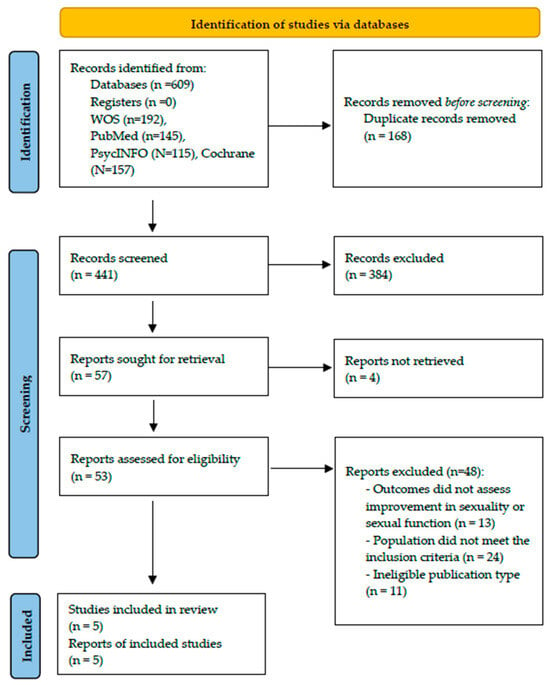
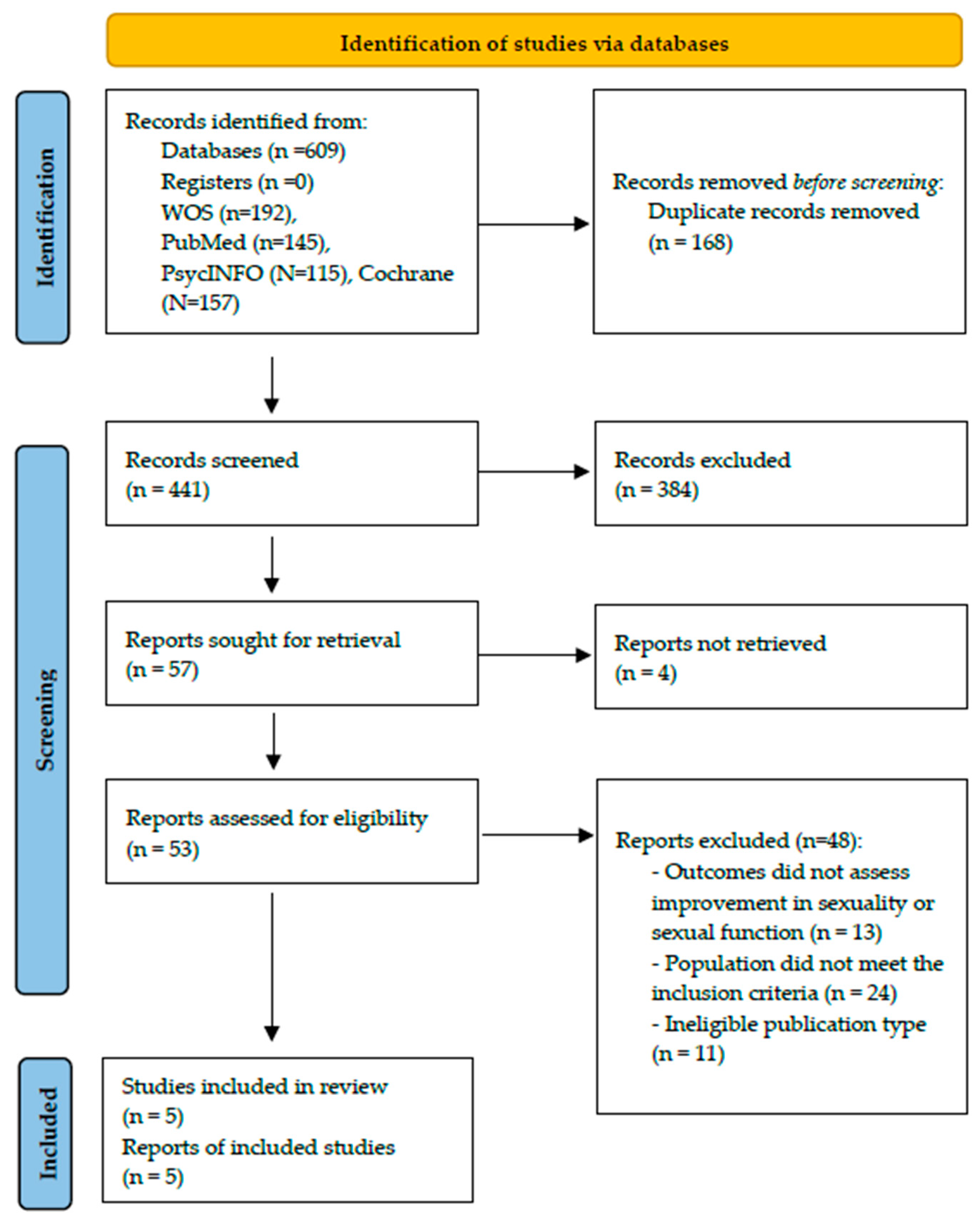
The database search identified a total of 609 records, including 192 from Web of Science, 115 from PsycINFO, 145 from PubMed, and 157 from the Cochrane Library. After removing 168 duplicate records, 441 records remained for title and abstract screening. Of these, 384 records were excluded because they did not focus on the target population, did not meet the predefined publication type, and/or did not address the topic of this review. The remaining 57 reports were sought for retrieval, of which four could not be retrieved. Consequently, 53 full-text reports were assessed for eligibility. Following full-text assessment, 48 reports were excluded because they did not meet the eligibility criteria regarding population, outcomes, or publication type. Ultimately, five studies were included in this systematic review. The study selection process is presented in the PRISMA 2020 flow diagram (Figure 1).
Figure 1.
PRISMA flow diagram of the development of literature selection.
The small number of included studies should be interpreted in the context of the specific eligibility criteria applied in this review. Eligibility required studies to involve women with breast cancer and their intimate partners, to examine psychological or sexological interventions, and to report outcomes specifically related to sexuality, sexual functioning, or sexual well-being. Studies addressing broader psychosocial or couple-based interventions without a specific focus on sexual outcomes, as well as medical or physical interventions, were therefore not eligible for inclusion. The additional eligibility criteria concerning age, relationship status, publication type, and language further defined the scope of the review. Thus, the five included studies should not be interpreted as representing the entirety of research on sexuality or sexual health in women with breast cancer and their intimate partners, but rather the subset that met the specific eligibility criteria of the present review.
The included studies were published between 1983 and 2021 and represent the evidence on couple-based psychosexual interventions for breast cancer identified through our search and selection process.
3.2. Results of the Methodological Quality Assessment
The methodological quality of the five included studies was assessed using the Mixed Methods Appraisal Tool (MMAT), version 2018. The MMAT screening questions were satisfied by all included studies. Among the three randomized controlled trials, Christensen [29] showed some uncertainty regarding the adequacy of randomization and outcome assessor blinding, whereas Baucom et al. [19] met most criteria, with uncertainty regarding outcome assessor blinding. Pirmardvand et al. [23] showed uncertainty regarding randomization, outcome assessor blinding, and adherence to the assigned intervention, and did not meet the criterion concerning baseline comparability. The non-randomized quantitative study by Decker et al. [20] did not meet the criteria concerning participant representativeness and accounting for confounders, while the remaining criteria were either met or could not be clearly determined. The qualitative study by Cullen and Fergus [22] met all MMAT criteria. The detailed criterion-level assessment is presented in Appendix A.
3.3. Characteristics of the Included Studies
The five included studies were published over a period of almost four decades (1983–2021), reflecting the gradual evolution of couple-based psychosexual interventions for women diagnosed with breast cancer and their partners [19,20,22,23,29]. Three studies were conducted in the United States [19,20,29], one in Canada [22], and one in Iran [23], indicating that the available evidence remains geographically concentrated despite increasing international interest in survivorship care.
Considerable methodological heterogeneity was observed across studies. The review included three randomized controlled trials [19,23,29], one non-randomized quantitative intervention study [20], and one qualitative feasibility study [22]. Although controlled designs predominated, the included studies generally involved relatively small samples. Follow-up periods also varied substantially, with only Baucom et al. [19] reporting outcomes one year after treatment, whereas the remaining studies primarily focused on immediate post-intervention effects.
Across all studies, interventions targeted women diagnosed with breast cancer together with their intimate partners, reinforcing the conceptualization of sexuality as a relational process that extends beyond individual sexual functioning. Nevertheless, participants differed in clinical stage, treatment history, and eligibility criteria, contributing to heterogeneity among the included populations. Likewise, comparison conditions ranged from treatment-as-usual controls [19,23] to uncontrolled feasibility designs [22], limiting direct comparisons between intervention effects.
Overall, the available evidence is characterized by methodological diversity, predominantly small-scale studies, and variability in clinical characteristics and outcome assessment, highlighting both the emerging nature of this research field and the need for more standardized intervention studies. See Table 3.
Table 3.
Summary of the included studies.
3.4. Therapeutic Architecture of Interventions
Despite sharing the common objective of improving sexuality after breast cancer, the included interventions differed substantially in their theoretical orientation, therapeutic structure, and conceptualization of sexual rehabilitation (Table 3). Across the four decades represented in this review, the evidence reflects a progressive shift from predominantly supportive and educational approaches towards more structured, theory-driven psychosexual interventions [19,20,22,23,29].
Earlier interventions primarily focused on providing emotional support, facilitating communication about sexuality, and helping couples adjust to the psychosocial consequences of breast cancer [29]. Subsequently, intervention protocols became increasingly structured, incorporating explicit theoretical frameworks such as Relationship Enhancement principles [19], integrative psychosexual counselling [20], Rational Emotive Behavior Therapy [23], and Acceptance and Commitment Therapy combined with the Physical Pleasure–Relational Intimacy Model [22]. This progression reflects a growing emphasis on addressing sexuality through more clearly defined therapeutic approaches rather than supportive counselling alone.
A common feature across all interventions was the active involvement of the intimate partner, although the therapeutic role assigned to partners evolved. Whereas earlier studies primarily viewed partners as sources of emotional support during adaptation [29], more recent interventions conceptualized couples as collaborative agents of change, actively engaging both members in communication exercises, cognitive and behavioral strategies, and shared intimacy-building activities [19,20,22,29]. Intervention delivery also became progressively more diverse. While initial programs were delivered exclusively through face-to-face counselling [19,20,23,29], the most recent study demonstrated the feasibility of synchronous videoconference-based therapy, expanding access to psychosexual care without fundamentally modifying its relational focus [22]. Likewise, intervention intensity ranged from brief counselling sessions to multi-session structured therapeutic programs that incorporated psychoeducation, behavioral practice, and between-session activities.
Overall, the therapeutic architecture of couple-based psychosexual interventions has evolved from supportive models centered on psychosocial adjustment towards structured relational interventions grounded in explicit psychological theories. This evolution, which can be seen in Table 4, reflects a broader reconceptualization of sexuality after breast cancer as a dynamic, shared, and biopsychosocial process rather than solely the restoration of sexual functioning.
Table 4.
Therapeutic architecture of couple-based psychosexual interventions for women with breast cancer and their partners.
3.5. Therapeutic Components and Proposed Mechanisms of Change
Despite differences in theoretical orientation, the interventions included demonstrated considerable convergence regarding their core therapeutic components (Table 5). In this synthesis, intervention components refer to the specific therapeutic strategies or techniques delivered within each intervention, whereas proposed therapeutic processes/mechanisms refer to the psychological, relational, or behavioral processes through which these components were hypothesized or described as contributing to change. Therapeutic aims and measured outcomes were considered separately and are reported in Table 5 and Table 6, respectively.
Table 5.
Intervention components and therapeutic processes/mechanisms of change across included studies.
Table 6.
Outcomes assessed, main findings and methodological considerations of the included studies.
Across studies, psychoeducation emerged as the most consistently implemented strategy, although its content evolved. Earlier interventions primarily provided information about the psychosocial consequences of breast cancer and encouraged open discussion of sexuality within the couple [29], whereas more recent programs incorporated structured education on sexual health, treatment-related sexual changes, intimacy, and adaptive coping strategies [19,20,22,23].
Communication enhancement and the promotion of emotional intimacy constituted another common therapeutic domain. Most interventions encouraged couples to discuss sexual concerns, express emotional needs, and develop more effective interpersonal communication as a means of facilitating mutual understanding and relational adjustment [19,20,22]. Likewise, interventions increasingly emphasized shared coping, positioning both partners as active participants in adapting to the impact of breast cancer on intimacy and sexual well-being rather than focusing exclusively on the patient’s individual adjustment [19,22,29].
Cognitive and behavioral therapeutic strategies became progressively more prominent in later interventions. Behavioral exercises, communication practice, homework assignments, and problem-solving techniques were incorporated to facilitate the application of therapeutic skills beyond clinical sessions [19,22]. The nature of the therapeutic processes underlying the interventions varied according to their theoretical orientation. In the Rational Emotive Behavior Therapy intervention, cognitive restructuring and disputation of irrational beliefs constituted core intervention components, through which changes in maladaptive cognitions were proposed to contribute to improved emotional and relational functioning [23]. In contrast, the most recent intervention incorporated acceptance-based strategies, mindfulness, and values clarification within an Acceptance and Commitment Therapy framework, with increased acceptance, reduced sexual avoidance, psychological flexibility, and values-consistent engagement with sexuality described as relevant therapeutic processes [22].
Although addressed with varying intensity, interventions also recognized the importance of body image, sexual self-perception, and relational intimacy as interconnected dimensions of sexual well-being. Earlier studies approached these issues primarily through supportive counselling [29], whereas later interventions addressed them through structured psychotherapeutic techniques designed to promote emotional acceptance, intimacy enhancement, and adaptive sexual adjustment [20,22].
Overall, the reviewed interventions appear to share a common therapeutic foundation grounded in psychoeducation, communication, emotional expression, and intimacy-oriented work, while more contemporary approaches increasingly integrate evidence-based cognitive, behavioral, and acceptance-oriented strategies. The proposed therapeutic processes similarly evolved from communication, emotional expression, partner support, and adaptive couple coping towards more explicitly theory-informed processes, including cognitive change, acceptance, reduced sexual avoidance, psychological flexibility, and values-consistent engagement with sexuality. Collectively, these findings reflect a progressive broadening of the therapeutic processes addressed by couple-based psychosexual interventions, extending beyond symptom reduction towards the promotion of sexual well-being within the couple relationship.
3.6. Outcomes and Methodological Considerations
Across the included studies, improvements in one or more dimensions of sexual and relational well-being were reported, although the specific outcomes assessed varied considerably (see Table 6).
Sexual functioning, sexual satisfaction, intimacy, relationship adjustment, communication, psychological distress, and quality of life were among the most frequently evaluated outcomes [19,20,22,23,29]. This diversity reflects the evolving conceptualization of sexuality after breast cancer, with more recent studies increasingly adopting multidimensional perspectives that extend beyond sexual functioning alone.
Improvements in communication, emotional intimacy, and relationship functioning were reported across several interventions [19,20,22], while studies incorporating structured psychotherapeutic approaches also described benefits in psychological adjustment, reductions in distress, and greater confidence in managing sexuality after cancer [22,23]. Although direct comparisons were not possible due to heterogeneity in interventions and outcome measures, the overall findings were generally favorable, though the evidence remains preliminary.
Despite these encouraging findings, important methodological limitations were identified across the evidence base. Sample sizes were generally small [19,20,22,29], limiting statistical power and the generalizability of findings. Considerable variability was also observed in study design, intervention intensity, comparator conditions, follow-up duration, and outcome assessment, reducing the feasibility of quantitative synthesis. Furthermore, only one study reported long-term follow-up beyond the immediate post-intervention period [19], restricting conclusions regarding the durability of treatment effects.
Additional methodological challenges included the use of feasibility designs [20,22], heterogeneous eligibility criteria, and differences in participants’ clinical characteristics, including cancer stage and treatment history. Together, these factors contribute to the limited comparability of existing studies and highlight the need for greater methodological consistency in future research.
Overall, the available evidence suggests that couple-based psychosexual interventions hold promise for improving sexual and relational outcomes following breast cancer. However, the small number of studies, methodological heterogeneity, and limited long-term evidence indicate that these findings should be interpreted with appropriate caution and confirmed through larger, rigorously designed trials.
4. Discussion
This systematic review provides a comprehensive synthesis of the evolving evidence on couple-based psychosexual interventions for women with breast cancer and their partners. Beyond identifying generally favorable findings across sexual and relational outcomes, the findings suggest a progressive evolution in the conceptualization of these interventions over the past four decades. Whereas earlier approaches primarily focused on psychosocial adjustment and the recovery of sexual functioning, more recent interventions have adopted structured, theory-informed models that conceptualize sexuality as a relational, multidimensional, and dynamic aspect of survivorship. This progression reflects an increasing recognition that promoting sexual well-being after breast cancer requires addressing not only physical or functional changes, but also the psychological and interpersonal processes through which couples adapt to the long-term consequences of the disease.
One of the most notable findings of this review is the progressive transformation of the therapeutic paradigm underpinning couple-based psychosexual interventions. Although the earliest intervention primarily addressed psychosocial adjustment and the restoration of sexual functioning following treatment [29], subsequent interventions progressively incorporated cognitive-behavioral, relational, and acceptance-based principles [19,20,22,23]. This evolution closely mirrors broader developments in psycho-oncology, where sexuality is increasingly conceptualized as a multidimensional construct encompassing physical, emotional, relational, and social dimensions rather than merely the absence of sexual dysfunction [1,6,15]. In this context, the goal of psychosexual care has gradually shifted from restoring pre-treatment sexual functioning towards supporting couples in rebuilding intimacy, adapting to cancer-related changes, and enhancing overall sexual well-being, an approach consistently advocated in recent reviews of breast cancer survivorship [4,30,31].
Despite differences in theoretical orientation and delivery format, the interventions included in this review converged on a relatively consistent set of therapeutic processes that may be relevant to the favorable findings observed across sexual and relational outcomes. Psychoeducation emerged as the common foundation across all interventions, helping couples understand the physical, emotional, and sexual consequences of breast cancer while promoting realistic expectations regarding recovery and adaptation [19,20,22,23,29]. This finding is consistent with previous reviews emphasizing that improving sexual health after breast cancer requires not only addressing treatment-related symptoms but also equipping couples with the knowledge and skills needed to navigate long-term changes in their intimate relationship [4,30,31,32].
Similarly, communication training, emotional disclosure, and active partner involvement were recurrent components across interventions, reinforcing the growing recognition that sexual adjustment is fundamentally a dyadic process rather than an individual experience. Previous research has consistently shown that open communication is associated with lower psychological distress and better relationship functioning [33]; that emotional intimacy predicts better psychological and relational adjustment [16,17]; and that shared coping processes contribute to improved dyadic adjustment [18,24]. Moreover, couple-based psychosexual interventions targeting these relational processes have been associated with improvements in sexual functioning and sexual satisfaction among women and couples coping with breast cancer [11,25]. In this regard, our findings suggest that involving partners as active participants in psychosexual care may contribute to the couple’s capacity to adapt to cancer-related changes, rather than placing the responsibility for sexual recovery solely on the woman.
The progressive incorporation of cognitive restructuring, behavioral exercises, mindfulness, acceptance, and psychological flexibility in more recent interventions [22,23] further reflects broader developments in psycho-oncology towards approaches that promote adaptive coping and long-term well-being rather than focusing exclusively on symptom reduction [15,25,34]. Taken together, these findings suggest that contemporary couple-based psychosexual interventions incorporate complementary informational, relational, and psychological processes that may contribute to sexual well-being following breast cancer, a perspective increasingly endorsed in recent survivorship literature [32,34].
The findings of this review also have potential implications for clinical practice. First, they highlight the potential value of moving beyond an exclusively symptom-oriented approach to sexual rehabilitation by adopting interventions that address sexuality as a multidimensional and relational aspect of cancer survivorship [15,18].
Contemporary clinical recommendations increasingly advocate integrating sexual health into routine oncological care rather than treating it as optional or secondary [31,32,34]. In this context, psychosexual interventions should not be limited to managing treatment-related sexual dysfunctions but should also promote intimacy, communication, emotional adjustment, and shared coping within the couple.
Our findings further support the active involvement of partners throughout the therapeutic process. Consistent with previous evidence, interventions that actively engage both members of the couple may be well positioned to address the reciprocal emotional and relational challenges associated with breast cancer, facilitating mutual adaptation and enhancing relationship quality [17,18,24,33]. Accordingly, psychosexual care may benefit from being routinely incorporated into multidisciplinary survivorship programs, where oncologists, psychologists, sexologists, nurses, and other healthcare professionals collaborate to provide individualized and comprehensive support throughout the cancer trajectory [13,25,34].
Beyond their clinical implications, the findings of this review highlight several priorities for future research. Although the available evidence suggests that couple-based psychosexual interventions are feasible and potentially beneficial, the field remains in an early stage of development. The limited number of randomized controlled trials, relatively small sample sizes, heterogeneity in intervention content, and variability in outcome measures make it difficult to identify which therapeutic components are most effective and for whom [21,24,25]. Future studies should therefore move beyond establishing whether these interventions are effective and instead seek to clarify the processes through which they may produce change. Recent randomized evidence from a larger couple-based trial has demonstrated improvements across several domains of sexual functioning among breast cancer survivors, further supporting the need for adequately powered trials in this area [35].
Particular attention should be given to the standardization of outcome measures, especially through the adoption of broader indicators of sexual well-being that encompass not only sexual functioning but also intimacy, relationship satisfaction, body image, communication, and psychological adaptation [6,15,31]. In addition, future trials would benefit from longer follow-up periods, more culturally diverse populations, and greater inclusion of underrepresented groups, including same-sex couples and individuals with diverse gender identities, to improve the generalizability of findings. Finally, evaluating potential mediators—such as communication quality, dyadic coping, or psychological flexibility—may help explain how these interventions achieve their effects and support the development of more targeted and theoretically grounded psychosexual programs [18,34].
This review has several strengths that should be acknowledged. To our knowledge, it is among the few systematic reviews to specifically examine couple-based psychosexual interventions for breast cancer while extending beyond the evaluation of intervention effectiveness to explore their underlying therapeutic architecture and shared clinical components. By synthesizing theoretical frameworks, therapeutic techniques, partner involvement, and proposed mechanisms of change, this review provides a more comprehensive understanding of how these interventions have evolved over time and identifies common elements that may inform the development of future interventions. Furthermore, the review was conducted in accordance with PRISMA guidelines and incorporated a systematic assessment of methodological quality using the MMAT, thereby strengthening the transparency and consistency of methodological appraisal across the heterogeneous study designs included.
Nevertheless, several limitations should also be considered. The restriction of the eligibility criteria to women aged 30–65 years may limit the generalizability of the findings to younger and older women with breast cancer and their intimate partners. Only five studies met the eligibility criteria in the present review. Considerable heterogeneity in study design, intervention characteristics, outcome measures, and follow-up periods precluded quantitative synthesis and limited direct comparisons across studies. Moreover, the relatively small sample sizes and the predominance of Western populations may restrict the generalizability of the findings. Accordingly, the conclusions of this review should be interpreted with appropriate caution. Despite these limitations, the consistency of several therapeutic components across studies supports the relevance of the identified conceptual patterns and provides a useful framework for both clinical practice and future research.
Moreover, this review also has several methodological limitations. Although a comprehensive search strategy was implemented across multiple databases in accordance with PRISMA guidelines, unpublished studies and grey literature were not included, which may have increased the risk of publication bias. The review protocol was not prospectively registered. Although the eligibility criteria, search strategy, and study selection and data extraction procedures were defined before screening and extraction began, the absence of preregistration may have increased the potential for selective methodological or outcome decisions. In addition, the substantial methodological and clinical heterogeneity across the included studies precluded quantitative synthesis, limiting the ability to estimate an overall intervention effect. The certainty of the body of evidence was not formally assessed using GRADE or another certainty framework. Therefore, conclusions regarding intervention effects should be interpreted as based on a small, heterogeneous body of evidence with variable methodological characteristics, rather than as evidence of established effectiveness. Furthermore, restricting the search to English-language publications may have resulted in the omission of relevant studies published in other languages.
5. Conclusions
In conclusion, couple-based psychosexual interventions represent a promising approach to supporting women with breast cancer and their partners in adapting to the sexual and relational challenges associated with the disease. Beyond identifying favorable findings across sexual and psychosocial outcomes, the evidence synthesized in this review suggests that these interventions have progressively evolved towards more comprehensive, theory-informed models that conceptualize sexuality as a multidimensional and relational component of cancer survivorship. Their shared emphasis on psychoeducation, partner involvement, communication, and psychological adaptation highlights the importance of addressing sexual well-being through integrated informational, relational, and psychological approaches. Although the available evidence remains limited, this review provides a conceptual framework that may inform the development of future interventions and highlights the need to give greater clinical attention to psychosexual well-being while further couple-based approaches are developed and rigorously evaluated within breast cancer survivorship care.
Supplementary Materials
The following supporting information can be downloaded at https://www.mdpi.com/article/10.3390/sexes7040055/s1, Supplementary Material S1: PRISMA 2020 checklist [27].
Author Contributions
Conceptualization: E.E.-R. and L.E.; Investigation: E.E.-R.; Methodology: E.E.-R.; Supervision: L.E.; Writing—original draft: E.E.-R.; Writing—review & editing: L.E. All authors have read and agreed to the published version of the manuscript.
Funding
This research received no external funding.
Institutional Review Board Statement
Not applicable.
Informed Consent Statement
Not applicable.
Data Availability Statement
No new data were created or analyzed in this study. Data sharing is not applicable to this article.
Acknowledgments
The authors used ChatGPT (OpenAI, San Francisco, CA, USA; GPT-5.5) exclusively to assist with improving the linguistic quality of the manuscript, including grammar, syntax, style, and academic English, as English is not the authors’ native language. The AI tool was not used to generate, analyse, or interpret data, nor to make scientific decisions or draw conclusions. All intellectual content, interpretation of the findings, and final responsibility for the manuscript remain entirely with the authors. The authors express their gratitude to the Clinical, Social, and Cultural Psychology Investigation Group at Universidad Loyola Andalucía for their support and review of this paper.
Conflicts of Interest
The authors declare no conflicts of interest.
Appendix A
Table A1.
Methodological quality assessment using the Mixed Methods Appraisal Tool (MMAT 2018).
References
- Thomas-MacLean, R. Beyond Dichotomies of Health and Illness: Life after Breast Cancer. Nurs. Inq. 2005, 12, 200–209. [Google Scholar] [CrossRef] [Scilit] [PubMed]
- Lovelace, D.L.; McDaniel, L.R.; Golden, D. Long-Term Effects of Breast Cancer Surgery, Treatment, and Survivor Care. J. Midwifery Womens Health 2019, 64, 713–724. [Google Scholar] [CrossRef] [Scilit] [PubMed]
- Sheppard, L.A.; Ely, S. Breast Cancer and Sexuality. Breast J. 2008, 14, 176–181. [Google Scholar] [CrossRef] [Scilit] [PubMed]
- Emilee, G.; Ussher, J.M.; Perz, J. Sexuality after Breast Cancer: A Review. Maturitas 2010, 66, 397–407. [Google Scholar] [CrossRef] [Scilit] [PubMed]
- World Health Organization. Brief Sexuality-Related Communication: Recommendations for a Public Health Approach; World Health Organization: Geneva, Switzerland, 2015. [Google Scholar]
- Flynn, K.E.; Lin, L.; Bruner, D.W.; Cyranowski, J.M.; Hahn, E.A.; Jeffery, D.D.; Reese, J.B.; Reeve, B.B.; Shelby, R.A.; Weinfurt, K.P. Sexual Satisfaction and the Importance of Sexual Health to Quality of Life Throughout the Life Course of U.S. Adults. J. Sex. Med. 2016, 13, 1642–1650. [Google Scholar] [CrossRef] [Scilit] [PubMed]
- Panjari, M.; Bell, R.J.; Davis, S.R. Sexual Function After Breast Cancer. J. Sex. Med. 2011, 8, 294–302. [Google Scholar] [CrossRef] [Scilit] [PubMed]
- Jankowska, M. Sexual Functioning in Young Women in the Context of Breast Cancer Treatment. Rep. Pract. Oncol. Radiother. 2013, 18, 193–200. [Google Scholar] [CrossRef] [Scilit] [PubMed][Green Version]
- Rasekh Jahromi, A.; Ranjbar, A.; Naseripour, P.; Rahmanian, V.; Jamali, S. Body Image and Sexual Function in Women with Breast Cancer. Sex. Relatsh. Ther. 2022, 39, 894–904. [Google Scholar] [CrossRef] [Scilit]
- Sheng, Y.; Carpenter, J.S.; Cohee, A.A.; Storey, S.; Stump, T.E.; Monahan, P.O.; Cella, D.; Champion, V.L. Genitourinary Symptoms in Breast Cancer Survivors: Prevalence, Correlates, and Relationship with Sexual Functioning. Oncol. Nurs. Forum 2021, 48, 229–241. [Google Scholar] [CrossRef] [Scilit] [PubMed]
- Reese, J.B.; Zimmaro, L.A.; McIlhenny, S.; Sorice, K.; Porter, L.S.; Zaleta, A.K.; Daly, M.B.; Cribb, B.; Gorman, J.R. Coping with Changes to Sex and Intimacy After a Diagnosis of Metastatic Breast Cancer: Results from a Qualitative Investigation with Patients and Partners. Front. Psychol. 2022, 13, 864893. [Google Scholar] [CrossRef] [Scilit] [PubMed]
- Rodrigues-Machado, N.; Bonfill-Cosp, X.; Quintana, M.J.; Santero, M.; Bártolo, A.; Selva Olid, A. Sexual Dysfunction in Women with Breast Cancer: A Systematic Review. Support. Care Cancer 2025, 33, 332. [Google Scholar] [CrossRef] [Scilit] [PubMed]
- Krychman, M.L.; Katz, A. Breast Cancer and Sexuality: Multi-Modal Treatment Options (CME). J. Sex. Med. 2012, 9, 5–13. [Google Scholar] [CrossRef] [Scilit] [PubMed]
- Streicher, L.; Simon, J.A. Sexual Function Post-Breast Cancer. In Optimizing Breast Cancer Management; Gradishar, W.J., Ed.; Springer: Cham, Switzerland, 2018; pp. 167–189. [Google Scholar] [CrossRef] [Scilit] [PubMed]
- Nimbi, F.M.; Galizia, R.; Rossi, R.; Limoncin, E.; Ciocca, G.; Fontanesi, L.; Jannini, E.A.; Simonelli, C.; Tambelli, R. The Biopsychosocial Model and the Sex-Positive Approach: An Integrative Perspective for Sexology and General Health Care. Sex. Res. Soc. Policy 2022, 19, 894–908. [Google Scholar] [CrossRef] [Scilit]
- Manne, S.; Badr, H. Intimacy and Relationship Processes in Couples’ Psychosocial Adaptation to Cancer. Cancer 2008, 112, 2541–2555. [Google Scholar] [CrossRef] [Scilit] [PubMed]
- Milbury, K.; Badr, H. Sexual Problems, Communication Patterns, and Depressive Symptoms in Couples Coping with Metastatic Breast Cancer. Psychooncology 2013, 22, 814–822. [Google Scholar] [CrossRef] [Scilit] [PubMed]
- Valente, M.; Chirico, I.; Ottoboni, G.; Chattat, R. Relationship Dynamics among Couples Dealing with Breast Cancer: A Systematic Review. Int. J. Environ. Res. Public Health 2021, 18, 7288. [Google Scholar] [CrossRef] [Scilit] [PubMed]
- Baucom, D.H.; Porter, L.S.; Kirby, J.S.; Gremore, T.M.; Wiesenthal, N.; Aldridge, W.; Fredman, S.J.; Stanton, S.E.; Scott, J.L.; Halford, K.W.; et al. A Couple-Based Intervention for Female Breast Cancer. Psychooncology 2009, 18, 276–283. [Google Scholar] [CrossRef] [Scilit] [PubMed]
- Decker, C.L.; Pais, S.; Miller, K.D.; Goulet, R.; Fife, B.L. A Brief Intervention to Minimize Psychosexual Morbidity in Dyads Coping with Breast Cancer. Oncol. Nurs. Forum 2012, 39, 176–185. [Google Scholar] [CrossRef] [Scilit] [PubMed]
- Taylor, S.; Harley, C.; Ziegler, L.; Brown, J.; Velikova, G. Interventions for Sexual Problems Following Treatment for Breast Cancer: A Systematic Review. Breast Cancer Res. Treat. 2011, 130, 711–724. [Google Scholar] [CrossRef] [Scilit] [PubMed]
- Cullen, K.; Fergus, K. Acceptability of an Online Relational Intimacy and Sexual Enhancement (iRISE) Intervention After Breast Cancer. J. Marital Fam. Ther. 2021, 47, 515–532. [Google Scholar] [CrossRef] [Scilit] [PubMed]
- Pirmardvand Chegini, B.; Sani Zaker, B.; Zahrakar, K. A Randomized Clinical Trial: The Effectiveness of Educating Based on Rational Emotive Behavior Therapy (REBT) on Marital Quality Components of Couples Who Are Coping with Breast Cancer. Acta Sci. Womens Health 2021, 3, 46–55. [Google Scholar]
- Li, M.; Zhang, L.; Li, N.; Luo, X.; Chen, J.; Zhang, Y.; Xiong, C.; Zhao, M.; Guo, Z.; Yan, J. Effects of Couple-Based Dyadic Interventions on Breast Cancer Patients and Their Intimate Partners: A Systematic Review and Meta-Analysis. J. Adv. Nurs. 2023, 79, 3192–3213. [Google Scholar] [CrossRef] [Scilit] [PubMed]
- Xu, J.; Xue, B.; Li, L.; Qiao, J.; Redding, S.R.; Ouyang, Y.Q. Psychological Interventions for Sexual Function and Satisfaction of Women with Breast Cancer: A Systematic Review and Meta-Analysis. J. Clin. Nurs. 2023, 32, 2282–2297. [Google Scholar] [CrossRef] [Scilit] [PubMed]
- Carroll, A.J.; Baron, S.R.; Carroll, R.A. Couple-based treatment for sexual problems following breast cancer: A review and synthesis of the literature. Support. Care Cancer 2016, 24, 3651–3659. [Google Scholar] [CrossRef] [Scilit] [PubMed]
- Page, M.J.; McKenzie, J.E.; Bossuyt, P.M.; Boutron, I.; Hoffmann, T.C.; Mulrow, C.D.; Shamseer, L.; Tetzlaff, J.M.; Akl, E.A.; Brennan, S.E.; et al. The PRISMA 2020 Statement: An Updated Guideline for Reporting Systematic Reviews. BMJ 2021, 372, n71. [Google Scholar] [CrossRef] [Scilit] [PubMed]
- Hong, Q.N.; Gonzalez-Reyes, A.; Pluye, P. Improving the Usefulness of a Tool for Appraising the Quality of Qualitative, Quantitative and Mixed Methods Studies, the Mixed Methods Appraisal Tool (MMAT). J. Eval. Clin. Pract. 2018, 24, 459–467. [Google Scholar] [CrossRef] [Scilit] [PubMed]
- Christensen, D.N. Postmastectomy Couple Counseling: An Outcome Study of a Structured Treatment Protocol. J. Sex Marital Ther. 1983, 9, 266–275. [Google Scholar] [CrossRef] [Scilit] [PubMed]
- Castillo, H.; Mension, E.; Cebreros, I.; Anglès, S.; Castelo-Branco, C. Sexual Function in Breast Cancer Patients: A Review of the Literature. Clin. Exp. Obstet. Gynecol. 2022, 49, 134. [Google Scholar] [CrossRef] [Scilit]
- Vizza, R.; Capomolla, E.M.; Tosseto, L.; Corrado, G.; Bruno, V.; Chiofalo, B.; Di Lisa, F.S.; Filomeno, L.; Pizzuti, L.; Krasniqi, E.; et al. Sexual Dysfunctions in Breast Cancer Patients: Evidence in Context. Sex. Med. Rev. 2023, 11, 179–195. [Google Scholar] [CrossRef] [Scilit] [PubMed]
- Cucciniello, L.; Miglietta, F.; Guarneri, V.; Puglisi, F. Managing Sexual Health Challenges in Breast Cancer Survivors: A Comprehensive Review. Breast 2024, 76, 103754. [Google Scholar] [CrossRef] [Scilit] [PubMed]
- Manne, S.; Badr, H.; Zaider, T.; Nelson, C.; Kissane, D. Cancer-Related Communication, Relationship Intimacy, and Psychological Distress Among Couples Coping with Localized Prostate Cancer. J. Cancer Surviv. 2010, 4, 74–85. [Google Scholar] [CrossRef] [Scilit] [PubMed]
- Kennedy, S.K.F.; Mekhaeil, S.; Zhang, E.; Jolfaei, N.A.; Wong, H.C.Y.; Chan, A.W.; Lee, S.F.; Haywood, D.; Kirk, D.; Abdou, A.M.; et al. Sexual Health after Breast Cancer: A Clinical Practice Review. Ann. Palliat. Med. 2024, 13, 1281–1290. [Google Scholar] [CrossRef] [Scilit] [PubMed]
- Reese, J.; Lepore, S.J.; Sorice, K.A.; Zimmaro, L.A.; Hasler, J.; Handorf, E.; Daly, M.B.; Zaleta, A.K.; Westbrook, K.; Porter, L.S. Efficacy of a Couple-Based Intervention Addressing Sexual Concerns for Breast Cancer Survivors: Results of a Randomized Controlled Trial. Cancer 2025, 131, e35685. [Google Scholar] [CrossRef] [Scilit] [PubMed]

Disclaimer/Publisher’s Note: The statements, opinions and data contained in all publications are solely those of the individual author(s) and contributor(s) and not of MDPI and/or the editor(s). MDPI and/or the editor(s) disclaim responsibility for any injury to people or property resulting from any ideas, methods, instructions or products referred to in the content. |
© 2026 by the authors. Licensee MDPI, Basel, Switzerland. This article is an open access article distributed under the terms and conditions of the Creative Commons Attribution (CC BY) license.