


Abstract
(1) Background: Beliefs about love may influence relationship functioning, attitudes toward commitment, and relationship quality. The aim of the study was to examine the relationships between stable and unstable beliefs about love, relationship functioning, attitudes toward marriage and cohabitation, life values, and relationship quality. (2) Methods: The study involved 51 participants who completed an anonymous online questionnaire developed for the purposes of the research. Exploratory factor analysis and correlational analyses were performed, followed by regression analysis. (3) Results: Exploratory analyses suggested two preliminary dimensions of beliefs about love: stable and unstable vision of love. Stable love beliefs were associated with greater relationship commitment, constructive conflict resolution, fidelity, support toward a partner, and higher relationship quality. They were also related to more positive attitudes toward marriage and stronger family-oriented values. In contrast, unstable love beliefs were associated mainly with greater acceptance of non-committed relationships and the belief that love ends when sexual desire fades, but they were not significantly related to relationship quality. Regression analysis showed that only the stable vision of love was independently associated with relationship quality. (4) Conclusions: The findings suggest that relationship quality may depend more on stable and commitment-based beliefs about love than on the absence of unstable beliefs.
1. Introduction
Love and romantic relationships constitute one of the fundamental areas of human functioning [1]. The way individuals understand and experience love may influence relationship quality, the level of commitment between partners, relationship stability, and everyday emotional functioning [2,3]. At the same time, ongoing social and cultural changes have contributed to increasingly diverse ways of perceiving intimate relationships and love itself [4]. Alongside the traditional understanding of relationships as long-term commitments, contemporary models of intimacy are more frequently centered on emotions, individual satisfaction, and a lower level of interpersonal commitment [5].
In psychology, love is commonly described as a complex construct involving emotional, cognitive, and behavioral components [6]. Some theoretical approaches emphasize the importance of passion, spontaneity, and the intensity of emotional experiences [7]. Other perspectives focus more strongly on responsibility, relationship stability, conscious partner choice, and the willingness to invest effort in maintaining the relationship [6,8]. Beyond psychological theories, broader sociological and philosophical perspectives have also emphasized that love involves not only emotions but also responsibility, commitment, and conscious care for the relationship. For example, Fromm viewed love as an active attitude requiring responsibility, respect, care, and knowledge, whereas Giddens described contemporary intimate relationships as increasingly shaped by individual autonomy and personal fulfillment [9,10]. These perspectives provide a broader conceptual context for understanding the diversity of beliefs about love examined in the present study. Consequently, individuals may differ substantially in how they define love and in what they expect from intimate relationships.
In recent decades, substantial changes have been observed in attitudes toward marriage, sexuality, and interpersonal relationships [11,12]. Cohabitation, informal relationships, and more liberal approaches to sexuality have become increasingly socially accepted [13]. For some individuals, intimate relationships are primarily a source of emotional satisfaction and personal fulfillment, whereas for others they continue to represent a space of long-term commitment, responsibility, and the development of interpersonal bonds [3].
Social and cultural changes have also influenced the way relationship stability is understood [14]. Contemporary intimate relationships are increasingly based on individual emotional needs and subjective relationship satisfaction [15]. As a result, growing importance is attached to personal beliefs about the nature of love, its foundations, and whether a relationship requires conscious effort and responsibility from both partners [8]. Such beliefs may affect not only everyday relationship functioning, but also attitudes toward conflict resolution, fidelity, commitment, and overall relationship quality [1].
Previous studies suggest that the way individuals perceive love may be associated with relationship satisfaction, interpersonal functioning, and relationship stability [16,17]. Individuals who define love as a lasting commitment tend to report greater willingness to work on the relationship, resolve conflicts, and maintain relationship quality despite emerging difficulties [18]. In contrast, a more emotional and unstable understanding of love may be associated with a stronger emphasis on spontaneity, sexual attraction, and immediate emotional gratification [19].
In the present study, a stable vision of love is understood as a system of beliefs emphasizing commitment, responsibility, durability, conscious choice, and personal growth within an intimate relationship. Such an understanding does not exclude emotions; rather, it assumes that emotions constitute one component of a broader and more enduring interpersonal bond. In contrast, an unstable vision of love refers to beliefs that primarily emphasize emotional intensity, spontaneity, sexual attraction, and the temporary nature of romantic relationships. These two perspectives should not be regarded as opposite ends of a single continuum but rather as two relatively independent ways of understanding love and intimate relationships. These conceptual definitions were formulated for the purposes of the present exploratory study and are informed by previous theoretical perspectives emphasizing either commitment and responsibility or emotional intensity and passion in romantic love [6,7,8].
An important issue concerns the relationship between beliefs about love and attitudes toward marriage and cohabitation [20]. Contemporary societies increasingly move away from traditional relationship models based on formal commitment [21]. Cohabitation is often perceived either as an alternative to marriage or as a stage preceding the decision to marry [22]. At the same time, many individuals still regard marriage as a more stable and enduring form of intimate relationship. These differences may be associated with individual understandings of love and the importance attributed to relationship permanence and long-term commitment.
The literature also emphasizes the importance of life values and moral norms for the quality of romantic relationships [23,24]. Beliefs concerning responsibility, fidelity, sexuality, and interpersonal commitment may influence the way partners function within the relationship and their willingness to maintain a lasting emotional bond [25]. Particularly important is the question of whether a stable understanding of love is associated with a more constructive style of interpersonal functioning and greater concern for relationship quality.
Despite the growing interest in romantic relationships, relatively few studies have simultaneously examined stable and unstable beliefs about love and their associations with relationship functioning [17]. Research addressing attitudes toward cohabitation, life values, interpersonal commitment, and relationship quality within a single analytical framework also remains limited [26]. In particular, little attention has been given to whether stable and unstable visions of love represent opposite ends of the same dimension or rather two relatively independent ways of understanding intimate relationships.
A better understanding of these relationships may be important not only for the psychology of interpersonal relationships, but also for family counseling and educational practice focused on relationship functioning [27]. Understanding the mechanisms associated with relationship stability may be particularly relevant in the context of contemporary social changes concerning marriage, cohabitation, and family life quality [28].
The aim of the present study was to examine the relationship between beliefs about love and functioning in romantic relationships. Because no established instrument measuring these beliefs was available, an original exploratory questionnaire was developed for this purpose. Particular attention was devoted to associations between stable and unstable visions of love and attitudes toward marriage and cohabitation, life values, interpersonal commitment, and relationship quality. Accordingly, the present study distinguishes between two conceptually different belief systems regarding love: a stable and an unstable vision of love. It was assumed that a stable vision of love would be associated with higher relationship quality, greater interpersonal commitment, and more constructive functioning within the relationship [28].
2. Materials and Methods
This exploratory cross-sectional study used an anonymous online questionnaire to investigate beliefs about love and their associations with relationship attitudes, sexuality, family planning, and relationship quality. Adult participants were recruited through convenience sampling using online communication channels. The study design included exploratory factor analysis to identify the underlying dimensions of beliefs about love, followed by correlation and multiple regression analyses to examine their associations with the remaining study variables.
2.1. Participants
A total of 51 participants took part in the study. Participants were recruited using convenience sampling through online communication channels. Although no inclusion criteria related to sex were applied, all respondents who completed the questionnaire were women. Consequently, all analyses were conducted on female participants. The inclusion criterion was completion of the questionnaire. Participation was voluntary and anonymous. Respondents were informed about the aims of the study, assured that no identifying data would be collected, and reminded that they could withdraw at any stage without providing a reason. Completion of the questionnaire was therefore considered to imply informed consent. The study was conducted in Poland, and all questionnaires were administered in Polish. Data were collected from April to June 2024.
2.2. Procedure
Data were collected using an online survey administered through Google Forms. The questionnaire was distributed electronically via social media platforms and private online communication channels. Participation in the study was voluntary and anonymous. Before starting the questionnaire, participants were informed about the purpose of the study and the confidential handling of data. No personally identifiable information was collected. The study was conducted in accordance with the principles of the Declaration of Helsinki. According to local institutional regulations, ethical committee approval was not required for anonymous voluntary survey studies of non-clinical populations. https://wl.uwm.edu.pl/wydzial/komisja-bioetyczna/dokumenty-do-pobrania (accessed on 14 July 2026).
2.3. Measures
The questionnaire consisted of several thematic sections concerning:
- Beliefs about love;
- Attitudes toward cohabitation and marriage;
- Relationship functioning;
- Life values;
- Commitment in relationships;
- Attitudes toward sexuality and family planning methods.
The section concerning sexuality and family planning included items addressing different dimensions of intimate relationships. Some questions referred to sexuality as an expression of emotional intimacy and romantic love, whereas others concerned attitudes toward sexuality primarily associated with pleasure or with reproductive decisions and family planning. These variables were analyzed within the same thematic domain because they reflect complementary aspects of beliefs about intimate relationships and partner functioning.
The questionnaire was developed as an original instrument for the purposes of the present exploratory study. The items were generated based on a review of the literature and previously published questionnaires concerning love, intimate relationships, marriage, sexuality, and family functioning. Selected items from existing questionnaires were adapted, and additional original items were developed to address the specific aims of the study. The instrument had not undergone formal psychometric validation before data collection. The questionnaire was designed as an exploratory research instrument rather than a fully validated psychometric tool. Therefore, its measurement properties were evaluated in the present study using exploratory factor analysis and internal consistency analysis.
Responses were provided using Likert-type scales ranging from 1 to 5, where higher scores reflected greater agreement with a given statement. To examine the internal structure of the newly developed questionnaire, exploratory factor analysis (EFA) was conducted on the 14 items assessing beliefs about love. The exploratory factor analysis suggested a two-factor solution that was interpreted as reflecting stable and unstable visions of love. Only items with clear factor loadings on the identified dimensions were retained in the final exploratory scales. The unstable love scale included four items related to beliefs that love is temporary, emotionally driven, and dependent on sexual attraction. Internal consistency of this scale was acceptable (Cronbach’s α = 0.65). The stable love scale consisted of four items reflecting beliefs that love involves commitment, responsibility, personal growth, and conscious choice. Additionally, an index of relationship quality was created based on items concerning conflict resolution, emotional expression, fidelity, and relationship commitment. The reliability of this index was satisfactory (Cronbach’s α = 0.74).
2.4. Statistical Analysis
Statistical analyses were performed using the R version 4.5.2 (31 October 2025) (R Foundation for Statistical Computing, Vienna, Austria) within the RStudio environment (version 2026.01.0+392, Posit Software, Boston, MA, USA). Descriptive statistics were calculated for all study variables. Exploratory factor analysis (EFA) was conducted using principal axis factoring with oblimin rotation in the R statistical environment. The analysis was performed to identify the latent structure of beliefs about love and to determine whether the questionnaire items formed coherent dimensions. Based on the factor structure, two separate dimensions were distinguished: a stable vision of love and an unstable vision of love. The internal consistency of the identified scales was assessed using Cronbach’s alpha coefficients. Item–total correlations (r.drop) were additionally examined to evaluate the contribution of individual items to the reliability of the scales. Pearson correlation analyses were performed to assess associations between love beliefs and variables related to cohabitation attitudes, relationship functioning, life values, sexuality, and relationship commitment. For clarity and readability, only statistically significant correlations (p < 0.05) are presented in the tables and discussed in the Section 3. Due to the exploratory nature of the study, correction for multiple comparisons was not applied. Therefore, the findings should be considered hypothesis-generating and interpreted with caution. Additionally, multiple linear regression analysis was conducted to examine whether stable and unstable love beliefs were independently associated with relationship quality. The regression model included both dimensions of love beliefs as independent variables and the relationship quality index as the dependent variable. Data visualization included scatterplots with fitted linear regression lines illustrating significant associations between the analyzed variables. Statistical significance was established at p < 0.05. Additional questionnaire items and detailed exploratory factor analysis results are provided in the Supplementary Materials.
3. Results
3.1. Descriptive Statistics
The sample consisted exclusively of women (N = 51). The mean age of respondents was 29.84 years (SD = 7.14), with ages ranging from 20 to 56 years (Me = 28). With regard to relationship status, the largest subgroup comprised participants in a religious or concordat marriage (56.0%), followed by individuals living in cohabitation or informal relationships (36.0%). A smaller proportion of respondents declared being in a civil marriage (8.0%). Most participants reported having children (64.0%), whereas 36.0% declared that they did not have children. The mean number of children in the studied sample was 0.80 (SD = 0.73), with values ranging from 0 to 2 children. Overall, the sample was relatively homogeneous in terms of sex and relationship status, consisting mainly of young adult women involved in long-term intimate relationships.
3.2. Exploratory Factor Analysis and Scale Construction
Exploratory factor analysis (EFA) was performed using principal axis factoring with oblimin rotation, assuming potential correlations between the extracted dimensions. The adequacy of the correlation matrix for factor analysis was assessed using the Kaiser–Meyer–Olkin (KMO) measure and Bartlett’s test of sphericity. Factors with eigenvalues greater than 1.0 were retained for further interpretation. The number of factors was additionally inspected using the scree plot criterion.
In the first stage of the analysis, an exploratory factor analysis (EFA) was conducted for 14 statements concerning beliefs about love (items 1–14). The purpose of the analysis was to examine the internal structure of the construct and to identify the main dimensions underlying participants’ responses. The results of the exploratory factor analysis suggested a two-factor structure, which was interpreted as reflecting relatively independent stable and unstable beliefs about love. The KMO value was modest (KMO = 0.52), suggesting that the factor structure should be interpreted with caution. Nevertheless, Bartlett’s test of sphericity was significant (χ2 = 143.28, p < 0.001), supporting the use of exploratory factor analysis. The two-factor solution explained 32.9% of the total variance. The factor structure should therefore be interpreted cautiously and requires replication in broader populations.
The first factor reflected an unstable vision of love, characterized by the belief that romantic relationships are temporary, strongly dependent on emotions and sexual attraction, and likely to fade with changing interpersonal circumstances. The second factor represented a stable vision of love, understood as a conscious decision, long-term commitment, and a process requiring personal engagement, responsibility, and continuous work on the relationship.
Based on the obtained factor structure, two subscales were distinguished: the unstable vision of love scale and the stable vision of love scale. Subsequent analyses examined the associations of both identified dimensions with the remaining study variables.
The reliability analysis of the unstable love scale included four items: (3) “True love is sudden, intense, and short-lived”, (4) “Faithful and lifelong love exists”, (9) “Love ends when sexual desire fades”, and (11) “Love cannot last forever”. Item 4 was reverse-coded prior to statistical analysis.
The obtained results indicated an acceptable level of internal consistency for an exploratory scale (Cronbach’s α = 0.65), with a mean inter-item correlation of r = 0.33. Given the exploratory nature of the study and the small number of items included in the scale, the obtained reliability coefficient may be considered acceptable. All items showed positive correlations with the overall scale score, confirming their consistency with the measured theoretical construct.
To further evaluate the quality of individual items, item–total correlation coefficients (r.drop) were analyzed. This indicator reflects the degree to which a given item is consistent with the remaining elements of the scale. Higher r.drop values indicate a stronger contribution of the item to the measurement of the construct, whereas lower values may suggest weaker coherence with the overall scale structure. All analyzed items reached at least moderate r.drop values, supporting their psychometric adequacy and their relevance for the construction of the unstable vision of love index. Detailed results are presented in Table 1.
Table 1.
Reliability analysis of the unstable love beliefs scale (N = 51).
In the next stage of the analysis, associations between the unstable vision of love index and the remaining variables included in the questionnaire were examined. Pearson correlation coefficients and their levels of statistical significance were analyzed. Table 2 presents only statistically significant associations (p < 0.05).
Table 2.
Associations between the unstable vision of love and selected variables. All presented associations were statistically significant (p < 0.05).
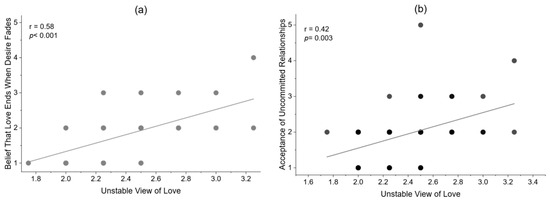
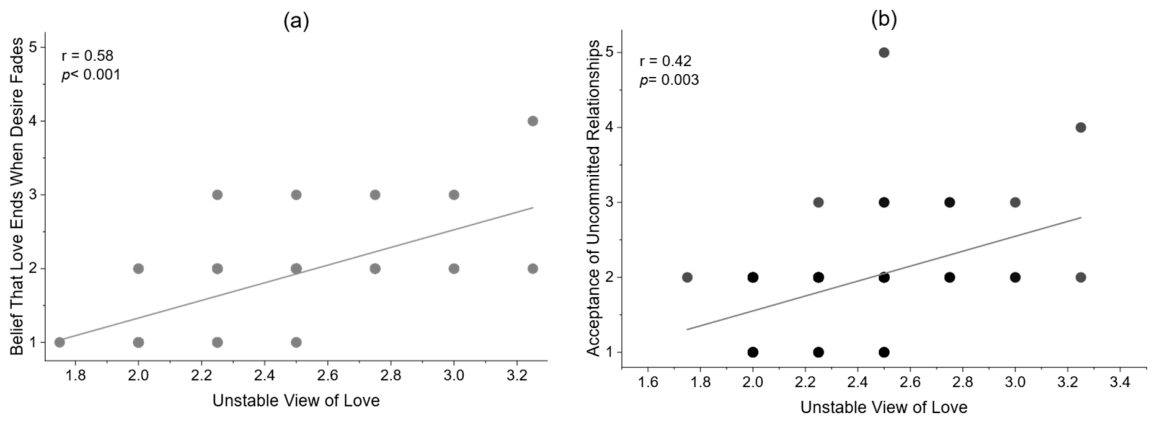
The strongest positive association was observed between the unstable vision of love and the belief that love ends when sexual desire fades (item 14; r = 0.58; p < 0.001). This finding indicates that individuals presenting a higher level of unstable love beliefs more frequently perceive romantic relationships as primarily dependent on sexual attraction and emotional intensity (Figure 1).
Figure 1.
Associations between the level of unstable love beliefs and selected attitudes: (a) the belief that love ends when sexual desire fades and (b) the acceptance of non-committed relationships. The figures present linear regression lines based on the analyzed data (N = 51).
A significant positive correlation was also found for the belief that a valuable relationship is mainly based on freedom, pleasure, and the absence of long-term commitment (item 45; r = 0.42; p = 0.003). This result suggests that individuals with a more unstable understanding of love are more likely to accept non-committed and less durable forms of interpersonal relationships.
In contrast, a negative association was identified for the belief that a lasting relationship requires continuous effort, engagement, and commitment from both partners (item 27; r = −0.31; p = 0.027). This finding suggests that individuals with a stronger unstable vision of love are less likely to perceive relationships as processes requiring conscious investment and ongoing maintenance. A similar pattern was observed for the item concerning the negative evaluation of relationships maintained primarily for sex and pleasure (item 47; r = −0.31; p = 0.029). The negative direction of the correlation indicates that higher levels of unstable love beliefs are associated with greater acceptance of relationships lacking long-term emotional commitment and focused mainly on hedonistic and sexual aspects.
The observed pattern of associations suggests that the unstable vision of love is primarily linked to an emotional and hedonistic understanding of relationships, with limited importance attributed to durability and long-term commitment. Individuals with higher scores on this dimension more often associated love with intense emotions, pleasure, and the temporary nature of interpersonal relationships.
An important feature of this understanding of love is the belief that relationships do not require continuous effort or conscious engagement from partners, but should instead develop naturally and spontaneously. At the same time, these individuals showed greater acceptance of casual relationships and more liberal attitudes toward sexuality, including non-committed relationships and relationships focused mainly on sexual and hedonistic aspects. The unstable vision of love was also associated with greater acceptance of relationships lacking long-term emotional commitment and with the belief that love ends when sexual desire disappears. Overall, these findings suggest that this dimension reflects a more emotional and impulsive model of relationship perception, based on changing feelings and limited relational stability.
The stable vision of love index was calculated as the mean score of four items referring to love as a lasting, conscious, and commitment-based interpersonal relationship. The following statements were included: (2) “Love is an act of will and a conscious choice, whereas infatuation is not”, (8) “Love is not an emotion, but an attitude toward one’s partner that combines thoughts, emotions, and behaviors related to the partner”, (13) “Love is primarily oriented toward giving rather than receiving”, and (14) “Love requires inner discipline and personal development”.
Responses were converted into numerical values using a five-point Likert scale (1–5). The obtained index reached a moderately high level in the analyzed sample (M = 3.64; Me = 3.50; min = 2.25; max = 5.00), indicating that respondents relatively often endorsed beliefs consistent with a stable understanding of love.
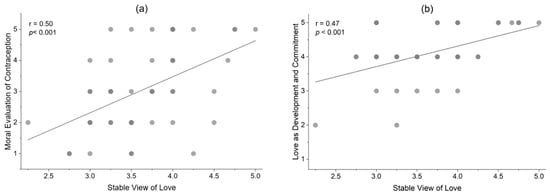
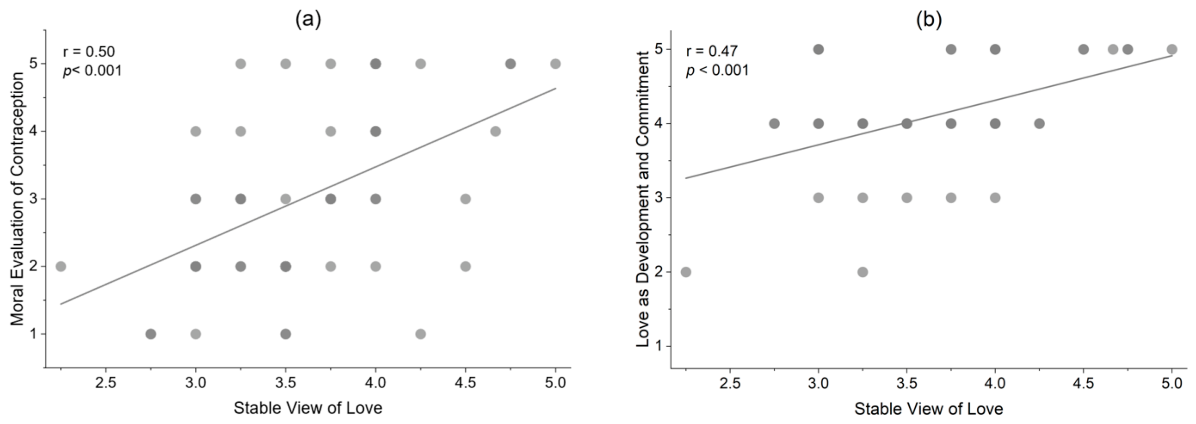
In the next stage of the analysis, associations between the stable vision of love index and the remaining variables included in the questionnaire were examined. Statistically significant correlations are presented in Table 3. The strongest positive association was observed between the stable vision of love and beliefs concerning the moral evaluation of contraception (item 63; r = 0.50; p < 0.001). This finding indicates that individuals with a higher level of stable love beliefs more often attribute greater importance to moral norms and the axiological dimension of interpersonal relationships and sexuality (Figure 2). A strong positive correlation was also found for the belief that love requires inner discipline and personal development (item 14; r = 0.47; p < 0.001). This result confirms that the stable vision of love is associated with perceiving relationships as conscious choices based on responsibility, durability, and active commitment from both partners.
Table 3.
Associations between the stable vision of love and selected variables. All reported associations were statistically significant (p < 0.05).
Figure 2.
Associations between the stable vision of love and selected beliefs: (a) moral attitudes toward contraception and (b) the belief that love requires personal development and self-discipline.
Negative associations were observed for the belief that sexual experiences can be separated from love (item 15; r = −0.35; p = 0.013). This finding suggests that individuals with a more stable understanding of love more often perceive sexuality as an integral part of a lasting emotional and relational bond. A negative correlation was also found for the belief that women should be subordinate to men as the “head of the family” (item 42; r = −0.29; p = 0.039). This result indicates that a higher level of stable love beliefs is associated with lower acceptance of traditional hierarchical relationship models based on the dominance of one partner over the other.
The observed pattern of associations indicates that the stable vision of love is linked to perceiving intimate relationships in terms of durability, responsibility, and mutual commitment between partners. Individuals with higher scores on this dimension more often define love as a conscious choice grounded in values, personal growth, and long-term commitment.
An important feature of the stable vision of love is the belief that a lasting relationship requires continuous effort, self-discipline, and a willingness to work together to maintain the interpersonal bond. At the same time, these individuals more frequently perceive sexuality within the context of moral values, responsibility, and relationship permanence.
The findings also suggest that the stable vision of love is associated with a stronger connection between love and sexuality, reflected in lower acceptance of separating sexual experiences from emotional relationships. Moreover, individuals presenting a more stable understanding of love were less likely to accept hierarchical relationship models based on the subordination of one partner to the other, preferring relationships grounded in reciprocity and equality.
Overall, these findings suggest that the stable vision of love is associated with an interpersonal orientation that emphasizes responsibility, commitment, relationship stability, and conscious efforts to build and maintain a lasting relationship.
3.3. Stable Vision of Love and Attitudes Toward Cohabitation
The analysis of associations between beliefs about cohabitation and marriage showed that statistically significant correlations were observed only for the stable vision of love. In the case of the unstable vision of love, no consistent pattern of relationships was identified, suggesting greater heterogeneity of attitudes toward formal and informal forms of intimate relationships.
Individuals presenting a higher level of stable love beliefs more often perceived marriage as a lasting and valuable form of interpersonal relationship. At the same time, they more frequently expressed critical attitudes toward cohabitation and relationships based on temporariness or limited commitment. The findings also indicate that respondents with a more stable understanding of love were less likely to accept the belief that cohabitation serves primarily as a way of “testing” partners before marriage.
The obtained associations suggest that the stable vision of love is related to a preference for relationships based on durability, responsibility, and long-term commitment. Within this perspective, marriage is perceived not only as a formalization of the relationship, but also as an expression of interpersonal stability and readiness to undertake lasting obligations toward one’s partner. At the same time, these individuals were more likely to reject casual relationships and temporary forms of partnership (Table 4).
Table 4.
Associations between the stable vision of love and attitudes toward marriage and cohabitation. All reported associations were statistically significant (p < 0.05).
The stable vision of love was associated with perceiving relationships in terms of durability, responsibility, and the conscious development of marital bonds. Individuals with higher scores on this dimension more often preferred marriage as a more lasting and valuable form of relationship and more frequently believed that marital relationships are characterized by greater stability and satisfaction than cohabiting relationships.
At the same time, respondents presenting a more stable understanding of love more often perceived cohabitation as a less mature and potentially more risky form of interpersonal relationship. They were also less likely to agree with the belief that informal relationships constitute a better alternative to marriage or serve merely as a “trial period” before marriage.
Furthermore, the stable vision of love was associated with greater importance attached to mutual commitment, responsibility, and active work on the relationship. These individuals more frequently rejected the belief that marriage is merely a formal institution without influence on relationship quality. They also more often recognized the value of preparation for marriage, including the importance of premarital counseling for future spouses.
3.4. Relationship Functioning
No statistically significant associations were found between the unstable vision of love and relationship functioning. Given the relatively small sample size, these findings should be interpreted with caution and should not be considered evidence of the absence of relationships. Further studies with larger samples are needed to clarify these associations.
A different pattern of results was obtained for the stable vision of love. In this case, several significant associations were identified, indicating that individuals who perceive love as durable and requiring responsibility and commitment more often report more mature and constructive functioning within romantic relationships.
For further interpretation, only correlations with an absolute value of |r| > 0.30 were included, as such coefficients may be interpreted as at least moderate associations of greater psychological and practical relevance. Detailed results are presented in Table 5.
Table 5.
Associations between the stable vision of love and relationship functioning. All reported associations were statistically significant (p < 0.05).
The stable vision of love was associated with more mature and constructive functioning within romantic relationships. Individuals with higher scores on this dimension more often perceived relationships as requiring commitment, responsibility, and care for the quality of the interpersonal bond. Respondents presenting a more stable understanding of love more frequently declared readiness to seek solutions during relationship crises and to undertake actions aimed at reducing interpersonal conflicts. They also more often admitted their own mistakes and demonstrated greater openness in expressing feelings toward their partner.
The stable vision of love was also related to greater importance attached to marital and relationship fidelity, as well as greater empathy toward the difficulties experienced by the partner. At the same time, these individuals were less likely to report provocative or conflict-oriented behaviors toward their partner and less likely to prioritize professional activity at the expense of relationship quality. Overall, the data suggests that the stable vision of love promotes a more responsible, supportive, and relationship-oriented style of functioning within intimate relationships.
3.5. Life Values
No statistically significant associations were found between the unstable vision of love and preferred life values. Given the relatively small sample size, these findings should be interpreted cautiously and do not allow conclusions regarding the presence or absence of coherent value patterns. Further studies are needed to verify these relationships.
Different results were obtained for the stable vision of love. The analysis revealed several significant relationships between this dimension and declared life values (Table 6). Individuals with higher levels of stable love beliefs more often attributed greater importance to marriage as an important life value (r = 0.36; p = 0.011). At the same time, they were less likely to indicate personal comfort and convenience as central organizing values in everyday life (r = −0.35; p = 0.013).
Table 6.
Associations between the stable vision of love and preferred life values. All reported associations were statistically significant (p < 0.05).
Overall, the stable vision of love is associated with greater importance attached to relationship durability, interpersonal commitment, and family-related values, together with lower emphasis on comfort and individual convenience.
3.6. Relationship Commitments
Within this group of variables, one statistically significant association was identified for the stable vision of love. The obtained results indicate that individuals presenting a more stable understanding of love more often declared conscious involvement in building and maintaining their romantic relationships.
A positive correlation was observed for the declaration of investing effort into the relationship with a partner or spouse (r = 0.42; p = 0.003). This finding suggests that the stable vision of love is associated with greater willingness to undertake actions aimed at maintaining relationship quality and actively supporting the development of the relationship (Table 7).
Table 7.
Associations between the stable vision of love and relationship commitment. All reported associations were statistically significant (p < 0.05).
No statistically significant associations were found between the unstable vision of love and the analyzed indicators of relationship commitment. Given the exploratory nature of the study and the relatively small sample size, these findings should be interpreted with caution and require verification in larger studies.
3.7. Natural Family Planning Methods and Additional Analyses
The analysis of associations between visions of love and attitudes toward natural family planning methods revealed significant, although differentiated, patterns for both analyzed dimensions. In the case of the stable vision of love, greater acceptance of the Billings ovulation method was observed (r = −0.30; p = 0.047). Due to the reversed response scale, lower values indicated more frequent use or greater acceptance of the method (Table 8). Therefore, the negative correlation coefficient reflects higher approval of this form of family planning among individuals presenting a more stable understanding of love.
Table 8.
Associations between the stable vision of love and natural family planning methods. All reported associations were statistically significant (p < 0.05).
A similar association was found for the unstable vision of love in relation to the calendar-based rhythm method (r = −0.48; p = 0.001). This result suggests that individuals with higher levels of unstable love beliefs also more frequently declared acceptance of natural family planning methods; however, this association concerned only the rhythm method (Table 9).
Table 9.
Associations Between the Unstable Vision of Love and Natural Family Planning Methods. All Reported Associations Were Statistically Significant (p < 0.05).
The obtained findings may indicate different motivations and distinct ways of understanding sexuality and interpersonal relationships associated with the analyzed dimensions of love beliefs.
3.8. Sexuality, Family Planning, and Relationship Quality
To further extend the analysis, a relationship quality index was created using items referring to problem solving within the relationship, conflict reduction, admitting one’s mistakes, expressing feelings, relationship fidelity, and conflict-oriented behaviors toward the partner. Reliability analysis demonstrated good internal consistency of the constructed index (Cronbach’s α = 0.74), supporting its psychometric adequacy.
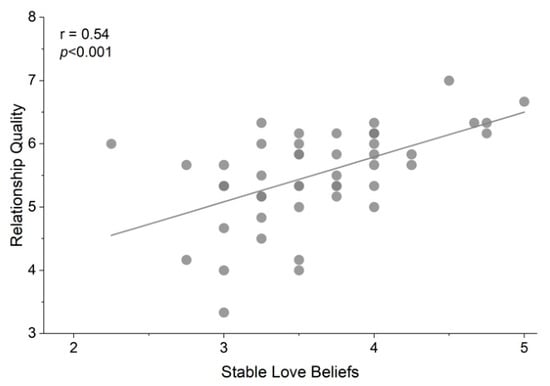
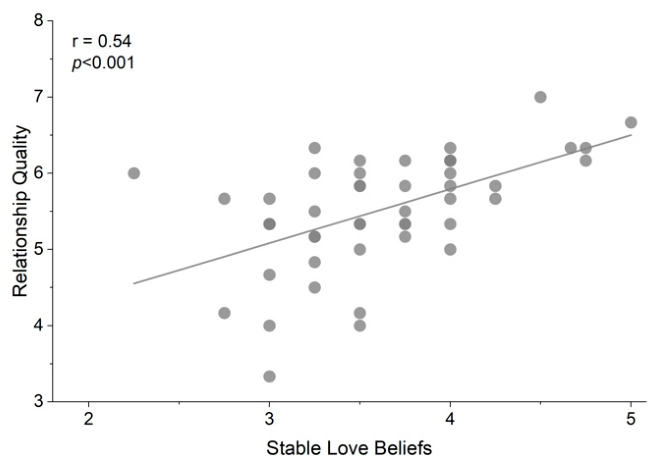
The obtained results revealed a significant positive association between this pattern of beliefs and relationship quality (r = 0.54; p < 0.001). This finding indicates that individuals perceiving love as durable and based on commitment and responsibility more often reported higher quality of romantic relationships. Higher levels of stable love beliefs were associated with greater involvement in conflict resolution, stronger care for the relationship, and a more constructive style of interpersonal functioning (Figure 3).
Figure 3.
Scatterplot illustrating the positive association between the stable vision of love and relationship quality.
No significant association was found between the unstable vision of love and relationship quality (r = 0.01; p = 0.964), suggesting that a more emotional and less durable understanding of love does not constitute an important factor differentiating the quality of romantic relationship functioning.
Additionally, a multiple regression analysis was conducted in which stable and unstable visions of love were included as independent variables, while the relationship quality index served as the dependent variable. The model was statistically significant (F(2,46) = 9.68, p < 0.001) and explained approximately 30% of the variance in relationship quality (R2 = 0.30). Within this model, only the stable vision of love was significantly associated with relationship quality (β = 0.55, p < 0.001), whereas the association for the unstable vision of love was not statistically significant (β = −0.05, p = 0.69). These findings suggest that relationship quality was associated primarily with the presence of a stable vision of love characterized by durability, responsibility, and conscious commitment, rather than merely with the absence of unstable love beliefs.
No significant correlation was found between the stable and unstable visions of love (r = 0.11; p = 0.46), indicating that both dimensions represent relatively independent ways of perceiving intimate relationships rather than opposite poles of a single psychological construct.
Detailed factor loadings is presented in the Supplementary Materials.
4. Discussion
The aim of the present study was to examine the relationship between beliefs about love and functioning within romantic relationships. The present findings suggest that beliefs about love may be organized around two relatively independent dimensions: a stable vision of love and an unstable vision of love.
The stable vision of love was primarily associated with responsibility, relationship durability, and conscious commitment to the relationship. Individuals with higher scores on this dimension more frequently declared willingness to work on the relationship, resolve conflicts, provide support to their partner, and maintain relationship quality. These findings are consistent with previous studies showing that commitment contributes to greater relationship stability and higher quality of partner functioning [3,18]. The obtained results suggest that perceiving love as a lasting commitment may be associated with more constructive interpersonal functioning.
An important finding of the present study was the positive association between this pattern of beliefs and relationship quality. Regression analysis indicated that this pattern of beliefs was significantly associated with relationship quality, whereas the unstable vision of love was not significantly associated with relationship quality in the regression model. These findings are consistent with previous studies indicating that relationship durability and commitment represent some of the most important factors associated with relationship satisfaction and stability [27]. This indicates that the presence of beliefs grounded in durability and responsibility may be more important for relationship quality than merely the absence of an unstable approach to love.
In contrast, the unstable vision of love was associated mainly with greater acceptance of non-committed relationships, a more hedonistic approach to sexuality, and the belief that love ends when sexual desire fades. These findings are partly consistent with previous research suggesting that a more emotional and passion-oriented understanding of relationships is associated with greater emphasis on emotional and sexual satisfaction and lower levels of long-term interpersonal commitment [17]. At the same time, no association was found between this dimension and relationship quality. This may suggest that an emotional and less durable understanding of love does not directly translate into specific patterns of partner behavior. This finding should not be interpreted as evidence that emotions are unimportant in intimate relationships. Rather, it demonstrates that emotional intensity alone may be insufficient to explain differences in relationship quality.
Individuals presenting a more stable vision of love more often preferred marriage as a lasting form of relationship and were less likely to accept cohabitation and non-committed relationships. These findings are consistent with previous studies indicating that greater importance attached to commitment and relationship durability is associated with more positive attitudes toward marriage and stronger endorsement of family-related values [3,20]. This pattern of beliefs was also associated with greater importance attributed to family values and lower emphasis on personal comfort and individual convenience.
The present study has several limitations that should be acknowledged. First, the study was conducted on a relatively small sample consisting exclusively of women, which limits the generalizability of the findings to broader populations. Future studies should include more diverse samples, including male participants and individuals from different age groups and sociocultural backgrounds. Second, due to the cross-sectional design, causal conclusions cannot be drawn. In addition, the study employed an original questionnaire developed specifically for the purposes of this exploratory investigation. Moreover, the relatively low KMO value suggests that the exploratory factor analysis should be interpreted with caution. The identified factor structure should therefore be regarded as preliminary and confirmed in larger and more diverse samples. In addition, because multiple correlation analyses were conducted without adjustment for multiple comparisons, some statistically significant associations may represent Type I error. Consequently, the reported findings should be interpreted as hypothesis-generating, with caution, and verified in future independent studies. The present conceptualization of love primarily emphasizes commitment, responsibility, conscious choice, and long-term relationship maintenance. Although emotional aspects of love were partly reflected in the unstable vision of love, the questionnaire did not comprehensively assess constructs such as passion, being in love, emotional intimacy, or romantic attachment. Therefore, the present findings should not be interpreted as suggesting that emotions are unimportant in intimate relationships. Rather, they indicate that the present study focused on one particular conceptual perspective on love. Future studies should integrate both emotional and commitment-related dimensions to provide a more comprehensive understanding of romantic relationships.
Despite these limitations, the findings suggest that a stable vision of love may represent an important factor supporting better relationship functioning. In the present study, better relationship functioning was operationalized using the relationship quality index, which included constructive conflict resolution, emotional expression, fidelity, willingness to admit mistakes, and active efforts to maintain the relationship. The obtained results are consistent with previous studies indicating that relationship durability, commitment, and conscious engagement are among the most important factors associated with relationship quality and stability [18,27]. In particular, beliefs related to long-term commitment, responsibility, and active investment in the relationship appear to play a significant role.
5. Conclusions
The present study indicates that the way individuals understand love may play an important role in the functioning of romantic relationships. Within the present study, relationship quality was conceptualized as a multidimensional construct reflecting constructive communication, emotional engagement, fidelity, responsibility, and active efforts to maintain the relationship. In particular, this pattern of beliefs, based on durability, responsibility, and conscious commitment to the relationship, was associated with more positive relationship outcomes. Participants presenting more stable beliefs about love more frequently reported higher relationship quality, greater interpersonal commitment, and more constructive functioning within the relationship. In contrast, an unstable vision of love was mainly related to a more liberal approach to relationships and sexuality, but it was not significantly associated with relationship quality in the present study. Overall, the findings highlight the importance of commitment, responsibility, and active investment in the relationship as factors that may be associated with satisfying and stable partner relationships.
Supplementary Materials
The following supporting information can be downloaded at: https://www.mdpi.com/article/10.3390/sexes7030038/s1, File S1: Questionnaire Development [6,29,30,31,32]; File S2: Questionnaire Items Used in the Study; File S3: Additional Statistical Information; Table S1: Factor loadings for the exploratory factor analysis.
Author Contributions
Conceptualization, A.G. and S.G.; methodology, A.G. and S.G.; software, A.G. and S.G.; validation, A.G. and S.G.; formal analysis, A.G. and S.G.; investigation, A.G. and S.G.; resources, A.G. and S.G.; data curation, A.G. and S.G.; writing—original draft preparation, A.G. and S.G.; writing—review and editing, A.G. and S.G.; visualization, A.G. and S.G.; supervision, A.G. and S.G.; project administration A.G. and S.G.; funding acquisition, S.G. All authors have read and agreed to the published version of the manuscript.
Funding
This research received no external funding.
Institutional Review Board Statement
The study was conducted in accordance with the Declaration of Helsinki. Participation was entirely voluntary and anonymous. According to local institutional regulations, ethical committee approval was not required for anonymous voluntary survey studies of non-clinical populations. https://wl.uwm.edu.pl/wydzial/komisja-bioetyczna/dokumenty-do-pobrania (accessed on 14 July 2026).
Informed Consent Statement
Respondents were informed about the aims of the study, assured that no identifying data would be collected, and reminded that they could withdraw at any stage without providing a reason. Completion of the questionnaire was therefore considered to imply informed consent.
Data Availability Statement
The data of this article will be made available by the authors on request.
Conflicts of Interest
The authors declare no conflicts of interest.
References
- Gómez-López, M.; Viejo, C.; Ortega-Ruiz, R. Well-being and romantic relationships: A systematic review in adolescence and emerging adulthood. Int. J. Environ. Res. Public Health 2019, 16, 2415. [Google Scholar] [CrossRef] [Scilit] [PubMed] [PubMed Central]
- Freeman, H.; Simons, J.; Benson, N.F. Romantic duration, relationship quality, and attachment insecurity among dating couples. Int. J. Environ. Res. Public Health 2023, 20, 856. [Google Scholar] [CrossRef] [Scilit] [PubMed] [PubMed Central]
- Stanley, S.M.; Rhoades, G.K.; Whitton, S.W. Commitment: Functions, formation, and the securing of romantic attachment. J. Fam. Theory Rev. 2010, 2, 243–257. [Google Scholar] [CrossRef] [Scilit] [PubMed] [PubMed Central]
- Apostolou, M.; Christoforou, C.; Lajunen, T.J. What are romantic relationships good for? An explorative analysis of the perceived benefits of being in a relationship. Evol. Psychol. 2023, 21, 14747049231210245. [Google Scholar] [CrossRef] [Scilit] [PubMed] [PubMed Central]
- Cassepp-Borges, V.; Gonzales, J.E.; Frazier, A.; Ferrer, E. Love and relationship satisfaction as a function of romantic relationship stages. Trends Psychol. 2025, 33, 1027–1042. [Google Scholar] [CrossRef] [Scilit]
- Sternberg, R.J. A triangular theory of love. Psychol. Rev. 1986, 93, 119–135. [Google Scholar] [CrossRef]
- Hatfield, E.; Walster, G.W. A New Look at Love; University Press of America: Lanham, MD, USA, 1985. [Google Scholar]
- Sorokowski, P.; Sorokowska, A.; Karwowski, M.; Groyecka, A.; Aavik, T.; Akello, G.; Alm, C.; Amjad, N.; Anjum, A.; Asao, K. Universality of the triangular theory of love: Adaptation and psychometric properties of the triangular love scale in 25 countries. J. Sex. Res. 2020, 58, 106–115. [Google Scholar] [CrossRef] [Scilit] [PubMed]
- Fromm, E. The Art of Loving; Harper Perennial: New York, NY, USA, 2019; ISBN 13 978-0061129735. [Google Scholar]
- Giddens, A. The Transformation of Intimacy: Sexuality, Love, and Eroticism in Modern Societies; Stanford University Press: Redwood City, CA, USA, 1992; ISBN 13 978-0804720908. [Google Scholar]
- Lichter, D.T.; Sassler, S.; Turner, R.N. Cohabitation, post-conception unions, and the rise in nonmarital fertility. Soc. Sci. Res. 2015, 47, 134–147. [Google Scholar] [CrossRef] [Scilit] [PubMed] [PubMed Central]
- Treas, J.; Lui, J.; Gubernskaya, Z. Attitudes on marriage and new relationships: Cross-national evidence on the deinstitutionalization of marriage. Demogr. Res. 2014, 30, 1495–1526. [Google Scholar] [CrossRef] [Scilit] [PubMed] [PubMed Central]
- Perelli-Harris, B.; Hoherz, S.; Addo, F.; Lappegård, T.; Evans, A.; Sassler, S.; Styrc, M. Do marriage and cohabitation provide benefits to health in mid-life? The role of childhood selection mechanisms and partnership characteristics across countries. Popul. Res. Policy Rev. 2018, 37, 703–728. [Google Scholar] [CrossRef] [Scilit] [PubMed] [PubMed Central]
- England, P.; Wu, L.L.; Shafer, E.F. Cohort trends in premarital first births: What role for the retreat from marriage? Demography 2013, 50, 2075–2104. [Google Scholar] [CrossRef] [Scilit] [PubMed] [PubMed Central]
- Finkel, E.J.; Hui, C.M.; Carswell, K.L.; Larson, G.M. The suffocation of marriage: Climbing mount Maslow without enough oxygen. Psychol. Inq. 2014, 25, 1–40. [Google Scholar] [CrossRef] [Scilit]
- Acevedo, B.P.; Aron, A. Does a long-term relationship kill romantic love? Rev. Gen. Psychol. 2009, 13, 59–65. [Google Scholar] [CrossRef] [Scilit]
- Fletcher, G.J.; Simpson, J.A.; Campbell, L.; Overall, N.C. Pair-bonding, romantic love, and evolution: The curious case of Homo sapiens. Perspect. Psychol. Sci. 2015, 10, 20–36. [Google Scholar] [CrossRef] [Scilit] [PubMed]
- Ogolsky, B.G.; Monk, J.K.; Rice, T.K.M.; Theisen, J.C.; Maniotes, C.R. Relationship maintenance: A review of research on romantic relationships. J. Fam. Theory Rev. 2017, 9, 275–306. [Google Scholar] [CrossRef] [Scilit]
- Galinha, I.C.; Oishi, S.; Pereira, C.; Wirtz, D.; Esteves, F. The role of personality traits, attachment style, and satisfaction with relationships in the subjective well-being of romantically involved individuals. J. Happiness Stud. 2014, 15, 873–891. [Google Scholar] [CrossRef] [Scilit]
- Willoughby, B.J.; Carroll, J.S.; Vitas, J.M.; Hill, L.M. “When are you getting married?” The intergenerational transmission of attitudes regarding marital timing and marital importance. J. Fam. Issues 2012, 33, 223–245. [Google Scholar] [CrossRef] [Scilit]
- Manning, W.D.; Stykes, J.B. Twenty-Five Years of Change in Cohabitation in the U.S., 1987–2013; FP-15-01; National Center for Family & Marriage Research (NCFMR): Bowling Green, OH, USA, 2015; pp. 1–3. [Google Scholar]
- Jose, A.; O’Leary, D.; Moyer, A.; Buehler, C. Does premarital cohabitation predict subsequent marital stability and marital quality? A meta-analysis. J. Marriage Fam. 2010, 72, 105–116. [Google Scholar] [CrossRef] [Scilit]
- Fincham, F.D.; Beach, S.R.H. Marriage in the new millennium: A Decade in Review. J. Marriage Fam. 2010, 72, 630–649. [Google Scholar] [CrossRef] [Scilit]
- Mahoney, A. Religion in families 1999 to 2009: A relational spirituality framework. J. Marriage Fam. 2010, 72, 805–827. [Google Scholar] [CrossRef] [Scilit] [PubMed] [PubMed Central]
- Wilcox, W.B.; Nock, S.L. What’s love got to do with it? Equality, equity, commitment and women’s marital quality. Soc. Forces 2006, 84, 1321–1345. [Google Scholar] [CrossRef] [Scilit]
- Kamp Dush, C.M.; Cohan, C.L.; Amato, P.R. The relationship between cohabitation and marital quality and stability: Change across cohorts. J. Marriage Fam. 2003, 65, 539–549. [Google Scholar] [CrossRef] [Scilit]
- Lavner, J.A.; Karney, B.R.; Bradbury, T.N. Does couples’ communication predict marital satisfaction, or does marital satisfaction predict communication? J. Marriage Fam. 2016, 78, 680–694. [Google Scholar] [CrossRef] [Scilit] [PubMed] [PubMed Central]
- Karney, B.R.; Bradbury, T.N. Research on marital satisfaction and stability in the 2010s: Challenging conventional wisdom. J. Marriage Fam. 2020, 82, 100–116. [Google Scholar] [CrossRef] [Scilit] [PubMed] [PubMed Central]
- Komorowska-Pudło, M. Wybieram Ciebie… Podręcznik metodyczny do programu warsztatów szkoła dla narzeczonych. Szczecin: Podręcznik sfinansowany w ramach Wojewódzkiego Programu Wsparcia Rodziny i Systemu Pieczy Zastępczej na lata 2014–2020, Region dla Rodziny, Szczecin 2015. 177p. Available online: https://akademiarodziny.wzp.pl/wp-content/uploads/2018/12/Podręcznik-Szkoła-dla-narzeczonych.pdf (accessed on 12 November 2025).
- Wojciszke, B. Psychologia miłości. Intymność-Namiętność-Zobowiązanie; GWP: Gdańsk, Poland, 2003; 360p, ISBN 83-89120-70-4. [Google Scholar]
- Szopiński, J. Skala Więzi Małżeńskiej. In Psychologia w służbie człowieka; Ratajczak, Z., Ed.; PWN: Warszawa, Poland, 1980; pp. 101–106. ISBN 83-01-02012-1. [Google Scholar]
- Brzozowski, P. Skala Wartości Schelerowskich—SWS; Podręcznik; Pracownia Testów Psychologicznych Polskiego Towarzystwa Psychologicznego: Warszawa, Poland, 1995; ISBN 83-85512-34-9. [Google Scholar]

Disclaimer/Publisher’s Note: The statements, opinions and data contained in all publications are solely those of the individual author(s) and contributor(s) and not of MDPI and/or the editor(s). MDPI and/or the editor(s) disclaim responsibility for any injury to people or property resulting from any ideas, methods, instructions or products referred to in the content. |
© 2026 by the authors. Licensee MDPI, Basel, Switzerland. This article is an open access article distributed under the terms and conditions of the Creative Commons Attribution (CC BY) license.