


Abstract
Marine reserves are areas where fishing mortality is reduced, and their effectiveness in enhancing fisheries depends on the magnitude of this reduction. We evaluated the effectiveness of two marine reserves in the Mediterranean that differed in enforcement levels using a dual approach that combined interviews with fishers and on-board sampling. Only the reserve with stricter fishing restrictions showed measurable stock enhancement. In areas adjacent to this reserve, catches were higher and body sizes were larger for some species. In addition, fishers adjusted their fishing gear when operating near this reserve, thereby targeting larger individuals. In contrast, no distance-related trends were detected around the reserve with weaker fishing restrictions. Both the interviews and on-board sampling produced consistent results regarding the effectiveness of the two reserves.
Keywords:
fisheries enhancement; marine protected areas; paper parks; small-scale fisheries; Mediterranean Key Contribution:
The effectiveness of marine protected areas in enhancing fisheries depends on the stringency of fishing restrictions. More restrictive protected areas are associated with greater fisheries benefits in surrounding waters.
1. Introduction
Marine protected areas (MPAs) provide both conservation and economic benefits including the preservation of biodiversity; protection of endangered species and valuable habitats; maintenance of ecological processes; and regulation of fishing mortality, thereby promoting stock recovery through the spillover effect and increases in mean catch, size and egg density around the protected areas [1,2,3]. Marine reserves are areas in which fishing mortality is fully or partially reduced [4]. The direct consequences of reduced fishing mortality include increases in abundance, biomass, average body size, age structure, and reproductive potential of exploited populations [5,6,7]. Increases in biomass within protected areas are expected to drive biomass export to neighboring areas, thereby increasing catches in surrounding waters [8,9] and attracting fishing effort near reserve boundaries, a phenomenon known as “fishing the line” [10,11]. In addition, spillover from adult individuals, and enhanced reproductive output within reserves produce large quantities of eggs and larvae that may recruit into unprotected areas, thereby contributing to the replenishment of exploited populations [12,13]. The benefits of marine reserves are not limited to areas near their boundaries and may extend over broader spatial scales, although long-distance dispersal from marine reserves remains poorly documented [14]. Spillover effects have been reported in coastal marine reserves [15] and in large oceanic protected areas that include highly migratory species such as yellowfin tuna [16,17]. Collectively, these mechanisms underpin the widespread recognition of marine reserves as an effective tool for restoring exploited populations and promoting the long-term sustainability of fisheries [4].
The number of protected areas is increasing for both fisheries management and conservation goals; however, it is important not only to increase the total area protected but also to ensure that newly established protected areas are effective [18]. Realizing the benefits of MPAs requires a substantial reduction in fishing mortality and other human activities within protected areas [11]. At present, only a small proportion of MPAs have full or high levels of protection, which are the levels shown to deliver significant conservation benefits [19,20,21]. When the management of a marine reserve fails to meaningfully reduce fishing pressure, or when enforcement is inadequate, reserves may function as “paper parks,” in which population recovery is unlikely or only weak effects are observed [22,23,24].
Studies have suggested that the spatiotemporal dynamics of nearby local fisheries should be considered in marine reserve management, as the spatial distribution of fishing effort can strongly influence effectiveness of marine reserves [25,26,27]. Artisanal fisheries encompass a wide range of fishing gears, target species, and operational characteristics, which may affect their responses to MPA implementation [28]. Applying the concept of métier—defined as fishing units characterized by gear, target species, area, and season—captures this heterogeneity [29,30] and improves the understanding of interactions between artisanal fisheries and MPAs [28,31].
In this study, we assessed the impact of fisheries around two marine reserves with different levels of protection in the western Mediterranean. We used a dual approach, which combined interviews with artisanal fishers from the harbors closest to each marine reserve (to document perceptions of reserve management and temporal change) with on-board sampling (to monitor catches around each marine reserve). We hypothesized that only the reserve with stricter fishing restrictions would be effective in restoring exploited populations and that both methodological approaches, interviews and on-board sampling, would yield concordant results.
2. Materials and Methods
2.1. Study Area
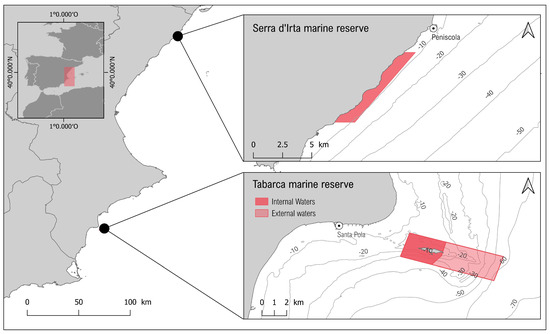
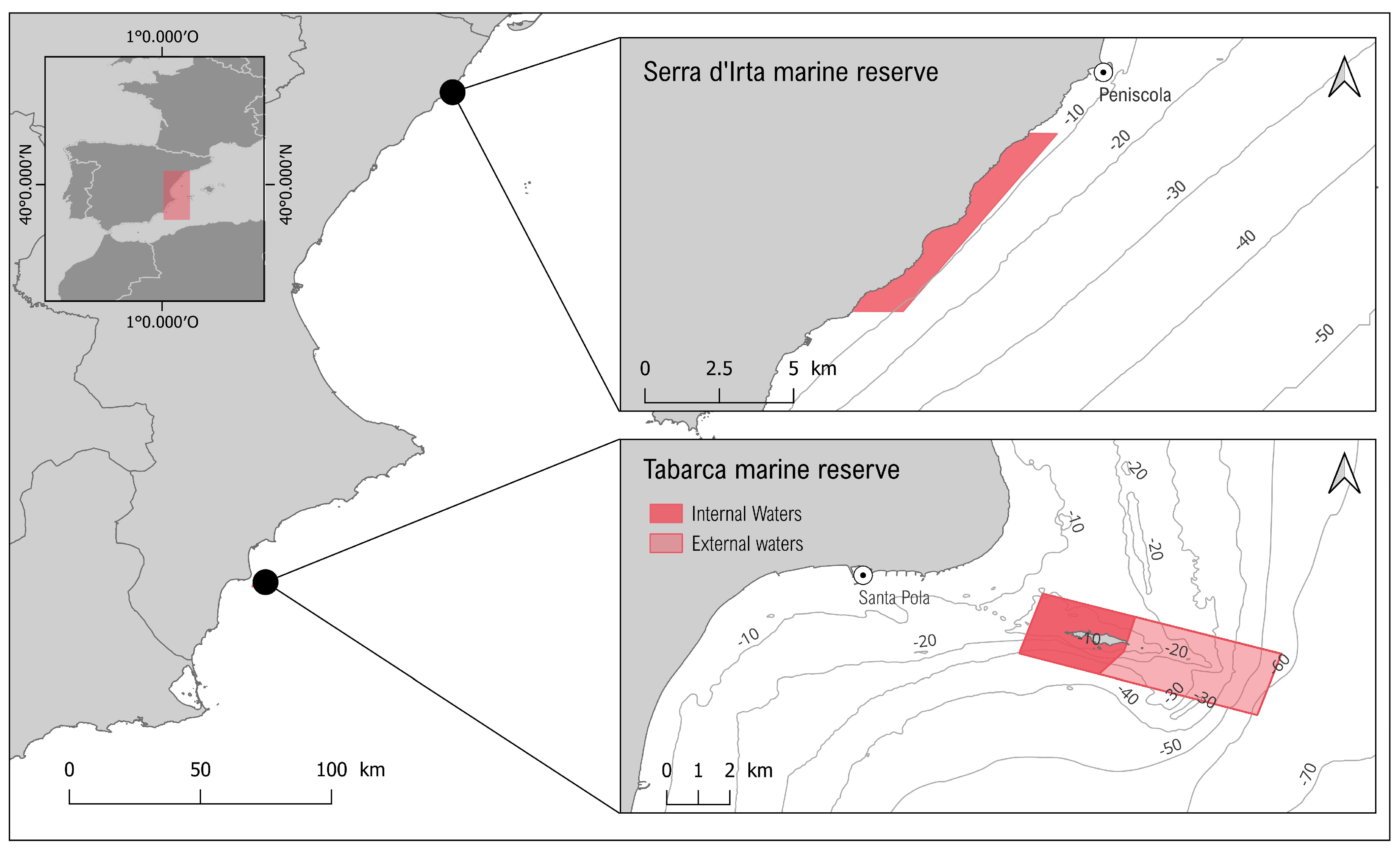
This study was conducted in two marine reserves in the western Mediterranean Sea: the Marine Reserve of Tabarca Island and the Marine Reserve of Serra d’Irta (Figure 1). The Marine Reserve of Tabarca Island was established in 1986 and expanded in 2019 through an agreement with local fishers (Figure 1). It currently covers 1,860 ha and functions largely as a no-take area, with extremely minimal fishing effort permitted. Authorized activities are restricted to traditional trap nets and troll lines within designated zones. The dominant habitat within the reserve is the Posidonia oceanica meadow, which accounts for approximately 80% of the marine communities; the remainder consists primarily of rocky substrates with limited sandy areas. Santa Pola harbor, the region’s most important fishing harbor, with approximately 50 small-scale fishing vessels, is located near the reserve.
Figure 1.
Location of the Tabarca Island and the Serra d’Irta marine reserves. Depth contour is shown in m.
The Marine Reserve of Serra d’Irta was established in 2002 and modified in 2006. It currently covers 950 ha (Figure 1). Recreational fishing is restricted within the reserve, whereas small-scale fisheries are not subject to restrictions. The reserve is predominantly characterized by sandy substrates. The nearest fishing harbor is Peñiscola, which supports 15 small-scale fishing vessels, although not all operate regularly within the reserve area.
2.2. Data Collection
We conducted interviews with small-scale fishers in the harbors of Santa Pola and Peñiscola between May and September 2024 to evaluate perceived reserve effectiveness and changes in catches after reserve establishment. Interviews were conducted with vessel skippers by three trained field researchers after obtaining oral informed consent, with anonymity guaranteed. Fishers were asked questions about local ecological knowledge (LEK) regarding the marine reserves and the fishing around them. LEK provides valuable information on the use of marine ecosystems and can be incorporated into marine conservation planning [32]. Previous studies have shown that interview-based approaches can produce substantial information relevant to fisheries assessments [33]. In total, 25 interviews were conducted: 8 in Peñiscola (53% of the artisanal fleet) and 17 in Santa Pola (34% of the artisanal fleet).
Interview questions addressed the frequency of fishing near the reserve, changes in fishing gear or target species when operating in its vicinity, perceived increases in catches of specific species following reserve establishment, and whether larger individuals were caught near the reserve. Respondents were also asked whether the marine reserve should be maintained or if its management plan should be modified.
Additionally, on-board sampling of small-scale fishing vessels was conducted over 38 days between May and September 2024. A total of 15 vessels were sampled (10 from Santa Pola and 5 from Peñiscola), representing 23% of the artisanal fleet. This effort yielded 81 fishing sets, defined as individual fishing operations using a single gear type. For each fishing set, we recorded the métier type, fishing effort (net length), geographic coordinates at the start and end of the set, and the size and weight of individuals caught by species. Catch per unit effort (CPUE; kg per 500 m of net) was calculated for trammel nets, gillnets, and combined nets, both overall and by species. Sampling was conducted randomly; after the data collection, fishing sets were classified by métier. Only métiers with sufficient replication were included in the analyses. A minimum of 9 fishing sets per métier was required for inclusion, balancing the need of capturing the diversity of fishing tactics with the need to exclude métiers with very low replication.
2.3. Data Analysis
The frequencies of fishers’ responses were compared between marine reserves using chi-square tests. Total catches by the main métiers, as well as the catch rates and body size of the main species, were analyzed in relation to the distance from the reserve using simple linear regression models. The distance of each fishing set from the reserve boundary was calculated as the straight-line distance from the midpoint of the net to the nearest reserve boundary using QGIS version 3.30.3 [34]. In the Serra d’Irta marine reserve, only the Mullus trammel net métier had sufficient replication for analysis (n = 13). In the Tabarca marine reserve, three métiers met the replication criterion: Scorpaena trammel net (n = 13), Mullus trammel net (n = 29), and Sepia trammel net (n = 9). Overall, 13 hauls were analyzed for the Serra d’Irta marine reserve and 51 for the Tabarca Island marine reserve.
3. Results
3.1. Fishers’ Perceptions
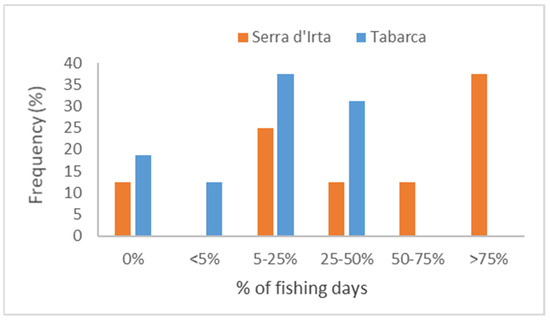
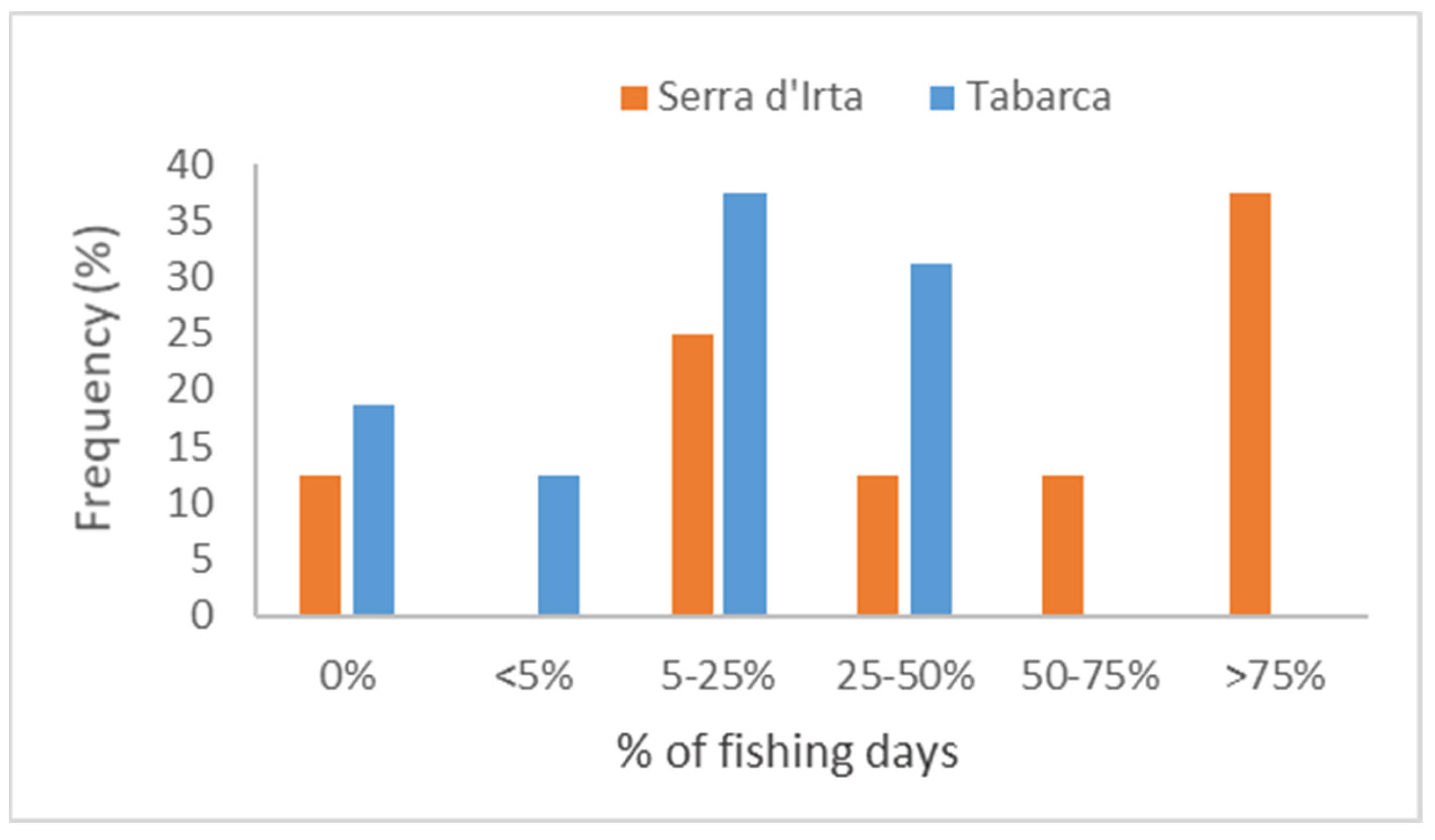
Fishers’ perceptions differed considerably between the two marine reserves. In Tabarca Island marine reserve, approximately one-third of respondents reported fishing near the reserve on 25%–50% of fishing days, another third on 5%–25% of days, and the remaining respondents on fewer than 5% of days (Figure 2). In contrast, in the Serra d’Irta marine reserve, 50% of respondents indicated fishing in or around the reserve more than 50% of fishing days, 12.5% on 25%–50% of days, 25% on 5%-25% of days, and 12.5% reported never fishing near the reserve (Figure 2).
Figure 2.
Frequency of fishing near the Serra d’Irta and Tabarca Island marine reserves, expressed as a percentage of fishing days reported by fishers.
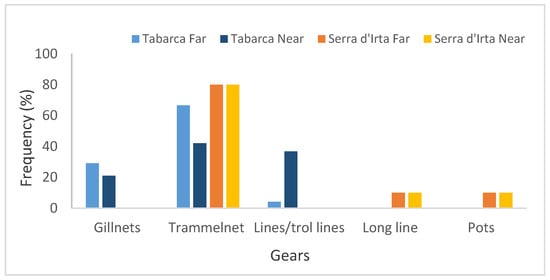
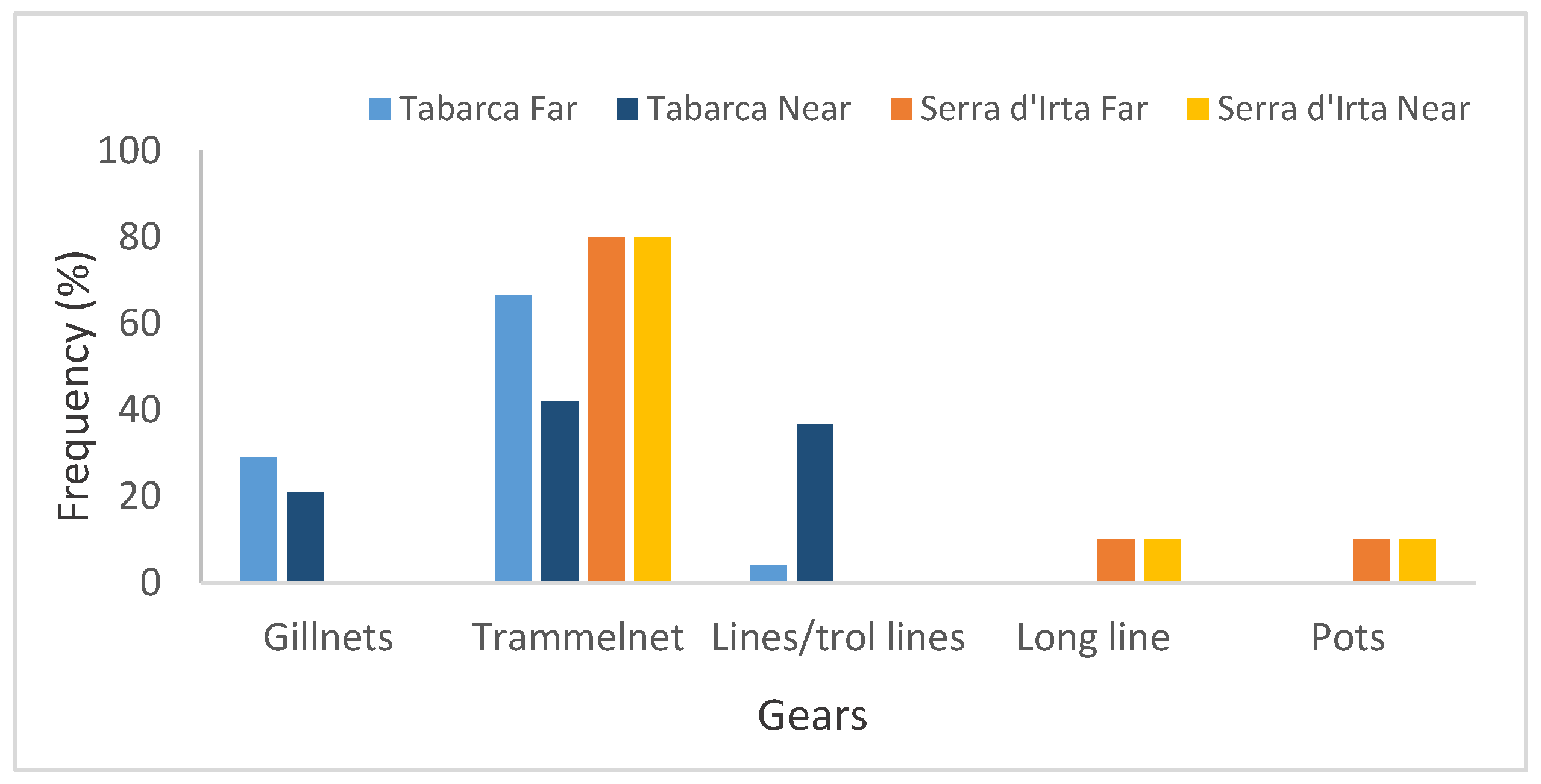
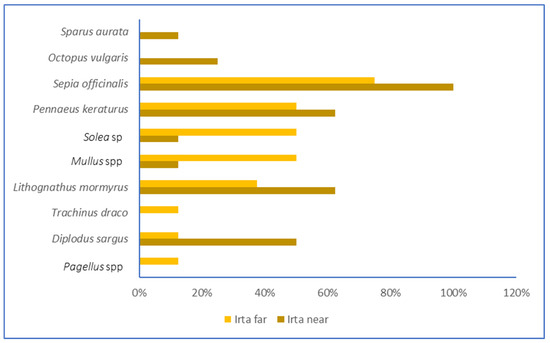
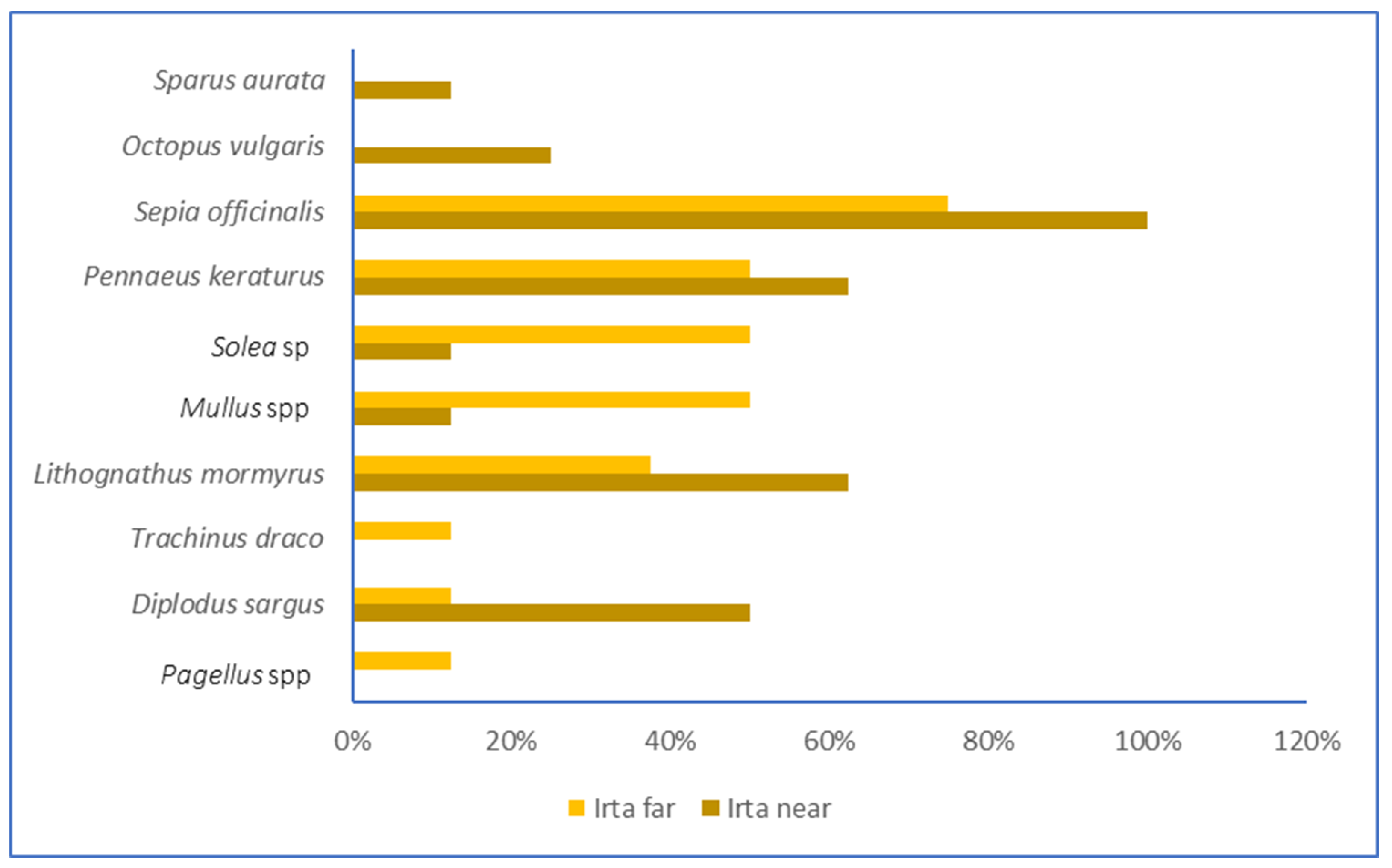
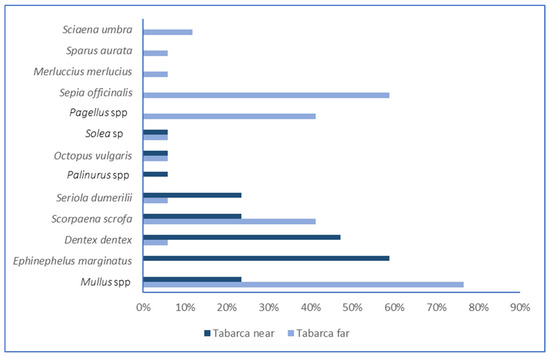
Gear use also differed between the two reserves. In the Serra d’Irta marine reserve, fishers used similar fishing gear, regardless of proximity to the reserve. However, in the Tabarca Island marine reserve, trammel nets and gillnets predominated at greater distances from the reserve. In contrast, lines and troll lines were also used in areas closer to the reserve (Figure 3). Patterns in target species followed a similar contrast between reserves. In the Serra d’Irta marine reserve, target species did not differ between areas close to and far from the reserve, with cuttlefish (Sepia officinalis) being the most relevant species at all distances (Figure 4). In the Tabarca Island marine reserve, however, the target species varied markedly with distance from the reserve. Far from the reserve, red mullet (Mullus surmuletus) and cuttlefish (Sepia officinalis) were the primary targets. In contrast, near the reserve, fishers primarily targeted dusky grouper (Epinephelus marginatus), common dentex (Dentex dentex), red scorpionfish (Scorpaena scrofa), and greater amberjack (Seriola dumerilii) (Figure 5).
Figure 3.
Fishing gears used near and far from the Tabarca Island and Serra d’Irta marine reserves.
Figure 4.
Target species fished near and far from the Serra d’Irta marine reserve.
Figure 5.
Target species fished near and far from the Tabarca Island (marine reserve.
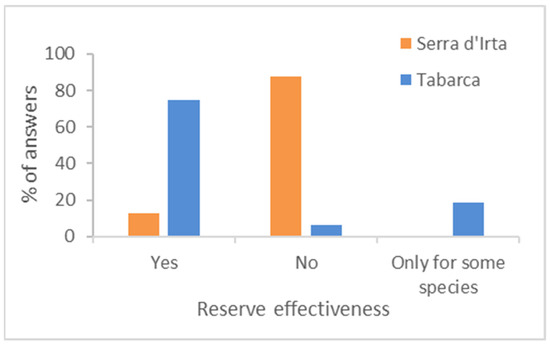
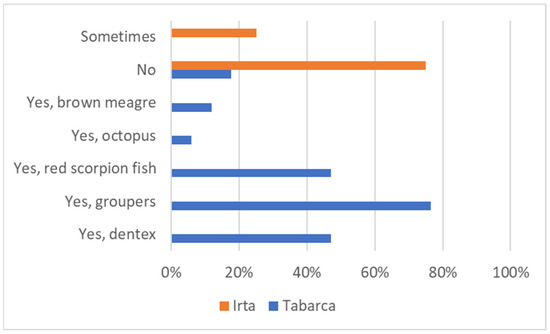
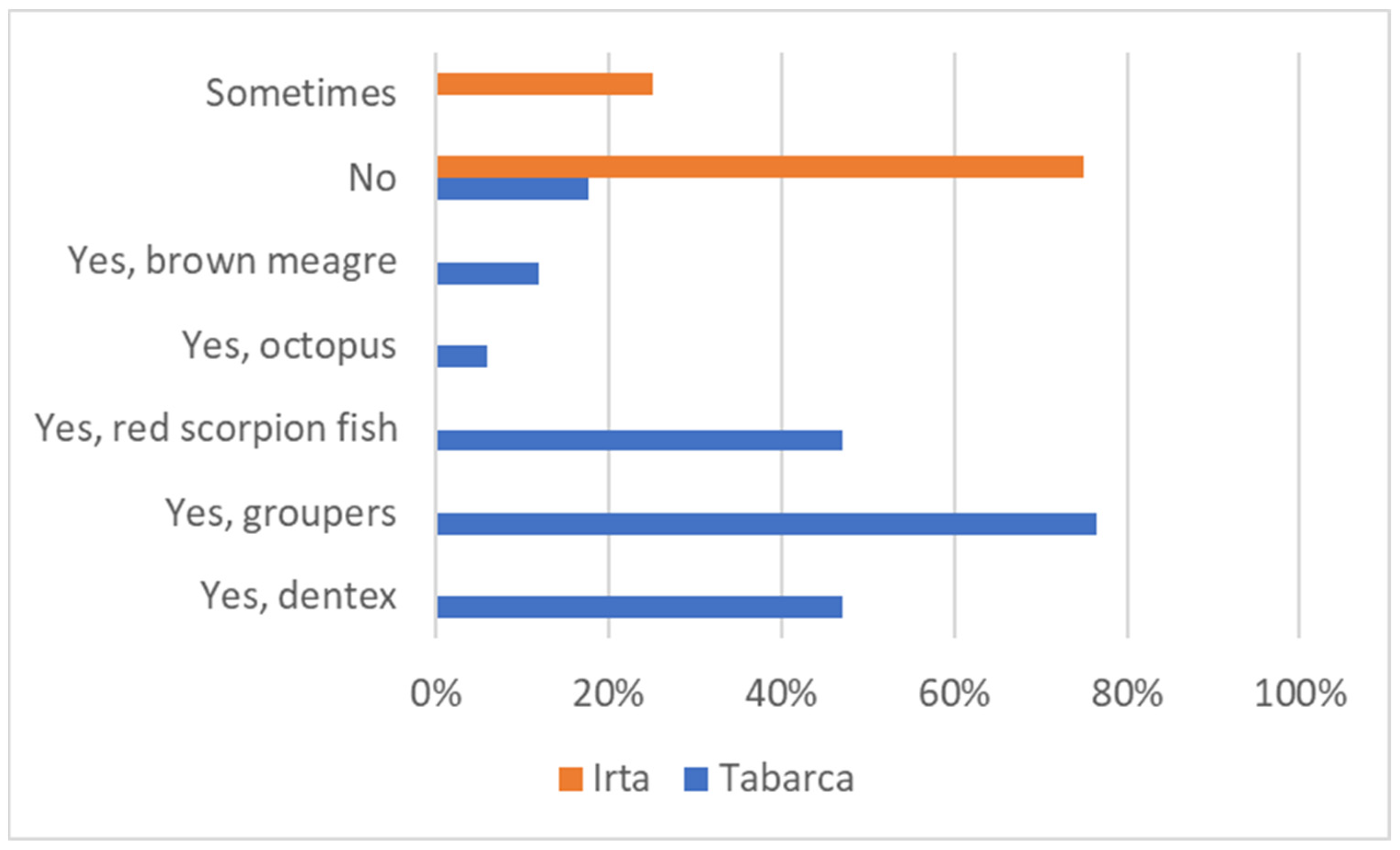
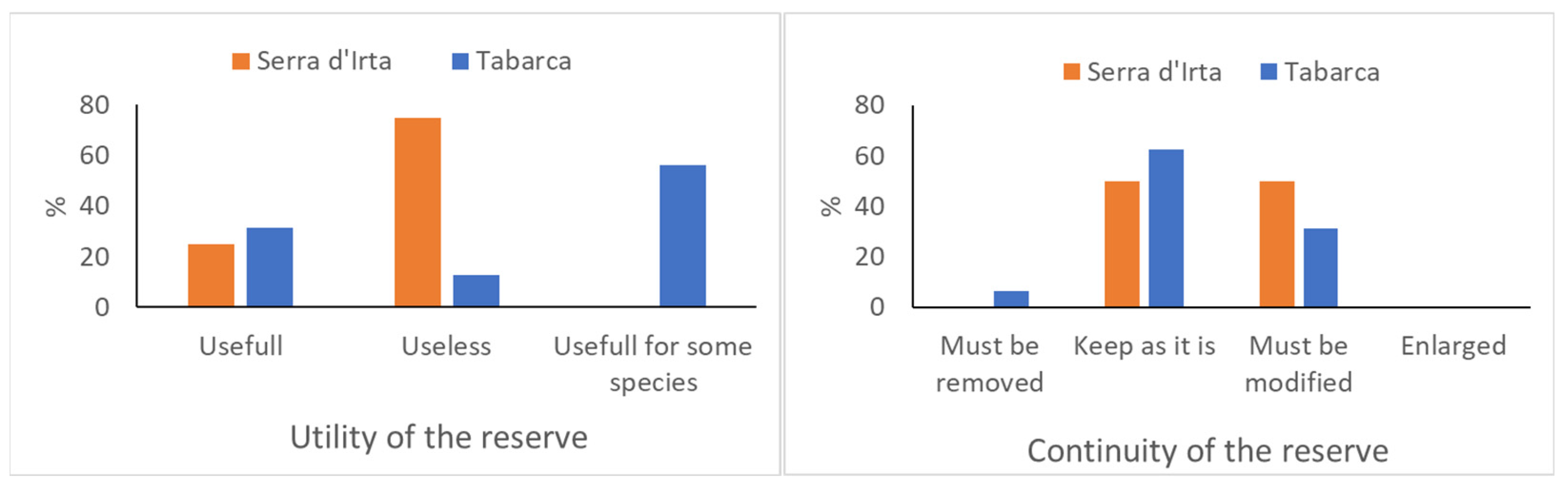
The perceived reserve effectiveness reflected these patterns. In the Tabarca Island marine reserve, most fishers reported improved catches for at least some species following reserve establishment. In contrast, no increase in catches was perceived after the establishment of the Serra d’Irta marine reserve (Figure 6). Fishers operating near the Tabarca Island marine reserve also reported catching larger individuals, particularly dusky grouper (Ephinephelus marginatus), red scorpionfish (Scorpaena scrofa) and common dentex (Dentex dentex) (Figure 6). In contrast, most fishers in the Serra d’Irta marine reserve reported no increase in the size of individuals caught near the reserve (Figure 7). Most fishers in the Tabarca Island marine reserve considered the reserve to be useful and supported its continuation, although approximately 30% suggested modifications to its management (Figure 8). In the Serra d’Irta marine reserve, most respondents considered the reserve ineffective; nevertheless, approximately half still supported maintaining it (Figure 8). Fishers suggested several management changes to improve the effectiveness of the Serra d’Irta marine reserve, including establishing areas closed to fishing or relocating the reserve to an area with greater habitat diversity.
Figure 6.
Fishers’ perceptions of catch improvement near the studied marine reserves.
Figure 7.
Fishers’ perceptions of species with larger body sizes in catches near the studied marine reserves.
Figure 8.
Fishers’ perceptions of the utility (left) and continuation (right) of the studied marine reserves.
3.2. On-Board Sampling
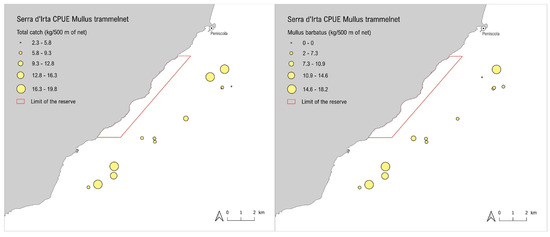
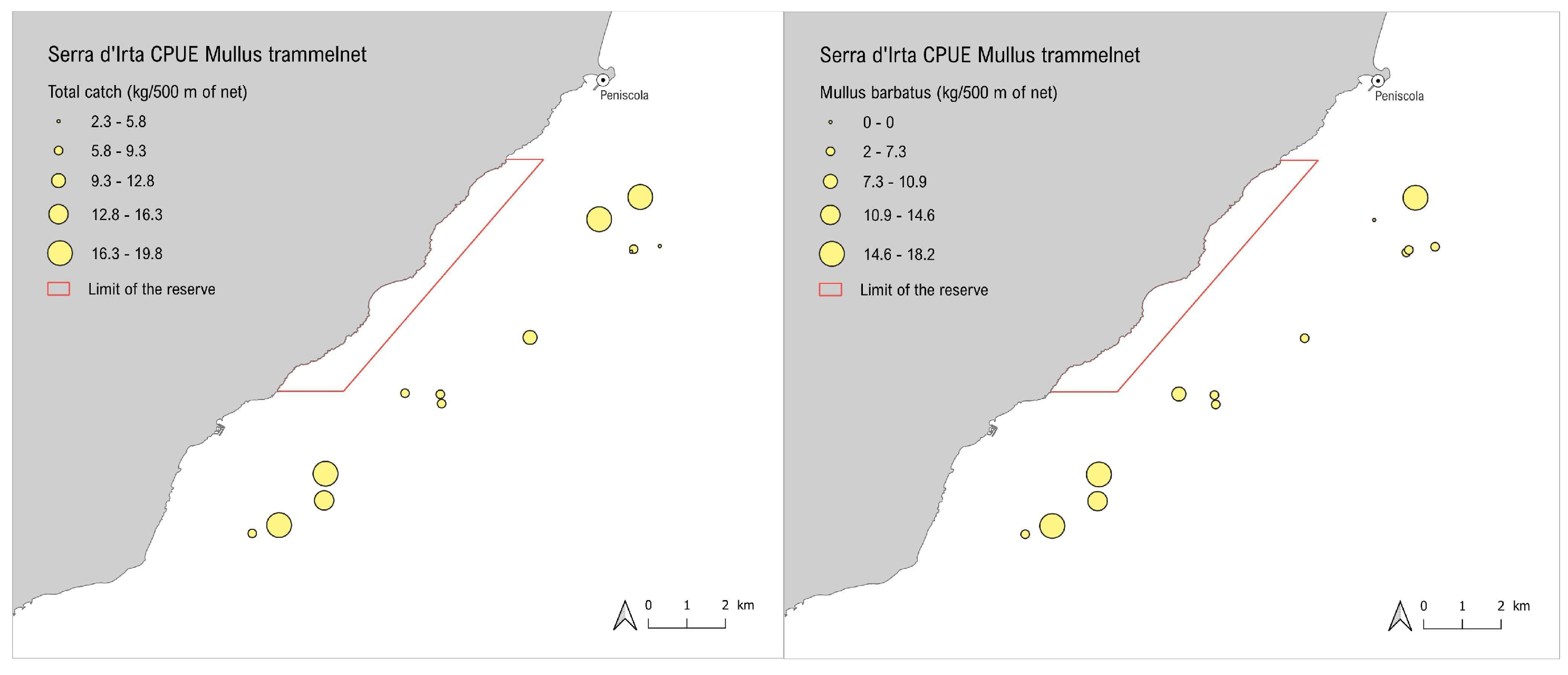
On-board sampling corroborated these perceptions. In the Serra d’Irta marine reserve no relationship was observed between distance from the reserve and either catch rates or body size of the main species captured with Mullus trammel nets, the only métier with sufficient replication for analysis (Figure 9 and Supplementary Material Figure S4). Although professional fishing is permitted within this MPA, no fishing sets were observed inside the reserve boundaries during the sampling period.
Figure 9.
Distribution of total catch per unit effort (CPUE; left) and red mullet (Mullus barbatus), CPUE (right) for fishing sets sampled with Mullus trammel nets in the Serra d’Irta marine reserve.
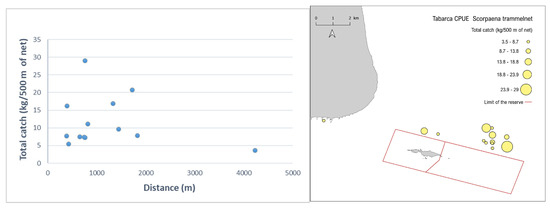
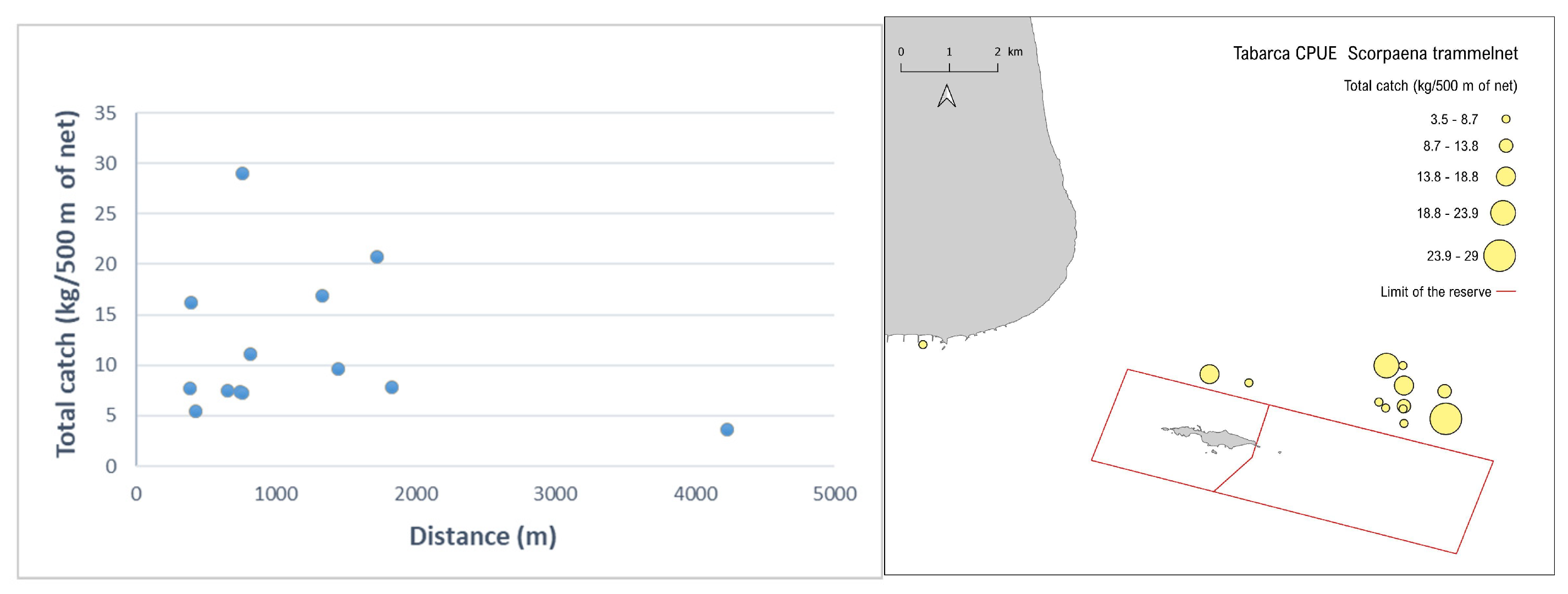
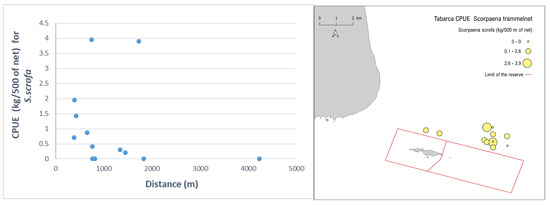
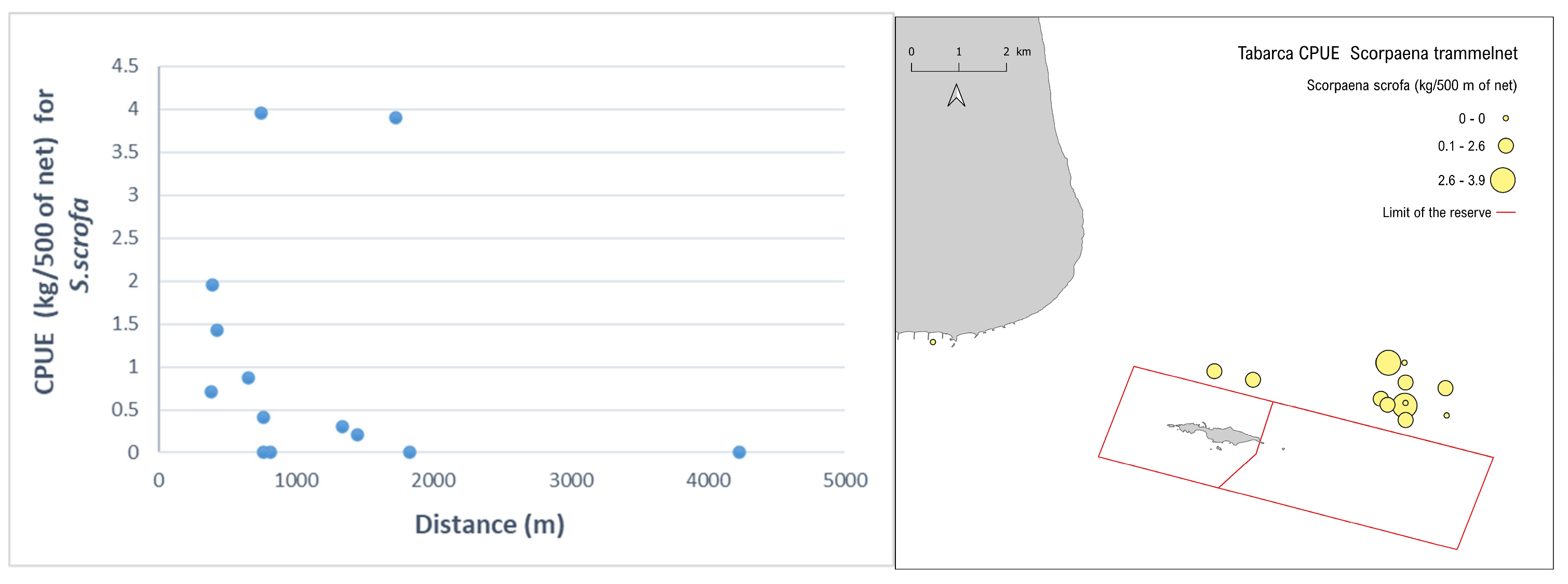
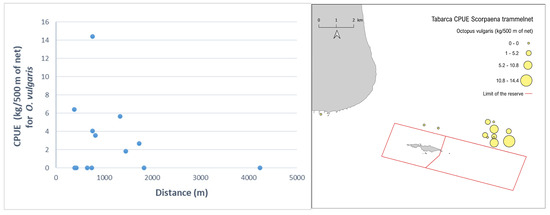
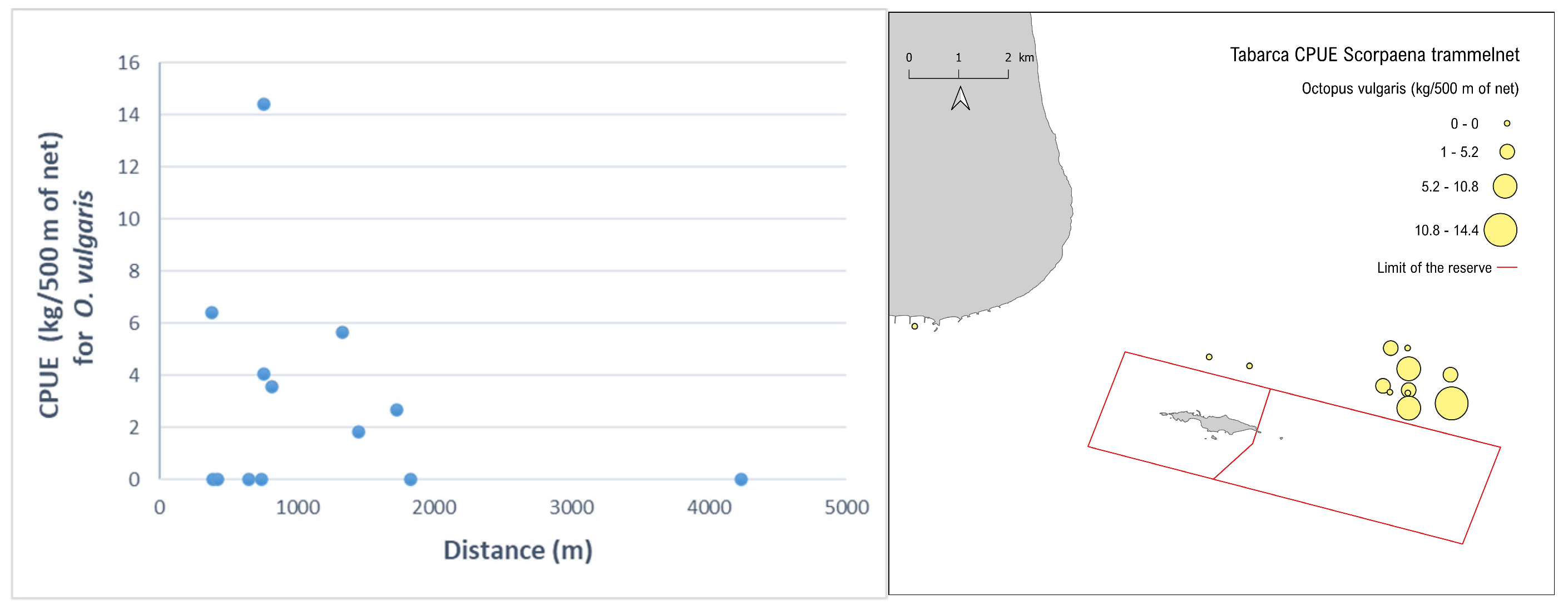
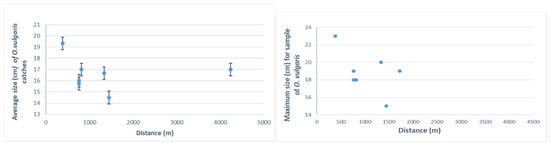
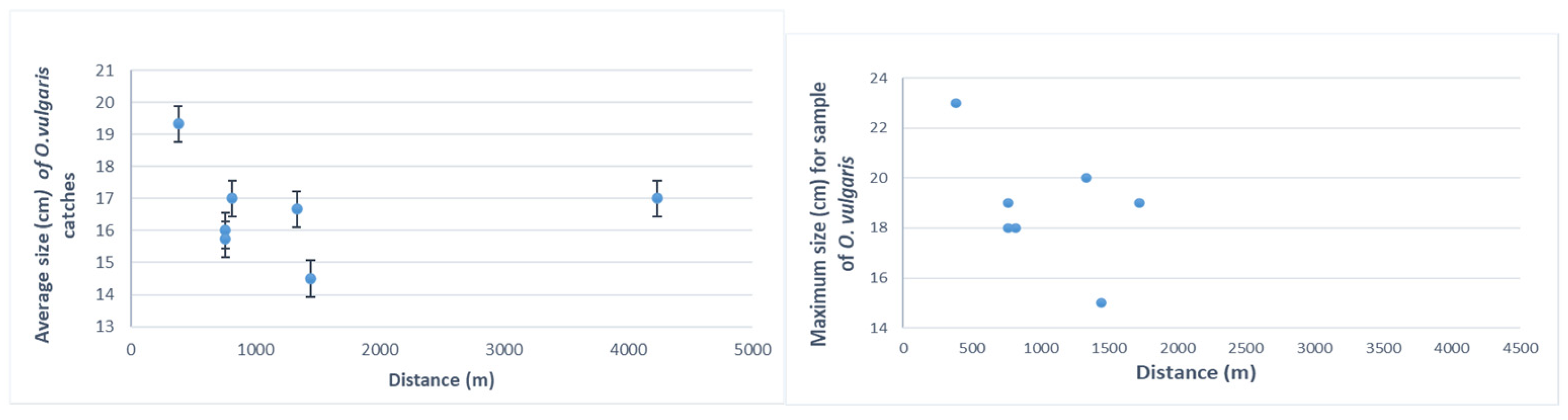
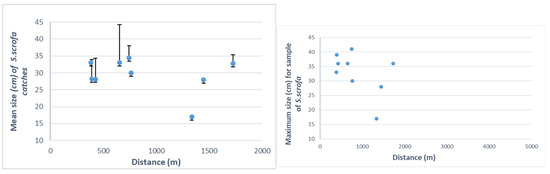
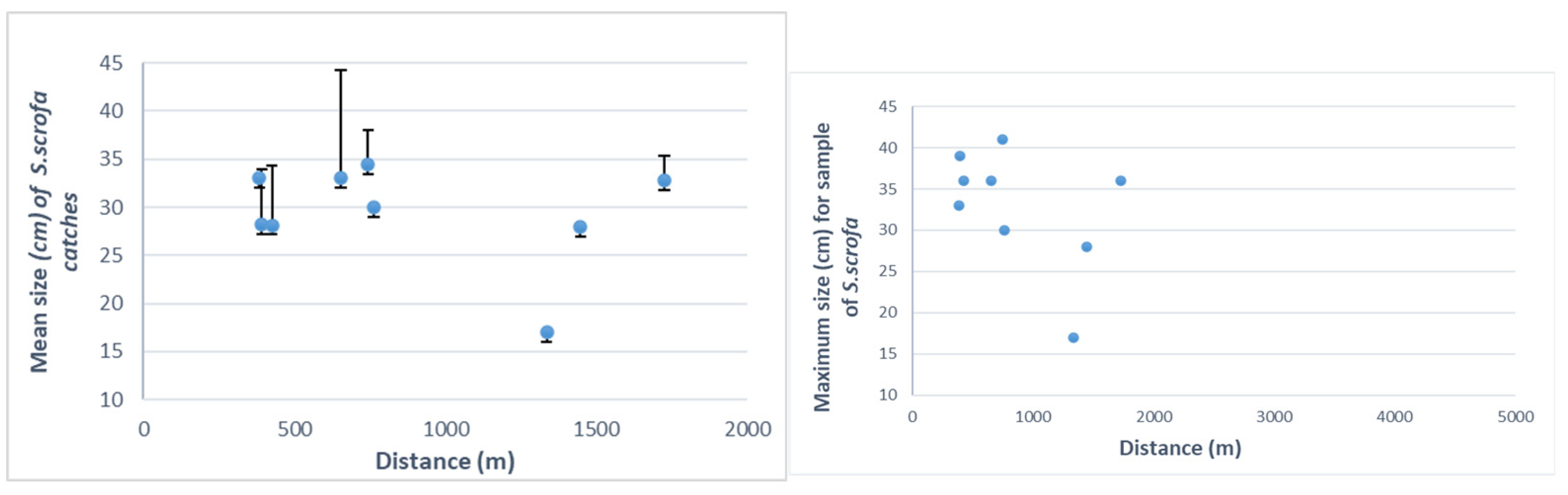
In the Tabarca Island marine reserve three métiers were analyzed: the Scorpaena trammel net, the Mullus trammel net, and the Sepia trammel net. For the Scorpaena trammel net métier, total catch (Figure 10), the red scorpionfish (Scorpaena scrofa) catch (Figure 11), and the common octopus (Octopus vulgaris) catch (Figure 12) all showed decreasing trends with increasing distance from the reserve. However, none of these relationships were statistically significant. Additionally, both mean and maximum body size of common octopus Octopus vulgaris (Figure 13) declined with increasing distance from the reserve, but these relationships were not statistically significant. No distance-related trends in mean or maximum body size were observed for the other target species (Figure 14).
Figure 10.
CPUE (kg/500 m net) for the Scorpaena trammel net métier as a function of distance from the Tabarca Island marine reserve (left; p = 0.49) and its spatial distribution (right).
Figure 11.
CPUE (kg/500 m net) of red scorpionfish (Scorpaena scrofa) for the Scorpaena trammel net métier as a function of distance from the Tabarca Island marine reserve (left; p = 0.45) and its spatial distribution (right).
Figure 12.
CPUE (kg/500 m net) of common octopus (Octopus vulgaris) for the Scorpaena trammel net métier as a function of distance from the Tabarca Island marine reserve (left; p = 0.51)) and its spatial distribution (right).
Figure 13.
Mean body size (left; p = 0.27) and maximum body size per sample (right; p = 0.24) of common octopus (Octopus vulgaris) captured with the Scorpaena trammel net métier as a function of distance from the Tabarca Island marine reserve.
Figure 14.
Mean body size (left; p = 0.21) and maximum body size per sample (right; p = 0.47) of red scorpionfish (Scorpaena scrofa) captured with the Scorpaena trammel net métier as a function of distance from the Tabarca Island marine reserve.
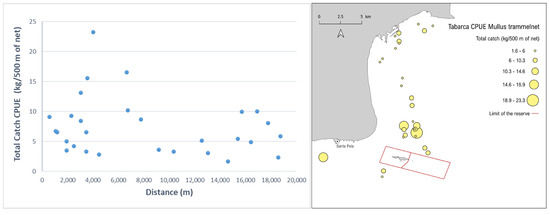
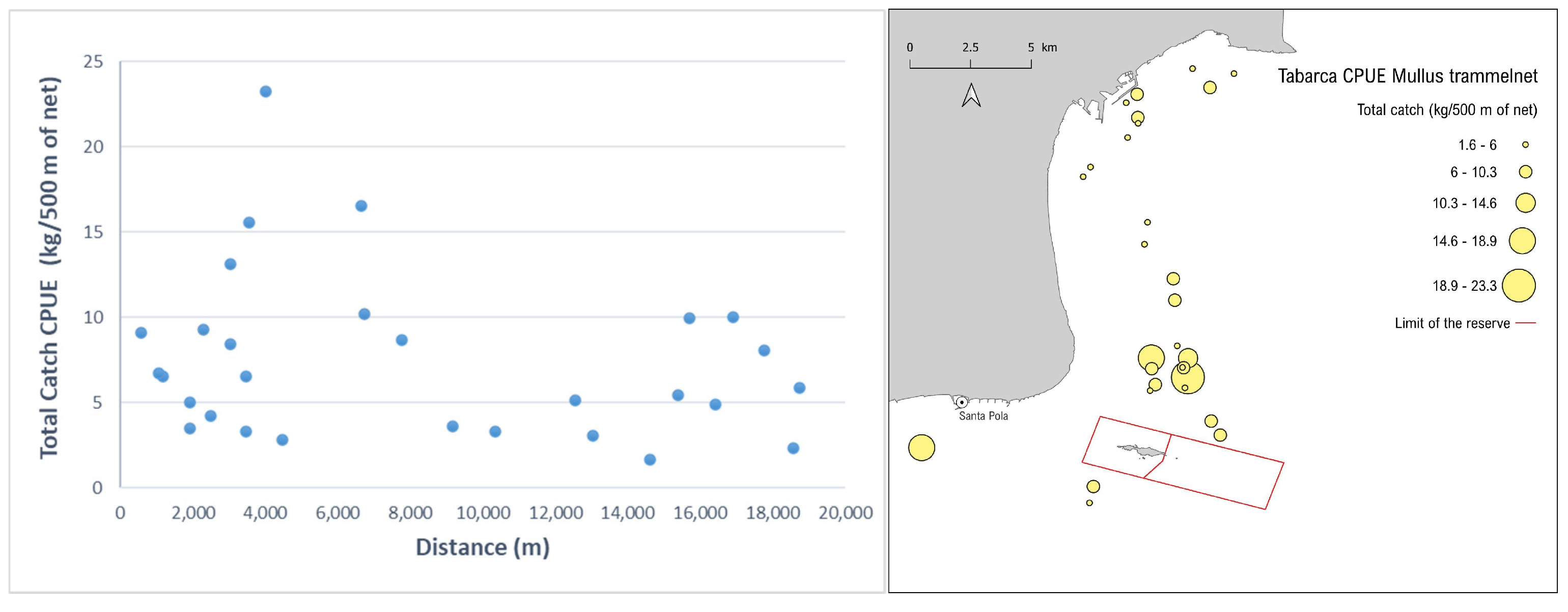
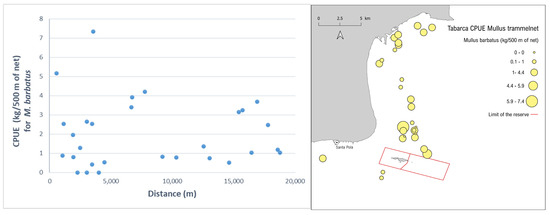
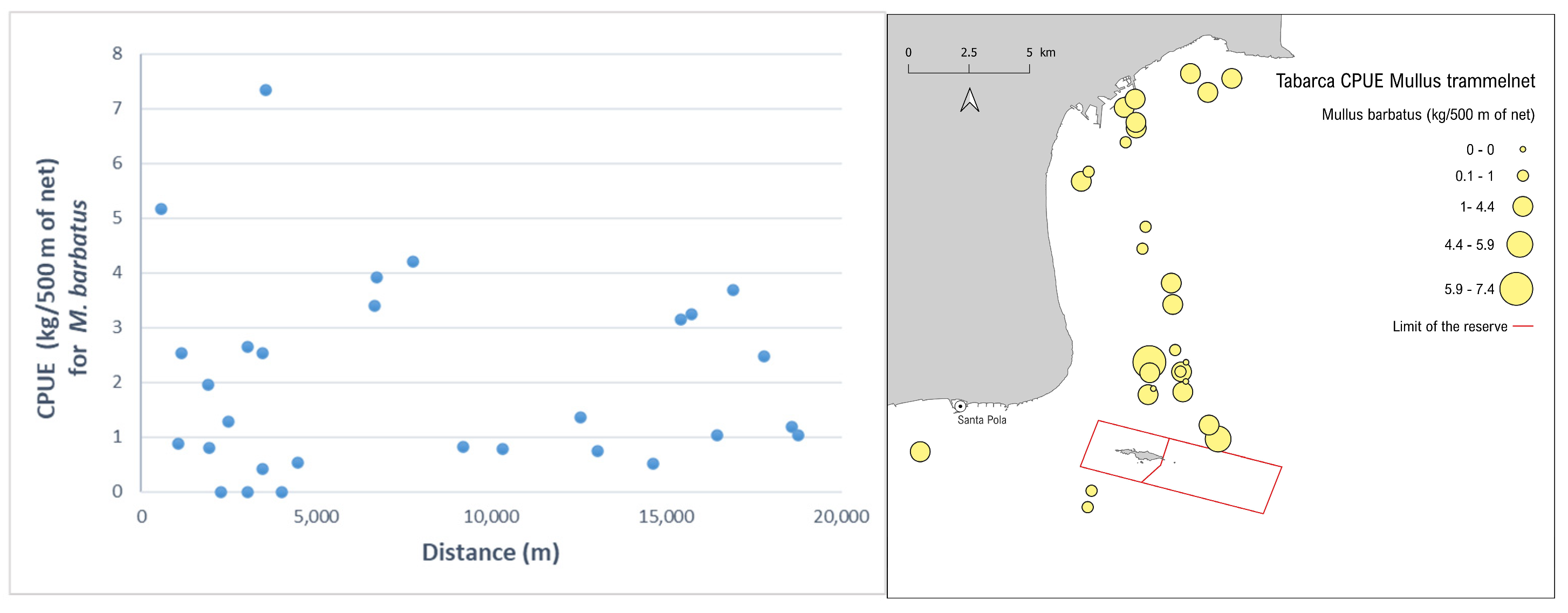
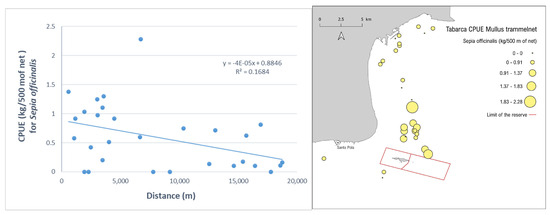
For the Mullus trammel net métier, total catch showed a non-significant decreasing trend with increasing distance from the Tabarca Island marine reserve. However, maximum values occurred at 3000–6000 m from the reserve (Figure 15). A similar non-significant decreasing trend was observed in red mullet (Mullus barbatus) (Figure 16). In contrast, catches of cuttlefish (Sepia officinalis) showed a significant decreasing trend from the reserve (Figure 17). On the other hand, neither mean nor maximum body size showed a significant relationship with distance from the marine reserve (Supplementary Figures S1 and S2).
Figure 15.
CPUE (kg/500 m net) for the Mullus trammel net métier as a function of distance from the Tabarca Island marine reserve (left; p = 0.20) and its spatial distribution (right).
Figure 16.
CPUE (kg/500 m net) of red mullet (Mullus barbatus) for the Mullus trammel net métier as a function of distance from the Tabarca Island marine reserve (left; p = 0.82) and its spatial distribution (right).
Figure 17.
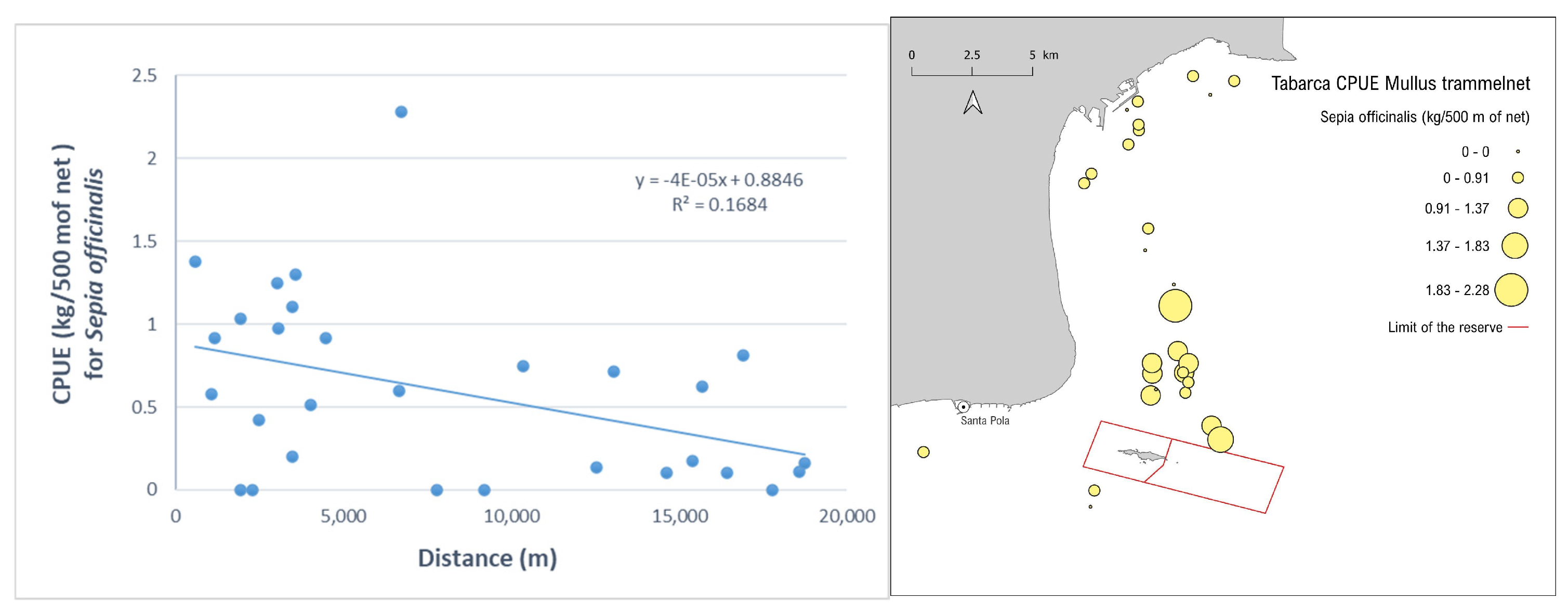
CPUE (kg/500 m net) of cuttlefish (Sepia officinalis) for the Mullus trammel net métier as a function of distance from the Tabarca Island marine reserve (left; p = 0.027) and its spatial distribution (right).
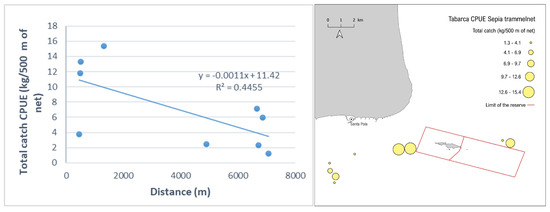
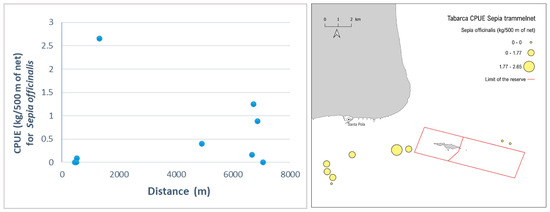
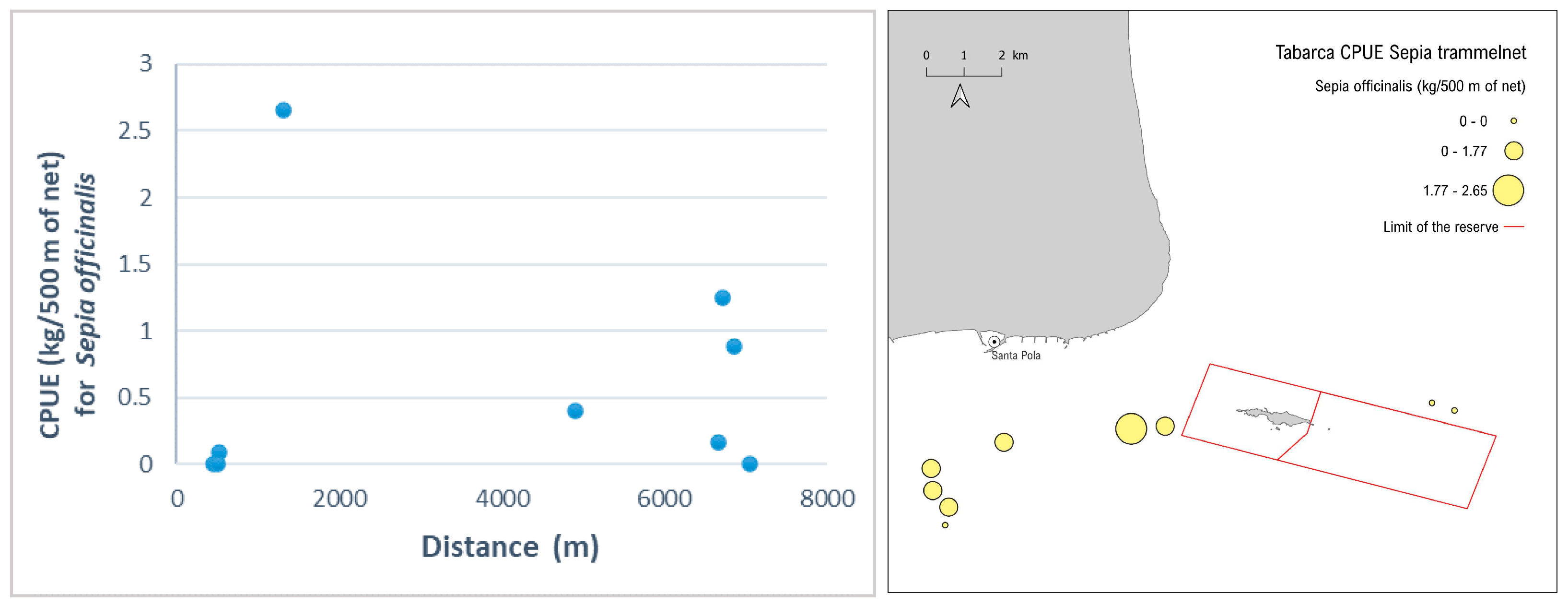
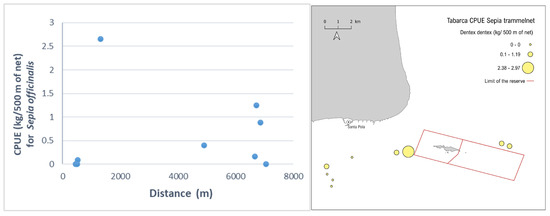
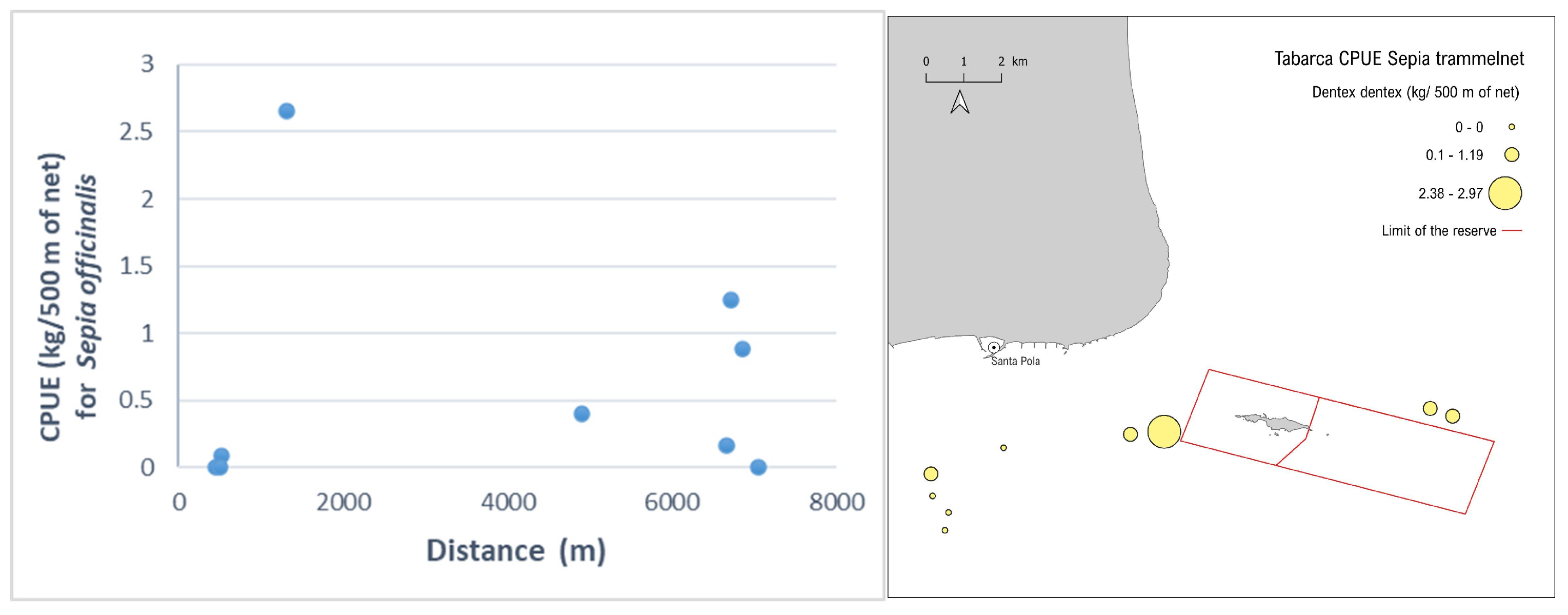
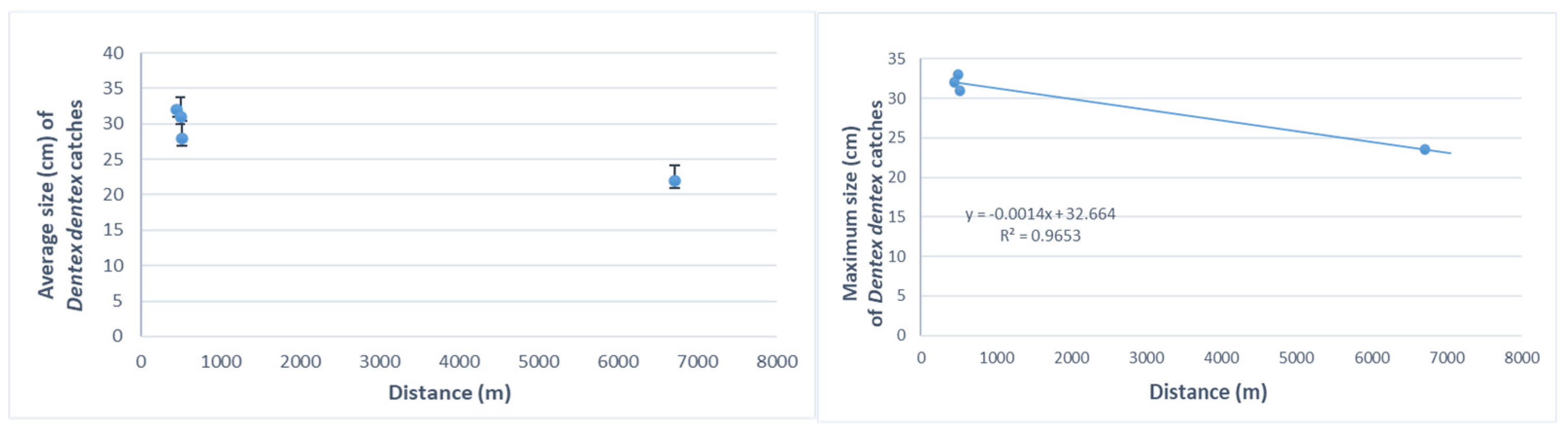
For the Sepia trammel net, the total catch (Figure 18) and catches of cuttlefish (Sepia officinalis) (Figure 19) and common dentex (Dentex dentex) (Figure 20) decreased with increasing distance from the Tabarca Island marine reserve. In addition, for Dentex dentex, both mean and maximum body size declined with increasing distance from the marine reserve (Figure 21).
Figure 18.
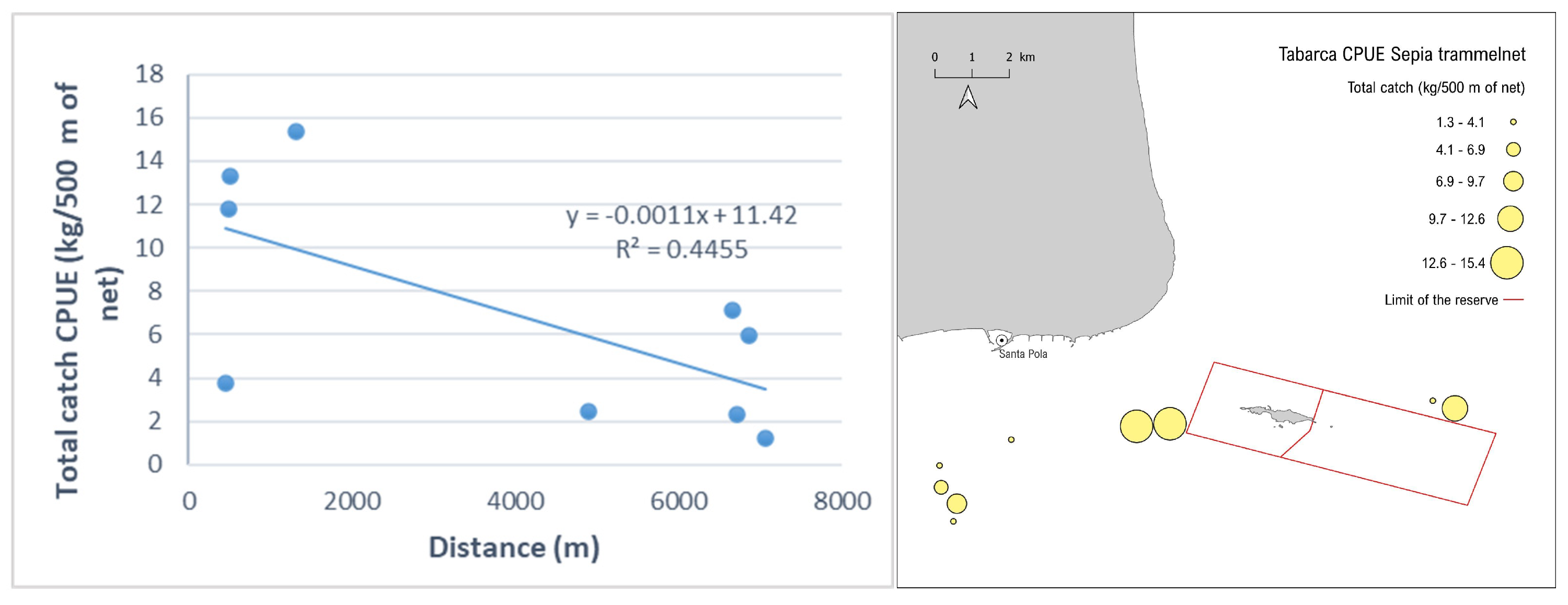
CPUE (kg/500 m net) for the Sepia trammel net métier as a function of distance from the Tabarca Island marine reserve (left; p = 0.049) and its spatial distribution (right).
Figure 19.
CPUE (kg/500 m net) of cuttlefish, Sepia officinalis, for the Sepia trammel net métier as a function of distance from the Tabarca Island marine reserve (left; p-value: 0.99) and its spatial distribution (right).
Figure 20.
CPUE (kg/500 m net) of common dentex (Dentex dentex) for the Sepia trammel net métier as a function of distance from the Tabarca Island marine reserve (left; p = 0.19) and its spatial distribution (right).
Figure 21.
Mean body size (left; p = 0.076) and maximum body size per sample (right; p-value: 0.017) of the common dentex (Dentex dentex) caught with the Sepia trammel net métier as a function of distance from the Tabarca Island marine reserve.
4. Discussion
Our results indicate substantial differences in effectiveness between the two marine reserves studied. The Tabarca Island marine reserve showed clear evidence of fishery enhancement based on both fishers’ perceptions and on-board sampling. In contrast, the Serra d’Irta marine reserve showed no detectable effects on small-scale fisheries. These contrasting outcomes may be partly related to differences in reserve size, habitat composition and management regime. The Tabarca Island marine reserve (1,860 ha) is larger than the Serra d’Irta marine reserve (950 ha), and encompasses greater habitat diversity, which may influence the range of species protected. In addition, the Tabarca Island marine reserve operates under a stricter management regime, with stronger fishing restrictions than those applied in the Serra d’Irta marine reserve. Reserve age may also influence observed outcomes, as spillover effects typically require long time frames to become relevant for fisheries [3]. The Tabarca Island marine reserve was established in 1986, whereas the Serra d’Irta marine reserve was established in 2002. However, both reserves have been protected for more than 20 years, a period generally considered sufficient for spillover effects to emerge. Therefore, differences in reserve age alone are unlikely to fully explain the contrasting results. The observed differences are attributed more to the management regime, particularly the degree to which fishing mortality is reduced. A substantial reduction in fishing pressure is required for spillover effects to occur [4], and such reductions are more pronounced in the Tabarca Island marine reserve than in the Serra d’Irta marine reserve.
Several limitations of on-board sampling should be acknowledged. In the Serra d’Irta marine reserve, only one métier has sufficient replication for analysis, limiting the generality of the results. In addition, sampling was conducted only between May and September, despite the strong seasonal variability characteristic of small-scale fisheries [28,35]. Consequently, some reserve effects on catches may not have been detected, particularly for species with seasonal migrations or reproductive cycles occurring outside the sampling period. Future studies should cover a full annual cycle to capture seasonal variations in spillover effects, as documented in previous studies [8]. Finally, low replication across some métiers may have reduced statistical power, highlighting the need for additional sampling to better characterize the complex dynamics of small-scale fisheries around MPAs.
Together, these findings reinforce the importance of implementing meaningful fishing restrictions to ensure the effectiveness of marine reserves as fisheries management tools [23,24]. The Serra d’Irta marine reserve may be characterized as a “paper park,” as effective reductions in fishing mortality have not been implemented, and no differences relative to adjacent unprotected areas were detected. Although fishers from Peñiscola reported fishing more frequently in and around the Serra d’Irta marine reserve than fishers from Santa Pola did around the Tabarca Island marine reserve, this perception was not supported by on-board sampling. No fishing sets were observed near the Serra d’Irta marine reserve during the sampling period, and fishers did not modify fishing gear or target species when operating near this reserve, in contrast to patterns observed around the Tabarca Island marine reserve. These patterns likely reflected weaker fishing restrictions in the Serra d’Irta marine reserve, long-standing use of the area, and local accessibility constraints. Consistent with this interpretation, previous studies have reported strong positive effects of full protection from fishing on the biomass of targeted species, whereas partial protection yields comparatively modest effects [36]. Moreover, indicators of income and food security are higher in communities adjacent to highly protected MPAs [37]. Previous studies have documented the effectiveness of the Tabarca Island marine reserve in enhancing fish stocks, including higher biomass of target species within the reserve [38], negative gradients in fish abundance and biomass across reserve boundaries [38,39], concentration of fishing effort along reserve boundaries, particularly for gears targeting larger individuals [8,10], and increased catches of some species in adjacent areas [8]. Following reserve establishment, the number of fishers operating in the Tabarca Island increased, whereas it declined in other regional harbors [40]. The observed benefits are species-specific since not all the species react in the same way.
The observed benefits are species-specific, as not all species respond similarly to protection. These differences may be related not only to species mobility and reproductive strategies, which are key traits influencing spillover [3], but also to the distribution and continuity of habitat patches. Habitat structure is an important environmental factor shaping the presence and spatial patterns of species-specific gradients, and it interacts with fish home-range size and fishing pressure near MPA boundaries [41,42]. Such species-specific spillover patterns may drive changes in fishing practices around the Tabarca Island marine reserve. When operating near this reserve, fishers shift toward fishing gears that target higher-value species and larger individuals. This behavioral response was not observed around the Serra d’Irta marine reserve.
The importance of LEK in fisheries management has been widely emphasized [43,44,45,46], and fishers’ perceptions often align with catch data records [47,48]. In this study, on-board sampling largely corroborated fishers’ perceptions at both reserves. No fisheries effects were detected at the Serra d’Irta marine reserve. In contrast, clear fisheries enhancement was observed and perceived around the Tabarca Island marine reserve for some species, although most of the examined species did not show statistically significant trends. Some discrepancies were evident between fishers’ perceptions and on-board sampling results. At the Tabarca Island marine reserve, fishers reported increased catches of dusky grouper (Epinephelus marginatus), red scorpionfish (Scorpaena scrofa), the greater amberjack (Seriola dumerilii), and common dentex (Dentex dentex). On-board sampling provided strong evidence of enhancement for Dentex dentex, with higher catches and larger body sizes near the reserve. In contrast, few individuals of dusky groupers and greater amberjack were recorded in the sampled catches, and Scorpaena scrofa showed no clear spatial pattern. Conversely, on-board sampling revealed positive effects for species not highlighted by fishers, including common octopus (Octopus vulgaris), cuttlefish (Sepia officinalis), and common pandora (Pagellus erythrinus).
Evidence of fisheries enhancement around the Tabarca Island marine reserve likely explains the strong support among Tabarca fishers for maintaining the reserve. An unexpected finding was that approximately half of the fishers interviewed at the Serra d’Irta marine reserve favored its continuation despite acknowledging its limited effectiveness. This result warrants further investigation, but it may be related to the exclusion of recreational fishers from the Serra d’Irta marine reserve, a restriction that professional fishers may wish to maintain. In addition, some fishers suggested that establishing a no-take area within the reserve or relocating it to encompass areas with greater benthic habitat diversity could improve the effectiveness of the Serra d’Irta marine reserve.
The number and spatial extent of protected areas continue to increase. The European Union now aims to protect 30% of marine areas, with 10% under strict protection [21]; however, expanding coverage alone is insufficient if protected areas are not effective [18]. Only a small proportion of existing MPAs have full or higher levels of protection, which are the levels shown to deliver significant conservation benefits [19,20,21]. Identifying the factors underpinning MPA success or failure is therefore essential for improving their effectiveness [49]. Stakeholder inclusion, together with effective enforcement, monitoring, control, and surveillance, is a critical determinant of MPA success [49]. These factors have been particularly important for the effectiveness of the Tabarca Island marine reserve. From the outset of its establishment in 1986, fishers were actively engaged in the process, and the most recent expansion of the reserve in 2019 was negotiated with them, fostering long-term compliance. In addition, the reserve benefits from an effective control and surveillance system that limits illegal fishing and poaching.
In contrast, these conditions are largely absent in the Serra d’Irta marine reserve. Governance is also a key determinant of protected area success [50]. The Tabarca Island marine reserve is managed by a formal governance body that includes national, regional, and local authorities, as well as fishers, scientists, nongovernmental organizations and other stakeholders. This body facilitates conflict resolution and the development of management solutions, but no comparable governance structure exists for the Serra d’Irta marine reserve. Nevertheless, further strengthening of leadership is still required at the Tabarca Island marine reserve, as the absence of a dedicated reserve director limits the capacity to address day-to-day management challenges.
Marine communities are undergoing rapid change due to anthropogenic stressors, including rising sea temperatures, which alter species abundance and community composition [51]. MPAs have been shown to remain effective even under climate change scenarios [7]. Beyond reducing fishing mortality and promoting stock recovery, MPAs can deliver multiple additional benefits, including the preservation of biodiversity; the protection of endangered species, valuable habitats, and ecological processes; and the enhancement of ecosystem resilience [1,49]. Achieving these benefits requires substantial reductions in human activities, including fishing [4,21]. Since human activities are more strictly regulated in the Tabarca Island marine reserve than in the Serra d’Irta marine reserve, the Tabarca Island marine reserve is also more effective in achieving both fisheries and broader conservation objectives.
5. Conclusions
The effectiveness of MPAs in enhancing fisheries depends on the stringency of fishing restrictions, with stronger restrictions generally associated with greater fisheries benefits in adjacent waters. However, these effects are species-specific. Not all species exhibit spillover from highly protected reserves, likely reflecting differences not only in species biology but also in habitat distribution and continuity. This study also underscores the value of LEK. Fishers’ perceptions were largely consistent with the results of the on-board sampling survey. Notably, fishers expressed support for maintaining both marine reserves, including the reserve they perceived as ineffective. This support may be linked to the exclusion of recreational fishers from that reserve or fishers’ interest in modifying its management to enhance effectiveness.
Supplementary Materials
The following supporting information is available at https://www.mdpi.com/article/10.3390/fishes11020121/s1. Figure S1: Mean body size of Mullus barbatus captured with the Mullus trammel net métier as a function of distance from the Tabarca Island marine reserve (left) and maximum body size per sample (right); Figure S2: Mean body size of Sepia officinalis captured with the Mullus trammel net métier as a function of distance from the Tabarca Island marine reserve (left) and maximum body size per sample (right); Figure S3: Catch per unit effort (CPUE; kg/500 m net) of Pagellus erythrinus for the Sepia trammel net métier as a function of distance from the Tabarca Island marine reserve (right) and its spatial distribution (left); Figure S4: CPUE (kg/500 m net) for the Mullus trammel net métier (right) in Serra d’Irta and CPUE (kg/500 m net) of Mullus barbatus for the Mullus trammel net métier as a function of distance from the Serra d’Irta marine reserve (left).
Author Contributions
Conceptualization, J.L.S.L. and A.F.; Methodology, J.L.S.L. and A.F.; Formal analysis, L.R.B., J.L.S.L. and A.F.; Investigation, L.R.B., J.I.M.M. and E.A.M.; Resources, J.L.S.L.; Data curation, L.R.B.; Writing—original draft preparation, J.L.S.L.; Writing—review and editing, all authors; Funding acquisition, J.L.S.L. All authors have read and agreed to the published version of the manuscript.
Funding
This research was funded by the Generalitat Valenciana through the “Realización de estudios e investigación en materia pesquera en aguas frente a la Comunitat Valenciana” project CONSELLERIAAGRICULTURA1-24I.
Institutional Review Board Statement
According to the ethic committee of the University of Alicante an approval is required only when personal data are collected (https://web.ua.es/es/vr-investigacio/comite-etica/documentos/gestadm/boua-01-04-2022-reglamento-comite-etica.pdf, accessed on 14 February 2026). In our study no personal data (e.g., name or age, ...) was collected therefore ethical approval by the committee was not required.
Informed Consent Statement
Verbal informed consent was obtained from the participants. Interviews were conducted with vessel skippers by three trained field researchers with anonymity assured.
Data Availability Statement
The data presented in this study are available from the corresponding author upon reasonable request.
Conflicts of Interest
The authors declare no conflicts of interest. The funders had no role in the study design; data collection, analysis, or interpretation; manuscript preparation; or the decision to publish the results.
Abbreviations
The following abbreviations are used in this manuscript:
| LEK | Local Ecological Knowledge |
| MPAs | Marine Protected Areas |
| CPUE | Catch per unit effort |
References
- Marcos, C.; Díaz, D.; Fietz, K.; Forcada, A.; Ford, A.; García-Charton, J.A.; Goñi, R.; Lenfant, P.; Mallol, S.; Mouillot, D.; et al. Reviewing the Ecosystem Services, Societal Goods, and Benefits of Marine Protected Areas. Front. Mar. Sci. 2021, 8, 613819. [Google Scholar] [CrossRef] [Scilit]
- Albers, H.J.; Ashworth, M.F. Economics of Marine Protected Areas: Assessing the Literature for Marine Protected Area Network Expansions. Annu. Rev. Resour. Econ. 2022, 14, 533–554. [Google Scholar] [CrossRef] [Scilit]
- Van Hoey, G.; Feary, D.A.; Brown, E.J.; Buyse, J.; Mangi, S.C.; Vallina, T.; van Kooten, T.; Abreu, S.; Aranda, M.; Bergstrom, U.; et al. Assessing spillover from marine protected areas to adjacent fisheries. In Baltic and North Seas, Atlantic EU Western Waters and Outermost Regions (SPILLOVER), Final Report; Publication Office of the European Union: Brussels, Bekgium, 2024. [Google Scholar] [CrossRef]
- Sánchez-Lizaso, J.L.; Goñi, R.; Reñones, O.; García-Chartón, J.A.; Galzin, R.; Bayle, J.T.; Sánchez-Jérez, P.; Pérez-Ruzafa, A.; Ramos, A.A. Density dependence in marine protected populations: A review. Environ. Conserv. 2000, 27, 144–158. [Google Scholar] [CrossRef] [Scilit]
- Taylor, B.M.; McIlwain, J.L. Beyond abundance and biomass: Effects of marine protected areas on the demography of a highly exploited reef fish. Mar. Ecol. Prog. Ser. 2010, 411, 243–258. [Google Scholar] [CrossRef] [Scilit]
- Rojo, I.; Anadon, J.D.; Garcia-Charton, J.A. Exceptionally high but still growing predatory reef fish biomass after 23 years of protection in a marine protected area. PLoS ONE 2021, 16, e0246335. [Google Scholar] [CrossRef] [Scilit]
- Frid, O.; Lazarus, M.; Malamud, S.; Belmaker, J.; Yahel, R. Effects of marine protected areas on fish communities in a hotspot of climate change and invasion. Mediterr. Mar. Sci. 2022, 23, 157–190. [Google Scholar] [CrossRef] [Scilit]
- Forcada, A.; Valle, C.; Bonhomme, P.; Criquet, G.; Cadiou, G.; Lenfant, P.; Sánchez Lizaso, J.L. Effects of habitat on spillover from marine protected areas to artisanal fisheries. Mar. Ecol. Prog. Ser. 2009, 379, 197–211. [Google Scholar] [CrossRef] [Scilit]
- Lenihan, H.S.; Fitzgerald, S.P.; Reed, D.; Hofmeister, J.K.K.; Stier, A.C. Increasing spillover enhances southern California spiny lobster catch along marine reserve borders. Ecosphere 2022, 13, e4110. [Google Scholar] [CrossRef] [Scilit]
- Goñi, R.; Adlerstein, S.; Alvarez-Berastegui, D.; Forcada, A.; Reñones, O.; Criquet, G.; Polti, S.; Cadiou, G.; Valle, C.; Lenfant, P.; et al. Spillover from six western Mediterranean marine protected areas: Evidence from artisanal fisheries. Mar. Ecol. Prog. Ser. 2008, 366, 159–174. [Google Scholar] [CrossRef] [Scilit]
- Hilborn, R.; Fitchett, M.; Hampton, J.; Ovando, D. When does spillover from marine protected areas indicate benefits to fish abundance and catch? Theor. Ecol. 2025, 18, 1. [Google Scholar] [CrossRef] [Scilit]
- Díaz, D.; Mallol, S.; Parma, A.M.; Goñi, R. Decadal trend in lobster reproductive output from a temperate marine protected area. Mar. Ecol. Prog. Ser. 2011, 433, 149–157. [Google Scholar] [CrossRef] [Scilit]
- Carter, A.B.; Davies, C.R.; Emslie, M.J.; Mapstone, B.D.; Russ, G.R.; Tobin, A.J.; Williams, A.J. Reproductive benefits of no-take marine reserves vary within region for an exploited coral reef fish. Sci. Rep. 2017, 7, 9693. [Google Scholar] [CrossRef] [Scilit]
- Manel, S.; Loiseau, N.; Andrello, M.; Fietz, K.; Goñi, R.; Forcada, A.; Lenfant, P.; Kininmonth, S.; Marcos, C.; Marques, V.; et al. Long-distance benefits of marine reserves: Myth or reality? Trends Ecol. Evol. 2019, 34, 342–354. [Google Scholar] [CrossRef] [Scilit] [PubMed]
- Franceschini, S.; Lynham, J.; Madin, E.M.P. A global test of MPA spillover benefits to recreational fisheries. Sci. Adv. 2024, 10, eado9783. [Google Scholar] [CrossRef] [Scilit] [PubMed]
- Medoff, S.; John Lynham, J.; Raynor, J. Spillover benefits from the world’s largest fully protected MPA. Science 2022, 378, 313–316. [Google Scholar] [CrossRef] [Scilit] [PubMed]
- Lynham, J.; Villaseñor-Derbez, J.C. Evidence of spillover benefits from large-scale marine protected areas to purse seine fisheries. Science 2024, 386, 1276–1281. [Google Scholar] [CrossRef] [Scilit]
- Arneth, A.; Leadley, P.; Claudet, J.; Coll, M.; Rondinini, C.; Rounsevell, M.D.A.; Shin, Y.J.; Alexander, P.; Fuchs, R. Making protected areas effective for biodiversity, climate and food. Glob. Change Biol. 2023, 29, 3883–3894. [Google Scholar] [CrossRef] [Scilit]
- Roessger, J.; Claudet, J.; Horta e Costa, B. Turning the tide on protection illusions: The underprotected MPAs of the ‘OSPAR Regional Sea Convention. Mar. Policy 2022, 142, 105109. [Google Scholar] [CrossRef] [Scilit]
- Claudet, J.; Loiseau, C.; Pebayle, A. Critical gaps in the protection of the second largest exclusive economic zone in the world. Mar. Policy 2021, 124, 104379. [Google Scholar] [CrossRef] [Scilit]
- Aminian-Biquet, J.; Gorjanc, S.; Sletten, J.; Vincent, T.; Laznya, A.; Vaidianu, N.; Claudet, J.; Young, J.; Horta e Costa, B. Over 80% of the European Union’s marine protected area only marginally regulates human activities. One Earth 2024, 7, 1614–1629. [Google Scholar] [CrossRef] [Scilit]
- Relano, V.; Pauly, D. The ‘Paper Park Index’: Evaluating Marine Protected Area effectiveness through a global study of stakeholder perceptions. Mar. Policy 2023, 151, 105571. [Google Scholar] [CrossRef] [Scilit]
- Rife, A.N.; Erisman, B.; Sanchez, A.; Aburto-Oropeza, O. When good intentions are not enough. Insights on networks of ‘paper park’ marine protected areas. Conserv. Lett. 2013, 6, 200–212. [Google Scholar] [CrossRef] [Scilit]
- Arcas, E.; Valle, C.; Forcada, A. Evaluation of the economic crisis on the conservation of the ichthyofauna in marine protected areas. Mar. Policy 2023, 147, 105347. [Google Scholar] [CrossRef] [Scilit]
- Walters, C. Impacts of dispersal, ecological interactions, and fishing effort dynamics on efficacy of marine protected areas: How large should protected areas be? Bull. Mar. Sci. 2000, 66, 745–757. [Google Scholar]
- Halpern, B.S.; Warner, R.R. Matching marine reserve design to reserve objectives. Proc. R. Soc. Lond. Ser. B Biol. Sci. 2003, 270, 1871–1878. [Google Scholar] [CrossRef] [Scilit] [PubMed]
- Kellner, J.B.; Tetreault, I.; Gaines, S.D.; Nisbet, R.M. Fishing the line near marine reserves in single and multispecies fisheries. Ecol. Appl. 2007, 17, 1039–1054. [Google Scholar] [CrossRef] [Scilit]
- Forcada, A.; Valle, C.; Sánchez-Lizaso, J.L.; Bayle-Sempere, J.T.; Corsi, F. Structure and spatio-temporal dynamics of artisanal fisheries around a Mediterranean marine protected area. ICES J. Mar. Sci. 2010, 67, 191–203. [Google Scholar] [CrossRef] [Scilit]
- Mesnil, B.; Shepherd, J.G. A hybrid age- and length-structured model for assessing regulatory measures in multiple- species, multiple-fleet fisheries. ICES J. Mar. Sci. 1990, 47, 115–132. [Google Scholar] [CrossRef] [Scilit]
- Biseau, A. Definition of a directed fishing effort in a mixed-species trawl fishery, and its impact on stock assessments. Aquat. Living Resour. 1998, 11, 119–136. [Google Scholar] [CrossRef] [Scilit]
- Tzanatos, E.; Somarakis, S.; Tserpes, G.; Koutsikopoulos, C. Identifying and classifying small-scale fisheries métiers in the Mediterranean: A case study in the Patraikos Gulf, Greece. Fish. Res. 2006, 81, 158–168. [Google Scholar] [CrossRef] [Scilit]
- Karnad, D. Incorporating local ecological knowledge aids participatory mapping for marine conservation and customary fishing management. Mar. Policy 2022, 135, 104841. [Google Scholar] [CrossRef] [Scilit]
- Neis, B.; Schneider, D.C.; Felt, L.; Haedrich, R.L.; Fischer, J.; Hutchings, J.A. Fisheries assessment: What can be learned from interviewing resource users? Can. J. Fish. Aquat. Sci. 1999, 56, 1949–1963. [Google Scholar] [CrossRef]
- QGIS Development Team. QGIS Geographic Information System; Open Source Geospatial Foundation: Beaverton, OR, USA, 2023; Available online: http://qgis.org (accessed on 12 February 2025).
- Hanns, B.J.; Shane Kelly, S.; Shears, N.T. Small marine protected areas cannot sustain spill-over of the seasonally moving spiny lobster Jasus edwardsii. Mar. Ecol. Prog. Ser. 2025, 753, 105–117. [Google Scholar] [CrossRef] [Scilit]
- Hall, A.E.; Sievers, K.T.; Kingsford, M.J. Conservation benefits of no-take marine reserves outweigh modest benefits of partially protected areas for targeted coral reef fishes. Coral Reefs 2023, 42, 319–333. [Google Scholar] [CrossRef] [Scilit]
- Nowakowski, A.J.; Canty, S.W.J.; Bennett, N.J.; Cox, C.E.; Valdivia, A.; Deichmann, J.L.; Akre, T.S.; Bonilla-Anariba, S.E.; Costedoat, S.; McField, M. Co-benefits of marine protected areas for nature and people. Nat. Sustain. 2023, 6, 1210–1218. [Google Scholar] [CrossRef] [Scilit]
- Forcada, A.; Bayle-Sempere, J.T.; Valle, C.; Sánchez-Jerez, P. Habitat continuity effects on gradients of fish biomass across marine protected area boundaries. Mar. Environ. Res. 2008, 66, 536–547. [Google Scholar] [CrossRef] [Scilit]
- Harmelin-Vivien, M.; Le Direach, L.; Bayle-Sempere, J.T.; Charbonnel, E.; García-Charton, J.A.; Goñi, R.; Ody, D.; Pérez-Ruzafa, A.; Reñones, O.; Sanchez-Jerez, P.; et al. Gradients of abundance and biomass across reserve boundaries in six Mediterranean marine protected areas: Evidence of fish spillover? Biol. Conserv. 2008, 141, 1829–1839. [Google Scholar] [CrossRef] [Scilit]
- Badalamenti, F.; Ramos, A.A.; Voultsiadou, E.; Sánchez-Lizaso, J.L.; D’Anna, G.; Pipitone, C.; Mas, J.; Ruiz-Fernández, J.M.; Whitmarsh, D.; Riggio, S. Cultural and socio-economic impacts of Mediterranean marine protected areas. Environ. Conserv. 2000, 27, 110–125. [Google Scholar] [CrossRef] [Scilit]
- Bayle-Sempere, J.T.; Forcada-Almarcha, A.; Sánchez-Jerez, P.; Harmelin-Vivien, M.L.; Le Diréach, L.; Charbonnel, E.; García-Charton, J.A.; Ody, D.; Reñones, O.; Valle, C.; et al. Species-Specific Spillover Patterns Detected by Biomass Gradients in Mediterranean Marine Protected Areas. Sustainability 2024, 16, 11089. [Google Scholar] [CrossRef] [Scilit]
- Pinillos, F.; Riera, R. The Influence of Boundary Habitat Continuity on Spillover from a Mediterranean Marine Protected Area. Thalass. Int. J. Mar. Sci. 2022, 38, 687–696. [Google Scholar] [CrossRef] [Scilit]
- Boubekri, I.; Mazurek, H.; Djebar, A.B.; Amara, R. Social-ecological dimensions of Marine Protected Areas and coastal fishing: How fishermen’s local ecological knowledge can inform fisheries management at the future “Taza” MPA (Algeria, SW Mediterranean). Ocean Coast. Manag. 2022, 221, 106121. [Google Scholar] [CrossRef] [Scilit]
- Mclean, E.L.; Forrester, G.E.; García-Quijano, C.G. The Disconnect Between Knowledge and Perceptions: A Study of Fishermen’s Local Ecological Knowledge and Their Perception of the State of Fisheries and How These Are Managed in the Dominican Republic. Hum. Ecol. 2022, 50, 227–240. [Google Scholar] [CrossRef] [Scilit]
- Gomes, M.A.; Alves, C.M.; Neto, R.; Faria, F.; Troncoso, J.; Gomes, P.T. Fishing beyond the surface: Harnessing local ecological knowledge to improve local fisheries management and conservation. Mar. Policy 2025, 179, 106763. [Google Scholar] [CrossRef] [Scilit]
- Jones, B.L.H.; Santos, R.O.; James, W.R.; Costa, S.V.; Adams, A.J.; Boucek, R.E.; Coals, L.; Cullen-Unsworth, L.C.; Shephard, S.; Rehage, J.S. New directions for Indigenous and local knowledge research and application in fisheries science: Lessons from a systematic review. Fish Fish. 2024, 25, 647–671. [Google Scholar] [CrossRef] [Scilit]
- Bastari, A.; Mascarell, Y.; Ortega, M.; Coll, M. Local fishers experience can contribute to a better knowledge of marine resources in the Western Mediterranean Sea. Fish. Res. 2022, 248, 106222. [Google Scholar] [CrossRef] [Scilit]
- Silas, M.O.; Semba, M.L.; Mgeleka, S.S.; Van Well, L.; Linderholm, H.W.; Gullström, M. Using fishers’ local ecological knowledge for management of small-scale fisheries in data-poor regions: Comparing seasonal interview and field observation records in East Africa. Fish. Res. 2023, 264, 106721. [Google Scholar] [CrossRef] [Scilit]
- Di Cintio, A.; Niccolini, F.; Scipioni, S.; Bulleri, F. Avoiding “Paper Parks”: A Global Literature Review on Socioeconomic Factors Underpinning the Effectiveness of Marine Protected Areas. Sustainability 2023, 15, 4464. [Google Scholar] [CrossRef] [Scilit]
- Hogg, K.; Noguera-Méndez, P.; Semitiel-García, M. Lessons from three north-western Mediterranean MPAs: A governance analysis of Port-Cros National Park, Tavolara Punta-Coda Cavallo and Ustica. Mar. Policy 2021, 127, 102943. [Google Scholar] [CrossRef] [Scilit]
- He, Q.; Silliman, B.R. Climate Change, Human Impacts, and Coastal Ecosystems in the Anthropocene. Curr. Biol. 2019, 29, R1021–R1035. [Google Scholar] [CrossRef] [Scilit]
Disclaimer/Publisher’s Note: The statements, opinions and data contained in all publications are solely those of the individual author(s) and contributor(s) and not of MDPI and/or the editor(s). MDPI and/or the editor(s) disclaim responsibility for any injury to people or property resulting from any ideas, methods, instructions or products referred to in the content. |
© 2026 by the authors. Licensee MDPI, Basel, Switzerland. This article is an open access article distributed under the terms and conditions of the Creative Commons Attribution (CC BY) license.