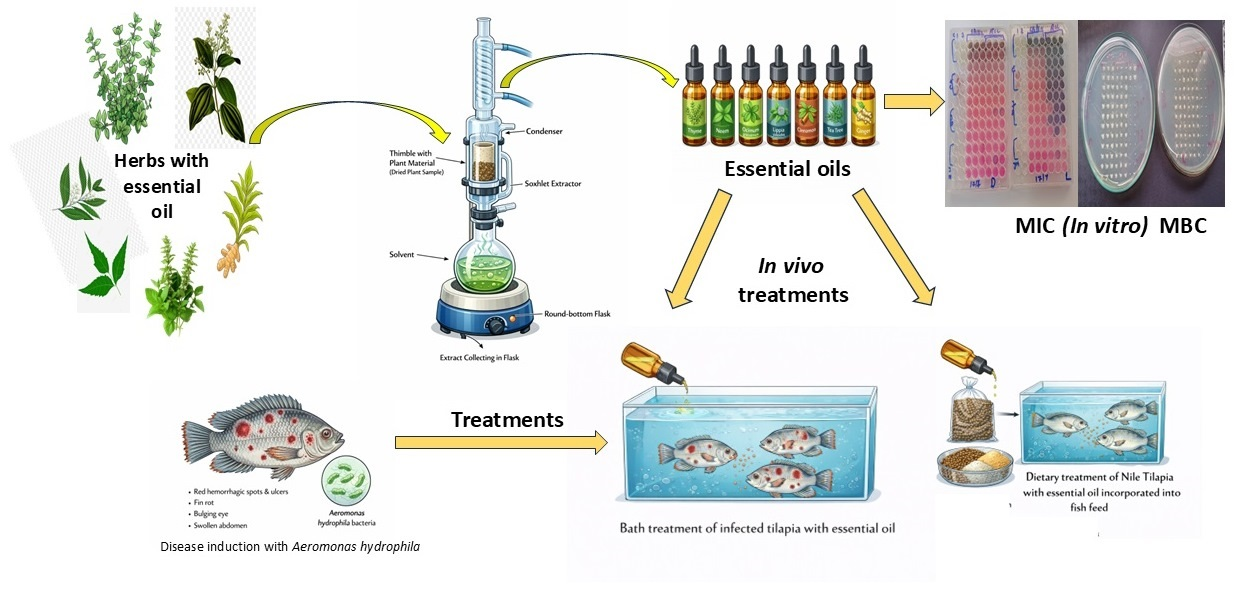


Utilization of Plant-Derived Essential Oils as Natural Alternatives for Controlling Fish Pathogens: A Critical Review of Their Use Against Aeromonas hydrophila
 , ,
, , 
Abstract
1. Introduction
2. Search Strategy
2.1. Study Selection and Data Extraction
2.2. Outcome
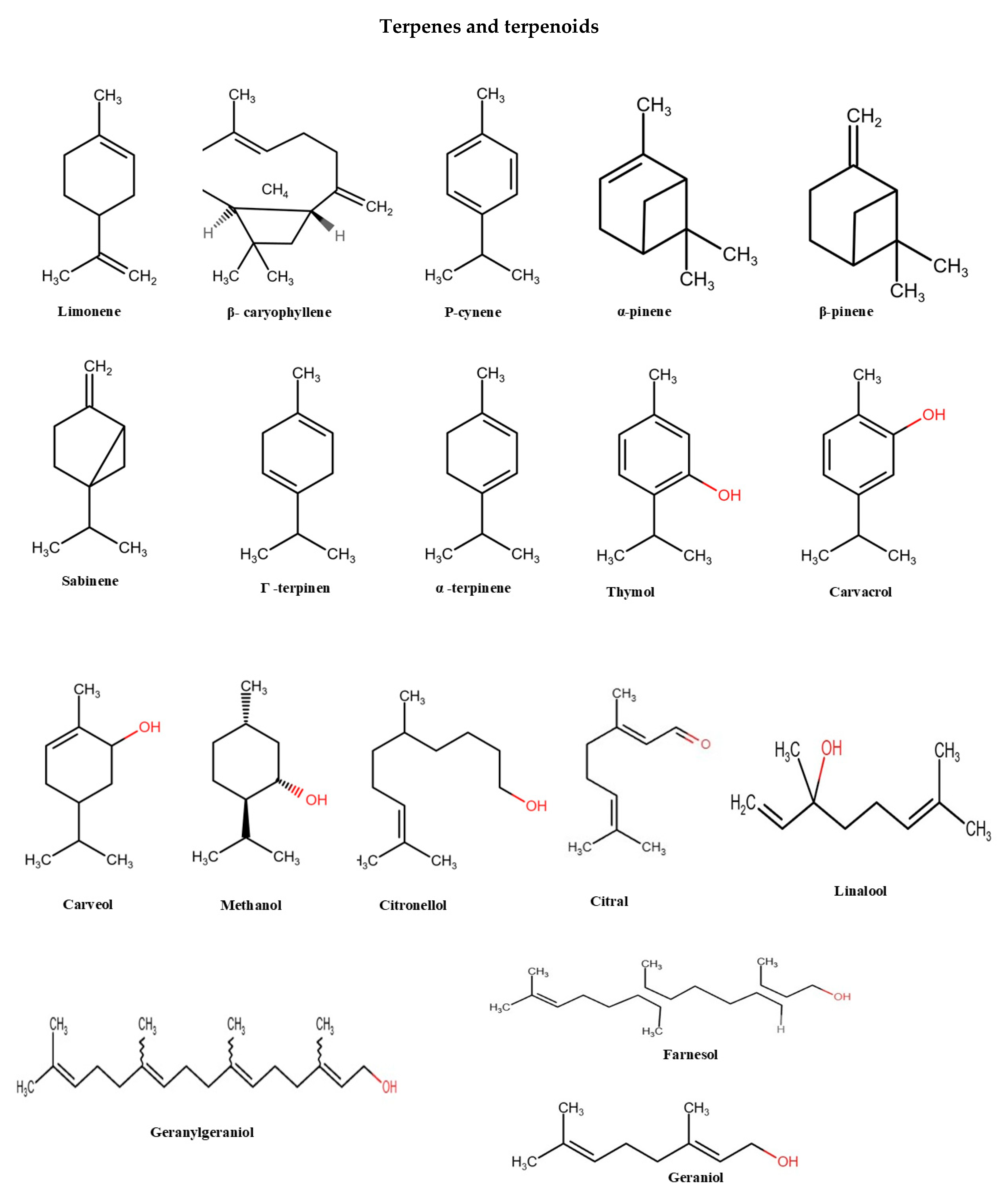
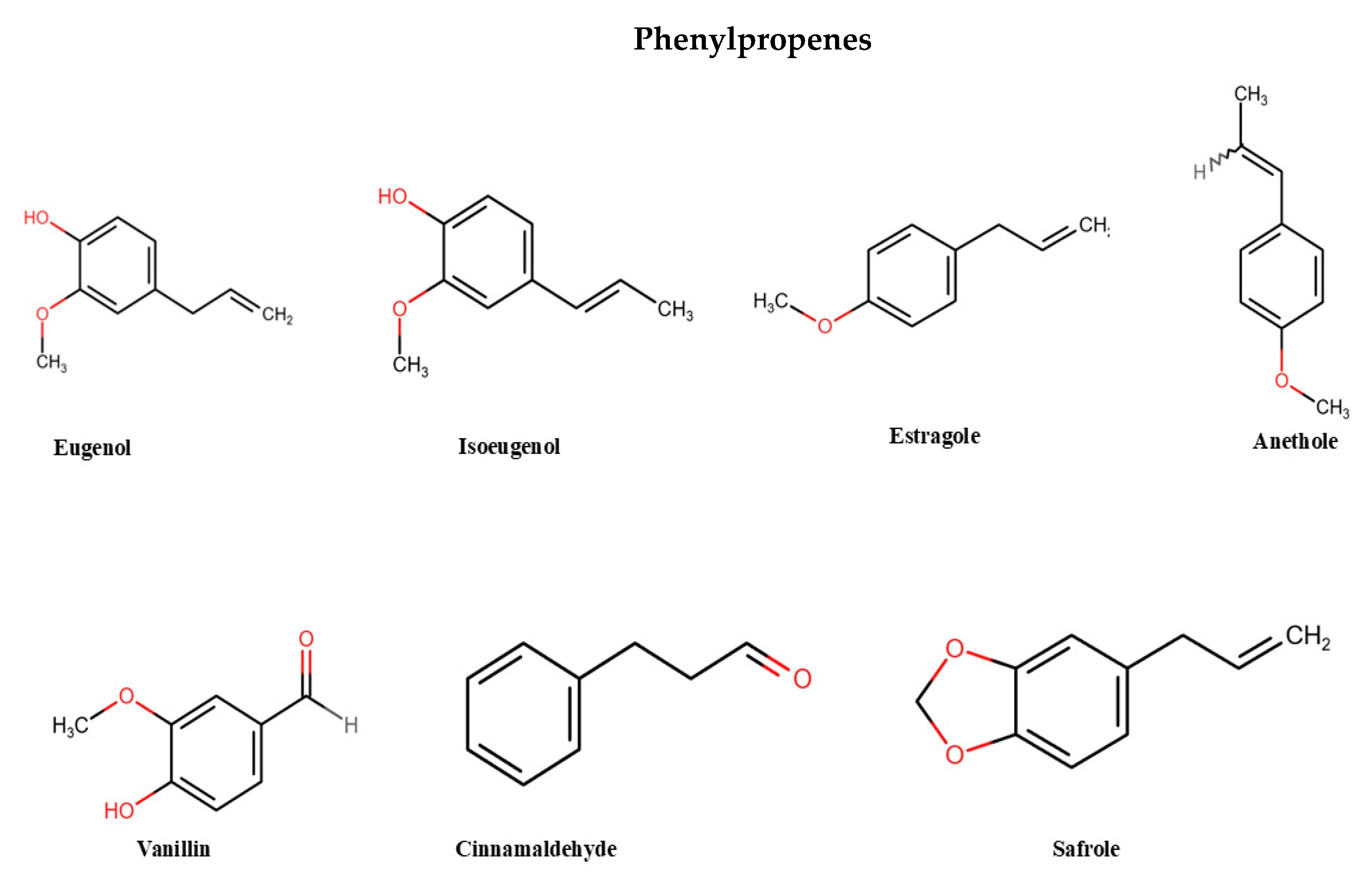
3. Chemical Properties of Plant-Derived EOs
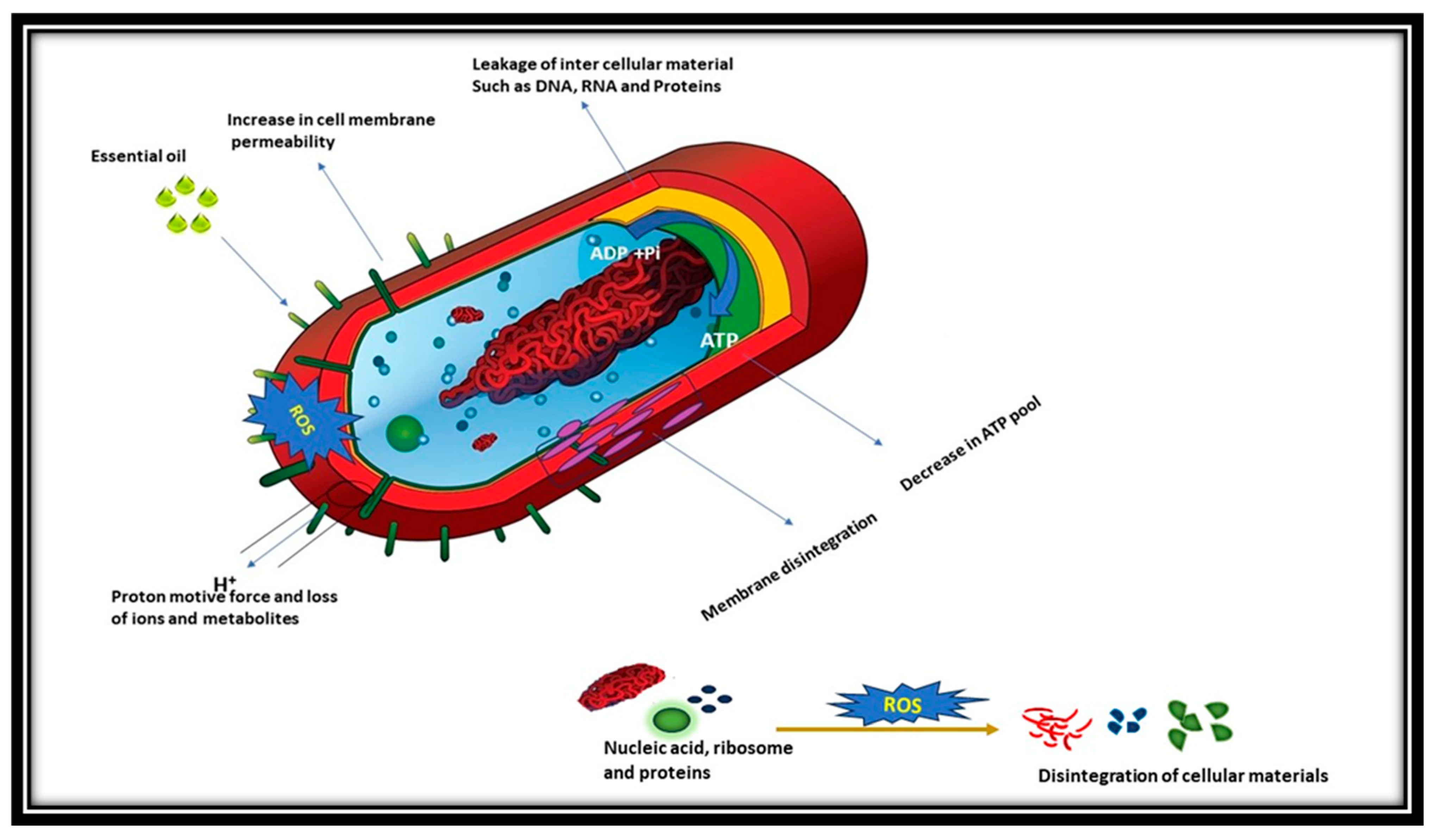
4. Antibacterial Mechanism of EOs Against A. hydrophila Cells
4.1. Complement-Mediated Defense and Antibiotic Tolerance in A. hydrophila
4.2. In Vitro Bioassays
4.3. Determination of the Permeability of the Cell Membrane
Cell Membrane Integrity Assessment
4.4. Interruption of Cellular Proteins
4.5. Antibiofilm Effect
4.6. Anti-Hemolytic Effect
4.7. Morphological Effects of Essential Oils on Aeromonas hydrophila
5. Treatment of A. hydrophila Infection in Fish with Essential Oils

| Plant Species | Major Compounds (%) | MIC (mg/mL) | MBC (mg/mL) | Activity Level | Reference |
|---|---|---|---|---|---|
| Artemisia annua | Camphor (29.2), 1,8-cineole (13.27), and tetradecanol (6.16), | 3.2 | >6.4 | W | [205] |
| Cinnamomum cassia | Cinnamaldehyde (84.8), o-methoxycinnamaldehyde (10.07), cinnamyl acetate (2.17) | 0.039 | 0.5 | S | [80,81] |
| Coriandrum sativum L. | Linalool and geranyl acetate. | 8.68 0 | - | W | [204] |
| Cymbopogon citratus | α-citral (31.80), β-citral (27.75), isoneral (5.36), α-myrcene (4.44), linalool (3.48) and epoxy-linalooloxide (3.11) | 50 | - | W | [206] |
| Cymbopogon flexuosus | Geranial (48.89), neral (40.32), cis-verbenol (2.38), and camphene (0.89) | 0.195 | 0.195 | M | [65,66] |
| Geranial 41, neral 32, geraniol 6.7, geranyl acetate 3.2 | >15.60 | >15.60 | W | [174] | |
| Cymbopogon nardus | Citronellal, citronellol, and geraniol | - | 27.8 | W | [207] |
| Eugenia caryophyllus | Not provided | 0.19–1.56 | 0.38–3.12 | M | [149] |
| Hesperozygis ringens | Monoterpenoid pulegone (47) and menthone (5.82) | 0.8 | 3.2 | W | [132,208] |
| Lippia alba | Geranial (25.4) and neral (16.6) | 2.862 | 5.998 | W | [122,123] |
| Lippia graveolens chemotype II, | Carvacrol (51.82) and thymol (79.62) | 0.092 | 0.184 | S | [68] |
| Lippia origanoides | Carvacrol (40.4) and p-cymene (11.4) | 0.625 | 1.25 | W | [122,201] |
| Lippia sidoides | Eugenol (43.3), 1,8-cineole (28.2) and β-selinene (5.5) | 0.625 | 1.25 | W | [134,202] |
| Carvacrol (44.50), p-cymene (14.06), γ-terpinene (12.43) and thymol (7.99) | 0.625 | 3.125 | W | [64] | |
| Melaleuca alternifolia | Not provided Terpinen-4-ol (38.44) | 0.78–12.5 0.039 | 1.56–50 - | W S | [149,150] |
| Ocimum americanum | β-linalool (46.61), camphor (9.5), 1.8-cineole (8.43) and germacrene D (4.76) | 6.4 | 6.4 | W | [173] |
| Ocimum gratissimum | Geranial (23.2), neral (16.7) and 1,8-cineole (15.8) | 1.25 | 5 | W | [132] |
| Origanum majorana | Terpinen-4-ol (20.55), α-terpineol (4.396), terpinene (13.136), terpineol, trans (12.668), α-terpineol (4.396) | - | [128] | ||
| Pelargonium graveolens | Citronellol (32.54), 3-methylpentane (11.96) and isomenthone (10.64) | 50 | - | W | [206] |
| Plectranthus amboinicus | Cymenederivatives (22.93), y-terpinene (8.04) and carvacrol (65.36) | 0.062 | 0.125 | S | [67] |
| Salvia pisidica | Camphor (23.8), sabinol (19.2), α-thujene (14.2) | >20 | >20 | W | [209] |
| Schinus terebinthifolius | δ-3-careno (56.00), α-pinene (16.89) | 20 | 20 | W | [210] |
| Thymus vulgaris | Thymol (36.3), p-cymene (18.5), γ-terpinene (10.9), linalool (7.1), carvacrol (5.2), β-caryophyllene (4.5) Not provided | 0.06 0.09–1.56 | 0.12 0.09–6.24 | S S | [178] |
| Zingiber officinale | Geranial (23.2), neral (16.7) and 1,8-cineole (15.8) | 1.25 | 5 | W | [164] |
| Plant Species | Major Active Compounds (%) | PEG 400 | DMSO | ||
|---|---|---|---|---|---|
| MIC (mg/mL) | MBC (mg/mL) | MIC (mg/mL) | MBC (mg/mL) | ||
| Allium sativum | Not provided | 0.338 | 1.353 | 0.338 | 1.353 |
| Artemisia vulgaris | Limonene (14.1), α-terpineol (8.1), camphor (17.3), 1,8-cineole (14.2), β-caryophyllene (8.4), β-himachalene (7.3) | 9.3 | 9.3 | 18.61 | 18.61 |
| Boswellia carterii | α-pinen (65.1), p-cymene (6.8), limonene (6.4), estragole (5.2) | 8.47 | 8.47 | 16.95 | 16.95 |
| Cananga odorata | Germacrene D (24.9), aromadendrene (5.2), β-caryophyllene (19.8), β-farnesene (10.8), benzyl benzoate (7.3) | 36.6 | 36.6 | >36.6 | _ |
| Cinnamon cinnamomum verum | Cinnamaldehyde (84.8), o-methoxycinnamaldehyde (10.07), cinnamyl acetate (2.17) | 0.662 | 1.325 | 0.625 | 0.125 |
| Citrus aurantium var. amara | Limonene (13.5), α-Pinen (8.6), linalool (16.4), linalyl acetate (35.3), β-caryophyllene (10.5) | 35.56 | 35.56 | >35.56 | _ |
| Citrus bergamia | p-cymene (6.3), linalool (10.7), geranyl acetate (6.1), linalyl acetate (33.1), eugenol (5.3) | 8.74 | 8.74 | 17.26 | 17.48 |
| Corymbia citriodora | Cis-sabinene hydrate (7.7), citronellal (77.2), citronellyl acetate (7.0), | 4.31 | 4.31 | 17.26 | 34.52 |
| Cupressus sempervirens | δ-3-carene (20.2), α-pinen (52.5), limonene (5.4) | 17.26 | 17.26 | 34.52 | 34.52 |
| Cymbopogon citratus | Myrcene (13.8), geranial(40.0), neral (30.4) | 2.18 | 4.37 | 2.18 | 4.37 |
| Eucalyptus globulus | Limonene (12.1), 1,8-cineole (73.0), p-cymene (4.4) | 18.24 | 18.24 | 18.24 | 18.24 |
| Mentha x piperita | Menthol (70.0), linalool (6.9), menthone (6.5), | 4.49 | 8.98 | 8.98 | 17.96 |
| Ocimum basilicum | Linalool (16.9), estragole (77.4) | 1.111 | 2.222 | 1.111 | 22.5 |
| Pelargonium graveolens | Citronellol (47.0), geraniol (10.1), citronellyl formate (10.6) | 4.44 | 4.44 | 8.89 | 8.89 |
| Thymus vulgaris | p-cymene (34.0), carvacrol (6.6), linalool (6.7), thymol (40.4) | 0.588 | 1.176 | 0.3 | 0.588 |
| Plant Species | Major Compounds (%) | Survival (%) | Significant Impacts of the Study | Reference |
|---|---|---|---|---|
| Bath treatment (μL/L or mg/L) | ||||
| Gaultheria procumbens | Methyl salicylate (99.5) | 5–10—Rhamdia quelen | It improved survival rates in infected fish. | [211] |
| Hesperozygis ringens | Monoterpenoid pulegone (47) and menthone (5.82) | 20–70—Rhamdia quelen | It suppressed apoptosis triggered by infection and increased cell viability. It diminishes bacteria-induced oxidative stress and stimulates the antioxidative responses in muscle of A. hydrophila-infected silver catfish. | [132,208] |
| Lippia alba | Geranial (25.4) and neral (16.6) | 20—Rhamdia quelen—90 | Lower anesthetic concentrations could promote survival of infected fish. | [123] |
| Lippia origanoides | Carvacrol (40.4) and p-cymene (11.4) | 5—Rhamdia quelen—58 | Therapeutic efficacy of EO against A. hydrophila was enhanced, with low mortality rates. | [201] |
| Carvacrol (49.7), p-cymene (13.3) and thymol (9.9) | 10—Colossoma macropomum—80 | Sublethal concentrations altered a few biochemical and hematological changes and showed significant effects of EO treatment on tambaqui. | [212] | |
| Lippia sidoides | Eugenol (43.3), 1,8-cineole (28.2) and β-selinene (5.5) | 0.625—Colossoma macropomum—40 | The elevated respiratory activity of leukocytes induced by the innate immune system in post-challenge test. | [174] |
| Ocimum americanum | β-linalool (46.61), camphor (9.5), 1.8-cineole (8.43) and germacrene D (4.76) | 20—Rhamdia quelen -75 | The potential usage of EO against the pathogens A. hydrophila and Gyrodactylus sp. in silver catfish (Rhamdia quelen). | [173] |
| Ocimum gratissimum | Geranial (23.2), neral (16.7) and 1,8-cineole (15.8) | 20—Rhamdia quelen -75 | It decreases the virulence of A. hydrophila and supports therapeutic applications and anesthetics. | [132] |
| Eugenol (43.3), 1,8-cineole (28.2) and β-selinene (5.5) | 5—Colossoma macropomum—89.5 | Reduced hematocrit percentage, RBC and Rh factors and also mild liver damage. | [134] | |
| Origanum majorana | Terpinen-4-ol (20.55), ɑ-terpineol (4.396), terpinene (13.136), terpineol, trans (12.668), ɑ-terpineol (4.396) | 20—Rhamdia quelen—100 | Nanoencapsulated formulae endorsed an improved persistence of silver catfish infected with A. hydrophila. | [128] |
| Zingiber officinale | Citrol (39.9), geranial (23.2), neral (16.7) and 1,8-cineole (15.8) | 10—Colossoma macropomum—52.1 | Showed week and moderate antimicrobial activity and survival of the animal. | [134] |
| Preventive treatment (g/kg feed or mL/kg feed) | ||||
| Aloysia triphylla | - | 2.0—Rhamdia quelen > 90 | EO diet improved oxidative status and lowered stress response in silver catfish. | [213] |
| Citrus sinensis | 0.4–0.8—Colossoma macropomum | Lower mortality and enhancement on growth performance and hematological parameters. | [199] | |
| Coriandrum sativum L. | Linalool and geranyl acetate | 10–20—Oreochromis niloticus—100 | Enhancement of antioxidant and anti-inflammatory activities and innate immunity against A. hydrophila. | [204] |
| Croton sonderianus | - | Up to 1.5—Colossoma macropomum—no effect on survival | Enhancement in growth performance, hematology and biochemical parameters against bacterial resistance in tambaqui juveniles. | [184] |
| Cymbopogon citratus | α -citral (31.80), β-citral (27.75), isoneral (5.36), α-myrcene (4.44), linalool (3.48) and epoxy-linalooloxide (3.11) | 0.20—Oreochromis niloticus—96 | Dietary supplementation of EO in fish meal enhancing growth performance, feed utilization, oxidative status, immune responses and disease resistance. | [206] |
| α-citral (73.56), myrcene (12.65), linalool (1.00), isogeranial (2.91), geraniol (3.51) | 0.25—Colossoma macropomum—50 | Treatment with EO against infected fish showed improvement in hematological variables, muscle glycogen levels and intestinal alkaline protease activity in tambaqui. | [175] | |
| Cymbopogon flexuosus | Geranial—(48.89), neral—(40.32), cis-verbenol—(2.38), and camphene—(0.89) | 2.0—Oreochromis niloticus | Improved growth rate, biochemical and physiological parameters and reduced mortality of Nile tilapia after treatment. | [66] |
| Lippia alba | Geranial (25.4) and neral (16.6) | 0.25—Oreochromis niloticus—100 | It ameliorated feed conversion, hematocrit and adaptive immunity, and improved survival rate after infection. | [172] |
| Lippia sidoides | Thymol (76.6), carvacrol (26.4) and 1.8 cineole (22.63) ortho-cimene (6.3) and beta-cariofilene (5.0) | 0.125—Cyprinus carpio—0.65 | Each concentration showed specific benefits to the animal, such as increased zootechnical performance, highest concentration of lactic acid bacteria in the intestine and the greatest post-challenge survival. | [202] |
| Ocimum basilicum | Linalool | 2.0—Oreochromis niloticus—30 | Improvement in growth performance and increased hematological variables and activity of intestinal enzymes; however, the survivability of fish after infection was not influenced by the addition of EO in the diet. | [214] |
| Origanum heracleoticum L. | Carvacrol (54.9) p-cymene (22.0) Thymol methyl ether (1.6) γ-terpinene (3.5) | 0.50—Ictalurus punctatus—95 | The mixed compounds increase growth rate of cat fish. | [176] |
| Pelargonium graveolens | Cymenederivatives (22.93), y-terpinene (8.04) and carvacrol (65.36) | 0.40—Oreochromis niloticus—95 | Stimulate lysozyme activity in the innate immune system and increased beneficial microbial flora in gut region. | [206] |
| Satureja hortensis | 0.20—Rutilus caspicus—96 | EO-treated fish showed significant increase in serum total immunoglobulin, lysozyme and alternative complement pathway hemolytic activity. | [180] | |
| Thymus vulgaris | Thymol (36.3), p-cymene (18.5), γ-terpinene (10.9), linalool (7.1), Carvacrol (5.2), and β-caryophyllene (4.5) | 0.5—Oncorhynchus mykiss—31.5 | Increased growth rate of rainbow trout, improved immunity and developed resistant to MAS. | [179] |
6. Conclusions and Prospects
Author Contributions
Funding
Institutional Review Board Statement
Informed Consent Statement
Data Availability Statement
Conflicts of Interest
References
- Raut, J.S.; Karuppayil, S.M. A status review on the medicinal properties of essential oils. Ind. Crops Prod. 2014, 62, 250–264. [Google Scholar] [CrossRef] [Scilit]
- Burt, S. Essential oils: Their antibacterial properties and potential applications in foods—A review. Int. J. Food Microbiol. 2004, 94, 223–253. [Google Scholar] [CrossRef] [Scilit]
- Kaloustian, J.; Abi Khalil, C.; Afif, C. Antibacterial activity of essential oils extracted from Lebanese aromatic plants against multidrug-resistant bacterial strains. J. Essent. Oil Res. 2008, 20, 411–414. [Google Scholar]
- da Cunha, J.A.; de Ávila Scheeren, C.; Fausto, V.P.; de Melo, L.D.W.; Henneman, B.; Frizzo, C.P.; de Almeida Vaucher, R.; de Vargas, A.C.; Baldisserotto, B. The antibacterial and physiological effects of pure and nanoencapsulated Origanum majorana essential oil on fish infected with Aeromonas hydrophila. Microb. Pathog. 2018, 124, 116–121. [Google Scholar] [CrossRef] [Scilit] [PubMed]
- Soltani, S.; Shakeri, A.; Iranshahi, M.; Boozari, M. A review of the phytochemistry and antimicrobial properties of Origanum vulgare L. and subspecies. Iran. J. Pharm. Res. IJPR 2021, 20, 268. [Google Scholar]
- Irshad, S.; Mahmood, Z.; Perveen, S.; Ahmed, M.; Akhtar, N. Essential oils: Exploitation as antimicrobial agents for fish disease management—A review. Fish. Sci. 2019, 85, 719–732. [Google Scholar]
- Mulyaningsih, S.; Sporer, F.; Reichling, J.; Wink, M. Antibacterial activity of essential oils from Eucalyptus and of selected components against multidrug-resistant bacterial pathogens. Pharm. Biol. 2011, 49, 893–899. [Google Scholar] [CrossRef] [Scilit]
- Mittal, A.; Gupta, V.; Bhattacharya, A.; Singh, V.; Banerjee, T.; Sharma, A. Phytochemicals screening, antioxidant activity and neuroprotective assessment of leaf extracts of Pulicaria jaubertii. J. Pharm. Pharmacol. 2019, 71, 406–416. [Google Scholar]
- Watts, J.E.; Schreier, H.J.; Lanska, L.; Hale, M.S. The rising tide of antimicrobial resistance in aquaculture: Sources, sinks and solutions. Mar. Drugs 2017, 15, 158. [Google Scholar] [CrossRef] [Scilit]
- Tavares-Dias, M. Fish Antimicrobial Agents: Medicinal Plants as an Alternative for Fish Health. In Immunostimulants, Immunomodulators, and Immunotherapies in Fish; Sahu, N.P., Gupta, S., Eds.; Apple Academic Press: Waretown, NJ, USA, 2018; pp. 247–274. [Google Scholar]
- Soares, V.E.; Tavares-Dias, M. Medicinal plants with bioprospecting potential used in semi-arid northeastern Brazil. J. Med. Plants Res. 2013, 7, 66–76. [Google Scholar]
- Hashimoto, A.T.; Freitas, V.M.; Mendonça, M.S.; Tavares-Dias, M.; Onaka, E.M. A screening of antibacterial activity of plants used in Brazilian folk medicine against Aeromonas hydrophila. J. Fish. Aquat. Sci. 2016, 11, 1–11. [Google Scholar]
- Laith, A.R.; Najiah, M. Aeromonas hydrophila: Antimicrobial susceptibility and histopathology of isolates from diseased catfish, Clarias gariepinus (Burchell). J. Aquac. Res. Dev. 2013, 5, 2. [Google Scholar]
- Assane, I.M.; Valladao, G.M.; Pilarski, F. Chemical composition, cytotoxicity and antimicrobial activity of selected plant-derived essential oils against fish pathogens. Aquac. Res. 2021, 52, 793–809. [Google Scholar] [CrossRef] [Scilit]
- Liu, Y.; Chen, P.; Lin, F. Clinical characteristics and antibiotic sensitivity & resistance analysis of cases of orthopedic infections caused by Aeromonas hydrophila. BMC Musculoskelet. Disord. 2025, 26, 560. [Google Scholar] [CrossRef] [Scilit]
- De Silva, B.C.J.; Hossain, S.; Dahanayake, P.S.; Heo, G.J. Aeromonas spp. from marketed Yesso scallop (Patinopecten yessoensis): Molecular characterization, phylogenetic analysis, virulence properties and antimicrobial susceptibility. J. Appl. Microbiol. 2019, 126, 288–299. [Google Scholar] [CrossRef] [Scilit]
- Zemelman, R.; Gonzalez, C.; Mondaca, M.A.; Silva, J.; Merino, C.; Dominguez, M. Resistance of Aeromonas hydrophila to β-lactam antibiotics. J. Antimicrob. Chemother. 1984, 14, 575–579. [Google Scholar] [CrossRef] [Scilit]
- Kaskhedikar, M.; Chhabra, D. Multiple drug resistance in Aeromonas hydrophila isolates of fish. Food Microbiol. 2010, 28, 157–168. [Google Scholar]
- Jeamsripong, S.; Odoi, J.O.; Shahi, M.K.; Anuntawirun, S.; Roongrojmongkhon, N.; Thiptara, A. Global spread and antimicrobial resistance of Aeromonas hydrophila in aquatic food animals: A systematic review and meta-analysis. Sci. Rep. 2025, 15, 28441. [Google Scholar] [CrossRef] [Scilit]
- Singh, B.; Singh, J.P.; Kaur, A.; Yadav, M.P. Insights into the chemical composition and bioactivities of citrus peel essential oils. Food Res. Int. 2021, 143, 110231. [Google Scholar] [CrossRef] [Scilit]
- Yang, C.; Chen, H.; Chen, H.; Zhong, B.; Luo, X.; Chun, J. Antioxidant and anticancer activities of essential oil from Gannan navel orange peel. Molecules 2017, 22, 1391. [Google Scholar] [CrossRef] [Scilit]
- Fosse, T.; Giraud-Morin, C.; Madinier, I. Phenotypes of beta-lactam resistance in the genus Aeromonas. Pathol. -Biol. 2003, 51, 290–296. [Google Scholar] [CrossRef] [Scilit] [PubMed]
- Daood, N. Isolation and antibiotic susceptibility of Aeromonas spp. from freshwater fish farm and farmed carp (Dam of 16 Tishreen, Lattakia). Damascus Univ. J. Basic Sci. 2012, 28, 27–39. [Google Scholar]
- Abdel-Latif, H.M.; Abdel-Tawwab, M.; Khafaga, A.F.; Dawood, M.A. Dietary origanum essential oil improved antioxidative status, immune-related genes, and resistance of common carp (Cyprinus carpio L.) to Aeromonas hydrophila infection. Fish Shellfish Immunol. 2020, 104, 1–7. [Google Scholar] [CrossRef] [Scilit] [PubMed]
- U-taynapun, K.; Mueangkan, N.; Chirapongsatonkul, N. Efficacy of herbal extracts to control multi-antibiotics resistant (MAR) Aeromonas veronii isolated from motile Aeromonas septicemia (MAS)-exhibiting Nile tilapia (Oreochromis niloticus). Int. J. Agric. Technol. 2018, 14, 2191–2206. [Google Scholar]
- Mandalakis, M.; Anastasiou, T.I.; Martou, N.; Keisaris, S.; Greveniotis, V.; Katharios, P.; Lazari, D.; Krigas, N.; Antonopoulou, E. Antibacterial effects of essential oils of seven medicinal-aromatic plants against the fish pathogen Aeromonas veronii bv. sobria: To blend or not to blend. Molecules 2021, 26, 2731. [Google Scholar] [CrossRef] [Scilit]
- Bektaş, S.; Özdal, M. Antimicrobial activity of eucalyptus (Eucalyptus camaldulensis) essential oil against fish pathogen bacterium, Aeromonas caviae. Mar. Sci. Technol. Bull. 2022, 11, 467–474. [Google Scholar] [CrossRef] [Scilit]
- Kumar, C.B.; Kumar, A.; Rathore, G. Antibacterial activity of palmarosa oil significantly varies between Aeromonas veronii and Aeromonas caviae and exhibits selective action on tetracycline and sulfonamide resistant A. caviae. J. Appl. Microbiol. 2022, 132, 4321–4329. [Google Scholar] [CrossRef] [Scilit]
- El-Salam, A.; Ghaly, M.F.; Baraka, D.M.; Mahmoud, S.H.; El-Makhzangy, A.A. Histopathological changes in diseased and treated catfish (Clarias gariepinus) by ciprofloxacin and clove oil. Iraqi J. Vet. Sci. 2018, 32, 13–19. [Google Scholar] [CrossRef] [Scilit]
- Mazumder, A.; Choudhury, H.; Dey, A.; Sarma, D. Bactericidal activity of essential oil and its major compound from leaves of Eucalyptus maculata Hook. against two fish pathogens. J. Essent. Oil-Bear. Plants 2020, 23, 149–155. [Google Scholar] [CrossRef] [Scilit]
- Dien, L.T.; Ngo, T.P.H.; Nguyen, T.V.; Kayansamruaj, P.; Salin, K.R.; Mohan, C.V.; Rodkhum, C.; Dong, H.T. Non-antibiotic approaches to combat motile Aeromonas infections in aquaculture: Current state of knowledge and future perspectives. Rev. Aquac. 2023, 15, 333–366. [Google Scholar] [CrossRef] [Scilit]
- Zhang, J.; Huang, J.; Chen, S.; Tan, J.; Zhu, X.; Gao, Y.; Zeng, H.; Zhang, Y.A.; Zhou, Y. Development and evaluation of the inactivated vaccine against Aeromonas schubertii in hybrid snakehead. Aquaculture 2024, 590, 741087. [Google Scholar] [CrossRef] [Scilit]
- Hanson, L.; Liles, M.; Hossain, M.; Griffin, M.; Hemstreet, W. Motile Aeromonas septicemia. In FHS Blue Book: Suggested Procedures for the Detection and Identification of Certain Finfish and Shellfish Pathogens Motile Aeromonas Septicemia; AFS-FSH (American Fisheries Society, Fish Health Section): Bethesda, MD, USA, 2014. [Google Scholar]
- Menanteau-Ledouble, S.; Krauss, I.; Santos, G.; Fibi, S.; Weber, B.; El-Matbouli, M. Effect of a phytogenic feed additive on the susceptibility of Onchorhynchus mykiss to Aeromonas salmonicida. Dis. Aquat. Org. 2015, 115, 57–66. [Google Scholar] [CrossRef] [Scilit]
- Hayatgheib, N.; Fournel, C.; Calvez, S.; Pouliquen, H.; Moreau, E. In vitro antimicrobial effect of various commercial essential oils and their chemical constituents on Aeromonas salmonicida subsp. salmonicida. J. Appl. Microbiol. 2020, 129, 137–145. [Google Scholar] [CrossRef] [Scilit] [PubMed]
- Dias, M.K.; Sampaio, L.S.; Proietti-Junior, A.A.; Yoshioka, E.T.; Rodrigues, D.P.; Rodriguez, A.F.; Ribeiro, R.A.; Faria, F.S.; Ozório, R.O.; Tavares-Dias, M. Lethal dose and clinical signs of Aeromonas hydrophila in Arapaima gigas (Arapaimidae), the giant fish from Amazon. Vet. Microbiol. 2016, 188, 12–15. [Google Scholar] [CrossRef] [Scilit] [PubMed]
- Khajanchi, B.K.; Fadl, A.A.; Borchardt, M.A.; Berg, R.L.; Horneman, A.J.; Stemper, M.E.; Joseph, S.W.; Moyer, N.P.; Sha, J.; Chopra, A.K. Distribution of virulence factors and molecular fingerprinting of Aeromonas species isolates from water and clinical samples: Suggestive evidence of water-to-human transmission. Appl. Environ. Microbiol. 2010, 76, 2313–2325. [Google Scholar] [CrossRef] [Scilit] [PubMed]
- Hemstreet, B. An update on Aeromonas hydrophila from a fish health specialist for summer 2010. Catfish J. 2010, 24, 4. [Google Scholar]
- Ljungh, Å. Virulence factors: Aeromonas-Toxins and other virulence factors. Experientia 1987, 43, 367–368. [Google Scholar] [CrossRef] [Scilit]
- Namdari, H.; Bottone, E.J. Aeromonas species: Pathogens of aquatic inhabitants with a human host range. Clin. Microbiol. Newsl. 1991, 13, 113–116. [Google Scholar] [CrossRef] [Scilit]
- Kali, A.; Kalaivani, R.; Charles, P.M.V.; Seetha, K. Aeromonas hydrophila meningitis and fulminant sepsis in preterm newborn: A case report and review of literature. Indian J. Med. Microbiol. 2016, 34, 544–547. [Google Scholar] [CrossRef] [Scilit]
- Xu, J.G.; Liu, T.; Hu, Q.P.; Cao, X.M. Chemical composition, antibacterial properties and mechanism of action of essential oil from clove buds against Staphylococcus aureus. Molecules 2016, 21, 1194. [Google Scholar] [CrossRef] [Scilit]
- Camus, A.C.; Durborow, R.M.; Hemstreet, W.G.; Thune, R.L.; Hawke, J.P. Aeromonas Bacterial Infections-Motile Aeromonad Septicemia; Southern Regional Aquaculture Center: Stoneville, MS, USA, 1998; Volume 478. [Google Scholar]
- Nielsen, M.E.; Høi, L.; Schmidt, A.S.; Qian, D.; Shimada, T.; Shen, J.Y.; Larsen, J.L. Is Aeromonas hydrophila the dominant motile Aeromonas species that causes disease outbreaks in aquaculture production in the Zhejiang Province of China? Dis. Aquat. Org. 2001, 46, 23–29. [Google Scholar] [CrossRef] [Scilit] [PubMed]
- da Silva, B.C.; Mouriño, J.L.P.; Vieira, F.N.; Jatobá, A.; Seiffert, W.Q.; Martins, M.L. Haemorrhagic septicaemia in the hybrid surubim (Pseudoplatystoma corruscans × Pseudoplatystoma fasciatum) caused by Aeromonas hydrophila. Aquac. Res. 2012, 43, 908–916. [Google Scholar] [CrossRef] [Scilit]
- Beaz-Hidalgo, R.; Figueras, M.J. Aeromonas spp. whole genomes and virulence factors implicated in fish disease. J. Fish Dis. 2013, 36, 371–388. [Google Scholar] [CrossRef] [Scilit] [PubMed]
- Jones, D.C.; LaMartina, E.L.; Lewis, J.R.; Dahl, A.J.; Nadig, N.; Szabo, A.; Newton, R.J.; Skwor, T.A. One health and global health view of antimicrobial susceptibility through the “eye” of Aeromonas: Systematic review and meta-analysis. Int. J. Antimicrob. Agents 2023, 62, 106848. [Google Scholar] [CrossRef] [Scilit]
- Ye, Y.W.; Fan, T.F.; Li, H.; Lu, J.F.; Jiang, H.; Hu, W.; Jiang, Q.H. Characterization of Aeromonas hydrophila from hemorrhagic diseased freshwater fishes in Anhui Province, China. Int. Food Res. J. 2013, 20, 1449. [Google Scholar]
- Ziarati, M.; Zorriehzahra, M.J.; Hassantabar, F.; Mehrabi, Z.; Dhawan, M.; Sharun, K.; Emran, T.B.; Dhama, K.; Chaicumpa, W.; Shamsi, S. Zoonotic diseases of fish and their prevention and control. Vet. Q. 2022, 42, 95–118. [Google Scholar] [CrossRef] [Scilit]
- Abd El-Ghany, W.A. A review on aeromoniasis in poultry: A bacterial disease of zoonotic nature. J. Infect. Dev. Ctries. 2023, 17, 1–9. [Google Scholar] [CrossRef] [Scilit]
- Kozaki, S.H.U.N.J.I.; Asao, T.; Kamata, Y.; Sakaguchi, G. Characterization of Aeromonas sobria hemolysin by use of monoclonal antibodies against Aeromonas hydrophila hemolysins. J. Clin. Microbiol. 1989, 27, 1782–1786. [Google Scholar] [CrossRef] [Scilit]
- Chacón, M.R.; Figueras, M.J.; Castro-Escarpulli, G.; Soler, L.; Guarro, J. Distribution of virulence genes in clinical and environmental isolates of Aeromonas spp. Antonie Van Leeuwenhoek 2003, 84, 269–278. [Google Scholar] [CrossRef] [Scilit]
- Rasmussen-Ivey, C.R.; Figueras, M.J.; McGarey, D.; Liles, M.R. Virulence factors of Aeromonas hydrophila: In the wake of reclassification. Front. Microbiol. 2016, 7, 217548. [Google Scholar] [CrossRef] [Scilit]
- Rasmussen-Ivey, C.R. Comparative Genomic Analysis and Evaluation of Control Strategies for Hypervirulent Aeromonas hydrophila in Channel Catfish (Ictalurus punctatus). Doctoral Dissertation, Auburn University, Auburn, AL, USA, 2019. [Google Scholar]
- Wamala, S.P.; Mugimba, K.K.; Mutoloki, S.; Evensen, Ø.; Mdegela, R.; Byarugaba, D.K.; Sørum, H. Occurrence and antibiotic susceptibility of fish bacteria isolated from Oreochromis niloticus (Nile tilapia) and Clarias gariepinus (African catfish) in Uganda. Fish. Aquat. Sci. 2018, 21, 6. [Google Scholar] [CrossRef] [Scilit]
- Pessoa, R.B.G.; de Oliveira, W.F.; Marques, D.S.C.; dos Santos Correia, M.T.; de Carvalho, E.V.M.M.; Coelho, L.C.B.B. The genus Aeromonas: A general approach. Microb. Pathog. 2019, 130, 81–94. [Google Scholar] [CrossRef] [Scilit] [PubMed]
- Haenen, O.L.; Dong, H.T.; Hoai, T.D.; Crumlish, M.; Karunasagar, I.; Barkham, T.; Chen, S.L.; Zadoks, R.; Kiermeier, A.; Wang, B.; et al. Bacterial diseases of tilapia, their zoonotic potential and risk of antimicrobial resistance. Rev. Aquac. 2023, 15, 154–185. [Google Scholar] [CrossRef] [Scilit]
- Pang, M.D.; Lin, X.Q.; Hu, M.; Li, J.; Lu, C.P.; Liu, Y.J. Tetrahymena: An alternative model host for evaluating virulence of Aeromonas strains. PLoS ONE 2012, 7, e48922. [Google Scholar] [CrossRef] [Scilit]
- Pang, M.; Jiang, J.; Xie, X.; Wu, Y.; Dong, Y.; Kwok, A.H.; Zhang, W.; Yao, H.; Lu, C.; Leung, F.C.; et al. Novel insights into the pathogenicity of epidemic Aeromonas hydrophila ST251 clones from comparative genomics. Sci. Rep. 2015, 5, 9833. [Google Scholar] [CrossRef] [Scilit] [PubMed]
- Hossain, M.J.; Sun, D.; McGarey, D.J.; Wrenn, S.; Alexander, L.M.; Martino, M.E.; Xing, Y.; Terhune, J.S.; Liles, M.R. An Asian origin of virulent Aeromonas hydrophila responsible for disease epidemics in United States-farmed catfish. MBio 2014, 5, e00848-14. [Google Scholar] [CrossRef] [Scilit]
- Rasmussen-Ivey, C.R.; Hossain, M.J.; Odom, S.E.; Terhune, J.S.; Hemstreet, W.G.; Shoemaker, C.A.; Zhang, D.; Xu, D.H.; Griffin, M.J.; Liu, Y.J.; et al. Classification of a hypervirulent Aeromonas hydrophila pathotype responsible for epidemic outbreaks in warm-water fishes. Front. Microbiol. 2016, 7, 1615. [Google Scholar] [CrossRef] [Scilit]
- Peatman, E.; Mohammed, H.; Kirby, A.; Shoemaker, C.A.; Yildirim-Aksoy, M.; Beck, B.H. Mechanisms of pathogen virulence and host susceptibility in virulent Aeromonas hydrophila infections of channel catfish (Ictalurus punctatus). Aquaculture 2018, 482, 1–8. [Google Scholar] [CrossRef] [Scilit]
- Zhang, D.; Xu, D.H.; Shoemaker, C.A.; Beck, B.H. The severity of motile Aeromonas septicemia caused by virulent Aeromonas hydrophila in channel catfish is influenced by nutrients and microbes in water. Aquaculture 2020, 519, 734898. [Google Scholar] [CrossRef] [Scilit]
- Felix e Silva, A.; Pires, I.C.; da Costa, M.M.; Melo, J.F.; Lorenzo, V.P.; de Melo, F.V.; Copatti, C.E. Antibacterial and antibiofilm activities and synergism with florfenicol from the essential oils of Lippia sidoides and Cymbopogon citratus against Aeromonas hydrophila. J. Appl. Microbiol. 2022, 132, 1802–1812. [Google Scholar] [CrossRef] [Scilit]
- Souza, E.M.D.; Souza, R.C.D.; Costa, M.M.D.; Pinheiro, C.G.; Heinzmann, B.M.; Copatti, C.E. Chemical composition and evaluation of the antimicrobial activity of two essential oils. Bol. Inst. Pesca 2018, 44, e321. [Google Scholar] [CrossRef] [Scilit]
- Souza, E.M.; Souza, R.C.; Melo, J.F.; Costa, M.M.; Souza, S.A.; Souza, A.M.; Copatti, C.E. Cymbopogon flexuosus essential oil as an additive improves growth, biochemical and physiological responses and survival against Aeromonas hydrophila infection in Nile tilapia. An. Acad. Bras. Ciênc. 2020, 92, e20190140. [Google Scholar] [CrossRef] [Scilit]
- Silva, J.; Vilar, F.C.; Lima, G.A.; Souza, E.M.; Dutra, L.M.; Almeida, J.R.; Rolim, L.A.; Lopes, N.P.; Oliveira, A.P. Plectranthus amboinicus essential oil incorporated into fish feed shows strong antimicrobial activity against Aeromonas hydrophila, an opportunistic bacterium of aquaculture. J. Braz. Chem. Soc. 2024, 35, e-20230087. [Google Scholar] [CrossRef] [Scilit]
- Garcia Perez, J.R.; Perez Sabino, J.F.; Mendoza Elvira, S.; Ribeiro da Silva, A.J.; Ulloa Rojas, J.B. Antimicrobial activity of diverse chemotypes of Lippia graveolens against Aeromonas hydrophila isolated from tilapia. bioRxiv 2023, 2023-07. [Google Scholar] [CrossRef] [Scilit]
- Hammer, K.A.; Carson, C.F.; Riley, T.V. Antimicrobial activity of essential oils and other plant extracts. J. Appl. Microbiol. 1999, 86, 985–990. [Google Scholar] [CrossRef] [Scilit] [PubMed]
- Fadli, M.; Chevalier, J.; Saad, A.; Mezrioui, N.E.; Hassani, L.; Pages, J.M. Essential oils from Moroccan plants as potential chemosensitisers restoring antibiotic activity in resistant Gram-negative bacteria. Int. J. Antimicrob. Agents 2011, 38, 325–330. [Google Scholar] [CrossRef] [Scilit] [PubMed]
- Hammer, K.A.; Carson, C.F. Antibacterial and antifungal activities of essential oils. In Lipids and Essential Oils as Antimicrobial Agents; John Wiley & Sons: Hoboken, NJ, USA, 2011; pp. 255–306. [Google Scholar]
- Al-Mariri, A.; Safi, M. In vitro antibacterial activity of several plant extracts and oils against some gram-negative bacteria. Iran. J. Med. Sci. 2014, 39, 36. [Google Scholar]
- Nabrdalik, M.; Grata, K. Antibacterial activity of Ocimum basilicum L. essential oil against Gram-negative bacteria. Postępy Fitoter. 2016, 17, 80–86. [Google Scholar]
- Semeniuc, C.A.; Pop, C.R.; Rotar, A.M. Antibacterial activity and interactions of plant essential oil combinations against Gram-positive and Gram-negative bacteria. J. Food Drug Anal. 2017, 25, 403–408. [Google Scholar] [CrossRef] [Scilit]
- Da Cunha, J.A.; Junior, G.B.; da Silva, E.G.; de Ávila Scheeren, C.; Fausto, V.P.; Salbego, J.; de Almeida Vaucher, R.; de Vargas, A.C.; Baldisserotto, B. The survival and hepatic and muscle glucose and lactate levels of Rhamdia quelen inoculated with Aeromonas hydrophila and treated with terpinen-4-ol, carvacrol or thymol. Microb. Pathog. 2019, 127, 220–224. [Google Scholar] [CrossRef] [Scilit]
- Da Silva, E.G.; Finamor, I.A.; Bressan, C.A.; Schoenau, W.; Vencato, M.D.S.; Pavanato, M.A.; Cargnelutti, J.F.; Da Costa, S.T.; Antoniazzi, A.Q.; Baldisserotto, B. Dietary supplementation with R-(+)-limonene improves growth, metabolism, stress, and antioxidant responses of silver catfish uninfected and infected with Aeromonas hydrophila. Animals 2023, 13, 3307. [Google Scholar] [CrossRef] [Scilit]
- Bandeira, G., Jr.; Pês, T.S.; Saccol, E.M.; Sutili, F.J.; Rossi, W., Jr.; Murari, A.L.; Heinzmann, B.M.; Pavanato, M.A.; de Vargas, A.C.; Silva, L.D.L.; et al. Potential uses of Ocimum gratissimum and Hesperozygis ringens essential oils in aquaculture. Ind. Crops Prod. 2017, 97, 484–491. [Google Scholar] [CrossRef] [Scilit]
- Bandeira Junior, G.; Sutili, F.J.; Gressler, L.T.; Ely, V.L.; Silveira, B.P.; Tasca, C.; Reghelin, M.; Matter, L.B.; Vargas, A.P.C.; Baldisserotto, B. Antibacterial potential of phytochemicals alone or in combination with antimicrobials against fish pathogenic bacteria. J. Appl. Microbiol. 2018, 125, 655–665. [Google Scholar] [CrossRef] [Scilit] [PubMed]
- Dawood, M.A.; El Basuini, M.F.; Zaineldin, A.I.; Yilmaz, S.; Hasan, M.T.; Ahmadifar, E.; El Asely, A.M.; Abdel-Latif, H.M.; Alagawany, M.; Abu-Elala, N.M.; et al. Antiparasitic and antibacterial functionality of essential oils: An alternative approach for sustainable aquaculture. Pathogens 2021, 10, 185. [Google Scholar] [CrossRef] [Scilit] [PubMed]
- Jalil, A.T.; Abdelbasset, W.K.; Shichiyakh, R.A.; Widjaja, G.; Altimari, U.S.; Aravindhan, S.; Thijail, H.A.; Mustafa, Y.F.; Naserabad, S.S. Protective effects of summer savory (Satureja hortensis) oil on growth, biochemical, and immune system performance of common carp exposed to pretilachlor herbicide. Vet. Res. Commun. 2022, 46, 1063–1074. [Google Scholar] [CrossRef] [Scilit]
- Pei, J.; Sun, C.; Zhou, Q.; Zheng, X.; Liu, B.; Zhao, C.; Sun, C. Study of antibacterial properties of cinnamaldehyde against Aeromonas hydrophila. Aquac. Res. 2023, 2023, 1191123. [Google Scholar] [CrossRef] [Scilit]
- Yousefi, M.; Hoseini, S.M.; Ghadamkheir, M.; Mahboub, H.H.; Vatnikov, Y.A.; Kulikov, E.V.; Sotnikova, E.D. Nano-liposome of thyme essential oil promotes growth performance, antioxidant and immune responses to aeromonad septicemia in Nile tilapia, Oreochromis niloticus, fingerlings. Front. Mar. Sci. 2023, 10, 1290879. [Google Scholar] [CrossRef] [Scilit]
- Chakravarty, I.; Parmar, V.M.; Mandavgane, S.A. Current trends in essential oil (EO) production. Biomass Convers. Biorefinery 2023, 13, 15311–15334. [Google Scholar] [CrossRef] [Scilit]
- Lockwood, G.B. Techniques for gas chromatography of volatile terpenoids from a range of matrices. J. Chromatogr. A 2001, 936, 23–31. [Google Scholar] [CrossRef] [Scilit]
- Tranchida, P.Q.; Bonaccorsi, I.; Dugo, P.; Mondello, L.; Dugo, G. Analysis of Citrus essential oils: State of the art and future perspectives. A review. Flavour Fragr. J. 2012, 27, 98–123. [Google Scholar] [CrossRef] [Scilit]
- Turek, C.; Stintzing, F.C. Impact of different storage conditions on the quality of selected essential oils. Food Res. Int. 2012, 46, 341–353. [Google Scholar] [CrossRef] [Scilit]
- Turek, C.; Stintzing, F.C. Stability of essential oils: A review. Compr. Rev. Food Sci. Food Saf. 2013, 12, 40–53. [Google Scholar] [CrossRef] [Scilit]
- Geraci, A.; Di Stefano, V.; Di Martino, E.; Schillaci, D.; Schicchi, R. Essential oil components of orange peels and antimicrobial activity. Nat. Prod. Res. 2017, 31, 653–659. [Google Scholar] [CrossRef] [Scilit] [PubMed]
- Ambrosio, C.M.; Ikeda, N.Y.; Miano, A.C.; Saldaña, E.; Moreno, A.M.; Stashenko, E.; Contreras-Castillo, C.J.; Da Gloria, E.M. Unraveling the selective antibacterial activity and chemical composition of citrus essential oils. Sci. Rep. 2019, 9, 17719. [Google Scholar] [CrossRef] [Scilit]
- Deng, W.; Liu, K.; Cao, S.; Sun, J.; Zhong, B.; Chun, J. Chemical composition, antimicrobial, antioxidant, and antiproliferative properties of grapefruit essential oil prepared by molecular distillation. Molecules 2020, 25, 217. [Google Scholar] [CrossRef] [Scilit]
- Dhifi, W.; Bellili, S.; Jazi, S.; Bahloul, N.; Mnif, W. Essential oils’ chemical characterization and investigation of some biological activities: A critical review. Medicines 2016, 3, 25. [Google Scholar] [CrossRef] [Scilit]
- Tongnuanchan, P.; Benjakul, S. Essential oils: Extraction, bioactivities, and their uses for food preservation. J. Food Sci. 2014, 79, R1231–R1249. [Google Scholar] [CrossRef] [Scilit]
- Hyldgaard, M.; Mygind, T.; Meyer, R.L. Essential oils in food preservation: Mode of action, synergies, and interactions with food matrix components. Front. Microbiol. 2012, 3, 12. [Google Scholar] [CrossRef] [Scilit]
- Guimarães, A.C.; Meireles, L.M.; Lemos, M.F.; Guimarães, M.C.C.; Endringer, D.C.; Fronza, M.; Scherer, R. Antibacterial activity of terpenes and terpenoids present in essential oils. Molecules 2019, 24, 2471. [Google Scholar] [CrossRef] [Scilit]
- Lyu, X.; Lee, J.; Chen, W.N. Potential natural food preservatives and their sustainable production in yeast: Terpenoids and polyphenols. J. Agric. Food Chem. 2019, 67, 4397–4417. [Google Scholar] [CrossRef] [Scilit]
- Cutrim, C.S.; Cortez, M.A.S. A review on polyphenols: Classification, beneficial effects and their application in dairy products. Int. J. Dairy Technol. 2018, 71, 564–578. [Google Scholar] [CrossRef] [Scilit]
- Górniak, I.; Bartoszewski, R.; Króliczewski, J. Comprehensive review of antimicrobial activities of plant flavonoids. Phytochem. Rev. 2019, 18, 241–272. [Google Scholar] [CrossRef] [Scilit]
- Roantree, R.J.; Pappas, N.C. The survival of strains of enteric bacilli in the blood stream as related to their sensitivity to the bactericidal effect of serum. J. Clin. Investig. 1960, 39, 82–88. [Google Scholar] [CrossRef] [Scilit] [PubMed]
- Osawa, E.; Muschel, L.H. Studies relating to the serum resistance of certain gram-negative bacteria. J. Exp. Med. 1964, 119, 41–51. [Google Scholar] [CrossRef] [Scilit]
- Mazgaeen, L.; Gurung, P. Recent advances in lipopolysaccharide recognition systems. Int. J. Mol. Sci. 2020, 21, 379. [Google Scholar] [CrossRef] [Scilit]
- Gorman, A.; Golovanov, A.P. Lipopolysaccharide structure and the phenomenon of low endotoxin recovery. Eur. J. Pharm. Biopharm. 2022, 180, 289–307. [Google Scholar] [CrossRef] [Scilit]
- Muschel, L.H.; Larsen, L.J. The sensitivity of smooth and rough gram-negative bacteria to the immune bactericidal reaction. Proc. Soc. Exp. Biol. Med. 1970, 133, 345–348. [Google Scholar] [CrossRef] [Scilit]
- Munn, C.B.; Ishiguro, E.E.; Kay, W.W.; Trust, T.J. Role of surface components in serum resistance of virulent Aeromonas salmonicida. Infect. Immun. 1982, 36, 1069–1075. [Google Scholar] [CrossRef] [Scilit]
- Taylor, P.W. Bactericidal and bacteriolytic activity of serum against gram-negative bacteria. Microbiol. Rev. 1983, 47, 46–83. [Google Scholar] [CrossRef]
- Merino, S.; Camprubí, S.; Tomás, J.M. The role of lipopolysaccharide in complement-killing of Aeromonas hydrophila strains of serotype O:34. Microbiology 1991, 137, 1583–1590. [Google Scholar] [CrossRef] [Scilit]
- Aguilar, A.; Merino, S.; Rubires, X.; Tomas, J.M. Influence of osmolarity on lipopolysaccharides and virulence of Aeromonas hydrophila serotype O: 34 strains grown at 37 degrees C. Infect. Immun. 1997, 65, 1245–1250. [Google Scholar] [CrossRef] [Scilit] [PubMed]
- Glynn, A.A.; Howard, C.J. The sensitivity to complement of strains of Escherichia coli related to their K antigens. Immunology 1970, 18, 331. [Google Scholar] [PubMed]
- Sutton, A.; Schneerson, R.; Kendall-Morris, S.; Robbins, J.B. Differential complement resistance mediates virulence of Haemophilus influenzae type b. Infect. Immun. 1982, 35, 95–104. [Google Scholar] [CrossRef] [Scilit] [PubMed]
- Mandrell, R.E.; Apicella, M.A. Lipo-oligosaccharides (LOS) of mucosal pathogens: Molecular mimicry and host-modification of LOS. Immunobiology 1993, 187, 382–402. [Google Scholar] [CrossRef] [Scilit]
- Brunner, J.; Scheres, N.; El Idrissi, N.B.; Deng, D.M.; Laine, M.L.; van Winkelhoff, A.J.; Crielaard, W. The capsule of Porphyromonas gingivalis reduces the immune response of human gingival fibroblasts. BMC Microbiol. 2010, 10, 5. [Google Scholar] [CrossRef] [Scilit]
- Nya, E.J.; Austin, B. Use of bacterial lipopolysaccharide (LPS) as an immunostimulant for the control of Aeromonas hydrophila infections in rainbow trout Oncorhynchus mykiss (Walbaum). J. Appl. Microbiol. 2010, 108, 686–694. [Google Scholar] [CrossRef] [Scilit]
- Morrison, D.C.; Kline, L.F. Activation of the classical and properdin pathways of complement by bacterial lipopolysaccharides (LPS). J. Immunol. 1977, 118, 362–368. [Google Scholar] [CrossRef] [Scilit]
- Quinn, P.H.; Crosson, F.J., Jr.; Winkelstein, J.A.; Moxon, E.R. Activation of the alternative complement pathway by Haemophilus influenzae type b. Infect. Immun. 1977, 16, 400–402. [Google Scholar] [CrossRef] [Scilit]
- Yarahmadi, P.; Miandare, H.K.; Farahmand, H.; Mirvaghefi, A.; Hoseinifar, S.H. Dietary fermentable fiber upregulated immune related genes expression, increased innate immune response and resistance of rainbow trout (Oncorhynchus mykiss) against Aeromonas hydrophila. Fish Shellfish Immunol. 2014, 41, 326–331. [Google Scholar] [CrossRef] [Scilit]
- Baldissera, M.D.; Souza, C.F.; Júnior, G.B.; de Vargas, A.C.; Boligon, A.A.; de Campos, M.M.; Stefani, L.M.; Baldisserotto, B. Melaleuca alternifolia essential oil enhances the non-specific immune system and prevents oxidative damage in Rhamdia quelen experimentally infected by Aeromonas hydrophila: Effects on cholinergic and purinergic systems in liver tissue. Fish Shellfish Immunol. 2017, 61, 1–8. [Google Scholar] [CrossRef] [Scilit]
- Nhu, T.Q.; Hang, B.T.B.; Hue, B.T.B.; Quetin-Leclercq, J.; Scippo, M.L.; Phuong, N.T.; Kestemont, P. Plant extract-based diets differently modulate immune responses and resistance to bacterial infection in striped catfish (Pangasianodon hypophthalmus). Fish Shellfish Immunol. 2019, 92, 913–924. [Google Scholar] [CrossRef] [Scilit] [PubMed]
- MM, R.; Somsiri, T.; Tajima, K.; Ezura, Y. Virulence properties of a newly identified species Aeromonas sp. T8 group isolated from EUS-affected fish. Fish Pathol. 2003, 38, 151–161. [Google Scholar] [CrossRef] [Scilit]
- Rahman, M.; Somsiri, T.; Tanaka, R.; Sawabe, T.; Tajima, K. PCR-RFLP analysis for identification of Aeromonas isolates collected from diseased fish and aquatic animals. Fish Pathol. 2005, 40, 151–159. [Google Scholar] [CrossRef] [Scilit]
- de Souza, E.L.; de Barros, J.C.; de Oliveira, C.E.V.; da Conceição, M.L. Influence of Origanum vulgare L. essential oil on enterotoxin production, membrane permeability and surface characteristics of Staphylococcus aureus. Int. J. Food Microbiol. 2010, 137, 308–311. [Google Scholar] [CrossRef] [Scilit]
- Chouhan, S.; Sharma, K.; Guleria, S. Antimicrobial activity of some essential oils—Present status and future perspectives. Medicines 2017, 4, 58. [Google Scholar] [CrossRef] [Scilit]
- Balouiri, M.; Sadiki, M.; Ibnsouda, S.K. Methods for in vitro evaluating antimicrobial activity: A review. J. Pharm. Anal. 2016, 6, 71–79. [Google Scholar] [CrossRef] [Scilit]
- Majolo, C.; da Rocha, S.I.B.; Chagas, E.C.; Chaves, F.C.M.; Bizzo, H.R. Chemical composition of Lippia spp. essential oil and antimicrobial activity against Aeromonas hydrophila. Aquac. Res. 2017, 48, 2380–2387. [Google Scholar] [CrossRef] [Scilit]
- Sutili, F.J.; Cunha, M.A.; Ziech, R.E.; Krewer, C.C.; Zeppenfeld, C.C.; Heldwein, C.G.; Gressler, L.T.; Heinzmann, B.M.; Vargas, A.C.; Baldisserotto, B. Lippia alba essential oil promotes survival of silver catfish (Rhamdia quelen) infected with Aeromonas sp. An. Acad. Bras. Ciênc. 2015, 87, 95–100. [Google Scholar] [CrossRef] [Scilit]
- de Oliveira Júnior, R.G.; Ferraz, C.A.A.; Silva, J.C.; De Oliveira, A.P.; Diniz, T.C.; e Silva, M.G.; Quintans Júnior, L.J.; De Souza, A.V.V.; Dos Santos, U.S.; Turatti, I.C.C.; et al. Antinociceptive effect of the essential oil from Croton conduplicatus Kunth (Euphorbiaceae). Molecules 2017, 22, 900. [Google Scholar] [CrossRef] [Scilit]
- Bandeira Junior, G.; Dos Santos, A.C.; de Freitas Souza, C.; Baldissera, M.D.; dos Santos Moreira, K.L.; da Veiga, M.L.; de Vargas, A.P.C.; da Cunha, M.A.; Baldisserotto, B. Citrobacter freundii infection in silver catfish (Rhamdia quelen): Hematological and histological alterations. Microb. Pathog. 2018, 125, 276–280. [Google Scholar] [CrossRef] [Scilit]
- Wang, J.; Qin, T.; Chen, K.; Pan, L.; Xie, J.; Xi, B. Antimicrobial and antivirulence activities of carvacrol against pathogenic Aeromonas hydrophila. Microorganisms 2022, 10, 2170. [Google Scholar] [CrossRef] [Scilit]
- García-Pérez, J.R. Potencial de los Extractos Vegetales de Lippia alba (Mill.) NE Br. ex Britton & P. Wilson (1925) Lippia Graveolens Kunth (1818) en la Prevención de Infecciones por Bacterias Patógenas Gram-Negativa en los Cultivos de Tilapia en Guatemala. Ph.D. Dissertation, Universidad Nacional Costa Rica, Heredia, Republic of Costa Rica, 2023. [Google Scholar]
- da Cunha, J.A.; Heinzmann, B.M.; Baldisserotto, B. The effects of essential oils and their major compounds on fish bacterial pathogens—A review. J. Appl. Microbiol. 2018, 125, 328–344. [Google Scholar] [CrossRef] [Scilit] [PubMed]
- Kone, W.M.; Atindehou, K.K.; Dossahoua, T.; Betschart, B.; Traore, D. Antiplasmodial activity of some medicinal plants used in traditional medicine in Burkina Faso. J. Ethnopharmacol. 2004, 98, 281–285. [Google Scholar]
- Faleiro, M.L.; Miguel, M.G. Use of essential oils and their components against multidrug-resistant bacteria. In Fighting Multidrug Resistance with Herbal Extracts, Essential Oils and Their Components; Rai, M.K., Kon, K.V., Eds.; Academic Press: Cambridge, MA, USA, 2013; pp. 65–94. [Google Scholar]
- Bulfon, L.; Volpatti, D.; Galeotti, M.; Fioravanti, M.L. Antimicrobial activity of essential oils against Aeromonas spp. strains isolated from water. Environ. Sci. Pollut. Res. 2014, 21, 11998–12006. [Google Scholar]
- Sutili, F.J.; de Lima Silva, L.; Gressler, L.T.; Gressler, L.T.; Battisti, E.K.; Heinzmann, B.M.; de Vargas, A.C.; Baldisserotto, B. Plant essential oils against Aeromonas hydrophila: In vitro activity and their use in experimentally infected fish. J. Appl. Microbiol. 2015, 119, 47–54. [Google Scholar] [CrossRef] [Scilit]
- Aelenei, P.; Miron, A.; Trifan, A.; Bujor, A.; Gille, E.; Aprotosoaie, A.C. Essential oils and their components as modulators of antibiotic activity against gram-negative bacteria. Medicines 2016, 3, 19. [Google Scholar] [CrossRef] [Scilit]
- Monteiro, P.C.; Majolo, C.; Chaves, F.C.M.; Bizzo, H.R.; Almeida O’Sullivan, F.L.; Chagas, E.C. Antimicrobial activity of essential oils from Lippia sidoides, Ocimum gratissimum and Zingiber officinale against Aeromonas spp. J. Essent. Oil Res. 2021, 33, 152–161. [Google Scholar] [CrossRef] [Scilit]
- Teixeira, V.; Feio, M.J.; Bastos, M. Role of lipids in the interaction of antimicrobial peptides with membranes. Prog. Lipid Res. 2012, 51, 149–177. [Google Scholar] [CrossRef] [Scilit]
- Braun, V.; Götz, F.; Schultz, J.E.; Wohlleben, W. The bacterial cell envelope: Structure, function, and infection interface. Int. J. Med. Microbiol. 2015, 305, 175–286. [Google Scholar] [CrossRef] [Scilit]
- Schmidt, N.W.; Wong, G.C. Antimicrobial peptides and induced membrane curvature: Geometry, coordination chemistry, and molecular engineering. Curr. Opin. Solid State Mater. Sci. 2013, 17, 151–163. [Google Scholar] [CrossRef] [Scilit]
- Semwal, A.; Kumar, A.; Kumar, N. A review on pathogenicity of Aeromonas hydrophila and their mitigation through medicinal herbs in aquaculture. Heliyon 2023, 9, e14088. [Google Scholar] [CrossRef] [Scilit]
- Sedlackova, T.; Repiska, G.; Celec, P.; Szemes, T.; Minarik, G. Fragmentation of DNA affects the accuracy of the DNA quantitation by the commonly used methods. Biol. Proced. Online 2013, 15, 1–8. [Google Scholar] [CrossRef] [Scilit] [PubMed]
- Zhong, W.; Chen, K.; Yang, L.; Tang, T.; Jiang, S.; Guo, J.; Gao, Z. Essential oils from Citrus unshiu Marc. effectively kill Aeromonas hydrophila by destroying cell membrane integrity, influencing cell potential, and leaking intracellular substances. Front. Microbiol. 2022, 13, 869953. [Google Scholar] [CrossRef] [Scilit] [PubMed]
- Sun, B.; Luo, H.; Jiang, H.; Wang, Z.; Jia, A. Inhibition of quorum sensing and biofilm formation of esculetin on Aeromonas hydrophila. Front. Microbiol. 2021, 12, 737626. [Google Scholar] [CrossRef] [Scilit]
- Tian, L.; Wang, X.; Liu, R.; Zhang, D.; Wang, X.; Sun, R.; Guo, W.; Yang, S.; Li, H.; Gong, G. Antibacterial mechanism of thymol against Enterobacter sakazakii. Food Control 2021, 123, 107716. [Google Scholar] [CrossRef] [Scilit]
- Zhong, W.; Tang, P.; Liu, T.; Zhao, T.; Guo, J.; Gao, Z. Linalool nanoemulsion preparation, characterization and antimicrobial activity against Aeromonas hydrophila. Int. J. Mol. Sci. 2021, 22, 11003. [Google Scholar] [CrossRef] [Scilit]
- Bai, J.; Wu, Y.; Liu, X.; Zhong, K.; Huang, Y.; Gao, H. Antibacterial activity of shikimic acid from pine needles of Cedrus deodara against Staphylococcus aureus through damage to cell membrane. Int. J. Mol. Sci. 2015, 16, 27145–27155. [Google Scholar] [CrossRef] [Scilit]
- Alhazmi, M.I. Isolation of Aeromonas spp. from food products: Emerging Aeromonas infections and their significance in public health. J. AOAC Int. 2015, 98, 927–929. [Google Scholar] [CrossRef] [Scilit]
- Liang, C.; Huang, S.; Geng, Y.; Huang, X.; Chen, D.; Lai, W.; Guo, H.; Deng, H.; Fang, J.; Yin, L.; et al. A Study on the antibacterial mechanism of thymol against Aeromonas hydrophila in vitro. Aquac. Int. 2022, 30, 115–129. [Google Scholar] [CrossRef] [Scilit]
- Typas, A.; Sourjik, V. Bacterial protein networks: Properties and functions. Nat. Rev. Microbiol. 2015, 13, 559–572. [Google Scholar] [CrossRef] [Scilit]
- Yin, L.; Chen, J.; Wang, K.; Geng, Y.; Lai, W.; Huang, X.; Chen, D.; Guo, H.; Fang, J.; Chen, Z.; et al. Study the antibacterial mechanism of cinnamaldehyde against drug-resistant Aeromonas hydrophila in vitro. Microb. Pathog. 2020, 145, 104208. [Google Scholar] [CrossRef] [Scilit]
- Kot, B.; Kwiatek, K.; Janiuk, J.; Witeska, M.; Pękala-Safińska, A. Antibacterial activity of commercial phytochemicals against Aeromonas species isolated from fish. Pathogens 2019, 8, 142. [Google Scholar] [CrossRef] [Scilit] [PubMed]
- Wang, Y.; Liang, Y.; Jiang, Q.; Zhou, Q.; Li, J.; Liu, B. Transcriptome-based investigation on the mechanism of bacterial inhibition of Aeromonas hydrophila by tea tree oil. Aquaculture 2025, 601, 742259. [Google Scholar] [CrossRef] [Scilit]
- Yuan, Z.; Ouyang, P.; Gu, K.; Rehman, T.; Zhang, T.; Yin, Z.; Fu, H.; Lin, J.; He, C.; Shu, G.; et al. The antibacterial mechanism of oridonin against methicillin-resistant Staphylococcus aureus (MRSA). Pharm. Biol. 2019, 57, 710–716. [Google Scholar] [CrossRef] [Scilit] [PubMed]
- Wu, Y.; Chen, J.; Wei, W.; Miao, Y.; Liang, C.; Wu, J.; Huang, X.; Yin, L.; Geng, Y.; Chen, D.; et al. A study of the antibacterial mechanism of pinocembrin against multidrug-resistant Aeromonas hydrophila. Int. Microbiol. 2022, 25, 605–613. [Google Scholar] [CrossRef] [Scilit]
- Nuță, D.C.; Limban, C.; Chiriță, C.; Chifiriuc, M.C.; Costea, T.; Ioniță, P.; Nicolau, I.; Zarafu, I. Contribution of essential oils to the fight against microbial biofilms—A review. Processes 2021, 9, 537. [Google Scholar] [CrossRef] [Scilit]
- Lynch, M.J.; Swift, S.; Kirke, D.F.; Keevil, C.W.; Dodd, C.E.; Williams, P. The regulation of biofilm development by quorum sensing in Aeromonas hydrophila. Environ. Microbiol. 2002, 4, 18–28. [Google Scholar] [CrossRef] [Scilit]
- Chu, W.; Jiang, Y.; Yongwang, L.; Zhu, W. Role of the quorum-sensing system in biofilm formation and virulence of Aeromonas hydrophila. Afr. J. Microbiol. Res. 2011, 5, 5819–5825. [Google Scholar] [CrossRef] [Scilit]
- Ashrafudoulla, M.; Mizan, M.F.R.; Ha, A.J.W.; Park, S.H.; Ha, S.D. Antibacterial and antibiofilm mechanism of eugenol against antibiotic resistance Vibrio parahaemolyticus. Food Microbiol. 2020, 91, 103500. [Google Scholar] [CrossRef] [Scilit]
- Mevo, S.I.U.; Ashrafudoulla, M.; Furkanur Rahaman Mizan, M.; Park, S.H.; Ha, S.D. Promising strategies to control persistent enemies: Some new technologies to combat biofilm in the food industry—A review. Compr. Rev. Food Sci. Food Saf. 2021, 20, 5938–5964. [Google Scholar] [CrossRef] [Scilit]
- Rahman, M.A.; Akter, S.; Ashrafudoulla, M.; Chowdhury, M.A.H.; Mahamud, A.S.U.; Park, S.H.; Ha, S.D. Insights into the mechanisms and key factors influencing biofilm formation by Aeromonas hydrophila in the food industry: A comprehensive review and bibliometric analysis. Food Res. Int. 2024, 175, 113671. [Google Scholar] [CrossRef] [Scilit] [PubMed]
- Uddin Mahamud, A.S.; Nahar, S.; Ashrafudoulla, M.; Park, S.H.; Ha, S.D. Insights into antibiofilm mechanisms of phytochemicals: Prospects in the food industry. Crit. Rev. Food Sci. Nutr. 2024, 64, 1736–1763. [Google Scholar] [CrossRef] [Scilit] [PubMed]
- O’Toole, G.A.; Pratt, L.A.; Watnick, P.I.; Newman, D.K.; Weaver, V.B.; Kolter, R. Genetic approaches to study of biofilms. Methods Enzymol. 1999, 310, 91–109. [Google Scholar] [PubMed]
- CLSI document M27-A2; Reference Method for Broth Dilution Antifungal Susceptibility Testing of Yeasts, Approved Standard. Clinical and Laboratory Standards Institute (CLSI): Wayne, PA, USA, 2002.
- Hudecová, P.; Koščová, J.; Hajdučková, V.; Király, J.; Horňak, P. Antibacterial and antibiofilm activity of essential oils against Aeromonas spp. isolated from rainbow trout. Animals 2024, 14, 3202. [Google Scholar] [CrossRef] [Scilit]
- Husain, F.M.; Ahmad, I.; Asif, M.; Tahseen, Q. Influence of clove oil on certain quorum-sensing-regulated functions and biofilm of Pseudomonas aeruginosa and Aeromonas hydrophila. J. Biosci. 2013, 38, 835–844. [Google Scholar] [CrossRef] [Scilit]
- Tapia-Rodriguez, M.R.; Hernandez-Mendoza, A.; Gonzalez-Aguilar, G.A.; Martinez-Tellez, M.A.; Martins, C.M.; Ayala-Zavala, J.F. Carvacrol as potential quorum sensing inhibitor of Pseudomonas aeruginosa and biofilm production on stainless steel surfaces. Food Control 2017, 75, 255–261. [Google Scholar] [CrossRef] [Scilit]
- Sutili, F.J.; Kreutz, L.C.; Noro, M.; Gressler, L.T.; Heinzmann, B.M.; de Vargas, A.C.; Baldisserotto, B. The use of eugenol against Aeromonas hydrophila and its effect on hematological and immunological parameters in silver catfish (Rhamdia quelen). Vet. Immunol. Immunopathol. 2014, 157, 142–148. [Google Scholar] [CrossRef] [Scilit]
- Li, S.; Zhou, S.; Yang, Q.; Liu, Y.; Yang, Y.; Xu, N.; Ai, X.; Dong, J. Cinnamaldehyde decreases the pathogenesis of Aeromonas hydrophila by inhibiting quorum sensing and biofilm formation. Fishes 2023, 8, 122. [Google Scholar] [CrossRef] [Scilit]
- Álvarez-Martínez, F.J.; Barrajón-Catalán, E.; Herranz-López, M.; Micol, V. Antibacterial plant compounds, extracts and essential oils: An updated review on their effects and putative mechanisms of action. Phytomedicine 2021, 90, 153626. [Google Scholar] [CrossRef] [Scilit]
- Wang, L.; Li, H.; Chen, J.; Wang, Y.; Gu, Y.; Jiu, M. Antibacterial mechanisms and antivirulence activities of oridonin against pathogenic Aeromonas hydrophila AS 1.1801. Microorganisms 2024, 12, 415. [Google Scholar] [CrossRef] [Scilit]
- Akermi, S.; Smaoui, S.; Fourati, M.; Elhadef, K.; Chaari, M.; Chakchouk Mtibaa, A.; Mellouli, L. In-depth study of Thymus vulgaris essential oil: Towards understanding the antibacterial target mechanism and toxicological and pharmacological aspects. BioMed Res. Int. 2022, 2022, 3368883. [Google Scholar] [CrossRef] [Scilit] [PubMed]
- Jeepipalli, S.P.K.; Boya, M.; Laxman, S.K. Review on antimicrobial mechanisms of spices-essential oil constituents. J. Food Microbiol. 2022, 6, 122. [Google Scholar]
- Schoor, S.; Lung, S.C.; Sigurdson, D.; Chuong, S.D. Fluorescent staining of living plant cells. In Plant Microtechniques and Protocols; Springer International Publishing: Cham, Switzerland, 2015; pp. 153–165. [Google Scholar]
- Klančnik, A.; Šimunović, K.; Kovac, J.; Sahin, O.; Wu, Z.; Vučković, D.; Abram, M.; Zhang, Q.; Smole Možina, S. The anti-Campylobacter activity and mechanisms of pinocembrin action. Microorganisms 2019, 7, 675. [Google Scholar] [CrossRef] [Scilit] [PubMed]
- Sutili, F.J.; Murari, A.L.; Silva, L.L.; Gressler, L.T.; Heinzmann, B.M.; de Vargas, A.C.; Schmidt, D.; Baldisserotto, B. The use of Ocimum americanum essential oil against the pathogens Aeromonas hydrophila and Gyrodactylus sp. in silver catfish (Rhamdia quelen). Lett. Appl. Microbiol. 2016, 63, 82–88. [Google Scholar] [CrossRef] [Scilit]
- Monteiro, P.C.; Brandao, F.R.; Farias, C.F.S.; de Alexandre Sebastião, F.; Majolo, C.; Dairiki, J.K.; de Oliveira, M.R.; Chaves, F.C.M.; de Almeida O’Sullivan, F.L.; Martins, M.L.; et al. Dietary supplementation with essential oils of Lippia sidoides, Ocimum gratissimum and Zingiber officinale on the growth and hemato-immunological parameters of Colossoma macropomum challenged with Aeromonas hydrophila. Aquac. Rep. 2021, 19, 100561. [Google Scholar] [CrossRef] [Scilit]
- Copatti, C.E.; Felix e Silva, A.; Lorenzo, V.P.; da Costa, M.M.; Melo, J.F. Addition of essential oil from lemongrass to the tambaqui (Colossoma macropomum) diet: Effects on growth, intestinal enzymes, haematological and metabolic variables, and antimicrobial challenge. Aquac. Res. 2022, 53, 5656–5666. [Google Scholar] [CrossRef] [Scilit]
- Zheng, Z.L.; Tan, J.Y.; Liu, H.Y.; Zhou, X.H.; Xiang, X.; Wang, K.Y. Evaluation of oregano essential oil (Origanum heracleoticum L.) on growth, antioxidant effect and resistance against Aeromonas hydrophila in channel catfish (Ictalurus punctatus). Aquaculture 2009, 292, 214–218. [Google Scholar] [CrossRef] [Scilit]
- Abdel-Razek, N.; Awad, S.M.; Abdel-Tawwab, M. Effect of dietary purslane (Portulaca oleracea L.) leaves powder on growth, immunostimulation, and protection of Nile tilapia, Oreochromis niloticus against Aeromonas hydrophila infection. Fish Physiol. Biochem. 2019, 45, 1907–1917. [Google Scholar] [CrossRef] [Scilit]
- Monteiro Marques, J.; Serrano, S.; Selmi, H.; Giesteira Cotovio, P.; Semedo-Lemsaddek, T. Antimicrobial and antibiofilm potential of Thymus vulgaris and Cymbopogon flexuosus essential oils against pure and mixed cultures of foodborne bacteria. Antibiotics 2023, 12, 565. [Google Scholar] [CrossRef] [Scilit]
- Zargar, A.; Rahimi-Afzal, Z.; Soltani, E.; Taheri Mirghaed, A.; Ebrahimzadeh-Mousavi, H.A.; Soltani, M.; Yuosefi, P. Growth performance, immune response and disease resistance of rainbow trout (Oncorhynchus mykiss) fed Thymus vulgaris essential oils. Aquac. Res. 2019, 50, 3097–3106. [Google Scholar] [CrossRef] [Scilit]
- Ghafarifarsani, H.; Hoseinifar, S.H.; Aftabgard, M.; Van Doan, H. The improving role of savory (Satureja hortensis) essential oil for Caspian roach (Rutilus caspicus) fry: Growth, haematological, immunological, and antioxidant parameters and resistance to salinity stress. Aquaculture 2022, 548, 737653. [Google Scholar] [CrossRef] [Scilit]
- Yousefi, M.; Hoseini, S.M.; Aydın, B.; Mirghaed, A.T.; Kulikov, E.V.; Drukovsky, S.G.; Seleznev, S.B.; Rudenko, P.A.; Hoseinifar, S.H.; Van Doan, H. Anesthetic efficacy and hemato-biochemical effects of thymol on juvenile Nile tilapia, Oreochromis niloticus. Aquaculture 2022, 547, 737540. [Google Scholar] [CrossRef] [Scilit]
- Fernández, N.A.; Perez, M.J.; Hoz, L.; Iriberri, J. In vitro and in vivo evaluation of the potential of oregano (Origanum vulgare) essential oil and carvacrol to control Vibrio species in aquaculture. Aquac. Res. 2019, 50, 1901–1911. [Google Scholar]
- Mansour, A.M.; Shourbela, R.M.; Haraz, Y.G.; Hussain, M.S.; Nossair, M.A.; Habib, H.M. Response of Nile Tilapia reared at low dissolved oxygen level and challenged with Aeromonas hydrophila to dietary supplementation with different levels of Anise essential oil. Alex. J. Vet. Sci. 2024, 80, 183. [Google Scholar] [CrossRef] [Scilit]
- Pereira, G.A.; Copatti, C.E.; Marchão, R.S.; da Silva Rocha, A.; dos Santos Macedo, J.; Costa, T.S.; de Santana, A.S.; da Costa, M.M.; da Rocha, D.R.; da Silva Almeida, J.R.G.; et al. Effects of Croton sonderianus essential oil in tambaqui (Colossoma macropomum) feeds on growth, hematology, blood chemistry, and resistance of the fish to infection with Aeromonas hydrophila. Aquac. Int. 2024, 32, 5149–5170. [Google Scholar] [CrossRef] [Scilit]
- de Souza, R.C.; de Souza, E.M.; da Costa, M.M.; Melo, J.F.B.; Baldisserotto, B.; Copatti, C.E. Dietary addition of the essential oil from Lippia alba to Nile tilapia and its effect after inoculation with Aeromonas spp. Aquac. Nutr. 2019, 25, 39–45. [Google Scholar] [CrossRef] [Scilit]
- Navarrete, P.; Magne, F.; Araneda, C.; Fuentes, P.; Barros, L.; Opazo, R.; Espejo, R.; Romero, J. PCR-TTGE analysis of 16S rRNA from rainbow trout (Oncorhynchus mykiss) gut microbiota reveals host-specific communities of active bacteria. PLoS ONE 2012, 7, e31335. [Google Scholar] [CrossRef] [Scilit]
- Dos Santos, A.C.; Sutili, F.J.; Heinzmann, B.M.; Cunha, M.A.; Brusque, I.C.; Baldisserotto, B.; Zeppenfeld, C.C. Aloysia triphylla essential oil as additive in silver catfish diet: Blood response and resistance against Aeromonas hydrophila infection. Fish Shellfish Immunol. 2017, 62, 213–216. [Google Scholar] [CrossRef] [Scilit]
- Ezzat Abd El-Hack, M.; Alagawany, M.; Ragab Farag, M.; Tiwari, R.; Karthik, K.; Dhama, K.; Zorriehzahra, J.; Adel, M. Beneficial impacts of thymol essential oil on health and production of animals, fish and poultry: A review. J. Essent. Oil Res. 2016, 28, 365–382. [Google Scholar] [CrossRef] [Scilit]
- de Sousa, D.P.; Damasceno, R.O.S.; Amorati, R.; Elshabrawy, H.A.; de Castro, R.D.; Bezerra, D.P.; Nunes, V.R.V.; Gomes, R.C.; Lima, T.C. Essential Oils: Chemistry and Pharmacological activities. Biomolecules 2023, 13, 1144. [Google Scholar] [CrossRef] [Scilit]
- Makeri, M.; Salihu, A. Essential Oils; Nayik, G.A., Ansari, M.J., Eds.; Academic Press: Cambridge, MA, USA, 2023; pp. 147–177. [Google Scholar]
- Naghdi, B.H.; Abdollahi, M.; Mehrafarin, A.; Ghorbanpour, M.; Tolyat, M.; Qaderi, A.; Ghiaci, Y.M. An overview on two valuable natural and bioactive compounds, thymol and carvacrol, in medicinal plants. J. Med. Plants 2017, 16, 1–32. [Google Scholar]
- Postay, L.F.; Cabral, D.S.; Heringer, O.A.; Vieira, L.V.; de Moraes, L.R.; Freitas, G.; Gomes, L.C. The effectiveness of surfactants applied with essential oil of Lippia alba in the anesthesia of Nile tilapia (Oreochromis niloticus) and their toxicity assessment for fish and mammals. Environ. Sci. Pollut. Res. 2021, 28, 10224–10233. [Google Scholar] [CrossRef] [Scilit] [PubMed]
- Muhammed, R.E.; Al-Zahaby, M.A.; Kotb, G.A.; Abdallah, S.M.; Taie, H.A.; Farag, A.A.G.; Khater, H.F.; Radwan, I.T.; Elshaer, N. Ecotoxicological impact of mosquitocidal jasmine-based oils nanoemulsion on Nile tilapia fish Oreochromis niloticus. Sci. Rep. 2025, 15, 40370. [Google Scholar] [CrossRef] [Scilit] [PubMed]
- Akolade, J.O.; Nasir-Naeem, K.O.; Swanepoel, A.; Yusuf, A.A.; Balogun, M.; Labuschagne, P. CO2-assisted production of polyethylene glycol/lauric acid microparticles for extended release of Citrus aurantifolia essential oil. J. CO2 Util. 2020, 38, 375–384. [Google Scholar] [CrossRef] [Scilit]
- Elfiyani, R.; Amalia, A.; Pratama, S.Y. Effect of using the combination of tween 80 and ethanol on the forming and physical stability of microemulsion of eucalyptus oil as antibacterial. J. Young Pharm. 2017, 9, s1. [Google Scholar] [CrossRef] [Scilit]
- Hammoud, Z.; Gharib, R.; Fourmentin, S.; Elaissari, A.; Greige-Gerges, H. New findings on the incorporation of essential oil components into liposomes composed of lipoid S100 and cholesterol. Int. J. Pharm. 2019, 561, 161–170. [Google Scholar] [CrossRef] [Scilit]
- Hosseinpour Jajarm, F.; Moravvej, G.; Modarres Awal, M.; Golmohammadzadeh, S. Insecticidal activity of solid lipid nanoparticle loaded by Ziziphora clinopodioides Lam. against Tribolium castaneum (Herbst, 1797) (Coleoptera: Tenebrionidae). Int. J. Pest Manag. 2021, 67, 147–154. [Google Scholar] [CrossRef] [Scilit]
- Wadhwa, J.; Nair, A.; Kumria, R. Self-emulsifying therapeutic system: A potential approach for delivery of lipophilic drugs. Braz. J. Pharm. Sci. 2011, 47, 447–465. [Google Scholar] [CrossRef] [Scilit]
- Pereira Júnior, J.D.A.; Costa, D.S.; Silva, A.D.S.D.; Santos, G.G.D.; Santos, A.F.L.D.; Silva, A.D.C.D.; Couto, M.V.S.D.; Cordeiro, C.A.M.; Martins, M.L.; Sousa, N.D.C. Enriched diet with orange essential oil Citrus sinensis for tambaqui Colossoma macropomum promotes growth performance and resistance against Aeromonas hydrophila. J. Fish Dis. 2025, 48, e14039. [Google Scholar] [CrossRef] [Scilit]
- El-Ekiaby, W.T. Basil oil nanoemulsion formulation and its antimicrobial activity against fish pathogen and enhance disease resistance against Aeromonas hydrophila in cultured Nile tilapia. Egypt. J. Aquac. 2019, 9, 13–33. [Google Scholar] [CrossRef] [Scilit]
- Bandeira, G.; Souza, C.D.F.; Baldissera, M.D.; Descovi, S.N.; Silveira, B.P.D.; Tasca, C.; Mourão, R.H.V.; Vargas, A.P.C.D.; Baldisserotto, B. Plant essential oils against bacteria isolated from fish: An in vitro screening and in vivo efficacy of Lippia origanoides. Ciênc. Rural 2019, 49, e20190064. [Google Scholar] [CrossRef] [Scilit]
- de Medeiros, P.B.; Furtado, W.E.; Cardoso, L.; Fernandes, M.C.; dos Santos, G.G.; Lisboa, T.R.; Dutra, S.A.P.; Costa, D.S.; Chaves, F.C.M.; Mouriño, J.L.P.; et al. Food supplementation with essential oil of Lippia sidoides for Cyprinus carpio as prevention against Aeromonas hydrophila. Lat. Am. J. Aquat. Res. 2023, 51, 617–628. [Google Scholar] [CrossRef] [Scilit]
- Monteiro, P.C.; Braga de Oliveira, M.I.; Brandão, F.R.; Santana Farias, C.F.; Majolo, C.; Chaves, F.C.M.; Bizzo, H.R.; de Almeida O’Sullivan, F.L.; Martins, M.L.; Chagas, E.C. Short-term baths with essential oils of Lippia sidoides, Ocimum gratissimum and Zingiber officinale influence blood parameters and survival of tambaqui (Colossoma macropomum) after infection with Aeromonas hydrophila. Aquac. Res. 2022, 53, 265–275. [Google Scholar] [CrossRef] [Scilit]
- Das, S.; Pradhan, C.; Pillai, D. Dietary coriander (Coriandrum sativum L) oil improves antioxidant and anti-inflammatory activity, innate immune responses and resistance to Aeromonas hydrophila in Nile tilapia (Oreochromis niloticus). Fish Shellfish Immunol. 2023, 132, 108486. [Google Scholar] [CrossRef] [Scilit]
- Sakhaie, F.; Adel, M.; Safari, R.; Firouzbakhsh, F.; Nosrati Movafagh, A.; Stadtlander, T. Chemical composition and antimicrobial activity of Artemisia annua (L.) essential oil against different fish pathogens. Bulg. J. Vet. Med. 2023, 1–9. [Google Scholar] [CrossRef] [Scilit]
- Al-Sagheer, A.A.; Mahmoud, H.K.; Reda, F.M.; Mahgoub, S.A.; Ayyat, M.S. Supplementation of diets for Oreochromis niloticus with essential oil extracts from lemongrass (Cymbopogon citratus) and geranium (Pelargonium graveolens) and effects on growth, intestinal microbiota, antioxidant and immune activities. Aquac. Nutr. 2018, 24, 1006–1014. [Google Scholar] [CrossRef] [Scilit]
- García-Márquez, J.; Barany, A.; Ruiz, Á.B.; Costas, B.; Arijo, S.; Mancera, J.M. Antimicrobial and toxic activity of citronella essential oil (Cymbopogon nardus), and its effect on the growth and metabolism of gilthead seabream (Sparus aurata L.). Fishes 2021, 6, 61. [Google Scholar] [CrossRef] [Scilit]
- da Rosa, V.M.; Ariotti, K.; Bressan, C.A.; da Silva, E.G.; Dallaporta, M.; Júnior, G.B.; da Costa, S.T.; de Vargas, A.C.; Baldisserotto, B.; Finamor, I.A.; et al. Dietary addition of rutin impairs inflammatory response and protects muscle of silver catfish (Rhamdia quelen) from apoptosis and oxidative stress in Aeromonas hydrophila-induced infection. Comp. Biochem. Physiol. Part C Toxicol. Pharmacol. 2019, 226, 108611. [Google Scholar] [CrossRef] [Scilit]
- Ozkan, G.; Sagdic, O.; Gokturk, R.S.; Unal, O.; Albayrak, S. Study on chemical composition and biological activities of essential oil and extract from Salvia pisidica. LWT-Food Sci. Technol. 2010, 43, 186–190. [Google Scholar] [CrossRef] [Scilit]
- Pereira, J.D.A.; Dos Santos, G.G.; Costa, D.S.; de Matos Silva, G.V.G.; Dos Santos, P.C.; Dos Anjos, G.B.; de Moraes, L.F.K.; Cardoso, C.A.L.; Ventura, A.S.; da Costa Sousa, N.; et al. Exploring the antiparasitic and antimicrobial potential of Schinus terebinthifolius Raddi essential oil against fish and shrimp pathogens. J. Fish Dis. 2024, 47, e14010. [Google Scholar] [CrossRef] [Scilit]
- Verdi, C.M.; Baldissera, M.D.; Machado, V.S.; Milarch, C.F.; de Andrade, E.N.C.; Dantas, G.A.; Baldisseroto, B.; Santos, R.C.V. Gaultheria procumbens essential oil longevity and oxidant/antioxidant status of silver catfish Rhamdia quelen experimentally infected by Aeromonas caviae. Microbe 2024, 5, 100191. [Google Scholar] [CrossRef] [Scilit]
- De Oliveira, S.R.N.; De Oliveira, M.A.S.; Brandão, F.R.; Majolo, C.; Chaves, F.C.M.; Chagas, E.C. Toxicity of Lippia origanoides essential oil in tambaqui (Colossoma macropomum) and its effect against Aeromonas hydrophila. Bol. Inst. Pesca 2018, 44, 214–218. [Google Scholar] [CrossRef] [Scilit]
- Zeppenfeld, C.C.; Saccol, E.M.H.; Pês, T.S.; Salbego, J.; Koakoski, G.; Dos Santos, A.C.; Heinzmann, B.M.; da Cunha, M.A.; Barcellos, L.J.G.; Pavanato, M.A.; et al. Aloysia triphylla essential oil as food additive for Rhamdia quelen–Stress and antioxidant parameters. Aquac. Nutr. 2017, 23, 1362–1367. [Google Scholar] [CrossRef] [Scilit]
- El-Ashram, A.; Afifi, A.; Sakr, S.F. Effect of basil oil (Ocimum basilicum) on nonspecific immune response of Nile-tilapia (Oreochromis niloticus). Egypt. J. Aquac. 2017, 7, 15–31. [Google Scholar] [CrossRef] [Scilit]

Disclaimer/Publisher’s Note: The statements, opinions and data contained in all publications are solely those of the individual author(s) and contributor(s) and not of MDPI and/or the editor(s). MDPI and/or the editor(s) disclaim responsibility for any injury to people or property resulting from any ideas, methods, instructions or products referred to in the content. |
© 2026 by the authors. Licensee MDPI, Basel, Switzerland. This article is an open access article distributed under the terms and conditions of the Creative Commons Attribution (CC BY) license.
Share and Cite
Rajendran, S.; Heinzmann, B.M.; Cargnelutti, J.; Baldisserotto, B. Utilization of Plant-Derived Essential Oils as Natural Alternatives for Controlling Fish Pathogens: A Critical Review of Their Use Against Aeromonas hydrophila. Fishes 2026, 11, 120. https://doi.org/10.3390/fishes11020120
Rajendran S, Heinzmann BM, Cargnelutti J, Baldisserotto B. Utilization of Plant-Derived Essential Oils as Natural Alternatives for Controlling Fish Pathogens: A Critical Review of Their Use Against Aeromonas hydrophila. Fishes. 2026; 11(2):120. https://doi.org/10.3390/fishes11020120
Chicago/Turabian StyleRajendran, Sasirekha, Berta Maria Heinzmann, Juliana Cargnelutti, and Bernardo Baldisserotto. 2026. "Utilization of Plant-Derived Essential Oils as Natural Alternatives for Controlling Fish Pathogens: A Critical Review of Their Use Against Aeromonas hydrophila" Fishes 11, no. 2: 120. https://doi.org/10.3390/fishes11020120
APA StyleRajendran, S., Heinzmann, B. M., Cargnelutti, J., & Baldisserotto, B. (2026). Utilization of Plant-Derived Essential Oils as Natural Alternatives for Controlling Fish Pathogens: A Critical Review of Their Use Against Aeromonas hydrophila. Fishes, 11(2), 120. https://doi.org/10.3390/fishes11020120