


Abstract
Artemia is abundant in protein with a balanced amino acid profile, rich in lipids, and may serve as an alternative to fish meal and a source of functional feed additives. This study aims to evaluate the effects of dietary Artemia biomass hydrolysate supplement on the grouper growth, muscle quality, and immunity of hybrid grouper (Epinephelus fuscoguttatus ♀ × Epinephelus lanceolatus ♂). Juveniles (initial weight 6.75 ± 0.09 g) were randomly divided into four groups (15 fish per tank, 3 replicates) and fed diets supplemented with 0% (Ctrl), 2% Artemia hydrolysate (AH), 2% Artemia protein enzymatic hydrolysate (APEH), and 4% APEH for 8 weeks. The results showed that growth performance was not compromised across all treatments. Notably, dietary inclusion of 4%APEH significantly enhanced the content of polyunsaturated fatty acids (PUFAs) in muscle, especially linolenic acid (C18:3 n-3) and eicosapentaenoic acid (EPA) (p < 0.05). Meanwhile, a significant increase in muscle hardness, springiness, and chewiness in the 4%APEH group was observed (p < 0.05). The 4% APEH group exhibited significantly higher plasma acid phosphatase (ACP) and alkaline phosphatase (AKP) activities after Vibrio harveyi challenge (p < 0.05) when compared to the Ctrl. In summary, dietary supplementation with Artemia hydrolysate, especially 4% APEH, enhanced muscle quality and immune defense capacity without adverse effects on growth. The findings support the practical application of Artemia biomass hydrolysates as functional ingredients in commercial aquafeeds.
Key Contribution:
(1) Dietary 2–4% Artemia biomass hydrolysate improves hybrid grouper muscle quality. (2) Artemia biomass hydrolysate increases the content of PUFA in grouper muscle, especially EPA. (3) Artemia biomass hydrolysate boosts the immune defense capacity of grouper against Vibrio harveyi.
1. Introduction
Brine shrimp Artemia thrive in hypersaline lakes and solar saltworks. For over half a century, Artemia has been an indispensable resource for the hatchery production of shrimp and marine fish, supporting over 10 million tons of annual global production of fish and crustaceans [1]. While applications of Artemia have mainly focused on newly hatched nauplii [2,3], recent interest has turned towards the utilization of Artemia biomass not only in later stages of aquaculture, particularly for nursery and broodstock maturation, but also as an ingredient in terrestrial animal feeds and even in human diets [4].
The rapid expansion of global aquaculture has intensified the search for sustainable alternatives to fish meal. Plant-based proteins, bacterial single-cell proteins, and insect meals have emerged as promising candidates [5,6,7]. As an environmentally resilient zooplanktonic crustacean, Artemia has high nutritional value and can be farmed with a low ecological footprint using locally produced agriculture and food industry waste [8,9,10]. This underscores its potential for application in animal nutrition and functional feed formulation. Artemia biomass is abundant in high-quality protein with a balanced amino acid profile and higher content in essential amino acids than in fish meal [11]. Studies have shown that replacing fish meal with frozen Artemia in Macrobrachium rosenbergii post-larval diets promote survival and growth [12]. Artemia biomass contains high levels of sex steroids, which match or exceed those in traditional shrimp maturation feeds (polychaetes, squid and clam), and have promoted gonad development in Penaeus indicus broodstock [13]. Accordingly, Artemia biomass exhibits substantial potential in aquafeed application, both as a protein replacement and as a source of functional additives.
Grouper (Epinephelus spp.) is a high-value carnivorous marine fish widely farmed in southern China and Southeast Asia, valued for its palatable texture and nutritional richness [14]. Fish muscle is the primary edible part and a key source of high-quality nutrition. Its nutritional profile directly influences consumer acceptance and market value. Feed is one of the factors affecting fish muscle quality, particularly the level and type of protein in the feed [15,16]. In recent years, enzymatic protein hydrolysates have gained increasing attention in the aquafeed industry due to their higher bioavailability, lower anti-nutritional factors, and multifunctional properties, showing application potential in feed formulations for several high-value fish species. Specifically, cottonseed protein hydrolysate (CPH) has been used in experimental diets for juvenile tiger puffer (Takifugu rubripes) [17], and tuna hydrolysate (TH), shrimp hydrolysate (SH), and salmon silage (SS) have been used in experimental diets for Asian seabass (Lates calcarifer) [18]. Previous studies have found supplementation with hydrolyzed porcine mucosa, a protein hydrolysate mostly composed of small peptides, significantly enhanced the muscle quality related to hardness and chewiness by upregulating the expression of genes involved in muscle growth [19]. Therefore, enzymatic protein hydrolysate could be a superior approach to enhance fish flesh quality.
Meanwhile, as the scale of intensive farming continues to expand, the probability of disease outbreaks in grouper has also increased. Dietary intervention to enhance the innate immune response is a critical strategy. Artemia biomass is an alternative source of animal protein. Some research suggested Artemia biomass is abundant in antimicrobial and other bioactive compounds. For instance, a novel glycine-rich antimicrobial peptide identified from Artemia exhibits broad-spectrum antibacterial activity by targeting bacterial cell membranes [20]. Furthermore, Artemin, another brine shrimp-derived peptide, has been reported to inhibit algal growth, suggesting potential biotechnological applications in microbial and algal population control [21]. Although Artemia protein hydrolysate has been shown to serve as a valuable alternative to live Artemia nauplii for whiteleg shrimp (Litopenaeus vannamei) mysis and to improve larval performance [22], studies on its effects as a feed additive on the muscle quality and immune function of aquatic animals remain limited.
Therefore, in this study, we hypothesized that dietary supplementation with Artemia biomass hydrolysates would positively improve muscle quality and boost the immune function of grouper. Accordingly, we measured: (i) growth performance and nutritional components of muscle to assess whether nutritional value was maintained; (ii) muscle texture characteristics (hardness, chewiness, gumminess, etc.), which are the sensory attributes most closely associated with consumer acceptance; (iii) enzyme activities reflecting antioxidant status, and post-challenge immune enzyme activities (acid phosphatase, alkaline phosphatase), which provide an integrated assessment of non-specific immune capacity following pathogen challenge. In summary, this study aims to systematically evaluate the potential application of Artemia biomass hydrolysates as functional ingredients in commercial aquafeeds.
2. Materials and Methods
2.1. Preparation of Artemia Hydrolysis
Frozen Artemia biomass was purchased from Tangshan Caofeidian Huitong Aquatic Technology Co., Ltd. Tangshan, China. The hydrolysates were prepared according to the method described in our previous study with modifications [23]. After thawing at room temperature, Artemia biomass was homogenized with distilled water to obtain a pulp mixture. The resulting pulp mixture was subjected to autohydrolysis and exogenous enzymatic hydrolysis with alkaline protease. For autohydrolysis, the pulp mixture was autohydrolyzed at 37 °C for 2 h and subsequently heated at 90 °C for 15 min to inactivate endogenous enzymes to obtain Artemia hydrolysate (AH). Separately, for enzymatic hydrolysis, the pulp mixture was subjected to enzymatic hydrolysis with exogenous alkaline protease (200,000 U/g of enzyme preparation; Tianjin Noao Enzyme Productivity Promotion Co., Ltd. Tianjin, China) at a dosage of 600 U/g of Artemia biomass on a dry-weight basis at 40 °C and pH 6.0. After 2 h of hydrolysis, the enzyme was inactivated by heating at 90 °C for 15 min to obtain Artemia protein enzymatic hydrolysate (APEH). Both AH and APEH were concentrated using a rotary evaporator and were preserved at −20 °C for later use. The hydrolysate mixtures were freeze-dried. The crude protein and crude lipid contents of AH and APEH were determined to be 46.42% and 13.28%, and 47.89% and 13.32%, respectively.
The degree of hydrolysis (DH) of AH and APEH was determined using the o-phthalaldehyde (OPA) method [24], with the OPA reagent and serine standard solution prepared as previously described. Briefly, 400 μL of sample solution was mixed with 3 mL of OPA reagent and allowed to react in the dark for 2 min. Absorbance was measured at 340 nm. The serine-equivalent concentration, Cserine-NH2 (mmol/L), was obtained from a serine calibration curve, and DH (%) was calculated using the following equations:
Wserine-NH2 = Cserine-NH2 × (V × N)/(X × P%)
H = (Wserine-NH2 − β)/α
DH (%) = h/htot × 100
WSerine-NH2 represents serine equivalents per gram of protein (mmol/g); V is the total volume of the sample solution (L); N is the dilution factor; X is the sample mass used to prepare the solution (g); P is the protein mass fraction of the sample (%); h is the number of peptide bonds cleaved per gram of sample protein (mmol/g); htot is the total number of peptide bonds per gram of sample protein (mmol/g); α and β are 1.00 and 0.40, respectively.
The peptide contents of AH and APEH were determined using the Biuret method [25]. The method is based on the formation of a violet complex between copper(II) ions and peptide bonds under alkaline conditions. Specifically, 1 mL of sample solution was mixed with 4 mL of biuret reagent. After 30 min, absorbance was measured at 540 nm, and quantification was performed using a bovine serum albumin (BSA) calibration curve. Peptide content was expressed using the following equation:
W(%) = M2/M1 × 100
M2 is the peptide mass in the sample (mg); M1 is the dry weight of Artemia biomass (mg).
Based on the above calculations, the degrees of hydrolysis for AH and APEH were determined to be 20.16% and 26.19%, respectively, and their peptide contents were measured as 8.66% DW and 14.59% DW.
Amino acid contents were quantified by an automatic amino acid analyzer following the procedure specified in GB/T 18246-2019 [26]. The amino acid profiles of AH and APEH are shown in Table 1, which shows that the contents of glutamic acid (Glu) and phenylalanine (Phe) in APEH were higher than in AH.
Table 1.
Amino acid profile of Artemia hydrolysate and Artemia protein enzymatic hydrolysate.
2.2. Feed Preparation
Commercial grouper feed granules (Qingdao Saigelin Company, Qingdao, China) were ground into fine powder and mixed with 2% sodium carboxymethyl cellulose. Artemia hydrolysates were incorporated into the basal diet powder in the form of a solid–liquid mixed suspension to ensure homogeneity. Then the mixture was blended for 10 min to form a soft dough. The dough was extruded into 2 mm diameter pellets, air-dried at room temperature, and stored at −18 °C until use. Three experimental feeds were formulated: diets supplemented with 2% AH, 2% APEH, or 4% APEH. The control diet consisted of the basal commercial diet subjected to the same processing procedure, but without AH or APEH supplementation. The moisture, crude protein, crude lipid, and crude ash content in the diets were determined following standard procedures [27], and the proximate compositions are presented in Table 2.
Table 2.
Proximate composition of the feeds.
2.3. Fish Rearing
Hybrid grouper juveniles (E. fuscoguttatus × E. lanceolatus) were obtained from Tianjin Leadar Marine Resources Development Co., Ltd. (Tianjin, China). After a 7-day acclimation, the fish were weighed and randomly distributed into four groups, each with three replicates. The initial average body weight of the juveniles was 6.75 ± 0.09 g. Fish were stocked at a density of 15 individuals per tank containing 75 L of seawater in a recirculating aquaculture system, randomly. Each diet was fed to the fish thrice daily at 08:00, 12:00, and 17:00 for 8 weeks. Feeding was stopped when fish ceased their active feeding response at each meal, and the feed intake was recorded. One-third of the water was renewed every two days. Water quality parameters were monitored daily and maintained at salinity 25 g/L, temperature 28 °C, pH 7.5–8.5, dissolved oxygen > 6.5 mg/L, ammonia-N < 0.3 mg/L, and nitrite-N < 0.12 mg/L. The experiments were approved by the Committee on the Ethics of Animal Experiments of Tianjin University of Science and Technology.
2.4. Sample Collection
At the end of the feeding trial, fish were starved for 24 h and then anesthetized by immersion in 50 mg/L MS-222 for 1 min. Survivals and total biomass per tank were recorded. Blood was collected using sterile syringes pre-rinsed with heparin sodium solution (10 mg/mL). Blood samples from three individual fish were pooled, kept at 4 °C for 24 h and centrifuged at 5000× g for 15 min at 4 °C. The resulting plasma supernatant was immediately stored at −80 °C for later analysis. Following blood collection, body weight and body length were measured. The fish were then skinned, and muscle and visceral tissues were collected under anesthesia. Liver weight and visceral mass were measured. The liver from three individual fish from each tank was snap-frozen in liquid nitrogen and stored at −80 °C. The dorsal muscle was dissected for nutritional composition, texture profile and histological analysis.
2.5. Challenge Test
Vibrio harveyi strain (MCCC 1A03218) was cultured in LB medium at 37 °C up to a concentration of 109 CFU/mL. Cells were collected by centrifugation (955× g, 10 min, 4 °C), washed twice, and resuspended in PBS to a final concentration of 4 × 10⁵ CFU/mL. Each group consisted of three replicates of twelve fish that were intraperitoneally injected with 200 μL bacterial suspension. The challenge lasted for 7 days, with a booster injection of the same dose and concentration administered on day 3 post-challenge. The final injection dose was adjusted based on previous reported data [28]. No feed was provided during this period. All survivals were sampled for subsequent analyses.
2.6. Growth Indices Measurement
The growth and somatic indices of the fish were assessed using standard formulas as described previously [29]:
Survival rate (SR, %) = Nt/Ni × 100
Weight gain rate (WGR, %) = (Wf − Wi)/Wi × 100
Specific growth rate (SGR, %/d) = (lnWt − lnWi)/t × 100
Feed intake (FI, %/day) = 100 × (Total diet consumed, g)/{Days of experiment × [(Initial fish body weight, g) þ (Final fish body weight, g)]/2}
Feed conversion ratio (FCR) = F/(Wt − Wi)
Hepatosomatic index (HSI, %) = Wliver/Wt × 100
Viscerosomatic index (VSI, %) = Wvis/Wt
Condition factor (CF, g/cm3) = 100 × Wt/L3
Nt: final survival number; Ni: initial fish number; Wf: final individual weight (g); Wi: initial individual weight (g); t: duration of the culture experiment (d); F: total feed intake (g); Wliver: liver weight (g); Wvis: visceral mass weight; L: average body length
2.7. Proximate Composition and Fatty Acid Analysis Composition, and Biochemical Analyses
Moisture, crude protein, crude lipid and crude ash contents in the dorsal muscle were determined following standard procedures [27]. Freeze dried fish were used for gas chromatographic analysis of their fatty acids [30].
2.8. Biochemical and Antioxidant Parameter Analysis
For antioxidant assays, liver samples were pooled, homogenized with 0.86% sterile NaCl solution, and centrifuged at 3000 rpm, 4 °C for 15 min to obtain the supernatant. Superoxide dismutase (T-SOD), catalase (CAT), glutathione peroxidase (GSH-Px) activities, and malondialdehyde (MDA) content were measured using commercial assay kits (Nanjing Jiancheng Bioengineering Institute, Nanjing, China) according to the manufacturer’s protocols. Specifically, T-SOD was determined by the xanthine oxidase method at 37 °C; CAT was measured by the ammonium molybdate method at 37 °C; and GSH-Px was measured by the GSH depletion method at 37 °C. Malondialdehyde (MDA) content, a product of lipid peroxidation, was determined by the thiobarbituric acid (TBA) method. The definitions of enzyme activity units are detailed in the kit instructions. Total protein and immune enzyme activities in plasma were determined following the same analytical protocols.
2.9. Texture Profile Analysis (TPA) and Muscle Microstructure
At the end of the experiment, fresh dorsal muscle samples were trimmed into blocks of 2 cm × 2 cm × 1 cm. Texture profile analysis (TPA) parameters, including hardness, springiness, cohesiveness, chewiness and resilience, were quantified using a texture analyzer (TA.TOUCH, Shanghai, China). Test parameters were standardized as follows: pre-test, test, and post-test speeds at 1 mm/s; 5 s dwell time between compressions; trigger force of 5.0 g; and compression ratio of 50% of the original sample height [31]. The specific TPA parameters were directly outputted and calculated automatically by the instrument’s built-in software based on standard TPA algorithms.
The dorsal muscle samples were dissected and immediately fixed in 4% (w/v) neutral buffered paraformaldehyde at 4 °C for 24 h. The fixed tissues were then dehydrated through a graded ethanol series (70%, 80%, 95%, and 100% v/v, 1 h each), cleared in xylene (twice, 15 min each), and embedded in paraffin following standard procedures [32]. The paraffin sections of the muscle were cut with a microtome in 3-μm slices, mounted on slides, and stained with hematoxylin-eosin (HE). Stained slides were examined and imaged under an inverted microscope (Nikon Eclipse Ti, Tokyo, Japan) and muscle fiber diameters were analyzed by Image-J V1.53m software.
2.10. Data Analysis
Data are presented as mean ± standard deviation (Mean ± SD). Statistical analysis and graphing were performed using SPSS 29.0.1. One-way analysis of variance (ANOVA) followed by Tukey’s post hoc test was used to compare means among groups. Statistical significance was set at p < 0.05. Prior to conducting the analysis of variance, all data were subjected to tests for normality and homogeneity of variance.
3. Results
3.1. Growth Performance
Survival rates remained high (>90%) across all groups (Table 3). The dietary supplementation with Artemia hydrolysate did not adversely affect grouper growth performance or basic body parameters. However, the feed conversion ratio (FCR) of the 4%APEH group was significantly higher than that of the other groups (p < 0.05), indicating that inclusion of the enzymatic hydrolysate at this level reduced feed utilization efficiency in grouper.
Table 3.
Growth performance of groupers.
3.2. Nutritional Components of Muscle
Table 4 summarizes the proximate composition of fish muscle. Moisture, crude protein, crude lipid and ash contents were comparable across all dietary groups, with no significant differences observed.
Table 4.
Proximate composition of grouper muscles.
Table 5 shows the fatty acid profile of the fish muscle. Dietary supplementation with Artemia hydrolysate increased the contents of polyunsaturated/highly unsaturated fatty acids in the muscle, including arachidonic acid (ARA), docosahexaenoic acid (DHA), total ω-3 PUFAs, and total ω-6 PUFAs. Notably, the 4% APEH group exhibited a significantly higher eicosapentaenoic acid (EPA) content than the other groups (p < 0.05).
Table 5.
Fatty acid profile of grouper muscles.
3.3. TPA Parameters
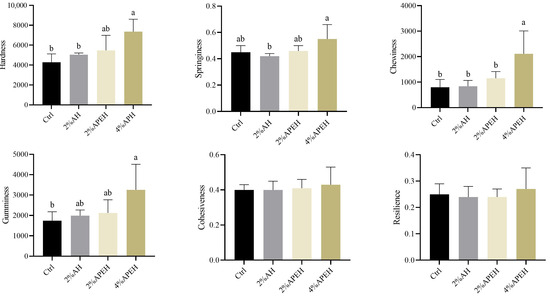
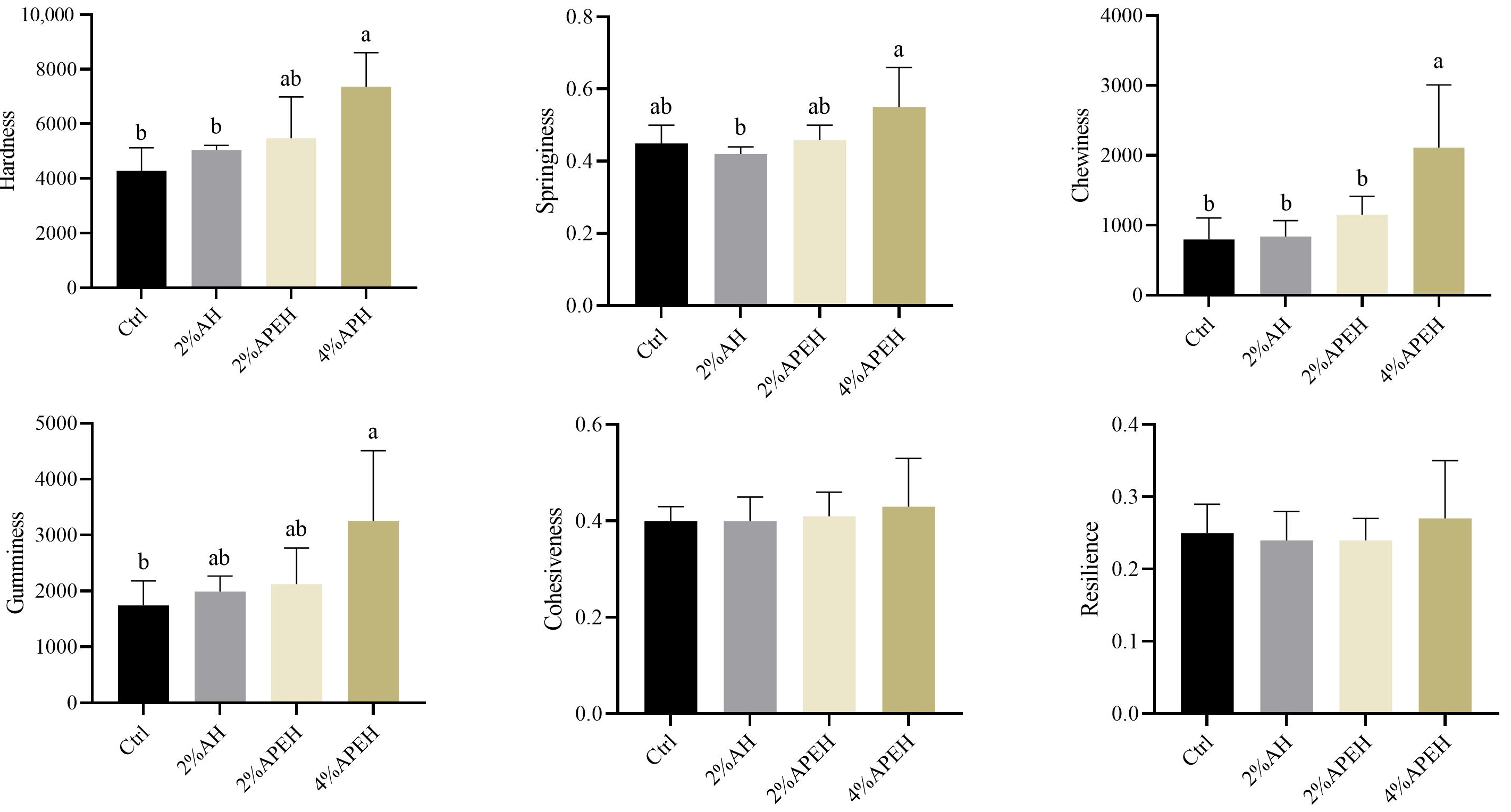
The texture profile of fresh grouper muscle is presented in Figure 1. Dietary supplementation with Artemia hydrolysate significantly enhanced muscle hardness and springiness (p < 0.05), with 4% APEH group showing the most pronounced effects. Specifically, the hardness, chewiness, and gumminess of this group were significantly higher than those in the control group (p < 0.05), whereas no significant differences were observed in cohesiveness and resilience among the groups.
Figure 1.
Texture profile analysis (TPA) of grouper muscle. Note: Bars with the same letter are not significantly different (p > 0.05), whereas bars with different letters indicate significant differences (p < 0.05). Data are the mean ± SE of 3 replicates.
3.4. Muscle Tissue Structure
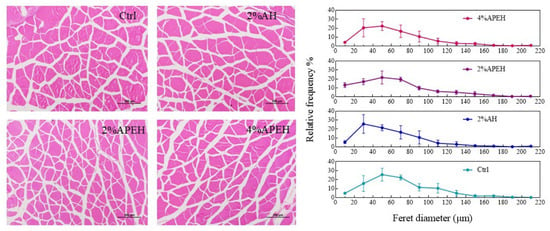
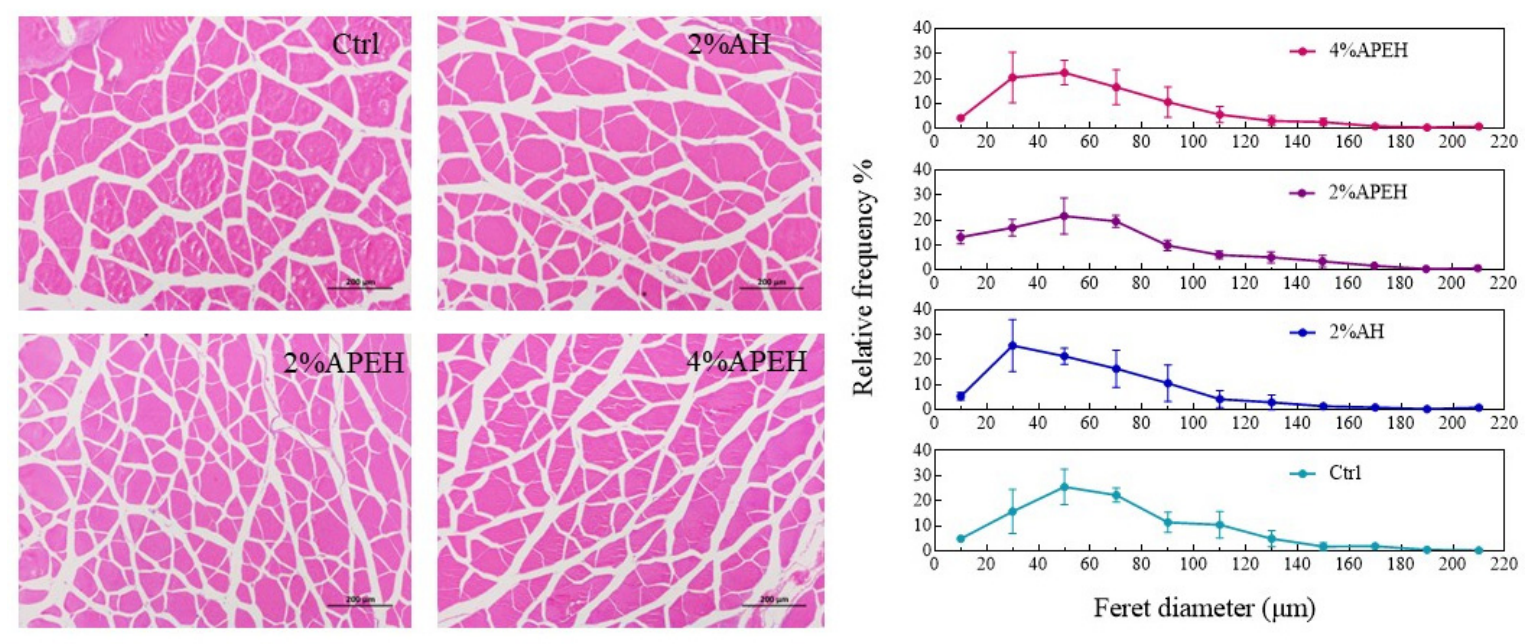
The HE staining showed muscle fiber structure changes among dietary treatments (Figure 2). Minimum Feret diameters ranged from 10 to 130 μm across all groups. The control group showed a predominant peak in the 50–70 μm interval, while the hydrolysate-fed groups displayed a distinct shift toward smaller diameter ranges, indicating that Artemia hydrolysate supplementation reduced muscle fiber size.
Figure 2.
Histological analysis of grouper muscle (left) and frequency distribution of minimum fiber diameter (right).
3.5. Enzyme Activity Assays
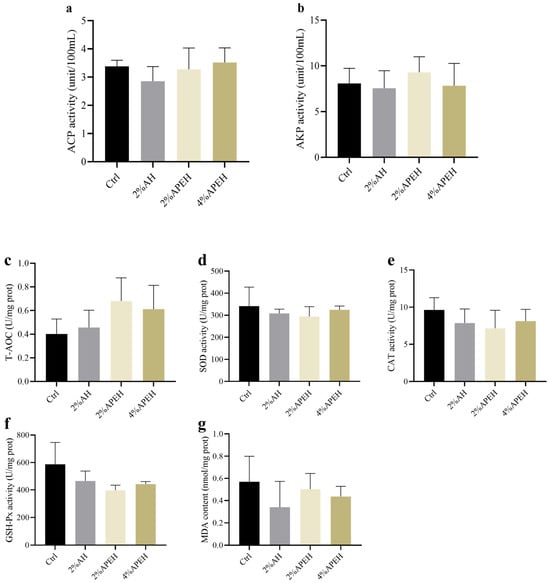
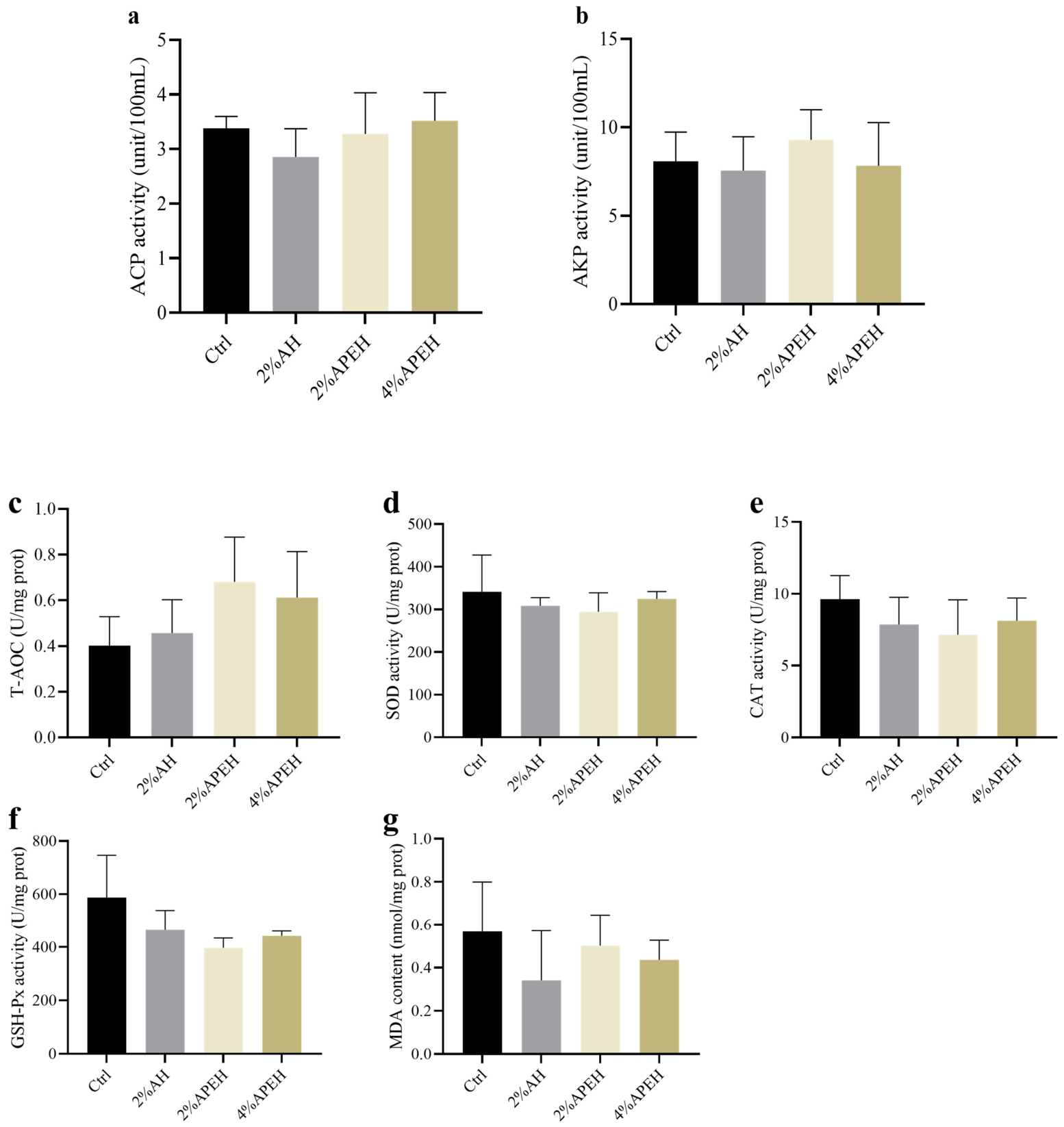
Plasma ACP and AKP activities were measured to evaluate non-specific immune responses. No significant differences (p > 0.05) were observed among the dietary groups, indicating that dietary AH and APEH supplementation did not affect the basal immune status of groupers under normal physiological conditions.
The antioxidant indexes of liver are presented in Figure 3. Dietary inclusion of Artemia hydrolysate (AH and APEH) did not significantly alter hepatic antioxidant enzyme activities compared to the control. Hepatic malondialdehyde (MDA) levels, an indicator of lipid peroxidation, also showed no significant differences among groups. Collectively, these results suggest that Artemia hydrolysate supplementation did not adversely affect the physiological status of the fish.
Figure 3.
Plasma enzyme activities (a,b) and hepatic antioxidant parameters (c–g) of grouper. Data are the mean ± SE of 3 replicates.
3.6. Post Challenge Immune Enzyme Activity
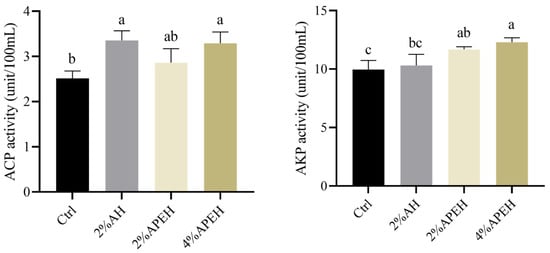
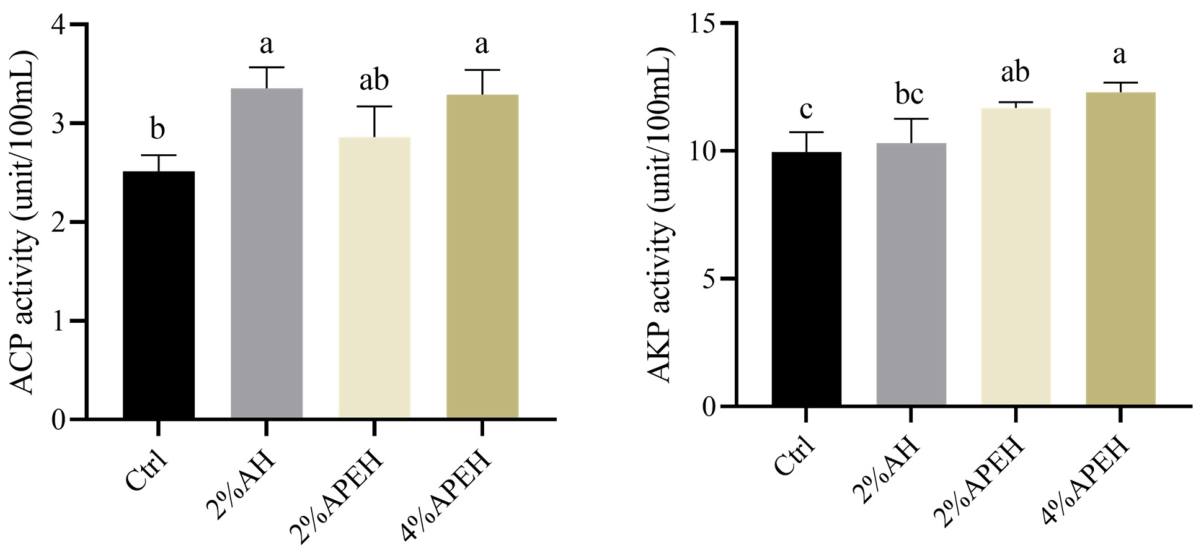
No mortality was observed in any groups during the 7-day Vibrio harveyi challenge. However, plasma analysis revealed that the challenged groups receiving hydrolyzed Artemia in their diet exhibited significantly higher ACP and AKP activities than the control group (Figure 4), indicating that the immune-enhanced effect of Artemia hydrolysate was manifested under infection stress rather than under normal physiological conditions.
Figure 4.
Plasma immune enzyme activities in grouper following Vibrio harveyi challenge. Bars with the same letter are not significantly different (p > 0.05), whereas bars with different letters indicate significant differences (p < 0.05). Data are the mean ± SE of 3 replicates.
4. Discussion
The brine shrimp Artemia is one of the indispensable live foods in aquaculture [3]. Beyond its widely used nauplii, Artemia biomass is nutritionally valuable, providing high-quality protein with balanced essential amino acids and rich long-chain unsaturated fatty acids, and has been recognized as an excellent live food for shrimp and marine fish [33,34]. Recent studies have shown that enzymatically hydrolyzed Artemia, rather than fresh or frozen biomass, exhibits enhanced bioavailability and bioactivity, thereby offering superior nutritional and immunomodulatory benefits to aquatic animals [22]. Artemia contains endogenous digestive enzymes such as amylase and trypsin [35]. In nauplii, trypsin activity was recorded at approximately 1.0 U/g, along with a total proteolytic activity of approximately 32 mg Tyr/(g protein·60 min) [36]. Protease, lipase, and amylase activities of 0.282, 0.182, and 0.295 U mg−1 protein min−1, respectively, have been documented in nauplii [37]. To our knowledge, the protease activity in Artemia biomass has not been systematically reported.
In contrast, exogenous proteases allow for more controlled hydrolysis, with hydrolysate characteristics, such as amino acid composition and molecular weight distribution, depending largely on enzyme type and hydrolysis conditions [38]. The hydrolysis level of proteins is usually characterized by the degree of hydrolysis (DH), i.e., the number of cleaved peptide bonds relative to the number of initial peptide bonds. It is generally used as a proteolysis monitoring parameter, with a higher DH generally indicating more extensive peptide bond cleavage and peptide release [39]. In the present study, the autolysis-derived hydrolysate (AH) exhibited lower degrees of hydrolysis and peptide content than the exogenous-enzyme-derived hydrolysate (APEH), suggesting that treatment with exogenous alkaline protease promoted Artemia protein hydrolysis and converting macromolecular proteins into small-molecule peptides. This is consistent with a recent study, which evaluated Artemia biomass protein hydrolysates prepared using a similar enzymatic approach, and demonstrated that enzymatic hydrolysis effectively degrades large native proteins, with the resulting soluble peptides predominantly concentrating in the low-molecular-weight range (<20 kDa) [22]. Moreover, the amino acid content and profiles differed between AH and APEH. Specifically, the higher total content of glutamic acid (Glu) and phenylalanine (Phe) in APEH were observed, which is primarily attributed to the addition of exogenous enzyme. The commercial alkaline protease is itself a protein and contains amino acids in a specific proportion. In our preparation process, no step was included for the removal of exogenous enzymes; the enzyme’s own protein was retained in the final product (APEH). This inevitably increased the total amino acid pool and altered the overall amino acid profile of the final product. This is supported by a previous finding that Alcalase hydrolysis can influence the amino acid composition, such as the increased proportion of Glu [40].
In the present study, Artemia biomass was evaluated as a low-inclusion feed additive with cost-effectiveness in mind. Our results showed that dietary inclusion of Artemia hydrolysate did not adversely affect the growth performance of grouper, as reflected by survival rate, weight gain rate and specific growth rate. The feed conversion ratio (FCR), defined as feed intake per unit of weight gain, is an important indicator of feed utilization efficiency [41]. However, a notable increase in FCR was observed in the 4% APEH group, suggesting reduced feed efficiency at this inclusion level. This finding is consistent with reports on black soldier fly meal supplementation, where the presence of chitin was suggested to reduce feed digestibility [42]. Since Artemia biomass contains chitin, the higher APEH inclusion likely added enough chitin to reduce nutrient digestibility and increase FCR. Accordingly, mitigating these digestibility limiting constituents in Artemia biomass through preprocessing warrants consideration for practical applications.
Muscle quality, such as textural characteristics, nutritional composition, and flavor, is a key determinant of the market value of aquatic products. Encouragingly, in the present study, Artemia biomass hydrolysate exerted positive effects on muscle nutritional quality. Fatty acid composition of muscle, particularly n-3 fatty acids such as EPA and DHA, is an important indicator of the nutritional value of fish flesh [15]. Importantly, compared with the control, Artemia hydrolysate significantly increased the muscle polyunsaturated fatty acid (PUFA) level, particularly ω-3 HUFAs (EPA, DHA) and ω-6 PUFAs, indicating selective deposition of beneficial fatty acids in muscle. This may be attributed to the highly unsaturated fatty acid content in Artemia biomass, which can be efficiently incorporated into fish muscle. Additionally, the unsaturated fatty acids present in Artemia hydrolysate itself may modulate key lipid metabolism genes, such as elovl5 and Δ6 fad, further contributing to PUFA accumulation [43]. Furthermore, the bioactive peptides generated during enzymatic hydrolysis may also facilitate PUFA deposition. Indeed, previous studies have shown that a soybean bioactive peptide promotes intestinal immune homeostasis and optimizes gut microbiota composition, thereby influencing fatty acid metabolism and the biosynthesis of unsaturated fatty acids [44,45]. These findings indicate that dietary APEH effectively reprograms muscle nutrient partitioning and selectively enhances the deposition of n-3 HUFA, thereby significantly improving the nutritional value of grouper flesh.
The TPA parameters (hardness, springiness, and chewiness, etc.) of muscle are important indicators of muscle quality. These parameters reflect the force required to compress the muscle, its ability to recover after compression, and the estimated energy required to chew it to a state ready for swallowing, respectively [46]. In this study, dietary Artemia hydrolysate significantly improved muscle textural properties, as evidenced by increased hardness, springiness, and chewiness. This finding is consistent with the results reported by Yang et al. [19], who demonstrated that dietary supplementation with an appropriate concentration of hydrolyzed porcine mucosa (HPM) has been shown to significantly upregulate the expression of growth associated genes in groupers, such as transforming growth factor-beta1 (tgf-β1) and follistatin, thereby enhancing flesh hardness and chewiness. Similar findings have been reported in other fish species, e.g., the incorporation of black soldier fly protein hydrolysate improved the springiness and chewiness of rainbow trout (Oncorhynchus mykiss) filets [47]. In line with these literature findings, the 4% APEH group exhibited the highest peptide content (14.59% DW) and showed the most pronounced texture improvements, likely because an abundant pool of low-molecular-weight peptides facilitates muscle protein synthesis [48,49]. In addition to peptides, the elevated HUFA levels in the 4% APEH group may also contribute to texture enhancement. Diets rich in DHA have been reported to enhance muscle collagen content via gene expression regulation, thereby improving firmness and springiness of freshwater fish (Megalobrama amblycephala) [50]. The underlying mechanism of the increased chewiness may be related to the significant reduction in muscle fiber diameter observed in our histological analysis, as thinner, more densely packed muscle fibers typically lead to superior texture and chewiness [51]. Therefore, the conclusion of this section indicates that supplementation with 4% APEH can effectively improve the flesh quality of grouper.
Innate immunity serves as the first line of defense in fish and is crucial for disease resistance [52]. Non-specific immune factors such as ACP and AKP play important roles in enhancing resistance of fish exposed to bacterial pathogens, and their activities can serve as indicators of non-specific immune responses [53]. Our findings show that dietary Artemia hydrolysate did not alter basal levels of these non-specific immune parameters in healthy groupers, suggesting that the hydrolysate does not constitutively activate humoral immunity under normal physiological conditions.
With respect to antioxidant status, total antioxidant capacity (T-AOC) is a key indicator for evaluating the overall antioxidant capacity of an organism, which reflects its ability to scavenge free radicals and counter oxidative stress [54]. In this study, hepatic T-AOC increased following dietary APEH supplementation, although the change did not reach statistical significance, implying a potential antioxidant-enhancing effect that warrants further dose-optimization studies. Other antioxidant indices (e.g., SOD, CAT, MDA, etc.) in plasma and liver suggest that the enhancement of hepatic total antioxidant capacity is likely more attributable to the contribution of non-enzymatic antioxidant substances, such as antioxidant peptides derived from Artemia [23]. MDA is one of the by-products of lipid peroxidation during oxidative stress and is often used as an indicator of the degree of lipid oxidation [55]. In this study, hepatic MDA levels did not differ significantly among the groups, suggesting that Artemia hydrolysate did not induce oxidative damage to the liver under the experimental conditions.
Bacterial challenge tests can be used to evaluate the potential protective effects of experimental diets on disease resistance in fish [56]. Although no significant differences in plasma immune enzyme activities (ACP and AKP) were observed among groups at the end of the feeding trial, the 4% APEH group exhibited significantly higher ACP and AKP activities following Vibrio harveyi challenge. This differential response reflects enhanced immune defense capacity and greater immune reserve in APEH-fed fish. This result is consistent with previous research findings. In hybrid grouper (Epinephelus fuscoguttatus ♀ × E. lanceolatus), dietary supplementation with a peptide hydrolysate and a yeast-derived immune-nutrient complex elevated baseline and post-challenge levels of LZM, ACP, AKP and IgM, and was accompanied by delayed onset and reduced cumulative mortality during a Vibrio harveyi challenge [57]. Meanwhile, some reports indicate that Artemia contain bioactive compounds, including small peptides and nucleotides, which have been reported to possess antimicrobial and anti-inflammatory properties [20,58,59]. These compounds likely serve as immune-stimulants to prime the immune system, enabling a more robust response upon pathogen encounter, without causing unnecessary immune activation under normal conditions.
In contrast to the unresponsive basal immune status, a clear immunostimulatory effect emerged upon pathogenic challenge. Following Vibrio administration, the hydrolysate-fed groups exhibited significantly higher ACP and AKP activities compared to the control, indicating an enhanced immune response and improved capacity to resist pathogenic bacterial infection. This differential response may be attributed to the bioactive compounds present in Artemia, including small peptides and nucleotides, which have been reported to possess antimicrobial and anti-inflammatory properties [21,59,60]. These compounds likely prime the immune system, enabling a more robust response upon pathogen encounter, without causing unnecessary immune activation under normal conditions.
5. Conclusions
Dietary supplementation with 2–4% Artemia enzymatic hydrolysate significantly improved muscle quality characterized by increased muscle hardness, springiness and chewiness, along with elevated PUFA, especially EPA content, in muscle. Furthermore, Artemia hydrolysate supplementation increased total antioxidant capacity and enhanced plasma AKP and ACP activities following pathogen challenge, indicating that it could effectively improve the immune defense capacity of grouper against Vibrio harveyi. The findings demonstrate that Artemia biomass represents a promising feed ingredient and support the practical application of Artemia hydrolysates as functional ingredients in commercial aquafeeds.
Author Contributions
Conceptualization and writing—original draft preparation, Y.L. and W.X.; Investigation and data curation, H.M. and X.Y.; Visualization, X.Y.; Project administration, M.G.; Writing—review and editing, P.S. and L.S.; Supervision, W.X and L.S. All authors have read and agreed to the published version of the manuscript.
Funding
This research was funded by Tianjin Key Laboratory of Marine Resources and Chemistry (Tianjin University of Science and Technology), grant number No. 202604; Tianjin Science and Technology Program Project (23YFZCSN00050).
Institutional Review Board Statement
The study protocol was approved by the Committee on the Ethics of Animal Experiments of Tianjin University of Science and Technology(approval code:2024051501; approval date:20240515).
Informed Consent Statement
Not applicable.
Data Availability Statement
The original contributions presented in this study are included in the article. Further inquiries can be directed to the corresponding authors.
Acknowledgments
The study was supported by the foundation (No. 202604) of Tianjin Key Laboratory of Marine Resources and Chemistry (Tianjin University of Science and Technology); Tianjin Science and Technology Program Project (23YFZCSN00050). The study was performed within the framework of the International Artemia Aquaculture Consortium (IAAC) with contribution number 17.
Conflicts of Interest
The authors declare no conflicts of interest.
References
- World Bank. Scaling Artemia Aquaculture: Synthesis of Global Opportunities. 2026. Available online: https://Artemia.info/news/?id=159 (accessed on 26 July 2026).
- Madkour, K.; Dawood, M.A.O.; Sewilam, H. The use of Artemia for aquaculture industry: An updated overview. Ann. Anim. Sci. 2023, 23, 3–10. [Google Scholar] [CrossRef] [Scilit]
- Van Stappen, G.; Sorgeloos, P.; Rombaut, G. Manual on Artemia Production Use; FAO Fisheries Aquaculture Technical Papers No 702; FAO: Rome, Italy, 2024. [Google Scholar] [CrossRef] [Scilit]
- World Bank. Scaling Artemia Aquaculture for Feed and Food Across Geographies. 2026. Available online: https://Artemia.info/news/?id=159 (accessed on 26 July 2026).
- Kuo, Y.C.; Quan Tran, H.T.; Ho, T.H.; Bharadwaj, A.; Chu, Y.T.; Chen, T.Y.; Nan, F.H.; Lee, P.T. Effects of dietary corn-fermented protein as a sustainable ingredient on growth performance, immune response, and disease resilience in whiteleg shrimp (Litopenaeus vannamei). Fish. Shellfish. Immunol. 2026, 174, 111340. [Google Scholar] [CrossRef] [Scilit] [PubMed]
- Lebria, A.; Ershad Langroudi, H.; Pajand, Z.O.; Sajjadi, M.; Abdollahpour, H. Evaluation of superworm (Zophobas morio) larvae meal as a fish meal substitute in juvenile stellate sturgeon (Acipenser stellatus) diets. Aquac. Rep. 2026, 48, 103620. [Google Scholar] [CrossRef] [Scilit]
- Mugwanya, M.; Kimera, F.; Sewilam, H. Bacterial single-cell proteins as sustainable aquafeeds: A meta-analysis of growth, physiological homeostasis, and antioxidant capacity. Aquac. Nutr. 2026, 2026, 4548847. [Google Scholar] [CrossRef] [Scilit] [PubMed]
- Amin, M.; Intan, B.; Putri, M.A.R.; Mukti, A.T.; Alamsjah, M.A. Effect of protein sources in formulated diets on growth performance, feed utilization, survival rate, and reproductive performance of Artemia franciscana. Aquac. Int. 2023, 31, 1893–1910. [Google Scholar] [CrossRef] [Scilit]
- Jumalon Ogburn, N.; Duan, L.; Subashchandrabose, S.R.; Sorgeloos, P.; O’Connor, W.; Megharaj, M.; Naidu, R. Agricultural wastes for brine shrimp Artemia production: A review. Rev. Aquac. 2023, 15, 1159–1178. [Google Scholar] [CrossRef] [Scilit]
- Vahdat, S.; Noori, F.; Van Stappen, G.; Agh, N. Dietary inclusion of agricultural by-products, algae, and probiotics in a dry feed: Effects on growth performance, survival, immune response, biochemical indices, and reproductive traits of Artemia parthenogenetica. Aquac. Rep. 2026, 46, 103342. [Google Scholar] [CrossRef] [Scilit]
- Nguyen, T.N.A.; Huynh, T.T.; Nguyen, V.H. Evaluating Artemia biomass and gut weed (Ulva intestinalis) meal as a dietary protein source for black tiger shrimp (Penaeus monodon) postlarvae. Egypt. J. Aquat. Res. 2023, 49, 97–103. [Google Scholar] [CrossRef] [Scilit]
- Anh, N.T.N.; Hien, T.T.T.; Mathieu, W.; Hoa, N.V.; Sorgeloos, P. Effect of fishmeal replacement with Artemia biomass as a protein source in practical diets for the giant freshwater prawn Macrobrachium rosenbergii. Aquac. Res. 2009, 40, 669–680. [Google Scholar] [CrossRef] [Scilit]
- Shyne Anand, P.S.; Aravind, R.; Balasubramanian, C.P.; Dayal, J.S.; Kumar, S.; Vidhu Rajan, R.; Balamurugan, S.; Rajamanickam, S.; Sivagnanam, S.; Kannappan, S.; et al. Artemia biomass: A functional live maturation feed for Indian white shrimp, Penaeus indicus broodstock, and its culture prospective under diverse management regime. Aquaculture 2024, 588, 740851. [Google Scholar] [CrossRef] [Scilit]
- Qu, Y.; Yin, Z.; Fan, X.; Hu, H.; Cui, H.; Cui, Z.; Qu, K.; Li, H. A comparative analysis of growth and nutritional quality of the hybrid grouper (Epinephelus fuscoguttatus ♀ × Epinephelus lanceolatus ♂) in a simulated pond system and a recirculating aquaculture system. Front. Mar. Sci. 2024, 11, 1378735. [Google Scholar] [CrossRef] [Scilit]
- Li, H.; Chen, Y.; Li, M.; Huang, J.; Zu, X.; Liao, T.; Xiong, G. Effects of temporary rearing with organic selenium on the muscle flavor and texture properties of largemouth bass (Micropterus salmoides). Food Chem. 2022, 397, 133747. [Google Scholar] [CrossRef] [Scilit] [PubMed]
- Chen, F.; He, Y.; Li, X.; Zhu, H.; Li, Y.; Xie, D. Improvement in muscle fatty acid bioavailability and volatile flavor in tilapia by dietary α-linolenic acid nutrition strategy. Foods 2024, 13, 1005. [Google Scholar] [CrossRef] [Scilit] [PubMed]
- Wei, Y.; Fan, Y.; Li, Y.; Bian, C.; Ma, Q.; Liang, M.; Xu, H. Evaluation of cottonseed protein hydrolysate for replacing fish meal in diets of juvenile tiger puffer (Takifugu rubripes). Anim. Feed. Sci. Technol. 2025, 324, 116307. [Google Scholar] [CrossRef] [Scilit]
- Poonnual, D.; Tola, S.; Yuangsoi, B. Evaluation of functional marine protein hydrolysates as fish meal replacements in low-fish-meal diets: Effects on growth performance, feed utilization, and health status of Asian Seabass (Lates calcarifer). Animals 2025, 15, 3285. [Google Scholar] [CrossRef] [Scilit] [PubMed]
- Yang, X.; Zhi, X.; Song, Z.; Wang, G.; Zhao, X.; Chi, S.; Tan, B. Flesh quality of hybrid grouper (Epinephelus fuscoguttatus ♀ × Epinephelus lanceolatus ♂) fed with hydrolyzed porcine mucosa-supplemented low fishmeal diet. Anim. Nutr. 2022, 8, 114–124. [Google Scholar] [CrossRef] [Scilit] [PubMed]
- Tao, M.; Sun, A.; Shao, H.; Ye, H.; Yu, G.; Chen, D.; Zhang, W. Heterologous expression and antimicrobial targets of a novel glycine-rich antimicrobial peptide from Artemia franciscana. Mar. Drugs 2025, 23, 330. [Google Scholar] [CrossRef] [Scilit] [PubMed]
- Thomas, A.M.; Noorjahan, K.K.; Sunil, S.C.; Anjali, V.P.; Raj, N.; Dhanya Lenin, K.L.; Antony, S.P. Artemin: A brine shrimp-derived peptide and its influence on algal growth. Microbe 2025, 7, 100315. [Google Scholar] [CrossRef] [Scilit]
- Santos, R.F.B.; Godoy, A.C.; Fantini-Hoag, L.; Gomes, S.F.; Moraes, L.B.S.D.; Cahú, T.B.; Silva, J.F.; Galvez, A.O.; Honorato, C.A.; Bezerra, R.D.S. Artemia biomass protein hydrolysate as a new feed for aquaculture: Litopenaeus vannamei (Mysis) performance. Aquac. Int. 2025, 33, 250. [Google Scholar] [CrossRef] [Scilit]
- Li, Z.; Yan, X.R.; Xie, W.; Ma, H.R.; Chen, Y.H.; Sui, L.Y. Optimization of enzymatic hydrolysis of Artemia biomass and bioactivity evaluation. J. Tianjin Univ. Sci. Technol. 2025. (In Chinese) [Google Scholar] [CrossRef]
- Wang, S.; Gan, Y.; Mao, X.; Kan, H.; Li, N.; Zhang, C.; Wang, Z.; Wang, Y. Antioxidant activity evaluation of Oviductus Ranae protein hydrolyzed by different proteases. Molecules 2021, 26, 1625. [Google Scholar] [CrossRef] [Scilit] [PubMed]
- Hao, L.; Li, X.; Zhao, B.; Song, X.; Zhang, Y.; Liang, Q. Enzymatic hydrolysis optimization of yak whey protein concentrates and bioactivity evaluation of the ultrafiltered peptide fractions. Molecules 2024, 29, 1403. [Google Scholar] [CrossRef] [Scilit] [PubMed]
- GB/T 18246-2019; Determination of amino acids in feeds; Standards Press of China: Beijing, China, 2019.
- Horwitz, W.; Latimer, G.W. (Eds.) AOAC Animal Feed. In Official Methods of Analysis of Official Analytical Chemists International, 18th ed.; Association of Official Analytical Chemists: Arlington, VA, USA, 2005; pp. 1–52. [Google Scholar]
- Shen, G.M.; Shi, C.Y.; Fan, C.; Jia, D.; Wang, S.Q.; Xie, G.S.; Li, G.Y.; Mo, Z.L.; Huang, J. Isolation, identification and pathogenicity of Vibrio harveyi, the causal agent of skin ulcer disease in juvenile hybrid groupers Epinephelus fuscoguttatus × Epinephelus lanceolatus. J. Fish. Dis. 2017, 40, 1351–1362. [Google Scholar] [CrossRef] [Scilit] [PubMed]
- Amoah, K.; Tan, B.; Zhang, S.; Chi, S.; Yang, Q.; Liu, H.; Yang, Y.; Zhang, H.; Dong, X. Host gut-derived Bacillus probiotics supplementation improves growth performance, serum and liver immunity, gut health, and resistive capacity against Vibrio harveyi infection in hybrid grouper (Epinephelus fuscoguttatus ♀ × Epinephelus lanceolatus ♂). Anim. Nutr. 2023, 14, 163–184. [Google Scholar] [CrossRef] [Scilit] [PubMed]
- Xie, W.; Deng, H.G.; Song, M.Y.; Du, G.R.; Lu, Y.L.; Gao, M.R.; Sui, L.Y. The effects of diet, salinity and temperature on HUFA accumulation in Artemia. Aquaculture 2024, 592, 741154. [Google Scholar] [CrossRef] [Scilit]
- Zhao, D.; Chong, Y.; Hu, J.; Zhou, X.; Xiao, C.; Chen, W. Proteomics and metagenomics reveal the relationship between microbial metabolism and protein hydrolysis in dried fermented grass carp using a lactic acid bacteria starter culture. Curr. Res. Food Sci. 2022, 5, 2316–2328. [Google Scholar] [CrossRef] [Scilit] [PubMed]
- Chen, W.; Miraji, S.M.; Yang, L.; Wu, J.; Ma, X.; Jin, W.; Wang, L.; Wang, Y.; Xu, P.; Cheng, H.; et al. Impact of pickling pretreatment on the meat quality of frozen–thawed freshwater drum (Aplodinotus grunniens). Foods 2025, 14, 3845. [Google Scholar] [CrossRef] [Scilit] [PubMed]
- Nguyen, T.N.A.; Van Hoa, N.; Van Stappen, G.; Sorgeloos, P. Effect of different supplemental feeds on proximate composition and Artemia biomass production in salt ponds. Aquaculture 2009, 286, 217–225. [Google Scholar] [CrossRef] [Scilit]
- El-Gamal, M.M.; Othman, S.I.; Abdel-Rahim, M.M.; Mansour, A.T.; Alsaqufi, A.S.; El Atafy, M.M.; Mona, M.H.; Allam, A.A. Palaemon and Artemia supplemented diet enhances sea bass, Dicentrarchus labrax, broodstock reproductive performance and egg quality. Aquac. Rep. 2020, 16, 100290. [Google Scholar] [CrossRef] [Scilit]
- Ramena, Y.; Sharma, A. Artemia, probiotics, and immunostimulant: Essential elements for optimal Litopenaeus vannamei shrimp production. Open Microbiol. J. 2025, 19, e18742858416239. [Google Scholar] [CrossRef] [Scilit]
- García-Ortega, A.; Verreth, J.A.J.; Coutteau, P.; Segner, H.; Huisman, E.A.; Sorgeloos, P. Biochemical and enzymatic characterization of decapsulated cysts and nauplii of the brine shrimp Artemia at different developmental stages. Aquaculture 1998, 161, 501–514. [Google Scholar] [CrossRef] [Scilit]
- Ahmadniaye Motlagh, H.; Safari, O.; Farhangi, M.; Lashkarizadeh-Bami, M. Evolution of the digestive enzymes and bacterial changes of the gastrointestinal tract of the Artemia urmiana during growth period. Invertebr. Surviv. J. 2017, 14, 312–323. [Google Scholar] [CrossRef]
- Sun, L.; Wang, X.; Li, R.; Dong, W.; Gong, T.; Song, W.; Li, M.; Zhang, S.; Huang, S.; Gao, J. Preparation, characterization, antioxidant activity evaluation, and potential application of Peruvian squid liver protein hydrolysates. Food Chem. X 2025, 30, 102998. [Google Scholar] [CrossRef] [Scilit] [PubMed]
- Zhu, X.Q.; Zhang, S.L.; Duan, J.W.; Ding, Y.; Zhang, T.H.; Dong, Z.Y. The influence of different physical pretreatments on the enzymatic hydrolysis effect and flavor characteristics of high-temperature soybean meal. Food Chem. 2025, 495, 146549. [Google Scholar] [CrossRef] [Scilit] [PubMed]
- Dey, S.S.; Dora, K.C. Optimization of the production of shrimp waste protein hydrolysate using microbial proteases adopting response surface methodology. J. Food Sci. Technol. 2014, 51, 16–24. [Google Scholar] [CrossRef] [Scilit] [PubMed]
- Elvy, J.E.; Symonds, J.E.; Hilton, Z.; Walker, S.P.; Tremblay, L.A.; Casanovas, P.; Herbert, N.A. The relationship of feed intake, growth, nutrient retention, and oxygen consumption to feed conversion ratio of farmed saltwater Chinook salmon (Oncorhynchus tshawytscha). Aquaculture 2022, 554, 738184. [Google Scholar] [CrossRef] [Scilit]
- Eggink, K.M.; Pedersen, P.B.; Lund, I.; Dalsgaard, J. Chitin digestibility and intestinal exochitinase activity in Nile tilapia and rainbow trout fed different black soldier fly larvae meal size fractions. Aquac. Res. 2022, 53, 5536–5546. [Google Scholar] [CrossRef] [Scilit]
- Wang, C.; Zheng, Z.; Wang, Y.; Wu, Q.; Sun, Y.; Gao, Y. Impact of dietary docosahexaenoic acid: Eicosapentaenoic acid ratio on growth, fatty acid composition, lipid metabolism, and antioxidant status of juvenile hybrid grouper (Brown-marbled Grouper Epinephelus fuscoguttatus ♀ × Giant Grouper E. lanceolatus ♂). N. Am. J. Aquac. 2022, 84, 206–218. [Google Scholar] [CrossRef] [Scilit]
- Peng, H.; Song, X.; Chen, J.; Xiong, X.; Yang, L.; Yu, C.; Qiu, M.; Zhang, Z.; Hu, C.; Zhu, S.; et al. Soybean bioactive peptide supplementation improves gut health and metabolism in broiler chickens. Poult. Sci. 2025, 104, 104727. [Google Scholar] [CrossRef] [Scilit] [PubMed]
- Zhang, Z.; Tang, S.; Wang, Z.; Han, J.; Zhou, J.; Lu, C.; Liu, B.; Sun, X.; Yu, R.; Wang, R.; et al. Protective effect of marine animal hydrolysis-peptides on adjuvant-induced arthritis in mice by gut microbiota and short-chain fatty acids. Food Sci. Hum. Wellness 2025, 14, 9250089. [Google Scholar] [CrossRef] [Scilit]
- Johnson, A.; Morey, A.; Su, B.; Coogan, M.; Hettiarachchi, D.; Alston, V.; Xing, D.; Wang, J.; Li, S.; Hasin, T.; et al. Evaluation of texture, sensory, and fillet color traits in channel catfish (Ictalurus punctatus), blue catfish (Ictalurus furcatus), and the hybrid catfish (channel catfish ♀ × blue catfish ♂). J. World Aquac. Soc. 2025, 56, e13113. [Google Scholar] [CrossRef] [Scilit]
- Chen, Y.; Li, X.; Chen, A.; Liao, Z.; Gu, X.; Chen, X.; Ye, T.; Zhang, W.; He, X.; Li, W.; et al. A novel black soldier fly protein hydrolysate improves the muscle growth of rainbow trout (Oncorhynchus mykiss) via the PI3K/AKT/mTOR pathway. Anim. Nutr. 2026, 24, 278–290. [Google Scholar] [CrossRef] [Scilit] [PubMed]
- Li, X.; Xu, T.; He, Y.; Jin, M.; Zhang, Y.; Tang, F.; Zhou, Q. Dietary enzyme-hydrolyzed marine proteins supplementation promotes appetite, enhances lipid and protein metabolism in Litopenaeus vannamei fed reduced fish meal diets. Aquac. Rep. 2025, 44, 103026. [Google Scholar] [CrossRef] [Scilit]
- Wang, Q.; Du, J.; Ye, E.; Bao, Z.; Zhao, M.; Wang, J.; Feng, F.; Min, W.; Yang, H. Wheat peptides improved sarcopenia by enhancing muscle protein synthesis in mice and zebrafish. Food Biosci. 2025, 74, 107717. [Google Scholar] [CrossRef] [Scilit]
- Wang, X.; Dong, Y.; Huang, Y.; Tian, H.; Zhao, H.; Wang, J.; Zhou, J.; Liu, W.; Cao, X.; Li, X.; et al. Docosahexaenoic acid-enriched diet improves the flesh quality of freshwater fish (Megalobrama amblycephala): Evaluation based on nutritional value, texture and flavor. Food Chem. 2024, 460, 140518. [Google Scholar] [CrossRef] [Scilit] [PubMed]
- Lin, W.L.; Zeng, Q.X.; Zhu, Z.W. Different changes in mastication between crisp grass carp (Ctenopharyngodon idellus C.et V) and grass carp (Ctenopharyngodon idellus) after heating: The relationship between texture and ultrastructure in muscle tissue. Food Res. Int. 2009, 42, 271–278. [Google Scholar] [CrossRef] [Scilit]
- Mokhtar, D.M.; Zaccone, G.; Alesci, A.; Kuciel, M.; Hussein, M.T.; Sayed, R.K.A. Main components of fish immunity: An overview of the fish immune system. Fishes 2023, 8, 93. [Google Scholar] [CrossRef] [Scilit]
- Cheng, Z.; Wang, Q.; Lei, K.; Yao, R.; Li, Y.; Xu, L.; Wang, Q. Positive effects of dietary postbiotics on growth, intestinal health, immunity, and ammonia nitrogen tolerance in hybrid grouper (Epinephelus fuscoguttatus ♀ × Epinephelus lanceolatus ♂). Comp. Immunol. Rep. 2026, 10, 200264. [Google Scholar] [CrossRef] [Scilit]
- Wu, J.P.; Xiong, W.; Liu, W.; Wu, J.M.; Ruan, R.; Fu, P.; Wang, Y.; Liu, Y.; Leng, X.; Li, P.; et al. The effects of dietary n-3 highly unsaturated fatty acids on growth, antioxidant capacity, immunity, and oxylipin profiles in Acipenser dabryanus. Antioxidants 2024, 13, 421. [Google Scholar] [CrossRef] [Scilit] [PubMed]
- Song, H.; Suo, X.; Huang, W.; Liu, Y.; Huang, X.; Cai, W.; Liu, H.; Tan, B.; Dong, X. α-lipoic acid, tea polyphenols and their combined application affect the growth performance, biochemical indices, and inflammation-related indices of hybrid grouper (♀ Epinephelus fuscoguttatus × ♂ E. lanceolatus) ingests a high fat-diet. Aquac. Rep. 2025, 43, 102910. [Google Scholar] [CrossRef] [Scilit]
- Cao, Z.; Yang, Q.; Kang, A.; Wang, G.; Li, P.; Qiu, G.; Wang, J.; Liu, C.; Sun, Y. Probiotic properties of Bacillus licheniformis HN318 and comparison of the effects of its bacterial cells and cultures on growth, immunity and disease resistance of hybrid grouper (Epinephelus polyphekadion ♂ × Epinephelus fuscoguttatus ♀). Front. Mar. Sci. 2025, 12, 1548955. [Google Scholar] [CrossRef] [Scilit]
- Jing, F.; Yin, X.; Ren, Y.; Han, Y.; Zhou, Q.; Xia, B.; Li, Q.; Liu, P. Dietary supplementation with polypeptin and bioture improves growth, feed utilization, antioxidant capacity, and disease resistance in juvenile hybrid grouper (Epinephelus fuscoguttatus ♀ × E. lanceolatus). Front. Mar. Sci. 2025, 12, 1700264. [Google Scholar] [CrossRef] [Scilit]
- Forouzandeh, G.; Sabouni, F.; Dizaji, A.; Salehloo, E.B. Anti-inflammatory effect of Artemia protein extract on the LPS-induced primary rat astrocyte cells as a model of Alzheimer’s disease. Int. J. Clin. Case Rep. Rev. 2025, 27. [Google Scholar] [CrossRef] [Scilit]
- Vaseli-Hagh, N.; Deezagi, A.; Shahraki, M.K. Anti-aging effects of the proteins from Artemia extract on human fibroblasts cell proliferation and collagen expression in induced aging conditions. Ann. Biotechnol. 2018, 3, 1015. [Google Scholar] [CrossRef] [Scilit]
- Carpena-Torres, C.; Pintor, J.; Huete-Toral, F.; Martin-Gil, A.; Rodríguez-Pomar, C.; Martínez-Águila, A.; Carracedo, G. Efficacy of artificial tears based on an extract of Artemia salina containing dinucleotides in a rabbit dry eye model. Int. J. Mol. Sci. 2021, 22, 11999. [Google Scholar] [CrossRef] [Scilit] [PubMed]

Disclaimer/Publisher’s Note: The statements, opinions and data contained in all publications are solely those of the individual author(s) and contributor(s) and not of MDPI and/or the editor(s). MDPI and/or the editor(s) disclaim responsibility for any injury to people or property resulting from any ideas, methods, instructions or products referred to in the content. |
© 2026 by the authors. Licensee MDPI, Basel, Switzerland. This article is an open access article distributed under the terms and conditions of the Creative Commons Attribution (CC BY) license.