


Abstract
The working configuration of fixed stow nets is strongly dependent on hydrodynamic support generated by ambient flow. To clarify the hydrodynamic performance and morphological responses of a two-stick stow net used in the South China Sea, a model net was designed based on Tauti’s law, and flume-tank experiments were conducted under different flow velocities. The net configuration, net-mouth geometry, net-body deformation, and drag characteristics were analyzed. The results showed that flow velocity strongly affected net expansion, structural stability, and drag under the tested conditions. At the model scale, the stow net collapsed at 0.2 m/s but maintained a relatively complete and stable working configuration at 0.3 m/s and above, corresponding to a prototype-equivalent inflow velocity of 0.39 m/s. Therefore, the transition between collapsed and stable configurations was constrained to the interval of 0.2–0.3 m/s, and 0.39 m/s represents the lowest tested stable condition rather than a precisely determined critical threshold. With increasing flow velocity, the front section of the net body moved slightly downward, the net mouth height increased slightly, and the net mouth width decreased slightly, indicating a response pattern of vertical stretching and lateral contraction. Drag increased with flow velocity following a pronounced power–law relationship, reflecting a nonlinear increase in hydrodynamic loading. These results demonstrate the relationship between morphological adjustment and hydrodynamic loading in two-stick stow nets and provide a reference for gear design optimization, operating-period selection, and safety assessment under similar hydrodynamic conditions.
Key Contribution:
This study reveals that flow velocity strongly affects the expansion, stability and drag performance of a two-stick stow net in the South China Sea. A prototype-equivalent inflow velocity of 0.39 m/s was identified as the lowest tested velocity associated with a stable net configuration, providing a reference for stow-net design optimization and operational safety assessment.
1. Introduction
The performance of current-driven fixed fishing gears is highly sensitive to ambient flow conditions [1,2]. For two-stick stow nets deployed in the South China Sea, insufficient current may prevent the net mouth from fully opening, resulting in an unstable or partially collapsed configuration and reduced filtering efficiency [3,4]. As the current increases, the net can gradually expand into a working configuration, accompanied by changes in net-body deformation and hydrodynamic drag [5]. However, previous studies on stow nets have focused mainly on selectivity, catch performance, and resource utilization [6,7,8], whereas the minimum flow condition required for maintaining a stable working configuration of two-stick stow nets remains poorly quantified. This lack of quantitative hydrodynamic evidence limits the rational design, operational assessment, and improvement of stow-net gears. Therefore, a systematic experimental investigation of the flow-dependent morphology and drag of two-stick stow nets is needed.
Stow nets are a typical passive fishing gear widely used along the coastal waters of China, playing an important role in nearshore fishery production and fishermen’s income [1,9,10,11]. Unlike active gears such as trawls, stow nets rely mainly on natural tidal currents to drive water and catch into the net, so their operating efficiency, opening state, and structural stability are strongly constrained by flow conditions. Tidal currents not only deform the netting and codend but also alter the drag and local force distribution of the gear, thereby affecting catch retention, escapement, and operational safety [12,13]. Clarifying the loading and deformation behavior of stow nets in a flow field from a hydrodynamic perspective is therefore an important basis for optimizing their structural design and improving their operating performance.
With the development of fishing gear engineering and experimental fluid mechanics, model experiments have become a common approach for studying the hydrodynamic performance of flexible fishing gear [5]. Among the available methods, Tauti’s law coordinates the relationships among current velocity, mesh size, twine diameter, and material specific gravity between the model and the prototype gear, providing a theoretical basis for scaled model design and mechanical conversion [14,15]. Using this approach, previous studies have systematically analyzed the drag characteristics, mouth opening, and structural stability of gears such as trawls and purse seines [16,17,18], showing that the drag of flexible netting generally increases nonlinearly with current velocity, while mesh structure and material properties markedly affect the deformation response and geometry retention capacity of the gear [15,16,19].
Compared with trawls and purse seines, stow nets are a typical set of flexible gear whose hydrodynamic response shows stronger environmental dependence and structural complexity [1,3]. Under tidal action, the overall morphological configuration of a stow net is governed not only by current velocity and direction but may also undergo force redistribution caused by local deformation of different parts of the net body [4]; meanwhile, morphological changes in the net mouth and body further influence the overall filtering capacity and drag characteristics [20,21]. Nevertheless, compared with the relatively extensive studies on active fishing gears and other flexible net structures, the flow-dependent morphological variation of two-stick stow nets in the South China Sea and its relationship with drag have not yet been systematically quantified.
Accordingly, this study constructed a physical model of a typical two-stick stow net from the South China Sea based on Tauti’s law and conducted flume experiments to analyze the morphological response of the overall outline, net mouth, and key parts of the net body under different current velocities, while measuring the corresponding hydrodynamic drag. The study aims to reveal the relationship between morphological deformation and drag response of the two-stick stow net, to provide a quantitative basis for structural optimization, operational safety assessment, and subsequent codend scale improvement of stow net gear in the South China Sea, and to offer a reference for hydrodynamic research on nearshore set fishing gear.
2. Materials and Methods
2.1. Prototype Net and Model Net
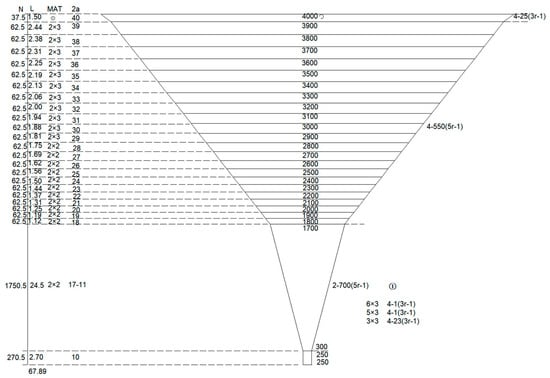
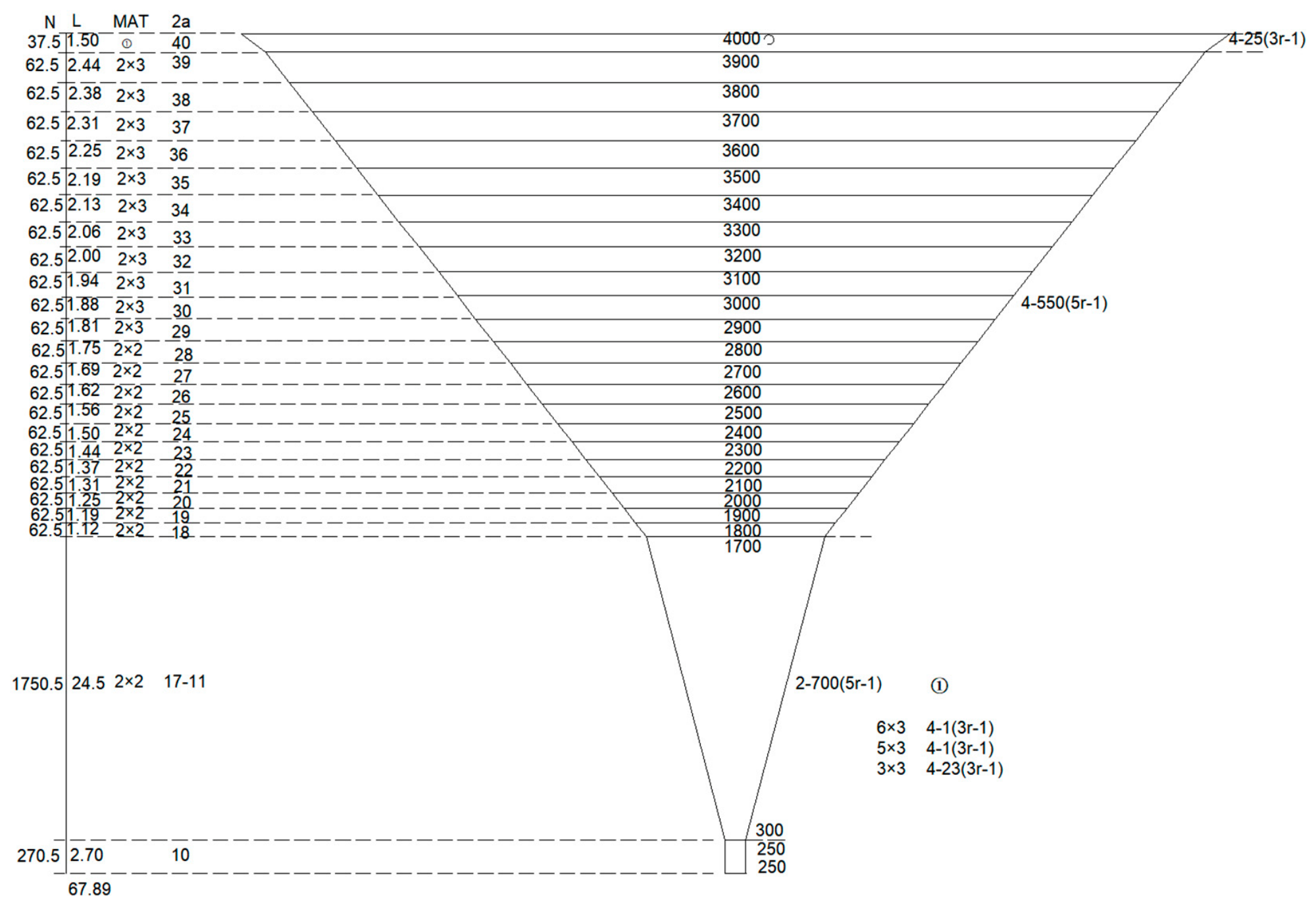
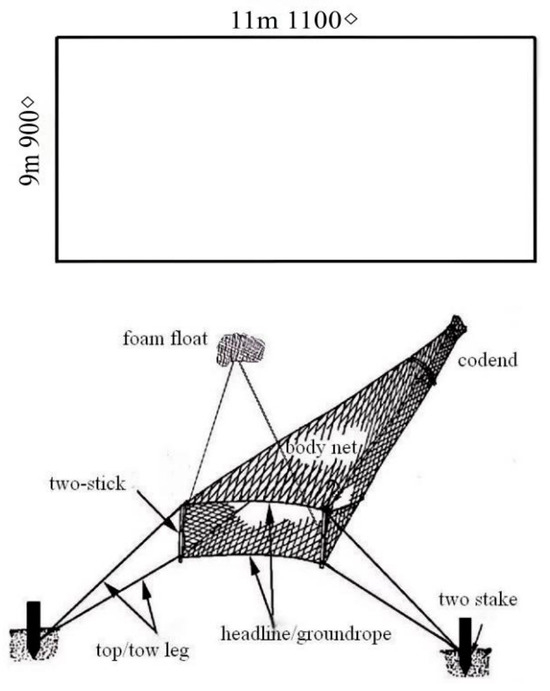
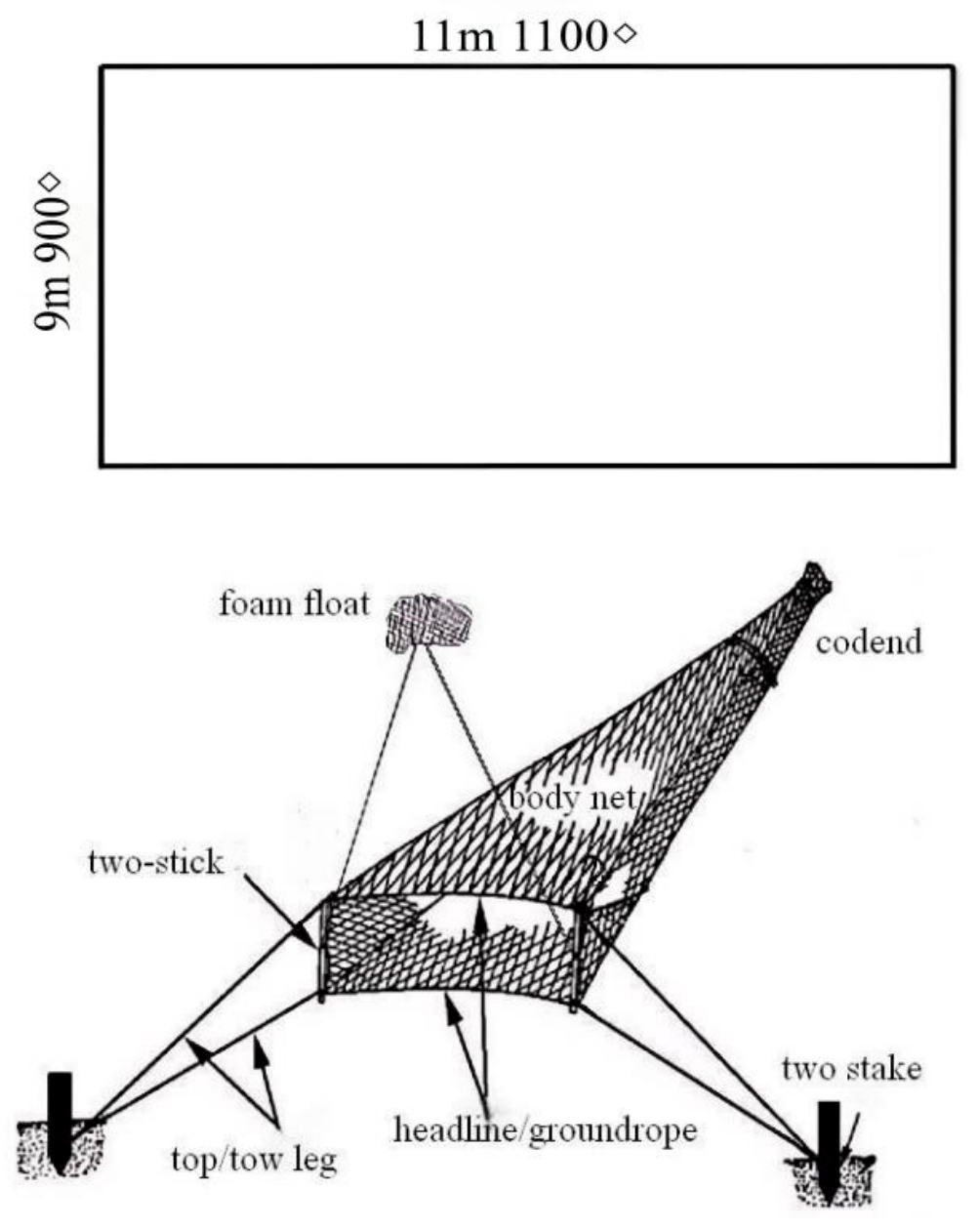
A nearshore stow net from Yanan Town, Xinhui District, Jiangmen City, Guangdong Province, was used as the prototype net (Figure 1 and Figure 2). This gear is a two-stick stow net with principal dimensions of 160.00 m × 67.89 m; that is, the stretched perimeter of the net mouth to which the netting is attached is 160.00 m, and the total stretched longitudinal length of the netting is 67.89 m. The net body consists of 30 netting panels, each with a different mesh size, decreasing successively from 40 mm at the net mouth to 11 mm at the codend. The headline and groundrope were polyethylene laid ropes 11 m in length and 15 mm in diameter; the side ropes were polyethylene laid ropes 9 m in length and 15 mm in diameter; the top and tow leg were 9 m in length and 15 mm in diameter; and the two vertical sticks were wooden poles 9 m in length and 90 mm in diameter.
Figure 1.
Schematic diagram of the prototype stow net.
Figure 2.
Schematic diagram of the stow net operation.
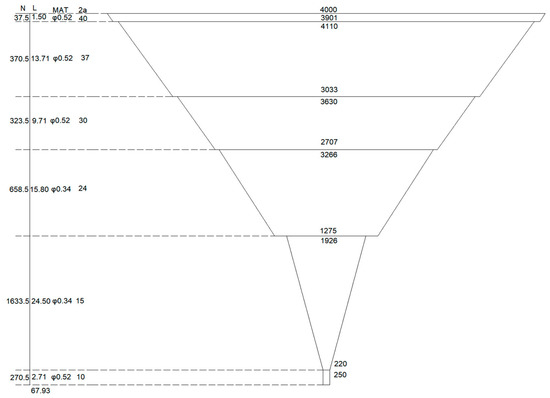
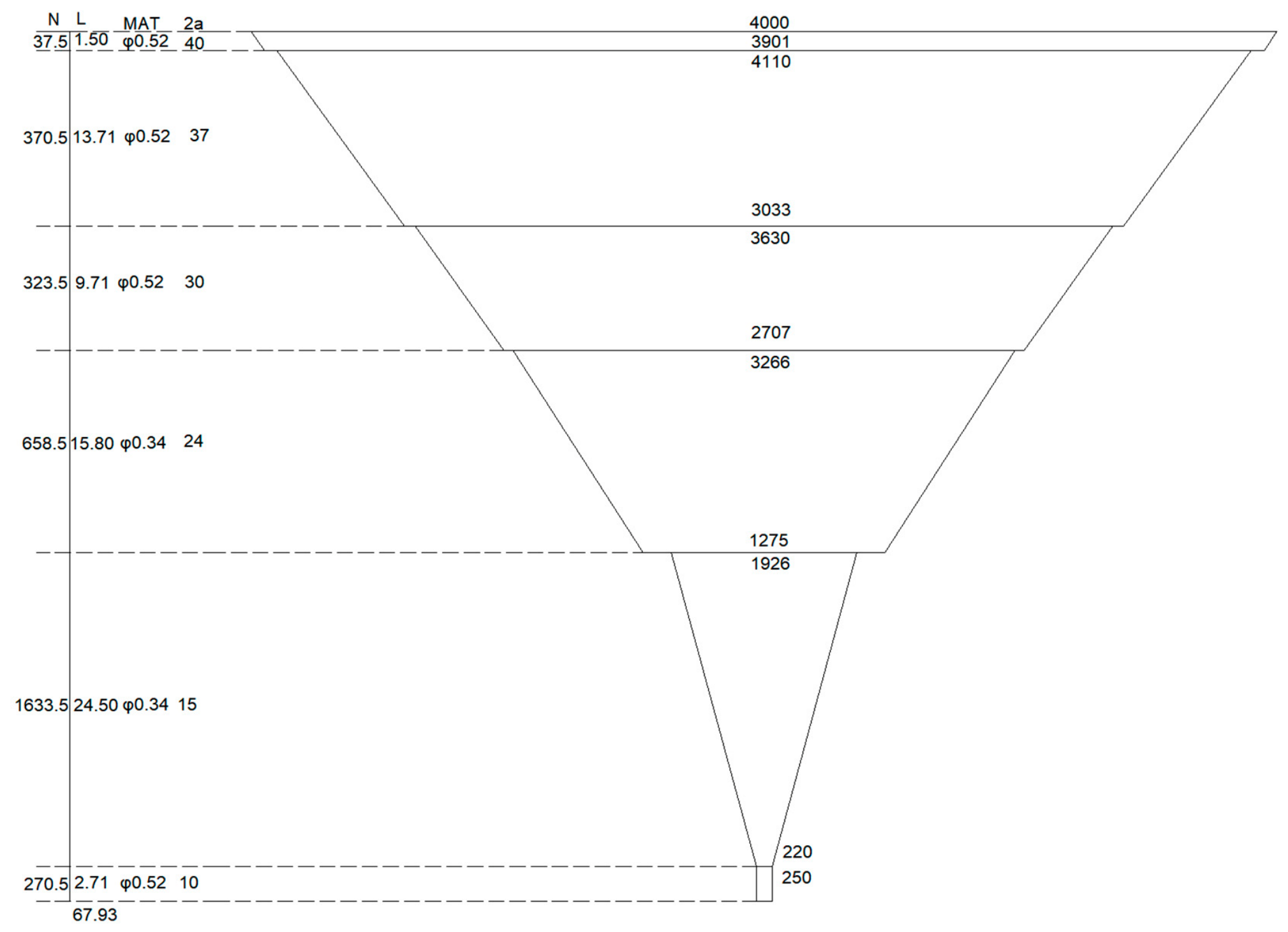
Building a model net directly from a body of 30 panels is impractical; therefore, on the premise of keeping the principal dimensions, twine area, and net geometry (panel taper) essentially unchanged, and taking the cutting process into account, an intermediate netting plan was first developed. Then, the final model net was designed based on this intermediate netting plan (Figure 3 and Table 1).
Figure 3.
Schematic diagram of the intermediate stow net.
Table 1.
Parameters of the intermediate stow net.
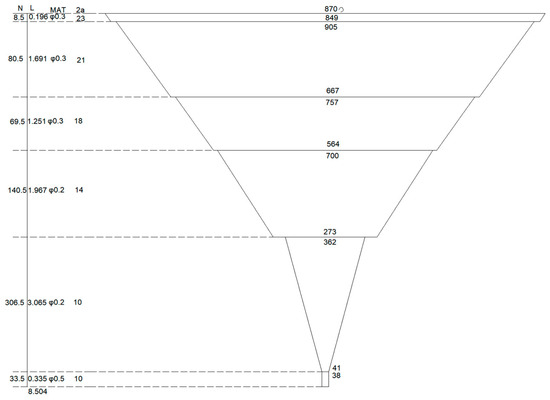
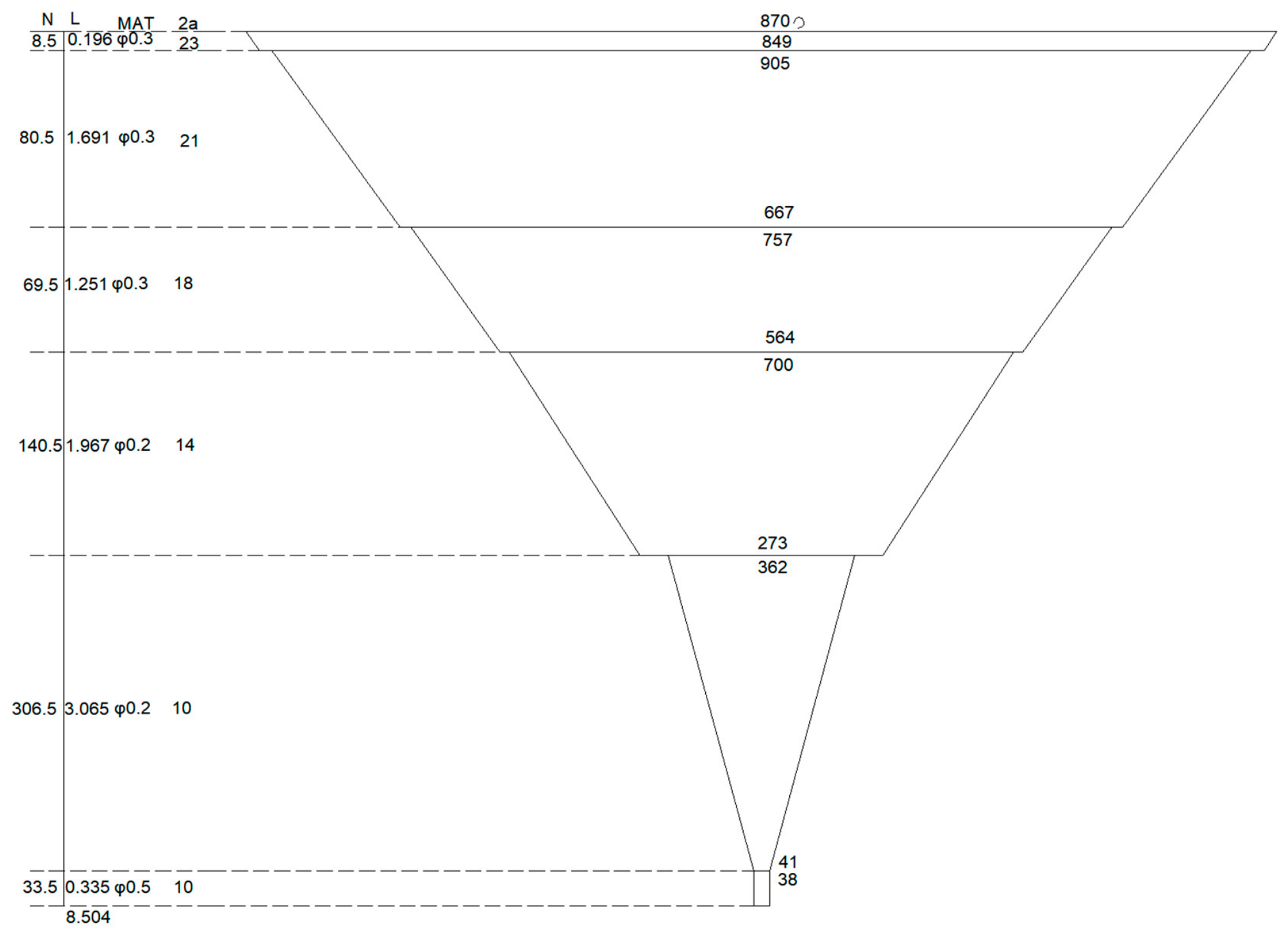
Based on the dimensions of the experimental flume, the large-scale ratio of the model net was set to 8. Considering the twine material and the mesh-fabrication process, the small-scale ratios of the netting panels were determined successively as 1.73, 1.73, 1.73, 1.7, 1.5, and 1; the netting plan is shown in Figure 4, and the detailed panel parameters are listed in Table 2. The prototype stow net contains net panels with different mesh specifications. Restricted by commercially available twine materials, a single uniform small-scale ratio cannot be adopted for the whole model net. This overall value of 1.69 represents an equivalent small-scale ratio of the model net, calculated by weighting the panel-specific small-scale ratios according to the twine area of each panel. For each netting panel, the weighting value was defined as the ratio of its twine area to the total twine area of the stow net. Because the small-scale ratio was determined from the twine diameter, the mesh size was corrected to some extent, so a certain deviation exists between the actual twine area of the model net and the calculated twine area. For this model net, the drag correction coefficient Kf was calculated to be 0.98.
Figure 4.
Schematic diagram of the experimental model net.
Table 2.
Parameters of the experimental model net.
Furthermore, according to Tauti’s law, the headline and groundrope of the model net were 1.38 m in length and 4 mm in diameter; the side ropes were 1.13 m in length and 4 mm in diameter; the top and tow leg were 1.13 m in length and 4 mm in diameter; and the two vertical sticks were 1.13 m in length and 25 mm in diameter.
2.2. Experimental Method
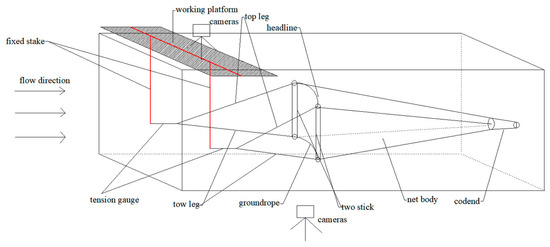
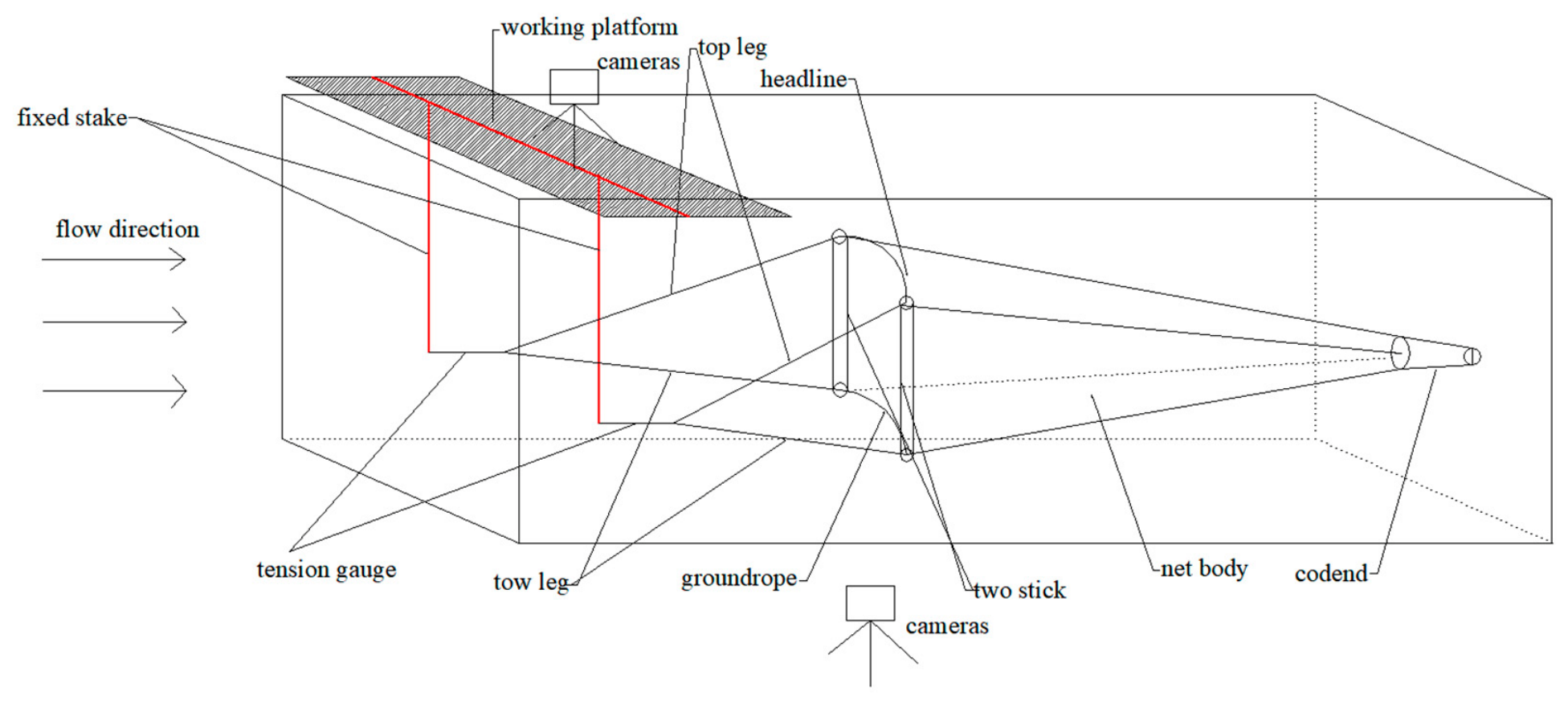
The stow net model experiments were conducted from 20 October to 7 November 2025 in the recirculating flume tank at Shanghai Ocean University. The flume had principal dimensions of 15 m × 3.5 m × 2.3 m, and the water temperature was maintained at 22.1–22.5 °C during the experiments. One side of the flume was fitted with a tempered-glass observation window. One camera was mounted at a fixed position approximately 3 m directly in front of the window, focused on the front section of the net body. The second camera was installed above the operating platform to capture the full view of the net mouth. Both cameras recorded videos at a resolution of 1920 × 1080 pixels and a frame rate of 59 frames/s. A tension gauge (model LC-FWP-100; range, 100 N; combined accuracy, 0.25% F.S.) was connected to the midpoint of the top leg and tow leg to measure the hydrodynamic drag of the stow net and to monitor the deformation of the net body. A current meter was positioned 2 m upstream of the tension gauge to measure the incoming flow velocity. Five flow-velocity conditions were tested: 0.2, 0.3, 0.4, 0.5, and 0.6 m/s. For each flow-velocity condition, the flow was allowed to run for 10 s before data acquisition to allow the net configuration and instrument readings to approach a steady state. Once the readings had stabilized, drag data were continuously recorded for at least 15 s at a sampling interval of 0.01 s, corresponding to a sampling frequency of 100 Hz. The mean drag and within-run standard deviation were then calculated from the recorded time series. Because the present experiment was designed to characterize the hydrodynamic response under each prescribed flow condition, one experimental run was conducted for each velocity condition; therefore, the reported standard deviations represent temporal fluctuations during a run rather than variability among independent experimental replicates. The specific arrangement of the instruments is shown in Figure 5.
Figure 5.
Schematic diagram of model experiments.
2.3. Data Processing
(1) Morphological changes of the gear
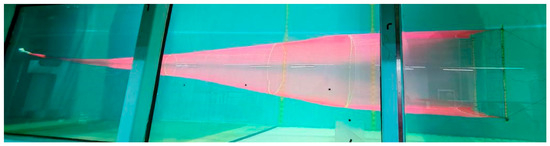
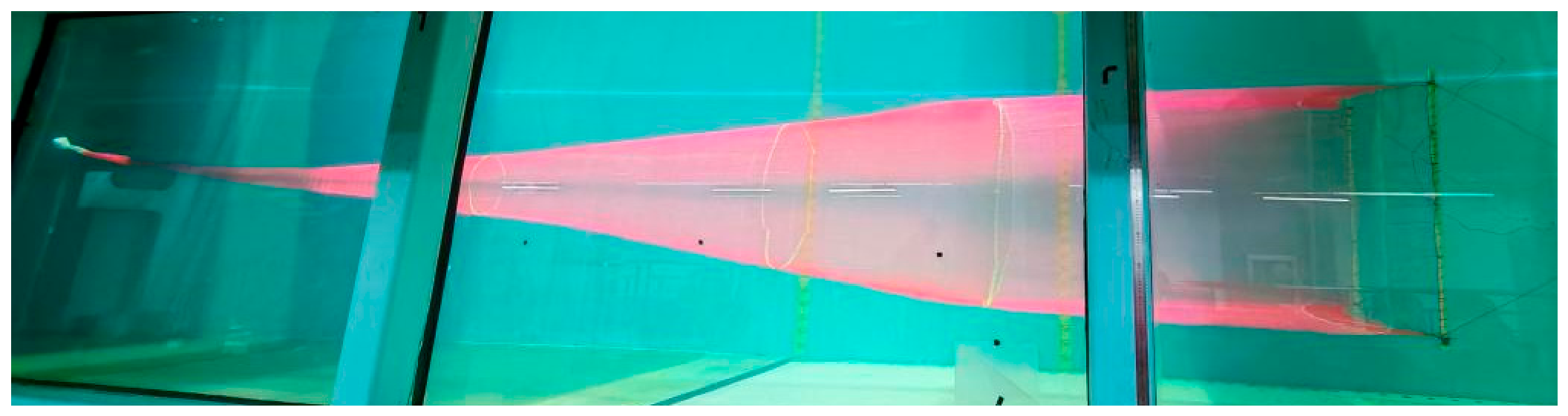
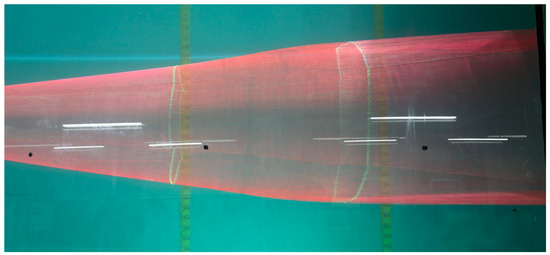
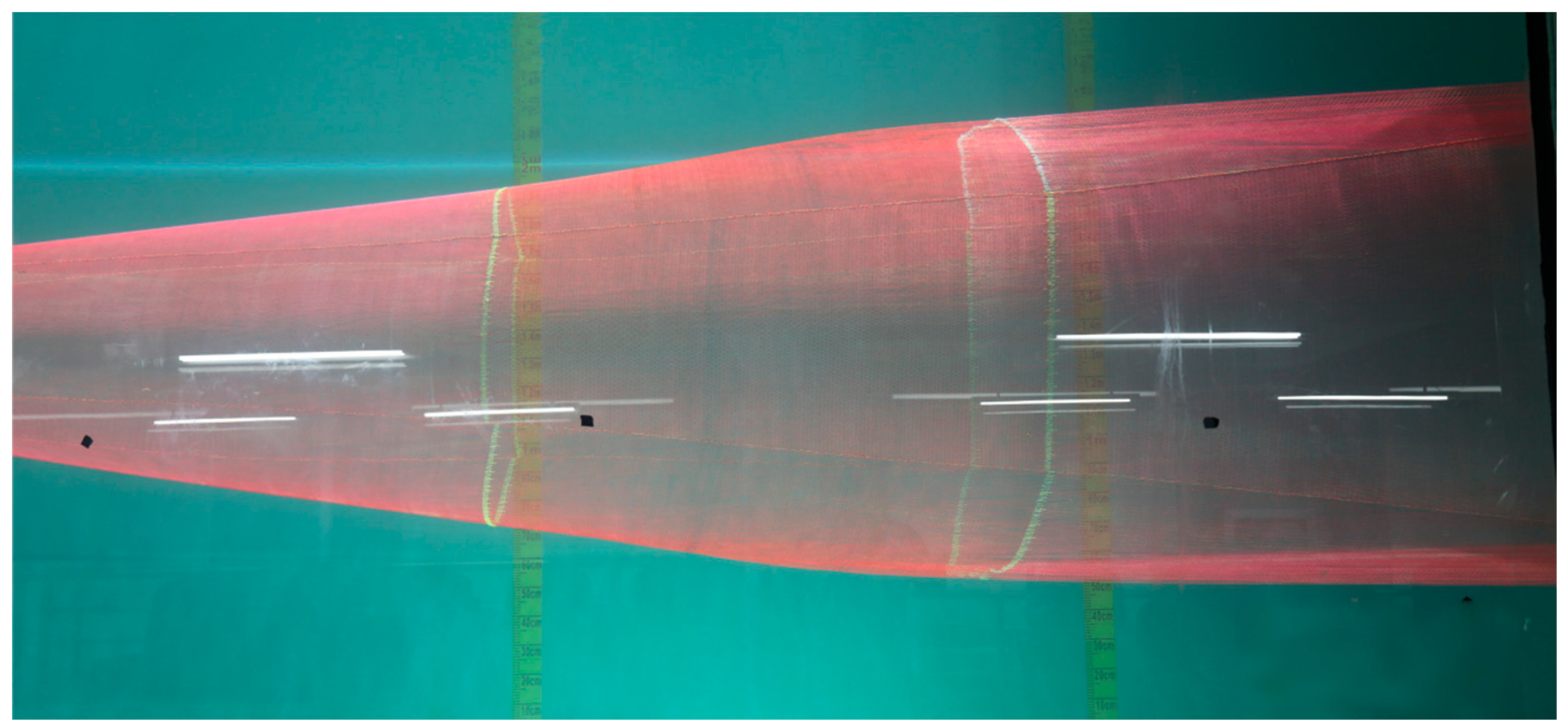
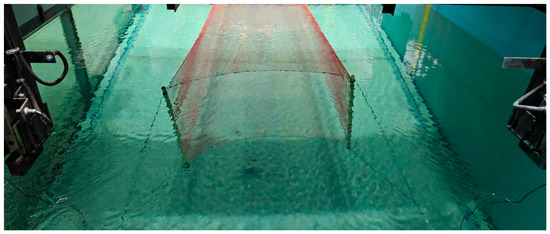
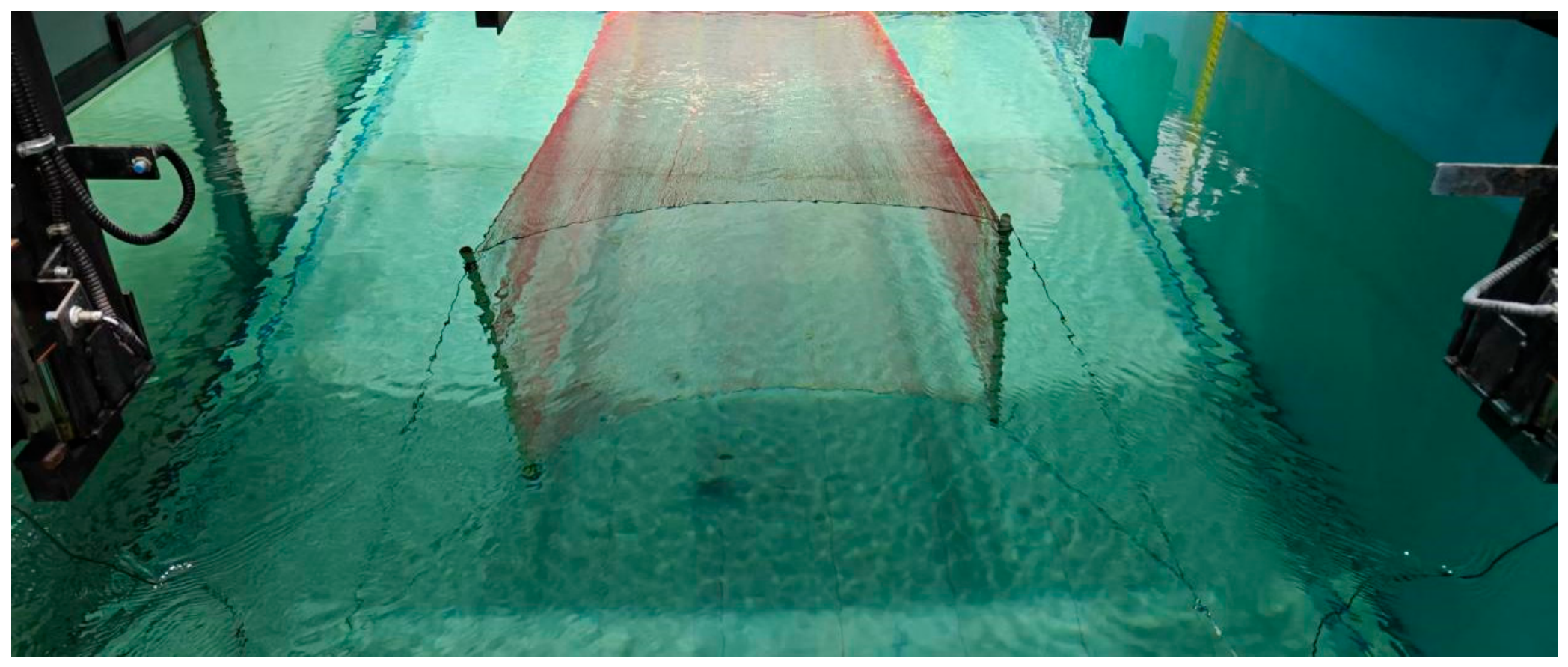
The morphological changes of the stow net were recorded after the flow had reached a visually stable condition at each prescribed velocity, and the overall configuration of the stow net under steady flow is shown in Figure 6. Because the longitudinal length of the model net was relatively large and the entire net body could not be captured within a single camera field of view, two cameras were used: one focused on the front section of the net body (Figure 7) and the other on the net mouth (Figure 8). Images obtained from the photographs were analyzed using GetData Graph Digitizer software. The contour coordinates of the netting were digitized from the selected representative photograph for each flow-velocity condition. The position and characteristic length of the experimental equipment were used as scale references to convert the image coordinates into planar coordinates. The two-dimensional coordinates of the representative netting nodes and the terminal point of the net body were then obtained and exported for subsequent calculation of the expansion diameter. Accordingly, the morphological measurements in this study represent two-dimensional projections of the net configuration, rather than a three-dimensional reconstruction.
Figure 6.
Overall configuration of the model stow net under steady flow.
Figure 7.
Local configuration of the front section of the net body.
Figure 8.
Local configuration of the net mouth.
Because only one experimental run was conducted at each flow velocity, the morphological results were used to characterize the flow-dependent deformation trend rather than to estimate between-run experimental variability.
(2) Drag and flow velocity of the prototype net
Following the method for reducing errors in fishing gear model experiments [22], the mechanical proportional relationship between the drag of the prototype net (F1) and the drag of the model net (F2) is:
where λ is the large-scale ratio, λ′ is the equivalent small-scale ratio, and Kf is the drag correction coefficient, calculated as:
where S1 and S2 are the twine areas of the theoretically calculated model and the actually fabricated model (m2), respectively; M1, N1, H1, a1, and d1 are the number of transverse meshes at the top, the number of transverse meshes at the bottom, the number of longitudinal meshes, the mesh bar length (mm), and the twine diameter (mm) of the theoretically calculated model, respectively; and M2, N2, H2, a2, and d2 are the corresponding values for the actually fabricated model.
F1 = F2λ2λ′Kf
The prototype flow velocity was converted from the measured model flow velocity based on Tauti’s law. The conversion equation is:
where V1 is the prototype-equivalent flow velocity (m/s), V2 denotes the flow velocity used in the flume experiment (m/s).
3. Results
3.1. Expansion Configuration of the Front Section of the Net Body
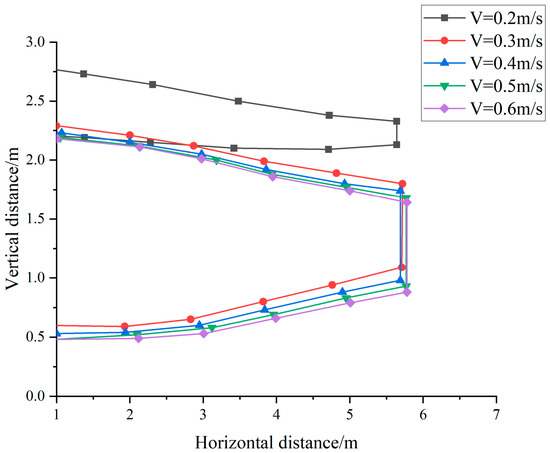
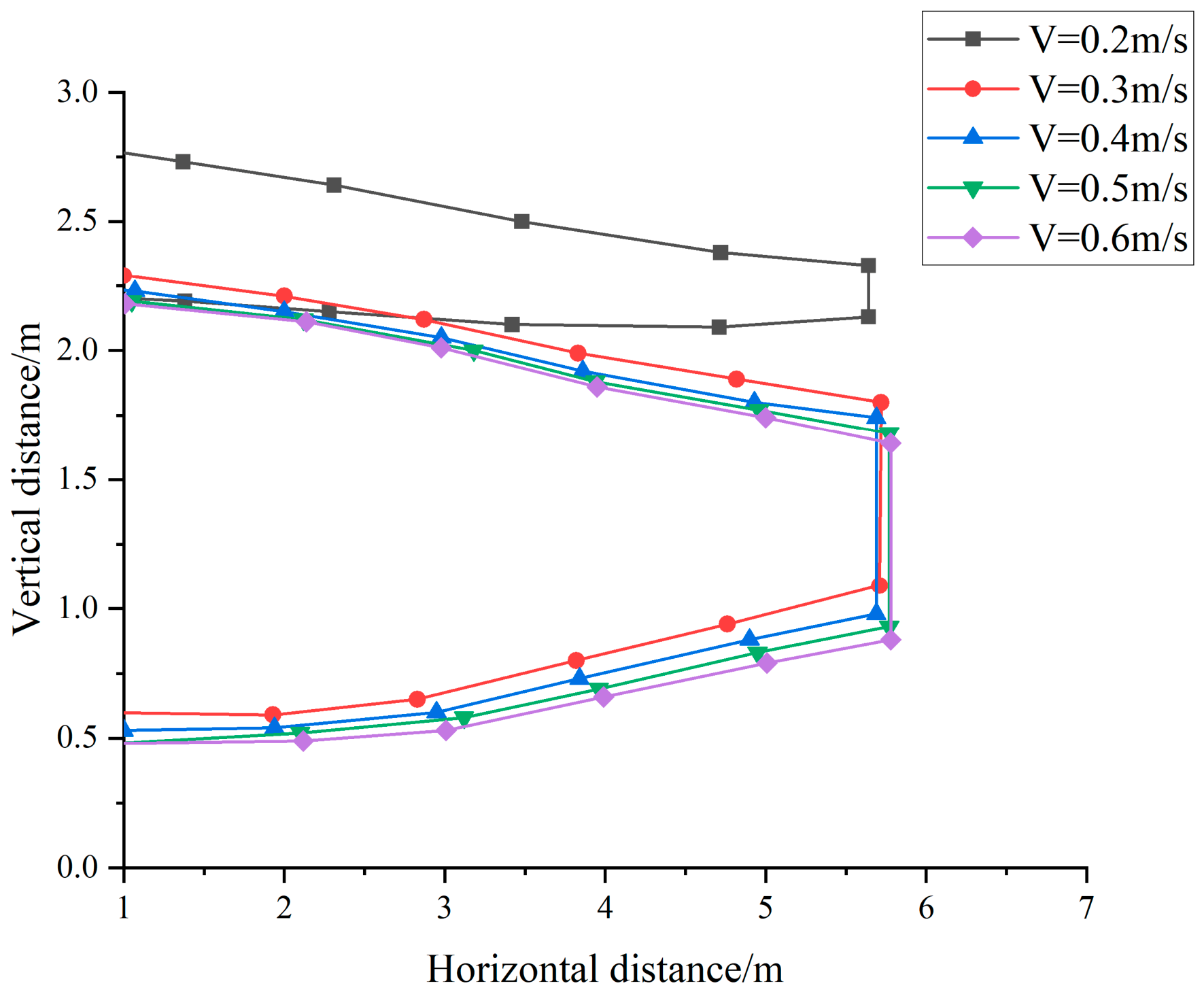
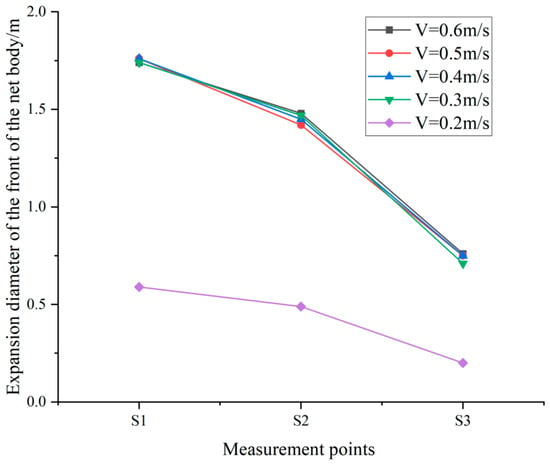
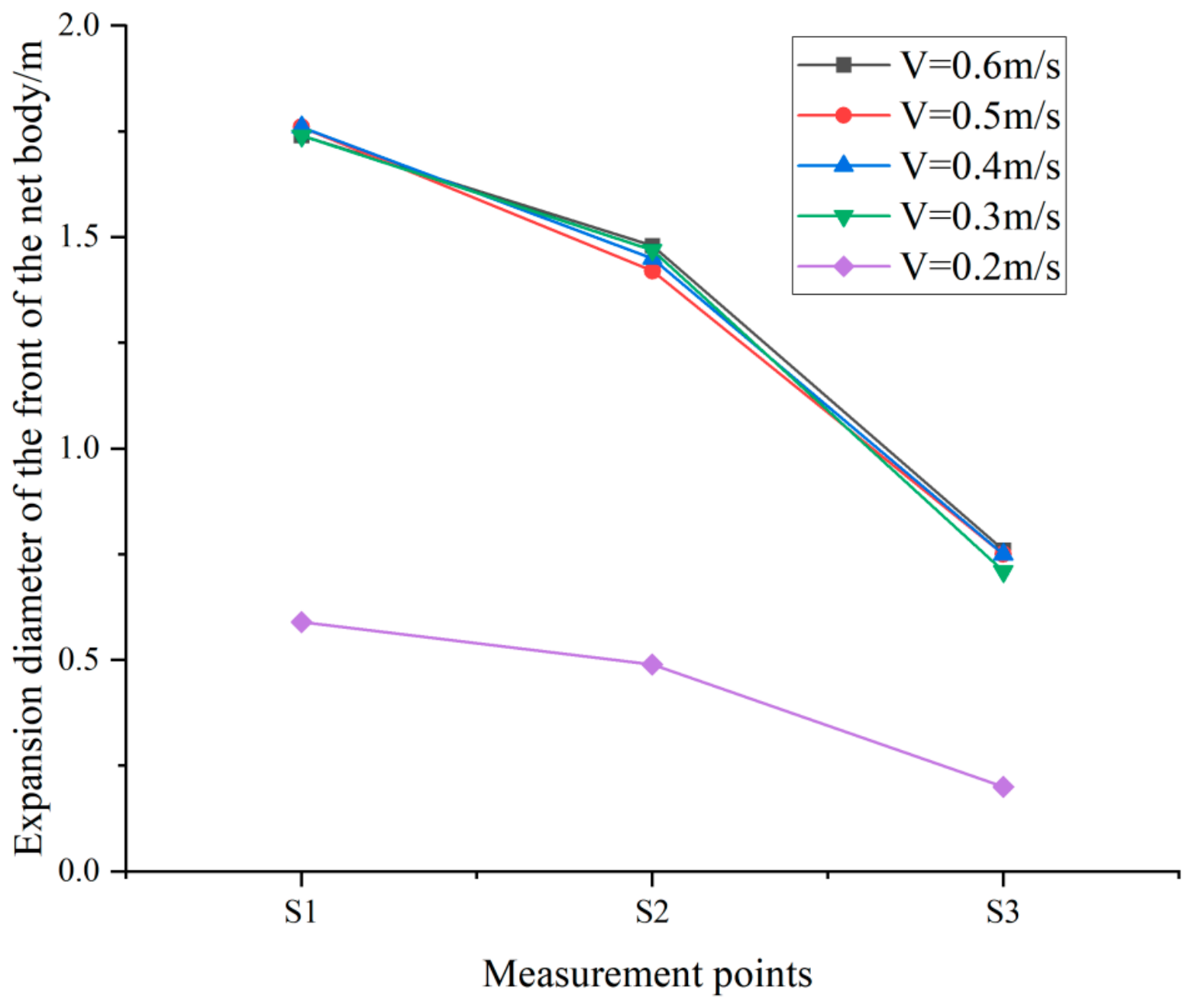
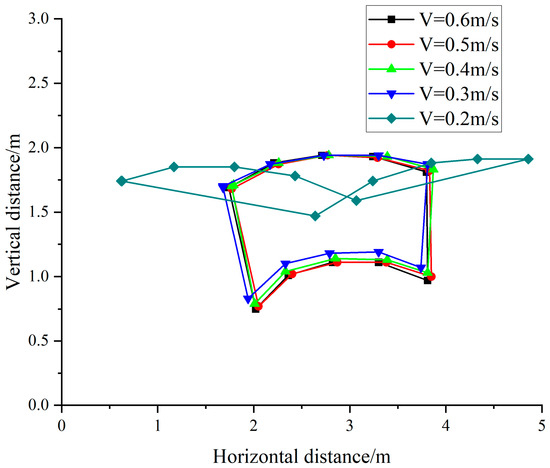
The expansion configurations of the front section of the net body under different flow velocities were reconstructed based on the node coordinates obtained from image capture (Figure 9). To quantitatively compare the differences in net expansion, the vertical expansion diameters at 0%, 50%, and 100% of the longitudinal length of the front section were measured and denoted as S1, S2, and S3, respectively (Figure 10).
Figure 9.
Variation of the profile diagram of the front section of the net body.
Figure 10.
Expansion diameter of the front section of the net body.
At flow velocities of V ≥ 0.3 m/s, the model net body remained fully expanded, and the outline of the front section changed little with increasing flow velocity. The vertical expansion diameter decreased progressively from S1 to S3, with S1 being markedly larger than S2 and S2 larger than S3, which was consistent with the overall variation in net geometry. Within this velocity range, the front section of the net body shifted slightly downward as the flow velocity increased, but no obvious deformation of the overall structure was observed. These results indicate that the model net maintained a relatively stable expansion configuration and an adequate opening degree at flow velocities of V ≥ 0.3 m/s.
At a flow velocity of 0.2 m/s, however, the model net failed to maintain a normal expanded configuration. The vertical sticks at the net mouth toppled, and the net body collapsed, with the netting losing its tension and floating toward the water surface; the net consequently lost its effective fishing configuration. It should be noted that the image-based node extraction still returns non-zero values of S1, S2, and S3 at 0.2 m/s, because the collapsed net remains visible in the images and its points can still be sampled at certain vertical positions. These values are geometric outputs of the point picking alone and do not represent a real vertical expansion of the net mouth. In fact, the net had no effective opening under this flow condition. The configuration at 0.2 m/s is therefore a collapsed and abnormal state rather than a normally expanded one, and the corresponding minimum value in Figure 10 should not be read as a normal working measurement. Rather, 0.3 m/s was the lowest model-scale flow velocity at which the net maintained its functional geometry.
3.2. Expansion Configuration of the Net Mouth
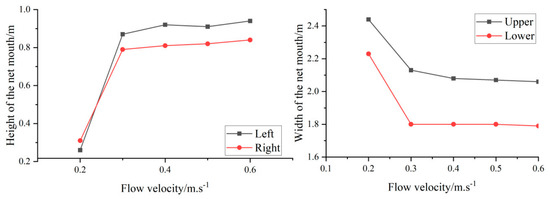
The expansion configurations of the net mouth at different flow velocities were characterized using the two-dimensional projected node coordinates extracted from the captured images (Figure 11). At flow velocities of V ≥ 0.3 m/s, the net mouth remained relatively stable. As the flow velocity increased, the net mouth height increased slightly, whereas the net mouth width decreased slightly (Figure 12). Overall, the net mouth maintained a symmetrical opening configuration, with no obvious deformation or twisting. Based on the measured values of net mouth width and height shown in Figure 12, the net mouth width at V = 0.6 m/s was approximately 2.0% smaller than that at V = 0.3 m/s, whereas the net mouth height increased by approximately 7.2%. These percentages represent the relative changes in the measured net mouth dimensions, rather than accuracy values relative to previous studies or alternative approaches. This indicates that the net mouth remained relatively stable within the tested velocity range.
Figure 11.
Variation of the profile diagram of the net mouth.
Figure 12.
Height and width of the net mouth.
At V = 0.2 m/s, the vertical sticks at the net mouth toppled due to insufficient hydrodynamic force. This resulted in a sharp decrease in net mouth height, a marked contraction in net mouth width, and an asymmetric collapsed configuration of the net mouth. It should be noted, however, that the net mouth dimensions at 0.2 m/s were likewise obtained from image-based node extraction and describe the position of the collapsed netting rather than an effective opening; the net mouth had essentially no functional opening under this condition. It therefore could not maintain the spatial configuration required for normal operation and was unable to effectively intercept target organisms. These results demonstrate that the model net maintained good structural stability and operational adaptability at flow velocities of V ≥ 0.3 m/s, but failed to retain its basic functional configuration below this threshold.
3.3. Drag of the Model Net
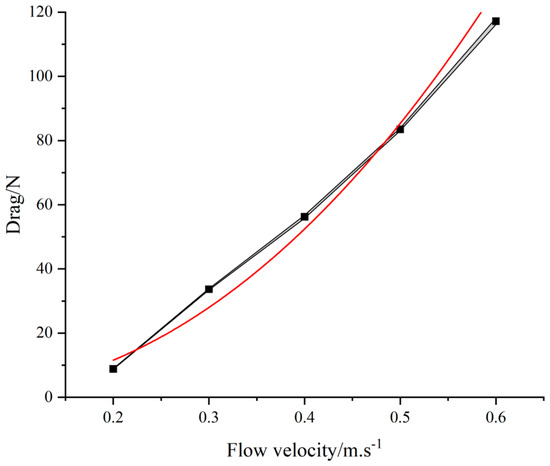
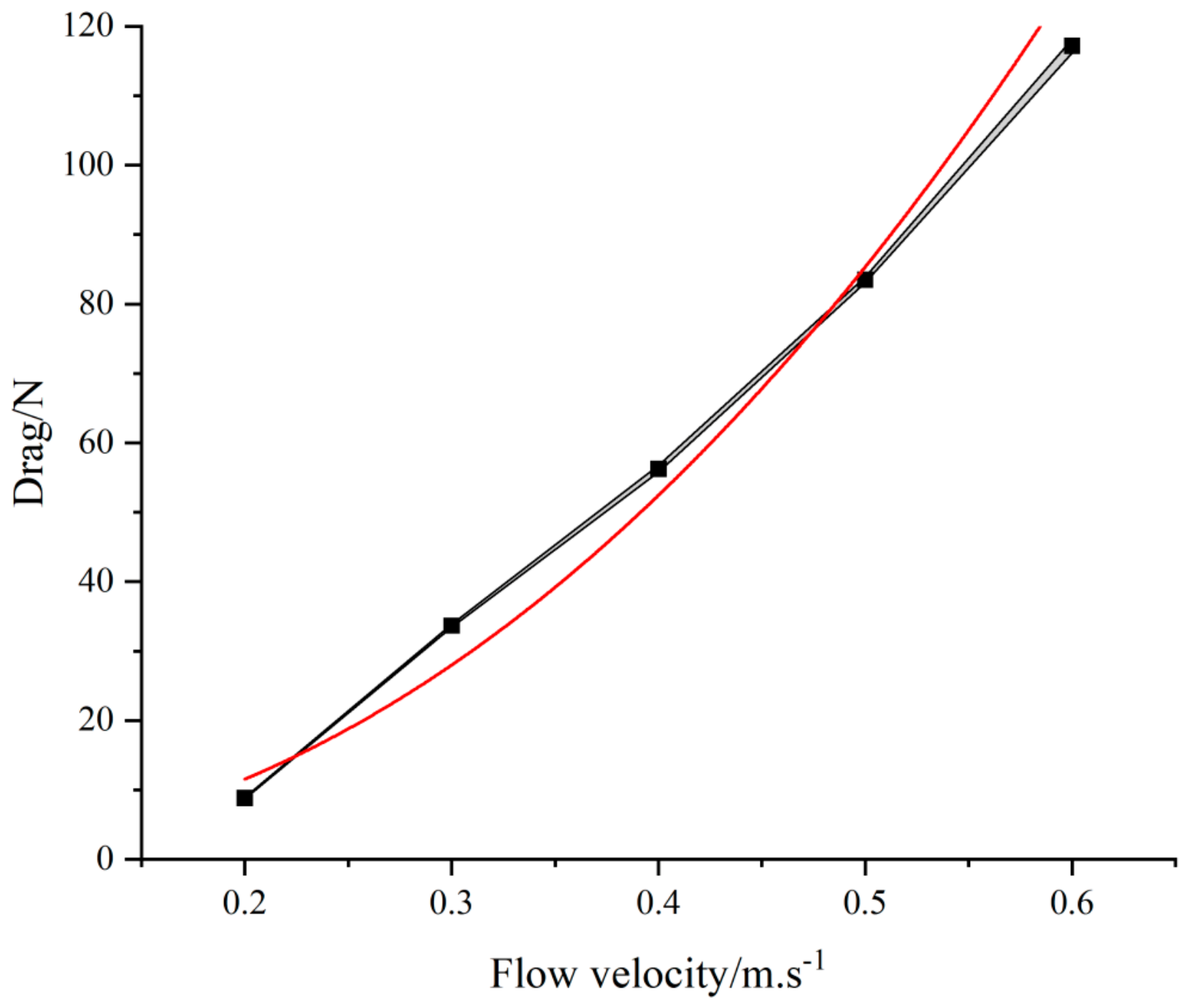
The drag of the model net was measured at different flow velocities, and the drag–velocity relationship was plotted (Figure 13). The results showed that drag increased with flow velocity following a power–law trend. At a flow velocity of V = 0.2 m/s, the drag of the model net was 8.84 ± 0.11 N, increasing to 117.18 ± 0.98 N when the flow velocity reached 0.6 m/s. Nonlinear regression yielded the following relationship between flow velocity and model-net drag:
where F2 is the drag of the model net (N), and V is the incoming flow velocity (m/s).
F2 = 312.72 ⋅ V1.91 (R2 = 0.992)
Figure 13.
The drag–velocity relationship of the model net. Note: Black squares denote measured data points. The red line is the fitted curve. The two black lines indicate the upper and lower bounds of the confidence interval, and the grey shaded area between the lines represents the confidence interval. The narrow band is attributed to the small standard deviation of the measured drag values.
Based on the relationship between the drag of the prototype net (F1) and that of the model net (F2) described in Equation (1), the drag of the prototype net was calculated. The estimated prototype-net drag was 936.91 N at a flow velocity of V = 0.26 m/s, increasing to 1.24 × 10⁴ N when the flow velocity reached 0.78 m/s. The fitting results indicated that the drag of the prototype two-stick stow net increased nonlinearly with increasing flow velocity. The estimated power exponent was 1.91 (95% CI: 1.53–2.28), indicating a strong nonlinear increase in hydrodynamic drag with flow velocity. Based on the expansion configuration of the model net, V = 0.3 m/s was identified as the critical flow velocity at which the model net could maintain a stable opening configuration. According to the velocity scale relationship, this corresponds to a prototype flow velocity of approximately 0.39 m/s. Therefore, in the present analysis, 0.39 m/s can be regarded as the minimum flow velocity required for the prototype two-stick stow net to maintain stable operation.
The estimated exponent was numerically higher than the value of 1.5 reported for a trawl-net model test in China [23]. However, because the two studies differed in experimental conditions, model configurations, and data ranges, the difference between the two exponent estimates should not be interpreted as a statistically significant difference. The present result therefore indicates that the drag of the two-stick stow net exhibited a strong dependence on flow velocity under the tested conditions, but further comparative experiments under standardized conditions would be required to quantitatively compare the flow-velocity sensitivity between stow nets and trawls.
The high coefficient of determination of 0.992 indicated that the power–law model adequately described the drag–velocity relationship within the tested flow-velocity range. In addition, the drag curve showed that once flow velocity exceeded the minimum velocity at which stable net expansion was maintained, the hydrodynamic load acting on the net increased rapidly, highlighting the importance of considering the tensile strength of netting materials, structural stability, and operational conditions in the design and deployment of two-stick stow nets.
3.4. Relationship Between the Projected Net-Mouth Area and Drag
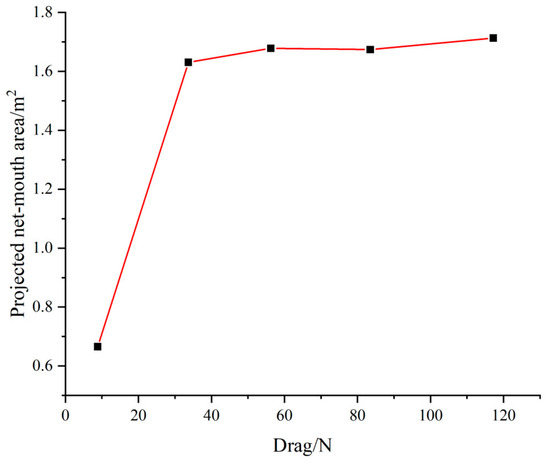
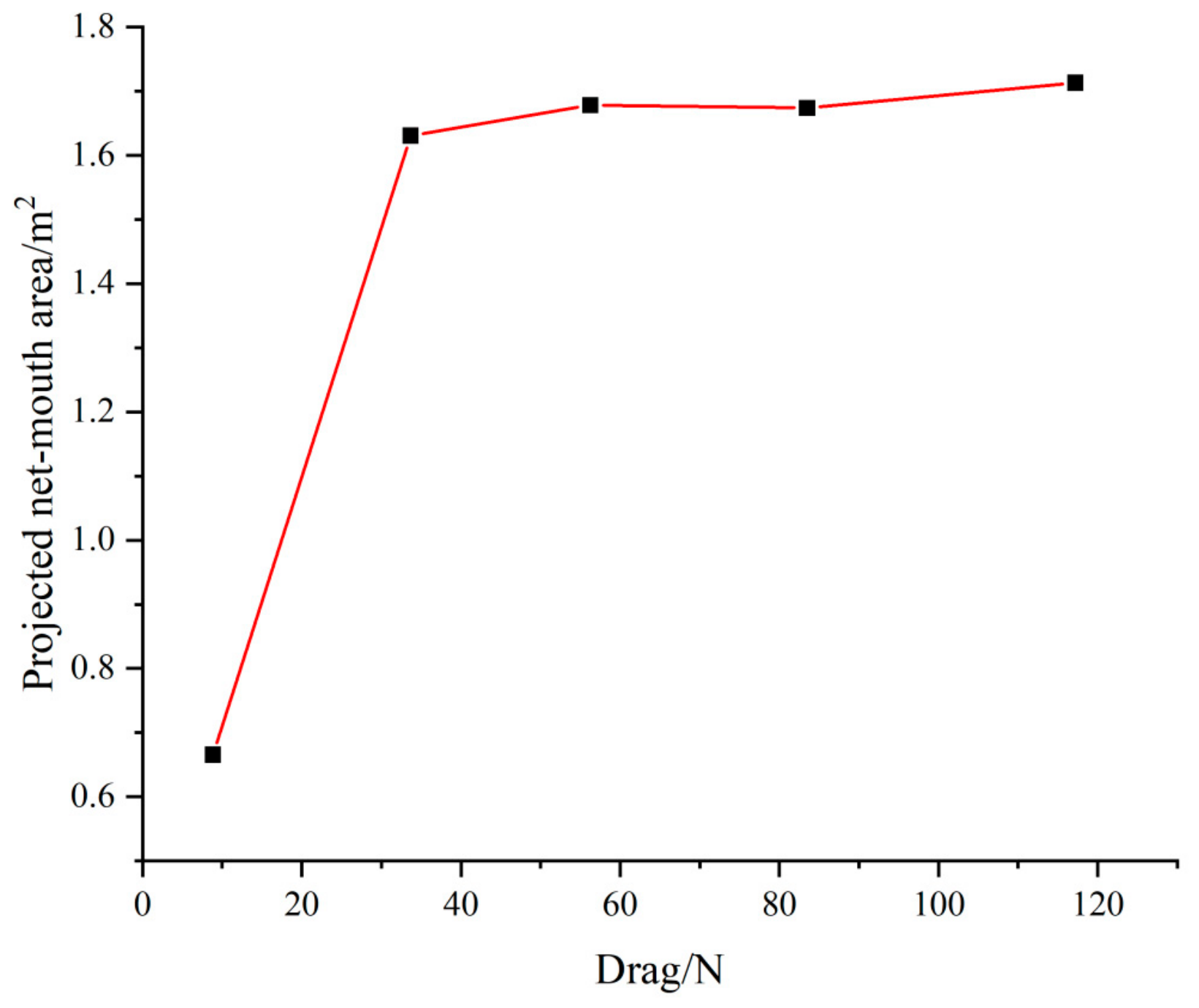
The projected net-mouth area was used to characterize the geometrical configuration of the stow-net mouth, while the effective projected net-mouth area was used to describe its functional opening. The relationship between the projected net-mouth area and drag is shown in Figure 14. Consistent with the preceding text, at the lowest tested flow velocity of 0.2 m/s, the net mouth collapsed because the vertical sticks could not maintain the opening geometry. Although the image-based node coordinates yielded non-zero geometric values because the collapsed net remained visible in the images, these values did not represent a functional net-mouth opening. Therefore, the effective projected net-mouth area was assigned a value of zero under this condition, despite the non-zero drag measured.
Figure 14.
The relationship between the projected net-mouth area and drag of the model net.
For flow velocities of 0.3–0.6 m/s, when the stow net maintained a functional opening, the projected net-mouth area also represented the effective projected net-mouth area and increased with increasing drag. The increase was more pronounced at relatively low drag levels and became progressively smaller when drag exceeded approximately 33.67 N (corresponding to a flow velocity of 0.3 m/s), indicating that the effective projected net-mouth area tended to stabilize as hydrodynamic loading increased.
4. Discussion
For fixed fishing gears such as stow nets, maintaining a stable opening and effective filtering area is essential for ensuring fishing efficiency. Unlike towed gears, which are continuously stretched by towing forces, fixed stow nets rely primarily on ambient flow to generate the hydrodynamic support required to expand the net mouth and net body. Therefore, clarifying the flow-velocity range within which the gear can maintain its functional configuration is important for understanding its operational performance and for improving gear design. In this study, flume-tank model experiments were conducted to systematically investigate the morphological response and drag characteristics of a two-stick stow net used in the South China Sea under different flow velocities.
The results showed that flow velocity strongly affected the expansion of the net mouth and net body, structural stability, and drag under the tested conditions. Based on the mechanical similarity relationship between the model net and the prototype net, a relatively complete and stable structural configuration was observed at a model-scale inflow velocity of 0.3 m/s and above, corresponding to a prototype-equivalent velocity of 0.39 m/s and above. In contrast, the model net collapsed markedly at 0.2 m/s. Therefore, the transition between collapsed and stable configurations can currently be constrained to the model-scale velocity interval of 0.2–0.3 m/s. The value of 0.39 m/s represents the prototype-equivalent velocity corresponding to the lowest tested stable condition, rather than a precisely determined critical threshold. This phenomenon indicates that the operation of the two-stick stow net in the South China Sea is strongly dependent on hydrodynamic support. This finding is consistent with previous model studies on bottom trawls and purse seines, which showed that flexible fishing gears can maintain stable operational configurations only under sufficient fluid support [16,24,25]. Further experiments at intermediate model-scale velocities within this interval are needed to determine the transition velocity more precisely.
In terms of the geometric responses of the front section of the net body and the net mouth, the expansion degree of the stow net increased markedly with increasing flow velocity. However, the magnitude of local structural changes was relatively limited, mainly manifested as a slight downward displacement of the front section of the net body, a slight increase in net mouth height, and a slight contraction in net mouth width. This response pattern, characterized by vertical stretching and lateral contraction, reflects the deformation behavior of a flexible net structure that redistributes hydrodynamic loading and may indicate a redistribution of hydrodynamic forces that contributes to maintaining the overall configuration of the net in the flow. This is consistent with previous findings on netting-panel deformation and flow-induced morphological adjustment [26,27]. For a fixed stow net, such a structural response may help limit excessive lateral expansion of the net mouth under high-flow conditions and contribute to maintaining the overall working posture of the gear. Its effects on structural vibration and anchoring-system loads, however, require further verification.
The drag analysis further showed that, at both the model scale and the converted prototype scale, the drag of the stow net increased with flow velocity following a clear power–law relationship rather than a simple linear trend. This result agrees with the theory proposed by Fridman [28], which indicates that the drag of fishing gears varies nonlinearly with Reynolds number, and is also consistent with previous hydrodynamic experiments on trawls and stow nets in China [1,5,29,30]. In the higher flow-velocity range, the loads acting on the netting, underwater accessories, and anchoring system increased rapidly. In contrast, insufficient hydrodynamic support under low-flow conditions may lead to morphological instability, including net body collapse and a marked reduction in the effective filtering area, thereby potentially reducing fishing efficiency. These results indicate that stow-net operation involves a trade-off between maintaining sufficient hydrodynamic support and limiting excessive structural loading. The present experiments provide a preliminary basis for selecting operating periods and optimizing structural parameters for stow nets used in the South China Sea. However, the precise suitable operating range cannot be determined from the tested conditions alone, and additional experiments with finer velocity intervals are needed to clarify the transition between unstable and stable configurations.
Although this study systematically characterized the morphological and drag responses of the two-stick stow net under different flow velocities, several limitations should be acknowledged. First, the flume-tank experiments were conducted using a model net without catch and may be affected by scale effects, boundary effects, and simplifications of natural sea conditions. The effects of different catch quantities and accumulation states on the internal flow field, pressure distribution, and morphological stability of the codend were not considered. Previous studies have shown that catch accumulation and blockage can substantially alter the internal flow-velocity distribution and pressure structure within the codend, thereby affecting gear geometry and selectivity [31,32]. Second, the morphological analysis was primarily based on two-dimensional projected coordinates obtained from captured images, which cannot fully characterize the three-dimensional deformation of the net. In addition, the analysis focused mainly on the net body and net-mouth frame, while other structural and operational factors, such as mooring systems, connectors, material fatigue, wave action, and unsteady tidal currents, were not examined in detail. Third, only one experimental run was conducted at each flow velocity. The reported standard deviations of drag therefore represent temporal fluctuations within each recording period rather than variability among independent experimental runs, while the morphological parameters were derived from representative images and were used primarily to characterize the overall deformation trend. Future studies should incorporate independent repeated experiments, full-scale field measurements, and three-dimensional structural analysis, together with techniques such as particle image velocimetry (PIV) and computational fluid dynamics (CFD), to provide more robust assessments of experimental uncertainty and to further investigate the interactions among catch accumulation, net structure, and the surrounding flow field under realistic operating conditions.
5. Conclusions
In this study, flume-tank model experiments were conducted based on Tauti’s law to investigate the hydrodynamic performance and morphological responses of a two-stick stow net designed for use in the South China Sea. The results showed that flow velocity strongly affected net expansion, structural stability, and drag under the tested conditions. The model net collapsed markedly at 0.2 m/s but maintained a relatively stable working configuration at 0.3 m/s and above, corresponding to a prototype-equivalent velocity of 0.39 m/s and above. Therefore, the transition between collapsed and stable configurations occurred within the tested model-scale velocity interval of 0.2–0.3 m/s, while 0.39 m/s represents the lowest tested prototype-equivalent stable condition rather than a precise critical threshold. As flow velocity increased, the front section of the net body shifted slightly downward, the net mouth height increased slightly, and the net mouth width decreased slightly. The drag of the net increased with flow velocity following a power–law relationship. These findings provide a reference for the structural design, operation planning, and safety assessment of stow nets under similar operating conditions.
Author Contributions
L.Y.: Conceptualization, Methodology, Investigation, Data curation, Writing—original draft; P.Z.: Investigation; Y.L.: Writing—review & editing; J.L.: Investigation; T.W.: Investigation; B.Y.: Statistical analysis; Z.C.: Writing—review & editing; X.Z.: Project administration, Funding acquisition, Supervision, Writing—review & editing. All authors have read and agreed to the published version of the manuscript.
Funding
This work was supported by the National Key R&D Program of China (2024YFD2400701) and the Special Financial Project of the Ministry of Agriculture and Rural Affairs (NHZX2024).
Informed Consent Statement
Not applicable.
Data Availability Statement
The original contributions presented in this study are included in the article. Further inquiries can be directed to the corresponding author.
Acknowledgments
We thank Zhongqiu Wang, Yongjin Wang, Wei Liu, Shuo Ma, Guangrui Qi and Daomei Cao for their help with model net fabrication and model experiments.
Conflicts of Interest
The authors declare no competing interests.
References
- Liu, L. Numerical Simulation Study on Hydrodynamic Characteristics of Net Fishing Gear. Master’s Thesis, Ocean University of China, Qingdao, China, 2012. [Google Scholar]
- Jin, Y. Study on Construction Optimization of the Net Mouth of Roped Stow Net with Anchor. Master’s Thesis, Shanghai Ocean University of China, Shanghai, China, 2016. [Google Scholar]
- Ni, Z.; Zhang, X.; Jin, Y.; Zhang, J. Hydrodynamic performance analysis of canvas stow net based on numerical simulation. J. Dalian Ocean Univ. 2018, 33, 402–407. [Google Scholar]
- Zhong, B. Marine Fishing Gears of China; Science Press: Beijing, China, 2022. [Google Scholar]
- Thierry, N.; Tang, H.; Xu, L.; You, X.; Hu, F.; Achile, N.; Kindong, R. Hydrodynamic performance of bottom trawls with different materials, mesh Sizes, and twine thicknesses. Fish. Res. 2020, 221, 105403. [Google Scholar] [CrossRef] [Scilit]
- Yan, L.; Zhu, Q.; Zhang, P.; Li, J.; Yang, B.; Wang, T.; Hua, C. Size selectivity of square-mesh codends in stownet for Coilia Mystus in the South China Sea. Animals 2025, 15, 3571. [Google Scholar] [CrossRef] [Scilit]
- Huang, L.; Gao, H.; Tang, Y.; Liu, C.; Xu, Q.; Sun, P. A study on the selectivity of codend mesh of Tanzi net in Haizhou Bay. J. Ocean Univ. China 2016, 46, 143–150. [Google Scholar]
- Zhang, M. The Investigation of Stow Net in Yellow and Bohai Sea and the Stow Net Operation Performance Evaluation. Master’s Thesis, Ocean University of China, Qingdao, China, 2014. [Google Scholar]
- Yan, L.; Yang, L.; Zhang, X.; Zhang, P.; Yang, B.; Tan, Y.; Chen, S. Discuss on situation and management of stow-net fishing in the north part of South China sea. Guangdong Agric. Sci. 2014, 41, 140–143. [Google Scholar]
- Yan, L.; Tan, Y.; Yang, L.; Lian, X.; Yang, B.; Zhang, P.; Chen, S.; Li, J. Community structure of coastal stake-net fisheries in the Pearl River Estuary, South China Sea. J. Biol. 2015, 32, 52–57. [Google Scholar]
- Zhang, J.; Sun, M.; Qian, W.; Peng, Y. Discussion on the selectivity model of stow net. Mar. Fish. 2004, 26, 1–8. [Google Scholar]
- Mohapatra, S.C.; Guedes Soares, C. A Semi-Analytical Model of an Array of Moored Floating Flexible Offshore Net Cages under Current Loads. Ocean Eng. 2024, 291, 116309. [Google Scholar] [CrossRef] [Scilit]
- Mohapatra, S.C.; Guedes Soares, C. A Review of the Hydroelastic Theoretical Models of Floating Porous Nets and Floaters for Offshore Aquaculture. J. Mar. Sci. Eng. 2024, 12, 1699. [Google Scholar] [CrossRef] [Scilit]
- Kim, Y. Geometry of the model purse seine in relation toenclosed volume during hauling operation. Fish. Sci. Tech. 2000, 3, 156–162. [Google Scholar]
- Lee, C.; Lee, J.; Cha, B.; Kim, H.; Lee, J. Physical modeling for underwater flexible systems dynamic simulation. Ocean Eng. 2005, 32, 331–347. [Google Scholar] [CrossRef] [Scilit]
- Tang, H.; Xu, L.; Hu, F. Hydrodynamic characteristics of knotted and knotless purse seine netting panels as determined in a flume tank. PLoS ONE 2018, 13, e0192206. [Google Scholar] [CrossRef] [Scilit]
- Hu, F.; Matuda, K.; Tokai, T. Effects of drag coefficient of netting for dynamic similarity on model testing of trawl nets. Fish. Sci. 2001, 67, 84–89. [Google Scholar] [CrossRef] [Scilit]
- Hosseini, S.; Lee, C.; Kim, H.; Lee, J.; Lee, G. The sinking performance of the tuna purse seine gear with large-meshed panels using numerical method. Fish. Sci. 2011, 77, 503–520. [Google Scholar] [CrossRef] [Scilit]
- Zhang, Y.; Chen, N.; Song, Y.; Sun, Z. Assessment of the scale effect on hydrodynamic characteristics and structural responses of a planar netting in model experiments. Ocean Eng. 2025, 341, 122684. [Google Scholar] [CrossRef] [Scilit]
- Andrew, N.; Jones, T.; Terry, C.; Pratt, R. By-catch of an Australian stow net fishery for school prawns (Metapenaeus Macleayi). Fish. Res. 1995, 22, 119–136. [Google Scholar] [CrossRef] [Scilit]
- Macbeth, W.; Broadhurst, M.; Millar, R. Improving selectivity in an Australian penaeid stow-net fishery. Bull. Mar. Sci. 2005, 76, 647–660. [Google Scholar]
- Wang, Y.; Zhang, X.; Zhang, Y.; Zhou, I.; Li, Z.; Wang, S.; Liu, L.; Wang, L. Influence of main structural parameters on performance of bottom trawl with large-size mesh. South China Fish. Sci. 2021, 17, 66–73. [Google Scholar]
- Xu, L. Theory and Design of Fishing Gears; China Agriculture Press: Beijing, China, 2004. [Google Scholar]
- Tang, H.; Xu, L.; Zhou, C.; Wang, X.; Zhu, G.; Hu, F. The effect of environmental variables, gear design and operational parameters on sinking performance of tuna purse seine Setting on free-swimming schools. Fish. Res. 2017, 196, 151–159. [Google Scholar] [CrossRef] [Scilit]
- Zhou, C.; Xu, L.; Tang, H.; Wang, X. In-situ dynamics of tuna purse seine deployment in various operations and currents. Fish. Sci. 2015, 81, 1003–1011. [Google Scholar] [CrossRef] [Scilit]
- Chen, L. Experimental Study on the Hydrodynamic Coefficients of Plane Nettings and Numerical Simulation. Master’s Thesis, Shanghai Ocean University of China, Shanghai, China, 2015. [Google Scholar]
- Huang, L.; Liang, Z.; Zhao, F.; Zhu, L.; Song, W. Model test research on change characteristics of cage shape in currents. Period. Ocean Univ. China 2006, 36, 245–248. [Google Scholar]
- Fridman, A. Calculations for Fishing Gear Designs; Fishing News Books Ltd.: Farnham, UK, 1986. [Google Scholar]
- Bo, J. Studies on the Design and Model Experiment of Pelagic Trawl with Large—Size Meshes. Master’s Thesis, Zhejiang Ocean University of China, Zhoushan, China, 2020. [Google Scholar]
- Hao, Y.; Wan, R.; Zhou, C.; Ye, X.; Guan, Q.; Zhang, X. Hydrodynamic performance of Argentine shortfin squid (Illex argentinus) bottom trawl. South China Fish. Sci. 2022, 18, 118–127. [Google Scholar]
- Wan, R.; Jia, M.; Guan, Q.; Huang, L.; Cheng, H.; Zhao, F.; He, P.; Hu, F. Hydrodynamic performance of a newly-designed antarctic krill trawl using numerical simulation and physical modeling methods. Ocean Eng. 2019, 179, 173–179. [Google Scholar] [CrossRef] [Scilit]
- Priour, D.; Prada, A. An experimental/numerical study of the catch weight influence on trawl behavior. Ocean Eng. 2015, 94, 94–102. [Google Scholar] [CrossRef] [Scilit]

Disclaimer/Publisher’s Note: The statements, opinions and data contained in all publications are solely those of the individual author(s) and contributor(s) and not of MDPI and/or the editor(s). MDPI and/or the editor(s) disclaim responsibility for any injury to people or property resulting from any ideas, methods, instructions or products referred to in the content. |
© 2026 by the authors. Licensee MDPI, Basel, Switzerland. This article is an open access article distributed under the terms and conditions of the Creative Commons Attribution (CC BY) license.