


Abstract
This article examines the changing social meanings of mining in Roșia Montană (Romania) from late state socialism to the period following the withdrawal of the Roșia Montană Gold Corporation (RMGC), which had proposed a large open-cast gold project there. The study uses an exploratory sequential mixed-methods design. It draws on seven semi-structured interviews with local clergy of different confessions, conducted in spring 2019, and on questionnaire surveys of 282 residents and 45 resettled former residents, carried out in 2020, before the site’s inscription on the UNESCO World Heritage List in 2021. Perceptions are traced across four moments: the state-socialist period; the post-1989 years before the closure of the state mine; the RMGC investment phase; and its aftermath. Treating priests as local moral authorities and interpreters of change, the article finds that mining was remembered not merely as employment but as a source of order, prestige and collective identity under state socialism; that the post-1989 transition bred moral ambivalence; and that the RMGC years polarised the community. At the time of the research, perceptions remained divided but were increasingly articulated through memory, heritage and survival rather than extraction. The article shows how religious actors mediate collective memory and local responses to economic change in post-socialist mining communities.
1. Introduction
Roșia Montană, a commune in the Apuseni Mountains of the Transylvanian region of Romania, is among the most intensively studied localities in the recent social history of post-socialist extraction. Gold and silver have been mined there since antiquity, and industrial, state-run mining structured employment and daily life throughout the socialist period until the closure of the state operation in the mid-2000s. From the late 1990s, the Roșia Montană Gold Corporation (RMGC), a joint venture involving a Canadian-listed company and the Romanian state, sought to develop what would have been Europe’s largest open-cast gold mine on the site. The company acquired land and resettled households, and it dismissed its local workforce when the project stalled. The ensuing dispute lasted some two decades, mobilised a national and transnational protest movement, and ended with the cancellation of the project and the inscription of the cultural landscape on the UNESCO World Heritage List in 2021 (Toader Rîșteiu et al. 2022; Vesalon and Crețan 2013). The locality therefore offers an unusually rich vantage from which to examine how the social meaning of mining is made, contested and remade as the surrounding economic order is transformed.
For readers unfamiliar with the case, it may be helpful to clarify the status of the proposed mining development at the time of writing, particularly since the survey evidence presented below was collected in 2019 and 2020. The project did not advance during the intervening period. In 2021, the Roșia Montană Mining Landscape was inscribed on the UNESCO World Heritage List and simultaneously placed on the List of World Heritage in Danger (UNESCO World Heritage Committee 2021). On 20 June 2024, the Romanian National Agency for Mineral Resources rejected RMGC’s application for a five-year extension of the exploitation licence for the Roșia Montană Project (Gabriel Resources Ltd. 2024). In parallel, the arbitration initiated against Romania by Gabriel Resources Ltd. and Gabriel Resources (Jersey) Ltd. before the International Centre for Settlement of Investment Disputes (ICSID) was decided in Romania’s favour on 8 March 2024. The tribunal dismissed the claimants’ claims and awarded Romania approximately USD 10 million in legal fees and expenses (UNESCO World Heritage Committee 2024). The claimants subsequently submitted an application for annulment, and an ICSID ad hoc committee held a hearing on that application on 11 and 12 May 2026. No decision on the annulment application had been published when this article was completed (International Centre for Settlement of Investment Disputes 2026). The proposed mining development therefore remained inactive and without an extended exploitation licence, while the associated legal proceedings continued. In its essential features, therefore, the post-withdrawal condition examined below persisted.
A considerable body of scholarship has analysed this conflict, predominantly through the lenses of environmental justice, political ecology and contentious politics, and chiefly at the national and transnational scales at which the ‘Save Roșia Montană’ campaign operated (Velicu and Kaika 2017; Vesalon and Crețan 2013). Studies have examined the limits of mono-industrial development and the prospect of alternative, tourism-led futures (Vesalon and Crețan 2013), the radical egalitarian imaginaries of the anti-mining movement (Velicu and Kaika 2017), and, in Alexandrescu’s account, the gradual ‘making of a globalised place’ in which the meaning of the locality was progressively detached from its inhabitants and reattached to extra-local actors and arguments (Alexandrescu 2020). Valuable as this work is, it has tended to foreground the political and discursive dimensions of the controversy rather than the lived experience and retrospective evaluations of the resident population, and it has concentrated on the years of active conflict rather than on the aftermath. Comparatively little attention has been paid to how both those who remained in the community and those who chose to leave it now remember and morally evaluate the long arc of change, at a time when the dominant register has shifted from contention to depopulation and survival (Toader Rîșteiu et al. 2022).
This article addresses that gap by foregrounding community perceptions and, in particular, the testimony of local clergy as locally situated religious leaders, potential moral authorities, and interpreters of collective memory. In a small mountain community, the parish priest or pastor occupies a distinctive social position: he is at once a recognised moral authority, a long-term resident with an unusually wide knowledge of households across generations, and a memory bearer whose pastoral role brings him into contact with the most charged moments of communal and family life, including, in this case, the exhumation and relocation of the dead. Treating the meaning of mining as something repeatedly renegotiated rather than fixed, the study reconstructs perceptions across the four historical moments that recur throughout the evidence.
In placing community memory at its centre, the study contributes to the social history of post-socialist mining communities and to the wider literature on deindustrialisation, collective memory and the moral evaluation of economic change. It is concerned less with adjudicating whether the mine was good or bad than with understanding how religious actors articulate, mediate and moralise the perceptions of those they serve. This concern with continuity and rupture in the life of a single community, and with the ways in which landscape, heritage and commemoration come to bear the weight of collective memory, resonates with recent scholarship on sites of memory and on documentary and cultural heritage as repositories of a community’s sense of itself (González-González and Fernández-Álvarez 2024; Parish 2025).
The study pursues a single overarching aim: to reconstruct the changing social meanings of mining in Roșia Montană from late state socialism to the post-withdrawal period, and to understand how religious actors mediate the collective memory and moral evaluation of that change. From this aim follow four research questions. First, how does the resident community remember and evaluate the successive periods, and does the mining era figure as a time of prosperity and social order relative to the post-withdrawal period as observed in 2019–20? Second, to what extent, and in which social spheres (the commune, the neighbourhood, the family, and the church), is the RMGC episode remembered as having divided rather than united the community? Third, how do evaluations of the decision to sell and to be resettled differ between those who remained in the commune and those resettled in the Recea district of Alba Iulia? Fourth, how do the clergy, as moral authorities, articulate and mediate these perceptions, and where do lay and clerical narratives converge or diverge? The first three questions are examined principally through the community surveys and the fourth through the clergy interviews, with each strand used to interrogate the other.
2. Literature Review
The scholarship on Roșia Montană forms the immediate context for the present study, and its centre of gravity is instructive. The most influential work reads the case as environmental conflict, through environmental justice, political ecology and social-movement theory. Velicu and Kaika (2017) treat the anti-mining campaign as a site where the categories of environmental justice were reworked, locating the movement’s force in a radical, egalitarian politics of visibility rather than in claims to recognition or distribution. Vesalon and Crețan (2013) situate the project within a critique of mono-industrial development and a search for locally embedded alternatives, foregrounding the socio-economic risks of conventional extraction and displacement. Toader Rîșteiu et al. (2022), in one of the few studies to centre the community as an actor in its own right, show that advocates and opponents held fundamentally different understandings of extraction. Residents defended a traditional, locally owned form of mining associated with established labour identities, in opposition to capital’s neoliberal vision. The authors also link the controversy to the longer process of rural decline. Alexandrescu’s (2020) monograph offers the most sustained theorisation, tracing how the experience of place was progressively ‘distanced’ as Roșia Montană became a globalised object of national and transnational argument. This literature illuminates the politics of the conflict with subtlety; however, it leaves underexplored the retrospective and morally inflected memories of resident and resettled populations after the conflict subsided. This gap constitutes the specific focus of the present study.
A second, more recent strand, authored predominantly by Romanian scholars, moves closer to the community and to the decision at the heart of the conflict, namely, whether to sell and leave or to refuse and remain. Velicu (2012, 2014) reads the ‘to sell or not to sell’ dilemma as a contest between incommensurable valuations of land and life, framing it explicitly as a collision between a ‘moral’ and a ‘commercial’ economy. Egresi (2011) traces the shifting discourses around the project and the company’s inadequate provision for mine closure, anticipating the post-withdrawal predicament examined below. Deaconu and Filip (2021) map the diversity and influence of the stakeholders involved, while Szabo et al. (2022) analyse how converging environmental and political threats mobilised local activism, fuelled partly by memories of earlier environmental disasters. Mihai et al. (2015), in a decision-analytic vein, conclude that the credibility and transparency of the process were decisive for community acceptance. Closest of all, Pop (2015) reads the controversy through the ‘polemical social representations’ constructed by rival actors, writing feelingly of a community condemned to an uncertain future. This strand brings the resident population into view, yet remains preoccupied with the period of active conflict, leaving the retrospective evaluation of selling and staying largely uncharted.
To situate these perceptions within the wider transformation, the study draws on the anthropology of Romanian post-socialism. Verdery (1996) cautions against reading the post-1989 period as a simple ‘transition to capitalism’, foregrounding the contested and locally inflected processes through which the end of the socialist order was experienced, including privatisation, restitution and the remaking of value. Kideckel’s (2008) ethnography of the Jiu Valley miners and Făgăraș chemical workers documents the fate of a once-celebrated industrial labour force: the loss of status, security and recognition, and the fear and alienation accompanying restructuring and buy-outs. Together, these two studies establish that the denigration of mining labour, the salience of property and kinship, and the felt loss of a socialist moral order are general features of the Romanian post-socialist condition, against which the Apuseni case can be measured.
To interpret the memory of industrial loss, the study engages the sociology of deindustrialisation. Strangleman (2013, 2017) argues that industrial loss is a prolonged process whose meanings are worked out over decades, and warns against a ‘smokestack nostalgia’ that romanticises a past marked also by hardship and risk. Mah (2012) conceptualises ‘industrial ruination’ as a lived experience of prolonged uncertainty, attachment and ambivalence. Linkon (2018) characterises the aftermath of closure as the ‘half-life of deindustrialisation’, distinguishing a critical, reflective nostalgia from a merely sentimental one, while Walley (2013) shows how the meaning of industrial closure is transmitted across generations as family memory. This literature furnishes a vocabulary for the elegiac register of community memory in Roșia Montană, while guarding against taking such recollection at face value. Its limitation is an overwhelmingly Western, urban-industrial focus. It does not directly address the post-socialist, rural and confessionally plural dynamics of the Apuseni: the collapse of a state-socialist moral order, the salience of land and kinship, and the mediating role of the church.
The study’s central concept, collective memory, derives from Halbwachs (1992), for whom memory is a socially framed phenomenon sustained by the groups to which individuals belong. Nora’s (1989) notion of the lieu de mémoire, which refers to a site where memory crystallises once its spontaneous transmission has weakened, is particularly apposite to a depopulating village in which graves, customs and commemorations increasingly carry the burden of identity. Connerton (1989) extends this framework to commemorative ceremonies and bodily practices through which memory is enacted rather than merely recalled, including funerary customs, carolling and the tending of graves, while Assmann and Czaplicka’s (1995) distinction between ‘communicative’ and ‘cultural’ memory clarifies how recollection is stabilised once eyewitnesses disperse. Because the object of memory is largely the socialist past, the study also draws on the literature on post-socialist nostalgia: Todorova and Gille (2010) show that longing for the socialist period is less a wish to restore it than a reckoning with the losses of transition, and Boym (2001) distinguishes a ‘restorative’ nostalgia that seeks to rebuild the lost home from a ‘reflective’ nostalgia that dwells, critically, in longing itself. These works supply the scaffolding for treating clergy testimony as a situated act of remembering, and the recollection of the mining decades as prosperity and order as a meaningful social construction rather than a simple report.
Because the controversy turned on the decision to sell and leave, the study also engages moral economy. Thompson (1971) holds that economic conduct is judged against customary expectations of fairness; Scott (1976) shows how communities measure economic change against a shared standard of security and reciprocal obligation, so that violations are experienced as injustice. Transposed to Roșia Montană, the concept clarifies why selling and staying were experienced as moral acts, and why those who took opposite paths came to hold opposed, internally coherent judgements—the two ‘moral economies’ Velicu (2014) had already begun to identify.
The literature on development-induced displacement supplies a complementary frame. Cernea’s (1997) impoverishment-risks-and-reconstruction model identifies among the hazards of resettlement not only landlessness and joblessness but ‘social disarticulation’—the unravelling of the networks and obligations that constitute community. Owen and Kemp (2015) show that the volatility of the mining sector repeatedly leaves resettlement incomplete and communities in protracted limbo, a ‘brownfield’ predicament that maps closely onto the Roșia Montană aftermath. Two Romanian studies concern the very population examined here: Buzoianu and Țoc (2013) argue that the paternalistic resettlement to the Recea district of Alba Iulia allowed the resettled partly to preserve and partly to reconstruct their group identity, even as it rested on a misunderstanding with its organiser; Pascaru and Pleșa (2016) document the ‘community uncertainties’ generated by the company’s glocalising strategy and the indefinite wait for a project that might never resume. This work frames the study’s central comparison between those who remained and those resettled to Recea.
A further strand concerns religion and moral authority in post-socialist Romania. Stan and Turcescu (2007) document the privileged position of the Romanian Orthodox Church as a self-understood ‘national church’, its entanglements with state and economic power, and its competition with minority and neo-Protestant confessions. Their analysis helps interpret two findings: the correlation between a clergyman’s material entanglement with the company and the nature of his testimony, and the divergence between the exclusive ecclesiology of the majority-confession priest and the markedly more ecumenical memory of the minority-confession and Pentecostal clergy. Taken together, these findings position clergy members as interested actors whose institutional positions shape the memories they transmit.
Finally, the study converses with the literature on heritage as social and political practice, and with recent work in this journal on landscape, heritage and memory. Smith’s (2006) critique of an ‘authorised heritage discourse’ that locates value in monuments and expert judgement rather than living communities illuminates residents’ ambivalence towards the UNESCO designation; the literature on heritage, labour and the working classes extends this to industrial settings, showing how the heritage of work can at once dignify a community’s past and fix it in place (Smith et al. 2011). Within this journal, Parish’s (2025) analysis of ‘iconic’ trees as living witnesses theorises how landscape features become sites of memory and how erosion produces a co-presence of absence and presence. This perspective offers a suggestive lens through which to examine a commune where emptied houses, abandoned cemeteries and displaced graves testify to what is no longer there. González-González and Fernández-Álvarez’s (2024) study of Sahagún’s codex ‘from codex to world heritage’ examines how a documentary record of a community’s culture comes, through designation, to function as a vehicle of collective memory, noting the affinity between early ethnography and modern qualitative inquiry. Both inform the study’s treatment of heritage and commemoration as the registers through which belonging in Roșia Montană is increasingly articulated, and its understanding of the clergy as recorders whose testimony is itself a form of cultural memory.
3. Methodology
This study adopts an exploratory sequential mixed-methods design: a qualitative phase was conducted first, and the survey instruments and hypotheses were then built upon its results and examined across the wider resident sample. Priority rests with the qualitative phase, which carries the interpretive argument. The qualitative strand consists of semi-structured interviews with the clergy of Roșia Montană and its neighbouring communities and is situated at the intersection of oral history, interpretive sociology and qualitative social history: it treats spoken testimony not as a transparent record of events but as a situated act of remembering, through which individuals order the past, assign moral value to social change, and position themselves in relation to a contested local history. The quantitative strand consists of two questionnaire surveys of the lay community, comprising one survey of current residents of the commune and another of former residents who had resettled elsewhere, and serves to test, across the wider sample, the perceptions articulated by the clergy in their capacity as interpreters. The survey provides corroboration, calibration and, where it diverges, productive friction. Throughout, the analysis is organised around four historical moments that recur across the materials: (a) the period of state socialism, when the state mine and the associated processing works structured employment and daily life; (b) the interval after 1989 but before the closure of the state mine, dated by the clergy to the mid-2000s; (c) the period of the RMGC, when the company’s land purchases, resettlement offers and the prospect of an open-cast gold project reshaped local life; and (d) the period following the company’s withdrawal, during which RMGC scaled back its operations and dismissed its entire local workforce. This fourth moment is referred to hereafter as the post-withdrawal period and was characterised, at the time of the research, by depopulation, ageing and the search for alternative futures. The qualitative material was collected in the spring of 2019 and the two surveys were conducted in 2020; all data therefore predate the inscription of the Roșia Montană cultural landscape on the UNESCO World Heritage List in 2021. Consequently, the perceptions reported here, including those concerning heritage designation, reflect the situation as it stood in 2019–2020.
3.1. Aims, Objectives and Qualitatively Derived Hypotheses
As stated in the Introduction, the study pursues a single overarching aim: to reconstruct the changing social meanings of mining in Roșia Montană from late state socialism to the post-withdrawal period, and to understand how religious actors mediate the collective memory and moral evaluation of that change. The four research questions set out there are operationalised through five specific objectives. The first is to reconstruct how the resident community evaluates the successive periods, establishing whether mining is remembered as a time of prosperity and social order. The second is to measure the perceived divisiveness of the RMGC episode and to identify the spheres in which conflict was experienced, namely the commune as a whole, neighbours, families, and the church. The third is to compare evaluations of selling and resettlement between those who remained in the commune and those who were resettled. The fourth is to assess the contemporary salience of attachment and belonging (to place, community, church and tradition) in the post-withdrawal period as observed in 2019–20. The fifth is to establish how far the survey confirms, qualifies or contradicts the interpretations developed in the qualitative phase, and to identify where lay perceptions converge with, or diverge from, the clerical narratives.
Consistent with the exploratory sequential logic, the two hypotheses were not posited in advance of the fieldwork but generated inductively from the qualitative phase and then examined against the survey data. The first (H1) holds that the social meaning of mining in Roșia Montană is structured by a memory of decline: residents evaluate the periods of state mining and of RMGC activity as more prosperous and orderly than the post-withdrawal period as observed in 2019–20, and they predominantly perceive the RMGC episode as having divided rather than united the community. The second (H2) holds that evaluations of the decision to sell and to be resettled diverge systematically according to the respondent’s own trajectory: those who remained in Roșia Montană judge selling and the company more negatively, whereas those resettled in the Recea district of Alba Iulia judge their departure more favourably—indicating two distinct moral economies of belonging and improvement rather than a single communal verdict. H1 is tested principally within the resident sample; H2 is tested across the two populations.
The research is accordingly defined by two populations. The first universe comprises all persons currently resident in the commune of Roșia Montană who have reached the age of eighteen and are able to respond to the survey; for this population the reference universe and the sampling universe coincide. The second universe comprises the former inhabitants of the commune who, having sold their property to the company, were resettled in the purpose-built Recea district of Alba Iulia. Their perspective, that of those who chose to leave, affords a comparative vantage on the same events.
3.2. The First (Qualitative) Phase: Clergy Interviews
Clergy were selected as the principal interlocutors because, within a small mountain community of the Apuseni, the parish priest or pastor occupies the distinctive social position described in the Introduction. He is at once a local moral authority, a long-term resident with an unusually wide and durable knowledge of households across generations, and a memory bearer whose pastoral role brings him into contact with the most charged moments of communal and family life: birth, marriage, conflict, departure, death, and, in this particular case, the exhumation and relocation of the dead. The interviews were conducted in the spring of 2019 (March–April), individually and following a semi-structured interview guide, with the long-serving religious leaders of the locality irrespective of confession. The corpus comprises seven interviews: four with Orthodox priests (the former priest of Corna, the serving priest of Corna and Roșia Montană-2, the priest of Cărpiniș and the retired priest who had served the same village), one with the Roman Catholic priest, one with the Unitarian minister and one with the Pentecostal pastor who serves the locality. Three potential respondents were not included: the Orthodox priest of the Roșia Montană-1 parish declined to participate, while the Greek-Catholic priest and the Orthodox priest of Vârtop were not interviewed because each had been in the community only a short time (at most three years) and could not speak to the longer arc of change. The Reformed church was not represented, since it no longer has a resident minister. The selection thus privileges clergy with sufficient tenure to have observed community life before, during and after the investor’s presence.
To allow each statement in the analysis to be traced to its source, the seven respondents are designated consistently and identified, in line with the confidentiality arrangements agreed with them, by community and role rather than by personal name: Priest 1, the serving Orthodox priest of Cărpiniș, ordained in 1998 and previously serving at Roșia Montană; Priest 2, the Orthodox priest of Roșia Montană (also serving Corna and Bucium Muntari), in post since 2012; Priest 3, the retired Orthodox priest of Cărpiniș and Vârtop, who served from 1985 to 2014; Priest 4, the former Orthodox priest of Corna, who served for some fifteen and a half years; Priest 5, the Roman Catholic priest of Roșia Montană, in post since 2001; Priest 6, the Unitarian minister of Roșia Montană, of Hungarian background, who has served for forty-three years; and Priest 7, the Pentecostal pastor of the “Muntele Sionului” (Mount Zion) church of Roșia Montană, in post for some eight years and raised within the congregation, who also serves communities near Arieșeni, Abrud and Horea. The interviews were analysed by qualitative content analysis: transcripts were read repeatedly, recurrent topics and moral vocabularies were coded, categories were built inductively, and accounts were compared across cases to identify both convergences and divergences—a procedure consonant with the logic of qualitative data analysis software such as Nvivo 14, MAXQDA Reader or Atlas.ti Free Version, though the analysis was conducted manually on the transcripts.
The gender composition of the qualitative corpus warrants explicit consideration. All seven respondents were men. This composition did not result from a deliberate gender-based sampling decision, but rather reflected the institutional structure of the religious field under investigation. Participants were selected in their capacity as current or former holders of pastoral office within the commune of Roșia Montană, and all individuals occupying the relevant positions during the period examined were men. In the Orthodox and Roman Catholic Churches, ordination to the priesthood is restricted to men. The Pentecostal and Unitarian traditions are characterised by different ecclesiastical arrangements and practices concerning pastoral ministry; however, the ministers serving the local communities included in this study during the period under examination were likewise men. Consequently, achieving gender balance within the qualitative corpus would have required departing from the principal selection criterion, namely sustained service in pastoral office within the commune. This constraint did not apply to the quantitative component of the study. The survey was administered to the adult resident population irrespective of gender and achieved an approximately balanced representation of women and men, as detailed in Section 3.3. The survey findings therefore incorporate the perspectives of respondents of both genders. Accordingly, the mixed-methods design combines a qualitative corpus whose gender composition reflects the institutional characteristics of the local religious field with quantitative evidence that was not subject to the same constraint.
3.3. The Second (Quantitative) Phase: Community Surveys
The survey instruments were constructed after the analysis of the interviews and derived their thematic structure from it, notably the items on the four historical moments and on the spheres in which conflict was experienced. The survey of the resident community was carried out in the first half of 2020 (February to June), more than a year before the UNESCO inscription of 2021, by means of a questionnaire-based sociological survey. It was administered face-to-face, except during the COVID-19 state of emergency, when it was conducted by telephone. Data from the instrument were analysed using SPSS Statistics 20, and supplementary statistics were obtained from the local town hall, the Alba Regional Directorate of Statistics, the companies CupruMin (Abrud, AB, Romania) and RoșiaMin (Rosia Montana, AB, Romania), and press sources. A non-probability purposive sample of the kind appropriate to case-study research was used, constructed so as to reflect the distribution of the commune’s population across its constituent villages: the sample was built from the population of each village, with the aim of surveying at least ten per cent of the persons actually resident there who had reached the age of eighteen at the time of the survey. The achieved sample of 282 respondents reproduces the demographic weight of each village closely (Cărpiniș 46.1 per cent, Roșia Montană 28.0 per cent, Gura Roșiei 11.0 per cent, Vârtop 8.2 per cent, Corna 6.7 per cent; see Table A1, Appendix A), the only material departure being a modest over-representation of Gura Roșiei arising from the indistinct administrative boundary between that village and Cărpiniș. The respondents have a mean age of 48.9 years (range 18–93), are evenly divided by sex (51 per cent male), and are overwhelmingly of Romanian ethnicity (95 per cent, with small Roma and Hungarian minorities); roughly a quarter had worked for RMGC and a comparable proportion for the former state mine.
The survey of the resettled community was carried out in September 2020 in the Recea district of Alba Iulia, again by questionnaire. The Recea instrument was shorter than that used in the commune, sharing a common core of items while adding questions specific to those who had been resettled. No formal sampling frame was used; the strategy was to obtain a response from one adult per household, preferably the head of household, among the former inhabitants of Roșia Montană now living in the district. Care was taken to include only genuine former residents of the commune resettled through the RMGC process: households that had bought into the district subsequently, and persons who had reached Recea through the company’s purchases without having previously lived in the commune—including those from Gura Cornii, administratively part of Abrud—were excluded. The achieved sample comprises 45 respondents. Because of the modest size and non-probability construction of this sample, the Recea data are used with appropriate caution, as a complementary and indicative comparison rather than as a basis for population-level inference.
3.4. Analytical Procedure, Complementarity and Ethics
The quantitative analysis was deliberately of moderate complexity, calibrated to the descriptive and comparative purposes of the study rather than to elaborate modelling. Attitudinal items were measured on five-point agreement scales, and the analysis proceeded through frequency distributions, proportions of respondents agreeing with key statements, comparisons of mean scores, and tests of association and difference appropriate for ordinal and categorical data, namely the chi-square test for cross-tabulations and the Mann–Whitney U test for comparisons between the resident and resettled samples. Results are reported in the Findings as a complementary source: they are used to confirm, qualify or contrast the clergy testimony, never to displace the interpretive analysis. Where the survey and the interviews point in the same direction, this is treated as evidence that the qualitatively derived propositions are also evident in the survey sample.
Ethical considerations have guided both the conduct and the reporting of the research. Because the materials concern living individuals and a still-divisive local conflict, the clergy are identified by community and role rather than by personal name, in keeping with the confidentiality understanding reached with them, and the few third parties they mention are not individually identifiable; survey responses are reported only in aggregate. Particular sensitivity has been exercised in handling the most painful material, above all the exhumation and relocation of the dead, and in representing disagreements among neighbours and within families without amplifying them. A note of interpretive caution is also warranted regarding the clergy’s own position: they are not detached observers but interested participants whose institutions were, in varying degrees, affected by the company. This consideration is developed in the Findings, where the relationship between a clergyman’s material entanglement with RMGC and the cast of his testimony becomes itself an object of analysis. Throughout, the aim has been to preserve the complexity and moral seriousness of the evidence rather than to resolve it into a simple narrative of progress or loss.
4. Analysis and Findings
Read together, the seven interviews do not yield a single verdict on mining or on the investor. They yield, rather, a layered and internally contradictory field of memory, in which the same events (the closure of the state mine, the company’s land purchases, the departure of neighbours, the relocation of graves) are assigned sharply different moral meanings according to the speaker’s confessional position, his institutional relationship to the company, and the historical depth of the rupture he chooses to narrate. The findings are organised thematically and historically rather than interview by interview, but each claim is attributed to the specific respondent who made it, so that the convergences and divergences within the corpus remain visible. The qualitative analysis is presented first; a concluding subsection then brings the community survey to bear, using it to corroborate, qualify and, where appropriate, contrast the clergy’s interpretations. Throughout, attention is paid to the clergy’s double role as respondents and as interpreters of collective memory.
4.1. Mining as Order, Prestige and Dignity Under State Socialism
The locality’s dependence on extraction is stated most plainly by Priest 1 (Orthodox), who estimates that roughly eighty per cent of local people made a living from mining and that, once the state mine closed (2007), they had no option left but the company. He recalls that relations among residents were good when everyone worked for the state, describing the people of Roșia as having been “of good character” and decency. Priest 4 (Orthodox) remembers a tightly knit community whose members “lived their days and made their living from mining,” while others drew pensions or worked at the still-operating Roșia mine. He characterises their existence in explicitly moral terms as “a dignified life,” adding that many residents were bound to one another by kinship: nephews, grandparents, uncles, godparents, and godchildren. In these accounts, mining is remembered not merely as employment but as the foundation of a recognised social standing and an ordered rhythm of life.
This memory is most vividly preserved by Priest 6 (Unitarian) in his account of miners’ funerary custom: the deceased was carried to the cemetery on a chair, the grave was dug by neighbours and fellow miners, and the miners’ hymn was sung over the grave. For him the pre-investor settlement was “a little Switzerland,” in which confessional difference was subordinate to a dense fabric of mutual obligation, and he insists that until the closure of the state mine, which he dates to 2005, there reigned “harmony, understanding, love.” Priest 7 (Pentecostal) supplies a strikingly parallel image from outside the historic confessions: he recalls a “period of glory, of apogee” in which his church sustained an orchestra, a brass band and a choir, and in which the band played at funerals across the commune “without regard to religion,” on the basis of an unwritten, amiable understanding with the clergy of other churches. Priest 3 (the retired Orthodox priest) supplies the agrarian counterpart in his detailed recollection of the clăci (collective work parties) and torcării (winter spinning gatherings) through which households once built one another’s houses, gathered one another’s hay, and taught the young the carols and courtship rituals of the village. Significantly, Priest 3 distinguishes Cărpiniș and Vârtop, where most people lived from agriculture, from the mining settlements proper, indicating that the “mining community” was always internally differentiated. What unites these accounts is a shared structure of feeling: the socialist-era settlement is remembered as a place of work, solidarity and order, whether the speaker locates the source of that order in the mine (Priests 1, 4 and 6), in the land (Priest 3), or in the life of the congregation (Priest 7).
4.2. The Closure of the State Mine and the Moral Ambivalence of the Post-1989 Interval
The interval between 1989 and the closure of the state mine receives less direct elaboration than the periods on either side of it, but it functions in several accounts as the pivot on which the locality’s fortunes turned. Priest 1 (Orthodox) frames it as the moment of structural vulnerability: with the state mine closed and pensions or futures no longer assured, the population was left exposed to whatever offer the company would make. The closure is thus remembered less as a discrete event than as the removal of the social and economic floor on which the community had stood. It was the condition that made the subsequent drama of selling, leaving and dividing not merely possible but, for many, compelling.
It is here that the most important interpretive divergence in the corpus first becomes visible. Several priests insist that the decline of the settlement cannot be attributed to the company at all, because it was already underway and would have continued regardless. Priest 2 (Orthodox) states explicitly that even if the Roșia Montană Gold project had never existed, “the same thing would have happened,” locating the cause in a wider rural exodus, the ageing of the villages and labour migration abroad. Priest 5 (Roman Catholic) reaches a similar conclusion by a different route: his parish was small and ageing when he arrived in 2001, the young had already left to study and would not return, and the community’s contraction therefore reflects a structural condition of small mountain parishes rather than the singular effect of RMGC. Priest 3 (the retired Orthodox priest), the most historically minded of the respondents, pushes the origin of the rupture back furthest of all, to the Austro-Hungarian period and, above all, to communism and its informers, arguing that the company merely “set the lid” on a division long since sown. Priest 7 (Pentecostal) offers the sharpest quantification of the demographic collapse he attributes to the company’s land purchases: a congregation of some 168 active adults around the year 2000 fell, he reports, to roughly seventy within four years, a change he calls “crushing.” These accounts together resist the temptation to read the locality’s troubles as the simple product of a single corporate intervention, even as they disagree about how much weight the company should bear.
4.3. The RMGC Period: Division, Rupture, and Competing Moral Economies
If the post-socialist interval is remembered ambivalently, the RMGC period is the moment at which the corpus divides most sharply and at which the clergy’s interpretations of community become most consequential. Three broad positions emerge.
The first, articulated most forcefully by Priest 6 (Unitarian), Priest 4 (Orthodox) and Priest 3 (the retired Orthodox priest), narrates the company’s arrival as the onset of social rupture. For Priest 6, the transformation is stark: where there had been harmony, the company’s offers brought “misunderstanding, hatred, envy,” crystallised in the recurrent reproach between neighbours—“you sold, I did not.” He frames the underlying motive in the moral vocabulary of scripture, calling money “the eye of the devil,” and recalling a former parishioner who, having sold and moved away, wept because he remembered where he had grown up. Priest 3 describes open conflict within families, as siblings jointly registered on inherited land found that one wished to sell and another did not, with the company itself organising the partition of contested holdings; for him too the decisive solvent is money, “the eye of the devil,” which makes one forget even God, and he is emphatic that “hatred goes on ahead”—that those set against one another did not afterwards reconcile. Priest 4 confirms the existence of conflict both within the community and within families, conceding only that “there were conflicts, but do not ask me about them,” and describing how he was called upon to reconcile relatives and to keep families from breaking apart. His testimony is especially weighty because it comes from a priest who is otherwise measured in tone and who maintained cordial relations with the company.
The second position, advanced by Priest 1 (Orthodox) and Priest 2 (Orthodox), minimises conflict and actively defends the company. Priest 1 repeatedly denies that the investor changed people or generated significant discord: those whom the offer suited left, those whom it did not stayed, and the louder quarrels of the village, in his account, had other causes; pressed on conflict within families, he answers simply that he neither heard nor saw it, even if “the voice of the street exaggerates.” Priest 2 goes further, insisting that the company “did not mock” the residents, that it evaluated their houses fairly, that it helped the churches and the priests, and that it does not deserve to be vilified—indeed that the residents owe it “some gratitude.” As flagged in the Methodology and corroborated by the survey below, this defence cannot be separated from the fact that both priests received material assistance from RMGC for their churches: Priest 1 records that the company helped when his church was built and never refused requests for a vehicle or for workers to clear the cemetery, while Priest 2 acknowledges with gratitude that the company, together with the town hall, built his church.
The third position, occupied by Priest 7 (Pentecostal), is analytically the most instructive, because it decouples the minimising of conflict from the defence of the company. Priest 7 reports that the sell-or-stay dilemma “did not affect our community”: each person negotiated individually, families remained “compact,” and he saw no divisions or divorces arising from the sale of property, the only perceptible effect being a decline in giving as incomes fell. Yet, unlike Priests 1 and 2, he received no patronage from the company; his sole dealings with it concerned a stalled building-for-building negotiation in Abrud, and he is by no means an apologist for it. On the contrary, he faults the company for thinking in the short term, estimating that it planned for only five to ten years rather than the fifty that might have anchored the population, and he locates the source of the transformation squarely in money, observing that “everything started somehow from money.” His testimony suggests that the conflict-minimising position is not merely an artefact of dependence but may also reflect the internal cohesion of a small, gathered and endogamous congregation—one composed, as he notes, exclusively of Pentecostal families—whose members faced the dilemma collectively and as intact households, rather than as kin jointly registered on contested ancestral land in the manner described by Priest 3. The structure of the religious community, in other words, conditioned how the RMGC dilemma was experienced.
Priest 5 (Roman Catholic) occupies a revealing middle ground that partly reconciles these positions diachronically. He describes the RMGC years as a period in which “the community was destroyed,” in which “no one spoke to anyone, not even within a family,” and in which he could not begin the liturgy without a camera or a journalist present—a vivid index of the politicisation of even sacramental life. Yet he also insists that the rupture proved less durable than expected, that the attempt to divide people “did not succeed,” and that the community has since “returned to normal” and even “healed.” His testimony suggests that the sharpest accounts of division and the more sanguine accounts of continuity may be describing the same community at different moments: the former at the height of the conflict, the latter in its aftermath.
4.4. The Relocation of the Dead and the Symbolism of Severed Roots
No theme is more charged, or more revealing of the symbolic stakes of the RMGC period, than the exhumation and relocation of the dead, which recurs across almost the entire corpus. Priest 6 (Unitarian) was present at what he describes as the first exhumation in Roșia Montană, in 2004, when a widow had her husband disinterred and reburied in the central cemetery in Cluj, the company purchasing the plot; he recounts several further cases of families removing their dead to Brașov, to the vicinity of Iași and elsewhere, and he interprets these acts as “a painful rupture” in the bond between the living, the dead and the ancestral ground. Priest 3 (the retired Orthodox priest) gives the same theme an explicitly moral and almost eschatological inflexion, recounting how relatives of his own who sold at Roșia took their dead with them, and lamenting that the people no longer have even a place in their own soil in which to be buried, “driven on like a shepherd’s sheep.” Priest 7 (Pentecostal) adds a further institutional detail, noting that a cemetery was established at Abrud through the company and that some residents moved their ancestors there from Roșia Montană, though only one or two members of his own congregation did so.
Yet here too the corpus diverges. Priest 4 (Orthodox), who participated in exhumations, reports that for families who wished to take their dead with them, the act was not experienced as painful, precisely because it expressed a desire to keep the dead close in the new place of settlement; he is careful to add that he cannot know what was in their souls. Priest 5 (Roman Catholic), who attended each exhumation in his parish, reframes the practice theologically, presenting it within a doctrine of communion between the living and the departed, sanctified by prayer, rather than as a rupture. Priest 2 (Orthodox), who did not himself officiate at exhumations, since these took place before his arrival, similarly insists that the dead were not abandoned but reburied with the bishop’s blessing and held in honour. Priest 1 (Orthodox), for his part, reports having taken no part in any exhumation and professes no knowledge of the practice. The relocation of graves thus operates as a symbolic condensation point at which the whole moral argument about the company is replayed: for the critics it figures the uprooting of the community from its ground; for the more accommodating it is absorbed into a theology of continuity that domesticates the rupture.
4.5. Clergy as Locally Situated Religious Leaders and Potential Moral Authorities
The interviews consistently show clergy functioning not only as witnesses but as actors who shaped how the conflict was experienced and remembered, and they reveal strikingly different models of authority. Priest 5 (Roman Catholic) articulates the most self-conscious ideal of neutrality: confronted by parishioners on both sides, he sought to remain “in the middle,” to preach the Gospel rather than take a position, and to be claimed by neither camp—an effort he judges, on balance, to have succeeded. Priest 4 (Orthodox) embodies an interventionist pastoral model, describing how he was “called and made peace” between estranged relatives and tried to keep families from splitting. Priest 2 (Orthodox) counsels a posture of resignation to providence, telling the conflicted that, if they believed they should move, they should move, and otherwise remain, leaving the outcome to God. Priest 7 (Pentecostal) describes a deliberately non-directive role: he maintained good relations with his members but regarded the decision to sell or stay as theirs alone, all the more so because it was known that the church itself was negotiating its own departure from the zone. At the opposite pole, Priest 3 (the retired Orthodox priest) rejected the mediating role altogether: aligned against the project, he reports that those who supported it simply did not come to him because they knew he held “other views,” and he frames his stance through the image of fighting windmills.
The relationship between clergy and company further differentiates these models. Priest 1 (Orthodox) and Priest 2 (Orthodox) describe a relationship of practical co-operation and gratitude; Priest 5 (Roman Catholic) describes a pragmatic and largely cordial relationship grounded in concrete transactions, recalling that the company once rented the parish’s Casa Albă as its first offices, that it later purchased the bell-ringer’s house to help fund renovation of the church, and that in 2008 it approached the diocese with an offer to buy the church itself, which was refused. Priest 4 (Orthodox) reports mutual respect while likewise refusing to sell his church, on the principle that it belongs to Christ rather than to the parish. Priest 7 (Pentecostal) reports almost no institutional relationship at all: the company dealt with him only as a potential vendor, and the building-for-building arrangement under negotiation in Abrud collapsed when the project was halted; like several others, he reports no relationship with the associations opposed to the project. Priest 6 (Unitarian), by contrast, reports that the company renovated the nearby Reformed parish house but not his own church, and he aligns himself unambiguously with the associations opposed to the project. He recounts an ecumenical service at which his was the only open church: a crowd of pro-mining demonstrators with loudspeakers gathered outside while he affixed “private property” notices to the building. The episode dramatises the position of a cleric who used his moral, and even his proprietary, authority against the prevailing local pressure. The contrasting allegations of the retired Priest 3, namely that the company’s hiring favoured those not associated with the Church, belong to the same field of dispute, and are reported here as his claim rather than as established fact. These divergences demonstrate that clerical moral authority in Roșia Montană was not a single resource but a contested and variously deployed one.
4.6. Inter-Confessional Relations and the Unmaking of “A Little Switzerland”
A further axis of comparison concerns relations among the confessions, which the clergy read as a barometer of communal cohesion. Here the most ecumenical memory is constructed not only by the historic minority confessions but, strikingly, by the Pentecostal pastor. Priest 6 (Unitarian) recalls a settlement in which, regardless of confession, the clergy “officiated together” because the families were mixed, and traces this co-operation as far back as the rebuilding of his church in 1796 by townspeople of every faith after its destruction during the revolt of 1784; Priest 5 (Roman Catholic) points to the enduring Easter Saturday gathering, when Orthodox residents and others come to the Catholic church, as evidence that the inter-confessional fabric, though frayed, has not dissolved. Priest 7 (Pentecostal) gives this theme its fullest expression: he recounts his church’s brass band playing at funerals across the commune irrespective of denomination, his own participation in rebuilding several churches, and a cycle of reciprocal visits between congregations that began when he proposed a joint funeral service for a Pentecostal believer who had been a close friend of the Orthodox and Greek-Catholic priests—a cycle in which each host church afterwards shared a common meal. For him “what unites people is friendship, not necessarily religious orientation,” and he observes that no local clergyman “keeps the fences raised.” He also recalls the community rallying, without regard to confession, to help a family whose house had burned down. Priest 1 (Orthodox) corroborates the picture from the Orthodox side, recalling fourteen years of untroubled relations with the other confessions and the existence of mixed marriages whose members attended both churches. Against this broadly consonant testimony, Priest 2 (Orthodox) articulates a markedly more exclusive ecclesiology, stating that Orthodox priests “do not mix” with the other churches, that the others have “departed from Orthodox order,” and that he counsels his parishioners against attending the services of other denominations. The divergence is itself historically significant, and its alignment is instructive: it is the longest-rooted minority clergy and the Pentecostal pastor, the confession often imagined to be most separatist, who narrate a lost world of inter-confessional intimacy, while the younger Orthodox priest of the majority confession articulates the sharpest sense of boundary. Whether this reflects a genuine hardening over time or a difference of theological temperament cannot be settled from the interviews alone, but it qualifies any straightforward image of a uniformly harmonious past.
4.7. The Post-Withdrawal Period as Observed in 2019–2020: Depopulation, Regret, Heritage, and Survival
In the period following the company’s departure, the clergy’s attention shifts decisively from extraction to survival, and the dominant register becomes demographic and elegiac. Priest 6 (Unitarian), whose congregation has fallen from 263 after the First World War to thirteen, declares that “now it is agony,” the village emptied and “the wind blowing through the wilderness.” Priest 5 (Roman Catholic), whose parish has shrunk from around 140 to forty-three, foresees that the Catholic community will simply “disappear,” and notes that the Reformed church has already closed its doors. Priest 7 (Pentecostal) joins this elegiac chorus from a confession that had, on his account, recently flourished: looking back on the “glory” of the past he says he “weeps because we no longer have it,” judges the spiritual future “just as sombre,” and reckons that his congregation can sustain itself perhaps another ten years. Priest 2 (Orthodox) and Priest 4 (Orthodox) extend this prognosis to the Romanian village as such: Priest 2 predicts that within fifteen or twenty years many settlements will survive “in name only,” while Priest 4 foresees “empty houses” and “wilderness,” the ancestral labour left to strangers or to abandonment. Priest 7 adds a distinctively economic diagnosis of foreclosed possibility: with no prospect of investment and, as he fears, the looming designation of the area as protected heritage, the locality has become for him “a closed subject,” a “dead zone” in which even his own elder children must commute far afield for work.
Two further motifs structure the post-withdrawal period as observed in 2019–2020. The first is regret. Priest 4 (Orthodox) reports that the overwhelming majority of those who stayed, a figure he ventures at ninety-five to ninety-eight per cent, now regret not having left, a claim he says rests on direct conversation with them; Priest 2 (Orthodox) observes the inverse phenomenon of residents who now wish they had sold and who ask when the project might return so that they too might sell; and Priest 7 (Pentecostal) gives the sentiment its most affecting formulation, describing members who stayed and now carry “their own mourning in the heart” at having declined to sell only to find themselves alone. Regret thus runs in several directions, and its very ambivalence confirms that no stable communal consensus about the right course of action ever formed. The second motif is the reorientation of belonging around memory and heritage rather than extraction. Priest 2 describes organising a gathering in 2019 to mark the three-hundredth anniversary of the Corna church, drawing back the “sons of the village” dispersed to Alba, Recea, Oarda and elsewhere; Priest 5 emphasises the All Souls’ returns on 1 November, the summer tourists, and the persistence of the Easter Saturday tradition; Priest 1 (Orthodox) insists that the calendar of customs, comprising Miner’s Day, the Easter “firing” (Pușcatul), the Resurrection vigil and carolling, has been preserved, as have village customs such as the Easter “watering” inherited from the Hungarian community. Priest 7 (Pentecostal) dissents from this confidence in the survival of tradition, observing that customs such as carolling have faded “regardless of religion” as churches empty and the weary turn away from both worship and inherited practice, and warning that “without history and tradition any people is anonymous.” Those who left, however, remain tied to the place: Priest 1 notes that many came back for the Day of the Dead, Priest 6 that former residents return once or twice a year and ask him to tend their family graves, and Priest 7 that those who departed still keep in contact and come to his church whenever they return. In the post-withdrawal settlement, that is, mining has receded as the organising principle of identity, and its place has been taken by an effortful work of memory, commemoration and attachment—even as some clergy doubt that this work can be sustained.
4.8. Layered Ruptures: Situating RMGC Within a Longer History
Finally, the most analytically sophisticated strand of the corpus refuses to treat the RMGC period as a self-contained episode and instead embeds it within a long sequence of dispossessions. Priest 3 (the retired Orthodox priest) is the principal exponent of this view, narrating a genealogy of rupture that runs from the Austro-Hungarian land settlements, through the two world wars and the Soviet occupation of Romania, to the communist quasi-collectivisation (the întovărășiri) and the informer networks of the security apparatus, with the company arriving only at the end to “set the lid” on a division already deeply rooted—a “seed” long since sown and grown deep, in his recurring biblical image. Priest 6 (Unitarian) performs a similar embedding through his historical narration of the church burned during the revolt of Horea, Cloșca and Crișan and rebuilt in 1796, of the Unitarian dead of 1848–49 and the fallen of the First World War, situating the present emptying of the village within centuries of cyclical loss and renewal. Priest 7 (Pentecostal), by contrast, frames the company’s impact in structural and economic rather than deep-historical terms, attributing the rupture to the volatility of sudden wealth—people, he observes, “adjust more easily from poverty to wealth than the reverse”—and to the company’s short-term horizon. The contrast is itself a finding: for the two longest-serving clergy, Priests 3 and 6, the meaning of the RMGC years is legible only against a far longer history in which money, modernity and external power have repeatedly tested the bond between the community and its ground, whereas the more recently arrived Pentecostal pastor reads the same years through the prism of a single, devastating economic cycle.
4.9. Community Perceptions in the Survey Data: Memory, Division, and the Moral Economy of Selling
The survey of the resident community allows the clergy’s interpretations to be set against the perceptions of the wider population, and on the central questions it substantially corroborates them. Consistent with the first hypothesis, the memory of mining follows a pronounced trajectory of decline. Asked to evaluate the successive periods on a five-point agreement scale, residents recall the era before the closure of the state mine as one of prosperity (90.3 per cent agreeing that the community was then prosperous; mean 4.52) and the years before 1990 as a time when “everything went well” (82.1 per cent; mean 4.36). Approval falls but remains in the majority during the period of RMGC activity (66.8 per cent agreeing that people then did well; mean 3.84), and collapses for the present: only 16.8 per cent agree that things have gone well since the company withdrew (mean 2.33). The survey thus reproduces, across the resident sample, precisely the elegiac arc voiced by the clergy, running from the “dignified life” and “little Switzerland” of the mining decades, through the ambivalent RMGC years, to the “agony” and “wilderness” of the post-withdrawal period as observed in 2019–2020. It confirms that mining is remembered less as mere employment than as the lost foundation of communal prosperity and order. This trajectory is summarised in Figure 1, and the underlying percentages and means are reported in Table A2 (Appendix B).
Figure 1.
The memory curve: mean agreement among resident respondents (N = 282) that each successive period was good or prosperous, on a five-point scale (1 = total disagreement, 5 = total agreement); the percentage agreeing is shown beneath each point.
The second component of H1—that the RMGC episode is predominantly remembered as divisive—is equally well supported. A large majority of residents (86.1 per cent) consider that the arrival of the company caused conflict, against only 4.3 per cent who deny it and 9.6 per cent who are unsure. A further 61.3 per cent agree that the company produced “more division than understanding” in the area. Crucially, the survey also locates that conflict, and in doing so it adjudicates between the rival clerical narratives. Perceived conflict is most pervasive and most intense at the level of the commune as a whole (96.5 per cent report some conflict there, and 56.7 per cent conflict “to a large or very large extent”) and between neighbours (89.9 per cent; 43.1 per cent), is markedly weaker within families (82.9 per cent; 33.3 per cent), and is weakest of all in relations between people and the church (54.1 per cent; 14.6 per cent). This gradient helps to reconcile the divergence among the clergy: those who narrated rupture (Priests 3, 4 and 6) were reading the commune and the neighbourhood, where division was indeed widely felt, whereas those who minimised it (Priests 1, 2 and 7) spoke chiefly of the family and the church—precisely the spheres in which residents report the least conflict. Both groups of clergy, in other words, were faithful to a different region of the same divided community. The corresponding items are likewise reported in Table A2 (Appendix B).
The survey further lends quantitative support to the analysis of clerical positionality. Respondents personally connected to RMGC—those who, or whose families, had worked for the company—are significantly less likely to wish the company had never come: 46.2 per cent of them agree that “it would have been much better if Gold had never come,” against 64.7 per cent of those with no such connection (chi-square = 8.97, df = 1, p = 0.003). The same logic of material entanglement that, in the interviews, distinguished the company’s clerical beneficiaries from its critics is thus visible across the lay population, strengthening the reading of testimony about the company as conditioned by one’s position within its economy of employment and patronage. This association is correlational rather than causal. The cross-sectional design cannot determine the direction of this association. Material support may have disposed its recipients towards more favourable accounts; alternatively, those already better disposed towards the company may have been more likely to enter into such arrangements, so that assistance followed sympathy rather than producing it. A third possibility, that both were shaped by a prior position within the local economy, cannot be excluded either. The term “entanglement effect” is used below as a convenient shorthand for this patterned association between material position and testimony, and not as a claim about causal direction.
Attachment data round out the picture of a community whose belonging is now articulated through place, kinship and heritage. Overwhelming majorities of residents declare themselves attached to their property (91.7 per cent), to the area in which they live (90.7 per cent), to their village (88.2 per cent) and to the local landscapes (86.0 per cent), with attachment to the commune, to relatives, to the church and to local traditions all between 77 and 85 per cent. Asked what they value, residents rank the family (97.1 per cent “very or fairly important”) and good understanding among people (96.4 per cent) above all, followed by belonging to a community (87.3 per cent), neighbours (84.3 per cent) and the church (83.2 per cent). These figures substantiate the clergy’s claim that, in the post-withdrawal period as observed in 2019–20, the meaning of the place is sustained less by extraction than by an effortful attachment to land, kin and custom.
It is the second hypothesis, however, that the two-population design tests most directly, and here the survey reveals a clear and symmetrical divergence of moral economies. On every evaluative item, the resident “stayers” and the resettled “movers” of Recea diverge significantly and in opposite directions. Residents are far more likely than the resettled to agree that it would have been better had people not sold (means of 3.58 against 2.29; p < 0.001) and that it would have been better had the company never come (3.64 against 2.25; p < 0.001). The resettled, conversely, endorse their own trajectory: they agree much more strongly that those who left made a good choice (4.53 against 3.40; p < 0.001), that those who chose Recea took the best decision (4.60 against 3.52; p < 0.001) and that the families who left enjoyed more opportunities than those who remained (4.44 against 3.76; p < 0.001). Among the resettled, a clear majority report satisfaction with their dealings with the company (around 64 per cent satisfied or very satisfied) and agree that resettlement was straightforward (68 per cent). Each population, that is, ratifies the path it took: the stayers through an idiom of belonging and loss, the movers through an idiom of pragmatic improvement. This is exactly the bidirectional regret that the clergy described, Priest 4 reporting that those who stayed now regret it and Priest 2 that some wish they had sold. These comparisons are reported in full, with the associated significance tests, in Table A3 (Appendix B).
Two further survey results refine rather than simply confirm the qualitative picture. First, the resettled perceive less division than the residents do: they are significantly less likely to agree that the company produced more division than understanding (3.16 against 3.81; p = 0.003) and report less conflict at every locus, suggesting either that distance has softened the memory of conflict or that those who left were less exposed to it in the first place. Second, on two points the two populations do not differ: both agree to a comparable degree that the possibility of selling generated conflict within families (3.52 against 3.32; not significant) and that the intense media coverage of the case “divided us more than anything” (3.68 against 3.29; not significant). The shared salience of the media as an agent of division echoes Priest 5’s reflection on the politicising effect of journalists and cameras, and indicates a stratum of common memory that survives the otherwise sharp cleavage between those who left and those who stayed.
Read together, the two strands of evidence reinforce one another while preserving the study’s central nuance. The survey confirms, across the resident sample, that mining is remembered as prosperity and order, that the RMGC episode is widely experienced as divisive, and that attachment to place and kin remains strong; it corroborates the analysis of positionality by showing the same entanglement effect among lay residents as among the clergy; and, through the comparison of stayers and movers, it indicates that there is no single communal verdict on selling but rather two coherent and opposed moral economies. The clergy, as moral authorities and interpreters, did not invent these divisions; they articulated, mediated and moralised perceptions that the survey shows to be widely held across the community they serve.
5. Discussion
The findings reported above can now be interpreted against the scholarship reviewed in Section 2. The most robust survey result is the pronounced “memory curve”: residents recall the era before the closure of the state mine as prosperous, and judge the post-withdrawal period as observed in 2019–20 to have gone badly. This trajectory corresponds closely to the elegiac structure of feeling that the clergy articulate, from the “dignified life” and “little Switzerland” of the mining decades to the “agony” and “wilderness” of the present. Read through the sociology of deindustrialisation, this trajectory is intelligible as the working-out, over time, of an industrial loss experienced as ongoing rather than punctual (Mah 2012; Strangleman 2017). Yet the case also qualifies that literature. The loss here is not simply of industrial employment but of an entire state-socialist moral order in which the mine furnished prestige, solidarity and an ordered rhythm of life; and the memory of prosperity attaches as much to land, kinship and the life of the congregation as to wage labour. The analysis therefore confirms the value of treating such recollection critically, as Strangleman (2013) counsels and Linkon (2018) reaffirms, while extending the framework to a post-socialist, rural and confessionally plural setting that the classic literature does not encompass.
The study’s clearest theoretical contribution lies in identifying what appear to be two opposed but internally coherent moral economies of selling and belonging. The survey shows that those who remained and those who were resettled to Recea evaluate the same decisions in systematically opposite directions, each population ratifying the path it took, and the clergy describe the same bidirectional regret. An alternative interpretation should nonetheless be acknowledged: these differences may partly reflect post-decision rationalisation or selection effects. This pattern is precisely what Thompson’s concept of moral economy would predict: selling and staying were judged not as neutral transactions but against competing customary expectations of what was right, so that no single communal verdict could form (Scott 1976; Thompson 1971). Cernea’s notion of ‘social disarticulation’ further illuminates the mechanism by which a community of dense reciprocal obligation came to be fractured along the fault line of sale and departure (Buzoianu and Țoc 2013; Cernea 1997; Owen and Kemp 2015). The finding that residents personally connected to RMGC are significantly less likely to wish the company had never come, and that the same entanglement effect distinguishes the company’s clerical beneficiaries from its critics, indicates a close association between moral evaluation of the company and one’s position within its economy of employment and patronage, a result that resonates with Stan and Turcescu’s account of the material entanglements that shape the church’s public stances (Stan and Turcescu 2007).
The substantive content of these two frameworks can be specified more closely, and the evidence suggests that they differ less in the values they hold than in the referent and the time horizon of the obligations they impose. The moral economy of the stayers is retrospective and collective. Its central good is an inalienable bond between the community, its ground and its dead, articulated in the reproach “you sold, I did not”, in the description of money as “the eye of the devil” (Priests 3 and 6), in the lament that people no longer have a place in their own soil in which to be buried, and in the memory of reciprocal obligation embodied in the clăci and in the digging of graves by fellow miners. Here, land is patrimony held in trust across generations rather than an asset, which is why its sale registers as betrayal rather than as a transaction, and why siblings jointly registered on inherited holdings experienced partition as a moral injury. The survey corroborates this configuration, with attachment to property, village and landscape near universal among residents. The moral economy of the movers is prospective and household-scaled. Its central good is the security and advancement of the family, and its criterion of justice is the fairness of the exchange rather than the inviolability of what was exchanged: the resettled strongly endorse the view that those who left made a good choice (4.53) and that the families who left enjoyed more opportunities (4.44), and a majority judge their dealings with the company to have been satisfactory. Priest 7’s observation that each household negotiated individually and remained compact identifies the unit within which this reasoning operated, and Priest 2’s insistence that houses were fairly evaluated supplies its standard. The opposition is therefore not between attachment and indifference, nor between collective solidarity and individual mobility, but between two competing specifications of the same obligation to kin: one that discharges it by holding the ancestral ground for those who come after, and one that discharges it by converting that ground into housing and work elsewhere. This refines Velicu’s (2014) contrast between a moral and a commercial economy, since the resettled justify their departure in the idiom of obligation rather than of gain, and it explains why regret runs in both directions, each population having honoured a principle that the other could recognise but not accept.
The clergy’s double role, as respondents and as interpreters of collective memory, is best understood in the terms supplied by the memory literature. Their testimony is not a transparent record but a socially framed act of remembering (Halbwachs 1992), and their divergences are themselves data: the survey’s gradient of perceived conflict—most intense in the commune and the neighbourhood, weaker in the family and the church—reconciles the rival clerical narratives by showing that those who narrated rupture and those who minimised it were faithful to different regions of the same divided community. The case of the Pentecostal pastor is especially instructive, for it decouples the minimising of conflict from the defence of the company and suggests that the internal structure of a gathered, endogamous congregation conditioned how the dilemma of selling and staying was experienced. This points to a broader implication: religious actors in a post-socialist mining community function as something like memory entrepreneurs, supplying the moral vocabularies through which a wider public makes sense of what occurred, whether of mammon and the ‘eye of the devil’, of dignity and ancestral ground, of providence, or of money as the origin of all change.
One further result deserves fuller interpretation. Agreement that the intense media coverage of the case “divided us more than anything” is moderately high in both populations and does not differ significantly between them (3.68 among the stayers, 3.29 among the resettled). Every judgement that requires either group to justify its own trajectory divides the two populations along the fault line of that trajectory, each ratifying the path it took. The two items on which they converge are, tellingly, not of this kind: both the media coverage and the occurrence of conflict within families are matters of description rather than of self-justification. The coverage was not a choice that either group had to justify: it addressed the locality from above, at the national and transnational scale at which the controversy was principally conducted, and in a vocabulary supplied by outside actors (Egresi 2011; Velicu and Kaika 2017; Vesalon and Crețan 2013). It therefore furnishes a shared grievance and a stratum of common memory that survives the cleavage between the two moral economies identified above. Read through Alexandrescu’s (2020) account of the ‘distancing’ by which Roșia Montană became a globalised place, the finding documents that process from the standpoint of those distanced, whose locality was argued over by others in terms not of their making. Priest 5’s inability to begin the liturgy without a camera present is its local index. Two cautions apply: the item does not distinguish between pro- and anti-mining outlets, and the small resettled sample means that the absence of a significant difference is not evidence of identity between the groups.
No theme condenses these dynamics more sharply than the relocation of the dead. The exhumation and reburial of graves operates, in Nora’s sense, as a contest over a lieu de mémoire: for the critics it figures the uprooting of the community from its ancestral ground, while for the more accommodating clergy it is absorbed into a theology of communion that domesticates the rupture (Nora 1989). Connerton’s emphasis on commemorative and bodily practice helps to explain why funerary custom, the miners’ hymn and the tending of graves recur in the testimony as the very substance of memory rather than as its mere illustration (Connerton 1989). Parish’s (2025) analysis of landscape features as living witnesses, and of the ‘presence of absence’ that erosion produces, offers a further reading of a commune whose emptied houses and abandoned cemeteries now testify to what is no longer there. The reorientation of belonging towards memory and heritage that the findings describe—anniversaries, All Souls’ returns, the preservation of custom—is, in these terms, the effortful construction of sites of memory in compensation for the weakening of the living transmission that once made such effort unnecessary.
The heritage turn carries a notable irony that the study brings into view. Even as commemoration becomes the dominant idiom of belonging, the prospect of formal heritage designation is experienced by at least one clergyman as a foreclosure of the locality’s economic future, rendering it a ‘dead zone’ in which investment is precluded and the young must commute far afield. The literature on documentary and cultural heritage as collective memory illuminates the first movement, that is, the transformation of a community’s record of itself into a vehicle of identity and recognition (González-González and Fernández-Álvarez 2024). The Roșia Montană case, however, adds a cautionary corollary: heritage may preserve the memory of a community while accelerating the departure of the people who hold it. This tension between heritage as preservation and heritage as constraint is a practical implication of direct relevance to policy, in a setting where the same designation that secures the past may unsettle the future.
The most historically minded clergy resist treating the RMGC years as a self-contained episode, embedding them instead within a long sequence of dispossessions reaching back through communism and the world wars to the imperial land settlements. This longue-durée framing is itself a finding, and it accords with the insistence of the deindustrialisation and displacement literature that present-day ruptures should be read against deeper histories of attachment and loss (Cernea 1997; Kideckel 2008; Strangleman 2017; Verdery 1996). It suggests that the social history of post-socialist extraction is best written not as the story of a single corporate intervention but as one episode within a far older drama of money, modernity and external power testing the bond between a community and its ground. The practical implications follow from this reframing: just-transition and resettlement policy in such settings must reckon not only with the measurable risks of impoverishment but with the moral and mnemonic dimensions of belonging, such as graves, customs, and the sense of a “dignified life”, that the present study has shown to be central to how communities evaluate their own transformation.
6. Limitations of the Study
Several limitations qualify the study’s findings and circumscribe the claims that may be drawn from them. The qualitative argument rests on a small corpus of seven clergy interviews, conducted with the long-serving religious leaders of a single commune. Although this corpus was constructed to maximise tenure and confessional breadth, and although each statement is attributed to its source, it cannot be representative in any statistical sense, and the absence of three potential respondents (the Orthodox priest who declined to participate, the Greek-Catholic priest and the Orthodox priest of Vârtop) leaves identifiable gaps. More fundamentally, the clergy are not detached observers but interested participants whose institutions were, in varying degrees, affected by the company; their testimony is shaped by their material entanglements, their theological commitments and their pastoral self-understanding. The study has treated this positionality as an object of analysis rather than a defect, but it remains the case that lay perceptions are here partly refracted through clerical interpretation, and that the clergy interviewed were, by virtue of their office, all male, so that gendered dimensions of memory and experience are under-represented in the qualitative strand.
The quantitative strand carries its own limitations. Both surveys employ non-probability, purposive sampling appropriate to case-study research rather than to strict statistical inference. The resident sample of 282 respondents, though closely matched to the distribution of the commune’s population across its villages, is not a random sample, and the modest over-representation of one village reflects an indistinct administrative boundary. The resettled sample from Recea comprises only 45 respondents and was assembled without a formal sampling frame; its findings are therefore indicative rather than conclusive, and the comparison between ‘stayers’ and ‘movers’ should be read as a structured suggestion rather than as a population-level result. The associated statistics are accordingly of moderate complexity, and the tests of difference between the two populations, while informative, rest on an unequal and modest comparative base.
The data are, further, cross-sectional, capturing perceptions at a single moment in the post-withdrawal period as observed in 2019–20. Because the study relies on retrospective memory of events stretching back over decades, it is subject to the well-documented reconstructive character of recollection: respondents narrate the past from the standpoint of the present, and the very ‘memory curve’ the study documents may be shaped as much by present disappointment as by accurate recall of former prosperity. The interviews were conducted in 2019 and the surveys in 2020. The resident survey was administered partly by telephone during the COVID-19 state of emergency, a mode of administration that may have affected response patterns. The analysis is also conducted on translated and transcribed material, and the interpretive coding, though systematic, was carried out by a single researcher; the readings advanced here are therefore one defensible interpretation of a morally complex body of evidence rather than the only possible one.
Finally, the study is a single-case investigation of one Apuseni commune with a particular confessional composition and a singular history of large-scale foreign investment. Its findings, above all the identification of two opposed moral economies of belonging and the demonstration of the entanglement effect, cannot be assumed to generalise to other post-socialist mining communities without further comparative work. Whether the patterns observed here are particular to Roșia Montană or general to the post-socialist mining periphery can be established only by extending the design to other settlements affected by the contraction of state mining, ideally with larger and, where feasible, probability samples and with longitudinal follow-up. These limitations notwithstanding, the convergence of the interview and survey evidence on the study’s central claims lends them a degree of robustness that neither strand could achieve alone.
7. Conclusions
This article set out to reconstruct the changing social meanings of mining in Roșia Montană from late state socialism to the post-withdrawal period, and to do so through the testimony of clergy as local moral authorities and as interpreters of community change. Its findings sustain the study’s central contention: that the significance of mining in this locality has never been reducible to employment, and that its meaning has been continually remade as the surrounding social and economic order was itself transformed. Under state socialism, mining is remembered—by Priests 1, 4, 6 and 7 in particular—as the foundation of a dignified and ordered existence, bound up with solidarity, prestige and a dense fabric of mutual obligation recalled through funerary custom, collective labour, the rhythms of the parish and the once-flourishing musical life of the congregations. The closure of the state mine removed that foundation and opened an interval of structural vulnerability, in which the locality’s dependence on extraction became, paradoxically, most visible at the very moment it ceased to be met. The arrival of RMGC then intensified and polarised local life, recasting the question of mining as a moral question about selling and staying, attachment and departure, money and ground. The community survey corroborates this arc at the level of the wider population: residents overwhelmingly remember the era before the closure of the state mine as prosperous and judge the post-withdrawal period as observed in 2019–2020 to have gone badly, and a large majority hold that the company’s arrival divided rather than united the community. Reconstructed in this way, the four moments form not a succession of discrete events but a single, continuous history in which the meaning of extraction was repeatedly contested and revised.
The clergy do not agree about the meaning of these events, and the article’s most important empirical finding lies precisely in the structure of their disagreement. Their interviews cannot be read as a chorus; they constitute a field of competing moral economies. Those clergy whose churches were materially assisted by the company—Priests 1 and 2—tend to defend it and to minimise conflict, measuring its conduct against the concrete needs of poor and ageing parishioners; those whose churches received no such support, or who opposed the project—Priests 3 and 6—narrate its arrival as the onset of hatred, envy and the severing of the community from its land and its dead; while Priests 4 and 5 occupy intermediate positions that acknowledge both rupture and recovery. The case of Priest 7 is especially instructive, for it shows that minimising conflict and defending the company are separable stances: receiving no patronage and faulting the company’s short-term horizon, he nonetheless reports that his gathered, endogamous congregation passed through the period as intact households rather than as divided kin—evidence that the very structure of a religious community helped to determine whether the dilemma of selling and staying was experienced as solidarity or as schism. The community survey reinforces both points. It reveals the same entanglement effect among lay residents, in that those tied to RMGC through employment are significantly less likely to wish the company had never come; and, in the sharply opposed evaluations of those who stayed and those who were resettled to Recea, it points towards two coherent moral economies rather than a single shared verdict. The same act, the relocation of a grave, figures for some as the uprooting of the community from its ancestral soil and for others as an occasion absorbed into a theology of communion between the living and the departed.
To read this corpus as evidence simply for or against mining would be to miss its principal lesson: local perceptions are historically layered, morally complex and irreducible to a pro- or anti-mining binary. It is here that the historical significance of treating the clergy as witnesses becomes clearest. They do not merely report community change; they interpret and transmit it, supplying the moral vocabularies—of mammon and the “eye of the devil” (Priests 3 and 6), of dignity and ancestral ground (Priests 3, 4 and 6), of providence and patriotism (Priests 1 and 2), of money as the origin of all change and of a people rendered “anonymous” without its traditions (Priest 7)—through which their members, and increasingly a wider public, make sense of what happened. They also acted upon the conflict, whether by reconciling estranged families (Priest 4), counselling resignation to providence (Priest 2), striving for neutrality (Priest 5), leaving the decision wholly to their members (Priest 7), or setting their own moral and proprietary authority against the prevailing pressure (Priest 6). Read as historical sources, then, these testimonies are not transparent windows onto the past but situated acts of remembering whose very partiality is informative: because each priest’s position within the company’s economy of patronage, and within the confessional landscape, shapes the memory he transmits, his testimony discloses at once the events recalled and the social vantage from which they were seen. It is notable, too, that the most generous accounts of inter-confessional solidarity issue from the minority confessions and from the Pentecostal pastor rather than from the majority Church—a reminder that the memory of communal harmony is itself socially positioned. The study thus shows that religious actors in a post-socialist mining community are not bystanders to economic change but active mediators of its historical meaning, and that the memory of mining they preserve encompasses dignity, order, prestige, cohesion, belonging, and loss far more than it does the bare fact of employment.
The most reflective of the clergy—Priests 3 and 6, the longest-serving—caution against isolating the RMGC years from the longer history of the place, and in doing so they point to the article’s central historical argument. For them the company’s intervention is only the latest in a sequence of ruptures stretching back through communism, the world wars and the imperial land settlements, each of which tested the bond between the community and its ground; Priest 7, more recently arrived, reads the same years instead through the prism of a single, crushing economic cycle. This layering of historical and economic framings is itself a finding, and it carries a clear implication for how the recent past of extraction should be written: the social history of post-socialist mining is best reconstructed not as the self-contained story of a single corporate episode, nor even of the post-1989 transition alone, but as one chapter in a far older drama of dispossession, attachment, and survival, in which money, modernity and external power have repeatedly contested a community’s hold on its land. The “memory curve” documented by the survey, and the elegiac register of the interviews, are on this reading not merely the affective residue of recent loss but the sedimented historical consciousness of a community long accustomed to measuring each new rupture against those that preceded it. In the post-withdrawal period as observed in 2019–20, that consciousness is increasingly articulated through memory, heritage and commemoration, in the form of anniversaries, All Souls’ returns, the tending of graves and the preservation of custom, even as several clergy doubt whether this work can outlast the departure not only of the company but of the community’s own young.
In establishing these points, the study makes a threefold contribution to the historical understanding of post-socialist extraction. First, it shifts the historiography of Roșia Montană—hitherto dominated by accounts of the conflict’s national and transnational politics, written largely while the dispute was still live—towards the social history of its aftermath, recovering the lived experience and retrospective moral evaluation of the resident and resettled populations once the campaign had subsided. Second, it demonstrates the value of religious actors as sources for that history: as long-tenured memory bearers present at the community’s most charged moments, including the exhumation and relocation of its dead, the clergy afford access to a depth of communal memory that neither the activist record nor the survey alone can supply. Third, by setting clerical testimony against survey evidence from both populations, it suggests that no single communal verdict on mining was formed, and identifies instead two opposed and internally coherent moral economies of belonging—a result that refines the wider history of deindustrialisation, post-socialist transition and collective memory by showing how, in a rural and confessionally plural setting, the meaning of industrial loss is mediated through land, kinship and the church rather than through wage labour alone. In Roșia Montană, the memory of mining has thus become inseparable from a continuing argument about dignity, loss, and belonging—an argument held across the community and not merely among its clergy, and one in which the clergy remain among the most authoritative narrators. The limitations set out above point, in turn, to a clear agenda for further research: the extension of the comparison between those who stayed and those who were resettled, and between territorial parishes and the gathered Pentecostal congregation, to other Apuseni settlements affected by the contraction of state mining, with larger and, where feasible, probability samples and with longitudinal follow-up, so as to establish whether the two moral economies identified here are particular to Roșia Montană or general to the post-socialist mining communities.
Author Contributions
Conceptualisation, B.N.M., M.A.B., A.I.B. and L.M.; methodology, B.N.M.; software, B.N.M.; validation, B.N.M.; formal analysis, B.N.M.; investigation, B.N.M.; resources, B.N.M.; data curation, B.N.M.; writing—original draft preparation, B.N.M.; writing—review and editing, B.N.M., M.A.B., A.I.B. and L.M.; visualisation, B.N.M., M.A.B., A.I.B. and L.M. All authors have read and agreed to the published version of the manuscript.
Funding
This research received no external funding.
Institutional Review Board Statement
The study was conducted in accordance with the ethical principles set out in Section 3.4; respondents participated voluntarily and were assured confidentiality. The major part of the research was conducted during doctoral studies, in compliance with ethical standards.
Informed Consent Statement
Informed consent was obtained from all subjects involved in the study. Survey responses were collected and reported only in aggregate. For the interviews, the respondents provided written consent to participate in the study.
Data Availability Statement
The interview transcripts are not publicly available in order to protect the confidentiality of participants; aggregated survey data may be made available by the corresponding author on reasonable request.
Acknowledgments
The authors thank the residents of Roșia Montană and of the Recea district who agreed to participate in the study.
Conflicts of Interest
The authors declare no conflicts of interest.
Abbreviations
The following abbreviations are used in this manuscript:
| RMGC | Roșia Montană Gold Corporation |
Appendix A. Composition of the Resident Survey Sample
The resident survey (N = 282) was constructed to reproduce the distribution of the commune’s population across its principal villages, aiming to reach at least ten per cent of the resident population aged eighteen and over in each. The table compares the demographic weight of each village with its weight in the achieved sample.
Table A1.
Composition of the resident survey sample.
Appendix B. Selected Survey Results
Table A2 reports, for the resident sample, the percentage agreeing (responses of “partial” or “total agreement”) with statements about the successive periods and about conflict, together with the mean on a five-point scale. Table A3 compares the resident “stayers” with the resettled “movers” of Recea on shared evaluative items, reporting group means and the significance of the difference (Mann–Whitney U).
Table A2.
Resident community (N = 282): memory of periods and perceived conflict.
Table A3.
Stayers (the commune of Roșia Montană, N = 282) versus movers (the Recea district of Alba Iulia, N = 45): group means (1–5).
References
- Alexandrescu, Filip M. 2020. Social Conflict and the Making of a Globalized Place at Roșia Montană. Bucharest: Pro Universitaria. [Google Scholar]
- Assmann, Jan, and John Czaplicka. 1995. Collective memory and cultural identity. New German Critique 65: 125–33. [Google Scholar] [CrossRef] [Scilit] [PubMed]
- Boym, Svetlana. 2001. The Future of Nostalgia. New York: Basic Books. [Google Scholar]
- Buzoianu, Cătălin, and Sebastian Țoc. 2013. Misunderstanding opportunities: (Post-)resettlement issues in the Recea neighbourhood of Alba Iulia. Journal of Comparative Research in Anthropology and Sociology 4: 21–40. [Google Scholar]
- Cernea, Michael M. 1997. The risks and reconstruction model for resettling displaced populations. World Development 25: 1569–87. [Google Scholar] [CrossRef] [Scilit]
- Connerton, Paul. 1989. How Societies Remember. Cambridge: Cambridge University Press. [Google Scholar]
- Deaconu, Adela, and Crina Ioana Filip. 2021. Gold mining stakeholders: Diversity and influence. Roșia Montană case study. Journal of East European Management Studies 26: 117–46. [Google Scholar] [CrossRef] [Scilit]
- Egresi, Istvan. 2011. The curse of the gold: Discourses surrounding the project of the largest pit-mine in Europe. Human Geographies—Journal of Studies and Research in Human Geography 5: 57–68. [Google Scholar] [CrossRef] [Scilit]
- Gabriel Resources Ltd. 2024. Corporate Update. Press release. June 21. Available online: https://www.gabrielresources.com/wp-content/uploads/2024/06/GBU_Corporate_Update_210624.pdf (accessed on 16 May 2026).
- González-González, Miguel, and Óscar Fernández-Álvarez. 2024. From codex to world heritage: The relevance of Sahagún’s work in the study of indigenous cultures. Histories 4: 547–56. [Google Scholar] [CrossRef] [Scilit]
- Halbwachs, Maurice. 1992. On Collective Memory. Edited and Translated by Lewis A. Coser. Chicago: University of Chicago Press. [Google Scholar] [CrossRef] [Scilit]
- International Centre for Settlement of Investment Disputes. 2026. Gabriel Resources Ltd. and Gabriel Resources (Jersey) v. Romania (ICSID Case No. ARB/15/31): Public Hearing. April 27. Available online: https://icsid.worldbank.org/news-and-events/comunicados/gabriel-resources-ltd-and-gabriel-resources-jersey-v-romania-icsid-0 (accessed on 16 May 2026).
- Kideckel, David A. 2008. Getting by in Postsocialist Romania: Labor, the Body, and Working-Class Culture. Bloomington: Indiana University Press. [Google Scholar]
- Linkon, Sherry Lee. 2018. The Half-Life of Deindustrialization: Working-Class Writing about Economic Restructuring. Ann Arbor: University of Michigan Press. [Google Scholar] [CrossRef] [Scilit]
- Mah, Alice. 2012. Industrial Ruination, Community, and Place: Landscapes and Legacies of Urban Decline. Toronto: University of Toronto Press. [Google Scholar]
- Mihai, Adriana, Adina Marincea, and Love Ekenberg. 2015. A MCDM analysis of the Roșia Montană gold mining project. Sustainability 7: 7261–88. [Google Scholar] [CrossRef] [Scilit]
- Nora, Pierre. 1989. Between memory and history: Les lieux de mémoire. Representations 26: 7–24. [Google Scholar] [CrossRef] [Scilit]
- Owen, John R., and Deanna Kemp. 2015. Mining-induced displacement and resettlement: A critical appraisal. Journal of Cleaner Production 87: 478–88. [Google Scholar] [CrossRef] [Scilit]
- Parish, Helen. 2025. “Think of it no longer as a broken yew-tree…but as a living witness”: The cultural and ecological meaning of iconic trees. Histories 5: 29. [Google Scholar] [CrossRef] [Scilit]
- Pascaru, Mihai, and Roxana Pleșa. 2016. Globalisation, glocalisation and community uncertainties: A qualitative research study at Roșia Montană, Romania. European Scientific Journal 12: 20–32. [Google Scholar] [CrossRef] [Scilit]
- Pop, Alina. 2015. Famous but destroyed: On the vicissitudes of living in a community with an uncertain future. Lo Squaderno 38: 27–30. [Google Scholar]
- Scott, James C. 1976. The Moral Economy of the Peasant: Rebellion and Subsistence in Southeast Asia. New Haven: Yale University Press. [Google Scholar]
- Smith, Laurajane. 2006. Uses of Heritage. London: Routledge. [Google Scholar] [CrossRef] [Scilit]
- Smith, Laurajane, Paul A. Shackel, and Gary Campbell, eds. 2011. Heritage, Labour and the Working Classes. London: Routledge. [Google Scholar] [CrossRef] [Scilit]
- Stan, Lavinia, and Lucian Turcescu. 2007. Religion and Politics in Post-Communist Romania. Oxford: Oxford University Press. [Google Scholar]
- Strangleman, Tim. 2013. “Smokestack nostalgia,” “ruin porn” or working-class obituary: The role and meaning of deindustrial representation. International Labor and Working-Class History 84: 23–37. [Google Scholar] [CrossRef] [Scilit]
- Strangleman, Tim. 2017. Deindustrialisation and the historical sociological imagination: Making sense of work and industrial change. Sociology 51: 466–82. [Google Scholar] [CrossRef] [Scilit]
- Szabo, Adriana, Thomas E. Shriver, and Stefano Longo. 2022. Environmental threats and activism against extractive industries: The case of gold mining in Roșia Montană, Romania. Journal of Rural Studies 92: 26–34. [Google Scholar] [CrossRef] [Scilit]
- Thompson, Edward P. 1971. The moral economy of the English crowd in the eighteenth century. Past & Present 50: 76–136. [Google Scholar] [CrossRef] [Scilit]
- Toader Rîșteiu, Nicoleta, Remus Crețan, and Thomas O’Brien. 2022. Contesting post-communist economic development: Gold extraction, local community, and rural decline in Romania. Eurasian Geography and Economics 63: 491–513. [Google Scholar] [CrossRef] [Scilit]
- Todorova, Maria, and Zsuzsa Gille, eds. 2010. Post-Communist Nostalgia. New York: Berghahn Books. [Google Scholar] [CrossRef] [Scilit]
- UNESCO World Heritage Committee. 2021. Decision 44 COM 8B.26: Roșia Montană Mining Landscape (Romania). Paris: UNESCO World Heritage Centre. Available online: https://whc.unesco.org/en/decisions/7945 (accessed on 16 May 2026).
- UNESCO World Heritage Committee. 2024. Decision 46 COM 7A.2: Roșia Montană Mining Landscape (Romania) (C 1552rev). Paris: UNESCO World Heritage Centre. Available online: https://whc.unesco.org/en/decisions/8471 (accessed on 16 May 2026).
- Velicu, Irina. 2012. To sell or not to sell: Landscapes of resistance to neoliberal globalization in Transylvania. Globalizations 9: 307–21. [Google Scholar] [CrossRef] [Scilit]
- Velicu, Irina. 2014. Moral versus commercial economies: Transylvanian stories. New Political Science 36: 219–37. [Google Scholar] [CrossRef] [Scilit]
- Velicu, Irina, and Maria Kaika. 2017. Undoing environmental justice: Re-imagining equality in the Roșia Montană anti-mining movement. Geoforum 84: 305–15. [Google Scholar] [CrossRef] [Scilit]
- Verdery, Katherine. 1996. What Was Socialism, and What Comes Next? Princeton: Princeton University Press. [Google Scholar]
- Vesalon, Lucian, and Remus Crețan. 2013. Mono-industrialism and the struggle for alternative development: The case of the Roșia Montană gold-mining project. Tijdschrift voor Economische en Sociale Geografie 104: 539–55. [Google Scholar] [CrossRef] [Scilit]
- Walley, Christine J. 2013. Exit Zero: Family and Class in Postindustrial Chicago. Chicago: University of Chicago Press. [Google Scholar]
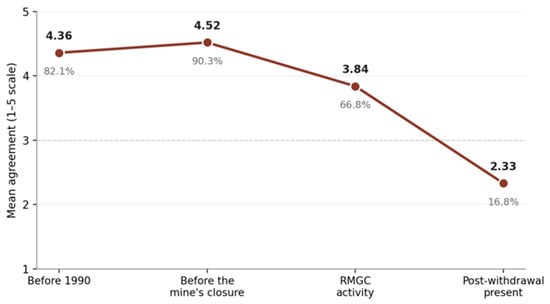
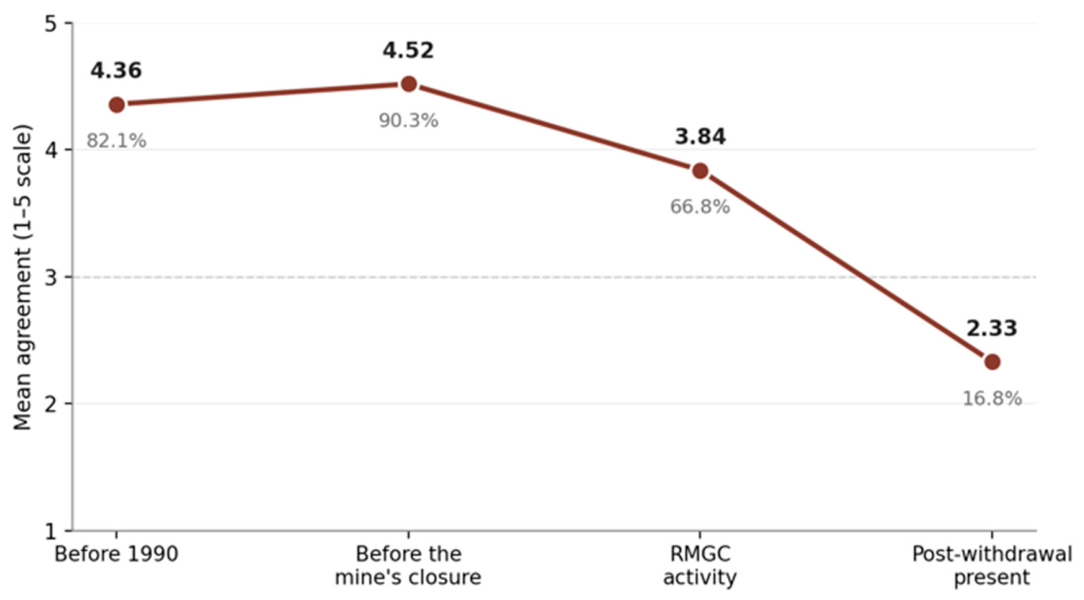
Disclaimer/Publisher’s Note: The statements, opinions and data contained in all publications are solely those of the individual author(s) and contributor(s) and not of MDPI and/or the editor(s). MDPI and/or the editor(s) disclaim responsibility for any injury to people or property resulting from any ideas, methods, instructions or products referred to in the content. |
© 2026 by the authors. Licensee MDPI, Basel, Switzerland. This article is an open access article distributed under the terms and conditions of the Creative Commons Attribution (CC BY) license.