


Abstract
Since the 19th century, the United States has continuously conducted plant introductions from around the world to expand high-quality germplasm resources for agriculture and horticulture. Beginning in 1898, China—shaped by millennia of agrarian civilization and characterized by exceptionally rich biodiversity—became a key focus of these efforts. To clarify the historical trajectory of the introduction of plants originating in China into the U.S., this study compiles the Office of Foreign Seed and Plant Introduction series Inventory of Seeds and Plants Imported (The Inventory of Seeds and Plants Imported is a serial publication compiled by the SPI since 1898, documenting plant introduction activities of the United States worldwide. The original volumes and their digitized versions are publicly accessible through the USDA National Agricultural Library (NAL) Digital Collections. These archival records constitute the primary source of the historical plant-introduction data used in this study.) and synthesizes the history of introductions from 1898 to 1949; after verifying and analyzing the composition and selectivity of introduced taxa in terms of scientific nomenclature, spatiotemporal distribution, collectors, taxonomic structure, and plant uses, we find that 23,890 introduction records were documented, encompassing 159 families, 869 genera, and 2252 species, spanning 34 provincial-level administrative regions and 230 prefecture-level cities in China, with more than 566 collectors participating over nearly half a century, among whom F. N. Meyer, J. F. Rock, P. H. Dorsett, W. J. Morse, and F. A. McClure made particularly prominent contributions. Plant introductions from China enriched U.S. germplasm collections, expanded the genetic and functional diversity of U.S. plant resources, and reshaped the composition of agricultural and landscape systems.
1. Introduction
Plant introduction is one of the core driving forces behind the global migration of biological resources, agricultural development, and horticultural innovation (Holland 2008). Since the Age of Discovery, plant hunters and explorers have played the role of “green Columbuses,” transferring species of economic or ornamental value from their native ranges to other parts of the world, thereby reshaping global patterns of crop cultivation, enriching national palettes of garden plants, and often producing profound ecological and cultural impacts (Brockway 1979). As the wave of the “Age of Discovery” deepened, the gaze of Western botanists gradually shifted from the Americas and Africa toward the Asian interior, with particular attention to China, a region of exceptionally high biodiversity (Yang et al. 2014). These regions not only harbor ancient floras but also give rise to numerous endemic species, becoming one of the focal areas of global botanical collecting (Zhong et al. 2025). Against this backdrop, plant introduction ceased to be merely a requirement of scientific classification and instead became an integral component of national resource strategies and agro-economic agendas (Fowler 2002). In addition to scientific and ecological considerations, plant introductions also generated substantial economic impacts. Many introduced species from China directly contributed to the development of U.S. agriculture and related industries (Hyten et al. 2006). Staple and cash crops such as Glycine max, Citrus × limon, and Citrus × junos enhanced agricultural productivity and crop diversity, while ornamental plants including Rhododendron (e.g., Rhododendron saluenense, Rhododendron uvariifolium, and Rhododendron mariae) and various bamboo species supported the growth of nurseries, landscaping, and associated industrial chains. The successful economic utilization of these high-value plant resources further reinforced institutional motivations for continued plant introduction (van Kleunen et al. 2020).
As a late-industrializing country, the United States’ trajectory of agricultural modernization was closely intertwined with its programs of plant introduction (Bonnamour et al. 2023). In 1898, the United States Department of Agriculture (hereafter “USDA”) formally established the Office of Foreign Seed and Plant Introduction (hereafter “SPI”), marking the institutionalization of U.S. efforts to collect plant genetic resources worldwide. This development occurred contemporaneously with Nikolai I. Vavilov’s pioneering work on the collection and conservation of crop genetic diversity in Russia and the Soviet Union, which laid the theoretical and practical foundations of modern plant genetic resource systems (Vavilov [1926] 1997). The establishment of this office served both domestic needs—addressing crop-resource shortages amid agricultural development in the western United States—and external objectives focused on the systematic acquisition and utilization of overseas plant genetic resources, aiming to transform global germplasm into national agricultural capital through science and technology (Zuo 2025). As a center of origin for major crops such as Oryza sativa, Glycine max, and Fagopyrum esculentum, China—owing to its vast territory encompassing diverse climatic zones and the rich germplasm accumulated through millennia of agrarian civilization—became a core hub in the United States’ construction of a global plant-introduction network (Jones and Liu 2009). Over the half century from 1898 to 1949, the USDA conducted sustained and large-scale plant collecting and introduction activities in China through multiple channels, including dispatching professional explorers, collaborating with faculty at missionary schools, and leveraging diplomatic networks stationed in China (Vavilov 1926).
The scholarly community has accumulated a substantial body of scholarship on modern Western botanical collecting activities in China. Existing studies have mainly proceeded along two lines of inquiry: first, expedition-history research centered on prominent individual botanists, such as tracing and assessing the trajectories and contributions of Ernest Henry Wilson (1876–1930), George Forrest (1873–1932), and Joseph Charles Francis Rock (1884–1962) in botanical collecting across Southwest China (Zhong et al. 2025); second, introduction-history research focused on specific plant taxa, for example, examining the dissemination histories of economic or ornamental plants such as Rhododendron simsii and Glycine max (Wu et al. 2021a). These studies have deepened our understanding of how Western botanical knowledge was constructed in China and how particular species circulated globally (Sedivy et al. 2017; Xiang et al. 2024).
However, existing research still has clear limitations. The research objects are relatively fragmented: most studies document certain plant hunters and the introduction trajectories of a few emblematic species, yet they lack a systematic examination of the USDA’s overall activities in China as a core institutional actor (Luo et al. 2024). Moreover, analytical dimensions remain incomplete; research often focuses on a single dimension-either temporal sequences or spatial distributions-and fails to integrate actors, stages, geographic space, and species composition, making it difficult to reveal the full picture and dynamic trajectories of introductions. Finally, analyses of the historical context require further deepening. Some studies do not adequately situate introduction activities within broader shifts in Sino-U.S. historical and economic relations, the contributions of China’s domestic scientific community, and transformations in the global agro-industrial system, and therefore provide insufficient interpretation of their complex historical implications.
Therefore, this study centers on the USDA’s plant-introduction activities in China from 1898 to 1949 and develops a comprehensive analytical framework. The selection of 1949 as the endpoint of this study is grounded in institutional, political, and data-consistency considerations. Following the establishment of the People’s Republic of China in 1949, foreign institutions such as the USDA were no longer able to enter China without authorization to conduct on-site field investigations or systematic plant-collecting activities on the Chinese mainland. As a result, the long-standing era of largely unilateral plant introduction—established since 1898 and characterized by direct field surveys and in situ collection without formal approval from Chinese authorities—came to an end. In addition, 1949 represents the last year in which China appears as a clearly defined and stable source country in the USDA Inventory of Seeds and Plants Imported series. Although plant introduction activities related to China continued thereafter, they were conducted under fundamentally different political conditions and institutional frameworks, and thus differ substantially in scale, mode, and context, rendering them not directly comparable with the earlier period. Defining 1949 as the cutoff year therefore ensures the internal consistency and historical coherence of the dataset analyzed in this study (Wu et al. 2020). Rather than focusing on a few particularly influential collectors or a handful of representative species, this research seeks to systematically address the following core questions: what were the spatiotemporal patterns of plant collection activities in China, introduced to the U.S. during this period? How many plant collectors participated in this work? How did the scale of plant collectors operating in China evolve over time? How many plant taxa were introduced into the United States, and what compositional characteristics and selectivity did they exhibit in terms of taxonomy and utilitarian uses? By examining these questions, this study aims to more fully reveal the overall magnitude and the temporal and spatial dynamics of trans-Pacific flows of plant resources in this era, thereby offering a new historical perspective for understanding modern Sino-U.S. interactions in botany, horticulture, and related fields.
2. Materials and Methods
2.1. Data Sources and Standardization
2.1.1. Core Historical Plant-Introduction Dataset: USDA Archives
The foundational dataset for this study was drawn from the USDA SPI-compiled publication series Inventory of Seeds and Plants Imported. This archival system documents detailed information on plants introduced into the United States from around the world since 1898 and constitutes one of the most authoritative and comprehensive official records for examining international flows of plant genetic resources during this period. We systematically searched and extracted all records from 1898 to 1949 whose stated place of origin was China. Each original entry includes the botanical name (or the name in use at the time), the introduction identifier (SPI number), the collector, the year of introduction, and locality information for the introduction/collection site. To accurately identify relevant records, we incorporated historical-geographical context and queried a controlled set of keywords-including “CHINA”, “CHINESE”, “FORMOSA1” (Taiwan), “MANCHURIA” (Northeast China), “SINKIANG” and “CHINESE TURKESTAN” (Xinjiang), and “TIBET” and “GREAT TIBET” (Xizang)-to ensure coverage of the full territorial scope of China as understood in contemporary U.S. sources.
2.1.2. Cleaning, Proofreading, and Integration of Historical Plant Introduction Catalogues
For data cleaning after acquiring the original plant-introduction records, we converted the raw data into a standardized, analyzable dataset through automated validation and manual cross-checking. Botanical scientific-name standardization and accepted-name verification: to address synonyms, unidentified names, or deprecated scientific names in the original records, we conducted systematic nomenclatural checking. First, the iPlant (https://www.iplant.cn/) platform was used as the primary reference to conduct batch verification and update accepted names. For records with inconsistent verification results, we consulted relevant taxonomic literature for manual review, ultimately harmonizing all entries to the most up-to-date accepted names and recording their family-, genus-, and species-level classification. For introduction-locality information widely recorded in Wade-Giles romanization, postal romanization, and dialect-based transliterations, we established a mapping between historical place names and contemporary administrative divisions. Drawing primarily on the historical toponym verification materials for early collecting localities provided by the Chinese Virtual Herbarium “CVH: https://www.cvh.ac.cn/topics/counties.php (accessed on 7 July 2025)”, and integrating historical maps and records of administrative-boundary changes, we geocoded ambiguous or legacy place names as accurately as possible to present-day provincial-level administrative units in China. We then identified their current administrative jurisdictions based on Webster romanization or postal romanization, cross-validated against early Chinese specimen-locality toponyms, and formatted the locality fields in the order of “province, city, county/district/county-level city”. For locality information that could not be resolved to the prefecture-level city (e.g., entries specified only to the province), we retained the records but excluded them from the overall spatial distribution analysis (Ong and Perono Cacciafoco 2024); We manually corrected and unified spelling variants, abbreviations, and errors in collector and institutional names to produce a standardized name list for subsequent analyses of collector networks and contributions.
Records for which the scientific names could not be verified or key information was entirely missing were excluded. The cleaned scientific names, standardized place names, introduction years, and collectors (among other variables) were then integrated to construct a relatively complete “introduced plant checklist database,” which served as the foundational dataset for all subsequent analyses (Figure 1).
Figure 1.
Workflow diagram.
2.2. Data Analysis
By integrating the three dimensions of spatiotemporal distribution and plant collectors, this study systematically analyzes the macro-level patterns of U.S. plant introduction activities in China from 1898 to 1949.
In terms of temporal dynamics, based on the cleaned introduction-year dataset, we calculated—at an annual resolution—the frequency of introduction events (number of accessions) and the number of introduced species to identify peak and trough periods of introduction activity. In addition, we computed annual changes in the number of foreign plant collectors operating in China, plotted line charts of temporal variation, and analyzed the historical drivers underlying these changes.
Spatial pattern analysis was conducted in ArcGIS 10.8.1 by geocoding collection records verified to the prefecture-level city and quantifying the number of collection accessions per prefecture-level city in each province; these data were integrated with prefecture-level plant species richness to visualize, via maps, the geographic preferences of major non-native plant collectors in China and their spatial associations with indigenous biodiversity hotspots.
3. Results
3.1. Spatiotemporal Distribution of Plants Introduced from China
Using taxonomic analysis, we quantified and ranked the standardized plant checklist at the family and genus levels to identify dominant taxa. We calculated the number of introductions and the cumulative proportion of introductions for each family and genus to evaluate the taxonomic concentration of introduction activities. This study systematically compiled and standardized USDA-related plant introduction data from China spanning 1898–1949, covering 34 provincial-level administrative regions and 230 prefecture-level cities (prefectures/leagues), with 23,890 introduction records in total. After removing entries lacking prefecture-level city information, we obtained 12,104 valid records for city-scale analysis (Table A1). The cleaned dataset indicates an extremely pronounced disparity in the number of introduction records across prefecture-level cities, ranging from as few as 1 to as many as 2216, preliminarily revealing a highly uneven spatial distribution of collection activities.
3.1.1. Overall Spatial Distribution of the Provenance of Introduced Plants
From the overall spatial perspective, the introduction activity exhibits a distribution characterized by “relatively high density in the eastern and southwestern regions, relative sparsity in the northwest, and a gradual decline from east to west.” Northeast China, North China, East China, and Central China form multiple pronounced hotspot areas; for example, Harbin records a cumulative total of 794 entries, Beijing reaches 1748, Nanjing is as high as 2216, and Wuhan also reaches 236, together constituting the “high-intensity zones” of collection activity. Collection intensity gradually transitions from the eastern coastal areas toward Southwest and South China, with Lijiang City and Diqing Tibetan Autonomous Prefecture totaling 1148 records and Guangzhou reporting 706 records. By contrast, Northwest China overall remains a low-activity region, and some areas in Inner Mongolia and Qinghai even show record voids, indicating a pronounced spatial marginalization of introduction activity (Figure 2).
Figure 2.
Overall spatial pattern of accessions provenance in China.
The results indicate that hotspot areas of highest collection intensity are not merely random artifacts produced by statistical methods; rather, they corroborate the travel routes and collection zones of major foreign plant collectors operating in China, thereby endowing the “spatial pattern” with a historically traceable texture (Pyšek et al. 2012). For example, Frank Nicholas Meyer (1875–1918) is widely regarded as one of the representative figures of USDA’s early plant introduction efforts from China, and his repeated long-distance expeditions—together with his collection and introduction of fruit trees and stress-tolerant crop resources—meant that North China and several inland nodes attracted substantial attention from collectors at an early stage (Wu et al. 2022). The collection work he advanced through individual exploration in the inland Northwest of China, when transportation and security conditions permitted, rapidly incorporated inland plant species into the USDA’s collections via a limited number of routes (Shi et al. 2024). In contrast, the collaborative collecting undertaken by Palemon Howard Dorsett2 and William Joseph Morse (1884–1959) supplied USDA’s program for the introduction of plants from China with a more systematic, large-scale influx, and their work was often associated with more accessible regions, stable collecting organization, and bulk shipment logistics (Daru et al. 2018).
At the overall temporal scale, USDA-led plant introductions from China did not unfold linearly but instead followed a trajectory of gradual escalation from a low baseline to a high level, followed by renewed contraction (Figure 3 and Table A2). In the early twentieth century, the scale of introductions remained low for an extended period, with relatively few annual accessions and species, and the program had not yet achieved stability. Over time, introductions accelerated markedly in the 1920s, progressively shifting toward a more mature phase, accompanied by an increase in annual records of introductions. A peak in this operational trajectory emerged in 1926–1927, when the two years together accounted for 4508 introduction records, representing approximately 18.9% of all recorded introductions. This period of high-intensity introduction was not incidental: it both reflects the concentration of annual workload and reveals the maturity and organizational capacity attained by the USDA introduction system from China during a specific window. During this period, the temporal trajectory forms a clear V-shaped trough, characterized by a sharp decline followed by a partial recovery (Figure 3). This fluctuation coincides with the onset of the Great Depression, which began in 1929 and persisted into the late 1930s. The global economic crisis likely constrained institutional capacity, logistics, and international exchange, thereby reducing overseas plant introduction activities and contributing to the observed V-shaped pattern (Holley and Trescott 2023). This “surge-plateau” temporal structure accords with a common pattern whereby transnational species-collection networks develop operational inertia at mature stages, and it closely aligns with the “institutionalized collecting phase” defined in research on the history of plant hunting and introduction (Richardson and Van Wilgen 2004).
Figure 3.
Overall temporal pattern of plant introductions from China.
3.1.2. Overall Temporal Distribution of Introduced Plant Species
During 1900–1910, the overall scale of plant introductions remained low, with large interannual fluctuations. This period is better understood as an exploratory stage before institutional arrangements had stabilized: collecting routes were still being tested and transfer logistics had not yet matured, making annual introduction numbers highly susceptible to shipping conditions and geographic accessibility (van Kleunen et al. 2015). After entering the 1920s, both the number of introduced taxa and the volume of recorded accessions began to rise continuously, rapidly developing into a large-scale enterprise. The USDA’s collection work in China thus shifted from early exploratory efforts to a more large-scale and organized mode of operation, including the establishment of a relatively stable collection network and standardized procedures for material handling and transport. This accelerated expansion did not occur in isolation; rather, it was associated with the historical context of improved transportation conditions in modern China and strengthened linkages between treaty ports and the interior, which made transregional collecting and transport more feasible in practice (Hulme 2009).
However, after 1932, the scale of introductions underwent a pronounced turning point, with both the number of accessions and the number of species beginning to decline and settling into a relatively low level. Although there were brief rebounds in certain years, they were no longer sufficient to return to the high levels observed in 1926–1927. This trend is closely associated with the deterioration of the security situation and its sustained threats to transportation and fieldwork. Cross-border introduction activities depend heavily on conditions such as on-site collection, personnel deployment, and reliable transport; when these conditions are disrupted, introduction intensity often contracts rapidly and remains depressed over the long term (March et al. 2021).
3.2. Composition and Shifting Patterns of Foreign Plant Collectors in China
The analysis indicates that the USDA’s introduction program in China from 1898 to 1949 was far from a uniform and continuous process of plant-resource collection; rather, it constituted a dynamic history shaped by a small number of key individuals, characterized by fluctuations in activity intensity in response to security conditions, and deeply reflective of modern Sino-U.S. relations. The findings of this study can be elaborated in the following three aspects, which together delineate a historical panorama of plant introductions from China to the United States (Wu et al. 2021b).
3.2.1. The Overall Scale and Number of Plant Collectors Vary over Time
In this introduction stage, the overall scale of collectors can be divided into three phases—an initial exploratory period (1898–1905), a rapid growth period (1906–1930), and a decline-and-recovery period (1931–1949)—with the total number of foreign collectors in China exceeding 566 (Figure 4 and Table A3).
Figure 4.
Temporal changes in the number of plant collectors in China.
During the early phase of plant-introduction activities, the number of foreign plant collectors operating in China remained low, typically ranging from 3 to 14. At that time, stable channels for scientific collaboration between China and the United States had not yet been established, and introduction efforts relied more heavily on individual initiatives. Many collectors entered China as independent explorers or collectors; their activities were distinctly exploratory and also indicated that botanical-science exchange between the two countries was still in its infancy and had not yet been incorporated into a systematic framework. This relatively fragmented pattern began to change in the early twentieth century. Between 1905 and 1910, the number of collectors rose from 14 to a peak of 47 in 1910, producing a pronounced expansion within a short period. This surge was not accidental but rather the product of the combined effects of institutional conditions and economic demand. On the one hand, formal scientific cooperation between China and the United States gradually took shape—for example, the U.S. Bureau of Agriculture began collaborating with relevant Chinese research institutions—thereby providing organizational and resource support for plant-introduction activities (Schneider 1982); on the other hand, domestic demand in the United States for economically valuable plants from China continued to grow—for example, accession records reached 3024 for Glycine max, 1523 for Oryza sativa, and 265 for Sorghum bicolor, which also encouraged a more professionalized cohort of plant hunters to enter China and markedly increased the scale and specialization of collections during this period. As the plant-introduction system became more mature, the number of foreign collectors operating in China during the 1920s exhibited a form of broad or relative stabilisation, characterized not by a constant figure but by fluctuations within a comparatively stable range (approximately 23–43 collectors), especially when contrasted with the rapid expansion of the preceding phase and the sharp decline that followed. This also reflects the vibrancy of transnational knowledge exchange at the time: the Arnold Arboretum and agricultural agencies continuously and systematically dispatched plant hunters to China, while research-oriented institutions such as Lingnan University provided local support in transportation and field assistance, thereby to some extent ensuring personnel mobility and safety (Stoner and Hummer 2007).
However, this stability did not last long. The 1930s marked a clear turning point in the history of plant introduction: the number of foreign collectors in China fell rapidly from 35 in 1930 to only 2 by 1940. The deterioration of external security conditions profoundly reshaped collection activities—transport routes were disrupted, and the risks of field surveys increased. Amid multiple sources of uncertainty, most foreign plant hunters were forced to withdraw from China, and the 1940 nadir in numbers concentratedly reflects the near-stagnation of introduction activities.
The brief recovery that followed did not reverse this overall trend. Between 1945 and 1949, the number of foreign plant hunters agents in China rose slightly-reaching 12 by 1949—but never returned to the high levels of the 1920s and 1930s. This limited rebound reflected a localized resumption of scientific exchange under constrained conditions rather than a comprehensive recovery. Plant-introduction activities could no longer replicate the scale of the “introduction boom,” marking the gradual transition of the U.S. era of plant introduction from China toward a phase of exhaustion (Merrill 1948).
3.2.2. The Top Ten Foreign Plant Collectors in China and the Spatiotemporal Patterns of Their Collections
Between 1898 and 1949, a large number of plant collectors participated in introduction activities, forming an extensive network system. To clarify the uneven contribution structure among collectors, we further stratified foreign plant collectors according to their proportional share of total introduction records. A small group of major collectors, each contributing more than 10% of all records, formed the core drivers of large-scale introduction activities. A second tier of core collectors contributed between 5% and 10%, while a broader group of secondary collectors each accounted for more than 1% of the total. Together, these groups illustrate a highly concentrated introduction network, in which overall introduction outcomes were numerically dominated by a limited number of high-frequency collectors, whereas the majority of participants contributed only a small number of records. For example, those who contributed more than 10% of the seed introduction: P. H. Dorsett, F. N. Meyer, J. F. Rock, W. J. Morse, Floyd Alonzo McClure (1897–1970), Major Lionel Nathan de Rothschild (1882–1942), Albert Newton Steward (1897–1959), Aleksandr Dmitrievich Woeikoff (1879–1944), Boris Vasil’evich Skvortzow (1896–1980), and Petr Filaretovich Constatinoff (1890–1954)—accounted for the vast majority of high-quality germplasm introductions, whereas many participants contributed only single-digit numbers. The activity trajectories of these ten leading collectors exhibit a clear sequential “relay” over time, and the rises and falls of their individual careers together weave the overarching contour of the introduction history. From 1898 to 1949, the USDA’s cumulative introduction records from China reached 23,890, while the ten major collectors collectively contributed 12,064 entries, accounting for 50.5% of the total. This pyramid-shaped structure indicates that systematic, large-scale introduction work depended heavily on a small number of professional plant collectors who received long-term support and systematic training from institutions such as the USDA (Schmidt et al. 2025). By reviewing the activity trajectories of the principal collectors in China during this period, it is evident that each collector’s active years align closely with the three delineated introduction phases overall, yet their introduction efforts differed in emphasis (L. D. Rothschild is not discussed here due to substantial missing data at the prefecture-level city scale, although the number of his plant transfer records is reflected in the overall activity map, Figure 5).
Figure 5.
Spatial layout of the main activity areas of key foreign plant collectors in China. Subfigure (a) illustrates the aggregated spatial distribution of all recorded plant introductions in China. Subfigures (b–j) depict the spatial introduction patterns of individual major foreign introducers, as listed in the lower-left legend. The color gradients above each panel correspond to specific introducers, with consistent color coding across the figure. Each map represents the geographic intensity (heat map) of plant introductions conducted by the respective introducer. Darker colors indicate higher numbers of introduced taxa within provincial administrative units.
As an early pioneer of plant hunting, F. N. Meyer focused his expeditions primarily on North China and penetrated the Chinese interior along the Yangtze River basin, while also reaching the inland Northwest; he accumulated 445 accession records in Beijing and 144 documented introductions from the Kashgar region, concentrating on fruit and nut trees and cold-hardy timber species with immediate economic value, thereby providing U.S. agriculture with a substantial pool of potential cultivars and breeding germplasm. In 1908, he reached his personal peak, providing 614 accessions in a single year, and his collections laid a critical resource and knowledge foundation for subsequent introduction work (Wu et al. 2022). His introduction activities were largely concentrated in 1905–1918, spanning 14 years of documented records and constituting a core force in the initial exploratory phase.
In early 1929, P. H. Dorsett, W. J. Morse, and their colleagues emerged as the principal drivers of plant introduction, serving as core members of the agricultural expedition team organized under the USDA SPI program and dispatched to China—an arrangement that exemplified the USDA’s large—scale and comprehensive approach to agricultural exploration. Plant-collection efforts peaked particularly in Southwest China (e.g., Yunnan and Sichuan), bringing in substantial numbers of alpine ornamentals as well as endemic taxa such as Rhododendron russatum, Primula szechuanica, Meconopsis pseudointegrifolia, and other regionally restricted species. During this period, they conducted extensive crop germplasm collecting across Northeast China (e.g., 205 accessions introduced from Changchun and 497 from Harbin) and North China (a total of up to 683 accessions from Beijing), with a particular emphasis on local landraces of soybean, vegetables, and other economic crops; the exceptionally large introduction volumes directly supported U.S. crop-improvement programs, and between 1929 and 1931 the two men provided a combined total of 4847 accessions, with Dorsett’s single-person, single-year maximum reaching 1926 accessions in 1926.
From the 1920s to the mid-1930s, McClure emerged as a model of the “expert” plant hunter. Based in South China for an extended period (affiliated with Lingnan University), he conducted intensive collection and research on bamboos, reaching 433 introduction accessions in Guangzhou. His work not only brought numerous bamboo taxa to the United States but also substantially advanced bamboo taxonomy, with an impact that far exceeded the mere introduction of plant biological resources and even contributed to the formation of a specialized discipline. His collection activities spanned 1921–1943; during the third and fourth Hainan Island expeditions in 1927–1928, 335 collection records were documented, covering a total of 103 plant species. Specimens collected during these two expeditions accounted for 30.5% of his total personal introductions (Wu et al. 2021b).
J. F. Rock centered his activities in the Hengduan Mountains of southwestern China, focusing particularly on northwestern Yunnan (e.g., 16 prefecture-level cities such as Lijiang, Diqing Tibetan Autonomous Prefecture, Nujiang Lisu Autonomous Prefecture, Liangshan Yi Autonomous Prefecture, and Nyingchi) and southwestern Sichuan (e.g., Liangshan Yi Autonomous Prefecture and Garzê Tibetan Autonomous Prefecture, totaling 160 introduction records), with 760 records from Lijiang and Diqing alone, and—across the 16 prefecture-level cities—272 plant species represented by as many as 1442 species-record entries. His introduction lists were characterized by alpine ornamental taxa such as Rhododendron and Primula, along with numerous endemic trees and shrubs, substantially enriching Western botanical collections and marking an expansion of introduction objectives from purely economic utility toward a dual emphasis on scientific and ornamental value; his work spanned the longest period (1922–1949), with records covering 15 years—ranking first among foreign plant collectors active in China—and the greatest annual volume occurred along the Yunnan-Tibet frontier during 1922–1924, averaging 330.3 records per year.
A. D. Woeikoff’s introduction activities were concentrated primarily in Northeast China (the three northeastern provinces) and North China, with 244 plant-species accession records collected in Mudanjiang, and were most active during the 1920s–1930s. A. N. Steward worked mainly in Central and Southwest China, introducing 85 plant-species accession records in Tongren and 36 in Jiujiang; during 1932–1937, he introduced a total of 137 species across 221 accessions, continuously supplying germplasm resources to the USDA.
B. W. Skvortzow conducted collection activities in China for eight consecutive years, producing a cumulative total of 351 introduction records, with an annual average of 43.8 and a single-year maximum of 115. Meanwhile, P. F. Constatinoff, another foreign plant collector active in China, reached a single-year maximum of 331 records, operating primarily in Northeast China (the three northeastern provinces), with 83 recorded introductions from Jilin City and 56 from Mudanjiang, for example. Both individuals carried out extensive plant collections in Harbin, contributing a combined 214 records and continuously supplying the USDA with high-quality germplasm resources and horticultural plant taxa.
The peak periods of plant collection by the principal collectors in China did not fully coincide temporally; instead, they formed a sequential trajectory of collection efforts. This pattern arose because the discoveries of early plant hunters continually furnished leads and targets for subsequent work, enabling later collections to build upon an accumulated knowledge base (Figure 6). Collection frequency was also constrained by individual contract cycles, shifts in funding support, and the broader geopolitical conditions of the modern era. In this process, individual exploratory initiative and institution-level economic demand jointly shaped the USDA’s program of plant introduction from China from 1898 to 1949 (Wu et al. 2022).
Figure 6.
The introduction timelines and quantities of the top ten foreign plant collectors in China. Different colors correspond to individual foreign plant introducers in China, consistent with the color coding in Figure 5.
In addition, it should be emphasized that the outstanding contributions of China-based scientists or collaborators—such as Dejun Yu (Yü Te Chün, T. T. YU) and Aitun Liu (Liu Ai T’eng, Peter Liu)—were particularly evident in the 1930s and 1940s: while assisting the USDA with plant collection work, Dejun Yu provided 212 plant species, with a single-year maximum of 641 accession records. Aitun Liu contributed a total of 718 accession records, sustained plant collection activities for 11 years, and achieved an annual average of 65.3 records. Leveraging their familiarity with China’s geographic environments, these China-based scientists or collaborators collectively generated 1225 collection records across prefecture-level localities such as Diqing Tibetan Autonomous Prefecture and Liangshan Yi Autonomous Prefecture in Southwest China, as well as Beijing in North China. Drawing on in-depth knowledge of local floras, they assisted the USDA during the later phase of the 1898–1949 plant introduction program and served as a crucial bridge linking Chinese and Western botanical knowledge.
By overlaying and analyzing the introduction records of the ten principal foreign plant collectors active in China, we find that USDA-dispatched collectors exhibited a discernible “site preference” in their collection localities, concentrating largely in Northeast, North, East, South, and Southwest China, thereby producing an overall spatial pattern characterized by pronounced regional unevenness.
3.3. Temporal Characteristics and Taxonomic Composition of Plant Species Introduced from China
This study synthesizes and classifies U.S. records of plant introductions from China between 1898 and 1949 and, from a macro-level perspective of introduced species composition, reveals the taxonomic concentration and resource preferences characterizing introduction activities during this period. Our analysis proceeds primarily along two dimensions, jointly outlining a “map of plant resources” underlying U.S. collection work in China (Fairchild 1923). Although collection efforts encompassed a broad range of taxa, their intensity was unevenly distributed, exhibiting a pronounced “collection preference.” In this study, the dataset of introduced plants with complete records comprises 23,890 entries, spanning 159 families, 869 genera, and 2252 species. These data corroborate China’s abundant germplasm resources and botanical diversity, as well as the substantial capacity of U.S. introduction institutions to conduct collection work. Nevertheless, introduction activities were driven chiefly by pragmatism and economic interests, and their essence lay in enriching U.S. landscape plantings, agricultural germplasm repositories, and forestry resources—an objective that is key to understanding the entire history of introductions.
From the overall species time series of introductions, the trajectory of introduction activities exhibits pronounced stage-like and nonlinear features in both magnitude and tempo. The annual number of plant transfers did not increase at a constant rate over time; instead, it went through a process of slow accumulation, rapid escalation, and subsequent decline, forming a clear “hump-shaped” distribution, with 1920–1930 constituting the peak period, during which (around 1926–1927) large numbers of economically valuable taxa were introduced, for example, the Glycine (rising from a total of 266 accessions in 1924–1925 to 1243 in 1926–1927) and the Triticum (increasing from 48 in 1924–1925 to 1019 in 1926–1927), driving the annual introduction volume to its maximum. Thereafter, the annual number of plant transfers declined rapidly and entered a fluctuating phase, indicating a degree of continuity and inertia in introduction events. By contrast, the cumulative number of introductions continued to rise over time, but its growth rate differed markedly across periods and can be broadly divided into three phases using 1920 and 1935 as temporal breakpoints. During 1898–1920, the annual cumulative number of introduced accessions increased year by year, but the growth was relatively slow. From 1920 to 1935, the annual cumulative number of introduced accessions accelerated substantially, becoming the critical period driving the expansion of introduction scale. After 1935, the growth rate of the annual cumulative number of introduced accessions slowed again, although the overall trend remained upward (Figure 7). As a whole, the introduction-quantity curve shifts at multiple time points, suggesting that the execution intensity of introduction work was shaped by specific historical phases, and that quantitative fluctuations reflect changes in collectors’ capacity for action and in their broader socio-historical context (Seebens et al. 2017).
Figure 7.
Analysis of the cumulative annual totals and interannual variation of plant introductions from China.
In this study, 23,682 records were identified to the family level, 23,691 to the genus level, and 18,859 to the species level and infraspecific taxa (Table A4). Based on the integrated introduction dataset, we selected the most representative families and genera that together accounted for the top 70% of all introductions for analysis, comprising the top 10 families and top 45 genera, which indicates pronounced representativeness and concentration (Table 1 and Table 2).
Table 1.
Family, Count, and Proportion (%) accounting for the top 70% of the total introduced plants.
Table 2.
Genera, Count, and Proportion (%) accounting for the top 70% of the total introduced plants.
3.3.1. Dominant Families of Introduced Plants and Their Cumulative Proportion
At both the family and genus levels, Chinese plant species contributed substantial species richness to the U.S. planting germplasm pool, yet this “richness” was unevenly distributed, with introduction records displaying a pronounced dominance structure among taxa. At the family scale, introduction activities were clearly organized around a small number of “dominant families,” with the leading families including Poaceae (25% of total accessions introduced), Fabaceae (20.9%), Rosaceae (10.7%), Ericaceae (4.9%), and Cucurbitaceae (2.6%), all of which comprise plant groups of exceptionally high economic and landscape value in subtropical and temperate regions. Taking Rosaceae as an example, its prominence reflects the large and persistent demand in U.S. society for fruit trees and ornamental woody plants (Griesbach and Berberich 1995). Large-scale introductions of Rosaceae directly supported cultivar improvement in the U.S. horticultural industry and enhanced plant diversity within cultivated systems. The prominence of Poaceae reflects the systematic collection of Bambusoideae, which were treated in historical and applied contexts as timber-like resources due to their widespread use in construction and material applications, along with experimental introductions of other ornamental grasses and potential forage and cereal taxa (Hou et al. 2021). This composition suggests that U.S. introduction agencies prioritized a “species list” centered on key resources that could be readily integrated into agricultural, horticultural, and forestry economic systems (Medina et al. 2025). In other words, family-level diversity appears more as an outcome shaped by economic and utilitarian priorities: taxa that can be reliably converted into high-value uses such as food and ornamentation were more likely to receive sustained investments of time and resources for continued introduction (Figure 8).
Figure 8.
Statistics of plant families comprising the top 70% of the total number of introduced plants.
Following this logic, the high introduction volume of Rosaceae is readily explicable, as it closely aligned with U.S. demand for fruit trees and ornamental woody plants. This alignment is reflected in both the improvement potential of fruit-tree resources-such as Malus pumila (6 introduction records), Prunus persica (246), and Prunus salicina (21)—and the appeal of ornamentals, including Prunus armeniaca (151) and Rosa multiflora (6 introduction records), which together elevated the family’s overall introduction intensity (Faust and Timon 1995). The prominent share of Poaceae corresponds to a different set of needs: the production-side applications of key forage grasses or cereals, together with the functional uses of certain bamboos (304 introduction records), enabled this family to remain consistently overrepresented in introduction lists over the long term. In this context, McClure’s contributions to bamboo introductions were particularly notable. The extensive introductions of Fabaceae exhibited a multi-purpose orientation spanning herbaceous and woody forms, encompassing herbaceous taxa used as green manure and forage as well as tree species with ornamental or timber potential, such as Lespedeza bicolor (12) and Gleditsia sinensis (18). As for Pinaceae, introductions more directly targeted the dual objectives of timber production and urban landscaping. Across plant-species introduction lists, taxa may differ in their uses yet share a common underlying logic: they typically possess clear, realizable utilitarian value. When such groups were introduced into the United States and incorporated into systems of cultivation and dissemination, U.S. horticultural and agricultural configurations—and even the forest-composition structure of some regions—were altered accordingly.
3.3.2. Dominant Genera of Introduced Plants and Their Cumulative Proportion
While preferences in introduction selection are already evident at the family level, analysis at the genus level further “sharpens” this selectivity into a more pronounced concentration pattern: Genera were ranked by their number of introduction records in descending order, and a cumulative threshold was then applied to identify the set of genera accounting for the first 70% of all introduction records. Under this criterion, a total of 45 genera are required to cumulatively reach this 70% threshold, indicating a strong concentration of introduction activities at the genus level. Notably, high introduction volumes at the genus level are also shaped by collectors’ familiarity and personal trajectories, “genus-level introduction quantity” refers to the total number of recorded introduction events for all species and infraspecific taxa within a given genus, rather than to species richness. This measure reflects the degree to which introduction activities were concentrated on particular genera, indicating repeated collection and introduction efforts over time.
Such concentration is closely linked to the personal trajectories of individual plant collectors. Historical introduction activities were not random: a collector’s professional background, long-term residence, research interests, and regional familiarity strongly shaped their choice of target taxa. As a result, sustained work by particular collectors often led to disproportionately high introduction quantities for certain genera. Therefore, a high genus-level introduction quantity does not imply natural dominance of that genus in China’s flora, but instead reflects the cumulative outcome of focused and repeated introduction activities by specific individuals. Bamboos provide the clearest example: the unusually high numbers of introductions for Bambusa (98 records), Phyllostachys (113 records), and Pseudosasa (20 records) are, to a large extent, the direct result of McClure and his collaborators’ sustained, two-decade focus (Wu et al. 2021b). This genus-level taxonomic composition not only reflects persistent U.S. market demand for particular plant types, but also indicates that collection work relies heavily on collectors’ familiarity with—and interest in—specific taxa.
For agricultural resources, the genera Glycine, Triticum, and Oryza together comprise as many as 6873 introduced accessions, representing 29% of the total and ranking among the top three genera by introduced accessions, thereby bringing substantial agricultural resources to the United States. Among ornamental trees and shrubs, introductions of Rhododendron and Syringa were particularly active, reaching 1077 and 71 records, respectively, and greatly enriching the species diversity of landscape plants in the U.S. East Coast and the Pacific Northwest. For fruit-tree resources, introductions of Pyrus and Citrus reached 436 and 199 accessions, respectively (2.6% in total), aiming to expand U.S. fruit cultivar diversity and the genetic reservoir of germplasm resources. Within Rosaceae, introductions were especially intensive for Prunus (805 accessions), Rosa (243), and Malus (229). For conifers, Abies (47 accessions) and Pinus (78) were widely introduced for forest-tree breeding and landscape planting in the United States (Figure 9).
Figure 9.
Statistics of genera accounting for the top 70% of the total number of introduced plant species: Notably, the exceptionally high number of Rhododendron introductions reflects sustained collecting efforts by several key collectors (e.g., J. F. Rock) in southwestern China, as well as the strong ornamental demand for this genus in early twentieth-century U.S. horticulture.
The historical process of USDA plant introductions from China can be summarized as a purposeful program to acquire plant species resources. In essence, the composition of the introduction catalog is a species list doubly filtered through economic priorities and aesthetic selection, serving to a large extent the agricultural and horticultural sectors in the United States. The plant families and genera that account for the top 70% of introductions together constitute an efficient conduit linking China’s natural resources to U.S. application markets. This conduit preferentially channeled plant groups capable of rapidly generating high economic returns, enhancing quality of life, or serving specialized functions. While this introduction program enriched plant diversity in the United States, it also inevitably produced an incomplete understanding of China’s plant resources (Bonnamour et al. 2023; Daru 2024).
4. Discussion
4.1. Spatiotemporal Distribution Drivers and Subsequent Invasive-Species Monitoring
The USDA’s plant transfer program from China during 1898–1949 was not a set of sporadic, individual collecting activities but rather a program shaped by predefined objectives, infrastructure, and transportation conditions, and continually influenced by economic priorities and changes in the external environment. This study converts the dispersed introduction records in the SPI into a testable, standardized dataset and reconstructs, at the prefecture-level city scale, the “time-space-collector-taxonomic composition” structure of these activities. The core finding is that plant introductions from China during this period did not constitute a uniform sampling of China’s botanical diversity; instead, they represent a large-scale influx of plant species resources driven by institutional economic objectives, constrained by geographic accessibility and infrastructure, and implemented through a small number of key collectors.
The overall spatial pattern of introductions indicates that collection intensity did not simply track China’s plant-diversity hotspots. High-intensity clusters along the eastern seaboard and in Northeast China align with the distribution of ports, railways, and urban research institutions, thereby reducing the costs of collection, interim holding, and outbound shipment. By contrast, sparse records in regions such as the Northwest reflect how inadequate transport, institutional support, and security safeguards critically constrained scientific activity at the time. The spatial form of cross-border species flows is often determined first by transportation and organizational conditions, and only subsequently manifests as a biologically meaningful “source-area lineage” (Meyer et al. 2015). From the temporal structure of introduction work, geopolitical shocks could directly rewrite the rhythm of resource flows. Between 1920 and 1930, the annual cumulative volume of introductions increased rapidly, corresponding to a relatively active phase of foreign collection activities in China and to the development of mechanisms for Sino-foreign scientific collaboration (e.g., projects supported by the Rockefeller Foundation) (Schneider 1982). After the workflow of introductions became highly organized, a stage-specific peak emerged; regional conflicts in the late 1930s constituted a watershed in the trajectory of introduction work. Thereafter, the introduction process that had gradually unfolded since 1898 was markedly impeded: annual introduction numbers fell sharply and remained at persistently low levels, activity records for most foreign collectors declined precipitously, and in some years approached zero. During this period, the operational environment deteriorated substantially, personnel safety could not be ensured, interregional transport networks were constrained, and field collecting and systematic surveys were forced to cease. This phenomenon reveals the strong dependence of cross-border introductions on on-site collection, temporary storage, and reliable transport. Notably, during this interval, the relative share of USDA introduction contributions supported by Chinese local scientists or collaborators-such as Peter Liu and T. T. Yu. Under extremely adverse conditions, the collection network did not disappear entirely but persisted in a localized and collaborative mode, demonstrating the inertia and resilience of scientific activity under constraints (Sperling 2001).
Furthermore, the broad coverage of introduction records provides a scalable foundational database for subsequent research, particularly for tracking and evaluating the long-term consequences along the “introduction-naturalization-invasion” pathway (Bonnamour et al. 2023). Furthermore, the broad coverage of introduction records provides a scalable foundational database for subsequent research, particularly for tracking and evaluating the long-term consequences along the “introduction-naturalization-invasion” pathway (Cano et al. 2025; van Kleunen et al. 2015).
The long-term ecological impacts of historical introductions exhibit a pronounced duality. From a global perspective, the China–United States plant introduction pathway examined here also forms part of a broader, trade-driven system of species exchange, which has been shown to accelerate floristic homogenization among regions with intensive economic and transport linkages (Yang et al. 2021). Several taxa examined in this study were initially regarded as successful introductions because of their strong adaptability and rapid growth, yet during subsequent spread they demonstrated high competitive ability and were ultimately classified as invasive plants (e.g., Callery pear, Pyrus calleryana, introduced by the USDA from China to the U.S. Midwest in the early twentieth century, was widely promoted for its disease resistance and fast growth, but after multiple cultivars co-occurred and underwent natural hybridization it rapidly escaped cultivation and was eventually designated invasive in many U.S. states), thereby altering local community structure and ecological processes. This time-dependent shift underscores the necessity of interpreting historical introductions from a long-term perspective (Bonnamour et al. 2023). Our data support risk screening oriented to specific taxa and pathways: on the one hand, identifying taxa with high introduction intensity and documented invasion histories, and prioritizing the monitoring of species that exhibit broad native-range distributions when implementing future prevention of plant invasions, as species with wider native distributions are more readily detected and introduced (Paudel et al. 2025); on the other hand, the data help locate potential “hotspots of high introduction and high invasion likelihood,” providing a foundation for subsequent risk assessments that integrate GBIF (Global Biodiversity Information Facility) occurrence records, cultivation histories, and environmental suitability models (Zhang et al. 2024). By identifying pathways characterized by high collection intensity and economic orientation, this study provides historical evidence for linking past introduction efforts with contemporary patterns of naturalization and invasion—a linkage that has become a focal issue in invasion biology (Seebens et al. 2017).
4.2. Plant Introductions from China and the Formation of the U.S. Plant System
Introductions from China significantly expanded the genetic and functional diversity of U.S. plant resources. A portion of these introduced materials has been preserved and remains accessible within U.S. germplasm conservation systems; detailed and up-to-date inventories of taxa currently maintained by the USDA can be consulted through official USDA databases (https://www.usda.gov/). The USDA and affiliated institutions incorporated many introduced plants into agricultural breeding, extension through experimental stations, and urban greening systems. As a result, introduction activities not only increased the quantity of germplasm resources but also reshaped the structure of agricultural and landscape systems. In this process, the U.S. agricultural system gained a broader pool of stress-tolerance traits, and urban landscapes gained more plant species adaptable to different climates. Together, these changes enhanced the stability of agricultural production and the diversity of landscapes. As a major center of temperate and subtropical plant diversity, China provided the United States with many genetic traits that were relatively scarce in its native flora. Introduced taxa often carried key traits such as drought tolerance, cold hardiness, and resistance to pests and diseases, thereby improving crop characteristics or reducing production risks under specific environmental constraints. Previous studies have shown that function-oriented introductions in the early twentieth century were important for diversifying and stabilizing the U.S. agricultural system (van Kleunen et al. 2015). This study further demonstrates that plants introduced from China were not a marginal supplement to the U.S. plant system but an integral component of its agricultural and landscape development. In the fields of landscape architecture and horticulture, many introduced plants have gradually become foundational elements of street greening, shelterbelt configurations, and botanical garden collections. Through an “introduction-trial planting-propagation-promotion” workflow, botanical gardens, nurseries, and urban management agencies have steadily converted some Chinese plants into landscape materials usable at scale. Subsequently, hybridization and selective breeding further amplified the utilization potential of these species. By screening traits such as flower color, flowering period, plant form, stress tolerance, and management costs, new horticultural cultivars were developed that are more ornamental and better adapted to local environments (Huang et al. 2015). This process indicates that introduction is not a static transfer of species, but a dynamic process that continuously drives the recombination and re-dissemination of plant traits. Consequently, introduced plants function as “innovation nodes” within plant-dissemination networks, being repeatedly reshaped in novel environments and subsequently spreading again (Williams et al. 2016).
This study situates plant introductions within an analytical framework of transnational plant-dispersal systems, rather than treating them as isolated introduction events. By summarizing evidence on the scale of introductions, the actors involved, and taxonomic composition, this article shows that the enrichment of plant diversity in the United States has depended largely on transnational plant exchange and sustained circulation, rather than being derived solely from domestic evolution. This perspective extends the explanatory boundaries of traditional phytogeography and agricultural history, and it also aligns with a recent research trend in biodiversity science that incorporates historical data to elucidate the formation of contemporary floras (Daru et al. 2021).
Beyond shaping the structure of the U.S. plant system, introductions from China also generated lasting impacts on agricultural research, crop breeding, and broader economic and food-security outcomes. Following their introduction, many Chinese plant resources—ranging from major crops such as Glycine max and Triticum aestivum to ornamental taxa including Primula (e.g., Primula pinnatifida and Primula sikkimensis) and Rosa (e.g., Rosa omeiensis and Rosa soulieana)—were incorporated into U.S. breeding programs and experimental stations. Through selection, hybridization, and adaptation trials, these germplasm resources contributed to the development of improved cultivars with enhanced yield stability, stress tolerance, and disease resistance (Sun et al. 2025).
The utilization of introduced germplasm strengthened the competitiveness of U.S. agricultural production and facilitated the expansion of agricultural exports, particularly for crops whose genetic diversity had previously been limited. In this sense, plant introductions from China not only supported domestic agricultural modernization but also contributed indirectly to global food-system stability by increasing the resilience and adaptability of widely cultivated crops. These outcomes underscore that historical plant introductions functioned not merely as botanical exchanges, but as long-term investments in agricultural innovation and economic security.
4.3. Historical Insights from the History of Introduced Species to Today’s Global Plant Introduction System
The high concentration of taxonomic composition indicates that the collection lists compiled in China are not a comprehensive representation of the flora, but rather a “functional portfolio of resources” filtered by economic demand and application contexts. To further clarify the functional composition of the introduced taxa, we categorized all identified species according to their primary documented uses in the SPI records. Among the 2252 introduced species, ornamental or planting uses constituted the largest category (796 species), indicating that a substantial proportion of introductions were not strictly oriented toward food and agriculture. In addition, 533 species were introduced for medicinal purposes, while food-related uses such as fruit production (188 species), fat and oil resources (126), and fodder (114) represented comparatively smaller shares. Forest-related uses were also prominent, with 121 species recorded for timber and 122 for fibre.
This functional profile demonstrates that U.S. plant introductions from China encompassed a broad spectrum of utilitarian objectives, with ornamental, forestry, and other non-food uses forming a major component. Consequently, these introductions extend well beyond the scope of plant genetic resources for food and agriculture sensu stricto, reflecting a broader institutional interest in horticultural, medicinal, and multipurpose plant resources (Cano et al. 2025).
The dominance of groups such as Poaceae, Fabaceae, and Rosaceae corresponds to needs in fruit-tree breeding, forage/crop improvement, ornamental horticulture, and timber use, and is further amplified by the expertise of particular collectors: institutional preferences determine what to collect, while professional capacity determines how intensively collection is concentrated. Therefore, the accumulation of U.S. germplasm resources and changes in horticultural landscapes generated through introductions should be understood as the joint product of goal orientation and organized implementation capacity, rather than a simple “resource-richness determinism.” This interpretation aligns with findings that global accumulations of non-native plants are driven by exchange networks and introduction intensity (Schmidt et al. 2025; van Kleunen et al. 2020). China is among the world’s most genetically resource-rich countries for plants, it has long played primarily a supplier role in cross-border exchanges of plant germplasm resources (Vavilov 1926). In addition, it should be noted that plant genetic resources conserved within the USDA system have historically been made broadly accessible to researchers and institutions from many countries, reflecting an early emphasis on open exchange of introduced germplasm. By contrast, access to comparable plant genetic resources has not been reciprocally available in many countries, and a number of states are not members of the International Treaty on Plant Genetic Resources for Food and Agriculture (ITPGRFA), which formally commits its Parties to the conservation of plant genetic resources and to facilitated access and benefit-sharing. This institutional asymmetry highlights long-standing global inequalities in the governance, accessibility, and stewardship of plant genetic resources. Thus, it is necessary to strengthen institutional safeguards for the utilization of genetic resources and benefit-sharing, using China as a historical example to effectively protect the legitimate rights and interests of countries worldwide in access to genetic resources, their use, and the distribution of benefits (Schindel and du Plessis 2014). On this basis, in situ and ex situ conservation of plant biodiversity resources should be reinforced, and the international community should be encouraged to improve rules and enforcement mechanisms for Access and Benefit-Sharing (ABS), enhancing traceability, compliance, and equity (Sett et al. 2024).
Plant diversity not only constitutes the material foundation of ecosystem structure and function, but also serves as a key prerequisite for the long-term stability and development of human societies (Cardinale et al. 2012). It should be clarified that the apparent tension between “disordered” introduction practices and the characterization of the USDA-led program as “systematic” reflects two different analytical levels. Institutionally, plant introductions from China were coordinated under the USDA through formal programs such as the SPI, with defined objectives, funding mechanisms, and reporting systems. However, at the level of on-the-ground implementation in China, these activities were often fragmented, contingent on individual collectors, local conditions, transportation constraints, and political instability. Thus, the introduction system combined centralized institutional leadership with decentralized and uneven execution, a dual structure characteristic of transnational biological resource acquisition in this historical context. This interpretation is also consistent with later international frameworks on access, benefit-sharing, and biodiversity conservation, which emphasize the gap between formal governance structures and field-level practices. However, the USDA’s plant collection activities in China from 1898 to 1949 were carried out under specific historical circumstances. During this period, plant introduction efforts were severely lacking in organization and systematization. Whether viewed from the perspective of the introducing institutions themselves or the external environment in which collections were conducted in China, this history involved fragmented acquisitions of plant germplasm under relatively disorderly conditions. Such heterogeneous and uneven collection of plant species resources from the source country could not meaningfully contribute, as an international effort, to the conservation of global plant diversity.
The goals established by the current Kunming-Montreal Global Biodiversity Framework provide countries with a clear course of action for the conservation, restoration, and sustainable use of plant resources (Affinito et al. 2025; Obura 2023). Against this backdrop, research on the history of botanical expeditions and plant introductions is valuable not only for academic historical reconstruction, but also for the long-term perspective and experiential reference it offers (Cano et al. 2025). By tracing pathways of resource flows, institutional contexts, and points of risk exposure, historical research can furnish an actionable evidence base for contemporary transboundary plant transfers, biosafety assessments, and plant-diversity conservation.
5. Conclusions and Outlook
By integrating archival records, spatial analysis, and taxonomic standardization, this study reconstructs the structure and dynamics of U.S. plant introduction activities in China between 1898 and 1949. Rather than representing a comprehensive sampling of China’s flora, these introductions reflect a historically contingent and institutionally driven selection process shaped by economic priorities, logistical accessibility, and geopolitical conditions. The main findings indicate that U.S. plant collection activities in China were neither homogeneous nor random collecting practices; rather, they constituted a systematic project of resource extraction led by a small number of core collectors, heavily reliant on transportation and institutional networks in the eastern coastal and southwestern regions, and profoundly shaped by Sino-U.S. relations and security conditions. In terms of taxonomic composition, introduced plants exhibited marked concentration, dominated by groups with prominent economic and ornamental value—such as Poaceae, Fabaceae, and Rosaceae—reflecting a strong emphasis on economic value and a pragmatic orientation. It should be emphasized that China was only one of multiple global sources from which the United States acquired plant genetic resources during this period. The significance of China in the present study lies not in its exclusivity, but in the scale, continuity, and institutional organization of U.S. introduction activities conducted there between 1898 and 1949.
This study reconstructs the system for introducing plants into the U.S. from China as a whole, transcending the limitations of previous studies that focused only on individuals or single species, and provides empirical case studies for understanding power structures, resource selectivity, and historical contingency in modern transnational scientific activities. This historical process not only enriched U.S. horticultural and agricultural germplasm resources, but also reflects the evolving roles of local scientific actors in a resource-exporting country as it was passively drawn into global flows of plant genetic resources.
This study also has certain limitations. First, because the research relies primarily on historical catalogues and archival documents, some collection events may not have been fully recorded, and a degree of uncertainty is unavoidable in the transliteration and translation of place names and botanical nomenclature. Second, the analysis in this paper focuses on macro-scale spatiotemporal patterns and structural characteristics, and it does not yet provide sufficient micro-level discussion of the more detailed institutional operations underlying introduction activities or the China-U.S. relationships in specific practical contexts. In addition, this paper mainly examines the flow of plant resources to the United States and its impacts, but it has not systematically assessed the potential long-term effects of these exportation activities on China’s local ecosystems and social structures.
These limitations also point to several research directions that warrant further in-depth pursuit. First, future studies could incorporate cross-national and multilingual archival materials for systematic triangulation, with particular emphasis on excavating records from domestic research institutions, local archives, and scholars across different countries to more comprehensively reveal both the collaborative relations and structural tensions among actors within transnational plant-introduction networks. Second, along the temporal chain of “introduction-naturalization-invasion,” researchers could continue to track the ecological performance and long-term utilization trajectories of introduced taxa in recipient regions, thereby assessing the bioinvasion risks and enduring economic value associated with historical introductions, as well as their implications for contemporary transregional cooperation in plant resources. Finally, by situating the history of plant introduction from China within broader frameworks of global environmental history and the history of science, and by comparing the organizational forms, goal orientations, and practical pathways of plant collecting in China across different countries, scholarship can deepen our understanding of the relationships between knowledge circulation and resource flows in modern scientific activity.
In sum, by reconstructing the historical process of USDA plant collections in China from 1898 to 1949, this study not only elucidates the institutional logic, economic orientations, and historical contexts underpinning the transnational circulation of plant resources, but also provides a historical reference for reflecting on asymmetries in global scientific collaboration, resource sovereignty, and issues of ecological heritage. From a longer-term perspective, a systematic review of the history of plant collections in China helps to reassess the position of China’s indigenous plant resources within the global plant system and offers empirical lessons for contemporary crop introduction, ornamental plant selection, and biodiversity conservation. If future work can further expand the spatiotemporal coverage of global introduction histories and deepen the integration and comparative analysis of multiple historical datasets, historical research will be able to play a more active and enduring role in linking an understanding of plant-diversity dynamics with support for contemporary ecological governance in practice.
Author Contributions
Conceptualization, S.C. and R.W.; data curation, S.C., X.H. and J.L.; methodology, S.C. and K.W.; formal analysis, S.C. and J.L.; visualization, S.C. and K.W.; writing—original draft preparation, S.C.; writing—review and editing, G.W., B.P. and R.W.; supervision, R.W. and Z.B. All authors have read and agreed to the published version of the manuscript.
Funding
This research received no external funding.
Data Availability Statement
Data are contained within the article.
Conflicts of Interest
The authors declare no conflicts of interest.
Abbreviations
The following abbreviations are used in this manuscript:
| ABS | Access and Benefit-Sharing |
| CVH | Chinese Virtual Herbarium |
| GBIF | Global Biodiversity Information Facility |
| ITPGRFA | International Treaty on Plant Genetic Resources for Food and Agriculture |
| NAL | National Agricultural Library |
| SPI | Office of Foreign Seed and Plant Introduction |
| USDA | United States Department of Agriculture |
Appendix A
Appendix A.1
Table A1.
Detailed table of plant-introduction sites in China by the United States.
Appendix A.2
Table A2.
Interannual distribution of U.S. plant-introduction records from China.
Appendix A.3
Table A3.
List of plant introducers in China, number of introductions, and proportions.
Appendix A.4
Table A4.
List of plant introducers in China, number of introductions, and proportions.
Notes
| 1 | Between 1895 and 1945, Taiwan was under Japanese colonial administration; however, in early USDA SPI records, the island was commonly recorded as “Formosa” and was often treated together with plant resources from China. Based on the historical context of the archival sources rather than contemporary political boundaries, this study incorporates plant introduction records from Taiwan into the overall analytical framework of Chinese plant resources, in order to maintain a historically accurate reconstruction of U.S. plant introduction activities in the early twentieth century. |
| 2 | Palemon Howard Dorsett (1862–1943) was a senior plant explorer with the United States Department of Agriculture (USDA). He began his career in 1909 in the Office of Foreign Seed and Plant Introduction and played a leading role in large-scale, institutionally organized plant exploration expeditions. Most notably, he co-led the Dorsett Morse expeditions (1929–1931) to East Asia, which resulted in the collection of thousands of plant accessions, including extensive soybean germplasm that proved crucial for U.S. crop improvement programs. (Hymowitz 1984). Beyond field collecting, Dorsett was also an active agricultural scientist and author, publishing studies on plant cultivation and breeding based on his work in China (e.g., Dorsett and Dorsett 1928). His activities exemplify the transition of U.S. plant introduction from individual exploration to a systematic, state-supported enterprise, alongside contemporaries such as Meyer and Rock (Alvarez 2007). |
References
- Affinito, F., S. H. M. Butchart, E. Nicholson, T. Hirsch, J. M. Williams, J. E. Campbell, M. F. Ferrari, M. Gabay, L. Gorini, B. Kalamujic Stroil, and et al. 2025. Assessing Coverage of the Monitoring Framework of the Kunming-Montreal Global Biodiversity Framework and Opportunities to Fill Gaps. Nature Ecology and Evolution 9: 1280–94. [Google Scholar] [CrossRef] [Scilit] [PubMed]
- Alvarez, Robert R. 2007. The March of Empire: Mangos, Avocados, and the Politics of Transfer. Gastronomica 7: 28–33. [Google Scholar] [CrossRef] [Scilit]
- Bonnamour, Aymeric, Rachael E. Blake, Andrew M. Liebhold, Helen F. Nahrung, Alain Roques, Rebecca M. Turner, Takehiko Yamanaka, and Cleo Bertelsmeier. 2023. Historical Plant Introductions Predict Current Insect Invasions. Proceedings of the National Academy of Sciences of the United States of America 120: e2221826120. [Google Scholar] [CrossRef] [Scilit] [PubMed]
- Brockway, Lucile H. 1979. Science and Colonial Expansion: The Role of the British Royal Botanic Gardens. American Ethnologist 6: 449–65. [Google Scholar] [CrossRef] [Scilit]
- Cano, Ángela, Jake Powell, Anthony S. Aiello, Heidi Lie Andersen, Thomas Arbour, Aleisha Balzer, Dennise Stefan Bauer, Jeremy Bugarchich, Fernando Cano, Maria Paula Contreras, and et al. 2025. Insights from a century of data reveal global trends in ex situ living plant collections. Nature Ecology and Evolution 9: 214–24. [Google Scholar] [CrossRef] [Scilit]
- Cardinale, Bradley J., J. Emmett Duffy, Andrew Gonzalez, David U. Hooper, Charles Perrings, Patrick Venail, Anita Narwani, Georgina M. Mace, David Tilman, David A. Wardle, and et al. 2012. Biodiversity Loss and Its Impact on Humanity. Nature 486: 59–67. [Google Scholar] [CrossRef] [Scilit]
- Daru, Barnabas H. 2024. Predicting Undetected Native Vascular Plant Diversity at a Global Scale. Proceedings of the National Academy of Sciences of the United States of America 121: e2319989121. [Google Scholar] [CrossRef] [Scilit]
- Daru, Barnabas H., Daniel S. Park, Richard B. Primack, Charles G. Willis, David S. Barrington, Timothy J. S. Whitfeld, Tristram G. Seidler, Patrick W. Sweeney, David R. Foster, Aaron M. Ellison, and et al. 2018. Widespread Sampling Biases in Herbaria Revealed from Large-Scale Digitization. New Phytologist 217: 939–55. [Google Scholar] [CrossRef] [Scilit]
- Daru, Barnabas H., T. Jonathan Davies, Charles G. Willis, Emily K. Meineke, Argo Ronk, Martin Zobel, Meelis Pärtel, Alexandre Antonelli, and Charles C. Davis. 2021. Widespread homogenization of plant communities in the Anthropocene. Nature Communications 12: 6983. [Google Scholar] [CrossRef] [Scilit]
- Dorsett, Palemon Howard, and James Howard Dorsett. 1928. Culture and Outdoor Winter Storage of Persimmons in the Vicinity of Peking, China; No. 49; Washington, DC: U.S. Department of Agriculture.
- Fairchild, David. 1923. Garden for the Propagation of Tropical and Subtropical Plants. Science 57: 166–68. [Google Scholar] [CrossRef] [Scilit]
- Faust, Miklos, and Béla Timon. 1995. Origin and Dissemination of Peach. In Horticultural Reviews. Hoboken: Wiley, pp. 331–79. [Google Scholar]
- Fowler, Cary. 2002. Sharing Agriculture’s Genetic Bounty. Science 297: 157. [Google Scholar] [CrossRef] [Scilit] [PubMed]
- Griesbach, R. J., and S. M. Berberich. 1995. The Early History of Research on Ornamental Plants at the U.S. Department of Agriculture from 1862 to 1940. HortScience 30: 421–25. [Google Scholar] [CrossRef] [Scilit]
- Holland, Peter. 2008. Ecological Imperialism: The Biological Expansion of Europe, 900–1900. New Zealand Geographer 44: 47–48. [Google Scholar] [CrossRef] [Scilit]
- Holley, Donald, and Paul B. Trescott. 2023. History: Great Depression. Available online: https://www.ebsco.com/research-starters/history/great-depression (accessed on 31 January 2026).
- Hou, Dan, Ling Li, Tengfei Ma, Jialong Pei, Zhongyu Zhao, Mengzhu Lu, Aimin Wu, and Xinchun Lin. 2021. The Soc1-Like Gene BoMADS50 Is Associated with the Flowering of Bambusa Oldhamii. Horticulture Research 8: 133. [Google Scholar] [CrossRef] [Scilit] [PubMed]
- Huang, Hongwen, Ziyuan Duan, Jingping Liao, and Zheng Zhang. 2015. Impact of Plant Introduction or Domestication on the Recent 500 Years of Civilization and Scientific Research Value of Plant Living Collections. Chinese Bulletin of Botany 50: 280. [Google Scholar]
- Hulme, Philip E. 2009. Trade, Transport and Trouble: Managing Invasive Species Pathways in an Era of Globalization. Journal of Applied Ecology 46: 10–18. [Google Scholar] [CrossRef] [Scilit]
- Hymowitz, Theodore. 1984. Dorsett-Morse Soybean Collection Trip to East Asia: 50 Year Retrospective. Economic Botany 38: 378–88. [Google Scholar] [CrossRef] [Scilit]
- Hyten, David L., Qijian Song, Youlin Zhu, Ik-Young Choi, Randall L. Nelson, Jose M. Costa, James E. Specht, Randy C. Shoemaker, and Perry B. Cregan. 2006. Impacts of Genetic Bottlenecks on Soybean Genome Diversity. Proceedings of the National Academy of Sciences of the United States of America 103: 16666–71. [Google Scholar] [CrossRef] [Scilit]
- Jones, Martin K., and Xinyi Liu. 2009. Origins of Agriculture in East Asia. Science 324: 730–31. [Google Scholar] [CrossRef] [Scilit]
- Luo, Jifan, Ruozhi Huang, Hai Yan, Renwu Wu, Shuai Liao, Zhoubing Xiang, Yongxi Zou, Liangchen Shi, Ke Wang, Zhiyi Bao, and et al. 2024. An Ecological Perspective on Joseph Rock’s (1884–1962) Plant Collection Activities in China. Journal of Plant Ecology 17: rtae057. [Google Scholar] [CrossRef] [Scilit]
- March, David, Kristian Metcalfe, Joaquin Tintoré, and Brendan J. Godley. 2021. Tracking the Global Reduction of Marine Traffic during the Covid-19 Pandemic. Nature Communications 12: 2415. [Google Scholar] [CrossRef] [Scilit]
- Medina, Cesar A., Dongyan Zhao, Meng Lin, Manoj Sapkota, Alexander M. Sandercock, Craig T. Beil, Moira J. Sheehan, Brian M. Irish, Long-Xi Yu, Hari Poudel, and et al. 2025. Pre-Breeding in Alfalfa Germplasm Develops Highly Differentiated Populations, as Revealed by Genome-Wide Microhaplotype Markers. Science Reports 15: 1253. [Google Scholar] [CrossRef] [Scilit] [PubMed]
- Merrill, Elmer D. 1948. A Living Metasequoia in China. Science 107: 140. [Google Scholar] [CrossRef] [Scilit] [PubMed]
- Meyer, Carsten, Holger Kreft, Robert Guralnick, and Walter Jetz. 2015. Global Priorities for an Effective Information Basis of Biodiversity Distributions. Nature Communications 6: 8221. [Google Scholar] [CrossRef] [Scilit] [PubMed]
- Obura, David. 2023. The Kunming-Montreal Global Biodiversity Framework: Business as Usual or a Turning Point? One Earth 6: 77–80. [Google Scholar] [CrossRef] [Scilit]
- Ong, Brenda Man Qing, and Francesco Perono Cacciafoco. 2024. Botanical Roots and Word Origins: A Systematic Reconstruction of Alor Plant Name Etymologies. Histories 4: 575–97. [Google Scholar] [CrossRef] [Scilit]
- Paudel, Rashmi, Trevor S. Fristoe, Nicole L. Kinlock, Amy J. S. Davis, Weihan Zhao, Hans Van Calster, Milan Chytrý, Jiří Danihelka, Guillaume Decocq, Luise Ehrendorfer–Schratt, and et al. 2025. Many Plants Naturalized as Aliens Abroad Have Also Become More Common within Their Native Regions. Nature Communications 16: 8227. [Google Scholar] [CrossRef] [Scilit]
- Pyšek, Petr, Vojtěch Jarošík, Philip E. Hulme, Jan Pergl, Martin Hejda, Urs Schaffner, and Montserrat Vilà. 2012. A Global Assessment of Invasive Plant Impacts on Resident Species, Communities and Ecosystems: The Interaction of Impact Measures, Invading Species’ Traits and Environment. Global Change Biology 18: 1725–37. [Google Scholar] [CrossRef] [Scilit]
- Richardson, David Mark, and Brian Wilgen Van Wilgen. 2004. Invasive Alien Plants in South Africa: How Well Do We Understand the Ecological Impacts? South African Journal of Science 100: 45–52. [Google Scholar]
- Schindel, David E., and Pierre du Plessis. 2014. Reap the Benefits of the Nagoya Protocol. Nature 515: 37. [Google Scholar] [CrossRef] [Scilit]
- Schmidt, Ryan J., Kristen E. Saban, Lena Struwe, and Charles C. Davis. 2025. The Collector Practices That Shape Spatial, Temporal, and Taxonomic Bias in Herbaria. New Phytologist Early View. [Google Scholar] [CrossRef] [Scilit]
- Schneider, Laurence A. 1982. The Rockefeller Foundation, the China Foundation, and the Development of Modern Science in China. Social Science and Medicine 16: 1217–21. [Google Scholar] [CrossRef] [Scilit] [PubMed]
- Sedivy, Eric J., Faqiang Wu, and Yoshie Hanzawa. 2017. Soybean Domestication: The Origin, Genetic Architecture and Molecular Bases. New Phytologist 214: 539–53. [Google Scholar] [CrossRef] [Scilit] [PubMed]
- Seebens, Hanno, Tim M. Blackburn, Ellie E. Dyer, Piero Genovesi, Philip E. Hulme, Jonathan M. Jeschke, Shyama Pagad, Petr Pyšek, Marten Winter, Margarita Arianoutsou, and et al. 2017. No Saturation in the Accumulation of Alien Species Worldwide. Nature Communications 8: 14435. [Google Scholar] [CrossRef] [Scilit] [PubMed]
- Sett, Scarlett, W. John Kress, Michael Halewood, David Nicholson, Genuar Nuñez-Vega, Davide Faggionato, Mathieu Rouard, Marcel Jaspars, Manuela da Silva, Christine Prat, and et al. 2024. Harmonize Rules for Digital Sequence Information Benefit-Sharing across Un Frameworks. Nature Communications 15: 8745. [Google Scholar] [CrossRef] [Scilit]
- Shi, Ke, Minli Jin, Renwu Wu, Yongxi Zou, Shuai Liao, Zhoubing Xiang, Jifan Luo, Xiaoxue Zhong, and Zhiyi Bao. 2024. What Was George Forrest’s Plant Collection Journey Like in China? Plants 13: 1367. [Google Scholar] [CrossRef] [Scilit]
- Sperling, Louise. 2001. The Effect of the Civil War on Rwandas Bean Seed Systems and Unusual Bean Diversity. Biodiversity and Conservation 10: 989–1010. [Google Scholar] [CrossRef] [Scilit]
- Stoner, Allan, and Kim Hummer. 2007. 19th and 20th Century Plant Hunters. HortScience 42: 197–99. [Google Scholar] [CrossRef] [Scilit]
- Sun, Silong, Naixiu Che, Liyang Chen, Yongchao Hao, Yongchang Xu, Qingyang Chen, Wenyang Ge, Shuangshuang Qin, Wenxiu Zhang, Chunmei Dong, and et al. 2025. Analysis Wheat Wild Relatives Thinopyrum Intermedium and Roegneria Kamoji Genomes Reveal Different Polyploid Evolution Paths. Nature Communications 16: 7693. [Google Scholar] [CrossRef] [Scilit]
- van Kleunen, Mark, Wayne Dawson, Franz Essl, Jan Pergl, Marten Winter, Ewald Weber, Holger Kreft, Patrick Weigelt, John Kartesz, Misako Nishino, and et al. 2015. Global Exchange and Accumulation of Non-Native Plants. Nature 525: 100–3. [Google Scholar] [CrossRef] [Scilit]
- van Kleunen, Mark, Xinyi Xu, Qiang Yang, Noëlie Maurel, Zhijie Zhang, Wayne Dawson, Franz Essl, Holger Kreft, Jan Pergl, and Petr Pyšek. 2020. Economic Use of Plants Is Key to Their Naturalization Success. Nature Communications 11: 3201. [Google Scholar] [CrossRef] [Scilit]
- Vavilov, Nikolai I. 1926. Studies on the Origin of Cultivated Plants. Bulletin of Applied Botany, Genetics and Plant Breeding 16: 1–248. [Google Scholar]
- Vavilov, Nikolai I. 1997. Five Continents. Rome: International Plant Genetic Resources Institute. First published 1926. [Google Scholar]
- Williams, Jennifer L., Bruce E. Kendall, and Jonathan M. Levine. 2016. Rapid Evolution Accelerates Plant Population Spread in Fragmented Experimental Landscapes. Science 353: 482–85. [Google Scholar] [CrossRef] [Scilit] [PubMed]
- Wu, Renwu, Xinge Nan, Hai Yan, Fan Yang, Yan Shi, and Zhiyi Bao. 2020. A Survey on the History of the Introduction of Bamboo from China to the United States (1898–2010) and the Application of Bamboo in Urban Greening. Urban Forestry & Urban Greening 55: 126792. [Google Scholar]
- Wu, Renwu, Xinge Nan, Hai Yan, Fan Yang, Yan Shi, and Zhiyi Bao. 2021a. On the History of the Bamboo Specimen Collection in China by American Plant Collectors (1840–2010). Biodiversity Science 29: 960–70. [Google Scholar] [CrossRef] [Scilit]
- Wu, Renwu, Xinge Nan, Hai Yan, Fan Yang, Yan Shi, and Zhiyi Bao. 2021b. The History and Influence of Bamboo Collection and Introduction from China by Floyd Alonzo Mcclure. Biodiversity Science 29: 1565–75. [Google Scholar] [CrossRef] [Scilit]
- Wu, Renwu, Xinge Nan, Hai Yan, Fan Yang, Yan Shi, and Zhiyi Bao. 2022. Review of the Legacy of Frank Nicholas Meyer by Teasing Apart His Itineraries and Introduced Plants in Asia and Europe. Biodiversity Science 30: 207–21. [Google Scholar] [CrossRef] [Scilit]
- Xiang, Zhoubing, Renwu Wu, Ruozhi Huang, Hai Yan, Shuai Liao, and Zhiyi Bao. 2024. A Survey of the Introduction of Rhododendron from China to the United States during 1898–2023. Chinese Journal of Applied Ecology 35: 3369–76. [Google Scholar]
- Yang, Qiang, Patrick Weigelt, Trevor S. Fristoe, Zhijie Zhang, Holger Kreft, Anke Stein, Hanno Seebens, Wayne Dawson, Franz Essl, Christian König, and et al. 2021. The Global Loss of Floristic Uniqueness. Nature Communications 12: 7290. [Google Scholar] [CrossRef] [Scilit]
- Yang, Wenjing, Keping Ma, and Holger Kreft. 2014. Environmental and Socio-Economic Factors Shaping the Geography of Floristic Collections in C Hina. Global Ecology and Biogeography 23: 1284–92. [Google Scholar] [CrossRef] [Scilit]
- Zhang, Qing, Yanping Wang, and Xuan Liu. 2024. Risk of Introduction and Establishment of Alien Vertebrate Species in Transboundary Neighboring Areas. Nature Communications 15: 870. [Google Scholar] [CrossRef] [Scilit]
- Zhong, Xiaoxue, Renwu Wu, Wenbin Nie, Jiachen Liu, Xuhao Hu, and Zhiyi Bao. 2025. Plant Collection Activities of Western Botanists in Southwest China (1840–1949). Chinese Journal of Applied Ecology 36: 3305–14. [Google Scholar]
- Zuo, Chengying. 2025. The Evolution of the Plant Collection Activities of the United States Department of Agriculture in China (1898–1931). World History, 75–93+181–182. [Google Scholar]
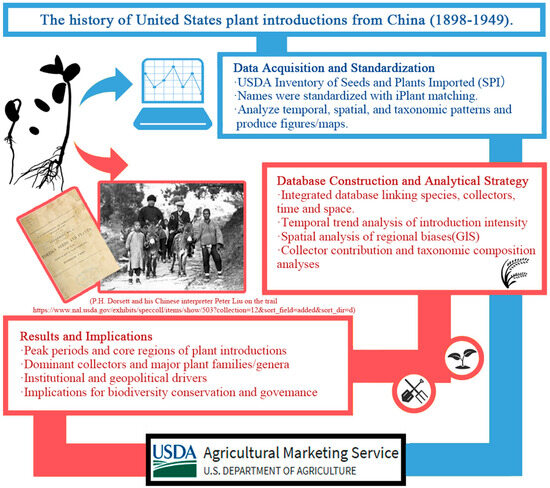
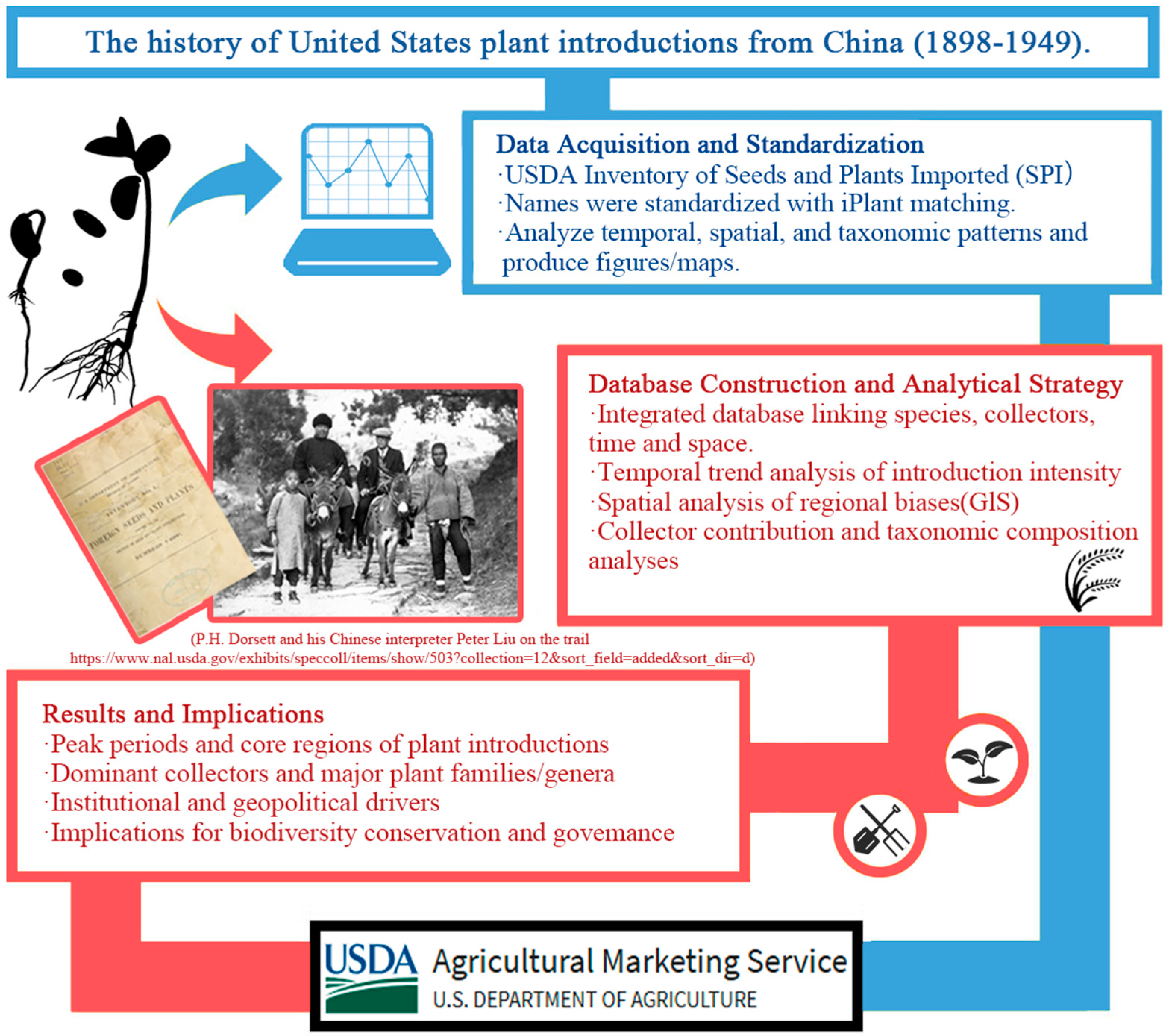
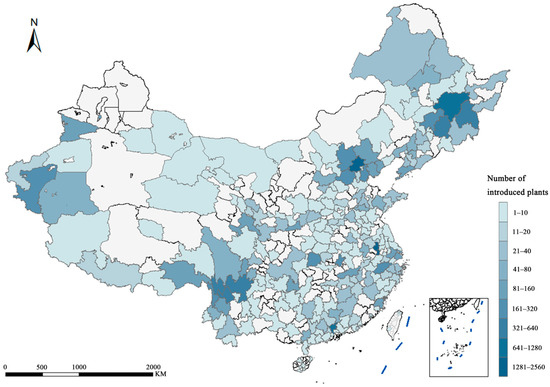
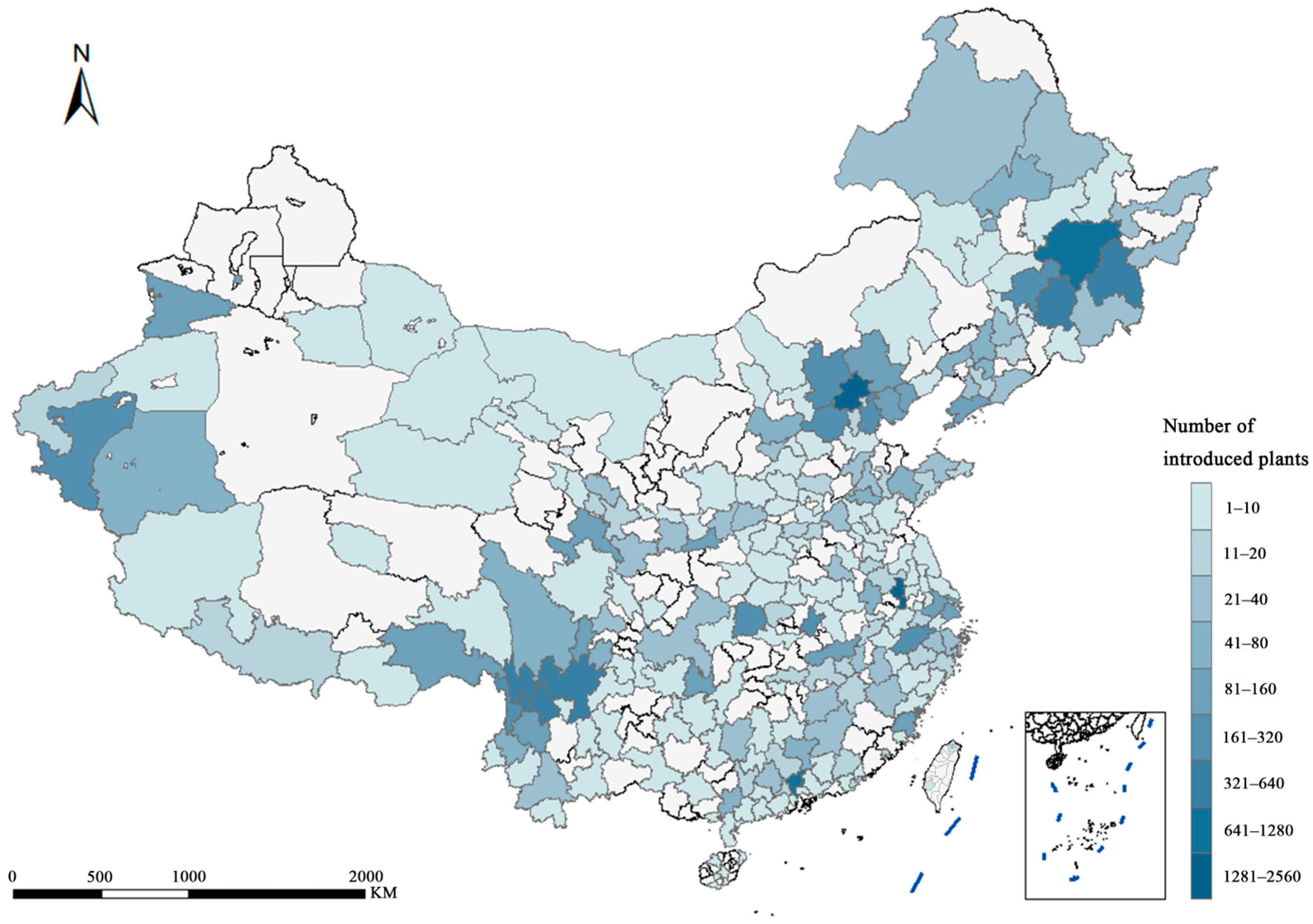
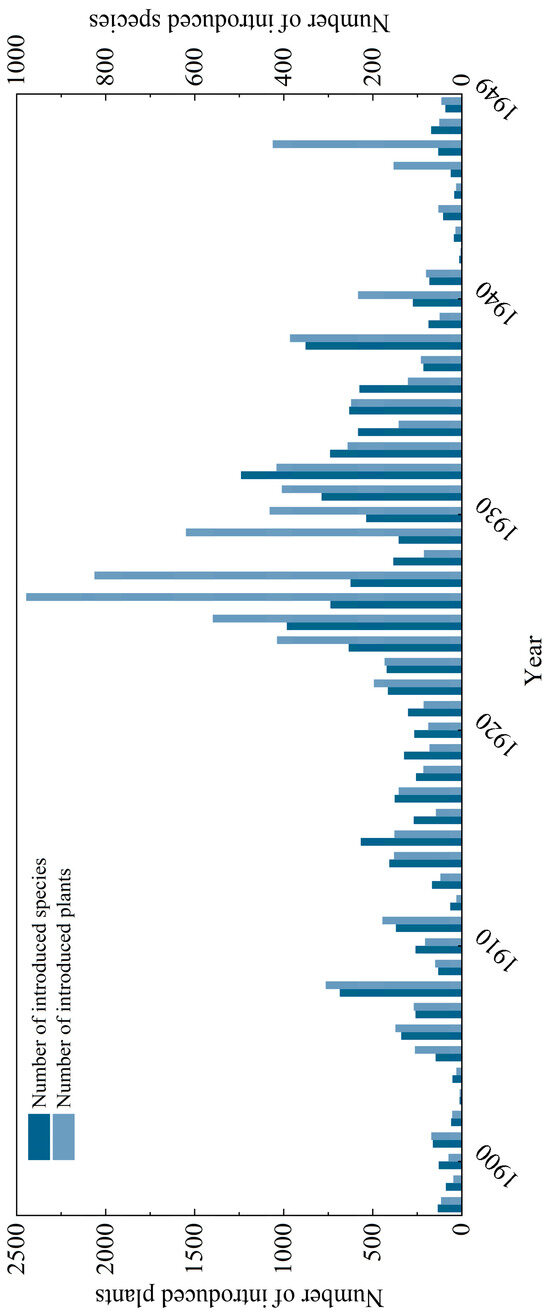
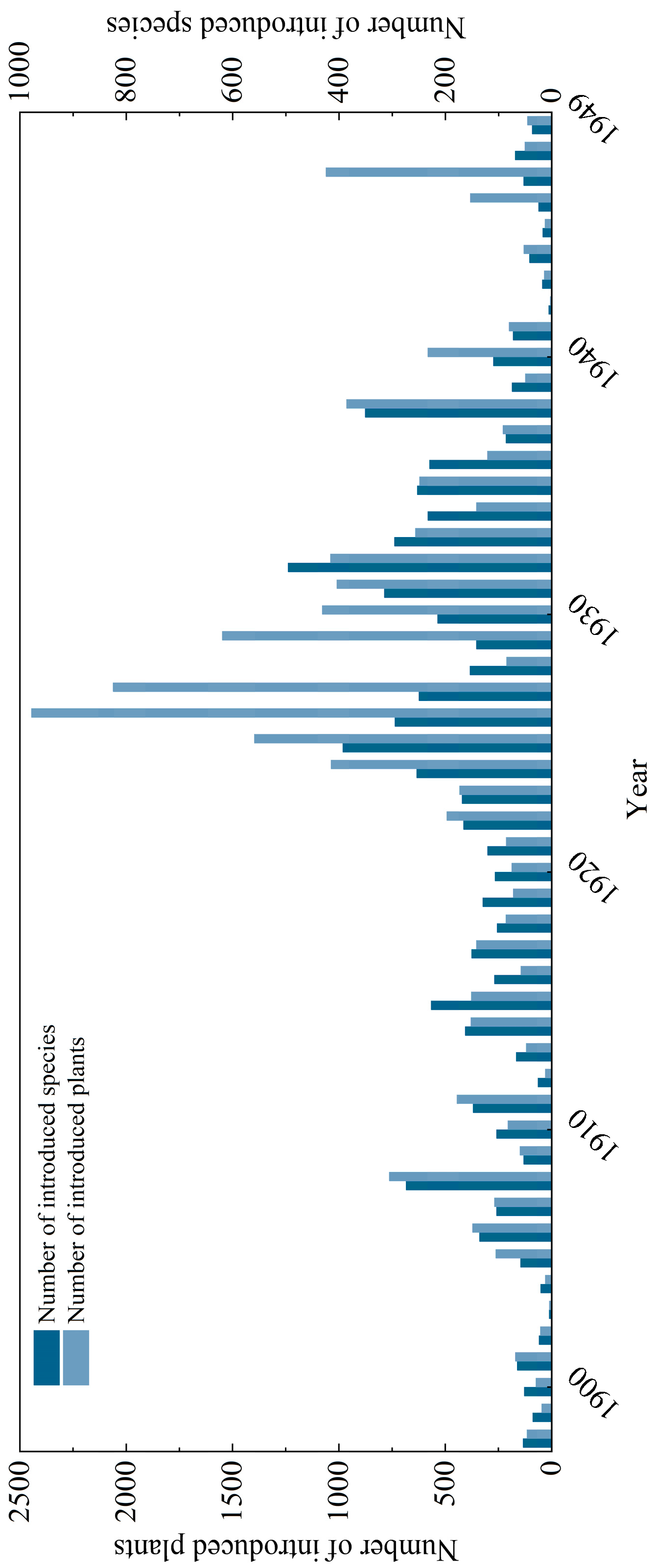
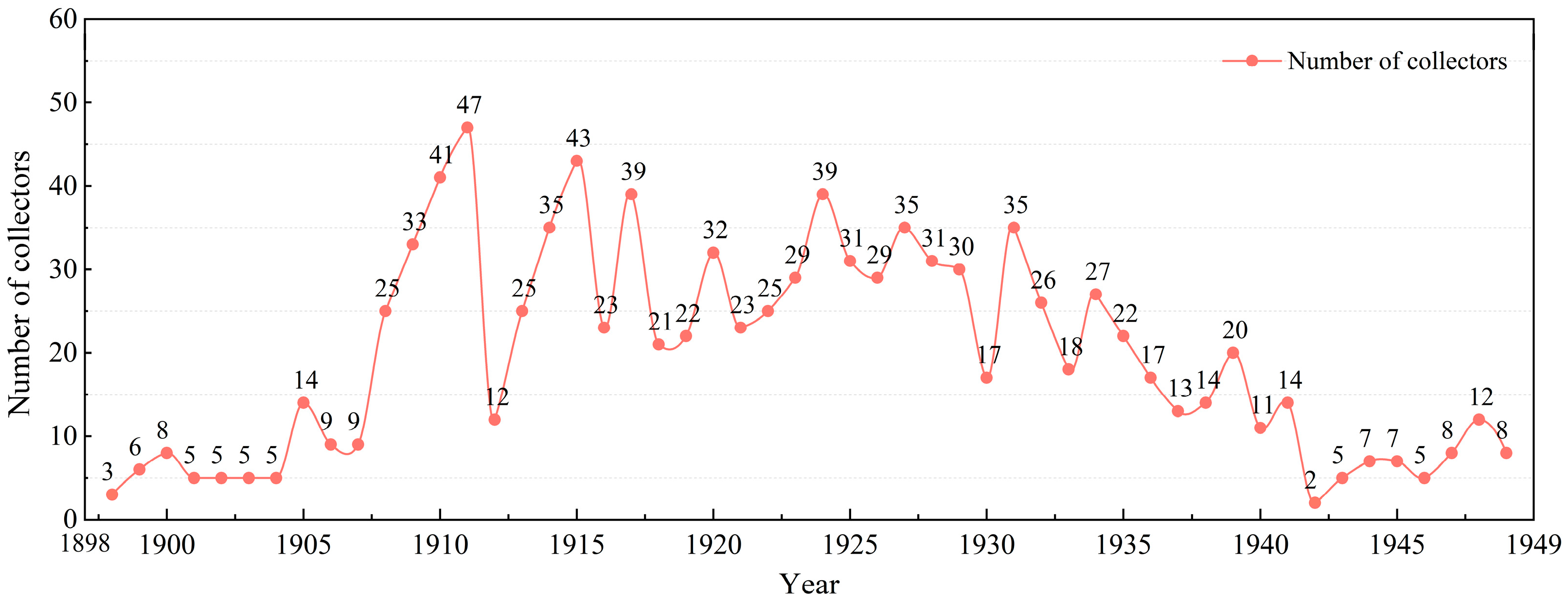
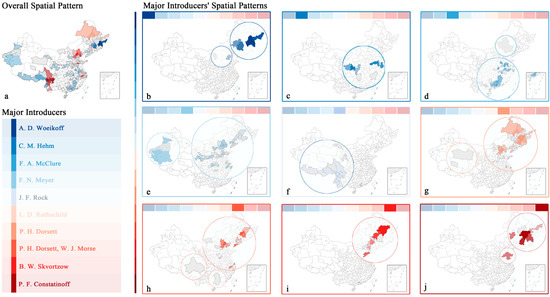
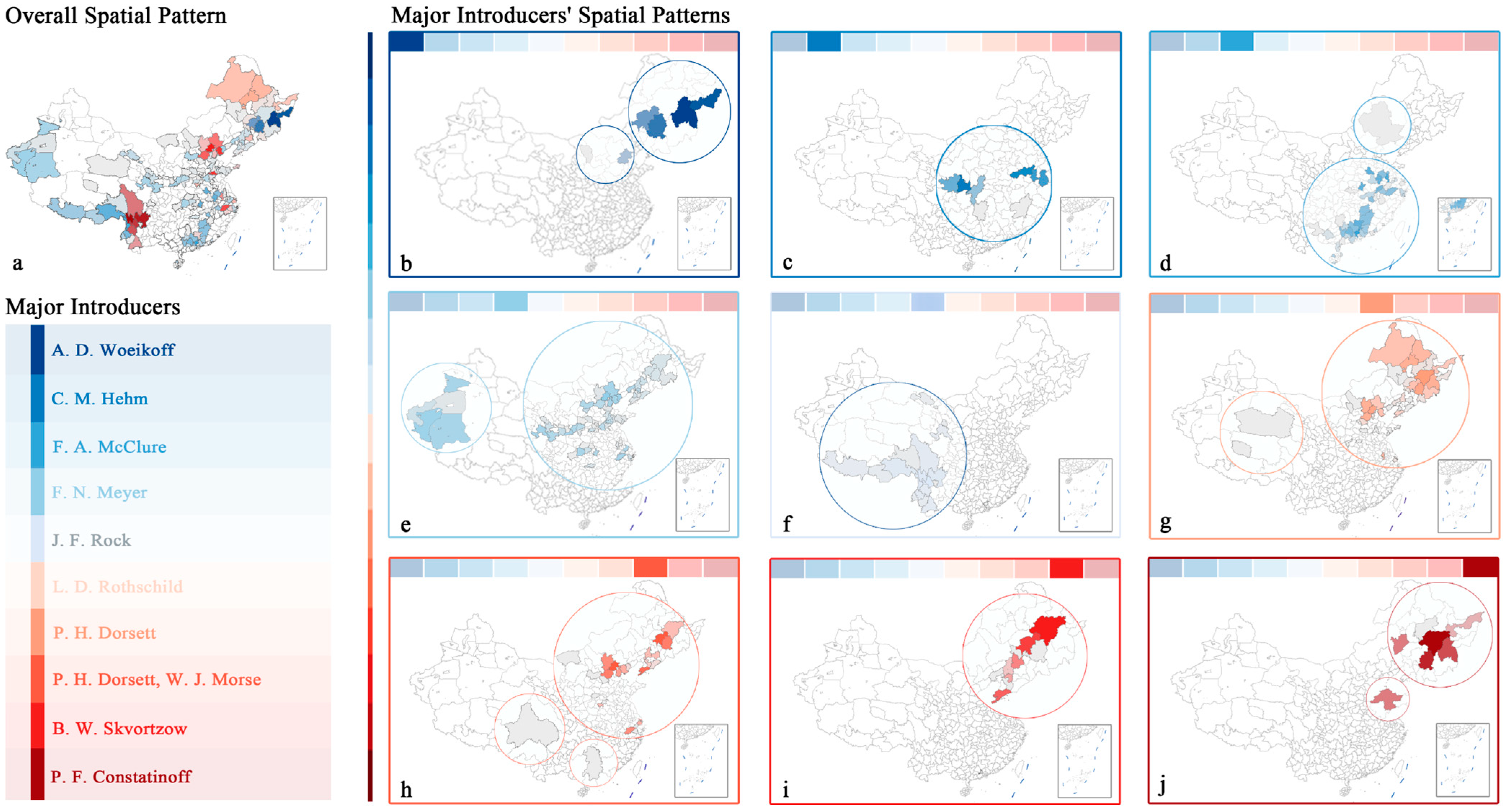
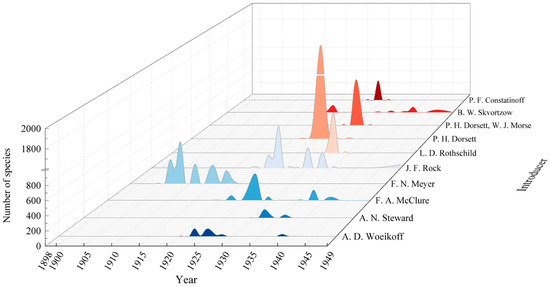
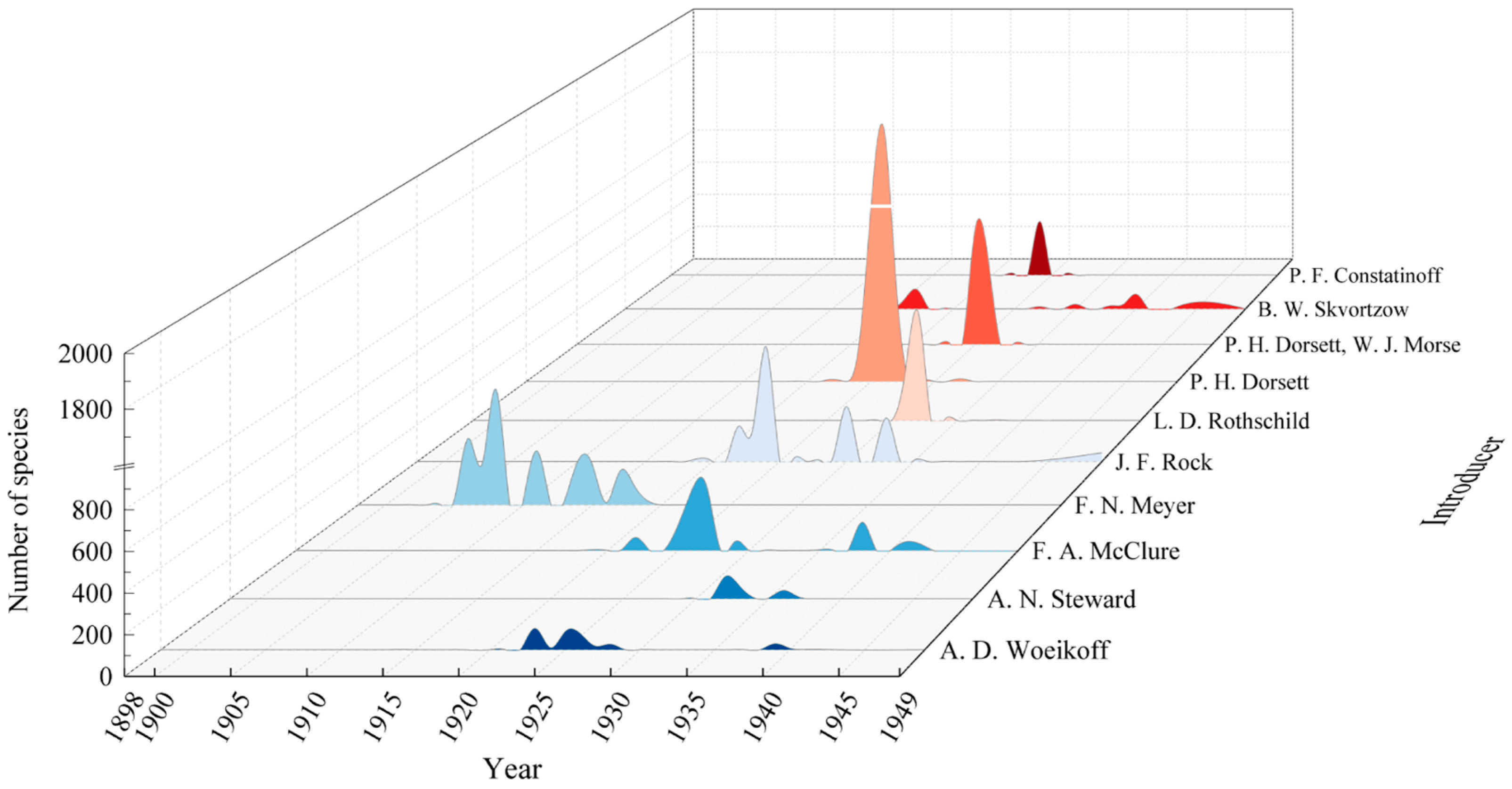
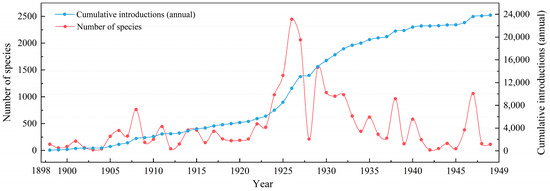
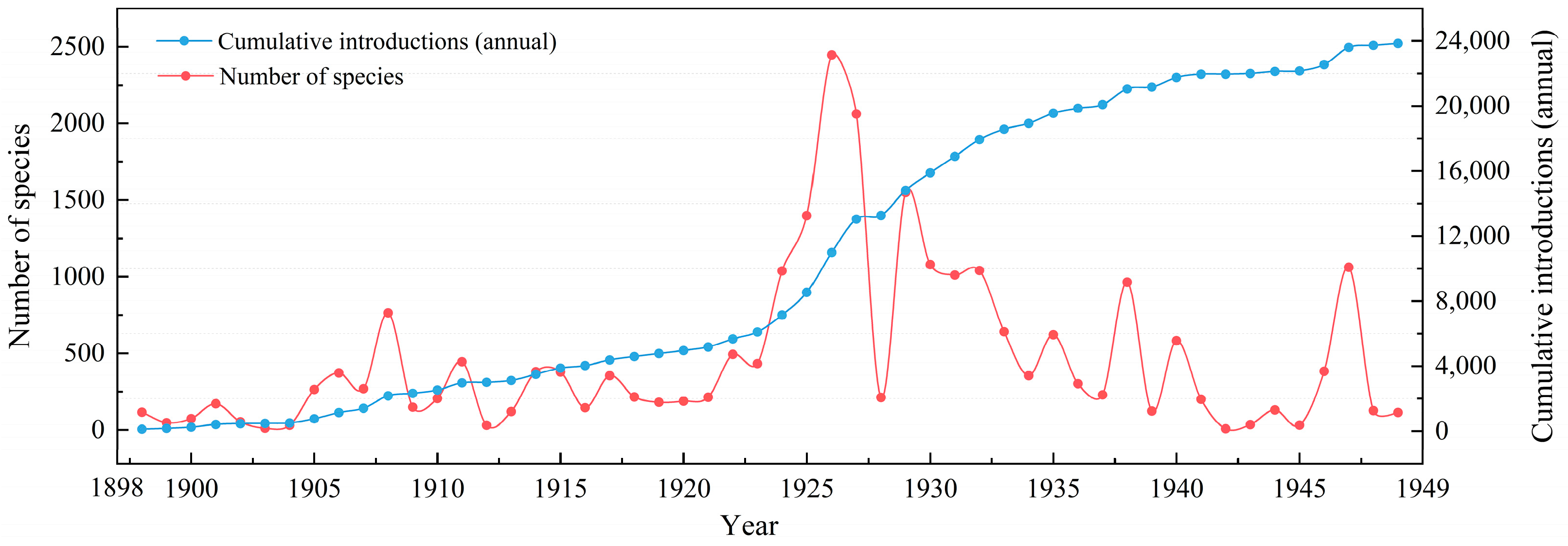
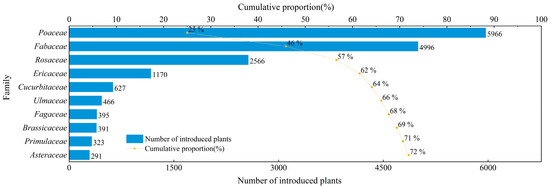
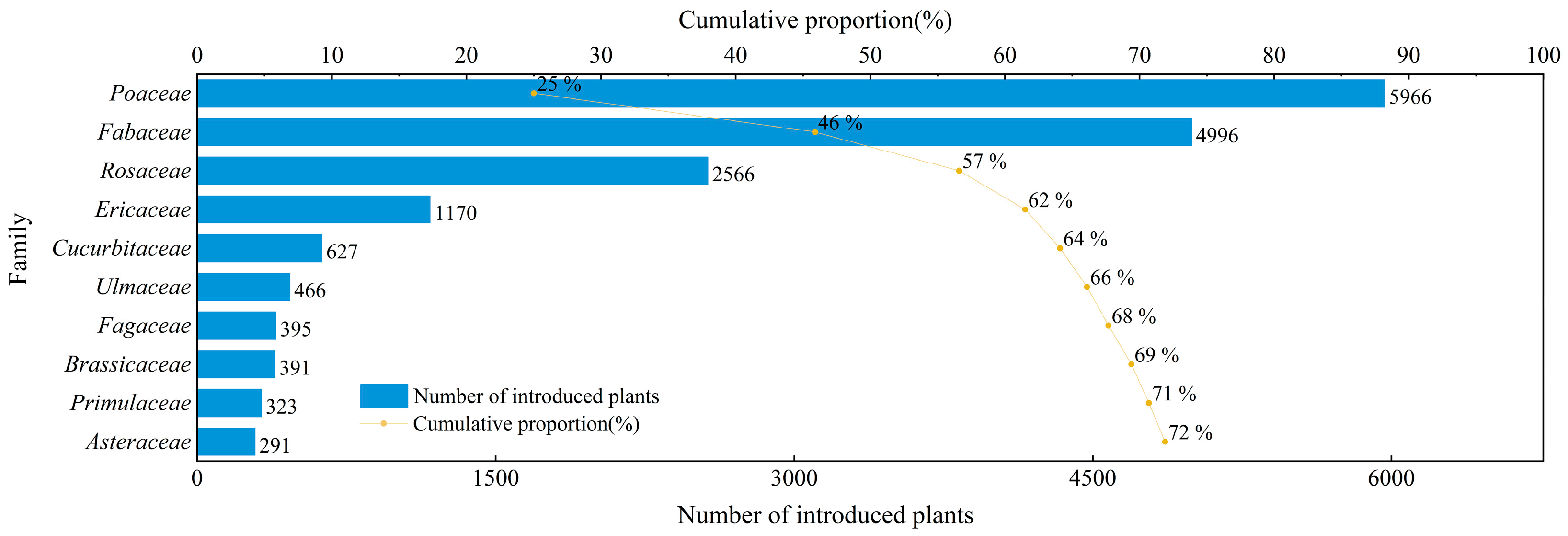
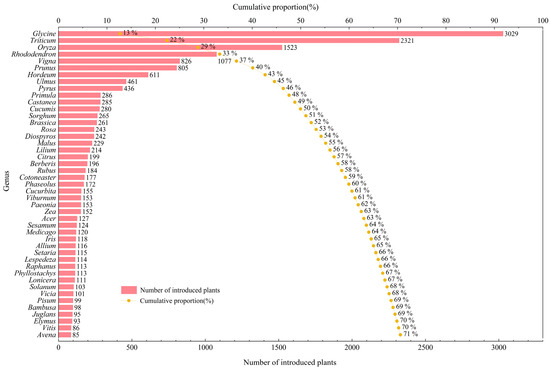

Disclaimer/Publisher’s Note: The statements, opinions and data contained in all publications are solely those of the individual author(s) and contributor(s) and not of MDPI and/or the editor(s). MDPI and/or the editor(s) disclaim responsibility for any injury to people or property resulting from any ideas, methods, instructions or products referred to in the content. |
© 2026 by the authors. Licensee MDPI, Basel, Switzerland. This article is an open access article distributed under the terms and conditions of the Creative Commons Attribution (CC BY) license.