


Abstract
Acrylates and methacrylates are common sources of skin and mucosal changes. Adverse, occupation-related reactions, such as allergies to acrylic resin monomers, have historically predominantly affected dental personnel. Nowadays, acrylic compounds are widely used in commercial products, the cosmetics industry, medical equipment, engineering and graphics; therefore, allergic reactions are common, especially in strongly sensitized patients. Generally, the most critical allergens among (meth)acyrlates are hydroxyethyl methacrylate (HEMA), hydroxypropyl methacrylate (HPMA), ethylene glycol dimethacrylate (EGDMA), methyl methacrylate (MMA), ethylene methyl acrylate (EMA), etc. Cross-reactivity between different acrylate and methacrylate compounds can also occur. Given the increasing number of occupational allergic reactions due to skin and mucosal contact with products containing (meth)acrylates, this review aims to present the latest data on reactions to these compounds across different professions. Greater awareness of (meth)acrylate allergies as a result of occupational exposure may improve patient safety and prevent chronic occupational skin and mucosal diseases.
1. Introduction
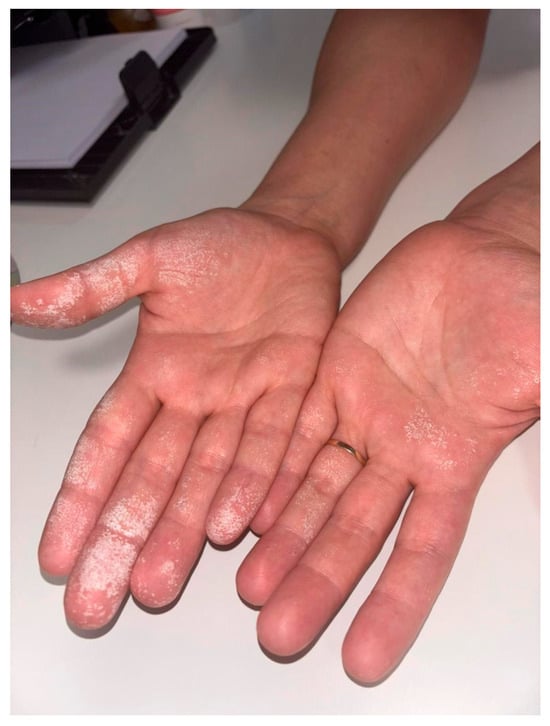
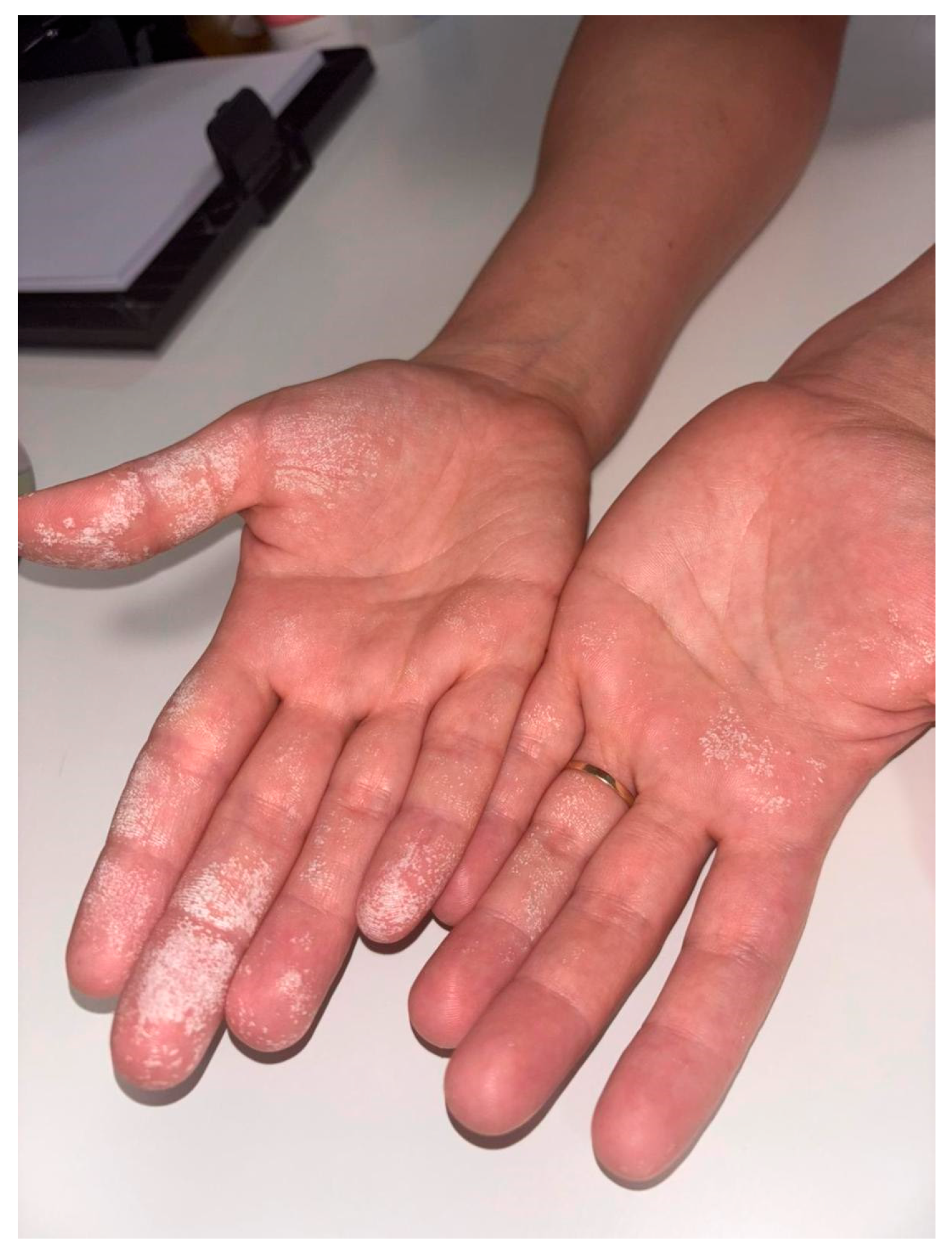
Occupational diseases encompass a broad range of diseases and conditions associated with work-related factors. In various occupations, including healthcare settings, occupational exposure predominantly affects skin-exposed areas such as the hands, face and oral/nasal mucosa [1,2]. Adverse outcomes, including hand dermatitis or eczema, often result from repeated or prolonged contact with various substances, including acrylates [1,2,3]. Hand dermatitis most commonly presents as contact dermatitis, which can be classified into two distinct types: irritant contact dermatitis (ICD) and allergic contact dermatitis (ACD), each with a unique underlying pathogenesis (Figure 1). ICD, however, is the most common presentation of occupational skin disease [2,3].
Figure 1.
Occupation-related contact dermatitis in dental assistant.
Pathogenetically, ACD involves a type IV hypersensitivity reaction, i.e., an allergy mediated by a delayed-type immune mechanism, which typically occurs 24 to 72 h after repeated contact with a sensitizing substance—hapten [2]. This process involves T-cell activation with skin antigen-presenting cells, Langerhans cells, which capture these modified proteins and migrate to local lymph nodes, where they present the proteins to T-lymphocytes, creating a pool of sensitized memory T-cells. When the individual is exposed to the sensitizing substance again, these memory T-cells rush to the site of contact, and over the course of 24 to 72 h, they release pro-inflammatory cytokines that recruit other inflammatory cells. This causes tissue damage with clinical manifestations (itching, localized swelling, blistering, and painful skin/oral erosions).
While ACD involves an immune response to residual acrylate monomers or mask resins, ICD involves physical friction, trapped sweat, or harsh chemical sterilization residues. Although people often report having an allergic reaction to some substance, non-allergic reactions, or ICD, are actually more common. Irritant or toxic reactions can be caused by various non-allergic factors. Individuals with a history of atopic diathesis, who are prone to type I allergies and often suffer from atopic dermatitis, asthma, or allergic rhinitis, are at higher risk of unwanted reactions to acrylates due to many factors: having a defective skin barrier, which is frequently linked to filaggrin gene mutations, which allows potent acrylate monomers to easily penetrate the skin’s layers and trigger an immune response; frequent baseline inflammation (pre-existing skin irritation and micro-tears from atopic dermatitis are a good environment for chemical sensitization); and specific subtype susceptibility—such as hydroxypropyl methacrylate (HPMA), as confirmed by patch test.
Thus, accurately identifying and diagnosing ACD and ICD require understanding the patient’s working conditions and employing a comprehensive medical approach that includes detailed patient history and clinical examination. Since the clinical presentation of both conditions is usually similar, a patch skin test can be used to differentiate between them. A positive patch test, together with a patient history indicating hypersensitivity to specific allergens, is suggestive of ACD. Patch testing is the gold standard for confirming ACD, including for acrylate allergies. Because not all acrylate compounds are included in standard baseline series, additional testing with specific (meth)acrylate allergens may be necessary, particularly in dental and other professionals exposed occupationally [4,5,6]. Several factors contribute to this process of developing occupation-related skin changes. For instance, according to a study on hand skin changes among dental professionals and students [2], skin lesions were significantly more frequent among individuals who had longer work experience, made frequent glove changes, were in prolonged wet-work conditions and washed their hands more often, as well as those with a personal history of allergic conditions. Common allergens implicated in ACD include nickel, balsam of Peru, chromium, neomycin, formaldehyde, thimerosal, fragrance mix, cobalt, and parthenium [4]. Common sources of contact allergens for healthcare workers are gloves, hand disinfectants and other antiseptic products, and handcare cosmetics [6]. Among the numerous occupational allergens encountered in healthcare, acrylates and methacrylates are recognised as important causes of ACD, particularly among dental professionals. According to one study among dental healthcare providers [7], acrylates were identified as the second most common contact allergen (6.1%), after nickel sulfate (12.3%). Furthermore, one study conducted among physicians and dentists has demonstrated sensitization to specific occupational contact allergens, with some dentists testing positive for acrylates [8].
Aside from healthcare, the increased use of acrylates in cosmetics has also led to the rising trend of unwanted skin reactions. The popularity of long-lasting cosmetics has caused a massive surge in acrylate allergies in the beauty industry. Consequently, salon workers experience the highest rates of occupational exposure from applying and filing gel nails, acrylic extensions, shellac, eyelashes and hair extensions [9,10]. Thus, beauty industry professionals and consumers are at higher risk for unwanted reactions to acrylates. According to the literature, allergies to cosmetic components most frequently include reactions to fragrances, skin-conditioning agents, surfactants, and preservatives, as well as acrylates [11].
Specifically, acrylates in cosmetics and protective face masks cause skin and mucosal reactions, primarily through a delayed allergic response, i.e., ACD, or through direct chemical and mechanical irritation [5,10]. In acrylate-based skincare masks, polymerized acrylates used as film-formers or thickeners are generally stable and safe; however, they can trigger reactions if they contain residual, uncured monomers. Acrylates and acrylates-based face masks trigger skin reactions through four main mechanisms outlined below. In monomer sensitization, acrylate monomers, the raw liquid/powder blocks before they form a hard plastic or gel, act as potent skin sensitizers, and when unpolymerized monomer impurities come into prolonged contact with the skin of a sensitized person, they act as haptens. The subsequent exposure triggers ACD. Another important mechanism is cross-contamination and ectopic transfer. Beauty treatments, like ultraviolet (UV)-cured gel nails or eyelash extensions, may cause a contact allergic reaction to acrylates, and once an individual is sensitized, just touching/scratching the face can transfer residual monomers to facial skin, causing “ectopic” dermatitis on the eyelids, cheeks, or neck. Also, being sensitized to one type of acrylate often causes a cross-reaction to other acrylates in cosmetic creams or sheet masks. A third mechanism is occlusion and enhanced skin penetration. Here, cosmetic face masks and personal protective equipment masks trap expired air, sweat, and moisture, creating a warm, humid environment that hydrates the skin’s corneal layer, temporarily weakening the skin barrier, which allows trace chemical irritants, adhesive residues, or acrylates within the mask’s fabric to penetrate more deeply. This significantly increases the risk of both ICD and ACD. Finally, the adhesive material in protective face masks can be a source of exposure—certain medical/surgical/N95 masks utilize acrylic-based adhesives or resins in their structures, straps, or nasal foam pads to ensure a secure fit, and continuous friction, tight pressure, and sweat dissolve/release these bound chemicals, causing direct localized nasal, cheek and periauricular lesions.
As mentioned above, acrylates can trigger unwanted mucosal changes [5,10]. Exposure to acrylates and methacrylates, e.g., via dental prostheses, composite fillings, orthodontic materials, and cosmetic gel nails, may cause oral manifestations including allergic or irritant contact stomatitis. Here, the occurrence of lesions includes delayed-type (Type IV) allergies to residual, unpolymerized monomers. The primary oral/mucosal manifestations include mucosal erythema and hyperemia, limited to the areas directly touching the acrylate-containing material, like the palate or gums beneath a denture; burning mouth and oral pain (localized burning, stinging, or distinct pain even when visible tissue changes look minimal); oral lichenoid reactions (white, lace-like patches/lines that mimic oral lichen planus, occurring exactly where the tissue rests against the offending dental material); vesicles, erosions, and ulceration, potentially with raw, painful sores or open ulcers; epithelial peeling and desquamation (sloughing off of the top layers of the oral lining, leaving the underlying tissue raw and sensitive); cheilitis and perioral dermatitis (severe lip or perioral inflammation, cracking, scaling, or redness); as well as subjective sensory disturbances—patients frequently report localized numbness (paresthesia) or a temporary loss of taste.
In this narrative review, a literature search was conducted using the PubMed database to identify studies investigating occupational exposure to acrylates and methacrylates as an important cause of ACD. The literature search included articles published up to July 2026. Relevant publications were identified using combinations of keywords related to occupational disease; acrylates; methacrylates; allergic contact dermatitis; allergy; sensitization; irritant reaction; toxic reaction and the dermatological conditions discussed in this review (respiratory manifestations, eye irritation, asthma, hand/facial/periungual dermatitis). Original research articles, clinical studies, observational studies, and review articles published in English were considered for inclusion. Additional relevant references, including case reports, were identified through manual screening of the reference lists of selected articles. Studies were included when they provided information on occupational allergic reactions due to skin and mucosal contact with products containing (meth)acrylates, disease burden, pathophysiological mechanisms, or related clinical outcomes. Publications not relevant to the objectives of the review were excluded.
2. Acrylates and Methacrylates: Properties, History, and Applications
Acrylates and methacrylates are compounds used in plastic and polymer production (they are formed by esterifying acrylic or methacrylic acid) [12,13]. Due to reactive double bonds, acrylates and methacrylates have polymerising characteristics when they form stable polymerised structures—polymerisation happens spontaneously at room temperature or is induced by heat or UV light [4,14].
Specifically, acrylates, methacrylates, and cyanoacrylates are chemically related monomers that are widely used in dentistry, medicine, cosmetics, and various consumer products. Acrylates are derived from acrylic acid, whereas methacrylates are derived from methacrylic acid and contain an additional methyl group next to the carbon–carbon double bond [15]. Both acrylates and methacrylates contain a reactive double bond that allows polymerization and the formation of polymeric materials. Due to their structural similarities, acrylates and methacrylates may show similar sensitization patterns and cross-reactivity [16].
The term “(meth)acrylates” is commonly used to refer to acrylates and methacrylates collectively. Cyanoacrylates, however, have a different chemical structure, and although they can also cause ACD, they should not be included under the general term “(meth)acrylates” [16,17]. Cyanoacrylates contain a cyano group adjacent to the carbon–carbon double bond and polymerize rapidly, which makes them particularly useful as adhesives. Thus, they are widely used in medical and surgical adhesives, as well as in cosmetic products such as eyelash adhesives.
Cross-reactivity between different acrylates and methacrylates does not occur equally between all compounds [16,17]. Generally, when sensitization to one methacrylate or acrylate occurs, a person may then be susceptible to reactions to other structurally related compounds [17,18]. In contrast, clinically relevant cross-reactivity between cyanoacrylates and acrylates or methacrylates appears to be uncommon [17,19]. For this reason, cyanoacrylates should be evaluated separately when interpreting patch test results and assessing possible sources of occupational exposure [17,19]. This distinction is particularly important for 2-octyl cyanoacrylate (2-OCA), which is used in surgical adhesives [16,17]. After their introduction in the 1930s, acrylate and methacrylate compounds started to be widely used, especially for the mass production of Plexiglas (polymethyl methacrylate), as well as in metallurgy and the production of paints, coatings, and printing inks [4,5]. Acrylates and methacrylates are also commonly used in dental healthcare, where they are components of denture bases, composite resins, dentine bonding agents, and glass ionomer materials [13,20,21]. Their use in dentistry was traditionally mentioned as predominant. Over time, new acrylates have been introduced into dentistry, paints, adhesives, composite resins, printing inks, artificial nails, various medical devices, contact intraocular lenses, and bone cements for orthopedic endoprostheses [12].
In the past, ACD caused by (meth)acrylates predominantly affected dental personnel and workers in the fibre-glass, printing, painting and coating industries. Nowadays, an increasing number of allergic reactions are due to the use of nail coatings that contain blends of various petroleum-based acrylate/methacrylate derivatives. Consequently, in 2020, European legislation restricted 2-hydroxyethyl methacrylate (2-HEMA) only in nail cosmetics to professional use [22,23].
Still, due to increasing use of acrylate compounds in the last few decades, a rise in (meth)acrylate ACD cases has been reported within the cosmetics industry [24]. The primary sources of sensitization are the application of artificial eyelashes, artificial hair extensions, and artificial nails [25,26].
3. Sensitization and Pathogenesis of Acrylate Allergies
Although fully polymerized (meth)acrylates are inert and non-toxic, residual active monomeric particles may occasionally be released from polymerized structures. These monomers act as haptens with high sensitization potential, inducing allergic manifestations with occurrence of ACD (type IV hypersensitivity reaction) which typically appears 24 to 72 h after repeated contact with a sensitizing substance—hapten) [2,12,27,28,29].
By the mid-20th century, numerous cases of ACD caused by methyl methacrylate (MMA) had been documented, as well as potential irritant reactions. Many reports have since documented occupational ACD due to exposure to (meth)acrylate monomers. MMA is a potent dermal sensitizer which can cause a delayed (type IV) allergy. When the skin/mucosa of a previously sensitized person is repeatedly exposed to the monomer, it triggers an immune-mediated contact allergic reaction. Although the MMA molecule is too small to be recognized by the immune system on its own, it is chemically reactive and penetrates the skin, binding to native tissue proteins covalently. This combined structure acts as a hapten, which immune cells identify as a foreign threat. Because MMA causes skin barrier disruption, it may also trigger direct cytotoxicity and irritation (acute reactions), as in its liquid monomer state, MMA is a highly volatile, small-molecule organic solvent. Upon contact with the skin, the monomer dissolves the corneal protective lipid bilayers, causing direct cellular damage, such as cytotoxicity, and consequent localized manifestations (e.g., redness, burning) and ICD. Finally, there is the possibility of increased mucosal vulnerability—the oral cavity and gingiva lack the skin’s protective, keratinized outer layer, making them even more vulnerable. Free residual MMA monomers leaching from poorly cured dental prosthetics or cement can directly irritate the epithelial lining, inducing burning sensations, erythema, and mucosal peeling.
During the 1990s, a marked increase in acrylate sensitization among dental personnel was observed [30,31]. Considering the frequent occupational contact with acrylates and the potential for adverse reactions during dental procedures, dental professionals are particularly at risk of manifesting allergies to acrylates and methacrylates. Consequently, acrylates and, less commonly, methacrylates such as hydroxyethyl methacrylate (HEMA), triethylene glycol dimethacrylate (TEGDMA), and bisphenol A-glycidyl methacrylate (Bis-GMA) are recognized as substances that may trigger both ICD and ACD. These sensitizing haptens are present in uncured dental adhesives and cements at concentrations ranging from 50% to 90% [32]. Due to the frequent occurrence of contact dermatitis caused by these compounds, the American Contact Dermatitis Society declared (meth)acrylates the “Allergen of the Year” in 2012, while isobornyl acrylate received the same designation in 2020 [12,14,33].
There are many acrylates which may cause allergic reactions, including bisphenol A-glycidyl methacrylate (Bis-GMA), ethylene methyl acrylate (EMA), HEMA, hydroxypropyl methacrylate (HPMA), bisphenol A-glycidyl methacrylate (Bis-GMA), ethylene glycol dimethacrylate (EGDMA), isobornyl acrylate (IBOA), MMA, pentaerythritol triacrylate (PETA-3), triethylene glycol dimethacrylate (TEGDMA), tripropylene glycol diacrylate (TPGDA), urethane dimethacrylate (UDMA), 2-octyl cyanoacrylate (2-OCA) and 4-acryloylmorpholine (4-ACMO).
Ethylene methyl acrylate, a flexible thermoplastic copolymer used in packaging and adhesives, and ethyl methacrylate, a reactive liquid monomer primarily used in dental products and cosmetic acrylic nails, share the same acronym (EMA); however, they are entirely different chemical substances with distinct physical states, molecular structures, and industrial uses.
4. Sources of Acrylate Exposure
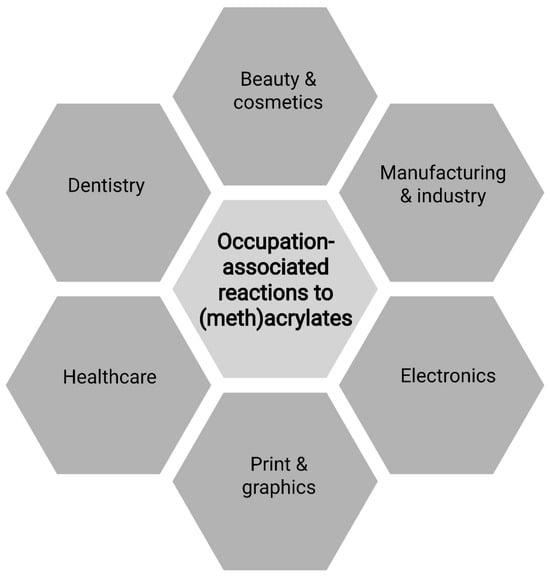
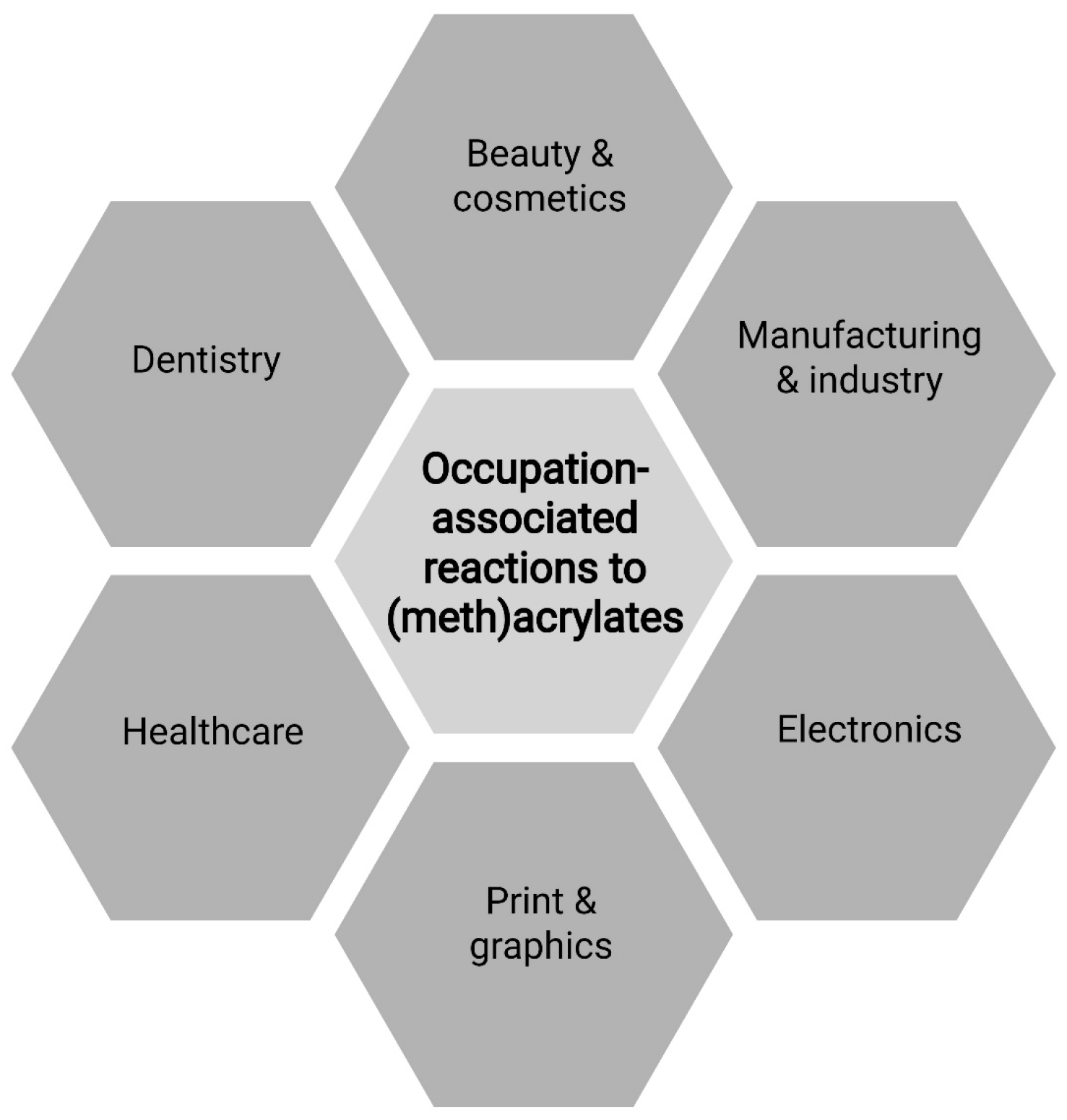
Historically, occupational (meth)acrylate allergies predominantly affected dental personnel. However, since acrylic compounds are nowadays widely used in commercial products, industry, medical equipment, engineering and graphics, concomitant allergic reactions to acrylic resin monomers are common, especially in strongly sensitized patients (Figure 2).
Figure 2.
Occupations in which reactions to (meth)acrylates may occur.
The last few decades have seen an increase in unwanted reactions, including ACD to (meth)acrylate, especially within the cosmetic industry. This is attributed to the increasing use of acrylate compounds, with more common reactions to artificial nails and eyelashes or artificial hair extensions [24,25,26]. The widespread availability, low-cost and frequent use of artificial products based on acrylates, methacrylates, or cyanoacrylates have resulted in numerous adverse reactions [26,33]. With nail polishes, the most popular technique used to involve the application of powder and liquid mixtures containing acrylates onto the nail plate; this method is now rarely used due to its time-consuming nature. Modern long-lasting acrylate-based nail coatings contain blends of various petroleum-based acrylate/methacrylate derivatives that are applied to the nail plate and polymerized under UV light [34]. Again, these products are widely accepted and used in the cosmetic industry due to their affordability and ease of application [25,26].
Recent reviews have confirmed that nail cosmetics remain among the fastest-growing sources of acrylate sensitization. All types of artificial nails contain acrylates and can induce allergic or irritant reactions among nail technicians and beauticians and their clients. Also, the increasing availability of home-use gel nail kits and UV-curable products has contributed to a continued rise in ACD among both nail technicians and consumers [35].
The causes of these unwanted reactions are various: uncured monomers (liquid gel or acrylic touching the skin before it hardens); under-curing (using incompatible UV/LED lamps or expired bulbs, leaving uncured reactive chemicals behind); nail dust (inhaling or touching microscopic dust particles generated when filing down enhancements); and poor technique (sloppy application that allows product to pool in the cuticles or sidewalls). Thus, nail artists often develop ACD from repeated skin contact with uncured acrylate and methacrylate monomers from gel and acrylic nail products. Reactions may also happen due to uncured monomers—liquid gels and acrylic powders contain small molecules that act as strong skin sensitizers before they are fully hardened (polymerized) under a UV/LED lamp. It is important to note that sensitivity is lifelong, i.e., once a nail artist becomes sensitized through repeated tiny exposures, the allergy is permanent and re-exposure triggers faster, worse reactions.
Acrylates are also widely used in healthcare settings, and allergic reactions have been reported to acrylates present in bone cement as part of orthopedic endoprostheses, glue closure for venous reflux, intraocular lenses, hearing aids, and histological embedding materials [36,37]. Wound dressings and adhesives have also been identified as potential sources of acrylate sensitization [38]. In surgical practice, cases of severe ACD have been described following exposure to surgical adhesives containing acrylates such as 2-OCA [39]. Prolonged exposure or re-exposure to skin adhesives increased the risk of allergic reaction, particularly in patients with inflamed or compromised skin [38]. A rising number of medical devices such as electrodes used for transcutaneous electrical nerve stimulation (TENS), electrocardiogram electrodes (ECG) and diabetic devices have recently been reported as a potential trigger to ACD due to acrylates [22,39,40,41,42]. According to the results of a multicenter study, skin reactions to the diabetic device were observed immediately beneath the adhesive area of the glucose sensor, with confirmed allergy to IBOA in the majority of affected patients [39,43]. More recently, IBOA has also been identified as a sensitizer in a tubeless insulin pump, due to similar adhesive-related reactions [44]. New reports continue to identify acrylates, particularly IBOA and related compounds, as relevant allergens in wearable diabetes devices, highlighting the need for improved material transparency and diagnostic approaches [45].
Cases of ACD to acrylates have also been described in aesthetic medicine following intradermal injection of a filler used for nasal tip correction, with subsequent confirmation of allergy to MMA [46]. Finally, potential reactions to acrylates due to their presence in everyday convenience products has been connected to daily use of incontinence or menstrual pads [25,47,48].
In addition, industrial and manufacturing workers are also at risk. Spencer et al. reported that over a quarter of all patients were exposed to (meth)acrylates in industry jobs, with anaerobic thread sealants containing (meth)acrylates as the most common sources of ACD [5]. Thus, unwanted reactions to acrylates may occur in industries using paint and lacquer (e.g., car manufacturing, or printing and graphic designing [5,10]. Those working with anaerobic sealants, fiberglass, structural adhesives (like superglues), and windscreen glues may also develop reactions [10].
5. Cross-Reactivity Among Acrylates and Methacrylates
Cross-reactivity between different acrylate and methacrylate compounds occurs because of their similar chemical structures. Once a person becomes sensitized to one type of acrylate, cross-reactions might happen from other types from the same group, even when contained in different products. Consequently, sensitized individuals may react to multiple related monomers, even when exposure has primarily occurred to a single compound. This may complicate the identification of the causative allergen and the interpretation of patch test results. According to data, cyanoacrylates generally do not cross-react with (meth)acrylates; therefore, they might be a safe alternative option in sensitized patients [42]. Careful evaluation of both occupational and everyday exposures is essential in patients with suspected acrylate allergy [4,5].
6. Occupational Acrylate Allergy in Dental Professionals
Occupational allergy to (meth)acrylates still predominates among dental personnel in comparison to other professionals. In comparison to other professionals, where varying frequencies of sensitization to (meth)acrylates have been reported [4,49]. The most critical allergens for dentists and dental assistants are 2-HEMA and MMA, whereas for dental technicians, the predominant allergen is EGDMA) [50]. According to recent survey research, dental technicians have a noticeably higher prevalence of dermatoses after contact with acrylates (71.7%) [51]. Occupational skin exposure to allergens in dental clinics, together with frequent disinfection, hand washing and prolonged use of protective gloves, triggers or worsens hand eczema symptoms among dental staff [52]. Cross-sensitization should not be forgotten, especially if previous sensitization through non-dental sources such as nail polish or industrial adhesives has happened [53].
7. Clinical Manifestations of Occupational Acrylate Allergy
Typical cutaneous manifestations of (meth)acrylate allergy in various professions include hand eczema, pulpitis of the fingertips (particularly of the first three fingers), and generalized dermatitis [50,54,55,56,57,58]. Occupational exposure, common causes and route of exposure to acrylates and common allergic and irritant manifestations are presented in Table 1. Due to the airborne release of acrylate particles or the transfer of allergens via contaminated tools or hands, facial and eyelid involvement may also occur [25,56]. So, in addition to cutaneous changes, acrylates can elicit mucosal manifestations including adverse respiratory reactions, such as dyspnea, asthma (with or without angioedema), or rhinoconjunctivitis [59]. Some epidemiological studies of unwanted reactions to (meth)acrylates are presented in Table 2.
Table 1.
Occupational exposure to acrylates and common allergic and irritant manifestations.
Table 2.
Data from epidemiological studies on unwanted reactions to (meth)acrylates in various occupations—examples from literature.
Clinically, an allergic reaction to acrylates typically appears 24 to 72 h after skin contact, but developing the actual allergy in the first place takes months to years of repeated exposure. The reaction time is 1 to 4 days: skin symptoms (like a rash, redness, or itching) usually show up 24 to 72 h after touching uncured acrylate. The pathogenetic mechanism involves a delayed response and a type IV hypersensitivity reaction. Since T-cells react slowly, the skin may look fine right after a manicure or dental work and then break out days later. It should be kept in mind, however, that sensitization can last months or years—it is possible for a person to use products containing acrylates for a long time with no issues before ultimately developing a reaction.
Clinically, acrylate allergy most commonly manifests as skin changes on the face and/or eyelids, eczema with fingertip fissuring (pulpitis), nail dystrophy, acquired leukoderma on the fingertips, and/or periungual dermatitis [27,60,64,66,71]. Nail abnormalities resembling psoriasis may also occur, characterized by onycholysis and subungual hyperkeratosis. Nails can be affected independently or in association with finger dermatitis [61]. These cutaneous manifestations, apart from ACD, are often also caused by other dermatoses such as ICD. However, symptoms of acrylate reaction are various, including local skin changes (severe itching, erythema, blisters, swelling, periungual changes, peeling skin, pulpitis, etc.); ectopic dermatitis (lesions on the face, eyelids, neck, or lips from touching these areas with contaminated hands or breathing in dust); and nail damage (lifting of the natural nail plate (onycholysis), thinning, or complete nail loss). For instance, nail technicians may develop various symptoms including hand eczema (red, itchy, and blistered skin on the fingers, palms, and hands); cracked fingertips (painful, dry, and fissured skin that makes holding tools difficult); airborne reactions (facial rashes, eyelid dermatitis, and respiratory irritation caused by breathing in nail dust or vapors); or nail dystrophy (loosening or damage to the technician’s own nail plates from accidental exposure).
The differential diagnosis of acrylate-induced dermatitis may be challenging because its clinical presentation often resembles other inflammatory skin diseases. ICD should be distinguished from ACD, especially in healthcare workers exposed to frequent hand washing and glove use. Sometimes manifestations may be similar to other skin disorders, including atopic dermatitis, psoriasis, and dyshidrotic eczema. Also, diseases sometimes overlap, and accurate recognition is needed. A detailed occupational history and patch testing are therefore essential for establishing the correct diagnosis and identifying the responsible allergen [2,4,5].
8. Prevention and Protective Measures
When considering available preventive measures, healthcare professionals should identify potential occupational hazards in workplace settings, confirm accurate diagnosis and introduce preventive measures in order to avoid allergic reactions among affected workers [13]. Preventive measures should emphasize non-contact techniques, the correct use of personal protective equipment, avoiding exposure to risk products and job replacement or replacing risk products with non-sensitizing or non-cross-reactive alternatives [72]. Furthermore, product labels should include all contained acrylic compounds, even acrylic monomers/impurities at concentrations lower than 1%, which could help in selecting products that a sensitized person could use [30]. When selecting protective gloves, affected workers should be aware that nitrile rubber gloves provide better protection against methacrylate penetration with higher penetration resistance and lower monomer penetration rates; therefore, nitrile gloves are considered more effective than latex gloves, but only for short exposures [4,62] due to their chemical breakthrough time and real-world movement limits during chemical handling A standard nitrile glove for many aggressive solvents, alcohols, or mild acids will successfully hold off the chemical for about 15 to 20 min, while after 20 min, the chemical will have saturated the synthetic rubber matrix and begun leaking through to skin (even if the glove still looks perfectly dry and intact on the outside). For prolonged contact with an allergen, it is recommended to change gloves frequently using additional cotton gloves or 5-layer laminate gloves (ethylene–vinyl alcohol–polyethylene) [26].
In addition to the appropriate use of personal protective equipment, maintaining skin barrier integrity is an important component of prevention. Regular application of fragrance-free emollients and moisturizers may reduce skin dryness and irritation caused by frequent hand washing and disinfectant use. Healthcare workers should also avoid unnecessary exposure to harsh detergents and chemicals outside the workplace. Education on proper skin care practices may help reduce the incidence of occupational dermatitis and improve long-term skin health, particularly among individuals at increased risk of sensitization [2,6]. Early recognition of occupational skin disease is essential for preventing chronic dermatitis and continued exposure to allergens. Healthcare workers with persistent skin symptoms should undergo appropriate clinical evaluation and, when indicated, patch testing. Regular use of personal protective equipment and adherence to preventive measures may reduce the risk of occupational hand eczema. Identifying sensitized individuals at an early stage can also facilitate appropriate workplace modifications and reduce further exposure [2,4,8].
Concerning ACD/ICD prevention and the safe handling of artificial acrylic and gel nails, various measures are suggested: wearing protective equipment (thick nitrile gloves, at least 8-mil, rather than latex or vinyl, which allow monomers to pass through); proper curing (match gel products with the exact manufacturer-recommended UV/LED lamp to ensure complete polymerization); adequate ventilation (install source-capture exhaust ventilation at nail stations to capture hazardous dust and vapors); and immediate cleanup (resolve accidental skin contact immediately and clean up sticky inhibition layers safely). For management and treatment concerning reactions to artificial acrylic and gel nails, it is first necessary to cease exposure. To soothe the skin (fragrance-free emollients or mild over-the-counter hydrocortisone can be applied for short-term relief. An adequate medical evaluation can also be necessary, e.g., patch testing to identify the specific offending monomers. It is important to emphasize that an acrylate allergy is lifelong and can complicate future medical/dental procedures, like white dental fillings or orthopedic bone cements.
9. Conclusions
Occupational exposure to acrylates remains an important cause of ACD among healthcare workers, especially dental professionals. The widespread use of acrylate-containing dental materials, cosmetic products, and medical devices contributes to an increasing risk of sensitization. Early recognition of skin and mucosal changes and appropriate diagnostic evaluation are essential for preventing chronic disease and continued exposure. Adequate preventive measures, including the use of suitable protective equipment and safe handling of uncured materials, can reduce occupational risk. Greater awareness of acrylate allergies among healthcare professionals may improve patient safety and occupational health outcomes.
Author Contributions
M.D.A.—writing, review, investigation and editing; M.P.—writing and editing; L.Č.—writing and proofreading; L.P.—writing and image editing; C.K.M.—writing and translation; L.L.-M.—conceptualization, data curation, writing—original draft preparation, review and supervision. All authors have read and agreed to the published version of the manuscript.
Funding
This review belongs to the project “Serum metabolites in patients with chronic urticaria and atopic dermatitis in relation to psychoneuroimmunological factors in saliva and serum” (project code MetaboloPsihoSalivaDerma), co-financed by the National Recovery and Resilience Plan (NPOO).
Institutional Review Board Statement
The case presented in the manuscript describes a single clinical observation arising from routine medical care and did not involve additional research interventions or experimental procedures; therefore, ethics committee approval was not required according to Article 20 of the Croatian Act on the Protection of Patients’ Rights (Zakon o zaštiti prava pacijenata, Official Gazette No. 169/2004).
Informed Consent Statement
Written informed consent has been obtained from the patient to publish this paper.
Data Availability Statement
No new data were created or analyzed in this study. Data sharing is not applicable to this article.
Conflicts of Interest
The authors declare no conflicts of interest.
Abbreviations
The following abbreviations are used in this manuscript:
| ACD | allergic contact dermatitis |
| Bis-GMA | bisphenol A-glycidyl methacrylate |
| ECG | electrocardiogram electrodes |
| EGDMA | ethylene glycol dimethacrylate |
| EMA | ethylene methyl acrylate |
| HEMA | hydroxyethyl methacrylate |
| HPMA | hydroxypropyl methacrylate |
| IBOA | isobornyl acrylate |
| ICD | irritant contact dermatitis |
| MMA | methyl methacrylate |
| PETA-3 | pentaerythritol triacrylate |
| TEGDMA | triethylene glycol dimethacrylate |
| TENS | transcutaneous electrical nerve stimulation |
| TPGDA | tripropylene glycol diacrylate |
| UDMA | urethane dimethacrylate |
| 2-OCA | 2-octyl cyanoacrylate |
| 4-ACMO | 4-acryloylmorpholine |
References
- Quaade, A.S.; Simonsen, A.B.; Halling, A.S.; Thyssen, J.P.; Johansen, J.D. Prevalence, incidence, and severity of hand eczema in the general population - a systematic review and meta-analysis. Contact Dermat. 2021, 84, 361–374. [Google Scholar] [CrossRef] [Scilit] [PubMed]
- Japundžić, I.; Bembić, M.; Špiljak, B.; Parać, E.; Macan, J.; Lugović-Mihić, L. Work-related hand eczema in healthcare workers: Etiopathogenic factors, clinical features, and skin care. Cosmetics 2023, 10, 134. [Google Scholar] [CrossRef] [Scilit]
- Patel, K.; Nixon, R. Irritant Contact Dermatitis—A Review. Curr. Dermatol. Rep. 2022, 11, 41–51. [Google Scholar] [CrossRef] [Scilit] [PubMed]
- Kucharczyk, M.; Słowik-Rylska, M.; Cyran-Stemplewska, S.; Gieroń, M.; Nowak-Starz, G.; Kręcisz, B. Acrylates as a significant cause of allergic contact dermatitis: New sources of exposure. Postep. Dermatol. Alergol. 2021, 38, 555–560. [Google Scholar] [CrossRef] [Scilit] [PubMed]
- Spencer, A.; Gazzani, P.; Thompson, D.A. Acrylate and methacrylate contact allergy and allergic contact disease: A 13-year review. Contact Dermat. 2016, 75, 157–164. [Google Scholar] [CrossRef] [Scilit] [PubMed]
- Wilkinson, S.M.; Gonçalo, M.; Aerts, O.; Badulici, S.; Bennike, N.H.; Bruynzeel, D.; Dickel, H.; Garcia-Abujeta, J.L.; Giménez-Arnau, A.M.; Hamman, C.; et al. The European baseline series and recommended additions: 2019. Contact Dermat. 2019, 80, 1–4. [Google Scholar] [CrossRef] [Scilit] [PubMed]
- Shane, H.L.; Long, C.M.; Anderson, S.E. Novel cutaneous mediators of chemical allergy. J. Immunotoxicol. 2019, 16, 13–27. [Google Scholar] [CrossRef] [Scilit] [PubMed]
- Japundžić-Rapić, I.; Macan, J.; Babić, Ž.; Vodanović, M.; Salarić, I.; Prpić-Mehičić, G.; Gabrić, D.; Pondeljak, N.; Lugović-Mihić, L. Work-related and personal predictors of hand eczema in physicians and dentists: Results from a field study. Dermatitis 2024, 35, 101–105. [Google Scholar] [CrossRef] [Scilit] [PubMed]
- Uter, W.; Johansen, J.D.; Macan, J.; Symanzik, C.; John, S.M. Diagnostics and Prevention of Occupational Allergy in Hairdressers. Curr. Allergy Asthma Rep. 2023, 23, 267–275. [Google Scholar] [CrossRef] [Scilit] [PubMed]
- Aalto-Korte, K.; Suuronen, K. Ten years of contact allergy from acrylic compounds in an occupational dermatology clinic. Contact Dermat. 2021, 84, 240–246. [Google Scholar] [CrossRef] [Scilit] [PubMed]
- Martins, M.S.; Ferreira, M.S.; Almeida, I.F.; Sousa, E. Occurrence of allergens in cosmetics for sensitive skin. Cosmetics 2022, 9, 101. [Google Scholar] [CrossRef] [Scilit]
- Sasseville, D. Acrylates in contact dermatitis. Dermatitis 2012, 23, 6–16. [Google Scholar] [CrossRef] [Scilit] [PubMed]
- Cameli, N.; Silvestri, M.; Mariano, M.; Messina, C.; Nisticò, S.P.; Cristaudo, A. Allergic contact dermatitis, an important skin reaction in diabetes device users: A systematic review. Dermatitis 2022, 33, 110–115. [Google Scholar] [CrossRef] [Scilit] [PubMed]
- Lyapina, M.; Dencheva, M.; Krasteva, A.; Tzekova, M.; Kisselova-Yaneva, A. Concomitant contact allergy to formaldehyde and methacrylic monomers in students of dental medicine and dental patients. Int. J. Occup. Med. Environ. Health 2014, 27, 797–807. [Google Scholar] [CrossRef] [Scilit] [PubMed]
- European Bioinformatics Institute. ChEBI: Methacrylic Acid. Available online: https://www.ebi.ac.uk/chebi/CHEBI:25219 (accessed on 2 June 2026).
- Voller, L.M.; Warshaw, E.M. Acrylates: New sources and new allergens. Clin. Exp. Dermatol. 2020, 45, 277–283. [Google Scholar] [CrossRef] [Scilit] [PubMed]
- de Groot, A.C.; Rustemeyer, T. 2-Hydroxyethyl methacrylate (HEMA): A clinical review of contact allergy and allergic contact dermatitis. Part 2. Cross- and co-sensitization, other skin reactions to HEMA, position of HEMA among (meth)acrylates, sensitivity as screening agent, presence of HEMA in commercial products and practical information on patch test procedures. Contact Dermat. 2024, 90, 1–16. [Google Scholar] [CrossRef] [Scilit] [PubMed]
- Aalto-Korte, K.; Henriks-Eckerman, M.L.; Kuuliala, O.; Jolanki, R. Occupational methacrylate and acrylate allergy--cross-reactions and possible screening allergens. Contact Dermat. 2010, 63, 301–312. [Google Scholar] [CrossRef] [Scilit] [PubMed]
- Kanerva, L. Ethyl cyanoacrylate does not cross-react with methacrylates and acrylates. Am. J. Contact Dermat. 1997, 8, 54–55. [Google Scholar] [CrossRef] [Scilit]
- Luo, S.; Liu, F.; He, J. Preparation of low shrinkage stress dental composite with synthesized dimethacrylate oligomers. J. Mech. Behav. Biomed. Mater. 2019, 94, 222–228. [Google Scholar] [CrossRef] [Scilit] [PubMed]
- Rodrigues, S.B.; Petzhold, C.L.; Gamba, D.; Leitune, V.C.B.; Collares, F.M. Acrylamides and methacrylamides as alternative monomers for dental adhesives. Dent. Mater. 2018, 34, 1634–1644. [Google Scholar] [CrossRef] [Scilit] [PubMed]
- Caroppo, E.S.; Casciola, G.; Hansel, K.; Guglielmo, A.; Ferrucci, S.M.; Guarneri, F.; Lauriola, M.M.; Napolitano, M.; Patruno, C.; Romita, P.; et al. The Italian Trend of Contact Allergy to 2-Hydroxyethyl Methacrylate: Is the Current European Legislation Working? Contact Dermat. 2025, 93, 224–233. [Google Scholar] [CrossRef] [Scilit] [PubMed]
- Commission Regulation (EU) 2020/1682 of 12 November, Amending Annex III to Regulation (EC) No 1223/2009 of the European Parliament and of the Council on Cosmetic Products (Text with EEA Relevance). Available online: https://eur-lex.europa.eu/legal-content/EN/TXT/PDF/?uri=CELEX:32016R0314 (accessed on 1 June 2026).
- Lin, Y.; Tsai, S.; Yang, C.; Tseng, Y.; Chu, C. Allergic contact dermatitis caused by acrylates in nail cosmetic products: Case reports and review of the literature. Dermatol. Sin. 2018, 36, 218–221. [Google Scholar] [CrossRef] [Scilit]
- Gatica-Ortega, M.E.; Pastor-Nieto, M.A.; Mercader-García, P.; Silvestre-Salvador, J. Allergic contact dermatitis caused by (meth)acrylates in long-lasting nail polish: Are we facing a new epidemic in the beauty industry? Contact Dermat. 2017, 77, 360–366. [Google Scholar] [CrossRef] [Scilit] [PubMed]
- Gonçalo, M.; Pinho, A.; Agner, T.; Andersen, K.E.; Bruze, M.; Diepgen, T.; Foti, C.; Giménez-Arnau, A.; Goossens, A.; Johanssen, J.D.; et al. Allergic contact dermatitis caused by nail acrylates in Europe: An EECDRG study. Contact Dermat. 2018, 78, 254–260. [Google Scholar] [CrossRef] [Scilit] [PubMed]
- Muttardi, K.; White, I.R.; Banerjee, P. The burden of allergic contact dermatitis caused by acrylates. Contact Dermat. 2016, 75, 180–184. [Google Scholar] [CrossRef] [Scilit] [PubMed]
- Raposo, I.; Lobo, I.; Amaro, C.; Lobo, M.L.; Melo, H.; Parente, J.; Pereira, T.; Rocha, J.; Cunha, A.P.; Baptista, A.; et al. Allergic contact dermatitis caused by (meth)acrylates in nail cosmetic products in users and nail technicians: A 5-year study. Contact Dermat. 2017, 77, 356–359. [Google Scholar] [CrossRef] [Scilit] [PubMed]
- Dudek, W.; Wittczak, T.; Swierczyńska-Machura, D.; Kręcisz, B.; Nowakowska-Świrta, E.; Kieć-Świerczyńska, M.; Pałczyński, C. Allergic blepharoconjunctivitis caused by acrylates promotes allergic rhinitis response. Ann. Allergy Asthma Immunol. 2014, 113, 492–494. [Google Scholar] [CrossRef] [Scilit] [PubMed]
- Kanerva, L.; Alanko, K.; Estlander, T.; Jolanki, R.; Lahtinen, A.; Savela, A. Statistics on occupational contact dermatitis from (meth)acrylates in dental personnel. Contact Dermat. 2000, 42, 175–176. [Google Scholar] [CrossRef] [Scilit] [PubMed]
- Heratizadeh, A.; Werfel, T.; Schubert, S.; Geier, J. Contact sensitization in dental technicians with occupational contact dermatitis. Contact Dermat. 2018, 78, 266–273. [Google Scholar] [CrossRef] [Scilit] [PubMed]
- Rolls, S.; Rajan, S.; Shah, A.; Bourke, J.; Chowdhury, M.; Ghaffar, S.; Green, C.; Johnston, G.; Orton, D.; Reckling, C.; et al. (Meth)acrylate allergy: Frequently missed? Br. J. Dermatol. 2018, 178, 980–981. [Google Scholar] [CrossRef] [Scilit] [PubMed]
- Splete, H. Dermatologists Name Isobornyl Acrylate Contact Allergen of the Year. Available online: https://www.mdedge.com/dermatology/article/195656/contact-dermatitis/dermatologists-name-isobornyl-acrylate-contact (accessed on 6 June 2026).
- Mieriņa, I.; Grigale-Sorocina, Z.; Birks, I. The Chemistry of Behind the UV-Curable Nail Polishes. Polymers 2025, 17, 1166. [Google Scholar] [CrossRef] [Scilit] [PubMed]
- Sukakul, T.; Svedman, C. What is new in contact allergy to cosmetics for physicians, cosmetologists, and cosmetic users? Curr. Allergy Asthma Rep. 2025, 25, 48. [Google Scholar] [CrossRef] [Scilit] [PubMed]
- Leggat, P.A.; Smith, D.R.; Kedjarune, U. Surgical applications of methyl methacrylate: A review of toxicity. Arch. Environ. Occup. Health 2009, 64, 207–212. [Google Scholar] [CrossRef] [Scilit] [PubMed]
- Moshirfar, M.; Bundogji, N.; Tukan, A.N.; Huynh, R. Intraocular Acrylic Allergy: Is it Something to Sneeze at? Ophthalmol. Ther. 2021, 10, 393–396. [Google Scholar] [CrossRef] [Scilit] [PubMed]
- Rouhani, D.S.; Rosenbloom, A.; Zeng, S.; Sun, A.; Seradj, S.H.; Moshrefi, C.; Khoo, K.; Mofid, M.M. Systematic Review and Meta Analysis of Allergic Contact Dermatitis from 2-Octyl Cyanoacrylate Adhesives. J. Am. Coll. Surg. 2026, 243, 682–694. [Google Scholar] [CrossRef] [Scilit] [PubMed]
- Herman, A.; de Montjoye, L.; Tromme, I.; Goossens, A.; Baeck, M. Allergic contact dermatitis caused by medical devices for diabetes patients: A review. Contact Dermat. 2018, 79, 331–335. [Google Scholar] [CrossRef] [Scilit] [PubMed]
- Dittmar, D.; Dahlin, J.; Persson, C.; Schuttelaar, M.L. Allergic contact dermatitis caused by acrylic acid used in transcutaneous electrical nervous stimulation. Contact Dermat. 2017, 77, 409–412. [Google Scholar] [CrossRef] [Scilit] [PubMed]
- Foti, C.; Lopalco, A.; Stingeni, L.; Hansel, K.; Lopedota, A.; Denora, N.; Romita, P. Contact allergy to electrocardiogram electrodes caused by acrylic acid without sensitivity to methacrylates and ethyl cyanoacrylate. Contact Dermat. 2018, 79, 118–121. [Google Scholar] [CrossRef] [Scilit] [PubMed]
- Rodriguez, I.; George, S.E.; Yu, J.; Adler, B.L. Tackling Acrylate Allergy: The Sticky Truth. Cutis 2023, 112, 282–286. [Google Scholar] [CrossRef] [Scilit] [PubMed]
- Hyry, H.S.I.; Liippo, J.P.; Virtanen, H.M. Allergic contact dermatitis caused by glucose sensors in type 1 diabetes patients. Contact Dermat. 2019, 81, 161–166. [Google Scholar] [CrossRef] [Scilit] [PubMed]
- Raison-Peyron, N.; Mowitz, M.; Bonardel, N.; Aerts, O.; Bruze, M. Allergic contact dermatitis caused by isobornyl acrylate in OmniPod, an innovative tubeless insulin pump. Contact Dermat. 2018, 79, 76–80. [Google Scholar] [CrossRef] [Scilit] [PubMed]
- de Groot, A.; van Oers, E.M.; Ipenburg, N.A.; Rustemeyer, T. Allergic contact dermatitis caused by glucose sensors and insulin pumps: A full review. Contact Dermat. 2025, 92, 164–175. [Google Scholar] [CrossRef] [Scilit] [PubMed]
- Shah, V.; Chaubal, T.V.; Bapat, R.A.; Shetty, D. Allergic contact dermatitis caused by polymethylmethacrylate following intradermal filler injection. Contact Dermat. 2017, 77, 407–408. [Google Scholar] [CrossRef] [Scilit] [PubMed]
- Berghi, O.; Carbunaru, A.; Popa, L.G. Allergic Contact Dermatitis to Acrylates: A Case Report. Cureus 2024, 16, e66944. [Google Scholar] [CrossRef] [Scilit]
- Giroux, L.; Pratt, M.D. Contact dermatitis to incontinency pads in a (meth)acrylate allergic patient. Am. J. Contact Dermat. 2002, 13, 143–145. [Google Scholar] [CrossRef] [Scilit]
- Aljohani, A.; Aloufi, A.; Qazali, A.A.; Babkair, H.; Qadiri, O.; Fadel, H.T. Allergic contact dermatitis from dental bonding materials containing methacrylate: A report of two cases. Cureus 2025, 17, e84395. [Google Scholar] [CrossRef] [Scilit] [PubMed]
- Aalto-Korte, K.; Alanko, K.; Kuuliala, O.; Jolanki, R. Methacrylate and acrylate allergy in dental personnel. Contact Dermat. 2007, 57, 324–330. [Google Scholar] [CrossRef] [Scilit] [PubMed]
- Premuž, L.; Varga, V.; Jakšić, O.; Khouri, C.; Marušić, D.; Lugović-Mihić, L. Reactions to acrylates in dentistry and related factors—the first Croatian survey study reactions to acrylates in dentistry. Acta Stomatol. Croat. 2026, 60, 302–317. [Google Scholar] [CrossRef] [Scilit] [PubMed]
- Wiechens, B.; Meyer-Marcotty, P.; Buhl, T.; Werfel, T.; Bauer, A.; Apfelbacher, C.; Forkel, S.; Hollstein, M.M.; Traidl, S. Hand eczema symptoms, exposures and skin care in orthodontics: A national, cross-sectional questionnaire-based survey. J. Orofac. Orthop. 2025, 86, 327–336. [Google Scholar] [PubMed]
- Smidtas, L.; Johnson, J.; Pacheco, R.R.; Jauregui, C. Allergenic and cytotoxic potential of (meth)acrylate monomers in dental materials: A narrative review. Front. Dent. Med. 2026, 7, 1846292. [Google Scholar] [CrossRef] [Scilit] [PubMed]
- Rustemeyer, T.; Frosch, P.J. Occupational contact dermatitis in dental personnel. In Kanerva’s Occupational Dermatology; John, S.M., Johansen, J.D., Rustemeyer, T., Elsner, P., Maibach, H.I., Eds.; Springer: Berlin/Heidelberg, Germany, 2019; pp. 1–12. [Google Scholar]
- Saval, P.; Kristiansen, E.; Cramers, M.; Lander, F. Occupational allergic contact dermatitis caused by aerosols of acrylate monomers. Contact Dermat. 2007, 57, 276. [Google Scholar] [CrossRef] [Scilit] [PubMed]
- Szumniak, J.; Dahlin, J.; Antelmi, A. Occupational Allergic Contact Dermatitis Resembling Angioedema Induced by Acrylates in a Pipe Relining Worker. Contact Dermat. 2025, 93, 427–429. [Google Scholar] [CrossRef] [Scilit] [PubMed]
- Amat-Samaranch, V.; Garcia-Melendo, C.; Tubau, C.; Puig, L.; Serra-Baldrich, E. Occupational allergic contact dermatitis to isobornyl acrylate present in cell phone screen protectors. Contact Dermat. 2021, 84, 352–354. [Google Scholar] [CrossRef] [Scilit] [PubMed]
- Herreros-Montejano, F.; Mowitz, M.; Heras-Mendaza, F.; Sanz-Sánchez, T.; Gatica-Ortega, M.E.; López-Mateos, A.; Valenzuela-Oñate, C.; Faura-Berruga, C.; Zaragoza-Ninet, V.; Bruze, M.; et al. Outbreak of occupational allergic contact dermatitis from a smartphone screen protector glue. Contact Dermat. 2022, 87, 53–61. [Google Scholar] [CrossRef] [Scilit] [PubMed]
- Alamri, A.; Lill, D.; Summer, B.; Thomas, P.; Thomas, B.; Oppel, E. Artificial nail wearing: Unexpected elicitor of allergic contact dermatitis, oral lichen planus and risky arthroplasty. Contact Dermat. 2019, 81, 210–211. [Google Scholar] [CrossRef] [Scilit] [PubMed]
- Marrero-Alemán, G.; Sabater-Abad, J.; Miquel, F.J.; Boix-Vilanova, J.; Mestre Bauzá, F.; Borrego, L. Allergic contact dermatitis to (meth)acrylates involving nail technicians and users: Prognosis and differential diagnosis. Allergy 2019, 74, 1386–1389. [Google Scholar] [CrossRef] [Scilit] [PubMed]
- Rieder, E.A.; Tosti, A. Cosmetically induced disorders of the nail with update on contemporary nail manicures. J. Clin. Aesthet. Dermatol. 2016, 9, 39–44. [Google Scholar] [PubMed]
- Morgado, F.; Batista, M.; Gonçalo, M. Short exposures and glove protection against (meth)acrylates in nail beauticians—thoughts on arising concern. Contact Dermat. 2019, 81, 62–63. [Google Scholar] [CrossRef] [Scilit] [PubMed]
- Borak, J.; Fields, C.; Andrews, L.S.; Pemberton, M.A. Methyl methacrylate and respiratory sensitization: A critical review. Crit. Rev. Toxicol. 2011, 41, 230–268. [Google Scholar] [CrossRef] [Scilit]
- Geukens, S.; Goossens, A. Occupational contact allergy to (meth)acrylates. Contact Dermat. 2001, 44, 153–159. [Google Scholar] [CrossRef] [Scilit] [PubMed]
- Lillienberg, L.; Andersson, E.; Janson, C.; Dahlman-Höglund, A.; Forsberg, B.; Holm, M.; Gĺslason, T.; Jögi, R.; Omenaas, E.; Schlünssen, V.; et al. Occupational exposure and new-onset asthma in a population-based study in Northern Europe (RHINE). Ann. Occup. Hyg. 2013, 57, 482–492. [Google Scholar] [CrossRef] [Scilit] [PubMed]
- Ramos, L.; Cabral, R.; Gonçalo, M. Allergic contact dermatitis caused by acrylates and methacrylates: A 7-year study. Contact Dermat. 2014, 71, 102–107. [Google Scholar] [CrossRef] [Scilit] [PubMed]
- Drucker, A.M.; Pratt, M.D. Acrylate Contact Allergy: Patient Characteristics and Evaluation of Screening Allergens. Dermatitis 2011, 22, 98–101. [Google Scholar] [CrossRef] [Scilit]
- Wrangsjö, K.; Swartling, C.; Meding, B. Occupational dermatitis in dental personnel: Contact dermatitis with special reference to (meth)acrylates in 174 patients. Contact Dermat. 2001, 45, 158–163. [Google Scholar] [CrossRef] [Scilit] [PubMed]
- Gospodinova, K.; Angelova, A.D.; Gergovska, M.Y.; Grozeva, D.T. Allergic Contact Dermatitis to Acrylates: A Study Among Manicurists and Clients. J. Biomed. Clin. Res. 2023, 16, 186–193. [Google Scholar] [CrossRef] [Scilit]
- Savonius, B.; Keskinen, H.; Tuppurainen, M.; Kanerva, L. Occupational respiratory disease caused by acrylates. Clin. Exp. Allergy. 1993, 23, 416–424. [Google Scholar] [CrossRef] [Scilit] [PubMed]
- Lugović-Mihić, L.; Filija, E.; Varga, V.; Premuž, L.; Parać, E.; Tomašević, R.; Barac, E.; Špiljak, B. Unwanted skin reactions to acrylates: An update. Cosmetics 2024, 11, 127. [Google Scholar] [CrossRef] [Scilit]
- Thomas, S.; Padmanabhan, T.V. Methyl methacrylate permeability of dental and industrial gloves. N. Y. State Dent. J. 2009, 75, 40–42. [Google Scholar] [PubMed]

Disclaimer/Publisher’s Note: The statements, opinions and data contained in all publications are solely those of the individual author(s) and contributor(s) and not of MDPI and/or the editor(s). MDPI and/or the editor(s) disclaim responsibility for any injury to people or property resulting from any ideas, methods, instructions or products referred to in the content. |
© 2026 by the authors. Licensee MDPI, Basel, Switzerland. This article is an open access article distributed under the terms and conditions of the Creative Commons Attribution (CC BY) license.