


Abstract
This paper adopts a multisemiotic perspective to examine the significations of monuments in city spaces in Calabar, Nigeria. Data were generated through photo documentation, participant observation and semi-structured interviews in a three-year fieldwork involving 34 participants. Drawing from interactions between the designers, the monuments and the social audience, findings present the monuments as multisemiotic significations of the benefits derived from Western education, gains from missionaries’ activities and their interface with the locals, abolition of the slave trade, sociocultural heritage, histories and identity, potential in tourism and carnivals, and an emerging shift from African traditional religion to Anglo-Christian beliefs. These representations are dialogic expressions of lived experiences and histories of residents that (re)construct memorials of their past and provide a guide for the present and project expectations of the future. The symbolic images integrate localised intentions of the designers drawn from the environment and the people, with appropriate interpretations by the social audiences to situate their indigenous significations within varying global discourses on monuments.
1. Introduction
Contemporary urban cities, drawing from the lived experiences of residents, have gradually developed and maintained a traditional profile of erecting monuments that implicitly interact with the designers and social audience to reflect their past, situate the present and project the future. Raj and Patil (2023) argue that, whether spontaneous or planned, emerging urban cities are utilising public spaces to install different monuments and signage to respond to current developments, community aspirations, ideologies and varied identities that portray the people’s past and present. Such monuments provide aesthetics in terms of projecting the image of the city and other co-relative attributes with the objective of reconnecting people to the experiential semiotics of city centres with interpretive mechanisms known to residents (Krzyzanowska 2016; Raj and Patil 2023).
Caves (2005, p. 318) describes a monument as “a construction or an edifice filled with cultural, historical and artistic values.” Monuments are viewed as city mark(s) and a form of identity realisation which is both individual and collective with vital physical embodiments of memories of collective histories and diverse identities (Bulot and Veschambre 2004; Mukwidigwi et al. 2023). Monuments in the context of the present study are operationally used to mean artistic constructions and/or designs (with or without complementary texts) that transmit through their sizes, colours, elevations and other semiotic elements, as well as certain sociohistorical, cultural and other complex narratives of the lived experiences and identities related to place and specific social communities. Their significations, depending on the semiotic elements they employ and the place they are situated, have gained prominence as a form of implied language that explicates the complex historical narratives and (re)constructed identities in city spaces. Language (in monuments and their complementary texts), according to Fauziyah et al. (2024), plays an interpretive role by acting as the explanatory instrument for dissecting the symbolic meanings they convey. Krzyzanowska (2016, pp. 465–66) also argues that monuments remain “the key tool for enacting symbolic power and axio-normativity in city spaces [in order to] to create an identity of a place and the tools for its redefinition and reconstruction.” For this purpose, the design and installation of monuments is restrictively handled by established authorities who follow specific and organised procedures and sometimes draw in the public in order to communicate the definite intentions and shared histories and identities (Oha 2000; Krzyzanowska 2016). The process generally involves the utilisation of a combined blend of craftsmanship, artistry and professionalism in knowing the (mixture of) materials to be used for durability in terms of withstanding weather, time and relevance.
However, those who conceive and erect monuments do not necessarily have prolonged control over their conceptualisation because they “can be used, reworked and reinterpreted in ways that are different from, or indeed contradictory to, the intentions of those who had them installed” (Hay et al. 2016, p. 29). Like identities, the initial conception can be renegotiated and performed within discursive events and specific sites and can change depending on social contexts and participants (Uwen et al. 2026b). This implies that changes in time, social events and ideologies may have an impact on changing ideations on monuments.
In terms of features and functions of monuments, they are seen as publicly and collectively recognisable images with inferred imaginations that are derived from common public knowledge and ideologies. They are decoded by the social audience, whether the structures are simple or complex (figurative, neoclassical and ornamental), as powerful tools that reproduce memory and histories of the place and people (Carrier 2005; Krzyzanowska 2016; Hay et al. 2016). They appear in the form of statues, obelisks and cenotaphs that commemorate national struggles, depict heroic leaders and great warriors, and act as tools for social transformation and transmission of valued ideologies (Krzyzanowska 2016). Monuments function as relevant parts of the city landscape, spatial points of reference to the past or projections of the future, and elements of the formulation of identity and points of convergence of ideologies (Caves 2005). These functions make monuments localised landmarks for symbolic space and vital place identification, and territorial actors for the reflections, inventory, framing and preservation of histories. The spatial reference sites where monuments are erected become “places of memory” where place names are also derived and used by the social communities (Halbwacht 1992; Basso 1996; Latour 2005). Such memories are somehow nurtured, sustained, changed, moderated or transferred over time. Agbonome and Osefoh (2016) maintain that monuments are also meant to preserve the people’s cultural heritage to save the endangerment of the events and histories they represent. The preservation of the monuments as place names is therefore relevant for the sustenance of the ideals they represent and propagate. This helps to retain their values represented in sociohistorical, commemorative, ideological and other nuanced narratives. Calabar, the focus of this study, is one of such urban cities that erect and preserve monuments for the (re)construction of diverse narratives of the people, place, environment and time.
Geographically, the ancient city of Calabar “is situated on the back of the Calabar River near its junction with Cross River and lies along the latitude of 40°58′ North of Equator and longitude 80°20′ East of the Greenwich Meridian” (Agbonome and Osefoh 2016, p. 65). Imbua (2013) adds that Calabar is located in the South–South region of Nigeria, with a current sociocultural structure of a tripartite style of governance by the traditional heads of the three major ethnic groups: the Quas, Efut and Efik. The Obong superintends over the Efik; Ndidem is the traditional head of the Quas; and Muri Munene oversees the affairs of the Efut. Politically, Calabar was once the administrative headquarters of the southern protectorate of Nigeria, sometimes in the colonial era, and is currently the capital of Cross River State, Nigeria. The city bears vital narratives such as the transatlantic slave history (Imbua 2013; Sayer 2021), missionary activities (Akpanika 2015), political relevance to Nigeria’s history and historic sites (Omole and Olusa 2011), rich cultural heritage (Esu and Ukata 2012), international street party and fanfare (Andrew-Essien and Ekpenyong 2012) and other practices that connect the people with their past, such as shared experiences and identities. These sociohistorical narratives, which appear to be captured through some monuments at strategic places in Calabar, are yet to be (properly) investigated. The current study, therefore, examines the dimensions of their memorability and complex significations that connect with the lived experiences of Calabar residents. Building from the complex relevance of the monuments, this study is significant because the examination of the vitality of their sociohistorical and semiotic embodiments and connection with the lived experiences of residents will contribute to the body of studies on monumental heritage, memories and identities of social communities.
Previous Studies on City Monuments
Investigating monuments as material expressions of place, identities, lived experiences and ideologies is challenging because their interpretation can shift, be modified or lost depending on the connection between the material culture in the design, the social space, the message they intend to transmit and the emerging ideologies of the time (Hodder 1990; Hauge 2007; Martinsson-Wallin 2015; Popkin 2016; Ball 2018). However, studies on city monuments and signage are aspects of the urban communication system that unveil the expanding patterns of human relationships and interactions within communal artistry in urban social contexts (Leontovich and Kotelnikova 2022). Monuments are complex designs of sophisticated images that transmit visual communication within a given urban space (Njemanze 2020). It is such systems of communication that connect the past with the present, and they are situated in city spaces across the globe. In the United States of America, for instance, Krzyzanowska (2016) states that the “Statue of Liberty”, placed on a designated island on New York’s Hudson River, is a polysemous monument that is a tourist site and a symbol of freedom and America’s (New York’s liberal) values. The author maintains that in post-I989 Poland, as resistance to communist ideologies, monuments representing communism were destroyed and replaced with others (like the monument of the Polish romantic author J. Slowacki) that are conceived to be depoliticised. In the Pacific regions, similar studies indicate that city monuments in the Polynesian Pacific region have been sentient messaging tools that depict ideologies to confront the migration history of the people of the region (Kirch and Green 2001; Kirch 2000; Liston 2013). Also, in the city of Bangalore in India, Raj and Patil (2023) argue that there is a renewed consciousness on the shift from localised monuments to those with global consumption, from those that are regionally based with an amorphous nature to others with contemporary designs and interpretations. Again, Cercleux et al.’s (2025, p. 2) study on monuments in Bucharest, Romania, claims that the designs “re-invent forgotten stories, provide the end information on the monuments in relation to their degree of appreciation and therefore preservation, or on the contrary, abandonment and loss.” These perspectives provide insights into the ideological connections between monuments and residents’ attitudes towards them.
In Africa, various countries on the continent also have a myriad of significations on monuments installed across city spaces. For instance, Mukwidigwi et al. (2023) examine the spatial features of monuments in (re)shaping the processes of memory and identity reconstruction within urban public places in Chatsworth and Durban Central in South Africa. The authors conclude that the polarised attitudes towards monuments in the cities are a result of diverse perceptions of their representations. It is based on this that Fubah et al.’s (2024) study attempts to present a decolonising standpoint to advance positive attitudes towards monuments that propagate the ongoing contestations and resistance against dominant colonial ideologies in South Africa. There is a similar orientation in Angola, where Ball’s (2018) study shows that emerging city monuments are enacting an ideological shift from the commemoration of Portuguese colonisation of Angola to reconstruct their indigenous beliefs and identities. In Ghana, Twumasi-Ampofo, Oppong and Quagraine’s (Twumasi-Ampofo et al. 2020) review of city monuments and architectural heritage depicts the depreciating value of the artefacts and concerns surrounding this. The authors caution that the dwindling awareness of teardowns and the destruction of monuments will stimulate a disconnection between Ghana’s past and its present. They call for orientations that will facilitate the preservation of such sites to retain the people’s historical narratives and local identities. Regarding the cities of Yaounde and Mamfe in Cameroon, Lon (2013) also argues that through the unification of the two cities, the monuments are currently being neglected; however, their symbolic significations of the historic unification of the two Cameroons (French Cameroon and the southern part of British Cameroon), which occurred on 1 October 1961 and serves as the most significant event in postcolonial Cameroon history, are remembered. Based on these insights, it is obvious that monuments in African cities reflect memories of their past colonial history and that there is an outcry for substituted monuments that will introduce new indigenous ideologies, identities and emerging struggles.
In Nigeria, studies have established the presence of different shades of monuments across cities. Oha (2000) argues that monuments in Nigerian cities, such as Bere roundabout in Ibadan, Okigwe road in Owerri, somewhere close to Lagos, and Uselu in Benin, index the reconstruction of the political landscape of the people, portray aspects of tourism, recount the celebration of heroism and present a narration of the city’s selfhood. For instance, the Ibadan warrior (Basorun Oluyole) monument at Bere roundabout acknowledges the past and re-invents the current spirit of resistance. The monument presents Ibadan as the ideological and traditional centre of resistance to oppression. Also, the icon of Ikenga erected at the Okigwe Road roundabout represents a traditional symbol of spiritual and political authority in Igboland. A similar monument, represented in a three-human figure dressed in white that jointly extends its hands, erected close to Lagos, depicts the words “welcome to Lagos”, and is symbolic of the people’s traditional values of being welcoming and hospitable. Oha states that at Uselu in Benin, the monument captioned “heritage” tells present-day Benin of its past, which is represented by the symbol of the heroic Oba of Benin. The monument draws closer, unites and reconnects the past with the present to sustain cultural continuity and the sanctity of Benin’s symbol of the stool and its connection to royalty. In Kogi State, Nigeria, Abdullahi et al. (2019) assert that the monuments erected across cities in the state serve as historic products and relics that are valuable ways for people to appreciate their history. From an industrial perspective, Briggs (1983) states that the monument showing a giant holding industrial tools at Owerri junction (recently knocked down by a road accident) is a symbolic representation of the technological strength and productive innovations of the city. However, studies on the city of Calabar tend to focus on the slave route and history, missionary activities, and the colonial and postcolonial political system, as well as presenting the urban city as a cultural hub and tourist destination (Omole and Olusa 2011; Esu and Ukata 2012; Imbua 2013; Akpanika 2015). The focus of the studies above establishes the research gap and situates the motivation for the current study, which aims to investigate the multisemiotic significations of the monuments in Calabar city sites to and understand their connections with the lived experience of the social audience and contribute to the global discourses on city monuments.
2. Theoretical Framework
The theory most relevant to the current study is place identity theory (PIT). Proshansky’s (1978; Proshansky et al. 1983) PIT provides insights into the interconnectedness between symbolic images (monuments), place, physical environment, identity and the social communities that interpret their (implied) meanings or significations. Proshansky (1978, p. 155) contends that PIT captures “a potpourri of memories, conceptions, interpretations, ideas, and feelings about (symbolic images in) specific physical settings.” Identity in this context is viewed as the sub-structure of individual and communal selves—perceptions that evoke and sustain memories, feelings, attitudes, values and preferences about the people’s physical world and what connects them with their history and lived experiences (Proshansky 1978; Proshansky et al. 1983). The authors emphasise the relevance of memorable items, places and locations and the roles such sites play in the construction and interpretation of individual and collective identities and memories. Monuments and edifices in city sites, according to the proponents, are landmarks that foster the reunification of memories, a sense of belonging, and communality and solidarity among residents. Places and sites that bear such monuments advertently convey symbolic meanings that draw a sense of communal convergence and a transmission of beliefs, ideologies and identities that command strong emotional attachment, bonds and feelings of belonging (Hidalgo and Hernandez 2001). Such places and the monuments constructed on them become semiotic sites that stimulate and regulate social interactions and relationships. They symbolically convey historical and cultural significations and profess philosophies that connect traditions, events, and heroic deeds of the memorable past with the present to foster social connection of the communities with the monuments. The place and space are historical representations of the past and memory condensation of the social and territorial position of the place and city (Berdoulay 1989; Bailly 1996; Stock 2006). Monuments are, therefore, aspects of place identity because they are organised systems and embodiments of meaning that characterise the lived experiences and narratives of the people (Bodenhamer et al. 2010, 2013). The interaction between monuments and their interpreters in the social context of their existence provides clues on the collective existence and feelings of belonging, and simultaneously elicits human responses by way of reactions to, and interpretation of, their values and expectations (Hauge 2007; Proshansky et al. 1983). Mukwidigwi et al. (2023) have adopted PIT in the analysis of the spatial nexus between monuments, memories and identities. The authors argue that PIT is relevant in this context of analysis because it provides insights into how monuments’ spatiality influences the processes of memory and identity formation through the significations in the semiotic elements they bear in public urban cities. The theory underscores how monuments as spatial structures are semiotically, socially, culturally, ideologically and historically embedded with symbolic meanings that regulate how residents react to their past and present. It formulates place, language, semiotic resources, visual communication and monuments into one whole meaning-making entity. It is deducible, therefore, that appropriate utilisation of the tenets of PIT in this study will reveal the culture of monumentalisation in Calabar that has been initiated, (re)constructed and sustained through social interactions that communicate the diverse meanings, interpretations, ideologies, memories and identities they convey to the social audiences.
3. Materials and Methods
Data for the study were collected using an ethnographic research approach during a three-year fieldwork involving purposively selected participants in Calabar, South–South region of Nigeria. The methods used for data collection were participant observations, semi-structured interviews and data collection in the sites using the photo-documentation method. The fieldwork was aided with the use of still cameras, audiotape recorders and field notes. The researchers have been residents of Calabar for over two decades. The three-year time frame afforded them the opportunity to deepen knowledge of the sites, the monuments erected there and the participants’ interactions. The study also required their regular participation in discourses that revolved around the monuments, which provided their varied meanings and interpretations. The fieldwork involved visits to the city spaces where the monuments were erected to take photographs using the photo-documentation method. According to Mukwidigwi et al. (2023), photo documentation is a visual methodology used to facilitate the overall visualisation and interpretation of the spatial context of installed or erected monuments. Rose (2022) also clarifies that the process of photo documentation involves the systematic capture of photographs by researcher(s) for the purpose of using them for semiotic analysis. Visual methods of collecting data provide visual information that text and interviews may not convey. The researchers explored the advantages of this method by taking photos of the monuments during fieldwork. Again, interviewees were consulted on such sites, as they were somehow attracted by the organisation of the fieldwork and the taking of photographs by the researchers. However, the motivations and meanings of the designs gathered from those around the sites were considered insufficient. A referral method was further adopted to reach residents who were either among the designers, the authorities that conceptualised the designs or those who were close to both. It is the authors’ conviction that this set of residents has a broader understanding of the motivations behind the erection of the monuments and their interpretations. Such a category of residents includes those who are indigenous to where such monuments originated and those who served in key positions in the Cross River State Government administrations and institutions that installed the monuments. Among this category of residents, 58 of them were consulted, but only 34 gave their consent. The 34 participants were then recruited, adequately briefed and willingly participated based on their fulfilling the eligibility criteria. Questions for the semi-structured interviews were framed to provide answers to questions surrounding the time the monuments were erected, the motivations behind their installations, the expertise of designers in such artistry, the symbolic and spatial significance of the monuments and the particular histories, events, identities and ideologies they represent. Because the majority of the participants were interviewed away from the city spaces where the monuments were erected, they were shown a photograph to connect their memories to the monument and its representations. Regarding the relevance of the interviews in decrypting the significations of monuments, Mukwidigwi et al. (2023, p. 5647) assert that semi-structured interviews on monuments help researchers “to gain a more comprehensive view of participants’ lived experiences, their connections with the physical environment (and the monuments), and the nuanced processes of memory and identity formation.” The age range of participants is between 45 and 80 years, intentionally framed to cover an adequate period of experience and familiarity with the significations of the monuments. In terms of gender distribution, there were 20 males and 14 females. This is because the males were typically custodians of such cultures, histories, practices and participation in governance, and, by extension, more knowledgeable on what the monuments convey. Despite the relatively small representative sample of participants, the composition comprised participants with different perspectives, lived experiences and sociocultural backgrounds, which impacted their knowledge of the monuments. The cameras were used to take still photographs of the monuments at the designated city sites. The photographs are the crux and most relevant semiotic components of the study. Hult (2009) posits that semiotic studies of this nature involve data collection in public places through fieldwork, which dwells on an impressionist stance in taking photographs of creative designs. The photographs served this purpose in this study. Also, the audiotape recorders were used to record and save participants’ opinions, while the field notes helped in the documentation of salient information that was relevant to the study. During the study, there were obvious constraints in contacting the key informants due to delayed accessibility to their mobile phone numbers, their official and personal engagements and their occasional travels out of Calabar, which often resulted in a frequent cancellation of the researchers’ fixed appointments with them. These factors extended the study beyond the initial time frame. The constraints notwithstanding, the researchers’ patience, objectivity and unbiased approach to the collection of data (from the sites and interviewees) evidently account for the validity of the findings that are analysed and discussed using the qualitative approach.
4. Results and Discussion
A qualitative method of data analysis is used in this study for the interpretation of the multisemiotic significations of the monuments, labelled Figure 1, Figure 2, Figure 3, Figure 4, Figure 5, Figure 6 and Figure 7, used in the coding of Section 4.1, Section 4.2, Section 4.3 and Section 4.4. The analysis and discussion are drawn from the intentions of the designers, the participants’ observations, and the opinions of residents, as complemented by other participants’ voices, to reproduce the relevance and multisemiotic significations of the monuments based on the lived experiences of the people as presented below.
4.1. Cultural Heritage, Identity and Tourism
Art and artefacts that symbolise cultural heritage help in the (re)construction of the people’s value system through the practice and preservation of materials for cultural transmission for posterity (Gunay 2008; Esu and Ukata 2012). It is based on this that Bellentani and Panico (2016) maintain that monuments are not erected for mere urban decoration, but as vital instruments for sustaining sociocultural heritage, identity, tourism and a firm symbolic instrument for the reconnection of the people with the crystallised cultures of their ancestors. One such monument that connects people with their culture and identity is the Ekpe in Figure 1 below.
Figure 1.
Ekpe performance.
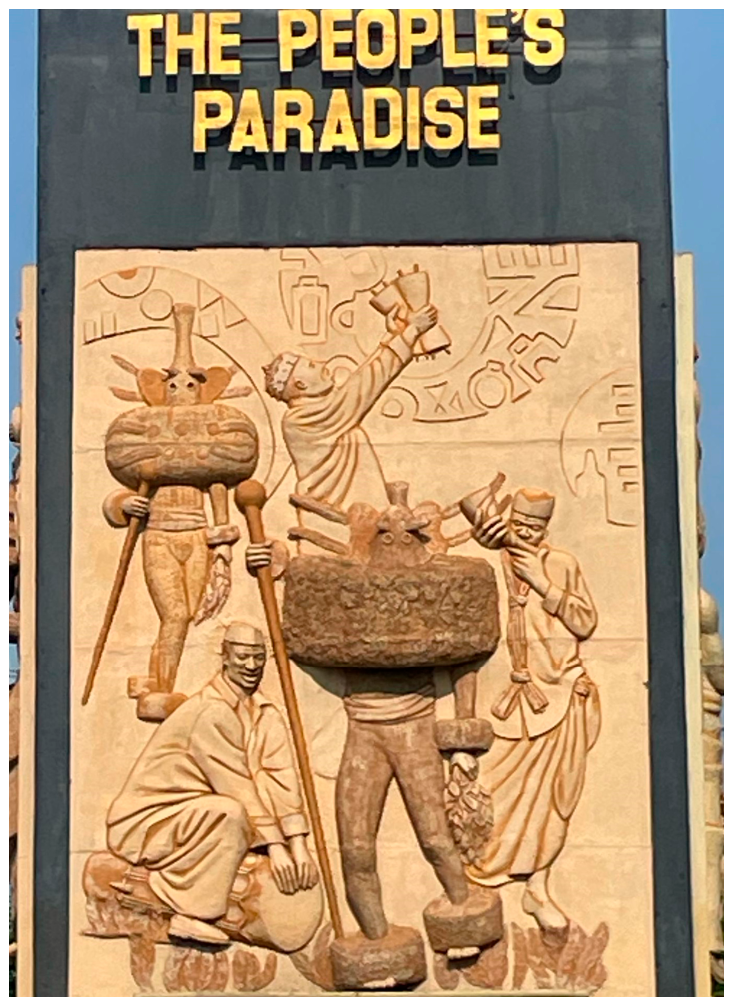
The Ekpe monument is erected on the left side of the Calabar city gate, and it is believed by many that the culture belongs to the Efik, who are the indigenous people of Calabar (alongside the Quas and Efut), and its origin predates the coming of the early Europeans in the 17th century. Akak (1982, p. 222) affirms that “Ekpe society or fraternity is of Efik origin, starting first in the form of Nyana-Nyaku or Mkpe before being evolved into its present form through Efik’s early contact with the Efut … where Archibong Ekondo from Usak Edet bought and sold the secrets of five grades of Ekpe to the Efik at Creek Town during the reign of Eyo Ema Atai and his wife”. Though the origin and ownership of Ekpe remains contestable, Uwen and Ukam (2024) attests that Ekpe is also a core of the culture of the Efik in Southern Cross River State and the language of the society, Nsibidi (nsimini or nsimiri), is usually learnt, along with other secrets, by initiates. The Ekpe society bears huge cultural significance and operates in a kind of freemasonry with political, law-enforcing and traditional regulatory instruments of authority and social justice, and it is one of the artistically beautiful and expressive confraternities among the Efik people (Asuquo 2020; Benson 2020). It is “the custodian, guardian and protector of the moral fabric of the Efik, the highest traditional institution with supreme authority to enforce laws and prevent crimes” (Asuquo 2020, p. 57). Ekpe is an all-male society ranked in four to nine grades with initiation ceremonies and an oath of secrecy; they operate on the axiom “keep your eyes wide open but keep your mouth shut” and “see what you can but do not say what you see” (Asuquo 2020; Benson 2020; Uwen and Ukam 2024). On some occasions, it is the high-ranking members who are permitted to wear the Nsibidi ankara that bears the nsibidi language, which is only understood and interpreted by members. A participant (Effiwat, male 67) recounted that the strategic placement of the Ekpe monument at the city gate is meant to inform entrants into the city of the rich cultural heritage and identity of the Efik. Effiwat added that Ekpe is culturally significant among the people, and it is used in addition to its cultural roles, used in modern times in major social events, to resonate with the people’s belongingness and identity. The Ekpe, flute bearer, drummer and traditional tambourine, as seen in the monument, are obligatory companions that connect the living with the spirit world. The monument presents to the social audience the place and relevance of culture in the existence of the Efik.
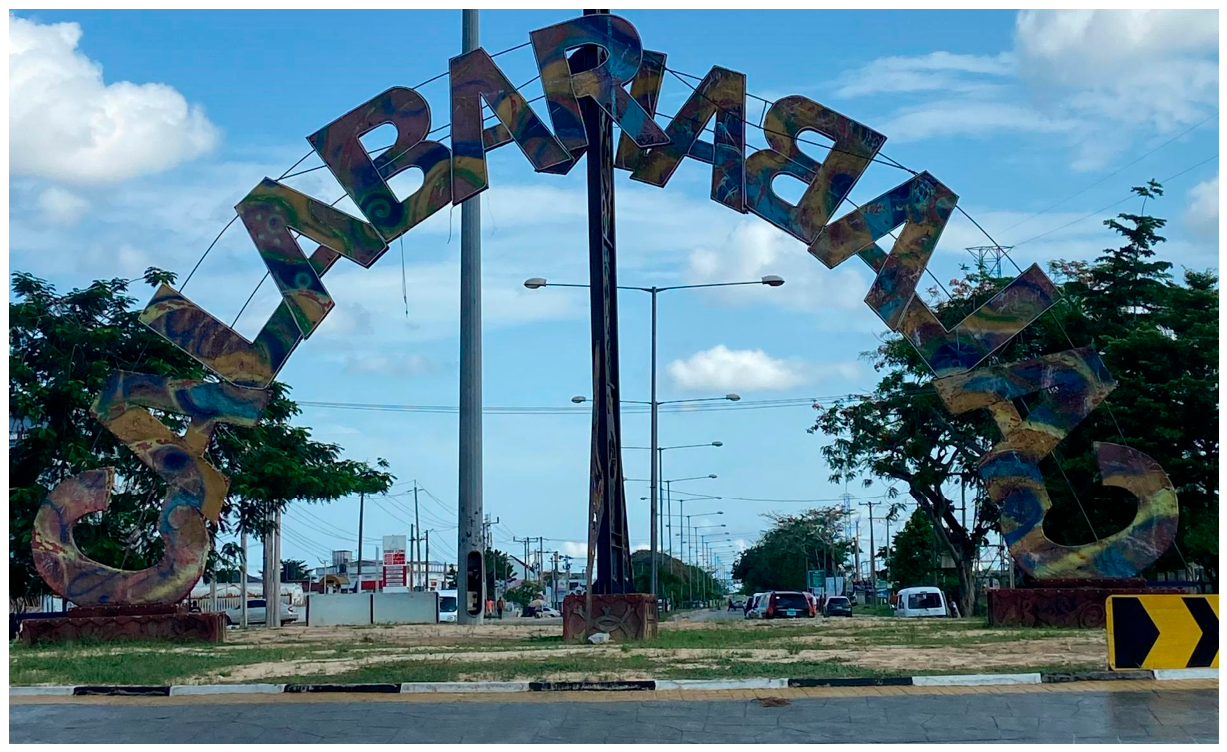
Figure 2 is the Carnival Calabar symbol. Eyo (male, 55) recalled that the monument was erected in 2007 to commemorate the birth of Carnival Calabar, which is a 12 km walk and Africa’s biggest street party, established by Donald Duke’s government in 2004, to showcase Calabar as the hub of tourism, pleasure and hospitality. The carnival procession of this nature, according to Akporobaro (2006), is characteristically colourful, thrilling, dramatic, picturesque and meant to provide a theatrical expression of the people’s history, belief system and other social experiences. We observed that on the monument, the CALABAR inscription takes off from the ground level, from both the west and the east, to meet at the top, forming a 180° shape. Participants informed us that it connotes the influx of local and international visitors and participants who converge in Calabar annually for the event, making it irresistibly fantastic, inviting and attractive. They informed us that the central themes from its inception in 2004 have centred on sustainable environment, identity and belonging, cultural heritage, climate change, migration, hospitality, Africanism, humanity and agro-industrialisation, which are core global discourses and concerns. Regarding the colours, Atim (female, 45), who is a member of CalasVegas (the Carnival band that took first position in 2024), reported that the fusion of the different beautiful colours in Figure 2 represents the sparkling looks of the main participating and performing carnival bands: Seagull, Passion 4, Masta Blasta, CalasVegas, Bayside and Freedom. The bands bear visual creativity expressed in elegant floats, make-up, costumes, decorations and choreography that connect with the central theme. Also, Effiom (male, 62) added that the carnival bands are performative troupes that deploy character, language and costume in an organised manner with moods that depict and interpret the annual and central theme of the Carnival Calabar. The multisemiotic elements are combined here to form visual and aural outlets of messaging beyond their aesthetic values to instantiate the centrality of the event in the lived experiences of residents, participants and visitors. Andrew-Essien and Ekpenyong (2012) reiterate that such semiotic resources are aspects of tourism products drawn from the fusion of indigenous practices and emerging brands of modernisation to showcase cross-cultural interactions in globalisation. The monument plays a vital role in retaining the memory of the sustainability of tourism and its positive impact on the economy of the city of Calabar, where visitors across the globe gather annually to relax, have fun and interact. The colouring of the monument draws from the environment, nature and natural elements, repackaging the past and modern and postmodern cultures to enact recreational memories of pleasure and excitement. The inscription “The People’s Paradise and Calabar” is a deliberate complement that resonates with the text–image connection to offer a fundamental interpretation of meaning within the social context of the social audience. Drawing insights from PIT, Figure 1 and Figure 2 erected at the city gate and fourth roundabout into the city jointly depict the complex meanings of place and the aesthetic reflections that portray Calabar as an urban city that celebrates its cultural heritage, identity and tourism sustainability.
Figure 2.
Carnival Calabar symbol.
4.2. Signification for Western Education
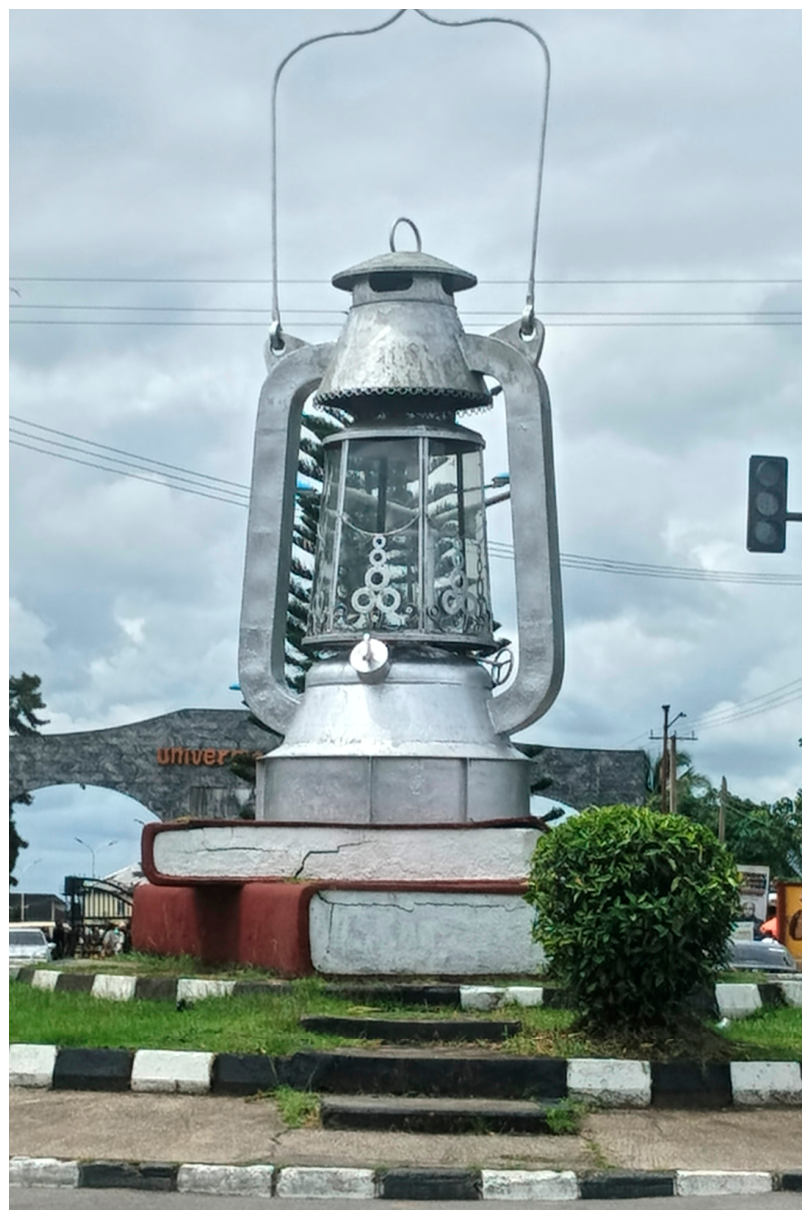
Figure 3 is a monument showing a lantern on two books at the roundabout in front of the University of Calabar’s main gate to emphasise the relevance of Calabar to the emergence of Western education in Nigeria.
It is established that Calabar occupies a prominent space in any recounting of the history of Western education in Nigeria, following the invitation of the missionaries in 1842 by the Efik (indigenous people of Calabar) in their search for a better quality of education for the pre-missionary schools (Imbua 2016). This early interface with the missionaries positively influenced the establishment of the Hope Waddell Training Institute in 1885, Girls’ Institute Creek Town in 1896 and Edgerley Memorial School in 1898. Jaja (1990) corroborates that the concerns of educational development in Southern Nigeria started in Old Calabar in the 19th century. Akpanke (male, 75), a retired civil servant who was among the set of University of Calabar students in the 1970s, highlighted that the University was established on 25 October 1975, drawing its roots from 1973 as an offshoot of a campus of the University of Nigeria, Nsukka. He added that the institution’s philosophical tenets are rooted in the belief that knowledge is a powerful tool for individual and societal advancement, promoting enlightenment, freedom and service to others. Akpan (male, 69), who is a professor at the University of Calabar, argued that the monument is strategically located. He emphasised that aside from being erected to encourage and propagate the culture of reading, the monument is a signification for Western education, which is transformative in social structures and institutions, enhances the development of skilled manpower, facilitates the integration and participation in global activities and supports literacy advancement. On books and reading culture, which the monument also signifies, Sear (2024) argues that reading books has a wide range of benefits, including emotional stability; improving memory quality, critical thinking and cognitive function; and opening a wide window to a new world of discovery. Therefore, readers are vital because they build a knowledge-based society that propels economic growth, technological advancement, adequate productivity and overall development, and every nation needs readers to place it prominently in global competitiveness (Heng 2023). We also observed that across cultures in Cross River State, the lantern and books are a symbolic representation of a vision (light) for knowledge and awareness; they also signify liberation and discoveries that advance the self and the society, which are diverse multisemiotic significations embedded in the monument. The tenets of PIT are implicated here because Figure 3’s proximity to a citadel of academic excellence underscores place identity, the relevance of Western education, its iconic relationship with the institution and the pedagogical ideologies it professes.
Figure 3.
The lantern on books.
4.3. Abolition of the Slave Trade and Revolutionary Missionary Activities
The next set of monuments shows reflections on the slave trade and the activities of early missionaries in Calabar. Regarding the slave trade, Behrendt and Graham (2014) relate that the connection between Calabar and the slave trade dates back to 1720. According to the authors, from 5 April to 2 May 1720, Hannovers (vessels) owned by Robert Bogle (one of the slaves’ merchants) sailed from the Gold Coast (now Ghana), loading 75 chests of corn and an additional 22 slaves. The vessel then proceeded to Old Calabar, and from late May to early July, they purchased 75 more slaves and 11,400 yams before departure to the Americas. Figure 4 is a symbolic memory of the slave trade.
Figure 4.
Ship anchor used by slaves’ merchants.
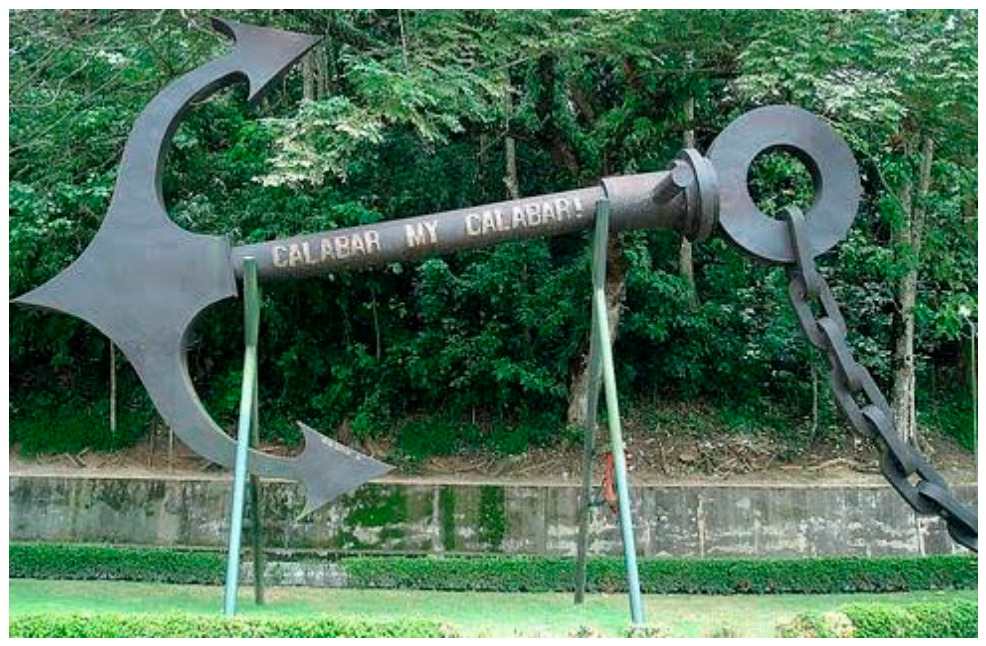
Figure 4 represents a ship’s anchor used by slave merchants and is erected at Marina Resort, just by the ships’ terminal at the bank of the Calabar River. The terminal served as the takeoff point and outlet for transporting slaves out from the Calabar region to Portugal and European nations. The anchor signifies the agony of the slave trade meted out on Africans by European slave merchants and the subsequent abolition of the slave trade in 1807. Imbua (2013), as cited in Sayer (2021), asserts that in the 18th century, the European slave merchants established relationships with the Efik, a dominant ethnic group in the coastal route for the slave trade, to enable them to source captives using the Efik as the middlemen. Imbua (2013, p. 112) argues that the history of the slave trade presents dark memories, stressing that exhibitions such as the Slave History Museum and anchor of the ship of slaves’ merchants present emotionally charged histories “to bring the memories of the tragic enterprise [of the transatlantic slave trade] to charge a larger audience who will baffle at the heinous circumstances.” As Imbua contends, Etim (male, 79), who recounted the agonising stories his late father, told him about the slave trade through the Calabar River and protested against the symbolic anchor because, to him, it is a constellation of ugly memories of captivity, torture, helplessness and fear. Broadening the anguish of the slave trade. M’baye (2006) laments that the transatlantic slave trade radically ruined Africa’s potential to develop economically, culturally and politically, while the Europeans who were slave merchants amassed the human capital and raw materials that fed their industrial revolution to the detriment of African societies. On the contrary, Owali (male, 70) commended the representational image, stressing that it reminds the younger generation of the ruins of the past in order to appreciate the gains in the abolition of the slave trade. Owali argued that, as ugly as the representation may appear to some residents and/or visitors, the slave monument appropriately narrates the past experience of the people in order to strengthen their ideals of the present for profitable aspirations of the future. On this, Wales (1990) posits that although the interpretation of monuments changes with time, their relevance is invoked where there is a meeting point between the intentions of the designers and the interpretation and appreciation of their values by the users and social audience. Such signs provide traces of how people make sense of their lived experience, which is essential to their existence and environment.
Figure 5 is a monument showing Reverend Mary Slessor carrying an infant twin. Affiong (female, 80) reported that the Mary Slessor monument at the roundabout along Mary Slessor Road was erected to commemorate missionary activities and particularly Reverend Mary Slessor, a Presbyterian female missionary whose protest and intervention resulted in the end of the practice of twin infanticide in Okoyong and the Calabar region. On twin infanticide among the Efik people, Akpanika (2015, p. 531) clarifies that:
The killing of twins was purely based on traditional religious mythology. Efik people during Mary Slessor’s time believed that a twin was a cursed and an evil omen. It is believed that the mother of twins had been visited by an evil spirit or slept with two men (the husband and the devil) and since it is difficult to identify the child fathered by the devil, the two children must be killed. One of Mary Slessor’s most outstanding achievements was the stoppage of killing of twins in the then Old Calabar and its environs.
Figure 5.
Image of Mary Slessor.
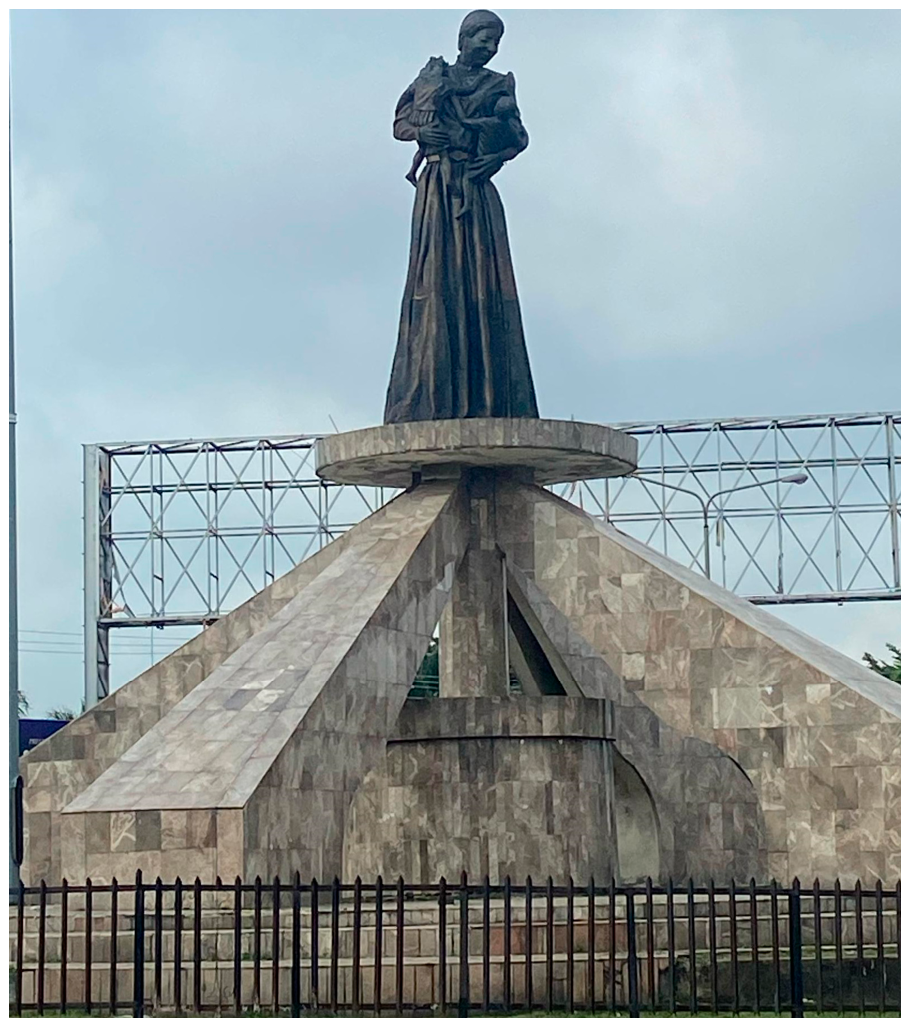
Omole and Olusa (2011) assert that Mary Slessor lived in a house built with hard planks with brick pillars in 1897 at Akpap Okoyong, a rural community in the present-day Odukpani Local Government Area of Cross River State. Offiong (male, 78), an indigene of Akpab Okoyong where Mary Slessor lived, narrated that aside from ending the killing of twins, bringing them up and changing local perceptions about them, she promoted women’s rights and improved their status, spread Christianity, preached the gospel and built churches, and established schools and taught the local population vocational and literacy skills. Offiong added that her good work earned her appointment as the first female Vice-Consul to preside over the native court at Okoyong in 1892; the award of the Order of St John in 1913; the title of “Obongawan Okoyong” (Queen of Okoyong); several memorials such as schools, monuments, roads and streets named in her honour in Nigeria; and a bust in the National Wallace Monument built in Stirling, Scotland. He concluded that she was given a state funeral in Calabar after her death on 13 January 1915 in Use Ikot Oku. Owali (male, 46) argued that the monument transmits huge lessons to the younger generation as it propels the youths to uphold good ideals and protest against cultural practices that impede economic prosperity and human capital development. However, Inyang (male, 74) reported that the monument is rather a vindictive structure because it reminds the current generation of the evils perpetrated by their ancestors against humanity and human existence, and communicates uncomplimentary information about the Efik to the complex social audience. Inyang stressed that such a damaging message about their genealogy could have a negative impact on the opportunities of the younger generation of the Efik, among other ethnolinguistic groups in Nigeria and beyond. The location of Figure 4 is close to the bank of the Calabar River, and Figure 5 is on the road named after Mary Slessor, which speaks to the relationship between monuments, the place identity and the memories and other messages they transmit.
4.4. Emerging Shift from African Traditional Religion to Anglo-Christian Beliefs
The emerging shift from African religious practices to Christian indoctrination is also replicated in the monuments in Calabar city spaces. Nigerians are very religious people, according to Ilesanmi et al. (2024); Nigerians show spirituality and religiosity in worship, regular church attendance, service, fasting, prayers and looking up to God for sustenance. It has been established that there is an emerging shift from African religious practices to upholding Christian values, a practice that is prominent among Pentecostal Christians, exemplified in their lifestyle, belief systems and socio-onomastic tradition (Igboin 2014; Olanisebe 2017; Uwen and Ukam 2024; Uwen et al. 2026a). These values are captured in religious monuments to communicate the dominant religion in the city to the social audience. Religious monuments are symbolic, sacred, and venerable, and they represent identity reflection and collective memory from where they are erected in city spaces to promote religious beliefs and practices (Kirsch 2023). They are meant to inculcate and sustain religious morals by deepening the spiritual and ideological connection of the designers, users and social audience to the structures (Nasar et al. 2021). This category of monuments that particularly propagate Anglo-Christian beliefs in Calabar is represented in Figure 6 and Figure 7 below.
Figure 6.
Symbol of the Holy Bible.
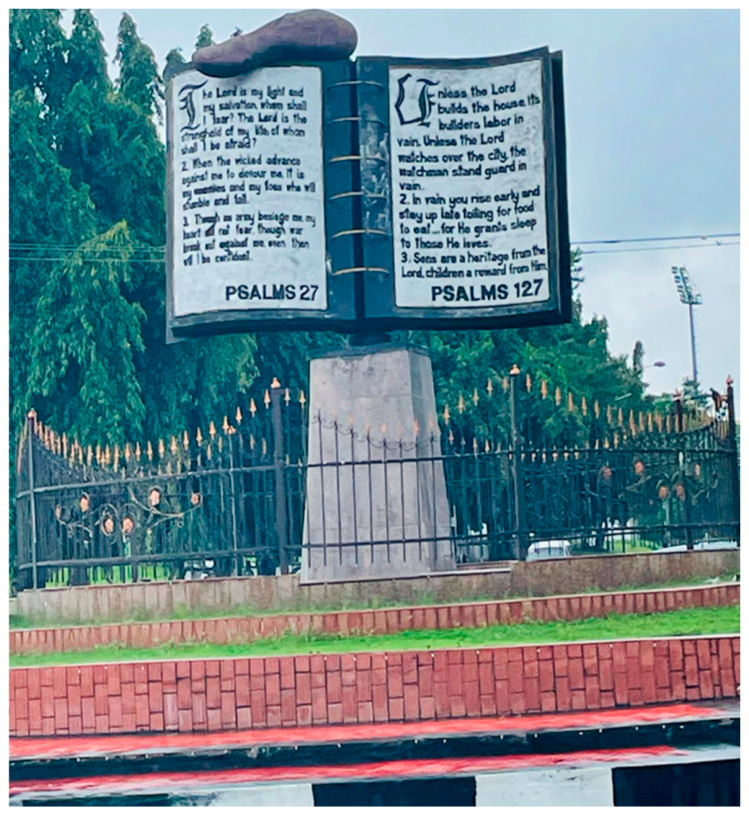
Figure 7.
Symbol of the good shepherd.
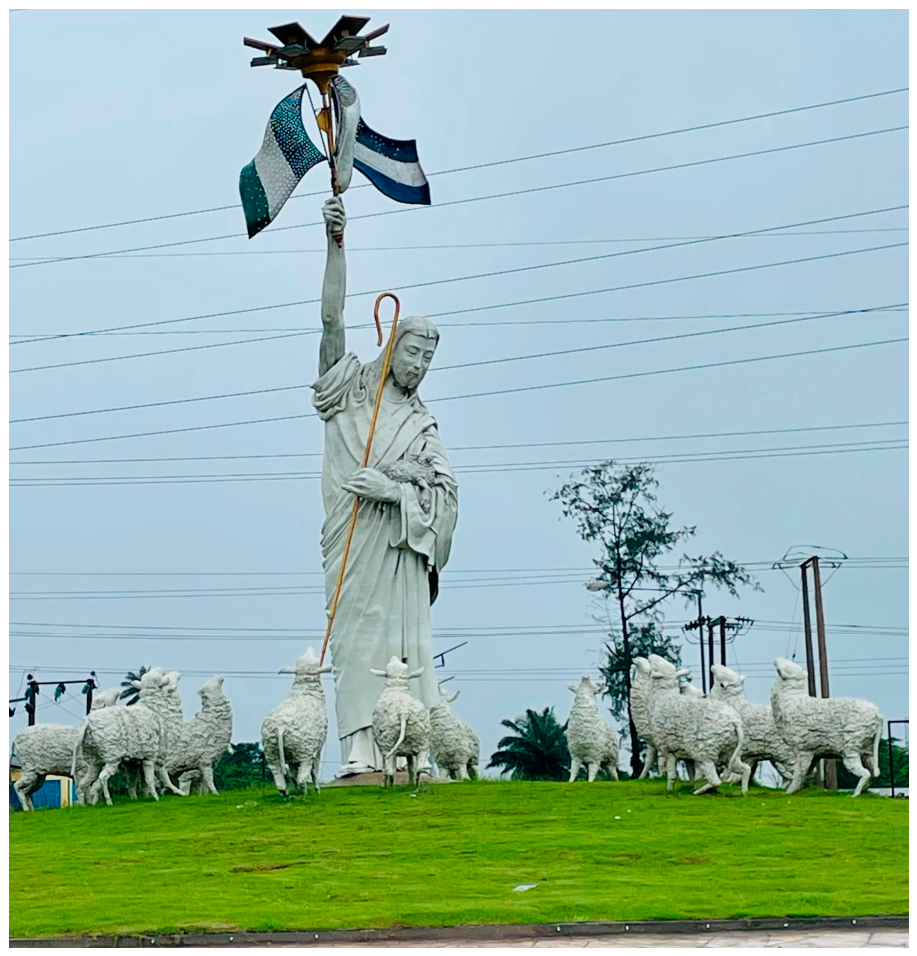
Figure 6 above is a monument of the Holy Bible, showing particular verses in Psalms chapters 27 and 127. The monument is erected at the heart of the city at the roundabout close to the tomb of the unknown soldier, where the State celebrates the Armed Forces Remembrance Day annually. Regarding the biblical verses, Psalms 27 centres on man’s need to seek God’s presence and to be hopefully patient while seeking refuge in God, trusting Him for guidance, protection and deliverance. Psalms 127: 1 is prominent “… except the LORD keep the city, the watchman waketh but in vain” (KJV) acknowledging God as the chief security of mankind. The Holy Bible, through the two chapters in the book of Psalms, presents the monument as a multiemiotic signification for the people’s dependence on God and the handover of the city to Him for safety, direction, guardianship and security. The textual prominence drawn from Psalms prioritises the spiritual needs of the city and its residents and leadership. The texts’ complementation of images in this context is an explanatory tool for the interpretation of symbolic meanings of monuments and the lived experience of the social communities that use them (Fauziyah et al. 2024). Egbung (male, 64), an elder in one of the Pentecostal churches in Calabar, argued that the particular monument and the reference to the chapters in the Holy Bible qualify as a symbolic testimonial that professes the religious ideals of residents of the city. Egbung commended the authorities for being humble enough to recognise the supremacy of God and His capacity to answer prayers and protect the city. Another participant (Njuare, female, 60) agreed that the monument establishes the Christian belief system, but argued that the leaders who erected the monument that communicates biblical ideals are reluctant to demonstrate what the chapters command because citizens are not allowed to seek refuge in them through the legislation and implementation of good and prosperous policies. Njuare argued that the logical implication of the monument is that leaders should lead in a manner that citizens could trust them for refuge, as Christians depend on God for the same.
Figure 7 is a monument that epitomises the biblical good shepherd as recorded in several verses of the Holy Bible, particularly in the book of John, chapter 10. For Christians, the idea of shepherding specifically teaches Christians about God’s role as the shepherd of His worshippers, who are the symbolic sheep, and the motif of the good shepherd is a lesson that imposes responsibilities on leaders from the days of the early Christians. Harris (1980, p. 853) acknowledges that “from ancient antiquity, rulers were described as demonstrating their legitimacy to rule by their ability to ‘pasture’ their people.” The “pasture” is sacrificial care by the shepherd, while the “people” are the representational sheep who are supposed to be dependent on the shepherd for direction and survival. Ryken (1998, p. 782) reiterates that “the sheep are not only dependent creatures, singularly unintelligent, prone to wandering and unable to find their way to a shepherd even when it is in sight.” The monument shows the image of the good shepherd and the sheep he tends and directs with his staff. On the right hand, the shepherd holds the Cross River State and Nigerian flags with lights that showcase the flags. The green grass where the shepherd and sheep stand is the grazing field that represents fertility. The sheep are seen to be looking up to the shepherd for guidance and direction. The structure bears multisemiotic significations, telling the social audience that the State and the nation are ruled by the biblical good shepherd for the guidance, provision and safety of the citizens. Ebingha (male, 57) argued that the monument transmits expository religious lessons. He stressed that an adequate understanding of the level of love the shepherd has for the sheep should be a motivation for leaders to raise the bar for their intentions to prioritise the welfare of citizens. Another participant, Okoi (male, 66), argued that the symbol of the good shepherd is a metaphorical representation of leadership of the State and Nigeria, as signified by the two (State and national) flags. Okoi bemoaned the erection of the monument, stressing that it is rather a representation of the government’s deceit and leadership deficit in the city centre. He explained that the greenish grasses suggest the rich resources under the control of our leaders, which they ought to have utilised for the welfare of the citizens (sheep). The participant stressed that, as Christians, leaders in the government who understand the love that Jesus (the good shepherd) has for his flock are supposed to lead by example, but on the contrary, the leaders are continually engaged in the looting of our common wealth for the selfish benefit of themselves and their cronies who live in extravagance, while ordinary citizens face untold hardship. Justifying Okoi’s position, Ilesanmi et al. (2024, p. 1) corroborate that “some Nigerian Christians are bedeviled by corrupt practices such as greed, fraud, embezzlement of public funds and other moral vices against what they preach.” The authors stressed that Nigerian leaders hardly practice biblical moral values as they remain corrupt, unpatriotic and rule without any sense of good governance. The divergent opinions show that such signs are an aspect of symbolic and implied communication, and the values of the signs are dependent on the users and interpreters. This is because such signs are conceived as representations of specific information or ideas within the social context of the consumers (Uwen and Ugenlo 2023). The varying opinions agree with the changing trend of meanings of monuments across time and circumstances (Hay et al. 2016). This implies that as monuments evolved from their material-based expressions and traditional signposting into modern religious-based conceptualisations and emerging ideologies, they also introduced new but complex interpretive thresholds in terms of their decodability and interpretations.
As residents of the city for decades, we observed that the monuments (Figure 6 and Figure 7) have been recently erected (sometimes in 2024) by Senator Bassey Otu’s government as a deliberate substitution for the former ones that were destroyed due to the present-day government’s religious disposition (and concerns of residents). Attoe (male, 55), a politician and an insider in Senator Bassey’s administration, disclosed that the government’s decision to replace the former monuments could be the government’s religious stance (and other condemnatory perceptions) that they represented paganism and evil cultural practices, which do not align with the emerging Anglo-Christian beliefs practised by residents. Attoe stressed that the current monuments are rather counter-monuments that propagate Christianity, its belief system and ideologies, which are dominant among the residents of Calabar. This is a departure from the propagation of idolatrous worship and demonstration of conversion to Christianity and its beliefs (Uwen et al. 2026a, 2026c). On this, Krzyzanowska (2016, p. 466) corroborates that counter-monuments often “cater for many deficiencies of traditional forms of remembrance … and seen as reaction to not only the discourse of place/space identity but also to the localized politics of individual and collective experience and of dealing with often ‘inconvenient’ memories.” By so doing, the practice aligns with Kong’s (2008) claim that monuments can be demolished, reconstructed, redesigned, and reused for ideological liberation and propagation of new and emerging ideologies. In similar circumstances in Nigeria, Oha (2000) claims that Igbo Christian residents challenged the erection of the Ikenga monument in Owerri as a return to paganism and requested that it be replaced. Oha reports that a similar protest also resulted in the substitution of a monument (cart puller) that depicts suffering at the State secretariat’s roundabout in Ibadan with a more acceptable monument of a farmer handling farm tools, which represent productivity as a core ideal of the city. The discussion on Figure 6 and Figure 7 is anchored on the tenets of PIT because the spatiality of the monuments resonates with their philosophical and aesthetic reflections, influencing their memorability and residents’ identity reformulation of place and selves.
5. Conclusions
In the study, we have demonstrated that monuments in Calabar bear implied “language” interrogated from a multisemiotic lens (combination of visual elements—graffiti, images and texts) to decrypt how the components of the monuments (type, nature, materials, colour, size and elevation) represent and transmit varied messages, identities, ideologies and other sociohistoric narratives and events about place and the self. Monuments front communal narratives through mnemonic devices employed for the integration of place, history, culture, identity and ideology, interpreted by human agency. From the study, it is human agency that performs the vital role of interpretation, shaping, reshaping and recontextualising monuments for collective remembrance, commemorative strategies and identity reconstruction of space and the social audience. The cultural aesthetics communicate the semiotic polysemy of the city as a sort of communal memory that re-enacts the users’ shared history of place, lived experience and culture. They provide an emotional and psychological connection with the past and present. Therefore, remembering and forgetting that the people’s connections to the monuments arise from the consciousness informed by the acceptance, rejection, redefinition or sustenance of the relevance of the historical trajectories and narratives they represent. Rejection calls for a replacement of monuments as responses to new dimensions of dialogicity on unacceptable ideologies and inconvenient memories to establish emerging orientations and shift from traditional testaments to those with modern designs, interpretations and emerging belief systems.
The monuments resonate a continued intermarriage between the then and the now, a preservation of traditions and philosophies, and a substitution with orientations of the present and emerging ideologies. This helps to re-enact multisemiotic communication nuanced in Western civilisation, literacy and education, gains from revolutionary activities of missionaries, liberation from the ruins of the transatlantic slave trade, sociocultural legacies, (re)constructed identity and belonging, tourism sustainability through carnival, and an emerging change from African religious practices to Christian indoctrinations. Monuments in the description provide the symbolic discourse on the reconciliation between pride in communal traditions of the past and the propagation of the aspirations of the present to reconstruct precolonial, colonial and modern histories and events.
Apart from contributing to the expansion of semiotic studies to include varied significations (roles, ideologies, identity formation, meanings and power relations) of monuments, this study has provided the trajectories to discourses on the interconnectedness between creative designs, language, city space management, culture, history and ideological orientations of social communities. These interact to transcend a condensed messaging system and culture of monumentalisation in Calabar, and are sustained through localised social interactions that communicate the diverse narrations of the lived experiences and interpretation of humanity. The study also connects to genealogy studies in the areas of toponyms and identities that re-establish the (past and present) relationship of people and their place.
Author Contributions
Conceptualization, G.O.U. and M.-B.A.E.; methodology, G.O.U. and M.-B.A.E.; software, K.O.K. and E.I.U.; validation, G.O.U., F.T.O. and K.O.K.; formal analysis, G.O.U.; investigation, G.O.U. and E.I.U.; resources, F.T.O. and E.I.U.; data curation, G.O.U. and M.-B.A.E.; writing—original draft preparation, G.O.U.; writing—review and editing, G.O.U.; visualization, M.-B.A.E. and F.T.O.; supervision, G.O.U.; project administration, G.O.U. and K.O.K. All authors have read and agreed to the published version of the manuscript.
Funding
This research received no external funding.
Institutional Review Board Statement
The study was conducted according to the guidelines of the Declaration of Helsinki, and approved by the Ethics Committee of the Faculty of Arts, University of Calabar (protocol code UC/FA/26/027 and date of approval: 2026-03-12).
Informed Consent Statement
Informed consent was obtained from all subjects involved in the study.
Data Availability Statement
The original contributions presented in this study are included in the article. Further inquiries can be directed to the corresponding author.
Conflicts of Interest
The authors declare no conflict of interest.
References
- Abdullahi, Hauna A., Omejeh Timothy Enejoh, and Jemibewon Lola. 2019. The influence of monuments on the socio-economic development of Kogi State. EPRA International Journal of Multidisciplinary Research 5: 106–12. [Google Scholar] [CrossRef] [Scilit]
- Agbonome, Peter C., and Francis Osefoh. 2016. Calabar museum: The symbol and epitome of revolutionary evolution of historic British colonial architecture influence over Nigerian traditional architecture. Interdisciplinary Academic Essays 8: 64–78. [Google Scholar]
- Akak, Eyo Okon. 1982. Efik of Old Calabar Vol III: Culture and Superstition. Calabar: Akak and Sons. [Google Scholar]
- Akpanika, Ekpenyong Nyong. 2015. Mary Slessor’s legacy: A model for 21st century missionaries. American Journal of Social Issues and Humanities 5: 526–34. [Google Scholar]
- Akporobaro, Frederick B. 2006. Introduction to African Oral Literature. Lagos: Princeton. [Google Scholar]
- Andrew-Essien, Esekong H., and Ibok Ekpenyong. 2012. Promoting culture and tourism in Nigeria through Calabar festival and carnival Calabar. Mediterranean Journal of Social Sciences 3: 287–94. [Google Scholar]
- Asuquo, Offiong Offiong. 2020. The present-day relevance of Ekpe society/masquerade to the Efiks of Nigeria. Jurnal Sosialisasi 7: 55–60. [Google Scholar] [CrossRef] [Scilit]
- Bailly, Antoine. 1996. Laville: Espace vécu. In Théoriser la ville. Edited by Denise Pumain and Marie-Claire Robic. Paris: Anthropolos, pp. 159–65. [Google Scholar]
- Ball, Jeffery. 2018. Staging of memory: Monuments, commemoration, and the demarcation of Portuguese space in colonial Angola. Journal of Southern African Studies 44: 77–96. [Google Scholar] [CrossRef] [Scilit]
- Basso, Keith. 1996. Wisdom Sits in Places. Albuquerque: University of New Mexico Press. [Google Scholar]
- Behrendt, Stephen D., and Eric Graham. 2014. African merchants, notables and the slave trade at old Calabar, 1720: Evidence from the National Archives of Scotland. History in Africa. A Journal of Debates, Methods and Source Analysis 2: 17–35. [Google Scholar]
- Bellentani, Federico, and Mario Panico. 2016. The meanings of monuments and memorials: Towards a semiotic approach. Punctum International Journal of Semiotics 2: 28–46. [Google Scholar] [CrossRef] [Scilit]
- Benson, Imaekop E. 2020. The origin of Ekpe masquerade and the Nsibidi symbol. IDOSR Journal of Communication and English 5: 13–17. [Google Scholar]
- Berdoulay, Vincent. 1989. Place, meaning and discourse in French language geography. In The Power of Place—Bringing Together Geographical and Social Imagination, 1st ed. Edited by John A. Agnew and James S. Duncan. London: Routledge, pp. 124–39. [Google Scholar]
- Bodenhamer, David J., John Corrigan, and Tevor M. Harris, eds. 2010. The Spatial Humanities: GIS and the Future of Humanities Scholarship. Bloomington: Indiana University Press. [Google Scholar]
- Bodenhamer, David J., Trevor M. Harris, and John Corrigan. 2013. Deep mapping and the spatial humanities. International Journal of Humanities and Arts Computing 7: 170–85. [Google Scholar] [CrossRef] [Scilit]
- Briggs, Asa. 1983. The environment of the city. In How Humans Adapt: A Bio-Cultural Odyssey. Edited by Donald J. Ortner. Washington: Smithsonian Institution Press, pp. 371–94. [Google Scholar]
- Bulot, Thierry, and Vincent Veschambre. 2004. Sociolinguistique urbaine et géographie sociale: Articuler l’hétérogénéité des langues et la hiérarchisation des espaces. Rennes: Presses Universitaires de Rennes. [Google Scholar]
- Carrier, Peter. 2005. Holocaust Monuments and National Memory in France and Germany Since 1989. Oxford: Berghahn Books. [Google Scholar]
- Caves, Roger W., ed. 2005. Encyclopaedia of the City. London: Routledge. [Google Scholar]
- Cercleux, Andrea-Loreta, Radu Sageata, Beatrice Mitrica, and Elena Bogan. 2025. Urban semiotics in Bucharest city center through the analysis of buildings’ names and commercial signs. Land 1: 1–23. [Google Scholar]
- Esu, Bassey, and Samuel Ukata. 2012. Enhancing the tourism value of Cross River State monoliths and stone circles through geo-mapping and ethnographic study. Journal of Hospitality Management 3: 106–13. [Google Scholar] [CrossRef] [Scilit]
- Fauziyah, Frisyi F., Zainal Rafli, and Syamsi Setiadi. 2024. Symbolism and meaning in city monuments: A semiotic study. LADU: Journal of Languages and Education 4: 127–34. [Google Scholar] [CrossRef] [Scilit]
- Fubah, Mathias A., Chammah J. Kaunda, and Catherine Ndinda. 2024. Decolonising the cultural landscape: Preserving historical statues in Tshwane, South Africa. African Studies 82: 348–63. [Google Scholar]
- Gunay, Zeynep. 2008. Neoliberal urbanism and sustainability of cultural heritage. Paper presented at the 44th ISOCARP Congress, Dalian, China, September 19–23. [Google Scholar]
- Halbwacht, Maurice. 1992. On Collective Memory. Chicago: The University of Chicago Press. [Google Scholar]
- Harris, Laird. 1980. Theological Workbook of the Old Testament. Chicago: Moody Press. [Google Scholar]
- Hauge, Ashild L. 2007. Identity and place: A critical comparison of three identity theories. Architectural Science Review 50: 44–51. [Google Scholar] [CrossRef] [Scilit]
- Hay, Iain, Andrew Hughes, and Mark Tutton. 2016. Monuments, memory and marginalization in Adelaide’s Prince Henry Gardens. Gegrafiska Annaler 86: 201–16. [Google Scholar]
- Heng, Kimkong. 2023. Cambodia’s Aspirations to Become a Knowledge-Based Society: Perspectives of Cambodian University Students. Working Papers Series No. 138. Phnom Penh: Cambodia Development Resource Institute. [Google Scholar]
- Hidalgo, M. Carmen, and Bernardo Hernandez. 2001. Place attachment: Conceptual and empirical questions. Journal of Environmental Psychology 21: 273–81. [Google Scholar] [CrossRef] [Scilit]
- Hodder, Ian. 1990. The Domestication of Europe. London: Wiley-Blackwell. [Google Scholar]
- Hult, Francis M. 2009. Language ecology and linguistic landscape analysis. In Linguistic Landscapes: Expanding the Scenery. Edited by Elana Shohamy and Durk Gorter. London: Routledge, pp. 88–103. [Google Scholar]
- Igboin, Benson O. 2014. African religious discourse on names and identity. Filosofia Theoretica: Journal of African Philosophy, Culture and Religion 3: 26–40. [Google Scholar]
- Ilesanmi, Dele A., Timothy Imuwahen, and Deborah M. Akanbi. 2024. Religiosity and morality in contemporary churches in Nigeria: Critical points of disconnections between faith and praxis. African Journal of Kingdom Education 2: 1–15. [Google Scholar]
- Imbua, David L. 2013. Slavery and slave trade remembered: A study of the slave history museum in Calabar, Nigeria. Journal of the Historical Society of Nigeria 22: 112–36. [Google Scholar]
- Imbua, David L. 2016. British colonial education in Calabar; The hedge school policy on standard for education in contemporary Nigeria. Ubuntu: Journal of Conflict and Social Transformation 5: 17–32. [Google Scholar]
- Jaja, Solomon O. 1990. Old Calabar revisited: The civil service and the making of Southern Nigeria, 1900–1906. In Old Calabar Revisited. Edited by Solomon O. Jaja, Erim O. Erim and Bassey W. Andah. Enugu: Harris Publishers, pp. 92–105. [Google Scholar]
- Kirch, Patrick V. 2000. On the Road of the Winds. Berkeley: University of California Press. [Google Scholar]
- Kirch, Patrick V., and Roger C. Green. 2001. Hawaiki, Ancestral Polynesia: An Essay in Historical Anthropology. Cambridge: Cambridge University Press. [Google Scholar]
- Kirsch, Jutta. 2023. Religion and Memory: The Importance of Monuments in Preserving Historical Identity. Pretoria: Unisa Press. [Google Scholar]
- Kong, Lily. 2008. Power and prestige. In The Sage Companion to the City. Edited by Tim Hall, Phil Hubbard and John Rennie Short. London: Sage, pp. 13–28. [Google Scholar]
- Krzyzanowska, Natalia. 2016. The discourse of counter-monuments: Semiotics of material commemoration in contemporary urban spaces. Social Semiotics 26: 465–85. [Google Scholar]
- Latour, Bruno. 2005. Reassembling the Social: Introduction to Actor-Network Theory. Oxford: Oxford University Press. [Google Scholar]
- Leontovich, Olga A., and Nadezhda N. Kotelnikova. 2022. A semiotic portrait of a big Chinese city. Russia Journal of Linguist 26: 701–20. [Google Scholar] [CrossRef] [Scilit]
- Liston, Jolie. 2013. Sociopolitical Development and a Monumental Earthwork Landscape on Babeldaob Island, Palau. Ph.D. thesis, Department of Archaeology and Natural History, Australian National University, Canberra, Australia. [Google Scholar]
- Lon, Joseph. 2013. The powerlessness of Cameroon’s reunification monuments. East West Journal of Humanities 4: 125–34. [Google Scholar] [CrossRef] [Scilit]
- Martinsson-Wallin, Helene. 2015. Monuments and people: An introduction. Studies in Global Archaeology 20: 9–44. [Google Scholar]
- M’baye, Babacar. 2006. The economic, political and social impact of the Atlantic slave trade on Africa. The European Legacy 11: 607–22. [Google Scholar] [CrossRef] [Scilit]
- Mukwidigwi, Tairiro, Maheshvari Naidu, Subashini Govender, and Garikai Membele. 2023. The spatial nexus of monuments, memorability and identity formation in Chatsworth and Durban Central, South Africa. GeoJournal 88: 5643–60. [Google Scholar] [CrossRef] [Scilit]
- Nasar, Zuhair A., Mahmood Al-Musawi, and Mohammed Al-Mimar. 2021. The role of religious monuments in reconstructing the movement systems in the Wadi Al-Salam cemetery. Paper presented at the International Conference on Engineering Sciences (ICES 2020), Najaf, Iraq, December 16–17; pp. 1–16. [Google Scholar]
- Njemanze, Queen. 2020. Interpreting semiotics and management of the public space: Creative dynamics of multilingual communication in Nigeria. International Journal of Management 11: 386–402. [Google Scholar]
- Oha, Obododinma. 2000. Signs, cities and designs of capacities: The semiotics of road monuments in some Nigerian cities. The African Anthropologist 7: 33–47. [Google Scholar] [CrossRef] [Scilit]
- Olanisebe, Samson O. 2017. Elimination by substitution: The travesty of changing cultural names to Biblical names by Pentecostals in Southwest Nigeria. Ilorin Journal of Religious Studies 7: 107–24. [Google Scholar]
- Omole, Kayode, and Adekemi O. Olusa. 2011. Building conservation as a veritable tool for preservation of cultural heritage: A case of historical buildings in Calabar, Nigeria. FUTY Journal of the Environment 6: 81–93. [Google Scholar]
- Popkin, Maggie L. 2016. The Architecture of the Roman Triumph: Monuments, Memory, and Identity. Cambridge: Cambridge University Press. [Google Scholar]
- Proshansky, Harold M. 1978. The city and self-identity. Environment and Behavior 10: 123–35. [Google Scholar] [CrossRef] [Scilit]
- Proshansky, Harold M., Abbe K. Fabian, and Robert Kaminoff. 1983. Place identity: Physical world socialization of the self. Journal of Environmental Psychology 3: 57–83. [Google Scholar] [CrossRef] [Scilit]
- Raj, Mamatha P., and Dakshayini R. Patil. 2023. Semiotics in architecture of public spaces: Contemporary city-centers; case of Balgalore, India. Journal of Umm Al-Q’ura University of Engineering and Architecture 14: 212–25. [Google Scholar] [CrossRef] [Scilit]
- Rose, Gillian. 2022. Visual methodologies: An introduction to researching with visual materials. In Visual Methodologies. London: Sage, pp. 1–100. [Google Scholar]
- Ryken, Leland. 1998. Dictionary of Biblical Imagery. Downers Grove: Intervarsity Press. [Google Scholar]
- Sayer, Faye. 2021. Localizing the narrative: The representation of the slave trade and enslavement within Nigerian museums. Journal of African Diaspora Archaeology and Heritage 10: 23–40. [Google Scholar] [CrossRef] [Scilit]
- Sear, Korngleng. 2024. The power of reading and strategies to develop a reading habit. Cambodian Journal of Educational Research 4: 79–100. [Google Scholar] [CrossRef] [Scilit]
- Stock, Mathis. 2006. Construire l’identité par la pratique des lieux. In Chez Nous: Terrtoires et Identités Dans les Mondes Contemporains. Edited by Alessia de Biase and Cristina Rossi. Paris: Editions de la Villette, pp. 142–59. [Google Scholar]
- Twumasi-Ampofo, Kwadwo, Rexford Asaasie Oppong, and Victor Kwesi Quagraine. 2020. The state of architectural heritage preservation in Ghana: A review. Cogent Arts & Humanities 7: 1–17. [Google Scholar] [CrossRef] [Scilit]
- Uwen, God’sgift Ogban, and Edadi Ilem Ukam. 2024. This is the sacrifice: Language, ideology and religious identity performance in Erei personal names. Languages 9: 326. [Google Scholar] [CrossRef] [Scilit]
- Uwen, God’sgift Ogban, and Lucky Ohonsi Ugenlo. 2023. Language on the road: Semiotic (mis)representations of road signs in the Nigerian sociocultural context. Ahyu: A Journal of Language and Literature 6: 118–32. [Google Scholar] [CrossRef] [Scilit]
- Uwen, God’sgift Ogban, Edadi Ilem Ukam, Ernest Nyamekye, and Dominic Enamhe Okpene. 2026a. Prayer changes fate: Language, Christian religious identity and the shifting socio-onomastic tradition in Erei personal names. African Identities, 1–17. [Google Scholar] [CrossRef] [Scilit]
- Uwen, God’sgift Ogban, Ernest Nyamekye, Bassey Asukwo Ekpenyong, and Victor Offiong Bassey. 2026b. Language choices as multilingual identity performance among Nigerian university students. International Journal of Interdisciplinary Cultural Studies 21: 1795–816. [Google Scholar]
- Uwen, God’sgift Ogban, Itang Egbung, Stephen Magor Ellah, and Josephat Adoga Odey. 2026c. This dangerous bone cannot be swallowed: Ethnopragmatic significance of personal names among Agwagune people. Genealogy 10: 63. [Google Scholar] [CrossRef] [Scilit]
- Wales, Katie. 1990. A Dictionary of Stylistics. Harlow: Longman. [Google Scholar]
Disclaimer/Publisher’s Note: The statements, opinions and data contained in all publications are solely those of the individual author(s) and contributor(s) and not of MDPI and/or the editor(s). MDPI and/or the editor(s) disclaim responsibility for any injury to people or property resulting from any ideas, methods, instructions or products referred to in the content. |
© 2026 by the authors. Licensee MDPI, Basel, Switzerland. This article is an open access article distributed under the terms and conditions of the Creative Commons Attribution (CC BY) license.