


Abstract
Purpose: To explore relationships with post-event workday loss in U.S. underground coal mines using Grouped Greedy Equivalence Search (GGES), a prior-knowledge-constrained extension of GES. Methods: The analysis utilizes data obtained from the National Institute for Occupational Safety and Health (NIOSH). We analyzed 101,010 reported injury/illness events linked to annual employment records from 3982 unique underground coal mines spanning the years from 1990 to 2020. Experts selected the variables and consolidated nominal categories. GGES was applied to the full dataset and two descriptive periods, 1990–2005 and 2006–2020. Intervention calculus when the DAG is absent (IDA) derived total causal effect (TCE) values, which were retained as exploratory model summaries, without cross-variable ranking. Record-level 10-fold splits assessed structural agreement using adjacency precision (AP), adjacency recall (AR), arrowhead precision (AHP), and arrowhead recall (AHR). Results: In the 2006–2020 network, variables adjacent to workday loss included total mining experience in its raw years-weeks and decimal-year representations, mean office employees, mean underground employees, and the MSHA district/inspection-office code. The two experience representations describe one construct and are not independent confirmations. The full-period marginal correlations with experience were small and positive (r = 0.032 and r = 0.069). For 2006–2020, AP and AR were 0.694 and 0.653, while AHP and AHR were 0.386 and 0.345. These values describe agreement across record partitions that may share mines, not validation in unseen mines or against causal ground truth. Conclusions: The analysis organizes candidate associations with the number of workdays lost after a reported injury or illness event; it does not estimate accident incidence. Under the stated assumptions, the network provides exploratory causal hypotheses for further study. Mine-grouped validation, analyses accounting for within-mine dependence, and single-encoding sensitivity analyses are needed before stronger causal or operational conclusions are drawn.
1. Introduction
Coal mine safety is a universally recognized global concern [1,2,3], with underground mining being considered a high-risk occupation in the United States [3,4,5]. Despite the overall improvement in safety [6], the mining industry continues to be associated with a high degree of uncertainty. Variations in operational risk within the industry stem from factors such as mine size, workforce size, coal production, and investments in monitoring and safety systems [7,8].
Many risk assessment models have been developed to improve employee safety and identify potential hazards in the mining industry [9,10]. Paltrinieri et al. [11] have outlined five essential requirements for an “ideal” risk assessment model, while Beeche et al. [12] have introduced a classification model that utilizes machine learning to assess and categorize coal mines based on mining personnel injuries. Li et al. [13] used Bayesian networks to evaluate the risk of an underground gas explosion, presenting coal mining explosions as a quantitative measure of coal mine risk. A crucial aspect of risk assessment lies in its capability to adapt and improve dynamically over time, enabling the prediction and response to emerging risks that may not have been previously observed or reported.
The National Institute for Occupational Safety and Health (NIOSH) at the Centers for Disease Control and Prevention (CDC) diligently maintains comprehensive records encompassing injury counts, mining site details, employment statistics, production figures, and work hours for every mine operating in the United States. These valuable data are stored in two distinct databases: the Address/Employment database and the Accident/Injury/Illness database [14]. While the risks associated with mining primarily arise from natural threats, they can manifest in various forms. In this study, we propose to use Grouped Greedy Equivalence Search (GGES), a previously introduced prior-knowledge-constrained extension of Greedy Equivalence Search, to explore a relationship network associated with the duration of work absence after reported injuries and illnesses [15].
Workday loss has been recognized by Margolis [16] as an indicator of mine risk, representing the duration during which miners are absent from work due to work-related injuries. Margolis conducted an analysis of the Mine Safety and Health Administration (MSHA) data spanning from 2003 to 2007, revealing a statistically significant association between age, total mining experience, and workday loss [16]. Coleman and Kerkering [17], in their work, advocated for utilizing damage-statistic variables as indices for mining safety, with workday loss serving as an appropriate index. Through the analysis of MSHA data from 1983 to 2004 and employing the beta distribution to simulate losses, they concluded that workday loss holds considerable importance as a relevant index [17]. Furthermore, Nowrouzi-Kia et al. [18] conducted a comprehensive analysis of nine mining industry articles pertaining to workday loss, identifying various antecedents that can impact workday loss. These antecedents include the mining work environment, gender, age, mining equipment, organizational size, disease status, job training, recovery time, pre-injury health, and access to medical care. Their findings highlighted the relationship between different types of workday loss and specific mining types.
Mining injury severity can also reflect human, organizational, environmental, and operational conditions not represented by employment and production records. The Human Factors Analysis and Classification System (HFACS) distinguishes unsafe acts, preconditions, supervision, and organizational influences [19]. Mining applications identify skill-based errors, violations, physical-environment conditions, inadequate supervision, and organizational processes as relevant contributors [20,21]. Shift timing has likewise been examined in U.S. mining research [22,23], and mine size, seam height, and mining method may modify injury patterns [24]. These studies define important context for interpreting the present network without implying that unmeasured constructs were analyzed directly.
In this study, we applied GGES to examine candidate relationships associated with the number of workdays lost after a reported injury or illness event and examined network agreement across random event-record splits and descriptive time periods. To conduct this analysis, we leveraged the data from the NIOSH Address/Employment and Accident/Injury/Illness databases to explore a relationship network among the measured variables using a directed graph approach. We consider the mine as a fully connected system [25], incorporating personal characteristics of employees (work experience, mining work experience), working characteristics of the mine (underground work area, above-ground work area, public work district, overall coal mine output, overall number of employees), and mine-specific employee attributes (employee title, employee disease type, employee injury type) as candidate variables without assigning an a priori importance ranking. The evaluation of causal discovery results was performed using “pattern metrics” [15], including adjacency precision (AP), adjacency recall (AR), arrowhead precision (AHP), and arrowhead recall (AHR). The primary focus of this study is to explore and identify candidate relationships with the number of workdays lost following reported injury or illness events; accident occurrence was not modeled. The contribution is the application of prior-knowledge-constrained causal discovery to a large longitudinal MSHA/NIOSH safety dataset spanning 31 years, with conclusions stated as observed-data causal hypotheses under explicit assumptions rather than as deterministic facts. By doing so, we aim to offer decision-makers testable hypotheses for subsequent coal-mine safety investigations.
2. Materials and Methods
2.1. Study Datasets
We used NIOSH Address/Employment and Accident/Injury/Illness records for underground coal mining operations from 1990 to 2020. Each analytic observation was a reported accident/injury/illness event linked by mine identifier and calendar year to the corresponding operator-reported annual employment record. The 101,010 observations came from 3982 mines; they were event records rather than unique miners, and multiple observations could arise from the same mine. The public analytic file did not provide a stable identifier for following an individual across events.
Records before 1990 were excluded because reporting practices and mining technology changed over the longer historical period. Records with missing linkage fields and contractor records were also excluded. NIOSH distributes operator and contractor employment/injury records separately; the present analysis linked operator events to operator-reported mine-year employment information, so combining contractor records would mix employer-specific exposure information. The exclusion was made for linkage comparability, not because contractor underreporting was assumed. The study therefore describes operator-reported events and does not attempt an operator-contractor comparison. Contractor events and events without complete linkage may differ systematically in severity from the included reports. Their exclusion could therefore introduce selection bias, whose direction and magnitude cannot be determined from the linked analytic data.
To perform this study, we used data from the NIOSH Address/Employment and Accident/Injury/Illness records to analyze mining operations data from 1990 to 2020. The dataset comprised various variables extracted from coal mine records, including: (1) mine ID, (2) county/MSHA district/inspection-office code, (3) workday loss, (4) underground employees, (5) surface at underground mine employees, (6) mill or prep plant employees, (7) office employees, (8) total number of employee hours, (9) total tons of clean coal produced, (10) accident injury illness class, (11) accident type code, (12) total mining experience (decimal years), (13) experience at current mine (decimal years), (14) experience in current job title (decimal years), (15) job title, (16) source of injury code, (17) degree of injury code, and (18) time since beginning of shift (hours).
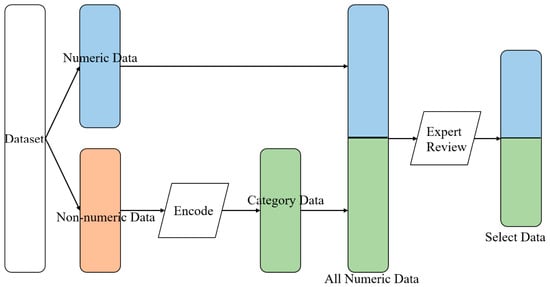
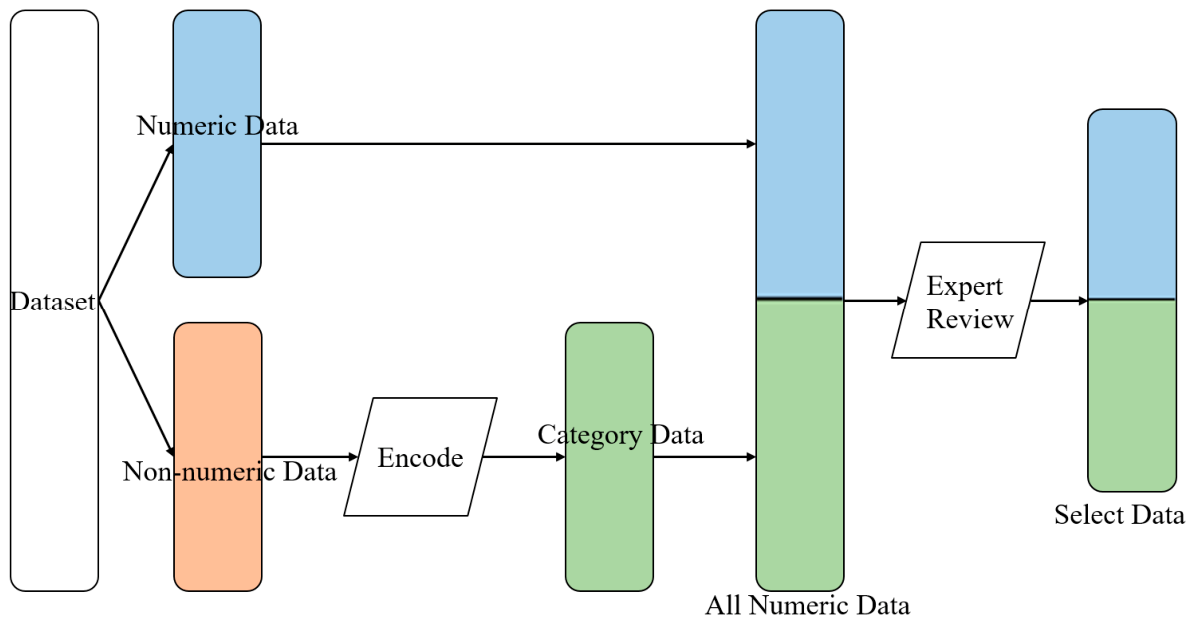
Six nominal fields were consolidated by mining-domain experts and mapped to integer category identifiers (Table 1 and Supplemental Tables S1–S6). The generalized score used for mixed data accommodates continuous and discrete variables [26]; the identifiers denote category membership rather than order or equal spacing. Some expert mappings combine several source categories under one identifier; the job-title mapping is provided in Supplemental Table S4. The source field labeled county is an MSHA district/inspection-office code, not a geographic county and not a proxy for mining method or mine size. MSHA experience fields were retained in both their source years-weeks codes and converted decimal years; these are paired representations of the same three constructs (total mining experience, experience at the current mine, and experience in the current job title), not independent attributes. Both encodings were included in the reported networks; their joint inclusion may affect the fitted structure and is addressed as a limitation in the Discussion. Worker age and sex were not among the retained variables. During the data preprocessing stage (Figure 1), experts in the coal mining field assisted in encoding non-numeric variables into categorical variables (Table 1). Following the data selection, the distribution of the data is presented in Table 2.
Table 1.
Encoding of six non-numeric variables from the NIOSH coal mine address/employment and accident/injury/illness reports from 1990 to 2020 (n = 101,010).
Figure 1.
Data preprocessing and variable selection.
Table 2.
Descriptive summaries of 15 quantitative fields from linked NIOSH/MSHA underground-coal-mine event and employment records, 1990–2020 (n = 101,010).
2.2. Causal Relationship Network Modeling Based on Grouped Greedy Equivalence Search (GGES)
Causal discovery or network modeling is a process that utilizes data to learn dependence structures that can support causal hypotheses under identifying assumptions [27]. Traditional methods for causal discovery have strict requirements for the dataset and variables [28], demanding a large sample size and complete information about the variables. Causal discovery combines statistical dependency patterns with identifying assumptions to learn graphical structure from data [27,28]. Applying these assumptions to surveillance data requires attention to measurement, omitted variables, and the sampling structure. Grouped Greedy Equivalence Search (GGES) incorporates prior knowledge into this search; it does not remove these data limitations. GGES is a score-based extension of standard GES that incorporates prior knowledge through variable grouping [29,30]. Candidate explanatory variables and outcome variables are prespecified; outcome-group nodes are constrained not to act as parents of any other nodes during forward and backward search. This restriction narrows the admissible search space and prevents directions that conflict with the prespecified outcome role while retaining the score-based GES search strategy, and leverages prior knowledge to enhance the identification of local optimal solutions within a dataset.
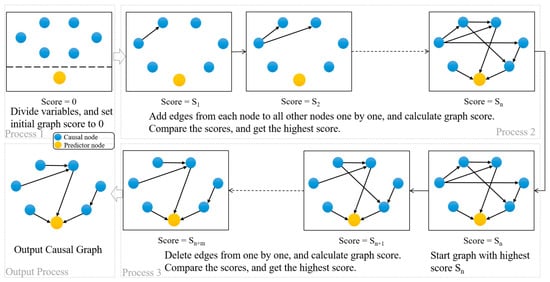
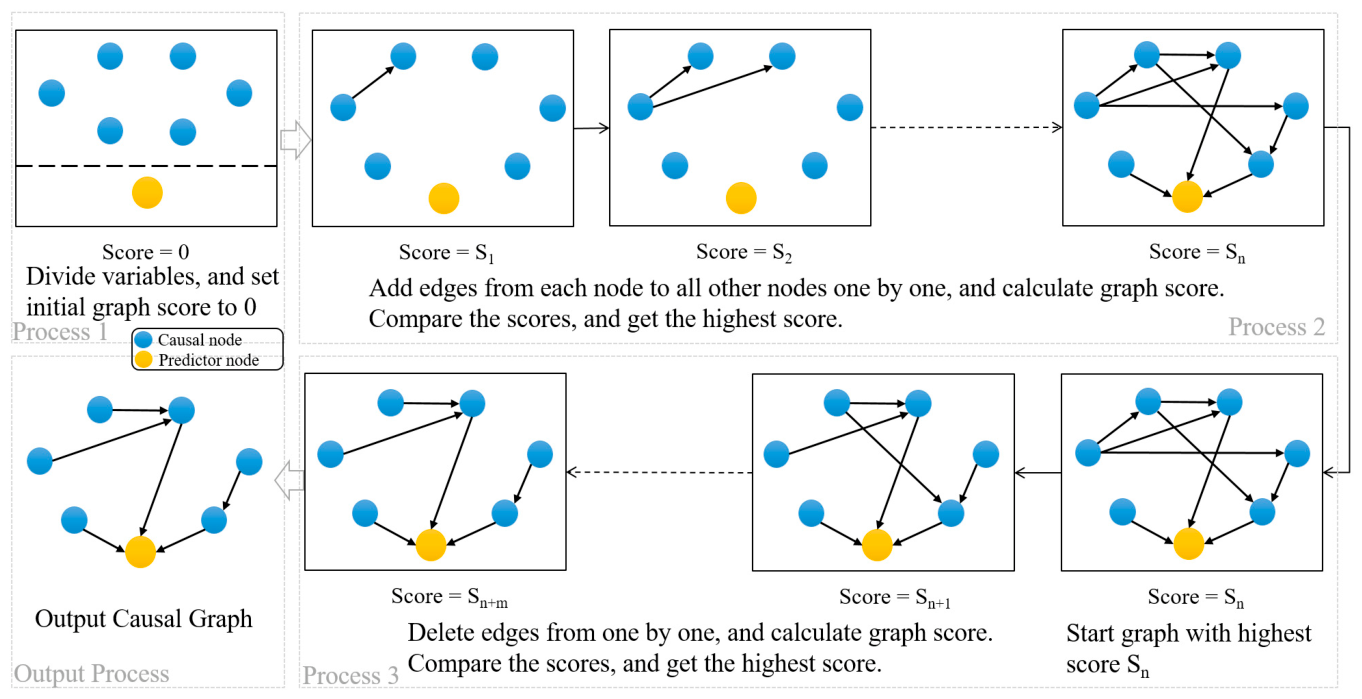
The GGES framework permits Bayesian Information Criterion (BIC) or a generalized score for graph evaluation [15,26,31]. In the present mixed-data analysis, the generalized score was used to accommodate continuous and discrete variables; nominal integer codes served only as category identifiers. GGES was introduced and compared with standard GES in a previous application, where the grouped prior-knowledge constraint improved model fit and error measures [30]. The present study evaluates its safety-domain application rather than claiming that the grouping principle is an unrelated replacement for GES. Its implementation has three steps (Figure 2):
Figure 2.
Overview of the GGES method. Step 1: variables are divided into two groups: candidate explanatory and outcome variables, and an initial graph score of 0 is set. Step 2: forward search; edges are added, and a new graph score is calculated, with the graph with the higher score being kept. Step 3: backward search; edges are removed, and the new graph score is calculated, with the graph with the higher score being kept. The final fitted network is obtained after these steps. Its arrows represent candidate directions; a causal interpretation requires the assumptions described in Section 2.3.
(1) Variables are divided, using domain knowledge, into a candidate explanatory group and an outcome group. Outcome variables may receive paths from explanatory variables but are constrained not to act as parents; explanatory variables may be connected to one another. In this study, workday loss was assigned to the outcome role.
where V denotes the set of variables, vn denotes a variable in V, Vc denotes the candidate explanatory group, Vp denotes the outcome group, and C is the constraint condition.
V = v1, v2, …, vn ⊇ Vc + Vp
(2) The GGES method starts with an initial empty graph and sets the score of the whole graph to 0. Candidate edges are added from nodes sequentially, and the graph score is calculated and compared to select the model with the highest score. Nodes assigned to the outcome variable group are skipped according to the constraint placed at the beginning of the method.
(3) Beginning with the highest-scoring forward-search graph, edges are evaluated for removal during greedy backward search. The highest-scoring structure that satisfies the grouping and acyclicity constraints is retained as the final directed network.
where f is the structure scoring function, Ω is the structure space, and G| = C means that G satisfies the constraint condition C. In the process of searching and scoring, the constraint condition C requires the searched structure to satisfy the acyclic structure in the structure graph.
maxf(G, D) s.t.G ∈ Ω, G| = C
2.3. Interpretation and Identifying Assumptions
The causal interpretation of a GGES graph rests on the causal Markov and faithfulness assumptions [32,33,34], acyclicity, causal sufficiency for the variables under study, appropriate temporal ordering, reliable measurement and encoding, and absence of material selection or model-specification bias. These are explicit working assumptions for the analysis. They permit causal hypotheses to be formulated from the observed joint distribution, but are not all verified by these records. The fitted directions are therefore hypothesis-generating. Potentially relevant unmeasured constructs include age, sex, equipment and mining method, seam height, task risk, supervision, production pressure, safety climate, training quality, fatigue, and environmental conditions. If omitted factors influence both worker assignments and post-event workday loss, some learned paths may reflect confounding rather than a direct effect.
The 101,010 records provide broad coverage of reported events across 3982 mines. Large-sample arguments for empirical estimation and score-based search require appropriate regularity conditions; the event count alone does not establish independence, causal sufficiency, or absence of measurement and selection bias. Events from the same mine share operational characteristics, so the number of records is not the number of independent mine-level observations. We therefore use the fitted network to formulate hypotheses within the linked surveillance data, without treating sample size as proof of causal validity.
2.4. Training GGES Models
The GGES method was used to construct a candidate causal relationship network, examining the connections between the measured explanatory variables and reported workday loss, while allowing dependencies among the explanatory variables. The fitted graph summarizes conditional relationships among the measured variables and workday loss. We identified variables adjacent to the workday loss. Directions into this outcome also reflect the prespecified grouping constraint and are not independent confirmation of causal ordering.
We retained the reported IDA (intervention calculus when the DAG is absent) total causal effect (TCE) values [35] as exploratory, graph-dependent summaries. IDA uses a learned graph and its identifying assumptions to estimate possible intervention effects; these are model-based quantities rather than observed intervention outcomes. Because the variables use different units and several are categorical encodings, the unstandardized TCE values have different numerical scales and were not used to rank variables. In particular, a one-unit change in the raw years-weeks code is not a one-year change in experience. Pearson correlation coefficients were reported separately to describe the marginal direction and magnitude of relationships for continuous variables. The signs of coefficients for nominal category codes were not interpreted as ordered effects. The resulting graph summarizes relationships supported by the measured variables and the prior constraints; interpretation of its directed paths remains conditional on the assumptions in Section 2.3.
The outcome was the number of workdays lost after a reported accident, injury, or illness event. It describes severity or duration conditional on inclusion in the linked event records, not the probability of an accident among all miners or a conventional time-to-event outcome. Cumulative exposure may influence whether an event occurs, but exposure alone does not explain the number of days lost after an event; experience-related paths in this analysis concern conditional workday loss.
2.5. Performance Validation
We analyzed the full 1990–2020 dataset and fitted separate networks for 1990–2005 and 2006–2020 as a descriptive comparison around enactment of the MINER Act [36]. The boundary was selected a priori by the policy date rather than by equal period length. No quasi-experimental policy-evaluation design was used, and differences between period-specific networks cannot be attributed to the Act.
Ten-fold cross-validation used random partitions of event records. For each fold, a graph learned from the training records was compared with a graph learned from the held-out records using AP, AR, AHP, and AHR. AP and AR assess agreement about variable adjacencies; AHP and AHR assess agreement about edge orientation. Because partitions were not grouped by mine, records from a mine could appear in both training and held-out folds. Shared mine characteristics may increase this agreement. The reported metrics consequently describe record-level split-sample agreement and do not establish performance in unseen mines, predictive accuracy, or agreement with causal ground truth. No mine-grouped metrics or fold-level variability estimates are reported. All statistics were performed in R 3.4.1 and Python 3.9. The reported Pearson tests used a nominal p-value threshold of 0.05 without adjustment for within-mine clustering; the coefficients describe marginal associations, and significance alone is not taken as evidence of causal or practical importance.
3. Results
3.1. Variable Selection
The analytic dataset consisted of 101,010 reported injury/illness event records linked to annual employment information from 3982 mines during 1990–2020: 64,597, 22,009, and 14,404 records from 1990–1999, 2000–2009, and 2010–2020, respectively (Table 3). Each row represented an event, not a unique miner. Table 2 summarizes 15 quantitative fields after preprocessing and expert screening; the six nominal categorical fields and their encoding are described in Table 1 and Supplemental Tables S1–S6. The raw experience codes and mean employees per mine also appear in the fitted-network results (Table 4 and Table 5); the Table 2 field count is therefore not a count of all network nodes. Table 3 summarizes the 15 fields used in the descriptive time-period comparison.
Table 3.
Descriptive statistics for linked NIOSH/MSHA event and employment records by period. Reported p-values are from Pearson correlation tests with workday loss. Correlation magnitudes, sampling dependence, and variable encoding must be considered alongside nominal significance.
Table 4.
Full-period Pearson correlations and reported IDA-derived TCE summaries for the variables in the GGES network. TCE values are unstandardized, graph-dependent, and not comparable across variables. Nominal categorical variables remain included in the GGES networks but are omitted from the numerical summaries in this table. Bolded rows denote nominal p < 0.05, not mine-cluster-adjusted significance.
Table 5.
Pearson correlations and reported IDA-derived TCE summaries for variables in the 2006–2020 GGES network. TCE values are unstandardized, graph-dependent, and not comparable across variables. The MSHA administrative-code coefficients are omitted. Bolded rows denote nominal p < 0.05, not mine-cluster-adjusted significance.
3.2. Exploratory Causal Analysis of Workday Loss Using All the Variables from 1990 to 2020
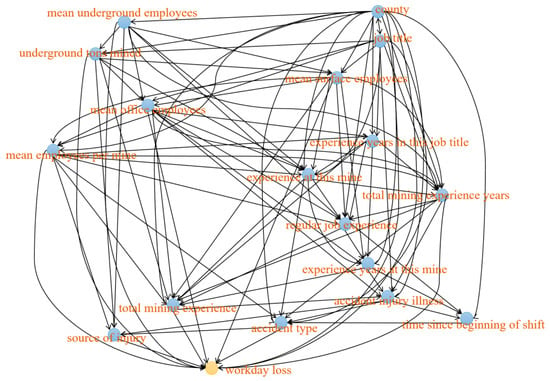
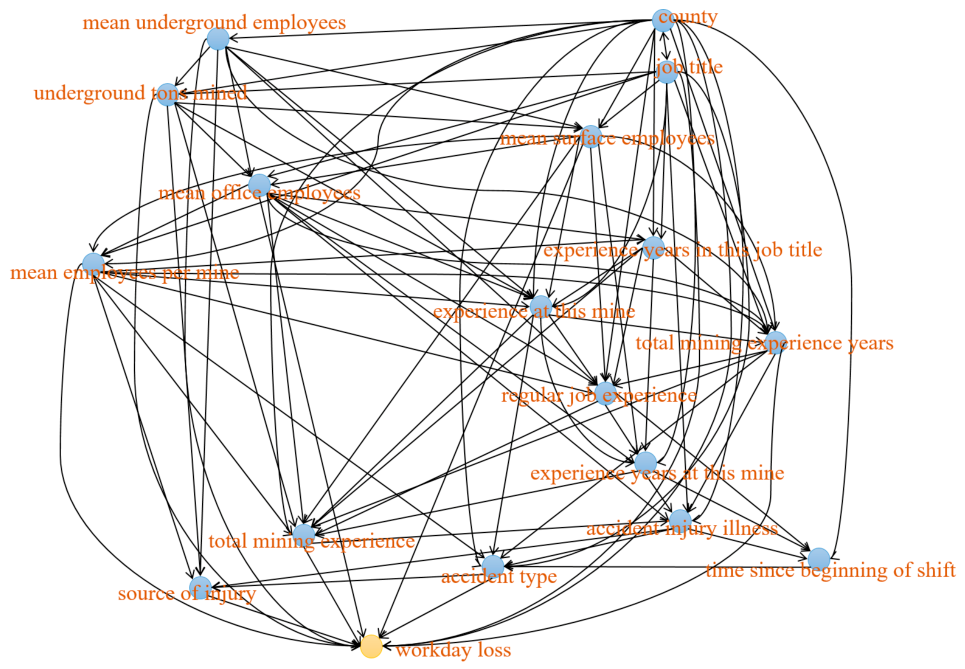
Utilizing all available variables, we used GGES to fit an exploratory relationship network. The resulting overall network contained 17 connected variables (Figure 3). Among these variables, ten variables were adjacent to workday loss in the fitted graph: (1) mean underground employees, (2) mean employees per mine, (3) mean office employees, (4) source of injury code, (5) total mining experience (raw years-weeks code), (6) accident type code, (7) total mining experience (decimal years), (8) mean surface employees, (9) job title, and (10) county/MSHA district/inspection-office code. Under the assumptions in Section 2.3, these paths are exploratory hypotheses from the analyzed data rather than verified causal effects. For the continuous variables, the marginal correlations were positive for mean underground employees (r = 0.046), mean employees per mine (r = 0.042), total mining experience in the source code (r = 0.032), and total mining experience in decimal years (r = 0.069), and negative for mean office employees (r = −0.012). Mean surface employment was not significantly correlated with workday loss (r = 0.002, p = 0.630). These small positive marginal correlations indicate an association between total mining experience and lost workdays among included reports, but the analysis does not show that greater experience increases injury incidence. Because job title, source of injury, accident type, and MSHA district are nominal category codes, the signs of their numeric correlations are not interpreted as increasing or decreasing effects. TCE values are scale-dependent and are not used to identify the most or least influential variable (Table 4).
Figure 3.
Exploratory GGES network among 17 variables with workday loss from 1990 to 2020. Arrows show fitted candidate directions under Section 2.3; they do not establish direct causal effects.
Across record-level splits, AP, AR, AHP, and AHR were 0.646, 0.628, 0.368, and 0.354, respectively. The adjacency metrics show moderate record-level agreement about network adjacencies; the lower arrowhead metrics show that edge orientations were less reproducible than adjacencies.
3.3. Descriptive GGES Network for 1990–2005
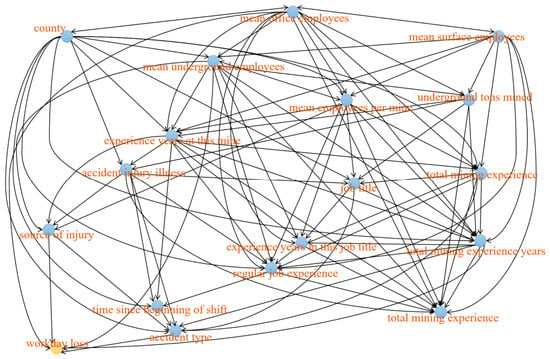
The exploratory causal relationship network from 1990 to 2005 (Figure 4) shares several adjacencies with the full-period network. Variables adjacent to workday loss in the 1990–2005 fitted network included (1) mean office employees, (2) mean underground employees, (3) source of injury code, (4) accident type code, and (5) total mining experience (decimal years), which are candidate associations for further investigation. The recurrence of several overall-network adjacencies supports their value as candidate pathways, while the period-specific graph remains a descriptive inference rather than a formal policy baseline.
Figure 4.
Exploratory GGES network among 17 variables with workday loss from 1990 to 2005.
3.4. Descriptive GGES Network for 2006–2020
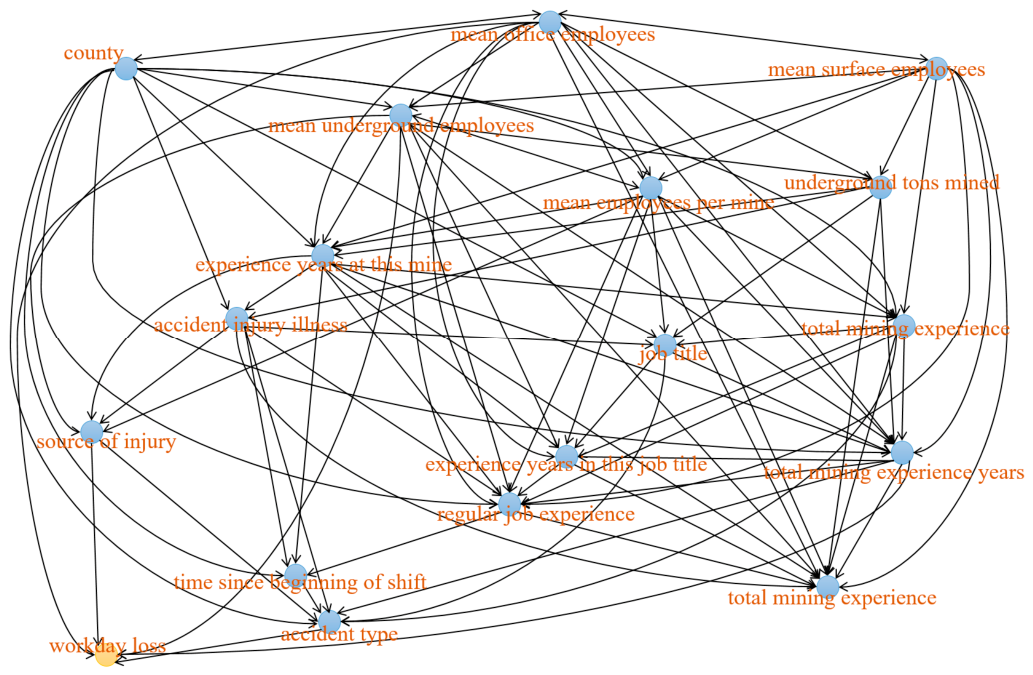
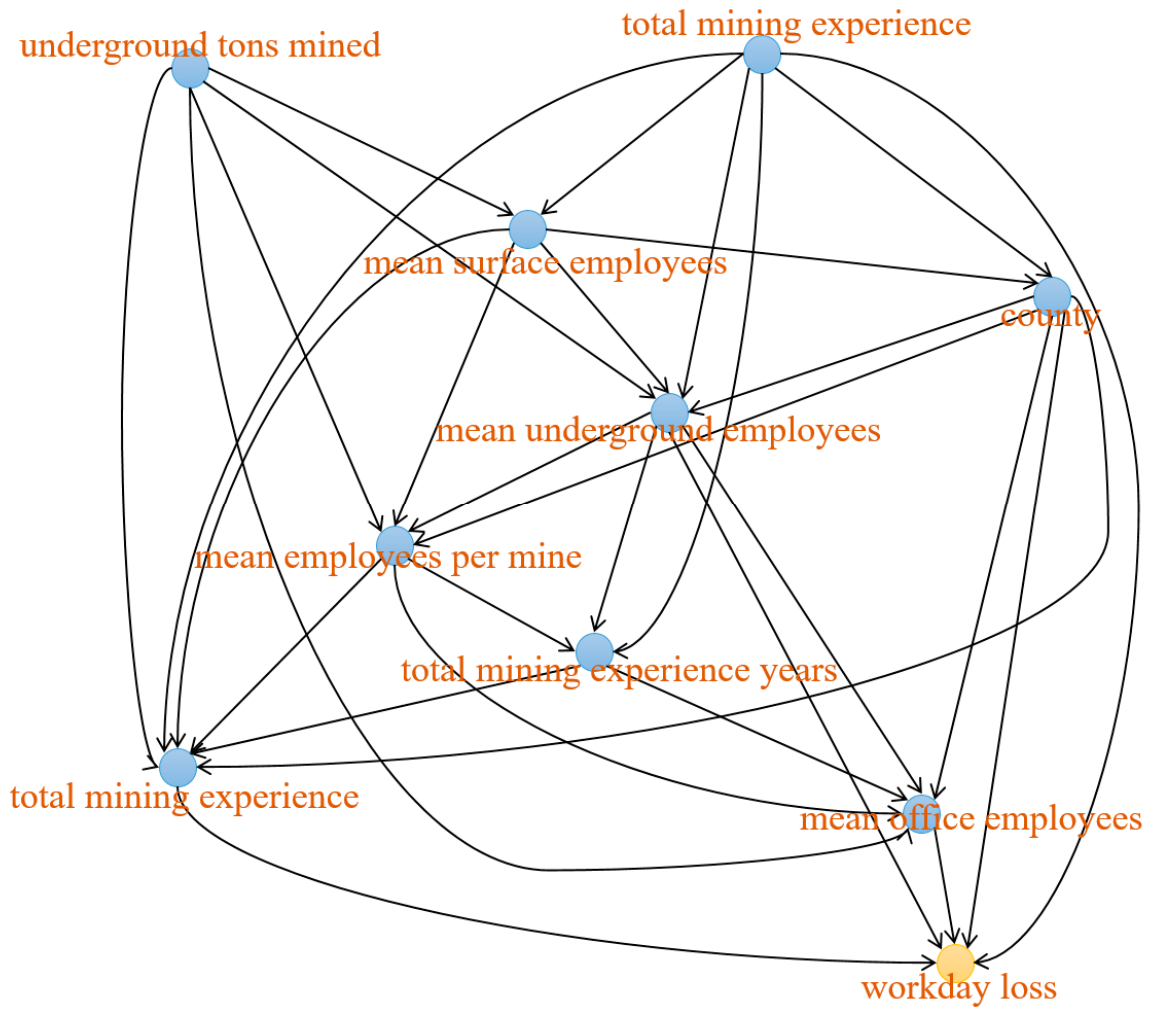
For 2006–2020, variables adjacent to workday loss in the fitted network included: (1) total mining experience (raw years-weeks code), (2) mean office employees, (3) mean underground employees, (4) county/MSHA district/inspection-office code, and (5) total mining experience (decimal years) (Figure 5). Experience-related connections across the fitted periods make this construct a follow-up priority; the paired encodings are not independent evidence of robustness. This interpretation is based on consistency, not on ranking cross-scale TCE values (Table 5). Under the assumptions in Section 2.3, the paths identify a focused set of candidate relationships for subsequent safety investigation.
Figure 5.
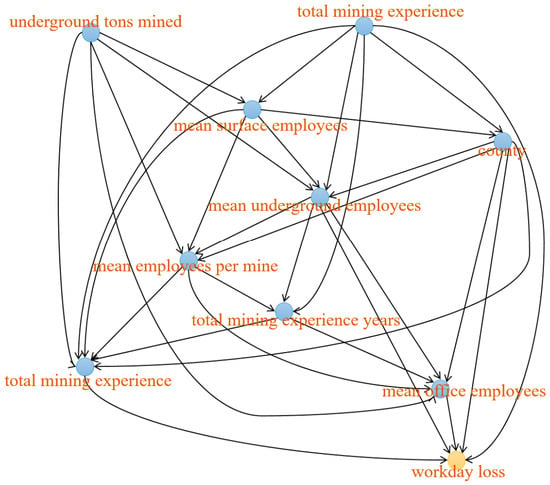
Exploratory GGES relationship network among 9 variables with workday loss from 2006 to 2020.
Across record-level splits, AP, AR, AHP, and AHR were 0.694, 0.653, 0.386, and 0.345, respectively. Adjacency metrics indicate moderate record-level agreement about connections between variable pairs, whereas the lower arrowhead metrics show that many assigned directions were less consistent across record partitions. The arrows should not be used on their own to guide safety decisions.
4. Discussion
Using 31 years of NIOSH/MSHA records from U.S. underground coal mines, we applied Grouped Greedy Equivalence Search (GGES), a prior-knowledge-constrained extension of GES, to examine factors related to workday loss. GGES builds on an established score-based causal discovery framework and should not be viewed as an entirely separate AI paradigm. In addition to analyzing the complete dataset, we examined the periods before and after 2006 separately because the implementation of the MINER Act coincided with changes in mining regulation and safety practices [36]. The division supports descriptive network comparison. No quasi-experimental design was used to estimate a MINER Act effect, so differences between period-specific networks cannot be attributed to the Act. Interpretation of these networks is conditional on the causal Markov, faithfulness, acyclicity, causal sufficiency, measurement, and temporal-ordering assumptions specified in Section 2.3. Subject to these assumptions, the networks provide exploratory, data-supported causal hypotheses about workday loss following reported mining events. The 101,010 records allow experience, mine employment, accident characteristics, and administrative context to be examined together over a long observation period. The contribution is this integrated description and the resulting hypotheses about post-event workday loss. Their interpretation depends on the data and model assumptions; the additional validation needed to assess robustness is set out below.
In the 2006–2020 GGES network, variables adjacent to workday loss included (1) total mining experience (raw years-weeks code), (2) mean office employees, (3) mean underground employees, (4) county/MSHA district/inspection-office code, and (5) total mining experience (decimal years). The variable initially interpreted as “county” is an MSHA administrative code and does not represent a geographic county-level effect. Total mining experience merits follow-up because experience-related connections appear across the fitted periods. Its two encodings describe the same construct, and neither their joint appearance nor cross-scale TCE values establishes independent confirmation or relative importance. In the full-period data, both representations showed small positive marginal correlations with workday loss (r = 0.032 and r = 0.069; p < 0.05). Accordingly, among reported events, greater total mining experience was associated with a larger number of lost workdays after injury or illness; this does not mean that more experienced employees had a higher incidence of injury. Several mechanisms could produce the relationship, including accumulated exposure and physical burden, task allocation, survivorship, reporting behavior, or recovery patterns. These mechanisms were not separately measured and remain alternative hypotheses for future study rather than established explanations.
Table 4 also shows a small inverse correlation between time since the beginning of a shift and workday loss (r = −0.010). This weak pattern raises a question about timing within a shift. It does not identify handover periods or distinguish preparation, inspection, communication, environmental adjustment, or other mechanisms. The finding therefore supports examining experience, shift timing, and work assignment together in confirmatory or field studies; it does not identify a staffing ratio or justify a particular staffing change. Reported events linked to greater underground employment or lower office employment also tended to have greater workday loss following reported events, whereas mean surface employment did not show a significant marginal relationship. These are associations with lost-day duration among included reports, not comparisons of accident frequency across staffing levels. Without task, method, equipment, and mine-grouped validation data, these relationships identify the underground operating context as a priority for focused study rather than a direct operational prescription.
GGES provided a way to examine the interdependent characteristics of a mining system. Several measured variables were correlated, and six nominal variables required categorical encoding. Pairwise correlations describe marginal relationships, whereas GGES examines candidate structures jointly and uses prior knowledge to constrain the search. Its network can therefore organize questions about experience and personnel distribution within the broader mining context. Adjacency precision and recall exceeded 0.6 in the reported record-level splits, while arrowhead precision and recall were lower. This difference indicates that the presence of a connection was more consistent across partitions than its orientation. These metrics describe agreement within the available data, not the probability that a particular causal statement is true. Likewise, a small nominal p-value does not establish practical importance. We use the network to identify relationships for confirmation, rather than to select an intervention on the basis of an arrow or a TCE value.
The findings can also be considered in relation to previous research on lost workdays in mining. Margolis [16] used conventional statistical methods to examine associations between employee age, experience, and days lost following underground coal-mining injuries. Our finding that total mining experience has a positive association with workday loss is consistent with that study. The GGES analysis broadens this investigation by incorporating mine staffing, employment scale, administrative context, accident characteristics, and other variables within a single network. This network perspective places experience-related factors within the wider system of mine and workforce characteristics instead of treating them only as isolated predictors. Nowrouzi-Kia et al. [18] identified personal, occupational, and organizational characteristics, including demographic factors, mining type, management practices, and training, as relevant to lost-time injuries. The present dataset lacked sufficiently detailed measurements of age, sex, task assignment, and training and could not evaluate these factors directly. It did, however, identify mine-level personnel distribution and operational-context variables associated with workday loss. The agreement of the experience-related results with previous research supports their substantive plausibility. The additional network relationships also show how GGES can generate system-level hypotheses that extend the questions addressed by separate predictor analyses.
Evidence from other mining settings provides useful context but not direct validation because reporting systems, outcomes, and available covariates differ. Poplin et al. showed that severe-injury surveillance in U.S. coal mines can help identify conditions also associated with fatal events [37]. In New South Wales underground coal mines, Burgess-Limerick found that equipment was involved in 46% of 4633 reported injuries and that the patterns depended on particular equipment and tasks [38]. The Queensland Brady Review likewise described fatal accidents as combinations of control, training, supervision, and organizational failures and emphasized learning from incident data [39]. Together with the Chinese and Australian studies already cited [1,2,5,6,20,21], this evidence supports examining experience and personnel distribution within a wider operational system. It also reinforces the need for task-, equipment-, and organization-level covariates before the present network is used to evaluate a specific intervention.
Several limitations define the scope of these findings. First, the surveillance data did not include detailed information on mining equipment and extraction methods, seam height, employee age and sex, task-level risk, supervision, production pressure, fatigue, safety-training quality, environmental conditions, or changes in individual work assignments. Age and sex may influence assignment and recovery, while task risk, training quality, and equipment conditions may affect both work patterns and injury severity. Their omission can confound learned connections, particularly when these factors vary across mines. Integrating these factors with the current mine, employment, and event records would help distinguish among the mechanisms that may underlie the observed experience and staffing relationships. Second, the data collected in this study spanned over 31 years, during which mining regulations, technology, reporting practices, workforce composition, and operations changed substantially [40]. The analyses before and after 2006 provide a descriptive comparison of historical periods. More detailed time-period models, interrupted time-series designs, and other quasi-experimental approaches would be needed to evaluate the effects of specific regulatory changes. Third, excluding contractor records and records lacking complete employment or accident linkage may have introduced selection bias. Contractors may perform different tasks, and incompletely linked reports may differ in severity from retained events. We could not quantify the direction or size of these differences from the analytic sample. Linkage with additional employment and contractor records would improve coverage and help distinguish injury incidence from workday-loss severity conditional on a reported event. The present network may therefore not transfer unchanged to mines with different contractor shares, equipment, training practices, or task mixes. The consolidation of nominal categories and the choice of prior constraints may also affect the fitted structure. Alternative category mappings, score settings, and comparisons with unconstrained GES would help assess this sensitivity.
The event-level sampling structure and paired experience encodings impose further limits on the current network. Random record partitions can contain events from the same mine, so shared operational characteristics may make AP, AR, AHP, and AHR optimistic relative to validation in unseen mines. Within-mine dependence was not modeled explicitly and may also affect event-level p-values and the selected graph. Mine-grouped validation with fold-level variability, temporal holdout analyses, and cluster-aware or multilevel analyses would test whether the proposed connections persist when this dependence is addressed. In addition, each experience construct was represented by both its raw years-weeks code and decimal-year conversion. These representations are not independent attributes; their joint inclusion may introduce redundancy and affect adjacencies or edge orientation. Networks using one representation per construct are needed to assess encoding sensitivity. Until these checks are available, the reported network remains a hypothesis-generating account of the linked events. It nonetheless identifies specific questions about experience, personnel distribution, and mine context for confirmatory research, with the experience-related findings supported in their substantive plausibility by previous mining studies.
5. Conclusions
Our study examined candidate relationships with the number of workdays lost after reported injury or illness events based on data from the National Institute for Occupational Safety and Health (NIOSH). We applied Grouped Greedy Equivalence Search (GGES), a prior-knowledge-constrained extension of GES, to 31 years of NIOSH/MSHA surveillance records covering 101,010 reported events from 3982 U.S. underground coal mines. The network repeatedly connected total mining experience, mine personnel distribution, and MSHA administrative context with the number of workdays lost after a reported event. Total mining experience showed small positive marginal correlations with workday loss and was connected to the outcome across the fitted periods. This makes experience a follow-up priority, although the paired encodings are not independent confirmations. This result concerns severity among reported events and does not show that experience increases injury incidence. The relationships involving underground and office employment and the small inverse association with time since the shift starts likewise identify questions for targeted study, not an optimal staffing ratio or immediate operational prescription.
By examining these variables within a common network, the study complements previous mining research and identifies specific questions about experience, staffing, and post-event workday loss. Under the assumptions stated in Section 2.3, the network provides exploratory causal hypotheses. Their robustness still needs to be assessed: record-level validation partitions may share mines, within-mine dependence was not modeled, and paired experience encodings represent the same construct rather than independent evidence. Mine-grouped validation, cluster-aware analyses, and networks using one encoding per experience construct would test whether the proposed relationships persist. Independent data and field-based studies would then help assess their causal and practical implications before they are used to guide staffing ratios or other operational changes.
Supplementary Materials
The following supporting information can be downloaded at: https://www.mdpi.com/article/10.3390/safety12050134/s1, Table S1: Encode rule of county/MSHA district/inspection-office; Table S2: Encode rule of accident/injury/illness; Table S3: Encode rule of accident type; Table S4: Encode rule of job title; Table S5: Encode rule of source of injury; Table S6: Encode rule of degree of injury.
Author Contributions
Conceptualization, S.R., P.R. and J.P.; methodology, S.R. and X.M.; software, S.R.; validation, X.M. and T.Y.; formal analysis, S.R.; investigation, K.Z.; resources, P.R.; data curation, S.R. and T.Y.; writing—original draft preparation, S.R.; writing—review and editing, X.M., T.Y., K.Z., P.R. and J.P.; visualization, S.R.; supervision, P.R. and J.P.; project administration, J.P.; funding acquisition, J.P. All authors have read and agreed to the published version of the manuscript.
Funding
This research was supported in part by the U.S. Centers for Disease Control and Prevention/National Institute for Occupational Safety and Health (CDC-NIOSH), grant numbers 75D3012C12182 and 75D30119C06390.
Institutional Review Board Statement
Ethical review and approval were waived for this study because it relied entirely on publicly available, de-identified secondary data obtained from the U.S. National Institute for Occupational Safety and Health (NIOSH) Address/Employment and Accident/Injury/Illness databases. The dataset contains no personally identifiable information about individual miners, and the authors had no direct contact with, or intervention involving, human subjects.
Informed Consent Statement
Informed consent was waived, as this study used publicly available, de-identified secondary data from the NIOSH database.
Data Availability Statement
The raw data underlying this study are publicly available from the National Institute for Occupational Safety and Health (NIOSH) Mining Program, at https://www.cdc.gov/niosh/mining/data/ (accessed on 12 July 2023), with no access restrictions.
Conflicts of Interest
The authors declare no conflicts of interest.
References
- He, X.; Song, L. Status and future tasks of coal mining safety in China. Saf. Sci. 2012, 50, 894–898. [Google Scholar] [CrossRef] [Scilit]
- Jianjun, T. Coal mining safety: China’s Achilles’ heel. China Secur. 2007, 3, 36–53. [Google Scholar]
- Khanzode, V.V.; Maiti, J.; Ray, P. A methodology for evaluation and monitoring of recurring hazards in underground coal mining. Saf. Sci. 2011, 49, 1172–1179. [Google Scholar] [CrossRef] [Scilit]
- Lama, R.; Bodziony, J. Management of outburst in underground coal mines. Int. J. Coal Geol. 1998, 35, 83–115. [Google Scholar] [CrossRef] [Scilit]
- Liu, Q.; Peng, Y.; Li, Z.; Zhao, P.; Qiu, Z. Hazard identification methodology for underground coal mine risk management-Root-State Hazard Identification. Resour. Policy 2021, 72, 102052. [Google Scholar] [CrossRef] [Scilit]
- Paul, P. Predictors of work injury in underground mines—An application of a logistic regression model. Min. Sci. Technol. 2009, 19, 282–289. [Google Scholar] [CrossRef] [Scilit]
- Boden, L.I. Government regulation of occupational safety: Underground coal mine accidents 1973–75. Am. J. Public Health 1985, 75, 497–501. [Google Scholar] [CrossRef] [Scilit] [PubMed]
- Laney, A.S.; Attfield, M.D. Coal workers’ pneumoconiosis and progressive massive fibrosis are increasingly more prevalent among workers in small underground coal mines in the United States. Occup. Environ. Med. 2010, 67, 428–431. [Google Scholar] [CrossRef] [Scilit] [PubMed]
- Bahn, S. Workplace hazard identification and management: The case of an underground mining operation. Saf. Sci. 2013, 57, 129–137. [Google Scholar] [CrossRef] [Scilit]
- Tubis, A.; Werbińska-Wojciechowska, S.; Wroblewski, A. Risk Assessment Methods in Mining Industry—A Systematic Review. Appl. Sci. 2020, 10, 5172. [Google Scholar] [CrossRef] [Scilit]
- Paltrinieri, N.; Comfort, L.; Reniers, G. Learning about risk: Machine learning for risk assessment. Saf. Sci. 2019, 118, 475–486. [Google Scholar] [CrossRef] [Scilit]
- Beeche, C.A.; Garcia, M.A.; Leng, S.; Roghanchi, P.; Pu, J. Computational risk modeling of underground coal mines based on NIOSH employment demographics. Saf. Sci. 2023, 164, 106170. [Google Scholar] [CrossRef] [Scilit] [PubMed]
- Li, M.; Wang, H.; Wang, D.; Shao, Z.; He, S. Risk assessment of gas explosion in coal mines based on fuzzy AHP and bayesian network. Process Saf. Environ. Prot. 2020, 135, 207–218. [Google Scholar] [CrossRef] [Scilit]
- National Institute for Occupational Safety and Health (NIOSH). Mining Data and Statistics. Centers for Disease Control and Prevention. Available online: https://www.cdc.gov/niosh/mining/data/ (accessed on 3 September 2026).
- Raghu, V.K.; Poon, A.; Benos, P.V. Evaluation of causal structure learning methods on mixed data types. In Proceedings of the 2018 ACM SIGKDD Workshop on Causal Discovery, London, UK, 20 August 2018; PMLR: Cambridge, MA, USA, 2018. [Google Scholar]
- Margolis, K.A. Underground coal mining injury: A look at how age and experience relate to days lost from work following an injury. Saf. Sci. 2010, 48, 417–421. [Google Scholar] [CrossRef] [Scilit]
- Coleman, P.J.; Kerkering, J.C. Measuring mining safety with injury statistics: Lost workdays as indicators of risk. J. Saf. Res. 2007, 38, 523–533. [Google Scholar] [CrossRef] [Scilit] [PubMed]
- Nowrouzi-Kia, B.; Gohar, B.; Casole, J.; Chidu, C.; Dumond, J.; McDougall, A.; Nowrouzi-Kia, B. A systematic review of lost-time injuries in the global mining industry. Work 2018, 60, 49–61. [Google Scholar] [CrossRef] [Scilit] [PubMed]
- Shappell, S.A.; Wiegmann, D.A. The Human Factors Analysis and Classification System-HFACS; Report DOT/FAA/AM-00/7; U.S. Department of Transportation, Federal Aviation Administration, Office of Aviation Medicine: Washington, DC, USA, 2000.
- Patterson, J.M.; Shappell, S.A. Operator error and system deficiencies: Analysis of 508 mining incidents and accidents from Queensland, Australia using HFACS. Accid. Anal. Prev. 2010, 42, 1379–1385. [Google Scholar] [CrossRef] [Scilit] [PubMed]
- Lenne, M.G.; Salmon, P.M.; Liu, C.C.; Trotter, M. A systems approach to accident causation in mining: An application of the HFACS method. Accid. Anal. Prev. 2012, 48, 111–117. [Google Scholar] [CrossRef] [Scilit] [PubMed]
- De, S.; Almberg, K.S.; Cohen, R.A.; Friedman, L.S. Injuries during the first hour at work in the U.S. mining industry. Am. J. Ind. Med. 2020, 63, 1124–1133. [Google Scholar] [CrossRef] [Scilit] [PubMed]
- Peters, R.H.; Wiehagen, W.J. Human Factors Contributing to Groundfall Accidents in Underground Coal Mines: Workers’ Views; Information Circular 9127; U.S. Department of the Interior, Bureau of Mines: Washington, DC, USA, 1987.
- Peters, R.H.; Fotta, B.; Mallett, L.G. The influence of seam height on lost-time injury and fatality rates at small underground bituminous coal mines. Appl. Occup. Environ. Hyg. 2001, 16, 1028–1034. [Google Scholar] [CrossRef] [Scilit] [PubMed]
- Kim, J.; Wilhelm, T. What is a complex graph? Phys. A Stat. Mech. Its Appl. 2008, 387, 2637–2652. [Google Scholar] [CrossRef] [Scilit]
- Huang, B.; Zhang, K.; Lin, Y.; Schölkopf, B.; Glymour, C. Generalized score functions for causal discovery. In Proceedings of the 24th ACM SIGKDD International Conference on Knowledge Discovery & Data Mining, London, UK, 19–23 August 2018. [Google Scholar]
- Spirtes, P.; Glymour, C.; Scheines, R. Causation, Prediction, and Search, 2nd ed.; MIT Press: Cambridge, MA, USA, 2000. [Google Scholar]
- Hauser, A.; Bühlmann, P. Characterization and greedy learning of interventional Markov equivalence classes of directed acyclic graphs. J. Mach. Learn. Res. 2012, 13, 2409–2464. [Google Scholar]
- Malinsky, D.; Danks, D. Causal discovery algorithms: A practical guide. Philos. Compass 2018, 13, e12470. [Google Scholar] [CrossRef] [Scilit]
- Ren, S.; Beeche, C.A.; Iyer, K.; Shi, Z.; Auster, Q.; Hawkins, J.M.; Leader, J.K.; Dhupar, R.; Pu, J. Graphical modeling of causal factors associated with the postoperative survival of esophageal cancer subjects. Med. Phys. 2024, 51, 1997–2006. [Google Scholar] [CrossRef] [Scilit] [PubMed]
- Chickering, D.M. Optimal structure identification with greedy search. J. Mach. Learn. Res. 2002, 3, 507–554. [Google Scholar]
- Cartwright, N. Causal diversity and the markov condition. Synthese 1999, 121, 3–27. [Google Scholar] [CrossRef] [Scilit]
- Ebert-Uphoff, I.; Deng, Y. Causal discovery for climate research using graphical models. J. Clim. 2012, 25, 5648–5665. [Google Scholar] [CrossRef] [Scilit]
- Eberhardt, F. Introduction to the foundations of causal discovery. Int. J. Data Sci. Anal. 2017, 3, 81–91. [Google Scholar] [CrossRef] [Scilit]
- Malinsky, D.; Spirtes, P. Estimating bounds on causal effects in high-dimensional and possibly confounded systems. Int. J. Approx. Reason. 2017, 88, 371–384. [Google Scholar] [CrossRef] [Scilit] [PubMed]
- U.S. Congress. Mine Improvement and New Emergency Response Act of 2006 (MINER Act); Public Law 109-236, 120 Stat. 493; 2006. Available online: https://www.govinfo.gov/link/plaw/109/public/236 (accessed on 12 July 2023).
- Poplin, G.S.; Miller, H.; Sottile, J.; Hu, C.; Hill, J.R.M.; Burgess, J.L. Enhancing severe injury surveillance: The association between severe injury events and fatalities in U.S. coal mines. J. Saf. Res. 2013, 44, 31–35. [Google Scholar] [CrossRef] [Scilit] [PubMed]
- Burgess-Limerick, R. Injuries associated with underground coal mining equipment in Australia. Ergon. Open J. 2011, 4, 62–73. [Google Scholar] [CrossRef] [Scilit][Green Version]
- Brady, S. Review of All Fatal Accidents in Queensland Mines and Quarries from 2000 to 2019; Department of Natural Resources, Mines and Energy: Brisbane, QLD, Australia, 2019.
- Brnich, M.; Kowalski-Trakofler, K.M.; Brune, J. Underground coal mine disasters 1900–2010: Events, responses, and a look to the future. In Extracting the Science: A Century Mining Research; Society for Mining, Metallurgy and Exploration: Denver, CO, USA, 2010; p. 363. [Google Scholar]

Disclaimer/Publisher’s Note: The statements, opinions and data contained in all publications are solely those of the individual author(s) and contributor(s) and not of MDPI and/or the editor(s). MDPI and/or the editor(s) disclaim responsibility for any injury to people or property resulting from any ideas, methods, instructions or products referred to in the content. |
© 2026 by the authors. Licensee MDPI, Basel, Switzerland. This article is an open access article distributed under the terms and conditions of the Creative Commons Attribution (CC BY) license.