


Abstract
The excessive generation and improper disposal of Construction and Demolition Waste (CDW) represent one of the main environmental challenges in the sector. However, its potential for reuse and recycling enables the mitigation of these impacts through sustainable practices. In this context, the present study aimed to estimate reference values for the Federal District, Brazil, regarding the environmental impacts associated both with the transportation stage of CDW—from its point of origin to the processing facility—and with the operations involved in its conversion into recycled aggregates, through the application of a simplified Life Cycle Assessment approach. The analysis focused on quantifying the consumption of electricity, water, and fossil fuels, as well as carbon dioxide emissions and the generation of contaminant residues throughout the analyzed process. The system boundary adopted corresponds to a “cradle-to-gate” scope, with a declared unit of 1 tonne of recycled aggregate. Additionally, a survey of scientific studies providing life cycle inventory data related to aggregate production was conducted, enabling a consistency analysis with the data obtained in this study. Primary data related to the recycled aggregate production process were collected through direct field observations, in situ measurements, and the analysis of operational records from the studied facility. For the year 2024, the environmental indicators obtained showed that the production of 1 tonne of recycled aggregate required 1.23 kWh of electricity, 5.65 L of water, and 2.14 L of diesel, in addition to resulting in emissions of 6.64 kg CO2 eq and the generation of 2.3 kg of contaminant waste.
1. Introduction
In the 21st century, climate change has emerged as one of the most pressing global challenges, primarily driven by anthropogenic greenhouse gas (GHG) emissions [1,2]. In this context, the construction sector—characterized by an energy- and resource-intensive production cycle—plays a central role in sustainability discussions. From raw material extraction to building demolition, construction activities generate substantial volumes of waste and significant GHG emissions [3]. Globally, the sector is estimated to generate approximately two billion tonnes of Construction and Demolition Waste (CDW) annually, representing nearly one-third of all solid waste produced worldwide. In addition, the construction sector accounts for about 34% of global emissions and consumes a comparable share of total energy demand [4].
Given this scenario, environmental sustainability has become a fundamental pillar in the development of construction projects [5]. The adoption of sustainable CDW management practices, such as recycling and material reuse, has become a key strategy for promoting the transition toward a Circular Economy (CE) in the construction sector. This approach seeks to extend the life cycle of materials by reintegrating waste into the production chain, reducing the extraction of virgin raw materials and mitigating associated GHG emissions [6]. Notably, aggregates represent approximately 75–80% of the total volume of concrete [7]. Therefore, the partial replacement of natural aggregates with recycled aggregates can yield significant environmental benefits.
Beyond environmental impacts, CDW management presents logistical, economic, and operational challenges, particularly in densely populated urban areas. The heterogeneity of waste, combined with insufficient public policies and low adherence to source-separation practices, limits recycling efficiency and material recovery rates [8,9]. Consequently, it is essential to adopt approaches that consider the entire life cycle of materials, enabling the identification of more sustainable strategies and decision-making pathways for the construction sector.
Thus, CDW recycling emerges as a promising alternative from environmental, economic, and social perspectives, as it reduces pressure on non-renewable natural resources and mitigates impacts associated with raw material extraction [10]. However, its effectiveness remains constrained by structural barriers, including limited recycling infrastructure, lack of economic incentives, technical distrust regarding the quality and performance of recycled aggregates (RAs), and inefficiencies in sorting and separation processes [11,12].
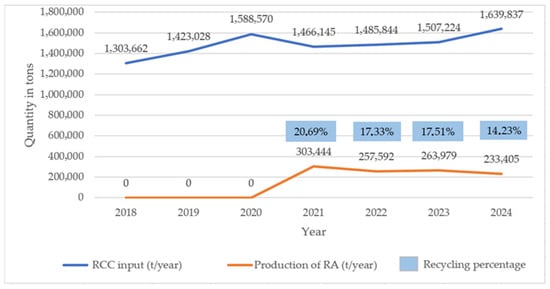
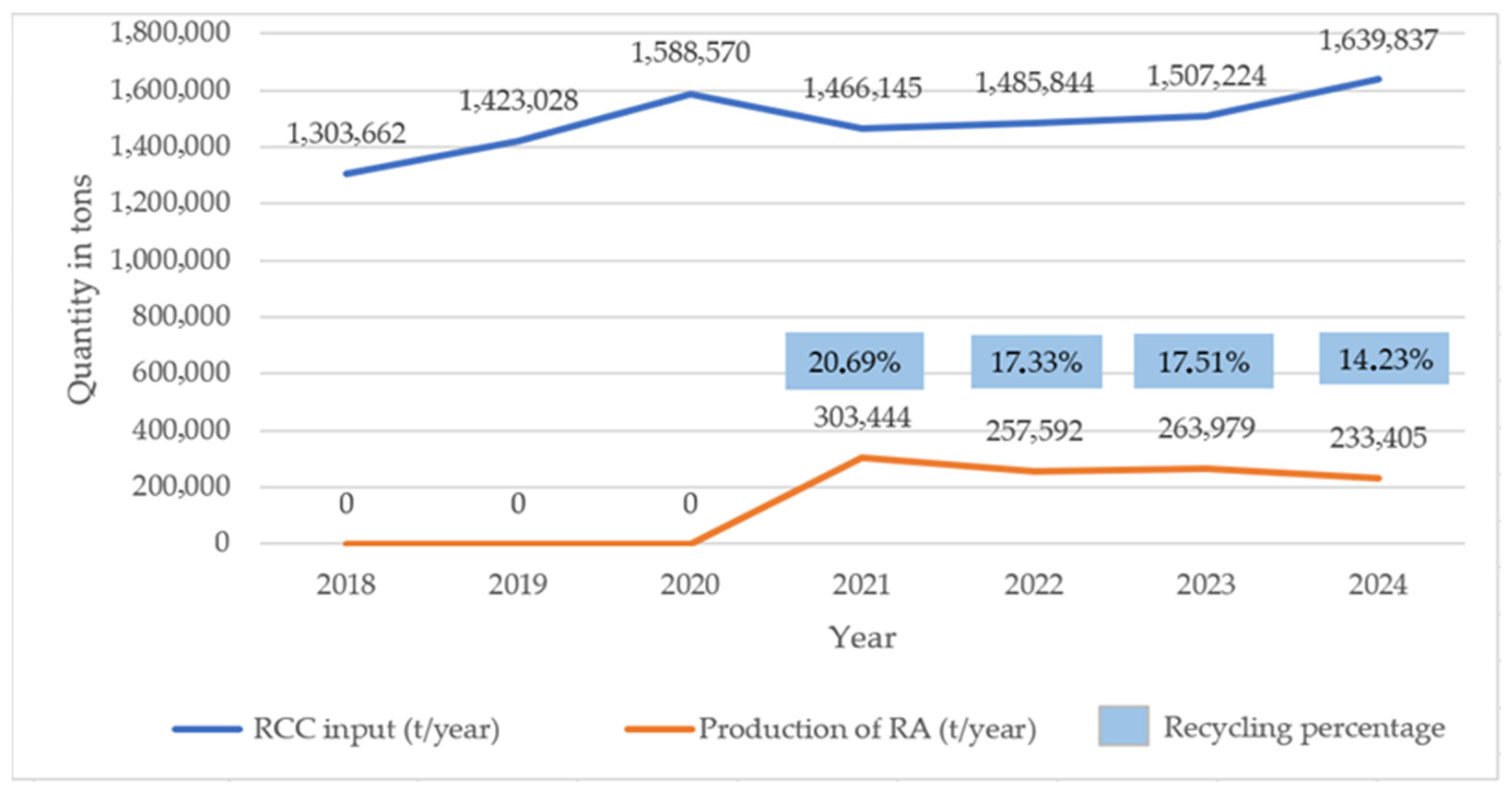
In developed countries, particularly within the European Union, regulatory frameworks, fiscal incentives, and technical standards have supported recycling rates ranging from 50% to 90% [13]. In contrast, Brazil presents a CDW recycling rate of approximately 10%, reflecting a management model still predominantly oriented toward final disposal [14]. Recent data indicate that, in 2024, the country generated around 48 million tonnes of CDW, with an average generation rate of 0.59 kg per capita per day [15]. In the Federal District, this figure reached 1.5 kg per capita per day in 2024, corresponding to an annual generation of approximately 1.64 million tonnes. Despite exceeding the national average, the Waste receiving unit of the Federal District (WRU/FD) reported a relatively modest recycling rate of 17.44% [16].
The WRU/FD commenced CDW intake operations in 2018; however, the systematic production of recycled aggregates (RAs) only began in January 2021. Between 2021 and 2024, the facility processed an average of 127,063 tonnes of CDW per month, of which approximately 22,050 tonnes were converted into RAs. The temporal evolution of these flows is presented in Figure 1.
Figure 1.
RCC input and production of RA.
From a technological standpoint, the RAs produced are predominantly classified as mixed aggregates, consisting mainly of cementitious and ceramic fractions. According to standards [17,18], such materials present limitations for use in structural applications as well as in base and sub-base pavement layers subjected to higher mechanical demands. Given these constraints, the RAs generated at WRU/FD are primarily allocated to low structural demand applications, including the improvement of unpaved road trafficability, erosion control, embankment construction and land grading, as well as their use as cover material in inert waste landfills.
In this context, assessing the environmental performance of CDW recycling facilities is essential, particularly with regard to natural resource consumption, atmospheric emissions, and the operational efficiency of converting waste into aggregates. To this end, Life Cycle Assessment (LCA) stands out as one of the most robust and widely established methodologies for quantifying and comparing environmental impacts associated with products, processes, and services throughout their life cycle. This approach enables the systematic analysis of input and output flows, encompassing resource and energy consumption as well as environmental emissions, from raw material extraction to the final stages of the system under consideration [19].
Against this background, the present study aims to analyze—through the LCA approach, recognized as one of the most robust and consolidated methodologies for quantifying and comparing environmental impacts across the entire life cycle [20]—the environmental impacts associated with RA production at the WRU/FD. The analysis integratively considers both the transportation stage of waste from its origin to the facility gate and the subsequent stages of the production process leading to RA generation. The study is based on the hypothesis that it is possible to establish local reference values, grounded in LCA, for the environmental impacts of this system, with emphasis on electricity, fossil fuel, and water consumption, as well as waste generation and emissions, thereby contributing to improved environmental management and sustainability in the construction sector.
2. Methods
The methodology was structured into two complementary stages. The first consists of applying LCA to quantify the environmental impacts throughout the system’s life cycle. The second involves the selection of studies, collection of Life Cycle Inventory (LCI) data, and a comparative analysis with the literature, aiming to assess the consistency and coherence of the results.
2.1. LCA Methodology
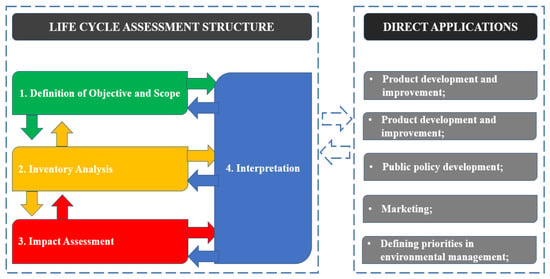
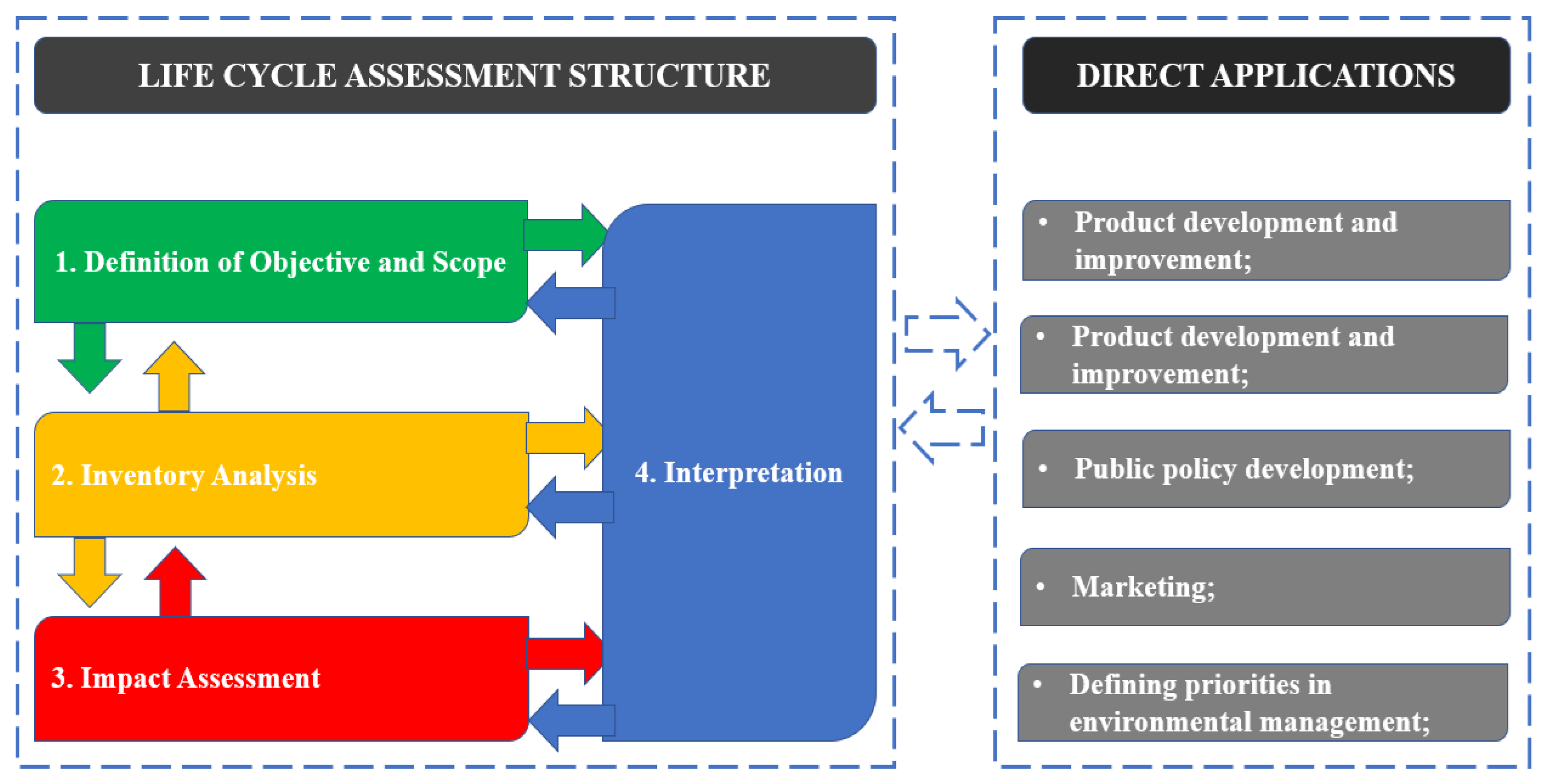
The methodology adopted was based on the application of LCA, in accordance with the guidelines of ISO 14040:2006 [21] and ISO 14044:2006 [22], using a simplified approach suited to data availability and the local context of the Federal District, Brazil. This stage was structured into four phases, as shown in Figure 2: goal and scope definition, Life Cycle Inventory (LCI) analysis, Life Cycle Impact Assessment (LCIA), and interpretation of results.
Figure 2.
LCA phases according to ISO 14040:2006.
The first three phases provide the necessary technical support for the interpretation stage, highlighting the dynamic, iterative, and continuous nature of LCA. In the goal and scope definition, the purpose of the study, target audience, system boundaries, reference unit, impact categories, data requirements, and underlying assumptions are established. The LCI analysis consists of the collection, organization, and quantification of input and output flows, such as energy consumption, raw materials, emissions, and waste. The LCIA is aimed at identifying and quantifying the potential environmental impacts associated with the analyzed system. Finally, the interpretation phase involves the critical analysis of the results, considering uncertainties and limitations, in order to support consistent conclusions and recommendations for decision-making.
The adoption of the LCA approach in this study is justified by its ability to comprehensively and systematically assess environmental impacts throughout the analyzed system, avoiding the shifting of burdens between life cycle stages or environmental impact categories. Furthermore, LCA enables the identification of process hotspots, contributing to the development of more effective mitigation strategies. Thus, LCA is particularly suitable for supporting decision-making in the context of CDW management and RA production, as it provides a robust scientific and technical basis for environmental performance assessment.
2.1.1. Goal and Scope Definition
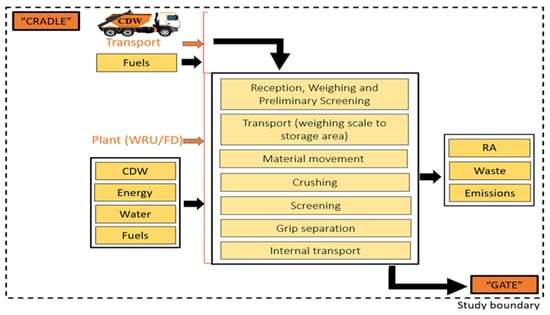
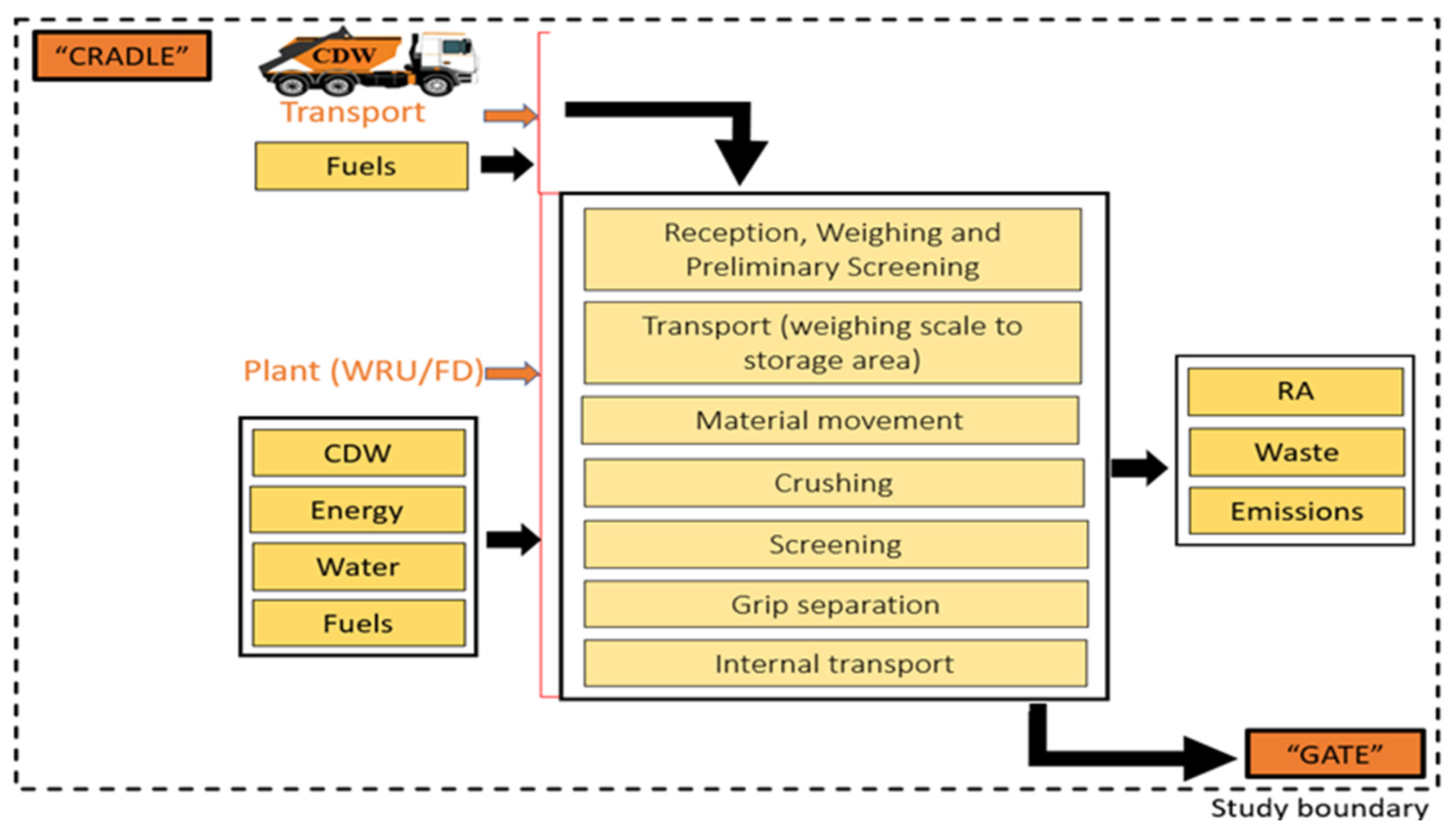
The objective of the present LCA is to identify and quantify the main environmental impacts associated with the production of recycled aggregates (RAs) derived from CDW. The scope of the study includes the transportation of CDW from generation points to the processing facility and extends to the production and storage of RAs. Therefore, the system boundaries are defined following a cradle-to-gate approach, as illustrated in Figure 3.
Figure 3.
Flowchart of the system boundary under analysis.
The Federal District (FD) has seven licensed CDW recycling facilities, of which only three are currently operational. The Waste receiving unit of the Federal District (WRU/FD), responsible for receiving more than 90% of the CDW generated in the FD, was selected as the object of study due to its operational relevance and representativeness. Although this choice limits the scope of the analysis, it does not compromise its methodological validity; however, the results reflect specific conditions of the WRU/FD and are not directly generalizable to other facilities in the FD.
The system begins with the transportation of CDW from the points of origin to the entrance gate of the WRU/FD. After weighing, the waste is directed to the CDW storage yard and subsequently fed into the crushing process. Following crushing, the material is conveyed via a belt to the vibrating screening system, responsible for granulometric separation. At the WRU/FD, properly classified recycled aggregates are produced, with particle size distribution defined within the following ranges: sand (0.075 mm to 4.8 mm); crushed stone No. 4 (50 mm to 76 mm); crushed stone No. 3 (25 mm to 50 mm); and crushed stone No. 2 (19 mm to 25 mm).
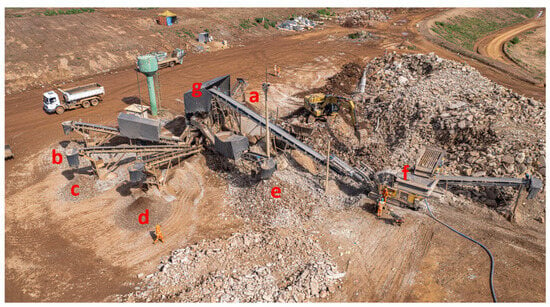
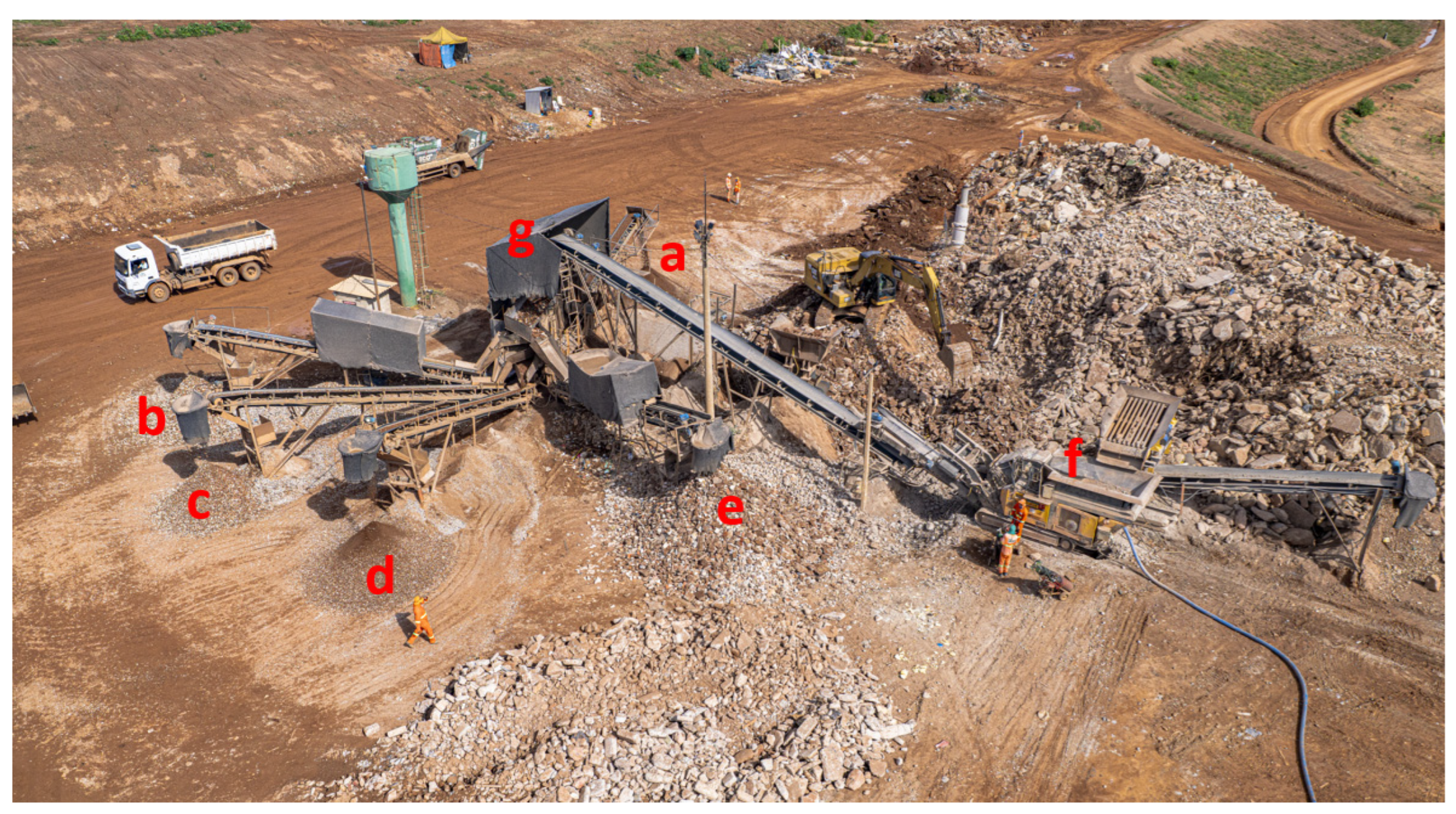
The crushing unit (CU) operates with a plant composed of a crusher and a multi-deck vibrating screen, as detailed in Figure 4.
Figure 4.
Crushing Unit: (a) sand; (b) crushed stone 4; (c) crushed stone 3; (d) crushed stone 2; (e) crushed stone above 180 mm; (f) crusher; (g) vibrating screen.
In the subsequent stage, the RAs are directed to storage areas, where they remain segregated according to their particle size ranges. In parallel, contaminant residues (CR) are sent to an inert landfill, while metallic materials are separated and directed to recycling.
The input flows considered in the system include the consumption of raw materials (Class A CDW), electricity, fuels, and water, while the output flows comprise the produced RA, the generated CR, and atmospheric emissions associated with the process. After defining the declared unit [23]—corresponding to 1 tonne of RA—all flows were normalized based on the production over a 12-month period in 2024. The declared unit of 1 ton of recycled aggregate was adopted based on methodological and comparability criteria, as it appropriately reflects how the material is commercially traded, transported, and used in practice.
It is noteworthy that only loads composed exclusively of Class A CDW—suitable for reuse or recycling as aggregates, provided they meet technical quality and safety requirements for construction applications [24]—were considered in the system, as they are effectively processed in the crushing stage. In contrast, loads of non-segregated waste were not included in the analysis, as they are directly disposed of in an inert landfill without undergoing sorting or processing stages at the facility.
Despite the production of different granulometric fractions of RA, no allocation of environmental impacts among the products was performed, since material flows, energy consumption, and emissions remain equivalent up to the screening stage, which consists solely of a physical separation process, without additional inputs or differentiated impact generation.
2.1.2. LCI Development
The development of the LCI for the analyzed system was based on the collection of primary data obtained directly in the field through technical visits to the study site. Context-specific operational information was gathered, including the consumption of inputs—such as electricity, water, and fuels—the use of raw materials, and the generation of CR, as well as production records. Additionally, transportation distances and technical specifications of vehicles and equipment used in both transport and processing operations were considered.
The data collection procedure was conducted in a systematic and structured manner to ensure the quality, consistency, and traceability of the information used in the LCI. To this end, multiple sources of verification were adopted, including the analysis of utility bills, operational reports, and direct observation of activities, thereby minimizing uncertainties.
Furthermore, CDW was modeled with a zero environmental burden, considering that these materials originate from previous systems whose environmental impacts have already been assigned to their respective production stages. Thus, the analyzed system includes only the impacts associated with the transportation, sorting, and processing stages of the waste.
The quantification of water consumption in RA production was based on operational data from the WRU/FD for the year 2024, considering monthly volumes by supply source to obtain the total annual consumption. In the absence of sector-specific metering, total consumption was assumed to be representative of all unit activities. Specific consumption was determined as the ratio between the total annual volume—converted into liters—and the total RA production during the period, resulting in an indicator expressed in L·t−1.
Similarly, electricity consumption was estimated based on the facility’s operational data for the same period. Given the lack of process-level measurements, total annual consumption was assumed to represent all activities, including both production and administrative operations. Specific consumption was calculated as the ratio between total annual electricity consumption (kWh) and total RA production, resulting in an indicator expressed in kWh·t−1 of RA produced.
The quantification of diesel consumption in the system was based on operational data, technical parameters, and field measurements, covering both the external transportation of CDW to the facility and internal operations. External transportation was modeled using estimated distances between origin points and the WRU/FD, number of trips, average load, and average vehicle fuel efficiency, allowing the calculation of specific consumption per tonne of RA. Internal transport and material handling considered operational distances, vehicle capacities, and the use of wheel loaders, based on cycle time measurements and hourly fuel consumption. Total diesel consumption was obtained by summing all stages and normalizing by aggregate production, resulting in a specific indicator expressed in liters per tonne of RA.
The estimation of CR generation was carried out using an indirect approach due to the absence of direct measurements at the WRU/FD. Considering that only Class A CDW is processed, process losses were assumed to correspond to contaminant materials not incorporated into RAs. Quantification was based on an average yield of 99.77% reported in the literature [25], which was used to estimate the mass of processed CDW from the annual RA production. The difference between the estimated input mass and RA production was attributed to CR.
2.1.3. Methods for Environmental Impact Assessment (EIA)
This stage aims to convert inventory data into relevant environmental indicators through the classification and characterization phases of impacts. To this end, primary data from the WRU/FD, reports from the Urban Cleaning Service of the Federal District (SLU/DF), and, to address data gaps, consolidated databases such as Ecoinvent were used. Impact modeling and assessment were carried out using the OpenLCA software version 2.5.0, selected for its flexibility, transparency, and ability to integrate with different databases.
The impact assessment methodology adopted in this study was based on the IMPACT 2002+ method, due to its integrated and comprehensive approach to quantifying environmental impacts. This method combines elements of midpoint and endpoint methodologies, enabling the characterization of impacts both in intermediate categories (such as climate change, human toxicity, and ecotoxicity) and in final damage categories related to areas of protection, such as human health, ecosystem quality, climate change, and resource use. This dual approach supports a more robust interpretation aligned with the study objectives, while also enabling traceability of impacts along cause–effect chains [26].
Additionally, the selection of IMPACT 2002+ is justified by its scientific robustness and wide acceptance in the literature, being frequently applied in studies related to waste management and construction materials. The method provides a consolidated set of characterization factors that allow for the systematic assessment of emissions to air, water, and soil, while encompassing multiple environmental impact mechanisms. Its structure also enables the aggregation of results into single damage indicators, facilitating communication with decision-makers.
Another relevant factor for its adoption is its compatibility with widely used LCA databases, such as Ecoinvent, ensuring methodological consistency between the inventory and impact assessment phases. Furthermore, the method allows for consistent comparative analyses across different scenarios and production systems, making it particularly suitable for identifying environmental hotspots and supporting mitigation strategies in the context of recycled aggregate production.
2.2. Study Selection
The selection of studies was conducted through a systematic literature review, focusing on publications that present Life Cycle Inventory (LCI) data and environmental impact assessments applied to aggregate production. Searches were performed in indexed databases, including Web of Science, Scopus (Elsevier), and Google Scholar. The temporal scope adopted covered the period from 2019 to 2025, in order to include methodologically up-to-date studies. As eligibility criteria, only studies providing quantitative data related to LCI development were considered, with the aim of assessing the consistency and coherence of the results obtained in this research.
3. Results and Discussion
This section presents the results obtained from the application of the adopted methodological framework, encompassing the interpretation of the LCI, the environmental impact assessment (EIA), and the integrated interpretation of results. Additionally, it describes the developments of the second stage of the research, including the selection of studies, the collection of LCI data related to aggregate production, and the comparative analysis between literature data and those obtained in the present study.
3.1. LCI
In 2024, the total water consumption at the WRU/FD was 1320 m3, considering all uses within the facility over a 12-month period. Based on a production of 233,405.33 tonnes of recycled aggregates (RAs), an average specific consumption of 5.65 L·t−1 of RA was estimated. In the same period, total electricity consumption was 188,760 kWh, resulting in an average specific consumption of 1.23 kWh per tonne produced.
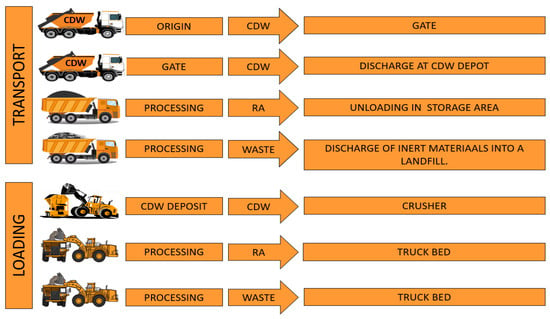
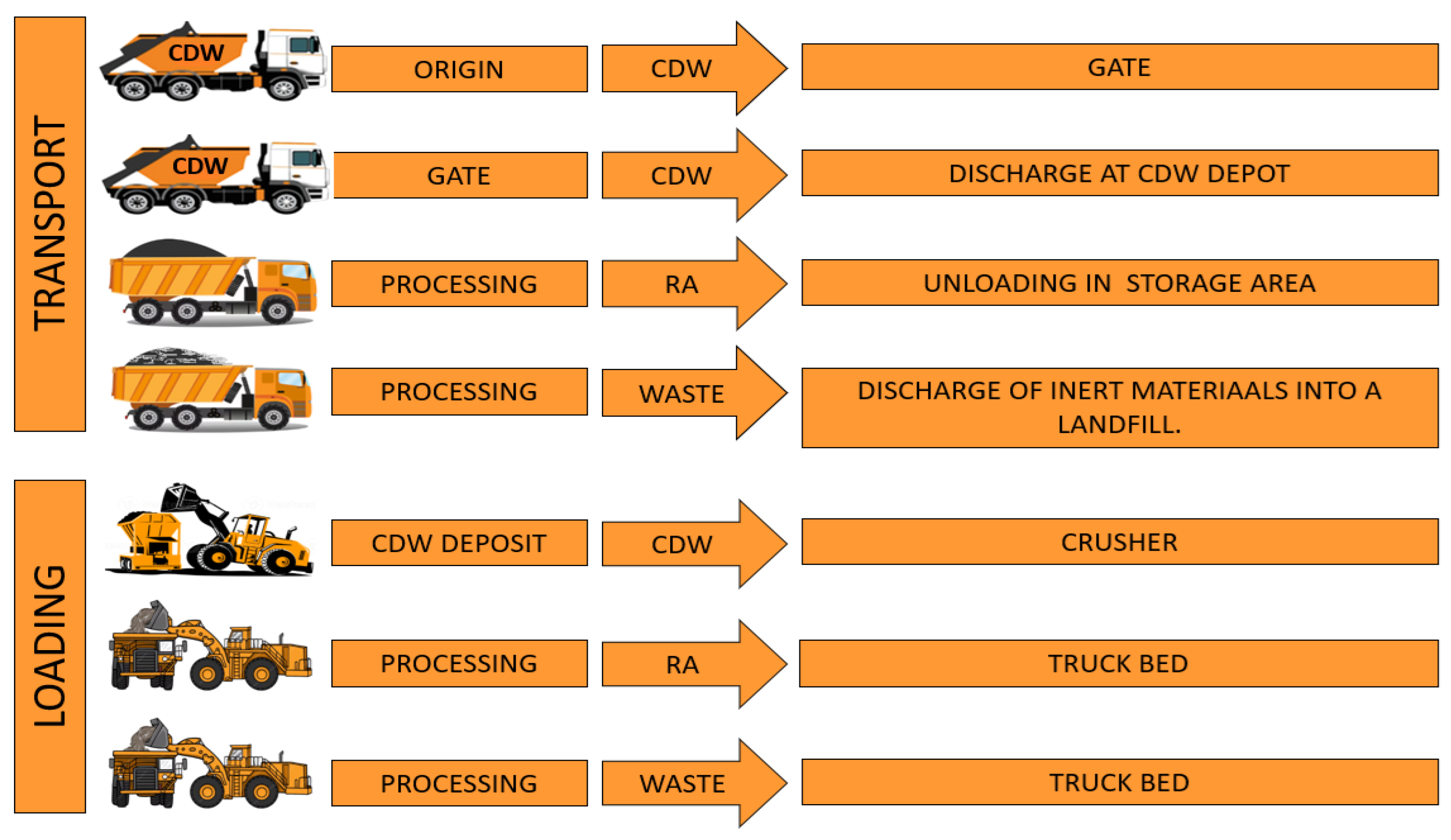
Diesel consumption was divided into two main operational categories, as illustrated in Figure 5: material transportation—encompassing both internal and external flows to the WRU/FD—and the operation of wheel loaders used in the facility’s operational activities.
Figure 5.
Sources of diesel consumption.
Initially, the annual data for 2024 were consolidated, including the total number of trips and the total mass of CDW transported, from which the average load per trip was determined. For external transportation, the origin points of CDW were georeferenced, adopting the centroids of the 35 Administrative Regions of the Federal District, surrounding municipalities, or coordinates of Voluntary Delivery Points (VDPs). Road distances to the WRU/FD were then estimated based on the road network, and diesel consumption was calculated using an average fuel efficiency of 2 km·L−1 for loaded vehicles. By combining average distances, transported loads, and the conversion ratio between Class A CDW and RA, the specific fuel consumption per tonne of RA produced in this stage was obtained. This analysis resulted in a weighted average distance of 19.09 km per trip and an average diesel consumption of 1.506 L per tonne of CDW transported.
In the second transportation phase, corresponding to the internal movement of CDW within the WRU/FD, an average distance of 1.93 km between the entrance gate and the unloading area was considered. For the processing of approximately 233,943.40 tonnes of CDW and the production of 233,405.33 tonnes of RA, a total of 36,906 trips was estimated, with an average load of 6.339 tonnes per trip. Assuming an average diesel consumption of 0.965 L per trip, the total fuel consumption for this stage was 35,613.72 L, corresponding to a specific consumption of 0.1526 L·t−1 of RA.
After processing, the RA is transported to the storage yard located 1.84 km from the processing plant. With an average load of 12 tonnes per trip and an estimated fuel efficiency of 2 km·L−1, the average diesel consumption for this stage was 0.92 L per trip, equivalent to 0.0766 L·t−1 of RA.
For contaminant residues (CR), mainly composed of metals and wood, it is estimated that 45 trips were required to transport 538.7 tonnes to the inert landfill located 1.76 km from the crushing unit. Assuming the same fuel efficiency, the total diesel consumption for this activity was estimated at 39.6 L, corresponding to 0.00017 L·t−1 of RA produced.
Diesel consumption associated with wheel loader operations was analyzed in two operational cycles: (i) CDW handling, including the transfer of material from the stockpile to the crusher feeder, and (ii) loading of trucks with RA and CR destined for the storage yard and inert landfill, respectively. In cycle (i), considering an average operating time of 1 min 47 s and an average volume of 2.4 tonnes of CDW handled per cycle, the specific diesel consumption was estimated at 0.2884 L·t−1. In cycle (ii), related to RA loading, with an average duration of 28 s per cycle, the specific consumption was calculated as 0.08 L·t−1. For 538.07 tonnes of CR, the same specific consumption was applied, resulting in a total diesel consumption of 43.05 L, equivalent to 0.0001844 L·t−1 of RA produced.
Considering all diesel-consuming stages—external and internal transportation of CDW, movement of RA and CR, and wheel loader operations—the average diesel consumption was estimated at 2.138 L per tonne of RA produced.
Based on the previous results, Table 1 presents the main operational indicators for the production of 1 tonne of RA from Class A CDW in 2024.
Table 1.
Indicators per ton of AR produced.
3.2. Impact Assessment
The assumptions underlying the environmental impact assessment include the modeling of the main inputs and system operations based on representative data and standardized inventories. Electricity consumption was modeled considering the national energy mix and distribution losses, ensuring the representativeness of energy use. Wheel loader operations were assessed in terms of diesel consumption, including both direct emissions from combustion and indirect emissions associated with the fuel life cycle, based on the Ecoinvent database. Water use incorporated the impacts of supply, treatment, and distribution, including energy consumption and wastewater generation.
Material transportation was modeled in tonne-kilometer (t·km), considering EURO 5 standard trucks, average transport distances, and both direct and indirect fuel-related emissions. Finally, the operational use of wheel loaders was quantified in tonne-hour (t·h), based on average operational cycles, including direct and indirect emissions associated with diesel throughout its supply chain. The contribution of each process to the different environmental impact categories assessed is summarized in Table 2.
Table 2.
Contribution to different impact categories in the production of 1 tonne of RA.
The observed contribution to aquatic and terrestrial ecotoxicity categories indicates the presence and/or release of potentially toxic substances throughout the analyzed processes, primarily associated with the use of fossil fuels. These results also reflect indirect impacts linked to the diesel production chain, including extraction, refining, and distribution. In this context, the relevance of upstream processes—corresponding to stages preceding the analyzed system and responsible for supplying inputs—is evident in the composition of total environmental impacts. Such processes include, for example, crude oil extraction, refining, fuel production, and associated logistics, which significantly contribute to impact categories sensitive to toxic emissions, even when they do not occur directly within the operational boundaries of the studied system.
Impacts associated with acidification, eutrophication, and the formation of respirable particulate matter were consistent with atmospheric emissions resulting from fossil fuel combustion, particularly with regard to the release of CO2, NOx, SO2, and particulate matter. These pollutants directly contribute to alterations in atmospheric chemistry, degradation of aquatic and terrestrial ecosystems, and adverse effects on human health.
Similarly, human toxicity indicators—both carcinogenic and non-carcinogenic—highlight the significant influence of the petrochemical supply chain on the environmental profile of the analyzed system. This influence is associated not only with the combustion stage but also with upstream processes, including extraction, refining, and fuel distribution, which involve the emission of potentially toxic compounds such as polycyclic aromatic hydrocarbons (PAHs), heavy metals, and volatile organic compounds (VOCs). Thus, impacts on human health and the environment are strongly conditioned by the system’s dependence on fossil-based inputs throughout the system’s life cycle.
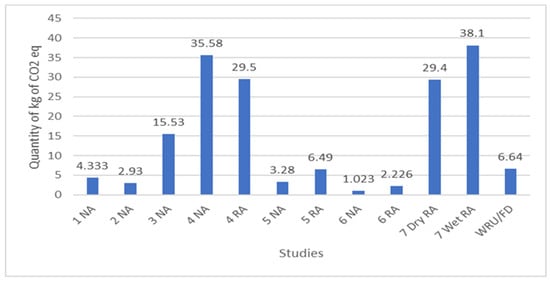
The results indicated a global warming potential of 6.64 kg CO2 eq per tonne of RA, with a predominance of direct emissions (approximately 85%), mainly associated with diesel combustion.
The analysis of the land use category showed that, for the production of each tonne of RA, land occupation corresponds to 8.57 m2·year, a value associated with the infrastructure and operations involved in the evaluated system.
Conversely, results for the natural resource depletion category highlight a significant environmental advantage of RA compared to natural aggregates, as its use directly contributes to reducing the demand for extractive activities, such as quarrying and mining, while mitigating impacts related to environmental degradation and habitat loss.
On the other hand, non-renewable energy consumption was found to be relatively high, reflecting the system’s dependence on fossil fuels throughout the transportation and processing stages of CDW. This behavior indicates that, although there are clear benefits in terms of conserving natural resources, limitations remain regarding the adopted energy matrix.
The value obtained for the ionizing radiation impact category does not result from direct radiation emissions in the transportation or CDW recycling processes; rather, it is predominantly associated with indirect emissions along the energy and input supply chain. In this context, electricity generation—particularly in scenarios involving sources such as nuclear energy—as well as the production and use of fossil fuels, such as diesel, are noteworthy contributors.
Overall, the results demonstrate that the RA production system presents a favorable environmental performance from the perspective of waste valorization and the reduction in natural resource extraction. However, this performance should be interpreted with caution, considering the adopted methodological limitations. The exclusion of non-segregated waste loads from the crushing system implies that impacts associated with the management of these fractions—including additional transportation and landfill disposal—were not accounted for, which may affect the representativeness of the results at a system-wide scale.
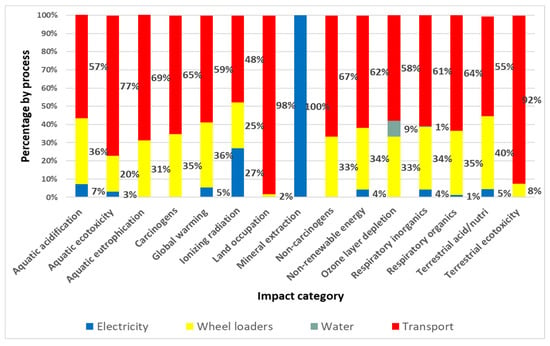
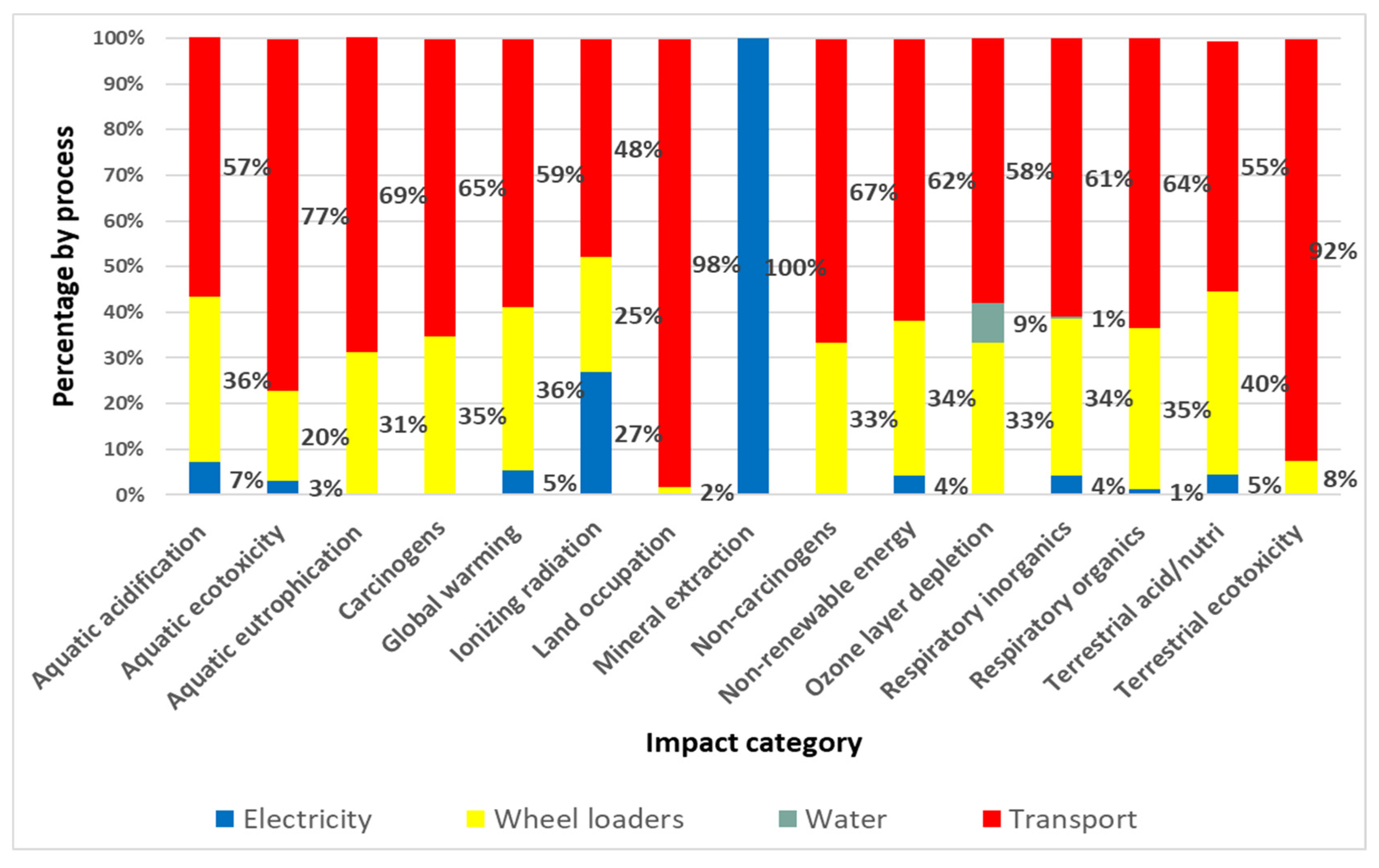
Figure 6 presents the environmental impact profile of the RA production process, disaggregated by impact categories and processes, for the production of 1 tonne, expressed on a normalized scale ranging from 0% to 100%.
Figure 6.
Contributions by impact category and process in the production of 1 tonne of RA.
Transportation stands out as the main contributor to the total environmental impacts associated with RA production, with significant contributions in 14 out of the 15 impact categories evaluated. In contrast, the use of wheel loaders represents the second most relevant process, with contributions ranging from 20% to 40% across several impact categories. These impacts are primarily associated with diesel consumption during equipment operation, reflecting both atmospheric emissions and the use of non-renewable energy resources.
Electricity, in turn, shows less significant contributions in most categories, but remains relevant in specific cases, such as ionizing radiation (27%) and mineral resource extraction (100%). The full contribution in the mineral extraction category indicates a strong dependence on upstream processes related to energy generation, possibly linked to the use of mineral-based sources, such as fossil fuels and thermoelectric technologies.
Finally, water consumption exhibits a relatively minor influence on the environmental profile of the system, contributing only marginally to categories such as ozone layer depletion (9%) and the formation of respiratory inorganic compounds (1%).
Overall, the results indicate that the environmental impacts of RA production are highly concentrated in stages involving energy consumption and fossil fuel use, reinforcing the importance of strategies aimed at logistics optimization, reduction in transport distances, and the adoption of less emission-intensive energy sources.
3.3. Comparative Analysis of Aggregate Production Based on the Selected Studies and the Present Study
Seven studies were selected for the collection of inventory data within the context of LCA applied to aggregate production, of which three include comparative analyses between natural aggregates (NAs) and recycled aggregates (RAs). At the end of this process, the studies presented in Table 3 were consolidated.
Table 3.
Selected studies.
To enable comparison among the inventory data of the analyzed studies, the information was extracted and converted to a common functional unit (1 tonne of aggregate produced), ensuring the comparability of results. Measurement units were standardized as follows: tonne (t) for inputs and products, liter (L) for water and fuel consumption, kilowatt-hour (kWh) for electricity, kilogram (kg) for lubricants, and square meter (m2) for occupied area. All studies adopted a “cradle-to-gate” system boundary. Additionally, the data obtained in the present study were incorporated into the comparative analysis.
Water consumption in aggregate production shows significant differences between natural aggregates (NAs) and recycled aggregates (RAs). For NA, the reported values (200; 16.8; 3.8; 100; 33; and 6 L/t) result in an average consumption of approximately 59.9 L/t, with high variability. In contrast, RA presents more homogeneous values (8.1; 5.8; and 5.6 L/t), with an average of approximately 6.5 L/t and low variability, indicating a lower dependence on water-intensive processes. Comparatively, the average water consumption in NA production is about nine times higher than that of RA, highlighting the greater water efficiency of recycled materials. The higher intensity in NA production is mainly associated with washing processes aimed at removing fines, clays, and contaminants, which are often present in the production process.
Regarding diesel consumption, less pronounced differences are observed between the systems. For NA, the values (1.33; 0.95; 0.36; 13.98; and 1.76) result in an average of approximately 3.68 L/t, with high variability influenced by outliers and the presence of a particularly high value. Similarly, RA presents values (12.75; 1.65; 0.425; and 2.1), with an average of approximately 4.23 L/t, also characterized by considerable dispersion. In this context, it is evident that diesel consumption is directly associated with operational variables—such as logistical aspects and equipment efficiency—rather than the type of aggregate produced.
With respect to electricity consumption, NA shows values (1.94; 7.25; 2.33; 3.72; and 0.92), resulting in an average of approximately 3.23 kWh/t, with high variability, whereas RA exhibits more uniform values, with an average of around 1.37 kWh/t, indicating greater standardization. Comparatively, the average electricity consumption in NA production is approximately 2.4 times higher than that of RA.
The environmental impacts reported across the studies reveal significant methodological heterogeneity, which limits the direct comparability of results; therefore, it was not possible to conduct a robust and consistent comparative analysis among the studies.
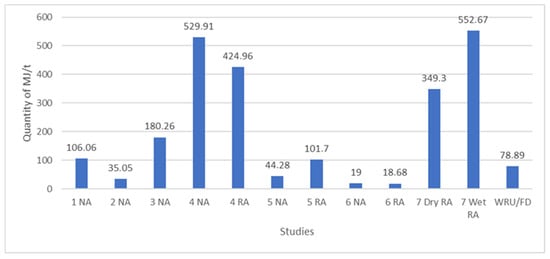
The main recurring environmental impact factor identified in the analyzed studies is the use of fossil fuels (Figure 7), which is widely required for the extraction, transportation, and processing of aggregates, particularly in contexts characterized by energy matrices dominated by non-renewable sources.
Figure 7.
Fossil energy demand required for the production of 1 tonne of aggregate.
In Studies 3, 4, and 7, conducted in India, Colombia, and South Korea, respectively, it is observed—when compared with other studies (Figure 8)—that the environmental impacts associated with aggregate production, particularly in the Global Warming Potential category, are significantly amplified by the composition of the national energy mix, which is characterized by a high dependence on fossil fuels.
Figure 8.
Global Warming Potential index for the production of 1 tonne of aggregate.
In these countries, coal and diesel account for a substantial share of the energy supply, complemented by significant fractions of natural gas. According to [29,34,35], fossil sources represent approximately 59%, 76%, and 60% of the national energy mixes of India, Colombia, and South Korea, respectively.
In the specific case of natural aggregate (NA) production, the use of explosives in rock blasting operations also stands out as a significant source of adverse environmental impacts. As reported in Study 1, the inclusion of explosives in the production process led to an average increase of 135.54% in environmental impacts across all evaluated categories. Particularly pronounced increases were observed in acidification (+268.58%), eutrophication (+249.73%), photochemical oxidant formation (+240.10%), abiotic resource depletion (mineral and metal elements) (+749.69%), and land use (+180.91%) [27].
Study 7 provides a relevant comparative analysis of the environmental impacts associated with RA production under two conditions—wet and dry—concluding that wet RA exhibits inferior environmental performance. The results indicate that the environmental impacts associated with wet RA production are consistently higher than those of dry RA, with Global Warming Potential (GWP) and Abiotic Depletion Potential (ADP) being approximately 30% higher; Ozone Depletion Potential (ODP) and Photochemical Oxidant Creation Potential (POCP) increasing by around 20%; and Acidification Potential (AP) and Eutrophication Potential (EP) rising by approximately 40% and 16%, respectively. This behavior is mainly attributed to the higher energy consumption of the wet process, associated with the operation of an impact crusher, a piece of equipment used exclusively in this production configuration [33].
Overall, the results indicate that environmental impacts tend to increase as the energy matrix becomes more dependent on fossil fuels. In contrast, the use of renewable energy sources can be considered a key factor in improving sustainability indicators, significantly contributing to the reduction in greenhouse gas emissions and the consumption of non-renewable resources.
4. Conclusions
The present study established a local benchmark, under the Life Cycle Assessment (LCA) approach, for the environmental impacts associated with the production of recycled aggregates (RAs) from Class A CDW in the Federal District, contributing to filling regional data gaps and advancing more representative analyses in the Brazilian context. Based on the quantification of input flows—including diesel consumption in transportation and internal operations, as well as electricity and water use—and output flows, it was found that the production of 1 tonne of RA is associated with the consumption of 2.1 L of diesel, 1.23 kWh of electricity, and 5.6 L of water, as well as the emission of 6.64 kg CO2 equivalent and land occupation of 8.57 m2·year.
The results demonstrate that diesel consumption constitutes the main environmental impact driver of the system, accounting for 91% to 100% of total contributions across the evaluated categories, with particular emphasis on the waste transportation stage, identified as the main hotspot of the process. This finding reinforces the relevance of interventions aimed at logistics optimization, reduction in transport distances, fleet renewal and efficiency improvements, as well as the adoption of lower-carbon fuels as priority strategies for mitigating environmental impacts.
The comparative analysis with literature studies revealed important limitations regarding the comparability of results, mainly due to the heterogeneity of Life Cycle Impact Assessment (LCIA) methods employed. This finding highlights the need for greater methodological harmonization to enable more robust and consistent comparisons across studies.
Although based on a specific case study, this work demonstrates that the adopted methodological approaches—including LCI development, impact assessment, and hotspot identification—are applicable to analogous aggregate production systems in different geographical contexts.
In this regard, the study contributes by providing technical support for public policy formulation, strategic planning in the production sector, and the promotion of more sustainable practices in construction and demolition waste management. Furthermore, it reinforces the importance of integrating environmental assessment tools, recycling incentive policies, and efficient waste management strategies as key elements for advancing sustainability in the construction industry.
As directions for future research, the evaluation of alternative transport scenarios and energy sources is highlighted, as well as the integration of economic and social analyses into LCA, in order to promote a more comprehensive approach to sustainability in the sector.
Author Contributions
Conceptualization, I.C.F.d.S. and C.H.d.A.F.P.; methodology and investigation, I.C.F.d.S. and C.H.d.A.F.P.; writing—original draft preparation, I.C.F.d.S.; writing—review and editing, I.C.F.d.S., C.H.d.A.F.P. and Y.S.B.F.; formal analysis, I.C.F.d.S., C.H.d.A.F.P. and Y.S.B.F. All authors have read and agreed to the published version of the manuscript.
Funding
This research received no external funding.
Institutional Review Board Statement
Not applicable.
Informed Consent Statement
Not applicable.
Data Availability Statement
The raw data supporting the conclusions of this article will be made available by the authors upon request.
Conflicts of Interest
The authors declare that they have no known competing financial interests or personal relationships that could have appeared to influence the work reported in this paper.
References
- Mikhaylov, A.; Moiseev, N.; Aleshin, K.; Burkhardt, T. Global climate change and greenhouse effect. Entrep. Sustain. 2020, 7, 2897–2913. [Google Scholar] [CrossRef] [Scilit] [PubMed]
- Crawford, R.H. Greenhouse Gas Emissions of Global Construction Industries. IOP Conf. Ser. Mater. Sci. Eng. 2021, 1218, 012047. [Google Scholar] [CrossRef] [Scilit]
- Kanafani, K.; Magnes, J.; Lindhard, S.M.; Balouktsi, M. Carbon Emissions during the Building Construction Phase: A Comprehensive Case Study of Construction Sites in Denmark. Sustainability 2023, 15, 10992. [Google Scholar] [CrossRef] [Scilit]
- UNEP—UN Environment Programme. Global Status Report for Buildings and Construction 2024/2025: Not Just Another Brick in the Wall; 17 March 2025; UNEP: Paris, France, 2025; Available online: https://globalabc.org/resources/publications/global-status-report-buildings-and-construction-20242025-not-just-another (accessed on 10 October 2025).
- Caldas, L.R.; Da Gloria, M.Y.R.; Pittau, F.; Andreola, V.M.; Habert, G.; Toledo Filho, R.D. Environmental impact assessment of wood bio-concretes: Evaluation of the influence of different supplementary cementitious materials. Constr. Build. Mater. 2021, 268, 121146. [Google Scholar] [CrossRef] [Scilit]
- Le, H.-B.; Bui, Q.-B.; Tang, L. Geopolymer Recycled Aggregate Concrete: From Experiments to Empirical Models. Materials 2021, 14, 1180. [Google Scholar] [CrossRef] [Scilit] [PubMed]
- Mehta, P.K.; Monteiro, P.J.M. Concrete: Microstructure, Properties and Materials; Prentice-Hall: Englewood Cliffs, NJ, USA, 2015; p. 450. [Google Scholar]
- Colangelo, F.; Forcina, A.; Farina, I.; Petrillo, A. Life Cycle Assessment (LCA) of Different Kinds of Concrete Containing Waste for Sustainable Construction. Buildings 2018, 8, 70. [Google Scholar] [CrossRef] [Scilit]
- Saeeda, M.; Yasb, H. Impacto of concrete waste management by using life cycle assessment. J. Future Sustain. 2023, 3, 267–276. [Google Scholar] [CrossRef] [Scilit]
- Itsarathorn, T.; Towprayoon, S.; Chiemchaisri, C.; Patumsawad, S.; Wangyao, K.; Phongphipat, A. The Situation of RDF Utilization in the Cement Industry in Thailand. In Proceedings of the 2022 International Conference and Utility Exhibition on Energy, Environment and Climate Change (ICUE), Pattaya, Thailand, 26–28 October 2022; pp. 1–7. [Google Scholar] [CrossRef] [Scilit]
- Dimitriou, G.; Savva, P.; Petrou, M.F. Enhancing mechanical and durability properties of recycled aggregate concrete. Constr. Build. Mater. 2018, 158, 228–235. [Google Scholar] [CrossRef] [Scilit]
- Chounchaisit, P.; Moorapun, C.A. Systematic Review for Advancing Inclusive and Sustainable Waste Management in Thailand. Environ.-Behav. Proc. J. 2023, 8, 361–367. [Google Scholar] [CrossRef] [Scilit]
- European Commission. Construction and Demolition Waste Management in the EU. 2020. Available online: https://environment.ec.europa.eu/topics/waste-and-recycling/construction-and-demolition-waste_en (accessed on 13 July 2025).
- SINIR-Sistema Nacional de Informações Sobre a Gestão dos Resíduos Sólidos. Relatório Nacional de Gestão de Resíduos Sólidos. 2019. Available online: https://www.scribd.com/document/663011126/SINIR-Sistema-Nacional-de-Informacoes-Sobre-a-Gestao-de-Residuos-Solidos (accessed on 22 July 2025).
- ABREMA: Brazilian Association of Waste and Environment. Overview of Solid Waste in Brazil. 2024. Available online: https://www.abrema.org.br/panorama/ (accessed on 6 October 2025).
- SLU/DF. Urban Cleaning Service of the Federal District; Annual Report; SLU/DF: Brasília, Brazil, 2024. Available online: https://www.slu.df.gov.br/documents/d/slu/relatorio-de-atividades-slu-2024-2 (accessed on 30 April 2025).
- NBR 15114:2022; Recycled Aggregates from Construction and Demolition Waste—Requirements. ABNT: Associação Brasileira de Normas Técnicas: Rio de Janeiro, Brazil, 2022.
- NBR 15115:2022; Recycled Aggregates from Construction and Demolition Waste—Execution of Pavement Layers—Procedures. Associação Brasileira de Normas Técnicas (ABNT): Rio de Janeiro, Brazil, 2022.
- Xing, W.; Tam, V.W.; Le, K.N.; Hao, J.L.; Wang, J. Life cycle assessment of recycled aggregate concrete on its environmental impacts: A critical review. Constr. Build. Mater. 2022, 317, 125950. [Google Scholar] [CrossRef] [Scilit]
- Guinée, J.; Heijungs, R. Introduction to Life Cycle Assessment. In Sustainable Supply Chains; Bouchery, Y., Corbett, C.J., Fransoo, J.C., Tan, T., Eds.; Springer Series in Supply Chain Management; Springer: Cham, Switzerland, 2023; Volume 23. [Google Scholar] [CrossRef] [Scilit]
- ISO 14040; Environmental Management—Life Cycle Assessment—Principles and Framework. ISO: Geneva, Switzerland, 2006.
- ISO 14044:2006; Environmental Management—Life Cycle Assessment—Requirements and Guidelines. International Organization for Standardization: Geneva, Switzerland, 2006.
- EN 15804:2012 + A2:2019/AC; 2021—Sustainability of Construction Works—Environmental Product Declarations—Core Rules for the Product Category of Construction Products. CEN—European Committee for Standardization: Brussels, Belgium, 2021.
- National Council for the Environment (CONAMA). Resolution No. 307, of 5 July 2002, Establishing Guidelines, Criteria, and Procedures for the Management of Construction and Demolition Waste; Official Gazette of the Union (DOU), No. 136, 17 July 2002; CONAMA: Brasília, Brazil, 2002; pp. 95–96. [Google Scholar]
- Paz, C.F. Life Cycle Inventory Applied to the Production of Aggregates from Construction and Demolition Waste. Environmental Technologies, Graduate Program in Environmental Technologies (PPGTAMB). Master’s Thesis, Federal University of Technology—Paraná (UTFPR), Campus Medianeira, Medianeira, Brazil, 2020. Available online: https://repositorio.utfpr.edu.br/jspui/handle/1/25487 (accessed on 6 April 2025).
- Jolliet, O.; Margni, M.; Charles, R.; Humbert, S.; Payet, J.; Rebitzer, G.; Rosenbaum, R. IMPACT 2002+: A new life cycle impact assessment methodology. Int. J. Life Cycle Assess. 2003, 8, 324–330. [Google Scholar] [CrossRef] [Scilit]
- Los Santos-Ortega, J.; Fraile-García, E.; Ferreiro-Cabello, J. Environmental Assessment of Natural Coarse Aggregate Production in Gravel Pits—Assessing CO2 Offsets Through Vine Cultivation. Appl. Sci. 2025, 15, 1868. [Google Scholar] [CrossRef] [Scilit]
- Vijerathne, D.; Wahala, S.; Illankoon, C. Impact of Crushed Natural Aggregate on Environmental Footprint of the Construction Industry: Enhancing Sustainability in Aggregate Production. Buildings 2024, 14, 2770. [Google Scholar] [CrossRef] [Scilit]
- Shahane, H.A.; Patel, S. Comparative environmental life cycle assessment of artificial fly ash aggregates and natural aggregate production in India. Innov. Infrastruct. Solut. 2024, 9, 69. [Google Scholar] [CrossRef] [Scilit]
- Martinez-Arguelles, G.; Acosta, M.P.; Dugarte, M.; Fuentes, L. Life Cycle Assessment of Natural and Recycled Concrete Aggregate Production for Road Pavements Applications in the Northern Region of Colombia: Case Study. Transp. Res. Rec. J. Transp. Res. Board. 2019, 2673, 397–406. [Google Scholar] [CrossRef] [Scilit]
- Bello, L.B.D.; Calmon, J.L. Avaliação do ciclo de vida de agregados reciclados aplicados a materiais de construção de base cimentícia. Braz. J. Prod. Eng. 2024, 10, 389–409. [Google Scholar] [CrossRef] [Scilit]
- Linares, R.; López-Uceda, A.; Piccinali, A.; Martínez-Ruedas, C.; Galvín, A.P. LCA applied to comparative environmental evaluation of aggregate production from recycled waste materials and virgin sources. Environ. Sci. Pollut. Res. 2024, 31, 44023–44035. [Google Scholar] [CrossRef] [Scilit] [PubMed]
- Park, W.-J.; Kim, T.; Roh, S.; Kim, R. Analysis of Life Cycle Environmental Impact of Recycled Aggregate. Appl. Sci. 2019, 9, 1021. [Google Scholar] [CrossRef] [Scilit]
- IEA: International Energy Agency. Where Does Colombia Get Its Energy? 2024. Available online: https://www.iea.org/countries/colombia/energy-mix (accessed on 14 October 2025).
- MRE: Ministério das Relações Exteriores. Transição Energética Experiencias Internacionais, 2024. Subsídios Para a Subcomissão de Transição Energética do Grupo de Trabalho para Redução do Custo Brasil do Conselho Nacional de Desenvolvimento Industrial (CNDI). Brazil, 2024, p. 78. Available online: https://www.gov.br/mdic/pt-br/composicao/se/cndi/gts/tematicos/gt-cb/entregas/arquivos/TransicaoEnergeticaExperienciasInternacionaisMREmaio2024.pdf/view (accessed on 17 November 2025).

Disclaimer/Publisher’s Note: The statements, opinions and data contained in all publications are solely those of the individual author(s) and contributor(s) and not of MDPI and/or the editor(s). MDPI and/or the editor(s) disclaim responsibility for any injury to people or property resulting from any ideas, methods, instructions or products referred to in the content. |
© 2026 by the authors. Licensee MDPI, Basel, Switzerland. This article is an open access article distributed under the terms and conditions of the Creative Commons Attribution (CC BY) license.