


Abstract
Nano-sized zinc ferrite (ZnFe2O4) particles were synthesized via a coprecipitation method, and their photocatalytic performance for the degradation of oxytetracycline (OTC) solution was investigated, both alone and in a ZnFe2O4 photocatalysis/PDS synergistic system. XRD, SEM, and TEM analyses revealed that the as-prepared product consists of well-dispersed, high-purity spinel-type zinc ferrite nanoparticles. XPS spectra showed characteristic peaks corresponding to Zn, Fe, and O. Comparative studies indicated that the ZnFe2O4 nanoparticles alone exhibited weak photocatalytic activity toward OTC degradation, whereas the ZnFe2O4 photocatalysis/PDS synergistic system significantly enhanced the degradation efficiency. Electron paramagnetic resonance (EPR) and radical quenching experiments demonstrated that both radical and non-radical pathways play important roles in the removal of OTC. Under visible light irradiation, ZnFe2O4 generates photogenerated holes, which promote the activation of persulfate, leading to the formation of •SO4−, •OH, and •O2− radicals. Simultaneously, the system facilitates the decomposition of PDS to produce singlet oxygen (1O2). Both pathways collectively contribute to the enhanced degradation of OTC. The optimal initial pH was determined to be 3. Under optimized conditions—100 mL of 50 mg/L OTC solution, 0.5 g/L ZnFe2O4 catalyst, 2 mM PDS, and 90 min of visible light photocatalysis—the degradation efficiency reached 95.15%.
1. Introduction
Antibiotics are an important class of drugs. They play a crucial role in treating diseases in humans and animals. Antibiotics are also widely used in aquaculture, mostly to prevent and control infectious diseases caused by microorganisms [1]. Toxic substances, drug intermediates, drug residues, and active bacteria in antibiotic wastewater can pose serious threats to aquatic ecosystems when released into the environment. This can potentially affect human health as well [2]. Recent studies have found that residual CODcr in oxytetracycline wastewater after biochemical treatment is still around 1500 mg/L [3]. This organic matter is stable and difficult for microorganisms to degrade. Therefore, advanced treatment technologies are needed to ensure antibiotic wastewater meets discharge requirements.
Currently, research on treating oxytetracycline wastewater mainly focuses on various physicochemical methods. These include photocatalysis, electrolysis, coagulation, adsorption, and membrane separation technologies. Although each method offers unique advantages and can be suitable for different scenarios, they also have shortcomings. According to studies by Qi [4], Liu [5], and Yang [6], physicochemical methods have notable limitations. For example, with adsorption, a key issue is how to handle and dispose of waste adsorbents containing high concentrations of oxytetracycline residues and other by-products. While adsorption is effective at removing oxytetracycline, it does not eliminate residues at their source. The materials used for adsorption also have shortcomings, such as limited capacity, complex preparation, high costs, demanding operating conditions, and poor specificity for targeted substances. These drawbacks limit their use in environmental remediation.
As for membrane technology, it can only transfer antibiotics from liquid to solid phases, not fully eliminating contaminants. This restricts its application for antibiotic removal in water. Additionally, membrane technology faces issues with low membrane strength, easy blockage of pores, and short service life. Therefore, a more efficient, economical, and environmentally friendly treatment technology is urgently needed. As for membrane technology, it can only transfer antibiotics from liquid to solid phases, not fully eliminating contaminants. This restricts its application for antibiotic removal in water. Additionally, membrane technology faces issues with low membrane strength, easy blockage of pores, and short service life. Therefore, a more efficient, economical, and environmentally friendly treatment technology is urgently needed. In recent years, research by Cao [7], Sun [8], Liu [9], and others has shown that advanced oxidation technologies have become effective means to address emerging organic pollutants in water environments, owing to their excellent deep degradation capabilities and wide environmental adaptability. Transition metal ions, as efficient homogeneous catalysts, can significantly enhance the degradation efficiency of emerging organic pollutants when activating potassium persulfate (PDS). However, this treatment method might lead to the residual presence of large amounts of metal ions in the treated water, which, if not effectively separated, could trigger new environmental pollution issues [10]. Therefore, using heterogeneous catalysts to activate potassium persulfate (PDS) shows great potential, and metal oxides, as the most studied category of heterogeneous PDS catalysts, are gradually becoming the focus of attention in the environmental protection field [11]. Spinel ferrites (MFe2O4, where M = Co, Mn, Cu, Zn, etc.) are a commonly used category of heterogeneous catalysts in wastewater treatment [12], characterized by tunable shape and size, ease of recovery, and low cost, with significant research conducted on metal oxides such as CuFe2O4, MnFe2O4, and CoFe2O4. Among various synthesis routes, sol–gel methods have been widely employed for the controlled synthesis of Zn-substituted spinel ferrites with tunable magnetic and structural properties [13]. Compared to other types of spinel ferrites, ZnFe2O4 is favored by researchers due to its low toxicity, strong stability, and unique band gap width. ZnFe2O4, as a metal oxide, can activate PDS effectively, stimulating the generation of reactive species such as •SO4−, •OH, •O2−, and 1O2 [14]. Additionally, ZnFe2O4 can also serve as a novel photocatalyst, effectively generating photo-induced electrons and holes under specific conditions [15]. These electrons can react with oxygen adsorbed on the catalyst surface to produce radicals with strong oxidative power, such as superoxide anions. The remaining photo-induced holes can oxidize water molecules adsorbed on the photocatalyst surface, generating hydroxyl radicals [16]. Moreover, the holes themselves possess strong oxidative capabilities that can directly degrade macromolecular organic pollutants and even mineralize them into harmless carbon dioxide and water [17].
This research aims to explore the synergistic effect of PDS and zinc ferrite on the photocatalytic degradation of oxytetracycline, determining the optimal concentrations of ZnFe2O4, PDS, pH, and initial oxytetracycline concentration for this system. The advanced oxidation treatment technology based on visible light and PDS coupling demonstrates strong degradation capacity for hard-to-degrade antibiotic wastewater, which is significant for exploring efficient activation materials for its application. This study focuses on OTC as the target pollutant in deionized water; the general applicability of the system to real water matrices and other pollutants requires further investigation. Despite these advances, several gaps remain. First, most reported ZnFe2O4/PDS systems focus on tetracycline or bisphenol A, while systematic studies on oxytetracycline—a widely used veterinary antibiotic with a different molecular structure and pKa—are limited. Second, the relative contributions of radical and non-radical pathways have rarely been quantitatively balanced in ZnFe2O4/PDS/visible-light systems. Third, the use of uncalcined ZnFe2O4 with high surface area as the active catalyst, rather than the more commonly used calcined counterparts, has not been systematically explored. This work addresses these gaps.
2. Experimental Section
2.1. Experimental Reagents and Instruments
The main chemical reagents and instruments involved in the experiment are listed in Table 1.
Table 1.
List of main chemical reagents and instruments.
2.2. Preparation Method of ZnFe2O4
Briefly, 2.726 g of ZnCl2 and 6.488 g of FeCl3 were weighed and dissolved in deionized water, mixed uniformly, and prepared into 50 mL of a mixed solution. Then, 12 g of NaOH was weighed and dissolved in deionized water to prepare 100 mL of solution, and the prepared alkaline solution was poured into a 250 mL conical flask. The conical flask was preheated in a 95 °C water bath for 1 min and then taken out for titration. The metal ion solution was poured into a constant-pressure funnel, and the solution was slowly added dropwise into the conical flask containing NaOH solution under stirring, while shaking the flask continuously. After titration, the mixed solution was aged in a water bath for another 2 h. After complete aging, the precipitate was filtered and washed with deionized water and anhydrous ethanol three times under suction filtration until neutral. The washed precipitate was dried in an oven at 100 °C for 12 h, and the dried solid was ground for later use to obtain ZnFe2O4. Finally, part of the precursor powder was placed in a crucible and calcined in a muffle furnace at a heating rate of 5 °C/min to 700 °C for 2 h. After natural cooling, the final target catalyst product was obtained and stored in a sealed container for later use. By comparing the catalytic efficiencies of calcined and uncalcined catalysts, the uncalcined catalyst with the optimal catalytic performance was finally selected.
2.3. Material Characterization
A variety of analytical methods were employed to comprehensively characterize the catalyst so as to fully understand the composition, crystal form, particle size, micromorphology, molecular structure, and other properties of the composite photocatalyst. X-ray diffraction (XRD) was used to analyze the crystal structure and sample composition of the composite material. Scanning electron microscopy (SEM) was applied to observe the morphology, structure, and particle size of the photocatalyst, as well as the uniform distribution of elements; energy-dispersive X-ray spectroscopy (EDS) was used to determine the elemental composition and content of the sample. BET measurement was carried out to test the pore structure and specific surface area of the catalyst. Transmission electron microscopy (TEM) was utilized to explore whether the particles were single crystals, whether there were internal defects, and to accurately measure the interplanar spacing for phase verification. X-ray photoelectron spectroscopy (XPS) was adopted to identify the constituent elements and their valence states of the composite material.
2.4. Performance Test of ZnFe2O4 Photocatalysis/PDS Synergistic Degradation
Prior to irradiation, the suspension was stirred in the dark for 20 min. After 20 min, the OTC concentration remained nearly constant (change < 2%), indicating adsorption–desorption equilibrium. The concentration after dark adsorption was defined as the initial concentration for the photocatalytic stage. 100 mL of oxytetracycline solution with a concentration of 50 mg/L was prepared, and a certain amount of ZnFe2O4 was fully dispersed into the solution. Adsorption was carried out in the dark for 20 min until the adsorption and desorption processes reached dynamic equilibrium. At this point, sampling was initiated; the sampling time was recorded as 0 min (all photocatalytic degradation curves start after 20 min dark adsorption equilibrium), and the oxytetracycline concentration of this sample was set as the initial concentration. Then a certain amount of PDS was added, and the reaction was conducted in a photochemical reactor, with a 500 W xenon lamp (λ ≥ 420 nm) used as the light source for continuous irradiation. At predetermined time intervals of 0, 10, 20, 40, 60, and 90 min, 8 mL of the sample was taken. The obtained samples were filtered through a 0.22 μm filter membrane, and the absorbance was measured at 355 nm using a UV–Vis spectrophotometer. All experiments were performed at room temperature (20 ± 1 °C). The degradation rate η of oxytetracycline was calculated according to Equation (1).
where
η—removal efficiency of oxytetracycline, usually expressed as a percentage;
C0—initial concentration of oxytetracycline, usually expressed in mg/L;
Ct—concentration of oxytetracycline at time t, expressed in mg/L.
All degradation experiments were performed under strictly controlled conditions. Due to sample limitations, the data are presented as single measurements; however, key experiments were repeated at least twice, and the relative standard deviation was <5%. The degradation kinetics were fitted to a pseudo-first-order model: ln (C0/Ct) = kt.
2.5. Study on Reusability Performance
To evaluate the reusability of zinc ferrite in this study, three consecutive cyclic oxytetracycline removal experiments were carried out. After each degradation run, zinc ferrite was collected by filtration, washed with ethanol and deionized water three times during filtration, and then dried in an oven at 45 °C. For the first reuse experiment, 100 mL of oxytetracycline solution with a concentration of 20 mg/L and pH of 7.6 was used, and the recovered zinc ferrite dosage was 0.5 g/L. Based on the first reuse experiment, the catalyst was collected, filtered, and dried again, while other reaction conditions remained unchanged. The cyclic experiments were repeated to assess its reusability performance.
3. Results and Analysis
3.1. Characterization of the Catalyst
3.1.1. XRD Patterns
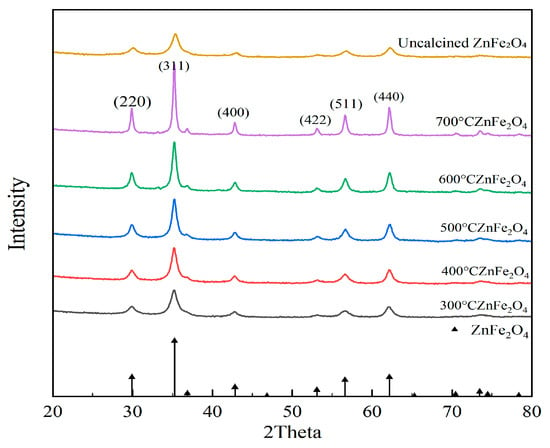
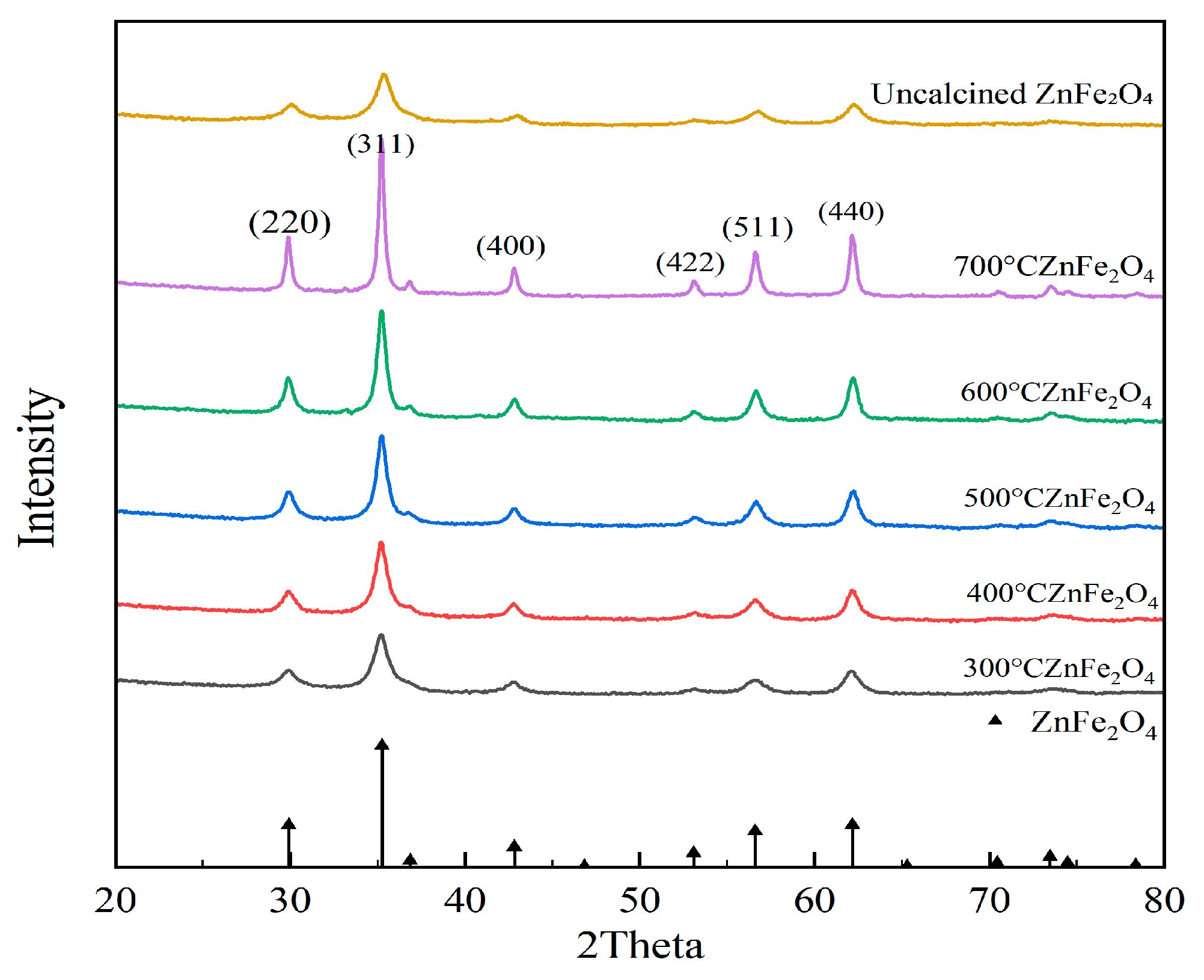
The crystalline phases of the ZnFe2O4 catalyst were analyzed based on XRD patterns, as shown in Figure 1. Both uncalcined ZnFe2O4 and ZnFe2O4 calcined at different temperatures exhibited major diffraction peaks near 2θ values of 29.95°, 35.25°, 42.93°, 53.12°, 56.69°, and 62.24°, which were assigned to the (220), (311), (400), (422), (511), and (440) crystal planes of ZnFe2O4, respectively. These peaks were highly consistent with the standard card of spinel ZnFe2O4 (PDF#22-1012), indicating that the as-prepared ZnFe2O4 possessed a typical cubic spinel structure with Fd-3m space group symmetry [18]. Calcined samples showed distinct diffraction peaks with higher intensity, indicating improved crystallinity. In contrast, the uncalcined sample exhibited broadened and weaker diffraction peaks, suggesting poorer crystallinity. Samples calcined at different temperatures displayed consistent crystal structures with good repeatability. Moreover, the sharp and narrow diffraction peaks of ZnFe2O4 calcined at 700 °C indicated high crystallinity and a well-formed catalyst structure. Few impurity peaks were observed in the XRD patterns, demonstrating high purity of the prepared catalyst.
Figure 1.
XRD pattern of ZnFe2O4 material.
3.1.2. BET Test
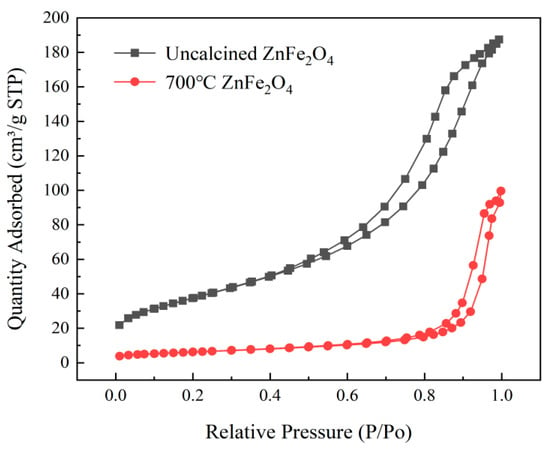
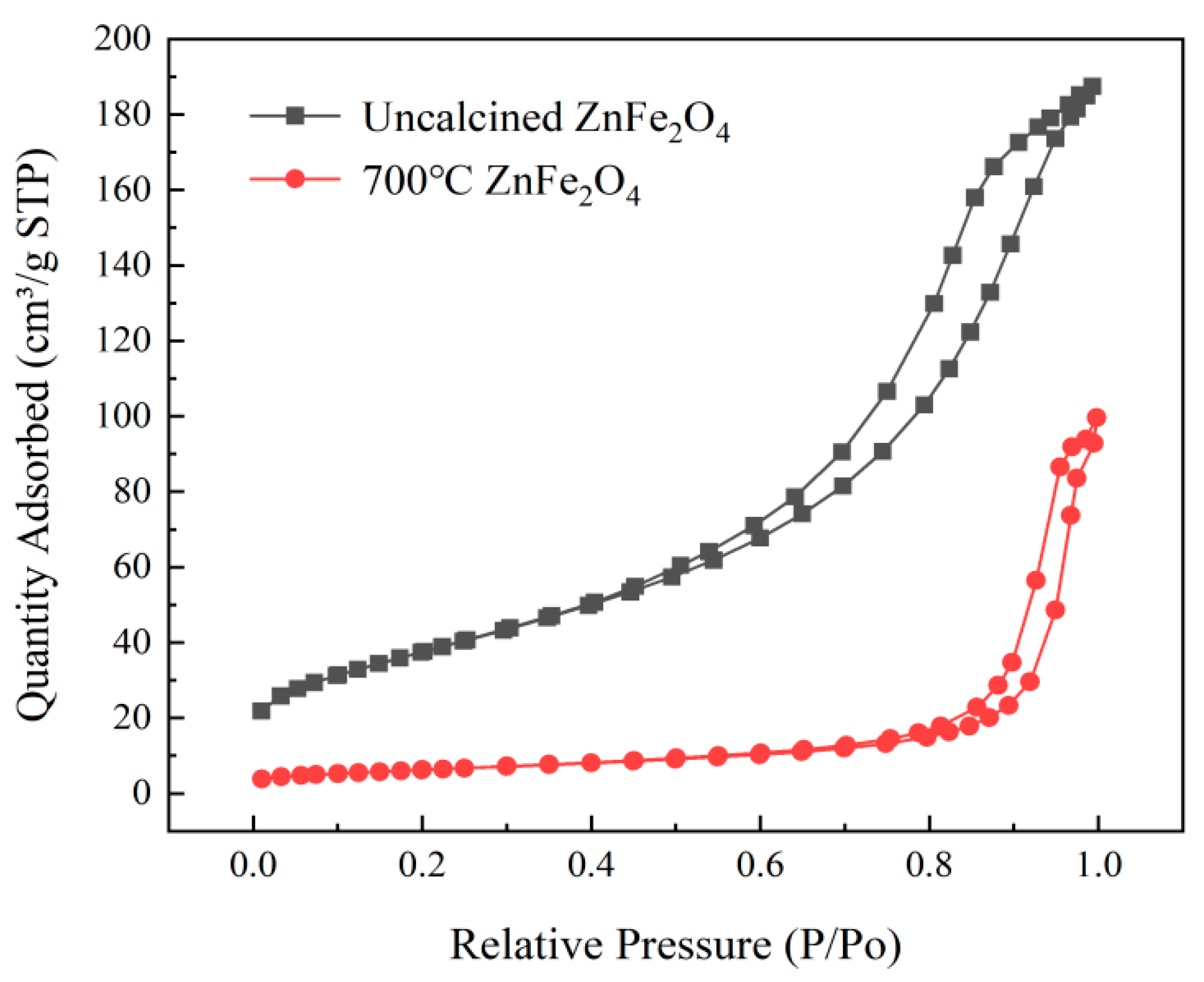
Table 2 summarizes the specific surface area (SBET), total pore volume (TPV), and average pore size of the two materials. Compared with uncalcined ZnFe2O4, ZnFe2O4 calcined at 700 °C exhibits a lower BET surface area, indicating that high-temperature calcination causes particle sintering and growth, accompanied by the collapse or closure of partial pores. This leads to a sharp decrease in the total surface available for gas adsorption, and the total pore volume also decreases from 0.29 to 0.14 cm3/g, confirming that partial pore structures are destroyed or filled during heat treatment. In addition, although the total pore volume decreases, the specific surface area decreases more significantly. The average pore size calculated according to the formula (average pore size ≈ 4V/A) increases remarkably. This indicates that the material transforms from a structure dominated by micropores/small mesopores to one dominated by larger mesopores, further verifying that calcination modifies the pore structure [19]. This structural evolution will exert a decisive influence on its catalytic activity, adsorption capacity, ion diffusion rate, and other properties.
Table 2.
BET results of uncalcined ZnFe2O4 and ZnFe2O4 calcined at 700 °C.
Figure 2 shows the N2 adsorption–desorption isotherms of uncalcined ZnFe2O4 and ZnFe2O4 calcined at 700 °C at 77.35 K. According to the analysis, the adsorption capacity of uncalcined ZnFe2O4 increases rapidly at P/P0 < 0.4, and a distinct, nearly parallel H4-type hysteresis loop appears in the relative pressure range of 0.4–1.0, which accounts for its high specific surface area and small average pore size [20]. The desorption curve drops steeply near P/P0 ≈ 0.42, indicating the presence of mesopores with a relatively concentrated pore size distribution. The overall adsorption capacity of ZnFe2O4 calcined at 700 °C is much lower than that of uncalcined ZnFe2O4, and the hysteresis loop transforms into H3-type with no obvious adsorption plateau in the high relative pressure region, suggesting the existence of macropores or a wide pore size distribution [21]. The calcination process causes small primary particles to fuse into large secondary particles, enlarging the interstitial pores formed by particle accumulation, while a large number of micropores and small mesopores inside the particles disappear.
Figure 2.
N2 adsorption/desorption isotherms of uncalcined ZnFe2O4 and ZnFe2O4 calcined at 700 °C.
3.1.3. SEM-EDS Characterization
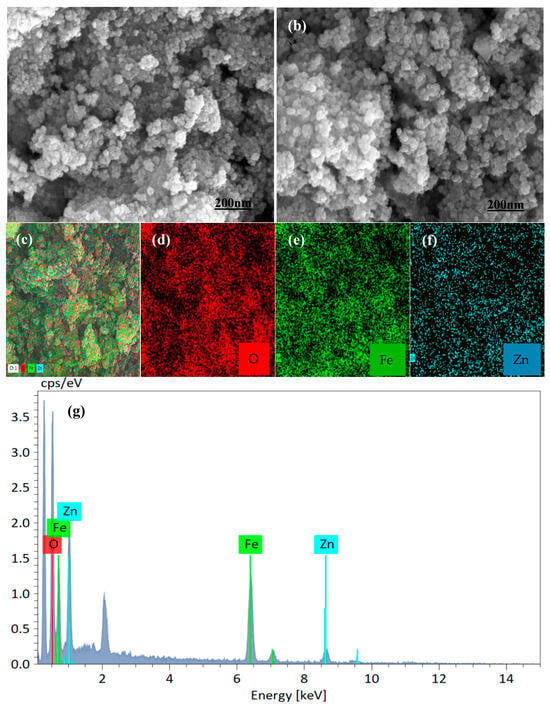
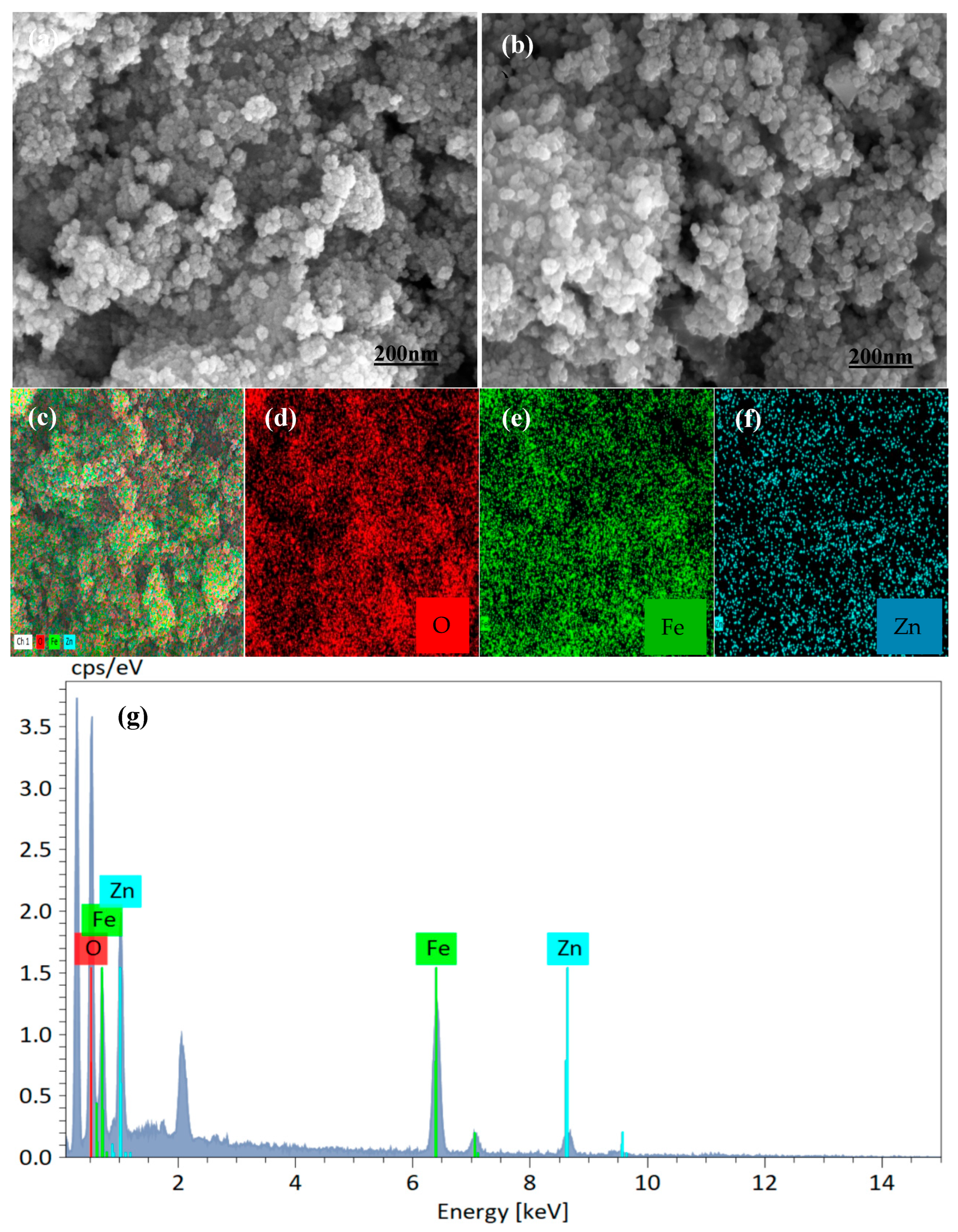
Figure 3 shows SEM images of ZnFe2O4 prepared by the coprecipitation method. As shown in Figure 3a, the ZnFe2O4 crystals exhibit slight soft agglomeration, which is attributed to their extremely large specific surface area and high surface energy. In addition, the as-synthesized zinc ferrite is mostly irregular, elliptical, small-sized, and well-dispersed, which is favorable for providing more active sites (Figure 3b). It can be clearly observed that coprecipitation leads to uniform distribution between the iron and zinc phases, resulting in effective interfacial contact. To further investigate the elemental distribution of the sample, elemental mapping was performed using energy-dispersive X-ray spectroscopy. Figure 3c–g show the presence and uniform dispersion of elements such as Zn, Fe, and O in ZnFe2O4. EDS is a semi-quantitative analysis technique with limited quantitative accuracy for light elements (e.g., O) and may be affected by factors such as sample surface roughness and conductivity. The EDS results confirm the successful synthesis of ZnFe2O4 to a certain extent.
Figure 3.
(a) SEM image of uncalcined ZnFe2O4; (b) SEM image of calcined ZnFe2O4; (c–g) EDS spectra of ZnFe2O4.
3.1.4. TEM Patterns
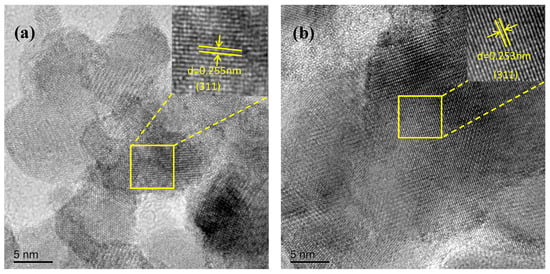
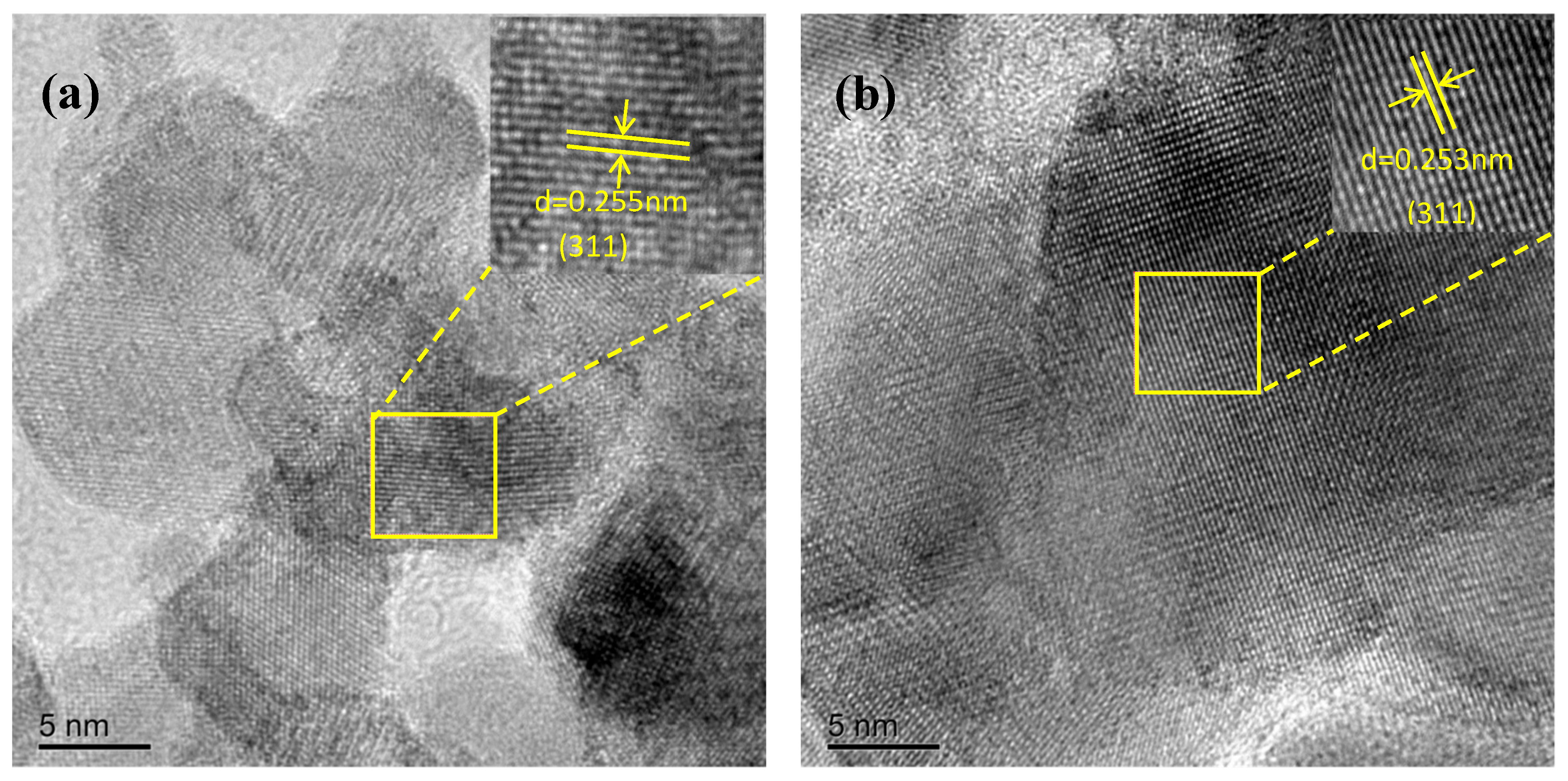
Figure 4 shows transmission electron microscopy images of the ZnFe2O4 sample. As can be seen from the high-magnification TEM images, the ZnFe2O4 photocatalyst prepared by the coprecipitation method exhibits a complete crystal structure. Interplanar lattice spacings of 0.255 nm and 0.253 nm are observed in the TEM images (Figure 4a,b), which are attributed to the (311) characteristic plane [22]. This is consistent with the XRD results, further confirming that the cubic spinel phase of ZnFe2O4 was successfully synthesized in the experiment.
Figure 4.
(a) TEM image of uncalcined ZnFe2O4; (b) TEM image of calcined ZnFe2O4.
3.1.5. XPS Analysis
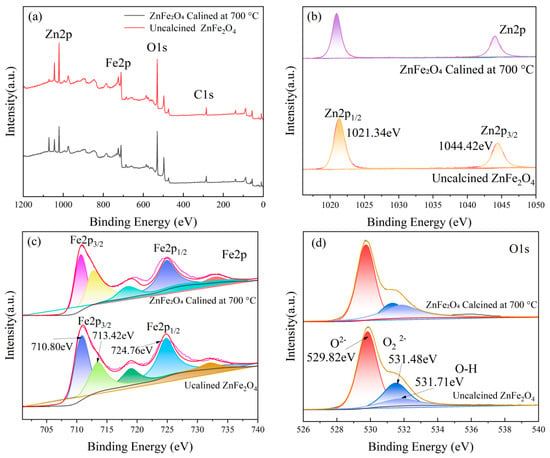
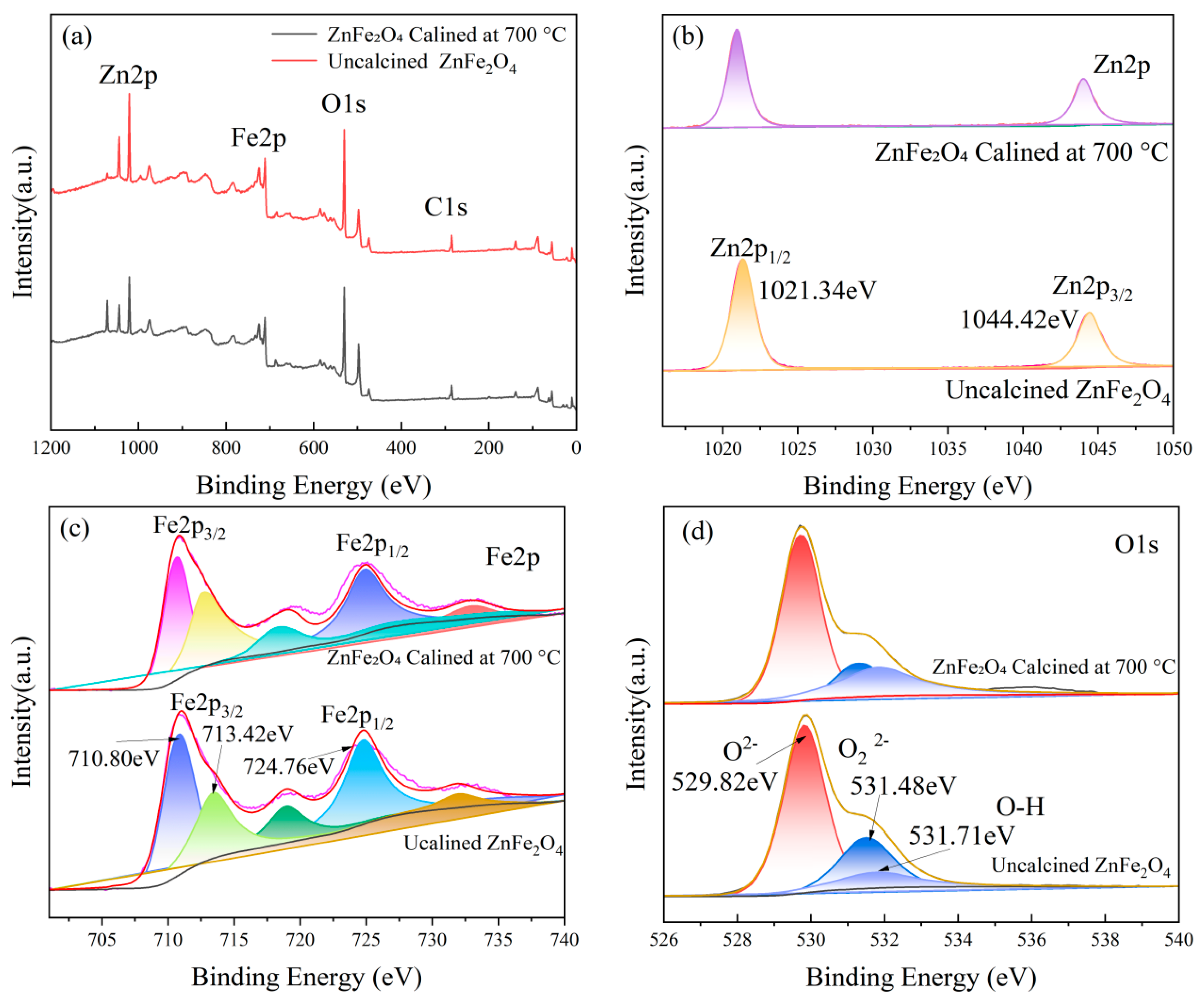
XPS tests can be used to analyze the elemental composition and chemical valence states of the samples. To further investigate the intrinsic properties of the as-prepared catalyst, XPS analysis was performed on the sample. As clearly shown in Figure 5a, the XPS spectra indicate that the main elements of the ZnFe2O4 material are Zn, Fe, O, and C, which is consistent with the EDS mapping results. Figure 5b shows the XPS spectrum of Zn 2p in the sample. The two binding energy peaks at 1021.34 eV and 1044.42 eV are attributed to electrons from the Zn 2p1/2 and Zn 2p3/2 orbitals [23], corresponding to Zn in its fully oxidized state, proving that zinc exists in the sample as Zn2+. Figure 5c displays the XPS spectrum of Fe 2p. The two binding energy peaks at 710.80 eV and 724.76 eV are assigned to electrons from the Fe 2p3/2 and Fe 2p1/2 orbitals of Fe3+, while the peak at 713.42 eV is attributed to Fe3+ multiplets related to complex satellite peaks, further confirming the presence of a pure ZnFe2O4 phase. Figure 5d presents the XPS spectrum of O 1s. Three peaks located at 529.82 eV, 531.48 eV, and 531.71 eV are ascribed to lattice oxygen (O2−), surface-adsorbed oxygen (such as O22−), and hydroxyl groups (-OH), respectively, which supports the overestimated oxygen content observed in the EDS quantitative analysis. Combined with the previous characterization results, it can be concluded that the ZnFe2O4 photocatalyst was successfully prepared via the coprecipitation method in this experiment, featuring a porous structure and a relatively large specific surface area.
Figure 5.
XPS spectra of the ZnFe2O4 sample. (a) Full XPS spectrum of zinc ferrate; (b) the XPS spectrum of Zn 2p; (c) the XPS spectrum of Fe 2p; (d) the XPS spectrum of O 1s.
3.2. Photocatalytic-PDS Synergistic Performance
3.2.1. Synergistic Effect of the Catalytic System
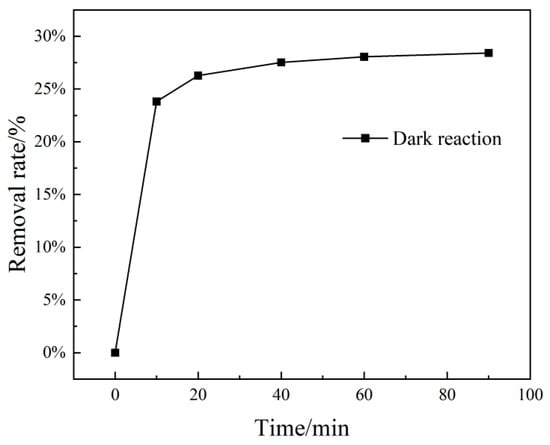
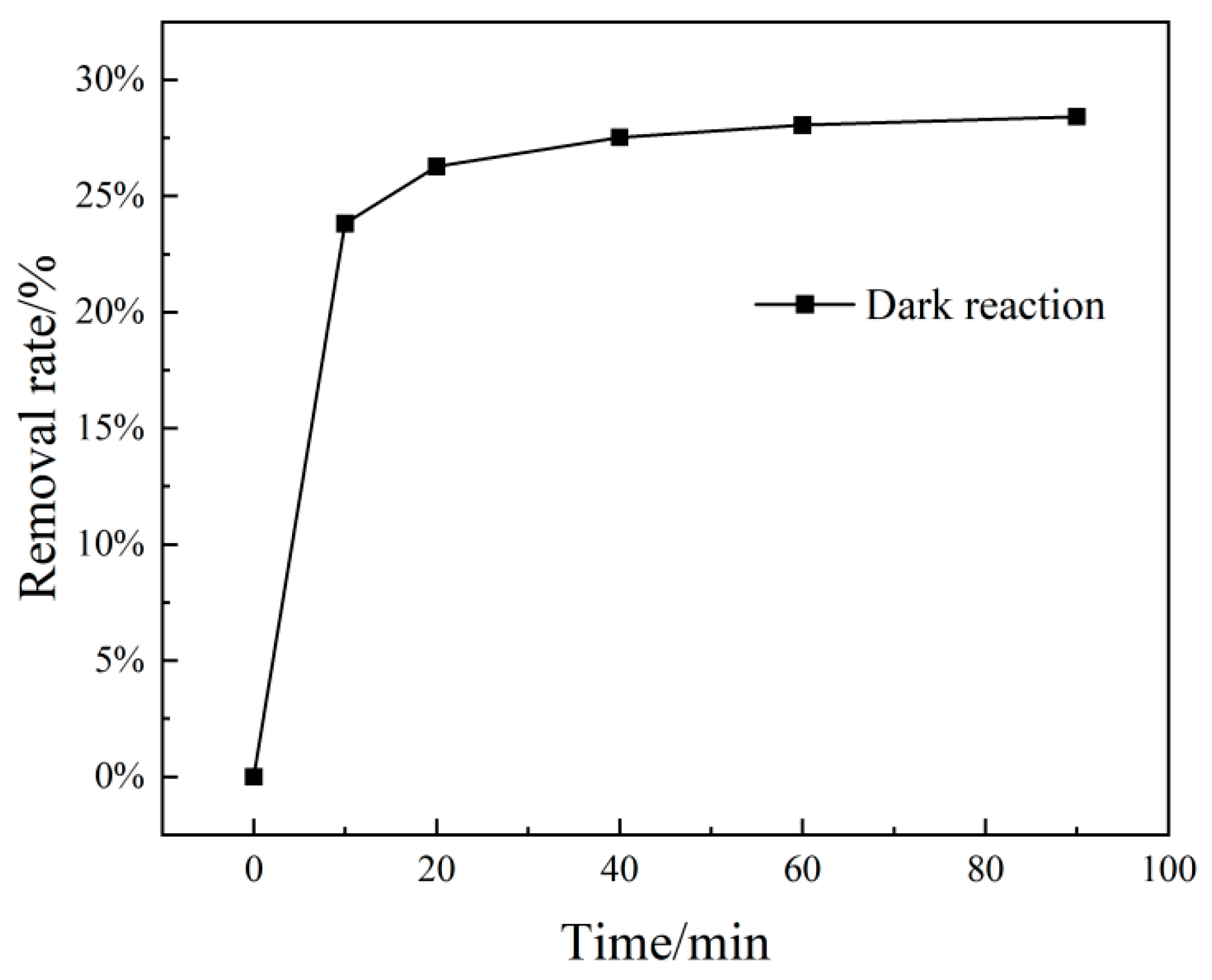
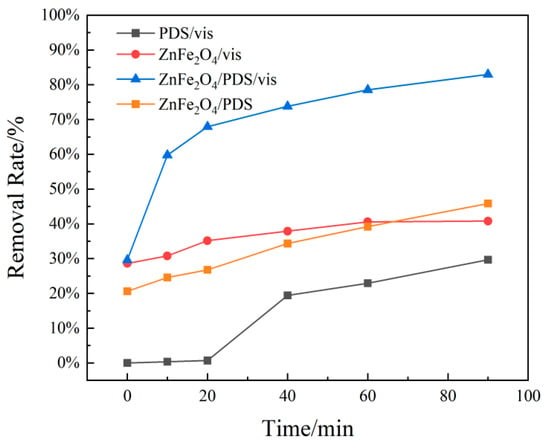
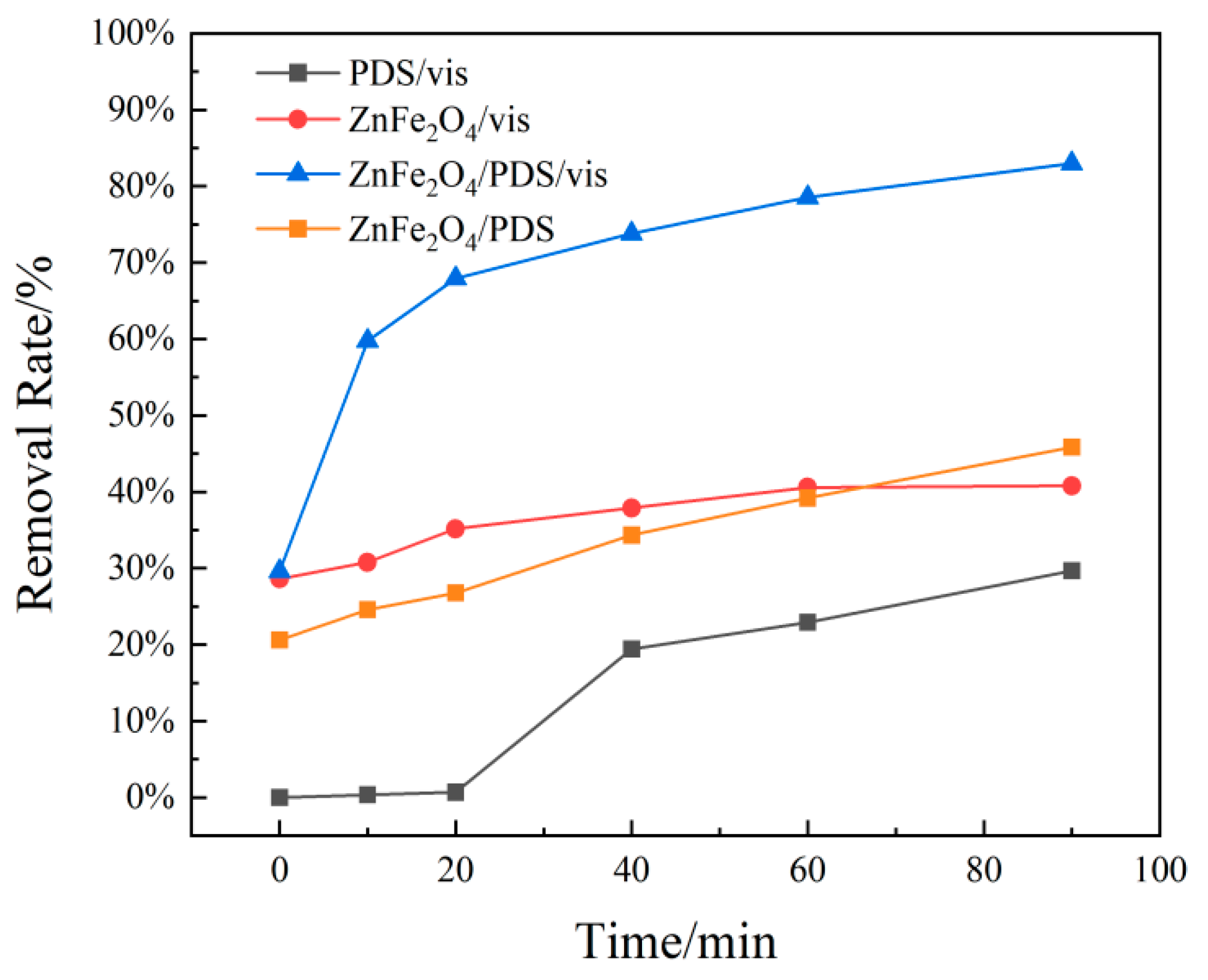
To investigate the degradation of oxytetracycline under different systems, the dark adsorption equilibrium time has been determined through preliminary experiments (Figure 6), the degradation of oxytetracycline was tested under four experimental conditions: ZnFe2O4/visible light, PDS/visible light, ZnFe2O4/PDS, and ZnFe2O4/PDS/visible light. The synergistic effect of the catalytic system is shown in Figure 7. During the 20 min dark adsorption, the removal of OTC by ZnFe2O4 was about 26.27%, and no obvious further adsorption occurred after 20 min. As can be seen from the figure, the removal rate of oxytetracycline in the ZnFe2O4/visible-light system reached 40.8% after 90 min, which was mainly attributed to the strong oxidation of active species such as h+, •O2−, and •OH generated in the system to degrade oxytetracycline. The removal rate of oxytetracycline in the ZnFe2O4/PDS/visible light synergistic system was 83%, while the degradation rate of oxytetracycline in the ZnFe2O4/PDS system was only 40.57%, and that in the PDS/visible-light system was merely 29.7% after 90 min. The removal rate of oxytetracycline was even lower without the addition of ZnFe2O4, and the degradation efficiency of the coupled system was much higher than that of the three individual systems. This indicates that the synergistic system of PDS and zinc ferrite promotes the photocatalytic degradation of oxytetracycline, with the degradation rate increased by 31.1% and 20% compared with using PDS and zinc ferrite alone, respectively. A significant synergistic effect exists among the components in the ZnFe2O4/PDS/visible light composite system.
Figure 6.
Effect of OTC degradation in the dark reaction stage.
Figure 7.
Degradation rate of oxytetracycline under different systems.
The degradation kinetics under different conditions were well described by the pseudo-first-order model (R2 > 0.95), and the rate constants are summarized in Table 3.
Table 3.
Dynamic fitting.
3.2.2. Effect of ZnFe2O4 Dosage
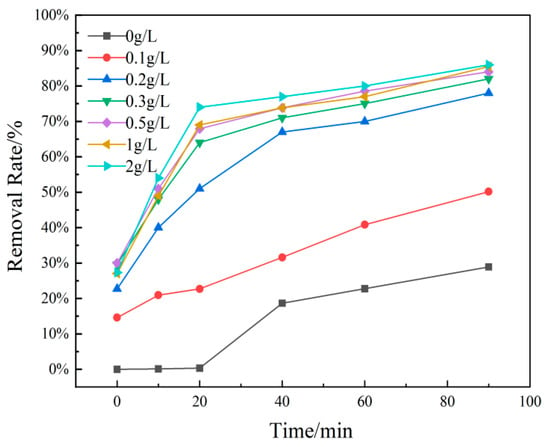
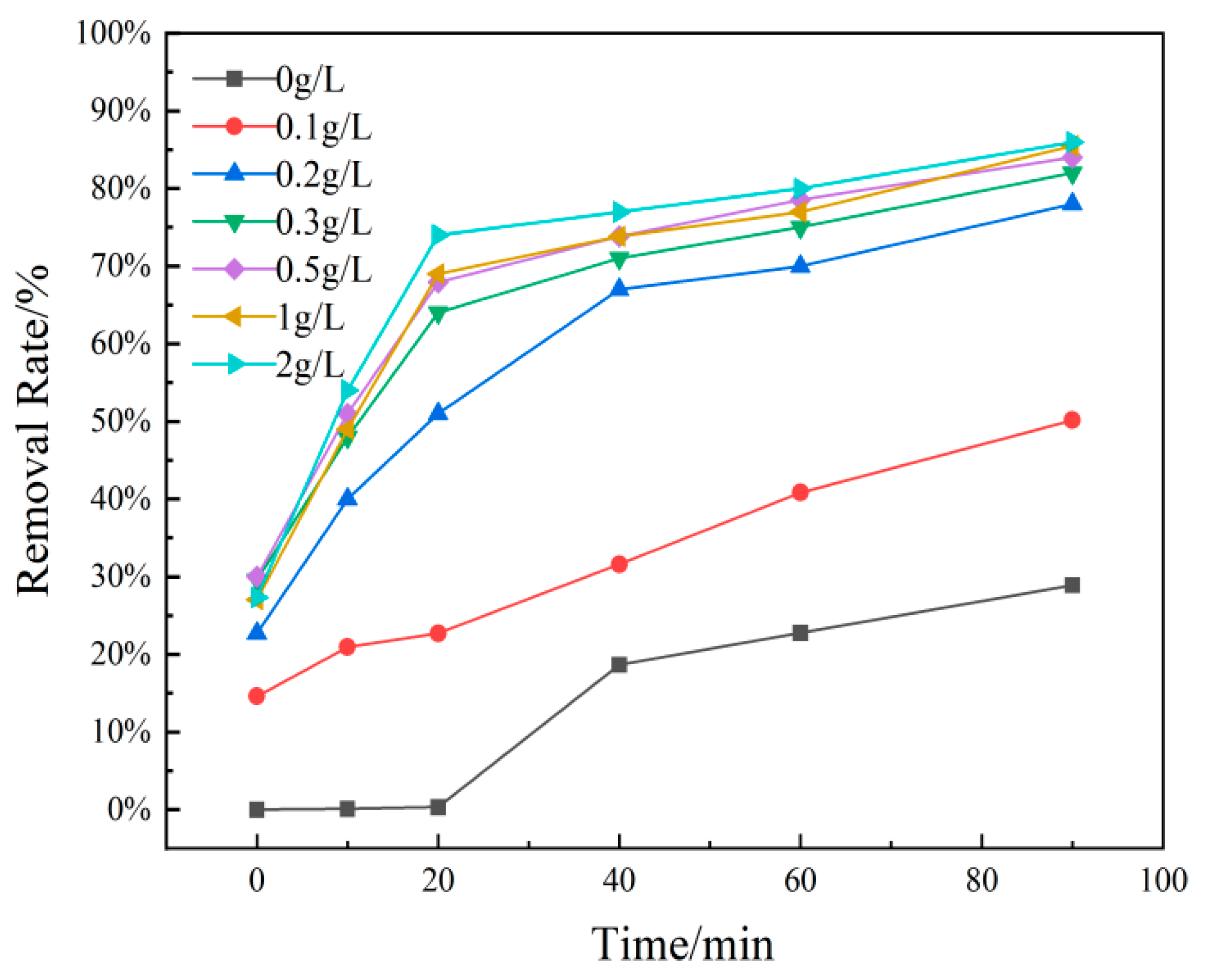
The effect of different catalyst dosages on the degradation of oxytetracycline in the ZnFe2O4/PDS system is shown in Figure 8. It can be observed from the data that the degradation rate of oxytetracycline increases first and then decreases with the increase in ZnFe2O4 dosage. When the ZnFe2O4 dosages are 0, 0.1, 0.2, 0.3, 0.5, 1, and 2 g/L, the removal rates after 90 min are 28.91%, 50.15%, 78.00%, 82.00%, 84.00%, 85.50%, and 86.00%, respectively. At a ZnFe2O4 dosage of 2 g/L, the reaction rate is the fastest in the first 20 min, and the removal rate reaches 74% at 20 min. The degradation rate gradually slows down after 20 min. This phenomenon occurs because excessive addition of ZnFe2O4 enhances the adsorption capacity for oxytetracycline. As the reaction proceeds, the adsorbed oxytetracycline slowly desorbs, which prolongs the degradation time and reduces the degradation rate of the pollutant. On the other hand, suspended ZnFe2O4 particles block light irradiation, thereby weakening the catalytic effect [24]. In addition, excessive ZnFe2O4 tends to agglomerate in water, resulting in a significant reduction in active sites and thus lowering the removal efficiency. In the absence of ZnFe2O4, the removal rate of oxytetracycline increases gradually and rises sharply after 40 min, from 0.3% to 18.65%. This is attributed to the activation of PDS under light irradiation to generate reactive species such as •SO4−, or the enhanced effective interaction between organic compounds and •SO4−, which improves the removal efficiency [25].
Figure 8.
Effect of ZnFe2O4 dosage on the degradation of oxytetracycline.
3.2.3. Effect of PDS Concentration
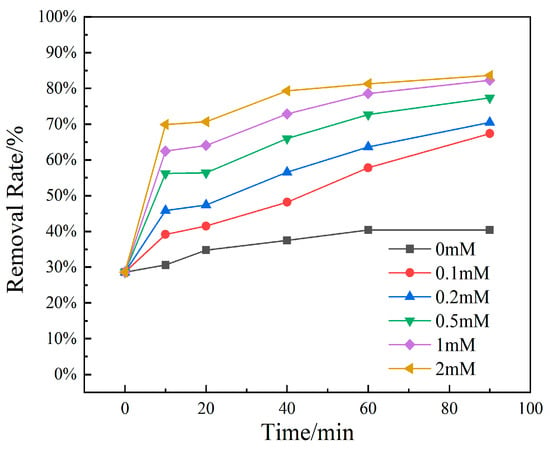
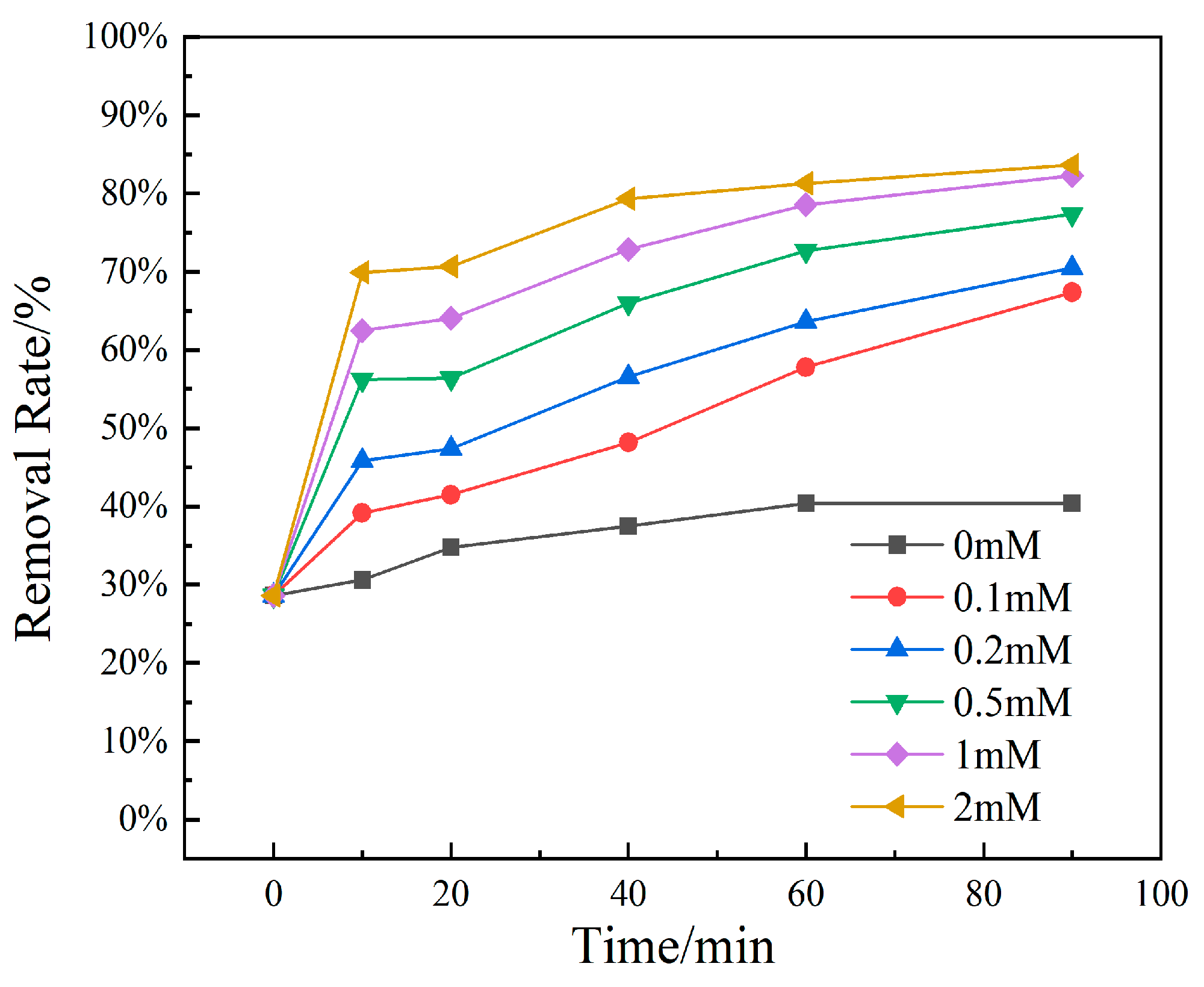
The experimental results for the removal of oxytetracycline hydrochloride at different potassium persulfate (PDS) concentrations are shown in Figure 9. In the absence of PDS, the removal rate of oxytetracycline was only 40.71%. As the PDS concentration increased from 0.1 mM to 2 mM, the removal rate of oxytetracycline increased from 67.4% to 83.62%, indicating that the removal efficiency of oxytetracycline improved with increasing PDS concentration. Within the first 10 min, the reaction rate of oxytetracycline gradually accelerated with increasing PDS concentration. This was because more •OH and •SO4− radicals were generated from the active sites of PDS. Meanwhile, the electron-hole pairs produced by visible-light-driven catalysis of ZnFe2O4 also played a certain role in the degradation process [26]. Moreover, a higher PDS concentration yielded more reactive species to attack oxytetracycline. When the PDS concentration increased from 1 mM to 2 mM, the degradation rate after 90 min showed only a slight increase, rising from 82.26% to 83.62%. With the increase in PDS dosage, the degradation rate of oxytetracycline first increased and then gradually tended to stabilize. Further increasing the PDS dosage had no obvious effect on the removal rate of oxytetracycline. Considering cost factors, the optimal PDS dosage was determined to be 2 mM.
Figure 9.
Effect of PDS dosage on the degradation of oxytetracycline.
3.2.4. Effect of Different pH Values
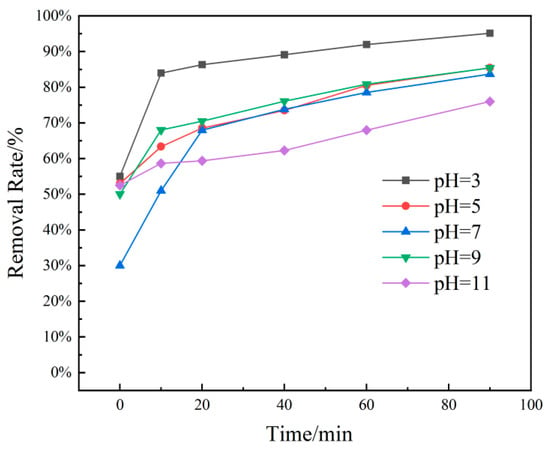
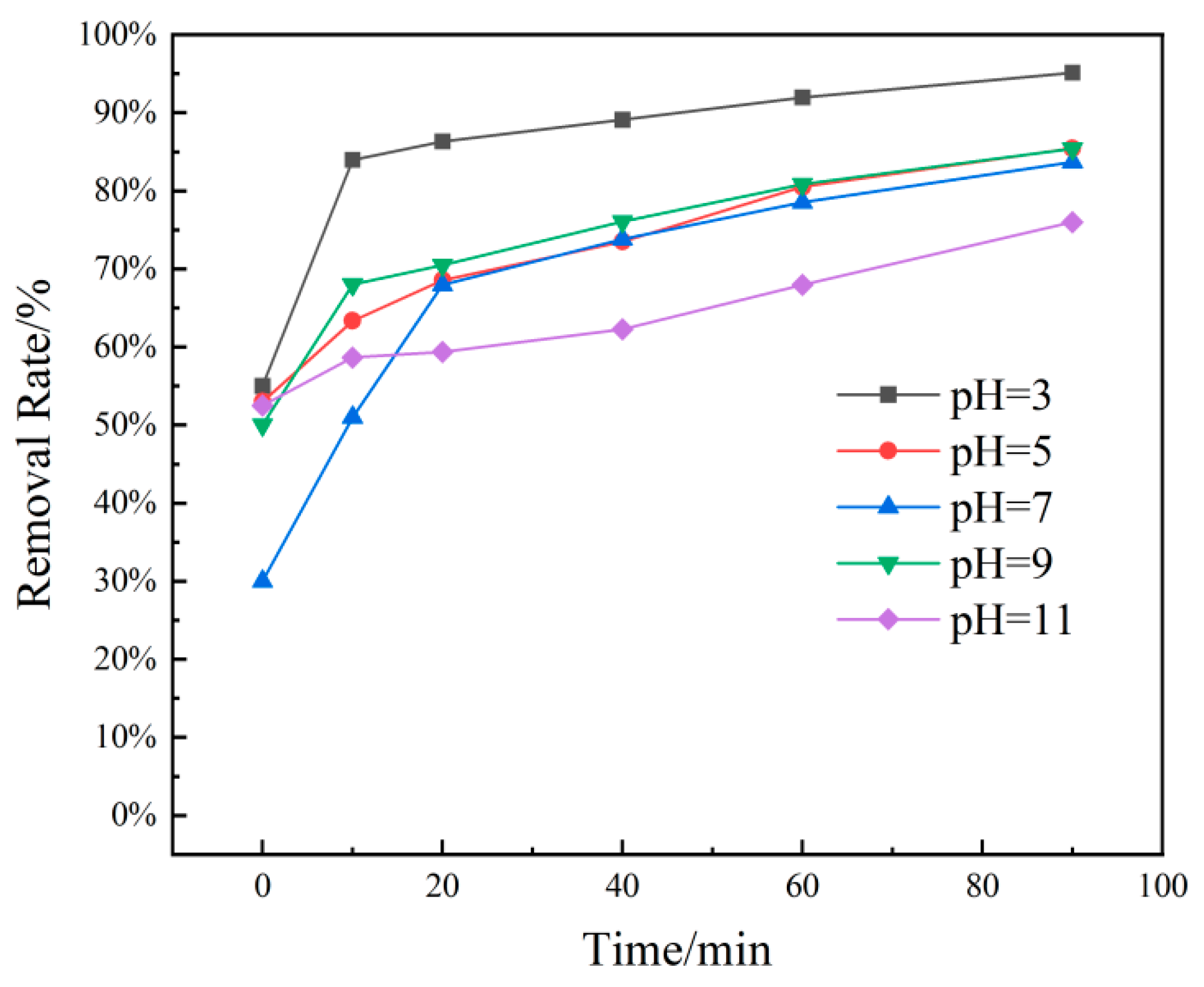
The results of oxytetracycline removal experiments under different initial pH conditions are shown in Figure 10. It can be seen from the figure that as the initial pH of the solution gradually increases, the degradation rate of oxytetracycline after 90 min gradually decreases. The degradation rate reaches a maximum of 95.15% at pH 3 and a minimum of 76.00% at pH 11. The degradation efficiency under acidic conditions is significantly higher than that under alkaline conditions. The degradation rate is the fastest within the first 10 min, with degradation rates of 83.96%, 63.35%, 51.66%, 68.02%, and 58.65% at pH 3, 5, 7, 9, and 11, respectively. After 90 min, the degradation rates increased to 95.15%, 85.46%, 83.69%, 85.39%, and 76.00%. The highest removal efficiency at pH 3 can be explained by the pKa of oxytetracycline (3.27–5.01). When 3 ≤ pH < 5, oxytetracycline is uncharged in aqueous solution and exists in molecular form. The point of zero charge of ZnFe2O4 is 4, and it is negatively charged when pH > 4. Oxytetracycline is easily adsorbed on the catalyst surface, which improves the contact probability between reactive oxygen species, holes, and oxytetracycline, thereby enhancing the degradation rate [27]. When pH ≥ 7, oxytetracycline is negatively charged. The higher the pH value, the more negative charge oxytetracycline carries, causing electrostatic repulsion between negatively charged ZnFe2O4 and OH−. Therefore, the removal rate is the lowest at pH 11, which is unfavorable for the degradation of oxytetracycline. Accordingly, the optimal initial pH of the reaction system is 3, under which the highest OTC degradation efficiency (95.15%) was achieved.
Figure 10.
Effect of pH on the degradation of oxytetracycline.
3.2.5. Effect of OTC Concentration
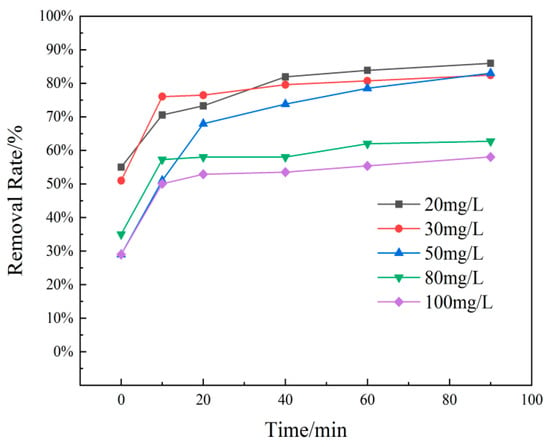
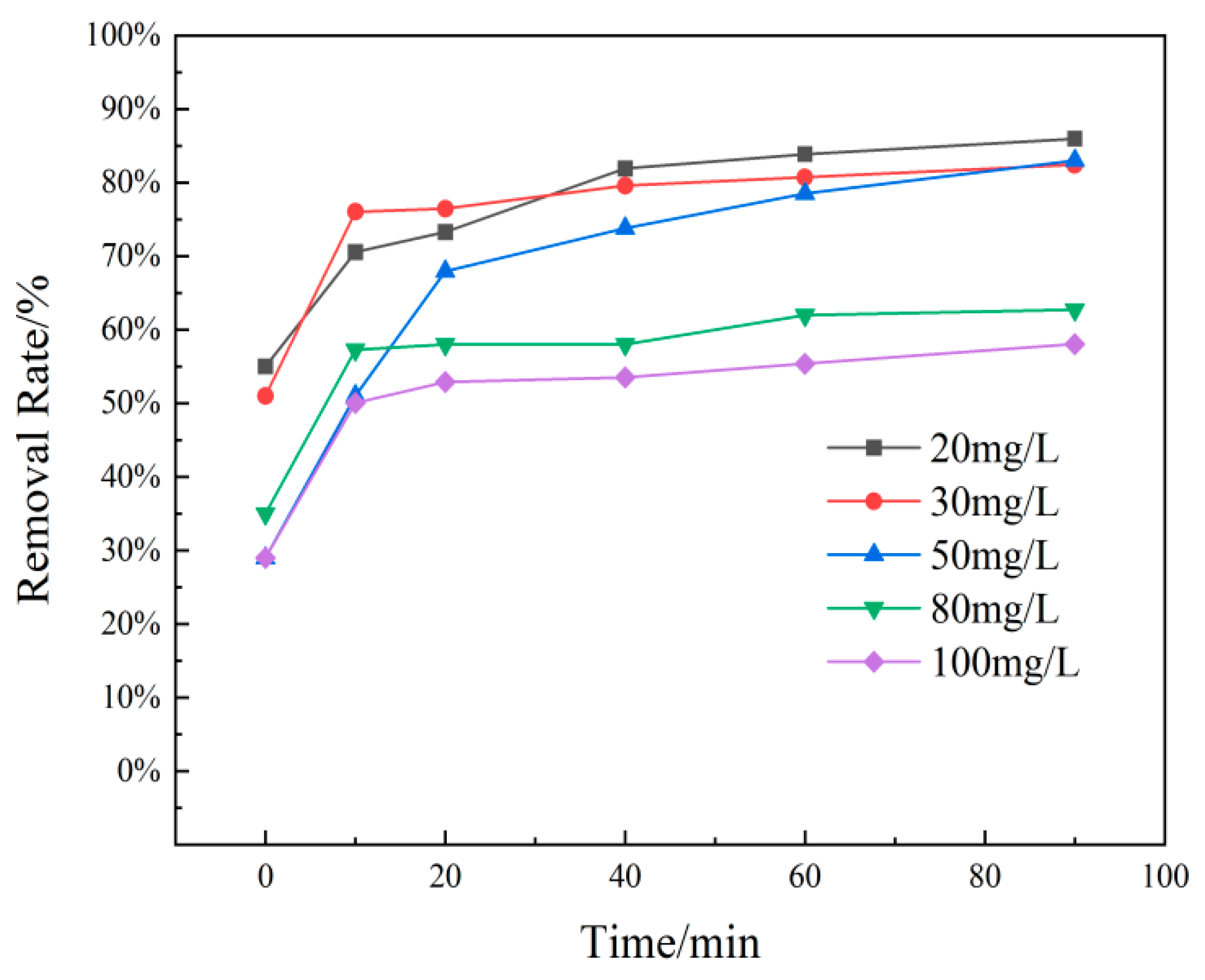
During wastewater treatment, the fluctuation of pollutant concentration may affect the catalytic process. Therefore, the effect of initial OTC concentration was investigated to evaluate the operating concentration window of the ZnFe2O4/PDS/visible-light system for OTC degradation [28]. The effect of oxytetracycline (OTC) concentration on the removal performance of the ZnFe2O4/PDS system under visible light irradiation is shown in Figure 11. The reaction rate reached its maximum within the first 10 min at all OTC concentrations. When the initial OTC concentrations were 20, 30, 50, 80, and 100 mg/L, the degradation rates at 90 min were 85.96%, 82.43%, 82.00%, 62.75%, and 58.06%, respectively. As the oxytetracycline concentration increased from 20 mg/L to 100 mg/L, the degradation efficiency gradually decreased after 90 min of photoreaction, and the best degradation performance was achieved at an initial OTC concentration of 20 mg/L. When the initial concentration was ≤30 mg/L, oxytetracycline could fully bind to the active sites on the surface of ZnFe2O4. However, the degradation rate at concentrations below 30 mg/L was still lower than that at 30 mg/L after 90 min of reaction. This phenomenon may be attributed to the relatively excessive amount of ZnFe2O4 at low initial concentrations, which affected the photon utilization efficiency of the reaction system and thus reduced the degradation rate. When the initial concentration was >30 mg/L, as the concentration increased, more oxytetracycline molecules adsorbed on the surface of ZnFe2O4, causing competitive adsorption for active sites and reducing the content of •OH radicals, which also led to a decrease in the degradation rate of OTC [29]. In addition, excessive oxytetracycline concentration would generate abundant intermediate products during degradation, which would also compete with OTC molecules for the active sites of ZnFe2O4 and impair the catalytic activity of ZnFe2O4. Therefore, the optimal initial concentration of oxytetracycline should be no more than 30 mg/L. It should be noted that this study only evaluated OTC in deionized water. The influence of real water matrices, co-existing ions, natural organic matter, and other organic pollutants was not experimentally investigated. Therefore, the present system is not claimed to be universally applicable; rather, this work provides a mechanistic and parametric basis for OTC degradation. Future studies will examine different water bodies and other pollutants.
Figure 11.
Effect of OTC concentration on the degradation of oxytetracycline.
3.3. Reusability
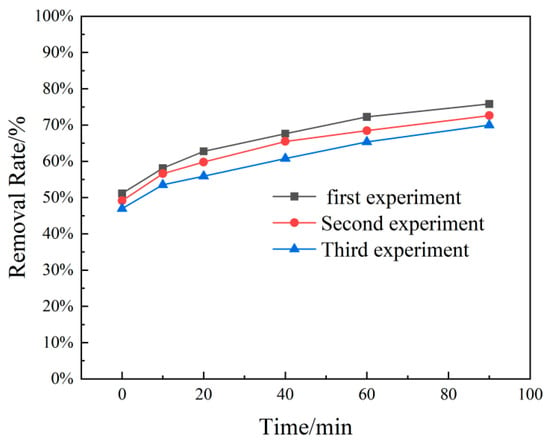
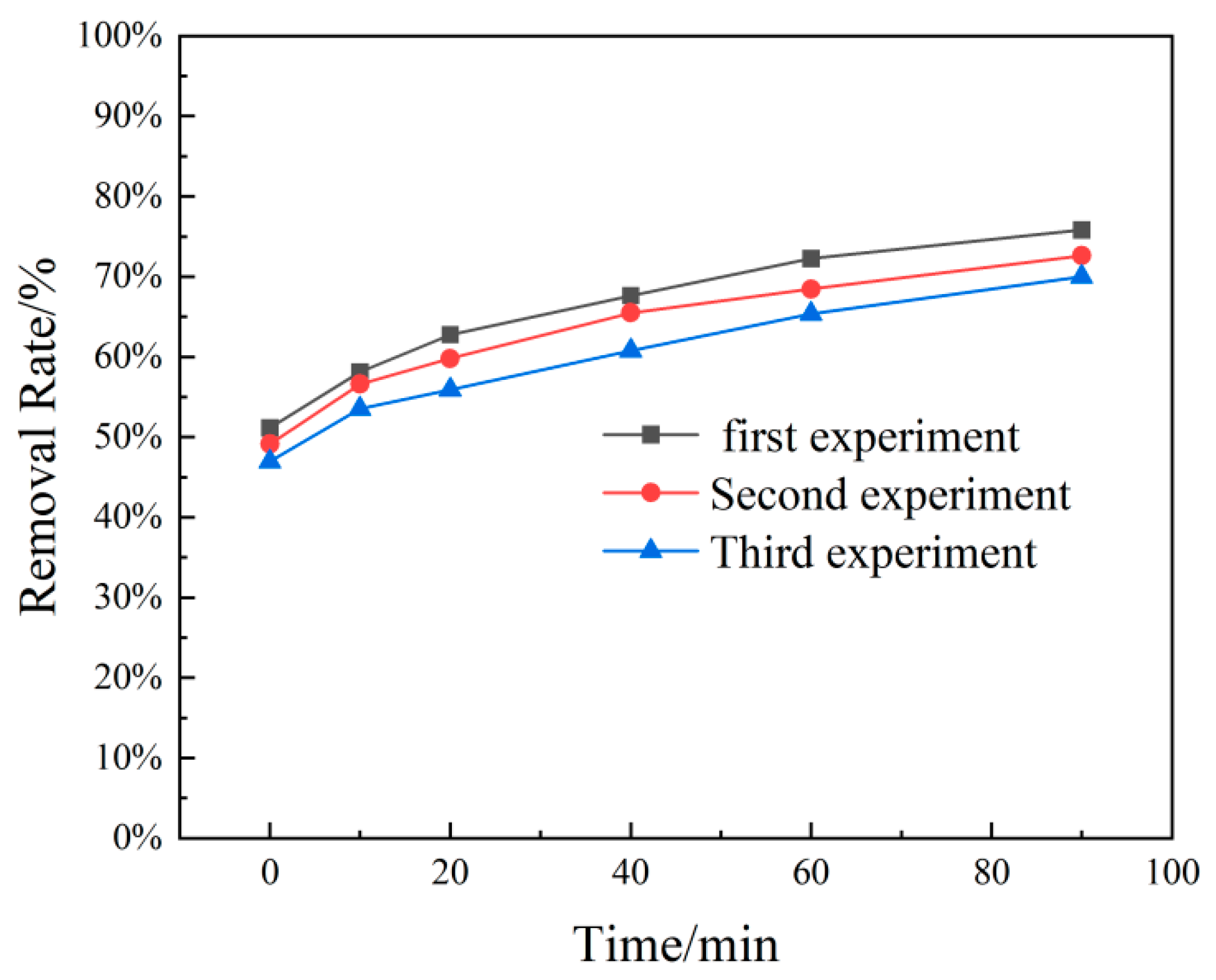
To investigate the reusability and photocatalytic recycling of zinc ferrite in this experiment, three consecutive degradation experiments were conducted, and the results are shown in Figure 12. The removal efficiency of oxytetracycline reached 82.50% in the first run, while the removal rates were 75.5% and 73.8% in the second and third cycles, respectively. It can be concluded that zinc ferrite can be reused multiple times without frequent replacement, thus reducing the cost of wastewater treatment.
Figure 12.
Reusability test of zinc ferrite.
3.4. Reaction Mechanism Analysis
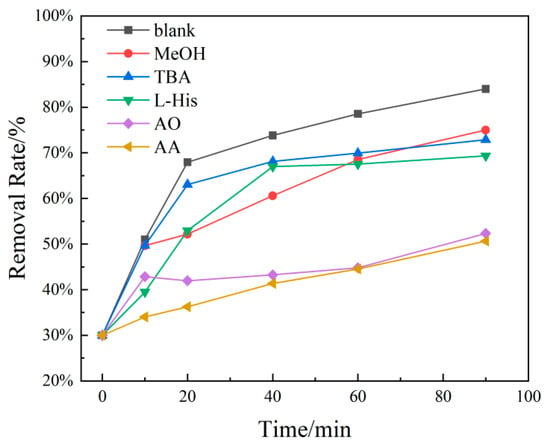
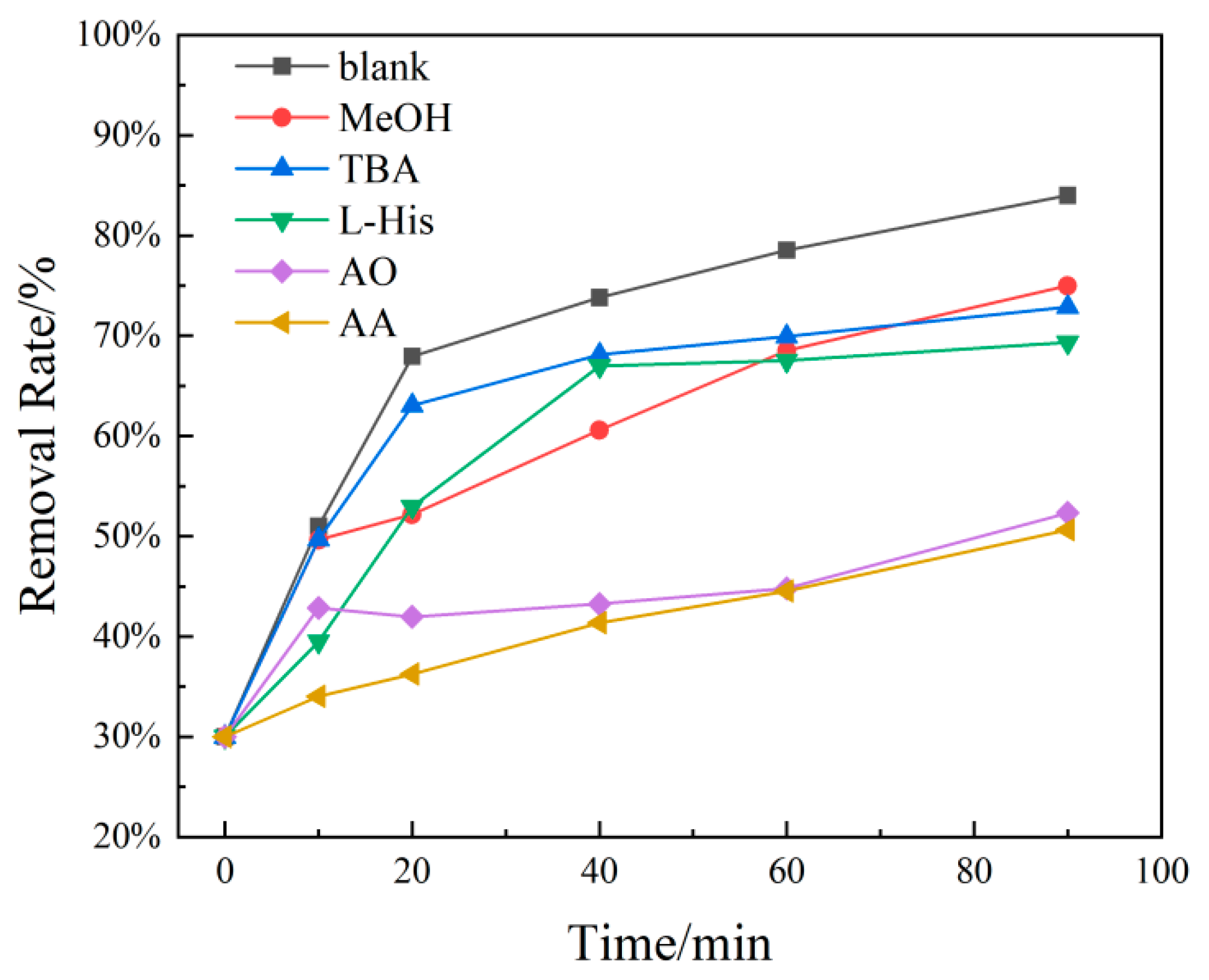
To elucidate the degradation mechanism of oxytetracycline (OTC) in the ZnFe2O4/PDS/visible-light system, radical quenching experiments were first conducted to identify the dominant reactive species involved in the reaction process. Both methanol (MeOH) and tert-butyl alcohol (TBA) can act as quenchers for •SO4− and •OH, while TBA preferentially captures •OH and thus serves as a selective probe for •OH. L-Histidine (L-His) was used as a quencher for singlet oxygen (1O2) [30,31], ascorbic acid (AA) as a scavenger for superoxide radicals (•O2−) at a concentration of 4 mmol/L, and ammonium oxalate (AO) as a hole (h+) scavenger [32]. Five groups of 100 mL OTC solution (initial concentration 50 mg/L) were prepared at an initial pH of 7.20. ZnFe2O4 (0.5 g/L) was added to each group, and after 20 min of dark reaction, 2 mmol/L PDS was introduced. Subsequently, different quenchers were added: methanol (MeOH, 4 mol/L), tert-butyl alcohol (TBA, 4 mol/L), L-histidine (L-His, 10 mmol/L), ascorbic acid (AA, 4 mmol/L), and ammonium oxalate (AO, 10 mmol/L). Photocatalytic reactions were then carried out under a 500 W xenon lamp (λ ≥ 420 nm). As shown in Figure 13, after 90 min of reaction, the OTC degradation efficiencies were 74.98%, 72.85%, 69.34%, 50.63%, and 52.33%, respectively, compared to 84.00% in the control group without any quencher. The significant differences in quenching efficiency indicate that •SO4−, •OH, and •O2− are all reactive free radicals in the system, with •O2− playing a dominant role. Meanwhile, 1O2, as a reactive non-radical species, also participates in the reaction. Furthermore, the initial degradation rates decreased markedly upon the addition of quenchers, suggesting that both radical and non-radical pathways coexist in the reaction system and jointly drive the degradation of OTC.
Figure 13.
Effect of different quenchers on the degradation of oxytetracycline by the ZnFe2O4/PDS/visible-light system.
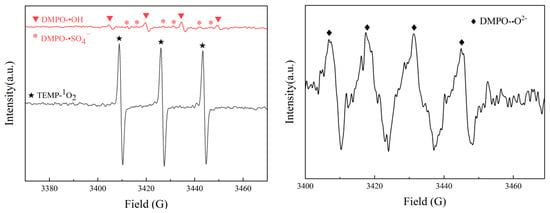
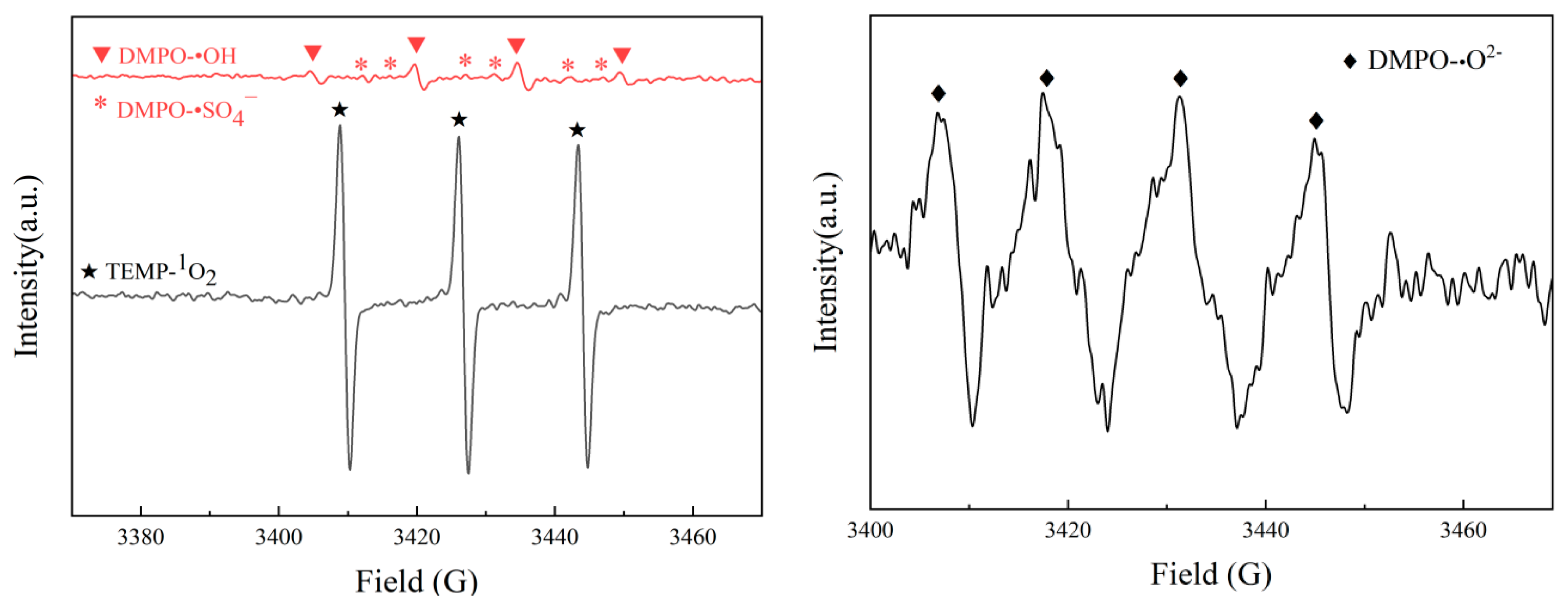
To further corroborate the above findings, electron paramagnetic resonance (EPR) spectroscopy was employed to detect the possible free radicals present in the degradation system. Since 5,5-dimethyl-1-pyrroline N-oxide (DMPO) can react with reactive free radicals to form adducts, it was used to stabilize and confirm the existence of •SO4−, •OH, and •O2− in the aqueous solution. The EPR signal observed for •O2− in the ZnFe2O4/PDS/visible-light system (DMPO–•O2− adduct, characteristic sextet pattern with g values of 3460) is consistent with spin-trapping signatures reported for other spinel-type oxides, where •O2− is stabilized at surface oxygen vacancy sites. The g values and line shapes are comparable to those observed in MgAl2O4-based spinel systems, suggesting that the local spinel environment—particularly the presence of oxygen vacancies and undercoordinated metal sites—plays a key role in stabilizing superoxide radicals [33]. Meanwhile, 2,2,6,6-tetramethylpiperidine (TEMP) was used to trap singlet oxygen (1O2), forming the TEMP-1O2 adduct [32,33,34]. As shown in Figure 14, EPR spectroscopy successfully detected characteristic signals corresponding to •OH, •SO4−, •O2−, and 1O2. These results confirm that four strongly oxidizing reactive species—•OH, •SO4−, •O2−, and 1O2—are generated in the ZnFe2O4/PDS/photocatalytic degradation system for oxytetracycline.
Figure 14.
EPR spectrum.
Based on the experimental evidence presented above, the proposed activation and degradation mechanism of the ZnFe2O4/PDS/visible-light system is as follows: Upon irradiation with visible light (λ ≥ 420 nm), ZnFe2O4 generates photogenerated electron–hole pairs (e−/h+) (Equation (2)), which serve as the initial energy source driving the entire reaction. The photogenerated electrons activate peroxydisulfate (PDS), dissolved oxygen, and water through different pathways, generating multiple reactive species. In the radical pathway, under visible-light irradiation, ZnFe2O4, being a narrow-bandgap semiconductor, is excited, allowing electrons (e−) to transition from the valence band to the conduction band [35]. Since the conduction band position of ZnFe2O4 (−0.3 eV) is more negative than the reduction potential of O2/•O2− (−0.046 eV) [36], the electrons accumulated in the conduction band are readily captured by dissolved oxygen in the solution, reducing it to superoxide radicals (•O2−) (Equation (3)). This species exhibits the highest contribution rate (33.37%) among all reactive species and serves as the dominant active species in the degradation process. The photogenerated electrons can also reduce Fe (III) on the material surface to Fe (II) (Equation (4)), which subsequently activates the peroxy bond (–O–O–) in PDS via a single-electron reductive cleavage, generating sulfate radicals (•SO4−) and sulfate ions (Equation (5)). Within the heterogeneous bimetallic oxide system synergistically constructed by Fe and Zn, the cyclic conversion between Fe3+ and Fe2+ effectively drives electron transfer, and the presence of Zn2+ greatly accelerates the reduction of Fe3+ to Fe2+. Meanwhile, •SO4− can react with water molecules to generate hydroxyl radicals (•OH), thereby establishing the radical oxidation pathway (Equation (6)).
ZnFe2O4 + hν → ZnFe2O4 (e− + h+)
O2 + e− → •O2−
Fe (III) + e− → Fe (II)
Fe (II) + S2O82− → Fe (III) + SO42− + •SO4−
•SO4− + H2O → SO42− + •OH + H+
Based on the results of the trapping experiments and EPR measurements, it can be concluded that 1O2 plays a crucial role in the non-radical pathway for OTC degradation. 1O2 can be generated via the following two routes: (i) in situ generated reactive oxygen species (•O2−) react with S2O82− to produce 1O2 (Equations (7) and (8)); (ii) •O2− also reacts with •OH to form 1O2 (Equation (9)). In summary, the degradation of OTC in the ZnFe2O4/PDS/visible-light system is achieved through both radical pathways (involving •O2−, •SO4−, and •OH) and non-radical pathways (involving 1O2 and h+).
S2O82− + H2O → HSO5− + HSO4−
•O2− + HSO5− → 1O2 + HSO4−
•O2− + •OH → 1O2 + OH−
4. Conclusions
Unlike previous studies that focused on calcined ZnFe2O4 or composite systems, this work demonstrates that uncalcined ZnFe2O4 with high surface area is highly effective for PDS activation and OTC degradation. This article presents a photocatalyst, ZnFe2O4, prepared via a coprecipitation method. A series of characterization techniques, including XRD, SEM, TEM, XPS, and EPR, were employed to analyze the morphology and chemical composition of the ZnFe2O4 nanoparticles. SEM and TEM images demonstrate that the prepared bimetallic spinel-type ferrite material, ZnFe2O4, exhibits a small and uniformly distributed particle size. After optimization, the as-prepared sample demonstrated the ability to activate peroxydisulfate for the degradation of relatively high-concentration oxytetracycline (OTC) under photocatalytic conditions, achieving an OTC degradation efficiency of 95.15% within 90 min of reaction. The degradation efficiency reported in this work is based on UV-Vis absorbance and reflects chromophore destruction rather than complete mineralization. Future work should include TOC/COD measurements and LC-MS identification of intermediates to fully assess the mineralization pathway [37]. As a heterogeneous catalyst, ZnFe2O4 exhibits a broad pH response range, showing good catalytic degradation performance toward OTC across pH 3–11. Quenching experiments and EPR detection revealed the presence of four major reactive species—•OH, •SO4−, •O2−, and 1O2—in the catalytic system, indicating that both radical and non-radical pathways jointly drive the degradation of OTC. Furthermore, ZnFe2O4 demonstrated satisfactory reusability, maintaining an OTC degradation efficiency of 73.8% after three consecutive cycles, providing a mechanistic and parametric foundation for the application of uncalcined ZnFe2O4 in PDS-based advanced oxidation of antibiotics in aqueous solution. However, the practical applicability of this system to real water matrices and other pollutants remains to be verified. Future work will focus on these aspects.
Author Contributions
Conceptualization: Q.C.; Methodology: Y.D.; Software: C.J.; Validation: S.B.; Formal analysis: X.L.; Investigation: Q.W.; Resources: T.W.; Data management: Y.G.; Manuscript preparation—first draft: Y.G.; Manuscript preparation—review and revision: L.H.; Funding acquisition: L.H. All authors have read and agreed to the published version of the manuscript.
Funding
This study was supported by the General Program of Chongqing Natural Science Foundation (CSTB2025NSCQ-GPX0118) and the Science and Technology Research Program of Chongqing Municipal Education Commission (KJQN202503430 and KZD-K202603406).
Institutional Review Board Statement
Not applicable.
Informed Consent Statement
Not applicable.
Data Availability Statement
The data presented in this study are available on request from the corresponding author due to privacy.
Conflicts of Interest
The authors declare no conflicts of interest.
References
- Liu, L.; Gao, Z.; Deng, Z.; Jiang, L. Activation of persulfate and its mechanism and application in oxidative degradation of antibiotics in water. Environ. Chem. 2022, 41, 1702–1717. [Google Scholar]
- Fan, M.; Liu, X. Research progress on physicochemical methods for treating oxytetracycline wastewater. Coal Chem. Ind. 2024, 47, 155–160. [Google Scholar]
- Zeng, J. Research on Treatment Technology of Typical PPCPs-Oxytetracycline Based on IFAS-MBR Process. Master’s Thesis, Beijing Jiaotong University, Beijing, China, 2021. [Google Scholar]
- Qi, Y. Preparation of Lightweight Catalytic Internal Electrolysis Ceramsite and Its Application in Oxytetracycline Wastewater Treatment. Ph.D. Thesis, Shanghai Jiao Tong University, Shanghai, China, 2019. [Google Scholar]
- Liu, R. Preparation of Boron-Affinity Porous Imprinted Adsorbent and Its Adsorption Performance for Oxytetracycline. Master’s Thesis, Chang’an University, Xi’an, China, 2023. [Google Scholar]
- Yang, M. Removal of Oxytetracycline from Water by Attapulgite-Loaded Iron Coupled with Advanced Oxidation System. Master’s Thesis, Lanzhou Jiaotong University, Lanzhou, China, 2024. [Google Scholar]
- Cao, Z. Activation of Persulfate by MIL-101(Fe) and Its Composites for Degradation of RhB. Master’s Thesis, Northeast Petroleum University, Daqing, China, 2023. [Google Scholar]
- Sun, J. Magnetic Cu/Fe-Based Composite Materials Activating Persulfate for the Removal of Refractory Organic Pollutants. Master’s Thesis, Wuhan Textile University, Wuhan, China, 2023. [Google Scholar]
- Liu, Y. Visible Light-Driven Activation of Persulfate by Fe2O3/Bi2WO6 for Degradation of Tetracycline in Water. Master’s Thesis, Hunan University, Changsha, China, 2024. [Google Scholar]
- Zhang, Y.; Dai, J.; Chen, X.; Liu, W. Analysis of Research Status on Organic Matter Pollution in Water Bodies. Shandong Chem. Ind. 2016, 45, 146–147. [Google Scholar]
- Kong, L. Analysis of Persulfate Activation by Nano Environmental Mineral Materials and the Formation Mechanism of Reactive Oxygen Species. Ph.D. Thesis, Shandong University, Jinan, China, 2020. [Google Scholar]
- Ding, Y. Preparation of MFe2O4 (M = Zn, Cu) Composite Photocatalysts and Study on Their Photocatalytic Activity. Master’s Thesis, Shenyang Normal University, Shenyang, China, 2024. [Google Scholar] [CrossRef]
- Balanov, V.A.; Kiseleva, A.P.; Krivoshapkina, E.F.; Kashtanov, E.A.; Gimaev, R.R.; Zverev, V.I.; Krivoshapkin, P.V. Synthesis of (Mn(1−x)Znx)Fe2O4 nanoparticles for magnetocaloric applications. J. Sol-Gel Sci. Technol. 2020, 95, 795–800. [Google Scholar] [CrossRef] [Scilit]
- Al-Sulami, A.I.; Elamin, M.R.; Alsobai, N.A.; Albqmi, M.; Elamin, N.Y.; Farea, M.O.; Abdelrazek, E.M.; Rajeh, A. ZnFe2O4 nanoparticle-modified biopolymer composites for next-generation energy and electronic applications. J. Sci. Adv. Mater. Devices 2025, 10, 101029. [Google Scholar] [CrossRef] [Scilit]
- Li, Y.; Zhang, H.; Qiu, Z.; Yang, P.; Xu, Z.; He, W.; Han, B. Highly sensitive acetone sensor based on ZnFe2O4/ZnO hollow core–shell nanospheres. Ceram. Int. 2026, 52, 9375–9383. [Google Scholar] [CrossRef] [Scilit]
- Nie, Y.; Tian, Y.; Duan, X.; Zhao, X.; Ren, X. Enhanced degradation and toxicity evaluation of bisphenol A by ZnFe2O4@CuO Z-type heterojunction–PMS–visible light system. J. Environ. Sci. 2026, 167, 374–388. [Google Scholar] [CrossRef] [Scilit]
- Salehi, Z.; Mohammad-khah, A.; Rahmati Hendekhale, N. Synthesis, characterization and investigation of photocatalytic behavior of ZnFe2O4/GO nanocomposite on methylene blue dye under UV/Vis radiation. Surf. Interfaces 2025, 73, 107626. [Google Scholar] [CrossRef] [Scilit]
- Khaddoudi, I.; Bouddouch, A.; Essenni, S.; Baragh, F.; Agunaou, M. Facile synthesis, characterization, and photocatalytic performance of Bi-modified ZnFe2O4 composites toward photodegradation of diclofenac. Inorg. Chem. Commun. 2025, 182, 115389. [Google Scholar] [CrossRef] [Scilit]
- Shkir, M.; Chandekar, K.V.; Al Sdran, N. Influence of Mo dopant on the structural, vibrational, dielectric, and magnetic properties of combustion synthesized ZnFe2O4 nanostructures for optoelectronic and spintronic applications. J. Phys. Chem. Solids 2025, 197, 112417. [Google Scholar] [CrossRef] [Scilit]
- Hadi Ghazvini, A.S.; Khataee, A.; Fathinia, M.; Haghighat, H.; Kudaibergenov, N. Sonocatalytic degradation of furazolidone using a heterogeneous triple ion synergy system of ZnFe2O4@ZIF-67 nanostructures: Physicochemical Characterization and degradation pathway. Chem. Eng. J. 2024, 501, 157273. [Google Scholar] [CrossRef] [Scilit]
- Li, R.; Hu, H.; Ma, Y.; Liu, X.; Zhang, L.; Zhou, S.; Deng, B.; Lin, H.; Zhang, H. Persulfate enhanced photocatalytic degradation of bisphenol A over wasted batteries-derived ZnFe2O4 under visible light. J. Clean. Prod. 2020, 276, 124246. [Google Scholar] [CrossRef] [Scilit]
- Song, T.; Meng, X.; Wang, H.; Zhang, C.; Ge, M. Visible-LED-light-driven photocatalytic activation of peroxydisulfate by magnetic ZnFe2O4/Ag nanocomposite for efficient tetracycline degradation. Sep. Purif. Technol. 2022, 297, 121474. [Google Scholar] [CrossRef] [Scilit]
- Wang, X.; Li, J.; Chen, K.; Li, J.; Jia, Y.; Mei, Q.; Wang, Q. Facile synthesis of oxygen vacancies enriched ZnFe2O4 for effective photocatalytic peroxodisulfate activation. Sep. Purif. Technol. 2022, 303, 122205. [Google Scholar] [CrossRef] [Scilit]
- Wu, J.; Su, H.; Wang, Z.; Hou, B.; Cheng, X.; Stolbikhin Yury, V.; Wang, X.; Liu, B.; Zhu, X.; Mao, Y.; et al. N/ZnFe2O4 codoped biochar as an activator for peroxydisulfate to degrade oxytetracycline: Synthesis, property and mechanism. Sep. Purif. Technol. 2022, 297, 121487. [Google Scholar] [CrossRef] [Scilit]
- Yang, Y.; Wang, J.; Gao, Y.; Tang, X.; Wang, C.; Luo, X. Hydroxyl-regulated ZnFe2O4/UV/PDS synergy for green conversion of NH4+-N: Insights from experiment and theory. J. Water Process Eng. 2025, 73, 107729. [Google Scholar] [CrossRef] [Scilit]
- Zhao, Y.; Zhou, Z.; Cao, S.; Chen, J.; Li, X.; Liu, Y.; Ren, J.; Liu, Y. Insights into EfOM removal and ultrafiltation membrane fouling alleviation by pre-oxidation of a magnetic persulphate activator of ZnFe2O4@OM-PAC: Peroxydisulfate vs peroxymonosulfate. Chem. Eng. J. 2025, 526, 171312. [Google Scholar] [CrossRef] [Scilit]
- Zhao, Y.; Zhou, Z.; Yu, H.; Li, X.; Ren, J.; Chen, J.; Qi, F. Insights into the 1O2 generation of activation of persulfate by zinc ferrite loaded on oxalic acid-modified activated carbon: Interface mechanism and molecular dynamics. Environ. Res. 2025, 285, 122587. [Google Scholar] [CrossRef] [Scilit]
- Iqbal, J.; Shah, N.S.; Ali Khan, J.; Ibrahim, A.; Masood Pirzada, B.; Naushad, M.; Han, C. Visible light driven ZnFe2O4 for the degradation of oxytetracycline in the presence of HSO5− at semi-pilot scale and additional H2 production. Chem. Eng. J. 2024, 498, 155402. [Google Scholar] [CrossRef] [Scilit]
- Li, Z.S.; Tang, X.K.; Huang, G.H.; Luo, X.P.; He, D.S.; Peng, Q.; Huang, J.; Ao, M.L.; Liu, K. Bismuth MOFs based hierarchical Co3O4-Bi2O3 composite: An efficient heterogeneous peroxymonosulfate activator for azo dyes degradation. Sep. Purif. Technol. 2020, 242, 116825. [Google Scholar] [CrossRef] [Scilit]
- Ding, Y.B.; Zhu, L.H.; Wang, N.; Tang, H.Q. Sulfate radicals induced degradation of tetrabromobisphenol A with nanoscaled magnetic CuFe2O4 as a heterogeneous catalyst of peroxymonosulfate. Appl. Catal. B-Environ. 2013, 129, 153–162. [Google Scholar] [CrossRef] [Scilit]
- Xu, K.; Cheng, C.; Qiang, Z.; Wang, Y.; Li, M.; Li, W.; Lei, Y. Unexpected roles of ascorbic acid in terminating permanganate oxidation: Quencher and/or secondary oxidant precursor? J. Hazard. Mater. 2026, 504, 141345. [Google Scholar] [CrossRef] [Scilit]
- Seeman, V.; Lushchik, A.; Shablonin, E.; Prieditis, G.; Gryaznov, D.; Platonenko, A.; Kotomin, E.A.; Popov, A. Atomic, electronic and magnetic structure of an oxygen interstitial in neutron-irradiated Al2O3 single crystals. Sci. Rep. 2020, 10, 15852. [Google Scholar] [CrossRef] [Scilit]
- Zhang, Y.; Zheng, R.; Yang, L.; Zhang, C.; Shi, S.; Pan, Y.; Zhou, M.; Zhang, Y. Influencing factors of EPR detection of hydroxyl radicals in the Fenton system: The complicated roles of pH, zero-valent iron, and typical ligands. J. Hazard. Mater. 2026, 505, 141498. [Google Scholar] [CrossRef] [Scilit]
- Song, Y.; Liu, L.; Liu, K.; Wu, X.; Cui, X.; He, Y. Persistent free radicals and photogenerated holes synergistic metakaolin-based geopolymer microspheres activate H2O2 for degrading organic pollutants. Chem. Eng. Sci. 2026, 327, 123689. [Google Scholar] [CrossRef] [Scilit]
- Lin, W.; Shou, D.Y.; Meng, Y.L.; Mei, W.; Wen, Q.W.; Ji, R.Y.; Shao, L.W.; Bao, J.L. Sulfur-doped MgFe2O4 with oxygen vacancies: Unveiling the synergistic role of electron transfer pathways in boosting radical, generation for efficient peroxymonosulfate activation. Chem. Eng. J. 2026, 540, 177402. [Google Scholar] [CrossRef] [Scilit]
- Xiang, Y.; Huang, Y.; Xiao, B.; Wu, X.; Zhang, G. Magnetic yolk-shell structure of ZnFe2O4 nanoparticles for enhanced visible light photo-Fenton degradation towards antibiotics and mechanism study. Appl. Surf. Sci. 2020, 513, 145820. [Google Scholar] [CrossRef] [Scilit]
- Cai, C.; Liu, J.; Zhang, Z.Y.; Zheng, Y.Y.; Zhang, H. Visible light enhanced heterogeneous photo-degradation of Orange II by zinc ferrite (ZnFe2O4) catalyst with the assistance of persulfate. Sep. Purif. Technol. 2016, 165, 42–52. [Google Scholar] [CrossRef] [Scilit]

Disclaimer/Publisher’s Note: The statements, opinions and data contained in all publications are solely those of the individual author(s) and contributor(s) and not of MDPI and/or the editor(s). MDPI and/or the editor(s) disclaim responsibility for any injury to people or property resulting from any ideas, methods, instructions or products referred to in the content. |
© 2026 by the authors. Licensee MDPI, Basel, Switzerland. This article is an open access article distributed under the terms and conditions of the Creative Commons Attribution (CC BY) license.