


Abstract
Sweet Basil (Ocimum basilicum L.) is a widely valued plant species with multiple applications, including use as a culinary herb and condiment, essential oil extraction, and traditional medicine. The present study aimed to evaluate the growth, photosynthetic pigments, and gas exchange of sweet basil plants under blue light supplementation and microalgae-based bioinput application. The experiment was conducted in a completely randomized design in a 4 × 2 factorial arrangement, comprising three blue light treatments (blue light was provided by LED lighting, dark blue glossy reflective laminate, and light blue glossy reflective laminate) plus a control, and bioinput application (presence and absence). The bioinput was prepared from Chlorella vulgaris microalgae biomass. Indirect blue light delivered by the dark blue reflective laminate, combined with C. vulgaris bioinput application, promoted the greatest increases in plant height, stem diameter, number of leaves, shoot dry matter, root dry matter, and total dry matter. Both direct blue light (LED) and indirect blue light (dark blue and light blue reflective laminates), in combination with microalgae bioinput application, significantly enhanced photosynthetic pigment contents—including chlorophyll a, total chlorophyll, and carotenoids—as well as transpiration, instantaneous carboxylation efficiency, stomatal conductance, and net photosynthetic assimilation rate. The multivariate analyses confirmed that blue light supplementation and C. vulgaris bioinput application act synergistically, promoting a distinct and superior physiological profile in sweet basil plants. These findings establish the combined use of blue light—direct or indirect—with Chlorella vulgaris microalgae bioinput as a promising and sustainable strategy for enhancing growth and photosynthetic performance of O. basilicum L. in protected cultivation systems.
1. Introduction
The multiple uses of O. basilicum (L.) make this plant highly attractive for various industrial activities. In traditional medicine, its constituents are used in the treatment of respiratory diseases, and also possess anti-inflammatory, immunomodulatory, and antioxidant effects [1]. Essential oil extraction has revealed the presence of linalool, 1,8-cineole, eugenol, methyl cinnamate, iso-caryophyllene, and α-cubebene [2]. In some varieties (purpureum, thyrsiflora, and citriodorum), the dominant components were linalool, methyl chavicol, citral, and nerol [3]. However, to properly sustain the development of these various industrial activities, alternatives for improving plant quality are necessary.
Among the alternatives proposed for improving the quality of Ocimum basilicum, the use of reflective laminates, light-emitting diodes (LEDs), and the application of microalgae-based bioinputs stand out. Light is one of the main environmental factors that impacts many essential physiological processes for plant growth and development [4,5]. Adequate light conditions can contribute to increased photosynthesis, photomorphogenesis, and plant growth [6,7,8], as well as enhance the production of aromatic bioactive compounds with antioxidant, antimicrobial, or anti-inflammatory activity, used in the food, pharmaceutical, and cosmetic industries.
The use of LEDs has increased due to their advantages over conventional luminaires, such as fluorescent lamps [9]. LED technology offers the option to select specific wavelengths of light for absorption by photoreceptors, influencing the physiological responses of plants and promoting the enhancement of nutritional attributes [5]. Furthermore, LED-based lighting systems are particularly advantageous in controlled-environment agriculture due to their energy efficiency, long lifespan, and low heat emission, which collectively allow for precise manipulation of the light spectrum without thermal stress on plant tissues [10,11].
The quality of the plants produced varies according to the quality/quantity of incident light, in which specific wavelengths exert direct influence on plant morphology, metabolism, and growth, and appropriate light combinations can favor production [8,12]. In this context, the use of blue laminated materials can increase light reflection and favor plant growth. The blue wavelength range (440–490 nm) can stimulate various physiological processes, such as photosynthesis, stomatal opening, and phototropism [13], in addition to influencing the biosynthesis of secondary compounds, playing a relevant role in the plant antioxidant system, gas exchange, and chlorophyll synthesis [14]. Reflective mulches and laminated materials within the blue spectrum have been reported to effectively redistribute and amplify photosynthetically active radiation within the plant canopy, thereby optimizing light use efficiency in both open-field and protected cultivation systems [15].
Beyond the supplementary use of light, whether through LEDs or reflective materials, the use of microalgae-based bioinputs has emerged as a promising alternative for improving plant quality. Microalgae have attracted interest due to their diverse composition and various applications across different sectors, such as the pharmaceutical, food, and chemical industries [16,17,18]. They are microscopic photosynthetic organisms characterized by high levels of nutrients, bioactive compounds, and plant growth-promoting substances, including plant hormones such as gibberellins and cytokinins, amino acids, polysaccharides, and other metabolites. Such compounds are capable of stimulating plant growth, promoting nutrient cycling, improving soil fertility, and reducing nutrient losses to the environment [19,20].
Among the microalgae studied, the species Chlorella vulgaris has attracted particular attention in agriculture due to its potential as a plant biostimulant and biopesticide, contributing to the reduction of synthetic product use [21]. This potential is associated with its diverse biochemical composition, which includes high levels of proteins, lipids, carbohydrates, and photosynthetic pigments such as chlorophylls and carotenoids [18]. Several studies have evaluated the effects of C. vulgaris application as a biostimulant in different crops, such as O. basilicum L. [22], Capsicum annuum L. [23], and Solanum lycopersicum L. [24]. The biostimulant effects of C. vulgaris have been linked to the release of auxin-like compounds and osmoprotectants that enhance cell elongation, root architecture, and stress tolerance in treated plants [25].
Given the economic and medicinal importance of O. basilicum L. and the growing demand for quality production, it is essential to develop strategies that promote greater vigor and physiological performance in the initial phase of cultivation, as well as in the growth and productivity of the species. Although light management with LEDs and laminated materials shows potential for better plant development, studies evaluating their association with microalgae-based bioinputs in the production of O. basilicum L. remain scarce. To the best of our knowledge, no previous study has simultaneously investigated the combined effects of blue-spectrum light manipulation and Chlorella vulgaris-based biostimulants on the physiological and biochemical responses of sweet basil, representing a significant knowledge gap that the present study aims to address.
In addition to supplemental lighting—whether via LEDs or reflective materials—the application of microalgae-based bioinputs has emerged as a promising strategy to enhance plant growth and quality. Combining these strategies can foster complementary or synergistic responses, boosting the plants’ physiological and photosynthetic performance. The present study aimed to evaluate the growth, photosynthetic pigments, and gas exchange of sweet basil under applications of blue light and microalgae-based bioinput.
2. Materials and Methods
2.1. Experimental Site and Conditions
The experiment involving the application of blue light and Chlorella vulgaris bioinput in the cultivation of O. basilicum L. was conducted at the Universidade Estadual de Mato Grosso do Sul, Unidade Universitária de Cassilândia, located at 19°05′46″ S and 51°48′50″ W, at an altitude of 521 m. An agricultural greenhouse measuring 18 m in length, 8 m in width, and 4 m in height was used, covered with a 150-micron low-density polyethylene (LDPE) film with light diffuser, anti-drip, and aluminized thermo-reflective ALUMINET® 50 (Ginegar, Leme, SP, Brazil) screen beneath the LDPE film. The zenith opening was sealed with a 30% white shade net, and the lateral and frontal screens consisted of 50% shading monofilament mesh.
The experiment was conducted in a completely randomized design in a 4 × 2 factorial arrangement [3 blue light treatments + control × bioinput application 4 mL of foliar spray 39 days after sowing (DAS) + control]. The light factor levels were designated as follows: control; direct blue light via LED; indirect blue light via light blue reflective laminate; and indirect blue light via dark blue reflective laminate. Four replications (three plants), with each experimental unit consisting of a 1.0 L cultivation pot. As there were no repetitions of the blue light and control treatments, each was considered an experiment. The completely randomized design was used with four repetitions and three plants per plot in each blue light treatment and control. Initially, the data were submitted to individual analyses of variances regarding with and without the application of the bio-input. Then, the mean square evaluation of the residues was conducted and, when possible, the joint analysis of the experiments [26,27,28] in a factorial 4 × 2 [3 blue light treatments + control × bioinput application + control)].
2.1.1. Characterization of the Treatments
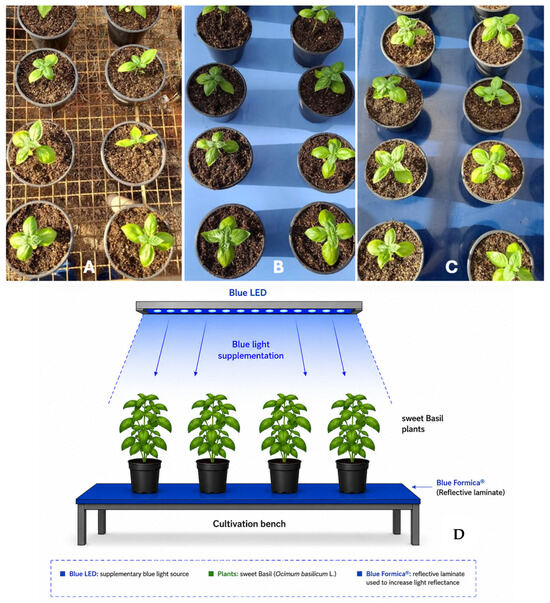
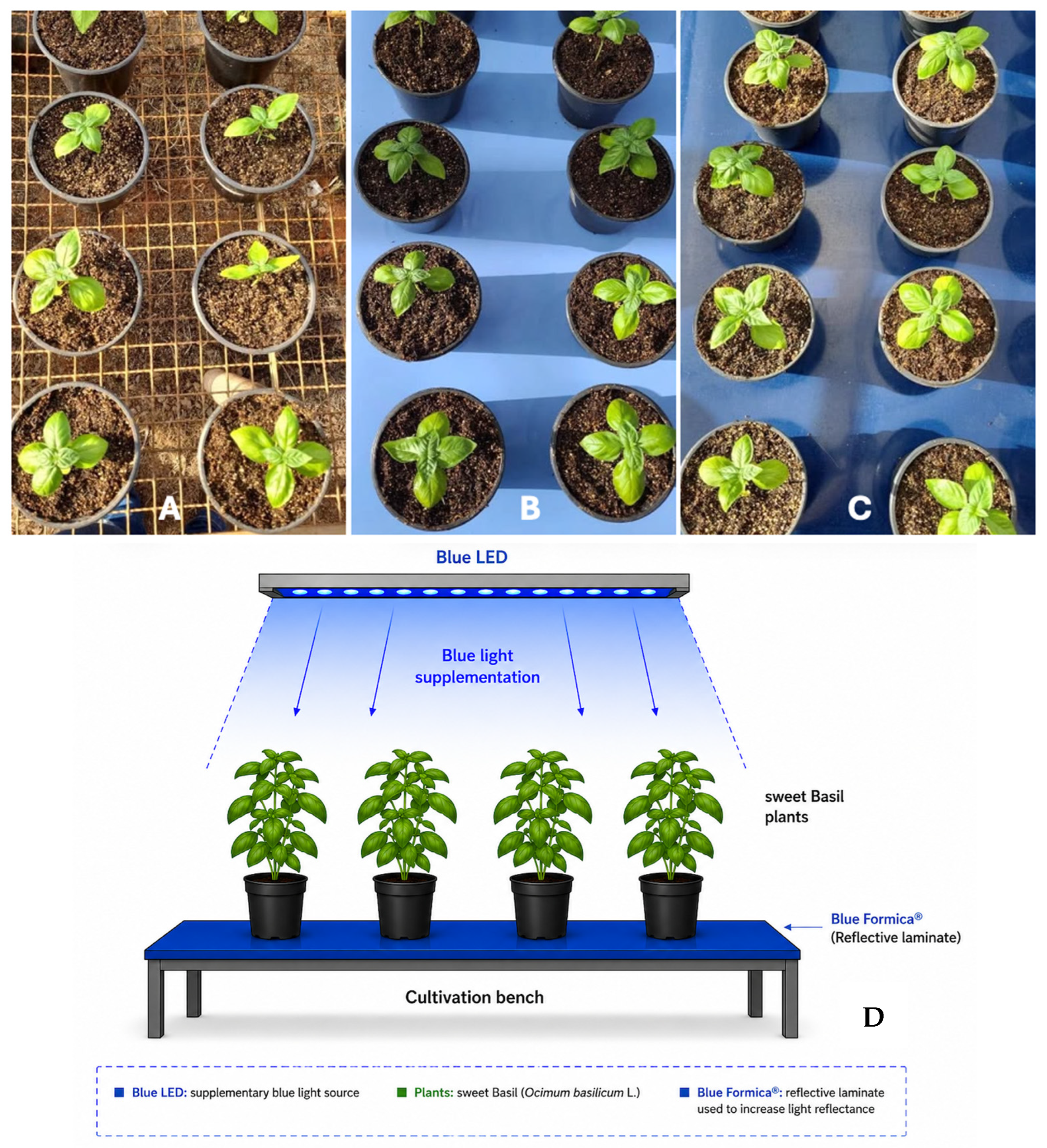
The blue light treatments were provided by reflective Formica® (Fórmica, São Paulo, SP, Brazil) (Scheme 1) sheets and LED lighting. Light blue and dark blue Formica® (melamine laminate) sheets were used. The LED treatment consisted of a 100 W Blue LED (COB) Floodlight Reflector(Avant, São Paulo, SP, Brazil), operating from 7:00 to 11:00 a.m. The Formica® sheets were arranged on the cultivation benches (below the cultivation container) and measured 1.03 m × 1.25 m (1.29 m2). Noting the LED contributes 4 h d−1 while the laminates act passively all day. The production pots had a capacity of 1.0 L, with a height of 10.5 cm, a lower diameter of 9.5 cm, and an upper diameter of 13.5 cm, filled with Carolina Soil substrate (Carolina Soil, Pardinho, SP, Brazil) substrate (based on sphagnum peat, expanded vermiculite, agro-industrial organic residue, dolomitic limestone, and agricultural gypsum).
Scheme 1.
Scheme showing the position of the laminate on the cultivation bench, control (A), light blue (B), dark blue (C), at the time of seedling transplanting. Diagram of the experiment and the location of the LED and laminate (D). This figure was created with the assistance of ChatGPT (OpenAI) using its image-generation functionality and was subsequently reviewed and edited by the authors).
The reflectance spectra of the blue laminated reflective materials (Formica® sheets) were obtained using a UV-Vis-NIR spectrophotometer (Model Lambda 1050) (PerkinElmer, Shelton, CT, EUA),with a 1 nm step and a scanning speed of 100 nm/min. Small discs of the laminates (ø = 1 cm) were placed in the sample holder of a 150 mm integrating sphere.
Seedlings were transplanted to pots on 7 May 2024, at 31 days after sowing (DAS). At 39 DAS, corresponding to 8 days after transplanting (DAT), 4.0 mL (plant) of bioinput was applied via foliar spray.
Photosynthetically active radiation (PAR) reflected by the treatments (benches) was monitored daily at 9:30 a.m. (local time) under clear, cloudless sky conditions using a portable digital pyranometer (Apogee Instruments, Logan, Utah, USA). Air temperature (°C), relative air humidity (%), and external and internal global radiation (W m−2) were recorded by an automatic weather station(E4000, Irriplus, Viçosa, MG Brazil) weather station, model E4000, installed at the center of the greenhouse and externally, with readings logged every 60 min (Table 1). External and internal global radiation (W m−2) data were collected from 9:00 to 16:00 h.
Table 1.
Micrometeorological data from 7 May to 8 June 2024.
2.1.2. Preparation and Characterization of the Bioinput
The Chlorella vulgaris microalgae bioinput (0.7 g Chlorella vulgaris of dry biomass per liter bioinput) was produced at the Microalgae and Biotechnology Laboratory of the Centro de Desenvolvimento Sustentável do Bolsão Sul-Mato-Grossense (CEDESU), using a photobioreactor (tubular glass column) with a diameter-to-height ratio of 1:7, in an open system, using C. vulgaris supplied by AlgaSul (Microalgae Biotechnology—Brazil). The C. vulgaris microalgae bioinput presented the following physicochemical properties: pH 7.39; oxidation-reduction potential of 230 mV; total dissolved solids (TDS) of 622 ppm; and electrical conductivity of 1.310 µS/cm. These parameters are consistent with a viable and metabolically active microalgal suspension suitable for foliar application, as recommended by [21] for biostimulant-grade C. vulgaris preparations.
2.2. Assessments of Growth, Pigments, and Gas Exchange
2.2.1. Assessments of Growth
At 63 DAS (32 DAT), the following growth parameters were collected: plant height (PH, cm), stem diameter (SD, mm), number of leaves (NL), shoot dry mass (SDM, g), root dry mass (RDM, g), and total dry mass (TDM, g). PH was measured with a graduated ruler, from the plant collar to the apex of the apical meristem. SD was measured with a digital caliper. Dry mass was obtained after drying in a forced-air circulation oven at 65 °C for 72 h and weighed on a precision analytical balance.
2.2.2. Assessments of Pigments
Chlorophyll and carotenoid contents and their ratios were determined: Chlorophyll a, Chl a (µg L−1), chlorophyll b, Chl b (µg L−1), total chlorophyll, Chl (µg L−1), carotenoids, CRT (µg L−1), Chl a/Chl b ratio, and total Chl/CRT ratio. Extractions of chlorophylls (a and b) and carotenoids and absorbance readings were taken using a spectrophotometer at wavelengths were carried out following the methodology of [29]. Briefly, 0.5 g of fresh plant material was weighed, added to 5 mL of 80% acetone, and placed in 14 mL test tubes for 48 h in a refrigerator. After this period, the test tubes were centrifuged for 15 min at 4.000 rpm, and the supernatant was then diluted at a ratio of 0.4 mL of extract to 1.6 mL of 80% acetone.
2.2.3. Assessments of Gas Exchange
The following gas exchange parameters were also evaluated: internal CO2 concentration (Ci), transpiration (E), stomatal conductance (gs), net CO2 assimilation rate or liquid photosynthesis (A), water use efficiency (WUE), and instantaneous carboxylation efficiency (ICi). Measurements of Ci, E, gs, and A were performed at 9:00 a.m. using a portable infrared gas exchange analyzer (LCi, ADC BioScientific, Hertfordshire, UK) (four leaves). WUE was subsequently calculated as the ratio between net photosynthesis and transpiration (A/E), and A/Cip is the ratio between net photosynthesis and intracellular CO2 concentration (A/Ci). All gas exchange measurements were performed on fully expanded, healthy leaves of similar developmental stage, selected from the middle portion of the canopy, to minimize variability associated with leaf age and light exposure [30].
2.3. Statistical Analyses
Statistical analyses were performed using the Sisvar 5.3 software. Data were subjected to analysis of variance, and means, when significant, were compared using the Tukey test for the bench factor and the F test for the bioinput factor, both at a 5% probability level.
A multivariate analysis was performed using canonical variables (Candisc package 1.1.1) and principal component analysis using the Ggplot2 4.0.2, Factoextra 2.2.0 and Ggrepel packages 0.9.8. Data were also subjected to Pearson correlation analysis (Corrplot package 0.95) through a correlation matrix with different color gradients among the study variables. Correlations were interpreted as follows: values closer to blue indicated positive correlations, while negative correlations were highlighted in red. Correlations with a 5% error level were marked with one asterisk, those with a 1% error level with two asterisks, and those with a 0.1% error level with three asterisks. This multivariate approach allows for the simultaneous visualization of relationships among physiological, morphological, and biochemical variables, providing a more integrative interpretation of treatment effects than univariate analyses alone [31]. Multivariate visualization was performed using radar plots (spider plots) to compare the different treatments with the growth, gas exchange, and photosynthetic pigments of sweet basil plants. The analysis was conducted using the fmsb, dplyr, and scales packages. The data were initially grouped by treatment, and the means of the analyzed variables were calculated. Subsequently, the values were normalized on a percentage scale (0–100%) to allow comparison between variables with different units. All analyses were performed using R software version 4.3.3 [32].
3. Results
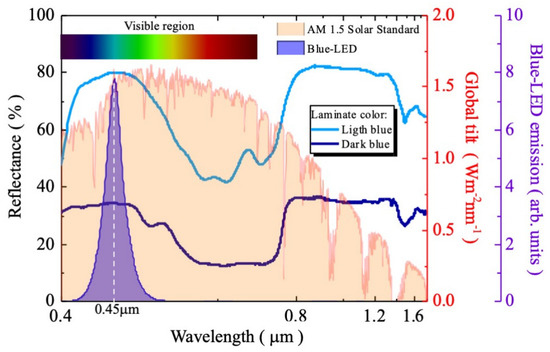
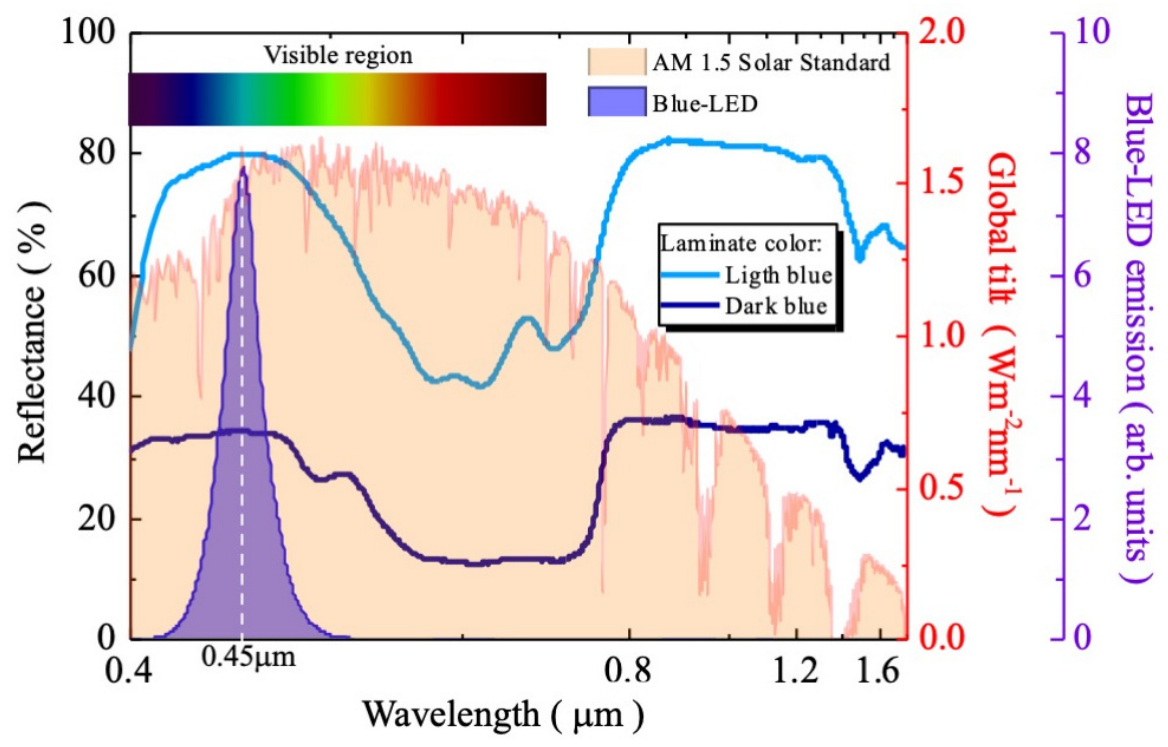
The reflectance spectra of the light blue and dark blue laminated materials (Formica®), the emission spectrum of the blue LED, and the AM 1.5 Solar Standard irradiance are shown in Figure 1. The light blue laminate exhibited substantially higher reflectance across the entire measured spectral range (0.4–1.6 µm), with reflectance values remaining above 60% throughout most of the visible and near-infrared regions. The dark blue laminate showed considerably lower and more uniform reflectance, ranging between approximately 13% and 35% across the same spectral range. The blue LED emission was concentrated in a narrow band centered at 0.45 µm, confirming its spectral selectivity within the blue region of the visible spectrum (440–490 nm). These spectral characteristics indicate that the light blue laminate provides broad-spectrum light redistribution, while the dark blue laminate and the LED offer more spectrally selective, blue-enriched illumination, with markedly different reflectance values consistent with the field measurements presented (Figure 1).
Figure 1.
Reflectance spectra of light blue and dark blue laminated materials (Formica®) across the 0.4–1.6 µm spectral range, along with the emission spectrum of the blue LED and the AM 1.5 Solar Standard irradiance shown for reference. The dashed vertical line indicates the peak LED emission at 0.45 µm. Laboratory reflectance spectra.
Plants grown on the dark blue bench with microalgae bioinput application were taller than those grown under all other treatments, being 45.9%, 25.8%, and 18.4% taller than those in the control, light blue, and LED treatments, respectively. Without bioinput application, plants grown under the control and dark blue bench treatments did not differ from each other and were taller than those grown under the LED treatment, being 16.4% and 15.8% taller, respectively (Figure 2A). Under the dark blue bench and LED treatments, bioinput application increased plant height by 28.8% and 26.0%, respectively, compared to non-application (Figure 2A).
The stem diameter (SD) of plants grown on the dark blue bench with microalgae bioinput application was greater than that of all other treatments, being 18.0%, 10.4%, and 13.8% larger than those of plants grown under the control, light blue, and LED treatments, respectively. Without bioinput application, the SD of plants grown on the dark blue bench—which did not differ from those on the control and light blue benches—was 12.1% greater than that of LED-grown plants (Figure 2B). Under the dark blue, light blue, and LED treatments, bioinput application promoted increases in SD of 14.6%, 15.2%, and 12.8%, respectively, compared to non-application (Figure 2B).
The number of leaves (LN) of plants grown on the dark blue bench with microalgae bioinput application was greater than that of all other treatments, being 59.2%, 78.2%, and 47.1% higher than those of plants grown under the control, light blue, and LED treatments, respectively. Without bioinput application, the LN of plants grown on the dark blue bench—which did not differ from those on the control and light blue benches—was 23.3% higher than that of LED-grown plants (Figure 2C). Under the dark blue bench and LED treatments, bioinput application increased LN by 75.9% and 61.5%, respectively, compared to non-application (Figure 2C).
Figure 2.
Plant height (A), stem diameter (B), number of leaves (C), shoot dry matter (D), root dry matter (E), and total dry matter (F) of O. basilicum L. plants under blue light supplementation and Chlorella vulgaris microalgae bioinput application. Means followed by the same uppercase letter for light treatment and lowercase letter for bioinput application do not differ significantly by the Tukey test for light and F test for bioinput, both at 5% probability. Vertical bars indicate standard error.
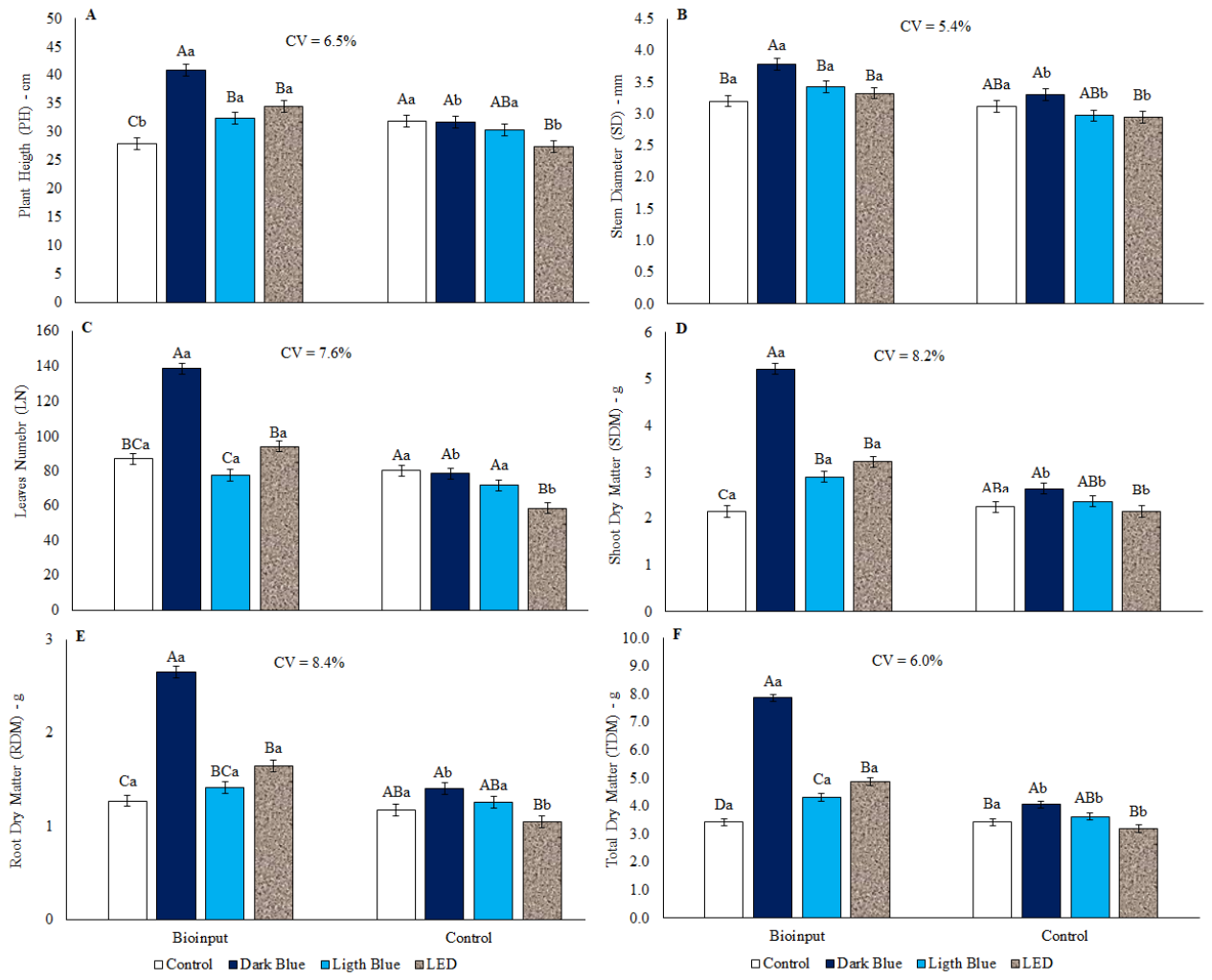
Plants grown on the dark blue bench with microalgae bioinput application presented the highest shoot dry matter (SDM), being 142.9%, 79.5%, and 61.4% greater than those of the control, light blue, and LED treatments, respectively. Without bioinput application, plants grown on the dark blue bench—which did not differ from those on the control and light blue benches—exhibited SDM 23.5% higher than that of LED-grown plants (Figure 2D). Under the dark blue, light blue, and LED treatments, bioinput application promoted increases in SDM of 96.8%, 23.0%, and 50.6%, respectively, compared to non-application (Figure 2D).
Plants grown on the dark blue bench with microalgae bioinput application presented the highest root dry matter (RDM), being 108.4%, 87.8%, and 61.3% greater than those of the control, light blue, and LED treatments, respectively. Without bioinput application, plants grown on the dark blue bench—which did not differ from those on the control and light blue benches—exhibited root dry matter 33.5% higher than that of LED-grown plants (Figure 2E). Under the dark blue bench and LED treatments, bioinput application promoted increases in RDM of 89.3% and 56.7%, respectively, compared to non-application (Figure 2E).
The total dry matter (TDM) of plants grown on the dark blue bench with microalgae bioinput application was 130.4%, 82.2%, and 61.4% greater than that of the control, light blue, and LED treatments, respectively. Without bioinput application, plants grown on the dark blue bench—which did not differ from those on the light blue bench—presented TDM 26.8% and 18.3% higher than those of the LED and control treatments, respectively (Figure 2F). Under the dark blue, light blue, and LED treatments, bioinput application promoted increases in TDM of 94.2%, 19.2%, and 52.6%, respectively, compared to non-application (Figure 2F). Overall, the combined application of dark blue reflective laminate and microalgae bioinput consistently yielded the greatest improvements across all growth variables evaluated, suggesting a synergistic effect between spectral quality and biostimulant action on sweet basil biomass accumulation.
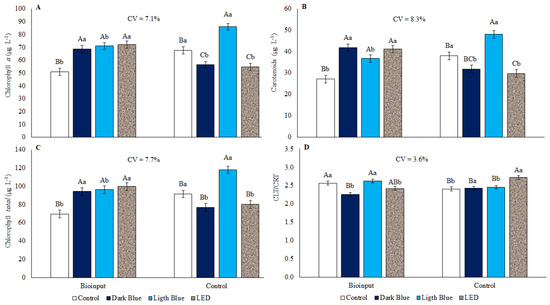
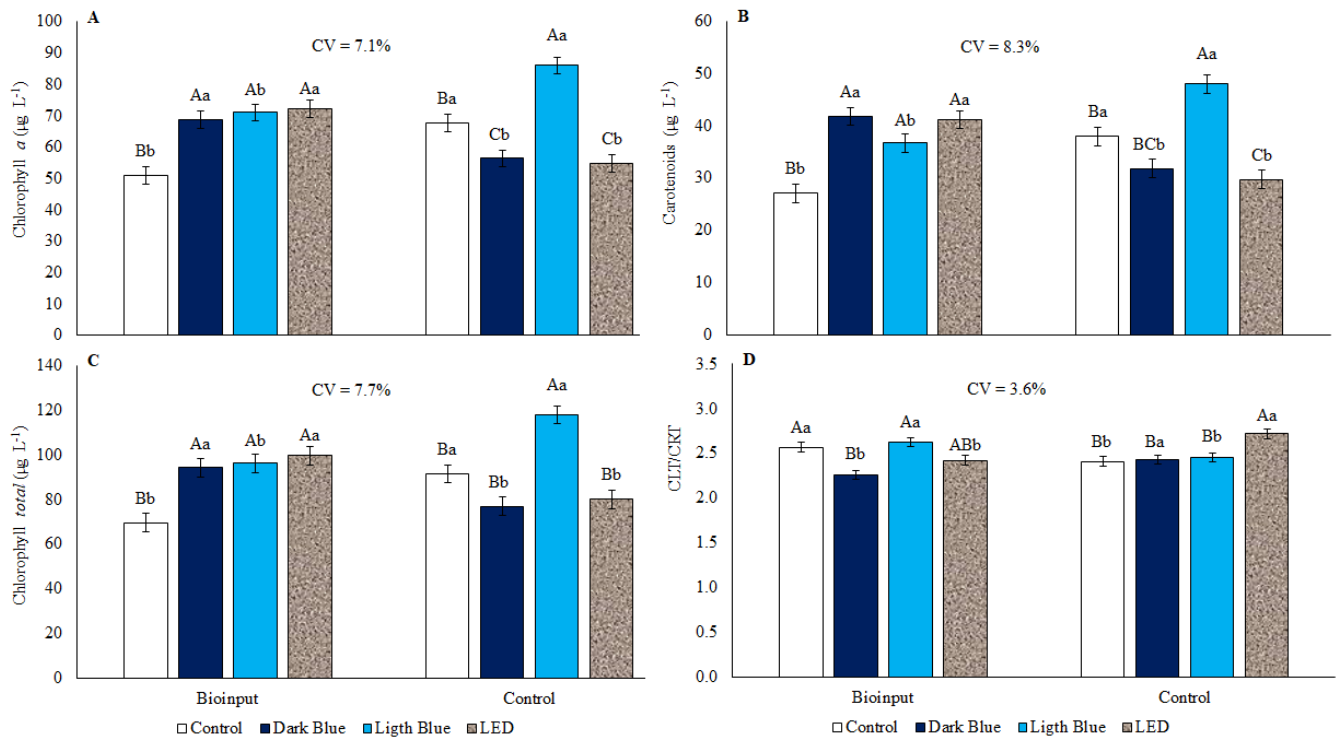
Chlorophyll a (Chl a), total chlorophyll (Chl), and carotenoids (CRT) of plants grown under direct (LED) or indirect (dark blue and light blue benches) blue light supplementation with microalgae bioinput application were higher than those of plants grown on the control bench. Under the LED, dark blue bench, and light blue bench treatments, chlorophyll a was increased by 42.1%, 34.9%, and 39.6%, total chlorophyll by 43.1%, 35.3%, and 38.2%, and carotenoids by 51.9%, 54.2%, and 35.3%, respectively, relative to the control. Without bioinput application, Chl a, Chl, and CRT of plants grown under indirect light blue supplementation were higher than those of plants under all other treatments, and these pigments were increased by 27.1%, 28.8%, and 26.6% relative to the control, respectively (Figure 3A, Figure 3B and Figure 3C). Under the control and light blue benches, microalgae bioinput application did not increase Chl a, Chl, or CRT; however, under the dark blue bench and LED treatments, bioinput application promoted increases in these pigments (Figure 3A–C).
Figure 3.
Chlorophyll a (A), carotenoids (B), total chlorophyll (C), and total chlorophyll to-carotenoid ratio (D) of O. basilicum L. plants under blue light supplementation and Chlorella vulgaris microalgae bioinput application. Means followed by the same uppercase letter for light treatment and lowercase letter for bioinput application do not differ significantly by the Tukey test for light and F test for bioinput, both at 5% probability. Vertical bars indicate standard error.
The Chl/CRT ratio showed small differences across treatments, ranging from 2.3 to 2.7. With bioinput application, this ratio was higher in the control and light blue bench treatments compared to the dark blue bench. Without bioinput application, this ratio was higher under the LED treatment compared to all other treatments (Figure 3D). Under the control and light blue bench treatments, microalgae bioinput application increased the Chl/CRT ratio; however, under the dark blue bench and LED treatments, bioinput application did not increase this ratio (Figure 3D).
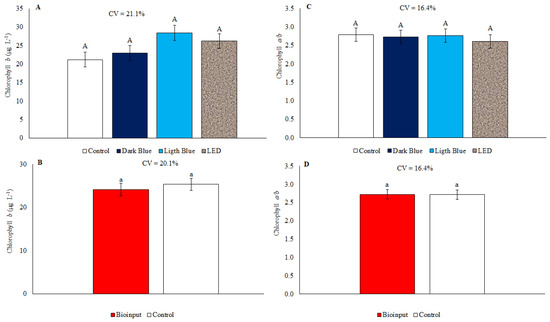
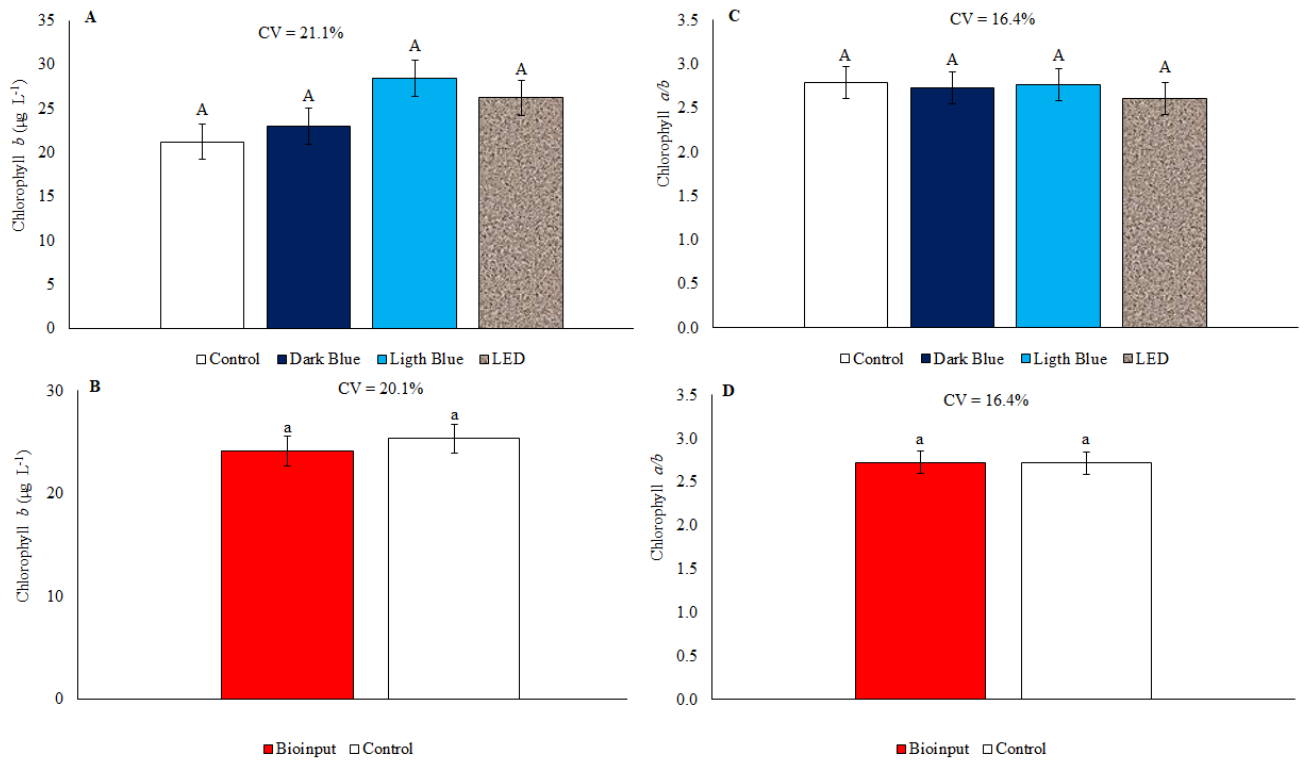
Chlorophyll b and the Chl a/Chl b ratio did not differ significantly among any of the treatments (Figure 4).
Figure 4.
Chlorophyll b (A,B) and chlorophyll a/chlorophyll b ratio (C,D) of O. basilicum L. plants under blue light supplementation and Chlorella vulgaris microalgae bioinput application. Means followed by the same uppercase letter for light treatment and lowercase letter for bioinput application do not differ significantly by the Tukey test for light and F test for bioinput, both at 5% probability. Vertical bars indicate standard error.
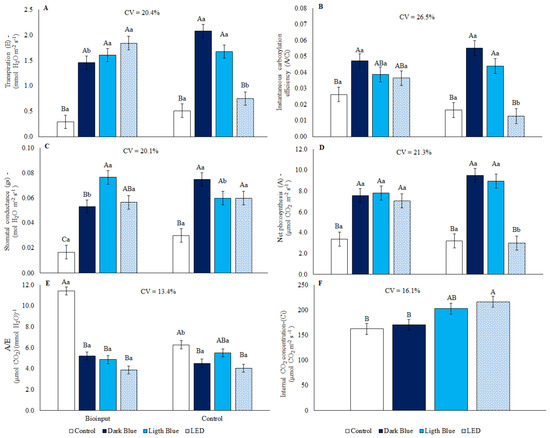
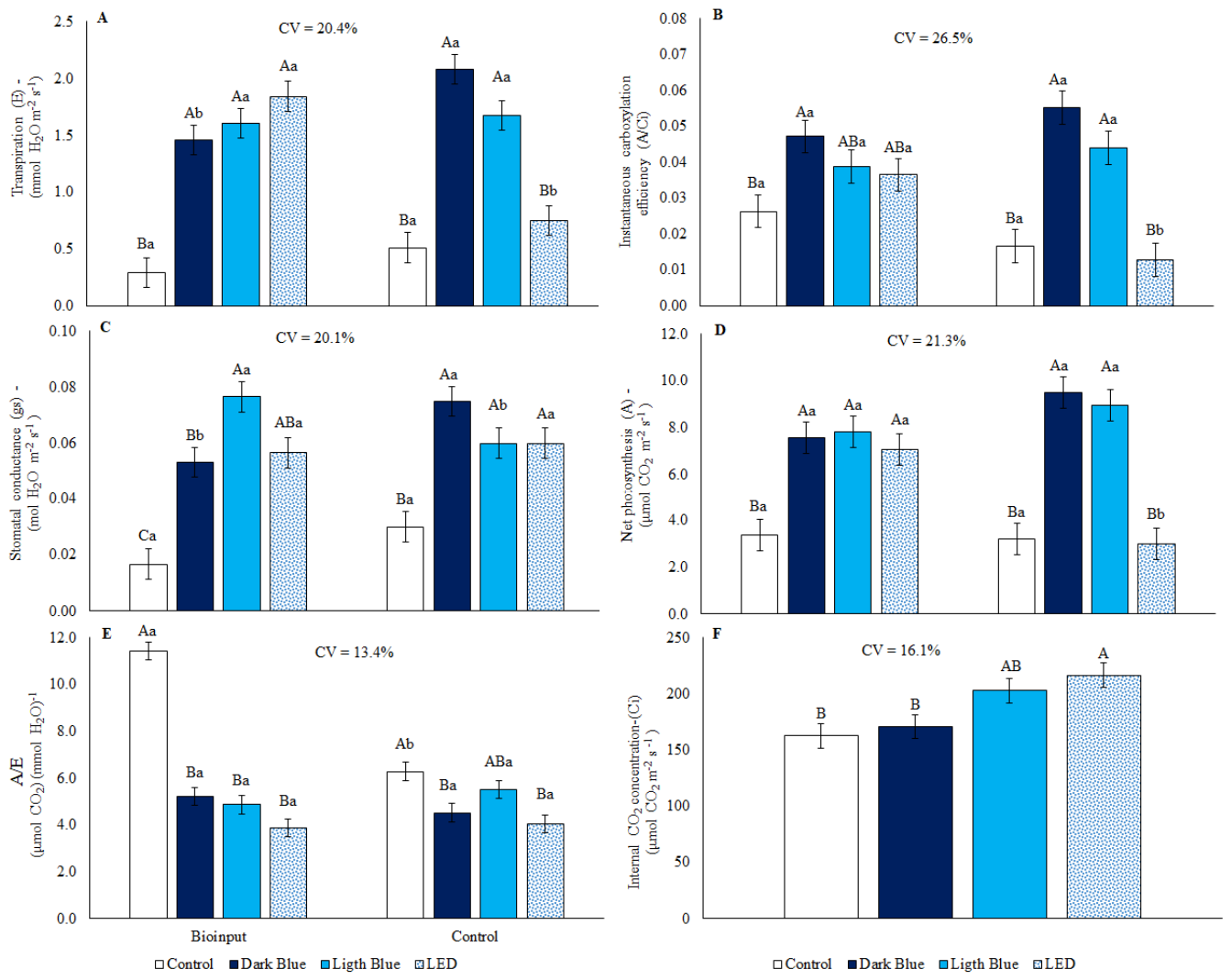
With microalgae bioinput application, transpiration (E), instantaneous carboxylation efficiency (A/Ci), stomatal conductance (gs), and net photosynthetic assimilation rate (A) of plants grown under direct (LED) or indirect (dark blue and light blue benches) blue light were higher than those of plants grown on the control bench (Figure 5A–D). Under the LED, dark blue bench, and light blue bench treatments, E was increased by 528.4%, 396.6%, and 447.7%, A/Ci by 38.7%, 79.1%, and 47.2%, gs by 240%, 220%, and 360%, and A by 110.1%, 124.4%, and 132.2% relative to the control, respectively (Figure 5A, Figure 5B, Figure 5C and Figure 5D). Water use efficiency (WUE) was highest in the control treatment (Figure 5E).
Figure 5.
Transpiration (A), instantaneous carboxylation efficiency (B), stomatal conductance (C), net photosynthesis (D), water use efficiency (E), and internal CO2 concentration (F) of O. basilicum L. plants under blue light supplementation and Chlorella vulgaris microalgae bioinput application. Means followed by the same uppercase letter for light treatment and lowercase letter for bioinput application do not differ significantly by the Tukey test for light and F test for bioinput, both at 5% probability. Vertical bars indicate standard error.
Without bioinput application, E, A/Ci, and A of plants grown under indirect dark blue and light blue light were higher than those of plants under all other treatments (Figure 5A–D). Under the dark blue bench, increases in E, A/Ci, and A were 305.2%, 231.2%, and 197.4%, and under the light blue bench these increases were 226.3%, 163.3%, and 179.6% relative to the control, respectively (Figure 5A, Figure 5B and Figure 5D). Stomatal conductance of plants grown under the LED, dark blue bench, and light blue bench treatments was 100%, 150%, and 100% higher than that of control plants, respectively (Figure 5C). Under the LED treatment, which did not differ from the light blue bench, plants exhibited a higher internal CO2 concentration than under all other treatments (Figure 5F). WUE of plants in the control treatment—which did not differ from the light blue bench—was higher than that of all other treatments (Figure 5E).
Transpiration of plants on the control and light blue benches, A/Ci of plants on the control, dark blue, and light blue benches, gs of plants in the control and LED treatments, A of plants on the control, dark blue, and light blue benches, and WUE of plants on the dark blue bench, light blue bench, and LED treatment were not influenced by bioinput application (Figure 5A–E). E, A/Ci, and A of LED-grown plants, as well as WUE in the control treatment, were greater with bioinput application (Figure 5A,B,D); however, E and gs of plants grown on the dark blue bench were lower without bioinput application (Figure 5A–E).
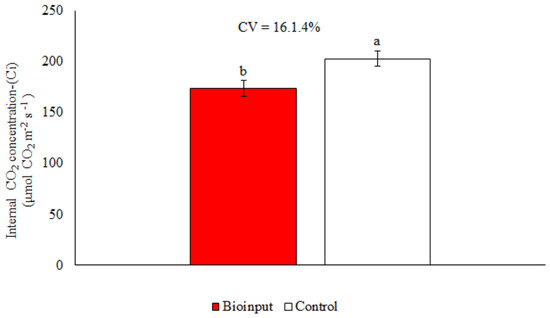
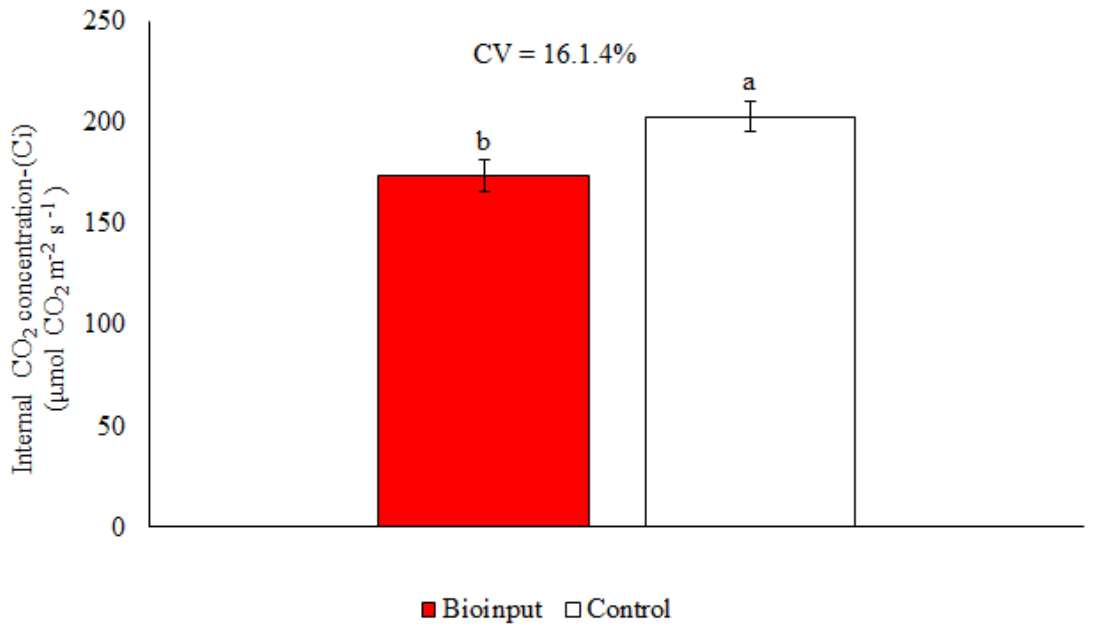
The internal CO2 concentration of plants was not influenced by bioinput application (Figure 6).
Figure 6.
Internal CO2 concentration of O. basilicum L. plants under Chlorella vulgaris microalgae bioinput application. Means followed by the same lowercase letter do not differ significantly by the F test at 5% probability. Vertical bars indicate standard error.
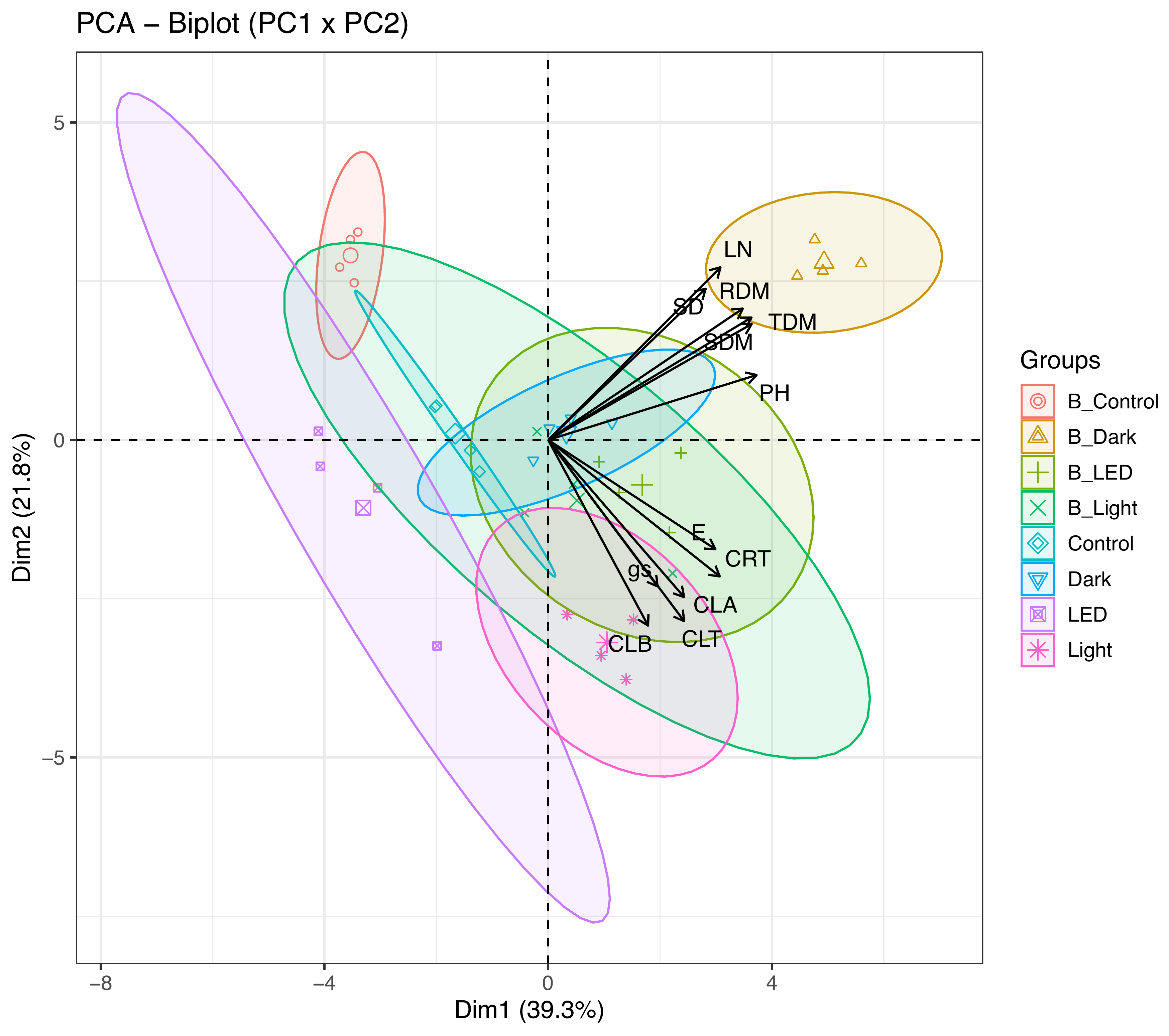
In order to provide an integrative view of the responses of O. basilicum L. to blue light supplementation and Chlorella vulgaris bioinput application across all growth, photosynthetic pigment, and gas exchange variables simultaneously, a principal component analysis (PCA) was performed (Figure 7). In general, it was observed that the application of the microalgae bioinput in conjunction with the dark blue film increased the growth of sweet basil plants, as it was associated with the variables PH, SD, LA, SDM, RDM, and TDM. These variables were closely aligned, indicating a high degree of positive correlation and suggesting that biomass accumulation is directly linked to vegetative growth performance. The greatest accumulation of photosynthetic pigments (CLA, CLB, CLT, and CRT) was observed in the presence of the light blue film, alone or in combination with the bioinput, also in treatment B_LED.
Canonical variable analysis was used to further explore the multivariate discrimination among treatment groups, accounting for 73.6% of the total variance across the first two canonical axes (Can1 = 53.3%; Can2 = 20.3%) (Figure 8). The blue dark (B_Dark) treatment—plants grown on the dark blue bench with bioinput application—was clearly separated from all other treatments along the positive direction of Can1, being strongly associated with biomass-related variables such as LN, SDM, RDM, TDM, SD, and PH, indicating that this treatment combination consistently promoted the greatest growth responses. In contrast, the LED and control treatments without bioinput were positioned at the negative extreme of Can1, associated with Chl/CRT and Ci, suggesting a distinct physiological profile characterized by higher internal CO2 concentration and pigment ratios but lower overall growth and gas exchange performance. Along Can2, the control (B_Control) treatment was separated from the remaining groups, being associated with higher WUE, which is consistent with the results presented in Figure 5E. The gas exchange variables E, gs, and A/Ci were closely grouped and directed toward the negative Can2 axis, reflecting their co-variation and their association with the light blue and dark blue bench treatments. Overall, the canonical variable analysis corroborates the PCA results and reinforces that the combination of dark blue reflective light supplementation with C. vulgaris bioinput application drives the most pronounced and integrative improvements in the physiological and growth performance of Ocimum basilicum.
Pearson correlation analysis was performed to examine the pairwise relationships among all growth, photosynthetic pigment, and gas exchange variables evaluated in this study (Figure 9). A strong and significant positive correlation cluster was observed among the biomass-related variables PH, SD, LN, SDM, RDM, and TDM, as well as between these variables and the photosynthetic pigments Chl a, Chl, and CRT, and the gas exchange parameters A, E, gs, and A/Ci, indicating that treatments promoting greater biomass accumulation also enhanced photosynthetic activity and pigment synthesis simultaneously. Within this positive cluster, gs and Chl presented particularly strong associations with most other variables, suggesting that stomatal conductance and total chlorophyll content are central mediators of the overall plant response to the treatments applied. In contrast, Ci, Chl/CRT, and WUE exhibited significant negative correlations with the majority of growth and gas exchange variables, indicating that, as plant performance improved under blue light and bioinput treatments, internal CO2 concentration and WUE declined—a pattern consistent with increased stomatal opening and enhanced carbon fixation demand under more favorable light conditions. The Chl a/Chl b ratio showed weak or non-significant correlations with most variables, corroborating the absence of treatment effects on Chl b and the Chl a/Chl b ratio reported in Figure 4. Collectively, the correlation structure revealed by Figure 9 supports the interpretation that blue light supplementation and C. vulgaris bioinput application act through an integrated network of physiological responses, in which enhanced gas exchange drives pigment synthesis and biomass accumulation in a coordinated manner.
Figure 7.
Principalcomponent analysis of plant height (PH), stem diameter (SD), number of leaves (LN), shoot dry matter (SDM), root dry matter (RDM), total dry matter (TDM), chlorophyll a (CLA), chlorophyll b (CLB), total chlorophyll (CLT), carotenoids (CRT), transpiration (E) and stomatal conductance (gs) of O. basilicum L. plants under blue light supplementation and Chlorella vulgaris microalgae bioinput application. B = bioinput; Dark = Dark blue laminate; Light = Light blue laminate; LED = LED light.
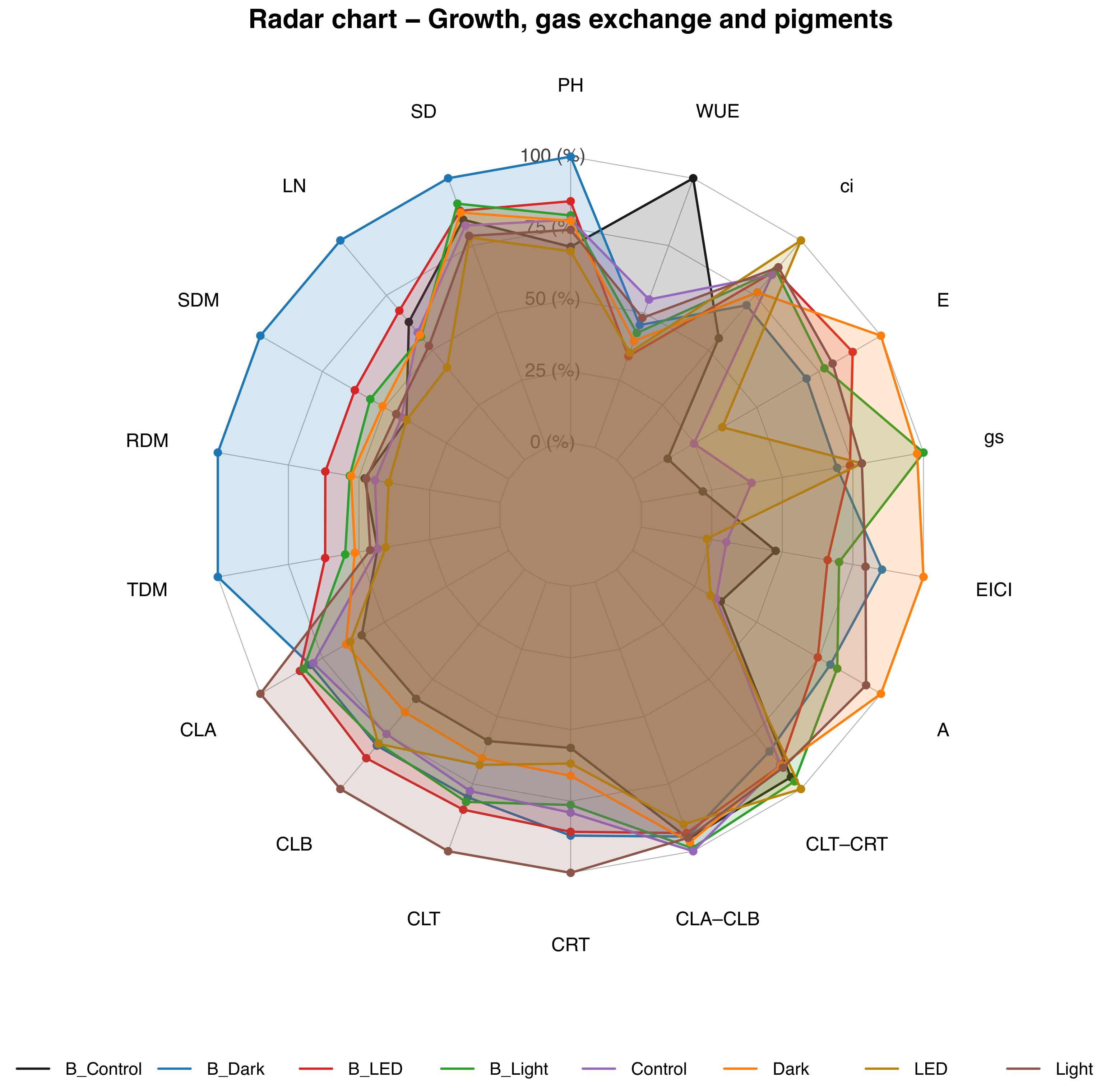
Treatments combining bioinput and light supplementation (B_Dark, B_Light, and B_LED) showed better performance in growth-related characteristics such as plant height (PH), stem diameter (SD), and biomass accumulation (SDM, RDM, and TDM). In contrast, treatments without bioinput (Control, Dark, LED, and Light) showed comparatively reduced values, especially for parameters related to biomass (Figure 10). This suggests that the bioinput of Chlorella vulgaris is a growth biostimulant in sweet basil plants. The content of photosynthetic pigments (CLA, CLB, CLT, and CRT) was higher under conditions of LED light supplementation and light blue laminate in conjunction with bio-input (B_LED and B_Light) and isolated light blue laminate (Light), indicating stimulation of the photosynthetic apparatus. Gas exchange parameters revealed clear treatment-dependent responses. Higher values of net CO2 assimilation (A), stomatal conductance (gs), and transpiration (E) were observed in both Dark and Light treatments.
Figure 8.
Canonical variable analysis of plant height (PH), stem diameter (SD), number of leaves (LN), shoot dry matter (SDM), root dry matter (RDM), total dry matter (TDM), chlorophyll a (CLA), chlorophyll b (CLB), total chlorophyll (CLT), carotenoids (CRT), chlorophyll a/chlorophyll b ratio (CLA_CLB), total chlorophyll-to-carotenoid ratio (CLT_CRT), internal CO2 concentration (Ci), transpiration (E), stomatal conductance (gs), net CO2 assimilation rate (A), water use efficiency (WUE), and instantaneous carboxylation efficiency (A/Ci) of O. basilicum L. plants under blue light supplementation and Chlorella vulgaris microalgae bioinput application. B = bioinput; Dark = Dark blue laminate; Light = Light blue laminate; LED = LED light.
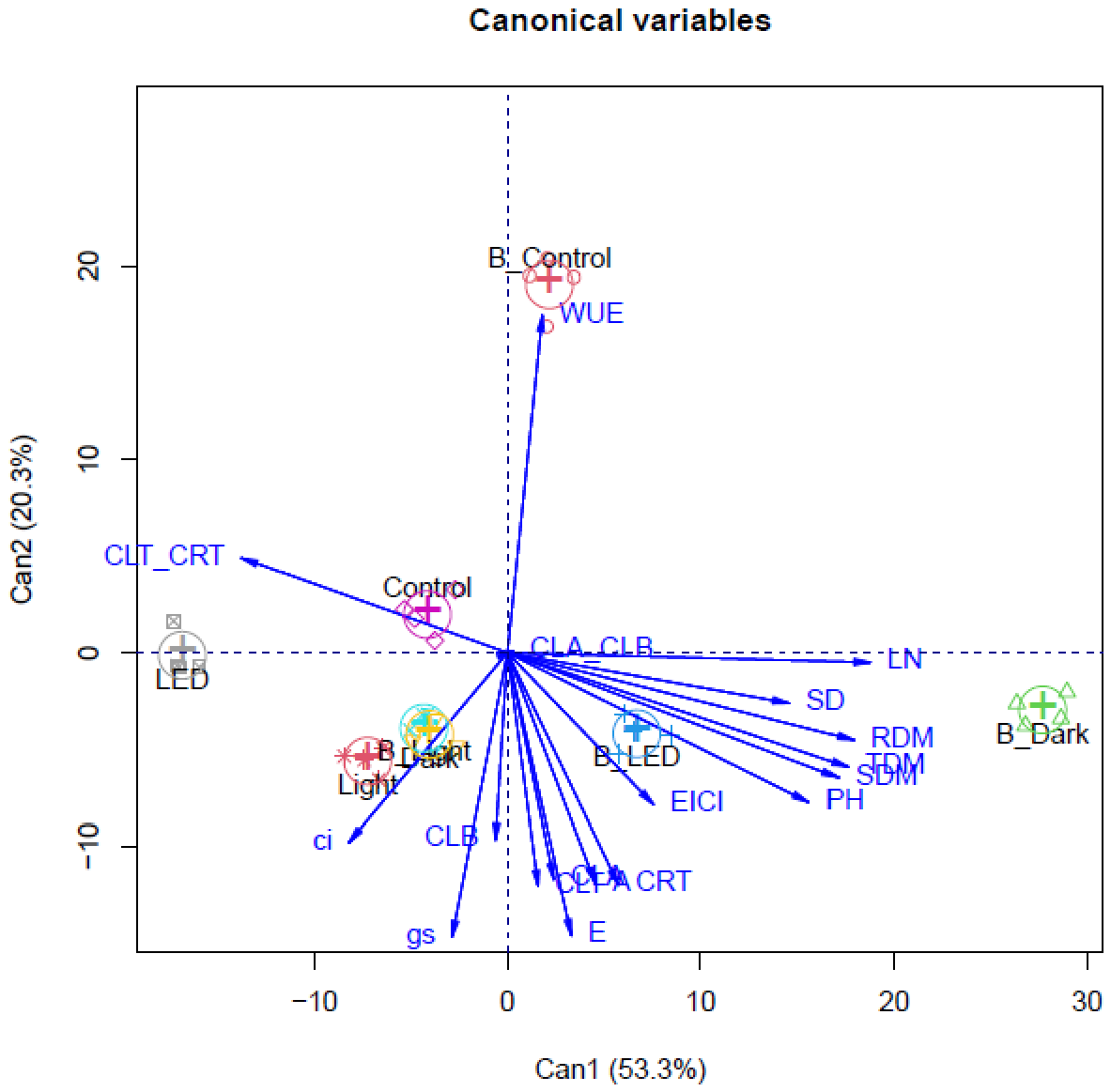
Figure 9.
Pearson correlation matrix of plant height (PH), stem diameter (SD), number of leaves (LA), shoot dry matter (SDM), root dry matter (RDM), total dry matter (TDM), chlorophyll a (CLA), total chlorophyll (CLT), carotenoids (CRT), chlorophyll a/chlorophyll b ratio (CLA_CLB), total chlorophyll-to-carotenoid ratio (CLT_CRT), internal CO2 concentration (Ci), transpiration (E), stomatal conductance (gs), net CO2 assimilation rate (A), water use efficiency (WUE), and instantaneous carboxylation efficiency (A/Ci) of O. basilicum L. plants under blue light supplementation and Chlorella vulgaris microalgae bioinput application. Correlationswere interpreted as follows: values closer to blue indicated positive correlations, whilenegative correlations were highlighted in red. Correlations with a 5% error level weremarked with one asterisk, those with a 1% error level with two asterisks, and those witha 0.1% error level with three asterisks.
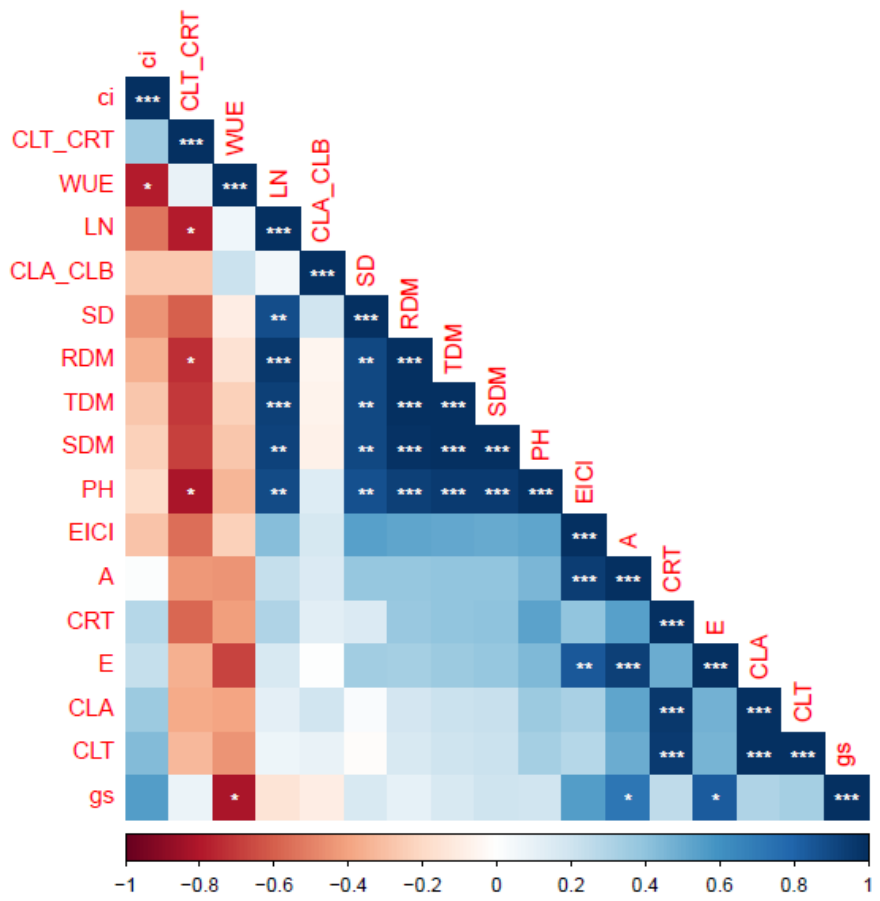
Figure 10.
Radar chart showing the growth, gas exchange, and photosynthetic pigments of sweet basil plants under blue light supplementation and application of the microalga Chlorella vulgaris bioinput. B = bioinput; Dark = Dark blue laminate; Light = Light blue laminate; LED = LED light. Plant height (PH), stem diameter (SD), number of leaves (LA), shoot dry matter (SDM), root dry matter (RDM), total dry matter (TDM), chlorophyll a (CLA), chlorophyll b (CLB), total chlorophyll (CLT), carotenoids (CRT), chlorophyll a/chlorophyll b ratio (CLA-CLB), total chlorophyll-to-carotenoid ratio (CLT-CRT), internal CO2 concentration (Ci), transpiration (E), stomatal conductance (gs), net CO2 assimilation rate (A), water use efficiency (WUE), and instantaneous carboxylation efficiency (A/Ci).
4. Discussion
Blue light, both direct and indirect, combined with the application of a Chlorella vulgaris-based bioinput, promoted significant changes in growth, biomass accumulation, photosynthetic pigments, and gas exchange in Ocimum basilicum.
Blue light influences multiple aspects of plant growth and development. Its perception occurs primarily through two classes of specialized photoreceptors: cryptochromes (CRY1 and CRY2) and phototropins (Phot1 and Phot2). These photoreceptors convert the light stimulus into molecular signals that trigger signaling cascades responsible for regulating gene expression, hormonal modulation, and various physiological processes associated with plant growth and development [33]. The activation of these photoreceptors by blue light has been shown to modulate the expression of genes involved in cell expansion, chloroplast development, and stomatal differentiation, thereby integrating light quality signals into broad developmental programs [34].
O. basilicum L. plants grown under indirect blue light provided by the dark blue reflective laminate, in association with bioinput application, exhibited greater growth in plant height, stem diameter, number of leaves, shoot dry matter, root dry matter, and total dry matter, indicating that both the quality and intensity of blue light can influence plant development.
Similar results were reported for Baby Leaf Kale, in which biomass accumulation and number of leaves were greater on cultivation benches that included the blue laminate [8]. The reflection of light on the abaxial leaf surface by the blue laminate provided greater light energy availability, increasing the number of leaves and favoring photosynthesis [35,36]. This effect is particularly relevant in greenhouse cultivation systems, where the redistribution of diffuse light through reflective materials can substantially increase the photosynthetically active radiation intercepted by lower canopy leaves, which are typically shaded under natural light conditions [15].
Studies indicate that blue light, when used at moderate intensities within a narrow spectral range and in association with different colors, stimulates photosynthesis and promotes plant growth, favoring nutrient absorption and consequently increasing plant fresh biomass [37,38,39].
In the present study, photosynthetic pigments—particularly chlorophyll a, chlorophyll b, total chlorophyll, and carotenoids—presented higher contents under both direct and indirect blue light, indicating that this light spectrum (400–500 nm) favors the synthesis of photosynthetic pigments, since blue light-sensitive photoreceptors act in the regulation of pigment biosynthesis, as do phytochromes, which are primarily associated with red light perception [40,41]. The stimulation of pigment biosynthesis by blue light is partly mediated through the HY5 transcription factor, which is stabilized under blue light and directly activates the expression of genes encoding chlorophyll biosynthetic enzymes, linking photoreceptor signaling to the plastid development pathway [42].
Increases in chlorophyll contents are related to increased photosynthetic efficiency [14], given that blue light influences the photosynthetic rate, stomatal opening, and transpiration [40,43]. Similar results were reported in amaranth, where significant increases in chlorophyll a and total chlorophyll contents were observed under blue light [44]. Similarly, supplementation with LED lamps combining different proportions of red and blue light promoted greater photosynthetic activity in parsley [45].
Carotenoids and chlorophylls are the main photosynthetic pigments in plants, existing as protein complexes in the thylakoid membranes of chloroplasts. They participate in the energy conversion processes of photosynthesis, absorbing and transferring light energy, and changes in their content are associated with the photosynthetic performance of plants [46]. Both direct and indirect blue light were effective in activating the photosynthetic pigment components of photosystems I and II, such as chlorophylls and carotenoids, providing sufficient energy for photophosphorylation, resulting in the production of ATP and NADPH2—molecules indispensable for the subsequent stage of photosynthesis [35].
Plants grown under direct and indirect blue light with bioinput application exhibited higher transpiration rates, stomatal conductance, instantaneous carboxylation efficiency, and net assimilation rate, indicating that the growth of sweet basil under blue light is closely linked to increases in photosynthetic rates. In cucumber seedlings, blue light improved maximum photosynthetic capacity and promoted stomatal development and opening [47]. Stomata play a fundamental role in gas exchange and in the regulation of water flow between the plant and the environment; different light types affect the dynamic behavior of stomata, which in turn influences photosynthetic performance [48]. Both direct and indirect blue light increased stomatal conductance and consequently the transpiration rate. This effect is associated, among other mechanisms, with the suppression of COP1-mediated ICE protein degradation, which stimulates stomatal development [49]. Furthermore, the activation of H+-ATPases in guard cells by blue light—mediated by phototropins—promotes potassium ion influx and turgor-driven stomatal opening, directly increasing stomatal conductance and the subsequent diffusion of CO2 into the mesophyll [50].
The application of Chlorella vulgaris potentiated the effects of blue light (both direct and indirect), increasing plant growth, number of leaves, stem diameter, shoot and root dry biomass, and photosynthetic pigments [51]. The microalga Chlorella vulgaris acts as a biostimulant [21] and contains significant amounts of phytohormones, amino acids, vitamins, and photosynthetic pigments [18,52] that stimulate plant development. The growth-promoting effect of C. vulgaris has been attributed in part to the presence of auxin-like compounds and cytokinins in its biomass, which can enhance cell division and elongation, root architecture, and overall nutrient uptake capacity, thereby amplifying the plant’s ability to exploit the favorable light environment provided by blue light supplementation [25].
The more pronounced effect observed in environments with greater light stimulation (blue light) suggests that Chlorella vulgaris acts as a biostimulant, improving biometric characteristics, photosynthetic pigment contents, and photosynthetic rates. Under conditions without blue light supplementation (control), its effect was more limited, indicating a dependence on light availability. Thus, the use of blue light—both direct and indirect—combined with the application of Chlorella vulgaris, promoted greater development of Ocimum basilicum, representing a promising strategy for the production of this species, with greater photosynthetic efficiency. These findings have practical implications for controlled-environment agriculture and greenhouse production systems, where the combined management of light spectral quality and biological inputs can serve as a sustainable, low-input strategy to maximize crop yield and quality.
Final consideration, for further studies, the dark blue laminate exhibited photosynthetically active reflected radiation similar to the control (Table 1), with the same intensity; however, the quality was different, with a distribution of reflected photons peaking in the shorter wavelength region (Figure 1). These photons were more energetic, along with the reception of photons in the near-infrared region. The change in the spectral balance of the growing environment, with photons reflected by the dark blue laminate and consequently received by the vegetation, enabled in greater accumulation of total dry matter (Figure 2F) and instantaneous carboxylation efficiency (Figure 5D). Part of the reflected radiation from the laminate was infrared, making further studies interesting because, far-red light influences growth [53], plant morphology [54], and increases the actual photosynthetic capacity of PSII [55]. Far-red light tends to promote growth and expansion, while blue light controls excessive elongation; this interaction mainly involves cryptochromes/phototropins for blue and phytochromes for far-red. The combination of both can modulate the balance between vegetative growth and morphophysiological quality, since blue light tends to attenuate excessive elongation induced by far-red light. Thus, new studies evaluating the effect of near-infrared and its interaction with other wavelengths such as blue [56] are important to elucidate its potential use. When using reflective material to take advantage of the radiation that reaches the cultivation environment and emit photons of the desired wavelength (quality), being a technology without energy expenditure, as occurs with LED supplementation.
5. Conclusions
The combined application of indirect blue light provided by the dark blue reflective laminate and Chlorella vulgaris-based bioinput consistently promoted the greatest improvements in plant growth, yielding significant increases in plant height, stem diameter, number of leaves, shoot dry matter, root dry matter, and total dry matter in Ocimum basilicum. These results indicate that the spectral quality of reflected blue light, modulated by the reflectance properties of the laminate material, plays a decisive role in determining the magnitude of the biostimulant response.
Both direct blue light (LED) and indirect blue light (dark blue and light blue reflective benches), in association with microalgae bioinput application, significantly enhanced photosynthetic pigment contents—including chlorophyll a, total chlorophyll, and carotenoids—as well as key gas exchange parameters, namely transpiration, stomatal conductance, instantaneous carboxylation efficiency, and net photosynthetic assimilation rate. The coordinated enhancement of these physiological variables suggests that blue light supplementation and C. vulgaris bioinput joint action is beneficial, with improved stomatal conductance driving greater CO2 availability for carbon fixation, which in turn supports biomass accumulation and pigment synthesis.
The multivariate analyses further corroborated these findings, revealing that treatments combining blue light and bioinput application formed a distinct group characterized by superior and integrated physiological performance relative to control conditions. Taken together, the results of this study establish the use of blue light—whether delivered directly via LED or indirectly via reflective laminates—in combination with Chlorella vulgaris microalgae bioinput as a promising, sustainable, and practically viable strategy for enhancing the growth, photosynthetic performance, and overall productive quality of O. basilicum L. in protected cultivation systems.
Author Contributions
Conceptualization: T.D.S., E.C., F.F.d.S.B. and E.P.V.; Methodology: T.D.S., E.C. and F.F.d.S.B.; Investigation: T.D.S., I.F.S., T.D., E.P.V. and F.P.d.A.P.B.; Resources: E.C., F.F.d.S.B., S.M.L., L.H.d.C.A. and E.D.C.B.; Data curation: T.D.S., T.D., E.C., E.D.C.B., F.F.d.S.B. and E.P.V.; Writing—original draft: T.D.S., T.D., I.F.S., E.C. and E.P.V.; Writing—review and editing: T.D., E.C., F.F.d.S.B., E.D.C.B., S.M.L. and L.H.d.C.A.; Project administration: E.C., F.F.d.S.B., E.P.V. and F.P.d.A.P.B.; Funding acquisition: E.C., F.F.d.S.B., S.M.L. and L.H.d.C.A. All authors have read and agreed to the published version of the manuscript.
Funding
This work was supported by the Foundation for Supporting the Development of Education, Science and Technology of the State of Mato Grosso do Sul—FUNDECT (FUNDECT/CNPq/PRONEM—MS, Process n. 59/300.116/2015—N° FUNDECT 080/2015), the National Council for Scientific and Technological Development (CNPq), and the Higher Education Personnel Improvement Coordination (CAPES).
Data Availability Statement
The original contributions presented in this study are included in the article. Further inquiries can be directed to the corresponding authors.
Conflicts of Interest
The authors declare no conflicts of interest.
References
- Aminian, A.R.; Mohebbati, R.; Boskabady, M.H. The Effect of Ocimum basilicum L. and Its Main Ingredients on Respiratory Disorders: An Experimental, Preclinical, and Clinical Review. Front. Pharmacol. 2022, 12, 805391. [Google Scholar] [CrossRef] [Scilit]
- Ismail, M. Central Properties and Chemical Composition of Ocimum basilicum Essential Oil. Pharm. Biol. 2006, 44, 619–626. [Google Scholar] [CrossRef] [Scilit]
- Avetisyan, A.; Markosian, A.; Petrosyan, M.; Sahakyan, N.; Babayan, A.; Aloyan, S.; Trchounian, A. Chemical composition and some biological activities of the essential oils from basil Ocimum different cultivars. BMC Complement. Altern. Med. 2017, 17, 60. [Google Scholar] [CrossRef] [Scilit]
- Kopsell, D.A.; Sams, C.E.; Morrow, R.C. Blue wavelengths from LED lighting increase nutritionally important metabolites in specialty crops. HortScience 2015, 50, 1285–1288. [Google Scholar] [CrossRef] [Scilit]
- Vaštakaitė-Kairienė, V.; Brazaitytė, A.; Miliauskienė, J.; Sutulienė, R.; Laužikė, K.; Viršilė, A.; Samuolienė, G.; Runkle, E.S. Photon Distribution of Sole-Source Lighting Affects the Mineral Nutrient Content of Microgreens. Agriculture 2022, 12, 1086. [Google Scholar] [CrossRef] [Scilit]
- Silva, J.B.M.; Vendruscolo, E.P.; Bastos, F.E.A.; Binotti, F.F.S.; Sant’ Ana, G.R.; Costa, E. Does light supplementation improve the initial growth of hops seedlings in a protected environment? Rev. Agric. Neotrop. 2023, 10, e7401. [Google Scholar] [CrossRef] [Scilit]
- Kang, J.H.; Yoon, H.I.; Kim, J.; Ahn, T.I.; Son, J.E. Ray-tracing analysis on the far-red induced light-capturing ability of kale. Sci. Hortic. 2023, 311, 111806. [Google Scholar] [CrossRef] [Scilit]
- Dantas, T.; Costa, E.; Scalon, S.P.Q.; Araújo, T.A.N.; Binotti, F.F.S.; Vendruscolo, E.P.; Vieira, G.H.C.; Martins, M.B.; Lima, S.M.; Andrade, L.H.C. Colored Benches Increase Growth, Photosynthetic Pigments, and Gas Exchange in Baby Leaf Kale. Int. J. Hortic. Sci. Technol. 2025, 12, 343–354. [Google Scholar]
- Mitchell, C.A.; Sheibani, F. LED Advancements for plant-factory artificial lighting. In Plant Factory; Elsevier: Amsterdam, The Netherlands, 2020; pp. 167–184. [Google Scholar] [CrossRef] [Scilit]
- Bantis, F.; Ouzounis, T.; Radoglou, K. Artificial LED lighting enhances growth characteristics and total phenolic content of Ocimum basilicum, but variably affects transplant success. Sci. Hortic. 2016, 198, 277–283. [Google Scholar] [CrossRef] [Scilit]
- Pennisi, G.; Orsini, F.; Blasioli, S.; Cellini, A.; Crepaldi, A.; Braschi, I.; Spinelli, F.; Nicola, S.; Fernandez, J.A.; Stanghellini, C.; et al. Resource use efficiency of indoor lettuce (Lactuca sativa L.) cultivation as affected by red: Blue ratio provided by LED lighting. Sci. Rep. 2019, 9, 14127. [Google Scholar] [CrossRef] [Scilit]
- Araújo, T.A.N.; Costa, E.; Dantas, T.; Binotti, F.F.S.; Vendruscolo, E.P.; Vieira, G.H.C.; Ribeiro, F.C.S.; Lima, S.M.; Andrade, L.H.C. Growth and bioactive compounds of baby-leaf chicory on colored cultivation benches with different wavelengths. Chil. J. Agric. Res. 2024, 84, 653–662. [Google Scholar] [CrossRef] [Scilit]
- Lazzarini, L.E.S.; Pacheco, F.V.; Silva, S.T.; Coelho, A.D.; Medeiros, A.P.R.; Bertolucci, S.K.V.; Pinto, J.E.B.P.; Soares, J.D.R. Use of light-emitting diode (LED) in the physiology of cultivated plants—Review. Sci. Agrar. Parana. 2017, 16, 137–144. [Google Scholar]
- Dou, H.; Niu, G.; Gu, M. Photosynthesis, morphology, yield, and phytochemical accumulation in basil plants influenced by substituting green light for partial red and/or blue light. HortScience 2019, 54, 1769–1776. [Google Scholar] [CrossRef] [Scilit]
- Ouzounis, T.; Rosenqvist, E.; Ottosen, C. Spectral effects of artificial light on plant physiology and secondary metabolismo: A review. HortScience 2015, 50, 1128. [Google Scholar] [CrossRef] [Scilit]
- Lage, S.; Willfors, A.; Hörnberg, A.; Gentili, F.G. Impact of organic solvents on lipid-extracted microalgae residues and wastewater sludge co-digestion. Bioresour. Technol. Rep. 2021, 16, 100850. [Google Scholar] [CrossRef] [Scilit]
- Siddiki, S.Y.A.; Mofijur, M.; Kumar, P.S.; Ahmed, S.F.; Inayat, A.; Kusumo, F.; Badruddin, I.A.; Khan, T.M.Y.; Nghiem, L.D.; Ong, H.C.; et al. Microalgae biomass as a sustainable source for biofuel, biochemical and biobased value-added products: An integrated biorefinery concept. Fuel 2022, 307, 121782. [Google Scholar] [CrossRef] [Scilit]
- Almanza, E.; Pua, L.D.C.G.; Pineda, Y.; Rozo, W.; Marquez, M.; Fonseca, A. Eco-friendly Chlorella vulgaris extracts for corrosion protection of steel in acidic environments. Heliyon 2024, 10, e39717. [Google Scholar] [CrossRef] [Scilit]
- Alvarez, A.L.; Weyers, S.L.; Goemann, H.M.; Peyton, B.M.; Gardner, R.D. Microalgae, soil and plants: A critical review of microalgae as renewable resources for agriculture. Algal Res. 2021, 54, 102200. [Google Scholar] [CrossRef] [Scilit]
- Vieira, J.; Saque, M.; Gama, F.; Viana, C.; Coelho, L.; Rodrigues, M.H.; Verela, J.; Pereira, H.; Palencia, P.; Reis, M.; et al. Evaluation of Chlorella vulgaris application as a biostimulant for lettuce growth in soilless culture. J. Appl. Phycol. 2025, 37, 4219–4230. [Google Scholar] [CrossRef] [Scilit]
- Viana, C.; Genevace, M.; Gama, F.; Coelho, L.; Pereira, H.; Varela, J.; Reis, M. Chlorella vulgaris and Tetradesmus obliquus protect spinach (Spinacia oleracea L.) against Fusarium oxysporum. Plants 2024, 13, 1697. [Google Scholar] [CrossRef] [Scilit]
- Álvarez-Gonzáleza, A.; Uggetti, E.; Serrano, L.; Gorchs, G.; Ferrer, I.; Díez-Montero, R. Can microalgae grown in wastewater reduce the use of inorganic fertilizers? J. Environ. Manag. 2022, 323, 116224. [Google Scholar] [CrossRef] [Scilit]
- Tian, S.L.; Khan, A.; Zheng, W.N.; Song, L.; Liu, J.H.; Wang, X.Q.; Li, L. Effects of Chlorella extracts on growth of Capsicum annuum L. seedlings. Sci. Rep. 2022, 12, 15455. [Google Scholar] [CrossRef] [Scilit]
- Gitau, M.M.; Farkas, A.; Ördög, V.; Maróti, G. Evaluation of the biostimulant effects of two Chlorophyta microalgae on tomato (Solanum lycopersicum). J. Clean. Prod. 2022, 364, 132689. [Google Scholar] [CrossRef] [Scilit]
- Du Jardin, P. Plant biostimulants: Definition, concept, main categories and regulation. Sci. Hortic. 2015, 196, 3. [Google Scholar] [CrossRef] [Scilit]
- Banzatto, D.A.; Kronka, S.N. Experimentação Agrícola, 4th ed.; Funep: Jaboticabal, Brazil, 2013. [Google Scholar]
- Costa, E.; Salles, J.S.; Sabino, D.D.L.; Bortolheiro, F.P.; Vendruscolo, E.P.; Binotti, F.F.; Martins, M.B.; Binotti, E.D. Biomass and Biometric Relationships of Ornamental Flower Seedlings Under Different Protected Environments and Substrate Compositions. Not. Bot. Horti Agrobot. Cluj-Napoca 2026, 54, 15223. [Google Scholar] [CrossRef] [Scilit]
- Nagel, S.S.; Costa, E.; Nagel, P.L.; Gomes da Silva, A.; Binotti, F.F.; Vendruscolo, E.P.; Vieira, G.H.; Dantas, T. Growth and flowering of carnation cultivated in different pot colors and protected environments. Not. Bot. Horti Agrobot. Cluj-Napoca 2024, 52, 13069. [Google Scholar] [CrossRef] [Scilit]
- Lichtenthaler, H.K. Chlorophylls and carotenoids: Pigment photosynthetic bio-membranes. Methods Enzymol. 1984, 148, 350–382. [Google Scholar]
- Flexas, J.; Ribas-Carbó, M.; Diaz-Espejo, A.; Galmés, J.; Medrano, H. Mesophyll conductance to CO2: Current knowledge and future prospects. Plant Cell Environ. 2008, 31, 602–621. [Google Scholar] [CrossRef] [Scilit]
- Legendre, P.; Legendre, L. Numerical Ecology, 3rd ed.; Developments in Environmental Modelling; Elsevier: Amsterdam, The Netherlands, 2012; Volume 24, ISBN 978-0-444-53868-0. [Google Scholar]
- R Core Team. R: A Language and Environment for Statistical Computing (Versão 4.3.3); R Foundation for Statistical Computing: Vienna, Austria, 2024; Available online: https://www.r-project.org (accessed on 1 January 2025).
- Su, Q.; Park, Y.G.; Kambale, R.D.; Adelberg, J.; Karthikeyan, R.; Jeong, B.R. Advancing light-mediated technology in plant growth and development: The role of blue light. Horticulturae 2025, 11, 795. [Google Scholar] [CrossRef] [Scilit]
- Inoue, S.; Kinoshita, T. Blue Light Regulation of Stomatal Opening and the Plasma Membrane H+-ATPase. Plant Physiol. 2017, 174, 531–538. [Google Scholar] [CrossRef] [Scilit]
- Taiz, L.; Zeiger, E.; Moller, I.M.; Murphy, A. Fisiologia e Desenvolvimento Vegetal, 6th ed.; Artmed: Porto Alegre, Brazil, 2017; 761p. [Google Scholar]
- Campos, R.S.D.; Costa, E.; Cavalcante, D.F.; Freitas, R.A.; Binotti, F.F.D.S. Ornamental cherry tomatoes in different protected environments and reflector materials in cultivation Bench. Rev. Caatinga 2023, 36, 09–20. [Google Scholar] [CrossRef] [Scilit]
- Johnson, R.; Kong, Y.; Zheng, Y. Elongation growth mediated by blue light varies with light intensities and plant species: A comparison with red light in arugula and mustard seedlings. Environ. Exp. Bot. 2020, 169, 103898. [Google Scholar] [CrossRef] [Scilit]
- Kong, Y.; Zheng, Y. Growth and morphology responses to narrow-band blue light and its co-action with low-level UVB or green light: A comparison with red light in four microgreen species. Environ. Exp. Bot. 2020, 178, 104189. [Google Scholar] [CrossRef] [Scilit]
- Ying, Q.; Kong, Y.; Zheng, Y. Overnight supplemental blue, rather than far-red, light improves microgreen yield and appearance quality without compromising nutritional quality during winter greenhouse production. HortScience 2020, 55, 1468–1474. [Google Scholar] [CrossRef] [Scilit]
- Zheng, L.; He, H.; Song, W. Application of light-emitting diodes and the effect of light quality on horticultural crops: A review. HortScience 2019, 54, 1656–1661. [Google Scholar] [CrossRef] [Scilit]
- Liu, X.; Li, Y.; Zhong, S. Interplay between light and plant hormones in the control of Arabidopsis seedling chlorophyll biosynthesis. Front. Plant Sci. 2017, 8, 1433. [Google Scholar] [CrossRef] [Scilit]
- Gangappa, S.N.; Botto, J.F. The multifaceted roles of HY5 in plant growth and development. Mol. Plant 2016, 9, 1353–1365. [Google Scholar] [CrossRef] [Scilit]
- Miao, Y.X.; Wang, X.Z.; Gao, L.H.; Chen, Q.Y.; Qu, M. Blue light is more essential than red light for maintaining the activities of photosystem II and I and photosynthetic electron transport capacity in cucumber leaves. J. Integr. Agric. 2016, 15, 87–100. [Google Scholar] [CrossRef] [Scilit]
- Toscano, S.; Cavallaro, V.; Ferrante, A.; Romano, D.; Patané, C. Effects of different light spectra on final biomass production and nutritional quality of two microgreens. Plants 2021, 10, 1584. [Google Scholar] [CrossRef] [Scilit]
- Litvin, A.G.; Currey, C.J.; Wilson, L.A. Effects of supplemental light source on basil, dill, and parsley growth, morphology, aroma, and flavor. J. Am. Soc. Hortic. Sci. 2020, 145, 18–29. [Google Scholar] [CrossRef] [Scilit]
- Xu, R.; Zhang, S.; Wang, C.; Zhang, X.; Zhao, L.; Zong, D. Effects of red and blue light on growth and photosynthesis of Populus szechuanica var. tibetica. Front. Plant Sci. 2025, 16, 1712729. [Google Scholar] [CrossRef] [Scilit]
- Wang, T.; Sun, Q.; Zheng, Y.; Xu, Y.; Liu, B.; Li, Q. Effects of red and blue light on the growth, photosynthesis, and subsequent growth under fluctuating light of cucumber seedlings. Plants 2024, 13, 1668. [Google Scholar] [CrossRef] [Scilit]
- Matthews, J.S.A.; Vialet-Chabrand, S.; Lawson, T. Role of blue and red light in stomatal dynamic behaviour. J. Exp. Bot. 2020, 71, 2253–2269. [Google Scholar] [CrossRef] [Scilit]
- Lee, J.H.; Jung, J.H.; Park, C.M. Light inhibits COP1-mediated degradation of ICE transcription factors to induce stomatal development in Arabidopsis. Plant Cell 2017, 29, 2817–2830. [Google Scholar] [CrossRef] [Scilit]
- Shimazaki, K.; Doi, M.; Assmann, S.M.; Kinoshita, T. Light regulation of stomatal movement. Annu. Rev. Plant Biol. 2007, 58, 219–247. [Google Scholar] [CrossRef] [Scilit]
- Vildanova, G.I.; Allaguvatova, R.Z.; Kunsbaeva, D.F.; Sukhanova, N.V.; Gaysina, L.A. Application of Chlorella vulgaris Beijerinck as a biostimulant for growing cucumber seedlings in hydroponics. BioTech 2023, 12, 42. [Google Scholar] [CrossRef] [Scilit]
- Silva, G.P.V.; Costa, E.; Melo, P.H.R.; Bortolheiro, F.P.D.A.P.; Dantas, T.; da Silva Binotti, F.F.; Oliveira, C.E.S.; da Silva, A.G. Colored Tubes and Chlorella Vulgaris Bioinput Improve Growth and Quality of Hancornia speciosa seedlings. Phyton 2025, 94, 3109. [Google Scholar] [CrossRef] [Scilit]
- Wong, C.E.; Teo, Z.W.N.; Shen, L.; Yu, H. Seeing the lights for leafy greens in indoor vertical farming. Trends Food Sci. Technol. 2020, 106, 48–63. [Google Scholar] [CrossRef] [Scilit]
- Jeong, S.J.; Niu, G.; Zhen, S. Far-red light and temperature interactively regulate plant growth and morphology of lettuce and basil. Environ. Exp. Bot. 2024, 218, 105589. [Google Scholar] [CrossRef] [Scilit]
- Tan, T.; Li, S.; Fan, Y.; Wang, Z.; Raza, M.A.; Shafiq, I.; Wang, B.; Wu, X.; Yong, T.; Wang, X.; et al. Far-red light: A regulator of plant morphology and photosynthetic capacity. Crop J. 2022, 10, 300–309. [Google Scholar] [CrossRef] [Scilit]
- Knight, B.M.; Runkle, E.S. Interactions between blue light and far-red radiation on growth of culinary herb seedlings. HortScience 2026, 61, 541–551. [Google Scholar] [CrossRef] [Scilit]

Disclaimer/Publisher’s Note: The statements, opinions and data contained in all publications are solely those of the individual author(s) and contributor(s) and not of MDPI and/or the editor(s). MDPI and/or the editor(s) disclaim responsibility for any injury to people or property resulting from any ideas, methods, instructions or products referred to in the content. |
© 2026 by the authors. Licensee MDPI, Basel, Switzerland. This article is an open access article distributed under the terms and conditions of the Creative Commons Attribution (CC BY) license.