


Abstract
GATA transcription factors represent a conserved family of regulatory proteins that modulate plant growth and stress adaptation. While GATA families have been well characterized in model plants and Solanaceae crops, their evolutionary and functional features remain poorly defined in eggplant (Solanum melongena L.). Here, we systematically characterized the SmGATA gene family using the latest eggplant V4.1 reference genome and multi-stress transcriptome data. A total of 29 SmGATA genes were identified, with segmental duplication predominantly driving family expansion under strong purifying selection. Cross-species synteny analysis revealed high conservation of GATA homologs within Solanaceae species. Phylogenetic clustering divided SmGATA genes into four subfamilies, whose members exhibited conserved gene structures and motif compositions. Numerous cis-acting elements associated with plant growth, phytohormone signaling, and stress responses were enriched in SmGATA promoters. Tissue-specific expression analysis demonstrated the extensive involvement of SmGATA genes in eggplant organ development. Combined transcriptome screening and qRT-PCR validation identified multiple stress-responsive SmGATA members. Notably, SmGATA5 showed differential expression under high- and low-temperature conditions, and SmGATA17 exhibited the broadest spectrum of responses to abiotic and biotic stresses. This study elucidates the evolutionary conservation and functional diversity of the eggplant GATA family, providing valuable candidate genes for future functional research and stress-tolerant molecular breeding in eggplant.
1. Introduction
Transcription factors (TFs) are a class of key regulatory proteins widely present in living beings. They can recognize specific sequences of target genes and bind to upstream regulatory elements to modulate gene expression, hence also known as trans-acting factors [1]. TFs play a crucial role in key physiological processes such as plant stress regulatory networks and signal transduction pathways [2]. Moreover, TFs comprise diverse family members with distinct biological functions, and the major representative families include bHLH [3], bZIP [4], MYB [5], MADS-box [6], AP2/ERF [7], and GATA [8]. Within these transcription factor families, GATA proteins represent a core group of DNA-binding transcription factors widely present across eukaryotes, including animals, plants, and fungi [9]. In plants, most GATA proteins contain a single type IV zinc-finger domain (C-X2-C-X17-20-C-X2-C) followed by a basic region [10], and their secondary structure consists of four β-sheets and one α-helix [11]. In contrast, animal GATA TFs generally possess two zinc-finger domains (C-X2-C-X17-C-X2-C), whose C-terminal domains can directly bind to DNA sequences and precisely regulate the expression of downstream target genes [12]. Meanwhile, fungal GATA transcription factors possess merely one zinc-finger domain, featuring either the (C-X2-C-X17-C-X2-C) or (C-X2-C-X18-C-X2-C) motif; this domain shares high homology with the C-terminal zinc-finger motif found in animal GATA proteins. [13]. The first plant GATA TF (NTL1) was successfully identified from tobacco in 1993 [14]. Subsequently, GATA family genes have been systematically identified and annotated in a variety of terrestrial plant species: 28 GATA genes in rice (Oryza sativa L.) [15], 30 in Arabidopsis thaliana (A. thaliana) [16], 28 in pepper (Capsicum annuum L.) [17], 64 in soybean (Glycine max) [18], 33 in sorghum (Sorghum bicolor L.) [19], 49 in potato (Solanum tuberosum L.) [20], and 30 in tomato (Solanum lycopersicum L.) [21]. Based on these studies, comprehensive analyses of phylogenetic relationships, conserved DNA domain characteristics, and intron-exon structures have demonstrated that the GATA gene family in the model plant A. thaliana can be classified into four distinct subfamilies (I, II, III, and IV) [10].
To date, GATA TFs in animals and fungi have been extensively investigated. Relevant studies have shown that animal GATA factors play critical roles in growth, development, and cell proliferation [22], while fungal GATA factors are involved in regulating multiple physiological processes, including nitrogen metabolism, light induction, and mating-type switching [23]. Accumulating evidence indicates that plant GATA TFs also participate in the regulation of diverse core biological functions, covering key physiological processes such as growth and development, photomorphogenesis, chlorophyll biosynthesis, and plant senescence. For instance, mutants of the A. thaliana GATA TFs ZML1 and ZML2 exhibit growth arrest under high-intensity light conditions, directly confirming that GATA TFs are involved in the plant photoresponse pathway [24]. The A. thaliana AtGATA25 gene (ZIM) has been verified to be expressed in reproductive organs, shoot apices, and floral tissues, and is involved in regulating the normal development of flowers and inflorescences [25]. Furthermore, GATA TFs in A. thaliana can respond to various hormone signals. Among them, GNC (AtGATA21) and CGA1/GNL (AtGATA22) can positively promote chlorophyll biosynthesis and participate in the regulation of plant nitrogen metabolism [26]; additionally, GNC and GNL can further inhibit the gibberellin signal transduction pathway by modulating the key factors DELLA and PIF [27]. In rice, overexpression of the GATA TF Cga1 enables rice to maintain normal chloroplast development and ultimately increase yield even under low-nitrogen stress conditions [28]; OsGATA7 can precisely regulate brassinosteroid content in rice, thereby directly affecting plant architecture and grain shape [29]. In wheat (Triticum aestivum), overexpression of TaGATA62 or TaGATA73 in transgenic A. thaliana can significantly enhance its drought and salt tolerance [30]. In grapes (Vitis vinifera L.), VviGATA26 is highly expressed in leaves, flowers, and fruits, suggesting that this GATA gene may be involved in their development and fruit ripening [31].
Subsequent research has revealed that GATA TFs also participate in modulating plant responses to biotic and abiotic stresses. For example, overexpression of TaGATA1 in wheat markedly improves resistance against Rhizoctonia cerealis, whereas gene silencing compromises such resistance [32]. In pecans (Carya illinoinensis), virus-induced gene silencing and overexpression functional verification have shown that CiGATA8b can enhance disease resistance, while CiGATA12a can alleviate oxidative damage [33]. In sweet oranges (Citrus sinensis), transient overexpression of CsGATA12 can significantly reduce resistance to citrus Huanglongbing [34]. In tomato, SlGATA17 can regulate the drought resistance of transgenic tomatoes by modulating the activity of the phenylpropanoid biosynthesis pathway [35]. Overexpression of IbGATA24 in sweet potatoes can significantly enhance the plant’s drought and salt tolerance [36]. In melons (Cucumis melo L.), CmGATA22 can improve resistance to drought and heavy metal lead stress [37]. These studies indicate that GATA TFs are involved in regulating plant photomorphogenesis, nitrogen metabolism, photoresponse development, chlorophyll synthesis, and responses to both biotic and abiotic stresses. Nevertheless, the functions of GATA family members remain largely uncharacterized in most horticultural crops, especially in eggplant.
Eggplant (Solanum melongena L.) is an important vegetable crop belonging to the genus Solanum in the family Solanaceae, and is widely cultivated worldwide. Its fruits are rich in vitamins, minerals, and secondary metabolites, possessing both edible and economic value, and ranking third among Solanaceae plants, second only to Solanum lycopersicum L. and Solanum tuberosum L. [38]. However, eggplant is susceptible to various diseases, insect pests, and biotic and abiotic stresses during its growth and development, leading to reduced yield and quality [39]. Therefore, it is urgent to identify and explore beneficial genes for eggplant genetic improvement. The first eggplant genome sequencing project was successfully completed in 2014 [40]. However, genome-wide identification, evolutionary characteristics, and functional analysis of the GATA gene family in eggplant have not been reported to date, which has greatly hindered research progress on the functions of GATA genes in eggplant. In this study, based on the latest eggplant genome data (V4.1), we systematically identified the eggplant GATA (SmGATA) gene family using bioinformatics methods. We systematically characterized SmGATA genes by investigating their physicochemical properties, chromosomal localization, gene structure and cis-acting elements. Additionally, we predicted the secondary and tertiary structures of the corresponding encoded proteins, and constructed a phylogenetic tree of GATA family members from eggplant, Arabidopsis, sorghum, and melon to clarify their evolutionary relationships. Transcriptome data of eggplant were then exploited to profile tissue-specific expression and stress-induced expression patterns across the SmGATA gene family. Finally, qRT-PCR assays were performed to validate the expression trends of representative SmGATA genes under various abiotic stress treatments. This study systematically characterizes the SmGATA gene family and explores its potential biological functions, aiming to enrich the evolutionary framework of plant GATA genes and provide a fundamental theoretical basis for further dissecting the regulatory roles of SmGATA genes in eggplant growth, development, and stress tolerance.
2. Materials and Methods
2.1. Identification, Physicochemical Property Analysis and Chromosomal Localization of the SmGATA Gene Family
The genome assembly sequences, coding sequences (CDS), protein sequences, and gene annotation (GFF3) files of eggplant (Solanum melongena L., V4.1) were downloaded from the Solanaceae Genomics Network (SGN, https://solgenomics.net/, accessed on 25 October 2025). The hidden Markov model (HMM) file corresponding to the GATA zinc finger domain (PF00320) was retrieved from the Pfam database (https://www.ebi.ac.uk/interpro/search/sequence/, accessed on 27 October 2025) [41] HMMER 3.0 software was employed to screen all eggplant protein sequences for conserved GATA domains with an E-value threshold of 1 × 10⁻⁵ [42]. Protein sequences of candidate SmGATA genes were extracted using Perl scripts. To eliminate false-positive sequences, the conserved domains of all candidate proteins were further verified using the Pfam and SMART databases (http://smart.embl.de/, accessed on 29 October 2025) [43]. Redundant, incomplete, and non-GATA domain sequences were manually removed to obtain the final members of the eggplant GATA gene family. All identified SmGATA genes were sequentially renamed according to their physical positions on eggplant chromosomes. Chromosomal localization of these SmGATA members was visualized via the Gene Location Visualize plugin integrated within TBtools-II(v2.487) [44]. The Protein Parameter Calc tool from TBtools-II was further applied to systematically characterize physicochemical features of SmGATA encoded proteins, such as amino acid count, molecular weight, theoretical isoelectric point (pI), instability index, aliphatic index, and grand average of hydropathicity (GRAVY). In addition, the WoLF-PSORT online tool (https://www.genscript.com/wolf-psort.html, accessed on 10 November 2025) [45] was utilized to predict the subcellular localization of all SmGATA proteins.
2.2. Gene Structure Analysis and Phylogenetic Tree Construction of the SmGATA Gene Family
The conserved motifs of SmGATA proteins were predicted using the MEME online tool (https://meme-suite.org/meme/tools/meme, accessed on 15 November 2025) [46] with the following parameter settings: a maximum of 10 conserved motifs per protein sequence, and a motif width ranging from 6 to 100 amino acids. The exon–intron structure of SmGATA genes was analyzed using the Gene Structure View (Advanced) plugin in TBtools-II, based on the GFF3 annotation file of the eggplant V4.1 genome. The GATA protein sequences of eggplant, Arabidopsis thaliana, sorghum and melon were collected from the Ensembl Plants (http://plants.ensembl.org/index.html, accessed on 20 November 2025) and subjected to multiple sequence alignment using MEGA11 software (v11) [47]. A phylogenetic tree was constructed via the neighbor-joining (NJ) method with 1000 bootstrap replicates to evaluate tree reliability. The raw phylogenetic tree was further optimized and beautified using Evolview 2.0 (https://evolgenius.info//evolview-v2/#login, accessed on 25 November 2025) [48].
2.3. Secondary Structure Prediction and Tertiary Structure Homology Modeling of SmGATA Proteins
The full-length amino acid sequences of SmGATA proteins in standard FASTA format were prepared for structural prediction. The SOPMA online server (https://npsa.lyon.inserm.fr/cgi-bin/npsa_automat.pl?page=/NPSA/npsa_sopma.html, accessed on 3 December 2025) [49] was used to predict the secondary structural components of SmGATA proteins, including α-helix, β-turn, extended strand, and random coil. The tertiary structure homology modeling of SmGATA proteins was performed using the SWISS-MODEL online platform (https://swissmodel.expasy.org/, accessed on 5 December 2025) [50]. The optimal homologous template for each protein was selected based on high Global Model Quality Estimate (GMQE) scores and QMEAN scores close to zero to ensure the accuracy and reliability of the three-dimensional structural models.
2.4. Cis-Acting Element Analysis of SmGATA Gene Promoters
The 1500 bp upstream flanking sequences of the start codon of all SmGATA genes were extracted from the eggplant V4.1 genome data. The extracted promoter sequences were submitted to the PlantCARE online server (https://bioinformatics.psb.ugent.be/webtools/plantcare/html/, accessed on 13 December 2025) [51] for the prediction and identification of cis-acting regulatory elements. All identified cis-acting elements were classified and statistically analyzed using Microsoft Excel 2019 according to their biological functions, covering three major categories: stress response, phytohormone response, and plant growth and development. Specifically, 10 stress-responsive elements, 11 phytohormone-responsive elements, and 17 growth and development-related elements were categorized. The distribution patterns of these functional cis-acting elements on SmGATA gene promoters were visualized using TBtools-II software (v2.487).
2.5. Collinearity Analysis of the SmGATA Gene Family
Intraspecific collinearity analysis of the SmGATA gene family was performed using the BLASTP and MCScanX plugins embedded in TBtools-II [52,53]. Tandem and segmental duplication gene pairs within the SmGATA gene family were identified, and the intraspecific syntenic relationships were visualized via the Advanced Circos plugin in TBtools-II. The non-synonymous substitution rate (Ka), synonymous substitution rate (Ks), and Ka/Ks ratio of duplicated gene pairs were calculated using KaKs Calculator 2.0 software [54] to evaluate the selection pressure during the evolutionary process of the SmGATA gene family. For interspecific collinearity analysis, the One Step MCScanX plugin in TBtools-II was used to compare the GATA gene families of eggplant with four representative plant species, including Arabidopsis thaliana, rice, tomato, and potato. The Multiple Synteny Plot plugin of TBtools-II was applied to integrate and visualize the interspecific syntenic results, and Adobe Illustrator 2023 (v24.2.53) was used for final image beautification.
2.6. Transcriptome Data Processing and RNA-Seq Analysis
Raw eggplant transcriptome datasets were downloaded from the NCBI Sequence Read Archive (SRA, https://www.ncbi.nlm.nih.gov/sra, accessed on 20 December 2025). The SRA-format raw data were converted to FASTQ format using fasterq-dump (v2.11.0). FastQC (v0.11.9) [55] was used for raw read quality assessment, and low-quality reads and adapter sequences were filtered out using Trimmomatic (v0.39) [56] to obtain clean high-quality reads. The clean FASTQ reads were aligned to the eggplant reference genome (V4.1) using STAR (v2.7.11b) [57] to generate SAM alignment files. SAMtools (v1.18) [58] was used to convert SAM files to BAM format and perform sorting processing. The transcript expression levels (FPKM values) of SmGATA genes were quantified using StringTie (v2.2.1) [59], and differential expression analysis was conducted using the DESeq2 package [60].
2.7. Tissue-Specific and Stress-Responsive Expression Profiling of SmGATA Genes
Seven sets of publicly available eggplant transcriptome datasets were retrieved from the NCBI SRA database, covering 19 different tissue organs and six stress treatments (high temperature, low temperature, salt, bacterial wilt, Verticillium dahliae, and Tuta absoluta infestation). Detailed information on the transcriptome datasets, including accession numbers, sampling tissues, and corresponding references, is listed in Table 1. All transcriptome data were processed following the RNA-seq analysis pipeline described above. The expression patterns of SmGATA genes in different tissues and under various abiotic and biotic stresses were visualized as heatmaps using the Heatmap plugin of TBtools-II.
Table 1.
Transcriptome datasets used for the expression pattern analysis of SmGATA genes in different tissues and under various stress conditions.
2.8. Plant Materials and Stress Treatments
The widely cultivated eggplant cultivar ‘Hangqie No. 1’ was used as the experimental material for abiotic stress treatments and gene expression verification. Healthy eggplant seeds were surface-sterilized with 55 °C hot water for 10 min and germinated in a constant-temperature growth chamber at 28 °C. Uniform germinated seedlings were transplanted into sterilized seedling substrate and cultured under controlled conditions: 28 °C/25 °C (day/night), 14 h light/10 h dark photoperiod, 70% relative humidity, and 20,000 lux light intensity. When seedlings grew to the two-leaf and one-heart stage, uniformly growing plants were selected for high-temperature and low-temperature stress treatments. For high-temperature stress, seedlings were exposed to 42 °C/38 °C (day/night); for low-temperature stress, seedlings were treated at 5 °C. Three biological replicates were established for each treatment, with 36 seedlings sampled per replicate. Leaf tissues were harvested at 0 h (untreated control), 6 h, 12 h and 24 h following stress exposure. Three consistent and healthy leaves were harvested from different individual plants for each time point. All samples were immediately frozen in liquid nitrogen and stored at −80 °C for subsequent RNA extraction and qRT-PCR analysis.
2.9. Total RNA Extraction and qRT-PCR Validation
Total RNA was extracted from eggplant leaf samples using the FastPur Universal Plant Total RNA Isolation Kit (Vazyme Biotech Co., Ltd., Nanjing, China). The concentration and purity of total RNA were determined using a NanoDrop 2000c spectrophotometer (Thermo Scientific, Waltham, MA, USA), and RNA integrity was detected via 1% agarose gel electrophoresis. Approximately 500 ng of qualified total RNA was reverse-transcribed into first-strand cDNA using the HiScript® III RT SuperMix for qPCR (+gDNA wiper) kit (Vazyme Biotech Co., Ltd., Nanjing, China). Gene-specific qRT-PCR primers (18–22 bp in length, Tm = 55 ± 5 °C, amplicon length = 80–150 bp) for candidate SmGATA genes were designed using Primer Premier 6 software and verified by BLASTn against the SGN database (primer sequences are listed in Table S1). The SmEF1a gene was selected as a stable internal reference gene [68]. qRT-PCR amplification was performed on a StepOnePlus Real-Time PCR System (Applied Biosystems, Waltham, MA, USA) using the ChamQ Universal SYBR qPCR Master Mix (Vazyme Biotech Co., Ltd., Nanjing, China). The relative expression levels of SmGATA genes were calculated using the 2−ΔΔCT method [69], and melting curve analysis was performed to confirm the specificity of PCR amplification. All experimental data were subjected to one-way analysis of variance (ANOVA), followed by Tukey’s multiple comparison test using SPSS software (v26) [70]. The relative expression results were visualized using GraphPad Prism 10.1 software.
3. Results
3.1. Genome-Wide Identification and Physicochemical Property Analysis of the SmGATA Gene Family
A total of 29 SmGATA genes were identified at the genome-wide level in eggplant. All SmGATA genes were mapped to eggplant chromosomes using TBtools-II software and sequentially renamed from SmGATA1 to SmGATA29 according to their chromosomal physical positions (Figure S1). The 29 SmGATA genes were unevenly distributed across 10 out of 12 eggplant chromosomes, with no members detected on chromosomes 7 and 10. Chromosome 1 harbored the largest number of SmGATA genes (six members), whereas chromosome 11 contained only one SmGATA gene. Chromosomes 3, 4, 6, and 9 each carried two SmGATA genes; chromosomes 8 and 12 contained three members; and chromosomes 2 and 5 possessed four members. In addition, one tandem duplication gene pair (SmGATA2/SmGATA3) located on chromosome 1 was identified in the SmGATA family.
Physicochemical characterization showed that the amino acid length of SmGATA proteins ranged from 117 aa (SmGATA24) to 606 aa (SmGATA14), corresponding to a molecular weight range of 13.24 kDa to 67.26 kDa and an aliphatic index ranging from 38.48 to 72.41. The theoretical isoelectric points (pI) of the 29 SmGATA proteins varied from 5.15 (SmGATA3) to 9.91 (SmGATA4), including 20 basic proteins (pI > 7) and nine acidic proteins (pI < 7). Stability analysis showed that only SmGATA4 was stable (instability index < 40), while the remaining 28 proteins were unstable (instability index > 40). All SmGATA proteins were predicted to be hydrophilic (grand average of hydropathicity < 0). Subcellular localization prediction indicated that all SmGATA proteins were exclusively localized in the nucleus (Table 2). These distinct physicochemical characteristics imply functional divergence among different SmGATA members in eggplant.
Table 2.
Analysis of physicochemical properties of the SmGATA gene family.
3.2. Phylogenetic Analysis of GATA Gene Families in Eggplant, Arabidopsis, Sorghum, and Melon
To explore the evolutionary relationships and classify the SmGATA gene family, multiple sequence alignment was performed using 29 eggplant GATA proteins, 30 Arabidopsis thaliana GATA proteins, 32 Sorghum bicolor GATA proteins, and 24 melon GATA proteins for phylogenetic tree construction (Figure 1). Referring to the well-established classification criteria of Arabidopsis GATA genes, the entire GATA family was divided into four distinct subfamilies (G1–G4). Subfamily G1 was the largest clade containing 50 members, while subfamily G4 was the smallest with only 11 members. Phylogenetic clustering showed that SmGATA members were unevenly distributed among the four subfamilies. Subfamily G1 contained 14 SmGATA genes, accounting for 48.3% of the total SmGATA family members, whereas subfamily G4 harbored the fewest SmGATA genes (three members, 10.3%). Combined with the functional annotation of homologous GATA genes in Arabidopsis, sorghum, and melon, the potential biological functions of SmGATA genes could be preliminarily inferred. The divergent phylogenetic distribution indicates functional differentiation of SmGATA genes during evolution.
Figure 1.
Phylogenetic clustering analysis of GATA proteins from eggplant, Arabidopsis, sorghum, and melon.
3.3. Analysis of Gene Structure and Conserved Motifs of SmGATA Genes
Consistent with the cross-species phylogenetic tree, the 29 SmGATA genes were clustered into four subfamilies (G1–G4) based on intra-species phylogenetic analysis (Figure 2). Exon–intron structure analysis revealed that the exon number of SmGATA genes ranged from 2 (SmGATA1) to 12 (SmGATA14). Subfamily G1 exhibited the lowest average exon number (2.1), while subfamily G2 had the highest average exon number (10). Genes belonging to the same subfamily exhibited highly conserved exon–intron structural organization, whereas obvious structural differences existed across different subfamilies. Specifically, G2 subfamily genes contained at least six exons, while most G1 subfamily genes possessed only two or three exons. Conserved motif analysis identified a total of 10 distinct conserved motifs (Motif 1–10) in SmGATA proteins (Table S2). Motif 1, corresponding to the canonical GATA zinc finger domain confirmed by the Pfam database, was present in all SmGATA proteins, verifying the conservation of the SmGATA gene family. Members within the same subfamily shared similar motif compositions and arrangement orders. Except for SmGATA15, SmGATA20, SmGATA25, and SmGATA29, all G1 subfamily proteins contained Motif 1, Motif 2, and Motif 6. All G2 subfamily proteins contained Motif 1 and Motif 3 with identical arrangement. Most G3 subfamily members harbored Motif 1 and Motif 9, excluding SmGATA8 and SmGATA10. All G4 subfamily proteins contained six conserved motifs (Motif 1, Motif 4, Motif 5, Motif 7, Motif 8, and Motif 10), with completely consistent arrangement. In summary, SmGATA genes from the same subfamily exhibited high similarity in gene structure and protein conserved motifs, while significant divergence was observed among different subfamilies. These structural differences further support the phylogenetic classification and imply functional divergence among different SmGATA subfamilies.
Figure 2.
Phylogenetic relationships, gene structure, and conserved motifs of SmGATA genes. Left: Phylogenetic tree of 29 SmGATA genes. Middle: Exon–intron structure of SmGATA genes. Right: Conserved motifs of SmGATA proteins.
3.4. Prediction of Secondary and Tertiary Structures of SmGATA Proteins
Secondary structural features of all SmGATA proteins were predicted via the SOPMA online server, including α-helix, β-turn, extended strand, and random coil. Random coil dominated the secondary structure of SmGATA proteins, accounting for 50.50% (SmGATA14) to 78.66% (SmGATA7). The proportion of α-helix ranged from 8.79% (SmGATA10) to 35.04% (SmGATA24). The extended strand proportion varied from 3.56% (SmGATA7) to 18.73% (SmGATA15), and β-turn occupied the smallest proportion (1.26–7.1%). These results indicating that these proteins may possess regions with greater conformational flexibility, with random coils as the major structural component (Figure 3A). SWISS-MODEL was used for tertiary structure homology modeling of SmGATA proteins. Representative 3D structures of each subfamily were selected based on high GMQE scores and QMEAN scores close to zero (Figure 3B). The four subfamilies exhibited distinct tertiary structural characteristics. G1 subfamily proteins presented an extended and loose conformation with scattered α-helices. G2 subfamily proteins had a compact structure with significantly enriched and clustered α-helices. G3 subfamily proteins showed moderately folded structures with alternately distributed α-helices and extended strands. G4 subfamily proteins displayed highly stable conformations with closely connected α-helices and extended strands. Overall, proteins in the same subfamily displayed highly conserved tertiary structural architectures, while inter-subfamily structural divergence was obvious. Such structural diversity may underlie the functional specificity of different SmGATA subfamilies in regulating eggplant growth and stress responses.
Figure 3.
Secondary and tertiary structure prediction of SmGATA proteins. (A) Proportions of four secondary structural components of SmGATA proteins. Blue represents α-Helix, green represents β-Turn, red represents extended strand, and purple represents random coil. (B) Predicted three-dimensional structure models of SmGATA proteins.
3.5. Analysis of Cis-Acting Elements in SmGATA Genes
The 1.5 kb promoter sequences upstream of the transcription start sites (TSSs) of the SmGATA genes were extracted and systematically analyzed. In total, 38 types of cis-acting regulatory elements were identified and further classified into three functional categories, including plant growth and development, phytohormone response, and abiotic and biotic stress response (Figure 4). The category related to plant growth and development contained the largest variety of cis-acting elements, with 17 distinct types identified, such as AE-box, Box4, CAT-box, and circadian-related elements. These plant growth- and development-associated elements accounted for 44.7% of all detected cis-acting elements, with a total of 249 elements. Among them, the light-responsive Box4 element was the most prevalent, which was distributed in the promoters of 27 SmGATA genes, excluding SmGATA3 and SmGATA10. In addition, SmGATA4 harbored the highest number of plant growth and development-related cis-acting elements, with 17 elements in total, accounting for 6.83% of all identified elements.
Figure 4.
Analysis of cis-acting elements in the promoter regions of SmGATA genes. (A) Distribution of cis-acting elements in the promoter sequences of the SmGATA gene family, with color intensity reffecting the number of elements (darker red indicates higher abundance). (B) Histogram showing the total number of abiotic/biotic stress-responsive elements, phytohormone-responsive elements, and plant growth and development-related elements identified in SmGATA genes.
A total of 11 types of phytohormone-responsive cis-acting elements were detected in SmGATA promoters, including ABRE, as-1, CARE, and CGTCA-motif. These phytohormone-related elements occupied 29.0% of the total cis-acting elements, corresponding to 210 elements. The ethylene-responsive ERE element was the most abundant phytohormone-related element and was present in the promoters of 24 SmGATA genes. Consistent with the pattern of plant growth and development-related elements, SmGATA4 also contained the largest number of phytohormone-responsive elements, with 15 elements in total and a proportion of 7.14%.
The abiotic and biotic stress-responsive category contained the fewest element types (10 types), including ARE, DRE core, LTR, and MBS, accounting for 26.3% of all cis-acting elements. Notably, this category possessed the highest total element number, reaching 269. The ABA-responsive MYC element was the most frequent stress-related element, existing in 27 SmGATA promoters except for SmGATA5 and SmGATA22. The drought-inducible Myb element ranked second in frequency, which was detected in 26 SmGATA promoters, excluding SmGATA5, SmGATA8, and SmGATA24. SmGATA18 contained the maximum number of stress-responsive cis-acting elements (23 elements), accounting for 8.55% of all identified elements.
3.6. Collinearity Analysis of GATA Genes in Eggplant, Arabidopsis, Rice, Tomato, and Potato
Intraspecific collinearity analysis of the SmGATA gene family identified one tandem duplication gene pair (SmGATA2/SmGATA3) and 10 segmental duplication gene pairs, namely SmGATA1/SmGATA9, SmGATA2/SmGATA14, SmGATA4/SmGATA24, SmGATA7/SmGATA9, SmGATA8/SmGATA10, SmGATA9/SmGATA11, SmGATA16/SmGATA18, SmGATA19/SmGATA23, SmGATA21/SmGATA23, and SmGATA29/SmGATA20 (Figure 5A). Genes involved in duplication events accounted for 62.07% of the entire SmGATA family, among which genes derived from segmental duplication occupied 58.62%, indicating that segmental duplication acted as a critical driving force for the expansion of the SmGATA gene family during eggplant evolution. To evaluate the selection pressure imposed on duplicated SmGATA gene pairs, the Ka/Ks ratios of all tandem and segmental duplicated gene pairs were calculated. The results revealed that the Ka/Ks values of all one tandem duplicated pair and 10 segmental duplicated pairs were less than 1 (Table S3), demonstrating that these duplicated gene pairs have undergone strong purifying selection during evolutionary processes.
Figure 5.
Collinearity analysis of GATA gene families in eggplant, Arabidopsis, rice, tomato, and potato. (A) Intraspecific collinearity of GATA genes in eggplant. (B) Interspecific collinearity of GATA genes among eggplant, Arabidopsis, and rice. (C) Interspecific collinearity of GATA genes among eggplant, tomato, and potato.
Interspecific collinearity analysis was performed among five plant species, including eggplant, rice, Arabidopsis thaliana, tomato, and potato. A total of 41 orthologous gene pairs were identified between 22 eggplant SmGATA genes and 23 Arabidopsis thaliana GATA genes, while only seven orthologous gene pairs were detected between seven SmGATA genes and six rice GATA genes (Figure 5B). Seven SmGATA genes (SmGATA2, SmGATA3, SmGATA15, SmGATA17, SmGATA22, SmGATA26, and SmGATA28) exhibited no collinear relationships with GATA genes from either Arabidopsis thaliana or rice, suggesting that these genes are unique to the eggplant SmGATA family. The far greater number of collinear gene pairs between eggplant and Arabidopsis thaliana indicated that the orthologous relationships of SmGATA genes are better conserved in dicotyledonous plants, reflecting closer genetic relationships and higher functional conservation. Further collinearity analysis within Solanaceae species identified 54 orthologous gene pairs between 28 SmGATA genes and 29 tomato GATA genes, and 51 orthologous gene pairs between 27 SmGATA genes and 27 potato GATA genes (Figure 5C; Table S4). These results indicated that eggplant, tomato, and potato, as closely related Solanaceae species, retain a large number of ancestral GATA genes. The GATA gene family exhibits high structural and functional conservation within the Solanaceae family, and the genome evolution of these species is relatively stable.
3.7. Tissue-Specific Expression Analysis of SmGATA Genes
Transcriptome data derived from 19 different eggplant tissues and organs were used to analyze the tissue-specific expression patterns of all 29 SmGATA genes (Figure 6). The results showed that six SmGATA genes, including SmGATA1, SmGATA2, SmGATA15, SmGATA18, SmGATA25, and SmGATA28, were highly and ubiquitously expressed in all 19 detected eggplant organs. Among these universally expressed genes, SmGATA25 displayed the highest expression level in eggplant fruit peduncles. SmGATA17 was highly expressed in fruits flesh stage 2, fruits skin stage 2, and stem, whereas its expression was relatively weak in senescent leaf and cotyledon. Similarly, SmGATA26 showed high transcript abundance in fruits flesh stage 2, fruits skin stage 2, stem, and fruits calyx stage 2, but exhibited low expression in opened bud. Two genes, SmGATA9 and SmGATA11, were specifically highly expressed in seven eggplant tissues, including flower, pistil, leaf, opened bud, bud_0.7 cm, fruits flesh stage 3, and fruits skin stage 3.
Figure 6.
Tissue-specific expression profiling of SmGATA family genes across diverse eggplant organs. Color gradient corresponds to transformed log2(FPKM + 1) values, where blue denotes weak transcript abundance and orange stands for high expression levels; raw FPKM numerical data are listed inside individual cells of the heatmap.
Multiple SmGATA genes showed extremely low or undetectable expression across all examined tissues, including SmGATA3, SmGATA10, SmGATA13, SmGATA20, SmGATA21, and SmGATA22. In particular, SmGATA13 was completely silent in all 19 tested organs. In contrast, SmGATA27 exhibited relatively high expression only in cotyledon, leaf, and senescent leaf, with low or undetectable expression in the remaining 16 organs. Several genes including SmGATA5, SmGATA8, SmGATA12, and SmGATA24 showed low expression levels in multiple tissues such as cotyledon, senescent leaf, fruit peduncle, fruits flesh stage 2, and fruits skin stage 3. Notably, SmGATA5 was specifically highly expressed only in eggplant root. In general, 23 out of the 29 SmGATA genes were expressed in all tested samples (FPKM > 0), and 20 genes maintained stable expression across all tissues with FPKM values greater than 1. Collectively, these results demonstrated that SmGATA genes exhibit divergent expression patterns in different eggplant tissues and organs.
3.8. Expression Pattern Analysis of SmGATA Genes Under Abiotic Stresses
Transcriptome data were analyzed to explore the expression changes of SmGATA genes under three major abiotic stresses, including high temperature, low temperature, and salt stress. Under high-temperature stress, four SmGATA genes (SmGATA1, SmGATA5, SmGATA6, and SmGATA9) were significantly down-regulated compared with the control group, but these genes displayed distinct temporal expression patterns. Specifically, SmGATA1 was significantly down-regulated exclusively at 20 days after flowering (DAF), and SmGATA6 was significantly suppressed only at 15 DAF. SmGATA5 showed significant down-regulation at both 15 DAF and 20 DAF, while SmGATA9 was significantly down-regulated at 10 DAF and 20 DAF. By contrast, three SmGATA genes (SmGATA17, SmGATA18, and SmGATA26) were significantly up-regulated under high-temperature stress with different response durations. SmGATA17 was significantly induced only at 10 DAF, and SmGATA26 was significantly up-regulated at both 10 DAF and 20 DAF. SmGATA18 exhibited sustained significant up-regulation at 10 DAF, 15 DAF, and 20 DAF. Interestingly, SmGATA19 showed opposite expression trends, which was significantly down-regulated at 10 DAF but significantly up-regulated at 20 DAF. The remaining 21 SmGATA genes showed low or no expression and were not responsive to high-temperature treatment (Figure 7A). Under low-temperature stress, SmGATA5 and SmGATA15 were significantly up-regulated in both low-temperature-sensitive and low-temperature-tolerant eggplant varieties. SmGATA27 was significantly up-regulated only in tolerant varieties and showed no detectable expression in sensitive varieties. Two genes (SmGATA16 and SmGATA29) were significantly down-regulated in both sensitive and tolerant varieties, while SmGATA7 was significantly down-regulated only in sensitive varieties and was not expressed in tolerant varieties. Among the other 23 SmGATA genes, nine showed low or no expression in leaves, and 14 genes exhibited no significant expression changes under low-temperature treatment (Figure 7B). Under salt stress, only SmGATA6 was significantly up-regulated in the roots of salt-sensitive eggplant varieties. SmGATA17 was significantly down-regulated in the leaves of both salt-sensitive and salt-tolerant varieties. The remaining 27 SmGATA genes showed no obvious expression changes in response to salt stress (Figure 7C). Collectively, most SmGATA genes exhibited significant differential expression under high- and low-temperature stresses, whereas only a small subset of genes responded to salt stress, indicating that this gene family primarily mediates eggplant responses to temperature stress.
Figure 7.
Expression heatmaps of SmGATA genes under abiotic stresses. (A) Expression patterns of SmGATA genes under high-temperature stress. s25: control treatment (25 °C); s35: high-temperature treatment (35 °C); DAF: days after flowering. (B) Expression patterns of SmGATA genes under low-temperature stress. S: low-temperature-sensitive eggplant variety; T: low-temperature-tolerant eggplant variety. 0 h: 0 h of low-temperature treatment (control); 12 h: 12 h of low-temperature treatment. (C) Expression patterns of SmGATA genes under salt stress. S: salt-sensitive eggplant variety; T: salt-tolerant eggplant variety. 0 h: 0 h of salt treatment (control); 12 h: 12 h of salt treatment; L: leaf; R: root. Raw FPKM data are presented within individual heatmap cells; genes with statistically significant expression divergence are annotated with log2(fold-change) values, in which red color corresponds to significant transcriptional upregulation and green indicates significant downregulated expression.
3.9. Expression Pattern Analysis of SmGATA Genes Under Biotic Stresses
To explore the potential functions of SmGATA genes in plant biotic stress responses, transcriptome data under bacterial wilt, Verticillium dahliae, and Tuta absoluta stress were analyzed. Under bacterial wilt infection, 10 SmGATA genes were not responsive, among which SmGATA2, SmGATA15, SmGATA23, and SmGATA28 maintained low or undetectable expression throughout the treatment. The other 19 SmGATA genes exhibited significant differential expression after bacterial wilt infection with distinct tissue and stage-specific patterns. SmGATA25 was significantly up-regulated in the roots and stems of susceptible eggplant varieties at the early disease stage and was significantly induced in the roots of resistant varieties at the peak disease stage. SmGATA1 was specifically up-regulated in the roots of susceptible varieties at the early disease stage with no expression in other samples. SmGATA7 showed significant up-regulation in the roots of resistant varieties at one day post-inoculation and was undetectable in other tissues. SmGATA6 was significantly up-regulated in the roots of resistant varieties at one day post-inoculation and the peak disease stage. SmGATA20 was continuously up-regulated in the stems of susceptible varieties at all three disease stages. SmGATA14 was significantly up-regulated in the roots at the early disease stage and in the stems at one day post-inoculation and the early disease stage of susceptible varieties. Seven SmGATA genes were significantly suppressed under bacterial wilt stress. SmGATA4 was specifically down-regulated in the roots of susceptible varieties at the early disease stage. SmGATA22 was down-regulated in the roots of both susceptible and resistant varieties. SmGATA9 and SmGATA11 were significantly down-regulated in the stems of susceptible varieties at the early and peak disease stages. SmGATA12, SmGATA17, and SmGATA26 were significantly down-regulated in both roots and stems of all tested varieties. In addition, six genes including SmGATA5, SmGATA6, SmGATA8, SmGATA16, SmGATA18, and SmGATA29 displayed dual up- and down-regulation patterns in different tissues and samples (Figure 8A). Under Verticillium dahliae infection, 11 SmGATA genes showed significant differential expression relative to the control. SmGATA14, SmGATA15, and SmGATA26 were significantly down-regulated at both 12 h and 48 h post-infection, while SmGATA18 and SmGATA23 were significantly down-regulated only at 48 h and 12 h post-infection, respectively. In contrast, five genes (SmGATA4, SmGATA6, SmGATA16, SmGATA17, SmGATA24) were significantly up-regulated at 12 h post-infection, and SmGATA20 was significantly induced at both 12 h and 48 h post-infection (Figure 8B). Under Tuta absoluta infestation, only four SmGATA genes exhibited significant expression changes. SmGATA17 was significantly down-regulated after infestation, whereas SmGATA5, SmGATA25, and SmGATA27 were significantly up-regulated (Figure 8C). Collectively, SmGATA genes exhibited differential expression in response to the three biotic stresses. More SmGATA members responded to bacterial wilt infection compared with Verticillium dahliae and Tuta absoluta stress, indicating that the SmGATA gene family serves as vital regulatory factors for eggplant resistance against bacterial wilt.
Figure 8.
Expression heatmap of SmGATA genes under biotic stresses. (A) Expression patterns of SmGATA genes under bacterial wilt stress. S: Susceptible eggplant cultivar; R: Resistant eggplant cultivar; CT: Control treatment; 1 dpi: 1 day post-inoculation; edo: Early disease onset; Pdo: Peak disease onset. (B) Expression patterns of SmGATA genes under Verticillium dahliae infection. Vd-0 h, Vd-12 h, and Vd-48 h represent 0, 12, and 48 h post-infection with Verticillium dahliae, respectively. (C) Expression patterns of SmGATA genes under Tuta absoluta infestation. CT: Control treatment; Ta: Infestation by Tuta absoluta. Raw FPKM data are presented within individual heatmap cells; genes with statistically significant expression divergence are annotated with log2(fold-change) values, in which red color corresponds to significant transcriptional upregulation and green indicates significant downregulated expression.
3.10. Comprehensive Analysis of SmGATA Gene Expression Under Abiotic and Biotic Stresses
Based on the individual stress expression profiles, a comprehensive analysis was performed to summarize the stress response characteristics of all SmGATA genes. The results showed that six out of 29 SmGATA genes had no significant differential expression under any tested stress condition, while the remaining 23 SmGATA genes were responsive to at least one type of abiotic or biotic stress. Six core genes (SmGATA5, SmGATA6, SmGATA16, SmGATA17, SmGATA18, and SmGATA26) exhibited widespread differential expression under multiple abiotic and biotic stresses, indicating their extensive involvement in eggplant stress response processes. In particular, SmGATA17 responded to two types of abiotic stress and three types of biotic stress, representing a key candidate gene for subsequent functional verification. Among the remaining stress-responsive genes, 10 genes (SmGATA4, SmGATA8, SmGATA11, SmGATA12, SmGATA14, SmGATA20, SmGATA22, SmGATA23, SmGATA24, SmGATA25) specifically responded to biotic stress, while SmGATA19 was specifically regulated only by abiotic stress. Another six genes (SmGATA1, SmGATA7, SmGATA9, SmGATA15, SmGATA27, SmGATA29) showed dual responses to both abiotic and biotic stresses (Figure 9). Taken together, SmGATA genes exhibit distinct stress response specificity, and the multi stress responsive core genes identified here serve as promising targets for future functional research on eggplant stress tolerance.
Figure 9.
Global expression profiling of SmGATA genes across abiotic and biotic stresses. The panel is grouped into left abiotic and right biotic subsets; rows denote individual SmGATA genes and columns stand for distinct stress treatments. Gray triangles: non-significant transcriptional alteration; red/green triangles: significant up-/down-regulation; blue triangles: divergent expression (significant up-regulation at one timepoint/genotype yet down-regulation under alternative conditions of the same stress).
3.11. qRT-PCR Verification of Key SmGATA Gene Expression Under Abiotic Stress
To validate the transcriptome-based expression patterns of SmGATA genes under temperature stress, seven high-temperature-responsive genes (SmGATA1, SmGATA5, SmGATA6, SmGATA9, SmGATA17, SmGATA18, SmGATA26) and six low-temperature-responsive genes (SmGATA5, SmGATA7, SmGATA15, SmGATA16, SmGATA27, SmGATA29) were selected for qRT-PCR verification. We quantified dynamic expression profiles of these candidate genes in eggplant leaves at 0 h, 6 h, 12 h, and 24 h following high-temperature (42 °C day/38 °C night) and low-temperature (5 °C) treatments. Under high-temperature stress, compared with the 0 h control group, SmGATA1 and SmGATA5 were significantly down-regulated at all treatment time points, with expression levels gradually decreasing as treatment duration increased. SmGATA6 and SmGATA9 exhibited a trend of initial decrease followed by increase, showing significant down-regulation at 6 h and 12 h. SmGATA17 displayed an initial increase and subsequent decrease in expression, with significant up-regulation at 6 h and no significant difference at 12 h and 24 h. SmGATA18 was significantly up-regulated at 6 h, 12 h, and 24 h with a similar rising-then-falling trend. SmGATA26 showed an overall upward expression trend and was significantly up-regulated at 6 h and 24 h (Figure 10A). Under low-temperature stress, SmGATA5 and SmGATA15 were significantly up-regulated at 6 h and 12 h with an initial increase and subsequent decrease in expression. The other four tested genes showed a continuous downward expression trend. Among them, SmGATA7, SmGATA16, and SmGATA29 were significantly down-regulated at all time points, while SmGATA27 showed no significant expression changes at 6 h and 12 h (Figure 10B). Except for SmGATA27, whose qRT-PCR results disagreed with transcriptome data, the other 11 genes displayed consistent expression trends between qRT-PCR quantification and transcriptome data. Collectively, these findings confirm the credibility of transcriptome profiling and demonstrate that the screened SmGATA members genuinely participate in plant responses to high- and low-temperature stresses. Their disparate expression under thermal adversity suggests functional divergence within the SmGATA family during eggplant temperature adaptation.
Figure 10.
Expression profiles of selected SmGATA genes under abiotic stresses. (A) Relative expression dynamics of SmGATA genes in eggplant leaves after high-temperature (42 °C daytime/38 °C nighttime) treatment for 0 h, 6 h, 12 h, and 24 h. (B) Relative expression dynamics of SmGATA genes in eggplant leaves after low-temperature (5 °C) treatment for 0 h, 6 h, 12 h, and 24 h. Error bars indicate the standard error of three biological replicates. Different lowercase letters above columns represent significant differences at p < 0.05 based on Tukey’s multiple range test.
4. Discussion
With the rapid advancement and widespread application of high-throughput sequencing technology, substantial plant genomic data have been publicly released [71], enabling systematic genome-wide characterization of numerous vital gene families, such as WRKY [72], MYB [5], bHLH [3], and zinc-finger families [73]. As highly conserved regulatory proteins in eukaryotes, GATA transcription factors exert indispensable functions in regulating plant growth, development, hormone signaling, and stress tolerance [74]. The first GATA transcription factor was initially identified for its regulatory function in erythroid-specific gene expression in vertebrates [75]. Subsequently, the first plant GATA gene was isolated from tobacco and functionally characterized to regulate nitrogen metabolism [14]. Systematic investigation of plant GATA genes provides valuable insights for crop stress resistance improvement and molecular breeding. To date, genome-wide identification of the GATA gene family has been reported in multiple plant species, including Arabidopsis thaliana [16], rice [15], apple [76], grape [77], cotton [78], Brassica napus [79], and pepper [17]. However, the eggplant GATA gene family remains lacking systematic characterization. Accordingly, our genome-wide identification combined with transcriptome-based expression profiling of eggplant GATA members provides novel insights into their evolutionary features and biological functions in plants.
In this study, a total of 29 SmGATA genes were identified at the genome-wide level in eggplant. The gene number was comparable to that of GATA family members in other Solanaceae species, including tomato (32 members) [21], potato (36 members) [20], pepper (28 members) [17], and wolfberry (Lycium chinense, 31 members) [80], indicating a relatively high evolutionary conservation of the GATA gene family within Solanaceae plants. Gene duplication analysis identified one tandem duplication gene pair and 10 segmental duplication gene pairs in the SmGATA family, which accounted for 62.07% of all SmGATA members. Genes derived from segmental duplications occupied 58.62% of the entire family members. All duplicated gene pairs exhibited Ka/Ks values less than 1, indicating that segmental duplication acts as the major evolutionary force driving the expansion of the SmGATA gene family. This evolutionary pattern is consistent with that of previously reported plant GATA families, such as the soybean GmGATA family (72% of members derived from segmental duplication) [18] and maize ZmGATA family (75.61% of members derived from segmental duplication) [81], suggesting that segmental duplication is a conserved and critical mechanism for generating genetic diversity in plant GATA gene families. The Ka/Ks values of all 11 duplicated SmGATA gene pairs ranged from 0.12 to 0.68, all of which were significantly lower than 1, demonstrating that the SmGATA gene family has undergone strong purifying selection during evolution. Purifying selection effectively eliminates deleterious mutations and maintains the functional stability of core genes, thereby conserving the fundamental biological functions of SmGATA genes in plant growth regulation and stress response.
Phylogenetic analysis of GATA proteins from eggplant, Arabidopsis thaliana, sorghum, and melon classified all GATA genes into four subfamilies (G1-G4), which was highly consistent with the classical subfamily classification (I–IV) of the Arabidopsis GATA family [16], verifying the reliability of our phylogenetic grouping. The SmGATA genes were unevenly distributed among subfamilies: subfamily G1 contained the largest number of members (14 genes, 48.3% of the total), whereas subfamily G4 harbored the fewest members (3 genes, 10.3%). This distribution pattern is highly consistent with the evolutionary characteristics of GATA families in typical Solanaceae crops, including tomato and potato. In Arabidopsis, G1 subfamily genes are well-documented to participate in light signal transduction, chlorophyll biosynthesis, and abiotic stress defense. The high conservation of exon–intron structures, conserved motif compositions (with Motif 1 representing the typical GATA zinc-finger domain), and protein secondary and tertiary structures among eggplant G1 subfamily members indicates that these genes inherit core functional characteristics from ancestral GATA genes and form a functionally conserved regulatory cluster in eggplant.
Interspecific collinearity analysis is an effective approach to elucidate the evolutionary conservation, phylogenetic relationships, and functional conservation of gene families across species. In this study, collinearity analysis was performed among five plant species, including eggplant, two model plants (Arabidopsis thaliana and rice), and two closely related Solanaceae crops (tomato and potato). A total of 41 orthologous gene pairs were identified between 22 SmGATA genes and 23 Arabidopsis GATA genes, while only seven orthologous gene pairs were detected between seven SmGATA genes and six rice GATA genes. This significant discrepancy confirms the evolutionary rule that orthologous gene relationships are better retained in species with closer phylogenetic relationships. As eudicots, eggplant and Arabidopsis share a close phylogenetic affinity, leading to highly conserved orthologous genes and functional consistency. In contrast, rice, a monocot species, is phylogenetically distant from eggplant, resulting in substantial sequence and functional divergence of GATA genes and fewer orthologous pairs.
Notably, seven SmGATA genes (SmGATA2, SmGATA3, SmGATA15, SmGATA17, SmGATA22, SmGATA26, and SmGATA28) exhibited no interspecific collinearity with GATA genes from either Arabidopsis or rice. These genes are speculated to be eggplant-specific members generated during species-specific evolution, or have undergone functional divergence to adapt to the unique physiological and developmental characteristics of eggplant. Further functional verification and expression pattern analysis are required to clarify their specific biological roles. Collinearity analysis within Solanaceae revealed 54 and 51 orthologous GATA gene pairs between eggplant and tomato, and eggplant and potato, respectively, with most SmGATA genes participating in collinear relationships. These findings indicate that eggplant, tomato, and potato retain a large number of ancestral GATA genes during long-term evolution. Collectively, the SmGATA gene family exhibits high structural stability and functional conservation in Solanaceae species, reflecting the relatively conservative genome evolution of closely related Solanaceae crops.
Consistently, analyses of gene structure and conserved motifs further validated the phylogenetic classification. SmGATA members within the same subfamily displayed highly similar exon–intron organization and conserved motif arrangements, whereas distinct structural divergence was observed among different subfamilies. SmGATA genes in subfamily G1 possessed a compact gene structure with only 2–3 exons (average of 2.1 exons per gene), which is consistent with the structural characteristics of Arabidopsis G1 subfamily GATA genes (e.g., GNC and CGA1). This compact structure suggests that G1 subfamily genes perform relatively conserved and specific functions, mainly involved in core regulatory pathways such as chlorophyll synthesis and light response. In contrast, subfamily G2 genes contained substantially more exons, with an average of 10 exons and a maximum of 12 exons in SmGATA14. The complex structural characteristics of G2 subfamily genes imply that they harbor diverse functional domains and regulatory modules, enabling their participation in sophisticated physiological processes, including the integration of multiple signaling pathways.
A total of 10 conserved motifs were identified in 29 SmGATA proteins. Motif 1 was universally distributed in all SmGATA members and was annotated as the conserved GATA zinc-finger domain (C-X2-C-X17-20-C-X2-C) via Pfam database validation, which forms the core DNA-binding domain of plant GATA transcription factors and consistent with the typical structural features of plant GATA proteins [10]. Different subfamilies contained unique functional conserved motifs, indicating functional differentiation among subfamilies. For instance, Motif 3 (CCT domain), specifically present in all G2 subfamily members, has been proven to regulate photoperiod response and flowering time in Arabidopsis [25]. Therefore, genes in the eggplant G2 subfamily are predicted to exert pivotal functions in the regulation of reproductive development. Motif 7 (ASXH domain) and Motif 10 (RPN13_C domain) are unique to the G4 subfamily, implying that G4 subfamily genes may participate in growth regulation and stress response by modulating protein degradation pathways in eggplant.
Cis-acting regulatory elements in gene promoters govern the spatiotemporal specificity of gene expression via interactions with trans-acting factors [82]. In the present study, we identified 38 types of cis-regulatory elements in the promoter sequences of SmGATA genes, which were classified into three functional: plant growth and development, phytohormone response, and stress response. Among them, stress-responsive elements were the most abundant, with a total of 269 elements accounting for 41.2% of all identified elements. The ABA-responsive MYC element and drought-responsive MBS element were widely distributed in 27 and 26 SmGATA genes, respectively, which is consistent with the extensive stress-responsive expression patterns of SmGATA genes. For phytohormone-responsive elements, the ethylene-responsive ERE element was detected in the promoters of 24 SmGATA genes. Ethylene is a vital stress-resistant hormone that mediates plant defense responses against various pathogen infections [83], suggesting that SmGATA genes may enhance eggplant resistance to bacterial wilt and Verticillium dahliae by regulating ethylene signaling pathways. The ABA-responsive ABRE element was identified in 19 SmGATA genes. As a core hormone involved in abiotic stress signal transduction [84], ABA is critical for plant adaptation to high temperature, low temperature, and salt stress. Thus, we speculate that SmGATA genes integrate multiple abiotic stress signals through ABA-mediated regulatory pathways. In terms of plant growth and development-related elements, the light-responsive Box4 element was found in 27 SmGATA genes. Combined with the high expression of SmGATA genes in leaves and floral tissues, these genes are inferred to participate in plant photomorphogenesis and chlorophyll synthesis, which is consistent with the functions of Arabidopsis GNC and CGA1, which modulate leaf development by regulating chlorophyll accumulation [26].
Since the first plant GATA gene was cloned from tobacco, an increasing number of GATA family genes have been identified in various plant species. However, previous studies have mainly focused on the abiotic stress functions of GATA genes, while their roles in plant growth and development remain poorly understood. In the present study, transcriptome data from 19 different eggplant tissues were used to analyze the tissue-specific expression patterns of SmGATA genes. Six genes, including SmGATA1, SmGATA2, SmGATA15, SmGATA18, SmGATA25, and SmGATA28, were constitutively highly expressed in all tested tissues, indicating that these genes act as housekeeping genes that regulate fundamental growth and developmental processes in eggplant. Among them, SmGATA25 exhibited the highest overall expression level, suggesting its core regulatory role in maintaining normal eggplant growth. Several genes, such as SmGATA17 and SmGATA26, were specifically highly expressed in fruit flesh, fruit skin, and stems, indicating their potential functions in fruit development and organ morphogenesis. In contrast, five genes, including SmGATA8, SmGATA10, SmGATA13, SmGATA20, and SmGATA22 showed extremely low or undetectable expression across all tissues, indicating that such genes might undergo specific induction during distinct developmental stages or in response to diverse stress environments. These tissue-specific expression patterns demonstrate the diverse and essential roles of SmGATA genes in eggplant growth and development, offering theoretical support for subsequent functional research on GATA family members in horticultural crops.
Transcriptome data from six abiotic and biotic stress treatments (high temperature, low temperature, salt, bacterial wilt, Verticillium dahliae, and Tuta absoluta infestation) were used to explore the stress-responsive expression patterns of SmGATA genes. The results showed that 23 out of 29 SmGATA genes exhibited significant differential expression under various stress conditions, indicating that the SmGATA family participates extensively in the eggplant stress regulatory network and functions in both growth regulation and stress adaptation. Notably, SmGATA17 responded to two types of abiotic stresses and three types of biotic stresses, demonstrating non-specific stress response characteristics and serving as a core hub gene in the cross-talk of multiple stress signaling pathways. This gene serves as a valuable target for molecular breeding aimed at enhancing stress tolerance in eggplant. For abiotic stress responses, four SmGATA genes were significantly down-regulated and three were significantly up-regulated under high-temperature stress. Five genes showed differential expression under low-temperature stress, while only two genes responded to salt stress. These results indicate that SmGATA genes exhibit distinct response amplitudes to different abiotic stresses, with the most extensive response to high-temperature stress. This phenomenon may be related to the tropical and subtropical origin of eggplant, which has evolved elaborate regulatory pathways to adapt to heat environments [85]. For biotic stress responses, 19, 11, and 4 SmGATA genes were differentially expressed under bacterial wilt, Verticillium dahliae, and Tuta absoluta stress, respectively. These results indicate that SmGATA genes are more sensitive to stresses caused by pathogenic bacteria and fungi, and constitute an important functional gene family for eggplant to defend against pathogen infection [86].
To validate the transcriptome-based expression patterns, 12 stress-responsive SmGATA genes were selected for qRT-PCR verification under high- and low-temperature stress. The qRT-PCR results were largely consistent with transcriptome data. Under high-temperature stress, the significant down-regulation of SmGATA1, SmGATA5, SmGATA6, and SmGATA9 and significant up-regulation of SmGATA17, SmGATA18, and SmGATA26 detected by transcriptome analysis were all verified by qRT-PCR. Under low-temperature stress, the up-regulated expression of SmGATA5 and SmGATA15 and down-regulated expression of SmGATA7, SmGATA16, and SmGATA29 were consistent between transcriptome and qRT-PCR results. Minor inconsistency was observed only for SmGATA27: transcriptome data indicated significant up-regulation under low-temperature stress, whereas qRT-PCR results showed no significant change at 6 h and 12 h and significant down-regulation at 24 h. This discrepancy may be attributed to differences in eggplant cultivars, growth conditions, or sampling time points between different datasets. In addition, SmGATA5 exhibited significant expression changes under both high- and low-temperature stresses, confirming its critical role in temperature stress regulation in eggplant. In summary, this study screened a series of reliable temperature stress-responsive candidate genes via multi-data mutual verification, providing a solid theoretical basis for further elucidating the molecular mechanisms of SmGATA genes in regulating crop stress resistance.
5. Conclusions
In this study, we systematically identified and characterized 29 SmGATA genes from the eggplant genome. These genes were unevenly distributed across ten chromosomes, with segmental duplication driving SmGATA family expansion under strong purifying selection. All SmGATA proteins were predicted to be hydrophilic and nucleus-localized. Phylogenetic analysis classified these genes into four subfamilies, and members within the same subfamily exhibited highly conserved gene structures, protein motifs and structural characteristics. Numerous cis-acting elements related to plant growth, phytohormone signaling, and stress responses were detected in the promoter regions of SmGATA genes. Integrated transcriptome profiling and qRT-PCR verification uncovered divergent expression trends of SmGATA family members under diverse stress treatments. SmGATA5 exhibited opposite expression trends under high- and low-temperature stress, suggesting its critical function in eggplant temperature adaptation. Notably, SmGATA17 showed the widest response spectrum to both abiotic and biotic stresses across the entire gene family. This study fills the research gap of systematic investigation on the eggplant GATA gene family and provides a solid theoretical basis for further functional exploration and stress-tolerant molecular breeding of eggplant.
Supplementary Materials
The following supporting information can be downloaded at: https://www.mdpi.com/article/10.3390/horticulturae12080927/s1, Figure S1: Chromosomal localization of the SmGATA gene; Table S1: List of primer pairs for qRT-PCR in this study; Table S2: Characteristics of conserved motifs in GATA proteins from eggplant; Table S3: Ka/Ks-based selection pressure analysis of tandemly duplicated and segmentally duplicated GATA gene pairs in eggplant; Table S4: Syntenic gene pairs of GATA family between eggplant (Solanum melongena) and four plant species (Arabidopsis thaliana, Oryza sativa, Solanum lycopersicm, Solanum tuberosum).
Author Contributions
X.Z. and K.Z. conceived the research and designed the experiments. Y.H. performed research, analyzed the data and wrote the manuscript. K.M. and Z.M. participated in downloading transcriptome sequencing data and helped with the bioinformatics analysis. L.J. analyzed and interpreted the data. All authors have read and agreed to the published version of the manuscript.
Funding
This work was supported by the Natural Science Research Project of Anhui Educational Committee (2024AH050295), the Anhui Provincial Outstanding Youth Research Project (2024AH030012), the Key Discipline Construction Fund for Crop Science of Anhui Science and Technology University (XK-XJGF001), the Talent Foundation of Anhui Science and Technology University (NXYJ202103), and the Start-up Research Program for Recruited and Retained Talents of Anhui Science and Technology University (2026qhxm12).
Data Availability Statement
Data used in this study are presented in the article.
Conflicts of Interest
The authors declare no conflicts of interest.
References
- Riechmann, J.L.; Heard, J.; Martin, G.; Reuber, L.; Jiang, C.; Keddie, J.; Adam, L.; Pineda, O.; Ratcliffe, O.; Samaha, R. Arabidopsis Transcription Factors: Genome-Wide Comparative Analysis Among Eukaryotes. Science 2000, 290, 2105–2110. [Google Scholar] [CrossRef] [Scilit]
- Niu, X.; Guan, Y.; Chen, S.; Li, H. Genome-Wide Analysis of Basic Helix-Loop-Helix (bHLH) Transcription Factors in Brachypodium distachyon. BMC Genom. 2017, 18, 619. [Google Scholar] [CrossRef] [Scilit]
- Gao, F.; Dubos, C. The Arabidopsis bHLH Transcription Factor Family. Trends Plant Sci. 2024, 29, 668–680. [Google Scholar] [CrossRef] [Scilit] [PubMed]
- Dröge-Laser, W.; Snoek, B.L.; Snel, B.; Weiste, C. The Arabidopsis bZIP Transcription Factor Family—An Update. Curr. Opin. Plant Biol. 2018, 45, 36–49. [Google Scholar] [CrossRef] [Scilit] [PubMed]
- Dubos, C.; Stracke, R.; Grotewold, E.; Weisshaar, B.; Martin, C.; Lepiniec, L. MYB Transcription Factors in Arabidopsis. Trends Plant Sci. 2010, 15, 573–581. [Google Scholar] [CrossRef] [Scilit] [PubMed]
- Wang, Y.; Zhang, J.; Hu, Z.; Guo, X.; Tian, S.; Chen, G. Genome-Wide Analysis of the MADS-Box Transcription Factor Family in Solanum lycopersicum. Int. J. Mol. Sci. 2019, 20, 2961. [Google Scholar] [CrossRef] [Scilit] [PubMed]
- Mizoi, J.; Shinozaki, K.; Yamaguchi-Shinozaki, K. AP2/ERF Family Transcription Factors in Plant Abiotic Stress Responses. BBA-Gene. Regul. Mech. 2012, 1819, 86–96. [Google Scholar] [CrossRef] [Scilit]
- Kim, M.; Xi, H.; Park, S.; Yun, Y.; Park, J. Genome-Wide Comparative Analyses of GATA Transcription Factors Among Seven Populus Genomes. Sci. Rep. 2021, 11, 16578. [Google Scholar] [CrossRef] [Scilit] [PubMed]
- Lowry, J.A.; Atchley, W.R. Molecular Evolution of the GATA Family of Transcription Factors: Conservation within the DNA-Binding Domain. J. Mol. Evol. 2000, 50, 103–115. [Google Scholar] [CrossRef] [Scilit] [PubMed]
- Kim, M.; Xi, H.; Park, J. Genome-Wide Comparative Analyses of GATA Transcription Factors Among 19 Arabidopsis Ecotype Genomes: Intraspecific Characteristics of GATA Transcription Factors. PLoS ONE 2021, 16, 0252181. [Google Scholar] [CrossRef] [Scilit] [PubMed]
- Reyes, J.C.; Muro-Pastor, M.I.; Florencio, F.J. The GATA Family of Transcription Factors in Arabidopsis and Rice. Plant Physiol. 2004, 134, 1718–1732. [Google Scholar] [CrossRef] [Scilit] [PubMed]
- Patient, R.K.; McGhee, J.D. The GATA Family (Vertebrates and Invertebrates). Curr. Opin. Genet. Dev. 2002, 12, 416–422. [Google Scholar] [CrossRef] [Scilit] [PubMed]
- Teakle, G.; Gilmartin, P. Two Forms of Type IV Zinc-Finger Motif and Their Kingdom-Specific Distribution between the Flora, Fauna and Fungi. Trends Biochem. Sci. 1998, 23, 100–102. [Google Scholar] [CrossRef] [Scilit] [PubMed]
- Daniel-Vedele, F.; Caboche, M. A Tobacco cDNA Clone Encoding a GATA-1 Zinc Finger Protein Homologous to Regulators of Nitrogen Metabolism in Fungi. Mol. Genet. Genom. 1993, 240, 365–373. [Google Scholar] [CrossRef] [Scilit]
- Gupta, P.; Nutan, K.K.; Singla-Pareek, S.L.; Pareek, A. Abiotic Stresses Cause Differential Regulation of Alternative Splice Forms of GATA Transcription Factor in Rice. Front. Plant Sci. 2017, 8, 1944. [Google Scholar] [CrossRef] [Scilit] [PubMed]
- Manfield, I.W.; Devlin, P.F.; Jen, C.H.; Westhead, D.R.; Gilmartin, P.M. Conservation, Convergence, and Divergence of Light-Responsive, Circadian-Regulated, and Tissue-Specific Expression Patterns during Evolution of the Arabidopsis GATA Gene Family. Plant Physiol. 2007, 143, 941–958. [Google Scholar] [CrossRef] [Scilit] [PubMed]
- Yu, C.; Li, N.; Yin, Y.; Wang, F.; Gao, S.; Jiao, C.; Yao, M. Genome-Wide Identification and Function Characterization of GATA Transcription Factors during Development and in Response to Abiotic Stresses and Hormone Treatments in Pepper. J. Appl. Genet. 2021, 62, 265–280. [Google Scholar] [CrossRef] [Scilit] [PubMed]
- Zhang, C.; Hou, Y.; Hao, Q.; Chen, H.; Chen, L.; Yuan, S.; Shan, Z.; Zhang, X.; Yang, Z.; Qiu, D. Genome-Wide Survey of the Soybean GATA Transcription Factor Gene Family and Expression Analysis under Low Nitrogen Stress. PLoS ONE 2015, 10, 0125174. [Google Scholar] [CrossRef] [Scilit] [PubMed]
- Yao, X.; Lai, D.; Zhou, M.; Ruan, J.; Ma, C.; Wu, W.; Weng, W.; Fan, Y.; Cheng, J. Genome-Wide Identification, Evolution and Expression Pattern Analysis of the GATA Gene Family in Sorghum bicolor. Front. Plant Sci. 2023, 14, 1163357. [Google Scholar] [CrossRef] [Scilit] [PubMed]
- Yu, R.; Chang, Y.; Chen, H.; Feng, J.; Wang, H.; Tian, T.; Song, Y.; Gao, G. Genome-Wide Identification of the GATA Gene Family in Potato (Solanum tuberosum L.) and Expression Analysis. J. Plant Biochem. Biot. 2022, 31, 37–48. [Google Scholar]
- Zhang, C.L.; Zhang, T.T.; Yu, M.N.; Xu, X.Y. A Genome-Wide Analysis of GATA Transcription Factor Family in Tomato and Analysis of Expression Patterns. Int. J. Agric. Biol. 2018, 20, 1274–1282. [Google Scholar]
- Tang, Y.; Wei, Y.; He, W.; Wang, Y.; Zhong, J.; Qin, C. GATA Transcription Factors in Vertebrates: Evolutionary, Structural and Functional Interplay. Mol. Genet. Genomics 2014, 2, 203–214. [Google Scholar] [CrossRef] [Scilit] [PubMed]
- Scazzocchio, C. The Fungal GATA Factors. Curr. Opin. Microbiol. 2000, 3, 126–131. [Google Scholar] [CrossRef] [Scilit] [PubMed]
- Shaikhali, J.; de Dios Barajas-Lopéz, J.; Ötvös, K.; Kremnev, D.; Garcia, A.S.; Srivastava, V.; Wingsle, G.; Bako, L.; Strand, Å. The CRYPTOCHROME1-Dependent Response to Excess Light Is Mediated through the Transcriptional Activators ZINC FINGER PROTEIN EXPRESSED IN INFLORESCENCE MERISTEM LIKE1 and ZML2 in Arabidopsis. Plant Cell 2012, 24, 3009–3025. [Google Scholar] [CrossRef] [Scilit] [PubMed]
- Nishii, A.; Takemura, M.; Fujita, H.; Shikata, M.; Yokota, A.; Kohchi, T. Characterization of a Novel Gene Encoding a Putative Single Zinc-Finger Protein, ZIM, Expressed during the Reproductive Phase in Arabidopsis thaliana. Biosci. Biotech. Bioch. 2000, 64, 1402–1409. [Google Scholar] [CrossRef] [Scilit]
- Hudson, D.; Guevara, D.; Yaish, M.W.; Hannam, C.; Long, N.; Clarke, J.D.; Bi, Y.M.; Rothstein, S.J. GNC and CGA1 Modulate Chlorophyll Biosynthesis and Glutamate Synthase (GLU1/Fd-GOGAT) Expression in Arabidopsis. PLoS ONE 2011, 6, 26765. [Google Scholar] [CrossRef] [Scilit] [PubMed]
- Richter, R.; Behringer, C.; Müller, I.K.; Schwechheimer, C. The GATA-Type Transcription Factors GNC and GNL/CGA1 Repress Gibberellin Signaling Downstream from DELLA Proteins and PHYTOCHROME-INTERACTING FACTORS. Genes Dis. 2010, 24, 2093–2104. [Google Scholar] [CrossRef] [Scilit]
- Hudson, D.; Guevara, D.R.; Hand, A.J.; Xu, Z.; Hao, L.; Chen, X.; Zhu, T.; Bi, Y.M.; Rothstein, S.J. Rice Cytokinin GATA Transcription Factor1 Regulates Chloroplast Development and Plant Architecture. Plant Physiol. 2013, 162, 132–144. [Google Scholar] [CrossRef] [Scilit] [PubMed]
- Zhang, Y.J.; Zhang, Y.; Zhang, L.L.; Huang, H.Y.; Yang, B.J.; Luan, S.; Xue, H.W.; Lin, W.H. OsGATA7 Modulates Brassinosteroids-Mediated Growth Regulation and Influences Architecture and Grain Shape. Plant Biotechnol. J. 2018, 16, 1261. [Google Scholar] [CrossRef] [Scilit] [PubMed]
- Du, X.; Lu, Y.; Sun, H.; Duan, W.; Hu, Y.; Yan, Y. Genome-Wide Analysis of Wheat GATA Transcription Factor Genes Reveals Their Molecular Evolutionary Characteristics and Involvement in Salt and Drought Tolerance. Int. J. Mol. Sci. 2022, 24, 27. [Google Scholar] [CrossRef] [Scilit] [PubMed]
- Zhang, X.; Ma, J.; Yang, S.; Yao, W.; Zhang, N.; Hao, X.; Xu, W. Analysis of GATA Transcription Factors and Their Expression Patterns under Abiotic Stress in Grapevine (Vitis vinifera L.). BMC Plant Biol. 2023, 23, 611. [Google Scholar] [CrossRef] [Scilit] [PubMed]
- Liu, X.; Zhu, X.; Wei, X.; Lu, C.; Shen, F.; Zhang, X.; Zhang, Z. The Wheat LLM-Domain-Containing Transcription Factor TaGATA1 Positively Modulates Host Immune Response to Rhizoctonia cerealis. J. Exp. Bot. 2020, 71, 344–355. [Google Scholar] [PubMed]
- Zhang, Y.; Xuan, J.; Zuo, J.; Hou, M.; Wang, G.; Zhai, M.; Hu, L.; Ouyang, X.; Mo, Z. Systematic Expression Analysis of Pecan GATA Gene Family during Graft Healing Reveals that CiGATA8b and CiGATA12a are Involved in Stress Responses. Int. J. Biol. Macromol. 2025, 309, 143023. [Google Scholar] [CrossRef] [Scilit] [PubMed]
- Fan, J.; Xian, B.; Huang, X.; Yu, Q.; Zhang, M.; Zhang, C.; Jia, R.; Chen, S.; He, Y.; Li, Q. Genome-Wide Identification and Characterization of the Sweet Orange (Citrus sinensis) GATA Family Reveals a Role for CsGATA12 as a Regulator of Citrus Bacterial Canker Resistance. Int. J. Mol. Sci. 2024, 25, 2924. [Google Scholar] [CrossRef] [Scilit] [PubMed]
- Zhao, T.; Wu, T.; Pei, T.; Wang, Z.; Yang, H.; Jiang, J.; Zhang, H.; Chen, X.; Li, J.; Xu, X. Overexpression of SlGATA17 Promotes Drought Tolerance in Transgenic Tomato Plants by Enhancing Activation of the Phenylpropanoid Biosynthetic Pathway. Front. Plant Sci. 2021, 12, 634888. [Google Scholar] [CrossRef] [Scilit] [PubMed]
- Zhu, H.; Zhai, H.; He, S.; Zhang, H.; Gao, S.; Liu, Q. A Novel Sweetpotato GATA Transcription Factor, IbGATA24, Interacting with IbCOP9-5a Positively Regulates Drought and Salt Tolerance. Environ. Exp. Bot. 2022, 194, 104735. [Google Scholar] [CrossRef] [Scilit]
- Zheng, L.; Tang, L.; Li, J. Genome-Wide Identification of the GATA Gene Family in Melon (Cucumis melo) and Analysis of Their Expression Characteristics under Biotic and Abiotic Stresses. Front. Plant Sci. 2024, 15, 1462924. [Google Scholar] [CrossRef] [Scilit] [PubMed]
- Chapman, M.A. Introduction: The Importance of Eggplant. In The Eggplant Genome; Springer: Berlin/Heidelberg, Germany, 2019; pp. 1–10. [Google Scholar]
- Zhuang, Y.; Zhou, X.; Wang, S. Genetic Diversity of NBS–LRR Class Disease-Resistance Gene Analogs in Cultivated and Wild Eggplants. Plant Syst. Evol. 2012, 298, 1399–1406. [Google Scholar] [CrossRef] [Scilit]
- Hirakawa, H.; Shirasawa, K.; Miyatake, K.; Nunome, T.; Negoro, S.; Ohyama, A.; Yamaguchi, H.; Sato, S.; Isobe, S.; Tabata, S. Draft Genome Sequence of Eggplant (Solanum melongena L.): The Representative Solanum Species Indigenous to the Old World. DNA Res. 2014, 21, 649–660. [Google Scholar] [CrossRef] [Scilit] [PubMed]
- Mistry, J.; Chuguransky, S.; Williams, L.; Qureshi, M.; Salazar, G.A.; Sonnhammer, E.L.; Tosatto, S.C.; Paladin, L.; Raj, S.; Richardson, L.J. Pfam: The Protein Families Database in 2021. Nucleic Acids Res. 2021, 49, D412–D419. [Google Scholar] [PubMed]
- Finn, R.D.; Clements, J.; Eddy, S.R. HMMER Web Server: Interactive Sequence Similarity Searching. Nucleic Acids Res. 2011, 39, W29–W37. [Google Scholar] [CrossRef] [Scilit] [PubMed]
- Letunic, I.; Khedkar, S.; Bork, P. SMART: Recent Updates, New Developments and Status in 2020. Nucleic Acids Res. 2021, 49, D458–D460. [Google Scholar] [PubMed]
- Chen, C.; Wu, Y.; Wang, X.; Zeng, Z.; Xu, J.; Liu, Y.; Feng, J.; Chen, H.; He, Y.; Xia, R. TBtools-II: A “One for All, All for One” Bioinformatics Platform for Biological Big-Data Mining. Mol. Plant 2023, 16, 1733–1742. [Google Scholar] [CrossRef] [Scilit] [PubMed]
- Horton, P.; Park, K.; Obayashi, T.; Fujita, N.; Harada, H.; Adams-Collier, C.; Nakai, K. WoLF PSORT: Protein Localization Predictor. Nucleic Acids Res. 2007, 35, W585–W587. [Google Scholar] [CrossRef] [Scilit] [PubMed]
- Bailey, T.L.; Williams, N.; Misleh, C.; Li, W. MEME: Discovering and Analyzing DNA and Protein Sequence Motifs. Nucleic Acids Res. 2006, 34, W369–W373. [Google Scholar] [CrossRef] [Scilit] [PubMed]
- Tamura, K.; Stecher, G.; Kumar, S. MEGA11: Molecular Evolutionary Genetics Analysis Version 11. Mol. Biol. Evol. 2021, 38, 3022–3027. [Google Scholar] [CrossRef] [Scilit] [PubMed]
- He, Z.; Zhang, H.; Gao, S.; Lercher, M.J.; Chen, W.-H.; Hu, S. Evolview v2: An Online Visualization and Management Tool for Customized and Annotated Phylogenetic Trees. Nucleic Acids Res. 2016, 44, W236–W241. [Google Scholar] [CrossRef] [Scilit] [PubMed]
- Geourjon, C.; Deleage, G. SOPMA: Significant Improvements in Protein Secondary Structure Prediction by Consensus Prediction from Multiple Alignments. Bioinformatics 1995, 11, 681–684. [Google Scholar] [CrossRef] [Scilit]
- Waterhouse, A.; Bertoni, M.; Bienert, S.; Studer, G.; Tauriello, G.; Gumienny, R.; Heer, F.T.; De Beer, T.A.P.; Rempfer, C.; Bordoli, L. SWISS-MODEL: Homology Modelling of Protein Structures and Complexes. Nucleic Acids Res. 2018, 46, W296–W303. [Google Scholar] [CrossRef] [Scilit] [PubMed]
- Lescot, M.; Déhais, P.; Thijs, G.; Marchal, K.; Moreau, Y.; Van de Peer, Y.; Rouzé, P.; Rombauts, S. PlantCARE, A Database of Plant Cis-acting Regulatory Elements and a Portal to Tools for in silico Analysis of Promoter Sequences. Nucleic Acids Res. 2002, 30, 325–327. [Google Scholar] [CrossRef] [Scilit] [PubMed]
- McGinnis, S.; Madden, T.L. BLAST: At the Core of a Powerful and Diverse Set of Sequence Analysis Tools. Nucleic Acids Res. 2004, 32, W20–W25. [Google Scholar] [CrossRef] [Scilit] [PubMed]
- Wang, Y.; Tang, H.; DeBarry, J.D.; Tan, X.; Li, J.; Wang, X.; Lee, T.h.; Jin, H.; Marler, B.; Guo, H. MCScanX: A Toolkit for Detection and Evolutionary Analysis of Gene Synteny and Collinearity. Nucleic Acids Res. 2012, 40, e49. [Google Scholar] [CrossRef] [Scilit] [PubMed]
- Zhang, Z.; Li, J.; Zhao, X.Q.; Wang, J.; Wong, G.K.S.; Yu, J. KaKs_Calculator: Calculating Ka and Ks Through Model Selection and Model Averaging. Genom. Proteom. Bioinf. 2006, 4, 259–263. [Google Scholar] [CrossRef] [Scilit]
- Brown, J.; Pirrung, M.; McCue, L.A. FQC Dashboard: Integrates FastQC Results into a Web-Based, Interactive, and Extensible FASTQ Quality Control Tool. Bioinformatics 2017, 33, 3137–3139. [Google Scholar] [CrossRef] [Scilit] [PubMed]
- Bolger, A.M.; Lohse, M.; Usadel, B. Trimmomatic: A Flexible Trimmer for Illumina Sequence Data. Bioinformatics 2014, 30, 2114–2120. [Google Scholar] [CrossRef] [Scilit] [PubMed]
- Dobin, A.; Davis, C.A.; Schlesinger, F.; Drenkow, J.; Zaleski, C.; Jha, S.; Batut, P.; Chaisson, M.; Gingeras, T.R. STAR: Ultrafast Universal RNA-Seq Aligner. Bioinformatics 2013, 29, 15–21. [Google Scholar] [PubMed]
- Danecek, P.; Bonfield, J.K.; Liddle, J.; Marshall, J.; Ohan, V.; Pollard, M.O.; Whitwham, A.; Keane, T.; McCarthy, S.A.; Davies, R.M. Twelve Years of SAMtools and BCFtools. Gigascience 2021, 10, 008. [Google Scholar] [CrossRef] [Scilit]
- Pertea, M.; Pertea, G.M.; Antonescu, C.M.; Chang, T.C.; Mendell, J.T.; Salzberg, S.L. StringTie Enables Improved Reconstruction of a Transcriptome from RNA-Seq Reads. Nat. Biotechnol. 2015, 33, 290–295. [Google Scholar] [CrossRef] [Scilit] [PubMed]
- Varet, H.; Brillet-Guéguen, L.; Coppée, J.Y.; Dillies, M.-A. SARTools: A DESeq2- and EdgeR-Based R Pipeline for Comprehensive Differential Analysis of RNA-Seq Data. PLoS ONE 2016, 11, 0157022. [Google Scholar] [CrossRef] [Scilit] [PubMed]
- Barchi, L.; Pietrella, M.; Venturini, L.; Minio, A.; Toppino, L.; Acquadro, A.; Andolfo, G.; Aprea, G.; Avanzato, C.; Bassolino, L. A Chromosome-Anchored Eggplant Genome Sequence Reveals Key Events in Solanaceae Evolution. Sci. Rep. 2019, 9, 11769. [Google Scholar] [CrossRef] [Scilit] [PubMed]
- Lv, L.L.; Feng, X.F.; Li, W.; Li, K. High Temperature Reduces Peel Color in Eggplant (Solanum melongena) as Revealed by RNA-Seq Analysis. Genome 2019, 62, 503–512. [Google Scholar] [CrossRef] [Scilit] [PubMed]
- Yang, Y.; Liu, J.; Zhou, X.; Liu, S.; Zhuang, Y. Transcriptomics Analysis Unravels the Response to Low Temperature in Sensitive and Tolerant Eggplants. Sci. Hortic. 2020, 271, 109468. [Google Scholar] [CrossRef] [Scilit]
- Li, J.; Gao, Z.; Zhou, L.; Li, L.; Zhang, J.; Liu, Y.; Chen, H. Comparative Transcriptome Analysis Reveals K+ Transporter Gene Contributing to Salt Tolerance in Eggplant. BMC Plant Biol. 2019, 19, 67. [Google Scholar] [CrossRef] [Scilit] [PubMed]
- Peng, J.; Wang, P.; Fang, H.; Zheng, J.; Zhong, C.; Yang, Y.; Yu, W. Weighted Gene Co-Expression Analysis Network-Based Analysis on the Candidate Pathways and Hub Genes in Eggplant Bacterial Wilt-Resistance: A Plant Research Study. Int. J. Mol. Sci. 2021, 22, 13279. [Google Scholar] [CrossRef] [Scilit] [PubMed]
- Yang, X.; Zhang, Y.; Cheng, Y.; Chen, X. Transcriptome Analysis Reveals Multiple Signal Network Contributing to the Verticillium Wilt Reistance in Eggplant. Sci. Hortic. 2019, 256, 108576. [Google Scholar] [CrossRef] [Scilit]
- Chen, L.; Li, X.; He, T.; Li, P.; Liu, Y.; Zhou, S.; Wu, Q.; Chen, T.; Lu, Y.; Hou, Y. Comparative Biochemical and Transcriptome Analyses in Tomato and Eggplant Reveal Their Differential Responses to Tuta absoluta Infestation. Genomics 2021, 113, 2108–2121. [Google Scholar] [CrossRef] [Scilit] [PubMed]
- Pang, Q.; Li, Z.; Luo, S.; Chen, R.; Jin, Q.; Li, Z.; Li, D.; Sun, B.; Sun, G. Selection and Stability Analysis of Reference Gene for qRT-PCR in Eggplant under High Temperature Stress. Acta Hortic. Sin. 2017, 44, 475. [Google Scholar]
- Livak, K.J.; Schmittgen, T.D. Analysis of Relative Gene Expression Data Using Real-Time Quantitative PCR and the 2−ΔΔCT Method. Methods 2001, 25, 402–408. [Google Scholar] [CrossRef] [Scilit] [PubMed]
- Verma, J.P. Data Analysis in Management with SPSS Software; Springer Science & Business Media: New Delhi, India, 2012. [Google Scholar]
- Hamilton, J.P.; Robin Buell, C. Advances in Plant Genome Sequencing. Plant J. 2012, 70, 177–190. [Google Scholar] [CrossRef] [Scilit] [PubMed]
- Jiang, J.; Ma, S.; Ye, N.; Jiang, M.; Cao, J.; Zhang, J. WRKY Transcription Factors in Plant Responses to Stresses. J. Integr. Plant Biol. 2017, 59, 86–101. [Google Scholar] [CrossRef] [Scilit] [PubMed]
- Zhang, Y.; Lan, H.; Shao, Q.; Wang, R.; Chen, H.; Tang, H.; Zhang, H.; Huang, J. An A20/AN1-Type Zinc Finger Protein Modulates Gibberellins and Abscisic Acid Contents and Increases Sensitivity to Abiotic Stress in Rice (Oryza sativa). J. Exp. Bot. 2016, 67, 315–326. [Google Scholar] [PubMed]
- Franco-Zorrilla, J.M.; López-Vidriero, I.; Carrasco, J.L.; Godoy, M.; Vera, P.; Solano, R. DNA-Binding Specificities of Plant Transcription Factors and Their Potential to Define Target Genes. Proc. Natl. Acad. Sci. USA 2014, 111, 2367–2372. [Google Scholar] [CrossRef] [Scilit]
- Gillis, W.Q.; John, J.S.; Bowerman, B.; Schneider, S.Q. Whole Genome Duplications and Expansion of the Vertebrate GATA Transcription Factor Gene Family. BMC Evol. Biol. 2009, 9, 207. [Google Scholar] [CrossRef] [Scilit] [PubMed]
- Chen, H.; Shao, H.; Li, K.; Zhang, D.; Fan, S.; Li, Y.; Han, M. Genome-Wide Identification, Evolution, and Expression Analysis of GATA Transcription Factors in Apple (Malus× domestica Borkh.). Genes 2017, 627, 460–472. [Google Scholar] [CrossRef] [Scilit]
- Zhang, Z.; Ren, C.; Zou, L.; Wang, Y.; Li, S.; Liang, Z. Characterization of the GATA Gene Family in Vitis vinifera: Genome-Wide Analysis, Expression Profiles, and Involvement in Light and Phytohormone Response. Genome 2018, 61, 713–723. [Google Scholar] [CrossRef] [Scilit] [PubMed]
- Zhang, Z.; Zou, X.; Huang, Z.; Fan, S.; Qun, G.; Liu, A.; Gong, J.; Li, J.; Gong, W.; Shi, Y. Genome-Wide Identification and Analysis of the Evolution and Expression Patterns of the GATA Transcription Factors in Three Species of Gossypium Genus. Gene 2019, 680, 72–83. [Google Scholar] [CrossRef] [Scilit] [PubMed]
- Zhu, W.; Guo, Y.; Chen, Y.; Wu, D.; Jiang, L. Genome-Wide Identification, Phylogenetic and Expression Pattern Analysis of GATA Family Genes in Brassica napus. BMC Plant Biol. 2020, 20, 543. [Google Scholar] [CrossRef] [Scilit] [PubMed]
- Zhang, F.; Wu, Y.; Shi, X.; Wang, X.; Yin, Y. Comparative Analysis of the GATA Transcription Factors in Five Solanaceae Species and Their Responses to Salt Stress in Wolfberry (Lycium barbarum L.). Genes 2023, 14, 1943. [Google Scholar] [CrossRef] [Scilit] [PubMed]
- Hu, Y.; Huang, J.; Yu, L.; Wang, C.; Zhang, X.; Cheng, X.; Yu, H.; Zhang, K. Identification, Characterization, and Expression Profiling of Maize GATA Gene Family in Response to Abiotic and Biotic Stresses. Agronomy 2023, 13, 1921. [Google Scholar] [CrossRef] [Scilit]
- Biłas, R.; Szafran, K.; Hnatuszko-Konka, K.; Kononowicz, A.K. Cis-Regulatory Elements used to Control Gene Expression in Plants. Plant Cell Tiss. Org. 2016, 127, 269–287. [Google Scholar] [CrossRef] [Scilit]
- Müller, M.; Munné-Bosch, S. Ethylene Response Factors: A Key Regulatory Hub in Hormone and Stress Signaling. Plant Physiol. 2015, 169, 32–41. [Google Scholar] [CrossRef] [Scilit] [PubMed]
- Tuteja, N. Abscisic Acid and Abiotic Stress Signaling. Plant Signal. Behav. 2007, 2, 135–138. [Google Scholar] [CrossRef] [Scilit] [PubMed]
- Daunay, M.; Lester, R. The Usefulness of Taxonomy for Solanaceae Breeders, with Special Reference to the Genus Solanum and to Solanum melongena L. (Eggplant). Capsicum Newsl. 1988, 7, 70–79. [Google Scholar]
- Doan, T.T.; Nguyen, T.H. Status of Research on Biological Control of Tomato and Groundnut Bacterial Wilt in Vietnam. Mitt. Biol. Bundesanst. Land Forstwirtsch. 2006, 408, 105. [Google Scholar]
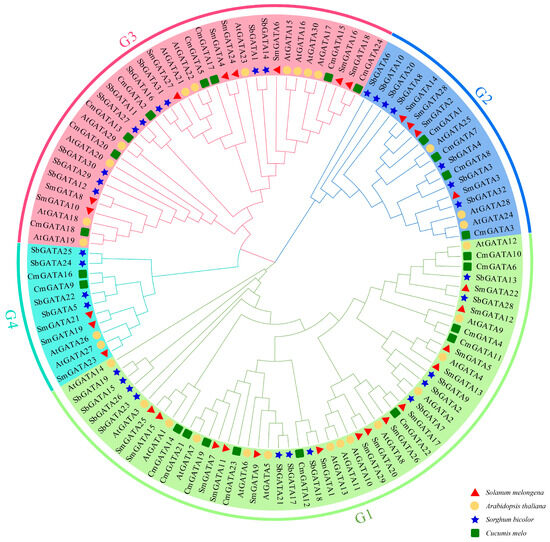
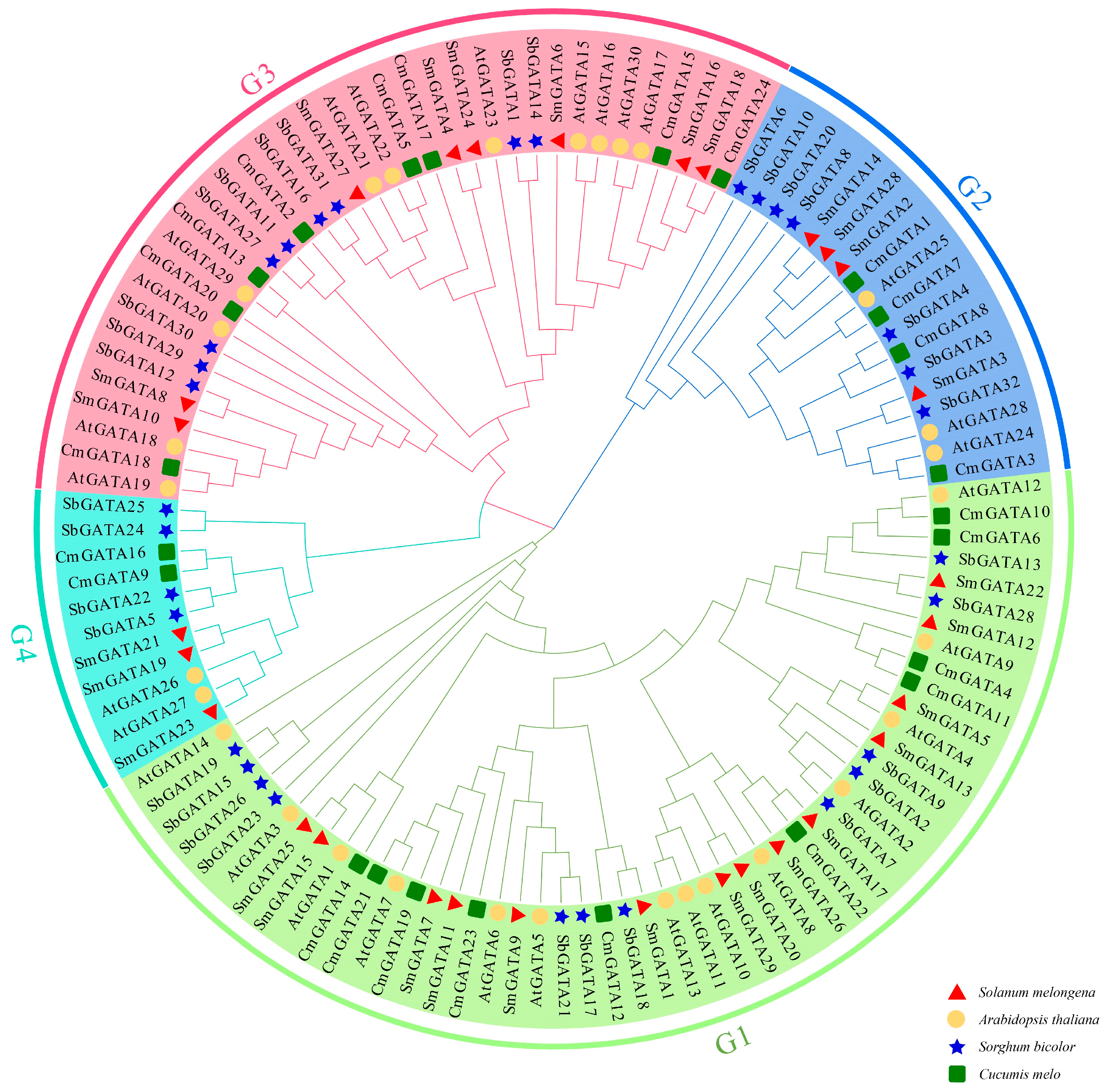
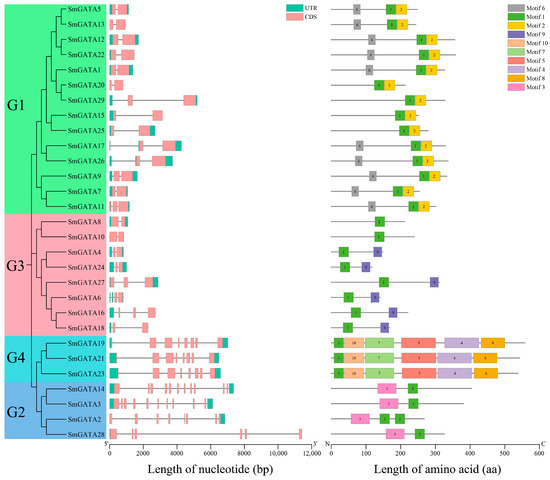
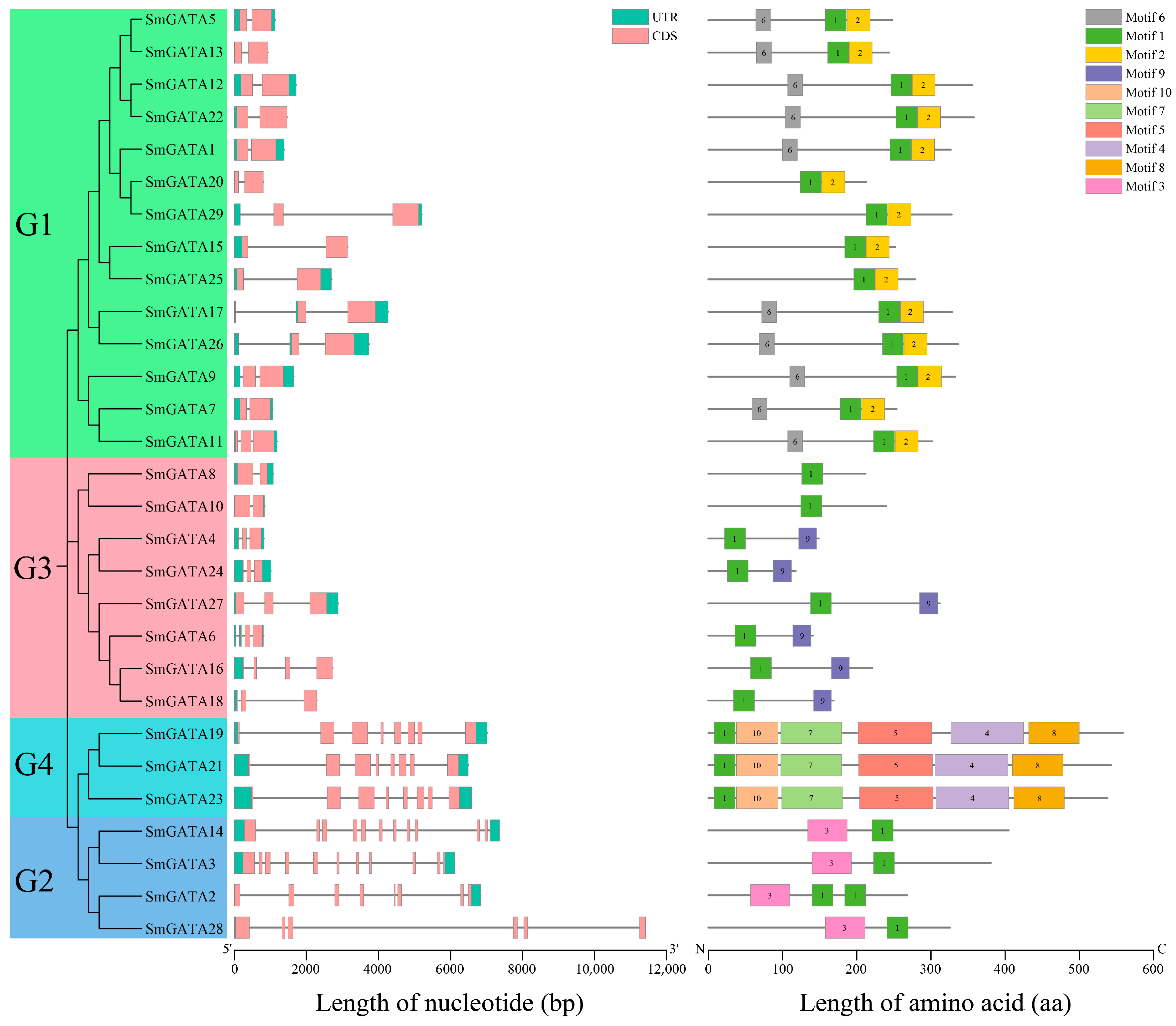
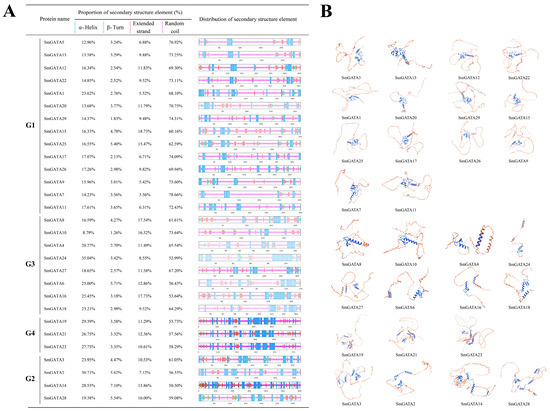
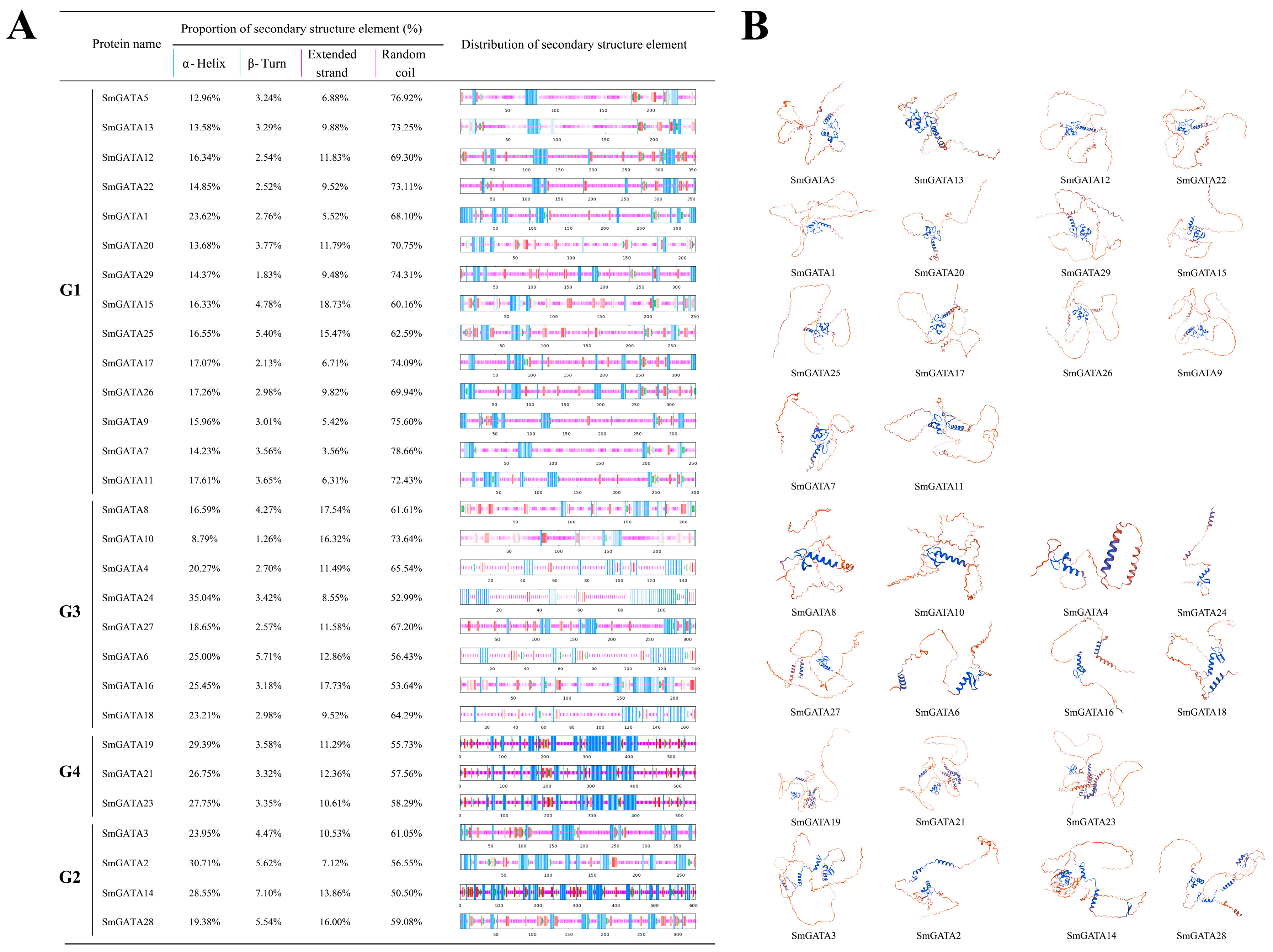
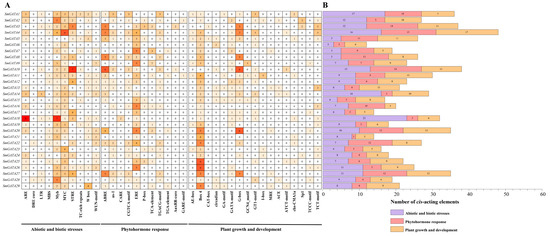
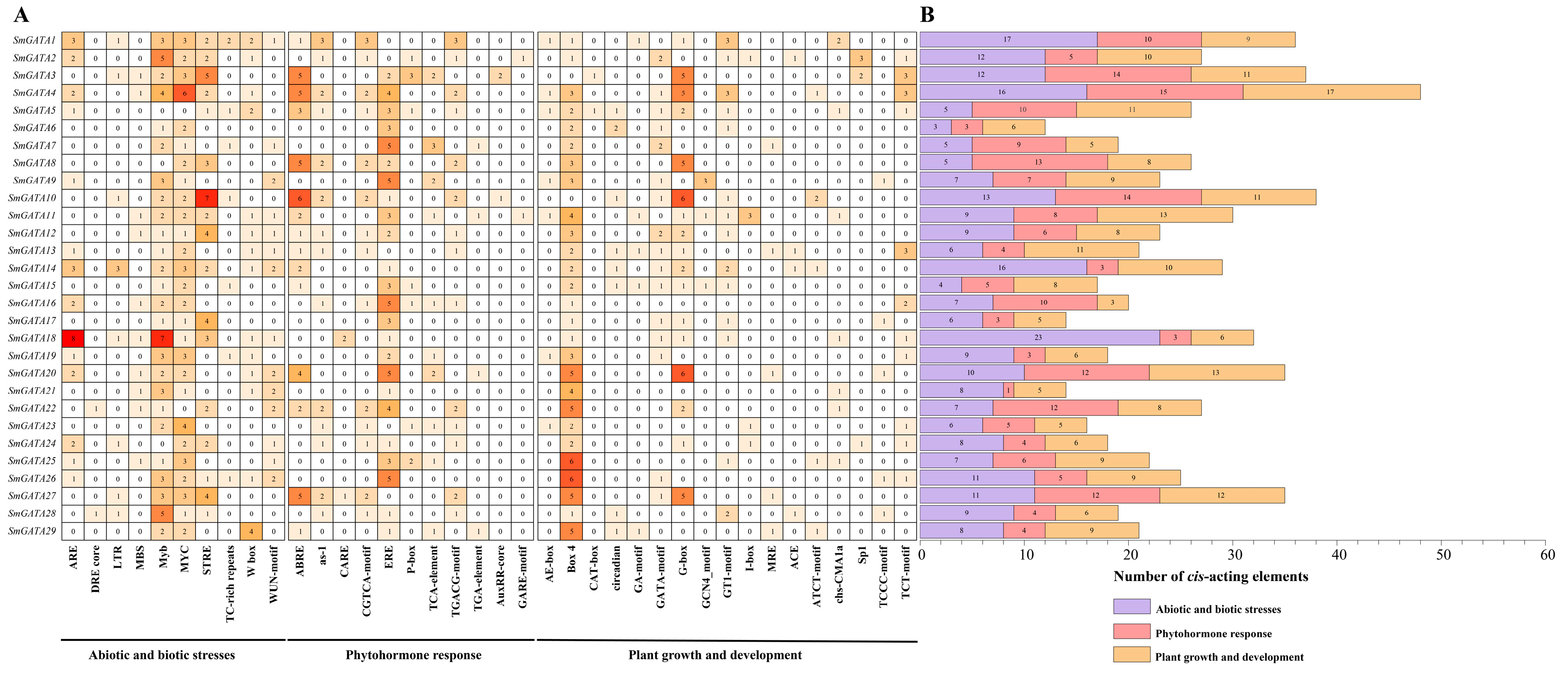
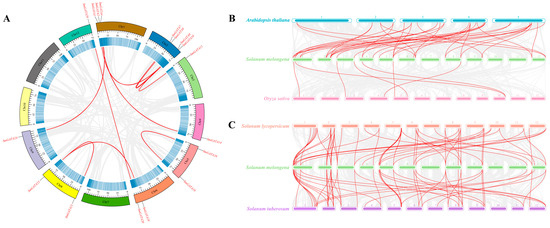
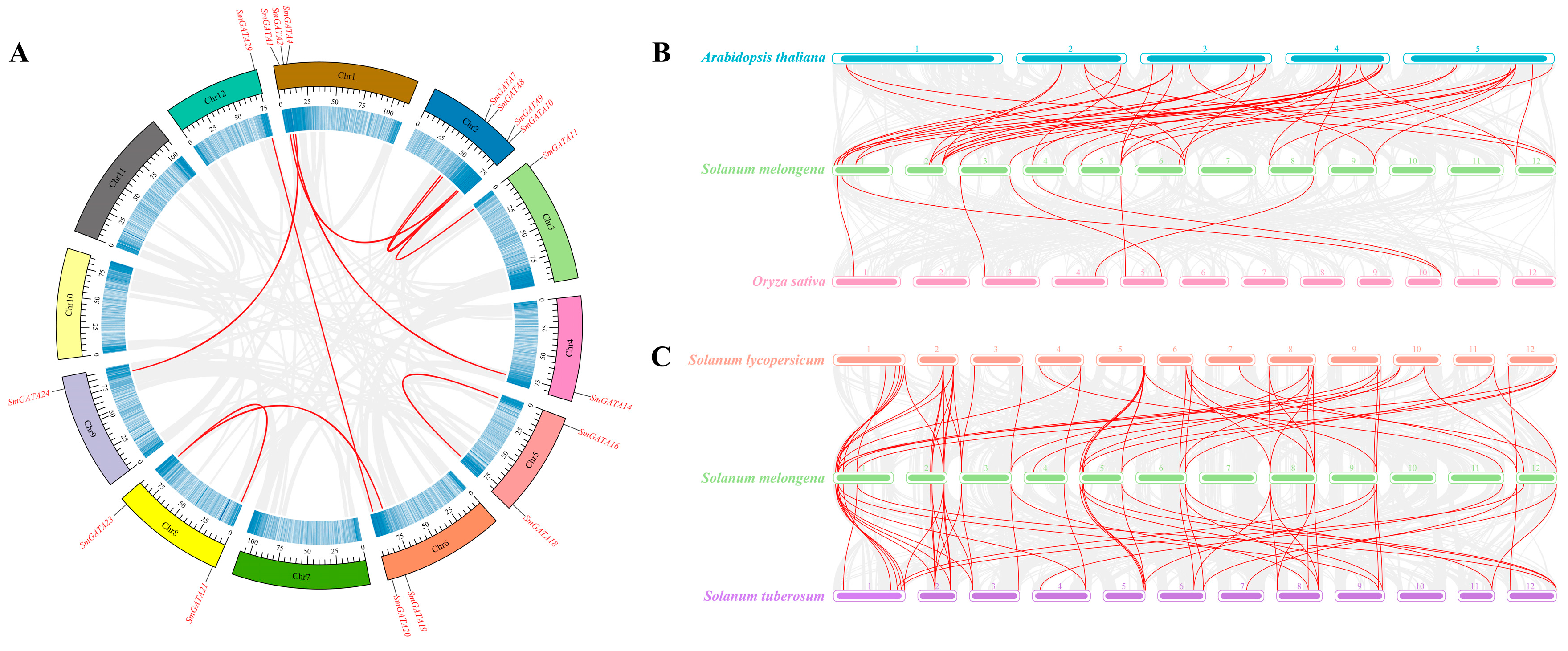
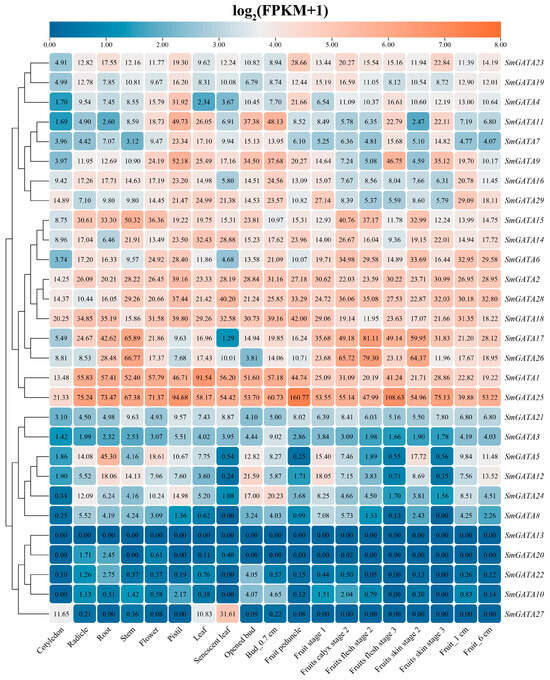
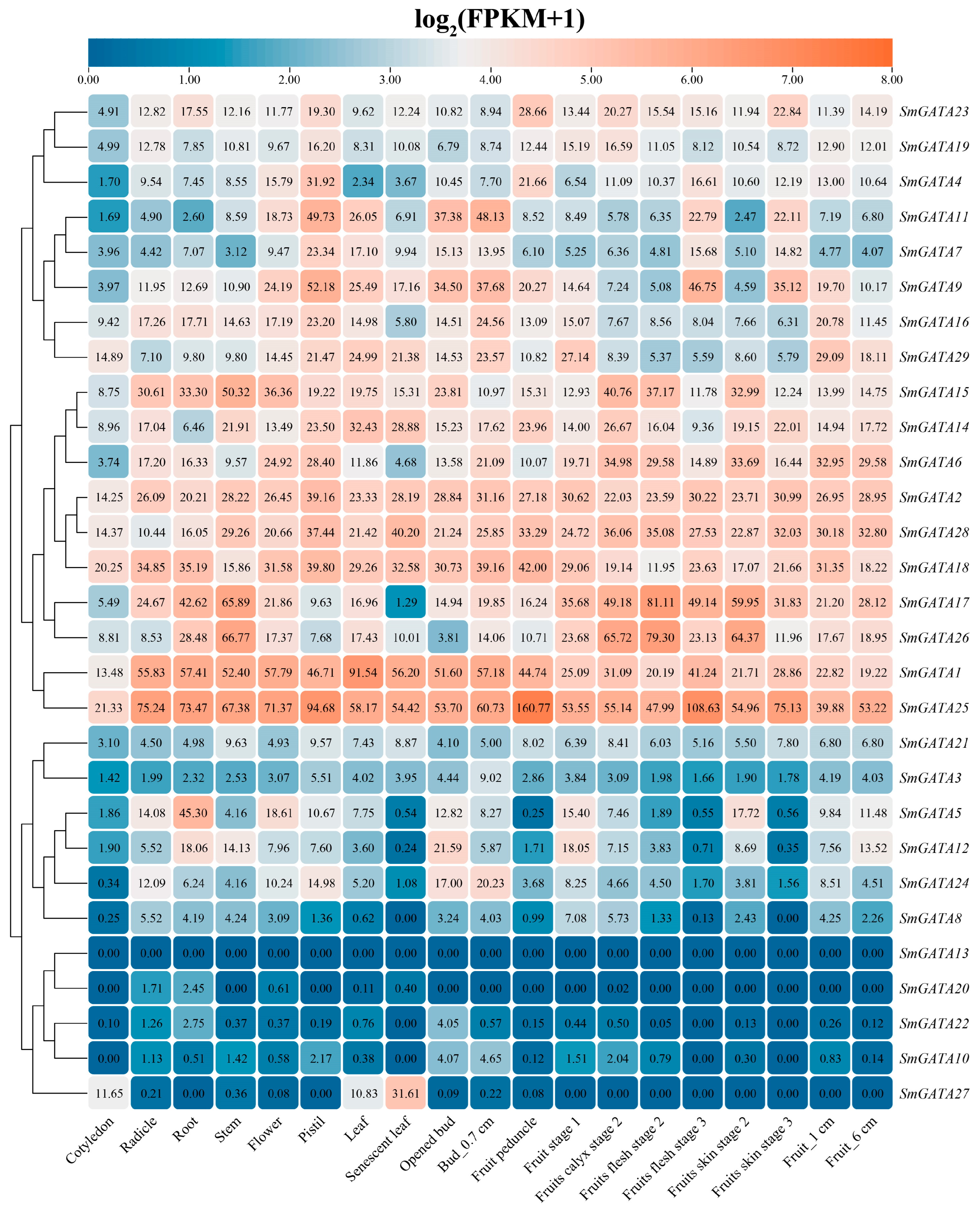
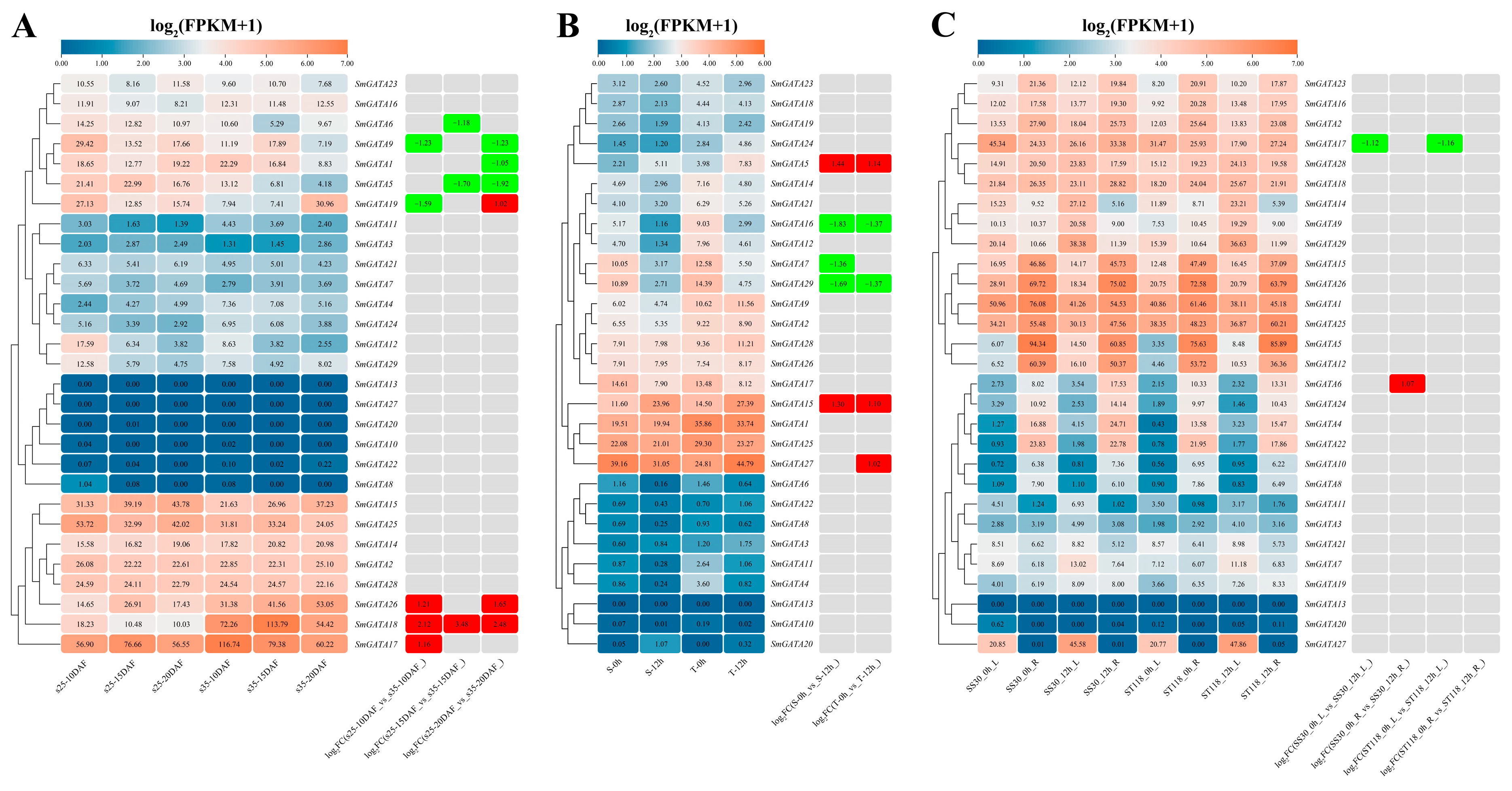
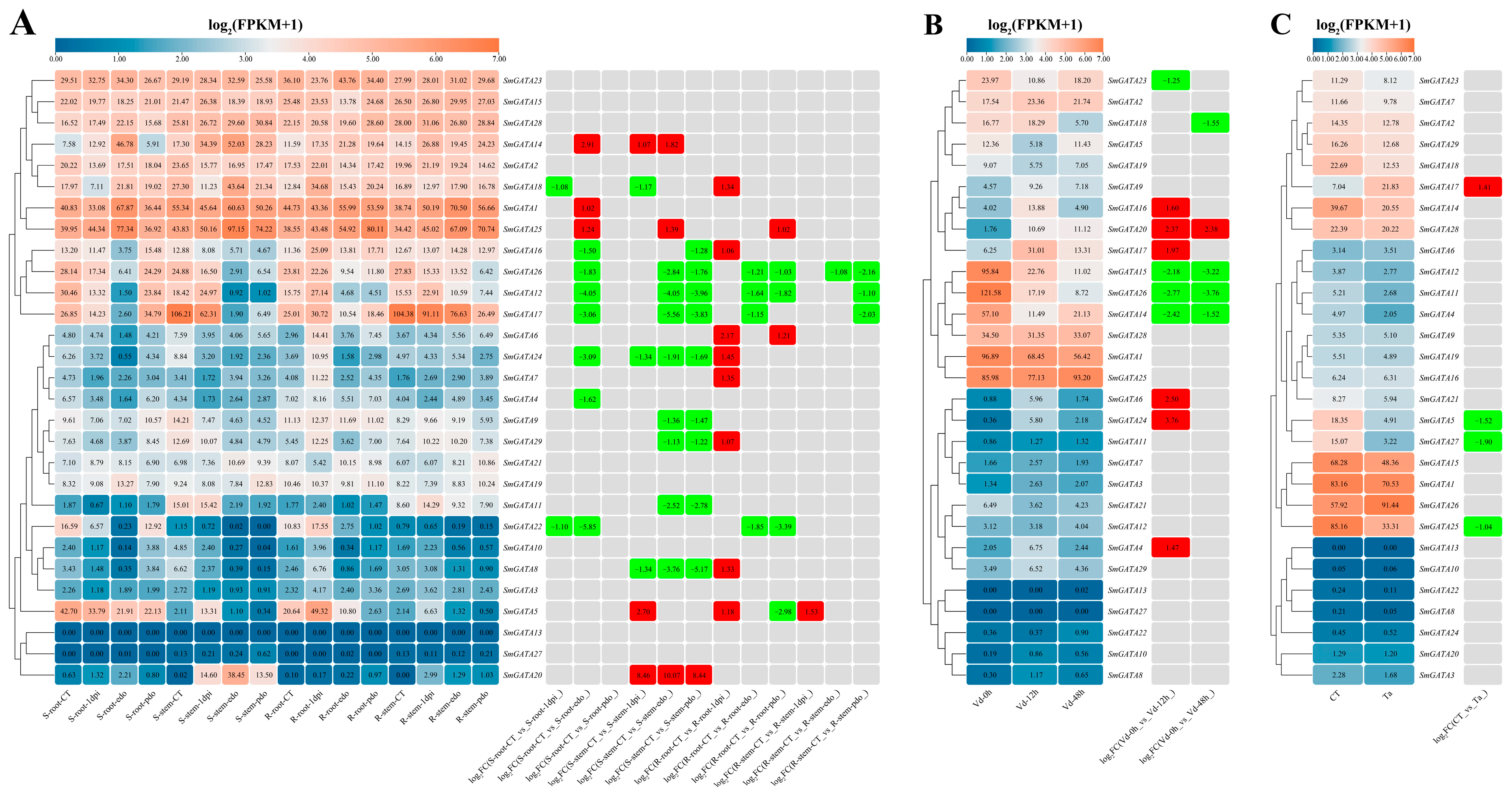
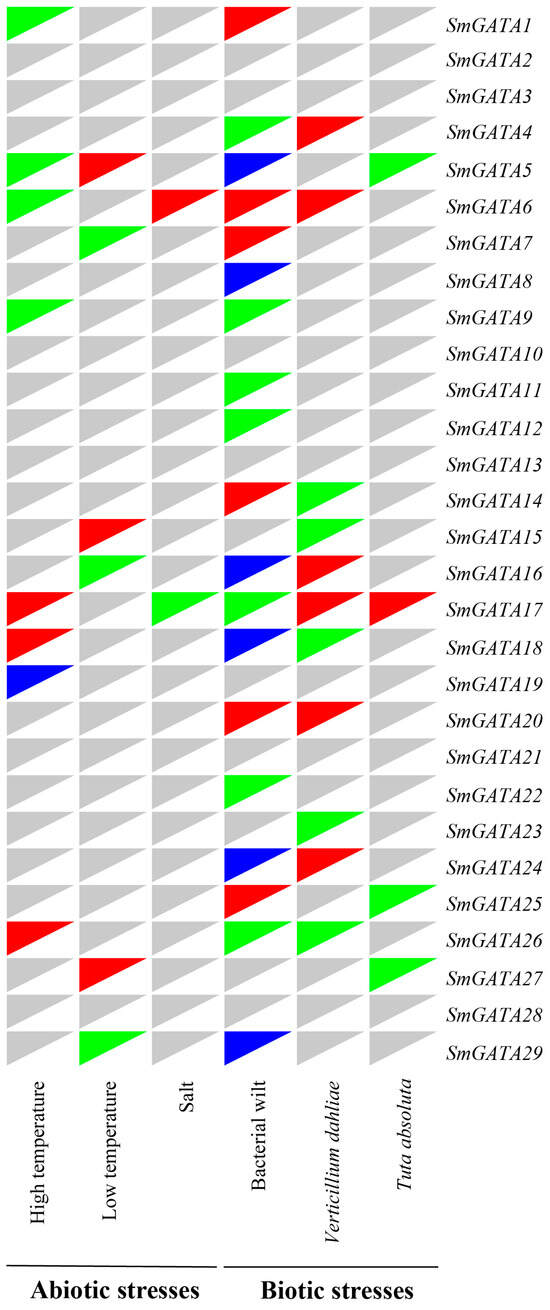
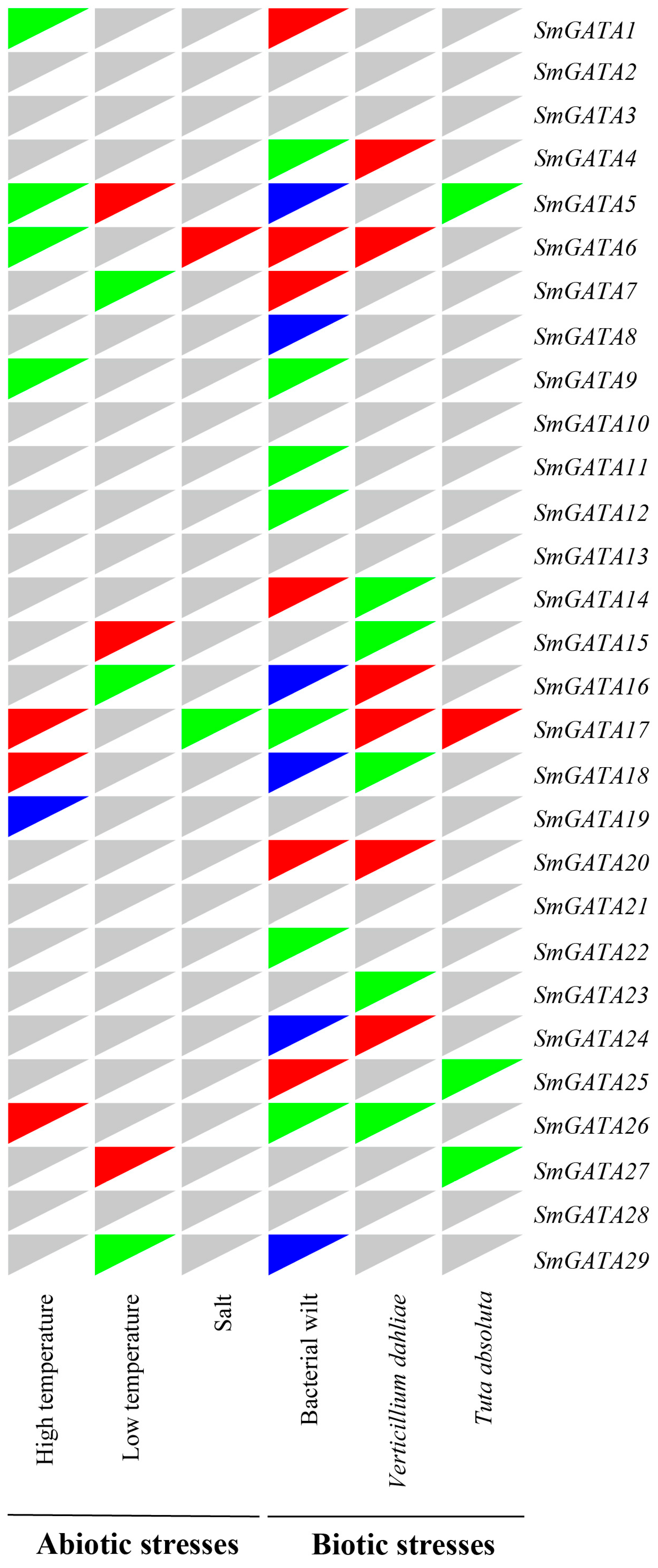
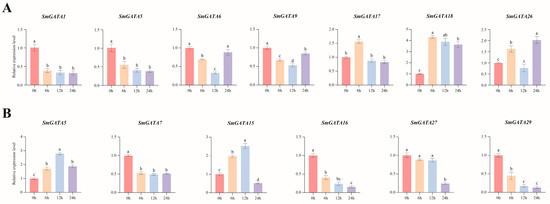
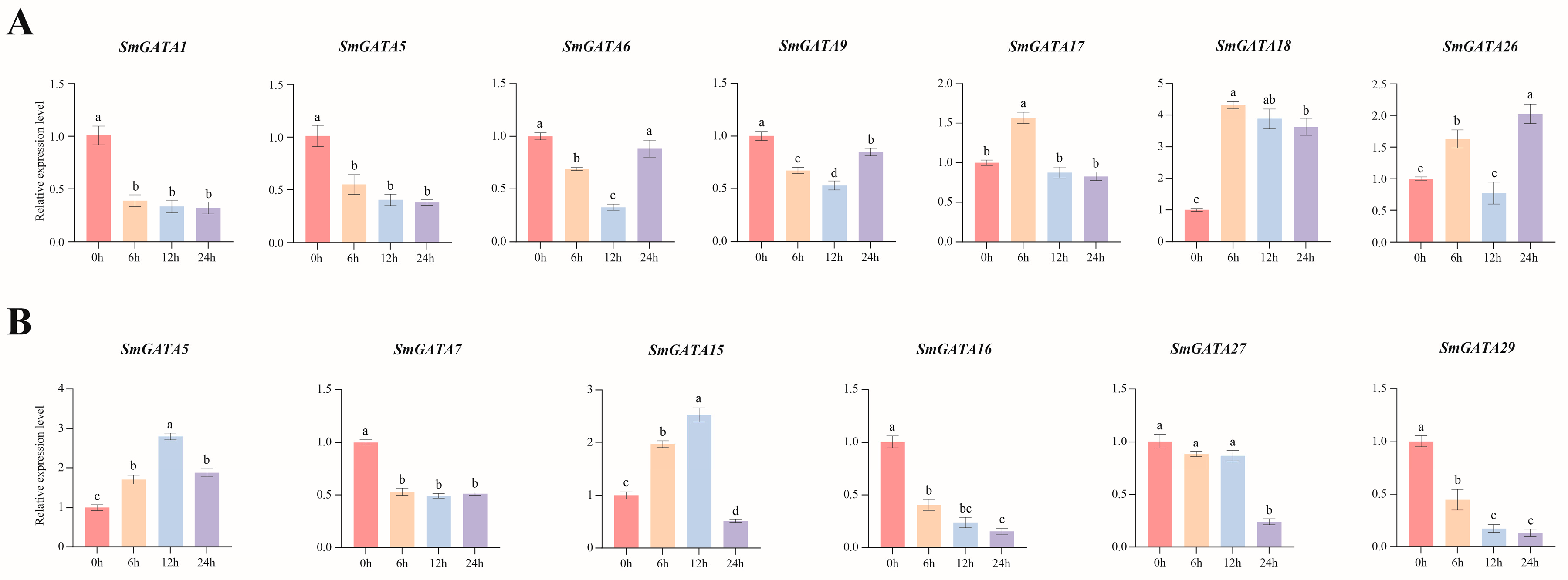

Disclaimer/Publisher’s Note: The statements, opinions and data contained in all publications are solely those of the individual author(s) and contributor(s) and not of MDPI and/or the editor(s). MDPI and/or the editor(s) disclaim responsibility for any injury to people or property resulting from any ideas, methods, instructions or products referred to in the content. |
© 2026 by the authors. Licensee MDPI, Basel, Switzerland. This article is an open access article distributed under the terms and conditions of the Creative Commons Attribution (CC BY) license.