


Abstract
Fusarium oxysporum f. sp. lycopersici threatens tomato production globally, resulting in severe yield losses. Nanotechnology and organic amendments are emerging as sustainable disease management practices to combat the drawbacks of chemical fungicides. This study evaluated the efficacy of nano Zn-Cu micronutrient solution and canola biofumigant on disease incidence, severity, and disease progression under field and greenhouse conditions. Tomato plants showing wilt symptoms were collected from two distinct agroecological locations of the Limpopo Province, South Africa. Morphological and molecular identification confirmed the presence of the virulent isolate. Under greenhouse conditions, weekly application of nano Zn-Cu significantly reduced wilt severity on two tomato cultivars, with 43–86% disease suppression, while canola biofumigant recorded disease suppression of 66–86%. The field experiment showed fewer disease incidences (0–40%) and severity (4–35%) on tomato plants sprayed weekly with nano Zn-Cu. This treatment maintained lower values of Area Under Disease Progress Curve (AUDPC), suggesting slower disease development. Similarly, canola biofumigant reduced disease development relative to the untreated control. Under both greenhouse and field experiments, untreated plants were severely infected, recording approximately 70% disease severity. This study demonstrated the potential of nano Zn-Cu micronutrients and canola biofumigant as sustainable solutions for managing Fusarium wilt of tomato, thereby contributing to integrated disease management.
1. Introduction
Tomato (Solanum lycopersicum) is one of the most cultivated vegetable crops in South Africa, and the Limpopo Province accounts for 70% of the country’s total production [1]. The crop is cultivated under diverse agroclimatic conditions, including open field and protected environments such as greenhouses [2]. Tomato production is, however, significantly compromised by diseases, with Fusarium wilt being one of the most prevalent and challenging to manage for both small-scale and large-scale farmers [3]. The disease is caused by a soil-borne fungal pathogen, Fusarium oxysporum f.sp. lycopersici (Fol), and contributes to approximately 80% yield loss globally, including South Africa [4]. Fusarium oxysporum f. sp. lycopersici (Fol) infects susceptible tomato plants by invading the intercellular root cortical cells, entering and multiplying inside the vascular system through the xylem [5]. During pathogenesis, the pathogen colonises and blocks the xylem vessels with fungal mycelia, spores and polysaccharides, restricting water and nutrient movement [6]. This leads to the manifestation of symptoms, including brown vascular discolouration, and yellowing and wilting on older leaves [5]. Severely affected tomato plants experience poor fruit formation and may die prematurely [3].
Soil fumigation with synthetic chemicals such as methyl bromide, chloropicrin and metam sodium was previously the most common approach used to control soil-borne diseases such as Fol [7]. However, this method has limitations, including environmental pollution, human health risks, toxicity to non-target microorganisms and evolution of resistance strains [7]. Several alternative approaches have been investigated to suppress Fol, including 5-year crop rotation with non-host and sanitation [8]. However, the ability of Fol to produce chlamydospores as specialised resting structures, which can survive in the soil for several years, makes these management strategies less effective [9]. Other studies report on the use of resistant cultivars; however, the loss of resistance is continuously reported in most cultivars due to the ability of the pathogen to develop new virulent races [10]. For example, the I2-resistance-breaking Fol race 3 (Fol R3) was first detected in Limpopo, South Africa, in 2013 [11]. Consequently, these drawbacks then necessitate increased research on safe alternative methods for effective soil-borne disease control.
Nanotechnology is emerging as a promising solution to address the mentioned limitations. Nutrient supplements in nano sizes are being explored as safe and effective alternatives in plant disease management due to their biocompatibility, low toxicity and environmental sustainability [12]. Micronutrients, for example, when applied as nanoparticles (1–100 nm), directly attach to the pathogen spores due to their high reactivity and large surface area, thus suppressing spore germination and pathogen invasion [13]. Among these nano-micronutrients, copper (Cu) and zinc (Zn) are the most critical for plant health, and their reduced levels or absence in soil result in plants’ susceptibility to wilt and rots [14]. These micronutrients have multiple mechanisms that involve directly attacking the pathogen while also improving crop nutrition and growth [12]. This includes activation of defence metabolites, distorting fungal cellular structures, enhancing the host’s nutritional status and physiological functions [14]. Previous studies have explored the role of zinc oxide and copper oxide (ZnO-CuO) nanoparticles against Vicia faba Fusarium wilt, observing that these nanoparticles reduced disease incidences by promoting antifungal activities [15]. On the other hand, ZnO and CuO nanoparticles inhibited mycelial growth of Fusarium oxysporum by 83% and 67.3%, respectively [16,17]. The nanoparticles directly attack Fusarium, activating defence metabolites, thereby increasing growth and reducing disease incidences and severities [18,19].
Many scientific studies have also focused on the antimicrobial properties of Brassicaceae plants as an environmentally friendly method to suppress plant pathogenic organisms [20,21,22]. This is mainly due to the high content of sulphur-containing compounds, the glucosinolates (GSL) [22]. When applied as soil amendments, GSLs are further degraded into isothiocyanates (ITCs) by myrosinase, which is released under high soil temperatures and moisture [22]. ITCs employ different mechanisms in the inhibition of pathogen growth; for example, they inhibit mitochondrial respiration by inducing oxidative stress [23]. In Verticillium wilt management, high ITC concentrations released during soil amendments with Brassica napus (rape) and Brassica juncea (Mustard) reduced Verticillium dahliae inoculum in the form of microsclerotia capacity by 60% [24]. The suppressiveness of these Brassicae species was attributed to increased levels of sinigrin, a parent-GSL of allyl ITC, which is found in high concentrations in the leaves of Brassica junacea [25]. The GSL by-products in Brassicae crops reduce disease severities by causing loss of cell membrane integrity, hyphal deformity, and inhibition of spore germination, thereby exerting antifungal activity [26]. Additionally, crops such as canola (Brassica napus) are selected as biofumigants because of their rapid growth in semi-arid regions and good ground cover, playing a significant role in increasing soil organic matter and biological functions [27]. Canola biofumigant also contains approximately 4–24 µmol g−1 dry weight GSLs contributing to suppression of soil-borne diseases, including F. oxysporum [27].
Research on the potential of canola as a biofumigant and combined Zn-Cu nano-micronutrients to manage soil-borne diseases in tomato production is still limited. Given this, the objective of this study was to determine the additive effect of canola (Brassica napus L.) biofumigant and nano Zn-Cu micronutrients solution on Fusarium oxysporum f. sp lycopersici.
2. Materials and Methods
2.1. Description of Study Areas
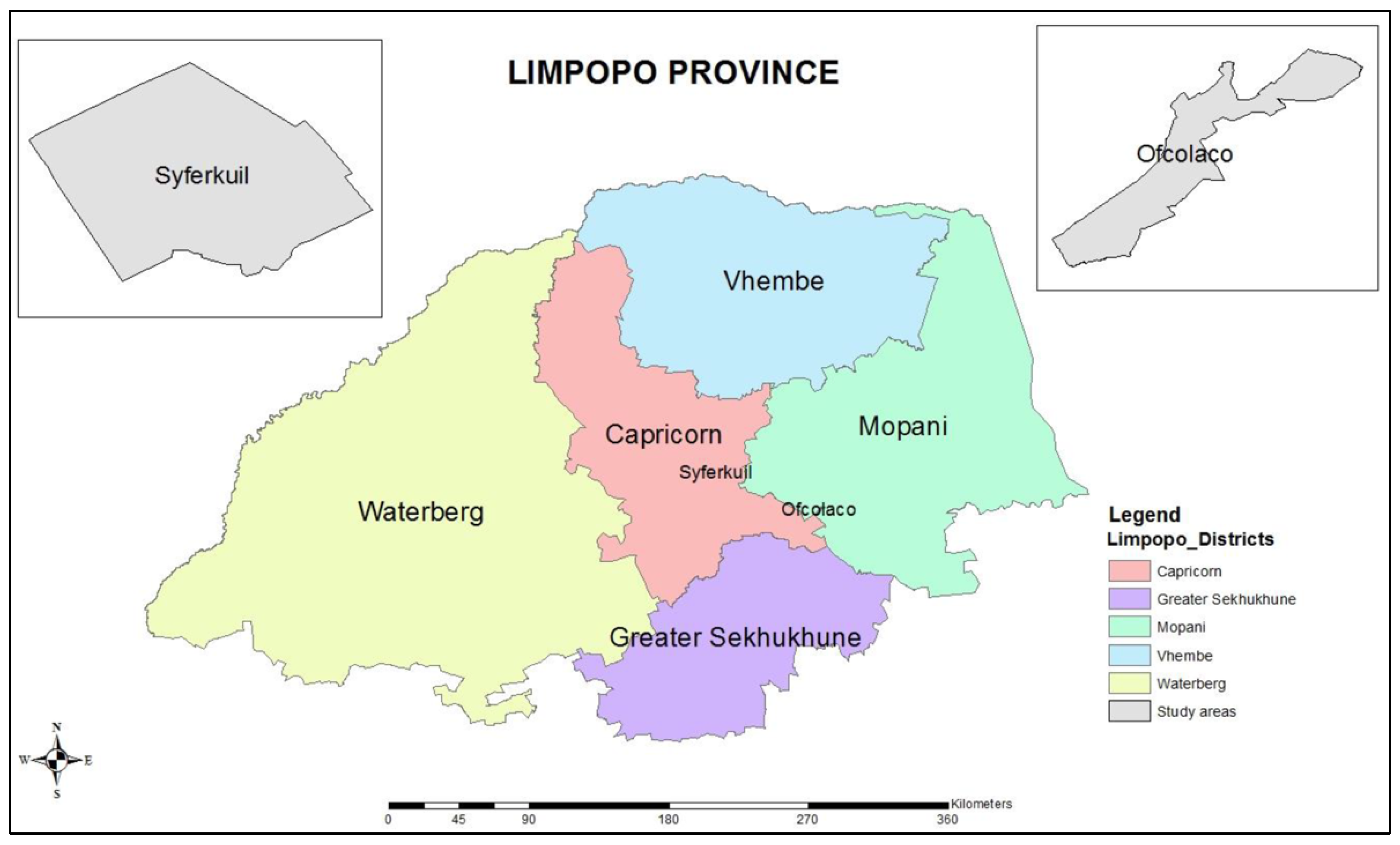
A tomato wilt survey was conducted in two planted fields representing distinct semi-arid agroecological regions of the Limpopo Province, South Africa, during the 2023–2024 cropping season (Figure 1). The first location was the University of Limpopo Experimental Farm (Syferkuil), located in the Capricorn district at geographical coordinates 23°50′02.7″ S and 29°41′25.5″ E. The area receives annual rainfall of 350 to 500 mm with average maximum and minimum temperatures of 15 and 30 °C, respectively. The soil at the farm is classified as a clay loam in Hutton form [28]. The second study area was the farmers’ field Itemeleng Ba-Makhutjwa Primary Cooperative in Mopani district, Ofcolaco, located at 24°06′38.3″ S and 30°23′11.8″ E. Ofcolaco receives approximately 650 to 700 mm of rainfall per year, with average maximum and minimum temperatures of 18 and 35 °C, respectively. The soil is classified as sandy clay loam in Hutton form [28].
Figure 1.
Study site map [29].
2.2. Plant Sample Processing and Pathogen Isolation
Tomato plants were randomly sampled once at the vegetative to early fruiting stage when yellowing and wilting symptoms were visible across the infected fields described in Section 2.1 above. Whole plants showing yellowing and wilting symptoms were uprooted, and roots and stems were further assessed for symptoms. A total of 20 symptomatic plants were randomly collected during the disease survey, with disease incidence ranging from 20 to 50% at each location. Roots and stems showing brownish discolouration were first washed under tap water to remove the soil particles. The tissues were further cut into 5–10 mm long pieces, followed by surface sterilisation for 1 to 2 min in 1% sodium hypochlorite solution and washed twice in sterile distilled water. These surface-sterilised tissues were placed directly in Petri dishes on potato dextrose agar (PDA) plates amended with chloramphenicol (100 mg/L) as an antibacterial agent and incubated at 25 ± 2 °C for five days. Subsequently, pure cultures were obtained by placing a piece of mycelium in sterilised Petri dishes containing PDA and incubating at a controlled laboratory temperature of 25 ± 2 °C for seven days. Several pure culture isolates were identified and maintained on PDA and stored at ±4 °C for further use.
2.3. Morphological Identification of Fol
Morphologically, Fol was identified through physical observation, such as colony diameter and pigmentation of the 7-day-old pure cultures. Microscopic evaluation was also carried out to assess the characteristics of micro and macroconidia using an AmScope compound microscope (AmScope, Irvine, CA, USA) at a magnification of 40×. The morphological features were confirmed by comparing them with the published literature [30].
2.4. Pathogenicity Test
Isolates recovered from the symptomatic tomato plants in Section 2.2 and morphologically identified as Fol were evaluated for pathogenicity under greenhouse conditions. The pathogenicity was tested on two commercial tomato cultivars, Moneymaker and Rodade, as susceptible and disease-tolerant hosts, respectively. The pathogenicity tests were conducted in a mesh-net-protected greenhouse with a controlled ambient temperature of 28/11 °C and humidity maintained at 60% and 70%. Then, 25 cm pots were filled with steam-pasteurised sand and Hygromix at 3:1 (v/v). To increase inoculum potential and ensure pathogen establishment, two inoculation methods were used. For soil inoculation, the mycelial plug method with adjustments was followed [31], and seedling inoculation was carried out using the standard root dip method [32].
Soil inoculation: Fol isolate was grown on PDA for 7–8 days at 25 °C, three 5 mm agar discs were cut using a flame-sterilised scalpel and were carefully placed in small holes in the pots. Pots inoculated with pathogen-free agar plugs served as a control. Furthermore, the pots were left for two weeks to allow the establishment of the pathogen [31].
Seedling inoculation: Similarly, Fol isolate grown on PDA for 7–8 days at ±25 °C on potato dextrose agar (PDA) was used. Spores were harvested by flooding the Petri plates with 10 mL sterile distilled water, followed by gentle scraping of the mycelium with a sterile inoculation needle to dislodge spores. The collected conidia were transferred into 250 mL media bottles containing 100 mL sterile distilled water and incubated for 24 h. This was further filtered through three layers of fleece filter, and conidial suspension was further adjusted to a final concentration of 1 × 10⁶ conidia/mL under a light microscope using a haemocytometer. Four-week-old tomato seedlings were uprooted from the seedling trays, and the roots were slightly cut at 2 cm to obtain a more uniform and homogenous infection. The seedlings were further dipped in conidia suspension of Fol for 30 min before transplanting. Seedlings dipped in sterile distilled water served as a control [32].
After transplanting into the 25 cm pots, irrigation was applied every other day or when plants show water stress. Fusarium wilt symptoms were evaluated 30 days after transplanting using the 0–5 scale described by [32].
2.5. Molecular Identification of Fol and Phylogenetic Tree Analysis
Following the pathogenicity test, the virulent Fol isolate that induced typical Fusarium wilt symptoms was selected for subsequent molecular identification and phylogenetic analysis. Mycelia growth was scraped from the eight-day-old isolate for genomic DNA extraction, following the manufacturer’s protocol of ZymoResearch QuickDNA Fungal/Bacterial MiniPrep kit (Zymo Research, Freiburg, Germany). 1% agarose gel was used to determine the concentration and quality/purity of the extracted DNA. Polymerase chain reaction (PCR) amplification of the translation elongation factor 1-alpha (tef-1α) was performed using EF1 and EF2 primers. PCR conditions were set at: 1 cycle of 3 min at 94 C; 35 cycles of 60 s at 94 °C, 60 s at 59 °C, and 60 s at 72 °C; and one cycle of 7 min at 72 °C and 3 min at 20 °C [33]. Amplicons were bidirectionally sequenced with the same primer pairs as used for PCR amplification at Inqaba Biotechnical Industries (Pty) Ltd., Pretoria, South Africa. BioEdit version 7.0.2 software was used to manually trim, assemble and generate consensus sequences for the isolate. The generated nucleotide sequences were compared to known reference sequences found in the National Centre for Biotechnology Information (NCBI) database. A phylogenetic tree was constructed using MEGA version 12.0 using the maximum likelihood method. This analysis of genetic sequences provided a valuable determination of evolutionary relationships between the isolate and the F. oxysporum species complex.
2.6. Greenhouse Experiments
Disease Suppression Evaluation
- (a)
- Treatment preparation
Canola biofumigant: Canola seeds of cultivar Quartz were first planted on a subplot field of 4 m × 4 m. Eighty (80) days after planting (DAP) during the early flowering stage, the plant roots, shoots, and leaves were uprooted, dried, and crushed into small pieces and kept in tightly closed glass bottles at room temperature until further use. The biofumigant was applied at a rate of 15 g kg−1 of soil and integrated into the soil in a 25 cm diameter pot before transplanting of tomato seedlings, but post-soil inoculation.
Nano zinc-copper (Zn-Cu) micronutrients: A commercially available nano micronutrient fertiliser, which was approved by the South African Bureau of Standards (SABS) and the South African Department of Agriculture, Forestry, and Fisheries (Approval No. B5905A), was used in the study. The combined nano Zn and Cu micronutrient fertiliser is a clear blue solution containing Cupric Nitrate·3H2O (54.8 g L−1), Zinc Nitrate·6H2O (262 g L−1), and Silver Nitrate (1.66 g L−1). The particle size of the nano fertiliser ranges between 1 and 100 nm and has an undiluted pH of <1.5 [32]. This was applied as a foliar spray after transplanting the tomato at a dose of 0.2 mL L−1 of water using a knapsack with a flat fan nozzle. Four different application frequencies were evaluated: control (zero application); weekly (once a week); biweekly (once every 2 weeks); and monthly application (once a month). The treatments were applied repeatedly according to the respective schedules/frequencies throughout the experimental period.
- (b)
- Experimental layout
The greenhouse experiment was established as a 2 × 5 factorial design with two factors and four replications. Factor A was two tomato cultivars (Rodade and Moneymaker), and factor B was 5 treatments (T1 = control (inoculated but not treated), T2 = canola biofumigant, T3 = weekly Zn-Cu, T4 = biweekly Zn-Cu and T5 = monthly Zn-Cu).
- (c)
- Planting
Tomato cultivars: Seeds of the two tomato cultivars (Rodade and Moneymaker) were first sterilised in 1% sodium hypochlorite, rinsed in distilled water and dried on a filter paper in a laminar flow. The dried seeds were then planted in seedling trays containing Hygromix for four weeks before transplanting.
- (d)
- Fol inoculum preparation and inoculation
The virulent Fol isolate identified from the pathogenicity test in Section 2.4 was used for the greenhouse experiment. Pathogen inoculum and inoculation were prepared following the methods by [32] and [31] as outlined in Section 2.4. Transplanted plants in the 25 cm pots were irrigated with 250 mL of tap water once every two days.
2.7. Field Experiments
Fusarium Wilt Suppression Under Field Conditions
- (a)
- Treatment preparation
Canola biofumigant: Before planting of tomato, canola seeds of cultivar Quartz were sown in designated subplots during the months of May–June 2024. The crop was allowed to grow until the onset of the reproductive stage (August 2024), at which the plants were uprooted, chopped, incorporated into the soil at 12 t ha−1, and left to decompose for one month to allow the release of bioactive compounds.
Nano zinc-copper (Zn-Cu) micronutrients: After transplanting four weeks old tomato seedlings, nano Zn-Cu solution was applied as described in Section 2.6 (a). Four different application frequencies were also evaluated: control (zero application); weekly (once a week); biweekly (once every 2 weeks); and monthly application (once a month). The treatments were applied repeatedly according to the respective schedules/frequencies throughout the experimental period.
- (b)
- Experimental layout
Experimental plots with a history of Fusarium wilt, as described in Section 2.1, were used for field trials. The field experiments were laid out as a split-plot design with four replications. The main plot factor consisted of two Fusarium wilt-susceptible and -tolerant tomato cultivars (Moneymaker and Rodade), which were randomly allocated within each replication. The subplot factor consisted of five treatments, namely T1 = control, T2 = canola biofumigant, T3 = weekly Zn-Cu, T4 = biweekly Zn-Cu and T5 = monthly Zn-Cu, which were also randomly assigned within each main plot. Each replication comprising 133 plants per cultivar. Each subplot was a 4 m × 4 m area, comprising four rows with an intra-row spacing of 60 cm and an inter-row spacing of 100 cm. A buffer space of 1 m and 1.5 m was maintained between plots and replications to minimise interference. At the two locations, four-week-old tomato seedlings were transplanted in October 2024 according to the above-mentioned plant spacing.
- (c)
- Management practices
Each experimental unit received phosphorus in the form of superphosphate (10.5% P) at 20 kg P ha−1, based on pre-plant–soil fertility analysis. Nitrogen was applied as Limestone Ammonium Nitrate (LAN) (28% N) at a rate of 100 kg N ha−1 in a split application of 50 kg N ha−1 each at planting. All fertilisers were banded along the row. The experimental trial was irrigated using a drip irrigation system twice a week for 3 h. Tomato plants were trellised, and other crop management practices such as weeding, pruning, and pest control were done when necessary, during the cropping season. White fly (Bemisia tabaci) and tomato leafminer (Tuta absoluta) infestations in the tomato trials were controlled using Cypermethrin 200 EC (EFEKTO (Pty) Ltd, Johannesburg, South Africa) at a concentration of 120 mL of Cypermethrin diluted in 64 L of water and Coragen SC (FMC Corporation, Gauteng, South Africa) insecticide at a concentration of 200 g L−1, respectively.
2.8. Data Collection
- Disease incidence
Disease incidence was evaluated under field conditions by counting the number of plants showing wilting and yellowing symptoms at 20, 40, 60, and 80 days after transplanting (DAT). Furthermore, the disease incidence percentage was calculated using a formula described by [34] as follows.
- Disease severity and Area Under Disease Progress Curve (AUDPC)
The 0–5 scale described by [32] was used to record the disease severity at both greenhouse and field experiments at 20, 40, 60, and 80 days after transplanting (DAT, were: 0 = healthy; 1 = Moderate leaf yellowing 10%; 2 = Moderate wilting 30%; 3 = Stunted plant with yellowing 50%; 4 = Severe stunting with majority of leaves wilted 70%; 5 = Dead plant 100%. Disease severity percentage was measured following the equation [35]:
The formula described by [3] was used to determine the Area Under Disease Progress Curve (AUDPC):
where Yi = Severity % of Fusarium wilt at the ith observation, Ti = time (days after inoculation/transplanting) at the ith observation and n = total number of evaluations.
- Disease reduction
To quantify the efficacy of each treatment in the greenhouse experiments, the disease reduction percentage was calculated using the equation described by [35], where C = disease severity percentage in the positive control and T = disease severity percentage in treated plants.
2.9. Statistical Analysis
The collected data from the greenhouse and field experiments were subjected to a partial analysis of variance (ANOVA) using the STATISTIX software (Version 10.0). Where significant treatment effects were detected, mean separation was achieved using Tukey’s HSD at a probability level of 5%.
3. Results
3.1. Morphological Characterisation of Fol Isolate
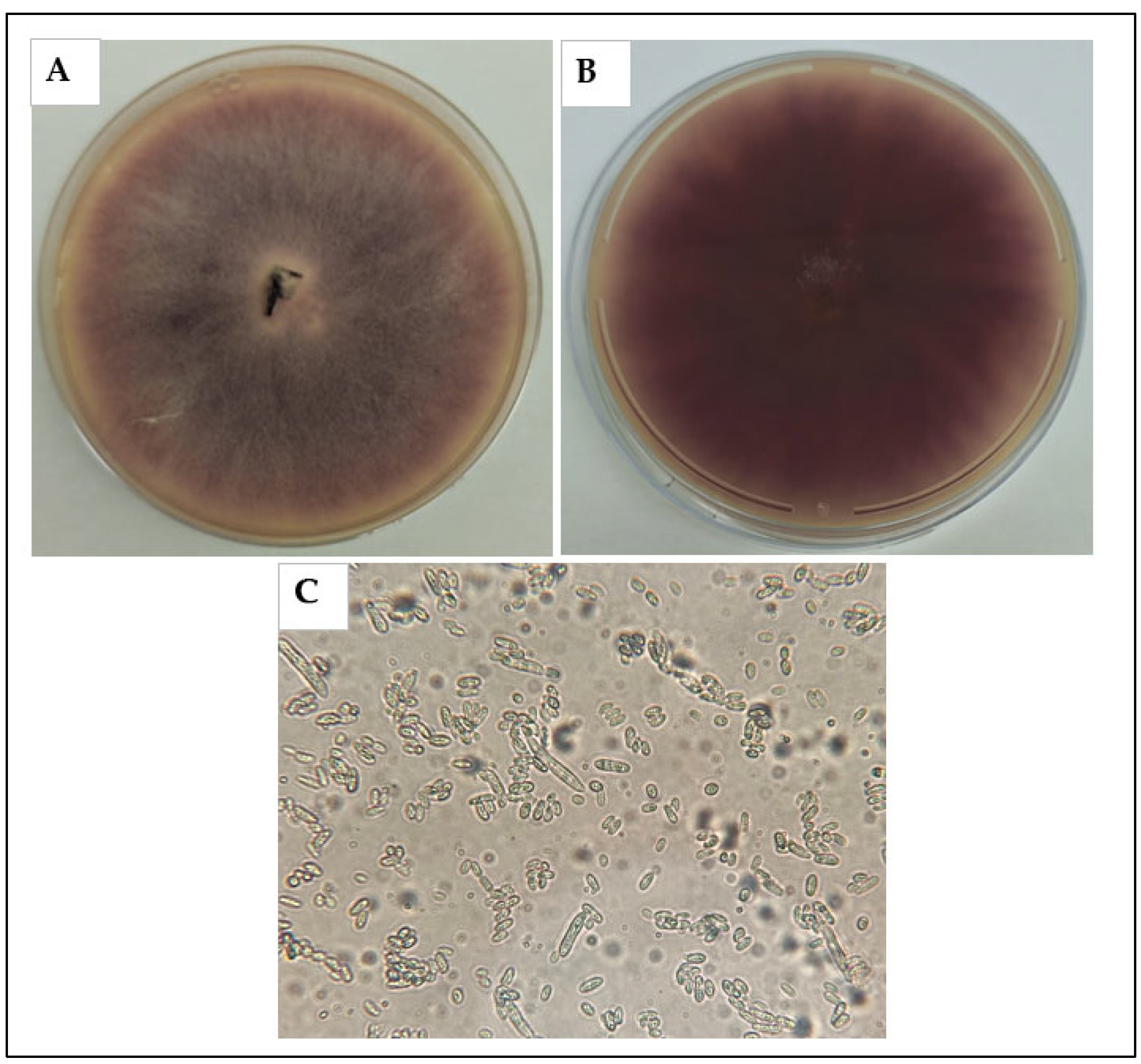
Following the pathogenicity test, one isolate consistently induced typical Fusarium wilt symptoms on the two tomato cultivars and was selected for morphological identification and subsequent evaluations in this paper. The Fol isolate produced a white colony with a dark purple pigment diffusing into the agar and visible from both sides of the Petri plate (Figure 2A,B). The microscopic evaluation showed that the isolate produced small, single oval-shaped microconidia, which were abundant, with a few oval-shaped macroconidia (Figure 2C). The isolate also showed good sporulation (Figure 2C).
Figure 2.
Cultural and morphological characteristics of Fusarium oxysporum f. sp. lycopersisci (Fol) isolate from diseased tomato plants. (A) Fol colony on agar (upper side of Petri plate), (B) Fol colony on agar (bottom side of Petri plate), (C) microscopic view of microconidia and macroconidia.
3.2. Molecular Characterisation of the Fol
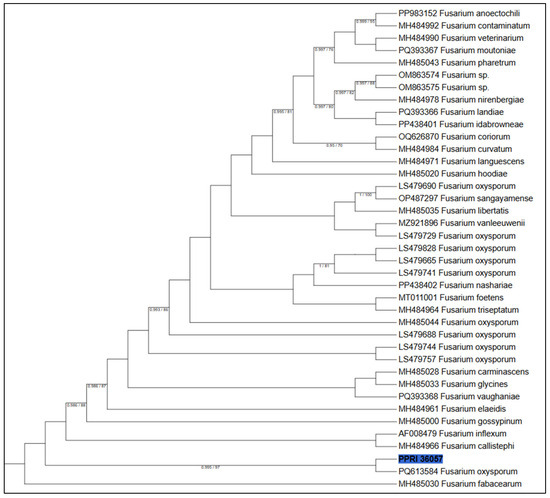
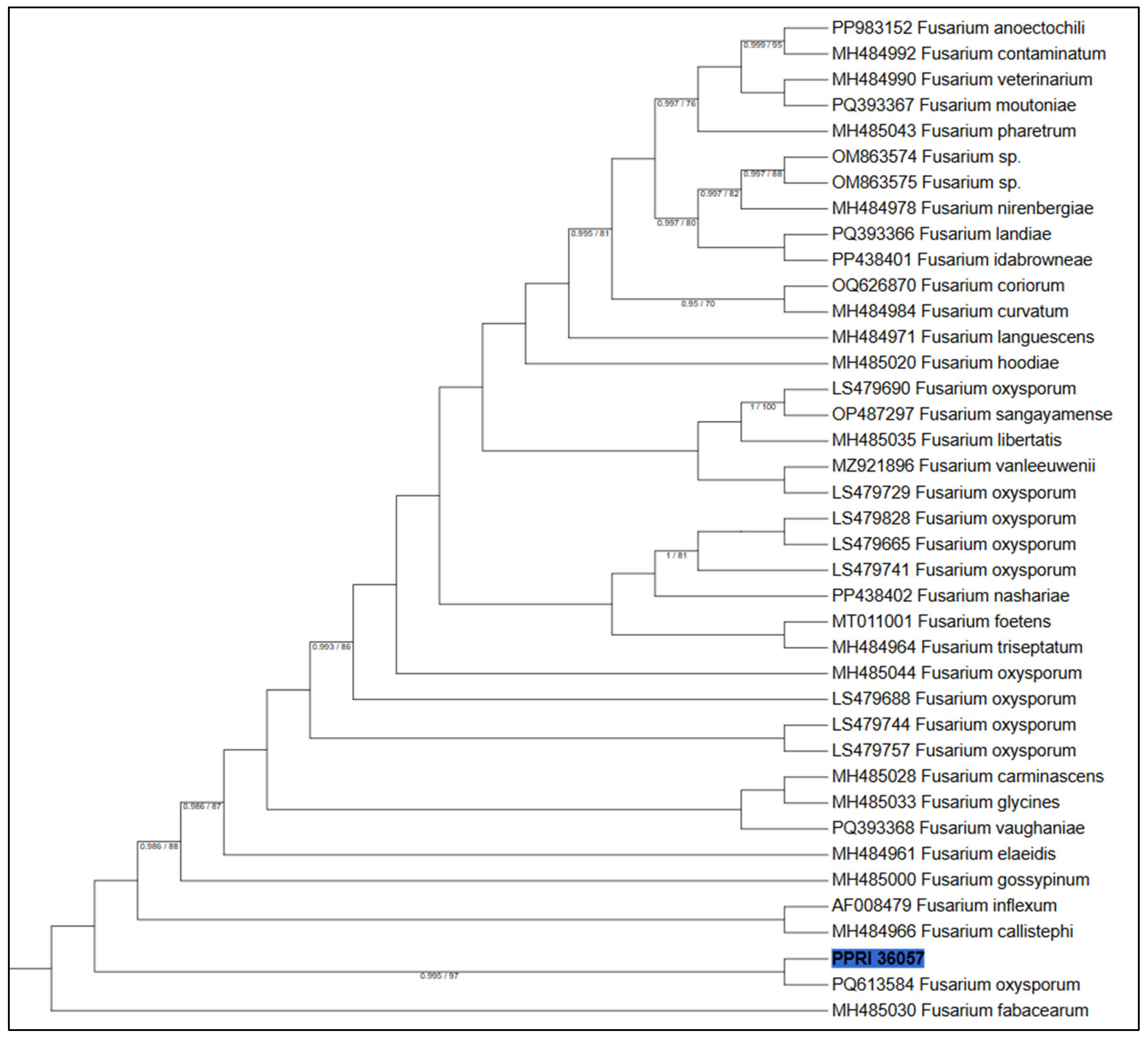
BLASTn analysis of the TEF-1α gene sequences against the GenBank database confirmed an approximately 99% match with F. oxysporum reference sequences. The isolate was further identified as F. oxysporum f. sp. lycopersici with the accession number: PPRI 36057, thereby validating the molecular identification. Phylogenetic analysis placed isolate PPRI 36057 within the F. oxysporum species complex, where it clustered closely with reference F. oxysporum sequences from the NCBI database, thus supporting its taxonomic classification (Figure 3).
Figure 3.
Phylogenetic analysis of isolated Fusarium oxysporum from Tomato plants. The confirmed isolate is highlighted in blue.
3.3. Greenhouse Experiments
The Efficacy of Nano Zn-Cu Micronutrients and Canola Biofumigant on Fusarium Wilt Disease Severity and Disease Reduction Under Greenhouse Conditions
- (a)
- Disease severity and AUDPC
The ability of nano Zn-Cu micronutrients and canola biofumigant to suppress Fusarium wilt was investigated under greenhouse conditions in two tomato cultivars. Disease severity ratings were recorded on different days after inoculation (DAI) (Figure 4). The results showed significant variation between treatments across all DAIs. Weekly application of the nano Zn-Cu solution resulted in lower disease severity in the Moneymaker cultivar across all DAIs, followed by canola biofumigant treatment, which also recorded the lowest disease severity relative to the control. Similarly, biweekly and monthly applications of nano Zn-Cu micronutrients recorded lower disease severity values than the untreated control (Figure 4a).
Figure 4.
Effect of nano Zn-Cu micronutrients and canola biofumigant on Fusarium wilt disease severity and disease progression at varying days after inoculation (DAI) under greenhouse conditions. (a) Disease severity on Moneymaker cultivar. (b) Area under disease progress curve (AUDPC) on Moneymaker cultivar. (c) Disease severity on Rodade cultivar. (d) Area under disease progress curve (AUDPC) on Rodade cultivar. Each value represents the mean ± SE. Means followed by different letters are significantly different across the treatments at p ≤ 0.05 using Tukey’s HSD. Error bars signify the standard error of the mean.
Similar observations occurred on Rodade cultivars, with the lowest disease severity recorded on infected plants treated with weekly nano Zn-Cu micronutrients (Figure 4c). Canola biofumigant also resulted in plants with lower disease severity when compared to the other subsequent treatments and the control. Biweekly and monthly application of nano Zn-Cu micronutrients reduced the disease severity to some extent when compared to the control (Figure 4c).
Assessing disease progress over time involved calculating the AUDPC, with lower values representing less disease progression on the different tomato cultivars. Figure 4b shows that on the Moneymaker cultivar, Fusarium wilt symptoms were less evident at 20 DAI, the disease then progressed over time with higher values recorded from 40 to 80 DAI. Furthermore, in terms of the treatments, weekly application of nano Zn-Cu micronutrients consistently recorded lower AUDPC values, suggesting slower disease progression. Canola biofumigant, biweekly and monthly applications of nano Zn-Cu, only recorded lower AUDPC at 60 and 80 DAI, compared to the control.
Corresponding observations were made on the Rodade cultivar (Figure 4d). At 20 DAI, Fusarium wilt symptoms were less apparent; consequently, the higher AUDPC values recorded from 40 to 80 DAI showed a rapid disease progression. The results also show that weekly Zn-Cu constantly recorded the lowest AUDPC throughout the DAIs, followed by canola biofumigant, which also showed less disease progression. Consequently, disease progression was rapid in the control relative to the treated plants (Figure 4d).
- (b)
- Disease suppression evaluation
The cumulative disease severity mean results were used to determine the disease reduction percentage over control on the two tomato cultivars (Table 1). The results for the Moneymaker cultivar show that the highest disease severity percentage of 59.38% was observed on control plants (T1), representing the least disease reduction. This cultivar had recorded the lowest disease severity of 8.75% on plants treated with weekly nano Zn-Cu micronutrients (T3), with a disease reduction of 85%. Canola biofumigant (T2) was the second-best-performing treatment with disease severity and reduction percentages of 20% and 66%, respectively. Similar observations were made on the Rodade cultivar; control plants (T1) recorded the highest disease severity (35%) and the least disease reduction percentage (0%). Moreover, the application of weekly nano Zn-Cu micronutrients (T3) significantly reduced Fusarium wilt severity by 92%, followed by canola biofumigant (T2), with 86% disease reduction. Additionally, both weekly application of nano Zn-Cu micronutrients and canola biofumigant recorded the least disease severities of 2.5% and 5%, respectively. The results further show that between the two cultivars, Rodade plants recorded the lowest disease severity and the highest disease reduction compared to Moneymaker (Table 1).
Table 1.
Effect of nano Zn-Cu micronutrients and canola biofumigant on Fusarium wilt severity and reduction in severity in tomato under greenhouse conditions, 80 days post inoculation.
3.4. Field Experiment
Effect of Nano-Micronutrients and Biofumigant on Fusarium Wilt Disease Incidence, Severity and Progress Under Two Distinct Agro-Ecological Locations
- (a)
- Syferkuil
- Disease incidence
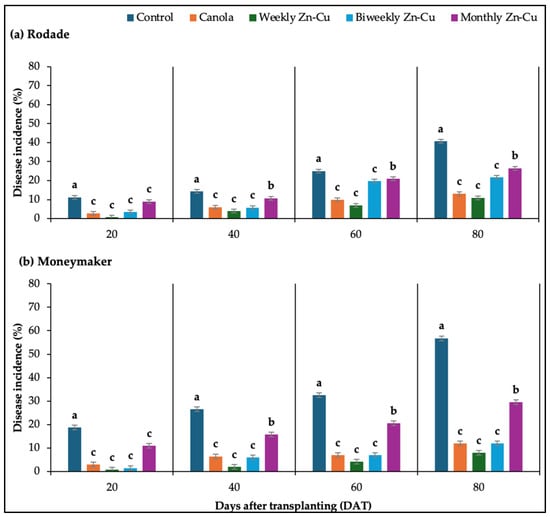
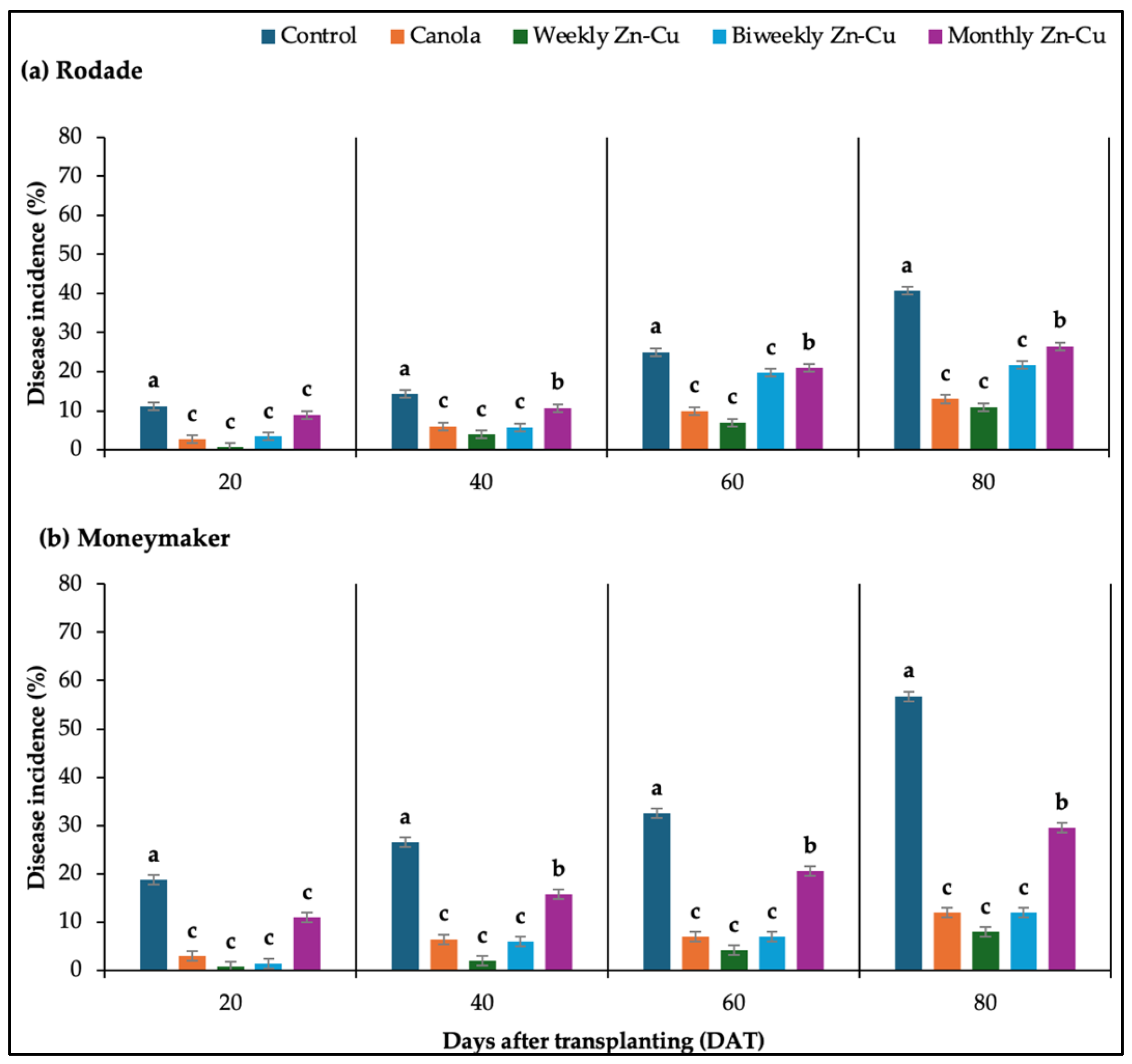
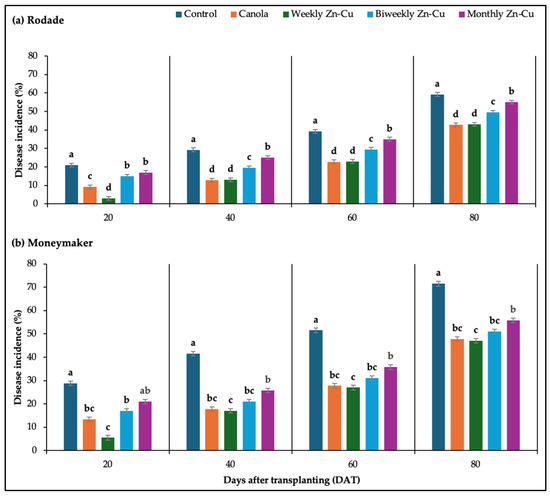
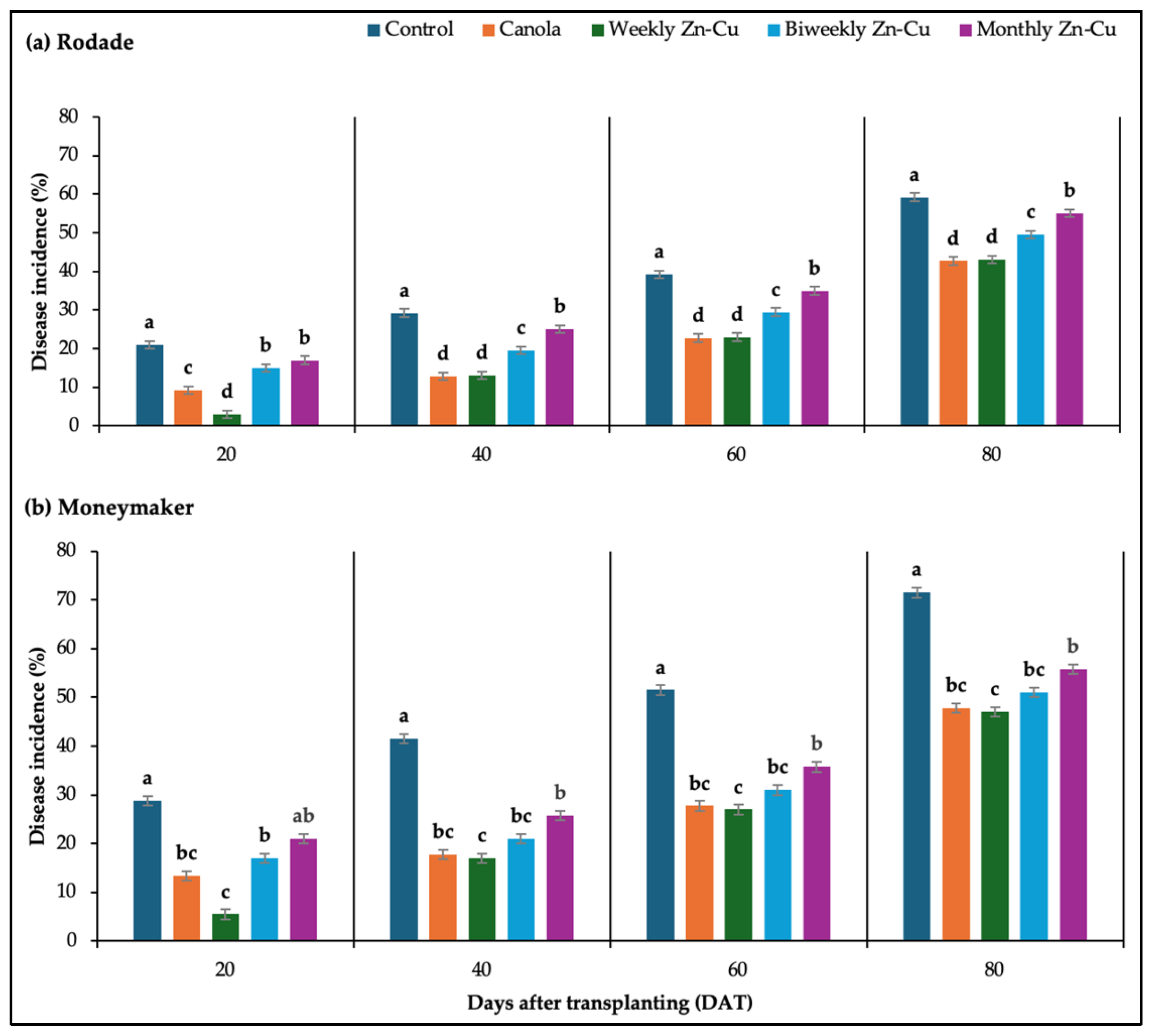
The results in Figure 5 show the effect of canola biofumigant and application frequencies of nano Zn-Cu micronutrient on Fusarium wilt disease incidence in two tomato cultivars. Fusarium wilt disease incidence increased over time, with the least disease incidence observed at 20 DAT and the highest disease incidence at 80 DAT in the two cultivars (Figure 5a,b). Additionally, of all the treatments, the weekly application of nano Zn-Cu micronutrients had the least disease incidence across all the DATs and cultivars. Notably, canola biofumigant and biweekly application of Zn-Cu micronutrients also significantly reduced disease incidence in both cultivars relative to the control (Figure 5a,b). The results further showed that between the two cultivars, disease incidence was more prevalent on Moneymaker than on Rodade.
Figure 5.
Effects of nano Zn-Cu micronutrients and canola biofumigant on Fusarium wilt disease incidence for (a) Rodade and (b) Moneymaker cultivars at varying days after transplanting (DAT) at Syferkuil. Each value represents the mean ± SE. Means followed by different letters are significantly different across the treatments at p ≤ 0.05 using Tukey’s HSD. Error bars signify the standard error of the mean.
- Disease severity and AUDPC
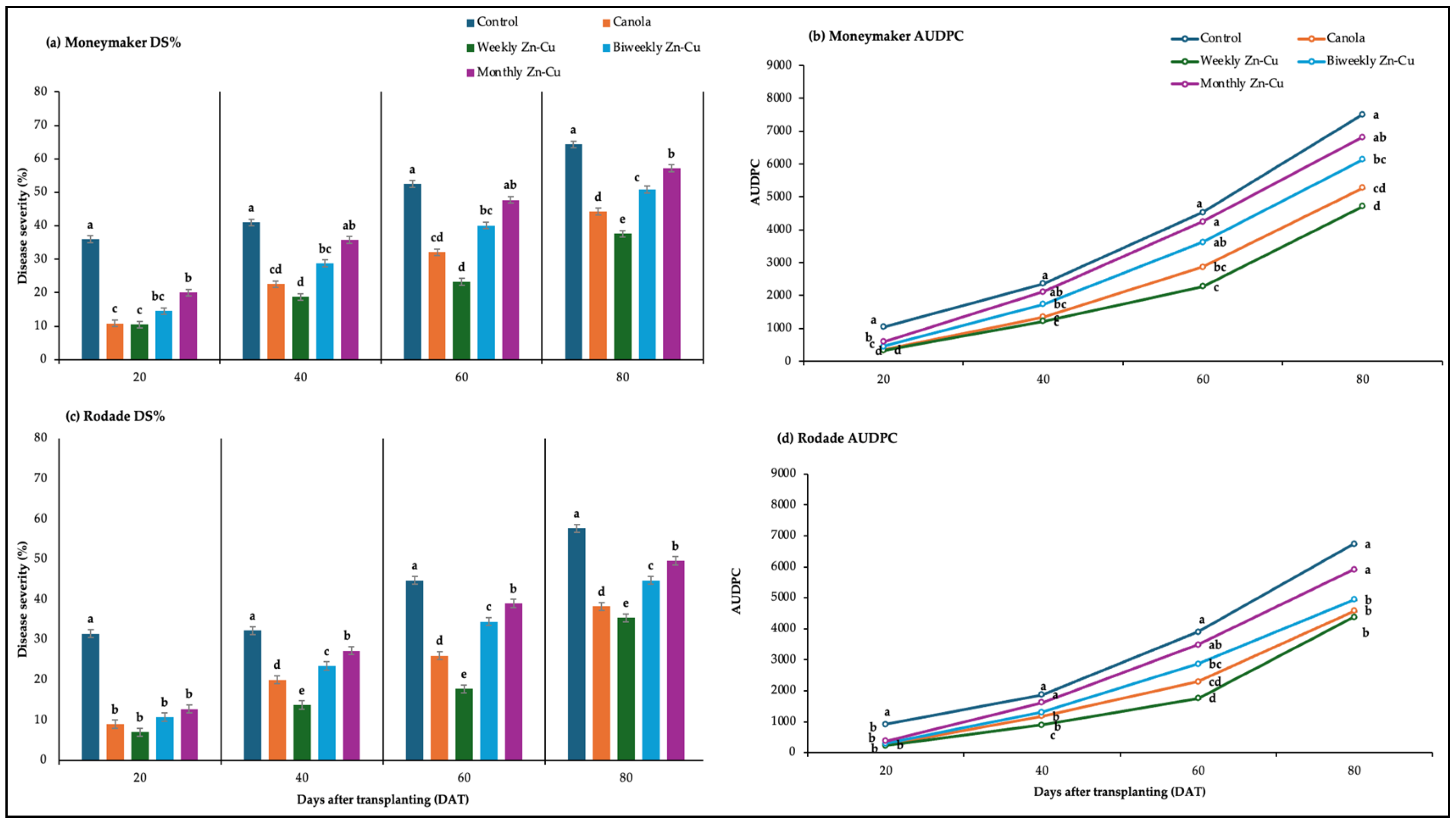
Fusarium wilt severity in response to the application of nano Zn-Cu micronutrients and canola biofumigant was tested on the two cultivars at varying DATs. The results on the Moneymaker cultivar showed that the least disease severity was observed on plants treated with weekly application of nano Zn-Cu micronutrients across all the DATs (Figure 6a). This was followed by the application of canola biofumigant, biweekly Zn-Cu and monthly Zn-Cu, which also recorded the least disease severity at all the DATs relative to the control. Conversely, Rodade cultivar showed lower disease severity when treated with canola biofumigant, followed by weekly Zn-Cu throughout the DATs (Figure 6c). Control plants had the highest disease severity compared to the treated plants (Figure 6c).
Figure 6.
Effect of nano Zn-Cu micronutrients and canola biofumigant on Fusarium wilt disease severity and disease progression at varying days after inoculation (DAI) under Syferkuil field conditions. (a) Disease severity on Moneymaker cultivar, (b) Area under disease progress curve (AUDPC) on Moneymaker cultivar, (c) Disease severity on Rodade cultivar, (d) Area under disease progress curve (AUDPC) on Rodade cultivar. Each value represents the mean ± SE. Means followed by different letters are significantly different across the treatments at p ≤ 0.05 using Tukey’s HSD. Error bars signify the standard error of the mean.
The results on disease progression (AUDPC) on Moneymaker showed that Fusarium wilt was less progressed at 20 DAT (Figure 6b). The disease progressed over time, recording the highest AUDPC at 80 DAT. In terms of the treatments, AUDPC was constantly lower with weekly Zn-Cu application and canola biofumigant across the DATs. This suggests a lesser disease progression and efficacy of the treatments. On the contrary, Fusarium wilt disease progressed significantly on untreated control plants relative to the other treatments (Figure 6b). Similar observations were noticed on the Rodade cultivar; the least AUDPC was recorded on the treated plants compared to the control, with canola biofumigant showing the least AUDPC (Figure 6d). Moreover, the results showed that AUDPC was relatively lower at 20 DAT but gradually increased with higher values recorded at 80 DAT (Figure 6d). Generally, the results also show that Moneymaker cultivars recorded the highest disease severity and AUDPC compared to Rodade (Figure 6).
- (b)
- Ofcolaco
- Disease incidence
Similar observations were also made under Ofcolaco conditions. Fusarium wilt disease incidence was at its peak at 80 DAT, compared to 20 DAT for both cultivars. Additionally, both cultivars showed the lowest disease incidence when treated with a canola biofumigant and with weekly applications of nano Zn-Cu micronutrients and canola biofumigant. In contrast, control plants showed more wilt symptoms on both cultivars across all the DATs. There was also a difference between the two cultivars, with Moneymaker exhibiting more wilt symptoms than Rodade (Figure 7a,b).
Figure 7.
Effects of nano Zn-Cu micronutrients and canola biofumigant on Fusarium wilt disease incidence for (a) Rodade and (b) Moneymaker cultivars at varying days after transplanting (DAT) at Ofcolaco. Each value represents the mean ± SE. Means followed by different letters are significantly different across the treatments at p ≤ 0.05 using Tukey’s HSD. Error bars signify the standard error of the mean.
- Disease severity and AUDPC
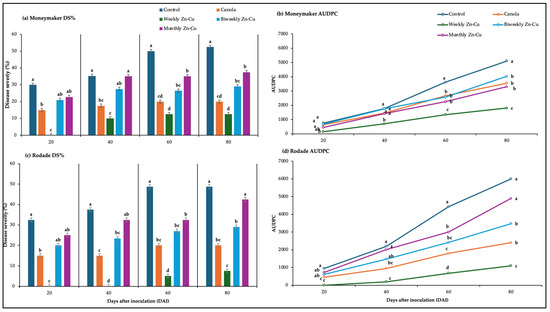
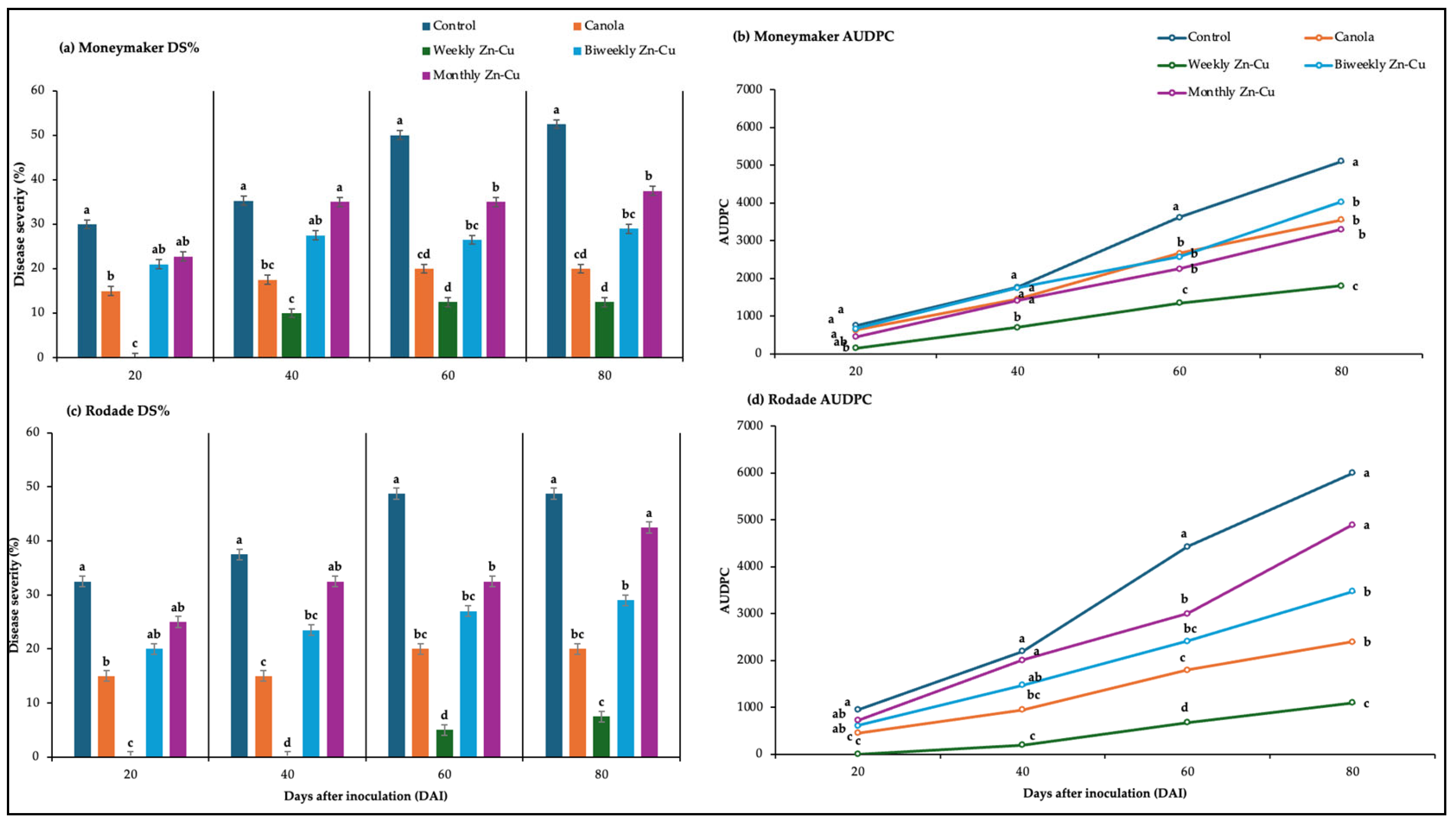
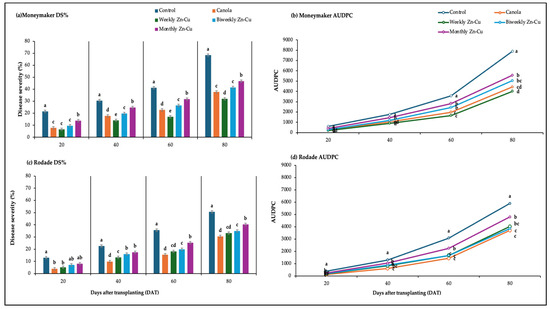
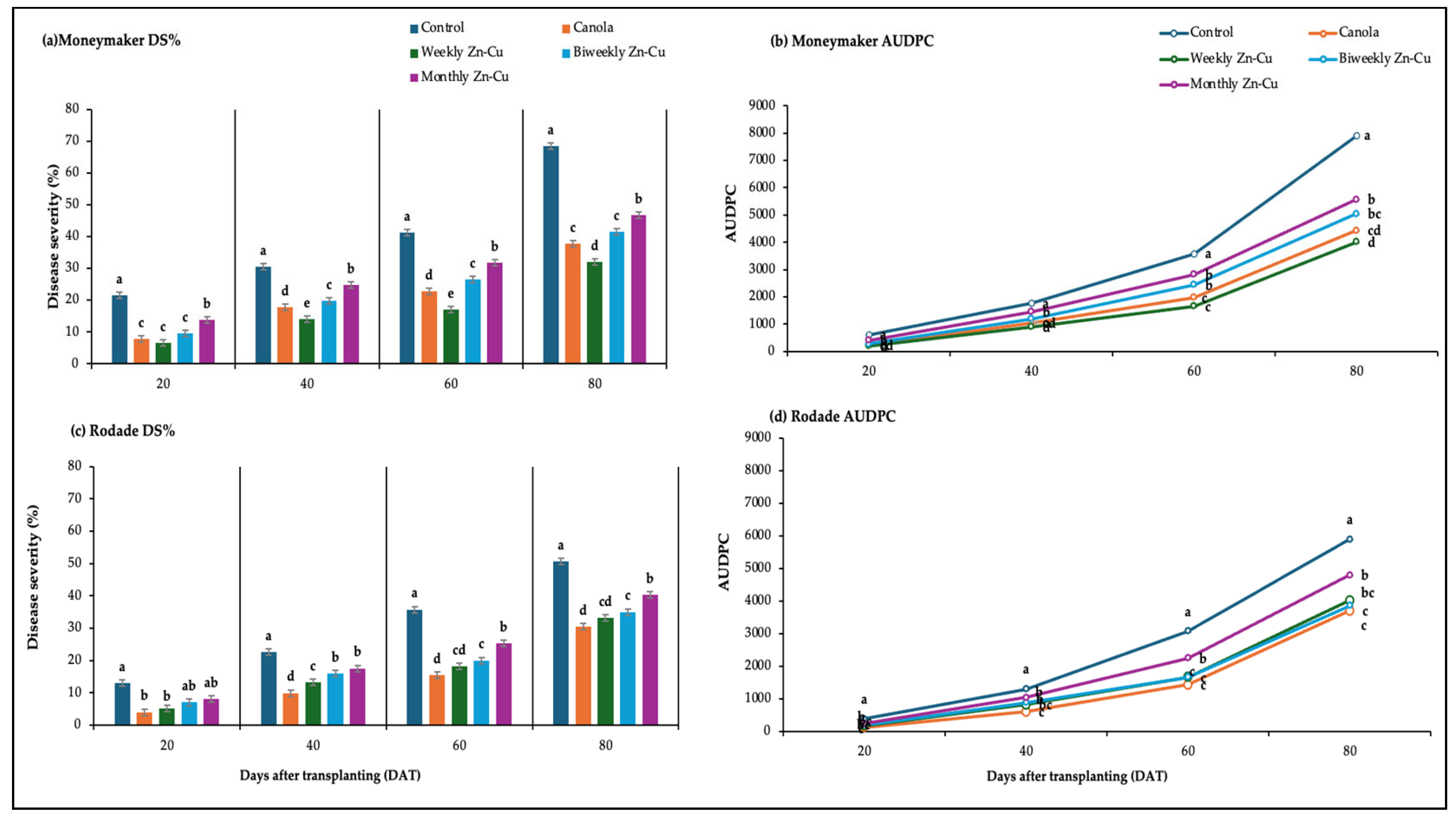
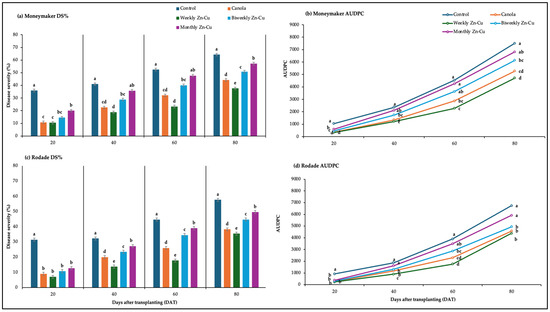
The results in Figure 8a showed that Fusarium wilt severity on Moneymaker cultivar was lower when treated with weekly Zn-Cu and canola biofumigant. The treatments (biweekly and monthly Zn-Cu) also reduced the disease severity when compared to the control (Figure 8a). The observations on the Rodade cultivar also showed that all the treatments significantly reduced disease severity when compared to the control. Additionally, weekly application of Zn-Cu was highly suppressive to the disease, followed by canola biofumigant (Figure 8c).
Figure 8.
Effect of nano Zn-Cu micronutrients and canola biofumigant on Fusarium wilt disease severity and disease progression at varying days after inoculation (DAI) under Ofcolaco field conditions. (a) Disease severity on Moneymaker cultivar. (b) Area under disease progress curve (AUDPC) on Moneymaker cultivar. (c) Disease severity on Rodade cultivar. (d) Area under disease progress curve (AUDPC) on Rodade cultivar. Each value represents the mean ± SE. Means followed by different letters are significantly different across the treatments at p ≤ 0.05 using Tukey’s HSD. Error bars signify the standard error of the mean.
The results further showed that the disease progressed over time, on both cultivars, AUDPC was lower at 20 DAT and increased rapidly from 40 to 80 DAT (Figure 8b,d). However, plants treated with weekly nano Zn-Cu maintained significantly lower AUDPC levels across all the DATs (Figure 8b,d). Disease progression was more significant in the untreated control, recording the highest AUDPC throughout.
4. Discussion
Fusarium wilt is a common disease in all tomato-producing areas in South Africa. During the 2023 cropping season, tomato plants at two production areas in Limpopo Province exhibited high incidences of Fusarium wilt, characterised by yellowing, brownish vascular discolouration, and premature plant death. The virulent isolate from the symptomatic plants underwent morphological and molecular studies, which confirmed that the isolate was Fusarium oxysporum f. sp. lycopersici (Fol). Currently, three races of Fol are occurring in Limpopo, with the highly virulent race 3 having been confirmed in 2013 [11]. The findings from the current study further support and confirm the presence of virulent Fol occurring in the province, necessitating sustainable control measures. Fusarium wilt in tomato production is difficult to manage, especially where different strains occur simultaneously in infected soils [36]. The high incidence of Fusarium wilt indicates that this disease is a recurrent problem and that all major local cultivars appear to be susceptible. Accurate identification and genetic characterisation of pathogens is necessary for the appropriate management of Fusarium wilt [37].
Soilborne fungal pathogens, particularly Fol, cause serious losses when nutrient levels are below optimum levels in the soil [38]. Micronutrients such as Zn and Cu act as defence inducers against fungal infections through inducing resistance, enhancing cellular integrity, promoting antifungal activity and improving crop physiological functions [38,39]. However, most agricultural soils are deficient in one or more of these micronutrients due to soil degradation, monocropping and unbalanced application of bulk macronutrient fertilisers such as NPK [39]. To address these concerns, nanotechnology presents a great potential as antimicrobial and therapeutic compounds because of its small size (<100 nm), high surface area and reactivity and low cost [40].
In the current study, the application of nano Zn-Cu micronutrient solution significantly reduced Fusarium wilt incidence, severity, and disease progression (AUDPC) in both disease-tolerant and susceptible tomato cultivars under greenhouse and field conditions. This suggests the potential of these nano-micronutrients in sustainable disease management. The results revealed that treated plants exhibited reduced disease incidence, severity and slower disease progression (AUDPC) compared to the untreated control. Showing the efficacy of nano Zn-Cu micronutrients in enhancing Fol tolerance and reducing disease development. Similar findings were reported by [41], who demonstrated that the zinc oxide nanoparticles (ZnO-NPs) reduced Fusarium wilt symptoms 28.57% in tomato plants. In another study, Kamel and co-authors [42] demonstrated that foliar application of copper oxide (CuO) on cucumber inhibited the soil-borne pathogen Fusarium solani. The authors attributed the observations to both the direct and indirect roles of Zn-Cu in the activation of defence mechanisms, antifungal activity, and the improvement of the physiological performance of the host plant [41,42]. Zn and Cu nano-micronutrients also reduce mycelium growth and deformation of the hyphae of Fusarium oxysporum by signalling plant defence metabolites that disrupt fungal cellular structure and membrane permeability [43]. In this study, plants treated with Zn-Cu micronutrients showed healthy plants, evidenced by greener foliage with less apparent or no wilt symptoms under both greenhouse and field conditions. Beyond antimicrobial properties, Zn-Cu are essential micronutrients involved in physiological processes, such as photosynthesis and chlorophyll synthesis, associated with tolerance to pathogen infections and improvement of crop growth [44]. Similarly, Bouqellah and others [41] reported that nano-based Cu-Zn reduced Fol symptoms while improving stress tolerance and enhancing the growth and performance of tomato plants. The management of Fusarium wilt of tomato using nano-based Zn-Cu micronutrient solution involves multiple mechanisms that directly attack the pathogen while also improving crop nutrition and growth [41,44]. Recent studies only report on the single application of these nano-micronutrients; however, the current study showed the efficacy of the combined nano Zn-Cu solution in reducing development under both greenhouse and field conditions.
Notably, a significant disease reduction was observed when Fol-infected plants were treated with Zn-Cu nano-micronutrients at weekly application. This is attributed to the gradual increase in nutrient concentration within the plant tissues targeting different stages in the infection process, thus reducing the ability of the pathogen to colonise and damage the host plant [44]. The frequent application of nano Zn-Cu significantly maintained the availability of adequate nutrient concentrations in plant tissues needed for the continuous activation of host defences against the pathogen infection and improved the physiological functions of the crop. Heikal [5] reported on the antifungal efficacy of zinc oxide (ZnO) nanoparticles against Fusarium oxyporum being more significant at higher concentrations of 500 mg L−1. Additionally, El-Abeid and co-authors [45] also reported that the antifungal activity of copper-based nanoparticles increased with increasing concentration (250 mg L−1) against Fusarium root rot of tomato. Despite the reduction in disease development associated with weekly application of Zn-Cu, limitations such as phytotoxicity should be considered. Higher concentrations of nano-micronutrients pose significant toxicity risks, particularly at field conditions, due to the ability to aggregate and accumulate in the soil, disrupting beneficial soil microbial populations and inducing phytotoxic effects if not regulated [46]. There is limited information on the application frequencies of nano Zn-Cu micronutrients; this current study serves as a baseline for further investigations.
Soil organic amendments are also widely used for suppression of soilborne pathogens by mainly increasing the abundance of beneficial microbes and microbial enzymes such as dehydrogenase, invertase and β-galactosidase and inducing systemic resistance in the host plant [47,48]. Among the organic amendments, biofumigation, which involves incorporating Brassica crops into the soil, is explored due to the release of volatile substances (ITC) that suppress soil-borne pathogens [25]. The current study showed that amending F. oxysporum-infected soil with canola (Brassica napus) also reduced wilt incidence and severity under greenhouse and field conditions. The suppressive effect of biofumigation with canola is generally attributed to the antimicrobial activity of isothiocyanate (ITC), which is produced as a result of glucosinolate (GSL) hydrolysis upon plant tissue disruption [25]. Another mechanism of suppression is the increase in organic matter in the soil, which promotes soil saprophytes, thus enhancing their competition and antagonism effects [25]. The results from the current study concur with previous reports on biofumigant Brassica species against soil-borne pathogens. For example, Ashiq and co-authors [25] highlighted that the incorporation of Brassica juncea (mustard) reduced disease incidence and severity of powdery scab (Spongospora subterranea) and common scab (Streptomyces scabies) by 40% and less than 20%, respectively. While [24] reported that canola (Brassica napus) reduced the abundance of Verticilium dahliae, causing Verticilium wilt of eggplant (Solanum melongena L.) by 64.74% compared to the control. Additionally, another study by [47] showed that mustard reduced Fusarium oxysporum f. sp. cumin, causing Fusarium wilt of cumin (Cuminum cyminum (L)). In the current study, Fusarium wilt disease reduction percentages of 66–86% were recorded on Fol-infected tomato cultivars treated with canola biofumigant under greenhouse conditions. The reduction in disease severity is associated with documented mechanisms of action such as the release of GSL byproducts (e.g., ally-ITC) that inhibit spore germination and cause hyphal deformity [25,26]. The degree of suppression varies with Brassica species, the group and concentration of GSL. For example, Brassica juncea with sinigrin GSL at a concentration of 164 μmol g−1 is highly effective against F. oxysporum, while Brassica napus only contains approximately 56 μmol g−1 [49]. It is therefore imperative to determine the group and GSL concentration for maximising disease suppression; this then serves as the limitation of the current study for future investigations. Even so, disease suppression with Brassica biofumigation is also influenced by multiple interacting factors beyond GSL concentration, such as biomass production, soil moisture, temperature, soil texture, organic matter, myrosinase enzyme activity and pathogen sensitivity [49]. Furthermore, other authors argue that even when GSL levels are known, the hydrolysis products are often short-lived in the soil, persisting for only a few hours to approximately 14 days [50,51]. Consequently, supporting several factors such as the role of Brassica residue in enhancing soil fertility, organic matter, nutrient availability and delivery and increasing populations of beneficial microorganisms [52,53]. Collectively, these factors indirectly reduce the occurrence of phytopathogens, improve crop physiological functions and growth [27,52,53].
The response of two tomato cultivars, Rodade and Moneymaker, to Fusarium wilt was also assessed in this study. The results demonstrated that both cultivars were susceptible to Fol; however, the Moneymaker cultivar exhibited greater susceptibility than Rodade under both field and greenhouse conditions. Moneymaker is a disease-susceptible cultivar with Fol spores germinating at 1–2 days post-inoculation (DPI) within the stem [54]. Additionally, at 3 DPI, mycelia and necrotic spots began to appear in the Moneymaker stem [54]. Notably, cultivar genome and environmental conditions influence the response of each cultivar to Fol infection [17].
The results of the current study show the potential of nano Zn-Cu micronutrient solution and canola biofumigants as environmentally friendly approaches to manage Fusarium wilt of tomato. These are innovative, multi-mechanism solutions that can be included in integrated disease management to offer maximised plant protection against Fol. The commercially available Zn-Cu nano fertiliser offers practical application in agricultural ecosystems. However, while significant effects on disease suppression were observed, the current study cannot determine if the responses were associated with specific nanoparticle properties or the nutritional effect on Zn-Cu. Therefore, nano micronutrient physicochemical characterisation is necessary for future investigation to determine the intrinsic behaviour of the nano micronutrients and their interaction with soil-borne pathogens. Additionally, other limitations, such as GSL quantification and phytotoxicity, are imperative for future investigations.
Author Contributions
Conceptualization, M.T.M., M.A.K., K.K.A. and N.N.P.; methodology, M.T.M. and M.A.K.; validation, M.T.M., V.A.N. and M.A.K.; formal analysis, M.T.M. and V.A.N.; investigation, M.T.M. and V.A.N.; resources, M.A.K., K.K.A. and N.N.P.; data curation, M.T.M.; writing—original draft preparation, M.T.M.; writing—review and editing, M.A.K., K.K.A. and N.N.P.; visualisation, M.T.M. and M.A.K.; supervision, M.A.K., K.K.A., N.N.P.; project administration, M.T.M., M.A.K. and V.A.N.; funding acquisition, M.A.K. and K.K.A. All authors have read and agreed to the published version of the manuscript.
Funding
This research was funded by the University of Limpopo Centre for Global Change (CGC) through the Department of Science, Technology and Innovation (DSTI) and the National Research Foundation (NRF), grant number: PMDS22053117879.
Data Availability Statement
The raw data supporting the conclusions of this article will be made available by the authors on request.
Acknowledgments
The authors would like to acknowledge the University of Limpopo, Centre for Global Change technical team for assisting with this research.
Conflicts of Interest
The authors declare no conflicts of interest.
References
- Department of Agriculture, Land Reform and Rural Development (DALRRD). A Profile of the South African Tomato Market Value Chain. 2020. Available online: https://www.nda.gov.za/images/Branches/Economica%20Development%20Trade%20and%20Marketing/marketing/annual-publications/vegetables/tomato-market-value-chain-profile-2020.pdf (accessed on 30 January 2026).
- Bozo, T.T.; Mpambani, B.; Mbenga, A.; Mhlontlo, S. Comparative studies on yield and quality response of soil and soilless-grown tomatoes: The case study of Masiphathisane community project and Bathurst experimental farm. S. Afr. J. Agric. Ext. 2019, 47, 75–85. [Google Scholar] [CrossRef] [Scilit]
- Muhorakeye, M.C.; Namikoye, E.S.; Khamis, F.M.; Wanjohi, W.; Akutse, K.S. Biostimulant and antagonistic potential of endophytic fungi against Fusarium wilt pathogen of tomato Fusarium oxysporum f. sp. lycopersici. Sci. Rep. 2024, 14, 15365. [Google Scholar] [CrossRef] [Scilit] [PubMed]
- Ma, M.; Taylor, P.W.; Chen, D.; Vaghefi, N.; He, J.Z. Major soilborne pathogens of field processing tomatoes and management strategies. Microorganisms 2023, 11, 263. [Google Scholar] [CrossRef] [Scilit] [PubMed]
- Heikal, Y.M.; Albahi, A.M.; Abdelmigid, H.M.; Alyamani, A.A.; Elshafey, N.; Soliman, H.M.; Haroun, S.A. Eco-friendly control of Fusarium wilt in tomato: Molecular docking and functional analysis of ZnO nanoparticles and biostimulants. Front. Plant Sci. 2025, 16, 1687653. [Google Scholar] [CrossRef] [Scilit] [PubMed]
- Vigneshwaran, K.; Rajamohan, K.; Balabaskar, P.; Udhayakumar, R.; Sivasakthivelan, P. Molecular, morphological identification, and virulence profiling of Fusarium oxysporum f. sp. lycopersici (Sacc.) (WC Snyder & HN Hansen) associated with Root-Knot Nematode inciting Fusarium wilt of tomato. Physiol. Mol. Plant Pathol. 2025, 138, 102741. [Google Scholar] [CrossRef] [Scilit]
- Abuzaitoun, S.Y.; Salman, M.N.; Hamdan, Y.Y.; Jamous, R.M.; Ali-Shtayeh, M.S. Antifungal Efficacy of Essential Oils and Nanoformulations Against Fusarium Wilt of Tomato: Systematic Review (2000–2025). Plants 2026, 15, 1268. [Google Scholar] [CrossRef] [Scilit] [PubMed]
- Cucu, M.A.; Choudhary, R.; Trkulja, V.; Garg, S.; Matić, S. Utilizing environmentally friendly techniques for the sustainable control of plant pathogens: A review. Agronomy 2025, 15, 1551. [Google Scholar] [CrossRef] [Scilit]
- Tsolakidou, M.D.; Demetriou, G.; Panagiotou, S.; Vassiliou, L.; Goulas, V.; Pantelides, I. Efficacy of commercial biocontrol products for the management of Verticillium and Fusarium wilt in greenhouse tomatoes: Impact on disease severity, fruit yield, and quality. Agriculture 2024, 14, 882. [Google Scholar] [CrossRef] [Scilit]
- Pothiraj, G.; Shanmugam, V.; Tyagi, A.; Hussain, Z.; Aggarwal, R.; Haritha, M.M.; Manikandan, K.; Singh, A.K.; Krishnan, G. Physiological race characterisation of Fusarium oxysporum strains infecting tomato employing candidate pathogenicity genes and host resistance. World J. Microbiol. Biotechnol. 2023, 39, 66. [Google Scholar] [CrossRef] [Scilit] [PubMed]
- Jacobs, A.; Govender, R.; Van Heerden, S.W. Fusarium oxysporum f. sp. lycopersici race 3 causing tomato wilt in South Africa. Australas. Plant Dis. Notes 2013, 8, 45–147. [Google Scholar] [CrossRef] [Scilit]
- Abdelaziz, A.M.; Salem, S.S.; Khalil, A.M.; El-Wakil, D.A.; Fouda, H.M.; Hashem, A.H. Potential of biosynthesized zinc oxide nanoparticles to control Fusarium wilt disease in eggplant (Solanum melongena) and promote plant growth. BioMetals 2022, 35, 601–616. [Google Scholar] [CrossRef] [Scilit] [PubMed]
- Li, X.; Liu, J. Soil amendments with nanoparticles control cucumber wilt caused by Fusarium oxysporium. S. Afr. J. Bot. 2024, 168, 384–393. [Google Scholar] [CrossRef] [Scilit]
- Tiwari, V.; Bambharoliya, K.S.; Bhatt, M.D.; Nath, M.; Arora, S.; Dobriyal, A.K.; Bhatt, D. Application of green-synthesised copper oxide nanoparticles for effective mitigation of Fusarium wilt disease in roots of Cicer arietinum. Physiol. Mol. Plant Pathol. 2024, 131, 102244. [Google Scholar] [CrossRef] [Scilit]
- Attia, M.S.; El-Sayyad, G.S.; Abdelaziz, A.M.; Gaber, S.E.; Khalil, A.M.A.; Saleh, A.M.; Al Zoubi, O.M.; Hashem, A.H. Protective role of Mycosynthesized Bimetallic ZnO-CuO nanoparticles as therapeutic nutrients to enhance the resistance of Vicia faba against Fusarium Wilt Disease. Agronomy 2023, 13, 2725. [Google Scholar] [CrossRef] [Scilit]
- González-Merino, A.M.; Hernández-Juárez, A.; Betancourt-Galindo, R.; Ochoa-Fuentes, Y.M.; Valdez-Aguilar, L.A.; Limón-Corona, M.L. Antifungal activity of zinc oxide nanoparticles in Fusarium oxysporum-Solanum lycopersicum pathosystem under controlled conditions. J. Phytopathol. 2021, 169, 533–544. [Google Scholar] [CrossRef] [Scilit]
- López, W.R.; Garcia-Jaramillo, D.J.; Ceballos-Aguirre, N.; Castaño-Zapata, J.; Acuña-Zornosa, R.; Jovel, J. Transcriptional responses to Fusarium oxysporum f. sp. lycopersici (Sacc.) Snyder & Hansen infection in three Colombian tomato cultivars. BMC Plant Biol. 2021, 21, 412. [Google Scholar] [CrossRef] [Scilit] [PubMed]
- Cruz-Luna, A.R.; Cruz-Martínez, H.; Vásquez-López, A.; Medina, D.I. Metal nanoparticles as novel antifungal agents for sustainable agriculture: Current advances and future directions. J. Fungi 2021, 7, 1033. [Google Scholar] [CrossRef] [Scilit] [PubMed]
- Alikarami, M.; Saremi, H.; Darvishnia, M. Sustainable antifungal potential of ZnO and MoS2 nanoparticles against Fusarium oxysporum and Fusarium graminearum. World J. Microbiol. Biotechnol. 2025, 41, 312. [Google Scholar] [CrossRef] [Scilit] [PubMed]
- Santos, C.A.D.; Abboud, A.C.D.S.; Carmo, M.G.F.D. Biofumigation with species of the Brassicaceae family: A review. Ciência Rural 2020, 51, 2021. [Google Scholar] [CrossRef] [Scilit]
- Greer, S.F.; Surendran, A.; Grant, M.; Lillywhite, R. The current status, challenges, and future perspectives for managing diseases of brassicas. Front. Microbiol. 2023, 14, 1209258. [Google Scholar] [CrossRef] [Scilit] [PubMed]
- Pavana Praneetha, T.; Masih, S.A.; Addesso, R.; Maxton, A.; Sofo, A. Brassicaceae isothiocyanate-mediated alleviation of soil-borne diseases. Plants 2025, 14, 1200. [Google Scholar] [CrossRef] [Scilit] [PubMed]
- Wu, T.L.; Hu, Y.M.; Sun, Y.; Zhang, Z.J.; Wu, Z.R.; Zhao, W.B.; Tang, C.; Du, S.S.; He, Y.H.; Ma, Y.; et al. Insights into the mode of action of 2-(4-methoxyphenyl) ethyl isothiocyanate on Aspergillus niger. Food Control 2022, 136, 108871. [Google Scholar] [CrossRef] [Scilit]
- Meng, L.; Zhang, Y.; Yu, S.; Ogundeji, A.O.; Zhang, S.; Li, S. Temporal assessment of biofumigation using mustard and oilseed rape tissues on Verticillium dahliae, soil microbiome and yield of eggplant. Agronomy 2022, 12, 2963. [Google Scholar] [CrossRef] [Scilit]
- Ashiq, S.; Edwards, S.; Watson, A.; Back, M. Biofumigation for the Management of Fusarium graminearum in a Wheat-Maize Rotation. Pathogens 2022, 11, 1427. [Google Scholar] [CrossRef] [Scilit] [PubMed]
- Patil, S.; Gavandi, T.; Karuppayil, S.M.; Jadhav, A. Glucosinolate derivatives as antifungals: A review. Phyther. Res. 2024, 38, 5052–5066. [Google Scholar] [CrossRef] [Scilit] [PubMed]
- Karuppanan, K.; Raja, V.; Chellappa, J.; Felix, J.; Sekaran, U. Brassica biofumigation cover crops in US agroecosystems: A systematic review of research from 2014 to 2024. Agron. J. 2026, 118, e70388. [Google Scholar] [CrossRef] [Scilit]
- Mogale, T.E.; Ayisi, K.K.; Munjonji, L.; Kifle, Y.G. Yield responses of grain sorghum and cowpea in binary and sole cultures under No-tillage conditions in Limpopo Province. Agriculture 2022, 12, 733. [Google Scholar] [CrossRef] [Scilit]
- Masete, F.M.; Munjonji, L.; Ayisi, K.K.; Mopape-Mabapa, M.P. Cowpea growth and nitrogen fixation performance under different mulch treatments. Agriculture 2022, 12, 1144. [Google Scholar] [CrossRef] [Scilit]
- Manikandan, R.; Harish, S.; Karthikeyan, G.; Raguchander, T. Comparative proteomic analysis of different isolates of Fusarium oxysporum f. sp. lycopersici to exploit the differentially expressed proteins responsible for virulence on tomato plants. Front. Microbiol. 2018, 9, 420. [Google Scholar] [CrossRef] [Scilit] [PubMed]
- Mirmajlessi, M.; Najdabbasi, N.; Sigillo, L.; Haesaert, G. An implementation framework for evaluating the biocidal potential of essential oils in controlling Fusarium wilt in spinach: From in vitro to in planta. Front. Plant Sci. 2024, 15, 1444195. [Google Scholar] [CrossRef] [Scilit] [PubMed]
- Hlokwe, M.T.P.; Kena, M.A.; Mamphiswana, N.D. Evaluating crude extracts of Monsonia burkeana and Moringa oleifera against Fusarium wilt of tomato. Acta Agric. Scand. Sect. B—Soil Plant Sci. 2018, 68, 57–764. [Google Scholar] [CrossRef] [Scilit]
- Nephalela-Mavhunga, M.; Kwinda, G.T.; Summerell, B.A.; Venter, E.; Jacobs, A. Genetic diversity of the Fusarium oxysporum complex isolated from the grassland biome of South Africa. Phytopathol. 2021, 111, 1459–1469. [Google Scholar] [CrossRef] [Scilit] [PubMed]
- Nguyen, V.D.; Nguyen, T.T.; Huynh, T.N.; Ho, H.H.; Nguyen, A.T.; Trinh, L.T.P. Effective control of Fusarium wilt on tomatoes using a combination of phenolic-rich plant extracts. Eur. J. Plant Pathol. 2024, 170, 833–850. [Google Scholar] [CrossRef] [Scilit]
- Devi, N.O.; Tombisana Devi, R.K.; Debbarma, M.; Hajong, M.; Thokchom, S. Effect of endophytic Bacillus and arbuscular mycorrhiza fungi (AMF) against Fusarium wilt of tomato caused by Fusarium oxysporum f. sp. lycopersici. Egypt. J. Biol. Pest Control 2022, 32, 1. [Google Scholar] [CrossRef] [Scilit]
- Ekwomadu, T.I.; Mwanza, M. Fusarium fungi pathogens, identification, adverse effects, disease management, and global food security: A review of the latest research. Agriculture 2023, 13, 1810. [Google Scholar] [CrossRef] [Scilit]
- Tripathi, R.; Tewari, R.; Singh, K.P.; Keswani, C.; Minkina, T.; Srivastava, A.K.; De Corato, U.; Sansinenea, E. Plant mineral nutrition and disease resistance: A significant linkage for sustainable crop protection. Front. Plant Sci. 2022, 13, 883970. [Google Scholar] [CrossRef] [Scilit] [PubMed]
- Kopecky, J.; Rapoport, D.; Sarikhani, E.; Stovicek, A.; Patrmanova, T.; Sagova-Mareckova, M. Micronutrients and soil microorganisms in the suppression of potato common scab. Agronomy 2021, 11, 383. [Google Scholar] [CrossRef] [Scilit]
- Kihara, J.; Bolo, P.; Kinyua, M.; Rurinda, J.; Piikki, K. Micronutrient deficiencies in African soils and the human nutritional nexus: Opportunities with staple crops. Environ. Geochem. Health 2020, 42, 3015–3033. [Google Scholar] [CrossRef] [Scilit] [PubMed]
- Dutta, P.; Kumari, A.; Mahanta, M.; Upamanya, G.K.; Heisnam, P.; Borua, S.; Kaman, P.K.; Mishra, A.K.; Mallik, M.; Muthukrishnan, G.; et al. Nanotechnological approaches for management of soil-borne plant pathogens. Front. Plant Sci. 2023, 14, 1136233. [Google Scholar] [CrossRef] [Scilit] [PubMed]
- Bouqellah, N.A.; El-Sayyad, G.S.; Attia, M.S. Induction of tomato plant biochemical immune responses by the synthesized zinc oxide nanoparticles against wilt-induced Fusarium oxysporum. Int. Microbiol. 2024, 27, 435–448. [Google Scholar] [CrossRef] [Scilit] [PubMed]
- Kamel, S.M.; Elgobashy, S.F.; Omara, R.I.; Derbalah, A.S.; Abdelfatah, M.; El-Shaer, A.; Al-Askar, A.A.; Abdelkhalek, A.; Abd-Elsalam, K.A.; Essa, T.; et al. Antifungal activity of copper oxide nanoparticles against root rot disease in cucumber. J. Fungi 2022, 8, 911. [Google Scholar] [CrossRef] [Scilit] [PubMed]
- Mohi-Ud-Din, A.; Parveen, M.; Fatima, N.; Mahmood, I.; Rizvi, R. Eco-friendly nanoparticle-based strategy for controlling Fusarium wilt in tomato using biosynthesised copper oxide nanoparticles. J. Environ. Sci. Health 2025, 60, 566–576. [Google Scholar] [CrossRef] [Scilit] [PubMed]
- Noman, M.; Ahmed, T.; Wang, J.; Ijaz, M.; Shahid, M.; Islam, M.S.; Azizullah; Manzoor, I.; Li, D.; Song, F. Nano-enabled crop resilience against pathogens: Potential, mechanisms and strategies. Crop Health 2023, 1, 15. [Google Scholar] [CrossRef] [Scilit] [PubMed]
- El-Abeid, S.E.; Mosa, M.A.; El-Tabakh, M.A.; Saleh, A.M.; El-Khateeb, M.A.; Haridy, M.S. Antifungal activity of copper oxide nanoparticles derived from Zizyphus spina leaf extract against Fusarium root rot disease in tomato plants. J. Nanobiotechnol. 2024, 22, 28. [Google Scholar] [CrossRef] [Scilit] [PubMed]
- Kalu, C.M.; Ogugua, U.V.; Udeh, E.L.; Otun, S.; Oladipo, A.O.; Lebelo, S.L.; Adriaanse, P.; Ntushelo, K.; Tekere, M. Applications of nanoparticles in plant disease identification and control for sustainable crop production. Discov. Nano 2026, 21, 15. [Google Scholar] [CrossRef] [Scilit] [PubMed]
- Bonanomi, G.; Zotti, M.; Idbella, M.; Cesarano, G.; Al-Rowaily, S.L.; Abd-ElGawad, A.M. Mixtures of organic amendments and biochar promote beneficial soil microbiota and affect Fusarium oxysporum f. sp. lactucae, Rhizoctonia solani and Sclerotinia minor disease suppression. Plant Pathol. 2022, 71, 818–829. [Google Scholar] [CrossRef] [Scilit]
- Yadav, R.; Beniwal, R.; Ramakrishna, W. Soil diseases suppressiveness conferred by organic farming, practices and microbial metabolites. Arch. Agron. Soil Sci. 2023, 69, 3201–3221. [Google Scholar] [CrossRef] [Scilit]
- Tagele, S.B.; Kim, R.H.; Shin, J.H. Interactions between Brassica biofumigants and soil microbiota: Causes and impacts. J. Agric. Food Chem. 2021, 69, 11538–11553. [Google Scholar] [CrossRef] [Scilit] [PubMed]
- Al-Daghari, D.S.S.; Al-Sadi, A.M.; Al-Mahmooli, I.H.; Janke, R.; Velazhahan, R. Biological control efficacy of indigenous antagonistic bacteria isolated from the rhizosphere of cabbage grown in biofumigated soil against Pythium aphanidermatum damping-off of cucumber. Agriculture 2023, 13, 626. [Google Scholar] [CrossRef] [Scilit]
- Motisi, N.; Doré, T.; Lucas, P.; Montfort, F. Dealing with the variability in biofumigation efficacy through an epidemiological framework. Soil Biol. Biochem. 2010, 42, 2044–2057. [Google Scholar] [CrossRef] [Scilit]
- Mandal, S.; Ghosh, A.; Laskar, S.H.; Roy, S.D. Beyond Chemicals: The Role of Biofumigation in Controlling Soil-Borne Pathogens, Insects, and Nematodes. Indian Farmer 2025, 12, 391–401. [Google Scholar]
- Ahmed, R.; Uddin, M.K.; Quddus, M.A.; Samad, M.Y.A.; Hossain, M.M.; Haque, A.N.A. Impact of foliar application of zinc and zinc oxide nanoparticles on growth, yield, nutrient uptake and quality of tomato. Horticulturae 2023, 9, 162. [Google Scholar] [CrossRef] [Scilit]
- Sun, Y.; Yang, H.; Li, J. Transcriptome analysis reveals the response mechanism of Frl-mediated resistance to Fusarium oxysporum f. sp. radicis-lycopersici (FORL) infection in tomato. Int. J. Mol. Sci. 2022, 23, 7078. [Google Scholar] [CrossRef] [Scilit] [PubMed]

Disclaimer/Publisher’s Note: The statements, opinions and data contained in all publications are solely those of the individual author(s) and contributor(s) and not of MDPI and/or the editor(s). MDPI and/or the editor(s) disclaim responsibility for any injury to people or property resulting from any ideas, methods, instructions or products referred to in the content. |
© 2026 by the authors. Licensee MDPI, Basel, Switzerland. This article is an open access article distributed under the terms and conditions of the Creative Commons Attribution (CC BY) license.