


Abstract
Brazil, as one of the world’s leading fruit producers, faces increasing challenges arising from climate change, particularly in avocado cultivation, where excessive solar radiation and high temperatures impair plant metabolism, yield, and fruit quality. This study evaluated the use of a calcium and magnesium hydroxide-based sunscreen in mitigating heat stress in eight-year-old ‘Hass’ avocado trees. The experimental design was a randomized complete block design in a 4 × 8 factorial arrangement, with five replicates. Sunscreen applications were performed at full bloom and at the initial fruit development stage (18 mm). Leaf temperature, fruit drop rate, yield-related traits, fruit classification, and the percentage of fruit lesions were evaluated. Applications of the calcium and magnesium hydroxide-based sunscreen at concentrations of 3.0% and 4.5% (w/v) reduced leaf temperature and improved fruit biometric attributes compared to the control, although the maximum fruit diameter was achieved at the 2.6% concentration. The 4.5% sunscreen concentration reduced leaf temperature and fruit drop in ‘Hass’ avocado trees by 1.5 °C and 24.5%, respectively, compared with the control and decreased the percentage of small and damaged fruits. The application of sunscreen improved fruit weight and the percentage of fruits with higher market value, while the fruit diameter presented higher values at intermediate concentrations.
1. Introduction
Avocado (Persea americana Mill.), native to Central America and Mexico, has become a fruit crop of major global importance, particularly the Hass cultivar, which stands out among other cultivars as the main commercial reference in the international avocado market [1]. This prominence is due not only to its culinary versatility but also to the high nutritional and functional value of its fruits [2]. In 2024, global avocado production exceeded 11 million tons, generating approximately US $10.19 billion, with projections indicating growth to US $15.58 billion by 2033 [3]. Brazil is currently the seventh-largest producer worldwide [4].
The competitiveness and sustainability of avocado production are directly threatened by climate change, requiring the adoption of management practices capable of ensuring high standards of productivity and fruit quality [5]. Global warming, driven by increasing greenhouse gas concentrations, has intensified extreme weather events. In 2023, the global mean temperature was 1.55 °C above the pre-industrial average [6]. These factors intensify abiotic stresses that may reduce crop productivity by more than 50%, thereby compromising food security and the economic stability of the sector [7,8]. Temperature variations, extreme temperature events, and changes in light intensity are among the main current challenges in fruit production [9].
The ‘Hass’ avocado is widely recognized as being sensitive to heat stress and excessive solar radiation [10]. Temperatures exceeding the critical threshold for the species cause irreversible metabolic damage [11], severely impairing plant development under field conditions. These effects range from changes in floral behavior and pollination to reductions in final yield and fruit quality [12]. From a physiological perspective, extreme heat destabilizes photosystem II through inactivation of the D1 protein and induces the production of reactive oxygen species (ROS). This physiological response results in oxidative damage to membranes and proteins [12]. Although the plant activates enzymatic defense mechanisms such as superoxide dismutase (SOD) and catalase (CAT), prolonged stress periods exceed this endogenous protective capacity, making management interventions necessary [5].
The reproductive phase of the avocado tree is particularly vulnerable to temperature fluctuations, highlighting the strong influence of environmental stress on productive performance [10]. In this regard, several studies have investigated how temperature affects the flowering and fruiting phase. According to Lahav et al. [13], fruiting occurs most efficiently when daytime temperatures range between 20 °C and 30 °C. In contrast, Whiley and Winston [14] point out that the avocado ‘Hass’, for fruit mooring, requires temperatures in a range that goes from 12–17 °C to 28–33 °C. Complementary studies, such as those by Lemus et al. [15], Torres et al. [16], and Domínguez et al. [17], indicate that daytime conditions between 20 °C and 25 °C, combined with nighttime temperatures above 10 °C, favor fruit set. Additionally, Intagri [18] suggests a higher optimal range, varying from 28 °C to 33 °C.
Under conditions of high radiation and temperature, these stresses are frequently accompanied by increased mitochondrial respiration and reduced net carbon assimilation due to increased photorespiration and enzymatic limitations [19,20]. Such imbalances can reduce the availability of non-structural carbohydrates, which are essential for sustaining fruit development and maintenance [21]. Consequently, carbon limitation has been identified as a key factor in fruit drop, particularly under environmental stress conditions that increase metabolic demand and simultaneously restrict photosynthesis [14]. Woolf et al. [22] concluded that fruits exposed to more sunlight exhibit changes in ripening and coloration compared to fruits grown in the shade. Rameurez-Gil et al. [23] highlighted economic losses of 5.78% and 5.68% on farms and at packing houses, respectively, which amounts to $80.29 per ton produced, indicating that managing abiotic stress, especially in mature orchards, is key to ensuring economic sustainability. In addition to increased fruit drop and, consequently, reduced yield, this type of stress also manifests visually as sunburn, chlorotic lesions, and superficial necrosis, all of which reduce the commercial value of the fruit [5,24]. The economic viability of ‘Hass’ avocado depends on compliance with market standards, especially in the export market, which requires fruit of adequate size and free from surface damage on the peel [25]. In addition, high temperatures coinciding with the flowering period reduce the fruit set [26]. In this context, the use of sunscreen products has shown potential to increase both productive yield and marketable yield in ‘Hass’ avocado, also exerting positive effects on postharvest ripening patterns [27,28,29,30].
As a mitigation strategy, the use of sun protection products based on minerals and natural ingredients has emerged as a promising and sustainable technology. This technique involves the formation of an inert, white, porous mineral film on the plant’s surface, which increases the reflectance of radiation and reduces tissue temperature without impairing gas exchange [31,32]. El-Moniem et al. [10] concluded that the application of a 4% potassium aluminum silicate-based sunscreen reduced sunscald on the fruit and improved fruit set, yield, and quality in ‘Hass’ avocados. Foliar spraying with 3% kaolin can mitigate heat stress in fruit trees by reducing evapotranspiration [33]. These sunscreens increase the reflectivity of the plant’s surface, mitigating abiotic stress [23], by reducing the temperature of leaves and fruits when applied at concentrations of 3 to 5% [34]. Domingues Neto et al. [5] note that the concentrations of the products applied can vary between 2% and 8%, depending on environmental conditions and the stage of plant development.
The positive effects of this practice are also observed in grapevines, with a reduction of 2.04 °C following a 5% foliar application of kaolin [32], in addition to facilitating anthocyanin accumulation under hot and arid conditions with high solar radiation [35]. Varinha et al. [36] observed improvements in the coloration of ‘Granny Smith’ and ‘Royal Gala’ apples with kaolin application. Melgarejo et al. [37] observed a 12.5% reduction in sunscald on pomegranates, in addition to a reduction in leaf temperature. In hazelnuts, the application of 3% kaolin increased light albedo and reduced leaf temperature by up to 6.9 °C [38]. Furthermore, particle films act not only as a reflective barrier but also modify the light microclimate within the canopy, increasing the proportion of diffuse radiation [39]. This effect can enhance the light-use efficiency of leaves that are normally in the shade, thereby optimizing the overall photosynthesis of the canopy [33]. Although there are reports of kaolin-based films for some fruit trees [40,41], the effectiveness of their application at optimal phenological stages, such as full bloom and fruit development in ‘Hass’ avocados, still requires further investigation. Understanding these effects requires a systemic analysis of yield components, as the reduction in fruit drop is intrinsically linked to a redistribution of photoassimilates among the remaining fruits. This interaction determines not only the total production but also the commercial size distribution (caliber), which is a critical factor for the export-oriented ‘Hass’ market. Therefore, the present study evaluated the efficiency of calcium and magnesium hydroxide-based sunscreen in mitigating heat stress and improving the productive performance of ‘Hass’ avocado.
2. Materials and Methods
2.1. Characterization of the Experimental Area
The experiment was conducted in a commercial orchard located in the municipality of Arealva, São Paulo State, Brazil. The experimental area is located at the geographic coordinates 22°07′39″ S and 48°27′24″ W, at an altitude of 505 m. According to the Köppen–Geiger classification system, the regional climate is classified as humid subtropical (Cfa), with a mean annual rainfall of 1277 mm and a mean temperature in the warmest month above 22 °C [42].
The soil of the experimental area was classified as a Typical Dystrophic Red Latosol with sandy texture [43]. Eight-year-old ‘Hass’ avocado trees were grafted onto rootstocks of the same cultivar. The plants were arranged in an east–west orientation, with a spacing of 5 × 8 m, totaling 250 plants per hectare.
2.2. Treatments and Experimental Design
The treatments consisted of foliar application of the sunscreen SunGard®, a mineral- and natural-based product in Wettable Powder (WP) formulation, composed of 97% microprocessed calcium and magnesium hydroxide and 3% additives. ‘Hass’ avocado trees were sprayed with four concentrations of this product: 0% (control), 1.5%, 3.0%, and 4.5% (w/v).
In all treatments, the spray solution was supplemented with the adjuvant Agral®, a nonionic wetting and spreading agent, at a rate of 1.0% (v/v). In the control treatment, plants were sprayed only with water and the adjuvant.
The experimental design was a randomized complete block design in a 4 × 8 factorial arrangement, in which the first factor corresponded to the four sunscreen concentrations (0%, 1.5%, 3.0%, and 4.5%), and the second factor corresponded to the eight evaluation times after the first sunscreen application (0, 15, 30, 45, 60, 75, 90, and 105 days), performed at 15-day intervals, with five replicates and three plants per experimental plot. For the assessments of leaf temperature and fruit drop, the interaction between these factors was considered. As for the yield parameters, the analysis was restricted to the concentration, since these assessments occurred specifically at harvest.
2.3. Experiment Setup and Management
Initially, the sunscreen was pre-mixed in water at the respective concentrations and subsequently transferred to the sprayer tank. In all treatments, two applications were performed: the first at full bloom, on 24 August 2024, when 50% or more of the plants had flowers at anthesis (BBCH 615) [44], and the second when fruits reached an average size of 18 mm (BBCH 713) [44], on 15 October 2024. These phenological stages were selected for the application of treatments because they are potentially critical for the premature abscission of the avocado reproductive structures [27], especially under abiotic stress conditions [10,12,14].
Spraying was carried out in the morning, applying 2 L of spray solution to the entire aboveground canopy of the plants. On both occasions, an FMC Copling air-blast sprayer was used, and the operational parameters included a travel speed of 4.5 km h−1, rotation at 1600 rpm, and constant agitation of the spray solution in the sprayer tank.
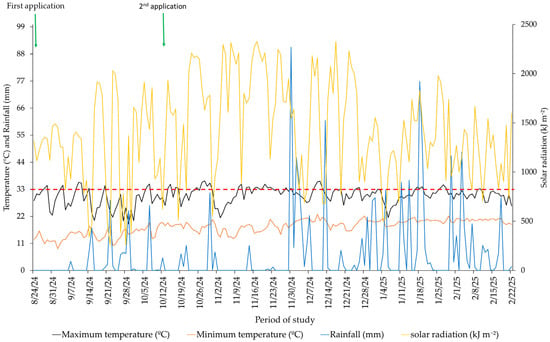
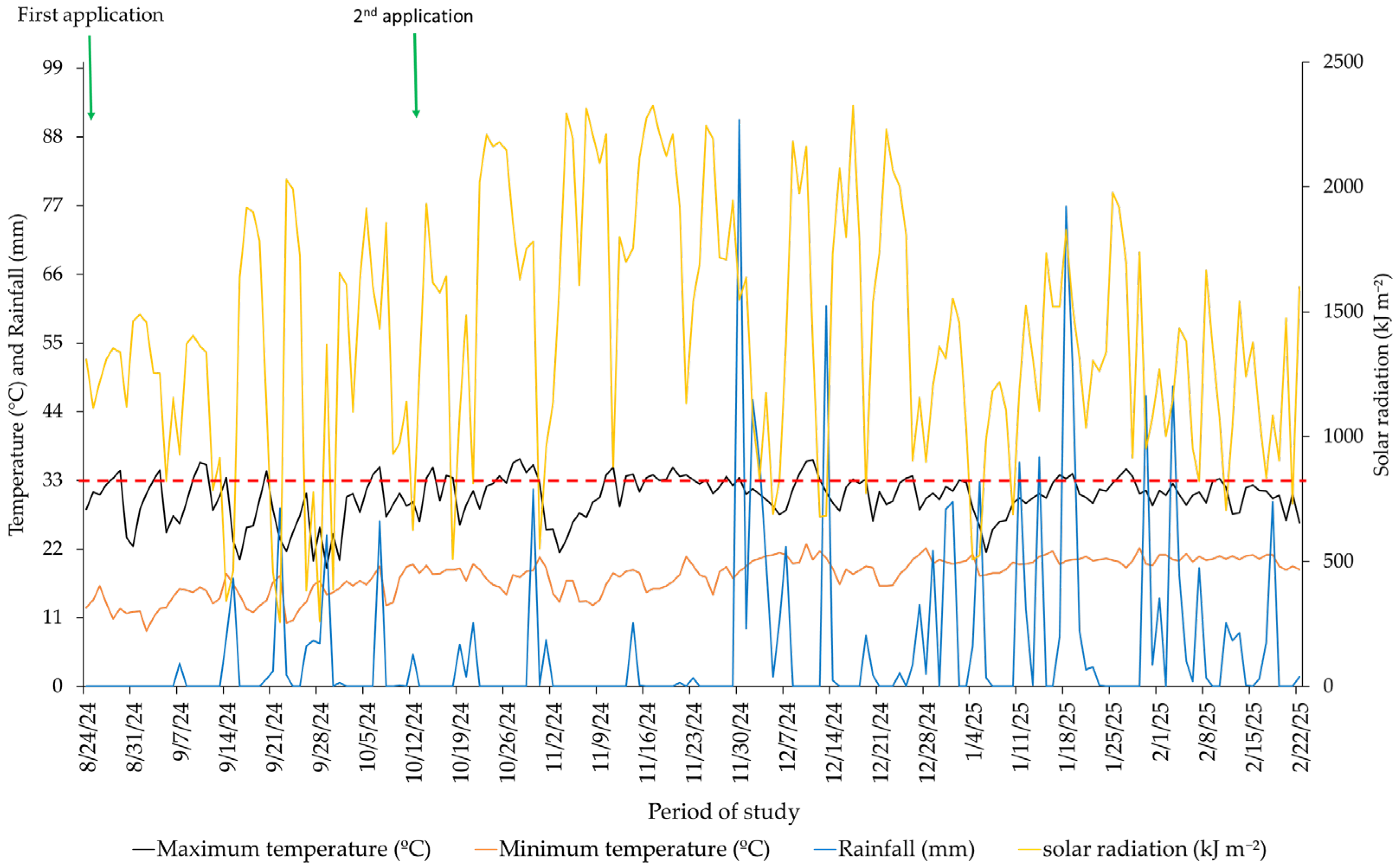
The data collection period covered the productive cycle of the 2024/2025 growing season. Orchard management practices were performed according to the technical recommendations for avocado cultivation and consisted of liming, fertilization [45], and phytosanitary management [46]. Climatic data for the study period were obtained from the National Institute of Meteorology (INMET) (Figure 1), based on a critical maximum temperature of 33 °C for avocado cultivation, as suggested by Whiley and Winston [14].
Figure 1.
Daily rainfall data (mm), global solar radiation (kJ m−2) and maximum and minimum temperatures (°C) at the study site, from 24 August 2024, to 22 February 2025. Source: INMET—National Institute of Meteorology.
2.4. Fruit Harvest
The harvest occurred on 22 February 2025, when the fruits reached physiological maturity stage, as determined by a dry matter content of 23%, a value recognized as the reference index for harvesting ‘Hass’ avocado [47,48].
2.5. Variables Analyzed
Leaf blade temperature (°C) was measured at four points in the middle third of the tree canopy, corresponding to the four cardinal directions (north, south, east, and west). The third fully expanded leaf from the terminal shoot was evaluated at each point. Based on these data, the mean canopy temperature of the plants was determined. Measurements were taken at 15-day intervals starting from the first application, using a portable infrared digital thermometer (model AK38, Akmos, São Paulo, Brazil). In all evaluations, temperature measurements were recorded between 10:00 a.m. and 12:00 p.m. The equipment was operated with a distance-to-spot ratio (D:S) of 8:1 and a spectral response of 8 to 14 µm. The device provides a resolution of 0.1 °C and a measurement accuracy of ±1.5 °C within the 0 to 100 °C range.
To determine fruit drop rate, four reproductive shoots were tagged, one at each cardinal point, and the initial number of set fruits was recorded, followed by new biweekly counts until harvest. The fruit drop rate during ‘Hass’ avocado development was expressed according to Equation (1):
where
- FAR (%): fruit drop rate;
- Ni = initial number of set fruits;
- Nf = number of fruits remaining at the current count (performed every 15 days).
Yield-related traits were measured when the fruits reached a mean dry matter content of 23% [47,48]. All fruits from the evaluated plants in each treatment were harvested separately, counted, and weighed in the field, followed by the determination of yield per plant (kg per plant) and the yield estimate (t ha−1), using a planting density of 250 plants ha−1.
For fruit size classification, a random sample of 10 fruits from each experimental plot was individually weighed and inspected, followed by classification into small (<120 g), medium (120 to 180 g), and large (>180 g) categories. This classification is consistent with the international standard used for ‘Hass’ avocado marketing, which is based on fruit size, in which large fruits correspond to CAT1 (fruit > 180 g), medium fruits to CAT2 (fruit 120 to 180 g), and small fruits to CAT3 (fruit < 120 g) [49].
In addition to fruit weight, the international classification system also considers visible peel defects. Therefore, in the same fruit sample, the percentage of fruits showing lesions caused by solar radiation was determined by visual inspection of the fruit peel surface in all treatments. Finally, fruit length and diameter were measured using a digital caliper (Model MTX-150 mm, Motrix®, São Paulo, Brazil), and the results were expressed in mm.
2.6. Statistical Analysis
Data were initially assessed for normality using Minitab® software, version 18 [50]. Subsequently, the data were subjected to analysis of variance (ANOVA), and when significant differences among treatments were detected, regression analysis was performed for sunscreen concentrations and days after the first application at the 5% probability level, using Sisvar® software, version 5.8 [51].
Multivariate and correlation analyses were performed using XLSTAT® software, version 2018.7.5. Principal component analysis (PCA) was used to characterize the interactions between sunscreen concentrations and the different variables evaluated [52]. The data were previously standardized to zero mean and unit variance, and the PCA was based on the correlation matrix, using the mean of the four replicates used in the study.
3. Results
Based on the analysis of variance, significant differences (p < 0.05) were observed for sunscreen concentrations and days after the first application, with no significant interaction between these factors for the evaluated parameters (Table 1).
Table 1.
Analysis of variance for leaf blade temperature, fruit drop percentage, and yield indicators of ‘Hass’ avocado as a function of treatment with different concentrations of calcium and magnesium hydroxide-based sunscreen. Arealva, São Paulo, Brazil, 2025.
The analysis of sunscreen concentrations indicated that leaf blade temperature in all cardinal directions and fruit drop percentage were affected by this heat stress mitigation treatment in ‘Hass’ avocado trees, whereas days after the first application significantly affected (p < 0.05) only leaf temperatures on the east and south sides of the canopy, as well as fruit drop percentage (Table 1). These results indicate a concentration-dependent response of ‘Hass’ avocado to sunscreen application.
Regarding yield-related variables, sunscreen concentrations affected fruit weight, fruit diameter, the percentage of small fruits (CAT3—fruits < 120 g), and the incidence of lesions on the fruit surface (Table 1).
3.1. Leaf Temperature and Fruit Drop
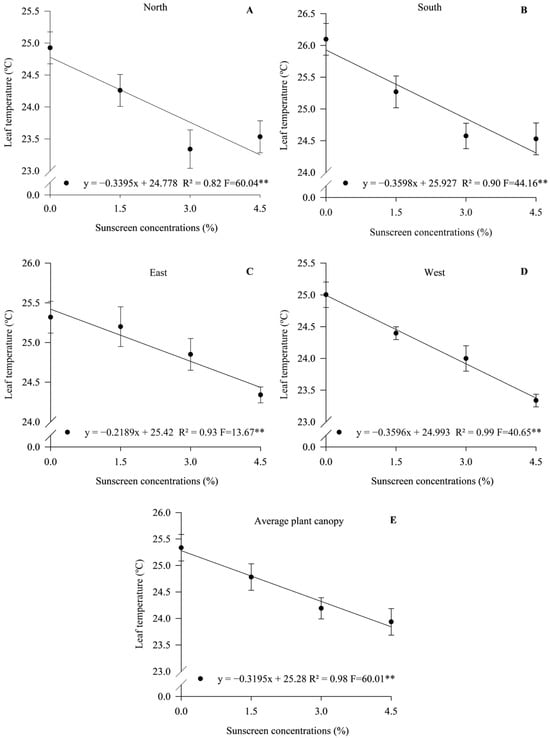
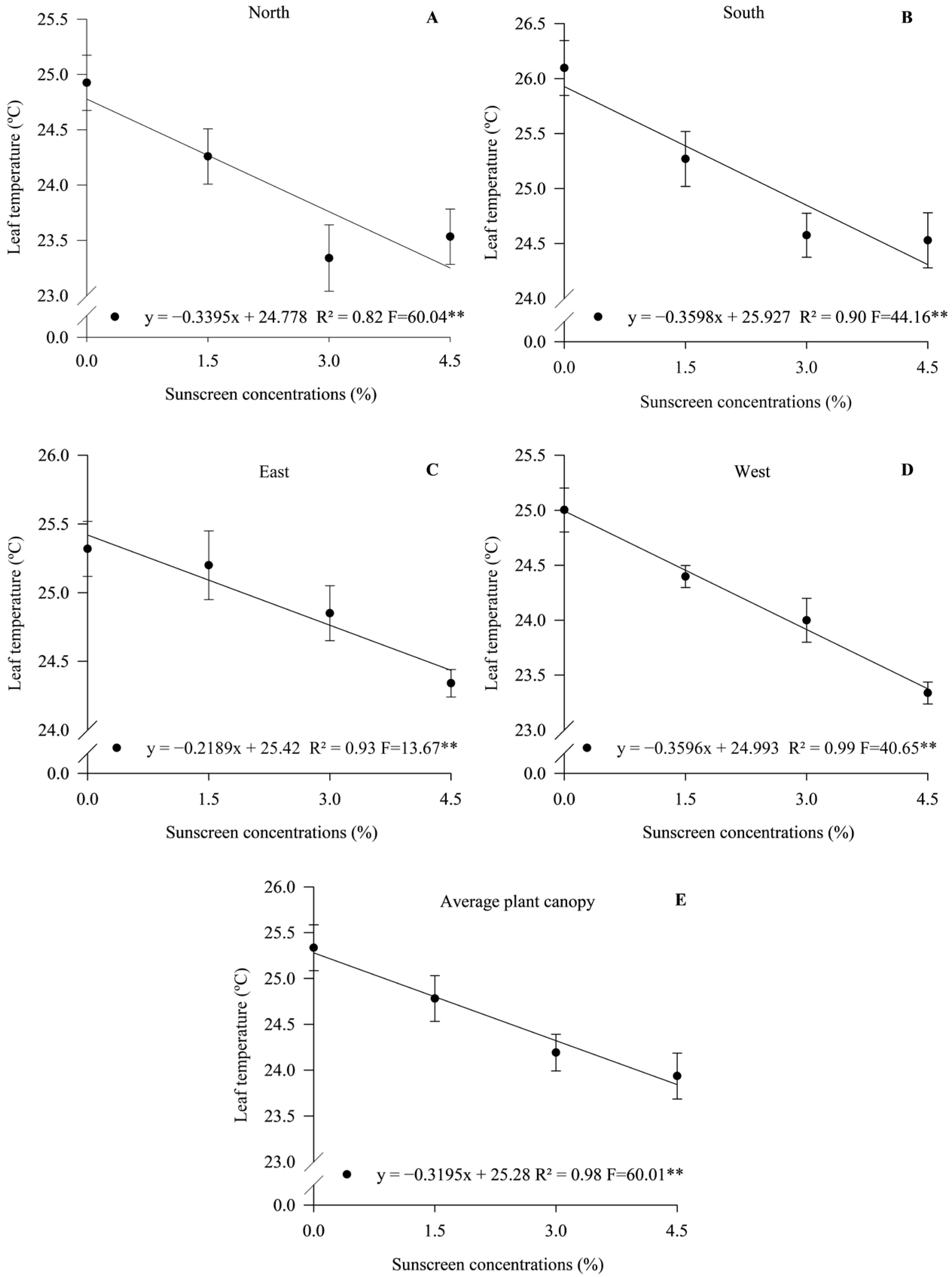
Sunscreen application promoted a linear reduction in leaf surface temperature as the concentrations increased, regardless of the cardinal orientation of the plants (Figure 2A–D). It was observed that the south (Figure 2B) and west (Figure 2D) faces exhibited the highest cooling rates per unit of concentration, with decreases of 0.36 °C for every 1% of sunscreen added. The east-facing side (Figure 2C), although it also followed the downward trend, showed the smallest variation in leaf temperature among the treatments. The analysis of mean canopy temperature (Figure 2E) confirmed this tendency, indicating that the 4.5% (w/v) concentration resulted in a thermal reduction of approximately 1.5 °C compared with the control treatment (0%).
Figure 2.
Leaf temperature values (°C) of ‘Hass’ avocado plants on the north (A), south (B), east (C), and west (D) sides of the canopy, and mean canopy temperature (E), as a function of treatment with different concentrations of a calcium and magnesium hydroxide-based sunscreen. Arealva, São Paulo, Brazil, 2025. ** = significant at the 1% probability level.
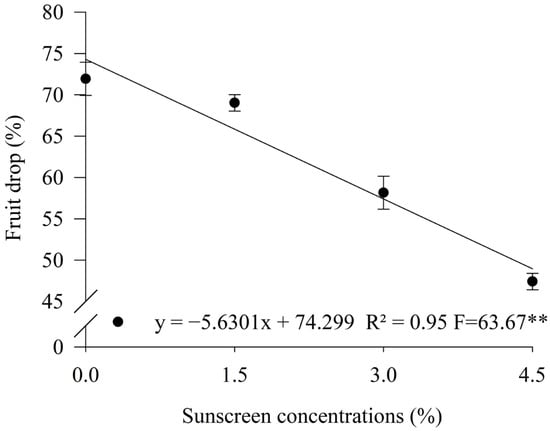
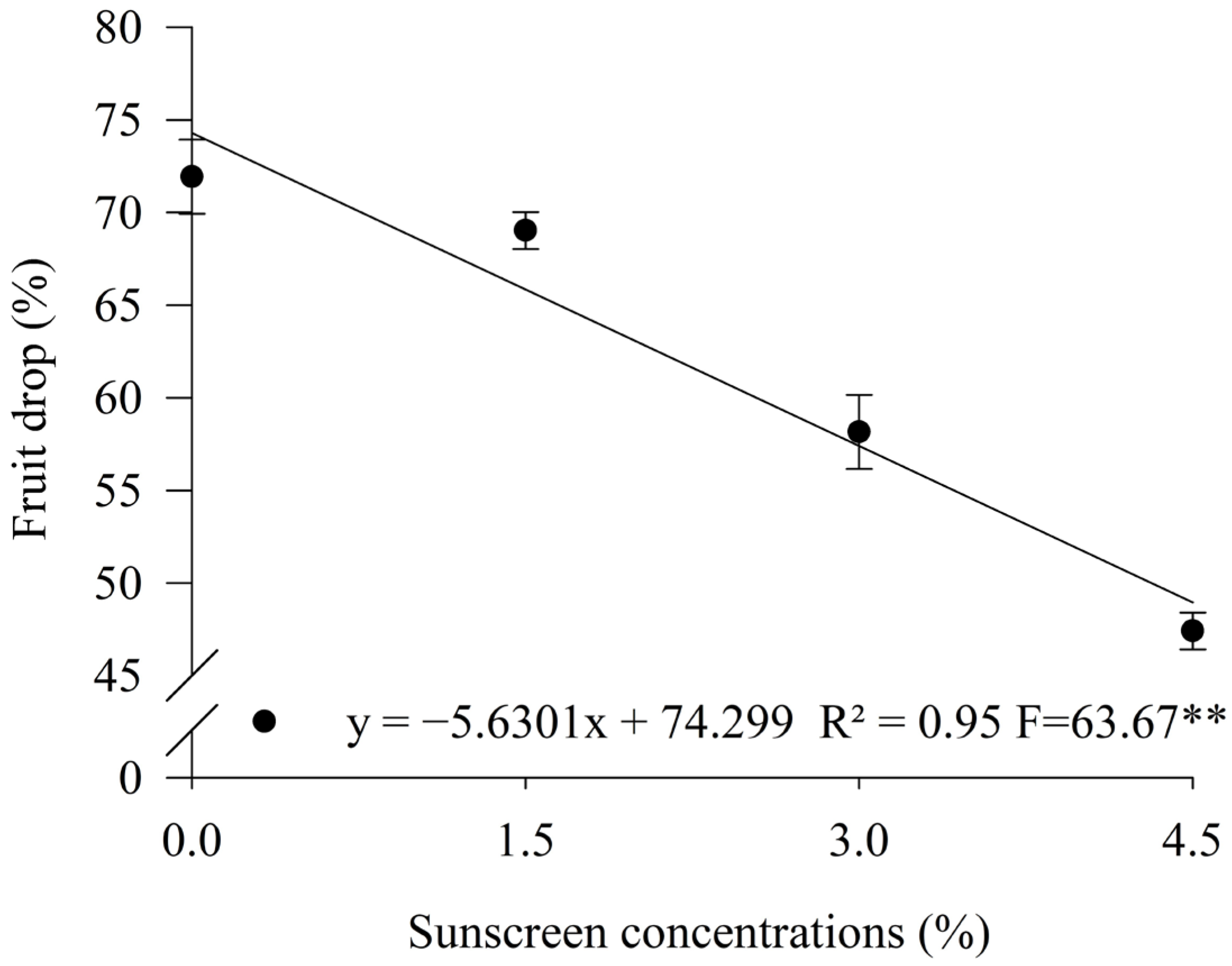
A linear reduction in fruit drop rate was observed with increasing sunscreen concentrations. The 4.5% (w/v) concentration resulted in a 24.5% decrease in fruit abscission compared with the control treatment (Figure 3). This response is intrinsically associated with the attenuation of leaf surface temperature (Figure 2), which favors plant physiological and metabolic balance, thereby improving fruit set.
Figure 3.
Fruit drop percentage of ‘Hass’ avocado as a function of treatment with different concentrations of a calcium and magnesium hydroxide-based sunscreen. Arealva, São Paulo, Brazil, 2025. ** = significant at the 1% probability level.
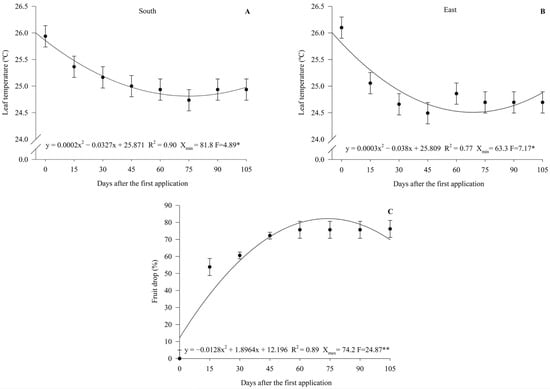
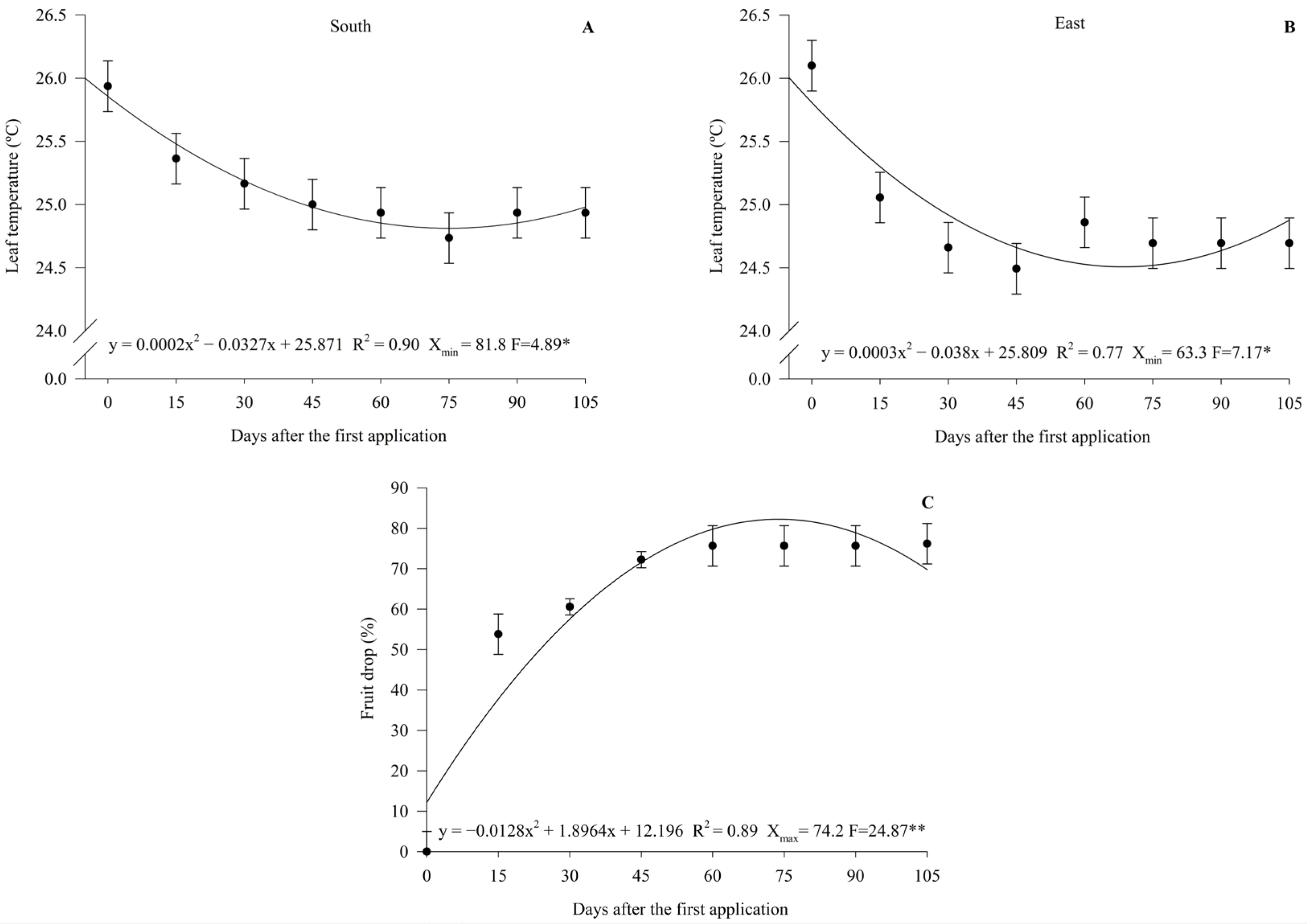
Regarding days after application (DAA), the temporal variation in leaf temperature was influenced by meteorological conditions and plant architecture, such as leaf area index and canopy density. Greater foliage development provided natural shading, thereby reducing the direct incidence of solar radiation on treated leaf surfaces (Figure 4A,B).
Figure 4.
Leaf temperature values (°C) on the south-facing (A) and east-facing (B) sides, and fruit drop percentage (C) of ‘Hass’ avocado plants as a function of days after application of sunscreen. Arealva, São Paulo, Brazil, 2025. ** and * = significant at the 1% and 5% probability levels, respectively.
The percentage of fruit drop showed significant fluctuations, particularly during the first 45 days following the initial application. From 60 days after the first application, fruit drop stabilized, with the maximum response occurring at 74.2 (Figure 4C).
3.2. Yield Indicators
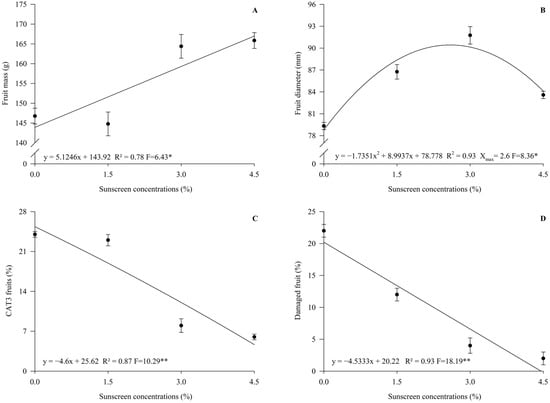
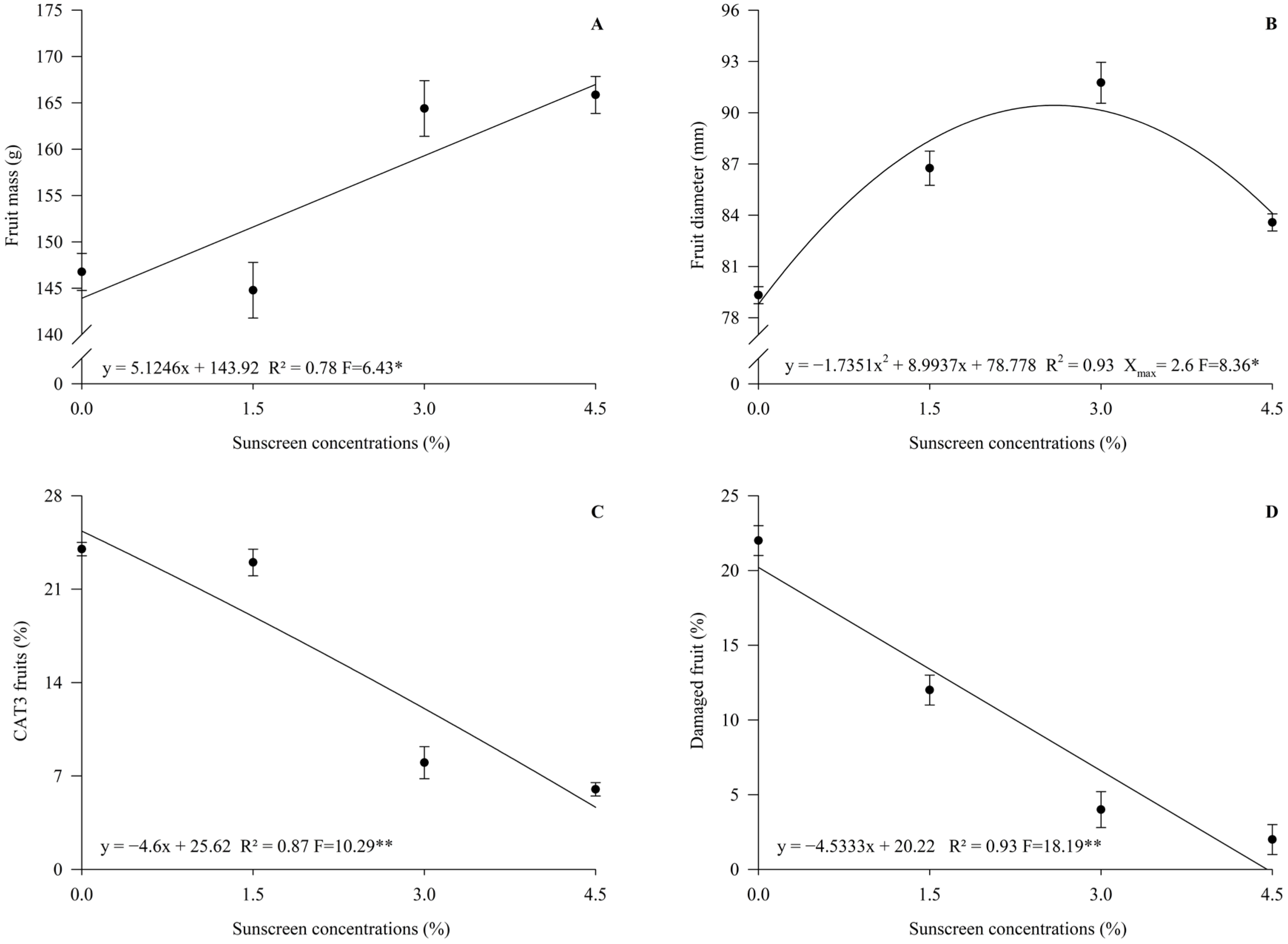
Spraying increasing concentrations of the sunscreen promoted a linear increase in ‘Hass’ avocado fruit weight. In the treatment with 4.5% (w/v), fruit weight increased by 19 g compared with fruits from the control treatment (Figure 5A). The diameter of ‘Hass’ avocado fruits showed a quadratic relationship with sunscreen concentrations, with the point of maximum radial expansion estimated at a concentration of 2.6% (Figure 5B).
Figure 5.
Mean values of diameter (A), weight (B), CAT3 (C) and damaged fruit (D) of ‘Hass’ avocado as a function of the application of different concentrations of a calcium and magnesium hydroxide-based sunscreen. Arealva, São Paulo, Brazil, 2025. ** and * = significant at the 1% and 5% probability levels, respectively.
The market value of ‘Hass’ avocado is determined by fruit size classification (individual fruit weight) and peel integrity (absence of lesions). In the present study, the use of sunscreen at higher concentrations not only reduced the percentage of small fruits (CAT3) (Figure 5C), which have lower commercial value, but also mitigated the occurrence of surface lesions (Figure 5D).
3.3. Principal Component Analysis (PCA)
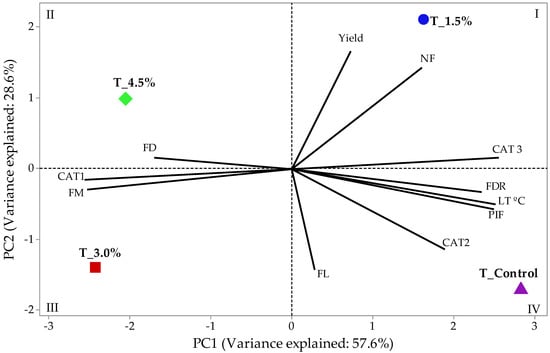
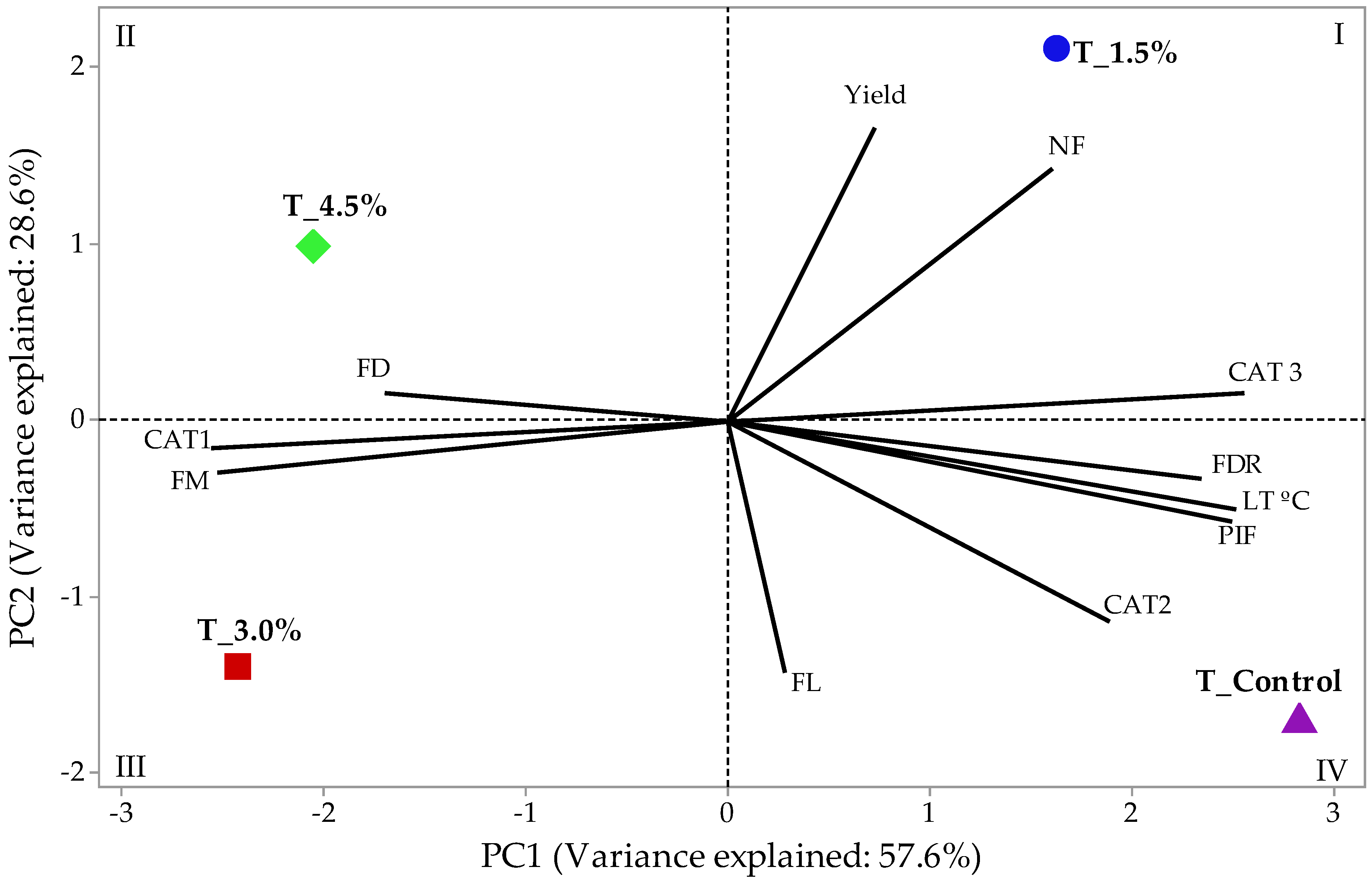
Principal component analysis (PCA) indicated that the first two axes (PC1 and PC2) accounted for 86.2% of the total variance observed in the dataset, with 57.6% explained by PC1 and 28.6% by PC2. Therefore, these components summarize a substantial proportion of the differences among the evaluated variables and sunscreen concentrations (Figure 6).
Figure 6.
Principal component analysis (PCA) of the evaluated variables and sunscreen concentrations in ‘Hass’ avocado trees. Legend: FL = fruit length; FD = fruit diameter; NF = number of fruits; FM = fruit mass; CAT1 = fruit > 180 g; CAT2 = fruit 120 to 180 g; CAT3 = fruit < 120 g; PIF = percentage of damaged fruits; LT = leaf temperature (°C); FDR = fruit drop rate; I, II, III and IV = quadrants 1, 2, 3, and 4, respectively.
Treatments with higher sunscreen concentrations (3.0% and 4.5%) were positioned in the negative quadrant of PC1 and were positively associated with mean fruit mass (FM), fruit diameter (FD), and, most notably, the category of larger fruits (CAT1 > 180 g). This distribution directly suggests that heat stress mitigation favors biomass accumulation and enhances the commercial value of production.
In contrast, the control treatment and the 1.5% concentration were positioned on the opposite side of the axis (positive PC1). The control treatment showed a direct association with stress and quality-loss indicators, such as leaf temperature (LT, °C), percentage of fruit injuries (PIF), and fruit drop rate (FDR). This result indicates that the absence of sunscreen protection exposes the canopy to suboptimal physiological conditions, resulting in smaller fruits (CAT2 and CAT3) and a higher incidence of surface injuries.
The multivariate analysis revealed that sunscreen application at concentrations of 3.0% and 4.5% is the most effective strategy for optimizing the biometric profile of ‘Hass’ avocado, shifting production toward higher-value market classes (CAT1) and reducing the negative effects of heat stress. The use of intermediate concentrations (1.5%) favors numerical yield, but is insufficient to mitigate abiotic stress to the extent required to ensure the superior fruit size observed at higher concentrations.
4. Discussion
The reduction in leaf temperature represents a strategic management effect, as it coincides with the phenological stages of flowering and early fruit development, a period in which ‘Hass’ avocado is most vulnerable to abiotic stress (Figure 2). This temperature reduction is particularly significant for the south and west-facing sides, which showed cooling rates of 0.36 °C for every 1% of sunscreen applied. Given that these sides often receive greater direct solar radiation and experience higher temperatures in the afternoon, the application of sunscreen acts as a critical compensatory mechanism, especially for flowering and the onset of fruit development. This thermal protection on the most exposed sides helps maintain the canopy within the optimal temperature ranges cited by Lahav et al. [13] and Lemus et al. [15], which range from 20 °C to 30 °C.
Flowering and early fruit set are critical stages for ‘Hass’ avocados; therefore, temperature fluctuations above the 33 °C limit [14], combined with intense solar radiation (kJ m−2) (Figure 1), highlight the importance of the calcium and magnesium hydroxide-based sunscreen as a tool for mitigating heat stress in regions with similar climates. By reducing the average canopy temperature by approximately 1.5 °C at a concentration of 4.5%, the sunscreen mitigates the risk of the plant reaching thermal limits that induce physiological stress [19,20]. Consequently, this thermal modulation prevents the limitation of non-structural carbohydrates, a feature identified as one of the causes of fruit drop [22,33]. This result is associated with the reflective properties of calcium and magnesium hydroxide, which reduce the absorption of incident solar radiation and thereby prevent a rise in temperature, and may also lead to indirect beneficial effects on transpiration rate [53]. The deposition of a physical particle barrier from the sunscreen on the avocado canopy acts to attenuate heat stress by mitigating surface temperature through reflection of excess light. Similarly, Glenn et al. [54] reported that this particle film protects the photosynthetic apparatus of apple trees against thermal damage. Luciani et al. [38] found that applying 5% kaolin reduced leaf temperature by up to 6.9 °C and reduced sunburn by 21.9% in hazelnuts.
The uniform cooling trend observed across the different sides of the plant suggests that calcium and magnesium hydroxide provide overall thermal protection to the crop, corroborating findings reported for other perennial species, such as apple and grapevine [32,36]. The reduction in leaf temperature mediated by these sunscreens promotes stomatal conductance and water-use efficiency; these effects are even more important during periods of water stress [39], with a 30% reduction in photosynthetic photoinhibition following the application of kaolin at a concentration of 6% to grapefruit.
The effectiveness of calcium and magnesium hydroxide as a management tool becomes particularly strategic given the vulnerability of avocado cultivation to climate change. Heat stress mitigation is essential to prevent physiological disorders that compromise reproductive viability, and leaf temperature control is a direct indicator of the maintenance of plant metabolic balance under critical radiation conditions [5,42,55]. Similar results in apple trees were reported by Thomas et al. [56], who demonstrated that the use of calcium hydroxide-based sunscreen products mitigates heat stress and sun injury. Thus, the control of abiotic stress indirectly regulates fruit retention by preventing temperature peaks that favor early fruit drop (Figure 4). Santos and Coelho Filho [57] observed improvements in the quality of ‘Pera’ oranges following monthly applications of sunscreen, with increases in total fruit weight and a 12% increased orchard yield. Microclimatic modulation within the canopy prevents photoinhibition and oxidative stress in tissues, allowing the plant to maintain high net photosynthetic rates, which are prioritized for fruit cell expansion during critical phenological stages [58].
The high rate of fruit drop, especially during the first weeks of fruit development, is a natural self-regulatory process controlling fruit number in ‘Hass’ avocado trees. This effect is often intensified by pollination inefficiency and abiotic stresses, which deplete the plant’s carbohydrate reserves, particularly when these factors occur simultaneously during the early weeks of fruit development [22,27]. This effect is associated with the optimization of photosynthetic efficiency and the mitigation of water loss through leaf transpiration, as reported by Glenn et al. [54] for apple trees treated with particle films. In addition, the partial shading and reflection of infrared radiation provided by the sunscreen reduces oxidative damage, favoring the allocation of photoassimilates to fruit filling [36], a result consistent with that observed in the present study.
These findings are consistent with the results presented by El-Naby [34], who attributed the reduction in damage to ‘Washington Navel’ orange trees and the improvement in fruit quality to the use of shade screens. The application of calcium and magnesium hydroxide-based sunscreens significantly influenced the physical characteristics of ‘Hass’ variety avocado fruits, specifically increasing fruit weight and diameter, although this did not significantly affect yield per plant or per hectare. However, the increase in fruit mass and the reduction in damaged fruit in treatments with higher concentrations of sunscreen have a direct impact on the market value of the harvest.
The avocado tree, particularly the Hass cultivar, is highly sensitive to heat stress, which, in extreme situations, can cause leaf and fruit scalding, significantly compromising the commercial quality of the harvested crop [59]. This damage also impacts economic profitability, particularly in regions characterized by hot springs and summers, seasons that coincide with flowering and fruit development, respectively [5].
Abdelmoniem et al. [60] reported an increase in the diameter of citrus fruits treated with sunscreen agents, attributing this increase to improved water status and a reduction in leaf and fruit temperature under high irradiance. However, the decline in fruit diameter observed at high concentrations (4.5%) may be associated with interference in gas exchange through the lenticels, limiting the metabolic supply necessary for full fruit growth (Figure 5B).
The positive correlation between sunscreen concentrations and the yield characteristics CAT1, fruit weight and diameter, as highlighted by PCA, confirms that physical protection is the determining factor for the commercial quality of ‘Hass’ avocados, particularly when applied during critical phenological stages such as flowering and fruit development. These results are in accordance with the conclusions of El-Moniem et al. [10], who reported that mineral-based sunscreens not only reduce sunburn but also improve fruit set and the overall quality of ‘Hass’ avocados. Similarly, the concentration of superior quality attributes (CAT1 and higher fruit weight) at higher concentrations (3.0% and 4.5%) indicates the mitigation of the economic losses previously highlighted by Ramírez-Gil et al. [23]. These findings contribute to improved plant management, particularly in the context of changing climatic patterns in production areas.
5. Conclusions
Spray applications of calcium and magnesium hydroxide-based sunscreen at concentrations of 3.0% and 4.5% (w/v) reduced leaf temperature in 1.5 °C and improved the biometric attributes of ‘Hass’ avocado fruits, compared to the control, although the maximum fruit diameter was optimized at the 2.6% concentration. The 4.5% sunscreen concentration reduced fruit drop in ‘Hass’ avocado by 24.5% compared with the control and decreased the percentage of small and damaged fruits (CAT3).
Author Contributions
Conceptualization: G.S.A., M.d.S.S. and B.H.L.G. Data Curation: G.S.A., S.L., A.C.S., V.J.N.S. and F.R.d.M.R. Formal analysis: G.S.A., B.H.L.G. and M.A.T. Methodology: G.S.A., M.d.S.S., R.d.S.T., F.R.d.M.R. and M.L. Writing—review and editing: S.L., M.d.S.S. and M.L. All authors have read and agreed to the published version of the manuscript.
Funding
This study received financial support from the Office of the Vice-Chancellor for Research at the São Paulo State University—UNESP (Project No. 14106).
Data Availability Statement
The data presented in this study are available on request from the corresponding author.
Conflicts of Interest
The authors declare no conflicts of interest.
References
- Bhore, S.J.; Ochoa, D.S.; Al Houssari, A.; Zelaya, A.L.; Yang, R.; Chen, Z.; Deeya, S.S.; Da Silva Sens, S.C.; Schumann, M.; Zhang, Z. The avocado (Persea americana Mill.): Areview and sustainability perspectives. Biol. Life Sci. 2021, 1, e2021120523. [Google Scholar] [CrossRef] [Scilit]
- Dreher, M.L.; Davenport, A.J. Hass avocado composition and potential health effects. Crit. Rev. Food Sci. Nutr. 2013, 53, 738–750. [Google Scholar] [CrossRef] [Scilit]
- Food and Agriculture Organization of the United Nations. FAOSTAT. Available online: http://www.fao.org/faostat/en/#data/QC/visualize (accessed on 30 April 2025).
- Instituto Brasileiro de Geografia e Estatística (IBGE). Fruticultura: Área Plantada e Quantidade Produzida. Available online: http://www.ibge.gov.br (accessed on 30 April 2025).
- Domingues Neto, F.J.; Carneiro, D.C.S.; Silva, M.S.; Tecchio, M.A.; Leonel, S.; Pimentel Junior, A.; Ono, E.O.; Rodrigues, J.D. Sun protection as a strategy for managing heat stress in avocado trees. Plants 2024, 13, 2854. [Google Scholar] [CrossRef] [Scilit]
- World Meteorological Organization. State of the Global Climate 2023 (WMO-No. 1347). Available online: https://library.wmo.int/viewer/68835/download?file=1347_Global-statement-2023_en.pdf (accessed on 17 March 2026).
- Roychoudhury, A.; Paul, S.; Basu, S. Cross-talk between abscisic acid-dependent and abscisic acid-independent pathways during abiotic stress. Plant Cell Rep. 2013, 32, 985–1006. [Google Scholar] [CrossRef] [Scilit]
- Mishra, N.; Jiang, C.; Chen, L.; Paul, A.; Chatterjee, A.; Shen, G. Achieving abiotic stress tolerance in plants through antioxidative defense mechanisms. Front. Plant Sci. 2023, 14, 1110622. [Google Scholar] [CrossRef] [Scilit]
- Bacelar, E.; Pinto, T.; Anjos, R.; Morais, M.C.; Oliveira, I.; Vilela, A.; Cosme, F. Impacts of climate change and mitigation strategies for some abiotic and biotic constraints influencing fruit growth and quality. Plants 2024, 13, 1942. [Google Scholar] [CrossRef] [Scilit] [PubMed]
- El-Moniem, E.A.A.A.; Yousef, A.R.M.; Mahmoud, T.S.M.; Emam, O.A. Potassium and aluminum silicate application to alleviate the adverse effects of heat stress on ‘Hass’ and ‘Red’ avocado trees. Appl. Fruit Sci. 2026, 68, 53. [Google Scholar] [CrossRef] [Scilit]
- Wahid, A.; Gelani, S.; Ashraf, M.; Foolad, M.R. Heat tolerance in plants: An overview. Environ. Exp. Bot. 2007, 61, 199–223. [Google Scholar] [CrossRef] [Scilit]
- San Bautista, A.; Agenjos-Moreno, A.; Martínez, A.; Escudero, A.I.; Arizo-García, P.; Simeón, R.; Meyer, C.; Kadyampakeni, D.M. Osmolyte regulation as an avocado crop management strategy for improving productivity under high temperatures. Horticulturae 2025, 11, 245. [Google Scholar] [CrossRef] [Scilit]
- Lahav, E.; Trochoulians, T. The effect of temperature on growth and dry matter production of avocado plants. Aust. J. Agric. Res. 1982, 33, 549–558. [Google Scholar] [CrossRef] [Scilit]
- Whiley, A.W.; Winston, E. Effect of temperature at flowering on varietal productivity in some avocado-growing areas in Australia. S. Afr. Avocado Grow. Assoc. Yearb. 1987, 10, 45–47. [Google Scholar]
- Lemus, S.G.; Ferreyra, E.R.; Gil, P.M.; Maldonado, P.S.R.P.; Toledo, G.C.; Barreira, M.C.; Celedón, J.M.A. El cultivo del palto. In Boletim INIA N°129; Instituto de Investigações Agropecuárias: La Cruz, Chile, 2010; 80p. [Google Scholar]
- Torres, A. Manual del cultivo del palto. In Boletín INIA N°378; Instituto de Investigações Agropecuárias: Santiago, Chile, 2017; 118p. [Google Scholar]
- Domínguez, A.; Garcia-Martín, A.; Moreno, E.; González, E.; Paniagua, L.L.; Allendes, G. Identifying optimal zones for avocado (Persea americana Mill) cultivation in iberian peninsula: A climate suitability analysis. Land 2024, 13, 1290. [Google Scholar] [CrossRef] [Scilit]
- INTAGRI. Requerimientos de Clima y Suelo en el Cultivo de Aguacate; Série Frutales Núm. 56 Artigos Técnicos do INTAGRI; INTAGRI: Celaya, Mexico, 2019; 15p. [Google Scholar]
- Atkin, O.; Tjoelker, M. Thermal acclimation and the dynamic response of plant respiration to temperature. Trends Plant Sci. 2003, 8, 343–351. [Google Scholar] [CrossRef] [Scilit]
- Shapira, O.; Chernoivanov, S.; Neuberger, I.; Levy, S.; Rubinovich, L. Physiological characterization of young ‘Hass’ avocado plant leaves following exposure to high temperatures and low light intensity. Plants 2021, 10, 1562. [Google Scholar] [CrossRef] [Scilit]
- Wolstenholme, B.N. Ecology: Climate and soils. In The Avocado: Botany, Production and Uses; CABI Publishing: Wallingford, UK, 2013; pp. 86–117. [Google Scholar]
- Woolf, A.B.; Bowen, J.H.; Ferguson, I.B. Impact of sun exposure on harvest quality of ‘Hass’ avocado fruit. Postharvest Biol. Technol. 1999, 15, 157–164. [Google Scholar] [CrossRef] [Scilit]
- Ramírez-Gil, J.G.; López, J.H.; Henao-Rojas, J.C. Causes of Hass avocado fruit rejection in preharvest, harvest, and packinghouse: Economic losses and associated variables. Agronomy 2020, 10, 8. [Google Scholar] [CrossRef] [Scilit]
- Monteiro, J.E.B.A. Agrometeorologia dos Cultivos: O Fator Meteorológico na Produção Agrícola; INMET: Brasília, Brazil, 2009; p. 530. [Google Scholar]
- Blakey, R.J.; Van Rooyen, Z.; Kohne, J.S.; Malapana, K.C.; Mazhawu, E.; Tesfay, S.Z.; Savage, M.J. Growing avocados under shade netting in South Africa. SAAGA Yearb. 2015, 38, 76–79. [Google Scholar]
- Pereira, L.C.; Sampaio, A.C.; Faia, J.P.S. Avaliação do atrativo de Apis mellifera Linnaeus, sobre a polinização do avocado ‘Hass’. Rev. AGROFIB 2022, 2, 127–135. [Google Scholar] [CrossRef] [Scilit]
- Garner, L.C.; Lovatt, C.J. Physiological factors affecting flower and fruit abscission of ‘Hass’ avocado. Sci. Hortic. 2016, 199, 32–40. [Google Scholar] [CrossRef] [Scilit]
- Mupambi, G.; Anthony, B.M.; Layne, D.R.; Musacchi, S.; Serra, S.; Schmidt, T.; Kalcsits, L.A. The influence of protective netting on tree physiology and fruit quality of apple: A review. Sci. Hortic. 2018, 236, 60–72. [Google Scholar] [CrossRef] [Scilit]
- Peter, P.T.; Soundy, P.; Sivakumar, D. Growing ‘Hass’ avocado fruit under different coloured shade netting improves the marketable yield and affects fruit ripening. Sci. Hortic. 2018, 230, 43–49. [Google Scholar] [CrossRef] [Scilit]
- Paula, M.R.S.; Sampaio, A.C.; Cechin, I.; Fischer, I.H.; Faria, J.P.S.; Silva, M.S. Shading screens to protect ‘Hass’ avocado trees from afternoon solar radiation. Fruit Crops Sci. J. 2025, 1, e-086. [Google Scholar] [CrossRef] [Scilit]
- Glenn, D.M.; Puterka, G.J. Particle films: A new technology for agriculture. Hortic. Rev. 2005, 31, 1–44. [Google Scholar] [CrossRef] [Scilit]
- Teker, T. A study of kaolin effects on grapevine physiology and its ability to protect grape clusters from sunburn damage. Sci. Hortic. 2023, 311, 111824. [Google Scholar] [CrossRef] [Scilit]
- Panigrahy, M.; Paikaray, K.P.; Bhusan, L.; Dash, S. Tolerance mechanisms and management strategies to combat heat stress in fruit crops. Appl. Fruit Sci. 2025, 67, 265. [Google Scholar] [CrossRef] [Scilit]
- El-Naby, S.K.M.A.; Esmail, A.M.A.M.; Baiéa, M.H.M.; Amin, O.A.E.F.; Mohamed, A.A.A. Mitigation of heat stress effects by using shade net on Washington navel orange trees grown in Al-Nubaria region, Egypt. Acta Sci. Pol. Hortorum Cultus 2020, 19, 15–24. [Google Scholar] [CrossRef] [Scilit]
- Shellie, K.C.; King, B.A. Kaolin particle film and water deficit influence malbec leaf and berry temperature, pigments, and photosynthesis. Am. J. Enol. Vitic. 2013, 64, 223–230. [Google Scholar] [CrossRef] [Scilit]
- Varinha, S.J.E.; Theron, K.I.; Ackerman, J.; Marais, S.J.S. Harvest and post-harvest quality of apples after the application of kaolin particle film in South African orchards. Sci. Hortic. 2006, 107, 271–276. [Google Scholar] [CrossRef] [Scilit]
- Melgarejo, P.; Martínez, J.J.; Hernández, F.; Martínez-Font, R.; Barrows, P.; Erez, A. Kaolin treatment to reduce pomegranate sunburn. Sci. Hortic. 2004, 100, 349–353. [Google Scholar] [CrossRef] [Scilit]
- Luciani, E.; Palliotti, A.; Frioni, T.; Tombesi, S.; Villa, F.; Zadra, C.; Farinelli, D. Kaolin treatments on Tonda Giffoni hazelnut (Corylus avellana L.) for the control of heat stress damages. Sci. Hortic. 2020, 263, 109097. [Google Scholar] [CrossRef] [Scilit]
- Jifon, J.L.; Syvertsen, J.P. Kaolin particle film applications can increase photosynthesis and water use efficiency of ‘Ruby Red’ grapefruit leaves. J. Am. Soc. Hortic. Sci. 2003, 128, 107–112. [Google Scholar] [CrossRef] [Scilit]
- Fischer, G.; Orduz-Rodríguez, J.O.; Amarante, C.V.T. Sunburn disorder in tropical and subtropical fruits. A review. Rev. Colomb. Cienc. Hortíc. 2022, 16, e15703. [Google Scholar] [CrossRef] [Scilit]
- Santos, T.B.; Ribas, A.F.; de Souza, S.G.H.; Budzinski, I.G.F.; Domingues, D.S. Physiological responses to drought, salinity, and heat stress in plants: A review. Stresses 2022, 2, 113–135. [Google Scholar] [CrossRef] [Scilit]
- Alvares, C.A.; Stape, J.L.; Sentelhas, P.C.; Gonçalves, J.L.M.; Sparovek, G. Köppen’s climate classification map for Brazil. Meteorol. Z. 2013, 22, 711–728. [Google Scholar] [CrossRef] [Scilit] [PubMed]
- Santos, H.G.; Jacomine, P.K.T.; Anjos, L.H.C.; Oliveira, V.A.; Lumbreras, J.F.; Coelho, M.R.; Almeida, J.A.; Araújo Filho, J.C.; Oliveira, J.B.; Cunha, T.J.F. Sistema Brasileiro de Classificação de Solos, 5th ed.; Embrapa: Brasília, Brazil, 2018. [Google Scholar]
- Alcaraz, M.L.; Thorp, T.G.; Hormaza, J.I. Phenological growth stages of avocado (Persea americana) according to the BBCH scale. Sci. Hortic. 2013, 164, 434–439. [Google Scholar] [CrossRef] [Scilit]
- Cantarella, H.; Righetto, M.P.; Hernandes, F.B.; Silva, F.M.; Batista, M.A. Recomendações de Adubação e Calagem para o Estado de São Paulo, 2nd ed.; Instituto Agronômico/Fundag: Campinas, Brazil, 2022; Boletim Técnico 100. [Google Scholar]
- Sampaio, A.C.; Whately, M.C. Abacaticultura Sustentável; Atena Editora: Ponta Grossa, Brazil, 2022; p. 208. [Google Scholar]
- ABPA-Associação Brasileira dos Produtores de Abacate. Informe ABPA: Comercialização de Avocado Imaturo–Safra 2019. Available online: https://abacatesdobrasil.org.br/abacates-do-brasil-presente-na-fruit-attraction-2019/ (accessed on 17 March 2026).
- Carvalho, C.P.; Velásquez, M.A.; Van Rooyen, Z. Determination of the minimum dry matter index for the optimum harvest of ‘Hass’ avocado fruits in Colombia. Agron. Colomb. 2014, 32, 399–406. [Google Scholar] [CrossRef] [Scilit]
- OECD (Organization for Economic Co-Operation and Development). International Standardisation: Avocados. Available online: https://doi.org/10.1787/9789264019805-en-fr (accessed on 30 April 2025).
- Minitab LLC. Minitab Statistical Software, Version 17. Available online: http://www.minitab.com (accessed on 25 February 2026).
- Ferreira, D.F. Estatística Básica, 3rd ed.; Editora UFLA: Lavras, Brazil, 2019; Volume 1, p. 664. [Google Scholar]
- Lumivero. XLSTAT|Software Estatístico para Excel. Available online: https://www.xlstat.com/ (accessed on 25 February 2026).
- Abou-Khaled, A.; Hagan, R.M.; Davenport, D.C. Effects of kaolinite as a reflective antitranspirant on leaf temperature, transpiration, photosynthesis, and wateruse efficiency. Water Resour. Res. 1970, 6, 280–289. [Google Scholar] [CrossRef] [Scilit]
- Glenn, D.M.; Puterka, G.J.; Drake, S.R.; Unruh, A.L.; Knight, P.B.; Prado, E.; Baugher, T.A. Particle film application influences apple leaf physiology, fruit yield, and fruit quality. J. Amer. Soc. Hort. Sci. 2001, 126, 175–181. [Google Scholar] [CrossRef] [Scilit]
- Martinez, C.A.; Oliveira, E.A.D.; Mello, T.R.P.; Alzate-Marin, A.L. Respostas das plantas ao incremento atmosférico de dióxido de carbono e da temperatura. Rev. Bras. Geogr. Fís. 2015, 8, 635–650. [Google Scholar] [CrossRef] [Scilit]
- Thomas, A.L.; Muller, M.E.; Dodson, B.R.; Ellersieck, M.R.; Kaps, M. A kaolin-based particle film suppresses certain insect and fungal pests while reducing heat stress in apples. J. Amer. Pomol. Soc. 2004, 58, 42–51. [Google Scholar] [CrossRef] [Scilit]
- Santos, V.P.D.; Coelho Filho, M.A. Effects of sunscreen protection and water management on the physiology and production of “Pera” sweet orange orchards in sub-humid climate. Rev. Bras. Frutic. 2024, 46, e-612. [Google Scholar] [CrossRef] [Scilit]
- Song, J.; Shellie, K.C.; Wang, H.; Qian, M.C. Influence of deficit irrigation and kaolin particle film on grape composition and volatile compounds in Merlot grape (Vitis vinifera L.). Food Chem. 2012, 134, 841–850. [Google Scholar] [CrossRef] [Scilit]
- Modica, G.; Arcidiacono, F.; La Malfa, S.; Gentile, A.; Continella, A. Physiological response to foliar application of antitranspirant on avocado trees (Persea americana) in a Mediterranean environment. Horticulturae 2025, 11, 928. [Google Scholar] [CrossRef] [Scilit]
- Abdelmoniem, E.M.; El-Gazzar, A.A.; Abd El-Hamid, A.; Mansour, N.A.I. Synergistic effect of preharvest application with some elicitors on quality and shelf life of avocado fruits. Int. J. Res. Innov. Appl. Sci. 2024, 9, 346–365. [Google Scholar] [CrossRef] [Scilit]

Disclaimer/Publisher’s Note: The statements, opinions and data contained in all publications are solely those of the individual author(s) and contributor(s) and not of MDPI and/or the editor(s). MDPI and/or the editor(s) disclaim responsibility for any injury to people or property resulting from any ideas, methods, instructions or products referred to in the content. |
© 2026 by the authors. Licensee MDPI, Basel, Switzerland. This article is an open access article distributed under the terms and conditions of the Creative Commons Attribution (CC BY) license.