Review

Biochemical, Phytochemical, and Mineral Constituents of African Horned Cucumber (Cucumis metuliferus E. Mey. ex Naudin) Fruit in Comparison to Selected Cucurbitaceae Fruits: A Review


by
Nkosikhona Goodman Magwaza
1,*,
Sandiswa Figlan
2,
Rebogile Ramaesele Mphahlele
1 and
Mdungazi Knox Maluleke
1,*
1
Department of Environmental Sciences, College of Agriculture and Environmental Sciences, University of South Africa, Tshwane 0002, Gauteng, South Africa
2
Department of Agriculture and Animal Health, College of Agriculture and Environmental Sciences, University of South Africa, Tshwane 0002, Gauteng, South Africa
*
Authors to whom correspondence should be addressed.
Horticulturae 2026, 12(5), 508; https://doi.org/10.3390/horticulturae12050508
Submission received: 10 March 2026 / Revised: 19 April 2026 / Accepted: 20 April 2026 / Published: 22 April 2026
(This article belongs to the Section Plant Nutrition)

Abstract

Background: Indigenous African fruits, like the African horned cucumber (Cucumis metuliferus), are abundant in nutrients and serve as a source of food and raw materials for manufacturing value-added products in both rural and urban areas. This review presents a comparative analysis of selected fruits in the Cucurbitaceae family, specifically in terms of the phytochemical, biochemical and mineral constituents, as well as nutritional contribution, and aims to explore how the African horned cucumber measures up to its counterparts by comparing their nutritional content against the recommended daily intake (RDI). Material and Methods: A literature search—using the keywords ‘African horned cucumber’, ‘Cucurbitaceae fruits’, ‘biochemical constituents’, ‘indigenous fruits’ and ‘recommended daily intake’—was used to gather credible data suitable for this review paper. Findings and Conclusions: The published peer-reviewed literature reveals that the African horned cucumber—with its nutrient-rich profile boasting high levels of calcium (19%), potassium (28%), magnesium (78.1%), sodium (10.7%), zinc (12.7%), beta carotene (15.5%), vitamin C (4.1%), vitamin E (15.2%), total flavonoids (0.28%), and total phenols (0.7%)—holds the promise of contributing significantly to the human diet while aligning with the RDI and dietary guidelines, as documented in studies, further underscoring its potential to meet nutritional needs and enhance health, thus supporting its consideration for commercialisation.

1. Introduction

Indigenous crops play diverse roles in society and have a significant role to play in broadening food systems and enhancing food and nutritional security [1]. However, numerous researchers argue that the significance and value of native crops in Africa have yet to be fully appreciated and documented [2,3]. The significance and potential role of indigenous fruits in alleviating poverty and malnutrition have been acknowledged [4]. In various parts of the world, the majority of the local inhabitants rely on local crops for sustenance [5]. In Africa, especially in rural areas, where reliance on rain-fed crops persists, indigenous crops play a crucial role in averting hunger, poverty, and malnutrition. These native crops particularly serve as vital sources of food and medicine, and such raw materials are also sourced to produce cosmetic materials in some rural homes [4], positioning them as promising crops that could significantly contribute to eradicating malnutrition in rural and semi-urban areas of the African continent. Therefore, research work towards characterising and mainstreaming these indigenous crops aligns with the second goal of the United Nations Sustainable Development Goals (SDG 2), which aims to eradicate hunger, ensure food security, and advance nutrition, while promoting sustainable agricultural practices [6].
The African horned cucumber (Cucumis metuliferus E. Mey. ex Naudin), falling within the Cucurbitaceae family, is found and widely grown in sub-Saharan Africa due to its remarkable resilience to marginal habitats, such as semi-arid regions and low-input agricultural techniques. The plant has a broad distribution and its natural habitat spans from tropical Africa down to Southern Africa, including Botswana, Swaziland, South Africa, Zimbabwe, Mozambique, and Namibia [7,8]. The plant grows in loamy soil that drains well, or on rocky inclines, and flourishes in both semi-evergreen forests and neglected cultivated regions [9]. In South Africa, the African horned cucumber predominantly occurs in the Limpopo, Mpumalanga, and KwaZulu-Natal Provinces [10]. The crop demonstrates the ability to thrive in nutrient-deficient soils where conventional crops often underperform [1], requires minimal agronomic inputs, and exhibits strong resilience under rain-fed conditions [7]. Furthermore, its multifunctional role as a dietary resource, medicinal plant, and source of value-added products enhances its importance within rural livelihoods. These attributes underscore the need for a comparative evaluation of the nutritional composition of the African horned cucumber relative to commonly consumed Cucurbitaceae fruits, positioning it as a strategic candidate for improving food and nutritional security.
The African horned cucumber has been reported by various authors [10,11] as being rich in essential nutrients and biochemical components. In particular, essential nutrients including calcium, potassium, phosphorus, magnesium, sodium, sulphur, copper, iron, manganese, zinc, beta carotene, vitamin C, vitamin E, lycopene, total flavonoids, and total phenols have been reported [12]. The fruit of this crop offers numerous pharmacological advantages, including anti-inflammatory and antioxidant effects [13,14]. The fruit is also known to have a high-water content, which helps the body to absorb nutrients more readily, increases its digestibility, and has a low-calorie value [15]. Authors [16] claim that the fruit’s juice and peel exhibit pharmacological properties, which can deliver both nutritional and medicinal advantages in rural and semi-rural communities, where food access continues to be a challenge, due to affordability. Even though numerous reports show that the African horned cucumber fruit is nutritionally dense and can also be utilised as a raw material for a variety of value-added products for human consumption, its nutritional contribution in comparison to other Cucurbitaceae fruits has not been explored.
As a result, this review examines the biochemical constituents and nutritional contribution of African horned cucumber in comparison with other members of the Cucurbitaceae family, namely English cucumber, pumpkin, and watermelon, with the primary aim of assessing its potential role in human nutrition. It offers a novel perspective by providing a comparative evaluation of the biochemical, phytochemical, and mineral composition of African horned cucumber relative to these selected fruits, while further aligning the findings with recommended daily intake (RDI) standards to better determine its potential contribution to human nutrition. The emphasis of this comparative study is to highlight the value of the African horned cucumber as an indigenous fruit crop that can play a key role in enhancing the food security status of communities, at the household level, and to promote the drive to commercialise the crop to improve African food systems.

2. Materials and Methods

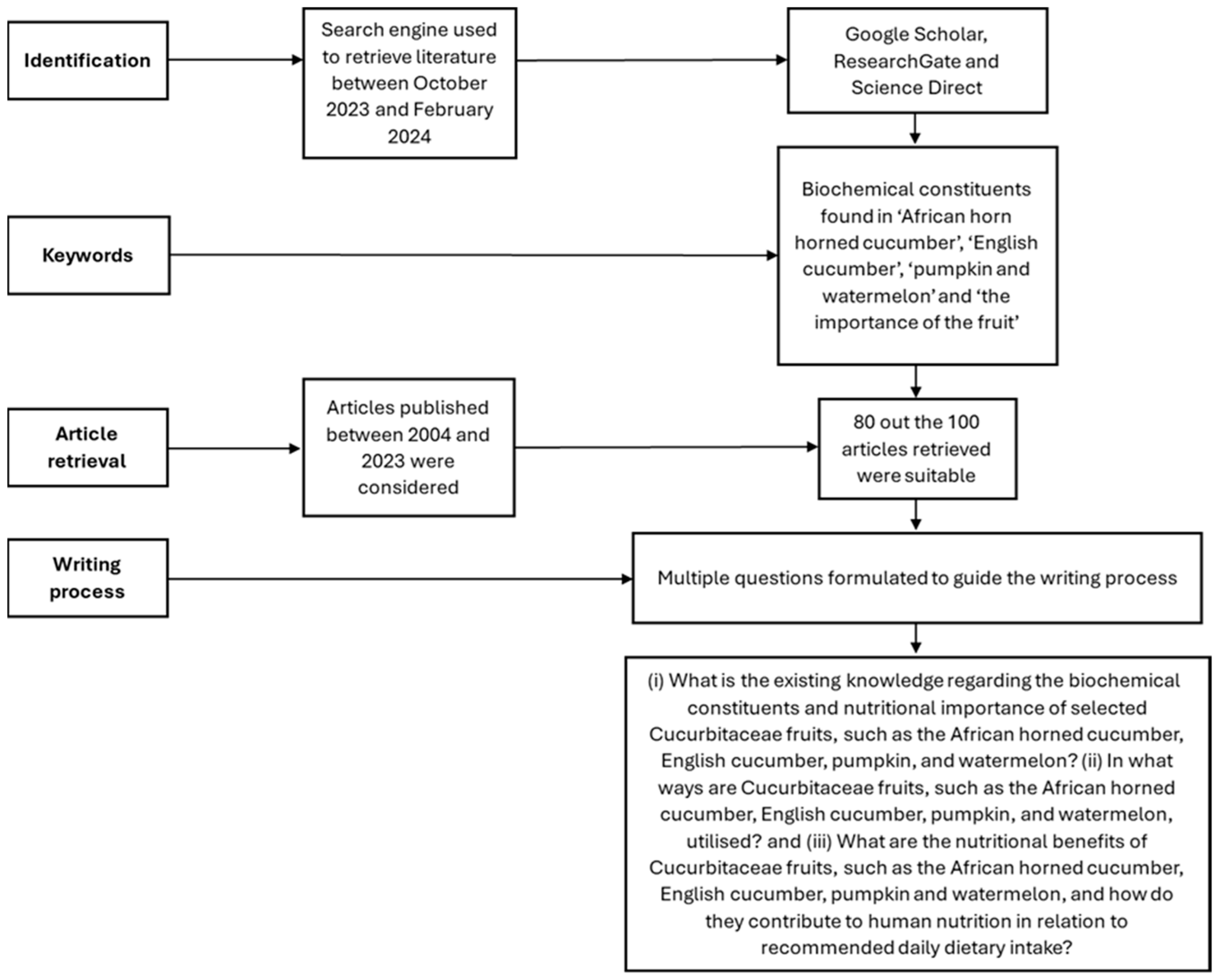
This review study was carried out as a structured narrative review guided by PRISMA (Preferred Reporting Items for Systematic Reviews and Meta-Analyses) principles to enhance transparency and strengthen methodological rigour. From October 2023 to February 2024, an extensive literature search was performed using electronic databases such as Google Scholar, ScienceDirect, and ResearchGate, employing keywords such as African horned cucumber (Cucumis metuliferus), Cucurbitaceae fruits (English cucumber, pumpkin and watermelon), nutritional composition, phytochemicals, and biochemical constituents. Studies were selected if they were peer-reviewed, published in English between 2004 and 2023, and addressed the nutritional, biochemical, or phytochemical composition of Cucurbitaceae fruits, while duplicates, non-peer-reviewed sources, irrelevant studies, and those without accessible full texts were excluded. Around 100 publications were initially identified, with 80 retained after screening titles, abstracts, and full texts in line with the PRISMA stages of identification, screening, eligibility, and inclusion (Figure 1). Data from the selected studies, including nutrient composition, phytochemical content, and biochemical components, were then examined using a comparative approach to highlight key similarities, differences, and trends among the fruits. Therefore, this review evaluation did not strictly adopt a formal systematic quality assessment. However, emphasis was placed on the reliable, peer-reviewed literature, and the reported values were interpreted carefully due to differences in analytical methods, environmental conditions, and genetic factors. The study was guided by three main research questions: (i) existing knowledge on the biochemical composition and nutritional importance of selected Cucurbitaceae fruits (African horned cucumber, English cucumber, pumpkin, and watermelon); (ii) their uses; and (iii) their nutritional benefits relative to recommended daily dietary intake. Nutritional values are reported per 100 g to allow standardised comparison; however, it is acknowledged that real consumption may vary according to portion sizes, dietary habits, and cultural contexts.

3. Botanical Description of Selected Cucurbitaceae Fruits

3.1. Botanical, Physical Attributes and Habitat of the African Horned Cucumber

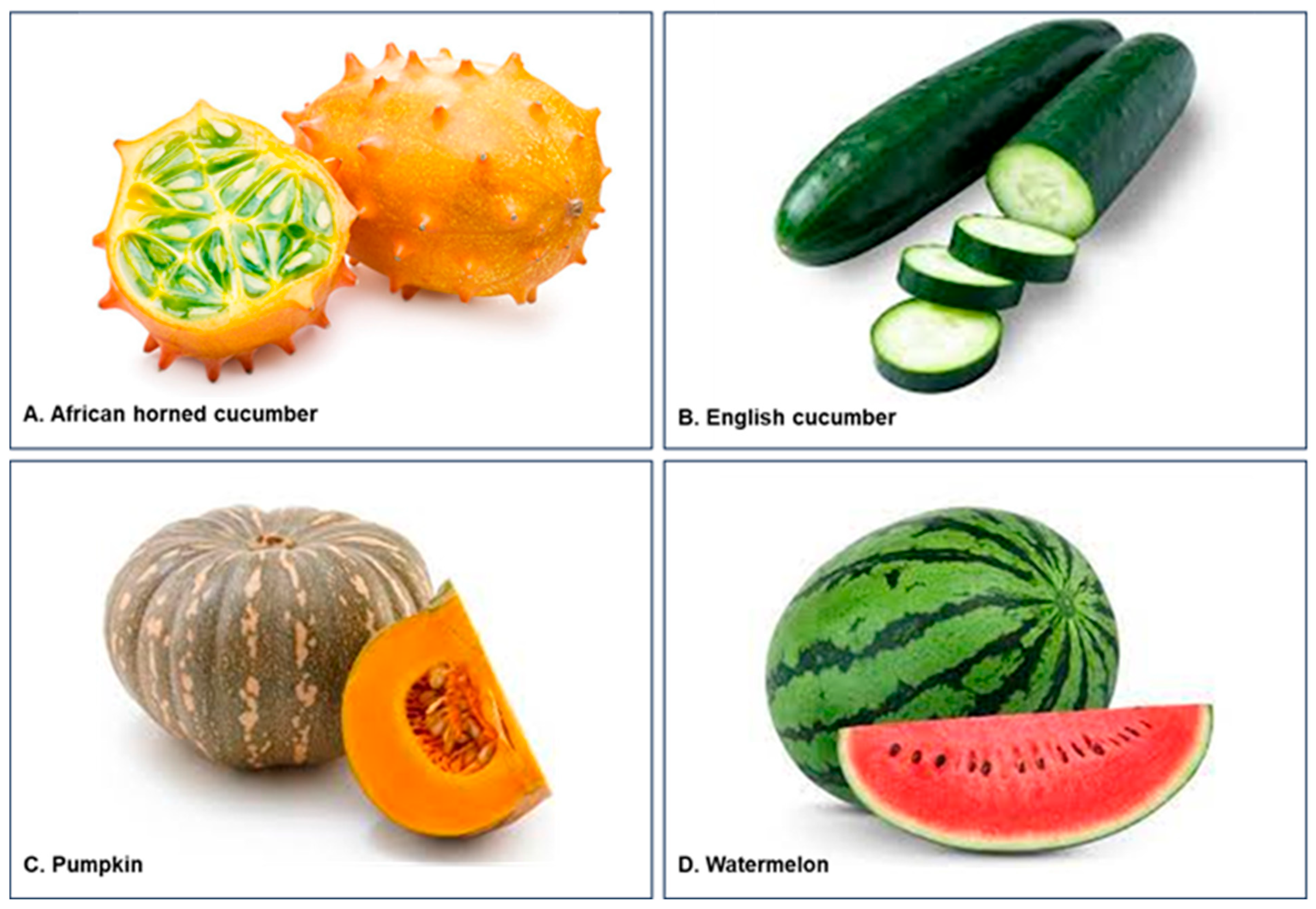
The African horned cucumber, scientifically known as C. metuliferus (Figure 2A), grows naturally in Africa, particularly in countries such as South Africa, Senegal, Nigeria, Namibia, Botswana, Zimbabwe, and Eswatini [11]. In South Africa, it thrives mostly in regions with warm to hot conditions, including Limpopo, Mpumalanga, and KwaZulu-Natal provinces. The crop prefers well-drained loam soil and rocky slopes [12]. The plant, which belongs to the Cucurbitaceae family, is a monoecious, climbing annual herb with slender stems and hairy leaves, three to four lobes, and staminate flowers preceding pistillate ones [7,10]. Its fruits, which are 8 to 12 cm long and 3 to 5 cm wide, have green skin, which turns orange upon maturity, and are adorned with spiky outgrowths [7]. The ellipsoid seeds are white, flattened, 6 to 9 mm long, and surrounded by a light green jelly [15]. Being cold-sensitive, the crop requires protection from frost to prevent damage to both plants and fruits [16]. Optimal growth conditions include high temperature, humidity, and light intensity, along with sufficient water supply and nutrients [17].

3.2. Botanical, Physical Attributes and Habitat of the English Cucumber

The English cucumber, scientifically known as Cucumis sativus L. (Figure 2B), is a widely cultivated vine plant or annual climbing plant that belongs to the Cucurbitaceae family, which also includes pumpkins, melons, and watermelons [18]. It yields cylindrical to spherical fruits and originally hails from Asia, spanning regions such as the Himalaya to Northern Thailand, India, Nepal, Bangladesh, and China. However, it is now found across most continents [19]. The plant can climb up trellises or other supports, using thin, spiralling tendrils [20]. Its sprawling vines are adorned with large leaves that provide shade over the fruits [21]. The flowering process typically begins with male flowers, followed by female ones, occurring in roughly equal numbers [22]. Pollination is commonly facilitated by honeybees, bumblebees, and various other bee species [23]. English cucumbers typically have an elongated shape with tapered ends, and range in size from 5 to 60 cm in length and 3 to 10 cm in diameter, although this can vary based on growing conditions; they are primarily consumed in their early, unripe green stage, when they exhibit a sweet flavour [24,25]. The English cucumber is a nutritious watery fruit that is rich in fibre, vitamin A and vitamin K. Fresh, long English cucumbers are a delightful and crunchy complement to salads and snacks.

3.3. Botanical, Physical Attributes and Habitat of the Pumpkin

The pumpkin, scientifically known as Cucurbita pepo L. var. Styriaca (family Cucurbitaceae) (Figure 2C) originates from Mexico and is an annual climbing plant that bears both male and female flowers on the same vine [26]. These flowers are large and solitary, growing on a 2 to 20 cm long stalk, and covered in hairs [27]. Typically, pollination is carried out by ground-dwelling bees, such as squash bees and eastern bumblebees [28,29]. Pumpkins are classified within the squash variety of the Cucurbitaceae family, alongside other members, such as melons, spaghetti squash and cucumbers [30]. The stems are thick and juicy, and adorned with hairs and tendrils that branch out [31]. Its leaves are simple, with a sturdy, fleshy and hairy stalk that can extend up to 10 cm. The leaf blade is roughly triangular, measuring 20 to 30 cm across, with irregularly lobed edges, covered in hairs, heart-shaped at the base, serrated along the edges, and pointed at the tip [27]. Pumpkins are a warm-season crop that exhibit optimal growth in adequately irrigated soil conditions [31]. Authors [32,33] have reported that the crop is susceptible to adverse effects when exposed to either water scarcity or excessive moisture. Pumpkin fruit is mainly grown for human consumption, decoration, and as livestock feed, providing additional benefits [34,35,36].

3.4. Botanical, Physical Attributes and Habitat of the Watermelon

Watermelon, or Citrullus lanatus (Thunb.) Mansf, Cucurbitaceae (Figure 2D), originates from Central and Southern Africa; it is an annual plant that belongs to the Cucurbitaceae family, and can grow in both horizontal and vertical directions using its herbaceous stems [37]. It is commercially cultivated in regions characterised by extended periods of frost-free warm weather [38]. Due to its sprawling and trailing vine-like growth habit, the crop tends to require wide spacing [39]. Watermelon is a fruit that is grown all over the world due to its abundant nutritional benefits, and it has been extensively farmed in areas with limited rainfall [40]. Up to 3 m long stems of watermelon plants are initially covered in dense, imprecise hairs that range in colour from yellow to brown. However, as they grow older, they become smoother [41]. The leaves have a rough texture that develops with time, and range in length and width from 60 to 200 mm. Leaf stalks may be slightly hairy and can grow up to 150 mm in length. Watermelon plants can have up to 40 mm long flower stalks and produce both male and female flowers on the same plant [42]. Typically, the flowering and fruiting occur in spring or summer, when the weather is warmer, as the plant is sensitive to cold temperatures. Cylindrical watermelon fruits can have a diameter of up to 200 mm [43,44].

4. Results and Discussion

4.1. Literature Discussion

Although nutrient values in this review are compared with RDI, these comparisons should be interpreted carefully, as RDI values are not consistently standardised and can vary between populations, while figures expressed per 100 g do not necessarily represent real dietary consumption. Nutrient uptake is influenced by factors such as portion size, cooking or preparation methods, and bioavailability, which were not addressed in this review. Furthermore, phytochemicals such as flavonoids, phenolic compounds, and lycopene do not have established RDIs; therefore, their presence should not be considered as fulfilling daily intake requirements, but rather as indicators of potential biological and functional properties.

4.1.1. Phytochemical Constituents and Their Potential Contribution in Human Nutrition

Lycopene, Total Flavonoids, and Total Phenols
The phytochemical components (lycopene, total flavonoids, and total phenols) of several Cucurbitaceae fruits (watermelon, pumpkin, English cucumber, and African horned cucumber) are shown in Table 1. According to published research, the lycopene concentration of African horned cucumbers ranged from 0.09 to 0.4 mg/100 g. Furthermore, studies revealed a 20.6 mg difference between the African horned cucumber’s highest lycopene content (0.4 mg) and the recommended daily consumption (21 mg). Based on values found in the literature, the African horned cucumber may contribute around 1.9% of the daily lycopene required by humans [8]. Regarding the pumpkin, published studies showed that its lycopene content varied between 0.7 and 0.8 mg/100 g. Furthermore, published research indicated a 20.2 mg variation between the highest lycopene content of pumpkin (0.8 mg) and the required daily consumption (21 mg). According to values derived from the available literature, pumpkin may provide roughly 3.8% of the lycopene that humans need daily [32]. For watermelon, the lycopene content ranged from 0.03 to 3.5 mg/100 g [39,45]. Furthermore, lycopene content in watermelon was shown to be the highest (3.5 mg) when compared to other fruits. There is a 17.5 mg discrepancy between the maximum lycopene content (3.5 mg) found in watermelon and the recommended daily consumption (21 mg). Watermelon may provide approximately 16.7% of the daily recommended intake of lycopene needed by humans [37]. Lycopene is a potent antioxidant that offers numerous health benefits, such as enhanced heart health, protection from the sun, and potential reduction in the risk of cancer [39,44]. Thus, consumption of Cucurbitaceous fruits, especially watermelon, which has the highest lycopene content (16.7%), could assist in the prevention of conditions such as heart disease and other chronic diseases associated with low lycopene content in the human diet.
The African horned cucumber has a total flavonoid concentration ranging from 0.2 to 0.7 mg CE/100 g [18,20]. The difference between the highest total flavonoid content found in the African horned cucumber (0.7) and the RDI (250) amounts to 249.3 mg. Data from the literature indicate that the African horned cucumber may contribute approximately 0.28% to the total flavonoid requirement for daily human dietary intake. The total flavonoid concentration in English cucumbers is said to range from 0.02 to 2.7 CE/100 g [18,25]. The variation between the maximum flavonoid content discovered in the English cucumber (2.7) and the RDI (250) is 247.3 mg. Data from the literature suggest that the English cucumber could provide around 1.1% of the daily flavonoid intake requirement for humans. The total flavonoid content of pumpkin varies between 1.07 and 139.4 mg CE/100 g [32,35]. Moreover, the literature indicates that the difference between the highest total flavonoid content found in pumpkin (139.4) and the RDI (250) is 110.6 mg. Values gleaned from the literature reveal that pumpkin may supply approximately 55.8% of the daily recommended intake of flavonoids for humans, which is considered the highest when compared to other Cucurbitaceae fruits in this study. Watermelon has a total flavonoid concentration ranging from 0.04 to 3.4 mg CE/100 g [41,44,45,47]. Additionally, according to the literature, the variance between the maximum total flavonoid content in watermelon (3.4) and the RDI (250) is 246.6 mg CE/100 g. Values gathered from the literature suggest that watermelon could offer about 1.4% of the daily intake of the total flavonoid requirement for humans. It has been found that flavonoids protect the body from free radicals that cause oxidative stress by regulating cellular function [49]. This suggests that consumption of fruits from the Cucurbitaceae family, particularly pumpkin, which has the highest flavonoid content, at 55.8%, may contribute to the prevention of conditions such as excessive bruising, swelling post-injury, nosebleeds, and haemorrhoids, which are linked to insufficient intake of flavonoids in the human diet [50].
The African horned cucumber fruit has a total phenolic content ranging from 3.1 to 5.8 mg GAE/100 g [1]. Moreover, published findings show that the difference between the highest total phenol content found in the African horned cucumber (5.8 mg) and the RDI (246 mg) is 240.2 mg. Data from the literature reveal that the African horned cucumber could supply approximately 2.4% of the daily total phenols needed for humans. Concerning the English cucumber, [14,18] data show that total phenols vary between 0.97 and 1.8 mg GAE/100 g. Additionally, the literature shows that the contrast between the highest total phenol content found in the English cucumber (1.8 mg) and the RDI (246 mg) amounts to 244.2 mg. Values obtained from the literature suggest that the English cucumber may offer around 0.7% of the daily intake of total phenols required for humans. The total phenolic content of pumpkin ranges from 4.4 to 496.9 mg GAE/100 g [10,32]. Additionally, the literature shows that the difference between the highest phenolic content of pumpkin (496) and the daily recommended consumption (246) is 250 mg. The data further indicate that pumpkins may supply almost twice as many total phenols as required daily for human intake. The total phenolic content of the watermelon varies between 0.02 and 0.17 mg GAE/100 g [39,44]. Furthermore, based on the literature, the variation between the highest phenolic content of watermelon (0.17 mg) and the RDI (246 mg) is 248.8 mg. Based on the data from the literature, it can be inferred that watermelon can contribute approximately 0.07% of the daily required total phenolic intake in the human diet. Total phenolic contents, which are easily absorbed by the intestinal tract, offer potential health benefits to humans by acting as antioxidants, thus helping to prevent cellular damage caused by free-radical oxidation reactions [51]. These suggest that consuming fruits in the Cucurbitaceae family, especially pumpkin, which has the highest phenolic concentration, may contribute to preventing conditions such as headaches and hyperactivity, which are linked to low phenolic content in the human diet.
The comparative analysis revealed distinct variations in the phytochemical composition of Cucurbitaceae fruits, with watermelon exhibiting the highest lycopene levels, thus contributing more substantially to daily intake than African horned cucumber. This indicates that the latter, although it contains antioxidants, is not a major source relative to other fruits. Likewise, pumpkin showed considerably higher concentrations of flavonoids and phenolic compounds, reflecting greater antioxidant potential. In comparison, the African horned cucumber is more appropriately considered a supplementary dietary component rather than a primary source of these bioactive compounds. Despite its comparatively low phytochemical content, it offers important functional advantages, including hydration, a variety of bioactive compounds, and strong resilience in low-input and resource-constrained environments, which enhance dietary diversity and support food system resilience. In the absence of established dietary reference intakes for flavonoids and phenolic compounds, their concentrations are evaluated based on relative abundance and antioxidant potential rather than direct dietary contribution.
The variability in nutrient composition reported across studies may be explained by several factors, including genetic differences, environmental conditions, soil characteristics, climate, and postharvest handling practices. In addition, inconsistencies in analytical methods can contribute to differences in reported values. As a result, the data should be interpreted as indicative rather than definitive. This highlights the need for standardised analytical procedures in future research to improve the reliability and comparability of findings.

4.1.2. Biochemical Constituents of Various Cucurbitaceae Fruits and Their Potential Contribution to Human Nutrition

Beta Carotene, Vitamin C and Vitamin E
Table 2 depicts the biochemical components (beta carotene, vitamin C, and vitamin E) of different fruits of the Cucurbitaceae family (the African horned cucumber, English cucumber, pumpkin, and watermelon). Studies conducted by numerous authors [1,8,10] delineated that the beta carotene content of the African horned cucumber ranged from 1.5 to 1.7 mg/100 g. Furthermore, the literature shows that the variation between the highest beta carotene content of the African horned cucumber (1.7 mg) and the RDI (11 mg) is 9.3 mg. Values obtained from the literature suggest that the African horned cucumber can contribute about 15.5% of the beta carotene intake required by humans daily. Pertaining to the English cucumber fruit, authors such as [19,21] discovered that the beta carotene content ranged between 0.2 and 0.9 mg/100 g. Additionally, the literature shows that the variation between the highest beta carotene content of English cucumbers (0.9 mg) and the RDI (11 mg) is 10.1 mg. These findings suggest that English cucumbers may contribute approximately 8.2% of the daily beta carotene intake requirement for humans. Concerning pumpkin, the literature revealed by [35,37] outlined that the beta carotene content ranges from 0.3 to 10.8 mg/100 g. Furthermore, the pumpkin fruit has the highest beta carotene content among the fruits studied in this research. The variance between the maximum beta carotene content of pumpkin and the RDI (11 mg) is 0.2 mg. Values obtained from the literature suggest that pumpkin fruit may contribute about 98% of the beta carotene intake required by humans daily. Regarding the watermelon, data from the literature outline that the beta carotene content varies from 0.3 to 8.9 mg/100 g [39,44]. Moreover, the variance between the highest beta carotene in watermelon (8.9 mg) and the RDI (11 mg) amounts to 2.1 mg. Evidence from the literature indicates that watermelon might supply around 80.9% of the necessary daily beta carotene intake for humans. Authors such as [1,52] reported that the human body transforms beta carotene into vitamin A (retinol), benefiting vision and eye health, bolstering the immune system, and contributing to maintaining healthy skin. This suggests that consumption of fruits from the Cucurbitaceae family, particularly pumpkin, which has the highest beta carotene content at 98%, may aid in averting conditions such as dry skin and weakened immunity against infections, which are associated with low beta carotene in the human diet [53].
Regarding vitamin C content, the literature by [1] shows that it ranged from 0.5 to 3.4 mg/100 g in the African horned cucumber fruit. Furthermore, the literature reveals that the disparity between the highest vitamin C content found in the African horned cucumber (3.4 mg) and the RDI (83 mg) amounts to 79.6 mg, which implies that the African horned cucumber may provide approximately 4.1% of the vitamin C required in the human daily diet. As for the English cucumber fruit, its vitamin C levels varied from 0.03 to 4.9 mg/100 g according to the data of [14]. The difference between the maximum vitamin C content (4.9 mg) and the RDI (83 mg) is 78.1 mg. Based on these findings, it can be inferred that the English cucumber could fulfil approximately 5.9% of the vitamin C intake required by humans daily. Concerning pumpkin, the published literature by [3,35] shows that vitamin C levels vary between 0.3 and 9 mg/100 g. Additionally, the literature demonstrates that the difference between the highest vitamin C content of pumpkin (9 mg) and the RDI (83 mg) is 74 mg. These results suggest that the vitamin C content of pumpkin may be around nine times higher than the daily recommended intake. In relation to the watermelon, the literature by [40,41,44] shows that vitamin C content ranges from 0.03 to 14.2 mg/100 g. The disparity between the highest vitamin C content of watermelon (14.2 mg) and the RDI (83 mg) is 68.8 mg. These observations suggest that watermelon could contribute around 17.1% of the daily vitamin C intake requirement for humans. Research by [1,54] indicates that vitamin C plays a vital role in tissue growth and repair throughout the body. Additionally, it aids in the production of collagen, a crucial protein involved in the formation of skin, cartilage, tendons, ligaments, and blood vessels [1,5]. As a result, consumption of fruits from the Cucurbitaceae family, particularly watermelon, which has the highest vitamin C content of 17.1%, may contribute to preventing symptoms such as fatigue, weakness, irritability, and weight loss, which are linked to low vitamin C intake required in the human daily diet [55].
In terms of vitamin E, the literature by [1] shows that the vitamin E content of the African horned cucumber ranges from 1.9 to 2.28 mg/100 g. Moreover, the literature highlights that the disparity between the highest vitamin E content (2.28) in the African horned cucumber and the RDI (15) amounts to 12.72 mg. Therefore, it can be deduced that consumption of the African horned cucumber can contribute about 15.2% of the RDI of vitamin E. As for pumpkin, the literature by [35,37] shows vitamin E content ranges from 1.1 to 12.4 mg/100 g. Moreover, the literature reveals that a 2.6 mg variation between the highest vitamin E content (12.4 mg) in the pumpkin fruit and the RDI (15 mg). Data from the literature suggest that pumpkin could contribute about 82.7% of the vitamin E needed by humans daily. Concerning watermelon, the literature by [39,41] reveals that the vitamin E content ranges from 0.001 to 37.5 mg/100 g. Additionally, data from this literature indicate a considerable difference between the highest vitamin E content found in watermelon (37.5 mg) and the RDI (15 mg), namely 22.5 mg. Data from studies suggest that watermelon can provide almost twice the amount of vitamin E than is recommended for daily consumption. The wide variation observed may be explained by differences in cultivars, stages of maturity, geographic origin, and analytical methods; therefore, the results should be interpreted with caution. Many authors have outlined the significance of vitamin E in preventing and reversing various disease complications. Its antioxidative properties, functioning anti-inflammatory processes, inhibition of platelet aggregation, and immune-enhancing activity make this compound of the utmost importance to human health and nutrition [1,51,56,57]. This implies that consuming fruits from the Cucurbitaceae family, particularly watermelon, which has the highest vitamin E content, may help to prevent conditions such as impaired reflexes, coordination difficulties, mobility problems, and weakened muscles, which are associated with low vitamin E content in the human diet [48].
Pumpkin and watermelon demonstrated significantly greater beta-carotene concentrations than African horned cucumber, underscoring their more substantial role in meeting vitamin A requirements. Nonetheless, the African horned cucumber still makes a meaningful contribution and can support dietary diversity. In terms of vitamin C, watermelon recorded the highest levels, while African horned cucumber provided comparatively lower amounts. These findings emphasise the value of incorporating a variety of fruits to ensure adequate and balanced nutrient intake. Significantly, the African horned cucumber is characterised by low caloric content, high moisture levels, and versatility in incorporating diverse food formulations, thereby enhancing its suitability for the development of functional foods and health-oriented diets.
Macro-Nutrients and Their Potential Contribution to Human Nutrition
Table 3 illustrates the macro-nutrient content (calcium, potassium, phosphorus, magnesium, sodium, and sulphur) of the investigated Cucurbitaceae fruits (African horned cucumber, English cucumber, pumpkin, and watermelon).
The published literature by [1,8] indicates that the calcium content of the African horned cucumber ranges from 13 to 247 mg/100 g. Moreover, the disparity between the highest calcium content of the African horned cucumber (247 mg) and the RDI (1300 mg) amounts to 1054 mg. These findings, from published sources, imply that the African horned cucumber may contribute approximately 19% of the daily calcium requirement for humans. Regarding the English cucumber, the literature by [14] shows that its calcium content varies between 5.2 and 17.2 mg/100 g. Moreover, studies demonstrated that the difference between the highest calcium content of English cucumbers (17.2 mg) and the RDI (1300 mg) was 1282.8 mg. Based on data from the literature, it can be inferred that English cucumbers may provide approximately 1.3% of the daily calcium requirement for humans. Concerning pumpkin, the published literature by [35,39] illustrates that its calcium content ranges from 21 to 26 mg/100 g. The disparity between the maximum calcium content (26 mg) and the recommended daily calcium intake of 1300 mg is 1274 mg. These findings suggest that pumpkin may contribute around 2% of the daily calcium intake requirement for humans. Concerning watermelon, data from the literature by [39,41] evince that its calcium content ranges from 7 to 26.1 mg/100 g. The difference between the highest calcium content of watermelon (26.1 mg) and the RDI (1300) is 1273.9 mg. The literature suggests that watermelon may provide approximately 2.0% of the daily calcium intake needed for humans. Authors such as [5,48,58] suggest that inadequate calcium intake may harm various bodily functions, potentially leading to reduced bone density and heightened risk of developing osteoporosis. Authors further suggest that incorporating Cucurbitaceae fruits into the human diet, particularly the African horned cucumber, which has the highest calcium content of 19%, might aid in averting conditions like dry skin, fragile nails, and coarse hair, which are associated with low intake of calcium in the human diet [5,59].
Regarding potassium content, the literature by [8,10] shows that it ranges from 123 to 1174 mg/100 g in the African horned cucumber fruit. Furthermore, the variation between the highest potassium concentration observed in the African horned cucumber (1174 mg) and the RDI (4100 mg) totals 2926 mg. Therefore, data from the literature suggest that the African horned cucumber could provide around 28.6% of the potassium intake required by humans daily. As for the English cucumber, it was noted from the literature by [14,25] that the potassium content ranged from 30.3 to 39.3 mg/100 g. Furthermore, based on data from the literature, the difference between the highest potassium level content of the English cucumber (39.3 mg) and the RDI (4100 mg) is 4060.7 mg. This implies that the English cucumber could contribute approximately 0.96% to the required daily potassium intake for humans. Concerning pumpkin, data obtained from the literature [37,39] reveal that the potassium content ranges from 340 to 439 mg/100 g. The difference between the highest potassium content (439 mg) of pumpkin and the RDI (4100 mg) is 3661 mg. Based on these findings, pumpkin fruit may contribute approximately 10.7% of the daily potassium intake required. Regarding watermelon, the literature by [39] shows that its potassium content varies from 24.4 to 36.2 mg/100 g. Furthermore, the literature highlights that the disparity between the highest potassium level in watermelon (36.2 mg) and the RDI (4100 mg) amounts to 4063.8 mg. Data gathered from published sources suggests that watermelon could contribute around 0.9% of the daily potassium intake requirement for humans. Authors such as [5,60] emphasise the vital role of potassium in assisting with nerve function by facilitating muscle contraction, including cardiac muscles. Additionally, potassium mitigates the impact of sodium on blood pressure [48]. This suggests that incorporating fruits from the Cucurbitaceae family into the human diet, especially the African horned cucumber, which has the highest potassium content at 28.6%, could aid in preventing conditions like weakness, fatigue, tiredness, and muscle cramps, which are linked to low potassium intake in the human diet [60].
In the case of phosphorus, data from the literature by [8,14] show that the African horned cucumber has phosphorus concentrations ranging from 37 to 44.7 mg/100 g. The variation between the highest phosphorus content of the African horned cucumber fruit (44.7 mg) and the RDI (3500 mg) is 3455.3 mg. Based on data from published sources, African horned cucumbers may supply around 1.3% of the daily need of phosphorus for humans. Concerning English cucumbers, the literature by [14] shows that the phosphorus content ranges from 1.3 to 7.3 mg/100 g. Additionally, the literature shows that the variation between the highest phosphorus content of the English cucumber (3500 mg) and the RDI is 3492.7 mg. This implies that English cucumbers may provide around 0.2% of the daily phosphorus intake needed in the human diet. Concerning pumpkin, according to the literature [35], the phosphorus content ranges from 13 to 17 mg/100 g. Additionally, a difference of 3483 mg was found between the highest phosphorus content of pumpkin (17 mg) and the recommended daily consumption (3500 mg). Based on existing research, it is estimated that pumpkin may provide about 0.5% of the daily phosphorus needed by humans. In terms of watermelon, the published literature by [39] outlines that phosphorus content ranges between 11 and 175.8 mg/100 g. Moreover, data from the literature demonstrate that the variation between the highest phosphorus content of watermelon (175.8 mg) and the RDI (3500 mg) is 334.2 mg. According to data from the literature, watermelon might provide about 5.0% of the daily phosphorus needs of humans. Authors such as [5,61] highlight the essential role of phosphorus in controlling gene transcription, enzyme activity, extracellular fluid pH maintenance, and intracellular energy storage. Therefore, consumption of fruits from the Cucurbitaceae family, especially watermelon, may assist in curbing conditions such as loss of appetite, anxiety, brittle bones, stiff joints, exhaustion, uneven breathing, agitation, weakness, and shift in weight—all of which are signs of phosphorus deficiency in the human diet [62].
According to published research by [8,14], the magnesium content of the African horned cucumber varies from 23 to 289 mg/100 g. Furthermore, research has demonstrated an 81 mg difference between the highest magnesium concentration (289 mg) of African horned cucumbers and the daily recommended intake (370 mg). This implies that African horned cucumbers may contribute around 78.1% of the daily need of magnesium for humans. In terms of the English cucumbers, the literature by [14,25] showed that the magnesium content ranged from 0.2 to 16.8 mg/100 g. The variation between the highest magnesium content (16.8 mg) of the English cucumber and the RDI (370 mg) is 353.2 mg. These findings imply that English cucumbers may be able to supply about 4.5% of the magnesium intake required by humans daily. Based on published research by [35,37], the magnesium content of pumpkin varies from 7.4 to 37.8 mg/100 g. Furthermore, research revealed a 332.2 mg difference between the maximum magnesium concentration of pumpkin (37.8 mg) and the daily intake requirement (370 mg). Values from published sources suggest that pumpkin might provide about 10.2% of the total amount of magnesium that humans need daily. As for watermelon, it was found from the literature by [39,44] that the magnesium content varies between 3.45 and 10 mg/100 g, according to published research. The difference between the highest magnesium content (10 mg) of watermelon and the RDI (370 mg) is 360 mg. According to the literature, watermelon may provide around 2.7% of the daily magnesium intake needed by humans. Research by [63] revealed that magnesium is responsible for maintaining a strong immune system, contributes to stabilising the heartbeat, helps to maintain proper nerve and muscle function, and keeps bones strong. Therefore, data obtained from the literature imply that consuming fruits in the Cucurbitaceae family, particularly the African horned cucumber, which has the greatest magnesium content (78.1%), may help to prevent diseases such as weariness, weakness, nausea, vomiting, and appetite loss, which are linked to low magnesium intake in the human diet [64].
Regarding sodium, published research by [1,14] illustrates that it ranges from 2 to 245 mg/100 g in the African horned cucumber fruit. The variation between the highest sodium content found in the African horned cucumber fruit (245 mg) and the RDI (2300 mg) is 2055 mg. This suggests that the African horned cucumbers may supply around 10.7% of the daily sodium intake required by humans. As regards English cucumbers, the published literature by [14] indicates that the sodium content varies between 0.6 and 15.9 mg/100 g. There is a 2284.1 mg difference between the highest sodium level in English cucumbers (15.9 mg) and the recommended daily consumption (2300 mg). Based on published research, the English cucumber may contribute about 0.7% of the daily sodium intake required by humans. In terms of pumpkin, the published literature by [35] shows that the sodium level ranges from 2.6 to 27.3 mg/100 g. The variation between the RDI (2300 mg) and the highest sodium content of pumpkin is 2272.7 mg. Therefore, pumpkin may provide roughly 1.2% of the daily sodium intake required by humans, according to data from the literature. Regarding the watermelon, the published literature by [44,49] outlines that it ranges from 0.8 to 1 mg/100 g. Moreover, data from the literature show that the variation between the highest sodium content (1 mg) and the RDI (2300 mg) is 2299 mg. This suggests that watermelon could contribute about 0.04% of the daily sodium intake required by humans. Sodium is an important element of human nutrition and health because it maintains plasma volume and the acid–base balance, helps to transmit nerve impulses, and supports normal cell activity [1,48]. Therefore, consumption of fruit from the Cucurbitaceae family, especially the African horned cucumber, which has the highest sodium content of 10.7%, may contribute to the prevention of nausea, chronic headaches, loss of energy, and muscle weakness, which are conditions linked to low sodium content in the human diet [5].
African horned cucumber has comparatively high levels of magnesium and potassium relative to other fruits, highlighting its potential importance in supporting key physiological processes such as nerve transmission and muscle function. However, its calcium and phosphorus content is moderate. As a result, it is best regarded as a complementary component of a well-balanced diet rather than a primary source of these nutrients.
Micronutrients and Their Potential Contribution to Human Nutrition
Table 4 outlines the micronutrients (copper, iron, magnesium, and zinc) of various Cucurbitaceae fruits, namely watermelon, pumpkin, the English cucumber, and the African horned cucumber, and their potential role in human nutrition. According to [1,8], African horned cucumbers have a copper content ranging from 0.5 to 0.9 mg/100 g. Additionally, the literature reveals that the variation between the highest copper content of the African horned cucumber (0.9) and the RDI (800 mg) is 799.1 mg. According to values derived from the literature, the African horned cucumber may provide around 0.1% of the daily copper intake required by humans. Regarding the English cucumber, the literature by [65] shows that the copper content ranges from 0.00 to 0.01 mg/100 g. The difference between the highest copper content of the English cucumber (0.01 mg) and the RDI (800 mg) is 799.99 mg. Based on data obtained from the literature, the English cucumber may provide about 0.001% of the daily amount of copper that humans need. Regarding the pumpkin, the published literature by [39] reveals that the copper content varies between 0.8 and 1.4 mg/100 g. There is a 798.6 mg difference between the maximum copper content of pumpkin (1.4 mg) and the recommended daily requirement (800 mg). The values obtained from the literature mean that pumpkin may contribute around 0.2% of the daily copper intake required by people daily. In terms of watermelon, the published literature by [39] shows that the copper content ranges from 0.09 to 0.4 mg/100 g. Moreover, research shows a 799.6 mg difference between the highest copper content of watermelon (0.4 mg) and the daily recommended intake (800 mg). Data from the literature indicates that watermelon may provide approximately 0.05% of the copper intake required by humans daily. Authors such as [5,46] have highlighted the role of copper as crucial in the production of red blood cells and in maintaining the health of nerve cells and the immune system. Therefore, incorporating fruits from the Cucurbitaceae family into the human diet, especially the pumpkin, which has a significant 0.2% copper content, could help to prevent conditions such as anaemia, low body temperature, bone fractures, and osteoporosis [66], which are linked to low copper intake.
Concerning iron, the published literature by [1,8] illustrates that it ranges from 0.20 to 3.8 mg/100 g in the African horned cucumber. The highest iron content of African horned cucumbers (3.8 mg) and the recommended daily consumption (17 mg) differ by 13.2 mg. This suggests that the African horned cucumbers may provide about 22.4% of the iron intake required by humans daily. As for the English cucumber, the published literature by [14] shows that its iron content ranges from 4.7 to 12.4 mg/100 g. The variation between the highest iron content in the English cucumber (12.4 mg) and the RDI (17 mg) is 4.6 mg. Values from the literature suggest that around 73% of the daily iron intake needed by humans may be obtained from English cucumbers. Regarding pumpkin, data from the literature [35,66] show that the iron content ranges from 0.8 to 11.1 mg/100 g. Moreover, data from the literature evince that the variation between the highest iron content of pumpkin (11.1 mg) and the RDI (17 mg) is 5.9 mg. This implies that pumpkin may contribute about 65.3% of the daily iron intake required by humans. In terms of watermelon, the literature [39] shows that the iron content ranges from 0.24 to 3.1 mg/100 g. There is a 19.9 mg variation between the highest iron content of the watermelon fruit (3.1 mg) and the RDI (17 mg). Based on the literature, watermelon may contribute approximately 18.2% of the daily iron intake required by humans. Authors such as [1,48] emphasise that iron is a significant portion of haemoglobin, a protein found in red blood cells that is responsible for transporting oxygen from the lungs throughout the body [5]. Thus, incorporating fruits from the Cucurbitaceae family, like English cucumber, which has the highest iron content of 73%, could mitigate conditions such as fatigue, lack of focus and anaemia, which are associated with iron deficiency [66].
Regarding manganese, the published literature by [1,8] reveals that it ranges from 0.04 to 0.2 mg/100 g in the African horned cucumber fruit. Furthermore, data obtained from the literature show a 1.8 mg variation between the African horned cucumber’s maximum iron content (0.2 mg) and the RDI (2 mg), which suggests that the African horned cucumber could contribute about 10% of the manganese intake required by humans daily. In terms of the English cucumber, the literature by [66] shows that the manganese content ranges from 0.2 to 11.6 mg/100 g. The values indicate a variance of 9.6 mg between the RDI (2 mg) and the highest manganese concentration (11.6 mg). According to values in the literature, the English cucumber may provide almost five times the amount of manganese required by humans daily. Concerning pumpkin, the published literature by [35] reveals that the manganese content ranges from 0.13 to 0.4 mg/100 g. The variation between the highest manganese content of pumpkin (0.4 mg) and the RDI (2 mg) is 1.6 mg. This implies that pumpkin could contribute about 20% of the manganese intake required by humans daily. Authors such as [1,5,17] have identified manganese as a vital element in the formation of connective tissue, bones, blood clotting factors, and sex hormones. This suggests that including fruits from the Cucurbitaceae family in the human diet, especially English cucumbers, which have the highest manganese content, could aid in averting conditions such as bone demineralisation and impaired growth, which are linked to insufficient manganese content in the human diet [67].
Regarding the zinc content, the published literature by [1] shows that it ranges from 0.2 to 12.7 mg/100 g in the African horned cucumber. In addition, the literature shows a 2.7 mg variation between the highest zinc content of the African horned cucumber (12.7 mg) and the RDI (10 mg). Values obtained from the literature suggest that the zinc content of the African horned cucumber exceeds the daily zinc recommendation by 2.7 mg. In terms of the English cucumber, the published literature by [66] shows that zinc content ranges from 0.19 to 4.9 mg/100 g. Moreover, the literature reveals a 5.1 mg difference between the highest zinc content of English cucumber (4.9 mg) and the RDI (10 mg). This suggests that the English cucumber could contribute about 49% of the daily zinc intake required by humans. As for pumpkin, the published literature by [35] shows that it ranges from 0.04 to 0.3 mg/100 g. The variation between the highest zinc content of the pumpkin (0.3 mg) and the RDI (10 mg) is 9.7 mg. This implies that pumpkin may contribute about 3% of the zinc intake required by humans daily. In terms of watermelon, the literature by [39] illustrates that the zinc content ranges from 0.1 to 3.5 mg/100 g. In addition, the literature shows a 6.5 mg variation between the highest zinc content of watermelon (3.5 mg) and the RDI (10 mg). This suggests that watermelon could contribute about 35% of the zinc intake required by humans daily. Authors such as [5,68] have reported that zinc is present in all the cells of the human body. It is required by the body to support the immune system, which helps the body to defend itself against a variety of illnesses [5]. It also helps the human body to facilitate taste and smell. In addition, zinc is essential for cell division, development, wound healing, and the breakdown of carbohydrates [48]. Therefore, integrating fruits from the Cucurbitaceae family, particularly the African horned cucumber, which has the highest zinc content, may assist in mitigating conditions such as hair loss, increased susceptibility to infections, and delayed wound healing, which are symptoms associated with low zinc intake in the human diet [12,69].
Overall, although Cucurbitaceae fruits such as the English cucumber and pumpkin provide greater amounts of specific micronutrients such as iron and manganese, the African horned cucumber still serves as a useful complementary source, particularly of zinc. This highlights the importance of consuming a diverse range of fruits to adequately meet micronutrient needs.

5. Prospective Outlook for the African Horned Cucumber in the Biotechnology and Food Industries

Agriculture plays a pivotal role in driving economic growth in both developed and developing countries, primarily by supplying raw materials to agro-based industries [5]. Within this sector, fruit cultivation is particularly significant, as it supports the production of value-added products such as juices, dietary supplements, frozen products, and pharmaceutical formulations. In this context, the African horned cucumber represents a valuable resource due to its rich composition of biochemical constituents, including vitamins, flavonoids, phenolic compounds, and lycopene. These attributes position the fruit as a suitable raw material for products such as fresh salad dressings, juices, and nutritional supplements aimed at enhancing dietary quality and overall health.
Although the African horned cucumber may not consistently exhibit the highest concentrations of all nutrients when compared to other Cucurbitaceae fruits, its significance lies in its unique combination of nutritional, functional, and economic attributes. The fruit contains essential micronutrients such as zinc, potassium, and magnesium, alongside bioactive compounds with notable antioxidant properties. Furthermore, its versatility in processing into value-added products, including juices, nutraceuticals, gels, and cosmetic formulations, enhances its commercial appeal in both local and international markets.

5.1. Postharvest Treatment of the African Horned Cucumber

Postharvest handling in agriculture is described as the phase of crop production that comes right after the harvest, which includes packing, sorting, cooling, cleaning, and processing [70]. Since the fresh produce has been cut off from the parent plant that provided it with nutrients and water, this helps to keep it from rotting [71]. Technology is used in this process, which covers operations from the point of physiological maturation to the processing, distribution, marketing, and consumption of the finished product [72]. Thus, research on postharvest care and treatment of the African horned cucumber, with the goal of extending its shelf life and maintaining its nutritional and physical quality, is important in addressing SDG 2 (zero hunger) in both rural and urban areas. This goal pertains to ensuring that all people have access to nutrient-dense food, all year round.

5.2. Value-Added Products of the African Horned Cucumber

Value-added products are defined by authors such as [73,74] as those that are developed or altered from raw agricultural products with the intention of preservation for future use, and their market value is recognised to be higher than that of raw products because of their long shelf-life qualities. Supplements, medicinal products, juice, jam, and gel are a few examples of value-added products derived from fruits [73]. Fruit by-products are a sustainable resource that are mostly made of organic substances and used as suitable materials to produce a range of products with additional value, such as chemicals, medicines, bioactive substances, enzymes, biofuels, salad dressings, oils, gel and supplements [74]. The African horned cucumber is a nutrient-rich fruit containing vitamins, phenolic compounds, flavonoids, and other bioactive constituents. Consequently, research focusing on its potential for value addition, such as in the production of juice, gels, medicinal products, salads, cosmetics, and dietary supplements, can play a significant role in promoting local economic development. This is particularly important for fostering community inclusion, as it creates opportunities for individuals to cultivate, process, and market value-added products derived from the African horned cucumber. This is crucial to accelerating the pace at which sustainable development goals like SDG 1 (no poverty) and SDG 2 (zero hunger) are addressed.

5.3. Programmes to Improve the African Horned Cucumber Plant in Preparation for Possible Crop Commercialisation

Authors such as [75,76] describe disease resistance in crops as the host’s capacity to lessen pathogen infection, growth, and transmission. If left unchecked, this might result in a noticeable decline in crop quality and output, which would have an impact on overall production. In addition, numerous investigations have demonstrated that the African horned cucumber is a potential source of genes for enhancing cucurbit crops. For instance, some evidence suggests that the African horned cucumber possesses resistance against major bacterial, viral, and fungal diseases, including nematodes and Fusarium species, due to specific genes encoded in proteinase inhibitors [77,78,79]. This implies that the most efficient use of the African horned cucumber germplasm resources will come from a thorough study, focusing on breeding programmes, with an emphasis on using landraces and nearby wild relatives to create pre-bred lines that are suitable for use against both biotic and abiotic stresses as needed. As a result, the establishment of breeding programmes that are geared towards the development of varieties and hybrids with improved quality traits, including the plants’ ‘nutrition and disease resistance’, should be considered. This will assist in accelerating the commercialisation of the crop. To address this issue, a strong partnership between plant pathologists, geneticists, entomologists, and breeders will be highly beneficial.

6. Conclusions

The African horned cucumber, as an underutilised native fruit, holds significant potential for improving food and nutrition security, particularly in addressing malnutrition across Africa and other developing regions. Rich in essential micronutrients such as zinc, potassium, magnesium, and vitamin E, it can contribute meaningfully to daily dietary requirements while enhancing dietary diversity. Although it may not always contain the highest nutrient concentrations compared to other Cucurbitaceae fruits, its value lies in its resilience, adaptability, and role as a complementary food source. The commercialisation of this crop presents an opportunity to transform food systems, support sustainable agriculture, and stimulate economic growth in both rural and urban communities, contributing to global goals such as poverty reduction and zero hunger. However, factors such as irrigation, fertiliser use, soil conditions, and climate variability, as well as inconsistencies in existing nutritional data and analytical methods, remain underexplored. This review is also limited by its reliance on standardised nutrient values without accounting for consumption patterns or nutrient bioavailability. Therefore, future research should prioritise large-scale cultivation studies, standardised nutrient analysis, dietary intake assessments, and the effects of food processing to better establish the fruit’s role in human nutrition and its viability as a mainstream crop.

Author Contributions

N.G.M. was involved in the data collection, analysis, and write-up. S.F. was involved in the data interpretation and write-up. R.R.M. was involved in the data interpretation and write-up. M.K.M. was involved in the data collection, analysis, interpretation, and write-up. All authors have read and agreed to the published version of the manuscript.

Funding

This research received no external funding.

Institutional Review Board Statement

Not applicable.

Informed Consent Statement

Not applicable.

Data Availability Statement

The raw data supporting the conclusions of this article will be made available by the authors on request.

Conflicts of Interest

The authors declare that they have no conflicts of interest.

Abbreviations

The following abbreviations are used in this manuscript:
RDIRecommended daily intake
SDGSustainable Development Goal
GAEGallic acid equivalent
CECatechin equivalent
NRNot reported

References

  1. Maluleke, M.K.; Moja, S.J.; Nyathi, M.; Modise, D.M. Nutrient concentration of African Horned Cucumber (Cucumis metuliferus L.) fruit under different soil types, environments, and varying irrigation water levels. Horticulturae 2021, 7, 76. [Google Scholar] [CrossRef]
  2. Akinola, R.; Pereira, L.M.; Mabhaudhi, T.; De Bruin, F.M.; Rusch, L. A review of indigenous food crops in Africa and the implications for more sustainable and healthy food systems. Sustainability 2020, 12, 3493. [Google Scholar] [CrossRef]
  3. Olowo, S.F.; Omotayo, A.O.; Lawal, I.O.; Aremu, A.O. Improving rural livelihood through the cultivation of indigenous fruits and vegetables: Evidence from Ondo State, Nigeria. Agriculture 2022, 12, 372. [Google Scholar] [CrossRef]
  4. Omotayo, A.O.; Aremu, A.O. Underutilized African indigenous fruit trees and food–nutrition security: Opportunities, challenges, and prospects. Food Energy Secur. 2020, 9, e220. [Google Scholar] [CrossRef]
  5. Maluleke, M.K.; Ralulimi, T.S.; Machete, M. Biochemical constituents and the role of African wild medlar (Vangueria infausta) in human nutrition: A review. Discov. Sustain. 2024, 5, 37. [Google Scholar] [CrossRef]
  6. Montagnini, F.; Metzel, R. The contribution of agroforestry to Sustainable Development Goal 2: End hunger, achieve food security and improved nutrition, and promote sustainable agriculture. In Integrating Landscapes: Agroforestry for Biodiversity Conservation and Food Sovereignty; Springer: New York, NY, USA, 2017; pp. 11–45. [Google Scholar] [CrossRef]
  7. Maluleke, M.K. Metabolite profile of African horned cucumber (Cucumis metuliferus E. May. Ex Naudin) fruit grown under differing environmental conditions. Sci. Rep. 2022, 12, 3722. [Google Scholar] [CrossRef]
  8. Manjunathagowda, D.C.; Pitchaimuthu, M.; Hiremata, V.; Sathisha, G.C.; Soni, S.; Dhananjaya, M.V.; Lakshmana Reddy, D.C. Horny gourd (Cucumis metuliferus L.): A hidden vegetable boon for human nutrition. Genet. Resour. Crop Evol. 2023, 70, 1903–1911. [Google Scholar] [CrossRef]
  9. Wannang, N.N.; Jimam, N.S.; Omale, S.; Dapar, M.L.; Gyang, S.S.; Aguiyi, J.C. Effects of Cucumis metuliferus (Cucurbitaceae) fruits on enzymes and haematological parameters in albino rats. Afr. J. Biotechnol. 2007, 6, 2515–2518. [Google Scholar] [CrossRef]
  10. Achikanu, C.E.; Ani, O.N.; Akpata, E.I. Proximate, vitamin and phytochemical composition of Cucumis metuliferus seed. Steroids 2020, 2, 20–24. [Google Scholar] [CrossRef]
  11. Lim, T.K.; Lim, T.K. Cucumis metuliferus. In Edible Medicinal and Non-Medicinal Plants; Springer: Dordrecht, The Netherlands, 2012; Volume 1, pp. 285–292. [Google Scholar] [CrossRef]
  12. Usman, J.G.; Sodipo, O.A.; Kwaghe, A.V.; Sandabe, U.K. Uses of Cucumis metuliferus: A review. Cancer Biol. 2015, 5, 24–34. [Google Scholar]
  13. Vieira, E.F.; Grosso, C.; Rodrigues, F.; Moreira, M.M.; Fernandes, V.C.; Delerue-Matos, C. Bioactive compounds of Horned melon (Cucumis metuliferus E. Meyer ex Naudin). In Bioactive Compounds in Underutilized Vegetables and Legumes; Springer: Cham, Switzerland, 2020; pp. 1–21. [Google Scholar] [CrossRef]
  14. Sambou, A.; Samb, N.W.; Ayessou, N. Nutritional values of green and white cucumber (Cucumis sativus L.) and African horned cucumber (Cucumis metuliferus E.). J. Hortic. Postharvest Res. 2023, 6, 221–234. [Google Scholar] [CrossRef]
  15. Šeregelj, V.; Šovljanski, O.; Tumbas Šaponjac, V.; Vulić, J.; Ćetković, G.; Markov, S.; Čanadanović-Brunet, J. Horned melon (Cucumis metuliferus E. Meyer Ex. Naudin)—Current knowledge on its phytochemicals, biological benefits, and potential applications. Processes 2022, 10, 94. [Google Scholar] [CrossRef]
  16. Nnenna Ani, O.; Achikanu, C.E. Phytochemical and vitamin composition of Cucumis metuliferus juice. Asian J. Biochem. Genet. Mol. Biol. 2021, 9, 92–98. [Google Scholar] [CrossRef]
  17. Maurya, G.P.; Vivek Pal, V.P.; Singh, G.P.; Meena, L.K. An economic analysis of cucumber cultivation in Sultanpur District of Uttar Pradesh (India). Int. J. Agric. Sci. Res. 2015, 5, 23–28. [Google Scholar]
  18. Mallik, J.; Das, P.; Das, S. Pharmacological activity of Cucumis sativus L.—A complete overview. Asian J. Pharm. Res. Dev. 2013, 1, 1–6. [Google Scholar] [CrossRef]
  19. Zhang, J.; Feng, S.; Yuan, J.; Wang, C.; Lu, T.; Wang, H.; Yu, C. The formation of fruit quality in Cucumis sativus L. Front. Plant Sci. 2021, 12, 729448. [Google Scholar] [CrossRef]
  20. Maršić, N.K.; Akše, M. Growth and yield of grafted cucumber (Cucumis sativus L.) on different soilless substrates. J. Food Agric. Environ. 2010, 8, 654–658. [Google Scholar]
  21. Mallick, P.K. Evaluating potential importance of cucumber (Cucumis sativus L.-Cucurbitaceae): A brief review. Int. J. Appl. Sci. Biotechnol. 2022, 10, 12–15. [Google Scholar] [CrossRef]
  22. Perl-Treves, R. Male to female conversion along the cucumber shoot: Approaches to studying sex genes and floral development in Cucumis sativus. In Sex Determination in Plants; Garland Science: New York, NY, USA, 2004; pp. 193–221. [Google Scholar] [CrossRef]
  23. Hanh, T.T.M.; Sharma, S.K.; Rana, M.K. Pollination efficiency of native bee pollinators of cucumber (Cucumis sativus L.) in India. J. Apic. 2014, 29, 199–205. [Google Scholar] [CrossRef]
  24. Liu, X.; Pan, Y.; Liu, C.; Ding, Y.; Wang, X.; Cheng, Z.; Meng, H. Cucumber fruit size and shape variations explored from the aspects of morphology, histology, and endogenous hormones. Plants 2020, 9, 772. [Google Scholar] [CrossRef]
  25. Ugwu, C.; Suru, S. Cosmetic, culinary and therapeutic uses of cucumber (Cucumis sativus L.). In Cucumber Economic Values and Its Cultivation and Breeding; IntechOpen: Rijeka, Croatia, 2021; p. 39. [Google Scholar] [CrossRef]
  26. Paris, H.S. Genetic resources of pumpkins and squash, Cucurbita spp. In Genetics and Genomics of Cucurbitaceae; Springer: Cham, Switzerland, 2017; pp. 111–154. [Google Scholar] [CrossRef]
  27. Wiart, C. Lead Compounds from Medicinal Plants for the Treatment of Cancer; Academic Press: New York, NY, USA, 2012; pp. 1–13. [Google Scholar] [CrossRef]
  28. Splawski, C.E. Mulch Effects on Squash (Cucurbita pepo L.) and Pollinator (Peponapis pruinosa Say.) Performance. Ph.D. Thesis, Ohio State University, Columbus, OH, USA, 2012. [Google Scholar] [CrossRef]
  29. Mondal, B.; Mondal, C.K.; Mondal, P.; Mondal, B.; Mondal, C.K.; Mondal, P. Weed and its management in Cucurbitaceous vegetables. In Stresses of Cucurbits: Status and Management; Springer: Singapore, 2020; pp. 223–237. [Google Scholar] [CrossRef]
  30. Castellanos-Morales, G.; Ruiz-Mondragón, K.Y.; Hernández-Rosales, H.S.; Sánchez-de la Vega, G.; Gámez, N.; Aguirre-Planter Montes-Hernández, S.; Lira-Saade, R.; Eguiarte, L.E. Tracing back the origin of pumpkins (Cucurbita pepo ssp. pepo L.) in Mexico. Proc. R. Soc. B 2019, 286, 20191440. [Google Scholar] [CrossRef] [PubMed]
  31. Singh, S. Agrometeorological requirements for sustainable vegetable crops production. J. Food Prot. 2018, 15, 4747. [Google Scholar] [CrossRef]
  32. Yavuz, D.; Seymen, M.; Yavuz, N.; Türkmen, Ö. Effects of irrigation interval and quantity on the yield and quality of confectionary pumpkin grown under field conditions. Agric. Water Manag. 2015, 159, 290–298. [Google Scholar] [CrossRef]
  33. Dhatt, A.S.; Sharma, M.; Kaur, B. Advances in improvement of pumpkin and squashes. In Accelerated Plant Breeding; Springer: Cham, Switzerland, 2020; Volume 2, pp. 301–335. [Google Scholar] [CrossRef]
  34. Ott, C. Pumpkin: The Curious History of an American Icon; University of Washington Press: Seattle, WA, USA, 2012; pp. 1–309. [Google Scholar]
  35. Batool, M.; Ranjha, M.M.A.N.; Roobab, U.; Manzoor, M.F.; Farooq, U.; Nadeem, H.R.; Kanwal, R.; AbdElgawad, H.; Al Jaouni, S.K.; Selim, S. Nutritional value, phytochemical potential, and therapeutic benefits of pumpkin (Cucurbita sp.). Plants 2022, 11, 1394. [Google Scholar] [CrossRef]
  36. Chuwa, C.; Dhiman, A.K. Nutrition and health benefits of ripe pumpkin fruit, pulp and powder. Recent Res. Sci. Technol. 2023, 4, 123–133. [Google Scholar] [CrossRef]
  37. Wehner, T.C. Watermelon. In Vegetables I: Asteraceae, Brassicaceae, Chenopodicaceae, and Cucurbitaceae; Springer: New York, NY, USA, 2008; pp. 381–418. [Google Scholar] [CrossRef]
  38. Tabiri, B.; Agbenorhevi, J.K.; Wireko-Manu, F.D.; Ompouma, E.I. Watermelon seeds as food: Nutrient composition, phytochemicals and antioxidant activity. Int. J. Nutr. Food Sci. 2016, 5, 139–144. [Google Scholar] [CrossRef]
  39. Fell, D. Vertical Gardening: Grow Up, Not Out, for More Vegetables and Flowers in Much Less Space; Rodale: Emmaus, PA, USA, 2011; pp. 1–359. [Google Scholar]
  40. Kyriacou, M.C.; Leskovar, D.I.; Colla, G.; Rouphael, Y. Watermelon and melon fruit quality: The genotypic and agro-environmental factors implicated. Sci. Hortic. 2018, 234, 393–408. [Google Scholar] [CrossRef]
  41. Dahake, L.Z.; Sonkamble, A.M.; Meshram, L.T.; Patil, S.R. Effect of spacing on growth and yield of watermelon. J. Pharmacogny Phytochem. 2020, 9, 751–753. [Google Scholar] [CrossRef]
  42. Noh, J.; Kim, J.M.; Sheikh, S.; Lee, S.G.; Lim, J.H.; Seong, M.H.; Jung, G.T. Effect of heat treatment around the fruit set region on growth and yield of watermelon [Citrullus lanatus (Thunb.) Matsum. and Nakai]. Physiol. Mol. Biol. Plants 2013, 19, 509–514. [Google Scholar] [CrossRef]
  43. Sinojiya, A.G.; Kacha, H.L.; Jethaloja, B.P.; Giriraj, J. Effect of plant growth regulators on growth, flowering, yield and quality of watermelon (Citrullus lanatus Thunb.) cv Shine Beauty. Environ. Ecol. 2015, 33, 1774–1778. [Google Scholar]
  44. Tamburini, E.; Costa, S.; Rugiero, I.; Pedrini, P.; Marchetti, M.G. Quantification of lycopene, β-carotene, and total soluble solids in intact red-flesh watermelon (Citrullus lanatus) using on-line near-infrared spectroscopy. Sensors 2017, 17, 746. [Google Scholar] [CrossRef]
  45. Przybylska, S. Lycopene–A bioactive carotenoid offering multiple health benefits: A review. Int. J. Food Sci. Technol. 2020, 55, 11–32. [Google Scholar] [CrossRef]
  46. Lamidi, W.A.; Oyedun, T.D.; Adesigbin, A.J. Comparison of Physicochemical Properties of Two Varieties of Cucumber (Cucumis sativus); Osun State University: Osogbo, Nigeria, 2019; pp. 914–928. [Google Scholar] [CrossRef]
  47. Sangeeta Nayik, G.A.; Muzaffar, K. Watermelon. In Antioxidants in Fruits: Properties and Health Benefits; Springer: Singapore, 2020; pp. 333–364. [Google Scholar] [CrossRef]
  48. Awuchi, C.G.; Igwe, V.S.; Amagwula, I.O. Nutritional diseases and nutrient toxicities: A systematic review of diets and nutrition for prevention and treatment. Int. J. Adv. Acad. Res. 2020, 6, 1–46. [Google Scholar] [CrossRef]
  49. Adwas, A.A.; Elsayed, A.; Azab, A.E.; Quwaydir, F.A. Oxidative stress and antioxidant mechanisms in human body. J. Appl. Biotechnol. Bioeng. 2019, 6, 43–47. [Google Scholar] [CrossRef]
  50. Alenzi, N. Phytochemical Studies on Natural Products and Their Biological Activities Against Trypanosoma. Ph.D. Thesis, University of Strathclyde, Glasgow, UK, 2018; pp. 1–236. [Google Scholar] [CrossRef]
  51. Călinoiu, L.F.; Vodnar, D.C. Whole grains and phenolic acids: A review on bioactivity, functionality, health benefits and bioavailability. Nutrients 2018, 10, 1615. [Google Scholar] [CrossRef]
  52. Johra, F.T.; Bepari, A.K.; Bristy, A.T.; Reza, H.M. A mechanistic review of β-carotene, lutein, and zeaxanthin in eye health and disease. Antioxidants 2020, 9, 1046. [Google Scholar] [CrossRef]
  53. Maina, E.W. Efficacy of Muthokoi Pounded with Green Leafy Vegetables in Improving the Vitamin A Status Using Rats. Ph.D. Thesis, University of Nairobi, Nairobi, Kenya, 2012; pp. 1–70. [Google Scholar]
  54. Chambial, S.; Dwivedi, S.; Shukla, K.K.; John, P.J.; Sharma, P. Vitamin C in disease prevention and cure: An overview. Indian J. Clin. Biochem. 2013, 28, 314–328. [Google Scholar] [CrossRef]
  55. Kandasamy, P.; Shanmugapriya, C. Medicinal and nutritional characteristics of fruits in human health. J. Med. Plants Stud. 2015, 4, 124–131. [Google Scholar]
  56. Rizvi, S.; Raza, S.T.; Ahmed, F.; Ahmad, A.; Abbas, S.; Mahdi, F. The role of vitamin E in human health and some diseases. Sultan Qaboos Univ. Med. J. 2014, 14, 157–165. [Google Scholar] [CrossRef]
  57. Tuckeldoe, R.B.; Maluleke, M.K.; Adriaanse, P.J.S.R. The effect of coconut coir substrate on the yield and nutritional quality of sweet peppers (Capsicum annuum) varieties. Sci. Rep. 2023, 13, 2742. [Google Scholar] [CrossRef]
  58. Shlisky, J.; Mandlik, R.; Askari, S.; Abrams, S.; Belizan, J.M.; Bourassa, M.W.; Cormick, G.; Driller-Colangelo, A.; Gomes, F.; Khadilkar, A.; et al. Calcium deficiency worldwide: Prevalence of inadequate intakes and associated health outcomes. Ann. N. Y. Acad. Sci. 2022, 1, 10–28. [Google Scholar] [CrossRef]
  59. Alamgir, A.N.M.; Alamgir, A.N.M. Vitamins, nutraceuticals, food additives, enzymes, anesthetic aids, and cosmetics. In Therapeutic Use of Medicinal Plants and Their Extracts: Hytochemical Bioactive Compounds; Springer: Cham, Switzerland, 2018; Volume 2, pp. 407–534. [Google Scholar] [CrossRef]
  60. Kuo, I.Y.; Ehrlich, B.E. Signaling in muscle contraction. In Cold Spring Harbor Perspectives in Biology; Cold Spring Harbor Labortory Press: Woodbury, NY, USA, 2015; Volume 7, pp. 1–15. [Google Scholar] [CrossRef]
  61. Rigo, J.; Pieltain, C.; Viellevoye, R.; Bagnoli, F. Calcium and phosphorus homeostasis: Pathophysiology. In Neonatology: A Practical Approach to Neonatal Diseases; Springer: Milano, Italy, 2012; pp. 333–353. [Google Scholar] [CrossRef]
  62. Mishra, A.; Chandel, A.K.; Bhalani, D.V.; Shrivastava, R. Importance of dietary supplements to the health. Nutr. Food Sci. 2021, 17, 583–600. [Google Scholar] [CrossRef]
  63. De Baaij, J.H.; Hoenderop, J.G.; Bindels, R.J. Magnesium in man: Implications for health and disease. Physiol. Rev. 2015, 95, 1–46. [Google Scholar] [CrossRef]
  64. Khater, H. Herbal and Horticultural Remedies: Gardening for the Elderly and Physically and Mentally Disabled; AuthorHouse: Bloomington, IN, USA, 2020; pp. 1–85. [Google Scholar]
  65. Myint, Z.W.; Oo, T.H.; Thein, K.Z.; Tun, A.M.; Saeed, H. Copper deficiency anemia. Ann. Hematol. 2018, 97, 1527–1534. [Google Scholar] [CrossRef]
  66. Niyi, O.H.; Jonathan, A.A.; Ibukun, A.O. Comparative Assessment of the proximate, mineral composition and mineral safety index of peel, pulp and seeds of Cucumber (Cucumis sativus). Open J. Appl. Sci. 2019, 9, 691–701. [Google Scholar] [CrossRef]
  67. Jomova, K.; Makova, M.; Alomar, S.Y.; Alwasel, S.H.; Nepovimova, E.; Kuca, K.; Rhodes, C.J.; Valko, M. Essential metals in health and disease. Chem.-Biol. Interact. 2022, 367, 110173. [Google Scholar] [CrossRef] [PubMed]
  68. Cui, P.; Li, M.; Yu, M.; Liu, Y.; Ding, Y.; Liu, W.; Liu, J. Advances in sports food: Sports nutrition, food manufacture, opportunities and challenges. Food Res. Int. 2022, 157, 111258. [Google Scholar] [CrossRef]
  69. Li, J.; Cao, D.; Huang, Y.; Chen, B.; Chen, Z.; Wang, R.; Dong, Q.; Wei, Q.; Liu, L. Zinc intakes and health outcomes: An umbrella review. Front. Nutr. 2022, 9, 798078. [Google Scholar] [CrossRef]
  70. Arah, I.K.; Ahorbo, G.K.; Anku, E.K.; Kumah, E.K.; Amaglo, H. Postharvest handling practices and treatment methods for tomato handlers in developing countries: A mini review. Adv. Agric. 2016, 2016, 6436945. [Google Scholar] [CrossRef]
  71. Siddiq, M.; Greiby, I. Overview of date fruit production, postharvest handling, processing, and nutrition. In Dates: Postharvest Science, Processing Technology and Health Benefits; Wiley-Blackwell: Hoboken, NJ, USA, 2013; pp. 1–28. [Google Scholar] [CrossRef]
  72. Kassim, A.; Workneh, T.S.; Bezuidenhout, C.N. A review on postharvest handling of avocado fruit. Afr. J. Agric. Res. 2013, 8, 2385–2402. [Google Scholar] [CrossRef]
  73. Ganesh, K.S.; Sridhar, A.; Vishali, S. Utilization of fruit and vegetable waste to produce value-added products: Conventional utilization and emerging opportunities—A review. Chemosphere 2022, 284, 132221. [Google Scholar] [CrossRef]
  74. Wadhwa, M.; Bakshi, M.P.S.; Makkar, H.P.S. Wastes to worth: Value added products from fruit and vegetable wastes. CABI Rev. 2016, 10, 1–25. [Google Scholar] [CrossRef]
  75. Liu, B.; Ren, J.; Zhang, Y.; An, J.; Chen, M.; Chen, H.; Ren, H. A new grafted rootstock against root-knot nematode for cucumber, melon, and watermelon. Agron. Sustain. Dev. 2015, 35, 251–259. [Google Scholar] [CrossRef]
  76. Expósito, A.; Munera, M.; Giné, A.; López-Gómez, M.; Cáceres, A.; Picó, B.; Sorribas, F.J. Cucumis metuliferus is resistant to root-knot nematode Mi1. 2 gene (a) virulent isolates and a promising melon rootstock. Plant Pathol. 2018, 67, 1161–1167. [Google Scholar] [CrossRef]
  77. Owino, M.H. Agro-Morphological and Nutritional Characterization of Horned Melon Accessions from Selected Agro-Ecological Zones in Kenya. Ph.D. Thesis, University of Embu, Embu, Kenya, 2020; pp. 1–98. [Google Scholar]
  78. Nordey, T.; Schwarz, D.; Kenyon, L.; Manickam, R.; Huat, J. Tapping the potential of grafting to improve the performance of vegetable cropping systems in sub-Saharan Africa. A review. Agron. Sustain. Dev. 2020, 40, 23. [Google Scholar] [CrossRef]
  79. Arogundade, O.; Ajose, T.; Matthew, J.O.; Osijo, I.A. Current and emerging pests and diseases of cucumber (Cucumis). In Cucumber Economic Values and Its Cultivation and Breeding; IntechOpen: London, UK, 2021; p. 179. [Google Scholar] [CrossRef]
Figure 1. PRISMA diagram used for the literature search for the biochemical, phytochemical, and nutritional contribution of different Cucurbitaceae fruits.
Horticulturae 12 00508 g001
Figure 2. Morphological variation in selected Cucurbitaceae fruits: a comparative perspective.
Horticulturae 12 00508 g002
Table 1. Phytochemical constituents of various Cucurbitaceae fruits.
Lycopene (mg/100 g)Total Flavonoids (CE/100 g)Total Phenols (GAE/100 g)Reference
African horned cucum-ber0.09–0.40.2–0.73.1–5.8[1,14,16]
English cucumberNR0.02–2.70.97–1.8[14,46]
Pumpkin0.7–0.8 1.07–139.44.4–496.9[35,36]
Watermelon 0.03–3.50.04–3.40.02–0.17[38,47]
RDI21250246[1,5,48]
NR = not reported or found. RDI = recommended daily intake. CE = catechin equivalent. GAE = gallic acid equivalent.
Table 2. Biochemical constituents (mg/100 g) of Cucurbitaceae fruits under review.
Beta-CaroteneVitamin CVitamin EReference
African horned cucumber1.5–1.70.5–3.41.9–2.28[1,14,16]
English cucumber0.2–0.90.03–4.9NR[14,46]
Pumpkin0.3–10.80.3–91.1–12.4[35,36]
Watermelon 0.3–8.90.03–14.20.001–37.5[38,47]
RDI118315[1,5,48]
NR = not reported or found. RDI = recommended daily intake.
Table 3. Macro-nutrients (mg/100 g) of the Cucurbitaceae fruits under review.
Calcium Potassium Phosphorus Magnesium Sodium Reference
African horned cucumber 13–247123–117437–44.723–2892–245[1,8,14]
English cucumber 5.2–17.230.3–39.31.3–7.30.2–16.80.6–15.9[14,46]
Pumpkin 21–26340–43913–177.4–37.82.6–27.3[35,36]
Watermelon 26.1–724.4–36.211–175.810–3.450.8–1[38,47]
RDI1300410035003702300[1,5,48]
RDI = recommended daily intake.
Table 4. Micronutrients (mg/100 g) of Cucurbitaceae fruits under review.
CopperIronManganeseZincReference
African horned cucumber0.5–0.90.20–3.80.04–0.20.2–12.7[1,8,14,16]
English cucumber0.00–0.014.7–12.40.2–11.60.19–4.9[14,66]
Pumpkin0.8–1.40.8–11.10.13–0.40.04–0.3[35,36]
Watermelon 0.09–0.40.24–3.10.1–0.60.1–3.5[38,47]
RDI80017210[1,5,48]
RDI = recommended daily intake.
Disclaimer/Publisher’s Note: The statements, opinions and data contained in all publications are solely those of the individual author(s) and contributor(s) and not of MDPI and/or the editor(s). MDPI and/or the editor(s) disclaim responsibility for any injury to people or property resulting from any ideas, methods, instructions or products referred to in the content.