


Abstract
Root exudates are key mediators of plant–soil–microbe interactions, shaping rhizosphere dynamics and influencing agroecosystem resilience. Comprising diverse primary and secondary metabolites, these compounds are actively secreted through specific transport pathways and are modulated by intrinsic plant traits and environmental conditions. Root exudates serve as chemical signals that recruit and structure microbial communities, facilitating nutrient mobilization, microbial feedbacks, and the regulation of plant growth and stress responses. By modulating soil chemical, physical, and biological properties, exudates contribute to carbon cycling, soil health, and the maintenance of ecosystem services. Moreover, they play multifunctional roles in enhancing plant tolerance to abiotic and biotic stresses, while also mediating interactions with neighboring plants. This review provides a holistic perspective on root exudation, encompassing their mechanisms and drivers, roles in rhizosphere ecology and plant stress adaptation, and methodological advances, while highlighting opportunities to harness these processes for resilient, productive, and sustainable agroecosystems.
1. Introduction
Global climate change is recognized as a major threat to the natural ecosystems [1]. It is a complex process involving shifts in environmental conditions, including an increased frequency of extreme weather events such as heatwaves, droughts, intense rainfall, floods, and altered freezing patterns [2]. This phenomenon is expected to intensify abiotic stresses (e.g., drought, salinity, nutrient limitation, temperature extremes) and biotic stresses (e.g., pests, pathogens, and invasive species) on crops, thereby reducing the profitability and sustainability of agricultural production systems [3]. Therefore, enhancing plant resilience to stress has become essential to sustain agricultural productivity under the ongoing pressures of climate change and the growing global population. Plants have evolved a broad spectrum of adaptive and defensive mechanisms, including physiological and biochemical adjustments that enable them to cope with environmental challenges [4].
Roots play an essential role in these adaptive processes. As the primary interface between plants and the soil environment, they are the first organs to perceive and respond to fluctuations in soil moisture, temperature, salinity, and nutrient availability [1]. Beyond their role in resource uptake and anchorage, roots actively influence the surrounding soil environment through the secretion of exudates, which mediate plant–soil–microbe interactions. These compounds are increasingly recognized as key drivers of plant adaptation, shaping rhizosphere dynamics and enhancing resilience [5,6]. These organic compounds comprise a complex mixture of primary (carbohydrates, amino acids, and organic acids) and secondary metabolites (phenolics, terpenoids, alkaloids, fatty acids, and phytohormones) [7,8]. The release of these signaling compounds establishes a direct communication pathway between plants and rhizosphere microbes, influencing soil properties, water availability, and plant performance, ultimately enhancing plant tolerance and survival under stress conditions [9]. Thus, plants, soil, and climate form a highly interconnected system, whose complexity is further intensified by the impacts of climate change [10].
Although root exudates have been extensively studied, existing reviews mainly focus on isolated components of the system, such as exudate chemistry, microbial recruitment, or stress-specific responses. In this context, the present review aims to provide a comprehensive synthesis and critical overview of current knowledge on the role of root exudates in promoting plant resilience and sustainability under the pressures of climate change. By integrating evidence across molecular, physiological, ecological, and methodological dimensions, this review advances a framework that positions root exudates as central mediators of plant–soil–microbe interactions. In addition, this review aims to identify knowledge gaps and application-oriented perspectives to guide future research and support the strategic management of root exudate dynamics for the development of resilient and sustainable agroecosystems.
2. Root Exudation: Composition, Transport Pathways, and Intrinsic Drivers
2.1. Definition and Classification of Root Exudates
Root exudates are a diverse array of bioactive metabolites released by plant roots into the surrounding soil, where they play a pivotal role in sustaining plant development and mediating interactions with both physicochemical and biological components of the rhizosphere [11]. The quantity and composition of exudates are highly dynamic and shaped by an interplay of factors, including species and genotype, developmental stage, soil physicochemical properties, environmental conditions, and the diversity of surrounding microorganisms [11,12,13]. Because of this specificity, root exudates act as chemical attractants or repellents that strongly influence the assembly of rhizosphere microbial communities [13]. Even small alterations in exudation patterns induced by biotic or abiotic stress can significantly affect the abundance, activity, and composition of plant-associated microorganisms [14,15].
Beyond mediating biotic interactions, root exudates influence key soil physicochemical properties, including pH, texture, structure, and mineralogy, as well as enhance nutrient cycling and uptake. They contribute to the acquisition of nutrients (e.g., Fe, P, N), enhance tolerance to Al toxicity, improve resource-use efficiency and function in allelopathy. Root-derived compounds also act as signaling molecules that attract symbiotic partners, such as rhizobia or arbuscular mycorrhizal fungi (AMF), and promote beneficial colonization by rhizobacteria [11,14,16].
2.1.1. Primary and Secondary Metabolites and Functional Roles
Primary metabolites include organic acids, amino acids, and carbohydrates. Among their best-characterized ecological roles is the mobilization of soil-bound nutrients by converting unavailable into soluble, plant-accessible forms [14,16].
Amino acids contribute to stress signaling (e.g., histidine, β-alanine, lysine, phenylalanine), stress mediation (e.g., arginine, methionine, serine, proline) and mitigation (e.g., methionine—ethylene precursor/auxin cofactor; proline—RuBisCO protection; serine—homeostasis maintenance), and nutrient acquisition or transport (e.g., asparagine, cysteine, α-alanine, glycine) [17,18,19]. Certain amino acids additionally function as chemo-signals that attract beneficial microorganisms (e.g., glutamine, proline) [20,21].
Organic acids such as citric, malic, and fumaric acid chelate metal ions and modulate soil pH and mineral solubility, thereby improving nutrient availability [22]. They also act as chemoattractants, facilitating the colonization of plant growth-promoting rhizobacteria (PGPR) such as Bacillus sp. [23]. Citric and tartaric acid help mobilize Fe and S as well as support phytoremediation processes [16,24,25]. Lactic acid recruits beneficial lactic-acid bacteria (LAB) [26], whereas aspartic acid contributes to N assimilation [27].
Sugars serve as immediate energy sources for rhizosphere microbes and influence community composition [14]. Xylose is typically released during early root development through the breakdown of hemicellulose [28]. Glucose and fructose, together with sucrose, are major components of root mucilage, which enhances soil aggregation, water retention, and microbial habitat quality [16,29].
Secondary metabolites, including terpenoids, alkaloids and phenolic compounds, constitute a rich chemical arsenal that shapes rhizosphere ecology through microbial modulation, allelopathy and niche defense [14]. Flavonoids regulate microbial recruitment, as shown for quercetin, which enhances arbuscular mycorrhizal colonization under herbivory [30]. Terpenoids serve as antimicrobial, antifungal, and antioxidant agents and can act as biochemical pesticides, as shown for D-limonene, estragole, and related volatiles that inhibit Phytophthora capsica through disruption of zoospore behaviour and ROS induction [31]. Other terpenoids, including isoprene, modulate plant–microbe interactions [32]. Phenolics such as vanillin suppress nematode parasitism [33], and alkaloids like nicotine play central roles in defense against herbivory [34]. Secondary metabolites also mediate allelopathic interactions that suppress neighboring plants or parasitic species [13,35].
2.1.2. Categorization by Molecular Weight and Composition
Root exudates are broadly classified into Low-Molecular-Weight Compounds (LMWCs) and High Molecular Weight Compounds (HMWCs) [12].
LMWCs dominate the rhizosphere both in diversity and abundance. They include simple sugars (e.g., glucose, fructose, xylose), amino acids, inorganic ions (including H+), and a wide array of organic acids. Some secondary metabolites, such as sorgoleone, flavonoids and coumarins, are also part of this fraction [11,12,16,36].
HMWCs comprise polysaccharides (e.g., cellulose, starch), proteins, which includes enzymes involved in nutrient mobilization (e.g., phosphatases, peptidases), as well as phenolics such as tannins and mucilage [11,37].
A mechanistic understanding of how these compounds are released requires examining the cellular transport pathways and regulatory processes underlying exudation.
2.2. Mechanisms of Exudation and Transport Across Root Tissues
There are multiple pathways and membrane transport proteins responsible for moving organic compounds and specialized metabolites within root cells and from the cytosol to the rhizosphere [38]. The specific route taken by each compound is determined largely by its physicochemical properties.
The plasma membrane restricts the passive diffusion of large uncharged polar molecules (e.g., glucose) and all charged solutes, while permitting small non-polar molecules and gases to cross the lipid bilayer [39]. Consequently, root exudation requires the controlled movement of metabolites from the cytoplasm, across the plasma membrane, and into the apoplast and soil matrix. This mobilization relies on passive and active transport mechanisms that together govern the efflux, retention, or reuptake of rhizosphere-bound compounds.
Passive transport enables the movement of solutes down concentration or electrochemical gradients without direct ATP expenditure, underpinning the efflux of many LMWCs [6]. This includes simple diffusion of small non-polar molecules and facilitated diffusion through channels or permeases for larger polar molecules and small ions (e.g., Na+, K+, Cl−), crucial for maintaining cellular homeostasis and osmotic status [6,40]. Transporters such as SWEET proteins (sugar efflux) and UMAMIT carriers (amino acid transport) exemplify facilitated diffusion systems involved in exudation [6,12]. Although passive transport itself is energetically “cost-free”, plants exert significant regulatory control through energy-dependent processes, including secondary active reuptake of metabolites, transcriptional and post-translational regulation of transporters, vacuolar sequestration, and modulation of meristematic activity [40].
Active transport, by contrast, requires metabolic energy to move substrates against their gradients, enabling plants to fine-tune the chemical composition of the rhizosphere in response to environmental signals [6,40]. This mode is essential for the selective high rates of efflux of carboxylates (e.g., citrate, malate, oxalate) and many secondary metabolites [41]. Several families of membrane transport proteins (MTPs) mediate active exudation, including the following [38,40,41,42]: The ATP-Binding Cassette (ABC) transporters, primary active pumps that export a broad range of substrates (metabolic products, ions, lipids, and xenobiotics) using ATP hydrolysis; Secondary active transporters, which use the electrochemical gradient of other ions (H+ ou Na+) to energize substrate efflux, such as the Multidrug and Toxic Compound Extrusion (MATE) family (exporting phenolics, alkaloids and organic acids like citrate), the Aluminum-Activated Malate Transporters (ALMTs), which secrete malate to chelate toxic Al or mobilize nutrients, and the Major Facilitator Superfamily (MFS) carriers, some of which mediate the transport of specialized metabolites including phytosiderophores.
Finally, the secretion of HMWCs, occurs predominantly via vesicular trafficking. This exocytotic pathway requires energy for vesicle formation, trafficking and fusion with the plasma membrane, representing a key route for the release of macromolecules into the rhizosphere [38].
2.3. Plant Characteristics Influence on Exudation Patterns
The quantity and chemical profile of root exudates are highly plastic and dynamic, regulated by a complex interplay between intrinsic plant characteristics (genotype and developmental stage) and extrinsic biological and environmental conditions.
Numerous studies demonstrate that exudation profiles vary substantially among plant families, species, and even cultivars grown under similar conditions [43,44,45,46]. However, the relationship between plant phylogeny and exudate chemistry is complex, and no universal or linear correlation has been identified across plant groups [43,44,45,46]. This specificity highlights the potential for selecting or breeding cultivars with exudation patterns optimized for particular soil or microbial interactions.
Developmental stage and growth rate strongly influence root exudation. Exudate composition is highly dynamic throughout the plant life cycle, with clear temporal shifts as plants transition from seedlings to vegetative, flowering, and reproductive stages, resulting in corresponding changes in the rhizosphere metabolome [46]. Total organic carbon (TOC) exudation generally peaks during early development and declines with plant age [47,48]. These changes are closely linked to primary metabolism: higher photosynthetic activity in young plants provides substrates for rhizodeposition, supporting rapid growth, whereas reduced photosynthesis in mature plants lowers exudation and soil C allocation [49,50,51].
A compositional shift is also observed: sugars and organic acids typically predominate during early developmental stages, often supporting rapid microbial recruitment and initial rhizosphere assembly, whereas the relative abundance of amino acids increases at later stages [40,47,52,53,54]. For instance, young Chinese fir trees exude higher levels of carbohydrates and quercetins, supporting nutrient acquisition for rapid growth, while over-mature trees secrete more lipids and salicylic acids (SA), reflecting a shift toward defensive metabolite production [55].
Plant growth rates correlate positively with exudation quantity and microbial load. Fast-growing plants, especially during exponential growth phases, release larger total amounts of sugars, amino acids, and organic acids. In contrast, plants in slower growth stages release relatively higher proportions of these metabolites, even though the overall quantities are lower [54]. The trade-off between the metabolic cost of exudation and the benefits of attracting beneficial microbes tends to become more favorable in older plants, due to larger root systems and more established rhizosphere microbiomes, although the mechanisms underlying this balance remain poorly understood [46,54].
Exudation is also spatially heterogeneous along the root axis. It is particularly pronounced at the root tip, the first region to explore new soil environments and a major site for sensing and responding to environmental stimuli [40]. Root age further influences exudation: older root segments exhibit lower passive efflux, partly due to cell wall thickening and the development of Casparian strips that restrict solute movement [46]. In addition, root length and surface area generally correlate positively with total exudation [56,57,58], although some studies report no consistent link between specific architectural traits and exudate quantity or composition [59,60,61]. These discrepancies suggest that species-specific differences in root morphology and cellular anatomy play a major role, making broad generalizations across taxa difficult. The lack of consistency across studies also points to non-standardized methodological approaches that hinder direct comparisons.
Ultimately, intrinsic plant traits do not act in isolation; they interact closely with environmental and biological factors, producing highly context-dependent exudation patterns [46]. These extrinsic influences are described in detail in Section 4.2.
3. Root Exudates as Drivers of Plant–Soil–Microbe Interactions
3.1. The Rhizosphere as a Dynamic Interface
The rhizosphere, defined as the soil zone directly influenced by root activity. It represents one of the most dynamic and complex microenvironment on Earth, where intricate exchanges occur between root structures, soil, and associated microbial populations [62]. In fact, all living organisms on Earth rely on inter and intraspecific interactions to survive and evolve [63]. As a high-energy microenvironment, rhizosphere supports a much higher density of microorganisms than the surrounding bulk soil, acting as a biochemical “hotspot”, as a great percentage of photosynthetically derived C is released from plant roots as exudates [64,65]. Microorganisms in the rhizosphere, including bacteria, fungi, archaea, and other soil organisms, form complex communities shaped by both the composition of root exudates and soil properties [66].
Among the different models of plant-microbe interactions, symbiotic relationships represent the most significant and evolutionarily relevant form of association [67]. These mutualistic interactions often lead to reciprocal benefits, enhancing plant nutrition, growth, and stress tolerance. However, not all associations are advantageous. Certain microorganisms, including bacteria, fungi, and viruses, have evolved strategies to exploit plant resources, invade host tissues, and ensure their own survival, often causing diseases (i.e., pathogenesis) [67]. In contrast, commensal relationships involve interactions between two distinct species in which one organism benefits while the other remains unaffected, experiencing neither positive nor negative consequences [68].
3.2. Root Exudates as Mediators of Microbial Recruitment and Chemical Communication
At the interface between plant roots and soil, exudates act as primary mediators of ecological and molecular interactions, defining the structure and function of the rhizosphere microbiome. Different compounds selectively attract beneficial microorganisms, while inhibiting pathogens. For instance, amino acids and sugars act as energy sources for copiotrophic bacteria, whereas flavonoids, strigolactones, and terpenoids function as specific signaling molecules triggering symbiotic associations [69,70]. Previous studies have suggested that plants actively select specific subsets of microbes at distinct developmental stages, likely to fulfill specialized functional roles [69]. This selective recruitment is increasingly viewed as part of a plant “cry for help” strategy, whereby stressed plants modulate root exudation patterns to attract beneficial microbes that enhance protection, nutrient acquisition, and overall resilience [71]. These compounds mediate key biological processes such as nodulation [72,73], mycorrhizal symbiosis, the establishment of plant growth-promoting rhizobacterial (PGPR) consortia, and endophytic associations. They also contribute to antimicrobial activity, inhibition of biofilm formation, quorum-sensing interference, and tri-trophic interactions involving nematodes [74,75].
AMF form symbiotic associations with the roots of over 80% of terrestrial plant species [66], improving P uptake, as these fungi extend the root system’s absorptive surface area, enabling better access to phosphate ions that are otherwise immobile in the soil [76]. Under P limitation, roots release strigolactones (SLs) that stimulate spore germination and hyphal branching in AMF [66], leading to the growth and metabolic activation of AMF and facilitating host recognition and colonization [77,78,79]. SLs also induce the release of chitin oligomers by AMF, reinforcing plant–fungus communication [80,81]. Additionally, the GlcNAc transporter NOPE1 has been implicated in early symbiotic signaling, suggesting the existence of GlcNAc-based compounds that trigger presymbiotic fungal responses [70,82]. In parallel, AMF secrete GlcNAc-containing molecules, collectively termed Myc Factors, including lipo-chitooligosaccharides (Myc-LCOs) and short-chain chitin oligomers (Myc-COs), which elicit calcium spiking and activate symbiotic gene expression in the host [81,83]. This reciprocal exchange of diffusible signals highlights the finely tuned bidirectional communication that orchestrates the establishment of plant-AMF symbiosis [70].
Similarly, isoflavonoids exuded by leguminous plants, such as genistein and luteolin [66], serve as signaling compounds that activate Rhizobium species, leading to the formation of N-fixing nodules, thus exemplifying another strategy by which plants recruit and sustain beneficial symbionts in the rhizosphere [67]. These flavonoids induce the expression of nod genes in Rhizobium, resulting in the synthesis of lipo-chitooligosaccharide Nod Factors, which are recognized by specific plant receptors to initiate nodule organogenesis and infection thread formation [73,84]. This symbiotic relationship greatly increases N availability in the soil, thereby reducing dependence on synthetic nitrogen fertilizers [85]. The high specificity of the flavonoid–Nod factor signaling pathway enables legumes to selectively associate with compatible Rhizobium strains, maximizing N fixation efficiency. For instance, soybean roots grown on agar release specific flavonoids that attract Bradyrhizobium japonicum, a highly effective N-fixing bacterium. Such selective recruitment has important implications for agriculture, as it enhances soil fertility while minimizing the environmental impact associated with N fertilizer use [66].
In addition to symbiotic fungi and rhizobia, PGPR in general are also selectively recruited by root exudates (Table 1) through nutrient-mediated chemotaxis and receptor-based signaling.
Table 1.
Representative examples of root exudate chemoattractants and their associated plant growth-promoting rhizobacteria.
These bacteria, which include species of Pseudomonas, Bacillus, and Azospirillum, respond to gradients of amino acids, sugars, and organic acids in the rhizosphere that serve as both chemoattractants and C sources, facilitating their movement and adhesion to root surfaces [20,89]. Under controlled conditions, organic acids act as chemoattractants, facilitating the colonization of PGPR like Bacillus velezensis B26 (Bacillales: Bacillaceae) and B. amyloliquefaciens SQR9 (Bacillales: Bacillaceae), protecting plants from soil-borne pathogens [23]. Likewise, amino acids function as signaling molecules that attract and enrich beneficial rhizosphere microorganisms [21]. The perception of these compounds is mediated by methyl-accepting chemotaxis proteins (MCPs), transmembrane receptors that recognize ligands such as malic, citric, and fumaric acids, amino acids (e.g., alanine, glycine, or glutamine), and sugars (e.g., ribose, maltose). Ligand binding activates the CheA–CheY phosphorylation cascade, resulting in flagellar rotation and directional movement toward the rhizoplane [20,90].
Representative studies, under controlled conditions, show the attraction of Bacillus subtilis FB17 by L-malic acid exuded from Arabidopsis thaliana, which enhances chemotaxis, biofilm formation, and induced systemic resistance [86]; recruitment of Paenibacillus polymyxa by malic and citric acids in watermelon (Citrullus lanatus) [87]; and the stimulation of Pseudomonas putida colonization in maize by tricarboxylic acid intermediates [88]. Compounds such as glutamine and proline recruit microorganisms including Streptomyces and Rhizobium, enhancing pathogen resistance and nutrient cycling [20]. Moreover, compounds such as proline, organic acids, and hormones are exuded in response to water and salt stress, enabling the selective recruitment of beneficial microorganisms [91,92]. Under drought conditions in controlled experiments, plants preferentially associate with Bacillus subtilis, Bacillus megaterium, Pseudomonas fluorescens, Azorhizobium caulinodans, and Rhizobium leguminosarum [93]. Whereas salinity stress under in vitro conditions favors the recruitment of Bradyrhizobium japonicum, Mesorhizobium ciceri, and PGPRs such as Pseudomonas fluorescens, Pseudomonas psychrotolerans, Bacillus amyloliquefaciens, and Bacillus subtilis [94]. Together, these microbial assemblages enhance nutrient availability, root colonization, and stress tolerance, contributing to improved plant resilience under adverse conditions [93,94].
Monosaccharides like glucose and fructose provide accessible C sources that support these microbial communities and strengthen plant–microbe symbioses [20].
The specificity of this recruitment is mediated by the activation of bacterial chemotaxis and adhesion genes, which regulate flagellar motility, biofilm development, and surface attachment. Once recruited to the rhizoplane, PGPR colonization depends on the formation of biofilms stabilized by extracellular polymeric substances (EPSs) composed of polysaccharides, proteins, and lipids. Root exudates containing compounds such as gluconic acid and proline enhance this process, promoting durable adhesion and conferring resistance to desiccation and pathogen invasion [20,95]. Mutant strains lacking specific chemotaxis or adhesion genes (cheA, cheY, lapA, lapF) display reduced colonization efficiency, demonstrating the genetic regulation underlying these interactions [96]. This recruitment and biofilm development are coordinated through quorum-sensing (QS) systems based on acyl-homoserine lactones (AHLs) and small peptides that enable PGPR populations to synchronize motility, metabolism, and biofilm maturation. Interestingly, certain root exudates mimic AHL-like molecules, allowing plants to interfere with bacterial QS and selectively promote beneficial taxa [89,97].
Altogether, root exudates act not only as a “carbon currency” sustaining rhizosphere microorganisms but also as “molecular languages” that guide the recruitment, attachment, and cooperative behaviour of microbial communities, forming the biochemical foundation of plant-microbe mutualism [20].
3.3. Microbial Feedbacks and Adaptive Regulation of Plant Performance and Root Exudation
The influence of root exudates is not unidirectional (Figure 1). Microbial colonization, enzyme secretion, and nutrient turnover also reshape exudate profiles (quantity and composition), creating feedback mechanisms that further modulate plant adaptation. Increasing evidence shows that beneficial rhizosphere microorganisms produce signaling molecules capable of modulating root system architecture and shoot development [63], ultimately reshaping the biosynthesis of metabolites released into the rhizosphere [98]. Indeed, microorganisms secrete metabolites such as lipo-chitooligosaccharides, volatile organic compounds (VOCs), and siderophores that act as regulatory feedback cues, regulating root architecture, secondary metabolism, and defense activation. Stress-induced exudation can further modulate hormonal signaling cascades linked to abscisic acid (ABA) and SA, strengthening systemic tolerance [99].
Figure 1.
Representation of the bidirectional interactions between root exudates and soil microorganisms, supported by evidence from multiple studies discussed in Section 3 of this review. Abbreviations: AHL—acyl-homoserine lactones; AMF—arbuscular mycorrhizal fungi; CO—chitin oligomers; EPS—extracellular polymeric substances; LCO—lipo-chitooligosaccharids; PGPR—plant growth-promoting rhizobacteria.
Beyond these local rhizosphere interactions, microbial VOCs also function as airborne regulators capable of triggering long-distance plant responses. Compounds such as 2,3-butanediol, acetoin, and terpenoid derivatives can upregulate photosynthesis-related genes, enhance stomatal conductance, and stimulate biomass accumulation even without physical root contact [100,101,102]. In addition, microbial production of auxins and cytokinins, as well as the regulation of ethylene levels, plays a decisive role in shaping plant morphology, stress regulation, and overall growth performance [103].
Inoculation with PGPR profoundly influences rhizosphere chemistry by modulating both the quantity and biochemical profile of root exudates. Numerous studies have shown that strains such as Pseudomonas fluorescens and Bacillus subtilis can upregulate the secretion of organic acids, amino acids and phenolic compounds, thereby enhancing nutrient solubilization, metal chelation and the recruitment of beneficial microorganisms [104]. Organic acids like malate, citrate and oxalate also act as chemoattractants that shape microbial assembly patterns in the rhizosphere [105,106]. Phenolics released under PGPR influence similarly contribute to microbial selection and the suppression of soil-borne pathogens, reinforcing both nutrient cycling and plant defense [107].
During AMF symbiosis, fungal colonization strongly alters plant C flows by diverting a substantial share of root-derived sugars and lipids toward the fungal partner. This increased belowground C allocation stimulates the production and release of diverse root exudates, which support fungal development, enhance nutrient mobilization and modulate rhizosphere interactions [108,109].
Taken together, root exudation is a key interface in plant–microbe feedback loops. Rather than acting as static chemical inputs, root exudates participate in dynamic, multi-level communication networks, whose effects emerge from the integration of microbial responses and plant physiological status. Many of the studies cited have reported associations between specific exudates, particular microbial groups, and individual plant or soil traits, typically examined in isolation. However, under natural conditions, multiple exudates, diverse microbial communities, and interconnected plant and soil factors operate simultaneously, and the resulting interactions can differ substantially from those observed in simplified systems. Moreover, most insights reported in the literature are derived from experiments conducted under controlled conditions, which may not capture the full complexity of field environments, emphasizing the need to bridge laboratory and field studies. Developing a deeper understanding of these feedback-driven interactions is therefore essential for accurately interpreting plant–microbe dynamics.
4. Multifunctional Roles of Root Exudates in Soil Ecosystems, Stress Adaptation and Plant Interactions
4.1. Influence of Root Exudates on Carbon Dynamics and Overall Soil Health
Carbon fixed from atmospheric CO2 through photosynthesis enters the soil via aboveground plant residues, root exudates, and root turnover, which together represent the primary sources of soil organic carbon (SOC) [27,110]. In particular, root exudation represents a substantial C investment for plants, with estimates suggesting that 5–21% of net photosynthetically fixed C is allocated to the rhizosphere through this process [111,112,113]. Thus, these metabolites play a central role in the soil C cycle, serving as dynamic mediators between plant photosynthetic activity and SOC processes. However, there is a paradox in the literature concerning the contribution of root exudation to the stabilization and destabilization of SOC [110]. SOC is a dynamic organic continuum that was classified by Lavallee et al. (2020) into particulate organic C (POC) and mineral-associated organic C (MAOC) [114,115]. While the POC fraction is more vulnerable to microbial decomposition, the MAOC displays higher persistence due to protection by mineral association [116].
One of the most important mechanisms through which exudates interfere with the soil C cycle and the decomposition of stable SOC is the so-called priming effect [115]. The readily available C compounds in root exudates serve as an immediate energy source for soil microorganisms, thereby stimulating SOC decomposition by altering the structure, composition, and activity of microbial communities. This microbial stimulation often leads to the accelerated decomposition of existing soil organic matter (SOM), thereby releasing additional CO2 to the atmosphere, a phenomenon known as a positive priming effect [115]. Other hypothesis posits that specific root exudates, such as oxalic acid, can destabilize MAOC complexes, leading to the release of previously protected C fractions and enhancing their availability for microbial decomposition and utilization. However, under certain environmental or nutritional conditions, exudates can also induce a negative priming effect, where microbial activity promotes stabilization, by promoting the formation of stable MAOC and facilitating aggregate formation that protects carbon from rapid decomposition [110,117,118].
On the other hand, microbial activity promoted by root exudates, not only enhances decomposition but also contributes to the formation of new, stable organic matter. As microbial communities proliferate and undergo turnover, a portion of their biomass is converted into microbial residues, which can become strongly associated with mineral surfaces or physically protected within soil aggregates [119,120]. These microbially derived C pools exhibit enhanced physicochemical stability, constituting a major component of long-term C sequestration. Consequently, although root exudates primarily supply labile C that is rapidly metabolized, they indirectly promote the accumulation of stable SOM through microbial transformation and stabilization processes [119].
This duality of root exudates effect on C dynamics underscores their complex role, acting either as drivers of C mineralization or as agents of stabilization, depending on several mechanisms and conditions [115]. These include soil physicochemical properties, plant species, microbial composition, chemical composition of released compounds, nutrient availability, climate, and already existing C pools in the soil [110,117,121]. In particular, the composition of exudates plays a crucial role in modulating soil C dynamics, as exudates with simpler C structures are more easily metabolized by soil microorganisms, resulting in faster energy conversion and a stronger priming effect. In contrast, compounds with more complex molecular structures tend to elicit a weaker priming response [122]. Furthermore, an increase in the rate of root exudation generally intensifies the priming effect, thereby enhancing the decomposition of SOM [115].
Despite progress in understanding root exudate-microbe interactions, the magnitude, direction, and persistence of their effects on soil C cycling remain uncertain, and the mechanisms behind the rhizosphere priming effect are still poorly understood [115].
Beyond their central role in C cycling, root exudates are key drivers of overall soil health, influencing the biological, chemical, and physical properties of the rhizosphere [123]. By stimulating microbial growth, these metabolites promote the formation and stabilization of soil aggregates, as microorganisms physically bind soil particles through fungal hyphae, produce adhesive biofilms, and release EPS and glomalin that enhance cohesion between mineral and organic fractions [124]. As a result, well-structured aggregates enhance soil porosity, water infiltration, and water-holding capacity, while protecting organic matter from rapid decomposition and reducing susceptibility to erosion [125,126]. Moreover, root exudates facilitate nutrient mobilization by shifting rhizosphere pH and chelating metal ions, and contribute to the suppression of soil-borne pathogens, thereby improving the plant’s overall tolerance to stress [127,128]. These mechanisms are discussed in deep detail in Section 4.2 of this Review.
4.2. Root Exudates in Plant Tolerance to Abiotic and Biotic Stresses and Their Role in Agroecosystem Resilience
Considering that plants are sessile organisms that cannot escape to unfavorable conditions, they rely on a diverse range of adaptive strategies, including immune responses, dynamic shoot growth, root system plasticity, strategic resource allocation, and the release of allelochemicals and VOCs, to withstand and respond to biotic and abiotic stresses [129,130].
Root exudates play a pivotal role in sustaining plant health and enhancing stress tolerance, acting as key drivers of the rhizosphere priming effect and mediating complex interactions among plants, soil, and microorganisms [131]. As previously mentioned, under abiotic and biotic stresses, plants strategically release these compounds, shaping the composition and activity of the rhizosphere microbiome, and promoting ecological feedback to plant hosts [131,132,133]. The composition and rate of root exudation are strongly influenced by the type and intensity of stress, which trigger distinct physiological and metabolic adjustments (Table 2) [134].
Table 2.
Summary of major abiotic and biotic stresses, associated changes in root exudate profiles, and the primary functions of these exudates in supporting plant stress tolerance.
Under drought and salinity stress, plants often increase the exudation of osmoprotectants that facilitate osmotic adjustment, enhance the solubilization and mobilization of soil minerals essential for nutrient uptake, and release signaling molecules that promote associations with stress-tolerant microbial communities [7,135,136]. Among these compounds, the amino acid proline, an important osmotic regulator that protects plant cells, by stabilizing proteins and membranes and maintaining cellular water balance, has been reported to accumulate in the root exudates of several plant species under drought conditions [91,92,133]. However, additional compounds are also released in response to drought. In cotton (Gossypium hirsutum) grown under growth chamber conditions, drought stress has been shown to enhance root exudation of organic C, organic N, and free amino acid-N. These exudates play critical roles in rhizosphere biogeochemical cycling, reflecting the tight coupling of C and N dynamics mediated by microbial communities [142]. Similarly, in a greenhouse experiment, blue grama (Bouteloua gracilis) exhibited increased exudation of TOC and organic C under drought stress [143]. On the other side, under controlled conditions, rice plants (Oryza sativa L.) exposed to drought stress showed increased exudation of ABA [144].
As with drought conditions, Citrus macrophylla plants grown in vitro and subjected to salt stress also release high amounts of proline into the rhizosphere [92,94]. In Phragmites australis exposed to short-term salt stress and grown under natural light and uncontrolled temperature conditions, root exudates contained a broad spectrum of amino acids, with proline and histidine being the most abundant. In addition, several fatty acids and benzene derivatives, including palmitic acid, 2-methylbutyric acid, stearic acid, palmitoleic acid, 1,3,5-tris(1-methylethyl)-benzene, and eugenol, have been reported as key classes of compounds exuded by plants growing in saline soils [94,137].
In turn, under nutrient-limited conditions, plants adjust their root exudation profiles by increasing the release of carboxylates, phosphatases, amino acids, and several signalling metabolites, which act to mobilize inaccessible nutrient forms and regulate rhizosphere processes [109]. Phosphorus deficiency is one of the most extensively described in the literature, with numerous plant species showing enhanced exudation of low-molecular-weight carboxylates, including malate, citrate, and oxalate. This strategy is particularly effective for increasing P availability because these carboxylates can mobilize otherwise inaccessible P by displacing it from inorganic and organic soil complexes [11]. The efficiency of P desorption largely depends on both the concentration and chemical structure of the exuded compounds: tricarboxylates (e.g., citrate, aconitate) exhibit the highest capacity to solubilize soil-bound P, whereas monocarboxylates (e.g., acetate, pyruvate) are considerably less effective [11]. In addition, according to Carvalhais et al. (2011), P deficiency induces maize (Zea mays) roots grown under sterile conditions to release higher amounts of γ-aminobutyric acid (GABA), which plays a regulatory role by modulating anion channels involved in malate efflux [145,146]. Malate is a key compound exuded by soybean (Glycine max) to mobilize inorganic P from soil particles [133,147]. In turn, in a field experiment, pigeon pea (Cajanus cajan L.) roots under P deficiency specifically release piscidic acid (p-hydroxyphenyl tartaric acid) [5]. Deficiencies of other macro- and micronutrients also trigger distinct root exudation responses that help plants mobilize otherwise inaccessible nutrient pools. In graminaceous species, Fe deficiency strongly stimulates the release of phytosiderophores compounds (e.g., mugineic acid) that chelate Fe3+ in the rhizosphere and greatly enhance its solubility and uptake [148]. Interestingly, similar increases in phytosiderophore release have been reported under Zn deficiency and, to a lesser extent, under Mn and Cu deficiency, although the magnitude of this response varies widely among species and cultivars [149]. Moreover, organic acids, such as citrate and malate, play a central role in mobilizing micronutrients (Mn, Zn, Cu) by acidifying the rhizosphere and forming soluble complexes that facilitate uptake. Phenolic compounds also contribute to the mobilization of redox-active elements, particularly Mn, through their capacity to reduce Mn3+/Mn4+ to a more plant-available form (Mn2+). Some grasses additionally exude hydroxamic acids, secondary metabolites that can chelate metals and, in certain cases, act as allelopathic agents that suppress the growth of neighboring plants. Together, these nutrient-specific exudation strategies highlight the versatility of root chemical secretion as a mechanism for coping with nutrient scarcity and restructuring the rhizosphere environment to enhance nutrient acquisition [5].
On the other hand, when plants detect soil pH imbalances, they adjust their exudation patterns to stabilize rhizosphere conditions and maintain cellular homeostasis. For instance, in acidic soils or under conditions of excessive ammonium (NH4+) supply, the preferential uptake of cations over anions leads to proton (H+) extrusion by the roots, accompanied by enhanced synthesis of carboxylic acids for internal pH regulation. However, a substantial portion of these carboxylates is retained within the tissue, as organic acid anions are required for NH4+ assimilation, which simultaneously generates additional protons and triggers decarboxylation processes [5]. As a result, both the internal concentrations and exudation rates of carboxylates tend to decline with increasing NH4+ availability. In contrast, in alkaline soils or when nitrate (NO3−) is the dominant N source, plants often release greater amounts of carboxylates and protons into the rhizosphere to acidify the surrounding soil and enhance the solubility of otherwise inaccessible nutrients such as P and micronutrients.
Furthermore, temperature acts as an important abiotic driver of root exudation, often interacting with other environmental stresses. It can act directly by influencing plant metabolic activity and indirectly by modifying soil biological, physical, and chemical properties [46]. Across diverse plant groups, including trees, shrubs, crops, and sedges, root exudation rates, typically measured as total C released, generally increase with rising temperature [138,139,147]. However, the response largely depends on the warming timescale: short-term, acute soil warming (+10 °C) has been shown to immediately stimulate exudation, whereas long-term warming (+4 °C) increases fine-root carbon release primarily through greater fine-root biomass, rather than through higher exudation per unit root mass [150]. Temperature often interacts with other environmental drivers. For instance, elevated temperatures have been shown to increase C exudation when combined with high CO2 levels, as elevated CO2 enhances photosynthesis and C supply while warming accelerates plant metabolism, microbial activity, and nutrient cycling, together intensifying plant–microbe C exchange [151,152]. In some systems, elevated temperature stimulated exudation only when N was supplied, suggesting that warming increases plant N demand, and when it is abundant, this promotes greater root growth and exudation [10].
Plants are continuously challenged by pathogenic microorganisms and pest insects, and their survival depends on the ability to accurately recognize these threats and activate defense mechanisms to counteract and suppress pathogen attack [153]. As a first line of defense, plants rely on pattern recognition receptors (PRRs) located on the cell surface, which detect highly conserved pathogen-associated molecular patterns (PAMPs), such as flagella, membrane lipopolysaccharides (LPS) and other cell wall or secreted components [131,154]. Non-pathogenic microorganisms are perceived in a similar manner, and their elicitors are termed microbe-associated molecular patterns (MAMPs) [155]. In addition to flagella and LPS, plants can detect several other bacterial metabolites, such as N-acyl-l-homoserine lactones, biosurfactants, siderophores, and the antibiotics DAPG and pyocyanin [131,154]. Recognition of these PAMPs/MAMPs triggers a cascade of defense responses that reinforce plant resistance to infection [155].
Upon recognition of biotic stresses, plants activate systemic acquired resistance (SAR) and induced systemic resistance (ISR), two signaling pathways that establish a primed defensive state through the activation of a suite of defense-related genes and signaling proteins [140,156]. These systemic responses are closely linked to changes in root exudation. For instance, under controlled conditions, Pseudomonas syringae infection in Arabidopsis thaliana modifies the expression of root malate transporters, leading to increased malic acid secretion and the subsequent recruitment of protective Bacillus subtilis populations to the rhizosphere [140,141]. Similarly, under field conditions, cucumber plants infected with Fusarium oxysporum f. sp. cucumerinum enhance the exudation of fumaric and citric acids, which promote Bacillus amyloliquefaciens biofilm formation and strengthen plant–microbe interactions involved in disease suppression [140,157].
In addition, when plants are attacked by multiple herbivores, they can differentially engage SA and jasmonic acid (JA) signaling pathways. Research has shown that the interaction between SA and JA pathways can be either synergistic or antagonistic, depending on the context [158,159]. Moreover, herbivores release specific salivary effectors during feeding, which can directly or indirectly modulate the activation of these hormonal pathways [160]. For instance, under controlled conditions, potato plants infested by necrotrophic herbivores primarily activate JA-dependent responses, whereas attacks by biotrophic insects predominantly trigger SA-mediated signaling [161,162]. Overall, root exudation represents one of the most dynamic plant adaptive responses to environmental constraints, enabling plants to actively modulate their immediate surroundings and sustain functionality under stress. This process functions as a central regulatory mechanism governing plant–soil–microbe interactions through dynamic chemical signaling and resource exchange. Accordingly, Figure 2 provides a synthetic representation of the plant–soil–microbe interactions discussed throughout this review, summarizing the collective insights derived from the cited literature.
Figure 2.
Evidence-based graphical summary of plant–soil–microbe interactions addressed in this review. The scheme integrates findings from multiple experimental studies cited throughout the manuscript, illustrating how root exudates mediate microbial recruitment, soil processes, and plant functional responses. Abbreviations: ABA—Abscisic acid; AMF—Arbuscular mycorrhizal fungi; GABA—Gamma-aminobutyric acid; JA—Jasmonic acid; PGPR—Plant growth-promoting rhizobacteria; SA—Salicylic acid.
Although the reported studies offer valuable insights into the exudation of specific compound classes under individual stresses, such patterns do not always translate directly to field conditions, where multiple biotic and abiotic factors interact simultaneously. This complexity highlights the need for integrative approaches, moving beyond isolated interactions to capture the full spectrum of root exudate dynamics in climate change scenarios, where plants frequently face multiple, overlapping stresses.
As abiotic and biotic stresses are expected to intensify under climate change, including more frequent heatwaves, irregular precipitation, and altered pest and pathogen pressures [3], the capacity of plants to adjust rhizosphere processes becomes increasingly critical. In this context, root exudate-mediated responses contribute to agroecosystem resilience by regulating soil C and nutrient cycling, shaping beneficial microbial communities, and enhancing plant defense mechanisms. At the same time, these responses may involve trade-offs, including increased C allocation to exudation at the expense of plant growth and stimulation of microbial activity that can accelerate SOM turnover. Nevertheless, by sustaining soil functionality and plant performance under stress, root exudation remains a key mechanism supporting plant and soil health and promoting agroecosystem stability under climate-driven pressures [163] (Figure 3).
Figure 3.
Conceptual schematic representation of root exudates as dynamic mediators of plant adaptation to environmental stresses and contributors to agroecosystem resilience, under a climate change scenario.
4.3. Recognition of Neighboring Plants
Under limited or stressful conditions, plants show remarkable plasticity, adopting competitive strategies to secure resources or forming mutualistic, co-evolutionary associations that improve their chances of survival [131]. Plant signaling and its associated responses are central to these outcomes, shaping plant performance, coexistence, and overall community structure. The ability of plants to sense their environment and perceive signals from neighboring individuals provides valuable insight into how plant communication and interactions occur within ecosystems [164]. These interactions are largely shaped by neighbor recognition mechanisms mediated through chemical signaling networks, particularly root exudates and VOCs, which allow plants to discriminate between intraspecific and interspecific neighbors and optimize resource allocation [165]. Recognition relies on specific receptors, including ABC transporters, which perceive these chemical cues and activate downstream physiological and morphological responses [165,166,167]. Once recognition occurs, a cascade of responses unfolds across multiple biological levels. At the individual level, plants may adjust their growth patterns, such as by altering morphology to avoid shade or modifying reproductive structures. Concurrently, they may activate physiological defense pathways, including increased production of secondary metabolites. Over time, these individual-level adjustments can translate into population-level adaptations, promoting niche specialization and ultimately enhancing overall fitness [167].
Interspecific recognition is predominantly associated with allelopathy, a defensive or competitive strategy in which plants release allelochemicals, such as phenolic compounds, terpenoids, and various alkaloids, into the rhizosphere. Such allelopathic signaling is especially prominent in interactions with invasive weed species, often inhibiting the germination, growth or competitive ability of neighboring plants [131,167,168]. Allelopathy thus provides a competitive advantage, allowing plants to secure critical resources such as water, nutrients, and space [164,169,170]. This mechanism is especially well documented in interactions involving invasive species, which often rely on strong allelopathic interference to dominate native communities, as well as in relationships with parasitic plants, where chemical cues are essential for host detection. A study demonstrated that Pisum sativum roots undergo marked spatial adjustments when exposed to Festuca glauca rhizosphere signals, including changes in primary root angles and a redistribution of lateral root biomass [167]. Desmodium spp., in turn, was described to release potent C-glycosyl flavonoids that interfere with the germination and early establishment of Striga hermonthica, effectively suppressing this parasitic weed and reducing its ability to attach to host roots [171]. Several studies have demonstrated that Sorghum bicolor L. releases phenolic acids, such as protocatechuic, p-hydroxybenzoic, syringic, sinapic, p-coumaric, and benzoic acids, through its root exudates, which can function as natural bioherbicides by suppressing the germination and growth of competing weed species [172,173]. Moreover, Kong et al. (2018) reported that (–)-loliolide and JA play key roles in belowground neighbor detection and allelochemical signaling in wheat, suggesting that these compounds may act as widespread mediators of root-mediated plant–plant interactions [169].
In contrast, intraspecific recognition takes place when plants detect conspecific neighbors, including genetically related and unrelated individuals. Unlike interspecific interactions, these processes are driven not by toxic or inhibitory compounds but by informational signaling molecules present in root exudates, such as amino acids, small peptides, hormone-like substances, and non-toxic secondary metabolites [164]. These cues allow plants to assess kinship and modify their behavior accordingly. Many species show forms of kin recognition, where plants reduce competitive intensity when growing alongside genetically related individuals. This can manifest as reduced lateral root proliferation, less aggressive nutrient foraging, or altered biomass allocation patterns [174]. The first evidence of kin recognition in plants was reported in the American searocket (Cakile edentula). This study showed that when growing beside relatives, searocket plants restricted their root growth, reducing competition and allowing shared access to resources. In contrast, when grown next to unrelated individuals, they expanded their root systems, increasing belowground competition [174]. A similar behavior was observed in rice, where plants grown alongside unrelated cultivars developed more extensive and competitive root systems than those grown with closely related lines [175]. In another study, common bean plants adjusted their root system when sensing a neighboring kin plant, reducing root growth in soil zones already occupied by the neighbor and reallocating roots both vertically and horizontally [176]. Root exudates play an essential role in this plant neighbor recognition, as demonstrated by several studies. In Deschampsia cespitosa, roots exposed to exudates from non-sibling conspecifics developed more extensive branching and increased root length compared with those receiving exudates from siblings [177]. Comparable results were found in Arabidopsis thaliana, where plants treated with exudates from unrelated individuals formed a greater number of lateral roots than those exposed to kin-derived exudates. Notably, when exudate secretion was experimentally suppressed, these differences disappeared, confirming that chemical cues within root exudates drive these kin-specific growth responses [178]. This ability to differentiate between kin and non-kin may allow plants to optimize competitive strategies and adjust their growth in ways that improve survival under changing environmental conditions [174].
Figure 4 provides an overview of the ecosystem services promoted by root exudates, highlighting their contribution to enhancing plant tolerance to both abiotic and biotic stresses.
Figure 4.
Conceptual illustration of the functional contributions of root exudates to soil–plant interactions, microbial activity, and plant stress adaptation. Abbreviations: AMF—arbuscular mycorrhizal fungi; PGPR—plant growth-promoting rhizobacteria; SOC—soil organic carbon.
5. Methodological Advances in Studying Root Exudates
Deciphering the role of root exudates is complicated, not only due to their low concentration and chemical diversity but also because of their rapid modification in the rhizosphere [179,180]. In fact, root exudates can be one of the most complicated metabolites to assess and quantify, due to the complexity of the soil matrix and their interactions with the surrounding medium [181,182]. In natural systems, separating plant-derived metabolites from those originating from microbes or soil processes is inherently difficult, and exudation itself is modulated by diverse biotic and abiotic cues whose specific contributions remain insufficiently understood. Moreover, the compounds ultimately detected in exudates are strongly dependent on the experimental setup and analytical approach employed [181]. Capturing undisturbed exudates is challenging, as these metabolites can undergo immediate alterations upon release, driven by diverse soil processes such as microbial decomposition, adsorption to the soil matrix, as well as mass flow and diffusion, all of which rapidly change the quality and quantity of the sample [6,99,128,183,184]. Additionally, the plant exudation profile is dynamic and actively influenced by the microbiome, with freshly released compounds being inevitably mixed with dissolved organic C from soil and microbial metabolites [40,99,179,183]. At the same time, the physical inaccessibility of roots poses a major logistical challenge, since collecting samples without disturbing or damaging the plant is difficult [185]. Nonetheless, even with these constraints, traditional methods have long been employed to collect root exudates, attempting to capture these metabolites with as little disturbance or alteration to the root environment as possible [181,186]. Methods relying on inert substrates or simplified soil-free systems have yielded valuable foundational knowledge, yet their capacity to represent the natural complexity of plant–soil–microbe interactions is inherently limited. Despite their limitations, these techniques have provided the baseline upon which more recent methodological advances have been developed.
5.1. Advances in Exudate Collection: From Ex Situ to In Situ Sampling
The limitations inherent to conventional exudate collection methods have prompted substantial methodological innovation over the past years, with new approaches aiming to capture root-derived compounds under conditions that more closely approximate the natural rhizosphere [181,186]. The central challenge remains the same, especially in in situ conditions: to recover exudates with minimal disturbance to the plant and its associated microbiome, while preserving their native chemical composition and spatial–temporal dynamics. Furthermore, different sampling strategies do not merely differ in technical implementation but fundamentally constrain the type of ecological and functional questions that can be addressed, calling for an integrative framework to assess the complexity of root exudate research [187].
The most common exudate collection strategies often rely on artificial experimental setups based on inert substrates, with sampling being performed through destructive procedures such as whole-root harvesting, sectioning, rinsing, or substrate removal. These interventions disrupt root integrity and profoundly alter exudation patterns [186]. Although such methods have been instrumental for establishing foundational knowledge on exudates, they inevitably influence the results, as plants are removed from natural soil conditions, where environmental factors such as chemical gradients and microbial processes are tightly intertwined with root physiology [99,188]. Therefore, substantial effort has been directed toward improving sampling methods, such as hydroponic, semi-hydroponic, soil-based, and soil–water hybrid approaches, in an effort to better reproduce undisturbed root–soil interactions while increasing the reliability of exudate profiles obtained [13,179,181,189]. For instance, hydroponic systems, along with semi-hydroponic systems, are widely used due to their sterility and analytical convenience, but do not fully represent the normal rhizosphere conditions and may induce mild stress responses that alter root growth and exudation patterns [13,186,190]. In fact, these growth conditions actually alter root architecture and rhizosphere organization due to their unique factors, inducing anatomical and physiological changes that modify exudation patterns and limit the extent to which the resulting data reflect plant conditions in natural environments [191].
On the other hand, soil-based approaches and soil–water hybrid systems can help maintain greater realism, while allowing the evaluation of (a)biotic stress, primarily drought [181,184,192]. Nonetheless, these typically require root washing prior to or during sampling, leading to tissue damage and metabolic perturbation, as well as having limited microbial communities due to the need for sterile or semi-sterile conditions, altering the collected exudates [179,184,193]. Consequently, while soil-based and soil–water hybrid approaches enhance ecological realism, the need for root handling and partial microbial simplification may bias exudate profiles and limit the comparability across studies employing different soil-based designs.
Another promising approach that limits root disturbance involves the use of exudate sorption or diffusion traps, which can be used in rhizoboxes incorporated with a transparent side to visualize and access part of the root system [194,195]. In this setup, plants are grown in soil, root development can be monitored through an observation window, and exudates can be sampled more precisely from defined root regions using “exudation traps” [189,194,196,197]. Because the method induces only limited stress, repeated sampling becomes more feasible, especially considering that exudates are released in very small quantities and within narrow zones around roots, and they can be rapidly assimilated by rhizosphere organisms [40]. However, these approaches capture only a partial representation of rhizosphere processes and are sensitive to experimental design parameters such as trap material and exposure duration. Thus, the use of microdialysis systems offer a promising alternative for achieving finer spatial and temporal resolution of exudation dynamics, but their application in soil matrices can be challenging [195,198,199,200]. Nonetheless, even though hybrid approaches partially control for environmental variation, methodological details, such as the exact setup, the collection medium, duration, additives and the recovery phase for the plants, vary considerably among studies [6,180,186]. Despite their high reproducibility and analytical convenience, these experimental setups are still not representative of the full complexity of the rhizosphere under field conditions, where exudation patterns are shaped by plant age, environmental variability, soil properties, and microbial communities, conditions that differ greatly between experimental works [40,41,181,201,202]. This heterogeneity constitutes a major source of bias when extrapolating controlled-environment findings to agroecosystem functioning, as such systems may overrepresent readily available soluble metabolites and obscure the time-dependent dynamics that occur under realistic conditions [191]. Consequently, while these approaches are well suited for primary, mechanistic, and comparative studies, their capacity to support inference at the agroecosystem scale remains limited, underscoring the need for further development of realistic field-based sampling methodologies.
Field sampling methodologies suffers largely from the same problems as any soil-medium experimental setup: exudates are released in small quantities in narrow zones around roots, being rapidly assimilated by rhizosphere organisms. These constraints result in highly localized and temporally variable signals that are difficult to capture quantitatively, being further intensified by the increased practical difficulty of accessing roots for proper sampling [203]. As a consequence, field-derived exudate data are often sparse and sensitive to sampling timing and spatial resolution, complicating cross-study comparability even more. Nonetheless, efforts are being made to improve knowledge under these conditions, with the most common methodologies consisting of isolating and trapping exudates from intact roots, using different mediums, and sampling at different times for a broader exudate spectrum [181,185,186,203]. In parallel, there has been some development in field sampling systems capable of quantifying exudates under realistic agronomic conditions. These tools are designed to operate within the physical and biological complexity of intact soil, moving beyond the constraints of pot-based experiments. The previously mentioned microdialysis units function by mimicking a root-like probe, where a semi-permeable membrane is perfused with a solution, and compounds diffuse across it based on the soil’s concentration gradient, allowing for continuous, non-destructive sampling of low-molecular-weight metabolites like organic acids and sugars with high spatial resolution [198,204,205]. Perfusion systems, including micro- or normal lysimeters can provide integrative samples over a larger soil volume, though they require careful management to avoid altering soil moisture gradients and potentially inducing artificial exudation responses [206,207].
Collectively, controlled-environment methods and field-deployable advances can complement each other and help bridge the gap between mechanistic laboratory studies and real-world plant–soil interactions. They address the core challenge of capturing processes that are governed by native soil structure, a full microbial community, and fluctuating environmental drivers like temperature and moisture. Nevertheless, most current methodologies remain better suited to identifying potential mechanisms than to quantitatively validating resilience outcomes under agronomic conditions. Consequently, a persistent gap remains between the data obtained in controlled assays and the spatiotemporally complex processes that govern rhizosphere function in the field.
5.2. Challenges in Quantification and Interpretation of the Exudome
Despite the methodological progress of root exudate collection, their proper quantification remains challenging. This complexity arises from the confluence of analytical bottlenecks, the dynamic interplay with soil microbes, the intricate spatiotemporal nature of exudation, and the difficulty of translating chemical data into functional understanding. In fact, these factors do not act independently but interact to systematically constrain both the accuracy and the comparability of exudate profiles across different studies [179].
One of the primary hurdles is the analytical workflow itself, with most root exudate methodologies relying on the identification of these compounds by gas chromatography–mass spectrometry (GC-MS) and liquid chromatography–mass spectrometry (LC-MS), with some also using nuclear magnetic resonance (NMR) spectroscopy or Fourier-transform ion cyclotron resonance (FTICR) [187,208]. Techniques like GC-MS and LC-MS are cornerstones for detecting a wide spectrum of metabolites, but present distinct limitations: while GC-MS offers excellent separation and robust spectral libraries, it often requires extensive derivatization; on the other hand, high-resolution LC-MS has broad coverage but suffers from a significant identification gap due to a lack of universal spectral databases and reference standards for plant-specific metabolites [179,182,187,208,209]. NMR spectroscopy is unparalleled for definitive structural elucidation, providing concentration-proportional signals without destruction of the sample but has low sensitivity; while FTICR is cheaper, it only provides the identification of functional groups [208,210,211]. As a result, analytical choices strongly influence which metabolite classes are detected, frequently biasing datasets toward abundant or well-characterized compounds and shaping downstream ecological interpretation. Consequently, even with advanced instrumentation, accurate quantification of root exudates is hindered right at the methodological approach. Furthermore, their low concentrations in the rhizosphere often necessitate sample preparation and concentration prior to analysis, steps that can introduce even more bias, with the chemical background of the growth and collection mediums also being capable of interfering with detection [182,187]. This leads to reported exudate profiles sometimes reflecting methodological accessibility rather than true biological relevance, further reducing cross-study comparability and complicate synthesis across experimental platforms.
Besides these problems, there is also the difficulty in the interpretation of root exudates. For instance, immediate and rapid modifications can happen in the exudome by the rhizosphere microbiome, as these compounds can be metabolized, transformed, or completely consumed by microorganisms even within minutes of being released [106,179,212]. This microbial interference also hinders the cause and effect premise, making it difficult to understand if a detected compound shaped the microbial community or is a product of it [213,214]. This is also connected to another aforementioned interpretation problem, their heterogeneity in both space and time [215,216]. As previously mentioned, exudation is dynamic and happens in response to diurnal cycles, nutrient availability, surrounding microbial communities, or abiotic stress, with most methodologies providing only a snapshot of a moment [40,181,186,202,217]. These temporal limitations restrict the ability to distinguish transient responses from sustained mechanisms underlying resistance, recovery, or adaptive capacity, which are central to agroecosystem resilience [46].
In order to move beyond cataloging of compounds, there is the need to understand their ecological function, be it nutrient mobilization, pathogen defense, or plant–plant signaling. Nonetheless, few exudate studies have performed such validation, calling for the need for increased integrative experimental designs that align sampling strategies, analytical resolution, and ecological endpoints. In conclusion, the path quantification and interpretation of root exudates requires a holistic, integrative framework. It demands careful alignment of sampling methodologies that minimize artifacts with analytical techniques that maximize identification confidence and their functionality.
6. Perspectives and Future Directions
Root exudates represent a promising but still underutilized frontier in plant and soil sciences. Beyond nutrient mobilization and microbial attraction, they sustain soil health, influence biogeochemical cycles, and help buffer crops against climate stress. To translate this into agricultural innovation, future strategies must integrate exudation dynamics into sustainable and climate-resilient farming systems.
Management practices like crop rotations, cover crops, biofertilizers, and organic amendments can stimulate beneficial exudation and shift soil function from chemically driven to biologically regulated processes.
Breeding crops for optimized exudation offers a new dimension of plant improvement. Genetic variation in both the quantity and composition of exudates suggests potential for selecting traits that enhance nutrient acquisition or recruit beneficial microbiota. Advances in genomics, transcriptomics, and metabolomics provide tools to identify genes controlling exudation, enabling marker-assisted selection or genome editing. Complementary approaches in synthetic biology and microbiome engineering may further enhance nutrient cycling and stress tolerance. Integrating exudate dynamics into rhizosphere engineering frameworks, combined with digital soil monitoring, could allow real-time guidance of soil–plant–microbe interactions.
However, significant challenges persist. Accurately quantifying root exudation under field conditions remains difficult due to methodological limitations, high temporal and spatial variability, and the dynamic interactions between roots, soil, and microbial communities. Thus, studies under controlled conditions often focus on isolated stresses or individual plant–soil–microbe interactions, which may not capture the full complexity of natural systems. In real field environments, multiple biotic and abiotic factors act simultaneously, and diverse exudates and microbial networks interact in ways that can lead to outcomes very different from those observed in simplified experiments. Bridging insights from controlled experiments with real ecological contexts is therefore essential and requires integrative approaches that consider multiple concurrent stresses, the diversity of root exudates, and the dynamic interactions within microbial communities. Furthermore, elucidating the molecular and physiological mechanisms that govern exudate composition and release, and linking these processes to ecosystem-scale functions such as nutrient cycling, C sequestration, and soil health, remains a critical gap. Translating exudate knowledge into predictive models and practical applications will require integrated, interdisciplinary efforts across plant physiology, soil ecology, microbiology, and computational systems biology, enabling the development of frameworks to guide resilient, climate-smart agricultural systems.
7. Conclusions
Root exudates are emerging as a cornerstone of plant–soil–microbe interactions with profound implications for agricultural sustainability. They play a pivotal role in helping plants cope with abiotic stresses, such as drought and nutrient limitation, and in defending against biotic threats by recruiting protective microbiota, making them key mediators of crop resilience. Future research should not only elucidate their biochemical complexity but also harness their ecological potential to design next-generation agroecosystems. By linking fundamental knowledge with applied innovation, through breeding, biotechnology, and ecological engineering, root exudates may become key levers for building soils and crops that are productive, regenerative, and resilient to climate change.
The present review provides a holistic and integrative perspective on root exudates, bridging their ecological, physiological, and functional roles with an up-to-date overview of the methodologies used to investigate them, thus offering a broad foundation that supports future advances across multiple research domains.
Author Contributions
Conceptualization, S.M.; writing—original draft preparation, S.M., C.B., M.B., L.-T.D. and S.P.; writing—review and editing, S.M. and S.P. All authors have read and agreed to the published version of the manuscript.
Funding
This research received no external funding.
Data Availability Statement
No new data were created or analyzed in this study. Data sharing is not applicable to this article.
Acknowledgments
The authors thank the support of FCT—Portuguese 894 Foundation for Science and Technology, under the projects UID/04033 and 895 LA/P/0126/2020 (https://doi.org/10.54499/LA/P/0126/2020).
Conflicts of Interest
The authors declare no conflicts of interest.
References
- Sánchez-Bermúdez, M.; del Pozo, J.C.; Pernas, M. Effects of Combined Abiotic Stresses Related to Climate Change on Root Growth in Crops. Front. Plant Sci. 2022, 13, 918537. [Google Scholar] [CrossRef] [Scilit]
- Dempewolf, H.; Eastwood, R.J.; Guarino, L.; Khoury, C.K.; Müller, J.V.; Toll, J. Adapting Agriculture to Climate Change: A Global Initiative to Collect, Conserve, and Use Crop Wild Relatives. Agroecol. Sustain. Food Syst. 2014, 38, 369–377. [Google Scholar] [CrossRef] [Scilit]
- Palmgren, M.; Shabala, S. Adapting Crops for Climate Change: Regaining Lost Abiotic Stress Tolerance in Crops. Front. Sci. 2024, 2, 1416023. [Google Scholar] [CrossRef] [Scilit]
- Taria, S.; Kumar, M.; Alam, B.; Kumar, S.; Kumar, S.; Roy, S.; Kumar, S.; Rane, J. Chapter 1—Abiotic Stress and Plant Response: Adaptive Mechanisms of Plants against Multiple Stresses. In Mitigation of Plant Abiotic Stress by Microorganisms; Santoyo, G., Kumar, A., Aamir, M., Uthandi, S., Eds.; Academic Press: Cambridge, MA, USA, 2022; pp. 1–17. ISBN 978-0-323-90568-8. [Google Scholar]
- More, S.; Shinde, S.; Kasture, M. Root Exudates a Key Factor for Soil and Plant: An Overview. Pharma Innov. Int. J. 2019, 8, 449–459. [Google Scholar]
- Vives-Peris, V.; De Ollas, C.; Gómez-Cadenas, A.; Pérez-Clemente, R.M. Root Exudates: From Plant to Rhizosphere and Beyond. Plant Cell Rep. 2020, 39, 3–17. [Google Scholar] [CrossRef] [Scilit]
- Hou, F.; Hinojosa, L.; Enderle, E.; Jansen, B.; Morriën, E.; de Vries, F.T. Root Exudates from Drought-Affected Plants Increase Soil Respiration across a Range of Grassland Species. Soil Biol. Biochem. 2025, 203, 109731. [Google Scholar] [CrossRef] [Scilit]
- López-Moral, A.; Sánchez-Rodríguez, A.R.; Trapero, A.; Agustí-Brisach, C. Establishment of a Method to Collect Root Exudates from Olive Plants and Its Validation by Determining the Effect of Root Exudates against Verticillium dahliae. Plant Soil 2023, 483, 625–642. [Google Scholar] [CrossRef] [Scilit]
- Pantigoso, H.A.; He, Y.; DiLegge, M.J.; Vivanco, J.M. Methods for Root Exudate Collection and Analysis. In The Plant Microbiome: Methods and Protocols; Carvalhais, L.C., Dennis, P.G., Eds.; Springer US: New York, NY, USA, 2021; pp. 291–303. ISBN 978-1-0716-1040-4. [Google Scholar]
- Wang, Q.; Chen, L.; Xu, H.; Ren, K.; Xu, Z.; Tang, Y.; Xiao, J. The Effects of Warming on Root Exudation and Associated Soil N Transformation Depend on Soil Nutrient Availability. Rhizosphere 2021, 17, 100263. [Google Scholar] [CrossRef] [Scilit]
- Chai, Y.N.; Schachtman, D.P. Root Exudates Impact Plant Performance under Abiotic Stress. Trends Plant Sci. 2022, 27, 80–91. [Google Scholar] [CrossRef] [Scilit]
- Upadhyay, S.K.; Srivastava, A.K.; Rajput, V.D.; Chauhan, P.K.; Bhojiya, A.A.; Jain, D.; Chaubey, G.; Dwivedi, P.; Sharma, B.; Minkina, T. Root Exudates: Mechanistic Insight of Plant Growth Promoting Rhizobacteria for Sustainable Crop Production. Front. Microbiol. 2022, 13, 916488. [Google Scholar] [CrossRef] [Scilit]
- Zambelli, A.; Nocito, F.F.; Araniti, F. Unveiling the Multifaceted Roles of Root Exudates: Chemical Interactions, Allelopathy, and Agricultural Applications. Agronomy 2025, 15, 845. [Google Scholar] [CrossRef] [Scilit]
- Afzal, M.R.; Naz, M.; Yu, Y.; Yan, L.; Wang, P.; Mohotti, J.; Hao, G.; Zhou, J.-J.; Chen, Z.; Zhang, L.; et al. Root Exudates: The Rhizospheric Frontier for Advancing Sustainable Plant Protection. Resour. Environ. Sustain. 2025, 21, 100249. [Google Scholar] [CrossRef] [Scilit]
- Mu, P.; Ye, F.; Liu, X.; Zhang, P.; Liu, T.; Li, X. Partial Root-zone Drying Irrigation Enhances Synthesis of Glutathione in Barley Roots to Improve Low Temperature Tolerance. Plant J. 2025, 121, e70026. [Google Scholar] [CrossRef] [Scilit]
- Camli-Saunders, D.; Villouta, C. Root Exudates in Controlled Environment Agriculture: Composition, Function, and Future Directions. Front. Plant Sci. 2025, 16, 1567707. [Google Scholar] [CrossRef] [Scilit]
- Hayat, S.; Hayat, Q.; Alyemeni, M.N.; Wani, A.S.; Pichtel, J.; Ahmad, A. Role of Proline under Changing Environments: A Review. Plant Signal. Behav. 2012, 7, 1456–1466. [Google Scholar] [CrossRef] [Scilit]
- Pramanik, M.H.R.; Nagai, M.; Asao, T.; Matsui, Y. Effects of Temperature and Photoperiod on Phytotoxic Root Exudates of Cucumber (Cucumis sativus) in Hydroponic Culture. J. Chem. Ecol. 2000, 26, 1953–1967. [Google Scholar] [CrossRef] [Scilit]
- Trovato, M.; Funck, D.; Forlani, G.; Okumoto, S.; Amir, R. Editorial: Amino Acids in Plants: Regulation and Functions in Development and Stress Defense. Front. Plant Sci. 2021, 12, 772810. [Google Scholar] [CrossRef] [Scilit]
- Lin, H.; Lai, C.; Yu, G.; Sunahara, G.I.; Liu, L.; Ullah, H.; Liu, J. Root Exudate-Driven Rhizospheric Recruitment of Plant Growth-Promoting Rhizobacteria. Pedosphere 2025, 35, 216–228. [Google Scholar] [CrossRef] [Scilit]
- Moe, L.A. Amino Acids in the Rhizosphere: From Plants to Microbes. Am. J Bot. 2013, 100, 1692–1705. [Google Scholar] [CrossRef] [Scilit]
- Fujii, K.; Hayakawa, C. Sukartiningsih Root Exudation and Biodegradation of Organic Acids in a Tropical Forest Soil under Dipterocarp and Pioneer Trees. Plant Soil 2021, 469, 213–226. [Google Scholar] [CrossRef] [Scilit]
- Sharma, M.; Saleh, D.; Charron, J.-B.; Jabaji, S. A Crosstalk Between Brachypodium Root Exudates, Organic Acids, and Bacillus velezensis B26, a Growth Promoting Bacterium. Front. Microbiol. 2020, 11, 575578. [Google Scholar] [CrossRef] [Scilit]
- Khan, I.; Iqbal, M.; Raza, S.H.; Anwar, S.; Ashraf, M.; Shafiq, F. Tartaric Acid Soil-Amendment Increases Phytoextraction Potential through Root to Shoot Transfer of Lead in Turnip. Chemosphere 2022, 296, 134055. [Google Scholar] [CrossRef] [Scilit]
- Xiao, W.; Zhang, Q.; Zhao, S.; Chen, D.; Gao, N.; Huang, M.; Ye, X. Citric Acid Secretion from Rice Roots Contributes to Reduction and Immobilization of Cr(VI) by Driving Microbial Sulfur and Iron Cycle in Paddy Soil. Sci. Total Environ. 2023, 854, 158832. [Google Scholar] [CrossRef] [Scilit]
- Murindangabo, Y.T.; Kopecký, M.; Perná, K.; Nguyen, T.G.; Konvalina, P.; Kavková, M. Prominent Use of Lactic Acid Bacteria in Soil-Plant Systems. Appl. Soil Ecol. 2023, 189, 104955. [Google Scholar] [CrossRef] [Scilit]
- Lei, S.; Rossi, S.; Huang, B. Metabolic and Physiological Regulation of Aspartic Acid-Mediated Enhancement of Heat Stress Tolerance in Perennial Ryegrass. Plants 2022, 11, 199. [Google Scholar] [CrossRef] [Scilit]
- Kamilova, F.; Kravchenko, L.V.; Shaposhnikov, A.I.; Azarova, T.; Makarova, N.; Lugtenberg, B. Organic Acids, Sugars, and L-Tryptophane in Exudates of Vegetables Growing on Stonewool and Their Effects on Activities of Rhizosphere Bacteria. MPMI 2006, 19, 250–256. [Google Scholar] [CrossRef] [Scilit]
- Pettolino, F.A.; Walsh, C.; Fincher, G.B.; Bacic, A. Determining the Polysaccharide Composition of Plant Cell Walls. Nat. Protoc. 2012, 7, 1590–1607. [Google Scholar] [CrossRef] [Scilit]
- Xing, Z.; Ma, T.; Wu, L.; Zhang, Z.; Ding, J.; Siemann, E. Foliar Herbivory Modifies Arbuscular Mycorrhizal Fungal Colonization Likely through Altering Root Flavonoids. Funct. Ecol. 2024, 38, 259–271. [Google Scholar] [CrossRef] [Scilit]
- Yang, Y.; Li, Y.; Mei, X.; Yang, M.; Huang, H.; Du, F.; Wu, J.; He, Y.; Sun, J.; Wang, H.; et al. Antimicrobial Terpenes Suppressed the Infection Process of Phytophthora in Fennel-Pepper Intercropping System. Front. Plant Sci. 2022, 13, 890534. [Google Scholar] [CrossRef] [Scilit]
- Jasim, I.; Alwattar, M.; Yaqub, H. Terpenoids as Natural Allelopathic Compounds in Plants. RJS 2023, 32, 106–116. [Google Scholar] [CrossRef] [Scilit]
- Lu, Q.; Wang, K.; Dou, Z.; Zhong, L.; Yao, Y.; Zuo, Y. Vanillin in Resistant Tomato Plant Root Exudate Suppresses Meloidogyne Incognita Parasitism. J. Agric. Food Chem. 2023, 71, 10269–10276. [Google Scholar] [CrossRef] [Scilit]
- Kabbani, N.; Olds, J.L. Nicotinic Receptor Targeting in Physiological and Environmental Vulnerability: A Whole of Biosphere Perspective. Sci. Total Environ. 2021, 780, 146642. [Google Scholar] [CrossRef] [Scilit]
- Fernández-Aparicio, M.; Masi, M.; Cimmino, A.; Vilariño, S.; Evidente, A. Allelopathic Effect of Quercetin, a Flavonoid from Fagopyrum Esculentum Roots in the Radicle Growth of Phelipanche Ramosa: Quercetin Natural and Semisynthetic Analogues Were Used for a Structure-Activity Relationship Investigation. Plants 2021, 10, 543. [Google Scholar] [CrossRef] [Scilit]
- Mavrodi, O.V.; McWilliams, J.R.; Peter, J.O.; Berim, A.; Hassan, K.A.; Elbourne, L.D.H.; LeTourneau, M.K.; Gang, D.R.; Paulsen, I.T.; Weller, D.M.; et al. Root Exudates Alter the Expression of Diverse Metabolic, Transport, Regulatory, and Stress Response Genes in Rhizosphere Pseudomonas. Front. Microbiol. 2021, 12, 651282. [Google Scholar] [CrossRef] [Scilit]
- Badri, D.V.; Vivanco, J.M. Regulation and Function of Root Exudates. Plant Cell Environ. 2009, 32, 666–681. [Google Scholar] [CrossRef] [Scilit]
- Weston, L.A.; Ryan, P.R.; Watt, M. Mechanisms for Cellular Transport and Release of Allelochemicals from Plant Roots into the Rhizosphere. J. Exp. Bot. 2012, 63, 3445–3454. [Google Scholar] [CrossRef] [Scilit]
- Yang, N.J.; Hinner, M.J. Getting Across the Cell Membrane: An Overview for Small Molecules, Peptides, and Proteins. In Site-Specific Protein Labeling; Gautier, A., Hinner, M.J., Eds.; Methods in Molecular Biology; Springer New York: New York, NY, USA, 2015; Volume 1266, pp. 29–53. ISBN 978-1-4939-2271-0. [Google Scholar]
- Canarini, A.; Kaiser, C.; Merchant, A.; Richter, A.; Wanek, W. Root Exudation of Primary Metabolites: Mechanisms and Their Roles in Plant Responses to Environmental Stimuli. Front. Plant Sci. 2019, 10, 157. [Google Scholar] [CrossRef] [Scilit]
- Ma, W.; Tang, S.; Dengzeng, Z.; Zhang, D.; Zhang, T.; Ma, X. Root Exudates Contribute to Belowground Ecosystem Hotspots: A Review. Front. Microbiol. 2022, 13, 937940. [Google Scholar] [CrossRef] [Scilit]
- Wang, Y.; Cai, Y.; Cao, Y.; Liu, J. Aluminum-Activated Root Malate and Citrate Exudation Is Independent of NIP1;2-Facilitated Root-Cell-Wall Aluminum Removal in Arabidopsis. Plant Signal. Behav. 2018, 13, e1422469. [Google Scholar] [CrossRef] [Scilit]
- Naveed, M.; Brown, L.K.; Raffan, A.C.; George, T.S.; Bengough, A.G.; Roose, T.; Sinclair, I.; Koebernick, N.; Cooper, L.; Hackett, C.A.; et al. Plant Exudates May Stabilize or Weaken Soil Depending on Species, Origin and Time. Eur. J Soil Sci. 2017, 68, 806–816. [Google Scholar] [CrossRef] [Scilit]
- Du, P.-P.; Huang, Y.-H.; Lü, H.; Xiang, L.; Li, Y.-W.; Li, H.; Mo, C.-H.; Cai, Q.-Y.; Li, Q.X. Rice Root Exudates Enhance Desorption and Bioavailability of Phthalic Acid Esters (PAEs) in Soil Associating with Cultivar Variation in PAE Accumulation. Environ. Res. 2020, 186, 109611. [Google Scholar] [CrossRef] [Scilit]
- Seitz, V.A.; Chaparro, J.M.; Schipanski, M.E.; Wrighton, K.C.; Prenni, J.E. Cover Crop Cultivar, Species, and Functional Diversity Is Reflected in Variable Root Exudation Composition. J. Agric. Food Chem. 2023, 71, 11373–11385. [Google Scholar] [CrossRef] [Scilit]
- Robert, C.A.M.; Himmighofen, P.; McLaughlin, S.; Cofer, T.M.; Khan, S.A.; Siffert, A.; Sasse, J. Environmental and Biological Drivers of Root Exudation. Annu. Rev. Plant Biol. 2025, 76, 317–339. [Google Scholar] [CrossRef] [Scilit]
- Aulakh, M.S.; Wassmann, R.; Bueno, C.; Kreuzwieser, J.; Rennenberg, H. Characterization of Root Exudates at Different Growth Stages of Ten Rice (Oryza sativa L.) Cultivars. Plant Biol. 2001, 3, 139–148. [Google Scholar] [CrossRef] [Scilit]
- Chen, S.; Waghmode, T.R.; Sun, R.; Kuramae, E.E.; Hu, C.; Liu, B. Root-Associated Microbiomes of Wheat under the Combined Effect of Plant Development and Nitrogen Fertilization. Microbiome 2019, 7, 136. [Google Scholar] [CrossRef] [Scilit]
- Gargallo-Garriga, A.; Preece, C.; Sardans, J.; Oravec, M.; Urban, O.; Peñuelas, J. Root Exudate Metabolomes Change under Drought and Show Limited Capacity for Recovery. Sci. Rep. 2018, 8, 12696. [Google Scholar] [CrossRef] [Scilit]
- Weinhold, A.; Döll, S.; Liu, M.; Schedl, A.; Pöschl, Y.; Xu, X.; Neumann, S.; Van Dam, N.M. Tree Species Richness Differentially Affects the Chemical Composition of Leaves, Roots and Root Exudates in Four Subtropical Tree Species. J. Ecol. 2022, 110, 97–116. [Google Scholar] [CrossRef] [Scilit]
- Wu, H.; Xiang, W.; Ouyang, S.; Xiao, W.; Li, S.; Chen, L.; Lei, P.; Deng, X.; Zeng, Y.; Zeng, L.; et al. Tree Growth Rate and Soil Nutrient Status Determine the Shift in Nutrient-Use Strategy of Chinese Fir Plantations along a Chronosequence. For. Ecol. Manag. 2020, 460, 117896. [Google Scholar] [CrossRef] [Scilit]
- Chaparro, J.M.; Badri, D.V.; Bakker, M.G.; Sugiyama, A.; Manter, D.K.; Vivanco, J.M. Root Exudation of Phytochemicals in Arabidopsis Follows Specific Patterns That Are Developmentally Programmed and Correlate with Soil Microbial Functions. PLoS ONE 2013, 8, e55731. [Google Scholar] [CrossRef] [Scilit]
- Zhalnina, K.; Louie, K.B.; Hao, Z.; Mansoori, N.; Da Rocha, U.N.; Shi, S.; Cho, H.; Karaoz, U.; Loqué, D.; Bowen, B.P.; et al. Dynamic Root Exudate Chemistry and Microbial Substrate Preferences Drive Patterns in Rhizosphere Microbial Community Assembly. Nat. Microbiol. 2018, 3, 470–480. [Google Scholar] [CrossRef] [Scilit]
- Zhao, M.; Zhao, J.; Yuan, J.; Hale, L.; Wen, T.; Huang, Q.; Vivanco, J.M.; Zhou, J.; Kowalchuk, G.A.; Shen, Q. Root Exudates Drive Soil-microbe-nutrient Feedbacks in Response to Plant Growth. Plant Cell Environ. 2021, 44, 613–628. [Google Scholar] [CrossRef] [Scilit]
- Chen, M.; Yao, X.; Cheng, H.; Fan, A.; Lin, R.; Wang, X.; Yang, Y.; Chen, G. Changes in Chinese Fir Plantations Root Exudation Strategies Seasonally and as Tree Age. For. Ecol. Manag. 2023, 545, 121239. [Google Scholar] [CrossRef] [Scilit]
- Akatsuki, M.; Makita, N. Influence of Fine Root Traits on in Situ Exudation Rates in Four Conifers from Different Mycorrhizal Associations. Tree Physiol. 2020, 40, 1071–1079. [Google Scholar] [CrossRef] [Scilit]
- Guyonnet, J.P.; Cantarel, A.A.M.; Simon, L.; Haichar, F.E.Z. Root Exudation Rate as Functional Trait Involved in Plant Nutrient-use Strategy Classification. Ecol. Evol. 2018, 8, 8573–8581. [Google Scholar] [CrossRef] [Scilit]
- Meier, I.C.; Tückmantel, T.; Heitkötter, J.; Müller, K.; Preusser, S.; Wrobel, T.J.; Kandeler, E.; Marschner, B.; Leuschner, C. Root Exudation of Mature Beech Forests across a Nutrient Availability Gradient: The Role of Root Morphology and Fungal Activity. New Phytol. 2020, 226, 583–594. [Google Scholar] [CrossRef] [Scilit]
- Iannucci, A.; Canfora, L.; Nigro, F.; De Vita, P.; Beleggia, R. Relationships between Root Morphology, Root Exudate Compounds and Rhizosphere Microbial Community in Durum Wheat. Appl. Soil Ecol. 2021, 158, 103781. [Google Scholar] [CrossRef] [Scilit]
- Sasse, J.; Kosina, S.M.; De Raad, M.; Jordan, J.S.; Whiting, K.; Zhalnina, K.; Northen, T.R. Root Morphology and Exudate Availability Are Shaped by Particle Size and Chemistry in Brachypodium Distachyon. Plant Direct 2020, 4, e00207. [Google Scholar] [CrossRef] [Scilit]
- Sun, L.; Ataka, M.; Han, M.; Han, Y.; Gan, D.; Xu, T.; Guo, Y.; Zhu, B. Root Exudation as a Major Competitive Fine-root Functional Trait of 18 Coexisting Species in a Subtropical Forest. New Phytol. 2021, 229, 259–271. [Google Scholar] [CrossRef] [Scilit]
- Patel, R.; Asthana, S.; Sood, N. Rhizosphere Dynamics: The Microbial Influence on Root Architecture. In Climate Change and Soil Microorganisms for Environmental Sustainability; Saraf, M., Goswami, D., Maheshwari, D.K., Eds.; Microorganisms for Sustainability; Springer Nature Singapore: Singapore, 2025; Volume 28, pp. 239–263. ISBN 978-981-96-3424-8. [Google Scholar]
- Li, Y.; Chen, Y.; Fu, Y.; Shao, J.; Liu, Y.; Xuan, W.; Xu, G.; Zhang, R. Signal Communication during Microbial Modulation of Root System Architecture. J. Exp. Bot. 2024, 75, 526–537. [Google Scholar] [CrossRef] [Scilit]
- Bisseling, T.; Dangl, J.L.; Schulze-Lefert, P. Next-Generation Communication. Science 2009, 324, 691. [Google Scholar] [CrossRef] [Scilit]
- Huang, A.C.; Jiang, T.; Liu, Y.-X.; Bai, Y.-C.; Reed, J.; Qu, B.; Goossens, A.; Nützmann, H.-W.; Bai, Y.; Osbourn, A. A Specialized Metabolic Network Selectively Modulates Arabidopsis Root Microbiota. Science 2019, 364, eaau6389. [Google Scholar] [CrossRef] [Scilit]
- Hiremath, S.S.; Prasanna, N.L.; Nigam, R.; Kumar, S.; Elangovan, M. A Review on Role of Root Exudates in Shaping Plant-Microbe-Pathogen Interactions. J. Adv. Microbiol. 2024, 24, 1–17. [Google Scholar] [CrossRef] [Scilit]
- Santoyo, G. How Plants Recruit Their Microbiome? New Insights into Beneficial Interactions. J. Adv. Res. 2022, 40, 45–58. [Google Scholar] [CrossRef] [Scilit]
- Newton, A.C.; Fitt, B.D.L.; Atkins, S.D.; Walters, D.R.; Daniell, T.J. Pathogenesis, Parasitism and Mutualism in the Trophic Space of Microbe–Plant Interactions. Trends Microbiol. 2010, 18, 365–373. [Google Scholar] [CrossRef] [Scilit]
- Chaparro, J.M.; Badri, D.V.; Vivanco, J.M. Rhizosphere Microbiome Assemblage Is Affected by Plant Development. ISME J. 2014, 8, 790–803. [Google Scholar] [CrossRef] [Scilit]
- Lanfranco, L.; Fiorilli, V.; Gutjahr, C. Partner Communication and Role of Nutrients in the Arbuscular Mycorrhizal Symbiosis. New Phytol. 2018, 220, 1031–1046. [Google Scholar] [CrossRef] [Scilit]
- Palmieri, D.; Vitale, S.; Lima, G.; Di Pietro, A.; Turrà, D. A Bacterial Endophyte Exploits Chemotropism of a Fungal Pathogen for Plant Colonization. Nat. Commun. 2020, 11, 5264. [Google Scholar] [CrossRef] [Scilit]
- Adesemoye, A.O.; Torbert, H.A.; Kloepper, J.W. Plant Growth-Promoting Rhizobacteria Allow Reduced Application Rates of Chemical Fertilizers. Microb. Ecol. 2009, 58, 921–929. [Google Scholar] [CrossRef] [Scilit]
- Ferguson, B.J.; Mathesius, U. Phytohormone Regulation of Legume-Rhizobia Interactions. J. Chem. Ecol. 2014, 40, 770–790. [Google Scholar] [CrossRef] [Scilit]
- Lee, J.-H.; Wood, T.K.; Lee, J. Roles of Indole as an Interspecies and Interkingdom Signaling Molecule. Trends Microbiol. 2015, 23, 707–718. [Google Scholar] [CrossRef] [Scilit]
- Mondal, S.; Pramanik, K.; Pal, P.; Mitra, S.; Ghosh, S.K.; Mondal, T.; Soren, T.; Maiti, T.K. Multifaceted Roles of Root Exudates in Light of Plant-Microbe Interaction. In Unravelling Plant-Microbe Synergy; Elsevier: Amsterdam, The Netherlands, 2023; pp. 49–76. ISBN 978-0-323-99896-3. [Google Scholar]
- Etesami, H.; Jeong, B.R.; Glick, B.R. Contribution of Arbuscular Mycorrhizal Fungi, Phosphate–Solubilizing Bacteria, and Silicon to P Uptake by Plant. Front. Plant Sci. 2021, 12, 699618. [Google Scholar] [CrossRef] [Scilit]
- Akiyama, K.; Matsuzaki, K.; Hayashi, H. Plant Sesquiterpenes Induce Hyphal Branching in Arbuscular Mycorrhizal Fungi. Nature 2005, 435, 824–827. [Google Scholar] [CrossRef] [Scilit]
- Besserer, A.; Bécard, G.; Jauneau, A.; Roux, C.; Séjalon-Delmas, N. GR24, a Synthetic Analog of Strigolactones, Stimulates the Mitosis and Growth of the Arbuscular Mycorrhizal Fungus Gigaspora Rosea by Boosting Its Energy Metabolism. Plant Physiol. 2008, 148, 402–413. [Google Scholar] [CrossRef] [Scilit]
- Waters, M.T.; Gutjahr, C.; Bennett, T.; Nelson, D.C. Strigolactone Signaling and Evolution. Annu. Rev. Plant Biol. 2017, 68, 291–322. [Google Scholar] [CrossRef] [Scilit]
- Genre, A.; Chabaud, M.; Balzergue, C.; Puech-Pagès, V.; Novero, M.; Rey, T.; Fournier, J.; Rochange, S.; Bécard, G.; Bonfante, P.; et al. Short-chain Chitin Oligomers from Arbuscular Mycorrhizal Fungi Trigger Nuclear C a2+ Spiking in M Edicago Truncatula Roots and Their Production Is Enhanced by Strigolactone. New Phytol. 2013, 198, 190–202. [Google Scholar] [CrossRef] [Scilit]
- Sun, J.; Miller, J.B.; Granqvist, E.; Wiley-Kalil, A.; Gobbato, E.; Maillet, F.; Cottaz, S.; Samain, E.; Venkateshwaran, M.; Fort, S.; et al. Activation of Symbiosis Signaling by Arbuscular Mycorrhizal Fungi in Legumes and Rice. Plant Cell 2015, 27, 823–838. [Google Scholar] [CrossRef] [Scilit]
- Nadal, M.; Sawers, R.; Naseem, S.; Bassin, B.; Kulicke, C.; Sharman, A.; An, G.; An, K.; Ahern, K.R.; Romag, A.; et al. An N-Acetylglucosamine Transporter Required for Arbuscular Mycorrhizal Symbioses in Rice and Maize. Nature Plants 2017, 3, 17073. [Google Scholar] [CrossRef] [Scilit]
- Maillet, F.; Poinsot, V.; André, O.; Puech-Pagès, V.; Haouy, A.; Gueunier, M.; Cromer, L.; Giraudet, D.; Formey, D.; Niebel, A.; et al. Fungal Lipochitooligosaccharide Symbiotic Signals in Arbuscular Mycorrhiza. Nature 2011, 469, 58–63. [Google Scholar] [CrossRef] [Scilit]
- Oldroyd, G.E.D. Speak, Friend, and Enter: Signalling Systems That Promote Beneficial Symbiotic Associations in Plants. Nat. Rev. Microbiol. 2013, 11, 252–263. [Google Scholar] [CrossRef] [Scilit]
- Abd-Alla, M.H.; Al-Amri, S.M.; El-Enany, A.-W.E. Enhancing Rhizobium–Legume Symbiosis and Reducing Nitrogen Fertilizer Use Are Potential Options for Mitigating Climate Change. Agriculture 2023, 13, 2092. [Google Scholar] [CrossRef] [Scilit]
- Lakshmanan, V.; Kitto, S.L.; Caplan, J.L.; Hsueh, Y.-H.; Kearns, D.B.; Wu, Y.-S.; Bais, H.P. Microbe-Associated Molecular Patterns-Triggered Root Responses Mediate Beneficial Rhizobacterial Recruitment in Arabidopsis. Plant Physiol. 2012, 160, 1642–1661. [Google Scholar] [CrossRef] [Scilit]
- Ling, N.; Raza, W.; Ma, J.; Huang, Q.; Shen, Q. Identification and Role of Organic Acids in Watermelon Root Exudates for Recruiting Paenibacillus Polymyxa SQR-21 in the Rhizosphere. Eur. J. Soil Biol. 2011, 47, 374–379. [Google Scholar] [CrossRef] [Scilit]
- Ortega, Á.; Zhulin, I.B.; Krell, T. Sensory Repertoire of Bacterial Chemoreceptors. Microbiol. Mol. Biol. Rev. 2017, 81, 10–1128. [Google Scholar] [CrossRef] [Scilit]
- Upadhyay, S.K.; Chauhan, P.K. Optimization of Eco-Friendly Amendments as Sustainable Asset for Salt-Tolerant Plant Growth-Promoting Bacteria Mediated Maize (Zea mays L.) Plant Growth, Na Uptake Reduction and Saline Soil Restoration. Environ. Res. 2022, 211, 113081. [Google Scholar] [CrossRef] [Scilit]
- Feng, H.; Zhang, N.; Du, W.; Zhang, H.; Liu, Y.; Fu, R.; Shao, J.; Zhang, G.; Shen, Q.; Zhang, R. Identification of Chemotaxis Compounds in Root Exudates and Their Sensing Chemoreceptors in Plant-Growth-Promoting Rhizobacteria Bacillus Amyloliquefaciens SQR9. MPMI 2018, 31, 995–1005. [Google Scholar] [CrossRef] [Scilit]
- Rubia, M.I.; Ramachandran, V.K.; Arrese-Igor, C.; Larrainzar, E.; Poole, P.S. A Novel Biosensor to Monitor Proline in Pea Root Exudates and Nodules under Osmotic Stress and Recovery. Plant Soil 2020, 452, 413–422. [Google Scholar] [CrossRef] [Scilit]
- Vives-Peris, V.; Gómez-Cadenas, A.; Pérez-Clemente, R.M. Citrus Plants Exude Proline and Phytohormones under Abiotic Stress Conditions. Plant Cell Rep. 2017, 36, 1971–1984. [Google Scholar] [CrossRef] [Scilit]
- Singh, S.S.; Singh, N.S.; Lamare, E.; Devi, N.R.; Devi, S.A.; Kaguijenliu, R.; Takum, B.; Upadhyay, K.K.; Tripathi, S.K. Drought Mitigation in Plants through Root Exudate-Mediated Rhizosphere Interactions: Opportunities for Future Research. Curr. Plant Biol. 2025, 43, 100504. [Google Scholar] [CrossRef] [Scilit]
- Kumar, N.; Haldar, S.; Saikia, R. Root Exudation as a Strategy for Plants to Deal with Salt Stress: An Updated Review. Environ. Exp. Bot. 2023, 216, 105518. [Google Scholar] [CrossRef] [Scilit]
- Bhatia, R.; Gulati, D.; Sethi, G. Biofilms and Nanoparticles: Applications in Agriculture. Folia Microbiol. 2021, 66, 159–170. [Google Scholar] [CrossRef] [Scilit]
- López-Farfán, D.; Reyes-Darias, J.A.; Matilla, M.A.; Krell, T. Concentration Dependent Effect of Plant Root Exudates on the Chemosensory Systems of Rhizosphere Putida KT2440. Front. Microbiol. 2019, 10, 78. [Google Scholar] [CrossRef] [Scilit]
- Korenblum, E.; Dong, Y.; Szymanski, J.; Panda, S.; Jozwiak, A.; Massalha, H.; Meir, S.; Rogachev, I.; Aharoni, A. Rhizosphere Microbiome Mediates Systemic Root Metabolite Exudation by Root-to-Root Signaling. Proc. Natl. Acad. Sci. USA 2020, 117, 3874–3883. [Google Scholar] [CrossRef] [Scilit]
- Hu, L.; Robert, C.A.M.; Cadot, S.; Zhang, X.; Ye, M.; Li, B.; Manzo, D.; Chervet, N.; Steinger, T.; Van Der Heijden, M.G.A.; et al. Root Exudate Metabolites Drive Plant-Soil Feedbacks on Growth and Defense by Shaping the Rhizosphere Microbiota. Nat. Commun. 2018, 9, 2738. [Google Scholar] [CrossRef] [Scilit]
- Venturi, V.; Keel, C. Signaling in the Rhizosphere. Trends Plant Sci. 2016, 21, 187–198. [Google Scholar] [CrossRef] [Scilit]
- Cho, S.M.; Kang, B.R.; Han, S.H.; Anderson, A.J.; Park, J.-Y.; Lee, Y.-H.; Cho, B.H.; Yang, K.-Y.; Ryu, C.-M.; Kim, Y.C. 2R,3R-Butanediol, a Bacterial Volatile Produced by Pseudomonas chlororaphis O6, Is Involved in Induction of Systemic Tolerance to Drought in Arabidopsis thaliana. MPMI 2008, 21, 1067–1075. [Google Scholar] [CrossRef] [Scilit]
- Berlanga-Clavero, M.V.; Molina-Santiago, C.; De Vicente, A.; Romero, D. More than Words: The Chemistry behind the Interactions in the Plant Holobiont. Environ. Microbiol. 2020, 22, 4532–4544. [Google Scholar] [CrossRef] [Scilit]
- Anderson, A.J.; Hortin, J.M.; Jacobson, A.R.; Britt, D.W.; McLean, J.E. Changes in Metal-Chelating Metabolites Induced by Drought and a Root Microbiome in Wheat. Plants 2023, 12, 1209. [Google Scholar] [CrossRef] [Scilit]
- Dimkpa, C.O.; Zeng, J.; McLean, J.E.; Britt, D.W.; Zhan, J.; Anderson, A.J. Production of Indole-3-Acetic Acid via the Indole-3-Acetamide Pathway in the Plant-Beneficial Bacterium Pseudomonas chlororaphis O6 Is Inhibited by ZnO Nanoparticles but Enhanced by CuO Nanoparticles. Appl. Environ. Microbiol. 2012, 78, 1404–1410. [Google Scholar] [CrossRef] [Scilit]
- Vacheron, J.; Desbrosses, G.; Bouffaud, M.-L.; Touraine, B.; Moënne-Loccoz, Y.; Muller, D.; Legendre, L.; Wisniewski-Dyé, F.; Prigent-Combaret, C. Plant Growth-Promoting Rhizobacteria and Root System Functioning. Front. Plant Sci. 2013, 4, 356. [Google Scholar] [CrossRef] [Scilit]
- Walker, T.S.; Bais, H.P.; Grotewold, E.; Vivanco, J.M. Root Exudation and Rhizosphere Biology. Plant Physiol. 2003, 132, 44–51. [Google Scholar] [CrossRef] [Scilit]
- Sasse, J.; Martinoia, E.; Northen, T. Feed Your Friends: Do Plant Exudates Shape the Root Microbiome? Trends Plant Sci. 2018, 23, 25–41. [Google Scholar] [CrossRef] [Scilit]
- Tong, Y.; Zheng, X.; Hu, Y.; Wu, J.; Liu, H.; Deng, Y.; Lv, W.; Yao, H.; Chen, J.; Ge, T. Root Exudate-Mediated Plant–Microbiome Interactions Determine Plant Health during Disease Infection. Agric. Ecosyst. Environ. 2024, 370, 109056. [Google Scholar] [CrossRef] [Scilit]
- Drigo, B.; Pijl, A.S.; Duyts, H.; Kielak, A.M.; Gamper, H.A.; Houtekamer, M.J.; Boschker, H.T.S.; Bodelier, P.L.E.; Whiteley, A.S.; Veen, J.A.V.; et al. Shifting Carbon Flow from Roots into Associated Microbial Communities in Response to Elevated Atmospheric CO2. Proc. Natl. Acad. Sci. USA 2010, 107, 10938–10942. [Google Scholar] [CrossRef] [Scilit]
- Sardans, J.; Lambers, H.; Preece, C.; Alrefaei, A.F.; Penuelas, J. Role of Mycorrhizas and Root Exudates in Plant Uptake of Soil Nutrients (Calcium, Iron, Magnesium, and Potassium): Has the Puzzle Been Completely Solved? Plant J. 2023, 114, 1227–1242. [Google Scholar] [CrossRef] [Scilit]
- Panchal, P.; Preece, C.; Peñuelas, J.; Giri, J. Soil Carbon Sequestration by Root Exudates. Trends Plant Sci. 2022, 27, 749–757. [Google Scholar] [CrossRef] [Scilit]
- Badri, D.V.; Chaparro, J.M.; Zhang, R.; Shen, Q.; Vivanco, J.M. Application of Natural Blends of Phytochemicals Derived from the Root Exudates of Arabidopsis to the Soil Reveal That Phenolic-Related Compounds Predominantly Modulate the Soil Microbiome. J. Biol. Chem. 2013, 288, 4502–4512. [Google Scholar] [CrossRef] [Scilit]
- Brunn, M.; Hafner, B.D.; Zwetsloot, M.J.; Weikl, F.; Pritsch, K.; Hikino, K.; Ruehr, N.K.; Sayer, E.J.; Bauerle, T.L. Carbon Allocation to Root Exudates Is Maintained in Mature Temperate Tree Species under Drought. New Phytol. 2022, 235, 965–977. [Google Scholar] [CrossRef] [Scilit]
- Rumeau, M.; Pihlblad, J.; Sgouridis, F.; Fereday, G.; Reay, M.K.; Carrillo, Y.; Hartley, I.P.; Sayer, E.; Hamilton, L.; Mackenzie, A.R.; et al. Root Exudate Stoichiometry Is a Key Driver of Soil N Cycling: Implications for Forest Responses to Global Change. Soil Biol. Biochem. 2025, 208, 109856. [Google Scholar] [CrossRef] [Scilit]
- Lavallee, J.M.; Soong, J.L.; Cotrufo, M.F. Conceptualizing Soil Organic Matter into Particulate and Mineral-Associated Forms to Address Global Change in the 21st Century. Glob. Change Biol. 2020, 26, 261–273. [Google Scholar] [CrossRef] [Scilit]
- Lei, X.; Shen, Y.; Zhao, J.; Huang, J.; Wang, H.; Yu, Y.; Xiao, C. Root Exudates Mediate the Processes of Soil Organic Carbon Input and Efflux. Plants 2023, 12, 630. [Google Scholar] [CrossRef] [Scilit]
- Guo, X.; Viscarra Rossel, R.A.; Wang, G.; Xiao, L.; Wang, M.; Zhang, S.; Luo, Z. Particulate and Mineral-Associated Organic Carbon Turnover Revealed by Modelling Their Long-Term Dynamics. Soil Biol. Biochem. 2022, 173, 108780. [Google Scholar] [CrossRef] [Scilit]
- Liang, J.; Zhou, Z.; Huo, C.; Shi, Z.; Cole, J.R.; Huang, L.; Konstantinidis, K.T.; Li, X.; Liu, B.; Luo, Z.; et al. More Replenishment than Priming Loss of Soil Organic Carbon with Additional Carbon Input. Nat. Commun. 2018, 9, 3175. [Google Scholar] [CrossRef] [Scilit]
- Villarino, S.H.; Pinto, P.; Jackson, R.B.; Piñeiro, G. Plant Rhizodeposition: A Key Factor for Soil Organic Matter Formation in Stable Fractions. Sci. Adv. 2021, 7, eabd3176. [Google Scholar] [CrossRef] [Scilit] [PubMed]
- Iqbal, S.; Begum, F.; Nguchu, B.A.; Claver, U.P.; Shaw, P. The Invisible Architects: Microbial Communities and Their Transformative Role in Soil Health and Global Climate Changes. Environ. Microbiome 2025, 20, 36. [Google Scholar] [CrossRef] [Scilit]
- Khan, M.T.; Supronienė, S.; Žvirdauskienė, R.; Aleinikovienė, J. Climate, Soil, and Microbes: Interactions Shaping Organic Matter Decomposition in Croplands. Agronomy 2025, 15, 1928. [Google Scholar] [CrossRef] [Scilit]
- Liang, C.; Schimel, J.P.; Jastrow, J.D. The Importance of Anabolism in Microbial Control over Soil Carbon Storage. Nat. Microbiol. 2017, 2, 17105. [Google Scholar] [CrossRef] [Scilit]
- Li, J.H.; Zhang, R.; Cheng, B.H.; Ye, L.F.; Li, W.J.; Shi, X.M. Effects of Nitrogen and Phosphorus Additions on Decomposition and Accumulation of Soil Organic Carbon in Alpine Meadows on the Tibetan Plateau. Land Degrad. Dev. 2021, 32, 1467–1477. [Google Scholar] [CrossRef] [Scilit]
- Adeniji, A.; Huang, J.; Li, S.; Lu, X.; Guo, R. Hot Viewpoint on How Soil Texture, Soil Nutrient Availability, and Root Exudates Interact to Shape Microbial Dynamics and Plant Health. Plant Soil 2025, 511, 69–90. [Google Scholar] [CrossRef] [Scilit]
- Costa, O.Y.A.; Raaijmakers, J.M.; Kuramae, E.E. Microbial Extracellular Polymeric Substances: Ecological Function and Impact on Soil Aggregation. Front. Microbiol. 2018, 9, 1636. [Google Scholar] [CrossRef] [Scilit]
- Bengough, A.G.; Bransby, M.F.; Hans, J.; McKenna, S.J.; Roberts, T.J.; Valentine, T.A. Root Responses to Soil Physical Conditions; Growth Dynamics from Field to Cell. J. Exp. Bot. 2006, 57, 437–447. [Google Scholar] [CrossRef] [Scilit]
- Patel, K.F.; Fansler, S.J.; Campbell, T.P.; Bond-Lamberty, B.; Smith, A.P.; RoyChowdhury, T.; McCue, L.A.; Varga, T.; Bailey, V.L. Soil Texture and Environmental Conditions Influence the Biogeochemical Responses of Soils to Drought and Flooding. Commun. Earth Environ. 2021, 2, 127. [Google Scholar] [CrossRef] [Scilit]
- Hermans, S.M.; Buckley, H.L.; Case, B.S.; Curran-Cournane, F.; Taylor, M.; Lear, G. Using Soil Bacterial Communities to Predict Physico-Chemical Variables and Soil Quality. Microbiome 2020, 8, 79. [Google Scholar] [CrossRef] [Scilit]
- Mommer, L.; Hinsinger, P.; Prigent-Combaret, C.; Visser, E.J.W. Advances in the Rhizosphere: Stretching the Interface of Life. Plant Soil 2016, 407, 1–8. [Google Scholar] [CrossRef] [Scilit]
- Kessler, A.; Baldwin, I.T. Defensive Function of Herbivore-Induced Plant Volatile Emissions in Nature. Science 2001, 291, 2141–2144. [Google Scholar] [CrossRef] [Scilit] [PubMed]
- Murphy, G.P.; Dudley, S.A. Kin Recognition: Competition and Cooperation in Impatiens (Balsaminaceae). Am. J. Bot. 2009, 96, 1990–1996. [Google Scholar] [CrossRef] [Scilit]
- Sorty, A.M.; Kudjordjie, E.N.; Meena, K.K.; Nicolaisen, M.; Stougaard, P. Plant Root Exudates: Advances in Belowground Signaling Networks, Resilience, and Ecosystem Functioning for Sustainable Agriculture. Plant Stress 2025, 17, 100907. [Google Scholar] [CrossRef] [Scilit]
- Knights, H.E.; Jorrin, B.; Haskett, T.L.; Poole, P.S. Deciphering Bacterial Mechanisms of Root Colonization. Environ. Microbiol. Rep. 2021, 13, 428–444. [Google Scholar] [CrossRef] [Scilit]
- Lin, H.-A.; Coker, H.R.; Howe, J.A.; Tfaily, M.M.; Nagy, E.M.; Antony-Babu, S.; Hague, S.; Smith, A.P. Progressive Drought Alters the Root Exudate Metabolome and Differentially Activates Metabolic Pathways in Cotton (Gossypium hirsutum). Front. Plant Sci. 2023, 14, 1244591. [Google Scholar] [CrossRef] [Scilit]
- Neumann, G. Root Exudates and Nutrient Cycling. In Nutrient Cycling in Terrestrial Ecosystems; Springer: Berlin/Heidelberg, Germany, 2007; pp. 123–157. ISBN 978-3-540-68026-0. [Google Scholar]
- Canarini, A.; Merchant, A.; Dijkstra, F.A. Drought Effects on Helianthus Annuus and Glycine Max Metabolites: From Phloem to Root Exudates. Rhizosphere 2016, 2, 85–97. [Google Scholar] [CrossRef] [Scilit]
- Henry, A.; Doucette, W.; Norton, J.; Bugbee, B. Changes in Crested Wheatgrass Root Exudation Caused by Flood, Drought, and Nutrient Stress. J. Environ. Qual. 2007, 36, 904–912. [Google Scholar] [CrossRef] [Scilit]
- Xiong, Y.-W.; Li, X.-W.; Wang, T.-T.; Gong, Y.; Zhang, C.-M.; Xing, K.; Qin, S. Root Exudates-Driven Rhizosphere Recruitment of the Plant Growth-Promoting Rhizobacterium Bacillus Flexus KLBMP 4941 and Its Growth-Promoting Effect on the Coastal Halophyte Limonium Sinense under Salt Stress. Ecotoxicol. Environ. Saf. 2020, 194, 110374. [Google Scholar] [CrossRef] [Scilit]
- Uselman, S.M.; Qualls, R.G.; Thomas, R.B. Effects of Increased Atmospheric CO2, Temperature, and Soil N Availability on Root Exudation of Dissolved Organic Carbon by a N-Fixing Tree (Robinia pseudoacacia L.). Plant Soil 2000, 222, 191–202. [Google Scholar] [CrossRef] [Scilit]
- Leuschner, C.; Tückmantel, T.; Meier, I.C. Temperature Effects on Root Exudation in Mature Beech (Fagus sylvatica L.) Forests along an Elevational Gradient. Plant Soil 2022, 481, 147–163. [Google Scholar] [CrossRef] [Scilit]
- Sharma, I.; Kashyap, S.; Agarwala, N. Biotic Stress-Induced Changes in Root Exudation Confer Plant Stress Tolerance by Altering Rhizospheric Microbial Community. Front. Plant Sci. 2023, 14, 1132824. [Google Scholar] [CrossRef] [Scilit]
- Lakshmanan, V.; Bais, H.P. Factors Other than Root Secreted Malic Acid That Contributes toward Bacillus Subtilis FB17 Colonization on Arabidopsis Roots. Plant Signal. Behav. 2013, 8, e27277. [Google Scholar] [CrossRef] [Scilit] [PubMed]
- Coker, H.R.; Lin, H.-A.; Shackelford, C.E.B.; Tfaily, M.M.; Smith, A.P.; Howe, J.A. Drought Stimulates Root Exudation of Organic Nitrogen in Cotton (Gossypium hirsutem). Front. Plant Sci. 2024, 15, 1431004. [Google Scholar] [CrossRef] [Scilit]
- Ulrich, D.E.M.; Clendinen, C.S.; Alongi, F.; Mueller, R.C.; Chu, R.K.; Toyoda, J.; Gallegos-Graves, L.V.; Goemann, H.M.; Peyton, B.; Sevanto, S.; et al. Root Exudate Composition Reflects Drought Severity Gradient in Blue Grama (Bouteloua gracilis). Sci. Rep. 2022, 12, 12581. [Google Scholar] [CrossRef] [Scilit]
- Li, G.; Wang, K.; Qin, Q.; Li, Q.; Mo, F.; Nangia, V.; Liu, Y. Integrated Microbiome and Metabolomic Analysis Reveal Responses of Rhizosphere Bacterial Communities and Root Exudate Composition to Drought and Genotype in Rice (Oryza sativa L.). Rice 2023, 16, 19. [Google Scholar] [CrossRef] [Scilit]
- Carvalhais, L.C.; Dennis, P.G.; Fedoseyenko, D.; Hajirezaei, M.-R.; Borriss, R.; von Wirén, N. Root Exudation of Sugars, Amino Acids, and Organic Acids by Maize as Affected by Nitrogen, Phosphorus, Potassium, and Iron Deficiency. J. Plant Nutr. Soil Sci. 2011, 174, 3–11. [Google Scholar] [CrossRef] [Scilit]
- Ramesh, S.A.; Tyerman, S.D.; Xu, B.; Bose, J.; Kaur, S.; Conn, V.; Domingos, P.; Ullah, S.; Wege, S.; Shabala, S.; et al. GABA Signalling Modulates Plant Growth by Directly Regulating the Activity of Plant-Specific Anion Transporters. Nat. Commun. 2015, 6, 7879. [Google Scholar] [CrossRef] [Scilit]
- Krishnapriya, V.; Pandey, R. Root Exudation Index: Screening Organic Acid Exudation and Phosphorus Acquisition Efficiency in Soybean Genotypes. Crop Pasture Sci. 2016, 67, 1096–1109. [Google Scholar] [CrossRef] [Scilit]
- Cesco, S.; Rombolà, A.D.; Tagliavini, M.; Varanini, Z.; Pinton, R. Phytosiderophores Released by Graminaceous Species Promote 59Fe-Uptake in Citrus. Plant Soil 2006, 287, 223–233. [Google Scholar] [CrossRef] [Scilit]
- Erenoğlu, E.; Cakmak, I.; Marschner, H.; Römheld, V.; Eker, S.; Daghan, H.; Kalayci, M.; Ekiz, H. Phytosiderophore Release Does Not Relate Well with Zinc Efficiency in Different Bread Wheat Genotypes. J. Plant Nutr. 1996, 19, 1569–1580. [Google Scholar] [CrossRef] [Scilit]
- Heinzle, J.; Liu, X.; Tian, Y.; Kwatcho Kengdo, S.; Heinze, B.; Nirschi, A.; Borken, W.; Inselsbacher, E.; Wanek, W.; Schindlbacher, A. Increase in Fine Root Biomass Enhances Root Exudation by Long-Term Soil Warming in a Temperate Forest. Front. For. Glob. Change 2023, 6, 1152142. [Google Scholar] [CrossRef] [Scilit]
- Bhattacharyya, P.; Roy, K.S.; Neogi, S.; Manna, M.C.; Adhya, T.K.; Rao, K.S.; Nayak, A.K. Influence of Elevated Carbon Dioxide and Temperature on Belowground Carbon Allocation and Enzyme Activities in Tropical Flooded Soil Planted with Rice. Environ. Monit. Assess. 2013, 185, 8659–8671. [Google Scholar] [CrossRef] [Scilit] [PubMed]
- Bhattacharyya, P.; Roy, K.S.; Dash, P.K.; Neogi, S.; Shahid, M.D.; Nayak, A.K.; Raja, R.; Karthikeyan, S.; Balachandar, D.; Rao, K.S. Effect of Elevated Carbon Dioxide and Temperature on Phosphorus Uptake in Tropical Flooded Rice (Oryza sativa L.). Eur. J. Agron. 2014, 53, 28–37. [Google Scholar] [CrossRef] [Scilit]
- Boller, T.; He, S.Y. Innate Immunity in Plants: An Arms Race Between Pattern Recognition Receptors in Plants and Effectors in Microbial Pathogens. Science 2009, 324, 742–744. [Google Scholar] [CrossRef] [Scilit]
- Zipfel, C. Pattern-Recognition Receptors in Plant Innate Immunity. Curr. Opin. Immunol. 2008, 20, 10–16. [Google Scholar] [CrossRef] [Scilit]
- Bittel, P.; Robatzek, S. Microbe-Associated Molecular Patterns (MAMPs) Probe Plant Immunity. Curr. Opin. Plant Biol. 2007, 10, 335–341. [Google Scholar] [CrossRef] [Scilit]
- Doornbos, R.F.; Loon, L.C.; Bakker, P.A.H.M. Impact of Root Exudates and Plant Defense Signaling on Bacterial Communities in the Rhizosphere. A Review. Agron. Sustain. Dev. 2012, 32, 227–243. [Google Scholar] [CrossRef] [Scilit]
- Dastogeer, K.M.G.; Yasuda, M.; Okazaki, S. Microbiome and Pathobiome Analyses Reveal Changes in Community Structure by Foliar Pathogen Infection in Rice. Front. Microbiol. 2022, 13, 949152. [Google Scholar] [CrossRef] [Scilit]
- Mur, L.A.J.; Kenton, P.; Atzorn, R.; Miersch, O.; Wasternack, C. The Outcomes of Concentration-Specific Interactions between Salicylate and Jasmonate Signaling Include Synergy, Antagonism, and Oxidative Stress Leading to Cell Death. Plant Physiol. 2006, 140, 249–262. [Google Scholar] [CrossRef] [Scilit]
- Wasternack, C.; Hause, B. Jasmonates: Biosynthesis, Perception, Signal Transduction and Action in Plant Stress Response, Growth and Development. An Update to the 2007 Review in Annals of Botany. Ann. Bot. 2013, 111, 1021–1058. [Google Scholar] [CrossRef] [Scilit]
- Xu, Z.; Guo, X.; Allen, W.J.; Li, M.; Guo, W. Native Tree Root Exudates Promote Tolerance of Simulated Herbivory of an Invasive Tree via Altered Functional Traits. Plant Soil 2022, 479, 389–404. [Google Scholar] [CrossRef] [Scilit]
- Bari, R.; Jones, J.D.G. Role of Plant Hormones in Plant Defence Responses. Plant Mol. Biol. 2009, 69, 473–488. [Google Scholar] [CrossRef] [Scilit] [PubMed]
- Malacrinò, A.; Wang, M.; Caul, S.; Karley, A.J.; Bennett, A.E. Herbivory Shapes the Rhizosphere Bacterial Microbiota in Potato Plants. Environ. Microbiol. Rep. 2021, 13, 805–811. [Google Scholar] [CrossRef] [Scilit] [PubMed]
- Kruthika, S.; Ashu, A.; Anand, A.; Sammi Reddy, K.; Vara Prasad, P.V.; Gurumurthy, S. Unveiling the Role of Root Exudates in Plant Adaptation to Drought and Heat Stress. J. Crop Health 2024, 76, 941–955. [Google Scholar] [CrossRef] [Scilit]
- Wang, N.-Q.; Kong, C.-H.; Wang, P.; Meiners, S.J. Root Exudate Signals in Plant–Plant Interactions. Plant Cell Environ. 2021, 44, 1044–1058. [Google Scholar] [CrossRef] [Scilit]
- Badri, D.V.; De-la-Peña, C.; Lei, Z.; Manter, D.K.; Chaparro, J.M.; Guimarães, R.L.; Sumner, L.W.; Vivanco, J.M. Root Secreted Metabolites and Proteins Are Involved in the Early Events of Plant-Plant Recognition Prior to Competition. PLoS ONE 2012, 7, e46640. [Google Scholar] [CrossRef] [Scilit]
- Biedrzycki, M.L.; L, V.; Bais, H.P. The Role of ABC Transporters in Kin Recognition in Arabidopsis thaliana. Plant Signal. Behav. 2011, 6, 1154–1161. [Google Scholar] [CrossRef] [Scilit]
- Meng, F.; Duan, R.; Yang, H.; Dai, Q.; Zhang, Y.; Fu, J. Advances in Plant Species Recognition Mediated by Root Exudates: A Review. Plants 2025, 14, 3076. [Google Scholar] [CrossRef] [Scilit]
- Macías, F.A.; Durán, A.G.; Molinillo, J.M.G. Allelopathy: The Chemical Language of Plants. In Progress in the Chemistry of Organic Natural Products 112; Kinghorn, A.D., Falk, H., Gibbons, S., Kobayashi, J., Asakawa, Y., Liu, J.-K., Eds.; Springer International Publishing: Cham, Switzerland, 2020; pp. 1–84. ISBN 978-3-030-52966-6. [Google Scholar]
- Kong, C.-H.; Zhang, S.-Z.; Li, Y.-H.; Xia, Z.-C.; Yang, X.-F.; Meiners, S.J.; Wang, P. Plant Neighbor Detection and Allelochemical Response Are Driven by Root-Secreted Signaling Chemicals. Nat. Commun. 2018, 9, 3867. [Google Scholar] [CrossRef] [Scilit] [PubMed]
- Li, B.; Jiao, Z.; Dong, Y.; Wu, H.; Peng, X.; Zhang, Z. Ancient Insights into Plant Allelopathy and Potential Applications: New Perspectives for Sustainable Development. Front. Agron. 2025, 7, 1574846. [Google Scholar] [CrossRef] [Scilit]
- Venturelli, S.; Belz, R.G.; Kämper, A.; Berger, A.; von Horn, K.; Wegner, A.; Böcker, A.; Zabulon, G.; Langenecker, T.; Kohlbacher, O.; et al. Plants Release Precursors of Histone Deacetylase Inhibitors to Suppress Growth of Competitors. Plant Cell 2015, 27, 3175–3189. [Google Scholar] [CrossRef] [Scilit]
- Kakar, K.; Xuan, T.D.; Khanh, T.D. Allelopathic Potential of Sweet Sorghum Root Exudates and Identification of the Relevant Allelochemicals. Agrochemicals 2023, 2, 96–105. [Google Scholar] [CrossRef] [Scilit]
- Naby, K.Y.; Ali, K.A. Allelopathic Potential of Sorghum Bicolor L. Root Exudates on Growth and Chlorophyll Content of Wheat and Some Grassy Weeds. IOP Conf. Ser. Earth Environ. Sci. 2021, 761, 012085. [Google Scholar] [CrossRef] [Scilit]
- Dudley, S.A.; File, A.L. Kin Recognition in an Annual Plant. Biol. Lett. 2007, 3, 435–438. [Google Scholar] [CrossRef] [Scilit]
- Fang, S.; Clark, R.T.; Zheng, Y.; Iyer-Pascuzzi, A.S.; Weitz, J.S.; Kochian, L.V.; Edelsbrunner, H.; Liao, H.; Benfey, P.N. Genotypic Recognition and Spatial Responses by Rice Roots. Proc. Natl. Acad. Sci. USA 2013, 110, 2670–2675. [Google Scholar] [CrossRef] [Scilit]
- Nord, E.A.; Zhang, C.; Lynch, J.P. Root Responses to Neighbouring Plants in Common Bean Are Mediated by Nutrient Concentration Rather than Self/Non-Self Recognition. Funct. Plant Biol. 2011, 38, 941–952. [Google Scholar] [CrossRef] [Scilit]
- Semchenko, M.; Saar, S.; Lepik, A. Plant Root Exudates Mediate Neighbour Recognition and Trigger Complex Behavioural Changes. New Phytol. 2014, 204, 631–637. [Google Scholar] [CrossRef] [Scilit]
- Biedrzycki, M.L.; Jilany, T.A.; Dudley, S.A.; Bais, H.P. Root Exudates Mediate Kin Recognition in Plants. Commun. Integr. Biol. 2010, 3, 28–35. [Google Scholar] [CrossRef] [Scilit]
- Oburger, E.; Jones, D.L. Sampling Root Exudates—Mission Impossible? Rhizosphere 2018, 6, 116–133. [Google Scholar] [CrossRef] [Scilit]
- Döll, S.; Koller, H.; Dam, N.M. A Simple, Cost-Effective and Optimized Protocol for Collecting Root Exudates from Soil Grown Plants. Rhizosphere 2024, 30, 100899. [Google Scholar] [CrossRef] [Scilit]
- McLaughlin, S.; Himmighofen, P.; Khan, S.A.; Siffert, A.; Robert, C.A.M.; Sasse, J. Root Exudation: An In-Depth Experimental Guide. Plant Cell Environ. 2025, 48, 3052–3065. [Google Scholar] [CrossRef] [Scilit] [PubMed]
- Salem, M.A.; Wang, J.Y.; Al-Babili, S. Metabolomics of Plant Root Exudates: From Sample Preparation to Data Analysis. Front. Plant Sci. 2022, 13, 1062982. [Google Scholar] [CrossRef] [Scilit] [PubMed]
- Kuijken, R.C.P.; Snel, J.F.H.; Heddes, M.M.; Bouwmeester, H.J.; Marcelis, L.F.M. The Importance of a Sterile Rhizosphere When Phenotyping for Root Exudation. Plant Soil 2015, 387, 131–142. [Google Scholar] [CrossRef] [Scilit]
- Otxandorena-Ieregi, U.; Santangeli, M.; Aleksza, D.; Hann, S.; Oburger, E. Fine-Tuning Root Exudation Sampling Procedures– Evaluating the Effect of Sampling Solution Volume and the Suitability of Micropur as Microbial Activity Inhibitor. Plant Soil 2024, 504, 415–433. [Google Scholar] [CrossRef] [Scilit]
- Phillips, R.P.; Erlitz, Y.; Bier, R.; Bernhardt, E.S. New Approach for Capturing Soluble Root Exudates in Forest Soils. Funct. Ecol. 2008, 22, 990–999. [Google Scholar] [CrossRef] [Scilit]
- Williams, A.; Langridge, H.; Straathof, A.L.; Fox, G.; Muhammadali, H.; Hollywood, K.A.; Xu, Y.; Goodacre, R.; Vries, F.T. Comparing Root Exudate Collection Techniques: An Improved Hybrid Method. Soil Biol. Biochem. 2021, 161, 108391. [Google Scholar] [CrossRef] [Scilit]
- Ritter, A.; Becker, P.J.; Möller, K.; Granse, D.; Jensen, K.; Meier, I.C.; Subrahmaniam, H.J. Targeting the Untargeted: Uncovering the Chemical Complexity of Root Exudates. Plant Soil 2025, 516, 17–32. [Google Scholar] [CrossRef] [Scilit]
- Mhlongo, M.I.; Piater, L.A.; Madala, N.E.; Labuschagne, N.; Dubery, I.A. The Chemistry of Plant–Microbe Interactions in the Rhizosphere and the Potential for Metabolomics to Reveal Signaling Related to Defense Priming and Induced Systemic Resistance. Front. Plant Sci. 2018, 9, 112. [Google Scholar] [CrossRef] [Scilit]
- Oburger, E.; Dell‘mour, M.; Hann, S.; Wieshammer, G.; Puschenreiter, M.; Wenzel, W.W. Evaluation of a Novel Tool for Sampling Root Exudates from Soil-Grown Plants Compared to Conventional Techniques. Environ. Exp. Bot. 2013, 87, 235–247. [Google Scholar] [CrossRef] [Scilit]
- Freschet, G.T.; Pagès, L.; Iversen, C.M.; Comas, L.H.; Rewald, B.; Roumet, C.; Klimešová, J.; Zadworny, M.; Poorter, H.; Postma, J.A.; et al. A Starting Guide to Root Ecology: Strengthening Ecological Concepts and Standardising Root Classification, Sampling, Processing and Trait Measurements. New Phytol. 2021, 232, 973–1122. [Google Scholar] [CrossRef] [Scilit]
- de Haas, B.; Dhooghe, E.; Geelen, D. Root Exudates in Soilless Culture Conditions. Plants 2025, 14, 479. [Google Scholar] [CrossRef] [Scilit]
- De Vries, F.T.; Williams, A.; Stringer, F.; Willcocks, R.; McEwing, R.; Langridge, H.; Straathof, A.L. Changes in Root-exudate-induced Respiration Reveal a Novel Mechanism through Which Drought Affects Ecosystem Carbon Cycling. New Phytol. 2019, 224, 132–145. [Google Scholar] [CrossRef] [Scilit] [PubMed]
- Tückmantel, T.; Leuschner, C.; Preusser, S.; Kandeler, E.; Angst, G.; Mueller, C.W.; Meier, I.C. Root Exudation Patterns in a Beech Forest: Dependence on Soil Depth, Root Morphology, and Environment. Soil Biol. Biochem. 2017, 107, 188–197. [Google Scholar] [CrossRef] [Scilit]
- Bohm, V.; Forey, E.; Chauvat, M.; Cardinael, P.; Peulon-Agasse, V. Evaluation of Trap Discs for Root Exudate Eco-Friendly Sampling Using Rhizoboxes: Application to Untargeted Screening of Organic Compounds by Gas Chromatography Hyphenated with High Resolution Mass Spectrometry. J. Chromatogr. Open 2025, 7, 100205. [Google Scholar] [CrossRef] [Scilit]
- Patko, D.; Gunatilake, U.B.; Gonzalez-Gaya, B.; Dupuy, L.X.; Basabe-Desmonts, L.; Benito-Lopez, F. Spatial and Temporal Detection of Root Exudates with a Paper-Based Microfluidic Device. Soil Biol. Biochem. 2024, 195, 109456. [Google Scholar] [CrossRef] [Scilit]
- Neumann, G.; Bott, S.; Ohler, M.; Mock, H.-P.; Lippmann, R.; Grosch, R.; Smalla, K. Root Exudation and Root Development of Lettuce (Lactuca sativa L. Cv. Tizian) as Affected by Different Soils. Front. Microbiol. 2014, 5, 2. [Google Scholar] [CrossRef] [Scilit]
- Levasseur, A.; Chauvat, M.; Bohm, V.; Cardinael, P.; Le Mer, G.; Peulon-Agasse, V.; Forey, E. Experimental Evidence That Soil Fauna Drives Plant Root Exudation Patterns. Soil Biol. Biochem. 2025, 205, 109771. [Google Scholar] [CrossRef] [Scilit]
- Inselsbacher, E.; Öhlund, J.; Jämtgård, S.; Huss-Danell, K.; Näsholm, T. The Potential of Microdialysis to Monitor Organic and Inorganic Nitrogen Compounds in Soil. Soil Biol. Biochem. 2011, 43, 1321–1332. [Google Scholar] [CrossRef] [Scilit]
- Plett, K.L.; Buckley, S.; Plett, J.M.; Anderson, I.C.; Lundberg-Felten, J.; Jämtgård, S. Novel Microdialysis Technique Reveals a Dramatic Shift in Metabolite Secretion during the Early Stages of the Interaction between the Ectomycorrhizal Fungus Pisolithus microcarpus and Its Host Eucalyptus Grandis. Microorganisms 2021, 9, 1817. [Google Scholar] [CrossRef] [Scilit]
- König, A.; Wiesenbauer, J.; Gorka, S.; Marchand, L.; Kitzler, B.; Inselsbacher, E.; Kaiser, C. Reverse Microdialysis: A Window into Root Exudation Hotspots. Soil Biol. Biochem. 2022, 174, 108829. [Google Scholar] [CrossRef] [Scilit]
- Raynaud, X. Soil Properties Are Key Determinants for the Development of Exudate Gradients in a Rhizosphere Simulation Model. Soil Biol. Biochem. 2010, 42, 210–219. [Google Scholar] [CrossRef] [Scilit]
- Kuzyakov, Y.; Blagodatskaya, E. Microbial Hotspots and Hot Moments in Soil: Concept & Review. Soil Biol. Biochem. 2015, 83, 184–199. [Google Scholar] [CrossRef] [Scilit]
- Kuzyakov, Y.; Razavi, B.S. Rhizosphere Size and Shape: Temporal Dynamics and Spatial Stationarity. Soil Biol. Biochem. 2019, 135, 343–360. [Google Scholar] [CrossRef] [Scilit]
- Petroselli, C.; Williams, K.A.; Ruiz, S.A.; McKay Fletcher, D.; Cooper, M.J.; Roose, T. Microdialysis Probes and Digital Twins Reveal the Rapid Removal of Fertiliser Phosphate from the Soil Solution with an Impact on Crop Nutrition in the Short-Term. Soil Biol. Biochem. 2024, 194, 109417. [Google Scholar] [CrossRef] [Scilit]
- Qiao, B.; Nie, S.; Li, Q.; Majeed, Z.; Cheng, J.; Yuan, Z.; Li, C.; Zhao, C. Quick and In Situ Detection of Different Polar Allelochemicals in Taxus Soil by Microdialysis Combined with UPLC-MS/MS. J. Agric. Food Chem. 2022, 70, 16435–16445. [Google Scholar] [CrossRef] [Scilit] [PubMed]
- Chari, N.R.; Taylor, B.N. Soil Organic Matter Formation and Loss Are Mediated by Root Exudates in a Temperate Forest. Nat. Geosci. 2022, 15, 1011–1016. [Google Scholar] [CrossRef] [Scilit]
- Hoppe, M.; Schlich, K.; Wielinski, J.; Köser, J.; Rückamp, D.; Kaegi, R.; Hund-Rinke, K. Long-Term Outdoor Lysimeter Study with Cerium Dioxide Nanomaterial. NanoImpact 2019, 14, 100170. [Google Scholar] [CrossRef] [Scilit]
- Escolà Casas, M.; Matamoros, V. Analytical Challenges and Solutions for Performing Metabolomic Analysis of Root Exudates. Trends Environ. Anal. Chem. 2021, 31, e00130. [Google Scholar] [CrossRef] [Scilit]
- Lu, W.; Su, X.; Klein, M.S.; Lewis, I.A.; Fiehn, O.; Rabinowitz, J.D. Metabolite Measurement: Pitfalls to Avoid and Practices to Follow. Annu. Rev. Biochem. 2017, 86, 277–304. [Google Scholar] [CrossRef] [Scilit]
- Kim, H.K.; Choi, Y.H.; Verpoorte, R. NMR-Based Metabolomic Analysis of Plants. Nat. Protoc. 2010, 5, 536–549. [Google Scholar] [CrossRef] [Scilit]
- Fortier, M.; Lemyre, J.; Ancelin, E.; Oulyadi, H.; Driouich, A.; Vicré, M.; Follet-Gueye, M.-L.; Guilhaudis, L. Development of a Root Exudate Collection Protocol for Metabolomics Analysis Using Nuclear Magnetic Resonance. Plant Sci. 2023, 331, 111694. [Google Scholar] [CrossRef] [Scilit]
- Afzal, M.Y.; Das, B.K.; Valappil, V.T.; Scaria, J.; Brözel, V.S. Root Exudate Compounds Change the Bacterial Community in Bulk Soil. Rhizosphere 2024, 30, 100885. [Google Scholar] [CrossRef] [Scilit]
- Wu, L.; Weston, L.A.; Zhu, S.; Zhou, X. Editorial: Rhizosphere Interactions: Root Exudates and the Rhizosphere Microbiome. Front. Plant Sci. 2023, 14, 1281010. [Google Scholar] [CrossRef] [Scilit]
- Alahmad, A.; Harir, M.; Fochesato, S.; Tulumello, J.; Walker, A.; Barakat, M.; Ndour, P.M.S.; Schmitt-Kopplin, P.; Cournac, L.; Laplaze, L.; et al. Unraveling the Interplay between Root Exudates, Microbiota, and Rhizosheath Formation in Pearl Millet. Microbiome 2024, 12, 1. [Google Scholar] [CrossRef] [Scilit] [PubMed]
- Zhao, X.; Guo, M.; Zhang, T.; Bai, S.; Meng, Y.; Tian, Y.; Yang, J.; Ma, F. Spatiotemporal Dynamics of Root Exudates Drive Microbial Adaptation Mechanisms under Day-Night Alterations in Constructed Wetlands. Chem. Eng. J. 2023, 477, 147311. [Google Scholar] [CrossRef] [Scilit]
- Trevisan, F.; Tiziani, R.; Cesco, S.; Mimmo, T. Timing Matters: Exudates Collection Duration Impacts Tomato Root Exudome under Nutrient Deficiencies. Rhizosphere 2024, 30, 100874. [Google Scholar] [CrossRef] [Scilit]
- Hubbard, C.J.; Brock, M.T.; Diepen, L.T.A.; Maignien, L.; Ewers, B.E.; Weinig, C. The Plant Circadian Clock Influences Rhizosphere Community Structure and Function. ISME J. 2018, 12, 400–410. [Google Scholar] [CrossRef] [Scilit] [PubMed]

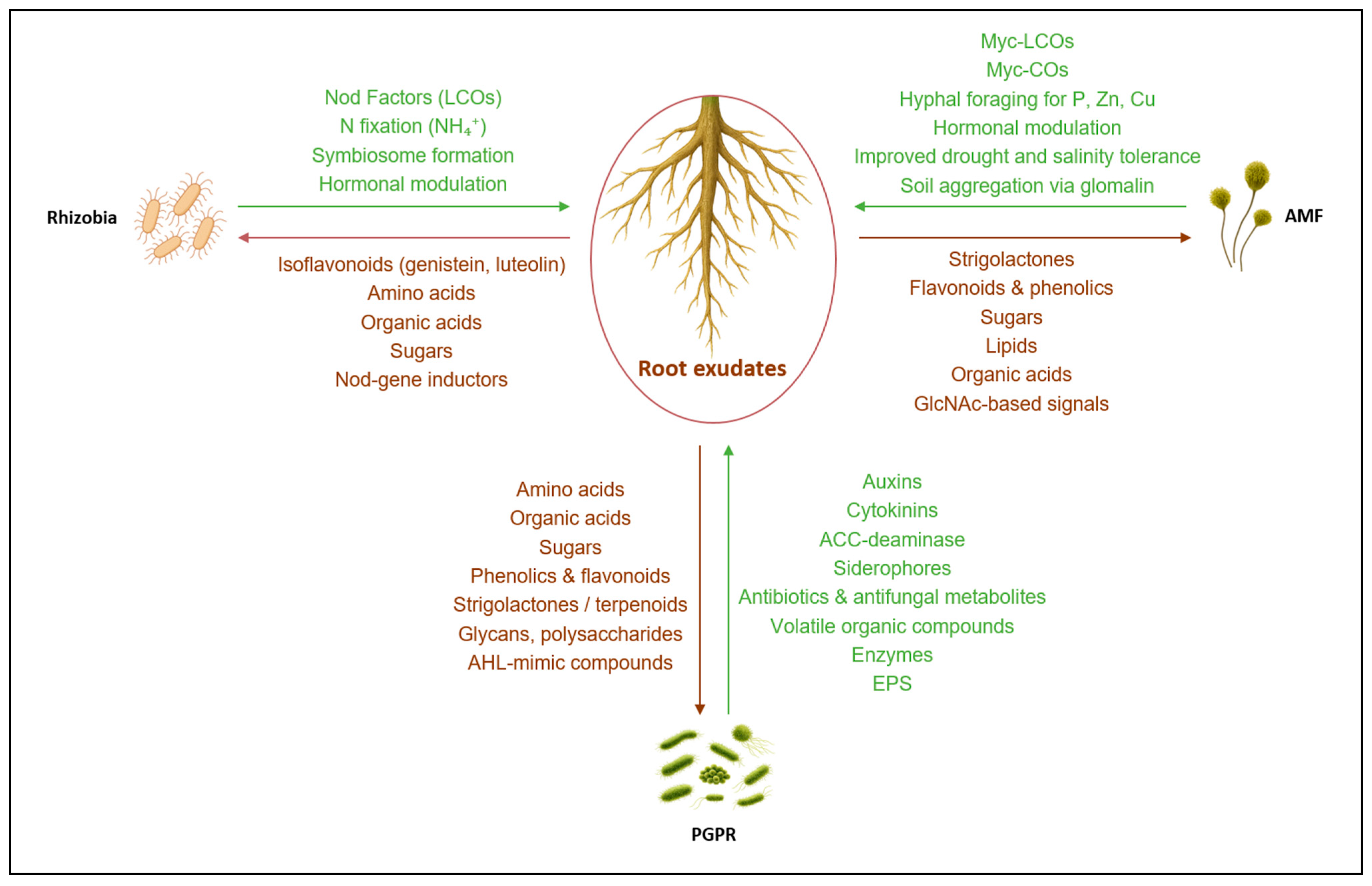
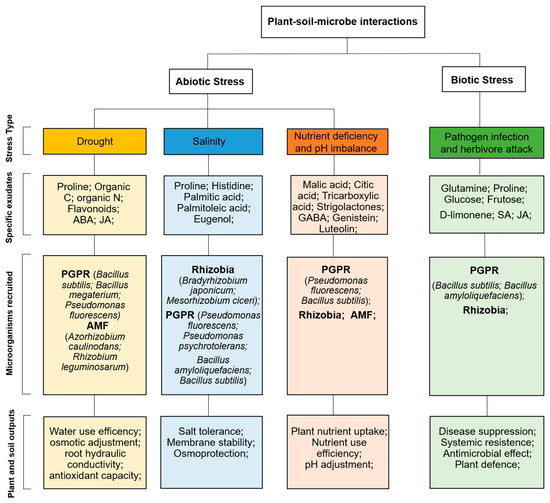
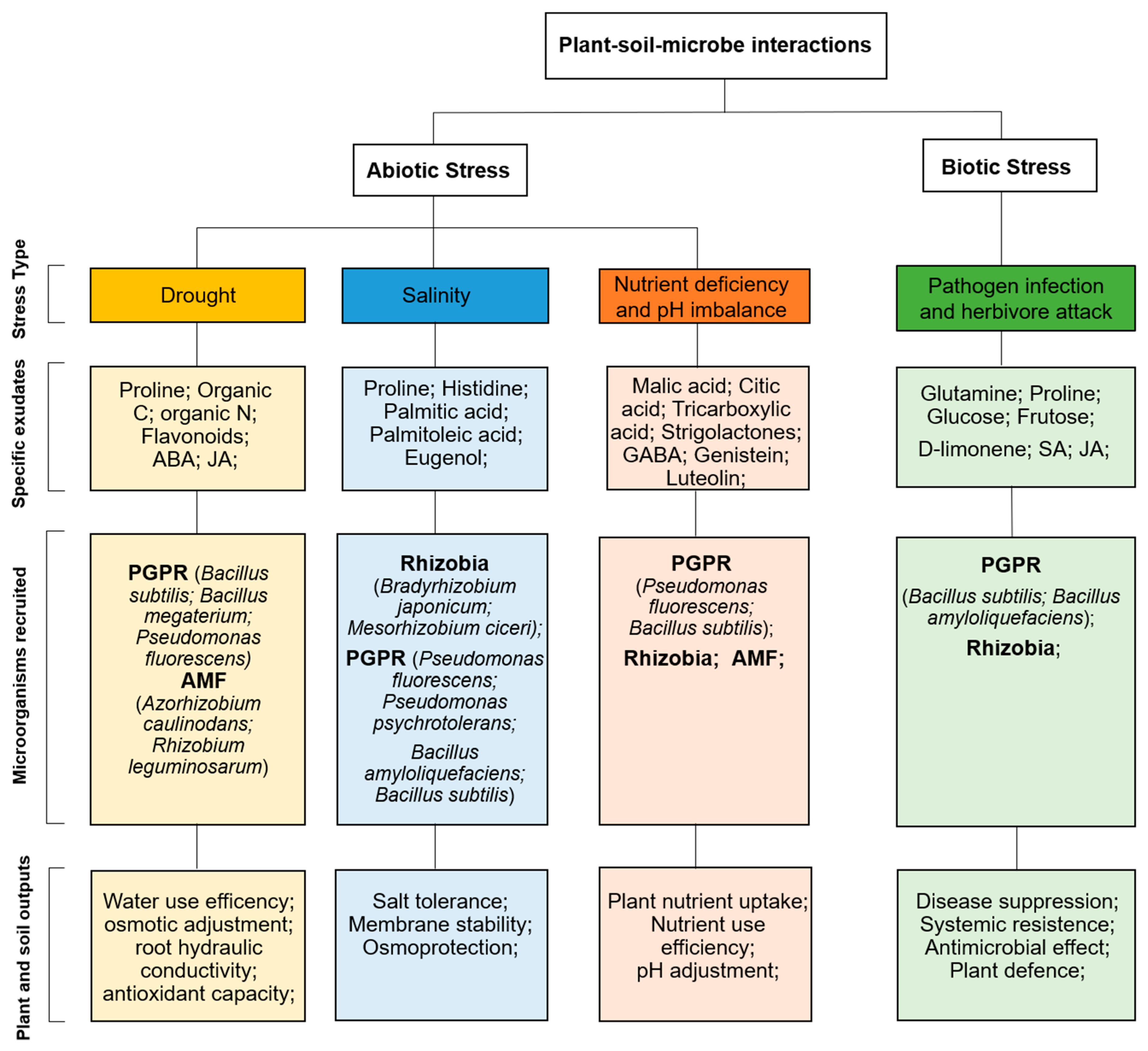
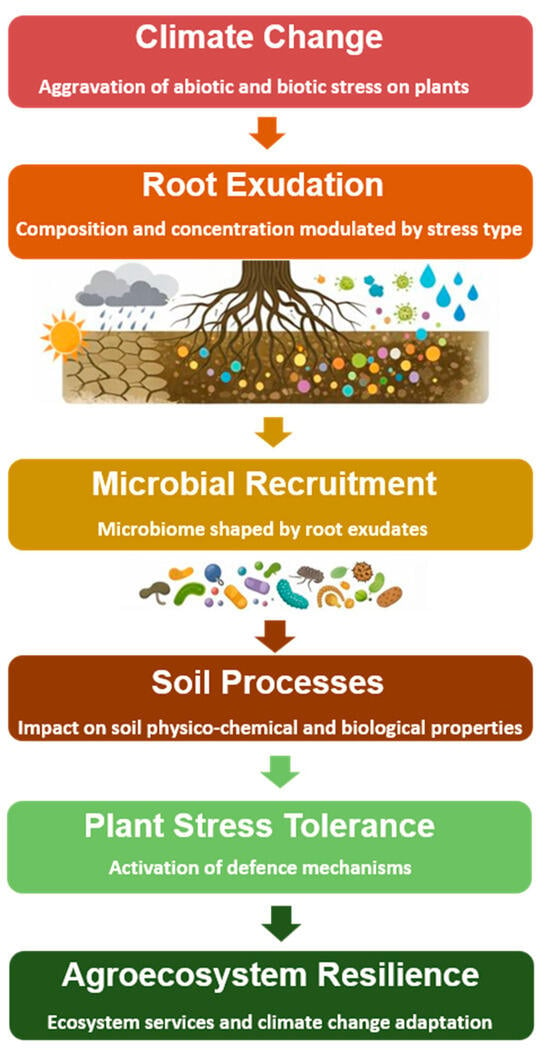
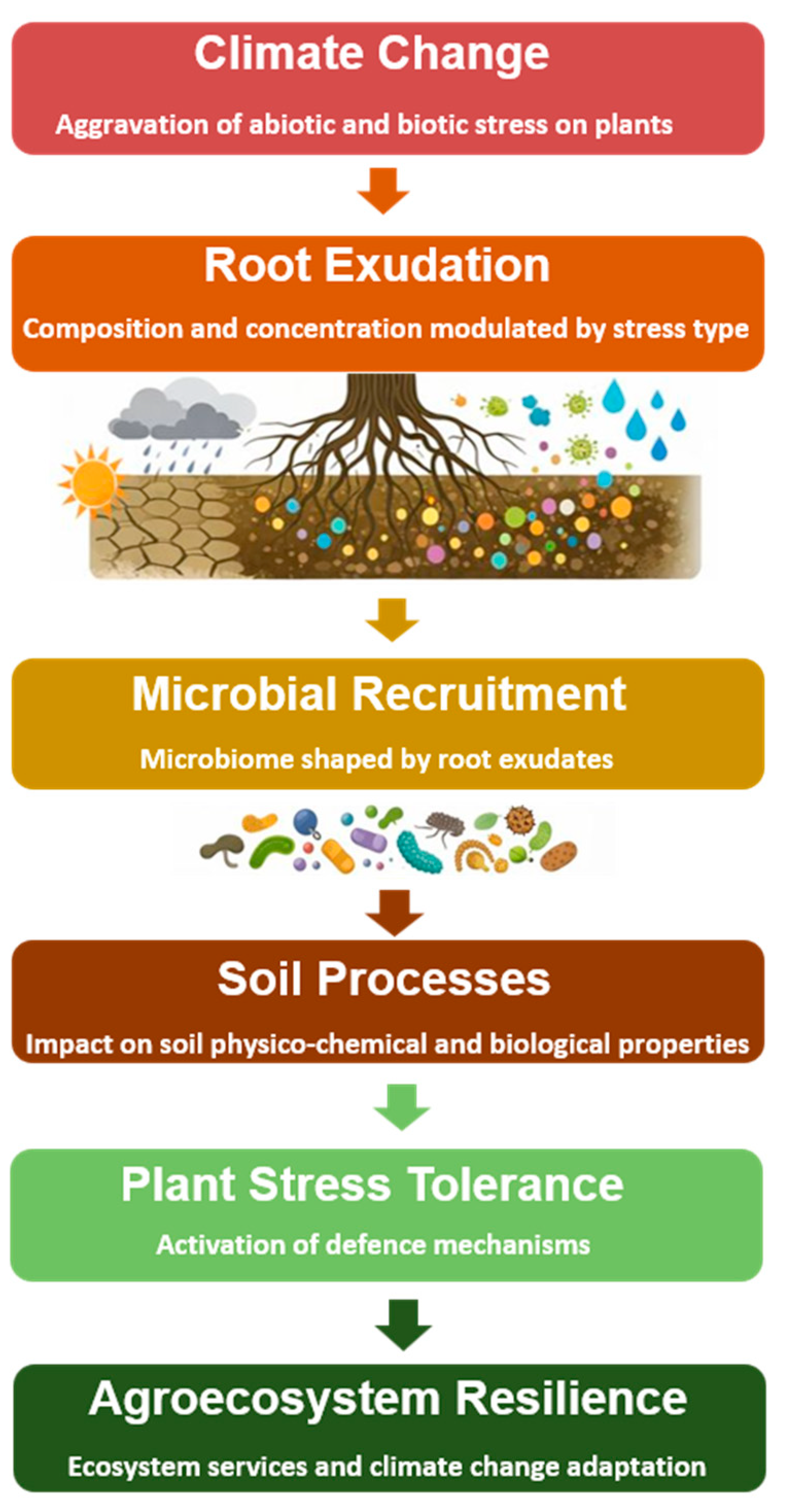
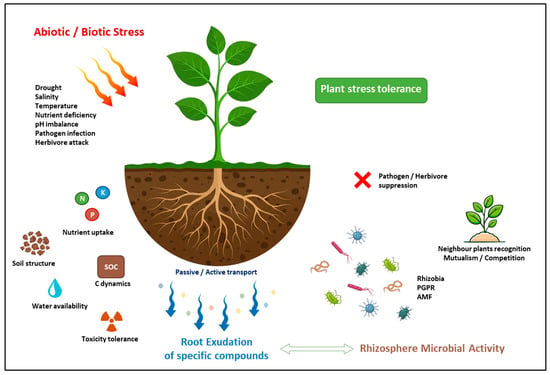
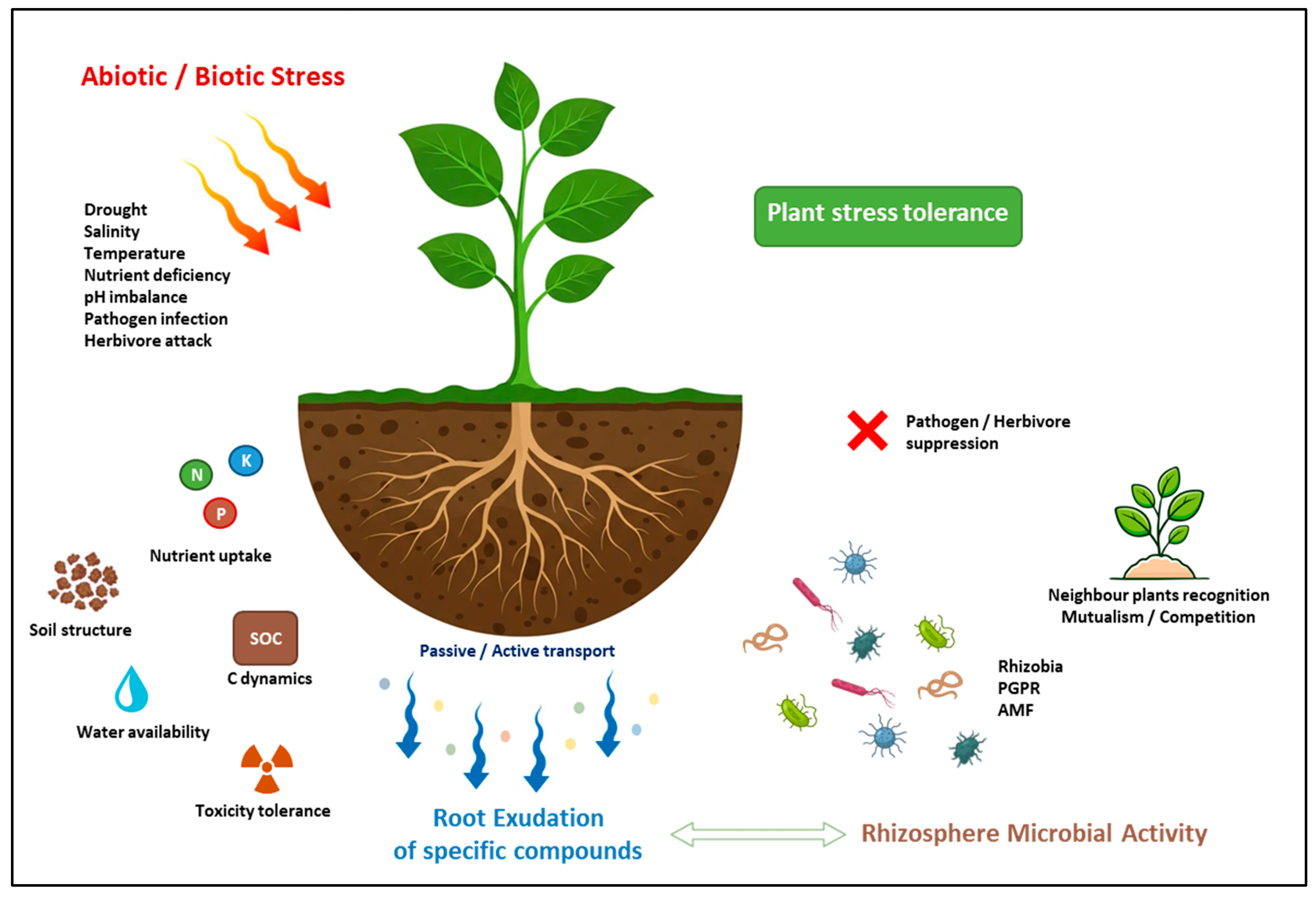

Disclaimer/Publisher’s Note: The statements, opinions and data contained in all publications are solely those of the individual author(s) and contributor(s) and not of MDPI and/or the editor(s). MDPI and/or the editor(s) disclaim responsibility for any injury to people or property resulting from any ideas, methods, instructions or products referred to in the content. |
© 2026 by the authors. Licensee MDPI, Basel, Switzerland. This article is an open access article distributed under the terms and conditions of the Creative Commons Attribution (CC BY) license.