


Abstract
Cultured meat has emerged as a promising alternative to conventional meat due to its potential to improve sustainability, animal welfare, and food supply stability. However, successful commercialization requires not only the efficient generation of muscle tissue but also the reproduction of the texture, sensory attributes, and nutritional value of conventional meat. To date, most studies have primarily focused on promoting cell adhesion, proliferation, and differentiation on scaffolds, while scaffold design strategies specifically aimed at achieving meat-like texture remain comparatively underexplored. This review provides a broad overview of scaffolds used in cultured meat production and summarizes recent advances in scaffold design strategies to enhance textural properties, with an emphasis on achieving texture and eating quality comparable to those of conventional meat.
Keywords:
scaffold; gels; cultured meat; texture mimicry; sensory characteristic; tissue engineering 1. Introduction
Cultured meat has emerged as a promising alternative to conventional meat production, with the potential to address the growing global demand for sustainable protein while mitigating the environmental and ethical concerns associated with livestock farming [1,2,3]. Unlike conventional meat, cultured meat is produced by isolating animal-derived cells, expanding them in vitro under controlled conditions, and subsequently applying tissue engineering approaches to generate muscle and adipose tissues [1,4,5]. This production strategy has the potential to reduce greenhouse gas emissions, improve resource utilization, minimize animal slaughter, and enable scalable production under highly controlled conditions [1,2]. Despite these potential advantages, cultured meat remains inferior to conventional meat in texture, appearance, flavor, and overall sensory quality, which pose major barriers to consumer acceptance and successful commercialization [6,7]. Although animal-derived cells can be efficiently expanded in vitro, generating large numbers of muscle cells alone is insufficient to reproduce the complex hierarchical architecture of conventional meat [8,9]. Meat texture, tenderness, juiciness, and overall sensory characteristics are strongly influenced by the spatial organization and interactions of muscle fibers, connective tissues, and intramuscular fat [10,11,12]. Consequently, engineering cultured tissues that closely replicate the structural organization and associated sensory properties of conventional meat has become a major objective in cultured meat research.
Scaffolds play a central role in achieving this objective by providing a structural and functional microenvironment that supports tissue formation. By mimicking key features of the extracellular matrix (ECM), scaffolds provide physical support for cell adhesion, proliferation, and differentiation, while also delivering biochemical and biomechanical cues that regulate cellular behavior and tissue development [13,14]. Importantly, scaffold characteristics, including mechanical properties, pore architecture, fiber alignment, surface topography, and mass transport capacity, can directly influence muscle fiber organization, tissue anisotropy, and the diffusion of nutrients and oxygen. These factors collectively determine tissue development and ultimately contribute to the structural and textural quality of cultured meat [14].
Rational scaffold design has been shown to improve muscle organization, marbling, texture, and flavor-related characteristics in cultured meat [10,14,15]. These findings indicate that scaffold engineering is important not only for directing tissue formation but also for determining the overall eating quality of the final product [16]. Because edible scaffolds are incorporated into cultured meat, their composition and structural properties influence cellular processes such as adhesion, proliferation, and differentiation, and also contribute directly to texture, flavor, and mouthfeel. Accordingly, edible scaffold design has evolved from a primarily structural role in supporting cell culture to a multifunctional approach that integrates tissue-engineering requirements with food functionality, thereby establishing scaffold materials as a critical determinant of the sensory quality of cultured meat.
Accordingly, the selection of scaffold materials plays a pivotal role in determining the sensory attributes of cultured meat, as their mechanical properties, water-holding capacity, and network architecture largely govern tissue hardness, elasticity, chewiness, and juiciness. Hydrogel networks formed from different natural biopolymers can impart distinct fibrous structures and tissue densities. Protein-based scaffolds offer abundant functional groups for intermolecular interactions and crosslinking, allowing their mechanical properties to be tailored to support structural integrity and organized muscle tissue formation, whereas polysaccharide-based scaffolds possess excellent water-binding properties that enhance moisture retention [17]. Combining these materials can therefore preserve structural integrity while simultaneously improving tenderness and juiciness.
Scaffold materials may also contribute to flavor generation during cooking. Amino groups derived from proteins can participate in the Maillard reaction with reducing sugars; however, intact high-molecular-weight polysaccharides generally contain relatively few reducing ends, and their contribution to the Maillard reaction may therefore become more significant following hydrolysis or degradation into smaller reducing carbohydrates [10,18]. Although Maillard reactions generate volatile compounds associated with desirable meaty and roasted flavors, high-temperature processing can also cause nutritional and safety concerns, including lysine loss and the formation of potentially harmful reaction products such as acrylamide. Therefore, the extent of Maillard reactions during the cooking of scaffold-based cultured meat should be carefully controlled to balance desirable flavor development with nutritional quality and food safety.
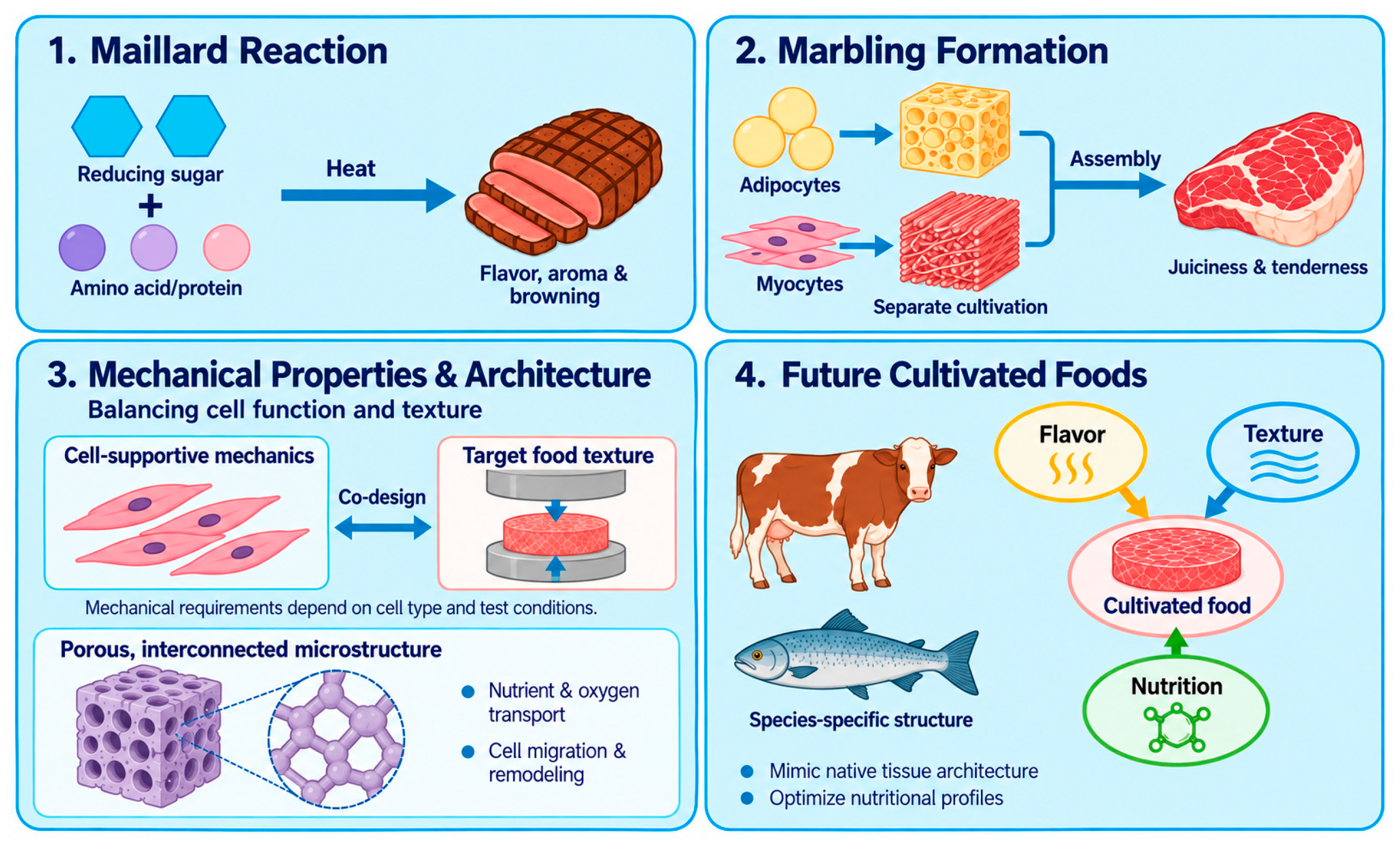
Previous reviews have primarily focused on scaffold materials, fabrication technologies, tissue-engineering requirements, or the general quality characteristics of cultured meat [14,16,19,20,21]. In contrast, this narrative review adopts a texture-oriented perspective, focusing on how scaffold design can modulate mechanical texture, marbling, and flavor-related properties to improve the overall eating quality of cultured meat. Relevant literature was identified through searches conducted using Google Scholar, covering studies published from April 2022 to March 2026, with the final search conducted in July 2026. The searches used combinations of keywords related to cultured meat, edible scaffolds, texture, mechanical properties, marbling, and sensory properties. Studies were selected based on their relevance to scaffold-based strategies for modulating the mechanical texture, structural organization, appearance, and flavor-related properties of cultured meat. Priority was given to experimental studies that directly linked scaffold composition, fabrication methods, or structural characteristics to cell organization, mechanical performance, or measurable quality attributes of cultured meat. Accordingly, recent advances in edible scaffold design are discussed from the perspective of achieving meat-like texture and eating quality (Figure 1).
Figure 1.
Schematic overview of scaffold design strategies for improving cultured meat quality, including flavor development, marbling formation, regulation of mechanical properties and scaffold architecture, and future directions toward species-specific and multifunctional cultured foods. Created using Microsoft PowerPoint (Microsoft 365, version 2610), with illustrations generated and refined using ChatGPT (GPT-6.1 Terra; OpenAI, San Francisco, CA, USA).
2. Texture-Oriented Scaffold Design
Scaffolds serve not only as structural support for cultured meat tissue formation but also as key determinants of the final product’s texture and quality. Their material composition, structural characteristics, and physicochemical properties collectively influence cell behavior, tissue development, and ultimately cultured meat quality [16,22]. Therefore, before discussing specific scaffold design strategies, it is necessary to define the fundamental design requirements for cultured meat scaffolds. Overall, an ideal scaffold should provide an appropriate microenvironment for muscle and adipose tissue formation while also addressing consumer expectations by contributing to desirable sensory attributes, including texture, juiciness, flavor, and appearance, thereby enabling cultured meat to more closely resemble conventional meat [23].
2.1. Biological and Engineering Requirements
First, scaffolds for cultured meat must be edible [19]. Consequently, an increasing number of studies have employed natural biomaterials, such as proteins and polysaccharides, as scaffold materials. These food-grade materials can be directly incorporated into the final product without requiring scaffold removal, thereby simplifying the manufacturing process and reducing production costs. During cell culture, scaffolds should support cell adhesion, proliferation, and differentiation while providing a microenvironment that mimics the ECM [24]. Among the various scaffold properties, mechanical characteristics are key factors regulating cell behavior and differentiation, as different cell types respond differently to substrate stiffness [25,26]. In general, relatively stiff scaffolds promote myogenic cell alignment and facilitate myotube formation, whereas softer scaffolds are more favorable for adipogenic differentiation [27,28]. Previous studies have reported that substrate stiffness of approximately 12 kPa can support myogenic differentiation and myotube maturation under specific experimental conditions, whereas native muscle tissues may exhibit higher macroscopic stiffness, with values around 100 kPa reported in certain studies. However, these values may vary with cell type, measurement method, and specimen state. Therefore, rational control of scaffold mechanical properties is essential not only for tissue formation but also for the construction of muscle–fat composite tissues.
In addition to mechanical properties, scaffold microstructure is equally important. Scaffolds should possess appropriate porosity and interconnected pore networks to ensure efficient transport of oxygen, nutrients, and metabolic waste throughout the construct [20,24,29]. As cultured meat tissues increase in thickness, diffusion alone becomes insufficient to meet cellular metabolic demands. Consequently, increasing attention has been directed toward incorporating microchannels into scaffold architectures to improve internal mass transport, thereby enhancing the feasibility of engineering thick tissues, facilitating large-scale production, and improving the overall quality of cultured meat. Furthermore, accumulating evidence indicates that scaffold surface topography can regulate cell behavior. Anisotropically aligned fibers, microgrooves, and other oriented surface features provide contact-guidance cues that direct myoblast alignment, elongation, and fusion into long, continuous myotubes, thereby recapitulating the anisotropic architecture of native skeletal muscle [20,24,30]. Such biomimetic structures not only promote the formation of organized muscle tissue but also help reproduce the texture of conventional meat, ultimately improving the sensory quality of cultured meat.
2.2. Sensory Requirements for Texture Mimicry
Meeting the biological requirements for cell culture does not necessarily ensure the production of cultured meat with meat-like eating quality. From the consumer perspective, the acceptance of cultured meat ultimately depends on its sensory characteristics [4,6]. Therefore, scaffold design should not only support tissue formation but also account for key sensory attributes, including texture, juiciness, flavor, and appearance [31]. Among these attributes, mechanical texture is a primary determinant of consumer acceptance. The hardness, elasticity, and chewiness of conventional meat arise from its highly organized muscle fibers, connective tissues, and intramuscular fat distribution. Therefore, in addition to providing appropriate mechanical cues for cell growth, scaffolds should be engineered through rational regulation of material composition, crosslinking density, and microstructure to reproduce the mechanical properties of native meat [32].
Juiciness is another critical quality attribute and is largely determined by the water-holding capacity and fat content of the tissue [21,32]. Scaffolds with high water retention, such as hydrogel-based systems, can effectively preserve moisture during cooking, while the incorporation of adipose tissue can further enhance juice release, mouthfeel, and flavor perception. Consequently, improving scaffold water-holding capacity and promoting adipose tissue formation have become important strategies for enhancing the juiciness of cultured meat. In addition, the characteristic marbling of conventional meat contributes not only to visual appearance but also to tenderness, flavor release, and overall eating quality. However, because myogenic and adipogenic cells require distinct culture conditions, simultaneously supporting both cell types while recreating the spatial distribution of intramuscular fat remains a major challenge. Therefore, developing scaffold designs that guide the formation of muscle–fat architectures resembling natural marbling has become an important research direction [30].
Flavor and appearance are also key determinants of consumer perception. The characteristic flavor of conventional meat is primarily generated through lipid oxidation and the Maillard reaction during cooking, whereas cultured meat generally exhibits a relatively simple flavor profile. To address this limitation, increasing attention has been directed toward engineering edible scaffolds that participate in Maillard reactions, incorporate flavor precursors, or enable the controlled release of volatile flavor compounds to enhance meaty aroma [33,34]. Similarly, incorporating natural pigments or other color-regulating components can improve the appearance of cultured meat and make it more closely resemble conventional meat. Overall, the design objectives of cultured meat scaffolds have evolved from merely supporting cell growth to simultaneously optimizing tissue formation and food quality. Future scaffold designs should therefore provide an appropriate microenvironment for cell culture while also functioning as active platforms for regulating texture and flavor, thereby facilitating the production of cultured meat with sensory characteristics comparable to those of conventional meat.
3. Texture Improvement Strategies
Many scaffolds used for cultured meat are based on gel-forming biopolymers, whose performance depends not only on material composition but also on the formation and stabilization of three-dimensional polymer networks. Gelation and crosslinking regulate network characteristics such as swelling behavior, pore structure, and mechanical properties, which in turn influence cell adhesion, proliferation, differentiation, and the texture of the resulting cultured meat. The gel-based scaffolds discussed in this review employ diverse network-forming mechanisms, including covalent, ionic, dynamic covalent, and physical interactions (Table 1). Understanding how these mechanisms regulate scaffold structure and mechanical properties therefore provides a basis for texture-oriented scaffold design.
Table 1.
Overview of scaffold systems discussed in this review, highlighting their design strategies, mechanical and textural characterization, and research limitations.
Different network-forming mechanisms offer distinct advantages and limitations in terms of stability, swelling, and mechanical control. Physically crosslinked gelatin/agar networks exhibit temperature-dependent stability, whereas Maillard-mediated covalent crosslinking can improve the water stability and mechanical strength of protein-based scaffolds. Dynamic boronic ester bonds in chitosan/PVA poly (vinyl alcohol) networks enable reversible interactions and self-healing, while polymer composition and freeze–thaw treatment provide additional control over mechanical properties. In contrast, SFC (flavor-switchable compound) incorporation into photo crosslinked GelMA (gelatin methacryloyl) networks increases swelling and reduces compressive modulus, indicating changes in network structure. However, these mechanical characteristics are generally evaluated under cell culture conditions, and their retention during cooking remains insufficiently characterized. Heating may induce network dissociation, protein denaturation, or structural rearrangement, potentially altering the final texture of cultured meat.
Although Table 1 summarizes the mechanical and textural properties of the scaffold systems discussed in this review, direct quantitative comparisons are limited by differences in testing methods, specimen states, and experimental conditions. Tensile testing, compression testing, AFM indentation, and TPA assess distinct properties; therefore, mechanical moduli and texture parameters, such as hardness and chewiness, should not be treated as interchangeable indicators. Variations in cell presence, hydration, cooking status, sample dimensions, deformation levels, and loading rates also influence the measured values. Differences in meat comparators, including species, anatomical cuts, and cooking states, further complicate assessments of textural similarity. Accordingly, Table 1 provides a contextual overview rather than a quantitative ranking of scaffold performance, and comparisons with conventional meat are most meaningful under matched preparation and testing conditions.
Building on these material- and network-level considerations, the scaffold design strategies discussed in this review are organized into three major priorities: mechanical texture, marbling, and flavor development (Table 2). Mechanical texture represents the primary target because scaffold stiffness and architecture directly influence tissue organization and the physical properties of the final product. Marbling extends this structural control to the spatial organization of muscle and adipose tissues, contributing to tenderness and juiciness, whereas flavor-oriented strategies further address the overall eating quality of cultured meat. Together, these priorities provide a framework for the scaffold design strategies discussed in the following sections.
Table 2.
Key priorities are in scaffold design for improving the texture and eating quality of cultured meat.
3.1. Mechanical Texture
3.1.1. Adaptive Bio-Orchestrating Anisotropic Scaffolds
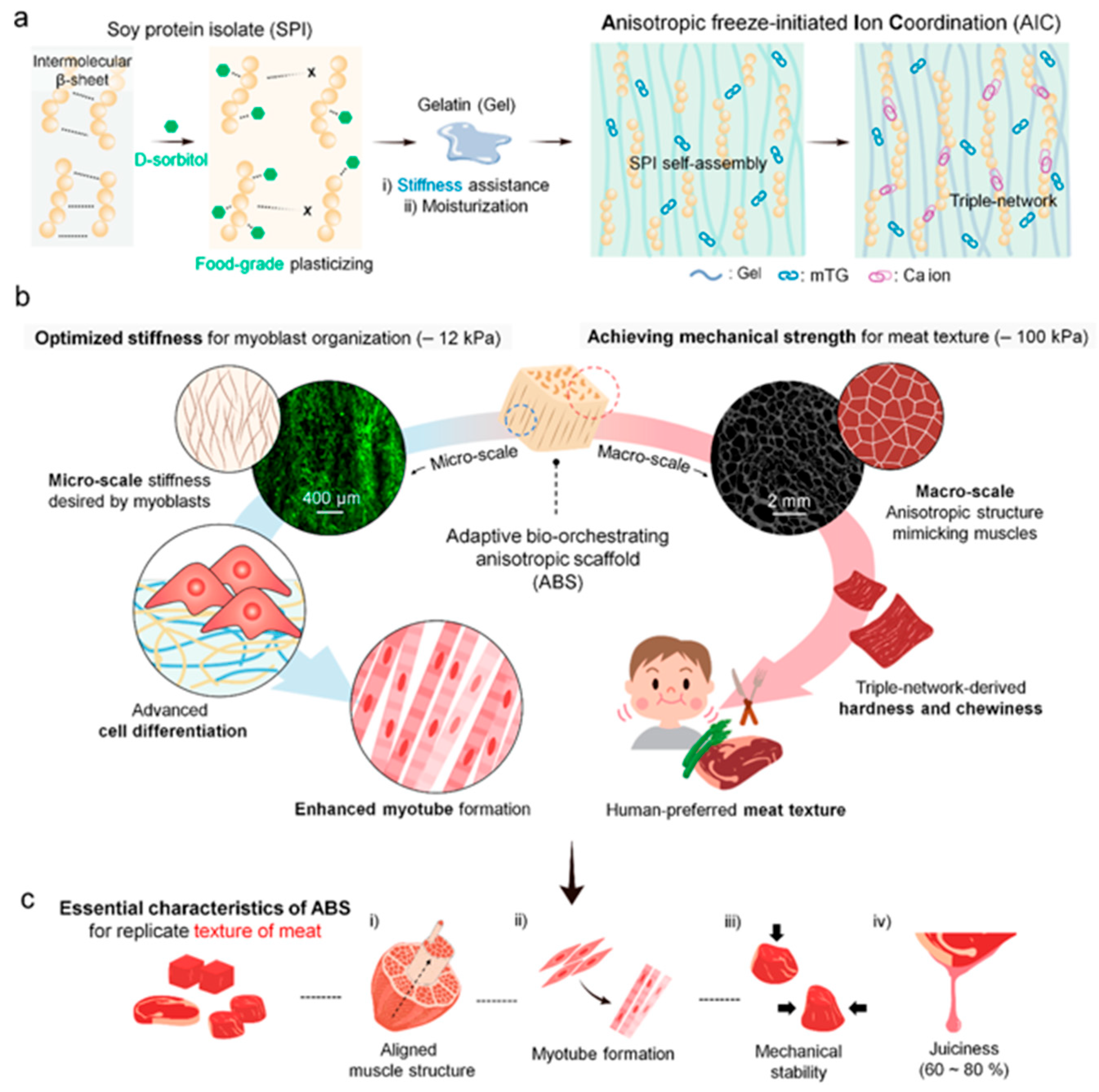
Although scaffolds require appropriate stiffness to support cell differentiation, the microscale mechanical environment favorable for cell culture may differ substantially from the macroscale texture desired in the final product [21,32]. To bridge this gap, an Adaptive Bio-Orchestrating Anisotropic Scaffold (ABS) was developed using an anisotropic freeze-initiated ion coordination (AIC) process [35] (Figure 2). The scaffold was designed to provide a cell-supportive microenvironment while generating an anisotropic macroscale structure capable of reproducing the directional mechanical behavior of conventional beef. When populated with bovine myotubes, the resulting constructs exhibited instrumental mechanical texture approaching that measured for beef sirloin.
Figure 2.
Adaptive bio-orchestrating anisotropic scaffold (ABS) for cultured meat. (a) Fabrication of ABS using anisotropic freeze-initiated ion coordination (AIC). (b) Optimization of scaffold stiffness to support myoblast organization and achieve meat-like mechanical properties. (c) Key characteristics required to reproduce meat texture. Reproduced with permission from Ref. [35]. Copyright 2025 American Chemical Society.
The scaffold was composed of a soy protein isolate (SPI)/gelatin composite, in which SPI provided mechanical strength and a fibrous framework, whereas gelatin enhanced cell adhesion. Because SPI exhibits limited structural stability in aqueous environments, D-sorbitol was incorporated as a plasticizer to improve its processability. The AIC process consisted of three main steps. First, SPI and gelatin were enzymatically crosslinked using microbial transglutaminase (mTG). The resulting protein solution was then subjected to directional freeze-drying. During freezing, unidirectional ice crystal growth induced protein alignment, generating parallel-oriented fibers and an anisotropic porous architecture. Simultaneously, calcium ions were introduced to coordinate with SPI, forming additional intermolecular interactions between the protein fibers. This ion coordination further enhanced the structural integrity and mechanical strength of the scaffold, producing a muscle bundle-like architecture resembling that of conventional beef.
The anisotropic architecture simultaneously satisfied the requirements for cell culture and meat texture. The aligned channels provided contact guidance for cell adhesion, migration, and elongation, promoting the formation of long and continuous myotubes. At the macroscale, the aligned fibrous architecture produced direction-dependent deformation and tearing behavior distinct from that of isotropic porous scaffolds. Furthermore, the ABS exhibited a water content comparable to that of conventional beef, which may be favorable for juiciness. In addition, researchers proposed a modular assembly strategy to reconstruct the hierarchical architecture of beef. Muscle and adipose tissues were cultured separately on individual ABS modules and subsequently assembled using a food-grade adipocyte adhesive composed of mTG and bovine adipose-derived cells (bADCs). mTG catalyzed covalent crosslinking between proteins, thereby integrating adjacent ABS modules, while adipocytes occupied the interfacial regions, allowing the junctions to function as adipose tissue rather than merely as adhesive layers. Consequently, the assembled constructs more closely reproduced the muscle–fat distribution of conventional beef and exhibited orientation-dependent instrumental texture properties, including hardness, cohesiveness, and chewiness, resembling those of selected beef cuts.
3.1.2. Material Selection Based on Intrinsic Mechanical Properties
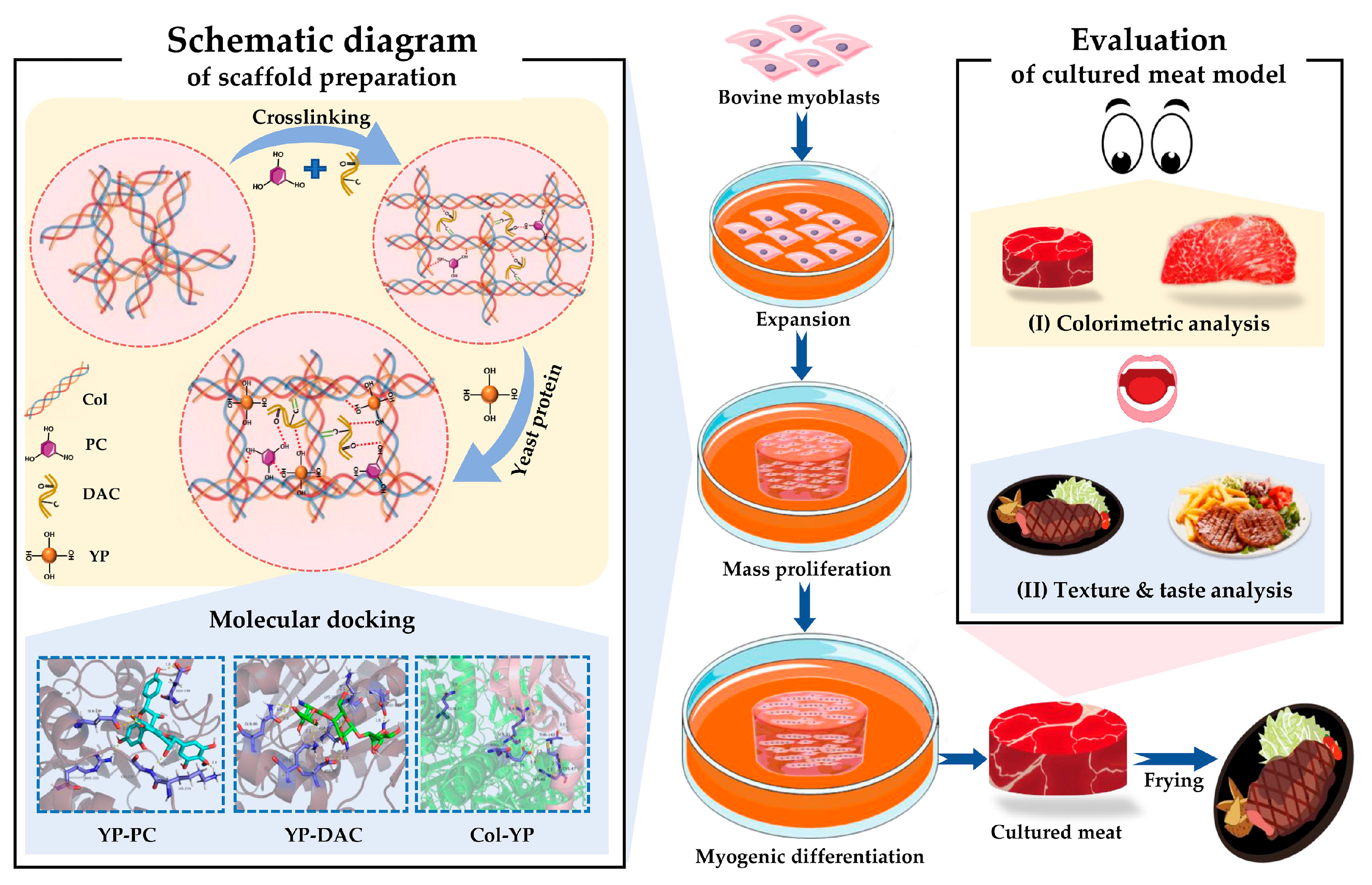
Apart from tuning scaffold architecture, selecting scaffold materials with appropriate intrinsic mechanical properties is another effective strategy for improving the mechanical texture of cultured meat. A recent study developed edible three-dimensional scaffolds based on yeast protein and collagen with different mass ratios [36] (Figure 3). Although collagen is one of the most widely used scaffold materials, its high-cost limits large-scale production. In contrast, yeast protein has a high protein content, contains trace minerals and vitamins, and can be produced sustainably. Therefore, yeast protein was used to partially replace collagen, and an edible scaffold with desirable mechanical stability and biocompatibility was fabricated through interactions with proanthocyanidins (PC) and dialdehyde chitosan (DAC). The results demonstrated that both the Col-PC-DAC and yeast protein (YP) scaffolds exhibited more homogeneous porous structures, which are essential for nutrient transport, cell proliferation, and cell migration, while also providing stable mechanical support. In addition, the YP scaffolds were prepared with different ratios of yeast protein and collagen, with YP10, YP30, and YP50 containing 10%, 30%, and 50% yeast protein and 90%, 70%, and 50% collagen, respectively. Among these formulations, cultured meat produced using the YP30 scaffold exhibited chewiness and springiness more similar to those of conventional beef. This similarity may be associated with bovine myoblast expansion and the deposition of extracellular matrix proteins. Notably, the scaffold also improved the appearance of cultured meat by imparting a more desirable color. Unlike conventional approaches that enhance cultured meat color by incorporating natural pigments or inducing Maillard browning, this strategy achieved a meat-like red appearance through intrinsic interactions among the scaffold materials. Specifically, while the pure collagen scaffold exhibited only a pale pink color due to the presence of phenol red in the culture medium, the Col-PC-DAC and yeast protein scaffolds developed a pink-red coloration through interactions between the aromatic rings of proanthocyanidins and amino acid residues in collagen. These interactions promoted hydrogen bond formation and the generation of red PC–collagen complexes, producing a color more consistent with consumer expectations. Overall, yeast protein represents a promising alternative protein for edible scaffold fabrication. Its incorporation into collagen-based scaffolds at appropriate ratios can support muscle tissue formation and modulate the mechanical texture of cultured meat, while also enhancing its visual appearance with a more meat-like coloration.
Figure 3.
Yeast protein-based edible scaffold for cultured meat. (a) Schematic illustration of scaffold fabrication using yeast protein, collagen, proanthocyanidins, and dialdehyde chitosan. (b) Application of the edible scaffold for cell-cultured meat production. Reproduced with permission from Ref. [36]. Copyright 2023, with permission from Elsevier (Amsterdam, The Netherlands).
3.1.3. Scaffolds with Tunable Stiffness and Microstructure
It is well established that scaffold stiffness plays a critical role in regulating cell differentiation. Different stiffness levels can influence cell spreading, morphology, myotube formation, and ECM deposition, ultimately affecting the quality of cultured meat [25,26].
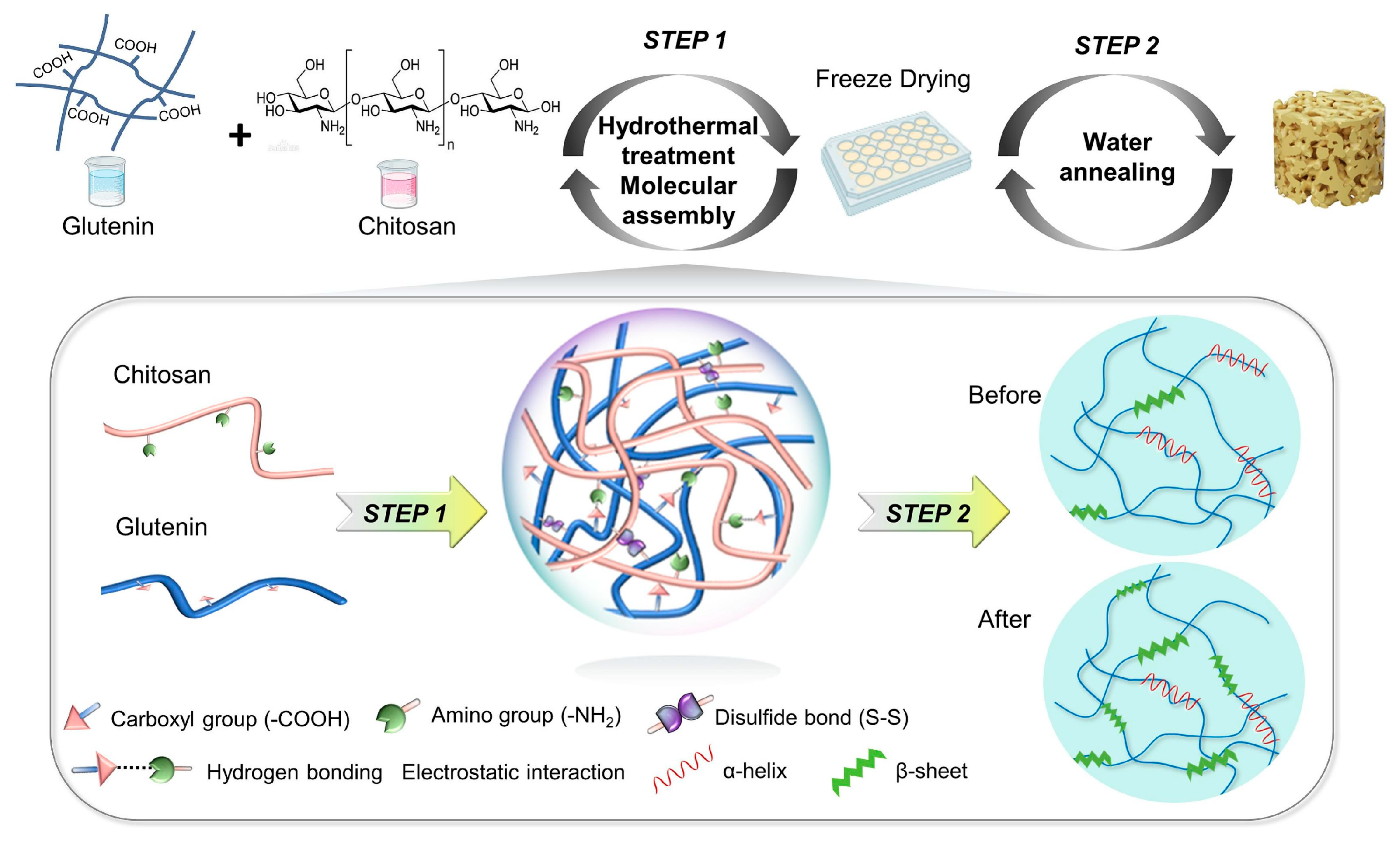
Muscle-like substrate stiffness has generally been associated with enhanced myogenic differentiation by providing an appropriate mechanical environment for myoblast spreading, fusion, and subsequent myotube maturation. Favorable myogenic responses have been reported at approximately 12–21 kPa, with substrates around 12 kPa promoting myotube maturation and sarcomeric organization. However, the optimal stiffness is not universal and may vary with cell source, species, substrate composition, and the stage of myogenic differentiation. Moreover, systematic stiffness–response data for primary livestock and aquatic muscle cells remain limited. These variations highlight the importance of developing scaffolds with tunable mechanical properties that can be adapted to specific cultured-meat cell systems. In this context, a study developed edible scaffolds based on glutenin, a major protein component of wheat gluten, and chitosan, in which scaffold stiffness was tuned by adjusting the glutenin-to-chitosan ratio and degree of crosslinking [37] (Figure 4). The scaffolds were fabricated through a combination of hydrothermal treatment, freeze-drying, and water annealing. Initially, the glutenin–chitosan solution underwent hydrothermal treatment, during which the glutenin molecular chains partially unfolded, exposing sulfhydryl (–SH) groups and promoting stronger intermolecular interactions between glutenin and chitosan. The solution was subsequently cast into molds, frozen, and freeze-dried. During freeze-drying, sublimation of ice crystals generated an interconnected porous network, resulting in a three-dimensional scaffold. The subsequent water annealing treatment was the most important step, serving as a physical crosslinking method that induced molecular rearrangement, thereby enhancing the scaffold’s structural stability and mechanical properties. During this process, additional disulfide bonds formed via thiol–disulfide (–SH/–SS) exchange reactions, the β-sheet content of glutenin increased, and hydrogen bonding between glutenin and chitosan was strengthened, resulting in a more stable three-dimensional network.
Figure 4.
Schematic illustration of the crosslinking mechanism between chitosan and glutenin and the scaffold fabrication process. Reproduced with permission from Ref. [37]. Copyright 2024, with permission from Elsevier (Amsterdam, The Netherlands).
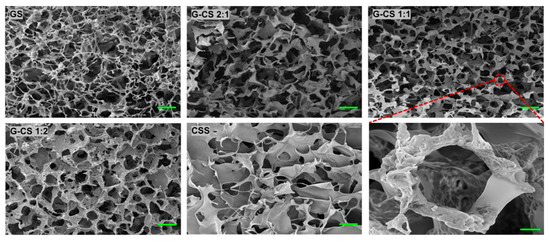
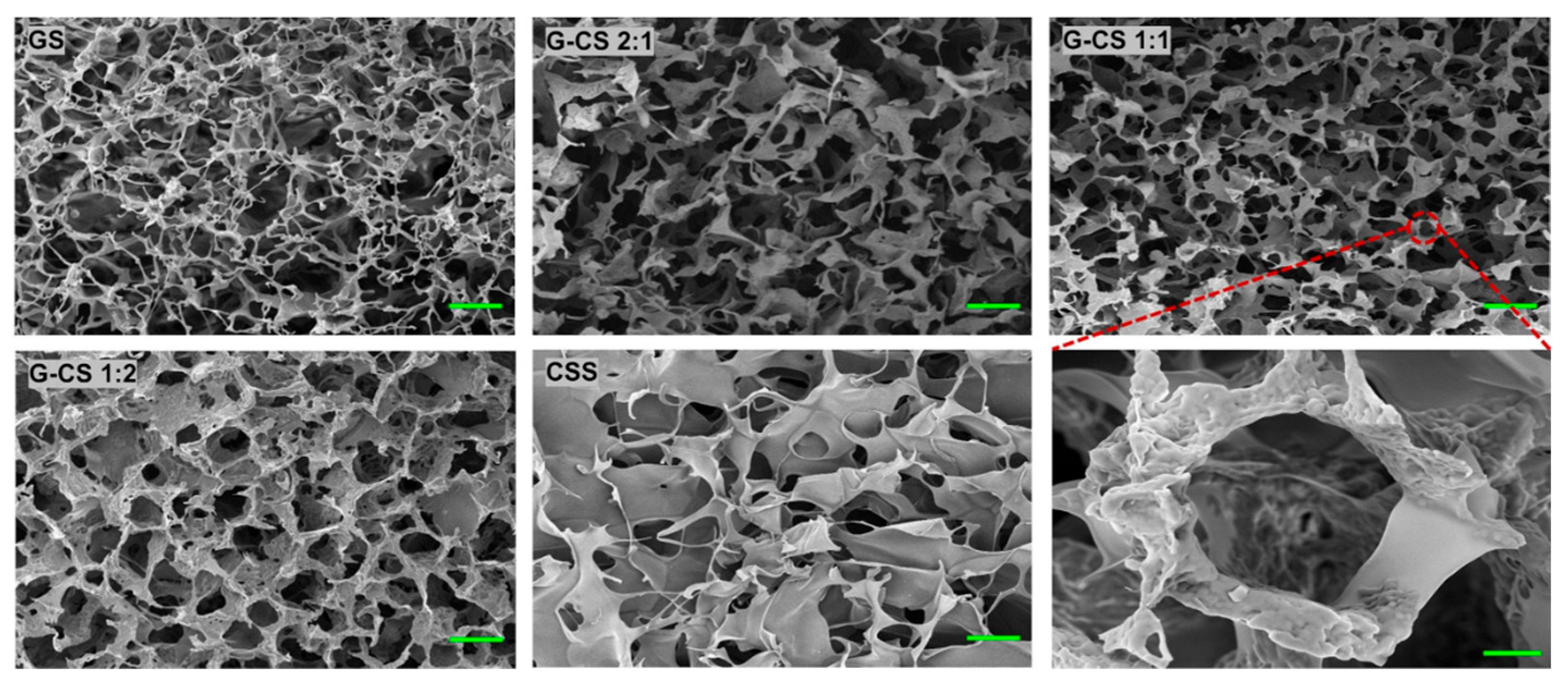
To investigate the effect of scaffold composition, the scaffolds were prepared with different glutenin-to-chitosan (G/CS) mass ratios, including a pure glutenin scaffold (GS, 1:0), glutenin–chitosan composite scaffolds (G-CS) with G/CS ratios of 2:1, 1:1, and 1:2, and a pure chitosan scaffold (CSS, 0:1). Interestingly, SEM revealed that a well-organized hexagonal-like microstructure was observed specifically in the G-CS 1:1 scaffold (Figure 5). Previous studies have shown that regular geometric patterns, including hexagonal arrangements, can influence myoblast alignment and cytoskeletal organization. Such micropatterned structures can provide topographical cues that influence myotube formation [42,43]. The selective appearance of this morphology at the 1:1 ratio suggests that the specific balance between glutenin and chitosan may affect intermolecular assembly and water distribution during freezing, thereby influencing ice-crystal growth and the resulting pore architecture after freeze-drying.
Figure 5.
SEM images of glutenin-chitosan (G-CS) scaffolds with different glutenin-to-chitosan ratios, showing differences in pore morphology and microstructure. Reproduced with permission from Ref. [37]. Copyright 2024, with permission from Elsevier (Amsterdam, The Netherlands).
The structural and physicochemical characteristics of the scaffolds also varied with the G/CS ratio. The mean pore diameters ranged from 17.84 ± 7.75 μm for GS to 66.63 ± 28.21 μm for CSS across the five formulations. In particular, G-CS 1:1 exhibited a mean pore diameter of 23.38 ± 6.59 μm, with a within-formulation pore-size distribution of approximately 10–40 μm, overlapping with the 30–40 μm range reported to favor cell attachment and proliferation as well as tissue and vascular ingrowth. Together with its regular hexagonal-like architecture, this pore-size distribution may provide favorable spatial and topographical cues for cell growth.
The mechanical properties were also strongly dependent on the G/CS ratio. Compression tests were performed on scaffolds measuring 1 cm in diameter and height, using a 20 N load cell, a compression speed of 1 mm/s, and 50% deformation. The hydration state during testing was not specified in the original study. The reported compressive moduli of GS, G-CS 2:1, G-CS 1:1, G-CS 1:2, and CSS were 60.35, 21.75, 51.97, 19.28, and 16.09 kPa, respectively. Although the compressive modulus generally increased with increasing glutenin content, G-CS 1:1 exhibited a notably high value of 51.97 kPa, exceeding that of G-CS 2:1 despite its lower glutenin proportion. This deviation from the overall trend may be associated with more favorable intermolecular interactions and crosslinking at the 1:1 ratio, resulting in a more effectively interconnected and mechanically stable polymer network.
The G/CS ratio further affected the hydration and interfacial properties of the scaffolds. Swelling increased with increasing chitosan content, consistent with the hydrophilic nature of chitosan and its capacity for water retention. Notably, G-CS 1:1 exhibited the highest protein adsorption capacity (0.42 μg/cm3), compared with 0.39 μg/cm3 for GS and 0.35 μg/cm3 for CSS. This enhanced protein adsorption may arise from the combined effects of its porous and hydrophilic structure and the availability of carboxyl groups in glutenin and amino groups in chitosan, which provide potential interaction sites for proteins. Collectively, the favorable pore architecture, mechanical properties, hydration behavior, and protein adsorption of G-CS 1:1 provided a suitable microenvironment for cell attachment and proliferation, supporting subsequent myoblast fusion and myogenic differentiation.
To evaluate the texture of the resulting cultured meat constructs, TPA was performed after 14 days of porcine skeletal muscle satellite cell culture on the scaffolds. The constructs were subjected to two compression cycles at 50% deformation and a speed of 1 mm/s, with fresh pork serving as the reference. Among the tested formulations, the G-CS 1:1 construct exhibited a chewiness value of 73.96 ± 2.56, compared with 66.62 ± 18.23 for fresh pork, with no statistically significant difference detected between the two groups (n = 3). However, the springiness of G-CS 1:1 (0.86 ± 0.02) was significantly higher than that of fresh pork (0.57 ± 0.05), indicating that similarity was limited to selected instrumental texture parameters rather than the overall texture profile. Although the cultured meat models were subsequently subjected to frying and exhibited visible changes in appearance, quantitative texture comparisons between cooked constructs and cooked pork were not reported. Therefore, the available results do not establish whether cooking improved the textural similarity of the cultured meat models to conventional pork.
Overall, the G/CS ratio simultaneously regulated scaffold stiffness and microstructural architecture, providing distinct biophysical cues for cell growth and tissue formation. Collectively, these findings, together with the scaffold strategies discussed above, demonstrate the importance of controlling scaffold mechanics and architecture during tissue formation. However, translating these culture-stage mechanical properties into the texture of the final product requires consideration of subsequent thermal processing.
A critical gap in current scaffold mechanics research is the limited understanding of how mechanical properties established under culture conditions translate to the cooked state. Most reported stiffness values characterize hydrated scaffolds under physiologically relevant conditions and are therefore primarily relevant to the regulation of cell behavior and tissue development. During thermal processing, protein denaturation and contraction, phase transitions of thermo-reversible networks, and moisture redistribution may substantially alter scaffold architecture and mechanical behavior. However, systematic characterization of these cooking-induced network transformations and their relationship with the final texture of cultured meat remains scarce. Establishing this structure–processing–texture relationship will be important for translating scaffold-level mechanical design into meat-like texture in the final product.
3.2. Marbling
Marbling affects not only the sensory properties of meat but also its texture and mouthfeel. It is characterized by the irregular distribution of muscle and fat, forming the distinctive pattern observed in natural meat [27,44,45]. To mimic this structure, previous studies have primarily employed the co-culture of myogenic and adipogenic cells. However, this strategy presents several limitations and challenges. First, myogenic and adipogenic cells require different culture conditions. Adipocyte cultivation generally requires a soft microenvironment, whereas myogenic cells require scaffolds with higher stiffness. Therefore, simultaneously providing optimal conditions for the maturation of both cell types in a co-culture system remains challenging [27,46]. Second, controlling the proportion and spatial distribution of the two cell types is difficult. In conventional meat, the muscle-to-fat ratio is not 50:50 but varies among different anatomical regions. However, under conventional co-culture conditions, one cell type may proliferate preferentially, while the random distribution of the two cell populations makes it difficult to reproduce the characteristic marbling pattern [27].
3.2.1. Customized Scaffolds
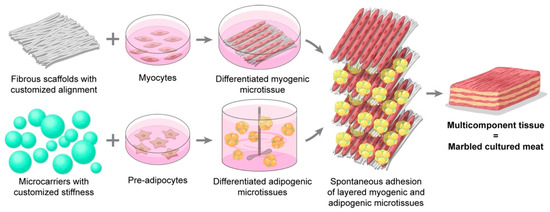
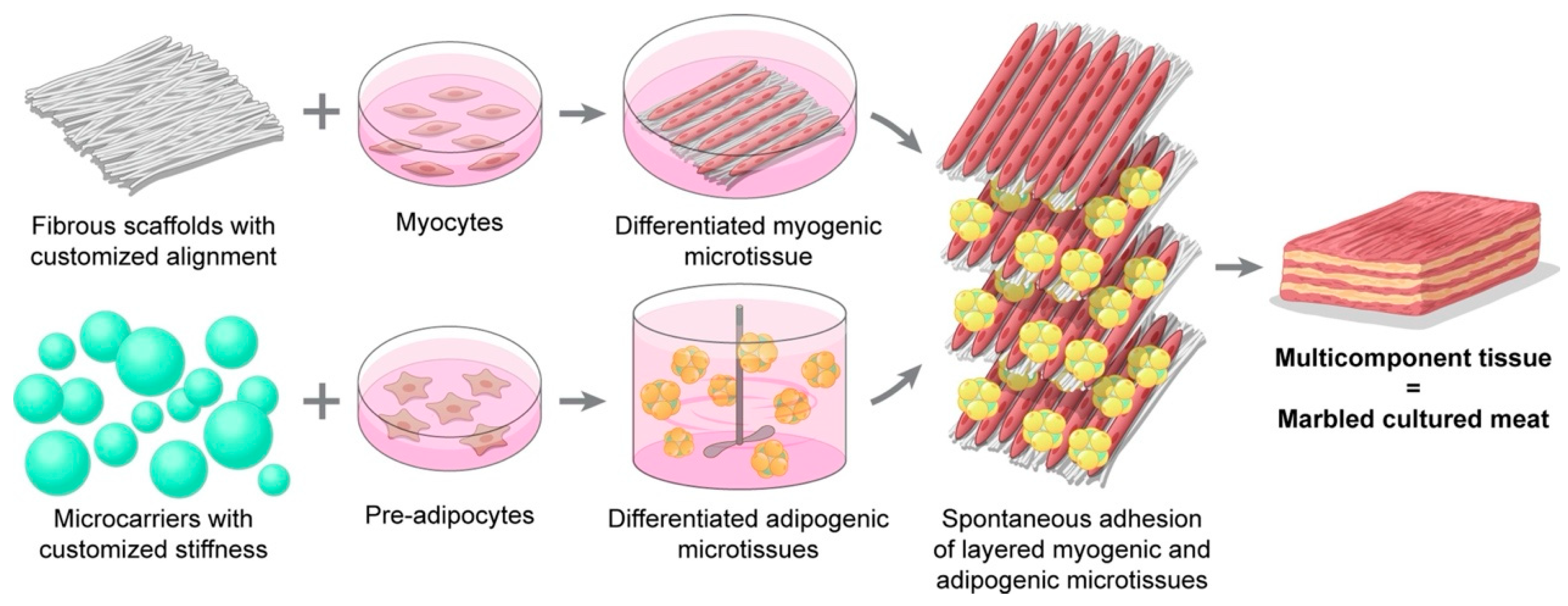
To overcome these challenges, researchers proposed culturing myogenic and adipogenic cells separately using customized scaffolds [27]. The resulting microtissues are subsequently assembled as required and spontaneously adhere through cell-secreted ECM and cell–cell interactions, eventually forming thick tissues with a marbling-like structure. One study separately cultured muscle and adipose tissues using aligned gelatin nanofiber scaffolds and gelatin microbead scaffolds, respectively (Figure 6). The aligned gelatin nanofiber scaffold was fabricated by electrospinning gelatin onto a rotating collector at 10,000 rpm to generate highly aligned fibers that mimic the anisotropic architecture of native skeletal muscle. This topographical structure provides physical guidance cues that promote myoblast alignment and myotube formation. In contrast, the gelatin microbead scaffold was prepared using a water-in-oil emulsion method to produce microcarriers that provide a soft three-dimensional microenvironment suitable for adipocyte growth and differentiation.
Figure 6.
Separate cultivation of adipose and muscle tissues using different scaffolds, followed by stacking and spontaneous adhesion to generate marbled cultured meat. Reproduced with permission from Ref. [27]. Copyright 2023, with permission from Elsevier (Amsterdam, The Netherlands).
3.2.2. Self-Healing Scaffold Technology
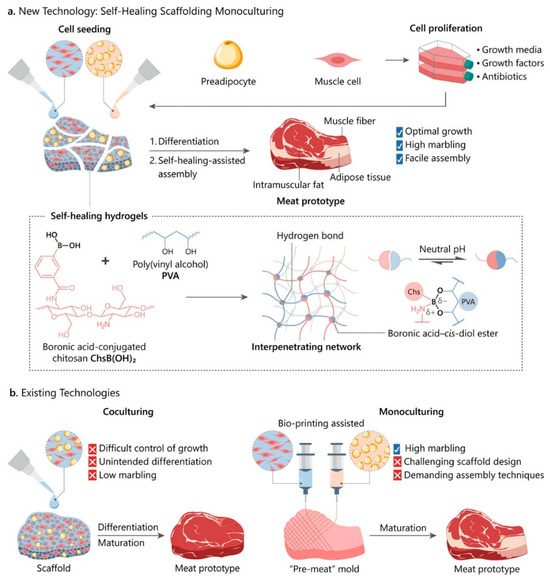
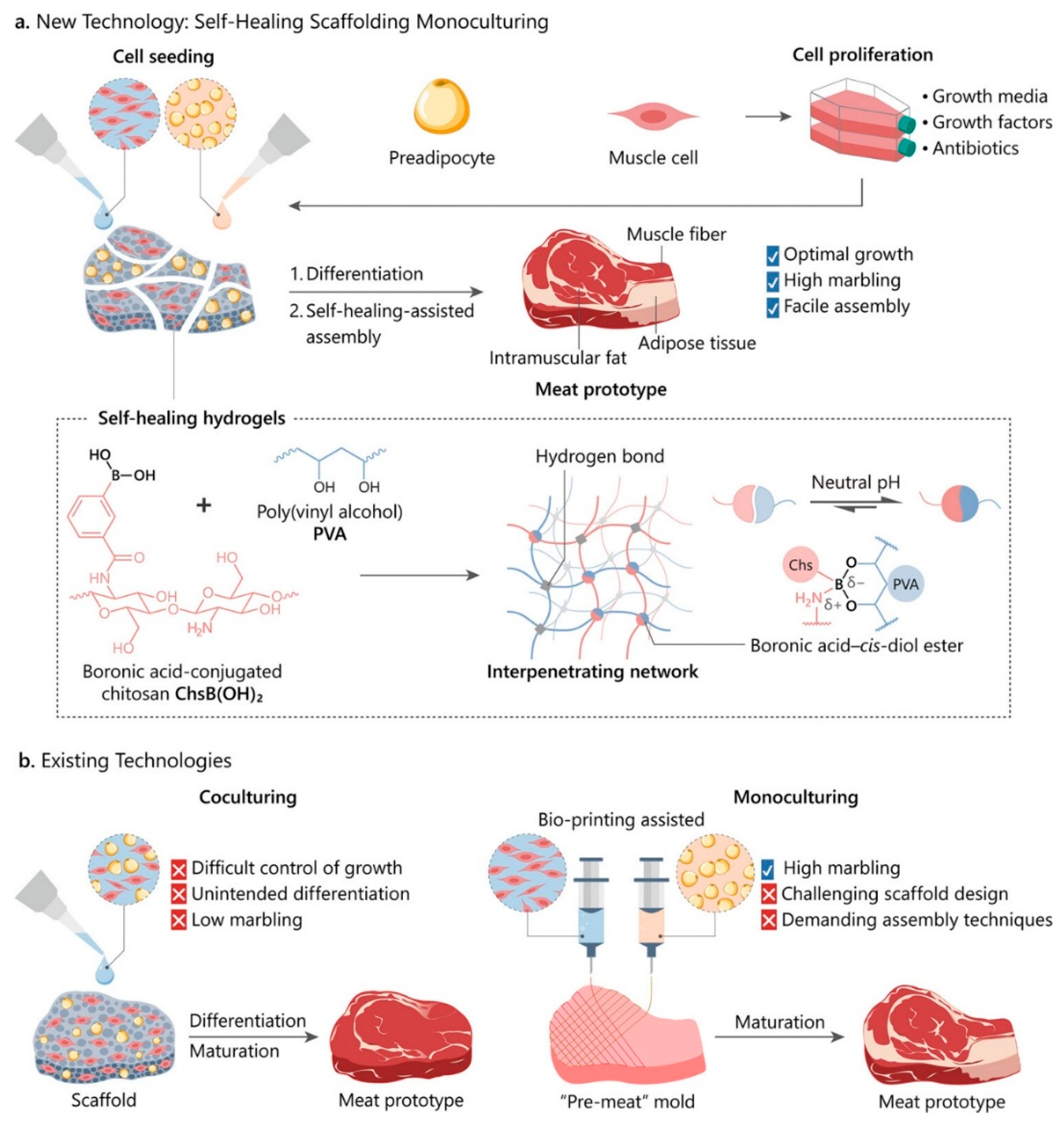
Similarly, in addition to assembling separately cultured muscle and adipose tissues through spontaneous adhesion, researchers have developed a self-healing scaffold for tissue assembly [38] (Figure 7). This strategy enables rapid tissue assembly through reconnectable scaffolds, facilitating the construction of more complex marbled cultured meat. The scaffold consists of an interpenetrating polymer network (IPN) composed of boronic acid-conjugated chitosan (ChsB(OH)2) and PVA. Its self-healing property originates from dynamic boronic ester bonds formed between boronic acid groups and the cis-diols of PVA. Because boronic ester bond formation normally requires alkaline conditions, boronic acid was conjugated to chitosan to lower its pKa, enabling stable bond formation under physiological conditions. These reversible dynamic covalent bonds provide sufficient mechanical support while allowing the scaffold to self-heal after damage. To accommodate the different stiffness requirements of muscle and adipose cells, the mechanical properties of the hydrogel were tuned by adjusting the ChsB(OH)2/PVA ratio and applying freeze–thaw treatment. Increasing the ChsB(OH)2 content increased the density of dynamic crosslinks, while freeze–thaw treatment induced PVA crystallization and additional hydrogen bonding, resulting in a denser network with improved mechanical strength.
Figure 7.
Self-healing scaffold. (a) Schematic illustration of the self-healing process. (b) Two major strategies for marbling formation in cultured meat: (1) co-culture and differentiation of adipogenic and myogenic cells, and (2) separate culture of these cell types followed by tissue assembly to mimic natural marbling. Reproduced with permission from Ref. [38]. Copyright 2025 American Chemical Society.
Consequently, hydrogels with different stiffnesses suitable for myogenic or adipogenic differentiation were obtained. Although increased stiffness generally compromises self-healing, the IPN design effectively balances these properties. The dynamic boronic ester bonds are responsible for self-healing, whereas hydrogen bonds within the PVA crystalline domains primarily enhance mechanical strength. As a result, separately cultured muscle and adipose tissues can be rapidly assembled through the dynamic crosslinking network to generate marbled cultured meat. Nevertheless, the use of PVA in edible scaffolds requires careful consideration of material grade and jurisdiction-specific regulatory requirements, despite the safety assessment reported in the original study.
3.3. Flavor Development
3.3.1. Maillard Reaction
The Maillard reaction comprises a series of complex reactions between reducing sugars and amino acids or proteins during heating, resulting in the formation of brown high-molecular-weight compounds (melanoidins) and a wide range of flavor compounds [18]. The extent of the reaction is strongly dependent on processing conditions, including temperature, heating time, and the relative availability of reducing sugars and amino groups. Increasing temperature or extending heating time generally accelerates Maillard reactions, promoting the formation of flavor and browning compounds while also increasing protein–sugar interactions and crosslinking, which can reinforce the scaffold network and improve its mechanical stability. Similarly, the ratio of reducing sugars to available amino groups influences the degree of crosslinking and the resulting sensory properties; insufficient reactants may limit flavor and color development, whereas excessive sugar addition or prolonged heating may lead to excessive browning and undesirable changes in scaffold properties. Therefore, reaction conditions must be carefully balanced to achieve sufficient mechanical reinforcement and desirable flavor development without excessive crosslinking or deterioration of nutritional quality. In particular, intensive Maillard reactions at high temperatures may reduce lysine availability and, depending on the reactants and processing conditions, promote the formation of undesirable compounds such as acrylamide. Based on these reaction principles, protein–carbohydrate combinations have been incorporated into cultured meat scaffolds to promote Maillard-derived color and flavor development during cooking.
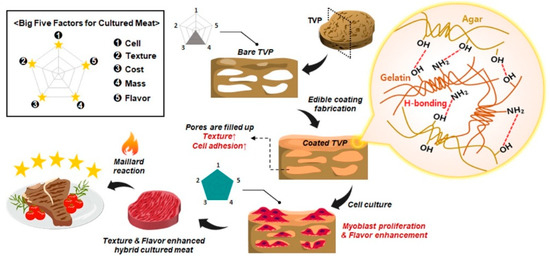
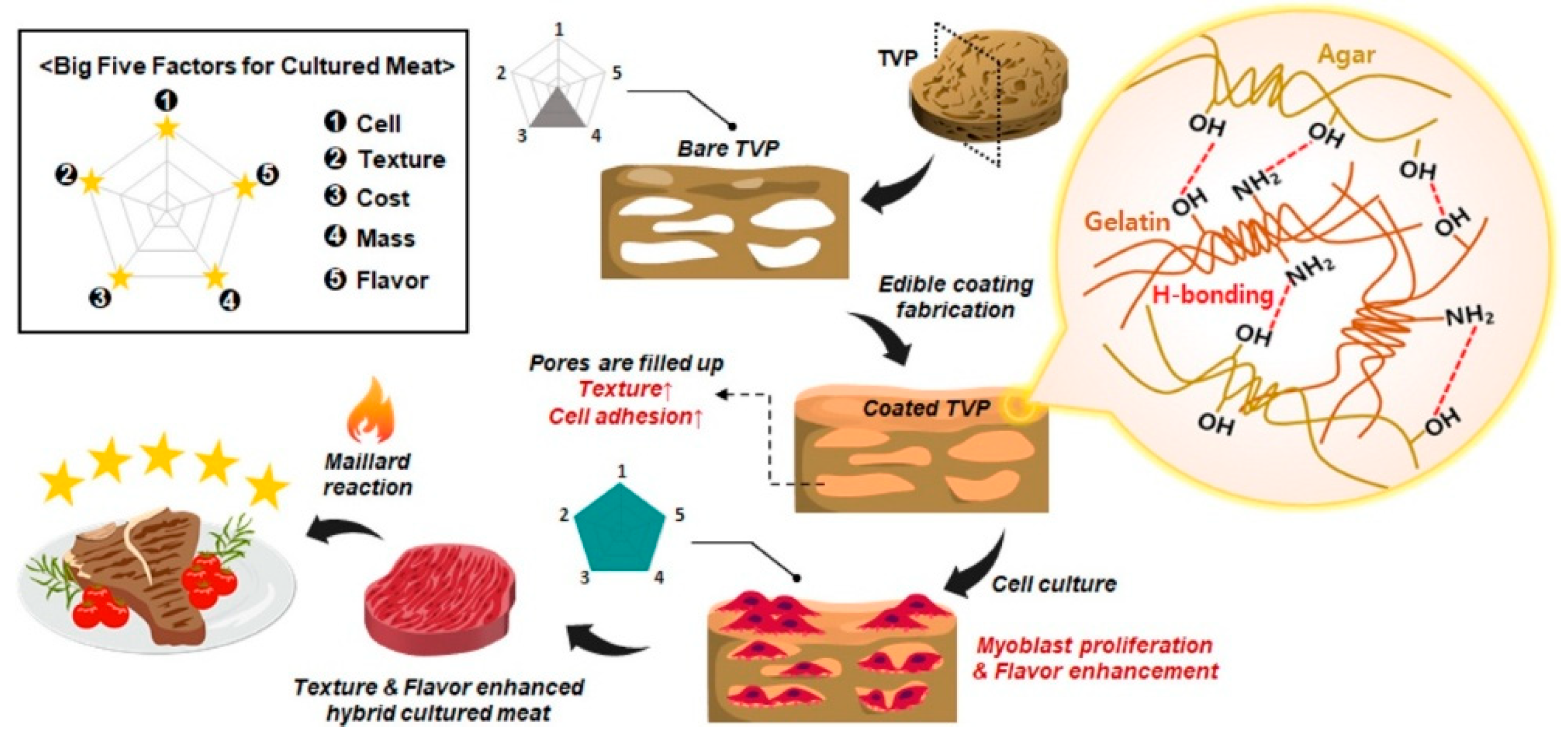
One study employed textured vegetable protein (TVP) as a scaffold and modified its surface with a gelatin/agar matrix to improve cultured meat quality, ultimately achieving characteristics comparable to those of conventional meat [39] (Figure 8). The advantage of this coating arises from the complementary properties of gelatin and agar. Gelatin provides a favorable environment for cell adhesion owing to the presence of arginine–glycine–aspartic acid (RGD) sequences but exhibits poor mechanical strength and thermal stability, whereas agar improves scaffold mechanical properties but lacks RGD motifs and is therefore less favorable for cell attachment. Thus, the two materials compensate for each other’s limitations. Moreover, because the coating consists of a protein–polysaccharide combination, cooking induces the Maillard reaction, resulting in increased browning and changes in the volatile compound profile of cultured meat, as demonstrated by colorimetric and GC-MS analyses.
Figure 8.
Cultured meat production using TVP coated with an edible platform designed to satisfy the five key factors. Reproduced with permission from Ref. [39]. Copyright 2022 American Chemical Society.
In addition to the gelatin/agar (GA) coating, chitosan/carboxymethyl cellulose nutrient-delivery layers were fabricated on the TVP surface using a layer-by-layer assembly approach to improve nutrient transport within the scaffold. This multilayer film was loaded with insulin-like growth factor-1 (IGF-1) and served as a delivery platform capable of sustained growth factor release to promote myoblast proliferation, after which the GA coating was applied. The results showed that when the GA-coated TVP was cooked at approximately 150–180 °C, the Maillard reaction occurred, and electronic-tongue analysis indicated lower sourness and higher umami intensity than beef. Incorporating combinations of proteins and polysaccharides into scaffolds is therefore a promising strategy for modulating the flavor-related properties of cultured meat.
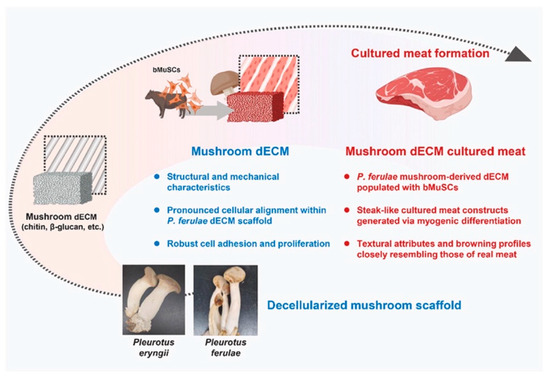
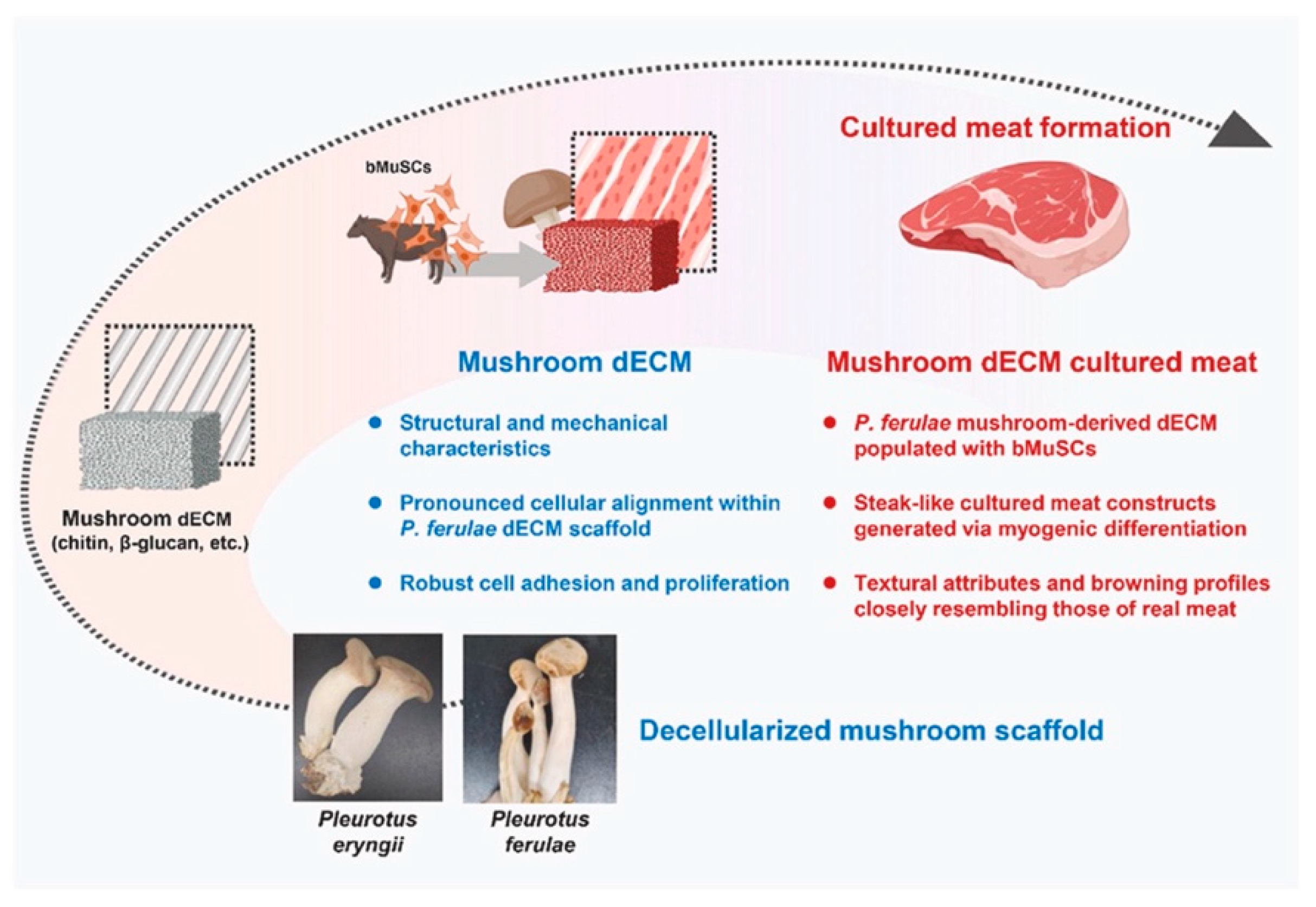
In addition to this approach, researchers have explored decellularization techniques in which mushrooms are used as scaffolds while simultaneously serving as reactants in the Maillard reaction [40] (Figure 9). Structural polysaccharides naturally present in mushrooms, such as chitin and β-glucan, possess inherent rigidity and elasticity that contribute to the development of a cooked texture resembling that of conventional meat. One study used Pleurotus eryngii and its improved strain, Pleurotus ferulae, as decellularized scaffolds. These scaffolds offer the advantages of low cost and an intrinsic fibrous architecture that closely resembles skeletal muscle. Their aligned fiber structure guides bovine muscle satellite cells to differentiate into well-organized parallel myotubes, thereby reproducing the structural characteristics of native muscle tissue. TPA of cultured meat produced using the P. ferulae scaffold and size-matched fresh bovine rump muscle samples (10 × 10 × 10 mm; three independent samples per group, n = 3) was performed using two-cycle compression to 50% of the original sample height at a crosshead speed of 3 mm/s. No statistically significant differences were detected between cultured meat and fresh bovine rump muscle in hardness, gumminess, chewiness, springiness, or cohesiveness. These findings suggest that the P. ferulae-derived scaffold supports the development of cultured meat constructs with instrumental texture characteristics approaching those of conventional beef, although further validation with larger sample sizes is required. Thermal processing further altered the instrumental texture of the cultured meat. After grilling, the hardness, chewiness, and gumminess of bMuSC-laden P. ferulae dECM constructs increased by approximately 52%, 46%, and 51%, respectively, relative to their pre-grilling values, whereas substantially smaller changes were observed in the corresponding cellular dECM scaffolds. These findings suggest that the cultured muscle tissue contributed to cooking-induced changes in instrumental texture. However, these results do not establish whether grilling brought the cultured meat constructs closer to cooked conventional beef in terms of texture.
Figure 9.
Schematic illustration of mushroom-derived decellularized extracellular matrix (dECM) for cultured meat formation. Reproduced from Ref. [40] with permission from Elsevier (Amsterdam, The Netherlands). Copyright 2025 The Authors.
In addition to these textural changes, cooking also induced visible browning in the cultured meat constructs. After pan-frying, the cell-laden constructs developed a reddish-brown coloration, whereas the acellular scaffolds exhibited minimal color changes. This difference may be attributed to the higher protein content of the cell-laden constructs (approximately 1.8-fold that of the acellular scaffolds), which may increase the availability of amino groups involved in Maillard reaction-associated browning. The browning index of the cooked cultured meat showed no statistically significant difference from that of cooked beef (n = 3). These results demonstrate cooking-induced coloration but do not provide direct evidence of aroma development, as volatile aroma compounds were not measured in this study.
The decellularization process involved sequential treatment with 1% (w/v) SDS, followed by 0.1% (v/v) Triton X-100 and 10% (v/v) commercial bleach. Although this optimized protocol, together with thorough washing with distilled water, achieved effective decellularization while preserving scaffold structural integrity, the residual levels of these processing agents were not quantitatively evaluated, and their food safety for edible applications therefore remains to be established. In addition, decellularization can further reduce the protein content through chemical treatment and extensive washing, thereby limiting the availability of amino groups for the Maillard reaction. Future studies should therefore optimize decellularization protocols to ensure the removal of processing agents while minimizing protein loss. Additional protein supplementation may also be explored to promote Maillard reaction-associated browning, while direct volatile compound analysis and sensory evaluation will be necessary to determine whether these modifications improve aroma and flavor.
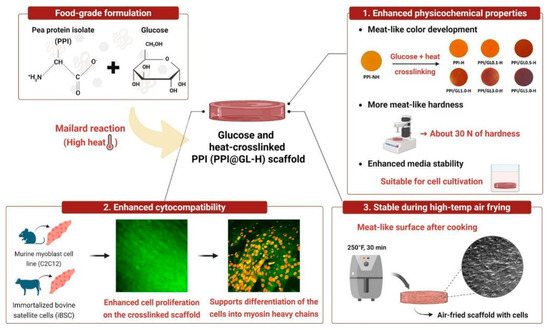
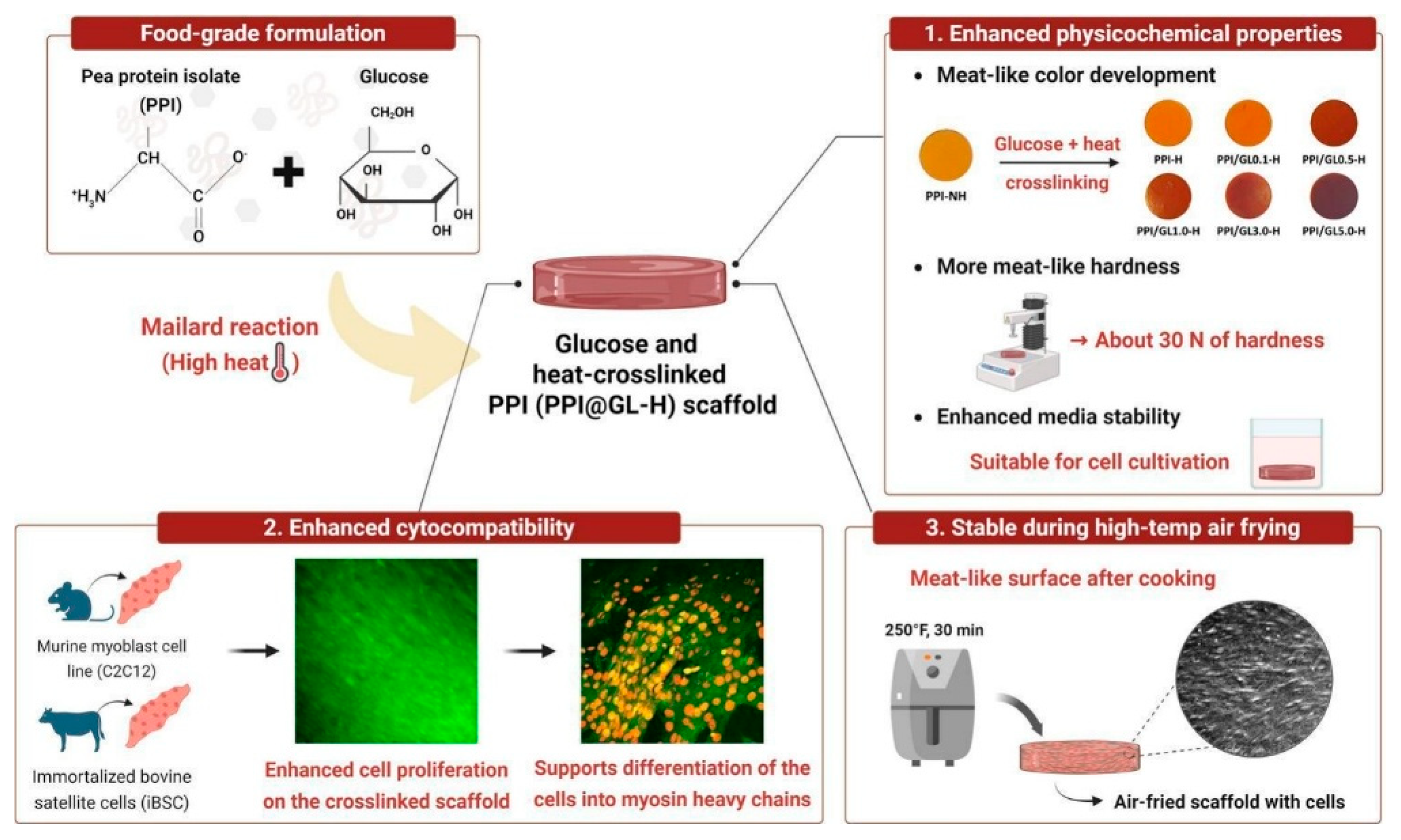
Beyond its well-known role in enhancing flavor, the Maillard reaction has also been explored as a food-grade crosslinking strategy to improve the mechanical properties, water stability, cytocompatibility, and meat-like color of cultured meat scaffolds [41]. In this study, pea protein was used as the base scaffold material, and different concentrations of glucose, a reducing sugar, were incorporated to induce Maillard reaction-mediated crosslinking between the protein and sugar, thereby forming the scaffold. Cells were subsequently seeded onto the scaffold to construct cultured meat. The results demonstrated that the crosslinked scaffolds exhibited enhanced cell attachment and proliferation (Figure 10). In addition, the Maillard reaction significantly improved scaffold color, resulting in a more meat-like appearance, while also enhancing its mechanical properties.
Figure 10.
Preparation and functional properties of glucose and heat-crosslinked pea protein isolate (PPI) scaffolds. Reproduced from Ref. [41] with permission from Elsevier. Copyright © 2026 Elsevier Ltd. (Amsterdam, The Netherlands).
3.3.2. Flavor-Switchable Scaffold
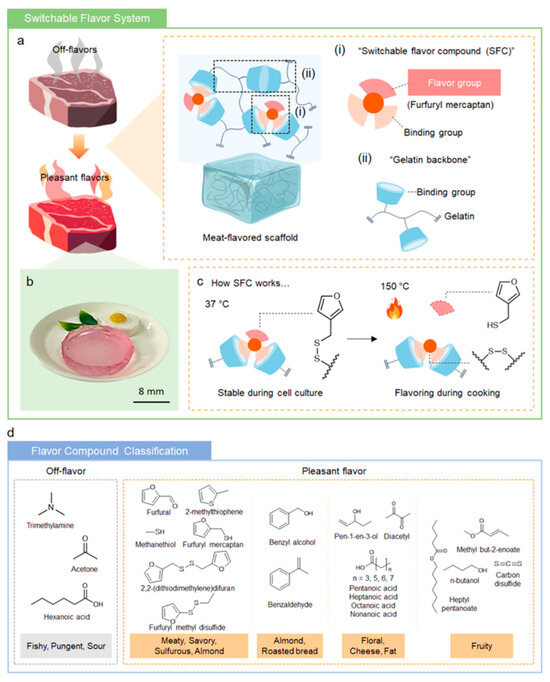
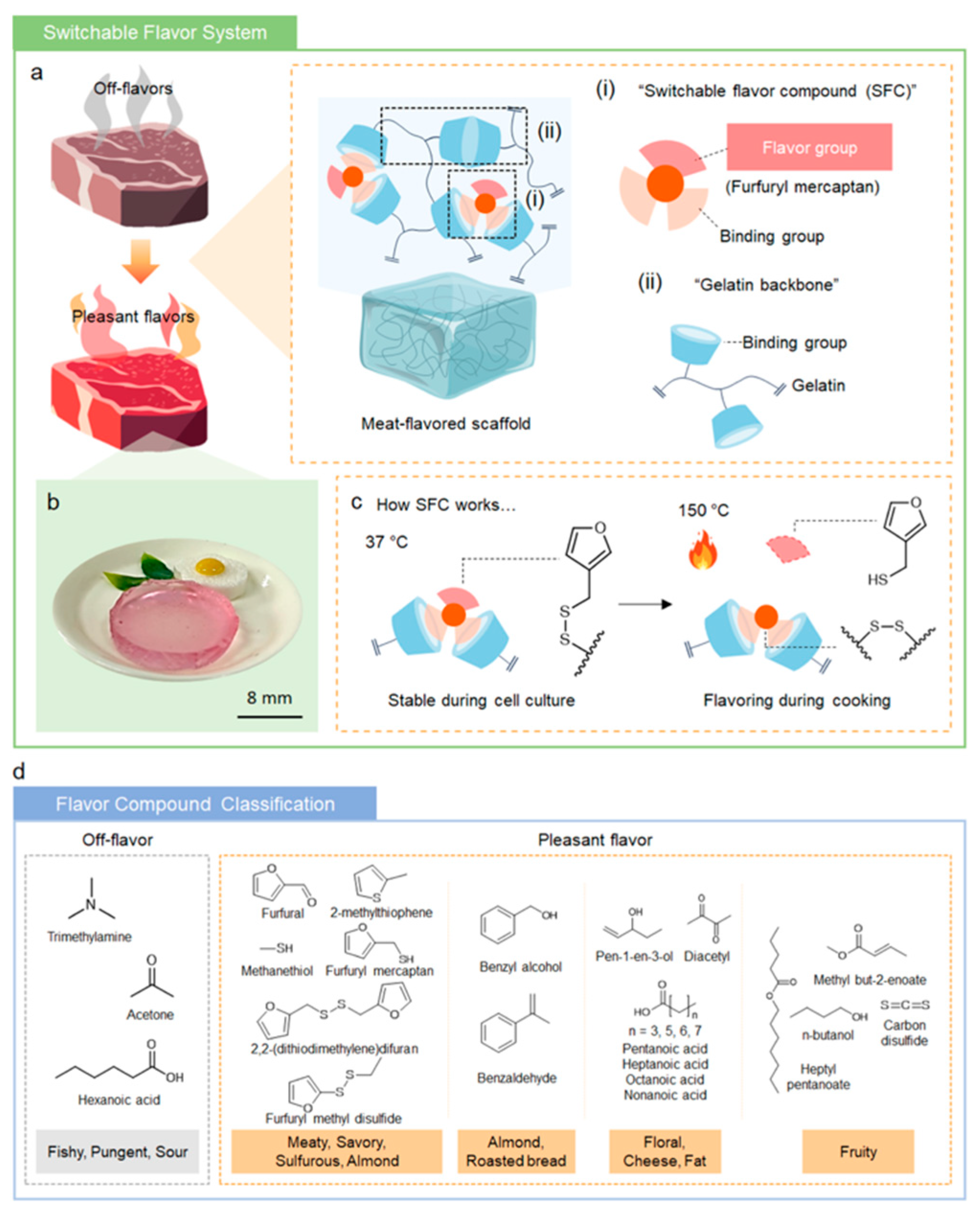
In addition to enhancing the sensory properties of cultured meat through the Maillard reaction between proteins and polysaccharides, flavor can also be improved by directly incorporating Maillard-derived volatile compounds into edible scaffolds [33]. One study employed GelMA as the base scaffold and functionalized it with switchable flavor SFCs. Each SFC consists of three functional groups: one flavor group derived from a meaty volatile compound and two binding groups capable of covalently attaching to the scaffold. The flavor group is linked to the binding groups through thermo-responsive disulfide bonds, which are cleaved during high-temperature cooking (150 °C) to release the volatile flavor compound and generate a meat-like aroma resembling that produced by the Maillard reaction (Figure 11). Importantly, the immobilized SFCs affected cell proliferation but did not substantially impair myogenic differentiation. During the 15-day culture period, cells were first cultured for 7 days to promote proliferation, followed by 8 days of differentiation. On day 7, the CM + SFC (cultured meat with SFC) group exhibited lower cell viability than the CM − SFC (cultured meat without SFC) group. However, the absorbance of the CM + SFC group did not decrease over the proliferation period, suggesting that this difference was associated with a slower proliferation rate rather than substantial cell death. This effect may be related to changes in the GelMA network induced by SFC conjugation. Because SFC conjugation consumes methacrylate groups involved in network formation, the incorporation of SFCs reduced the crosslinking density and compressive modulus of the scaffold while increasing its swelling capacity. These changes in network properties may have contributed to the slower cell proliferation observed in the SFC-containing scaffold. Thus, SFC functionalization provides heat-triggered flavor release while simultaneously altering the physicochemical properties of the GelMA network, highlighting the need to balance flavor functionality with scaffold properties that support cell growth. Furthermore, the incorporation of different flavor compounds demonstrated that this strategy is applicable to a broad range of flavor molecules rather than a single compound. This approach therefore enables the production of cultured meat with tunable flavor profiles by varying the types and proportions of SFCs incorporated into the scaffold.
Figure 11.
Schematic illustration of a switchable flavor system for controlled flavor release in cultured meat. (a) Illustrative representation of the scaffold structure conjugated with switchable flavor compounds (SFCs). (b) Photograph of cultured meat fabricated using the scaffold containing SFCs (CM + SFC). Scale bar: 8 mm. (c) Schematic illustration of the temperature-dependent mechanism of the SFC system. (d) Classification of the flavor compounds analyzed in this study. Reproduced from Ref. [33] under the terms of the Creative Commons Attribution 4.0 International License (CC BY 4.0).
Despite the demonstrated biocompatibility of the GelMA-based system, its food suitability remains to be established. As noted in the original study, no GelMA subtype has yet received FDA approval for food use, indicating that biocompatibility alone is insufficient to establish food safety. Nevertheless, the proposed flavor-switching strategy remains promising because it could potentially be implemented using exclusively food-grade materials.
4. Future Perspective and Challenges
4.1. Species-Specific Scaffold
Most current research on cultured meat has focused on mammalian cell culture, whereas studies on cultured seafood remain relatively limited [47]. Increasing marine pollution has resulted in the accumulation of contaminants, including heavy metals and microplastics, in aquatic organisms, compromising seafood quality and raising concerns regarding food safety. In addition, persistent overfishing has contributed to population declines and, in some cases, the risk of extinction of marine species [47,48,49]. Cultured seafood has the potential to address these challenges while offering considerable commercial potential, as seafood is subject to fewer religious dietary restrictions than conventional livestock. However, scaffold design for cultured seafood cannot simply adopt strategies developed for mammalian tissues. The complex anisotropic architecture of fish muscle, together with its collagen-rich myosepta, requires scaffold designs specifically tailored to reproduce these structural features. Furthermore, marine-derived polymers generally exhibit relatively low thermal stability. Although this property is compatible with the physiological culture temperatures required for most fish cells (15–28 °C), it also presents challenges during scaffold fabrication and sterilization [47,50]. Overall, the development of marine-derived scaffolds holds considerable promise for improving environmental sustainability, protecting marine ecosystems, and enhancing food safety. Nevertheless, significant challenges remain, particularly in designing scaffolds that accommodate the structural differences between fish and mammalian tissues and the distinct physicochemical properties of marine-derived polymers.
4.2. Multifunctional Cultured Meat
Current research on cultured meat has primarily focused on efficient tissue formation and improving sensory attributes, particularly texture and flavor. Looking ahead, the next generation of scaffold design is expected to advance toward multifunctional food-grade scaffolds that simultaneously optimize texture, flavor, and nutritional functionality. Unlike conventional meat, cultured meat produced using current manufacturing strategies may not fully replicate the nutritional composition of native muscle, particularly with respect to micronutrients such as vitamins, minerals, and heme-containing compounds [10,51]. In addition, cultured meat production provides opportunities to rationally tailor the nutritional profile of the final product. For example, cultured meat could theoretically be engineered to contain higher levels of omega-3 polyunsaturated fatty acids while reducing saturated fatty acids, thereby providing potential health benefits beyond those of conventional meat [12,52,53]. Furthermore, bioactive compounds, vitamins, minerals, and other functional ingredients could be incorporated through scaffold design or culture strategies to enhance the nutritional value of the final product [51].
Therefore, the development of cultured meat is expected to progress from the simple generation of edible muscle tissue to the reproduction of the texture and sensory characteristics of conventional meat, and ultimately to the creation of multifunctional cultured meat with optimized sensory quality, nutritional composition, and health-promoting properties [52]. This transition could enable cultured meat to evolve from merely serving as an alternative meat source into a next-generation functional food, thereby strengthening its long-term potential as a sustainable replacement for conventional meat.
4.3. Translation Toward Practical Cultured Meat Production
Although recent scaffold-design strategies have demonstrated substantial potential for modulating cultured meat texture, their translation beyond laboratory-scale studies requires consideration of food safety, scalability, and cost [28]. Food suitability should be established before scale-up, particularly when the food-grade status of scaffold materials or residual processing reagents has not been fully evaluated [54]. Subsequent scale-up should determine whether texture-related properties, including stiffness, pore architecture, anisotropy, and muscle–fat organization, can be reproducibly maintained at larger scales using cost-effective and food-compatible manufacturing processes [19].
Emerging technologies such as 3D bioprinting and microfluidics may facilitate precise control over scaffold architecture and cell organization, but their applicability to food-scale production remains to be established in terms of throughput, reproducibility, and cost [28]. Regulatory approval and human sensory evaluation will also be required to determine whether instrumentally measured improvements translate into acceptable eating quality. Future scaffold development should therefore progress from laboratory-scale texture optimization toward food-safe, scalable, economically viable, and consumer-relevant production.
5. Conclusions
Although cultured meat offers numerous advantages, its relatively poor texture and flavor have limited consumer acceptance, thereby restricting large-scale production and commercialization. To further narrow the gap between cultured and conventional meat, future scaffold designs should not only support tissue formation but also enable the modulation of key sensory attributes, including appearance, texture, and flavor. However, most current studies assess these quality attributes primarily through instrumental or physicochemical measurements, while direct human sensory data remain limited, largely because of regulatory and food-safety constraints. Future studies should therefore integrate instrumental characterization with appropriate sensory evaluation, when feasible, to determine whether scaffold-mediated improvements translate into consumer-perceived eating quality. Beyond these fundamental sensory requirements, scaffold design may be further extended to incorporate health-promoting functionalities, enabling the development of next-generation cultured meat with both desirable eating quality and tailored nutritional properties.
Author Contributions
Conceptualization: X.Y., S.P. and S.J.; methodology: X.Y., S.P. and S.J.; investigation: X.Y.; visualization: X.Y. and S.P.; supervision: S.P. and S.J.; writing—original draft: X.Y.; writing—review and editing: X.Y., S.J. and S.L. All authors have read and agreed to the published version of the manuscript.
Funding
This research was supported by the ANCHOR program through the Daejeon ANCHOR Center, funded by the Ministry of Education (MOE) and the Daejeon Metropolitan City, Republic of Korea (2026-ANCHOR-06-002). This work was supported by the National Research Foundation of Korea (NRF) grant funded by the Korea government (MSIT) (No. RS-2026-25497463).
Data Availability Statement
All data supporting the findings of this study are available from the corresponding authors upon reasonable request.
Conflicts of Interest
The authors declare no conflicts of interest.
References
- Post, M.J.; Levenberg, S.; Kaplan, D.L.; Genovese, N.; Fu, J.; Bryant, C.J.; Negowetti, N.; Verzijden, K.; Moutsatsou, P. Scientific, sustainability and regulatory challenges of cultured meat. Nat. Food 2020, 1, 403–415. [Google Scholar] [CrossRef] [Scilit]
- Xie, Y.; Ding, S.; Wang, J.; Li, X.; Guo, R.; Tang, C.; Wang, C.; Zhou, G.; Li, C. Technological advances and the challenges for large-scale cultured meat production. Annu. Rev. Food Sci. Technol. 2026, 17, 417–438. [Google Scholar] [CrossRef] [Scilit]
- Macdiarmid, J.I.; Douglas, F.; Campbell, J. Eating like there’s no tomorrow: Public awareness of the environmental impact of food and reluctance to eat less meat as part of a sustainable diet. Appetite 2016, 96, 487–493. [Google Scholar] [CrossRef] [Scilit]
- Santos, A.C.A.; Camarena, D.E.M.; Roncoli Reigado, G.; Chambergo, F.S.; Nunes, V.A.; Trindade, M.A.; Stuchi Maria-Engler, S. Tissue engineering challenges for cultivated meat to meet the real demand of a global market. Int. J. Mol. Sci. 2023, 24, 6033. [Google Scholar] [CrossRef] [Scilit]
- Bhat, Z.F.; Kumar, S.; Bhat, H.F. In vitro meat: A future animal-free harvest. Crit. Rev. Food Sci. Nutr. 2017, 57, 782–789. [Google Scholar] [CrossRef] [Scilit]
- Bryant, C.; Barnett, J. Consumer acceptance of cultured meat: An updated review (2018–2020). Appl. Sci. 2020, 10, 5201. [Google Scholar] [CrossRef] [Scilit]
- Kadim, I.T.; Mahgoub, O.; Baqir, S.; Faye, B.; Purchas, R. Cultured meat from muscle stem cells: A review of challenges and prospects. J. Integr. Agric. 2015, 14, 222–233. [Google Scholar] [CrossRef] [Scilit]
- Post, M.J. Cultured meat from stem cells: Challenges and prospects. Meat Sci. 2012, 92, 297–301. [Google Scholar] [CrossRef] [Scilit]
- Stephens, N.; Di Silvio, L.; Dunsford, I.; Ellis, M.; Glencross, A.; Sexton, A. Bringing cultured meat to market: Technical, socio-political, and regulatory challenges in cellular agriculture. Trends Food Sci. Technol. 2018, 78, 155–166. [Google Scholar] [CrossRef] [Scilit]
- Fraeye, I.; Kratka, M.; Vandenburgh, H.; Thorrez, L. Sensorial and Nutritional Aspects of Cultured Meat in Comparison to Traditional Meat: Much to Be Inferred. Front. Nutr. 2020, 7, 35. [Google Scholar] [CrossRef] [Scilit]
- Lee, S.Y.; Lee, D.Y.; Jeong, J.W.; Kim, J.H.; Yun, S.H.; Joo, S.-T.; Choi, I.; Choi, J.S.; Kim, G.-D.; Hur, S.J. Studies on meat alternatives with a focus on structuring technologies. Food Bioprocess Technol. 2023, 16, 1389–1412. [Google Scholar] [CrossRef] [Scilit]
- Wood, J.D.; Richardson, R.I.; Nute, G.R.; Fisher, A.V.; Campo, M.M.; Kasapidou, E.; Sheard, P.R.; Enser, M. Effects of fatty acids on meat quality: A review. Meat Sci. 2004, 66, 21–32. [Google Scholar] [CrossRef] [Scilit]
- Chen, G.; Ushida, T.; Tateishi, T. Scaffold Design for Tissue Engineering. Macromol. Biosci. 2002, 2, 67–77. [Google Scholar] [CrossRef]
- Bomkamp, C.; Skaalure, S.C.; Fernando, G.F.; Ben-Arye, T.; Swartz, E.W.; Specht, E.A. Scaffolding Biomaterials for 3D Cultivated Meat: Prospects and Challenges. Adv. Sci. 2022, 9, 2102908. [Google Scholar] [CrossRef] [Scilit]
- Alam, A.M.M.N.; Kim, C.-J.; Kim, S.-H.; Kumari, S.; Lee, S.-Y.; Hwang, Y.-H.; Joo, S.-T. Trends in Hybrid Cultured Meat Manufacturing Technology to Improve Sensory Characteristics. Korean J. Food Sci. Anim. Resour. 2024, 44, 39–50. [Google Scholar] [CrossRef] [Scilit]
- Yin, W.; Sun, Z.; McClements, D.J.; Jin, Z.; Qiu, C. Advances in 3D scaffold materials and fabrication techniques for cultured meat production: A review. Food Biosci. 2025, 73, 107564. [Google Scholar] [CrossRef] [Scilit]
- Samrot, A.V.; Sathiyasree, M.; Rahim, S.B.A.; Renitta, R.E.; Kasipandian, K.; Krithika Shree, S.; Rajalakshmi, D.; Shobana, N.; Dhiva, S.; Abirami, S.; et al. Scaffold Using Chitosan, Agarose, Cellulose, Dextran and Protein for Tissue Engineering—A Review. Polymers 2023, 15, 1525. [Google Scholar] [CrossRef] [Scilit]
- El Hosry, L.; Elias, V.; Chamoun, V.; Halawi, M.; Cayot, P.; Nehme, A.; Bou-Maroun, E. Maillard reaction: Mechanism, influencing parameters, advantages, disadvantages, and food industrial applications: A review. Foods 2025, 14, 1881. [Google Scholar] [CrossRef] [Scilit]
- Levi, S.; Yen, F.-C.; Baruch, L.; Machluf, M. Scaffolding technologies for the engineering of cultured meat: Towards a safe, sustainable, and scalable production. Trends Food Sci. Technol. 2022, 126, 13–25. [Google Scholar] [CrossRef] [Scilit]
- Wang, Y.; Zou, L.; Liu, W.; Chen, X. An Overview of Recent Progress in Engineering Three-Dimensional Scaffolds for Cultured Meat Production. Foods 2023, 12, 2614. [Google Scholar] [CrossRef] [Scilit]
- Agostinis Ferreira, G.; Poniewas, L.; de Macedo, R.E.F. Cultivated meat quality: A systematic review on the physicochemical, technological and sensory evaluation. Crit. Rev. Food Sci. Nutr. 2026, 66, 631–649. [Google Scholar] [CrossRef] [Scilit]
- Chen, Y.; Ding, S.; Bassey, A.P.; Li, C.; Zhou, G. Effect of gelatin concentration and freezing temperature on porous scaffolds for cultured meat. Food Biosci. 2024, 60, 104343. [Google Scholar] [CrossRef] [Scilit]
- Deliza, R.; Rodríguez, B.; Reinoso-Carvalho, F.; Lucchese-Cheung, T. Cultured meat: A review on accepting challenges and upcoming possibilities. Curr. Opin. Food Sci. 2023, 52, 101050. [Google Scholar] [CrossRef] [Scilit]
- Suhag, D.; Kaushik, S.; Taxak, V.B. Scaffold Design in Tissue Engineering. In Handbook of Biomaterials for Medical Applications, Volume 1: Fundamentals; Suhag, D., Kaushik, S., Taxak, V.B., Eds.; Springer Nature: Singapore, 2024; pp. 155–184. [Google Scholar]
- Levy-Mishali, M.; Zoldan, J.; Levenberg, S. Effect of Scaffold Stiffness on Myoblast Differentiation. Tissue Eng. Part A 2009, 15, 935–944. [Google Scholar] [CrossRef] [Scilit]
- Li, S.; Zhao, F.; Zhan, Y.; Liu, X.; Hun, T.; Zhang, H.; Qiu, C.; He, J.; Yi, Z.; Sun, Y.; et al. How Deep Might Myoblasts Sense: The Effect of Substrate Stiffness and Thickness on the Behavior of Myoblasts. J. Med. Biol. Eng. 2018, 38, 596–606. [Google Scholar] [CrossRef] [Scilit]
- Kawecki, N.S.; Norris, S.C.P.; Xu, Y.; Wu, Y.; Davis, A.R.; Fridman, E.; Chen, K.K.; Crosbie, R.H.; Garmyn, A.J.; Li, S.; et al. Engineering multicomponent tissue by spontaneous adhesion of myogenic and adipogenic microtissues cultured with customized scaffolds. Food Res. Int. 2023, 172, 113080. [Google Scholar] [CrossRef] [Scilit]
- Kawecki, N.S.; Chen, K.K.; Smith, C.S.; Xie, Q.; Cohen, J.M.; Rowat, A.C. Scalable processes for culturing meat using edible scaffolds. Annu. Rev. Food Sci. Technol. 2024, 15, 241–264. [Google Scholar] [CrossRef]
- Jafari, M.; Paknejad, Z.; Rad, M.R.; Motamedian, S.R.; Eghbal, M.J.; Nadjmi, N.; Khojasteh, A. Polymeric scaffolds in tissue engineering: A literature review. J. Biomed. Mater. Res. Part B Appl. Biomater. 2017, 105, 431–459. [Google Scholar] [CrossRef] [Scilit]
- Li, C.H.; Yang, I.H.; Ke, C.J.; Chi, C.Y.; Matahum, J.; Kuan, C.Y.; Celikkin, N.; Swieszkowski, W.; Lin, F.H. The Production of Fat-Containing Cultured Meat by Stacking Aligned Muscle Layers and Adipose Layers Formed From Gelatin-Soymilk Scaffold. Front. Bioeng. Biotechnol. 2022, 10, 875069. [Google Scholar] [CrossRef] [Scilit]
- Xie, Y.; Cai, L.; Ding, S.; Wang, C.; Wang, J.; Ibeogu, I.H.; Li, C.; Zhou, G. An overview of recent progress in cultured meat: Focusing on technology, quality properties, safety, industrialization, and public acceptance. J. Nutr. 2025, 155, 745–755. [Google Scholar] [CrossRef] [Scilit]
- Lee, S.H.; Choi, J. The Need for Research on the Comparison of Sensory Characteristics between Cultured Meat Produced Using Scaffolds and Meat. Korean J. Food Sci. Anim. Resour. 2024, 44, 269–283. [Google Scholar] [CrossRef] [Scilit]
- Lee, M.; Choi, W.; Lee, J.M.; Lee, S.T.; Koh, W.-G.; Hong, J. Flavor-switchable scaffold for cultured meat with enhanced aromatic properties. Nat. Commun. 2024, 15, 5450. [Google Scholar] [CrossRef] [Scilit]
- Priadi, G.; Octaviana, S.; Setiyoningrum, F.; Perwitasari, U.; Afiati, F.; Desnilasari, D.; Wibowo, D.S.; Setiarto, R.H.B. Flavour Biotechnology in Food Innovation: Application in Plant-Based and Cultured Meat Systems. Rev. Agric. Sci. 2026, 14, 110–135. [Google Scholar] [CrossRef] [Scilit]
- Jung, S.; Choi, B.; Lee, M.; Park, S.; Choi, W.; Yong, H.; Heo, S.; Park, Y.; Lee, J.M.; Lee, S.T.; et al. Bio-Orchestration of Cellular Organization and Human-Preferred Sensory Texture in Cultured Meat. ACS Nano 2025, 19, 2809–2821. [Google Scholar] [CrossRef] [Scilit]
- Wang, Y.; Zhong, Z.; Munawar, N.; Zan, L.; Zhu, J. 3D edible scaffolds with yeast protein: A novel alternative protein scaffold for the production of high-quality cell-cultured meat. Int. J. Biol. Macromol. 2024, 259, 129134, Corrigendum in Int. J. Biol. Macromol. 2025, 303, 140518. [Google Scholar] [CrossRef] [Scilit]
- Wu, X.; Han, W.; Hou, L.; Lin, D.; Li, J.; Lin, S.; Yang, J.; Liao, L.; Zeng, X. Glutenin-chitosan 3D porous scaffolds with tunable stiffness and systematized microstructure for cultured meat model. Int. J. Biol. Macromol. 2024, 267, 131438. [Google Scholar] [CrossRef] [Scilit]
- Hao, L.T.; Lee, S.; Hwang, D.S.; Jeon, H.; Park, J.; Kim, H.J.; Oh, D.X. Self-Healing Scaffolding Technology with Strong, Reversible Interactions under Physiological Conditions for Engineering Marbled Cultured Meat. ACS Appl. Mater. Interfaces 2025, 17, 31881–31897. [Google Scholar] [CrossRef] [Scilit]
- Lee, M.; Park, S.; Choi, B.; Kim, J.; Choi, W.; Jeong, I.; Han, D.; Koh, W.-G.; Hong, J. Tailoring a Gelatin/Agar Matrix for the Synergistic Effect with Cells to Produce High-Quality Cultured Meat. ACS Appl. Mater. Interfaces 2022, 14, 38235–38245. [Google Scholar] [CrossRef] [Scilit]
- Kim, D.; Kim, M.; Lee, C.; Jang, H.; Kim, W.; Park, J.H. Decellularized extracellular matrix scaffolds from Pleurotus ferulae mushrooms for sustainable production of steak-like cultured meat with authentic texture. Mater. Today Bio 2025, 35, 102327. [Google Scholar] [CrossRef] [Scilit]
- Choi, I.; Kim, Y.; Nitin, N. Glucose-mediated Maillard crosslinking of pea protein scaffolds to enhance mechanical properties and myoblast proliferation. Food Chem. 2026, 506, 148168. [Google Scholar] [CrossRef] [Scilit]
- Gingras, J.; Rioux, R.M.; Cuvelier, D.; Geisse, N.A.; Lichtman, J.W.; Whitesides, G.M.; Mahadevan, L.; Sanes, J.R. Controlling the orientation and synaptic differentiation of myotubes with micropatterned substrates. Biophys. J. 2009, 97, 2771–2779. [Google Scholar] [CrossRef] [Scilit]
- Huang, N.F.; Lee, R.J.; Li, S. Engineering of aligned skeletal muscle by micropatterning. Am. J. Transl. Res. 2010, 2, 43–55. [Google Scholar]
- Frank, D.; Joo, S.T.; Warner, R. Consumer Acceptability of Intramuscular Fat. Korean J. Food Sci. Anim. Resour. 2016, 36, 699–708. [Google Scholar] [CrossRef] [Scilit]
- Baik, M.; Lee, J.; Kim, S.Y.; Ranaweera, K.K.T.N. Factors affecting beef quality and nutrigenomics of intramuscular adipose tissue deposition. Anim. Biosci. 2023, 36, 350–363. [Google Scholar] [CrossRef] [Scilit]
- Jeong, D.; Seo, J.W.; Lee, H.-G.; Jung, W.K.; Park, Y.H.; Bae, H. Efficient Myogenic/Adipogenic Transdifferentiation of Bovine Fibroblasts in a 3D Bioprinting System for Steak-Type Cultured Meat Production. Adv. Sci. 2022, 9, 2202877. [Google Scholar] [CrossRef] [Scilit]
- Öz, M.; Üstüner, E. Mimicking the Ocean: Critical Challenges in Scaffold Design and Tissue Texturization for Cell-Cultured Seafood. J. Food Sci. 2026, 91, e71163. [Google Scholar] [CrossRef] [Scilit]
- Kibria, G. Impacts of microplastic on fisheries and seafood security—Global analysis and synthesis. Sci. Total Environ. 2023, 904, 166652. [Google Scholar] [CrossRef] [Scilit]
- Gu, H.; Kong, Y.; Huang, D.; Wang, Y.; Raghavan, V.; Wang, J. Scaling Cultured Meat: Challenges and Solutions for Affordable Mass Production. Compr. Rev. Food Sci. Food Saf. 2025, 24, e70221. [Google Scholar] [CrossRef] [Scilit]
- Trace, A.; Wankell, M.; McFarlane, C.; Hebbard, L. The challenges of using fish cells for cultivated seafood production. Food Sci. Biotechnol. 2025, 34, 1565–1579. [Google Scholar] [CrossRef] [Scilit]
- Kardas, M.; Staśkiewicz-Bartecka, W.; Kołodziejczyk, A. Cultured Meat Reformulation: Health Potential and Sustainable Food Challenges—Narrative Review. Compr. Rev. Food Sci. Food Saf. 2025, 24, e70262. [Google Scholar] [CrossRef] [Scilit]
- Gil, M.; Rudy, M.; Duma-Kocan, P.; Stanisławczyk, R.; Dziki, D. Nutritional, Ethical and Ecological Aspects of Cultured Meat with Particular Emphasis on Functional Food Production: A Comprehensive Literature Review. Foods 2026, 15, 891. [Google Scholar] [CrossRef] [Scilit]
- Demarquoy, J. Nutrient Equivalence of Plant-Based and Cultured Meat: Gaps, Bioavailability, and Health Perspectives. Nutrients 2025, 17, 3860. [Google Scholar] [CrossRef] [Scilit]
- Mariano, E.; Lee, D.Y.; Lee, J.; Choi, Y.; Park, J.; Han, D.; Kim, J.S.; Park, J.W.; Namkung, S.; Hur, S.J. A review on the characterization of edible scaffolds for cultured meat: Physical, chemical, biocompatibility, and food safety evaluation methods. Food Chem. 2025, 469, 142493. [Google Scholar] [CrossRef] [Scilit]

Disclaimer/Publisher’s Note: The statements, opinions and data contained in all publications are solely those of the individual author(s) and contributor(s) and not of MDPI and/or the editor(s). MDPI and/or the editor(s) disclaim responsibility for any injury to people or property resulting from any ideas, methods, instructions or products referred to in the content. |
© 2026 by the authors. Licensee MDPI, Basel, Switzerland. This article is an open access article distributed under the terms and conditions of the Creative Commons Attribution (CC BY) license.