


Abstract
Global water scarcity and increasing amount of polymer waste pose two major environmental challenges that require urgent attention. One approach to addressing both these issues consists of the reuse of superabsorbent polymer (SAP) gels derived from baby diaper waste for water retention in agriculture. The present study aims to compare the water retention properties of three types of diaper SAP gels soaked with artificial urine with agrogel Aquasorb on two different soil substrates: sand and light loam. The soil hydrological constants were estimated using water retention curves obtained by equilibrium centrifugation of soil/gel mixtures containing 0.5 vol% gel. It was observed that the diaper gels soaked with artificial urine have almost the same degree of swelling and provide the same range of water available to plants as agricultural gel Aquasorb treated with the same urine—the effect of all the studied gels being more pronounced in a sand substrate. Washing from urine followed by sterilization enhances the gel swelling and water range available for plants, making these characteristics higher than those of agrogel. The water-retention properties of the sand/gel mixtures were maintained during several wetting/drying cycles. Moreover, the sterilized diaper gels similar to Aquasorb can restructure the sand substrate, reducing the pore volume, which makes them have potential to improve the erosion resistance of soil. The addition of GooN diaper gel to loamy soil improved the seedling growth of mustard (Brassica juncea L.) in a similar way to the agricultural gel Aquasorb and did not cause phytotoxic effects. Furthermore, the impact of diaper gels on seed germination was even greater than that of Aquasorb. Given these properties, diaper gels hold high potential for improving soil water retention and plant water availability, making them a promising alternative to traditional agricultural SAP products like Aquasorb.
1. Introduction
The production of synthetic polymers has been increasing steadily over the years [1,2], as they are extensively used in various industrial applications significantly affecting every aspect of our daily lives. In the last two decades, plastic production has more than doubled [3], reaching 430.9 million tons in 2024 [4], which is roughly equivalent to the weight of 1200 Empire State Buildings [1,5]. This rapid growth, however, has led to serious environmental concerns, as only 9% of plastic waste is recycled [3], and this is mainly due to the widespread use of single-use products such as diapers. Cleaning up the planet’s environment from polymer waste has been identified as one of the most urgent global challenges of our time [6]. To address this problem, one approach is to find ways to give second life to single-use polymer materials.
Another major issue today is water scarcity. Agriculture is one of the main areas responsible for water shortage. Nearly 70% of water usage comes from farming, and in some developing countries, it increases to 95% [7]. Overall, water scarcity affects 40% of the world’s population, and this number is on the rise [8].
To diminish water consumption in agriculture, superabsorbent polymer (SAP) gels are used. They reduce water loss through drainage and evaporation and act as reservoirs that slowly release water to plant roots [9,10,11,12,13,14,15,16]. Additionally, hydrogels may improve soil structure by affecting porosity [15,17,18,19]. Agriculture SAP uses, supported by precision irrigation programs, can reduce water use by 35% [20].
Around 280,000 tons of SAP gels are produced annually for agricultural purposes [21,22]. From an ecological perspective, it would be more beneficial to use naturally derived, biodegradable SAPs. However, at present, most SAPs on the market are synthetic [20]. The agricultural gels are made from copolymers of potassium acrylate and acrylamide [8,9] and have close composition to diaper SAP gels, which are typically composed of sodium polyacrylate crosslinked with poly(ethylene glycol) diacrylate [23]. Annually, 2.4 million tons of disposable diaper SAPs are wasted after a single use, while agriculture only requires 12% of this amount [21,22]. Therefore, reusing only 12% of the diaper SAPs in agriculture could address two pressing issues at once: the environmental impact of diaper waste and water scarcity in agriculture.
By now, there are only a few studies [24,25,26,27] demonstrating the possibility of using SAP from baby diapers to retain water in soil. They show that sandy [24] and red [25] soils mixed with diaper SAP gels lose water more slowly than untreated soil, and the water holding capacity of soil with recovered SAP only slightly decreases during several wetting/drying cycles, allowing their efficient use over long periods of time [26,27]. Also, the addition of recovered SAP to soil enhances the growth of seedlings of bean (Phaseolus vulgaris L.), pumpkin (C. pepo) [24] and mustard (Brassica juncea L.) [27] and favors tomato plant growth [25].
All studied water retention characteristics of diaper SAPs were shown to be comparable to those of typical agricultural gel Aquasorb, including the degree of swelling and the available water range (AWR) for plants. For instance, for SAP gels removed from three types of diapers: Huggies, GooN, and Merries, the AWR values range from 11 to 16 wt%, while for Aquasorb it is 13 wt%. Furthermore, diaper gels expand more rapidly in the pores of sand compared to agricultural gel, which is particularly beneficial for sandy soils that have a high rate of infiltration and therefore need rapid water retention by the gel [27,28]. However, the comparison with agrogel was only performed with diaper gels that had never come into contact with urine. At the same time, reusing diaper SAP waste is suggested to involve washing it with water and sterilization [24,25]. These processes can affect the water retention characteristics of SAP. However, the effect of washing and sterilization on gel swelling capacity and water retention has never been studied before. Hydrogels have the potential to improve not only the water-holding capacity of soil but also its porosity [29,30], which can help protect soil from wind erosion [31,32]. To the best of our knowledge, no experiments determining the effect of diaper gels on soil porosity have been conducted by now.
The aim of this study is to compare the water retention capacity and porosity of soil substrates mixed with diaper SAP gels treated with artificial urine with those of a typical agricultural gel Aquasorb. Artificial urine was used to eliminate the variability in composition that naturally occurs in real human urine, and to ensure more reliable and comparable results. Two types of model soil substrates were used: sand and light loam. In the first part of the paper, gels that had been preliminarily swollen with artificial urine and then dried were examined. Diaper gels thus prepared have a similar degree of swelling and provide similar AWR as agrogel Aquasorb treated with the same urine. In the second part, gels washed from urine and then sterilized and dried were investigated. These gels have a higher degree of swelling than Aquasorb and provide higher AWR, which may be due to their partial destruction at high temperature during sterilization. Also, they reduce the pore volume of sand substrate, which is promising for protecting soil from wind erosion. Finally, seed germination and seed growth tests are presented. They show that compared to agrogel, diaper gels have the same effect on seed growth but are more effective at enhancing seed germination.
2. Results and Discussion
2.1. Gels Without Washing from Urine and Sterilization
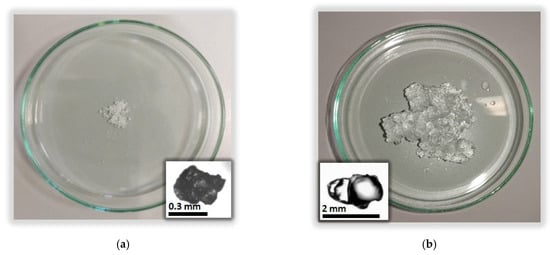
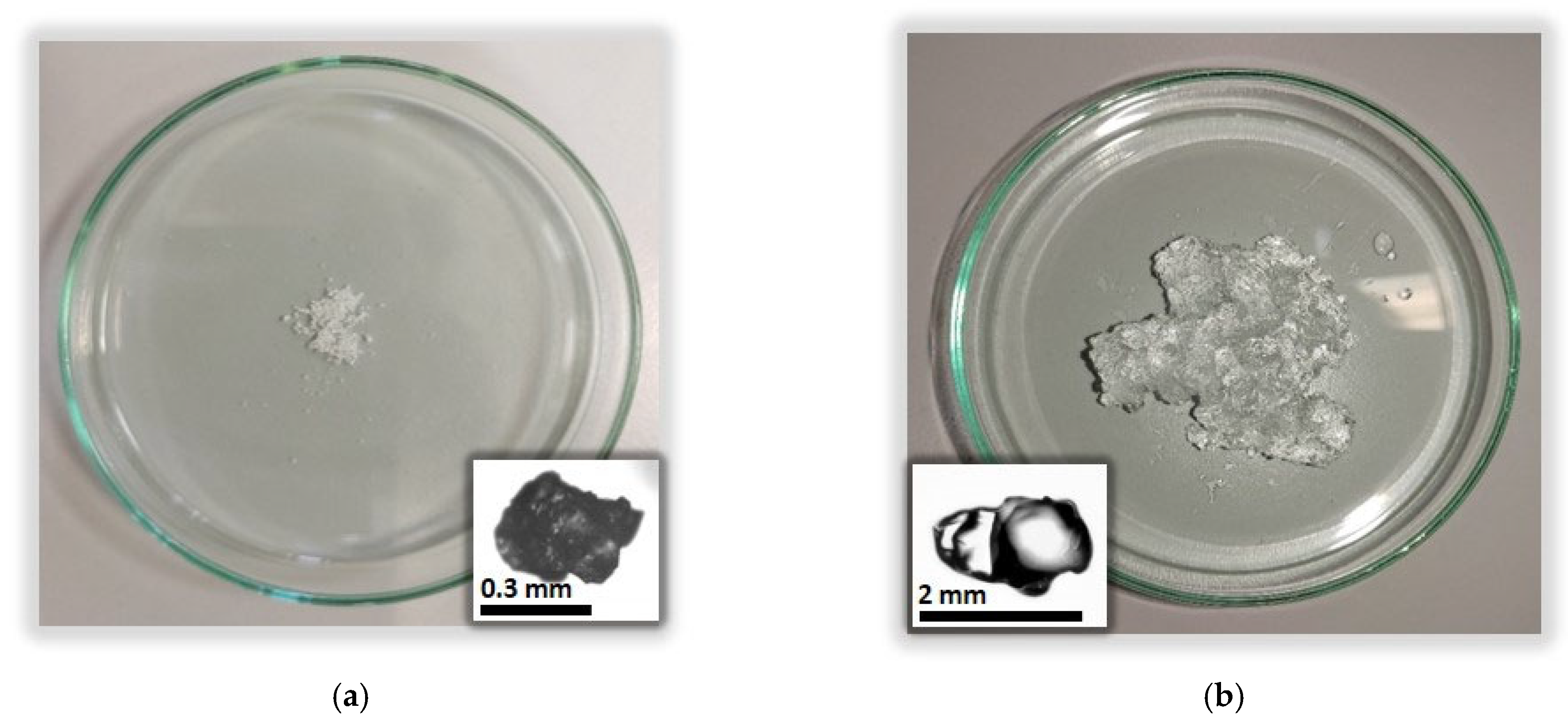
In the first set of experiments, we used dried SAP gels that were removed from diapers and soaked in artificial urine. Table 1 shows the degree of swelling of these gels by water, including free swelling without any external mechanical constraint and restricted swelling in sand and soil pores. It is seen that at free swelling, diaper gels absorb a large amount of water (300–480 g/g). Figure 1 shows the photographs of gels before and after free swelling. Such extensive swelling is due to the electrostatic repulsion between charged groups on the network chains and the osmotic pressure exerted by their counterions [33].
Table 1.
The equilibrium degree of swelling of hydrogels by water in different media including free swelling without constraints and the confined swelling within sand and light loamy soil pores *.
Figure 1.
Photographs of dry (a) and swollen (b) diaper gel Huggies. Inserts: optical microscopy images of individual gel particles.
Note that the degree of swelling in water for gels preliminarily soaked in artificial urine is rather close to that of naked gels previously reported [27]. At the same time, it can be expected that the salt released from gels swollen in artificial urine would limit their swelling due to the screening of electrostatic repulsion and the reduction in osmotic pressure of the counterions. However, since the volume of water was 1000-fold higher compared to the gel volume, the salts released from the gel do not appreciably increase the ionic strength of the solution. One can estimate that, if the salt ions were distributed evenly between the gel and the solution, the ionic strength of the solution would be as low as 0.0001 M. Such small ionic strength does not affect the degree of swelling of SAP gels. The degree of free swelling of Huggies and GooN diaper gels is higher than that of agricultural gel Aquasorb (Table 1). The highest degree of free swelling is observed for Huggies gel. It absorbs 480 g of water per 1 g of dry polymer, while Aquasorb absorbs 1.6 times less water. The degree of free swelling for Merries diaper gel (300 g/g) is the same as that of Aquasorb (Table 1). A similar degree of swelling (310 g/g) was observed for SAP gels collected from diaper waste in Ref. [26]. These high degrees of swelling are observed at free swelling in distilled water. Salts and water hardness always reduce swelling, as has been demonstrated numerous times [27,33,34,35,36,37]. Monovalent salt ions screen electrostatic repulsion and decrease the osmotic pressure of counterions, whereas multivalent ions (such as Ca2+, Mg2+ ions responsible for water hardness) can additionally crosslink the gel by binding to carboxylate groups belonging to different subchains [27,33,34,35,36,37]. Note that in monovalent salt solutions, the degree of free swelling of polyelectrolyte gels still remains very pronounced. For the diaper SAP gels studied (Huggies, Merries, and GooN) and the Aquasorb gel, the degree of swelling in NaCl solution does not decrease below 42–47 g/g [27].
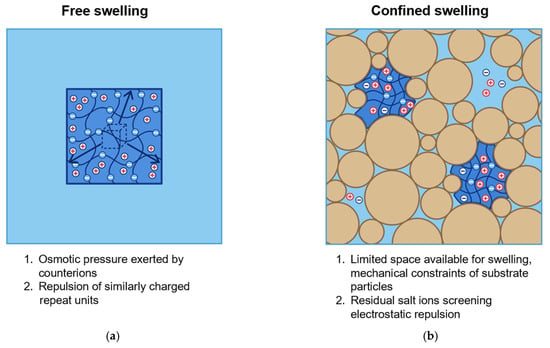
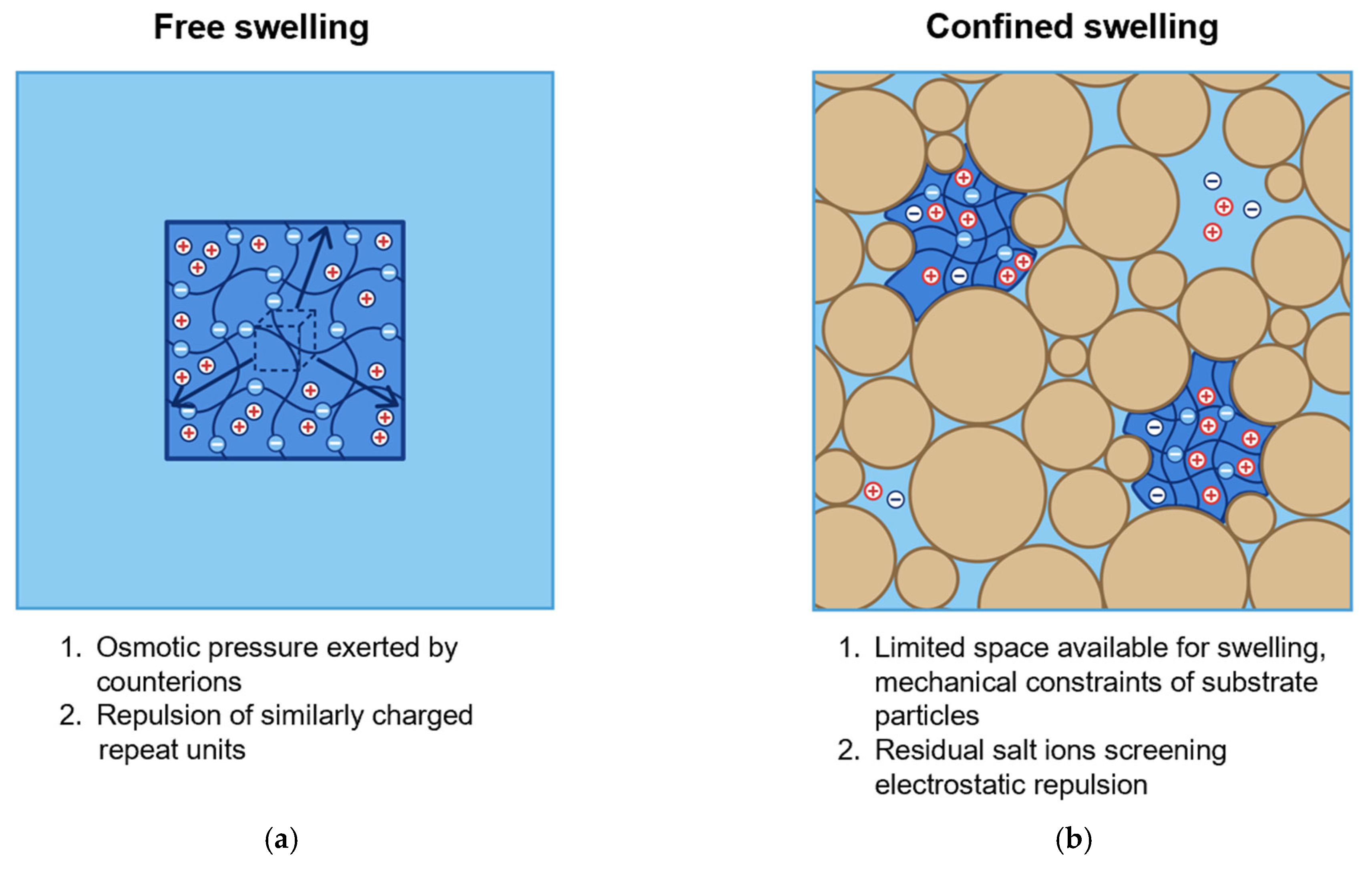
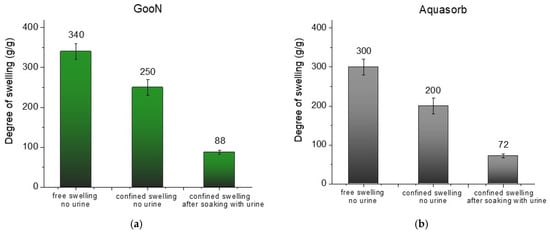
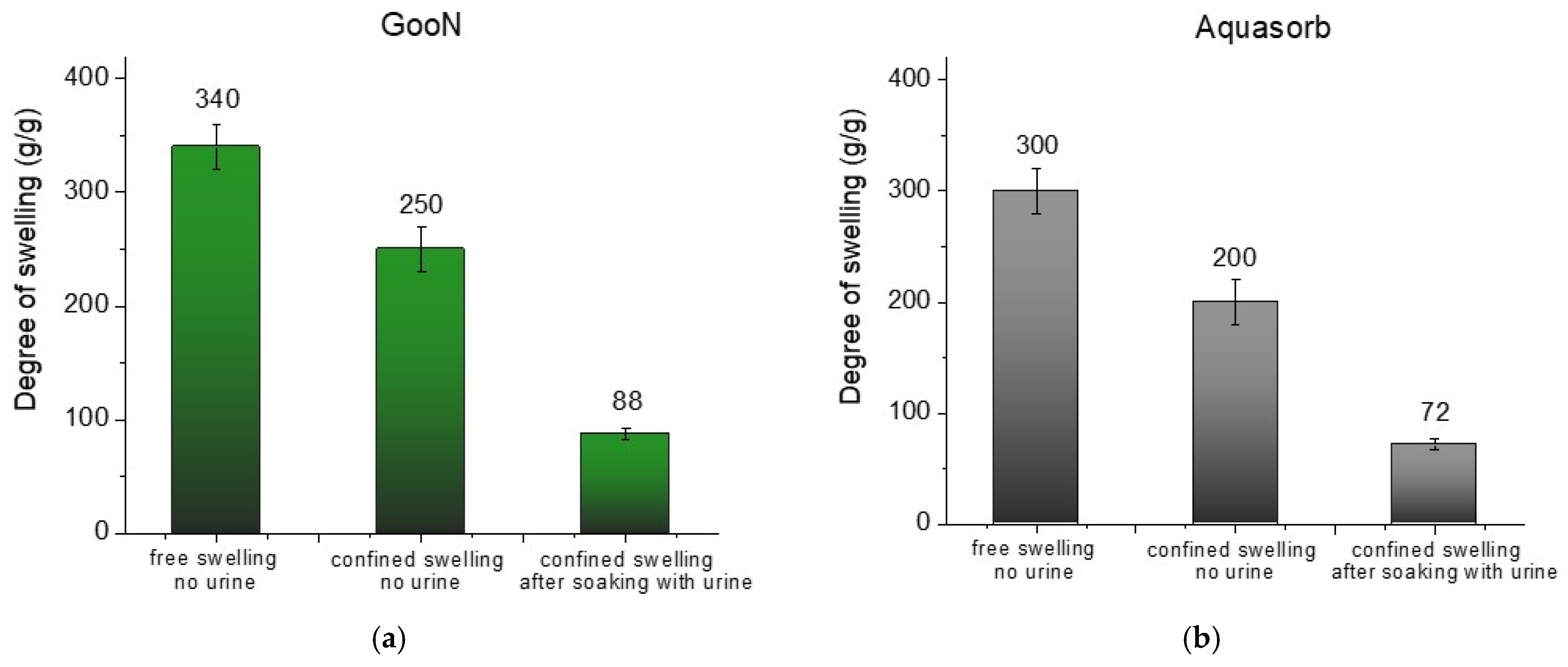
Compared to free swelling, confined swelling within sand or soil pores is significantly smaller (Table 1). This can be explained by two factors: first, the limited space available for swelling, as well as the mechanical constraints imposed by sand or soil particles that surround the gel species [38,39]; second, the presence of urine salts within the gel, which screen the electrostatic repulsion and reduce the osmotic pressure of the counterions (Figure 2). During swelling in sand/soil pores, some of the urine salts are expected to remain within the gel because much less water is used for swelling as compared to free swelling. One can discriminate between the contributions of these two factors by comparing the swelling of naked and urine-containing gels. For instance, the degree of swelling of naked GooN gel in sand is 250 g/g, while that of GooN gel containing urine is 88 g/g. Therefore, the decrease in swelling from 340 g/g (free swelling without urine) to 250 g/g (confined swelling without urine) is due to the limited space and the mechanical constraints, while the decrease from 250 g/g (confined swelling without urine) to 88 g/g (confined swelling with urine) is due to urine salts (Figure 3a). A similar situation is observed for Aquasorb. The decrease in swelling from 300 g/g (free swelling without urine) to 200 g/g (confined swelling without urine) is due to the limited space and the mechanical constraints, while the decrease from 200 g/g (confined swelling without urine) to 72 g/g (confined swelling with urine) is due to urine salts (Figure 3b).
Figure 2.
Schematic illustration of free swelling of the gel particles in a large volume of water (a) and confined swelling of the gel particles in sand or soil substrate (b).
Figure 3.
Degree of swelling of the diaper gel GooN (a) and the agricultural gel Aquasorb (b) in three different situations: free swelling without urine, confined swelling in sand without urine, and confined swelling in sand of the gel that had been soaked with urine.
Table 1 shows that in the sand pores, the diaper gels have a degree of swelling of 72–88 g/g. The highest degree of swelling is observed for GooN gel, which is 1.2 times higher than for Aquasorb (Table 1). In light loamy soil pores, the degree of swelling is lower than in sand (18–23 g/g for diaper gels and 25 g/g for Aquasorb), indicating that the swelling depends on the specific confining environment, which is in agreement with theoretical considerations [38]. In light loam, the Aquasorb gel seems to be slightly more effective than diaper gels, although the difference is within the margin of error (Table 1). Therefore, the diaper gels efficiently absorb water in both water solution and substrate pores. In water solution, some of them absorb even more water than agricultural gel Aquasorb, while in sand/soil pores, the absorption ability of both diaper and agricultural gels becomes similar.
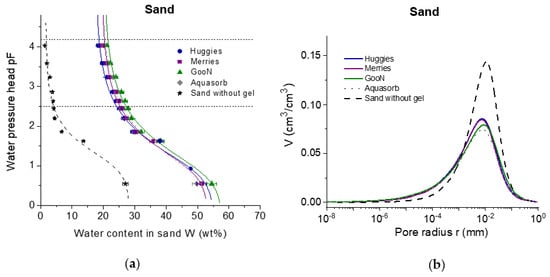
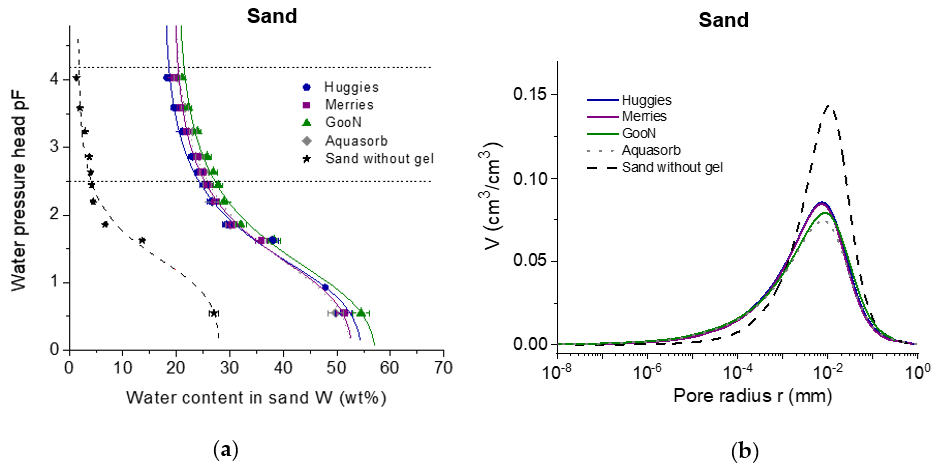
For agricultural purposes, a more significant factor is not the overall amount of water absorbed by the hydrogel, but the amount of water available for plants AWR. To determine it, the water retention curves of the sand/soil substrate containing gels are used. Water retention curves demonstrate the relationship between the soil water content W and the soil water pressure head pF. The pF value is a logarithmic measure of suction or tension created by the soil’s solid particles that hold water in the soil. To vary the pF value in our studies, equilibrium centrifugation at different rotation rates was employed [40]. The water retention curves for sand mixed with different types of gel are presented in Figure 4a. It is seen that the curves for sand with gel are strongly shifted toward higher water content compared to the curve for pure sand. The greater the water content at a given water pressure head, the more effectively it can retain water. Therefore, all sand samples containing gel have a much higher water retention capacity than pure sand. Moreover, diaper gels offer a similar enhancement in water retention as the agrogel.
Figure 4.
(a) Water retention curves for sand without additives (stars) and for sand with 0.5 vol% of gels that have been preliminarily swollen with artificial urine and dried: diaper gels Huggies (circles), Merries (squares), GooN (triangles) and agricultural gel Aquasorb (diamonds). All sand/gel samples were preliminarily saturated with water. Full lines on water retention curves depict the fitting of the experimental data with the van Genuchten equation [41]. (b) Pore size distribution for the same samples.
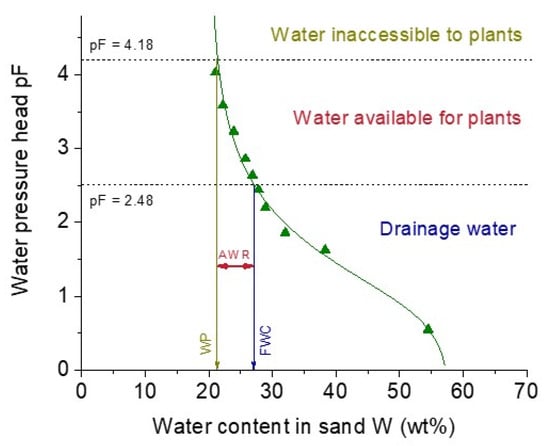
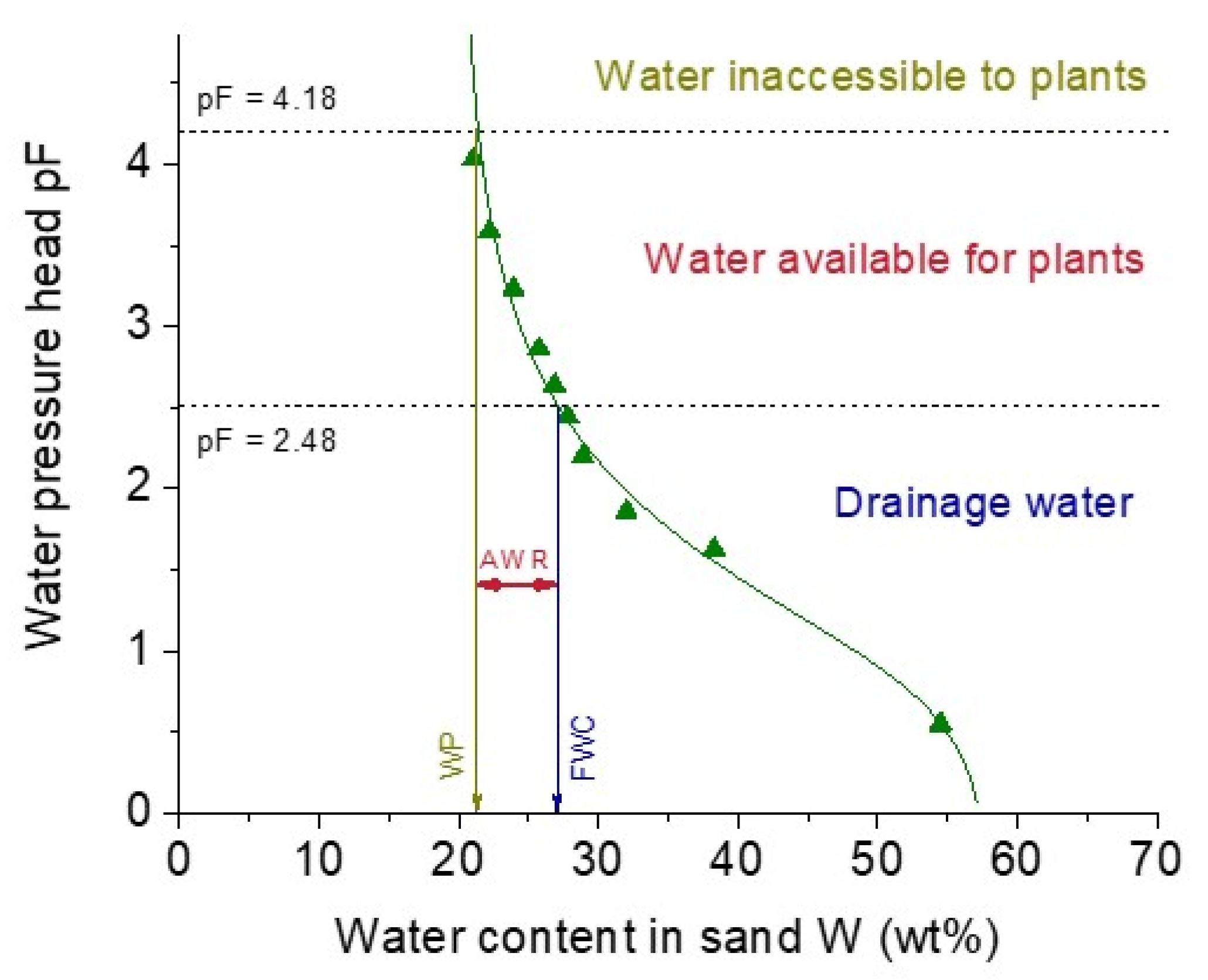
As the pF value increases, the water retention capacity W becomes smaller (Figure 4a). The water retention curve can be divided into three zones based on pF values (Figure 5). In the first zone, at pF values below ca.2.48 (−33 kPa), the water pressure head is weak, and water can drain freely. This concerns mainly water that is held in larger pores. At pF 2.48, all excess rain or irrigation water has been completely drained away from soil by gravity. In the second zone, at pF values between 2.48 and 4.18, soil contains water retained by adsorption and capillary forces, which can be accessed by plants. This corresponds to water held in smaller pores. Finally, in the third zone, at high pF values above 4.18 (−1500 kPa), the water pressure head becomes so strong that water is tightly held on the surface of the soil particles, making it inaccessible to plants. From the water content corresponding to the transition between these three zones for a given system, some soil-hydrophysical characteristics can be estimated [18,40,42]. The first of them is the field water capacity (FWC), which represents the amount of water that is retained in the soil by adsorption and capillary forces after the drainage has stopped [42]. It can be estimated from water content in soil W at the point of water retention curve corresponding to pF 2.48. The second characteristic is the wilting point (WP), which characterizes the soil water inaccessible to plants as it is firmly held at the surface of soil particles [42]. It can be estimated from water content in soil W at the point of water retention curve corresponding to pF 4.18. The third characteristic is AWR, which represents the range of water available to plants. It can be estimated from the difference between FWC and WP values: AWR = FWC − WP. The values thus obtained are summarized in Table 2. One can see that after the addition of gels, the FWC increased more than 6-fold, reaching 24–27 wt%, which is typical for fertile loamy soils with a high content of organic carbon [40,43]. The WP increased by an order of magnitude. At the same time, AWR becomes 2.5–3 times higher than for sand. Note that for diaper gels, the available water range for plants is the same as for the agricultural gel treated with urine. However, when compared to Aquasorb without urine, the AWR values of diaper gels are half as high. Thus, diaper gels containing absorbed urine are less effective in providing water for plants than Aquasorb without urine. Therefore, it is desirable to pre-wash these gels to remove urine before using them.
Figure 5.
Illustration of the estimation of the soil-hydrological constants FWC and WP on an example of water retention curve for sand with 0.5 vol% of Huggies gel containing artificial urine. pF = log(−P), where P is the water pressure head in cm. Dotted lines represent straight lines with pF = 2.48 (line 1) and pF = 4.18 (line 2), which limit the zones of drainage water, water available to plants, and water inaccessible to plants. The points of intersection of lines 1 and 2 with the water retention curve are used to estimate the soil-hydrological constants FWC and WP, respectively. From the difference between FWC and WP values, the range of water available to plants, AWR is determined. Full line depicts the fitting of the experimental data with the van Genuchten equation [41].
Table 2.
Hydrophysical characteristics of sand loaded with 0.5 vol% of different gels that have been preliminarily swollen with artificial urine and then dried.
The pore size distribution curves (Figure 4b) calculated from water retention curve show that the dominant pore sizes in pure sand range from 0.0001 to 0.1 mm, with a maximum at 0.01 mm. The addition of urine-containing gels leads to a slight widening of the pore size distribution, with the maximum shifting toward slightly smaller sizes (0.007–0.008 mm). Therefore, gels do not significantly alter the pore structure. Diaper gels act similarly to the agricultural gel.
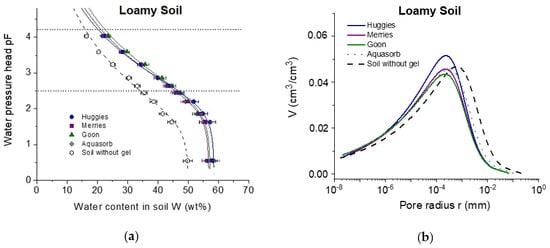
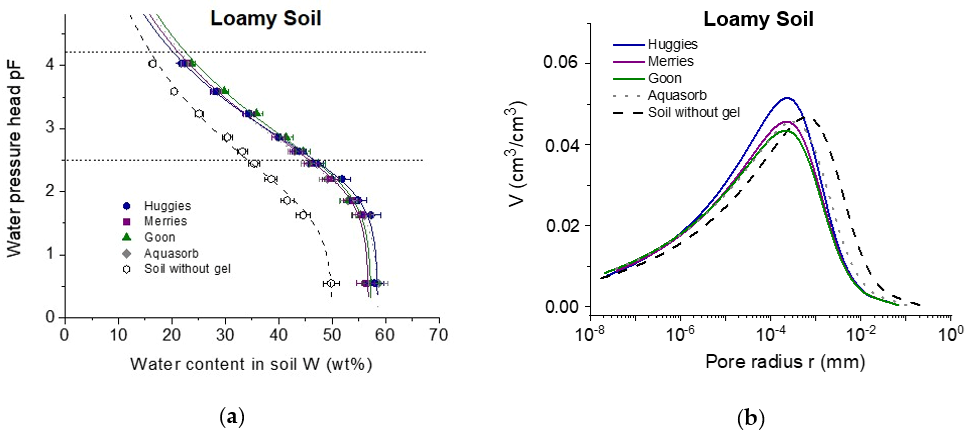
In light loamy soil, gels also increase water retention capacity (Figure 6a), but the effect is less significant than for sand (Figure 4a). This occurs because pure light loamy soil initially holds more water than sand at the same tension, which is due to its larger surface area and tiny pores [44,45]. Indeed, the maximum on pore size distribution in the light loamy soil is only 0.0006 mm, instead of 0.01 mm in sand (Figure 6b and Figure 4b). A similar smaller effect of SAP gels on loamy soil as compared to sand was previously reported in many papers [29,40,46].
Figure 6.
(a) Water retention curves for light loamy soil without additives (hexagons) and for soil with 0.5 vol% of added gels soaked in artificial urine and then dried: diaper gels Huggies (circles), Merries (squares), GooN (triangles) and agricultural gel Aquasorb (diamonds). All samples were preliminarily saturated with water. Full lines on water retention curves depict the fitting of the experimental data with the van Genuchten equation [41]. (b) Pore size distribution for the same samples.
Table 3 shows that in light loam, gels increase the FWC and AWR values by only up to 40%. The diaper gels provide even slightly higher FWC and AWR values than the agricultural gel with urine, but when compared to Aquasorb without urine, their FWC and AWR values are somewhat smaller.
Table 3.
Hydrophysical characteristics of light loamy soil loaded with 0.5 vol% of different gels that have been preliminarily swollen with artificial urine and then dried.
Thus, water-swelling and water-retention studies have shown that diaper gels containing urine increase the water content in sand and light loam, similar to agricultural gel treated with urine. However, the increase is less pronounced than for Aquasorb without urine. Therefore, it would be advisable to wash these gels before use in order to remove any urine. Furthermore, the washing is also an essential step of gel sterilization [24,25,26,47].
2.2. Gels After Washing from Urine and Sterilization
Nowadays, it is recommended that diaper sanitary products be reused after they have been washed with water and sterilized to remove pathogens [24,25,26,47]. Sterilization is often done by heating them in an oven for 15 min at 125 °C [24,25,26]. Such treatment inactivates all fungi, bacteria, viruses and also bacterial spores, which can be quite resistant to some other methods [48]. Since washing from urine and sterilization represent necessary steps in the reuse of diaper waste, it is important to estimate how these processes affect the water retention properties of the diaper gels. For these studies, sand was used as a model soil, as it allows for more pronounced effects of SAP gels and the need for SAP gels in sandy soils is greater than in other types of soil [49].
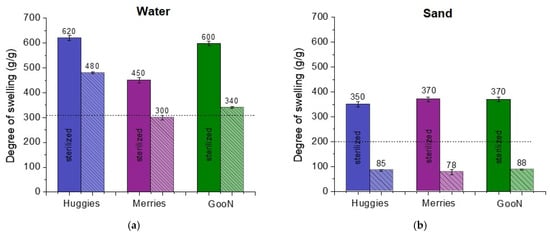
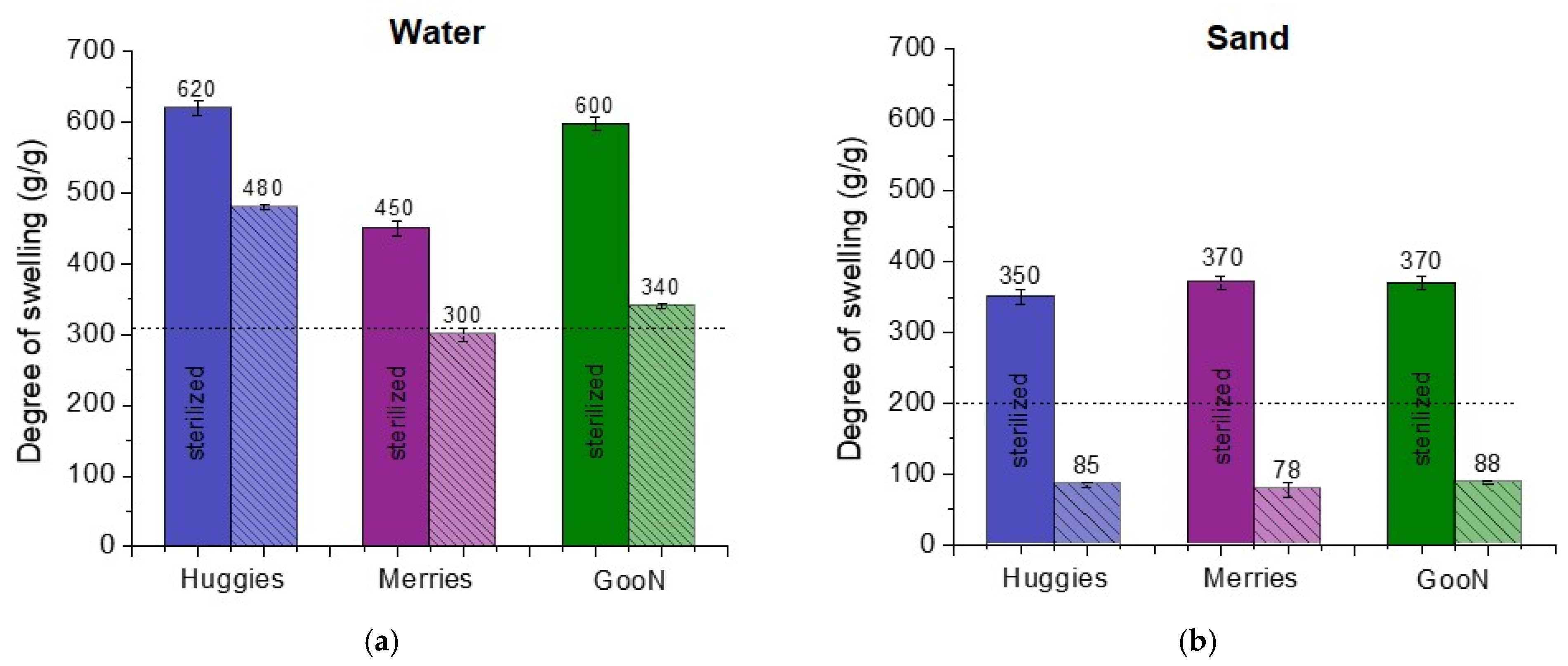
Figure 7a shows that, after washing and sterilization, diaper gels have a much higher degree of free swelling in water than the agricultural gel. Just washing (without sterilization) does not affect the degree of swelling at all. Therefore, the increased swelling of sterilized gels is due to thermal treatment. We believe that this is most likely due to the partial destruction of the polymer network during heating. By gravimetric measurements it was demonstrated that heating does not cause the leaching of polymer from any of the gels. This indicates that partial gel destruction does not lead to the removal of polymer fragments, but rather affects the internal structure of the gels, for example by increasing the mesh size. Taking into account that diaper gels are typically made from sodium polyacrylate crosslinked with poly(ethylene glycol) diacrylate [23], one can suggest that the increase in swelling could be caused by the breaking of bonds in the polyacrylate backbone and in the poly(ethylene glycol) cross-links, since C-C and C-O bonds have rather close energies [50]: 83 and 85.5 kJ/mol, respectively. One could also imagine some other reasons for the increased gel swelling. For example, this could be due to the release of salt ions from the gel, leading to increased electrostatic repulsion within the gel and reduced osmotic pressure of counterions. However, in the current gels, salt ions have already been removed during washing. Another possible reason is that the degree of charging of the gel may increase during heating. However, the gels were already highly charged as follows from the potentiometric titration data [27], so additional charged units would not significantly contribute to swelling due to counterion condensation on highly charged polymer chains. Therefore, partial destruction of the network appears to be the most likely reason for the enhanced swelling. It is worth noting that a similar increase in the degree of free swelling (from 300 to 390 g/g) occurs when agrogel Aquasorb, soaked with artificial urine, is subjected to the same washing and heating conditions.
Figure 7.
Degree of swelling of diaper gels before (shaded) and after (unshaded) washing from urine and sterilization at free swelling in water (a) and confined swelling in the mixture with sand (b). Dashed line shows the degree of swelling of Aquasorb gel (without urine) not subjected to washing and sterilization.
The increase in swelling of the washed and sterilized gels is more pronounced when they are mixed with sand (Figure 7b). Two reasons can be responsible for this effect: (i) partial destruction of the polymer network during sterilization, which increases the ability of the gel species to squeeze into the pores between sand grains; (ii) the presence of residual urine salts before washing, since swelling in sand pores involves a much smaller volume of water compared to free swelling. The first reason increases the swelling of the gel after washing and sterilization; the second reason decreases the swelling of the gels before washing.
Note that at confined swelling in the mixture with sand, the degree of swelling of the washed and sterilized gels (without urine) is higher than for the unsterilized gels (without urine). For example, the washed and sterilized GooN gel has a degree of swelling in sand of 370 g/g (Figure 7b), while unsterilized GooN gel without urine—250 g/g (Figure 3a). This increase may be due to the partial destruction of polymer network. At the same time, the degree of swelling of unsterilized GooN gel with urine (88 g/g) is smaller than for unsterilized gel without urine (250 g/g), which is due to residual urine salts, decreasing swelling. Thus, the effect of residual urine salts limiting gel swelling seems to be more pronounced than the effect of network partial destruction.
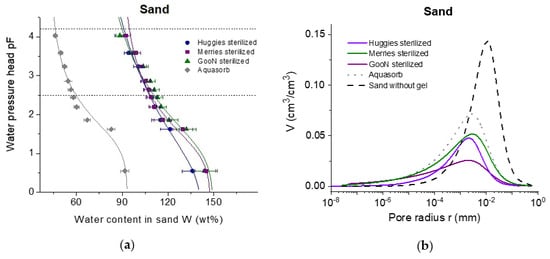
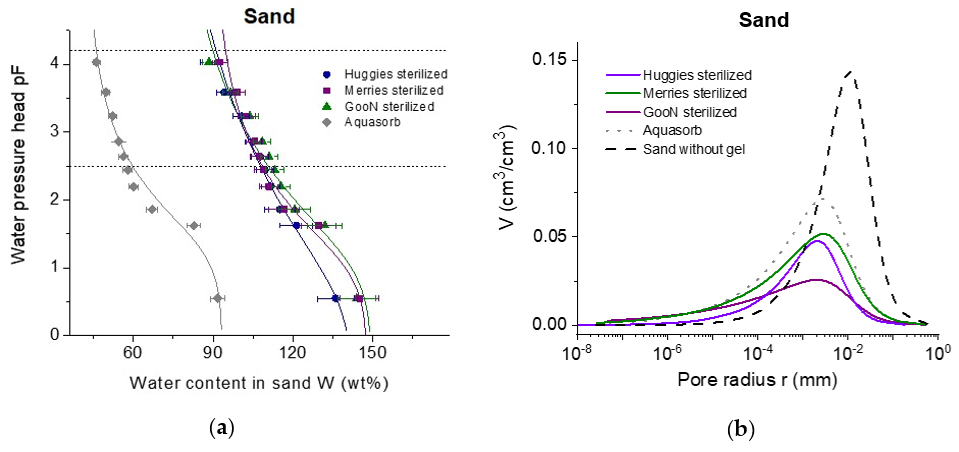
It is important to note that the degree of swelling of sterilized diaper gels in sand is 1.75–1.85 times greater than that of unsterilized agricultural gel (Figure 7b). Unsterilized Aquasorb was taken for comparison as this gel does not need to be sterilized for application in agriculture. Figure 8a shows the water retention curves of sterilized diaper gels compared to unsterilized Aquasorb. The Aquasorb sample was not preliminarily treated with artificial urine, as sterilized diaper gels were washed to remove any traces of urine. One can see that the diaper gel curves are strongly shifted to higher water contents, reflecting their greater degree of swelling. The sterilized diaper gels have two-fold higher FWC and WP values than Aquasorb, and 1.2–1.8 times higher AWR (Table 4). Thus, sterilized gels provide more water available for plants than unsterilized agrogel.
Figure 8.
(a) Water retention curves for sand with 0.5 vol% of diaper gels that have been preliminarily swollen with artificial urine, washed of it and then sterilized for 15 min at 125 °C and dried: Huggies (circles), Merries (squares) and GooN (triangles). Unsterilized agricultural gel Aquasorb (diamonds) that has not been pre-swollen with artificial urine is taken as a control sample. Full lines on water retention curves depict the fitting of the experimental data with the van Genuchten equation [41]. (b) Pore size distribution for the same samples.
Table 4.
Hydrophysical characteristics of sand loaded with 0.5 vol% of different gels that have been preliminarily swollen with artificial urine and then washed, sterilized and dried.
Figure 8b demonstrates that sterilized gels significantly affect the sand pore structure. The radii of the dominant pores shift toward the micropore region (from 0.01 mm to 0.002 mm), and the pore size distribution significantly expands. Such effect was previously observed, for instance, for the gels of copolymers of acrylamide and acrylic acid salts, filled by wastes of biocatalytic production of acrylamide, salts of humic acids and dispersed peat with additives of ionic silver [51,52]. It was attributed to the aggregation of mineral substrate grains induced by the gel [52]. The observed changes in pore size distribution suggest that sterilized gels have the potential not only for water retention, but also for soil restructuring, allowing the formation of organo-mineral aggregates that can protect sand from wind erosion [31,32]. Erosion resistance is often explained by the stabilization of the soil structure and the increased resistance of soil particles to movement by wind due to multiple interactions between polymer chains and complementary regions on the surface of soil particles [53]. The gel-induced aggregation was only observed for diaper gels after washing and sterilization. This can be explained by higher swelling of these gels, when the urine is removed (Figure 7). The displacement of the pore size distribution in the sand/Aquasorb mixture towards lower pore radii in the case of pure Aquasorb (Figure 8b), as compared to Aquasorb treated with urine (Figure 4b), counts in favor of this suggestion. Thus, upon removal of urine, the diaper gels affect the pore size distribution of the sand in a manner similar to that of pure agrogel.
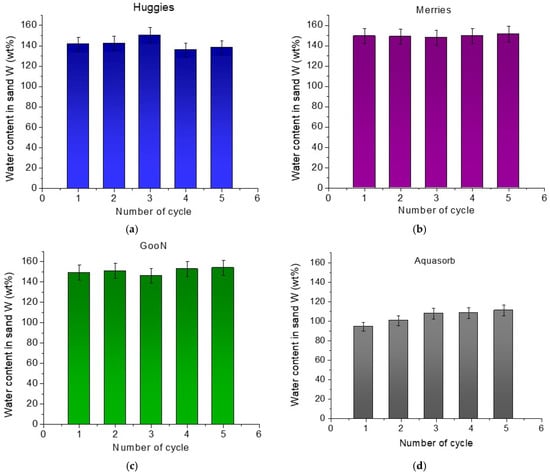
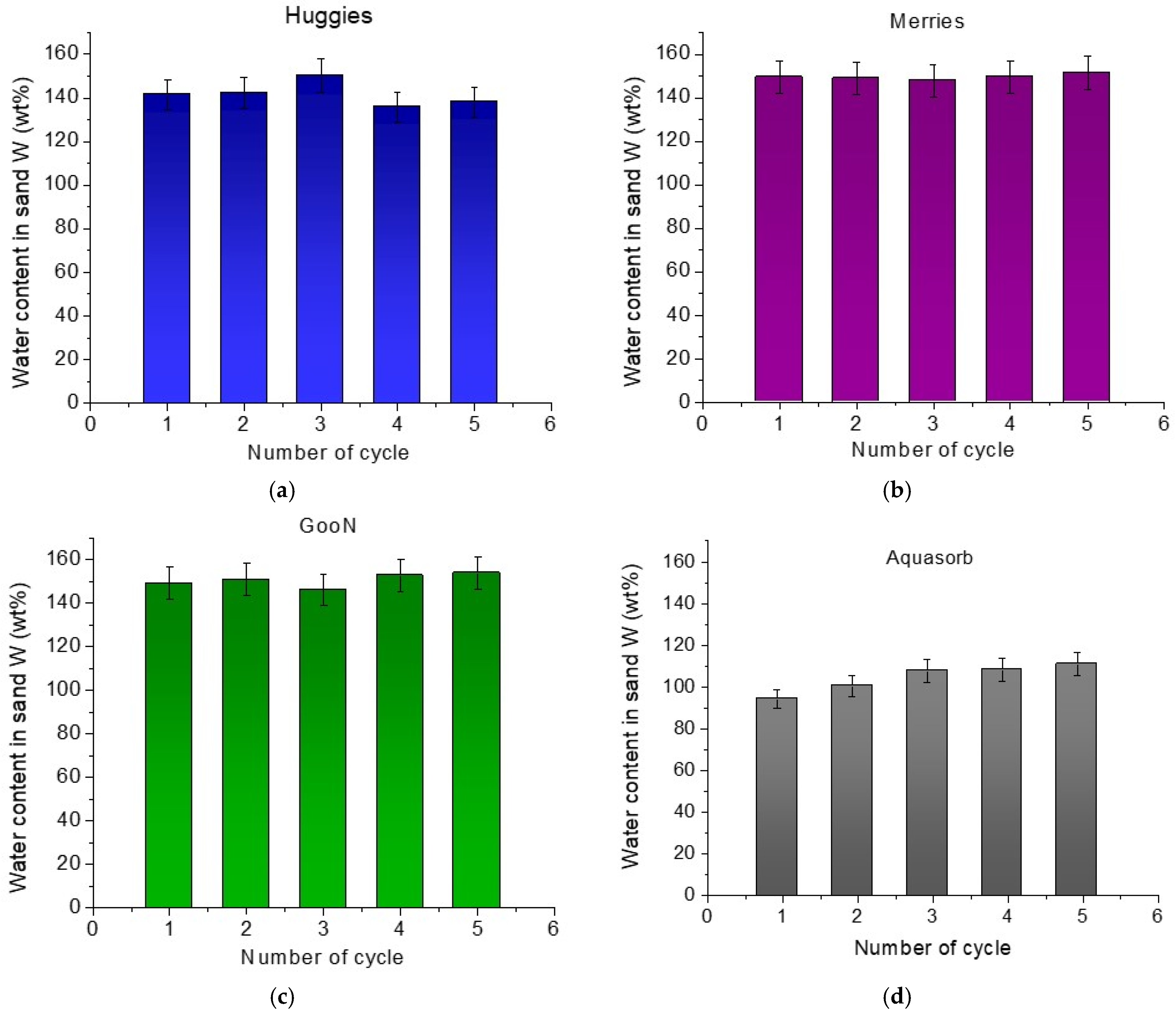
As the SAP gels in the soil go through repeated wetting/drying cycles [54], it is crucial to assess their ability to retain water during these cycles. To achieve this, we measured few water retention curves consecutively for the same sand/gel mixture, while removing the absorbed water through centrifugation and then allowing water reabsorption under ambient conditions. From Figure 9, one can see that after five wetting/drying cycles, the water content in the sand loaded with the gels remains relatively stable. All variations are within the margin of error, suggesting that all gels, including sterilized diaper gels and Aquasorb, maintain their water-holding properties even after multiple wetting/drying cycles. A similar negligible effect of cyclic water rewetting was observed previously for naked SAP gels from Huggies, Merries and GooN diapers that have not come into contact with urine [27], as well as for gels removed from diaper waste containing urine [26]. This similar behavior of SAPs from different diaper brands may be due to the similar composition and structure of these SAPs.
Figure 9.
The variation in the water content W in sand/gel mixtures containing 0.5 vol% of sterilized diaper gels Huggies (a), Merries (b) and GooN (c) and unsterilized Aquasorb (d) gel after reswelling following the loss of absorbed water due to centrifugation.
Thus, washing diaper gels of urine and sterilizing them significantly increase their degree of swelling, especially when mixed with sand, causing an increase in water available to plants. These results indicate that diaper gels could be a promising option for use in agriculture for water retention.
2.3. Germination and Seedling Growth
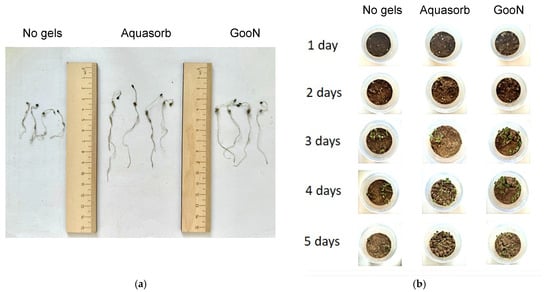
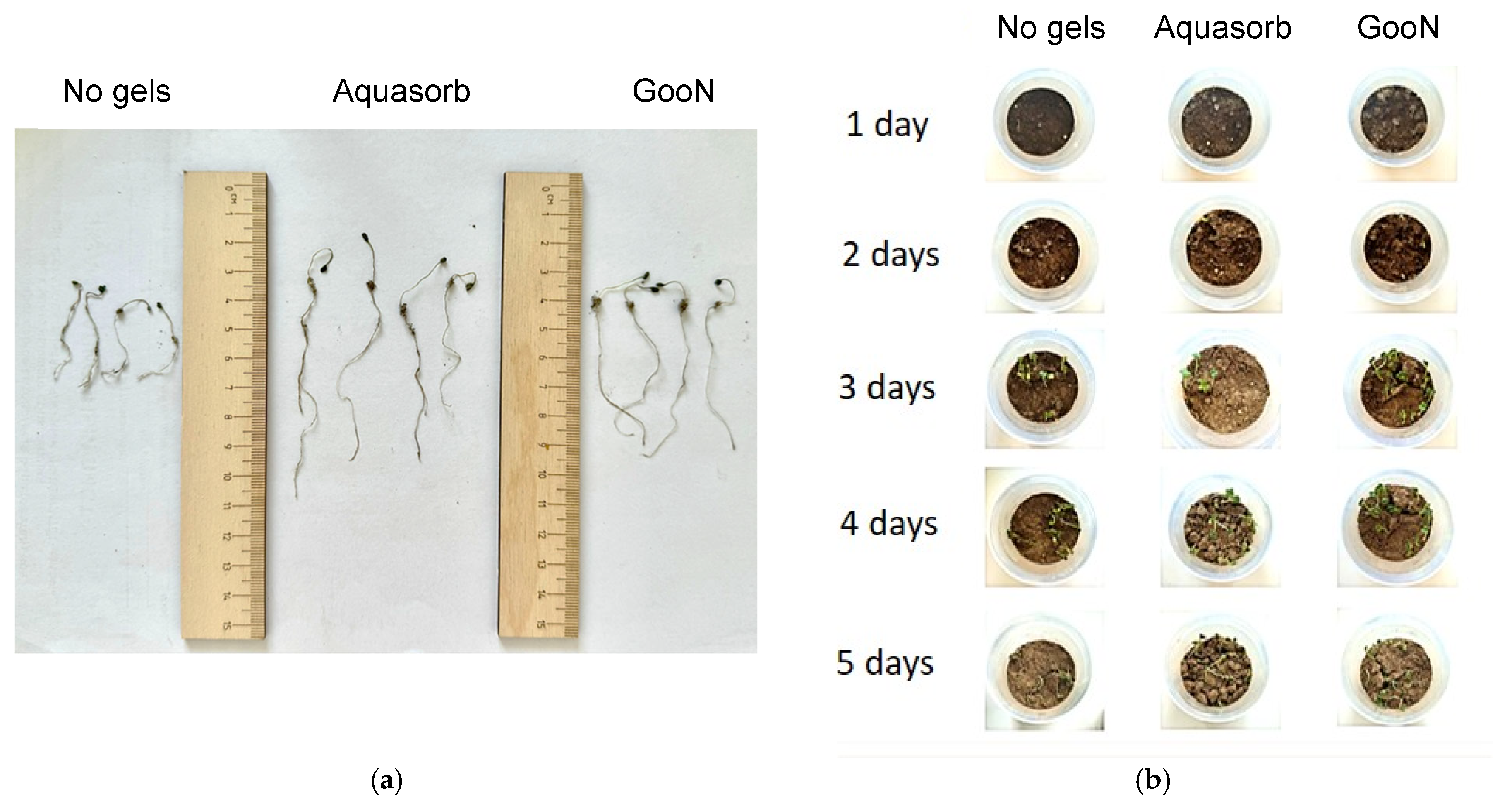
The effect of diaper gel on mustard (Brassica juncea L.) seed germination and seedling growth was investigated. For this aim, sterilized GooN diaper gels and light loamy soil were used. The results were characterized by five values: fresh weight per seedling, shoot and root lengths, germination percentage and germination index (Figure 10, Table 5). The germination percentage is the proportion of seeds that have sprouted out of the total number of seeds that were examined [26,55]. Germination index GI integrates both the number of germinated seeds and the speed of germination (represented by root length L) [56]:
where G0 and L0 refer to the control state in the absence of gel. Thus, the germination index provides a comprehensive measure of seed viability and early seedling vigor.
Figure 10.
Illustration of improving mustard (Brassica juncea L.) seed germination and seedling development by adding diaper GooN gel and agricultural gel Aquasorb.
Table 5.
Growth parameters of the mustard plant Brassica juncea L. in light loamy soil containing 0.5 vol% dried SAP gels.
Table 5 shows that the addition of diaper gel to the soil results in an improvement in both seed germination and seedling growth. In the presence of diaper gel, the fresh weight per seedling doubles, while shoot and root lengths increase by 40% and 28%, respectively. The germination percentage increases by ca. 74%. The germination index GI doubles, reaching a value of 225% (Table 5). Note that the germination index is a widely used and sensitive marker for assessing phytotoxicity [57,58]. The obtained GI value well above 60% indicates that the diaper gel does not exhibit phytotoxicity and is safe for plants [57]. Table 5 shows that the effect of the diaper gel on the fresh weight per seedling, shoot, and root lengths is similar to that of the agrogel Aquasorb, but the germination percentage and germination index of plants grown with diaper gel are even higher than those of plants grown with Aquasorb.
Therefore, using GooN as an example, we demonstrated that while diaper gels promote mustard plant growth similarly to Aquasorb gel, their effect on seed germination is even more significant. Based on this short-term five-day test, no acute phytotoxicity of diaper gel was detected.
3. Conclusions
In this paper, for the first time, the effect of washing and sterilization on the water-retention ability of urine-containing diaper SAP gels was examined. For this aim, the gels collected from three different diaper brands (Huggies, Merries, and GooN) and treated with artificial urine were used. The results for diaper gels are compared with those for the agricultural gel Aquasorb, which has not undergone washing and sterilization, as such treatment is not required for its use in agriculture. It is shown that after washing from urine and thermal sterilization, the diaper gels can be more effective at retaining water in soil than Aquasorb. They have a higher degree of swelling in both water and sand pores, and they provide higher AWR to sand. Similar to Aquasorb, washed and sterilized diaper gels can restructure the sand substrate, reducing the pore volume and making the substrate more resistant to erosion. Tests on seed germination and seedling growth, performed using GooN gel as an example, show that diaper gels are safe for plants, and their ability to promote seedling growth is close to that of the agrogel, but their enhancement of seed germination is even more significant.
Thus, gels derived from diapers have similar or even better properties than agricultural gels do and therefore, they could be a good alternative to conventional agricultural gels as soil additives, providing plants with water.
In future studies, it would be interesting to verify the key findings of this investigation using SAPs derived from diaper waste that has been treated with real human urine, which has a much more complex and variable composition compared to artificial urine. Additionally, the potential applications of diaper SAP gel for other agricultural uses, such as controlling fertilizer delivery and improving soil texture and aeration, should be explored.
4. Materials and Methods
4.1. Materials
The SAP gels from three different diaper brands were used: Huggies Dry Nights, size XXXL (Jaromer, Czech Republic), Merries Walker, size L (Tokyo, Japan), GooN Premium Soft, size L (Daio Paper Corporation, Fujimi, Japan). The SAP particles were removed from the absorbent pads of the diapers by separating them from the cellulose fibers manually. The agrogel Aquasorb 3005 KM from SNF (Andrézieux, France) was used for comparison. The histograms of the size distribution of both diaper and agricultural gel particles under study are presented in [27]. These histograms show that the sizes of all gel particles lie between 0.2 and 0.7 mm [27]. The content of charged carboxylate groups in diaper gels is 3.5–3.7 mmol per gram of dry gel, while for Aquasorb, it is only 1.8 mmol, as was determined by potentiometric titration previously [27]. The elemental analysis data show [27] that diaper gels do not contain N at all, indicating that N,N′-methylenebisacrylamide was not used as a crosslinker.
The loamy soil containing 91% turf, 5% sand, and 4% perlite from Nevatorf (Fornosovo, Leningrad region, Russia) was used as a model soil. Its bulk density was 1.27 g/cm3. The monomineralic quartz sand from Polimerpro (Kirov, Russia) was taken as another model soil. Its bulk density was 1.57 g/cm3. The sand grains ranged in size from 1 to 1.6 mm, with the volume fraction of pores of 0.42 [27].
Throughout the study, a distilled, deionized water purified by the Millipore Milli-Q system (Burlington, MA, USA) was used. The artificial urine with the composition presented in Table 6 closely mimicking healthy individuals’ urine was prepared following the protocol described in [59], except that it did not contain creatinine. The concentrations of its components are within the range of those found in human urine [60].
Table 6.
Formulation of the artificial urine used in this study.
4.2. Free Swelling
To study the free swelling, ca. 60 mg of dried gel particles were placed in 60 mL of distilled water and left for one day. After that, the particles were removed and weighed. All experiments were performed three times. The degree of swelling was calculated using the following equation [31]:
where msw and mdry represent the mass of the swollen and dry gel, respectively.
4.3. Swelling in Soil Pores
To study the swelling in soil pores, a cylindrical vial with a perforated bottom filled with the mixture of soil and gel particles was placed in an aqueous solution until the swelling reached equilibrium. All experiments were repeated three times. The degree of swelling of the gel particles mixed with the soil Qsoil was calculated as [13]:
where msw_mix and msw_soil represent the mass of swollen soil/gel mixture and swollen soil without gel particles, respectively.
4.4. Soaking with Urine, Washing and Sterilization
To simulate used diapers, the gels were preliminarily soaked in artificial urine (Table 6). Gel particles were placed in the artificial urine at a ratio of 0.1 g of gel per 200 mL of solution and kept for 1 h until swelling reached equilibrium. In the experiments with unwashed gels (Section 2.1), the gels were dried after soaking at 40 °C and used without further treatment. In the experiments with washed and sterilized gels (Section 2.2), the soaked gels were additionally subjected to washing and sterilization as follows. To remove urine, the swollen gels were transferred into 5 L of distilled water and left for 12 h. After that, the water was replaced with a fresh portion; this procedure was repeated three times. For sterilization, the washed gels were placed in Petri dishes and heated at 125 °C for 15 min. After sterilization, the gels were dried at 40 °C to constant mass.
4.5. Water Retention
To construct water retention curves, a 0.5 vol% (v/v) mixture of gel particles with sand/soil was used. For sand, the mixture contained 5.23 g of substrate (sand) and 17 mg of dry gel. In the case of loamy soil, which has a lower bulk density than sand, the mixture included 5.23 g of substrate (loamy soil) and 20 mg of dry gel. The mixtures were placed in plastic cylindrical vial with a perforated bottom. The samples were immersed in an aqueous solution until the degree of swelling reached equilibrium. To apply an external force, we employed the method of equilibrium centrifugation using a Thermo Scientific SL 16 laboratory centrifuge (Langenselbold, Germany). The centrifugation was conducted in a series of steps at the following rotation speeds n: 300, 400, 600, 800, 1000, 1300, 2000, 3000, and 5000 rpm. Once the equilibrium was achieved at each speed, the soil weight W was measured. The pF values were calculated as described in [27]. Four separate samples were analyzed for each condition. The error bars on the water retention curves indicate the standard errors of the mean.
Pore size of soil samples was assessed using the algebraic differential analysis of the water retention curves, approximated by the van Genuchten function [41]:
where P is an absolute value of the soil water pressure, Wr is the residual water content corresponding to tightly bound water, Ws is the water content in a state of saturation of the soil (full water capacity); α, n, m = 1 − 1/n are the van-Genuchten empirical constants. The values of these constants, which were obtained from the fitting of water retention curves for different samples, are listed in Table 7.
Table 7.
Fitting parameters α, n and m of the van Genuchten model (Equation (4)) and the coefficients of determination R2 for the approximation of water retention curves in sand and light loamy soil containing 0.5 vol% of different gels.
Water retention curves were then converted to the structural curves pore volume distribution by the size of their radii V(r) according to the formula [61]:
where ρb is the soil bulk density.
To study water retention during repeated wetting/drying cycles, a sample of a mixture of soil and gel particles was placed in a cylindrical vial and subjected to high pressure during centrifugation to expel the absorbed water. Then the sample was allowed to re-swell under ambient conditions. The wetting/drying cycles were repeated five times.
4.6. Germination and Seedling Growth
In the experiments on seed germination and seedling development, Sarepta sideral mustard Brassica juncea L. seeds supplied by Gavrish (Moscow, Russia) were used. SAP gels (washed and sterilized GooN diaper gel or unsterilized Aquasorb gel) were added to dry loamy soil to a final concentration of 0.5 vol%. Samples of 30 mL of the soil/gel mixture were placed into dishes, the soil without gel was used as a control. Mustard seeds were spread evenly across the soil, and then 10 mL of water was applied. For each variant, 40 seeds were sown per dish; the experiment was performed once. The dishes were covered with plastic film and left in darkness for 24 h. After the film was removed, seedling growth was monitored under light. By day 5, the shoots in the gel-free soil had dried out, whereas those in the gel-containing soils (both GooN and Aquasorb) had begun to wither. The plants were then carefully extracted. For each sample, the total fresh weight of the sprouts per seedling, the number of germinated seeds, shoot and root lengths were determined. Tukey’s multiple comparison tests (p < 0.05) were used to determine if there is a statistically significant difference between the groups under study. It should be noted that the drying of control shoots by day 5 may affect fresh weight per seedling. However, this drought stress does not affect other measured parameters, such as the number of germinated seeds (germination percentage) and the shoot and root lengths. Moreover, the drying of control shoots clearly demonstrates the effectiveness of gels in retaining water in the soil and, consequently, improving germination and seedling growth in the presence of gels.
4.7. Optical Microscopy
Optical microscopy measurements were carried out using a light microscope Nikon Eclipse LV100 POL (Tokyo, Japan) with a CFI TU Plan Fluor Epi objective lens (p 5×), at room temperature.
Author Contributions
Conceptualization, A.R.K. and O.E.P.; formal analysis, V.S.M., A.A.Y., A.R.K. and O.E.P.; investigation, I.V.P., K.B.S., V.S.M., K.I.Y. and I.G.P.; resources, A.A.Y. and O.E.P.; writing—original draft preparation, O.E.P.; writing—review and editing, K.B.S., V.S.M. and O.E.P.; supervision, A.R.K. and O.E.P.; funding acquisition, A.R.K. and O.E.P. All authors have read and agreed to the published version of the manuscript.
Funding
This work was supported by a grant from the Ministry of Science and Higher Education of the Russian Federation for large-scale research projects in high-priority areas of scientific and technological development (grant number 075-15-2024-553).
Institutional Review Board Statement
Not applicable.
Informed Consent Statement
Not applicable.
Data Availability Statement
Data is contained within the article.
Acknowledgments
The financial support provided by a grant from the Ministry of Science and Higher Education of the Russian Federation for large-scale research projects in high-priority areas of scientific and technological development (grant number 075-15-2024-553) is acknowledged.
Conflicts of Interest
The authors declare no conflicts of interest.
References
- Zhang, S.; Wang, J.; Su, D.; Xiao, X. Facile visible-light upcycling of diverse waste plastics using a single organocatalyst with minimal loadings. Nat. Commun. 2025, 16, 4188. [Google Scholar] [CrossRef] [Scilit] [PubMed]
- Kumar, A.; Thakur, V.K.; Nezhad, H.Y.; Lee, K.-S. Prospects of sustainable polymers. Sci. Rep. 2024, 14, 9430. [Google Scholar] [CrossRef] [Scilit] [PubMed]
- Plastic Pollution. Available online: https://ourworldindata.org/plastic-pollution (accessed on 24 September 2026).
- Plastics the Fast Facts 2025. Available online: https://plasticseurope.org/knowledge-hub/plastics-the-fast-facts-2025/ (accessed on 24 September 2026).
- Empire State Building Facts: All You Need to Know. Available online: https://www.esbnyc.com/about/facts-figures (accessed on 24 September 2026).
- UN Environment Programme. Plastic Pollution. Available online: https://www.unep.org/topics/chemicals-and-pollution-action/plastic-pollution (accessed on 24 September 2026).
- Ingrao, C.; Strippoli, R.; Lagioia, G.; Huisingh, D. Water scarcity in agriculture: An overview of causes, impacts and approaches for reducing the risks. Heliyon 2023, 9, e-18507. [Google Scholar] [CrossRef] [Scilit] [PubMed]
- Biswas, A.; Sarkar, S.; Das, S.; Dutta, S.; Choudhury, M.R.; Giri, A.; Bera, B.; Bag, K.; Mukherjee, B.; Banerjee, K.; et al. Water scarcity: A global hindrance to sustainable development and agricultural production—A critical review of the impacts and adaptation strategies. Camb. Prism. Water 2025, 3, e4. [Google Scholar] [CrossRef] [Scilit]
- Zohuriaan-Mehr, M.J.; Omidian, H.; Doroudiani, S.; Kabiri, K. Advances in non-hygienic applications of superabsorbent hydrogel materials. J. Mater. Sci. 2010, 45, 5711–5735. [Google Scholar] [CrossRef] [Scilit]
- Wei, Y.; Durian, D.J. Rain water transport and storage in a model sandy soil with hydrogel particle additives. Eur. Phys. J. E 2014, 37, 97. [Google Scholar] [CrossRef] [Scilit] [PubMed]
- Oladosu, Y.; Rafii, M.Y.; Arolu, F.; Chukwu, S.C.; Salisu, M.A.; Fagbohun, I.K.; Muftaudeen, T.K.; Swaray, S.; Haliru, B.S. Superabsorbent polymer hydrogels for sustainable agriculture: A review. Horticulturae 2022, 8, 605. [Google Scholar] [CrossRef] [Scilit]
- Zhu, J.; Suhaimi, F.; Lim, J.Y.; Gao, Z.; Swarup, S.; Loh, C.S.; Li, J.; Ong, C.N.; Tan, W.K. A field study on using soybean waste-derived superabsorbent hydrogel to enhance growth of vegetables. Sci. Total Environ. 2022, 851, 158141. [Google Scholar] [CrossRef] [Scilit] [PubMed]
- Iliasov, L.; Shibaev, A.; Panova, I.; Kushchev, P.; Philippova, O.; Yaroslavov, A. Weakly cross-linked anionic copolymers: Kinetics of swelling and water-retaining properties of hydrogels. Polymers 2023, 15, 3244. [Google Scholar] [CrossRef] [Scilit] [PubMed]
- Abdelghafar, R.; Abdelfattah, A.; Mostafa, H. Effect of super absorbent hydrogel on hydro-physical properties of soil under deficit irrigation. Sci. Rep. 2024, 14, 7655. [Google Scholar] [CrossRef] [Scilit] [PubMed]
- Agbna, G.H.D.; Zaidi, S.J. Hydrogel performance in boosting plant resilience to water stress—A review. Gels 2025, 11, 276. [Google Scholar] [CrossRef] [Scilit] [PubMed]
- Niu, Q.; Xie, J.; Li, J.; An, Z.; Xiao, H.; Zhang, X.; Su, Z.; Wang, Z. Superabsorbent polymers: Innovations in ecology, environmental, and diverse applications. Materials 2025, 18, 823. [Google Scholar] [CrossRef] [Scilit] [PubMed]
- Saha, A.; Sekharan, S.; Manna, U. Superabsorbent hydrogel (SAH) as a soil amendment for drought management: A review. Soil Tillage Res. 2020, 204, 104736. [Google Scholar] [CrossRef] [Scilit]
- Adjuik, T.A.; Nokes, S.E.; Montross, M.D.; Wendroth, O. The impacts of bio-based and synthetic hydrogels on soil hydraulic properties: A review. Polymers 2022, 14, 4721. [Google Scholar] [CrossRef] [Scilit]
- Kiushov, A.A.; Panova, I.G.; Molchanov , V.S.; Arzhakov, M.S.; Iliasov, L.O.; Philippova, O.E.; Yaroslavov, A.A. The effect of natural chitosan, humate and their complexes on the rheological properties of wet kaolinite. Polymers 2026, 18, 2690. [Google Scholar] [CrossRef] [Scilit]
- Superabsorbent Polymers (SAP) Market Size & Share Analysis—Growth Trends and Forecast (2026–2031). Available online: https://www.mordorintelligence.com/industry-reports/super-absorbent-polymer-sap-market (accessed on 24 September 2026).
- Superabsorbent Polymer Market Analysis. Available online: https://www.chemanalyst.com/industry-report/superabsorbent-polymer-market-727 (accessed on 24 September 2026).
- Superabsorbent Polymer Market Revenue Share by Application. Available online: https://www.gminsights.com/industry-analysis/superabsorbent-polymers-sap-market (accessed on 24 September 2026).
- Chazovachii, P.T.; Somers, M.J.; Robo, M.T.; Collias, D.I.; James, M.I.; Marsh, E.N.G.; Zimmerman, P.M.; Alfaro, J.F.; McNeil, A.J. Giving superabsorbent polymers a second life as pressure-sensitive adhesives. Nat. Commun. 2021, 12, 4524. [Google Scholar] [CrossRef] [Scilit] [PubMed]
- Sánchez-Orozco, R.; Timoteo-Cruz, B.; Torres-Blancas, T.; Ureña-Núñez, F. Valorization of superabsorbent polymers from used disposable diapers as soil moisture retainer. Int. J. Res.-Granthaalayah 2017, 5, 105–117. [Google Scholar] [CrossRef]
- Al-Jabari, M.; Ghyadah, R.A.; Alokely, R. Recovery of hydrogel from baby diaper wastes and its application for enhancing soil irrigation management. J. Environ. Manag. 2019, 239, 255–261. [Google Scholar] [CrossRef] [Scilit] [PubMed]
- Zekry, M.; Nassar, I.; Salim, H.; Abdallah, A. The potential of super absorbent polymers from diaper wastes to enhance waterretention properties of the soil. Soil Environ. 2020, 39, 27–37. [Google Scholar] [CrossRef] [Scilit]
- Shishkhanova, K.B.; Molchanov, V.S.; Prokopiv, I.V.; Khokhlov, A.R.; Philippova, O.E. The potential for reusing superabsorbent polymer from baby diapers for water retention in agriculture. Gels 2025, 11, 795. [Google Scholar] [CrossRef] [Scilit] [PubMed]
- Young, M.H.; Wierenga, P.J.; Warrick, A.W.; Hofmann, L.L.; Musil, S.A. Variability of wetting front velocities during a field-scale infiltration experiment. Water Resour. Res. 1999, 35, 3079–3087. [Google Scholar] [CrossRef] [Scilit]
- Malik, S.; Chaudhary, K.; Malik, A.; Punia, H.; Sewhag, M.; Berkesia, N.; Nagora, M.; Kalia, S.; Malik, K.; Kumar, D.; et al. Superabsorbent polymers as a soil amendment for increasing agriculture production with reducing water losses under water stress condition. Polymers 2023, 15, 161. [Google Scholar] [CrossRef] [Scilit] [PubMed]
- Wang, L.; Hu, J.; Wang, L.; Xue, X.; Guo, P.; Dong, Y.; Xiao, F.; Li, C.; Guo, L. Hydrogels for agricultural applications: From soil amendment to crop enhancement. Gels 2026, 12, 413. [Google Scholar] [CrossRef] [Scilit] [PubMed]
- Tingle, J.S.; Newman, J.K.; Larson, S.L.; Weiss, C.A.; Rushing, J.F. Stabilization Mechanisms of Nontraditional Additives. Transp. Res. Rec. 2007, 1989-2, 59–67. [Google Scholar] [CrossRef] [Scilit]
- Panova, I.G.; Ilyasov, L.O.; Khaydarova, D.D.; Ogawa, K.; Adachi, Y.; Yaroslavov, A.A. Polyelectrolytic gels for stabilizing sand soil against wind erosion. Polym. Sci. Ser. B 2020, 62, 491–498. [Google Scholar] [CrossRef] [Scilit]
- Philippova, O.E.; Khokhlov, A.R. Polymer gels. In Polymer Science: A Comprehensive Reference; Matyjaszewski, K., Möller, M., Eds.; Elsevier: Amsterdam, The Netherlands, 2012; Volume 1, pp. 339–366. [Google Scholar] [CrossRef] [Scilit]
- Katchalsky, A.; Michaeli, I. Polyelectrolyte gels in salt solutions. J. Polym. Sci. 1955, 15, 69–86. [Google Scholar] [CrossRef] [Scilit]
- Kramarenko, E.Y.; Philippova, O.E.; Khokhlov, A.R. Polyelectrolyte networks as highly sensitive polymers. Polym. Sci. Ser. C 2006, 48, 1–20. [Google Scholar] [CrossRef] [Scilit]
- Horkay, F.; Basser, P.J.; Hecht, A.M.; Geissler, E. Effect of calcium/sodium ion exchange on the osmotic properties and structure of polyelectrolyte gels. Proc. Inst. Mech. Eng. H 2015, 22, 895–904. [Google Scholar] [CrossRef] [Scilit] [PubMed]
- Liu, Y.M.; Chen, J.D.; Huang, X.Z.; Zhang, Z.-X.; Chen, G. Influence of salt on swelling and modulus of polyelectrolyte gels. Chin. J. Polym. Sci. 2026, 44, 2495–2501. [Google Scholar] [CrossRef] [Scilit]
- Monchetti, S.; Tatar, F.; Betti, M.; Brighenti, R. Mechanics of confined swelling in hydrogels. Meccanica 2026, 61, 42. [Google Scholar] [CrossRef] [Scilit]
- Zhang, Z.; Adel, M.; He, J.; Li, Y.; Xu, C.; Pan, Y.; Zhuang, R.; Huang, Q.; Luo, W.; Iwai, S.; et al. Confinement controlled swelling mechanisms of hydrogels in multi-material architectures. Mater. Des. 2026, 264, 115809. [Google Scholar] [CrossRef] [Scilit]
- Smagin, A.; Panova, I.; Ilyasov, L.; Ogawa, K.; Adachi, Y.; Yaroslavov, A. Water retention in sandy substrates modified by cross-linked polymeric microgels and their complexes with a linear cationic polymer. J. Appl. Polym. Sci. 2021, 138, 50754. [Google Scholar] [CrossRef] [Scilit]
- van Genuchten, M.T. A closed-form equation for predicting the hydraulic conductivity of unsaturated soils. Soil Sci. Soc. Am. J. 1980, 44, 892–898. [Google Scholar] [CrossRef] [Scilit]
- Ehlers, W.; Goss, M. Water Dynamics in Plant Production; CABI: Wallingford, UK, 2016. [Google Scholar]
- Lal, R.; Shukla, M.K. Principles of Soil Physics; Marcel Dekker, Inc.: Columbus, OH, USA, 2004. [Google Scholar]
- O’Geen, A.T. Soil water dynamics. Nat. Educ. Knowl. 2013, 4, 9. Available online: https://www.nature.com/scitable/knowledge/library/soil-water-dynamics-103089121/ (accessed on 7 November 2026).
- Soil and Water Relationships. Available online: https://www.noble.org/regenerative-agriculture/soil/soil-and-water-relationships/ (accessed on 24 September 2026).
- Yu, J.; Shainberg, I.; Yan, Y.L.; Shi, J.G.; Levy, G.J.; Mamedov, A.I. Superabsorbents and semiarid soil properties affecting water absorption. Soil Sci. Soc. Am. J. 2011, 75, 2305–2313. [Google Scholar] [CrossRef] [Scilit]
- Takaya, C.A.; Cooper, I.; Berg, M.; Carpenter, J.; Muir, R.; Brittle, S.; Sarker, D.K. Offensive waste valorisation in the UK: Assessment of the potentials for absorbent hygiene product (AHP) recycling. Waste Manag. 2019, 88, 56–70. [Google Scholar] [CrossRef] [Scilit] [PubMed]
- Martin, S.; Duncan, E. Sterilisation considerations for implantable sensor systems. In Implantable Sensor Systems for Medical Applications; Inmann, A., Hodgins, D., Eds.; Woodhead Publishing: Sawston, UK, 2013; Chapter 8; pp. 253–278. [Google Scholar] [CrossRef] [Scilit]
- Kramer, P.J. Water Relations of Plants; Academic Press: New York, NY, USA, 1983. [Google Scholar]
- Bond Energies. Available online: https://bionumbers.hms.harvard.edu/files/Bond%20energies-average%20bond%20dissociation%20enthalpies.pdf#1#1 (accessed on 29 September 2026).
- Smagin, A.V.; Budnikov, V.I.; Sadovnikova, N.B.; Smagina, M.V.; Sidorova, M.A. Water retention in different types of protec-tive gel compositions for plant rhizosphere. IOP Conf. Ser. Earth Environ. Sci. 2019, 368, 012049. [Google Scholar] [CrossRef] [Scilit]
- Smagin, A.; Sadovnikova, N.; Smagina, M. Synthetic gel structures in soils for sustainable potato farming. Sci. Rep. 2019, 9, 18588. [Google Scholar] [CrossRef] [Scilit] [PubMed]
- Liu, J.; Shi, B.; Jiang, H.; Huang, H.; Wang, G.; Kamai, T. Research on the stabilization treatment of clay slope topsoil by organic polymer soil stabilizer. Eng. Geol. 2011, 117, 114–120. [Google Scholar] [CrossRef] [Scilit]
- Banedjschafie, S.; Durner, W. Water retention properties of a sandy soil with superabsorbent polymers as affected by aging and water quality. J. Plant Nutr. Soil Sci. 2015, 178, 798–806. [Google Scholar] [CrossRef] [Scilit]
- Ghaleb, W.; Ahmed, L.Q.; Wagner, M.-H.; Eprinchard-Ciesla, A.; Olivares-Rodríguez, W.E.; Perrot, C.; Chenu, K.; Norton, M.; Escobar-Gutiérrez, A.J. The concepts of seed germination rate and germinability: A re-evaluation for cool-season grasses. Agronomy 2022, 12, 1291. [Google Scholar] [CrossRef] [Scilit]
- Montesano, F.F.; Parente, A.; Santamaria, P.; Sannino, A.; Serio, F. Biodegradable superabsorbent hydrogel increases water retention properties of growing media and plant growth. Agric. Agric. Sci. Procedia 2015, 4, 451–458. [Google Scholar] [CrossRef] [Scilit]
- Zucconi, F.; Monaco, A.; Forte, M.; de Bertoldi, M. Phytotoxins during the stabilization of organic matter. In Composting of Agricultural and Other Wastes; Gasser, J.K.R., Ed.; Elsevier Applied Science Publishers: London, NY, USA, 1985. [Google Scholar]
- Kong, Y.; Zhang, J.; Yang, Y.; Liu, Y.; Zhang, L.; Wang, G.; Liu, G.; Dang, R.; Li, G.; Yuan, J. Determining the extraction conditions and phytotoxicity threshold for compost maturity evaluation using the seed germination index method. Waste Manag. 2023, 171, 502–511. [Google Scholar] [CrossRef] [Scilit] [PubMed]
- Birchall, L.; Newmarch, M.; Cohen, C.; Tausif, M. Morphological and performance assessment of commercial menstrual and incontinence absorbent hygiene products. Polymers 2026, 18, 318. [Google Scholar] [CrossRef] [Scilit] [PubMed]
- Sarigul, N.; Korkmaz, F.; Kurultak, İ. A new artificial urine protocol to better imitate human urine. Sci. Rep. 2019, 9, 20159. [Google Scholar] [CrossRef] [Scilit] [PubMed]
- Smagin, A.V.; Sadovnikova, N.B.; Nikolaeva, E.I. Thermodynamic analysis of the effect of strongly swelling polymer hydrogels on the physical state of soil and sediment samples. Eurasian Soil Sci. 2014, 47, 78–88. [Google Scholar] [CrossRef] [Scilit]

Disclaimer/Publisher’s Note: The statements, opinions and data contained in all publications are solely those of the individual author(s) and contributor(s) and not of MDPI and/or the editor(s). MDPI and/or the editor(s) disclaim responsibility for any injury to people or property resulting from any ideas, methods, instructions or products referred to in the content. |
© 2026 by the authors. Licensee MDPI, Basel, Switzerland. This article is an open access article distributed under the terms and conditions of the Creative Commons Attribution (CC BY) license.