Article

Self-Reactive Carbon Dioxide Absorbent with Sodium Carbonate-Based Hydrogel

Department of Packaging, Yonsei University, Wonju 26493, Republic of Korea
*
Author to whom correspondence should be addressed.
Gels 2025, 11(1), 78; https://doi.org/10.3390/gels11010078
Submission received: 26 December 2024 / Revised: 16 January 2025 / Accepted: 18 January 2025 / Published: 20 January 2025

Abstract

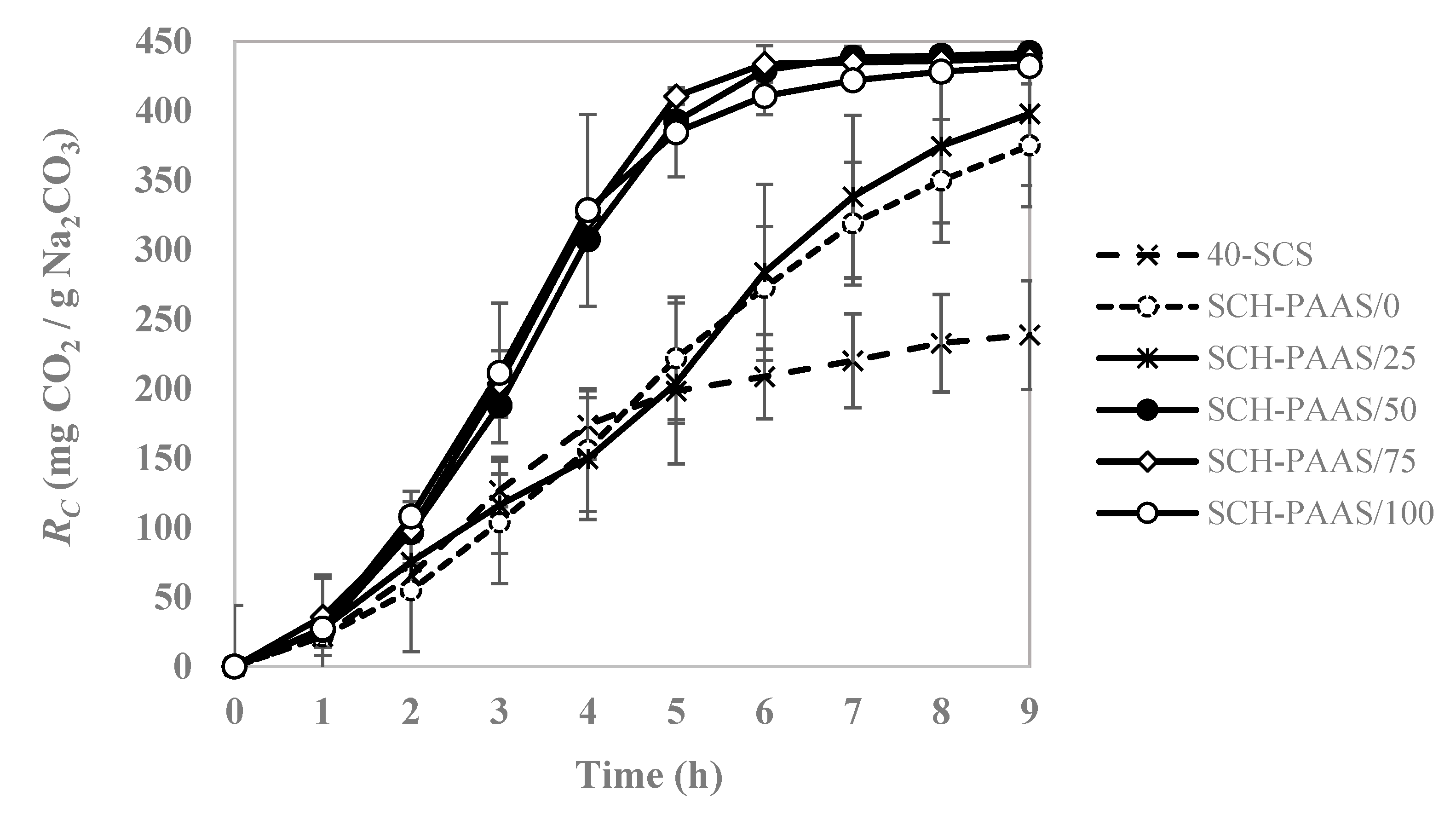
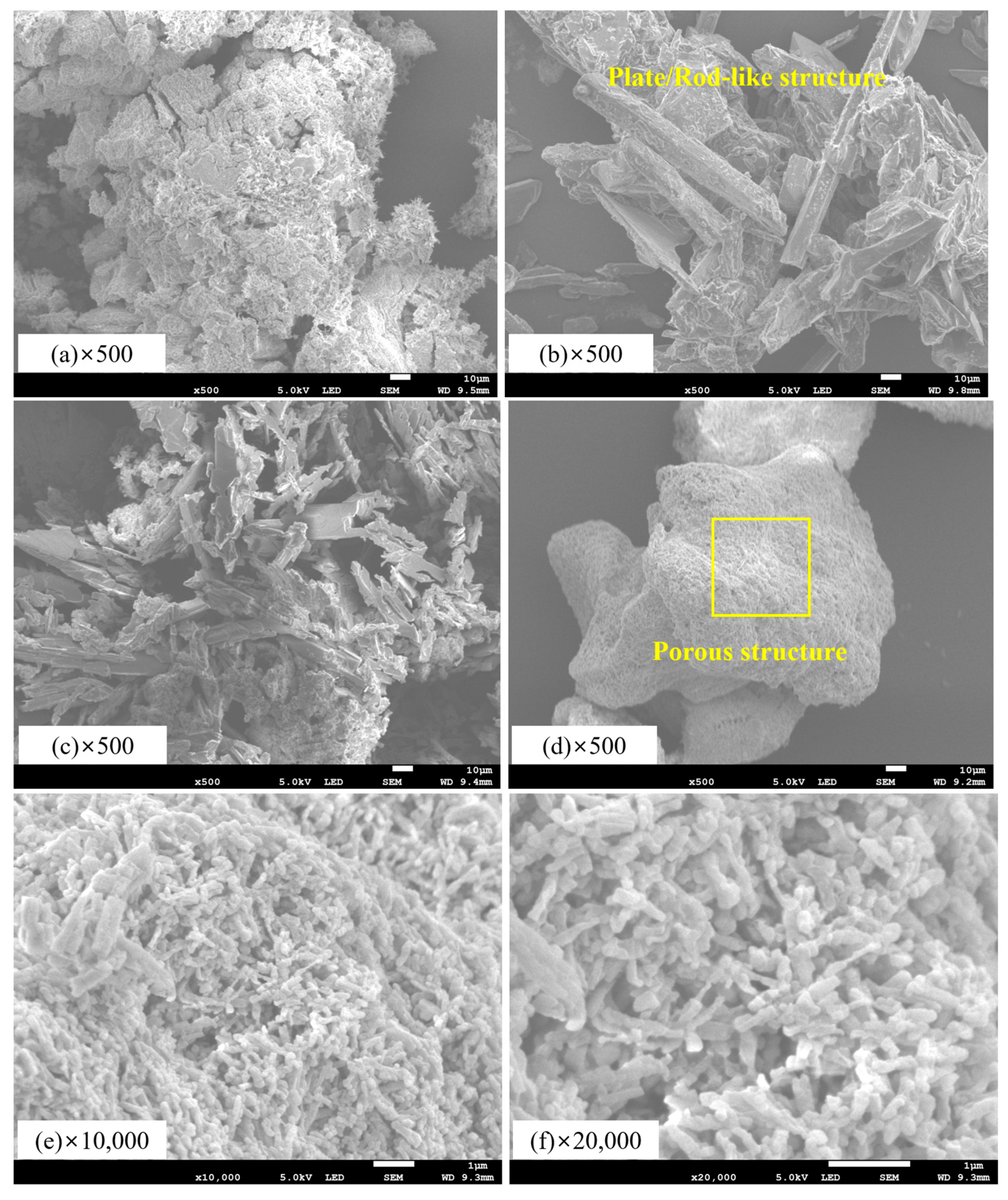
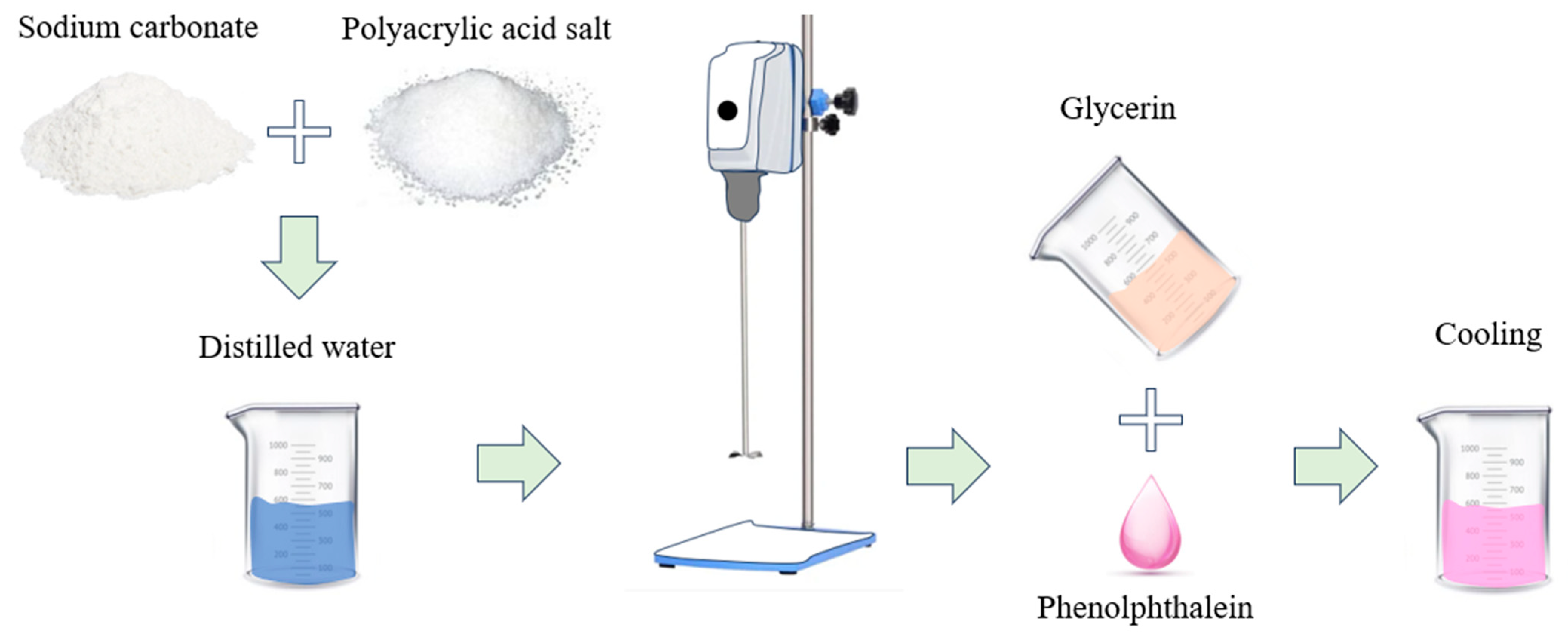
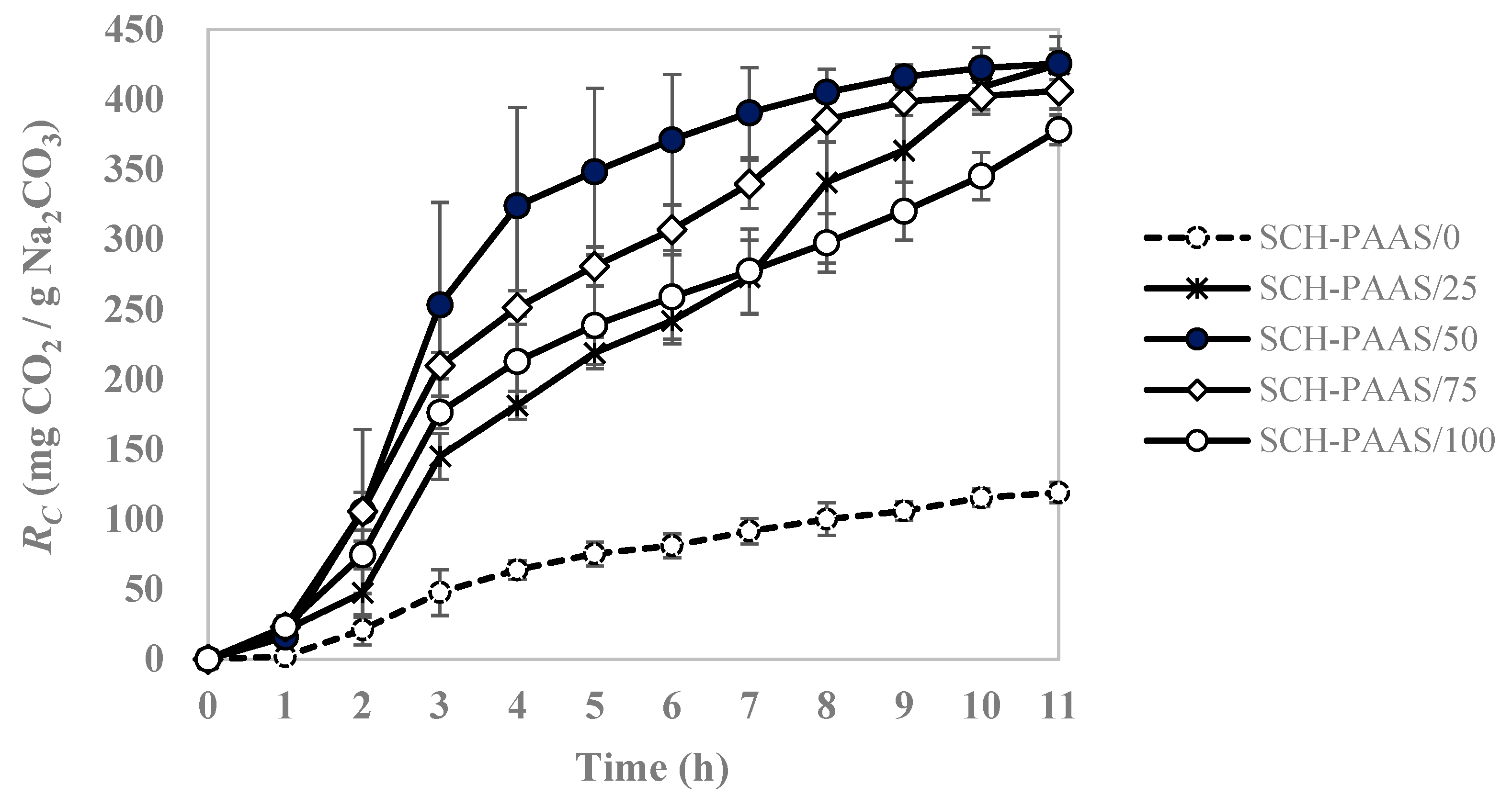
Sodium carbonate is an abundant, low-cost, and low-hazard raw material widely used as a food additive and CO2 absorbent in the food industry. However, its application in food packaging is limited because it is used in solid form, either in sachets or as a compounding ingredient in plastics. Solid sodium carbonate requires an external moisture supply for CO2 absorption, with its performance dependent on moisture availability. This limitation hinders its commercialization in food packaging applications. We developed a sodium carbonate-based, self-reactive CO2 absorbent hydrogel incorporating polyacrylic acid sodium salt (PAAS). This sodium carbonate hydrogel (SCH-PAAS) exhibits self-reactivity, eliminating the need for external moisture, and demonstrates a high CO2 absorption capacity. PAAS incorporation facilitates the formation of a porous structure during gel solidification through reactions with CO2. Increased PAAS content accelerates CO2 absorption rates, particularly under low-temperature conditions (10 °C and 25 °C). Notably, absorption was faster at 10 °C than at 25 °C. The proposed SCH-PAAS exhibits a significantly enhanced absorption performance at low temperatures compared to conventional sodium carbonate-based materials, which exhibit reduced efficiency under such conditions. The increased gas–liquid contact area in SCH-PAAS makes it highly suitable for fresh food packaging applications, particularly under low temperatures.
Keywords: sodium carbonate-based hydrogel; self-reactive CO2 absorbent; faster CO2 capture at low temperature sodium carbonate-based hydrogel; self-reactive CO2 absorbent; faster CO2 capture at low temperature