


Abstract
Aspergillus fumigatus is a leading cause of invasive fungal disease in humans and is classified as a critical priority threat by the World Health Organization. Triazole antifungals remain the cornerstone of therapy, yet their effectiveness is steadily being eroded by the continuous rise in drug resistance. Most resistance mechanisms trace back to mutations in Cyp51A, spawning well-defined genotypes such as TR34/L98H and TR46/Y121F/T289A. However, the Cyp51A genotype–phenotype landscape in A. fumigatus is far from straightforward. Isolates that share an identical TR genotype can display strikingly divergent susceptibility profiles, and mutational hotspots in Cyp51A, such as G54, M220 and G448, are linked to varying resistances, challenging assumptions about predictable resistance behavior. Complicating matters further, an expanding array of resistance mechanisms, independent of Cyp51A, is now being uncovered. This review summarizes the current state of knowledge on azole resistance in A. fumigatus, dissecting the intricate genotype–phenotype relationships, spotlighting emerging non-Cyp51A pathways and outlining future strategies to enhance the detection and clinical management of antifungal resistance.
1. Introduction
Fungal infections represent a rapidly escalating global human health threat, imposing substantial morbidity, mortality and subsequent economic burdens [1]. Among these pathogens, certain Aspergillus species can cause aspergillosis, which ranges from allergic forms to invasive aspergillosis (IA), a life-threatening infection with mortality rates that remain high despite advances in clinical management. The urgency of this threat was underscored by the World Health Organization’s 2022 designation of Aspergillus fumigatus as a critical priority fungal pathogen, reflecting its ubiquity, virulence and rising drug resistance [2,3]. The species has a main ecological niche as a saprotroph, with the small airborne conidia of A. fumigatus widespread in air, meaning that they are frequently inhaled. In immunocompromised hosts, the species can act as an opportunistic pathogen due to the germination of conidia within the respiratory tract, where they evade early immune defenses. Once established, the fungus secretes potent secondary metabolites—most notably, gliotoxin—whose immunosuppressive and cytotoxic activity further sabotage host immunity [4]. In addition, azole resistance is observed in patients with chronic pulmonary aspergillosis (CPA), a condition with direct evidence of Aspergillus infection by microscopy or culture, or immunological response and the exclusion of alternative diagnoses all present for at least three months, which can require over twelve months of azole therapy [5]. In a study, azole resistance was observed in 13% of patients treated with itraconazole (ITC) and 5% of patients treated with voriconazole (VRC) [6]. As azoles represent the only antifungal class that can be given orally, resistance severely complicates patient management as long-term intravenous therapy is required in azole-resistant CPA. In combination with the severely limited antifungal armamentarium and the global rise in at-risk patient populations, these features create a confluence of events, making the need for new therapeutic strategies, as well as improved disease surveillance, increasingly urgent [7,8].
Triazole antifungals, including ITC, VRC, posaconazole (POS) and isavuconazole (ISA), remain the first-line therapy for IA because of their clinical efficacy, manageable toxicity and oral availability [9,10]. These agents target Cyp51A, the C-14α sterol demethylase essential for ergosterol biosynthesis, by binding its heme cofactor (Fe-protoporphyrin IX) [11]. This blockade induces toxic sterol intermediates, disrupts membrane integrity and ultimately halts fungal growth, with typical cidal activity against Aspergillus spp. [12,13,14]. However, the emergence and global spread of triazole resistance now jeopardize the long-term viability of this drug class. Resistance can arise during prolonged clinical therapy, but environmental selection has become a more prominent driver [15]. In patients with IA, resistance mutations associated with environmental resistance selection are almost exclusively found, while, in CPA, both environmental and in-host mutations can be observed [16,17,18,19]. The widespread use of agricultural azole fungicides has created intense and sustained selective pressure, enabling the evolution of resistant Aspergillus strains in the environment that readily disperse via airborne spores and can later infect humans [20,21,22]. Due to chemical similarity, resistance to azole fungicides leads to cross-resistance to medical azoles. Clinically, resistance correlates with poor diagnosis, treatment failure and excess mortality [23].
Most azole resistance mechanisms in A. fumigatus trace back to mutations in the cyp51A gene. The most impactful and globally dominant mechanisms are tandem repeat (TR) expansions in the promoter region, typically coupled with nonsynonymous mutations, such as TR34/L98H and TR46/Y121F/T289A, that drive cyp51A overexpression and reduce the azole-binding affinity [24]. These environmentally selected genotypes now constitute the majority of azole-resistant isolates worldwide, prompting the development of molecular detection assays [25,26,27,28,29]. Besides TR expansions, mutational hotspots in cyp51A related to azole resistance, such as G54, M220 and G448, are often associated with particular azole resistance profiles [30,31,32]. However, the presence of mutations in Cyp51A alone does not fully explain the phenotypic diversity observed in clinical isolates [33]. Additional resistance mechanisms, including the upregulation of efflux transporters, compensatory stress response pathways and complex regulatory network rewiring, introduce further layers of complexity. These factors make associations between genotypes and phenotypes regarding azole resistance difficult to predict for A. fumigatus and weaken the predictive power of single-gene diagnostics, highlighting the need for integrative approaches that combine genomics, transcriptomics and functional assays.
This review will evaluate current knowledge of genotype-to-phenotype relationships in azole-resistant A. fumigatus, looking at mutations in Cyp51A and other known mechanisms. Additionally, phenotypic and genotypic diagnostic methods used to determine antifungal drug resistance are examined, highlighting the challenges that hinder effective surveillance. Emerging strategies designed to detect, predict and ultimately mitigate triazole resistance are also evaluated.
2. Cyp51A Genotype–Phenotype Relation
Wildtype A. fumigatus is intrinsically resistant to fluconazole but susceptible to other mold-active triazoles, making VRC and ISA the preferred first-line agents for the treatment of IA [34,35]. As these drugs exert their activity through the inhibition of Cyp51A, nonsynonymous mutations in the cyp51A gene have emerged as the dominant mechanism of acquired resistance reported from clinical isolates. Cyp51A is a cytochrome P450 enzyme harboring a heme moiety within its active site; it catalyzes the oxidative demethylation of sterol precursors at the C-14 position—a critical step in ergosterol biosynthesis and consequent fungal membrane integrity. Azoles act as competitive Cyp51A inhibitors by coordinating with the iron of the heme moiety, thereby blocking sterol demethylation, promoting the accumulation of toxic intermediates and ultimately arresting fungal growth [36]. Cyp51B has around 60% identity with Cyp51A [37], and gene deletion experiments suggest that Cyp51A confers intrinsic resistance to fluconazole, while Cyp51B is susceptible to all triazoles [38].
Following the European Committee on Antimicrobial Susceptibility Testing (EUCAST) antifungal clinical breakpoints updated in June 2025, A. fumigatus is classified as resistant to ITC, VRC and ISA when the minimum inhibitory concentration (MIC) exceeds 1 µg/mL and is resistant to POS when the MIC exceeds 0.13 µg/mL (Table 1) [39]. The two most prevalent cyp51A genotypes conferring multi-azole resistance are TR34/L98H and TR46/Y121F/T289A. In a nationwide collection of 1979 A. fumigatus isolates resistant to at least one azole recovered in the Netherlands between 1994 and 2022, 1338 (67.6%) carried TR34/L98H and 332 (16.8%) harbored TR46/Y121F/T289A without additional cyp51A mutations, accounting for more than 84% of the azole resistance-associated genotypes [40]. TR34/L98H is most frequently associated with a pan-triazole-resistant phenotype, observed in 916 of 1338 isolates (68.5%). The TR34/L98H genotype has also been found in azole-resistant isolates from other clinical cohorts, such as 39/66 (59.0%) in Denmark [41], 123/143 (86.0%) in Germany [42] and 24/45 (53.3%) in Spain [43]. In contrast, TR46/Y121F/T289A, first reported in 2013, is characterized by exceptionally high VRC MICs, while susceptibility to ITC and POS may be retained in some isolates [44]. For both genotypes, resistance arises from the synergistic interaction between TR expansions and missense mutations, as either alteration alone results only in modest MIC elevations (Table 1). The TR duplication, located in the promotor sequence, drives up to eightfold overexpression of cyp51A [45], while the L98H substitution might induce conformational changes in the BC loop and helix C of Cyp51A that weaken azole binding without substantially compromising enzymatic activity [46]. Structural analyses of Cyp51A carrying the TR46/Y121F/T289A allele indicate that these mutations alter azole binding in a highly drug-specific manner. The Y121F substitution disrupts a water-mediated hydrogen bond network that normally stabilizes the interaction between the tertiary alcohol of voriconazole and the active site, markedly reducing VRC affinity. In contrast, itraconazole and posaconazole do not rely on this hydrogen bond network, and their binding is instead supported by hydrophobic interactions between their extended side chains and the substrate/ligand entry channel, a region that VRC cannot effectively engage. The T289A mutation further perturbs helix I, weakening VRC binding even further, while having a comparatively smaller effect on ITC and POS [47,48,49]. The net result is the overproduction of a structurally intact but poorly inhibited target enzyme, leading to clinically significant azole resistance.
Further amplifying this mechanism, a genotype containing three sequential copies of TR46 (TR463) was identified in 2017 following the prolonged incubation of A. fumigatus in azole-treated compost [50]. This configuration conferred cyp51A expression levels exceeding those observed in wildtype, TR34 or TR46 isolates. Chromatin immunoprecipitation (ChIP) experiments demonstrated the direct binding of the transcription factors AtrR and SrbA to the TR-containing promotor region, mechanistically linking repeat expansion to the transcriptional upregulation of cyp51A [51,52].
There is a long-standing paradigm that tandem repeat mutations such as TR34/L98H and TR46/Y121F/T289A evolve as a result of the exposure of A. fumigatus reservoirs to azoles in the environment [22,29,53]. However, it is important to note that TR-based resistance mechanisms are not confined exclusively to environmental selection. A striking example is the recovery of a cyp51A TR120/F46Y/M172V/E427K isolate from a patient receiving prolonged azole therapy [54]. This strain exhibited a pan-azole-resistant phenotype (Table 1) and differed by no short tandem repeat (STR) markers and only 41 single-nucleotide polymorphisms (SNPs) from a previously isolated F46Y/M172V/E427K strain, strongly indicating that the TR120 expansion arose de novo under in-host azole pressure. Similarly, the sequential isolation of TR34/L98H and TR343/L98H from a single patient revealed near-identical STR profiles, differing at only one locus [55]. Together, these observations provide compelling evidence that TR expansions can arise during clinical treatment, although re-infection with environmentally evolved strains cannot be excluded. Consequently, environmental selection remains the dominant driver, as spatiotemporal analyses consistently point to a Western European origin for TR genotypes, with little evidence supporting patient-to-patient or patient-to-environment transmission [56].
Table 1.
Known mutations in Cyp51A causing reduced susceptibility to medical azoles in A. fumigatus. MIC values are reported in µg/mL for ITC, VRC, POS and ISA and are taken from their first original reports or a later-reported broad cohort. MIC ranges are indicated with isolate recovery location, either clinical (CLN), environmental (ENV) or acquired by transformation (TRF). Isolate origin indicates places (multiple studies) where the cyp51A genotype has been found. If an isolate has never been found naturally, it was only obtained by TRF. ‘Isolates’ indicates the number of isolates used to determine the MIC, derived from the study MIC cited.
Beyond promotor TR expansions, multiple amino acid substitutions in Cyp51A, including mutations at codons G54, G138, M220 and G448, have been robustly associated with azole resistance in A. fumigatus (Figure 1). Substitutions at G54 (A/E/K/R/V/W) typically confer cross-resistance to ITC and POS while retaining susceptibility to VRC (Table 1) [30,66,68]. Mutations at M220 (I/K/L/R/T/V/W) similarly drive resistance to ITC and POS, with VRC MICs generally elevated relative to wildtype and G54 mutant strains [24,31,70,72]. In contrast, substitutions at G138 (C/S/R) are consistently linked to pan-azole resistance [32,69,73]. Structurally, G54, G138 and M220 cluster near the entrance to one of the two ligand access channels of Cyp51A, suggesting that substitutions at these positions selectively hinder azole entry to the heme-binding pocket [81]. Importantly, not all substitutions at these hotspots are functionally equivalent, as exemplified by G138D, which failed to alter azole susceptibility following clonal transformation [82].
Figure 1.
Mutations in cyp51A related to resistance to triazoles in A. fumigatus. (a) Amino acid hotspots for mutations in the cyp51A gene associated with azole resistance. (b) Effects of TR expansions and nonsynonymous mutations in Cyp51A on ITC, VRC and POS susceptibility as inferred from MIC values presented in Table 1. ITC and POS have similar long side arms, whereas VRC has a short side arm. While genotype–phenotype associations reflect common resistance patterns, correlation between specific mutations and susceptibility is complex and may be influenced by additional factors.
Additional substitutions, including G448S, F219 (S/I/C/L) and P216L, are also recurrently observed in azole-resistant A. fumigatus isolates (Table 1) [32,69,74,75,76]. All are associated with ITC resistance, although their impact on other triazoles are more variable. G448S, located adjacent to the heme group, has been linked to pan-triazole resistance in some isolates, while others display intermediate MICs of 0.5 and 0.25 µg/mL for VRC and ISA, respectively [69]. The G448S substitution is thought to impair azole–heme coordination, thereby weakening drug binding [83]. Y431 is also located near the heme group, and substitutions at this location reduce the binding affinities of azoles to Cyp51A, possibly explaining the pan-azole resistance phenotype [84]. Mutations P216L and F219I have been associated with resistance to both ITC and VRC; however, for F219I, substantial phenotypic heterogeneity persists. Lastly, isolates with the combinations F46Y/M172/N248T/D255E/E427K and F46Y/M172/E427K generally show elevated MICs, with some isolates being susceptible [79], underscoring the complexity of genotype–phenotype relationships in azole resistance [74]. These observations further highlight that epistatic interactions between mutations can contribute to variability, complicating direct genotype–phenotype predictions.
These observations have direct therapeutic implications, as the activity of azoles against resistant A. fumigatus isolates depends not only on the underlying resistance mechanism, but also on the relationship between achievable drug exposure and the MIC. Elevated MICs for the azole used for treatment are associated with an increased likelihood of therapeutic failure, reflecting a reduced probability of achieving effective drug concentrations at the site of infection [16]. In contrast, for isolates with low-level resistance (e.g., MICs around 0.25–0.5 mg/L for POS), increasing azole exposure may partially restore antifungal efficacy. As demonstrated by Schauwvlieghe et al., high-dose posaconazole can be considered in selected cases, provided that adequate drug levels (>3 mg/L) are achieved and carefully monitored [85]. Such strategies may enable the treatment of isolates with MICs near clinical breakpoints, whereas isolates with higher MICs are unlikely to respond despite dose escalation. These findings emphasize that MIC values should be interpreted within a pharmacokinetic–pharmacodynamic framework and support individualized treatment approaches based on both susceptibility data and achievable drug exposure.
3. Genotype–Phenotype Variability
cyp51A genotypes are frequently treated as proxies for distinct azole susceptibility profiles. In broad terms, isolates harboring TR34/L98H are considered pan-triazole-resistant, whereas TR46/Y121F/T289A is primarily associated with resistance to VRC and ISA, with variable susceptibility to ITC and POS. Substitutions at G54 typically confer resistance to ITC and POS while preserving VRC susceptibility, whereas M220 mutations follow a similar pattern but often exhibit modestly elevated VRC MICs approaching the resistance breakpoint. Finally, mutations at G138 and G448 are widely considered to drive pan-triazole resistance. While these associations provide a useful heuristic framework, they also raise a critical question: how reliably does a given cyp51A genotype predict the resistance phenotype of an individual A. fumigatus isolate?
This question is sharply illustrated by a large Dutch surveillance cohort of 1979 phenotypically azole-resistant A. fumigatus isolates, of which 1338 carried TR34/L98H and 332 harbored TR46/Y121F/T289A without additional cyp51A mutations [40]. Despite their canonical resistance profiles, only 1173 (87.7%) of TR34/L98H isolates and 226 (80.1%) of TR46/Y121F/T289A sensu stricto isolates were resistant to POS, revealing substantial genotype–phenotype discordance for this agent. Even more strikingly, ITC susceptibility testing of TR46/Y121F/T289A isolates revealed a clear 1:1 bimodal distribution, as one population displayed high-level resistance, with MICs exceeding 16 µg/mL, whereas the second clustered around a median MIC of approximately 1 µg/mL, near the clinical resistance breakpoint [40]. It remains unclear what drives these differences in ITC activity. It is possible that the TR46/Y121F/T289A mutation in cyp51A causes ITC susceptibility of 0.5–2 µg/mL, while a commonly associated unknown mechanism with this genotype causes MICs exceeding 16 µg/mL. Alternatively, ITC phenotype variation might be due to technical issues, as ITC is highly hydrophobic and is challenging to dissolve in RPMI-1640 medium, which might affect ITC MIC readouts.
Overall, 108 of the 1670 isolates (6.5%) carrying either TR34/L98H or TR46/Y121F/T289A exhibited a phenotype falling outside the defined core MIC range for their genotype (with no core ITC MIC defined for TR46/Y121F/T289A) [40]. When the analysis was expanded to include all tandem repeat-containing isolates, including those with additional cyp51A substitutions, genotype–phenotype discordance increased substantially: 325 of 1887 isolates (17.2%) deviated from their predicted susceptibility profiles, with this fraction rising over time [40]. Isolates with additional background mutations, such as TR34/L98H/T289A/I364V/G448S, have greater susceptibility to ITC than TR34/L98H, possibly because these additional mutations come at a fitness cost (Figure 1b) [40]. This trend suggests that composite genotypes such as TR34/L98H/S297T/F495I and TR46/V120A/Y121F/M172I/T289A/G448S progressively undermine the reliability of canonical resistance categories, reflecting an increasingly complex mutational landscape in which incremental modifications to Cyp51A erode the predictive power of single-genotype assignments.
Genotype–phenotype variability is not confined to TR expansion genotypes but is equally evident among cyp51A point mutations. Substitutions at G54 and M220, while classically linked to resistance against ITC and POS, display notable quantitative variability in MICs, particularly for VRC, where values may range from wildtype-like to near or above the clinical breakpoint (Table 1) [16,24,69]. Similarly, mutations at G138 and G448 are frequently categorized as pan-triazole resistance determinants, yet G448S has VRC MICs ranging from 0.5 to 16 µg/mL [69]. Additional substitutions, such as F219 and P216L, further exemplify this complexity: although consistently associated with ITC resistance, their impacts on VRC and ISA remain heterogeneous, with both susceptible and resistant phenotypes reported for the same amino acid change [69,74,75].
Another example of the ambiguous Cyp51A genotype–phenotype relationship is observed in isolates carrying compound cyp51A substitutions such as F46Y/M172/N248T/D255E/E427K or F46Y/M172/E427K [79,80,86]. Although these genotypes are associated with elevated azole MICs, most substituted residues, except F46Y, are non-conserved and located on the exterior of the Cyp51A protein, raising questions about their direct functional relevance. Moreover, F46Y alone does not appear sufficient to confer elevated MICs [79]. Consistent with this, the transformation of A. fumigatus with wildtype cyp51A replaced by F46Y/M172/N248T/D255E/E427K resulted in substantially lower MICs than those observed in clinical isolates harboring the same genotype [79]. Together, these observations indicate that resistance in such isolates cannot be explained solely by altered azole–Cyp51A interactions. Instead, they point toward additional resistance determinants that operate independently or in combination with the cyp51A sequence or expression. As such, these genotypes exemplify the limitations of cyp51A-centric interpretations of azole resistance and underscore the need to consider broader, multilayered mechanisms that collectively shape the resistance phenotype.
4. Non-Cyp51A Genes Causing Triazole Resistance
A small fraction—but potentially up to 50%—of triazole-resistant A. fumigatus isolates display resistance phenotypes that cannot be explained by alterations in Cyp51A alone [41,72,87,88]. Given a pangenome of almost 9000 core genes and potentially 15,000 predicted genes, A. fumigatus possesses a vast genetic repertoire capable of modulating triazole susceptibility through mechanisms that extend beyond direct target modification [22,89,90]. Resistance-conferring mutations can arise under azole selection pressure through multiple reproductive strategies, including asexual, sexual and parasexual processes [21,22,29,91]. The species’ capacity for frequent genetic recombination, particularly during sexual reproduction, facilitates the rapid emergence and diversification of multidrug-resistant genotypes. This process effectively weakens genetic linkages, causing the rapid breakdown of associations between resistance determinants and molecular markers over short genomic distances [92,93,94]. In parallel, ongoing sporulation in environmental niches and within chronically ill patients provides continuous opportunities for clonal expansion and adaptation under drug pressure.
Importantly, azole exposure not only selects for resistance but may actively accelerate its evolution. Recent studies have identified mutations in the DNA mismatch repair gene msh6 in a significant subset of TR34/L98H isolates, conferring a hypermutator phenotype characterized by mutation rates up to fivefold higher than in the wildtype [93]. Such genetic backgrounds are poised to accumulate secondary mutations that modify antifungal susceptibility, providing a plausible evolutionary framework for the emergence of resistance mechanisms that operate independently of cyp51A and contribute to the observed genotype–phenotype variability.
Besides mutations in Cyp51A, triazole resistance in A. fumigatus can arise through a diverse set of additional genetic mechanisms (Figure 2). In a cohort of 64 azole-resistant clinical isolates from Manchester, 43% showed no Cyp51A mutations, underscoring the clinical relevance of non-cyp51A resistance pathways [72]. These mechanisms may coexist with TR-based genotypes, contributing to variable susceptibility profiles, such as the inconsistent ITC resistance observed among TR46/Y121F/T289A isolates [40].
Figure 2.
Factors contributing to genotype–phenotype heterogeneity in A. fumigatus, including non-Cyp51A mutations, biofilm growth, epigenetic regulation and mycovirus (PmV-1M) infection. cdr1B encodes for an ABC transporter; atrR and srbA encode transcription factors; hapB, hapC, hapE and hapX encode subunits of the CBC-hapX complex; hmg1 encodes hydroxymethylglutaryl-CoA reductase; cox10 encodes a farnesyltransferase; and algA encodes for a calcium signaling pathway component in A. fumigatus.
One of the most prominent non-cyp51A resistance mechanisms is the upregulation of multidrug efflux pumps, which has been linked particularly to ITC resistance [66]. A. fumigatus encodes a large repertoire of transporters, including 278 predicted members of the major facilitator superfamily (MFS) and 49 ATP-binding cassette (ABC) transporters [95]. Among these, the ABC transporter Cdr1B has emerged as a central determinant of clinical resistance. Its expression was elevated more than fivefold in 8 of 10 azole-resistant isolates lacking cyp51A mutations, and the deletion of cdr1B restored ITC susceptibility [96]. Conversely, cdr1B deletion in wildtype isolates increased azole sensitivity approximately fourfold, while cdr1B expression was strongly induced upon voriconazole exposure, confirming a direct and functional role in resistance [96]. Paul et al. constructed deletion alleles of two A. fumigatus Pdr5-like ABC transporter genes (abcA, abcB) in three genetic backgrounds and showed that the loss of abcB consistently increased azole susceptibility, while abcA phenotypes were strain-dependent [97]. An older study by Slaven et al. cloned and characterized the ABC transporter gene atrF, showing that its expression was fivefold higher in ITC-resistant isolates when grown in the presence of ITC [98]. Collectively, these findings establish efflux-mediated drug export as a major contributor to genotype–phenotype variability, capable of shifting MICs across clinical breakpoints independently of the Cyp51A sequence.
Efflux activity and ergosterol biosynthesis are tightly controlled at the transcriptional level, placing regulatory proteins at the core of non-cyp51A resistance. The fungal-specific Zn2-Cys6-type transcription factor AtrR plays a pivotal role in coordinating resistance responses by directly regulating both cyp51A and cdr1B expression [99]. AtrR binds to the promotor regions of approximately 900 genes, including the TR34 and TR46 regions of cyp51A and the promotor of cdr1B [51]. Gain- or loss-of-function alterations in AtrR profoundly modulate azole susceptibility, as the deletion of the atrR gene in an azole-resistant Cyp51A G54E A. fumigatus isolate resulted in hypersensitivity to azoles [99]. Similarly, the sterol-regulatory element-binding protein SrbA, a highly conserved transcription factor, governs ergosterol biosynthesis under hypoxic and stress conditions and is required for full azole resistance and virulence [100]. Altered SrbA activity reshapes sterol homeostasis and drug susceptibility without necessitating structural changes to Cyp51A [101]. Another important regulatory component is HapE, a subunit of the CCAAT-binding transcription factor complex that specifically recognizes the regulatory CCAAT sequence in the promotor regions of numerous eukaryotic genes [102]. Whole-genome sequencing (WGS) and sexual crossing of resistant isolates without cyp51A mutations revealed a P88L substitution in HapE that could confer azole resistance [103]. Mutations in hapE disrupt the transcriptional repression of ergosterol biosynthesis genes, resulting in elevated azole MICs even in the absence of cyp51A coding mutations. HapE, together with HapB and HapC and two copies of HapX, forms the CBC-HapX complex, which regulates genes involved in ergosterol biosynthesis [52,104]. Disruption of this complex—for example, through the deletion of hapB—significantly prolongs the nuclear retention of SrbA, ultimately increasing Cyp51A expression and reducing azole susceptibility [105]. In addition to the CBC-HapX complex, the transcriptional regulators negative cofactor two A and B (NctA and NctB, respectively) also play key roles in controlling the ergosterol biosynthesis pathway. Loss of these proteins similarly confers azole resistance, notably without compromising virulence [106]. Together, these transcription factors exemplify how regulatory rewiring can generate resistance phenotypes that diverge from genotype-based expectations.
Additional resistance determinants act upstream of Cyp51A within the ergosterol biosynthesis pathway. Rybak et al. demonstrated that the replacement of mutant cyp51A alleles with a wildtype cyp51A gene restored susceptibility in only one of ten triazole-resistant clinical isolates, providing strong evidence for alternative resistance mechanisms [88]. In a broader collection of 21 resistant isolates, 11 carried mutations in hmg1, encoding hydroxymethylglutaryl (HMG)-CoA reductase, which catalyzes the first committed step in ergosterol biosynthesis. Missense mutations within the sterol-sensing domain of Hmg1 increased triazole MICs four- to eightfold, whereas restoration of the wildtype hmg1 allele in a pan-triazole-resistant isolate harboring a deletion of F262 fully restored susceptibility [88]. The contribution of hmg1 mutations to triazole resistance has since been independently validated [107,108,109,110]. Interestingly, a cyp51B hmg1 combination mutant showed a pan-azole-resistant phenotype, with higher levels of expression of Cyp51A, Hmg1 and Cyp51B during VRC exposure [111]. These findings position hmg1 as a critical modifier of azole susceptibility, capable of reshaping sterol flux and buffering the inhibitory effects of azoles downstream.
Other genes have been implicated in non-cyp51A-mediated resistance, often through effects on drug uptake or cellular stress adaptation. A single amino acid substitution (R243Q) in Cox10, a farnesyltransferase involved in mitochondrial function, was shown to reduce itraconazole uptake [76]. Additionally, the deletion of algA, encoding a calcium-dependent protein, increased the frequency of non-cyp51A-mediated azole resistance, suggesting a role in stress tolerance or cellular homeostasis [76]. Importantly, the roles of all these genes have been functionally validated through targeted transformation experiments, providing compelling evidence for their causal involvement in azole resistance independently of Cyp51A.
5. Non-Somatic Azole Resistance
Beyond heritable genetic variation, azole resistance in A. fumigatus is profoundly shaped by various environmental and physiological factors, including biofilm growth, epigenetic regulation and mycovirus infection (Figure 2). Growth conditions can directly modulate antifungal susceptibility without altering the underlying genotype [112]. For example, alternative nutrient sources such as glucosamine and N-acetylglucosamine remodel the cell wall architecture and alter susceptibility to echinocandins [113]. Similarly, in vivo hyphal growth within biofilms generates extracellular matrices that restrict antifungal penetration [114,115,116] and establishes oxygen gradients promoting hypoxic microenvironments [117]. These features significantly elevate apparent drug resistance; for example, Seidler et al. demonstrated that triazole MICs in A. fumigatus biofilms can be up to tenfold higher than those observed in planktonic cultures [118]. Biofilm maturation is associated with phase-dependent increases in azole tolerance, partly driven by enhanced efflux pump activity. As shown by Rajendran et al., more mature hyphal stages exhibit markedly increased VRC resistance alongside the upregulation of efflux transporters such as AfuMDR4, an effect that is further induced upon azole exposure [119].
Environmental adaptation can also contribute to stable, non-cyp51A-mediated azole resistance phenotypes. The experimental evolution of strain AF293 under hypoxic and high-glucose conditions generated the EVOL20 strain, which exhibited an H-MORPH biofilm phenotype linked to a mutation in hrmA [120]. This adaptation was associated with altered virulence and increased Cyp51A expression, suggesting that environmental conditioning can indirectly influence azole susceptibility. Notably, similar morphologies have been observed in clinical isolates, although their impacts on treatment outcomes remain unclear.
Epigenetic regulation introduces an additional, reversible layer of resistance modulation. Histone modifications, including acetylation and methylation, influence fungal stress responses and antifungal tolerance without altering DNA sequences [121]. The acetylation of lysine K27 in Hsp90, for instance, reduces tolerance to both caspofungin and voriconazole [122], while the deletion of histone deacetylases (HDACs) has been associated with altered virulence, morphogenesis and antifungal susceptibility [123,124]. Such epigenetic mechanisms enable rapid, condition-dependent phenotypic plasticity, allowing A. fumigatus to transiently withstand antifungal pressure in fluctuating host and environmental niches.
Finally, extra-chromosomal elements such as mycoviruses may further modulate antifungal susceptibility. Mycoviruses are present in a subset of A. fumigatus isolates and can alter fungal physiology and stress responses [125,126]. While their impact on azole resistance in A. fumigatus remains unresolved, studies in other fungi, such as Penicillium digitatum, show that mycovirus infection can reduce triazole resistance [127]. These observations suggest that virus–fungus interactions may influence antifungal susceptibility and could contribute to the unexplained variability in azole responses [128,129].
6. Diagnostics for Azole Resistance
The accurate detection of azole resistance in Aspergillus fumigatus is essential in guiding antifungal therapy and improving patient outcomes. This is particularly critical in IA, where delays in initiating effective treatment are strongly associated with increased mortality [130]. Moreover, resistance to azoles was associated with 20–25% excess overall mortality at day 90 in patients with IA [131,132,133]. As azole-resistant variants continue to emerge worldwide, diagnostic strategies must support both timely clinical decision-making and reliable epidemiological surveillance.
Following the acquisition of a clinical specimen, such as sputum, bronchoalveolar lavage (BAL) or plasma, A. fumigatus can be detected by culture-based or molecular methods (Figure 3). Culture positivity rates vary depending on the methods of culturing, ranging from 0% to 16% for conventional sputum cultures and 37% to 54% in high-volume sputum cultures [134,135,136,137], whereas those for bronchoalveolar lavage samples range from 10% to 60% for conventional cultures and 20% to 100% by high-volume culture [134,138]. When cultures are positive, azole resistance can be assessed phenotypically using screening assays such as VIPcheckTM or by standardized broth microdilution methods to determine minimum inhibitory concentrations (MICs) (Table 2) [139]. These approaches directly measure fungal growth in the presence of antifungal agents and remain the reference standard for assessing susceptibility across a broad range of compounds.
Figure 3.
Regularly used diagnostic pathways for azole resistance detection in Aspergillus, showing clinical sample processing via molecular-based methods (qPCR) and culture, followed by antifungal susceptibility testing (AFST).
Table 2.
Commercial methods of detecting azole resistance in Aspergillus fumigatus. Phenotypic methods allow for antifungal susceptibility testing to determine MIC values, whereas genotypic methods reveal only common azole-resistant genotypes.
A major advantage of phenotypic testing is its ability to capture the cumulative effects of all resistance mechanisms present in an isolate, including those not yet genetically characterized. Furthermore, multiple colonies (if present) can be tested with screening agar, as mixed-genotype infections are common [40]. However, culture-based diagnostics can lack sensitivity and are inherently slow, requiring several days for fungal growth and subsequent MIC determination, potentially minimizing the clinical utility of testing. This delay is clinically problematic in IA, where early initiation of appropriate therapy was found to be critical for survival [131]. Moreover, approximately up to 80% of IA cases are culture-negative, severely limiting the applicability of phenotypic testing in routine diagnostics [41,140,141].
To overcome the low sensitivity and slow turnaround time of culture, molecular assays have been developed to detect azole resistance-associated mutations directly from clinical material [142]. PCR-based platforms, including real-time PCR and melting curve analysis, enable the rapid identification of the most prevalent cyp51A resistance genotypes, such as TR34/L98H and TR46/Y121F/T289A (Table 2). These assays bypass the need for fungal growth and substantially reduce the time to results, facilitating earlier therapeutic adjustments.
Real-time qPCR applied directly to clinical samples generally has a higher detection rate than culture-based methods [136]. However, resistance PCRs target cyp51A, a single-copy gene, resulting in markedly reduced sensitivity compared with species-specific Aspergillus PCR assays that amplify multicopy regions—most commonly, short amplicons within the rRNA operon [142]. This limitation becomes particularly relevant in mixed infections, where resistant and susceptible strains may coexist. In such cases, resistant subpopulations can fall below the detection threshold, leading to false-negative results and potentially inappropriate antifungal therapy.
Despite their speed, current molecular diagnostics face important conceptual limitations [28]. Commercial assays primarily focus on the most common cyp51A alterations, while an expanding range of resistance mechanisms, including non-cyp51A mutations, efflux pump upregulation, transcriptional rewiring and cryptic species with intrinsic resistance, remain undetected [130]. Additionally, widely used resistance PCR platforms such as AsperGenius®, MycoGENIE® and Fungiplex® do not interrogate the full cyp51A coding region but instead target specific drug resistance-associated mutation hotspots [27,28]. Assuming 100% analytical sensitivity, a retrospective analysis of cyp51A mutations identified in 1979 azole-resistant A. fumigatus isolates from the Dutch collection [40] indicated that AsperGenius® would have detected 94.9% of resistant isolates, Fungiplex® 94.8% and MycoGENIE® 72.4%. These figures illustrate the high diagnostic value of targeted molecular assays in settings where TR-associated cyp51A mutations dominate, as is currently the case in the Netherlands. However, in regions where resistance is more genetically diverse, or if clinically driven, hotspot-based assays are expected to miss a substantially larger fraction of resistant isolates [72]. For example, in Denmark, the prevalence of non-Cyp51A-mediated azole resistance was reported to be 40% (27/66 clinical isolates) [41]. A recently developed pyrosequencing assay was able to capture nearly the whole cyp51A gene and was validated on 326 clinical specimens, where it was substantially more sensitive than culture [143]. Out of the 326 Aspergillus qPCR-positive respiratory specimens, 275 (84.4%) were successfully sequenced, while 94 (28.8%) were cultured by high-volume culture. Despite the low culture positivity, 21 pan-azole-resistant A. fumigatus isolates were detected by high-volume culture, while pyrosequencing identified no mutations in cyp51A or was negative, highlighting the complex genotype–phenotype relationship [143]. The sensitivity of Aspergillus PCRs strongly depends on the type of clinical material, as the detection of resistance markers in blood is often unsuccessful due to low fungal DNA loads [142]. Although melting curve-based assays such as AsperGenius® can sometimes identify mixed infections, the overall genotype–phenotype relationship remains difficult to capture using targeted molecular methods alone [144].
7. Implications and Future Directions for Diagnostics
Together, these observations underscore the complexity of the genotype–phenotype relationship underlying azole resistance in A. fumigatus. While molecular assays enable the rapid and sensitive detection of common resistance markers, they incompletely represent the diversity of resistance mechanisms encountered in clinical isolates. This limitation is particularly relevant in patients undergoing prolonged azole therapy, where selective pressure promotes the emergence of rare or novel resistance mutations. Mixed infections further complicate interpretation, as multiple genotypes and phenotypes can coexist within a single host, leading to misleading diagnostic outcomes [40].
At present, genotype-only approaches are therefore insufficient for fully reliable clinical decision-making. Although the detection of TR34/L98H or TR46/Y121F/T289A does not allow accurate prediction of the exact resistance phenotype, especially considering emerging variants, a pragmatic clinical strategy is to avoid azole therapy altogether once a resistance marker is detected—noting that alternatives to azoles, such as liposomal amphotericin B treatment, have possible detrimental side effects [145]. If the prevalence of azole resistance is over 10%, first-line therapy with VRC in combination with echinocandin or liposomal amphotericin B is recommended, awaiting antifungal susceptibility testing, as is the case in the Netherlands [35]. This approach prioritizes patient safety but also highlights the diagnostic gap between rapid genotyping and comprehensive phenotypic assessment. In the absence of one of these genotypes being detected, azole resistance cannot be excluded given the diverse genetic resistance mechanisms listed above that are not targeted by these tests, as well as the fact that these tests are not 100% sensitive for the detection of these markers.
Next-generation sequencing (NGS) offers a powerful framework to bridge this gap. Whole-genome sequencing (WGS) can identify both established and novel resistance mutations, detect cryptic species and capture mixed infections that may escape PCR-based diagnostics [146]. Importantly, sequencing is not restricted to cyp51A and enables the simultaneous interrogation of efflux transporters, transcription factors, stress response pathways and other loci implicated in antifungal tolerance [147]. Pan-genome analyses based on de novo assemblies further extend this approach by revealing the full genetic repertoire of the species, rather than relying on a single reference genome [90]. The principal challenge of NGS-based diagnostics lies in interpretation, given that many genetic variants lack clear functional annotation unless linked to phenotypic susceptibility data.
8. Conclusions
Advancements in genotype–phenotype diagnostics have vastly improved patient outcomes. However, with emerging cryptic species, mixed infections and co-infections, the need to continually develop and optimize molecular detection strategies increases. The future of azole resistance diagnostics will depend on systematic genotype–phenotype integration, combining broad genomic profiling with standardized susceptibility testing and functional validation. Such efforts could lead to curated resistance-associated variant panels that extend beyond Cyp51A, incorporate emerging mechanisms and are continuously updated as new data become available. Ultimately, embedding NGS within diagnostic workflows and explicitly linking genetic variation to phenotypic resistance will enable diagnostics that are not only rapid and sensitive but also mechanistically informative and clinically actionable.
Author Contributions
M.H.I.v.H., W.J.G.M. and J.B.B. conceptualized the work and wrote the original draft. M.H.I.v.H., W.J.G.M., J.Z., S.D., C.C.B., F.A.S., M.V., P.L.W., P.S.D., S.D.P., P.E.V. and J.B.B. critically reviewed and edited the manuscript. All authors have read and agreed to the published version of the manuscript.
Funding
P.S.D. and F.S. thank the Medical Research Council (UK) for the financial support (Grant MR/Y034473/1). M.V. thanks the Project Management Agency of the Germen Aerospace Center (DLR) under Grant No. 01KI2403. J.Z., S.D., C.C.B., F.A.S., M.V., P.L.W, P.S.D., P.E.V. and J.B.B. thank the Joint Programming Initiative on Antimicrobial Resistance consortium (JPIAMR) for the support for the IMPROVE-ASP project (under Grant 10570162310003).
Institutional Review Board Statement
Not applicable.
Informed Consent Statement
Not applicable.
Data Availability Statement
No new data were created or analyzed in this study. Data sharing is not applicable to this article.
Conflicts of Interest
S.D. has received a speaker’s fee from Mundipharma, Gilead and Pfizer. M.V. is employed by Xebios Diagnostics GmbH and is supported by the Federal Ministry of Education and Research (BMBF, Germany) through the Project Management Agency of the German Aerospace Center (DLR) under Grant No. 01KI2403. P.L.W. has performed diagnostic evaluations and received meeting sponsorships from Associates of Cape Cod, Bruker, Dynamiker and Launch Diagnostics; speaker fees, expert advice fees and meeting sponsorships from Gilead and Mundipharma; speaker and expert advice fees from Pfizer; and expert advice fees from F2G. P.E.V. has served as a speaker for Gilead Sciences, F2G, Mundipharma and Pfizer, with all fees paid to the host institution. J.B.B. has received research funds from BioMérieux and Norman Health and advisory fees from Gilead and Shionogi (all paid to the host institution). The funders had no role in the study design, analysis, decision to publish or preparation of this manuscript.
References
- Bongomin, F.; Gago, S.; Oladele, R.O.; Denning, D.W. Global and Multi-National Prevalence of Fungal Diseases—Estimate Precision. J. Fungi 2017, 3, 57. [Google Scholar] [CrossRef] [Scilit]
- World Health Organization. WHO Fungal Priority Pathogens List to Guide Research, Development and Public Health Action, 1st ed.; World Health Organization: Geneva, Switzerland, 2022.
- Casalini, G.; Giacomelli, A.; Antinori, S. The WHO fungal priority pathogens list: A crucial reappraisal to review the prioritisation. Lancet Microbe 2024, 5, 717–724. [Google Scholar] [CrossRef] [Scilit]
- Knowles, S.L.; Mead, M.E.; Silva, L.P.; Raja, H.A.; Steenwyk, J.L.; Goldman, G.H.; Oberlies, N.H.; Rokas, A. Gliotoxin, a Known Virulence Factor in the Major Human Pathogen Aspergillus fumigatus, is Also Biosynthesized by Its Nonpathogenic Relative Aspergillus fischeri. mBio 2020, 11, e03361-19. [Google Scholar] [CrossRef] [Scilit] [PubMed]
- Denning, D.W.; Cadranel, J.; Beigelman-Aubry, C.; Ader, F.; Chakrabarti, A.; Blot, S.; Ullmann, A.J.; Dimopoulos, G.; Lange, C. Chronic pulmonary aspergillosis: Rationale and clinical guidelines for diagnosis and management. Eur. Respir. J. 2016, 47, 45–68. [Google Scholar] [CrossRef] [Scilit] [PubMed]
- Bongomin, F.; Harris, C.; Hayes, G.; Kosmidis, C.; Denning, D.W. Twelve-month clinical outcomes of 206 patients with chronic pulmonary aspergillosis. PLoS ONE 2018, 13, e0193732. [Google Scholar] [CrossRef] [Scilit] [PubMed]
- Perfect, J.R. The antifungal pipeline: A reality check. Nat. Rev. Drug Discov. 2017, 16, 603–616. [Google Scholar] [CrossRef] [Scilit]
- Jafarlou, M. Unveiling the menace: A thorough review of potential pandemic fungal disease. Front. Fungal Biol. 2024, 5, 1338726. [Google Scholar] [CrossRef] [Scilit]
- Patterson, T.F.; Thompson, G.R.; Denning, D.W.; Fishman, J.A.; Hadley, S.; Herbrecht, R.; Kontoyiannis, D.P.; Marr, K.A.; Morrison, V.A.; Nguyen, M.H.; et al. Executive Summary: Practice Guidelines for the Diagnosis and Management of Aspergillosis: 2016 Update by the Infectious Diseases Society of America. Clin. Infect. Dis. 2016, 63, 433–442. [Google Scholar] [CrossRef] [Scilit]
- Epelbaum, O.; Marinelli, T.; Haydour, Q.; Pennington, K.M.; Evans, S.E.; Carmona, E.M.; Husain, S.; Knox, K.S.; Jarrett, B.J.; Azoulay, E.; et al. Treatment of Invasive Pulmonary Aspergillosis and Preventive and Empirical Therapy for Invasive Candidiasis in Adult Pulmonary and Critical Care Patients: An Official American Thoracic Society Clinical Practice Guideline. Am. J. Respir. Crit. Care Med. 2025, 211, 34–53. [Google Scholar] [CrossRef] [Scilit]
- Mellado, E.; Diaz-Guerra, T.M.; Cuenca-Estrella, M.; Rodriguez-Tudela, J.L. Identification of Two Different 14-α Sterol Demethylase-Related Genes (cyp51A and cyp51B) in Aspergillus fumigatus and Other Aspergillus species. J. Clin. Microbiol. 2001, 39, 2431–2438. [Google Scholar] [CrossRef] [Scilit]
- Vanden Bossche, H.; Marichal, P.; Le Jeune, L.; Coene, M.C.; Gorrens, J.; Cools, W. Effects of itraconazole on cytochrome P-450-dependent sterol 14 alpha-demethylation and reduction of 3-ketosteroids in Cryptococcus neoformans. Antimicrob. Agents Chemother. 1993, 37, 2101–2105. [Google Scholar] [CrossRef] [Scilit]
- Kelly, S.L.; Lamb, D.C.; Corran, A.J.; Baldwin, B.C.; Kelly, D.E. Mode of Action and Resistance to Azole Antifungals Associated with the Formation of 14α-Methylergosta-8,24(28)-dien-3β,6α-diol. Biochem. Biophys. Res. Commun. 1995, 207, 910–915. [Google Scholar] [CrossRef] [Scilit] [PubMed]
- Manavathu, E.K.; Cutright, J.L.; Chandrasekar, P.H. Organism-Dependent Fungicidal Activities of Azoles. Antimicrob. Agents Chemother. 1998, 42, 3018–3021. [Google Scholar] [CrossRef] [Scilit] [PubMed]
- Resendiz Sharpe, A.; Lagrou, K.; Meis, J.F.; Chowdhary, A.; Lockhart, S.R.; Verweij, P.E.; ISHAM/ECMM Aspergillus Resistance Surveillance Working Group. Triazole resistance surveillance in Aspergillus fumigatus. Med. Mycol. 2018, 56, S83–S92. [Google Scholar] [CrossRef] [Scilit] [PubMed]
- Howard, S.J.; Cerar, D.; Anderson, M.J.; Albarrag, A.; Fisher, M.C.; Pasqualotto, A.C.; Laverdiere, M.; Arendrup, M.C.; Perlin, D.S.; Denning, D.W. Frequency and Evolution of Azole Resistance in Aspergillus fumigatus Associated with Treatment Failure1. Emerg. Infect. Dis. 2009, 15, 1068–1076. [Google Scholar] [CrossRef] [Scilit]
- Tashiro, M.; Izumikawa, K.; Hirano, K.; Ide, S.; Mihara, T.; Hosogaya, N.; Takazono, T.; Morinaga, Y.; Nakamura, S.; Kurihara, S.; et al. Correlation between Triazole Treatment History and Susceptibility in Clinically Isolated Aspergillus fumigatus. Antimicrob. Agents Chemother. 2012, 56, 4870–4875. [Google Scholar] [CrossRef] [Scilit]
- Van Paassen, J.; Russcher, A.; Veld-Van Wingerden, A.I.T.; Verweij, P.E.; Kuijper, E.J. Emerging aspergillosis by azole-resistant Aspergillus fumigatus at an intensive care unit in the Netherlands, 2010 to 2013. Eurosurveillance 2016, 21, 1–9. [Google Scholar] [CrossRef] [Scilit]
- Verweij, P.E.; Zhang, J.; Debets, A.J.M.; Meis, J.F.; Van De Veerdonk, F.L.; Schoustra, S.E.; Zwaan, B.J.; Melchers, W.J.G. In-host adaptation and acquired triazole resistance in Aspergillus fumigatus: A dilemma for clinical management. Lancet Infect. Dis. 2016, 16, e251–e260. [Google Scholar] [CrossRef] [Scilit]
- Verweij, P.E.; Snelders, E.; Kema, G.H.; Mellado, E.; Melchers, W.J. Azole resistance in Aspergillus fumigatus: A side-effect of environmental fungicide use? Lancet Infect. Dis. 2009, 9, 789–795. [Google Scholar] [CrossRef] [Scilit]
- Snelders, E.; Camps, S.M.T.; Karawajczyk, A.; Schaftenaar, G.; Kema, G.H.J.; Van Der Lee, H.A.; Klaassen, C.H.; Melchers, W.J.G.; Verweij, P.E. Triazole Fungicides Can Induce Cross-Resistance to Medical Triazoles in Aspergillus fumigatus. PLoS ONE 2012, 7, e31801. [Google Scholar] [CrossRef] [Scilit]
- Rhodes, J.; Abdolrasouli, A.; Dunne, K.; Sewell, T.R.; Zhang, Y.; Ballard, E.; Brackin, A.P.; Van Rhijn, N.; Chown, H.; Tsitsopoulou, A.; et al. Population genomics confirms acquisition of drug-resistant Aspergillus fumigatus infection by humans from the environment. Nat. Microbiol. 2022, 7, 663–674. [Google Scholar] [CrossRef] [Scilit]
- van der Linden, J.W.M.; Snelders, E.; Kampinga, G.A.; Rijnders, B.J.A.; Mattsson, E.; Debets-Ossenkopp, Y.J.; Kuijper, E.J.; Van Tiel, F.H.; Melchers, W.J.G.; Verweij, P.E. Clinical implications of azole resistance in Aspergillus fumigatus, The Netherlands, 2007–2009. Emerg. Infect. Dis. 2011, 17, 1846–1854. [Google Scholar] [CrossRef] [Scilit]
- Snelders, E.; van der Lee, H.A.L.; Kuijpers, J.; Rijs, A.J.M.M.; Varga, J.; Samson, R.A.; Mellado, E.; Donders, A.R.T.; Melchers, W.J.G.; Verweij, P.E. Emergence of azole resistance in Aspergillus fumigatus and spread of a single resistance mechanism. PLoS Med. 2008, 5, e219. [Google Scholar] [CrossRef] [Scilit]
- Mahmoudi, S.; Badali, H.; Rezaie, S.; Azarnezhad, A.; Barac, A.; Kord, M.; Ahmadikia, K.; Aala, F.; Ali Askari, F.; Meis, J.F.; et al. A simple and low cost tetra-primer ARMS-PCR method for detection triazole-resistant Aspergillus fumigatus. Mol. Biol. Rep. 2019, 46, 4537–4543. [Google Scholar] [CrossRef] [Scilit] [PubMed]
- van der Linden, J.W.M.; Snelders, E.; Arends, J.P.; Daenen, S.M.; Melchers, W.J.G.; Verweij, P.E. Rapid Diagnosis of Azole-Resistant Aspergillosis by Direct PCR Using Tissue Specimens. J. Clin. Microbiol. 2010, 48, 1478–1480. [Google Scholar] [CrossRef] [Scilit] [PubMed]
- Postina, P.; Skladny, J.; Boch, T.; Cornely, O.A.; Hamprecht, A.; Rath, P.-M.; Steinmann, J.; Bader, O.; Miethke, T.; Dietz, A.; et al. Comparison of Two Molecular Assays for Detection and Characterization of Aspergillus fumigatus Triazole Resistance and Cyp51A Mutations in Clinical Isolates and Primary Clinical Samples of Immunocompromised Patients. Front. Microbiol. 2018, 9, 555. [Google Scholar] [CrossRef] [Scilit] [PubMed]
- Scharmann, U.; Kirchhoff, L.; Hain, A.; Buer, J.; Koldehoff, M.; Steinmann, J.; Rath, P.-M. Evaluation of Three Commercial PCR Assays for the Detection of Azole-Resistant Aspergillus fumigatus from Respiratory Samples of Immunocompromised Patients. J. Fungi 2021, 7, 132. [Google Scholar] [CrossRef] [Scilit]
- Van Rhijn, N.; Rhodes, J. Evolution of antifungal resistance in the environment. Nat. Microbiol. 2025, 10, 1804–1815. [Google Scholar] [CrossRef] [Scilit]
- Diaz-Guerra, T.M.; Mellado, E.; Cuenca-Estrella, M.; Rodriguez-Tudela, J.L. A Point Mutation in the 14α-Sterol Demethylase Gene cyp51A Contributes to Itraconazole Resistance in Aspergillus fumigatus. Antimicrob. Agents Chemother. 2003, 47, 1120–1124. [Google Scholar] [CrossRef] [Scilit]
- Mellado, E.; Garcia-Effron, G.; Alcazar-Fuoli, L.; Cuenca-Estrella, M.; Rodriguez-Tudela, J.L. Substitutions at Methionine 220 in the 14α-Sterol Demethylase (Cyp51A) of Aspergillus fumigatus Are Responsible for Resistance In Vitro to Azole Antifungal Drugs. Antimicrob. Agents Chemother. 2004, 48, 2747–2750. [Google Scholar] [CrossRef] [Scilit]
- Manavathu, E.; Baskaran, I.; Krishnan, S.; Alangaden, G.; Chandrasekar, P. Abstract 43rd Interscience Conference on Antimicrobial Agents; American Society for Microbiology: Washington, DC, USA, 2003. [Google Scholar]
- Zubovskaia, A. Azole-Resistant Aspergillus fumigatus: Epidemiology, Diagnosis, and Treatment Considerations. J. Fungi 2025, 11, 731. [Google Scholar] [CrossRef] [Scilit]
- Verweij, P.E.; Ananda-Rajah, M.; Andes, D.; Arendrup, M.C.; Brüggemann, R.J.; Chowdhary, A.; Cornely, O.A.; Denning, D.W.; Groll, A.H.; Izumikawa, K.; et al. International expert opinion on the management of infection caused by azole-resistant Aspergillus fumigatus. Drug Resist. Updates 2015, 21–22, 30–40. [Google Scholar] [CrossRef] [Scilit] [PubMed]
- Ullmann, A.J.; Aguado, J.M.; Arikan-Akdagli, S.; Denning, D.W.; Groll, A.H.; Lagrou, K.; Lass-Flörl, C.; Lewis, R.E.; Munoz, P.; Verweij, P.E.; et al. Diagnosis and management of Aspergillus diseases: Executive summary of the 2017 ESCMID-ECMM-ERS guideline. Clin. Microbiol. Infect. 2018, 24, e1–e38. [Google Scholar] [CrossRef] [Scilit] [PubMed]
- Gollapudy, R.; Ajmani, S.; Kulkarni, S.A. Modeling and interactions of Aspergillus fumigatus lanosterol 14-α demethylase `A’ with azole antifungals. Bioorg. Med. Chem. 2004, 12, 2937–2950. [Google Scholar] [CrossRef] [Scilit] [PubMed]
- Monk, B.C.; Sagatova, A.A.; Hosseini, P.; Ruma, Y.N.; Wilson, R.K.; Keniya, M.V. Fungal Lanosterol 14α-demethylase: A target for next-generation antifungal design. Biochim. Biophys. Acta BBA-Proteins Proteom. 2020, 1868, 140206. [Google Scholar] [CrossRef] [Scilit]
- Caramalho, R.; Tyndall, J.D.A.; Monk, B.C.; Larentis, T.; Lass-Flörl, C.; Lackner, M. Intrinsic short-tailed azole resistance in mucormycetes is due to an evolutionary conserved aminoacid substitution of the lanosterol 14α-demethylase. Sci. Rep. 2017, 7, 15898. [Google Scholar] [CrossRef] [Scilit]
- European Committee on Antimicrobial Susceptibility Testing. Breakpoints Tables for Interpretation of MICs for Antifungal Agents; European Committee on Antimicrobial Susceptibility Testing: Växjö, Sweden, 2025; pp. 1–8. Available online: https://www.eucast.org/fileadmin/eucast/pdf/AFST/clinical_breakpoints/AFST_BP_v12.0_non-protected_Final_26_Jun_MaCA.pdf (accessed on 1 February 2026).
- Song, Y.; Buil, J.B.; Rhodes, J.; Zoll, J.; Tehupeiory-Kooreman, M.; Ergün, M.; Zhang, J.; Li, R.; Bosch, T.; Melchers, W.J.G.; et al. Triazole-resistant Aspergillus fumigatus in the Netherlands between 1994 and 2022: A genomic and phenotypic study. Lancet Microbe 2025, 6, 101114. [Google Scholar] [CrossRef] [Scilit]
- Risum, M.; Hare, R.K.; Gertsen, J.B.; Kristensen, L.; Rosenvinge, F.S.; Sulim, S.; Abou-Chakra, N.; Bangsborg, J.; Røder, B.L.; Marmolin, E.S.; et al. Azole resistance in Aspergillus fumigatus. The first 2-year’s Data from the Danish National Surveillance Study, 2018–2020. Mycoses 2022, 65, 419–428. [Google Scholar] [CrossRef] [Scilit]
- Verhasselt, H.L.; Thissen, L.; Scharmann, U.; Dittmer, S.; Rath, P.-M.; Steinmann, J.; Kirchhoff, L. Trends of Azole-Resistant Aspergillus fumigatus Susceptibility Over 12 Years from a German ECMM Excellence Center. Mycopathologia 2025, 190, 34. [Google Scholar] [CrossRef] [Scilit]
- Escribano, P.; Rodríguez-Sánchez, B.; Díaz-García, J.; Martín-Gómez, M.T.; Ibáñez-Martínez, E.; Rodríguez-Mayo, M.; Peláez, T.; García-Gómez De La Pedrosa, E.; Tejero-García, R.; Marimón, J.M.; et al. Azole resistance survey on clinical Aspergillus fumigatus isolates in Spain. Clin. Microbiol. Infect. 2021, 27, 1170.e1–1170.e7. [Google Scholar] [CrossRef] [Scilit]
- Van Der Linden, J.W.M.; Camps, S.M.T.; Kampinga, G.A.; Arends, J.P.A.; Debets-Ossenkopp, Y.J.; Haas, P.J.A.; Rijnders, B.J.A.; Kuijper, E.J.; Van Tiel, F.H.; Varga, J.; et al. Aspergillosis due to Voriconazole Highly Resistant Aspergillus fumigatus and Recovery of Genetically Related Resistant Isolates From Domiciles. Clin. Infect. Dis. 2013, 57, 513–520. [Google Scholar] [CrossRef] [Scilit] [PubMed]
- Mellado, E.; Garcia-Effron, G.; Alcázar-Fuoli, L.; Melchers, W.J.G.; Verweij, P.E.; Cuenca-Estrella, M.; Rodríguez-Tudela, J.L. A New Aspergillus fumigatus Resistance Mechanism Conferring In Vitro Cross-Resistance to Azole Antifungals Involves a Combination of cyp51A Alterations. Antimicrob. Agents Chemother. 2007, 51, 1897–1904. [Google Scholar] [CrossRef] [Scilit] [PubMed]
- Snelders, E.; Karawajczyk, A.; Verhoeven, R.J.A.; Venselaar, H.; Schaftenaar, G.; Verweij, P.E.; Melchers, W.J.G. The structure–function relationship of the Aspergillus fumigatus cyp51A L98H conversion by site-directed mutagenesis: The mechanism of L98H azole resistance. Fungal Genet. Biol. 2011, 48, 1062–1070. [Google Scholar] [CrossRef] [Scilit] [PubMed]
- Snelders, E.; Camps, S.M.T.; Karawajczyk, A.; Rijs, A.J.M.M.; Zoll, J.; Verweij, P.E.; Melchers, W.J.G. Genotype–phenotype complexity of the TR46/Y121F/T289A cyp51A azole resistance mechanism in Aspergillus fumigatus. Fungal Genet. Biol. 2015, 82, 129–135. [Google Scholar] [CrossRef] [Scilit]
- Lescar, J.; Meyer, I.; Akshita, K.; Srinivasaraghavan, K.; Verma, C.; Palous, M.; Mazier, D.; Datry, A.; Fekkar, A. Aspergillus fumigatus harbouring the sole Y121F mutation shows decreased susceptibility to voriconazole but maintained susceptibility to itraconazole and posaconazole. J. Antimicrob. Chemother. 2014, 69, 3244–3247. [Google Scholar] [CrossRef] [Scilit]
- Hosseini, P.; Keniya, M.V.; Sagatova, A.A.; Toepfer, S.; Müller, C.; Tyndall, J.D.A.; Klinger, A.; Fleischer, E.; Monk, B.C. The Molecular Basis of the Intrinsic and Acquired Resistance to Azole Antifungals in Aspergillus fumigatus. J. Fungi 2024, 10, 820. [Google Scholar] [CrossRef] [Scilit]
- Zhang, J.; Snelders, E.; Zwaan, B.J.; Schoustra, S.E.; Meis, J.F.; Van Dijk, K.; Hagen, F.; Van Der Beek, M.T.; Kampinga, G.A.; Zoll, J.; et al. A Novel Environmental Azole Resistance Mutation in Aspergillus fumigatus and a Possible Role of Sexual Reproduction in Its Emergence. mBio 2017, 8, e00791-17. [Google Scholar] [CrossRef] [Scilit]
- Paul, S.; Stamnes, M.; Thomas, G.H.; Liu, H.; Hagiwara, D.; Gomi, K.; Filler, S.G.; Moye-Rowley, W.S. AtrR Is an Essential Determinant of Azole Resistance in Aspergillus fumigatus. mBio 2019, 10, e02563-18. [Google Scholar] [CrossRef] [Scilit]
- Gsaller, F.; Hortschansky, P.; Furukawa, T.; Carr, P.D.; Rash, B.; Capilla, J.; Müller, C.; Bracher, F.; Bowyer, P.; Haas, H.; et al. Sterol Biosynthesis and Azole Tolerance Is Governed by the Opposing Actions of SrbA and the CCAAT Binding Complex. PLoS Pathog. 2016, 12, e1005775. [Google Scholar] [CrossRef] [Scilit]
- Verweij, P.E.; Lucas, J.A.; Arendrup, M.C.; Bowyer, P.; Brinkmann, A.J.F.; Denning, D.W.; Dyer, P.S.; Fisher, M.C.; Geenen, P.L.; Gisi, U.; et al. The one health problem of azole resistance in Aspergillus fumigatus: Current insights and future research agenda. Fungal Biol. Rev. 2020, 34, 202–214. [Google Scholar] [CrossRef] [Scilit]
- Hare, R.K.; Gertsen, J.B.; Astvad, K.M.T.; Degn, K.B.; Løkke, A.; Stegger, M.; Andersen, P.S.; Kristensen, L.; Arendrup, M.C. In Vivo Selection of a Unique Tandem Repeat Mediated Azole Resistance Mechanism (TR120) in Aspergillus fumigatus cyp51A, Denmark. Emerg. Infect. Dis. 2019, 25, 577–580. [Google Scholar] [CrossRef] [Scilit] [PubMed]
- Risum, M.; Hare, R.K.; Gertsen, J.B.; Kristensen, L.; Johansen, H.K.; Helweg-Larsen, J.; Abou-Chakra, N.; Pressler, T.; Skov, M.; Jensen-Fangel, S.; et al. Azole-Resistant Aspergillus fumigatus Among Danish Cystic Fibrosis Patients: Increasing Prevalence and Dominance of TR34/L98H. Front. Microbiol. 2020, 11, 1850. [Google Scholar] [CrossRef] [Scilit] [PubMed]
- Fisher, M.; Rhodes, J.; Chown, H.; Leitao, R.; Hemmings, S.; Stanford, F.; Dyer, P.; Abdolrasouli, A.; Rhijn, N.V.; Chaudhry, Z.; et al. Recent European origin of azole resistance in the critical priority fungal pathogen Aspergillus fumigatus. Res. Sq. 2025, 1–44. [Google Scholar] [CrossRef] [Scilit]
- Verweij, P.E.; Mellado, E.; Melchers, W.J.G. Multiple-Triazole–Resistant Aspergillosis. N. Engl. J. Med. 2007, 356, 1481–1483. [Google Scholar] [CrossRef] [Scilit]
- Macedo, D.; Brito Devoto, T.; Pola, S.; Finquelievich, J.L.; Cuestas, M.L.; Garcia-Effron, G. A Novel Combination of CYP51A Mutations Confers Pan-Azole Resistance in Aspergillus fumigatus. Antimicrob. Agents Chemother. 2020, 64, e02501-19. [Google Scholar] [CrossRef] [Scilit]
- Chen, Y.; Li, Z.; Han, X.; Tian, S.; Zhao, J.; Chen, F.; Su, X.; Zhao, J.; Zou, Z.; Gong, Y.; et al. Elevated MIC Values of Imidazole Drugs against Aspergillus fumigatus Isolates with TR34/L98H/S297T/F495I Mutation. Antimicrob. Agents Chemother. 2018, 62, e01549-17. [Google Scholar] [CrossRef] [Scilit]
- Abdolrasouli, A.; Rhodes, J.L. Phenotypic Variants of Azole-Resistant Aspergillus fumigatus that Co-exist in Human Respiratory Samples are Genetically Highly Related. Mycopathologia 2022, 187, 497–508. [Google Scholar] [CrossRef] [Scilit]
- Zhang, J.; Lopez Jimenez, L.; Snelders, E.; Debets, A.J.M.; Rietveld, A.G.; Zwaan, B.J.; Verweij, P.E.; Schoustra, S.E. Dynamics of Aspergillus fumigatus in Azole Fungicide-Containing Plant Waste in the Netherlands (2016–2017). Appl. Environ. Microbiol. 2021, 87, e02295-20. [Google Scholar] [CrossRef] [Scilit]
- Pontes, L.; Arai, T.; Gualtieri Beraquet, C.A.; Giordano, A.L.P.L.; Reichert-Lima, F.; Da Luz, E.A.; Fernanda De Sá, C.; Ortolan Levy, L.; Tararam, C.A.; Watanabe, A.; et al. Uncovering a Novel cyp51A Mutation and Antifungal Resistance in Aspergillus fumigatus through Culture Collection Screening. J. Fungi 2024, 10, 122. [Google Scholar] [CrossRef] [Scilit]
- Garcia-Rubio, R.; Gonzalez-Jimenez, I.; Lucio, J.; Mellado, E. Aspergillus fumigatus Cross-Resistance between Clinical and Demethylase Inhibitor Azole Drugs. Appl. Environ. Microbiol. 2021, 87, e02539-20. [Google Scholar] [CrossRef] [Scilit]
- Bader, O.; Tünnermann, J.; Dudakova, A.; Tangwattanachuleeporn, M.; Weig, M.; Groß, U. Environmental Isolates of Azole-Resistant Aspergillus fumigatus in Germany. Antimicrob. Agents Chemother. 2015, 59, 4356–4359. [Google Scholar] [CrossRef] [Scilit]
- Sharma, C.; Hagen, F.; Moroti, R.; Meis, J.F.; Chowdhary, A. Triazole-resistant Aspergillus fumigatus harbouring G54 mutation: Is it de novo or environmentally acquired? J. Glob. Antimicrob. Resist. 2015, 3, 69–74. [Google Scholar] [CrossRef] [Scilit]
- Nascimento, A.M.; Goldman, G.H.; Park, S.; Marras, S.A.E.; Delmas, G.; Oza, U.; Lolans, K.; Dudley, M.N.; Mann, P.A.; Perlin, D.S. Multiple Resistance Mechanisms among Aspergillus fumigatus Mutants with High-Level Resistance to Itraconazole. Antimicrob. Agents Chemother. 2003, 47, 1719–1726. [Google Scholar] [CrossRef] [Scilit] [PubMed]
- Balashov, S.V.; Gardiner, R.; Park, S.; Perlin, D.S. Rapid, High-Throughput, Multiplex, Real-Time PCR for Identification of Mutations in the cyp51A Gene of Aspergillus fumigatus That Confer Resistance to Itraconazole. J. Clin. Microbiol. 2005, 43, 214–222. [Google Scholar] [CrossRef] [Scilit] [PubMed]
- Mann, P.A.; Parmegiani, R.M.; Wei, S.-Q.; Mendrick, C.A.; Li, X.; Loebenberg, D.; DiDomenico, B.; Hare, R.S.; Walker, S.S.; McNicholas, P.M. Mutations in Aspergillus fumigatus Resulting in Reduced Susceptibility to Posaconazole Appear to Be Restricted to a Single Amino Acid in the Cytochrome P450 14α-Demethylase. Antimicrob. Agents Chemother. 2003, 47, 577–581. [Google Scholar] [CrossRef] [Scilit] [PubMed]
- Wiederhold, N.P.; Gil, V.G.; Gutierrez, F.; Lindner, J.R.; Albataineh, M.T.; McCarthy, D.I.; Sanders, C.; Fan, H.; Fothergill, A.W.; Sutton, D.A. First Detection of TR34 L98H and TR46 Y121F T289A Cyp51 Mutations in Aspergillus fumigatus Isolates in the United States. J. Clin. Microbiol. 2016, 54, 168–171. [Google Scholar] [CrossRef] [Scilit]
- Chen, J.; Li, H.; Li, R.; Bu, D.; Wan, Z. Mutations in the cyp51A gene and susceptibility to itraconazole in Aspergillus fumigatus serially isolated from a patient with lung aspergilloma. J. Antimicrob. Chemother. 2005, 55, 31–37. [Google Scholar] [CrossRef] [Scilit]
- Fischer, J.; Van Koningsbruggen-Rietschel, S.; Rietschel, E.; Vehreschild, M.J.G.T.; Wisplinghoff, H.; Kronke, M.; Hamprecht, A. Prevalence and molecular characterization of azole resistance in Aspergillus spp. isolates from German cystic fibrosis patients. J. Antimicrob. Chemother. 2014, 69, 1533–1536. [Google Scholar] [CrossRef] [Scilit]
- Bueid, A.; Howard, S.J.; Moore, C.B.; Richardson, M.D.; Harrison, E.; Bowyer, P.; Denning, D.W. Azole antifungal resistance in Aspergillus fumigatus: 2008 and 2009. J. Antimicrob. Chemother. 2010, 65, 2116–2118. [Google Scholar] [CrossRef] [Scilit]
- Howard, S.J.; Webster, I.; Moore, C.B.; Gardiner, R.E.; Park, S.; Perlin, D.S.; Denning, D.W. Multi-azole resistance in Aspergillus fumigatus. Int. J. Antimicrob. Agents 2006, 28, 450–453. [Google Scholar] [CrossRef] [Scilit]
- Camps, S.M.T.; Van Der Linden, J.W.M.; Li, Y.; Kuijper, E.J.; Van Dissel, J.T.; Verweij, P.E.; Melchers, W.J.G. Rapid Induction of Multiple Resistance Mechanisms in Aspergillus fumigatus during Azole Therapy: A Case Study and Review of the Literature. Antimicrob. Agents Chemother. 2012, 56, 10–16. [Google Scholar] [CrossRef] [Scilit] [PubMed]
- Bader, O.; Weig, M.; Reichard, U.; Lugert, R.; Kuhns, M.; Christner, M.; Held, J.; Peter, S.; Schumacher, U.; Buchheidt, D.; et al. cyp51A -Based Mechanisms of Aspergillus fumigatus Azole Drug Resistance Present in Clinical Samples from Germany. Antimicrob. Agents Chemother. 2013, 57, 3513–3517. [Google Scholar] [CrossRef] [Scilit] [PubMed]
- Wei, X.; Chen, P.; Gao, R.; Li, Y.; Zhang, A.; Liu, F.; Lu, L. Screening and Characterization of a Non-cyp51A Mutation in an Aspergillus fumigatus cox10 Strain Conferring Azole Resistance. Antimicrob. Agents Chemother. 2016, 61, 10-1128. [Google Scholar] [CrossRef] [Scilit] [PubMed]
- Kidd, S.E.; Goeman, E.; Meis, J.F.; Slavin, M.A.; Verweij, P.E. Multi-triazole-resistant Aspergillus fumigatus infections in Australia. Mycoses 2015, 58, 350–355. [Google Scholar] [CrossRef] [Scilit]
- Alanio, A.; Sitterle, E.; Liance, M.; Farrugia, C.; Foulet, F.; Botterel, F.; Hicheri, Y.; Cordonnier, C.; Costa, J.-M.; Bretagne, S. Low prevalence of resistance to azoles in Aspergillus fumigatus in a French cohort of patients treated for haematological malignancies. J. Antimicrob. Chemother. 2011, 66, 371–374. [Google Scholar] [CrossRef] [Scilit]
- Garcia-Rubio, R.; Alcazar-Fuoli, L.; Monteiro, M.C.; Monzon, S.; Cuesta, I.; Pelaez, T.; Mellado, E. Insight into the Significance of Aspergillus fumigatus cyp51A Polymorphisms. Antimicrob. Agents Chemother. 2018, 62, e00241-18. [Google Scholar] [CrossRef] [Scilit]
- Rodriguez-Tudela, J.L.; Alcazar-Fuoli, L.; Mellado, E.; Alastruey-Izquierdo, A.; Monzon, A.; Cuenca-Estrella, M. Epidemiological Cutoffs and Cross-Resistance to Azole Drugs in Aspergillus fumigatus. Antimicrob. Agents Chemother. 2008, 52, 2468–2472. [Google Scholar] [CrossRef] [Scilit]
- Snelders, E.; Karawajczyk, A.; Schaftenaar, G.; Verweij, P.E.; Melchers, W.J.G. Azole Resistance Profile of Amino Acid Changes in Aspergillus fumigatus CYP51A Based on Protein Homology Modeling. Antimicrob. Agents Chemother. 2010, 54, 2425–2430. [Google Scholar] [CrossRef] [Scilit]
- Wang, F.; Yao, S.; Cao, D.; Ju, C.; Yu, S.; Xu, S.; Fang, H.; Yu, Y. Increased triazole-resistance and cyp51A mutations in Aspergillus fumigatus after selection with a combination of the triazole fungicides difenoconazole and propiconazole. J. Hazard. Mater. 2020, 400, 123200. [Google Scholar] [CrossRef] [Scilit]
- Fraczek, M.G.; Bromley, M.; Bowyer, P. An Improved Model of the Aspergillus fumigatus CYP51A Protein. Antimicrob. Agents Chemother. 2011, 55, 2483–2486. [Google Scholar] [CrossRef] [Scilit]
- Liu, M.; Zheng, N.; Li, D.; Zheng, H.; Zhang, L.; Ge, H.; Liu, W. cyp51A -based mechanism of azole resistance in Aspergillus fumigatus: Illustration by a new 3D Structural Model of Aspergillus fumigatus CYP51A protein. Med. Mycol. 2016, 54, 400–408. [Google Scholar] [CrossRef] [Scilit] [PubMed]
- Schauwvlieghe, A.F.A.D.; Buil, J.B.; Verweij, P.E.; Hoek, R.A.S.; Cornelissen, J.J.; Blijlevens, N.M.; Henriet, S.S.V.; Rijnders, B.J.A.; Brüggemann, R.J.M. High-dose posaconazole for azole-resistant aspergillosis and other difficult-to-treat mould infections. Mycoses 2020, 63, 122–130. [Google Scholar] [CrossRef] [Scilit] [PubMed]
- Escribano, P.; Recio, S.; Peláez, T.; Bouza, E.; Guinea, J. Aspergillus fumigatus Strains with Mutations in the cyp51A Gene Do not Always Show Phenotypic Resistance to Itraconazole, Voriconazole, or Posaconazole. Antimicrob. Agents Chemother. 2011, 55, 2460–2462. [Google Scholar] [CrossRef] [Scilit] [PubMed]
- Pinto, E.; Monteiro, C.; Maia, M.; Faria, M.A.; Lopes, V.; Lameiras, C.; Pinheiro, D. Aspergillus Species and Antifungals Susceptibility in Clinical Setting in the North of Portugal: Cryptic Species and Emerging Azoles Resistance in A. fumigatus. Front. Microbiol. 2018, 9, 1656. [Google Scholar] [CrossRef] [Scilit]
- Rybak, J.M.; Ge, W.; Wiederhold, N.P.; Parker, J.E.; Kelly, S.L.; Rogers, P.D.; Fortwendel, J.R. Mutations in hmg1, Challenging the Paradigm of Clinical Triazole Resistance in Aspergillus fumigatus. mBio 2019, 10, e00437-19. [Google Scholar] [CrossRef] [Scilit]
- Nierman, W.C.; Pain, A.; Anderson, M.J.; Wortman, J.R.; Kim, H.S.; Arroyo, J.; Berriman, M.; Abe, K.; Archer, D.B.; Bermejo, C.; et al. Genomic sequence of the pathogenic and allergenic filamentous fungus Aspergillus fumigatus. Nature 2005, 438, 1151–1156. [Google Scholar] [CrossRef] [Scilit]
- Lofgren, L.A.; Ross, B.S.; Cramer, R.A.; Stajich, J.E. The pan-genome of Aspergillus fumigatus provides a high-resolution view of its population structure revealing high levels of lineage-specific diversity driven by recombination. PLoS Biol. 2022, 20, e3001890. [Google Scholar] [CrossRef] [Scilit]
- Engel, T.; Verweij, P.E.; Van Den Heuvel, J.; Wangmo, D.; Zhang, J.; Debets, A.J.M.; Snelders, E. Parasexual recombination enables Aspergillus fumigatus to persist in cystic fibrosis. ERJ Open Res. 2020, 6, 00020–02020. [Google Scholar] [CrossRef] [Scilit]
- Auxier, B.; Debets, A.J.M.; Stanford, F.A.; Rhodes, J.; Becker, F.M.; Reyes Marquez, F.; Nijland, R.; Dyer, P.S.; Fisher, M.C.; Van Den Heuvel, J.; et al. The human fungal pathogen Aspergillus fumigatus can produce the highest known number of meiotic crossovers. PLoS Biol. 2023, 21, e3002278. [Google Scholar] [CrossRef] [Scilit]
- Bottery, M.J.; Van Rhijn, N.; Chown, H.; Rhodes, J.L.; Celia-Sanchez, B.N.; Brewer, M.T.; Momany, M.; Fisher, M.C.; Knight, C.G.; Bromley, M.J. Elevated mutation rates in multi-azole resistant Aspergillus fumigatus drive rapid evolution of antifungal resistance. Nat. Commun. 2024, 15, 10654. [Google Scholar] [CrossRef] [Scilit]
- Song, Y.; Hokken, M.W.J.; Zoll, J.; Venselaar, H.; Verweij, P.E.; Melchers, W.J.G.; Rhodes, J. Accelerated mutator phenotype in a clinical Aspergillus fumigatus isolate contributes to adaptive evolution. Emerg. Microbes Infect. 2026, 15, 2627078. [Google Scholar] [CrossRef] [Scilit] [PubMed]
- Da Silva Ferreira, M.E.; Colombo, A.L.; Paulsen, I.; Ren, Q.; Wortman, J.; Huang, J.; Goldman, M.H.S.; Goldman, G.H. The ergosterol biosynthesis pathway, transporter genes, and azole resistance in Aspergillus fumigatus. Med. Mycol. 2005, 43, 313–319. [Google Scholar] [CrossRef] [Scilit] [PubMed]
- Fraczek, M.G.; Bromley, M.; Buied, A.; Moore, C.B.; Rajendran, R.; Rautemaa, R.; Ramage, G.; Denning, D.W.; Bowyer, P. The cdr1B efflux transporter is associated with non-cyp51a-mediated itraconazole resistance in Aspergillus fumigatus. J. Antimicrob. Chemother. 2013, 68, 1486–1496. [Google Scholar] [CrossRef] [Scilit] [PubMed]
- Paul, S.; Diekema, D.; Moye-Rowley, W.S. Contributions of Aspergillus fumigatus ATP-Binding Cassette Transporter Proteins to Drug Resistance and Virulence. Eukaryot. Cell 2013, 12, 1619–1628. [Google Scholar] [CrossRef] [Scilit]
- Slaven, J.W.; Anderson, M.J.; Sanglard, D.; Dixon, G.K.; Bille, J.; Roberts, I.S.; Denning, D.W. Increased expression of a novel Aspergillus fumigatus ABC transporter gene, atrF, in the presence of itraconazole in an itraconazole resistant clinical isolate. Fungal Genet. Biol. 2002, 36, 199–206. [Google Scholar] [CrossRef] [Scilit]
- Hagiwara, D.; Miura, D.; Shimizu, K.; Paul, S.; Ohba, A.; Gonoi, T.; Watanabe, A.; Kamei, K.; Shintani, T.; Moye-Rowley, W.S.; et al. A Novel Zn2-Cys6 Transcription Factor AtrR Plays a Key Role in an Azole Resistance Mechanism of Aspergillus fumigatus by Co-regulating cyp51A and cdr1B Expressions. PLoS Pathog. 2017, 13, e1006096. [Google Scholar] [CrossRef] [Scilit]
- Willger, S.D.; Puttikamonkul, S.; Kim, K.-H.; Burritt, J.B.; Grahl, N.; Metzler, L.J.; Barbuch, R.; Bard, M.; Lawrence, C.B.; Cramer, R.A. A Sterol-Regulatory Element Binding Protein is Required for Cell Polarity, Hypoxia Adaptation, Azole Drug Resistance, and Virulence in Aspergillus fumigatus. PLoS Pathog. 2008, 4, e1000200. [Google Scholar] [CrossRef] [Scilit]
- Blatzer, M.; Barker, B.M.; Willger, S.D.; Beckmann, N.; Blosser, S.J.; Cornish, E.J.; Mazurie, A.; Grahl, N.; Haas, H.; Cramer, R.A. SREBP Coordinates Iron and Ergosterol Homeostasis to Mediate Triazole Drug and Hypoxia Responses in the Human Fungal Pathogen Aspergillus fumigatus. PLoS Genet. 2011, 7, e1002374. [Google Scholar] [CrossRef] [Scilit]
- Kato, M. An Overview of the CCAAT-Box Binding Factor in Filamentous Fungi: Assembly, Nuclear Translocation, and Transcriptional Enhancement. Biosci. Biotechnol. Biochem. 2005, 69, 663–672. [Google Scholar] [CrossRef] [Scilit]
- Camps, S.M.T.; Dutilh, B.E.; Arendrup, M.C.; Rijs, A.J.M.M.; Snelders, E.; Huynen, M.A.; Verweij, P.E.; Melchers, W.J.G. Discovery of a hapE Mutation That Causes Azole Resistance in Aspergillus fumigatus through Whole Genome Sequencing and Sexual Crossing. PLoS ONE 2012, 7, e50034. [Google Scholar] [CrossRef] [Scilit]
- Gsaller, F.; Hortschansky, P.; Beattie, S.R.; Klammer, V.; Tuppatsch, K.; Lechner, B.E.; Rietzschel, N.; Werner, E.R.; Vogan, A.A.; Chung, D.; et al. The J anus transcription factor H ap X controls fungal adaptation to both iron starvation and iron excess. EMBO J. 2014, 33, 2261–2276. [Google Scholar] [CrossRef] [Scilit]
- Zhang, C.; Gao, L.; Ren, Y.; Gu, H.; Zhang, Y.; Lu, L. The CCAAT-binding complex mediates azole susceptibility of Aspergillus fumigatus by suppressing SrbA expression and cleavage. MicrobiologyOpen 2021, 10, e1249. [Google Scholar] [CrossRef] [Scilit]
- Furukawa, T.; Van Rhijn, N.; Fraczek, M.; Gsaller, F.; Davies, E.; Carr, P.; Gago, S.; Fortune-Grant, R.; Rahman, S.; Gilsenan, J.M.; et al. The negative cofactor 2 complex is a key regulator of drug resistance in Aspergillus fumigatus. Nat. Commun. 2020, 11, 427. [Google Scholar] [CrossRef] [Scilit] [PubMed]
- Resendiz-Sharpe, A.; Hokken, M.W.J.; Mercier, T.; Merckx, R.; Verhagen, K.; Dewitte, L.; Melchers, W.J.G.; Verweij, P.E.; Maertens, J.; Lagrou, K. Hmg1 Gene Mutation Prevalence in Triazole-Resistant Aspergillus fumigatus Clinical Isolates. J. Fungi 2020, 6, 227. [Google Scholar] [CrossRef] [Scilit] [PubMed]
- Arai, T.; Umeyama, T.; Majima, H.; Inukai, T.; Watanabe, A.; Miyazaki, Y.; Kamei, K. Hmg1 mutations in Aspergillus fumigatus and their contribution to triazole susceptibility. Med. Mycol. 2021, 59, 980–984. [Google Scholar] [CrossRef] [Scilit] [PubMed]
- Souza, A.C.O.; Ge, W.; Wiederhold, N.P.; Rybak, J.M.; Fortwendel, J.R.; Rogers, P.D. hapE and hmg1 Mutations Are Drivers of cyp51A -Independent Pan-Triazole Resistance in an Aspergillus fumigatus Clinical Isolate. Microbiol. Spectr. 2023, 11, e05188-22. [Google Scholar] [CrossRef] [Scilit]
- Rybak, J.M.; Xie, J.; Martin-Vicente, A.; Guruceaga, X.; Thorn, H.I.; Nywening, A.V.; Ge, W.; Souza, A.C.O.; Shetty, A.C.; McCracken, C.; et al. A secondary mechanism of action for triazole antifungals in Aspergillus fumigatus mediated by hmg1. Nat. Commun. 2024, 15, 3642. [Google Scholar] [CrossRef] [Scilit]
- Gonzalez-Jimenez, I.; Lucio, J.; Amich, J.; Cuesta, I.; Sanchez Arroyo, R.; Alcazar-Fuoli, L.; Mellado, E. A Cyp51B Mutation Contributes to Azole Resistance in Aspergillus fumigatus. J. Fungi 2020, 6, 315. [Google Scholar] [CrossRef] [Scilit]
- Hokken, M.W.J.; Zoll, J.; Coolen, J.P.M.; Zwaan, B.J.; Verweij, P.E.; Melchers, W.J.G. Phenotypic plasticity and the evolution of azole resistance in Aspergillus fumigatus; an expression profile of clinical isolates upon exposure to itraconazole. BMC Genom. 2019, 20, 28. [Google Scholar] [CrossRef] [Scilit]
- He, R.; Wei, P.; Odiba, A.S.; Gao, L.; Usman, S.; Gong, X.; Wang, B.; Wang, L.; Jin, C.; Lu, G.; et al. Amino sugars influence Aspergillus fumigatus cell wall polysaccharide biosynthesis, and biofilm formation through interfering galactosaminogalactan deacetylation. Carbohydr. Polym. 2024, 324, 121511. [Google Scholar] [CrossRef] [Scilit]
- Muszkieta, L.; Beauvais, A.; Pähtz, V.; Gibbons, J.; Anton Leberre, V.; Beau, R.; Shibuya, K.; Rokas, A.; Francois, J.M.; Kniemeyyer, O.; et al. Investigation of Aspergillus fumigatus biofilm formation by various “omics” approaches. Front. Microbiol. 2013, 4, 13. [Google Scholar] [CrossRef] [Scilit]
- Morelli, K.A.; Kerkaert, J.D.; Cramer, R.A. Aspergillus fumigatus biofilms: Toward understanding how growth as a multicellular network increases antifungal resistance and disease progression. PLoS Pathog. 2021, 17, e1009794. [Google Scholar] [CrossRef] [Scilit]
- Al-Fattani, M.A.; Douglas, L.J. Biofilm matrix of Candida albicans and Candida tropicalis: Chemical composition and role in drug resistance. J. Med. Microbiol. 2006, 55, 999–1008. [Google Scholar] [CrossRef] [Scilit] [PubMed]
- Kowalski, C.H.; Morelli, K.A.; Schultz, D.; Nadell, C.D.; Cramer, R.A. Fungal biofilm architecture produces hypoxic microenvironments that drive antifungal resistance. Proc. Natl. Acad. Sci. USA 2020, 117, 22473–22483. [Google Scholar] [CrossRef] [Scilit] [PubMed]
- Seidler, M.J.; Salvenmoser, S.; Müller, F.-M.C. Aspergillus fumigatus Forms Biofilms with Reduced Antifungal Drug Susceptibility on Bronchial Epithelial Cells. Antimicrob. Agents Chemother. 2008, 52, 4130–4136. [Google Scholar] [CrossRef] [Scilit]
- Rajendran, R.; Mowat, E.; McCulloch, E.; Lappin, D.F.; Jones, B.; Lang, S.; Majithiya, J.B.; Warn, P.; Williams, C.; Ramage, G. Azole Resistance of Aspergillus fumigatus Biofilms Is Partly Associated with Efflux Pump Activity. Antimicrob. Agents Chemother. 2011, 55, 2092–2097. [Google Scholar] [CrossRef] [Scilit] [PubMed]
- Kowalski, C.H.; Kerkaert, J.D.; Liu, K.-W.; Bond, M.C.; Hartmann, R.; Nadell, C.D.; Stajich, J.E.; Cramer, R.A. Fungal biofilm morphology impacts hypoxia fitness and disease progression. Nat. Microbiol. 2019, 4, 2430–2441. [Google Scholar] [CrossRef] [Scilit]
- Patra, S.; Raney, M.; Pareek, A.; Kaur, R. Epigenetic Regulation of Antifungal Drug Resistance. J. Fungi 2022, 8, 875. [Google Scholar] [CrossRef] [Scilit]
- Lamoth, F.; Juvvadi, P.R.; Soderblom, E.J.; Moseley, M.A.; Asfaw, Y.G.; Steinbach, W.J. Identification of a Key Lysine Residue in Heat Shock Protein 90 Required for Azole and Echinocandin Resistance in Aspergillus fumigatus. Antimicrob. Agents Chemother. 2014, 58, 1889–1896. [Google Scholar] [CrossRef] [Scilit]
- Lamoth, F.; Juvvadi, P.R.; Steinbach, W.J. Histone deacetylase inhibition as an alternative strategy against invasive aspergillosis. Front. Microbiol. 2015, 6, 96. [Google Scholar] [CrossRef] [Scilit]
- Wassano, N.S.; Leite, A.B.; Reichert-Lima, F.; Schreiber, A.Z.; Moretti, N.S.; Damasio, A. Lysine acetylation as drug target in fungi: An underexplored potential in Aspergillus spp. Braz. J. Microbiol. 2020, 51, 673–683. [Google Scholar] [CrossRef] [Scilit]
- Zoll, J.; Verweij, P.E.; Melchers, W.J.G. Discovery and characterization of novel Aspergillus fumigatus mycoviruses. PLoS ONE 2018, 13, e0200511. [Google Scholar] [CrossRef] [Scilit] [PubMed]
- Bhatti, M.F.; Jamal, A.; Bignell, E.M.; Petrou, M.A.; Coutts, R.H.A. Incidence of dsRNA Mycoviruses in a Collection of Aspergillus fumigatus Isolates. Mycopathologia 2012, 174, 323–326. [Google Scholar] [CrossRef] [Scilit] [PubMed]
- Niu, Y.; Yuan, Y.; Mao, J.; Yang, Z.; Cao, Q.; Zhang, T.; Wang, S.; Liu, D. Characterization of two novel mycoviruses from Penicillium digitatum and the related fungicide resistance analysis. Sci. Rep. 2018, 8, 5513. [Google Scholar] [CrossRef] [Scilit] [PubMed]
- Kanhayuwa, L.; Kotta-Loizou, I.; Özkan, S.; Gunning, A.P.; Coutts, R.H.A. A novel mycovirus from Aspergillus fumigatus contains four unique dsRNAs as its genome and is infectious as dsRNA. Proc. Natl. Acad. Sci. USA 2015, 112, 9100–9105. [Google Scholar] [CrossRef] [Scilit]
- Takahashi-Nakaguchi, A.; Shishido, E.; Yahara, M.; Urayama, S.; Ninomiya, A.; Chiba, Y.; Sakai, K.; Hagiwara, D.; Chibana, H.; Moriyama, H.; et al. Phenotypic and Molecular Biological Analysis of Polymycovirus AfuPmV-1M From Aspergillus fumigatus: Reduced Fungal Virulence in a Mouse Infection Model. Front. Microbiol. 2020, 11, 607795. [Google Scholar] [CrossRef] [Scilit]
- Chowdhary, A.; Sharma, C.; Meis, J.F. Azole-Resistant Aspergillosis: Epidemiology, Molecular Mechanisms, and Treatment. J. Infect. Dis. 2017, 216, S436–S444. [Google Scholar] [CrossRef] [Scilit]
- Lestrade, P.P.; Bentvelsen, R.G.; Schauwvlieghe, A.F.A.D.; Schalekamp, S.; Van Der Velden, W.J.F.M.; Kuiper, E.J.; Van Paassen, J.; Van Der Hoven, B.; Van Der Lee, H.A.; Melchers, W.J.G.; et al. Voriconazole Resistance and Mortality in Invasive Aspergillosis: A Multicenter Retrospective Cohort Study. Clin. Infect. Dis. 2019, 68, 1463–1471. [Google Scholar] [CrossRef] [Scilit]
- Seidel, D.; Cornely, O.; Zarrouk, M.; Koehler, P.; Meis, J.F.; Salmanton-García, J.; Vehreschild, J.J.; Christner, M.; Gräfe, S.K.; Falces-Romero, I.; et al. 1598. Clinical implications of azole-resistant vs. azole-susceptible invasive aspergillosis in hematological malignancy (CLARITY)—A multicenter study. Open Forum Infect. Dis. 2020, 7, S795–S796. [Google Scholar] [CrossRef] [Scilit]
- Resendiz-Sharpe, A.; Mercier, T.; Lestrade, P.P.A.; Van Der Beek, M.T.; Von Dem Borne, P.A.; Cornelissen, J.J.; De Kort, E.; Rijnders, B.J.A.; Schauwvlieghe, A.F.A.D.; Verweij, P.E.; et al. Prevalence of voriconazole-resistant invasive aspergillosis and its impact on mortality in haematology patients. J. Antimicrob. Chemother. 2019, 74, 2759–2766. [Google Scholar] [CrossRef] [Scilit]
- Fraczek, M.G.; Kirwan, M.B.; Moore, C.B.; Morris, J.; Denning, D.W.; Richardson, M.D. Volume dependency for culture of fungi from respiratory secretions and increased sensitivity of Aspergillus quantitative PCR. Mycoses 2014, 57, 69–78. [Google Scholar] [CrossRef] [Scilit]
- Vergidis, P.; Moore, C.; Rautemaa-Richardson, R.; Richardson, M. High-volume Sputum Culture for the Diagnosis of Pulmonary Aspergillosis. Open Forum Infect. Dis. 2017, 4, S609. [Google Scholar] [CrossRef] [Scilit]
- Vergidis, P.; Moore, C.B.; Novak-Frazer, L.; Rautemaa-Richardson, R.; Walker, A.; Denning, D.W.; Richardson, M.D. High-volume culture and quantitative real-time PCR for the detection of Aspergillus in sputum. Clin. Microbiol. Infect. Off. Publ. Eur. Soc. Clin. Microbiol. Infect. Dis. 2020, 26, 935–940. [Google Scholar] [CrossRef] [Scilit] [PubMed]
- Van Haren, M.H.I.; Michon, L.; Verweij, P.E.; Reijers, M.H.E.; Brüggemann, R.J.; Van Mook, S.; Van Der Lee, H.; Melchers, W.J.G.; Pas, S.D.; Buil, J.B. High-Volume Culture Improves Diagnostic Yield of Aspergillus Species from Sputum. Mycoses 2026, 69, e70168. [Google Scholar] [CrossRef] [Scilit] [PubMed]
- Subhagan, H.; Savio, J.; Padaki, P.; Srivastava, S.; Thomas, P.; Veerappan, R.; Ramachandran, P.; Michael Raj Ashok, J. A simple high-volume culture technique—Good substitute for polymerase chain reaction for the detection of Aspergillus species in bronchoalveolar lavage samples. Mycoses 2022, 65, 24–29. [Google Scholar] [CrossRef] [Scilit] [PubMed]
- Buil, J.B.; van der Lee, H.A.L.; Rijs, A.J.M.M.; Zoll, J.; Hovestadt, J.A.M.F.; Melchers, W.J.G.; Verweij, P.E. Single-Center Evaluation of an Agar-Based Screening for Azole Resistance in Aspergillus fumigatus by Using VIPcheck. Antimicrob. Agents Chemother. 2017, 61, e01250-17. [Google Scholar] [CrossRef] [Scilit]
- Cho, S.-Y.; Lee, D.-G.; Choi, J.-K.; Lee, H.-J.; Kim, S.-H.; Park, S.H.; Choi, S.-M.; Choi, J.-H.; Yoo, J.-H.; Park, Y.-J.; et al. Characteristics of culture-positive invasive pulmonary aspergillosis in patients with hematologic diseases. Medicine 2017, 96, e8841. [Google Scholar] [CrossRef] [Scilit]
- Reece, E.; McClean, S.; Greally, P.; Renwick, J. The prevalence of Aspergillus fumigatus in early cystic fibrosis disease is underestimated by culture-based diagnostic methods. J. Microbiol. Methods 2019, 164, 105683. [Google Scholar] [CrossRef] [Scilit]
- Buil, J.B.; Zoll, J.; Verweij, P.E.; Melchers, W.J.G. Molecular Detection of Azole-Resistant Aspergillus fumigatus in Clinical Samples. Front. Microbiol. 2018, 9, 515. [Google Scholar] [CrossRef] [Scilit]
- Novak-Frazer, L.; Anees-Hill, S.P.; Hassan, D.; Masania, R.; Moore, C.B.; Richardson, M.D.; Denning, D.W.; Rautemaa-Richardson, R. Deciphering Aspergillus fumigatus cyp51A -mediated triazole resistance by pyrosequencing of respiratory specimens. J. Antimicrob. Chemother. 2020, 75, 3501–3509. [Google Scholar] [CrossRef] [Scilit]
- Schauwvlieghe, A.F.A.D.; Vonk, A.G.; Buddingh, E.P.; Hoek, R.A.S.; Dalm, V.A.; Klaassen, C.H.W.; Rijnders, B.J.A. Detection of azole-susceptible and azole-resistant Aspergillus coinfection by cyp51A PCR amplicon melting curve analysis. J. Antimicrob. Chemother. 2017, 72, 3047–3050. [Google Scholar] [CrossRef] [Scilit]
- Laniado-Laborín, R.; Cabrales-Vargas, M.N. Amphotericin B: Side effects and toxicity. Rev. Iberoam. Micol. 2009, 26, 223–227. [Google Scholar] [CrossRef] [Scilit]
- Abdolrasouli, A.; Rhodes, J.; Beale, M.A.; Hagen, F.; Rogers, T.R.; Chowdhary, A.; Meis, J.F.; Armstrong-James, D.; Fisher, M.C. Genomic Context of Azole Resistance Mutations in Aspergillus fumigatus Determined Using Whole-Genome Sequencing. mBio 2015, 6, e00536-15. [Google Scholar] [CrossRef] [Scilit]
- Nargesi, S.; Valadan, R.; Abastabar, M.; Kaboli, S.; Thekkiniath, J.; Hedayati, M.T. A Whole Genome Sequencing-Based Approach to Track down Genomic Variants in Itraconazole-Resistant Species of Aspergillus from Iran. J. Fungi 2022, 8, 1091. [Google Scholar] [CrossRef] [Scilit]
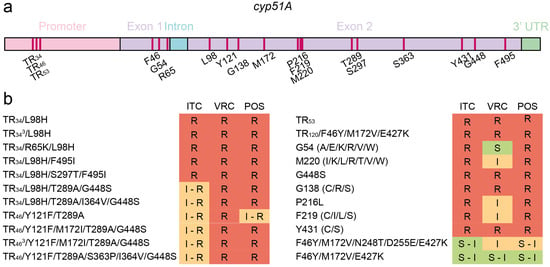
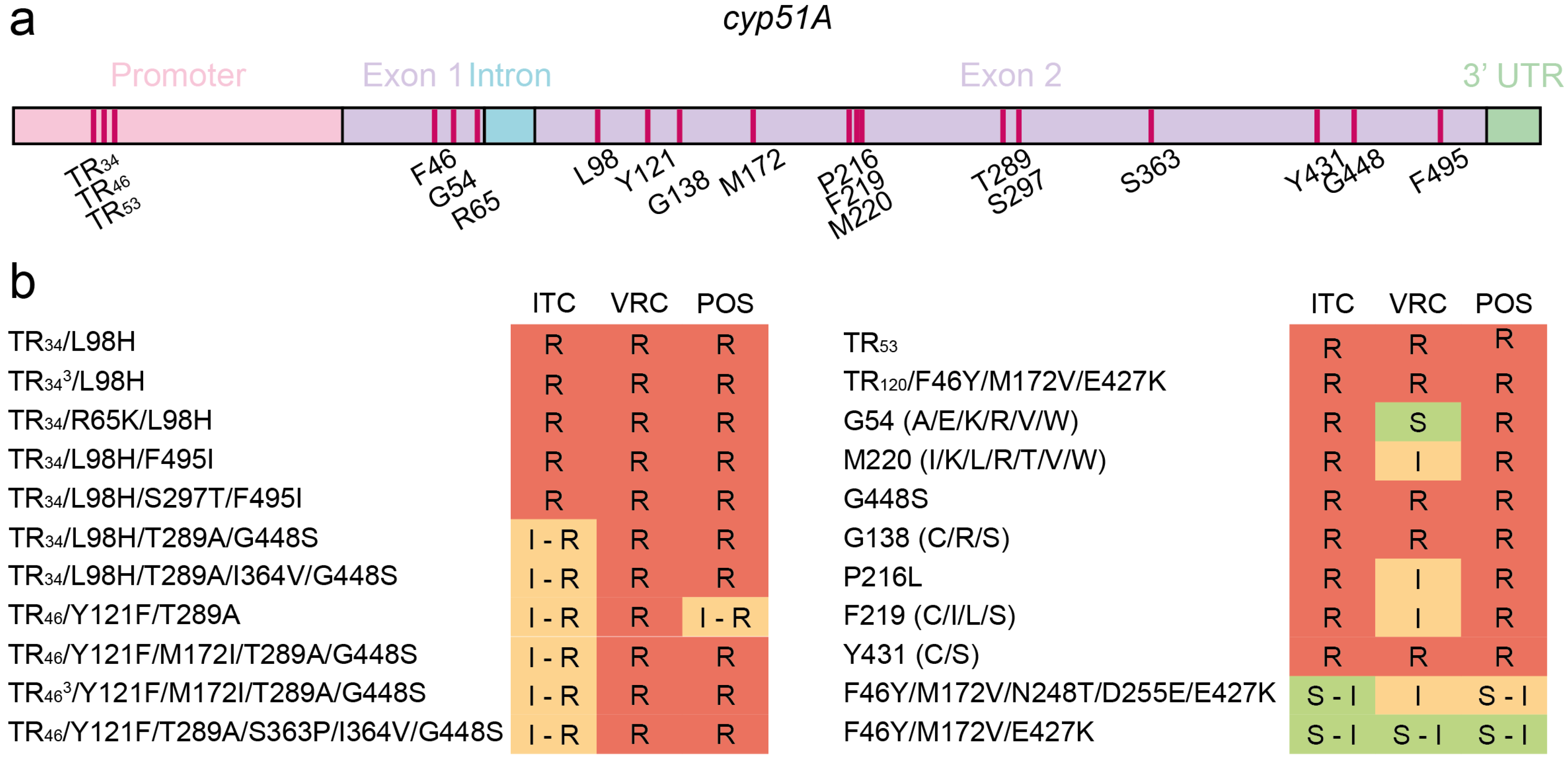
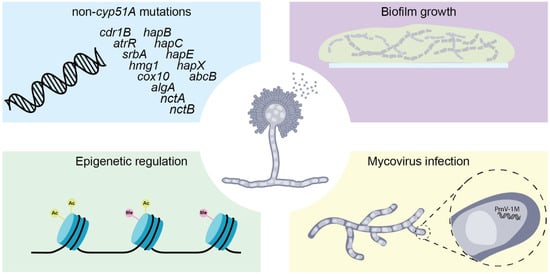
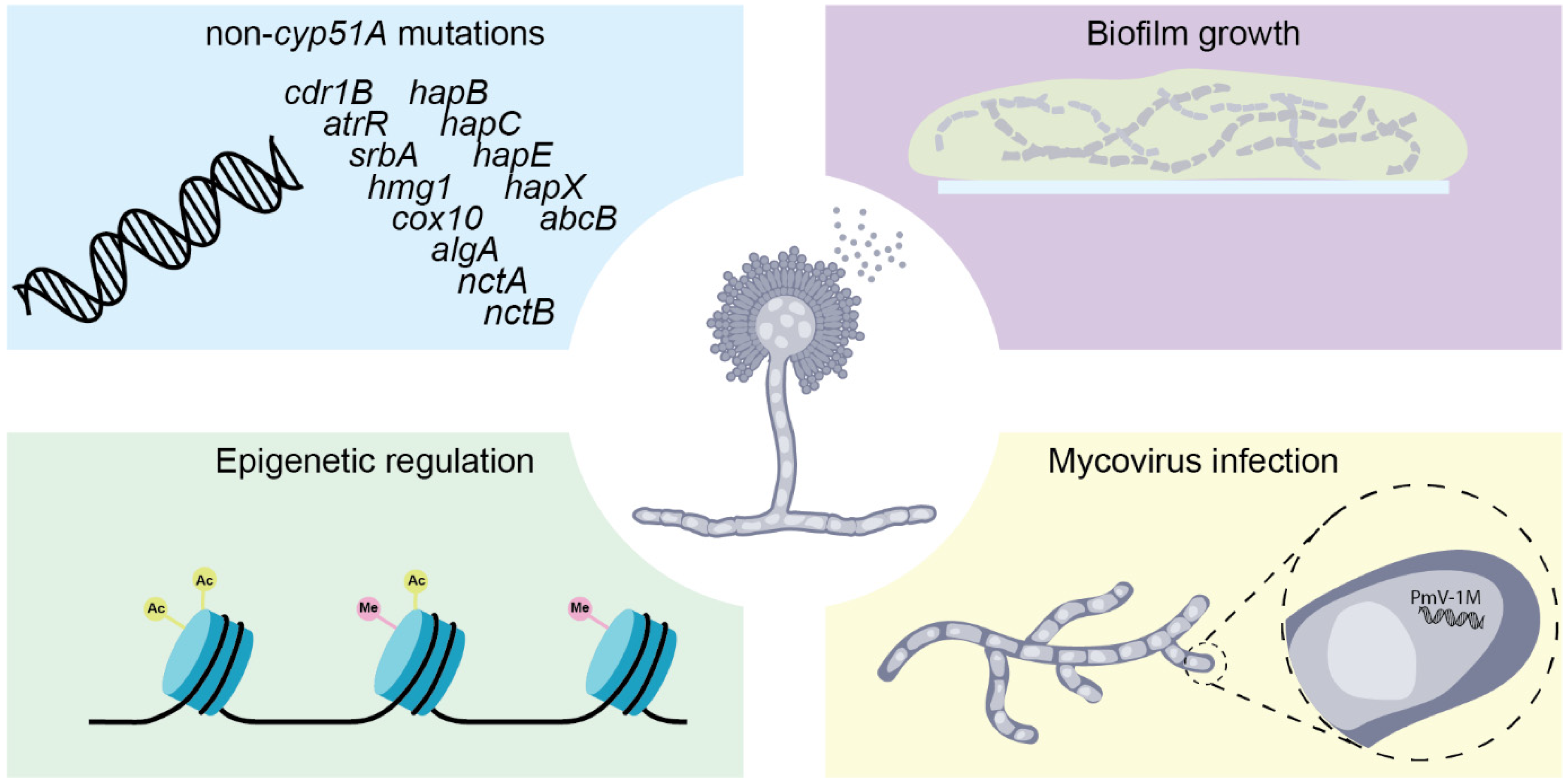
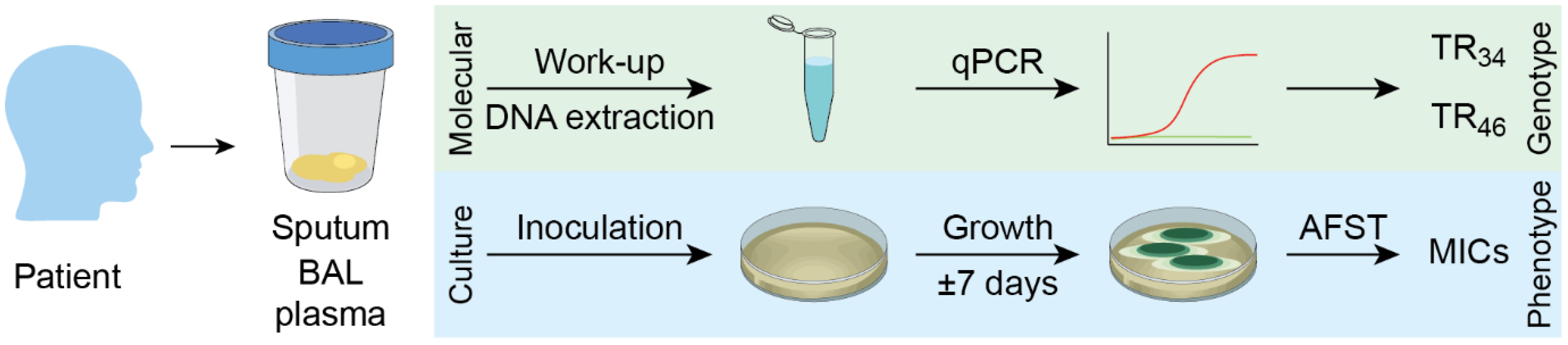

Disclaimer/Publisher’s Note: The statements, opinions and data contained in all publications are solely those of the individual author(s) and contributor(s) and not of MDPI and/or the editor(s). MDPI and/or the editor(s) disclaim responsibility for any injury to people or property resulting from any ideas, methods, instructions or products referred to in the content. |
© 2026 by the authors. Licensee MDPI, Basel, Switzerland. This article is an open access article distributed under the terms and conditions of the Creative Commons Attribution (CC BY) license.