


Abstract
Obesity is a chronic, highly prevalent disease affecting nearly one-third of the global population and represents a major independent risk factor for heart failure (HF), particularly heart failure with preserved ejection fraction (HFpEF). Excess adiposity—especially visceral and epicardial adipose tissue (EAT)—acts as an active endocrine and immune organ, promoting chronic low-grade inflammation, oxidative stress, endothelial dysfunction, and adverse myocardial remodeling. Expanded EAT exerts both paracrine inflammatory effects and mechanical constraint on the myocardium, contributing to diastolic dysfunction, microvascular impairment, atrial arrhythmogenesis, and elevated filling pressures despite preserved systolic function. Evidence demonstrates a dose–response relationship between increasing body mass index and incident HF. Clinically, obesity-related HFpEF is characterized by concentric left ventricular hypertrophy, impaired relaxation, increased plasma volume, reduced exercise tolerance, and relatively low natriuretic peptide levels, complicating diagnosis. HF management includes traditional treatment with diuretics, renin-angiotensin system inhibitors, β-blockers, mineralocorticoid receptor antagonists, and angiotensin receptor-neprilysin inhibitors. These agents widely remain foundational as they primarily target hemodynamic and neurohormonal pathways in HF. In contrast, sodium–glucose cotransporter 2 inhibitors consistently reduce HF hospitalizations across the ejection fraction spectrum, while glucagon-like peptide-1 receptor agonists and dual incretin therapies (e.g., tirzepatide) promote substantial weight loss, improve symptoms, and demonstrate promising anti-remodeling effects in obesity-related HFpEF. Recognizing obesity-driven HF as a distinct cardiometabolic entity supports an integrated therapeutic strategy combining structured weight reduction with guideline-directed HF polypharmacotherapy to address both hemodynamic burden and upstream adiposity-related mechanisms.
1. Introduction
Obesity is a chronic widespread condition characterized by excess adiposity with or without abnormal distribution or function of the adipose tissue associated or not to obesity-related comorbidities [1]. Estimates indicate a worldwide obesity prevalence of around 30% [2].
Obesity markedly increases the risk of cardiovascular diseases (CVD) as the consequence of intricate pathophysiological interconnections between adipose tissue dysfunction, obesity-related comorbidities and complications (Table 1) [3].
Table 1.
Interplay Between Obesity and Cardiovascular Disease—Mechanisms and Pathophysiology [3].
Heart failure (HF) is tightly related to obesity and excess adiposity burdens approximately 20% of patients with established diagnosis of HF, surging to over 80% in HF with preserved ejection fraction (HFpEF) subset [4].
2. Pathogenetic Role of Excess Adiposity, Visceral Depots, and Epicardial Fat in Obesity-Driven Myocardial Injury
Adipose tissue is recognized as an active endocrine and immune organ. Expanded adiposity drives chronic low-grade inflammation and dysregulated adipokine profiles. Oxidative stress-generated by inflamed visceral adipose depots directly disrupts vascular homeostasis due to several events, such as production of reactive oxygen species, nitric oxide bioavailability, dysfunctional perivascular adipose tissue dysregulation, and systemic inflammation further injures the endothelium [5].
The metabolic milieu of obesity—dyslipidemia with small dense LDL, hypertriglyceridemia, and insulin resistance—accelerates all phases of atherosclerosis, from intimal lipid accumulation to plaque progression and instability [6].
Excess weight also increases blood volume and cardiac workload, activates neurohormonal systems, increases arterial pressure levels, and promotes left ventricular hypertrophy and remodeling [7].
Epicardial adipose tissue (EAT) can exert paracrine effects that worsen diastolic function [8]. Epicardial adipocytes and infiltrating immune cells—activated macrophages (M1 phenotype) and pro-inflammatory T-lymphocytes—produce tumor necrosis factor-α (TNF-α), interleukin-6 (IL-6), interleukin-1β (IL-1β), and monocyte chemoattractant protein-1. At the same time, local expression of adiponectin is significantly reduced with negative effects on inflammation, myocardial fibrosis and vasoconstriction [9]. This imbalance promotes established low-grade inflammation in the adjacent myocardium, facilitating extracellular matrix deposition and interstitial fibrosis. The activation of inflammatory signaling pathways, including nuclear factor kappa B and the inflammasome, further amplifies local oxidative stress and cellular dysfunction. Local release of inflammatory mediators and reactive oxygen species also impairs endothelial nitric oxide bioavailability, leading to coronary endothelial dysfunction and microvascular rarefaction. All these alterations contribute to myocardial ischemia in the absence of obstructive coronary artery disease, a feature frequently observed in obesity-related heart disease and HFpEF [10]. EAT expansion also imposes mechanical constraints on the myocardium. As epicardial fat volume increases, the tissue exerts external compressive forces on the myocardium, effectively reducing ventricular compliance. This mechanical restraint interferes with normal diastolic relaxation and filling, resulting in elevated intracardiac filling pressures even when ventricular volumes are preserved. Such effects are particularly pronounced at the left ventricular level and are considered a key contributor to the diastolic dysfunction typically characterizing HFpEF [11]. The mechanical and inflammatory actions of EAT are relevant in the atrial myocardium, as epicardial fat infiltration and fibrotic remodeling create structural and electrical heterogeneity disrupting normal conduction pathways. This process provides a favorable substrate for atrial arrhythmias—such as atrial fibrillation—which is highly prevalent in individuals with overweight and obesity [12].
Excess adiposity also triggers hyperdynamic circulation and stroke work demands, thus forcing chronic preload-to-afterload mismatch, elevated filling pressures, eccentric ventricular hypertrophy, lastly culminating in diastolic failure. Ectopic fat deposition (visceral, hepatic, and myocardial) induces lipotoxicity through ceramide and sphingolipid overload that impairs mitochondrial β-oxidation and myocyte injury. Obesity also disrupts the cardiac stem progenitor cell (CPC) niche and inhibits CPC differentiation into cardiomyocytes, ultimately depleting regenerative reserves and perpetuating maladaptive remodeling [13] (Table 2).
Table 2.
Pathophysiological Links Between Obesity, Adipose Tissue, and Cardiovascular Dysfunction [5,6,7,8,9,10,11,12,13].
3. Clinical Evidence of Obesity Impact on HF and Related Prognosis
Obesity has emerged as a relevant and independent risk factor for the development of HF. Longitudinal analyses from a general population cohort reveal a positive association between incremental increases in body mass index (BMI) and the risk of new-onset HF. Specifically, each 1 kg/m2 increment in BMI confers a 6% increase in HF incidence independent of canonical cardiovascular (CV) risk factors, confirming an exposure–response relationship in observational settings. Moreover, higher BMI is also associated with increased HF-specific (4%) and all-cause mortality (1%) in these cohorts [14]. A meta-analysis of 25 cohort studies found a summary HF relative risk of 42% for each 5 kg/m2 increment in BMI, 28% for 10 cm higher waist circumference, and 33% per 0.1-unit higher waist–hip ratio. Pooled estimates reported significant positive association between HF risk and both visceral and pericardial fat (8%). These findings are even stronger in HFpEF than HF with reduced ejection fraction (HFrEF) [15]. Data collected from a National U.S.A. database, including more than 1 million patients, indicates obesity (odds ratio 1.84; 95% CI: 1.22–2.76) and morbid obesity (odds ratio 1.81; 95% CI: 1.22–2.70) increased the risk of in-hospital mortality compared with normal weight, and was also associated with higher odds of in-hospital mortality in both HFrEF and HFpEF [16].
Additional anthropometric parameters, such as waist circumference and waist-to-hip ratio (WHR), reflect cardiometabolic risk independently of BMI as expression of abdominal fat distribution and visceral adiposity strongly. WHR has been shown to outperform or complement BMI in predicting metabolic and cardiovascular outcomes, supporting its use as a practical clinical biomarker of metabolically hazardous obesity [17,18].
Sarcopenic obesity, as defined by EASO and ESPEN, combines excess adiposity with reduced muscle mass and/or function, assessed by integrating BMI or waist circumference, functional measures, and body composition [19]. Compared with obesity alone, sarcopenic obesity induces a synergistic worsening of insulin resistance, atherogenic dyslipidemia, and pro-inflammatory status, driven by both visceral fat excess and lower metabolically active muscle mass [20]. Consequently, sarcopenic obesity conveys a substantially higher cardiovascular risk, with increased atherosclerosis, arterial stiffness, HF, and cardiovascular mortality [21]. Nowadays, estimations suggest that up to 40% of patients with excess weight may have sarcopenic obesity, an epidemiological proportion that assumes considerable relevance given the amplified cardiometabolic risk associated with this phenotype.
Among patients with established HF, overweight or obese individuals often exhibit lower all-cause and CV mortality and, in some cohorts, reduced rates of HF-related hospitalization, compared with normal-weight or underweight patients [22]. This phenomenon is also known as the so-called obesity paradox [23]. From an observational standpoint, evidence demonstrates a U- or J-shaped relationship between BMI and mortality in HF populations; so, while underweight, low-normal BMI categories, and class III obesity are associated with the highest mortality risk, overweight and class I–II obesity are associated with the lowest hazard ratios for death after multivariable adjustments [24]. Several large registries report that overweight and moderately obese HF patients experience lower rates of rehospitalization and shorter lengths of hospital stay when admitted for acutely decompensated HF, potentially reflecting greater metabolic reserve and tolerance to acute catabolic stress. However, data are heterogeneous highlighting the context-dependent nature of the association. Thus, while mortality outcomes often favor higher BMI categories, hospitalization risk does not consistently follow the same pattern [25].
Mechanistically, the obesity paradox is unlikely to reflect protective effects of excess adiposity but, instead, it is best explained by a combination of methodological biases and biological confounders. First, BMI alone fails in distinguishing between fat mass and fat-free mass and does not provide information about overall body composition and visceral adiposity. Patients with high BMI may have greater skeletal muscle mass, which is independently associated with improved HF prognosis [26] or fluid retention [27]. Conversely, lower BMI in HF often reflects cardiac cachexia, sarcopenia, or advanced disease severity, all strong predictors of mortality especially in patients with HFpEF [28]. Confounder factors and markers of disease severity also reflect HF progression better than BMI. Advanced HF patients frequently experience unintentional weight loss and sarcopenia, which are independent markers of disease severity and independently predict poor outcomes. So, overweight or mildly obese HF patients may simply represent a group with less severe metabolic and catabolic stress, biasing survival comparisons. Additional contributors include lead time and selection biases, mostly driven by the fact that patients with excess weight frequently develop HF at a younger age and are consequently prone to be treated prior and more intensively compared to normal- or underweight individuals [29].
4. Characterization of Clinical, Laboratory, and Echocardiographic Hallmarks of Obesity-Associated Heart Failure
Obesity-driven HF represents a distinct clinical phenotype characterized by well-defined structural, functional, and metabolic abnormalities. The main phenotype is severe or long-standing obesity (BMI ≥ 35 kg/m2), with a higher prevalence among women than men, and frequent coexisting comorbidities such as arterial hypertension, type 2 diabetes (T2D), and obstructive sleep apnea. This combination generates a high cardiometabolic burden, and early recognition of HF is often hampered by symptom overlapping with obesity (e.g., fatigue and dyspnea) [30].
Hemodynamically, patients exhibit expanded plasma volume and elevated cardiac output, especially in early phases of HF, along with increased cardiac preload and afterload, and arterial stiffness. These changes contribute to progressive left ventricular remodeling, characterized by concentric hypertrophy, increased left ventricle mass index, and relative wall thickening, often with preserved or mildly reduced cavity size. Diastolic dysfunction is a hallmark, with impaired relaxation, elevated E/e′ ratio, and reduced diastolic reserve, resulting in elevated filling pressures that become particularly apparent during physical efforts [31]. Left atrial enlargement and impaired reservoir function reflect persisting elevated pressures, while right ventricular involvement and elevated pulmonary artery pressures contribute to exercise intolerance and congestion in more advanced stages. EAT is increased in thickness and exerts both mechanical constraints and paracrine inflammatory effects, which may further impair ventricular compliance, promote cardiac remodeling, and significantly impair long-term outcomes [32].
Functionally, these patients often display reduced cardiometabolic fitness—expressed as VO2 max—chronotropic impairment, and abnormal ventricular–vascular coupling, which together explain disproportionate exertional dyspnea relative to resting findings. Biomarkers may be misleading: natriuretic peptide levels are frequently lower than expected for the degree of congestion (renal hyperfiltration), while inflammatory markers such as CRP are elevated, posing diagnostic challenges [33] (Table 3).
Table 3.
Clinical and Echocardiographic Features of Obesity-Associated Heart Failure [30,31,32,33].
Collectively, this phenotype manifests as obesity-driven HFpEF, marked by high symptom burden, exercise intolerance, and variable edema, emphasizing the need for careful cardiometabolic and hemodynamic evaluation (Figure 1).
Figure 1.
This presents a stepwise diagnostic and management algorithm for obesity-associated heart failure, a phenotype predominantly characterized by HFpEF. It emphasizes careful clinical assessment, cautious interpretation of natriuretic peptides, comprehensive echocardiographic evaluation, and functional testing when needed to confirm elevated filling pressures. Management integrates guideline-directed heart failure therapy with aggressive comorbidity optimization and structured weight reduction, recognizing obesity as a central driver of the syndrome [30,31,32,33,34]. List of Abbreviations: BMI, Body Mass Index; HF, Heart Failure; HFpEF, Heart Failure with Preserved Ejection Fraction; LVEF, Left Ventricular Ejection Fraction; LVH, Left Ventricle/Left Ventricular Hypertropia; E/e, ratio of Early mitral inflow velocity to early diastolic mitral annular velocity; PAP, Pulmonary Artery Pressure; NT-proBNP, N-Terminal pro-B-type Natriuretic Peptide; T2DM, Type 2 Diabetes Mellitus; OSA, Obstructive Sleep Apnea; SGLT2i, Sodium–Glucose Cotransporter type 2 inhibitors; GLP-1RA, glucagon-like peptide-1 receptor agonists; GIP, glucose-dependent insulinotropic polypeptide; CPET, CardioPulmonary Exercise Test; RHC, Right Heart Catheterization; LVEDP, Left Ventricular End-Diastolic Pressure; PAWP, Pulmonary Artery Wedge Pressure. ↑, increase.
HFpEF diagnosis requires a structured and multiparametric approach integrating clinical evaluation, laboratory testing, and cardiac imaging [34]. To standardize and facilitate this complex diagnostic process, several scoring systems have been developed in recent years. Among the most widely adopted are the Heart Failure Association Pretest Probability of Heart Failure with Preserved Ejection Fraction (HFA-PEFF) [35] and the heavy, hypertension, atrial fibrillation, pulmonary hypertension, elder, and filling pressures (H2FPEF) [36]. These algorithms incorporate a combination of clinical variables, laboratory data—including natriuretic peptide concentrations—and echocardiographic parameters to improve diagnostic discrimination between HFpEF and non-cardiac causes of dyspnea. In addition to supporting clinical decision-making, these tools help guide further diagnostic testing, such as diastolic stress echocardiography or invasive hemodynamic assessment, in cases where diagnostic uncertainty persists [37]. Importantly, beyond their diagnostic utility, these scoring systems also provide incremental prognostic information. They are capable of identifying individuals without a formal diagnosis of HFpEF who are nonetheless at increased risk for future HF-related events, thereby highlighting a subgroup that could benefit from closer surveillance and early interventions [38]. Although methodological differences exist between HFA-PEFF and H2FPEF scores—reflecting distinct weighting of clinical versus imaging parameters—their overall diagnostic performance in unselected patient populations has been shown to be satisfactory (Table 4) [39]. However, data regarding their performance in specific phenotypic subgroups, particularly in patients with obesity, remain limited. This gap is clinically relevant, given the strong epidemiological and pathophysiological link between obesity and HFpEF. In individuals with obesity, several factors complicate the diagnostic workflow. First, typical symptoms—such as exertional dyspnea and reduced exercise tolerance—may overlap with or be attributed to obesity itself, increasing the risk of both over- and under-diagnosis. Second, circulating natriuretic peptide levels are consistently lower in individuals with excess weight compared with normal-weighted counterparts, even in the presence of elevated filling pressures, thereby potentially reducing the sensitivity of biomarker-based diagnostic criteria. Third, excess adipose tissue may impair echocardiographic image quality by attenuating ultrasound transmission, limiting accurate assessment of diastolic parameters and structural remodeling [40,41,42].
Table 4.
Simplified Comparison Between HFA-PEFF and H2FPEF Scores [35,36,39].
5. Pharmacological Modulation of Volume Overload and Cardiac Remodeling: Mechanisms and Evidence of Conventional Treatments
Obesity is characterized by a wide spectrum of pathophysiological processes profoundly impacting on cardiac pump and prompting HF. These alterations include sodium-water retention, neurohormonal activation, myocardial hypertrophy, interstitial fibrosis, and dysfunctional left ventricular remodeling. Therapeutic strategies targeting these mechanisms remain foundational in the management of obesity-related HFpEF (Table 5).
Table 5.
Conventional Pharmacological Treatment of Heart Failure with Emphasis on Obesity-Related HFpEF: Summary of Mechanisms and Clinical Evidence [43,44,45,46,47,48,49,50,51,52,53,54,55,56,57,58,59,60,61,62,63,64,65,66,67,68,69,70,71,72,73,74,75,76,77,78,79,80,81,82,83,84,85,86,87,88,89,90,91,92,93].
Diuretics—including loop and thiazide/thiazide-like agents—are the foremost pharmacological intervention to relieve congestion via natriuresis and diuresis, reducing intravascular volume and venous congestion [43]. Loop diuretics, such as furosemide and torasemide, act on the Na+-K+-2Cl− cotransporter in the thick ascending limb of the Henle’s loop, resulting in an imbalanced countercurrent gradient formation that impairs renal concentration capability in response to antidiuretic hormones and produces rapid and potent diuresis [44]. While, in acutely decompensated HF, loop diuretics are most effective in symptom relief and hemodynamics improvement [45], their long-term effects on hemodynamic and hard endpoints remain neutral or controversial when compared to guideline-directed neurohormonal therapies. In fact, chronic administration of loop diuretics may reduce intrarenal plasma flow, consequently impairing glomerular filtration rate [46]. Also, loop diuretics activates the renin–angiotensin–aldosterone system that, in turn, activates compensative mechanisms of sodium and water retention and potentially counteract favorable remodeling effects on cardiomyocytes [47]. Although direct clinical trials detailing obesity-related HFpEF management are lacking, evidence seems to indicate that chronic exposure to loop diuretics—especially with high doses—is associated with worse clinical outcomes in HFpEF, including excess of CV mortality [48]. Patients with obesity are particularly responsive to intravenous loop diuretic treatment although being predisposed to a higher risk of worsening renal function following natriuresis [49]. Nevertheless, loop diuretics are the first therapeutic option—with almost comparable efficacy between furosemide and torsemide—in HFpEF hospital management [50] and acetazolamide—as add-on to background treatment—usually potentiate the decongestive effects of loop diuretics in acute decompensated HF [51]. Thiazide and thiazide-like diuretics act at the distal convoluted tubule inhibiting the sodium-chloride cotransporter, accentuating residual sodium excretion also impairing aldosterone-mediated sodium resorption efficiency [52]. These agents do not influence cardiac structural remodeling and have mild or long-term effects on HFpEF and overall CV outcomes [53]. Sequential nephron blockade, combining loop and thiazide diuretics, overcomes diuretic resistance, forces diuresis, and ameliorates acute congestive-related clinical outcomes. But association of two different classes of diuretics considerably increases the risks of electrolyte imbalance and renal function impairment, underscoring that decongestion alone does not suffice to reverse pathologic remodeling [54].
β-adrenergic blockers interrupt deleterious sympathetic overdrive, a hallmark of HF and adrenergic activation in obesity-related CV diseases [55]. These agents reduce myocardial oxygen demand by decreasing heart rate and contractility, improve ventricular filling times, and counteract arrhythmogenic triggers, all factors associated with CV diseases and worse clinical outcomes [56,57]. These agents also showed to positively modulate neurohormonal stress that drives myocardial remodeling in HF [58], and adjunctive effect explaining relevant amelioration of CV hard endpoints, including all-cause mortality, in both patients with HFpEF [59] and HFrEF [60]. Clinical trials lack outcomes stratified by BMI, significantly affecting proper assessment of β-adrenergic blocker safety and efficacy in patients with excess adiposity. From a practical view-point, it should be mentioned that β-adrenergic blockers are associated with a slight but not negligible weight gain and insulin sensitivity impairment, which are common side effects of this class of medications [61]. Moreover, β-blockade contributes less directly to regression of cardiomyocyte hypertrophy compared to renin-angiotensin system (RAAS) blockade.
The RAAS is upregulated in patients with obesity, leading to overproduction of aldosterone [62]. Angiotensin-converting enzyme (ACE) inhibitors and angiotensin receptor blockers are cornerstone therapies in CV diseases, since these attenuate maladaptive RAAS activation, reduce cardiac afterload and preload, and diminish angiotensin II-mediated profibrotic signaling [63]. Beyond lowering blood pressure, ACE inhibition has been repeatedly shown to facilitate regression of ventricle mass and improve endothelial function [64]. In patients with HF, ACE inhibitors reduce CV mortality by ~24% [65] and HF-related adverse outcomes by ~11% with high dose performing better than low dose [66].
Calcium-channel blockers (CCBs) exhibit antihypertensive activity via L-type voltage-gated calcium-channel antagonism, leading to arterial vasodilatation and reduced myocardial oxygen demand [67]. Long-acting dihydropyridine CCBs have demonstrated favorable effects on left ventricle hypertrophy reversal [68] and may reduce stroke risk in patients with arterial hypertension [69]. However, their direct impact on maladaptive myocardial remodeling in HF is generally less potent than that achieved through RAAS inhibition [70], especially in patients with preserved or mildly reduced ejection fraction (such as those with obesity-related HF) [71]. Non-dihydropyridine CCBs should instead be avoided in case of systolic dysfunction, since they exert negative inotropic effects prompting abrupt ejection fraction drops and acute decompensation [72,73].
Steroidal mineralocorticoid receptor antagonists (MRAs)—also defined as aldosterone antagonists—include spironolactone and eplerenone. These agents block aldosterone binding at the mineralocorticoid receptor and suppress the expression of epithelial sodium channels at the distal renal tubule, myocardium, and microvasculature, limiting sodium retention and attenuating aldosterone-induced hypertension, myocardial fibrosis, and vascular inflammation [74,75]. Landmark trials established that spironolactone reduces morbidity and hospitalization risk (−35%) and mortality (−30%) in patients with severe HF, substantiating the class as a critical component of guideline-directed medical therapy [76]. MRAs also provide anti-fibrotic benefits that complement those of ACE inhibitors and, partially, β-blockers by directly antagonizing aldosterone-mediated extracellular matrix deposition and pathological remodeling [77,78]. This effect is observed in patients with obesity, without HF, in which MRAs utilization reduces biomarkers of fibrosis and normalizes estimated cardiac filling pressures [79]. However, benefits are lower in patients with HFpEF, including obesity-related HF. Although the evidence indicates significant improvement in diastolic function [80] and positive results in terms of prevention of new or recurring hospital admissions due to HF decompensation [81], MRAs have negligible effects on CV mortality and other hard endpoints [82].
Recent pharmacological innovation has produced non-steroidal MRAs, most notably finerenone, which offers high receptor selectivity and a more favorable safety profile relative to classic steroidal MRAs [83]. Preclinical studies elucidate that finerenone mitigates oxidative stress, inflammation, and tissue fibrosis in myocardium and vasculature by blocking aldosterone-driven signaling cascades within cardiomyocytes, vascular smooth muscle cells and inflammatory cells [84]. Crucial trials—such as the FIDELIO-DKD [85], FIGARO-DKD [86], and FINEARTS-HF [87] in high-risk populations with T2D, chronic kidney disease, and HF–demonstrate that finerenone, on top of standard care (maximal tolerated ACE inhibitor or ARBs dose) significantly reduces HF hospitalization risk and all-cause mortality, with consistent benefits observed across a wide range of ejection fractions and metabolic profiles. Moreover, emerging evidence suggests that finerenone protective effects on CV events are independent of body weight, indicating its potential value in patients with excess adiposity, counteracting aldosterone excess and related maladaptive remodeling [88]. These findings position finerenone as an important adjunctive agent in current cardio-renal therapeutic paradigms, particularly for patients with obesity-associated HF and a high cardiometabolic risk burden.
Last, angiotensin receptor and neprilysin inhibitors (ARNI), such as sacubitril/valsartan, represent another strongly recommended pillar of the pharmacological treatment of HF, particularly HFrEF [89,90]. Patients with obesity overexpress neprilysin in the kidney and adipocytes, leading to myocardial injury and ventricular dysfunction [91]. As preclinical evidence suggests, neprilysin inhibition leads to additional benefits in obesity-related metabolic heart diseases, with improvements in left ventricular diastolic function, interstitial fibrosis, and oxidative stress [92]. As aforementioned, the PARADIGM trial demonstrated superior effects of sacubitril/valsartan than enalapril in reducing the risk of HF hospitalizations and mortality—with additional benefits on symptoms and quality of life in patients with HFrEF—and a further post hoc analysis revealed that sacubitril/valsartan reduced the risk of HF hospitalization or CV death across all BMI categories [93].
Together, these pharmacological classes—while differing in direct impact on fluid balance or neurohormonal axes—converge on a common goal: alleviating hemodynamic stress, preventing deleterious remodeling, and improving clinical outcomes in populations burdened by obesity-related CV diseases. Integrated use of decongestive and neurohormonal modulation remains the empiric standard in contemporary management, with ongoing research refining our understanding of how these interventions interact with obesogenic metabolic states. However, strong evidence of their beneficial effects in patients with obesity and HF remains largely underexplored, requiring further investigations.
6. Anti-Obesity Interventions and Heart Failure Outcomes
One of the most immediate and clinically relevant benefits of anti-obesity interventions in HFpEF is intentional weight reduction. Modest weight loss (e.g., 5% of baseline body weight) directly lowers cardiac workload by decreasing total blood volume, arterial pressure, left ventricular filling pressures, and ultimately reducing clinical signs and symptoms [94]. Closely related to weight reduction is the attenuation of pulmonary and systemic fluid retention, a hallmark of symptomatic HF [95].
Anti-obesity therapies—particularly those with natriuretic or osmotic diuretic properties—can reduce interstitial and intravascular congestion, thereby improving symptoms and exercise tolerance. This effect is clinically meaningful even in the absence of large changes in body weight and may contribute to reductions in HF decompensation [96].
Beyond hemodynamics, growing evidence supports anti-remodeling effects on the myocardium of weight loss. In fact, obesity is associated with concentric left ventricular hypertrophy, myocardial fibrosis, and impaired myocardial energetics and interventions aimed to improve metabolic efficiency and reduce lipotoxicity may partially reverse these structural and functional abnormalities [97]. Moreover pharmacological intervention—as reported with dapagliflozin—lead to significant shrinkage of EAT, independently of changes in BMI, and left ventricular mass compared to placebo in 12 months [98]. In this context, improvements in left ventricular mass, diastolic parameters, and biomarkers of myocardial stress observed in recent trials suggest that targeting obesity and metabolic dysfunction can modify the myocardial substrate itself, rather than alleviating symptoms.
Some anti-obesity and cardiometabolic therapies exert direct cardioprotective effects that are largely independent of weight loss (Table 6). For instance, sodium–glucose cotransporter 2 inhibitors (SGLT2i)—although inducing only modest body weight loss—consistently reduce HF-related outcomes, with most of the evidence derived from T2D [99,100,101]. SGTL2i mechanisms of benefit include natriuresis with preferential interstitial fluid removal, which is one of the first mechanisms of cardiac preload and afterload reduction, improvement in myocardial energetics through enhanced free-fatty acid and ketone bodies rather than glucose utilization, attenuation of inflammation and oxidative stress, and favorable effects on renal–cardiac interactions [102]. In patients with HFpEF, dapagliflozin reduces resting and exercise pulmonary capillary wedge pressure, along with favorable effects on plasma volume and body weight [103]. Based on clinical findings, in one trial, dapagliflozin was demonstrated to significantly reduce the main study outcome (worsening HF or CV death) across all weight classes: −26% in under- and normal-weight, −19% in overweight, −32% in class I obesity, −29% in class II and III obesity [104]. In HFrEF, the pivotal DAPA-HF trial established the prognostic efficacy of dapagliflozin in patients with ejection fraction ≤ 40%, demonstrating a significant reduction in the composite endpoint of worsening HF (hospitalization or urgent visit requiring intravenous therapy) by 30%, or CV death by 18%, irrespective of T2D [105]. Similarly, the EMPEROR-Reduced trial confirmed that empagliflozin significantly lowered the risk of CV death or HF hospitalization (−25%) in patients with symptomatic HFrEF, with a particularly consistent reduction in recurrent hospitalizations (−30%) [106]. Although primarily designed as CV outcome trials in diabetes, the CANVAS Program provided early signals of reduced HF hospitalization with canagliflozin [107], findings later reinforced in dedicated HF populations by the pragmatic CHIEF-HF trial, which demonstrated significant improvement in HF-related health status, assessed with change in the Kansas City Cardiomyopathy Questionnaire Total Symptom Score (KCCQ TSS) at 12 weeks (+4.3 points) across wide EF spectrum [108]. In EMPEROR-Preserved, empagliflozin significantly reduced the composite of CV death or HF hospitalization in patients with HFpEF (EF > 40%), irrespective of T2D, largely driven by low events of HF hospitalizations than placebo (−27%) [109]. Similar results were found in the EMPA-REG OUTCOME trial, in which empagliflozin utilization was associated with significant improvement of HF events regardless of baseline renal injury [110].
Table 6.
Effects of SGLT2i, GLP-1RA, Combination Therapy, and Tirzepatide in HFrEF and HFpEF [94,95,96,97,98,99,100,101,102,103,104,105,106,107,108,109,110,111,112,113,114,115,116,117,118,119,120,121,122,123,124,125,126,127,128,129,130,131,132,133,134,135,136,137,138,139,140,141].
The DELIVER study demonstrated that dapagliflozin reduced worsening HF (−21%) and CV death (−12%) in patients with HFpEF, confirming a class effect of SGLT2i in HFpEF [111]. These findings were further strengthened by pooled analyses of EMPEROR trials, which showed a consistent treatment effect of empagliflozin across the continuum of EF (from <25% to 65%) reducing the cumulative risk of HF hospitalization by 30% [112]. Sotagliflozin, a dual SGLT1/2 inhibitor, provided complementary evidence in high-risk populations. The SOLOIST-WHF trial enrolled patients with T2D and recent worsening HF and demonstrated a significant reduction in CV death and total HF events [113] when sotagliflozin was initiated early (before or a few days after discharged), including in patients with HFpEF (−33%) [114]. The broader SCORED trial, conducted in patients with T2D and chronic kidney disease, also showed a relevant reduction in HF events—estimated as admission to hospital care or requirement of urgent visits for decompensated HF—by 33% [115]. In VERTIS cardiovascular trial, ertugliflozin reduced the risk of HF events by 30%, but most of the protection was observed in overweight individuals rather than patients with obesity [116]. Meta-analysis integrating data from DAPA-HF, DELIVER, EMPEROR-Reduced, EMPEROR-Preserved, SOLOIST-WHF confirmed a significant reduction in HF hospitalization events (−28%), as well as in total HF events (−23%), with benefits observed irrespective of baseline diabetes and across the EF spectrum [117]. Despite improvements in HF outcomes with SGLT2i are considered as a class effect, one head-to-head trial found empagliflozin more than dapagliflozin to produce better results in terms of all-cause mortality or hospital admission due to HF (−10%) [118].
A substantial body of randomized controlled trials and subsequent meta-analyses indicates that glucagon-like peptide 1 receptor agonists (GLP-1RA) not only produces robust and sustained weight loss in individuals with obesity, but also impacts clinical outcomes relevant to HF, particularly in patients with obesity-related HFpEF. One meta-analysis encompassing patients with obesity and HFpEF demonstrated that GLP-1RA significantly reduced the incidence of HF-related events by 60%, improved patient-reported quality of life as measured by the KCCQ, enhanced functional capacity (six-minute walk test), and produced substantial weight loss compared to placebo [119]. Treatment with GLP-1RA (vs. placebo) decreased the risk of new-onset HF (−23%) and the composite of HF events or cardiovascular death (−18%) in a total of 52,752 participants without HF from six RCTs [120]. While this pooled evidence did not show a statistically significant reduction in CV mortality or all-cause mortality, the magnitude of reduction in HF-driven events and patient-centered outcomes underscores a therapeutic indication in this high-risk population [121]. Importantly, this risk reduction appeared to be independent of changes in glucose control and body weight and correlated more closely with the preventive effects on atherosclerotic CV diseases [122]. In the SELECT trial—a trial dedicated to people living with preexisting CV disease and overweight or obesity but without T2D—once-weekly 2.4 mg semaglutide (34-month exposure) lead to a slight reduction in the risk of composite HF endpoint (−18%), mostly driven by semaglutide protection against deaths due to CV causes [123]. However, the result of a tailored study—the STEP-HFpEF DM trial—patients with obesity-related HFpEF and T2D showed significant improvement in HF-related symptoms and physical limitations after 1 year of semaglutide treatment (2.4 mg once-weekly) versus placebo [124]. Similar results were found in a population with obesity-related HFpEF, regardless of T2D, in which semaglutide 2.4 mg/weekly improves symptoms, attenuates physical limitations, and exercise tolerance and induces greater weight loss than placebo [125,126,127]. Moreover, semaglutide utilization reduces the use of all types of diuretics as reported by a pooled analysis of the STEP-HFpEF and STEP-HFpEF-DM trials [128]. Over 52 weeks, semaglutide significantly attenuates left atrial remodeling and right ventricular enlargement, while improving indices of diastolic function (E-wave velocity, E/A ratio, and E/e′), without affecting left ventricular dimensions or systolic function. These effects are independent of baseline T2D or atrial fibrillation, and greater weight loss is associated with greater reduction in left atrial volume [129]. Cumulatively, across four trials—SELECT, FLOW, STEP-HFpEF, and STEP-HFpEF DM (semaglutide 2.4 mg once-weekly in all, except for FLOW trial in which patients were treated with semaglutide 1 mg/week)—participants with HFpEF showed significant reduction in CV deaths or HF-related events by 31% and worsening HF events by 41% [130]. Lastly, prespecified analyses of the SOUL trial found that oral semaglutide was associated with a modest but significant 14% lower risk of the composite cardiovascular outcome, including worsening HF events, versus placebo, and this benefit was consistent regardless of concomitant SGLT2i use [131].
Mechanistically, GLP-1RA act by enhancing glucose-dependent insulin secretion, slowing gastric emptying, and promoting satiety through central nervous system pathways, resulting in profound reductions in body weight and adiposity. In patients with obesity and HFpEF, these metabolic effects are associated with improvements in diastolic function, reductions in systemic inflammation [132], and favorable changes in cardiac structure and function [133].
While direct evidence from HF trials remains limited compared with SGLT2i, especially in T2D, the cumulative evidence from RCTs and meta-analyses supports a role for GLP-1RA as a cardiometabolic intervention to reduce HF events, improves functional capacity and quality of life, and contributes in attenuating disease progression in patients with excess weight and obesity-related HFpEF.
Combining GLP-1RA to SGLT2i is expected to produce better results on several CV outcomes, including HF events. In a cohort study, patients receiving a GLP-1RA (particularly dulaglutide and semaglutide) and SGLT2i had significantly lower risk of mortality or hospital admission (composite −22%; mortality only −28%; hospital admission only −22%) and HF exacerbations (−23%) compared to SGLT2i alone [134]. These data suggest that additive/synergistic effects of GLP-1RA and SGLT2i co-administration could be useful instrument of treatment implementations in clinical practice.
Among novel anti-obesity agents, tirzepatide—a dual GLP-1 and glucose-dependent insulinotropic polypeptide (GIP) agonist—provided sufficient evidence on weight loss and cardiovascular protection. A post hoc analysis from the SURMOUNT-1 trial predicted that tirzepatide treatment is associated with a reduction in the risk of worsening HF by 46% relative to placebo in patients with obesity-related HFpEF [135]. The Tirzepatide effect was consistent in individuals with impaired renal function who exhibit baseline worse clinical presentation and progression of HFpEF compared to those with renal function within normal range [136]. Similar results have been reported in patients with obesity and T2D, where tirzepatide, compared with placebo, reduced the risk of the composite outcome of cardiovascular death or worsening HF by 38%, mostly attributable to fewer worsening HF events [137]. Tirzepatide, compared to placebo, produces a consistent beneficial effect across all composites of death and worsening heart failure events—analyzed as time to first event (hazard ratios, HRs = 0.41–0.62) [138]—and ameliorated the KCQCSS by 6.9 points, 6 min walk distance by 18.3 m, and EQ-5D-5L by 0.06 [139]. Tirzepatide also reduces circulatory volume–pressure overload and systemic inflammation, and mitigates cardiovascular-kidney end-organ injury in patients with obesity-related HFpEF [140]. Mechanistic data, moreover, indicates that treatment with tirzepatide decreases LV mass by 11 g, paracardial adipose tissue by 45 mL with both changes highly related to BMI and waist circumference reductions [141].
7. Conclusions and Future Perspective
Obesity-driven HF should be recognized as a distinct cardiometabolic entity rather than a mere coexistence of excess weight and cardiac dysfunction and its most common clinical presentation is HFpEF. Visceral and epicardial adiposity significantly contribute to myocardial remodeling, microvascular dysfunction, inflammation, and diastolic impairment, ultimately leading to elevated filling pressures and exercise intolerance despite preserved EF [142]. Efforts should be provided to prompt recognize and manage patients with obesity-related HF.
From a therapeutic standpoint, treating congestion alone addresses the hemodynamic expression of the disease without modifying its upstream drivers. Targeting the adipose–myocardial axis offers, instead, a therapeutic strategy to early intercept the pathogenic cascade linking excess adiposity to HFpEF. Sustained loss of visceral and epicardial fat depots has the potential to improve ventricular compliance, reduce inflammatory signaling, enhance metabolic efficiency of cardiomyocytes, and restore cardiorespiratory fitness.
For decades, HF therapy has focused on neurohormonal blockade and decongestion, approaches that remain indispensable. However, novel agents nowadays are widely available and, among them, SGLT2i have established consistent reductions in HF hospitalization across the EF spectrum, including HFpEF, as demonstrated in EMPEROR-Preserved and DELIVER. Data from clinical trials and real-word evidence reinforces their role as foundational therapy in HF.
GLP-1RA and tirzepatide have shown substantial improvements in symptoms, functional capacity, and HF-related events in obesity-driven HFpEF populations—notably in STEP-HFpEF and cardiovascular outcomes in SELECT–with emerging reverse-remodeling signals from the SURMOUNT-1 trial. Compared to SGTL2i, GLP-1RA ensure more considerable weight loss, which is a therapeutic key in patients with excess weight; however, dedicated, large-scale, HF trials powered for hard CV endpoints and cardiac hemodynamics are needed to confirm whether incretin-based therapies can modify long-term prognosis in established HFpEF. Combination regimens integrating SGLT2i with incretin-based treatment warrant prospective evaluation, given their complementary hemodynamic, metabolic, and anti-inflammatory effects [143].
In conclusion, integrating structured weight management, currently approved pharmacologic anti-obesity strategies, and cardiometabolic therapies into a unified treatment pathway represents the best management of obesity-related HF [144].
Author Contributions
G.L. conceived the review. F.M., P.B. and G.L. carried out the literature search, including original articles, reviews, mechanistic studies, randomized controlled trials, systematic reviews, and meta-analyses. G.L. drafted the original manuscript, including tables and figures. F.M. and P.B. critically revised the manuscript and contributed to additional content and references. All authors have read and agreed to the published version of the manuscript.
Funding
The authors declare that they have not received any funding for this paper.
Institutional Review Board Statement
Not applicable.
Informed Consent Statement
Not applicable.
Data Availability Statement
No new data were generated or analyzed. Data sharing is not applicable to this paper.
Conflicts of Interest
The authors declare no conflicts of interest.
Abbreviations
| ACE | Angiotensin-Converting Enzyme |
| ARB | Angiotensin Receptor Blocker |
| ARNI | Angiotensin Receptor Neprilysin Inhibitor |
| BMI | Body Mass Index |
| CANVAS | Canagliflozin Cardiovascular Assessment Study |
| CCBs | Calcium-Channel Blockers |
| CHIEF-HF | Canagliflozin: Impact on Health Status, Quality of Life and Functional Status in Heart Failure |
| CI | Confidence Interval |
| CPC | Cardiac Progenitor Cell |
| CRP | C-Reactive Protein |
| CV | Cardiovascular |
| CVD | Cardiovascular Disease |
| DAPA-HF | Dapagliflozin and Prevention of Adverse Outcomes in Heart Failure |
| DELIVER | Dapagliflozin Evaluation to Improve the Lives of Patients With Preserved Ejection Fraction Heart Failure |
| EAT | Epicardial Adipose Tissue |
| EF | Ejection Fraction |
| E/e′ | Rapporto tra velocità del flusso transmitralico precoce (E) e velocità diastolica precoce dell’anello mitralico (e') |
| EMPA-REG OUTCOME | Empagliflozin Cardiovascular Outcome Event Trial in Type 2 Diabetes Mellitus Patients |
| EMPEROR-Preserved | Empagliflozin Outcome Trial in Patients With Chronic Heart Failure With Preserved Ejection Fraction |
| EMPEROR-Reduced | Empagliflozin Outcome Trial in Patients With Chronic Heart Failure With Reduced Ejection Fraction |
| EQ-5D-5L | EuroQol 5 Dimensions 5 Levels |
| FLOW | Effect of Semaglutide Versus Placebo on the Progression of Renal Impairment in Subjects With Type 2 Diabetes and Chronic Kidney Disease |
| FIGARO-DKD | Finerenone in Reducing Cardiovascular Mortality and Morbidity in Diabetic Kidney Disease |
| FIDELIO-DKD | Finerenone in Reducing Kidney Failure and Disease Progression in Diabetic Kidney Disease |
| FINEARTS-HF | Finerenone Trial to Investigate Efficacy and Safety in Heart Failure |
| HF | Heart Failure |
| HFA-PEFF | Heart Failure Association Pre-test Assessment, Echocardiography and Natriuretic Peptide Score |
| HFpEF | Heart Failure with Preserved Ejection Fraction |
| HFrEF | Heart Failure with Reduced Ejection Fraction |
| HR | Hazard Ratio |
| H2FPEF | Heavy, Hypertensive, Atrial Fibrillation, Pulmonary Hypertension, Elder, Filling Pressure Score |
| IL-1β | Interleukin 1 beta |
| IL-6 | Interleukin 6 |
| KCCQ | Kansas City Cardiomyopathy Questionnaire |
| KCCQ CSS | Kansas City Cardiomyopathy Questionnaire Clinical Summary Score |
| KCCQ TSS | Kansas City Cardiomyopathy Questionnaire Total Symptom Score |
| LDL | Low-Density Lipoprotein |
| MRAs | Mineralocorticoid Receptor Antagonists |
| PARADIGM | Prospective Comparison of ARNI with ACEI to Determine Impact on Global Mortality and Morbidity in Heart Failure |
| RAAS | Renin–Angiotensin System |
| RCT | Randomized Controlled Trial |
| SCORED | Sotagliflozin on Cardiovascular and Renal Events in Patients With Type 2 Diabetes and Moderate Renal Impairment |
| SELECT | Semaglutide Effects on Cardiovascular Outcomes in People With Overweight or Obesity |
| SGTL2i | Sodium–Glucose Cotransporter 2 Inhibitor |
| SGLT1/2 | Sodium–Glucose Cotransporter 1 and 2 |
| SOLOIST-WHF | Sotagliflozin in Patients With Diabetes and Recent Worsening Heart Failure |
| SOUL | Semaglutide cardiOvascular oUtcomes triaL |
| STEP-HFpEF | Semaglutide Treatment Effect in People With Obesity and HFpEF |
| STEP-HFpEF DM | Semaglutide Treatment Effect in People With Obesity and HFpEF and Type 2 Diabetes |
| SURMOUNT-1 | Tirzepatide Once-Weekly for the Treatment of Obesity |
| TNF-α | Tumor Necrosis Factor-Alpha |
| T2D | Type 2 Diabetes |
| VERTIS | Evaluation of Ertugliflozin Efficacy and Safety Cardiovascular Outcomes Trial |
| VO2 max | Maximal Oxygen Consumption |
| WHR | Waist-to-Hip-Ratio |
References
- Rubino, F.; Cummings, D.E.; Eckel, R.H.; Cohen, R.V.; Wilding, J.P.H.; Brown, W.A.; Stanford, F.C.; Batterham, R.L.; Farooqi, I.S.; Farpour-Lambert, N.J.; et al. Definition and diagnostic criteria of clinical obesity. Lancet Diabetes Endocrinol. 2025, 13, 221–262, Erratum in Lancet Diabetes Endocrinol. 2025, 13, e6. https://doi.org/10.1016/S2213-8587(25)00006-3. [Google Scholar] [CrossRef] [Scilit]
- Ahmed, S.K.; Mohammed, R.A. Obesity: Prevalence, causes, consequences, management, preventive strategies and future research directions. Metabol. Open 2025, 27, 100375. [Google Scholar] [CrossRef] [Scilit]
- Młynarska, E.; Bojdo, K.; Frankenstein, H.; Krawiranda, K.; Kustosik, N.; Lisińska, W.; Rysz, J.; Franczyk, B. Endothelial Dysfunction as the Common Pathway Linking Obesity, Hypertension and Atherosclerosis. Int. J. Mol. Sci. 2025, 26, 10096. [Google Scholar] [CrossRef] [Scilit]
- van Dalen, B.M.; Chin, J.F.; Motiram, P.A.; Hendrix, A.; Emans, M.E.; Brugts, J.J.; Westenbrink, B.D.; de Boer, R.A. Challenges in the diagnosis of heart failure with preserved ejection fraction in individuals with obesity. Cardiovasc. Diabetol. 2025, 24, 71. [Google Scholar] [CrossRef] [Scilit]
- Engin, A. Endothelial Dysfunction in Obesity. Adv. Exp. Med. Biol. 2017, 960, 345–379. [Google Scholar] [CrossRef] [Scilit]
- Kajikawa, M.; Higashi, Y. Obesity and Endothelial Function. Biomedicines 2022, 10, 1745. [Google Scholar] [CrossRef] [Scilit] [PubMed]
- Reddy, Y.N.V.; Anantha-Narayanan, M.; Obokata, M.; Koepp, K.E.; Erwin, P.; Carter, R.E.; Borlaug, B.A. Hemodynamic Effects of Weight Loss in Obesity: A Systematic Review and Meta-Analysis. JACC Heart Fail. 2019, 7, 678–687. [Google Scholar] [CrossRef] [Scilit] [PubMed]
- Packer, M. Epicardial Adipose Tissue May Mediate Deleterious Effects of Obesity and Inflammation on the Myocardium. J. Am. Coll. Cardiol. 2018, 71, 2360–2372. [Google Scholar] [CrossRef] [Scilit]
- Cheng, K.H.; Chu, C.S.; Lee, K.T.; Lin, T.H.; Hsieh, C.C.; Chiu, C.C.; Voon, W.C.; Sheu, S.H.; Lai, W.T. Adipocytokines and proinflammatory mediators from abdominal and epicardial adipose tissue in patients with coronary artery disease. Int. J. Obes. 2008, 32, 268–274. [Google Scholar] [CrossRef] [Scilit]
- Schindler, T.H.; Cardenas, J.; Prior, J.O.; Facta, A.D.; Kreissl, M.C.; Zhang, X.L.; Sayre, J.; Dahlbom, M.; Licinio, J.; Schelbert, H.R. Relationship between increasing body weight, insulin resistance, inflammation, adipocytokine leptin, and coronary circulatory function. J. Am. Coll. Cardiol. 2006, 47, 1188–1195. [Google Scholar] [CrossRef] [Scilit]
- Antonopoulos, A.S.; Papastamos, C.; Cokkinos, D.V.; Tsioufis, K.; Tousoulis, D. Epicardial Adipose Tissue in Myocardial Disease: From Physiology to Heart Failure Phenotypes. Curr. Probl. Cardiol. 2023, 48, 101841. [Google Scholar] [CrossRef] [Scilit]
- Li, J.; Zhao, M.; Bai, L.; Zhao, J.; Gao, H.; Bai, M. Recent Advances in Inflammation-Associated Epicardial Adipose Tissue for Atrial Fibrillation Patients. Rev. Cardiovasc. Med. 2025, 26, 36598. [Google Scholar] [CrossRef] [Scilit] [PubMed]
- Koskinas, K.C.; Van Craenenbroeck, E.M.; Antoniades, C.; Blüher, M.; Gorter, T.M.; Hanssen, H.; Marx, N.; McDonagh, T.A.; Mingrone, G.; Rosengren, A.; et al. Obesity and cardiovascular disease: An ESC clinical consensus statement. Eur. Heart J. 2024, 45, 4063–4098, Erratum in Eur. Heart J. 2025, 46, 876. https://doi.org/10.1093/eurheartj/ehae915. [Google Scholar] [CrossRef] [Scilit]
- Benn, M.; Marott, S.C.W.; Tybjærg-Hansen, A.; Nordestgaard, B.G. Obesity increases heart failure incidence and mortality: Observational and Mendelian randomization studies totalling over 1 million individuals. Cardiovasc. Res. 2023, 118, 3576–3585. [Google Scholar] [CrossRef] [Scilit]
- Oguntade, A.S.; Islam, N.; Malouf, R.; Taylor, H.; Jin, D.; Lewington, S.; Lacey, B. Body Composition and Risk of Incident Heart Failure in 1 Million Adults: A Systematic Review and Dose-Response Meta-Analysis of Prospective Cohort Studies. J. Am. Heart Assoc. 2023, 12, e029062. [Google Scholar] [CrossRef] [Scilit]
- Ansari, S.A.; Suheb, M.Z.; Rashid, M.; Maqsood, M.H.; Rashid, A.M.; Javaid, S.S.; Siddiqi, A.K. Impact of Body Mass Index on outcomes in hospitalized heart failure patients with reduced versus preserved ejection fraction: A 1,699,494-individual analysis from the United States National Inpatient Sample. Minerva Cardiol. Angiol. 2024, 72, 141–151. [Google Scholar] [CrossRef] [Scilit]
- Åberg, F.; Färkkilä, M.; Salomaa, V.; Jula, A.; Männistö, S.; Perola, M.; Lundqvist, A.; Männistö, V. Waist-hip ratio is superior to BMI in predicting liver-related outcomes and synergizes with harmful alcohol use. Commun. Med. 2023, 3, 119. [Google Scholar] [CrossRef] [Scilit]
- Mäkinen, V.P.; Zhao, S.; Ihanus, A.; Tynkkynen, T.; Ala-Korpela, M. Epidemiological associations between obesity, metabolism and disease risk: Are body mass index and waist-hip ratio all you need? Int. J. Obes. 2025, 49, 2555–2560. [Google Scholar] [CrossRef] [Scilit]
- Donini, L.M.; Busetto, L.; Bischoff, S.C.; Cederholm, T.; Ballesteros-Pomar, M.D.; Batsis, J.A.; Bauer, J.M.; Boirie, Y.; Cruz-Jentoft, A.J.; Dicker, D.; et al. Definition and Diagnostic Criteria for Sarcopenic Obesity: ESPEN and EASO Consensus Statement. Obes. Facts 2022, 15, 321–335. [Google Scholar] [CrossRef] [Scilit] [PubMed]
- Binu, A.J.; Kapoor, N.; Bhattacharya, S.; Kishor, K.; Kalra, S. Sarcopenic Obesity as a Risk Factor for Cardiovascular Disease: An Underrecognized Clinical Entity. Heart Int. 2023, 17, 6–11. [Google Scholar] [CrossRef] [Scilit]
- Guan, Z.; Stephan, B.C.M.; Donini, L.M.; Prado, C.M.; Sim, M.; Siervo, M. Exploring the association between sarcopenic obesity and cardiovascular risk: A summary of findings from longitudinal studies and potential mechanisms. Proc. Nutr. Soc. 2025, 84, 225–233. [Google Scholar] [CrossRef] [Scilit]
- Oreopoulos, A.; Padwal, R.; Kalantar-Zadeh, K.; Fonarow, G.C.; Norris, C.M.; McAlister, F.A. Body mass index and mortality in heart failure: A meta-analysis. Am. Heart J. 2008, 156, 13–22. [Google Scholar] [CrossRef] [Scilit]
- El-Khoury, R.; Mahfoud, Z.; Dargham, S.; Pal, M.A.; Jayyousi, A.; Al Suwaidi, J.; Abi Khalil, C. Obesity Is Associated with a Lower Risk of Mortality and Readmission in Heart Failure Patients with Diabetes. Biomedicines 2025, 13, 3086. [Google Scholar] [CrossRef] [Scilit]
- Jones, N.R.; Ordóñez-Mena, J.M.; Roalfe, A.K.; Taylor, K.S.; Goyder, C.R.; Hobbs, F.R.; Taylor, C.J. Body mass index and survival in people with heart failure. Heart 2023, 109, 1542–1549. [Google Scholar] [CrossRef] [Scilit]
- Miró, Ò.; Rizzi, A.M.; Herrero, P.; Jacob, J.; Martín-Sánchez, F.J.; Gil, V.; Alquezar, A.; Escoda, R.; Llorens, P.; ICA-SEMES Research Group. OBESICA study: Relationship between BMI and acute heart failure outcome. Eur. J. Emerg. Med. 2017, 24, 326–332. [Google Scholar] [CrossRef] [Scilit]
- Cai, X.; Liu, M.; Qin, P.; Tang, S.; He, L.; Lei, J.; Zhou, Y.; Xu, Z.; Guo, Y.; Feng, C.; et al. Skeletal Muscle Mass and Mortality in Heart Failure: Mediation Role of Systemic Immune-Inflammatory Index. JACC Adv. 2025, 4, 101553. [Google Scholar] [CrossRef] [Scilit]
- Alagiakrishnan, K.; Banach, M.; Ahmed, A.; Aronow, W.S. Complex relationship of obesity and obesity paradox in heart failure-higher risk of developing heart failure and better outcomes in established heart failure. Ann. Med. 2016, 48, 603–613. [Google Scholar] [CrossRef] [Scilit]
- Matsumura, K.; Teranaka, W.; Matsumoto, H.; Fujii, K.; Tsujimoto, S.; Otagaki, M.; Morishita, S.; Hashimoto, K.; Shibutani, H.; Yamamoto, Y.; et al. Loss of skeletal muscle mass predicts cardiac death in heart failure with a preserved ejection fraction but not heart failure with a reduced ejection fraction. ESC Heart Fail. 2020, 7, 4100–4107. [Google Scholar] [CrossRef] [Scilit]
- Haidar, A.; Horwich, T. Obesity, Cardiorespiratory Fitness, and Cardiovascular Disease. Curr. Cardiol. Rep. 2023, 25, 1565–1571. [Google Scholar] [CrossRef] [Scilit] [PubMed]
- Obokata, M.; Reddy, Y.N.V.; Pislaru, S.V.; Melenovsky, V.; Borlaug, B.A. Evidence Supporting the Existence of a Distinct Obese Phenotype of Heart Failure with Preserved Ejection Fraction. Circulation 2017, 136, 6–19. [Google Scholar] [CrossRef] [Scilit]
- Reddy, Y.N.V.; Carter, R.E.; Obokata, M.; Redfield, M.M.; Borlaug, B.A. A Simple, Evidence-Based Approach to Help Guide Diagnosis of Heart Failure with Preserved Ejection Fraction. Circulation 2018, 138, 861–870. [Google Scholar] [CrossRef] [Scilit] [PubMed]
- Lu, C.; Jia, H.; Wang, Z. Association between epicardial adipose tissue and adverse outcomes in coronary heart disease patients with percutaneous coronary intervention. Biosci. Rep. 2019, 39, BSR20182278. [Google Scholar] [CrossRef] [Scilit] [PubMed]
- Shah, S.J.; Borlaug, B.A.; Kitzman, D.W.; McCulloch, A.D.; Blaxall, B.C.; Agarwal, R.; Chirinos, J.A.; Collins, S.; Deo, R.C.; Gladwin, M.T.; et al. Research Priorities for Heart Failure with Preserved Ejection Fraction: National Heart, Lung, and Blood Institute Working Group Summary. Circulation 2020, 141, 1001–1026. [Google Scholar] [CrossRef] [Scilit]
- McDonagh, T.A.; Metra, M.; Adamo, M.; Gardner, R.S.; Baumbach, A.; Bohm, M.; Burri, H.; Butler, J.; Čelutkienė, J.; Chioncel, O.; et al. 2021 ESC Guidelines for the diagnosis and treatment of acute and chronic heart failure. Eur. Heart J. 2021, 42, 3599–3726. [Google Scholar] [CrossRef] [Scilit]
- Achten, A.; Peeters, L.; Verkoulen, G.; Weerts, J.; Knackstedt, C.; Boerma, E.J.; van Empel, V.; Sanders-van Wijk, S. Time to screen: Rationale and roadmap for HFpEF screening in individuals with obesity. Heart Fail. Rev. 2025, 30, 1207–1213. [Google Scholar] [CrossRef] [Scilit]
- Pieske, B.; Tschope, C.; de Boer, R.A.; Fraser, A.G.; Anker, S.D.; Donal, E.; Edelmann, F.; Fu, M.; Guazzi, M.; Lam, C.S.P.; et al. How to diagnose heart failure with preserved ejection fraction: The HFA-PEFF diagnostic algorithm: A consensus recommendation from the Heart Failure Association (HFA) of the European Society of Cardiology (ESC). Eur. Heart J. 2019, 40, 3297–3317. [Google Scholar] [CrossRef] [Scilit]
- Paulus, W.J. H2FPEF Score: At Last, a Properly Validated Diagnostic Algorithm for Heart Failure with Preserved Ejection Fraction. Circulation 2018, 138, 871–873. [Google Scholar] [CrossRef] [Scilit]
- Selvaraj, S.; Myhre, P.L.; Vaduganathan, M.; Claggett, B.L.; Matsushita, K.; Kitzman, D.W.; Borlaug, B.A.; Shah, A.M.; Solomon, S.D. Application of Diagnostic Algorithms for Heart Failure with Preserved Ejection Fraction to the Community. JACC Heart Fail. 2020, 8, 640–653. [Google Scholar] [CrossRef] [Scilit]
- Sanders-van Wijk, S.; Barandiaran Aizpurua, A.; Brunner-La Rocca, H.P.; Henkens, M.; Weerts, J.; Knackstedt, C.; Uszko-Lencer, N.; Heymans, S.; van Empel, V.P. The HFA-PEFF and H2FPEF scores largely disagree in classifying patients with suspected heart failure with preserved ejection fraction. Eur. J. Heart Fail. 2021, 23, 838–840. [Google Scholar] [CrossRef] [Scilit]
- Ellenberger, K.; Jeyaprakash, P.; Sivapathan, S.; Sangha, S.; Kitley, J.; Darshni, A.; Chen, D.; Negishi, K.; Pathan, F. The Effect of Obesity on Echocardiographic Image Quality. Heart Lung Circ. 2022, 31, 207–215. [Google Scholar] [CrossRef] [Scilit]
- Verbrugge, F.H.; Omote, K.; Reddy, Y.N.V.; Sorimachi, H.; Obokata, M.; Borlaug, B.A. Heart failure with preserved ejection fraction in patients with normal natriuretic peptide levels is associated with increased morbidity and mortality. Eur. Heart J. 2022, 43, 1941–1951. [Google Scholar] [CrossRef] [Scilit]
- Kosyakovsky, L.B.; Liu, E.E.; Wang, J.K.; Myers, L.; Parekh, J.K.; Knauss, H.; Lewis, G.D.; Malhotra, R.; Nayor, M.; Robbins, J.M.; et al. Uncovering Unrecognized Heart Failure with Preserved Ejection Fraction Among Individuals with Obesity and Dyspnea. Circ. Heart Fail. 2024, 17, e011366. [Google Scholar] [CrossRef] [Scilit]
- Ellison, D.H.; Felker, G.M. Diuretic Treatment in Heart Failure. N. Engl. J. Med. 2017, 377, 1964–1975, Erratum in N. Engl. J. Med. 2018, 378, 492. https://doi.org/10.1056/NEJMx180001. [Google Scholar] [CrossRef] [Scilit] [PubMed]
- Somasekharan, S.; Tanis, J.; Forbush, B. Loop diuretic and ion-binding residues revealed by scanning mutagenesis of transmembrane helix 3 (TM3) of Na-K-Cl cotransporter (NKCC1). J. Biol. Chem. 2012, 287, 17308–17317. [Google Scholar] [CrossRef] [Scilit]
- Palazzuoli, A.; Pellegrini, M.; Ruocco, G.; Martini, G.; Franci, B.; Campagna, M.S.; Gilleman, M.; Nuti, R.; McCullough, P.A.; Ronco, C. Continuous versus bolus intermittent loop diuretic infusion in acutely decompensated heart failure: A prospective randomized trial. Crit. Care 2014, 18, R134. [Google Scholar] [CrossRef] [Scilit]
- Francis, G.S.; Siegel, R.M.; Goldsmith, S.R.; Olivari, M.T.; Levine, T.B.; Cohn, J.N. Acute vasoconstrictor response to intravenous furosemide in patients with chronic congestive heart failure. Activation of the neurohumoral axis. Ann. Intern. Med. 1985, 103, 1–6. [Google Scholar] [CrossRef] [Scilit]
- Amatruda, J.G.; Scherzer, R.; Rao, V.S.; Ivey-Miranda, J.B.; Shlipak, M.G.; Estrella, M.M.; Testani, J.M. Renin-Angiotensin-Aldosterone System Activation and Diuretic Response in Ambulatory Patients with Heart Failure. Kidney Med. 2022, 4, 100465. [Google Scholar] [CrossRef] [Scilit]
- Szabó-Söderberg, B.; Benson, L.; Savarese, G.; Hage, C.; Guidetti, F.; Thorvaldsen, T.; Pitt, B.; Lund, L.H. Loop and thiazide diuretics and outcomes in heart failure with preserved ejection fraction. Am. Heart J. 2025, 289, 6–16. [Google Scholar] [CrossRef] [Scilit] [PubMed]
- Gupta, A.; Braunwald, E.; McNulty, S.; Felker, G.M.; Gilbert, E.M.; Alharethi, R.; Lee, K.L.; Anstrom, K.J.; Redfield, M.M.; Goldsmith, S.R.; et al. Obesity and the response to intensified diuretic treatment in decompensated heart failure: A DOSE trial substudy. J. Card. Fail. 2012, 18, 837–844. [Google Scholar] [CrossRef] [Scilit] [PubMed]
- Mentz, R.J.; Anstrom, K.J.; Eisenstein, E.L.; Sapp, S.; Greene, S.J.; Morgan, S.; Testani, J.M.; Harrington, A.H.; Sachdev, V.; Ketema, F.; et al. Effect of Torsemide vs Furosemide After Discharge on All-Cause Mortality in Patients Hospitalized with Heart Failure: The TRANSFORM-HF Randomized Clinical Trial. JAMA 2023, 329, 214–223. [Google Scholar] [CrossRef] [Scilit]
- Mullens, W.; Dauw, J.; Martens, P.; Verbrugge, F.H.; Nijst, P.; Meekers, E.; Tartaglia, K.; Chenot, F.; Moubayed, S.; Dierckx, R.; et al. Acetazolamide in Acute Decompensated Heart Failure with Volume Overload. N. Engl. J. Med. 2022, 387, 1185–1195. [Google Scholar] [CrossRef] [Scilit]
- Fan, M.; Zhang, J.; Lee, C.L.; Zhang, J.; Feng, L. Structure and thiazide inhibition mechanism of the human Na-Cl cotransporter. Nature 2023, 614, 788–793. [Google Scholar] [CrossRef] [Scilit] [PubMed]
- Singh, A.; Agarwal, A.; Wafford, Q.E.; Shah, S.J.; Huffman, M.; Khan, S. Efficacy and safety of diuretics in heart failure with preserved ejection fraction: A scoping review. Heart 2022, 108, 593–605. [Google Scholar] [CrossRef] [Scilit]
- Trullàs, J.C.; Morales-Rull, J.L.; Casado, J.; Carrera-Izquierdo, M.; Sánchez-Marteles, M.; Conde-Martel, A.; Dávila-Ramos, M.F.; Llácer, P.; Salamanca-Bautista, P.; Chivite, D.; et al. Combining loop and thiazide diuretics for acute heart failure across the estimated glomerular filtration rate spectrum: A post-hoc analysis of the CLOROTIC trial. Eur. J. Heart Fail. 2023, 25, 1784–1793. [Google Scholar] [CrossRef] [Scilit]
- Yasuda, K.; Matsunaga, T.; Adachi, T.; Aoki, N.; Tsujimoto, G.; Tsuda, K. Adrenergic receptor polymorphisms and autonomic nervous system function in human obesity. Trends Endocrinol. Metab. 2006, 17, 269–275. [Google Scholar] [CrossRef] [Scilit]
- Cook, D.J.; Webb, S.; Proudfoot, A. Assessment and management of cardiovascular disease in the intensive care unit. Heart 2022, 108, 397–405. [Google Scholar] [CrossRef] [Scilit]
- Custodis, F.; Reil, J.C.; Laufs, U.; Böhm, M. Heart rate: A global target for cardiovascular disease and therapy along the cardiovascular disease continuum. J. Cardiol. 2013, 62, 183–187. [Google Scholar] [CrossRef] [Scilit] [PubMed]
- Enzan, N.; Matsushima, S.; Ide, T.; Kaku, H.; Tohyama, T.; Funakoshi, K.; Higo, T.; Tsutsui, H. Beta-Blocker Use Is Associated with Prevention of Left Ventricular Remodeling in Recovered Dilated Cardiomyopathy. J. Am. Heart Assoc. 2021, 10, e019240. [Google Scholar] [CrossRef] [Scilit] [PubMed]
- Kaddoura, R.; Madurasinghe, V.; Chapra, A.; Abushanab, D.; Al-Badriyeh, D.; Patel, A. Beta-blocker therapy in heart failure with preserved ejection fraction (B-HFpEF): A systematic review and meta-analysis. Curr. Probl. Cardiol. 2024, 49, 102376. [Google Scholar] [CrossRef] [Scilit] [PubMed]
- Tromp, J.; Ouwerkerk, W.; van Veldhuisen, D.J.; Hillege, H.L.; Richards, A.M.; van der Meer, P.; Anand, I.S.; Lam, C.S.P.; Voors, A.A. A Systematic Review and Network Meta-Analysis of Pharmacological Treatment of Heart Failure with Reduced Ejection Fraction. JACC Heart Fail. 2022, 10, 73–84, Erratum in JACC Heart Fail. 2022, 10, 295–296. https://doi.org/10.1016/j.jchf.2022.02.001. [Google Scholar] [CrossRef] [Scilit]
- Sze, S.; Pellicori, P.; Kamzi, S.; Anton, A.; Clark, A.L. Effect of beta-adrenergic blockade on weight changes in patients with chronic heart failure. Int. J. Cardiol. 2018, 264, 104–112. [Google Scholar] [CrossRef] [Scilit]
- Packer, M.; Kitzman, D.W. Obesity-Related Heart Failure with a Preserved Ejection Fraction: The Mechanistic Rationale for Combining Inhibitors of Aldosterone, Neprilysin, and Sodium-Glucose Cotransporter-2. JACC Heart Fail. 2018, 6, 633–639. [Google Scholar] [CrossRef] [Scilit]
- Netala, V.R.; Teertam, S.K.; Li, H.; Zhang, Z. A Comprehensive Review of Cardiovascular Disease Management: Cardiac Biomarkers, Imaging Modalities, Pharmacotherapy, Surgical Interventions, and Herbal Remedies. Cells 2024, 13, 1471. [Google Scholar] [CrossRef] [Scilit]
- Cuspidi, C.; Negri, F.; Zanchetti, A. Angiotensin II receptor blockers and cardiovascular protection: Focus on left ventricular hypertrophy regression and atrial fibrillation prevention. Vasc. Health Risk Manag. 2008, 4, 67–73. [Google Scholar] [CrossRef] [Scilit]
- Agarwal, V.; Briasoulis, A.; Messerli, F.H. Effects of renin-angiotensin system blockade on mortality and hospitalization in heart failure with preserved ejection fraction. Heart Fail. Rev. 2013, 18, 429–437. [Google Scholar] [CrossRef] [Scilit] [PubMed]
- Turgeon, R.D.; Kolber, M.R.; Loewen, P.; Ellis, U.; McCormack, J.P. Higher versus lower doses of ACE inhibitors, angiotensin-2 receptor blockers and beta-blockers in heart failure with reduced ejection fraction: Systematic review and meta-analysis. PLoS ONE 2019, 14, e0212907. [Google Scholar] [CrossRef] [Scilit]
- Katz, A.M. Basic cellular mechanisms of action of the calcium-channel blockers. Am. J. Cardiol. 1985, 55, 2B–9B. [Google Scholar] [CrossRef] [Scilit] [PubMed]
- Ozawa, Y.; Hayashi, K.; Kobori, H. New Generation Calcium Channel Blockers in Hypertensive Treatment. Curr. Hypertens. Rev. 2006, 2, 103–111. [Google Scholar] [CrossRef] [Scilit] [PubMed]
- Hatamian, S.; Abdi, A.; Asl, F.S.S.; Tafazolimoghadam, A.; Tavasol, A.; Nejad, S.A.M.; Madadi, R.; Tajabadi, Z.; Dehghani, M.; Ahmadpoor, N.; et al. Examining the therapeutic potential and side effects of calcium channel blockers in mortality and morbidity of patients with stroke: A systematic review of pre-clinical and clinical studies. IBRO Neurosci. Rep. 2025, 18, 222–243. [Google Scholar] [CrossRef] [Scilit]
- Ferrario, C.M. Cardiac remodelling and RAS inhibition. Ther. Adv. Cardiovasc. Dis. 2016, 10, 162–171. [Google Scholar] [CrossRef] [Scilit]
- Fukuta, H.; Goto, T.; Kamiya, T. Effects of calcium channel blockers in patients with heart failure with preserved and mildly reduced ejection fraction: A systematic review and meta-analysis. Int. J. Cardiol. Heart Vasc. 2024, 55, 101515. [Google Scholar] [CrossRef] [Scilit]
- Cholack, G.; Garfein, J.; Krallman, R.; Montgomery, D.; Kline-Rogers, E.; Rubenfire, M.; Bumpus, S.; Md, T.C.; Barnes, G.D. Trends in Calcium Channel Blocker Use in Patients with Heart Failure with Reduced Ejection Fraction and Comorbid Atrial Fibrillation. Am. J. Med. 2021, 134, 1413–1418.e1. [Google Scholar] [CrossRef] [Scilit]
- Heidenreich, P.A.; Bozkurt, B.; Aguilar, D.; Allen, L.A.; Byun, J.J.; Colvin, M.M.; Deswal, A.; Drazner, M.H.; Dunlay, S.M.; Evers, L.R.; et al. ACC/AHA Joint Committee Members. 2022 AHA/ACC/HFSA Guideline for the Management of Heart Failure: A Report of the American College of Cardiology/American Heart Association Joint Committee on Clinical Practice Guidelines. Circulation 2022, 145, e895–e1032, Erratum in Circulation 2022, 145, e1033. https://doi.org/10.1161/CIR.0000000000001073. Erratum in Circulation 2022, 146, e185. https://doi.org/10.1161/CIR.0000000000001097. Erratum in Circulation 2023, 147, e674. https://doi.org/10.1161/CIR.0000000000001142. [Google Scholar] [CrossRef] [Scilit] [PubMed]
- Epstein, M.; Calhoun, D.A. Aldosterone blockers (mineralocorticoid receptor antagonism) and potassium-sparing diuretics. J. Clin. Hypertens. 2011, 13, 644–648. [Google Scholar] [CrossRef] [Scilit]
- Kraus, D.; Jager, J.; Meier, B.; Fasshauer, M.; Klein, J. Aldosterone inhibits uncoupling protein-1, induces insulin resistance, and stimulates proinflammatory adipokines in adipocytes. Horm. Metab. Res. 2005, 37, 455–459. [Google Scholar] [CrossRef] [Scilit]
- Pitt, B.; Zannad, F.; Remme, W.J.; Cody, R.; Castaigne, A.; Perez, A.; Palensky, J.; Wittes, J. The effect of spironolactone on morbidity and mortality in patients with severe heart failure. Randomized Aldactone Evaluation Study Investigators. N. Engl. J. Med. 1999, 341, 709–717. [Google Scholar] [CrossRef] [Scilit] [PubMed]
- Al-Hashedi, E.M.; Abdu, F.A. Aldosterone Effect on Cardiac Structure and Function. Curr. Cardiol. Rev. 2024, 20, e290224227534. [Google Scholar] [CrossRef] [Scilit] [PubMed]
- Leopold, J.A. Aldosterone, mineralocorticoid receptor activation, and cardiovascular remodeling. Circulation 2011, 124, e466–e468. [Google Scholar] [CrossRef] [Scilit]
- Kosmala, W.; Przewlocka-Kosmala, M.; Szczepanik-Osadnik, H.; Mysiak, A.; Marwick, T.H. Fibrosis and cardiac function in obesity: A randomised controlled trial of aldosterone blockade. Heart 2013, 99, 320–326. [Google Scholar] [CrossRef] [Scilit]
- Edelmann, F.; Wachter, R.; Schmidt, A.G.; Kraigher-Krainer, E.; Colantonio, C.; Kamke, W.; Duvinage, A.; Stahrenberg, R.; Durstewitz, K.; Löffler, M.; et al. Effect of spironolactone on diastolic function and exercise capacity in patients with heart failure with preserved ejection fraction: The Aldo-DHF randomized controlled trial. JAMA 2013, 309, 781–791. [Google Scholar] [CrossRef] [Scilit]
- Pitt, B.; Pfeffer, M.A.; Assmann, S.F.; Boineau, R.; Anand, I.S.; Claggett, B.; Clausell, N.; Desai, A.S.; Diaz, R.; Fleg, J.L.; et al. Spironolactone for heart failure with preserved ejection fraction. N. Engl. J. Med. 2014, 370, 1383–1392. [Google Scholar] [CrossRef] [Scilit]
- Jhund, P.S.; Talebi, A.; Henderson, A.D.; Claggett, B.L.; Vaduganathan, M.; Desai, A.S.; Lam, C.S.P.; Pitt, B.; Senni, M.; Shah, S.J.; et al. Mineralocorticoid receptor antagonists in heart failure: An individual patient level meta-analysis. Lancet 2024, 404, 1119–1131. [Google Scholar] [CrossRef] [Scilit]
- Habib, E.; Ibrahim, R.; Pham, H.N.; Abdelnabi, M.; Kanaan, C.; Eldeib, A.; Augusto, S.N., Jr.; Ayoub, C.; Tang, W.H.W.; Arsanjani, R. Finerenone Versus Spironolactone for Heart Failure with Preserved Ejection Fraction. Cardiovasc. Drugs Ther. 2025. [Google Scholar] [CrossRef] [Scilit]
- Jin, T.; Fu, X.; Liu, M.; An, F. Finerenone attenuates myocardial apoptosis, metabolic disturbance and myocardial fibrosis in type 2 diabetes mellitus. Diabetol. Metab. Syndr. 2023, 15, 87. [Google Scholar] [CrossRef] [Scilit]
- Bakris, G.L.; Agarwal, R.; Anker, S.D.; Pitt, B.; Ruilope, L.M.; Rossing, P.; Kolkhof, P.; Nowack, C.; Schloemer, P.; Joseph, A.; et al. Effect of Finerenone on Chronic Kidney Disease Outcomes in Type 2 Diabetes. N. Engl. J. Med. 2020, 383, 2219–2229. [Google Scholar] [CrossRef] [Scilit]
- Pitt, B.; Filippatos, G.; Agarwal, R.; Anker, S.D.; Bakris, G.L.; Rossing, P.; Joseph, A.; Kolkhof, P.; Nowack, C.; Schloemer, P.; et al. Cardiovascular Events with Finerenone in Kidney Disease and Type 2 Diabetes. N. Engl. J. Med. 2021, 385, 2252–2263. [Google Scholar] [CrossRef] [Scilit]
- Mc Causland, F.R.; Vaduganathan, M.; Claggett, B.L.; Kulac, I.J.; Desai, A.S.; Jhund, P.S.; Henderson, A.D.; Brinker, M.; Perkins, R.; Scheerer, M.F.; et al. Finerenone and Kidney Outcomes in Patients with Heart Failure: The FINEARTS-HF Trial. J. Am. Coll. Cardiol. 2025, 85, 159–168. [Google Scholar] [CrossRef] [Scilit]
- Packer, M. The Adipokine Hypothesis of Heart Failure with a Preserved Ejection Fraction: A Novel Framework to Explain Pathogenesis and Guide Treatment. J. Am. Coll. Cardiol. 2025, 86, 1269–1373. [Google Scholar] [CrossRef] [Scilit]
- McMurray, J.J.; Packer, M.; Desai, A.S.; Gong, J.; Lefkowitz, M.P.; Rizkala, A.R.; Rouleau, J.L.; Shi, V.C.; Solomon, S.D.; Swedberg, K.; et al. Angiotensin-neprilysin inhibition versus enalapril in heart failure. N. Engl. J. Med. 2014, 371, 993–1004. [Google Scholar] [CrossRef] [Scilit] [PubMed]
- Solomon, S.D.; McMurray, J.J.V.; Anand, I.S.; Ge, J.; Lam, C.S.P.; Maggioni, A.P.; Martinez, F.; Packer, M.; Pfeffer, M.A.; Pieske, B.; et al. Angiotensin-Neprilysin Inhibition in Heart Failure with Preserved Ejection Fraction. N. Engl. J. Med. 2019, 381, 1609–1620. [Google Scholar] [CrossRef] [Scilit]
- Standeven, K.F.; Hess, K.; Carter, A.M.; Rice, G.I.; Cordell, P.A.; Balmforth, A.J.; Lu, B.; Scott, D.J.; Turner, A.J.; Hooper, N.M.; et al. Neprilysin, obesity and the metabolic syndrome. Int. J. Obes. 2011, 35, 1031–1040. [Google Scholar] [CrossRef] [Scilit]
- Croteau, D.; Qin, F.; Chambers, J.M.; Kallick, E.; Luptak, I.; Panagia, M.; Pimentel, D.R.; Siwik, D.A.; Colucci, W.S. Differential Effects of Sacubitril/Valsartan on Diastolic Function in Mice with Obesity-Related Metabolic Heart Disease. JACC Basic Transl. Sci. 2020, 5, 916–927. [Google Scholar] [CrossRef] [Scilit] [PubMed]
- Butt, J.H.; Petrie, M.C.; Jhund, P.S.; Sattar, N.; Desai, A.S.; Kober, L.; Rouleau, J.L.; Swedberg, K.; Zile, M.R.; Solomon, S.D.; et al. Anthropometric measures and adverse outcomes in heart failure with reduced ejection fraction: Revisiting the obesity paradox. Eur. Heart J. 2023, 44, 1136–1153. [Google Scholar] [CrossRef] [Scilit] [PubMed]
- Lee, V.Y.J.; Houston, L.; Perkovic, A.; Barraclough, J.Y.; Sweeting, A.; Yu, J.; Fletcher, R.A.; Arnott, C. The Effect of Weight Loss Through Lifestyle Interventions in Patients with Heart Failure with Preserved Ejection Fraction—A Systematic Review and Meta-Analysis of Randomised Controlled Trials. Heart Lung Circ. 2024, 33, 197–208. [Google Scholar] [CrossRef] [Scilit]
- Cosentino, N.; Marenzi, G.; Muratori, M.; Magrì, D.; Cattadori, G.; Agostoni, P. Fluid balance in heart failure. Eur. J. Prev. Cardiol. 2023, 30, ii9–ii15. [Google Scholar] [CrossRef] [Scilit]
- Mullens, W.; Damman, K.; Harjola, V.P.; Mebazaa, A.; Brunner-La Rocca, H.P.; Martens, P.; Testani, J.M.; Tang, W.H.W.; Orso, F.; Rossignol, P.; et al. The use of diuretics in heart failure with congestion—A position statement from the Heart Failure Association of the European Society of Cardiology. Eur. J. Heart Fail. 2019, 21, 137–155. [Google Scholar] [CrossRef] [Scilit]
- Cavalera, M.; Wang, J.; Frangogiannis, N.G. Obesity, metabolic dysfunction, and cardiac fibrosis: Pathophysiological pathways, molecular mechanisms, and therapeutic opportunities. Transl. Res. 2014, 164, 323–335. [Google Scholar] [CrossRef] [Scilit] [PubMed]
- Alghamdi, M.; Dihoum, A.; Hakami, K.; Bhattacharjee, A.; Brown, A.J.M.; Singh, J.; Altalabany, S.; Lang, C.; Mordi, I.; Khan, F. Dapagliflozin reduces epicardial adipose tissue in patients with heart failure and type 2 diabetes. Diabetes Obes. Metab. 2025, 27, 7561–7569. [Google Scholar] [CrossRef] [Scilit]
- Chen, J.Y.; Pan, H.C.; Shiao, C.C.; Chuang, M.H.; See, C.Y.; Yeh, T.H.; Yang, Y.; Chu, W.K.; Wu, V.C. Impact of SGLT2 inhibitors on patient outcomes: A network meta-analysis. Cardiovasc. Diabetol. 2023, 22, 290. [Google Scholar] [CrossRef] [Scilit]
- Kongmalai, T.; Hadnorntun, P.; Leelahavarong, P.; Kongmalai, P.; Srinonprasert, V.; Chirakarnjanakorn, S.; Chaikledkaew, U.; McKay, G.; Attia, J.; Thakkinstian, A. Comparative cardiovascular benefits of individual SGLT2 inhibitors in type 2 diabetes and heart failure: A systematic review and network meta-analysis of randomized controlled trials. Front. Endocrinol. 2023, 14, 1216160. [Google Scholar] [CrossRef] [Scilit]
- Giugliano, D.; Longo, M.; Scappaticcio, L.; Bellastella, G.; Maiorino, M.I.; Esposito, K. SGLT-2 inhibitors and cardiorenal outcomes in patients with or without type 2 diabetes: A meta-analysis of 11 CVOTs. Cardiovasc. Diabetol. 2021, 20, 236. [Google Scholar] [CrossRef] [Scilit]
- Zelniker, T.A.; Braunwald, E. Mechanisms of Cardiorenal Effects of Sodium-Glucose Cotransporter 2 Inhibitors: JACC State-of-the-Art Review. J. Am. Coll. Cardiol. 2020, 75, 422–434, Erratum in J. Am. Coll. Cardiol. 2020, 76, 1505. https://doi.org/10.1016/j.jacc.2020.08.010. [Google Scholar] [CrossRef] [Scilit] [PubMed]
- Borlaug, B.A.; Reddy, Y.N.V.; Braun, A.; Sorimachi, H.; Omar, M.; Popovic, D.; Alogna, A.; Jensen, M.D.; Carter, R. Cardiac and Metabolic Effects of Dapagliflozin in Heart Failure with Preserved Ejection Fraction: The CAMEO-DAPA Trial. Circulation 2023, 148, 834–844. [Google Scholar] [CrossRef] [Scilit]
- Adamson, C.; Jhund, P.S.; Docherty, K.F.; Bělohlávek, J.; Chiang, C.E.; Diez, M.; Drożdż, J.; Dukát, A.; Howlett, J.; Ljungman, C.E.A.; et al. Efficacy of dapagliflozin in heart failure with reduced ejection fraction according to body mass index. Eur. J. Heart Fail. 2021, 23, 1662–1672. [Google Scholar] [CrossRef] [Scilit]
- McMurray, J.J.V.; Solomon, S.D.; Inzucchi, S.E.; Køber, L.; Kosiborod, M.N.; Martinez, F.A.; Ponikowski, P.; Sabatine, M.S.; Anand, I.S.; Bělohlávek, J.; et al. Dapagliflozin in Patients with Heart Failure and Reduced Ejection Fraction. N. Engl. J. Med. 2019, 381, 1995–2008. [Google Scholar] [CrossRef] [Scilit]
- Packer, M.; Anker, S.D.; Butler, J.; Filippatos, G.; Pocock, S.J.; Carson, P.; Januzzi, J.; Verma, S.; Tsutsui, H.; Brueckmann, M.; et al. Cardiovascular and Renal Outcomes with Empagliflozin in Heart Failure. N. Engl. J. Med. 2020, 383, 1413–1424. [Google Scholar] [CrossRef] [Scilit]
- Neal, B.; Perkovic, V.; Mahaffey, K.W.; de Zeeuw, D.; Fulcher, G.; Erondu, N.; Shaw, W.; Law, G.; Desai, M.; Matthews, D.R.; et al. Canagliflozin and Cardiovascular and Renal Events in Type 2 Diabetes. N. Engl. J. Med. 2017, 377, 644–657. [Google Scholar] [CrossRef] [Scilit]
- Spertus, J.A.; Birmingham, M.C.; Nassif, M.; Damaraju, C.V.; Abbate, A.; Butler, J.; Lanfear, D.E.; Lingvay, I.; Kosiborod, M.N.; Januzzi, J.L. The SGLT2 inhibitor canagliflozin in heart failure: The CHIEF-HF remote, patient-centered randomized trial. Nat. Med. 2022, 28, 809–813. [Google Scholar] [CrossRef] [Scilit]
- Anker, S.D.; Butler, J.; Filippatos, G.; Ferreira, J.P.; Bocchi, E.; Böhm, M.; Brunner-La Rocca, H.P.; Choi, D.J.; Chopra, V.; Chuquiure-Valenzuela, E.; et al. Empagliflozin in Heart Failure with a Preserved Ejection Fraction. N. Engl. J. Med. 2021, 385, 1451–1461. [Google Scholar] [CrossRef] [Scilit] [PubMed]
- Ferreira, J.P.; Zannad, F.; Butler, J.; Filippatos, G.; Pocock, S.J.; Brueckmann, M.; Steubl, D.; Schueler, E.; Anker, S.D.; Packer, M. Association of Empagliflozin Treatment with Albuminuria Levels in Patients with Heart Failure: A Secondary Analysis of EMPEROR-Pooled. JAMA Cardiol. 2022, 7, 1148–1159, Erratum in JAMA Cardiol. 2022, 7, 1177. https://doi.org/10.1001/jamacardio.2022.4032. [Google Scholar] [CrossRef] [Scilit] [PubMed]
- Solomon, S.D.; McMurray, J.J.V.; Claggett, B.; de Boer, R.A.; DeMets, D.; Hernandez, A.F.; Inzucchi, S.E.; Kosiborod, M.N.; Lam, C.S.P.; Martinez, F.; et al. Dapagliflozin in Heart Failure with Mildly Reduced or Preserved Ejection Fraction. N. Engl. J. Med. 2022, 387, 1089–1098. [Google Scholar] [CrossRef] [Scilit] [PubMed]
- Butler, J.; Packer, M.; Filippatos, G.; Ferreira, J.P.; Zeller, C.; Schnee, J.; Brueckmann, M.; Pocock, S.J.; Zannad, F.; Anker, S.D. Effect of empagliflozin in patients with heart failure across the spectrum of left ventricular ejection fraction. Eur. Heart J. 2022, 43, 416–426. [Google Scholar] [CrossRef] [Scilit]
- Sharma, A.; Bhatt, D.L.; Calvo, G.; Brown, N.J.; Zannad, F.; Mentz, R.J. Heart failure event definitions in drug trials in patients with type 2 diabetes. Lancet Diabetes Endocrinol. 2016, 4, 294–296. [Google Scholar] [CrossRef] [Scilit]
- Bhatt, D.L.; Szarek, M.; Steg, P.G.; Cannon, C.P.; Leiter, L.A.; McGuire, D.K.; Lewis, J.B.; Riddle, M.C.; Voors, A.A.; Metra, M.; et al. Sotagliflozin in Patients with Diabetes and Recent Worsening Heart Failure. N. Engl. J. Med. 2021, 384, 117–128. [Google Scholar] [CrossRef] [Scilit] [PubMed]
- Bhatt, D.L.; Szarek, M.; Pitt, B.; Cannon, C.P.; Leiter, L.A.; McGuire, D.K.; Lewis, J.B.; Riddle, M.C.; Inzucchi, S.E.; Kosiborod, M.N.; et al. Sotagliflozin in Patients with Diabetes and Chronic Kidney Disease. N. Engl. J. Med. 2021, 384, 129–139. [Google Scholar] [CrossRef] [Scilit]
- Cosentino, F.; Dagogo-Jack, S.; Frederich, R.; Cannon, C.P.; Cherney, D.Z.I.; Mancuso, J.P.; Wynant, W.; Xing, A.; Gantz, I.; Cater, N.B.; et al. Long-term weight loss and cardiorenal outcomes by baseline BMI in the VERTIS CV trial. Diabetes Obes. Metab. 2025, 27, 583–594. [Google Scholar] [CrossRef] [Scilit]
- Vaduganathan, M.; Docherty, K.F.; Claggett, B.L.; Jhund, P.S.; de Boer, R.A.; Hernandez, A.F.; Inzucchi, S.E.; Kosiborod, M.N.; Lam, C.S.P.; Martinez, F.; et al. SGLT-2 inhibitors in patients with heart failure: A comprehensive meta-analysis of five randomised controlled trials. Lancet 2022, 400, 757–767, Erratum in Lancet 2023, 401, 104. https://doi.org/10.1016/S0140-6736(23)00018-1. [Google Scholar] [CrossRef] [Scilit]
- Modzelewski, K.L.; Pipilas, A.; Bosch, N.A. Comparative Outcomes of Empagliflozin to Dapagliflozin in Patients with Heart Failure. JAMA Netw. Open 2024, 7, e249305, Erratum in JAMA Netw. Open 2024, 7, e2428489. https://doi.org/10.1001/jamanetworkopen.2024.28489. [Google Scholar] [CrossRef] [Scilit]
- Talavera, A.; Teixeira, L.; Klein, B.; Lopes, R.A.; Urina-Jassir, D.; Navalha, D.D.P.; Bettinotti, B.G.M.; Fernandez, N.; Urina-Triana, M.; Welty, F.K.; et al. Efficacy of GLP-1 receptor agonists in patients with obesity and heart failure with preserved ejection fraction: A systematic review and meta-analysis of randomised controlled trials. Diabetes Obes. Metab. 2025, 27, 7030–7039. [Google Scholar] [CrossRef] [Scilit]
- Neves, J.S.; Lobato, C.B.; Leite, A.R.; Vale, C.; Vasques-Nóvoa, F.; Saraiva, F.; Leite-Moreira, A.; Holst, J.J.; Ferreira, J.P. GLP-1 Receptor Agonists for the Prevention of New-Onset Heart Failure: A Systematic Review and Meta-Analysis of Placebo-Controlled Randomized Clinical Trials. Obes. Rev. 2025, 27, e70043. [Google Scholar] [CrossRef] [Scilit]
- Jia, A.; Yang, M.; Wang, T.; Hua, Y.; Lu, H. Efficacy and safety of GLP-1 receptor agonists in the treatment of obese patients with chronic heart failure: A meta-analysis. Front. Cardiovasc. Med. 2025, 12, 1633114. [Google Scholar] [CrossRef] [Scilit]
- Zhao, H.; Liu, Y.; Liu, M.; Xu, Y.; Ling, Q.; Lin, W.; Zhang, J.; Yan, Z.; Ma, J.; Li, W.; et al. Clinical Outcomes with GLP-1 Receptor Agonists in Patients with Heart Failure: A Systematic Review and Meta-analysis of Randomized Controlled Trials. Drugs 2023, 83, 1293–1307. [Google Scholar] [CrossRef] [Scilit]
- Lincoff, A.M.; Brown-Frandsen, K.; Colhoun, H.M.; Deanfield, J.; Emerson, S.S.; Esbjerg, S.; Hardt-Lindberg, S.; Hovingh, G.K.; Kahn, S.E.; Kushner, R.F.; et al. Semaglutide and Cardiovascular Outcomes in Obesity without Diabetes. N. Engl. J. Med. 2023, 389, 2221–2232. [Google Scholar] [CrossRef] [Scilit]
- Kosiborod, M.N.; Petrie, M.C.; Borlaug, B.A.; Butler, J.; Davies, M.J.; Hovingh, G.K.; Kitzman, D.W.; Møller, D.V.; Treppendahl, M.B.; Verma, S.; et al. Semaglutide in Patients with Obesity-Related Heart Failure and Type 2 Diabetes. N. Engl. J. Med. 2024, 390, 1394–1407. [Google Scholar] [CrossRef] [Scilit] [PubMed]
- Kosiborod, M.N.; Abildstrøm, S.Z.; Borlaug, B.A.; Butler, J.; Rasmussen, S.; Davies, M.; Hovingh, G.K.; Kitzman, D.W.; Lindegaard, M.L.; Møller, D.V.; et al. Semaglutide in Patients with Heart Failure with Preserved Ejection Fraction and Obesity. N. Engl. J. Med. 2023, 389, 1069–1084. [Google Scholar] [CrossRef] [Scilit] [PubMed]
- Butler, J.; Shah, S.J.; Petrie, M.C.; Borlaug, B.A.; Abildstrøm, S.Z.; Davies, M.J.; Hovingh, G.K.; Kitzman, D.W.; Møller, D.V.; Verma, S.; et al. Semaglutide versus placebo in people with obesity-related heart failure with preserved ejection fraction: A pooled analysis of the STEP-HFpEF and STEP-HFpEF DM randomised trials. Lancet 2024, 403, 1635–1648. [Google Scholar] [CrossRef] [Scilit]
- Borlaug, B.A.; Kitzman, D.W.; Patel, S.; Chinnakondepalli, K.M.; Butler, J.; Davies, M.J.; Petrie, M.C.; Shah, S.J.; Verma, S.; Núñez, J.; et al. Semaglutide and Exercise Function in Obesity-Related HFpEF: Insights from the STEP-HFpEF Program. JACC Heart Fail. 2025, 13, 102660. [Google Scholar] [CrossRef] [Scilit]
- Shah, S.J.; Sharma, K.; Borlaug, B.A.; Butler, J.; Davies, M.; Kitzman, D.W.; Petrie, M.C.; Verma, S.; Patel, S.; Chinnakondepalli, K.M.; et al. Semaglutide and diuretic use in obesity-related heart failure with preserved ejection fraction: A pooled analysis of the STEP-HFpEF and STEP-HFpEF-DM trials. Eur. Heart J. 2024, 45, 3254–3269. [Google Scholar] [CrossRef] [Scilit]
- Solomon, S.D.; Ostrominski, J.W.; Wang, X.; Shah, S.J.; Borlaug, B.A.; Butler, J.; Davies, M.J.; Kitzman, D.W.; Verma, S.; Abildstrøm, S.Z.; et al. Effect of Semaglutide on Cardiac Structure and Function in Patients with Obesity-Related Heart Failure. J. Am. Coll. Cardiol. 2024, 84, 1587–1602, Erratum in J. Am. Coll. Cardiol. 2025, 85, 967–968. https://doi.org/10.1016/j.jacc.2025.01.010. [Google Scholar] [CrossRef] [Scilit]
- Kosiborod, M.N.; Deanfield, J.; Pratley, R.; Borlaug, B.A.; Butler, J.; Davies, M.J.; Emerson, S.S.; Kahn, S.E.; Kitzman, D.W.; Lingvay, I.; et al. Semaglutide versus placebo in patients with heart failure and mildly reduced or preserved ejection fraction: A pooled analysis of the SELECT, FLOW, STEP-HFpEF, and STEP-HFpEF DM randomised trials. Lancet 2024, 404, 949–961. [Google Scholar] [CrossRef] [Scilit]
- Marx, N.; Deanfield, J.E.; Mann, J.F.E.; Arechavaleta, R.; Bain, S.C.; Bajaj, H.S.; Bayer Tanggaard, K.; Birkenfeld, A.L.; Buse, J.B.; Davicevic-Elez, Z.; et al. Oral Semaglutide and Cardiovascular Outcomes in People with Type 2 Diabetes, According to SGLT2i Use: Prespecified Analyses of the SOUL Randomized Trial. Circulation 2025, 151, 1639–1650. [Google Scholar] [CrossRef] [Scilit]
- Verma, S.; Petrie, M.C.; Borlaug, B.A.; Butler, J.; Davies, M.J.; Kitzman, D.W.; Shah, S.J.; Rönnbäck, C.; Abildstrøm, S.Z.; Liisberg, K.; et al. Inflammation in Obesity-Related HFpEF: The STEP-HFpEF Program. J. Am. Coll. Cardiol. 2024, 84, 1646–1662. [Google Scholar] [CrossRef] [Scilit]
- Rodrigues Rosa, C.; Destefani Natali, L.; Ventura De Santana De Jesus, A.C.; Andre Viana Diaz, C. GLP-1 receptor agonists for obesity-related heart failure with preserved ejection fraction: A systematic review and meta-analysis of randomized controlled trials. Eur. Heart J. 2025, 46, ehaf784.1248. [Google Scholar] [CrossRef] [Scilit]
- Chen, S.Y.; Wu, J.Y.; Liao, K.M.; Lin, Y.M. Prognostic benefit of glucagon-like peptide-1 receptor agonists addition to sodium-glucose cotransporter 2 inhibitors in patients with atherosclerotic cardiovascular disease and heart failure: A cohort study. Eur. Heart J. Cardiovasc. Pharmacother. 2025, 11, 324–333. [Google Scholar] [CrossRef] [Scilit]
- Hankosky, E.R.; Lebrec, J.; Lee, C.J.; Dimitriadis, G.K.; Jouravskaya, I.; Stefanski, A.; Garvey, W.T. Tirzepatide and the 10-year predicted risk of cardiovascular disease and type 2 diabetes in adults with obesity and prediabetes: A post hoc analysis from the three-year SURMOUNT-1 trial. Diabetes Obes. Metab. 2025, 27, 7385–7394. [Google Scholar] [CrossRef] [Scilit]
- Packer, M.; Zile, M.R.; Kramer, C.M.; Murakami, M.; Ou, Y.; Borlaug, B.A.; SUMMIT Trial Study Group. Interplay of Chronic Kidney Disease and the Effects of Tirzepatide in Patients with Heart Failure, Preserved Ejection Fraction, and Obesity: The SUMMIT Trial. J. Am. Coll. Cardiol. 2025, 85, 1721–1735. [Google Scholar] [CrossRef] [Scilit] [PubMed]
- Packer, M.; Zile, M.R.; Kramer, C.M.; DiMaria, J.M.; Baum, S.J.; Litwin, S.E.; Murakami, M.; Zhou, C.; Ou, Y.; Koeneman, L.; et al. Influence of Type 2 Diabetes on the Effects of Tirzepatide in Patients with Heart Failure and a Preserved Ejection Fraction with Obesity: A Prespecified Stratification-Based Analysis. J. Am. Coll. Cardiol. 2025, 86, 696–707. [Google Scholar] [CrossRef] [Scilit]
- Packer, M.; Zile, M.R.; Kramer, C.M.; Baum, S.J.; Litwin, S.E.; Menon, V.; Ge, J.; Weerakkody, G.J.; Ou, Y.; Bunck, M.C.; et al. Tirzepatide for Heart Failure with Preserved Ejection Fraction and Obesity. N. Engl. J. Med. 2025, 392, 427–437. [Google Scholar] [CrossRef] [Scilit]
- Zile, M.R.; Borlaug, B.A.; Kramer, C.M.; Baum, S.J.; Litwin, S.E.; Menon, V.; Ou, Y.; Weerakkody, G.J.; Hurt, K.C.; Kanu, C.; et al. Effects of Tirzepatide on the Clinical Trajectory of Patients with Heart Failure, Preserved Ejection Fraction, and Obesity. Circulation 2025, 151, 656–668. [Google Scholar] [CrossRef] [Scilit]
- Borlaug, B.A.; Zile, M.R.; Kramer, C.M.; Baum, S.J.; Hurt, K.; Litwin, S.E.; Murakami, M.; Ou, Y.; Upadhyay, N.; Packer, M. Effects of tirzepatide on circulatory overload and end-organ damage in heart failure with preserved ejection fraction and obesity: A secondary analysis of the SUMMIT trial. Nat. Med. 2025, 31, 544–551. [Google Scholar] [CrossRef] [Scilit]
- Kramer, C.M.; Borlaug, B.A.; Zile, M.R.; Ruff, D.; DiMaria, J.M.; Menon, V.; Ou, Y.; Zarante, A.M.; Hurt, K.C.; Murakami, M.; et al. Tirzepatide Reduces LV Mass and Paracardiac Adipose Tissue in Obesity-Related Heart Failure: SUMMIT CMR Substudy. J. Am. Coll. Cardiol. 2025, 85, 699–706. [Google Scholar] [CrossRef] [Scilit]
- Borlaug, B.A. The pathophysiology of heart failure with preserved ejection fraction. Nat. Rev. Cardiol. 2014, 11, 507–515. [Google Scholar] [CrossRef] [Scilit] [PubMed]
- Meifang, W.; Ying, W.; Wen, C.; Kaizu, X.; Meiyan, S.; Liming, L. Advance in the pharmacological and comorbidities management of heart failure with preserved ejection fraction: Evidence from clinical trials. Heart Fail. Rev. 2024, 29, 305–320. [Google Scholar] [CrossRef] [Scilit]
- Kittleson, M.M.; Benjamin, E.J.; Blumer, V.; Harrington, J.; Januzzi, J.L.; McMurray, J.J.V.; Vest, A.R. 2025 ACC Scientific Statement on the Management of Obesity in Adults with Heart Failure: A Report of the American College of Cardiology. J. Am. Coll. Cardiol. 2025, 86, 1953–1975. [Google Scholar] [CrossRef] [Scilit] [PubMed]
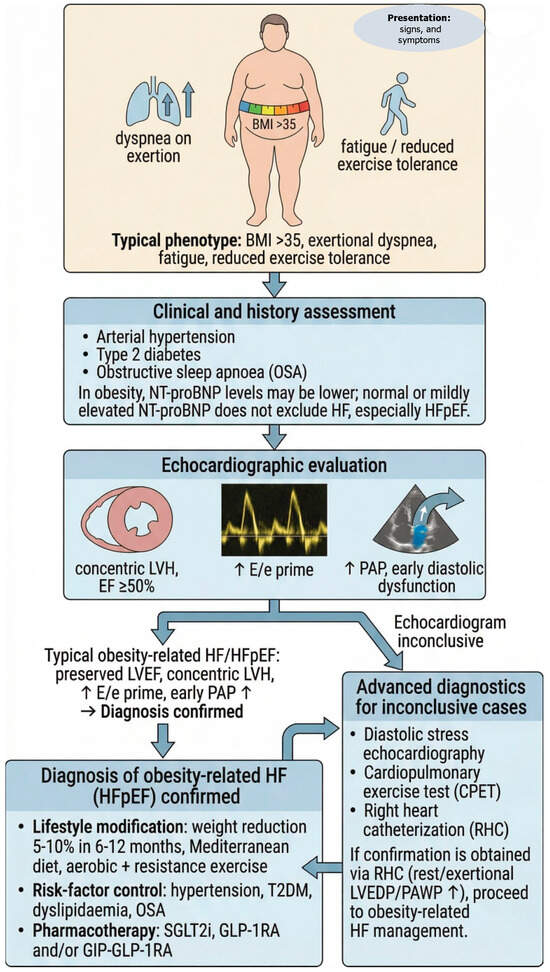
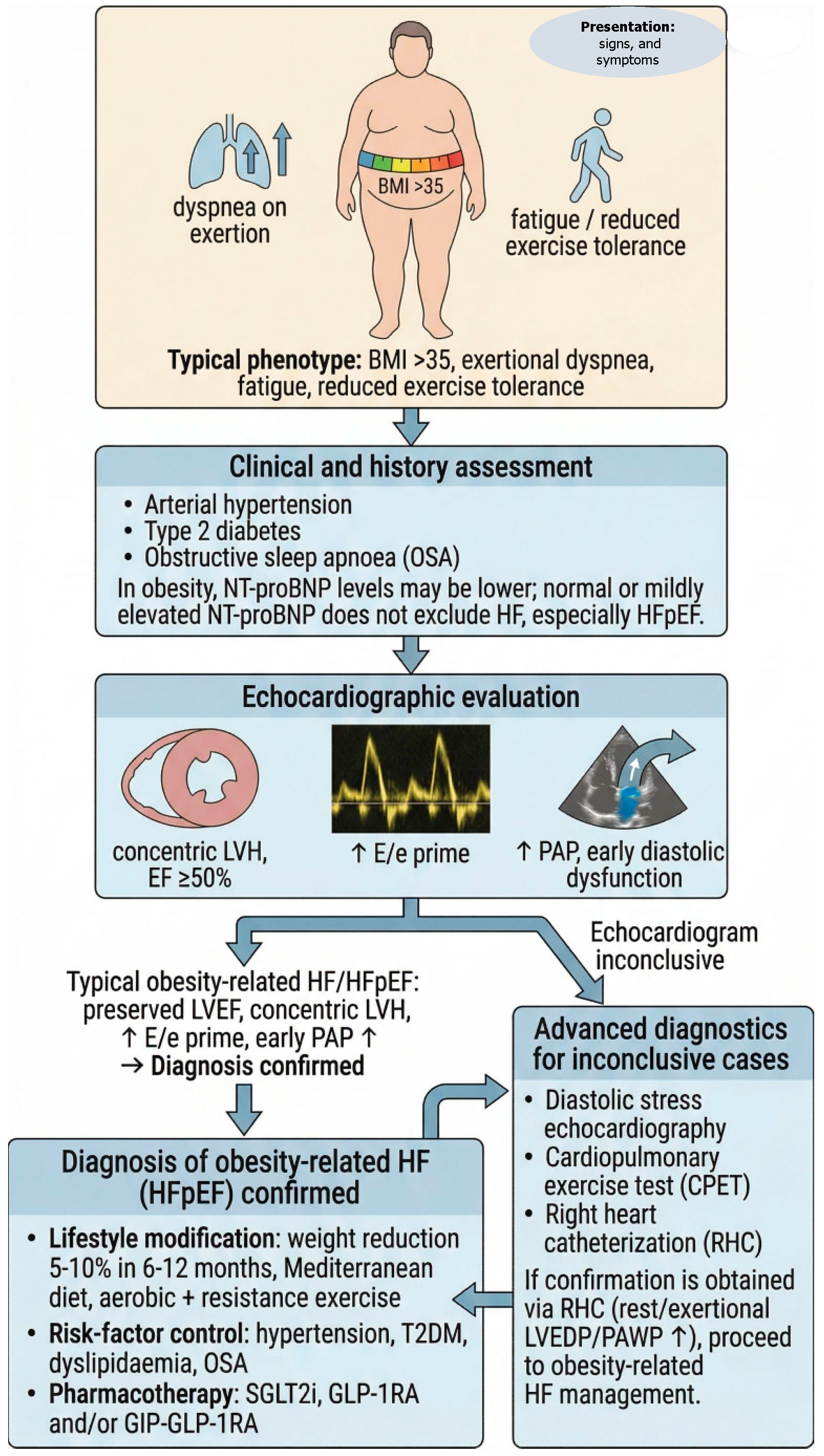

Disclaimer/Publisher’s Note: The statements, opinions and data contained in all publications are solely those of the individual author(s) and contributor(s) and not of MDPI and/or the editor(s). MDPI and/or the editor(s) disclaim responsibility for any injury to people or property resulting from any ideas, methods, instructions or products referred to in the content. |
© 2026 by the authors. Licensee MDPI, Basel, Switzerland. This article is an open access article distributed under the terms and conditions of the Creative Commons Attribution (CC BY) license.