


Abstract
The aging of the population and the increasing prevalence of multimorbidity contribute to the widespread use of polypharmacotherapy, which in turn elevates the risk of adverse drug reactions and clinically significant drug–drug interactions. One of the key yet frequently underestimated issues in clinical practice is the prescribing cascade, which occurs when an adverse drug reaction is misinterpreted as a new medical condition, leading to the initiation of an additional medication. This phenomenon is particularly relevant in the older population, in whom altered pharmacokinetics and pharmacodynamics, together with reduced organ reserve, increase susceptibility to adverse drug events, including nephrotoxicity (renal impairment is used throughout the review as a clinically relevant example of organ-specific harm resulting from prescribing cascades, rather than as the sole focus of the analysis). This article discusses the mechanisms and clinical consequences of the prescribing cascade—with particular emphasis on renal function deterioration—as well as strategies for its prevention in the geriatric population. Analysis of the literature indicates that prescribing cascades remain insufficiently recognized in clinical practice, despite the availability of pharmacotherapy assessment tools such as The American Geriatrics Society (AGS) Beers Criteria and the STOPP/START criteria. Documented prescribing cascades have been shown to contribute to deterioration in health status and quality of life, an increased frequency of hospitalizations, and a greater burden on healthcare systems. Particularly concerning are cascades involving cardiovascular, neurological, and analgesic medications, which may induce or exacerbate renal injury, ultimately leading to chronic kidney disease and organ failure. Prescribing cascades represent a significant yet frequently underestimated threat to the efficacy and safety of pharmacotherapy in older adults. Their consequences may extend beyond reduced quality of life and increased treatment costs to include serious complications such as the development of renal failure. Enhancing clinicians’ awareness, conducting systematic medication reviews, and employing validated assessment tools are essential for the identification and prevention of prescribing cascades, thereby reducing the risk of renal injury and improving clinical outcomes.
1. Introduction
Population aging and the increasing prevalence of multimorbidity have led to a growing reliance on polypharmacotherapy, which substantially raises the risk of adverse drug reactions; clinically significant drug–drug interactions are a frequent contributor to these events. Among the key yet still underappreciated challenges in clinical practice is the phenomenon known as the prescribing cascade. This occurs when an adverse drug reaction is misinterpreted as a new medical condition, leading to the initiation of an additional medication rather than modification or discontinuation of the causative drug. Prescribing cascades may be unintentional and inappropriate, but in selected clinical circumstances they can also be intentional and appropriate, provided that the benefit–risk balance is favorable and aligned with patient-centered therapeutic goals [1,2]. This problem is particularly pronounced in geriatric patients, in whom altered pharmacokinetics and pharmacodynamics, reduced organ reserve, and the coexistence of multiple chronic conditions significantly increase the risk of adverse drug events, their accumulation, and drug–drug interactions [2,3]. Of particular concern are cascades involving cardiovascular, analgesic, and anti-inflammatory agents, which may contribute to renal impairment and even the development of chronic kidney disease and renal failure. The consequences of prescribing cascades therefore extend beyond reduced quality of life and increased risk of hospitalization, encompassing serious organ complications that place an additional burden on healthcare systems. Despite the availability of tools supporting the evaluation of pharmacotherapy appropriateness, such as the American Geriatrics Society (AGS) Beers Criteria and STOPP/START criteria, prescribing cascades remain insufficiently recognized and often overlooked in clinical practice. This article presents a clinical discussion of the prescribing cascade in the geriatric population, focusing on its mechanisms, potential consequences for renal function, and practical approaches to prevention.
2. Risk Factors for Prescribing Cascades
Identification of risk factors for the occurrence of prescribing cascades is a key element in limiting the prevalence of this phenomenon. It reduces negative health consequences for the patient and enables verification and improvement of treatment standards, particularly in patients with multimorbidity. Preventing and eliminating prescribing cascades is therefore an important step toward improving the quality of care and clinical outcomes [4]. Risk factors for adverse prescribing cascades can be grouped into categories related to the medical status of the patient and those that are “non-medical,” associated with the current ease of access to medications and other medical products. In the first category, we include advanced age, multimorbidity, polypharmacy (primarily as a quantitative concept (concurrent use of multiple medications), and overprescribing, often linked to multispecialist treatment provided by several physicians without mutual verification of ongoing pharmacotherapy. Within this group, particular attention should be paid to the risk of renal injury—both acute kidney injury (AKI) and chronic kidney disease (CKD). Many drugs prescribed concurrently as part of cascades (e.g., nonsteroidal anti-inflammatory drugs, ACE inhibitors, diuretics, and nephrotoxic antibiotics) may exert cumulative renal burden, resulting in progressive renal impairment, especially in geriatric patients [5,6,7,8]. The second group of risk factors includes obtaining prescriptions online without direct physician consultation, easy availability of over-the-counter drugs (OTC), and, consequently, the possibility of self-medication and unnecessary supplementation (pathosupplementation—non-indicated, non-contextual overuse of dietary supplements without integration into overall pharmacotherapy). Clinically relevant examples of OTC driven prescribing cascades include NSAID-related fluid retention or blood pressure elevation leading to the initiation of diuretics or antihypertensive therapy; the use of OTC anticholinergic agents (e.g., first-generation antihistamines) causing cognitive impairment or urinary retention, subsequently treated with cholinesterase inhibitors or α1-blockers; as well as chronic use of OTC proton pump inhibitors contributing to electrolyte disturbances or osteoporosis, followed by mineral supplementation or additional pharmacotherapy. Additional contributing factors are the widespread promotion of medications and supplements in pharmacies, mass media advertising (television, internet), and pharmacy-based sales promotions. Table 1 summarizes the risk factors for the occurrence of prescribing cascades [5,6,9].
Table 1.
Risk factors for the occurrence of a prescribing cascade.
Prescribing cascades may occur in any patient experiencing health deterioration, but age-related physiological changes naturally predispose to worsening health status. Age is a parameter defining the biological and physiological aspects of aging and is associated with the natural predisposition to age-related diseases and their treatment. In this group, renal impairment is particularly prevalent, increasing susceptibility to adverse drug reactions from medications eliminated renally. Consequently, older adults are more likely to develop acute kidney injury as a result of prescribing cascades, and long-term exposure may even induce chronic kidney disease. Accurate data on the physiology and pathology of aging may help reduce unnecessary polypharmacy. However, clinical trials often exclude or insufficiently represent older adults with multimorbidity, resulting in a lack of evidence-based (EBM) guidelines for combination drug therapy in this population. This leads to suboptimal pharmacotherapeutic choices—frequently involving the use of certain “older” drug classes with narrow therapeutic index or anticholinergic burden. The lack of data derived from clinical research also contributes to insufficient use of modern therapies in geriatric patients, often justified by concerns about poor tolerability due to age. On the other hand, unexpected cascades may occur when new medications are introduced without a thorough analysis of age-related pathophysiological changes. In summary, the underrepresentation of older patients with multimorbidity in clinical trials results in a lack of precise evidence-based pharmacotherapeutic guidelines for this population, fostering the occurrence of prescribing cascades and increasing the risk of renal insufficiency [5,6,7,10]. Verification of risk factors facilitates the recognition of prescribing cascades, yet practical tools to help physicians reliably identify cascades, assess them appropriately, and manage them effectively are still lacking. Polypharmacy, although considered a risk factor for prescribing cascades, is undoubtedly an essential element of good prescribing practice in aging populations. At the same time, the lack of systematic evaluation of renal function during therapy selection further exacerbates the risk of cascades leading to acute kidney injury or progression of chronic kidney disease. The classification of cascades as appropriate or inappropriate (intended/unintended) may evolve over time depending on the clinical status of the patient [7,8,11,12]. Therapeutic regimens, typically designed with a disease- and organ-specific focus, often overlook an interdisciplinary assessment of renal function. Failure to account for this aspect promotes therapeutic decisions that result in additive adverse drug effects and, consequently, increase the risk of prescribing cascades. Thus, a key question arises: Why does the risk of prescribing cascades increase in clinical practice? Table 2 presents cause-and-effect relationships of prescribing cascades, including their association with renal injury progression [5,6,7,8,9,11,12,13].
Table 2.
Why the risk of prescribing cascades is rising in clinical practice.
3. Examples of Prescribing Cascades and Their Clinical Significance
Prescribing cascades are a common but often underrecognized phenomenon in clinical practice, particularly among older adults [7]. They occur when an adverse drug reaction is misinterpreted as a new medical condition, leading to the initiation of an additional drug rather than recognition of the underlying cause. In the long term, this process not only increases the risk of inappropriate polypharmacy but also heightens the likelihood of drug-related morbidity, hospitalizations, and healthcare costs [1,7,12]. The tables below summarize clinically important prescribing cascades described in recent consensus statements and systematic reviews. Table 3 and Table 4 present cascades that are particularly relevant in older adults, identified through the ThinkCascades tool and the international list of potentially inappropriate prescribing cascades (PIPC) [1,7,12]. Table 4 presents a non-exhaustive overview of additional, less frequently discussed prescribing cascades, organized by physiological system, to illustrate the breadth and complexity of this phenomenon rather than to provide management recommendations.
Table 3.
Clinically important prescribing cascades.
Table 4.
Other prescribing cascades.
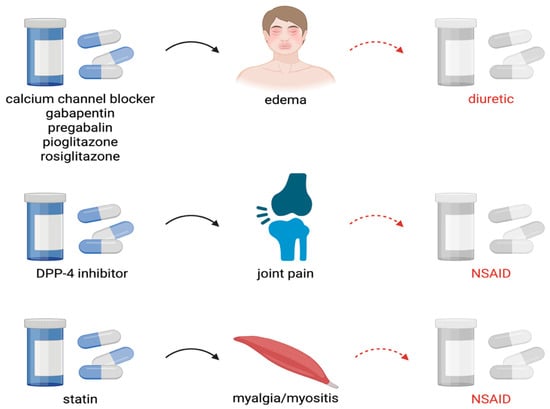
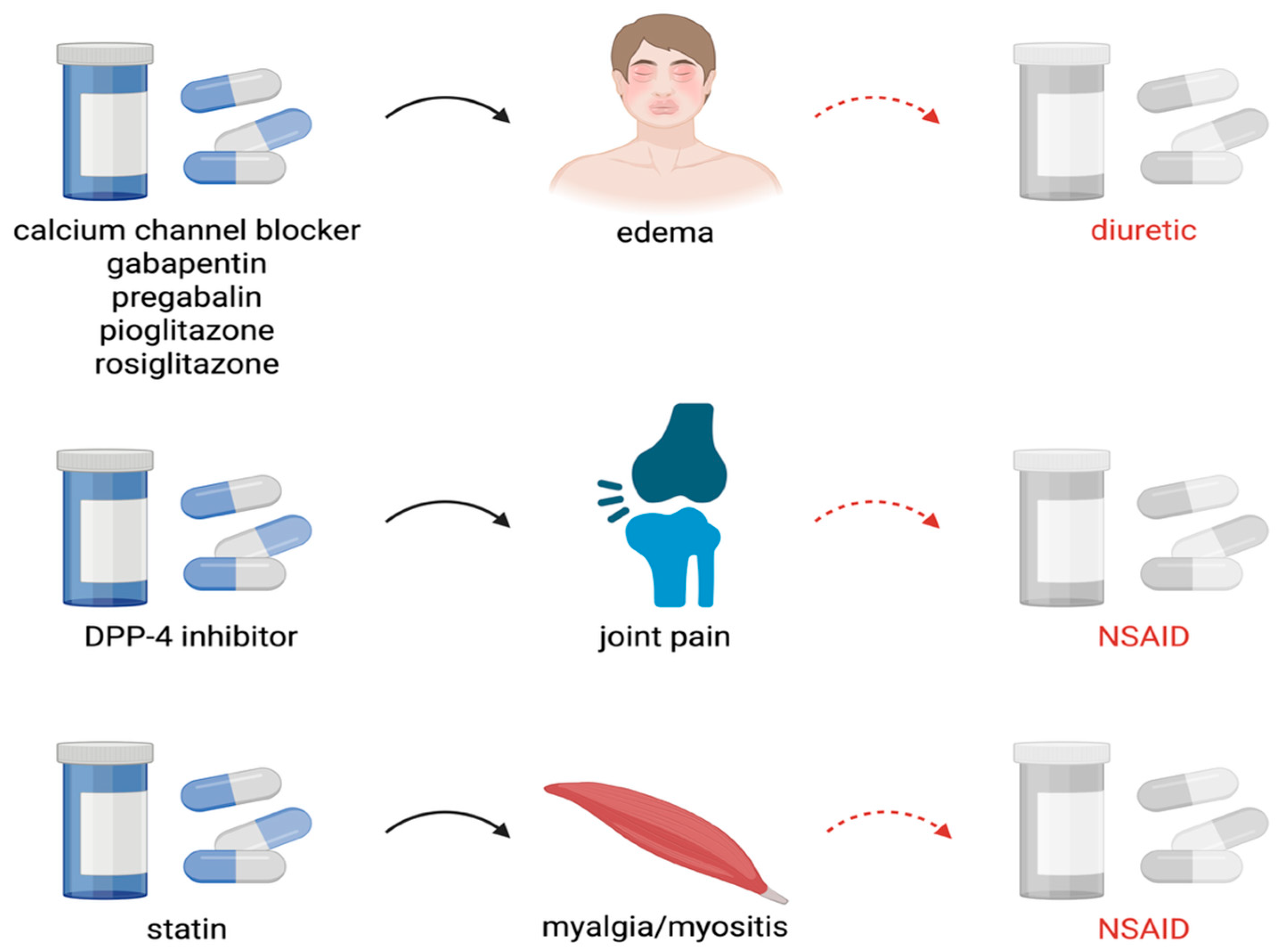
The clinical significance of these cascades is multifaceted. First, they frequently contribute directly to deterioration in patients’ functional status. For example, calcium channel blocker-induced peripheral edema treated with diuretics may result in dehydration and falls. Similarly, benzodiazepine-related cognitive impairment treated with cholinesterase inhibitors only adds to the pharmacological burden without addressing the underlying cause. Second, an important yet often underestimated aspect of prescribing cascades is their impact on renal function. The use of diuretics in response to adverse effects of other medications (e.g., edema caused by calcium channel blockers or NSAIDs) may lead to dehydration, electrolyte disturbances, and accelerated decline in glomerular filtration (Figure 1). Consequently, the risk of nephrotoxicity from additional medications, accumulation of drug metabolites, and further progression of kidney disease increases. In older adults, whose renal reserve is already limited, such cascades can significantly increase the risk of acute kidney injury (AKI) or accelerate the development of chronic kidney disease (CKD). Therefore, particular attention should be paid to prescribing cascades involving nephrotoxic agents, drugs altering renal hemodynamics, or medications requiring renal clearance. Third, prescribing cascades often contribute to therapeutic inertia, as clinicians may attribute drug-related symptoms (such as dizziness, hypotension, or worsening renal function tests) to aging or disease progression rather than to adverse drug effects [7,12]. Recent systematic reviews emphasize that prescribing cascades are not random events but rather reproducible and predictable patterns observed across healthcare systems [1]. Recognition of these patterns is therefore critical for implementing preventive strategies such as medication review and deprescribing. In particular, the PIPC list developed by the international expert panel provides clinicians with a practical tool for identifying high-risk cascades, while the ThinkCascades tool offers a structured approach to evaluating drug–symptom associations in daily practice [7,12]. Ultimately, the presence of prescribing cascades highlights the importance of regular medication review, interdisciplinary collaboration, and patient education. Raising awareness of well-documented cascades such as those listed above may help clinicians distinguish adverse drug reactions from disease progression—including declining renal function and thereby reduce inappropriate polypharmacy and its associated risks.
Figure 1.
Examples of prescribing cascades affecting kidney function. DPP-4, Dipeptidyl peptidase 4; NSAID, Nonsteroidal anti-inflammatory drug. Created in BioRender. Miedziaszczyk, M. (2025) https://BioRender.com.
4. Consequences of Prescribing Cascades
A prescribing cascade can lead to serious health, social, and economic consequences. Although this phenomenon may appear to result from concern for the patient, it often worsens their clinical condition, leads to inappropriate treatment (so-called “therapeutic vicious circles”) and polypharmacotherapy, which turns into polypragmasy. As a result, patients may experience intensified symptoms such as dizziness, drug-induced headaches, falls, delirium, cognitive impairment, balance disorders, orthostatic hypotension, or painsomnia. Importantly, some of these symptoms—such as delirium, balance disturbances, or hypotension—are often mistakenly attributed to the “natural” aging process or progression of the underlying disease, which further delays appropriate intervention. These are only some of the potential consequences of prescribing cascades, which negatively affect patients’ quality of life, leading to reduced mobility and independence and, quite often, the need for hospitalization [12]. Findings from observational studies and systematic reviews, as well as daily clinical practice, clearly indicate that prescribing cascades are a significant risk factor for hospitalization, especially in older adults, where the reason for hospital admission is not the primary disease, but rather adverse drug reactions introduced in response to symptoms caused by previous pharmacotherapy. Examples include falls due to hypnotics or dehydration caused by diuretics prescribed in response to edema induced by NSAIDs or certain antidepressants. In the long term, prescribing cascades also contribute to rising healthcare costs, both direct (such as hospitalizations, diagnostics, and additional specialist consultations) and indirect (loss of independence, the need for continuous care). According to Farrell B and McCarthy LM, deprescribing and early identification of prescribing cascades can significantly reduce systemic expenditures as well as ease the burden on medical staff [7,14]. Economically, prescribing cascades increase resource utilization through higher rates of emergency admissions, prolonged hospital stays, additional laboratory monitoring, and polypharmacy-related adverse drug event management. From a person-centered perspective, they are associated with functional decline, increased frailty, higher fall risk, cognitive impairment, reduced quality of life, and earlier transition to assisted living or long-term care.
5. Identification and Prevention of Prescribing Cascades
Currently, there is a lack of practical tools to help physicians and pharmacists reliably detect, correctly assess, and manage prescribing cascades. Ponte et al. developed an 8-point (4 questions) scale to assess the prescribing cascade. Prescribing cascade is assumed to occur if the score is 4 or higher, reflecting the severity of the prescribing cascade. Table 5 presents a tool for assessing the occurrence of drug cascade prescription [15].
Table 5.
Prescribing cascade assessment tool.
The Prescribing Cascade Assessment Tool is based on the framework proposed by Ponte ML et al. The tool was developed to support structured identification of potential prescribing cascades by systematically evaluating whether ADR was misinterpreted as a new clinical condition and treated with an additional medication. Previous applications of this framework demonstrated good face validity and clinical applicability in geriatric pharmacotherapy settings, although it is primarily intended as a clinical reasoning support tool rather than a diagnostic instrument with established psychometric validation.
Dreischulte et al. proposed a tool that assesses whether prescribing cascade is appropriate or inappropriate [6]. The tool is based on the following 6 questions. Although prescribing cascades are most often perceived as problematic, they may be appropriate and therapeutically beneficial in certain clinical situations. McCarthy et al. point out two important issues to consider when deciding on a prescribing cascade. First, consider whether the intentional initiation of a prescribing cascade aligns with the patient’s treatment goals (patient well-being and improved quality of life). Second, consider whether the risks and benefits of the prescribing cascade have been discussed with the patient and whether the patient has been informed of the long-term effects [16]. Table 6 presents the Prescription Cascade Benefit Assessment Tool.
Table 6.
Prescribing cascade benefit assessment tool.
The Prescribing Cascade Benefit Assessment Tool represents a structured clinical decision-support framework designed to evaluate whether continuation of a prescribing cascade may be justified from a benefit–risk perspective. The framework synthesizes principles of deprescribing, adverse drug reaction management, and individualized pharmacotherapy. Similar to the assessment tool described above, it is intended to guide clinical reasoning rather than serve as a formally validated instrument with established psychometric properties.
Analyzing everything that has been described, with particular emphasis on the risk factors for the occurrence of prescribing cascades, as well as clinical practices that increase the risk of their occurrence, we made an attempt to formulate general principles which, when implemented in clinical practice, may help prevent prescribing cascades. Table 7 presents the key points of clinical practice, which we can refer to as a list of good clinical practices [3]. Oligopharmacotherapy refers to a deliberate strategy of limiting pharmacological treatment to medications with clear, evidence-based benefit for the individual patient, in contrast to indiscriminate polypharmacy. Contextual pharmacotherapy emphasizes that prescribing decisions should always be adapted to the patient’s overall clinical context, including multimorbidity, functional status, renal function, life expectancy, and individual therapeutic goals.
Table 7.
How to Prevent Prescribing Cascade—Table of Good Practice.
Prescribing cascades represent a failure of personalized medicine, as drug-related harms are addressed through additional medications rather than through individualized reassessment of therapy. Deprescribing constitutes a core element of personalized pharmacotherapy, allowing clinicians to reverse therapeutic cascades by aligning treatment with patient-specific factors such as comorbidities, renal function, life expectancy, and treatment goals. From this perspective, prescribing cascades can be understood as therapeutic errors arising from non-contextual, guideline-driven prescribing, whereas deprescribing restores a patient-centered, personalized approach to care.
6. Conclusions
Prescribing cascades constitute a clinically significant yet underrecognized problem in geriatric pharmacotherapy. Their occurrence not only promotes inappropriate polypharmacy but also contributes to deterioration in patients’ functional status, an increased risk of hospitalization, and higher healthcare costs. Particularly alarming are cascades involving cardiovascular, analgesic, and neurological agents, which may accelerate the decline of renal function and predispose to acute kidney injury or chronic kidney disease. The findings of this review highlight the urgent need to raise awareness among healthcare professionals about the mechanisms and consequences of prescribing cascades. Regular medication reviews, systematic monitoring of renal function, and the use of validated assessment tools—such as the Beers Criteria, STOPP/START, and PIPC—are essential steps toward minimizing the risk of inappropriate prescribing and preventing renal complications. Interdisciplinary collaboration and patient education further strengthen preventive strategies. Ultimately, addressing prescribing cascades is not only a matter of improving medication safety but also a prerequisite for enhancing the quality of life and clinical outcomes in older adults.
Author Contributions
Conceptualization, A.B. and M.M.; formal analysis, A.B. and M.M.; data curation, A.B., J.W., M.M., B.L.-Z. and B.B.-G.; writing—original draft preparation, A.B., J.W., M.M., B.L.-Z., B.B.-G., D.O., P.P. and W.P.; writing—review and editing, A.B. and M.M.; visualization, A.B., J.W. and M.M.; supervision, A.B. and M.M.; project administration, A.B. and M.M. All authors have read and agreed to the published version of the manuscript.
Funding
This research received no external funding.
Institutional Review Board Statement
Not applicable.
Informed Consent Statement
Not applicable.
Data Availability Statement
No new data were created in this study.
Conflicts of Interest
The authors declare no conflicts of interest.
Abbreviations
The following abbreviations are used in this manuscript:
| AKI | Acute Kidney Injury |
| CKD | Chronic Kidney Disease |
| ACEI | Angiotensin Converting Enzyme Inhibitors |
| OTC | Over The Counter |
| EBM | Evidence-Based Medicine |
| PIPC | Potentially Inappropriate Prescribing Cascades |
| GERD | Gastroesophageal Reflux Disease |
| DDP-4 | Dipeptidyl Peptidase 4 |
| SGLT-2 | Sodium Glucose Cotransporter 2 |
| NSAID | Nonsteroidal Anti-Inflammatory Drug |
| ADR | Adverse Drug Reaction |
References
- Adrien, O.; Mohammad, A.K.; Hugtenburg, J.G.; Mccarthy, L.M.; Priester-Vink, S.; Visscher, R.; van den Bemt, P.M.; Denig, P.; Karapinar-Carkıt, F. Prescribing Cascades with recommendations to Prevent or Reverse Them: A Systematic Review. Drugs Aging 2023, 40, 1085–1100. [Google Scholar] [CrossRef] [Scilit]
- Savage, R.D.; Visentin, J.D.; Bronskill, S.E.; Wang, X.; Gruneir, A.; Giannakeas, V.; Guan, J.; Lam, K.; Luke, M.J.; Read, S.H.; et al. Evaluation of a Common Prescribing Cascade of Calcium Channel Blockers and Diuretics in Older Adults with Hypertension. JAMA Intern. Med. 2020, 180, 643–651. [Google Scholar] [CrossRef] [Scilit] [PubMed]
- Woroń, J.; Tymiński, R.; Drygalski, T.; Zorska, J.; Wordliczek, J. Farmakoterapia nieprawidłowo dobrana, co to znaczy w praktyce, a także w Oddziale Intensywnej Terapii. Anaesthesiol. Rescue Med./Anestezjol. Ratow. 2023, 17, 42–48. [Google Scholar]
- Rochon, P.A.; Gurwitz, J.H. The prescribing cascade revisited. Lancet 2017, 6, 1778–1780. [Google Scholar] [CrossRef] [Scilit]
- Doherty, A.S.; Shahid, F.; Moriarty, F.; Boland, F.; Clyne, B.; Dreischulte, T.; Fahey, T.; Kennelly, S.P.; Wallace, E. Prescribing cascades in community-dwelling adults: A systematic review. Pharmacol. Res. Perspect. 2022, 10, e01008. [Google Scholar] [CrossRef] [Scilit] [PubMed]
- Dreischulte, T.; Shahid, F.; Muth, C.; Schmiedl, S.; Haefeli, W.E. Prescribing Cascades: How to Detect Them, Prevent Them, and Use Them Appropriately. Dtsch. Ärzteblatt Int. 2022, 119, 745–752. [Google Scholar] [CrossRef] [Scilit] [PubMed]
- McCarthy, L.M.; Savage, R.; Dalton, K.; Mason, R.; Li, J.; Lawson, A.; Wu, W.; Sternberg, S.A.; Byrne, S.; Petrovic, M.; et al. A Tool for Identifying Clinically Important Prescribing Cascades Affecting Older People. Drugs Aging 2022, 39, 829–840. [Google Scholar] [CrossRef] [Scilit] [PubMed]
- Shahid, F.; Doherty, A.; Wallace, E.; Schmiedl, S.; Alexander, G.C.; Dreischulte, T. Prescribing cascades in ambulatory care: A structured synthesis of evidence. Pharmacotherapy 2024, 44, 87–96. [Google Scholar] [CrossRef] [Scilit] [PubMed]
- Chen, Z.; Liu, Z.; Zeng, L.; Huang, L.; Zhang, L. Research on prescribing cascades: A scoping review. Front. Pharmacol. 2023, 14, 1147921. [Google Scholar] [CrossRef] [Scilit] [PubMed]
- Jennings, A.A.; Doherty, A.S.; Clyne, B.; Boland, F.; Moriarty, F.; Fahey, T.; Hally, L.; Kennelly, S.P.; Wallace, E. Stakeholder perceptions of and attitudes towards problematic polypharmacy and prescribing cascades: A qualitative study. Age Ageing 2024, 53, afae116. [Google Scholar] [CrossRef] [Scilit] [PubMed]
- O’Mahony, D.; Rochon, P.A. Prescribing cascades: We see only what we look for, we look for only what we know. Age Ageing 2022, 51, afac138. [Google Scholar] [CrossRef] [Scilit] [PubMed]
- Rochon, P.A.; O’Mahony, D.; Cherubini, A.; Onder, G.; Petrovic, M.; Dalton, K.; McCarthy, L.M.; Sternberg, S.A.; Zwas, D.R.; Stall, N.M.; et al. International expert panel’s potentially inappropriate prescribing cascades (PIPC) list. Eur. Geriatr. Med. 2025, 16, 1573–1584. [Google Scholar] [CrossRef] [Scilit] [PubMed]
- American Geriatrics Society Beers Criteria. Update Expert Panel. American Geriatrics Society 2023. Updated Beers Criteria for Potentially Inappropriate Medication Use in Older Adults. J. Am. Geriatr. Soc. 2023, 71, 923–947. [Google Scholar]
- Farrell, B.; Tsang, C.; Raman-Wilms, L.; Irving, H.; Conklin, J.; Pottie, K. What are priorities for deprescribing for elderly patients? Capturing the voice of practitioners: A modified Delphi process. PLoS ONE 2015, 10, e0122246. [Google Scholar] [CrossRef] [Scilit] [PubMed]
- Ponte, M.L.; Wachs, L.; Wachs, A.; Serra, H.A. Prescribing cascade. A proposed new way to evaluate it. Medicina 2017, 77, 13–16. [Google Scholar] [PubMed]
- McCarthy, L.M.; Visentin, J.D.; Rochon, P.A. Assessing the Scope and Appropriateness of Prescribing Cascades. J. Am. Geriatr. Soc. 2019, 67, 1023–1026. [Google Scholar] [CrossRef] [Scilit] [PubMed]

Disclaimer/Publisher’s Note: The statements, opinions and data contained in all publications are solely those of the individual author(s) and contributor(s) and not of MDPI and/or the editor(s). MDPI and/or the editor(s) disclaim responsibility for any injury to people or property resulting from any ideas, methods, instructions or products referred to in the content. |
© 2026 by the authors. Licensee MDPI, Basel, Switzerland. This article is an open access article distributed under the terms and conditions of the Creative Commons Attribution (CC BY) license.