


Simple Summary
Weaning can impair growth and intestinal health in piglets. Chuanzang black pigs are valued for their meat quality but have relatively low growth efficiency. This study evaluated the effects of dietary supplementation with whole Bacillus tequilensis YB-2 fermentation broth on weaned Chuanzang black piglets. A total of 144 piglets received diets containing 0%, 0.1%, 0.2%, or 0.4% fermentation broth for 40 days. Supplementation improved weight gain and feed efficiency and reduced diarrhea. It was also associated with changes in small intestinal structure, indicators related to the intestinal protective barrier, and immune and inflammatory responses. Among the levels tested, 0.4% fermentation broth showed the most consistent overall benefits. These findings suggest that YB-2 fermentation broth may be a useful dietary supplement for weaned Chuanzang black piglets.
Abstract
Weaning challenges piglet growth and intestinal health. This study examined dietary supplementation with whole Bacillus tequilensis YB-2 fermentation broth in weaned Chuanzang black piglets. In a 40 d trial, 144 piglets received diets containing 0%, 0.1%, 0.2%, or 0.4% fermentation broth (six pens per treatment, six piglets per pen). Overall ANOVA showed treatment effects on average daily gain (ADG; p = 0.005), feed-to-gain ratio (F:G; p < 0.001), and diarrhea rate (p = 0.037); BT0.4 showed higher ADG and lower F:G and diarrhea rate than CON, while feed intake did not differ significantly among treatments. Villus height increased in the duodenum, jejunum, and ileum (all p < 0.05), whereas crypt depth was unchanged. Serum immunoglobulins increased (all p ≤ 0.001), while pro-inflammatory cytokines and barrier injury-associated markers decreased (all p < 0.05). Ileal IL-10 expression increased (p = 0.004), while RELA expression differed among treatments in all three intestinal segments (all p < 0.05); BT0.4 showed lower expression than CON in the duodenum and ileum, whereas BT0.2 showed lower expression than CON in the jejunum. Immunofluorescence comparisons between CON and BT0.4 showed greater ileal MUC2 (p < 0.0001) and jejunal and ileal ZO-1 signals (both p < 0.05), alongside lower CD11b signals across all three segments (all p < 0.01). Among the tested inclusion levels, 0.4% produced the most consistent benefits.
1. Introduction
Weaning consists of an immediate switch from sow milk to solid feed, accompanied by changes in the social and physical environment. These changes can disrupt intestinal development and stability of microorganisms, increasing the chances of diarrhea and growth impairment [1,2]. Beyond changes in villus morphology, weaning also affects intestinal epithelial cell proliferation, differentiation, and shedding [3]. Single-cell analyses further suggest alterations in mucosal immune cell states and inflammation-related interactions with epithelial cells [4]. Maintaining intestinal integrity and immune homeostasis is therefore an important goal of nutritional strategies aimed at improving post-weaning performance.
Chuanzang black pigs are a Chinese commercial crossbred population developed from Tibetan, Meishan, Berkshire, and Duroc pigs. Compared with Duroc × Landrace × Yorkshire pigs, Chuanzang black pigs exhibit higher marbling and meat color scores, reflecting their distinctive meat quality, although their growth rate and feed efficiency are relatively lower [5]. These findings illustrate the importance of improving rearing efficiency while retaining the meat-quality advantages of this population. Because diarrhea and intestinal dysfunction during weaning can compromise early growth, dietary strategies that support intestinal health warrant evaluation in Chuanzang black piglets.
Bacillus-based preparations have shown potential to enhance growth and gut health in piglets after weaning, although their effects depend on bacterial strains, preparation types, and feeding conditions [6]. This variability has been observed even among different Bacillus subtilis preparations administered at the same viable count, which produced different responses in growth performance, diarrhea, and intestinal health [7]. A meta-analysis also identified probiotic genus, weaning age, supplementation duration, and challenge conditions as important factors influencing responses to Bacillus- and Lactobacillus-based probiotics [8]. Beyond strain selection, the formulation of dietary supplements may also influence their efficacy. Combining Bacillus with medium-chain fatty acids is connected with better growth and less post-weaning diarrhea [9]. The intestinal benefits reported for Bacillus supplementation extend to changes in mucosal morphology and immune responses [10], epithelial renewal and goblet cell differentiation [11], and protection against barrier damage and inflammation under pathogen challenge [12]. Fermented feed additives containing Bacillus licheniformis have also reduced diarrhea in newly weaned piglets [13], providing further support for evaluating fermentation-derived preparations. Unlike preparations consisting of isolated bacterial cells or spores, whole fermentation broth retains the bacterial biomass together with fermentation-derived components, which may include extracellular metabolites. Previous research has shown that a metabolite secreted by Bacillus subtilis can enhance intestinal barrier integrity in experimental models [14], providing a further rationale for investigating fermentation broth as a distinct dietary preparation. Our research group previously isolated Bacillus tequilensis YB-2 derived from the fecal matter of healthy adult pigs and demonstrated its tolerance to acidic conditions and bile salts, together with inhibitory activity against several bacterial pathogens in vitro. Subsequent work showed that oral administration of YB-2 diminished the severity of dextran sulfate sodium (DSS)-induced colitis in mice, accompanied by reduced intestinal inflammation, improved expression of barrier-associated proteins, and suppression of signaling involving toll-like receptor 4 (TLR4) and nuclear factor kappa B (NF-κB) [15]. However, that study examined a bacterial suspension in a DSS-induced mouse colitis model. Whether YB-2 administered as whole fermentation broth can improve growth performance and intestinal health in weaned Chuanzang black piglets under routine feeding conditions remains to be determined.
We hypothesized that dietary supplementation with Bacillus tequilensis YB-2 fermentation broth would improve growth performance and reduce diarrhea in weaned Chuanzang black piglets, accompanied by favorable changes in intestinal barrier-associated traits and inflammatory status. To investigate this hypothesis, we implemented a 40-day feeding trial comparing a basal diet with diets containing 0.1%, 0.2%, or 0.4% YB-2 fermentation broth, to evaluate responses across inclusion levels and provide evidence for a suitable supplementation level under the conditions tested.
2. Materials and Methods
2.1. Bacterial Strain, Animal Management, and Experimental Design
The pig-derived Bacillus tequilensis YB-2 strain (CCTCC M 20221531), maintained in our laboratory, was used to prepare the fermentation broth. To obtain the seed culture, YB-2 was recovered on de Man, Rogosa, and Sharpe (MRS) agar, and a single colony was transferred into MRS broth (Qingdao Hope Bio-Technology Co., Ltd., Qingdao, China). The fermentation medium contained glucose (5.0 g/L), yeast extract (6.8 g/L), peptone (2.5 g/L), MgSO4 (0.5 g/L), and NaCl (10.0 g/L), with an initial pH of 7.6. The seed culture was then introduced into the fermentation medium at 2% (v/v) and cultivated at 35 °C and 180 rpm for 72 h. Viable bacterial counts were determined by serial dilution and spread plating and expressed as colony-forming units (CFUs). Before dietary supplementation, the fermentation broth was adjusted to a viable concentration of 1.0 × 10⁹ CFU/mL. The resulting whole fermentation broth, containing bacterial cells and culture-derived components, was stored at 4 °C and mixed into the basal diet within 24 h of preparation.
The feeding trial involved 144 healthy Chuanzang black piglets weaned at 30 d of age, with a mean initial body weight (BW) of 7.40 ± 0.26 kg. Piglets were stratified by initial body weight and sex and assigned to 24 pens using computer-generated random numbers, with six piglets per pen. The pens were then randomly allocated to four dietary treatments, with six replicate pens per treatment. Sex distribution was balanced across treatments. The number of replicate pens was selected based on previous weaned-piglet feeding studies with comparable experimental designs [16,17]. All groups received the same basal diet, with YB-2 fermentation broth added at 0% (CON), 0.1% (BT0.1), 0.2% (BT0.2), or 0.4% (BT0.4, vol/wt). The three nonzero inclusion levels were selected to provide a twofold dose series within the range previously evaluated for Bacillus supplementation in weaned piglets [18,19]. These inclusion levels corresponded to 0, 1, 2, and 4 mL of fermentation broth per kg of diet, with calculated nominal viable bacterial supplementation levels of 0, 1.0 × 10⁹, 2.0 × 10⁹, and 4.0 × 10⁹ CFU/kg of diet, respectively. Based on the treatment-specific average daily feed intake (ADFI) recorded during the 40 d feeding period, the estimated mean daily viable bacterial intake over the 40 d feeding period was 6.31 × 10⁸, 1.28 × 10⁹, and 2.56 × 10⁹ CFU/piglet/day for BT0.1, BT0.2, and BT0.4, respectively.
Following a 3 d adaptation period, the experimental diets were provided for 40 d. The basal diet was formulated according to National Research Council (NRC, 2012) [20] recommendations and offered in mash form. The designated amount of fermentation broth was thoroughly mixed with the corresponding basal diet before feeding. The diet composition is presented in Table 1. Piglets were housed in pens with plastic slatted floors, feeders, and nipple drinkers, with unrestricted access to feed and water. Room temperature was maintained between 23 and 28 °C, and relative humidity between 50% and 60%. Vaccination, deworming, and sanitation followed the farm’s routine management procedures.
Table 1.
Composition and nutrient levels of diets (air-dry basis, %).
2.2. Growth Performance and Diarrhea Assessment
Piglets were weighed individually at the beginning (d 0) and end (d 40) of the trial, while feed consumption was recorded at the pen level. Average daily gain (ADG), ADFI, and the feed-to-gain ratio (F:G) were determined for each pen using body weight changes and feed consumption over the 40 d period. Fecal consistency was assessed daily by the same observer, beginning at 09:00. Individual piglets were distinguished by their ear-tag numbers, and fecal scores were assigned by observing defecation and examining freshly voided feces. Each score was recorded separately under the corresponding piglet’s ear-tag number. Fecal consistency was evaluated using a four-point scale: 0, normally formed feces; 1, soft feces; 2, loose feces; and 3, watery feces. Scores of 2 or 3 were considered indicative of diarrhea. The diarrhea index was calculated as the sum of daily fecal scores divided by the total piglet-days of observation. Diarrhea rate was expressed as the percentage of piglet-days classified as diarrheic relative to all piglet-days recorded during the trial [21].
2.3. Sample Collection
Upon completion of the 40 d feeding period, the mean body weight of each pen was calculated, and the piglet with the smallest absolute difference from the pen mean was selected for sampling. If two or more piglets had the same absolute difference, one was randomly selected from these candidates, yielding six sampled animals per treatment. Jugular blood was collected before euthanasia and allowed to clot at room temperature. Serum was separated by centrifugation (3500× g, 10 min, 4 °C) and kept at −80 °C until subsequent assays. Following euthanasia with sodium pentobarbital, the small intestine was exposed and samples were obtained from the duodenum, jejunum, and ileum. Tissue segments approximately 2 cm long were collected from the middle portion of each intestinal region and immersed in 4% paraformaldehyde for histological examination and immunofluorescence staining. Mucosal samples from the corresponding sites were separately collected, immediately frozen in liquid nitrogen, and preserved at −80 °C for gene expression analysis.
2.4. Intestinal Morphology Assessment
Duodenal, jejunal, and ileal tissues fixed in 4% paraformaldehyde were dehydrated, embedded in paraffin, and sectioned for hematoxylin and eosin (H&E) staining. For each piglet, 10 well-oriented villi and 10 crypts were selected from each intestinal segment for morphometric analysis. Villi were selected when the epithelial lining was intact and both the villus tip and villus–crypt junction were clearly identifiable. Crypts were included when their longitudinal profiles and bases were clearly visible. Obliquely sectioned, folded, or damaged structures were excluded. Villus height (VH) and crypt depth (CD) were measured in well-oriented intestinal sections using image analysis software. Villus height was measured from the villus tip to the villus–crypt junction, whereas crypt depth was measured from the junction to the crypt base. The villus height-to-crypt depth ratio (VH:CD) was subsequently calculated. The mean value of each morphological parameter for each piglet was used for statistical analysis.
2.5. Determination of Serum Immunoglobulins and Cytokines
Serum concentrations of immunoglobulin A (IgA), secretory immunoglobulin A (SIgA), immunoglobulin G (IgG), and immunoglobulin M (IgM) were measured using commercial enzyme-linked immunosorbent assay (ELISA) kits (Shanghai Enzyme-linked Biotechnology Co., Ltd., Shanghai, China). Serum interleukin-6 (IL-6), interleukin-1β (IL-1β), interleukin-10 (IL-10), and tumor necrosis factor-α (TNF-α) concentrations were determined using ELISA kits supplied by Nanjing Jiancheng Bioengineering Institute (Nanjing, China). All assays were conducted following the manufacturers’ protocols. Absorbance was measured at 450 nm using a microplate reader, and analyte concentrations were calculated from the corresponding standard curves. Detailed catalogue numbers, assay ranges, and detection limits for the ELISA kits are provided in Supplementary Table S1.
2.6. Determination of Serum Intestinal Barrier Injury-Related Markers
Serum levels of diamine oxidase (DAO), endotoxin, and D-lactate (D-LA) were assessed using commercial ELISA kits obtained from Shanghai Enzyme-linked Biotechnology Co., Ltd. (Shanghai, China). The assays were performed according to the manufacturer’s instructions, and the results were calculated using the respective standard curves.
2.7. RNA Extraction and Quantitative Real-Time PCR Analysis
Total RNA was extracted from duodenal, jejunal, and ileal mucosal samples using TRIzol reagent (Invitrogen Life Technologies, Carlsbad, CA, USA). RNA concentration and purity were assessed with a NanoDrop 2000 spectrophotometer (Thermo Fisher Scientific, Waltham, MA, USA). RNA integrity was evaluated by 1% agarose gel electrophoresis based on the presence of distinct 28S and 18S ribosomal RNA bands. The extracted RNA was reverse-transcribed into complementary DNA (cDNA) using the PrimeScript RT Reagent Kit with gDNA Eraser (Takara Bio Inc., Shiga, Japan). Quantitative real-time PCR (qPCR) was performed using SYBR Green Pro Taq HS Premix II (Accurate Biotechnology, Hunan, China) on a LightCycler 480 Instrument II (Roche, Basel, Switzerland) to determine the mRNA expression of IL-10, IL-6, TNF-α, and RELA. Melting-curve analysis was conducted to assess amplification specificity. Relative gene expression was normalized to β-actin and calculated using the 2−ΔΔCt method. The primer sequences are listed in Table 2.
Table 2.
Primer sequences for quantitative real-time PCR.
2.8. Immunofluorescence Staining and Analysis
For immunofluorescence analysis, paraffin-embedded sections of the duodenum, jejunum, and ileum from the CON and BT0.4 groups were stained for mucin 2 (MUC2), zonula occludens-1 (ZO-1), and cluster of differentiation 11b (CD11b). These groups were selected for a focused comparison because BT0.4 represented the highest dietary inclusion level and showed more pronounced improvements in several growth performance and intestinal health parameters. Sections from the BT0.1 and BT0.2 groups were not stained. After deparaffinization and rehydration, the sections were blocked with 5% bovine serum albumin (BSA) for 1.5 h at room temperature. For MUC2 and ZO-1 staining, separate sections were incubated overnight at 4 °C with rabbit anti-MUC2 (GeneTex, GTX100664; 1:3000) or rabbit anti-ZO-1 (GeneTex, GTX108592; 1:100) primary antibodies. The sections were subsequently washed with phosphate-buffered saline (PBS) and incubated with CoraLite594-conjugated goat anti-rabbit IgG (H + L) (Proteintech, SA00013-4; 1:50) for 1 h at room temperature. For CD11b staining, tissue sections were incubated overnight at 4 °C with rabbit anti-CD11b antibody (ABclonal, A1581; 1:100), followed by incubation with CoraLite594-conjugated goat anti-rabbit IgG (H + L) (Proteintech, SA00013-4; 1:50) for 1 h at room temperature. Nuclei were counterstained with 4′,6-diamidino-2-phenylindole (DAPI) for 10 min. Fluorescence images were acquired using a fluorescence microscope (DM5000 B, Leica, Wetzlar, Germany) under consistent imaging conditions. Fluorescence intensity was quantified using ImageJ software (version 1.54p; National Institutes of Health, Bethesda, MD, USA). Multiple tissue sections and microscopic fields were analyzed for each piglet, and the fluorescence intensity measurements were averaged to obtain one value per piglet for each intestinal segment and marker. One piglet was sampled from each pen, providing six independent biological replicates per treatment (n = 6). For each intestinal segment, the mean fluorescence intensity was expressed relative to the corresponding CON group. Statistical comparisons between the CON and BT0.4 groups were performed using the piglet-level mean values.
2.9. Statistical Analysis
Statistical analyses were performed using JMP software (version 17.0.0; SAS Institute Inc., Cary, NC, USA). Treatment effects were evaluated by one-way analysis of variance (ANOVA), using the following model:
where Yij represents the observation for replicate j under treatment i, μ is the overall mean, Ti is the fixed effect of dietary treatment, and εij is the residual error.
Yij = μ + Ti + εij
Tukey’s multiple comparison test was used for pairwise comparisons. Normality of model residuals was assessed using the Shapiro–Wilk test, and homogeneity of variance among treatments was evaluated using Levene’s test. Linear and quadratic responses to increasing dietary YB-2 fermentation broth levels were assessed using polynomial contrasts based on the actual inclusion levels. The pen was considered the experimental unit for growth performance and diarrhea measurements, and one piglet per pen was sampled for serum and intestinal analyses. For immunofluorescence analysis, the mean fluorescence intensity of each piglet was used as the independent observation (n = 6 per treatment), and differences between the CON and BT0.4 groups were evaluated using Welch’s unpaired t-test. Data are presented as means ± standard errors of the mean (SEM). Statistical significance was set at p < 0.05, and 0.05 ≤ p < 0.10 was considered a tendency. Figures were prepared using GraphPad Prism (version 10.1.2; GraphPad Software, Boston, MA, USA).
3. Results
3.1. Effects of YB-2 Fermentation Broth on Growth Performance and Diarrhea in Weaned Piglets
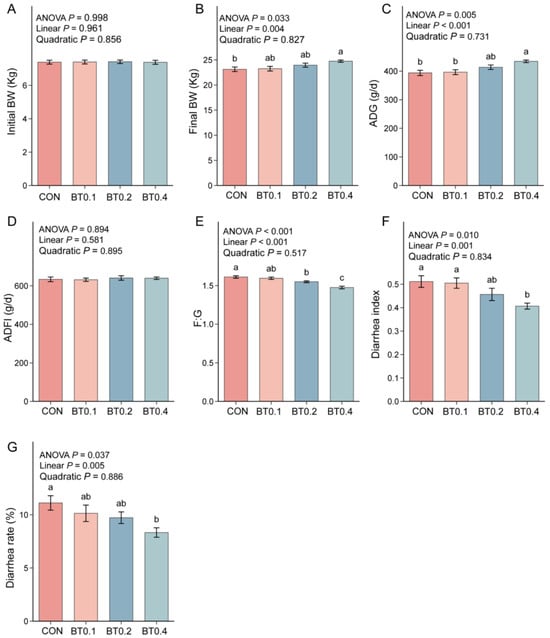
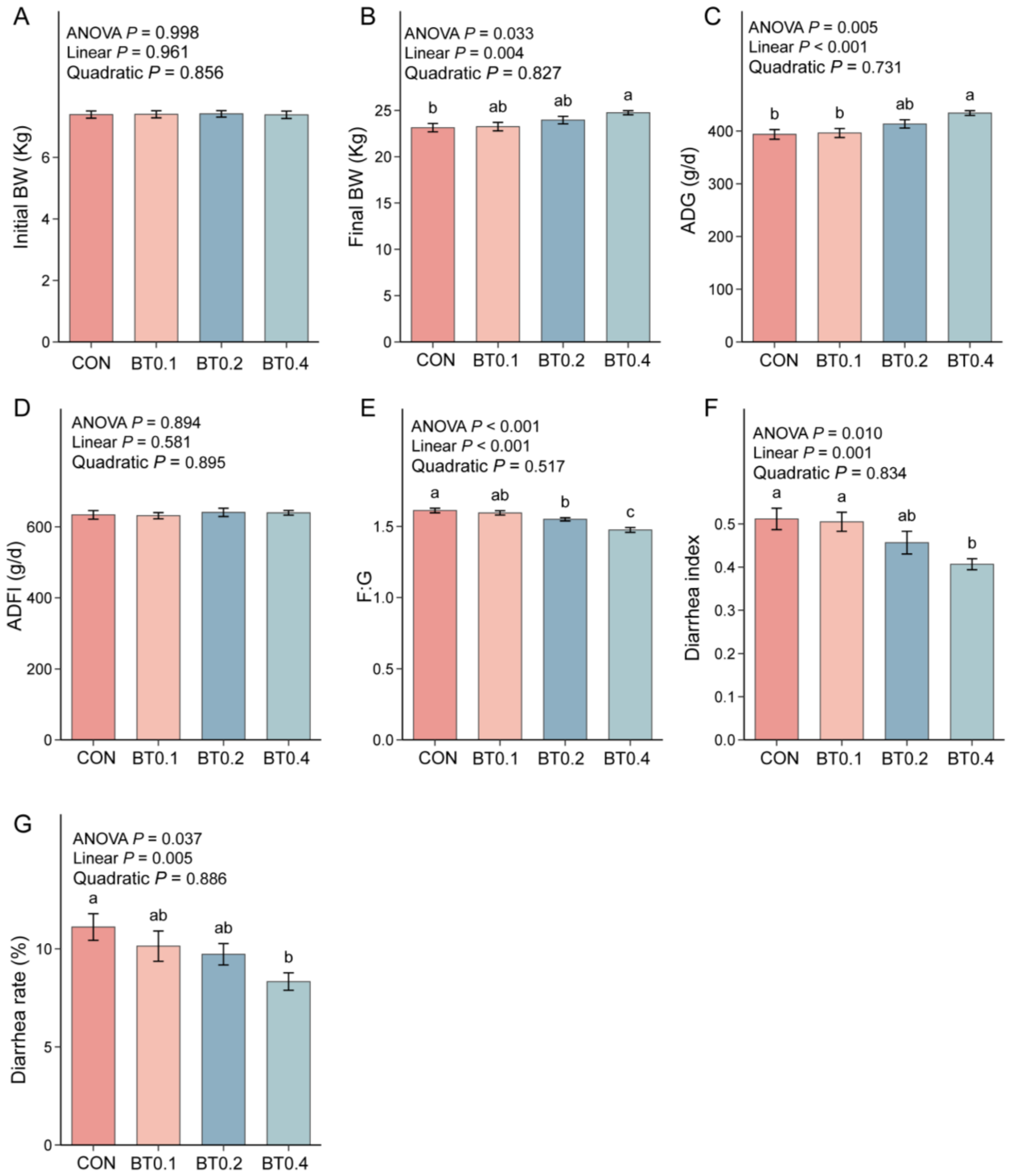
As shown in Figure 1 and Supplementary Table S2, dietary YB-2 fermentation broth supplementation did not affect initial BW (ANOVA, p = 0.998) or ADFI (ANOVA, p = 0.894). However, final BW (ANOVA, p = 0.033), ADG (ANOVA, p = 0.005), and F:G (ANOVA, p < 0.001) differed among treatments. With increasing supplementation levels, final BW (p = 0.004) and ADG (p < 0.001) increased linearly, whereas F:G decreased linearly (p < 0.001). Compared with CON, BT0.4 had higher final BW and ADG, whereas BT0.2 and BT0.4 had lower F:G. Additionally, BT0.4 had higher ADG than BT0.1 and lower F:G than all other groups. Both diarrhea index (p = 0.010) and diarrhea rate (p = 0.037) differed among treatments and decreased linearly with increasing supplementation levels (p = 0.001 and p = 0.005, respectively). Compared with CON, BT0.4 had a lower diarrhea index and diarrhea rate, while its diarrhea index was also lower than that of BT0.1.
Figure 1.
Effects of dietary YB-2 fermentation broth supplementation on growth performance and diarrhea in weaned Chuanzang black piglets. (A) Initial BW. (B) Final BW. (C) ADG. (D) ADFI. (E) F:G. (F) Diarrhea index. (G) Diarrhea rate. Different lowercase letters (a–c) indicate significant differences among treatments (p < 0.05). p values for overall treatment effects (ANOVA) and linear and quadratic trends are presented in each panel. CON, basal diet; BT0.1, BT0.2, and BT0.4, basal diet supplemented with 0.1%, 0.2%, and 0.4% YB-2 fermentation broth, respectively. BW, body weight; ADG, average daily gain; ADFI, average daily feed intake; F:G, feed-to-gain ratio.
3.2. Effects of YB-2 Fermentation Broth on Small Intestinal Morphology in Weaned Piglets
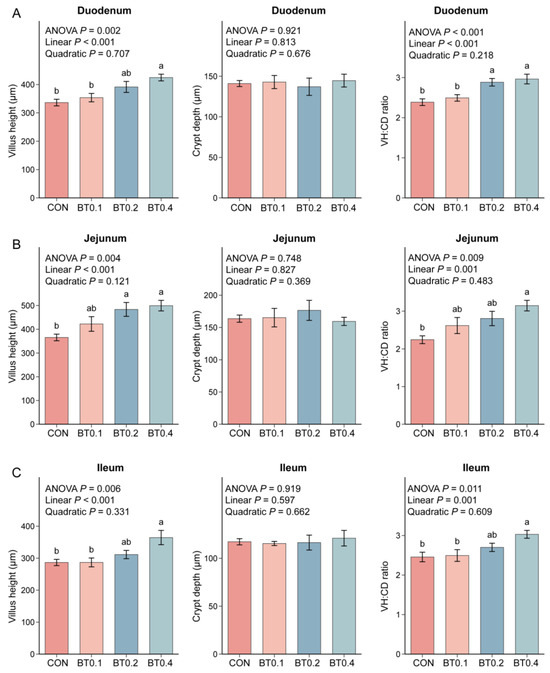
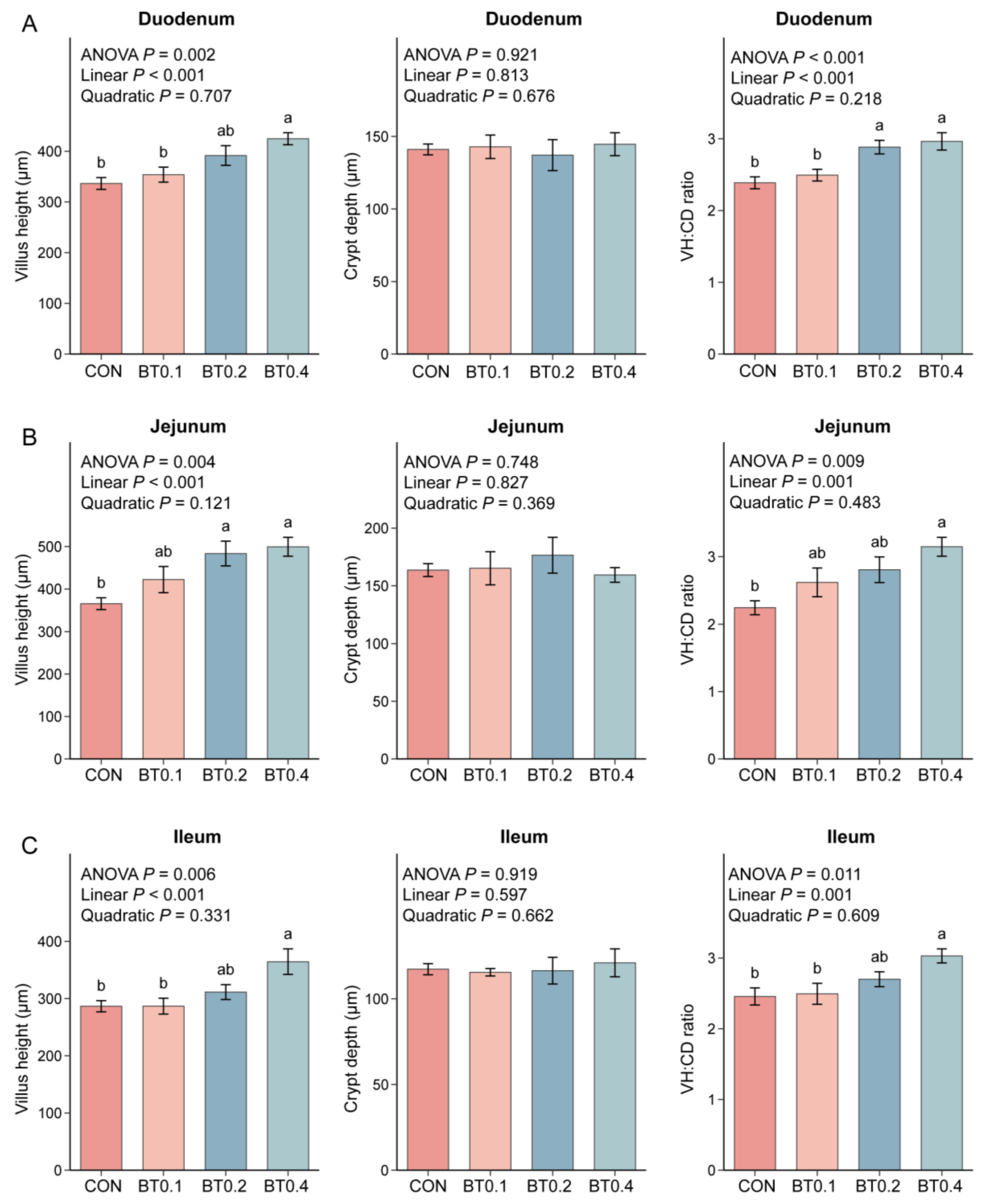
As shown in Figure 2, dietary YB-2 fermentation broth supplementation affected villus height in the duodenum (p = 0.002), jejunum (p = 0.004), and ileum (p = 0.006), with linear increases in all three segments (all p < 0.001). Compared with CON, BT0.4 had greater villus height in all three segments, while BT0.2 had greater villus height in the jejunum. Villus height was also greater in BT0.4 than in BT0.1 in the duodenum and ileum. Similarly, VH:CD differed among treatments in the duodenum (p < 0.001), jejunum (p = 0.009), and ileum (p = 0.011), increasing linearly with supplementation level (p < 0.001, p = 0.001, and p = 0.001, respectively). Duodenal VH:CD was higher in BT0.2 and BT0.4 than in CON and BT0.1, whereas jejunal VH:CD was higher in BT0.4 than in CON. Ileal VH:CD was higher in BT0.4 than in CON and BT0.1. Crypt depth did not differ among treatments in the duodenum (p = 0.921), jejunum (p = 0.748), or ileum (p = 0.919). Representative H&E-stained sections of the three intestinal segments from all four treatment groups are shown in Supplementary Figure S1.
Figure 2.
Effects of dietary YB-2 fermentation broth supplementation on small intestinal morphology in weaned Chuanzang black piglets. (A) Duodenal morphology. (B) Jejunal morphology. (C) Ileal morphology. The left, middle, and right panels show villus height, crypt depth, and VH:CD, respectively. Different lowercase letters (a, b) indicate significant differences among treatments (p < 0.05). p values for overall treatment effects (ANOVA) and linear and quadratic trends are presented in each panel. CON, basal diet; BT0.1, BT0.2, and BT0.4, basal diet supplemented with 0.1%, 0.2%, and 0.4% YB-2 fermentation broth, respectively. VH:CD, villus height-to-crypt depth ratio.
3.3. Effects of YB-2 Fermentation Broth on Serum Intestinal Barrier Injury-Related Markers in Weaned Piglets
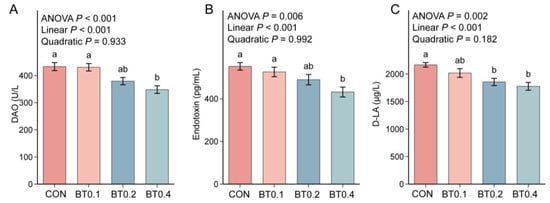
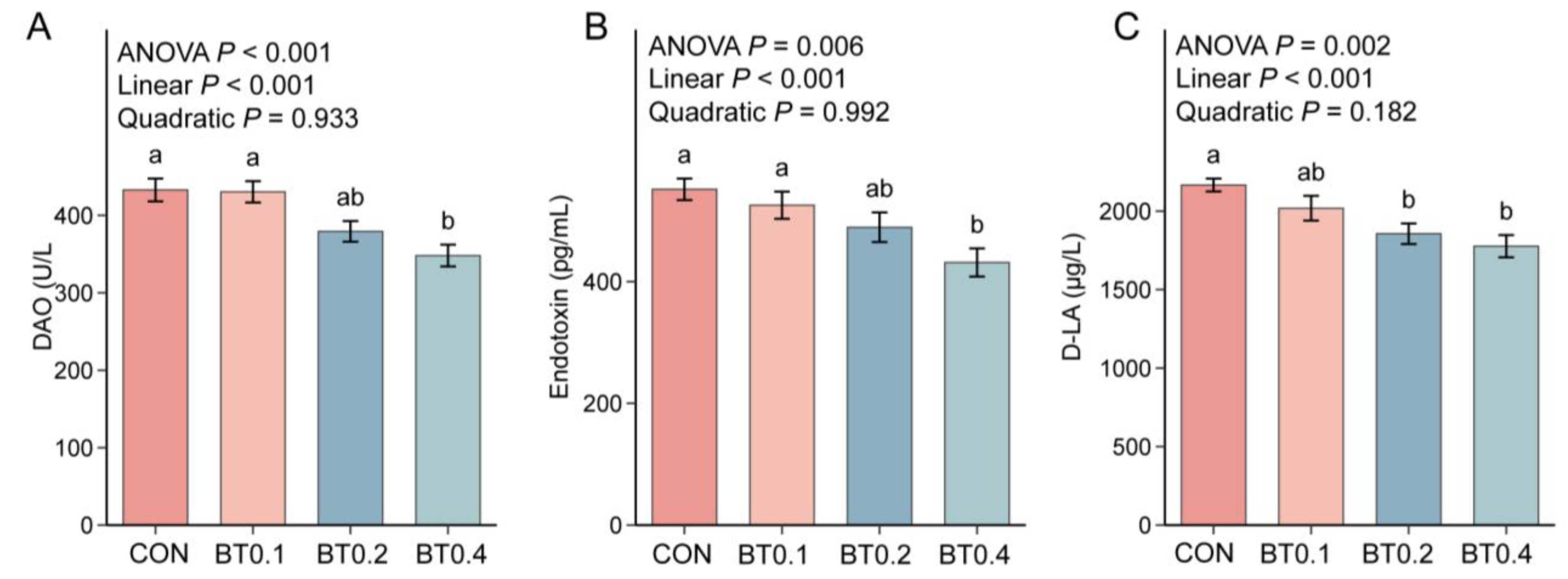
As shown in Figure 3, serum DAO (p < 0.001), endotoxin (p = 0.006), and D-LA (p = 0.002) differed among treatments, with all three indices decreasing linearly as YB-2 fermentation broth supplementation increased (all p < 0.001). Compared with CON, BT0.4 had lower serum DAO, endotoxin, and D-LA levels, whereas BT0.2 had lower D-LA levels. In addition, DAO and endotoxin levels were lower in BT0.4 than in BT0.1.
Figure 3.
Effects of dietary YB-2 fermentation broth supplementation on serum intestinal barrier injury-related markers in weaned Chuanzang black piglets. (A) DAO; (B) endotoxin; (C) D-LA. Bars without a common lowercase letter (a, b) differ significantly among treatments (p < 0.05). p values for overall treatment effects (ANOVA) and linear and quadratic trends are presented in each panel. CON, basal diet; BT0.1, BT0.2, and BT0.4, basal diet supplemented with 0.1%, 0.2%, and 0.4% YB-2 fermentation broth, respectively. DAO, diamine oxidase; D-LA, D-lactic acid.
3.4. Effects of YB-2 Fermentation Broth on Intestinal MUC2 and ZO-1 Expression in Weaned Piglets
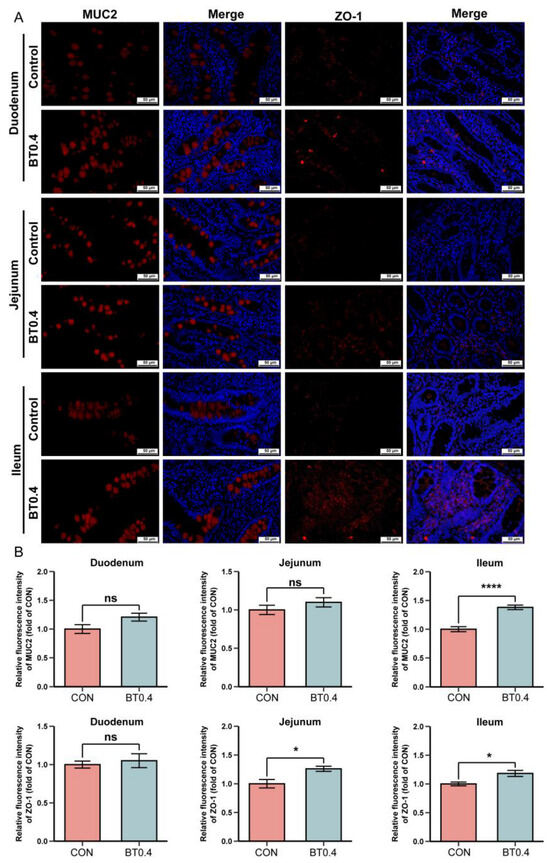
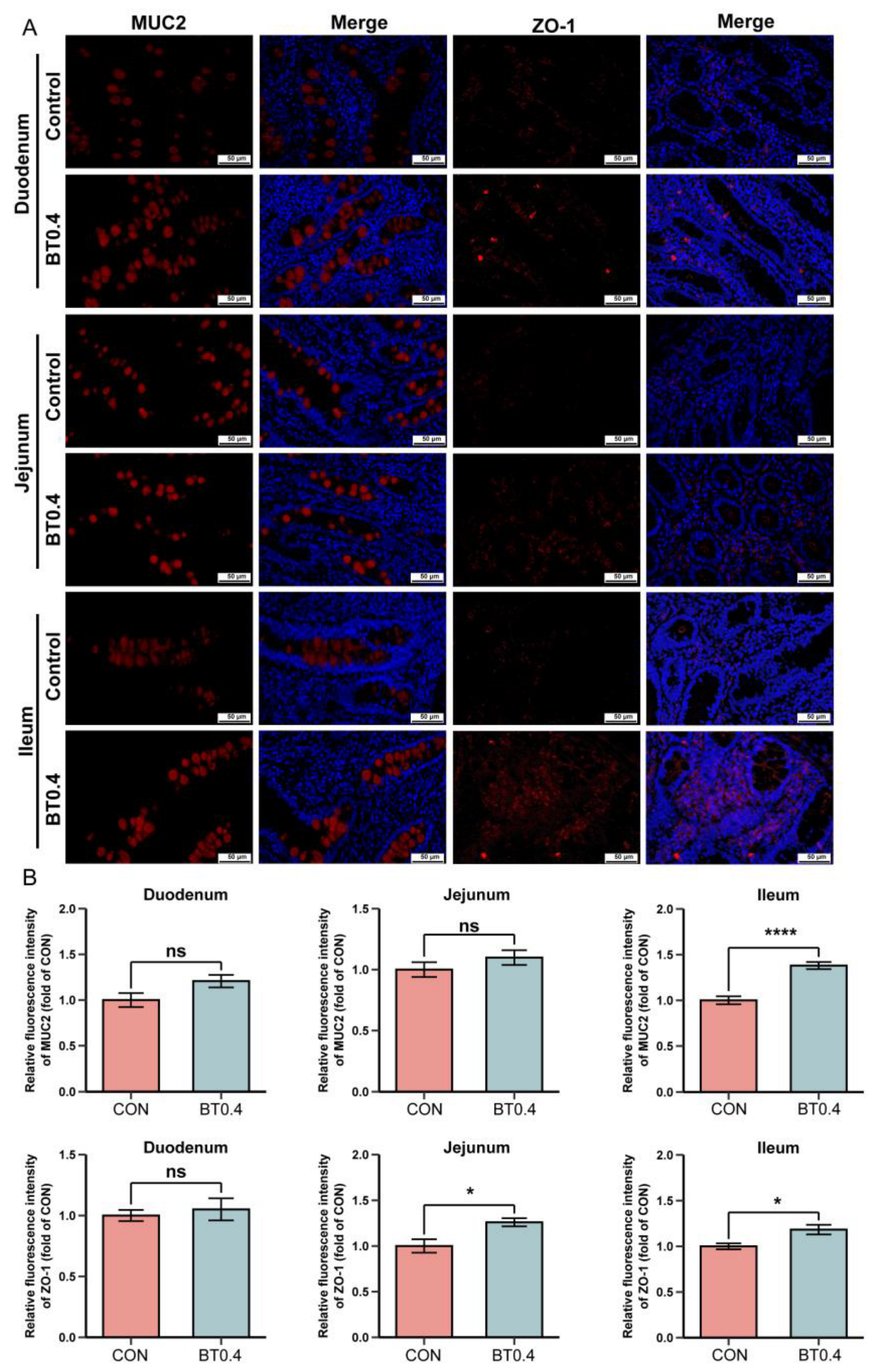
As shown in Figure 4, immunofluorescence analysis revealed that MUC2 fluorescence intensity was higher in the ileum of BT0.4 than in CON (p < 0.0001), whereas no significant differences were observed in the duodenum or jejunum (p > 0.05). ZO-1 fluorescence intensity was higher in BT0.4 than in CON in the jejunum and ileum (both p < 0.05), with no significant difference in the duodenum (p > 0.05).
Figure 4.
Effects of dietary YB-2 fermentation broth supplementation on intestinal MUC2 and ZO-1 immunofluorescence in weaned Chuanzang black piglets. (A) Representative immunofluorescence images of MUC2 and ZO-1 in the duodenum, jejunum, and ileum of CON and BT0.4 groups. MUC2 and ZO-1 are shown in red, and nuclei are shown in blue (DAPI). Scale bars = 50 μm. (B) Relative fluorescence intensity of MUC2 (upper panels) and ZO-1 (lower panels) in the three intestinal segments, normalized to CON. CON, basal diet; BT0.4, basal diet supplemented with 0.4% YB-2 fermentation broth. MUC2, mucin 2; ZO-1, zonula occludens-1. * p < 0.05; **** p < 0.0001; ns, not significant.
3.5. Effects of YB-2 Fermentation Broth on Serum Immunoglobulins and Cytokines in Weaned Piglets
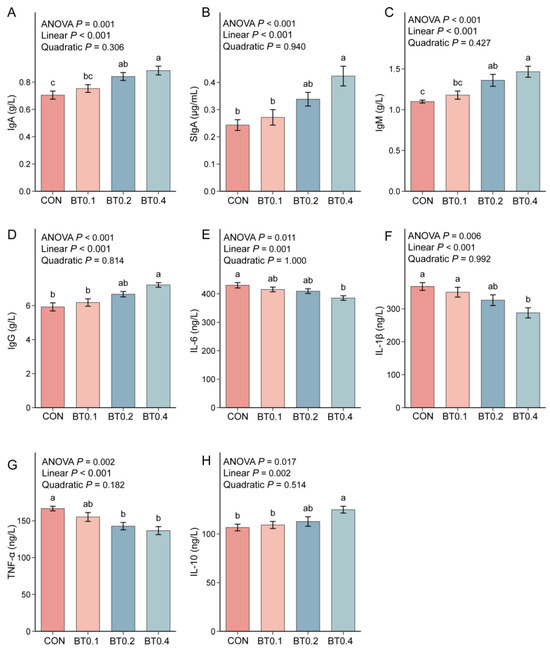
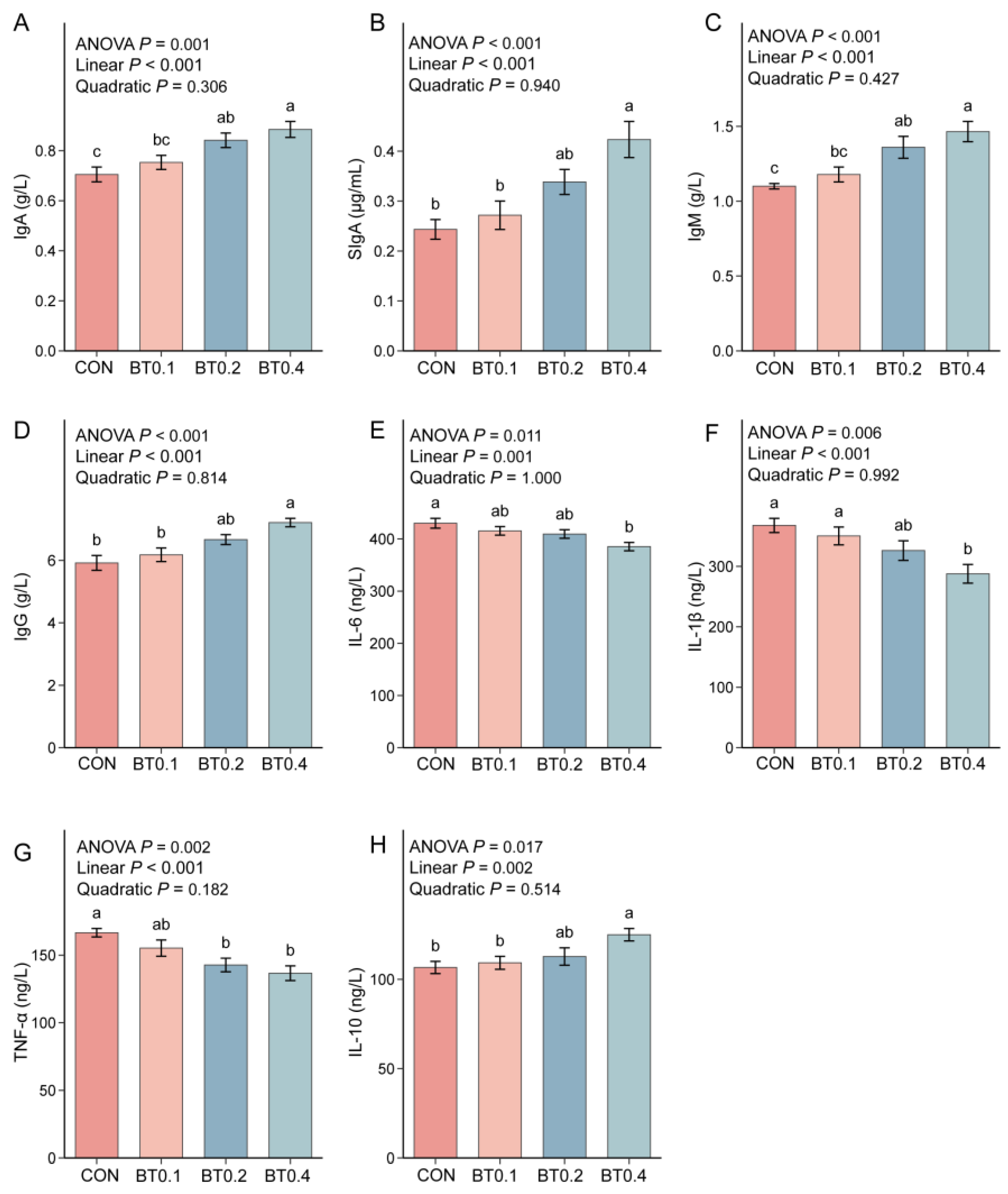
As shown in Figure 5, dietary YB-2 fermentation broth supplementation affected serum IgA (p = 0.001), SIgA (p < 0.001), IgM (p < 0.001), and IgG (p < 0.001), all of which increased linearly with increasing supplementation levels (all p < 0.001). Compared with CON, BT0.2 had higher IgA and IgM, whereas BT0.4 had higher IgA, SIgA, IgM, and IgG. Additionally, all four immunoglobulins were higher in BT0.4 than in BT0.1. Serum IL-6 (p = 0.011), IL-1β (p = 0.006), and TNF-α (p = 0.002) differed among treatments and decreased linearly with increasing supplementation levels (p = 0.001, p < 0.001, and p < 0.001, respectively). Compared with CON, BT0.4 had lower IL-6, IL-1β, and TNF-α, whereas BT0.2 had lower TNF-α. IL-1β was also lower in BT0.4 than in BT0.1. In contrast, IL-10 differed among treatments (p = 0.017) and increased linearly (p = 0.002), with higher concentrations in BT0.4 than in CON and BT0.1.
Figure 5.
Effects of dietary YB-2 fermentation broth supplementation on serum immunoglobulins and cytokines in weaned Chuanzang black piglets. (A) IgA; (B) SIgA; (C) IgM; (D) IgG; (E) IL-6; (F) IL-1β; (G) TNF-α; (H) IL-10. Bars without a common lowercase letter (a–c) differ significantly among treatments (p < 0.05). p values for overall treatment effects (ANOVA) and linear and quadratic trends are presented in each panel. CON, basal diet; BT0.1, BT0.2, and BT0.4, basal diet supplemented with 0.1%, 0.2%, and 0.4% YB-2 fermentation broth, respectively. IgA, immunoglobulin A; SIgA, secretory immunoglobulin A; IgM, immunoglobulin M; IgG, immunoglobulin G; IL-6, interleukin-6; IL-1β, interleukin-1β; TNF-α, tumor necrosis factor-α; IL-10, interleukin-10.
3.6. Effects of YB-2 Fermentation Broth on Intestinal Inflammatory Gene Expression in Weaned Piglets
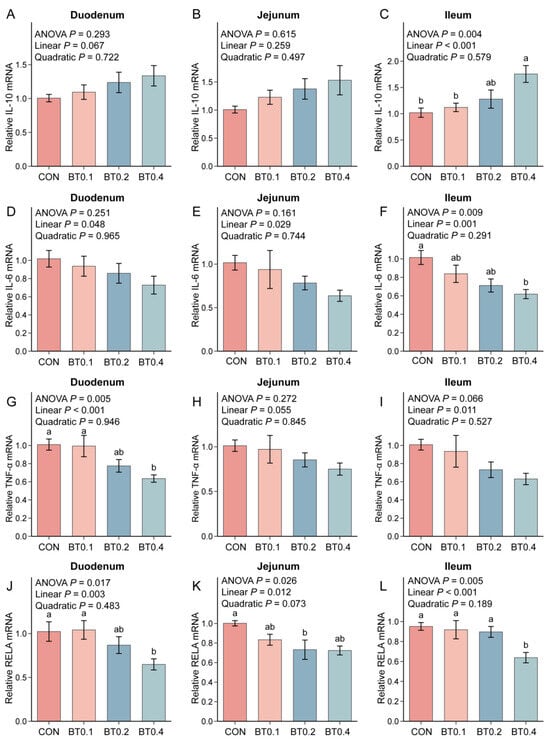
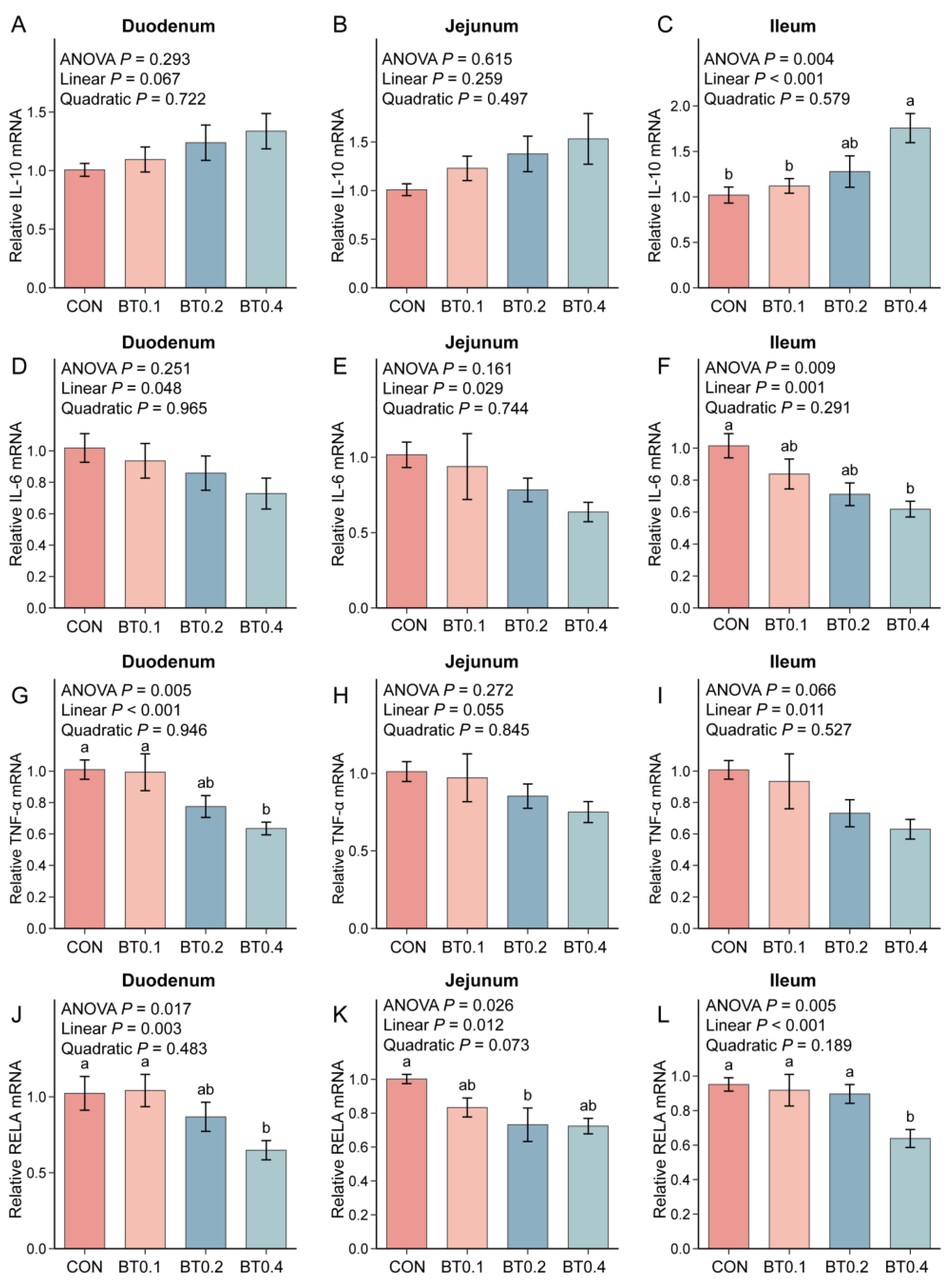
As shown in Figure 6, ileal IL-10 mRNA expression differed among treatments (p = 0.004) and increased linearly with increasing YB-2 supplementation levels (p < 0.001), with higher expression in BT0.4 than in CON and BT0.1. No significant treatment effects on IL-10 expression were observed in the duodenum (p = 0.293) or jejunum (p = 0.615). IL-6 expression decreased linearly in the duodenum (p = 0.048), jejunum (p = 0.029), and ileum (p = 0.001), although the overall treatment effect was significant only in the ileum (p = 0.009), where BT0.4 showed lower expression than CON.
Figure 6.
Effects of dietary YB-2 fermentation broth supplementation on intestinal inflammatory gene expression in weaned Chuanzang black piglets. (A–C) IL-10; (D–F) IL-6; (G–I) TNF-α; (J–L) RELA mRNA expression in the duodenum, jejunum, and ileum, respectively. Bars without a common lowercase letter (a, b) differ significantly among treatments (p < 0.05). p values for overall treatment effects (ANOVA) and linear and quadratic trends are presented in each panel. CON, basal diet; BT0.1, BT0.2, and BT0.4, basal diet supplemented with 0.1%, 0.2%, and 0.4% YB-2 fermentation broth, respectively. IL-10, interleukin-10; IL-6, interleukin-6; TNF-α, tumor necrosis factor-α; RELA = nuclear factor kappa B p65 subunit.
Duodenal TNF-α expression differed among treatments (p = 0.005) and decreased linearly (p < 0.001), with lower expression in BT0.4 than in CON and BT0.1. Ileal TNF-α expression also decreased linearly (p = 0.011), despite a nonsignificant overall treatment effect (p = 0.066), whereas jejunal TNF-α expression did not differ among treatments (p = 0.272). RELA expression differed among treatments in the duodenum (p = 0.017), jejunum (p = 0.026), and ileum (p = 0.005), with linear decreases in all three segments (p = 0.003, p = 0.012, and p < 0.001, respectively). Compared with CON, BT0.4 had lower RELA expression in the duodenum and ileum, whereas BT0.2 had lower expression in the jejunum. In addition, BT0.4 had lower duodenal RELA expression than BT0.1 and lower ileal RELA expression than all other treatments.
3.7. Effects of YB-2 Fermentation Broth on Intestinal CD11b Immunofluorescence in Weaned Piglets
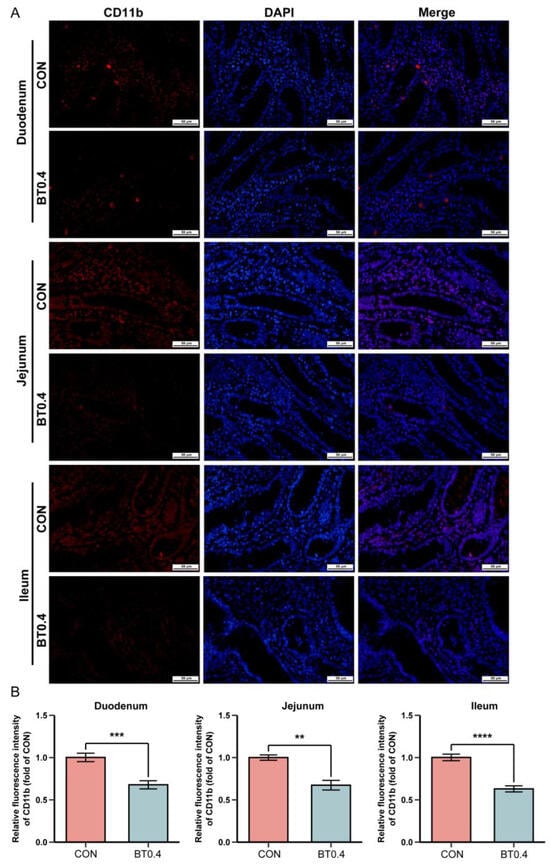
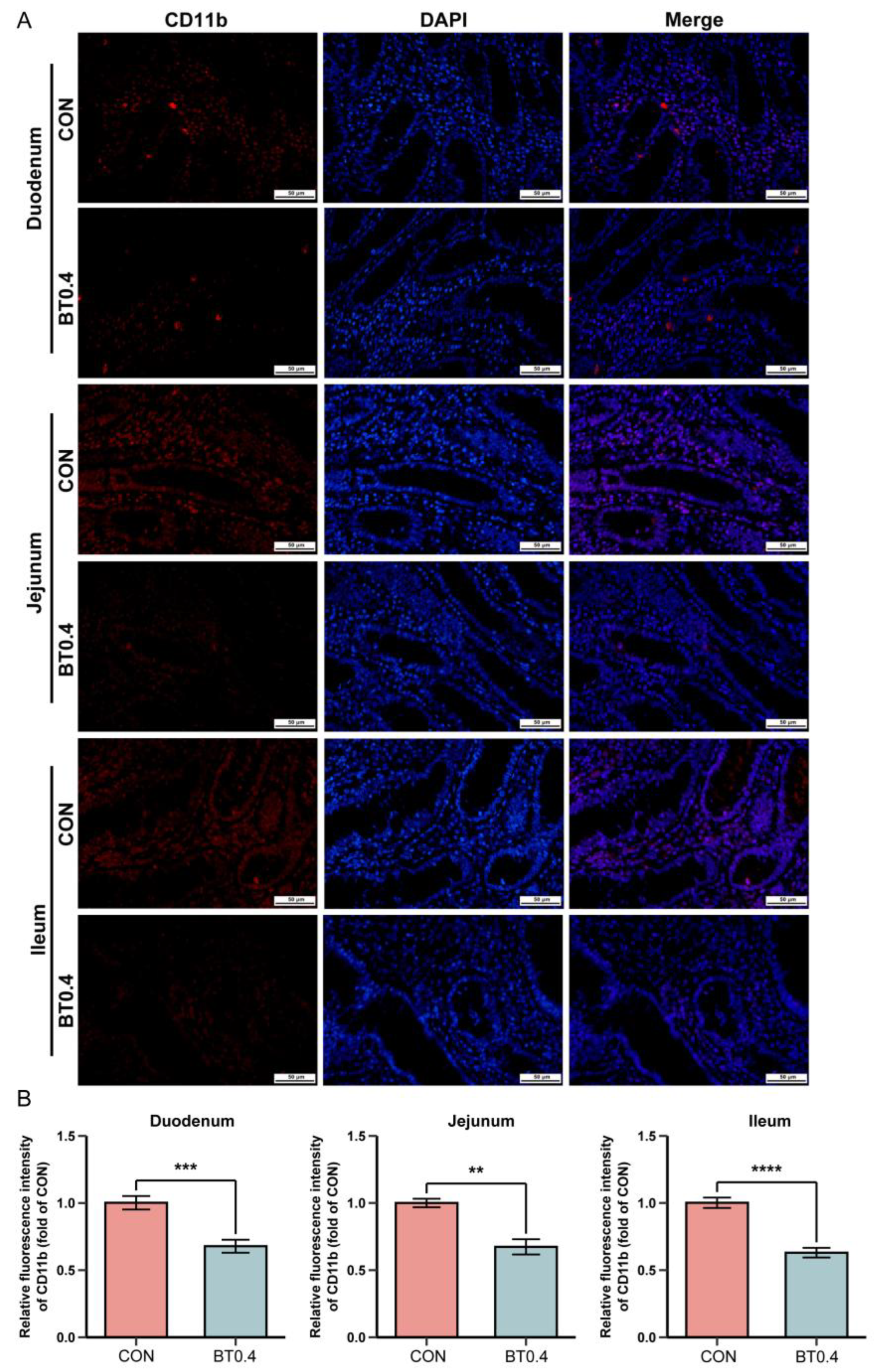
As shown in Figure 7, immunofluorescence analysis revealed lower CD11b fluorescence intensity in BT0.4 than in CON in the duodenum (p < 0.001), jejunum (p < 0.01), and ileum (p < 0.0001).
Figure 7.
Effects of dietary YB-2 fermentation broth supplementation on intestinal CD11b immunofluorescence in weaned Chuanzang black piglets. (A) Representative immunofluorescence images of CD11b in the duodenum, jejunum, and ileum of CON and BT0.4 groups. CD11b is shown in red, and nuclei are shown in blue (DAPI). Scale bars = 50 μm. (B) Relative fluorescence intensity of CD11b in the three intestinal segments, normalized to CON. CON, basal diet; BT0.4, basal diet supplemented with 0.4% YB-2 fermentation broth. CD11b, cluster of differentiation 11b; ** p < 0.01; *** p < 0.001; **** p < 0.0001.
4. Discussion
Post-weaning growth performance is closely associated with intestinal function and health. In the present study, dietary supplementation with Bacillus tequilensis YB-2 fermentation broth increased ADG, reduced F:G, and decreased diarrhea in weaned Chuanzang black piglets. The growth response occurred alongside changes in intestinal morphology, serum barrier-associated markers, and immune and inflammatory indices.
A notable finding was that YB-2 fermentation broth improved ADG and reduced F:G without significantly affecting ADFI. Feed efficiency depends not only on nutrient availability but also on the partitioning of energy and nutrients between maintenance requirements and tissue growth. Improved digestibility is another possible contribution: B. subtilis C-3102 increased nutrient digestibility and feed efficiency in weanling piglets [22], while a multi-strain Bacillus preparation improved dry matter and organic matter digestibility [23]. In weaned pigs, immune stimulation has been shown to increase maintenance energy requirements and reduce weight gain independently of feed intake [24]. Similarly, poor sanitary conditions increased fasting heat production and reduced the efficiency of nitrogen utilization for protein deposition in growing pigs [25]. These findings indicate that increased metabolic demands associated with immune activation may limit growth independently of feed intake. The concurrent reductions in diarrhea and inflammatory indices suggest that lower inflammation-associated maintenance demands may have contributed to the improved feed efficiency.
YB-2 supplementation also altered small intestinal morphology, with increased villus height and VH:CD in the duodenum, jejunum, and ileum, while crypt depth (CD) remained unchanged, indicating that the morphological response was primarily associated with greater villus height. The observed increase in villus height may provide a more favorable structural basis for intestinal digestion and nutrient absorption. In weaned piglets, greater villus height has been associated with higher digestive enzyme activities, changes in nutrient transporter expression, and improved growth performance [26]. Intestinal epithelial renewal involves cell proliferation within the crypts, followed by differentiation and migration along the crypt–villus axis and eventual shedding at the villus tips. In weaned piglets, transient reductions in epithelial proliferation and increased cell shedding have been associated with changes in villus morphology during post-weaning adaptation [3]. The greater villus height observed here, without a corresponding change in crypt depth, may therefore reflect better preservation of villus architecture, although the underlying rates of epithelial proliferation, migration, and shedding remain to be established. Furthermore, research involving Bacillus amyloliquefaciens SC06 has linked improvements in intestinal morphology to epithelial stem cell proliferation and goblet cell differentiation [11]. A previous study of a Bacillus subtilis preparation reported predominantly jejunal morphological changes [10], whereas the response to YB-2 involved all three intestinal segments examined. B. subtilis DSM 32540 also improved intestinal morphology across different fiber sources [27], supporting the relevance of mucosal maintenance under varied dietary conditions.
The changes in MUC2 and ZO-1 provide additional information on the mucosal response to YB-2 supplementation. MUC2 forms a key structural component of the intestinal mucus layer, which separates luminal contents from the epithelial surface and limits direct exposure to potentially damaging stimuli [28]. The increased MUC2 immunoreactivity in the ileum may therefore reflect enhanced mucus-associated protection, while the increased ZO-1 immunoreactivity in the jejunum and ileum is consistent with changes in epithelial junctional organization. These components provide complementary forms of protection, although their biological functions are distinct. MUC2 responses to weaning-associated diarrhea also vary with intestinal segment and breed in piglets [29], consistent with the regional response observed here. Experimental deletion of epithelial ZO-1 impaired effective mucosal repair despite relatively modest effects on baseline barrier function, highlighting its role in maintaining epithelial integrity beyond its association with tight junction structure [30]. The increased ileal MUC2 and jejunal and ileal ZO-1 signals coincided with lower serum DAO, D-lactate, and endotoxin levels. A similar association between junctional maintenance and lower circulating endotoxin and D-lactate was reported in piglets challenged with enterotoxigenic Escherichia coli and supplemented with Bacillus halotolerans SW207 [31]. SC06 also attenuated ileal permeability in diquat-challenged piglets [32], supporting barrier protection across distinct injury models. A different relationship between intestinal health and production outcomes was observed with dietary tannic acid, which reduced post-weaning diarrhea and improved barrier-related indices without improving growth performance [21].
YB-2 supplementation increased serum IgA, SIgA, IgG, and IgM concentrations while reducing IL-6, IL-1β, and TNF-α and increasing IL-10. These changes reflect a modulation of circulating humoral immune markers accompanied by a less pro-inflammatory cytokine profile. These components may respond differently to dietary interventions, and their changes also depend on the biological compartment examined. For example, Bacillus spore supplementation in sows and suckling piglets produced different immunoglobulin responses in blood and ileal mucosa, highlighting the compartment-specific nature of humoral immunity [33]. Consistent with the observed cytokine changes, dietary supplementation with Bacillus subtilis PB6 reduced circulating acute-phase proteins and ileal inflammation-related gene expression in piglets fed a high-protein diet [34]. A Bacillus mixture likewise suppressed TNF-α and IL-6 in Escherichia coli-challenged weaners [35]. Inflammatory regulation is also closely associated with epithelial barrier integrity. Experimental evidence from intestinal epithelial cells has linked attenuation of NF-κB/MLCK signaling and inflammatory cytokine production to the preservation of tight junction proteins and epithelial barrier function [36].
The intestinal inflammatory response showed regional differences, with increased IL-10 expression in the ileum and reduced RELA transcript abundance across the small intestine. The ileal IL-10 response is particularly relevant to the increased MUC2 immunoreactivity, as IL-10 participates in the resolution of inflammation and the maintenance of mucosal homeostasis. In a mouse model of intestinal injury, impaired macrophage clearance of apoptotic neutrophils compromised IL-10-associated tissue repair, whereas IL-10 overexpression promoted intestinal recovery [37]. The reduced CD11b immunoreactivity observed across the small intestinal segments also suggests changes in local myeloid-associated inflammatory responses. CD11b is expressed by several myeloid cell populations, including monocytes, macrophages, and neutrophils, making it a useful but non-specific indicator of myeloid-associated changes [38]. Alongside these findings, the changes in intestinal RELA transcript expression are consistent with an altered local inflammatory state. Local cytokine regulation has also accompanied epithelial protection in LPS-challenged piglets receiving B. licheniformis [39]. Of particular relevance, our previous study demonstrated that YB-2 alleviated DSS-induced colitis in mice, accompanied by reduced intestinal inflammation and lower TLR4 and phosphorylated NF-κB protein expression [15]. Similarly, Bacillus amyloliquefaciens BA40 reduced inflammatory signaling and promoted anti-inflammatory macrophage differentiation in Clostridium perfringens-challenged piglets [12]. Unlike these experimental challenge models, the present study observed changes in intestinal inflammatory indices under routine post-weaning feeding conditions.
Chuanzang black pigs are valued for their meat quality, but improving growth efficiency during the nursery period remains an important production consideration [5]. Improving growth and intestinal health during the nursery phase may help support production efficiency in this population. Breed-related differences in intestinal barrier development around weaning have been documented in comparisons of Chinese indigenous and Duroc piglets [40], supporting the value of evaluating dietary interventions directly in Chuanzang black piglets. The use of fermentation broth also distinguishes the present preparation from interventions based solely on live bacterial cells. In addition to bacterial cells, fermentation broth may contain extracellular metabolites that contribute to its biological activity. A recent study showed that a metabolite secreted by Bacillus subtilis improved barrier-associated outcomes in mouse and porcine epithelial models through GADD45A–Wnt/β-catenin signaling [14]. Within the inclusion levels evaluated here, 0.4% YB-2 fermentation broth produced the most consistent improvements in growth performance and intestinal health, making it a promising inclusion level for further evaluation in nursery pig production. At the 0.4% inclusion level (4 mL/kg of diet), the costs associated with fermentation broth production, storage, transportation, and feed incorporation must be considered alongside the potential economic benefits of improved growth performance, feed efficiency, and reduced diarrhea. The cost-effectiveness of this supplementation strategy will depend on production conditions and requires further evaluation under commercial farming conditions.
Two limitations should be considered when interpreting these findings. First, intestinal samples were collected at the end of the 40 d feeding trial, providing an assessment of intestinal responses at the final sampling point. Additional sampling during the feeding period would offer a more detailed understanding of changes in intestinal morphology, barrier-associated traits, and inflammatory responses throughout post-weaning adaptation. Second, YB-2 was administered as whole fermentation broth, but its organic acid, peptide, and enzyme profiles were not characterized. Consequently, the relative contributions of viable bacterial cells and fermentation-derived components to the observed responses remain unclear. Further evaluation of fermentation broth composition and the dose-dependent responses of key intestinal indicators would help refine its practical application in nursery pig production.
5. Conclusions
Dietary supplementation with Bacillus tequilensis YB-2 fermentation broth improved growth performance and reduced diarrhea in weaned Chuanzang black piglets. These responses were accompanied by increased villus height and VH:CD ratios across the small intestine, changes in MUC2 and ZO-1 immunoreactivity, improved serum barrier-associated indices, and coordinated changes in immune and inflammatory markers. Among the inclusion levels tested, 0.4% YB-2 fermentation broth showed the most consistent overall benefits. These findings support the potential application of YB-2 fermentation broth as a dietary strategy to improve growth performance and intestinal health during the nursery period, with further evaluation needed to refine its practical inclusion level.
Supplementary Materials
The following supporting information can be downloaded at https://www.mdpi.com/article/10.3390/vetsci13111256/s1. Figure S1: Representative H&E-stained sections of the duodenum, jejunum, and ileum from weaned Chuanzang black piglets receiving different dietary levels of YB-2 fermentation broth; Table S1: Catalogue information and available analytical specifications for porcine ELISA kits; Table S2: Effects of dietary Bacillus tequilensis YB-2 fermentation broth supplementation on growth performance and diarrhea in weaned Chuanzang black piglets.
Author Contributions
Conceptualization, H.Y.; methodology, J.R. and H.Y.; investigation, J.R., Y.Z., L.Z., L.Y. and Y.W.; formal analysis, J.R. and Y.Z.; data curation, J.R.; writing—original draft preparation, J.R.; writing—review and editing, H.Y. and all authors; visualization, J.R.; supervision, H.Y.; project administration, H.Y.; funding acquisition, H.Y. All authors have read and agreed to the published version of the manuscript.
Funding
This work was supported by the Central Funds Guiding Local Scientific and Technological Development (Grant No 202502ZYDF018).
Institutional Review Board Statement
The animal study protocol was approved by the ethics committee of the Southwest University of Science and Technology (approval No. L20230453; approval date: 28 February 2023).
Informed Consent Statement
Not applicable. All animals used in this study were legally acquired and managed by Southwest University of Science and Technology for research purposes, and no privately owned animals were involved.
Data Availability Statement
The original contributions presented in this study are included in the article. Further inquiries can be directed to the corresponding author.
Conflicts of Interest
Yuxian Zhang is employed by Bazhong Bashan Animal Husbandry Co., Ltd. The remaining authors declare that the research was conducted in the absence of any commercial or financial relationships that could be construed as potential conflicts of interest.
Abbreviations
The following abbreviations are used in this manuscript:
| BW | Body weight |
| ADG | Average daily gain |
| ADFI | Average daily feed intake |
| F:G | Feed-to-gain ratio |
| VH | Villus height |
| CD | Crypt depth |
| VH:CD | Villus height-to-crypt depth ratio |
| IgA | Immunoglobulin A |
| SIgA | Secretory immunoglobulin A |
| IgG | Immunoglobulin G |
| IgM | Immunoglobulin M |
| IL-6 | Interleukin-6 |
| IL-1β | Interleukin-1 beta |
| IL-10 | Interleukin-10 |
| TNF-α | Tumor necrosis factor-alpha |
| NF-κB | Nuclear factor kappa B |
| DAO | Diamine oxidase |
| D-LA | D-lactate |
| MUC2 | Mucin 2 |
| ZO-1 | Zonula occludens-1 |
| CD11b | Cluster of differentiation 11b |
| ELISA | Enzyme-linked immunosorbent assay |
References
- Han, X.; Hu, X.; Jin, W.; Liu, G. Dietary nutrition, intestinal microbiota dysbiosis and post-weaning diarrhea in piglets. Anim. Nutr. 2024, 17, 188–207. [Google Scholar] [CrossRef] [Scilit] [PubMed]
- Ming, D.; Wang, W.; Huang, C.; Wang, Z.; Shi, C.; Ding, J.; Liu, H.; Wang, F. Effects of Weaning Age at 21 and 28 Days on Growth Performance, Intestinal Morphology and Redox Status in Piglets. Animals 2021, 11, 2169. [Google Scholar] [CrossRef] [Scilit] [PubMed]
- Wang, M.; Wang, L.; Tan, X.; Wang, L.; Xiong, X.; Wang, Y.; Wang, Q.; Yang, H.; Yin, Y. The developmental changes in intestinal epithelial cell proliferation, differentiation, and shedding in weaning piglets. Anim. Nutr. 2022, 9, 214–222. [Google Scholar] [CrossRef] [Scilit] [PubMed]
- Tang, W.; Zhong, Y.; Wei, Y.; Deng, Z.; Mao, J.; Liu, J.; Valencak, T.G.; Liu, J.; Xu, H.; Wang, H. Ileum tissue single-cell mRNA sequencing elucidates the cellular architecture of pathophysiological changes associated with weaning in piglets. BMC Biol. 2022, 20, 123. [Google Scholar] [CrossRef] [Scilit] [PubMed]
- Liu, H.; He, J.; Yuan, Z.; Xie, K.; He, Z.; Zhou, X.; Wang, M.; He, J. Metabolomics Analysis Provides Novel Insights into the Difference in Meat Quality between Different Pig Breeds. Foods 2023, 12, 3476. [Google Scholar] [CrossRef] [Scilit] [PubMed]
- Liu, J.; Ma, X.; Zhuo, Y.; Xu, S.; Hua, L.; Li, J.; Feng, B.; Fang, Z.; Jiang, X.; Che, L.; et al. The Effects of Bacillus subtilis QST713 and β-mannanase on growth performance, intestinal barrier function, and the gut microbiota in weaned piglets. J. Anim. Sci. 2023, 101, skad257. [Google Scholar] [CrossRef] [Scilit] [PubMed]
- Tian, Z.; Wang, X.; Duan, Y.; Zhao, Y.; Zhang, W.; Azad, M.A.K.; Wang, Z.; Blachier, F.; Kong, X. Dietary Supplementation With Bacillus subtilis Promotes Growth and Gut Health of Weaned Piglets. Front. Vet. Sci. 2021, 7, 600772. [Google Scholar] [CrossRef] [Scilit] [PubMed]
- Sahatsanon, K.; Jayanegara, A.; Kim, S.W.; Ruangpanit, Y.; Lin, C.-S.; Sivapirunthep, P.; Chaosap, C. Effects of Lactobacillus- and Bacillus-based probiotics on growth performance, intestinal barrier function, and microbiota modulation in nursery pigs: A meta-analysis. Anim. Feed Sci. Technol. 2026, 345, 117005. [Google Scholar] [CrossRef] [Scilit]
- Jiao, S.; Zheng, Z.; Zhuang, Y.; Tang, C.; Zhang, N. Dietary medium-chain fatty acid and Bacillus in combination alleviate weaning stress of piglets by regulating intestinal microbiota and barrier function. J. Anim. Sci. 2023, 101, skac414. [Google Scholar] [CrossRef] [Scilit] [PubMed]
- Lewton, J.R.; Woodward, A.D.; Moser, R.L.; Thelen, K.M.; Moeser, A.J.; Trottier, N.L.; Tempelman, R.J.; Rozeboom, D.W. Effects of a multi-strain Bacillus subtilis-based direct-fed microbial on immunity markers and intestinal morphology in diets fed to weanling pigs. Transl. Anim. Sci. 2022, 6, txac083. [Google Scholar] [CrossRef] [Scilit] [PubMed]
- Wang, Q.; Wang, F.; Tang, L.; Wang, Y.; Zhou, Y.; Li, X.; Jin, M.; Fu, A.; Li, W. Bacillus amyloliquefaciens SC06 alleviated intestinal damage induced by inflammatory via modulating intestinal microbiota and intestinal stem cell proliferation and differentiation. Int. Immunopharmacol. 2024, 130, 111675. [Google Scholar] [CrossRef] [Scilit] [PubMed]
- Jiang, Z.; Su, W.; Yang, M.; Fu, J.; Gong, T.; Li, W.; Wen, C.; Wang, X.; Wang, F.; Jin, M.; et al. Integrated multi-omics reveals the Bacillus amyloliquefaciens BA40 against Clostridium perfringens infection in weaned piglets. J. Adv. Res. 2025, 77, 75–90. [Google Scholar] [CrossRef] [Scilit] [PubMed]
- Lin, K.-H.; Yu, Y.-H. Evaluation of Bacillus licheniformis-Fermented Feed Additive as an Antibiotic Substitute: Effect on the Growth Performance, Diarrhea Incidence, and Cecal Microbiota in Weaning Piglets. Animals 2020, 10, 1649. [Google Scholar] [CrossRef] [Scilit] [PubMed]
- Liu, S.; Cai, P.; You, W.; Yang, M.; Tu, Y.; Zhou, Y.; Valencak, T.G.; Xiao, Y.; Wang, Y.; Shan, T. Enhancement of gut barrier integrity by a Bacillus subtilis secreted metabolite through the GADD45A-Wnt/β-catenin pathway. iMeta 2025, 4, e70005. [Google Scholar] [CrossRef] [Scilit] [PubMed]
- Yin, H.; Wang, C.; Shuai, Y.; Xie, Z.; Liu, J. Pig-Derived Probiotic Bacillus tequilensis YB-2 Alleviates Intestinal Inflammation and Intestinal Barrier Damage in Colitis Mice by Suppressing the TLR4/NF-κB Signaling Pathway. Animals 2024, 14, 1989. [Google Scholar] [CrossRef] [Scilit] [PubMed]
- Sun, W.; Chen, W.; Meng, K.; Cai, L.; Li, G.; Li, X.; Jiang, X. Dietary Supplementation with Probiotic Bacillus licheniformis S6 Improves Intestinal Integrity via Modulating Intestinal Barrier Function and Microbial Diversity in Weaned Piglets. Biology 2023, 12, 238. [Google Scholar] [CrossRef] [Scilit] [PubMed]
- Wang, L.; Zhang, Y.; Liu, L.; Huang, F.; Dong, B. Effects of Three-Layer Encapsulated Tea Tree Oil on Growth Performance, Antioxidant Capacity, and Intestinal Microbiota of Weaned Pigs. Front. Vet. Sci. 2021, 8, 789225. [Google Scholar] [CrossRef] [Scilit] [PubMed]
- Hu, Y.; Dun, Y.; Li, S.; Zhao, S.; Peng, N.; Liang, Y. Effects of Bacillus subtilis KN-42 on Growth Performance, Diarrhea and Faecal Bacterial Flora of Weaned Piglets. Asian-Australas. J. Anim. Sci. 2014, 27, 1131–1140. [Google Scholar] [CrossRef] [Scilit] [PubMed]
- EFSA FEEDAP Panel. Safety and efficacy of Bacillus subtilis DSM 28343 as a feed additive for piglets. EFSA J. 2018, 16, 5221. [Google Scholar] [CrossRef] [Scilit] [PubMed]
- National Research Council. Nutrient Requirements of Swine, 11th rev. ed.; The National Academies Press: Washington, DC, USA, 2012. [Google Scholar]
- Yu, J.; Song, Y.; Yu, B.; He, J.; Zheng, P.; Mao, X.; Huang, Z.; Luo, Y.; Luo, J.; Yan, H.; et al. Tannic acid prevents post-weaning diarrhea by improving intestinal barrier integrity and function in weaned piglets. J. Anim. Sci. Biotechnol. 2020, 11, 87. [Google Scholar] [CrossRef] [Scilit] [PubMed]
- Hu, J.; Kim, I.-H. Effect of Bacillus subtilis C-3102 Spores as a Probiotic Feed Supplement on Growth Performance, Nutrient Digestibility, Diarrhea Score, Intestinal Microbiota, and Excreta Odor Contents in Weanling Piglets. Animals 2022, 12, 316. [Google Scholar] [CrossRef] [Scilit] [PubMed]
- Huting, A.M.S.; Lagos, L.V.; Hansen, L.H.B.; Molist, F. Effect of Supplementing a Bacillus Multi-Strain Probiotic to a Post-Weaning Diet on Nutrient Utilisation and Nitrogen Retention of Piglets. Animals 2023, 13, 3597. [Google Scholar] [CrossRef] [Scilit] [PubMed]
- Huntley, N.F.; Nyachoti, C.M.; Patience, J.F. Lipopolysaccharide immune stimulation but not β-mannanase supplementation affects maintenance energy requirements in young weaned pigs. J. Anim. Sci. Biotechnol. 2018, 9, 47. [Google Scholar] [CrossRef] [Scilit] [PubMed]
- van der Meer, Y.; Jansman, A.J.M.; Gerrits, W.J.J. Low sanitary conditions increase energy expenditure for maintenance and decrease incremental protein efficiency in growing pigs. Animal 2020, 14, 1811–1820. [Google Scholar] [CrossRef] [Scilit] [PubMed]
- Wang, M.; Yang, C.; Wang, Q.; Li, J.; Huang, P.; Li, Y.; Ding, X.; Yang, H.; Yin, Y. The relationship between villous height and growth performance, small intestinal mucosal enzymes activities and nutrient transporters expression in weaned piglets. J. Anim. Physiol. Anim. Nutr. 2020, 104, 606–615. [Google Scholar] [CrossRef] [Scilit] [PubMed]
- Valente Júnior, D.T.; de Amorim Rodrigues, G.; Soares, M.H.; Silva, C.B.; Frank, E.O.; Gonzalez-Vega, J.C.; Htoo, J.K.; Brand, H.G.; Silva, B.A.N.; Saraiva, A. Supplementation of Bacillus subtilis DSM 32540 improves performance and intestinal health of weaned pigs fed diets containing different fiber sources. Livest. Sci. 2023, 270, 105202. [Google Scholar] [CrossRef] [Scilit]
- Song, C.; Chai, Z.; Chen, S.; Zhang, H.; Zhang, X.; Zhou, Y. Intestinal mucus components and secretion mechanisms: What we do and do not know. Exp. Mol. Med. 2023, 55, 681–691. [Google Scholar] [CrossRef] [Scilit] [PubMed]
- Wang, L.; Jin, L.; Zhang, L.; Huang, X.; Li, Z.; Li, Z.; Li, K.; Xu, Y.; Di, S.; Cui, S.; et al. Exploring the Link Between Mucin 2 and Weaning Stress-Related Diarrhoea in Piglets. Int. J. Mol. Sci. 2025, 26, 599. [Google Scholar] [CrossRef] [Scilit] [PubMed]
- Kuo, W.-T.; Zuo, L.; Odenwald, M.A.; Madha, S.; Singh, G.; Gurniak, C.B.; Abraham, C.; Turner, J.R. The Tight Junction Protein ZO-1 Is Dispensable for Barrier Function but Critical for Effective Mucosal Repair. Gastroenterology 2021, 161, 1924–1939. [Google Scholar] [CrossRef] [Scilit] [PubMed]
- Li, M.; Zhao, D.; Guo, J.; Pan, T.; Niu, T.; Jiang, Y.; Shi, C.; Huang, H.; Wang, N.; Zhang, D.; et al. Bacillus halotolerans SW207 alleviates enterotoxigenic Escherichia coli-induced inflammatory responses in weaned piglets by modulating the intestinal epithelial barrier, the TLR4/MyD88/NF-κB pathway, and intestinal microbiota. Microbiol. Spectr. 2024, 12, e03988-23. [Google Scholar] [CrossRef] [Scilit] [PubMed]
- Yuan, J.; Meng, H.; Liu, Y.; Wang, L.; Zhu, Q.; Wang, Z.; Liu, H.; Zhang, K.; Zhao, J.; Li, W.; et al. Bacillus amyloliquefaciens attenuates the intestinal permeability, oxidative stress and endoplasmic reticulum stress: Transcriptome and microbiome analyses in weaned piglets. Front. Microbiol. 2024, 15, 1362487. [Google Scholar] [CrossRef] [Scilit] [PubMed]
- Konieczka, P.; Ferenc, K.; Jørgensen, J.N.; Hansen, L.H.B.; Zabielski, R.; Olszewski, J.; Gajewski, Z.; Mazur-Kuśnirek, M.; Szkopek, D.; Szyryńska, N.; et al. Feeding Bacillus-based probiotics to gestating and lactating sows is an efficient method for improving immunity, gut functional status and biofilm formation by probiotic bacteria in piglets at weaning. Anim. Nutr. 2023, 13, 361–372. [Google Scholar] [CrossRef] [Scilit] [PubMed]
- Liu, Y.; Cao, L.; Yu, C.; Zhou, Q.; Li, H.; Zhang, R.; Tang, J.; Zhang, Z.; Luo, Z.; Jiang, X.; et al. Dietary supplementation with Bacillus subtilis PB6 alleviates diarrhea and improves growth performance and immune function in weaned piglets fed a high-protein diet. Front. Vet. Sci. 2025, 12, 1525354. [Google Scholar] [CrossRef] [Scilit] [PubMed]
- Sampath, V.; Cho, S.; Jeong, J.; Mun, S.; Lee, C.H.; Hermes, R.G.; Taechavasonyoo, A.; Smeets, N.; Kirwan, S.; Han, K.; et al. Dietary Bacillus spp. supplementation to both sow and progenies improved post-weaning growth rate, gut function, and reduce the pro-inflammatory cytokine production in weaners challenged with Escherichia coli K88. Anim. Microbiome 2024, 6, 3. [Google Scholar] [CrossRef] [Scilit] [PubMed]
- Gong, S.; Zheng, J.; Zhang, J.; Wang, Y.; Xie, Z.; Wang, Y.; Han, J. Taxifolin ameliorates lipopolysaccharide-induced intestinal epithelial barrier dysfunction via attenuating NF-kappa B/MLCK pathway in a Caco-2 cell monolayer model. Food Res. Int. 2022, 158, 111502. [Google Scholar] [CrossRef] [Scilit] [PubMed]
- Hill, A.A.; Kim, M.; Zegarra-Ruiz, D.F.; Chang, L.-C.; Norwood, K.; Assié, A.; Wu, W.-J.H.; Renfroe, M.C.; Song, H.W.; Major, A.M.; et al. Acute high-fat diet impairs macrophage-supported intestinal damage resolution. JCI Insight 2023, 8, e164489. [Google Scholar] [CrossRef] [Scilit] [PubMed]
- Schmid, M.C.; Khan, S.Q.; Kaneda, M.M.; Pathria, P.; Shepard, R.; Louis, T.L.; Anand, S.; Woo, G.; Leem, C.; Faridi, M.H.; et al. Integrin CD11b activation drives anti-tumor innate immunity. Nat. Commun. 2018, 9, 5379. [Google Scholar] [CrossRef] [Scilit] [PubMed]
- Yu, X.; Dai, Z.; Cao, G.; Cui, Z.; Zhang, R.; Xu, Y.; Wu, Y.; Yang, C. Protective effects of Bacillus licheniformis on growth performance, gut barrier functions, immunity and serum metabolome in lipopolysaccharide-challenged weaned piglets. Front. Immunol. 2023, 14, 1140564. [Google Scholar] [CrossRef] [Scilit] [PubMed]
- Ding, S.; Cheng, Y.; Azad, M.A.K.; Zhu, Q.; Huang, P.; Kong, X. Development of small intestinal barrier function and underlying mechanism in Chinese indigenous and Duroc piglets during suckling and weaning periods. Anim. Nutr. 2024, 16, 429–442. [Google Scholar] [CrossRef] [Scilit] [PubMed]

Disclaimer/Publisher’s Note: The statements, opinions and data contained in all publications are solely those of the individual author(s) and contributor(s) and not of MDPI and/or the editor(s). MDPI and/or the editor(s) disclaim responsibility for any injury to people or property resulting from any ideas, methods, instructions or products referred to in the content. |
© 2026 by the authors. Licensee MDPI, Basel, Switzerland. This article is an open access article distributed under the terms and conditions of the Creative Commons Attribution (CC BY) license.