


Abstract
AI-enabled remote patient monitoring systems produce temporally distributed prediction outputs from heterogeneous physiological, behavioral, cognitive, and self-reported data. However, their interpretation as coherent evidence of patient evolution may be restricted by short-term variability, asynchronous acquisition, and inadequate data. This paper proposes a framework for interpreting longitudinal data that would add an interpretation layer between predictive analytics and clinical decision support. Without changing the underlying predictive models, the framework would organize successive AI-generated outputs into temporally structured representations of latent functional state, patient trajectory, uncertainty, and trajectory-based risk. A proposed representation-level evaluation protocol outlines a comparison of point-wise and longitudinal interpretation under controlled conditions of constrained variability, progressive degradation, transient perturbations, and sparse or asynchronous data. Instead of showing empirically measured improvements, controlled synthetic predictive sequences illustrate expected alterations in temporal stability, trajectory coherence, sensitivity to transient perturbations, and uncertainty alignment. To illustrate how the framework could be integrated into a multimodal monitoring workflow, it is conceptually mapped onto the architecture of the existing NeuroPredict remote monitoring platform. Although the framework provides a conceptual foundation for further assessment, operational specification, implementation, and testing based on genuine longitudinal patient data and expert-annotated trajectories are necessary for its practical applicability and generalizability.
1. Introduction
The technological developments in healthcare data science and the digitalization of healthcare systems have facilitated the analysis and collection of massive patient data, continuously acquired through remote monitoring platforms. This has led to a paradigm shift in healthcare, transforming it from a reactive to a proactive, preventive, and continuous model [1]. Wearable sensors, mobile health applications, and connected medical devices generate heterogeneous data streams related to physiological, behavioral, and self-reported information. Machine learning models are increasingly applied to these data in order to generate frequent predictive outcomes like functional assessments, risk scores, or indicators of abnormal behavior [2,3]. Predictions of the patient’s state of health in daily monitoring scenarios can vary with time, even when the patient’s functional status remains stable. Rather than necessarily pointing to model shortcomings, such variability may reflect contextual variables including inadequate measurements, asynchronous data collecting, and inherent variance in health data. Stable improvements in the patient’s condition should act as a basis for medical decisions instead of isolated values [4]. From the point of view of healthcare data science, the difficulty is not generating predictions but in transforming them into information that is accurate, reliable over time, interpretable, and actionable for medical decisions [5]. This restriction highlights an important issue in healthcare data science: while predictive output generation has made substantial progress, its reliable long-term interpretation has not been well addressed. At a fundamental level, clinical reasoning is longitudinal. Healthcare providers evaluate patient condition based on the stability, trends, and persistence of observed changes, rather than on isolated measurements. By processing each piece of information separately, particular predictive analytics workflows implicitly link prediction with state representation [6].
Methodological Positioning and Interpretation Scope
The aim of this perspective is to formulate and critically examine a longitudinal data interpretation framework for structuring AI-generated predictive evidence in remote monitoring, rather than to establish its clinical effectiveness. By focusing on the integration of successive model outputs rather than on the generation of predictions, the framework introduces an interpretive layer between prediction models and their clinical application. The framework, which relies on prediction sequences, seeks to provide an integrated overview of the patient’s evolution that takes into account continuity, trend, and uncertainty. A structured approach for the future assessment of the proposed interpretation layer under controlled conditions is further outlined in this paper. This approach is laid out at the representation level and presented with analytically constructed, scenario-based predictive output sequences rather than clinically tested datasets. The approach relies on the differentiation between the patient’s latent state and observations. The results generated by the AI are considered evidence that provides an understanding of the patient’s functional state without explicitly defining it. Instead of being a collection of distinct classifications, these observations are integrated over time to provide an estimate of the evolution of the state as a trajectory [7]. As a result, time is represented as a semantic dimension that facilitates the construction of clinically significant interpretations and structures the accumulation of information. According to this longitudinal approach, risk is not a fixed result but rather a characteristic of the patient’s evolution [8]. Even if the individual predictive values remain within nominal ranges, a persistent negative change in the interpreted trajectory may indicate a need for closer clinical review. This trajectory-based definition of risk is intended to address limitations associated with threshold-based alerting mechanisms and is consistent with longitudinal medical data analysis practices.
This work makes methodological contributions. First and foremost, the goal of this research is to bridge the interpretive gap between prediction outputs and their clinical applicability rather than to enhance predictive model performance or create new predictive algorithms. In order to clearly distinguish between prediction and interpretation, it first introduces a structured layer of longitudinal interpretation for medical data generated through AI. Second, it highlights temporal coherence by proposing a trajectory-based representation of patient state and risk. Thirdly, it proposes an approach for handling asynchronous, incomplete, and multimodal data in continuous monitoring applications.
As an example of its potential applicability within a real-world context of digital health, the proposed framework is conceptually mapped onto the architecture of the existing NeuroPredict remote monitoring platform, whose architecture and current developmental status are described in [9]. This example aims to illustrate architectural integration and workflow consistency within a real-world monitoring pipeline, not for clinical validation or clinical use. So, rather than being a platform where the proposed assessment framework has been implemented or clinically validated, the NeuroPredict platform acts as an existing architectural reference for the proposed evaluation framework. Healthcare data science already has temporal modeling approaches, such as recurrent neural networks, transformer-based models, and survival analysis techniques, to support longitudinal and evolving health-related process analysis. Thus, the introduction of temporal or dynamic health-state analysis itself is not the contribution of this current research, but rather a methodological interpretation framework with an emphasis on how heterogeneous predictive outputs generated under multimodal and asynchronous monitoring conditions can be structured, contextualized, and interpreted as longitudinal evidence. In this sense, the proposed framework is conceived as a methodological layer that complements the existing predictive infrastructures without changing their underlying analytical mechanisms.
The remainder of this paper is organized as follows. Section 2 presents the conceptual basis for longitudinal patient-state interpretation. Section 3 describes the proposed framework, its conceptual integration within the NeuroPredict architecture, and the proposed evaluation methodology. Section 4 presents the analytical comparative evaluation illustrations and the proposed framework instantiation within the NeuroPredict platform. Section 5 discusses the implications for healthcare data science and decision support, while Section 6 addresses the broader methodological implications, ethical considerations, limitations, and future work. Section 7 concludes the paper.
2. Patient State as a Longitudinal Data Interpretation Problem
2.1. From Measurements to Clinical Meaning
Interpreting measurements as longitudinal clinical evidence depends on three closely connected processes: normalization and contextualization, integration across modalities, and temporal alignment.
- Depending on patient-specific parameters like age, sex, comorbidities, baseline functional capacity, or ongoing treatments, identical numerical results might have very different interpretations [10]. Normalization in longitudinal settings includes customized baselines that change over time in addition to population-based reference ranges. Contextualization takes into account situational information like physical activity, medication changes, or environmental conditions, ensuring that each measurement is interpreted relative to its conditions of acquisition.
- With different temporal resolutions and uncertainty profiles, physiological signals, laboratory tests, behavioral indicators, and patient-reported outcomes all capture complementary parts of the underlying functional status [11]. For their effective integration, it is necessary to resolve the differences across sources and to relate heterogeneous measurements through shared clinical characteristics [12]. Longitudinal integration places more emphasis on coherence over time than on strict agreement. Modalities may contribute differently depending on their reliability and significance at a particular time.
- Temporal alignment provides the basis for viewing measurements as a continuous patient trajectory rather than isolated events [13]. In order to maintain clinically significant patterns, measurements taken at various times and frequencies must be placed into a logical temporal framework. Alignment in longitudinal monitoring also involves integrating continuous or high-frequency data streams with episodic clinical assessments, ensuring that sparse but clinically meaningful observations maintain the proper influence while densely sampled signals do not dominate interpretation.
2.2. Temporal Semantics of Patient State
In a longitudinal interpretation framework, patient state is not defined by isolated observations but by a time-dependent implicit representation that changes as new data become available. Clinical significance arises not only from what is measured, but from how measurements evolve, persist, or vary with time. In longitudinal monitoring, temporal semantics control the definition of stability, the accumulation of uncertainty, and the interpretation of changes.
The rate and direction of change are important aspects of temporal semantics. Depending on whether they appear gradually or suddenly, identical absolute deviations may have distinct clinical implications. Rapid changes may indicate acute events or external perturbations, while slow, regular trends frequently indicate chronic advancement or recovery processes [14]. Therefore, in order to distinguish between expected variability and clinically important transitions, temporal interpretation necessitates accurate modeling of change dynamics.
Persistence and temporal consistency are two other essential components of temporal semantics. Physiological and behavioral data often show isolated anomalies, which might be caused by measurement noise, temporary stresses, or environmental influences. By evaluating how long a signal is altered and whether it stabilizes, increases, or returns to baseline, temporal semantics differentiate between transient fluctuations and sustained deviations. The persistence of changes can provide relevant information for representing the patient state and interpreting risk; however, from a clinical perspective, their significance depends on the context and cannot be determined solely based on temporal persistence. This differentiation may help reduce false alarms caused by transient noise and support better clinical reasoning [15].
Temporal semantics can be represented through state transition dynamics, which define how the patient’s state is expected to evolve in the absence of new evidence. These dynamics implicitly represent assumptions about disease progression, recovery, or behavioral stability. Instead of depending solely on point-wise prediction outputs, the proposed framework takes into account the enduring nature of observed changes across time to differentiate between transient noise and persistent state changes [16].
Temporal semantics also includes historical dependencies and memory effects. The interpretation of the current patient state depends on previous states, trajectories, and interventions. Longitudinal frameworks incorporate this dependency by maintaining state representations that are always changing and incorporating historical context.
Temporal semantics also includes the evolution of uncertainty over time, influencing confidence in estimates of patient status both through the quality of current observations and the density and consistency of historical data. Periods of infrequent observations or conflicting signals lead to increasing uncertainty, while consistent and corroborating observations across time reduce it. The proposed framework aims to limit unsupported interpretations by explicitly representing changes in uncertainty, thereby informing subsequent clinical review.
Temporal semantics provide the foundation for trajectory-based reasoning, ensuring that clinical meaning emerges from the interaction between observed data, learned temporal dynamics, and uncertainty rather than isolated observations.
2.3. Risk as a Trajectory-Based Clinical Property
Within a longitudinal interpretation framework, risk is more appropriately conceptualized as a trajectory-based clinical property, emerging from the evolution of patient state over time. Trajectory-based risk reflects not only the magnitude of deviations from baseline but also their direction, persistence, and temporal coherence. Gradual but consistent decline may be of greater clinical concern than a transient extreme value, particularly in the management of chronic disease [17]. A potential advantage of trajectory-based risk is its ability to incorporate contextual and historical information. In the proposed approach, risk would be interpreted relative to the patient’s past condition, anticipated progression patterns, and response to treatments. A key component of trajectory-based risk interpretation is uncertainty. Risk estimates are influenced by data availability, signal consistency, and model confidence, and they evolve as patient trajectories evolve.
3. Proposed Methodological Framework and Evaluation Approach
To provide clarity, the proposed framework is based on four logical blocks: temporally indexed observations and contextual factors, representation of latent states at the interpretation level, reconstruction of trajectories, and interpretation of risk with awareness of uncertainty. These blocks are not targeted to create a new predictive model, but to highlight how heterogeneous predictive outcomes can be progressively transformed into longitudinal representations for further clinical review.
3.1. Longitudinal Framework for Interpreting AI-Generated Health Data
3.1.1. Core Interpretation Entities
Observations—include all raw measurements and recorded patient data, ranging from laboratory values and vital signs to wearable-derived metrics and patient-reported outcomes. Each observation is timestamped and may include modality-specific metadata, such as acquisition conditions or device calibration information. This methodology enables the integration of observations into higher-level clinical constructs by considering them as semantically annotated events. They are not understood separately; in fact, the dynamic knowledge of patient state is guided by temporal patterns across multiple observations [18].
Contextual factors—incorporate the environment and the conditions that are correlated with observations. These include patient demographics, comorbidities, lifestyle variables, environmental exposures, and temporal conditions such as time of day or treatment cycles. In the outlined approach to interpreting these parameters, it would be necessary to regard the contextual variables as modifiers of the meaning and significance of the monitored signals, rather than the independent determinants of the outcomes. The relevant contextual parameters might include, among others, treatment-related information, including medication timing, adherence to it, and the occurrence of any other interventions. With treatment-related information included as temporally indexed metadata, the same approach in terms of interpretation structure could be applied to delayed associations between interventions and patient evolution following those interventions. But this analysis is interpretive and temporal, not a causal validation of the effectiveness of the treatment.
Latent functional state—represents the unobserved, intrinsic condition of the patient that explains the observed data. In contrast to raw measurements, the latent state integrates multiple signals over time, capturing the physiological, cognitive, or behavioral health of the patient. In computational terms, latent states serve as an intermediate representation between raw data and actionable insights [19]. Instead of being a predetermined stochastic or state-space variable controlled by a single mathematical formalism, the latent functional state is handled as an interpretation-level representational construct within the suggested framework. Since the framework’s main goal is to support longitudinal integration and contextual interpretation independent of the predictive mechanisms used upstream, it purposefully does not impose a particular inferential topology, such as Hidden Markov Models, Kalman filtering, or fixed probabilistic transition structures. The objective of this abstraction-oriented design is to facilitate interoperability between heterogeneous AI pipelines and multimodal monitoring setups, such as those present in the NeuroPredict platform.
Trajectory—describes the evolution of the latent functional state over time. It provides a continuous, interpretable representation of the changes in a patient’s state, highlighting the trends, fluctuations, and potential inflection points.
Uncertainty—the degree of confidence in both latent state estimates and observations is measured by uncertainty. In longitudinal monitoring, uncertainty arises from measurement errors, missing data, model limitations, and inherent biological variability. The purpose of explicit uncertainty representation is to enable proper observation weighting, prevent overconfident conclusions, assist clinical review in the midst of imperfect information, and show the validity of trajectory-based risk interpretations.
3.1.2. Integration of Predictive Analytics Outputs into Clinical Decision-Making
Data to Indicators
To support clinical interpretation, these outputs must be transformed into interpretable indicators, such as risk scores, estimations of medical condition, or early-warning signals. In the proposed workflow, predictions would be normalized, chronologically aligned with patient records, and correlated with patient-specific variables.
Indicators to State Estimation
The patient’s latent functional state is estimated by integrating predictive results once they have been transformed into indicators. In order to derive an integrated overview of health, state evaluation combines several variables from various modalities, clinical domains, and time periods. Various temporal inference techniques, such as probabilistic integration mechanisms, Bayesian filtering techniques, or recurrent sequential architectures that can incorporate temporal dependencies, multimodal correlations, and uncertainty propagation, can be used for state evaluation [20]. Rather than being predetermined implementation options within the existing NeuroPredict platform configuration, these processes are presented as methodological examples compatible with the proposed framework.
State to Trajectory Representation
State estimates are then put together to create trajectories that show patient evolution over time.
Trajectory to Risk Interpretation
Finally, trajectories are mapped to clinically interpretable risk assessments [21].
The mathematical formalization of the proposed functions entails defining—at a subsequent implementation stage—five distinct elements: 1. a rule for updating the representation of the latent functional state, based on successive predictive results, the history of observations, and contextual information; 2. a temporal aggregation rule that defines the analysis horizon and the contribution of observations acquired at different frequencies; 3. a mechanism for reconstructing the trajectory and identifying changes therein; 4. a mechanism for representing and updating uncertainty, contingent upon the availability, quality, and consistency of the observations; and 5. a rule for interpreting risk based on the characteristics of the trajectory and the patient’s context, without presupposing the existence of a pre-defined or validated clinical risk score. These elements specify the formalization requirements necessary for operationalizing the methodological framework, without mandating a specific mathematical architecture, and without incorporating computational mechanisms, parameters, or results that have not yet been defined and evaluated.
Figure 1 synthesizes the framework presented above. The methodology incorporates successive multimodal observations into a temporally structured interpretation process rather than immediately linking isolated prediction outputs with patient state. Under asynchronous and variable-density monitoring situations, this design is intended to maintain uncertainty awareness while supporting the reconstruction of coherent trajectory-oriented representations.
Figure 1.
Longitudinal AI-driven health interpretation framework. The figure illustrates the transformation of multimodal observations and contextual factors into latent functional state estimation, followed by trajectory modeling and uncertainty-aware processing, enabling dynamic, trajectory-based risk interpretation. The longitudinal dimension is explicitly represented through continuous reconstruction and progressive risk evaluation over time.
3.1.3. Multimodal Consistency in Healthcare Data Streams
Multimodal consistency refers to the degree to which different data sources provide coherent and non-contradictory evidence about the patient’s underlying functional status. Predictive models might generate contradictory signals in the absence of explicit consistency mechanisms. A systematic approach that differentiates between actual clinical divergence, contextual variance, and data artifacts is necessary for interpreting these discrepancies [22].
Multimodal consistency is intended to support coordination between the longitudinal interpretation layer and diverse acquisition sources in the proposed system. Its purpose is to ascertain whether physiological, behavioral, cognitive, environmental, and self-reported observations collectively support the same trajectory-level interpretation of patient progression rather than to resolve differences between modalities. While inconsistent or weakly correlated observations are retained as contextual information relevant to uncertainty rather than being immediately transmitted as patient-level change, concordant signals support latent-state estimation. Under actual monitoring conditions, this process is intended to limit the propagation of isolated modality-specific perturbations into longitudinal interpretations.
Three complementary methods can be used within the proposed longitudinal framework to address multimodal consistency [23]:
- Semantic alignment aims to ensure that signals from various modalities are understood at compatible levels of abstraction. Heterogeneous inputs can significantly contribute to the same latent state estimation when raw measurements are mapped to common clinical categories, such as functional capacity, symptom burden, or behavioral stability.
- Variations in sampling frequency and time can be resolved with temporal alignment. Temporal aggregation and filtering algorithms could be used to integrate high-frequency wearable data with infrequent clinical examinations, with the aim of maintaining clinically significant patterns without overemphasizing highly sampled modalities.
- The proposed framework envisages confidence- and uncertainty-aware weighting of modalities. Each data source would be associated with a modality-specific uncertainty estimate that reflects measurement reliability, signal quality, and clinical validity. The framework would modulate the impact of each source on state estimation and trajectory creation while permitting partial disagreement. Rigid fusion techniques that could enhance noise or propagate modality-specific biases are avoided in this approach.
Abrupt changes in inferred patient state might occur from changes in modality availability, such as temporary loss of wearable data or irregular clinical visits. The approach maintains consistent interpretations over variations in individual data streams by clearly outlining multimodal coherence over time [12].
To operationalize multimodal integration, any future implementation must—for each predictive output—associate the indicator’s scale and meaning, its source, its temporal reference, and any available information regarding its quality. Indicators expressed in units, ranges, or scales with differing meanings should not be directly compared or aggregated; any common representation would require a clear definition of semantic correspondence and, where justified, the application of indicator-specific transformations, while preserving the original values. Differences in frequency should be addressed based on the actual timing of observations, ensuring that a modality with a higher acquisition frequency does not automatically receive greater weight in longitudinal interpretation. Source reliability should be taken into account based on available information concerning the quality of both the observations and the predictive outputs, without assuming equal levels of confidence. In the event of contradictory results, information derived from different modalities should be kept distinct and evaluated in light of its meaning, the context of the observations, and the reliability of the sources. A lack of concordance does not justify the automatic exclusion of an observation—particularly when it may indicate a potential acute change. Specific transformation and integration rules would be defined in conjunction with the selection of the computational mechanism.
3.1.4. Handling Incomplete and Asynchronous Patient Data
Conventional methods sometimes use random imputation or exclusion techniques to deal with missing data, which might bias temporal trends or use less data. Conventional methods sometimes use random imputation or exclusion techniques to deal with missing data, which might bias temporal trends or use less data [24]. In contrast, the proposed framework treats incompleteness and asynchrony as first-class properties of longitudinal data, and proposes their explicit consideration in state estimation and trajectory modeling [25]. In the proposed longitudinal interpretation process, handling incomplete and asynchronous data is intended to support continuity of the state and trajectory representations. Its function is to maintain trajectory-level representations as stable despite inconsistent acquisition intervals, transient modality absence, or varying update frequency among monitoring components. Without imposing artificial temporal regularization or discarding patient data, the proposed method is intended to support longitudinal interpretation under remote monitoring conditions relevant to the NeuroPredict platform.
A future implementation could address this by distinguishing observation time from state time. Observations would retain their acquisition timestamps, while the latent functional state would be represented as evolving over time. State representations would be updated as new information becomes available, without requiring synchronous measurements across modalities. Missing data would need to be handled through an explicitly specified uncertainty-aware mechanism rather than assumed deterministic reconstruction. In periods without new observations, a future implementation could maintain a provisional state representation, with uncertainty reflecting the lack of new evidence. This is intended to avoid artificial stability assumptions and ensure that confidence in state estimates reflects data availability. Importantly, the absence of data could itself be informative, particularly in behavioral monitoring contexts where disengagement might indicate decline. The framework facilitates the selective integration of small amounts of information, thus enabling clinically important signals to impact trajectories even in cases of irregular data acquisition. Whether a future implementation can preserve sensitivity to genuine changes while limiting responses to noise under varying data densities remains to be evaluated.
Regarding the handling of missing data, a future implementation will need to distinguish—whenever the acquisition information allows—between an observation that was not expected at a given time, an observation that was expected but not obtained, and a result that became available with a delay. The time of acquisition and the time at which the result became available should be recorded separately, if both are known. The absence of an observation should not be automatically equated with a “normal” value, a confirmed continuation of the current functional state, or an indication of deterioration. In representing uncertainty, available information concerning the reliability or uncertainty of individual predictive outputs must be distinguished from the additional uncertainty associated with longitudinal interpretation—uncertainty stemming from the absence, age, or inconsistency of the evidence. During periods without new data, the ongoing representation of the state shall be considered provisional, and the associated level of confidence must reflect the limitations of the available information. Newly available observations may alter this uncertainty, depending on their quality, recency, and consistency with prior evidence. The numerical rule for updating and propagating uncertainty will need to be defined and evaluated in conjunction with the selection of the longitudinal inference mechanism; this rule was neither established nor tested during the research that forms the basis of this work.
3.2. Integration Within the NeuroPredict Remote Monitoring Platform
The potential integration of the proposed longitudinal interpretation framework is examined in relation to the architecture of the NeuroPredict platform, an existing digital health application developed for remote monitoring of patients with neurodegenerative diseases (Parkinson’s, Alzheimer’s, and Multiple Sclerosis). This integration is presented as a conceptual architectural design rather than an implemented or clinically validated methodological component. The system supports patient monitoring through multiple data sources, including physiological measurements, behavioral data, cognitive assessments, and patient-reported data. Data is acquired through multiple interaction modalities and is organized within a defined operational workflow, involving patients, clinicians, and caregivers, which allows for the generation and updating of multiple predictive estimates relative to a patient’s functional and behavioral status [26,27].
From the perspective of system architecture, the NeuroPredict platform comprises modular components supporting data acquisition, user interaction, and predictive analytics within a multimodal remote monitoring environment. Within the architecture, predictive outputs are generated as temporally indexed data segments. Rather than placing restrictions on data modality, sampling frequency, or model architecture, the usability of the suggested approach depends on the availability of temporally indexed observations and related prediction outputs. To be integrated into a single observation space, insights must, at the very least, be time-referenced and contextually interpretable.
To illustrate the observation-space design proposed in Section 3.1, the NeuroPredict platform provides an architectural reference for collecting and analyzing heterogeneous and temporally distributed data streams, although it does not currently implement the proposed continuous state representation mechanism. Within the proposed framework used to evaluate the platform, predictive outputs are regarded as temporally bounded observations, rather than complete representations of patient state. The proposed interpretation layer would address this gap by organizing discrete observations into longitudinal state and trajectory representations.
Figure 2 shows how the proposed integration approach is structurally organized within the NeuroPredict monitoring environment, emphasizing the connections between contextual data, multimodal data acquisition, predictive analytics components, and the longitudinal interpretation layer across the monitoring workflow. By placing the proposed interpretation layer between the longitudinal monitoring interfaces and the predictive analytics components, as illustrated in Figure 2, temporally distributed predictive outputs can be rearranged into cohesive longitudinal representations without changing the underlying analytical models. To facilitate trajectory-oriented interpretation under diverse and asynchronous monitoring conditions, the proposed integration would also account for contextual information, temporal alignment, and data quality.
Figure 2.
The NeuroPredict multimodal remote monitoring platform’s integration design for the longitudinal interpretation layer, illustrating how multimodal data streams, predictive outputs, contextual data, and longitudinal representations are arranged throughout the monitoring process.
The proposed framework would integrate these observations and their context into a longitudinal representation of the patient’s functional state. At the level of architectural design, the interpretation layer is conceived so as not to depend on the choice of a specific inference mechanism; its actual compatibility with various computational approaches will be verified through implementation and evaluation. The focus here is on the interpretive structuring of the predictive model’s outputs to create actionable information that can be interpreted into a workflow for clinical decision support. The framework’s ability to longitudinally integrate heterogeneous data generated by wearable technologies, behavioral observations, cognitive assessment modules, patient-reported data, and contextual monitoring conditions into a unified interpretive structure is what makes it practically relevant in this context.
In the proposed approach, the chain of analyses terminates with the mapping of predictive outputs onto the longitudinal picture of patient development. In the context of the overall process of monitoring and healthcare of the patient, this output could then be used as a basis for professional evaluation and, when necessary, medical decisions or intervention, followed by further monitoring of future patient development. In other words, interpretation is the end point of the methodological chain in the proposed approach, although it could also serve as an intermediate step in the overall process of care. The proposed framework does not carry out interventions, alter the patient trajectory, or incorporate the interpreted trajectory back into predictive models.
3.2.1. Clinical Interpretation Design Rationale
The NeuroPredict platform has been built to process multimodal patient data across heterogeneous streams that include IoMT devices, digital engagement components, and structured data of the patients, including a monitoring environment. These data include self-reports, physiological and behavioral measurements, cognitive assessment results, and medical history organized into patient-specific profiles.
Within this data ecosystem, specific AI models are used within the platform to serve particular analytic functions for each data modality. The models used on the platform include various forms of machine learning and deep learning for pattern analysis of sensor-based data, as well as deep learning, e.g., convolutional neural networks for cognitive-based or image-based tasks. Each of these models receives preprocessed data and outputs structured results that include score, classification, and automated interpretation for each analyzed instance [28,29,30].
The analytical elements facilitate a series of monitoring functions about the features of neurodegenerative disorders. These encompass automated assessment of cognitive drawing tests to provide indicators of motor and visuospatial deficits, analysis of movement and behavioral patterns from sensor data, and analysis of physiological signals pertinent to the monitoring of health status. In system design, these outputs are analyzed as results derived from certain data streams, rather than representations of a patient’s condition. Each result is stored with contextual metadata and is associated with a patient profile for longitudinal access and traceability of previous outputs.
A primary design objective of the platform is to achieve an operational distinction between the algorithmic output and the clinical assessment. AI-generated scores, classifications, and automated interpretations can inform clinical assessment, but their clinical significance requires evaluation by a qualified clinician. Physicians can contextualize these outputs using the patient’s clinical history and determine whether further assessment is necessary.
This architecture determines the boundaries within which a longitudinal interpretative framework can be outlined, including:
- The ability to access successive longitudinal data across various modalities;
- Analytically processed data that are structured and identifiable;
- Clear separation of automated clinical interpretation from the resultant datasets.
Operating on processed predictive outputs, the proposed interpretation workflow is designed to be compatible with multimodal monitoring configurations and heterogeneous modeling methodologies. As new monitoring data becomes available, multimodal observations from wearable devices, patient-facing modules, and contextual monitoring components are collected, temporally indexed within the NeuroPredict platform, and can subsequently be integrated through the proposed longitudinal interpretation process. The suggested methodology solely concentrates on the longitudinal contextual interpretation of previously produced predictive outputs rather than performing predictive recalibration, online learning, parameter adaptation, or iterative prediction correction based on observed patient evolution.
The suggested interpretation layer is presented at the system design level as a way to organize and correlate subsequent outputs within the temporal framework that the platform already supports. This involves using timestamps consistently, linking outputs to patient-specific data streams, and ensuring that they are in line with the observational context. By examining successive outputs in terms of their temporal succession and cross-source consistency, this structured integration makes it possible to find persistent trends and deviations over monitoring intervals.
3.2.2. Clinical Decision Support Workflow Integration
In the proposed integration with the NeuroPredict platform, the interpretative layer would act as a ‘middle’ layer that connects the predictive analytics modules with the longitudinal data access interfaces used by clinicians and other authorized care actors. In this proposed workflow, individual model outputs would not be treated as separate decision signals. Instead, they would be synthesized into state- and trajectory-oriented configurations for a more consistent understanding of the evolution of the patient profile longitudinally. This conceptual transformation process is depicted in Figure 3, which illustrates how multimodal observations and model outputs could be structured into state, trajectory, and longitudinal interpreted representations.
Figure 3.
Conceptual workflow illustrating the transformation of multimodal observations and AI-generated outputs into longitudinal patient state and trajectory representations within the NeuroPredict platform, enabling the derivation of interpreted longitudinal information for clinical assessment without automated decision-making.
In the first phase of the proposed workflow, a distinction is made between raw observations and indicators derived from the analytical components, corresponding to different representation layers within the proposed platform. Derived indicators from analytical components are generated concurrently with specific observations as scores, classifications, or automated interpretations.
In the workflow, the first transformation step is constructing an observation space where raw observations and derived indicators are temporally aligned and linked to contextual metadata. As such, this process does not require uniform sampling, and it maintains the original structure of the data in such a way as to support both continuous and episodic signals. This observation space, as shown in Figure 3, provides the means to transition from a heterogeneous input to a longitudinal interpretation through an explicit, intermediate representation layer.
The proposed longitudinal interpretation framework would use this observation space to define a latent functional state representation. This representation would be constructed through the temporal and contextual integration of successive observations, rather than through additional classification or thresholding. The ordering of observations is accounted for in the estimation, as is the time-bound persistence of observations and the consistency of observations across interfaces, while still maintaining an explicit separation across the data between what is observed and the state which is inferred. In the absence of more observations, state estimation would rely on established temporal patterns and would not introduce artefactual, stabilizing assumptions.
This estimated latent state is arranged as a trajectory representation. At the clinical decision support level, the proposed workflow would provide temporally structured representations of the patient’s evolution. No automated decision-making recommendations or rules are established in this particular process. In a future implementation, the resulting longitudinal representations could be made available to clinicians for examination and potential integration into care workflows. Their actual utility in supporting the decision-making process naturally requires evaluation under clinical conditions.
It should also be mentioned that the workflow outlined does not require the processing steps to be carried out in a strictly linear or sequential manner. Data collection, predictive analysis, and interpretive updates may happen asynchronously in real-world monitoring settings, with different temporal granularity and interdependence among data sources. As a result, the workflow’s logical structure is designed to support iterative updates of the represented patient state, allowing subsequent observations to refine earlier representations without necessitating a full reinitialization of the interpretation procedure. This design is intended to maintain interpretative consistency under irregular monitoring patterns and varied data availability.
In a future implementation, the interpretation layer will be able to use a logical input interface to access outputs generated by the existing predictive components of the NeuroPredict platform, without altering their operation. The necessary records should include an association with the patient profile, the type and source of the predictive output, its value, the temporal reference, and available contextual metadata, including information on data quality, where such information exists. Processing will involve verifying the integrity and semantic compatibility of indicators derived from different modalities, organizing them temporally, and highlighting missing or contradictory observations. A longitudinal inference mechanism—to be selected and specified—will utilize the indicators organized within a common observation space, while preserving information regarding their provenance, meaning, and reliability; it will not assume that heterogeneous predictive outputs contribute equally to the interpretation. The representation of the latent functional state will be updated by relating newly available indicators to the patient’s history of observations and assessing their consistency with information from other modalities. The trajectory will consist of a temporal sequence of functional state representations, enabling the examination of the direction and persistence of changes, as well as the identification of potential change points. The uncertainty associated with these representations must reflect the availability and recency of observations, the reliability of the sources, and any discrepancies between modalities—including during periods where no new data are available. The specific methods for calculation and updating are to be established upon the selection and specification of the computational mechanism.
A logical output interface must enable the transmission of these representations—along with any identified change points and their associated temporal information—to longitudinal review components intended for authorized medical personnel. These represent proposed processing and integration requirements, rather than software interfaces or already implemented inference mechanisms. Computational complexity cannot be rigorously quantified prior to the definition of the inference mechanism, as it depends on the number and frequency of observations, the number of modalities, the dimensionality of the state representation, and the temporal history utilized. Processing, memory, and latency costs should be determined and evaluated at a later stage, during the implementation and testing of the interpretation layer.
3.2.3. Continuous State Reconstruction
Using the NeuroPredict platform, patient monitoring is proposed to be achieved through observations from diverse data sources, such as IoMT devices, digital interaction modules, as well as structured data about the patient. These observations, along with their model outputs, are captured at unpredictable time intervals and are dependent on particular situational contexts. Therefore, these observations do not, on their own, provide a consistent or continuous representation of the status of the patient.
Rather than restating each predictive output, the proposed framework would maintain an evolving state representation, which is expressed as a temporally contextualized perspective of the patient’s condition.
In a future implementation, each representation of a latent functional state must include a temporal reference, an inferred description of the state, an identification of the predictive and contextual evidence supporting it, and uncertainty information. Characterizing the level of confidence will take into account three distinct properties of the evidence: density—expressed by the number and temporal distribution of available observations relative to the expected acquisition frequency for each modality (where defined); consistency—assessed through the agreement or contradiction among indicators that are semantically and temporally comparable; and recency—based on the time elapsed between the acquisition of observations and the moment of interpretation, whenever such temporal markers are available. These properties define the informational requirements for confidence assessment, without constituting an already established numerical formula. Defining the time horizon, aggregation rules, weighting schemes, and the mechanism for updating confidence levels necessitates the selection and evaluation of a longitudinal inference mechanism—a component that has not been implemented for this paper.
From this perspective, the longitudinal interpretation framework articulates a particular form of continuous state reconstruction, whereby a patient’s condition is considered a latent functional state that exists and changes between instances of observation. This latent functional state is neither directly observable nor equivalent to any individual predictive output. Within the proposed framework, it would be inferred from successive observations available in the NeuroPredict platform.
The proposed reconstruction operation would use an observation space defined at the platform level, where both the raw inputs and the outputs as calculated by the models are indexed in time and associated with a set of contextual metadata. Each incoming observation would update the state estimate, as opposed to initiating a new estimate. In light of the irregular and asynchronous data acquisition within the NeuroPredict platform, the proposed state reconstruction is not expected to work without relying on any consistent temporal framework. Instead, it would maintain the temporal order of the observations and integrate them based on time, importance, and coherence with the observations that were recorded previously.
When new data are not acquired, the proposed framework would create and maintain a propagated estimate of the patient state based on previously integrated evidence and keep track of the associated uncertainty. This estimate should not be viewed as static, as the uncertainty should properly reflect the evidence (i.e., absence of new data), and therefore it may be warranted that the confidence underpinning the estimate deteriorates. The reconstructed state in real-world monitoring environments is still a forecast that hinges on the temporal distribution, density, and trustworthiness of the available data. As a result, the proposed framework’s interpretation would be a dynamically updated depiction of patient evolution, and its degree of confidence may change over time as new information becomes available or as data gaps continue to exist. This feature is intended to prevent the reconstructed state from being perceived as a conclusive or entirely resolved clinical characterization, but rather in relation to data availability limits.
3.2.4. Trajectory-Based Risk Representation
In the proposed framework, the continuum of risk is not intended to be assigned to each predictive output or singular deviations of the observed data. Risk is articulated as a construct of the evolving temporality of the reconstructed patient state. This approach is intended to distinguish sustained deterioration from transient changes without triggering automated clinical actions. It matters to note that there is no standardized or directly measurable clinical risk score associated with the trajectory-based representation of risk provided in this proposed framework. Instead of merely using adjusted probabilistic outputs, it represents a context-dependent interpretation of patient evolution based on the temporal coherence and progression of the findings.
The risk is defined by the continuity of the trajectory, the temporal alignment of the fluctuations, and the consistency of the fluctuations in the context of previously structured trajectory data. Within the proposed framework, risk is defined as a continuum state-dependent construct that is related to the current state estimation and the recent temporal evolution. This could support the identification of emerging trends of worsening, where the consolidation of steady trajectory behaviors, as opposed to unexpected deviations, is linked to growing concern.
The NeuroPredict platform’s available data, its distribution over time, and its consistency of observations would impact the reconstructed state and the inherent uncertainty present when interpreting risk. With sparse data, uncertainty increases, which affects confidence in the inferred trajectory, which in turn affects confidence in the risk representation.
In line with this integration, the proposed framework does not make automated risk-based clinical decisions or alerts. Instead, trajectory-based risk would be represented within longitudinal information intended for subsequent clinical review.
This framework’s interpretation of risk is intrinsically personalized and depends on background health conditions, patient-specific temporal dynamics, and patterns of data availability. Therefore, risk representations are meant to capture the internal consistency and trajectory of state growth inside a specific monitoring environment rather than to facilitate straightforward comparisons across individuals.
3.3. Analytical Evaluation Approach for Longitudinal Interpretation
This section does not contain validated experimental or clinical evaluation data; instead, it presents an evaluation strategy developed at the methodological level. Rather than reporting clinical validation data or predictive performance metrics, the goal of this subsection is to define a methodological protocol for examining representation-level behavior under controlled longitudinal monitoring conditions. The following subsections gradually compare point-wise predictive interpretation with longitudinal interpretation under controlled monitoring scenarios representative of multimodal remote healthcare environments in order to aid conceptual interpretation of the proposed framework.
3.3.1. Evaluation Protocol
The NeuroPredict monitoring approach generates temporally organized predicted output sequences, which can inform the design of the proposed evaluation protocol. Time-based predictive findings linked to the platform’s multimodal monitoring framework, such as indicators obtained from questionnaires, cognitive task outcomes, self-reported data, device-integrated physiological and behavioral data streams, and contextual factors, could serve as inputs to the proposed protocol. These inputs could be used in controlled scenarios to examine the expected behavior of the longitudinal interpretation layer, without constituting empirical validation of the proposed methodology. In order to simulate constrained variability, progressive shift, transitory disruptions, data loss, inconsistent sampling, and asynchronous technique adjustments, the protocol can use stored intrinsic results, generated patterns according to specified evolution trends, or computationally disrupted sequences.
Two interpretation modes are proposed for comparison under the same circumstances for every input sequence. The first option is point-wise interpretation, in which every prediction output is directly connected to a local state or risk indicator and handled as a standalone assessment of patient status. The second type of approach relates to longitudinal interpretation, in which the latent functional state, reconstructed trajectory, change points, and related uncertainty are represented in a chronologically consistent manner by integrating consecutive predictive outputs inside the observation space. Instead of changing the basic AI models, their deployment configuration, or their internal parameters, this dual processing design allows the same prediction data to be examined under two different meaning assumptions.
Instead of defining the protocol’s outputs at the prediction accuracy level, they are determined at the representation level. Temporal consistency of the inferred state, coherence of reconstructed trajectories, frequency and timing of state transitions, responsiveness to long-term alterations, resilience to random disturbances, and alignment between uncertainty and data availability are some of these characteristics. It defines a controlled analytical evaluation environment where the conversion of consecutive predictive outputs into stable, temporally consistent, and uncertainty-aware representations can be methodically evaluated, though it makes no commitments about clinical validation or predictive performance.
To support reproducibility, the evaluation protocol could be structured around temporally ordered predictive output sequences.
The proposed execution procedure encompasses a predetermined sequence of steps:
- Selecting or creating predictive output sequences in controlled settings that match the evaluation scenarios in Section 3.3.7;
- Simultaneous use of point-wise and longitudinal interpretation modes on identical input sequences;
- Providing outputs at the representation level, such as inferred state sequences, reconstructed trajectories, change-point indicators, and the uncertainty that goes with them;
- Determining the evaluation indicators based on the operational criteria set out in Section 3.3.8.
3.3.2. Evaluation Objective
Traditional evaluation metrics such as accuracy, AUROC, or F1 score assess predictive performance but do not directly capture the temporal coherence of longitudinal representations. The proposed NeuroPredict framework, on the other hand, works with timely structured output sequences, where patterns’ cross-modal agreement, persistence, and consistency over time may inform clinical interpretation. Therefore, instead of assessing performance at the prediction level, the evaluation centers on the temporal consistency and coherence of such depictions. Thus, evaluation must be at these representations, i.e., how temporally and clinically coherent and interpretable descriptions of the patient evolution are generated by the system. To meet this requirement, we propose the notion of longitudinal clinical agreement as the extent to which latent-state and trajectory-based representations preserve the temporal structure, consistency, and clinically relevant meaning of patient evolution relative to reference descriptions. This type of agreement goes beyond correctness at individual time points, and encompasses whether the proposed interpretations capture potentially clinically significant changes over time.
3.3.3. Evaluation Scope and Data Requirements
The evaluation strategy being suggested hinges on the temporal structuring of data, i.e., time-ordered sequences of observations along with their corresponding interpretations. The latter can vary based on the system maturity through:
- Retrospective patient evolution annotations by clinical specialists;
- Structured interpretive protocols for historical datasets;
- Simulated monitoring scenarios with predetermined evolutionary patterns;
- Hybrid frameworks where real data is subjected to controlled perturbations.
The evaluation does not need the ground truth labels for each time step. The primary driver is to have reference descriptions of evolution (e.g., stable, deterioration, recovery), which provide a basis for assessing longitudinal interpretations.
The evaluation dataset must maintain:
- The temporal order of observations;
- Variability of sampling density;
- Dimensions of multi-modality;
- Episodes of data sparsity and inconsistency (periods where data is limited).
These requirements are intended to preserve key characteristics of realistic monitoring conditions when constructing or selecting data for representation-level evaluation.
3.3.4. Representation-Level Evaluation
In contrast to the traditional methods that assess the accuracy of predictions, the proposed evaluation methodology is intended to assess the outputs of the interpretation layer, i.e.,:
- Inferred sequences of states;
- Reconstructed trajectories;
- Uncertainty levels;
- Detection of transitions or change points.
In order to accurately represent the real interface between the system and decision support processes, the evaluation would be conducted on structured representations rather than raw model outputs. This approach would allow the assessment to examine whether the interpretation layer generates representations that are temporally coherent, stable, and suitable for subsequent clinical interpretation.
Figure 4 shows how a set of evaluation operators capturing temporal consistency, change detection, robustness, and uncertainty alignment could be used to compare representations generated by a future implementation of the longitudinal interpretation layer with reference trajectories, which function as external assessment inputs. This provides insight into the layout of the suggested evaluation strategy. The figure emphasizes the distinction between the generation of representations and their evaluation, along with the significance of longitudinal clinical agreement as the central criterion of the proposed evaluation procedure.
Figure 4.
Evaluation framework for longitudinal clinical agreement. Multimodal observations and predictive outputs would be transformed through a longitudinal interpretation layer into state and trajectory representations with associated uncertainty. These representations would be evaluated against reference data (expert annotations, retrospective analyses, or simulated trajectories) using multi-dimensional evaluation operators capturing pattern agreement, temporal stability, change detection consistency, robustness to sparse data, and uncertainty alignment. The proposed longitudinal clinical measure would reflect the extent to which system-derived interpretations preserve the temporal structure, consistency, and semantic meaning of patient evolution, as represented through inferred latent state and trajectory-based interpretations, and could support their integration into decision support processes. The decision-support outcomes illustrated are intended benefits, not demonstrated system performance.
3.3.5. Evaluation Dimensions
The evaluation of the various components of longitudinal clinical agreement is multifaceted, targeting distinct critical issues for each dimension of the temporal constructs.
- Consistency of Evolution Patterns
This dimension would assess whether the proposed interpretation captures the overall dynamics of patient evolution. Instead of performing numerical value comparisons, the assessment would focus on the representation of potentially clinically relevant evolution patterns.
The evaluation includes:
- Correct representation of consistent versus changing periods;
- Accurate representation of the direction of the trend (i.e., improvement, worsening);
- Correct representation of gradual versus sudden changes;
- Correct representation of sustained versus transient changes.
- 2.
- Temporal Coherence and Stability of Interpretation
With continuous observations, the interpretation of the observations should not change unless there is clear evidence to support that change, and in this dimension, the proposed interpretation would be assessed on its ability to avoid unstable or oscillatory interpretations.
Key evaluation points include:
- Frequency of changes in inferred state relative to data density;
- Duration of stable interpretation segments;
- The presence of rapid changes in state that are not supported by evidence;
- Alignment between changes in interpretation and availability of supporting data.
- 3.
- Detection and Timing of Clinically Relevant Changes
This dimension would assess whether the proposed interpretation identifies potentially clinically relevant changes in the patient’s condition and their timing.
The evaluation takes into account:
- Detected clinically relevant transitions (e.g., onset of deterioration);
- Detections that are premature or delayed compared to the evidence available;
- The system’s production of phantom transitions (i.e., the system alleges an onset of change in the absence of clear evidence);
- Change detection that corresponds to the persistence and consistency of the observations.
The evaluation does not require exact temporal alignment. The evaluation takes into account the uncertainty typical of clinical reasoning.
- 4.
- Robustness to Sparse and Irregular Data
Given the inherent incompleteness and irregularity of real-world monitoring data, this dimension would assess the proposed interpretation’s ability to provide a coherent interpretation despite these challenges.
The evaluation assesses:
- System behavior in the presence of missing/sparse data;
- Ability to provide consistent state estimation without artificial stabilization;
- System sensitivity to sampling irregularity across modalities;
- Temporal structure preservation without artificial interrupted continuity.
- 5.
- Interpretation and Uncertainty Alignment
The interpretation of longitudinal monitoring data entails an adequate representation of uncertainty. This dimension would assess whether the proposed framework represents the confidence of its outputs appropriately.
This encompasses:
- Low data availability being interpreted as high uncertainty;
- Overconfident interpretations are being avoided in the presence of inconsistent data;
- Interpretation changes being consistent with uncertainty changes;
- Interpreted uncertainty as being available to support decision use.
3.3.6. Evaluation Methodology and Integration
The evaluation approach means that post-processing evaluation can be done without any knowledge of the internal workings of the model. The evaluation framework is intended to be applicable across heterogeneous predictive configurations and multimodal monitoring conditions.
Evaluation can take place based on the following:
- Offline, on retrospective datasets;
- Within controlled experimental situations;
- Iteratively during development system validation.
3.3.7. Controlled Evaluation Scenarios
The controlled evaluation scenarios were designed to include multiple temporal irregularity patterns pertinent to remote multimodal monitoring and to expand the analytical assessment beyond the initial short deterministic sequence. In addition to restricted short-term variability, the assessment configuration includes irregular sampling intervals, sparse observation availability, gradual longitudinal evolution, transient perturbations, and asynchronous modality updates. The objective is to examine whether the interpretation mechanism would maintain coherent representation-level behavior when predictive outputs are impacted by temporal drift, local disturbances, and heterogeneous data availability, rather than to replicate clinically parameterized disease progression or complete physiological simulation.
- “Stability under Bounded Variability” Scenario
Controlled sequences of predictive outputs with constrained variation under stable monitoring conditions are considered in this scenario. These sequences indicate circumstances where multimodal inputs are continuously gathered yet do not suggest a fundamental alteration of the primary patient status. They are characterized by limited variability across consecutive temporally indexed outputs without displaying long-term directional shifts. When there are no structural alterations in the input signal, the assessment criterion is determined by the consistency of the inferred state trajectory throughout a time. The maintenance of a temporally coherent state representation that does not mimic high-frequency variability brought on by asynchronous sampling, sensor noise, or modality-specific inconsistencies—conditions that are specifically present in the NeuroPredict acquisition environment—defines a valid behavior. On the other hand, unstable state estimations indicating input variability could arise from directly interpreting predictive outputs at the point-wise level.
- 2.
- “Progressive Degradation Patterns” Scenario
This scenario takes into account regulated sequences of predictive outputs that show a consistent directional tendency throughout subsequent monitoring intervals, indicating a slow and steady change in the assumed patient condition. The temporal gathering of correlated variations over several predictive signals, which indicates a structurally coherent progression as opposed to discrete variations, is what distinguishes this scenario from restricted variability circumstances. These patterns could be represented using multimodal data streams available in the NeuroPredict platform, where gradual modifications are expressed in associated fluctuations across physiological, behavioral, and cognitive parameters rather than being limited to a single mode. For instance, a progressive rise in motor abnormality coupled with poor sleep quality and diminished cognitive function results in a temporally coherent degradation pattern across several monitoring aspects. In this scenario, the assessment would examine the sensitivity of the longitudinal interpretation layer to long-term, low-rate changes in predicted outputs. In particular, the analysis would examine the extent to which the reconstructed state trajectory maintains temporal continuity across subsequent observations while capturing both the direction and constant state of decline. The correlation between the estimated trajectory and the cumulative evolution of predictive outputs defines the evaluation criterion. Progressive relocation in the latent state depiction, rising trajectory-level risk, and steady blending of cross-modal information over an extended period are characteristics of the expected interpretation behavior. Point-wise interpretation, on the other hand, would divide the same procedure into discrete risk assessments or postponed alerts.
- 3.
- “Transient Fluctuations and Perturbations” Scenario
In this scenario, controlled sequences of predictive outputs with brief duration, confined variances from a starting point that is typically steady or varies slowly, are taken into consideration. These irregularities are associated with temporary disruptions that do not suggest a persistent alteration of the primary patient status since they are temporally isolated and lack permanence or structural consistency. Such variations could be reflected in successive predictive outputs of the type generated by the NeuroPredict platform. Physiological signals, behavioral evidence, cognitive tests, and environmental variables are among the asynchronously collected data streams from which these outputs are formed. Because of this, brief sensor deviations, uneven sampling intervals, or context-dependent fluctuations in specific modalities may cause momentary discrepancies across successive predictions without creating a consistent cross-modal pattern. In this context, rather than being direct indicators of treatment effectiveness or structurally persistent clinical change, transient divergences between isolated predictive outputs and reconstructed longitudinal evolution patterns may reflect contextual variability, asynchronous monitoring effects, environmental influences, transient behavioral perturbations, or modality-specific inconsistencies. The extent to which the proposed interpretation layer could dampen transient disturbances while maintaining sensitivity to long-term, cross-modal alterations defines this evaluation criterion. The ongoing nature of the inferred state, the lack of misleading transitions, and the consistency of evidence that supports it throughout modalities and time are characteristics of a valid behavior. Point-wise interpretation of NeuroPredict outputs, on the other hand, would immediately depict these transitory discrepancies and could result in inconsistent depictions of patient evolution and related risk assessments or false alerts.
- 4.
- “Sparse and Asynchronous Data Conditions” Scenario
This scenario takes into account controlled sequences of predictive outputs constructed to represent conditions in which input data is erratic, partial, and temporally misaligned. In contrast to the previous scenarios, the structural irregularity of the input stream—which includes missing observations, unequal sampling density, and asynchronous updates across modalities—is what distinguishes this scenario rather than signal value variability. With respect to device usage, user interaction, and environmental limitations, physiological signals, behavioral metrics, cognitive evaluations, and contextual inputs are gathered at various sampling rates and availability levels. Consequently, predictive outputs may be based on temporally non-uniform inputs, where successive predictions may be founded on different subsets of accessible modalities. The consistency of trajectory reconstruction under various circumstances of data availability defines this evaluation criterion. Robust state transmission throughout the absence of data periods, proper adjustment of uncertainty with respect to sparseness of data, and temporal structure conservation without requiring artificial approximation or resampling are characteristics of valid behavior. On the other hand, when presented with deficient inputs, point-wise interpretation may result in inconsistent outputs, deviations, or unreliable assessments of patient status and related risk.
3.3.8. Operational Evaluation Criteria
The first criterion, temporal consistency, would assess whether the interpretation layer’s successive state estimates hold up under constrained variability of incoming predictive outputs. This criterion would take into account the frequency and magnitude of state transitions. It would also consider the density and agreement of baseline observations. This would help to examine whether short-term fluctuations in model-derived risk estimations propagate into the reconstructed state.
The second criterion, trajectory coherence, would evaluate whether the trajectory reconstructed from successive NeuroPredict outputs maintains the persistence and directional orientation of patient evolution over time. This would involve examining whether accumulated shifts in predictive information, which stem from associated alterations in physiological, behavioral, and cognitive streams, are represented as coherent trajectory segments as opposed to fragmented or opposing interpretations.
The third criterion—the identification and timing of potentially clinically relevant changes—would be evaluated separately by comparing the represented transitions with those in the reference trajectories and examining any temporal discrepancies, in accordance with the association rules and tolerances established prior to the evaluation.
The performance of the interpretation layer when predictive outputs are generated from incomplete or temporally irregular inputs would be assessed by the fourth criterion, robustness to missing and asynchronous data. In particular, it evaluates how well the proposed interpretation layer would propagate the estimated state throughout periods with scarce observations, preserving continuity without requiring artificial interpolation and avoiding sudden state changes or discontinuities caused only by a lack of data.
The fifth criterion, uncertainty alignment, would assess how well the interpretation layer’s uncertainty estimates are adjusted in relation to the cross-modal conformity, availability, and reliability of the input data used in the NeuroPredict pipeline. This would involve examining whether changes in the inferred state are matched by corresponding modifications in confidence levels and whether decreased data density or conflicting signals lead to increasing uncertainty.
As a cross-cutting evaluation consideration, the stability-sensitivity trade-off concerns how well the proposed interpretation responds to long-term changes while remaining resilient to temporary disruptions. This could be evaluated using outputs from NeuroPredict platform through determining if the interpretation layer detects recurrent, cross-temporal patterns predictive of clinically significant state transitions while suppressing short-term disparities throughout modalities.
When designing a future implementation, the stability of a longitudinal representation should not be achieved by indiscriminately smoothing out all rapid variations. Individual predictive outputs—along with their temporal references and available information regarding the quality and context of the observations—must remain accessible, separate from the aggregated representation of the trajectory. This ensures that a sudden, potentially clinically relevant change can be examined, even if it lacks temporal persistence or multimodal confirmation at that stage. Assessing the significance of such a change requires an examination of the context, the reliability of the observation, and the available evidence; it should not involve automatically interpreting every isolated deviation as a confirmed change in the patient’s state, nor should it trigger automatic alerts or clinical decisions. This is a design requirement, not an existing mechanism or a proven capability for detecting acute deterioration. In a future evaluation, this trade-off should be investigated by comparing pairs of sequences that share similar initial deviations but follow different subsequent courses: in one instance, the deviation is transient, while in the other, it marks the onset of acute deterioration—determined based on reference trajectories annotated by specialists. The evaluation will track both unjustified transitions (in the case of transient disturbances) and acute changes that are missed or detected with a delay (in the case of actual deterioration), without assuming that the same criteria for temporal persistence and multimodal concordance are appropriate for both scenarios. This evaluation was not conducted as part of the research presented in this paper.
In a future evaluation, the preservation of information regarding sudden changes will be assessed separately from the identification of transitions within the longitudinal trajectory. For acute events defined in the reference trajectories—and reflected by at least one input predictive output—a calculation will be performed to determine the proportion of cases where the original predictive output, timestamp, and available metadata remain accessible for clinical review, regardless of whether the longitudinal representation confirms a state transition. Acute events not reflected in the input data will be excluded from this indicator and reported separately as limitations of the available information; they will not be classified as omissions by the longitudinal interpretation layer. This indicator assesses the availability of information for review—not the validated capability to detect acute deterioration—and does not imply the automated generation of alerts or clinical decisions.
For future evaluation, the previously presented criteria must be associated with observable measures, defined prior to the analysis and reported separately for each scenario. Temporal consistency could be quantified by the number of state transitions relative to the duration of the monitoring interval, as well as by the frequency of transitions that have no counterpart in the reference trajectory during periods characterized by stability. Trajectory coherence could be assessed by the proportion of segments in which the direction of the represented evolution (stability, improvement, or deterioration) aligns with the direction in the reference, as well as by identifying any unjustified fragmentation of the trajectory. Change detection could be characterized by the proportion of identified reference transitions, the number of transitions without a counterpart, and the time lag between corresponding events. Robustness to sparse and asynchronous data could be examined by comparing these measures across scenarios with varying observation availability and frequency. Uncertainty alignment could be evaluated by examining the concordance between changes in the represented uncertainty and shifts in the availability, recency, quality, and consistency of information derived from different modalities. This evaluation does not assume a deterministic relationship between data availability and uncertainty; furthermore, any assessment of probabilistic calibration requires a prior definition of the form and scale of the uncertainty.
For the future operationalization of these indicators, this framework proposes the use of configurable thresholds—specifically, minimum limits for directional consistency and the proportion of identified reference transitions, as well as maximum limits for the frequency of unjustified transitions and the time lag in detecting changes. Defining these thresholds facilitates consistent interpretation of the indicators, enables the comparison of results across different scenarios, and highlights the trade-offs between sensitivity to change and the stability of longitudinal representation. Establishing these thresholds prior to evaluation contributes to the reproducibility of comparisons and avoids the adjustment of criteria based on the observed results. The specific threshold values should be tailored to the characteristics of the scenario, the temporal resolution of the observations, data availability, and the nature of the reference trajectories; they are not intended to serve as universal clinical thresholds. For uncertainty alignment, the definition of quantitative thresholds requires the prior establishment of the representation and its associated scale. This approach allows the protocol to be adapted to various evaluation conditions while maintaining a common set of methodological criteria.
Reference trajectories are to be established independently of the results produced by the interpretation layer under evaluation. For synthetic scenarios, the reference will describe the evolution predefined during the construction of the sequences—including periods of stability, gradual changes, transient disturbances, and any change points—as dictated by the scenario design, rather than representing an actual clinical state. In the case of retrospective data, clinical specialists could independently annotate the direction of evolution, intervals of stability, and potentially relevant changes, drawing on available longitudinal information but without access to the outputs generated by the mechanism being evaluated. Any discrepancies between annotations should be resolved through a consensus procedure established prior to the evaluation. Longitudinal concordance could be assessed by comparing the represented segments and transitions against the reference, using predefined rules for event matching and temporal tolerances appropriate to the resolution of the observations. The comparison between point-wise and longitudinal interpretations would utilize the same sequences and references, focusing on characteristics that can be defined in a comparable manner across both approaches. Metrics should be reported separately, without assuming the existence of a pre-defined or validated aggregate clinical concordance score. These methods for quantification and comparison are proposed requirements for future evaluation; definitive operational procedures, specific metric values, and their validation have not been established or carried out in the present work.
As an example of how the indicators proposed for a future evaluation can be formalized, the directional consistency can be expressed by the following relationship: Cdir = Nseg,concordant/Nseg,evaluable, where Nseg,concordant represents the number of segments for which the direction of evolution in the longitudinal representation matches that of the reference trajectory, and Nseg,evaluable represents the number of segments that can be compared according to the temporal alignment rules established prior to the evaluation. Concordance is determined based on the evolution categories defined in the protocol (stability, improvement, or deterioration), and the indicator is applicable only when there is a positive number of evaluable segments. This relationship illustrates how a conceptual criterion can be translated into a quantitative indicator, without mandating a specific method for reconstructing the trajectory. The operational formalization of the other dimensions requires—depending on the criterion being evaluated—the specification of rules for identifying and associating transitions, methods for comparing scenarios, and a quantitative representation of uncertainty, all in relation to the chosen computational mechanism and the specific conditions of the future evaluation. The actual application, the setting of an acceptance threshold, and the calculation of the corresponding values are tasks for the subsequent implementation and evaluation phase.
With a view to partially specifying a future evaluation protocol—without defining the mechanism for identifying state transitions—it is proposed that transitions resulting from a future implementation of the longitudinal interpretation layer be matched one-to-one to those in the reference trajectory, using temporal tolerances established prior to the evaluation. In cases where multiple valid mappings exist, a one-to-one matching shall be selected that maximizes the number of matched transitions and, subsequently, minimizes the sum of absolute temporal deviations, applying tie-breaking rules established before the evaluation. The proportion of identified reference transitions shall be calculated as Nmatched/Nreference, while the frequency of unmatched transitions shall be calculated as Nunmatched/T, where T represents the duration of the evaluated interval; in stable scenarios, this frequency shall be reported relative to the duration of the stability intervals. For matched transitions, the temporal lag shall be calculated as the difference between the time of the represented transition and that of the reference transition, distinguishing between early and delayed detections. Directional consistency shall be assessed using the previously defined indicator Cdir. Robustness to missing and asynchronous data shall be examined by comparing these indicators across configurations that share the same reference evolution but feature controlled variations in the availability and timing of observations. Once the form and scale of the uncertainty are defined, its alignment can be evaluated by determining the proportion of comparable configuration pairs in which the uncertainty does not decrease when the availability or reliability of information is reduced, while all other factors remain constant. Indicators with a zero denominator shall be considered not applicable. These definitions specify calculation methods for future assessment, without implying their current application or validation.
3.3.9. Comparative Evaluation Logic
The proposed comparison considers the interpretation of similar predictive output sequences under point-wise against longitudinal processing suppositions, and the result is supposed to be given at the representation level. The purpose of this comparison is to evaluate the qualitative and structural variations in the representation and updating of patient status across time, rather than to measure predictive performance. In the point-wise approach, each prediction output of the type generated by the NeuroPredict platform would be interpreted separately, directly reflecting short-term variability. Because NeuroPredict inputs are intended to be asynchronous and multimodal, they are likely highly sensitive to local disruptions such as sensor noise, irregular sampling, and modality-specific inconsistencies, potentially resulting in fluctuating or inconsistent patient condition characterizations.
On the other hand, the longitudinal interpretation layer is intended to generate dynamically consistent representations of latent state and trajectory by integrating consecutive prediction outputs inside the observation space. This approach aims to produce more stable state estimates according to the NeuroPredict architecture by highlighting regular patterns arising from cross-modal agreement, reducing non-persistent fluctuations, and maintaining continuity over time. Therefore, an isolated deviation should not automatically be classified as a confirmed transition in longitudinal state. Nevertheless, in a future implementation, potentially clinically relevant abrupt changes should be retained and presented separately for review, even before the confirmation of temporal persistence or multimodal concordance.
Point-wise interpretation directly reflects variations in individual outputs but, without additional temporal context, may not distinguish sustained evolution from transient disturbances. Conversely, the proposed NeuroPredict interpretation layer is intended to add regulated sensitivity, making it possible to identify long-term changes while preserving resilience to unpredictability brought on by noise.
Figure 5 presents the conceptual workflow for generating and evaluating longitudinal representations, ranging from multimodal observations and predictive outputs to derived representations, evaluation operators, and the multidimensional longitudinal concordance profile. Point-wise predictive results are presented as input data, without being directly evaluated within this workflow. The figure illustrates the proposed methodological structure, rather than experimental results or a quantitative comparison between the two interpretation approaches.
Figure 5.
The conceptual workflow for generating and evaluating longitudinal representations of patient evolution. 1-Input data consist of asynchronously acquired multimodal observations (A) and predictive outputs generated by AI models (B). 2-The longitudinal interpretation layer involves organizing observations within a common space, estimating the latent functional state, reconstructing the trajectory, and propagating uncertainty, resulting in temporal representations of the state, the trajectory, and the associated uncertainty. 3-The evaluation layer—independent of the predictive model architecture-incorporates reference trajectories, multidimensional evaluation operators, and a process for comparing longitudinal representations against these corresponding references. Evaluation criteria focus on temporal consistency, the concordance of evolution patterns, change detection, robustness to incomplete or irregular data, and uncertainty alignment. 4-The evaluation outcome is expressed as a multidimensional longitudinal concordance profile, rather than a single aggregate score. The assessment of the AI models’ predictive performance is excluded from this workflow. The figure illustrates the proposed methodological architecture and evaluation process; it does not represent a functional implementation or results validated through experimental or clinical studies.
4. Analytical Illustration and Framework Instantiation
4.1. Comparative Outcomes from Controlled Analytical Scenarios
The comparison of point-wise and longitudinal interpretations using identical predictive output sequences in the controlled scenarios set out in Section 3.3.7 showcases the proposed evaluation approach. The illustrative outcomes target the expected representation-level behavior of the proposed interpretation layer, rather than predictive performance metrics.
As a result, the comparison is presented at the representation level in this section as a controlled analytical illustration. The comparison considers identical synthetic, time-indexed predictive output sequences under the two interpretation approaches. In the present-day NeuroPredict platform development phase, the scenario conditions are thus established by the framework of the output sequence and the monitoring conditions replicated in the simulated scenarios, whereas the expected outcomes concern transition frequency, temporal variation, trajectory fragmentation, and uncertainty alignment.
Consequently, the analytical comparison illustrates expected representation-level behavior under the simulated monitoring conditions, including low transition frequency throughout stable sequences, consistent trajectory progression during progressive degradation patterns, potential attenuation of recurrent state transitions under short-term disturbances, and higher uncertainty under limited or asynchronous data acquisition. Since the current objective is to evaluate representation-level longitudinal interpretation behavior under controlled temporal monitoring conditions rather than to validate a specific predictive state-estimation model, the current analytical evaluation framework does not rely on clinically parameterized stochastic disease-progression simulation, Monte Carlo sequence generation, or mathematically defined latent-state ground-truth trajectories.
Clinical indicators, behavioral signals, patient-reported information, and contextual or environmental conditions all affect interpretation in remote monitoring workflows as temporally distributed and partially asynchronous evidence streams rather than as isolated inputs. As a result, these interdependencies are translated into illustrative representation-level conditions in the controlled situations, including sparse observation, constrained variability, progressive change, transient perturbation, and asynchronous updating patterns. By avoiding unsupported claims of clinical simulation or disease-specific validation, this approach enables the comparison between point-wise and longitudinal interpretation to stay related to real-world monitoring complexity.
By translating controlled input scenarios to their associated representation-level impacts, Table 1 summarizes the illustrative comparison.
Table 1.
Illustrative comparison under controlled synthetic monitoring scenarios relevant to the NeuroPredict platform.
An initial synthetic example based on the evaluation protocol outlined in Section 3.3.1 and the constrained variability scenario described in Section 3.3.7 illustrates the expected representation-level behavior in a specific context.
In order to provide a basic controlled configuration where the immediate propagation of local prediction fluctuations through the two interpretation processes could be directly contrasted under identical bounded-variability conditions, the initial five-observation sequence was purposefully chosen. In this situation, the sequence acts as an analytical representation of how successive predictive variations could cause local state oscillations when interpreted point-wise. Longitudinal integration is meant to promote temporal stability rather than represent the entire longitudinal disease progression. Instead of referring to traditional diagnostic classification errors or treatment-related contradictions, the potentially misleading interpretation effects in this context refer to spurious longitudinal deterioration or recovery indications produced by isolated short-term predictive variability. Additionally, by assisting in the differentiation of long-term changes from short-term variations that may be connected to transient monitoring conditions, irregular sampling effects, or isolated predictive instability, this distinction promotes more context-aware interpretation of monitored patient evolution. Keeping a compact deterministic sequence further reduces the impact of multimodal synchronization errors, clinically parameterized temporal behaviors, and external progression-specific assumptions that are not included in the current representation-level analytical examination.
For the analytical example, we use the same synthetic sequence of five normalized predictive scores, ordered across successive time points t1–t5: [0.42; 0.47; 0.44; 0.50; 0.46]. This sequence was constructed to illustrate the scenario of limited variation described in Section 3.3.7; it does not represent clinical data or the output of the proposed longitudinal layer. In this comparison, a point-wise interpretation treats each score as an individual result associated with its respective time point, without integrating information from preceding observations. Consequently, the five values remain separate assessments, and the temporal relationships between them are not captured within a unified representation of their evolution. A longitudinal interpretation, by contrast, organizes the same sequence into an integrated temporal description, highlighting successive variations, their direction, and the overall change over the period in question. This illustration does not involve the application of a latent-state estimation algorithm or an already implemented longitudinal aggregation mechanism.
To illustrate, step by step, the construction of a temporal representation from this sequence, the first observation (t1 = 0.42) is used exclusively as a descriptive reference point. For each subsequent time point, the change in the score relative to this reference point is calculated by subtracting the initial value from the current value. Thus, at t1, the change is 0; at t2, the score of 0.47 corresponds to a cumulative change of +0.05; at t3, the score of 0.44 corresponds to a change of +0.02; at t4, the score of 0.50 corresponds to a change of +0.08; and at t5, the score of 0.46 corresponds to a change of +0.04. This results in a descriptive series of changes relative to the initial observation—[0; +0.05; +0.02; +0.08; +0.04]—which allows for tracking the evolution of the predictive scores over the entire interval and highlights the fact that these changes do not follow a monotonic direction. The initial reference point is chosen solely for the purpose of this illustration and does not represent a clinical reference value for the patient. The derived series describes the temporal evolution of the scores, not an inferred trajectory of the latent functional state.
Applying this descriptive logic to the synthetic sequence under consideration, the differences between consecutive scores are +0.05, −0.03, +0.06, and −0.04. The minimum value is 0.42, and the maximum is 0.50, resulting in a difference of 0.08 between the extremes. The net change between the first and last observation is +0.04, and the direction of variation reverses three times. Based on these characteristics—calculated directly from the original values—an example of a descriptive longitudinal representation can be expressed as follows: analyzed intervals t1–t5; scores ranging from 0.42 to 0.50; alternating successive variations with no persistent unidirectional trend across the five observations; net change +0.04. Unlike a point-wise interpretation, which treats values as individual results, this description makes the temporal structure of the entire sequence explicit. While these calculations can be reproduced directly from the presented synthetic data, they do not constitute results obtained through the application of the proposed longitudinal interpretation mechanism. Specifically, they do not provide a computational estimate of the latent functional state, an algorithmically inferred trajectory, a measure of uncertainty, or a validated clinical classification of the patient’s stability. Consequently, the comparison in Table 2 serves as an illustration of the intended behavior at the representation level, rather than a demonstration of the performance of an implemented interpretation layer.
Table 2.
Illustrative representation-level comparison for the synthetic sequence.
Table 3 highlights the expected differences between point-wise and longitudinal interpretation under various temporal monitoring conditions and outlines their illustrative representation-level behavior across the controlled scenarios.
Table 3.
Extended analytical comparison across multiple synthetic scenarios.
The synthetic sequences presented in this section and in Table 3 each contain five ordered temporal positions, used exclusively to illustrate patterns of evolution and data availability, not as actual patient samples or executed experimental configurations. In the scenarios of progressive deterioration and transient disturbance, five available values are shown, whereas the sparse data scenario comprises three values and two positions with no observations, corresponding to a descriptive proportion of 2/5 (40%) of the illustrated positions. This proportion characterizes only the specific synthetic sequence in question, not an experimentally measured rate of missing data. The successive positions indicate the order of observations, without specifying the actual sampling intervals or the temporal offsets between modalities. For the evaluation following implementation of the proposed longitudinal interpretation layer, the methodological framework involves examining each scenario under various configurations: regular versus irregular sampling, isolated versus consecutive missing observations, and time offsets between the acquisition moments of different modalities. As an example of prospective protocol parameterization, one might consider a synthetic configuration consisting of five planned time points with a nominal sampling interval of Δ. Regular sampling would correspond to the relative time points (0; 1; 2; 3; 4)Δ, while irregular sampling would correspond to (0; 0.5; 2; 2.5; 4)Δ, maintaining the same total temporal horizon. For each series of five planned positions, the proportions of missing observations could be investigated at illustrative levels of 0%, 20%, and 40%—corresponding to the absence of zero, one, or two observations—with the missing values being either isolated or consecutive, as the case may be. In the case of multimodal configurations, the proportion of missing observations should be defined separately for each modality. In a two-modality setup, the temporal offset of one modality relative to the other could take the illustrative values 0, 0.5Δ, and Δ; comparisons would then utilize common time intervals or alignment rules established prior to the evaluation. These values serve solely as examples for parameterizing a future evaluation; they do not represent experimental configurations that have already been executed, nor do they reflect measured temporal characteristics of the sequences presented in Table 3. The five-position configuration is purely illustrative and does not determine the size of the sequences or samples required for a future quantitative evaluation. To investigate the effects of irregularity, these conditions will be varied in a controlled manner, while maintaining the same reference evolution across the corresponding comparisons. The indicators proposed in Section 3.3.8 will enable the examination of changes in temporal consistency, trajectory coherence, transition detection, and uncertainty alignment under varying conditions of data availability and synchronization. This constitutes the methodological specification for a future evaluation, rather than an experimental setup that has already been carried out or results demonstrating the behavior of the longitudinal layer.
Regarding the reproducibility of the analytical illustrations, the values of the synthetic sequences, the order of observations, and the positions with missing data—presented in this section and in Table 3—are sufficient for verifying the descriptive calculations performed. However, these sequences do not include contextual metadata, the identification of multimodal sources, indicators of observation quality, or the actual timestamps of data acquisition. Consequently, the illustrations do not entail the application of procedures for contextual integration, multimodal synchronization, reliability-based weighting, or the numerical updating of uncertainty. Reproducing these operations would require the additional data and specifications outlined in Section 3.1.3, Section 3.1.4 and Section 3.2.2, as well as the implementation of a computational mechanism for longitudinal inference. For the purpose of further evaluating the framework and illustrating its potential, a functional specification is proposed for a configurable generator of synthetic predictive sequences, which is distinct from the longitudinal interpretation layer. Within this specification, the scenario type and the predefined evolution pattern are defined as inputs, alongside the temporal configuration of observations and parameters for controlling variations, perturbations, missing observations, and offsets between modalities. For scenarios that require them, contextual variables and data quality indicators are also included. The expected outputs comprise time-indexed synthetic sequences, identification of modalities, information regarding the availability and quality of observations, contextual metadata, and the reference pattern established by the scenario design. Reproducibility of the generation process entails documenting the parameter configuration and—in cases where random components are employed—the conditions necessary to replicate the exact same sequences. This specification serves as a methodological proposal for future development; the generator has not been implemented, nor was it used to construct the examples presented in this paper.
The evaluation protocol might be functionally instantiated within the NeuroPredict processing pipeline using internally generated predictive output sequences and controlled artificially generated inputs that align with the scenarios described in Section 3.3.7 in order to further reinforce the usefulness of the proposed evaluation framework. The proposed comparison would use these sequences without changing the existing predictive components of the NeuroPredict platform.
4.2. Instantiation Within the NeuroPredict Platform
By relating the suggested scenarios, criteria, and comparative assessment logic to the data structures and processing tasks of the NeuroPredict platform, this section illustrates how the previously outlined evaluation framework could be integrated. The NeuroPredict platform is currently being developed as a remote monitoring platform where multimodal data gathering, questionnaire-based assessment, cognitive testing modules, device-derived monitoring streams, AI-generated inference outputs, and result visualization workflows are already structurally integrated, as opposed to functioning as a clinically validated implementation setting.
To provide an example of how this evaluation framework can be implemented within a real system, Table 4 provides a summary of how this can be done within the NeuroPredict platform. It maps each evaluation dimension to its proposed operationalization within the interpretation layer, as well as the corresponding data inputs, expected evaluation outcome, and potential relevance for decision support in longitudinal monitoring.
Table 4.
Proposed instantiation of the longitudinal clinical agreement evaluation strategy within the NeuroPredict platform.
The possibility that longitudinal representations of persistent changes might support clinical examination—as mentioned in Table 4—constitutes a hypothesis for future testing, rather than a demonstrated clinical benefit. Evaluating this hypothesis would require clinicians to examine the relevance and utility of the presented longitudinal information under defined monitoring conditions.
To illustrate the structure of the output information associated with the identification of potential changes in patient evolution, consider the synthetic scenario of progressive deterioration presented in Table 3, represented by the sequence of predictive scores [0.40; 0.45; 0.52; 0.60; 0.68], corresponding to successive time points t1–t5. An illustrative descriptive record might include the following elements: analyzed interval—t1–t5; candidate time point—t2, representing the first observed increase relative to the initial value; associated temporal evidence—consecutive increases in the score across all four intervals between observations, with a total change of +0.28 between t1 and t5; characterization of the evolution—continuous increase in predictive scores over the analyzed interval; contextual and data quality information—unspecified in the synthetic sequence, which precludes the assessment of acquisition conditions, multimodal concordance, or clinical significance; uncertainty—unquantified; interpretation status—an observed temporal change that could warrant further examination, without constituting a confirmed clinical deterioration or a recommendation for intervention. The time point t2 is selected solely to exemplify the temporal positioning of the first observable change and does not represent an algorithmically identified change point. The actual determination of transition points or intervals, the integration of context, and the characterization of uncertainty would require the implementation and evaluation of a longitudinal inference mechanism. The example illustrates the proposed informational format for a potential output from the interpretation layer, rather than a result generated by the unimplemented framework.
Both stored multimodal inputs obtained throughout internal platform operation—collected from questionnaire modules, cognitive task assessments, and device-integrated data streams—and synthetically generated disturbed sequences that mimic lacking, asynchronous, or irregularly sampled conditions can potentially be used to reconstruct controlled data sequences through the current NeuroPredict processing pipeline. Leveraging the time-based predictive outputs that have previously been generated and stored within the platform, these outputs could be provided unchanged to a future implementation of the longitudinal interpretation layer. By measuring the disparity between raw point-wise outputs and their temporally integrated representation in terms of temporal variance, trajectory consistency across subsequent states, and sensitivity to data sparsity, asynchronous updates, and particular modality-specific data disparities, the proposed analysis would compare the two interpretation approaches. Without changing the behavior of the basic predictive models, this proposed configuration could support the assessment of stability and coherence under the platform’s operating limits.
In this particular form, the suggested evaluation approach maintains consistency with the NeuroPredict platform’s current state of development while offering an organized foundation for future empirical validation. Without asserting clinical validation or predictive improvement at this point, it specifies what should be assessed, under what monitoring circumstances, and using what representation-level criteria. Before empirical validation, the proposed analytical assessment aims to ascertain whether the interpretation layer displays consistent and repeatable longitudinal behavior under controlled monitoring conditions, instead of simply establishing clinical effectiveness.
5. Implications for Healthcare Data Science and Decision Support
The suggested framework’s consequences are positioned at the level of longitudinal decision support and healthcare data science methods. The approach focuses on how temporally discrete prediction outputs might be arranged and evaluated over time in continuous remote monitoring situations rather than predictive model optimization.
5.1. Variability of Predictive Models in Longitudinal Monitoring
When utilizing remote monitoring systems, longitudinal data must be collected, and predictive analytic models must be run multiple times. Successive outputs may vary with context and with differences in the partially observed data available at adjacent monitoring times. This unpredictability should be understood as a result of the circumstances surrounding data collection and processing in longitudinal monitoring contexts rather than as an inherent shortcoming of predictive models. Specifically, fluctuations result from the interplay of asynchronous measurements, heterogeneous data sources, and context-dependent elements that impact input signal stability over time. Inconsistency in downstream interpretation may occur when the applied outputs are treated as independent outputs and are used in systems relying on threshold-based logic or rule-based alerting systems. Such variances do not necessarily indicate poor performance of the model; rather, they may reflect sensitivity to context, incomplete observations, and the nature of data in real-world monitoring situations. This pattern is a common feature of longitudinal data-driven systems functioning in real-world scenarios rather than being exclusive to a certain model architecture or monitoring implementation.
In this regard, the proposed framework attempts to improve on this by working with ordered outputs in a series rather than independent outputs. In this context, the predictive outputs are treated as chronologically ordered data points providing an estimate of a latent state of function, which state is created and continuously modified by the processes of aggregation, contextual filtration, and trajectory inference to encapsulate the time-oriented evolution of the patient’s condition. The interpretation workflow shifts from treating model outputs as direct decision-making signals to gathering evidence over time, highlighting temporal continuity, directional stability, and convergence of the evidence across predictions. Variability is not eliminated, but rather accepted and then assimilated in the state estimation process to mitigate the influence of short-term variability on discontinuous changes in interpretations.
5.2. Longitudinal Interpretability Through Temporal Coherence
Many feature-attribution methods attribute outputs to a time-specific set of input variables or features. In the settings of continuous monitoring, these methods may not explicitly capture longitudinal relations and the evolution of clinical states, both of which play crucial roles in clinical reasoning [31].
In longitudinal monitoring systems, interpretability may also depend on the temporal structure of observations and forecast interpretation. In the proposed framework, predictive results would be organized temporally within the observation space of patient states, and predictive outputs would contribute to the estimation of a latent functional state. This viewpoint occurs at a complementary level of interpretation, where the emphasis moves from explaining individual predictions to comprehending their time-based structure and aggregate importance, rather than taking the position of model-level explainability techniques. The longitudinal consistency needed for clinically meaningful interpretation in continuous monitoring settings is not directly assessed by feature-attribution approaches focused on individual outputs, even though they are still useful for studying discrete model behavior.
This shift outlines a sequence-level interpretability framework where explanations are derived from the analysis of temporally ordered data structures, as opposed to from the analysis of individual decision mechanisms. The explanatory process is contingent upon the degree of uncertainty associated with the reconstructed state and trajectory, corresponding to the volume and regularity of the observations. Transient variations in predictive outputs, even when convincingly explainable in terms of input features, require clinical contextualization rather than automatic interpretation as patient-state changes. On the other hand, low-magnitude variations may warrant further clinical review, with their interpretive significance depending on the clinical context and the inferred latent functional state.
This approach can become operational in the NeuroPredict platform architecture by integrating predictive outputs into longitudinal state and trajectory visualizations, where they are interpreted as time-indexed items inside a single observation space. The proposed interpretation layer could support understanding of trajectory structures, where stability patterns, temporal persistence, and cross-modal consistency provide context complementary to model-specific explanations of individual results. In this approach, longitudinal interpretability would complement model-centric explainability by drawing on the consistency, persistence, and structure of longitudinal patterns, aligning more closely with clinical reasoning processes.
5.3. Robustness to Sparse and Irregular Monitoring Data
In longitudinal healthcare monitoring, the acquisition of data is inherently irregular and incomplete; therefore, systems for interpretation must be developed based on state-continuation and model-based reasoning under uncertainty, rather than reasoning based on completeness of data.
In the proposed framework, observation space properties such as sparsity and asynchrony are not anomalies to be fixed, but characteristics to be factored into the systems. Observations and predictive output are preserved temporally and interpreted through irregularly sampled sequences. The approach aims to incorporate both data availability and monitoring constraints into its uncertainty representation, while recognizing the assumptions inherent in state propagation when observations are lacking. The proposed framework aims to align interpretation with the density and reliability of available observations by maintaining a propagated state estimation with growing uncertainty throughout times of limited data availability. Under real-world monitoring conditions, this architecture is intended to support trajectory reconstruction while limiting unsupported consistency or overconfidence in patient state assessment. These requirements specify the necessary evaluation scenarios for the proposed framework, which ask for the methodical evaluation of temporal consistency, resilience to asynchronous and missing data, and the capacity to maintain clinically significant patterns under irregular monitoring regimens.
5.4. Generalization Across Monitoring Contexts
The proposed framework’s potential transferability is framed with respect to structural consistency of the representation and interpretive pipeline invariance, rather than toward modeling, prediction, or clinical endpoint covariates. In longitudinal monitoring systems, the variability that occurs with respect to the analytics context is mostly represented with respect to the modalities of provided data, the density of sampled data, the context and dependencies of the data, and the temporal resolution of the data, while the overall structure of the interpretive framework is still unchanged. Therefore, rather than referring to the empirical validation of results throughout other clinical contexts or datasets, the concept of generalization in this context implies the transferability of the interpretative structure. Without claiming that comparable performance levels or clinical relevance are maintained across multiple application environments, the proposed framework is intended to provide a consistent method for arranging and analyzing predictive outputs under various monitoring conditions.
Using the proposed framework, both the raw observations and outputs of the models would be represented as a single temporally indexed and contextually indexed observations framework, as already defined in Section 3. This representation is intended to support the processing of heterogeneous data without requiring uniform sampling rates, feature spaces, or predictive model architectures [32]. This could support structural transferability because the structural properties of the observation framework can remain unchanged despite variability in data composition, data density, and the temporal distribution of data.
The interpretation pipeline is conceived as applying a series of transformations to this observation space: trajectory reconstruction, continuous state propagation, temporal ordering of observations, integration into latent state estimation, and trajectory-based interpretation under uncertainty. These processes are intended to be largely independent of the particular source or type of data and rely on cross-observation consistency, persistence patterns, and temporal relationships. Rather than using structural changes, the system adapts to the specific characteristics of the domain through the use of various parameters. For example, differences in the density of data, reliability of the modality, resolution in the time domain, or contextual relevance can be adapted through temporal aggregation, observation weighting, and uncertainty propagation in the mechanisms of state estimation.
The NeuroPredict platform architecture described in Section 3.2 illustrates how predictive analytics have the potential to integrate diverse multimodal data and heterogeneous outputs and how these outputs could subsequently be provided to a future longitudinal interpretation pipeline within a unified observation space. This proposed integration could accommodate new data sources and monitoring technologies, subject to compatibility with the longitudinal interpretation layer and its data requirements. From the standpoint of scalability, this architectural consistency is equally significant. The interpretation layer can theoretically be implemented across monitoring environments that vary in size, modality composition, and analytical components while maintaining a common logic of longitudinal structure and interpretation since it is not dependent on any particular predictive design. Instead of simply combining individual monitoring data into population-level predictions, the suggested framework should be interpreted at the system scale as applying the same patient-level interpretation logic over several separate longitudinal trajectories. Therefore, coordinated organization and management of numerous temporally structured patient-specific representations within a digital health infrastructure while maintaining the interpretative unit at the level of each monitored individual is referred to as system-level applicability.
6. Discussion
6.1. From Predictive Models to Clinical Decision Support Systems
The complementarity of predictive inference, point-wise interpretation, and longitudinal interpretation is based on differences in the roles they play in their analysis and the different types of questions they answer. Predictive inference provides model-derived outputs at particular assessment times and answers the question of what the available data tell at a particular point in time. Point-wise interpretation is concerned with interpreting the meaning of an individual predictive inference or a local predictive event. The very same predictive inferences represent the evidence needed for the longitudinal interpretation that considers them over a period of time in connection with other relevant information to find out what their succession tells about the evolution of the patient over this period of monitoring. Longitudinal interpretation does not enhance or substitute the predictive inference made at a particular observation occasion; it aims to provide information that is not conveyed by interpreting an individual predictive output in isolation.
Therefore, rather than automated decision generation, decision support in this paper is defined as clinician-facing informative support. The framework only organizes longitudinal data so that authorized medical experts can examine patient development in a more stable temporal context; it does not recommend diagnoses, therapies, alarms, or clinical measures. The resulting longitudinal representations may support clinical review by enhancing the temporal contextualization, continuity, and interpretability of monitored patient evolution across heterogeneous monitoring conditions, even though the suggested framework is not intended to directly assess or predict clinical outcomes. Potential adaptations to clinical workflows and staff competencies required for the use of longitudinal representations constitute integration aspects that warrant further investigation. This paper did not aim to provide evidence regarding the necessity for such changes or their impact on the organization of clinical activities.
The inclusion of longitudinal interpretation mechanisms in remote monitoring contexts, such as the NeuroPredict platform, might also have some organizational implications beyond their technical implementation for predictive analysis. Since the evolution of patients is expressed through longitudinally integrated information from various types of evidence, rather than through predictive results alone, the process of monitoring could involve periodic longitudinal reviews, which involve analysis of heterogeneous physiological information, behavior markers, results of cognitive assessments, information provided by patients, contextual information, and uncertainty associated with them.
At this stage, a potential shift from examining isolated events to conducting periodic longitudinal assessments represents a possible organizational implication, rather than a demonstrated change in clinical practice. Similarly, any requirements regarding the competencies needed to interpret trajectories, examine multimodal concordance, assess uncertainty, and contextualize AI-generated predictive outputs should be identified and evaluated in collaboration with medical staff, as part of future studies on the use and clinical integration of the framework.
6.2. Implications for Healthcare Data Science Workflows
Unlike methods that encode temporal dependencies at the predictive modeling level, including transformer-based architectures and recurrent neural networks, which are frequently used to represent temporal patterns in multimodal monitoring data and healthcare time-series [33,34,35,36], the proposed framework relies on predictive output sequences rather than the models’ internal temporal mechanisms. Certain monitoring workflows consider predictive outputs to be time-specific estimates, regardless of whether the underlying models incorporate temporal dependencies.
State-space models, hidden Markov models, and Bayesian filtering techniques can be used to estimate latent states and integrate observations over time, even when those observations are outputs from predictive models. The proposed framework does not claim these mechanisms as novel, nor does it assert superiority over them. Instead, the focus is on the methodological role of a distinct interpretation layer. This layer would organize heterogeneous predictive outputs—along with contextual information and associated uncertainty—into longitudinal representations of a patient’s functional state, trajectory, and risks associated with patient evolution; for these representations, specific evaluation criteria are proposed. While existing temporal methods could provide the inference mechanisms for implementing such a layer, this work does not select, implement, or validate any specific mechanism. More precisely, while an existing temporal model can handle tasks like filtering, integrating observations, or estimating latent states, its selection does not, in itself, define the informational structure of the interface between heterogeneous predictive outputs and the representations intended for clinical interpretation, nor does it establish criteria for evaluating these representations independently of the predictive models’ performance. The proposed contribution lies in the coordinated articulation of these requirements within the interpretation workflow, without implying that they could not be achieved through already established temporal methods.
A comparison of three representative temporal approaches highlights the differences between the mechanisms that could support the implementation of the proposed layer. Hidden Markov Models represent temporal evolution through discrete latent states, transition probabilities, and observation distributions, enabling probabilistic inference of successive states [37]. Kalman filtering estimates and updates continuous numerical states—along with their associated uncertainty—based on a dynamic model and an observation model; in its classical formulation, this relies on assumptions of linearity and Gaussian errors [38]. Recurrent Neural Networks learn temporal dependencies from data sequences, with internal representations and outputs contingent upon the model’s architecture and training, though they do not necessarily provide calibrated uncertainty estimates [36]. These approaches differ in their state representation, modeling assumptions, and update mechanisms; consequently, their outputs cannot be considered directly interchangeable. Within the proposed framework, employing such a mechanism would require adapting the outputs and associated information to the requirements of the interpretation layer, without altering its core objective: organizing predictive evidence into longitudinal representations for subsequent evaluation. At this stage, independence from the specific inference mechanism is a design goal—a feature pursued through architectural planning—rather than a compatibility proven through implementation or experimental comparison of these approaches.
Isolated interpretation of successive outputs may result in unstable and weakly contextualized representations of patient evolution in continuous monitoring settings with asynchronous acquisition, varied modalities, and variable sampling frequency [24,39,40,41,42].
Table 5 offers a structured comparison of representative categories of approaches, synthesized from the literature mentioned above, emphasizing variations in functional role within the monitoring workflow, level of operation, handling of temporal information, and evaluation perspective in order to make these distinctions clear and prevent confusing fundamentally different methodological objectives.
Table 5.
Comparative positioning of longitudinal data analysis approaches within the healthcare monitoring workflow.
The comparison highlights that the categories considered function at different levels within the longitudinal data analysis pipeline, concentrating either on prediction generation, model evaluation, or methodological analysis. This contrast highlights the proposed role of a separate interpretation layer for structuring predictive-output patterns into longitudinal representations. The suggested framework is positioned in this context as a supplementary layer that operates on predicted outputs, allowing workflows for continuous monitoring to structure and interpret them.
To complement the methodological positioning presented earlier, Table 6 provides a comparison of representative approaches from the specialized literature regarding the longitudinal analysis of health data, based on five dimensions: temporal integration, multimodal fusion, uncertainty representation, handling of missing or asynchronous data, and trajectory-based risk interpretation. The comparison is based on the characteristics documented in the cited studies, without implying that these reflect the full range of potential capabilities of the respective methodological categories.
Table 6.
Comparison of representative approaches in the literature on the longitudinal analysis.
Predictive outputs are handled as time-indexed components inside patient-specific data streams in the proposed framework, which adds an explicit interpretation layer at the output sequence level. As outlined in Section 3.3, this provides a basis for defining representation-level evaluation criteria under controlled monitoring scenarios, such as stability in the presence of noise, robustness to missing or irregularly sampled data, and consistency across successive observations. By offering an organized method for converting output sequences into representations that can facilitate longitudinal interpretation within clinical decision support workflows, the proposed framework complements predictive models without claiming improvements in their predictive performance.
In relation to the dimensions analyzed in Table 6, the proposed framework addresses—at a methodological level—five aspects relevant to the longitudinal interpretation of predictive outputs: the temporal organization of successive outputs, the semantic and contextual correlation of multimodal information, the explicit representation of uncertainty associated with interpretation, the handling of missing or asynchronous data, and the trajectory-based risk interpretation. These aspects are addressed by defining requirements for representation, integration, and evaluation, without implying that existing methods cannot address them or that the proposed solutions have already been implemented and validated. Several issues remain unresolved, including the selection and implementation of the longitudinal inference mechanism, the definition of computational rules for integration and uncertainty updating, the full operationalization of evaluation metrics, and the assessment of the trade-off between temporal stability and sensitivity to acute deterioration. Robustness under real-world monitoring conditions, clinical relevance, generalizability, and scalability require further validation, as discussed in Section 6.4.
6.3. Ethical Communication of Longitudinal Risk
The addition of longitudinal interpretation to point-in-time predictions has important implications for how risk is communicated in healthcare systems:
- In traditional predictive analytics, risk is often expressed as a discrete output (such as a probability score, binary classification, or threshold-based alert) associated with a specific point in time. When each variation is communicated as an independent signal, especially in the form of alerts, it can lead to overinterpretation, unnecessary worry, or alert fatigue. From an ethical perspective, this raises concerns about interpreting normal variability as a clinically significant change.
- The longitudinal framework proposed in this paper allows a complementary approach to risk communication, in which risk is considered not only at individual time points but also in relation to the patient’s evolution. Rather than automatically interpreting isolated deviations as longitudinal changes, the proposed framework is intended to represent trends, persistence, and consistency over time. This could support contextualized communication of longer-term risk patterns in relation to the inferred patient trajectory (stable, improved, or deteriorated). This representation is intended to reduce the influence of isolated fluctuations on risk communication and to support attention to temporally persistent patterns without disregarding potentially important acute events.
However, accessibility of the representation must be ensured by including decisions about how to visualize trends, express uncertainty, and indicate clinically meaningful changes.
In longitudinal monitoring, the level of confidence in the interpretation may vary depending on data availability, consistency across modalities, and temporal density of observations. From an ethical point of view, it is important that this uncertainty is not hidden. Communicating risk without indicating the degree of confidence may create a false sense of precision, while overemphasizing uncertainty may reduce usability. The framework is intended to support the explicit association of uncertainty with the interpreted trajectory, allowing users to take it into account when making decisions.
Another ethical consideration concerns the timing of risk communication:
- In a system based on continuous monitoring, there is a tension between early detection and overinterpretation. Signaling potential deterioration at an early stage can be beneficial, but doing so based on insufficient or unstable evidence can lead to unnecessary interventions or anxiety.
- By considering trajectory consistency alongside isolated deviations, the proposed framework could support the interpretation of evolving risk without delaying the assessment of potentially acute changes.
6.4. Limitations and Future Work
The suggested framework has a number of significant limitations resulting from the existing empirical, methodological, and architectural status, which must be addressed prior to real-world implementation, and clinical validation should be taken into consideration. The primary limitation of the proposed framework is that the longitudinal interpretation layer has neither been implemented nor tested with clinical datasets or in real-world monitoring contexts. Section 3.3 presents an evaluation method that proposes a protocol for assessing representation levels in longitudinal interpretation, without a clinical validation or proof of clinical effectiveness. Accordingly, this paper should be perceived as a methodological framework needing further operational specification, implementation, and testing, and not a validated decision-support tool.
The second limitation concerns the lack of a fully operationalized evaluation protocol, and validated reference procedures for the longitudinal interpretation of AI-generated monitoring reports. Many established healthcare AI evaluation methods focus on point-wise predictive performance, applying metrics like accuracy, AUROC, F1 score, or alignment with static labels. When evaluating whether temporally scheduled predictive outputs are converted into consistent representations of latent state, trajectory, uncertainty, and trajectory-based risk, such indicators are insufficient. In other words, unless appropriate reference trajectories, tagging processes, and longitudinal consistency criteria are established, direct quantitative comparison with current approaches remains limited.
The third limitation is associated with the fact that the current analytical illustration relies on controlled methodological scenarios formulated with reference to the NeuroPredict monitoring context. These situations include limited or asynchronous data conditions, transitory perturbations, increasing deterioration, and constrained variability. They do not take the role of assessment on clinically tagged datasets or actual longitudinal monitoring samples, but they help illustrate the intended behavior of the longitudinal interpretation layer and the requirements for its future evaluation. In particular, the comparisons presented in Section 4.1 demonstrate the anticipated behavior at the representation level in controlled synthetic scenarios. These are not the outcomes of carrying out the proposed longitudinal interpretation layer. The comparisons in Table 2, in this regard, are conceptual illustrations rather than algorithmically derived results, considering that the operational specifications for state reconstruction, transition detection, and longitudinal aggregation have neither been defined nor implemented.
A fourth limitation is related to the quality, density, and context-specific accuracy of the input data. Measurements might be noisy, asynchronous, incomplete, or only partially compatible across modalities in real-world remote monitoring. In these scenarios, the interpretation layer might represent uncertainty while still generating trajectory descriptions with no personalized decision-support usefulness. This highlights that the framework’s practical effectiveness is dependent on the temporal consistency, semantic quality, and clinical significance of the available monitoring data in addition to the interpretation process itself. Clinical relevance is still up for future validation by empirical methods using annotations from experts on trajectories and longitudinal datasets.
The fifth limitation concerns the incorporation of reference trajectory summaries for upcoming evaluations. These references could come from modeled evolution patterns, expert annotations, controlled interpretative protocols, or historical clinical assessments. Even so, these references could be challenging to standardize and could be impacted by cross-observer variability, particularly in cases when patient evolution does not correspond to distinct stages. The establishment of tagging protocols, agreement processes, and reference models appropriate for trajectory-based evaluation must thus be the focus of future research.
An additional limitation is the requirement for domain-specific parameterization before the framework may be used in various clinical settings. The configuration of latent state reconstruction, transition detection, and propagation of uncertainty may be influenced by disease-specific progression rates, monitoring frequencies, data modalities, and clinical parameters, even though the interpretation layer is intended to remain model-agnostic and compatible with heterogeneous predictive outputs.
To determine whether the structural transferability of the methodological framework can also yield clinically relevant interpretations in different contexts, a future implementation should be evaluated using longitudinal patient trajectories, encompassing diverse medical conditions and clinical profiles, as well as varied configurations of monitoring modalities and data acquisition conditions. Such an evaluation would require reference trajectories annotated by specialists, the application of the longitudinal concordance criteria proposed in Section 3.3, and an examination of whether the interpretation layer needs to be parameterized for each specific clinical context. These assessments were not conducted in the present work.
From a system perspective, another limitation concerns large-scale deployment, such as real-time execution, computational performance, data streaming, and constant updating. Although the proposed architecture separates predictive inference from longitudinal interpretation, large-scale deployment will necessitate additional research on latency, scalability, multimodal stream synchronization, and the display of longitudinal conformity indicators throughout clinical workflows.
The future advancement of technology might lead to even greater expansion in the capability of the suggested framework. Emerging technologies including wearable sensors, passive behavioral monitoring, digital biomarkers, ambient-/context-aware sensing infrastructures and advanced multimodal AI models might increase the amount of longitudinal evidence available for analysis. Since the presented framework works on the level of interpretation of evidence, regardless of the predictive model that may be used in its implementation, their integration could be explored, subject to compatibility with the framework’s data and temporal representation requirements. So, future research will assess how these new data sources and analytical instruments might enhance trajectory reconstruction, uncertainty characterization, contextual interpretation, and longitudinal monitoring accuracy in remote healthcare settings. Consequently, four primary paths will be the focal point of future work. Initially, expert-annotated trajectory descriptions and clinically based longitudinal datasets will be used for empirical validation. Secondly, multimodal NeuroPredict data streams, such as wearable integrations, questionnaire-based inputs, cognitive assessment insights, and patient-reported data workflows, will be used to compare point-wise interpretation with longitudinal interpretation. Thirdly, operational definitions and replicable assessment procedures will be required for the proposed representation-level evaluation dimensions, including temporal consistency, trajectory stability, change-point agreement, resilience to incomplete or asynchronous data, and uncertainty alignment. Fourthly, future research could involve integrating trajectory-based evaluation modules, reference annotation workflows, and display capabilities into the NeuroPredict platform, followed by clinical validation.
7. Conclusions
A longitudinal data interpretation framework for structuring AI-generated predictive outputs in remote health monitoring workflows is presented in this paper. The contribution is the formulation of an interpretation-oriented methodological layer that organizes disparate predictive evidence into temporally coherent representations of patient evolution rather than the introduction of dynamic health-state evaluation. The availability of time-indexed multimodal observations, sufficiently reliable prediction outputs, preserved contextual metadata, and explicit uncertainty handling are conditions for the framework’s anticipated benefits. In these circumstances, the framework is intended to support trajectory-level monitoring, more consistent informational support for clinical evaluation, more stable interpretation of patient evolution, and a clearer distinction between temporary fluctuations and long-term alterations. The quality, temporal consistency, and contextual completeness of the monitored data would influence the framework’s practical utility. The proposed longitudinal interpretation layer has not yet been implemented or empirically evaluated, and its anticipated benefits require further operational specification and validation.
Author Contributions
Conceptualization, M.I. and A.A.; methodology, M.I. and A.A.; data curation, A.-V.V. and L.P.; writing—original draft preparation, A.A., M.I., A.-V.V. and L.P.; writing—review and editing, M.I. and A.A.; project administration, M.I. All authors have read and agreed to the published version of the manuscript.
Funding
The authors gratefully acknowledge the contribution of the Romanian Ministry of Education for funding the development of the NeuroPredict platform inside the project “Advanced Artificial Intelligence Techniques in Science and Applications” (Contract No. 13N/2023 (PN 23 38 05 01)) for the period 2023–2026.
Institutional Review Board Statement
Not applicable. The study does not involve human participants, human-subject research, clinical trials, or identifiable patient data.
Informed Consent Statement
Not applicable. No human subjects or identifiable patient data were involved in this study.
Data Availability Statement
No new clinical or experimental datasets were generated or analyzed in this study. The analytical evaluation presented in the manuscript is based on controlled synthetic predictive sequences constructed exclusively for methodological illustration purposes. The synthetic numerical sequences and the information required to reproduce the descriptive calculations are provided in Section 4.1 and Table 3. No separate experimental dataset was generated for this study.
Acknowledgments
The authors acknowledge the use of ChatGPT (OpenAI, GPT-6, free version) for translation, language refinement, editorial assistance, and some AI-assisted graphical rendering based on the authors’ original conceptual designs and specifications during manuscript preparation and revision. All AI-assisted suggestions were critically reviewed by the authors, who retain full responsibility for the scientific content, interpretations, and conclusions of the manuscript.
Conflicts of Interest
The authors declare no conflicts of interest.
References
- De la Torre, K.; Min, S.; Lee, H.; Kang, D. The Application of Preventive Medicine in the Future Digital Health Era. J. Med. Internet Res. 2025, 27, e59165. [Google Scholar] [CrossRef] [Scilit] [PubMed]
- Li, Y.; Rao, S.; Solares, J.R.A.; Hassaine, A.; Ramakrishnan, R.; Canoy, D.; Zhu, Y.; Rahimi, K.; Salimi-Khorshidi, G. BEHRT: Transformer for Electronic Health Records. Sci. Rep. 2020, 10, 7155. [Google Scholar] [CrossRef] [Scilit] [PubMed]
- Rykov, Y.G.; Patterson, M.D.; Gangwar, B.A.; Jabar, S.B.; Leonardo, J.; Ng, K.P.; Kandiah, N. Predicting Cognitive Scores from Wearable-Based Digital Physiological Features Using Machine Learning: Data from a Clinical Trial in Mild Cognitive Impairment. BMC Med. 2024, 22, 36. [Google Scholar] [CrossRef] [Scilit] [PubMed]
- Loftus, T.J.; Balch, J.A.; Marquard, J.L.; Ray, J.M.; Alper, B.S.; Ojha, N.; Bihorac, A.; Melton-Meaux, G.; Khanna, G.; Tignanelli, C.J. Longitudinal Clinical Decision Support for Assessing Decisions over Time: State-of-the-Art and Future Directions. Digit. Health 2024, 10, 20552076241249925. [Google Scholar] [CrossRef] [Scilit] [PubMed]
- Rani, S.; Kumar, R.; Panda, B.S.; Kumar, R.; Muften, N.F.; Abass, M.A.; Lozanović, J. Machine Learning-Powered Smart Healthcare Systems in the Era of Big Data: Applications, Diagnostic Insights, Challenges, and Ethical Implications. Diagnostics 2025, 15, 1914. [Google Scholar] [CrossRef] [Scilit] [PubMed]
- Swinckels, L.; Bennis, F.C.; Ziesemer, K.A.; Scheerman, J.F.M.; Bijwaard, H.; de Keijzer, A.; Bruers, J.J. The Use of Deep Learning and Machine Learning on Longitudinal Electronic Health Records for the Early Detection and Prevention of Diseases: Scoping Review. J. Med. Internet Res. 2024, 26, e48320. [Google Scholar] [CrossRef] [Scilit] [PubMed]
- De Brouwer, E.; Becker, T.; Moreau, Y.; Havrdova, E.K.; Trojano, M.; Eichau, S.; Ozakbas, S.; Onofrj, M.; Grammond, P.; Kuhle, J.; et al. Longitudinal Machine Learning Modeling of MS Patient Trajectories Improves Predictions of Disability Progression. Comput. Methods Programs Biomed. 2021, 208, 106180, Correction in Comput. Methods Programs Biomed. 2022, 213, 106479. https://doi.org/10.1016/j.cmpb.2021.106479. [Google Scholar] [CrossRef] [Scilit] [PubMed]
- Yao, Y.; Li, L.; Astor, B.; Yang, W.; Greene, T. Predicting the Risk of a Clinical Event Using Longitudinal Data: The Generalized Landmark Analysis. BMC Med. Res. Methodol. 2023, 23, 5. [Google Scholar] [CrossRef] [Scilit] [PubMed]
- Vevera, A.-V.; Ianculescu, M.; Alexandru, A. A Digital Health Platform for Remote and Multimodal Monitoring in Neurodegenerative Diseases. Future Internet 2025, 17, 571. [Google Scholar] [CrossRef] [Scilit]
- Rahman, A.; Debnath, T.; Kundu, D.; Khan, M.S.I.; Aishi, A.A.; Sazzad, S.; Sayduzzaman, M.; Band, S.S. Machine Learning and Deep Learning-Based Approach in Smart Healthcare: Recent Advances, Applications, Challenges and Opportunities. AIMS Public Health 2024, 11, 58–109. [Google Scholar] [CrossRef] [Scilit] [PubMed]
- Ben-Miled, Z.; Shebesh, J.A.; Su, J.; Dexter, P.R.; Grout, R.W.; Boustani, M.A. Multi-Modal Fusion of Routine Care Electronic Health Records (EHR): A Scoping Review. Information 2025, 16, 54. [Google Scholar] [CrossRef] [Scilit] [PubMed]
- Teoh, J.R.; Dong, J.; Zuo, X.; Lai, K.W.; Hasikin, K.; Wu, X. Advancing Healthcare through Multimodal Data Fusion: A Comprehensive Review of Techniques and Applications. PeerJ Comput. Sci. 2024, 10, e2298. [Google Scholar] [CrossRef] [Scilit] [PubMed]
- Kim, J.; Teng, T.-H.; Kim, Y.-H.; Kim, S.-J.; Choi, M.-T. Deep Temporal Clustering of Pathological Gait Recovery Patterns in Post-Stroke Patients Using Joint-Angle Trajectories: A Longitudinal Study. Bioengineering 2025, 12, 1314. [Google Scholar] [CrossRef] [Scilit] [PubMed]
- Li, W.; Min, X.; Ye, P.; Xie, W.; Zhao, D. Temporal Topic Model for Clinical Pathway Mining from Electronic Medical Records. BMC Med. Inform. Decis. Mak. 2024, 24, 20. [Google Scholar] [CrossRef] [Scilit] [PubMed]
- Peelen, R.V.; Eddahchouri, Y.; Spenkelink, I.M.; van Goor, H.; Bredie, S.J.H. Exploring the Relationship Between Continuously Monitored Vital Signs, Clinical Deterioration, and Clinical Actions. J. Clin. Med. 2025, 14, 281. [Google Scholar] [CrossRef] [Scilit] [PubMed]
- Hou, X.; Zhao, S.; Hu, J.; Lan, H. Noise-Adaptive State Estimators with Change-Point Detection. Sensors 2024, 24, 4585. [Google Scholar] [CrossRef] [Scilit] [PubMed]
- Dai, Q.; Li, M.; Wang, Z.; Xu, Q.; Zhang, X.; Tao, L. The Mediating Effects of Chronic Diseases in the Relationship Between Adverse Childhood Experiences and Trajectories of Depressive Symptoms in Later Life: A Nationwide Longitudinal Study. Healthcare 2024, 12, 2539. [Google Scholar] [CrossRef] [Scilit] [PubMed]
- Díaz-Jiménez, D.; López Ruiz, J.L.; Gaitán-Guerrero, J.F.; Espinilla Estévez, M. Understanding Patient Adherence Through Sensor Data: An Integrated Approach to Chronic Disease Management. Appl. Sci. 2025, 15, 13226. [Google Scholar] [CrossRef] [Scilit]
- Luo, Y.; Stephens, D.A.; Verma, A.; Buckeridge, D.L. Bayesian Latent Multi-state Modeling for Nonequidistant Longitudinal Electronic Health Records. Biometrics 2021, 77, 78–90. [Google Scholar] [CrossRef] [Scilit] [PubMed]
- Niu, S.; Ma, J.; Yin, Q.; Bai, L.; Li, C.; Yang, X. A Deep Clustering-Based State-Space Model for Improved Disease Risk Prediction in Personalized Healthcare. Ann. Oper. Res. 2024, 341, 647–672. [Google Scholar] [CrossRef] [Scilit]
- Zhang, C.; Ning, J.; Cai, J.; Squires, J.E.; Belle, S.H.; Li, R. Dynamic Risk Score Modeling for Multiple Longitudinal Risk Factors and Survival. Comput. Stat. Data Anal. 2024, 189, 107837. [Google Scholar] [CrossRef] [Scilit] [PubMed]
- Hao, Y.; Cheng, C.; Li, J.; Li, H.; Di, X.; Zeng, X.; Jin, S.; Han, X.; Liu, C.; Wang, Q.; et al. Multimodal Integration in Health Care: Development With Applications in Disease Management. J. Med. Internet Res. 2025, 27, e76557. [Google Scholar] [CrossRef] [Scilit] [PubMed]
- Ma, M.; Wang, M.; Gao, B.; Li, Y.; Huang, J.; Chen, H. Research on Multimodal Fusion of Temporal Electronic Medical Records. Bioengineering 2024, 11, 94. [Google Scholar] [CrossRef] [Scilit] [PubMed]
- Carrasco-Ribelles, L.A.; Llanes-Jurado, J.; Gallego-Moll, C.; Cabrera-Bean, M.; Monteagudo-Zaragoza, M.; Violán, C.; Zabaleta-del-Olmo, E. Prediction Models Using Artificial Intelligence and Longitudinal Data from Electronic Health Records: A Systematic Methodological Review. J. Am. Med. Inform. Assoc. 2023, 30, 2072–2082. [Google Scholar] [CrossRef] [Scilit] [PubMed]
- Jafleh, E.A.; Alnaqbi, F.A.; Almaeeni, H.A.; Faqeeh, S.; Alzaabi, M.A.; Al Zaman, K. The Role of Wearable Devices in Chronic Disease Monitoring and Patient Care: A Comprehensive Review. Cureus 2024, 16, e68921. [Google Scholar] [CrossRef] [Scilit] [PubMed]
- Ianculescu, M.; Băjenaru, L.; Vasilevschi, A.-M.; Gheorghe-Moisii, M.; Gheorghe, C.-G. Advancing Neurodegenerative Disease Management: Technical, Ethical, and Regulatory Insights from the NeuroPredict Platform. Future Internet 2025, 17, 320. [Google Scholar] [CrossRef] [Scilit]
- Băjenaru, L.; Săndulescu, V.; Petrache, C.; Nicolau, D. Role-Based Secure Telehealth in IoMT Ecosystems: Design Insights from NeuroPredict Platform. Rom. Cyber Secur. J. 2025, 7, 29–41. [Google Scholar] [CrossRef] [Scilit]
- Ianculescu, M.; Petean, C.; Sandulescu, V.; Alexandru, A.; Vasilevschi, A.-M. Early Detection of Parkinson’s Disease Using AI Techniques and Image Analysis. Diagnostics 2024, 14, 2615. [Google Scholar] [CrossRef] [Scilit] [PubMed]
- Sandulescu, V.; Ianculescu, M.; Valeanu, L.; Alexandru, A. Integrating IoMT and AI for Proactive Healthcare: Predictive Models and Emotion Detection in Neurodegenerative Diseases. Algorithms 2024, 17, 376. [Google Scholar] [CrossRef] [Scilit]
- Ianculescu, M.; Petean, C.; Petrache, C.; Băjenaru, L. An Embedded Facial Emotion Recognition Module for Monitoring Affective States in Multiple Sclerosis. In Proceedings of the 2025 29th International Conference on System Theory, Control and Computing (ICSTCC), Cluj-Napoca, Romania, 9–11 October 2025; pp. 607–612. [Google Scholar]
- Lago, M.A.; Zamzmi, G.; Eich, B.; Delfino, J.G. Evaluating Explainability: A Framework for Systematic Assessment of Explainable AI Features in Medical Imaging. Bioengineering 2026, 13, 111. [Google Scholar] [CrossRef] [Scilit] [PubMed]
- Koukaras, P.; Tjortjis, C. Data Preprocessing and Feature Engineering for Data Mining: Techniques, Tools, and Best Practices. AI 2025, 6, 257. [Google Scholar] [CrossRef] [Scilit]
- Capoglu, E.U.; Taherkhani, A. A Comparison of Different Transformer Models for Time Series Prediction. Information 2025, 16, 878. [Google Scholar] [CrossRef] [Scilit]
- Mohamed, A.; AlAleeli, R.; Shaalan, K. Advancing Predictive Healthcare: A Systematic Review of Transformer Models in Electronic Health Records. Computers 2025, 14, 148. [Google Scholar] [CrossRef] [Scilit]
- Pagliaro, A.; Compagnino, A.A.; Sangiorgi, P. Advanced AI and Machine Learning Techniques for Time Series Analysis and Pattern Recognition. Appl. Sci. 2025, 15, 3165. [Google Scholar] [CrossRef] [Scilit]
- Tungal, A.; Singh, K.; Singh, P.; Rehman, A.U.; Sood, S.; Kant, V.; Kumar, A.; Hussen, S.; Hamam, H. Recurrent Neural Network-Based Automated Early Detection of Pandemic-Prone Diseases through Symptoms Analysis. Discov. Soc. Sci. Health 2025, 5, 69. [Google Scholar] [CrossRef] [Scilit]
- Herrero-Zazo, M.; Fitzgerald, T.; Taylor, V.; Street, H.; Chaudhry, A.N.; Bradley, J.R.; Birney, E.; Keevil, V.L. Using Machine Learning to Model Older Adult Inpatient Trajectories from Electronic Health Records Data. iScience 2023, 26, 105876. [Google Scholar] [CrossRef] [Scilit] [PubMed]
- Kilic, O.S.; Nawar, A.; Yaldiz, C.O.; Rahman, F.; Chuoqi, C.; Shah, A.; Inan, O.T. Heart Rate Informed Detection of Cardiac Events Using the Kalman Filter. Comput. Biol. Med. 2025, 195, 110480. [Google Scholar] [CrossRef] [Scilit] [PubMed]
- Zhou, J.; Zhou, X.-H.; Sun, L. Comparison of Two Frameworks for Analyzing Longitudinal Data. Stat. Sci. 2021, 36, 530–541. [Google Scholar] [CrossRef] [Scilit]
- de Groot, L.M.; Twisk, J.W.R.; Kok, A.A.L.; Heymans, M.W. Incorporating Longitudinal Variability in Prediction Models: A Comparison of Machine Learning and Logistic Regression in a Cohort Study with Long Follow-Up. Ann. Epidemiol. 2025, 110, 51–65. [Google Scholar] [CrossRef] [Scilit] [PubMed]
- Roberts, M.; Driggs, D.; Thorpe, M.; Gilbey, J.; Yeung, M.; Ursprung, S.; Aviles-Rivero, A.I.; Etmann, C.; McCague, C.; Beer, L.; et al. Common Pitfalls and Recommendations for Using Machine Learning to Detect and Prognosticate for COVID-19 Using Chest Radiographs and CT Scans. Nat. Mach. Intell. 2021, 3, 199–217. [Google Scholar] [CrossRef] [Scilit]
- Seneviratne, M.G.; Shah, N.H.; Chu, L. Bridging the Implementation Gap of Machine Learning in Healthcare. BMJ Innov. 2020, 6, 45–47. [Google Scholar] [CrossRef] [Scilit]
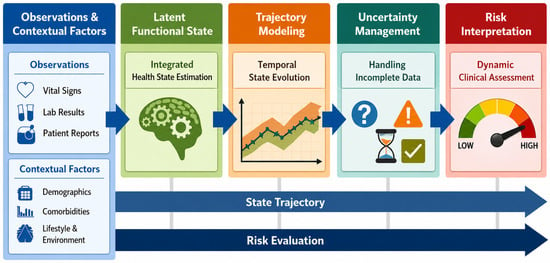
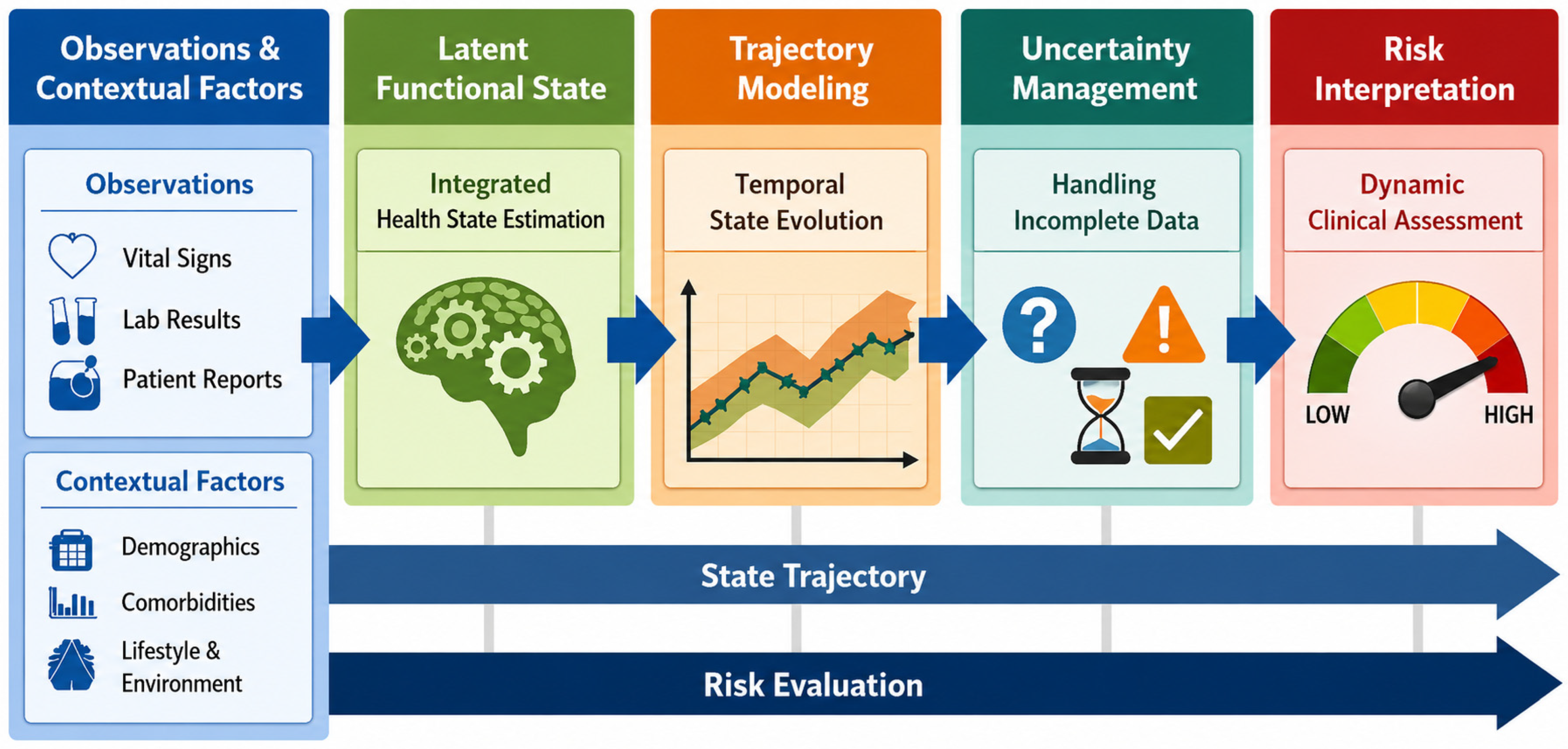
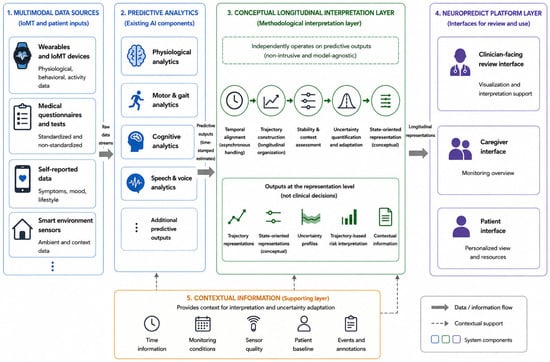
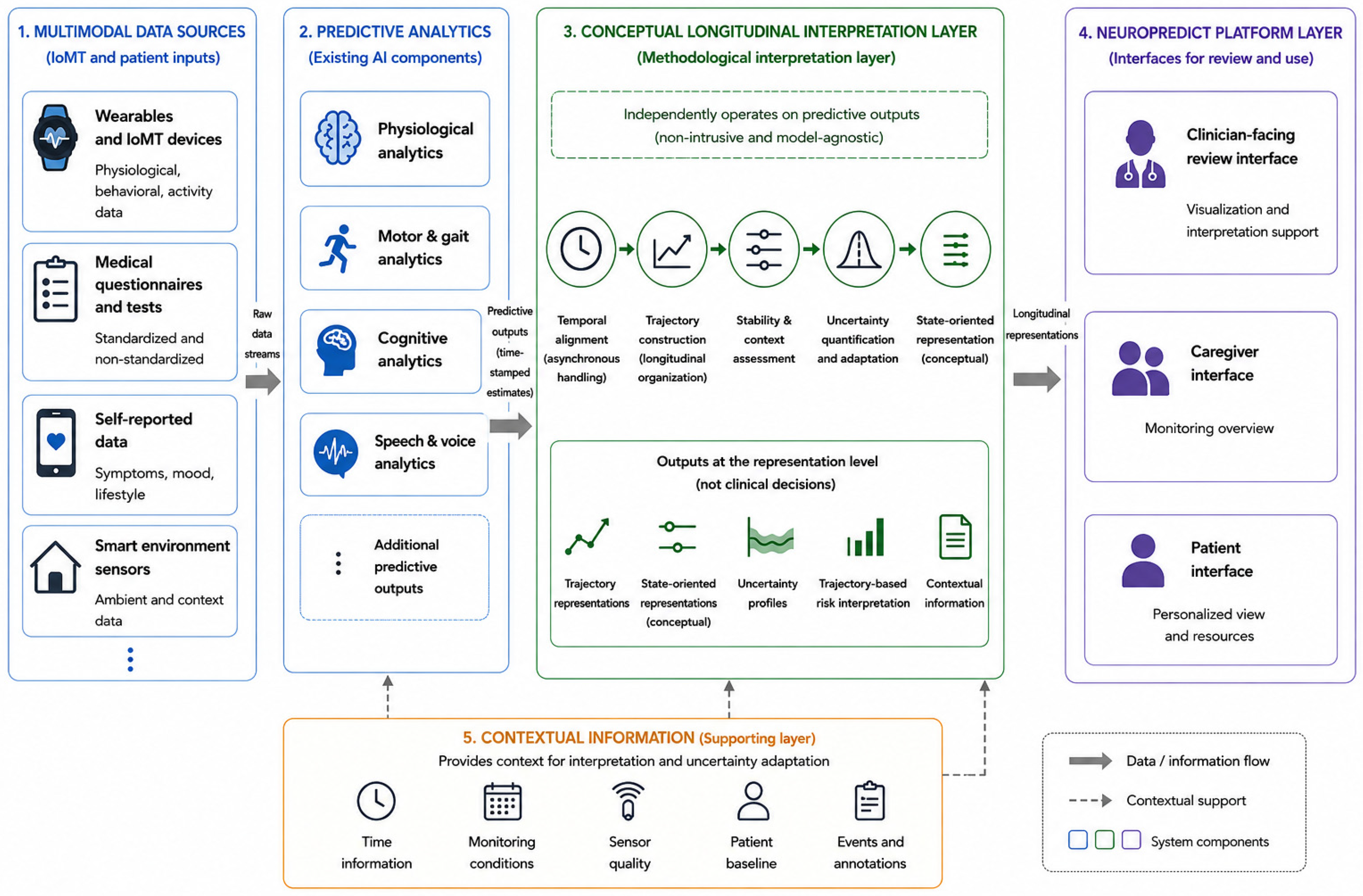
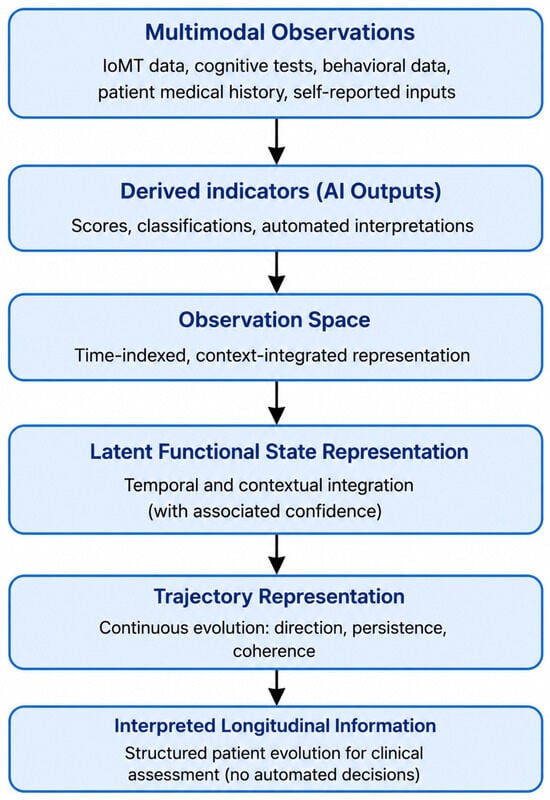
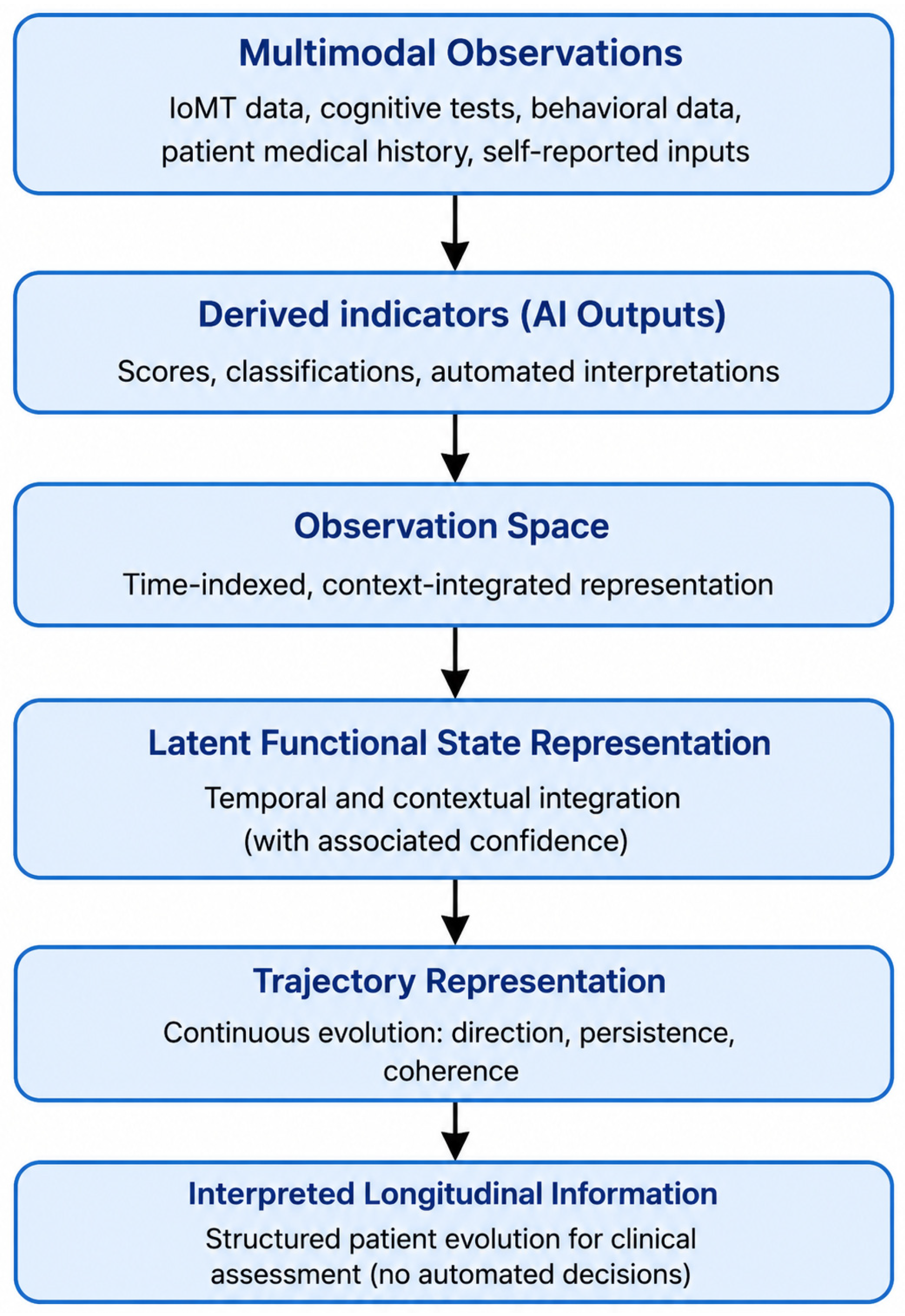
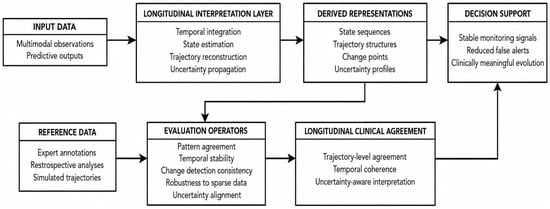
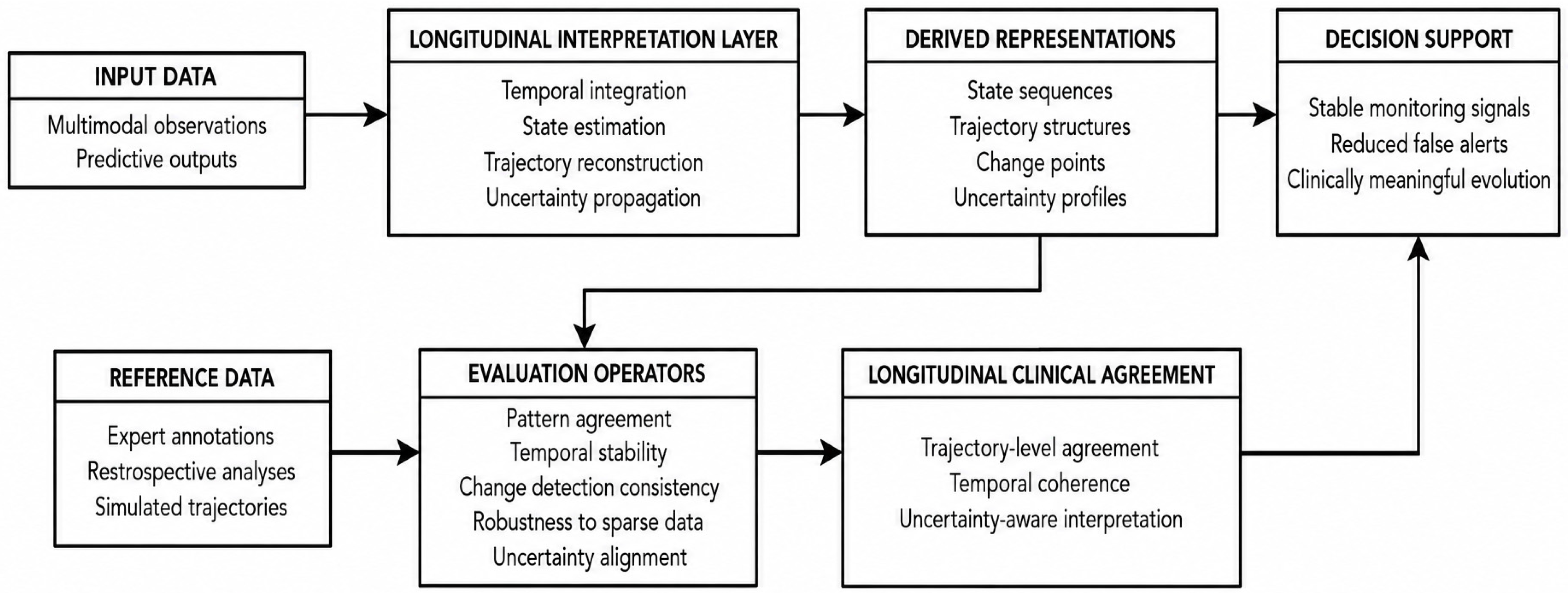
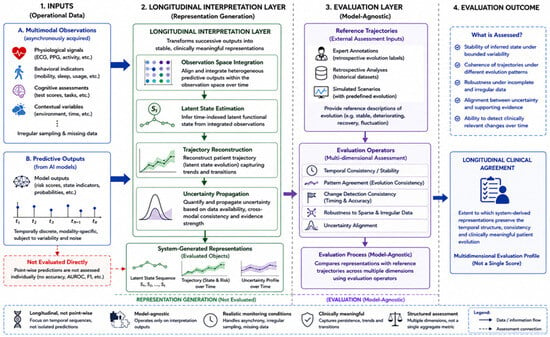
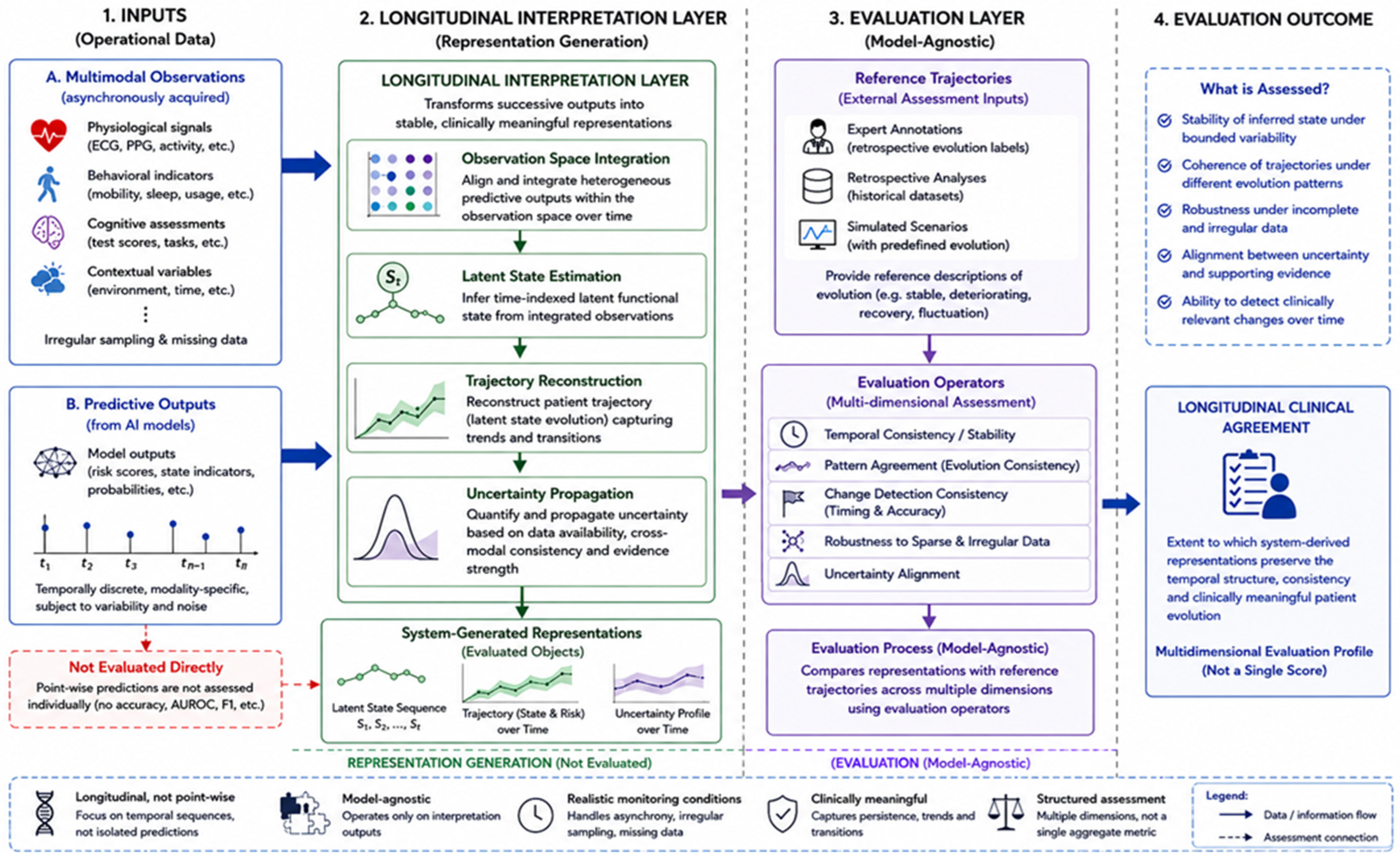

Disclaimer/Publisher’s Note: The statements, opinions and data contained in all publications are solely those of the individual author(s) and contributor(s) and not of MDPI and/or the editor(s). MDPI and/or the editor(s) disclaim responsibility for any injury to people or property resulting from any ideas, methods, instructions or products referred to in the content. |
© 2026 by the authors. Licensee MDPI, Basel, Switzerland. This article is an open access article distributed under the terms and conditions of the Creative Commons Attribution (CC BY) license.