


1. Introduction
Founded in 2013 and launched with its first issue published in 2014, Bioengineering has undergone tremendous changes over the years [1], including considerable growth in submissions and papers published, the establishment of sections in 2022, and a gradual drift away from its original scope as a biomedical-engineering-focused journal [2]. This editorial covers the recent changes made to clearly define the journal’s scope and that of its newly reorganized sections. These developments are intended to mitigate scope drift and address growth challenges [3].
Bioengineering is a broad, pervasive subject with overlapping interest in biomedical sciences and clinical practice. As a discipline, bioengineering is a crucial bridge that translates basic biomedical discoveries into practical, clinical solutions that improve patient care [4]. Bioengineering embodies three distinct engineering traditions that share overlapping but otherwise distinct scientific cultures, methodologies, standards of evidence, and expectations of what constitutes an engineering contribution:
- Engineering biological systems, e.g., purposeful manipulation of cells, biomolecules, genes, and metabolic pathways;
- Engineering systems at biological interfaces, e.g., bioelectronics, biosensors, biomaterials, implants, and devices for addressing clinical needs;
- Applying engineering to biological and medical problems, e.g., biomechanics, bioimaging, biosignal processing, rehabilitation, resuscitation, and clinical technologies.
To successfully embrace these three traditions, a journal requires a clear definition of and disciplined adherence to its central intellectual identity.
Bioengineering (ISSN 2306-5354) is an international, peer-reviewed, open-access journal dedicated to advancing the rigorous application of engineering principles to challenges in biology, medicine, and healthcare. The journal publishes high-quality original research, authoritative reviews, perspectives, and translational studies that span molecular, cellular, tissue, and system scales, with clear relevance to biomedical innovation and clinical impacts. There are no restrictions on the maximum length of the papers. Full experimental details must be provided so that the results can be reproduced. The journal is committed to structured application of scientific and mathematical principles to design, build, and optimize technology, structures, and systems. Emphasis is placed on quantitative analysis, modeling and simulation, design methodology, and experimental validation linking fundamental mechanisms to functional performance and translational outcomes.
The journal particularly welcomes interdisciplinary contributions that demonstrate engineering rigor, reproducibility, and scalability, along with studies enabled by advanced computation, data analytics, and artificial intelligence. By bridging foundational bioengineering science with translational and clinical relevance, Bioengineering seeks to serve as the premier forum for impactful biomedical engineering research worldwide. Submissions must, however, receive an affirming response to the threshold question “What is the engineering innovation, engineering methodology, or engineering knowledge advanced by this manuscript?”
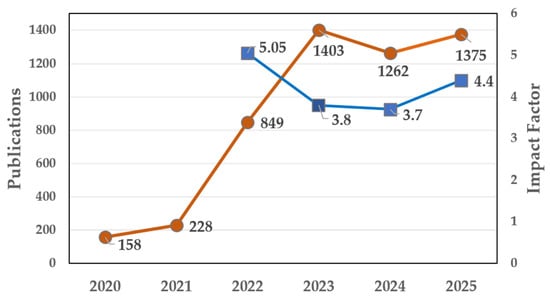
Figure 1 shows the growth in the number of peer-reviewed articles published from 2020 to 2025, showing the corresponding impact factor (first released in 2022) over the period.
Figure 1.
Trends in the number of peer-reviewed articles published (red) by and the impact factor (blue) (first issued in 2022) of Bioengineering from 2020 to 2025.
A journal’s IF reflects citations received in a given year for citable articles published in the prior two-year period. That is, it considers all citations received during the target year and determines how many of them point back to citable items published in the previous two years. Thus, a rapid increase in publications, which changes the denominator, can be expected to negatively impact a journal’s impact factor as it increases the denominator, exerting mathematical downward pressure on the IF metric—except, of course, if the journal’s citations increase at a proportional or faster rate. There is another consideration: “the dilution effect”. If the myriad papers added during the expansion period fail to garner as many citations as previous papers, they “dilute” the value of the highly cited papers that previously kept the journal’s IF high.
There are two additional consequences of rapid growth in publications: it becomes difficult to remain within the journal’s defined scope, and there will likely be an increase in the number of integrity issues that may lead to corrections or retractions.
2. Journal Definition and Scope
If one were to conduct a GAI evaluation of the scope of Bioengineering, one would learn that Bioengineering is a biomedical engineering journal in terms of its scope and intent, as it explicitly targets biomedical engineering topics, including biomaterials, biofabrication, biosensors, tissue engineering, and systems biology. On paper, it qualifies as a biomedical engineering journal. It does not function as a flagship or field-defining biomedical engineering journal. It (i) has very broad thematic boundaries, (ii) publishes work on topics ranging from basic biology to applied engineering, and (iii) often includes content that would be considered biomedical sciences rather than engineering-centric material (ChatGPT 6.0|10.2026).
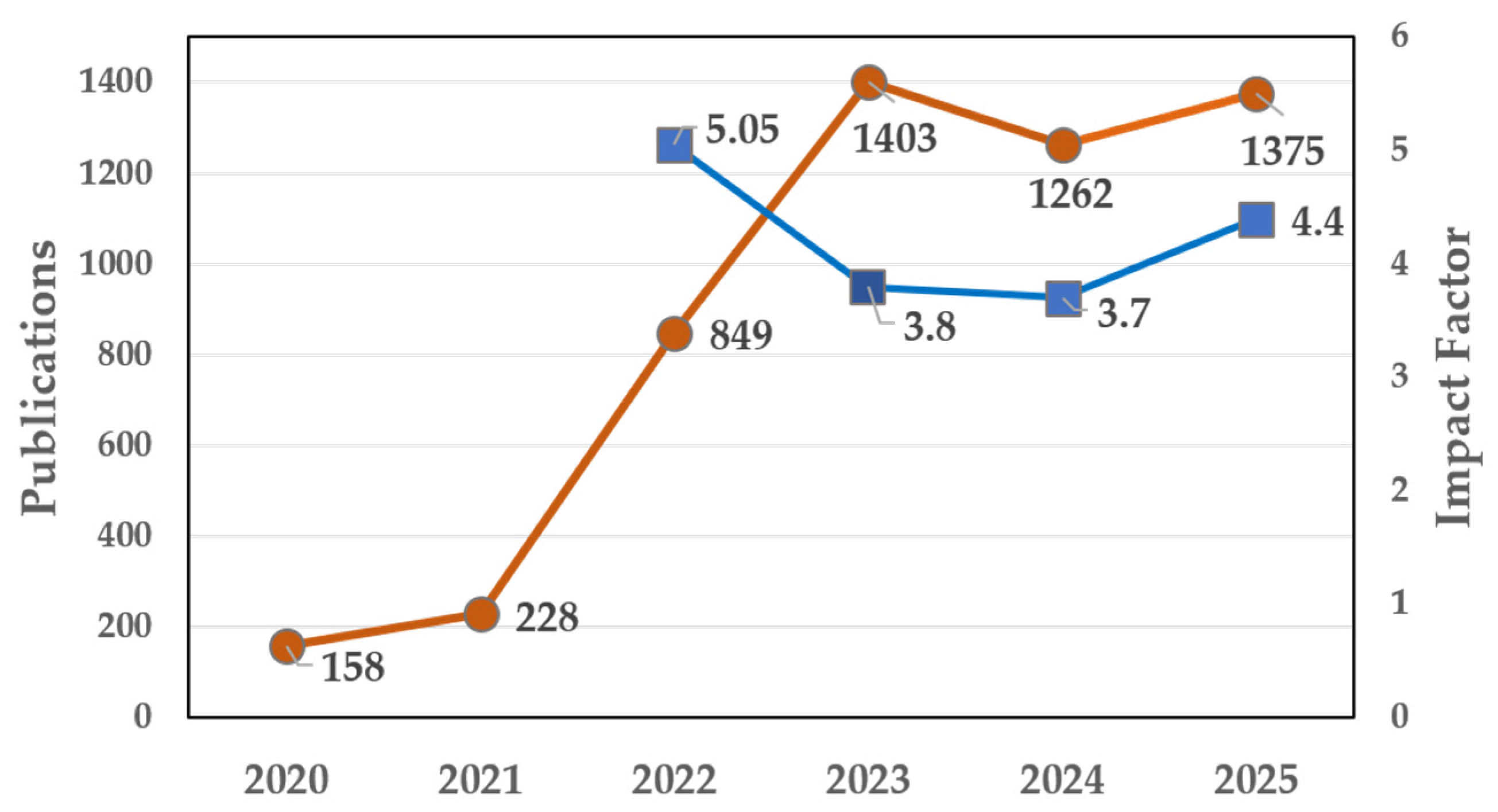
This reflects “scope drift”, that is, a gradual shift toward publication of articles outside a journal’s original technical focus, themes, or engineering sub-disciplines. To address this challenge, Bioengineering’s editorial leaders (the EiC, SEiC, and Advisory Board members) undertook a year-long review and revision of the journal’s scope and its various sections. Recognizing the potential problem regarding disciplinary identity, my 2024 anniversary editorial explicitly acknowledged the difficulty of maintaining scope as the journal expanded and cautioned against accepting submissions merely because they contain the word “bio” in their titles. I specifically identified quantitative biology, clinical medicine, epidemiology, and bioinformatics as example disciplines that should not be confused with bioengineering. One approach to addressing this challenge is to provide clear and unambiguous scope definitions, both for the journal and for its various sections. Figure 2 shows the agreed-upon changes to the names of some existing sections and expansion in the number of sections.
Figure 2.
Changes to the names of some sections and expansion in the number of sections.
Each section’s scope is defined below. Critically, each section is not a separate journal unto itself. Journal sections are components of the parent biomedical engineering journal and hence derive their section identify and scope from the parent journal. While each section may have a broad title, its domain of interest only consists of topics at the intersection (A ∩ B) with biomedical engineering.
2.1. Section: Trends in Bioengineering
The Trends in Bioengineering section publishes bioengineering research on emerging topics that are not suitably described by the scope of other sections. It specifically accommodates emerging topics such as biorobotics, bioelectronic devices and systems, organ-on-chip systems, human-specific microphysiological systems and organotypic platforms, closed-loop adaptive bioelectronic interfaces, multiplexed and multi-modal biosensors and systems, bioengineering for women’s health and health disparities, and emergent dynamics in biological systems.
2.2. Section: Regenerative Engineering
The Regenerative Engineering section publishes engineering-driven research on the restoration, replacement, and regeneration of tissues and organs. The scope spans tissue engineering, stem cell technologies, biomaterial scaffolds, biofabrication, and organoid and organ-on-chip systems, with emphasis on functional integration and clinical translation. Submissions integrating experimental and computational approaches to enabling scalable, patient-specific regenerative therapies are especially encouraged.
2.3. Section: Biochemical Engineering
The Biochemical Engineering section addresses the engineering of biological and biochemical processes for the production, transformation, and purification of therapeutically and clinically relevant products. The scope emphasizes quantitative design, optimization, and control of biologically mediated processes central to biomedicine. Contributions span molecular to process scales and emphasize robustness, scalability, and regulatory relevance.
2.4. Section: Bionanotechnology and Biofabrication
The Bionanotechnology and Biofabrication section focuses on nanoscale engineering and advanced manufacturing approaches for biomedical systems, devices, and therapies. Topics include nanomaterials for diagnostics and therapeutics, bio–nano interfaces, micro- and nanofabrication, and hierarchical biofabrication strategies. Emphasis is placed on precision control across length scales and biomedical application.
2.5. Section: Biosignal Processing
The Biosignal Processing section covers the acquisition, processing, modeling, and interpretation of biological signals and biomedical images for diagnosis, monitoring, and intervention. Research includes signal and image processing, sensing technologies, wearable and implantable systems, and AI-enabled biomedical analytics. Contributions should demonstrate clear relevance to healthcare, clinical decision support, or biomedical insight.
2.6. Section: Biomedical Biomaterials
The Biomedical Biomaterials section publishes research on the design, synthesis, characterization, and application of materials engineered for interaction with biological systems. Topics include polymers, ceramics, metals, composites, biointerfaces, and degradable systems for medical devices, implants, and therapies. Emphasis is placed on structure–property–function relationships, biocompatibility, and translational performance. The focus is on the intersection between materials science and biomedical applications, encompassing both fundamental knowledge and translational relevance.
2.7. Section: Cellular and Molecular Bioengineering
The Cellular and Molecular Bioengineering section publishes engineering-based studies on biological systems at the molecular and cellular scales. Topics include cell signaling, gene regulation, biomolecular engineering, cellular mechanics, and cell–material interactions. Emphasis is placed on quantitative methods, mechanistic insight, and translational relevance linking molecular phenomena to cellular function and biomedical outcomes.
2.8. Section: Engineering Biomechanics
The Engineering Biomechanics section focuses on the application of engineering mechanics and modeling to biological systems and human movement. Topics include tissue and musculoskeletal biomechanics, implant and device mechanics, computational biomechanics, rehabilitation engineering, and wearable biomechanical technologies. Contributions should emphasize quantitative analysis relevant to health, injury prevention, diagnosis, or therapy.
2.9. Section: Clinical–Applied Biomedical Engineering
The Clinical–Applied Biomedical Engineering section focuses on biomedical engineering, materials, devices, systems, and processes, in an applied or clinical context, emphasizing the “bench-to-bedside” framework. It bridges the gap between benchtop engineering and practical, real-world patient care or field deployment. Papers must show clinical relevance that articulates direct impacts on patient outcomes or healthcare systems, balancing advanced engineering data (design, properties, and performance) and accessible medical impact metrics.
Consequently, all Special Issues and their articles will be reorganized to align with the new section structure.
3. Research Integrity Matters
A rapid increase in the volume of papers published by an engineering journal typically leads to a commensurate increase in the number of research integrity cases. This correlation is driven by both statistical probability and systemic pressures within academic publishing [5]. The Committee on Publication Ethics (COPE) emphasizes that when academic integrity cases arise, immediate, collaborative intervention is required on the part of both academic editors and publishers [6]. Academic editors have their own professional integrity on the line, and publishers must manage enterprise risk, legal compliance, and whistleblower confidentiality. However, one does not override the other within the fundamental governance structure of peer-reviewed journals. In this regard, the relationship between independent academic editors and enterprise publishers is not hierarchal; rather, it is an operational partnership built on distinct, non-negotiable boundaries [7].
The Editor-in-Chief (EiC) and her designees—Associate Editors and Section EiCs—are ultimately responsible for the scientific integrity of the content published under their leadership, serving as guardians of the “editorial process”, including academic integrity matters. Accordingly, one can imagine the following:
- Case Logging: Access to a log detailing all active, pending, or closed research integrity inquiries related to Bioengineering will be required.
- Joint Preliminary Review: Following initial administrative and technical screening of complaints, any case deemed credible enough to be shared with the academic editorial leadership should be sent prior to initiating a formal investigation or contacting the authors.
- Concurrence on Editorial Actions: No formal editorial actions—including retractions, expressions of concern, or corrections—can be finalized or published without direct academic review and formal sign-off.
- Editorial Board Selection: Any ad hoc panels or editorial board members selected to review specific integrity cases should be appointed with the explicit concurrence of academic editorial leadership.
4. Summary
My editorial position is that Bioengineering has reached an important stage in its institutional and intellectual development, one that requires a deliberate reaffirmation of its identity as a biomedical engineering journal. As the discipline evolves and the journal expands, its future success must be founded not simply on publication growth but on scientific rigor, clearly defined disciplinary boundaries, engineering-centered scholarship, and a meaningful translational impact.
Bioengineering is fundamentally an integrative discipline that bridges the biomedical sciences and engineering practices, translating discoveries at the molecular, cellular, tissue, and systems levels into technologies, devices, processes, and solutions that advance healthcare. Accordingly, the journal must maintain a clear commitment to rigorous application of engineering principles, quantitative methods, modeling, simulation, experimental validation, reproducibility, and technological innovation. Artificial intelligence and advanced computational methods can provide important opportunities to accelerate this evolution, but their contributions must remain grounded in engineering science and demonstrable biomedical relevance.
The recent reorganization of the journal’s sections represents a purposeful response to the problem of scope drift. The expanded and more clearly differentiated section structure is intended to accommodate emerging areas of bioengineering while preserving the intellectual coherence of the parent journal. Each section must therefore be understood as an integral component of a unified biomedical engineering publication rather than as an independent disciplinary domain. This distinction is essential to maintaining the journal’s identity, editorial consistency, and scholarly value.
Equally important is the recognition that publication growth must be accompanied by commensurate attention to research quality and integrity. Increased publication volume can exert mathematical downward pressure on journal impact metrics and may dilute the influence of highly cited contributions. It also increases the likelihood of research integrity concerns requiring careful and timely intervention. The journal’s credibility depends on maintaining rigorous peer review, reproducibility, transparency, and accountability.
Finally, I maintain that the relationship between independent academic editorial leadership and the publishing enterprise must be characterized by an operational partnership founded on clearly delineated responsibilities. The Editor-in-Chief and delegated academic editors are ultimately responsible for the scientific integrity of published content and must retain meaningful authority in the handling and disposition of research integrity matters. Publisher participation and administrative oversight are essential, but they must respect the independence and professional accountability of academic editorial leadership.
Ultimately, the coming era of artificial intelligence presents an opportunity for Bioengineering to mature into a more focused, rigorous, and influential international forum for biomedical engineering. Its advancement should be measured not merely by the number of articles published or by impact metrics but by the quality of its engineering science, the integrity of its editorial processes, the reproducibility of its research, and its capacity to translate innovation into meaningful improvements in human health.
Funding
This research received no external funding.
Data Availability Statement
No new data were created or analyzed in this study. Data sharing is not applicable to this article.
Conflicts of Interest
The author Anthony Guiseppi-Elie was employed by the company ABTECH Scientific, Inc., a manufacturer of microfabricated electrodes, devices and systems used in biomedical diagnostics and the measurement of physiological data, and declares no conflicts of interest.
References
- Guiseppi-Elie, A. Welcome to Bioengineering: A New Open-Access Journal. Bioengineering 2014, 1, 18–21. [Google Scholar] [CrossRef] [Scilit]
- Guiseppi-Elie, A. Commemorative 10th Anniversary Issue of Bioengineering: Perspectives in Bioengineering. Bioengineering 2024, 11, 1137. [Google Scholar] [CrossRef] [Scilit] [PubMed]
- Armond, A.C.V.; Gordijn, B.; Lewis, J.; Hosseini, M.; Bodnár, J.K.; Holm, S.; Kakuk, P. A scoping review of the literature featuring research ethics and research integrity cases. BMC Med. Ethics 2021, 22, 50. [Google Scholar] [CrossRef] [Scilit] [PubMed]
- Voelcker, N.H.; Tay, A.; Chiappini, C.; Elnathan, R. The art and science of collaboration in bioengineering research. Nat. Rev. Bioeng. 2025, 3, 531–533. [Google Scholar] [CrossRef] [Scilit]
- Kamel, R.; Barghi, N.G. Paper Mills in Scholarly Publishing: A Systematic Review of Their Prevalence, Detection, and Impact on Research Integrity. Trends Sch. Publ. 2025, 4, 81–87. [Google Scholar] [CrossRef] [Scilit]
- Patel, J. Research misconduct. In Promoting Integrity in Scholarly Research and Its Publication; COPE: Eastleigh, UK, 2022. [Google Scholar]
- Caelleigh, A.S. Role of the journal editor in sustaining integrity in research. Acad. Med. 1993, 68, S23–S29. [Google Scholar] [CrossRef] [Scilit] [PubMed]
Disclaimer/Publisher’s Note: The statements, opinions and data contained in all publications are solely those of the individual author(s) and contributor(s) and not of MDPI and/or the editor(s). MDPI and/or the editor(s) disclaim responsibility for any injury to people or property resulting from any ideas, methods, instructions or products referred to in the content. |
© 2026 by the author. Licensee MDPI, Basel, Switzerland. This article is an open access article distributed under the terms and conditions of the Creative Commons Attribution (CC BY) license.