


Abstract
Oil-based drill cuttings (OBDC) are variable, multiphase wastes whose composition influences their treatment response and the quality of downstream products. This critical review compares major OBDC treatment and management routes using a material-stream framework. Published studies are examined for feed characteristics, treatment conditions and endpoints, recovered and residual streams, product quality, downstream uses, and evidence of industrial operation. Thermal and thermomechanical separation have the most extensive industrial record, including multi-year, multi-unit operations. Recent cyclone treatment adds a 69 h continuous industrial campaign, while solvent extraction, hydrothermal treatment, pyrolysis, plasma treatment, and biological processes are supported mainly by laboratory, bench, or limited field studies. The comparison shows that oil removal, material recovery, product qualification, and documented reuse describe different stages of waste management. Recovered oil requires assessment against its intended use, while treated solids need engineering and environmental qualification for the receiving application. Energy use, reagents, wastewater, off-gas, maintenance, storage, transport, and receiver capacity also affect industrial performance. The review identifies the operating and reporting evidence needed to compare technologies and supports integrated planning from feed handling through treatment, product acceptance, and final outlets.
1. Introduction
Oil-based mud (OBM) is commonly used in wells where wellbore stability, lubricity, temperature tolerance, and resistance to contamination are important. As drilled rock passes through the circulating system and surface solids-control equipment, some of the oil-continuous fluid remains on the cuttings. The discharged oil-based drill cuttings (OBDC) contain oil, water, drilled solids, salts, weighting materials, and other mud additives. These proportions vary with mud formulation, lithology, solids-control performance, and operating history. Feed composition therefore affects treatment behavior, recovered-product quality, and the amount of residue requiring further management [1,2].
OBDC management uses several processes, including mechanical separation, thermal and thermomechanical treatment, extraction and washing, thermochemical conversion, biological treatment, stabilization/solidification, and cuttings reinjection [1,2,3]. Separation can recover an oil-rich phase while leaving treated solids and water for further management. Conversion changes the organic fraction into liquid, gas, and solid products. Stabilization and reinjection provide ways to contain contaminants or place conditioned waste in a suitable subsurface formation. Treated solids may also enter cementitious, ceramic, aggregate, road, and other mineral-product applications. Water, condensates, off-gas, and secondary residues also need suitable handling and outlets [1,2].
Existing reviews cover the available treatment methods and their environmental implications. Hu et al. [1] summarized OBDC distribution, properties, treatment technologies, and resource utilization. Loss et al. [2] examined drill-cuttings characterization, environmental risk, treatment, valorization, and regulation. Liu et al. [3] reviewed treatment and disposal technologies, with attention to waste reduction, recycling, safety, monitoring, and centralized management. Yang et al. [4] surveyed shale-gas OBDC treatment and resource use, noting energy, operating-condition, and cost constraints for pyrolysis and advanced oxidation. Yu et al. [5] examined disposal and resource utilization in China and discussed the costs and incomplete standards associated with emerging routes. Kubeneck et al. [6] focused on thermal treatment, where scale-up experience and environmental and economic assessments remain uneven. These reviews establish a substantial body of evidence on treatment processes and resource recovery. Their findings also point to the value of comparing treatment endpoints, product qualification, and industrial operating records across technologies.
Comparisons across these studies depend on how performance and scale are reported. Residual oil, oil-on-cuttings, extractable hydrocarbons, total petroleum hydrocarbons, recovery yield, and recovered-product composition describe different aspects of the process. The analytical method and material basis need to be clear for each result. A further consideration is whether recovered oil and treated solids meet the requirements of their intended use. Many studies report treatment or recovery results with less information on product qualification. Laboratory tests, short continuous campaigns, and long-term field operations also provide different evidence about operating reliability. Feed variability, maintenance, storage, quality control, and logistics become especially important as a process moves toward sustained industrial use.
This review follows OBDC from feed characteristics through treatment, material recovery, product qualification, and downstream acceptance. It compares major management routes according to their process functions, reported endpoints, recovered and residual streams, and documented operating scale. Recovered oil and treated solids are examined against the needs of their intended receivers, including evidence of actual reuse. The analysis also considers energy and reagent demand, management of secondary streams, and the operating arrangements needed for continuous treatment. The resulting cross-technology synthesis connects unit performance with process-train operation and identifies priorities for laboratory research and industrial demonstration.
2. Scope and Comparison Basis
The scope centers on cuttings generated from oil-based or clearly identified oil-continuous drilling-fluid systems. Synthetic-based and other nonaqueous-fluid cuttings are included where their process behavior, treatment conditions, or field applications directly inform OBDC management. Water-based cuttings, spent whole mud, general drilling waste, and other oily wastes serve as comparators where they help explain a treatment mechanism, integrated field practice, regulatory requirement, or downstream outlet. The feed type is identified when evidence from related materials is discussed.
The comparison covers feed composition and variability, operating conditions, treatment function and endpoint, resource and reagent demand, secondary streams, recovered-product quality, reported operating scale, environmental and economic performance, and the final outlet for each major material stream. Quantitative results are compared where the reporting basis and operating conditions are sufficiently similar. Other differences are discussed qualitatively. Reported residual oil, oil-on-cuttings, extractable-hydrocarbon, and total petroleum hydrocarbon values retain the terminology and analytical basis of the source studies and are compared directly only when those bases are sufficiently aligned. Field reports also vary in duration and detail. Some provide treatment rates and residual oil values with limited information on equipment uptime, maintenance interruptions, off-spec material quantities, or full material balances. Differences in these records, along with feed composition and local regulatory requirements, make it difficult to compare treatment performance across facilities [1,2,6].
The review uses the following terms to describe the reported scale of each study. Laboratory scale denotes controlled batch or small-apparatus studies that establish mechanisms, formulations, or parameter effects. Bench scale denotes integrated or semi-continuous apparatus operated under controlled conditions but outside a field waste-management setting. Pilot/continuous prototype denotes continuous feed and product handling that allows equipment response and short-term operation to be assessed. Field/demonstration denotes operation with actual waste in a project setting, typically as a limited trial or demonstration. Industrial/full-scale denotes operation of full-size equipment within an operating waste-management system with reported actual throughput and integration with at least part of the surrounding handling or outlet chain. These descriptive categories reflect the range of laboratory, pilot, field, and industrial settings discussed in previous OBDC reviews [1,2,6]. Operating duration and cumulative treated mass are reported separately from scale because a short industrial campaign and a multi-year industrial operation provide different evidence of operating experience. The scale assigned to each route is based on the cited cases; a single full-scale deployment is not taken as evidence of widespread adoption.
3. OBDC as a Process Feed and Treatment Pathways
OBDC is a variable, multiphase granular feed. Rock fragments are coated and partly saturated with drilling fluid, while water, salts, weighting materials, fine solids, and additives are distributed through the retained liquid and pore space. Feed properties influence how readily a process can release recoverable liquid, transfer hydrocarbons into an extraction medium, convert the organic fraction, or condition the solids for containment. Figure 1 shows the relationships between the feed and its outlets and provides the material-stream framework used to organize Section 3, Section 4 and Section 5 [1,3,4].
Figure 1.
Process map linking OBDC feed characteristics to treatment functions, resulting streams, and potential outlets based on the evidence reviewed in Section 3, Section 4 and Section 5. The map follows oil, water, solids, gas or condensate, and secondary residues from feed conditioning through treatment and downstream management.
3.1. Process-Relevant Feed Characteristics and Variability
Oil, water, and solids content provide a basic description of OBDC and help explain its response to treatment. Retained oil sets the recoverable hydrocarbon inventory and influences adhesion between particles. Water increases the energy needed for thermal treatment because it must be heated and often vaporized along with the oil. The mineral fraction controls the mass of material that must be heated, mixed, conveyed, or ultimately managed after treatment. Thermal-treatment field records show that changes in oil, water, solids content, and feed consistency can alter throughput, energy demand, and material handling [7]. Life-cycle modeling of low-temperature thermal desorption also identifies feed oil and water contents as important determinants of process energy use [8].
Rheology and particle-scale structure also affect separation. Fine solids, weighting materials, drilled formation particles, and emulsified liquid can produce cohesive feeds that resist drainage and mechanical release of the retained oil. Ye et al. [9] showed this effect by adding calcium oxide to OBDC before low-temperature cyclone treatment. At an optimized dosage, the modifier reduced shear resistance and increased oil repellency, which promoted oil release during cyclone separation. This helps explain why two feeds with similar total oil contents can respond differently to the same separator. Particle size, porosity, surface chemistry, and the distribution of oil between free, surface-bound, and pore-held fractions affect the mechanical or thermal input needed for separation.
Base-fluid type and liquid content further affect heat and mass transfer. In a semi-continuous superheated-steam study, Chen et al. [10] treated diesel-based and white oil-based OBDC and found differences in removal behavior under comparable operating conditions, reflecting differences in feed composition. A thermal-desorption chamber simulation reached a similar conclusion. Higher feed liquid content or feed rate lowered chamber temperatures, while insufficient residence length increased the risk of low outlet temperatures and high residual oil [11]. These findings link feed characterization to equipment sizing and operating margins.
Salts, barite, and other weighting minerals, formation-derived metals, and residual additives also affect treatment and residue quality. They affect abrasion, solids loading, ash production, and treated-residue chemistry. Thermal treatment can also change particle size, carbonization, and surface properties, with much of the inorganic inventory remaining in the solid phase. Cyclone-treated cuttings studied by Wu et al. [12], for example, showed substantial changes in particle size and organic composition, and several metals remained concentrated in the treated solids. Table 1 summarizes the main feed variables and their engineering implications. Together, these variables inform process specifications and operating limits.
Table 1.
Process-relevant oil-based drill cuttings (OBDC) feed variables and their main engineering consequences for treatment.
3.2. Mechanical, Thermal, Cyclone, and Microwave Separation
Mechanical separation is usually the first step in reducing liquid retained on drilled solids. Shakers, centrifuges, and cuttings dryers remove fluid by screening, centrifugal force, or drainage. Their performance depends on particle size, rheology, and fluid retention. These operations reduce the load on downstream treatment and recover fluid while it still closely resembles the circulating mud. Residual oil associated with fine particles and internal pore space commonly requires a more intensive treatment step, which has driven the development of thermal and thermomechanical processes for deeper separation [1,6].
Low-temperature thermal desorption heats cuttings to release oil and water as vapor. The vapor is then condensed and separated into liquid phases. Equipment configurations include indirectly heated drums and screws, as well as friction-based thermomechanical systems. The process combines heat transfer through the granular feed with vapor transport and condensation. Friction-based treatment used for the Kashagan development operated at approximately 260–300 °C and recovered the volatilized oil and water as condensable streams [18]. Recent rotary thermal-desorption research has explored continuous treatment of shale-gas OBDC [19]. In a large, centralized project, thermal phase separation reduced residual oil in the treated solids to 0.1–0.2% and achieved an average base-oil recovery of 94.12% [13]. In each configuration, heating, vapor recovery, condensation, and solids handling must work together.
Cyclone oil desorption adds high-intensity particle motion to the thermal separation process. Wu et al. [20] used heated gas to reduce feed viscosity before introducing the cuttings into a cyclone, where rapid particle rotation and revolution promoted oil release. The vapor was condensed, and a coalescer separated the liquid phases. Pilot testing showed rapid reduction of residual oil under the reported operating conditions. Ye et al. [9] later combined rheology manipulation with low-temperature cyclone separation at about 280 °C. Under the reported conditions, treated cuttings contained less than 0.1 wt% oil, with recovery reaching 95%. Together, these studies show how feed conditioning and particle motion can accelerate oil release while allowing the vapor to be recovered by condensation.
Microwave treatment heats the liquid-bearing matrix through dielectric energy absorption. Robinson et al. [21] operated a continuous pilot system and reported throughput approaching 500 kg/h under selected conditions. Reaching a residual-oil endpoint near 1 wt% required roughly 70–100 kWh/t in the reported tests, while more severe treatment increased energy demand or reduced throughput. Tests with different liquid contents showed how changes in dielectric behavior affect the operating window. The pilot demonstrates continuous-processing potential and shows how residual-oil targets, throughput, energy use, and feed conditions interact.
Thermal, cyclone, and microwave routes share a separation objective but deliver heat and mechanical work in different ways. Their performance should be assessed alongside feed water and oil content, treatment severity, residence time, throughput, and recovered-liquid quality. Long-duration thermal deployments provide the strongest evidence for sustained operation, whereas microwave evidence remains pilot-scale and recent cyclone evidence includes both pilot work and one shorter industrial continuous campaign. The duration and detail of operating records also matter when comparing implementation at scale.
3.3. Solvent, Hydrothermal, and Chemical Extraction
Liquid-phase extraction uses chemical affinity and mass transfer to remove hydrocarbons from mineral surfaces into an extraction fluid. The main design variables include solvent polarity, viscosity, solid-to-liquid ratio, contact time, mixing intensity, temperature, and the method used to recover or regenerate the solvent. Extraction can operate at lower temperatures than thermal desorption. The process also needs to separate solvent-rich liquid from cleaned solids and manage the extracted oil and water.
Switchable solvents have been investigated to aid solvent recovery. Wang et al. [22] used a switchable hydrophilic solvent to extract and recover diesel from OBDC, using a reversible change in solvent affinity to separate hydrocarbons after extraction. Deep eutectic solvents provide another route for tuning polarity and interfacial behavior. Zhang et al. [23] used a hydrophilic deep eutectic solvent-based cleaning system at room temperature and reported substantial oil removal under an optimized solid-to-liquid ratio and contact time. Li et al. [24] screened 25 hydrophobic deep eutectic solvents and identified a lauric acid–thymol system that reduced total petroleum hydrocarbons from 14.75 to 0.87 wt% at a recommended solvent-to-OBDC mass ratio of 10:1. Performance declined with repeated solvent reuse. The study linked this decline to residual ethanol and solvent losses. Tong et al. [25] developed a pH-switchable hydrophobic deep eutectic solvent; oil removal decreased from 98.41% to 87.04% and solvent recovery from 88.89% to 72.13% between the first and fourth cycles. These laboratory studies report high extraction efficiencies. Solvent use, replacement, regeneration, washing, and performance over repeated cycles remain important process demands.
Hydrothermal and steam-assisted processes use hot water or steam as both heat-transfer medium and extraction environment. Chen et al. [10] evaluated superheated steam in a semi-continuous laboratory apparatus over approximately 175–225 °C and 0.6–5.5 MPa. Temperature had the strongest effect among the variables tested, and both OBDC feeds showed substantial organic removal. Diesel-based and white oil-based cuttings responded differently, highlighting the effect of feed composition. The steam/subcritical-water route uses no conventional organic extraction solvent. It still requires pressure containment, heating, water handling, and downstream phase separation.
Chemical washing and oxidation remove hydrocarbons through surfactant-assisted release or chemical degradation. Chen et al. [26] produced a biosurfactant from kitchen waste oil and applied it to OBDC washing, while Yan et al. [27] reduced residual oil to 1.64% after two washing cycles under optimized laboratory conditions. Zhao et al. [28] assessed surfactants by treatment efficiency, environmental attributes, cost, and estimated carbon emissions. The selected surfactant achieved about 51.56% oil removal. The carbon assessment ended after waste liquid and sludge separation. Further treatment and disposal of these streams fell outside its system boundary. Chen et al. [29] compared Fe2+/H2O2, Fe2+/PMS, and Fe2+/PDS in 5-g laboratory batches at a 10:1 liquid-to-solid ratio. Under optimized conditions and reaction times up to 300 min, total petroleum hydrocarbon removal reached about 43–45%. The systems differed in pH sensitivity and degradation behavior. Each required oxidant, Fe2+, liquid handling, and post-reaction separation. These results help define full-process requirements beyond the laboratory reaction. Reagent use, aqueous residues, downstream treatment, and the chosen system boundary all affect performance.
3.4. Pyrolysis and Other Conversion Routes
Pyrolysis treats the retained organic fraction as a conversion feed. Heating under oxygen-free conditions, usually in an inert atmosphere, breaks down hydrocarbons and organic additives into condensable vapors, noncondensable gases, and carbon-bearing solid residues. Temperature, heating rate, vapor residence time, mineral composition, and catalyst selection influence both conversion and product distribution. Desorption recovers volatilized oil, whereas pyrolysis converts the organic phase into chemically different products.
The mineral matrix participates in this conversion. Duan et al. [30] separated the oil and solids from OBDC and compared their thermal behavior using thermogravimetric analysis coupled with Fourier transform infrared spectroscopy. Reaction kinetics differed between the cuttings matrix and isolated oil. The authors attributed some of this difference to reaction sites on the solids. Methane, carbon monoxide, carbon dioxide, water, aldehydes, and organic acids were among the observed volatile products over the tested temperature range. Thus, mineral–organic interactions and base-oil volatility both influence pyrolysis behavior.
Recent work has examined co-pyrolysis, catalytic conversion, and slow pyrolysis to alter product composition and stabilize residual solids. Lv et al. [31] examined co-pyrolysis of OBDC with pinewood sawdust and reported synergistic effects in the thermal behavior, supported by kinetic and empirical modeling. Vichaphund et al. [32] used waste-derived ZSM-5 and CaO catalysts during fast pyrolysis of onshore OBDC and observed shifts toward lighter hydrocarbon fractions together with lower proportions of oxygen- and nitrogen-containing products under selected conditions. Reyes-Urrutia et al. [33] studied OBDC from the Vaca Muerta region in a fixed-bed reactor at 400–650 °C and reduced residual total petroleum hydrocarbons to below 1 wt% at temperatures of 400 °C and above while producing a condensed organic liquid fraction. These findings link temperature, co-feed choice, and catalysts to hydrocarbon conversion and product distribution. Process assessment must also cover catalyst preparation and recovery, gas handling, liquid quality, and the environmental performance of residual solids.
At high temperatures, plasma treatment destroys organic matter and may melt the mineral fraction. Zhou et al. [34] reported a vitrified slag with an average glass-phase content of 98.60% and low Pb and Zn leaching in the tested product. Hu et al. [35] evaluated a skid-mounted prototype designed for up to about 0.8 kg/min and reported substantial mass, volume, and total organic reductions over treatment periods of 0.5–3 min. These laboratory and small-prototype studies show extensive organic destruction and immobilization. Sustained industrial throughput remains to be demonstrated. Scale-up studies need to address electricity demand, reactor and refractory durability, off-gas treatment, slag handling, and product qualification.
3.5. Biological Treatment, Stabilization/Solidification, and Reinjection
Biological treatment uses microorganisms to degrade accessible hydrocarbons over relatively long periods. Its effectiveness depends on conditions that support microbial activity. Moisture, nutrients, salinity, hydrocarbon concentration, oxygen transfer, and contaminant bioavailability all influence the treatment rate. Babaei et al. [36] used OBDC collected at a drilling rig in controlled co-composting experiments and reported up to 67.5% total petroleum hydrocarbon removal after 70 days with 15% bagasse. The result supports biological remediation under suitable conditions, with field operating performance still requiring evaluation. Broader reviews describe field-oriented remediation [1,4]. Long residence times and sensitivity to site conditions distinguish these approaches from high-throughput separation.
Stabilization/solidification uses binders to reduce contaminant mobility and produce a mechanically stable solid. Cement, pozzolanic materials, lime, and sodium silicate can act through encapsulation, pore refinement, precipitation, and chemical binding. Leonard and Stegemann [37,38] established the treatment and leaching behavior of cementitious stabilization systems for petroleum drill cuttings. Later OBDC studies examined pretreated cuttings in concrete matrices and field-aged stabilized material [39,40]. Binder formulation, residual hydrocarbons, salts, and metal speciation all influence the resulting solid. These factors are particularly important when the stabilized product has a specified end use.
Cuttings reinjection (CRI) manages waste through subsurface placement. Cuttings are size-reduced and mixed with carrier fluid to form a pumpable slurry. The slurry is injected into a suitable subsurface interval through a dedicated well, annulus, or other approved injection path. Early feasibility work for the Heidrun development evaluated slurry composition, rheology, friction loss, and leakoff under conditions relevant to fracture injection [41]. A later natural-OBM field case reported successful reinjection during a multi-well drilling program with little downtime attributed to the injection process [42]. Key considerations include slurry rheology, particle-size control, pump reliability, fracture containment, injection capacity, and geological suitability.
These processes handle waste in different ways. Separation routes partition oil, water, and solids; extraction routes transfer hydrocarbons into another fluid; conversion processes alter the organic fraction; stabilization immobilizes contaminants; and reinjection transfers conditioned waste to a controlled subsurface destination. Removal percentages alone provide a limited basis for comparing them. Table 2 therefore compares treatment endpoints alongside analytical basis, process demands, output streams, and operating scale.
Table 2.
Comparison of major OBDC management pathways by process function, operating basis, outputs, endpoints, engineering considerations, and reported scale/operating context.
4. Resource Recovery, Product Qualification, and Valorization
The treatments discussed in Section 3 produce streams with different opportunities for reuse. Oil may be separated with much of its original hydrocarbon character intact, or it may be transformed into a broader condensate during thermochemical conversion. The solid fraction can remain close to the original mineral matrix, become a stabilized composite, or undergo substantial thermal and mineralogical change. Water and gaseous streams also carry part of the original contaminant inventory. Tracking these streams after treatment shows which materials enter productive use and which require further management. In this review, outlet closure means that a recovered or treated stream reaches a defined, qualified use or controlled destination.
Figure 2 presents product and outlet status alongside the reported operating scale and record of each treatment route. Panel (A) follows recovered oil from separation and recovery through qualification to documented reuse and treated solids from incorporation through engineering and environmental assessment to longer-term or field application. Panel (B) locates the main treatment families within the scale categories defined in Section 2. Positions reflect documented operating experience without assigning technology-readiness scores.
Figure 2.
Product/outlet closure and reported implementation scale and operating record in OBDC management. (A) Recovered oil is followed from separation and recovery through fit-for-purpose qualification to documented drilling-fluid reuse, while treated solids are followed from incorporation through engineering and environmental qualification to longer-term or field/receiver application. (B) Treatment routes are positioned by the operating scale documented in the cited studies. The positions do not imply equivalent commercial maturity, deployment duration, or adoption across technologies.
4.1. Oil Phase: From Recovery to Qualified Reuse
Recovering oil can provide substantial value because hydrocarbons are often among the most valuable components of OBDC. Separation efficiency gives only part of the picture. A process may reduce oil on the treated solids to a low level while recovering a liquid whose composition, volatility, odor, flash point, or contaminant content limits its subsequent use. This matters particularly in thermal treatment, where temperature and residence time may change the composition of recovered oil.
Industrial studies illustrate recovery and initial product characterization. Ye et al. [9] reported oil recovery of up to 95% during low-temperature cyclone treatment, with a recovered hydrocarbon fraction dominated by C11–C27 alkanes and a heating value comparable with diesel. The reported quality data mainly support possible use as a fuel. Zhou et al. [13] reported an average base-oil recovery of 94.12% from a large thermal phase-separation project and characterized the recovered light oil stream at the plant level. Both cases demonstrate high industrial recovery rates. The intended use of the recovered liquid remains important when interpreting these figures.
Reuse in drilling fluid requires further checks on recovered-oil quality. Base-fluid chemistry can change before treatment through aging, contact with formation fluids, and accumulation of drilling-fluid additives. Thermal treatment can cause further changes. Fang et al. [14] screened a range of commercial base oils and found appreciable differences in their response to thermal treatment. Several oils retained suitable characteristics at lower desorption temperatures, while others were more prone to degradation. The results connect base-oil selection and desorption temperature with energy requirements and reuse potential.
Kleppe et al. [15] evaluated recovered oil for drilling fluid reuse. They compared it with the oil entering treatment, which may already differ from virgin base oil after circulation and contamination. Their evaluation covered distillation behavior, flash point, composition, and drilling fluid performance against the relevant reuse requirements. Wait and Thomas [48] likewise found no evidence of bulk base-oil cracking under the studied low-temperature desorption conditions, but low-level compositional and odor-related changes were detected, including dimethyl disulfide in a recovered synthetic oil and trace aromatic/VOC differences in the mineral oil case. Conditioning was used where odor could affect reuse. These findings support checking recovered oil against the specifications of its intended use.
Field reuse records show how recovered oil quality connects to an actual outlet. Pond et al. [45] reported recovery and return of base oil to the drilling fluid system during field deployment of a thermomechanical cuttings-cleaning process. Li et al. [46] described a field leaching and resource-utilization plant in the Tarim Basin and identified preparation of OBM as an outlet for the recovered oil components. A more recent offshore Abu Dhabi case reported recovery of base oil for reuse in drilling operations after thermal treatment near the wellsite [49]. In these cases, reuse depended on separation performance, oil quality, handling, and acceptance by the receiving fluid system. The strongest reuse evidence also describes the receiving operation.
Recovered oil may also be used outside the drilling-fluid system. Recovered hydrocarbons with suitable calorific value may serve as fuel or enter another permitted hydrocarbon outlet, and some field operations report sale or external use of recovered liquids. These outlets may have different quality requirements from drilling fluid reuse. The studies distinguish recovery yield, chemical characterization, qualification for a specific use, and documented reuse. Table 3 separates these stages and records the stated outlet for each representative case.
Table 3.
Representative product and outlet status for recovered oil and treated OBDC solids.
4.2. Solid Phase: Bulk Valorization and Product Qualification
After oil and water removal, solids typically account for most of the remaining mass. Their destination therefore strongly affects the overall material balance. Mineral composition, residual hydrocarbons, salts, heavy metals, particle size, and thermal history determine whether the material can enter a construction or mineral-processing route. High-volume applications include clinker and cement production, aggregate and subgrade materials, asphalt, bricks, and ceramics. Each route has its own compositional and environmental requirements.
Cement and clinker production can use the mineral fraction of treated cuttings as a supplementary raw material. Al-Dhamri et al. [50] evaluated oil-based mud cuttings as an additional clinker feed and demonstrated that the cuttings material could contribute mineral components to the raw meal under controlled incorporation. More recent work has focused on pyrolysis residues and lower-cement binder systems. Liu et al. [55] incorporated oil-based drilling-cuttings pyrolysis residue into clinker and blended cement and reported formulations that met the tested physical, mechanical, chemical, and environmental requirements. Ziane et al. [16] evaluated blended binders containing metakaolin and other mineral additions for real onshore OBDC and reported improved compressive strength together with reduced TPH and chloride leaching over the tested curing periods. These studies show how residues can enter high-volume mineral products when performance and contaminant-control requirements are addressed together.
Road construction offers another potential outlet for large quantities of solids. Cui et al. [51] incorporated OBDC into asphalt surface mixtures at up to 4.8 wt% in the tested formulations. Marshall stability, flexural strain, and dynamic stability met the cited highway specification, and the study followed Ba, Mn, Pb, and Zn release over 64 days. The cumulative leaching of the four monitored metals approached equilibrium within the 64-day test, while long-term modeling identified Ba, Pb, and Zn as elements requiring continued attention. This study assesses both pavement performance and changes in contaminant release over time.
Asadi Azadgoleh et al. [52] extended this type of assessment by combining OBDC with reclaimed asphalt pavement and fly-ash geopolymer in cold central plant recycled pavement mixtures. Their evaluation included viscoelastic performance, toxicity-characteristic leaching, life-cycle assessment, life-cycle cost analysis, and multicriteria comparison. The reported pavement systems reduced several environmental burdens and costs relative to the reference case under the stated system assumptions. The assessment accounts for product performance and the potential displacement of virgin construction materials.
High-temperature ceramic and sintering processes can use mineral residues. Studies of ceramsite, foamed ceramics, glass-ceramics, and bricks report changes in strength, density, phase development, and metal immobilization, while long-term leaching and kiln-emission assessments identify metal release and aromatic or dioxin-related emissions as relevant boundaries [17,56,57,58,59]. Their practical use depends on feed composition, product specifications, manufacturing emissions, and receiver capacity.
Thermal treatment can change the properties relevant to solid-product qualification. Hu et al. [60] found that low-temperature thermal desorption at 300 °C for more than 20 min removed 96.27% of polycyclic aromatic hydrocarbons (PAHs) in the studied OBDC, while heavy metal removal was limited and the treated residue remained relevant to the subsequent health-risk assessment. Xie et al. [61] examined PAH leaching from oil-based shale-gas drilling-cuttings residues and found that cumulative release of individual PAHs represented about 1.50–3.20% of their total contents during column tests. The release mechanism shifted from initial surface wash-off toward diffusion. These findings support evaluating contaminant levels and leaching behavior for the intended solid outlet, even after substantial hydrocarbon removal.
Mechanical and environmental results may differ for the same product. Araka et al. [40] provide a clear example. Cement-based stabilization/solidification of pretreated OBDC produced grade-20 concrete with adequate unconfined compressive strength at the best-performing formulation. The average residual total petroleum hydrocarbon concentration in the solidified matrix remained slightly above the local regulatory target used by the authors. The formulation met the mechanical target, while residual hydrocarbons remained a constraint. Such findings help identify what must be improved before a product can be qualified.
Aged samples and longer-duration tests provide complementary evidence on contaminant release. Lounas et al. [39] assessed leaching from OBDC solids stabilized approximately 10 years earlier, while Xie et al. [61] showed that PAH release from drilling-cuttings residues can shift from initial surface wash-off toward diffusion during column leaching. Cui et al. [51] likewise followed metal release for 64 days in an asphalt product. Most published tests cover much shorter periods. Long-term qualification would benefit from more extended strength, aging, and leaching data.
Field-use cases link product qualification with an actual application. A Thailand pilot incorporated synthetic-based mud drill cuttings into a 1.2 km asphalt road after material characterization, laboratory mix design, regulatory consultation, and environmental monitoring around the completed road [53]. The synthetic-based feed makes this case a relevant engineering comparator for outlet qualification. Kazamias and Zorpas [54] developed a related End-of-Waste approach for thermomechanically treated oil-based cuttings, using a quality protocol to define conditions for use as aggregate, construction material, or cement raw material. These cases also show the importance of environmental qualification, regulatory acceptance, receiver requirements, and monitoring in bringing a product into use. Table 3 summarizes representative product-qualification and outlet evidence.
4.3. Water, Gas, Condensates, and Secondary Residues
OBDC studies commonly focus on oil and treated solids. Separation and conversion also produce other material streams. Thermal desorption commonly produces condensed water together with recovered hydrocarbons. Pyrolysis adds noncondensable gas and a chemically altered residue, while washing and extraction generate aqueous or solvent-rich phases that require recovery or further treatment. Their quality and final destinations are part of the treatment outcome.
Field thermal-treatment systems illustrate the need to treat and manage recovered water. Segret et al. [62] described a centralized drilling waste facility in the Mahakam Delta that processed oily cuttings and oily water and recovered base oil for reuse. The facility included water treatment within the same process train, and the treated water was monitored before its subsequent outlet. Pond et al. [45] likewise treated oil, water, and solids as distinct outputs of thermomechanical processing. In an integrated offshore Abu Dhabi case covering OBM drilling waste, recovered oil and water were reused on site and the treated solids were conditioned for cuttings reinjection [47]. These examples show the value of defining an outlet for every major stream. In solvent extraction and washing, this includes aqueous streams containing salts, surfactants, fine solids, and mobilized hydrocarbons.
Condensate composition affects the quality of recovered oil. Volatile aromatic compounds, light fractions, and odor-causing species may partition differently from the main base-oil fraction during heating and staged condensation. Kleppe et al. [15] discussed these changes in the context of recovered oil quality, while field thermal-treatment studies have used condensation and downstream liquid separation to control the recovered product. More severe pyrolysis can shift carbon among condensable oil, gas, and coke. Liu et al. [63] reported temperature-dependent changes in gas, liquid, and solid yields and observed enrichment or retention of several metals in the coke fraction. The residue can provide mineral value while retaining part of the inorganic inventory.
Secondary streams require particular attention when a process uses solvents, oxidants, binders, or wash water. Solvent-based extraction depends on solvent recovery and recycle to limit make-up demand and residual solvent in the products. Chemical washing and advanced oxidation shift part of the hydrocarbon load into liquid phases and reaction products, creating a wastewater treatment requirement. Sintering and co-processing can move part of the organic or inorganic inventory into flue gas or captured air pollution-control residues. A useful material balance includes reagent recovery, wastewater disposal or reuse, gas treatment, final residues, and treated solids. These data also support environmental and resource comparisons.
4.4. Qualification and Outlet Acceptance Across Material Streams
An outlet is viable when a receiver can accept the material. For recovered oil, the receiver may be the drilling-fluid system or another permitted hydrocarbon use. For solids, the receiver may be a cement plant, road contractor, aggregate producer, brick or ceramic facility, landfill, or reinjection operation. Acceptance depends on the receiver’s requirements for composition, mechanical properties, environmental behavior, handling, and regulation.
Identifying potential receivers early can guide product development. Page et al. [44] evaluated a wide range of drill-cuttings recycling options using environmental, technical, logistical, liability, cost, and market considerations. Their approach remains relevant because material suitability, receiver capacity, and variation in output all affect outlet selection. Recent field projects also show how regulation shapes outlet selection. Wattana et al. [64] described how waste classification, material characterization, environmental impact assessment, monitoring design, and regulator engagement were developed alongside the technical road-use pilot. Khan et al. [65] reported a comparable receiver-oriented evaluation for co-processing nonaqueous-fluid cuttings in cement manufacture, with the cement route selected in the context of projected waste volumes and available treatment capacity.
The intended use determines what testing is needed. A hydrocarbon returned to an OBM formulation requires compatibility with drilling fluid performance and health, safety, and handling criteria. A road or aggregate material requires mechanical properties, leaching behavior, and durability suited to the exposure environment. Cement-plant feed must meet raw-meal chemistry, process, and emission-control requirements. Kazamias and Zorpas [54] formalized this logic through a quality protocol for treated oil-based cuttings, connecting material characterization with End-of-Waste criteria and specified civil-engineering uses.
Outlet continuity refers to a receiver’s ability to accept a treated or recovered stream at the required quality and rate throughout the operating period. A technically qualified product can still accumulate if receiver capacity, transport, permitting, or temporary quality variation interrupts acceptance. Downstream planning therefore includes buffer storage, reconditioning or blending, retreatment, alternative outlets, and controlled disposal.
Published evidence is generally less detailed on sustained receiver acceptance than on treatment endpoints. Recovered oil has several documented examples of fit-for-purpose testing and field reuse, whereas many solid-use studies stop at laboratory product performance or limited-duration environmental testing. Material recovery creates a potential product. Qualification, receiving capacity, and continued acceptance determine whether it becomes a practical outlet.
5. Scale-Up and Industrial Implementation
At field scale, performance depends on how waste is received, stored, transferred, treated, and delivered to an outlet. Drilling activity and solids-control performance affect waste delivery and fluid content. The treatment unit must therefore work with the wider handling system. The most extensive field and industrial operating records are reported for thermal and thermomechanical separation, with additional records for cyclone treatment, cuttings reinjection, and integrated waste-management systems.
5.1. Reported Implementation Scale and Industrial Deployment
OBDC treatment routes have very different levels of reported operating experience. Solvent extraction, chemical washing, hydrothermal treatment, biological treatment, and many thermochemical conversion studies remain concentrated at laboratory or bench scale. Pilot and continuous prototype studies add information on feed delivery, residence time, equipment response, and short-duration operation. Field demonstrations place the technology in an actual project setting, while industrial/full-scale evidence documents full-size operation and actual throughput within an operating waste-management system. Operating duration, total treated mass, maintenance history, and number of deployments provide further detail beyond the scale label. The categories follow the definitions in Section 2 and describe reported scale rather than a formal technology-readiness score.
Thermal separation has the longest record of industrial deployment among the major OBDC treatment routes. Pierce et al. [7] summarized approximately a decade of operation from nine thermal-treatment units that had processed more than 500,000 t of oil-based drill cuttings. Antle et al. [66] reported field implementations of thermal phase separation for oil- and synthetic-based cuttings and drilling fluid waste, while Pond et al. [45] documented long-duration thermomechanical treatment within an integrated field service. These records cover feed handling, product recovery, maintenance, operating continuity, and treatment performance.
Recent studies add operating evidence from different scales and durations. Zhou et al. [13] described a centralized full-scale thermal phase-separation project, whereas Ye et al. [9] reported a 69 h industrial continuous low-temperature cyclone campaign in which treatment performance, energy use, cost, and recovered oil quality were measured together. The Ye campaign documents continuous industrial operation. Pierce et al. [7] provide a broader record from multiple units over approximately a decade. Figure 2 presents these differences in reported scale and operating context.
The information available also changes with operating scale. Laboratory studies usually report treatment efficiency, product yield, or contaminant concentration. Pilot and field studies can reveal feed-delivery constraints and transient equipment behavior, while longer industrial records add uptime, maintenance, storage, utility demand, product transfer, quality control, and coordination with drilling operations. Reporting duration, cumulative treated mass, and process-train integration helps make these records more comparable.
5.2. Throughput, Continuous Operation, Feed Variability, and Uptime
Nameplate capacity supports initial equipment sizing. Field performance depends on sustained throughput with the actual waste feed. Oil, water, and solids fractions influence heat duty and material handling in thermal systems. Particle-size distribution, agglomeration, viscosity, and the amount of free liquid can affect feeding and separation in other processes. Pierce et al. [7] identified feed consistency as an important factor in thermal treatment reliability and noted the strong energy penalty associated with vaporizing water. Treatment rate can therefore change with feed conditions even when the equipment is unchanged.
Continuous operating records help assess performance at scale. Ye et al. [9] processed 83.49 t during a 69 h industrial campaign and maintained residual oil below 0.1 wt% under the reported conditions. Zhou et al. [13] documented a much larger centralized installation with three nominally similar treatment lines and plant-level handling of recovered oil, water, and treated residue. Pond et al. [45] described the evolution of thermomechanical treatment capacity from approximately 0.75 t/h to 10 t/h as equipment and field deployment matured. These cases cover short trials, extended campaigns, and large centralized operations.
Waste generation and feed condition vary with drilling activity, circulating-fluid condition, and solids-control performance. Thermal treatment capacity can also fall when wet feed requires more energy per unit mass. Practical capacity should be assessed alongside feed conditions and operating duration, using actual throughput where available [7,43].
Maintenance and equipment availability also affect operation. Redundancy can protect the treatment train when one unit is unavailable. Segret et al. [62], for example, described a centralized Mahakam Delta facility with two cuttings-treatment trains rated at 120 t/day each, together with storage and quality-control systems. This arrangement helps the facility accommodate changes in loading and equipment availability. The value of redundancy increases where transport windows are limited or where untreated material cannot remain at the rig for long periods.
5.3. Storage, Logistics, and Treatment-Load Buffering
Storage buffers accommodate mismatches between waste deliveries and treatment capacity. This is especially important offshore and in multi-rig developments. Storage also brings practical constraints. Tanks, skips, silos, and bulk handling systems occupy space, add transfer steps, and require controls for free liquids, vapor, drainage, and secondary containment.
Field projects use different approaches to storage and transfer. The Mahakam Delta plant included storage for untreated cuttings and oily water before processing [62]. A purpose-built waste-processing facility described by Kabanov et al. [67] incorporated approximately 3000 t of internal cuttings storage together with a skip yard, tanker area, drainage, and contingency systems. Sharma et al. [68] reported an offshore thermal-treatment retrofit with separate arrangements for wet cuttings, dry treated solids, and slop handling; the treatment units operated at approximately 4–6 t/h during the reported campaign. Phillips et al. [69] documented integration of at-source processing, storage, and vessel logistics during an offshore well campaign.
Waste inventories can grow when incoming volumes exceed treatment output. Al-Suwaidi et al. [70] reported that a centralized thermal-desorption plant received 15,550 t of drilling waste in 2003 and treated 11,584 t during the same period. The difference indicates a potential build-up of untreated waste during that period. Antle et al. [66] described another case in which waste generation was about 900 t/month while processing capability ranged from roughly 800 to 1200 t/month. This overlap implies limited operating margin when waste generation increases or plant availability decreases.
Reducing waste at the source can ease downstream capacity demands. Greaves et al. [43] described Total Fluids Management (TFM) as coordinated management of drilling fluids, solids control, waste processing, and disposal. In the reported multi-rig application, TFM reduced oily waste generation by 41% for like-for-like wells. The case illustrates integrated source control and operational management. It also shows how fluid and solids control affects storage, transport, treatment, and logistics demand.
Table 4 compares selected pilot, field, and industrial cases using throughput, operating duration, storage or buffering arrangements, recovered streams, and reported outlets. Because the cases differ in feed and project setting, their original reporting bases are retained.
Table 4.
Selected reported pilot, field, and industrial OBDC and closely related drilling waste treatment cases.
5.4. Integrated Process Trains, Product Quality Control, and Field Outlets
Industrial OBDC management depends on the steps surrounding the treatment unit. Typical steps include solids control, collection and transfer, feed characterization, buffering or conditioning, treatment, phase separation or polishing, quality control, storage or transport, and final receipt. Oil, water, solids, and secondary residues may follow separate pathways. Each needs suitable handling capacity and a defined destination.
Field cases show how these steps can be integrated. Segret et al. [62] combined cuttings treatment, oily water treatment, storage, and quality control within a centralized 24 h facility. Pond et al. [45] connected thermomechanical treatment with recovery of oil, water, and solids and documented return of recovered base oil to the operator’s drilling fluid system. Al-Suwaidi et al. [70] described centralized plants that combined OBM reconditioning, thermal desorption, and other drilling waste treatment routes. Hamdan et al. [47] used holding tanks to accommodate feed fluctuations in a zero-discharge system that combined thermal treatment with cuttings reinjection. The cuttings-reinjection system was designed for rates up to 50 t/h in that project.
Buffering and product handling help the system manage short interruptions and changes in feed. Recovered oil requires storage, testing, and a receiver; treated solids may need cooling, dust control, conditioning, or transport; and water may require polishing or controlled discharge. Off-spec material needs a defined route for reconditioning, blending, retreatment, alternative use, or controlled disposal. Buffering reduces disruption when feed delivery and treatment availability are temporarily mismatched.
Centralized and at-source facilities differ in layout but share these requirements. Overall performance depends on both the treatment unit and continuity through to the final receiver.
5.5. Energy, Emissions, and Economics
Energy demand is important for thermal treatment and energy-intensive mechanical processes. Hu et al. [8] found that the treatment stage contributed approximately 80–95% of life-cycle impacts in almost all assessed categories for the low-temperature thermal-desorption systems they evaluated. The environmental results depended on electricity and fuel sources, as well as credits for recovered oil. Feed moisture also increases thermal demand because water must be heated and vaporized [7].
Recent industrial results provide process-level benchmarks. Ye et al. [9] reported an average energy consumption of 117.4 kWh/t and a treatment cost of USD 38–48/t during the 69 h low-temperature cyclone campaign. The reported energy and cost figures depend on feed, process layout, utility assumptions, and campaign duration. Field economics may also reflect avoided transport and the value of recovered products. Pond et al. [45] reported approximately USD 12.7 million in value or savings associated with recovered base oil across four artificial islands. Phillips et al. [69] described lower waste-handling costs and reduced vessel requirements during at-source offshore treatment. Greaves et al. [43] showed a related benefit at the waste-generation stage, where integrated fluid and solids management reduced oily waste volumes and the downstream handling burden.
Treatment location affects transport costs and emissions between rigs, shore bases, and centralized facilities. Comparative emissions work on drill-cuttings management has shown that vessel or truck movements, treatment energy, disposal route, and recovered-material credits can materially change the result [71]. de Almeida et al. [72] reached a similar conclusion from a multicriteria assessment of offshore cuttings-management alternatives, where infrastructure, energy, logistics, environmental criteria, and cost all influenced the preferred option. Resource utilization also has its own accounting boundary. For example, in a closely related pavement study using drill-cuttings-derived secondary material, life-cycle and cost results depended on transport distances, displaced virgin materials, processing requirements, and the assumed service life [52].
Industrial comparisons need clear reporting boundaries. Throughput should be paired with operating duration and feed condition. Energy and cost results should state utility sources, system boundaries, and treatment endpoints. Recovered-product credits should identify the receiving use. Storage and transport determine how a facility manages changes in waste receipts and treatment output. Reported field costs are used as project-specific context. Differences in currency year, accounting scope, and system boundaries limit direct cost rankings. Consistent reporting of these variables would improve comparisons between field studies.
6. Cross-Technology Synthesis and Research Priorities
Comparing technologies reveals trade-offs in treatment performance, operating experience, resource demand, product quality, and process integration. Four dimensions help organize these trade-offs: treatment performance and implementation maturity; recovery and product qualification; resource benefit and process burden; and unit-operation performance and process-train integration. Figure 3 brings these dimensions together with project conditions that shape technology selection.
Figure 3.
Author-developed cross-technology engineering synthesis for OBDC management. Treatment routes are compared through four linked dimensions: treatment performance and implementation record; recovery and product qualification; resource benefit and process burden; and unit-operation performance and process-train integration. Feed characteristics, utilities, logistics, receiver requirements, and the drilling program shape how these dimensions are applied. The framework is qualitative and does not assign technology scores or rankings.
6.1. Common Comparison Axes
Treatment results should be interpreted alongside the reported operating scale and experience. Laboratory studies establish mechanisms, kinetics, treatment endpoints, and formulation effects. Field data are needed to assess performance under variable feed, maintenance, storage, and product-handling conditions. Thermal and thermomechanical separation have the most extensive sustained operating record [7,13,45]. The 69 h industrial cyclone campaign reported by Ye et al. [9] adds a shorter operating record alongside longer-term, multi-unit thermal experience. Many modern solvent, chemical extraction, hydrothermal, pyrolysis, and plasma studies remain at laboratory, bench, or small-prototype scale, while biological treatment is better supported as a longer-residence remediation route than as a high-throughput process [1,4].
Product qualification provides another basis for comparison. For recovered oil, residual oil on the treated solids, recovery yield, fuel-like properties, drilling-fluid compatibility, and documented reuse are distinct endpoints [14,15,45,48]. Treated solids show the same separation between incorporation, mechanical performance, environmental qualification, longer-term behavior, and actual receiver application [40,51,53,64]. Each intended outlet requires evidence that the recovered material meets its specifications.
Resource benefits should be assessed alongside the demands of treatment. Thermal systems can recover a useful hydrocarbon phase while imposing substantial energy demand, and the net result changes with utility supply, transport, and recovered-product credits [8,71]. Solvent and washing routes can achieve strong laboratory removal while requiring large liquid inventories, solvent regeneration, wastewater handling, or repeated-cycle make-up [24,25]. The study by Zhao et al. [28] illustrates the effect of system boundaries: its carbon assessment excluded downstream treatment of separated waste liquid and sludge. Treatment may shift environmental burdens among energy, reagents, water, gas, and residual solids.
The fourth dimension concerns the whole operating chain. Field performance relies on feed handling, buffering, separation, quality control, transport or storage, off-spec management, and downstream receipt working together. Centralized and at-source field systems use different configurations, but both rely on adequate intermediate capacity and defined outlets for the principal material streams [47,62]. The process-train view highlights the need for adequate capacity and acceptance at each downstream step.
6.2. Engineering Implications Across Treatment Routes
Technology selection starts with the feed and the treatment objective. Water and oil content, particle characteristics, base-fluid chemistry, and free liquid affect heat duty, feeding, separation, and product quality. The treatment objective then determines whether the process recovers oil, extracts hydrocarbons into another liquid, converts organics, immobilizes contaminants, or prepares waste for reinjection. For scale-up, operating limits should reflect the expected waste stream and the required treatment endpoint [7,9].
Receiver requirements determine the tests needed for product qualifications. Drilling fluid reuse requires a recovered oil compatible with the receiving formulation; construction and mineral routes require mechanical, compositional, environmental, and durability criteria suited to the application. High-volume outlets, including cement, clinker, roads, and aggregates, may absorb more mineral solids than specialty products. Their feasibility depends on market demand, logistics, permits, and product liability [44,54].
At project scale, treatment must handle the expected feed, manage its output streams, and deliver products or residues to suitable outlets. Field systems show the importance of storage, redundancy, product quality control, and receiver continuity when feed rates and treatment availability vary [62,70]. Recent industrial thermal and cyclone studies provide more operating data. Across technologies, key questions concern feed buffering, off-spec material, and the destination of each recovered or residual stream [9,13]. Figure 3 summarizes these considerations for project-specific comparison.
6.3. Research Priorities
6.3.1. Fundamental and Laboratory Priorities
Further laboratory studies would benefit from more consistent reporting. Feed composition and the analytical basis for residual oil, extractable hydrocarbons, and total petroleum hydrocarbons should be reported explicitly. Studies of solvents, washing, and oxidation should report reagent use and recovery, performance over repeated cycles, liquid and solid residues, and the fate of removed hydrocarbons. Recovered oil studies should characterize the incoming and recovered liquids together and test the properties relevant to the intended drilling fluid or alternative hydrocarbon outlet [14,15,24,25,48].
Solid-product qualification should reflect the expected service conditions. Mechanical performance should be paired with contaminant mobility, durability, and time-dependent leaching or aging where relevant. Existing asphalt, stabilization, ceramic, and aggregate studies show that engineering and environmental endpoints can diverge [40,51,61]. Lounas et al. [39] tested the leaching behavior of material stabilized approximately 10 years earlier. Multi-year field-aging datasets remain less common than short laboratory tests. Further work should identify key contaminants and exposure mechanisms and provide longer-term evidence for product acceptance.
6.3.2. Pilot and Industrial Demonstration Priorities
Pilot and industrial demonstrations should test operating limits across a realistic range of feed conditions. Useful records include actual throughput, feed oil/water/solids characteristics, operating duration, uptime, interruptions, maintenance, restart behavior, redundancy, buffer use, utility demand, product quality, and the quantity and disposition of off-spec material. Reporting both operating duration and total mass treated would help distinguish short trials, field demonstrations, and sustained industrial service [7,9,21,62].
Industrial demonstrations should document all major output streams and their destinations. Results should be reported per unit mass of as-received OBDC and include recovered oil, water or condensate, treated solids, off-gas, reagent-rich streams, salts, concentrated metals, and other residues where relevant. Product QA/QC, storage or transport capacity, receiver acceptance rate, fallback outlets, and documented reuse should be tracked over meaningful operating periods. Environmental and economic assessments should use clearly defined, compatible boundaries that include transferred burdens, as well as recovered-resource benefits.
7. Conclusions
The reviewed technologies differ considerably in operating scale and the detail of their field records. Thermal and thermomechanical separation have the most complete field and industrial operating record, supported by multi-unit, multi-year, and large-throughput cases. Recent cyclone studies add continuous industrial data from shorter campaigns. Solvent extraction, hydrothermal treatment, biological processes, pyrolysis, plasma vitrification, and chemical routes offer further options, although evidence from sustained industrial operation remains limited.
Treatment, recovery, product qualification, and reuse are separate outcomes. Residual oil or total petroleum–hydrocarbon reduction describes the treated solids; recovery yield describes material separation; product characterization indicates whether a recovered stream may be useful; and documented reuse demonstrates that the receiving system actually accepted it. For solids, mechanical performance must also be considered alongside environmental and regulatory requirements. Product-specific qualification helps establish whether recovered material has a viable outlet.
Treatment can shift demands and environmental burdens between streams. Energy-intensive thermal routes, solvent and reagent demand, wastewater, condensates, off-gas, salts, concentrated metals, and residual solids can control the overall result even when the primary treatment endpoint is favorable. Environmental and economic comparisons should use consistent information on feed conditions, analytical endpoints, utilities, transport, system boundaries, product credits, and residual stream management.
At industrial scale, outlet closure depends on the entire process train. Sustained throughput, buffering, maintenance, QA/QC, off-spec handling, transport, and receiver capacity determine whether source control, treatment, product qualification, and final outlets can operate as one chain. Technology selection therefore calls for a wider assessment than removal or recovery efficiency alone. Effective OBDC management brings together treatment performance, qualified products, controlled secondary streams, reliable operation, and downstream receivers.
Author Contributions
Conceptualization, T.Y.; methodology, L.J., Z.L. and G.L.; validation, T.L. and S.D.B.; formal analysis, T.Y. and S.D.B.; investigation, Z.L.; resources, H.L.; data curation, Z.L. and L.J.; writing—original draft preparation, Z.L.; writing—review and editing, G.L., H.L. and S.D.B.; visualization, Z.L.; supervision, G.L. and H.L.; project administration, G.L. and S.D.B. All authors have read and agreed to the published version of the manuscript.
Funding
This research received no external funding.
Data Availability Statement
No new experimental data or datasets were generated for this review. The information used for the literature synthesis and engineering comparisons is available in the cited publications.
Acknowledgments
During the preparation of this manuscript, the authors used ChatGPT 5.6 Sol (OpenAI) to assist with literature organization, language and structural refinement, terminology consistency, and graphical drafting of conceptual figures. Generative AI was not used as an independent source of scientific evidence or to generate original research data. The authors defined the scope and structure of the review, selected and evaluated the literature, interpreted the engineering evidence, and finalized the scientific conclusions. The authors take full responsibility for the accuracy, originality, and integrity of the manuscript.
Conflicts of Interest
Authors Zijian Li, Tao Yang, and Tai Luo were employed by Chengdu North Petroleum Exploration and Development Technology Co., Ltd., a subsidiary of China ZhenHua Oil Co., Ltd. Author Liping Jiang was employed by China ZhenHua Oil Co., Ltd. The remaining authors declare that the research was conducted in the absence of any commercial or financial relationships that could be construed as a potential conflict of interest.
Abbreviations
The following abbreviations are used in this manuscript:
| CRI | Cuttings reinjection |
| OBDC | Oil-based drill cuttings |
| OBM | Oil-based mud |
| PAH(s) | Polycyclic aromatic hydrocarbon(s) |
| PDS | Peroxydisulfate |
| PMS | Peroxymonosulfate |
| QA/QC | Quality assurance/quality control |
| TFM | Total Fluids Management |
| TPH | Total petroleum hydrocarbons |
| VOC | Volatile organic compound(s) |
References
- Hu, Y.S.; Mu, S.Q.; Zhang, J.J.; Li, Q.B. Regional distribution, properties, treatment technologies, and resource utilization of oil-based drilling cuttings: A review. Chemosphere 2022, 308, 136145. [Google Scholar] [CrossRef] [Scilit]
- Loss, L.; Cavali, M.; Freitas, A.A.; Kubeneck, S.; Leme, G.C.O.; Calvo, A.; Soares, S.R.; de Castilhos Junior, A.B. Environmental aspects of drill cuttings from oil operations: Characterization, risk assessment, valorization, and treatment innovations. Int. J. Environ. Sci. Technol. 2026, 23, 307. [Google Scholar] [CrossRef] [Scilit]
- Liu, H.; Dong, S.; Yang, J.; Liao, S.; Liu, S. Treatment and disposal technologies for oil-based drilling cuttings: An overview and prospects. J. Hazard. Toxic Radioact. Waste 2026, 30, 03125004. [Google Scholar] [CrossRef] [Scilit]
- Yang, H.; Diao, H.L.; Zhang, Y.; Xia, S.B. Treatment and novel resource-utilization methods for shale gas oil based drill cuttings—A review. J. Environ. Manag. 2022, 317, 115462. [Google Scholar] [CrossRef] [Scilit]
- Yu, J.L.; Liu, Z.H.; Yang, J.; Li, Z.L.; Luo, D.; Jiao, Y.X.; Yan, H.Y. Disposal and resource utilization of oil-based drill cuttings in China: A review. J. Air Waste Manag. Assoc. 2025, 75, 353–367. [Google Scholar] [CrossRef] [Scilit]
- Kubeneck, S.; Cavali, M.; Freitas, A.A.; Laroque, D.O.; Loss, L.; Ferreira, G.M.; Calvo, A.; Soares, S.R.; de Castilhos Junior, A.B. Thermal treatment of oil-based drill cuttings: A critical review. Process Saf. Environ. Prot. 2026, 214, 109108. [Google Scholar] [CrossRef] [Scilit]
- Pierce, D.; Gaddis, C.; Wood, B. Lessons Learned From Treating 500,000 Tons of Oil-Based Drill Cuttings on Five Continents. In Proceedings of the IADC/SPE Drilling Conference, Miami, FL, USA, 21–23 February 2006; p. SPE-99027-MS. [Google Scholar] [CrossRef]
- Hu, G.J.; Liu, H.; Rana, A.; Li, J.B.; Bikass, S.; Hewage, K.; Sadiq, R. Life cycle assessment of low-temperature thermal desorption-based technologies for drill cuttings treatment. J. Hazard. Mater. 2021, 401, 123865. [Google Scholar] [CrossRef] [Scilit]
- Ye, R.; Shi, B.; Zheng, W. Rheology manipulation enabled low-temperature cyclone separation for oil-based drill cuttings: Economical and efficient recovery of high-quality oil at industrial scale. Sep. Purif. Technol. 2025, 364, 132508. [Google Scholar] [CrossRef] [Scilit]
- Chen, Z.; Zhou, J.Q.; Chen, Z.L.; Chen, H.Z.; Chen, Q.; He, C.L.; Liu, X.L.; Xu, Y.J. A laboratory evaluation of superheated steam extraction process for decontamination of oil-based drill cuttings. J. Environ. Chem. Eng. 2018, 6, 6691–6699. [Google Scholar] [CrossRef] [Scilit]
- Wang, M.; Liu, Y. Heat Transfer Characteristics of Oil-Based Drill Cuttings in Thermal Desorption Chambers. Processes 2023, 11, 1374. [Google Scholar] [CrossRef] [Scilit]
- Wu, J.W.; Zeng, L.; Ma, W.G.; Zhang, S.F.; Yi, X.Z.; Nie, Q. Influence of cyclone oil desorption technology on the change of Oil-Based mud cuttings properties. Fuel 2022, 324, 124524. [Google Scholar] [CrossRef] [Scilit]
- Zhou, Y.; Deng, C.; Chen, X.; He, Y.; Fang, G.; Jin, Z.D.; Liu, Y.P. Engineering design and application of large-scale oil-based drilling cuttings treatment project. Waste Manag. Res. 2025, 43, 282–292. [Google Scholar] [CrossRef] [Scilit]
- Fang, C.C.; Seaton, S.; Shumway, W. Enhanced Thermal Desorption Process Can Extend Life of Base Oil and Reduce Energy Costs. In Proceedings of the SPE E&P Environmental and Safety Conference, Galveston, TX, USA, 5–7 March 2007; p. SPE-106798-MS. [Google Scholar] [CrossRef]
- Kleppe, S.; Michelsen, E.; Handgraaf, P.; Albriktsen, P.; Haugen, A. Reusing Recovered Base Oil from OBM Cuttings. In Proceedings of the SPE Asia Pacific Health, Safety, Security and Environment Conference and Exhibition, Jakarta, Indonesia, 4–6 August 2009; p. SPE-123559-MS. [Google Scholar] [CrossRef] [Scilit]
- Ziane, Y.; Abeoub, Z.; Boumehdi Toumi, L.; Bensebia, O.; Abdelli, K. Sustainable Remediation of Oil-Based Drill Cuttings: Optimizing Blended Binders for Chloride and Hydrocarbon Stabilization. Soil Sediment Contam. 2025, 35, 1087–1113. [Google Scholar] [CrossRef] [Scilit]
- Cui, C.H.; Yan, D.H.; Chen, C.; Liu, M.J.; Li, L.; Wang, J. Investigation of the emission and leaching behavior of characteristic heavy metals in sintered bricks prepared from oil-based drill cutting residues. Waste Manag. 2024, 190, 217–226. [Google Scholar] [CrossRef] [Scilit]
- Murray, A.J.; Kapila, M.; Ferrari, G.; Degouy, D.; Espagne, B.J.; Handgraaf, P. Friction-Based Thermal Desorption Technology: Kashagan Development Project Meets Environmental Compliance in Drill-Cuttings Treatment and Disposal. In Proceedings of the SPE Annual Technical Conference and Exhibition, Denver, CO, USA, 21–24 September 2008; p. SPE-116169-MS. [Google Scholar] [CrossRef] [Scilit]
- Wu, J.W.; Zhang, S.F.; Duan, X.X.; Li, J.; Wu, T.L.; Su, Z.H.; Liu, S.T.; Zhu, J.L.; Wang, L.X.; Yi, X.Z.; et al. Rotary thermal desorption technology for treatment of oil-based drilling cuttings in shale gas industry. Sep. Purif. Technol. 2024, 337, 126319. [Google Scholar] [CrossRef] [Scilit]
- Wu, J.W.; Pan, J.K.; Wang, H.L.; Wang, L.X.; Liu, W.J.; Zhang, L. Cyclone Oil Desorption Technology for the Disposal of Oil-Based Mud Cuttings. SPE J. 2021, 26, 3561–3574. [Google Scholar] [CrossRef] [Scilit]
- Robinson, J.; Kingman, S.; Snape, C.; Bradley, M.; Bradshaw, S.; Thomas, D.; Page, P. Microwave Treatment of Oil-Contaminated Drill Cuttings at Pilot Scale. SPE Drill. Complet. 2009, 24, 430–435. [Google Scholar] [CrossRef] [Scilit]
- Wang, S.; Zheng, C.C.; Zhao, J.H.; Li, X.J.; Lu, H.S. Extracting and recovering diesel from oil-based drill cuttings using switchable hydrophilic solvents. Chem. Eng. Res. Des. 2017, 128, 27–36. [Google Scholar] [CrossRef] [Scilit]
- Zhang, D.; Ma, L.; Zhang, L.J.; Zhang, Y.C.; Song, Y.F.; Fang, S.W. Process optimization and mechanism of oil-based drilling cuttings treatment based on hydrophilic deep eutectic solvent. Process Saf. Environ. Prot. 2022, 166, 461–468. [Google Scholar] [CrossRef] [Scilit]
- Li, J.; Jiao, Y.J.; Luo, Q.; Hu, W.X.; Fang, S.W.; Tang, C.L.; Liu, Q. Treatment of oil-based drill cuttings by hydrophobic deep eutectic solvents. Can. J. Chem. Eng. 2022, 100, 1747–1754. [Google Scholar] [CrossRef] [Scilit]
- Tong, L.; Qi, J.; Wei, L.Y.; Liu, J.R.; Wang, N.; Dai, S.S.; Lv, X.; Lu, H.S. Sustainable Treatment of Oil-Based Drilling Cuttings Using a Switchable Fatty-Acids-Based Hydrophobic Deep Eutectic Solvent. Ind. Eng. Chem. Res. 2024, 63, 22034–22042. [Google Scholar] [CrossRef] [Scilit]
- Chen, C.Y.; Li, D.S.; Sun, N.; Ma, X.F.; Xiao, G.Q.; Zhou, J. Oil recovery from drilling cuttings by biosurfactant from kitchen waste oil. Energy Sources Part A-Recovery Util. Environ. Eff. 2021, 43, 314–325. [Google Scholar] [CrossRef] [Scilit]
- Yan, X.; Liu, Y.C.; Hou, Z.M.; Yuan, L.A.; Yang, J.; Dong, W.X. Cleaning Oil-Based Drilling Cuttings with Synthetic Gemini Surfactants. ACS Omega 2024, 9, 10488–10497. [Google Scholar] [CrossRef] [Scilit]
- Zhao, D.; Tan, W.J.; Sang, Y.M.; Liu, C.; Li, C.Y.; Li, B.G.; Wang, S.G. Optimization screening, performance and mechanism analysis of green and low-carbon surfactants for oil-based drilling cuttings treatment. Geoenergy Sci. Eng. 2024, 243, 213347. [Google Scholar] [CrossRef] [Scilit]
- Chen, X.L.; Mu, S.Q.; Luo, Y.F. Degradation of petroleum pollutants in oil-based drilling cuttings using an Fe2+-based Fenton-like advanced oxidation processes. Environ. Sci. Pollut. Res. 2023, 30, 37669–37678. [Google Scholar] [CrossRef] [Scilit]
- Duan, X.Y.; Yu, H.L.; Wu, X.L.; Li, Y.; Chen, H.Q.; Sun, Y.L.; Zheng, H.; Wu, B. A TGA-FTIR study on the pyrolysis of oil-based drilling cuttings and the influence of its solids on pyrolysis characteristics. J. Environ. Chem. Eng. 2024, 12, 112846. [Google Scholar] [CrossRef] [Scilit]
- Lv, Q.W.; Li, Y.T.; Wang, L.A.; Liu, L.Y.; Liu, L.; Bai, J.S. Co-pyrolysis of oil-based drill cuttings and pinewood sawdust: Thermal behavior, synergistic effect, artificial neural network and empirical reaction model. Fuel 2023, 346, 128377. [Google Scholar] [CrossRef] [Scilit]
- Vichaphund, S.; Wimuktiwan, P.; Soongprasit, K.; Sricharoenchaikul, V.; Atong, D. Hydrocarbon recovery from on-shore oil-based drill cuttings (OBDCs) by fast pyrolysis over waste-derived ZSM-5 and CaO catalysts using Py-GCMS. Process Saf. Environ. Prot. 2025, 199, 107244. [Google Scholar] [CrossRef] [Scilit]
- Reyes-Urrutia, A.; Fernandez, A.; Torres-Sciancalepore, R.; Zalazar-García, D.; Venier, C.; Rozas-Formandoy, C.; Fouga, G.; Rodriguez, R.; Mazza, G. Sustainable hazardous mitigation and resource recovery from oil-based drill cuttings through slow pyrolysis: A kinetic and product analysis. Sustainability 2026, 18, 969. [Google Scholar] [CrossRef] [Scilit]
- Zhou, J.H.; Zhai, Z.F.; Wu, J.L.; Yang, W.J.; Liu, J.Z. Thermal plasma vitrification treatment of oil-based drill cuttings: Product characterization and harmless transformation. J. Environ. Manag. 2023, 331, 117285. [Google Scholar] [CrossRef] [Scilit]
- Hu, L.; Yu, H.L.; Yan, X.H.; Sun, Y.L.; Zhu, B.Z. Analysis of molten slag from high-temperature plasma treatment of oil-based drill cuttings. Process Saf. Environ. Prot. 2023, 172, 97–104. [Google Scholar] [CrossRef] [Scilit]
- Babaei, A.A.; Safdari, F.; Alavi, N.; Bakhshoodeh, R.; Motamedi, H.; Paydary, P. Co-composting of oil-based drilling cuttings by bagasse. Bioprocess Biosyst. Eng. 2020, 43, 1–12. [Google Scholar] [CrossRef] [Scilit]
- Leonard, S.A.; Stegemann, J.A. Stabilization/solidification of petroleum drill cuttings. J. Hazard. Mater. 2010, 174, 463–472. [Google Scholar] [CrossRef] [Scilit]
- Leonard, S.A.; Stegemann, J.A. Stabilization/solidification of petroleum drill cuttings: Leaching studies. J. Hazard. Mater. 2010, 174, 484–491. [Google Scholar] [CrossRef] [Scilit]
- Lounas, O.; Malek, A.; Aribi, C.; Bouaissi, A.; Rekbi, F.M.L. Ten-year assessment of the stabilization/solidification method applied to Algerian oil-based drill cuttings: Ain Amenas oil field case study. Environ. Monit. Assess. 2025, 197, 1256. [Google Scholar] [CrossRef] [Scilit]
- Araka, P.P.; Okparanma, R.N.; Ayotamuno, J.M. Diagnostic screening of organic contaminant level in solidified/stabilized pre-treated oil-based drill cuttings. Heliyon 2019, 5, e02644. [Google Scholar] [CrossRef] [Scilit]
- Crawford, H.R.; Lescarboura, J.A. Drill Cuttings Reinjection for Heidrun: A Study. In Proceedings of the SPE Annual Technical Conference and Exhibition, Houston, TX, USA, 3–6 October 1993; p. SPE-26382-MS. [Google Scholar] [CrossRef]
- Reddoch, J.; Taylor, C.; Smith, R. Successful Drill Cuttings Reinjection (CRI) Case History With Multiple Producing Wells on A Subsea Template Utilizing Low Cost Natural Oil Based Mud. In Proceedings of the International Petroleum Conference and Exhibition of Mexico, Villahermosa, Mexico, 5–7 March 1996; p. SPE-35328-MS. [Google Scholar] [CrossRef]
- Greaves, C.; Rojas, J.C.; Chambers, B. Field Application of “Total Fluids Management” of Drilling Fluids and Associated Wastes. In Proceedings of the SPE/EPA/DOE Exploration and Production Environmental Conference, San Antonio, TX, USA, 26–28 February 2001; p. SPE-66552-MS. [Google Scholar] [CrossRef]
- Page, P.W.; Greaves, C.; Lawson, R.; Hayes, S.; Boyle, F. Options for the Recycling of Drill Cuttings. In Proceedings of the SPE/EPA/DOE Exploration and Production Environmental Conference, San Antonio, TX, USA, 10–12 March 2003; p. SPE-80583-MS. [Google Scholar] [CrossRef]
- Pond, R.; Hinden, P.-M.; Tysse, S. Processing and Recycling Drill Cuttings at Source—Technology and Services Adhering to Zero Discharge Legislation. In Proceedings of the Abu Dhabi International Petroleum Exhibition & Conference, Abu Dhabi, United Arab Emirates, 13–16 November 2017; p. SPE-188222-MS. [Google Scholar] [CrossRef] [Scilit]
- Li, L.; Yin, D.; Li, L.; Yang, Y.; Xu, X.; Zhang, J. Application of Innovative Leaching and Resource Utilization Technology to Treat Oily Drilling Cuttings on the Harmlessization Handle in the Tian Mountain Front Block in West China. In Proceedings of the SPE Annual Technical Conference and Exhibition, San Antonio, TX, USA, 9–11 October 2017; p. SPE-187251-MS. [Google Scholar] [CrossRef] [Scilit]
- Hamdan, T.; Turpin, C.; Husein, M.; Alblooshi, S.; Alhammami, M.; Hussain, M.; El Shahat, A.; El-Meguied, M.; Oko, V.; Al Ramahi, B.; et al. World First Integrated Zero Waste Discharge Solution in Restricted & Highly Environmentally Sensitive Areas. In Proceedings of the Abu Dhabi International Petroleum Exhibition & Conference, Virtual Conference, 9–12 November 2020; p. SPE-203274-MS. [Google Scholar] [CrossRef] [Scilit]
- Wait, S.T.; Thomas, D. The Characterisation of Base Oil Recovered From the Low Temperature Thermal Desorption of Drill Cuttings. In Proceedings of the SPE/EPA/DOE Exploration and Production Environmental Conference, San Antonio, TX, USA, 10–12 March 2003; p. SPE-80594-MS. [Google Scholar] [CrossRef]
- Hinden, P.-M.; Farrouk, H.; Innes, G.; Crowther, L.; Kustanto, S. Reducing Carbon Emissions in Drilling Operations Offshore Abu Dhabi. In Proceedings of the ADIPEC, Abu Dhabi, United Arab Emirates, 2–5 October 2023; p. SPE-216172-MS. [Google Scholar] [CrossRef] [Scilit]
- Al-Dhamri, H.S.; Abdul-Wahab, S.A.; Velis, C.; Black, L. Oil-based mud cutting as an additional raw material in clinker production. J. Hazard. Mater. 2020, 384, 121022. [Google Scholar] [CrossRef] [Scilit]
- Cui, C.H.; Yan, D.H.; Liu, M.J.; Wang, J.Y.; Li, L.; Chen, C.; Huang, Q.F. Utilization of oil-based drilling cuttings as asphalt pavement surface: Study on the mechanical characteristics and long-term environmental impact. Environ. Technol. Innov. 2023, 30, 103052. [Google Scholar] [CrossRef] [Scilit]
- Asadi Azadgoleh, M.; Mohammadi, M.M.; AzariJafari, H.; Santos, J.; Ahmadi, A.; Alavi, M.Z.; Ayar, P. A comparative life cycle assessment (LCA), life cycle cost analysis (LCCA), mechanical and long-term leaching evaluation of road pavement structures containing multiple secondary materials. J. Clean. Prod. 2024, 458, 142484. [Google Scholar] [CrossRef] [Scilit]
- Wattana, P.; Somdee, S.; Lamsunthia, S.; Wondee, J.; Chonchirdsin, S. The Pilot Recycled Drill Cuttings Road: Utilisation of Onshore Drill Cuttings Waste for Road Application. In Proceedings of the SPE Asia Pacific Oil & Gas Conference and Exhibition, Adelaide, Australia, 17–19 October 2022; p. SPE-210748-MS. [Google Scholar] [CrossRef] [Scilit]
- Kazamias, G.; Zorpas, A.A. Drill cuttings waste management from oil & gas exploitation industries through end-of-waste criteria in the framework of circular economy strategy. J. Clean. Prod. 2021, 322, 129098. [Google Scholar] [CrossRef] [Scilit]
- Liu, W.S.; Wang, B.; Du, Y.; Ma, L.; Yuan, B.; Hou, Y.C.; Xiong, X.Y. Promoting the resource utilization of oil-based drilling cuttings pyrolysis residues in cement products. Constr. Build. Mater. 2023, 373, 130886. [Google Scholar] [CrossRef] [Scilit]
- Wang, C.Q.; Cheng, L.X.; Wu, K.; Chen, Z. Oil-based drilling cutting pyrolysis residues-recycled fine powder sintered ceramsite: Basic properties, microsintering mechanism, lightweight concrete application and heavy metals solidification. Constr. Build. Mater. 2024, 447, 138136. [Google Scholar] [CrossRef] [Scilit]
- Xiong, D.M.; Sun, Z. Foamed ceramsite derived from oil-based drilling cutting residue and fly ash: Basic properties, risk assessment, and application. Environ. Geochem. Health 2026, 48, 240. [Google Scholar] [CrossRef] [Scilit]
- Wang, M.F.; Liu, W.S.; Ma, L.; Li, X.L.; Chen, M.J.; Wu, Y. Preparation of glass-ceramics from oil-based drilling cuttings pyrolysis residues, phosphorus slag and fly ash: A case study of multi-source industrial solid waste synergistic high-value utilization. Ceram. Int. 2025, 51, 53966–53982. [Google Scholar] [CrossRef] [Scilit]
- Liu, T.T.; Tian, L.F.; Yang, L.Y.; Yan, D.H.; Huang, Q.F.; Lu, G.L.; Liu, Z.W.; Huang, Z.C. Emissions of BTEXs, NMHC, PAHs, and PCDD/Fs from Co-processing of Oil-based Drilling Cuttings in Brick Kilns. J. Environ. Manag. 2022, 304, 114170. [Google Scholar] [CrossRef] [Scilit]
- Hu, G.J.; Liu, H.; Chen, C.; Hou, H.B.; Li, J.B.; Hewage, K.; Sadiq, R. Low-temperature thermal desorption and secure landfill for oil-based drill cuttings management: Pollution control, human health risk, and probabilistic cost assessment. J. Hazard. Mater. 2021, 410, 124570. [Google Scholar] [CrossRef] [Scilit]
- Xie, B.X.; Qin, J.H.; Sun, H.; Wang, S.; Li, X. Release characteristics of polycyclic aromatic hydrocarbons (PAHs) leaching from oil-based drilling cuttings. Chemosphere 2022, 291, 132711. [Google Scholar] [CrossRef] [Scilit]
- Segret, G.; Kemala, P.; Abbott, G.; Campbell, B.; Seaton, S. Design and Construction of Drilling Waste Management Facility in Mahakam Delta, Indonesia. In Proceedings of the International Petroleum Technology Conference, Dubai, United Arab Emirates, 4–6 December 2007. Paper IPTC-11510-MS. [Google Scholar] [CrossRef] [Scilit]
- Liu, P.; Li, W.; Tan, R.; Liu, Z.; Zhang, B. Investigation of pyrolysis behavior shale gas oil-based drilling cuttings kinetics and product characteristics. Sci. Rep. 2025, 15, 19775. [Google Scholar] [CrossRef] [Scilit]
- Wattana, P.; Wondee, J.; Chonchirdsin, S. Unlock Regulatory Requirements for Drill Cuttings Waste Utilisation Pilot. In Proceedings of the IADC/SPE Asia Pacific Drilling Technology Conference and Exhibition, Bangkok, Thailand, 9–10 August 2022; p. SPE-209930-MS. [Google Scholar] [CrossRef] [Scilit]
- Khan, R.; Haddad, M.; El Swaf, M.; Muhammad, K.; Al Ali, M.; Faqir, A.; Al Ameri, S.; Al Aleeli, A.; Al Marzooqi, A.; Fitriansyah, M. Case Study: Co-Processing Drill Cuttings To Achieve Circular Economy Goals In Drilling Waste Management. In Proceedings of the ADIPEC, Abu Dhabi, United Arab Emirates, 4–7 November 2024; p. SPE-223056-MS. [Google Scholar] [CrossRef] [Scilit]
- Antle, G.; Gover, P.; Pruett, J.O., II. Integrated Waste Management: Successful Implementations of Thermal Phase Separation Technology for Oil- and Synthetic-Based Cuttings and Drilling Fluid Waste. In Proceedings of the SPE/EPA/DOE Exploration and Production Environmental Conference, San Antonio, TX, USA, 10–12 March 2003; p. SPE-80595-MS. [Google Scholar] [CrossRef]
- Kabanov, M.; Bruce, D.; Mich, L.M. HSE Philosophy and Design Consideration of a Purpose Built Waste Processing Facility. In Proceedings of the SPE Biennial Energy Resources Conference, Port of Spain, Trinidad and Tobago, 9–11 June 2014; p. SPE-169987-MS. [Google Scholar] [CrossRef] [Scilit]
- Sharma, V.; Jepson, D.; Andrade e Sousa, E.; Dompetelo, M.; Zghal, J.; Bermudez, R.; Lonca, M.; Diogo, J.; Szakolczai, C.; Rennie, P.; et al. Large-Scale Drill Cuttings Thermal Treatment and Slop System Retrofitted to Drillships During Zero-Discharge Drilling Operations Offshore Angola. In Proceedings of the IADC/SPE International Drilling Conference and Exhibition, Galveston, TX, USA, 3–5 March 2020; p. SPE-199579-MS. [Google Scholar] [CrossRef] [Scilit]
- Phillips, L.; Morris, A.; Innes, G.; Clark, A.; Hinden, P.-M. Drilling Waste Management—Solutions that Optimise Drilling, Reduce Well Cost and Improve Environmental Performance. In Proceedings of the Abu Dhabi International Petroleum Exhibition & Conference, Abu Dhabi, United Arab Emirates, 12–15 November 2018; p. SPE-192793-MS. [Google Scholar] [CrossRef] [Scilit]
- Al-Suwaidi, A.; Hun, C.; Marmash, F.; Hendy, A.F. Comprehensive Solutions to Drilling Waste Management. In Proceedings of the Abu Dhabi International Conference and Exhibition, Abu Dhabi, United Arab Emirates, 10–13 October 2004; p. SPE-88673-MS. [Google Scholar] [CrossRef]
- Innes, G.; Nesse, S.; Eia, J.T. A Comparative Emissions Assessment—Drill Cuttings Treatment Alternatives. In Proceedings of the Abu Dhabi International Petroleum Exhibition & Conference, Abu Dhabi, United Arab Emirates, 15–18 November 2021; p. SPE-207519-MS. [Google Scholar] [CrossRef] [Scilit]
- de Almeida, P.C.; Araújo, O.D.F.; de Medeiros, J.L. Managing offshore drill cuttings waste for improved sustainability. J. Clean. Prod. 2017, 165, 143–156. [Google Scholar] [CrossRef] [Scilit]
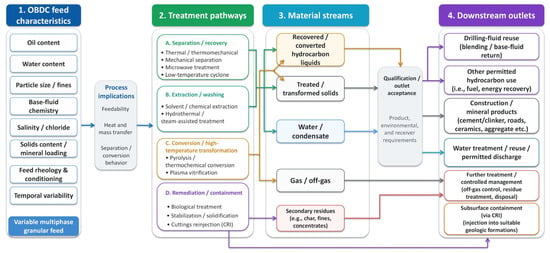
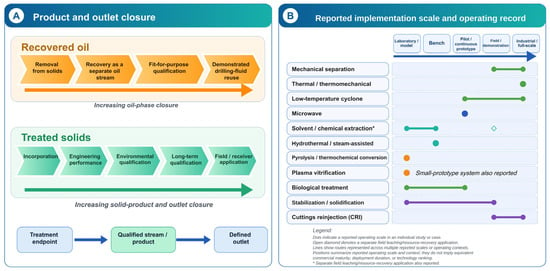
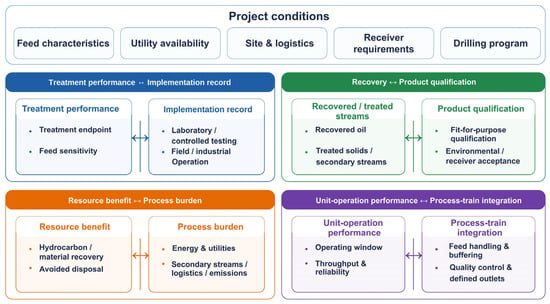
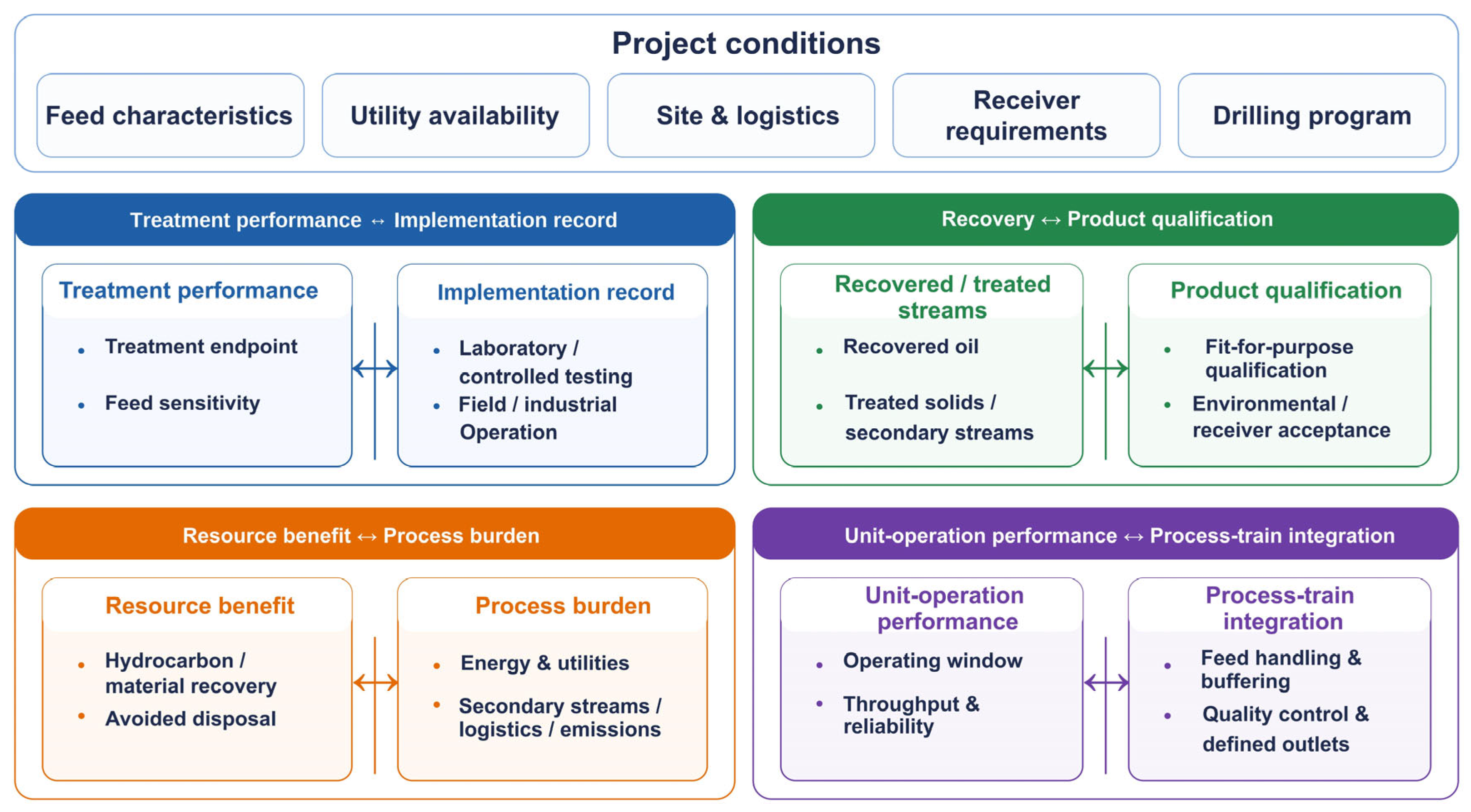

Disclaimer/Publisher’s Note: The statements, opinions and data contained in all publications are solely those of the individual author(s) and contributor(s) and not of MDPI and/or the editor(s). MDPI and/or the editor(s) disclaim responsibility for any injury to people or property resulting from any ideas, methods, instructions or products referred to in the content. |
© 2026 by the authors. Licensee MDPI, Basel, Switzerland. This article is an open access article distributed under the terms and conditions of the Creative Commons Attribution (CC BY) license.