


Highlights
What are the main findings?
- A curated dataset of substances with documented aneugenic evidence, including information on whether Tubulin is the specific molecular target, was documented.
- This study found evidence of the success of integrated approaches (i.e., combination of profilers available in the QSAR Toolbox relevant for genotoxicity and carcinogenicity).
- This study investigated a subset of Tubulin-binding chemicals, including a refined definition of some structural determinants leading to toxicity.
- High-quality data on the structural determinants for aneugenic chemicals, incorporated into profilers implemented in public domain software, will provide regulators with useful tools for early hazard assessment.
- These predictive tools can directly support the identification of the MIE within an AOP framework, thereby advancing Next Generation Risk Assessment.
- These tools support the definition of regulatory thresholds applicable to the risk assessment of aneugenic substances.
- Early in silico prediction of aneuploidy aligns with the 3R principles.
Abstract
Assessing genotoxicity, specifically gene mutations and chromosomal aberrations, is fundamental to chemical risk assessment. Notably, the early identification of an aneugenic mechanism is of crucial importance, allowing, in principle, for a threshold-based risk assessment approach. To investigate this issue while pushing towards innovation in risk assessment by leveraging New Approach Methodologies, in silico approaches stand out as a particularly promising avenue. Building on these premises and given the lack of QSAR models for aneuploidy in the public domain, the present study exploited the genotoxicity-relevant alert lists implemented in the OECD QSAR Toolbox to base the investigation of structure-activity relationships for aneuploidy. To address the lack of relevant structured data resources, a dataset of 65 confirmed aneugenic substances was specifically curated and designed for the study. The results highlighted widely differing performances among the various profilers, confirming a general limited discriminatory power for aneuploidy. On the other hand, a granular analysis of the results from individual structural alerts enabled the successful isolation of some features associated with the aneugenic mode of action. Moreover, a subset of tubulin-binding chemicals was investigated to determine whether targeting a specific protein improves the characterization of toxicological alerts. The findings provide a refined definition of specific toxicity determinants for tubulin binders and serve as a promising tool for early hazard assessment, potentially informing relevant AOPs. While the computational approach appears promising, the overarching challenge that emerges is the limited availability of well-curated experimental data. In fact, reliable data on aneuploidy are scarce and fragmented across the literature. Furthermore, existing compilations of micronucleus study results are often complicated by conflicting interpretations.
1. Introduction
Genotoxicity refers to toxic effects exerted on DNA, encompassing gene mutation, structural chromosomal aberrations (clastogenicity), and numerical chromosomal aberrations (aneugenicity and polyploidy) [1,2]. Assessment of genotoxic potential is a fundamental component of chemical risk assessment and serves as an important prescreening for predicting carcinogenic potential [3]. Since no single test can detect all genotoxic events, regulatory frameworks often mandate the use of “test batteries”, typically starting with in vitro tests and proceeding to in vivo confirmation tests when necessary [4,5]. Currently, genotoxicity assessment is mainly hazard-based, assuming that genotoxic compounds have the potential to damage DNA at any level of exposure [6]. However, aneugens, unlike DNA-reactive genotoxicants, are considered to be non-DNA-reactive, acting on the mitotic spindle or other components of the cell division machinery [7,8]. Therefore, an aneugen risk assessment may, in principle, follow a threshold-based approach, assuming that low doses may not elicit adverse effects due to redundancy (or multiplicity) in cell-division targets (or due to functional redundancies in the mitotic apparatus) [6].
While several specific mechanisms and molecular targets can lead to aneuploidy, certain mechanisms are considered more prevalent and have been more extensively studied, such as tubulin binding and Aurora kinase B inhibition. Tubulin binding acts as a molecular initiating event that disrupts microtubule dynamics, leading to spindle abnormalities and impaired chromosome attachment. Conversely, aurora kinase B inhibition primarily prevents cytokinesis, the physical division of the cell, leading to binucleation. These binucleated cells often develop multipolar spindles in subsequent divisions, which significantly increases the frequency of chromosome missegregation.
Regardless of the specific mechanism that gives rise to aneuploidy, the micronucleus (MN) test is the key assay for detecting both aneugens and clastogens. To differentiate between clastogenic and aneugenic events, the MN test can be combined with techniques such as kinetochore staining (CREST) or fluorescence in situ hybridization (FISH) with pan-centromeric probes. These methods help determine whether the micronucleus originated from a chromosome fragment (acentric) or a whole chromosome, making the test a powerful and versatile tool in genetic toxicology [9]. Currently, the in vivo micronucleus (OECD TG 474) is the preferred test for in vivo follow-up of substances with in vitro evidence of chromosomal aberrations [5].
In recent decades, the 3R (Reduction, Refinement, Replacement) principles have driven the development and adoption of alternative methodologies to animal experimentation [10]. Among these alternatives, non-testing methods leverage pre-existing data and information derived from molecular structure to predict biological or toxicological results. These methods include quantitative structure-activity relationship (QSAR) models, which provide numerical activity predictions (e.g., lethal dose 50%, LD50), and structure-activity relationship (SAR) models, which provide qualitative, binary results (e.g., toxic/non-toxic). SAR models rely on structural alerts (SAs), which codify a mechanistic process corresponding to a given toxicological effect.
Both the literature and the public domain offer several models for the prediction of the in vivo MN test outcome (e.g., [11,12,13]), while there is a recognized gap, as no publicly available SAR model currently exists that specifically predicts the potential aneugenicity of chemical substances. Notably, in its guidance on aneugenicity assessment [2], the European Food Safety Authority (EFSA) has recommended further investigation into possible structure-activity relationships for aneugens to improve their characterization and assessment. The absence of specific models for aneugenicity prediction is largely due to the lack of curated datasets of substances acting specifically via this mechanism. As a matter of fact, structured datasets of MN results (in vitro and/or in vivo) available in the public domain do not contain details on the mechanism of action (i.e., aneugenicity or clastogenicity). This could be attributed either to the fact that the tests were performed without applying methods for differentiation between clastogens and aneugens or to the omission of their results in the metadata of the databases. It must be noted that the application of FISH or CREST methods in an MN assay is reported as optional in OECD TGs 487 and 474.
The present study aims to investigate structure-activity relationships of confirmed aneugens through the application and potential refinement of selected existing models relevant for genotoxicity assessment. To this end, the first phase of the work focused on establishing a curated dataset of aneugenic substances. Subsequently, we screened established genotoxicity alert lists and relevant profilers for general mechanistic screening to determine whether any specific features, although embedded in profilers originally not designed to detect the aneugenicity endpoint, could prove relevant to aneuploidy analysis. To this aim, the predictive power of the selected existing genotoxicity-relevant models was evaluated on the dataset of aneugenic chemicals. These results were then compared with the performance obtained from the application of the same profilers to chemicals used as negative controls (i.e., clastogens and non-genotoxic chemicals). Moreover, an in-depth study of the most frequently identified SAs and functional groups was performed to highlight and refine structural determinants for aneugenesis.
The ultimate goal of this work is to improve the availability of scientific tools for hazard identification of this specific endpoint. By investigating structural determinants associated with aneugenicity, this study may contribute to the improvement of the applicability of mechanistically informed adverse outcome pathways (AOPs). The integration of structure-based insights into the AOP framework aligns with the goals of the New Approach Methodologies (NAMs), which promote the use of mechanistic, non-animal-based strategies, such as in silico modeling and pathway-based assessment, for predicting toxicological outcomes. By enhancing our ability to predict aneugenic potential through SAR analysis, this study supports the broader shift toward NAMs and the development of next-generation risk assessment tools.
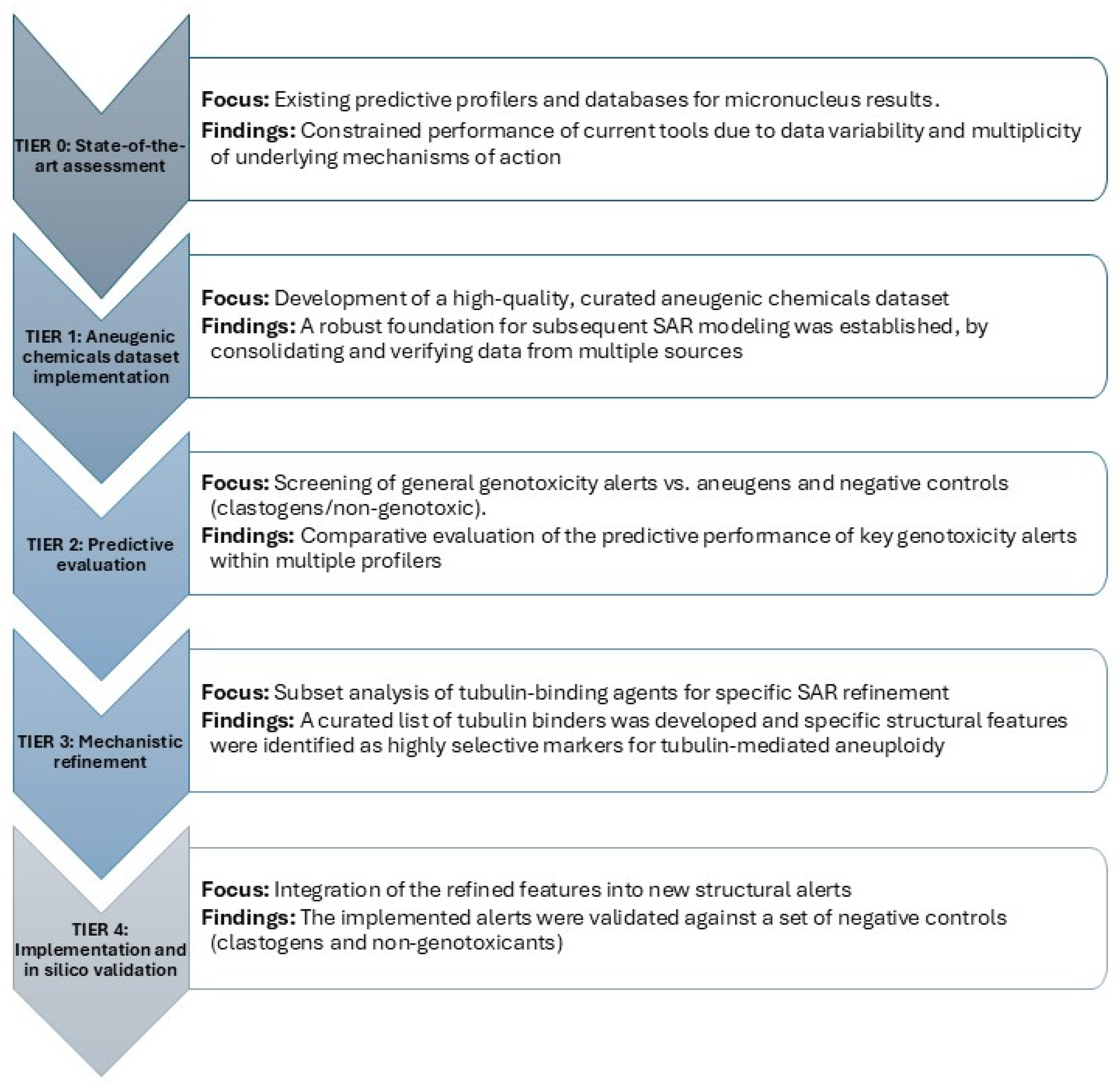
The overall architecture of the study and the logical progression of the research phases are summarized in the conceptual framework presented below (Figure 1).
Figure 1.
Overview of the study architecture and research workflow.
2. Materials and Methods
2.1. Dataset Preparation
The initial phase of the study focused on establishing a robust dataset of chemicals with confirmed aneugenic activity through a bibliographic search. The search was conducted to identify chemicals known to act experimentally through an aneugenic mechanism. Papers published in the last 10 years containing at least one of the following keywords, “aneugenic” or “aneuploidy”, and “genotoxicity”, were retrieved from PubMed [14] and Scopus [15]. Regulatory documents, such as EFSA guidance documents, were also included in the search. The analysis focused on documents that included lists of aneugenic substances. This search yielded an initial list of 80 substances, each identified by its chemical name and CAS number. For entries missing the CAS number, the identifier was retrieved via PubChem.
Simplified Molecular Input Line Entry System (SMILES) strings were obtained by querying PubChem [16] using the CAS numbers and/or chemical names. The dataset underwent a rigorous curation process, which involved the exclusion of duplicates, mixtures, and substances without a well-defined structure (e.g., asbestos), resulting in a final selection of 65 unique chemicals for subsequent analysis. For entries containing salts, the structures were neutralized, and counterions were removed. Tautomeric forms and stereoisomers were addressed through expert judgment on a case-by-case basis, as the prediction tools used do not generally account for chirality.
For each substance, both chemical and toxicological information were collected (Table S1). In addition to chemical identifiers, such as Canonical SMILES, chemical name, and CAS number, Table S1 reports the results of an in-depth literature search conducted to retrieve additional specific toxicological information.
The resulting dataset of aneugens constitutes a de facto external test set for the employed profilers, as they were developed using training data from heterogeneous endpoints.
To evaluate profilers and alerts predictivity against non-aneugenic substances, a list of 38 clastogens and 47 non-genotoxic chemicals was extracted from the literature [17]. The SMILES assignment and the data curation procedure were consistent with those applied to the aneugenic dataset.
2.2. In Silico Profiling
The OECD QSAR Toolbox (hereinafter QSAR Toolbox) was selected as the primary platform for this study due to its high regulatory relevance and structural transparency, which are essential for supporting NAMs development and acceptance. This tool allows for the parallel application of multiple profilers across diverse datasets, providing a comprehensive screening environment. Furthermore, we leveraged its rule-based SAs to ensure that our analysis was built upon a solid mechanistic foundation, while the possibility of implementing customized features facilitated the identification and refinement of specific structure-activity relationships.
The datasets were uploaded (via their SMILES codes) into the QSAR Toolbox v. 4.8 [18]. This software is a standalone free software application developed by the Laboratory of Mathematical Chemistry (LMC) in Burgas, Bulgaria, under the coordination of the Organization for Economic Cooperation and Development (OECD) and the European Chemicals Agency (ECHA). It was designed to facilitate the practical application of (Q)SAR approaches within regulatory frameworks.
Ten mechanistic and endpoint-specific profilers, potentially relevant for genotoxicity prediction, were applied to the datasets:
- -
- Four general mechanistic profilers: “Protein binding by OASIS”; “Protein binding by OECD”, “DNA binding by OASIS”, and “DNA binding by OECD”.
- -
- Six endpoint-specific profilers: “DNA alerts for AMES, CA, and MNT by OASIS”; “In vitro mutagenicity (Ames test) alerts by ISS”; “In vivo mutagenicity (Micronucleus) alerts by ISS” (“In vivo MN ISS”); “Carcinogenicity (genotox and nongenotox) alerts by ISS” (“Carcinogenicity ISS”); “Protein binding alerts for Chromosomal aberration by OASIS”; and “Oncologic Primary Classification”.
Results were exported in Excel format for detailed analysis, filtering, and calculations. Among the 65 aneugenic chemicals in the initial dataset, 40 substances were identified as acting via a mechanism involving interaction with tubulin. This mechanism was the most frequently observed among the compounds in the initial dataset, as well as being the most widely studied in relation to aneugenicity.
2.3. Genotoxicity Databases
In the absence of specific aneugenicity databases, micronucleus assay data repositories available in the QSAR Toolbox, namely in vivo micronucleus mutagenicity results (ISSMIC) and OASIS micronucleus (OASIS MN), were employed for internal benchmarking to establish a baseline performance on the profilers. While their records do not discriminate by mode of action, they serve as a comprehensive reference set that includes both clastogens and aneugens.
ISSMIC contains 566 chemicals with critically revised in vivo MN test data, developed by Istituto Superiore di Sanità (ISS). Outcomes are categorized into positive, negative, equivocal, and inconclusive results. Details on data quality and on database development can be found elsewhere [19,20]. The stand-alone version included in the ISSTOX cluster was used, as downloaded from the ISS website [21].
The OASIS MN database includes 557 chemicals with positive and negative results obtained from the in vivo MN test [22]. The database was created and maintained by LMC. In this work, the OASIS MN version available in the QSAR Toolbox v4.8 was used.
3. Results and Discussion
3.1. State of the Art
In the literature, at least within the public domain, there is a notable absence of computational tools specifically designed for the prediction of (in vivo) aneugenicity [2]. However, models and datasets for general in vivo micronucleus prediction could be useful as references for the present study.
A number of computational tools are available for the prediction of general in vivo micronucleus induction in both proprietary and public domains. Of these, several proprietary tools have been recently evaluated for their predictive performance against a dataset of pesticides and their metabolites, showing overall poor performance of the micronucleus predictions [23,24]. Interestingly, the authors hypothesized that this result stems from the limitations of the available datasets. Indeed, the issue of data variability and uncertainty in in vivo MN test results has been recently addressed by Raitano et al. [25] through analysis of major genotoxicity repositories such as the database of the EU Reference Laboratory for alternatives to animal testing (ECVAM) [26], ISSMIC, and OASIS. The analysis reported in the paper reveals that for a large proportion of results for substances present simultaneously in two or three of these databases, the in vivo MN outcomes (expressed as positive/negative/inconclusive) differ. Other models for in vivo MN results prediction are documented in the literature and in the public domain [11,12,13,27,28]. Fan et al. [27] developed a dataset of in vivo MN results and built binary classification models using machine learning methods, reaching high performance (sensitivity in the range of 75–93%, specifically 79–91%). They were able to identify 10 structural fragments with higher frequency in MN-positive chemicals than in MN-negative chemicals. Yoo et al. [28] combined commercial QSAR platforms to construct in vivo MN models from an in-house database of non-proprietary study findings in mice. Van Bossuyt et al. [12] were able to develop QSAR models with high performance accuracy (75% with the maximum coverage, and higher at lower coverages) based on a newly implemented dataset using data collected from publicly available sources. Recently, Khondkaryan et al. also collected experimental data on MN test results in vitro and in vivo, and based on these datasets developed individual and ensemble QSAR models [12], reaching good performance for the predictions (i.e., around 70% for both sensitivity and specificity in the ensemble model for in vivo results). The data collections used to develop and validate these models were examined, where available. The findings from this analysis agree with what is reported by Raitano et al., pointing towards inherent difficulties in the reuse of in vivo MN experimental results for modeling purposes, possibly due to uncertainties and variability in the experiment itself and in results interpretation [25]. We compared three different datasets, taking ISSMIC as a reference for the comparison. Indeed, the ISSMIC database provides specific guidance-related criteria, particularly for the negative outcomes interpretation [20]. Table 1, which compares in vivo MN outcomes across the three partially overlapping datasets, namely ISSMIC with the datasets used in Fan et al. [27] and Yoo et al. [28], reveals significant discrepancies in how experimental findings are interpreted and integrated. In fact, the concordance of the results reported is remarkably low (Table 1). The data collections that were used to develop and validate these models were examined, where available, and compared with the ISSMIC database as a reference. The analysis reveals significant discrepancies in how experimental findings are interpreted and integrated, reflected in the remarkably low inter-database concordance observed for the same substances across different sources of in vivo MN outcomes (reported in Table 1).
Table 1.
Comparison of outcomes across three partially overlapping datasets. The number of chemicals in the ISSMIC database is 566.
The reported limitations, pointing to the crucial importance of experimental data quality, especially when developing and/or evaluating QSAR models based on these datasets, prompted the curation of a dataset of aneugens, ensuring a more robust basis for our analysis. Moreover, since available repositories of in vivo MN experimental outcomes generally do not specify whether results stem from a clastogenic or an aneugenic mechanism, chemicals with evidence of aneugenicity were collected ex novo for the purpose of the present study. From the literature screening, we were able to identify a set of 65 substances specifically characterized by documented aneugenicity (Table S1).
3.2. Predictivity of Genotoxicity Profilers
Among the tools available in the public literature, in the present study, we opted for the free QSAR Toolbox application due to the comprehensive information provided, flexibility, and transparency of results. Our decision was also informed by our hands-on experience with this tool and direct involvement in developing profilers and databases.
The primary application of the genotoxicity-relevant profilers within the QSAR Toolbox was carried out to evaluate the predictive capacity of existing models on a dataset of 65 aneugenic substances and, in parallel, to analyze the resulting SAs to identify characteristics relevant to aneuploidy. To assess profiler performance with respect to non-aneugens, the results were compared with a dataset comprising 47 non-genotoxic chemicals and 38 clastogenic substances [17].
It is crucial to note that currently, no publicly available SAR models are specific enough to predict the potential aneuploidizing effects of chemical substances. Table 2 summarizes the prediction results of the various profilers. Performance metrics were evaluated separately for aneugens (target), clastogens (mechanistic controls), and non-genotoxics (negative controls) to assess the discriminatory power of the SAs. The profilers are ranked in decreasing order of positive prediction frequency, expressed as true positive rate (TPR) or false positive rate (FPR).
Table 2.
Number of substances with SA and corresponding predictivity (expressed as TPR or FPR) for selected QSAR Toolbox Profilers. Data are grouped into three mechanistic classes: 65 aneugens, 38 clastogens, and 47 non-genotoxic substances.
The endpoint-specific profilers available in the QSAR Toolbox, which are expected to detect genotoxic substances, are the “In vivo MN ISS” profiler, the “DNA alerts for AMES, CA, and MNT by OASIS” profiler, and the “Protein binding alerts for Chromosomal aberration by OASIS” profiler. However, while the “In vivo MN ISS” profiler was refined based on in vivo MN test experimental results, and is specific to this endpoint, the other two profilers address slightly different endpoints, as described in their respective QSAR Model Reporting Format (QMRF). Specifically, the “DNA alerts for AMES, CA, and MNT by OASIS” profiler investigates the presence of alerts within the target molecules, responsible for interaction with DNA, whereas the “Protein binding alerts for Chromosomal aberration by OASIS” profiler assesses the ability of target molecules to elicit clastogenicity.
As expected, performance varied significantly, with positive prediction frequencies ranging from 88% to 14%. Interestingly, the “In vivo MN ISS” profiler and the “DNA alerts for AMES, CA, and MNT by OASIS” profiler represent opposite ends of the performance spectrum, highlighting their complementarity in detecting distinct mechanisms of genotoxicity.
Overall, the results reported in Table 2 highlight (i) the lack of discriminatory power between true aneugens and non-aneugens. The “In vivo MN ISS” profiler correctly flagged 57 out of 65 substances, showing the best performance (TPR = 88%). This result is consistent with the fact that the profiler was refined on in vivo MN test results, which may include both clastogens and aneugens. However, the performance of the same profiler on the non-aneugens datasets points to a high number of false positives, as evidenced by the high TPR value on the clastogens dataset and high FPR value on non-genotoxics (Table 2).
To provide an additional benchmark, we compared the current performance of these (nominally) endpoint-specific profilers against the results obtained by applying the same profilers to the ISSMIC and OASIS MN databases, which contain in vivo MN test results (Table 3). Notably, the comparison shows that, when applied to a refined dataset of aneugenic chemicals, the sensitivity of the “In vivo MN ISS” profiler increases. Nonetheless, despite its high predictive success on the positive dataset, the “In vivo MN ISS” profiler exhibits a significant limitation, namely, high sensitivity coupled with low specificity (Table 3) [20]. In parallel, the sensitivity of the other profilers increases in databases containing both aneugens and clastogens (i.e., ISSMIC and MN OASIS), confirming their relevance for DNA-interacting mechanisms, such as those underlying clastogenicity.
Table 3.
Sensitivity (SE), Specificity (SP) of three QSAR Toobox profilers (“DNA alerts for AMES, CA, and MNT by OASIS”, “Protein binding alerts for Chromosomal aberration by OASIS” and “In vivo MN ISS” profilers) versus ISSMIC and OASIS databases.
The analysis of prediction results in the aneugens dataset revealed substances that consistently triggered SAs across nearly all profilers and those that triggered very few or none:
- Substances triggering few/no SAs: Only benzonitrile in the dataset did not present any SAs for any of the ten applied profilers. Furthermore, diethylstilbestrol only triggered a single alert (from the “Oncologic Primary Classification”, classifying it as a “Phenol Type Compound”).
- Substances triggering many SAs: Some chemicals triggered alerts in many applied profilers. This can be due to the presence of slightly similar alerts defined across profilers, but also to profiler alerting for different functional groups depending on the target (e.g., DNA or proteins). As an example, Melphalan triggered SAs from every profiler applied, primarily associated with the nitrogen mustard functional group. Laulimalide, Epothilone A, Trichlorfon, and Menadione triggered SAs in 9 out of the 10 profilers, targeting more than one alerting moiety.
At the same time, the observed presence of SAs known for DNA reactivity (e.g., aromatic amines or chemical mustards) in some aneugenic substances suggests the possibility of multiple modes of action, indicating that the discrimination between substances acting or not via DNA interaction is not always absolute. This aspect is critical for risk assessment, as it relates to the possibility of identifying a toxicity threshold, and will require further investigation in future studies.
Among the applied profilers on the 65 aneugenic substances, the most predictive are “In vivo MN ISS”, “Carcinogenicity ISS,” and “Oncologic Primary Classification”. With regard to “Carcinogenicity ISS”, the most prevalent SAs are “Imidazole and benzimidazole (non-genotoxic)” with a TPR of 18%, followed by “Halogenated benzene (non-genotoxic)” with a TPR of 8%. Within the “Oncologic Primary Classification” profiler, the most frequent alerts are the “Aromatic Amine Type Compounds” (TPR = 23%) and the “Carbamate Type Compounds” (TPR = 18%).
Table 4 shows the distribution of SAs from the “In vivo MN ISS” profiler, the most effective profiler in terms of the highest TPR, calculated for the aneugenic, clastogenic, and non-genotoxic substances. The top alerting fragment is codified under the “H-acceptor-path3-H-acceptor” alert. This alert encodes a structural motif potentially responsible for non-covalent interactions, which are typical of mechanisms involving aneugenic substances and their molecular targets (e.g., tubulin binding).
Table 4.
Distribution of SAs from “In vivo MN ISS” profiler, including TPR and FPR percentages calculated for the aneugenic, clastogenic, and non-genotoxic substances.
However, as this alert is defined by generic structural elements, it lacks the specificity required for optimal discrimination between true positives and false positives [20]. As a matter of fact, the “H-acceptor-path3-H-acceptor” alert displays high TPR values in both the aneugen dataset and the negative control list (Table 4), underlining its lack of specificity due to its ubiquitous nature. Descriptive analysis reveals a notable increase in TPR for SAs not strictly related to DNA reactivity (i.e., “H-acceptor-path3-H-acceptor” and “1,3-dialkoxy-benzene”) in the aneugens dataset compared with the others. On the other hand, alerts encoding known interactions with DNA (e.g., “alpha, beta-unsaturated carbonyls”, “Epoxides and aziridines”, and “Primary aromatic amine, hydroxyl amine and its derived esters”) show higher TPRs in the clastogens list and in the ISSMIC database. These results point to the suitability of certain alerts within the “In vivo MN ISS” profiler for aneugenicity, compared to those optimized for detecting DNA-interacting chemicals, such as clastogens.
3.3. Structural Alerts Relevant for Tubulin Interaction
To further refine the SAR analysis of aneuploidy induction, the second phase of the study focused on a specific molecular initiating event (MIE) among those related to chemical aneugenesis [29]. Specifically, we investigated the structural determinants of tubulin binding, as this MIE represents the most prevalent and extensively studied mechanism, providing a robust basis for quantitative modeling and mechanistic assessment [8]. Consequently, the initial list of aneugens was screened to select only chemicals with a confirmed mechanism of action involving tubulin interactions. Through an extensive literature review, 40 chemicals were identified from the initial list of aneugens as tubulin-binding aneugens (Table 5).
Table 5.
List of 40 aneugenic substances, with confirmed evidence in the literature of interaction with tubulin.
The TPR for each of the QSAR Toolbox Profilers was recalculated on this subset of tubulin-binding aneugens, as displayed in Table 6. Notably, the “In vivo MN ISS” and the “Carcinogenicity ISS” profilers remain the top-performing models, consistent with the analysis of the full aneugens dataset. Overall, the pattern of TPRs, although slightly modified compared to the whole aneugens list (Table 4), does not exhibit a significant enrichment within the tubulin-binding subset. This is further supported by the Observed/Expected ratio (O/E ratio) values, where the expected value (E) is calculated proportionally to the subset size (Table 6).
Table 6.
Predictivity (reported as TPR) of QSAR Toolbox Profilers (v 4.8) on 40 Aneugenic Substances with evidence of tubulin binding. O/E ratio: Observed/Expected ratio.
Focusing on the most predictive profilers, specifically “In vivo MN ISS”, “Carcinogenicity by ISS”, “Protein binding by OASIS”, and “Oncologic Primary Classification”, we analyzed the most frequently triggered SAs. Table 7 shows the variation in the number of SAs detected when narrowing the analysis from the initial dataset of 65 aneugens to the subset of 40 tubulin binders (Table 5). For comparison, the number of SAs triggered by clastogens and non-genotoxic chemicals is also reported. For the subset of tubulin-binding aneugens, the positive predictivity (PPV) of each alert was calculated as follows:
Table 7.
Variation in the number and percentage of SAs for four QSAR Toolbox Profilers (i.e., “In vivo MN ISS”, “Carcinogenicity ISS”, “Oncologic Primary Classification”, and “Protein binding by OASIS” profilers), when moving from 65 aneugenic substances to 40 tubulin-binding substances; comparison with clastogens and non-genotoxic chemicals. Only occurrences of more than two SAs for the 65 substances are reported. PPV: positive predictivity.
As shown in Table 7, while most alerts are triggered by only a few compounds, certain notable exceptions were identified and analyzed in detail below.
3.3.1. The “H-Acceptor-path3-H-acceptor” Alert
The results obtained for this alert confirm our previous discussion regarding the significance of non-covalent interactions implemented in the H-acceptor-path3-H-acceptor structural path, coupled with low general specificity and lack of discriminatory power towards aneugenicity.
3.3.2. The “1,3-dialkoxy-benzene” Alert
According to Table 7, the number of substances triggering the “1,3-dialkoxy-benzene” alert within the “In vivo MN ISS” profiler remains nearly constant across both the aneugenic substances dataset and tubulin-binding subset. This consistency suggests that this alert could be specific to this type of mechanism, also confirmed by the high PPV = 88%. Indeed, the SA was identified in several aneugenic substances known to bind to tubulin, notably demonstrated by colchicine, which serves as a prototypical example of this interaction (Table 8).
Table 8.
Substances triggering the “1,3-dialkoxy-benzene” alert, included in the “In vivo MN ISS” Profiler.
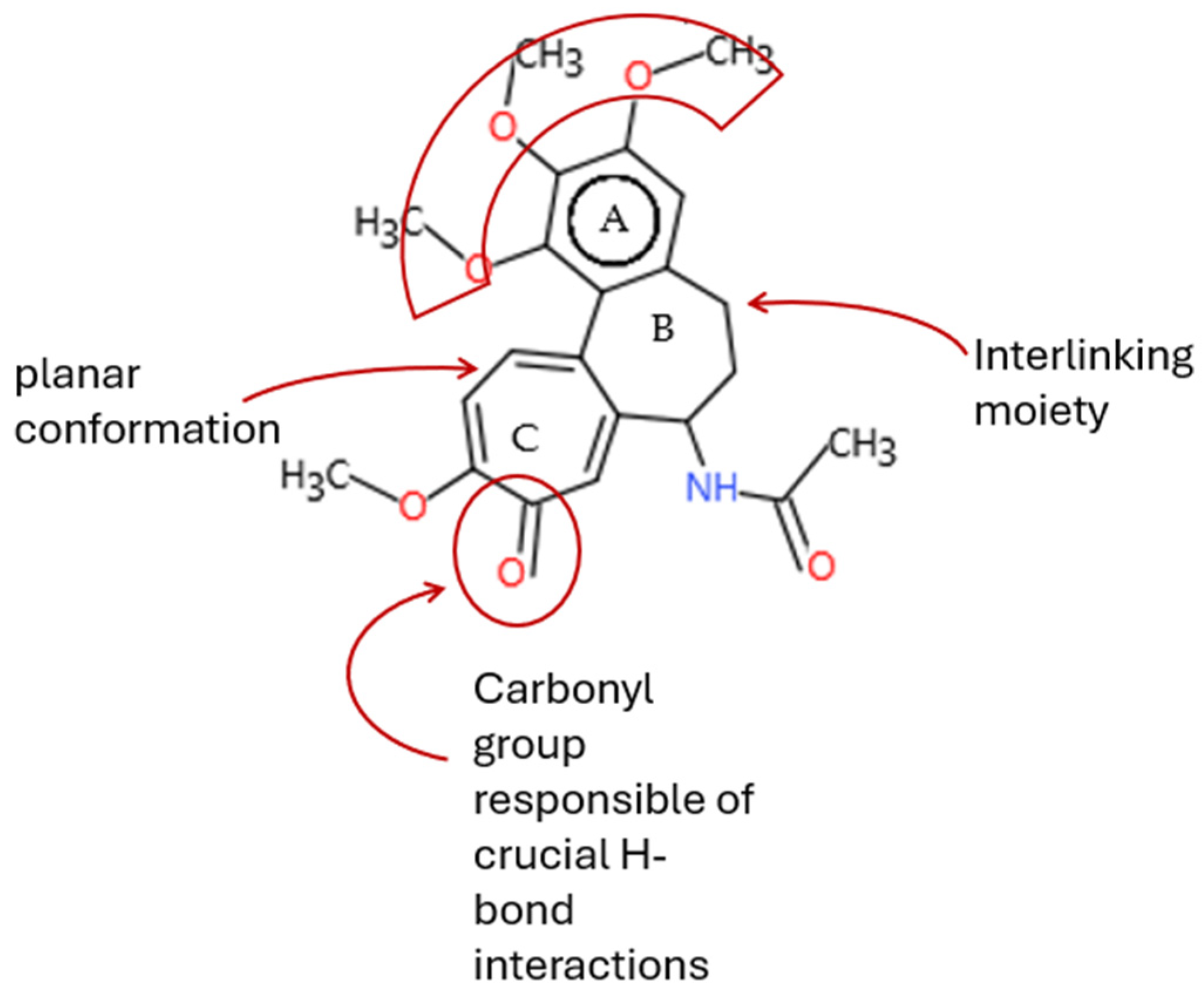
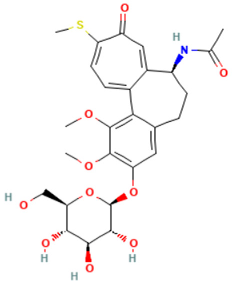
An in-depth analysis of substances containing the “1,3-dialkoxy-benzene” alert was conducted using colchicine’s three structural portions (Figure 2) as a template to examine which elements were structurally compatible with tubulin binding [8].
Figure 2.
Structure of colchicine (CAS: 64-86-8) with Key Structural Portions (adapted from [8]).
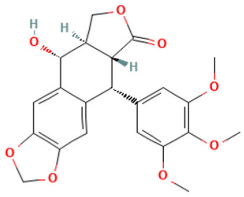
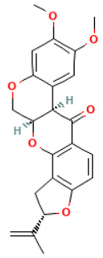
In colchicine, the presence of the trimethoxy phenyl (Ring A) group, which gives rise to the “1,3-dialkoxy-benzene” alert, is crucial for its stable interaction with tubulin [8]. Literature studies have reiterated that the involvement of the methoxy groups is essential for ensuring the stability of the colchicine-tubulin binding [79]. While some structures included in Table 8 (e.g., Podophyllotoxin, ID: 29) maintain the trimethoxy motif (A ring), others contain 1,2 or 1,3 dimethoxy motifs, and could include other substituents (e.g., Griseofulvin, ID: 21) or cyclic alkoxy structures (e.g., Rotenone, ID: 30).
Ring B, which is a structural portion acting as a link between Rings A and C, was found to be the most variable among the structures detected by the SA. Its size and complexity vary significantly, ranging from almost absent (as in Podophyllotoxin, ID: 29) to consisting of a series of condensed rings (as in Rotenone, ID: 30).
Ring C contains a carbonyl function, known to act as a hydrogen bond acceptor, which is conserved in the corresponding structural portions of the other substances. These structural portions generally maintain a planar conformation, which appears to be critical for tubulin binding [80].
The structural features identified are important characteristics that can be implemented for the refinement of the SA. The original definition codifies generic “alkoxy” groups to describe the substituents at positions 1 and 3 of the aromatic ring. Given the precise mechanistic role of the methoxy groups in tubulin-binding stability, the original definition may be too broad. The alert could be refined by codifying at least two methoxy groups in Ring A, including the possibility of having the feature in a cycle. Moreover, to further refine the alert, a planarity requirement for the main portion of the molecule and the presence of a carbonyl group in ring C, or another H-bond acceptor, could be implemented.
3.3.3. Identification of Benzimidazole-Carbamate Features as a New Potential Alert
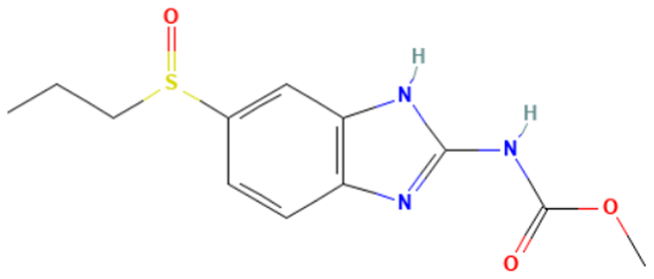
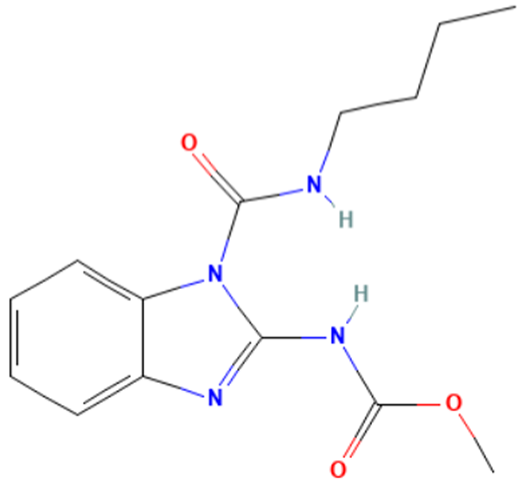
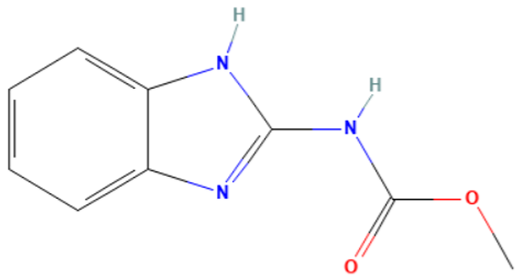
“Imidazole and benzimidazole” alert frequently appears among the SAs triggered from the “Carcinogenicity ISS” profiler. Moreover, this alert is present in 12 substances known to bind to tubulin and induce aneugenic effects (Table 9).
Table 9.
Substances triggering the “Imidazole and benzimidazole” alert, included in the “Carcinogenicity by ISS” and/or “Carbamate” alert, included in the “Oncologic Primary Classification” (from QSAR Toolbox 4.8).
The literature has highlighted the high prevalence of benzimidazole fragments in substances with positive MN test results, including herbicides belonging to the benzimidazole derivative class [27].
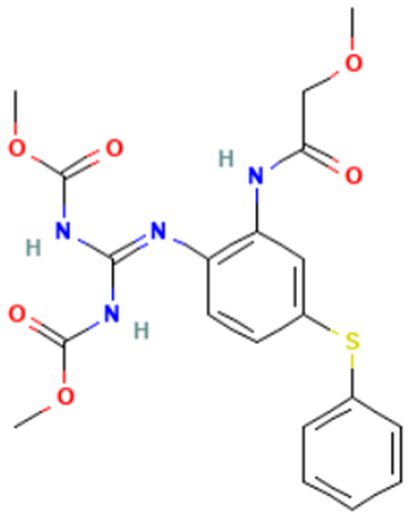
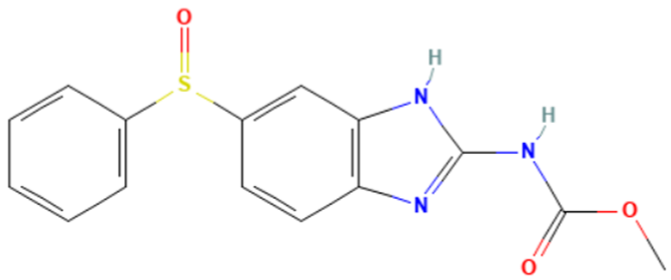
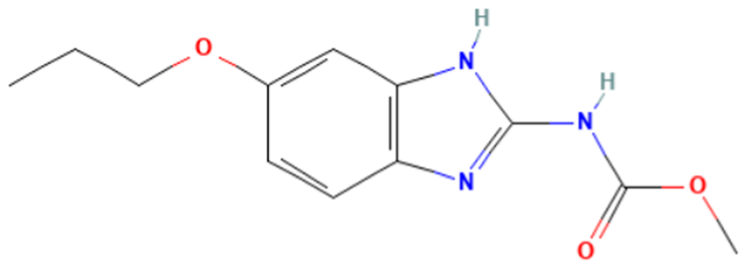
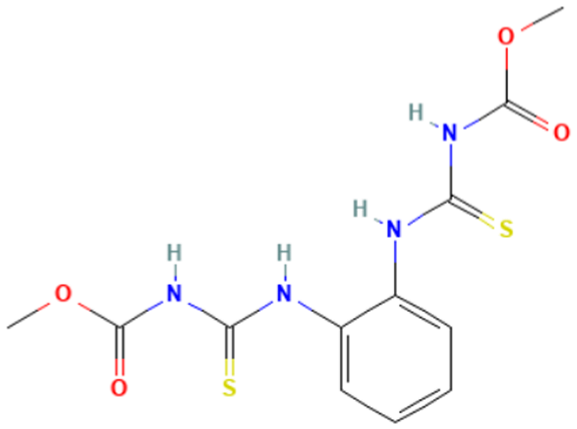
Of the 12 benzimidazole-containing substances reported in Table 9, 10 substances (e.g., Carbendazim, Benomyl) also trigger the “Carbamate” alert (identified by the “Oncologic Primary Classification” and the “Protein binding” alerts identified by OASIS profilers). On the other hand, there are two substances, among the tubulin-binders (i.e., Febantel and Thiophanate-methyl), triggering only the “Carbamate” alert, and not the “Imidazole and benzimidazole” one.
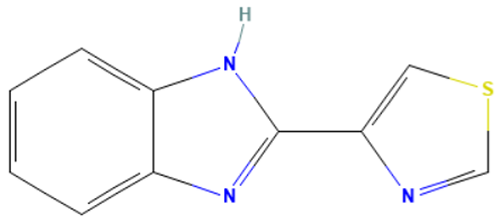
The literature reports suggest a possible synergistic importance of carbamate and benzimidazole substructures in the same molecule, with the latter providing reactivity and the former providing greater stability to the tubulin-ligand complex [81]. However, the present analysis highlighted that thiabendazole and triclabendazole lack the carbamate portion, instead featuring a thiazolyl moiety and a Cl-substituted benzene ring linked to the benzimidazole, respectively (IDs 32 and 35, Table 9). Since both substances are experimentally confirmed to interact with tubulin, the presence of the carbamate portion appears not to be essential. In parallel, two molecules in the list lack the benzimidazole moiety and have more than one carbamate subgroup (i.e., Thiophanate-methyl, ID: 34, and Febantel, ID: 17).
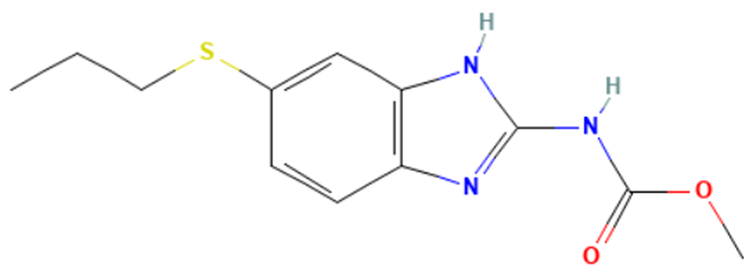
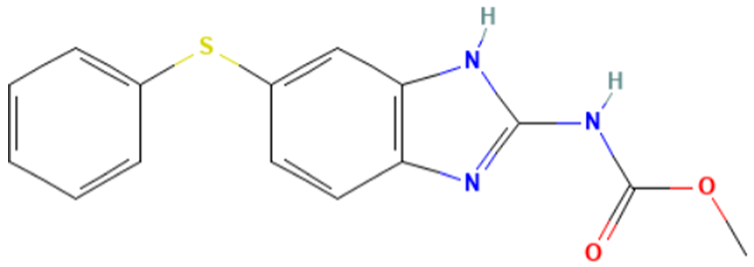
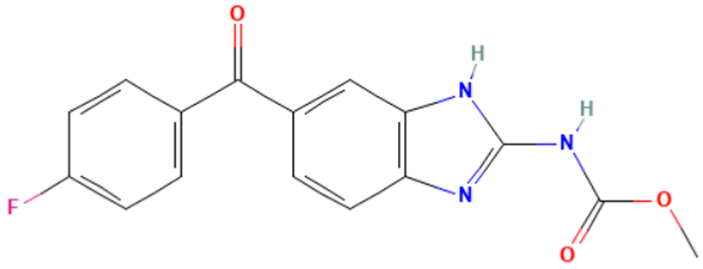
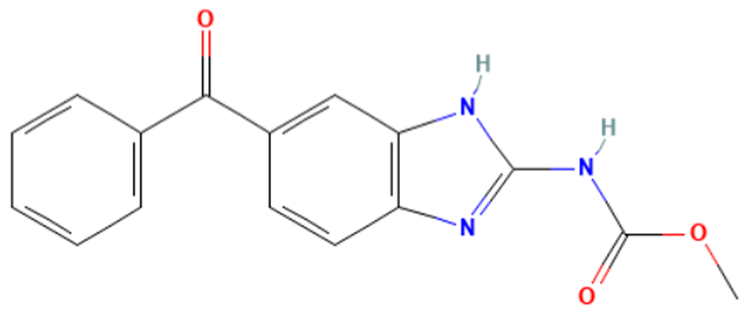
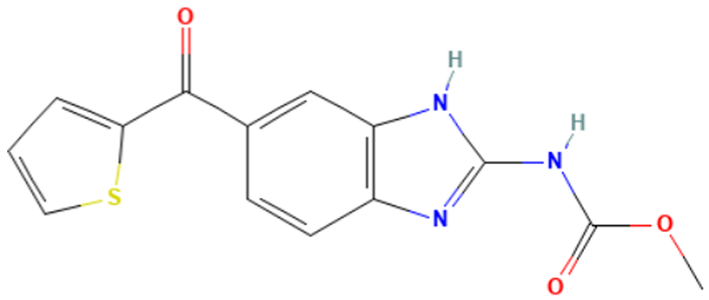
Further analysis of the substances reported in Table 9 highlights various substituents on the benzimidazole core that do not have a negative effect on reactivity. Examples of these substituents are: thioether groups present in albendazole (ID: 4) and its oxide (ID: 5); an amide moiety in Benomyl (ID: 6); a formylphenyl fragment in mebendazole (ID: 24); a thiophenoyl group in nocodazole (ID: 26).
In conclusion, a new potential SA for aneugenesis, in particular for tubulin-binding substances, containing a benzimidazole and/or a carbamate core was identified. A similar alert would have a PPV of 100% in the present subset of tubulin binders (correctly identifying 14/14 molecules). Moreover, structural features identified in the present list of substances could be codified in the SA to refine its boundaries and improve its predictivity. In this respect, the future collection of non-aneugenic substances will be crucial in the process of definition and evaluation of this new alert.
3.3.4. Other Specific Structural Features
Another alert with a high PPV is the ketone functional group triggered by the “Protein binding by OASIS” profiler (PPV = 88%). While the presence of this group could be considered a warning of potential reactivity, specifically linking it to a tubulin-binding mechanism remains challenging. In the present dataset, this feature is frequently concomitant with other reactive features (e.g., the 1, 3-dialkoxy-benzene or the epoxy group). Moreover, while there are other features showing a high PPV on the tubulin-binding dataset (e.g., “alpha, beta-unsaturated carbonyls” and Epoxides), the overall number of substances triggered is insufficient to yield generalizable results. On the other hand, the presence of alerts known to involve DNA-reactive mechanisms across the entire dataset of aneugens (e.g., aromatic amines, epoxides…) suggests the potential for multiple modes of action in certain substances, in which discrimination between genotoxicity endpoints (mutation, clastogenicity, aneuploidy) is not always absolute.
3.3.5. Implementation of the Structural Features into New SAs
The structural features identified in this study (i.e., based on the 1,3-dimethoxy group and benzimidazole–carbamate features) were converted into SAs by leveraging the QSAR Toolbox’s functionality to create and implement custom profilers (the corresponding encoding files are provided in the Supplementary Materials). The implemented SAs were validated against the datasets of negative controls (i.e., clastogens and non-genotoxicants), showing promising results, as reported in Table 10.
Table 10.
Distribution of substances across different mechanistic classes in relation to the new SAs identified in this study. SA1: 1,3 dimethoxy group; SA2: Benzimidazole-Carbamate features.
4. Conclusions
The present study was prompted by a significant scientific and regulatory gap: currently, no publicly available structure-activity models exist that are specifically designed to predict the aneuploidizing potential of chemical substances. This gap is accompanied by, or even driven by, a lack of curated datasets on this endpoint. In vivo MN result collections exist, but they generally lack the granularity to distinguish between clastogenic and aneugenic mechanisms. Moreover, high data variability across major databases of in vivo MN data (e.g., ISSMIC, OASIS database, ECVAM) has been recently highlighted [25].
To address these gaps and improve QSAR modeling, this study curated a new, dedicated dataset of 65 substances with specifically documented aneugenic evidence. The “In vivo MN ISS” profiler demonstrated the best performance (TPR = 88%). This is expected, as the MN test, upon which the profiler is based, is capable of detecting both clastogenic and aneugenic effects. However, the performance of the same profiler on the non-aneugens datasets points to a high number of false positive results.
A subset of 40 chemicals known to act by tubulin interaction, the most frequent and well-studied mechanism of aneugenic action, was derived from the initial dataset through an extensive literature search. Prediction results for these chemicals were further investigated in order to determine whether focusing on a single target protein altered the alert pattern.
While at the level of the overall profiler predictive capacity, the picture has only slightly changed, an in-depth analysis of the results pattern allowed the identification of promising alerts encoding key structural characteristics known to be relevant for tubulin-binding mechanisms.
The “1,3-dialkoxy-benzene” alert was found in crucial mitotic spindle poisons like colchicine, where the trimethoxy phenyl moiety is fundamental for tubulin interaction and binding stability. The present analysis proposed a more refined definition of this alert to more accurately reflect the structural requirements for tubulin binding. Moreover, the benzimidazole and carbamate structural features were identified as key characteristics (in combination or alone) for a new SAs specifically detecting tubulin-binding aneugens.
Notably, the presence of SAs typically associated with DNA reactivity (e.g., aromatic amines, epoxides) in various aneugenic substances (such as Melphalan, Laulimalide, Epothilone A) suggests potential multiple modes of action. This indicates that the boundaries between genotoxicity endpoints (gene mutation, clastogenicity, and aneuploidy) are not always absolute, requiring further investigation for robust hazard and risk assessment.
Moreover, this study emphasizes the crucial importance of well-curated data in unraveling the structural determinants of toxicity. Incorporating key structural characteristics from high-quality data into profilers implemented in public domain software provides regulators with useful tools for early hazard assessment. For instance, these tools can directly inform the prediction of the MIE, specifically chemical binding to tubulin, as defined in “The adverse outcome pathway (AOP) for Chemical Binding to Tubulin in Oocytes Leading to Aneuploid Offspring” [8].
Our findings underscore the significant potential of NAMs, specifically in silico SAR-based models, pointing to the necessity of expanding current datasets with additional chemicals with known aneugenic mechanisms, as well as those for which aneugenic potential can be definitively excluded. Since these types of substances are extensively studied as key pharmacological tools in drug discovery, the study demonstrates how such mechanistic insights can be exploited to build a comprehensive list of SAs for predictive toxicology.
Early in silico prediction of aneugenicity would represent a major advancement in reducing animal testing, aligning with the 3Rs principles. Moreover, it would support the definition of regulatory thresholds, which are essential for the risk assessment of aneugenic substances.
Supplementary Materials
The following supporting information can be downloaded at: https://www.mdpi.com/article/10.3390/toxics14050363/s1, Table S1: list of the 65 substances with evidence of aneugenic activity, compiled through an in-depth literature review. The list includes the following information for each chemical: chemical name, CAS number, canonical SMILES, evidence of tubulin-binding, and literature references. 2 SAs encoding files (SA1 Carbamate_Benzimidazole; SA2 Colchicine_like alert) [30,31,32,33,34,35,36,37,38,39,40,41,42,45,46,48,49,50,51,52,53,54,55,56,57,58,59,60,61,62,63,64,65,66,67,68,69,70,71,72,73,74,75,77,78,82,83,84,85,86,87,88,89,90,91,92,93,94,95,96,97,98,99,100,101,102,103,104,105,106,107,108,109,110,111,112,113,114].
Author Contributions
E.M.R.: formal analysis, investigation, data curation, writing—original draft preparation. C.B.: conceptualization, methodology, validation, formal analysis, investigation, data curation, writing—original draft preparation, writing—review and editing, supervision. F.M.: conceptualization, investigation, validation, data curation, writing—review and editing. L.T.: formal analysis, investigation, data curation. C.L.B.: conceptualization, methodology, validation, formal analysis, Investigation, data curation, original draft preparation, writing—review and editing, supervision. All authors have read and agreed to the published version of the manuscript.
Funding
This research received no external funding.
Institutional Review Board Statement
Not applicable.
Informed Consent Statement
Not applicable.
Data Availability Statement
The data used in this study are publicly available in the sources cited in the Section 2. The processed dataset used is available in the Supplementary Material (Table S1).
Conflicts of Interest
The authors declare no conflicts of interest.
Abbreviations
The following abbreviations are used in this manuscript:
| AOP | Adverse Outcome Pathway |
| 3R principles | Reduction, Refinement, Replacement principles |
| “Carcinogenicity ISS” profiler | “Carcinogenicity (genotox and non-genotox) alerts by ISS” profiler |
| CREST | Kinetochore staining |
| ECVAM | EU Reference Laboratory for alternatives to animal testing |
| EFSA | European Food Safety Authority |
| FISH | Fluorescence in situ hybridization |
| FPR | False Positive Rate |
| ISS | Istituto Superiore di Sanità |
| ISSMIC database | In vivo MN test database developed by ISS |
| LD50 | Lethal dose, 50% |
| LMC | Laboratory of Mathematical Chemistry in Burgas, Bulgaria |
| “In vivo MN ISS” profiler | “In vivo mutagenicity (micronucleus) alerts by ISS” profiler |
| NAMs | New Approach Methodologies |
| MIE | Molecular Initiating Event |
| MN Test | Micronucleus Test |
| OASIS MN database | In vivo MN test database developed by LMC |
| PPV | Positive Predictivity |
| QMRF | QSAR Model Reporting Format |
| QSAR | Quantitative Structure-Activity Relationship |
| SAR | Structure-Activity Relationship |
| SAs | Structural Alerts |
| SE | Sensitivity |
| SMILES | Simplified molecular input-line entry system |
| SP | Specificity |
| TPR | True Positive Rate |
References
- Corvi, R.; Madia, F. In Vitro Genotoxicity Testing–Can the Performance Be Enhanced? Food Chem. Toxicol. 2017, 106, 600–608. [Google Scholar] [CrossRef] [Scilit]
- EFSA. Scientific Committee Guidance on Aneugenicity Assessment. EFSA J. 2021, 19, 6770. [Google Scholar]
- Bossa, C.; Benigni, R.; Tcheremenskaia, O.; Battistelli, C.L. (Q)SAR Methods for Predicting Genotoxicity and Carcinogenicity: Scientific Rationale and Regulatory Frameworks. In Methods in Molecular Biology; Humana Press: New York, NY, USA, 2018; Volume 1800, pp. 447–473. [Google Scholar]
- OECD. Series on Testing and Assessment. In Overview on Genetic Toxicology TGs; OECD: Paris, France, 2017. [Google Scholar]
- Bossa, C.; Alivernini, S.; Andreoli, C.; Aquilina, G.; Attias, L.; Benfenati, E.; Dusinska, M.; El Yamani, N.; Louro, H.; Marcon, F.; et al. A Regulatory Perspective on the Applicability of NAMs in Genotoxicity and Carcinogenicity Assessment in EU: Current Practices and Future Directions. Environ. Int. 2026, 207, 109948. [Google Scholar] [CrossRef] [Scilit] [PubMed]
- Menz, J.; Götz, M.E.; Gündel, U.; Gürtler, R.; Herrmann, K.; Hessel-Pras, S.; Kneuer, C.; Kolrep, F.; Nitzsche, D.; Pabel, U.; et al. Genotoxicity Assessment: Opportunities, Challenges and Perspectives for Quantitative Evaluations of Dose–Response Data. Arch. Toxicol. 2023, 97, 2303–2328. [Google Scholar] [CrossRef] [Scilit] [PubMed]
- Kirsch-Volders, M.; Vanhauwaert, A.; De Boeck, M.; Decordier, I. Importance of Detecting Numerical versus Structural Chromosome Aberrations. Mutat. Res.-Fundam. Mol. Mech. Mutagen. 2002, 504, 137–148. [Google Scholar] [CrossRef] [Scilit]
- Marchetti, F.; Massarotti, A.; Yauk, C.L.; Pacchierotti, F.; Russo, A. The Adverse Outcome Pathway (AOP) for Chemical Binding to Tubulin in Oocytes Leading to Aneuploid Offspring. Environ. Mol. Mutagen. 2016, 57, 87–113. [Google Scholar] [CrossRef] [Scilit]
- EFSA. Scientific Committee Scientific Opinion on Genotoxicity Testing Strategies Applicable to Food and Feed Safety Assessment. EFSA J. 2011, 9, 2379. [Google Scholar] [CrossRef] [Scilit]
- Russel, W.M.S.; Burch, R.L. The Principles of Humane Experimental Technique; Methuen: London, UK, 1959. [Google Scholar]
- Khondkaryan, L.; Tevosyan, A.; Navasardyan, H.; Khachatrian, H.; Tadevosyan, G.; Apresyan, L.; Chilingaryan, G.; Navoyan, Z.; Stopper, H.; Babayan, N. Datasets Construction and Development of QSAR Models for Predicting Micronucleus In Vitro and In Vivo Assay Outcomes. Toxics 2023, 11, 785. [Google Scholar] [CrossRef] [Scilit]
- Van Bossuyt, M.; Raitano, G.; Honma, M.; Van Hoeck, E.; Vanhaecke, T.; Rogiers, V.; Mertens, B.; Benfenati, E. New QSAR Models to Predict Chromosome Damaging Potential Based on the In Vivo Micronucleus Test. Toxicol. Lett. 2020, 329, 80–84. [Google Scholar] [CrossRef] [Scilit]
- Technical University of Denmark (DTU). Danish (Q)SAR Database/(Q)SAR Models. Available online: https://qsar.food.dtu.dk/ (accessed on 29 January 2026).
- National Library of Medicine (NIH). PubMed. Available online: https://pubmed.ncbi.nlm.nih.gov/ (accessed on 30 January 2026).
- Scopus Elsevier Scopus. Available online: https://www.scopus.com/ (accessed on 30 January 2026).
- National Library of Medicine (NLM). PubChem. Available online: https://pubchem.ncbi.nlm.nih.gov/ (accessed on 30 January 2026).
- Dertinger, S.D.; Kraynak, A.R.; Wheeldon, R.P.; Bernacki, D.T.; Bryce, S.M.; Hall, N.; Bemis, J.C.; Galloway, S.M.; Escobar, P.A.; Johnson, G.E. Predictions of Genotoxic Potential, Mode of Action, Molecular Targets, and Potency via a Tiered Multiflow® Assay Data Analysis Strategy. Environ. Mol. Mutagen. 2019, 60, 513–533. [Google Scholar] [CrossRef] [Scilit]
- QSAR Toolbox. Available online: https://qsartoolbox.org/ (accessed on 27 January 2026).
- Battistelli, C.L.; Bossa, C. Development, Use, and Validation of (Q)SARs for Predicting Genotoxicity and Carcinogenicity: Experiences from Italian National Institute of Health Activities. In Computational Toxicology; Humana: New York, NY, USA, 2025; pp. 231–247. [Google Scholar]
- Benigni, R.; Bossa, C.; Tcheremenskaia, O.; Battistelli, C.L.; Crettaz, P. The New ISSMIC Database on In Vivo Micronucleus and Its Role in Assessing Genotoxicity Testing Strategies. Mutagenesis 2012, 27, 87–92. [Google Scholar] [CrossRef] [Scilit]
- Istituto Superiore di Sanità ISSTOX Database. Available online: https://www.iss.it/isstox (accessed on 28 January 2026).
- OASIS. In Vivo Micronucleus Database. Available online: https://oasis-lmc.org/products/databases/in-vivo-micronucleus-database.aspx (accessed on 30 January 2026).
- Benigni, R.; Battistelli, C.L.; Bossa, C.; Giuliani, A.; Fioravanzo, E.; Bassan, A.; Fuart Gatnik, M.; Rathman, J.; Yang, C.; Tcheremenskaia, O. Evaluation of the Applicability of Existing (Q)SAR Models for Predicting the Genotoxicity of Pesticides and Similarity Analysis Related with Genotoxicity of Pesticides for Facilitating of Grouping and Read Across. EFSA Support. Publ. 2019, 16, 1598E. [Google Scholar] [CrossRef] [Scilit]
- Benigni, R.; Serafimova, R.; Parra Morte, J.M.; Battistelli, C.L.; Bossa, C.; Giuliani, A.; Fioravanzo, E.; Bassan, A.; Gatnik, M.F.; Rathman, J.; et al. Evaluation of the Applicability of Existing (Q)SAR Models for Predicting the Genotoxicity of Pesticides and Similarity Analysis Related with Genotoxicity of Pesticides for Facilitating of Grouping and Read across: An EFSA Funded Project. Regul. Toxicol. Pharmacol. 2020, 114, 104658. [Google Scholar] [CrossRef] [Scilit] [PubMed]
- Raitano, G.; Pronk, T.E.; Battistelli, C.L.; Bossa, C.; Hatzi, V.; Nikolopoulou, D.; Chaideftou, E.; Tcheremenskaia, O.; Adam-Guillermin, C.; Audebert, M.; et al. Variability and Uncertainty of Data from Genotoxicity Test Guidelines: What We Know and Why It Matters. Arch. Toxicol. 2026, 100, 1713–1734. [Google Scholar] [CrossRef] [Scilit] [PubMed]
- Madia, F.; Kirkland, D.; Morita, T.; White, P.; Asturiol, D.; Corvi, R. EURL ECVAM Genotoxicity and Carcinogenicity Database of Substances Eliciting Negative Results in the Ames Test: Construction of the Database. Mutat. Res./Genet. Toxicol. Environ. Mutagen. 2020, 854–855, 503199. [Google Scholar] [CrossRef] [Scilit] [PubMed]
- Fan, D.; Yang, H.; Li, F.; Sun, L.; Di, P.; Li, W.; Tang, Y.; Liu, G. In Silico Prediction of Chemical Genotoxicity Using Machine Learning Methods and Structural Alerts. Toxicol. Res. 2018, 7, 211–220. [Google Scholar] [CrossRef] [Scilit]
- Yoo, J.W.; Kruhlak, N.L.; Landry, C.; Cross, K.P.; Sedykh, A.; Stavitskaya, L. Development of Improved QSAR Models for Predicting the Outcome of the In Vivo Micronucleus Genetic Toxicity Assay. Regul. Toxicol. Pharmacol. 2020, 113, 104620. [Google Scholar] [CrossRef] [Scilit]
- Lynch, A.M.; Eastmond, D.; Elhajouji, A.; Froetschl, R.; Kirsch-Volders, M.; Marchetti, F.; Masumura, K.; Pacchierotti, F.; Schuler, M.; Tweats, D. Targets and Mechanisms of Chemically Induced Aneuploidy. Part 1 of the Report of the 2017 IWGT Workgroup on Assessing the Risk of Aneugens for Carcinogenesis and Hereditary Diseases. Mutat. Res./Genet. Toxicol. Environ. Mutagen. 2019, 847, 403025. [Google Scholar] [CrossRef] [Scilit]
- Gökmen-Polar, Y.; Escuin, D.; Walls, C.D.; Soule, S.E.; Wang, Y.; Sanders, K.L.; LaVallee, T.M.; Wang, M.; Guenther, B.D.; Giannakakou, P.; et al. β-Tubulin Mutations Are Associated with Resistance to 2-Methoxyestradiol in MDA-MB-435 Cancer Cells. Cancer Res. 2005, 65, 9406–9414. [Google Scholar] [CrossRef] [Scilit]
- Attalla, H.; Mäkelä, T.P.; Adlercreutz, H.; Andersson, L.C. 2-Methoxyestradiol Arrests Cells in Mitosis without Depolymerizing Tubulin. Biochem. Biophys. Res. Commun. 1996, 228, 467–473. [Google Scholar] [CrossRef] [Scilit]
- Sun, M.; Zhang, Y.; Qin, J.; Ba, M.; Yao, Y.; Duan, Y.; Liu, H.; Yu, D. Synthesis and Biological Evaluation of New 2-Methoxyestradiol Derivatives: Potent Inhibitors of Angiogenesis and Tubulin Polymerization. Bioorg. Chem. 2021, 113, 104988. [Google Scholar] [CrossRef] [Scilit] [PubMed]
- Tuma, D.J.; Smith, S.L.; Sorrel, M.F. Acetaldehyde and Microtubules a. Ann. N. Y. Acad. Sci. 1991, 625, 786–792. [Google Scholar] [CrossRef] [Scilit]
- Perin, N.; Hok, L.; Beč, A.; Persoons, L.; Vanstreels, E.; Daelemans, D.; Vianello, R.; Hranjec, M. N-Substituted Benzimidazole Acrylonitriles as In Vitro Tubulin Polymerization Inhibitors: Synthesis, Biological Activity and Computational Analysis. Eur. J. Med. Chem. 2021, 211, 113003. [Google Scholar] [CrossRef] [Scilit]
- Ermler, S.; Scholze, M.; Kortenkamp, A. Seven Benzimidazole Pesticides Combined at Sub-Threshold Levels Induce Micronuclei In Vitro. Mutagenesis 2013, 28, 417–426. [Google Scholar] [CrossRef] [Scilit]
- Clément, M.-J.; Rathinasamy, K.; Adjadj, E.; Toma, F.; Curmi, P.A.; Panda, D. Benomyl and Colchicine Synergistically Inhibit Cell Proliferation and Mitosis: Evidence of Distinct Binding Sites for These Agents in Tubulin. Biochemistry 2008, 47, 13016–13025. [Google Scholar] [CrossRef] [Scilit]
- Lin, H.-Y.; Li, Z.-K.; Bai, L.-F.; Baloch, S.K.; Wang, F.; Qiu, H.-Y.; Wang, X.; Qi, J.-L.; Yang, R.-W.; Wang, X.-M.; et al. Synthesis of Aryl Dihydrothiazol Acyl Shikonin Ester Derivatives as Anticancer Agents through Microtubule Stabilization. Biochem. Pharmacol. 2015, 96, 93–106. [Google Scholar] [CrossRef] [Scilit]
- Marzaro, G.; Chilin, A. QSAR and 3D-QSAR Models in the Field of Tubulin Inhibitors as Anticancer Agents. Curr. Top. Med. Chem. 2014, 14, 2253–2262. [Google Scholar] [CrossRef] [Scilit]
- Brunner, M.; Albertini, S.; Würgler, F.E. Effects of 10 Known or Suspected Spindle Poisons in the In Vitro Porcine Brain Tubulin Assembly Assay. Mutagenesis 1991, 6, 65–70. [Google Scholar] [CrossRef] [Scilit] [PubMed]
- Stavrovskaya, A.A.; Kopnin, B.P. Colcemid-induced Polyploidy and Aneuploidy in Normal and Tumour Cells In Vitro. Int. J. Cancer 1975, 16, 730–737. [Google Scholar] [CrossRef] [Scilit] [PubMed]
- Boulos, J.C.; Saeed, M.E.M.; Chatterjee, M.; Bülbül, Y.; Crudo, F.; Marko, D.; Munder, M.; Klauck, S.M.; Efferth, T. Repurposing of the ALK Inhibitor Crizotinib for Acute Leukemia and Multiple Myeloma Cells. Pharmaceuticals 2021, 14, 1126. [Google Scholar] [CrossRef] [Scilit] [PubMed]
- Kong, Y.; Bender, A.; Yan, A. Identification of Novel Aurora Kinase A (AURKA) Inhibitors via Hierarchical Ligand-Based Virtual Screening. J. Chem. Inf. Model. 2018, 58, 36–47. [Google Scholar] [CrossRef] [Scilit]
- Parry, J.M. An Evaluation of the Use of In Vitro Tubulin Polymerisation, Fungal and Wheat Assays to Detect the Activity of Potential Chemical Aneugens. Mutat. Res.-Fundam. Mol. Mech. Mutagen. 1993, 287, 23–28. [Google Scholar] [CrossRef] [Scilit]
- Izzo, M.; Antoccia, A.; Degrassi, F.; Tanzarella, C. Immunofluorescence Analysis of Diazepam-Induced Mitotic Apparatus Anomalies and Chromosome Loss in Chinese Hamster Cells. Mutagenesis 1998, 13, 445–452. [Google Scholar] [CrossRef] [Scilit] [PubMed]
- Wallin, M.; Hartley-Asp, B. Effects of Potential Aneuploidy Inducing Agents on Microtubule Assembly In Vitro. Mutat. Res.-Fundam. Mol. Mech. Mutagen. 1993, 287, 17–22. [Google Scholar] [CrossRef] [Scilit]
- Kamel, K.; Kolinski, A. Computational Study of Binding of Epothilone A to β-Tubulin. Acta Biochim. Pol. 2011, 58, 255–260. [Google Scholar] [CrossRef] [Scilit]
- Giannakakou, P.; Gussio, R.; Nogales, E.; Downing, K.H.; Zaharevitz, D.; Bollbuck, B.; Poy, G.; Sackett, D.; Nicolaou, K.C.; Fojo, T. A Common Pharmacophore for Epothilone and Taxanes: Molecular Basis for Drug Resistance Conferred by Tubulin Mutations in Human Cancer Cells. Proc. Natl. Acad. Sci. USA 2000, 97, 2904–2909. [Google Scholar] [CrossRef] [Scilit]
- Yadav, M.; Dhagat, S.; Eswari, J.S. Structure Based Drug Design and Molecular Docking Studies of Anticancer Molecules Paclitaxel, Etoposide and Topotecan Using Novel Ligands. Curr. Drug Discov. Technol. 2020, 17, 183–190. [Google Scholar] [CrossRef] [Scilit]
- Ardalani, H.; Avan, A.; Ghayour-Mobarhan, M. Podophyllotoxin: A Novel Potential Natural Anticancer Agent. Avicenna J. Phytomed. 2017, 7, 285–294. [Google Scholar]
- Nezami, R.; Otis, C.; Boyer, A.; Blanchard, J.; Moreau, M.; Pelletier, J.-P.; Martel-Pelletier, J.; Godoy, P.; Troncy, E. Surveillance of Ancylostoma Caninum in Naturally Infected Dogs in Quebec, Canada, and Assessment of Benzimidazole Anthelmintics Reveal a Variable Efficacy with the Presence of a Resistant Isolate in Imported Dogs. Vet. Parasitol. Reg. Stud. Rep. 2024, 52, 101036. [Google Scholar] [CrossRef] [Scilit] [PubMed]
- Lacey, E.; Prichard, R.K. Interactions of Benzimidazoles (BZ) with Tubulin from BZ-Sensitive and BZ-Resistant Isolates of Haemonchus Contortus. Mol. Biochem. Parasitol. 1986, 19, 171–181. [Google Scholar] [CrossRef] [Scilit] [PubMed]
- Sarsar, O.; Macar, O.; Kalefetoğlu Macar, T.; Çavuşoğlu, K.; Yalçın, E.; Acar, A. Multifaceted Investigation of Esfenvalerate-Induced Toxicity on Allium Cepa L. Sci. Rep. 2025, 15, 16977. [Google Scholar] [CrossRef] [Scilit]
- Huang, S.; Lu, Y.; Li, S.; Zhou, T.; Wang, J.; Xia, J.; Zhang, X.; Zhou, Z. Key Proteins of Proteome Underlying Sperm Malformation of Rats Exposed to Low Fenvalerate Doses Are Highly Related to P53. Environ. Toxicol. 2021, 36, 1181–1194. [Google Scholar] [CrossRef] [Scilit]
- Das, S.; Paul, S. Exploring the Binding Sites and Binding Mechanism for Hydrotrope Encapsulated Griseofulvin Drug on γ-Tubulin Protein. PLoS ONE 2018, 13, e0190209. [Google Scholar] [CrossRef] [Scilit]
- Zacharaki, P.; Stephanou, G.; Demopoulos, N.A. Comparison of the Aneugenic Properties of Nocodazole, Paclitaxel and Griseofulvin In Vitro. Centrosome Defects and Alterations in Protein Expression Profiles. J. Appl. Toxicol. 2013, 33, 869–879. [Google Scholar] [CrossRef] [Scilit]
- Rathinasamy, K.; Jindal, B.; Asthana, J.; Singh, P.; Balaji, P.V.; Panda, D. Griseofulvin Stabilizes Microtubule Dynamics, Activates P53 and Inhibits the Proliferation of MCF-7 Cells Synergistically with Vinblastine. BMC Cancer 2010, 10, 213. [Google Scholar] [CrossRef] [Scilit]
- Lopus, M.; Smiyun, G.; Miller, H.; Oroudjev, E.; Wilson, L.; Jordan, M.A. Mechanism of Action of Ixabepilone and Its Interactions with the ΒIII-Tubulin Isotype. Cancer Chemother. Pharmacol. 2015, 76, 1013–1024. [Google Scholar] [CrossRef] [Scilit] [PubMed]
- Churchill, C.D.M.; Klobukowski, M.; Tuszynski, J.A. The Unique Binding Mode of Laulimalide to Two Tubulin Protofilaments. Chem. Biol. Drug Des. 2015, 86, 190–199. [Google Scholar] [CrossRef] [Scilit] [PubMed]
- Acharya, B.R.; Choudhury, D.; Das, A.; Chakrabarti, G. Vitamin K3 Disrupts the Microtubule Networks by Binding to Tubulin: A Novel Mechanism of Its Antiproliferative Activity. Biochemistry 2009, 48, 6963–6974. [Google Scholar] [CrossRef] [Scilit]
- Guzmán-Ocampo, D.C.; Aguayo-Ortiz, R.; Cano-González, L.; Castillo, R.; Hernández-Campos, A.; Dominguez, L. Effects of the Protonation State of Titratable Residues and the Presence of Water Molecules on Nocodazole Binding to Β-Tubulin. ChemMedChem 2018, 13, 20–24. [Google Scholar] [CrossRef] [Scilit] [PubMed]
- Samson, F.; Donoso, J.A.; Heller-Bettinger, I.; Watson, D.; Himes, R.H. Nocodazole Action on Tubulin Assembly, Axonal Ultrastructure and Fast Axoplasmic Transport. J. Pharmacol. Exp. Ther. 1979, 208, 411–417. [Google Scholar] [CrossRef] [Scilit]
- Chen, Y.; Wen, C.; Zhong, S.; Huang, L.; Xiang, Y.; Ou, Y.; Li, L.; Tang, W.; Zhou, C.; Wu, Z.; et al. Oxfendazole Induces Apoptosis in Ovarian Cancer Cells by Activating JNK/MAPK Pathway and Inducing Reactive Oxygen Species Generation. Biol. Pharm. Bull. 2023, 46, 1569–1575. [Google Scholar] [CrossRef] [Scilit]
- Desbene, S.; Giorgi-Renault, S. Drugs That Inhibit Tubulin Polymerization: The Particular Case of Podophyllotoxin and Analogues. Curr. Med. Chem.-Anti-Cancer Agents 2012, 2, 71–90. [Google Scholar] [CrossRef] [Scilit]
- Cortese, B.W. Podophyllotoxin as a Probe for the Colchicine Binding Site of Tubulin. J. Biol. Chem. 1977, 252, 1134–1340. [Google Scholar] [CrossRef] [Scilit]
- Srivastava, P.; Panda, D. Rotenone Inhibits Mammalian Cell Proliferation by Inhibiting Microtubule Assembly through Tubulin Binding. FEBS J. 2007, 274, 4788–4801. [Google Scholar] [CrossRef] [Scilit]
- Diaz-Corrales, F.J.; Asanuma, M.; Miyazaki, I.; Miyoshi, K.; Ogawa, N. Rotenone Induces Aggregation of γ-Tubulin Protein and Subsequent Disorganization of the Centrosome: Relevance to Formation of Inclusion Bodies and Neurodegeneration. Neuroscience 2005, 133, 117–135. [Google Scholar] [CrossRef] [Scilit] [PubMed]
- Arnst, J. When Taxol Met Tubulin. J. Biol. Chem. 2020, 295, 13994–13995. [Google Scholar] [CrossRef] [Scilit] [PubMed]
- Ashrafuzzaman, M.; Tseng, C.; Duszyk, M.; Tuszynski, J.A. Chemotherapy Drugs Form Ion Pores in Membranes Due to Physical Interactions with Lipids. Chem. Biol. Drug Des. 2012, 80, 992–1002. [Google Scholar] [CrossRef] [Scilit] [PubMed]
- Grover, S.; Boyé, O.; Getahun, Z.; Brossi, A.; Hamel, E. Chloroacetates of 2- and 3-Demethylthiocolchicine: Specific Covalent Interactions with Tubulin with Preferential Labeling of the β-Subunit. Biochem. Biophys. Res. Commun. 1992, 187, 1350–1358. [Google Scholar] [CrossRef] [Scilit]
- Ke, D.; Meng, H.; Lei, W.; Zheng, Y.; Li, L.; Wang, M.; Zhong, R.; Wang, M.; Chen, F. Prevalence of H6Y Mutation in β-Tubulin Causing Thiophanate-Methyl Resistant in Monilinia fructicola from Fujian, China. Pestic. Biochem. Physiol. 2022, 188, 105262. [Google Scholar] [CrossRef] [Scilit]
- Robinson, M.W.; Trudgett, A.; Hoey, E.M.; Fairweather, I. Triclabendazole-Resistant Fasciola hepatica: β-Tubulin and Response to In Vitro Treatment with Triclabendazole. Parasitology 2002, 124, 325–338. [Google Scholar] [CrossRef] [Scilit]
- Olivares-Ferretti, P.; Beltrán, J.F.; Salazar, L.A.; Fonseca-Salamanca, F. Protein Modelling and Molecular Docking Analysis of Fasciola hepatica β-Tubulin’s Interaction Sites, with Triclabendazole, Triclabendazole Sulphoxide and Triclabendazole Sulphone. Acta Parasitol. 2023, 68, 535–547. [Google Scholar] [CrossRef] [Scilit]
- Weng, H.; Li, J.; Zhu, H.; Carver Wong, K.F.; Zhu, Z.; Xu, J. An Update on the Recent Advances and Discovery of Novel Tubulin Colchicine Binding Inhibitors. Future Med. Chem. 2023, 15, 73–95. [Google Scholar] [CrossRef] [Scilit]
- Jordan, A.; Hadfield, J.A.; Lawrence, N.J.; McGown, A.T. Tubulin as a Target for Anticancer Drugs: Agents Which Interact with the Mitotic Spindle. Med. Res. Rev. 1998, 18, 259–296. [Google Scholar] [CrossRef]
- Bayssas, M.; Gouveia, J.; de Vassal, F.; Misset, J.-L.; Schwarzenberg, L.; Ribaud, P.; Musset, M.; Jasmin, C.; Hayat, M.; Mathé, G. Vindesine: A New Vinca Alkaloid. In Cancer Chemo-and Immunopharmacology; Springer: Berlin/Heidelberg, Germany, 1980; pp. 91–97. [Google Scholar]
- Singer, W.D.; Himes, R.H. Cellular Uptake and Tubulin Binding Properties of Four Vinca Alkaloids. Biochem. Pharmacol. 1992, 43, 545–551. [Google Scholar] [CrossRef] [Scilit]
- Kruczynski, A.; Barret, J.-M.; Etiévant, C.; Colpaert, F.; Fahy, J.; Hill, B.T. Antimitotic and Tubulin-Interacting Properties of Vinflunine, a Novel Fluorinated Vinca Alkaloid. Biochem. Pharmacol. 1998, 55, 635–648. [Google Scholar] [CrossRef] [Scilit] [PubMed]
- Fabre, C.; Czaplicki, J.; Wright, M.; Hill, B.; Barret, J.M.; Fahy, J.; Milon, A. Differential Binding to the α/β-Tubulin Dimer of Vinorelbine and Vinflunine Revealed by Nuclear Magnetic Resonance Analyses. Biochem. Pharmacol. 2002, 64, 733–740. [Google Scholar] [CrossRef] [Scilit]
- McLoughlin, E.C.; O’Boyle, N.M. Colchicine-Binding Site Inhibitors from Chemistry to Clinic: A Review. Pharmaceuticals 2020, 13, 8. [Google Scholar] [CrossRef] [Scilit]
- Lu, Y.; Chen, J.; Xiao, M.; Li, W.; Miller, D.D. An Overview of Tubulin Inhibitors That Interact with the Colchicine Binding Site. Pharm. Res. 2012, 29, 2943–2971. [Google Scholar] [CrossRef] [Scilit] [PubMed]
- Aguayo-Ortiz, R.; Cano-González, L.; Castillo, R.; Hernández-Campos, A.; Dominguez, L. Structure-based Approaches for the Design of Benzimidazole-2-carbamate Derivatives as Tubulin Polymerization Inhibitors. Chem. Biol. Drug Des. 2017, 90, 40–51. [Google Scholar] [CrossRef] [Scilit] [PubMed]
- Kabil, A.; Silva, E.; Kortenkamp, A. Estrogens and Genomic Instability in Human Breast Cancer Cells—Involvement of Src/Raf/Erk Signaling in Micronucleus Formation by Estrogenic Chemicals. Carcinogenesis 2008, 29, 1862–1868. [Google Scholar] [CrossRef] [Scilit]
- Wang, P.; Hua, X.; Bryner, Y.H.; Liu, S.; Gitter, C.B.; Dai, J. Haspin Inhibition Delays Cell Cycle Progression through Interphase in Cancer Cells. J. Cell. Physiol. 2020, 235, 4508–4519. [Google Scholar] [CrossRef] [Scilit]
- Kaestner, P.; Stolz, A.; Bastians, H. Determinants for the Efficiency of Anticancer Drugs Targeting Either Aurora-A or Aurora-B Kinases in Human Colon Carcinoma Cells. Mol. Cancer Ther. 2009, 8, 2046–2056. [Google Scholar] [CrossRef] [Scilit]
- Jani, J.P.; Arcari, J.; Bernardo, V.; Bhattacharya, S.K.; Briere, D.; Cohen, B.D.; Coleman, K.; Christensen, J.G.; Emerson, E.O.; Jakowski, A.; et al. PF-03814735, an Orally Bioavailable Small Molecule Aurora Kinase Inhibitor for Cancer Therapy. Mol. Cancer Ther. 2010, 9, 883–894. [Google Scholar] [CrossRef] [Scilit] [PubMed]
- Manfredi, M.G.; Ecsedy, J.A.; Chakravarty, A.; Silverman, L.; Zhang, M.; Hoar, K.M.; Stroud, S.G.; Chen, W.; Shinde, V.; Huck, J.J.; et al. Characterization of Alisertib (MLN8237), an Investigational Small-Molecule Inhibitor of Aurora A Kinase Using Novel In Vivo Pharmacodynamic Assays. Clin. Cancer Res. 2011, 17, 7614–7624. [Google Scholar] [CrossRef] [Scilit] [PubMed]
- Qi, W.; Spier, C.; Liu, X.; Agarwal, A.; Cooke, L.S.; Persky, D.O.; Chen, D.; Miller, T.P.; Mahadevan, D. Alisertib (MLN8237) an Investigational Agent Suppresses Aurora A and B Activity, Inhibits Proliferation, Promotes Endo-Reduplication and Induces Apoptosis in T-NHL Cell Lines Supporting Its Importance in PTCL Treatment. Leuk. Res. 2013, 37, 434–439. [Google Scholar] [CrossRef] [Scilit] [PubMed]
- Degrassi, F.; Fiore, M.; Palitti, F. Chromosomal Aberrations and Genomic Instability Induced by Topoisomerase- Targeted Antitumour Drugs. Curr. Med. Chem.-Anti-Cancer Agents 2004, 4, 317–325. [Google Scholar] [CrossRef] [Scilit]
- Larsen, S.L.; Yde, C.W.; Laenkholm, A.-V.; Rasmussen, B.B.; Duun-Henriksen, A.K.; Bak, M.; Lykkesfeldt, A.E.; Kirkegaard, T. Aurora Kinase B Is Important for Antiestrogen Resistant Cell Growth and a Potential Biomarker for Tamoxifen Resistant Breast Cancer. BMC Cancer 2015, 15, 239. [Google Scholar] [CrossRef] [Scilit]
- Marcon, F.; De Battistis, F.; Siniscalchi, E.; Crebelli, R.; Meschini, R. The Mitochondrial Poison Carbonyl Cyanide 3-Chlorophenyl Hydrazone (CCCP) Induces Aneugenic Effects in Primary Human Fibroblasts: A Possible Link between Mitochondrial Dysfunction and Chromosomal Loss. Mutagenesis 2022, 37, 155–163. [Google Scholar] [CrossRef] [Scilit]
- Nutley, E.V.; Tcheong, A.C.; Allen, J.W.; Collins, B.W.; Mo, M.; Lowe, X.R.; Bishop, J.B.; Moore, D.H.; Wyrobek, A.J. Micronuclei Induced in Round Spermatids of Mice after Stem-Cell Treatment with Chloral Hydrate: Evaluations with Centromeric DNA Probes and Kinetochore Antibodies. Environ. Mol. Mutagen. 1996, 28, 80–89. [Google Scholar] [CrossRef] [Scilit]
- Wei, L.; Ma, W.; Cai, H.; Peng, S.P.; Tian, H.B.; Wang, J.F.; Gao, L.; He, J.P. Inhibition of Ciliogenesis Enhances the Cellular Sensitivity to Temozolomide and Ionizing Radiation in Human Glioblastoma Cells. Biomed. Environ. Sci. 2022, 35, 419436. [Google Scholar]
- Meulenbeld, H.J.; Mathijssen, R.H.; Verweij, J.; de Wit, R.; de Jonge, M.J. Danusertib, an Aurora Kinase Inhibitor. Expert Opin. Investig. Drugs 2012, 21, 383–393. [Google Scholar] [CrossRef] [Scilit]
- Amadio, F.; Bongiorni, S.; Varalda, G.M.; Marcon, F.; Meschini, R. Di(2-Ethylexyl) Phthalate and Chromosomal Damage: Insight on Aneugenicity from the Cytochalasin-Block Micronucleus Assay. Mutat. Res. Genet. Toxicol. Environ. Mutagen. 2024, 898, 503791. [Google Scholar] [CrossRef] [Scilit]
- Hauf, S.; Cole, R.W.; LaTerra, S.; Zimmer, C.; Schnapp, G.; Walter, R.; Heckel, A.; van Meel, J.; Rieder, C.L.; Peters, J.-M. The Small Molecule Hesperadin Reveals a Role for Aurora B in Correcting Kinetochore–Microtubule Attachment and in Maintaining the Spindle Assembly Checkpoint. J. Cell Biol. 2003, 161, 281–294. [Google Scholar] [CrossRef] [Scilit]
- Gajewski, M.M.; Alisaraie, L.; Tuszynski, J.A. Peloruside, Laulimalide, and Noscapine Interactions with Beta-Tubulin. Pharm. Res. 2012, 29, 2985–2993. [Google Scholar] [CrossRef] [Scilit]
- Efthimiou, M.; Andrianopoulos, C.; Stephanou, G.; Demopoulos, N.A.; Nikolaropoulos, S.S. Aneugenic Potential of the Nitrogen Mustard Analogues Melphalan, Chlorambucil and p-N,N-Bis(2-Chloroethyl)Aminophenylacetic Acid in Cell Cultures In Vitro. Mutat. Res.-Fundam. Mol. Mech. Mutagen. 2007, 617, 125–137. [Google Scholar] [CrossRef] [Scilit]
- Kallio, M.; Lähdetie, J. Fragmentation of Centromeric DNA and Prevention of Homologous Chromosome Separation in Male Mouse Meiosis in Vivo by the Topoisomerase II Inhibitor Etoposide. Mutagenesis 1996, 11, 435–443. [Google Scholar] [CrossRef] [Scilit] [PubMed]
- Kallio, M.; Lähdetie, J. Effects of the DNA Topoisomerase II Inhibitor Merbarone in Male Mouse Meiotic Divisions In Vivo: Cell Cycle Arrest and Induction of Aneuploidy. Environ. Mol. Mutagen. 1997, 29, 16–27. [Google Scholar] [CrossRef] [Scilit]
- Molino, C.; Filippi, S.; Giovani, G.; Caccia, A.; Meschini, R.; Angeletti, D. Effects of Phthalates on Marine Organisms: Cytotoxicity and Genotoxicity of Mono-(2-Ethylhexyl)-Phthalate (MEHP) on European Sea Bass (Dicentrarchus labrax) Embryonic Cell Line. Ann. Ist. Super. Sanita 2023, 59, 68–75. [Google Scholar] [CrossRef] [Scilit]
- Payton, M.; Bush, T.L.; Chung, G.; Ziegler, B.; Eden, P.; McElroy, P.; Ross, S.; Cee, V.J.; Deak, H.L.; Hodous, B.L.; et al. Preclinical Evaluation of AMG 900, a Novel Potent and Highly Selective Pan-Aurora Kinase Inhibitor with Activity in Taxane-Resistant Tumor Cell Lines. Cancer Res. 2010, 70, 9846–9854. [Google Scholar] [CrossRef] [Scilit] [PubMed]
- Lamberti, A.; Sanges, C.; Longo, O.; Chambery, A.; Maro, A.; Parente, A.; Masullo, M.; Arcari, P. Analysis of Nickel-Binding Peptides in a Human Hepidermoid Cancer Cell Line by Ni-NTA Affinity Chromatography and Mass Spectrometry. Protein Pept. Lett. 2008, 15, 1126–1131. [Google Scholar] [CrossRef] [Scilit] [PubMed]
- Guo, D.; Ma, J.; Su, W.; Xie, B.; Guo, C. Contribution of Reactive Oxygen Species (ROS) to Genotoxicity of Nitrobenzene on V. Faba. Ecotoxicology 2014, 23, 657–664. [Google Scholar] [CrossRef] [Scilit]
- Bolt, H.M.; Bonacker, D.; Stoiber, T.; Böhm, K.J.; Unger, E.; Degen, G.H.; Thier, R. Chromosomal Genotoxicity of Nitrobenzene and Benzonitrile. Arch. Toxicol. 2004, 78, 49–57. [Google Scholar] [CrossRef] [Scilit]
- Heard, P.L.; Rubitski, E.E.; Spellman, R.A.; Schuler, M.J. Phenolphthalein Induces Centrosome Amplification and Tubulin Depolymerization In Vitro. Environ. Mol. Mutagen. 2013, 54, 308–316. [Google Scholar] [CrossRef] [Scilit]
- Armstrong, M.J.; Gara, J.P.; Gealy, R., III; Greenwood, S.K.; Hilliard, C.A.; Laws, G.M.; Galloway, S.M. Induction of Chromosome Aberrations In Vitro by Phenolphthalein: Mechanistic Studies. Mutat. Res.-Fundam. Mol. Mech. Mutagen. 2000, 457, 15–30. [Google Scholar] [CrossRef] [Scilit]
- Sackett, D.L. Podophyllotoxin, Steganacin and Combretastatin: Natural Products That Bind at the Colchicine Site of Tubulin. Pharmacol. Ther. 1993, 59, 163–228. [Google Scholar] [CrossRef] [Scilit] [PubMed]
- Han, Y.; Chaudhary, A.G.; Chordia, M.D.; Sackett, D.L.; Perez-Ramirez, B.; Kingston, D.G.I.; Bane, S. Interaction of a Fluorescent Derivative of Paclitaxel (Taxol)1 with Microtubules and Tubulin−Colchicine. Biochemistry 1996, 35, 14173–14183. [Google Scholar] [CrossRef] [Scilit] [PubMed]
- Gizatullin, F.; Yao, Y.; Kung, V.; Harding, M.W.; Loda, M.; Shapiro, G.I. The Aurora Kinase Inhibitor VX-680 Induces Endoreduplication and Apoptosis Preferentially in Cells with Compromised P53-Dependent Postmitotic Checkpoint Function. Cancer Res. 2006, 66, 7668–7677. [Google Scholar] [CrossRef] [Scilit] [PubMed]
- Harrington, E.A.; Bebbington, D.; Moore, J.; Rasmussen, R.K.; Ajose-Adeogun, A.O.; Nakayama, T.; Graham, J.A.; Demur, C.; Hercend, T.; Diu-Hercend, A.; et al. VX-680, a Potent and Selective Small-Molecule Inhibitor of the Aurora Kinases, Suppresses Tumor Growth In Vivo. Nat. Med. 2004, 10, 262–267. [Google Scholar] [CrossRef] [Scilit]
- Shi, Q.; Yang, H.; Chen, Y.; Zheng, N.; Li, X.; Wang, X.; Ding, W.; Zhang, B. Developmental Neurotoxicity of Trichlorfon in Zebrafish Larvae. Int. J. Mol. Sci. 2023, 24, 11099. [Google Scholar] [CrossRef] [Scilit]
- Doherty, A.T.; Ellard, S.; Parry, E.M.; Parry, J.M. A Study of the Aneugenic Activity of Trichlorfon Detected by Centromere-Specific Probes in Human Lymphoblastoid Cell Lines. Mutat. Res.-Fundam. Mol. Mech. Mutagen. 1996, 372, 221–231. [Google Scholar] [CrossRef] [Scilit]
- Helmke, C.; Becker, S.; Strebhardt, K. The Role of Plk3 in Oncogenesis. Oncogene 2016, 35, 135–147. [Google Scholar] [CrossRef] [Scilit] [PubMed]
- Rudolph, D.; Impagnatiello, M.A.; Blaukopf, C.; Sommer, C.; Gerlich, D.W.; Roth, M.; Tontsch-Grunt, U.; Wernitznig, A.; Savarese, F.; Hofmann, M.H.; et al. Efficacy and Mechanism of Action of Volasertib, a Potent and Selective Inhibitor of Polo-Like Kinases, in Preclinical Models of Acute Myeloid Leukemia. J. Pharmacol. Exp. Ther. 2015, 352, 579–589. [Google Scholar] [CrossRef] [Scilit] [PubMed]

Disclaimer/Publisher’s Note: The statements, opinions and data contained in all publications are solely those of the individual author(s) and contributor(s) and not of MDPI and/or the editor(s). MDPI and/or the editor(s) disclaim responsibility for any injury to people or property resulting from any ideas, methods, instructions or products referred to in the content. |
© 2026 by the authors. Licensee MDPI, Basel, Switzerland. This article is an open access article distributed under the terms and conditions of the Creative Commons Attribution (CC BY) license.