Structural Insights into the Interaction of Bisphenol F (BPF) and Bisphenol S (BPS) with Estrogen Receptors for Endocrine Safety Assessment
 , ,
, ,  , ,
, , Highlights
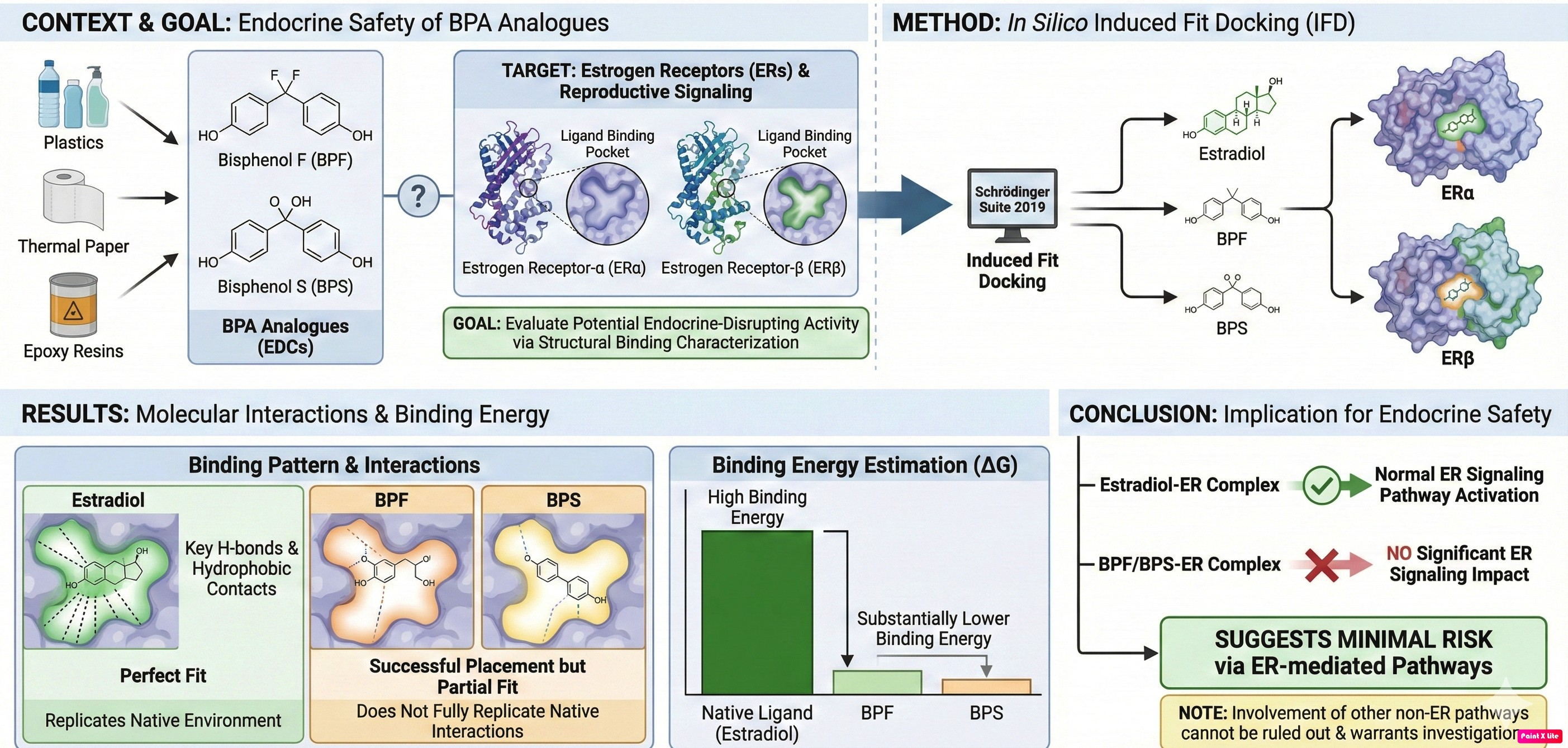
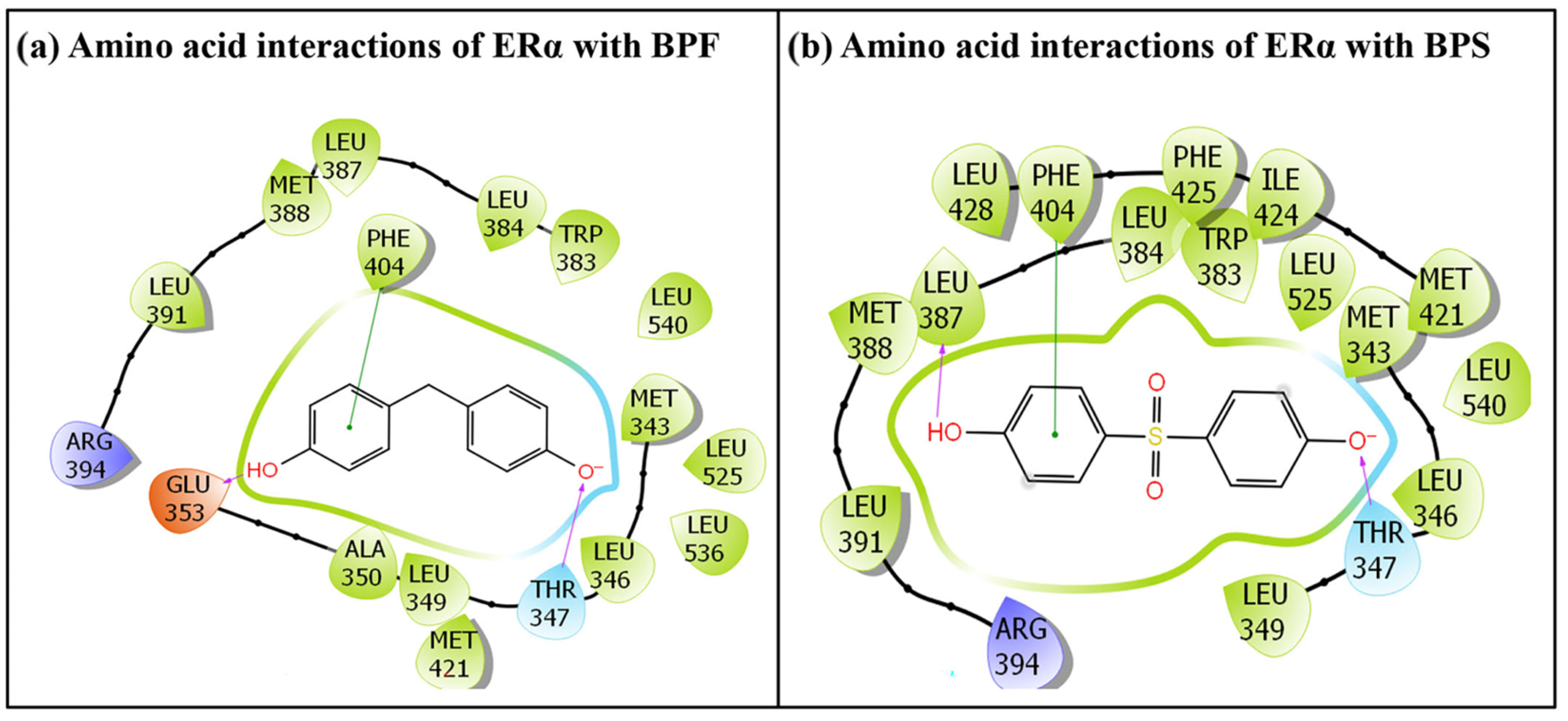
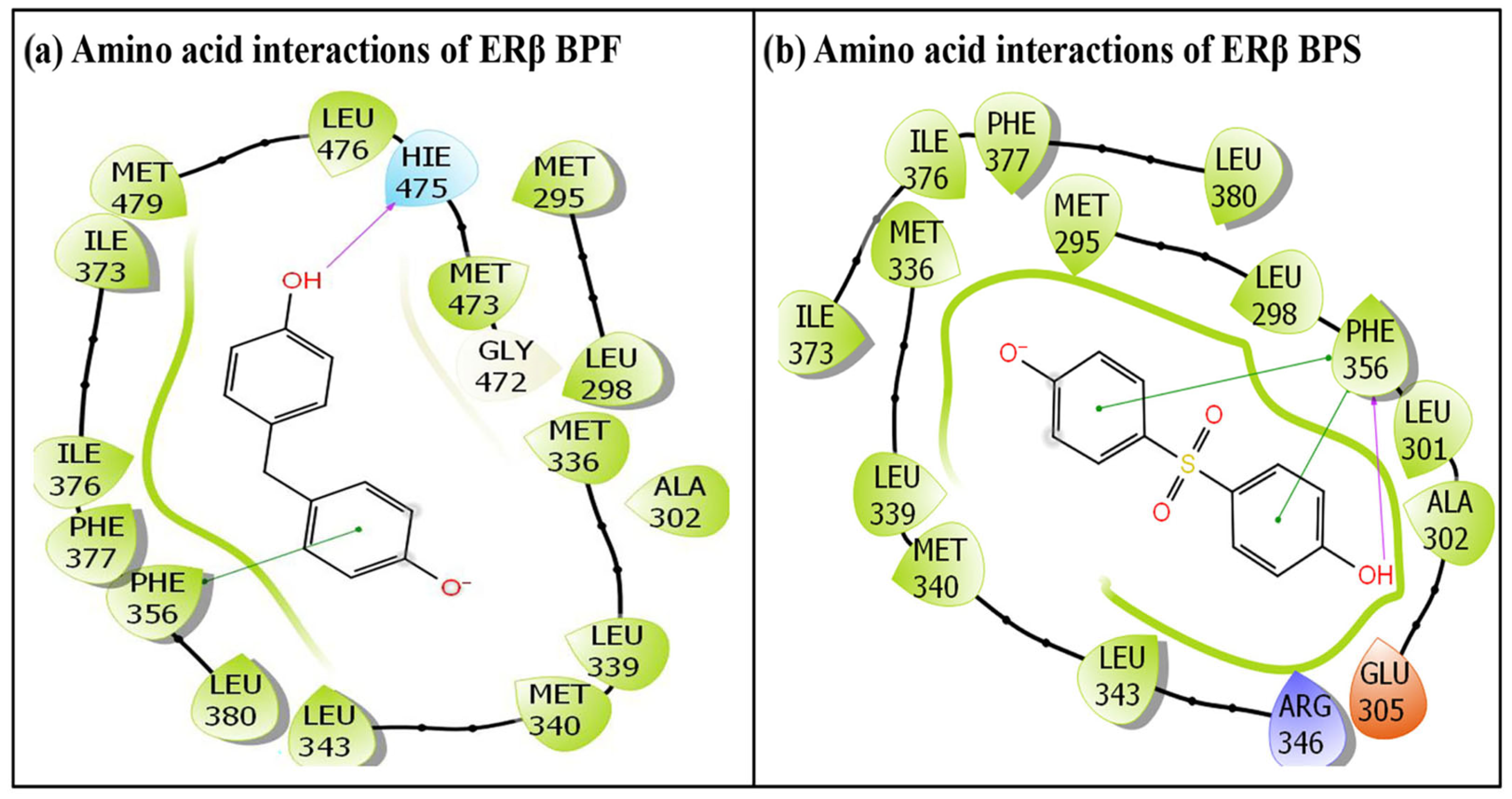
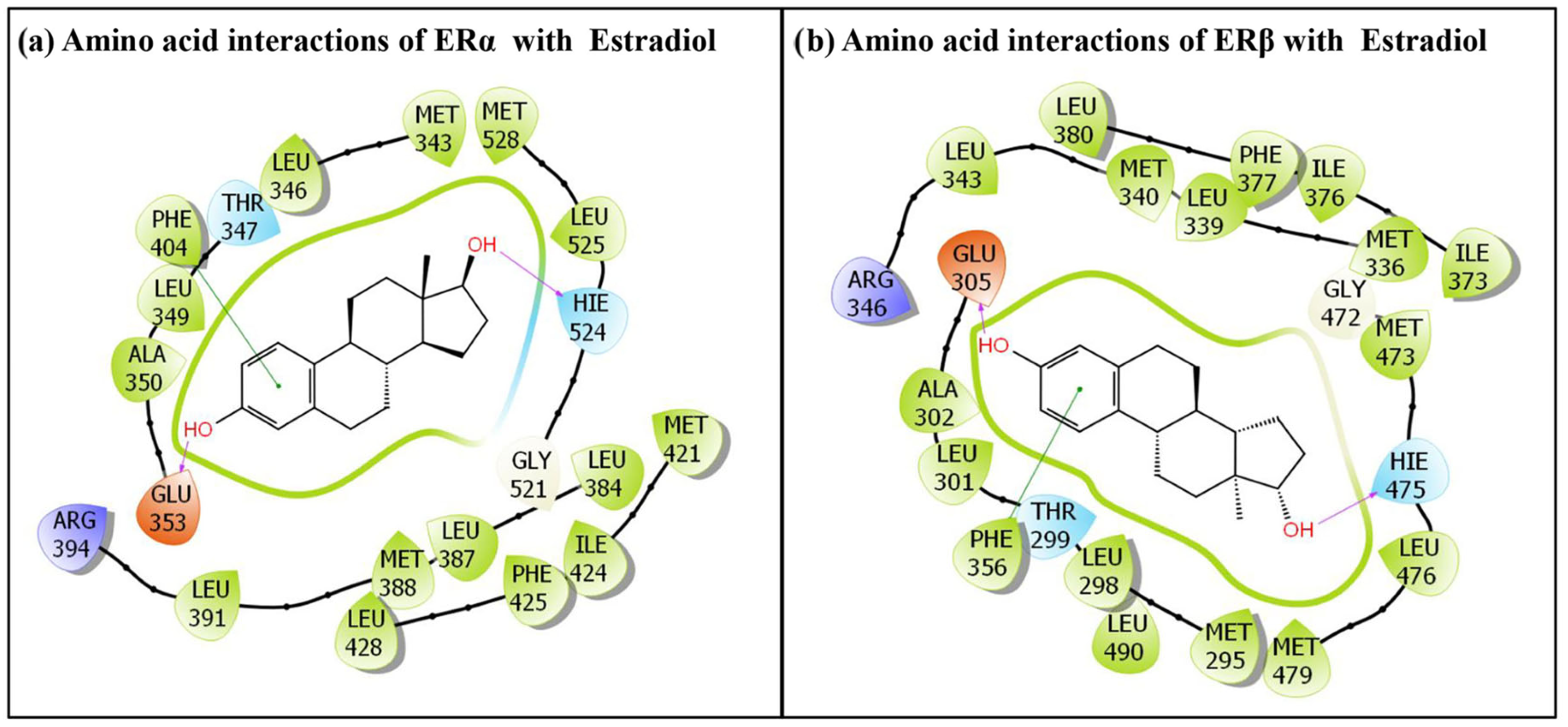
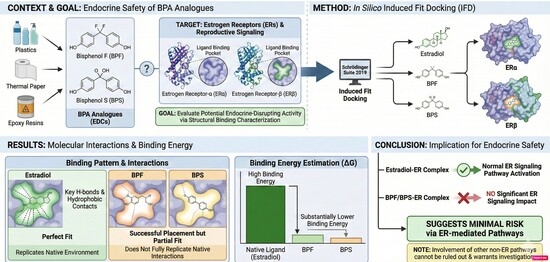
- BPF and BPS demonstrate the ability to bind ERα and ERβ, but fail to reproduce the binding interactions of the native ligand, estradiol.
- Both compounds exhibit substantially lower binding energies than the native ligand, indicating reduced receptor affinity.
- These interactions result in comparatively less stable ligand–receptor complexes.
- The markedly reduced binding strength suggests that BPF and BPS are unlikely to effectively activate estrogen receptor-mediated signaling pathways.
- Their intrinsic estrogenic potency via ERα and ERβ is therefore expected to be limited.
- However, potential endocrine or reproductive effects mediated through alternative target mechanisms warrant further investigation.
Abstract
1. Introduction
2. Materials and Methods
2.1. Protein Preparation
2.2. Ligand Preparation
2.3. Induced Fit Docking
2.4. Binding Affinity Calculations
3. Results
3.1. IFD of Bisphenols with ERα
3.1.1. IFD of BPF with ERα
3.1.2. IFD of BPS with ERα
3.2. IFD of Bisphenols with ERβ
3.2.1. IFD of BPF with ERβ
3.2.2. IFD of BPS with ERβ
4. Discussion
5. Conclusions
Author Contributions
Funding
Institutional Review Board Statement
Informed Consent Statement
Data Availability Statement
Acknowledgments
Conflicts of Interest
References
- Kodila, A.; Franko, N.; Sollner Dolenc, M. A review on immunomodulatory effects of BPA analogues. Arch. Toxicol. 2023, 97, 1831–1846. [Google Scholar] [CrossRef] [PubMed]
- Qiu, W.; Zhao, Y.; Yang, M.; Farajzadeh, M.; Pan, C.; Wayne, N.L. Actions of bisphenol A and bisphenol S on the reproductive neuroendocrine system during early development in zebrafish. Endocrinology 2016, 157, 636–647. [Google Scholar] [CrossRef] [PubMed]
- Diamanti-Kandarakis, E.; Bourguignon, J.P.; Giudice, L.C.; Hauser, R.; Prins, G.S.; Soto, A.M.; Zoeller, R.T.; Gore, A.C. Endocrine-disrupting chemicals: An Endocrine Society scientific statement. Endocr. Rev. 2009, 30, 293–342. [Google Scholar] [CrossRef] [PubMed]
- Stiefel, C.; Stintzing, F. Endocrine-active and endocrine-disrupting compounds in food—Occurrence, formation and relevance. NFS J. 2023, 31, 57–92. [Google Scholar] [CrossRef]
- Gore, A.C.; Chappell, V.A.; Fenton, S.E.; Flaws, J.A.; Nadal, A.; Prins, G.S.; Toppari, J.; Zoeller, R.T. EDC-2: The Endocrine Society’s second scientific statement on endocrine-disrupting chemicals. Endocr. Rev. 2015, 36, E1–E150. [Google Scholar] [CrossRef]
- Vandenberg, L.N.; Colborn, T.; Hayes, T.B.; Heindel, J.J.; Jacobs, D.R., Jr.; Lee, D.H.; Shioda, T.; Soto, A.M.; vom Saal, F.S.; Welshons, W.V.; et al. Hormones and endocrine-disrupting chemicals: Low-dose effects and nonmonotonic dose responses. Endocr. Rev. 2012, 33, 378–455. [Google Scholar] [CrossRef]
- Bergman, Å.; Heindel, J.J.; Jobling, S.; Kidd, K.A.; Zoeller, R.T. State of the Science of Endocrine Disrupting Chemicals—2012; World Health Organization & United Nations Environment Programme: Geneva, Switzerland, 2012. [Google Scholar]
- Chen, J.; Li, L.; Liu, M.; Wang, C.; Zhang, Y. Emerging insights into the relationship between ERS and autophagy in toxic damage caused by endocrine-disrupting chemicals. Toxicol. Res. 2025, 14, tfaf175. [Google Scholar] [CrossRef]
- Huang, R.; Ma, J.; Yao, J.; Pang, J.; Zhang, M.; Wen, L.; Wang, L.; Deng, Y.; He, X.; Zhao, C.; et al. Integrated multi-omics and network toxicology elucidate the multi-target mechanisms of environmental hormones in driving hepatocellular carcinoma. Ecotoxicol. Environ. Saf. 2025, 309, 119519. [Google Scholar] [CrossRef]
- Lekki-Porębski, S.A.; Męczyńska-Wielgosz, S.; Kruszewski, M.; Grzelak, A. Silver and polystyrene nanoparticles activate oestrogen signalling via cytoplasmic oestrogen receptor. Sci. Rep. 2025, 15, 30440. [Google Scholar] [CrossRef]
- Chen, H.; Cui, H.; Meng, Z. The nexus of environmental endocrine-disrupting chemical exposure and metabolic dysfunction-associated steatotic liver disease: An emerging public health challenge. Ecotoxicol. Environ. Saf. 2025, 309, 119513. [Google Scholar] [CrossRef]
- Abbasi, F.; Saeedi, R.; Kalantar Hormozi, M.R.; Nabipour, I.; De-la-Torre, G.E.; Azizi, M.A.; Schmidt, T.C.; Dobaradaran, S. Endocrine disrupting chemicals in packaged fruits, vegetables and cereals: Occurrence, risk assessment and estrogenicity. Sci. Total Environ. 2025, 1009, 181016. [Google Scholar] [CrossRef] [PubMed]
- Engelhardt, J.; Struwe, N.; Jansson, A.; Kos, V.M.; Larsson, M.; Weiss, J.M. Evaluating the endocrine-disrupting and oxidative stress potential of a 50-component human-relevant complex chemical mixture using in vitro tests. J. Appl. Toxicol. 2025, 1–16. [Google Scholar] [CrossRef] [PubMed]
- Haßmann, U.; Gölz, L.; Geci, R.; Stefanidis, K.; Brandt, J.L.; North, E.; Feiertag, K.; Schopfer, C.R.; Amann, S.; Melching-Kollmuss, S.; et al. Integrative assessment of endocrine disruption: From in vitro mechanisms to species extrapolation—Highlights of the German Pharma-Tox Summit 2025. Toxicology 2025, 520, 154370. [Google Scholar] [CrossRef] [PubMed]
- Liu, Z.; Wang, J.; Li, Y.; Zeng, Y.; Wu, Q.; Zhu, X.; Zhou, T.; Deng, Q. Exploring the impact of endocrine-disrupting chemicals on erectile dysfunction through network toxicology and machine learning. BMC Pharmacol. Toxicol. 2025, 26, 203. [Google Scholar] [CrossRef]
- Mínguez-Alarcón, L.; Gaskins, A.J.; Meeker, J.D.; Braun, J.M.; Chavarro, J.E. Endocrine-disrupting chemicals and male reproductive health. Fertil. Steril. 2023, 120, 1138–1149. [Google Scholar] [CrossRef]
- Czarnywojtek, A.; Jaz, K.; Ochmańska, A.; Zgorzalewicz-Stachowiak, M.; Czarnocka, B.; Sawicka-Gutaj, N.; Ziółkowska, P.; Krela-Kaźmierczak, I.; Gut, P.; Florek, E.; et al. The effect of endocrine disruptors on the reproductive system—Current knowledge. Eur. Rev. Med. Pharmacol. Sci. 2021, 25, 4930–4940. [Google Scholar] [CrossRef]
- Alex, S.A.; George, N.K.; Guardiola, J.; Clegg, D. The threat of micro-/nanoplastics to male fertility: A review of the data and the importance of future research. Int. J. Mol. Sci. 2025, 26, 11457. [Google Scholar] [CrossRef]
- Li, Z.; Hong, X.; Liu, W.; Zhang, L.; Wang, J.; Sang, W.; Yan, S.; Zha, J. Is reproductive toxicity of bisphenols an adverse outcome from insulin homeostasis disruption in fish? Environ. Pollut. 2025, 390, 127495. [Google Scholar] [CrossRef]
- Jiang, P.; Wang, W.; Li, J.; Li, Y.; Ji, X.; Yue, H. Effects of bisphenol compounds on endocrine disruption and reproductive function: From epidemiological analysis to animal exposure. J. Environ. Sci. 2026, 160, 537–547. [Google Scholar] [CrossRef]
- Liao, C.; Kannan, K. High levels of bisphenol A in paper currencies from several countries, and implications for dermal exposure. Environ. Sci. Technol. 2011, 45, 6761–6768. [Google Scholar] [CrossRef]
- Rochester, J.R. Bisphenol A and human health: A review of the literature. Reprod. Toxicol. 2013, 42, 132–155. [Google Scholar] [CrossRef]
- Rubin, B.S. Bisphenol A: An endocrine disruptor with widespread exposure and multiple effects. J. Steroid Biochem. Mol. Biol. 2011, 127, 27–34. [Google Scholar] [CrossRef] [PubMed]
- Cull, M.E.; Winn, L.M. Bisphenol A and its potential mechanism of action for reproductive toxicity. Toxicology 2025, 511, 154040. [Google Scholar] [CrossRef] [PubMed]
- McLachlan, J.A. Environmental signaling: From environmental estrogens to endocrine-disrupting chemicals and beyond. Andrology 2016, 4, 684–694. [Google Scholar] [CrossRef] [PubMed]
- Bruks, S. Metabolism and Estrogenicity of Bisphenol A and Its Analogues: A Comparative Analysis of Experimental and Computational Data on Metabolism of Bisphenols. Bachelor’s Thesis, Umeå University, Umeå, Sweden, 2020. [Google Scholar]
- Björnsdotter, M.K.; de Boer, J.; Ballesteros-Gómez, A. Bisphenol A and replacements in thermal paper: A review. Chemosphere 2017, 182, 691–706. [Google Scholar] [CrossRef]
- Lehmler, H.J.; Liu, B.; Gadogbe, M.; Bao, W. Exposure to bisphenol A, bisphenol F, and bisphenol S in U.S. adults and children: The National Health and Nutrition Examination Survey 2013–2014. ACS Omega 2018, 3, 6523–6532. [Google Scholar] [CrossRef]
- Liao, C.; Liu, F.; Alomirah, H.; Loi, V.D.; Mohd, M.A.; Moon, H.B.; Nakata, H.; Kannan, K. Bisphenol S in urine from the United States and seven Asian countries: Occurrence and human exposures. Environ. Sci. Technol. 2012, 46, 6860–6866. [Google Scholar] [CrossRef]
- Liao, C.; Liu, F.; Kannan, K. Bisphenol S, a new bisphenol analogue, in paper products and currency bills and its association with bisphenol A residues. Environ. Sci. Technol. 2012, 46, 6515–6522. [Google Scholar] [CrossRef]
- Rochester, J.R.; Bolden, A.L. Bisphenol S and F: A systematic review and comparison of the hormonal activity of bisphenol A substitutes. Environ. Health Perspect. 2015, 123, 643–650. [Google Scholar] [CrossRef]
- Rocha, B.A.; Azevedo, L.F.; Gallimberti, M.; Campiglia, A.D.; Barbosa, F., Jr. High levels of bisphenol A and bisphenol S in Brazilian thermal paper receipts and estimation of daily exposure. J. Toxicol. Environ. Health A 2015, 78, 1181–1188. [Google Scholar] [CrossRef]
- Andújar, N.; Gálvez-Ontiveros, Y.; Zafra-Gómez, A.; Rodrigo, L.; Álvarez-Cubero, M.J.; Aguilera, M.; Monteagudo, C.; Rivas, A. Bisphenol A analogues in food and their hormonal and obesogenic effects: A review. Nutrients 2019, 11, 2136. [Google Scholar] [CrossRef] [PubMed]
- García-Córcoles, M.T.; Cipa, M.; Rodríguez-Gómez, R.; Rivas, A.; Olea-Serrano, F.; Vílchez, J.L.; Zafra-Gómez, A. Determination of bisphenols with estrogenic activity in plastic packaged baby food samples using solid–liquid extraction and clean-up with dispersive sorbents followed by GC–MS/MS analysis. Talanta 2018, 178, 441–448. [Google Scholar] [CrossRef] [PubMed]
- Harnett, K.G.; Chin, A.; Schuh, S.M. BPA and BPA alternatives BPS, BPAF, and TMBPF induce cytotoxicity and apoptosis in rat and human stem cells. Ecotoxicol. Environ. Saf. 2021, 216, 112210. [Google Scholar] [CrossRef] [PubMed]
- Gramec Skledar, D.; Peterlin Mašič, L. Bisphenol A and its analogs: Do their metabolites have endocrine activity? Environ. Toxicol. Pharmacol. 2016, 47, 182–199. [Google Scholar] [CrossRef]
- Sheikh, I.A. Stereoselectivity and the potential endocrine-disrupting activity of di-(2-ethylhexyl) phthalate against human progesterone receptor: A computational perspective. J. Appl. Toxicol. 2016, 36, 741–747. [Google Scholar] [CrossRef]
- Sheikh, I.A.; Beg, M.A. Structural binding interactions of tetrabromobisphenol A with sex steroid nuclear receptors and sex hormone-binding globulin. J. Appl. Toxicol. 2020, 40, 832–842. [Google Scholar] [CrossRef]
- Qin, W.P.; Li, C.H.; Guo, L.H.; Ren, X.M.; Zhang, J.Q. Binding and activity of polybrominated diphenyl ether sulfates to thyroid hormone transport proteins and nuclear receptors. Environ. Sci. Process. Impacts 2019, 21, 950–956. [Google Scholar] [CrossRef]
- Usman, A.; Ahmad, M. Corrigendum to “Computational study suggesting reconsideration of BPA analogues based on their endocrine-disrupting potential estimated by binding affinities to nuclear receptors”. Ecotoxicol. Environ. Saf. 2019, 183, 109487. [Google Scholar] [CrossRef]
- Norouzi, S.; Nahmiach, N.; Perez, G.; Zhu, Y.; Peslherbe, G.H.; Muir, D.C.G.; Zhang, X. Molecular docking for screening chemicals of environmental health concern: Insights from a case study on bisphenols. Environ. Sci. Process. Impacts 2025, 27, 3192–3207. [Google Scholar] [CrossRef]
- Goksøyr, S.Ø.; Yadetie, F.; Johansen, C.T.; Jacobsen, R.G.; Lille-Langøy, R.; Goksøyr, A.; Karlsen, O.A. Interaction of bisphenol A and its analogs with estrogen and androgen receptors from Atlantic cod (Gadus morhua). Environ. Sci. Technol. 2024, 58, 14098–14109. [Google Scholar] [CrossRef]
- Le Fol, V.; Aït-Aïssa, S.; Sonavane, M.; Porcher, J.M.; Balaguer, P.; Cravedi, J.P.; Zalko, D.; Brion, F. In vitro and in vivo estrogenic activity of BPA, BPF and BPS in zebrafish-specific assays. Ecotoxicol. Environ. Saf. 2017, 142, 150–156. [Google Scholar] [CrossRef]
- Kubota, A.; Hirano, M.; Yoshinouchi, Y.; Chen, X.; Nakamura, M.; Wakayama, Y.; Lee, J.S.; Nakata, H.; Iwata, H.; Kawai, Y.K. In vivo and in silico assessments of estrogenic potencies of bisphenol A and its analogs in zebrafish (Danio rerio): Validity of in silico approaches to predict in vivo effects. Comp. Biochem. Physiol. C Toxicol. Pharmacol. 2023, 269, 109619. [Google Scholar] [CrossRef]
- Kojima, H.; Takeuchi, S.; Sanoh, S.; Okuda, K.; Kitamura, S.; Uramaru, N.; Sugihara, K.; Yoshinari, K. Profiling of bisphenol A and eight of its analogues on transcriptional activity via human nuclear receptors. Toxicology 2019, 413, 48–55. [Google Scholar] [CrossRef]



| Receptor | Ligand | Number of Interacting Residues | IFD Score | Docking Score (Kcal/mol) | Glide Score (Kcal/mol) | MMGB-SA (Kcal/mol) |
|---|---|---|---|---|---|---|
| ERα | BPF | 17 | −535.13 | −7.50 | −8.55 | −46.46 |
| ERα | BPS | 17 | −534.96 | −7.60 | −8.11 | −48.94 |
| ERα | Estradiol | 20 | −540.48 | −10.82 | −10.82 | −116.2 |
| ERβ | BPF | 17 | −516.33 | −7.05 | −8.10 | −48.48 |
| ERβ | BPS | 15 | −516.11 | −8.31 | −8.83 | −51.23 |
| ERβ | Estradiol | 22 | −520.69 | −11.20 | −11.20 | −124.00 |
Disclaimer/Publisher’s Note: The statements, opinions and data contained in all publications are solely those of the individual author(s) and contributor(s) and not of MDPI and/or the editor(s). MDPI and/or the editor(s) disclaim responsibility for any injury to people or property resulting from any ideas, methods, instructions or products referred to in the content. |
© 2026 by the authors. Licensee MDPI, Basel, Switzerland. This article is an open access article distributed under the terms and conditions of the Creative Commons Attribution (CC BY) license.
Share and Cite
Sheikh, I.A.; Bhat, I.U.H.; Zughaibi, T.A.; Ghorab, M.A.; Rehan, M.; Almutairi, M.F.; Beg, M.A.; Tariq, Z.; Kadry, A.R.M. Structural Insights into the Interaction of Bisphenol F (BPF) and Bisphenol S (BPS) with Estrogen Receptors for Endocrine Safety Assessment. Toxics 2026, 14, 262. https://doi.org/10.3390/toxics14030262
Sheikh IA, Bhat IUH, Zughaibi TA, Ghorab MA, Rehan M, Almutairi MF, Beg MA, Tariq Z, Kadry ARM. Structural Insights into the Interaction of Bisphenol F (BPF) and Bisphenol S (BPS) with Estrogen Receptors for Endocrine Safety Assessment. Toxics. 2026; 14(3):262. https://doi.org/10.3390/toxics14030262
Chicago/Turabian StyleSheikh, Ishfaq Ahmad, Irshad Ul Haq Bhat, Torki A. Zughaibi, Mohamed A. Ghorab, Mohd Rehan, Majid Farhan Almutairi, Mohd Amin Beg, Zainab Tariq, and Abdel Rezak M. Kadry. 2026. "Structural Insights into the Interaction of Bisphenol F (BPF) and Bisphenol S (BPS) with Estrogen Receptors for Endocrine Safety Assessment" Toxics 14, no. 3: 262. https://doi.org/10.3390/toxics14030262
APA StyleSheikh, I. A., Bhat, I. U. H., Zughaibi, T. A., Ghorab, M. A., Rehan, M., Almutairi, M. F., Beg, M. A., Tariq, Z., & Kadry, A. R. M. (2026). Structural Insights into the Interaction of Bisphenol F (BPF) and Bisphenol S (BPS) with Estrogen Receptors for Endocrine Safety Assessment. Toxics, 14(3), 262. https://doi.org/10.3390/toxics14030262