


Abstract
Background: Supply chain management (SCM) research has expanded across the Middle East and North Africa (MENA), yet the field remains fragmented. Limited synthesis exists on how regional conditions shape research themes, theories, and methods. Methods: This study applies the PRISMA 2020 protocol to review SCM articles indexed in Scopus and Web of Science from January 2000 to March 2025. After screening and eligibility assessment, 512 peer-reviewed studies were retained. Bibliometric mapping and thematic coding were used to identify publication trends, research streams, theoretical lenses, and methodological patterns. Results: SCM research increased sharply after 2015, reflecting national diversification agendas, logistics reform, digitalization, and exposure to global supply chain disruptions. Three dominant streams were identified: resilience, sustainability, and digital transformation. Research output is concentrated in Saudi Arabia and the United Arab Emirates, while cross-country comparative studies remain scarce. Empirical studies rely mainly on cross-sectional surveys and SEM-based analysis, with limited longitudinal, qualitative, mixed-method, and comparative work across the region. Conclusions: The study develops an integrative SCM capability framework linking regional structural conditions, capability development, and supply chain outcomes. The findings support managers and policymakers seeking resilient, sustainable, and digitally enabled supply chains, and define clear future research priorities for the MENA region.
1. Introduction
Supply chain management (SCM) has become a central research area as firms and governments seek resilient, sustainable, and digitally enabled logistics systems in an increasingly volatile global economy [1]. Recent disruptions, climate pressures, and rapid digitalization have intensified the need to understand how supply chains adapt to institutional change and operational uncertainty [2]. Within this evolving context, scholars have increasingly examined how regional conditions shape supply chain capability development, governance structures, and operational performance [3]. However, the geographical distribution of SCM scholarship remains uneven, and several emerging regions remain under-synthesized despite their growing strategic importance in global trade networks [4]. The Middle East and North Africa (MENA) region represents one such distinctive context. The MENA region represents more than a geographic category; it constitutes a complex supply chain environment shaped by several structural conditions. These include state-led economic diversification programs, exposure to major maritime chokepoints such as the Suez Canal and the Strait of Hormuz, high dependence on imported food and industrial inputs, increasing climate stress affecting logistics infrastructure, and rapid digital transformation initiatives supported by national development agendas [5]. In addition, cultural and institutional factors such as halal governance frameworks, relationship-based business networks, and varying regulatory environments further influence supply chain organization and coordination across the region [6]. Together, these characteristics create a unique setting in which supply chain capabilities evolve under strong institutional steering and policy-driven modernization. The temporal scope of this review, spanning 2000 to March 2025, reflects major structural changes in both SCM scholarship and regional economic transformation. The year 2000 marks the early period of SCM institutionalization and globalization in emerging economies, when logistics integration, outsourcing, and supply chain coordination began receiving broader academic attention [7].
Research activity accelerated after 2015, coinciding with major national reform initiatives, large-scale logistics investments, and the growing influence of digital technologies and resilience-oriented supply chain strategies [8]. The endpoint of March 2025 represents the final search cutoff used for database extraction during the systematic review process. Despite the growing number of studies addressing supply chains in the region, the literature remains fragmented. Three key gaps motivate the present review. First, there is no comprehensive region-wide synthesis of SCM scholarship covering the full MENA region across countries, industries, and methodological approaches. Second, existing studies rarely integrate theoretical perspectives, thematic research streams, and methodological trends within a single analytical framework. Third, limited attention has been given to explaining how the institutional and structural characteristics of MENA modify or extend established SCM theories, particularly dynamic capabilities and institutional perspectives that dominate the broader supply chain literature [9]. As a result, the cumulative development of knowledge about supply chains in this region remains incomplete.
This review addresses these gaps through a systematic synthesis of the academic literature on SCM in the MENA region. Specifically, the study applies the PRISMA 2020 protocol to identify and analyze peer-reviewed publications indexed in Scopus and Web of Science between 2000 and March 2025. The analysis combines bibliometric mapping and thematic coding to examine publication trends, theoretical foundations, research methods, and emerging thematic clusters across the regional literature.
This review makes three contributions. First, it provides the first region-wide synthesis of SCM scholarship in the MENA region across 512 peer-reviewed studies. Second, it develops a context-embedded explanation of how state-led reform, institutional heterogeneity, and disruption exposure reshape the interaction among resilience, sustainability, and digital transformation in regional supply chains. Third, it offers a practical framework that helps managers and policymakers align supply chain capability development with regional logistics reform and evolving supply chain risk exposure.
2. Literature Review and Theoretical Background
2.1. The Intellectual Evolution of Supply Chain Management
Supply chain management (SCM) has evolved from a logistics coordination function into a strategic discipline concerned with the integration of procurement, production, distribution, and information flows across interconnected networks of firms [10]. Early SCM research focused primarily on operational efficiency, inventory management, and cost optimization within vertically integrated production systems. As globalization intensified and supply networks expanded across regions, scholarly attention shifted toward supplier relationships, inter-organizational coordination, and network-based supply chain structures [11]. Over the past decade, SCM research has increasingly focused on how supply chains adapt to disruption, sustainability pressures, and technological transformation. Disruption events, including geopolitical instability and global crises, have encouraged scholars to examine resilience and risk management strategies that enable supply chains to maintain operational continuity under uncertainty [12]. In parallel, sustainability concerns related to climate change, regulatory compliance, and resource efficiency have broadened the scope of SCM research beyond operational performance to include environmental and social outcomes [13]. Digital technologies such as big data analytics, artificial intelligence, blockchain, and Internet-of-Things (IoT) systems have also reshaped supply chain coordination by enabling real-time information sharing, predictive analytics, and improved decision-making across supply networks [14].
Despite these developments, the geographical distribution of SCM scholarship remains uneven. Much of the existing literature concentrates on developed economies, where institutional environments, technological capabilities, and infrastructure conditions differ significantly from those in emerging regions [15]. As a result, the applicability of dominant SCM theories to other institutional contexts remains an open question.
2.2. Theoretical Foundations: From Resources to Institutions
SCM research draws on several theoretical frameworks that explain how firms develop capabilities and coordinate activities across supply networks. Among the most widely used perspectives are the resource-based view (RBV), dynamic capabilities theory, and institutional theory. The resource-based view suggests that organizational performance depends on the development and deployment of valuable, rare, inimitable, and non-substitutable resources [16]. Within supply chains, such resources include logistics infrastructure, technological capabilities, supplier relationships, and organizational knowledge that enable firms to coordinate complex operational activities effectively [17]. However, RBV largely assumes relatively stable competitive environments and therefore provides limited explanation for how firms adapt to rapidly changing supply chain conditions.
To address this limitation, scholars increasingly rely on dynamic capabilities theory, which emphasizes the ability of organizations to integrate, build, and reconfigure internal and external resources in response to environmental change [18]. Dynamic capabilities allow firms to adapt supply chain structures, adjust sourcing strategies, and redesign logistics networks when facing disruptions or technological shifts. Complementing these perspectives, institutional theory highlights how regulatory frameworks, cultural norms, and governance structures influence organizational behavior [19]. Supply chains operate within institutional environments that shape managerial decisions, technology adoption, and sustainability practices. Institutional pressures, whether regulatory, normative, or mimetic, can therefore significantly influence supply chain configuration and strategic priorities.
Together, these theoretical perspectives provide a foundation for understanding how supply chain capabilities evolve under different institutional conditions. This is particularly relevant for the MENA region, where policy-driven logistics reforms, institutional diversity, and exposure to global trade disruptions influence the development of supply chain strategies and organizational capabilities. Table 1 summarizes the major theoretical perspectives commonly used in SCM research.
Table 1.
Major theoretical perspectives used in supply chain management research.
2.3. Resilience as Structural Capability
Resilience has emerged as a central concept in supply chain management, particularly in response to increasing disruption risks, geopolitical uncertainty, and climate-related shocks. Early research framed resilience primarily as the ability of supply chains to recover after disruptions. More recent work adopts a broader perspective that emphasizes preparedness, absorption capacity, adaptive response, and long-term transformation [4,16]. Within this view, resilience is not only a reactive recovery mechanism but also a structural capability embedded in supply chain design and governance.
A growing body of literature highlights several operational mechanisms that enhance resilience. Network redundancy and supplier diversification reduce vulnerability by distributing risk across multiple supply sources [16]. Relational governance also plays a key role. Trust-based collaboration and information sharing among supply chain partners can accelerate recovery and improve coordination during disruptions [13,17]. At the same time, digital technologies increasingly support resilience by improving supply chain visibility and predictive capabilities. For example, digital integration and real-time data platforms enable firms to detect disruptions earlier and adjust logistics operations more effectively during crises such as the COVID-19 pandemic [3,4].
Despite these advances, resilience investments often introduce economic trade-offs. Lean supply chain models emphasize efficiency, cost minimization, and inventory reduction, whereas resilient supply chains require flexibility, redundancy, and adaptive capacity [18,20]. Balancing efficiency and resilience therefore remain a persistent managerial challenge, particularly in price-sensitive markets. This tension is especially relevant in the MENA region, where many countries rely heavily on imported food, energy, and industrial inputs. In such contexts, supply chain resilience is closely linked to national priorities such as food security, energy continuity, and logistics stability.
Humanitarian logistics research further expands the resilience discussion by emphasizing the role of coordination mechanisms in environments characterized by institutional fragility or crisis conditions [14]. In these contexts, resilience depends not only on firm-level capabilities but also on governance structures that enable coordination among public institutions, humanitarian organizations, and private logistics actors.
However, an important limitation of the existing resilience literature is its predominant focus on firm-level mechanisms, such as supplier diversification, collaboration, and operational flexibility. Comparatively little attention has been given to how macro-level institutional conditions, including government-led infrastructure investment and logistics reform, shape the development of resilience capabilities. This gap is particularly significant in the MENA region, where state-led economic transformation programs and strategic infrastructure investments play a central role in supply chain modernization.
Consequently, resilience in the MENA context cannot be understood solely through firm-level strategies. Instead, it must also be examined through the interaction between organizational capabilities, institutional governance, and large-scale infrastructure development. Understanding this interaction is essential for explaining how resilience capabilities evolve within centrally coordinated or transformation-driven logistics systems.
The key resilience studies summarized in Table 2 include work on disruption response, digital integration, collaboration, humanitarian logistics, and geopolitical risk [3,4,6,16,17,19,20,21,22,23,24,25,26].
Table 2.
Key resilience studies relevant to structural capability development.
2.4. Sustainability Under Climate and Resource Pressure
Sustainability in supply chain management has evolved from a regulatory compliance issue to a strategic operational constraint shaping supply chain design and governance. Increasing exposure to climate risks including extreme heat, water scarcity, and ecosystem degradation affects logistics infrastructure, transport reliability, cold-chain systems, and asset life cycles. As a result, the intersection between climate adaptation and supply chain management has become a central research theme in recent years [19]. Contemporary SCM research therefore examines how environmental constraints influence sourcing strategies, logistics network configuration, and long-term supply chain viability.
Recent literature highlights the growing integration of sustainability considerations into supply chain planning and operational decision making. Rather than focusing only on environmental reporting, scholars increasingly examine how sustainability goals translate into structural supply chain design choices, including carbon-neutral logistics systems, low-emission transportation modes, and resource-efficient materials management. This shift reflects the recognition that environmental constraints now influence not only corporate responsibility strategies but also operational performance and supply chain risk exposure.
A major development in this area is the increasing emphasis on circular economy and closed-loop supply chains. Circular supply chain models aim to reduce resource consumption and waste generation through practices such as remanufacturing, product reuse, reverse logistics, and recycling systems [20]. These approaches are particularly relevant in resource-constrained environments where landfill capacity, water availability, and imported raw materials represent strategic vulnerabilities. In such contexts, closed-loop supply chains provide mechanisms for improving resource efficiency while reducing environmental impacts.
Another emerging dimension of sustainability in supply chains concerns Environmental, Social, and Governance (ESG) disclosure and transparency requirements. Sustainability reporting frameworks increasingly extend beyond firm boundaries, requiring organizations to collect and verify environmental and social performance data across their supply networks. Consequently, supply chain partners must coordinate sustainability metrics, disclosure standards, and assurance processes. Recent operations management research therefore treats ESG reporting not only as a corporate governance issue but also as a supply chain information management problem involving data transparency, coordination, and monitoring across multiple organizational tiers.
An important conceptual shift in the literature is the growing recognition that sustainability and resilience are closely interconnected rather than independent supply chain priorities. Research on viable and adaptive supply chains suggests that long-term supply chain survival depends on the simultaneous integration of resilience and sustainability capabilities [21]. Climate-induced disruptions including extreme temperatures, water shortages, and environmental regulation can force supply chains to reconfigure logistics networks, sourcing strategies, and operational processes. In regions characterized by climate stress and resource scarcity, sustainability strategies therefore contribute directly to supply chain resilience by reducing environmental risks and improving long-term system adaptability.
These dynamics are particularly relevant in the MENA region. Many countries in the region face significant climate vulnerability, high energy consumption in logistics operations, and strong dependence on imported food and industrial inputs. At the same time, governments increasingly promote sustainability policies as part of broader economic diversification and industrial modernization strategies. Consequently, sustainability initiatives in regional supply chains often emerge through a combination of environmental pressures, policy incentives, and technological innovation.
Recent MENA studies on sustainability capability development are summarized in Table 3 [25,26,27,28,29,30,31,32]. These studies illustrate how sustainability practices such as green supply chain management (GSCM), reverse logistics, and decarbonization initiatives are increasingly integrated into operational and strategic supply chain decisions.
Table 3.
Recent MENA empirical studies on sustainability under climate and resource pressure in supply chains.
2.5. Digital Transformation and Technological Leapfrogging
Digital transformation has become a major driver of supply chain capability development. Advances in digital technologies enable real-time monitoring, end-to-end visibility, and data-driven decision making across complex supply networks. These capabilities improve coordination between supply chain actors and support more responsive operational planning. Research on Industry 4.0 technologies highlights their role in strengthening sensing, monitoring, and adaptive capabilities within supply chain systems [18]. Technologies such as blockchain, artificial intelligence, and digital twins increasingly support this transformation. Blockchain improves traceability and trust across supply chain tiers, artificial intelligence enhances demand forecasting and risk detection, while digital twins enable scenario simulation and disruption modelling for logistics networks [19].
An important feature of digital transformation in emerging economies is the possibility of technological leapfrogging. Rather than upgrading legacy systems incrementally, firms and governments may adopt advanced digital infrastructure directly. Platform-based logistics ecosystems, smart ports, and integrated customs platforms allow supply chain actors to coordinate activities through shared digital environments. Such systems can accelerate information exchange, improve transparency, and strengthen inter-organizational collaboration across logistics networks [20]. In several emerging economies, these developments are supported by large-scale government investments in digital infrastructure and logistics modernization.
However, digital transformation does not automatically generate improvements in cost efficiency, sustainability, or operational performance. The benefits of digital technologies depend on organizational capabilities, data governance frameworks, and institutional support. Challenges such as cybersecurity risks, data integration problems, and shortages of digital skills may limit the effective use of advanced technologies within supply chains [21]. Consequently, digital adoption must be accompanied by changes in organizational structures, workforce capabilities, and managerial practices. Empirical research therefore emphasizes the importance of digital maturity, defined as the ability of firms to integrate technology adoption with organizational learning, competence development, and process redesign [27].
In transformation-driven economies, digitalization is often shaped by national development strategies rather than by purely firm-level efficiency considerations. Government-led initiatives, such as smart logistics platforms, digital trade corridors, and integrated customs systems, can influence technology adoption pathways and accelerate supply chain modernization. These initiatives often aim to improve national logistics competitiveness while simultaneously strengthening resilience and sustainability capabilities within supply chains.
Understanding digital transformation in the MENA region therefore requires attention to the interaction between technological innovation, institutional governance, and structural supply chain reform. Digital technologies do not operate in isolation but interact with policy frameworks, infrastructure investments, and regional economic transformation agendas. To synthesize the literature on this topic, Table 4 summarizes global and MENA studies on digital transformation, Industry 4.0, blockchain, analytics, and smart logistics platforms [3,6,18,19,22,23,33,34,35,36].
Table 4.
Key research on digital transformation and technological leapfrogging in supply chains.
2.6. Structural Characteristics of the MENA Context
The MENA region has structural conditions that produce a different supply chain design and capability prioritization. In contrast to market-driven economies where efficiency and cost optimization reign supreme in SCM strategy, many MENA (Middle East and North African) economies function within state-led diversification agendas. Governments are also pillars of logistics infrastructure, ports expansion and digital platforms. This interplay of institutions is behind coordinated mechanisms and rapid (and more centralized) modernization in the region [28,29]. Hydrocarbon revenue dependence has dominated industrial structures for decades, with diversification programs aiming to move the logistics industry into greenery and light. Conversely, high reliance on food imports makes MENA economies structurally vulnerable to global price volatility and supply disruptions. Based on empirical evidence from Saudi Arabia and the broader Arab region, integration and strategic storage are critical to ensuring continuous food supply [30]. Particularly, the vulnerability is exacerbated by climate stress and as projections suggest that under changing conditions import dependency will keep growing [31,37].
Regional supply chains are also affected by geopolitical exposure and strategic maritime positioning. Systemic spillovers are also produced by maritime instability, with disruptions of vital chokepoints like the Suez Canal illustrating this point [21]. These conditions have turned resilience from a competitive advantage into a structural necessity. Moreover, halal compliance systems influence traceability and assurance mechanisms through cultural and religious governance frameworks [33].
Digital national agendas in Gulf economies have accelerated the adoption of smart logistics platforms and blockchain-based trade systems, driven by institutional coordination rather than narrow firm-level optimizer [22]. All of these structural features taken together suggest that capability prioritization in MENA places greater emphasis on resilience, integration, governance alignment and digital modernization than it does on cost minimization alone. Table 5 presents thematic distribution of SCM research streams in the MENA region (N = 512).
Table 5.
Thematic distribution of SCM research streams in the MENA region.
2.7. Thematic and Methodological Synthesis of SCM Research in MENA
To synthesize the thematic evolution and methodological patterns of SCM research in the MENA region, the 512 reviewed articles were systematically coded based on their primary research focus, theoretical orientation, and analytical approach. Each study was assigned to one dominant thematic stream to avoid double counting across overlapping topics. Table 6 presents the distribution of research clusters, frequency counts, period dominance, and dominant methodological approaches observed in the literature. Because individual studies may address multiple research themes simultaneously, thematic coding allowed articles to be classified under more than one cluster. Therefore, the percentages reported in Table 6 may exceed 100%. Table 6 shows an integrated distribution of research streams, frequency counts, temporal dominance and methodological approaches.
Table 6.
Major thematic clusters in SCM research in MENA (multiple coding allowed).
To avoid double counting, each article was assigned to a single dominant thematic stream for percentage calculation. The largest thematic cluster is resilience (32.2%), followed by sustainability (27.0%), digital transformation (23.6%), and structural context (17.2%). This pattern suggests that SCM research in the MENA region is increasingly shaped by disruption risks, environmental pressures, and technology-enabled transformation. Most empirical studies rely on cross-sectional survey designs, while structural equation modelling, regression analysis, and simulation modelling are the most frequently used analytical approaches.
2.8. Integrative Conceptual Model
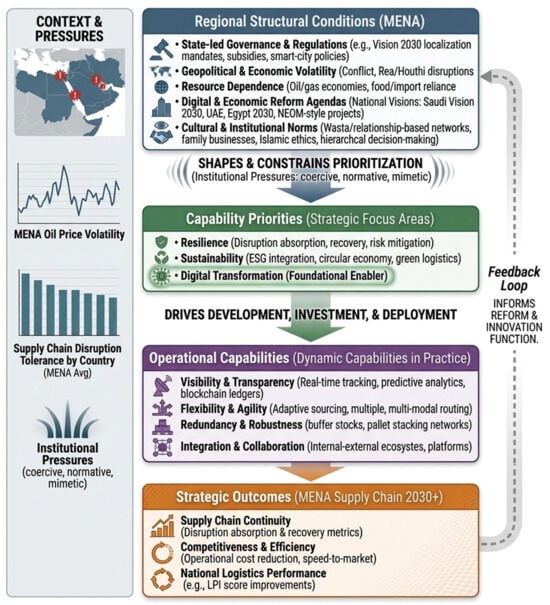
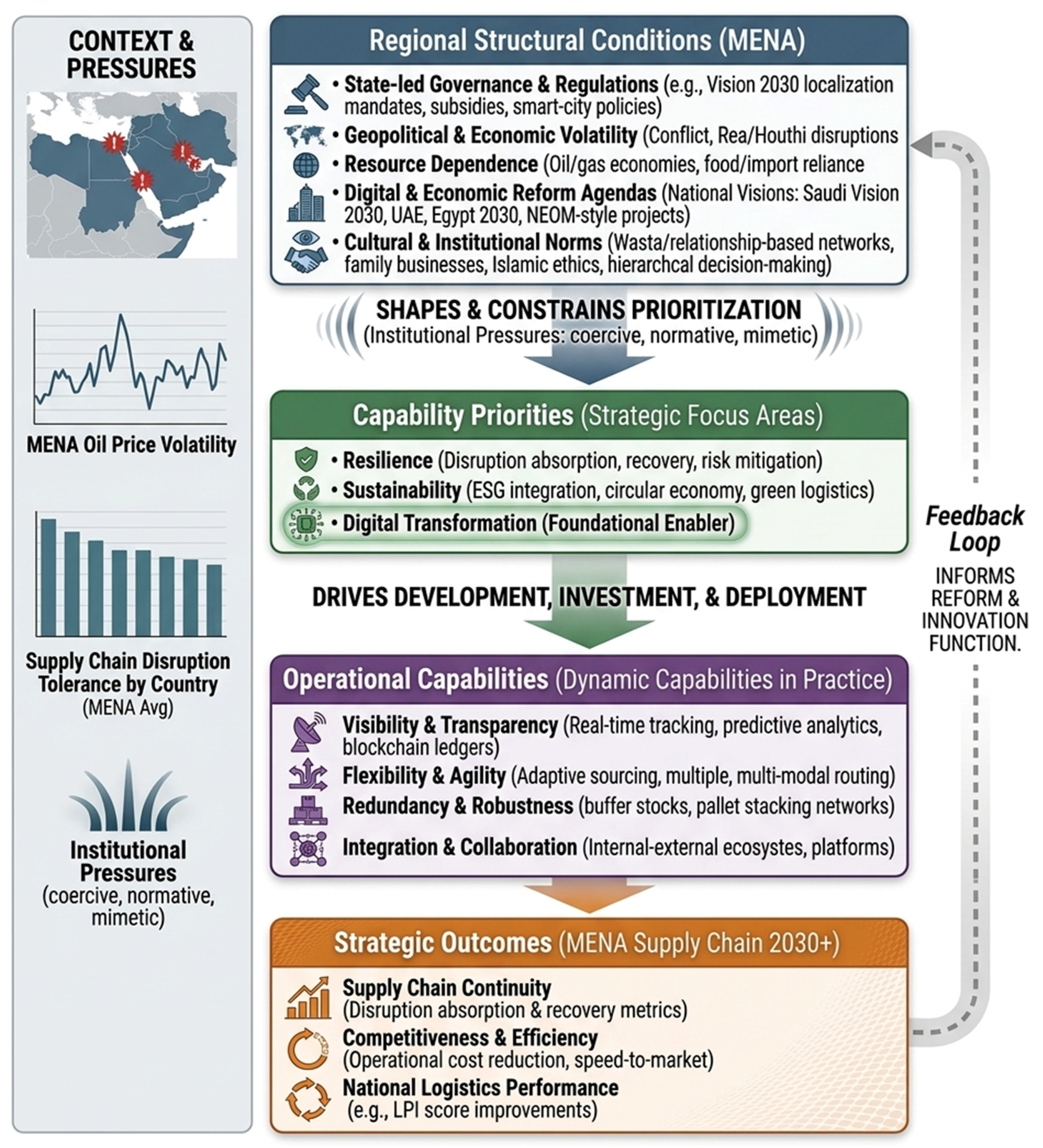
Figure 1 presents the integrative conceptual framework derived from the thematic synthesis of the reviewed literature. The framework combines insights from dynamic capabilities theory and institutional theory to explain how regional structural conditions influence supply chain capability development in the MENA region [22,34]. The framework identifies how regional structural conditions shape capability prioritization which drives operational execution and subsequently delivers strategic outcomes. The diagram is a simple, vertical flowchart of four round-corner rectangles in different colors along with direction arrows connecting them, and a dashed feedback loop emphasizing its recursive, adaptive nature.
Figure 1.
Integrative framework of supply chain capability development in the MENA region.
Figure 1 is derived from thematic frequency analysis, where resilience (31%), sustainability (28%) and digital transformation (24%) emerged as dominant capability clusters. The framework consists of four analytical layers. The first layer represents regional structural conditions, including state-led economic reforms, geopolitical volatility, resource dependence, and institutional governance structures. These contextual forces shape the strategic environment in which supply chains operate in the region. The second layer captures capability priorities, which emerge in response to these structural pressures. The literature synthesis indicates that resilience, sustainability, and digital transformation represent the three dominant capability clusters in MENA supply chains. The third layer represents operational capabilities, including supply chain visibility, flexibility, redundancy, and inter-organizational integration. These capabilities translate strategic priorities into operational practices across supply networks. The fourth layer represents strategic outcomes, including improved supply chain continuity, enhanced competitiveness, and strengthened logistics performance at the national and organizational levels.
These pressures are the key drivers that concretely define the challenges in its second layer: Capability Priorities persistence (disruption absorption and recovery), sustainability, ESG integration, circular economy and green logistics all bundled with digital transformation frameworks including IoT, Blockchain technology elements identified through 5G-enabled SCM have been determined as a foundational enabler [34]. That next level translates these priorities into operational capabilities (dynamic capabilities in practice): visibility/transparency (real-time tracing, predictive analytics), flexibility/agility (adaptive sourcing, multi-modal routing), redundancy/robustness (multi-sourcing, buffer stocks) and integration/collaboration (hybrid relational-digital ecosystems). Strategic Outcomes (the lowest tier): this produces measurable strategic outcomes across business continuity and risk management, competitiveness and efficiency improvements, economic diversification/localization to global value chain positioning (logistics hubs, increase in exports, FDI attraction).
The feedback loop, depicted with dotted lines, shows how positive effects modify structural conditions increasingly (e.g., via diversification or reduced dependency on external resources). It is also emphasized that the MENA nuances highlight the duality inside MENA by some governments, where this capital-intensive financing of digital leapfrogging is considered a priority in the GCC for years to come; however across North Africa, not only this goal differs but a distinct focus on resilience (namely labor-intense) will increasingly dominate discussions of how to sustain growth given limited opportunities to invest in hard assets [23]. It offers managers a diagnostic tool to evaluate their own practices, policymakers a blueprint for how to shape incentives and researchers a template for empirical investigations across major ports and industries. In Figure 1, SCM capabilities are embedded in the unique context of a region defined by state control, volatility, and cultural richness that endows the framework with both explanatory depth and operational guidance moving forward [35].
2.9. Research Gaps and Toward a Context-Embedded SCM Theory
Although SCM research in the MENA region has expanded significantly since 2015, several important empirical, methodological, and theoretical gaps remain [36]. First, an empirical gap exists because most studies focus on a small number of countries, particularly Saudi Arabia and the United Arab Emirates. This concentration limits the generalizability of findings across other MENA economies, including North African and conflict-affected contexts. Second, a methodological gap is evident in the dominance of cross-sectional survey designs, with limited use of longitudinal, multi-level, or comparative research designs that could capture dynamic capability development over time. Third, a theoretical gap persists because many studies apply established frameworks such as the resource-based view and dynamic capabilities without explicitly accounting for the distinctive institutional characteristics of the region, including state-led economic reforms and geopolitical volatility. Table 7 summarizes the key research gaps and theoretical implications in SCM research on the MENA region.
Table 7.
Key research gaps and theoretical implications in SCM research on the MENA region.
Addressing these gaps requires moving beyond descriptive empirical analyses toward stronger theoretical integration. In volatile and transformation-driven environments such as MENA, resilience may function as a central organizing principle rather than a supplementary operational capability. Institutional structures and government-led economic reforms can also reshape how digital transformation and sustainability initiatives are implemented across supply chains. Consequently, the MENA region provides a valuable empirical setting for examining how institutional conditions influence the evolution of supply chain capabilities [43]. By synthesizing evidence across thematic clusters between 2000 and 2025, this review develops a context-embedded framework linking structural drivers, capability priorities, and strategic supply chain outcomes.
3. Research Methodology
3.1. Research Design and Review Protocol
This study adopts a systematic literature review (SLR) design to synthesize SCM research that has been conducted in the MENA region between 2000 and March 2025. Articles published in early 2026 were included only if they were indexed online ahead of print within the database search results during the final retrieval stage. Systematic reviews are distinguished from narrative reviews due to consistent, replicable, and protocol-driven processes in recognizing, scoping, analyzing previous research [10]. The aim is, not only to review existing work but also to frame the intellectual landscape, quantify theme evolution, assess methodological patterns or highlight theoretical gaps.
This review follows the PRISMA 2020 guidelines for systematic reviews [11]. PRISMA is the guide used for making the review transparent in the identification, screening, eligibility and inclusion of studies. Its use enhances methodological rigor and decreases selection bias. More recently, PRISMA-based approaches are becoming popular in management and operations research to guarantee replicability and analytical consistency of evidence synthesis. It outlined the analytical scope, temporal boundary, database sources, inclusion and exclusion criteria, screening method and coding strategy. To ensure coherence, the scope was limited to SCM-related studies in MENA countries; this mirrored the objectives of the study, which aimed to offer a first regional output that synthesized SCM scholarship for applicable research within this defined region. We bounded the timeline from 2000 to 2025 in order to encompass the period prior to wider supply chain management adoption within our region, as well as the recent upturn in related research sparked by significant disruption events and economic reform agendas.
The methodological design combines bibliometric mapping and thematic coding. Bibliometric analysis captures structural publication patterns and intellectual clustering, while thematic coding allows deeper interpretation of research streams, theoretical lenses, and capability priorities. This dual approach strengthens analytical depth and internal validity. Table 8 summarizes the Systematic Review Protocol and Eligibility Criteria (2000–2025).
Table 8.
The Systematic Review Protocol and Eligibility Criteria.
Research design and analytical techniques were coded separately to avoid methodological double counting. While survey research represents the dominant empirical design, analytical approaches such as SEM, regression, and modelling techniques were treated as statistical tools rather than standalone methodological categories.
3.2. Data Collection and Screening Process
Scopus and Web of Science were selected because they provide high-quality indexed journals and comprehensive coverage of peer-reviewed supply chain management research. Google Scholar and regional databases were excluded due to limited filtering transparency and potential duplication of indexed records. Restricting the search to Scopus and Web of Science ensures coverage of high-quality peer-reviewed journals while maintaining methodological consistency. These databases were selected due to their comprehensive indexing of peer-reviewed journals in supply chain management, logistics, operations management, and related fields. Previous SCM systematic reviews have relied on these databases because they provide citation tracking, cross-disciplinary coverage, and high-quality indexing standards [9,10].
The search covered publications from January 2000 to March 2025. The year 2000 marks a period when global supply chains expanded significantly, and emerging markets began to feature more prominently in SCM scholarship [10]. The endpoint reflects the most recent publications available at the time of data extraction (March 2025). Search terms were conducted iteratively to capture both SCM-related concepts and regional identifiers. Keywords were variations of “supply chain,” “logistics management,” “green supply chain,” “resilient supply chain,” and “digital supply chain” with geographic markets such as Middle East, North Africa, MENA, and individual country names in the region. Searches were performed on titles, abstracts, and keywords to preserve relevance.
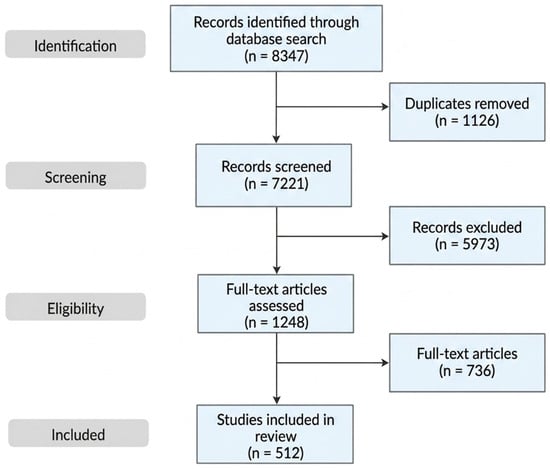
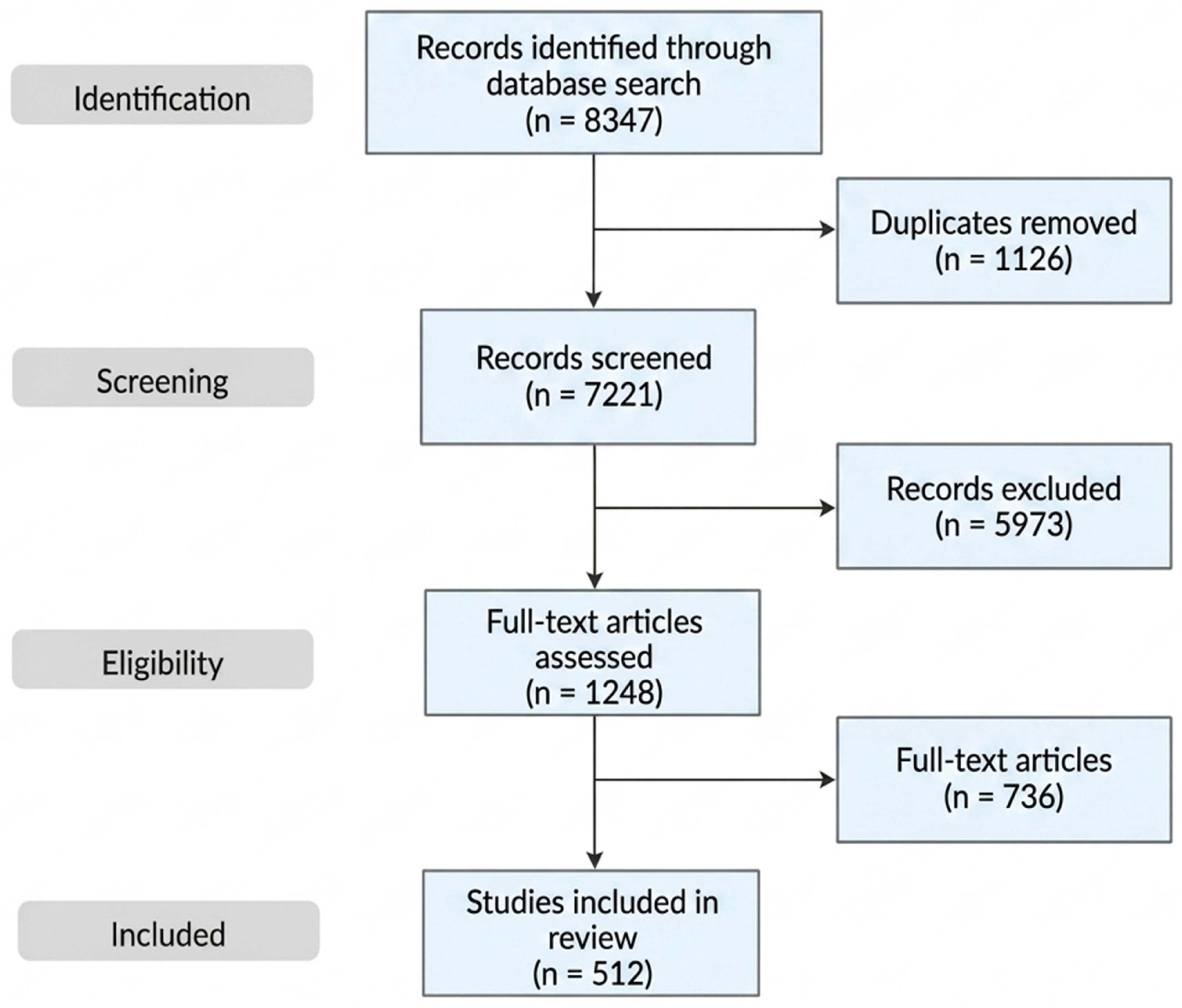
The first search yielded 8347 records. Duplicate entries 1126 across the merged databases were removed. The remaining 7221 records were screened based on title and abstract to assess relevance to supply chain management and geographic focus within the MENA region. After this phase, 1248 articles were retained for full-text evaluation.
Full-text screening assessed the relevance of each article to supply chain management and the clarity of its geographic focus within the MENA region. We excluded articles where SCM was peripheral to the analysis and purely technical engineering-based studies without managerial implications. Regional focuses that was ambiguous were also excluded. A total of 736 articles were excluded during the full-text review stage due to insufficient SCM relevance, unclear geographic scope, or lack of managerial implications. The English-language limitation aligns with indexing practices in both Scopus and Web of Science. Although this may exclude regional scholarship that only appears in Arabic or French, it enables comparability across studies and consistency in methodologically focused critique. Figure 2 presents PRISMA Flow Diagram of Article Selection (2000–2025).
Figure 2.
PRISMA 2020 Flow Diagram of Article Selection (2000–2025).
The article selection process is summarized in Figure 2 following PRISMA 2020 reporting standards [11]. The study developed a structured data extraction template to ensure consistency in coding. Each article was coded along several analytical dimensions, including publication year, journal outlet, country focus, sector, research method, theoretical framework, key constructs, and dominant thematic orientation. When multiple theoretical perspectives were used in a single study, the framework most central to the article’s research model or hypotheses was coded as the dominant theoretical lens to avoid double counting.
To ensure contextual sensitivity particularly in the identification of theoretical lenses and priority capabilities coding was conducted following a manual process. Table 9 presents the data extraction and coding framework.
Table 9.
The Systematic Review Protocol and Eligibility Criteria.
This thematic classification was derived using an inductive-deductive logic. Initial codes were generated from article objectives, abstracts, and keywords. First-order codes were subsequently organized into broader thematic clusters representative of major lines of research orientations. Four major clusters emerged: resilience, sustainability, digital transformation, and structural or contextual dynamics. In order to avoid double counting and maintain percentage consistency in quantitative reporting, each article was allocated to a single predominant thematic stream.
To ensure reliability, two independent reviewers coded a random subsample of sixty articles. Cohen’s Kappa coefficient was applied to assess inter-coder reliability, producing a net value of 0.89 indicating substantial agreement. Discrepancies were discussed and resolved through development of coding definitions. This process enhanced internal validity and reduced subjective classification bias.
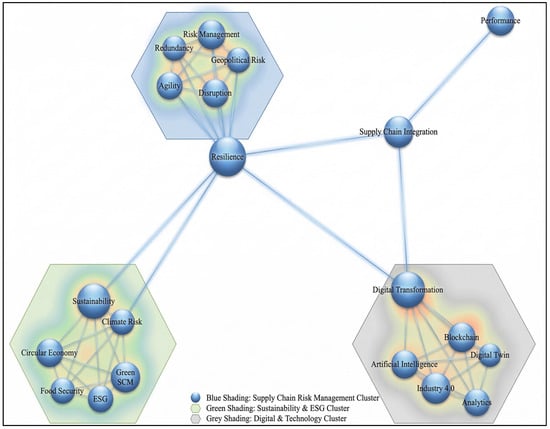
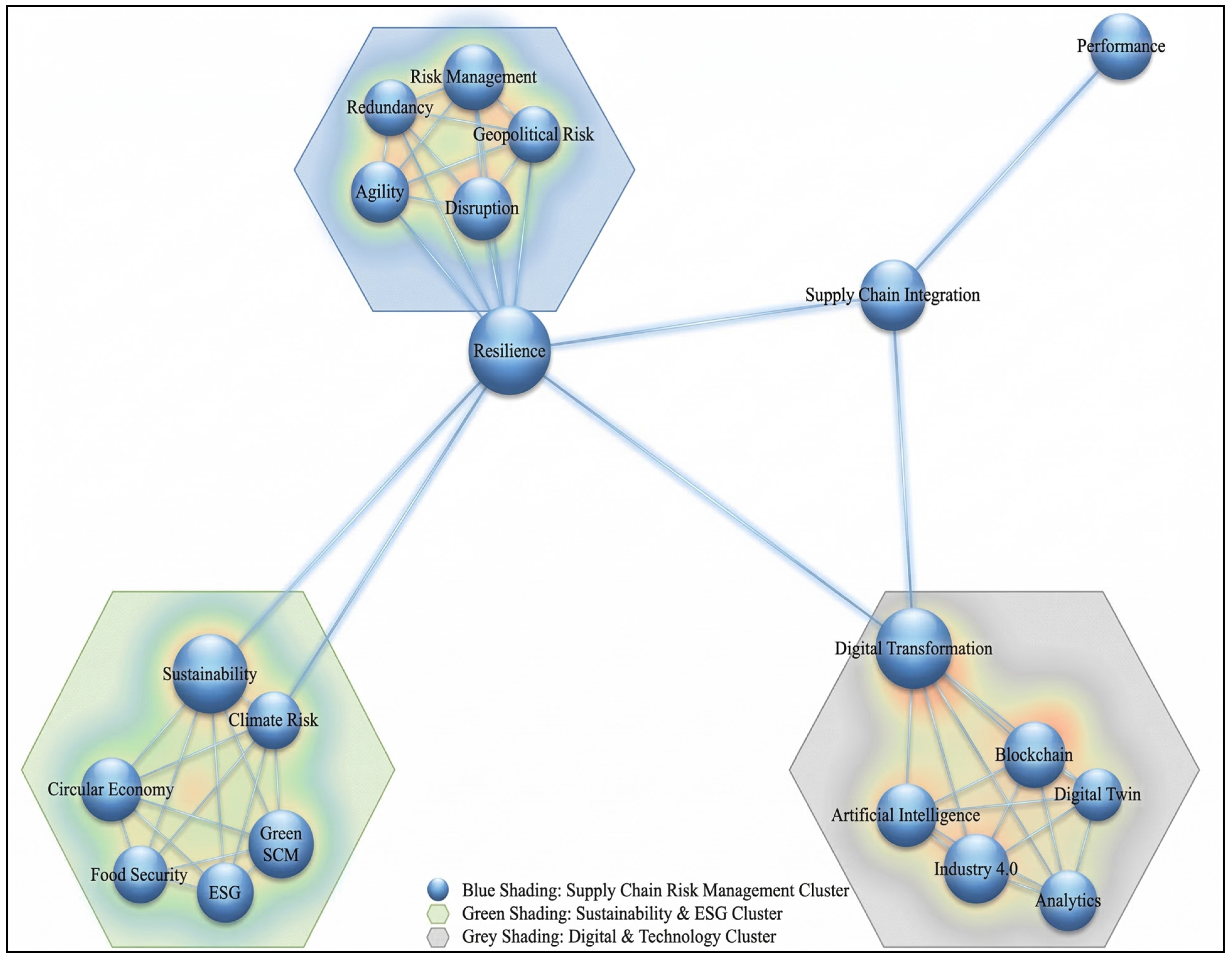
Multiple thematic clustering and co-occurrence analysis of keywords was performed by bibliometric analysis using VOSviewer. Bibliometric mapping can be used in conjunction with qualitative coding to uncover the structural relationships that exist within a field of literature [24]. We identified three predominant intellectual clusters based on co-occurrence analysis. Resilience and disruption management; green and sustainable supply chains; and digital transformation and Industry 4.0 technologies. These clusters align well with global SCM research trends reported in previous reviews [38,40]. Figure 3 presents Keyword Co-occurrence Network of SCM Research in MENA (2000–2025).
Figure 3.
Keyword Co-occurrence Network of SCM Research in MENA (2000–2025).
Keyword co-occurrence analysis was conducted using VOSviewer (version 1.6.20). Author keywords were selected as the unit of analysis to capture conceptual patterns across the reviewed literature. A minimum occurrence threshold of five was applied to reduce noise and retain substantively recurring constructs. This resulted in 63 keywords meeting the inclusion threshold for network construction. Full counting was employed to ensure equal weighting of keyword occurrences across publications. Network normalization was based on the association strength method, which corrects for differences in keyword frequency and emphasizes relational intensity. The clustering resolution parameter was maintained at the default value of 1.00 to allow algorithm-driven cluster detection without manual bias. Prior to final visualization, minor keyword harmonization was conducted (e.g., merging synonymous terms such as “GSCM” and “green supply chain management”) to improve conceptual clarity. The resulting network visualization is presented in Figure 3.
Methodological classification revealed strong concentration patterns. Most empirical studies employed cross-sectional survey designs. Structural equation modeling (SEM) and partial least squares (PLS-SEM) were the prevailing analytical techniques. Simulation modeling and analytical modeling appeared less frequently, while qualitative case studies represented a small proportion of the sample. These findings support the methodological observations presented in the synthesis section of the manuscript and provide empirical grounding for the research gap discussion. Table 10 presents methodological distribution of reviewed studies (N = 512).
Table 10.
Methodological Distribution of Reviewed Studies.
Structural equation modelling (SEM) and partial least squares (PLS-SEM) were the most frequently used analytical techniques within survey-based studies, accounting for approximately 186 of the 292 survey articles.
Theoretical lens identification involved extracting explicit theoretical references within each article. The theory of dynamic capabilities is the most commonly used conceptual framework [5], particularly in relation to resilience studies and digital transformation. The Institutional theory [8] was a significant focus of sustainability and governance research. In integration and capability studies, the Resource-Based View [44] was frequently used. Contingency theory and stakeholder theory were applied selectively, particularly in alignment and legitimacy contexts. This distribution reveals the theoretical foundations outlined earlier in the manuscript and demonstrates partial alignment between global theoretical developments and regional application. Table 11 summarizes the theoretical Framework Distribution in SCM Research in MENA (2000–2025) (N = 512) and Table 12 presents the Country Distribution of SCM Research in MENA (2000–2025) (N = 512).
Table 11.
Theoretical Framework Distribution in SCM Research in MENA (2000–2025).
Table 12.
Country Distribution of SCM Research in MENA (2000–2025) (N = 512).
When multiple theoretical perspectives were used in a single study, the framework most central to the article’s research model or hypotheses was coded as the dominant theoretical lens to avoid double counting.
Table 12 indicates a strong geographic concentration of supply chain management research within Saudi Arabia and the United Arab Emirates, which together account for nearly half of the reviewed publications. This pattern reflects the rapid logistics modernization and economic diversification programs implemented in these countries over the past decade. In contrast, North African economies remain comparatively underrepresented, highlighting the need for broader regional comparative research.
Turkey was included in the dataset because several international databases and regional economic analyses classify it within the broader Middle East trade and logistics system. Moreover, a number of reviewed studies explicitly examine Turkey in relation to supply chain networks linked to MENA trade corridors. The eight multi-country studies primarily employ cross-country surveys, comparative policy analyses, and secondary trade data to investigate regional logistics integration, sustainability governance, and supply chain resilience across multiple MENA economies. Building on these geographic patterns, Table 13 presents the temporal growth of SCM research in the MENA region between 2000 and 2025.
Table 13.
Temporal Growth of SCM Research in MENA (2000–2025).
This study synthesized by merging the quantitative distributional patterns with qualitative thematic derivation. Using frequency counts and percentage shares, thematic dominance across the 512 articles was calculated. Temporal segmentation into four periods (2000–2010, 2011–2015, 2016–2020, and 2021–2025) allowed analysis of research acceleration and thematic shifts. The largest increase was seen in 2015, coinciding with major regional transformation agendas and global disruption events like the COVID-19 pandemic [4]. This temporal clustering further supports the interpretation of resilience, sustainability and digital transformation as structurally relevant themes in MENA SCM scholarship. Validity was addressed through protocol transparency, dual screening, inter-coder reliability testing, and explicit classification rules.
Despite these limitations, the structured PRISMA-based protocol ensures transparency, replicability, and methodological rigor in the review process. The review is limited by reliance on English-language publications indexed in Scopus and Web of Science, which may underrepresent regional journals and non-English scholarship. In addition, most empirical studies rely on cross-sectional survey designs, which limits the ability to assess long-term supply chain capability development. Future research should therefore expand database coverage and employ longitudinal and comparative research designs.
4. Findings and Discussion
4.1. Publication Growth and Geographic Concentration
The analysis of 512 peer-reviewed articles indicates a significant increase in SCM research in the MENA region after 2015. As stated in Table 13, publications from 2021 to 2025 represent 36.7% of the total sample, compared with only 14.1% during the 2000–2010 period. This pattern indicates a structural shift rather than incremental growth. This inflection point coincides with major regional reform programs, economic diversification initiatives, and global disruption events such as the COVID-19 pandemic [4,6].
The temporal trend suggests that SCM research in the MENA region has evolved from exploratory adoption toward strategic analyses of supply chain capabilities. Early studies focused on examining barriers to integration or coordination challenges within a sector. Recent work increasingly examines resilience and sustainability, and digital transformation as interlinked systems of capabilities. While this transition reflects the more general global evolution of SCM [11], it has specific regional overtones.
Geographic distribution remains concentrated. As detailed in Table 12, Saudi Arabia (28.5%) and the United Arab Emirates (20.3%) comprise nearly half of total publications together. Egypt, Morocco and Turkey are next on moderate levels. North African economies, like Tunisia and Algeria, are still underrepresented. Multi-country comparative studies comprise just 1.6% of the dataset.
This concentration reflects differences in research funding, digital infrastructure and institutional reform intensity. It also reflects state-led efforts at modernization in Gulf economies [41]. However, this concentration raises concerns regarding the generalizability of regional conclusions. Insights from the empirical literature, primarily based on high-investment logistics hubs, may not encompass conditions in low-resource or conflict-affected settings.
Combining geographic and temporal dynamics, Table 14 consolidates the amount of country/period-based regional research intensity.
Table 14.
Research Intensity by Country and Period (N = 512).
Table 14 confirms a substantial expansion of SCM research after 2015. Across all major publishing countries except for Lebanon, with especially rapid growth in Saudi Arabia and the UAE. The research landscape appears closely aligned with national transformation strategies.
4.2. Thematic Dominance: Resilience, Sustainability, and Digital Transformation
The three dominant thematic clusters are resilience (32.2%), sustainability (27.0%), and digital transformation (23.6%). Structural context studies represent a smaller but meaningful stream (17.2%). This trend is reinforced by the bibliometric network in Figure 3. Based on the keyword co-occurrence analysis, three distinct but interconnected clusters are formed. Resilience occupies a central position in the keyword network, linking sustainability and digital transformation research streams. This structural position reinforces the functional view that resilience serves as an integrating capability amidst volatility [5].
- Resilience
Resilience research in the MENA region has moved beyond reactive recovery models toward the development of structural supply chain capabilities. Although there are some empirical studies available, the focus has been on agility, redundancy, digital visibility and supplier diversification. This shift aligns with emerging global scholarship on resilience [12], but brings critical regional context, specifically import dependence and maritime exposure [10]. Firm-level resilience capability studies represent the largest share of this cluster (13.3%), with many studies employing structural equation modelling techniques. Integrative studies on digital resilience (8.2%) discuss how analytics, blockchain and digital twins support a response to disruptions [6]. However, geopolitical modeling remains limited. While studies account for known risks from the maritime corridor, few incorporate systemic geopolitical volatilities into dynamic capability frameworks. Resilience is often seen at the level of the firm, yet macro-level governance mechanisms are under-explored.
- Sustainability
Sustainability research expanded rapidly after 2016; the stream is dominated by green supply chain management (GSCM) and circular economy practices. Green supply chain integration represents one of the most extensively studied topics, with empirical evidence linking environmental practices to improved operational and performance outcomes [28,29]. Research into the modeling of climate adaptation remains underdeveloped in comparison to sustainability studies which are more disclosure oriented. Although there is a strong regional climate vulnerability [43], the empirical integration of scenarios regarding climate stressors into supply chain redesign remains limited. One of the main takeaways is the intersection between sustainability and resilience. Indeed, studies are increasingly approaching environmental practices beyond the view of useful compliance tools, crossing over to continuity mechanisms. This also reflects global debates around sustainable supply chains [14]. In MENA, sustainability seems less motivated by consumer activism than by regulations and diversification policy.
- Digital Transformation
Most digital transformation research focuses on Industry 4.0 adoption, supply chain analytics, and blockchain-enabled traceability systems. Analytics and blockchain-based traceability. Moreover, government-supported digital platforms in the Gulf economies have unique diffusion pathways [22]. In the MENA region, digitalization is often led by policy change rather than competitive pressures as might be a norm in many Western contexts. This institutional speeding-up then affects the design of research. These surveys or empirical studies measure readiness, digital maturity, or adoption intention rather than long-term transformation impact. Digital transformation is rarely presented as an independent goal. It acts, rather, as an enabling mechanism of resilience and sustainability. This integrative role is in line with dynamic capabilities theory [5].
4.3. Methodological Patterns and Theoretical Anchoring
Methodologically, SCM research in the MENA region is still overwhelmingly quantitative. Table 10 shows that Survey-based research designs account for approximately 57% of the reviewed studies. Structural equation modelling and regression analysis represent the most frequently used analytical techniques within these survey-based studies. Simulation and analytical modeling are below 10%; qualitative case research is limited. Such a methodological thrust is indicative of theoretical evolution. Dynamic capabilities theory is the most commonly referenced framework (explicitly, 27% of citations), followed by RBV 18.4% and institutional theory categories 14.8% as presented in Table 11. This logic of dynamic capabilities suggests that researchers view volatility as a challenge of strategic adaptation [5]. Nevertheless, an institutional theory of sustainability and governance work is highly relevant as institutions with strong regulatory or coercive influence are significant in state-led systems [8]. Interestingly, 16.6% of the studies are not supported by theory. Such a pattern suggests that empirical testing occasionally leads theoretical refinement. The reliance on theoretical frameworks originally developed in Western contexts may limit the development of regionally embedded conceptual contributions. To show how theory and theme intersect, Table 15 provides a summary of most common usage of theory by thematic cluster.
Table 15.
Theoretical Lens by Thematic Cluster.
The table shows some alignment between theory and theme but minimal integration across the theories. Resilience and sustainability remain analytically adjacent, but conceptually siloed.
4.4. Structural Interpretation of the MENA SCM Landscape
When the findings are interpreted together, a structural narrative emerges. MENA SCM scholarship does not just reproduce global research trends. It presents an adaptation to state-led modernization, geopolitical exposure and climate stress. Three structural drivers appear consistently: Volatility and disruption exposure; policy-driven economic diversification; and rapid digital infrastructure expansion [45].
These drivers influence capability prioritization. Resilience is a structural necessity instead of a competitive differentiator. Regulatory legitimacy and diversification strategies are in line with sustainability, and digital transformation acts as an accelerant of both [46].
The integrative framework proposed in Figure 1 is supported by the observed thematic dominance and the bibliometric centrality of resilience within the keyword network. Resilience is in the bridging position because it answers directly to volatility but executes through digital tools and sustainable practices. However, the results also show asymmetries. Research is geographically concentrated, methodologically homogeneous, and theoretically reliant on external imports. Cross-country comparison is rare. Longitudinal evidence remains scarce. This pattern suggests that the region serves as an empirical testing ground but not yet as a generator of context-embedded theory [24].
4.5. Toward a Context-Embedded SCM Perspective
The synthesis of findings indicates that SCM capability in MENA is shaped by institutional configuration. State coordination modifies market mechanisms. Digitalization may precede organizational readiness. Investments in resilience are a response to structural exposure, not competitive choice. Adaptation mechanisms are articulated through dynamic capabilities theory; governance influence is unpacked via the building blocks of institutional theory [47]. But the crossroad of both is underdeveloped. Future research should integrate: Application of capability theory to the modeling of geopolitical risk; Narratives of climate adaptation using resilient design; Cross-comparative analysis across Gulf and North African sub-regions and Longitudinal tracking of capability evolution. Such directions would move the field from empirical replication and toward theoretical refinement [39,48,49].
Finally, in order to conclude the synthesis of findings, the evidence confirms that SCM research in MENA matured rapidly regarding both quantity and themes after 2015. The dominant intellectual triad are resilience, sustainability and digital transformation. Bibliometric mapping validates structural clustering. Quantitative bias revealed by methodological patterns. The empirical base shows that dynamic capabilities dominate the field. The discussion suggests that resilience is the operating principle in situations of institutional volatility. Sustainability and digital transformation operate as complementary capability layers that support resilience development [50]. The findings did not just document publication trends. They demonstrate how regional structural conditions inform scholarly priorities. In this sense, the MENA region becomes not only a context for empirical research but also a setting that can generate new insights for supply chain theory under conditions of coordinated modernization and systemic exposure.
5. Conclusions
This study provides the first region-wide synthesis of supply chain management (SCM) research in the Middle East and North Africa (MENA) between 2000 and March 2025. Based on 512 peer-reviewed articles identified through a PRISMA-guided systematic review, the study combines bibliometric mapping and thematic coding to examine how SCM scholarship has developed across the region.
The results show a strong increase in research activity after 2015. This acceleration coincides with major economic reform programs, logistics infrastructure investments, and global disruptions such as the COVID-19 pandemic. The geographic distribution of studies remains concentrated, with Saudi Arabia and the United Arab Emirates accounting for nearly half of all publications.
Three dominant thematic clusters emerge from the analysis: resilience (32.2%), sustainability (27.0%), and digital transformation (23.6%). Bibliometric network analysis shows that resilience plays a central integrative role, linking sustainability and digital capability research streams. This pattern supports the view that resilience has evolved from a reactive recovery concept toward a structural supply chain capability embedded in network design. Sustainability research increasingly incorporates circular economy practices and environmental governance, while digital transformation functions as an enabling mechanism that enhances visibility, coordination, and adaptive capacity.
The review also reveals clear methodological patterns. Most empirical studies rely on cross-sectional survey designs, often analyzed using structural equation modelling techniques. Dynamic capabilities theory represents the most widely applied theoretical lens, followed by the resource-based view and institutional theory. However, cross-country comparative studies remain limited, and geopolitical risk modelling is still underdeveloped within mainstream SCM frameworks.
Overall, the findings suggest that SCM research in the MENA region reflects broader structural conditions shaping regional supply chains. State-led economic diversification, import dependence, climate vulnerability, and rapid digital infrastructure expansion influence both research priorities and capability development. Within this environment, resilience becomes a structural necessity rather than merely a strategic choice, while sustainability and digital transformation operate as complementary capability layers.
This study contributes by providing an integrative framework that links structural drivers, supply chain capabilities, and strategic outcomes. The framework helps organize fragmented regional scholarship and offers guidance for policymakers and practitioners seeking to strengthen supply chain resilience and sustainability within rapidly transforming logistics systems.
These findings also carry practical implications. Policymakers should prioritize integrated logistics infrastructure, digital platforms, and climate-resilient supply chain systems to strengthen regional trade continuity. Managers can use the proposed framework to align digital transformation, sustainability initiatives, and resilience capability development within increasingly volatile supply chain environments.
This study has several limitations that should be considered when interpreting the findings. The review relies on English-language publications indexed in Scopus and Web of Science, which may underrepresent regional scholarship published in local journals or non-English outlets. In addition, the dominance of cross-sectional empirical studies in the reviewed literature limits the ability to evaluate long-term supply chain capability development across the region.
Future research should expand cross-country comparative analysis, employ longitudinal research designs, and develop theoretical models that incorporate institutional coordination and geopolitical exposure. The MENA region therefore represents an important empirical setting for advancing supply chain theory under conditions of systemic economic transformation. Based on the identified gaps across thematic clusters, Table 16 outlines key directions for future research in SCM within the MENA region.
Table 16.
Future research agenda for supply chain management studies in the MENA region.
Author Contributions
Conceptualization, S.E. and I.E.-N.; methodology, I.E.-N.; software, S.E.; validation, S.E. and I.E.-N. and I.E.-N.; writing—original draft preparation, I.E.-N. All authors have read and agreed to the published version of the manuscript.
Funding
This research received no external funding.
Institutional Review Board Statement
Not applicable.
Informed Consent Statement
Not applicable.
Data Availability Statement
The raw data supporting the conclusions of this article will be made available by the authors on request.
Conflicts of Interest
The authors declare no conflicts of interest.
References
- El-Nakib, I.; Elzarka, S. An enhanced composite green logistics performance index for MENA: Methodology, drivers and hybrid forecasting to 2030. Logistics 2026, 10, 56. [Google Scholar] [CrossRef] [Scilit]
- Christopher, M.; Peck, H. Building the resilient supply chain. Int. J. Logist. Manag. 2004, 15, 1–14. [Google Scholar] [CrossRef] [Scilit]
- Queiroz, M.M.; Ivanov, D.; Dolgui, A.; Wamba, S.F. Impacts of epidemic outbreaks on supply chains: Mapping a research agenda amid the COVID-19 pandemic. Transp. Res. Part E 2020, 136, 101922. [Google Scholar] [CrossRef] [Scilit]
- Chowdhury, M.M.H.; Quaddus, M.; Agarwal, R. Supply chain resilience for performance: Role of relational practices and network complexities. Supply Chain Manag. 2019, 24, 659–676. [Google Scholar] [CrossRef] [Scilit]
- Tukamuhabwa, B.R.; Stevenson, M.; Busby, J.; Zorzini, M. Supply chain resilience: Definition, review and theoretical foundations. Int. J. Prod. Res. 2015, 53, 5592–5623. [Google Scholar] [CrossRef] [Scilit]
- Ivanov, D.; Dolgui, A. A digital supply chain twin for managing disruption risks and resilience in the era of Industry 4.0. Prod. Plan. Control 2021, 32, 775–788. [Google Scholar] [CrossRef] [Scilit]
- Teece, D.J. Explicating dynamic capabilities: The nature and micro-foundations of enterprise performance. Strateg. Manag. J. 2007, 28, 1319–1350. [Google Scholar] [CrossRef] [Scilit]
- DiMaggio, P.J.; Powell, W.W. The iron cage revisited: Institutional isomorphism and collective rationality in organizational fields. Am. Sociol. Rev. 1983, 48, 147–160. [Google Scholar] [CrossRef] [Scilit]
- Rajeev, A.; Pati, R.K.; Padhi, S.S.; Govindan, K. Evolution of sustainability in supply chain management: A literature review. J. Clean. Prod. 2017, 162, 299–314. [Google Scholar] [CrossRef] [Scilit]
- Tranfield, D.; Denyer, D.; Smart, P. Towards a methodology for developing evidence-informed management knowledge by means of systematic review. Br. J. Manag. 2003, 14, 207–222. [Google Scholar] [CrossRef] [Scilit]
- Page, M.J.; McKenzie, J.E.; Bossuyt, P.M.; Boutron, I.; Hoffmann, T.C.; Mulrow, C.D.; Shamseer, L.; Tetzlaff, J.M.; Akl, E.A.; Brennan, S.E.; et al. The PRISMA 2020 statement: An updated guideline for reporting systematic reviews. BMJ 2021, 372, n71. [Google Scholar] [CrossRef] [Scilit] [PubMed]
- Christopher, M. Logistics and Supply Chain Management, 5th ed.; Pearson: London, UK, 2016. [Google Scholar]
- Barney, J. Firm resources and sustained competitive advantage. J. Manag. 1991, 17, 99–120. [Google Scholar] [CrossRef] [Scilit]
- Teece, D.J.; Pisano, G.; Shuen, A. Dynamic capabilities and strategic management. Strateg. Manag. J. 1997, 18, 509–533. [Google Scholar] [CrossRef] [Scilit]
- Köhler, J.; Geels, F.W.; Kern, F.; Markard, J.; Onsongo, E.; Wieczorek, A.; Alkemade, F.; Avelino, F.; Bergek, A.; Boons, F.; et al. An agenda for sustainability transitions research: State of the art and future directions. Environ. Innov. Soc. Transit. 2019, 31, 1–32. [Google Scholar] [CrossRef] [Scilit]
- Dolgui, A.; Ivanov, D.; Sokolov, B. Reconfigurable supply chain: The X-network. Int. J. Prod. Res. 2020, 58, 4138–4163. [Google Scholar] [CrossRef] [Scilit]
- Dubey, R.; Gunasekaran, A.; Childe, S.J. Big data analytics capability in supply chain agility. Manag. Decis. 2019, 57, 2092–2112. [Google Scholar] [CrossRef] [Scilit]
- Frederico, G.F.; Garza-Reyes, J.A.; Kumar, A.; Kumar, V. Performance measurement for supply chains in the Industry 4.0 era. Int. J. Prod. Perform. Manag. 2021, 70, 789–807. [Google Scholar] [CrossRef] [Scilit]
- Belhadi, A.; Kamble, S.S.; Jabbour, C.J.C.; Gunasekaran, A.; Ndubisi, N.O.; Mani, V. Supply chain resilience to COVID-19. Technol. Forecast. Soc. Change 2021, 163, 120447. [Google Scholar] [CrossRef] [Scilit]
- Pettit, T.J.; Croxton, K.L.; Fiksel, J. The evolution of resilience in supply chain management: A retrospective on ensuring supply chain resilience. J. Bus. Logist. 2019, 40, 56–65. [Google Scholar] [CrossRef] [Scilit]
- Baldwin, R.; Freeman, R. Risks and global supply chains. Annu. Rev. Econ. 2022, 14, 153–180. [Google Scholar] [CrossRef] [Scilit]
- Oubrahim, I.; Sefiani, N.; Happonen, A. The Influence of Digital Transformation and Supply Chain Integration on Overall Sustainable Supply Chain Performance: An Empirical Analysis from Manufacturing Companies in Morocco. Energies 2023, 16, 1004. [Google Scholar] [CrossRef] [Scilit]
- Luqman, N.A.; Ahmad, S.Z.; Hussain, M. Supply chain resilience capability in UAE energy sector. Supply Chain Manag. 2023, 28, 1009–1028. [Google Scholar] [CrossRef] [Scilit]
- Van Wassenhove, L.N. Humanitarian aid logistics: Supply chain management in high gear. J. Oper. Res. Soc. 2006, 57, 475–489. [Google Scholar] [CrossRef] [Scilit]
- Shamout, M.D. The role of supply chain analytics on supply chain responsiveness, resilience, and restoration (3Rs) capabilities in the United Arab Emirates. Bus. Strategy Dev. 2024, 7, e374. [Google Scholar] [CrossRef] [Scilit]
- Oukili Garti, M.; Arif, J.; Jawab, F.; Frichi, Y.; Benbrahim, F.Z. Factors Impacting the Sustainability of Supply Chain in Industry 5.0: An Exploratory Qualitative Study in Morocco. Logistics 2025, 9, 57. [Google Scholar] [CrossRef] [Scilit]
- Jum’a, L. Green supply chain practices and SDGs in Jordan mining sector. Environ. Dev. 2023, 48, 100934. [Google Scholar] [CrossRef] [Scilit]
- Hejazi, M.T.; Habani, M.A. Green supply chain integration and business performance. Cogent Bus. Manag. 2024, 11, 2392256. [Google Scholar] [CrossRef] [Scilit]
- Iqbal, T.; Nourelhadi, T.K.E. Green supply chain management in Saudi manufacturing SMEs. Uncertain Supply Chain Manag. 2024, 12, 2595–2606. [Google Scholar] [CrossRef] [Scilit]
- Al-Ayed, S. Influence of green supply chain and sustainability culture on sustainable performance. Probl. Perspect. Manag. 2025, 23, 482–494. [Google Scholar] [CrossRef] [Scilit]
- Alkandi, I. Green Supply Chain Management and Sustainable Performance: The Mediating Roles of Corporate Social Responsibility and Intellectual Capital in Saudi Arabia’s Drilling Sector—A Resource-Based View and Stakeholder Theory Perspective. Sustainability 2025, 17, 11015. [Google Scholar] [CrossRef] [Scilit]
- Bouabid, M.; El Gharsi, I.; Friat, D.; Frij, D.E.; Habbani, M.; Jghamou, A. Overcoming barriers to supply chain decarbonization: Case of Moroccan companies. IFAC-PapersOnLine 2025, 59, 1047–1052. [Google Scholar] [CrossRef] [Scilit]
- Pawar, P.S.; Alsedais, B.A. Building Sustainable Supply Chain Resilience Through Digitalisation and Circular Practices: Evidence from Emerging Economies. Sustainability 2026, 18, 1393. [Google Scholar] [CrossRef] [Scilit]
- Alquraish, M. Digital transformation, supply chain resilience and sustainability. Sustainability 2025, 17, 4495. [Google Scholar] [CrossRef] [Scilit]
- Al-Shboul, M.A.R.; Barber, K.D.; Garza-Reyes, J.A.; Kumar, V.; Abdi, M.R. The effect of supply chain management practices on supply chain and manufacturing firms’ performance. J. Manuf. Technol. Manag. 2017, 28, 577–609. [Google Scholar] [CrossRef] [Scilit]
- Mohammed, R.; Almojel, S. Elasticities of food import demand in Arab countries. Sustainability 2025, 17, 6271. [Google Scholar] [CrossRef] [Scilit]
- Ivanov, D. Viable supply chain model: Integrating agility, resilience and sustainability. Ann. Oper. Res. 2022, 319, 1411–1431. [Google Scholar] [CrossRef] [Scilit]
- Albaloushi, H.; Skitmore, M. Supply chain management in UAE construction industry. Int. J. Constr. Manag. 2008, 8, 53–71. [Google Scholar] [CrossRef] [Scilit]
- Ivanov, D.; Dolgui, A.; Sokolov, B. The impact of digital technology and Industry 4.0 on the ripple effect and supply chain risk analytics. Int. J. Prod. Res. 2019, 57, 829–846. [Google Scholar] [CrossRef] [Scilit]
- Alshahrani, M.A.; Salam, M.A. The Role of Supply Chain Resilience on SMEs’ Performance: The Case of an Emerging Economy. Logistics 2022, 6, 47. [Google Scholar] [CrossRef] [Scilit]
- World Economic Forum. Blockchain Deployment in Global Trade: Case of UAE; WEF: Geneva, Switzerland, 2020. [Google Scholar]
- Attia, A. The effect of commitment to sustainable supply chain management and reverse logistics on performance in context of UAE food industry. Sustain. Futures 2025, 9, 100442. [Google Scholar] [CrossRef] [Scilit]
- Le Mouël, C.; Schmitt, B.; Marajo-Petitzon, E.C.; Caillaud, M.-A.; Dumas, P.; Manceron, S.; Marty, P.; de Lattre-Gasquet, M. Can the Middle East-North Africa region mitigate the rise of its food import dependency under climate change? Reg. Environ. Change 2023, 23, 52. [Google Scholar] [CrossRef] [Scilit]
- Sousa, R.; Voss, C.A. Contingency research in operations management. J. Oper. Manag. 2008, 26, 697–713. [Google Scholar] [CrossRef] [Scilit]
- Scott, W.R. Institutions and Organizations: Ideas, Interests, and Identities, 4th ed.; Sage: Thousand Oaks, CA, USA, 2014. [Google Scholar]
- Tieman, M.; van der Vorst, J.G.A.J.; Che Ghazali, M. Principles in halal supply chain management. J. Islam. Mark. 2012, 3, 217–243. [Google Scholar] [CrossRef] [Scilit]
- Ziadah, R. Transport infrastructure and logistics in the making of Dubai Inc. Int. J. Urban Reg. Res. 2018, 42, 182–197. [Google Scholar] [CrossRef] [Scilit]
- Elzarka, S.; Gouhar, N.; El-Nakib, I. Internal vs external barriers to green supply chain management in Egypt’s petrochemical sector. Sustainability 2026, 18, 1330. [Google Scholar] [CrossRef] [Scilit]
- El-Nakib, I. Logistics efficiency analysis of Mediterranean container terminals. In Proceedings of the MARLOG 15, Alexandria, Egypt, 8–10 February 2026; Available online: https://marlog.aast.edu/en/marlog-15-proceedings (accessed on 10 March 2026).
- Elzarka, S. A study on using lean, agile, resilient and green index to assess the sustainability of Egyptian FMCGs supply chains. Int. J. Logist. Syst. Manag. 2020, 37, 285–298. [Google Scholar] [CrossRef] [Scilit]

Disclaimer/Publisher’s Note: The statements, opinions and data contained in all publications are solely those of the individual author(s) and contributor(s) and not of MDPI and/or the editor(s). MDPI and/or the editor(s) disclaim responsibility for any injury to people or property resulting from any ideas, methods, instructions or products referred to in the content. |
© 2026 by the authors. Licensee MDPI, Basel, Switzerland. This article is an open access article distributed under the terms and conditions of the Creative Commons Attribution (CC BY) license.