Integrated Foodomics Reveals Gut Microbiota–Metabolite–Gene Interactions Associated with the Immunoprotective Effects of Ganoderma lucidum Polysaccharide Peptide

 , , and
Abstract
1. Introduction
2. Materials and Methods
2.1. Chemicals and Reagents
2.2. Animals and Experimental Design
2.3. Analysis of Routine Immune Parameters
2.3.1. Immune Organ Indices
2.3.2. Splenic Lymphocyte Proliferation Assay
2.3.3. Determination of Delayed-Type Hypersensitivity (DTH) Induced by 2,4-Dinitrofluorobenzene (DNFB)
2.3.4. Assessment of Macrophage Phagocytic Function by Carbon Clearance Assay
2.3.5. Quantification of Immunoglobulin and Cytokine Levels
2.3.6. Histopathological Analysis of Spleen, Thymus, and Intestine
2.4. 16S rRNA Gene Sequencing and Analysis
2.5. UPLC-QTrap-MS/MS-Based Metabolomic Analysis
2.6. Transcriptome Analysis
2.7. Statistical Analysis
3. Results and Discussion
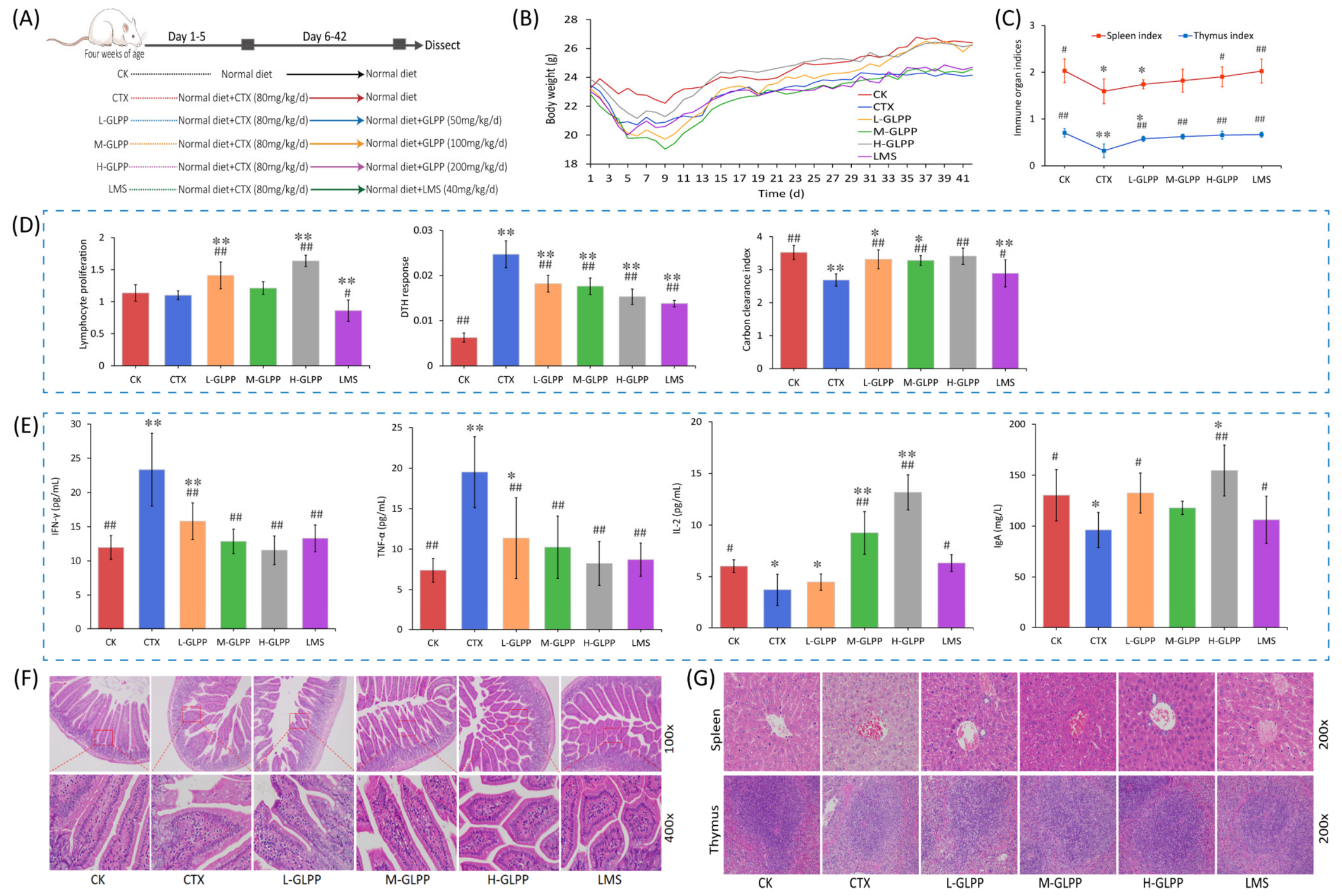
3.1. GLPP Ameliorates CTX-Induced Pathological Injury in the Intestinal Tract and Immune Organs
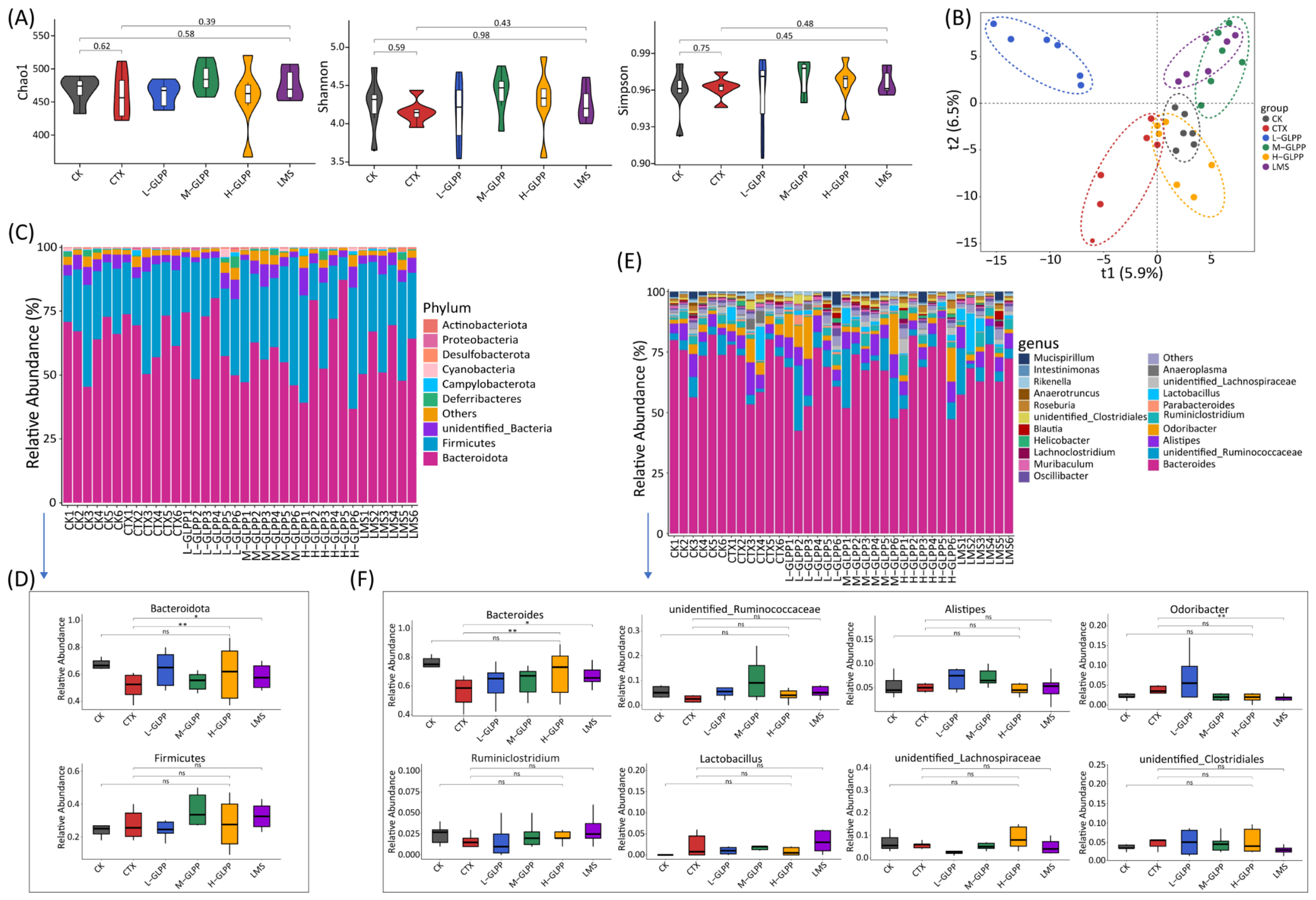
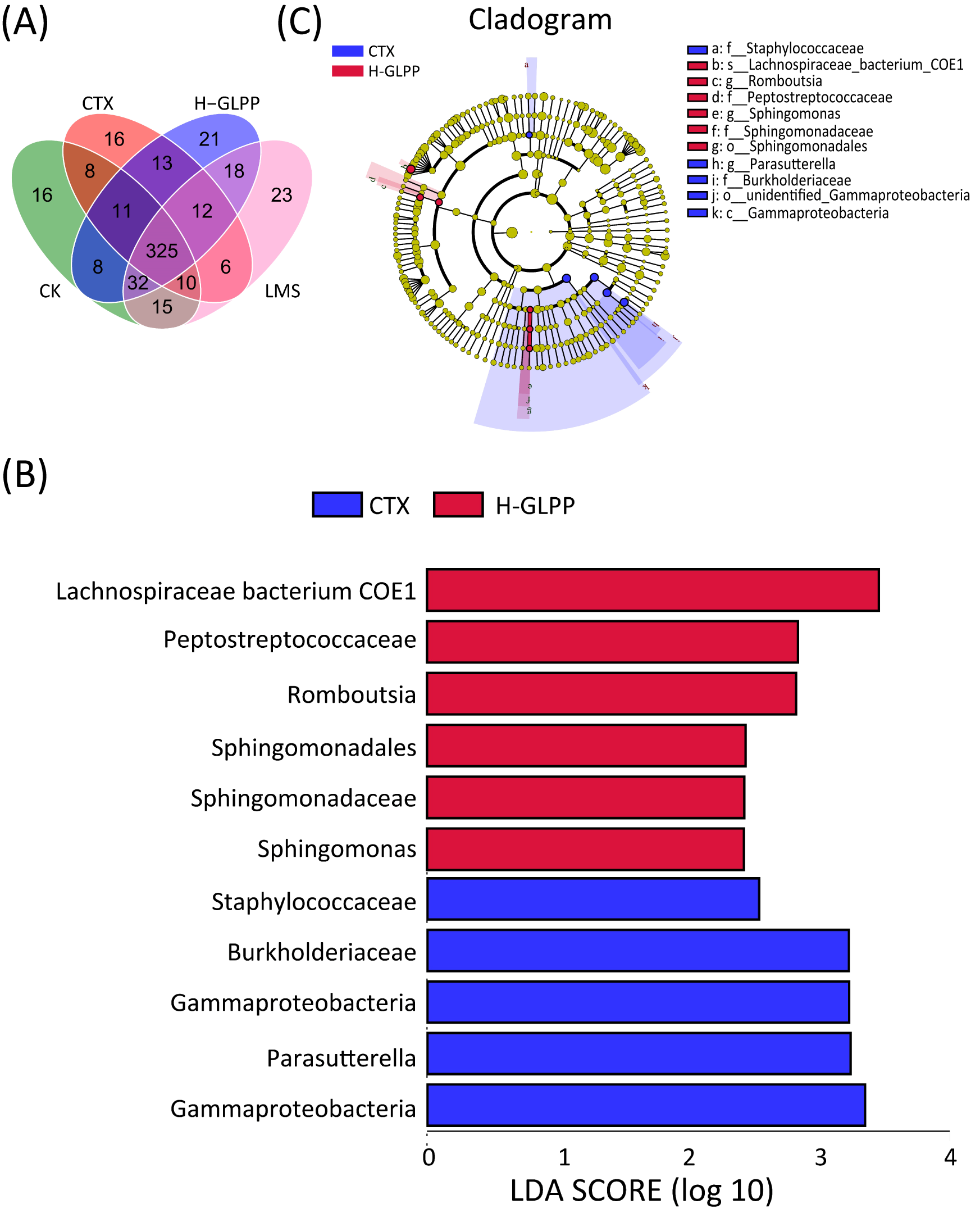
3.2. Effects of GLPP on the Fecal Gut Microbiota of CTX-Immunosuppressed Mice
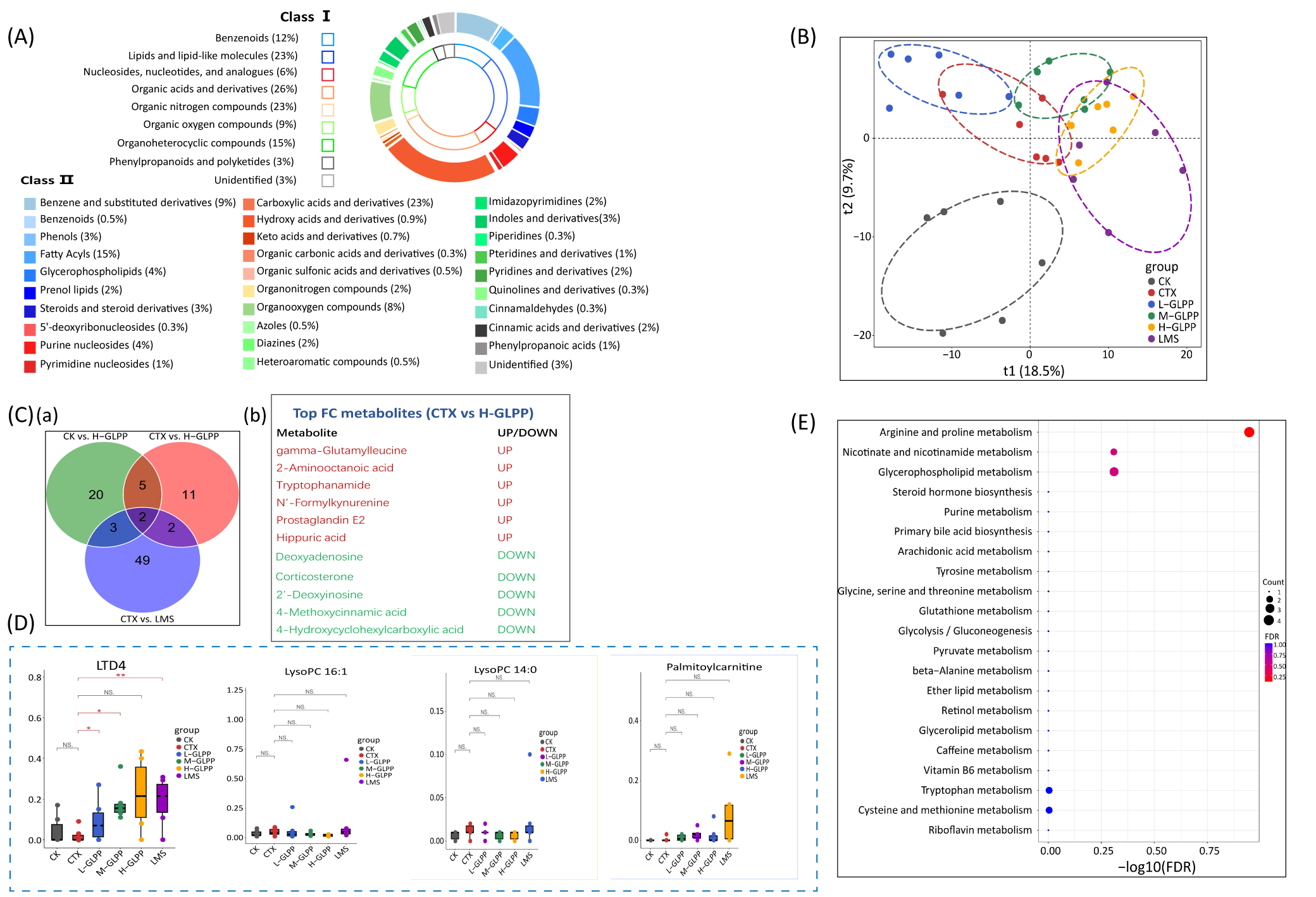
3.3. GLPP Modulates Cecal Metabolites in CTX-Induced Immunosuppressed Mice
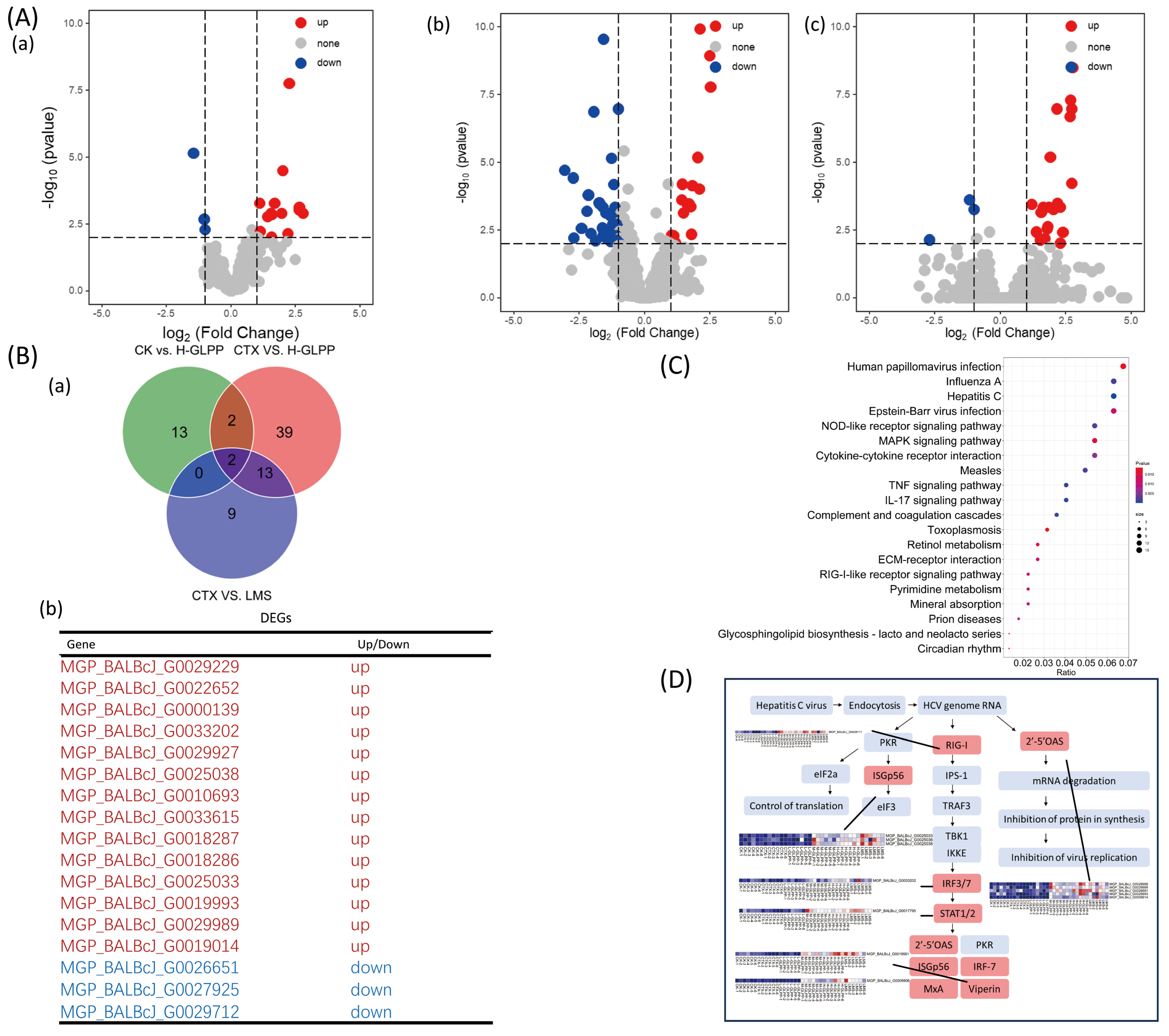
3.4. Effects of GLPP on the Cecal Transcriptome of CTX-Immunosuppressed Mice
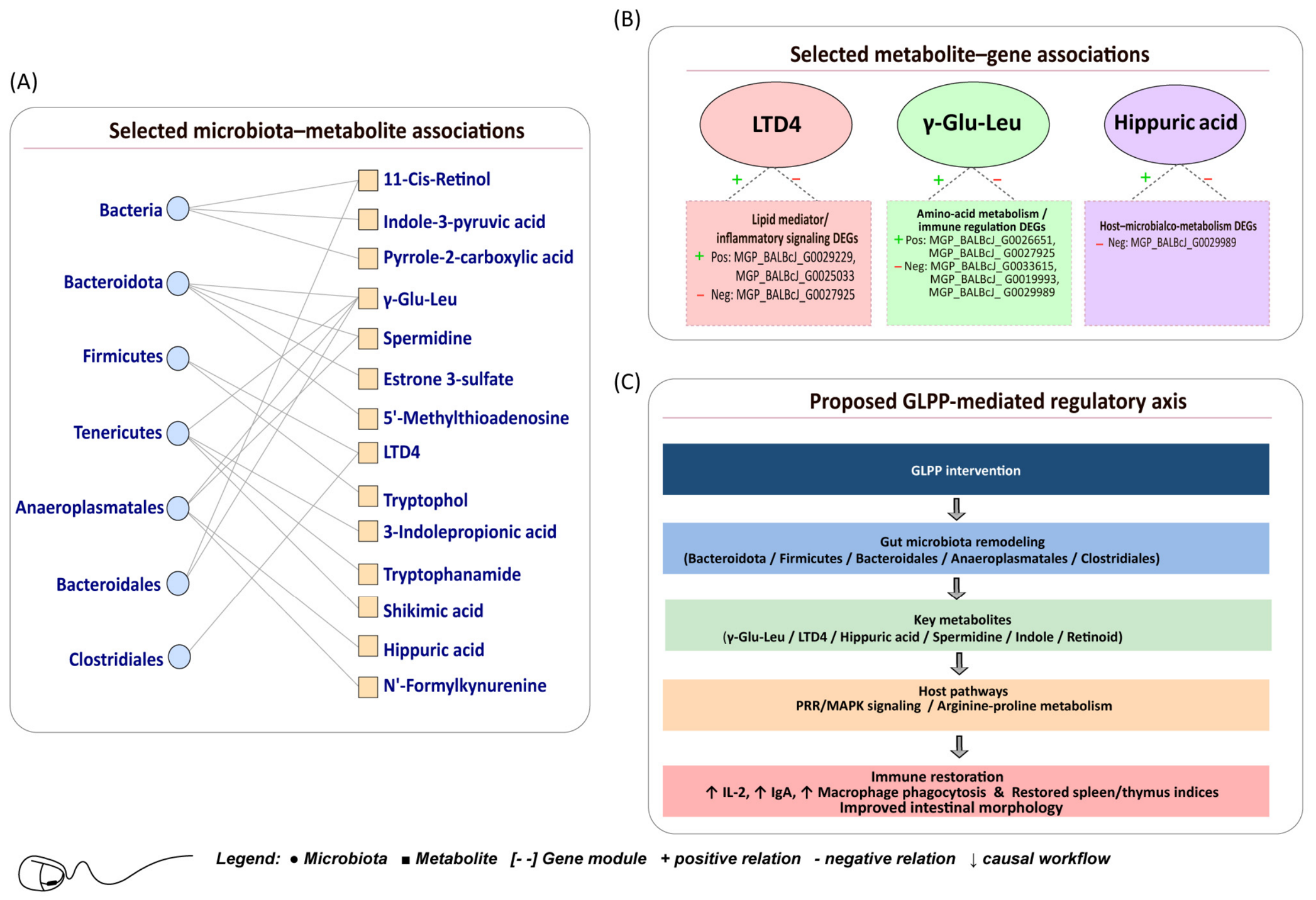
3.5. Integrated Foodomics Correlation Analysis
3.6. Functional Food Relevance, Limitations, and Application Potential of GLPP
4. Conclusions
Supplementary Materials
Author Contributions
Funding
Institutional Review Board Statement
Informed Consent Statement
Data Availability Statement
Conflicts of Interest
Abbreviations
| Arg-Pro | arginine–proline |
| ANOVA | analysis of variance |
| AhR | aryl hydrocarbon receptor |
| CCK-8 | Cell Counting Kit-8 |
| CTX | cyclophosphamide |
| DEGs | differentially expressed genes |
| DTH | delayed-type hypersensitivity |
| FDR | false discovery rate |
| FPKM | fragments per kilobase of transcript per million mapped reads |
| GLPP | Ganoderma lucidum polysaccharide peptide |
| H&E | hematoxylin and eosin |
| IFN-γ | interferon-γ |
| IgA | immunoglobulin A |
| IL-2 | interleukin-2 |
| LEfSe | linear discriminant analysis effect size |
| LMS | levamisole hydrochloride |
| LTD4 | leukotriene D4 |
| MAPK | mitogen-activated protein kinase |
| NF-κB | nuclear factor kappa B |
| OTUs | operational taxonomic units |
| PCA | principal component analysis |
| PCoA | principal coordinate analysis |
| PLS-DA | partial least squares–discriminant analysis |
| PRRs | pattern recognition receptors |
| SDS | sodium dodecyl sulfate |
| TNF-α | tumor necrosis factor-α |
| UPLC-QTrap-MS/MS | ultra-performance liquid chromatography–tandem mass spectrometry |
| VIP | variable importance in projection |
References
- Boh, B.; Berovic, M.; Zhang, J.; Lin, Z.-B. Ganoderma lucidum and its pharmaceutically active compounds. Biotechnol. Annu. Rev. 2007, 13, 265–301. [Google Scholar] [CrossRef] [Scilit] [PubMed]
- Abudumijiti, A.; Ran, J.H.; Ye, Y.W.; Liu, Y.F.; Wang, J.W.; Chen, W.H.; Zhou, J.J. Ganoderic acid improves 5-fluorouracil-induced cognitive dysfunction in mice. Food Funct. 2021, 12, 12325–12337. [Google Scholar] [CrossRef] [Scilit] [PubMed]
- Lin, D.M.; Zhang, Y.K.; Wang, S.Z.; Zhang, Z.Y.; Chen, X.L.; Wang, S.H.; Zhang, Y.J.; Chen, Z.; Lin, Z.X. Ganoderma lucidum polysaccharide peptides GL-PPSQ2 alleviate intestinal ischemia-reperfusion injury via inhibiting cytotoxic neutrophil extracellular traps. Int. J. Biol. Macromol. 2023, 244, 125370. [Google Scholar] [CrossRef] [Scilit] [PubMed]
- Xie, J.; Lin, D.; Li, J.; Liu, P.; Li, P.; Wang, S.; Wu, Y.; Lin, Z. Effects of Ganoderma lucidum polysaccharide peptide ameliorating cyclophosphamide-induced immune dysfunctions based on metabolomics analysis. Front. Nutr. 2023, 10, 1179749. [Google Scholar] [CrossRef] [Scilit]
- Prasetya, I.; Ashriyah, R.; Setyawati, I.; Pikir, B.S. Polysaccharide peptide: A promising anti-inflammation and anti-oxidant in atherosclerosis. Indones. J. Cardiol. 2015, 36, 22–27. [Google Scholar] [CrossRef] [Scilit]
- Li, G.; Tang, J.F.; Tan, W.L.; Yao, Y.M.; Zhang, B.N.; Zhao, S.J. The anti-hepatocellular carcinoma effects of polysaccharides from Ganoderma lucidum by regulating macrophage polarization via the MAPK/NF-κB signaling pathway. Food Funct. 2023, 14, 3155–3168. [Google Scholar] [CrossRef] [Scilit]
- Wicaksono, G.; Triharanto, A.; Ayu, I.D.; Dewi, S.C.; Bahri, S.; Sargowo, D. LBPS 01-04 sub chronic toxicity evaluation of polysaccharide peptide Ganoderma lucidum in aorta. J. Hypertens. 2016, 34, e174–e175. [Google Scholar] [CrossRef] [Scilit]
- Guo, X.; Zhang, W.; Pan, S. Contamination, traceability, and risk assessment of polycyclic aromatic hydrocarbons in medicinal and edible Ganoderma lucidum products. Food Chem. 2026, 523, 150137. [Google Scholar] [CrossRef] [Scilit]
- Lai, Y.; Ma, Y.; Gan, Z.; Jian, Z.; Tao, A.; Jiang, G. A review of Ganoderma lucidum spore polysaccharides: Sources, characteristics, properties, food, and health products applications. Carbohydr. Res. 2026, 567, 110009. [Google Scholar] [CrossRef] [Scilit]
- Dai, Z.; Li, G.H.; Wang, X.X.; Liao, W.F.; Xu, H.; Chen, S.J.; Huang, Q.D. Mapping the metabolic characteristics of probiotic-fermented Ganoderma lucidum and its protective mechanism against Cd-induced nephrotoxicity. Food Funct. 2023, 14, 8615–8630. [Google Scholar] [CrossRef] [Scilit]
- Guo, X.; Yang, M.; Wang, C.; Zhang, L.Q.; Li, X. Acetyl-glucomannan from Dendrobium officinale: Structural modification and immunomodulatory activities. Front. Nutr. 2022, 9, 1016961. [Google Scholar] [CrossRef] [Scilit] [PubMed]
- Zhong, D.D.; Wang, H.K.; Liu, M.; Li, X.Y.; Huang, M.H.; Zhou, H.X.; Lin, S.Z.; Lin, Z.X. Ganoderma lucidum polysaccharide peptide prevents renal ischemia reperfusion injury via counteracting oxidative stress. Sci. Rep. 2015, 5, 16910. [Google Scholar] [CrossRef] [Scilit] [PubMed]
- Mohr, A.E.; Ortega-Santos, C.P.; Whisner, C.M.; Klein-Seetharaman, J.; Jasbi, P. Navigating challenges and opportunities in multi-omics integration for personalized healthcare. Biomedicines 2024, 12, 1496. [Google Scholar] [CrossRef] [Scilit] [PubMed]
- Schäfer, P.S.L.; Dimitrov, D.; Villablanca, E.J.; Saez-Rodriguez, J. Integrating single-cell multi-omics and prior biological knowledge for a functional characterization of the immune system. Nat. Immunol. 2024, 25, 405–417. [Google Scholar] [CrossRef] [Scilit]
- Hu, X.; Wang, C.; Xiao, Y.; Liu, W.; Zhang, H.; Li, Y.; Zhou, J.; Xu, F. Time-series metabolomic analysis revealed altered metabolism of cynomolgus monkeys after injecting exosomes. J. Nanobiotechnol. 2024, 22, 732. [Google Scholar] [CrossRef] [Scilit] [PubMed]
- Wang, L.; Li, F.; Gu, B.; Li, Y.; Zhang, X.H. Metaomics in clinical laboratory: Potential driving force for innovative disease diagnosis. Front. Microbiol. 2022, 13, 883734. [Google Scholar] [CrossRef] [Scilit] [PubMed]
- Du, F.Y.; Zhou, F.; Zhao, N.; Li, X.G.; Chen, Y.J. Yap1 mediates the dimensional and chemical coordination of immunoregulation and therapy in extensively passaged mesenchymal stem cells. Theranostics 2025, 15, 1930–1948. [Google Scholar] [CrossRef] [Scilit] [PubMed]
- Luo, J.M.; Li, T.X.; Xie, J.L.; Chen, Y.L.; Huang, H.L.; Wang, S.H. Guar gum different from Ganoderma lucidum polysaccharide in alleviating colorectal cancer based on omics analysis. Food Funct. 2020, 11, 572–584. [Google Scholar] [CrossRef] [Scilit] [PubMed]
- Egert, M.; de Graaf, A.A.; Smidt, H.; de Vos, W.M.; Venema, K. Beyond diversity: Functional microbiomics of the human colon. Trends Microbiol. 2006, 14, 86–91. [Google Scholar] [CrossRef] [Scilit] [PubMed]
- Filardo, S.; Di Pietro, M.; Sessa, R. Current progresses and challenges for microbiome research in human health: A perspective. Front. Cell. Infect. Microbiol. 2024, 14, 1377012. [Google Scholar] [CrossRef] [Scilit] [PubMed]
- Kumar, P. Microbiomics: Were we all wrong before? Periodontology 2000, 85, 8–11. [Google Scholar] [CrossRef] [Scilit]
- Bokulich, N.A.; Ziemski, M.; Robeson, M.S.; Kaehler, B.D. Measuring the microbiome: Best practices for developing and benchmarking microbiomics methods. Comput. Struct. Biotechnol. J. 2020, 18, 4048–4062. [Google Scholar] [CrossRef] [Scilit] [PubMed]
- Chung, R.H.; Kang, C.Y. A multi-omics data simulator for complex disease studies and its application to evaluate multi-omics data analysis methods for disease classification. GigaScience 2019, 8, giz045. [Google Scholar] [CrossRef] [Scilit] [PubMed]
- Zeng, X.; Tang, S.; Dong, X.; Li, M.; Zhao, Y.; Chen, J. Analysis of metagenome and metabolome disclosed the mechanisms of Dendrobium officinale polysaccharide on DSS-induced ulcerative colitis-affected mice. Int. J. Biol. Macromol. 2024, 277, 134229. [Google Scholar] [CrossRef] [Scilit] [PubMed]
- Ribay, V.; Praud, C.; Letertre, M.P.; Dumez, J.N.; Giraudeau, P. Hyperpolarized NMR metabolomics. Curr. Opin. Chem. Biol. 2023, 74, 102307. [Google Scholar] [CrossRef] [Scilit]
- Du, J.; Yang, Y.C.; An, Z.J.; Zhang, Y.H.; Li, W. Advances in spatial transcriptomics and related data analysis strategies. J. Transl. Med. 2023, 21, 330. [Google Scholar] [CrossRef] [Scilit] [PubMed]
- Ma, C.L.; Bao, Y.L.; Hereid, S.; Zhang, J.Q.; Wang, L.; Zhao, Y.; Li, H. Mechanistic elucidation of Tricholoma mongolicum polysaccharides in treating MAFLD via regulation of the gut microbiota-metabolite-ferroptosis axis: A multi-omics perspective. J. Agric. Food Chem. 2025, 73, 17040–17056. [Google Scholar] [CrossRef] [Scilit] [PubMed]
- Zhang, M.Y.; Ma, L.T.; Luo, J.; Yang, J.P.; Li, X.Y.; Chen, Y. Low-medium polarity ginsenosides from wild ginseng improves immunity by activating the AhR/MAPK pathway through tryptophan metabolism driven by gut microbiota. J. Agric. Food Chem. 2024, 72, 26142–26154. [Google Scholar] [CrossRef] [Scilit] [PubMed]
- Dong, Y.F.; Chen, X.; Abdelnaby, T.; Zheng, Y.Q.; Liu, Y.; Wang, S. Regulatory potential of food-derived bioactive peptides on gut microbiota: A new perspective against immune-mediated inflammatory diseases. J. Agric. Food Chem. 2025, 73, 17403–17416. [Google Scholar] [CrossRef] [Scilit] [PubMed]
- Fan, Y.; Liu, Y.H.; Shao, C.Y.; Zhang, J.H.; Chen, M. Gut microbiota-targeted therapeutics for metabolic disorders: Mechanistic insights into the synergy of probiotic-fermented herbal bioactives. Int. J. Mol. Sci. 2025, 26, 5486. [Google Scholar] [CrossRef] [Scilit] [PubMed]
- Go, D.; Yeon, G.H.; Park, S.J.; Lee, C.H.; Kim, J.H. Integration of metabolomics and other omics: From microbes to microbiome. Appl. Microbiol. Biotechnol. 2024, 108, 538. [Google Scholar] [CrossRef] [Scilit] [PubMed]
- Can, H.D.; Chanumolu, S.K.; Nielsen, B.D.; Otu, H.H. Integration of meta-multi-omics data using probabilistic graphs and external knowledge. Cells 2023, 12, 1998. [Google Scholar] [CrossRef] [Scilit]
- Zou, J.J.; Song, Q.B.; Shaw, P.C.; Zhang, Y.B.; Wang, Z.T.; Xu, J. Dendrobium officinale regulate lipid metabolism in diabetic mouse liver via PPAR-RXR signaling pathway: Evidence from an integrated multi-omics analysis. Biomed. Pharmacother. 2024, 173, 116395. [Google Scholar] [CrossRef] [Scilit] [PubMed]
- Chakrabarti, S.; Guha, S.; Majumder, K. Food-derived bioactive peptides in human health: Challenges and opportunities. Nutrients 2018, 10, 1738. [Google Scholar] [CrossRef] [Scilit] [PubMed]
- Wang, Z.Y.; Xu, Q.Y.; Hou, L.J.; Chen, Y.; Li, P. Food-derived polysaccharides and anti-obesity effects through enhancing adipose thermogenesis: Structure-activity relationships, mechanisms, and regulation of gut microecology. Crit. Rev. Food Sci. Nutr. 2025, 65, 8425–8446. [Google Scholar] [CrossRef] [Scilit] [PubMed]
- Jin, X.D.; Wu, Z.Y.; Chen, H.; Yang, Y.; Liu, H.; Xu, X. Extraction and identification of polysaccharide from Lentinus edodes and its effect on immunosuppression and intestinal barrier injury induced by cyclophosphamide. Int. J. Mol. Sci. 2024, 25, 12432. [Google Scholar] [CrossRef] [Scilit] [PubMed]
- Li, H.; Gao, J.; Zhao, F.; Wang, Y.; Zhang, L. Bioactive peptides from edible mushrooms—The preparation, mechanisms, structure-activity relationships and prospects. Foods 2023, 12, 2935. [Google Scholar] [CrossRef] [Scilit] [PubMed]
- Ma, L.; Lin, X.; Liang, M.; Zhang, Y.; Chen, J. Effect of Grifola frondosa polysaccharide on immune function and gut microbiota in mice. Acupunct. Herb. Med. 2023, 5, 68–75. [Google Scholar] [CrossRef] [Scilit]
- Qu, D.; Hu, H.; Lian, S.; Xiao, C.; Li, S. The protective effects of three polysaccharides from Abrus cantoniensis against cyclophosphamide-induced immunosuppression and oxidative damage. Front. Vet. Sci. 2022, 9, 870042. [Google Scholar] [CrossRef] [Scilit] [PubMed]
- Edgar, R.C. UPARSE: Highly accurate OTU sequences from microbial amplicon reads. Nat. Methods. 2013, 10, 996–998. [Google Scholar] [CrossRef] [Scilit] [PubMed]
- Quast, C.; Pruesse, E.; Yilmaz, P.; Gerken, J.; Schweer, T.; Yarza, P.; Peplies, J.; Glöckner, F.O. The SILVA ribosomal RNA gene database project: Improved data processing and web-based tools. Nucleic Acids Res. 2013, 41, D590–D596. [Google Scholar] [CrossRef] [Scilit] [PubMed]
- Wang, Q.; Garrity, G.M.; Tiedje, J.M.; Cole, J.R. Naive Bayesian classifier for rapid assignment of rRNA sequences into the new bacterial taxonomy. Appl. Environ. Microbiol. 2007, 73, 5261–5267. [Google Scholar] [CrossRef] [Scilit] [PubMed]
- Hu, J.; Wu, D.; Sun, Y.; Zhao, Y.; Li, C. Comprehensive analysis of Eleutherococcus senticosus (Rupr. & Maxim.) Maxim. leaves based on UPLC-MS/MS: Separation and rapid qualitative and quantitative analysis. Front. Pharmacol. 2022, 13, 865586. [Google Scholar] [CrossRef] [Scilit] [PubMed]
- Liao, Y.; Smyth, G.K.; Shi, W. FeatureCounts: An efficient general purpose program for assigning sequence reads to genomic features. Bioinformatics 2014, 30, 923–930. [Google Scholar] [CrossRef] [Scilit] [PubMed]
- Love, M.; Huber, W.; Anders, S. Moderated estimation of fold change and dispersion for RNA-seq data with DESeq2. Genome Biol. 2014, 15, 550. [Google Scholar] [CrossRef] [Scilit] [PubMed]
- Xie, H.; Fang, J.; Farag, M.A.; Li, Z.Y.; Wang, Y. Dendrobium officinale leaf polysaccharides regulation of immune response and gut microbiota composition in cyclophosphamide-treated mice. Food Chem. X 2022, 13, 100235. [Google Scholar] [CrossRef] [Scilit] [PubMed]
- Zhou, R.R.; He, D.; Xie, J.; Zhang, H.; Li, P. The synergistic effects of polysaccharides and ginsenosides from American ginseng (Panax quinquefolius L.) ameliorating cyclophosphamide-induced intestinal immune disorders and gut barrier dysfunctions based on microbiome-metabolomics analysis. Front. Immunol. 2021, 12, 665901. [Google Scholar] [CrossRef] [Scilit] [PubMed]
- Feng, L.Z.; Huang, Q.J.; Huang, Z.Y.; Li, Y.; Yang, X. Optimized animal model of cyclophosphamide-induced bone marrow suppression. Basic Clin. Pharmacol. Toxicol. 2016, 119, 428–435. [Google Scholar] [CrossRef] [Scilit] [PubMed]
- Liu, X.; Du, T.; Xi, R.F.; Yang, L.; Chen, Y. Modified huanjingjian prevents chemotherapy-induced alopecia by inhibiting genomic DNA methylation of the wnt signaling pathway in mice. Drug Des. Dev. Ther. 2025, 19, 59415959. [Google Scholar] [CrossRef] [Scilit] [PubMed]
- Song, W.D.; Wang, Y.Y.; Li, G.C.; Chen, J.; Zhang, L. Modulating the gut microbiota is involved in the effect of low-molecular-weight glycyrrhiza polysaccharide on immune function. Gut Microbes 2023, 15, 2276814. [Google Scholar] [CrossRef] [Scilit] [PubMed]
- Brinkmann, S.; Spohn, M.S.; Schäberle, T.F. Bioactive natural products from Bacteroidetes. Nat. Prod. Rep. 2022, 39, 1045–1065. [Google Scholar] [CrossRef] [Scilit] [PubMed]
- Pan, X.; Raaijmakers, J.M.; Carrión, V.J. Importance of Bacteroidetes in host-microbe interactions and ecosystem functioning. Trends Microbiol. 2023, 31, 959–971. [Google Scholar] [CrossRef] [Scilit] [PubMed]
- Yan, B.; Jia, T.; Wang, Z.K.; Liu, S.; Li, H. Comparative research of intestinal microbiota diversity and body mass regulation in Eothenomys miletus from different areas of Hengduan mountain regions. Front. Microbiol. 2022, 13, 1026841. [Google Scholar] [CrossRef] [Scilit] [PubMed]
- Yuan, Y.; Liu, S.; Ding, X.; Zhang, Y.; Wang, J. Early intestinal microbiota changes in aged and adult mice with sepsis. Front. Cell. Infect. Microbiol. 2022, 12, 1061444. [Google Scholar] [CrossRef] [Scilit] [PubMed]
- Guo, C.L.; Guo, D.D.; Fang, L.; Li, Y.; Chen, S. Ganoderma lucidum polysaccharide modulates gut microbiota and immune cell function to inhibit inflammation and tumorigenesis in colon. Carbohydr. Polym. 2021, 273, 118231. [Google Scholar] [CrossRef] [Scilit]
- Mizuno, M.; Minato, K. Anti-inflammatory and immunomodulatory properties of polysaccharides in mushrooms. Curr. Opin. Biotechnol. 2024, 87, 103076. [Google Scholar] [CrossRef] [Scilit] [PubMed]
- Liu, L.P.; Feng, J.; Jiang, S.Q.; Li, M.; Wang, Y. Anti-inflammatory and intestinal microbiota modulation properties of Ganoderma lucidum β-d-glucans with different molecular weight in an ulcerative colitis model. Int. J. Biol. Macromol. 2023, 242, 126351. [Google Scholar] [CrossRef] [Scilit] [PubMed]
- Bentley, C.; Hazeldine, J.; Greig, C.; Lord, J.M.; Foster, M.A. Dehydroepiandrosterone: A potential therapeutic agent in the treatment and rehabilitation of the traumatically injured patient. Burn. Trauma 2019, 7, s41038-019-0158-z. [Google Scholar] [CrossRef] [Scilit] [PubMed]
- Chen, L.Y.; Eberlein, M.; Alsaaty, S.; Martinez, A.; Shelhamer, J.H. Cooperative and redundant signaling of leukotriene B4 and leukotriene D4 in human monocytes. Allergy 2011, 66, 1304–1311. [Google Scholar] [CrossRef] [Scilit]
- Li, Q.S.; Pène, V.; Krishnamurthy, S.; Cha, H.; Liang, T.J. Hepatitis C virus infection activates an innate pathway involving IKK-α in lipogenesis and viral assembly. Nat. Med. 2013, 19, 722–729. [Google Scholar] [CrossRef] [Scilit] [PubMed]
- Xu, Y.; Zhong, J. Innate immunity against hepatitis C virus. Curr. Opin. Immunol. 2016, 42, 98–104. [Google Scholar] [CrossRef] [Scilit] [PubMed]
- Wu, G.Y. Amino acids: Metabolism, functions, and nutrition. Amino Acids 2009, 37, 1–17. [Google Scholar] [CrossRef] [Scilit] [PubMed]
- Dimeji, I.; Abass, K.S.; Audu, N.M.; Okafor, S.O.; Eze, C. L-arginine and immune modulation: A pharmacological perspective on inflammation and autoimmune disorders. Eur. J. Pharmacol. 2025, 997, 177615. [Google Scholar] [CrossRef] [Scilit] [PubMed]
- Navas, L.E.; Carnero, A. NAD+ metabolism, stemness, the immune response, and cancer. Signal Transduct. Target. Ther. 2021, 6, 2. [Google Scholar] [CrossRef] [Scilit] [PubMed]
- Omeje, A.; Ogbu, C.P.; Aguchem, R.N.; Okeke, E.S.; Eze, C. Food proteins and bioactive peptides as nutraceutical intervention against immune system disorders: A review. Food Nutr. 2026, 2, 100051. [Google Scholar] [CrossRef] [Scilit]
- Huang, Y.P.; Masarweh, C.; Paviani, B.; Garrido, M.; Garcia, R. Exploring bioactive compounds in chickpea and bean aquafaba: Insights from glycomics and peptidomics analyses. Food Chem. 2024, 460, 140635. [Google Scholar] [CrossRef] [Scilit] [PubMed]



| No. | Phylum | Order | Genus | Species | Relative Abundance (×103) | p Value | LDA Score | |||||
|---|---|---|---|---|---|---|---|---|---|---|---|---|
| CK | CTX | L-GLPP | M-GLPP | H-GLPP | LMS | |||||||
| 1 | Actinobacteria | / | / | / | 0.071 ± 0.100 | 0.027 ± 0.065↓ | 0.018 ± 0.032↓ | 0.084 ± 0.125↑ | 0.075 ± 0.147↑ | 3.733 ± 8.196↑ | 0.008 | 3.251LMS |
| 2 | Bifidobacteriales | Bifidobacterium | / | 0.049 ± 0.083 | 0.018 ± 0.043↓ | 0.013 ± 0.033↓ | 0.066 ± 0.125↑ | 0.062 ± 0.152↑ | 3.702 ± 8.160↑ | 0.008 | 3.250LMS | |
| 3 | Bifidobacterium_pseudocatenulatum | 0.009 ± 0.022 | 0.000 ± 0.000↓ | 0.000 ± 0.000↓ | 0.004 ± 0.011↓ | 0.058 ± 0.141↑ | 0.010 ± 0.022↑ | 0.003 | 3.249LMS | |||
| 4 | Bacteroidetes | Bacteroidales | / | / | 80.96 ± 73.19 | 20.24 ± 15.21↓ | 5.199 ± 4.148↓ | 3.707 ± 2.010↓ | 12.12 ± 13.62↓ | 8.313 ± 1.567↓ | 0.001 | 4.594CK |
| 5 | Bacteroides | / | 43.96 ± 21.44 | 117.4 ± 134.2↑ | 110.4 ± 30.03↑ | 47.40 ± 27.08↑ | 47.23 ± 15.77↑ | 20.68 ± 7.947↓ | 0.003 | 4.675L-GLPP | ||
| 6 | Bacteroides_vulgatus | 0.221 ± 0.163 | 1.665 ± 2.125↑ | 1.200 ± 1.786↑ | 0.252 ± 0.196↑ | 0.306 ± 0.282↑ | 0.084 ± 0.108↓ | 0.007 | 2.905CTX | |||
| 7 | Bacteroides_intestinalis | 0.173 ± 0.111 | 0.682 ± 1.039↑ | 0.819 ± 0.957↑ | 0.208 ± 0.186↑ | 0.208 ± 0.278↑ | 0.049 ± 0.026↓ | 0.004 | 2.654L-GLPP | |||
| 8 | Odoribacter | / | 19.68 ± 7.980 | 44.75 ± 24.35↑ | 84.08 ± 87.20↑ | 40.72 ± 59.84↑ | 32.26 ± 38.71↑ | 13.89 ± 6.345↓ | 0.032 | 4.563L-GLPP | ||
| 9 | / | / | 54.30 ± 20.17 | 69.62 ± 41.35↑ | 115.3 ± 68.06↑ | 74.89 ± 26.18↑ | 52.24 ± 17.93↓ | 55.64 ± 25.46↑ | 0.025 | 3.831L-GLPP | ||
| 10 | Alistipes | / | 46.85 ± 18.90 | 58.75 ± 34.17↑ | 88.43 ± 64.94↑ | 61.19 ± 21.01↑ | 42.11 ± 13.61↓ | 45.07 ± 23.10↓ | 0.004 | 4.316L-GLPP | ||
| 11 | Rikenella | / | 4.402 ± 1.993 | 9.925 ± 7.740↑ | 11.81 ± 7.099↑ | 9.194 ± 5.196↑ | 7.144 ± 6.335↑ | 6.506 ± 3.994↑ | 0.005 | 3.436L-GLPP | ||
| 12 | Parabacteroides | / | 3.401 ± 0.558 | 4.066 ± 2.773↑ | 14.85 ± 15.48↑ | 4.296 ± 2.262↑ | 2.095 ± 1.199↓ | 2.210 ± 0.818↓ | 0.002 | 3.755L-GLPP | ||
| 13 | Parabacteroides_distasonis | 2.175 ± 0.353 | 2.578 ± 1.790↑ | 4.229 ± 2.568↑ | 1.958 ± 1.576↓ | 1.138 ± 0.678↓ | 1.267 ± 0.455↓ | 0.034 | 3.166L-GLPP | |||
| 14 | Firmicutes | Bacillales | Staphylococcus | / | 0.031 ± 0.043 | 0.093 ± 0.140↑ | 0.044 ± 0.032↑ | 0.000 ± 0.000↓ | 0.000 ± 0.000↓ | 0.027 ± 0.034↓ | 0.011 | 1.880CTX |
| 15 | / | / | / | 323.3 ± 92.67 | 285.8 ± 92.92↓ | 304.8 ± 116.3↓ | 409.3 ± 61.33↑ | 351.3 ± 195.5↑ | 346.2 ± 116.6↑ | 0.039 | 1.844LMS | |
| 16 | Clostridiales | Roseburia | / | 9.628 ± 6.485 | 8.326 ± 5.419↓ | 3.707 ± 3.101↓ | 6.683 ± 3.480↓ | 14.53 ± 6.759↑ | 7.427 ± 3.902↓ | 0.035 | 3.754H-GLPP | |
| 17 | Lachnospiraceae | [Clostridium]_colinum | 0.775 ± 1.214 | 0.301 ± 0.244↓ | 0.186 ± 0.126↓ | 0.664 ± 0.521↓ | 0.983 ± 1.890↑ | 1.098 ± 0.669↑ | 0.029 | 2.691H-GLPP | ||
| 18 | Lachnospiraceae_bacterium_COE1 | 1.196 ± 0.588 | 1.222 ± 0.753↑ | 0.319 ± 0.244↓ | 1.404 ± 1.376↑ | 2.941 ± 2.599↑ | 0.607 ± 0.417↓ | 0.023 | 3.135H-GLPP | |||
| 19 | Lachnospiraceae_bacterium_A4 | 0.673 ± 0.552 | 1.603 ± 3.283↑ | 0.062 ± 0.036↓ | 0.261 ± 0.196↓ | 0.447 ± 0.374↓ | 0.190 ± 0.117↓ | 0.022 | 2.896H-GLPP | |||
| 20 | / | / | 0.005 ± 0.011 | 0.000 ± 0.000↓ | 0.009 ± 0.022↑ | 0.018 ± 0.024↑ | 0.186 ± 0.404↑ | 0.003 ± 0.011↓ | 0.042 | 2.076H-GLPP | ||
| 21 | Romboutsia | / | 0.004 ± 0.011 | 0.000 ± 0.000↓ | 0.009 ± 0.022↑ | 0.018 ± 0.027↑ | 0.173 ± 0.372↑ | 0.002 ± 0.011↓ | 0.031 | 2.050H-GLPP | ||
| 22 | Negativibacillus | / | 0.695 ± 0.314 | 0.686 ± 0.486↓ | 0.128 ± 0.078↓ | 0.523 ± 0.338↓ | 0.700 ± 0.452 | 0.602 ± 0.128↓ | 0.023 | 2.477CK | ||
| 23 | Erysipelotrichales | Ileibacterium | Ileibacterium_valens | 0.000 ± 0.000 | 0.000 ± 0.000 | 0.186 ± 0.430↑ | 0.018 ± 0.027↑ | 0.004 ± 0.011↑ | 0.000 ± 0.000 | 0.034 | 2.084M-GLPP | |
| 24 | Proteobacteria | / | / | / | 0.766 ± 0.163 | 3.211 ± 2.642↑ | 3.193 ± 3.920↑ | 0.735 ± 0.401↓ | 0.740 ± 0.244↓ | 0.580 ± 0.574↓ | 0.007 | 2.692CTX |
| 25 | Desulfovibrionales | / | / | 5.722 ± 5.243 | 2.059 ± 1.445↓ | 3.432 ± 3.964↓ | 2.321 ± 1.032↓ | 2.325 ± 1.213↓ | 4.349 ± 5.099↓ | 0.004 | 3.264CK | |
| 26 | Enterobacteriales | / | / | 0.208 ± 0.078 | 1.085 ± 2.204↑ | 0.483 ± 0.853↑ | 0.089 ± 0.022↓ | 0.207 ± 0.215↓ | 0.062 ± 0.057↓ | 0.025 | 2.706CK | |
| 27 | Enterobacteriaceae | / | 0.186 ± 0.067 | 1.032 ± 2.203↑ | 0.469 ± 0.858↑ | 0.066 ± 0.028↓ | 0.164 ± 0.202↓ | 0.035 ± 0.036↓ | 0.017 | 2.692CK | ||
| 28 | Pasteurellales | / | / | 0.027 ± 0.044 | 0.017 ± 0.030↓ | 1.754 ± 3.304↑ | 0.036 ± 0.029↑ | 0.044 ± 0.108↑ | 0.035 ± 0.054↑ | 0.014 | 2.845L-GLPP | |
| 29 | Rodentibacter | / | 0.022 ± 0.043 | 0.018 ± 0.032↓ | 1.758 ± 3.314↑ | 0.035 ± 0.032↑ | 0.000 ± 0.000↓ | 0.035 ± 0.057↑ | 0.003 | 2.861L-GLPP | ||
| 30 | Rhodospirillales | / | / | 0.611 ± 0.670 | 0.226 ± 0.292↓ | 2.108 ± 3.065↑ | 0.195 ± 0.203↓ | 0.035 ± 0.064↓ | 0.505 ± 0.418↓ | 0.007 | 3.037CK | |
| 31 | Sphingomonadales | Sphingomonas | / | 0.058 ± 0.059 | 0.013 ± 0.022↓ | 0.053 ± 0.082↓ | 0.089 ± 0.067↑ | 0.093 ± 0.115↑ | 0.000 ± 0.000↓ | 0.020 | 1.823M-GLPP | |
| 32 | Gammaproteobacteria | / | / | 0.478 ± 0.091 | 2.037 ± 1.313↑ | 0.930 ± 0.795↑ | 0.598 ± 0.385↑ | 0.452 ± 0.099↓ | 0.474 ± 0.607↓ | 0.014 | 2.908 CTX | |
| 33 | Parasutterella | / | 0.465 ± 0.090 | 2.006 ± 1.300↑ | 0.899 ± 0.794↑ | 0.571 ± 0.391↑ | 0.416 ± 0.105↓ | 0.452 ± 0.606↓ | 0.012 | 2.918 CTX | ||
| 34 | Tenericutes | Anaeroplasmatales | Anaeroplasma | / | 1.577 ± 1.389 | 16.27 ± 22.39↑ | 6.072 ± 12.46↑ | 0.514 ± 0.464↓ | 1.107 ± 0.710↓ | 0.678 ± 0.769↓ | 0.046 | 3.884 CTX |
| KEGG ID | Class | Metabolite | MSI Level | Modes | VIP | FC | Trends | Group |
|---|---|---|---|---|---|---|---|---|
| C03406 | Carboxylic acids and derivatives | Argininosuccinic acid | 2 | Negative | 1.26 | 6.88 | up | CK vs. H-GLPP |
| C00158 | Carboxylic acids and derivatives | Citric acid | 2 | Negative | 1.09 | 2.23 | up | CK vs. H-GLPP |
| C00624 | Carboxylic acids and derivatives | N-Acetylglutamic acid | 2 | Negative | 1.03 | 2.32 | up | CK vs. H-GLPP |
| C00383 | Carboxylic acids and derivatives | Malonic acid | 2 | Negative | 1 | 4.85 | up | CK vs. H-GLPP |
| - | Carboxylic acids and derivatives | N-Acetylalanine | 2 | Positive | 1.14 | 2.6 | up | CK vs. H-GLPP |
| C05824 | Carboxylic acids and derivatives | S-Sulfocysteine | 2 | Positive | 1.06 | 0.45 | down | CK vs. H-GLPP |
| - | Fatty Acyls | 2-Hydroxyisocaproic acid | 2 | Negative | 1.01 | 2.28 | up | CK vs. H-GLPP |
| C00696 | Fatty Acyls | Prostaglandin D2 | 2 | Negative | 1.01 | 2.04 | up | CK vs. H-GLPP |
| C00219 | Fatty Acyls | Arachidonic acid | 2 | Negative | 1.01 | 3.05 | up | CK vs. H-GLPP |
| C02990 | Fatty Acyls | Palmitoylcarnitine | 2 | Positive | 1.18 | 0 | down | CK vs. H-GLPP |
| C01909 | Fatty Acyls | Dethiobiotin | 2 | Positive | 1.09 | 0.47 | down | CK vs. H-GLPP |
| C05951 | Fatty Acyls | Leukotriene D4 | 2 | Positive | 1.05 | 0.2 | down | CK vs. H-GLPP |
| C00093 | Glycerophospholipids | Glycerol 3-phosphate | 2 | Negative | 1.21 | 5.61 | up | CK vs. H-GLPP |
| C01013 | Hydroxy acids and derivatives | 3-Hydroxypropanoic acid | 2 | Negative | 1.04 | 2.1 | up | CK vs. H-GLPP |
| C00955 | Indoles and derivatives | Tryptophol | 2 | Negative | 1.08 | 2.87 | up | CK vs. H-GLPP |
| C00092 | Organooxygen compounds | Glucose 6-phosphate | 2 | Negative | 1.25 | 6.37 | up | CK vs. H-GLPP |
| C00117 | Organooxygen compounds | Ribulose 5-phosphate | 2 | Negative | 1.23 | 4.9 | up | CK vs. H-GLPP |
| C00231 | Organooxygen compounds | Xylulose 5-phosphate | 2 | Negative | 1.19 | 5.24 | up | CK vs. H-GLPP |
| C00352 | Organooxygen compounds | Glucosamine 6-phosphate | 2 | Negative | 1.16 | 2.91 | up | CK vs. H-GLPP |
| C00493 | Organooxygen compounds | Shikimic acid | 2 | Negative | 1.14 | 0.48 | down | CK vs. H-GLPP |
| C00388 | Organonitrogen compounds | Histamine | 2 | Positive | 1.2 | 0.48 | down | CK vs. H-GLPP |
| C03672 | Phenylpropanoic acids | Hydroxyphenyllactic acid | 2 | Negative | 1.03 | 2.4 | up | CK vs. H-GLPP |
| - | Phenylpropanoic acids | 3-(3-Hydroxyphenyl)-3-hydroxypropanoic acid | 2 | Negative | 1.02 | 0.4 | down | CK vs. H-GLPP |
| C00301 | Purine nucleosides | ADP-ribose | 2 | Negative | 1.16 | 2.89 | up | CK vs. H-GLPP |
| C00029 | Purine nucleosides | UDP-glucose | 2 | Negative | 1.08 | 3.77 | up | CK vs. H-GLPP |
| C00020 | Purine nucleotides | Adenosine 5′-monophosphate | 2 | Negative | 1.03 | 2.58 | up | CK vs. H-GLPP |
| C00362 | Purine nucleotides | 2′-Deoxyguanosine 5′-monophosphate | 2 | Negative | 1.01 | 2.96 | up | CK vs. H-GLPP |
| C00942 | Purine nucleotides | Guanosine 3′,5′-cyclic monophosphate | 2 | Positive | 1.04 | 2.15 | up | CK vs. H-GLPP |
| C05843 | Pyridines and derivatives | 1,4-Dihydro-1-methyl-4-oxo-3-pyridinecarboxamide | 2 | Positive | 1.01 | 2.48 | up | CK vs. H-GLPP |
| C01367 | Ribonucleoside 3′-phosphates | 3′-Adenylic acid | 2 | Positive | 1.11 | 2.82 | up | CK vs. H-GLPP |
| C03406 | Carboxylic acids and derivatives | Argininosuccinic acid | 2 | Negative | 1.13 | 2.47 | up | CTX vs. H-GLPP |
| - | Carboxylic acids and derivatives | gamma-Glutamylleucine | 2 | Negative | 1.01 | 2.03 | up | CTX vs. H-GLPP |
| - | Carboxylic acids and derivatives | 2-Aminooctanoic acid | 2 | Positive | 1.01 | 2.07 | up | CTX vs. H-GLPP |
| - | Cinnamic acids and derivatives | 4-Methoxycinnamic acid | 2 | Negative | 1.14 | 0.45 | down | CTX vs. H-GLPP |
| C00584 | Fatty Acyls | Prostaglandin E2 | 2 | Negative | 1.28 | 2.81 | up | CTX vs. H-GLPP |
| C02990 | Fatty Acyls | Palmitoylcarnitine | 2 | Positive | 1.09 | 0.19 | down | CTX vs. H-GLPP |
| C05951 | Fatty Acyls | Leukotriene D4 | 2 | Positive | 1.26 | 0.09 | down | CTX vs. H-GLPP |
| - | Glycerophospholipids | LysoPC 16:1 | 2 | Positive | 1.17 | 2.17 | up | CTX vs. H-GLPP |
| - | Glycerophospholipids | LysoPC 14:0 | 2 | Positive | 1.11 | 2.09 | up | CTX vs. H-GLPP |
| C00977 | Indoles and derivatives | Tryptophanamide | 2 | Positive | 1.08 | 2.07 | up | CTX vs. H-GLPP |
| - | Organooxygen compounds | 4-Hydroxycyclohexylcarboxylic acid | 2 | Negative | 1.29 | 0.27 | down | CTX vs. H-GLPP |
| C00493 | Organooxygen compounds | Shikimic acid | 2 | Negative | 1.13 | 2.54 | up | CTX vs. H-GLPP |
| C00117 | Organooxygen compounds | Ribulose 5-phosphate | 2 | Negative | 1.1 | 2.03 | up | CTX vs. H-GLPP |
| C00092 | Organooxygen compounds | Glucose 6-phosphate | 2 | Negative | 1.08 | 2.24 | up | CTX vs. H-GLPP |
| C02406 | Organooxygen compounds | N’-Formylkynurenine | 2 | Negative | 1.07 | 2.11 | up | CTX vs. H-GLPP |
| - | Phenylpropanoic acids | 3-(3-Hydroxyphenyl)-3-hydroxypropanoic acid | 2 | Negative | 1.16 | 0.44 | down | CTX vs. H-GLPP |
| C05512 | Purine nucleosides | 2′-Deoxyinosine | 2 | Positive | 1.14 | 0.47 | down | CTX vs. H-GLPP |
| C00559 | Purine nucleosides | Deoxyadenosine | 2 | Positive | 1.13 | 0.5 | down | CTX vs. H-GLPP |
| C02140 | Steroids and steroid derivatives | Corticosterone | 2 | Negative | 1.15 | 0.48 | down | CTX vs. H-GLPP |
| C01586 | Benzene and substituted derivatives | Hippuric acid | 2 | Positive | 1.1 | 6.84 | up | CTX vs. H-GLPP |
| C00331 | - | Indole-3-pyruvic acid | 2 | Negative | 1.11 | 2.14 | up | CTX vs. LMS |
| C00003 | (5′->5′)-dinucleotides | Nicotinic acid adenine dinucleotide | 2 | Positive | 1.08 | 2.55 | up | CTX vs. LMS |
| C00170 | 5′-deoxyribonucleosides | 5′-Methylthioadenosine | 2 | Positive | 1.09 | 4.24 | up | CTX vs. LMS |
| - | 5′-deoxyribonucleosides | S-Adenosylmethionine | 2 | Positive | 1.09 | 2.9 | up | CTX vs. LMS |
| C00628 | Benzene and substituted derivatives | 2,5-Dihydroxybenzoic acid | 2 | Negative | 1.02 | 3.33 | up | CTX vs. LMS |
| - | Benzene and substituted derivatives | 2,4-Dihydroxybenzoic acid | 2 | Negative | 1 | 1234.03 | up | CTX vs. LMS |
| C00230 | Benzene and substituted derivatives | Protocatechuic acid | 2 | Negative | 1.03 | 24.38 | up | CTX vs. LMS |
| C02946 | Carboxylic acids and derivatives | 4-Acetamidobutyric acid | 2 | Positive | 1.13 | 2.47 | up | CTX vs. LMS |
| C00300 | Carboxylic acids and derivatives | Creatine | 2 | Negative | 1.12 | 0.27 | down | CTX vs. LMS |
| - | Carboxylic acids and derivatives | N-Acetylalanine | 2 | Positive | 1.11 | 0.27 | down | CTX vs. LMS |
| C05608 | Cinnamaldehydes | p-Coumaraldehyde | 2 | Positive | 1.01 | 3.45 | up | CTX vs. LMS |
| C09276 | Coumarins and derivatives | Marmesin | 2 | Negative | 1.09 | 3.88 | up | CTX vs. LMS |
| - | Fatty Acyls | 5-HEPE | 2 | Negative | 1.05 | 2.42 | up | CTX vs. LMS |
| C02678 | Fatty Acyls | Dodecanedioic acid | 2 | Negative | 1.14 | 2.38 | up | CTX vs. LMS |
| C14827 | Fatty Acyls | 9-HpODE | 2 | Negative | 1.05 | 2.97 | up | CTX vs. LMS |
| C02990 | Fatty Acyls | Palmitoylcarnitine | 2 | Positive | 1.13 | 0.04 | down | CTX vs. LMS |
| C02571 | Fatty Acyls | Acetylcarnitine | 2 | Positive | 1.07 | 0.29 | down | CTX vs. LMS |
| C05951 | Fatty Acyls | Leukotriene D4 | 2 | Positive | 1.11 | 0.1 | down | CTX vs. LMS |
| C00016 | Flavin nucleotides | Flavin adenine dinucleotide | 2 | Negative | 1.07 | 2.09 | up | CTX vs. LMS |
| C00416 | Glycerophospholipids | LysoPA 16:0 | 2 | Negative | 1.33 | 0.46 | down | CTX vs. LMS |
| - | Glycerophospholipids | LysoPE 18:0 | 2 | Negative | 1.04 | 0.38 | down | CTX vs. LMS |
| - | Glycerophospholipids | LysoPC 20:2 | 2 | Positive | 1.35 | 0.38 | down | CTX vs. LMS |
| - | Glycerophospholipids | LysoPC 14:0 | 2 | Positive | 1.33 | 0.46 | down | CTX vs. LMS |
| - | Glycerophospholipids | LysoPC 18:1 | 2 | Positive | 1.31 | 0.49 | down | CTX vs. LMS |
| - | Glycerophospholipids | LysoPC 20:1 | 2 | Positive | 1.31 | 0.37 | down | CTX vs. LMS |
| - | Glycerophospholipids | LysoPC 16:0 | 2 | Positive | 1.3 | 0.45 | down | CTX vs. LMS |
| - | Glycerophospholipids | LysoPC 16:1 | 2 | Positive | 1.3 | 0.32 | down | CTX vs. LMS |
| - | Glycerophospholipids | LysoPC 18:3 | 2 | Positive | 1.28 | 0.44 | down | CTX vs. LMS |
| - | Glycerophospholipids | LysoPC 18:0 | 2 | Positive | 1.27 | 0.31 | down | CTX vs. LMS |
| - | Glycerophospholipids | PAF C-16 | 2 | Positive | 1.26 | 0.31 | down | CTX vs. LMS |
| - | Glycerophospholipids | LysoPC 15:0 | 2 | Positive | 1.24 | 0.36 | down | CTX vs. LMS |
| - | Glycerophospholipids | LysoPC 17:0 | 2 | Positive | 1.24 | 0.38 | down | CTX vs. LMS |
| C00670 | Glycerophospholipids | Glycerophosphatidylcholine | 2 | Positive | 1.04 | 0.22 | down | CTX vs. LMS |
| C00186 | Hydroxy acids and derivatives | Lactic acid | 2 | Negative | 1.16 | 0.5 | down | CTX vs. LMS |
| C07480 | Imidazopyrimidines | Theobromine | 2 | Positive | 1.12 | 0.49 | down | CTX vs. LMS |
| C05635 | Indoles and derivatives | 5-Hydroxyindole-3-acetic acid | 2 | Positive | 1.03 | 5.67 | up | CTX vs. LMS |
| - | Indoles and derivatives | 3-Indolepropionic acid | 2 | Negative | 1.09 | 2.19 | up | CTX vs. LMS |
| C00955 | Indoles and derivatives | Tryptophol | 2 | Negative | 1.07 | 0.31 | down | CTX vs. LMS |
| - | Lactones | Erythrono-1,4-lactone | 2 | Negative | 1.12 | 2.38 | up | CTX vs. LMS |
| C00315 | Organonitrogen compounds | Spermidine | 2 | Positive | 1.09 | 5.34 | up | CTX vs. LMS |
| C02640 | Organonitrogen compounds | 3-Methyl-1-butylamine | 2 | Positive | 1.07 | 2553.39 | up | CTX vs. LMS |
| C04256 | Organooxygen compounds | N-Acetylglucosamine 1-phosphate | 2 | Negative | 1.13 | 0.45 | down | CTX vs. LMS |
| C19910 | Organooxygen compounds | N-Acetylneuraminic acid | 2 | Positive | 1.17 | 0.47 | down | CTX vs. LMS |
| C11457 | Phenylpropanoic acids | 3-(3-Hydroxyphenyl)propionic acid | 2 | Negative | 1.07 | 8.95 | up | CTX vs. LMS |
| C05607 | Phenylpropanoic acids | 3-Phenyllactic acid | 2 | Negative | 1.06 | 4.7 | up | CTX vs. LMS |
| C05629 | Phenylpropanoic acids | Hydrocinnamic acid | 2 | Negative | 1 | 4.62 | up | CTX vs. LMS |
| C00899 | Prenol lipids | 11-cis-Retinol | 2 | Positive | 1.03 | 5.98 | up | CTX vs. LMS |
| C00301 | Purine nucleosides | ADP-ribose | 2 | Negative | 1.1 | 2.13 | up | CTX vs. LMS |
| - | Purine nucleosides | N6-Succinyl adenosine | 2 | Positive | 1.25 | 0.45 | down | CTX vs. LMS |
| C00314 | Pyridines and derivatives | Pyridoxine | 2 | Positive | 1.1 | 3.51 | up | CTX vs. LMS |
| C00153 | Pyridines and derivatives | Nicotinamide | 2 | Positive | 1.07 | 2.3 | up | CTX vs. LMS |
| - | Pyridines and derivatives | 6-Methylnicotinamide | 2 | Positive | 1.16 | 2.13 | up | CTX vs. LMS |
| C05942 | Pyrroles | Pyrrole-2-carboxylic acid | 2 | Negative | 1.05 | 2.92 | up | CTX vs. LMS |
| C02470 | Quinolines and derivatives | Xanthurenic acid | 2 | Positive | 1.02 | 9.63 | up | CTX vs. LMS |
| C05465 | Steroids and steroid derivatives | Taurochenodesoxycholic acid | 2 | Negative | 1.02 | 0.35 | down | CTX vs. LMS |
| C02538 | Steroids and steroid derivatives | Estrone 3-sulfate | 2 | Negative | 1.01 | 5.23 | up | CTX vs. LMS |
Disclaimer/Publisher’s Note: The statements, opinions and data contained in all publications are solely those of the individual author(s) and contributor(s) and not of MDPI and/or the editor(s). MDPI and/or the editor(s) disclaim responsibility for any injury to people or property resulting from any ideas, methods, instructions or products referred to in the content. |
© 2026 by the authors. Licensee MDPI, Basel, Switzerland. This article is an open access article distributed under the terms and conditions of the Creative Commons Attribution (CC BY) license.
Share and Cite
Xie, J.; An, Z.; Lin, D.; Li, J.; Yu, S.; Ihor, M.; Lin, Z. Integrated Foodomics Reveals Gut Microbiota–Metabolite–Gene Interactions Associated with the Immunoprotective Effects of Ganoderma lucidum Polysaccharide Peptide. Foods 2026, 15, 2370. https://doi.org/10.3390/foods15132370
Xie J, An Z, Lin D, Li J, Yu S, Ihor M, Lin Z. Integrated Foodomics Reveals Gut Microbiota–Metabolite–Gene Interactions Associated with the Immunoprotective Effects of Ganoderma lucidum Polysaccharide Peptide. Foods. 2026; 15(13):2370. https://doi.org/10.3390/foods15132370
Chicago/Turabian StyleXie, Jing, Zilong An, Dongmei Lin, Jing Li, Shuqi Yu, Mazurenko Ihor, and Zhanxi Lin. 2026. "Integrated Foodomics Reveals Gut Microbiota–Metabolite–Gene Interactions Associated with the Immunoprotective Effects of Ganoderma lucidum Polysaccharide Peptide" Foods 15, no. 13: 2370. https://doi.org/10.3390/foods15132370
APA StyleXie, J., An, Z., Lin, D., Li, J., Yu, S., Ihor, M., & Lin, Z. (2026). Integrated Foodomics Reveals Gut Microbiota–Metabolite–Gene Interactions Associated with the Immunoprotective Effects of Ganoderma lucidum Polysaccharide Peptide. Foods, 15(13), 2370. https://doi.org/10.3390/foods15132370