


Abstract
The H-index is widely used to assess scientific productivity and citation impact, yet its sensitivity to longitudinal changes in database coverage remains uncertain. This study examined how retrospectively excluding publications linked to historically recorded SCImago sources absent from the 2025 annual snapshot affects author-level H-index values. A bibliometric design integrated Scopus and SCImago records for 2000–2025, covering 222 highly visible authors in Business, Management and Accounting, 30,271 Scopus-indexed publications attributable to these authors within the analytical period, and 75,182 unique SCImago source identifiers. Three nested deletion scenarios were evaluated: confirmed discontinuations only, confirmed discontinuations plus ceased publications, and all snapshot-absent sources. The broadest scenario removed 3.47% of the analyzed publications and 0.71% of the citations in the fixed Scopus bibliometric baseline. H-index loss occurred for 1.35%, 2.70%, and 5.41% of authors across the three scenarios, respectively. Under the broadest scenario, only 54 authors (24.32%) had snapshot-absent publications in their baseline h-core, and 12 experienced actual loss. Threshold redundancy, rather than citation distance alone, best explained whether h-core exposure translated into H-index reduction. The findings indicate low, structurally conditioned sensitivity within this purposive sample and should not be interpreted as the operational effect of Scopus source discontinuation.
1. Introduction
The increasing use of bibliometric indicators in research evaluation has intensified interest in their reliability, interpretability, and sensitivity to changes in bibliographic databases. These indicators are used not only to describe scientific output but also to inform institutional rankings, funding decisions, promotion processes, and automated or semi-automated research assessment (Sugimoto & Larivière, 2018). Their interpretation therefore depends partly on the stability and transparency of the underlying bibliographic infrastructure.
Among these measures, the H-index is widely used because it combines publication volume and citation impact in a single indicator (Hirsch, 2005). Its broad adoption has nevertheless generated sustained debate regarding its cumulative nature, disciplinary sensitivity, dependence on career length, and reliance on database coverage (Alonso et al., 2009; Bornmann & Daniel, 2007; Costas & Bordons, 2007; Waltman, 2016). Because the H-index is calculated from the ranked citation distribution of an author’s publications, changes in the inclusion, classification, or visibility of bibliographic records may affect its value.
This issue is relevant because databases such as Scopus and SCImago have expanded and reorganized their source coverage over time through processes of inclusion, discontinuation, reclassification, title change, merger, and metadata correction (Baas et al., 2020). Consequently, a contemporary database snapshot does not necessarily reproduce the complete historical source environment within which an author’s publication and citation trajectory developed.
Previous research has shown that publications in discontinued journals may continue to receive citations after source coverage has ceased, preserving a residual presence in cumulative bibliometric records (Cortegiani et al., 2020). However, continued citation visibility does not necessarily imply a material effect on an author’s H-index. Such an effect depends on the number of affected publications, their citation counts, and their position relative to the author-specific H-core threshold.
The present study extends this literature through a direct author-level sensitivity assessment. Rather than treating contemporary source absence as equivalent to formal discontinuation, the analysis identifies publications linked to sources historically recorded in SCImago but absent from the 2025 snapshot. It then recalculates the H-index after retrospectively excluding those publications and their publication-level citation counts.
The analysis focuses on a purposive, citation-ranked sample of highly visible authors in Business, Management and Accounting, a field characterized by heterogeneous publication formats and substantial historical growth in indexed coverage. The study does not seek to establish a general theory of bibliometric stability or to reproduce the normal operational consequences of Scopus source discontinuation. Instead, it evaluates the frequency and magnitude of H-index change under a specific and deliberately restrictive deletion scenario.
This field provides a mixed publication environment in which journal articles coexist with conference proceedings, book series, and other non-journal outputs, although conference publication is not as structurally dominant as in Computer Science. Bibliometric evidence has shown that conference proceedings play a particularly prominent role in Computer Science, whereas their relative importance is substantially lower across the social sciences more broadly (Lisée et al., 2008). This distinction is relevant to the present sensitivity framework because disciplines with greater reliance on proceedings and other finite or discontinuous source forms may be more exposed to longitudinal source turnover. BMA therefore represents an intermediate setting: sufficiently heterogeneous to capture multiple source trajectories, but without assuming the high proceedings dependence characteristic of Computer Science.
This sampling strategy also establishes a structural expectation for the sensitivity analysis. Given the citation-ranked and highly visible author population examined, relatively low sensitivity to the deletion of a small publication subset is plausible, although actual H-index change depends on whether the deleted records contribute to sustaining the author-specific threshold. The formal structural benchmark for this expectation is developed in Section 3.6.
Accordingly, the study aims to: (i) characterize the longitudinal source structure associated with the sampled authors; (ii) estimate the relative contribution of publications and citations linked to sources absent from the SCImago 2025 annual source snapshot, released and downloaded in 2026; (iii) quantify the absolute and relative change in author-level H-index values after retrospective exclusion of those publications; and (iv) describe the frequency and magnitude of H-index loss under the defined source-deletion scenario.
The methodological gap addressed by this study lies in the absence of an integrated framework connecting longitudinal source-status change with publication-level exclusion and author-level threshold sensitivity. Previous work has documented database-coverage differences and the persistence of citations after source discontinuation, but these phenomena do not by themselves establish whether historically indexed publications materially sustain an author’s H-index. The present study therefore combines three analytical stages: longitudinal reconstruction and verification of historical source status; counterfactual deletion of publications associated with defined source-status conditions followed by direct H-index recalculation; and reconstruction of the baseline h-core to determine whether the deleted publications occupy threshold-relevant positions and whether available threshold redundancy is sufficient to absorb their removal. The contribution is thus methodological rather than a claim that the H-index is intrinsically stable: it provides an author-level sensitivity framework that links source-level database dynamics to publication-level deletion and metric-level change.
2. Theoretical Background
2.1. The H-Index as a Cumulative and Threshold-Based Metric
The H-index was proposed by Hirsch (2005) to combine publication output and citation impact within a single bibliometric indicator. An author has an H-index of when at least publications have received no fewer than citations each. Its value therefore depends on the ranked distribution of citations across publications rather than exclusively on total publication or citation counts.
This threshold-based structure explains both the practical appeal and the limitations of the indicator. The H-index is operationally simple and less affected by a small number of exceptionally cited publications than total citation counts. Several alternative formulations have nevertheless been proposed and compared for research-evaluation purposes (Bornmann et al., 2008). However, it remains sensitive to academic age, disciplinary citation practices, database coverage, co-authorship patterns, and the distribution of citations across an author’s publication portfolio (Bornmann & Daniel, 2007; Costas & Bordons, 2007; Waltman, 2016). Related work in business research has also examined both the prediction of citation impact and temporal differences in citation visibility, underscoring the importance of considering how citation accumulation varies across publications and over time (Pérez-Campdesuñer et al., 2025a, 2025b).
Publication volume and accumulated citations constrain the range of possible H-index values, but they do not determine whether removing a particular publication will change the indicator. A publication affects the H-index only when its exclusion changes the set of records satisfying the author-specific citation threshold. This H-core dependence is central to the present analysis because it distinguishes aggregate bibliometric contribution from direct metric influence.
2.2. Bibliographic Databases and Longitudinal Source Coverage
Bibliographic databases constitute dynamic infrastructures rather than fixed repositories. Their coverage evolves through source inclusion, discontinuation, reclassification, title or ISSN change, merger, replacement, and metadata correction (Baas et al., 2020). Consequently, a contemporary database snapshot does not necessarily reproduce the historical source environment within which an author’s publication and citation trajectory developed.
Longitudinal reconstruction is also complicated by documentary heterogeneity. Bibliographic systems include journals, conference proceedings and series, book series, trade journals, and other source types whose publication and indexing trajectories differ substantially. Some sources disappear from contemporary records because coverage has ceased, while others reflect finite publication cycles, title continuity, source replacement, or unresolved matching.
Comparative research has shown that databases vary in how they represent journals, proceedings, books, regional publications, languages, and disciplinary areas (Mongeon & Paul-Hus, 2016; Visser et al., 2021). Contemporary absence should therefore be interpreted as a source-status observation requiring further verification, not as automatic evidence of low quality, editorial misconduct, or formal discontinuation.
2.3. Discontinued Sources, Citation Persistence, and Metric Sensitivity
Research on journals discontinued from Scopus has shown that previously indexed publications may continue to receive citations after coverage ceases, retaining a residual presence in cumulative bibliometric records (Cortegiani et al., 2020). This persistence is relevant to research evaluation because publication and citation histories may continue to influence author-level indicators even after a source’s current status has changed.
However, citation persistence and H-index sensitivity are analytically distinct. A publication may remain visible and continue accumulating citations without materially affecting an author’s H-index. Its influence depends on its citation count and its position within the author’s ranked citation distribution. Records located outside the H-core may contribute to total output and citations while leaving the indicator unchanged.
Interpretation also requires caution because snapshot-absent sources do not form a homogeneous category. Their absence may result from confirmed discontinuation, ceased publication, continuation of the title or ISSN, merger, reclassification, finite conference coverage, or unresolved metadata correspondence. Similarly, binary journal classifications may oversimplify heterogeneous editorial circumstances and should not be treated as definitive indicators of quality (Teixeira da Silva & Tsigaris, 2018).
2.4. Author-Level Extension of Previous Research
Previous research has established that discontinued sources may retain citation visibility after their coverage status changes. The present study extends this evidence through a narrower author-level assessment of metric sensitivity.
By linking historical SCImago source records with Scopus publication-level data, the study recalculates the H-index after retrospectively excluding publications associated with sources absent from the SCImago 2025 annual source snapshot and removing the citation counts assigned to those publications. This procedure provides a direct estimate of whether the identified records materially affect the H-core within a defined publication universe.
Methodologically, the study connects three levels of analysis that are otherwise conceptually distinct: historical source reconstruction at the database level, counterfactual publication deletion at the record level, and h-core exposure at the author-metric level. This linkage makes it possible to distinguish the prevalence of historical source-status change from the subset of affected publications that actually sustain an author’s H-index threshold. The framework therefore evaluates not only whether the H-index changes after deletion, but also the structural conditions under which such change becomes possible.
3. Materials and Methods
3.1. Research Design
This study adopted a quantitative bibliometric design combining longitudinal source reconstruction with retrospective author-level sensitivity analysis. The analysis focused on a purposive, citation-ranked sample of highly visible authors identified through the Scopus Business, Management and Accounting subject area. Historical SCImago source records for 2000–2025 were reconstructed at the Source ID level and linked to the publication-level Scopus records of the sampled authors. The methodological framework integrated bibliographic data extraction, longitudinal source classification and verification, construction of scientometric indicators, counterfactual publication deletion, H-index recalculation, and structural analysis of baseline h-core exposure.
Operationally, the research design comprised six sequential stages: (i) identification and screening of candidate authors and retrieval of their Scopus-indexed publication and citation records for 2000–2025; (ii) longitudinal reconstruction, matching, and verification of SCImago source identifiers and their status relative to the SCImago 2025 annual source snapshot; (iii) construction of the baseline bibliometric indicators, author-level H-index, and baseline h-core; (iv) application of three nested retrospective deletion scenarios comprising confirmed discontinuations only, confirmed discontinuations plus ceased publications, and all snapshot-absent sources; (v) recalculation of the H-index and quantification of absolute and relative H-index loss under each scenario; and (vi) structural diagnosis of the complete snapshot-absence scenario through baseline h-core exposure, snapshot-absent h-core share, citation distance from the H-index threshold, and threshold redundancy.
The design was intended to estimate the direct dependence of author-level H-index values on publications associated with defined historical source-status conditions under deliberately restrictive counterfactual deletion rules. The complete snapshot-absence condition was the primary sensitivity scenario, while the two narrower scenarios distinguished sensitivity associated with verified discontinuation and ceased publication from the broader heterogeneous snapshot-absence condition. None of these scenarios were intended to reproduce the usual operational consequences of Scopus source discontinuation, because previously indexed publications and citations may remain visible after prospective source coverage ceases. Accordingly, absence from the SCImago 2025 annual source snapshot was not treated as equivalent to formal discontinuation, retrospective source removal, or loss of previously indexed content, and the resulting H-index differences were interpreted exclusively as counterfactual sensitivity estimates.
3.2. Data Sources and Author Selection
The unit of analysis was the individual Scopus author profile. Candidate authors were identified through an Author Search conducted in the Scopus web interface on 12 May 2025 using the Subject Area filter “Business, Management and Accounting”. Results were ranked by “Citation count (descending)”. The retrieval yielded 235 candidate author profiles, corresponding to the maximum number of profiles displayed by the Scopus web interface for the applied query configuration on the retrieval date. No additional minimum H-index or accumulated-citation threshold was imposed.
The publication- and citation-level records used to construct the bibliometric baseline were extracted between 12 May and 15 May 2025. Citation counts were treated as fixed at the extraction date and were not subsequently updated during the source-status reconstruction.
Because the complete retrieved set could not be exported in a single operation, the citation-ranked list was extracted in consecutive, non-overlapping batches that preserved the original Scopus ordering. The exports were not segmented by publication year or alphabetically but represented successive portions of the same ranked result set. The exported files were subsequently merged using Scopus Author ID as the principal identifier. Exact duplicate Author IDs were checked after consolidation, and potentially duplicated or fragmented author identities were reviewed during eligibility screening. Because each export represented a mutually exclusive segment of the ranked list, overlap between batches was not expected by design; duplicate checking was nevertheless retained as a validation step.
The 235 candidate profiles were screened sequentially. Authors were eligible when they: (i) were associated with the Scopus Business, Management and Accounting subject area; (ii) had a valid and identifiable Scopus Author ID; (iii) had sufficient publication- and citation-level metadata to reconstruct the study indicators; and (iv) could be linked reliably to the longitudinal source records used in the analysis.
For each eligible author, all publications indexed in the Scopus author profile between 2000 and 2025 were retrieved. Publications preceding 2000 were outside the defined analytical universe and were excluded from all baseline and retrospective H-index calculations. Business, Management and Accounting therefore served exclusively as an author-selection criterion; the publication-level analytical dataset included all documents assigned to the selected authors during 2000–2025 irrespective of their individual subject-area classification. The retrieved records included publication-level citation counts, source information, Scopus Author ID, current affiliation, country of affiliation, and first indexed publication year within the defined analytical period.
Career length was calculated as:
The +1 term reflects inclusive calendar-year counting, whereby both the first indexed publication year and the final observation year (2025) are included in the career-length measure. The bibliometric, career, geographic, and institutional characteristics of the final sample are presented in Table 1.
Table 1.
Bibliometric, career, geographic, and institutional characteristics of the author sample.
The H-index values used in the analysis were not taken directly from those displayed in the Scopus author profiles. The baseline H-index and the H-index under each retrospective source-deletion scenario were recalculated from the publication-level citation counts contained in the study dataset. All calculations used the same 2000–2025 publication universe. Within each sensitivity scenario, the only difference from the baseline calculation was the exclusion of the publication subset defined by that scenario, as described in Section 3.7.
Author profiles were excluded when they represented duplicate or fragmented identities or contained unresolved inconsistencies that prevented reliable linkage among author, publication, citation, and source records. Five duplicate or fragmented profiles and eight profiles with unresolved author-identity or record-matching inconsistencies were excluded, yielding a final analytical sample of 222 authors. Figure 1 summarizes the identification, screening, exclusion, and inclusion process.
Figure 1.
Author identification and selection process.
No geographic or institutional quota was applied to the final analytical sample. Its geographic and institutional composition therefore reflects the Scopus retrieval and eligibility procedure rather than a sampling design intended to represent the complete population of researchers in Business, Management and Accounting. The final sample should consequently be interpreted as a purposive, citation-ranked analytical set of highly visible authors rather than as a probability-based representation of the field.
3.3. Longitudinal Classification of Indexed Sources
To reconstruct the longitudinal source environment, several complementary datasets were integrated, including the Scopus master source list, cumulative SCImago source records, and annual historical SCImago records covering 2000–2025. The SCImago dataset corresponding to reference year 2025 was downloaded on 15 May 2026. Accordingly, the term “SCImago 2025 annual source snapshot” refers throughout this study to the source structure represented in the 2025 reference-year release rather than to a dataset downloaded during calendar year 2025. The SCImago source-status classification therefore postdated the Scopus publication and citation extraction and was applied retrospectively to the fixed Scopus bibliometric baseline.
For the longitudinal reconstruction, source uniqueness was defined at the SCImago Source ID level. Each distinct Source ID appearing in at least one annual SCImago file between 2000 and 2025 was counted once in the historical source universe. ISSN, eISSN, and normalized source titles were used for Scopus–SCImago matching and source-status verification but were not used to collapse different Source IDs into reconstructed editorial lineages. Consequently, title or identifier changes, mergers, replacements, finite conference records, and other documentary or metadata transitions could generate distinct historical source identifiers even when the corresponding records belonged to the same broader publication lineage. The resulting historical counts should therefore be interpreted at the source-identifier level rather than as counts of unique editorial lineages.
The longitudinal reconstruction distinguished three source-status categories: (i) source identifiers continuously represented throughout 2000–2025; (ii) source identifiers first appearing after 2000 and represented in the SCImago 2025 annual source snapshot; and (iii) source identifiers appearing in at least one historical annual SCImago file but not represented in the 2025 snapshot. The third category was defined exclusively as a historical-to-contemporary snapshot condition. Contemporary absence was not assumed to indicate formal Scopus discontinuation, retrospective source removal, publication concerns, or deterioration in editorial quality.
To address the heterogeneity of snapshot absence, the analysis used two complementary classifications. First, the 42,989 snapshot-absent historical source identifiers were classified by documentary type as journals, conference proceedings or conference series, book series, trade journals, and other or unresolved source types. Second, the probable reason for absence was verified for snapshot-absent sources linked to publications of the 222 sampled authors. Source-status verification was conducted at the source level using the available identifiers, title histories, documentary metadata, and Scopus source information; the resulting frequencies in Panel B of Table 2 are reported at the publication level because the author-level sensitivity analysis operated on publication records.
Table 2.
Documentary composition and verified reasons for the absence of historically recorded sources from the SCImago 2025 annual source snapshot.
The resulting classifications and their associated publication and citation counts are summarized in Table 2. Panels A and B describe different dimensions of the snapshot-absent records. Panel A characterizes the 42,989 historical source identifiers by documentary type and additionally reports the publications and citations of the sampled authors linked to those identifiers. Panel B reports the distribution of the same 1052 author-linked publications according to the verified or unresolved reason for absence of their associated source. Their joint publication-level distribution is reported in Table A1, Appendix A. Documentary type and reason for absence were treated as analytically distinct dimensions; therefore, documentary form alone was not used to infer the reason for contemporary absence.
As shown in Table A1, verification outcomes were not distributed uniformly across documentary types. Confirmed discontinuations were concentrated primarily among journals (124 of 185; 67.03%), as were title or ISSN continuations (146 of 210; 69.52%) and ceased publications (98 of 142; 69.01%). Finite conference-related records occurred exclusively among conference proceedings or series (240 publications) and represented the largest verification category within that documentary type (56.60%). Conference-related sources also accounted for most publications associated with an unresolved reason for absence (72 of 82; 87.80%). Book series and trade journals occurred in substantially smaller numbers and were associated mainly with title or ISSN continuation, confirmed discontinuation, and ceased publication. Publications classified under other or unresolved source types were concentrated in merger or replacement and documentary-reclassification outcomes. Overall, the cross-tabulation confirms that snapshot absence reflects heterogeneous combinations of documentary form and source trajectory and that documentary type alone cannot be used to infer the reason for contemporary absence.
The classification of snapshot-absent sources distinguished confirmed discontinuation, ceased publication, title or ISSN continuation, merger or replacement, coverage or documentary reclassification, finite conference-related records, and unresolved reason for absence. When the available metadata did not support a reliable determination of the underlying source trajectory, the source remained classified as having an unresolved reason for absence and was not interpreted as evidence of formal discontinuation or removal. The detailed matching and adjudication procedure is described in Section 3.8.
During preliminary data integration, publication records that could not initially be linked to the historical SCImago files were assigned a temporary unmatched processing flag. This flag was used exclusively for data validation and did not constitute a longitudinal source-status or verification category. Records retained in the analytical dataset were subsequently resolved sufficiently to assign one of the three longitudinal source-status categories through supplementary ISSN/eISSN, normalized-title, documentary-type, and manual matching procedures. The “unresolved” category reported in Table 2 therefore refers specifically to an unresolved reason for snapshot absence after source correspondence had been established, rather than to failure to match the publication to a source.
3.4. Indicator Construction
Based on the integrated dataset, author-level descriptive indicators and source-status indicators were constructed to characterize the analytical sample, describe the distribution of publications and citations across the longitudinal source categories, and support the subsequent H-index sensitivity analysis.
Baseline author-level indicators included the recalculated H-index, total publications, accumulated citations, career length, and number of distinct publication sources associated with each author. Publication and citation totals were retained as separate descriptive measures and were not combined into a citations-per-publication ratio.
Source-status indicators were derived by linking each publication to the longitudinal classification of its associated source. Publication and citation counts and proportions were calculated separately for the three categories defined in Section 3.3: stable sources present throughout 2000–2025; sources incorporated after 2000 and active in the SCImago 2025 annual source snapshot; and snapshot-absent sources. These measures characterized the bibliographic composition of the author portfolios rather than changes in author-level performance over time.
Source breadth was measured as the number of distinct publication sources represented in each author’s analytical portfolio. It was used descriptively to characterize the dispersion of publications across sources and, because it is strongly influenced by publication volume, was not interpreted as a direct measure of editorial diversity, international circulation, or source concentration. The indicators used to quantify H-index loss and baseline h-core exposure, including h-core share, citation distance, and threshold redundancy, are defined in Section 3.5.
3.5. Statistical Analysis
The statistical analysis combined descriptive and sensitivity-based procedures. The author sample was characterized using the mean, standard deviation, median, interquartile range, minimum, and maximum for the baseline H-index, publication count, accumulated citations, career length, number of distinct publication sources, and proportions of publications associated with each longitudinal source category.
The primary sensitivity outcome was the difference between the baseline H-index and the H-index recalculated under each retrospective deletion scenario. The observed proportion of authors experiencing H-index loss was calculated as:
where is an indicator function, is the baseline H-index of author , is the recalculated H-index under the corresponding deletion scenario, and is the number of authors.
Absolute H-index loss was defined as:
and relative H-index loss as:
Absolute and relative losses were summarized for the complete sample and separately for authors with . Because the resulting distributions contained a large proportion of zero values, the analysis emphasized frequencies, medians, interquartile ranges, ranges, and the complete distribution of observed losses rather than significance-based comparisons.
For the complete snapshot-absence scenario (Scenario 3), the baseline h-core was reconstructed to examine the structural mechanism underlying H-index loss. The baseline h-core was defined as the complete set of publications with citation counts greater than or equal to the author’s baseline H-index; it was therefore not restricted to exactly the top h ranked publications. When multiple publications were tied at the baseline threshold, all publications satisfying c ≥ h were retained. Consequently, the number of publications in an author’s baseline h-core could exceed h.
For each author a, the analysis identified the total number of publications in the baseline h-core, the number linked to snapshot-absent sources, and their proportional contribution to the h-core. The author-level snapshot-absent h-core share was calculated as:
where is the number of snapshot-absent-source publications in author ’s baseline h-core and is the total number of publications contained in that h-core. For aggregate reporting, the pooled share was calculated as:
The pooled measure therefore represents the proportion of all baseline h-core publications in the sample that were linked to snapshot-absent sources and should not be interpreted as the mean of the author-level shares.
Two additional structural diagnostics were calculated. First, for each snapshot-absent publication j belonging to author a’s baseline h-core, citation distance from the baseline threshold was defined as:
where is the citation count of publication . A value of zero indicates a publication exactly at the baseline threshold, whereas positive values indicate increasing distance above that threshold.
Second, baseline threshold redundancy was defined as:
where is the total number of publications of author receiving at least citations. Because all publications tied at the threshold were retained in the baseline h-core, could exceed . The difference therefore represents the number of threshold-satisfying publications available in excess of the minimum publications required to sustain the baseline H-index.
Let denote the number of snapshot-absent publications removed from author ’s baseline h-core. The baseline H-index remains unchanged when:
equivalently,
Under the present recalculation procedure, in which deleted publication records are removed while the citation counts of retained publications remain unchanged, is equivalent to retaining at least publications with after deletion. The baseline H-index is therefore preserved when and necessarily decreases when , irrespective of how far the deleted h-core publications lie above the original threshold. Thus, baseline h-core exposure is necessary for H-index loss, but a reduction occurs only when the number of removed threshold-satisfying publications exceeds the redundancy sustaining the original threshold. Citation distance, h-core share, and threshold redundancy were summarized separately for structurally exposed authors with and without observed H-index loss and were treated as descriptive diagnostics rather than independent explanatory predictors.
Baseline bibliometric characteristics were also compared descriptively between authors whose H-index remained unchanged and those who experienced a reduction under Scenario 3. Because publication volume, accumulated citations, and the H-index are structurally related, these comparisons were not modeled through correlations or multivariate regression and were not interpreted as independent predictors or causal determinants of H-index sensitivity.
3.6. Structural Benchmark for Expected H-Index Sensitivity
For an author with baseline H-index , let denote the baseline h-core and the set of publications removed under the retrospective source-deletion scenario. A necessary condition for a reduction in the baseline H-index is . If no deleted publication belongs to the baseline h-core, at least the original threshold-satisfying publications remain and the H-index cannot decrease. H-core exposure is therefore treated as a structural eligibility condition for H-index loss.
This condition is necessary but not sufficient. Even when one or more removed publications belong to the baseline h-core, the recalculated H-index may remain unchanged if enough retained publications continue to satisfy the relevant threshold after deletion and reordering. Accordingly, the proportion of authors with at least one deleted publication in the baseline h-core provides a data-conditioned upper bound on the proportion of authors structurally eligible for H-index reduction, rather than a predicted probability of loss.
No prior loss probability was derived from the aggregate publication-deletion percentage because such a calculation would require assumptions about the distribution of deleted publications across citation ranks. In particular, treating the 3.47% deletion share as random deletion would be inconsistent with the source-based mechanism defining the deletion set. The empirical loss rate was therefore evaluated against the structurally eligible author population identified through baseline h-core exposure.
3.7. Retrospective Source-Deletion Sensitivity Analysis of H-Index Stability
For each author, the baseline H-index and the H-index under each retrospective source-deletion scenario were recalculated from the same publication-level citation dataset restricted to 2000–2025. The H-index values displayed directly in the Scopus author profiles were not used. Publications preceding 2000 and their associated citation counts were excluded from all calculations.
The baseline calculation included all publications within the defined 2000–2025 analytical universe. Each retrospective scenario began from this identical baseline and differed only in the subset of publications excluded according to the corresponding source-status rule. Temporal coverage, publication-level subject-area coverage, and citation counts assigned to retained publications were otherwise held constant.
Three nested retrospective deletion scenarios were evaluated. Scenario 1 excluded only publications linked to sources verified as confirmed discontinuations (185 publications; 2150 citations). Scenario 2 excluded publications linked either to confirmed discontinuations or to sources verified as having ceased publication (327 publications; 3570 citations). Scenario 3 represented the broadest and primary sensitivity condition and excluded all 1052 publications linked to source identifiers recorded in at least one historical SCImago file for 2000–2025 but absent from the SCImago 2025 annual source snapshot, irrespective of the verified or unresolved reason for absence.
Confirmed discontinuation was treated separately from other forms of snapshot absence and was cross-checked against available official Scopus discontinued-source information where applicable. Ceased publication was retained as a distinct category because termination of publication does not necessarily indicate formal discontinuation by Scopus. Title or ISSN continuation, merger or replacement, coverage or documentary reclassification, finite conference-related records, and unresolved reasons for absence were therefore not classified as confirmed discontinuations unless the available verification evidence supported that status.
For each scenario and author, the recalculation procedure comprised four steps: (i) identifying the publication subset corresponding to the applicable deletion rule; (ii) removing those publication records together with the citation counts assigned to them; (iii) ordering the citation counts of the retained publications in descending order; and (iv) recalculating the H-index as the largest value for which at least retained publications had received at least citations each. Citation counts assigned to excluded publications were therefore removed from the recalculated citation distribution, whereas citation counts received by retained publications were left unchanged.
The three scenarios were interpreted as nested counterfactual sensitivity tests rather than as reconstructions of ordinary Scopus source-management procedures. The procedure deliberately removed complete publication records and their citation contributions even though previously indexed content may remain visible after prospective source coverage ceases. It also captured only direct, first-order metric effects: any indirect contribution of excluded publications to the later visibility or citation of retained works remained embedded in the citation counts of those retained publications and was not estimated.
Absolute and relative H-index losses were calculated for each scenario using the definitions provided in Section 3.5. A value of zero indicated no change relative to baseline, whereas a positive value indicated H-index reduction. Scenario-specific results were summarized by the number and proportion of affected authors, total accumulated H-index loss, mean absolute loss across the complete sample, and maximum observed absolute loss.
Scenario 3 was retained as the primary condition for the detailed structural analysis because it represented the complete study-defined snapshot-absence condition. For this scenario, the baseline h-core was reconstructed before deletion from the unmodified baseline citation distribution, using the threshold rule defined in Section 3.5. Snapshot-absent h-core exposure, h-core share, citation distance from the baseline threshold, and threshold redundancy were then linked to the observed H-index outcome to distinguish simple structural exposure from exposure sufficient to reduce the original threshold after deletion and reordering of the retained citation distribution. Publications outside the baseline h-core were not treated as direct supports of the original H-index threshold.
All resulting estimates were interpreted only for the sampled authors, the fixed 2000–2025 publication and citation universe, and the source-status classifications defined in this study. They were not treated as estimates of the general consequences of historical source-status changes for Scopus author metrics.
3.8. Data Processing and Validation
Data processing was conducted in R version 4.4.3. The principal packages included readxl for data import, dplyr and tidyr for data transformation and restructuring, stringr for source-title normalization, stringdist for string-comparison operations during source matching, janitor for variable-name standardization and duplicate control, purrr for iterative processing, and ggplot2 for visualization. Base R functions were also used to sort publication-level citation distributions and recalculate author-level H-index values. Custom scripts implemented identifier standardization, source matching, longitudinal source classification, duplicate detection, author-record consolidation, h-core reconstruction, and retrospective publication deletion.
Linkage between Scopus publication sources and the longitudinal SCImago records was established at the source level. Of the 4243 distinct publication sources represented in the analytical dataset, 1441 already contained a usable Source ID that permitted direct linkage to the longitudinal SCImago records and therefore did not require additional identifier- or title-based matching. The remaining 2802 sources were subjected to a hierarchical matching procedure.
For these 2802 sources, standardized serial identifiers were evaluated first, including available ISSN and eISSN information. Sources not resolved through exact identifier correspondence were subsequently compared using normalized source titles. Title normalization comprised conversion to a common case, removal of punctuation and non-informative formatting differences, whitespace standardization, and harmonization of recurrent abbreviations where applicable. Exact normalized-title correspondence was accepted when it was compatible with the available documentary-type information.
Sources remaining unresolved after the exact matching stages were screened using Jaro–Winkler string distance as implemented in the R package stringdist (method = “jw”, p = 0.10). Candidate pairs with a Jaro–Winkler distance of were retained for metadata verification. The distance criterion was used only to generate candidate correspondences and was not considered sufficient for automatic source assignment. Candidate records were subsequently evaluated using available ISSN/eISSN information, normalized and historical title variants, documentary type, longitudinal continuity across annual SCImago files, and available Scopus source information.
Ambiguous cases were subjected to final manual adjudication when competing candidate sources, conflicting identifiers, title-continuity issues, or insufficient metadata prevented an unambiguous automatic decision. To obtain mutually exclusive source-level route counts, cases requiring final manual resolution were assigned to the manual-adjudication route rather than being double-counted under the automatic route that initially generated the candidate. Among the 2802 sources requiring matching, 849 were resolved through exact identifier correspondence (), 1855 through exact normalized-title correspondence (), none were accepted solely through approximate-title matching (), and 98 were resolved through final manual adjudication (). Approximate matching therefore functioned as a candidate-generation and verification stage rather than as an independent automatic acceptance route.
The operational code No localizada retained in the source-matching crosswalk referred to the 1441 sources for which additional crosswalk-based matching was not required because a usable Source ID was already available for direct longitudinal linkage. Accordingly, this code did not indicate an unresolved source correspondence, absence from SCImago, or formal source discontinuation. It is also analytically distinct from the “unresolved reason for absence” category reported in Table 2, which refers specifically to sources for which snapshot absence had been established but the available documentary evidence did not permit the underlying reason for that absence to be determined reliably.
Following source linkage, snapshot-absent sources associated with the sampled authors were classified by verification outcome using available Scopus source information, ISSN/eISSN continuity, historical title information, documentary type, and longitudinal presence across the annual SCImago records. Confirmed discontinuation was assigned only when the available evidence supported that classification. Title or ISSN continuation, merger or replacement, ceased publication, coverage or documentary reclassification, and finite conference-related records were retained as distinct source trajectories. Where snapshot absence was established but the available evidence did not permit the underlying reason to be determined reliably, the source was classified as having an unresolved reason for absence rather than as a confirmed discontinuation.
Several consistency checks were applied throughout data integration. These included verification of correspondence between Scopus Author IDs and the retrieved author files, duplicate detection after batch consolidation, review of potentially fragmented author identities, cross-validation of available Scopus and SCImago source information, comparison with Scopus-reported totals where feasible, and manual review of ambiguous identifier, title, and source-continuity cases. Documentary-type checks were also used to distinguish journals, conference proceedings or series, book series, trade journals, and other or unresolved source types.
The consecutive export batches described in Section 3.2 were consolidated before author-level calculations were performed. Although Scopus export restrictions and dynamically updated platform records may result in minor differences from values displayed subsequently in the interface, duplicate control, identifier-based consolidation, and consistency checks were applied to minimize information loss and maintain a fixed analytical baseline.
The final integrated dataset linked authors, publications, publication-level citation counts, source identifiers, documentary types, longitudinal source status, and verification outcomes for all 4243 distinct publication sources represented in the analytical dataset. This structure supported the descriptive analyses, the three retrospective source-deletion scenarios, and the h-core-based structural diagnostics described in Section 3.5, Section 3.6 and Section 3.7. Table A2 summarizes the variables retained in the source-level matching and verification crosswalk, including source identifiers, original and normalized source titles, matching route, approximate-matching criterion and distance score where applicable, manual-review status, documentary type, longitudinal status, final verification outcome, and supporting evidence for non-trivial source-status cases.
4. Results
4.1. Longitudinal Dynamics of Indexed Sources
The longitudinal reconstruction of the annual SCImago records identified 75,182 unique source identifiers during 2000–2025, based on 751,213 source-year records. Of these identifiers, 32,193 were represented in the SCImago 2025 annual source snapshot, whereas 42,989 were not represented in that snapshot. These counts describe identifier-level historical-to-contemporary correspondence and should not be interpreted as counts of reconstructed editorial source lineages.
Table 3 summarizes the longitudinal status of the reconstructed source identifiers. Of the 75,182 identifiers observed across the annual SCImago files, 11,798 (15.69%) were continuously represented throughout 2000–2025, 20,395 (27.13%) appeared after 2000 and remained represented in the 2025 snapshot, and 42,989 (57.18%) appeared in at least one historical annual file but were not represented in the 2025 snapshot.
Table 3.
Longitudinal status of SCImago source identifiers, 2000–2025.
The 57.18% historical-to-contemporary mismatch should be interpreted at the source-identifier level rather than as the proportion of distinct editorial source lineages formally discontinued or removed. Because the complete historical universe was not reconstructed at the lineage level, this category may include title or ISSN continuations, mergers, replacements, finite conference records, documentary reclassifications, and other metadata transitions capable of generating distinct identifiers across time.
Figure 2 provides a graphical representation of these three longitudinal source-identifier categories. The distribution illustrates substantial differences between the historical identifier universe reconstructed from the annual SCImago files and the source structure represented in the 2025 snapshot. This descriptive mismatch establishes the source-level context for the subsequent author-level sensitivity analysis but does not by itself indicate formal source discontinuation, removal, or indexing-system instability.
Figure 2.
Longitudinal status of the identified sources.
Figure 3 shows the year-to-year dynamics of apparent source-identifier entries and exits reconstructed from the annual SCImago files. A pronounced simultaneous increase in both series is visible around 2020. This discontinuity should be interpreted cautiously because an entry or exit represents a change in the observed presence of a source identifier between annual files rather than a verified Scopus inclusion or discontinuation event. The pattern may therefore combine genuine coverage changes with source-identifier changes, title or ISSN continuity, documentary reclassification, conference-related coverage, or other changes in metadata representation. The available reconstruction does not permit these mechanisms to be separated reliably for the 2020 increase; Figure 3 is consequently interpreted as a descriptive representation of changes in the annual source-record structure rather than as direct evidence of verified database turnover.
Figure 3.
Annual dynamics of source entries and exits.
The longitudinal distribution also differed by documentary type. As shown in Figure 4, journal source identifiers exhibited greater relative continuity across the historical records, whereas proceedings, conference series, and other non-journal source types contained larger proportions of identifiers not represented in the 2025 snapshot. These differences are consistent with the heterogeneous documentary and metadata trajectories identified in Section 3.3 and should not be interpreted as evidence that non-journal sources were preferentially or problematically discontinued.
Figure 4.
Composition by source type and longitudinal status.
Overall, the annual SCImago files reveal substantial change in the structure and continuity of historical source identifiers. Because these changes may reflect both genuine coverage events and documentary or metadata transitions, the results in this section are interpreted as longitudinal source-record dynamics rather than as a direct count of verified source additions, discontinuations, or removals.
4.2. Publications and Citations by Longitudinal Source Status
The consolidated author-level dataset comprised 30,271 Scopus-indexed publications distributed across 4243 distinct publication sources. Linking these publication records to the longitudinal SCImago reconstruction enabled characterization of their distribution across the three source-status categories defined in Section 3.3.
Table 4 summarizes the distribution of publications and citations according to longitudinal source status. Most publications were associated with sources represented in the SCImago 2025 annual source snapshot. Sources continuously represented throughout 2000–2025 accounted for 11,984 publications (39.59%), whereas sources incorporated after 2000 and represented in the 2025 snapshot accounted for 17,235 publications (56.94%). Publications linked to snapshot-absent sources comprised 1052 records, equivalent to 3.47% of the analyzed output.
Table 4.
Distribution of publications and citations by longitudinal source status.
The citation distribution was even more concentrated in sources represented in the 2025 snapshot. Publications linked to snapshot-absent sources had received 10,355 citations, corresponding to 0.71% of the 1,460,664 citations included in the analytical dataset.
Figure 5 presents the corresponding publication and citation distributions across the three longitudinal source-status categories reported in Table 4. Continuously represented sources accounted for 39.59% of publications and 48.09% of citations, sources incorporated after 2000 and represented in 2025 accounted for 56.94% and 51.21%, respectively, and snapshot-absent sources accounted for 3.47% of publications and 0.71% of citations. These results are descriptive and sample-specific and do not, by themselves, demonstrate limited H-index sensitivity. Author-level metric sensitivity was assessed directly through the retrospective deletion analyses reported in Section 4.4.
Figure 5.
Relative shares of publications and citations across longitudinal source-status categories.
Figure 6 provides a complementary source-level view based on the 4243 distinct publication sources represented in the sampled author portfolios. Of these, 1179 (27.79%) were continuously represented throughout 2000–2025, 2035 (47.96%) were incorporated after 2000 and represented in the 2025 snapshot, and 1029 (24.25%) were snapshot-absent. These percentages use distinct publication sources, rather than publications, as the denominator and therefore should not be compared directly with the publication shares reported in Table 4. The figure characterizes source breadth within the sampled author portfolios and should not be interpreted as a measure of documentary type, editorial quality, source reliability, or longitudinal source turnover.
Figure 6.
Distribution of distinct publication sources by longitudinal source status.
Overall, publications and citations in the sampled author portfolios were concentrated in sources represented in the SCImago 2025 annual source snapshot. These results describe the bibliographic composition of the analytical dataset rather than independent explanatory relationships. The consequences of excluding publications linked to defined source-status conditions for the H-index are examined directly in Section 4.4.
4.3. Descriptive Characteristics of Authors With and Without H-Index Loss
To provide descriptive context for the subsequent sensitivity analysis, baseline bibliometric characteristics were compared between authors whose H-index remained unchanged and those who experienced a reduction under the complete snapshot-absence scenario (Scenario 3). Table 5 summarizes the two subgroups in terms of baseline H-index, publication volume, accumulated citations, career length, source breadth, and exposure to publications linked to snapshot-absent sources.
Table 5.
Comparison of author-level characteristics between subgroups without and with H-index loss under Scenario 3.
The two groups had comparable baseline H-index values, with medians of 28.00 among unaffected authors and 28.50 among authors experiencing H-index loss. The affected subgroup had larger publication portfolios and broader source breadth, with median publication counts of 148.00 versus 104.50 and median numbers of distinct publication sources of 48.00 versus 34.00. Median accumulated citations and career length were also higher in the affected subgroup.
More pronounced descriptive differences were observed for exposure to snapshot-absent sources. Authors experiencing H-index loss had a median of 11.50 snapshot-absent publications, compared with 2.00 among unaffected authors, corresponding to 7.85% versus 2.15% of total author output. The median share of citations associated with snapshot-absent publications was likewise higher among affected authors (2.45% versus 0.35%). The affected subgroup also had a median of 2.00 snapshot-absent publications within the baseline h-core, whereas the median among unaffected authors was zero.
These comparisons are descriptive rather than inferential. Publication volume, accumulated citations, and the H-index are structurally related, and the subgroup experiencing H-index loss was small (n = 12). The observed differences therefore characterize the empirical profiles associated with H-index reduction under Scenario 3 but should not be interpreted as independent predictors, statistically established group differences, or causal determinants of metric sensitivity.
4.4. Results of the Retrospective Source-Deletion Sensitivity Analysis
The retrospective source-deletion sensitivity analysis compared each author’s baseline H-index with the value recalculated after applying the publication-deletion rule corresponding to each source-status scenario. All calculations used the same 2000–2025 publication-level citation universe; the only difference between baseline and scenario-specific calculations was the subset of publications removed and the citation counts assigned to those publications.
Three nested deletion scenarios were considered. Scenario 1 excluded only publications linked to sources verified as confirmed discontinuations; Scenario 2 additionally excluded publications linked to sources that had ceased publication; and Scenario 3 excluded all publications linked to sources historically represented in SCImago but absent from the SCImago 2025 annual source snapshot. The three scenarios were applied to the same 222 authors using an identical H-index recalculation procedure.
Table 6 summarizes the size of the deletion sets and the resulting author-level sensitivity outcomes.
Table 6.
H-index sensitivity across nested retrospective source-deletion scenarios.
Scenario 1 excluded 185 publications (0.61% of the analytical publication universe) accounting for 2150 citations (0.15%). Scenario 2 excluded 327 publications (1.08%) accounting for 3570 citations (0.24%), whereas Scenario 3 excluded 1052 publications (3.47%) accounting for 10,355 citations (0.71%). As shown in Table 6, H-index sensitivity increased progressively as the deletion rule was broadened. Under Scenario 1, which excluded only publications linked to confirmed discontinuations, 3 authors (1.35%) experienced H-index loss, with a total accumulated loss of four points and a maximum individual reduction of two points. Under Scenario 2, which additionally included ceased publications, the number of affected authors increased to 6 (2.70%), with nine accumulated H-index points lost and a maximum individual reduction of three points. Under Scenario 3, encompassing all snapshot-absent sources, 12 authors (5.41%) experienced H-index loss, with 23 accumulated points lost and a maximum reduction of four points.
The nested pattern shows that the sensitivity observed under the complete snapshot-absence condition cannot be attributed exclusively to confirmed discontinuations. Rather, progressively broader inclusion of heterogeneous source trajectories increased both the number of affected authors and the magnitude of H-index loss. Nevertheless, even under the broadest scenario, 94.59% of the sampled authors retained their baseline H-index. Because Scenario 3 represents the primary complete snapshot-absence condition, Table 7 summarizes the absolute and relative magnitude of H-index loss for the full sample and for the subgroup of 12 affected authors.
Table 7.
H-index loss under the complete snapshot-absence scenario.
Across the complete sample, the mean absolute H-index loss under Scenario 3 was 0.10 points, while the median and interquartile range were zero because most authors showed no change. Among the 12 affected authors, the mean absolute loss was 1.92 points, the median was 2.00, and the interquartile range was 1.00–2.25. Relative loss among affected authors averaged 7.17%, with a median of 4.11% and an interquartile range of 2.43–7.27%. The largest relative reduction was 28.57%, corresponding to an absolute loss of four H-index points. These subgroup estimates should be interpreted descriptively given the small number of affected authors.
Table 8 reports the complete distribution of absolute H-index loss without applying qualitative impact categories or externally imposed thresholds. Absolute losses were concentrated mainly in reductions of one or two points. Five authors experienced a one-point decrease, four experienced a two-point decrease, two experienced a three-point decrease, and one experienced a four-point decrease. H-index reductions were therefore uncommon within the analyzed sample and, when present, were generally limited in absolute magnitude.
Table 8.
Distribution of absolute H-index loss under the complete snapshot-absence scenario.
To examine the structural mechanism underlying these reductions, the baseline h-core was reconstructed for each author using the threshold definition specified in Section 3.5. Snapshot-absent-source publications were present in the baseline h-core of 54 authors (24.32%). Across the complete sample, the reconstructed baseline h-cores contained 7358 publications, of which 86 (1.17%) were linked to snapshot-absent sources. Table 9 summarizes the prevalence and overall magnitude of snapshot-absent-source exposure within the reconstructed baseline h-cores.
Table 9.
Baseline H-Core Exposure to Publications Linked to Snapshot-Absent Sources.
The relationship between baseline h-core exposure and observed H-index loss is shown in Table 10.
Table 10.
Baseline h-core exposure and observed H-index loss.
No H-index reduction occurred among the 168 authors whose baseline h-core contained no snapshot-absent publication. Among the 54 structurally exposed authors, 12 experienced H-index loss, corresponding to a conditional loss frequency of 22.22%. Loss occurred in 3 of 39 authors with one snapshot-absent publication in the baseline h-core (7.69%) and in 9 of 15 authors with two or more (60.00%). Baseline h-core exposure was therefore a necessary but not sufficient condition for H-index reduction under Scenario 3.
The contrast between the 24.32% of authors structurally exposed and the 5.41% who actually experienced loss provides the principal structural benchmark for the sensitivity analysis. Exposure identifies authors for whom deletion could affect the original threshold, whereas the final outcome additionally depends on the number of deleted threshold-satisfying publications relative to the redundancy sustaining the baseline H-index. Table 11 summarizes these mechanistic characteristics among structurally exposed authors, distinguishing author-level structural measures from publication-level citation-distance summaries.
Table 11.
Mechanistic characteristics of baseline h-core exposure among structurally exposed authors, by H-index loss status, including author-level measures and publication-level citation-distance summaries.
The more detailed h-core analysis clarifies why structural exposure did not necessarily produce H-index loss. Among the 42 exposed authors whose H-index remained unchanged, the median number of snapshot-absent h-core publications was 1.00 (IQR: 1.00–1.00), compared with 2.00 (IQR: 1.75–3.00) among the 12 affected authors. The corresponding median snapshot-absent h-core share increased from 2.40% (IQR: 1.43–3.85%) in the unaffected exposed subgroup to 5.63% (IQR: 3.96–8.26%) among affected authors.
The clearest structural distinction concerned threshold redundancy. Authors who remained unaffected had a median redundancy of 2.00 threshold-satisfying publications (IQR: 1.00–4.00), whereas affected authors had a median redundancy of 0.00 (IQR: 0.00–1.00). Accordingly, the median difference was −1.00 (IQR: −2.00–0.00) among unaffected exposed authors but 2.00 (IQR: 1.00–2.25) among affected authors. This pattern is consistent with the deterministic condition defined in Section 3.5: the baseline H-index was preserved when the number of deleted threshold-satisfying publications did not exceed the redundancy sustaining the original threshold, whereas reduction occurred when deletion exceeded that redundancy.
Citation distance provided a complementary but less discriminating description of the mechanism. Across snapshot-absent h-core publications, the median distance above the baseline H-index threshold was 18 citations (IQR: 6–54) among unaffected exposed authors and 15 citations (IQR: 8–31) among affected authors. The ranges were broad and strongly overlapping (0–312 and 0–180, respectively). Thus, affected publications were not simply concentrated immediately above the H-index threshold. Their consequence depended more directly on whether sufficient alternative threshold-satisfying publications remained after deletion. In this sense, citation distance describes the position of the deleted records within the h-core, whereas threshold redundancy determines whether the original H-index can be sustained after those records are removed.
To complement the subgroup-level structural analysis, Table 12 reports the individual characteristics of the 12 authors who experienced H-index loss under Scenario 3. The anonymized profiles combine the magnitude of H-index change with total snapshot-absent publication exposure, baseline h-core exposure, h-core share, citation distance, and threshold redundancy. This case-level presentation allows the structural conditions associated with the observed reductions to be examined without treating the small affected subgroup as the basis for inferential modeling.
Table 12.
Author-level characteristics of the 12 cases with H-index loss under the complete snapshot-absence scenario.
The 12 affected profiles further illustrate the distinction between citation position and threshold redundancy. Absolute H-index losses ranged from one to four points, while relative reductions ranged from 1.35% to 28.57%. Snapshot-absent h-core exposure ranged from one to six publications, and h-core shares ranged from 1.35% to 37.50%. In every affected case, the number of deleted h-core publications exceeded the baseline threshold redundancy. Authors with zero redundancy could therefore experience H-index loss after deletion of a single threshold-satisfying publication, whereas authors with some redundancy required a larger number of h-core deletions before the baseline threshold was compromised.
Citation distance did not display a similarly uniform pattern. Median distances among the affected profiles ranged from 3 to 180 citations above the baseline threshold. For example, H-index loss could occur even when the deleted h-core publication was located far above the threshold if no redundant threshold-satisfying publication remained to replace it. Conversely, proximity to the threshold was not sufficient by itself to determine the magnitude of loss. The case-level evidence therefore reinforces threshold redundancy, rather than citation distance alone, as the more direct structural explanation for whether h-core exposure translated into H-index reduction.
5. Discussion
5.1. Sensitivity of the H-Index to Retrospective Source Deletion
The principal finding is that substantial historical-to-contemporary mismatch in SCImago source identifiers did not translate proportionally into author-level H-index change within the analyzed sample. This distinction is essential because source-record dynamics and metric sensitivity represent different analytical phenomena. The former concerns changes in the observed presence, identifiers, classification, or continuity of bibliographic source records across annual snapshots, whereas the latter depends on whether publications subject to deletion contribute to sustaining an author-specific citation threshold.
The nested deletion scenarios further clarify this distinction. Restricting deletion to publications linked to confirmed discontinuations affected only 3 of 222 authors (1.35%), with four accumulated H-index points lost and a maximum individual reduction of two points. Extending the deletion set to confirmed discontinuations plus ceased publications increased the number of affected authors to 6 (2.70%), with nine accumulated points lost and a maximum reduction of three points. Under the broadest scenario, encompassing all snapshot-absent sources, 12 authors (5.41%) experienced H-index loss, with 23 accumulated points lost and a maximum individual reduction of four points. Sensitivity therefore increased as progressively broader and more heterogeneous source trajectories were incorporated into the deletion set, but even under the most extensive counterfactual condition, 94.59% of the sampled authors retained their baseline H-index.
These results also demonstrate why snapshot absence should not be treated as synonymous with formal source discontinuation. The complete snapshot-absence scenario incorporated not only confirmed discontinuations and ceased publications but also title or ISSN continuations, mergers or replacements, documentary reclassifications, finite conference-related records, and unresolved reasons for absence. The higher loss frequency under Scenario 3 therefore reflects the cumulative effect of a broader deletion set rather than evidence that formally discontinued sources alone materially sustain the H-index. This distinction is consistent with the heterogeneous documentary trajectories identified in the source-level reconstruction.
The observed pattern follows directly from the threshold structure of the H-index. An H-index of requires at least publications with at least citations each (Hirsch, 2005). Publication volume and total citation accumulation constrain the possible range of the indicator but do not determine whether deleting a specific publication changes its value. Strong associations between the H-index, publication counts, and citation totals are consequently expected and provide limited independent explanatory information (Alonso et al., 2009; Bornmann & Daniel, 2007; Waltman, 2016). For this reason, sensitivity was evaluated through direct counterfactual recalculation and reconstruction of the baseline h-core rather than through regression on structurally related bibliometric indicators.
The structural benchmark provides a more informative interpretation of the 5.41% sample-wide loss frequency. Under Scenario 3, only 54 of the 222 authors (24.32%) had at least one snapshot-absent publication within their baseline h-core and were therefore structurally eligible for H-index reduction. None of the remaining 168 authors experienced loss. Among the 54 exposed authors, 12 experienced a reduction, corresponding to a conditional loss frequency of 22.22%. Moreover, loss occurred in only 3 of 39 authors with one snapshot-absent h-core publication (7.69%) but in 9 of 15 authors with two or more (60.00%). Thus, baseline h-core exposure was necessary but clearly not sufficient for H-index loss.
The more detailed structural diagnostics explain this distinction. Authors who experienced H-index loss had greater snapshot-absent exposure within the h-core: their median snapshot-absent h-core share was 5.63%, compared with 2.40% among exposed authors whose H-index remained unchanged. However, the clearest difference concerned threshold redundancy. Unaffected exposed authors had a median of two threshold-satisfying publications in excess of the minimum required to sustain their baseline H-index, whereas affected authors had a median redundancy of zero. Correspondingly, the median difference between the number of deleted h-core publications and available redundancy was −1.00 among unaffected exposed authors but +2.00 among affected authors. The observed reductions therefore occurred when deletion exceeded the structural buffer sustaining the original threshold.
Citation distance from the baseline threshold provided complementary but less discriminating information. Snapshot-absent h-core publications among unaffected exposed authors had a median distance of 18 citations above the threshold, compared with 15 citations among affected authors, and the corresponding ranges overlapped substantially. The affected publications were therefore not simply concentrated immediately above the H-index boundary. Indeed, the case-level analysis showed that H-index loss could occur even when an excluded h-core publication was located far above the threshold if no redundant threshold-satisfying publication was available to replace it. Citation distance characterizes where an affected publication is located within the h-core, but threshold redundancy more directly determines whether its removal compromises the original H-index.
The 12 affected profiles reinforce this interpretation. Absolute losses ranged from one to four H-index points and relative losses from 1.35% to 28.57%. Snapshot-absent h-core exposure ranged from one to six publications, with h-core shares ranging from 1.35% to 37.50%. In every affected case, the number of deleted h-core publications exceeded baseline threshold redundancy. Authors with no redundancy could therefore experience a reduction after deletion of a single threshold-satisfying publication, whereas authors with some redundancy required a larger number of h-core deletions before the original threshold could no longer be maintained. These cases show why aggregate publication or citation shares alone provide an incomplete account of metric sensitivity.
This threshold-based interpretation complements previous research on discontinued sources. Cortegiani et al. (2020) showed that journals discontinued from Scopus for publication concerns may continue receiving citations and retain measurable bibliometric visibility. Research on retracted publications similarly indicates that changes in the status or validity of scientific records do not necessarily eliminate their subsequent citation influence (Lendvai & Sasvári, 2026). The present results do not challenge that evidence. Rather, they distinguish citation persistence from direct H-index dependence: a publication may remain highly cited yet affect the H-index only when its removal leaves too few retained publications to sustain the relevant author-specific threshold.
The deletion procedure must nevertheless be interpreted as a deliberately restrictive counterfactual sensitivity test rather than as a reconstruction of the ordinary consequences of Scopus source discontinuation. Bibliographic databases are dynamic infrastructures in which source inclusion, discontinuation, reclassification, and metadata correction may occur without retrospective removal of previously indexed records (Baas et al., 2020; Pranckutė, 2021). Previously indexed publications and citations may therefore remain visible after prospective coverage ceases. By contrast, each scenario in the present study removed the specified publication records together with the citation counts assigned to them while leaving citation counts of retained publications unchanged. The resulting estimates quantify direct metric dependence under predefined deletion rules rather than the expected operational effect of an actual Scopus coverage decision.
The source-level findings likewise require cautious interpretation. Although 57.18% of historical SCImago source identifiers were not represented in the 2025 snapshot, this percentage refers to identifier-level historical-to-contemporary mismatch rather than to the proportion of distinct editorial lineages formally discontinued or removed. Title or ISSN continuations, mergers, replacements, finite conference records, documentary reclassifications, and other metadata transitions may generate distinct historical identifiers. Contemporary absence from an annual snapshot can therefore reflect documentary and metadata dynamics as well as genuine coverage changes and should not automatically be interpreted as an editorial judgment about source quality. Comparative studies have similarly documented substantial differences across bibliographic databases in their treatment of journals, proceedings, books, regional publications, languages, and disciplinary categories (Martín-Martín et al., 2018; Mongeon & Paul-Hus, 2016; Singh et al., 2021; Visser et al., 2021).
These distinctions have practical implications for responsible research evaluation. Publications associated with sources absent from a contemporary SCImago snapshot should not automatically be interpreted as inflating an author’s H-index or as evidence of questionable publication practices. A more defensible assessment should distinguish source trajectory and documentary type from actual metric dependence and examine whether implicated publications belong to the baseline h-core, how strongly they contribute to that core, and whether sufficient redundancy remains to sustain the threshold after their exclusion. This interpretation is consistent with the Leiden Manifesto’s emphasis on transparency, contextualization, field sensitivity, and avoidance of false precision in quantitative research assessment (Hicks et al., 2015).
Such caution is particularly relevant when bibliometric indicators are incorporated into institutional dashboards, rankings, automated analytics, or AI-supported evaluation systems. These applications may present apparently precise metrics while obscuring uncertainties in source matching, database coverage, metadata continuity, and indicator construction. Technology-assisted research assessment can improve analytical efficiency but may also reproduce limitations embedded in the underlying data and metrics (Thelwall & Kousha, 2023). Retrospective sensitivity analysis can therefore serve as a diagnostic complement to research evaluation, but not as a substitute for expert interpretation or broader qualitative assessment.
The observed low sensitivity should also not be interpreted as a general validation of the H-index. The indicator remains dependent on career length, disciplinary citation practices, database selection, co-authorship patterns, and the distribution of citations across publications (Alonso et al., 2009; Waltman, 2016). Its relationship with scientific reputation may also weaken under changing authorship and collaboration structures (Koltun & Hafner, 2021). Stability under the present deletion scenarios therefore does not establish conceptual validity, fairness, or cross-disciplinary comparability.
Sample composition is central to this interpretation. The study examined a purposive, citation-ranked group of highly visible authors with comparatively large publication portfolios and consolidated citation structures. Such profiles may have greater structural capacity to absorb deletion because multiple retained publications can continue satisfying the H-index threshold. Under Scenario 3, only 3.47% of publications and 0.71% of citations were removed. The low sample-wide loss frequency therefore reflects both the limited size of the deletion set and the threshold structure of the sampled authors’ citation distributions, rather than a distinctive protective property of snapshot-absent publications themselves. Because no repeated random-deletion benchmark was implemented, the study cannot determine whether the observed source-based deletions were more or less consequential than equally sized randomly selected deletion sets.
Different patterns may therefore emerge among early-career or less-cited researchers, authors from underrepresented scientific communities, and scholars in disciplines where conference proceedings, books, book series, regional journals, or other non-journal outputs make larger contributions to citation profiles. The findings should consequently be interpreted as conditional evidence for the analyzed author population rather than as proof of intrinsic H-index robustness.
The principal contribution of the study is methodological rather than the simple observation that most H-index values remained unchanged. The framework connects three analytical levels that should not be conflated: longitudinal source reconstruction identifies changes in source-record representation across annual SCImago files; counterfactual publication deletion quantifies direct metric dependence on publications linked to defined source-status conditions; and baseline h-core reconstruction establishes whether deleted publications participate in sustaining the author-specific H-index threshold. The additional diagnostics of h-core share, citation distance, and threshold redundancy further distinguish simple exposure from deletion sufficient to compromise that threshold. In this way, the framework explains why extensive historical-to-contemporary source-identifier mismatch need not translate proportionally into author-level H-index loss and provides a reproducible basis for evaluating the same relationship under alternative source classifications, author populations, and bibliographic databases.
5.2. Limitations and Future Research
Several limitations delimit the interpretation of the findings. First, the analysis depended on Scopus export procedures, which impose operational constraints for author profiles with large publication and citation histories. Sequential extraction, consolidation, duplicate control, and record validation were used to minimize information loss, but complete correspondence with the dynamically displayed Scopus records cannot be guaranteed. Minor omissions or discrepancies may therefore remain, particularly for authors with extensive publication portfolios.
A related temporal limitation arises from the asynchronous extraction of the bibliometric and source-status datasets. The Scopus publication and citation records were fixed between 12 and 15 May 2025, whereas the SCImago dataset representing the 2025 annual source structure was downloaded subsequently in 2026. The source-status classification was therefore applied retrospectively to an earlier citation snapshot rather than to citation counts measured contemporaneously with the SCImago release. Because citations may accumulate between these dates, a fully synchronized extraction could produce differences in baseline H-index values, h-core membership, threshold redundancy, and deletion sensitivity. The results should consequently be interpreted as conditional on the fixed Scopus citation baseline used in this study.
Second, the study examined a purposive, citation-ranked sample of highly visible authors initially identified through the Business, Management and Accounting (BMA) subject area rather than a probability sample of the field. No geographic or institutional quotas were applied, and highly visible researchers, internationally prominent institutions, English-language publication systems, and countries with stronger Scopus representation may therefore be overrepresented. More importantly for the present sensitivity analysis, citation-ranked authors tend to have relatively large publication portfolios and consolidated h-cores, potentially providing greater structural buffering against the deletion of a small number of publications. The observed loss frequencies should therefore not be generalized directly to early-career or less-cited researchers, underrepresented scientific communities, or fields with substantially different publication and citation structures.
BMA was used as an author-selection filter rather than as a publication-level inclusion criterion. Once authors were selected, their complete Scopus publication portfolios within the 2000–2025 analytical period were analyzed irrespective of publication-level subject classification. Accordingly, the resulting publication universe should not be interpreted as a representative documentary sample of BMA itself. A replication restricted to publications individually classified within BMA could yield different baseline H-index values, h-core structures, and deletion sensitivities and would help distinguish author-selection effects from publication-level disciplinary effects.
Third, the longitudinal source universe was reconstructed at the SCImago Source ID level rather than through complete editorial-lineage reconstruction. Different identifiers associated with title or ISSN continuations, mergers, replacements, finite conference records, documentary reclassification, or related metadata transitions may therefore appear as separate historical records. The 57.18% historical-to-contemporary mismatch should consequently be interpreted as identifier-level mismatch rather than as a lineage-level discontinuation or removal rate. Detailed trajectory verification was conducted for snapshot-absent sources directly linked to the sampled authors, but not for the complete universe of 75,182 historical source identifiers.
This limitation also affects interpretation of the annual source-entry and source-exit series. Entry and exit were inferred from observed presence across consecutive annual SCImago files rather than from independently verified coverage-event dates. Abrupt changes, including the simultaneous increase observed around 2020, may therefore combine genuine coverage changes with identifier transitions, title continuity, documentary reclassification, conference-record restructuring, or changes in metadata representation. The annual series should thus be interpreted as source-record dynamics rather than as a direct chronology of verified source inclusion and discontinuation.
Fourth, Scopus–SCImago integration required hierarchical matching based on ISSN/eISSN, normalized source titles, approximate title correspondence, documentary type, and manual review. Although explicit matching and validation rules were applied, uncertainty may persist for older records, missing or unstable identifiers, historical title changes, inconsistent abbreviations, mergers, and heterogeneous documentary formats. Such uncertainty is inherent to longitudinal integration across bibliographic infrastructures whose metadata structures and coverage practices evolve over time (Pranckutė, 2021; Visser et al., 2021). Cases for which source correspondence was established but the reason for contemporary absence could not be determined reliably were retained as unresolved rather than assigned to a definitive source trajectory.
Fifth, snapshot absence remains a heterogeneous condition. The introduction of three nested deletion scenarios improves the analytical separation between confirmed discontinuation, ceased publication, and the broader snapshot-absence condition, but it does not eliminate all heterogeneity within Scenario 3. The broadest scenario additionally contains title or ISSN continuations, mergers or replacements, documentary reclassifications, finite conference-related records, and unresolved reasons for absence. Consequently, Scenario 3 should be interpreted as a deliberately broad counterfactual condition rather than as a homogeneous source-status event.
Relatedly, all three retrospective deletion scenarios are intentionally more severe than ordinary Scopus source-management practices. Previously indexed publications and their citations may remain visible after prospective source coverage ceases, whereas the present analysis removed complete publication records together with the citation counts assigned to them. The resulting estimates therefore measure direct metric dependence under hypothetical retrospective deletion rules and should not be interpreted as the expected operational consequence of an actual Scopus discontinuation decision.
Sixth, the study did not include a repeated random-deletion benchmark matched to the number of publications removed from each author. Consequently, the analysis cannot determine whether the observed source-based H-index losses are smaller or larger than those generated by deleting an equivalent number of randomly selected publications. This limitation is particularly relevant because the broadest scenario removed only 3.47% of publications and 0.71% of citations, and the sampled authors generally had consolidated citation structures. The detailed h-core analysis identifies the deterministic conditions under which actual loss occurred, but it does not establish whether snapshot-absent publications are unusually consequential relative to equally sized alternative deletion sets.
Seventh, although the expanded structural analysis identifies baseline h-core exposure, snapshot-absent h-core share, citation distance, and threshold redundancy, it remains a cross-sectional end-point analysis. It establishes whether the final baseline threshold can absorb deletion but does not reconstruct when particular publications entered the h-core, how long they remained threshold-relevant, or how redundancy evolved over the authors’ careers. Moreover, citation counts assigned to retained publications were left unchanged, even though excluded publications may have contributed indirectly to later visibility, citation chains, or citations received by other works from the same author. Estimating these temporal and second-order effects would require annual h-core reconstruction and longitudinal citation-network data.
Finally, the analysis focused exclusively on the H-index. Other bibliometric indicators may respond differently to retrospective publication deletion, including total citations, citation averages, field-normalized impact measures, fractional indicators, author rankings, and composite evaluation scores. Limited H-index sensitivity under the present scenarios should therefore not be interpreted as evidence that other bibliometric measures are equally stable or that the H-index provides a complete or discipline-neutral representation of research performance.
Future research should extend the framework to stratified or probability-based samples spanning different career stages, citation levels, geographic regions, institutional settings, and publication cultures. Cross-disciplinary comparisons would be particularly informative for determining whether sensitivity differs between fields dominated by journal publication and those in which conference proceedings, books, book series, regional journals, or other non-journal outputs play a greater role. A publication-level replication restricted specifically to BMA-classified records would also help distinguish author-selection effects from disciplinary publication effects.
Further work should reconstruct source histories at the editorial-lineage level and independently verify coverage events. Linking Source IDs, ISSN/eISSN histories, title continuations, mergers, replacements, and documentary transformations would allow identifier-level mismatch to be separated more clearly from genuine source discontinuation. Connecting verified event dates with annual publication, citation, H-index, h-core exposure, and threshold-redundancy trajectories would additionally permit analysis of how source-status changes interact with the temporal development of cumulative author metrics.
Simulation-based benchmarks represent a particularly useful extension. Repeatedly deleting the same number of publications per author under random, citation-stratified, or threshold-targeted rules would provide explicit reference distributions against which the observed source-based deletion effects could be evaluated. Such analyses could determine whether snapshot-absent publications generate greater, lower, or comparable H-index sensitivity relative to alternative deletion sets of equivalent size and citation structure.
Multi-database validation using Scopus, Web of Science, Dimensions, Crossref, OpenAlex, or related infrastructures would further clarify the extent to which the findings depend on the Scopus–SCImago integration. Because bibliographic systems differ in source coverage, document types, citation links, identifiers, language representation, and treatment of non-journal outputs, applying the same sensitivity framework across databases could reveal whether comparable author trajectories remain stable under alternative bibliographic universes. Sharing processing code, matching rules, derived indicators, and appropriately de-identified analytical outputs would further support reproducibility and independent evaluation of alternative reconstruction and deletion procedures.
6. Conclusions
This study evaluated the sensitivity of author-level H-index values to the retrospective exclusion of publications associated with defined historical source-status conditions. The analysis was conducted on a purposive, citation-ranked sample of 222 highly visible authors identified through the Scopus Business, Management and Accounting subject area and used a fixed 2000–2025 publication and citation universe.
The findings confirm that historical-to-contemporary source-identifier mismatch and author-level metric sensitivity are analytically distinct phenomena. Sources absent from the SCImago 2025 annual source snapshot represented heterogeneous trajectories, including confirmed discontinuations, ceased publications, title or ISSN continuations, mergers or replacements, documentary reclassifications, finite conference-related records, and unresolved reasons for absence. Contemporary snapshot absence should therefore not be interpreted as equivalent to formal Scopus discontinuation, retrospective removal, publication concerns, or low editorial quality.
Across the three nested counterfactual deletion scenarios, H-index sensitivity increased as the deletion set broadened. Confirmed discontinuations alone affected 3 authors (1.35%); adding ceased publications increased this number to 6 (2.70%); and deletion of all snapshot-absent publications affected 12 authors (5.41%). Even under the broadest scenario, however, 94.59% of authors retained their baseline H-index. These differences show that the sensitivity observed under complete snapshot absence cannot be attributed exclusively to formally discontinued sources.
The structural analysis provides a more informative explanation of these outcomes than aggregate publication or citation loss alone. Under the complete snapshot-absence scenario, only 54 of 222 authors (24.32%) had at least one deleted publication within their baseline h-core and were therefore structurally eligible for H-index reduction. Of these, 12 experienced an actual loss. H-core exposure was thus necessary but not sufficient. The decisive mechanism was whether the number of deleted threshold-satisfying publications exceeded the redundancy available to sustain the original H-index. Citation distance characterized the position of affected publications within the h-core but did not distinguish loss from stability as clearly as threshold redundancy.
These findings should not be interpreted as reproducing the ordinary operational consequences of Scopus source discontinuation. The study deliberately removed complete publication records and their assigned citation counts, whereas previously indexed content may remain visible after prospective source coverage ceases. The results therefore represent first-order counterfactual estimates of direct metric dependence. They are also conditional on a highly visible, citation-ranked author sample and on relatively small deletion shares, particularly under the broadest scenario, in which 3.47% of publications and 0.71% of citations were excluded.
The principal contribution of the study is consequently methodological rather than a claim of intrinsic H-index robustness. By integrating longitudinal source-record reconstruction, source-status-specific counterfactual deletion, direct H-index recalculation, and baseline h-core diagnostics, the framework explains why extensive source-identifier mismatch need not translate proportionally into author-level metric change. It also identifies the structural conditions under which such change becomes possible. Future research should apply this framework to more diverse author populations and disciplines, reconstruct editorial source lineages more explicitly, incorporate random-deletion benchmarks, and compare sensitivity across alternative bibliographic databases and longitudinal citation environments.
Author Contributions
Conceptualization, R.P.-C.; software, G.G.-V., J.A.R.-F. and R.M.-V.; methodology, G.G.-V., M.D.M.-G. and R.P.-C.; validation, G.G.-V., R.P.-C., J.A.R.-F. and M.D.M.-G.; formal analysis, A.S.-R. and R.P.-C.; investigation, G.G.-V., A.S.-R., R.P.-C., M.D.M.-G., J.A.R.-F. and R.M.-V.; data curation, R.P.-C., J.A.R.-F. and A.S.-R.; writing—original draft preparation, R.P.-C.; writing—review and editing, R.P.-C. and A.S.-R.; visualization, M.D.M.-G., A.S.-R. and R.P.-C.; supervision, R.M.-V.; project administration, G.G.-V. All authors have read and agreed to the published version of the manuscript.
Funding
This research received no external funding.
Data Availability Statement
The bibliographic records used in this study were derived from Scopus and SCImago Journal Rank. Scopus records are subject to licensing and redistribution restrictions and cannot be made publicly available by the authors. Aggregated data, derived indicators, source-classification rules, and processing scripts may be obtained from the corresponding author upon reasonable request. SCImago source data are publicly accessible from the provider under its applicable terms of use. The R scripts used for data cleaning, source matching, longitudinal classification, indicator construction, and H-index recalculation are available from the corresponding author upon reasonable request. Because the original Scopus records are subject to database licensing and redistribution restrictions, the scripts are shared without the proprietary raw data. Variable definitions, source-matching rules, and aggregated analytical outputs may also be provided to support reproducibility.
Acknowledgments
During the preparation of this manuscript, the authors used ChatGPT (OpenAI, GPT-5.5 Thinking) for language editing, translation support, and academic style refinement. The authors reviewed and edited all outputs and take full responsibility for the content of this publication.
Conflicts of Interest
The authors declare no conflicts of interest.
Appendix A
Table A1.
Cross-tabulation of documentary type and verified reason for absence among publications linked to snapshot-absent sources.
Table A2.
Variables included in the Scopus–SCImago source-level matching and verification crosswalk.
References
- Alonso, S., Cabrerizo, F. J., Herrera-Viedma, E., & Herrera, F. (2009). h-index: A review focused in its variants, computation and standardization for different scientific fields. Journal of Informetrics, 3(4), 273–289. [Google Scholar] [CrossRef] [Scilit]
- Baas, J., Schotten, M., Plume, A., Côté, G., & Karimi, R. (2020). Scopus as a curated, high-quality bibliometric data source for academic research in quantitative science studies. Quantitative Science Studies, 1(1), 377–386. [Google Scholar] [CrossRef] [Scilit]
- Bornmann, L., & Daniel, H.-D. (2007). What do we know about the h index? Journal of the American Society for Information Science and Technology, 58(9), 1381–1385. [Google Scholar] [CrossRef] [Scilit]
- Bornmann, L., Mutz, R., & Daniel, H.-D. (2008). Are there better indices for evaluation purposes than the h index? A comparison of nine different variants of the h index using data from biomedicine. Journal of the American Society for Information Science and Technology, 59(5), 830–837. [Google Scholar] [CrossRef] [Scilit]
- Cortegiani, A., Ippolito, M., Ingoglia, G., Manca, A., Cugusi, L., Severin, A., Strinzel, M., Panzarella, V., Campisi, G., Manoj, L., Gregoretti, C., Einav, S., Moher, D., & Giarratano, A. (2020). Citations and metrics of journals discontinued from Scopus for publication concerns: The GhoS(t)copus Project. F1000Research, 9, 415. [Google Scholar] [CrossRef] [Scilit] [PubMed]
- Costas, R., & Bordons, M. (2007). The h-index: Advantages, limitations and its relation with other bibliometric indicators at the micro level. Journal of Informetrics, 1(3), 193–203. [Google Scholar] [CrossRef] [Scilit]
- Hicks, D., Wouters, P., Waltman, L., de Rijcke, S., & Rafols, I. (2015). Bibliometrics: The Leiden Manifesto for research metrics. Nature, 520(7548), 429–431. [Google Scholar] [CrossRef] [Scilit] [PubMed]
- Hirsch, J. E. (2005). An index to quantify an individual’s scientific research output. Proceedings of the National Academy of Sciences, 102(46), 16569–16572. [Google Scholar] [CrossRef] [Scilit] [PubMed]
- Koltun, V., & Hafner, D. (2021). The h-index is no longer an effective correlate of scientific reputation. PLoS ONE, 16(6), e0253397. [Google Scholar] [CrossRef] [Scilit] [PubMed]
- Lendvai, G. F., & Sasvári, P. (2026). “Wasted” research and lost citations: A scientometric assessment of retracted documents in Scopus between 2001 and 2024. Journal of Information Science, 53, 666–683. [Google Scholar] [CrossRef] [Scilit]
- Lisée, C., Larivière, V., & Archambault, É. (2008). Conference proceedings as a source of scientific information: A bibliometric analysis. Journal of the American Society for Information Science and Technology, 59, 1776–1784. [Google Scholar] [CrossRef] [Scilit]
- Martín-Martín, A., Orduna-Malea, E., Thelwall, M., & Delgado López-Cózar, E. (2018). Google Scholar, Web of Science, and Scopus: A systematic comparison of citations in 252 subject categories. Journal of Informetrics, 12(4), 1160–1177. [Google Scholar] [CrossRef] [Scilit]
- Mongeon, P., & Paul-Hus, A. (2016). The journal coverage of Web of Science and Scopus: A comparative analysis. Scientometrics, 106(1), 213–228. [Google Scholar] [CrossRef] [Scilit]
- Pérez-Campdesuñer, R., Sánchez-Rodríguez, A., Martínez-Vivar, R., De-Miguel-Guzmán, M., & García-Vidal, G. (2025a). Beyond quality: Predicting citation impact in business research using data science. Publications, 13(3), 42. [Google Scholar] [CrossRef] [Scilit]
- Pérez-Campdesuñer, R., Sánchez-Rodríguez, A., Martínez-Vivar, R., De-Miguel-Guzmán, M., & García-Vidal, G. (2025b). Bias in citation visibility: Temporal dynamics and the unequal life cycle of academic articles—Evidence from SME and internationalization research. Publications, 13(4), 62. [Google Scholar] [CrossRef] [Scilit]
- Pranckutė, R. (2021). Web of Science (WoS) and Scopus: The titans of bibliographic information in today’s academic world. Publications, 9(1), 12. [Google Scholar] [CrossRef] [Scilit]
- Singh, V. K., Singh, P., Karmakar, M., Leta, J., & Mayr, P. (2021). The journal coverage of Web of Science, Scopus and Dimensions: A comparative analysis. Scientometrics, 126, 5113–5142. [Google Scholar] [CrossRef] [Scilit]
- Sugimoto, C. R., & Larivière, V. (2018). Measuring research: What everyone needs to know. Oxford University Press. [Google Scholar]
- Teixeira da Silva, J. A., & Tsigaris, P. (2018). What value do journal whitelists and blacklists have in academia? The Journal of Academic Librarianship, 44(6), 781–792. [Google Scholar] [CrossRef] [Scilit]
- Thelwall, M., & Kousha, K. (2023). Technology assisted research assessment: Algorithmic bias and transparency issues. Aslib Journal of Information Management, 75(6/7), 175–190. [Google Scholar] [CrossRef] [Scilit]
- Visser, M., van Eck, N. J., & Waltman, L. (2021). Large-scale comparison of bibliographic data sources: Scopus, Web of Science, Dimensions, Crossref, and Microsoft Academic. Quantitative Science Studies, 2(1), 20–41. [Google Scholar] [CrossRef] [Scilit]
- Waltman, L. (2016). A review of the literature on citation impact indicators. Journal of Informetrics, 10(2), 365–391. [Google Scholar] [CrossRef] [Scilit]
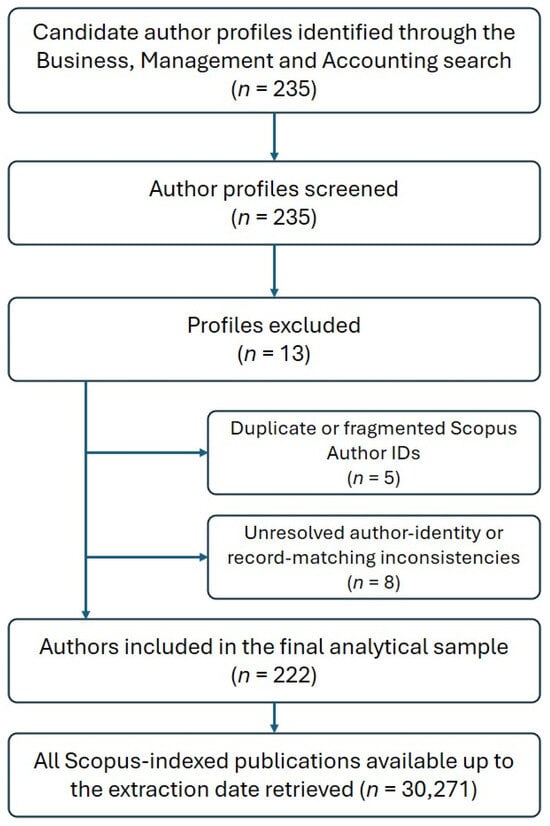
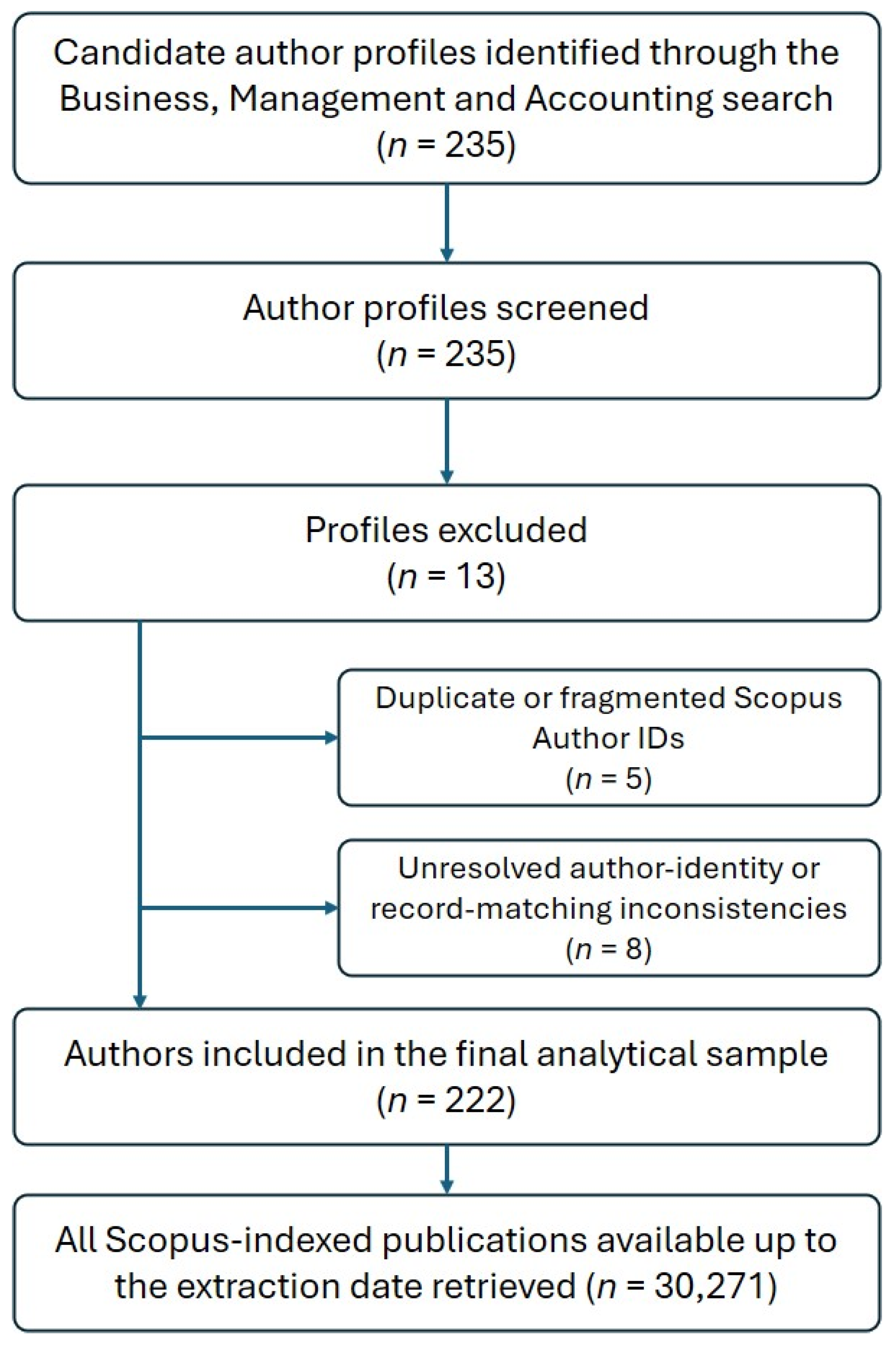
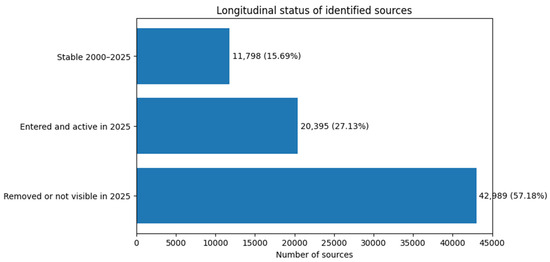
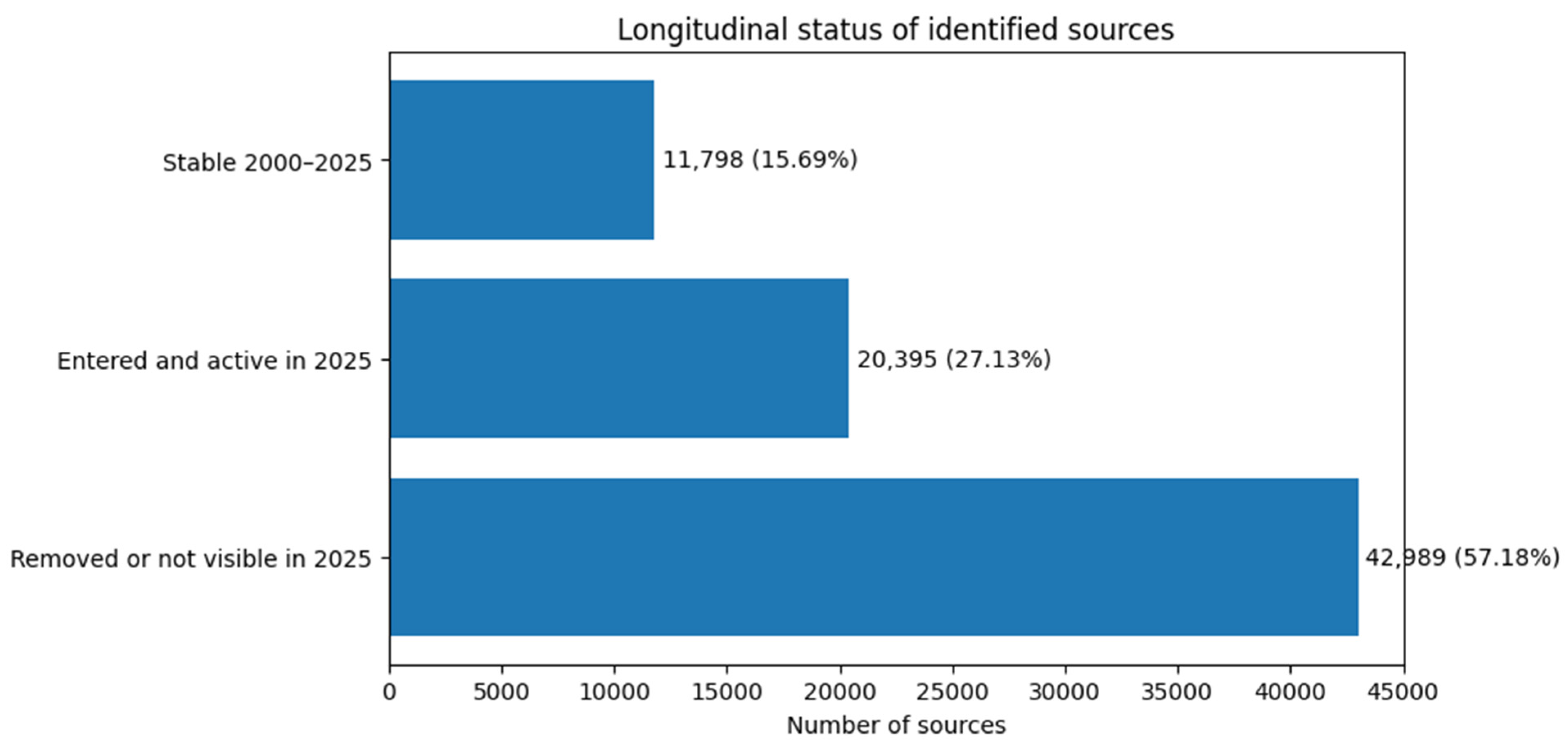
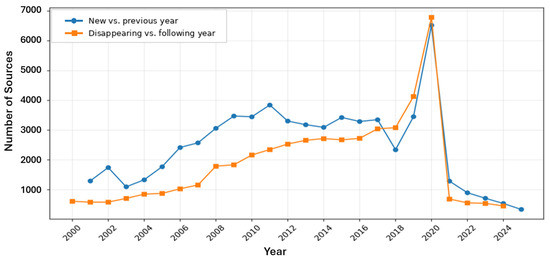
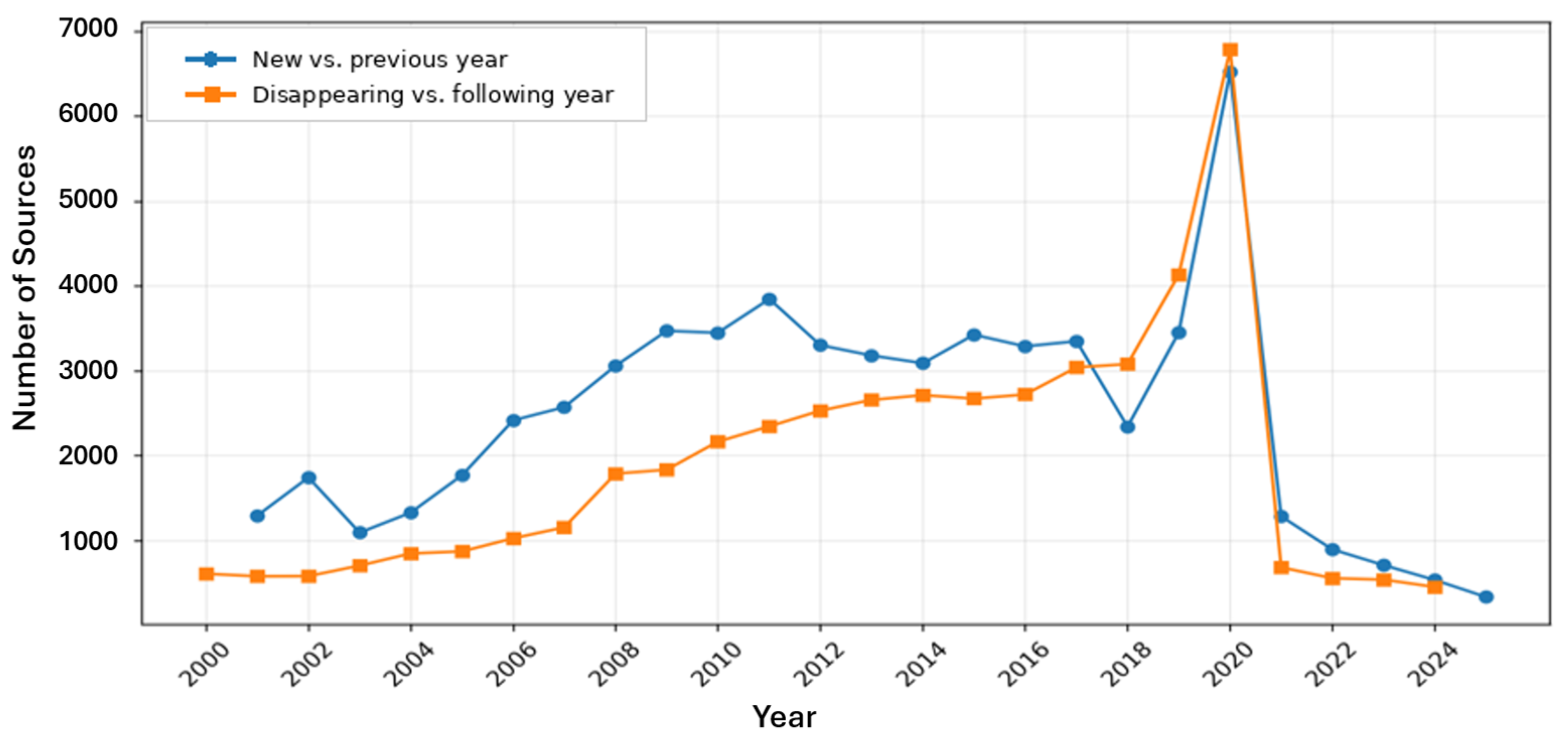
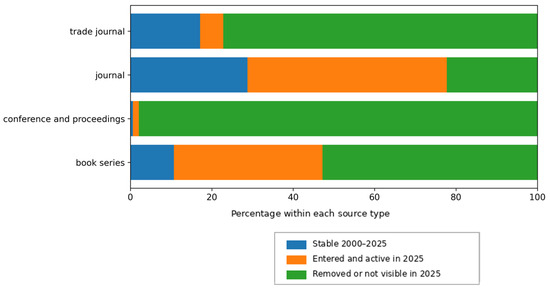
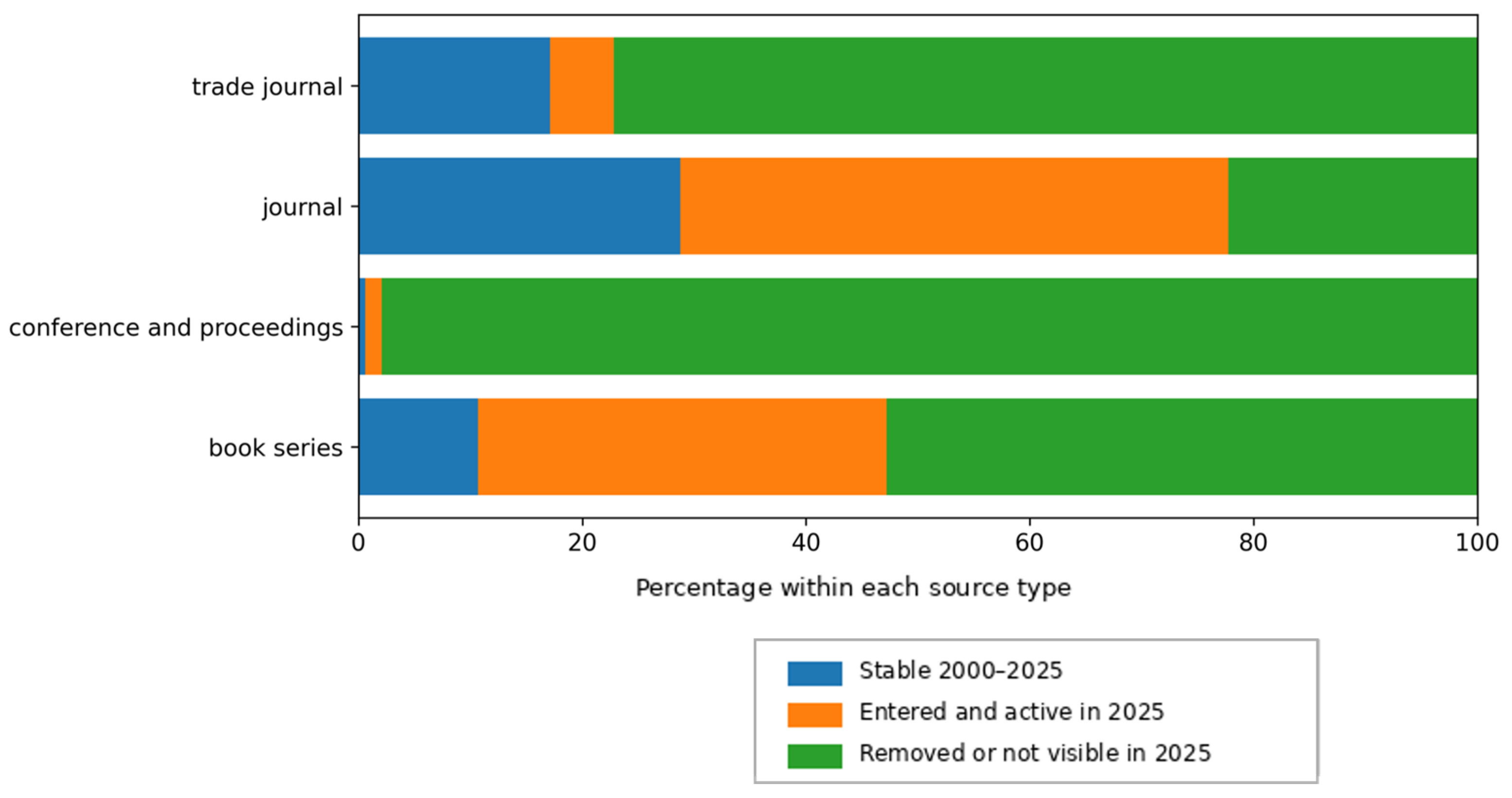
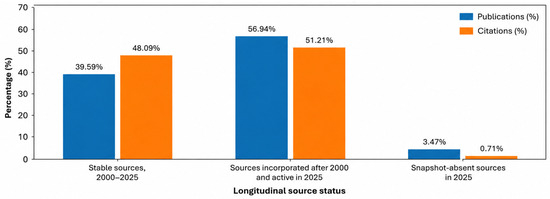
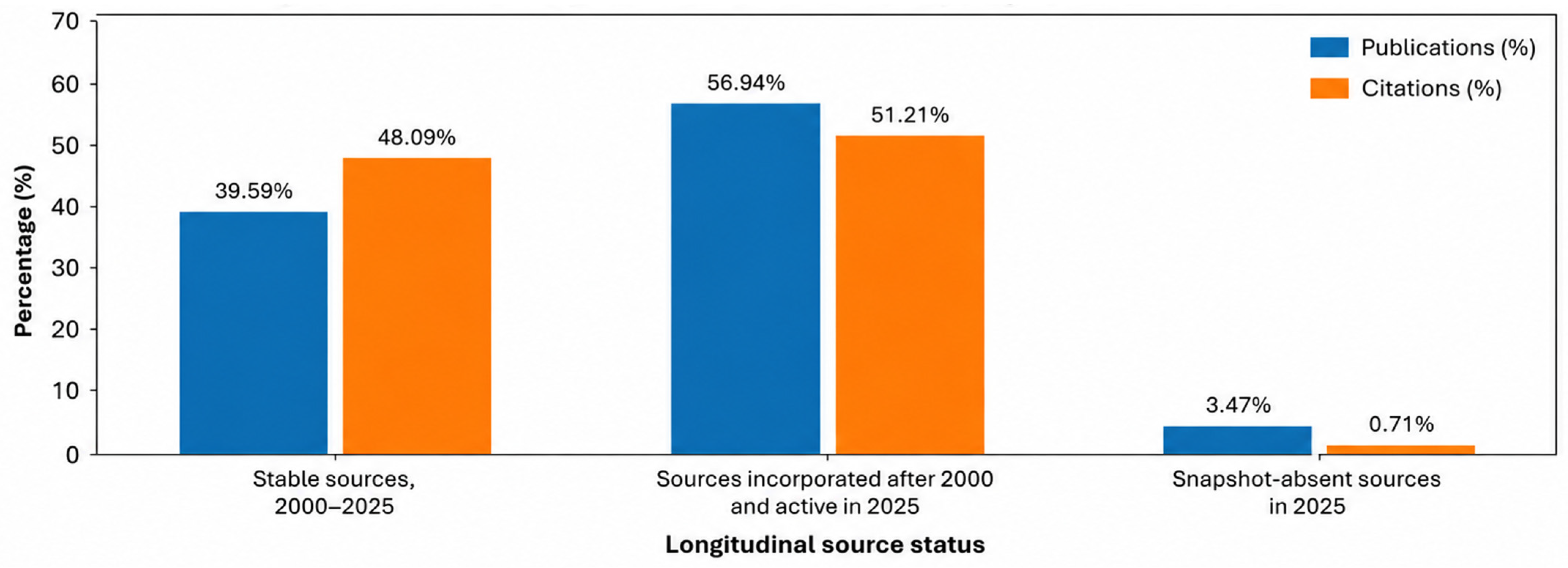
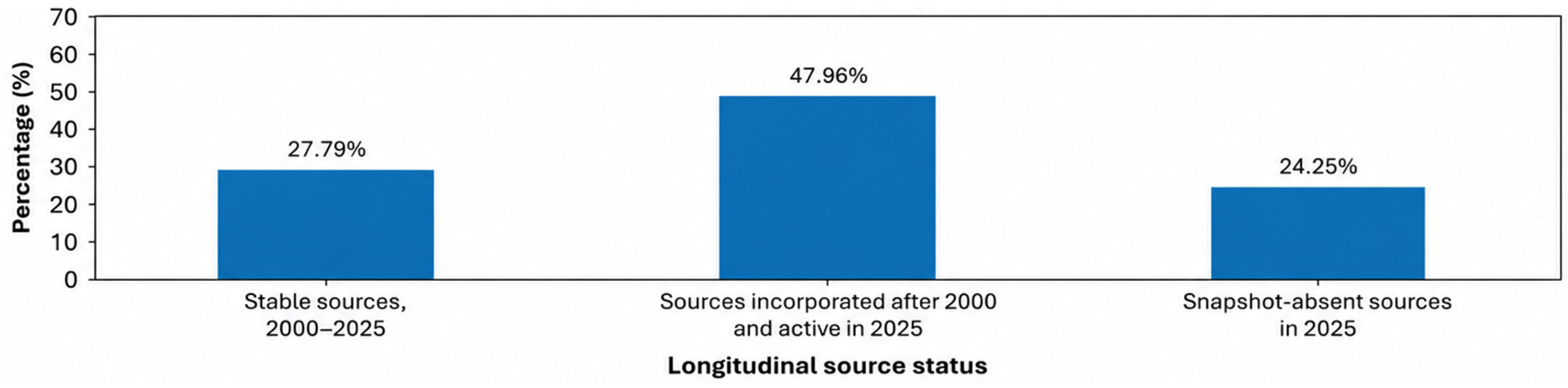

Disclaimer/Publisher’s Note: The statements, opinions and data contained in all publications are solely those of the individual author(s) and contributor(s) and not of MDPI and/or the editor(s). MDPI and/or the editor(s) disclaim responsibility for any injury to people or property resulting from any ideas, methods, instructions or products referred to in the content. |
© 2026 by the authors. Licensee MDPI, Basel, Switzerland. This article is an open access article distributed under the terms and conditions of the Creative Commons Attribution (CC BY) license.