


Abstract
To address the academic integrity challenges arising from artificial intelligence technologies, this study has systematically investigated the policies governing the use of artificial intelligence-generated content (AIGC) in academic writing, specifically, those implemented by leading journals participating in Phase II of “Excellence Action Plan of China Scientific and Technological Journals Project” (hereinafter referred to as the AIGC use policy). The survey findings reveal a “spindle-shaped” distribution of policy stringency across leading English-language journals: only approximately 20% of these journals have adopted high-intensity policies classified as “strict” or “stringent”. The leading Chinese-language journals exhibit a pronounced policy gap concerning AIGC use policy; most journals lack relevant specific guidelines, and merely four journals have issued dedicated policy statements. Further analysis reveals that the technical affinity, ethical sensitivity, and research traditions inherent to a discipline intersect with the institutional logics underpinning publishing entities, such as their affiliations with international commercial conglomerates or scholarly societies. The interplay collectively shapes the form, availability, and regulatory effectiveness of AIGC use policies, yielding a current policy landscape characterized by both structural imbalance and delayed responsiveness. Based on the above, this manuscript proposes the establishment of a “stratified, discipline-specific, and dynamically collaborative” governance system. It advocates the strengthening of policy guidance tailored to disciplinary heterogeneity, accelerating institutional transformation across publishing entities, and instituting mechanisms for monitoring technological evolution and iteratively updating governance policies, thereby achieving a dynamic equilibrium between safeguarding the foundational principles of academic integrity and accommodating the intrinsic logic of technological advancement. Only through such an integrated, adaptive approach can China’s scientific and technical journals substantially enhance their academic governance capacity and effectively respond to the evolving demands of the artificial intelligence era.
1. Introduction
Scientific journals, serving as the key institutional mechanism for academic communication, advance knowledge production and scholarly norms through peer review, the codification of disciplinary standards, and the shaping of research visibility and dissemination pathways (Ali & Watson, 2016; Kochetkov, 2026). Therefore, policy initiatives focused on improving journal quality and governance capacity represent a pivotal entry point for examining how publishing governance is operationalized, transforming macro-level principles into concrete, implementable rules. As a national-level initiative aimed at strengthening academic journals, the “China Excellence Action Plan for Scientific and Technological Journals” has successfully concluded the first phase (2019–2023) and officially commenced its second phase (2024–2028), featuring increased funding and a broader disciplinary scope (Gläser & Laudel, 2016; Li et al., 2025; Zuoqi & Chuwei, 2021). Included in the key-supported leading journal cluster, these journals receive concentrated resource allocation and institutional attention; consequently, their editorial policies are more likely to be formally codified in explicit textual form and institutionalized through established implementation mechanisms, thereby providing a representative observational window into journal-level governance design and implementation (Wang et al., 2023). Meanwhile, the sample includes both Chinese- and English-language journals, enabling a comparative analysis within the same institutional framework of how policy design and formulation align with the domestic versus international publishing ecosystems. This comparison thereby illuminates divergences in policy orientations and governance logics across distinct communicative and regulatory contexts (Osadci-Baciu & Zbuchea, 2024).
With the rapid advancement in artificial intelligence (AI), global academic publishing is undergoing a profound transformation (Gulumbe et al., 2025). AI exhibits substantial potential across research stages from conception and text generation to data analysis, while raising new challenges for originality, authorship accountability, and research ethics. The attribution of intellectual property rights in human–AI collaborative endeavors urgently demands clarity; meanwhile, AI technologies present profound challenges to publishing principles rooted in human subjectivity. Technological interventions entail multiple risks, including information distortion and insufficient transparency, whose improper implementation may trigger adverse cascading consequences, ranging from diminished scholarly quality to systemic imbalances within the academic ecosystem (Ishtiaque, 2025; Kim, 2026; Tan et al., 2026). In response to the shift, the academic community calls for coordinated action on two interrelated fronts, research ethics and publication standards, advocating both the responsible use of AI and the strengthening of scholarly integrity. Scholars are also developing field-informed, authoritative guidelines to establish robust institutional safeguards, thereby reaffirming the foundational pillars of academic integrity amid rapid AI advancement (Mutongoza Bonginkosi & Olawale Babawande, 2022). Against this backdrop, divergent governance trajectories have emerged across distinct publishing ecosystems. Internationally, leading publishers and flagship journals have issued formal AI-use guidelines and disclosure requirements, thereby establishing an enforceable “minimum baseline” for emerging scholarly norms (Gao et al., 2025). By contrast, the governance of artificial intelligence-generated content (AIGC) in China’s academic publishing ecosystem displays marked disparities across journals and disciplines. Journal-level policies, balancing practicality and feasibility, remain evolving and integrative, lacking full conceptual and procedural coherence.
Selected as “Leading Journals” under Phase II of China’s Excellent Scientific and Technological Journals Project, these publications represent a strategically vital element of China’s scientific and technological publishing infrastructure. Their policy frameworks thus provide a critical lens through which to examine how emerging scholarly publishing ecosystems operationalize broad ethical principles into concrete governance mechanisms.
Although the existing studies have examined AI-related policies adopted by academic journals, most are limited in disciplinary scope or journal coverage, and predominantly rely on descriptive analysis, which lacks both systematic cross-disciplinary comparisons and theoretically grounded interpretive frameworks. Therefore, this study focuses on strategically significant leading Chinese- and English-language journals, systematically reviewing and analyzing their currently implemented AIGC policies. It compares Chinese- and English-language journals in policy orientation and governance, and proposes a three-part explanatory framework: (1) institutional inertia among policymakers; (2) enduring influence of discipline-specific ethical traditions; and (3) institutional devaluation or suspension of human subjectivity’s normative significance in AI contexts. By clarifying the mechanism, this study provides empirical evidence to advance understanding of AI governance in academic publishing and offers actionable insights for designing context-sensitive, interoperable policy frameworks.
2. Research Subjects and Methodology
2.1. Research Subjects
“China Excellence Action Plan for Scientific and Technological Journals” (hereinafter referred to as the “Excellence Action Plan”) is a national-level journal development program jointly launched in 2019 by seven ministries and commissions, including the China Association for Science and Technology, the Ministry of Education, and the Ministry of Science and Technology, with the objective of advancing the high quality, internationalized, and professional development of China’s scientific and technological journals through a stratified, categorized, and tiered cultivation strategy. Phase II established the final journal list through a transparent, application-based process incorporating rigorous peer review. The selection encompasses journals published in multiple languages and across distinct tiers: 50 leading English-language journals; 150 emerging English-language journals; 100 leading Chinese-language journals; 100 emerging Chinese-language journals; and 50 newly launched journals meeting high initial standards. This study further refines its scope to a core sample of 150 leading scholarly journals. For each journal, its official website has been systematically accessed and reviewed to identify, extract, and document formal policies and associated guidelines regarding the use of generative artificial intelligence. This comprehensive investigation examined both the policy development and public disclosure, with data collection finalized on 28 February 2026.
2.2. Data Analysis Methodologies
This study focuses on the 150 academic journals selected for Phase II of the “Excellent Academic Journals Project”. First, it statistically analyzes their disciplinary distribution and the organizational types of their publishers. Next, based on official journal websites, it assesses current AIGC policies. Two researchers systematically accessed the official website of each journal, focusing on key sections such as “Author Guidelines,” “Publication Ethics,” and “AIGC Use Policy,” to identify and extract all statements and provisions related to AIGC usage. The specific evaluation criteria included: (i) whether journals have dedicated AIGC policy sections, and (ii) whether those sections comprehensively address four core regulatory aspects: prohibitions on AIGC in authorship, mandatory disclosure, restrictions concerning AI-generated images, and sanctions for violations. Finally, the study systematically evaluates both the completeness and operational feasibility of these AIGC policies. Given the substantial disparity in policy maturity between Chinese- and English-language journals, this study applies a differentiated analytical framework: English-language journals are classified into four tiers: “Absent, Explicit, Strict, and Stringent” based on disclosure depth and prohibition stringency (Schramm, 2023), as summarized in Table 1. Its measurement dimensions comprise the depth of disclosure requirements imposed by policies on AIGC usage behaviors and the clarity with which specific application scenarios are stipulated. In this study, “policy strength” specifically refers to the composite manifestation of these two operational dimensions, not a holistic evaluation of overall policy governance quality. A higher level merely indicates greater specificity and detail along these two operational dimensions; it does not imply superior practical effectiveness or greater advancement of the policy in real-world implementation. Most Chinese-language journals remain in early development stages and are thus categorized into three types: “policy absent,” “adhering to guidelines issued by societies or publishers,” and “having established dedicated editorial policies”, to enable a systematic assessment of the comprehensiveness and maturity of their publication policies. When a leading Chinese-language journal has both its parent academic society/publisher’s policy and its own journal-specific policy in place, the journal’s self-issued policy shall prevail, which is officially published on its website, and the journal should be classified under the “Dedicated Statement Issued” category. If the journal’s official website merely reproduces or provides a hyperlink to the higher-level academic society’s or publishing house’s policy, it shall be classified under the “Adheres to Society or Publishing House Policy” category. Coding was conducted independently by two researchers. Prior to formal coding, the two coders collaboratively conducted pilot coding on five leading English-language journals and ten leading Chinese-language journals to calibrate their coding practices, engaging in thorough discussion to reach consensus on the criteria for each coding level. In cases where policy statements were ambiguous, a conservative coding principle was applied, assigning such cases to the lower coding level of the coding hierarchy. All instances of coder disagreement were systematically documented in detail, and final coding decisions were reached through mutual consultation. Upon completion of coding, intercoder reliability was assessed using Cohen’s Kappa coefficient computed in SPSS 27. The Kappa value for the English top-tier journal dataset (N = 50) was 0.933, and that for the Chinese-language top-tier journal dataset (N = 100) was 0.913, both falling within the “almost perfect agreement” range (Landis & Koch, 1977), indicating good coding reliability. The full coding protocol is provided in Supplementary Material.
Table 1.
Standard for categorizing the stringency of AIGC usage policies in English-language journals.
3. Literature Review
AI technology is now widely integrated across all stages of academic writing, enabling a comprehensive, end-to-end intelligent support framework. In the domain of literature review, AI enables keyword-based retrieval, systematic classification and organization of scholarly publications, and concise synthesis of research findings (Celik, 2025). Kim et al. analyzed 232 academic journals and found that while most lack formal, explicit policies on AIGC, AI use in the literature curation has already achieved broad scholarly acceptance (Kim, 2024). Goyanes et al. noted that while AI aids in method selection and routine computations, the final interpretation and validation remain dependent on expert judgment (Goyanes et al., 2025). When drafting academic papers, AI can help refine and enhance textual expression; however, it should not be employed to generate hypotheses or scientific conclusions directly (Wenwen et al., 2024). Xu et al. reported that the adoption rate of AI in academic writing rose from 62.6% in October 2023 to 78.2% in March 2025 after analyzing the AI usage statements across 7953 journal publications (Xu, 2025). Simşek et al. investigated editorial policies concerning AIGC in imaging journals and found that, among 69 journals with formal AIGC policies, 40 specifically regulate AI-generated images, underscoring image generation as a central focus of AIGC-related editorial policy (Simsek et al., 2024).
AI is now deeply embedded in academic writing, boosting research efficiency while raising ethical concerns. Technically, algorithmic opacity compromises both the explainability and traceability of AIGC (Vorras & Mitrou, 2021). At the application level, ethical violations by stakeholders are becoming increasingly prevalent (Fioravante & Vaccaro, 2026): authors conceal AIGC or outsource manuscript preparation entirely; reviewers employ AI to upload manuscripts or draft reviews; and editors’ overreliance on AIGC may impair editorial judgment, leading to erroneous decisions and raising copyright concerns. The academic community and publishers have responded with targeted policies. Zheng et al. (Wenwen et al., 2024) found broad consensus on two principles: “AI systems must not be listed as authors” and “AI tool use must be explicitly disclosed”, but substantial disagreement persists regarding the appropriate handling of “AI-generated or AI-modified images”. Domestic guidelines, including the “Guidelines on the Appropriate Use of AIGC in Academic Publishing, Version 3.0” (Wenwen et al., 2024) and the “Guidance on Responsible Research Practices” (Fioravante & Vaccaro, 2026), have been issued progressively. These documents specify the permissible applications of AIGC use in core research activities (e.g., literature searching, language editing) while explicitly affirming key principles, including data security and fairness. Collectively, they establish a robust normative framework to support the responsible and ethically grounded AIGC use in scholarly research.
Currently, scholarly journals’ responses to AIGC remain insufficient and inconsistent. Torabi et al. (2024) found that although 60% of top-tier surgical journals have issued formal AIGC guidelines, only 69.2% specify concrete, actionable requirements; 30.8% state policies vaguely or ambiguously; and 51.3% restrict AIGC use exclusively to “enhancing readability.” Chemaya and Martin (2024) found that only 22% of scholars believed grammatical corrections required disclosure, versus 52% for textual rewriting. Arabi et al. (2025) argue that journal editorial policies must align with Committee on Publication Ethics (COPE) guidelines and explicitly state that authors assume full responsibility for all content generated using AI tools. Avery et al. (2024) find that while existing policies prohibit AI-generated authorship and require disclosure of AI use, they typically lack specific, actionable regulatory guidelines. Currently, domestic journal policies display substantial heterogeneity; AI-detection technologies remain comparatively underdeveloped; editors’ understanding of AI fundamentals is limited; and inherent inconsistencies among regulatory provisions further erode the enforceability of these policies (Yang & Huang, 2022). The widening digital divide and ambiguous responsibility allocation further hinder policy implementation (Epstein et al., 2011). This study centers on leading journals selected under Phase II of the “Excellent Academic Journals Project”, systematically analyzing the current status and distinctive characteristics of their policies governing the use of AIGC, thereby offering evidence-based insights to inform the further refinement and optimization.
4. Results
4.1. Current Status Analysis of AIGC Usage Policies in Leading Academic Journals
4.1.1. AIGC Policies in Leading English-Language Academic Journals
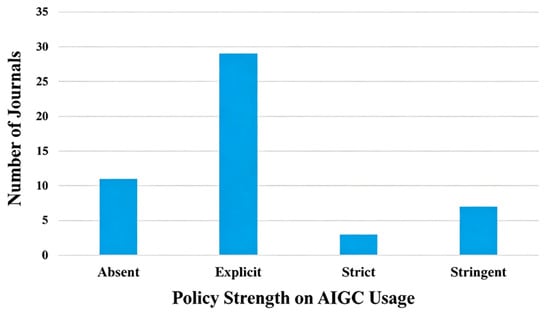
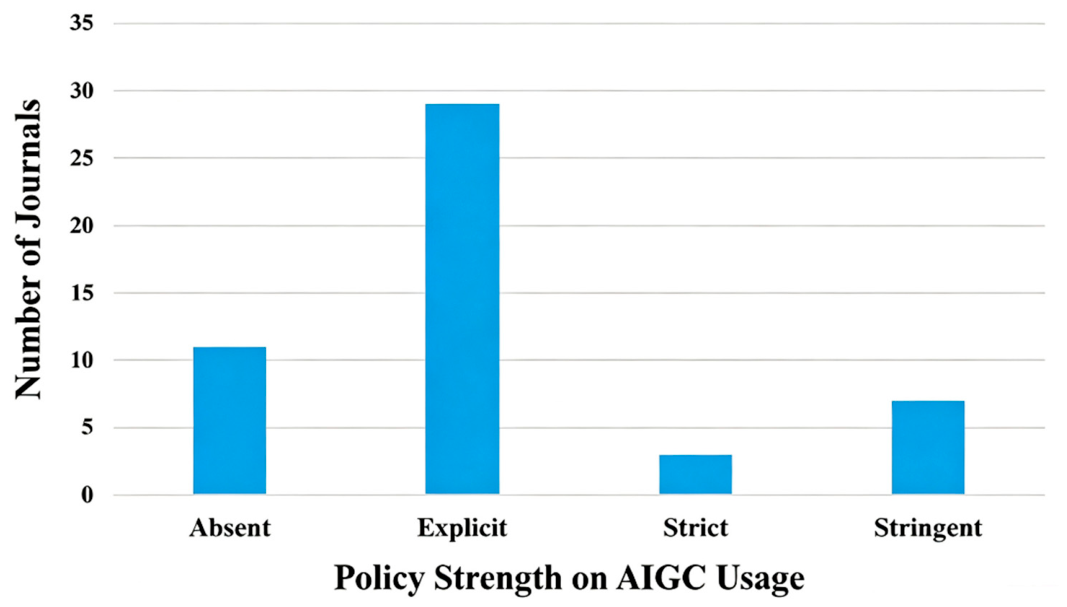
The AIGC usage policies of leading English-language journals under Phase II of the “China Science and Technology Journal Excellence Action Plan” (Figure 1) indicate that the majority have established clear, explicit, and publicly accessible guidelines governing the AIGC, which underscore the broad academic consensus on its ethical and methodological implications. The distribution of journal policies reveals a higher prevalence of “stringent” policies than “strict” ones; concurrently, many journals still lack any formal AIGC policy. This indicates that the academic publishing community remains in an exploratory phase with respect to AIGC usage guidelines and has yet to develop a unified, standardized framework. At present, the regulatory landscape governing AIGC usage is dominated by foundational policies, while those imposing stricter requirements remain relatively scarce: most scholarly journals have adopted basic regulations, and an initial industry-wide consensus is observable in the current policy landscape. However, policy stringency follows a spindle-shaped distribution: only about 20% of journals have adopted high-standard, binding policies. Most academic journals still rely primarily on rule-based compliance. Promoting the transition from the current dominant foundational policy framework to a more comprehensive and explicitly articulated governance-oriented model represents a critical developmental priority for leading English-language scientific journals in China to strengthen academic integrity.
Figure 1.
Distribution of policy strength on AIGC usage in leading English-language journals.
4.1.2. Development Status of AIGC Usage Policies in Leading Chinese-Language Journals
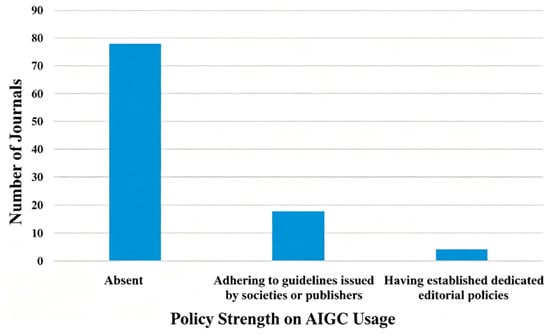
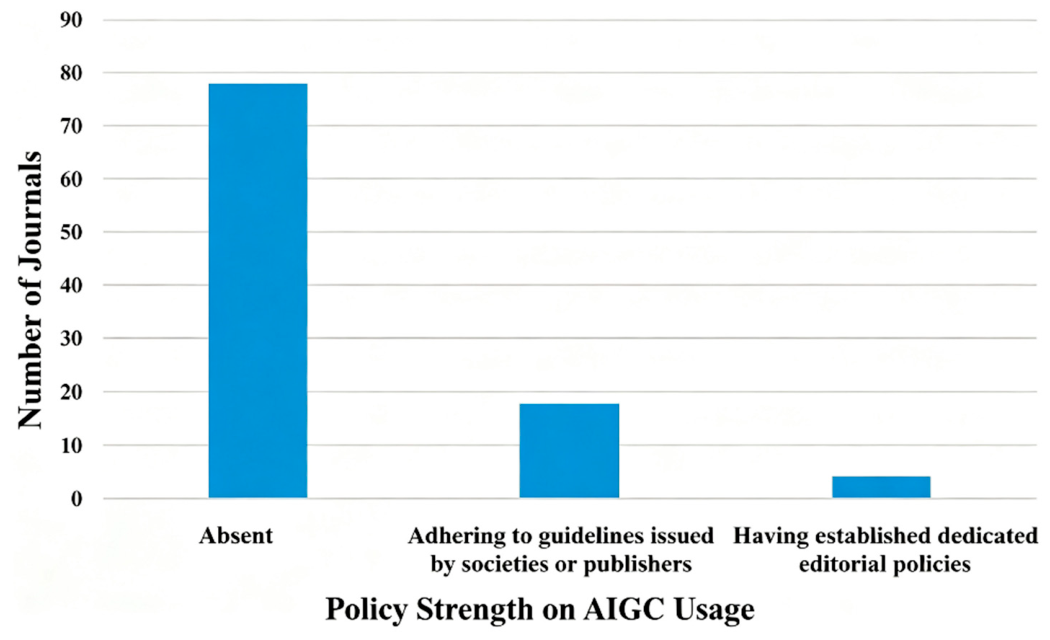
The AIGC usage policy for leading Chinese-language scientific journals under the “China Science and Technology Journals Excellence Action Plan” (Phase II), as depicted in Figure 2, currently exhibits limited policy development and remains heavily reliant on external guidance. The majority of academic journals have yet to develop or publicly disseminate formal guidelines on this issue, making the lack of such policies particularly salient. Among those journals that have taken initiative, most simply adopt the broad, discipline-agnostic policies issued by their parent scholarly societies or publishers, revealing a strong dependence on top-down implementation. Only four journals have proactively engaged in targeted institutional design and independently issued dedicated policy statements, suggesting that forward-looking, autonomous policy innovation remains rare. This distribution structure reveals three key features of leading Chinese-language journals in this domain: (1) limited coverage of domestic policy developments; (2) heavy reliance on external regulatory frameworks for institutional development; and (3) limited proactive policy development at the journal level. Most leading Chinese-language journals still lack proactive AI-content governance strategies; they have not yet developed dedicated policy statements on this matter, suggesting that this issue has not been addressed as a distinct policy priority within their existing frameworks. Most journals remain either in a state of policy vacuum or confined to reactive, ad hoc responses.
Figure 2.
Distribution of AIGC usage policy strength among leading Chinese-language journals.
4.2. AIGC: Factors Shaping Organizational Policies
4.2.1. Influence of Disciplinary Attributes on Policies Governing the Use of AIGC
Based on an analysis of leading English-language journals supported by the “China Science and Technology Journals Excellence Action Plan” (Phase II), those with “explicit” or “absent” policy stringency were grouped as “low-to-no policy enforcement.” In contrast, journals rated “strict” or “stringent” were classified as “high-policy-enforcement”. As shown in Table 2, stringent AIGC usage policies vary widely by discipline: life sciences and medicine journals have the highest proportion (33.3%), followed by natural sciences and mathematics (26.7%), reflecting these fields’ stronger emphasis on research ethics and scholarly integrity. Meanwhile, no journal in the fields of Information Science or Interdisciplinary Studies is classified as “High-Intensity Policy”; all are “Non-High-Intensity/Policy-Absent.” Although a few journals in Engineering Technology and Materials Science are designated as “High-Intensity Policy,” the overwhelming majority remain in the “Non-High-Intensity/Policy-Absent” category. Among leading Chinese-language journals, only a few engineering and technology publications adopt discipline-specific open-access or publication policies; in contrast, medicine predominantly adheres to standardized institutional frameworks established by professional societies. This reveals distinct disciplinary divergences in policy development pathways: medicine, which is characterized by heightened ethical sensitivity and robust systemic coherence, typically aligns with universal norms promulgated by authoritative professional societies. In contrast, engineering and information science exhibit comparatively higher policy adoption rates, though high-intensity policies remain absent in these fields.
Table 2.
Distribution of policy stringency on the use of AIGC across leading English-language journals by discipline.
4.2.2. Influence of Publishing Entities on Policies Governing the Use of AIGC
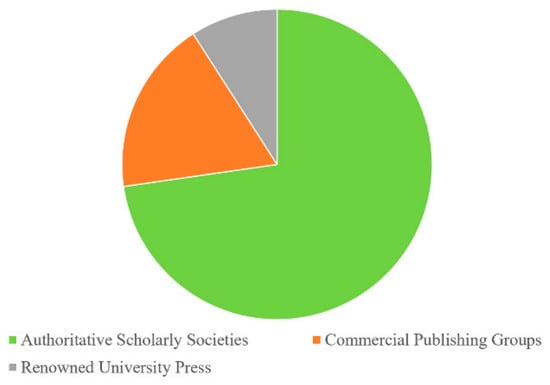
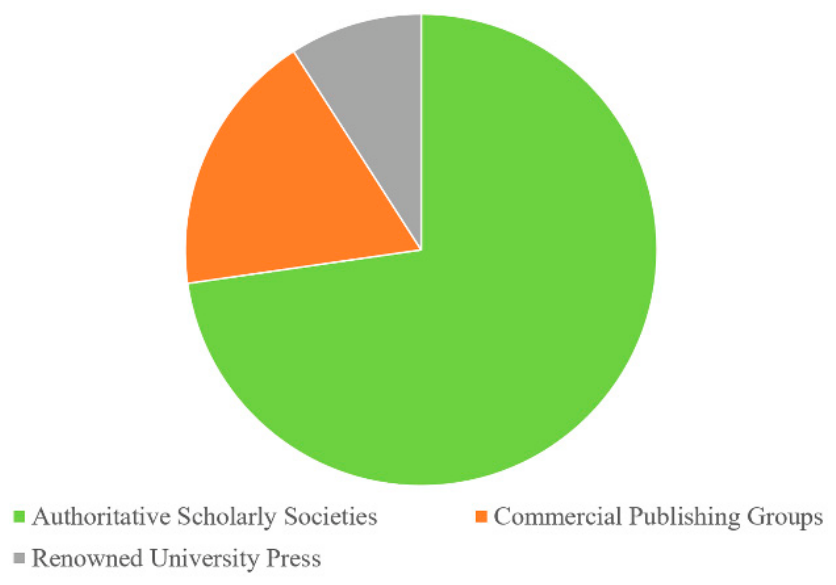
The nature of the publishing entity appears to be associated with differences in both the comprehensiveness and rigor of its policies governing the use of AIGC. As shown in Table 3, international commercial publishers, such as Elsevier and Springer Nature, dominate leading English-language journals not only in terms of publication volume but also in policy stringency: nine of them enforce high-intensity open-access or data-sharing policies. Under categories such as domestically hosted journals, co-published journals, and journals issued by professional associations, few high-impact, policy-oriented journals have been identified in the current sample. The sole exception is KeAi, which is a domestic platform operated by China Science Publishing & Media Ltd. (Beijing, China). But it is a joint initiative of the Chinese Academy of Sciences and Elsevier, so its editorial policies are substantially shaped by international considerations. International Business Press tends to show higher levels of AIGC policy intensity, whereas domestic publishing institutions appear to adopt comparatively lower-intensity policies. As illustrated in Figure 3, leading Chinese-language journals are mainly affiliated with domestic authoritative scholarly societies (72.7%), followed by commercial publishing groups (18.2%) and university presses (9.1%). Consequently, their policy formulation largely follows a top-down, internally consensus-driven model of autonomous development.
Table 3.
Impact of leading English-language journals’ publishers on AIGC usage policies.
Figure 3.
Status of publishing entities of leading Chinese-language journals regarding AIGC usage policies.
The disparity in publishing entities between leading Chinese- and English-language journals may reflect differences in the institutional contexts: international commercial publishers leverage global distribution networks to implement sophisticated, accountability-focused policies. By contrast, domestic academic societies and institutions prioritize indigenous systems and seek to establish stable, unified, consensus-building foundational principles.
5. Discussion
5.1. Path Dependence and Institutional Inertia in Systemic Innovation
The discrepancy between international standards and local regulatory requirements may represent a persistent and inescapable challenge within the contemporary policy landscape. English-language scientific journals, operating through international commercial publishers, may be well-positioned to rapidly integrate globally accepted publication ethics into their policy frameworks. However, a closer examination suggests that these policies appear to be largely generic, broadly applicable across disciplines, yet lacking discipline-specific design that accounts for the distinct epistemological, methodological, and pedagogical characteristics of individual fields. The policy development may reflect a reactive adaptation, undertaken by journals primarily to meet foundational international publishing ethics standards, rather than a proactive, discipline-informed strategic planning initiative. Its core concern might be the following question: To what extent can international norms meaningfully accommodate local academic communities’ distinctive disciplinary contexts? Can universal regulatory provisions genuinely accommodate discipline-specific requirements concerning data security and ethical risk? In seeking integration into the global scholarly communication ecosystem, Chinese English-language journals seem to rely excessively on established international norms.
A critical examination of the domestic journal publishing model, which is dominated by academic societies and universities, suggests its persistent adherence to long-established practices. Years of institutional accumulation may have fostered strong path dependence, potentially rendering it difficult to transcend the constraints imposed by the existing framework, possibly resulting in policy inertia, a deep-seated barrier to development. Such entities may have long dominated the academic publishing system, tending to prioritize incremental refinements within the prevailing institutional framework over fundamental transformations prompted by disruptive technologies. Faced with AI’s disruptive impact, domestic journals, relying mainly on top-down, administrative responses, may demonstrate limited adaptability, unlike agile, market-driven innovation by leading international commercial publishers. Among the leading Chinese-language journals participating in Phase II of the Excellence Initiative, only four have issued dedicated policy statements, a situation that may reflect the broader challenge of institutional inertia lagging behind rapid technological transformation. For academic societies whose journal publishing models have long been defined by stability and scholarly authority, developing the capacity to adapt to technological change while safeguarding that authority may have now become an inescapable core challenge.
5.2. Misalignment Between Established Disciplinary Ethical Traditions and the Accelerating Pace of Technological Innovation
Disciplinary ethical traditions may constitute a fundamental root cause of policy divergence. Medicine and life sciences have pioneered relatively comprehensive AIGC governance frameworks, primarily because they possess long-established, mature ethical systems. When AI technologies are introduced, preexisting institutional resources may be rapidly mobilized and extended into novel domains, thereby potentially embedding AI applications within established governance frameworks. The policy responsiveness may stem less from deep technical AI expertise, but rather may arise primarily from the adaptation and extension of established ethical frameworks and institutional resources. By contrast, disciplines such as information science and engineering have historically been propelled predominantly by technological innovation, demonstrating comparatively limited engagement with ethical considerations and traditionally tending to adhere to a developmental paradigm, “technology first, regulation later”. When AI technologies may become deeply embedded in research practice, disciplines lacking readily applicable ethical resources may be compelled to develop policies from scratch, thereby potentially occupying a reactive and structurally disadvantaged position.
The temporal misalignment between rapid technological advancement and the comparatively sluggish evolution of regulatory frameworks may further intensify the persistent challenge of policy lag. Disciplines such as information science and engineering may be methodologically well aligned with AI technologies, facilitating the rapid integration of AI tools as powerful research instruments and their effective translation into productivity gains. However, the more rapidly emerging technologies are adopted, the more pronounced governance gaps may grow: while researchers have already achieved proficiency in leveraging AI for data generation and model development, corresponding ethical frameworks may remain nascent or under active development. Technological evolution may proceed along a rapid, iterative trajectory characterized by trial and error, whereas regulatory formulation may be grounded in rigorous, evidence-based deliberation, which may make “practice preceding regulation” inevitable. Engineering technology, information science, and related disciplines may maintain strong, practice-oriented linkages with industry; their research focuses on real-world applications, tending to prioritize operational efficiency and demonstrable, measurable outcomes. Under this conceptual framework, researchers may prioritize leveraging AI to improve technical performance, rather than establishing the ethical boundaries governing such technologies. Artificial intelligence may serve both as an object of scholarly inquiry and as a methodological tool, thereby situating researchers in a nuanced position of role convergence: they simultaneously generate novel knowledge while upholding established epistemic norms. Immersion in the situation may impede objective self-reflection; this limitation, compounded by the lack of institutional incentives, may inherently undermine the motivation to advance ethical development. As a result, technological progress may accelerate steadily, whereas regulatory frameworks may fall progressively further behind.
5.3. Subjectivity’s Suspension of Value Under Technological Regulation
The role of policy should extend beyond the external regulation of technological applications, but also actively guide and safeguard the foundational values of the academic community. However, a thought-provoking pattern emerges when comparing the current AIGC usage policies implemented by Chinese- and English-language scholarly journals. Its regulatory logic focuses mainly on the instrumental dimension, centering on “how to use,” with operational provisions (e.g., disclosure requirements, prohibitions on misattribution, and restrictions on image generation) comprehensively codified. Yet it seldom engages the normative and value-laden question of “why to use”, let alone subjects to critical scrutiny what the deep AI integration implies for the very foundations of academic knowledge production. This epistemological orientation construes AI as a neutral, passive instrumental tool, thereby inadvertently obscuring its profound, reconstructive impact on authorial subjectivity, knowledge originality, and scholarly ethics. Policies that merely require disclosure of AI use and attribution transfer, without providing institutional safeguards for anthropologists’ decision-making authority in AI-assisted work, generate a mismatch between declared intentions and practical outcomes. The real deficiency is not vague wording, but the failure to recognize that research practices are undergoing a fundamental transformation, a problem present in many journals’ policies, yet rarely discussed.
Current AIGC usage policies remain predominantly procedural in orientation, which is designed to integrate AIGC into the existing scholarly publishing frameworks through formalized procedural mechanisms. However, they fail to sufficiently address the challenges posed by rapid technological change and fail to address discipline-specific ethical concerns. Technological evolution proceeds along a rapid, iterative trial-and-error trajectory, whereas regulation is rooted in rigorous deliberation and broad consensus; the temporal misalignment further exacerbates policy lag. The policy framework has devolved into a “form-over-substance” paradigm: it formally signals responsiveness to technological disruption, but fails in practice to substantively address the core ethical relationships underpinning academic production.
6. Recommendations
6.1. Promoting Publishing Entities to Transition from Institutional Inertia to Proactive Innovation
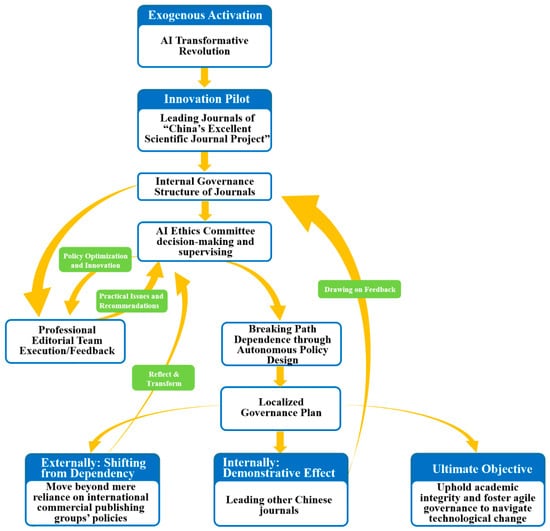
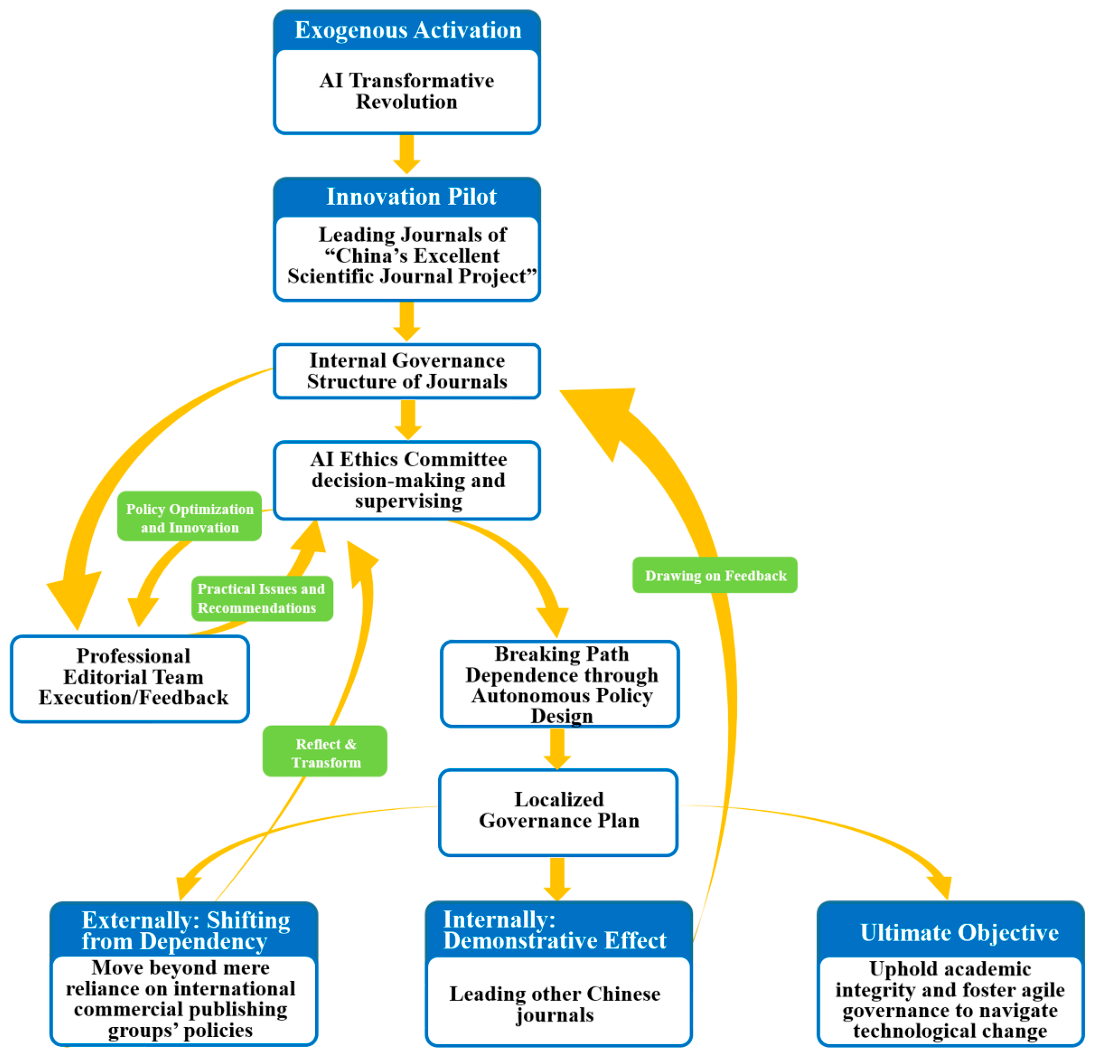
Most scholarly journals are sponsored by academic societies and universities, which have long operated under stable routines. Adhering to familiar practices is easier and less risky. When AI-driven changes accelerate, this institutional rigidity causes delayed responses and weak adaptation, severely constraining opportunities for genuinely autonomous action. Resolving the impasse requires repositioning publishers from passive implementers of established rules to proactive contributors to policy innovation. This repositioning does not require radical restructuring; rather, it can be initiated through incremental, practice-based efforts at the journal level. Following this line of reasoning, scholarly journals can progressively develop and institutionalize internal governance frameworks in practice: establishing an AI Ethics Committee as a dedicated decision-making and supervisory body responsible for formulating, reviewing, and continuously refining AI-related editorial policies; cultivating professional editors with expertise in publishing ethics and technical literacy, thereby serving as the principal agents for policy implementation, monitoring, and evidence-informed feedback. Through a bottom-up feedback loop, issues and recommendations identified by frontline editors during day-to-day practice are systematically escalated to the Ethics Committee, thereby establishing a closed-loop governance mechanism: “practice identifies problems → committee researches and optimizes → policies undergo iterative refinement”, as illustrated in Figure 4. The mechanisms depicted in Figure 4 represent a conceptual synthesis drawn from a range of authoritative policy documents and ethical frameworks in the relevant literature, rather than being derived from empirical data generated in this study (Floridi et al., 2018; Hosseini et al., 2023; Karim et al., 2025). Rather, they constitute a conceptual reference framework intended to inform future policy development.
Figure 4.
Policy feedback & innovation cycle mechanism diagram.
6.2. Guiding Policy Design Toward Discipline-Specific Adaptation
This study is grounded in empirically observed disciplinary regularities and draws upon established international guidelines for AI governance, including the Committee on Publication Ethics (COPE) guidelines (2023), UNESCO’s Recommendation on the Ethics of Artificial Intelligence (2021), and the European Union’s Artificial Intelligence Act (2024) (Ebers, 2025; Ganbaatar, 2025; Hosseini et al., 2023). The recommendations advanced herein are conceptual proposals rather than direct empirical conclusions. Academic ecosystems exhibit substantial variation across disciplines; consequently, a one-size-fits-all governance framework is unlikely to effectively address the distinct needs and contextual challenges of individual fields. Tailored, discipline-specific policy design is therefore essential.
For disciplines characterized by high ethical sensitivity such as medicine and life sciences, robust ethical review procedures and accountability mechanisms have long been institutionalized. The integration of artificial intelligence (AI) does not necessitate dismantling and rebuilding these existing frameworks (Gorelik et al., 2025). A more pragmatic approach is to strengthen the current ethical review system by explicitly defining minimum compliance requirements for AI use, incorporating them into established review processes, and ensuring full alignment with the longstanding bioethical principles that have long guided these fields (World Medical Association, 2013).
For highly technology-driven disciplines, such as information science and engineering, technological advancement proceeds at a rapid pace, often outpacing the development and implementation of corresponding regulatory frameworks. It is therefore recommended that policy design should deliberately balance two imperatives: on the one hand, avoiding excessive restrictions that impede technological innovation; and on the other hand, preventing unmitigated ethical risks stemming from regulatory gaps or implementation delays. Drawing upon established industry guidelines (Chatila & Havens, 2019; Karim et al., 2025), authorities are advised to develop discipline-specific technical application standards. Furthermore, a formalized mechanism for periodic review and dynamic updating of these standards should be institutionalized, thereby ensuring timely closure of emerging ethical gaps without compromising the momentum of innovation.
For interdisciplinary and integrative fields such as environmental science and geographic information science, technological advancement proceeds rapidly, and sensitive data, particularly those pertaining to public safety and ecosystem integrity, are frequently involved. Consequently, ethical boundaries cannot be adequately defined from the perspective of any single discipline. In this context, cross-disciplinary collaborative oversight is more effective than reliance on a single regulatory authority in identifying and managing potential risks. Operational approaches may build upon established recommendations from the field of AI ethics (Floridi et al., 2018; Jobin et al., 2019), while remaining adaptable to the specific contexts and requirements of each discipline, rather than adopting rigid, universalist governance models.
6.3. Promoting a Strategic Shift in Policy from Instrumental Compliance to Value-Driven Leadership
To establish a dynamic governance mechanism that integrates instrumental rationality with value rationality, policymakers must reorient the policy focus from checking regulatory compliance in technology deployment to safeguarding and enhancing human agency in human–machine collaboration. To make policies more than just procedural requirements, regulators should complement disclosure obligations and prohibitive measures with explicit value-based principles embedded in the regulatory framework. On the one hand, safeguarding the author’s intellectual agency should constitute the foundational principle guiding policy design. Clear boundaries must be delineated for AI’s role in academic knowledge production: the formulation of research hypotheses, derivation of core conclusions, and generation of original scholarly insights must remain the exclusive domain of human scholars; AI may offer auxiliary support, but must not encroach upon these essential functions. On the other hand, preserving scholarly originality should constitute a central criterion in policy evaluation. Policies should require academic journals to integrate a distinct assessment of original intellectual contribution into the peer-review process, specifically evaluating whether a study’s core conceptual insight originates from human scholars or algorithmic inference. The reconstruction of trust within the academic community must constitute the paramount objective of policy-oriented value guidance. Regardless of the degree to which AI is integrated into the research process, the named authors retain full and non-transferable responsibility for the integrity and scholarly validity of their work. Meanwhile, policies should foster the establishment of a publicly accessible query mechanism for AI usage statements and data registration, thereby enhancing transparency and rebuilding academic trust undermined by algorithmic opacity. Only by broadening policy perspectives from an instrumental focus on compliance to a value-driven orientation toward ethical guidance can we establish systematic institutional safeguards for anthropologists’ subject position in human–AI collaboration.
6.4. Building Governance Mechanisms from Passive Responsiveness to Collaborative Evolution
The shared responsibility of journals and the broader academic community is to establish a governance mechanism that shifts from passive responsiveness toward collaborative, iterative updating. “Collaborative updating” refers to the integration of policy formulation into the dynamic trajectory of technological advancement, ensuring that regulatory frameworks evolve iteratively and in close alignment with advances in AI. This mechanism encompasses three interrelated dimensions: (1) Establish a monitoring and early warning network, collaborating with universities, publishers, technical experts, and research funding agencies to co-develop an AI-monitoring platform for scholarly writing, thereby enabling continuous tracking of emerging AI-driven advances, real-world applications, and associated risks in academic authorship. By regularly publishing monitoring reports and proactively identifying nascent risk areas, the system provides forward-looking evidence to guide timely policy adjustments, thereby reducing the lag between problem emergence and regulatory intervention. (2) Establish a multi-stakeholder collaborative mechanism for iterative rule development, moving beyond single-entity-dominated policymaking models. Create a standing dialogue platform jointly convened by journal editors, researchers, technology developers, and ethics experts. Technical developers define AI’s operational boundaries; researchers articulate practical requirements and ethical challenges emerging from real-world applications; ethics experts provide a values-based judgment framework; and journal editors translate collective consensus into concrete, enforceable policies, thereby ensuring policy design is both technically feasible and ethically grounded. (3) Promote modular governance frameworks by breaking AI usage policies into institutional modules that combine immutable core principles with context-sensitive, adaptable provisions: core principles, such as “human authors bear full responsibility for AI-assisted outputs” and “AI systems shall not be designated as authors”, must remain stable, foundational, and non-negotiable. Adjustable provisions, including the disclosure depth, penalty severity, and scope of applicability, are dynamically calibrated to technological advancements and disciplinary heterogeneity, thereby ensuring policy stability while enabling continuous, adaptive refinement.
The governance model’s practical implementation and oversight within the peer-review process must fully acknowledge the current limitations, including inconsistent accuracy and susceptibility to circumvention. Such tools should not serve as the sole basis for enforcement or editorial oversight. A multi-tiered oversight mechanism should therefore be established: at the submission stage, authors must be required to make mandatory disclosures explicitly specifying both the extent of AI assistance employed and the specific AI tools utilized. The peer review stage involves reviewers verifying the consistency between disclosed information and textual evidence; post-publication, regular audits are conducted through dedicated monitoring platforms to identify and track emerging patterns of misuse. Determinations of policy violations shall be made by the editorial office through integrated assessment, which combines quantitative detection results with qualitative contextual analysis, to ensure fairness and accuracy in final adjudication.
7. Conclusions
With the continuous advancement of AIGC technologies, their application in academic writing is expanding in both scope and influence, thereby intensifying the integrity governance challenges faced by scholarly journals. This study reveals that the policy intensity of English-language leading journals follows a “spindle-shaped” distribution, whereas Chinese-language leading journals display a pronounced institutional gap, indicating that the AIGC governance currently lacks a mature, universally applicable regulatory framework. When interpreting the above findings, it is essential to acknowledge the inherent limitations of this study at the data source level. The study relies exclusively on publicly available policy statements retrieved directly from journal websites. The absence of such publicly accessible policies should not be equated with a lack of governance awareness or regulatory action: journals may comply with higher-level policies established by their publishers or professional societies, without reproducing them on their own websites, or may implement governance practices in accordance with internal editorial guidelines that are not publicly disclosed. Therefore, the findings of this study reflect only the observable, publicly available dimension of AIGC governance, not the entirety of institutional regulatory practices, indicating that the actual governance landscape may extend beyond what the available data disclose. Future research could advance along three directions: First, it could expand the sample scope and extend the observation period to enable longitudinal tracking of policy evolution across journals spanning diverse disciplines and languages, thereby further clarifying the underlying mechanisms driving policy adjustments. Second, it could conduct an in-depth analysis of how the institutional characteristics of publishing entities specifically shape policy formulation pathways, thereby strengthening a more robust theoretical foundation for explaining policy variations. The explanatory mechanisms proposed in the discussion section of this study, including institutional inertia and disciplinary ethical traditions, remain speculative at present. Their empirical validation awaits future research employing qualitative methodologies, including editor interviews, case studies of policy-making processes, and analyses of publisher decision-making mechanisms. Third, it could empirically evaluate the implementation effectiveness of the “stratified and categorized, dynamically collaborative” governance system to provide actionable, evidence-based insights for policy optimization and refinement. Overall, only through sustained dialogue and collaborative governance among academic communities, publishing institutions, and technology developers can the foundational principle of academic integrity be upheld while enabling the responsible integration of artificial intelligence into scholarly writing, thereby fostering the healthy development of the academic ecosystem.
Supplementary Materials
The following supporting information can be downloaded at: https://www.mdpi.com/article/10.3390/publications14030057/s1, Figure S1 Decision tree for leading English-language journals, Figure S2 Decision tree for leading Chinese-language journals, Table S1 Fundamental encoding information, Table S2 Special case handling rules, Table S3 Coding record table of leading English-language journals, Table S4 Basic information and policy source/URL of leading English-language journals, Table S5 Coding record table of leading Chinese-language journals, Table S6 Basic information and policy source/URL of leading Chinese-language journals, Table S7 Results of Cohen’s Kappa Coefficient assessment.
Author Contributions
Methodology, M.W.; Writing—Original Draft, M.W., L.W. and J.W.; Writing—Review & Editing, M.W., L.W. and J.W. All authors have read and agreed to the published version of the manuscript.
Funding
This research was funded by National Research Project on Editorial Studies for Humanities and Social Sciences Journals Published by Chinese Higher Education Institutions (PY2025120), The Seventh Jiangsu Provincial Scientific Journal Research Fund (Renhe-Subian B011), National Natural Science Foundation of China (52605284), Natural Science Foundation of Jiangsu Province (BK20241068), Teaching Reform and Construction Projects in Nanjing Institute of Technology (JXGG2025019) and the Scientific Research Foundation of Nanjing Institute of Technology (YKJ202364).
Data Availability Statement
The original contributions presented in this study are included in the article/Supplementary Material. Further inquiries can be directed to the corresponding author.
Conflicts of Interest
The authors declare no conflicts of interest.
Abbreviations
The following abbreviations are used in this manuscript:
| STM | Science, Technology and Medicine |
| AIGC | Artificial Intelligence-Generated Content |
References
- Ali, P. A., & Watson, R. (2016). Peer review and the publication process. Nursing Open, 3(4), 193–202. [Google Scholar] [CrossRef] [Scilit]
- Arabi, L., Roohbakhsh, A., Malaekeh-Nikouei, B., & Bazzaz, B. S. F. (2025). The impact of artificial intelligence (AI) in academic writing and publication: Iranian Journal of Basic Medical Sciences (IJBMS) policy. Iranian Journal of Basic Medical Sciences, 28(1), 1. [Google Scholar] [CrossRef] [PubMed]
- Avery, J., Sánchez Abril, P., & Del Riego, A. (2024). Attributing AI authorship: Towards a system of icons for legal and ethical disclosure. Northwestern Journal of Technology and Intellectual Property, 22(1), 1–54. [Google Scholar] [CrossRef] [Scilit]
- Celik, S. U. (2025). Integrating artificial intelligence into scientific writing: A narrative review for clinical and surgical researchers. The American Journal of Surgery, 250, 116657. [Google Scholar] [CrossRef] [Scilit]
- Chatila, R., & Havens, J. C. (2019). The IEEE global initiative on ethics of autonomous and intelligent systems. In M. I. A. Ferreira, J. S. Sequeira, G. S. Virk, M. O. Tokhi, & E. E. Kadar (Eds.), Robotics and well-being (pp. 11–16). Springer International Publishing. [Google Scholar] [CrossRef] [Scilit]
- Chemaya, N., & Martin, D. (2024). Perceptions and detection of AI use in manuscript preparation for academic journals. PLoS ONE, 19(7), e0304807. [Google Scholar] [CrossRef] [Scilit] [PubMed]
- Ebers, M. (2025). Truly risk-based regulation of artificial intelligence how to implement the EU’s AI act. European Journal of Risk Regulation, 16(2), 684–703. [Google Scholar] [CrossRef] [Scilit]
- Epstein, D., Nisbet, E. C., & Gillespie, T. (2011). Who’s responsible for the digital divide? Public perceptions and policy implications. The Information Society, 27(2), 92–104. [Google Scholar] [CrossRef] [Scilit]
- Fioravante, R., & Vaccaro, A. (2026). Humanism and AI-driven vulnerabilities: Customers, partners, employees. In R. Fioravante, & A. Vaccaro (Eds.), Responsible organizations and humanism in artificial intelligence: Between automating humans and humanizing machines (pp. 163–210). Springer Nature Switzerland. [Google Scholar] [CrossRef] [Scilit]
- Floridi, L., Cowls, J., Beltrametti, M., Chatila, R., Chazerand, P., Dignum, V., Luetge, C., Madelin, R., Pagallo, U., Rossi, F., Schafer, B., Valcke, P., & Vayena, E. (2018). AI4People—An ethical framework for a good ai society: Opportunities, risks, principles, and recommendations. Minds and Machines, 28(4), 689–707. [Google Scholar] [CrossRef] [Scilit] [PubMed]
- Ganbaatar, U. (2025). Do ethics in ai still matter? A review of the 2021 UNESCO recommendation on the ethics of AI. The Review of Faith & International Affairs, 23(3), 26–33. [Google Scholar] [CrossRef] [Scilit]
- Gao, W., Liu, G., Huang, M. B., & Yao, H. (2025). AI in scholarly publishing: A study on LIS journals’ guidelines and policies. International Journal of Librarianship, 10(2), 85–100. [Google Scholar] [CrossRef] [Scilit]
- Gläser, J., & Laudel, G. (2016). Governing science: How science policy shapes research content. European Journal of Sociology, 57(1), 117–168. [Google Scholar] [CrossRef] [Scilit]
- Gorelik, A. J., Li, M., Hahne, J., Wang, J., Ren, Y., Yang, L., Zhang, X., Liu, X., Wang, X., Bogdan, R., & Carpenter, B. D. (2025). Ethics of AI in healthcare: A scoping review demonstrating applicability of a foundational framework. Frontiers in Digital Health, 7, 1662642. [Google Scholar] [CrossRef] [Scilit] [PubMed]
- Goyanes, M., Lopezosa, C., & Piñeiro-Naval, V. (2025). The use of artificial intelligence (AI) in research: A review of author guidelines in leading journals across eight social science disciplines. Scientometrics, 130(7), 3725–3741. [Google Scholar] [CrossRef] [Scilit]
- Gulumbe, B. H., Audu, S. M., & Hashim, A. M. (2025). Balancing AI and academic integrity: What are the positions of academic publishers and universities? AI & Society, 40(3), 1775–1784. [Google Scholar] [CrossRef] [Scilit]
- Hosseini, M., Resnik, D. B., & Holmes, K. (2023). The ethics of disclosing the use of artificial intelligence tools in writing scholarly manuscripts. Research Ethics, 19(4), 449–465. [Google Scholar] [CrossRef] [Scilit] [PubMed]
- Ishtiaque, A. (2025). Navigating ethics and risk in artificial intelligence applications within information technology: A systematic review. American Journal of Advanced Technology and Engineering Solutions, 1(01), 579–601. [Google Scholar] [CrossRef] [Scilit]
- Jobin, A., Ienca, M., & Vayena, E. (2019). The global landscape of AI ethics guidelines. Nature Machine Intelligence, 1(9), 389–399. [Google Scholar] [CrossRef] [Scilit]
- Karim, H., Gupta, D., & Sitharaman, S. (2025). Securing LLM workloads with NIST AI RMF in the internet of robotic things. IEEE Access, 13, 69631–69649. [Google Scholar] [CrossRef] [Scilit]
- Kim, E. (2024). Analyzing AI use policy in LIS: Association with journal metrics and publisher volume. Scientometrics, 129(12), 7623–7644. [Google Scholar] [CrossRef] [Scilit]
- Kim, E. (2026). How does prompt anchoring affect large language model outputs? Publications, 14(3), 43. [Google Scholar] [CrossRef] [Scilit]
- Kochetkov, D. (2026). Peer review at the crossroads. Learned Publishing, 39(2), e2046. [Google Scholar] [CrossRef] [Scilit]
- Landis, J. R., & Koch, G. G. (1977). The measurement of observer agreement for categorical data. Biometrics, 33(1), 159–174. [Google Scholar] [CrossRef] [Scilit]
- Li, C., Li, Y., & Ding, Z. (2025). Development of sci-tech journals in china stimulated by the china sci-tech journal excellence action plan. Learned Publishing, 38(1), e1654. [Google Scholar] [CrossRef] [Scilit]
- Mutongoza Bonginkosi, H., & Olawale Babawande, E. (2022). Safeguarding academic integrity in the face of emergency remote teaching and learning in developing countries. Perspectives in Education, 40(1), 234–249. [Google Scholar] [CrossRef] [Scilit]
- Osadci-Baciu, A.-M., & Zbuchea, A. (2024). The economics of publishing: A bibliometric research landscape. The USV Annals of Economics and Public Administration, 24(1(39)), 90–105. [Google Scholar] [CrossRef]
- Schramm, M. (2023). A publisher’s perspectives on the use and abuse of artificial intelligence in academic journal publishing. Journal of the Musical Arts in Africa, 20(1), viii–xiii. [Google Scholar] [CrossRef] [Scilit]
- Simsek, O., Manteghinejad, A., & Vossough, A. (2024). A comparative review of imaging journal policies for Use of AI in manuscript generation. Academic Radiology, 31(12), 5232–5236. [Google Scholar] [CrossRef] [Scilit]
- Tan, Z., Yang, X., Chen, Q., & Chen, T. (2026). Research on large language model-based bibliographic cataloging agent in the CNMARC context. Publications, 14(1), 19. [Google Scholar] [CrossRef] [Scilit]
- Torabi, S. J., Warn, M. J., Bitner, B. F., Haidar, Y. M., Tjoa, T., & Kuan, E. C. (2024). Variability of guidelines and disclosures for AI-generated content in top surgical journals. Surgical Innovation, 31(4), 389–391. [Google Scholar] [CrossRef] [Scilit] [PubMed]
- Vorras, A., & Mitrou, L. (2021). Unboxing the black box of artificial intelligence: Algorithmic transparency and/or a right to functional explainability. In EU internet law in the digital single market (pp. 247–264). Springer. [Google Scholar] [CrossRef] [Scilit]
- Wang, J., Halffman, W., & Zhang, Y. H. (2023). Sorting out journals: The proliferation of journal lists in China. Journal of the Association for Information Science and Technology, 74(10), 1207–1228. [Google Scholar] [CrossRef] [Scilit]
- Wenwen, Z., Yue, W., Meiling, W., & Ying, Z. (2024). Construction of guidelines for the use of AIGC in academic publishing. Chinese Journal of Scientific and Technical Periodicals, 35(10), 1349. [Google Scholar] [CrossRef]
- World Medical Association. (2013). World medical association declaration of helsinki: Ethical principles for medical research involving human subjects. JAMA, 310(20), 2191–2194. [Google Scholar] [CrossRef] [Scilit] [PubMed]
- Xu, Z. (2025). Disciplinary diversity in academic AI adoption: A comparative analysis of AI tool usage declarations across scientific fields. Proceedings of the Association for Information Science and Technology, 62(1), 788–798. [Google Scholar] [CrossRef] [Scilit]
- Yang, C., & Huang, C. (2022). Quantitative mapping of the evolution of AI policy distribution, targets and focuses over three decades in China. Technological Forecasting and Social Change, 174, 121188. [Google Scholar] [CrossRef] [Scilit]
- Zuoqi, D., & Chuwei, L. (2021). Developing trend of leading journals of Excellence Action Plan for China STM Journals based on multi-dimensional index evaluation. Chinese Journal of Scientific and Technical Periodicals, 32(9), 1201. [Google Scholar] [CrossRef]

Disclaimer/Publisher’s Note: The statements, opinions and data contained in all publications are solely those of the individual author(s) and contributor(s) and not of MDPI and/or the editor(s). MDPI and/or the editor(s) disclaim responsibility for any injury to people or property resulting from any ideas, methods, instructions or products referred to in the content. |
© 2026 by the authors. Licensee MDPI, Basel, Switzerland. This article is an open access article distributed under the terms and conditions of the Creative Commons Attribution (CC BY) license.