


Abstract
Scientific output in health sciences has grown exponentially, yet its landscape remains under-analyzed in emerging economies. In Peru, Microbiology and Parasitology are disciplines of strategic relevance for public health, but no specific bibliometric analysis exists. This study provides the first baseline to identify thematic gaps and characterize research patterns within the SciELO Peru collection. Through a descriptive bibliometric analysis of 549 Microbiology and Parasitology articles indexed in the SciELO Peru collection (2000–2023), temporal, regional, and institutional indicators, methodological design, and journal characteristics were evaluated using R v4.4.0. Results show that production peaked in 2021, coinciding with the COVID-19 pandemic period and accompanied by a marked increase in Virology-related publications. Lima accounted for 77.3% of the SciELO Peru corpus national output, with UPCH (17.5%), INS (14.9%), and UNMSM (13.7%) leading institutional activity. Bacteriology was the dominant area (44.1%), while Mycology was the most underrepresented (2.4%), and cross-sectional designs predominated (63.9%). Notably, real international collaboration was limited to 1.8%, and RPMESP was the sole Bradford core journal, accounting for 48.5% of the corpus, with no articles appearing in Q1 journals. These findings reveal that while production shows sustained growth, it is marked by high geographic concentration and a scarcity of applied technological research within the analyzed corpus. These findings highlight the urgent need to decentralize research and reorient Peru’s health science agenda toward critical, under-studied disciplines.
1. Introduction
In recent decades, global scientific output has experienced sustained exponential growth, particularly within the field of health sciences. This phenomenon, driven by the digitalization of knowledge, the expansion of open-access platforms, and increased funding for biomedical research, has generated an unprecedented volume of literature (Bornmann & Mutz, 2015). In Latin America, this process has been fundamentally articulated through SciELO (Scientific Electronic Library Online), which constitutes the open-access repository with the broadest coverage of regional scientific production in health sciences (Meneghini & Packer, 2007; Rocha et al., 2023). For Peru, SciELO Peru represents the primary platform for the visibility of national science in the Spanish language, accumulating over two decades of continuous production from both public and private institutions (Meneghini & Packer, 2007; Mayta-Tristán & Caro, 2008). However, the rigorous quantification of this output requires methodological tools specifically designed for such purposes (Donthu et al., 2021).
Bibliometrics applies statistical and mathematical methods to the analysis of scientific documents to evaluate the quantity and quality of academic production within a specific field, institution, or country. Its indicators are organized into four categories: productivity (volume and distribution of publications), citation (impact and visibility), methodological content (study design and thematic areas), and personal and institutional indicators (authors, collaborations, and affiliations) (Donthu et al., 2021). The application of this approach to databases such as SciELO provides information across multiple levels of analysis—national, regional, institutional, and individual—enabling productivity comparisons, the establishment of the state of the art in a given field, and the identification of strategic research lines oriented toward evidence-based decision-making (Packer, 2009; Piwowar et al., 2018).
The objective evaluation of the investigative activity of academics, institutions, and national science systems constitutes a strategic imperative for understanding a country’s position on the global map of knowledge and for planning its future scientific development (Glänzel et al., 2019; Koo, 2026). Within this framework, bibliometric studies operate as baselines that prevent redundancy in production, detect disciplinary strengths and weaknesses, and focus research agendas on priority issues (Romani Romani et al., 2016). Without this prior diagnosis, the planning of future research, the formation of work teams, and the establishment of inter-institutional strategic alliances lack empirical support, thereby compromising the efficacy of resources invested in science and technology (Ninkov et al., 2022; Fernandez-Guzman et al., 2023; Purnell, 2024).
Microbiology and Parasitology are disciplines of strategic relevance for Peruvian public health. The national epidemiological profile is characterized by the persistence of endemic infectious diseases, the emergence of antimicrobial-resistant pathogens, and the re-emergence of parasitic diseases in rural, peri-urban, and highly marginalized areas, particularly in Andean and Amazonian regions (Sandoval et al., 2023; Pan American Health Organization, 2025). Nevertheless, unlike other biomedical disciplines that have published bibliometric characterizations both in Peru and Latin America (Quiroz-Ruiz & Vega-Fernández, 2023; Morán-Mariños et al., 2024), to date, no specific analysis exists for Microbiology and Parasitology in Peru. This absence prevents researchers, academic institutions, and funding agencies from having an objective view of the status and evolution of research in these fields, hindering the identification of thematic gaps, the proposal of strategic alliances, and the design of evidence-based research programs (Sandoval et al., 2023; Garcia-Solorzano et al., 2025).
In response to this gap, the present study aimed to describe the bibliometric characteristics of Microbiology and Parasitology articles indexed in the SciELO Peru collection during the 2000–2023 period. We analyzed indicators of temporal, regional, and institutional production; thematic distribution and article type; predominant methodological design; collaboration patterns; journal characteristics; and the formal application of Bradford’s Law. This study was designed as a baseline descriptive bibliometric assessment intended to characterize the structure and evolution of the SciELO Peru corpus to provide a baseline to guide future research, editorial strategies, and investments in health science and technology.
2. Materials and Methods
2.1. Study Design and Type
A bibliometric study was conducted using a non-experimental, retrospective, and cross-sectional design based on the quantitative analysis of secondary data. The data source was the SciELO Peru database http://www.scielo.org.pe (accessed on 15 January 2024), an open-access repository with national coverage. The non-experimental design is justified by the absence of variable manipulation; the analyzed records correspond to published documents, meaning the unit of analysis is the scientific article rather than a human subject. As this study utilized publicly accessible secondary data without personally identifiable information, it did not require evaluation by an institutional ethics committee.
2.2. Data Source and Coverage Period
The SciELO Peru database was selected as the primary source because it constitutes a Diamond Open Access platform, providing free access to readers and publication without Article Processing Charges (APCs) to authors, and is one of the principal channels for the dissemination and preservation of Peruvian scientific journals in health and natural sciences. As part of the Scientific Electronic Library Online (SciELO) network, SciELO Peru provides open access to full-text articles and applies standardized indexing, quality control, and editorial evaluation criteria for journal inclusion and permanence. The collection has maintained continuous coverage since 2000 and plays an important role in increasing the visibility and accessibility of Peruvian scientific production at both regional and international levels. The search was performed in January 2024 using the SciELO Peru search platform. The “Free Form” search interface was selected because it allows the use of multiple search terms, Boolean operators, and truncated word stems. A detailed and reproducible search strategy, including the exact query string, filters applied, and screening procedures, is described in Section 2.3.
2.3. Search Strategy and Corpus Selection
The search was conducted in January 2024 using the SciELO Peru database http://www.scielo.org.pe/cgi-bin/wxis.exe/iah/ (accessed on 15 January 2024). The “Free Form” search interface was selected because it allows the use of multiple search terms and Boolean operators beyond the limitations of the basic search form.
To maximize sensitivity and capture the broadest possible range of publications related to Microbiology and Parasitology, the field was disaggregated into its principal subdisciplines: Bacteriology, Mycology, Parasitology, Protozoology, and Virology. Truncated word stems were employed using the wildcard symbol “$” to retrieve multiple derived forms sharing the same lexical root while minimizing the inclusion of unrelated terms. Accent marks were not used because the SciELO search engine does not distinguish between accented and non-accented characters.
The final Boolean search query was: microbi$ OR vira$ OR vire$ OR viri$ OR viro$ OR viru$ OR parasit$ OR protozoo$ OR micol$ OR micos$ OR micot$ OR hong$ OR fung$.
Search terms were entered in the Free Form search field separated by blank spaces, which are interpreted by the SciELO search engine together with the Boolean operators specified in the query.
The search covered the complete period from 1 January 2000 to 31 December 2023. After the initial retrieval, additional interface settings were applied through the SciELO configuration menu, including Spanish as the interface language and Vancouver as the record display format. Retrieved records and metadata were exported manually to Microsoft Excel for subsequent processing and analysis. Records were evaluated by title, thematic content, metadata completeness, and eligibility criteria (Table S2). The selection process followed a PRISMA-based workflow adapted for bibliometric studies (Page et al., 2021).
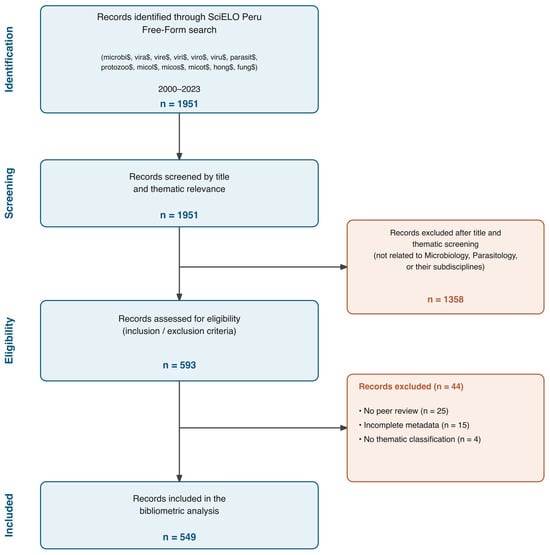
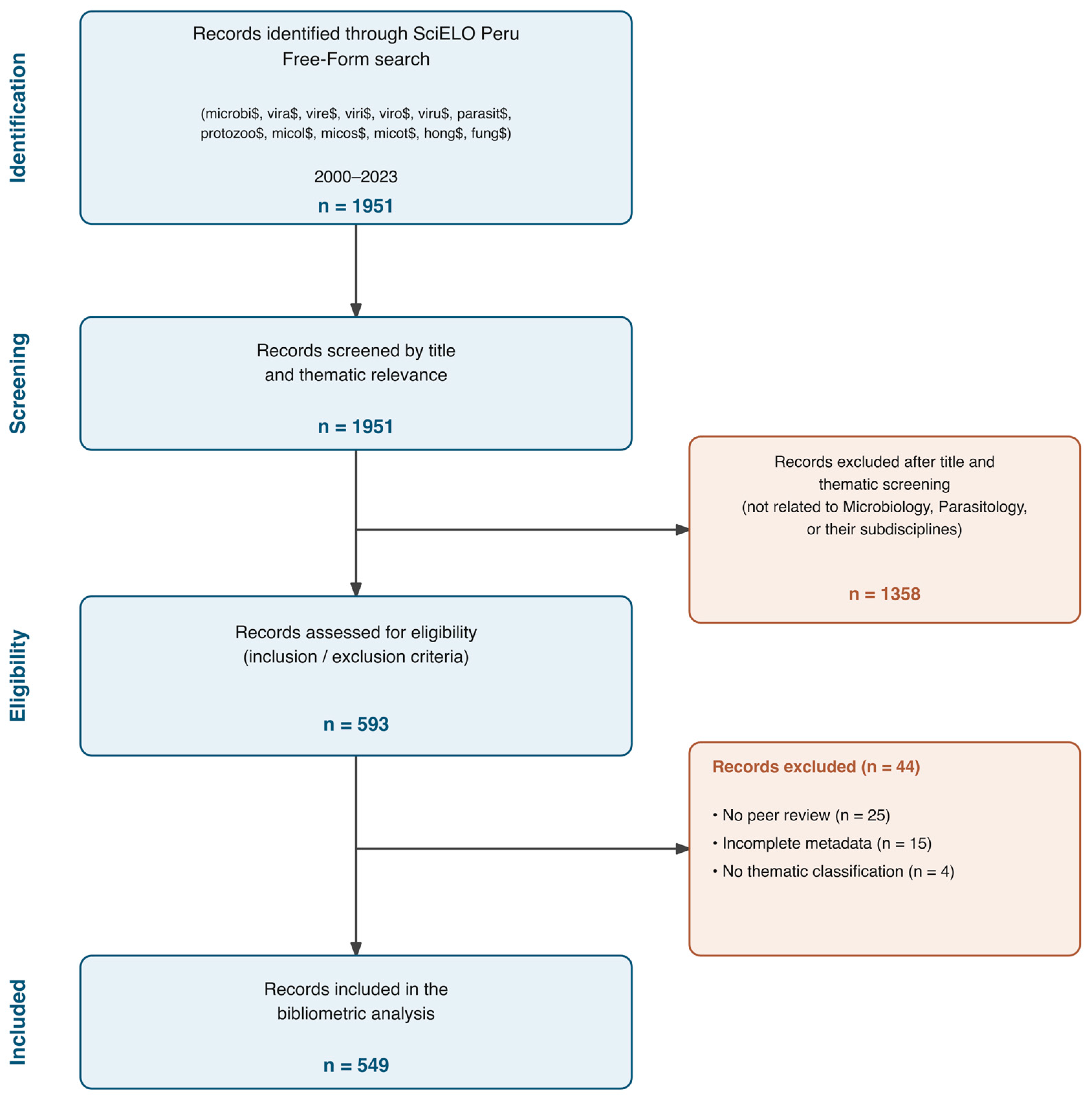
The initial search retrieved 1951 records. The first screening stage was performed through manual evaluation of titles and thematic relevance, excluding records unrelated to Microbiology, Parasitology, or their subdisciplines (Bacteriology, Mycology, Parasitology, Protozoology, and Virology). This screening yielded 593 potentially eligible records. Subsequently, eligibility assessment based on the other predefined inclusion and exclusion criteria excluded 44 additional records (25 non-peer-reviewed documents, 15 records with incomplete metadata, and 4 records lacking thematic classification), resulting in a final corpus of 549 articles.
The inclusion criteria were: (i) original articles and related formats concerning Microbiology or Parasitology published in Peruvian journals or by Peruvian institutions with declared affiliation; (ii) publication period 2000–2023; and (iii) full access to the text or metadata of the article in SciELO Peru. The exclusion criteria were: (i) conference abstracts, technical reports, and posters without peer review; (ii) publications without an explicit thematic classification in Microbiology or Parasitology; and (iii) documents published outside the study period or with incomplete metadata that prevented categorization. After screening and eligibility assessment, 549 articles were included in the final bibliometric corpus (Figure 1).
Figure 1.
PRISMA-based flow diagram of record identification, screening, eligibility assessment, and inclusion. The diagram presents the complete search and selection process, including the reasons and number of records excluded at each stage.
2.4. Variables and Bibliometric Indicators
For each article in the corpus, twenty variables were extracted and normalized, organized into five categories of bibliometric indicators:
- Temporal production indicators: year of publication, distribution by period (2000–2009/2010–2019/2020–2023), and growth trend (modeled by negative binomial regression; see Section 2.6).
- Institutional and regional indicators: affiliation institution of the first author, type of institution (public/private), geographic region of Peru, collaborating country, and authorship origin—operationalized into three mutually exclusive categories: national (exclusively Peruvian affiliations), external (exclusively foreign affiliations), and mixed (genuine Peruvian–foreign co-authorship).
- Thematic and methodological indicators: area of knowledge (Bacteriology, Virology, Parasitology, Protozoology, Mycology); article type; predominant methodological design, classified into the aggregated categories of cross-sectional, descriptive/observational, longitudinal, case series/case–control, and other (the operational definitions and coding criteria are provided in Table S2, and the complete mapping of original study-design labels to aggregated categories is presented in Table S3); and scientific–technological type.
- Authorship indicators: number of authors per article (unified numerical variable derived from the textual and numerical variants in the original source).
- Journal indicators: journal name, SCImago quartile, SJR index, and H-index (SCImago Journal Rank 2023) and identification of Bradford zones (core, zone 2, zone 3).
2.5. Instrument and Data Collection Process
Data were collected using a standardized registration form specifically designed for this study, which operationalized the 20 analysis variables. The form was applied systematically to each of the 549 selected articles, recording information directly from the metadata available in SciELO Peru (author, affiliation, title, year, journal, abstract, volume, issue, and URL). All records were entered into an Excel spreadsheet and subsequently migrated to an R environment for statistical processing. Variables requiring manual classification, including thematic area, study design, research type, institution type, region, and collaboration type, were coded according to predefined operational criteria described in Tables S2 and S3. Initial coding was performed by the first author and subsequently reviewed by a second investigator (the supervisor). Any discrepancies were discussed and resolved by consensus.
2.6. Statistical Processing and Analysis
Statistical analysis and figure generation were performed in R v4.4.0 using the ti-dyverse, ggplot2, openxlsx, patchwork, and MASS packages. Descriptive statistics comprised absolute and relative frequencies, the arithmetic mean ± standard deviation (SD), and frequency distributions. Because annual publication output is count data, the temporal trend was modeled with count regression rather than ordinary least squares: given marked overdispersion (Pearson φ = 3.83), a negative binomial model was selected as best-fitting (AIC 150.9 vs. 168.3 for Poisson). The pre-pandemic trend (2000–2019) was estimated separately, and the pandemic period was modeled with a dedicated indicator for 2020–2021; incidence rate ratios (IRRs) with 95% confidence intervals are reported, with p < 0.05 as the significance threshold. Editorial concentration was evaluated by applying Bradford’s Law, classifying journals into three productivity zones (core, zone 2, zone 3) from the cumulative curve of publications per journal. Authorship origin was classified into three mutually exclusive categories—national (n = 490; 89.3%), external (n = 49; 8.9%), and mixed Peruvian–foreign collaboration (n = 10; 1.8%)—genuine international collaboration indicators were computed on the mixed subset. The analysis code is provided as Supplementary Materials to ensure reproducibility.
3. Results
3.1. Temporal Production Trends
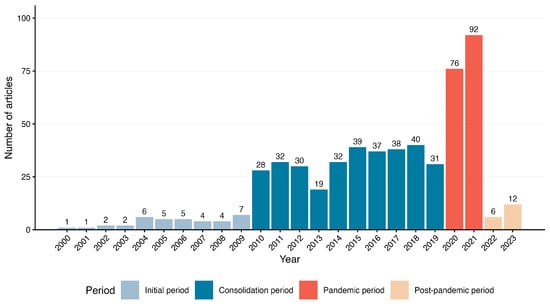
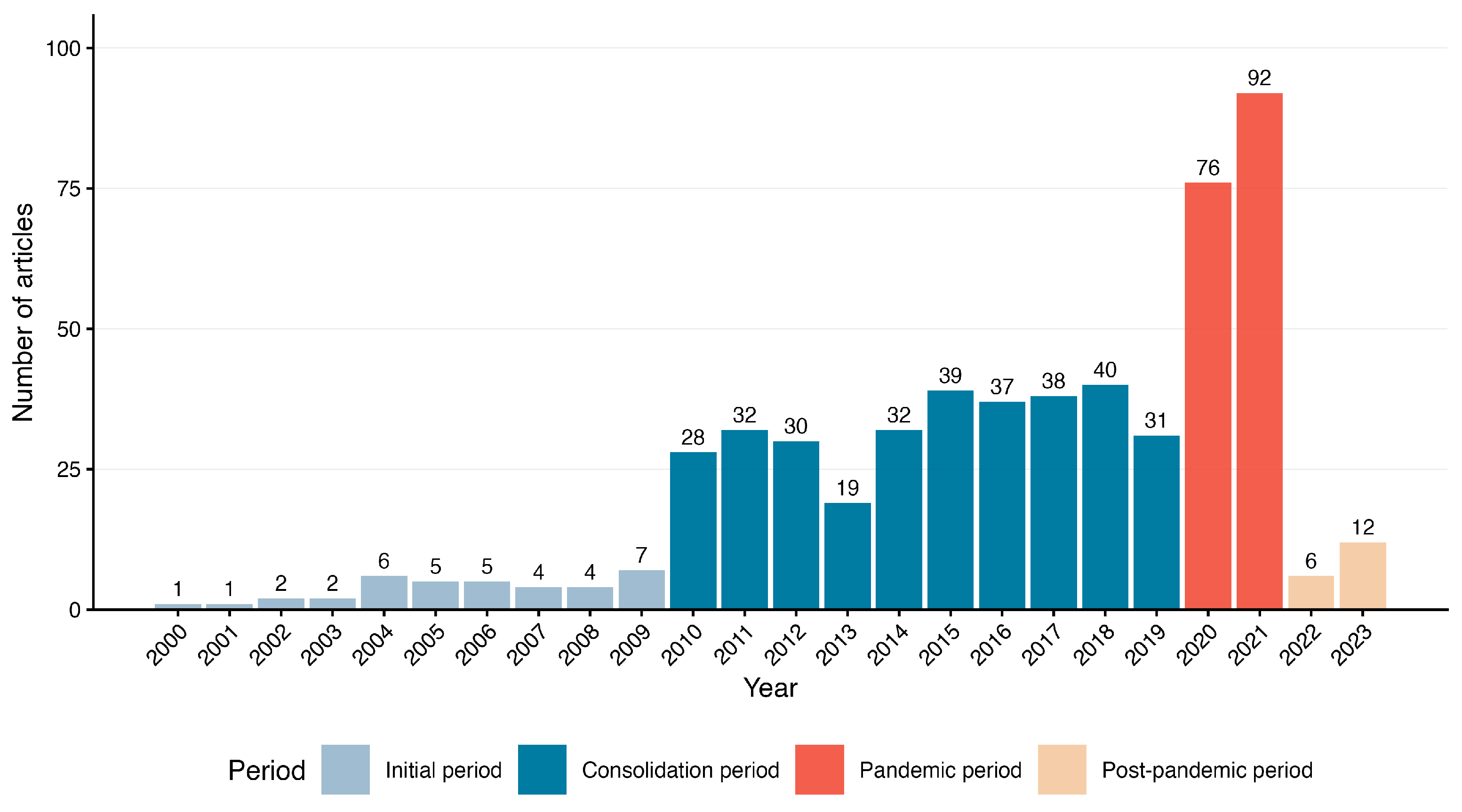
The corpus comprises 549 articles published between 2000 and 2023. The scientific output exhibited three clearly distinct phases: an initial slow-growth phase (2000–2009, n = 37; 6.7%), a phase of sustained consolidation (2010–2019, n = 326; 59.4%), and a marked increase during the pandemic period (2020–2021, n = 168; 30.6%). The maximum peak was recorded in 2021 with 92 articles, preceded by 76 in 2020. The values for 2022 (n = 6) and 2023 (n = 12) may reflect delays in database indexing or other factors affecting recent database coverage and should therefore be interpreted with caution (Figure 2).
Figure 2.
Annual scientific output in Microbiology and Parasitology indexed in the SciELO Peru collection (2000–2023). Bars represent the number of articles published per year and are grouped into four periods identified from the temporal distribution of the corpus: initial period (2000–2009), consolidation period (2010–2019), pandemic period (2020–2021), and post-pandemic period (2022–2023).
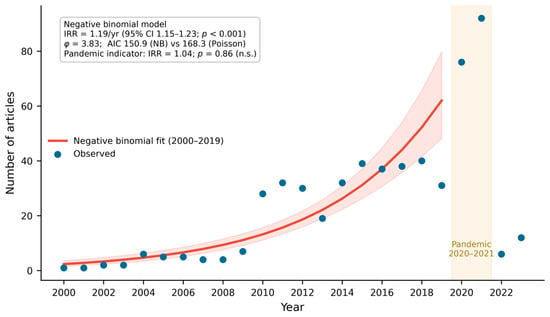
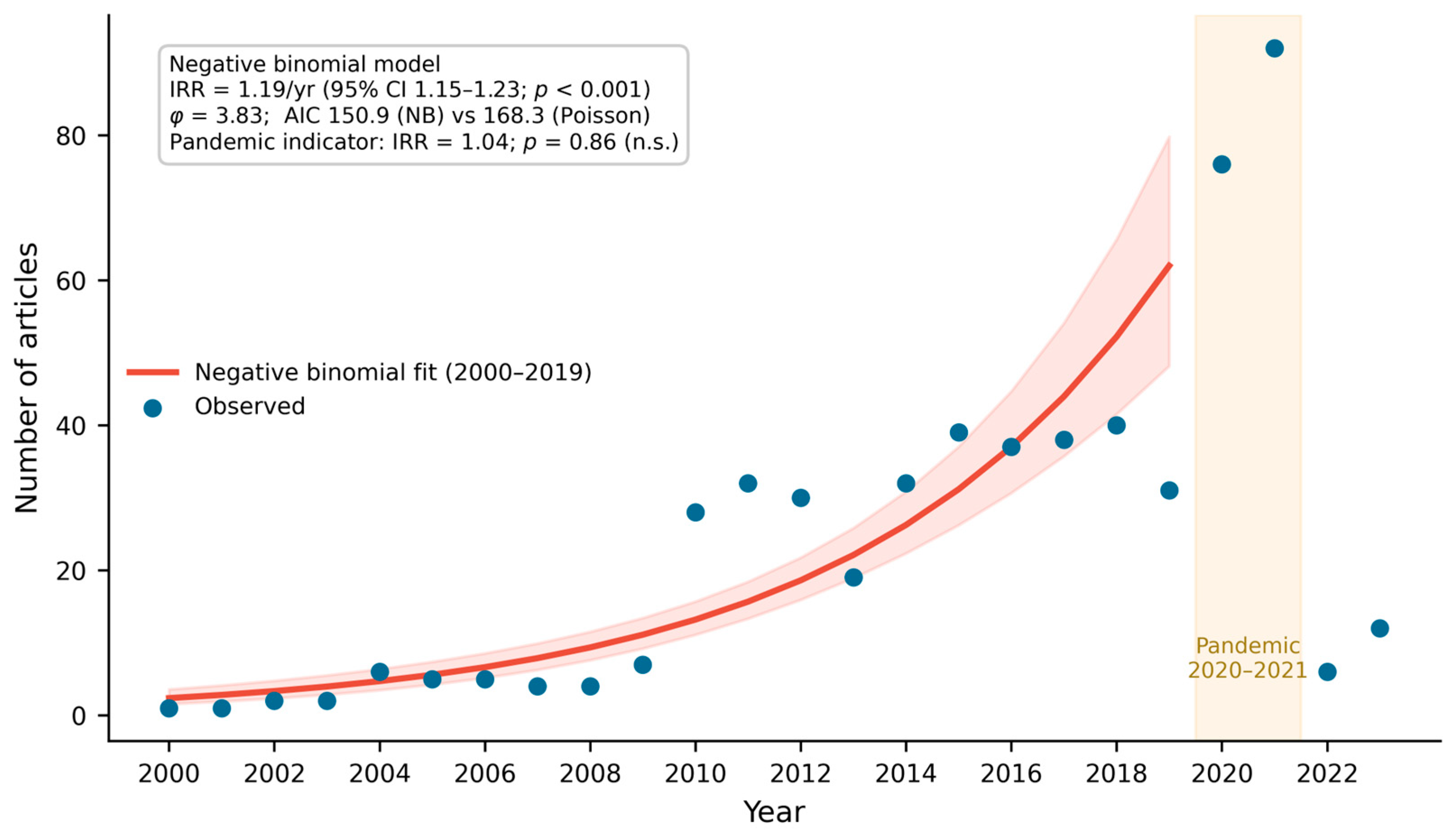
Because annual counts were overdispersed (Pearson φ = 3.83), the temporal trend was modeled with negative binomial regression (Figure 3). Output grew significantly over 2000–2019 (negative binomial IRR = 1.19 per year; 95% CI 1.15–1.23; p < 0.001), corresponding to ~19% annual growth. When the pandemic period (2020–2021) was modeled with a separate indicator, it was not statistically significant (IRR = 1.04; p = 0.86), indicating that the 2021 maximum coincided with the pandemic period and was accompanied by a marked thematic shift toward Virology rather than an independent surge in total volume; the most distinctive pandemic signal was a thematic redirection toward Virology (Section 3.2).
Figure 3.
Temporal evolution of Microbiology and Parasitology articles indexed in the SciELO Peru collection (2000–2023). Annual publication counts are shown as observed values. The solid line represents the fitted negative binomial regression for the pre-pandemic period (2000–2019), and the shaded area indicates the 95% confidence interval. The model estimated a significant annual growth rate of ~19% (IRR = 1.19; 95% CI 1.15–1.23; p < 0.001), with marked overdispersion (φ = 3.83; AIC 150.9 vs. 168.3 for Poisson). The pandemic period (2020–2021) is highlighted separately and was not included in the baseline trend estimation; a pandemic indicator added to the model was not significant (IRR = 1.04; p = 0.86). The lower counts observed in 2022–2023 may reflect delays in database indexing and should therefore be interpreted with caution.
3.2. Thematic Distribution
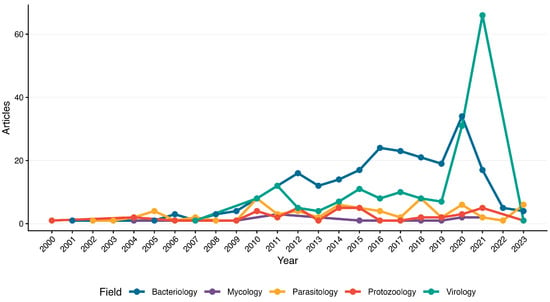
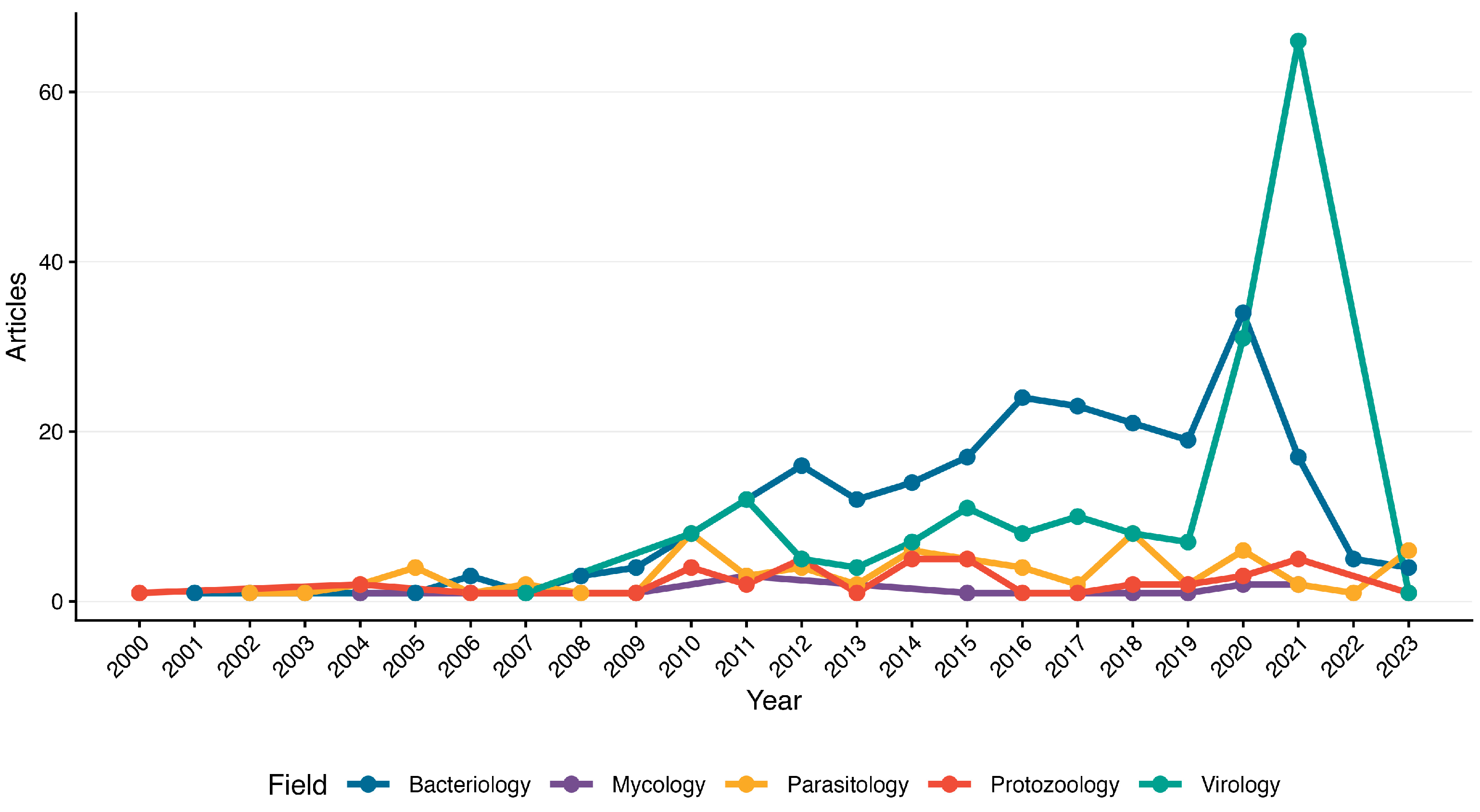
Bacteriology was the dominant area throughout the entire period (n = 242; 44.1%), followed by Virology (n = 179; 32.6%), Parasitology (n = 72; 13.1%), Protozoology (n = 43; 7.8%), and Mycology (n = 13; 2.4%). The annual evolution analysis showed a pronounced increase in Virology articles during 2020–2021, reaching a peak of 67 articles in 2021, consistent with the redirection of Peruvian research toward SARS-CoV-2 during the pandemic. Mycology remained chronically underrepresented throughout the 23-year study period, never exceeding 2 articles per year (Figure 4).
Figure 4.
Annual thematic evolution (2000–2023). Bacteriology remains the leading field (44.1%), while Virology shows a significant surge in 2021 (n = 67). Mycology is consistently underrepresented, with a maximum of 2 articles per year.
3.3. Regional Distribution
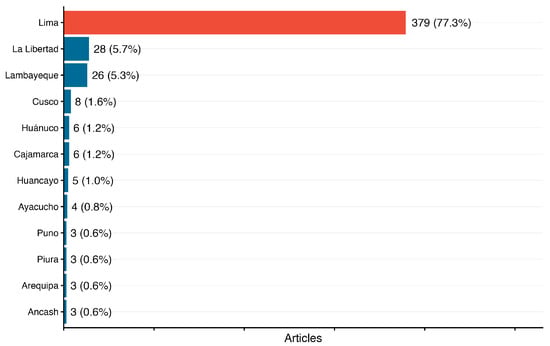
Of the 549 articles, 490 (89.3%) featured exclusively Peruvian affiliations. Lima accounted for 77.3% of the SciELO Peru corpus output (n = 379), followed at a significant distance by La Libertad (n = 28; 5.7%) and Lambayeque (n = 26; 5.3%). Andean and Amazonian regions, despite their high burden of endemic parasitic diseases, showed marginal production: Cusco contributed 1.6% (n = 8) and Ayacucho 0.8% (n = 4). The three leading institutions, Universidad Peruana Cayetano Heredia (17.5%), the National Institute of Health (14.9%), and Universidad Nacional Mayor de San Marcos (13.7%), accounted for 46.1% of the analyzed corpus. All are based in Lima, largely explaining the observed geographic concentration (Figure 5).
Figure 5.
Regional distribution of scientific output in Peru (n Peru = 490). Lima (in red) accounts for 77.3% of the analyzed corpus, whereas most other regions contribute less than 6% of publications.
3.4. Methodological Design and Article Type
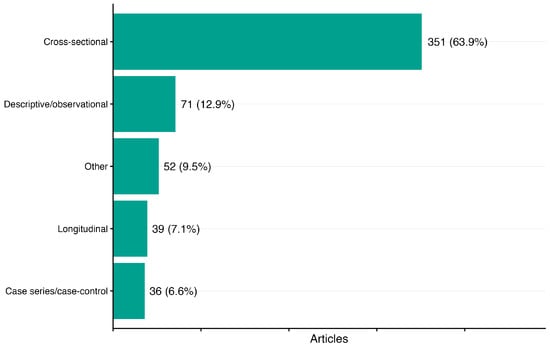
The cross-sectional design was the most frequent (n = 351; 63.9%), followed by descriptive/observational studies (n = 71; 12.9%). A cluster of analytical and experimental designs categorized as “Other” represented 9.5% (n = 52), comprising experimental (n = 21), cohort (n = 14), retrospective (n = 7), quasi-experimental (n = 2), ecological (n = 2), correlational (n = 2), and systematic review (n = 1) designs, as well as studies with undefined methodological designs (n = 3). Longitudinal designs accounted for 7.1% (n = 39) and case series/case–control for 6.6% (n = 36). This methodological profile places the majority of the production within the descriptive levels of the hierarchy of evidence, with scant representation of designs possessing higher analytical power. Original articles were the most frequent publication type (390/549; 71.0%), followed by short communications (152/549; 27.7%), special sections (6/549; 1.1%), and case reports (1/549; 0.2%). Scientific research constituted 95.4% of the corpus (524/549), whereas technological production represented 4.6% (25/549). Furthermore, 95.4% of the production consisted of scientific research, while only 4.6% focused on technological research (Figure 6).
Figure 6.
Methodological design and research type. The “Other” category includes experimental (n = 21), cohort (n = 14), retrospective (n = 7), quasi-experimental (n = 2), ecological (n = 2), correlational (n = 2), and systematic review (n = 1) designs, as well as studies with undefined methodological designs (n = 3).
3.5. Journals and Bradford’s Law
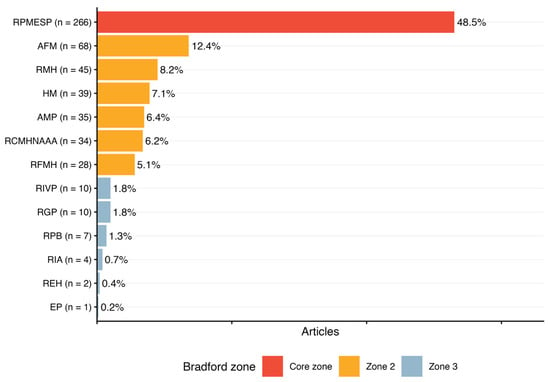
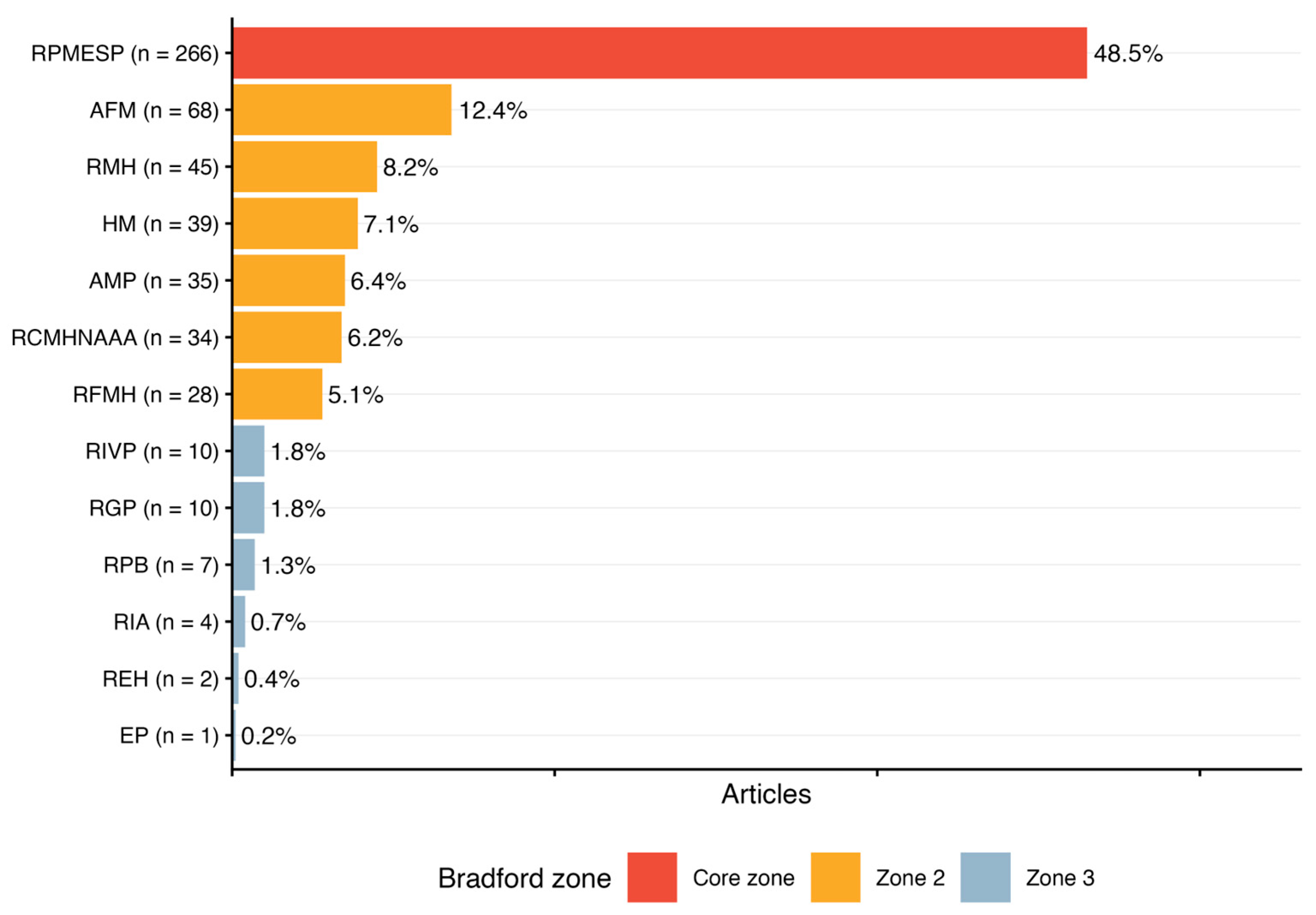
The scientific output was distributed across 13 journals. The formal application of Bradford’s Law identified Revista Peruana de Medicina Experimental y Salud Pública (RPMESP) as the sole core journal (Zone 1), accounting for 48.5% of the corpus (n = 266; H-index = 33; SJR = 0.31; Scimago Q3). Zone 2 included six journals: Anales de la Facultad de Medicina (AFM) (12.4%), Revista Médica Herediana (RMH) (8.2%), Horizonte Médico (HM) (7.1%), Acta Médica Peruana (AMP) (6.4%), Revista del Cuerpo Médico del Hospital Nacional Almanzor Aguinaga Asenjo (RCMHNAAA) (6.2%), and Revista de la Facultad de Medicina Humana (RFMH) (5.1%), collectively accounting for 45.5% of the corpus. Zone 3 comprised the remaining six journals, each with a production of less than 2% (6.0% cumulative). This pattern of extreme concentration in a single Q3 journal implies that no articles within the analyzed corpus were published in Q1 journals (Figure 7).
Figure 7.
Distribution of journals by Bradford Zones. Revista Peruana de Medicina Experimental y Salud Pública (RPMESP) constitutes the core (Zone 1) with an H-index of 33, SJR of 0.31, and Q3 ranking.
4. Discussion
This study constitutes the first specific bibliometric analysis of scientific production in Microbiology and Parasitology indexed in SciELO Peru over a 23-year period (2000–2023). The main findings reveal sustained growth with a peak in 2021 coinciding with the COVID-19 pandemic period; marked geographic and institutional concentration in Lima; the dominance of Bacteriology as a thematic area; the preponderance of cross-sectional designs; low international contribution (10.7%), with real collaboration between Peruvian and foreign authors reaching only 1.8% (n = 10); a scarcity of applied technological research (4.6%); and the identification of RPMESP as the core Bradford journal, accounting for nearly half of the total output.
The growth trend observed between 2000 and 2023, with a slow initial phase (2000–2009), a consolidation phase (2010–2019), and a pronounced peak in 2021 (n = 92), is consistent with the global expansion of health sciences scientific production in the world and Latin America (Yudantara, 2025; Alva Dìaz et al., 2026). In the specific field of Parasitology, Falagas et al. (2006) previously documented the sustained growth of Latin American production between 1995 and 2003, when the region accounted for 17.2% of the world total. Similarly, Fontecha et al. (2021) documented a consistent growth pattern in microbiology and infectious diseases research in Latin America, finding that arboviral infections such as chikungunya (11.98% annual growth), dengue (8.75%), and zika (8.41%) showed the highest average annual growth rates in the region between 2010 and 2019.
However, a substantial increase in research output was documented during the COVID-19 pandemic period, as observed in this study, with most studies focusing on SARS-CoV-2. In the Latin American context, this surge was characterized by a significant increase in international collaboration (51.4%) and notable leadership of regional institutions (71%), with Colombia, Brazil, and Mexico emerging as the most productive countries (Gregorio-Chaviano et al., 2020). Importantly, the pandemic period also witnessed a parallel increase in research on non-SARS-CoV-2 pathogens across the region, indicating that the scientific response to the health emergency did not entirely overshadow other infectious disease research priorities (Ango-Aguilar et al., 2025; Charnogursky et al., 2025; Mayta-Barrios et al., 2025; Chacón et al., 2026). These results have substantial interpretative implications for understanding Peruvian editorial dynamics in the post-pandemic era.
The concentration of 77.3% of the SciELO Peru corpus in Lima is consistent with the findings of (Fernandez-Guzman et al., 2023), who noted that most Latin American scientific output is generated in capitals and large cities, where research groups consolidate under the protection of universities and specialized institutes. In our study, the leading institutions were Universidad Peruana Cayetano Heredia (17.5%), the National Institute of Health (14.9%), and Universidad Nacional Mayor de San Marcos (13.7%), a pattern that aligns with the results reported by Romani Romani et al. (2016) in their bibliometric analysis of Peruvian health sciences production, where Lima accounted for most of the articles indexed in SciELO. The participation of the public sector in Lima (national universities and state institutes) was significant. In contrast, the low output from Ayacucho (0.8%), the location of UNSCH as the authoring institution of this study, remains noteworthy.
Bacteriology was the dominant thematic area (44.1%), followed by Virology (32.6%), reflecting the historical priority of Peruvian funding institutions toward high-burden diseases such as tuberculosis, antimicrobial-resistant bacterial infections, and bacterial diarrheal diseases (Sandoval et al., 2023; Visconti-Lopez & Solorzano-Salazar, 2023; Garcia-Solorzano et al., 2025). The notable increase in Virology in 2020–2021 responds, again, to the redirection of research toward SARS-CoV-2 during the pandemic (Gregorio-Chaviano et al., 2020). The underrepresentation of Mycology (2.4%) constitutes a strategic gap of particular relevance: the (World Health Organization, 2022) published a priority list of human fungal pathogens in 2022, recognizing the global increase in invasive fungal infections, especially in immunocompromised patients.
Original articles were the predominant publication type (71.0%), a result coinciding with that reported by Romaní & Cabezas (2018) in their evaluation of RPMESP publications. This preference for original articles is explained by the fact that it is the format most valued by academic and scientific organizations, generally possessing a higher impact factor than other publication types. The analysis of methodological design, which represents a novel contribution of this study, as it is not reported in previous works on Peruvian scientific production in these disciplines, revealed the predominance of cross-sectional designs (63.9%), followed by descriptive/observational (12.9%) and longitudinal (7.1%) designs. This methodological profile limits the inferential capacity of the generated evidence and reflects that research in Microbiology and Parasitology in Peru is predominantly at the lower levels of the evidence hierarchy. The scarcity of case series/case–control studies (6.6%), cohort studies (2.6%), and experimental designs (3.8%) should guide public funding calls toward designs with greater analytical power.
The notable predominance of scientific research (95.4%) compared to technological research (4.6%) highlights a structural gap in applied and transferable production. While scientific research aims to explore and understand natural phenomena through the scientific method, technological research seeks the practical application of knowledge to develop new products, processes, or systems. Technological innovation arises from the creation of radically new options or the improvement of existing ones, a process that requires a solid base of applied research (Xu et al., 2020). The scarcity of this type of production in the analyzed corpus indicates that technological research was uncommon within the SciELO Peru collection during the study period. Because the present study was limited to bibliometric indicators, no direct conclusions can be drawn regarding the broader innovation ecosystem, technology-transfer activities, or interactions among academia, industry, and health services.
The mean number of authors per article was 4.94 ± 2.60 (mode = 4). This result is consistent with the global trend, showing that individual authorship has been progressively replaced by collaboration among multiple researchers, with a range of 3 to 5 authors per article (Praus, 2025; Rull, 2026; Sánchez-Jiménez et al., 2026). This pattern reflects the increasing level of complexity and specialization in current research, which requires the participation of multidisciplinary teams to adequately address infectious health problems. The 7.8% of articles with more than ten authors correspond, for the most part, to multicentric studies or national-scale epidemiological surveillance publications. International collaboration reached only 1.8% (n = 10), a value significantly lower than the Latin American average estimated for health sciences (Chinchilla-Rodríguez et al., 2012). In the present study, Colombia was the main partner (42.9% of the total external collaboration), followed by Venezuela, Spain, and Argentina.
Scientific collaboration, both national and international, is fundamental for the sustainable development of research, researcher mobility, and the strengthening of the scientific legacy (Payumo et al., 2021; Machado et al., 2023; Gutiérrez-Sánchez et al., 2025). Mijac & Ryder (2009) found that a large proportion of Venezuelan Parasitology publications were written in English, evidencing a greater orientation toward international collaboration than that observed in Peru.
The formal application of Bradford’s Law identified RPMESP as the sole core journal (Zone 1), accounting for 48.5% of total production with an H-index of 33 and a Q3 quartile. Although this result was expected given the role of RPMESP as the primary dissemination source of the National Institute of Health of Peru, the extreme concentration in a single journal implies that the global visibility of Peruvian production in Microbiology and Parasitology is restricted: no article within the analyzed SciELO Peru corpus was published in Q1 journals. However, this observation is strictly confined to our specific sample and should not be interpreted as an absence of Q1 publications by Peruvian researchers in other subfields or datasets. The six journals in Zone 2 and the six in Zone 3 jointly account for the remaining 51.5%, confirming the dispersion pattern typical of national editorial ecosystems with low diversification of dissemination channels (Coronado-Quispe et al., 2021). This characteristic points to the need for institutional strategies aimed at increasing publication in international journals indexed in Scopus or WoS.
The findings of this study should be interpreted within the context of SciELO Peru, a Diamond Open Access (OA) platform in which journals provide free access to readers and do not charge Article Processing Charges (APCs) to authors. Because all journals included in the analyzed corpus belong to the same publishing model, the present study was not designed to evaluate the specific effects of Diamond OA on productivity, visibility, or citation impact. Nevertheless, this non-commercial infrastructure has provided a stable publishing environment for Peruvian scientific journals over more than two decades and has facilitated unrestricted access to research outputs in microbiology and parasitology. Furthermore, this ecosystem enables the dissemination of research focused on regional pathogens and public health challenges represented within the SciELO Peru collection. However, the present study did not evaluate citation impact, readership, publication costs, licensing practices, or comparative performance across publishing models; therefore, no conclusions can be drawn regarding the relative advantages of Diamond Open Access compared with APC-based or other publishing systems.
The study has limitations that must be considered when interpreting its results. First, the use of a single source (SciELO Peru) excludes production published in international journals indexed in Scopus or Web of Science, potentially underestimating the contribution of institutions and researchers whose scientific output is primarily disseminated through international journals not indexed in SciELO Peru. Consequently, the findings may not fully capture the international visibility of Peruvian research, patterns of international collaboration, or publications in higher-impact journals. Future bibliometric studies could complement SciELO Peru data with records retrieved from the SciELO Citation Index available through the Web of Science platform, enabling the incorporation of citation-based indicators and broader assessments of international visibility. Second, the study focused on descriptive bibliometric indicators and did not incorporate science-mapping approaches such as co-authorship networks, institutional collaboration networks, or keyword co-occurrence analyses. Future studies could apply these techniques to explore the structural dynamics of Microbiology and Parasitology research in Peru. Third, the study was designed to characterize publication patterns within the SciELO Peru collection and does not provide direct evidence regarding national innovation performance, technology-transfer outcomes, or the comparative effects of different scholarly publishing models.
5. Conclusions
The analysis of Microbiology and Parasitology articles indexed in the SciELO Peru collection (2000–2023) reveals sustained growth, which reached its peak in 2021 during the COVID-19 pandemic period and was accompanied by a marked increase in Virology-related publications. However, this progress is marked by profound geographic and academic centralization, with SciELO Peru corpus in Lima accounting for 77.3% of all studies and only three institutions leading nearly half of the national research activity. Furthermore, the editorial landscape exhibits an extreme dependency on Revista Peruana de Medicina Experimental y Salud Pública, which serves as the primary dissemination source for nearly 50% of the specialized literature.
Regarding thematic and relational aspects, there is a clear dominance of bacteriology, contrasting with a concerning lag in mycology and technological research, areas that barely achieve representativeness. This lack of diversification is compounded by a low international cooperation rate of 1.8%. These findings highlight important disparities in the thematic, geographic, and collaborative distribution and may help inform future research and institutional planning to bridge gaps in critical disciplines for public health. Future studies should complement these findings through science-mapping and collaboration-network analyses.
Supplementary Materials
The following supporting information can be downloaded at: https://www.mdpi.com/article/10.3390/publications14030040/s1, Table S1: Bibliometric dataset of Microbiology and Parasitology research publications indexed in SciELO Peru (2000–2023). Table S2: Codebook of variables, operational definitions, and classification criteria used in the bibliometric analysis. Table S3: Crosswalk showing the mapping of original study-design labels to the aggregated categories reported in the Results.
Author Contributions
Conceptualization, K.C.A.C. and H.A.-A.; methodology, K.C.A.C.; formal analysis, K.C.A.C.; investigation, K.C.A.C., O.M.-S., R.D.C., J.A.-B. and H.A.-A.; writing—original draft preparation, K.C.A.C., O.M.-S., R.D.C., J.A.-B. and H.A.-A.; writing—review and editing, K.C.A.C., O.M.-S., R.D.C., J.A.-B. and H.A.-A.; visualization, O.M.-S.; supervision, H.A.-A.; funding acquisition, H.A.-A. All authors have read and agreed to the published version of the manuscript.
Funding
This study was supported by the Organization for Medical Innovation and Collaboration for Science (OMICS, Peru) under grant number OMICS-APC001/2026.
Data Availability Statement
The data supporting this study are provided in the Supplementary Materials. All data were obtained from the publicly accessible SciELO Peru database (http://www.scielo.org.pe) in 15 January 2024 and are provided to facilitate reproducibility of the study.
Acknowledgments
The authors express their gratitude to the Facultad de Ciencias Biológicas de la Universidad Nacional de San Cristóbal de Huamanga (FCB-UNSCH) and the Organization for Medical Innovation and Collaboration for Sciences (OMICS) for their institutional support through the specific cooperation agreement signed in March 2026.
Conflicts of Interest
The authors declare no conflicts of interest.
References
- Alva Dìaz, C., Velasquez-Rimachi, V., Moràn-Mariños, C., Nieto-Gutierrez, W., Torres Balarezo, P. I., Quispe-Vicuña, C., Huerta-Rosario, M., & Mezones-Holguin, E. (2026). Latin American and Caribbean trends and health priorities in cost-effectiveness studies: A bibliometric analysis in Scopus in the 21st century. Value in Health Regional Issues, 51, 101496. [Google Scholar] [CrossRef] [Scilit] [PubMed]
- Ango-Aguilar, H., Ango-Bedriñana, J., Marín-Sánchez, O., & Chacón, R. D. (2025). Hepatitis B virus seroprevalence in Ayacucho, Peru: A comprehensive review across the pre-vaccination and post-vaccination periods. Vaccines, 13(9), 916. [Google Scholar] [CrossRef] [Scilit] [PubMed]
- Bornmann, L., & Mutz, R. (2015). Growth rates of modern science: A bibliometric analysis based on the number of publications and cited references. Journal of the Association for Information Science and Technology, 66(11), 2215–2222. [Google Scholar] [CrossRef] [Scilit]
- Chacón, R. D., Marín-Sánchez, O., Ango-Bedriñana, J., & Ango-Aguilar, H. (2026). From genome diversity to inferred functional constraints: An integrated evolutionary analysis of hepatitis B virus genotype F. International Journal of Molecular Sciences, 27(5), 2284. [Google Scholar] [CrossRef] [Scilit] [PubMed]
- Charnogursky, C. E., Gil, A. I., Ecker, L., Cornejo, R., Rios, S., Ochoa, M., Peña, B., Flores, O., Jones, A., Beeri, K., Chen, H., Chen, Q., Lanata, C. F., Howard, L. M., & Grijalva, C. G. (2025). Pandemic social distancing and declines in nasopharyngeal carriage of pneumococcus and related antimicrobial-resistant genes: Evidence from household-based cohort studies in Lima, Peru. Open Forum Infectious Diseases, 12(4), ofaf157. [Google Scholar] [CrossRef] [Scilit] [PubMed]
- Chinchilla-Rodríguez, Z., Benavent-Pérez, M., de Moya-Anegón, F., & Miguel, S. (2012). International collaboration in medical research in Latin America and the Caribbean (2003–2007). Journal of the American Society for Information Science and Technology, 63(11), 2223–2238. [Google Scholar] [CrossRef] [Scilit]
- Coronado-Quispe, J., Martinez Auris, J. A., Anduaga-Dueñas, M., Chavez-Hermosilla, M., & Arias Aroni, G. A. (2021). Características de las revistas científicas biomédicas indexadas a Latindex-Perú. Educación Médica Superior, 35(4). Available online: http://scielo.sld.cu/scielo.php?script=sci_abstract&pid=S0864-21412021000400008&lng=es&nrm=iso&tlng=es (accessed on 14 April 2026).
- Donthu, N., Kumar, S., Mukherjee, D., Pandey, N., & Lim, W. M. (2021). How to conduct a bibliometric analysis: An overview and guidelines. Journal of Business Research, 133, 285–296. [Google Scholar] [CrossRef] [Scilit]
- Falagas, M. E., Papastamataki, P. A., & Bliziotis, I. A. (2006). A bibliometric analysis of research productivity in parasitology by different world regions during a 9-year period (1995-2003). BMC Infectious Diseases, 6, 56. [Google Scholar] [CrossRef] [Scilit] [PubMed]
- Fernandez-Guzman, D., Montesinos-Segura, R., Caira-Chuquineyra, B., De-Los-Rios-Pinto, A., Roman-Lazarte, V., Davila-Flores, D., Ramírez-Rodríguez, M., & Taype-Rondan, A. (2023). Scientific production in Scopus of the public specialized health institutes in Peru, 2010-2022. Revista Del Cuerpo Médico Hospital Nacional Almanzor Aguinaga Asenjo, 16(1), 58–64. [Google Scholar] [CrossRef] [Scilit]
- Fontecha, G., Sánchez, A., & Ortiz, B. (2021). Publication trends in neglected tropical diseases of Latin America and the Caribbean: A bibliometric analysis. Pathogens, 10(3), 356. [Google Scholar] [CrossRef] [Scilit] [PubMed]
- Garcia-Solorzano, F. O., Angulo-Bazán, Y., Soriano-Martinez, S., Farfan-Zapata, O., & Lecca, L. (2025). Is tuberculosis scientific research aligned with national research priorities? A bibliometric analysis of Peruvian scientific production. Publications, 13(4), 47. [Google Scholar] [CrossRef] [Scilit]
- Glänzel, W., Moed, H. F., Schmoch, U., & Thelwall, M. (Eds.). (2019). Springer handbook of science and technology indicators. Springer International Publishing. [Google Scholar] [CrossRef] [Scilit]
- Gregorio-Chaviano, O., Limaymanta, C. H., & López-Mesa, E. K. (2020). Análisis bibliométrico de la producción científica latinoamericana sobre COVID-19. Biomédica, 40, 104–115. [Google Scholar] [CrossRef] [Scilit] [PubMed]
- Gutiérrez-Sánchez, G., Álvarez-Muñoz, P., Galindo-Villardón, P., & Vicente-Galindo, P. (2025). Scientific collaboration and sustainable development: A bibliometric analysis of the Andean region, Panama, and Spain. Publications, 13(1), 10. [Google Scholar] [CrossRef] [Scilit]
- Koo, M. (2026). From descriptive mapping to evaluative insight: Advancing decision-oriented bibliometrics. Metrics, 3(2), 7. [Google Scholar] [CrossRef] [Scilit]
- Machado, F. V., Rech, C. M., Pinto, R. S., Romão, W. d. M., Matias, M. M. M., Freitas, G. C. d., Leles, F. A. G., & Kujawa, H. (2023). Participation in health in the Americas: Bibliometric mapping of production, impact, visibility and collaboration. Ciencia & Saude Coletiva, 28(2), 487–500. [Google Scholar] [CrossRef] [PubMed]
- Mayta-Barrios, M., Ramírez-Illescas, J., Pacori, J., Acosta, J., Pampa-Espinoza, L., Silva-Valencia, J., Núñez-Llanos, A., Bendezú, C., Serrano, K., Yagui-Moscoso, M., & Working Group in the National Surveillance of Antimicrobial Resistance. (2025). Molecular detection of carbapenemases in critical microorganisms since the onset of the COVID-19 pandemic in Peru. JAC-Antimicrobial Resistance, 7(6), dlaf203. [Google Scholar] [CrossRef] [Scilit] [PubMed]
- Mayta-Tristán, P., & Caro, G. (2008). Lipecs and Scielo Peru: Sources of information on health research in Peru. Revista De Gastroenterologia Del Peru, 28(1), 83–84. [Google Scholar] [PubMed]
- Meneghini, R., & Packer, A. L. (2007). Is there science beyond English? Initiatives to increase the quality and visibility of non-English publications might help to break down language barriers in scientific communication. EMBO Reports, 8(2), 112–116. [Google Scholar] [CrossRef] [Scilit] [PubMed]
- Mijac, V., & Ryder, E. (2009). Bibliometric analysis of research publications on parasitology in Venezuela (2002-2007). Interciencia, 34(2), 140–146. [Google Scholar]
- Morán-Mariños, C., Visconti-Lopez, F. J., Espiche, C., Llanos-Tejada, F., Villanueva-Villegas, R., Casanova-Mendoza, R., & Bernal-Turpo, C. (2024). Research priorities and trends in pulmonary tuberculosis in Latin America: A bibliometric analysis. Heliyon, 10(15), e34828. [Google Scholar] [CrossRef] [Scilit] [PubMed]
- Ninkov, A., Frank, J. R., & Maggio, L. A. (2022). Bibliometrics: Methods for studying academic publishing. Perspectives on Medical Education, 11(3), 173–176. [Google Scholar] [CrossRef] [Scilit] [PubMed]
- Packer, A. L. (2009). The SciELO Open Access: A gold way from the south. Canadian Journal of Higher Education, 39(3), 111–126. [Google Scholar] [CrossRef] [Scilit]
- Page, M. J., McKenzie, J. E., Bossuyt, P. M., Boutron, I., Hoffmann, T. C., Mulrow, C. D., Shamseer, L., Tetzlaff, J. M., Akl, E. A., Brennan, S. E., Chou, R., Glanville, J., Grimshaw, J. M., Hróbjartsson, A., Lalu, M. M., Li, T., Loder, E. W., Mayo-Wilson, E., McDonald, S., … Moher, D. (2021). The PRISMA 2020 statement: An updated guideline for reporting systematic reviews. bmj, 372, n71. [Google Scholar] [CrossRef] [Scilit] [PubMed]
- Pan American Health Organization. (2025). Peru shows progress in tackling neglected tropical diseases. Available online: https://www.paho.org/en/news/30-1-2025-peru-shows-progress-tackling-neglected-tropical-diseases (accessed on 14 April 2026).
- Payumo, J., He, G., Manjunatha, A. C., Higgins, D., & Calvert, S. (2021). Mapping collaborations and partnerships in SDG research. Frontiers in Research Metrics and Analytics, 5, 612442. [Google Scholar] [CrossRef] [Scilit] [PubMed]
- Piwowar, H., Priem, J., Larivière, V., Alperin, J. P., Matthias, L., Norlander, B., Farley, A., West, J., & Haustein, S. (2018). The state of OA: A large-scale analysis of the prevalence and impact of Open Access articles. PeerJ, 6, e4375. [Google Scholar] [CrossRef] [Scilit] [PubMed]
- Praus, P. (2025). A note on the topic of single-author articles in science. Scientometrics, 130(5), 3071–3088. [Google Scholar] [CrossRef] [Scilit]
- Purnell, P. J. (2024). Geodiversity of research: Geographical topic focus, author location, and collaboration. A case study of SDG 2: Zero hunger. Scientometrics, 129(5), 2701–2727. [Google Scholar] [CrossRef] [Scilit]
- Quiroz-Ruiz, H. R., & Vega-Fernández, J. A. (2023). Análisis bibliométrico de la producción científica y contribuciones en el campo biomédico de una facultad peruana de ciencias biológicas. Revista Cubana de Información en Ciencias de la Salud, 34. Available online: http://scielo.sld.cu/scielo.php?script=sci_abstract&pid=S2307-21132023000100032&lng=es&nrm=iso&tlng=es (accessed on 14 April 2026).
- Rocha, E. M., Osaki, T. H., Kara Junior, N.-, Alves, M., & Moral, C. (2023). SciELO 25 years: The Scientific Electronic Library Online celebrates its 25th anniversary. Arquivos Brasileiros De Oftalmologia, 87(1), 1007. [Google Scholar] [CrossRef] [Scilit] [PubMed]
- Romani Romani, F. R., Roque Henríquez, J., Vásquez Loarte, T., Mormontoy Calvo, H., & Vásquez Soplopuco, H. (2016). Análisis bibliométrico de la producción científica sobre las agendas nacionales de investigación en el Perú 2011-2014. Anales de la Facultad de Medicina, 77(3), 241–249. [Google Scholar] [CrossRef] [Scilit]
- Romaní, F., & Cabezas, C. (2018). [Bibliometric analysis of papers published in revista peruana de medicina experimental y salud pública, 2010-2017]. Revista Peruana De Medicina Experimental Y Salud Publica, 35(4), 620–629. [Google Scholar] [CrossRef] [Scilit] [PubMed]
- Rull, V. (2026,Author position ratio (APR): A simple complementary bibliometric descriptor of authorship patterns. Journal of Informetrics, 20(1), 101776. [Google Scholar] [CrossRef] [Scilit]
- Sandoval, K., Deza-Santos, F., Pinedo-Castillo, L., Mateo-Pacora, J., L Rondan, P., Alcedo, S., & Taype-Rondan, Á. (2023). Producción científica peruana sobre resistencia a los antimicrobianos de bacterias priorizadas por la OMS. Revista Cubana de Medicina Tropical, 75(1). Available online: http://scielo.sld.cu/scielo.php?script=sci_abstract&pid=S0375-07602023000100004&lng=en&nrm=iso&tlng=es (accessed on 14 April 2026).
- Sánchez-Jiménez, R., Rodríguez, J., Guerrero-Bote, V. P., & de Moya-Anegón, F. (2026). Identification of hyperauthorship in scientific publications: An approach based on outlier detection methods. Journal of Informetrics, 20(2), 101803. [Google Scholar] [CrossRef] [Scilit]
- Visconti-Lopez, F. J., & Solorzano-Salazar, D. M. (2023). Análisis bibliométrico de la producción científica peruana sobre la infectología en el Perú. Interciencia Médica, 13(4), 14–25. [Google Scholar] [CrossRef] [Scilit]
- World Health Organization. (2022). WHO releases first-ever list of health-threatening fungi. Available online: https://www.who.int/news/item/25-10-2022-who-releases-first-ever-list-of-health-threatening-fungi (accessed on 14 April 2026).
- Xu, H., Winnink, J., Yue, Z., Liu, Z., & Yuan, G. (2020). Topic-linked innovation paths in science and technology. Journal of Informetrics, 14(2), 101014. [Google Scholar] [CrossRef] [Scilit]
- Yudantara, I. M. A. (2025). Mapping the global landscape of public health policy research: A bibliometric study based on Scopus data (2000–2024). Ethics, Medicine and Public Health, 33, 101190. [Google Scholar] [CrossRef] [Scilit]
Disclaimer/Publisher’s Note: The statements, opinions and data contained in all publications are solely those of the individual author(s) and contributor(s) and not of MDPI and/or the editor(s). MDPI and/or the editor(s) disclaim responsibility for any injury to people or property resulting from any ideas, methods, instructions or products referred to in the content. |
© 2026 by the authors. Licensee MDPI, Basel, Switzerland. This article is an open access article distributed under the terms and conditions of the Creative Commons Attribution (CC BY) license.