


Abstract
Background: This systematic review evaluates the evidence on sustainable practices in dentistry. It focuses on effective measures, innovative technologies, strategies for reducing the carbon footprint, life cycle assessments (LCA), attitudes toward “green” dentistry, and educational approaches. Methods: A systematic search was conducted in five databases (Cochrane Library, Embase, LILACS, MEDLINE via PubMed, and Scopus) without language restrictions in accordance with PRISMA. The review was registered in PROSPERO (CRD420251056821). Results: A total of 2395 records were identified; after removing 394 duplicates, 2001 remained for screening. After title and abstract screening, 154 full-text articles were evaluated, of which 51 studies were included. The included studies addressed life cycle assessments of dental materials, sustainable clinical practices, and educational measures. Environmentally friendly materials and procedures, such as reusable personal protective equipment and water-saving technologies, demonstrate significant potential for reducing environmental impact. Despite generally high acceptance among dentists and patients, implementation is often limited by financial and knowledge-related barriers. Conclusions: The implementation of sustainable materials and procedures is crucial for reducing environmental impact. Equally important are the integration of ecological content into education and appropriate financial and political frameworks to promote sustainable dentistry.
1. Introduction
Sustainability has emerged as a critical concern in healthcare, including dentistry, due to its substantial environmental impact. The World Health Organization (WHO) emphasized the need for environmentally sound and minimally invasive oral healthcare in its Global Oral Health Strategy, urging member states to adopt sustainable approaches [1]. Similarly, the United Nations’ 2030 Agenda for Sustainable Development provides a universal framework for integrating environmental, economic, and social sustainability across sectors. Its 17 Sustainable Development Goals (SDGs) are also relevant to oral healthcare [2]. Dental care contributes significantly to greenhouse gas emissions. For example, the National Health Service (NHS) in the UK reports that dental services account for 675 kilotons of CO2 equivalents annually, with travel (64.5%), procurement (19%), and energy (15.3%) as major contributors [3]. Common procedures such as dental examinations and scaling have substantial environmental footprints due to their high frequency [3]. In response to these challenges, the FDI World Dental Federation has proposed five strategic goals for sustainable dentistry: reducing the environmental footprint of dental practices, promoting sustainable materials and processes, increasing awareness among stakeholders, encouraging supportive policy development, and fostering innovation and research [4]. These principles serve as a foundation for integrating sustainability into all facets of dental practice. The concept of “green dentistry” promotes technologically advanced, environmentally responsible, and patient-centered dental care that reduces environmental impact while supporting the well-being of patients and professionals [5]. This includes the adoption of reusable personal protective equipment (PPE), eco-friendly dental materials, and efficient waste and water management systems [6,7,8]. Recent studies have explored the environmental benefits of green practices, economic feasibility, and the social dimensions of sustainability in dentistry [6,7,9,10,11]. Life cycle assessment of materials and procedures offer insights into strategies for reducing environmental impact [6,7], while educational interventions and awareness campaigns are essential to fostering pro-environmental behaviors among both dental professionals and patients [9,10,11]. Despite growing evidence, implementation remains limited. Financial constraints, knowledge gaps, and systemic barriers continue to impede progress. This systematic review aims to consolidate current evidence on green dentistry, focusing on effective practices, innovative technologies, and awareness strategies. Following the PRISMA guidelines [12], this review evaluates studies on life cycle assessments, educational approaches, and attitudes toward sustainable dentistry. The findings may help identify feasible pathways to reduce dentistry’s carbon footprint and align dentistry with global sustainability goals.
2. Materials and Methods
2.1. Search Strategy
A comprehensive and systematic search was conducted in accordance with the PRISMA guidelines [12]. Searches were performed without language restrictions across five electronic databases: Cochrane Library, Embase, LILACS, MEDLINE via PubMed, and Scopus to identify studies relevant to sustainable practices in dentistry. This systematic review was registered in the International Prospective Register of Systematic Reviews (PROSPERO) (CRD420251056821). The PRISMA 2020 checklist is provided as Supplementary Table S1. The search strategy was designed to capture a broad range of studies related to green and eco-friendly dentistry, carbon footprint reduction, and sustainable technologies and practices in the dental field published up to January 2026. To ensure a robust retrieval, the core search terms were combined with database-specific controlled vocabularies, such as Medical Subject Headings (MeSH) in PubMed and adapted to the specific syntax and Boolean operators for each database. The foundation search string used was as follows: “green dentistry” OR “sustainable dentistry” OR “eco-friendly dentistry” OR “green dental technology” OR “green dental environment” OR (“carbon footprint” AND (dental OR dentistry)).
2.2. Inclusion and Exclusion Criteria
The review included original studies that addressed sustainable practices, materials, or technologies in dentistry; evaluated the carbon footprint or environmental impact of dental procedures or materials; and focused on attitudes, education, and awareness in green dentistry. Studies that were editorial in nature, such as letters to the editor or review articles without original research, were excluded. In addition, studies that were not available in full text or were not directly related to dental practices or the sustainability of the dental sector were excluded.
2.3. Data Extraction and Synthesis
Data were extracted from each included study and then synthesized and grouped into thematic categories for further analysis, allowing a comprehensive view of the current state of sustainability in dentistry across the following categories: Life cycle assessments in green dentistry, sustainability and ecological footprint, attitudes toward green dentistry, education and training in sustainable dentistry, sustainable practices in dentistry, new materials and sustainable technologies, and specific country and cultural analyses.
Due to the considerable heterogeneity of the included studies and the lack of comparable quantitative outcome measures, a meta-analysis was not feasible. Therefore, a narrative synthesis was performed.
2.4. Assessment of Study Quality and Risk of Bias
The methodological quality and risk of bias of the included studies were assessed using the adapted assessment tool developed by the National Heart, Lung, and Blood Institute (NHLBI) (www.nhlbi.nih.gov/health-topics/study-quality-assessment-tools; last accessed 16 June 2026) (Table S2). Since many of the included studies were non-interventional and heterogeneous in design, including life cycle assessment, cross-sectional surveys and qualitative approaches, several NHLBI criteria were not directly applicable. In cases of disagreement that could not be resolved by consensus, an additional review was conducted by a third reviewer.
3. Results
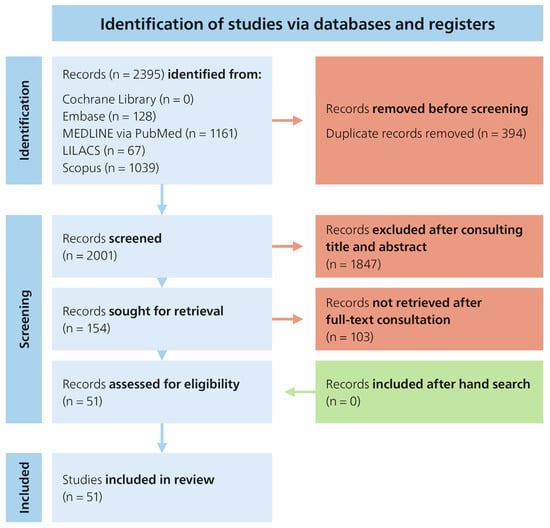
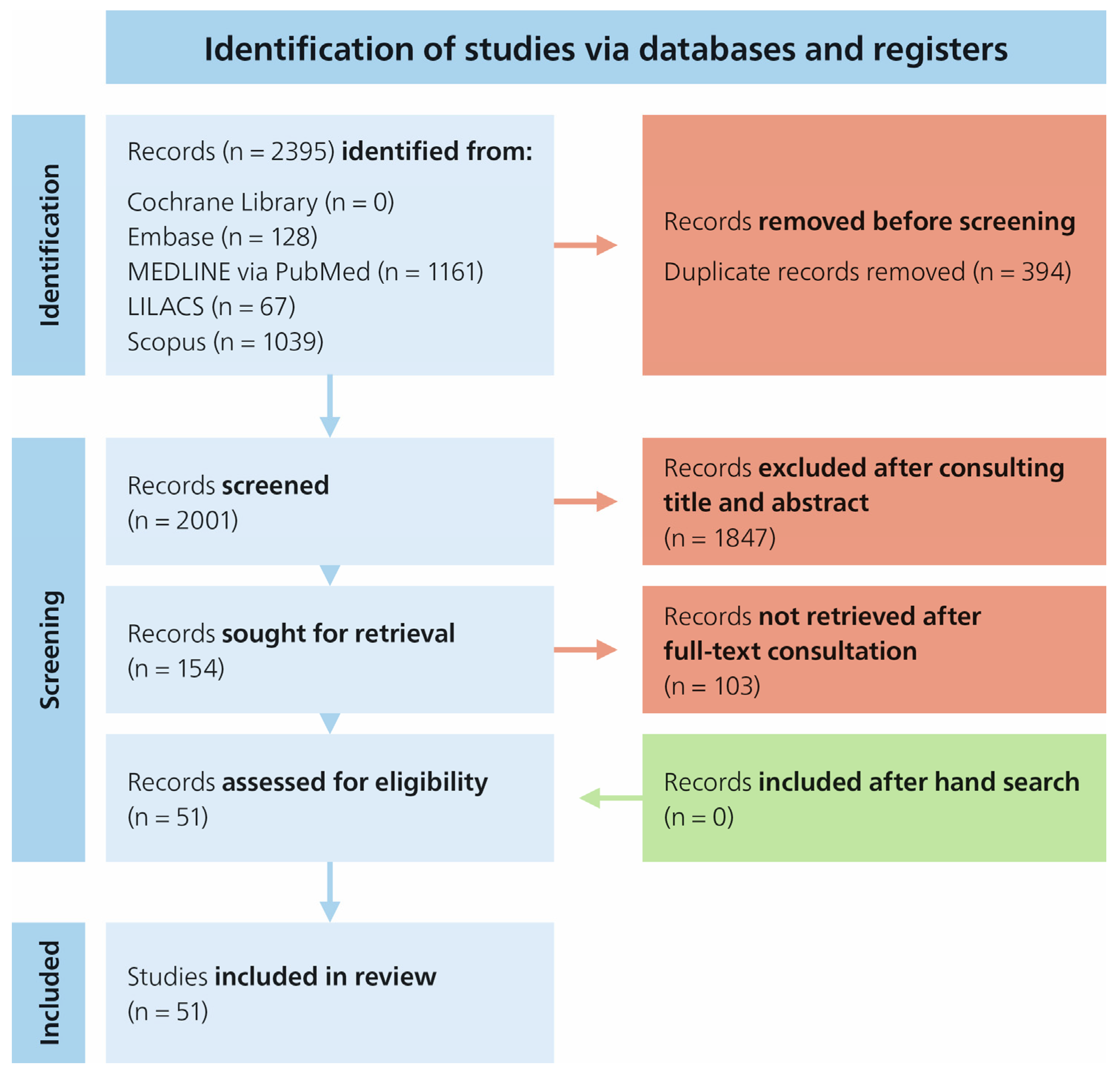
The current systematic literature search in five electronic databases yielded a total of 2395 articles. After merging the search results from the different databases, 394 duplicates were removed, and 2001 articles were screened based on title and abstract. 1847 articles were excluded after screening title and abstract. Out of the 154 reports requested for retrieval, 51 studies met the inclusion criteria and were included. A total of 103 articles were deemed irrelevant after thorough screening due to an irrelevant focus, inappropriate methodology or unclear study design. A hand search of the bibliographies did not yield any additional references. A total of 51 articles were included in this systematic review. The selection process is illustrated in the PRISMA flow diagram (Figure 1).
Figure 1.
PRISMA-Flowchart.
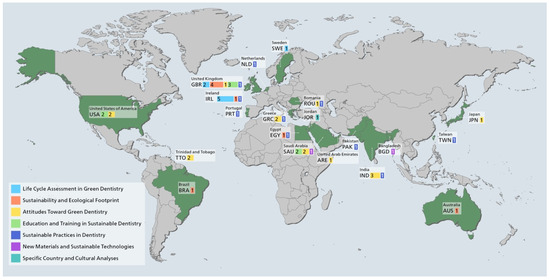
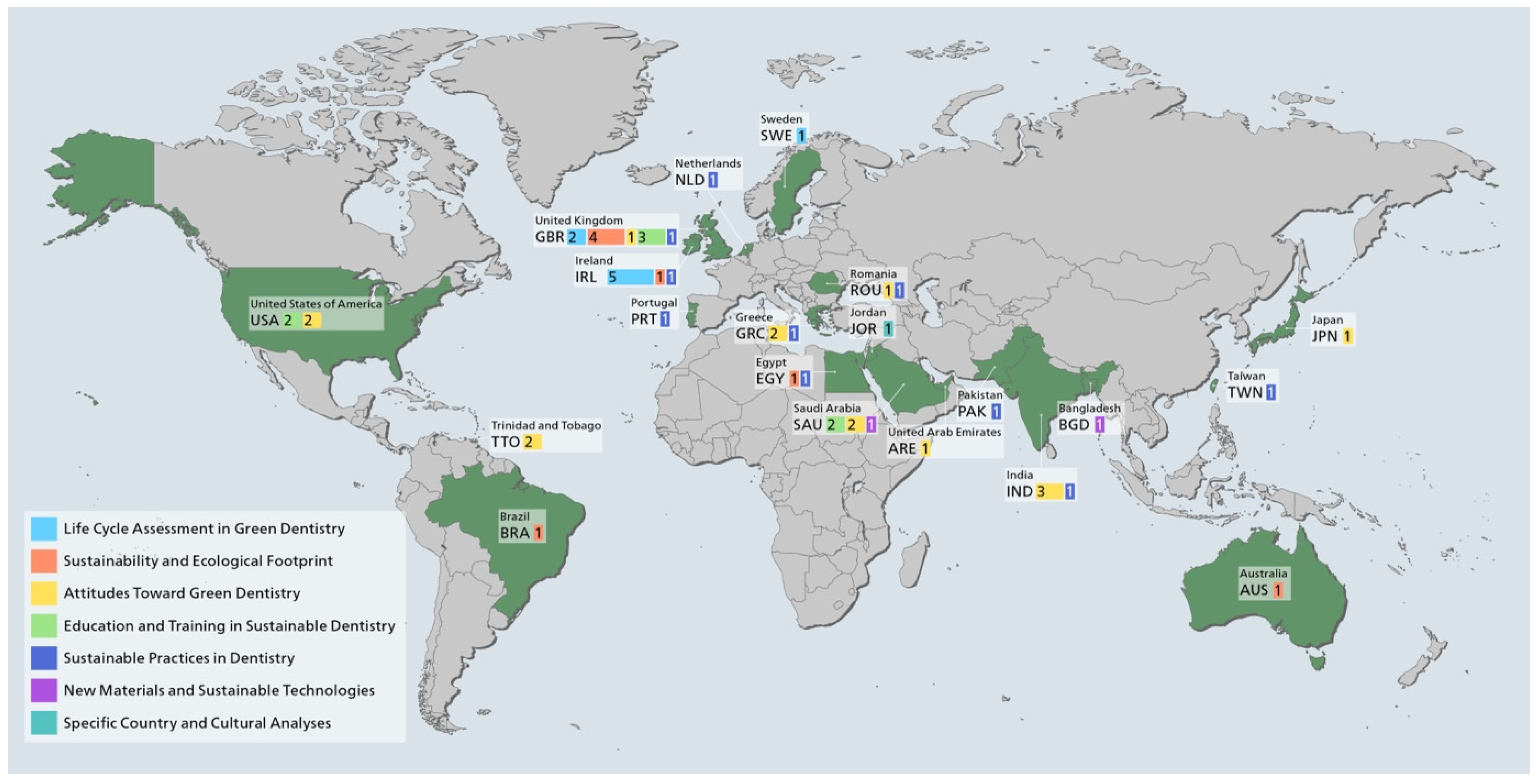
The global distribution of the included studies by country and thematic domain is shown in Figure 2.
Figure 2.
Global distribution of included studies by country and thematic domains: life cycle assessment in green dentistry; sustainability and ecological footprint; attitudes toward green dentistry; education and training in sustainable dentistry; sustainable practices in dentistry; new materials and sustainable technologies; specific country and cultural analyses. The numbers indicate the number of publications in the respective field.
3.1. Sustainability and Ecological Footprint
Ten LCA studies in dentistry reveal substantial environmental impacts associated with dental practices and materials. Tan et al. [6] found Hawley retainers have a lower long-term impact than Essix retainers, while Duane et al. [13,14,15] emphasized that travel, waste, and procurement are major contributors to the carbon footprint of dental care. They compared their data from 2015 and 2023 (published January 2024) on waste management and water use emissions and found that, despite changes in data collection methods, water use emissions had decreased while waste emissions had increased. Smith et al. [16] showed that dental amalgam has the highest environmental impact among restorative materials. Almutairi et al. [17] highlighted the benefits of reusable over disposable personal protective equipment (PPE). Suresh et al. [7] and Borglin et al. [18] demonstrated that sustainable changes, such as water conservation and eco-friendly materials, greatly reduce the dental footprint. Among fluoride-based preventive measures, water fluoridation has the lowest environmental impact [19]. Studies on national programs and inter dental cleaning aids further stress the importance of adopting greener practices in dentistry [20]. These findings collectively advocate for sustainable practices, materials, and waste management to minimize dentistry’s environmental burden.
Further studies emphasize strategies for reducing the environmental footprint in dentistry. Duane et al. introduced a carbon calculator to help dental practices measure and reduce emissions [15], while their earlier work [3,21] estimated a significant carbon footprint for NHS primary dental care in England, highlighting the need for sustainable practices. The ECODENT model offered by another study encourages pro-environmental behaviors among dentists to foster sustainability [22]. Lyne et al. [23] emphasized that fluoride varnish application within routine or school-based programs minimizes environmental impact, while Martin et al. [10] revealed that patients with higher dental needs contribute to greater carbon emissions and waste. Oral healthcare is less carbon intensive than restorative dental treatment. Promoting oral hygiene and reducing caries reduces high-carbon-intensive dental treatment [24]. Byrne et al. [25] found with a LCA that reusable stainless steel examination kits are more sustainable than disposable plastic alternatives. De Bortoli et al. [26] highlighted that ceramic materials in implant dentistry are more eco-friendly than metals, suggesting a shift toward metal-free practices. Elwan et al. [27] showed that Egyptian dental clinics produce a substantial carbon footprint, predominantly due to patient travel, with staff travel and electricity consumption also significant factors; further impacted by the absence of recycling and depreciation costs. Finally, research from Scotland demonstrated that strategic changes in dental practices can contribute to a low-carbon future. Interestingly, findings indicate that older clinics may have a lower carbon footprint compared to newer facilities [21].
3.2. Attitudes Toward Green Dentistry
The 14 studies in different countries on attitudes toward green dentistry show generally positive perceptions but varying levels of implementation. Hoyte et al. [11], Carr et al. [28], Haque et al. [29,30], and Prathima et al. [31] demonstrated that patients in Trinidad and Tobago, Saudi Arabia and India are willing to accept longer appointments and higher costs for eco-friendly practices but are less willing to compromise on health and aesthetics [32]. Dental professionals and students across different regions, including Greece [33], the UAE [9], India [34] and the USA [35], expressed support for sustainability in dentistry, although knowledge gaps and financial constraints were identified as barriers [36,37]. Word of Mouth communication may encourage dentists to adopt pro-environmental behaviors in a shorter time [22]. In Japan health consciousness was positively associated with recycling behavior, but there was no significant association with green purchasing behavior [38].
3.3. Education and Training in Sustainable Dentistry
Seven studies on integrating environmental sustainability into dental education reflect the growing importance of embedding sustainability across curricula. Dixon et al. [39] developed strategies to embed sustainability into the dental curriculum. Leung et al. [40] demonstrated that educational interventions increase students’ knowledge and foster sustainable behaviors in clinical practice.
In 2024, Durnall et al. [41] found that 97% of students expected more responsibility in dentistry but currently have little exposure to ESD (Education for Sustainable Development) in their undergraduate studies. Compared to disposable instruments, reusable instruments require only 37% of the water and produce only 36% of the waste [42]. A study in Bucharest [43] highlighted that proper education and awareness are crucial for promoting sustainable practices. Overall, the need to integrate sustainability into the dental curriculum and to provide ongoing education to advance sustainable practices remains key, as shown by Al-Qarni et al. [44] and Jamal et al. [45].
3.4. Sustainable Practices in Dentistry
The nine studies on sustainable practices in dentistry highlight both progress and challenges. Veress et al. [46] found that while dentists are open to eco-friendly practices, many need practical guidance. Soliman et al. [8] emphasized the water-saving potential of green dental technologies. Volgenant et al. [47] and Neves et al. [48] identified infection control and costs as significant barriers, despite strong sustainability adoption in some clinics. Younger professionals and postgraduates demonstrated a better understanding of sustainable waste management practices [49,50,51]. Hsu et al. [52] highlighted the importance of patient-centered design in promoting sustainable practices, while Grose et al. [53] advocated for staff engagement.
3.5. New Materials and Sustainable Technologies
Two studies on new materials and sustainable technologies in dentistry highlight promising eco-friendly innovations. Chowdhury et al. [54] demonstrated the green synthesis of zirconium nanoparticles using ginger and garlic, showing strong antimicrobial properties for dental implants. El-Rab et al. [55] investigated copper nanoparticles synthesized from Cupressus extract, which exhibited potent antibacterial effects against periodontal bacteria, especially when combined with clindamycin. Additionally, further research into the sustainability of different fluoride delivery methods revealed opportunities to reduce environmental impact [19].
3.6. Specific Country and Cultural Analyses
Regional differences in sustainable dentistry practices were highlighted across four studies. Haque et al. [29] surveyed Saudi dental students, revealing moderate awareness of Sustainable Development Goals (SDGs) but high awareness of sustainable dental practices (SDPs). The study also identified positive attitudes toward sustainable dentistry in the general Saudi population, with participants willing to make compromises for environmentally friendly practices. Gender influenced pro-environmental behaviors, and clinical exposure was associated with increased awareness. Al-Qarni [44] found significant improvements in knowledge about green dentistry among Saudi dental faculty and students after an educational intervention, emphasizing the need for curriculum integration. Al Shatrat et al. [37] revealed that while Jordanian dentists have strong knowledge of environmentally friendly dental practices, implementation remains limited due to financial constraints and a lack of government incentives. The results are depicted in Table 1.
Table 1.
Synthesis of included studies, grouped by thematic domains: life cycle assessment in green dentistry; sustainability and ecological footprint; attitudes toward green dentistry; education and training in sustainable dentistry; sustainable practices in dentistry; new materials and sustainable technologies; specific country and cultural analyses. The columns indicate author(s) (year), quality assessment, location, study type, approaches, and main findings. Abbreviations used in the study type column: CER, carbon emission reduction; CS, comparative study; CSS, cross-sectional survey; DORS, design-oriented research study; ESD, experimental study design; IAS, impact assessment study; LCA, life cycle assessment; MD + ES, model development and evaluation study; PSS, pilot survey study; QS, qualitative study; and TDS, tool development study.
4. Discussion
The objective of this systematic review was to identify existing knowledge about sustainability in dentistry, focusing on effective practices, cutting-edge technologies, and awareness strategies to reduce the carbon footprint in the dental sector. The findings reveal a range of strategies for improving sustainability within dentistry, from material choices and clinical practices to shifting attitudes toward environmental responsibility. These findings illuminate both the challenges and the opportunities for advancing sustainability in the field.
The results of LCA regarding dental materials align with prior research, particularly in highlighting the environmental impact of materials like dental amalgam and resin-based composites (RBC). Smith [16] and Tan et al. [6] both support the call for replacing high-impact materials like amalgam, RBC and Invisalign aligners with more sustainable alternatives, such as retainers with a longer lifespan [6]. Similarly, the study by Almutairi et al. [17], which emphasizes reusable PPE, aligns with broader healthcare literature advocating for reducing single-use plastic. Studies like Duane et al. [15], which introduced carbon calculators to track emissions, support the growing consensus around the need for more sustainable procurement and operational strategies in dental practices. This is further reflected in findings by Byrne et al. [25] and Abed et al. [20], which advocate for transitioning to reusable and eco-friendly dental tools, such as stainless-steel kits and bamboo floss. Attitudinal studies emphasize a notable “knowledge-action gap” in sustainable dentistry. Despite widespread support for sustainability, actual practice remains hindered by financial constraints, knowledge gaps, and perceived costs [36,37]. Educational interventions, as highlighted by Leung et al. [40] and recommended in a framework proposed by Duane et al. [55], offer a solution by integrating sustainability into dental curricula and fostering environmental responsibility among professionals and students.
Several studies have identified staff commutes and patient travel as significant contributors to the carbon footprint of dental care. This suggests that measures such as consolidating appointments into longer sessions and promoting preventive programs in schools could help reduce environmental impact [14,27].
Future research should focus on developing water-saving processes [8] more environmentally sustainable alternatives to resin-based composite (RBC), environmentally sustainable alternatives to antibiotics [55] and green-synthesized zirconium nanoparticles [54]. In addition, the development of ways to reduce detergents, soap and surface disinfectants may help reduce environmental harm [18].
When implementing greater sustainability in dental practices, infection control often conflicts with measures such as reducing chemical use. Nevertheless, general measures are highly feasible.
One of the first steps should be raising environmental awareness among dentists and dental teams [39,41,45]. Within daily operations, energy consumption can be reduced by switching to LED lighting and utilizing modern, power-saving equipment [3]. Furthermore, more eco-friendly commuting can be encouraged through carpooling, public transit, cycling to work, or consolidating patient appointments. For dental laboratory work, it is also beneficial to rely on regional providers [3,15,27].
Transitioning to digital radiography can substantially reduce the use of chemical processing agents and associated waste streams [44]. Paper waste and impression material can be minimized through comprehensive digitalization [7]. Plastic cups and disposable patient drapes can be replaced with paper alternatives, or patients might bring their own cups and towels from home. Whenever hygienically permissible, reusable instruments should be preferred [13,17,25].
Dentists can pay attention to sustainability-certified workwear [13,18,24]. Expanding the concept of sustainability in oral healthcare requires moving beyond environmentally conscious waste management and resource efficiency toward strategies that promote long-term oral health and clinical longevity. In this context, minimally invasive dentistry and preventive approaches, such as the use of biomimetic hydroxyapatite to enhance enamel remineralization and early periodontal interventions may help reduce the need for resource-intensive restorative procedures over time [57,58]. Furthermore, greater emphasis on patient education and preventive care could contribute to maintaining oral health, thereby decreasing the demand for extensive and repeated treatments throughout a patient’s lifetime [10,24].
A key strength of this systematic review lies in its comprehensive approach, encompassing life cycle assessments, attitudes toward sustainability, and educational interventions. The review’s inclusion of cross-regional studies also enhances the global relevance of its findings, presenting a broad perspective on sustainable dentistry. However, limitations exist. Most studies in this review come from high-income countries, limiting generalizability to low- and middle-income settings where different sustainability challenges may prevail. Furthermore, while our search strategy combined comprehensive terms for green dentistry and carbon foot printing with controlled vocabularies (MeSH), it focused on literature explicitly framed around sustainability. Studies addressing related sub-topics might not have been fully captured. Beyond this, the compiled evidence is limited by high methodological heterogeneity and varying quality. Many included studies utilize cross-sectional surveys prone to bias. Consequently, despite the growing interest in sustainable dentistry, the overall strength of evidence remains limited, warranting caution in generalizing findings. Additionally, reliance on self-reported data in some attitudinal studies introduces the risk of bias. The lack of long-term follow-up data also restricts the ability to assess the durability of sustainable practices and technologies.
The findings of this review, particularly those concerning material assessments and procedural changes, are broadly applicable to dental practices worldwide. However, generalizability is more complex regarding attitudes and implementation, which can vary widely depending on local socioeconomic conditions, cultural factors, and policy frameworks. While the global trend toward sustainability is clear, the specific strategies for implementation may require regional adaptation.
5. Conclusions
This systematic review indicates that, like many other areas of healthcare and daily life, dentistry is associated with significant environmental impacts. Travel, procurement and single-use materials appear to account for the largest share of dentistry’s ecological footprint [3,13,15,17,25,27]. Current life cycle assessments suggest that the use of reusable protective equipment, stainless steel sets, ceramic materials and water-saving technologies have the potential to significantly reduce emissions. Although tools such as carbon calculators [15] are valuable management approaches, they have mainly been applied in individual countries so far. Studies indicate that, while patients, students and dentists generally support sustainable dentistry, financial, aesthetic and knowledge-based barriers still impede widespread implementation [36,37]. While educational initiatives show positive tendencies, sustainability is still not sufficiently embedded in curricula [39,40,41]. Initial research into environmentally friendly nanomaterials and technologies is promising but requires reliable long-term data [54,55]. Overall, the available evidence suggests that sustainable dentistry is most likely to be achieved through a combination of environmentally friendly materials, education, changed practice procedures, and political and economic incentives. While current literature highlights the ecological potential of these strategies, transitioning them into routine practice requires addressing existing gaps regarding their long-term clinical efficacy and financial viability. Consequently, future research agendas should expand beyond standardized international life cycle analyses and cross-cultural comparisons. Specific focus should be placed on the development of materials with a lower environmental impact, the conduct of comprehensive cost–benefit assessments, and the establishment of implementation science frameworks for longitudinal evaluations within real-world clinical environments.
Supplementary Materials
The following supporting information can be downloaded at: https://www.mdpi.com/article/10.3390/dj14060377/s1, Table S1: PRISMA 2020 checklist [59]; Table S2: Quality assessment tool evaluation.
Author Contributions
Conceptualization: T.G.W. and G.C.; Methodology: T.G.W., L.M., K.P., D.L. and G.C.; Validation: G.C.; Investigation: T.G.W., L.M., K.P. and D.L.; Data curation: L.M., K.P. and D.L.; First draft: L.M. and T.G.W.; Revision and editing: T.G.W., L.M., K.P., D.L. and G.C.; Supervision: T.G.W. and G.C.; Project management: T.G.W. All authors have read and agreed to the published version of the manuscript.
Funding
This research received no external funding.
Institutional Review Board Statement
Not applicable.
Informed Consent Statement
Not applicable.
Data Availability Statement
No new data were created or analyzed in this study. Data sharing is not applicable to this article.
Conflicts of Interest
The authors declare no conflicts of interest.
Abbreviations
The following abbreviations are used in this manuscript:
| CFP | Carbon footprint |
| CO2 | Carbon dioxide |
| CuNP | Copper nanoparticles |
| DI | Disposable instruments |
| EI | Environmental impact |
| EFD | Eco-Friendly Dentistry |
| ESD | Environmental sustainability in dentistry |
| FDI | FDI World Dental Federation |
| FV | Fluoride varnish |
| GIC | Glass polyalkenoate cements |
| LCA | Life cycle assessment |
| LILACS | Latin American and Caribbean Health Sciences Literature |
| NHS | National Health Service |
| PPE | Personal protective equipment |
| PRISMA | Preferred Reporting Items for Systematic Reviews and Meta-Analyses |
| RBC | Resin-based composite |
| RCT | Root canal treatment |
| RI | Reusable instruments |
| SDG | Sustainable Development Goals (SDGs) |
| SUP | Single use plastics |
| UK | United Kingdom of Great Britian and Norther Ireland |
| WHO | World Health Organization |
References
- Fisher, J.; Splieth, C.; Matanhire-Zihanzu, C.; Glick, M. Advancing the concept of global oral health to strengthen actions for planetary health and One Health. Int. J. Equity Health 2024, 23, 71. [Google Scholar] [CrossRef] [Scilit] [PubMed]
- United Nations. Transforming Our World: The 2030 Agenda for Sustainable Development. 2015. Available online: https://sdgs.un.org/2030agenda (accessed on 10 April 2026).
- Duane, B.; Lee, M.B.; White, S.; Stancliffe, R.; Steinbach, I. An estimated carbon footprint of NHS primary dental care within England: How can dentistry be more environmentally sustainable? Br. Dent. J. 2017, 223, 589–593. [Google Scholar] [CrossRef] [Scilit] [PubMed]
- FDI World Dental Federation. Sustainability in Dentistry; FDI World Dental Federation: Geneva, Switzerland, 2022; Available online: https://www.fdiworlddental.org/sustainability-dentistry (accessed on 10 April 2026).
- Eco Dentistry Association. What Is Green Dentistry? 2022. Available online: https://ecodentistry.org/green-dentistry/what-is-green-dentistry/ (accessed on 10 April 2026).
- Tan, T.Y.D.; Duane, B.; Hussein, A.; Samsonova, A.; Sizun, G.; Shakerdi, L.; Taqi, R.; Wolfram, S.; Ziaeefard, N.; Sagheri, D. Environmental sustainability of post-orthodontic dental retainers: A comparative life-cycle assessment of Hawley and Essix retainers. Eur. J. Orthod. 2024, 46, cjae012. [Google Scholar] [PubMed]
- Suresh, P.; Crotty, J.; Tesanovic, S.; Alaweed, O.; Doyle, S.; Kiandee, M.; Hayes, E.; Umeh, V.; Khalilinejad, B.; Duane, B. A life cycle analysis of the environmental impact of procurement, waste and water in the dental practice. Br. Dent. J. 2024, 236, 545–551. [Google Scholar] [CrossRef] [Scilit] [PubMed]
- Soliman, H.M.H. Role of eco-friendly dental clinic option in water saving. Environ. Conserv. J. 2023, 24, 326–329. [Google Scholar] [CrossRef] [Scilit]
- Nassar, M.; Shalan, W.; Al-Janaby, U.; Elnagar, H.; Alawadhi, M.; Jaser, S.; Joury, E. Exploring environmental sustainability in dentistry among students and educators in the United Arab Emirates: A cross-sectional survey. BMC Med. Educ. 2024, 24, 489. [Google Scholar] [CrossRef] [Scilit] [PubMed]
- Martin, N.; Hunter, A.; Constantine, Z.; Mulligan, S. The environmental consequences of oral healthcare provision by the dental team. J. Dent. 2024, 142, 104842. [Google Scholar] [CrossRef] [Scilit] [PubMed]
- Hoyte, T.; James, A.; Carr, D.; Teelucksingh, A.D.A.; Mossey, P. Adult attitudes to sustainable dentistry in Trinidad and Tobago and their willingness to accept alternatives. BDJ Open 2024, 10, 40. [Google Scholar] [CrossRef] [Scilit] [PubMed]
- Page, M.J.; McKenzie, J.E.; Bossuyt, P.M.; Boutron, I.; Hoffmann, T.C.; Mulrow, C.D.; Shamseer, L.; Tetzlaff, J.M.; Akl, E.A.; Brennan, S.E.; et al. PRISMA 2020 explanation and elaboration: Updated guidance and exemplars for reporting systematic reviews. BMJ 2021, 372, n160. [Google Scholar] [CrossRef] [PubMed]
- Duane, B.; Borglin, L.; Pekarski, S.; Saget, S.; Duncan, H.F. Environmental sustainability in endodontics: A life cycle assessment (LCA) of a root canal treatment procedure. BMC Oral Health 2020, 20, 266. [Google Scholar] [CrossRef] [Scilit] [PubMed]
- Duane, B.; Steinbach, I. What is the environmental footprint of a dental practice? A life cycle analysis (Part 1). Br. Dent. J. 2024. online ahead of print. [Google Scholar]
- Duane, B.; Steinbach, I.; Mackenzie, L. A carbon calculator: The development of a user-friendly greenhouse gas measuring tool for general dental practice (Part 2). Br. Dent. J. 2024, 236, 57–61. [Google Scholar] [CrossRef] [Scilit] [PubMed]
- Smith, L.; Ali, M.; Agrissais, M.; Mulligan, S.; Koh, L.; Martin, N. A comparative life cycle assessment of dental restorative materials. Dent. Mater. 2023, 39, 13–24. [Google Scholar] [PubMed]
- Almutairi, W.; Saget, S.; McDonnell, J.; Tarnowski, A.; Johnstone, M.; Duane, B. The planetary health effects of COVID-19 in dental care: A life cycle assessment approach. Br. Dent. J. 2022, 233, 309–316. [Google Scholar] [CrossRef] [Scilit] [PubMed]
- Borglin, L.; Pekarski, S.; Saget, S.; Duane, B. The life cycle analysis of a dental examination: Quantifying the environmental burden of an examination in a hypothetical dental practice. Community Dent. Oral Epidemiol. 2021, 49, 581–593. [Google Scholar] [CrossRef] [Scilit] [PubMed]
- Duane, B.; Lyne, A.; Parle, R.; Ashley, P. The environmental impact of community caries prevention—Part 3: Water fluoridation. Br. Dent. J. 2022, 233, 303–307. [Google Scholar] [PubMed]
- Abed, R.; Ashley, P.; Duane, B.; Crotty, J.; Lyne, A. An environmental impact study of interdental cleaning aids. J. Clin. Periodontol. 2023, 50, 2–10. [Google Scholar] [PubMed]
- Duane, B.; Hyland, J.; Rowan, J.S.; Archibald, B. Taking a bite out of Scotland’s dental carbon emissions in the transition to a low carbon future. Public Health 2012, 126, 770–777. [Google Scholar] [CrossRef] [Scilit] [PubMed]
- Antoniadou, M. The ECODENT model for enhancing pro-environmental behaviors in dentists. Circ. Econ. Sustain. 2023, 4, 1387–1403. [Google Scholar] [CrossRef] [Scilit]
- Lyne, A.; Ashley, P.; Johnstone, M.; Duane, B. The environmental impact of community caries prevention—Part 1: Fluoride varnish application. Br. Dent. J. 2022, 233, 287–294. [Google Scholar] [PubMed]
- Bowden, B.; Iomhair, A.N.; Wilson, M. Evaluating the environmental impact of the Welsh national childhood oral health improvement programme, Designed to Smile. Community Dent. Health 2021, 38, 15–20. [Google Scholar] [CrossRef] [Scilit] [PubMed]
- Byrne, D.; Saget, S.; Davidson, A.; Haneef, H.; Abdeldaim, T.; Almudahkah, A.; Basquille, N.; Bergin, A.M.; Prida, J.; Lyne, A.; et al. Comparing the environmental impact of reusable and disposable dental examination kits: A life cycle assessment approach. Br. Dent. J. 2022, 233, 317–325. [Google Scholar] [CrossRef] [Scilit] [PubMed]
- De Bortoli, L.S.; Schabbach, L.M.; Fredel, M.C.; Hotza, D.; Henriques, B. Ecological footprint of biomaterials for implant dentistry: Is the metal-free practice an eco-friendly shift? J. Clean. Prod. 2019, 213, 723–732. [Google Scholar]
- Elwan, A.H.; Tantawi, M.E.; Fouda, A.M. Carbon footprint of private dental clinics in Egypt: A cross-sectional study. BMC Oral Health 2025, 25, 93. [Google Scholar] [CrossRef] [Scilit] [PubMed]
- Carr, D.; Donatien, A.; Dilraj, A.; Teelucksingh, A.; Maharaj, K.; Mahadeo, S.A.; Hoyte, T.; James, A.; Mossey, P. Attitudes towards sustainable dentistry in Trinidad and Tobago. West Indian Med. J. 2023, 70, 29–30. [Google Scholar]
- Haque, S.; Nurunnabi, M.; Haque, T. Saudi dental students’ perceptions on sustainable development goals and sustainable dental practice. BDJ Open 2024, 10, 40. [Google Scholar] [CrossRef] [Scilit] [PubMed]
- Haque, S.; Nurunnabi, M.; Akhter, F.; Bianoony, A.A.M. Attitude towards sustainability in dentistry: The evidence from Riyadh City, Saudi Arabia. Int. Dent. J. 2024, 74, 884–891. [Google Scholar] [CrossRef] [Scilit] [PubMed]
- Prathima, V.; Vellore, K.P.; Kotha, A.; Malathi, S.; Kumar, V.S.; Koneru, M. Knowledge, attitude and practices towards eco-friendly dentistry among dental practitioners. J. Res. Dent. 2016, 4, 123–127. [Google Scholar]
- Baird, H.M.; Mulligan, S.; Webb, T.L.; Baker, S.R.; Martin, N. Exploring attitudes towards more sustainable dentistry among adults living in the UK. Br. Dent. J. 2022, 233, 333–342. [Google Scholar] [CrossRef] [Scilit] [PubMed]
- Antoniadou, M.; Chrysochoou, G.; Tzanetopoulos, R.; Riza, E. Green dental environmentalism among students and dentists in Greece. Sustainability 2023, 15, 9508. [Google Scholar] [CrossRef] [Scilit]
- Verma, S.; Jain, A.; Thakur, R.; Maran, S.; Kale, A.; Sagar, K.; Mishra, S. Knowledge, attitude and practice of green dentistry among dental professionals of Bhopal city: A cross-sectional survey. J. Clin. Diagn. Res. 2020, 14, ZC09–ZC13. [Google Scholar] [CrossRef] [Scilit]
- Gershberg, N.C.; Lee, J.; Murphree, J.K.; Parchure, A.; Hackley, D.M. US students’ perceptions on environmental sustainability in dental school. J. Dent. Educ. 2022, 86, 482–488. [Google Scholar] [PubMed]
- Thakar, S.; Kinariwala, N.; Pandya, D.; Parekh, N.H.; Patel, N.K.; Patel, A. Awareness and constraints towards the implementation of green dentistry amongst dental students and private practitioners of West India. J. Pharm. Bioallied Sci. 2023, 15, S1287–S1290. [Google Scholar] [CrossRef] [Scilit] [PubMed]
- Al Shatrat, S.M.; Shuman, D.; Darby, M.L.; Jeng, H.A. Jordanian dentists’ knowledge and implementation of eco-friendly dental office strategies. Int. Dent. J. 2013, 63, 161–168. [Google Scholar] [CrossRef] [Scilit] [PubMed]
- Shimoda, A.; Hayashi, H.; Sussman, D.; Nansai, K.; Fukuba, I.; Kawachi, I.; Kondo, N. Our health, our planet: A cross-sectional analysis on the association between health consciousness and pro-environmental behavior among health professionals. Int. J. Environ. Health Res. 2020, 30, 63–74. [Google Scholar] [PubMed]
- Dixon, J.; Field, J.; Gibson, E.; Martin, N. Curriculum content for environmental sustainability in dentistry. J. Dent. 2024, 147, 105021. [Google Scholar] [CrossRef] [Scilit] [PubMed]
- Leung, W.S.; Dubbs, L.; White, T.; Kornegay, E.C. Implementing environmental sustainability educational intervention in dental hygiene instruction. J. Dent. Hyg. 2022, 96, 57–64. [Google Scholar] [PubMed]
- Durnall, O.; Martin, N.; Mulligan, S.; Dixon, J. Environmental sustainability: The attitudes and experiences of UK students in the oral health care profession. BDJ Open 2024, 10, 40. [Google Scholar]
- Sowa, P.M.; Fooken, J.; McGowan, K.; Birch, S. Disposable and reusable instruments in dental health practice: A comparison of cost factors in a public provider organization in Queensland, Australia. Community Dent. Oral Epidemiol. 2023, 51, 794–803. [Google Scholar] [PubMed]
- Țâncu, A.M.C.; Didilescu, A.C.; Pantea, M.; Sfeatcu, R.; Imre, M. Aspects regarding sustainability among private dental practitioners from Bucharest, Romania: A pilot study. Healthcare 2023, 11, 1326. [Google Scholar] [CrossRef] [Scilit] [PubMed]
- Al-Qarni, M.A.; Shakeela, N.V.; Alamri, M.A.; Alshaikh, Y.A. Awareness of eco-friendly dentistry among dental faculty and students of King Khalid University, Saudi Arabia. J. Clin. Diagn. Res. 2016, 10, ZC75–ZC78. [Google Scholar] [CrossRef] [Scilit] [PubMed]
- Jamal, H.; Marghalani, A.A.; Al-Sharif, A.; Shinawi, A.; Gaffar, B.; Al-Edaili, E.A.; Al-Baqami, G.; AlQarni, M. Exploring the perception of dental undergraduate students and faculty on environmental sustainability in dentistry: A cross-sectional survey in 26 dental schools in Saudi Arabia. Dent. J. 2023, 11, 103. [Google Scholar] [CrossRef] [Scilit] [PubMed]
- Veress, S.; Kerekes-Máthé, B.; Székely, M. Environmentally friendly behavior in dentistry. Med. Pharm. Rep. 2023, 96, 199–205. [Google Scholar] [CrossRef] [Scilit] [PubMed]
- Volgenant, C.M.C.; Bras, S.; Persoon, I.F. Facilitators and barriers to implementing sustainability in oral health care. Int. Dent. J. 2022, 72, 847–852. [Google Scholar] [CrossRef] [Scilit] [PubMed]
- Neves, C.B.; Santos, N.; Mendes, S. Environmental sustainability practices in Portuguese dental clinics. Rev. Port. Estomatol. Med. Dent. Cir. Maxilofac. 2022, 63, 213–220. [Google Scholar] [CrossRef] [Scilit]
- Spaveras, A.; Antoniadou, M. Awareness of students and dentists on sustainability issues, safety of use and disposal of dental amalgam. Dent. J. 2023, 11, 21. [Google Scholar] [CrossRef] [Scilit] [PubMed]
- Kamran, M.A.; Zareef, U.; Ahmed, T.; Rasool, R.; Khan, N.; Kashif, M. Awareness of dental undergraduates, postgraduates and dental practitioners about dental and biomedical waste management. J. Liaquat Univ. Med. Health Sci. 2022, 21, 50–54. [Google Scholar]
- Puri, S.; Smriti, K.; Pentapati, K.C.; Singh, R.; Vineetha, R.; Tamrakar, A. Assessment of awareness about various dental waste management practices among dental students and practicing clinicians. Pesqui. Bras. Odontopediatria Clin. Integr. 2019, 19, e4976. [Google Scholar] [CrossRef] [Scilit]
- Hsu, L.H.; Hsiao, Y.H. Facilitating green supply chain in dental care through Kansei healthscape of positive emotions. Int. J. Environ. Res. Public Health 2019, 16, 3507. [Google Scholar] [CrossRef] [Scilit] [PubMed]
- Grose, J.; Burns, L.; Mukonoweshuro, R.; Richardson, J.; Mills, I.; Nasser, M.; Moles, D. Developing sustainability in a dental practice through an action research approach. Br. Dent. J. 2018, 225, 409–413. [Google Scholar] [CrossRef] [Scilit] [PubMed]
- Chowdhury, M.A.; Hossain, N.; Mostofa, M.G.; Mia, M.R.; Tushar, M.; Rana, M.M.; Hossain, M.H. Green synthesis and characterization of zirconium nanoparticle for dental implant applications. Heliyon 2023, 9, e12711. [Google Scholar] [PubMed]
- El-Rab, S.; Basha, S.; Ashour, A.A.; Enan, E.T.; Alyamani, A.A.; Felemban, N.H. Green synthesis of copper nano-drug and its dental application upon periodontal disease-causing microorganisms. J. Microbiol. Biotechnol. 2021, 31, 1656–1666. [Google Scholar] [PubMed]
- Duane, B.; Dixon, J.; Ambibola, G.; Aldana, C.; Coughlan, J.; Henao, D.; Daniela, T.; Veiga, N.; Martin, N.; Darragh, J.; et al. Embedding environmental sustainability within the modern dental curriculum—Exploring current practice and developing a shared understanding. Eur. J. Dent. Educ. 2021, 25, 541–549. [Google Scholar] [PubMed]
- Scribante, A.; Cosola, S.; Pascadopoli, M.; Genovesi, A.; Battisti, R.A.; Butera, A. Clinical and technological evaluation of the remineralising effect of biomimetic hydroxyapatite in a population aged 6 to 18 years: A randomized clinical trial. Bioengineering 2025, 12, 152. [Google Scholar] [CrossRef] [Scilit] [PubMed]
- Scribante, A.; Butera, A.; Alovisi, M. Customized minimally invasive protocols for the clinical and microbiological management of the oral microbiota. Microorganisms 2022, 10, 675. [Google Scholar] [CrossRef] [Scilit] [PubMed]
- Page, M.J.; McKenzie, J.E.; Bossuyt, P.M.; Boutron, I.; Hoffmann, T.C.; Mulrow, C.D.; Shamseer, L.; Tetzlaff, J.M.; Akl, E.A.; Brennan, S.E.; et al. The PRISMA 2020 statement: An updated guideline for reporting systematic reviews. BMJ 2021, 372, n71. [Google Scholar] [CrossRef] [Scilit] [PubMed]

Disclaimer/Publisher’s Note: The statements, opinions and data contained in all publications are solely those of the individual author(s) and contributor(s) and not of MDPI and/or the editor(s). MDPI and/or the editor(s) disclaim responsibility for any injury to people or property resulting from any ideas, methods, instructions or products referred to in the content. |
© 2026 by the authors. Licensee MDPI, Basel, Switzerland. This article is an open access article distributed under the terms and conditions of the Creative Commons Attribution (CC BY) license.