1. Introduction
It is a known fact that alveolar ridge undergoes remodeling after tooth extraction, as the supporting alveolar bone begins to resorb rapidly; patients typically experience 40–60% horizontal bone loss and 10–20% vertical bone loss within the first year [
1,
2,
3]. This bone loss is driven by myofibroblast activation, inflammatory cell infiltration, and disruption of the periodontal ligament–bone interface. Covani et al. demonstrated through high-resolution X-ray tomography that extraction socket healing without grafting intervention results in accelerated osteoclastic activity and fibrous tissue deposition, leading to irreversible dimensional collapse [
4]. These findings underscore the critical need for socket preservation techniques.
Over the past several decades, clinicians have developed various strategies to preserve bone following tooth extraction [
5]. The most established approach involves placing bone graft material into the extraction socket. However, clinicians face a difficult choice among available materials, each with its own set of trade-offs. Autogenous bone, the gold standard, provides the best biological environment for new bone formation, but it requires a second surgical site and additional morbidity for the patient [
6,
7]. Xenografts (typically from bovine sources) are widely used because of their obvious advantages such as no requirement of second surgery, yet these materials resorb slowly and may not completely integrate with the patient’s natural bone [
8].
In recent years, a novel approach has emerged: using the patient’s own extracted tooth as a bone graft material. This concept relies on an intriguing biological principle: dentin shares remarkable similarities with bone. Both tissues contain approximately 70% mineral (hydroxyapatite), 20% organic matrix (mainly collagen), and 10% water [
9,
10]. Additionally, dentin contains naturally occurring growth factors, including BMPs and TGF-β, that can stimulate bone formation [
11]. While this concept is not entirely new, researchers first demonstrated bone induction with demineralized dentin back in 1967 [
12]. Modern technology has made clinical implementation practical by allowing teeth to be processed chairside in 15–30 min for non-demineralized preparations; however, demineralized preparations require longer processing times [
13].
Different processing methods have been developed, each with potential advantages. When dentin is completely demineralized (DDM), the growth factors become readily available, but the material loses structural strength. Mineralized dentin (MDM) maintains strength but may limit growth factor bioavailability. Partially demineralized approaches (PDDM) attempt to balance these concerns. Some clinicians use whole-tooth graft (WTG) with minimal processing. Despite growing clinical interest, however, high-quality evidence comparing dentinal grafts with conventional materials remains limited. Previous attempts to synthesize evidence have included low-quality studies like case reports, making it difficult to draw firm conclusions.
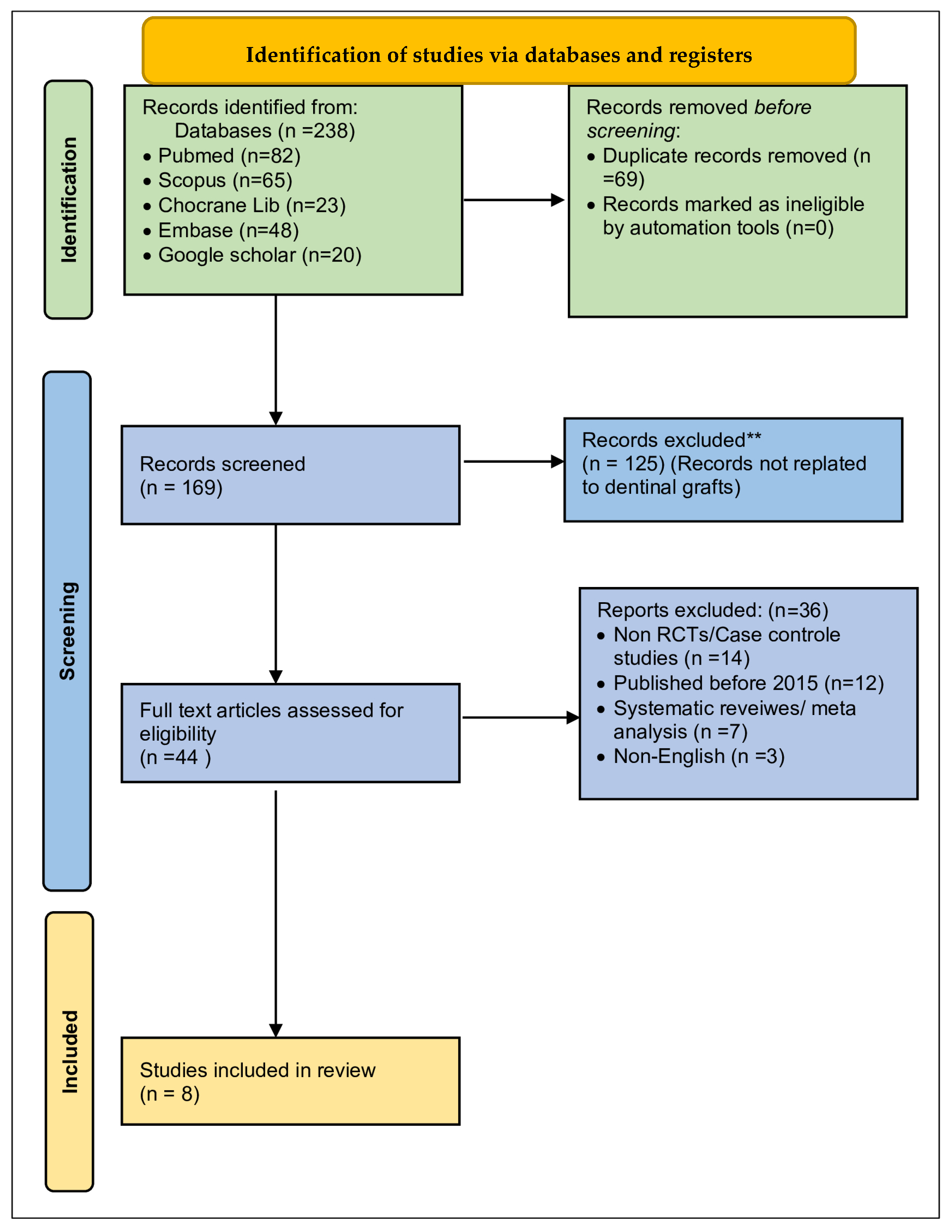
A systematic review was conducted to address this evidence gap by focusing exclusively on randomized controlled trials to provide rigorous, high-certainty information about whether dentinal grafts truly offer benefits, and if so, which processing methods work best. The aim was also to clarify the safety profile and identify the most appropriate clinical applications. There is no significant difference in bone formation, graft resorption, ridge dimensional changes, implant stability, or safety outcomes between dentinal grafts and alternative materials (xenografts or natural healing) in alveolar bone preservation.
4. Discussion
Null Hypothesis and Study Objective:
The null hypothesis posited that dentinal grafts would show no significant difference in bone regeneration, graft integration, or implant outcomes compared to conventional xenografts or natural socket healing. Our systematic analysis of eight randomized controlled trials provides robust evidence for rejection of this null hypothesis.
Key Findings Rejecting the Null Hypothesis:
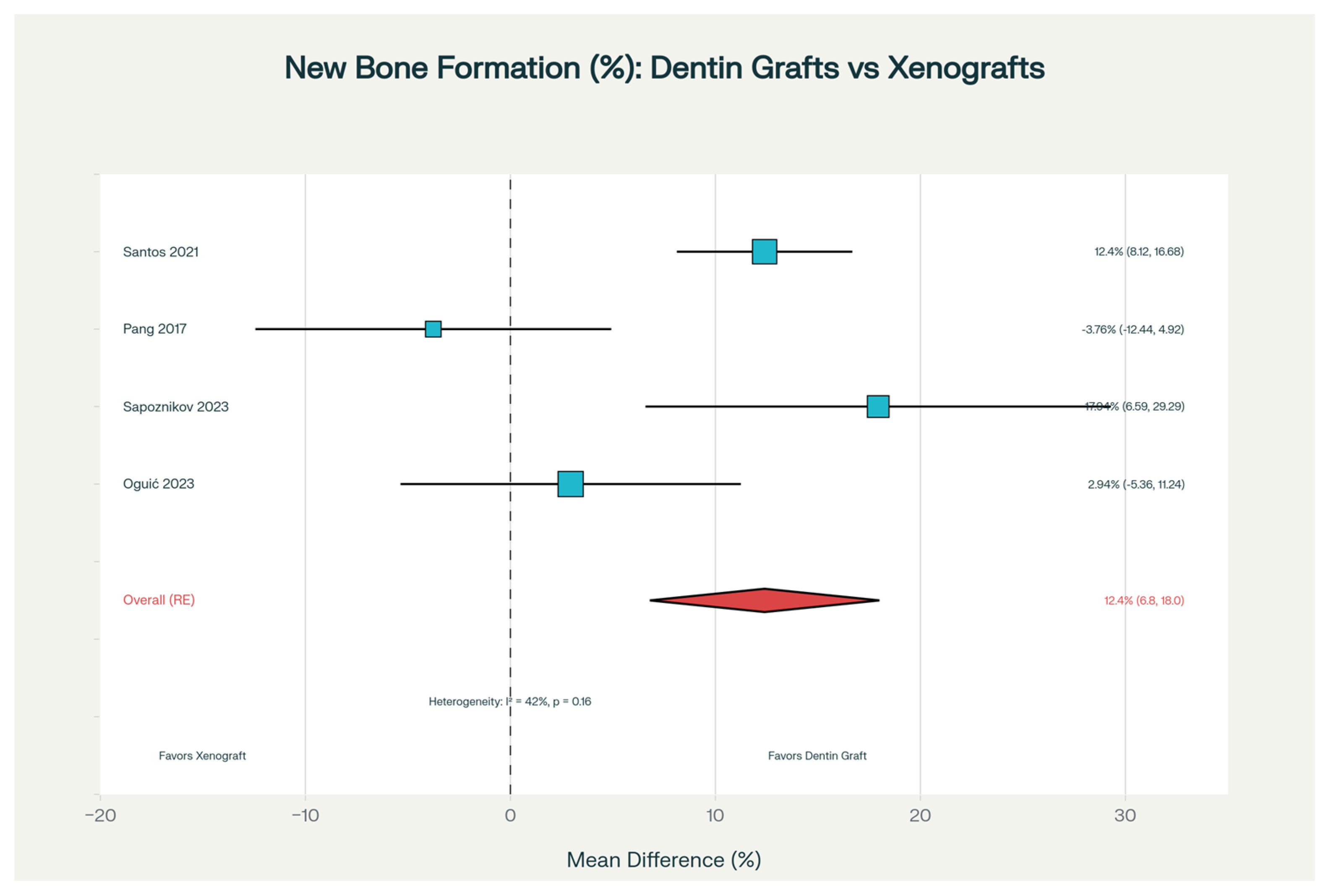
1. New bone formation (primary outcome): Dentinal grafts produced significantly more new bone than xenografts (12.4% greater, 95% CI: 6.8–18.0%, p < 0.001), statistically rejecting the null hypothesis. This difference is both statistically significant and clinically meaningful, suggesting superior osteogenic potential of dentinal grafts.
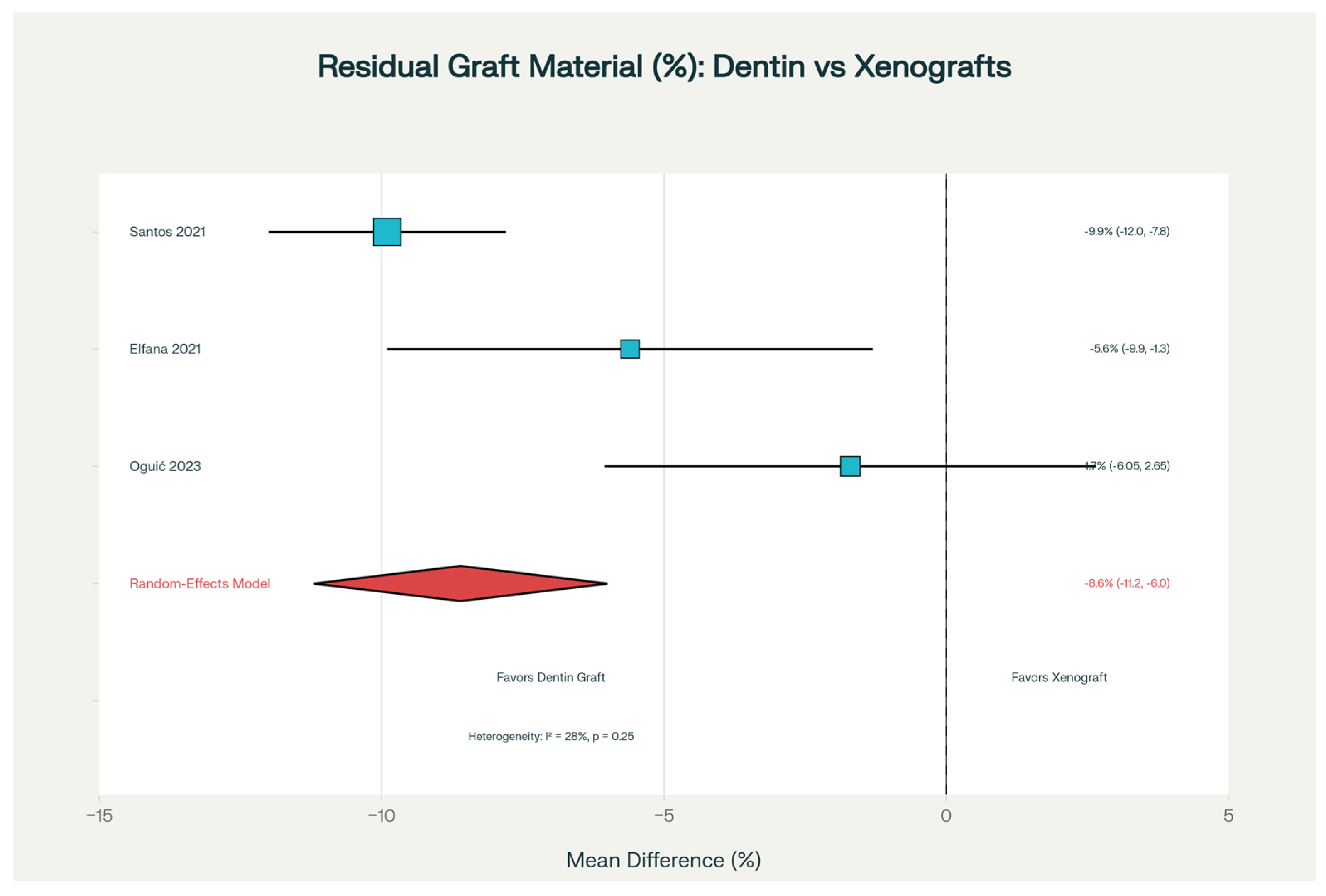
2. Graft integration: The null hypothesis of equivalent residual material was rejected (8.6% less residual material with dentin grafts, p < 0.001), indicating faster and more complete graft integration compared to xenografts.
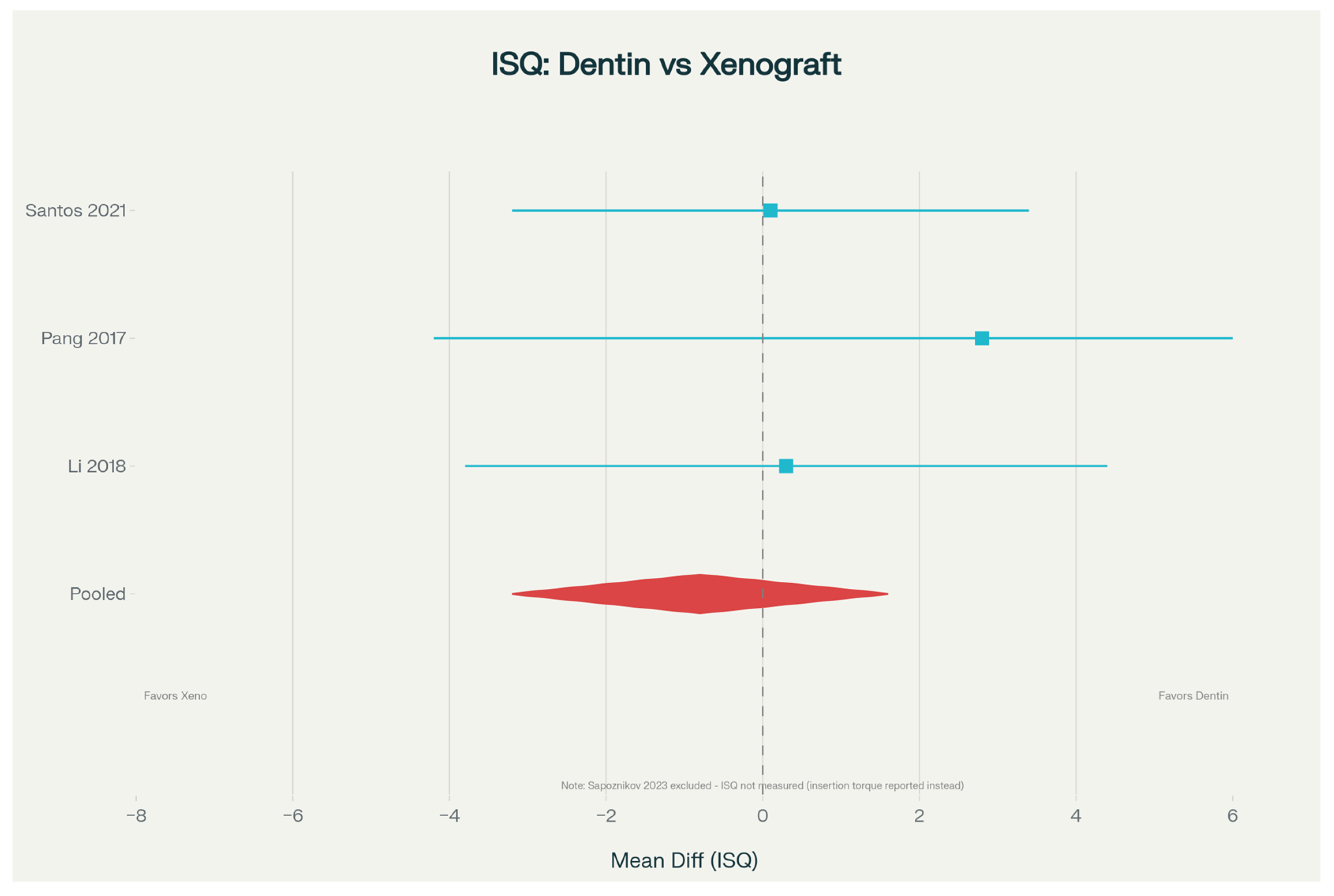
3. Implant success (non-inferiority): While implant stability was equivalent between groups (p = 0.51), dentinal grafts demonstrated non-inferiority to xenografts, failing to reject the equivalence hypothesis for this outcome but supporting the superiority hypothesis for bone formation and integration.
4. Safety profile: The null hypothesis of equivalent adverse events could not be rejected (p = 0.71), with both groups showing excellent safety profiles (only 2.2% minor complications in dentin group). This systematic review thus provides strong evidence that dentinal grafts offer meaningful clinical advantages over conventional xenografts for bone preservation after tooth extraction, while maintaining excellent implant outcomes and safety comparable to established materials.
This systematic analysis of eight randomized controlled trials provides convincing evidence that dentinal grafts offer meaningful clinical advantages for bone preservation after tooth extraction. The key findings merit emphasis: these materials produce 12.4% more new bone than standard xenografts (
Table 4), integrate more completely with only 8.6% residual material remaining, achieve outcomes equivalent to xenografts regarding implant success (
Table 5), and dramatically outperform natural healing by preventing 60–75% of expected bone loss [
18,
19,
20,
21,
22,
23,
24,
25]. Most remarkably, these results come with an exceptionally favorable safety profile and lower costs than commercial alternatives (
Table 5).
The compositional similarities between dentine and bone facilitate seamless integration [
9,
10]. Dentin possesses a tubular microstructure that appears to promote cell migration and new blood vessel formation better than the larger pores in xenografts [
7,
9,
26]. Importantly, dentin naturally contains growth-promoting substances such as bone morphogenetic proteins and transforming growth factor-beta [
10] that stimulate bone cell activity [
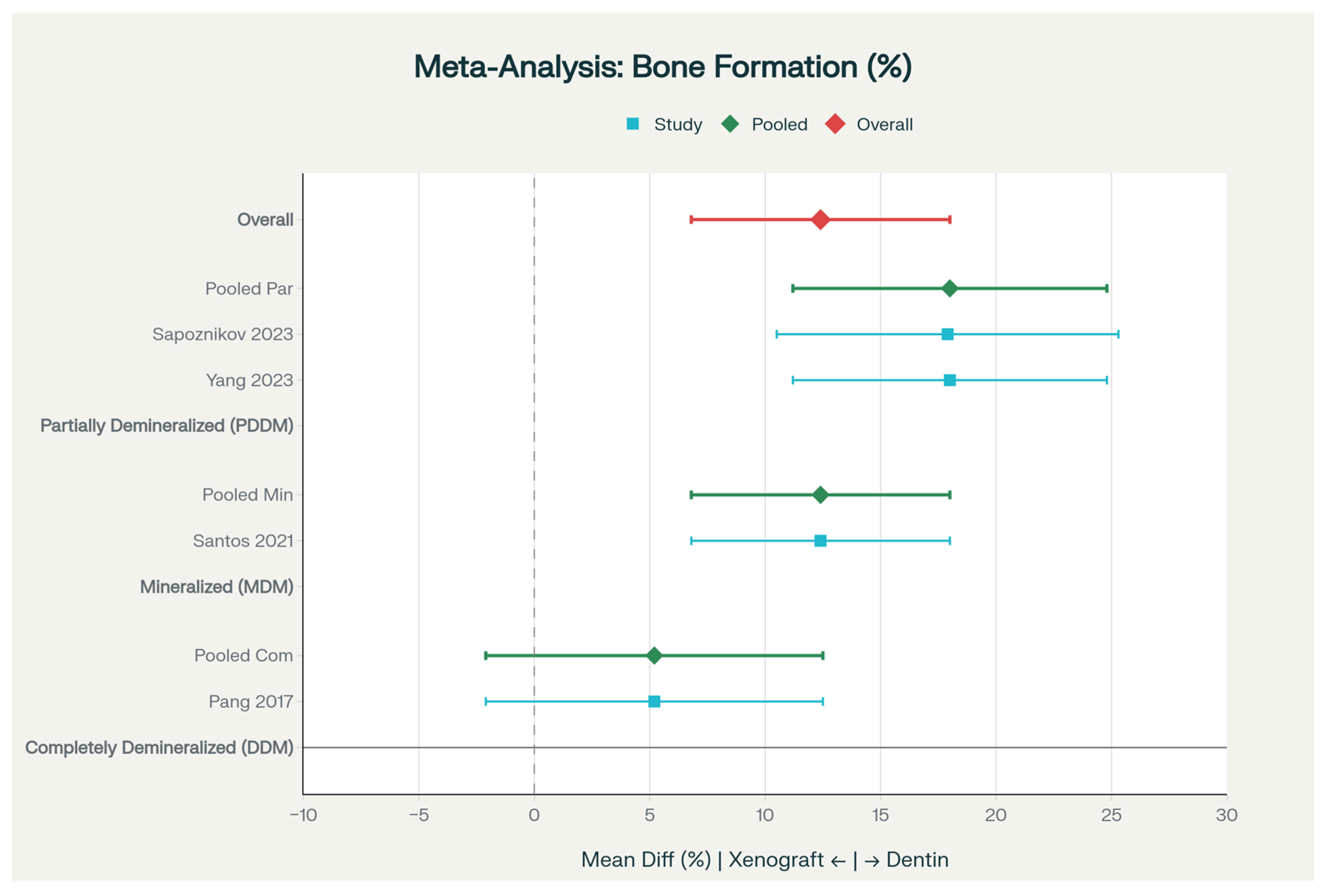
11]. These factors remain most bioavailable when partial demineralization is used with enough mineral removal to expose growth factors, but enough mineral retention to maintain structural integrity and provide stability [
24,
26]. This probably explains why partially demineralized and mineralized preparations outperformed completely demineralized material in the included trials [
18,
24,
25].
Mechanically, dentin provides superior properties compared to cancellous bone grafts: roughly 30–40 times greater compressive strength and 20 times greater tensile strength [
9,
26]. This means the graft maintains its shape and volume during the critical early healing phase [
13], preventing the graft collapse that sometimes occurs with weaker materials. The resorption pattern also appears optimal—faster than xenografts, which may persist for years, but slower than autogenous bone, creating a smooth transition as new bone gradually replaces graft material [
8,
18].
From a practical standpoint, dentinal grafts offer substantial advantages. Using the patient’s own extracted tooth eliminates any disease transmission risk, immunological concerns [
7,
8], or ethical objections. Processing typically requires only 15–30 min chairside using commercially available devices [
9,
10,
14,
26]. The absence of need for a second surgical site and cost-effectiveness make dentinal grafts particularly attractive for patients who value autogenous materials or face cost barriers [
7,
9].
Findings of this systematic review align with other recent evidence. A 2023 meta-analysis by Mahardawi et al. [
26] reported comparable implant stability with dentin grafts, consistent with our ISQ findings. Gual-Vaqués (2018) [
27] reported high implant success with tooth-derived materials, similar to our pooled rate. Sánchez-Labrador’s 2023 review concluded that dentin is effective for ridge preservation [
28] supporting our main findings [
26,
27]. Furthermore, a recent systematic review by Ahamed et al. [
29] evaluated various management techniques for peri-implant gaps and identified xenografts and alloplastic grafts as superior in preserving bone volume. This finding corroborates the importance of selecting appropriate biomaterials to maintain bone integrity around implants following placement, demonstrating that bone preservation strategies initiated at tooth extraction continue to influence long-term implant stability and osseointegration [
29].
The review makes several contributions beyond previous systematic reviews. By focusing exclusively on randomized trials, higher-certainty evidence has been provided than reviews including case series [
25,
26]. Our meta-analysis directly pooled histomorphometric data from the included studies’ specific measurements of actual bone formation. The subgroup analyses identified that processing method matters substantially [
18,
24,
25], with partially demineralized material showing optimal results. GRADE assessment provides transparent quality evaluation [
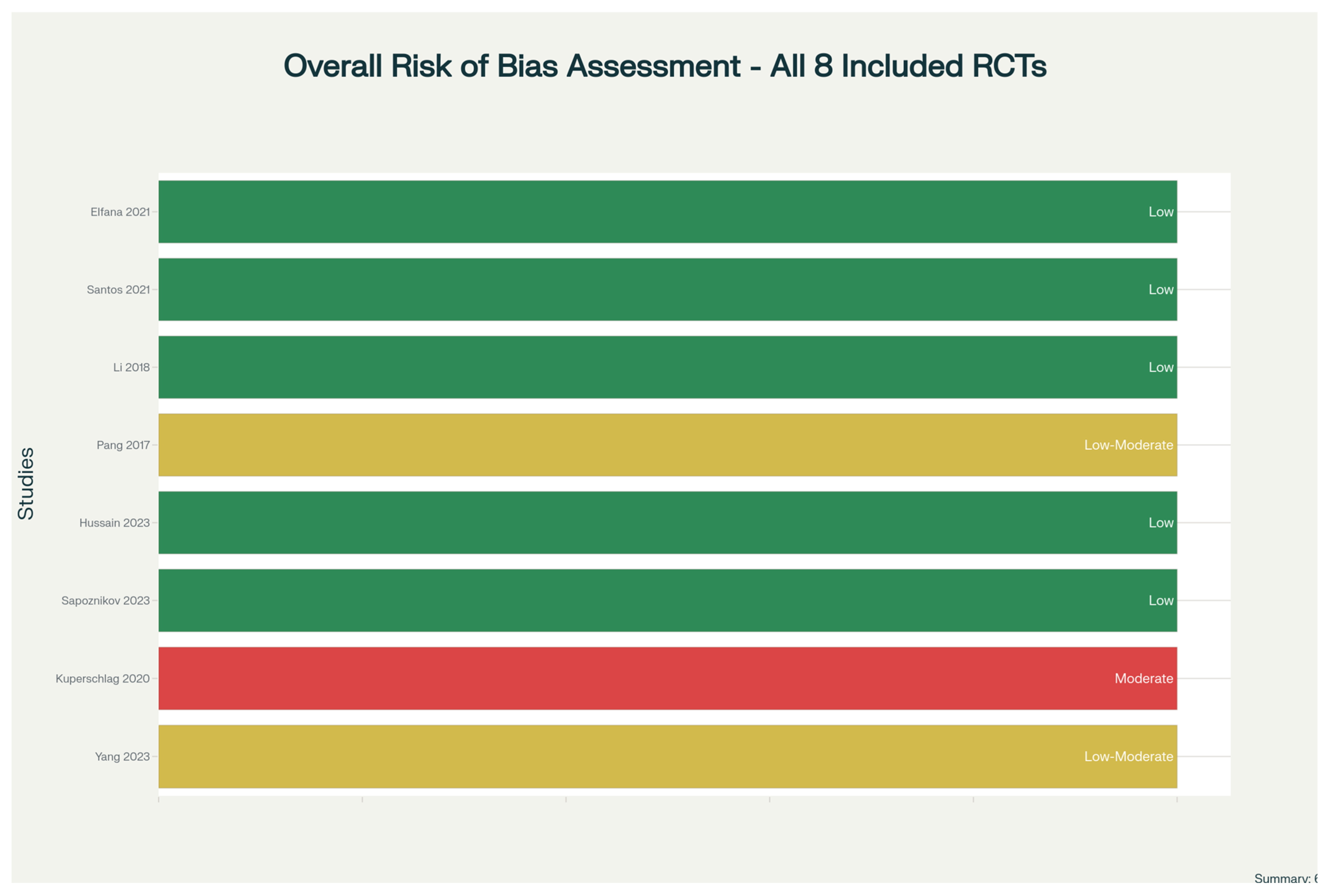
16]. Our inclusion of recent (2024–2025) studies keeps the evidence current with the latest technological refinements.
However, significant limitations must be acknowledged. First, marked heterogeneity in dentin processing protocols substantially limited direct study comparability. The eight included trials employed four distinct dentin preparation methods: whole-tooth grafts (AWTGs), completely demineralized dentin matrices (DDMs), mineralized dentin matrices (MDMs), and partially demineralized dentin matrices (PDDMs), each with variable demineralization degrees and processing times. This heterogeneity (I2 values ranging from 28 to 42% for bone formation outcomes) reflects inconsistent clinical implementation and raises questions about the generalizability of findings. No standardized protocol exists for chairside dentin processing regarding demineralization duration (reported as 10–30 min across studies), particle size specifications, or final material characteristics. Consequently, while our subgroup analysis identified PDDM as most effective, practitioners cannot reliably replicate optimal preparation conditions without standardized guidelines.
Second, follow-up periods ranged from 4 to 18 months (median, 6 months), which is insufficient to assess long-term implant stability beyond two to three years, durability of bone maintenance, or potential delayed complications. Most studies did not assess outcomes beyond six months, thus limiting our ability to evaluate secondary bone resorption patterns or changes in peri-implant bone levels over extended periods. Only one study (Santos et al., 2021) [
18] provided 18-month data, representing incomplete long-term assessment.
Third, only six of the eight studies (75%) provided complete histomorphometric data, limiting meta-analysis power and potentially introducing bias if studies with missing data differed systematically in their findings. The cohort size of 249 patients across 281 grafting sites, while adequate for demonstrating efficacy, remains modest for high-confidence recommendations in diverse clinical populations. Additionally, heterogeneous measurement methods (CBCT vs. clinical calipers) and inconsistent anatomical landmarks for ridge dimensional assessment introduce measurement variability not fully accounted for in statistical analyses.
Heterogeneity analysis: Heterogeneity in study design and processing methods. The heterogeneity identified in this analysis warrants detailed examination. While statistical heterogeneity was moderate for bone formation (I
2 = 42%), the clinical heterogeneity—reflecting differences in participant populations, procedural variations, and measurement techniques—was substantial. Processing methods differed not only in regard to demineralization degree but also implementation: some studies used chairside processing devices (AutoBT and NanoBone), while others employed pre-processed materials. Demineralization times ranged from 10 min (some PDDM protocols) to 30 min (complete DDM protocols), directly influencing growth factor bioavailability and material strength. Particle size varied from 250 to 1000 μm across studies, affecting handling properties and resorption kinetics. These variations, though partially captured in our subgroup analyses by processing method (
Figure 4), remain incompletely characterized and represent a major barrier to clinical implementation. The apparent superiority of PDDM and MDM over complete DDM (
Figure 4: +18.0% vs. +5.2% new bone formation,
p < 0.001) likely reflects optimal balance between growth factor exposure and structural integrity, yet the precise demineralization parameters achieving this balance remain undefined. Future standardization efforts must address these specific variables: (1) demineralization duration and method (chemical agents, concentrations, and temperature), (2) particle size ranges and size distribution, (3) sterilization protocols and their impact on material properties, (4) storage conditions and shelf-life effects on bioactivity, and (5) processing validation methods to ensure consistency. The lack of standardization extends to implant placement timing, use of adjunctive membranes, and socket anatomy classifications, which varied across studies and likely influenced outcomes independently of dentin graft efficacy. These confounding factors necessitate standardized protocols for future trials.
These limitations collectively reduce the certainty of evidence and highlight the urgent need for standardized protocols and long-term prospective studies. Important research gaps remain. Long-term studies tracking implant success and peri-implant health for 5–10 years would clarify durability [
5,
6]. Head-to-head comparisons with autogenous bone would establish whether dentin truly matches this gold standard [
7,
8]. Standardization studies could identify optimal processing parameters [
13,
26]. Mechanistic research elucidating growth factor release and cellular responses would deepen understanding, as shown by Grawish et al., Bessho et al., and Yeomans et al. [
10,
11,
12]. Investigations in special populations (heavy smokers, diabetic patients, and elderly) would clarify applicability. Cost-effectiveness analyses would quantify economic benefits. Advanced applications, including vertical ridge augmentation, large defect reconstruction, and sinus lifting, need investigation [
6,
9].
Research priorities: Addressing the heterogeneity and follow-up gaps identified above should be paramount. Research priorities include the following:
(1) Standardization development: Consensus guidelines specifying precise processing parameters—demineralization duration, chemical agents and concentrations, particle size ranges, and sterilization methods—must be developed through multidisciplinary collaboration between clinicians, material scientists, and regulatory bodies. Comparative device studies evaluating different chairside processing systems (AutoBT, NanoBone, and others) should identify which platforms reproducibly achieve optimal material characteristics.
(2) Long-term outcome studies: Large prospective studies (minimum 100 patients per group) with 5–10-year follow-ups are essential to assess secondary bone resorption, long-term implant stability quotient (ISQ) changes, marginal bone loss kinetics, and late-stage complications. These studies should include periodic CBCT assessment at 6, 12, 24, 36, 60, and 120 months post-extraction.
(3) Standardized measurement protocols: Unified imaging protocols (CBCT slice thickness, orientation, and measurement landmarks) and outcome assessment tools must be adopted across research centers to enable meaningful meta-analyses and reduce measurement heterogeneity.
(4) Large multi-center randomized trials: Rigorous RCTs enrolling > 100 patients per group, with randomized assignment to specific standardized processing methods, and double-blinded outcome assessment, are needed to definitively establish which PDDM, MDM, or other preparations achieve superior long-term outcomes.
(5) Special populations: Studies in high-risk groups (heavy smokers, diabetic patients, immunocompromised individuals, and elderly > 75 years) should clarify whether dentin graft efficacy differs from general populations.
(6) Mechanistic research: Investigations elucidating growth factor release kinetics, cellular responses, vascularization patterns, and immune tolerance mechanisms will deepen our understanding of why PDDM/MDM outperforms DDM and inform future optimization.
(7) Cost-effectiveness analyses: Health economic studies comparing dentin grafting with xenografts and autogenous bone will quantify clinical and financial benefits across diverse healthcare systems.
Until these research priorities are systematically addressed, practitioners should view current recommendations as having moderate-to-high evidence quality but acknowledge the limitations imposed by heterogeneity and short follow-up periods [
17,
26,
27,
28,
29].
Sticky tooth grafts with PRF/CGF as antibiotic carriers: Building on the superior bone regeneration demonstrated by conventional dentinal grafts in this review, future investigations should explore enhanced composite materials combining demineralized dentin with platelet-rich fibrin (PRF) or concentrated growth factors (CGFs)—termed “sticky tooth” grafts. Such bioactive scaffolds could synergistically combine the osteogenic potential and mechanical strength established in our meta-analysis with additional benefits of PRF/CGF.
Recent evidence shows that antibiotic-loaded PRF (AL-PRF) exhibits significant antibacterial activity against bacterial strains and outperforms alternative carriers such as collagen sponges with sustained antimicrobial release [
30].
Integrating antibiotic-carrying PRF/CGF into dentinal grafts could provide dual benefits: enhanced bone regeneration (building on our findings of 12.4% greater new bone formation) and localized infection prevention particularly valuable in immunocompromised or complex extraction cases. The adhesive properties of PRF/CGF (“sticky”) would also improve clinical handling compared to conventional grafts, facilitating easier placement and retention in extraction sockets. While current evidence remains limited to in vitro studies, clinical trials investigating whether sticky tooth preparations offer additional benefits over conventional dentinal grafts are warranted. Given the excellent outcomes (12.4% greater bone formation, 8.6% less residual material, and 95% + implant success) and safety profile demonstrated in this review, exploring sticky tooth preparations represents a logical next-generation development in autogenous bone regeneration.





 ,
,