Influence of Adhesive Bonding on the Surface Accuracy of Flat Optics: A Mechanistic Analysis and a Quantitative Approximation

 , , , , and
Abstract
1. Introduction
2. Mechanistic Analysis
2.1. A General Dimensionless Coupling Model
2.2. Coupling from Boundary Condition
2.3. Coupling from Reliable Design Process
- Adhesive: 704 silicone rubber.
- Optical component material: N-BK7 glass.
- Shear strength of adhesive J: 704 silicone rubber as 1.1 MPa.
- Diameter of optical component D: 120 mm.
- Density of optical component : N-BK7 glass as 2.5 g/cm3.
- The worst-case acceleration, : 30 G, .
- Safety factor : 2.
3. Quantitative Approximation
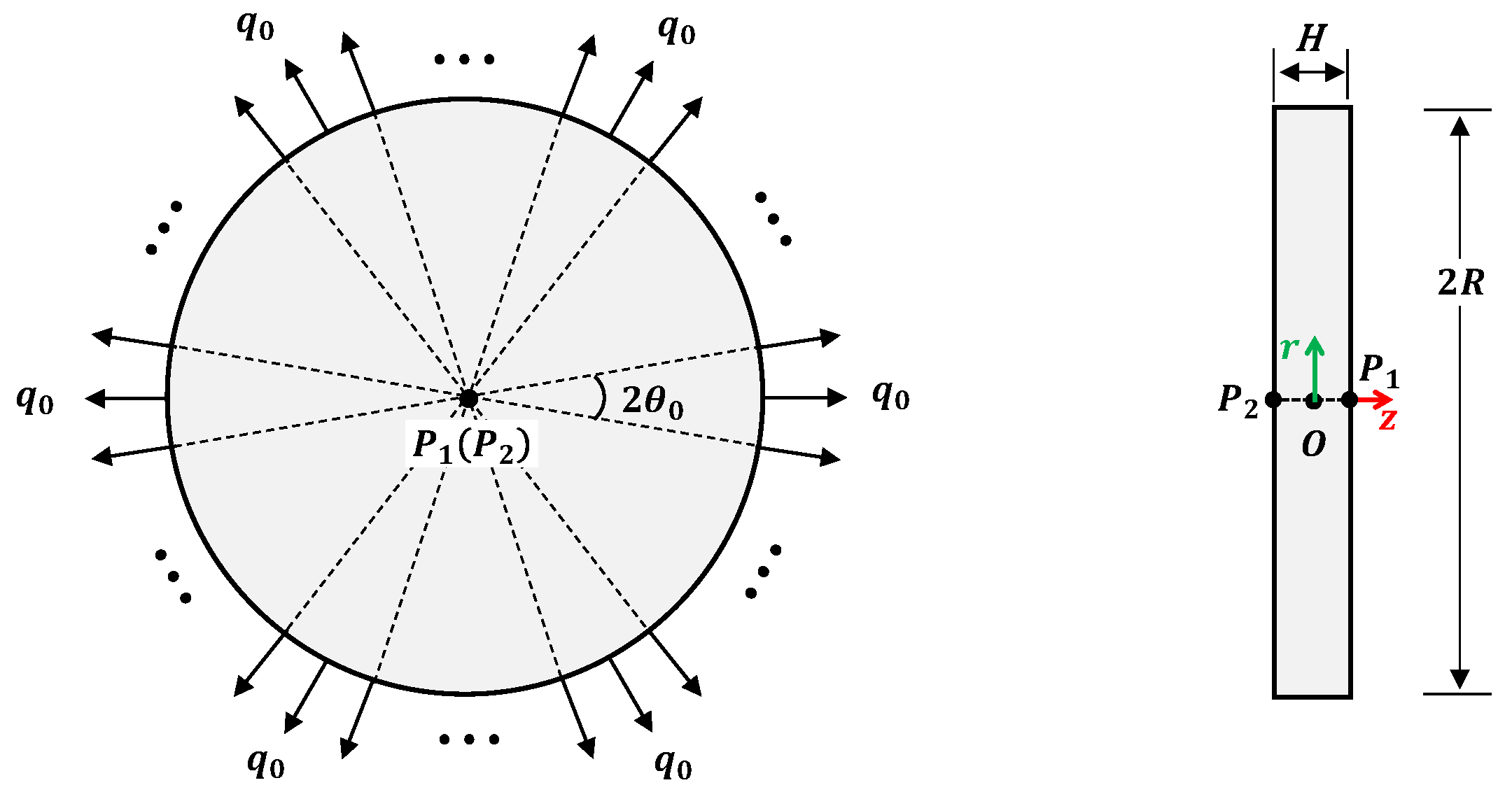
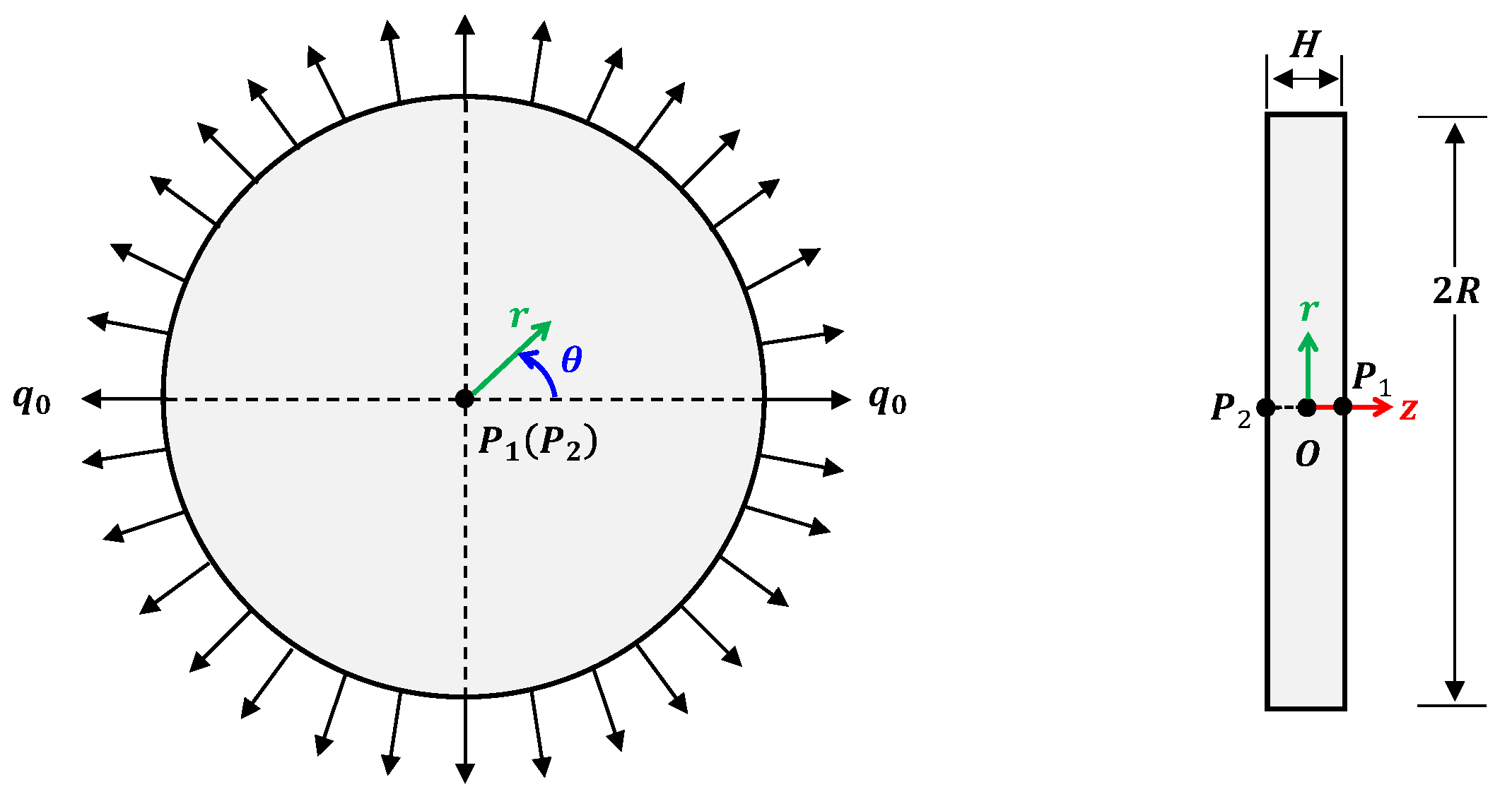
3.1. Simplification of the Model
3.2. Theoretical Model for Center Point Deformation
3.2.1. Circumferential Uniform Bonding
- (1)
- On the edge surface at , the optical component is subjected to a uniformly distributed normal stress (where tension is positive and compression is negative), while shear stress is zero.
- (2)
- On the optical surface/surfaces typically located at , they are free surfaces, which means the normal stresses on both surfaces are zero.
3.2.2. Multi-Point Adhesive Bonding
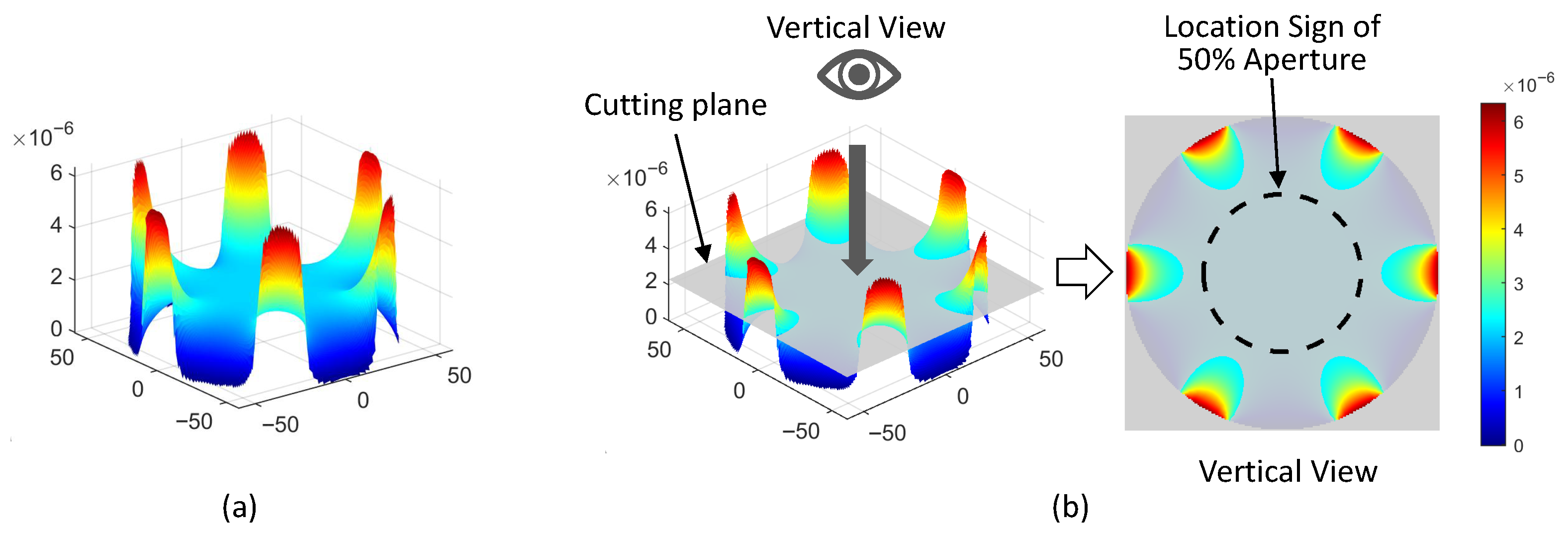
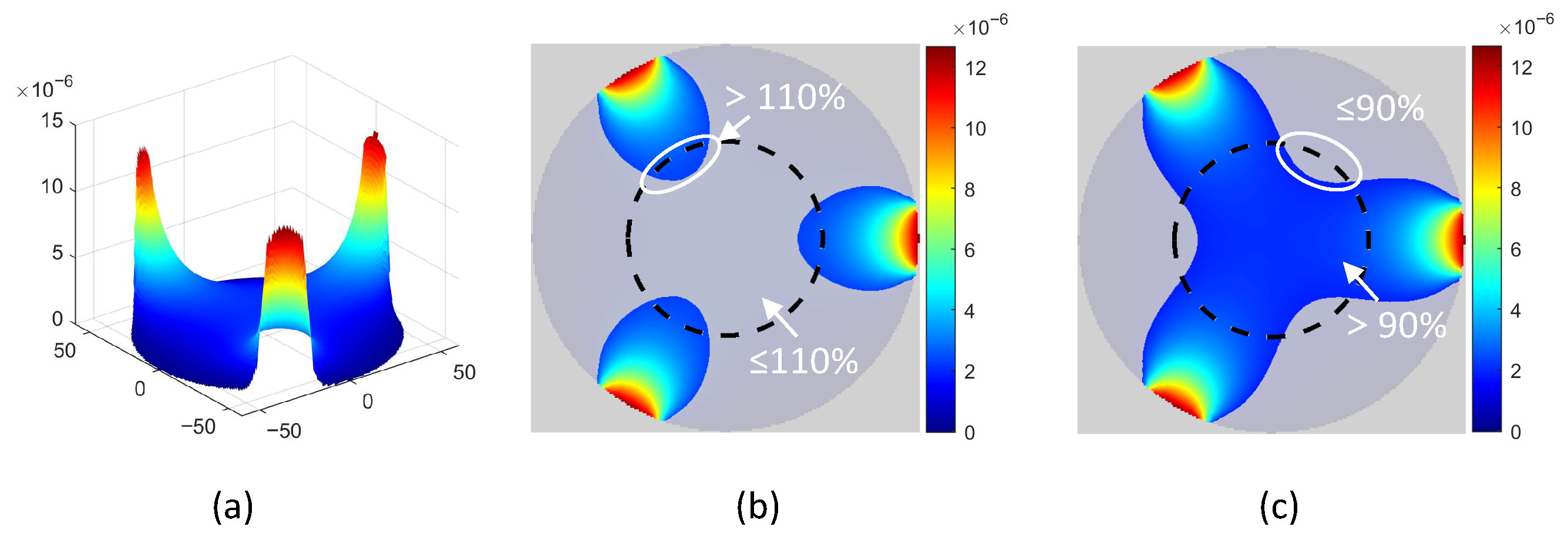
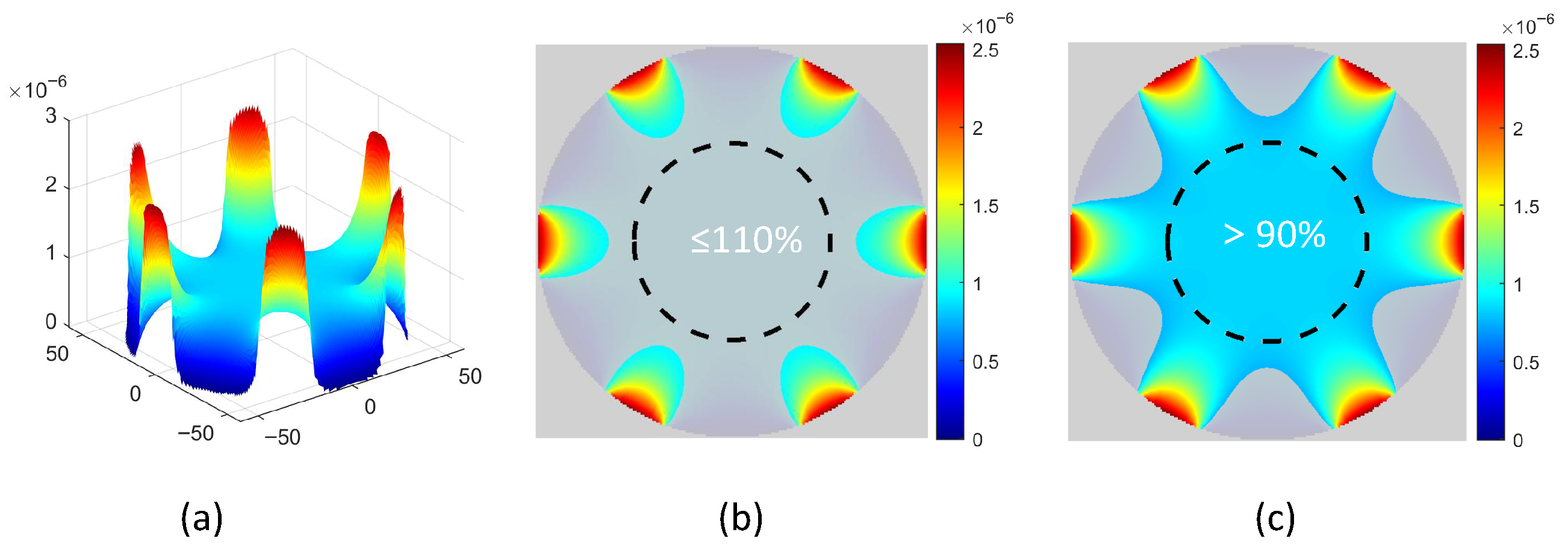
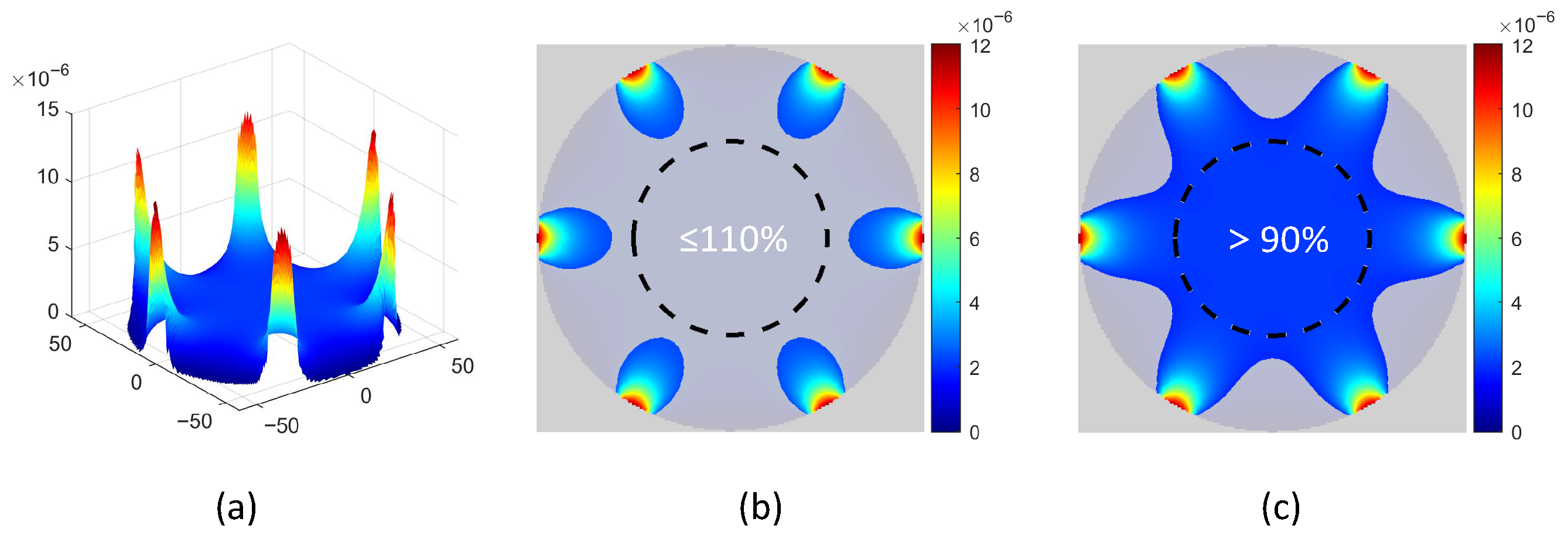
3.3. Numerical Verification for Center Point Deformation and Further Analysis Within 50% Aperture
3.3.1. Simulation Setup
- (1)
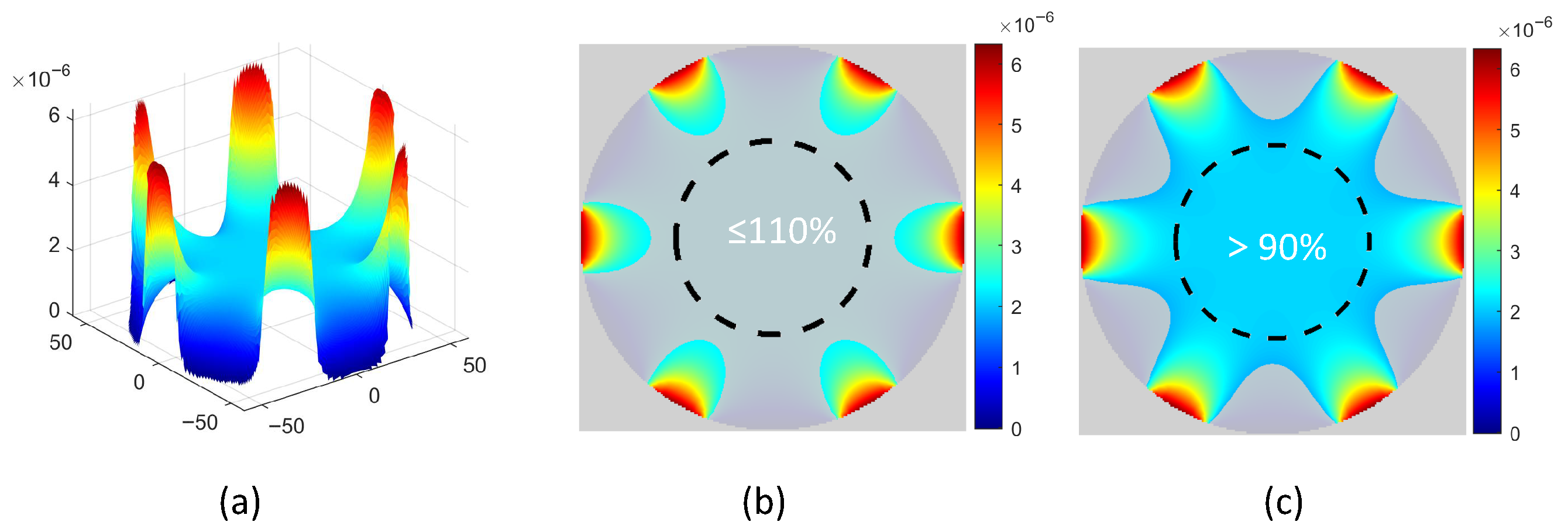
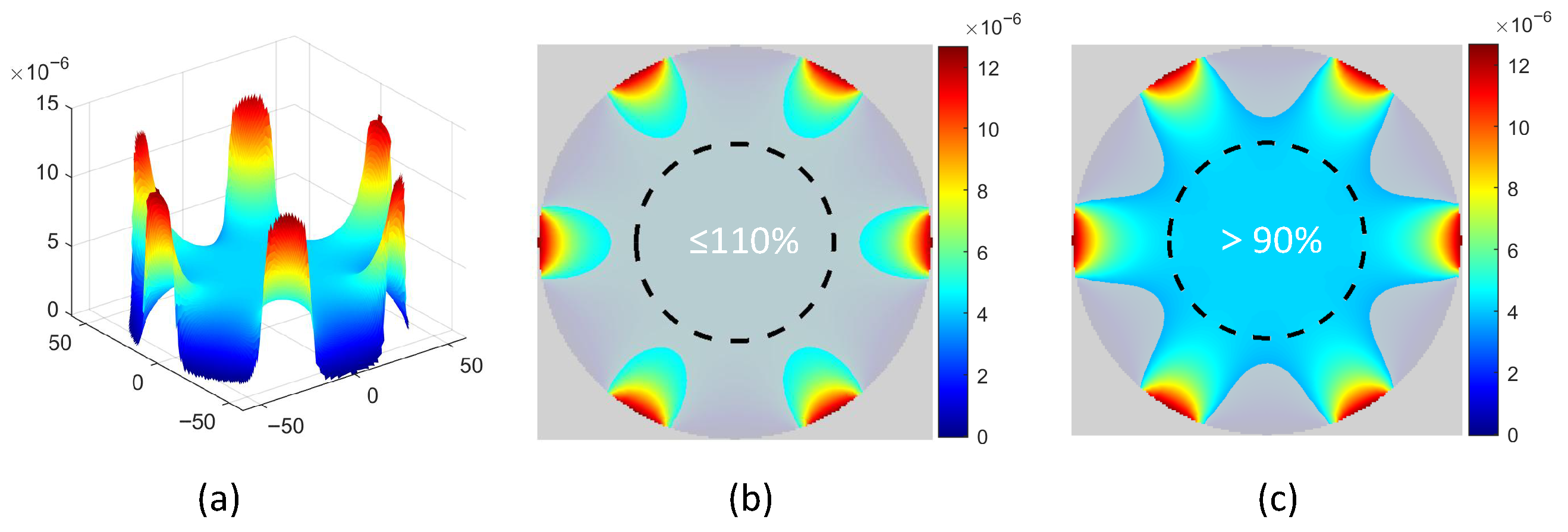
- Regions with deformation values greater than (i.e., those above the plane) are shown in color;
- (2)
- Regions with deformation values less than (i.e., those below the plane) are obscured by a semi-transparent gray overlay representing the cutting plane.
3.3.2. Verification for Center Point on Optical Surface
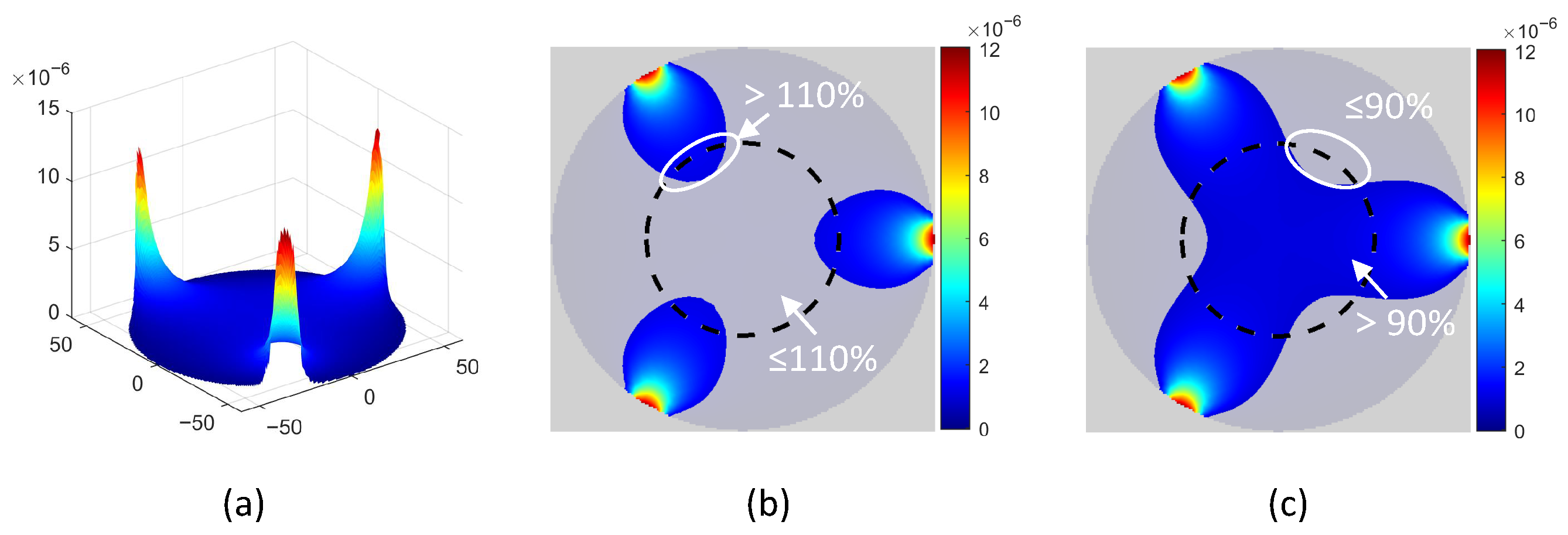
3.3.3. Further Analysis Within 50% Aperture
- (1)
- First, determine the allowable stress , which can be optimized by the geometrical design of optics/adhesive layer/barrel, and it can also be further optimized by the selection of their material properties;
- (2)
- Second, determine the minimum bonding area needed by applying reliability-based design principles (such as safety factors) to the worst-case acceleration load, and determine the maximum bonding area allowable by predicting the assembly outcomes (such as surface deformation, and stress distribution), and then determine a proper value for ;
- (3)
- Finally, optimize the number of glue pads K. The increase in glue pads significantly enhances the deformation uniformity on optical surface; therefore, it is recommended to design more glue pads on the premise that each individual adhesive joint has adequate strength.
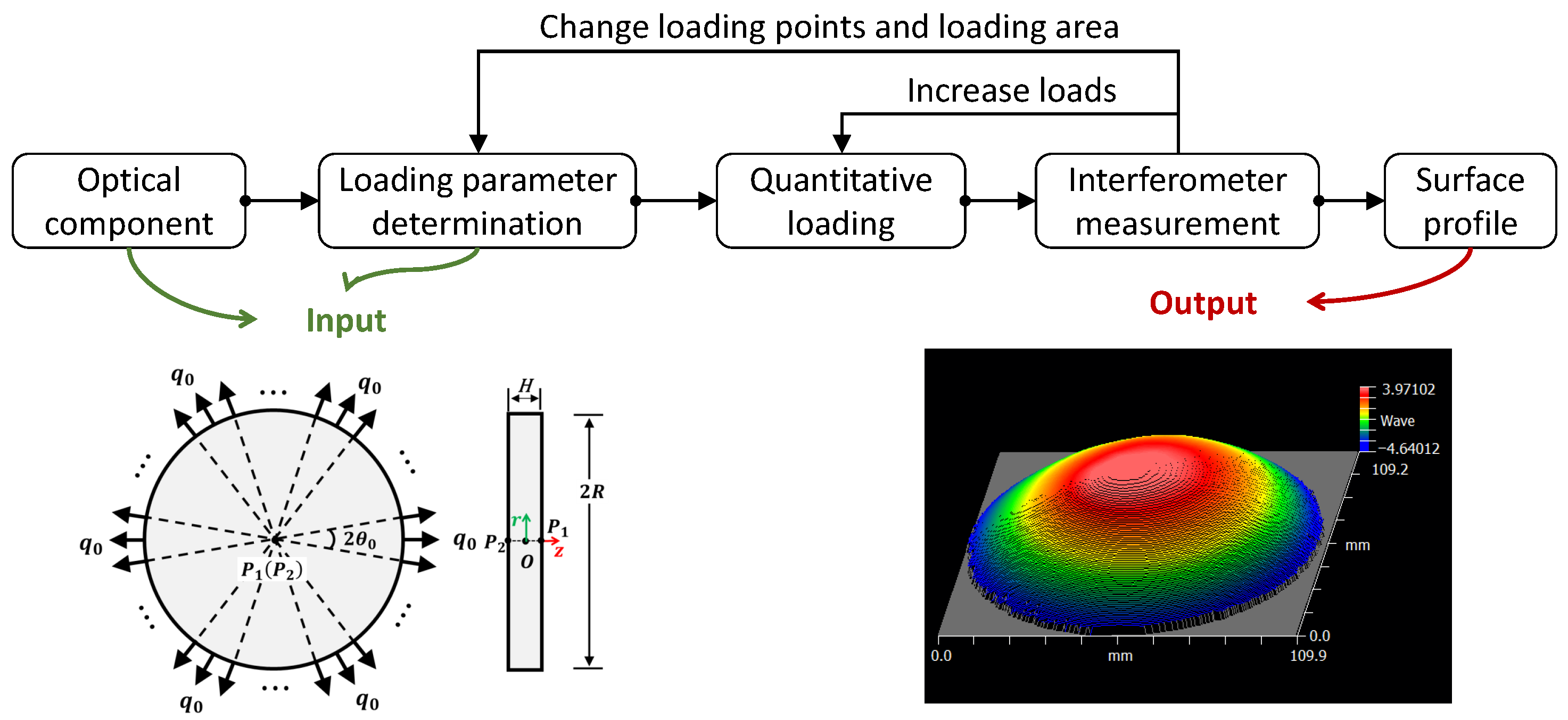
4. Experimental Verification
4.1. Experimental Setup
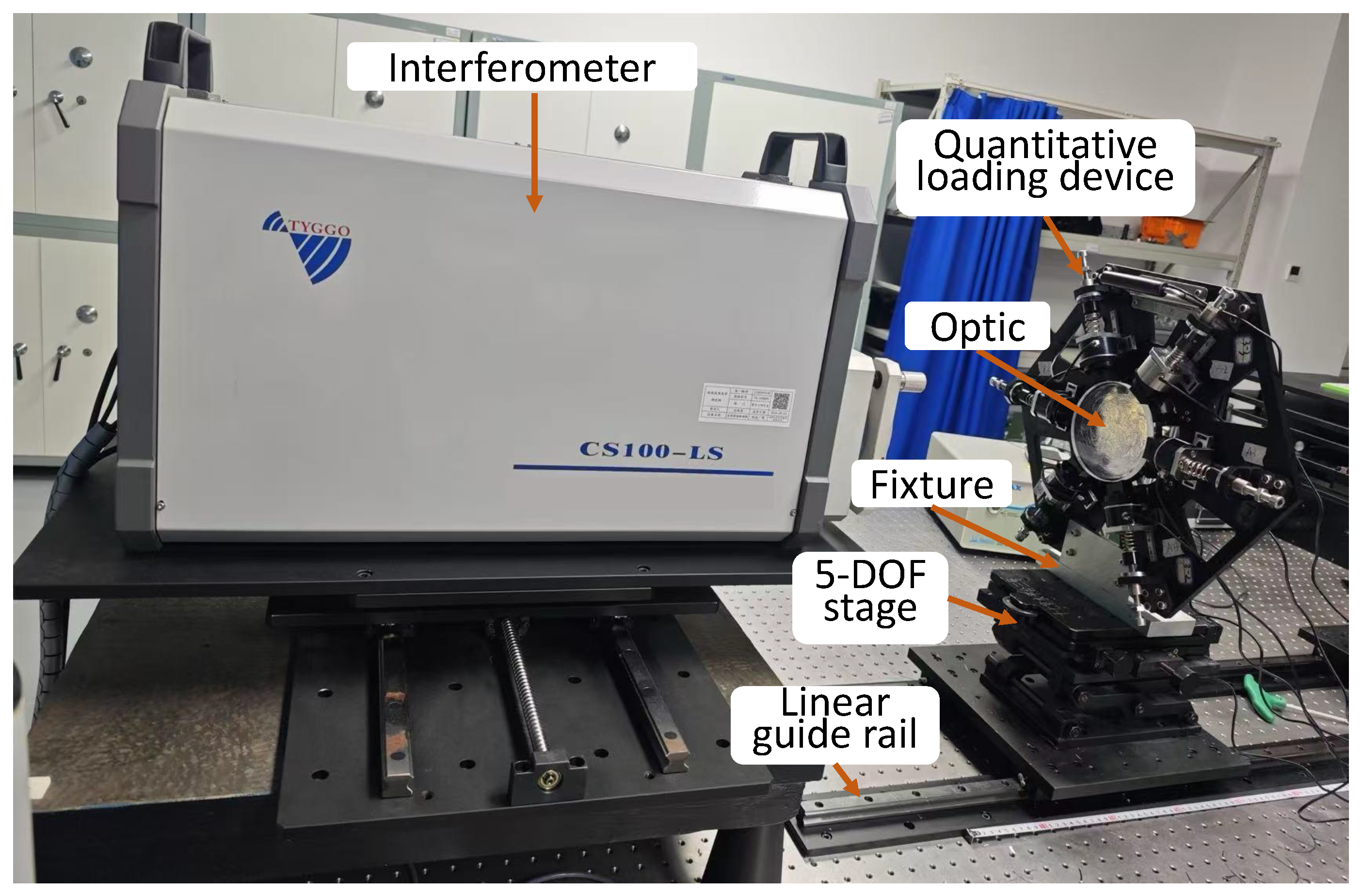
- (1)
- An optical component integrated with the multi-point quantitative loading device.
- (2)
- A 5-DOF(degree of freedom) stage for the alignment of quantitative loading device.
- (3)
- A linear guide rail to position the 5-DOF stage.
- (4)
- A customized fixture for vertically mounting the quantitative loading device onto the 5-DOF stage.
- (5)
- An interferometer for surface measurement.
- (6)
- An optical platform for vibration isolation to position all the equipment and components above.
4.2. Experimental Process and Results
- (1)
- Loading configuration setup: adjust the number and contact area of the loading heads on the multi-point loading device to set the desired number of load points K and loading area .
- (2)
- Loads magnitude setup: adjust the force bolts on the quantitative loading device to apply specific, calibrated loads.
- (3)
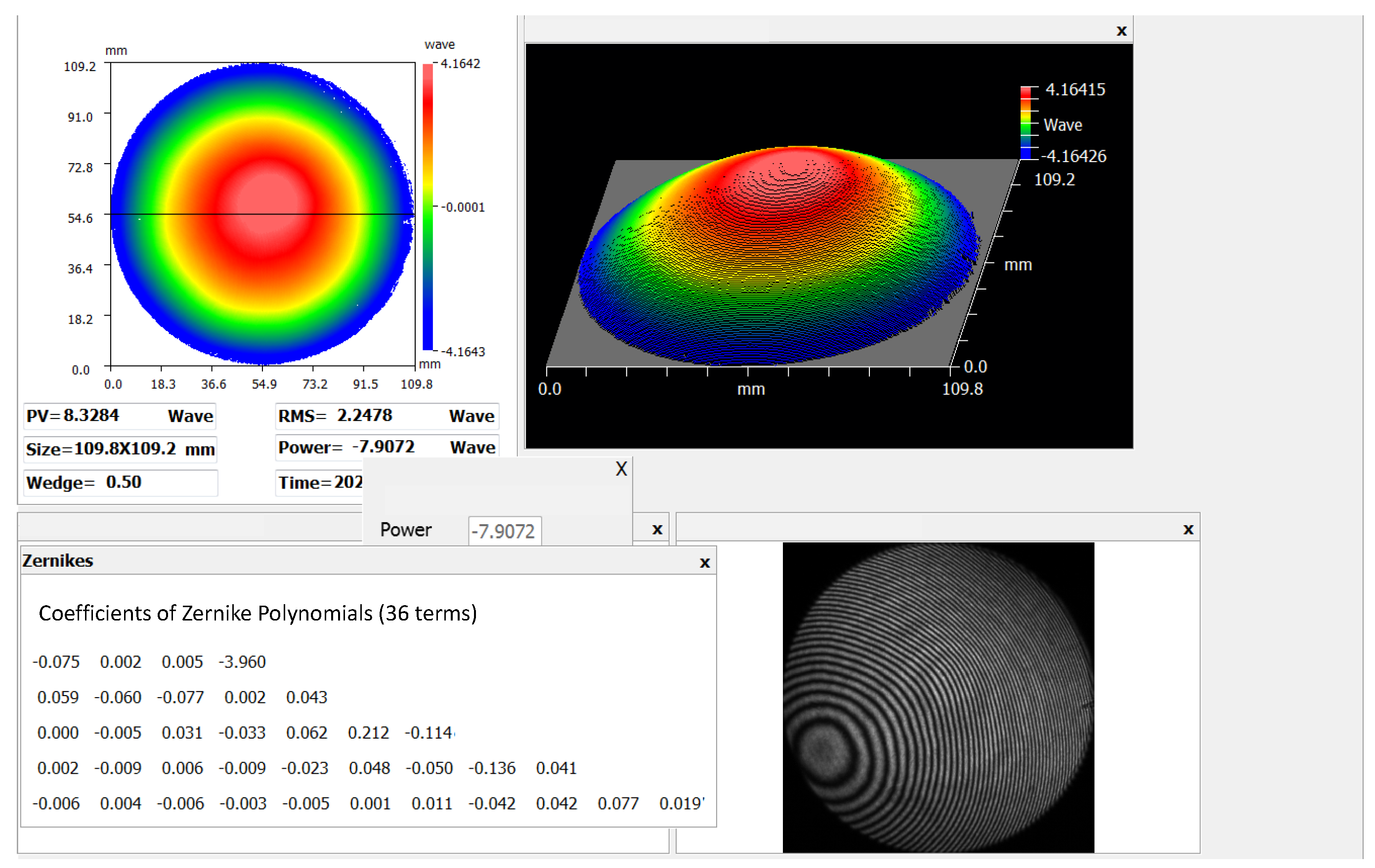
- Fine alignment before measurement: adjust the 5-DOF stage to position the optical surface, optimizing the alignment between optical surface and the interferometer to obtain uniform and clear interference fringes for a better surface profile measurement.
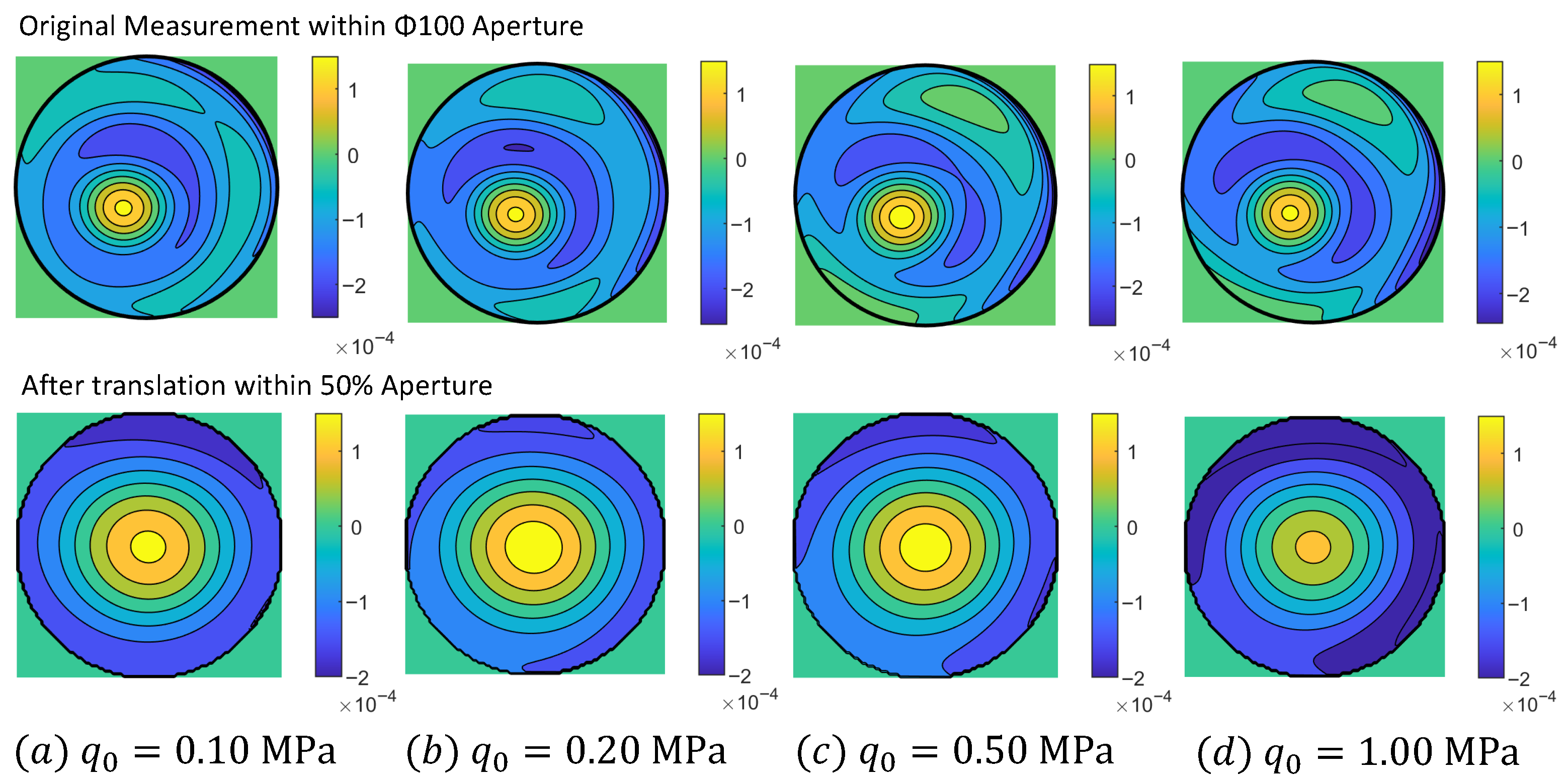
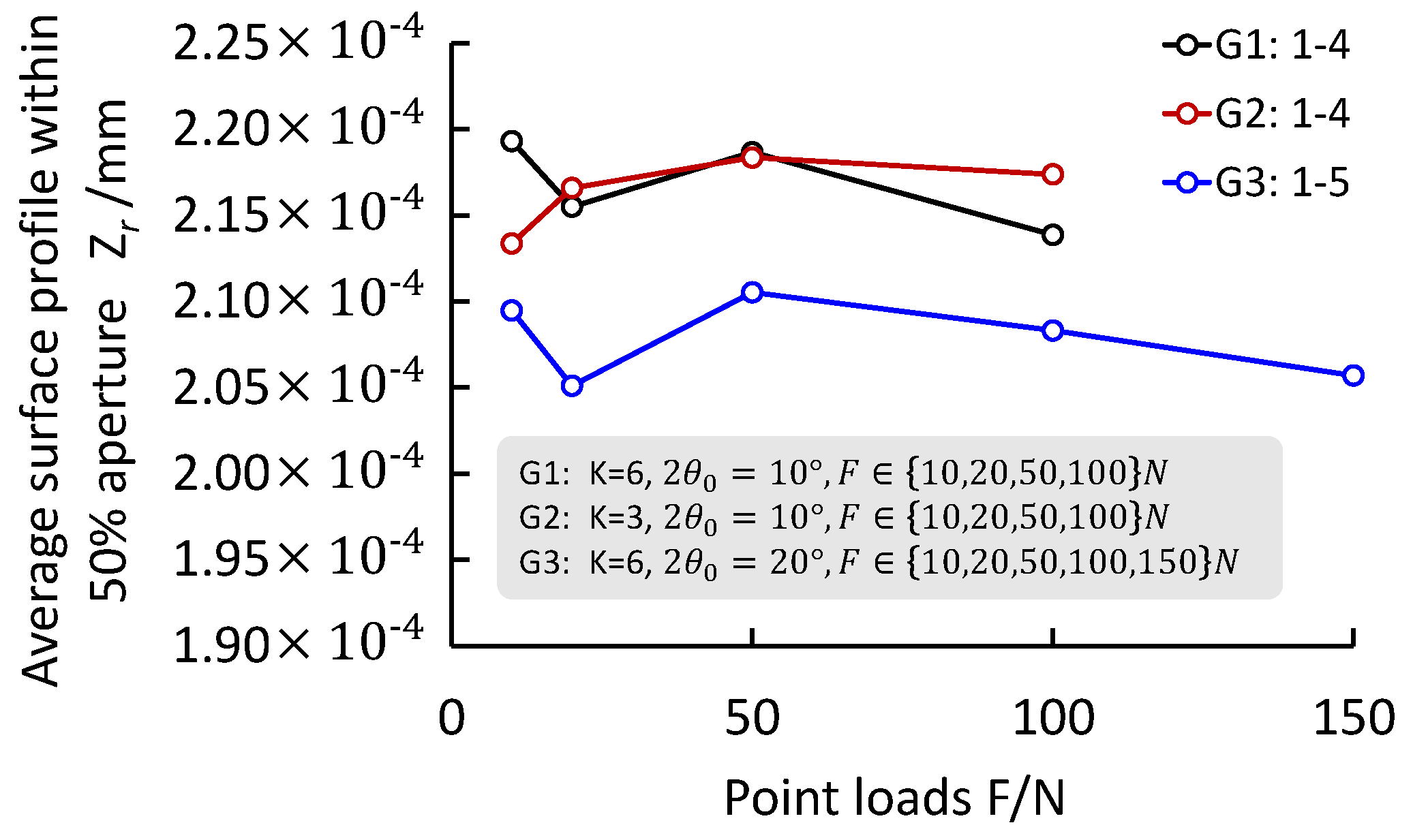
- Group 1 (four subgroups, denoted by G1: 1–4):Corresponds to assembly parameters with number of glue pads and the size of glue pads as . The simulated adhesive stresses were MPa. The area of each loading head is 100 mm2, and the applying loads on loading heads are gradually increasing from 10 N, 20 N, 50 N, to 100 N, respectively.
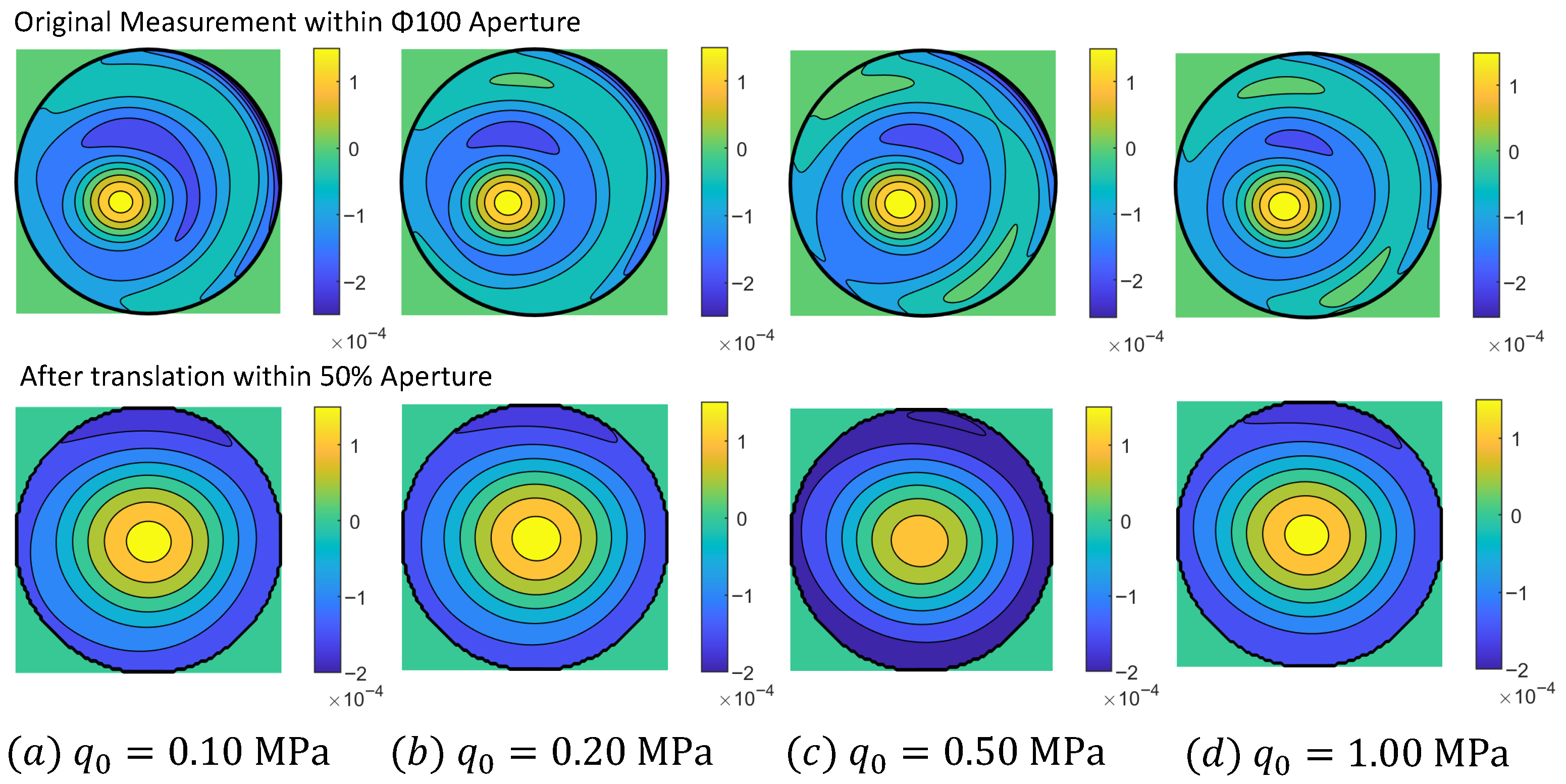
- Group 2 (four subgroups, denoted by G2: 1–4): Corresponds to assembly parameters with number of glue pads . All other parameters (size , bonding stresses , and its corresponding loads) are identical to Group 1.
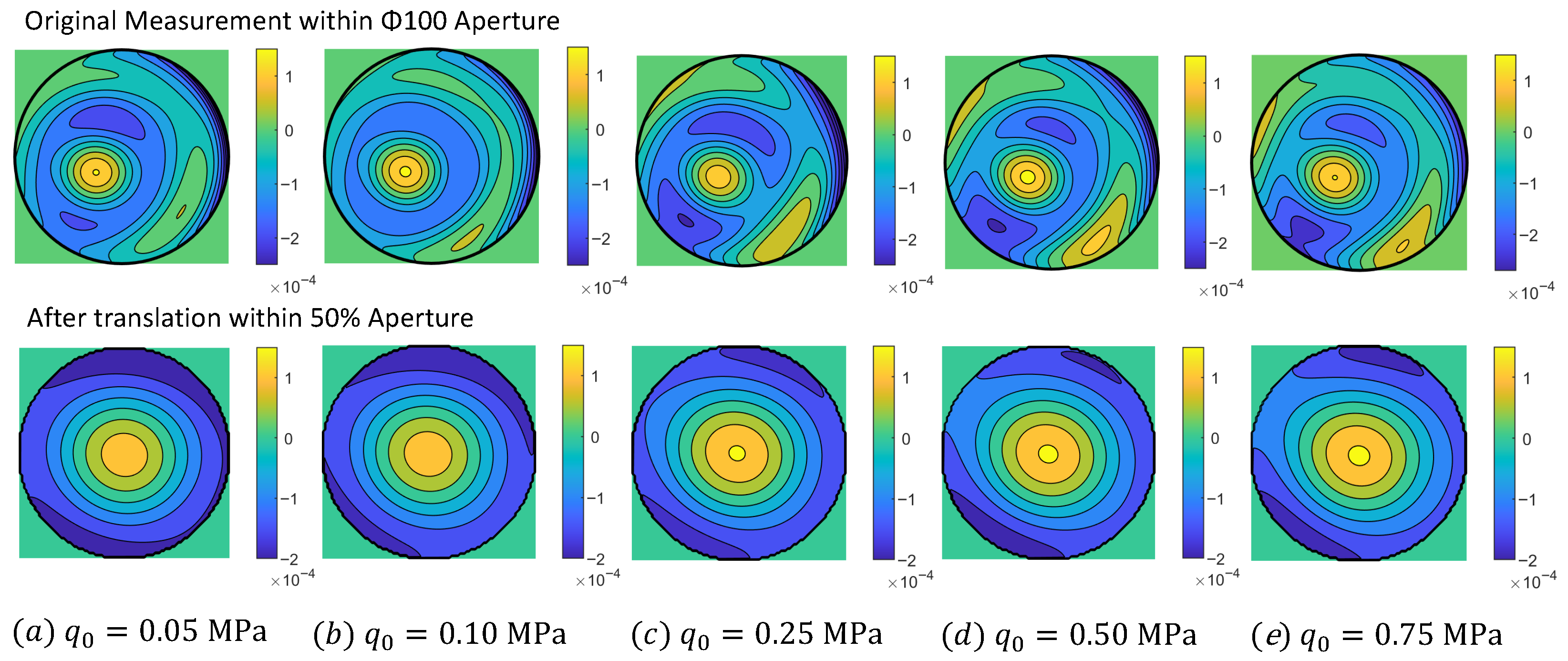
- Group 3 (five subgroups, denoted by G3: 1–5): Corresponds to assembly parameters with number of glue pads and a larger size of glue pads . The simulated bonding stresses are MPa. The area of each loading head is 200 mm2, and the applying loads on loading heads are gradually increasing from 10 N, 20 N, 50 N, 100 N, and 150 N, respectively.
4.3. Results Analysis
Comparison with Quantitative Approximation
- Group G1 (First Loading): As this was the first time the optic was loaded, the residual stress is the primary stress component in the optical component prior to loading. To demonstrate the effect of residual stress, the calculation of deformation within loads range is chosen from 10 N to 100 N for this group.
- Groups G2 and G3 (Subsequent Loadings): These experiments were performed after the optic had already undergone significant loading in G1, left the optic in a state of heightened residual assembly stress that was difficult to release quickly. To minimize this influence, the analysis for these two groups uses only the data from the stable monotonic deformation regime.
- –
- For G2, the deformation is calculated using the difference between the surface shapes measured from 50 N to 100 N.
- –
- For G3, the deformation is calculated using the difference between the surface shapes measured from 50 N to 150 N.
5. Conclusions and Prospects
5.1. Conclusions
- (1)
- The optical surface deformation for the optical component when subjected to multi-point adhesive bonding is normalized by the deformation at center point to form a more generalized dimensionless model to describe the distribution of deformation within aperture with all dimensionless parameters containing both assembly information and component information.
- (2)
- The three independent assembly parameters governing the deformation of optical surface subjected to multi-point bonding is clarified by boundary condition analysis and reliable design requirement analysis, that is, the number of glue points K, the magnitude of bonding stress , and the combined parameter (which is proportional to the total bonding areas).
- (3)
- A quantitative approximation method is proposed based on the theory of elasticity and numerical simulations to characterize the optical surface deformation within the critical 50% aperture using the center point deformation. It is found that the increase in the number of glue pads will increase the uniformity within the aperture, while the change of size and bonding stress of glue pads do not show significant influence. When the number of glue pads reaches six, the deformation within 50% aperture normalized by that of center point is quite uniform with a maximum of ±10% relative deviation from the center point.
- (4)
- A design sequence is further recommended for the determination of bonding parameters:
- Determine the allowable stress , which can be optimized by the geometrical design of optics/adhesive layer/barrel, and it can also be further optimized by the selection of their material properties;
- Determine the minimum bonding area needed by applying reliability-based design principles (such as safety factors) to the worst-case acceleration load, and determine the maximum bonding area allowable by predicting the assembly outcomes(such as surface deformation, stress distribution), and then determine a proper value for ;
- Optimize the number of glue pads K. The increase in glue pads significantly enhances the deformation uniformity on optical surface; therefore, it is recommended to design more glue pads on the premise that each individual adhesive joint has adequate strength.
- (5)
- Three groups and thirteen subgroups of experiments are carried out to verify the efficiency of the quantitative approximation method. The experimental result of Group 1 is about 44.5% relative error compared with the quantitative approximation, this is most likely due to the effect of the non-uniform and non-regular residual stress after processing. For Group 2 and Group 3, the relative error is significantly reduced to 15% or less, and this is because the residual stress was released during the loading process in Group 1 and was reorganized into a more uniform and regular manner forced by the assembly loads. Therefore, the impact of non-uniform residual stress on stress distribution induced by assembly process is significantly reduced and the effectiveness of the quantitative approximation is verified.
5.2. Future Work and Prospects
- (1)
- A more general three-dimensional analytical solution for the optical surface deformation within the full aperture for a better understanding. The authors spent a long time on this research but the convergence problem is hard to solve when doing the final unknown coefficient determination by adopting Bessel functions, so the general expression for the deformation within full aperture still has not been solved yet.
- (2)
- Extend the results to non-uniform multi-point adhesive bonding condition and to concave and convex optics. In the real assembly process, the assembly parameters in practical varies from the intended ideal uniform condition, and the surface shape of optics varies a lot. Further work should address this realistic problem to achieve a closer agreement between the predicted and actual outcomes. To address this more comprehensively, we will also incorporate systematic sensitivity analyses for curvature factors of curved optical elements (spherical, aspheric, etc.) and non-uniform bonding conditions (e.g., adhesive layer thickness variations, curing shrinkage, and sequential differences in multi-point bonding). Finite element method (FEM) simulations will be adopted to investigate how these factors alter stress transmission paths, edge constraint effects, and asymmetric stress field distributions, thereby expanding the geometric and practical applicability of the proposed model.
- (3)
- Quantify the interaction between residual stress and assembly stress. The experiments in this paper confirmed a significant coupling between the initial residual stress and the applied assembly stress, this interaction was not quantitatively modeled here. Future research should focus on developing methods to quantify the residual stress and studying the relaxation and redistribution of residual stress during the assembly process. Building on this, we will supplement high-stress-level loading tests using typical optical adhesives (e.g., RTV rubber and UV-curable epoxy) to cover stress ranges more relevant to engineering practice. Additionally, accelerated aging experiments will be conducted to evaluate creep and stress relaxation effects at the bond interface induced by environmental factors such as temperature cycling and vibration fatigue. These efforts aim to establish a coupled stress–time–environment constitutive relationship, which will be integrated into the existing model to enhance its engineering reliability. We will also systematically review and incorporate relevant research findings [28] to deepen the understanding of temperature–stress coupling effects on optomechanical assemblies.
- (4)
- Building upon the established forward prediction model, inverse algorithms will be developed to optimize the topology of optics and assembly parameters, thereby enabling the active minimization of wavefront error during the design phase. Future research will also incorporate Pareto frontier analysis or a multi-objective optimization framework based on response surface methodology and systematically analyze the trade-offs between deformation uniformity, bonding area, manufacturing costs, and bonding reliability. This will provide a more comprehensive and comparable decision-making basis for the optimal design of multi-point bonding processes.
Author Contributions
Funding
Data Availability Statement
Acknowledgments
Conflicts of Interest
References
- Kumar, S.; Zhong, W.; Yu, G.; Zhang, J.; Zeng, W.; Jiang, X. Investigation of Surface Imperfection in Freeform Optics with High-Order XY Polynomial Design. Int. J. Adv. Manuf. Technol. 2024, 130, 1735–1747. [Google Scholar] [CrossRef]
- Lo, W.C.; Tsai, K.M.; Hsieh, C.Y. Six Sigma Approach to Improve Surface Precision of Optical Lenses in the Injection-Molding Process. Int. J. Adv. Manuf. Technol. 2009, 41, 885–896. [Google Scholar] [CrossRef]
- Zhou, T.; Gao, L.; Yu, Q.; Wang, G.; Zhou, Z.; Yan, T.; Guo, Y.; Wang, X. Machine Learning for Aspherical Lens Form Accuracy Improvement in Precision Molding of Infrared Chalcogenide Glass. Precis. Eng. 2024, 90, 156–163. [Google Scholar] [CrossRef]
- Yan, L.; Xie, J.; Sun, R.; Fan, H.; Wei, W.; Ruan, B.; Gu, F.; Zhu, M.; Zhou, T. Deformation Mechanism and Accurate Prediction Method of Aspheric Glass Molding Process. Precis. Eng. 2026, 97, 68–79. [Google Scholar] [CrossRef]
- Arnold, T.; Pietag, F. Ion Beam Figuring Machine for Ultra-Precision Silicon Spheres Correction. Precis. Eng. 2015, 41, 119–125. [Google Scholar] [CrossRef]
- Hatefi, S.; Abou-El-Hossein, K. Review of Single-Point Diamond Turning Process in Terms of Ultra-Precision Optical Surface Roughness. Int. J. Adv. Manuf. Technol. 2020, 106, 2167–2187. [Google Scholar] [CrossRef]
- Zhou, Y.; Lin, Q.; Shao, H.; Wang, C.; Li, X.; Hong, J. Stress-Based Optimization of Assembly Surface Mechanical Properties Oriented to Stress-Uniform Assembly. Precis. Eng. 2023, 82, 350–359. [Google Scholar] [CrossRef]
- Ma, S.; Mu, X.; Fan, Z.; Ai, Y.; Sun, Z.; Sun, Q. Research on Assembly Performance Prediction, Optimal Design, and Adjustment Methods for Precision Opto-Mechanical System. Precis. Eng. 2025, 94, 545–570. [Google Scholar] [CrossRef]
- Lamontagne, F.; Desnoyers, N.; Bergeron, G.; Cantin, M. High Precision Optomechanical Assembly Using Threads as Mechanical Reference. In Proceedings of the SPIE Optical Engineering + Applications, San Diego, CA, USA, 28 August–1 September 2016; Sasián, J., Youngworth, R.N., Eds.; SPIE: Bellingham, WA, USA, 2016; p. 995107. [Google Scholar] [CrossRef]
- Wang, X.; Gong, H.; Liu, J.; Xue, F. Imaging Quality Prediction and Preload Optimization for a Precision Optical System Considering Assembly Errors. Phys. Scr. 2024, 99, 126011. [Google Scholar] [CrossRef]
- Doyle, K.B.; Genberg, V.L.; Michels, G.J. Numerical Methods to Compute Optical Errors Due to Stress Birefringence. In Proceedings of the International Symposium on Optical Science and Technology, Seattle, WA, USA, 7–11 July 2002; Juergens, R.C., Ed.; SPIE: Bellingham, WA, USA, 2002; p. 34. [Google Scholar] [CrossRef]
- Ma, Q.; Xie, X.; Yang, C.; Zhang, T.; Lang, C.; Tang, B. Design of Optical Lens Assembly Method Based on Star Point Bonding and Surface Shape Accuracy. IEEE Access 2025, 13, 18510–18523. [Google Scholar] [CrossRef]
- Doyle, K.B.; Michels, G.J.; Genberg, V.L. Athermal Design of Nearly Incompressible Bonds. In Proceedings of the International Symposium on Optical Science and Technology, Seattle, WA, USA, 7–11 July 2002; Hatheway, A.E., Ed.; SPIE: Bellingham, WA, USA, 2002; p. 296. [Google Scholar] [CrossRef]
- Bayar, M. Lens Barrel Optomechanical Design Principles. Opt. Eng. 1981, 20, 181–186. [Google Scholar] [CrossRef]
- Daly, J.G.; Daly, D.J. Structural Adhesives for Bonding Optics to Metals: A Study of Optomechanical Stability. In Proceedings of the SPIE Proceedings, San Diego, CA, USA, 2–3 August 2001; Hatheway, A.E., Ed.; SPIE: Bellingham, WA, USA, 2001; Volume 4444, pp. 177–184. [Google Scholar] [CrossRef]
- Daly, J.G.; Hawk, M.D.; Consulting, H. Adhesive Bonds for Optics: Analysis and Trade-Offs. In Proceedings of the SPIE Optical Engineering + Applications, San Diego, CA, USA, 6–10 August 2017. [Google Scholar]
- Herbert, J.J. Techniques for Deriving Optimal Bondlines for Athermal Bonded Mounts. In Proceedings of the SPIE Optics + Photonics, San Diego, CA, USA, 13–17 August 2006; p. 62880J. [Google Scholar] [CrossRef]
- Monti, C.L. Athermal Bonded Mounts: Incorporating Aspect Ratio into a Closed-Form Solution. In Proceedings of the Optical Engineering + Applications, San Diego, CA, USA, 26–30 August 2007; Hatheway, A.E., Ed.; SPIE: Bellingham, WA, USA, 2007; p. 666503. [Google Scholar] [CrossRef]
- Feng, J.; Wang, F.; Chen, W.; Li, S.; Tian, F.; Wu, Y. Effect of Adhesive on Surface Accuracy and Adaptability Analysis of Large Aperture Rectangular Mirror. In Proceedings of the 2023 2nd International Conference on Optical Imaging and Measurement (ICOIM), Xi’an, China, 20–22 October 2023; pp. 87–94. [Google Scholar] [CrossRef]
- Jia, X.; Wang, F.; Ke, S.; Hu, B.; Li, L.; Zhang, Z.; Li, S. Design and Analysis of Bonding Process of the Space-Based Rectangular Curved Prisms. In Proceedings of the Seventh Asia Pacific Conference on Optics Manufacture and 2021 International Forum of Young Scientists on Advanced Optical Manufacturing (APCOM and YSAOM 2021), Hong Kong, 13–16 August 2021; Tan, J., Luo, X., Huang, M., Kong, L., Zhang, D., Eds.; SPIE: Bellingham, WA, USA, 2022; p. 268. [Google Scholar] [CrossRef]
- Guo, H.; Zhang, Z.; Xiao, M.; Liu, H.; Zhang, Q. Tolerance Optimization Method Based on Flatness Error Distribution. Int. J. Adv. Manuf. Technol. 2021, 113, 279–293. [Google Scholar] [CrossRef]
- Lee, H.; Dalton, G.B.; Tosh, I.A.J.; Kim, S.W. Computer-Guided Alignment II:Optical System Alignment Using Differential Wavefront Sampling. Opt. Express 2007, 15, 15424. [Google Scholar] [CrossRef] [PubMed]
- Maamar, F.; Boudjemai, A. Optomechanical Optimal Design Configuration and Analysis of Glue Pad Bonds in Lens Mounting for Space Application. Adv. Space Res. 2020, 65, 2263–2275. [Google Scholar] [CrossRef]
- Xiong, J.; Zhang, Z.; Jin, X.; Zhang, W. Theoretical Modeling and Calculation of Stress Fields in Precision Optical Lens Subjected to Multi-Point Adhesive Bonding Assembly. Precis. Eng. 2022, 73, 257–269. [Google Scholar] [CrossRef]
- Xiong, J.; Zhang, Z.; Chen, X. Multidimensional Entropy Evaluation of Non-Uniform Distribution of Assembly Features in Precision Instruments. Precis. Eng. 2022, 77, 1–15. [Google Scholar] [CrossRef]
- Xiong, J.; Chen, X.; Yu, H.; Saren, Q.; Zhang, M.; Su, T.; Zhang, Z. A Prediction Method for the Radial Adhesive Stress Applied on Multipoint Bonded Flat Optical Lenses Based on a Quantitative Characterization of Stress Fields. Precis. Eng. 2024, 88, 788–803. [Google Scholar] [CrossRef]
- Kihm, H.; Yang, H.-S.; Mun, I.-G.; Lee, Y.-U. Athermal Elastomeric Lens Mount for Space Optics. J. Opt. Soc. Korea 2009, 13, 201–205. [Google Scholar] [CrossRef]
- Li, W.; Liu, W.; Liu, C.; Gu, Y.; Liu, L.; Zhou, Y.; Xing, E.; Shi, Y.; Tang, J.; Liu, J. Broadband Optomechanical Accelerometer Reaching the Thermomechanical Limit Based on Suspended Si3 N4 Membrane Resonator. IEEE Sens. J. 2024, 24, 17528–17536. [Google Scholar] [CrossRef]









| Terms | Parameters | Values |
|---|---|---|
| Simulation model | Software | Abaqus 6.14 |
| Element in mesh | Analysis type | Static, general |
| Element type | C3D8R | |
| Material | N-BK7 glass | Young’s modulus: 82 GPa |
| Poisson’s ratio: 0.206 | ||
| Boundary conditions | Stress boundary | Pressure: MPa |
| Constrained DOFs | Center of lens, U1 = 0, U2 = 0, UR3 = 0 |
| No. | Dimensional Parameters | Assembly Parameters | Center Point Deformation (mm) | |||
|---|---|---|---|---|---|---|
| R (mm) | H (mm) | K | (°) | (MPa) | Results (FEM and Theoretical) | |
| A1 | 60 | 10 | 6 | 20 | 0.5 | −4.19 × 10⁻⁶ |
| A2 | 60 | 10 | 2 | 20 | 0.5 | −1.40 × 10⁻⁶ |
| A3 | 60 | 10 | 3 | 20 | 0.5 | −2.09 × 10⁻⁶ |
| A4 | 60 | 10 | 6 | 10 | 0.5 | −2.09 × 10⁻⁶ |
| A5 | 60 | 10 | 3 | 10 | 0.5 | −1.05 × 10⁻⁶ |
| A6 | 60 | 10 | 2 | 10 | 0.5 | −6.98 × 10⁻⁷ |
| No. | Assembly Parameters | ||
|---|---|---|---|
| Number of Glue Pads (K) | Size of Glue Pads () (°) | Bonding Stress () (MPa) | |
| B1 | 3 | 10 | 0.50 |
| B2 | 3 | 20 | 0.50 |
| B3 | 6 | 20 | 0.10 |
| B4 | 6 | 20 | 0.25 |
| B5 | 6 | 10 | 0.50 |
| B6 | 6 | 20 | 0.50 |
| No. | Loading Parameters | Surface Profile Within 50% Aperture () | ||||||
|---|---|---|---|---|---|---|---|---|
| K | ( ° ) | (N) | (MPa) | |||||
| G1:1 | 6 | 10 | 10 | 0.10 | −0.5720 | 1.6213 | 2.1932 | – |
| G1:2 | 20 | 0.20 | −0.3336 | 1.8214 | 2.1550 | −0.0382 | ||
| G1:3 | 50 | 0.50 | −0.4250 | 1.7617 | 2.1867 | 0.0317 | ||
| G1:4 | 100 | 1.00 | −1.0128 | 1.1259 | 2.1387 | −0.048 | ||
| G2:1 | 3 | 10 | 10 | 0.10 | −0.4482 | 1.6856 | 2.1337 | – |
| G2:2 | 20 | 0.20 | −0.4396 | 1.7263 | 2.1659 | 0.0322 | ||
| G2:3 | 50 | 0.50 | −0.8700 | 1.3136 | 2.1836 | 0.0177 | ||
| G2:4 | 100 | 1.00 | −0.4880 | 1.6858 | 2.1738 | −0.0098 | ||
| G3:1 | 6 | 20 | 10 | 0.05 | −0.7766 | 1.3182 | 2.0948 | – |
| G3:2 | 20 | 0.10 | −0.7272 | 1.3238 | 2.0510 | −0.0438 | ||
| G3:3 | 50 | 0.25 | −0.5660 | 1.5393 | 2.1053 | 0.0543 | ||
| G3:4 | 100 | 0.50 | −0.5273 | 1.5559 | 2.0832 | −0.0221 | ||
| G3:5 | 150 | 0.75 | −0.4919 | 1.5651 | 2.0570 | −0.0262 | ||
| Loads removed | 2.3377 | 0.2807 | ||||||
| Property | G1 | G2 | G3 |
|---|---|---|---|
| Loads range for the calculation/N | 10–100 | 50–100 | 50–150 |
| Increment of stress/MPa | 0.9 | 0.5 | 0.5 |
| Surface deformation ( mm) | 5.45 | 0.98 | 4.83 |
| Experimental deformation per 0.5 MPa ( mm) | −3.028 | −0.980 | −4.830 |
| Quantitative approximation per 0.5 MPa ( mm) | −2.090 | −1.050 | −4.190 |
| Error ( mm) | −0.938 | 0.070 | −0.640 |
| Relative error | 44.5% | 6.7% | 15.0% |
Disclaimer/Publisher’s Note: The statements, opinions and data contained in all publications are solely those of the individual author(s) and contributor(s) and not of MDPI and/or the editor(s). MDPI and/or the editor(s) disclaim responsibility for any injury to people or property resulting from any ideas, methods, instructions or products referred to in the content. |
© 2026 by the authors. Licensee MDPI, Basel, Switzerland. This article is an open access article distributed under the terms and conditions of the Creative Commons Attribution (CC BY) license.
Share and Cite
Xiong, J.; Su, T.; Chen, X.; Zhang, Z.; Zeng, W.; Lou, S.; Qin, Y.; Zhong, W.; Scott, P.J.; Jiang, X. Influence of Adhesive Bonding on the Surface Accuracy of Flat Optics: A Mechanistic Analysis and a Quantitative Approximation. Photonics 2026, 13, 166. https://doi.org/10.3390/photonics13020166
Xiong J, Su T, Chen X, Zhang Z, Zeng W, Lou S, Qin Y, Zhong W, Scott PJ, Jiang X. Influence of Adhesive Bonding on the Surface Accuracy of Flat Optics: A Mechanistic Analysis and a Quantitative Approximation. Photonics. 2026; 13(2):166. https://doi.org/10.3390/photonics13020166
Chicago/Turabian StyleXiong, Jian, Taiyu Su, Xiao Chen, Zhijing Zhang, Wenhan Zeng, Shan Lou, Yuchu Qin, Wenbin Zhong, Paul James Scott, and Xiangqian (Jane) Jiang. 2026. "Influence of Adhesive Bonding on the Surface Accuracy of Flat Optics: A Mechanistic Analysis and a Quantitative Approximation" Photonics 13, no. 2: 166. https://doi.org/10.3390/photonics13020166
APA StyleXiong, J., Su, T., Chen, X., Zhang, Z., Zeng, W., Lou, S., Qin, Y., Zhong, W., Scott, P. J., & Jiang, X. (2026). Influence of Adhesive Bonding on the Surface Accuracy of Flat Optics: A Mechanistic Analysis and a Quantitative Approximation. Photonics, 13(2), 166. https://doi.org/10.3390/photonics13020166