


Abstract
Waterborne protozoan pathogens, particularly Cryptosporidium and Giardia, remain significant public health concerns in South Africa, disproportionately affecting children, immunocompromised individuals, and rural populations. This review synthesises recent epidemiological, environmental, and diagnostic evidence, critically examining the occurrence, transmission pathways, and public health implications of these parasites. The widespread detection of (oo)cysts in drinking, recreational, and informal water sources highlights the limitations of conventional water treatment and monitoring systems, given the environmental persistence of both organisms and their resistance to chlorination. Although advanced molecular and immunological diagnostic methods are available in selected reference laboratories, their limited integration into national surveillance programmes contributes to underreporting and fragmented disease data. Key challenges include insufficient epidemiological information across many regions, inadequate diagnostic capacity, and the limited incorporation of protozoan monitoring into water quality regulation and public health policy. Addressing these gaps requires interdisciplinary approaches that integrate molecular epidemiology, environmental health, and social science perspectives to elucidate transmission dynamics and inform targeted interventions. Priority actions include strengthening protozoan surveillance, revising water quality standards, expanding the adoption of multi-barrier and advanced treatment technologies, and implementing a national One Health framework. Sustained collaboration among government, researchers, and communities is essential to improve water safety and protect vulnerable populations.
1. Introduction
Waterborne diseases remain a significant global public health concern, with enteric protozoan pathogens such as Cryptosporidium and Giardia contributing substantially to the burden of diarrhoeal illness, morbidity, and mortality worldwide [1,2]. Despite notable improvements in water management and sanitation, outbreaks of protozoan waterborne diseases are reported even in high-income regions due to ageing infrastructure and extreme weather events, while low- and middle-income countries, including those in Africa, continue to experience disproportionately high incidence rates due to inadequate water treatment, rapid urbanisation, and resource constraints [3,4,5]. In sub-Saharan Africa and specifically South Africa, diarrhoeal diseases remain a leading cause of morbidity in children under five years, exacerbated by the persistence of waterborne protozoan outbreaks and limited access to safely managed water and sanitation facilities [1,2].
Cryptosporidium and Giardia are recognised as the most prevalent protozoan agents responsible for waterborne outbreaks globally, including in Africa [2,6]. These parasites are highly resistant to conventional water disinfection methods, including chlorination, allowing them to persist in drinking and recreational water sources and increasing the risk of large-scale outbreaks [3,7]. In South Africa, several studies have reported the presence of Cryptosporidium oocysts and Giardia cysts in both treated and untreated water sources (Table 1), indicating ongoing environmental contamination and posing significant risks to human and animal health [1,2]. These pathogens are especially dangerous for immunocompromised individuals and young children, where infection can result in severe, prolonged, or even life-threatening diarrhoea [8,9]. The zoonotic potential and environmental persistence of Cryptosporidium and Giardia complicate their control and underscore the need for coordinated surveillance and intervention strategies [6,10].
Table 1.
Prevalence of Cryptosporidium and Giardia in South African water sources and human populations: summary of recent studies.
The significance of these protozoa as public health concerns is further underscored by their association with large outbreaks, their capacity for asymptomatic carriage and environmental transmission, and the limited treatment options for vulnerable populations [9,18]. In addition, climate change, extreme weather events, and urbanisation are expected to intensify the transmission risks associated with waterborne Cryptosporidium and Giardia in southern Africa [2,3]. These challenges necessitate urgent attention to integrated water safety management, surveillance, and public health preparedness.
This review critically examines the current state of knowledge on waterborne Cryptosporidium and Giardia in South Africa, situating local findings within the global and regional context. The objectives are threefold: (1) to synthesise recent epidemiological data on the prevalence, transmission dynamics, and outbreaks of Cryptosporidium and Giardia in water sources and human populations in South Africa; (2) to evaluate the factors driving persistence, emergence, and transmission of these protozoa, including environmental, anthropogenic, and infrastructural determinants; and (3) to identify key gaps in surveillance, diagnostics, and control strategies, providing evidence-based recommendations for public health interventions and future research. The review adopts a critical and comparative approach, drawing on the multidisciplinary literature to inform integrated responses to these persistent and evolving public health challenges [2,3,6].
2. Biology and Epidemiology of Cryptosporidium and Giardia
Cryptosporidium and Giardia are protozoan parasites with complex life cycles featuring environmentally robust (oo)cyst forms that are central to their transmission and persistence [6,19]. Accurate species designation is fundamental for clarity in epidemiological and public health research. This review, therefore, adopts the current consensus nomenclature, referring to the human-infecting species of Giardia as Giardia duodenalis (syn. G. intestinalis, G. lamblia) [20,21]. Use of synonymous terms is avoided after the first mention to ensure consistency and alignment with modern scientific standards. For Cryptosporidium, two species dominate human infection. These are Cryptosporidium hominis and Cryptosporidium parvum. Cryptosporidium hominis (historically C. parvum genotype 1) is strictly anthroponotic, primarily transmitted between humans. In contrast, C. parvum (formerly genotype 2) is mainly zoonotic, with cattle as the principal reservoir and human infection resulting from animal-to-human or environmental exposure [22,23]. This distinction holds critical significance. Transmission routes, outbreak potential, and control strategies differ between species. Failure to differentiate them risks misinterpretation of epidemiological trends and may undermine intervention efforts.
For Cryptosporidium, infection begins with the ingestion of oocysts, which excyst in the gastrointestinal tract, releasing sporozoites that invade epithelial cells and undergo both asexual and sexual multiplication, ultimately producing new oocysts that are shed in faeces [9]. Giardia, in contrast, has a simpler cycle involving the ingestion of cysts, excystation to trophozoites in the small intestine, multiplication, and subsequent encystation and shedding of infectious cysts [24]. Both (oo)cysts are highly resistant to environmental stressors and conventional water disinfection, allowing for prolonged survival in aquatic environments [3,6].
Transmission occurs predominantly via the faecal–oral route, either directly through contact with infected individuals or animals or indirectly through contaminated water, food, and fomites [3,19]. Waterborne outbreaks are amplified by the low infectious dose (as few as 10–30 (oo)cysts), high excretion rates in acute infection, and the inefficiency of basic water treatment in removing or inactivating these stages [6,18]. Zoonotic transmission is also significant, with a wide range of host species contributing to environmental contamination and human exposure [10,25].
Epidemiologically, Cryptosporidium and Giardia are recognised as leading causes of waterborne diarrhoeal disease globally, with the highest burden in developing countries where water treatment infrastructure is limited, and population density, livestock contact, and sanitation challenges increase exposure risk [2,5]. Cryptosporidiosis is a major contributor to morbidity and mortality among children under five years, as well as in immunocompromised populations, with Africa and South Asia bearing a disproportionate disease burden [2,9]. Giardiasis is globally ubiquitous, but prevalence is highest in regions with inadequate water quality, affecting both urban and rural communities [3,6]. In sub-Saharan Africa, including South Africa, documented outbreaks and endemic transmission cycles are fuelled by a combination of climatic, infrastructural, and behavioural factors [1,2].
Unique features underpinning the environmental persistence and transmission of these protozoa include their remarkable (oo)cyst resistance to chlorination and ultraviolet radiation, capacity for long-term survival in cold water, and ability to persist through extreme weather events and infrastructure failures [3,6]. Cryptosporidium oocysts remain viable for months in cool, moist environments, while Giardia cysts also exhibit extended survival and resistance to natural inactivation [19]. These adaptations, combined with frequent asymptomatic carriage in humans and animals, present critical hurdles for water quality management and public health surveillance, necessitating advanced detection, risk modelling, and intervention strategies [6,8].
3. Burden of Disease in South Africa
Recent local studies underscore the persistent burden of waterborne Cryptosporidium and Giardia infections in South Africa, with prevalence estimates reflecting significant exposure in both urban and rural populations [1,2]. Surveillance of surface and drinking water sources routinely detects Cryptosporidium oocysts and Giardia cysts, often at concentrations exceeding international safety guidelines [6]. In paediatric cohorts, Cryptosporidium infection rates in hospitalised children with diarrhoea have been reported as high as 12–18%, while Giardia prevalence varies but remains substantial, particularly in areas with compromised water infrastructure [2]. These protozoan infections are frequently underdiagnosed due to limitations in routine laboratory detection and insufficient integration of molecular diagnostics in public health surveillance [18].
Vulnerable groups bear a disproportionate disease burden. Children under five years old are especially at risk, with Cryptosporidium recognised as a leading cause of moderate-to-severe diarrhoea, contributing to acute malnutrition, growth faltering, and, in severe cases, death [2,24]. Immunocompromised individuals, including those with HIV/AIDS, experience higher prevalence, prolonged infection, and increased risk of life-threatening complications [9]. Rural and peri-urban communities reliant on untreated or poorly treated water are exposed to continual risk, with outbreaks often coinciding with heavy rainfall, flooding, or breakdowns in municipal water treatment facilities [1,6].
The morbidity associated with these infections is considerable, manifesting as acute and persistent diarrhoea, abdominal cramps, dehydration, and, in chronic cases, cognitive and physical developmental delays in children [24]. Mortality rates, while lower than for bacterial pathogens, are not negligible in high-risk groups, especially where concurrent malnutrition or advanced HIV infection is present [2]. The socio-economic impact is profound, encompassing direct healthcare costs, loss of caregiver productivity, and long-term educational and economic ramifications for affected households [5]. Outbreaks can also undermine public trust in water utilities and impede broader efforts to achieve safe water and sanitation targets [6]. These findings highlight the critical need for sustained investment in water safety, improved diagnostic capacity, and targeted interventions for vulnerable populations to address the ongoing public health threat posed by waterborne Cryptosporidium and Giardia in South Africa.
4. Sources and Routes of Waterborne Transmission
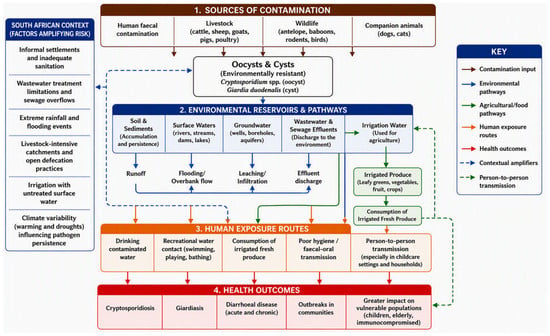
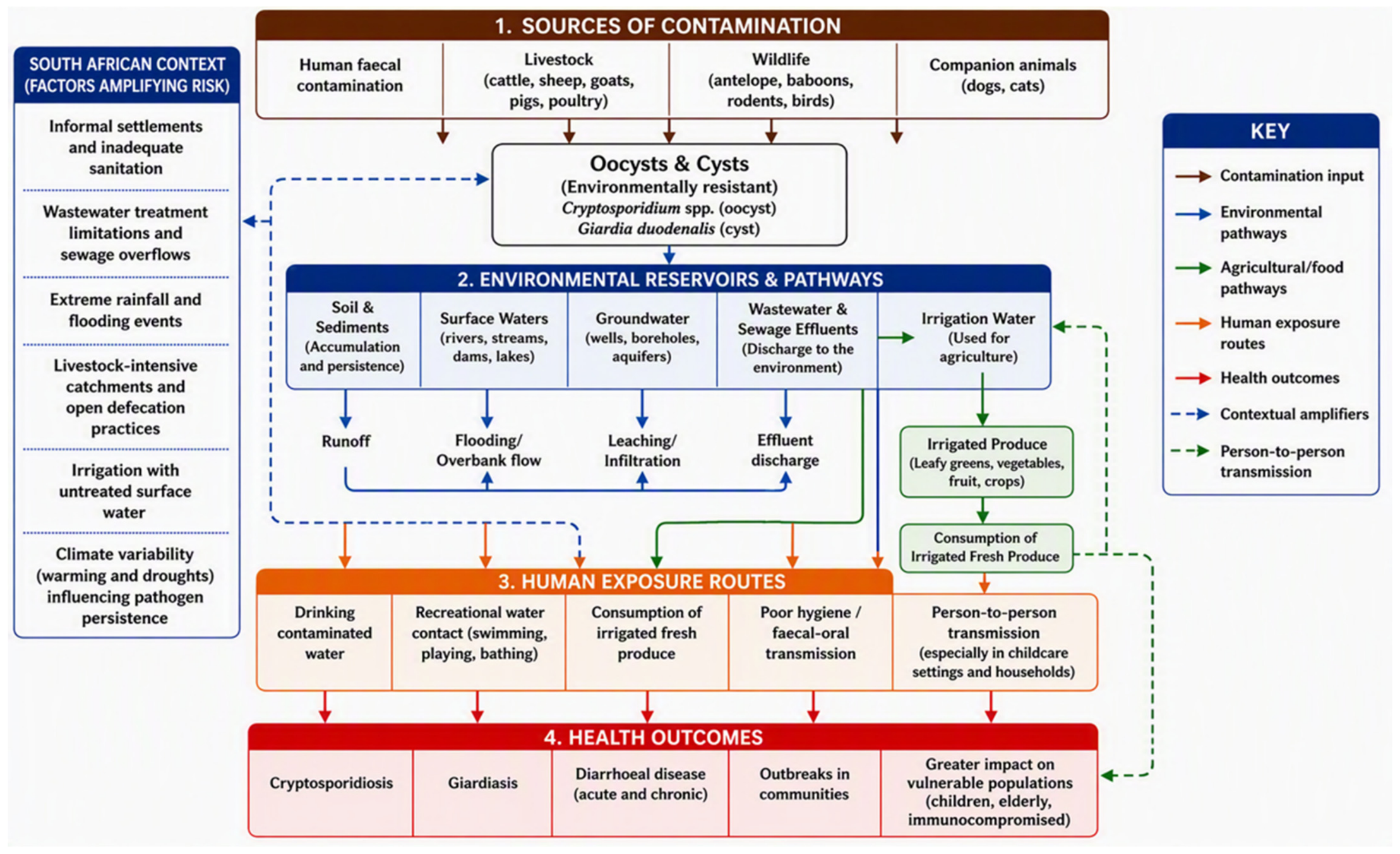
Contamination of drinking water supplies with Cryptosporidium and Giardia is a well-documented public health concern in South Africa and globally. Figure 1 shows the transmission pathways and environmental reservoirs of waterborne Cryptosporidium and Giardia in South Africa. Both protozoa have been regularly detected in surface and treated drinking water, often exceeding recommended safety thresholds, particularly during periods of heavy rainfall or infrastructural failure [2,6,18]. Oocysts and cysts are highly resistant to standard chlorination and can persist through conventional water treatment processes, leading to outbreaks linked to municipal water supplies and posing persistent risks to populations reliant on piped or communal tap water [3,8].
Figure 1.
Conceptual framework illustrating major sources, reservoirs, transmission pathways, exposure routes and health outcomes associated with Cryptosporidium spp. and Giardia duodenalis, with specific consideration of factors that may amplify transmission risk in South Africa. The framework was developed from evidence reported in global and South African studies on waterborne and zoonotic transmission of protozoan pathogens [1,26,27,28].
Recreational waters, irrigation sources, and informal water supplies represent additional, often underestimated, transmission routes. Multiple studies highlight the presence of Cryptosporidium and Giardia in rivers, lakes, and swimming pools, with recreational exposure linked to both sporadic and outbreak-associated diarrhoeal disease [3,6]. Irrigation with contaminated water can facilitate protozoan transmission through fresh produce, while informal water sources such as wells, springs, and tanker-supplied water are frequently unmonitored and prone to faecal contamination, especially in peri-urban and rural communities [7,29]. The risk is exacerbated during droughts or infrastructure breakdowns, when populations turn to alternative or untreated water sources [2].
The South African water sector faces unique infrastructure challenges that influence transmission risks for Giardia duodenalis and Cryptosporidium spp. One frequently overlooked factor is the impact of power outages on water and wastewater treatment operations. Load shedding and unplanned electricity interruptions are common in South Africa and have been associated with treatment process failures, bypasses, and diminished disinfection efficacy [30]. Such disruptions may allow inadequately treated water, potentially containing cysts and oocysts, to enter distribution systems. Power instability thus represents a critical, context-specific risk factor that warrants explicit inclusion in transmission models and public health planning.
Environmental reservoirs extend beyond surface water. Groundwater is not immune to contamination, particularly where well construction is substandard or sanitary setbacks are inadequate [31]. Inadequate well-head protection and the proximity of latrines or animal enclosures to boreholes increase the risk of protozoan ingress into aquifers. While the groundwater literature on protozoan pathogens in South Africa is comparatively sparse, several South African studies have reported the occurrence of Giardia and Cryptosporidium in water resources and have highlighted the vulnerability of inadequately protected drinking water sources to faecal contamination [14,32]. This highlights the need for rigorous construction standards and regular monitoring of groundwater sources, especially in vulnerable rural and peri-urban communities.
However, the relative importance of waterborne transmission should be interpreted with caution because Cryptosporidium and Giardia are also transmitted through multiple faecal–oral routes. Although contaminated water is widely recognised as an important vehicle for both pathogens, particularly during outbreaks, endemic transmission frequently occurs through direct human contact, inadequate hygiene practices, contaminated food, and exposure within households and childcare settings [28,33]. Consequently, the transmission framework presented in Figure 1 should be viewed as a multi-pathway system rather than a predominantly water-centred model. Person-to-person transmission is particularly important for Giardia duodenalis. Numerous epidemiological studies have shown that sustained transmission commonly occurs within households, daycare centres, schools, and other settings where close contact facilitates the faecal–oral spread of infectious cysts [34,35]. Inadequate handwashing after toileting, before food preparation, or after contact with infected individuals can facilitate the transfer of viable cysts and oocysts between people, fomites, and food items [28,36]. This pathway is particularly relevant among young children, who exhibit frequent hand-to-mouth activity and may have limited awareness of hygienic practices [37]. In many settings, secondary transmission within households may contribute substantially to disease persistence even in the absence of a recognised environmental source [38].
Similarly, person-to-person spread is increasingly recognised as an important route of Cryptosporidium transmission. Although waterborne outbreaks have historically received considerable attention, molecular epidemiological studies have demonstrated that anthroponotic transmission can play a major role, particularly in densely populated communities and childcare environments [33,39]. The low infectious dose of Cryptosporidium further facilitates direct transmission because ingestion of relatively few oocysts may result in infection [27]. Subsequently, transmission may continue within households and communities even when exposure to contaminated water has been reduced. As a result, the burden of cryptosporidiosis and giardiasis cannot be attributed solely to waterborne transmission. Rather, infection risk reflects the cumulative contribution of environmental, behavioural, and socioeconomic factors that influence faecal–oral pathogen transmission.
Sanitation infrastructure and wastewater management are, therefore, pivotal determinants of waterborne protozoan transmission. Effective prevention requires concurrent improvements in sanitation, hygiene practices, food safety, childcare hygiene, environmental management, and community education [26,27]. Inadequate or poorly maintained sanitation systems facilitate the direct discharge of untreated or partially treated sewage into surface waters, significantly increasing environmental (oo)cyst loads [5,6]. Wastewater-based surveillance consistently detects Cryptosporidium and Giardia downstream of human settlements, highlighting the role of faecal pollution in sustaining transmission cycles [1]. Informal settlements and rural areas, where infrastructure is lacking or non-existent, are especially vulnerable, with open defecation and poorly managed pit latrines compounding the risk [2,9]. Even advanced wastewater treatment can be insufficient, as oocyst and cyst removal is incomplete unless specific filtration or advanced disinfection techniques are adopted [18]. The cumulative evidence underscores the critical importance of integrated water resource management, robust sanitation infrastructure, and vigilant monitoring of both formal and informal water sources to mitigate the transmission of Cryptosporidium and Giardia in South Africa.
5. Detection and Diagnostic Challenges
In South Africa, the detection of Cryptosporidium and Giardia in water and clinical samples largely relies on conventional laboratory methods such as light microscopy, immunofluorescence assays, and, increasingly, molecular diagnostic tools [7,18]. Table 2 presents the common diagnostic methods for detection of Cryptosporidium and Giardia in South Africa. Microscopy, including modified Ziehl–Neelsen staining for Cryptosporidium oocysts and direct wet mount or iodine staining for Giardia cysts, remains widely used due to its simplicity and low cost. However, its performance is hampered by low sensitivity, operator dependence, and difficulties in distinguishing morphologically similar organisms, especially in low-intensity infections or environmental samples with high debris content [4,18].
Table 2.
Diagnostic methods for detection of Cryptosporidium and Giardia in South Africa: performance characteristics, advantages, and limitations.
Immunoassays, including direct immunofluorescence assays (DFAs) and enzyme-linked immunosorbent assays (ELISAs), offer improved sensitivity and specificity and are routinely used in some research and reference laboratories [7]. These methods detect (oo)cyst wall antigens, providing rapid results and enabling screening of large sample volumes. Nevertheless, their application in routine clinical and water-quality monitoring is limited by reagent costs, equipment requirements, and challenges in distinguishing viable from non-viable organisms [18,19].
Molecular tools, particularly polymerase chain reaction (PCR) and quantitative PCR (qPCR), have transformed the detection landscape by offering high sensitivity, genotyping capacity, and the ability to detect multiple pathogens simultaneously [4,29]. PCR-based approaches are especially valuable for environmental surveillance, outbreak investigation, and molecular epidemiology. Yet, their widespread adoption in South Africa is constrained by infrastructure, cost, technical expertise, and the presence of environmental inhibitors that can affect assay reliability [18,19].
Despite these advancements, substantial gaps remain in surveillance and reporting systems. Diagnostic capacities are unevenly distributed, with rural and resource-limited settings rarely able to access advanced detection platforms. Many routine laboratories still depend exclusively on microscopy, leading to substantial underdiagnosis and underreporting, especially in asymptomatic or low-burden infections [2,18]. These methods are labour-intensive and time-consuming, requiring trained personnel to scan numerous microscopic fields of view to identify relatively rare oocysts. Standardised protocols for environmental and clinical sample processing are lacking, and national surveillance systems do not consistently capture or report protozoan waterborne disease data [1,4]. This results in fragmented epidemiological information and limited ability to track outbreaks, monitor trends, or evaluate intervention effectiveness. The need for integrated, sensitive, and accessible diagnostic and reporting systems is therefore critical for improving public health responses to waterborne Cryptosporidium and Giardia in South Africa.
6. Water Treatment and Control Measures for Cryptosporidium and Giardia
Conventional water treatment methods such as chlorination and sand filtration remain the backbone of municipal water safety strategies in South Africa. However, both Cryptosporidium and Giardia exhibit notable resistance to chlorination at concentrations typically used for drinking water disinfection, raising concerns about the reliability of chemical treatment alone to ensure microbiological safety [3,6]. Traditional multi-barrier treatment trains, including coagulation, sedimentation, and rapid sand filtration, can achieve partial removal of (oo)cysts, but breakthrough events and fluctuating source water quality frequently result in residual contamination of treated water supplies [18].
Advanced technologies have been introduced to address these limitations. Ultraviolet (UV) irradiation is highly effective at inactivating Cryptosporidium oocysts and Giardia cysts, even at low doses, and is now considered a critical component of modern water safety plans [8]. Ozone treatment provides another potent disinfection barrier, capable of damaging the nucleic acids of protozoan (oo)cysts and significantly reducing infectivity [19]. Membrane filtration methods, such as ultrafiltration and nanofiltration, offer physical exclusion of Cryptosporidium and Giardia and are increasingly used in high-risk or small-community settings, though capital and operational costs remain a challenge for wide-scale adoption [6,19]. Despite their perceived effectiveness, advanced treatment technologies require rigorous operation and maintenance. UV disinfection is highly effective only when lamp output is maintained, and quartz sleeves remain free of scaling and biofilm, both of which can markedly reduce UV transmittance. Ozonation provides broad-spectrum disinfection but requires tight process control to limit bromate formation, particularly in bromide-rich waters. The application of membrane processes, including ultrafiltration, nanofiltration, and reverse osmosis, is constrained by high capital and operational costs, substantial energy requirements, membrane fouling, and the need for frequent cleaning, integrity testing, and replacement [44]. Reverse osmosis is further challenged by concentrate disposal, which remains problematic in inland and water-scarce regions [44]. Chlorine dioxide is also effective against a broad range of pathogens but requires careful dosing and monitoring to prevent chlorite and chlorate concentrations from exceeding regulatory limits. Consequently, the performance of advanced treatment systems is often limited less by technological capability than by operational complexity, cost, and long-term sustainability.
Recent case studies from South Africa highlight the variable effectiveness of municipal and rural water systems. Investigations in several provinces have shown that while large municipal plants employing advanced multi-barrier approaches often meet international standards for protozoan removal, smaller and rural systems are far more likely to deliver inadequately treated water, particularly during periods of high turbidity or infrastructure failure [2,18]. Outbreaks of waterborne cryptosporidiosis and giardiasis in peri-urban and rural communities have been linked to both the absence of advanced treatment and poor maintenance of existing infrastructure [6]. In these contexts, the failure to consistently achieve (oo)cyst removal underscores the urgent need for robust monitoring and investment in both technology and human capacity [2].
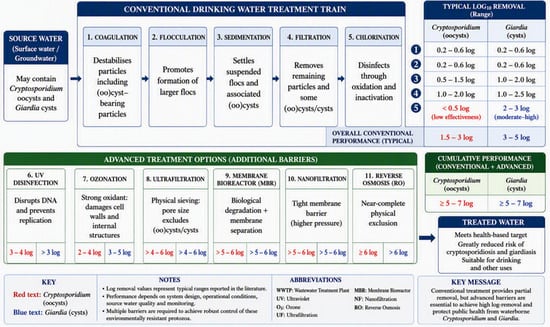
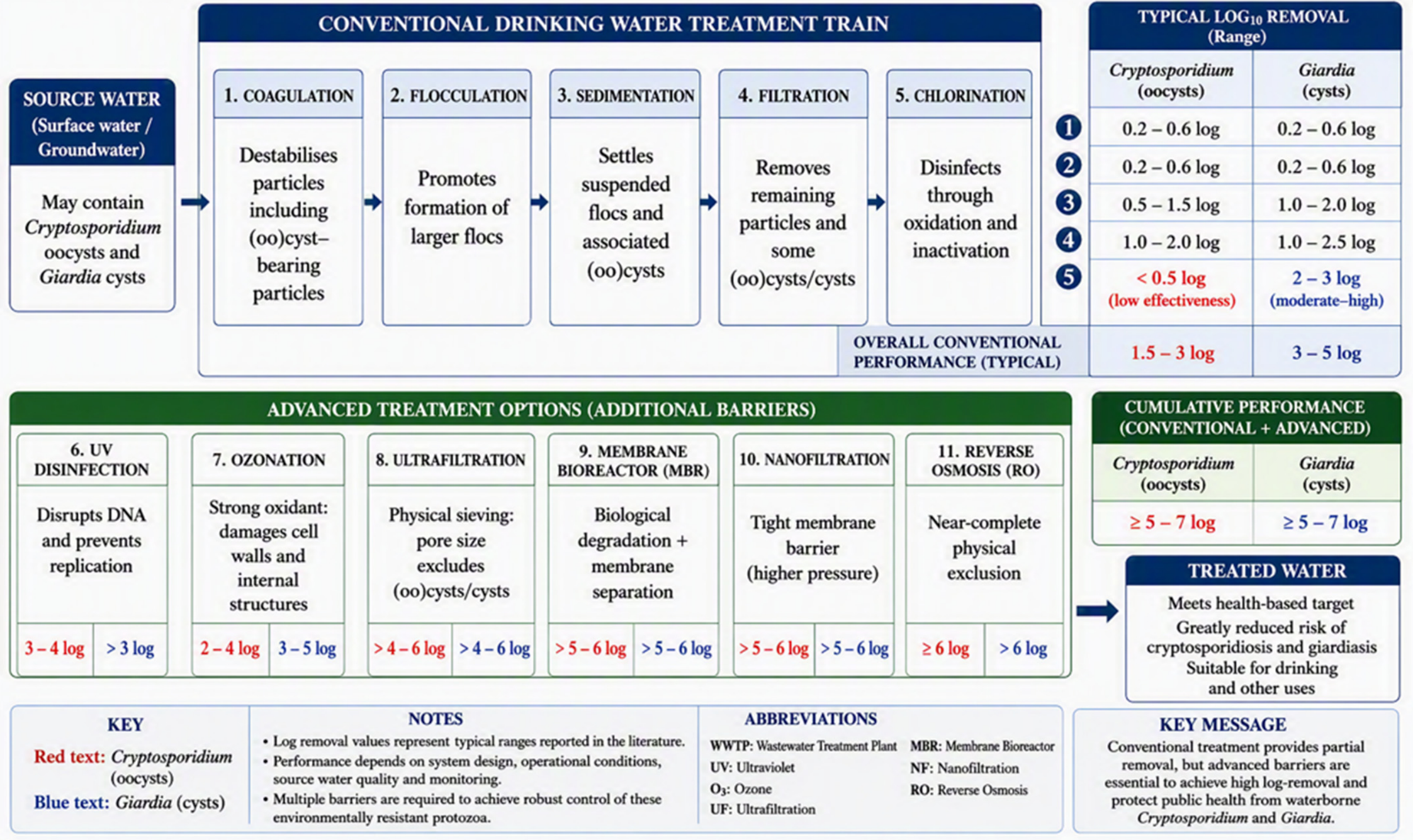
South African studies generally focus on monitoring and risk assessment rather than direct log-removal measurements. Therefore, the values in Figure 2 represent widely accepted operational performance ranges reported in the drinking-water treatment literature, than measured South African plant-specific values. Conventional South African wastewater treatment systems typically achieve 0.5–1.8 log removal of Cryptosporidium and 0.9–3.4 log removal of Giardia, which may be insufficient to prevent environmental discharge of infective (oo)cysts [14,32]. In contrast, international studies demonstrate that advanced treatment technologies, including ultrafiltration, membrane bioreactors, UV disinfection, ozonation, and integrated multi-barrier systems, routinely achieve >4–6 log reductions, providing more robust protection against waterborne protozoan transmission. This highlights the potential value of upgrading high-risk South African drinking-water and wastewater treatment systems where source-water contamination pressures are increasing.
Figure 2.
Conventional and advanced drinking-water treatment barriers for the removal of Cryptosporidium oocysts and Giardia cysts. Numbered circles (1–5) correspond to the conventional treatment stages of coagulation, flocculation, sedimentation, filtration and chlorination, respectively. Log-removal values were synthesised from published regulatory guidance and peer-reviewed literature and represent typical performance ranges reported for optimally operated treatment systems rather than universally applicable treatment credits [14,26,32,45,46,47,48].
For conventional treatment, the values in Figure 2 represent reported ranges for individual barriers, including coagulation, sedimentation, filtration and chlorination, under typical operational conditions. Because treatment barriers act sequentially, overall process performance was estimated by summing the log removals reported for individual treatment stages, consistent with the additive approach commonly used in microbial risk assessment and drinking-water regulations [45,46]. The cumulative removal estimates shown for advanced treatment systems were similarly derived from published log-removal or log-inactivation data for UV disinfection, ozonation, ultrafiltration, membrane bioreactors, nanofiltration and reverse osmosis. The reported values should therefore be regarded as representative operational ranges rather than fixed treatment credits, as actual performance depends on plant design, source-water quality, operational control, turbidity removal efficiency, filter integrity and other site-specific factors [26].
Low filtered-water turbidity is widely used as an indicator of effective protozoan removal. However, turbidity alone is an imperfect surrogate and cannot confirm complete removal of Cryptosporidium and Giardia, as low concentrations of (oo)cysts may remain even when turbidity targets are achieved [26,45]. Particle count monitoring provides a more sensitive assessment of treatment performance because particles within the size range of protozoan (oo)cysts often behave similarly during treatment and may reveal declining filter performance before turbidity changes become evident. Consequently, reliance on turbidity alone may overestimate barrier effectiveness. The log removal values shown in Figure 2 also assume stable filter operation, an assumption that is not always valid under routine plant conditions. Filter ripening following backwashing can reduce particle capture efficiency and increase the passage of protozoan-sized particles until filter performance stabilises [49,50]. Similarly, hydraulic breakthrough can occur due to excessive particle loading, media deterioration, inadequate coagulation or hydraulic disturbances, resulting in reduced removal efficiency and increased pathogen passage. Backwash management presents an additional vulnerability. Backwash waters often contain concentrated loads of particles, organic matter and microorganisms, including protozoan pathogens. If recycled without adequate treatment, these streams may increase the risk of breakthrough and compromise overall treatment performance [51]. These limitations emphasise that the presence of multiple treatment barriers does not necessarily ensure effective protozoan control. Rather, treatment success depends on sustained operational performance and rigorous process control. The log removal ranges presented in Figure 2 should therefore be interpreted as achievable outcomes under optimised conditions and not as universally attainable levels of removal. Continuous monitoring of turbidity, particle counts, filter integrity and backwash management remains essential for minimising public health risks associated with waterborne protozoan pathogens.
In addition, effective control of Giardia duodenalis and Cryptosporidium spp. in drinking water systems depends on a robust understanding of watershed characteristics. In South Africa, systematic data collection on watersheds supplying treatment plants is limited but increasingly recognised as essential. The dearth of data on watershed protection and sanitation management represents a critical gap. Studies from other settings identify watershed protection as a primary barrier against Cryptosporidium and Giardia contamination [52,53]. Source protection strategies, such as restricting agricultural runoff, controlling livestock access, and maintaining vegetative buffer zones, have proven effective in reducing protozoan loads in raw water. In South Africa, unregulated land use and informal settlements near catchments remain persistent threats [31]. Failure to address these upstream sources increases the burden on water treatment infrastructure, often exceeding its removal capacity [54].
Sanitation management is equally pivotal. Inadequate sanitation and poor faecal waste disposal directly increase the risk of contamination of drinking water sources [30]. Open defecation, failing sewage systems, and stormwater run-off facilitate the transport of oocysts and cysts into surface waters. The World Health Organisation [26] stresses that improved sanitation can reduce protozoan transmission by up to 70%. Yet, in many South African contexts, sanitation infrastructure remains insufficient, particularly in peri-urban and rural areas [31]. It is not enough to focus exclusively on water treatment technologies. Preventive interventions at the watershed and community levels are essential. Without these upstream controls, treatment plants are frequently overwhelmed, increasing the risk of protozoan breakthrough events and subsequent public health crises [52]. Therefore, comprehensive protozoan risk management must prioritise watershed protection and effective sanitation as foundational elements. These interventions are cost-effective, sustainable, and essential for the long-term safety of South Africa’s drinking water supply.
However, protecting source waters and optimising treatment plant performance alone are insufficient to safeguard public health. The integrity of the post-treatment distribution system remains a critical, yet often neglected, component of microbial risk management. In South Africa, ageing water infrastructure is a widespread challenge, with deteriorating pipe networks increasingly susceptible to leaks, breaks and contaminant ingress [55,56,57]. Such failures may allow the intrusion of contaminated surface water or agricultural runoff carrying Cryptosporidium oocysts and Giardia cysts, thereby undermining upstream treatment barriers. These risks are further exacerbated by delayed infrastructure maintenance, inadequate pressure management and insufficient monitoring of distribution networks [58]. In many South African communities affected by unreliable water services, residents frequently rely on alternative water supplies and store water in communal or household containers and tanks [59,60]. While such measures provide a temporary solution to water shortages, they increase opportunities for post-supply contamination. Poorly maintained tanks may accumulate sediments that harbour microbial contaminants and facilitate the persistence of environmentally resistant protozoan stages, including Giardia cysts and Cryptosporidium oocysts [61,62]. Moreover, inadequate tank cleaning, damaged covers, faulty seals and illegal connections may further compromise water quality before consumption, highlighting the need to address infrastructure and storage deficiencies as integral components of protozoan risk reduction.
7. Policy, Regulation, and Public Health Response
South Africa’s national water quality standards are primarily defined by the South African National Standard (SANS) 241, which sets microbiological and physicochemical limits for potable water. However, SANS 241 does not currently mandate routine monitoring for protozoan pathogens such as Cryptosporidium and Giardia, despite their recognised public health significance [2,6]. This regulatory gap is problematic, as these organisms are highly resistant to conventional disinfection and frequently implicated in waterborne outbreaks, especially in vulnerable regions [1,9]. Current policy frameworks focus heavily on bacterial indicators, neglecting the unique risks posed by protozoan (oo)cysts [6].
Integration of Cryptosporidium and Giardia monitoring into public health policy remains limited. Although some research and pilot projects incorporate molecular and immunological surveillance for these pathogens, systematic monitoring is not yet embedded in routine water quality assessment or disease surveillance systems [1,19]. The lack of standardised protocols and reporting mechanisms further impedes the translation of scientific findings into actionable public health interventions [4]. This disconnect undermines early warning, outbreak response, and long-term risk management.
Government agencies, notably the Department of Water and Sanitation and the National Institute for Communicable Diseases, have begun to recognise the need for protozoan risk management in water policy. However, resource constraints and competing priorities have delayed the widespread implementation of advanced surveillance and control measures [2]. Non-governmental organisations (NGOs) and community-based initiatives are increasingly active in filling these gaps, conducting independent water testing, raising public awareness, and advocating for improved sanitation and water safety in underserved areas [5]. Collaborative One Health approaches, integrating human, animal, and environmental health perspectives, are gaining traction as a means to address the multifaceted drivers of protozoan transmission [9,10].
Further, the current policy landscape in South Africa inadequately addresses the interconnectedness of watershed protection, sanitation management, and water treatment plant operations. Effective regulation must integrate all three domains to curb protozoan contamination risks. Existing policies too often focus on end-point water treatment, neglecting the importance of upstream interventions and comprehensive management [63]. Without robust land-use controls, catchment zones remain vulnerable to agricultural run-off, informal settlements, and faecal pollution [52]. Policy must mandate regular surveillance, buffer zone maintenance, and restrictions on high-risk activities near water sources. The absence of such measures perpetuates preventable contamination of raw water.
Sanitation management is another neglected area. Regulations must enforce adequate sewage infrastructure, with strict penalties for non-compliance and clear targets for eradicating open defecation [26,30]. Effective policy should also promote community engagement, ensuring that sanitation improvements are both implemented and sustained.
Improved filter management at treatment plants is critical but insufficient in isolation. Regulatory bodies must require continuous monitoring of filtration performance, frequent maintenance schedules, and adoption of advanced filtration technologies where feasible [53]. Process audits and transparent reporting should be mandatory to ensure accountability. A fragmented approach will continue to fail. Only integrated policies that address watershed protection, sanitation, and treatment plant management can reduce the burden of Cryptosporidium and Giardia. These actions are not optional but essential for public health protection in South Africa.
8. Knowledge Gaps and Research Needs
Despite the recognised public health threat of waterborne Cryptosporidium and Giardia, significant knowledge gaps persist in South Africa. Epidemiological data remain fragmented and geographically limited, with the majority of prevalence studies confined to select urban centres or isolated rural communities. Systematic, population-based surveillance is largely absent, and there is a paucity of longitudinal data to characterise seasonal, climatic, or intervention-driven trends in infection risk [2,6]. Data on asymptomatic carriage and the true burden among immunocompromised populations are especially scarce, impeding accurate risk assessment and prioritisation of interventions [9,24].
The need for improved diagnostic capacity and coordinated surveillance is critical. Laboratory infrastructure in South Africa is unevenly distributed, with advanced molecular tools and immunoassays accessible to only a subset of reference or research laboratories [18]. Routine diagnostics remain heavily reliant on microscopy, which lacks sensitivity for low-intensity infections and environmental detection. The absence of standardised protocols and external quality assurance further undermines comparability and reliability of results [4,19]. National surveillance systems do not mandate the reporting of protozoan waterborne infections, resulting in substantial underdiagnosis and underreporting [1].
There is a pressing opportunity for interdisciplinary research to bridge these gaps. Environmental health studies must be integrated with molecular epidemiology to elucidate transmission pathways, genotype distributions, and zoonotic reservoirs [10,25]. Social science approaches are needed to understand water use behaviours, sanitation practices, and barriers to intervention uptake in diverse South African settings [5]. One Health frameworks, linking human, animal, and environmental surveillance, are essential for capturing the complexity of protozoan transmission and informing policy development [1,9]. Collaborative research platforms and investment in laboratory capacity are crucial to advance evidence-based responses and reduce the health burden of waterborne Cryptosporidium and Giardia in South Africa.
9. Conclusions and Recommendations
This review critically synthesises the evidence that waterborne Cryptosporidium and Giardia remain pressing public health threats in South Africa, with persistent contamination documented in municipal, rural, and informal water sources [2,6]. Both protozoa exhibit high resistance to conventional chlorination and are frequently detected even after standard water treatment, particularly in settings with inadequate infrastructure or during periods of heightened turbidity [18]. Epidemiological data reveal a disproportionate burden among children under five, immunocompromised individuals, and rural communities, with significant morbidity, developmental impacts, and economic consequences [5,24]. Gaps in surveillance, diagnostic capacity, and policy integration further exacerbate the challenge, limiting both outbreak detection and strategic response [1,19]. While the adoption of advanced water treatment technologies is essential for enhanced removal of Cryptosporidium and Giardia, it presents operational challenges in the South African context. Advanced systems require highly skilled and certified operators to maintain optimal function and regulatory compliance. However, many water utilities face a shortage of qualified personnel, limiting the effective deployment and sustainability of these technologies. Capacity constraints can lead to suboptimal performance, process upsets, and increased health risks, particularly in under-resourced or rural municipalities. Targeted training programmes for plant operators and local authorities can improve understanding of contamination pathways, the importance of sanitary setbacks, and the rationale for buffer zones around water sources [26].
To strengthen water safety and public health response, several strategic recommendations are warranted. First, South Africa should revise national water quality standards to mandate routine monitoring for Cryptosporidium and Giardia in drinking and recreational water systems, supported by the adoption of sensitive immunological and molecular diagnostic tools in both centralised and decentralised laboratories [2,19]. Second, investments are needed to upgrade treatment infrastructure, especially in rural and peri-urban areas, with emphasis on multi-barrier approaches that include advanced filtration and UV disinfection [6,8]. Third, robust surveillance systems should be established to integrate environmental, clinical, and animal health data, thereby enabling early warning, rapid response, and targeted interventions [1,10]. A coordinated national and regional effort is essential. Government, research institutions, NGOs, and affected communities must collaborate on One Health frameworks that address the complex, transboundary drivers of waterborne protozoan transmission [9]. Standardised protocols for surveillance, reporting, and outbreak investigation should be developed to fill critical knowledge gaps and inform evidence-based policy [4]. Finally, educational interventions and community-driven source water protection become critical adjuncts to technical solutions. Public awareness campaigns should emphasise how everyday practices such as livestock management, waste disposal, and land use near water bodies or aquifer recharge zones directly impact drinking water safety. Clear guidance on prohibited activities within designated catchment areas can empower communities to participate in safeguarding their water sources.
Sanitary setbacks, in particular, require both technical enforcement and community buy-in. They serve as practical barriers, reducing pathogen ingress into wells and surface water supplies. Regular stakeholder engagement, dissemination of educational materials, and participatory monitoring initiatives can foster a culture of shared responsibility for drinking water protection. Only through such coordinated, evidence-driven approaches can the country protect its most vulnerable populations and achieve sustainable improvements in water and public health security.
Author Contributions
Conceptualisation: All authors. Data curation and formal analysis: all authors. Writing, original draft preparation: T.S. Writing, review and editing: B.M. and N.T.M. All authors have read and agreed to the published version of the manuscript.
Funding
This research did not receive any specific grant from funding agencies in the public, commercial, or not-for-profit sectors.
Data Availability Statement
All data generated or analysed during this study are included in this article.
Acknowledgments
The authors acknowledge their institutions, namely the University of the Witwatersrand (B.M. and T.S.), and Cape Peninsula University of Technology (N.T.M.), for the time taken from their work schedules to prepare this manuscript.
Conflicts of Interest
The authors declare no conflict of interest.
References
- Zahedi, A.; Monis, P.; Deere, D.; Ryan, U. Wastewater-based epidemiology-surveillance and early detection of waterborne pathogens with a focus on SARS-CoV-2, Cryptosporidium and Giardia. Parasitol. Res. 2021, 120, 4167–4188. [Google Scholar] [CrossRef] [Scilit] [PubMed]
- Mpindou, G.O.M.K.; Bueno, I.E.; Ramón, E.C. Review on Emerging Waterborne Pathogens in Africa: The Case of Cryptosporidium. Water 2021, 13, 2966. [Google Scholar] [CrossRef] [Scilit]
- Pace, A.; Pepe, P.; Fabbricino, M.; Mignano, V.; Ciuca, L.; Rinaldi, L.; Dipineto, L. Giardia and Campylobacter: Fifteen years (2010-2024) of waterborne outbreaks in Europe. Food Waterborne Parasitol. 2025, 41, e00299. [Google Scholar] [CrossRef] [Scilit] [PubMed]
- de Araujo, R.S.; Barbosa, M.R.F.; Dropa, M.; Araujo de Castro, V.C.; Galvani, A.T.; Padula, J.A.; Bruni, A.C.; Brandao, C.J.; Lallo, M.A.; Sato, M.I.Z. Environmental surveillance of Cryptosporidium and Giardia in surface supply water and treated sewage intended for reuse from an urban area in Brazil. Environ. Pollut. 2024, 363, 125089. [Google Scholar] [CrossRef] [Scilit] [PubMed]
- Islam, M.M.M. Assessing health risks and disease burden from waterborne pathogens across multiple urban exposure pathways. J. Water Sanit. Hyg. Dev. 2025, 15, 322–332. [Google Scholar] [CrossRef] [Scilit]
- Ligda, P.; Claerebout, E.; Kostopoulou, D.; Zdragas, A.; Casaert, S.; Robertson, L.J.; Sotiraki, S. Cryptosporidium and Giardia in surface water and drinking water: Animal sources and towards the use of a machine-learning approach as a tool for predicting contamination. Environ. Pollut. 2020, 264, 114766. [Google Scholar] [CrossRef] [Scilit] [PubMed]
- de Oliveira, M.A.M.G.; Rocha, J.M.; da Silva, A.V.; Harvey, T.V.; Fehlberg, H.F.; Albuquerque, G.R. First report of contamination of public water system by Giardia duodenalis and Cryptosporidium spp. in Bahia, northeastern Brazil. Semin. Ciênc. Agrár. 2023, 45, 20. [Google Scholar] [CrossRef]
- Siwak, A.M.; Baker, P.G.; Dube, A. Biosensors as early warning detection systems for waterborne Cryptosporidium. Water Sci. Technol. 2023, 88, 615–630. [Google Scholar] [CrossRef] [Scilit] [PubMed]
- Ras, R.; Abdelkhalek, A.; Raya-Alvarez, E.; Shady, R.M.; AlGabbani, Q.; Abdelbaset, A.E.; Saleem, A.S.A.; Shukry, M.; Agil, A.; Elmahallawy, E.K. Cryptosporidium within a One health framework: A comprehensive review of public health impact, environmental concerns, and emerging strategies for prevention and treatment. Front. Vet. Sci. 2026, 13, 1731158. [Google Scholar] [CrossRef] [Scilit] [PubMed]
- Li, N.; Qin, Z.; Zhang, K.; Dhakal, P.; Li, J.; Zhao, J.; Zhang, L. Fish and shellfish as sentinels of aquatic contamination: Global distribution and One Health implications of zoonotic Cryptosporidium and Giardia. One Health 2026, 22, 101378. [Google Scholar] [CrossRef] [Scilit] [PubMed]
- Samie, A.; Tanih, N.F.; Seisa, I.; Seheri, M.; Mphahlele, J.; ElBakri, A.; Mbati, P. Prevalence and genetic characterization of Giardia lamblia in relation to diarrhea in Limpopo and Gauteng provinces, South Africa. Parasite Epidemiol. Control 2020, 9, e00140. [Google Scholar] [CrossRef] [Scilit] [PubMed]
- Potgieter, N.; Heine, L.; Ngandu, J.P.K.; Ledwaba, S.E.; Zitha, T.; Mudau, L.S.; Becker, P.; Traore, A.N.; Barnard, T.G. High Burden of Co-Infection with Multiple Enteric Pathogens in Children Suffering with Diarrhoea from Rural and Peri-Urban Communities in South Africa. Pathogens 2023, 12, 315. [Google Scholar] [CrossRef] [Scilit] [PubMed]
- Bartelt, L.A.; Sevilleja, J.E.; Barrett, L.J.; Warren, C.A.; Guerrant, R.L.; Bessong, P.O.; Dillingham, R.; Samie, A. High anti-Cryptosporidium parvum IgG seroprevalence in HIV-infected adults in Limpopo, South Africa. Am. J. Trop. Med. Hyg. 2013, 89, 531–534. [Google Scholar] [CrossRef] [Scilit] [PubMed]
- Dungeni, M.; Momba, M.N.B. The abundance of Cryptosporidium and Giardia spp. in treated effluents produced by four wastewater treatment plants in the Gauteng Province of South Africa. Water SA 2010, 36, 7. [Google Scholar] [CrossRef] [Scilit]
- Ngubane, Z.; Bergion, V.; Dzwairo, B.; Troell, K.; Amoah, I.D.; Stenstrom, T.A.; Sokolova, E. Water quality modelling and quantitative microbial risk assessment for uMsunduzi River in South Africa. J. Water Health 2022, 20, 641–656. [Google Scholar] [CrossRef] [Scilit] [PubMed]
- Tawana, M.; Onyiche, T.E.; Ramatla, T.; Nkhebenyane, S.J.; Grab, D.J.; Thekisoe, O. Cryptosporidium Species Infections Detected from Fecal Samples of Animal and Human Hosts in South Africa: Systematic Review and Meta-Analysis. Microorganisms 2024, 12, 2426. [Google Scholar] [CrossRef] [Scilit] [PubMed]
- Ngobeni, R.; Gilchrist, C.; Samie, A. Prevalence and Distribution of Cryptosporidium spp. and Giardia lamblia in Rural and Urban Communities of South Africa. Turk. Parazitol. Derg. 2022, 46, 14–19. [Google Scholar] [CrossRef] [Scilit] [PubMed]
- Moussa, A.S.; Ashour, A.A.; Soliman, M.I.; Taha, H.A.; Al-Herrawy, A.Z.; Gad, M. Fate of Cryptosporidium and Giardia through conventional and compact drinking water treatment plants. Parasitol. Res. 2023, 122, 2491–2501. [Google Scholar] [CrossRef] [Scilit] [PubMed]
- Ali, M.; Liang, X.; Raza, A.; Xu, C.; Sun, T.; He, Q.; Zhu, Z.; Li, K.; Peng, L. From conventional to biosensor-based detection of Cryptosporidium spp. and Toxoplasma gondii in food and water: Implications for food and water safety. Food Waterborne Parasitol. 2026, 43, e00341. [Google Scholar] [CrossRef] [Scilit] [PubMed]
- Ryan, U.; Caccio, S.M. Zoonotic potential of Giardia. Int. J. Parasitol. 2013, 43, 943–956. [Google Scholar] [CrossRef] [Scilit] [PubMed]
- Feng, Y.; Xiao, L. Molecular Epidemiology of Cryptosporidiosis in China. Front. Microbiol. 2017, 8, 1701. [Google Scholar] [CrossRef] [Scilit] [PubMed]
- Ryan, U.; Zahedi, A.; Paparini, A. Cryptosporidium in humans and animals-a one health approach to prophylaxis. Parasite Immunol. 2016, 38, 535–547. [Google Scholar] [CrossRef] [Scilit] [PubMed]
- Zahedi, A.; Ryan, U. Cryptosporidium—An update with an emphasis on foodborne and waterborne transmission. Res. Vet. Sci. 2020, 132, 500–512. [Google Scholar] [CrossRef] [Scilit] [PubMed]
- Messa, A., Jr.; Koster, P.C.; Garrine, M.; Gilchrist, C.; Bartelt, L.A.; Nhampossa, T.; Massora, S.; Kotloff, K.; Levine, M.M.; Alonso, P.L.; et al. Molecular diversity of Giardia duodenalis in children under 5 years from the Manhica district, Southern Mozambique enrolled in a matched case-control study on the aetiology of diarrhoea. PLoS Negl. Trop. Dis. 2021, 15, e0008987. [Google Scholar] [CrossRef] [Scilit] [PubMed]
- Dwuznik-Szarek, D.; Mierzejewska, E.J.; Kurek, K.; Krokowska-Paluszak, M.; Opalinska, P.; Stanczak, L.; Gorecki, G.; Bajer, A. Red Fox (Vulpes vulpes) and Wolf (Canis lupus) as a Reservoir of Cryptosporidium spp. and Giardia intestinalis in Poland. Pathogens 2025, 14, 500. [Google Scholar] [CrossRef] [Scilit] [PubMed]
- WHO. Guidelines for Drinking-Water Quality: Fourth Edition Incorporating the First and Second Addenda; World Health Organisation: Geneva, Switzerland, 2022. [Google Scholar]
- Ryan, U.; Zahedi, A.; Feng, Y.; Xiao, L. An Update on Zoonotic Cryptosporidium Species and Genotypes in Humans. Animals 2021, 11, 3307. [Google Scholar] [CrossRef] [Scilit] [PubMed]
- Efstratiou, A.; Ongerth, J.E.; Karanis, P. Waterborne transmission of protozoan parasites: Review of worldwide outbreaks—An update 2011-2016. Water Res. 2017, 114, 14–22. [Google Scholar] [CrossRef] [Scilit] [PubMed]
- Mahmood, S.H.; Gargouri, A.; Al-Rubaie, H.M.A. Prevalence and molecular identification of Giardia duodenalis in different water sources in Baghdad City. Euro-Mediterr. J. Environ. Integr. 2025, 11, 55. [Google Scholar] [CrossRef] [Scilit]
- Molewa, M.L.; Barnard, T.G.; Naicker, N. Water, sanitation and hygiene in rural Greater Letaba Municipality, South Africa. Health SA Gesondheid 2025, 30, 2940. [Google Scholar] [CrossRef] [Scilit] [PubMed]
- Squire, S.A.; Ryan, U. Cryptosporidium and Giardia in Africa: Current and future challenges. Parasit. Vectors 2017, 10, 195. [Google Scholar] [CrossRef] [Scilit] [PubMed]
- Sigudu, M.V.; Du Preez, H.H.; Retief, F. Application of a basic monitoring strategy for Cryptosporidium and Giardia in drinking water. Water SA 2014, 40, 297–312. [Google Scholar] [CrossRef] [Scilit]
- Checkley, W.; White, A.C., Jr.; Jaganath, D.; Arrowood, M.J.; Chalmers, R.M.; Chen, X.M.; Fayer, R.; Griffiths, J.K.; Guerrant, R.L.; Hedstrom, L.; et al. A review of the global burden, novel diagnostics, therapeutics, and vaccine targets for Cryptosporidium. Lancet Infect. Dis. 2015, 15, 85–94. [Google Scholar] [CrossRef] [Scilit] [PubMed]
- Einarsson, E.; Ma’ayeh, S.; Svard, S.G. An up-date on Giardia and giardiasis. Curr. Opin. Microbiol. 2016, 34, 47–52. [Google Scholar] [CrossRef] [Scilit] [PubMed]
- Feng, Y.; Xiao, L. Zoonotic potential and molecular epidemiology of Giardia species and giardiasis. Clin. Microbiol. Rev. 2011, 24, 110–140. [Google Scholar] [CrossRef] [Scilit] [PubMed]
- Fletcher, S.M.; Stark, D.; Harkness, J.; Ellis, J. Enteric protozoa in the developed world: A public health perspective. Clin. Microbiol. Rev. 2012, 25, 420–449. [Google Scholar] [CrossRef] [Scilit] [PubMed]
- Pruss-Ustun, A.; Wolf, J.; Bartram, J.; Clasen, T.; Cumming, O.; Freeman, M.C.; Gordon, B.; Hunter, P.R.; Medlicott, K.; Johnston, R. Burden of disease from inadequate water, sanitation and hygiene for selected adverse health outcomes: An updated analysis with a focus on low- and middle-income countries. Int. J. Hyg. Environ. Health 2019, 222, 765–777. [Google Scholar] [CrossRef] [Scilit] [PubMed]
- Barasa, E.; Indusa, W.; Were, T. Giardia duodenalis in Human Health: A Comprehensive Review of its Epidemiology, Transmission, Pathophysiology, Diagnostics, and Control Strategies. Afro-Egypt. J. Infect. Endem. Dis. 2025, 15, 109–126. [Google Scholar] [CrossRef] [Scilit]
- Khalil, I.A.; Troeger, C.; Rao, P.C.; Blacker, B.F.; Brown, A.; Brewer, T.G.; Colombara, D.V.; De Hostos, E.L.; Engmann, C.; Guerrant, R.L.; et al. Morbidity, mortality, and long-term consequences associated with diarrhoea from Cryptosporidium infection in children younger than 5 years: A meta-analyses study. Lancet Glob. Health 2018, 6, e758–e768. [Google Scholar] [CrossRef] [Scilit] [PubMed]
- Khurana, S.; Chaudhary, P. Laboratory diagnosis of cryptosporidiosis. Trop. Parasitol. 2018, 8, 2–7. [Google Scholar] [CrossRef] [Scilit] [PubMed]
- Smith, H.V.; Caccio, S.M.; Tait, A.; McLauchlin, J.; Thompson, R.C. Tools for investigating the environmental transmission of Cryptosporidium and Giardia infections in humans. Trends Parasitol. 2006, 22, 160–167. [Google Scholar] [CrossRef] [Scilit] [PubMed]
- USEPA. Method 1623.1: Cryptosporidium and Giardia in Water by Filtration/IMS/FA; USEPA: Washington, DC, USA, 2012; pp. 1–83.
- Caccio, S.M.; Chalmers, R.M. Human cryptosporidiosis in Europe. Clin. Microbiol. Infect. 2016, 22, 471–480. [Google Scholar] [CrossRef] [Scilit] [PubMed]
- Jepsen, K.L.; Bram, M.V.; Pedersen, S.; Yang, Z. Membrane Fouling for Produced Water Treatment: A Review Study From a Process Control Perspective. Water 2018, 10, 847. [Google Scholar] [CrossRef] [Scilit]
- USEPA. Source Water Monitoring Guidance Manual for Public Water Systems; United States Environmental Protection Agency: Washington, DC, USA, 2006; pp. 1–151.
- WHO. Risk Assessment of Cryptosporidium in Drinking Water; WHO: Geneva, Switzerland, 2009. [Google Scholar]
- Hijnen, W.A.; Beerendonk, E.F.; Medema, G.J. Inactivation credit of UV radiation for viruses, bacteria and protozoan (oo)cysts in water: A review. Water Res. 2006, 40, 3–22. [Google Scholar] [CrossRef] [Scilit] [PubMed]
- Lonigro, A.; Pollice, A.; Spinelli, R.; Berrilli, F.; Di Cave, D.; D’Orazi, C.; Cavallo, P.; Brandonisio, O. Giardia cysts and Cryptosporidium oocysts in membrane-filtered municipal wastewater used for irrigation. Appl. Environ. Microbiol. 2006, 72, 7916–7918. [Google Scholar] [CrossRef] [Scilit] [PubMed]
- Emelko, M.B. Removal of Cryptosporidium parvum by Granular Media Filtration. Ph.D. Thesis, University of Waterloo, Waterloo, ON, Canada, 2001. [Google Scholar]
- Amburgey, J.E. Optimization of the extended terminal subfluidization wash (ETSW) filter backwashing procedure. Water Res. 2005, 39, 314–330. [Google Scholar] [CrossRef] [Scilit] [PubMed]
- Wolska, M.; Urbańska-Kozłowska, H. Assessing the Possibilities of Backwash Water Reuse Filters in the Water Treatment System—Case Analysis. Water 2023, 15, 2452. [Google Scholar] [CrossRef] [Scilit]
- Swaffer, B.; Abbott, H.; King, B.; van der Linden, L.; Monis, P. Understanding human infectious Cryptosporidium risk in drinking water supply catchments. Water Res. 2018, 138, 282–292. [Google Scholar] [CrossRef] [Scilit] [PubMed]
- Baldursson, S.; Karanis, P. Waterborne transmission of protozoan parasites: Review of worldwide outbreaks—An update 2004-2010. Water Res. 2011, 45, 6603–6614. [Google Scholar] [CrossRef] [Scilit] [PubMed]
- Omarova, A.; Tussupova, K.; Berndtsson, R.; Kalishev, M.; Sharapatova, K. Protozoan Parasites in Drinking Water: A System Approach for Improved Water, Sanitation and Hygiene in Developing Countries. Int. J. Environ. Res. Public Health 2018, 15, 495. [Google Scholar] [CrossRef] [Scilit] [PubMed]
- Laolang, G.; Musonda, I.; Tjebane, M.M. Exploring Perceived Factors Contributing to Poor Performance of Water Infrastructure Systems in Gauteng Province, South Africa. In Proceedings of the 14th International Conference on Construction in the 21st Century (CITC 2024), Rio de Janeiro, Brazil, 5–8 September 2024; pp. 699–707. [Google Scholar]
- Wang, Z.; Yang, X.; Fu, L.; Li, M. A review of secondary contamination of drinking water quality in distribution systems: Sources, mechanisms, and prospects. AQUA—Water Infrastruct. Ecosyst. Soc. 2025, 74, 118–141. [Google Scholar] [CrossRef] [Scilit]
- Palma, L.; Hatam, F.; Di Nardo, A.; Prévost, M. Contaminations in water distribution systems: A critical review of detection and response methods. AQUA—Water Infrastruct. Ecosyst. Soc. 2024, 73, 1285–1302. [Google Scholar] [CrossRef] [Scilit]
- Mackintosh, G.; Colvin, C. Failure of rural schemes in South Africa to provide potable water. Environ. Geol. 2003, 44, 101–105. [Google Scholar] [CrossRef] [Scilit]
- Majuru, B.; Jagals, P.; Hunter, P.R. Assessing rural small community water supply in Limpopo, South Africa: Water service benchmarks and reliability. Sci. Total Environ. 2012, 435–436, 479–486. [Google Scholar] [CrossRef] [Scilit] [PubMed]
- Majuru, B.; Suhrcke, M.; Hunter, P.R. How Do Households Respond to Unreliable Water Supplies? A Systematic Review. Int. J. Environ. Res. Public Health 2016, 13, 1222. [Google Scholar] [CrossRef] [Scilit] [PubMed]
- Qin, K.; Struewing, I.; Domingo, J.S.; Lytle, D.; Lu, J. Opportunistic Pathogens and Microbial Communities and Their Associations with Sediment Physical Parameters in Drinking Water Storage Tank Sediments. Pathogens 2017, 6, 54. [Google Scholar] [CrossRef] [Scilit] [PubMed]
- Burnet, J.B.; Ogorzaly, L.; Penny, C.; Cauchie, H.M. Fine-Scale Spatial Heterogeneity in the Distribution of Waterborne Protozoa in a Drinking Water Reservoir. Int. J. Environ. Res. Public Health 2015, 12, 11910–11928. [Google Scholar] [CrossRef] [Scilit] [PubMed]
- Hodgson, K.; Manus, L. A drinking water quality framework for South Africa. Water SA 2006, 32, 5. [Google Scholar]

Disclaimer/Publisher’s Note: The statements, opinions and data contained in all publications are solely those of the individual author(s) and contributor(s) and not of MDPI and/or the editor(s). MDPI and/or the editor(s) disclaim responsibility for any injury to people or property resulting from any ideas, methods, instructions or products referred to in the content. |
© 2026 by the authors. Licensee MDPI, Basel, Switzerland. This article is an open access article distributed under the terms and conditions of the Creative Commons Attribution (CC BY) license.