


Abstract
Radioisotopic techniques provide powerful tools for reconstructing the history of lake sediments, offering critical insights into past environmental changes and human impacts. These techniques have contributed significantly to our understanding of past environmental change and have implications for current environmental management practices. This review comprehensively examines various radiometric dating techniques used for lake sediments, with a focus on natural, cosmogenic, and artificial radionuclides, including 210Pb, 137Cs, 241Am, 7Be, 3H, and 14C. The review highlights the widespread use of radionuclides in establishing sediment chronologies across different time scales, from short-term processes (days to decades) to long-term environmental reconstructions spanning thousands of years. Moreover, applications in limnological research are explored, including sedimentation rate estimation, reconstruction of pollution history of trace elements, nutrients, microplastics, and organic compounds, and assessment of anthropogenic impacts and catchment changes. The integration of radioisotopic methods with multiproxy paleolimnological approaches is emphasized as a powerful framework for reconstructing past environmental and ecological conditions. Despite their effectiveness, radioisotopic methods are exposed to several sources of uncertainty, including dispersion in atmospheric isotope flux, post-depositional processes, reservoir effects, and model assumptions. These challenges highlight the importance of careful methodological selection, site-specific evaluation, and rigorous uncertainty assessment in radioisotopic studies of lake sediments. Future research should emphasize refining sediment age-model calibration using region-specific sedimentation parameters and standardized validation procedures, and integrating radiometric techniques with geochemical, biological, and paleolimnological proxies to improve the reconstruction of environmental change in lacustrine systems. Such developments would enhance the interpretation of historical pollution records, sediment accumulation patterns, eutrophication history, and ecological variability, thereby providing scientifically robust information to support evidence-based lake management, restoration programs, and long-term conservation strategies.
1. Introduction
Radioisotopic techniques have become essential tools in limnological and environmental studies because they provide reliable chronological frameworks for reconstructing historical ecosystem changes and sedimentation processes in lake ecosystems. The analysis of natural and anthropogenic radionuclides, particularly 210Pb, 137Cs, and plutonium isotopes, has been widely applied to determine sediment accumulation rates and establish temporal records preserved in lake sediments [1]. These methods are especially valuable for assessing long-term environmental changes because lake sediments act as natural archives that preserve evidence of anthropogenic activities and natural processes over time. Consequently, radioisotopic dating has been extensively used to investigate the historical deposition of heavy metals, organic contaminants, and radioactive pollutants, as well as to evaluate variations in water quality associated with atmospheric deposition, industrialization, agricultural activities, and land-use change [1,2]. In addition, radiometric analyses contribute to understanding sediment transport dynamics, bioturbation processes, radionuclide mobility, and geological events such as floods and landslides, while also supporting the estimation of radionuclide diffusion and sediment dispersion within aquatic systems [3,4].
The widespread application of radiometric dating across diverse lake environments demonstrates the adaptability and scientific significance of these techniques under varying climatic, hydrological, and sedimentological conditions. Studies conducted in Lake Qattinah (Syria), Red Lake (Romania), and several Swiss lakes, including Brienz, Thun, Biel, and Lucerne, successfully utilized radionuclide-based chronologies to reconstruct sedimentation histories and evaluate environmental changes driven by both natural and anthropogenic influences [5,6,7].
Similarly, investigations in Lake Burullus and Lake Qarun in Egypt demonstrated the effectiveness of 210Pb and 137Cs techniques for assessing sediment accumulation patterns, pollution histories, and ecological degradation in semi-arid lacustrine systems [8,9,10]. Collectively, these studies highlight the importance of site-specific calibration and methodological adaptation in obtaining reliable sediment chronologies and ecosystem reconstruction, rather than merely serving as isolated regional examples.
Over the past century, combined 210Pb and 137Cs measurements have become among the most widely used approaches for reconstructing recent sedimentation histories and estimating sediment accumulation rates in aquatic environments [11,12,13]. The complementary behavior of these radionuclides improves chronological accuracy and enables validation of sediment dating models. Consequently, numerous studies have applied 210Pb, 137Cs, and plutonium isotopes not only to date sediments but also to identify pollution sources, examine sediment-source relationships, and evaluate ecosystem responses to anthropogenic disturbances [14,15,16,17,18]. These investigations have provided critical insights into the temporal evolution of environmental contamination and the dynamics of sedimentation processes in lakes worldwide [19,20,21].
In addition to their chronological applications, radioisotopes have increasingly been used as paleoenvironmental proxies to reconstruct past climatic and environmental conditions. Previous studies have demonstrated the usefulness of radiogenic isotopes in sedimentary investigations, paleoclimatic reconstructions, and the interpretation of past environmental and climatic processes [22,23,24,25]. Furthermore, paleolimnological studies based on sediment records are increasingly being used to establish baseline environmental conditions that support restoration planning and evidence-based lake management strategies [26]. For example, 210Pb dating has proven particularly effective for reconstructing environmental changes occurring during the last two centuries, whereas plutonium isotopes have shown high reliability for dating sediments affected by atmospheric fallout from nuclear activities and weapons testing [15,17].
Over recent decades, many lakes worldwide have experienced substantial changes in sedimentation patterns and environmental quality due to increasing anthropogenic pressures and climate-related influences [27]. Therefore, understanding the spatial and temporal distribution of contaminants and sedimentary processes through radioisotopic analyses has become increasingly important for identifying the mechanisms responsible for lake degradation and distinguishing between historically accumulated sediment contamination and ongoing pollutant inputs from surrounding human activities. Such information provides a scientifically robust basis for environmental assessment, ecosystem restoration, pollution mitigation, and long-term lake conservation and management strategies.
Despite the extensive application of radionuclides in lake sediment chronology, several methodological and interpretative challenges remain unresolved. Uncertainties associated with post-depositional radionuclide mobility, sediment mixing, spatial variability in atmospheric fallout, reservoir effects, and age-depth model assumptions can significantly influence chronological accuracy and environmental interpretation. In addition, differences in lake hydrology, sedimentation regimes, and geochemical conditions complicate the direct comparison of chronologies among lacustrine systems. Although numerous studies have investigated individual radionuclides and site-specific applications, comprehensive evaluations integrating methodological limitations, uncertainty analysis, and multi-isotope approaches across diverse lake environments remain limited.
Therefore, this review aims to critically synthesize the principles, applications, advantages, and limitations of major radioisotopic dating techniques used in lake sediments, including natural, cosmogenic, and artificial radionuclides. Particular emphasis is placed on methodological uncertainties, chronological modeling approaches, historical reconstruction, and the integration of radioisotopic methods with complementary paleolimnological proxies, including geochemical indicators, diatom assemblages, pollen records, and biomarker analyses. By evaluating both the strengths and limitations of existing approaches, this review seeks to provide a more comprehensive framework for improving lake sediment chronologies and supporting future limnological and environmental research.
2. Methodology
2.1. Systematic Literature Review Design
This study employed a systematic literature review methodology grounded in the Preferred Reporting Items for Systematic Reviews and Meta-Analyses (PRISMA) framework to identify, screen, appraise, and synthesize published research about radioisotopic dating techniques applied to lacustrine sediments. The adoption of the PRISMA protocol was intended to ensure transparency, methodological reproducibility, and scientific rigor throughout the review process. The scope of the review encompassed the application of natural, cosmogenic, and fallout-derived radionuclides—specifically 210Pb, 137Cs, 241Am, 7Be, 3H, and 14C, as well as their integration within paleolimnological and multiproxy analytical frameworks for the reconstruction of environmental change and sediment accumulation histories.
2.2. Literature Search Strategy
A comprehensive database search was conducted across three major international scientific repositories: Scopus, Web of Science, and Google Scholar. These platforms were selected for their extensive multidisciplinary coverage of peer-reviewed scientific literature and their recognized capacity to facilitate access to high-quality publications in geochronology, limnology, environmental radioactivity, and sedimentology. The temporal scope of the search spanned the period from 1963 to 2026, corresponding to the principal era of global atmospheric fallout radionuclide deposition associated with nuclear weapons testing programs and subsequent anthropogenic nuclear events, including the Chornobyl (1986) and Fukushima Daiichi (2011) nuclear disasters.
The search strategy was constructed using combinations of discipline-specific keywords and Boolean operators, including: “210Pb dating,” “137Cs chronology,” “241Am,” “fallout radionuclides,” “lake sediments,” “sediment accumulation rates,” “paleolimnology,” “radioisotope geochronology,” “sediment core analysis,” and “environmental reconstruction.” Duplicate records retrieved across multiple databases were systematically identified and removed prior to the screening stage.
Eligibility criteria were defined a priori to ensure methodological consistency. Studies were considered eligible for inclusion if they constituted peer-reviewed articles reporting on the application of radionuclide-based dating techniques to lacustrine, lagoonal, reservoir, or wetland sediment archives, including associated paleolimnological analyses. Studies were excluded from consideration under the following conditions: primary focus on heavy metal contamination without geochronological interpretation; non-peer-reviewed document types (e.g., technical reports, book chapters without rigorous review); conference abstracts; and studies lacking sufficient methodological relevance to sediment chronology.
The systematic literature search and screening process followed the PRISMA 2020 guidelines (Figure 1), encompassing four sequential stages: identification, screening, eligibility assessment, and final inclusion. An initial corpus of 180 records was retrieved through structured database searches conducted across Web of Science, Scopus, PubMed, ScienceDirect, and Google Scholar. After removing five duplicate entries, 175 unique records proceeded to the title and abstract screening stage. Of these, 157 articles satisfied the preliminary inclusion criteria and were advanced to full-text eligibility assessment based on demonstrated relevance to radioisotopic dating methodologies and lacustrine sediment chronology. During the eligibility assessment stage, 35 records were excluded for the following reasons: irrelevance to the review scope (n = 17), insufficient quantitative or methodological data (n = 12), inappropriate study design or analytical approach (n = 4), and absence of a lake sediment focus (n = 2). Ultimately, 122 peer-reviewed studies satisfied all predefined inclusion criteria and were incorporated into the qualitative synthesis.
Figure 1.
PRISMA flow diagram showing the literature search, screening, eligibility assessment, and selection of studies included in this review of using radioisotopes for lake sediment dating.
The included studies were classified according to the primary radioisotopic method employed. The largest proportion utilized 210Pb dating and associated models (n = 49; 40.2%), followed by 137Cs dating and fallout marker analysis (n = 29; 23.8%), 14C dating (n = 16; 13.1%), 241Am dating (n = 10; 8.2%), other radioisotopes and combined multi-proxy approaches (n = 8; 6.6%), 7Be tracing (n = 6; 4.9%), and 3H (Tritium) dating (n = 4; 3.3%). This structured and transparent review methodology facilitated a rigorous, reproducible evaluation of methodological advancements, practical field applications, principal sources of analytical uncertainty, and the broader environmental implications of applying radioisotopic techniques in limnological and paleolimnological research.
3. Principles of Radioisotopic Dating
Radioisotopes are isotopes of an element with unstable nuclei that release excess energy by emitting radiation as alpha, beta, and gamma rays. Radioactivity decays over time, and scientists use the term “half-life” to measure this decay. The half-life of a radioisotope (shown in Figure 2) is the time required for half of the radioactive atoms present to decay. The half-lives of various radioisotopes vary, ranging from a fraction of a second to millions of years. For instance, radon-220 has a very short half-life, while thorium-232 has a half-life of millions of years.
Figure 2.
Half-life of cobalt-60 [28].
Radionuclides with different half-lives can originate from various source materials, making them ideal tools for tracing geochemical processes, determining rock ages, and constructing the chronology of sediment profiles [29]. The usefulness of radioactive decay in geochronology arises from the ability to detect either the accumulation of decay products or the decay of parent radioactive isotopes.
Radionuclide dating techniques rely on naturally occurring radionuclides that decay into stable daughter nuclides. First of all, radioactive decay processes are not caused by chemical interactions between the presence or absence of other atoms. On the other hand, decay is an ongoing phenomenon with a constant rate of occurrence per unit of time [30]. The dating of sediments using radiometric methods is the only widely applicable technique that provides absolute age estimates and has greatly enhanced research on sedimentary processes [31]. Numerous radiometric dating techniques, including Re–Os, Rb–Sr, K–Ar, U–Pb, and Sm–Nd, are frequently employed to determine the ages of minerals and rocks over long time spans [32].
Furthermore, throughout the Quaternary Period, similar techniques have been used to date creation or deposition in a variety of natural archives, including foraminiferal tests, sediments, corals, speleothems, and ice cores [33]. The main chronological techniques used in environmental research over the most recent geological period, which began 11,700 years ago, are summarised and briefly described in Figure 3. The figure highlights radionuclides applicable for chronological reconstruction and their corresponding age ranges.
Figure 3.
Overview of radiometric dating methods and their corresponding age ranges for chronological applications (modified from [30]).
4. Radiometric Dating Methods in Lake Sediments
Radionuclide dating techniques use the nuclear decay of radioactive elements to calculate the ages of minerals, sediments, and rocks [34]. These methods can be divided into three categories: natural radionuclides, cosmogenic radionuclides, and artificial radionuclides that emerged during the atomic age (post-1945). Figure 4 and Table 1 present chronologic techniques and their corresponding age ranges, which are widely applied in marine sediment research to determine the timing of depositional events and environmental changes. These methods include several radiometric and stratigraphic approaches, each suitable for specific time scales depending on the isotopes’ half-lives or the nature of the sedimentary record. By selecting appropriate dating techniques, researchers can establish reliable age models for marine sediment cores and reconstruct past oceanographic and climatic conditions [35,36].
Figure 4.
Chronological techniques and age ranges used in marine studies (modified after [35,36]).
Table 1.
Radioisotopic dating methods in lake sediments: materials, age ranges, and typical applications.
4.1. Natural Radionuclides
Isotopic disequilibrium within the decay series, arising from the contrasting geochemical properties of constituent isotopes, forms the basis for several dating methods. Thompson, 2007 and Dickin, 2018 [37,38] discussed methods employing the 238U and 235U decay series, where chronologies are established through isotopic excesses or deficiencies. In younger carbonate sediments (less than 104 years old), the 234U(230Th)−226Raex system was applied. This system, as highlighted by [39], assumes that only uranium and radium coprecipitate during mineralization. Previous applications of the 226Raex chronology in sediment dating have been reported by [40,41,42]. Additionally, this group of methods includes the 210Pbex chronology, which utilizes a naturally occurring isotope (half-life ~22.3 years; [43]) derived from the uranium-238 decay series. [44,45] Krishnaswamy, 1971 and Persson and Holm, 2011 have employed this method for dating lake sediments.
Similarly, radioactive disequilibria within the Thorium-232 decay series offer a chronological tool applicable to a range of recent biological and geological materials. The activity ratio of thorium-228 to radium-228 has been utilized to investigate growth rates in marine bivalve shells from hydrothermal vents [46] and the lifespans of specific plant tissues [47] and has been suggested to estimate the time elapsed since death in bone tissue [48]. The chronology of young marine sediments can be constrained using the Th-228/Th-232 activity ratio [40], in addition to analyses of hydrothermal minerals from mid-ocean ridge chimney systems [49,50] and geothermal precipitates [51]. Moreover, excess Th-228 in surface sediments of the China Sea [52] has been utilized to quantify particle mixing rates within ecological zones of the northeastern tropical Atlantic [53].
The principle of the 210Pb method is to quantify the disequilibrium in sediments between 210Pb and its parent isotope, 226Ra. A portion of the measured 210Pb originates from the ongoing decay of 226Ra and is classified as ‘supported’ 210Pb, exhibiting constant activity over time. A further component is produced by the decay of atmospheric 222Rn to 210Pb, known as ‘unsupported’ or ‘excess’ 210Pb. Once deposited on land or water surfaces, it is quickly eliminated from the water column by scavenging mechanisms [54,55]. This removal process occurs through adsorption onto suspended particles, which can subsequently become embedded within the Sediment (Figure 5). An analysis of the lowermost sediment layer revealed the presence of both supported and unsupported 210Pb. Sedimentation rates over the past century have been determined by a well-established method that analyzes sediment core samples for 210Pb and 137Cs [12,13]. Importantly, these radioactive isotopes can also be used to track sediment movement across different bodies of water, from oceans [11] to lakes and rivers [56,57]. Researchers have established three primary dating models for analyzing 210Pbex [58]. These models account for the integrated effects of anthropogenic activities, geological processes, and sediment dynamics. The three models are constant-flux constant-sedimentation (CF: CS) [44,59], constant initial concentration (CIC) [60], and constant rate supply (CRS) [61]. These models rely on two key assumptions: (i) that atmospheric fallout is the primary source of 210Pbex and (ii) that the contribution of eroded sediment containing 210Pbex to the flux is negligible [62].
Figure 5.
The principle of 210Pb dating (a) [32] and (b) [30].
4.2. Cosmogenic Radionuclides
4.2.1. Radiocarbon (14C)
Radiocarbon (14C) is a radioactive form of carbon that occurs naturally in the atmosphere through the influence of secondary cosmic rays, as shown in Figure 6. In 1940, Martin Kamen and Sam Ruben, two American physicists, made groundbreaking discoveries by identifying the long-lived radioisotope 14C, which has a half-life of 5730 ± 40 years. They harnessed their potential as tracers in biological systems, revolutionizing the field [32]. The discovery of 14C and the subsequent establishment of the current radiocarbon dating method were the culmination of collaborative efforts across multiple disciplines during the twentieth century [63]. The immediate applicability and success of the method stem from two main factors. First, carbon-14 is naturally incorporated into all carbon-based materials, whether organic or inorganic, as part of the global carbon cycle. Second, its long half-life of 5730 years enables dating a wide range of materials formed over the past 55,000 years. Radiocarbon dating has been instrumental in fields such as anthropology, archaeology, paleoclimatic research, environmental science, biomedicine, cultural heritage management, art authentication, and forensic investigations. For example, carbon can reside in the deep ocean for extended periods, allowing radioactive decay to occur and producing apparent ages exceeding 2000 years in the deep North Pacific. Ocean circulation processes, including upwelling and lateral transport, affect the 14C content of surface waters, while gradual exchange with the atmosphere results in an average surface ocean age of approximately 400–500 years [64].
Figure 6.
Radiocarbon dating method [32].
Radiocarbon (14C) dating of lake sediments is commonly based on the assumption that the measured 14C age reflects the timing of sediment deposition [65]. However, this assumption is often complicated by the heterogeneous composition of sediments, which typically consist of complex mixtures containing limited amounts of organic carbon derived from multiple sources [65]. Several studies have identified key sources of error associated with this method. For instance, the incorporation of “fossil” or old carbon (e.g., graphite or lignite) into younger sediments can significantly bias age estimates, particularly in low-carbon environments [66]. In addition, the reworking and transport of older terrestrial materials into lacustrine systems can result in anomalously old radiocarbon ages [67]. Furthermore, autochthonous organic matter produced within lakes may assimilate dissolved inorganic carbon derived from the dissolution of ancient carbonates, thereby introducing additional age offsets [65].
Despite these limitations, bulk-sediment 14C dating remains a widely used geochronological tool, especially in settings where terrestrial macrofossils are scarce. Alonso-Hernandez et al., 2006 [13] noted that, to address systematic offsets, some studies apply a reservoir age correction, typically estimated from surface sediment dating or extrapolated from down-core age trends. However, evidence suggests that reservoir ages may vary over time, and assuming a constant correction can introduce additional uncertainties [68].
To improve the reliability of bulk-sediment 14C dating, several methodological approaches have been developed. One such approach involves the thermal fractionation of organic carbon based on its stability. Reference [69] McGeehin et al., 2001 introduced a stepped-combustion technique that allows selective oxidation of younger, more labile carbon fractions at relatively low temperatures (approximately 400 °C). This method has subsequently been applied in other studies (e.g., [70,71]), demonstrating that low-temperature combustion can reduce the influence of older, refractory carbon and yield ages that more closely approximate the true depositional age. Nevertheless, even these refined techniques may still yield maximum-age estimates, as the complete exclusion of older carbon components remains challenging.
4.2.2. Beryllium-7 (7Be) and Tritium (3H)
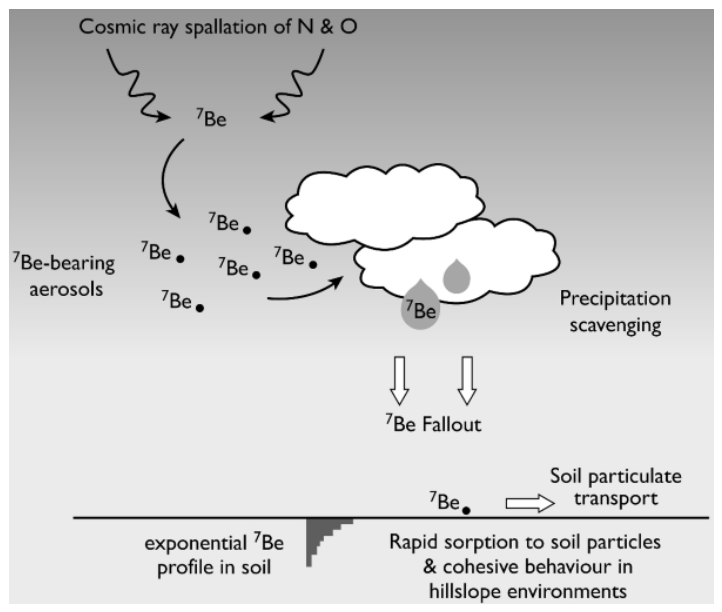
7Be is a radioactive isotope with a short half-life that originates in the Earth’s stratosphere, where cosmic rays split nitrogen and oxygen atoms, creating 7Be [72]. This isotope, with a half-life of approximately 53.22 days, preferentially binds to airborne particles. Precipitation serves as the primary removal mechanism for 7Be from the atmosphere [73]. As shown in Figure 7, this process is critical for geochronological investigations, such as calculating soil erosion rates [74] and sedimentation processes associated with episodic severe rainfall events [75]. In oceanographic investigations, 7Be is commonly used as a tracer to analyze water flow and mixing in the surface ocean. The presence of 7Be in young sediments [76] enables researchers to study mixing mechanisms, sediment dynamics, and accumulation patterns [77,78].
The cosmogenic radioisotope 3H has a half-life of 12.32 years, with an uncertainty of 2 years [79]. Tritium and oxygen combine to form water molecules, which precipitate onto Earth’s surface. Because of its unique properties, tritium is an important tracer for studying ocean circulation patterns [80].
Figure 7.
Schematic diagram of 7Be production and fallout [81].
4.3. Artificial Radionuclides
Cesium-137 (137Cs), a common fission byproduct with a half-life of approximately 30.05 years, serves as a valuable chronological tool (chronometric) in modern sediment studies. Nuclear bomb testing in the 1950s released 137Cs globally, establishing a distinct reference layer (initial appearance horizon) in undisturbed sediments corresponding to that period [82]. Peak deposition is estimated at approximately 1963, as exemplified in Figure 8 for the Aztec Reservoir, New Mexico [83]. Subsequent significant releases occurred following the Chornobyl nuclear disaster in May 1986 and the Fukushima Daiichi nuclear incident in March 2011. A study by [84] documented that Cesium-134 (134Cs) had reached a depth of around 10 cm in a sediment core from Lake Sniardwy, Poland, within 4 months following the Chornobyl fallout. Furthermore, 134Cs was detected at depths of 14–24 cm in cores collected from distinct locations 1 year later. Ref. [85] Holby and Evans,1996 reported similar findings of extensive Cesium isotope infiltration within Baltic Sea sediments, attributing this phenomenon to a mechanism other than bioturbation or diffusion.
Figure 8.
137Cs age dating of Aztec reservoir, New Mexico, USA (known dates: 1947, 1963, and 2017) [83].
In the same context, strontium-90 (90Sr) is a highly abundant long-lived radionuclide in global radioactive fallout from nuclear weapon testing in open environments. It has a half-life of 28.8 years and is widely used in radiometric dating. From 1953 to 1964, the Great Lakes region received strontium-90 deposits from fallout and precipitation resulting from nuclear testing. Nonetheless, aboveground nuclear weapon testing ceased after 1964, leading to a decrease in the annual deposition of Sr-90 in the region [30]. Americium-241 (241Am), characterized by a half-life of approximately 432.6 years, originates primarily from the radioactive decay of Plutonium-241 (241Pu), which is found in nuclear fallout. Both low-energy gamma-ray and alpha-particle spectrometry techniques are suitable for its analysis. Research by [86] indicates that 241Am exhibits lower mobility within lake sediments than cesium-137 (137Cs). This property makes it a valuable chronometer, particularly for the period following the early 1960s, when the reliability of 137Cs as a dating tool diminished. Ref. [87] Aston and Stanners, 1981 reported the efficient removal of americium from seawater, resulting in its deposition in sediments. The successful application of 241Am as a complementary chronometer for validating chronologies established using lead-210 (210Pb) has been documented in several studies [86,88,89].
5. Recent Lake Sediment Chronology Using Fallout Radionuclides (210Pb, 137Cs, and 241Am)
5.1. 210Pb Numerical Models
The initial application of the 210Pb method to lacustrine sediments for reconstructing depositional history and assessing contaminant input and burial was conducted by [44]. This method has proven to be a valuable tool for dating recent sedimentary deposits spanning up to approximately a century and has quickly gained widespread acceptance. Currently, 210Pb dating is commonly employed as one of several geochronometric techniques in most oceanographic or limnological studies of recent sedimentation [90,91]. Each dating model relies on environmental assumptions concerning the flux of excess 210Pb at the sediment–water interface and the sedimentation rate. Specifically, these models generally assume that: (1) the processes controlling 210Pb flux to the interface (e.g., atmospheric fallout, focusing, weather, and ocean circulation) have remained constant over the past century; (2) sedimentation processes (such as suspended matter sources, particle scavenging, and settling) have been stable during this period; and (3) 210Pb activity decreases over time according to radioactive decay and is not altered by post-depositional redistribution [92]. These models are typically used to (i) establish an age–depth relationship, where age (t) is expressed as a function of depth (z), and (ii) estimate accumulation rates, including sediment accumulation rate (SAR, si) and mass accumulation rate (MAR, ri).
5.1.1. Constant Initial Concentration (CIC) Model
The constant initial concentration (CIC) model assumes a constant initial activity of unsupported 210Pb (210Pbex) regardless of fluctuations in sediment accumulation rate [58,60]. However, these ideal conditions are uncommon, and most sediment environments experience variations in accumulation rates driven by natural or human factors. Modified CIC models can be employed under specific circumstances [88,93,94]. Nonetheless, the standard CIC model remains valid only if two criteria are met: (i) unsupported 210Pb activity decreases continuously with increasing depth, and (ii) the total inventories of 210Pb (210Pbex) in sediment cores from the same lake are roughly proportional to the average sedimentation rates within each core [59]. Age determination can be expressed as
where represents the radioactive decay constant of 210Pb; Ci and C0 denote the excess 210Pb concentrations at layer i and at the sediment surface, respectively. Estimation of accumulation rates (si;, ri;) requires determining layer ages.
The mean sediment accumulation rate (si, cm yr−1):
where z(i) is the depth of the layer experimentally determined.
The mean mass accumulation rate (ri, g cm −2 yr −1) is defined as
where m (i) is the mass depth of layer (i) represented by
where is the dry mass of section i (kg) and S/ is the cross-sectional area of the core.
Calculating uncertainty (u) in ti, si, ri, m(i), , and t(i) are calculated according to the equations presented by [62]:
5.1.2. Constant Rate of Supply (CRS) Model
A key assumption for the constant rate of supply (CRS) model is a steady flux of 210Pb to the sediment, while the rate of sediment accumulation can fluctuate [60]. The 210Pb (unsupported) integrated through the sediment core’s mass-depth profile aligns with the constant-flux integrated over the corresponding timescale. The accuracy of the CRS model hinges on a reliable estimate of the total unsupported 210Pb inventory, which must be in equilibrium with atmospheric inputs in each sediment core. It is based on comparing 210Pbex inventories below a given depth with the overall 210Pbex inventory in the sediment core. According to the CRS model, layer age (ti) at depth i, MAR (r, g cm−1 yr−1), and SAR (s, cm yr−1) can be estimated using the following equations [95]:
where A(i) is the accumulated 210Pbex inventory below layer (i), C(i) is the 210Pbex concentration in layer (i) and is the mean dry bulk density of a certain layer, is the width of section i (m).
The accumulated 210Pbex inventory below layer (i) is represented by
An accumulated 210Pbex deposit below section (i) and given by
The equations below [62] were used to calculate the uncertainties (u) associated with ti, si, ri, and :
210Pbex fluxes can be calculated by the following equation:
where A0 is the total inventory of 210Pbex.
5.1.3. Constant Flux Constant Sedimentation Rate (CFCS) Model
The constant flux, constant sedimentation (CFCS) model assumes a static environment with minimal sediment disturbance. This is achieved through mixing and lead (Pb) diffusion within the sediment layer [44,96]. The model hinges on two key conditions: consistent atmospheric deposition of a specific lead isotope (210Pbex) and unwavering sediment accumulation rates. These requirements render the CFCS model most applicable to environments with remarkable stability, where the influence of external factors is minimal [58,97]. Studies have demonstrated the effectiveness of the CFCS model in determining reliable sediment ages for lakes exhibiting constant sedimentation rates and consistent 210Pbex fluxes [98,99]. The CF–CS model assumes a constant flux to the sediment surface and a constant mass accumulation rate [59], which implies that the concentration Ci should decrease exponentially with depth. The mass accumulation rate (MAR) can be determined by performing a linear regression [100] of ln Ci against the mass depth mi using the following equation:
We can also determine sediment accumulation rate SAR (s, cm yr−1) from a linear regression analysis by using the section depth (zi) instead of mass depth (mi) [62,101]:
Using the CF-CS model, the sediment age t at a depth x can be calculated using the equation:
where is cumulative mass depth for section i.
5.2. 137Cs Method
The artificial radioisotope Cesium-137 (137Cs) serves as a well-established marker for dating recent sediments. Produced through nuclear fission, it was extensively released into the environment during atmospheric nuclear weapon testing programmes of the 1950s and 1960s, with a peak in fallout occurring in approximately 1963 [102]. This historical release is reflected in the environmental record by a three-peak pattern of 137Cs activity: (a) an initial peak corresponding to the aforementioned weapon testing period, with a maximum at approximately 1963 [103,104,105]; (b) a subsequent peak attributable to the Chernobyl nuclear accident of 1986; and (c) the most recent peak associated with the 2011 Fukushima Daiichi nuclear disaster [106]. As an example, the radiocaesium profile measured in a sediment core retrieved from the southern basin of Loch Lomond, UK (Figure 9) [94,107,108] clearly demonstrates this pattern: an initial appearance of 137Cs in approximately 1954 (at a depth of 9.5–10 cm), a peak in activity in approximately 1964 (at 5.7–6.0 cm) corresponding to weapons testing fallout, and a final peak at a depth of 1.8–2.1 cm attributable to the Chernobyl accident [107].
Figure 9.
137Cs profiles for the Loch Lomond sediment core [94,107,108].
Several limitations restrict the application of the 137Cs dating method:
- Temporal Scope: This technique is inapplicable to studies focusing on the 1950s, which predates the significant fallout events used as references.
- Geographic Bias: Uneven atmospheric circulation patterns and the placement of test locations during the nuclear era resulted in a pronounced disparity in 137Cs deposition between the Northern and Southern Hemispheres.
Concentrations in the Northern Hemisphere are roughly three times those in the Southern Hemisphere, hindering accurate dating in the latter region [109]. The concentration of 137Cs is corroborated by research across seven wetland sites in the United States [110], suggesting the potential obsolescence of 137Cs dating for wetland and sediment studies in this region. However, exceptions may exist in areas with exceptionally high 137Cs deposition or where the Chornobyl fallout peak is identifiable [111,112].
- Stand-Alone Usage: Sole reliance on 137Cs dating has long been discouraged by the scientific community [113], and its current use as a sole technique is no longer considered acceptable.
- Combined Dating Challenges: Even when employed in conjunction with 210Pb dating, this approach may yield ambiguous results due to frequent inconsistencies between the two methods in establishing a definitive chronology.
When the assumptions underlying the constant rate of supply (CRS) model are not satisfied, an alternative approach, the composite CRS (C-CRS) or correct CRS model, can be employed. This method, outlined by [9], utilizes independent age markers, such as cesium-137 (137Cs), to address these limitations. The C-CRS model is particularly advantageous when calculations based on the standard CRS model yield significant discrepancies, especially within sediment depth layers. These discrepancies can lead to an overestimation of the age of dated sediments when the CRS model is applied with a fixed time interval [9]. In other words, the C-CRS model addresses the issue of inaccurate age determination arising from inconsistencies in the standard CRS model calculations, particularly at specific sediment depths. As described by [9], the C-CRS model addresses this challenge by estimating a constant flux rate (P) of 210Pb within a defined section between two known dates (t1 and t2):
where the total inventory of 210Pbex between the reference depths x1 and x2, corresponding to the ages t1 and t2 (t1 is the sampling time and t2 is the marker of Cs-137) is denoted as ∆A. The age t at any depth x between x1 and x2 can be determined by solving Equation [24] as
where ∆Ax1−x is the total inventory of 210Pbex between depths x1 and x. The sedimentation rate r of the ith layer at time t can be calculated using the following formula:
5.3. 241Am Method
The presence of Americium-241 (241Am), a byproduct of nuclear weapon testing, has been confirmed in sediment cores. This identification is based on the characteristic gamma radiation emitted by 241Am at 59.5 keV, as measured with low background counting systems. Recent research on sediments from lakes with varying pH levels indicates that 241Am exhibits lower mobility than cesium-137 (137Cs). This property makes 241Am a more reliable tool for dating sediments originating from the early 1960s, a period where 137Cs records may be unreliable. Furthermore, 241Am can be employed to validate the accuracy of 137Cs-based dating methods, particularly in instances where sediment profiles have been disturbed. A comprehensive record of 241Am deposition up to 1987 is documented by [114]. Although 241Am exhibits lower activity levels than 137Cs, its distribution patterns within sediment cores provide a more accurate marker for the peak period of radioactive fallout, as demonstrated by [86].
The anthropogenic radionuclide 137Cs, produced during nuclear fission and released mainly through atmospheric nuclear weapons testing in the 1950s–1960s with a global maximum in 1963, as well as through nuclear accidents such as Chornobyl and Fukushima, is widely used as a chronostratigraphic marker in sediment studies [102,115]. In combination with 210Pb dating, 137Cs provides an important independent time marker that improves sediment chronology, particularly for the last ~60 years, as confirmed by interlaboratory comparisons of 210Pb methods [116].
Multiple studies demonstrate both the strengths and limitations of 137Cs stratigraphy in different environmental settings. In Lake Bosten (China), combined 210Pb and 137Cs dating revealed long-term hydrological variability driven by climatic and anthropogenic influences [117], while Yangtze River basin lakes showed increased post-1950s sedimentation rates consistent with nuclear fallout signals [118]. In North Indian lakes, 137Cs profiles generally follow the expected fallout sequence (early 1950s onset, late 1950s secondary peak, and dominant 1963–64 maximum), although early peaks may be missing due to high sedimentation rates or core limitations [119].
However, several studies highlight complications arising from post-depositional redistribution and overlapping fallout sources. In European mountain lakes such as Nižné Terianske Pleso, very high surficial 137Cs concentrations indicate dominance of Chornobyl-derived fallout (1986), which likely obscured the original weapons-testing signal due to downward migration processes [9]. In the same core, elevated 241Am activity between 0.2 and 1.0 cm identifies sediments corresponding to peak atmospheric weapons testing in the 1960s, providing a more stable marker of historical fallout. Similarly, in Redó Lake, a skewed 137Cs peak centered at ~1 cm depth reflects Chornobyl fallout, while deeper sediments (0.8–2.5 cm) containing both 137Cs and 241Am record partially overprinted signals from weapons fallout, limiting the precise identification of the 1963 horizon.
In contrast, studies from southern Chile demonstrate more severe limitations, where no well-defined 137Cs peak was observed despite its use as a chronological constraint. In these systems, 241Am was detected only in low-energy distal sediments and confirmed a mid-1960s fallout signal, highlighting its greater stability under low sedimentation conditions [120].
Table 2 synthesizes the comparative performance of the CIC, CRS, and CFCS 210Pb dating models across a wide range of lacustrine environments, including natural, volcanic, deltaic, reservoir, and anthropogenically impacted systems. The compiled studies show sedimentary conditions, hydrodynamic variability, and the availability of independent validation markers such as 137Cs and 241Am strongly control the model performance. Overall, the CRS model consistently demonstrates the highest and most stable reliability across most environments, particularly in systems with variable sedimentation rates, where reported age errors are typically ~5–20% and may improve to ~5–10% when constrained by independent stratigraphic markers [9,10,121,122,123,124,125]. In contrast, the CIC model shows more variable performance, with moderate reliability under stable conditions but substantially higher uncertainty in disturbed or dynamic environments, where age errors commonly range from ~10–45% or more due to sensitivity to changes in sedimentation and initial radionuclide concentration assumptions [10,61,121,125]. The CFCS model exhibits the least applicability, with moderate performance only in select environments and typical uncertainties of ~20–40%, reflecting its restrictive assumptions of constant flux and constant sedimentation rate [120]. Across all datasets, the best agreement between modeled ages and independent 137Cs/210Pb markers is observed in stable, stratified lakes, whereas the largest discrepancies occur in anthropogenically influenced, volcanic, or high-energy sedimentary systems. Overall, the synthesis confirms that CRS is the most robust and widely applicable 210Pb dating approach, whereas CIC and CFCS are more conditionally reliable and strongly dependent on environmental stability.
Table 2.
Comparative performance of 210Pb dating models (CIC, CRS, and CF-CS) across contrasting lacustrine environments: quantitative age error ranges in different countries.
6. Applications in Limnological Research
6.1. Sedimentation Processes in Lakes
Lake sediments are characterized by rapid accumulation and continuous deposition, making them valuable archives of past climate, environmental conditions, and human activities within lakes and their upstream watersheds [100]. Sedimentation refers to the complete process involving the transport of particles to the seabed, their deposition, possible redistribution, and long-term preservation [130]. Sediments are transported into lakes through streams, rivers, and overland flow. The rate at which sediments accumulate on the lakebed varies across different parts of the lake, depending on (i) the amount of sediment supplied by surrounding tributaries and the watershed, and (ii) internal circulation patterns influenced by wind and lake currents [131]. In addition, human activities such as deforestation, agriculture, and domestic waste disposal have significantly accelerated sedimentation rates. Once inside the lake, sediments gradually settle on the bottom, reducing water storage capacity, limiting light penetration, and promoting biological growth, all of which affect the overall functioning of the lake ecosystem [132]. In recent years, increasing anthropogenic pressures have severely altered the hydrological regimes of lakes across the country. The influx of eroded materials and pollutants from surrounding catchments has intensified both eutrophication and siltation processes [132].
Sedimentation rates can be accurately determined using radiometric techniques, which provide spatially detailed estimates across different parts of a water body, unlike conventional methods that yield only overall averages. These rates are typically derived by plotting radionuclide activity against sediment depth [131]. From such profiles, sedimentation rates can be calculated either by dividing sediment depth by the radionuclide time marker and the elapsed time since deposition [119] or by fitting a regression line to the activity data, depending on the radionuclide used. Elevated sedimentation rates have reduced the effective lifespan of many small lakes, with some shrinking at an alarming pace. This issue has become a major concern for authorities, underscoring the need to accurately determine sedimentation rates and identify their underlying causes to implement appropriate management strategies. Furthermore, estimates of lake lifespan provide insight into how long a lake remains functional for water-related uses before becoming significantly degraded [2].
6.2. Human Impacts and Catchment Change
Human activities, such as deforestation, agricultural practices, and domestic waste disposal, have significantly increased sedimentation rates in lakes. Sediments entering the lake gradually settle on the lakebed through natural processes, reducing water storage capacity, decreasing light penetration, and enhancing biological growth, ultimately affecting the overall functioning of the lake ecosystem [132]. In particular, sediments derived from agricultural lands and hilly terrains represent major sources of pollutants in rivers, lakes, and reservoirs [133].
In recent years, increasing anthropogenic pressures have severely altered the hydrological regimes of lakes across the country. The inflow of eroded materials and other contaminants from surrounding catchments has intensified eutrophication and accelerated siltation processes [132]. Ref. [118] Xiang et al., 2002 reported that elevated sedimentation rates in erosion-prone areas are largely associated with land reclamation for agriculture. Similarly, studies in the Jianghan Plain and Dongting region indicate that land reclamation since the 1950s has increased sediment deposition, resulting in reduced lake area and diminished flood control capacity, thereby negatively impacting the environment [134].
Conversely, the construction of water control structures, such as sluice gates, can also influence sedimentation patterns by regulating sediment inflow and outflow and by modifying hydrodynamic conditions through changes in water flow (2010). It has further been observed that sediment accumulation rates in large lakes of the middle and lower Yangtze Basin (MLYB) do not always reflect catchment erosion history, whereas smaller lakes tend to be more sensitive to catchment disturbances [135]. In recent decades, the growing impact of human activities on the environment has received global attention, particularly in geology, ecology, and environmental sciences [136]. Metal pollution in aquatic systems poses serious risks to ecosystem health and human well-being due to its toxicity, persistence, and tendency to accumulate [137]. These metals originate from both natural sources—such as rock weathering and atmospheric deposition—and anthropogenic sources, including agricultural runoff, municipal discharge, and industrial effluents [138,139].
Radiometric techniques, particularly lead-210 (210Pb) dating, have proven to be reliable tools for reconstructing historical environmental changes [27,68,140]. Sediment core analysis using 210Pb has been widely applied to trace historical trends of heavy metal contamination in estuaries [141], lakes [142], river catchments [143], and reservoirs [144]. Over recent decades, human activities such as mining, industrial discharge, fertilizer application, and enhanced soil erosion have intensified heavy metal pollution [30]. Therefore, identifying the sources of heavy metal contamination is essential for developing effective prevention, control, and remediation strategies [145].
6.3. Integration with Other Paleolimnological Proxies
Paleolimnology is the scientific discipline concerned with reconstructing past environmental conditions by analyzing lake (lacustrine) sediments [146]. This method uses a variety of physical, geochemical, and biological proxies in conjunction with radioisotope dating techniques like 137Cs, 210Pb, and 14C to establish a trustworthy chronological framework for interpreting environmental changes in lake systems and their surrounding catchments [60,147,148]. As a well-developed field, paleolimnology utilizes a wide range of abiotic proxies—such as bulk density, dry mass, radioactive isotopes, and mineral composition—and biotic proxies, including fossils, species abundance, presence/absence, and pigments preserved in sediments. These indicators enable the reconstruction of ecosystem changes over timescales ranging from years and decades to centuries and millennia [149,150]. Intact sediment cores, varying from a few centimeters to several hundred meters in length, can be retrieved from depositional basins using coring devices or drilling systems [151].
Following core collection, paleoecological analysis focuses on examining these proxies to develop detailed reconstructions of past environmental conditions. This process forms the foundation of paleolimnology and provides essential context for related fields such as resurrection ecology [152]. In paleolimnological research, proxies are frequently categorized according to their relationship to lake trophic conditions. Because primary productivity and organic matter sources directly affect geochemical indicators like total organic carbon (TOC), total nitrogen (TN), total phosphorus (TP), carbon-to-nitrogen ratios (C/N), and stable isotopes (δ13C and δ13N), they are trustworthy indicators of trophic evolution [153,154,155,156]. By contrast, biological proxies reflect nutrient changes indirectly by responding to shifts in habitat conditions, resource availability, and ecological dynamics. Among these, diatoms, fossil pigments, chironomids, and sedimentary DNA (sedDNA) are widely used to investigate human-induced eutrophication [157,158,159,160,161,162,163]. Information on the presence, abundance, morphology, and preservation state of these proxies provides critical insights into past environmental conditions, depositional settings, and ecological dynamics.
A particularly robust approach in paleolimnology is multiproxy analysis (Figure 10), which involves the integrated study of several physical, chemical, and biological indicators within sediment cores [164]. This method provides a more comprehensive understanding of the timing, magnitude, and drivers of environmental change, including atmospheric deposition, habitat alteration, eutrophication, and associated food-web dynamics [26]. For example, studies of Australian billabongs have demonstrated how multiproxy analyses can reveal the impacts of eutrophication on diatom, macrophyte, Cladocera, and chironomid communities [165].
Figure 10.
Integrated framework of paleolimnological methodology: from sediment recovery to ecosystem reconstruction [26,146,152,164].
7. Methodological Challenges and Uncertainty
Radiometric dating has made a revolutionary contribution to the study of sedimentary processes [166]. Variability in atmospheric isotope flux plays a critical role in the accuracy and reliability of several radiometric dating techniques, including fallout radionuclides (210Pb, 137Cs, 241Am), radiocarbon (14C), and cosmogenic isotopes such as 7Be and 3H. These methods rely on assumptions about the constancy or predictability of isotope input to environmental systems; however, both natural and anthropogenic processes introduce significant temporal and spatial variability.
For 210Pb dating, atmospheric supply originates from the decay of radon (222Rn), which is emitted from terrestrial surfaces and subsequently deposited via precipitation. The 210Pb fallout rate is locally governed by wet deposition and varies considerably over time, from hours to years, with annual fallout fluxes globally ranging from 0.1 to 360 Bq m−2 y−1 [167]. Early work by [60] established models such as the Constant Rate of Supply (CRS), which assume a steady atmospheric flux. However, later studies showed that climatic variability, including changes in precipitation and atmospheric circulation, can significantly alter 210Pb deposition rates, introducing uncertainties in sediment chronologies [1]. These variations may result in inaccurate estimates of sediment accumulation rates if they are not adequately considered. While periodic (harmonic) and random fluctuations in atmospheric flux tend to balance each other and thus have limited influence on CRS-derived age estimates, they can nevertheless introduce artificial variability into sediment accumulation rates (SARs). In contrast, long-term (persistent) changes in flux lead to cumulative errors in CRS ages that cannot be adequately corrected, even with piecewise CRS models. Despite these limitations, both raw and piecewise CRS approaches remain useful tools when their assumptions and conditions of applicability are properly understood [31].
In the same context, most 210Pb dating models rely on three key assumptions: (i) the sediment sequence is continuous, with no missing layers due to erosion or major episodic deposition; (ii) excess 210Pb acts as a particle-bound tracer, deposited at the sediment–water interface (SWI) onto existing material; and (iii) no post-depositional redistribution occurs. However, in natural settings, these assumptions are often violated. Processes such as mixing and diffusion have been widely observed and modeled (e.g., [14,168,169,170,171]). Additionally, non-ideal deposition can occur in sediments with high surface porosity [172], while erosional and episodic depositional events are common in dynamic environments (e.g., [130,173]). Even when these assumptions are approximately met, they may still be insufficient to establish a reliable chronology.
Similarly, anthropogenic radionuclides such as 137Cs and 241Am are strongly influenced by episodic atmospheric inputs. These isotopes were primarily introduced during mid-20th-century nuclear weapons testing and events such as the Chornobyl disaster. Atmospheric nuclear weapons testing is the main source of radioactive contamination in the Arctic region. It is estimated that approximately 75% of 137Cs and 95% of 90Sr inventories in the North Atlantic originate from global fallout resulting from atmospheric nuclear weapons testing [174]. Research by [175] highlighted the high spatial variability in 137Cs deposition, driven by differences in rainfall patterns and local environmental conditions. As a result, while 137Cs is often used as a chronological marker (e.g., the 1963 fallout peak), its reliability can be compromised by post-depositional redistribution and uneven initial deposition. 241Am, derived from plutonium decay, is often used to validate 137Cs chronologies, but it is similarly affected by regional variability in fallout patterns [176]. Overall, these studies highlight that while 210Pb dating remains a powerful tool for reconstructing recent environmental change, its accuracy depends heavily on environmental stability and model selection. In dynamic, human-impacted systems, integrating multiple tracers (e.g., 137Cs) and complementary geochemical approaches is essential to reduce uncertainty and enhance the robustness of chronological interpretations [1,125,129]. This approach has proven especially valuable in studies of Lake Edku and Burullus Lagoon [125,129], where cross-referencing helped ensure robust geochronologies despite environmental variability.
Radiocarbon dating is subject to several limitations that affect its accuracy and reliability. One of the main challenges is the reservoir effect, where different carbon reservoirs such as oceans, lakes, and the atmosphere exhibit varying 14C concentrations, leading to apparent age offsets in samples. Additionally, atmospheric 14C levels are not constant over time; they fluctuate due to changes in solar activity, geomagnetic field strength, and carbon cycle dynamics, making calibration essential for accurate age determination. Anthropogenic influences further complicate the method, as nuclear weapons testing has increased atmospheric 14C (the “bomb effect”), while fossil fuel combustion has diluted it (the “Suess effect”), both altering the natural baseline. Calibration studies led by Minze Stuiver and Paula J. Reimer have demonstrated that uncalibrated radiocarbon ages can deviate significantly from true calendar ages [177]. Consequently, the use of calibration curves is essential to correct for these temporal variations in atmospheric 14C production.
Another important issue is isotope fractionation, where physical, chemical, and biological processes preferentially select lighter isotopes, thereby affecting measured ratios and requiring correction. Furthermore, contamination from external carbon sources, such as dissolved ancient carbonates or organic matter, can introduce older carbon into samples and yield erroneously old ages. Regional differences in atmospheric mixing and hemispheric variations also contribute to inconsistencies in radiocarbon ages. Finally, analytical uncertainties related to sample preparation, measurement techniques, and instrument precision, particularly for older samples, can further reduce dating accuracy. Overall, these factors demonstrate that radiocarbon dating requires careful calibration and methodological control to produce reliable chronological results [177].
Cosmogenic isotopes such as 7Be and 3H are particularly sensitive to short-term atmospheric processes. 7Be, with a half-life of approximately 53 days, shows strong seasonal variability linked to atmospheric circulation and precipitation patterns. Studies by [178] indicate that 7Be deposition is highly episodic, limiting its use to short-term environmental tracing rather than absolute dating. Tritium (3H), by contrast, experienced a dramatic increase during the 1950s and 1960s due to nuclear weapons testing. According to [179], accurate use of tritium in hydrological studies requires detailed knowledge of historical atmospheric input functions, as its variability directly affects age interpretations of groundwater systems.
The literature consistently demonstrates that variability in atmospheric isotope fluxes introduces significant uncertainty into radiometric dating methods. These uncertainties arise from deviations in initial isotope concentrations, spatial heterogeneity in deposition, and temporal fluctuations in production rates. To mitigate these effects, modern approaches incorporate calibration models, independent chronological markers, and multi-proxy analyses. Such strategies are essential for improving the robustness and accuracy of radiometric dating in environmental and geological studies.
Table 3 provides a structured comparative overview of the key radioisotopic dating techniques, summarizing their reliability, principal methodological limitations, and conditions under which their application may fail. Overall, fallout radionuclide-based approaches, particularly 210Pb, 137Cs, and 241Am, remain the most widely applied tools for reconstructing recent sediment chronologies; however, their accuracy is strongly dependent on stable depositional conditions, well-constrained radionuclide input functions, and minimal post-depositional redistribution. The 210Pb method offers high-resolution age–depth reconstructions over the past ~100–150 years, though its reliability depends on appropriate model selection (CIC, CRS, or CF-CS), particularly in environments with variable sedimentation regimes. The 137Cs and 241Am tracers provide valuable independent chronostratigraphic markers for validating 210Pb-derived chronologies, but their effectiveness may be compromised by low fallout intensity, sediment mixing, and post-depositional mobility. In contrast, cosmogenic and radiocarbon-based methods (14C, 7Be, and 3H) extend the temporal applicability of sediment dating but introduce additional uncertainties associated with reservoir effects, short half-lives, and variability in atmospheric input histories. Collectively, the table highlights that no single isotopic method is universally applicable, and robust chronological interpretation requires the integrated use of multiple tracers, along with a clear understanding of site-specific environmental and sedimentological conditions.
Table 3.
Comparative overview of radioisotopic dating methods: reliability, principal limitations, and conditions of potential failure.
8. Recommendations
The application of radioisotopic techniques in lake sediment studies has been widely recognized as a robust approach for reconstructing environmental histories. Based on the reviewed literature, several key recommendations emerge that can enhance the reliability, applicability, and integration of these methods within limnological and environmental research frameworks.
A consistent finding across previous studies is the need to employ multi-isotope approaches rather than relying on a single radionuclide. Numerous authors have demonstrated that combining isotopes such as 210Pb, 137Cs, and 241Am improves chronological control and allows cross-validation of sediment age models. While 210Pb remains the most widely used method for reconstructing recent (the last ~100–150 years) sedimentation histories, its assumptions are often challenged by environmental variability. In this context, 137Cs and 241Am serve as independent time markers associated with known historical events (e.g., nuclear weapons testing and nuclear accidents), thereby strengthening chronological interpretations.
In parallel, the literature strongly supports integrating radiometric dating with multiproxy paleolimnological approaches. Studies in paleolimnology emphasize that chronological frameworks derived from radioisotopes are most effective when combined with biological, geochemical, and physical indicators preserved in sediments. Such integration enables more comprehensive reconstructions of past environmental conditions, including nutrient enrichment, pollution history, and ecological shifts. This multiproxy strategy is increasingly considered essential for disentangling complex interactions between natural variability and anthropogenic impacts.
Another critical aspect highlighted in previous research is the importance of selecting appropriate numerical models for 210Pb dating. Models such as Constant Initial Concentration (CIC), Constant Rate of Supply (CRS), and Constant Flux–Constant Sedimentation (CF-CS) are widely used; however, their applicability depends heavily on site-specific conditions. Several studies have shown that violations of model assumptions—such as variable sedimentation rates or fluctuating atmospheric inputs—can lead to significant chronological errors. Consequently, recent approaches advocate for the use of modified or composite models (e.g., C-CRS), supported by independent chronostratigraphic markers.
The literature also emphasizes the need for a thorough understanding of local environmental processes prior to applying radiometric techniques. Factors such as sediment mixing (bioturbation), diffusion, erosion, and episodic deposition can alter radionuclide distributions within sediment profiles. These processes may compromise the fundamental assumptions of radiometric dating models, leading to inaccurate age-depth relationships. Therefore, site-specific investigations and sedimentological assessments are essential components of reliable geochronological studies.
A recurring theme in global research is the significance of regional calibration and atmospheric deposition data. Variability in radionuclide fallout, particularly for 210Pb and 137Cs, has been documented across different climatic and geographic settings. The development of regional databases for radionuclide deposition is therefore recommended to improve chronological accuracy and reduce uncertainties associated with global generalizations. Variability in radionuclide fallout is particularly relevant for regions such as Egypt, where localized studies remain limited.
Furthermore, the literature consistently highlights the importance of quantifying and reporting uncertainties in radiometric dating. Sources of uncertainty include analytical measurement errors, variability in isotope flux, model assumptions, and post-depositional processes. Advanced statistical approaches and uncertainty-propagation methods are increasingly incorporated into sediment chronology studies to enhance transparency and reliability.
Table 4 presents a comprehensive synthesis of recommended radioisotopic dating methods and numerical models based on lake characteristics and prevailing environmental conditions. The table demonstrates that the reliability of sediment chronologies is primarily determined by depositional dynamics, sediment mixing intensity, geochemical conditions, availability of independent stratigraphic markers, and temporal scope of the investigated sediments. Among the evaluated approaches, the CRS model is identified as the most broadly applicable framework for environments with variable sedimentation rates. In contrast, the CIC and CF-CS models are most suitable for relatively stable depositional conditions in which their assumptions hold. The table also highlights the importance of integrating independent fallout radionuclides such as 137Cs and 241Am, especially in disturbed or heterogeneous sedimentary systems where standalone 210Pb chronologies may be uncertain.
Table 4.
Recommended radioisotopic dating methods and numerical models based on lake characteristics and prevailing environmental conditions.
Additionally, the synthesis recognizes the influence of bioturbation, sediment redistribution, pH-dependent radionuclide mobility, and regional fallout variability on chronological reliability. The inclusion of geographic considerations, particularly the reduced fallout inventories in the Southern Hemisphere, further enhances the practical applicability of the proposed framework. Collectively, the table presents a scientifically robust and well-structured decision-support scheme that clearly demonstrates the necessity of site-specific model selection and multiproxy validation to achieve reliable sediment chronologies across contrasting lacustrine environments.
9. Conclusions
This review highlights the fundamental role of radioisotopic techniques in advancing the understanding of lake sediment dynamics, sediment chronology, and historical environmental change in lacustrine systems. The application of natural, cosmogenic, and artificial radionuclides, particularly 210Pb, 137Cs, 241Am, 7Be, 3H, and 14C, has provided reliable chronological frameworks across a wide range of temporal scales, from short-term sedimentary processes to long-term paleoenvironmental reconstructions extending over thousands of years. These techniques have significantly contributed to the reconstruction of sedimentation rates, contaminant accumulation histories, nutrient enrichment, eutrophication trends, and broader anthropogenic impacts on lake ecosystems. Consequently, radioisotopic approaches have become indispensable tools in limnological and environmental investigations aimed at understanding ecosystem evolution and supporting evidence-based environmental management.
The reviewed studies demonstrate that the effectiveness of radioisotopic methods is substantially enhanced when multiple radionuclides are integrated within a multiproxy framework that includes geochemical, biological, and sedimentological indicators. Such integration improves chronological reliability and strengthens the interpretation of environmental signals preserved in lake sediments. In addition, the use of appropriate numerical dating models and uncertainty assessment procedures is crucial for improving the accuracy and robustness of sediment age reconstructions. The reviewed literature further confirms that radioisotopic methods are highly valuable for correlating sediment records with documented historical events, thereby enabling more precise evaluation of environmental disturbances associated with industrialization, land-use changes, atmospheric deposition, and climate variability.
Despite these advantages, several methodological and interpretational limitations remain associated with the application of radioisotopic techniques in lake sediment studies. The reliability of sediment chronologies depends strongly on the validity of model assumptions, the relative stability of radionuclide supply, and the preservation of undisturbed sedimentary sequences. Processes such as sediment mixing, bioturbation, erosion, post-depositional radionuclide mobility, and spatial heterogeneity in atmospheric deposition may introduce considerable uncertainties into age determinations and sedimentation rate estimates. Furthermore, reservoir effects, variations in isotope fluxes, and analytical uncertainties can affect the consistency and comparability of results among different studies and environmental settings.
In addition to the methodological limitations of the techniques themselves, this review is also subject to certain limitations that should be acknowledged. The available literature is not evenly distributed geographically, with a substantial proportion of studies originating from well-investigated regions such as Europe and North America, whereas tropical, arid, and developing regions remain comparatively underrepresented. This regional imbalance may limit the broader generalization of some findings to lakes with different climatic, geological, and hydrological characteristics. Moreover, the depth of discussion among radionuclides is inherently uneven because some isotopes, particularly 210Pb and 137Cs, have received considerably greater scientific attention and methodological development than less commonly applied tracers. Differences in study objectives, sampling strategies, analytical procedures, and reporting standards across the reviewed literature may also affect the comparability of studies.
Future research should therefore prioritize refining and standardizing radioisotopic methodologies, particularly through the development of region-specific calibration datasets, improved uncertainty quantification methods, and the application of advanced numerical and statistical models. Greater emphasis should also be placed on interdisciplinary investigations that integrate radiometric techniques with complementary paleolimnological, geochemical, ecological, and remote sensing approaches to provide more comprehensive reconstructions of environmental change. Expanding research efforts in understudied regions and lake systems will further improve the global applicability of radioisotopic interpretations and strengthen understanding of regional environmental variability.
The synthesis presented in this review demonstrates that radioisotopic techniques, when appropriately applied and integrated with complementary proxies, provide robust but method-dependent reconstructions of lake sediment histories. Accuracy is strongly controlled by site-specific conditions and modeling assumptions, underscoring the need for continued methodological refinement and regionally tailored applications.
Funding
This research was funded by the National Institute of Oceanography and Fisheries (NIOF).
Data Availability Statement
The original contributions presented in this study are included in the article. Further inquiries can be directed to the corresponding author.
Acknowledgments
During the preparation of this manuscript, the authors used ChatGPT (OpenAI, GPT-5.5) to assist in the development and visualization of Figure 4 and Figure 10 based on the authors’ data, analyses, and scientific interpretations. The tool was used to support figure design, graphical presentation, and organization of information. The authors reviewed and edited all outputs, verified their accuracy against the original data, and take full responsibility for the content of this publication.
Conflicts of Interest
The author declare no conflicts of interest.
References
- Appleby, P.G. Chronostratigraphic Techniques in Recent Sediments. In Tracking Environmental Change Using Lake Sediments; Last, W.M., Smol, J.P., Eds.; Springer: Dordrecht, The Netherlands, 2001; pp. 171–203. [Google Scholar]
- Palani, B.; Vasudevan, S.; Ramkumar TRajendiran, S.; Gunasekaran, S. Determination of sedimentation rates and life of Kodaikanal Lake, South India, using radiometric dating (210Pb and 137Cs) techniques. Environ. Earth Sci. 2023, 82, 228. [Google Scholar] [CrossRef] [Scilit]
- Pappa, F.K.; Tsabaris, C.; Patiris, D.L.; Androulakaki, E.G.; Eleftheriou, G.; Betsou, C.; Michalopoulou, V.; Kokkoris, M.; Vlastou, R. Historical trends and assessment of radionuclides and heavy metals in sediments near an abandoned mine, Lavrio, Greece. Environ. Sci. Pollut. Res. 2018, 25, 30084–30100. [Google Scholar] [CrossRef] [Scilit] [PubMed]
- Pappa, F.K.; Tsabaris, C.; Patiris, D.L.; Eleftheriou, G.; Ioannidou, A.; Androulakaki, E.G.; Kokkoris, M.; Vlastou, R. Temporal investigation of radionuclides and heavy metals in a coastal mining area at Ierissos Gulf, Greece. Environ. Sci. Pollut. Res. 2019, 26, 27457–27469. [Google Scholar] [CrossRef] [Scilit] [PubMed]
- Alhajji, E.; Ismail, I.M.; Al-Masri, M.S.; Salman, N.; Al-Haleem, M.A.; Doubal, A.W. Sedimentation rates in the Lake Qattinah using 210Pb and 137Cs as geochronometers. Geochron 2014, 41, 81–86. [Google Scholar]
- Begy, R.; Cosma, C.; Timar, A. Recent changes in Red Lake (Romania) sedimentation rate determined from depth profiles of 210Pb and 137Cs radioisotopes. J. Environ. Radioact. 2009, 100, 644–648. [Google Scholar] [CrossRef] [Scilit] [PubMed]
- Putyrskaya, V.; Klemt, E.; Röllin, S.; Astner, M.; Sahli, H. Dating of sediments from four Swiss prealpine lakes with 210Pb determined by gamma-spectrometry: Progress and problems. J. Environ. Radioact. 2015, 145, 78–94. [Google Scholar] [CrossRef] [Scilit] [PubMed]
- Flower, R.J.; Appleby, P.G.; Thompson, J.R.; Ahmed, M.H.; Ramdani, M.; Chouba, L.; Rose, N.; Rochester, R.; Ayache, F.; Kraiem, M.M.; et al. Sediment distribution and accumulation in lagoons of the Southern Mediterranean Region. Hydrobiologia 2009, 622, 85–112. [Google Scholar] [CrossRef] [Scilit]
- Appleby, P.G. Radiometrie dating of sediment records in European mountain lakes. J. Limnol. 2000, 59, 1–14. [Google Scholar] [CrossRef] [Scilit]
- Imam, N.; Ghonamy, S. The potential influence of drains on the recent sediment characteristics and sedimentation rates of Lake Qarun, Western Desert Egypt. Environ. Earth Sci. 2023, 82, 373. [Google Scholar] [CrossRef] [Scilit]
- Sanchez-Cabeza, J.A.; Masqué, P.; Ani-Ragolta, I.; Merino, J.; Frignani, M.; Alvisi, F.; Palanques, A.; Puig, P. Sediment accumulation rates in the southern Barcelona continental margin derived from 210Pb and 137Cs chronology. Prog. Oceanogr. 1999, 44, 313–332. [Google Scholar] [CrossRef] [Scilit]
- Lu, X.; Matsumoto, E. Recent sedimentation rates derived from 210Pb and 137Cs methods in Ise Bay, Japan. Estuar. Coast. Shelf Sci. 2005, 65, 83–93. [Google Scholar] [CrossRef] [Scilit]
- Alonso-Hernández, C.; Díaz-Asencio, M.; Munoz-Caravaca, A.; Delfanti, R.; Papucci, C.; Ferretti, O.; Crovato, C. Recent changes in sedimentation regime in Cienfuegos Bay, Cuba, as inferred from 210Pb and 137Cs vertical profiles. Cont. Shelf Res. 2006, 26, 153–167. [Google Scholar] [CrossRef] [Scilit]
- Robbins, J.A.; Edgington, D.N. Determination of recent sedimentation rates in Lake Michigan using Pb-210 and Cs-137. Geochim. Cosmochim. Acta 1975, 39, 285–304. [Google Scholar] [CrossRef] [Scilit]
- Erten, H.N. Radiochronological methods as tools to study environmental pollution. In Survival and Sustainability—Environmental Concerns in the 21st Century; Springer: Berlin/Heidelberg, Germany, 2011; pp. 1015–1022. [Google Scholar]
- Ciszewski, D.; Łokas, E. Application of 239,240 Pu, 137Cs and heavy metals for dating of river sediments. Geochronometria 2019, 46, 138–147. [Google Scholar] [CrossRef] [Scilit]
- Wu, F.; Zheng, J.; Liao, H.; Yamada, M.; Wan, G. Anomalous plutonium isotopic ratios in sediments of Lake Qinghai from the Qinghai-Tibetan Plateau, China. Environ. Sci. Technol. 2011, 45, 9188–9194. [Google Scholar] [CrossRef] [Scilit] [PubMed]
- Cao, L.; Ishii, N.; Zheng, J.; Kagami, M.; Pan, S.; Tagami, K.; Uchida, S. Vertical distributions of Pu and radiocesium isotopes in sediments from Lake Inba after the Fukushima Daiichi Nuclear Power Plant accident. Appl. Geochem. 2017, 78, 287–294. [Google Scholar] [CrossRef] [Scilit]
- Baud, A.; Aulard, C.; Ghanbari, H.; Fradette, M.; Antoniades, D.; Del Giorgio, P.; Huot, Y.; Francus, P.; Smol, J.; Gregory-Eaves, I. A framework for 210Pb model selection and its application to 37 cores from Eastern Canada to identify the dynamics and drivers of lake sedimentation rates. Earth Surf. Process. Landf. 2022, 47, 2518–2530. [Google Scholar] [CrossRef] [Scilit]
- Moir, K.E.; Windle, M.J.S.; Cumming, B.F.; Ridal, J.J. Nearshore sedimentary mercury concentrations reflect legacy point sources. Environ. Toxicol. Chem. 2021, 40, 1788–1799. [Google Scholar] [CrossRef] [Scilit] [PubMed]
- Shen, Z.; Bloemendal, J.; Mauz, B.; Chiverrell, R.C.; Dearing, J.A.; Lang, A.; Liu, Q. Holocene environmental reconstruction of sediment-source linkages at Crummock Water, English Lake District. Holocene 2008, 18, 129–140. [Google Scholar] [CrossRef] [Scilit]
- Bíró, L.; Polgári, M.; Tóth, T.M.; Vigh, T.; Kávási, N.; Sahoo, S.K. Terrestrial radioisotopes as paleoenvironmental proxies in sedimentary formations. J. Radioanal. Nucl. Chem. 2015, 306, 289–293. [Google Scholar] [CrossRef] [Scilit]
- Zougrou, Ι.M.; Stoulos, S.; Kantiranis, N.; Papadopoulou, L.; Ioakeimidis, I.; Katsikini, M.; Paloura, E.; Tsoukala, E. Natural radioactivity studies in a paleontology site and paleoclimate interpretation of the last 8 Mya. J. Environ. Radioact. 2018, 193, 1–14. [Google Scholar] [CrossRef] [Scilit] [PubMed]
- Champion, D.C.; Huston, D.L. Radiogenic isotopes, ore deposits and metallogenic terranes: Novel approaches based on regional isotopic maps. Ore Geol. Rev. 2016, 76, 229–256. [Google Scholar] [CrossRef] [Scilit]
- Rasskazov, S.V.; Brandt, S.B.; Brandt, I.S. Radiogenic Isotopes in Geologic Processes; Springer Science & Business Media: Berlin/Heidelberg, Germany, 2009. [Google Scholar]
- Sayer, C.D.; Bennion, H.; Davidson, T.A.; Burgess, A.; Clarke, G.; Hoare, D.; Frings, P.J. The application of palaeolimnology to evidence-based lake management and conservation: Examples from UK lakes. Aquat. Conserv. Mar. Freshw. Ecosyst. 2012, 22, 165–180. [Google Scholar] [CrossRef] [Scilit]
- Xu, M.; Dong, X.; Yang, X.; Chen, X.; Zhang, Q.; Liu, Q.; Wang, R.; Yao, M.; Davidson, T.A.; Jeppesen, E. Recent sedimentation rates of shallow lakes in the middle and lower reaches of the Yangtze River. Water 2017, 9, 617. [Google Scholar] [CrossRef] [Scilit]
- Hill, J.W.; McCreary, T.W.; Kolb, D.K. Chemistry for Changing Times, 14th ed.; Pearson: London, UK, 2015. [Google Scholar]
- Ivanov, M.M.; Kuzmenkova, N.V.; Rozhkova, A.K.; Grabenko, E.A.; Grachev, A.M.; Golosov, V.N. The anthropogenic fallout radionuclides in soils of Mount Khuko (the Western Caucasus) and their application for determination of sediment redistribution. J. Environ. Radioact. 2022, 248, 106880. [Google Scholar] [CrossRef] [Scilit] [PubMed]
- Pittauerova, D. Gamma Spectrometry for Chronology of Recent Sediments. Doctoral Dissertation, Universität Bremen, Bremen, Germany, 2013. [Google Scholar]
- Abril, J.M. Radiometric dating of recent sediments: On the performance of 210Pb-based CRS chronologies under varying rates of supply. Quat. Geochronol. 2019, 51, 1–14. [Google Scholar] [CrossRef] [Scilit]
- Banerji, U.S.; Goswami, V.; Joshi, K.B. Quaternary dating and instrumental development: An overview. J. Asian Earth Sci. X 2022, 7, 100091. [Google Scholar] [CrossRef] [Scilit]
- Banner, J.L. Radiogenic isotopes: Systematics and applications to earth surface processes and chemical stratigraphy. Earth-Sci. Rev. 2004, 65, 141–194. [Google Scholar] [CrossRef] [Scilit]
- Lanphere, M. Radiometric dating. In Encyclopedia of Physical Science and Technology; Meyers, R.A., Ed.; Academic Press: New York, NY, USA, 2001; pp. 721–730. [Google Scholar]
- Blackwell, B.A.B.; Skinner, A.R.; Blickstein, J.I.B.; Montoya, A.C.; Florentin, J.A.; Baboumian, S.M.; Ahmed, I.J.; Deely, A.E. ESR in the 21st century: From buried valleys and deserts to the deep ocean and tectonic uplift. Earth Sci. Rev. 2016, 158, 125–159. [Google Scholar] [CrossRef] [Scilit]
- Walker, M. Quaternary Dating Methods, 1st ed.; Wiley: Chichester, UK, 2005. [Google Scholar]
- Thompson, W. U-series dating. In Encyclopedia of Quaternary Science; Elias, S.A., Ed.; Elsevier: Oxford, UK, 2007; pp. 3099–3104. [Google Scholar]
- Dickin, A.P. Radiogenic Isotope Geology; Cambridge University Press: Cambridge, UK, 2018. [Google Scholar]
- Schmidt, S.; Cochran, J.K. Radium and radium-daughter nuclides in carbonates: A brief overview of strategies for determining chronologies. J. Environ. Radioact. 2010, 101, 530–537. [Google Scholar] [CrossRef] [Scilit] [PubMed]
- Koide, M.; Bruland, K.W.; Goldberg, E.D. Th-228/Th-232 and Pb-210 geochronologies in marine and lake sediments. Geochim. Cosmochim. Acta 1973, 37, 1171–1187. [Google Scholar] [CrossRef] [Scilit]
- Fairclough, A.; Plater, A.J.; Appleby, P. Determination of Holocene sedimentation rates from a carbonate lake using excess 226Ra profiles. Earth Planet. Sci. Lett. 2006, 243, 115–127. [Google Scholar] [CrossRef] [Scilit]
- Grayson, R.P.; Plater, A.J. An excess 226Ra chronology for deep-sea sediments from Saanich Inlet, British Columbia. Chem. Geol. 2007, 244, 646–663. [Google Scholar] [CrossRef] [Scilit]
- Krane, K.S. Introductory Nuclear Physics; John Wiley & Sons: Hoboken, NJ, USA, 1991. [Google Scholar]
- Krishnaswamy, S.; Lal, D.; Martin, J.M.; Meybeck, M. Geochronology of lake sediments. Earth Planet. Sci. Lett. 1971, 11, 407–414. [Google Scholar] [CrossRef] [Scilit]
- Persson, B.R.R.; Holm, E. Polonium-210 and lead-210 in the terrestrial environment: A historical review. J. Environ. Radioact. 2011, 102, 420–429. [Google Scholar] [CrossRef] [Scilit] [PubMed]
- Turekian, K.K.; Cochran, J.K.; Nozaki, Y. Growth rate of a clam from the Galapagos Rise hot spring field using natural radionuclide ratios. Nature 1979, 280, 385–387. [Google Scholar] [CrossRef] [Scilit]
- Chao, J.H.; Niu, H.; Chiu, C.Y.; Lin, C. A potential dating technique using the 228Th/228Ra ratio for tracing the chronosequence of elemental concentrations in plants. Appl. Radiat. Isot. 2007, 65, 641–648. [Google Scholar] [CrossRef] [Scilit] [PubMed]
- Kandlbinder, R.; Geißler, V.; Schupfner RWolfbeis, O.; Zinka, B. Analyzing 228Th, 232Th, 228Ra in human bone tissues for the purpose of determining the post mortal interval. J. Radioanal. Nucl. Chem. 2009, 280, 113–119. [Google Scholar] [CrossRef] [Scilit]
- Grasty, R.L.; Smith, C.W.; Franklin, J.M.; Jonasson, I.R. Radioactive orphans in barite-rich chimneys, Axial Caldera, Juan de Fuca Ridge. Can. Miner. 1988, 26, 627–636. [Google Scholar]
- Reyes, A.O.; Moore, W.S.; Stakes, D.S. 228Th/228Ra ages of a barite-rich chimney from the Endeavor Segment of the Juan de Fuca Ridge. Earth Planet. Sci. Lett. 1995, 131, 99–113. [Google Scholar] [CrossRef] [Scilit]
- Voltaggio, M.; Andretta, D.; Taddeucci, A. Dating of newly formed minerals in geothermal fields through 232Th series short-lived isotopes. Geothermics 1987, 16, 255–261. [Google Scholar] [CrossRef] [Scilit]
- Chen, H.Y.; Huh, C.A. 232Th–228Ra–228Th disequilibrium in East China Sea sediments. J. Environ. Radioact. 1999, 42, 93–100. [Google Scholar] [CrossRef] [Scilit]
- Legeleux, F.; Reyss, J.L.; Schmidt, S. Particle mixing rates in sediments of the northeast tropical Atlantic. Earth Planet. Sci. Lett. 1994, 128, 545–562. [Google Scholar] [CrossRef] [Scilit]
- Chanton, J.P.; Martens, C.S.; Kipphut, G.W. Lead-210 sediment geochronology in a changing coastal environment. Geochim. Cosmochim. Acta 1983, 47, 1791–1804. [Google Scholar] [CrossRef] [Scilit]
- Crusius, J.; Anderson, R.F. Evaluating the mobility of 137Cs, 239+240Pu and 210Pb from their distributions in laminated lake sediments. J. Paleolimnol. 1995, 13, 119–141. [Google Scholar] [CrossRef] [Scilit]
- Simms, A.D.; Woodroffe, C.; Jones, B.G.; Heijnis, H.; Mann, R.A.; Harrison, J. Use of 210Pb and 137Cs to simultaneously constrain ages and sources of post-dam sediments in the Cordeaux reservoir. J. Environ. Radioact. 2008, 99, 1111–1120. [Google Scholar] [CrossRef] [Scilit] [PubMed]
- Monte, L.; Grimani, C.; Desideri, D.; Angeli, G. Modelling the long-term behaviour of radiocaesium and radiostrontium in two Italian lakes. J. Environ. Radioact. 2005, 80, 105–123. [Google Scholar] [CrossRef] [Scilit] [PubMed]
- Appleby, P.G.; Oldfield, F. Applications of Lead-210 to Sedimentation Studies; Clarendon Press: Oxford, UK, 1992. [Google Scholar]
- Appleby, P.G.; Oldfield, F. The assessment of 210Pb data from sites with varying sediment accumulation rates. Hydrobiologia 1983, 103, 29–35. [Google Scholar] [CrossRef] [Scilit]
- Appleby, P.G.; Oldfield, F. The calculation of lead-210 dates assuming a constant rate of supply of unsupported 210Pb to the sediment. Catena 1978, 5, 1–8. [Google Scholar] [CrossRef] [Scilit]
- McDonald, C.P.; Urban, N.R. Sediment radioisotope dating across a stratigraphic discontinuity in a mining-impacted lake. J. Environ. Radioact. 2007, 92, 80–95. [Google Scholar] [CrossRef] [Scilit] [PubMed]
- Sanchez-Cabeza, J.A.; Ruiz-Fernández, A.C. 210Pb sediment radiochronology: An integrated formulation and classification of dating models. Geochim. Cosmochim. Acta 2012, 82, 183–200. [Google Scholar] [CrossRef] [Scilit]
- Hajdas, I.; Ascough, P.; Garnett, M.H.; Fallon, S.J.; Pearson, C.L.; Quarta, G.; Spalding, K.L.; Yamaguchi, H.; Yoneda, M. Radiocarbon dating. Nat. Rev. Methods Prim. 2021, 1, 62. [Google Scholar] [CrossRef] [Scilit]
- Broecker, W.S. Calcite accumulation rates and glacial to interglacial changes in oceanic mixing. In Late Cenozoic Glacial Ages; Turekian, K.K., Ed.; Yale University Press: New Haven, CT, USA, 1971; pp. 239–265. [Google Scholar]
- Fowler, A.J.; Gillespie, R. Radiocarbon Dating of Sediments. Radiocarbon 1986, 28, 441–450. [Google Scholar] [CrossRef] [Scilit]
- Olsson, I.U. A critical analysis of14C datings of deposits containing little carbon. In Proceedings of the 8th International Conference on Radiocarbon Dating; Rafter, T.A., Grant-Taylor, T., Eds.; Royal Society of New Zealand: Wellington, New Zealand, 1972; pp. G1l–G18. [Google Scholar]
- Schoute, J.F.; Mook, W.G.; Streurman, H.J. Radiocarbon dating of vegetation horizons. In Proceedings of the First International Symposium 14 C and Archaeology, Groningen; Mook, W.G., Waterbolk, H.T., Eds.; Council of Europe: Strasbourg, France, 1983; pp. 295–311. [Google Scholar]
- Wang, X.; Yang, H.; Gu, Z.; Zhang, M.; Yang, B. A century of change in sediment accumulation and trophic status in Lake Fuxian, a deep plateau lake of Southwestern China. J. Soils Sediments 2018, 18, 1133–1146. [Google Scholar]
- McGeehin, J.; Burr, G.S.; Jull, A.J.T.; Reines, D.; Gosse, J.; Davis, P.T.; Muhs, D.; Southon, J.R. Stepped-combustion C-14 dating of sediment: A comparison with established techniques. Radiocarbon 2001, 43, 255–261. [Google Scholar] [CrossRef] [Scilit]
- Jull, A.J.T.; Iturralde-Vinent, M.; O’Malley, J.M.; MacPhee, R.D.E.; McDonald, H.G.; Martin, P.S.; Moody, J.; Rincón, A. Radiocarbon dating of extinct fauna in the Americas recovered from tar pits. Nucl. Instrum. Methods Phys. Res. Sect. B Beam Interact. Mater. Atoms. 2004, 223–224, 668–671. [Google Scholar] [CrossRef] [Scilit]
- Brock, F.; Higham, T.; Ditchfield, P.; Bronk, C. Current Pretreatment Methods for Ams Radiocarbon Dating at the Oxford Radiocarbon Accelerator Unit (Orau). Radiocarbon 2010, 52, 103–112. [Google Scholar] [CrossRef] [Scilit]
- Yoshimori, M.; Hirayama, H.; Mori, S.; Sasaki, K.; Sakurai, H. Be-7 nuclei produced by galactic cosmic rays and solar energetic particles in the Earth’s atmosphere. Adv. Space Res. 2003, 32, 2691–2696. [Google Scholar] [CrossRef] [Scilit]
- Papastefanou, C.; Ioannidou, A. Beryllium-7 and solar activity. Appl. Radiat. Isot. 2004, 61, 1493–1495. [Google Scholar] [CrossRef] [Scilit] [PubMed]
- Jha, A. Quantification of Short-Term Erosion Rates Using the Cosmogenic Radionuclide 7Be. Ph.D Thesis, University of Bremen, Bremen, Germany, 2012. [Google Scholar]
- Wilson, C.G.; Matisoff, G.; Whiting, P.J. Short-term erosion rates from a 7Be inventory balance. Earth Surf. Process. Landf. 2003, 28, 967–977. [Google Scholar] [CrossRef] [Scilit]
- Fischer, H.W.; Ulbrich, S.; Pittauerová, D.; Hettwig, B. Medical radioisotopes in the environment–following the pathway from patient to river sediment. J. Environ. Radioact. 2009, 100, 1079–1085. [Google Scholar] [CrossRef] [Scilit] [PubMed]
- Dibb, J.E.; Rice, D.L. Temporal and spatial distribution of beryllium-7 in the sediments of Chesapeake Bay. Estuar. Coast. Shelf Sci. 1989, 28, 395–406. [Google Scholar] [CrossRef] [Scilit]
- Zhu, J.; Olsen, C.R. Beryllium-7 atmospheric deposition and sediment inventories in the Neponset River estuary, Massachusetts, USA. J. Environ. Radioact. 2009, 100, 192–197. [Google Scholar] [CrossRef] [Scilit] [PubMed]
- National Nuclear Data Center. Nuclear Science References, Version of 2011 Information Extracted from the NSR Database [Dataset Referencing BR03]. Available online: https://www.nndc.bnl.gov/nsr/ (accessed on 9 June 2026).
- Povinec, P.P.; Delfanti, R.; Gastaud, J.; Rosa, J.L.; Morgenstern, U.; Oregioni, B.; Pham, M.K.; Salvi, S.; Top, Z. Anthropogenic radionuclides in Indian Ocean surface waters—The indian ocean transect 1998. Deep Sea Res. Part II Top. Stud. Oceanogr. 2003, 50, 2751–2760. [Google Scholar] [CrossRef] [Scilit]
- Mabit, L.; Blake, W. Assessing Recent Soil Erosion Rates through the Use of Beryllium-7 (Be-7); Springer: Berlin/Heidelberg, Germany, 2019; Volume 7. [Google Scholar] [CrossRef] [Scilit]
- Leslie, C.; Hancock, G.J. Estimating the date corresponding to the horizon of the first detection of 137Cs and 239+ 240Pu in sediment cores. J. Environ. Radioact. 2008, 99, 483–490. [Google Scholar] [CrossRef] [Scilit] [PubMed]
- Blake, J.M.; Brown, J.E.; Ferguson, C.L.; Bixby, R.J.; Delay, N.T. Sediment record of mining legacy and water quality from a drinking-water reservoir, Aztec, New Mexico, USA. Environ. Earth Sci. 2020, 79, 404. [Google Scholar] [CrossRef] [Scilit]
- Robbins, J.A.; Jasinski, A.W. Chernobyl fallout radionuclides in Lake Sniardwy, Poland. J. Environ. Radioact. 1995, 26, 157–184. [Google Scholar] [CrossRef] [Scilit]
- Holby, O.; Evans, S. The vertical distribution of Chernobyl-derived radionuclides in a Baltic Sea sediment. J. Environ. Radioact. 1996, 33, 129–145. [Google Scholar] [CrossRef] [Scilit]
- Appleby, P.G.; Richardson, N.; Nolan, P.J. 241Am dating of lake sediments. Hydrobiologia 1991, 214, 35–42. [Google Scholar] [CrossRef] [Scilit]
- Aston, S.R.; Stanners, D.A. Americium in intertidal sediments from the coastal environs of Windscale. Mar. Pollut. Bull. 1981, 12, 149–153. [Google Scholar] [CrossRef] [Scilit]
- Appleby, P.G. Three decades of dating recent sediments by fallout radionuclides: A review. Holocene 2008, 18, 83–93. [Google Scholar] [CrossRef] [Scilit]
- O’Reilly, J.; León Vintró, L.; Mitchell, P.; Donohue, I.; Leira, M.; Hobbs, W.; Irvine, K. 210Pb-dating of a lake sediment core from Lough Carra (Co. Mayo, western Ireland): Use of paleolimnological data for chronology validation below the 210Pb dating horizon. J. Environ. Radioact. 2011, 102, 495–499. [Google Scholar] [CrossRef] [Scilit] [PubMed]
- Gale, S.J. Event chronostratigraphy: A high-resolution tool for dating the recent past. Quat. Geochronol. 2009, 4, 391–399. [Google Scholar] [CrossRef] [Scilit]
- Baskaran, M. Po-210 and Pb-210 as atmospheric tracers and global atmospheric Pb-210 fallout: A review. J. Environ. Radioact. 2011, 102, 500–513. [Google Scholar] [CrossRef] [Scilit] [PubMed]
- Schirone, A.; Rožmarić, M.; Barsanti, M.; Raiteri, G.; Sanchez-Cabeza, J.A.; García-Tenorio, R.; Osvath, I. Assessment of measurement accuracy in 210Pb dating sediment methods. Quat. Geochronol. 2022, 69, 101255. [Google Scholar] [CrossRef] [Scilit]
- McCall, P.L.; Robbins, J.A.; Matisoff, G. 137Cs and 210Pb transport and geochronologies in urbanized reservoirs with rapidly increasing sedimentation rates. Chem. Geol. 1984, 44, 33–65. [Google Scholar] [CrossRef] [Scilit]
- Farmer, J.G.; Eades, L.J.; Mackenzie, A.B.; Kirika, A.; Bailey-Watts, T.E. Stable lead isotope record of lead pollution in Loch Lomond sediments since 1630 AD. Environ. Sci. Technol. 1996, 30, 3080–3083. [Google Scholar] [CrossRef] [Scilit]
- Loan, B.T.T.; Nhon, D.H.; Ve, N.D.; Luu, N.T.M.; Sieu, L.N.; Hue, N.T.; Van Vuong, B.; Nghi, D.T.; Van Nam, L.; Dung, P.T.; et al. Assessment of the distribution and ecological risks of heavy metals in coastal sediments in Vietnam’s Mong Cai area. Environ. Monit. Assess. 2023, 195, 164. [Google Scholar] [CrossRef] [Scilit]
- Goldberg, E.D. Geochronology with 210Pb. In Proceedings of the Symposium on Radioactive Dating Held by the International Atomic Energy Agency in Co-Operation with the Joint Commission on Applied Radioactivity, Radioactive Dating, Athens, Greece, 19–23 November 1962; pp. 121–131. [Google Scholar]
- Robbins, J.A.; Edgington, D.N.; Kemp, A.L.W. Comparative 210Pb, 137Cs, and pollen geochronologies of sediments from Lakes Ontario and Erie. Quat. Res. 1978, 10, 256–278. [Google Scholar] [CrossRef] [Scilit]
- Jweda, J.; Baskaran, M. Interconnected riverine–lacustrine systems as sedimentary repositories: Case study in southeast Michigan using 210Pb and 137Cs-based sediment accumulation and mixing models. J. Great Lakes Res. 2011, 37, 432–446. [Google Scholar] [CrossRef] [Scilit]
- Baskaran, M.; Nix, J.; Kuyper, C.; Karunakara, N. Problems with the dating of sediment core using excess 210Pb in a freshwater system impacted by large-scale watershed changes. J. Environ. Radioact. 2014, 138, 355–363. [Google Scholar] [CrossRef] [Scilit] [PubMed]
- Guo, J.; Costa, O.S.; Wang, Y.; Lin, W.; Wang, S.; Zhang, B.; Cui, Y.; Fu, H.; Zhang, L. Accumulation rates and chronologies from depth profiles of 210Pbex and 137Cs in sediments of northern Beibu Gulf, South China sea. J. Environ. Radioact. 2020, 213, 106136. [Google Scholar] [CrossRef] [Scilit] [PubMed]
- Bruel, R.; Sabatier, P. Serac: A R package for ShortlivEd RAdionuclide chronology of recent sediment cores. J. Environ. Radioact. 2020, 225, 106449. [Google Scholar] [CrossRef] [Scilit] [PubMed]
- Kumar, A.; Rout, S.; Chopra, M.K.; Mishra, D.G.; Singhal, R.K.; Ravi, P.M.; Tripathi, R.M. Modeling of 137Cs migration in cores of marine sediments of Mumbai Harbor Bay. J. Radioanal. Nucl. Chem. 2014, 301, 615–626. [Google Scholar] [CrossRef] [Scilit]
- UNSCEAR. Ionizing Radiation: Sources and Biological Effects (United Nations Scientific Committee on the Effects of Atomic Radiation, 1982 Report to the General Assembly, with Annexes); United Nations: New York, NY, USA, 1982. [Google Scholar]
- He, Q.; Walling, D.E. Interpreting particle size effects in the adsorption of 137Cs and unsupported 210Pb by mineral soils and sediments. J. Environ. Radioact. 1996, 30, 117–137. [Google Scholar] [CrossRef] [Scilit]
- Carter, M.W.; Moghissi, A.A. Three Decades of Nuclear Testing. Health Phys. 1977, 33, 55–71. [Google Scholar] [CrossRef] [Scilit] [PubMed]
- Stäger, F.; Zok, D.; Schiller, A.K.; Feng, B.; Steinhauser, G. Disproportionately High Contributions of 60 Year Old Weapons-137Cs Explain the Persistence of Radioactive Contamination. Environ. Sci. Technol. 2023, 57, 13601–13611. [Google Scholar] [CrossRef] [Scilit] [PubMed]
- Eades, L.J.; Farmer, J.G.; MacKenzie, A.B.; Kirika, A.; Bailey-Watts, A.E. Stable lead isotopic characterisation of the historical record of environmental lead contamination. Sci. Total Environ. 2002, 292, 55–67. [Google Scholar] [CrossRef] [Scilit] [PubMed]
- MacKenzie, A.B.; Hardie, S.M.; Farmer, J.G.; Eades, L.J.; Pulford, I.D. Analytical and sampling constraints in 210Pb dating. Sci. Total Environ. 2011, 409, 1298–1304. [Google Scholar] [CrossRef] [Scilit] [PubMed]
- UNSCEAR. Sources and Effects of Ionizing Radiation (United Nations Scientific Committee on the Effects of Atomic Radiation, 2000 Report to the General Assembly); United Nations: New York, NY, USA, 2000. [Google Scholar]
- Drexler, J.Z.; Fuller, C.C.; Archfield, S. The approaching obsolescence of 137Cs dating of wetland soils in North America. Quat. Sci. Rev. 2018, 199, 83–96. [Google Scholar] [CrossRef] [Scilit]
- Lami, A.; Turner, S.; Musazzi, S.; Gerli, S.; Guilizzoni, P.; Rose, N.L.; Yang, H.; Wu, G.; Yang, R. Sedimentary Evidence for Recent Increases in Production in Tibetan Plateau Lakes. Hydrobiologia 2010, 648, 175–187. [Google Scholar] [CrossRef] [Scilit]
- White, S.J.O.; Keach, C.; Hemond, H.F. Atmospheric Deposition of Indium in the Northeastern United States: Flux and Historical Trends. Environ. Sci. Technol. 2015, 49, 12705–12713. [Google Scholar] [CrossRef] [Scilit] [PubMed]
- Milan, C.S.; Swenson, E.M.; Turner, R.E.; Lee, J.M. Assessment of the 137Cs Method for Estimating Sediment Accumulation Rates. J. Coast. Res. 1995, 11, 296–307. [Google Scholar]
- Cambray, R.S.; Playford, K.; Lewis, G.N.J.; Carpenter, R.C. Radioactive Fallout in Air and Rain: Results to the end of 1987; Report A.E.R.E.-R 13226 DOE/RW/89/059; Environmental and Medical Sciences Division, Harwell Laboratory: Harwell, UK, 1989; 20p. [Google Scholar]
- Min, B.I.; Periáñez, R.; Kim, I.G.; Suh, K.S. Marine dispersion assessment of 137Cs released from the Fukushima nuclear accident. Mar. Pollut. Bull. 2013, 72, 22–33. [Google Scholar] [CrossRef] [Scilit] [PubMed]
- Barsanti, M.; Garcia-Tenorio, R.; Schirone, A.; Rozmaric, M.; Ruiz-Fernández, A.C.; Sanchez-Cabeza, J.A.; Delbono, I.; Conte, F.; De Oliveira Godoy, J.M.; Heijnis, H.; et al. Challenges and limitations of the 210Pb sediment dating method: Results from an IAEA modelling interlaboratory comparison exercise. Quat. Geochronol. 2020, 59, 101093. [Google Scholar] [CrossRef] [Scilit]
- Ma, L.; Ab, J.; Li, W. Environmentally sensitive grain-size component records and its response to climatic and anthropogenic influences in Bosten Lake region, China. Sci. Rep. 2020, 10, 942. [Google Scholar] [CrossRef] [Scilit] [PubMed]
- Xiang, L.; Lu, X.X.; Higgitt, D.L.; Wang, S.M. Recent lake sedimentation in the middle and lower Yangtze basin inferred from 137Cs and 210Pb measurements. J. Asian Earth Sci. 2002, 21, 77–86. [Google Scholar] [CrossRef] [Scilit]
- Kumar, B.; Rai, S.P.; Nachiappan, R.P.; Saravana Kumar, U.; Singh, S.; Diwedi, V.K. Sedimentation rate in North Indian lakes estimated using137Cs and210Pb dating techniques. Curr. Sci. 2007, 92, 1416–1420. [Google Scholar]
- Arnaud, F.; Magand, O.; Chapron, E.; Bertrand, S.; Boës, X.; Charlet, F.; Mélières, M.A. Radionuclide dating (210Pb, 137Cs, 241Am) of recent lake sediments in a highly active geodynamic setting (Lakes Puyehue and Icalma-Chilean Lake District). Sci. Total Environ. 2006, 366, 837–850. [Google Scholar] [CrossRef] [Scilit]
- Turner, L.J.; Delorme, L.D. Assessment of 210Pb data from Canadian lakes using the CIC and CRS models. Environ. Geol. 1996, 28, 78–87. [Google Scholar] [CrossRef] [Scilit]
- Begy, R.; Cosma, C.; Horvath, Z. Sediment accumulation rate in the red lake (Romania) determined by Pb-210 and Cs-137 radioisotopes. Rom. Rep. Phys. 2009, 54, 943–949. [Google Scholar]
- Begy, R.C.; Timar-Gabor, A.; Somlai, J.; Cosma, C. A sedimentation study of st. ana lake (Romania) applying the 210pb and 137Cs dating methods. Geochronometria 2011, 38, 93–100. [Google Scholar] [CrossRef] [Scilit]
- Begy, R.C.; Simon, H.; Kelemen, S.; Preoteasa, L. Investigation of sedimentation rates and sediment dynamics in Danube Delta lake system (Romania) by 210Pb dating method. J. Environ. Radioact. 2018, 192, 95–104. [Google Scholar] [CrossRef] [Scilit] [PubMed]
- Imam, N.; Ghanem, A.; Nada, A.; Abu-Zeid, H.; Shetaia, S.A.; Madcour, W.E. 210Pb and 137Cs dating models as tracers of recent sedimentary processes of the shallow lake under anthropogenic activity. Sci. Rep. 2026, 16, 10756. [Google Scholar] [CrossRef] [Scilit] [PubMed]
- Nomura, R.; Inoue, M. Comparison of different radionuclide dating models for estimating the ages of sediments from Lakes Shinji-ko and Nakaumi, 2019, Japan. Laguna 2019, 26, 3–26. [Google Scholar] [CrossRef] [Scilit]
- Cheevaporn, V.M.P.; Liu, S.; Narentuya Xia, B.; Chu, G.; Tian, M.; de Souza, V.L.B.; Rodrigues, K.R.G.; Pedroza, E.H.; de Melo, R.T.; de Lima, V.L.; et al. Sedimentation rate and 210Pb sediment dating at apipucos reservoir, Recife, Brazil. Sustainability 2012, 4, 2419–2429. [Google Scholar] [CrossRef] [Scilit]
- El-Daoushy, F.; Eriksson, M.G. Radiometric dating of recent lake sediments from a highly eroded area in semiarid Tanzania. J. Paleolimnol. 1998, 19, 377–383. [Google Scholar] [CrossRef] [Scilit]
- Ghanem, A.; Nada, A.; Abu-Zeid, H.; Madcour, W.E.; Shetaia, S.A.; Imam, N. Historical trends of heavy metals applying radio-dating and neutron activation analysis (NAA) in sediment cores, Burullus Lagoon, Egypt. Environ. Sci. Pollut. Res. 2024, 31, 43633–43658. [Google Scholar] [CrossRef] [Scilit] [PubMed]
- Szarlowicz, K.; Stobinski, M.; Hamerlik, L.; Bitusik, P. Origin and behavior of radionuclides in sediment core: A case study of the sediments collected from man-made reservoirs located in the past mining region in Central Slovakia. Environ. Sci. Pollut. Res. 2019, 26, 7115–7122. [Google Scholar] [CrossRef] [Scilit] [PubMed]
- Post, R.A. Determining Lake Sedimentation Rates Using Radionuclide Tracers. Master’s Thesis, University of Iowa, Iowa City, IA, USA, 2011. [Google Scholar]
- Singh, S.; Thakural, L.N.; Kumar, B. Estimation of sediment rates and life of Sagar Lake using radiometric dating techniques. Water Resour. Manag. 2008, 22, 443–455. [Google Scholar] [CrossRef] [Scilit]
- Shi, C.; He, H.; Xia, Z.; Gan, H.; Xue, Q.; Cui, Z.; Chen, J. Heavy metals and Pb isotopes in a marine sediment core record environmental changes and anthropogenic activities in the Pearl River Delta over a century. Sci. Total Environ. 2022, 814, 151934. [Google Scholar] [CrossRef] [Scilit] [PubMed]
- Du, Y.; Xue, H.; Wu, S.; Ling, F.; Xiao, F.; Wei, X. Lake area changes in the middle Yangtze region of China over the 20th century. J. Environ. Manag. 2011, 92, 1248–1255. [Google Scholar] [CrossRef] [Scilit] [PubMed]
- Xue, B.; Yao, S. Recent sedimentation rates in lakes in lower Yangtze River basin. Quat. Int. 2011, 244, 248–253. [Google Scholar] [CrossRef] [Scilit]
- Yan, J.; Guo, X.; He, M.; Niu, Z.; Xu, M.; Peng, B.; Yang, Y.; Jin, Z. Metals and microorganisms in a Maar lake sediment core indicating the anthropogenic impact over last 800 years. Sci. Total Environ. 2024, 911, 168392. [Google Scholar] [CrossRef] [Scilit] [PubMed]
- Liu, S.; Yu, F.; Lang, T.; Ji, Y.; Fu, Y.; Zhang, J.; Ge, C. Spatial distribution of heavy metal contaminants: The effects of water-sediment regulation in the Henan section of the Yellow River. Sci. Total Environ. 2023, 892, 164568. [Google Scholar] [CrossRef] [Scilit] [PubMed]
- Ashraf, A.; Saion, E.; Gharibshahi, E.; Kamari, H.M.; Yap, C.K.; Hamzah, M.S.; Elias, M.S. Distribution of Trace Elements in Core Marine Sediments of Coastal East Malaysia by Instrumental Neutron Activation Analysis. Appl. Radiat. Isot. 2017, 122, 96–105. [Google Scholar] [CrossRef] [Scilit] [PubMed]
- Singh, K.K.; Vasudevan, S. Reconstruction of sedimentation rates based on the chronological framework of Lake Pykara, Tamil Nadu, India. Environ. Monit. Assess. 2021, 193, 428. [Google Scholar] [CrossRef] [Scilit] [PubMed]
- Ye, Z.; Chen, J.; Gao, L.; Liang, Z.; Li, S.; Li, R.; Jin, G.; Shimizu, Y.; Onodera, S.; Saito, M.; et al. 210Pb dating to investigate the historical variations and identification of different sources of heavy metal pollution in sediments of the Pearl River Estuary, Southern China. Mar. Pollut. Bull. 2020, 150, 110670. [Google Scholar] [CrossRef] [Scilit] [PubMed]
- Sun, Y.; Cheng, H.; Jiang, S.; Yin, Y.; Yang, L.; Leng, X. Historical Record of Heavy Metals since MIS 2 in a Sediment Core of Laizhou Bay, China. Preprints 2024. [Google Scholar] [CrossRef] [Scilit]
- Gu, X.; Han, X.; Han, Y.; Luo, W.; Feng, M.; Xu, D.; Xing, P.; Wu, Q.L. Sedimentary records and stable lead isotopes reveal increasing anthropogenic impacts on Heavy metal accumulation in a Plateau Lake of China over the last 100 years. J. Hazard. Mater. 2022, 440, 129860. [Google Scholar] [CrossRef] [Scilit]
- Wu, Q.; Li, R.; Chen, J.; Yang, Z.; Li, S.; Yang, Z.; Liang, Z.; Gao, L. Historical construction, quantitative source identification and risk assessment of heavy metals contamination in sediments from the Pearl River Estuary, South China. J. Environ. Manag. 2024, 359, 120943. [Google Scholar] [CrossRef] [Scilit] [PubMed]
- Zhou, Y.; Wang, J.; Zou, M.; Jia, Z.; Zhou, S.; Li, Y. Microplastics in soils: A review of methods, occurrence, fate, transport, ecological and environmental risks. Sci. Total Environ. 2020, 748, 141368. [Google Scholar] [CrossRef] [Scilit] [PubMed]
- Huang, Z.; Liu, C.; Zhao, X.; Dong, J.; Zheng, B. Risk assessment of heavy metals in the surface sediment at the drinking water source of the Xiangjiang River in South China. Environ. Sci. Eur. 2020, 32, 23. [Google Scholar] [CrossRef] [Scilit]
- Smol, J.P. Paleolimnology: An Important Tool for Effective Ecosystem Management. J. Aquat. Ecosyst. Health 1992, 1, 49–58. [Google Scholar] [CrossRef] [Scilit]
- Fritz, S.C.; Juggins, S.; Battarbee, R.W.; Engstrom, D.R. Reconstruction of Past Changes in Salinity and Climate Using a Diatom-Based Transfer Function. Nature 1991, 352, 706–708. [Google Scholar] [CrossRef] [Scilit]
- Appleby, P.G.; Birks, H.H.; Flower, R.J.; Rose, N.; Peglar, S.M.; Ramdani, M.; Kraïem, M.M.; Fathi, A.A. Radiometrically determined dates and sedimentation rates for recent sediments in nine North African wetland lakes (the CASSARINA project). Aquat. Ecol. 2001, 35, 347–367. [Google Scholar] [CrossRef] [Scilit]
- Cohen, A.S. Paleolimnology: The History and Evolution of Lake Systems; Oxford University Press: Oxford, UK, 2003; 500p. [Google Scholar]
- Last, W.M.; Smol, J.P. (Eds.) Tracking Environmental Change Using Lake Sediments: Vol. 1: Basin Analysis, Coring, and Chronological Techniques; Springer: Dordrecht, The Netherlands, 2001; 548p. [Google Scholar]
- Wright, H.E. Coring tips. J. Paleolimnol. 1991, 6, 37–49. [Google Scholar] [CrossRef] [Scilit]
- Burge, D.R.L.; Edlund, M.B.; Frisch, D. Paleolimnology and resurrection ecology: The future of reconstructing the past. Evol. Appl. 2018, 11, 42–59. [Google Scholar] [CrossRef] [Scilit] [PubMed]
- Kenney, W.F.; Waters, M.N.; Schelske, C.L.; Brenner, M. Sediment Records of Phosphorus-Driven Shifts to Phytoplankton Dominance in Shallow Florida Lakes. J. Paleolimnol. 2002, 27, 367–377. [Google Scholar] [CrossRef] [Scilit]
- Winston, B.; Hausmann, S.; Escobar, J.; Kenney, W.F. A Sediment Record of Trophic State Change in an Arkansas (USA) Reservoir. J. Paleolimnol. 2014, 51, 393–403. [Google Scholar] [CrossRef] [Scilit]
- Wengrat, S.; Bennion, H.; Ferreira PAde, L.; Figueira, R.C.L.; Bicudo, D.C. Assessing the Degree of Ecological Change and Baselines for Reservoirs: Challenges and Implications for Management. J. Paleolimnol. 2019, 62, 337–357. [Google Scholar] [CrossRef] [Scilit]
- Torres, I.C.; Inglett, P.W.; Brenner, M.; Kenney, W.F.; Reddy, K.R. Stable Isotope (δ13C and δ15N) Values of Sediment Organic Matter in Subtropical Lakes of Different Trophic Status. J. Paleolimnol. 2012, 47, 693–706. [Google Scholar] [CrossRef] [Scilit]
- Bennion, H.; Fluin, J.; Simpson, G.L. Assessing Eutrophication and Reference Conditions for Scottish Freshwater Lochs Using Subfossil Diatoms. J. Appl. Ecol. 2004, 41, 124–138. [Google Scholar] [CrossRef] [Scilit]
- Lima, A.L.; Hubeny, J.B.; Reddy, C.M.; King, J.W.; Hughen, K.A.A.; Eglinton, T.I. High-resolution historical records from Pettaquamscutt River basin sediments: 1. 210Pb and varve chronologies validate record of 137Cs. Geochim. Cosmochim. Acta 2005, 69, 1803–1812. [Google Scholar] [CrossRef] [Scilit]
- Makri, S.; Lami, A.; Lods-Crozet, B.; Loizeau, J.-L. Reconstruction of Trophic State Shifts over the Past 90 Years in a Eutrophicated Lake in Western Switzerland. J. Paleolimnol. 2019, 61, 129–145. [Google Scholar]
- Langdon, P.G.; Ruiz, Z.O.E.; Brodersen, K.P.; Foster, I.D. Assessing Lake Eutrophication Using Chironomids: Understanding the Nature of Community Response. Freshw. Biol. 2006, 51, 562–577. [Google Scholar] [CrossRef] [Scilit]
- Ni, Z.; Zhang, E.; Meng, X.; Sun, W.; Ning, D. Chironomid-Based Reconstruction of 500-Year Water-Level Changes in Daihai Lake, Northern China. Catena 2023, 227, 107122. [Google Scholar] [CrossRef] [Scilit]
- Ibrahim, A.; Capo, E.; Wessels, M.; Martin, I.; Meyer, A.; Schleheck, D.; Epp, L.S. Anthropogenic Impact on the Historical Phytoplankton Community of Lake Constance Reconstructed by Multimarker Analysis of Sediment-Core Environmental DNA. Mol. Ecol. 2021, 30, 3040–3056. [Google Scholar] [CrossRef] [Scilit]
- Zhang, H.; Huo, S.; Yeager, K.M.; Wu, F. Sedimentary DNA Record of Eukaryotic Algal and Cyanobacterial Communities in a Shallow Lake. Sci. Total Environ. 2021, 753, 141985. [Google Scholar] [CrossRef] [Scilit] [PubMed]
- Birks, H.H.; Peglar, S.M.; Boomer, I.; Flower, R.J.; Ramdani, M.; Appleby, P.G.; Bjune, A.E.; Patrick, S.T.; Kraiem, M.M.; Fathi, A.A.; et al. Palaeolimnological responses of nine North African lakes in the CASSARINA Project to recent environmental changes and human impact detected by plant macrofossil, pollen, and faunal analyses. Aquat. Ecol. 2001, 35, 405–430. [Google Scholar] [CrossRef] [Scilit]
- Davidson, T.A.; Reid, M.A.; Sayer, C.D.; Chilcott, S. Palaeolimnological records of shallow lake biodiversity change: Exploring the merits of single versus multi-proxy approaches. J. Paleolimnol. 2013, 49, 431–446. [Google Scholar] [CrossRef] [Scilit]
- Carroll, J.; Lerche, I. Sedimentary Processes: Quantification Using Radionuclides; Elsevier: Oxford, UK, 2003. [Google Scholar]
- Mabit, L.; Benmansour, M.; Abril, J.M.; Walling, D.E.; Meusburger, K.; Iurian, A.R.; Bernard, C.; Tarjan, S.; Owens, P.N.; Blake, W.H.; et al. Fallout 210Pb asa soil and sediment tracer in catchment sediment budget investigations: A review. Earth Sci. Rev. 2014, 138, 335–351. [Google Scholar] [CrossRef] [Scilit]
- Christensen, E.R. A model for radionuclides in sediments influenced by mixing and compaction. J. Geophys. Res. 1982, 87, 566–572. [Google Scholar] [CrossRef] [Scilit]
- Smith, J.N.; Boudreau, B.P.; Noshkin, V. Plutonium and 210Pb distributions in northeast Atlantic sediments: Subsurface anomalies caused by non-local mixing. Earth Planet. Sci. Lett. 1986, 81, 15–28. [Google Scholar] [CrossRef] [Scilit]
- Abril, J.M.; García-León, M.; García-Tenorio, R.; Sánchez, C.I.; El-Daoushy, F. Dating of marine sediments by an incomplete mixing model. J. Environ. Radioact. 1992, 15, 135–151. [Google Scholar] [CrossRef] [Scilit]
- Laissaoui, A.; Benmansour, M.; Ziad, N.; Ibn Majah, M.; Abril, J.M.; Mulsow, S. Anthropogenic radionuclides in the water column and a sediment core from the Alboran Sea: Application to radiometric dating and reconstruction of historical water column radionuclide concentration. J. Paleolimnol. 2008, 40, 823–833. [Google Scholar] [CrossRef] [Scilit]
- Abril, J.M.; Gharbi, F. Radiometric dating of recent sediments: Beyond the boundary conditions. J. Paleolimnol. 2012, 48, 449–460. [Google Scholar] [CrossRef] [Scilit]
- Abril, J.M.; San Miguel, E.G.; Ruiz-C’anovas, C.; Casas-Ruiz, M.; Bolívar, J.P. From floodplain to aquatic sediments: Radiogeochronological fingerprints in a sediment core from the mining impacted Sancho Reservoir (SW Spain). Sci. Total Environ. 2018, 631–632, 866–878. [Google Scholar] [CrossRef] [Scilit] [PubMed]
- Aarkrog, A.; Boelskifte, S.; Dahlgaard, H.; Duniec, S.; Hallstadius, L.; Holm, E.; Smith, J.N. Technetium-99 and cesium-134 as long distance tracers in Arctic waters. Estuar. Coast. Shelf Sci. 1987, 24, 637–647. [Google Scholar] [CrossRef] [Scilit]
- Walling, D.E.; He, Q. Improved models for estimating soil erosion rates from cesium-137 measurements. J. Environ. Qual. 1999, 28, 611–622. [Google Scholar] [CrossRef] [Scilit]
- International Atomic Energy Agency (IAEA). Use of 137Cs in Soil Erosion Studies; IAEA: Vienna, Austria, 2005. [Google Scholar]
- Reimer, P.J.; Austin, W.E.N.; Bard, E.; Bayliss, A.; Blackwell, P.G.; Bronk Ramsey, C.; Butzin, M.; Cheng, H.; Edwards, R.L.; Friedrich, M.; et al. The IntCal20 Northern Hemisphere radiocarbon age calibration curve (0–55 cal kBP). Radiocarbon 2020, 62, 725–757. [Google Scholar] [CrossRef] [Scilit]
- Kaste, J.M.; Norton, S.A.; Hess, C.T. Environmental chemistry of beryllium-7. In Beryllium: Mineralogy, Petrology, and Geochemistry; Grew, E., Ed.; Mineralogical Society of America: Washington, DC, USA, 2002. [Google Scholar]
- International Atomic Energy Agency (IAEA). Guidelines for Isotope Hydrology; IAEA: Vienna, Austria, 2013. [Google Scholar]
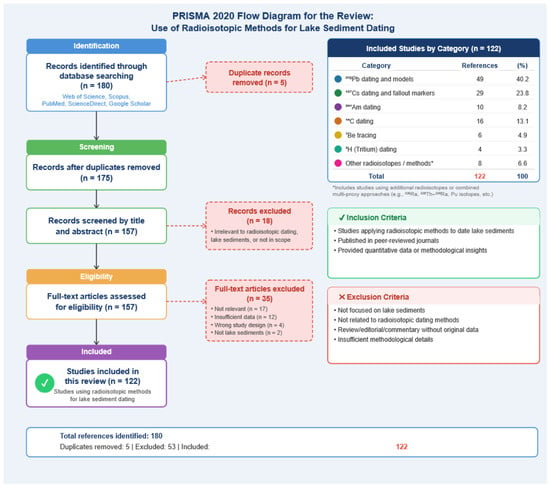
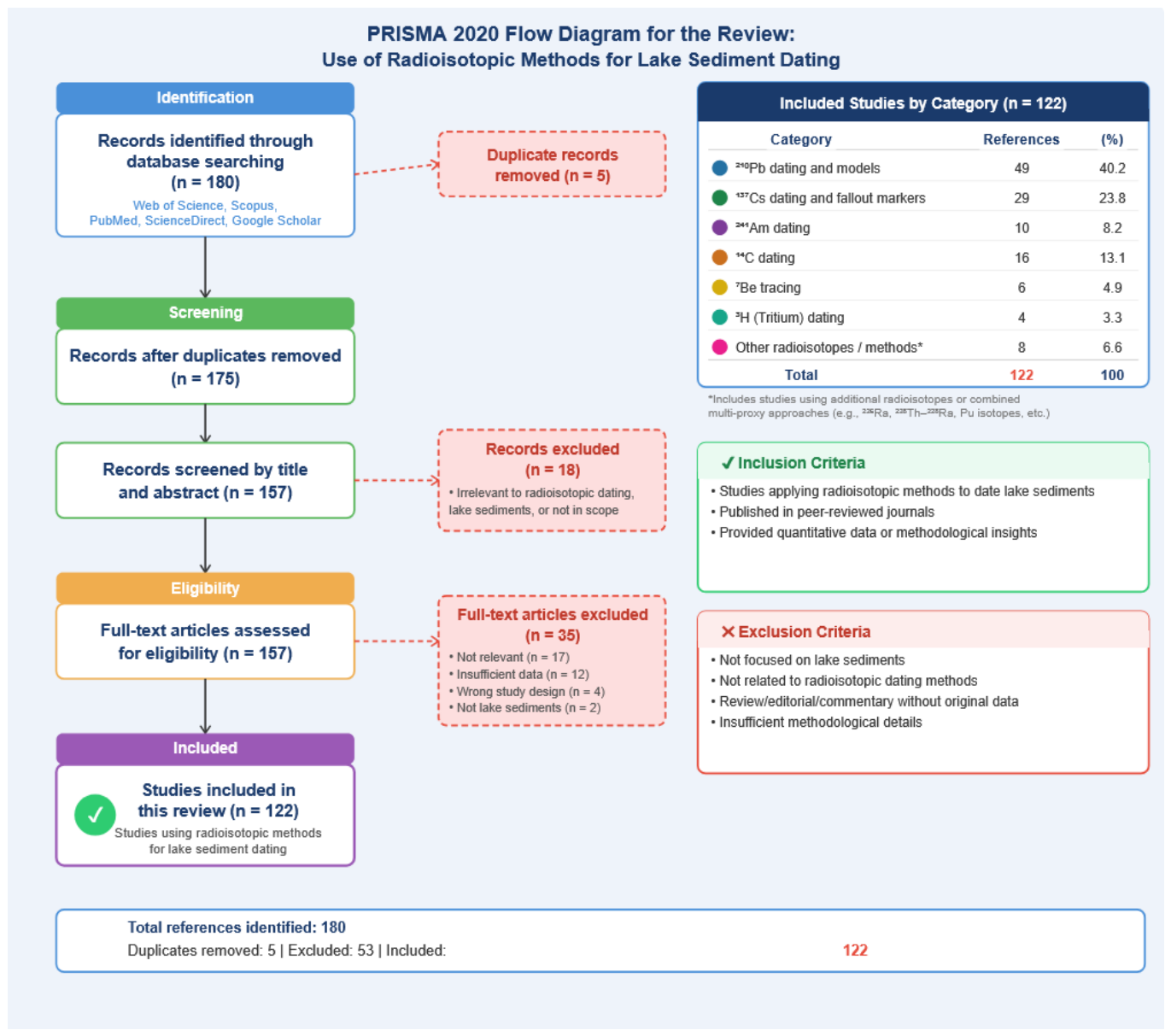
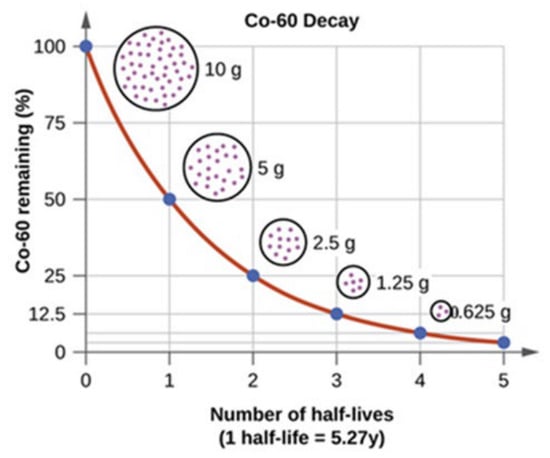
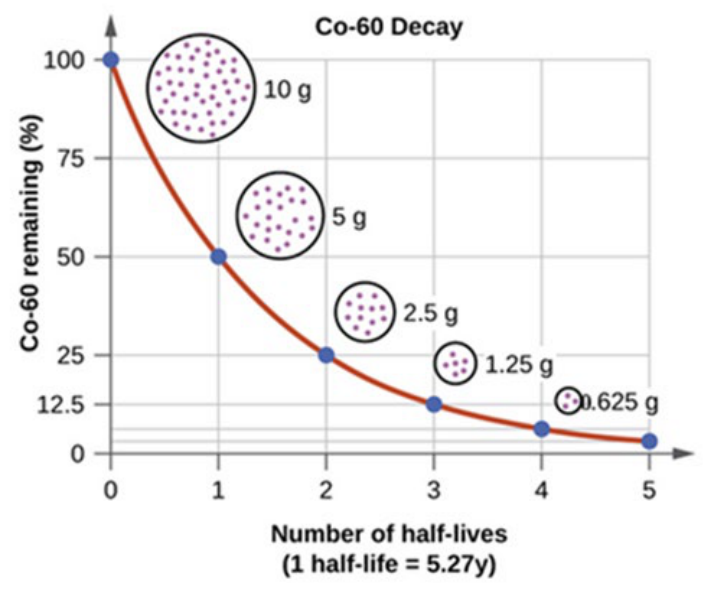
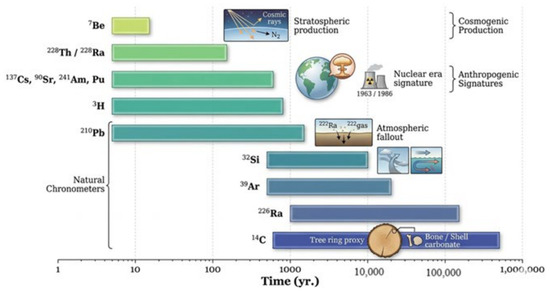
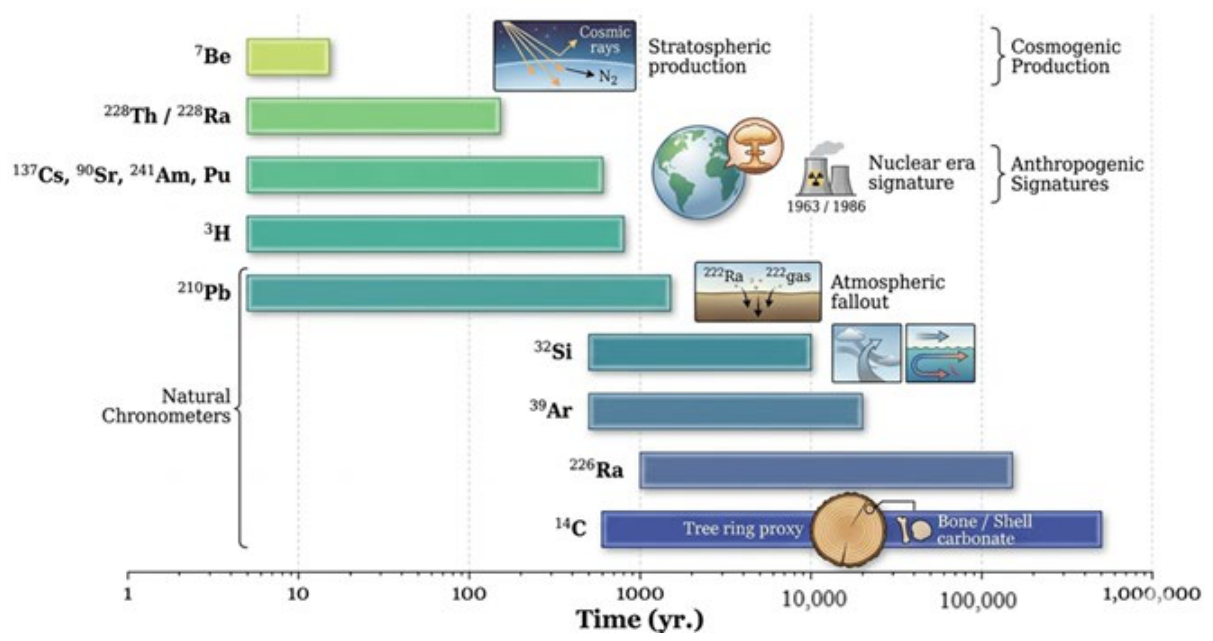
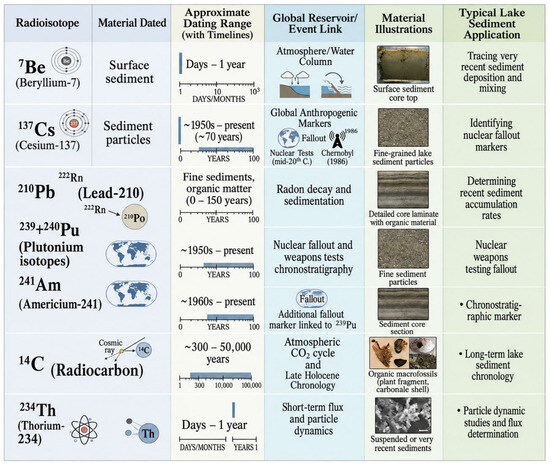
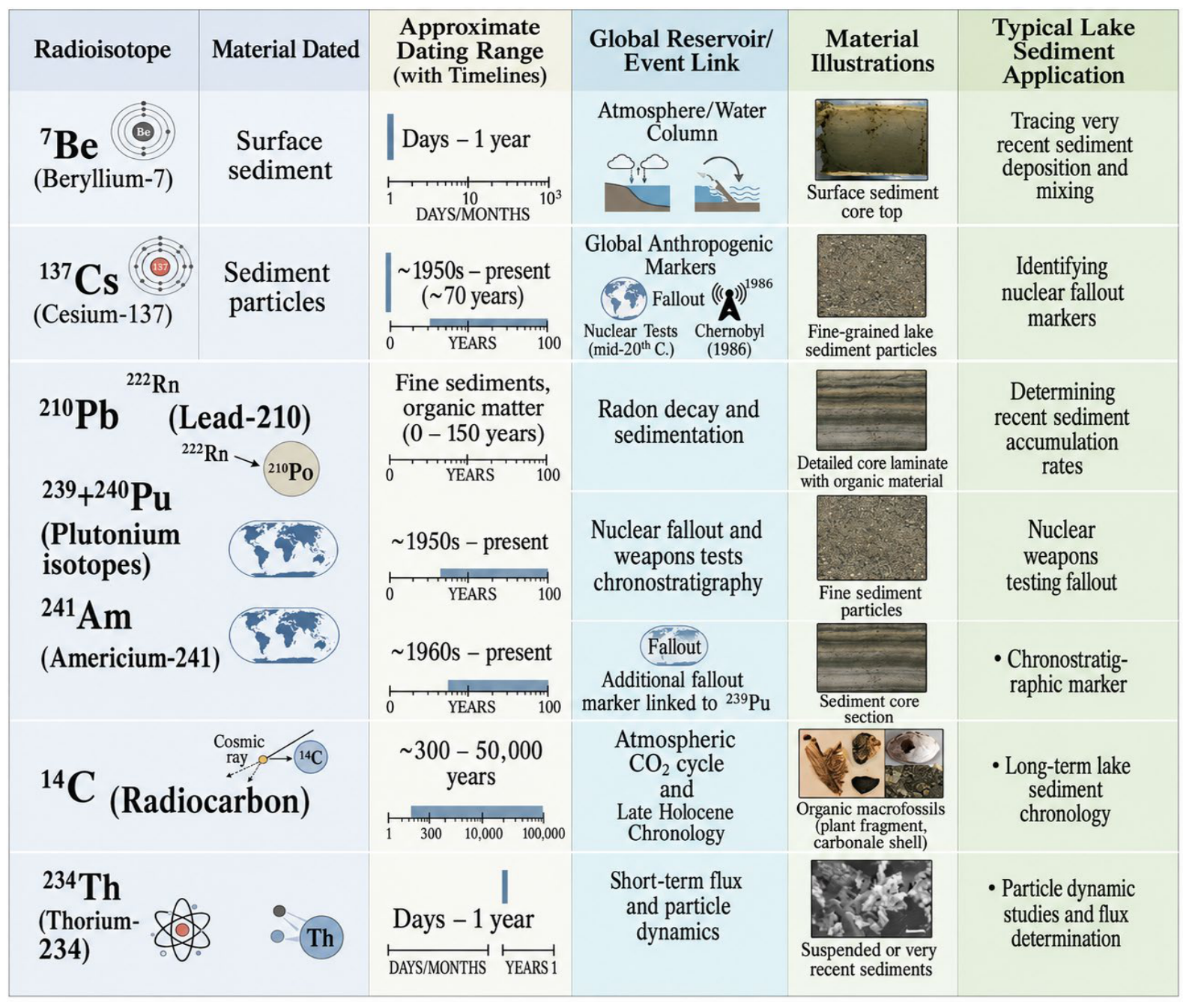
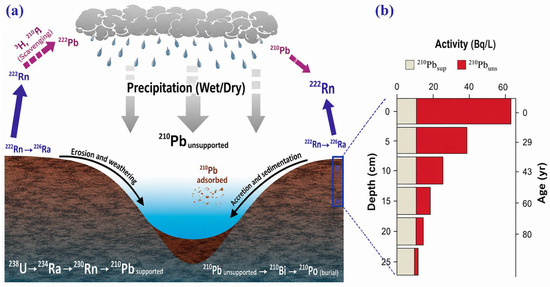
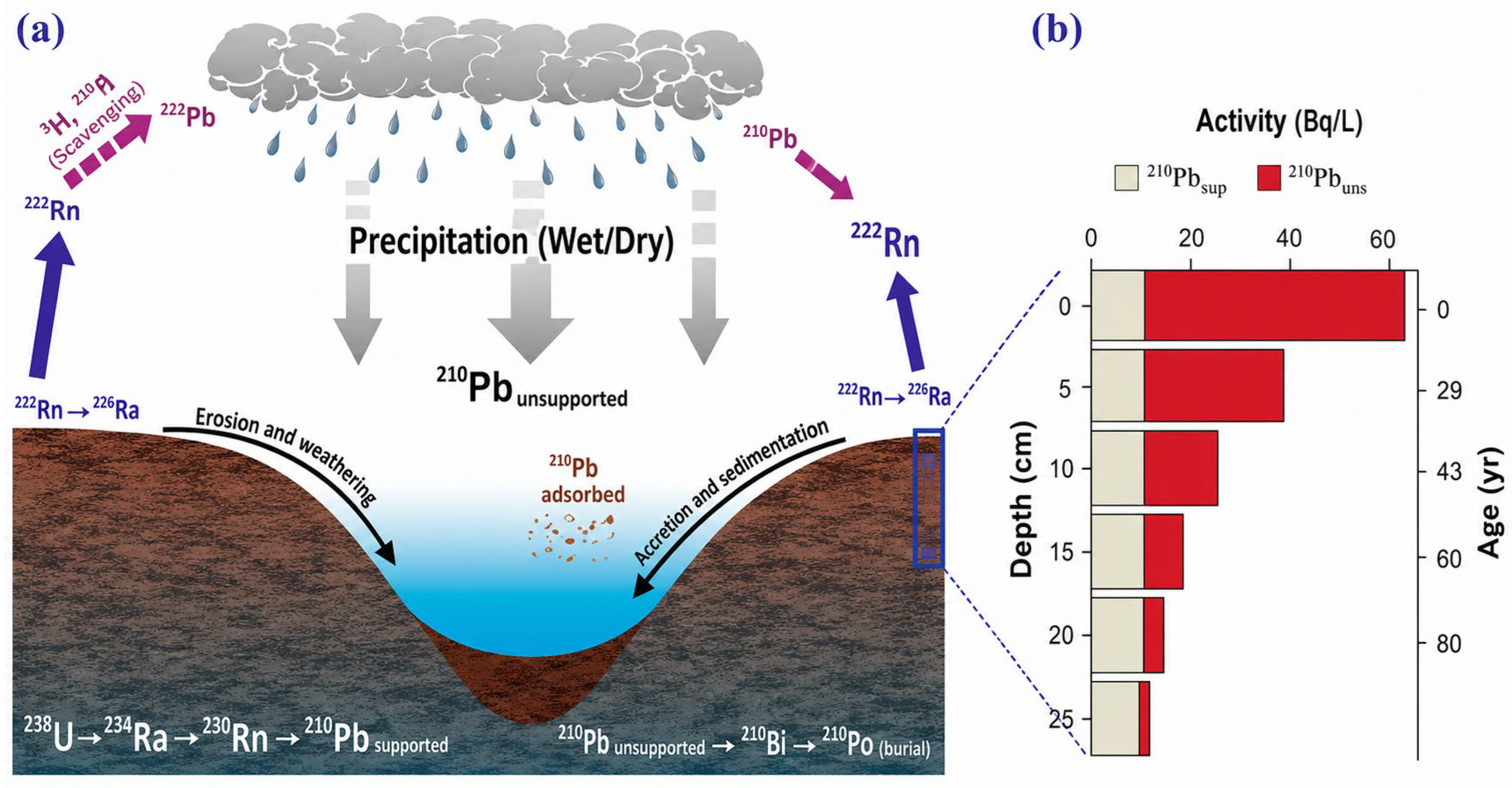
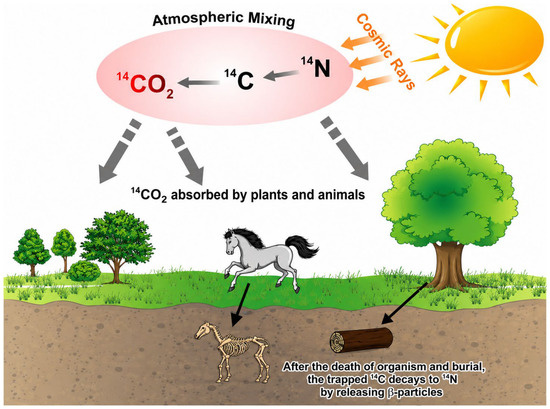
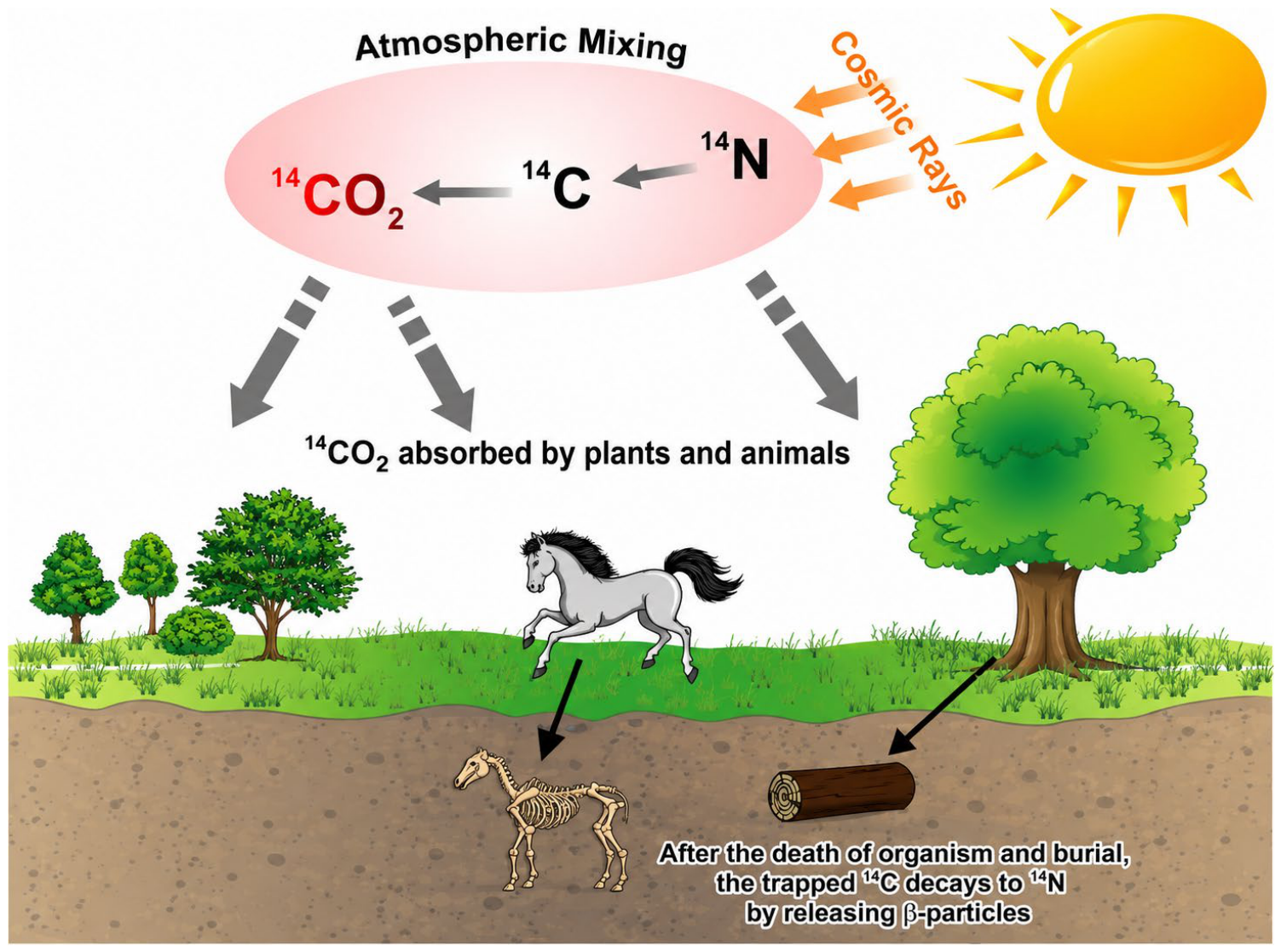
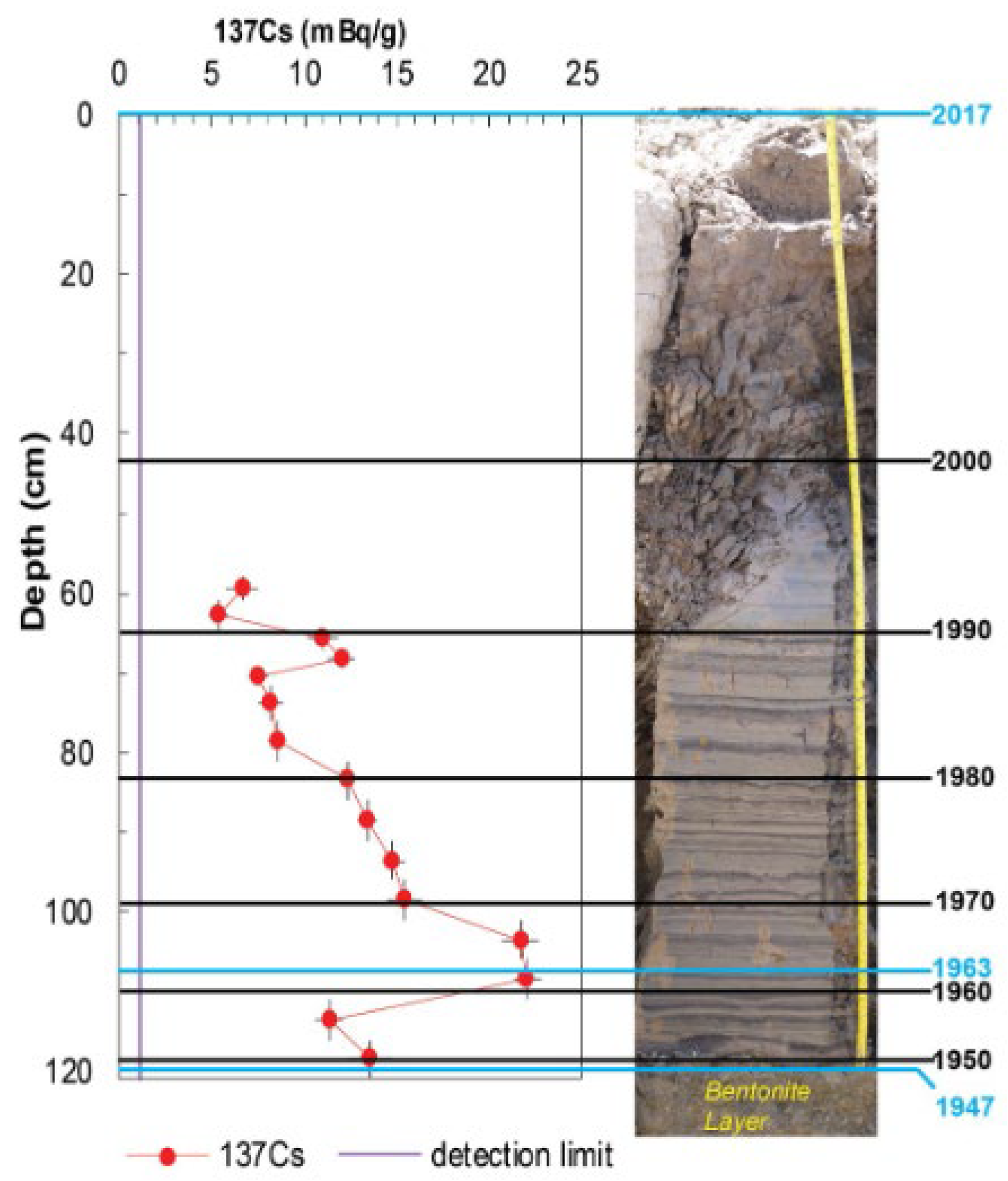
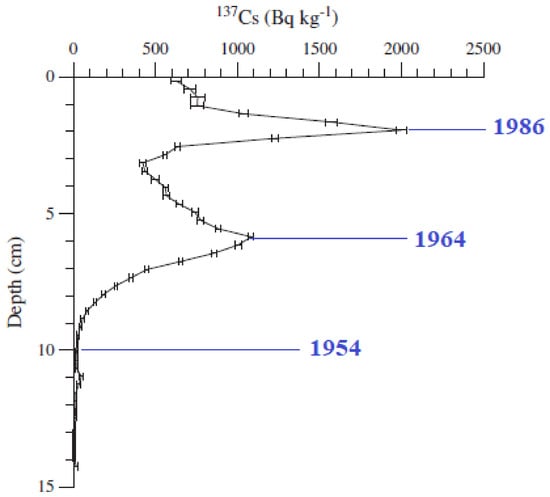
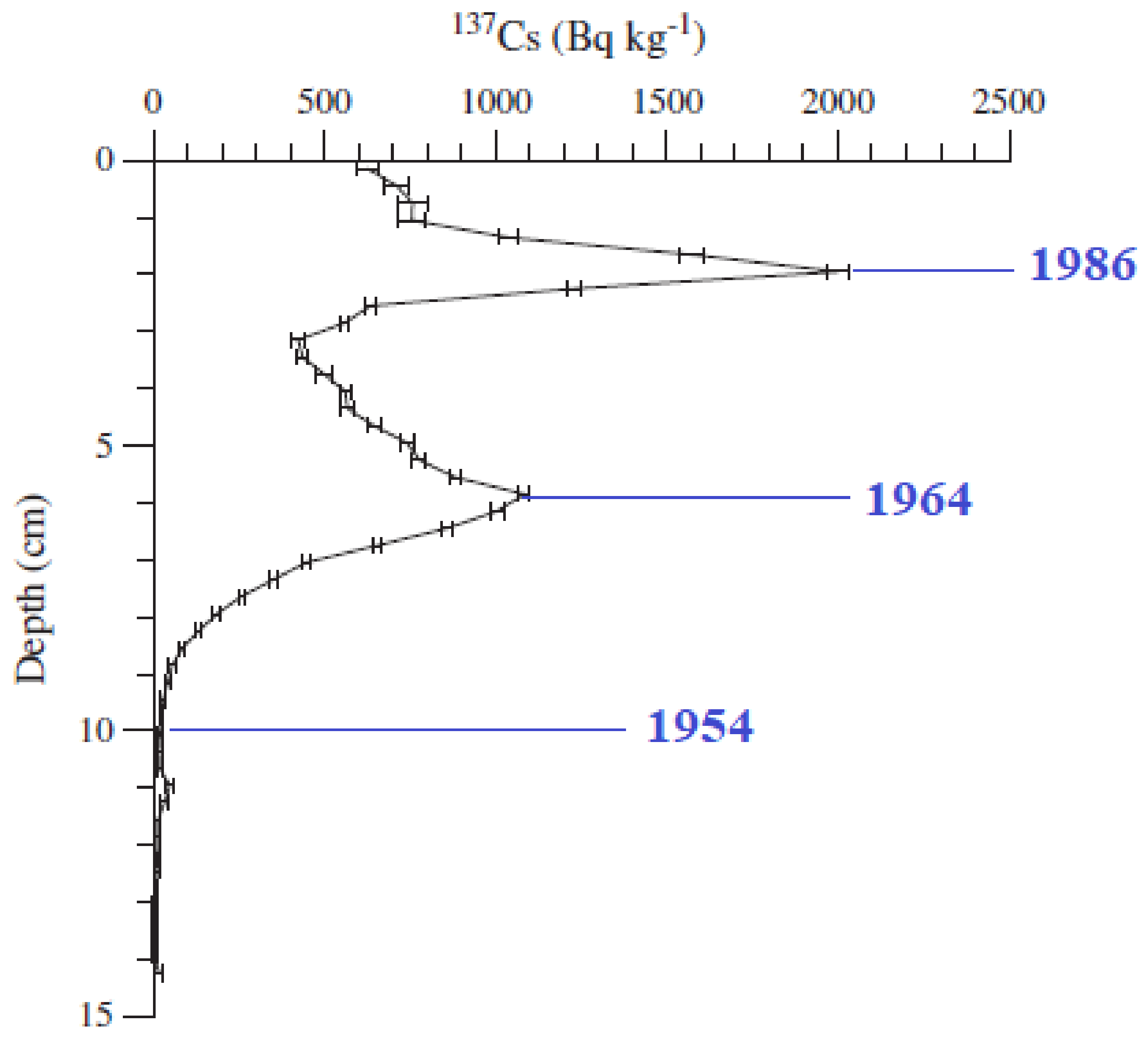
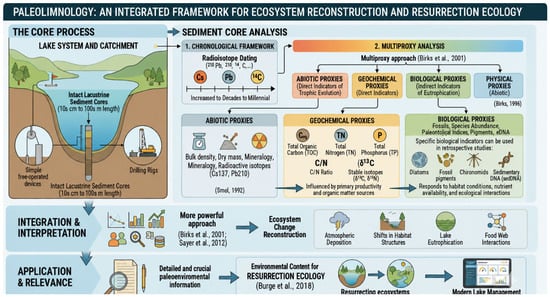
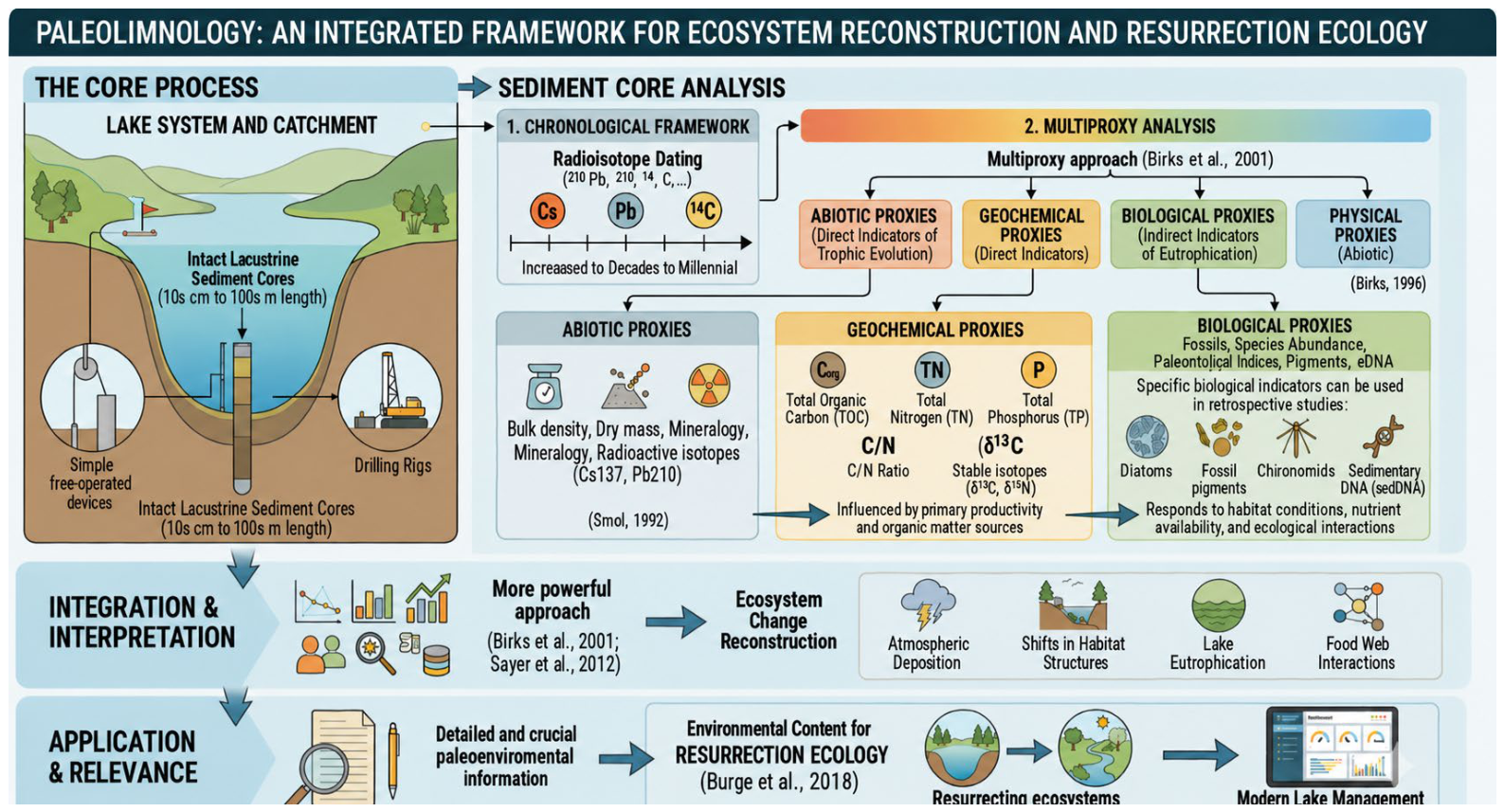

Disclaimer/Publisher’s Note: The statements, opinions and data contained in all publications are solely those of the individual author(s) and contributor(s) and not of MDPI and/or the editor(s). MDPI and/or the editor(s) disclaim responsibility for any injury to people or property resulting from any ideas, methods, instructions or products referred to in the content. |
© 2026 by the author. Licensee MDPI, Basel, Switzerland. This article is an open access article distributed under the terms and conditions of the Creative Commons Attribution (CC BY) license.