


Abstract
With the advancement of a new round of technological revolution and industrial transformation, regional AI development has become increasingly relevant to changes in government governance performance (GGP). However, existing research has predominantly concentrated on a single dimension or static effects of AI development on GGP, lacking systematic investigations into the short-term and long-term effects as well as spatial spillover effects. To address these research gaps, using panel data from 286 prefecture-level cities in China from 2009 to 2023, this study empirically examines the short-term and long-term effects, threshold effects, and spatial spillover effects of AI development on GGP. The research findings indicate that regional AI technological capacity is significantly and positively associated with GGP. The short-term and long-term effect tests reveal a negative association between AI development and GGP in the short term and a positive association in the long term. In the short term, this association may be constrained by the “creative destruction” effect, whereas in the long term, the positive association becomes stronger as regional technological capacity increasingly supports the integration of AI-related technologies into governance scenarios. There is a single-threshold effect between the institutional environment and the intensity of AI funding. Beyond the threshold value, the positive association between AI development and GGP becomes significantly stronger. Regional AI technological capacity is positively associated not only with local GGP but also with GGP in neighboring regions, potentially through technological spillovers and cross-regional collaboration. This study provides empirical evidence and theoretical support for the modernization of government governance empowered by AI.
1. Introduction
With the rapid advancement and expanding application of artificial intelligence (AI) technology, AI has gradually expanded from commercial and social domains into core areas of public governance, emerging as an important technological capability increasingly associated with the transformation of government governance models and the modernization of governance capacity [1,2]. Globally, AI has widely penetrated government governance scenarios such as public security, healthcare, and environmental governance. Some developed countries have achieved cross-departmental collaborative governance by building unified smart government platforms [3]. Meanwhile, innovative practices, such as optimizing public resource allocation through algorithmic decision-making and improving policy implementation efficiency via intelligent monitoring, have emerged internationally. However, due to differences in institutional environments and technological foundations across countries, application outcomes show significant variations [4]. Nevertheless, in practice, AI applications in government scenarios are still characterized by “point-like intelligence” and insufficient systematic empowerment. Their actual governance effectiveness has not been fully realized, and the scope of action and implementation paths lack systematic theoretical interpretation and empirical testing [5]. Therefore, clarifying the mechanisms underlying the relationship between AI development and GGP, as well as identifying its boundary conditions and spatial spillover effects, is of great theoretical and practical significance for advancing intelligent governance and promoting improvements in governance effectiveness.
The existing literature has presented extensive discussions on the impact of digital technology on public governance. One strand of research focuses on the overall construction of “digital government” or “e-government,” arguing that through process reengineering, data sharing, and platform integration, it has significantly improved administrative efficiency and public service satisfaction [6]. Another strand focuses on applications of AI in specific governance scenarios, confirming that its technological advantages in information processing, pattern recognition, and prediction and early warning can be transformed into partial governance outcomes [7]. In addition, a few scholars have begun to note that the realization of technological effectiveness is not isolated but embedded in specific organizational and institutional environments, regulated by factors such as infrastructure, institutional design, personnel capabilities, and social acceptance [8]. In recent years, relevant research has made new progress in terms of methods, application scenarios, and interdisciplinary integration. At the methodological level, some studies have employed mathematical models and computational approaches to explore the capacity of artificial intelligence to support decision-making in complex systems, providing a methodological foundation for understanding the computational advantages of AI in government governance [9]. At the level of economic effects, the literature has examined the impact of AI technology on economic structural transformation and the efficiency of public resource allocation, thereby offering indirect theoretical support for the assessment of government governance performance in this study from the perspective of economic development [10]. At the level of complex systems and social governance, related studies have focused on the application boundaries of AI in policy simulation and social governance, furnishing methodological references for this paper’s understanding of the conditional dependence of AI’s governance effects [11]. The above literature enriches the theoretical basis for research on the relationship between AI and governance performance from various angles. However, these studies mostly concentrate on a single disciplinary perspective or specific technological application scenarios, and fail to incorporate the technological attributes of AI, governance conditions, and performance outcomes into a unified empirical analytical framework—a gap that this paper seeks to address.
Despite this, existing research still has the following limitations: Firstly, there is a lack of systematic testing of AI’s governance effectiveness. Most studies either generalize AI as part of digital technology for overall investigation or limit themselves to case analysis of specific functions or scenarios. They fail to empirically test the net impact of AI as an independent technological factor from the perspective of overall government performance consisting of multiple dimensions such as economic development, social stability, public services, and ecological protection [1]. Secondly, the understanding of the empowerment mechanism is simplified. Existing studies mostly focus on the direct effects of technology adoption or simply discuss one or two types of moderating factors, failing to systematically reveal the complex paths and boundary conditions of AI’s empowerment of GGP. In particular, key heterogeneous factors such as government attention to AI, regional digital finance development level, and market potential, the threshold effects of institutional environment and funding intensity, as well as differences in short-term and long-term effects of technology applications, have not been placed in the same framework for integrated testing and comparison. Thirdly, the spatial relevance of governance performance is ignored. Government governance behaviors and performance have significant spatial interaction and spillover characteristics. AI applications may affect neighboring regions through technological spillover, institutional imitation, or cross-regional collaboration, but existing research pays insufficient attention to this, making it difficult to fully assess its macro governance impacts. Fourth, there is a lack of differentiated investigation of short-term and long-term effects. Most existing studies focus on the static effects of technological empowerment, failing to reveal the dynamic differences between the short-term “creative destruction” effect caused by infrastructure investment, process adaptation, and technological risks in the initial stage of AI application and the sustained empowerment effect released through technological integration and institutional adaptation in the long run. This leads to an incomplete evaluation of technological governance value.
To address the above research gaps, we take the impact of AI development on GGP in China as a research case, examining the direct effects, short-term and long-term dynamic evolution laws, threshold constraint conditions, and spatial spillover mechanisms of AI development on GGP. This study aims to construct a multidimensional integrated analysis framework to comprehensively reveal the internal logic of technological empowerment in government governance. The Chinese government attaches great importance to the application of AI in government governance. The Fourth Plenary Session of the 20th Central Committee of the Communist Party of China further emphasized “adhering to the direction of intelligence, greenification, and integration”. The potential of AI in improving the scientificity of government decision-making, accuracy of services, real-time supervision, and agile response has increasingly attracted attention. In terms of practical application, China has formed large-scale intelligent governance practices in fields such as government services, ecological environmental protection, and social governance. The national integrated government service platform handles more than 10 million businesses per day on average [6]. Environmental monitoring systems have realized real-time tracking and early warning of key pollution sources with the help of AI image recognition and big data analysis [12]. In grassroots governance, intelligent grid platforms have effectively improved the efficiency of resolving conflicts and disputes and public security guarantee capabilities through data integration and risk prediction. In addition, a large number of innovative practices have emerged at the local government level, providing rich localized experience for AI empowering government governance through in-depth integration of technology and scenarios [2]. Therefore, studying the Chinese context can provide valuable empirical insights for global intelligent governance practices. It can also offer useful references for developing countries seeking to advance governance modernization through digital technologies and provide theoretical and empirical support for the broader application of AI in the public sector.
The purpose of this study is to construct a comprehensive analysis framework of “technological empowerment—multiple heterogeneity—threshold constraints—short-term and long-term dynamics—spatial spillover” to systematically explore the impact of AI development on GGP. This study mainly addresses the following questions: (1) Does AI development have a significant direct impact on GGP? (2) How do heterogeneous factors such as government attention to AI, regional digital finance development level, and market potential moderate the relationship between AI development and GGP? (3) What are the differences in the short-term and long-term effects of AI development on GGP? (4) Do institutional environment and AI funding intensity have threshold effects? (5) Does AI development have a spatial spillover effect on GGP? What are the impact paths and degrees on neighboring regions? To solve these problems, this study first uses panel data of 286 prefecture-level cities in China from 2009 to 2023 to empirically test the direct impact of AI applications on GGP, and ensures the reliability of conclusions through endogeneity treatment and various robustness tests. Furthermore, it focuses on analyzing heterogeneous characteristics from two dimensions: “government attention” (government attention to AI) and “economic support” (regional digital finance development level, market potential). At the same time, it distinguishes short-term and long-term effects through the Panel Error Correction Model (PECM) to clarify the dynamic evolution logic between the short-term “creative destruction” and long-term sustained empowerment of AI in the initial stage of application. On this basis, it examines the threshold constraint effects of institutional environment and AI funding intensity, revealing the differentiated paths and conditions of technological empowerment. Finally, the study uses the Spatial Durbin Model (SDM) combined with geographic distance and economic distance weight matrices to further investigate the spatial spillover effect of AI governance effectiveness and its specific impacts on surrounding regions, providing more complete empirical evidence for a comprehensive evaluation of AI’s governance value.
Compared with existing research, the possible marginal contributions of this study are as follows: First, unlike much of the existing literature on the digital economy and government performance, which tends to treat digital technologies as a generic form of ICT investment or e-government infrastructure and focuses primarily on the presence or scale of technology adoption, this study centers on artificial intelligence as a distinct cognitive technology. The value of AI lies not simply in process automation, but in its capacity to simulate, extend and augment human perception, learning and decision-making. By focusing on AI patents as a specific technological indicator, this paper examines whether regional AI technological capacity is associated with government governance performance through the potential externalities generated by AI ecosystems.
Second, whereas most research on technological innovation and government performance confines itself to estimating aggregate effects—whether technology inputs improve efficiency or service delivery—this study moves beyond the question of “whether AI works” to ask “under what conditions AI works”. Through threshold-effect analyses of institutional environment and AI funding intensity, together with heterogeneity analysis of government AI attention, this paper identifies the boundary conditions under which AI’s governance effects are amplified. This condition-dependent analytical framework moves the literature from blanket statements about AI’s usefulness to a more precise understanding of where, when and through which channels AI matters for governance—offering policy guidance that is considerably more targeted than what aggregate effect estimates alone can provide.
Third, while most existing studies implicitly assume that technology effects on governance are static and locally contained, this paper extends both the temporal and spatial scope of analysis. Using a panel error-correction model, it distinguishes between short-run “creative destruction” effects and long-run sustained empowerment effects. In parallel, a spatial Durbin model is employed to verify cross-regional spillovers of AI governance effects. This spatiotemporal expansion moves the assessment of AI’s governance value beyond a single local-average effect towards a more comprehensive picture that encompasses the trajectory of effects over time and their pattern of diffusion across space, thereby providing a richer evidence base for the design of regionally coordinated governance policies.
2. Theoretical Framework and Research Hypotheses
2.1. Theoretical Framework
Government governance performance (GGP) reflects the ability of governments to provide public services, coordinate economic and social development, and respond effectively to complex governance challenges. Unlike firm performance, GGP emphasizes public value creation and administrative effectiveness rather than market competitiveness. In the context of digital transformation, emerging technologies may influence governance outcomes not only through direct adoption by governments but also through the technological environment and innovation ecosystem in which governments operate. This study develops a unified analytical framework integrating the resource-based view and technology-empowerment theory to explain why regional AI technological capacity may be associated with government governance performance and to provide a theoretical foundation for deriving the research hypotheses.
The resource-based view holds that differences in organizational performance arise from heterogeneity in the resources organizations possess. Strategic resources that are valuable, rare, difficult to imitate, and non-substitutable provide the foundation for sustained performance advantages [13]. Extending this logic to the regional innovation ecosystem in which public-sector organizations operate, the accumulation of AI patents can be regarded as an important indicator of regional technological capability and knowledge resources reflecting regional AI innovation capacity. Importantly, AI patents do not represent government agencies’ actual adoption of AI technologies; rather, they capture the technological foundation and knowledge resources available within a region. The governance relevance of such technological capacity lies in the externalities generated by the regional AI ecosystem. Specifically, a stronger AI ecosystem may facilitate government governance by improving access to AI-related expertise, reducing information search and technology matching costs, promoting knowledge exchange between technology providers and public-sector organizations, and strengthening the local environment for digital transformation. Therefore, greater regional AI technological capacity may be associated with higher levels of government governance performance through ecosystem-based technological spillovers and complementary resource effects. However, such technological capacity should be viewed as an enabling condition rather than a direct representation of government AI adoption. Instead, regional AI technological capacity provides external conditions that may facilitate government AI adoption and governance improvement. Whether and how governments specifically deploy AI technologies requires government-level adoption data, which is beyond the scope of this study. This perspective explains the sources of regional differences in AI technological capacity and why these differences may persist; however, it does not imply that technological capacity will automatically translate into governance performance. The latter relationship requires further explanation through technology-empowerment theory.
Technology-empowerment theory suggests that technological advancement can enhance organizational outcomes by transforming information-processing methods, improving process efficiency, and strengthening the alignment between services and users’ needs [14]. Extending this logic to government governance, the accumulation of regional AI technological capacity may be associated with governance performance through several channels. First, a vibrant local AI ecosystem—including AI firms, research institutions, and a skilled talent pool—reduces the information and procurement costs governments incur when introducing AI-enabled administrative systems. Second, the availability of local technology suppliers enables governments to obtain more timely technical support and customized services, thereby improving the alignment between AI systems and local governance needs. Third, the spatial concentration of technological capacity generates knowledge spillovers, allowing public-sector organizations to accumulate digital governance capabilities through continued interaction with local technology providers. Taken together, these mechanisms suggest that regions with stronger AI technological innovation capacity may exhibit statistically higher levels of government governance performance. It is important to emphasize that this reasoning concerns the statistical association between technological capacity and governance performance, rather than the causal effect of government AI deployment on governance performance. The two are conceptually distinct: the former asks whether the externalities of the technological ecosystem benefit public governance, whereas the latter must be examined using government-level procurement and deployment data.
Research based on technology-empowerment theory further indicates that the organizational benefits of technology do not materialize immediately. Instead, they are constrained by learning costs, institutional frictions, and resistance to process restructuring during the initial stage of technological integration, resulting in a dynamic divergence between short-term efficiency losses and long-term performance gains [15]. It may therefore be expected that the statistical association between AI technological capacity and governance performance differs in direction between the short and long term. This expectation, however, remains a theoretical conjecture rather than an empirically verified conclusion about the underlying mechanisms. The empirical objective of this study is to determine whether such a dynamic pattern exists, rather than to rigorously identify the specific mechanisms that produce it.
Moreover, the theory of complementary assets within the resource-based view holds that the realization of resource value depends on the presence of supporting organizational and institutional conditions [13]. This implies that the association between AI technological capacity and governance performance may not be homogeneous across regions. The quality of the institutional environment and the adequacy of financial investment may constitute boundary conditions that constrain or amplify the strength of this association. This inference motivates the threshold-effect analysis conducted in this study, which seeks to examine whether critical levels of institutional quality and investment intensity exist.
Finally, because governance experience and technology can diffuse across space, channels such as benchmarking and policy learning, factor mobility, and performance competition may transmit one region’s technological capabilities to neighboring regions [14]. It can therefore be inferred that the statistical association between AI technological capacity and governance performance may extend beyond local boundaries and exhibit spatial dependence.
In summary, this study develops its four research hypotheses through four logically connected stages: the governance relevance of technological capacity, its dynamic evolution, its boundary conditions, and its spatial diffusion. It should be noted that this theoretical framework aims to explain the theoretical rationale underlying the association between AI technological capacity and government governance performance, rather than to equate regional technological capacity with direct government AI adoption. Accordingly, the theoretical contribution of this study lies in clarifying how regional technological capacity may create governance-relevant opportunities through innovation ecosystems and in characterizing the associated patterns across different temporal, institutional, and spatial contexts.
2.2. Research Hypotheses
2.2.1. The Direct Effect of AI on Government Governance Performance
The improvement of government governance performance (GGP) has become increasingly important as governments face growing complexity, uncertainty, and rising expectations for efficient and responsive public services. Traditional governance models that rely heavily on bureaucratic procedures and experience-based decision-making may encounter limitations when addressing governance challenges characterized by massive information flows, rapid environmental changes, and diversified public demands [1,4]. In this context, the availability of advanced technological capabilities and innovation resources has become an important external condition for enhancing governments’ information-processing capabilities, analytical capabilities, and service-delivery capacity. Regional AI technological capacity, reflected by the accumulation of AI-related innovations such as AI patents, represents the technological foundation, knowledge resources, and innovation capabilities embedded within a regional ecosystem. Importantly, regional AI technological capacity does not indicate that government agencies directly adopt or deploy AI technologies. Instead, it reflects the technological opportunities and complementary resources available within a region, which may provide favorable conditions for governance innovation. Therefore, the potential relationship between regional AI technological capacity and GGP lies not in the direct ownership of AI technologies by governments, but in the externalities generated by local AI ecosystems, including knowledge spillovers, technology diffusion, specialized talent accumulation, and improved access to technological solutions.
The theoretical foundation of this relationship can be explained by the Resource-Based View (RBV) [13] and Technology Empowerment Theory [15]. The Resource-Based View emphasizes that differences in organizational outcomes arise from heterogeneity in valuable resources and capabilities. Strategic resources that are valuable, rare, difficult to imitate, and non-substitutable contribute to organizational capability development [13]. Although originally developed in the context of firms, this perspective also highlights the importance of resource accumulation and capability development in public organizations. From this perspective, regional AI technological capacity can be viewed as an external technological capability and knowledge resource embedded within the local innovation ecosystem. Rather than representing government-owned AI resources, regional AI capacity provides technological opportunities and complementary resources that may support governance improvement. Regions with stronger AI innovation ecosystems may offer governments easier access to AI-related expertise, reduce information search and technology-matching costs, facilitate interactions between technology providers and public-sector organizations, and create a more supportive innovation environment for digital governance transformation.
Technology Empowerment Theory further explains how technological opportunities and innovation resources may contribute to improvements in organizational outcomes [15]. From this perspective, technological advancement does not automatically generate performance improvements; rather, its value depends on whether organizations can access, integrate, and utilize related knowledge and capabilities. In the context of government governance, regional AI technological capacity may influence GGP through several potential channels.
First, regional AI ecosystems may enhance governments’ access to advanced analytical capabilities and knowledge resources, thereby facilitating more scientific and evidence-based decision-making. Traditional public decision-making is often constrained by information asymmetry and bounded rationality. The diffusion of AI-related technologies, expertise, and analytical methods within a region may improve governments’ ability to process multi-source information, identify governance challenges, and develop more accurate policy responses. This logic is consistent with the findings of Chen et al. (2025) [2], who demonstrate that digital technology contributes to improvements in government decision-making quality.
Second, regional AI technological capacity may facilitate administrative process optimization by providing governments with access to intelligent solutions and technical support. Government operations involve numerous standardized and repetitive procedures, and AI-related technological resources may create opportunities for process innovation, workflow optimization, and administrative coordination. Through knowledge exchange and cooperation with local technology providers, governments may improve operational efficiency, reduce administrative costs, and enhance cross-departmental coordination. This mechanism is supported by the empirical research of Van Noordt and Misuraca (2022) [16] on AI applications in the EU public sector, which highlights the potential of AI-related technologies in improving public administration efficiency.
Third, regional AI ecosystems may contribute to more citizen-oriented public services by facilitating the diffusion of intelligent service solutions and digital governance practices. Through interactions among AI firms, research institutions, and public-sector organizations, governments may obtain technological knowledge and innovative approaches that improve service accessibility, responsiveness, and personalization. Such transformation may help governments better match public services with citizens’ diverse needs and strengthen public satisfaction and governance effectiveness, which is supported by the research of Pazos-García et al. (2025) [3].
Taken together, regional AI technological capacity may be associated with higher levels of GGP by creating technological opportunities, strengthening innovation ecosystems, and facilitating knowledge diffusion across public and private sectors. These potential channels reflect the externalities of regional AI development rather than the direct effects of government AI adoption. Whether and how governments specifically deploy AI technologies requires government-level adoption and implementation data, which remains an important direction for future research.
Based on this theoretical reasoning, the following hypothesis is proposed:
Hypothesis H1.
Under the condition that other factors remain unchanged, regional AI technological capacity is positively associated with government governance performance.
2.2.2. The Long-Term and Short-Term Effects of AI on Government Governance Performance
The association between regional AI technological capacity and government governance performance is unlikely to remain static or constant; rather, it may follow a dynamic trajectory characterized by short-term adjustment and long-term empowerment. Theoretically, this pattern can be understood from the perspective of “upfront costs and delayed benefits.”
In the short term, the development of regional AI technological capacity may not immediately translate into improvements in government governance performance and may even be associated with temporary adjustment costs. On the one hand, the formation and diffusion of AI-related technological capabilities require substantial investments in computing infrastructure, data standardization, technological exploration, and digital-skill development. Such investment may temporarily crowd out resources for routine governance, increasing administrative costs and creating frictions in process adaptation [17]. On the other hand, during the early stage of AI ecosystem development, limitations in regional data infrastructure, inconsistent data standards, and insufficient mechanisms for knowledge sharing may constrain the effective transformation of technological capacity into governance outcomes. Organizational frictions between conventional bureaucratic procedures and algorithm-driven decision-making may also reduce the responsiveness of public services. Meanwhile, the risks of AI “hallucinations” and algorithmic bias may raise concerns about equity in public service delivery, further constraining governance performance in the short term [18]. In addition, the gradual formation of regulatory frameworks and governance norms related to AI technologies may delay the realization of potential governance benefits.
In the long term, however, regional AI technological capacity may generate more substantial governance benefits as innovation ecosystems mature, technological knowledge diffuses, and complementary capabilities accumulate. First, the continuous accumulation of AI-related knowledge and expertise may improve governments’ access to advanced analytical capabilities, thereby supporting more accurate and forward-looking governance decisions. Second, the diffusion of AI-related technologies and solutions within regional innovation ecosystems may facilitate administrative process optimization and improve the efficiency of public service delivery. Third, knowledge spillovers and cross-organizational collaboration among AI firms, research institutions, and public-sector organizations may promote the integration of digital capabilities into governance practices, helping reduce information barriers and improve collaborative governance in areas such as environmental protection and emergency management [19]. At the same time, with the gradual improvement of technological governance rules, supporting institutions, and operational capabilities, the potential risks associated with AI development may be mitigated, allowing regional technological capacity to generate more sustained governance improvements. Based on the above analysis, the second research hypothesis of this paper is proposed.
Hypothesis H2.
Under the condition that other factors remain unchanged, artificial intelligence is negatively associated with government governance performance in the short term but positively associated with it in the long term.
2.2.3. Analysis of the Threshold Effect of AI on Government Governance Performance
The association between regional AI technological capacity and government governance performance is unlikely to be linear, but may depend on specific institutional and resource conditions. Although regional AI technological capacity provides technological opportunities and innovation resources, the extent to which such capacity contributes to governance improvement depends on whether complementary institutional and financial conditions are sufficiently developed. As the foundation of governance activities, the institutional environment influences data circulation efficiency, technological governance norms, and cross-organizational collaboration capacity, thereby affecting the extent to which AI-related technological resources can be transformed into governance value [15]. Similarly, AI-related funding intensity determines the availability of supporting resources, including infrastructure development, technological innovation, and talent cultivation, which affects the depth and breadth of technological capability accumulation [17]. Together, these factors constitute important boundary conditions for the relationship between regional AI technological capacity and government governance performance. When the quality of the regional institutional environment or the intensity of AI-related funding remains below a certain level, the contribution of AI technological capacity to governance performance may be constrained by insufficient complementary resources, weak coordination mechanisms, and institutional frictions. Once these conditions exceed a certain threshold, the supporting effects of institutional quality and financial resources may strengthen the association between AI technological capacity and governance performance.
On the one hand, the institutional environment provides support for the transformation of regional AI technological capacity into governance-related benefits through three core dimensions: standardizing governance processes, reducing transaction costs, and ensuring data security. In regions with an imperfect institutional environment, unclear data governance rules and insufficient mechanisms for cross-organizational data sharing may limit the effective utilization of AI-related knowledge and technologies. As a result, the technological opportunities created by regional AI ecosystems may be difficult to transform into systematic governance improvements. At the same time, the lack of compliance review mechanisms for algorithmic decision-making and privacy protection systems is likely to trigger disputes over the fairness of public services and data security risks, restricting the depth and breadth of technology promotion and application [16]. In addition, rigid administrative processes and hierarchical barriers will increase the adaptation cost between AI and traditional governance models, reducing the efficiency of technology application. When the institutional environment crosses the critical threshold, the advantages of transparent rules and standardized processes brought by the improvement of the marketization index will effectively break down “information silos,” promote the orderly circulation of government data under the premise of safety and compliance, and provide data support for the application of AI in complex scenarios such as predictive governance, cross-domain collaborative supervision, and precise supply of public services. Improved algorithmic supervision rules and privacy protection systems can reduce the risk costs of technology application and enhance public acceptance of intelligent governance. At the same time, a flexible administrative system and cross-departmental collaboration mechanism can reduce institutional frictions in technology implementation, accelerate the deep integration of AI and governance processes, and thereby amplify its promoting effect on government governance performance [4].
On the other hand, the accumulation and diffusion of AI technological capacity require sufficient financial support to maintain technological innovation, infrastructure development, and capability formation. At the stage of low funding intensity, limited financial resources may restrict investments in computing infrastructure, technological research, and digital skill development, thereby weakening the transformation of AI-related technological capacity into governance benefits [17]. Under such conditions, regional AI development may remain concentrated in technological accumulation rather than producing extensive governance-related outcomes. When funding intensity crosses the threshold value, sufficient financial support can promote the development of innovation ecosystems, accelerate technology diffusion, and strengthen collaboration among technology providers, research institutions, and public organizations. These complementary conditions may enable regional AI technological capacity to generate stronger governance-related effects in areas such as environmental management, social governance, and public services [20].
Based on the above analysis, the third research hypothesis of this paper is proposed.
Hypothesis H3a.
The institutional environment has a threshold effect on the relationship between regional AI technological capacity and government governance performance. As the quality of the regional institutional environment improves, the positive association between regional AI technological capacity and government governance performance becomes stronger.
Hypothesis H3b.
The intensity of AI funding input has a threshold effect on the relationship between regional AI technological capacity and government governance performance. As the intensity of regional AI-related funding increases, the positive association between regional AI technological capacity and government governance performance becomes stronger.
2.2.4. Spatial Spillover Analysis of AI on Government Governance Performance
Local governments are not isolated entities, and their governance behaviors and performance have extensive interactions and connections in space. New Economic Geography and Spatial Econometrics point out that due to factor mobility, knowledge spillover, policy imitation, and yardstick competition, economic activities or policy effects in one region will have spillover impacts on neighboring regions [21]. Similarly, regional AI technological capacity may not only influence local governance outcomes but may also generate spatial spillovers through the diffusion of technological knowledge, innovation resources, and governance-related capabilities across regions. The spatial association between regional AI technological capacity and neighboring regions’ governance performance may be understood from several possible perspectives. First, regional AI innovation ecosystems may facilitate the diffusion of technological knowledge and governance-related experience across geographical boundaries. When a region accumulates stronger AI technological capacity and develops more mature digital innovation environments, its technological knowledge, innovative practices, and governance-related exploration may become valuable references for neighboring regions through official exchanges, inter-regional cooperation, media communication, and academic interaction. Such knowledge diffusion can reduce the uncertainty and exploration costs associated with technological development in neighboring regions, thereby improving their ability to access and utilize external technological opportunities. Second, the development of regional AI ecosystems may promote the spatial mobility and redistribution of complementary resources, including technical talent, data resources, research investment, and innovative enterprises. These highly mobile factors may be reconfigured within a certain geographical scope, forming regional talent pools, data networks, and innovation linkages, thereby improving the technological foundation and innovation environment of surrounding regions. Through these ecosystem-based spillovers, neighboring regions may obtain additional opportunities to accumulate AI-related capabilities and enhance governance-related innovation capacity. This is consistent with the view proposed by Kamolov and Teteryatnikov (2021) [22] that AI promotes resource integration and collaborative development at the regional level. Finally, regional differences in AI technological capacity may generate competitive pressures and policy-learning effects among local governments. Under the context of regional development competition and governance performance evaluation, improvements in technological capacity and governance-related outcomes in one region may create benchmarking effects for neighboring regions. To avoid falling behind in regional development competition, neighboring governments may strengthen their attention to AI development, improve technological infrastructure, and enhance innovation-supporting policies. Such responses may further promote the diffusion of AI-related capabilities and contribute to improvements in governance performance across regions [17]. Based on the above analysis, the fourth research hypothesis of this paper is proposed.
Hypothesis H4.
The positive association between regional AI technological capacity and government governance performance exhibits spatial spillover effects, such that AI technological capacity in one region is associated with governance performance in neighboring regions.
3. Methods and Data
3.1. Models
3.1.1. Fixed Effects Model
To verify the impact of AI development on GGP, we construct a two-way fixed effects model as follows:
where the subscript i denotes the province and the subscript t denotes the year. GGPit represents the government governance performance of region in period, AIit denotes the artificial intelligence development level of region i in period t. The control variables mainly include trade openness (Toit), urbanization rate (Urbanit), local government fiscal expenditure structure (Slgeit), per capita fixed asset investment level (Pciit), and population density (Dpit). cityi represents the individual fixed effect, yeart denotes the time fixed effect, and εit~N(0,δ2) is the random error term of the model.
3.1.2. Panel Error Correction Model
To examine whether there are differences in the short-term and long-term impacts of AI development on GGP, the model is set as follows:
where GGPit represents government governance performance. AIit denotes artificial intelligence. The control variables are consistent with those in the benchmark regression analysis, μi represents the fixed effect, and εi,t is the random disturbance term. To capture the short-term and long-term effects of various driving factors, Equation (2) is transformed into an Autoregressive Distributed Lag (ARDL) model. Research by Blackburne III and Frank (2007) [19] suggests that if all variables are integrated of order one (I(1)), the ARDL model can be set in the form of ARDL (1, …, 1). This paper employs the Akaike Information Criterion (AIC) and the Bayesian Information Criterion (BIC) as the basis for selecting the lag order. Specifically, within the ARDL(p, q) framework, this paper conducts a grid search over lag orders pp (the lag order of the dependent variable) and qq (the lag order of the core explanatory variable), and calculates the AIC and BIC values for each combination of lag orders. The results show that the optimal lag order determined by both the AIC and BIC values is 1. Therefore, the ARDL(1, …, 1) model in this paper is specified as follows:
All variables in the above model meet the cointegration requirements. Further, Equation (4) is transformed into the following Panel Error Correction Model (PECM):
where ξ and ψ are error adjustment coefficients reflecting the speed of error correction. If is negative, it indicates that the deviation from equilibrium is corrected; otherwise, it means there is no long-term dynamic adjustment relationship between variables. π is the long-term coefficient, representing the impact of AI development on the current GGP, and ω is the short-term coefficient, denoting the impact of AI development on the future GGP.
3.1.3. Threshold Model
Currently, China is further advancing the “AI+” action. As the core guarantee for technology implementation, the institutional environment has gradually formed a governance ecosystem of “central policy guidance + local scenario innovation + enterprise technology implementation,” while the intensity of AI funding input directly determines the progress of technological R&D, infrastructure construction, and scenario adaptation. The improvement of the institutional environment affects the efficiency of data factor circulation, algorithm compliance supervision, and cross-departmental collaboration, and the intensity of funding input is related to the layout of computing infrastructure, personnel skill training, and technological iteration speed. Together, they constitute the key boundary conditions for AI development to empower government governance. Against this important background, we further analyze the threshold effects of the institutional environment and the intensity of AI funding input in the process of AI affecting GGP, revealing the heterogeneous characteristics of technological empowerment effects under different boundary conditions. To verify whether the impact of AI development on GGP is related to the regional institutional environment, the panel threshold model of this paper is constructed as follows:
where Rieit represents the threshold variable, which is the regional institutional environment measured by the marketization index in this paper; q denotes the threshold value to be estimated; I(•) is the indicator function; and the meanings of other variables are consistent with those in the benchmark regression model.
To examine whether the impact of AI development on GGP is related to the intensity of regional AI funding input, the panel threshold model of this paper is constructed as follows:
where Iaiit represents the threshold variable, which is the intensity of regional AI funding input. In this study, it is measured by the ratio of the sum of investment in information transmission, computer services and software industry, and investment in scientific research and technology services (manually collected from the statistical yearbooks of prefecture-level cities) to the local general public budget expenditure; q denotes the threshold value to be estimated; I(•) is the indicator function; and the meanings of other variables are consistent with those in the benchmark regression model.
3.1.4. Spatial Econometric Model
There is a strong correlation between governance practices and technological diffusion among various regions in China, and government governance performance is likely to have spatial correlation characteristics. Does the improvement of the local AI development level affect the GGP of surrounding regions through paths such as technological spillover, institutional imitation, and cross-regional collaboration? In view of this, combined with the theoretical analysis part, we incorporate spatial factors into the framework of the impact of AI development on GGP to verify the spatial spillover effect of AI development on the GGP of surrounding cities. Referring to the research method of Jia et al. (2021) [20], we verify the rationality of the Spatial Durbin Model (SDM) based on the Wald test in the empirical analysis part. Therefore, we construct a Spatial Durbin Model to examine the spatial spillover effect of AI development on GGP, which is as follows:
where GPit is the explained variable, representing the government governance performance of city i in year t; AIit is the core explanatory variable, denoting the AI development level of city i in year t; controlit is the group of control variables; W represents the weight matrix; W × AI is the spatial lag term of the core explanatory variable (AI development); and W × GGP is the spatial lag term of the explained variable (GGP). For the setting of spatial weights, referring to the research of Xie et al. (2019) [23], we select the geographic distance matrix and economic geographic distance matrix as the weight matrices of the spatial econometric model.
The geographic distance spatial weight matrix is constructed as follows. Based on Tobler’s First Law of Geography, which states that “spatial correlation between units gradually diminishes with increasing distance,” this paper constructs an inverse-distance spatial weight matrix:
where dij denotes the geographic distance between city i and city j. Regarding the construction of the economic-geographic distance matrix, this paper incorporates economic factors into the geographic distance spatial weight matrix and constructs an economic distance spatial weight matrix as follows:
The spatial weight matrix is constructed using the inverse of straight-line Euclidean distance between cities, denoted . Let Yit be the GDP of city ii in year t, and let and represent the average annual GDP of city ii and the overall average across all cities over the sample period, respectively:
The raw geographic data are sourced from the National Geographic Information Center of China.
3.2. Variable Definition and Data
3.2.1. Explained Variable: Government Governance Performance (GP)
Regarding the dimensional delineation and indicator selection of government governance performance, the theoretical underpinnings and logical basis require further elaboration. In this paper, the conceptualization of government governance performance follows the broad understanding of “governance outcomes” in contemporary public management research, which posits that government performance evaluation has transcended the traditional dimensions of administrative processes and internal efficiency, extending to tangible governance effectiveness in terms of economic development, social stability maintenance, public service provision, and ecological environmental protection [13]. On this basis, this paper constructs a comprehensive evaluation system encompassing four dimensions—economic development, social stability, public services, and ecological protection. The direct correspondence between each dimension and its specific indicators with government governance functions is specified as follows:
In the economic development dimension, the growth rate of GDP per capita and the growth rate of gross regional product reflect the governance effectiveness of government macroeconomic regulation, industrial policy guidance, and business environment optimization; the actual scale of utilized foreign capital and the ratio of goods exports to GDP reflect the implementation efficiency of government opening-up policies and the capacity for regional competitiveness cultivation; industrial structure indicators reflect the implementation effects of local government industrial restructuring policies; and the growth rate of fixed asset investment reflects government infrastructure investment decisions and the efficiency of public capital allocation.
In the social stability dimension, the per capita welfare level directly reflects the intensity of government performance in social security functions; the urban–rural income gap reflects the specific effectiveness of government efforts in coordinating urban–rural development and promoting common prosperity; and the employment rate indicator reflects the implementation effectiveness of government employment promotion policies and labor market regulation.
In the public services dimension, the scale of science and education expenditure reflects the intensity of government public resource allocation toward human capital investment and innovation-driven development; the student–teacher ratio indicator reflects the quality level of government public education service provision; public health investment and per capita health resource indicators reflect the development level of government public health service systems and healthcare security capacity; and the number of internet and mobile telephone subscribers reflects the intensity of government efforts in advancing digital infrastructure construction.
In the ecological protection dimension, the sewage treatment rate and the harmless treatment rate of garbage reflect the effectiveness of government environmental infrastructure construction; energy consumption per unit of GDP reflects the governance efficiency of government efforts in promoting green transformation and implementing energy conservation and emission reduction policies; and the proportion of environmental protection personnel and the share of energy conservation and environmental protection expenditure in fiscal expenditure reflect the intensity of government human and financial resource allocation toward environmental protection, serving as important representations of the willingness and capacity for environmental governance.
In summary, each indicator establishes a direct correspondence with specific government governance actions or functions, and can thus effectively reflect the comprehensive performance level of government governance.
Regarding the calculation of the indicator system, existing studies mostly choose principal component analysis and entropy weight method. However, principal component analysis mainly reduces the dimensionality of the indicator system and cannot fully calculate based on the original indicators. Therefore, we use the entropy weight method to assign weights to each basic indicator, and then calculates the comprehensive evaluation index of GGP. Table 1 reports the calculation methods and weights of each basic indicator of GGP.
Table 1.
Construction of the GGP Indicator System.
3.2.2. Core Explanatory Variable: Artificial Intelligence Development Level (AIit)
Before presenting the specific measurement methods, it is necessary to clarify an important conceptual distinction. Artificial intelligence patents measure a region’s “AI technological innovation capacity” and “accumulated stock of inventive knowledge,” rather than government agencies’ actual procurement or deployment of AI technologies. From this perspective, AI patents represent the supply-side foundation of AI development, while government AI procurement and deployment represent demand-side adoption. Although these two dimensions are conceptually distinct, regional technological capacity may create favorable conditions for government AI adoption through supplier availability, technological learning, talent accumulation, and ecosystem interaction. Therefore, the explanatory variable used in this study should be interpreted as regional AI technological capacity rather than government AI utilization intensity. Patenting and deployment are theoretically distinct but causally related concepts. Patents represent the “potential foundation” on the technology supply side—that is, how much AI technology is available for use—whereas government procurement or deployment represents actual adoption on the public-sector demand side—that is, how much AI technology governments actually use.
By employing patents as the core explanatory variable, this study seeks to examine the statistical association between regional AI technological capacity and government governance performance. It thus addresses the more fundamental question of whether the externalities generated by the regional AI technology ecosystem benefit public governance, rather than the question of the return on government investment in AI. If no statistical association exists between AI patents and governance performance, however, any subsequent discussion of the governance benefits generated by government AI deployment would lack a logical starting point.
Although patent-based measures are imperfect, they constitute the best available proxy for capturing regional differences in AI endowments, given the absence of comparable and systematically compiled data on government AI procurement at the prefecture-level city level in China. To mitigate this limitation, the robustness analysis further incorporates government AI procurement data as a complementary measure to assess whether the technological potential captured by AI patents is indeed translated into actual adoption by the public sector.
Technological innovation is the core driving force for AI development. As a legal carrier of innovative achievements, patents have become a benchmark proxy indicator for measuring the development level and innovation capacity of specific technological fields due to their quantifiability, high authority, and unified standards [17]. As a typical interdisciplinary and technology-intensive field, the patent application and authorization activities of AI directly reflect the intensity of R&D resource investment, the thickness of innovative achievement accumulation, and the potential for technological commercialization transformation in the region. It can effectively balance the dual dimensions of “stock accumulation” and “incremental breakthrough,” which is consistent with the measurement needs of AI development level in this study. Therefore, this paper draws on the core framework of the World Intellectual Property Organization (WIPO)’s “Classification of AI Technology Patents,” combined with the patent classification system of the State Intellectual Property Office (SIPO) of China and the identification standards of domestic cutting-edge research [24], and then uses the patent classification number identification method to define AI patents from the collected digital technology-related patent data. Meanwhile, to alleviate the problem of data heteroscedasticity and improve the robustness of regression results, we perform logarithmic processing on the number of patent applications, which is ultimately used as the core measurement indicator of AI development level.
Regarding the identification of patents, the following three-step identification procedure is adopted:
Step 1: Patent classification code screening. First, the Cooperative Patent Classification (CPC) subclasses directly related to artificial intelligence technologies are identified, including core AI classifications (G06N3 computational models, G06N5 knowledge models, G06N7 mathematical models, G06N20 machine learning, and G06F18 pattern recognition) as well as AI-related classifications (covering computer vision G06V, natural language processing G06F40, control methods G05B13, among a total of approximately 95 AI-related CPC groups). Among these, the first five categories are defined as “core AI” classifications—patents falling under any of these five categories are automatically classified as AI patents without requiring additional keyword verification.
Step 2: Precise keyword matching. For patents belonging to “AI-related” CPCs (e.g., G06V computer vision, G06F40 language processing, etc.), it is further required that their titles or abstracts contain at least one AI-specific keyword validated by experts. The keyword lexicon encompasses four major technical directions: machine learning (e.g., “neural network,” “deep learning,” “support vector machine”), natural language processing (e.g., “language model,” “transformer,” “BERT”), computer vision (e.g., “object detection,” “image segmentation,” “scene understanding”), and generative AI (e.g., “generative adversarial network,” “diffusion model,” “large language model,” “autoencoder”), comprising a total of 274 keywords.
Step 3: Exclusion of non-AI digital technologies. To effectively distinguish AI patents from general digital technologies (such as conventional database management, routine software engineering, and basic communication protocols), the aforementioned keyword lexicon was constructed to exclude generic terms pertaining to general digital infrastructure or information technology, including “digital,” “internet,” “cloud,” “database,” “server,” and “network protocol.” Furthermore, patents that merely involve information presentation, data storage formats, or routine business process automation—even if they contain generic digital expressions such as “computer-implemented” or “digital processing”—are not included in the AI patent statistics if they fail to match the above AI-specific keywords or relevant CPCs.
3.2.3. Control Variables
The impact of AI development on GGP is not isolated and may be interfered by other factors. Referring to the research of Wu et al. (2023) [25], we select trade openness (To), urbanization rate (Urban), local government fiscal expenditure structure (Slge), per capita fixed asset investment level (Pci), and population density (Dp) as control variables to eliminate the interference of irrelevant variables and ensure the accuracy and reliability of regression results. Among them:
Trade openness (To) is measured by the ratio of goods import volume to gross regional product, which directly reflects the depth of regional participation in international trade. The technological spillover and governance experience learning brought by trade openness will affect GGP.
Urbanization rate (Urban) is represented by the urbanization level. During the urbanization process, the expansion of public service demand and the complexity of governance scenarios not only provide scenario support for the application of AI but also affect the evaluation dimensions of governance performance.
Local government fiscal expenditure structure (Slge) is characterized by the ratio of local general public budget expenditure to local general public budget revenue, reflecting the government’s fiscal regulation capacity and capital allocation efficiency. Sufficient and reasonable fiscal investment is an important guarantee for the application of AI technology in government scenarios and the improvement of governance performance.
Per capita fixed asset investment level (Pci) is measured by the ratio of the total fixed assets of industrial enterprises above designated size to the resident population, which reflects the per capita allocation level of regional industrial investment. Improved fixed asset supporting facilities can provide hardware support for the integration of AI and government governance.
Population density (Dp) is depicted by the logarithmic form (ln) of the regional resident population divided by the regional land area. The degree of population agglomeration determines the demand and coverage of government services, thereby affecting the effectiveness of AI technology in governance scenarios.
3.3. Data
The empirical analysis of this study uses panel data of 286 prefecture-level cities in China from 2009 to 2023. Among them, the data related to the explained variable (GGP) and control variables (trade openness, urbanization rate, local government fiscal expenditure structure, per capita fixed asset investment level, and population density) are mainly derived from the China City Statistical Yearbook (Data source: https://data.cnki.net/). The data on the core explanatory variable (AI development) is mainly collected from the China Patent Database using Python web crawler technology (Data source: http://epub.cnipa.gov.cn/Index accessed on 18 August 2026). The data on AI enterprises is obtained from the Tianyancha Enterprise Database (Data source: https://www.tianyancha.com/). For missing data in individual cities and years, the interpolation method is used to supplement. Finally, a total of 4290 samples from 286 prefecture-level cities are obtained. The descriptive statistical results of each variable are shown in Table 2. It can be seen from Table 2 that the mean value of GGP is 0.1530, the minimum value is 0.0402, and the maximum value is 0.4680, indicating that there are gaps in the government governance levels of various cities in China. The mean value of AI development (AI) is 4.5770, the minimum value is 0.0000, and the maximum value is 11.6800, indicating that there are obvious gaps in the level of AI patents among Chinese cities. The possible reason is that the development of AI requires strong economic support, and the regional distribution characteristics of China’s economic development are particularly obvious, leading to significant differences in the level of urban AI development. The descriptive statistical results of other control variables are basically consistent with existing literature, as shown in Table 2.
Table 2.
Descriptive Statistical Results.
4. Results and Discussion
4.1. The Overall Impact of AI Development on GP
AI development (AI) is significantly positively associated with GGP, suggesting that regions with higher AI technological capacity tend to exhibit better government governance performance. This association may be attributed to the externalities generated by regional AI ecosystems (Figure 1). Specifically, regional AI development can facilitate knowledge spillovers, improve access to AI-related expertise, and provide technological foundations that support government digital transformation and improvements in public service delivery [17]. Meanwhile, its empowered real-time monitoring and cross-departmental intelligent interaction further strengthen governance transparency and collaborative efficiency, providing key technical support for the improvement of GGP [3]. The above conclusions verify that AI development has a significantly positive impact on GGP. Compared with existing studies, this result is directionally consistent with the conclusion of Zhai et al. (2021) [6] regarding the improvement of government governance levels through e-government construction. However, this paper further narrows the research object from general information technology to the specific technological form of artificial intelligence, revealing that even after isolating the net effect of traditional ICT inputs, the unique cognitive enhancement and decision-support capabilities of AI still exhibit a significant positive association with governance performance. Moreover, this paper finds that the facilitating effect of AI on governance performance exhibits pronounced regional differentiation, which echoes the findings of Chen et al. (2025) [2] on the regional heterogeneity of digital government construction effects, suggesting that the unevenness of technological empowerment may be a pervasive feature of the digital governance era. The above conclusions validate the research hypothesis H1 of this paper, namely that artificial intelligence exerts a significant positive impact on government governance performance.
Figure 1.
*** indicate significance at the 1% levels. The overall impact of AI Development on GGP. Notes: Model (1) presents the estimated coefficient of AI development on GGP without controlling for either time-fixed effects or city-fixed effects. Model (2) presents the estimated coefficient when controlling for time-fixed effects but not city-fixed effects. Model (3) presents the estimated coefficient when both city-fixed effects and time-fixed effects are controlled. Error bars represent 95% confidence intervals.
4.1.1. Endogeneity Treatment
The preceding regression results indicate that artificial intelligence has a positive effect on government governance performance. Although this study incorporates a series of control variables and fixed effects, the estimated effect of AI on governance performance may still be subject to endogeneity. First, the baseline regressions control for trade openness, the urbanization rate, the structure of fiscal expenditure, per capita fixed-asset investment, population density, and other relevant factors. They also employ two-way fixed effects to account for time-invariant city characteristics, such as geographical location and historical and cultural conditions, as well as common nationwide time trends. Nevertheless, time-varying omitted variables that simultaneously affect AI development and government governance performance may remain.
Second, as discussed in the baseline regression analysis, AI development may improve government governance performance by enhancing decision quality, streamlining administrative processes, and increasing the precision of public service delivery. However, regions that already exhibit higher levels of governance performance generally possess more advanced digital infrastructure, greater fiscal resources, and stronger innovation ecosystems. These conditions may, in turn, attract AI-related industries and stimulate local AI research and development, thereby promoting AI development. In other words, a bidirectional causal relationship may exist between AI development and government governance performance. Existing studies commonly address endogeneity by selecting appropriate instrumental variables and employing alternative estimation models [24]. Accordingly, drawing on the relevant literature, this study employs an instrumental-variable approach and a double machine learning model to mitigate potential endogeneity concerns.
The selection of an external instrumental variable must satisfy both the relevance and exogeneity conditions [19]. In empirical research, however, identifying an instrument that is sufficiently correlated with the endogenous explanatory variable while also satisfying the exogeneity requirement remains a persistent challenge. Some studies suggest that, in panel-data settings, observations of the explanatory variable from different periods—including lagged, previous-period, and contemporaneous values—may serve as instruments for its current value [26]. AI technological development exhibits significant path dependence and cumulative characteristics, such that the current stock of AI patents largely depends on prior R&D investment and knowledge accumulation. Consequently, the lagged variable is strongly correlated with the current core explanatory variable. Meanwhile, the one-period lagged level of AI development precedes current government governance performance in temporal order, meaning that current governance actions cannot retrospectively influence past technological outputs. This theoretically satisfies the exogeneity condition and effectively mitigates the endogeneity bias arising from reverse causality.
In addition, this study employs double machine learning (DML) estimation to flexibly control for high-dimensional confounders while estimating the effect of artificial intelligence on governance performance, following the framework proposed by Chernozhukov et al. (2018) [27]. DML offers three principal advantages: (1) it does not rely on external instrumental variables and can use machine-learning algorithms to flexibly estimate nonlinear functions of confounding variables; (2) it employs Neyman orthogonalization to eliminate first-order bias; and (3) it uses cross-fitting to mitigate regularization bias arising from overfitting, thereby enabling robust causal-effect estimation in high-dimensional settings. Specifically, we adopt a random forest algorithm with 500 trees, where the number of features randomly selected at each split is set to one-third of the total features, the minimum leaf size is 5, and the maximum depth is left unrestricted. Hyperparameters are chosen via five-fold cross-validation with mean squared error (MSE) minimization as the tuning criterion. The set of high-dimensional confounders includes: the five core control variables (trade openness, urbanization rate, fiscal expenditure structure, per capita fixed-asset investment, and population density), their quadratic and cubic polynomial terms, and all pairwise interaction terms (totaling 10 groups), as well as interaction terms between year dummies and each control variable to capture time-varying confounding effects, resulting in a total of 87 high-dimensional features. Government governance performance is specified as the outcome variable, AI development as the treatment variable, and the above confounder set is used for flexible nonlinear adjustment. Five-fold cross-fitting is implemented to reduce overfitting bias and ensure the robustness of the estimates.
Table 3 reports the results obtained using the instrumental-variable approach and double machine learning (DML) estimation. Column (1) presents the 2SLS estimates using the lagged level of AI development as the instrumental variable, while Column (2) reports the DML estimates. The Kleibergen–Paap rk LM statistic and the Cragg–Donald Wald F statistic indicate that the regression model suffers from neither underidentification nor weak-instrument problems, suggesting that the selected instrumental variable is appropriate. After the one-period lag of the AI is employed as the instrument, the estimated effect of AI development on government governance performance remains consistent with the baseline regression results. This finding indicates that the main results remain robust after accounting for potential endogeneity. Moreover, the results reported in Column (2) show that the estimates obtained using double machine learning remain consistent with the baseline findings.
Table 3.
Endogeneity Treatment: Instrumental Variable Method.
4.1.2. Robustness Tests
To verify the robustness of the benchmark regression analysis, this paper conducts robustness tests by replacing the measurement method of the explained variable, the measurement method of the core explanatory variable, replacing the regression model, excluding municipal directly governed by the central government samples, and excluding public health shock events.
- (1)
- Replacing the explained variable: In the benchmark regression analysis of this paper, the explained variable (government governance performance) is calculated by assigning weights to basic indicators based on the entropy weight method. This method reflects the degree of dispersion of each indicator through the indicator information entropy—the higher the degree of dispersion, the smaller the information entropy, and the larger the indicator weight. It can avoid artificial biases caused by subjective weighting methods, which is in line with the objectivity requirements of empirical research. To verify that the core conclusions are not affected by the weighting method, this paper re-calculates government governance performance using the equal weighting method in the robustness test and re-examines the impact of AI development on government governance performance. The results are shown in Column (1) of Table 4. The results indicate that AI development has a significantly positive impact on government governance performance, showing that the results obtained by replacing the explained variable are consistent with the benchmark regression results, proving the robustness of the regression results.Table 4. Robustness Tests: Replacing Variable Measurement Methods.
- (2)
- Replacing the core explanatory variable: In the benchmark regression analysis, AI development is characterized by the logarithmic form of the number of patent applications. Unlike the number of patent applications, the number of authorizations requires substantive examination by intellectual property authorities, which not only reflects the scale of innovative activities but also reflects the quality and effectiveness of technological innovation, effectively avoiding interference from low-quality patents on measurement results. Therefore, to verify the reliability of the core conclusions, this paper further uses the number of authorized AI patents (logarithmically processed) as an alternative indicator for the core explanatory variable. In addition, referring to the research of Hu et al. (2021) [28], AI enterprises are screened from the Tianyancha Enterprise Database through keyword search, and the logarithm of the number of AI enterprises in each city is used as an alternative indicator. Columns (2) to (3) of Table 4 report the results of the impact on government governance performance after replacing the measurement method of AI. The results show that regardless of the measurement method used to measure AI development level, its impact on government governance performance is consistent with the benchmark regression analysis, proving the robustness of the results of this paper.
- (3)
- Replacing the regression analysis method: From the measurement results of government governance performance in this paper, the data is likely to have censored data, leading to model regression bias. Therefore, referring to the research of Shen and Tan (2022) [29], this paper changes the estimation method and uses the Tobit model to re-examine the relationship between AI and government governance performance. The results are shown in Columns (1) to (3) of Table 5. The results estimated using the Tobit model indicate that AI development has a significantly positive impact on government governance performance, which is consistent with the benchmark regression analysis, further verifying the robustness of the regression results of this paper.Table 5. Robustness Tests: Replacing Regression Methods, Changing Sample Size, and Excluding Years of Public Health Emergencies.
- (4)
- Changing the sample size: This paper uses samples of 286 prefecture-level cities for analysis, including four municipalities directly governed by the central government (Beijing, Tianjin, Shanghai, and Chongqing). However, compared with other provinces, municipalities directly governed by the central government have significant differences in economic size, population scale, jurisdiction area, administrative power, etc. Including them in the overall empirical sample analysis may lead to bias risks in the results of the impact of AI on government governance performance. In view of this, referring to the research of Long et al. (2024) [26], this paper excludes the four municipalities directly governed by the central government (Beijing, Tianjin, Shanghai, and Chongqing) and re-tests the impact of AI on government governance performance. The results are shown in Column (2) of Table 5. The results indicate that AI development has a significantly positive impact on government governance performance, which is consistent with the benchmark regression analysis, further demonstrating the reliability of the regression results of this paper.
- (5)
- Excluding years of public health emergencies: The sample period of the benchmark regression analysis of this paper is from 2009 to 2023, which includes the epidemic years. However, the epidemic shock may have an exogenous interference on the regression results of AI empowering government governance performance. On the one hand, during the epidemic, the government tilted a large amount of resources towards epidemic prevention, implementing emergency governance methods such as online approval and intelligent monitoring, which rapidly improved the convenience and efficiency of governance processes in the short term. This is likely to cause a “false result” of improved government governance performance, masking the real empowerment effect of AI technology on government governance performance. On the other hand, the epidemic forced the government to accelerate digital transformation, introducing temporary digital governance subsidy policies and smart government service upgrading policies, which formed a superposition effect of policies and technology with the application of AI technology, possibly distorting the evaluation of the impact of AI on government governance performance. Therefore, to ensure the accuracy and reliability of the regression results, this paper excludes the research samples of 2020 and 2021 during the epidemic. The results are shown in Column (3) of Table 5. The results indicate that after excluding the epidemic years, the direction and significance of the impact of AI development on government governance performance are consistent with the benchmark regression analysis, proving that the regression results of this paper have good robustness.
4.2. The Heterogeneious Impacts of AI Development on GP
The impacts of AI development on GGP in regions with high government attention to AI, digital finance development level, market potential are significantly greater than that in regions with low government attention to AI, digital finance development level, market potential (Figure 2).
Figure 2.
The heterogeneous associations between AI development and GGP. Notes: (1) Government attention to AI is measured in this paper by the frequency of mentioning relevant terms such as “artificial intelligence” and “intelligent governance” in local government work reports. (2) The regional digital finance development level is measured using the Digital Finance Development Index compiled by the Digital Finance Research Center of Peking University. (3) *** and **, indicate significance levels of 1% and 5%, respectively.
- Heterogeneity analysis of government attention to AI: To examine whether the impact of AI development on GGP is related to government attention to AI, we divide the sample into two groups (high government attention to AI and low government attention to AI) using the median (P50) of government attention to AI as the critical value. The results in Columns (1) and (2) of Figure 2 show that AI development has a significantly positive impact on GGP in both groups of regions, indicating that AI development is an important driving factor for improving the level of urban GGP in regions with both high and low government attention to AI. In terms of the magnitude of the regression coefficient, the coefficient of the high attention group (0.0088) is greater than that of the low attention group (0.0034), and combined with an empirical p-value of 0.000, this inter-group difference is statistically significant. This indicates that the impact of AI development on GGP in regions with high government attention to AI is significantly greater than that in regions with low attention. This difference stems from the fact that regions with high attention usually incorporate AI technology more into governance plans and have more advantages in policy support, capital investment, and talent reserves, thereby more fully releasing the governance effectiveness of AI.
- Heterogeneity analysis of regional digital finance development level: To examine whether the impact of AI development on GGP is related to the regional digital finance development level, we group the regional digital finance development level by median. The group above the median is defined as the high-level group (value = 1), and the group below the median is the low-level group (value = 0). The results in Columns (3) and (4) of Figure 2 show that AI development has a significantly positive impact on GGP (GP) in both samples. In terms of the magnitude of the regression coefficient, the high-level group (0.0085) is greater than the low-level group (0.0033), with an empirical p-value of 0.000, indicating a significant inter-group difference. This result shows that the higher the regional digital finance development level, the stronger the empowerment effect of AI development on GGP. The synergistic effect of digital finance and AI significantly improves governance effectiveness. The reason is that the development of digital finance can provide data support and capital guarantee for the application of AI technology in scenarios such as government services and risk supervision. The combination of the two can promote the digital and intelligent transformation of governance processes, thereby more effectively improving governance performance.
- Heterogeneity analysis of regional market potential: To examine whether the impact of AI development on GGP is related to regional market potential, we group the regional market potential by median. The group above the median is the high market potential group, and the group below the median is the low market potential group. The results in Columns (5) and (6) of Figure 2 show that AI development has a significantly positive impact on GGP in both samples. In terms of the coefficient magnitude, the high market potential group (0.0107) is significantly greater than the low market potential group (0.0023), with an empirical p-value of 0.000, indicating a significant inter-group difference. This result stems from the fact that regions with high market potential have more active economic activities and higher population density, resulting in stronger demand for public service efficiency and market supervision capabilities. Therefore, they are more motivated to optimize service processes and improve supervision accuracy through AI technology, thereby amplifying the effect of technological empowerment on governance. Although regions with low market potential have relatively low economic activity, AI technology can still significantly promote performance by improving basic governance capabilities, but the effect intensity is relatively weak.
4.3. Short-Term and Long-Term Impact of AI Development on GGP
The above research empirically analyzes the total effect of AI on government governance performance based on fixed effects. This section further analyzes whether there are differences in the impact of AI on government governance performance in the short term and long term. Therefore, this paper selects the Panel Error Correction Model (PECM) to empirically test the short-term and long-term effects of AI on government governance performance.
4.3.1. Stationarity Test of Variables
Before conducting empirical analysis using the Panel Error Correction Model (PECM), it is necessary to clarify the characteristics of each variable. We conduct stationarity tests on the original data and employ the LLC test method to examine the stationarity of each variable. Table 6 reports the panel unit root test results for each variable. The LLC test results reported in Table 6 indicate that the level sequences of all variables are non-stationary, while the differenced sequences become stationary after the first-order difference. Therefore, we conclude that all variables are I(1) processes, and cointegration tests can be conducted among these variables.
Table 6.
Unit Root Test.
4.3.2. Panel Cointegration Test
Before conducting Panel Error Correction Model (PECM) regression, it is necessary to further conduct a cointegration test on the equation. For panel cointegration test methods, referring to the research of Kao (1999) [30], Pedroni (1999, 2004) [31,32], and Westerlund (2005, 2007) [33,34], the relationship between the independent variable and government governance performance is tested respectively. Table 7 reports the results of the Kao test, Pedroni test, and Westerlund test. It can be seen from Table 7 that the Kao test, Pedroni test, and Westerlund test all reject the null hypothesis of “no cointegration relationship” in all equations. The cointegration test results show that there is a long-term equilibrium cointegration relationship between AI and government governance performance.
Table 7.
Panel Cointegration Test.
AI development has a significantly negative impact on GGP in the short term and a significantly positive impact in the long term. The results in Table 8 indicate that the error adjustment coefficient is significantly negative (−0.2075), the 95% confidence interval is [−0.2686, −0.1463], indicating the existence of a reverse error correction mechanism. In terms of the impact of AI development on GGP, the coefficient of long-term impact is 0.0072 and the coefficient of short-term impact is −0.0019 which are both significant. This indicates that AI development has a significantly negative impact on GGP in the short term while a significantly positive impact in the long term. This is mainly due to the “creative destruction” effect in the initial stage of AI technology application: the government needs to invest a lot of resources in AI infrastructure construction, personnel skill training, and governance process adaptation, while frictions in the connection between old and new systems and barriers to data sharing will temporarily reduce governance efficiency. At the same time, AI “hallucination” risks and algorithmic biases may trigger disputes over public services, further suppressing short-term performance. In the long run, with the deep integration of technology and governance scenarios, AI significantly improves decision-making scientificity and service quality and efficiency by optimizing resource allocation, realizing predictive governance, and promoting cross-departmental collaboration. In addition, the government gradually establishes an adaptive regulatory framework and operation and maintenance model, and the technological empowerment effect is continuously released, ultimately promoting the positive improvement of governance performance.
Table 8.
Short-Term and Long-Term Impacts of AI Development on GGP.
4.4. Threshold Effect of AI Development on GP
Before conducting the threshold value test, it is necessary to first determine the number of threshold variables to confirm the specific form of the model. The basic model is estimated under four states: no threshold, single threshold, double threshold, and triple threshold. The F-statistic and p-value of the Bootstrap test under each state are shown in Table 9. It can be seen from Table 9 that when the threshold variable is the regional institutional environment intensity (Rie), and the explanatory variable is AI (AI), the single threshold test is passed, but the double threshold test is not. Therefore, when the regional institutional environment intensity is used as the threshold variable and the AI development level is used as the explanatory variable, the single threshold effect should be selected for estimation. When the threshold variable is the regional AI funding input intensity (Iai), and the explanatory variable is AI (AI), the single threshold test is passed, but the double threshold test is not. Therefore, when the regional AI funding input intensity is used as the threshold variable and the AI development level is used as the explanatory variable, the single threshold effect should be selected for estimation.
Table 9.
Threshold Value Estimation and Test Results.
The development of AI requires higher levels of institutional environment and funding input intensity as support to maximize the improvement of GGP (Table 10). The results in Column (1) show that in terms of the threshold effect of the regional institutional environment intensity (Rie), when the regional institutional environment intensity is less than the threshold value of 7.8770, the impact of AI development on GGP is significantly positive, with an estimated coefficient of 0.0055. When the regional institutional environment intensity is greater than the threshold value of 7.8770, the estimated coefficient of AI development on GGP is 0.0068, which is significantly positive at the 1% statistical level. This indicates that in regions with a relatively high level of institutional environment intensity, AI development will significantly promote the improvement of GGP. The results in Column (2) show that in terms of the threshold effect of the regional AI funding input intensity (Iai), when the regional AI funding input intensity (Iai) is less than the threshold value of 0.0582, the estimated coefficient of the impact of AI development on GGP is 0.0054, which is significantly positive at the 1% confidence level. When the regional AI funding input intensity is higher than the threshold value of 0.0582, the estimated coefficient of AI development on GGP is 0.0065, which is also significantly positive at the 1% confidence level. Compared with the impact of AI development on GGP in regions with low AI funding input intensity, the impact of AI development on GGP in regions with high AI funding input intensity is greater.
Table 10.
Threshold Effect Analysis: Regional Institutional Environment Intensity and AI Funding Input Intensity.
4.5. Spatial Effect of AI Development on GP
AI development improves the local GGP, it also significantly enhances the governance performance of neighboring regions through the spatial spillover effect (Table 11). Through the analysis of the spatiality of GGP, it is confirmed that GGP has a significant spatial effect. Therefore, based on the Spatial Durbin Model (SDM), we further empirically examine the spatial spillover effect of AI development on GGP. firstly, referring to the research of Jia et al. (2021) [20], the adaptability of the SDM is tested. The results are shown in Table 11. From the statistical results of Wald SAR (p) and Wald SEM (p), the SDM rejects the degradation to the Spatial Autoregressive Model (SAR) and Spatial Error Model (SEM). Secondly, the statistical test results of Sigma2, Log, and R2 in Table 11 all indicate that the fitting degree of each model and the credibility of the regression results are good, which can mutually support each other’s test conclusions. Finally, the spatial spillover coefficient ρ passes the test at the 1% confidence level, indicating that the impact of AI development on GGP presents a significant “spillover effect.” Moreover, under both the geographic distance weight matrix and economic distance weight matrix, the impact of AI development (dtd) on GGP is significantly positive at the 1% confidence level, showing that after considering spatial factors, AI development is still conducive to improving GGP.
Table 11.
Spatial Spillover Effect of AI Development on GGP.
Following the approach of LeSage and Pace (2009) [35], this paper further decomposes the Spatial Durbin Model (SDM) to derive the direct, indirect, and total effects of artificial intelligence development on government governance performance. The direct effect reflects the average impact of a region’s own AI development on its government governance performance, including feedback effects (i.e., the pathway through which a local shock affects neighboring regions via spatial interaction and then feeds back to the original region). The indirect effect (spatial spillover effect) reflects the average impact of neighboring regions’ AI development on a given region’s government governance performance. The total effect is the sum of the direct and indirect effects, representing the average impact on the government governance performance of all regions within the entire system when the level of AI development in a given region increases by one unit on average. This conceptual clarification helps readers accurately distinguish among the three types of effects when interpreting the results.
The results show that, under both the geographic distance weight matrix and the economic distance weight matrix, the indirect effect of AI development on government governance performance is significantly positive at the 1% confidence level, indicating that AI development not only improves the government governance performance of the local region but also significantly enhances that of neighboring regions through spatial spillover effects. Specifically, under the geographic distance weight matrix, the direct effect of AI on government governance performance is 0.0050 (significant at the 1% level), the indirect effect is 0.0409 (significant at the 10% level), and the total effect is 0.0459 (significant at the 5% level), suggesting that technological spillovers exhibit a strong feature of geographic proximity. Under the economic distance weight matrix, the direct effect is 0.0049 (significant at the 1% level), the indirect effect is 0.0700 (significant at the 1% level), and the total effect is 0.0749 (significant at the 1% level). The indirect effect is notably larger than that under the geographic distance weight matrix (0.0700 > 0.0409), indicating that the governance efficacy spillover of AI is more pronounced among regions with closer economic linkages.
5. Discussion
This study provides the systematic research framework of “direct effects—heterogeneous characteristics—short-term and long-term dynamics—threshold constraints—spatial spillover” and integrates the multi-dimensional impacts, dynamic evolution laws, boundary conditions, and spatial spillover effects of AI development on GGP into a unified system. We find that the AI development has had a profound impact on GGP, including direct effects, heterogeneous effects, and spatial spillover effects. AI development has a negative impact on GGP in the short term while a positive impact in the long term. Furthermore, there is a threshold effect between the intensity of institutional environment and the intensity of capital investment in the impact of artificial intelligence development on government governance performance.
AI technology, with its revolutionary potential in perception, cognition, prediction, and decision support, is becoming the core driver for promoting the transformation of government governance paradigms. Its action logic is rooted in the profound mechanisms revealed by the Resource-Based View [36] and the Technology Empowerment Theory [37]. The Resource-Based View regards an organization as a collection of unique resources and capabilities, and its sustainable competitive advantage comes from controlling strategic resources that are valuable, scarce, inimitable, and non-substitutable. In the digital economy era, data is undoubtedly a basic resource, but more importantly, the ability to transform raw data into accurate insights and intelligent actions. AI is the carrier and amplifier of this high-level cognitive and decision-making capability. When the government deploys AI systems, it essentially acquires and internalizes a strategic organizational capability that can continuously learn, optimize autonomously, and handle complex uncertainties. This capability is significantly different from traditional information tools. It is not a simple substitution for human labor, but creates a new governance resource endowment of “human intelligence + machine intelligence” synergy, laying a differentiated resource foundation for the government to respond to rapid changes in the external environment and improve the efficiency of public value creation. The Technology Empowerment Theory further explains how such strategic technological resources are transformed into actual governance effectiveness. From this theoretical perspective, AI is regarded as a general-purpose technology with strong penetration and restructuring effects. Its empowerment process is not achieved overnight, but gradually reshapes the processes, decision-making, and interaction models of government governance through reinforcing paths, scientific transformation of decision-making models and the intelligent restructuring of administrative processes. Therefore, AI development systematically improves the comprehensive GGP from the dimensions, such as decision-making quality, execution efficiency, and output effect.
The impact of AI development on GGP is not static, but shows dynamic evolutionary characteristics of short-term adjustment and long-term empowerment. This law stems from the “creative destruction” mechanism of technology application and the adaptive upgrading logic of the governance system. In the short term, AI is likely to have a negative impact on government governance performance. On the one hand, the implementation of technology requires investing a lot of resources in building computing infrastructure, standardizing government data, and training public officials’ digital skills, which will crowd out traditional governance resources in the short term, leading to increased administrative costs and process adaptation frictions [38]. On the other hand, there are barriers in the connection between old and new governance models. Institutional obstacles to data sharing and adaptation conflicts between algorithmic models and traditional government processes may reduce service response efficiency. At the same time, AI “hallucination” risks and algorithmic biases may trigger disputes over the fairness of public services, further suppressing short-term governance performance [39]. In addition, the government’s regulatory framework for AI technology is not yet perfect, and considerations of compliance and safety in technology application will limit the immediate release of its effectiveness. In the long run, the technical characteristics of AI will be deeply integrated with governance scenarios, releasing sustained empowerment effects. Firstly, the data-driven decision-making model replaces empirical judgment, making policy formulation more in line with people’s livelihood needs and development reality, and improving governance accuracy. Secondly, automated processes greatly reduce the time costs of administrative approval, regulatory law enforcement and other links, optimizing the efficiency of public service supply. Thirdly, cross-departmental data collaboration breaks down “information silos,” realizing collaborative governance in fields such as ecological environmental protection and emergency management, and improving governance systematicness [4]. At the same time, the government gradually resolves short-term risks by continuously improving algorithmic supervision rules and establishing technical operation and maintenance guarantee systems. Coupled with efficiency improvements brought by technological iteration, it ultimately promotes the steady improvement of government governance performance, achieving a long-term balance between technological empowerment and governance modernization.
The empowerment effect of AI development on GGP is not linearly, but is constrained and regulated by specific boundary conditions, such as institutional environment and funding input. On the one hand, as the rule foundation of governance activities, the institutional environment determines the efficiency of data factor circulation, the compliance of algorithm application, and the level of cross-departmental collaboration, directly affecting the depth of integration between AI technology and government scenarios [38]. The institutional environment provides support for AI to empower government governance through three core dimensions: standardizing governance processes, reducing transaction costs, and ensuring data security. On the other hand, as a material guarantee, the intensity of AI funding input is related to the advancement of key links such as computing infrastructure construction, technological R&D iteration, and personnel skill training, determining the breadth and depth of technology implementation [40]. Together, they constitute the core threshold variables for AI to empower government governance performance. When the improvement of the regional institutional environment or the intensity of AI funding input does not reach the critical level, the technology empowerment effect will be limited by factors such as resource constraints and rule obstacles; once the threshold value is crossed, the synergistic effect of institutional guarantee and financial support will be fully released, promoting a significant enhancement of the promoting effect of AI on government governance performance.
The AI development in the local region can promote the GGP of neighboring regions. Local governments are not isolated entities, and their governance behaviors and performance have extensive interactions and connections in space. New Economic Geography and Spatial Econometrics point out that due to factor mobility, knowledge spillover, policy imitation, and yardstick competition, economic activities or policy effects in one region will have spillover impacts on neighboring regions [24]. The generation of spillover effects is mainly based on three paths. firstly, when a local government achieves significant results in a certain governance field using AI, its successful experience will become a “benchmark” for neighboring regions to learn and imitate through various channels such as official exchanges, media reports, and academic research. This reduces the exploration costs and uncertainties of latecomers and accelerates the diffusion of advanced governance technologies and models. Secondly, the development and application of the AI industry will attract the agglomeration of relevant technical talents, data resources, R&D capital, and enterprises. These highly mobile factors may be reconfigured within a certain geographical scope, forming a regional talent pool, data market, and innovation network, thereby benefiting surrounding regions and improving their basic conditions for applying AI. This is consistent with the view proposed by Kamolov and Teteryatnikov (2021) [22] that AI promotes resource integration and collaborative development at the regional level [40]. Finally, in the context of performance competition among governments, the improvement of governance effectiveness brought by technology application in one region will form a “benchmarking” pressure on surrounding regions. To avoid falling behind in regional development competition or superior assessments, neighboring local governments have a stronger incentive to introduce or develop similar AI governance solutions, thereby indirectly promoting the spatial diffusion of technology and the improvement of overall governance levels [17]. Based on the above analysis, the fourth research hypothesis of this paper is proposed.
6. Conclusions
In the governance context where digital technology has fully penetrated, AI, as the core carrier of technological empowerment, is profoundly changing the operational logic and practical paradigm of government governance. Based on panel data of 286 prefecture-level cities in China from 2009 to 2023, this study systematically examines the impact and mechanism of AI development on GGP. Through a series of empirical studies including benchmark regression, endogeneity treatment, robustness tests, heterogeneity analysis, short-term and long-term effect tests, threshold effect analysis, and spatial effect analysis, the main conclusions drawn are as follows:
- AI development has a significant positive promoting effect on GGP, and this conclusion is robust. Both the benchmark regression results and the robustness test results—after addressing endogeneity through the instrumental variable method, replacing the measurement methods of the explained variable and core explanatory variable, adopting the Tobit model to replace the estimation method, and excluding samples of municipalities directly governed by the central government and epidemic years—verify the positive empowerment effect of AI technology on GGP. This indicates that AI has become an important driving force for improving government governance capacity.
- The promoting effect of AI development on GGP exhibits significant heterogeneous characteristics. In regions with high government attention to AI, the empowerment effect is stronger due to better policy support, capital investment, and talent reserves; in regions with a high level of digital finance development, the synergistic effect of digital finance and AI provides data and capital support for governance, improving the effectiveness of technology application; in regions with large market potential, strong demand for public services and supervision drives the in-depth application of AI technology, amplifying the governance empowerment effect.
- The impact of AI development on GGP shows differences between short-term and long-term effects: negative effects are seen in the short term and positive ones are seen in the long term. In the short term, factors such as infrastructure investment, personnel training costs, institutional connection frictions, and technological risks in the initial stage of AI application lead to a temporary decline in governance efficiency; in the long run, with the deep integration of technology and governance scenarios and the gradual improvement of the adaptive institutional system, AI continuously releases empowerment value through optimizing resource allocation, realizing predictive governance, and promoting cross-departmental collaboration, driving the steady improvement of governance performance.
- The institutional environment and the intensity of AI funding input have a single threshold effect on the governance empowerment effect of AI. When the regional institutional environment intensity exceeds the threshold value of 7.8770 or the AI funding input intensity exceeds the threshold value of 0.0582, the promoting effect of AI development on GGP is significantly enhanced.
- AI development has a significant positive spatial spillover effect on GGP. Under both the geographic distance weight matrix and the economic distance weight matrix, AI development can not only improve local GGP but also significantly promote the improvement of governance performance in neighboring regions through the positive spatial spillover effect.
Based on the above research conclusions, to give full play to the empowering role of AI technology in the modernization of government governance and promote the continuous improvement of governance effectiveness, the following policy recommendations are proposed:
- (1)
- Strengthen the top-level design of AI development and consolidate the foundational support for governance empowerment. Governments at all levels should incorporate artificial intelligence into the overall plan for governance modernization and increase policy support and financial investment in AI technology R&D and infrastructure construction. On the one hand, efforts should be accelerated to develop digital infrastructure such as computing power centers and data-sharing platforms, break down data barriers, and build a secure and efficient data circulation system, thereby providing hardware support for the application of AI in government service scenarios. On the other hand, it is necessary to strengthen the cultivation and recruitment of AI professionals, conduct digital skills training for public officials, enhance the government’s capacity for AI technology application and supervision, mitigate the “creative destruction” effects in the early stages of technological adoption, and accelerate the transformation from short-term to long-term technological empowerment.
- (2)
- Implement differentiated policy supply to precisely unlock the empowering potential of regional governance. The heterogeneity analysis indicates that the promoting effect of AI on government governance performance is more pronounced in regions with higher government attention to AI, higher levels of digital financial development, and greater market potential. This finding requires that policy-making should abandon the “one-size-fits-all” approach and adopt differentiated and categorized governance strategies. For regions with better development foundations (high attention, high digital finance, high market potential), greater policy autonomy should be granted, encouraging them to pioneer institutional innovation and scenario-based breakthroughs in areas such as intelligent government services, precision regulation, and predictive governance, so as to form replicable models of experience. For regions with relatively weak development foundations, the policy focus should first be placed on cultivating the basic conditions for AI governance—including enhancing grassroots public officials’ awareness and willingness to adopt AI through training, promoting low-cost open-source AI governance tools, and encouraging the establishment of “pairing assistance” technical cooperation relationships with advanced regions—rather than simply pursuing large-scale deployment of technological systems. Of particular note, government attention to AI is an important moderating variable affecting AI governance effectiveness—this implies that enhancing local chief officials’ strategic understanding of AI and their willingness to adopt the technology may be one of the most cost-effective policy levers for releasing the dividends of AI governance in the short term. It is recommended that digital governance literacy be incorporated into the training and assessment systems for local leading cadres.
- (3)
- Improve the institutional environment and funding guarantee system to break through the threshold constraints of technological empowerment. On the one hand, for regions where the institutional environment remains below the threshold value, the policy focus should first be directed toward fundamental institutional supply—including establishing rules for data property rights protection, formulating cross-departmental data-sharing standards, and improving the compliance review framework for algorithmic decision-making—rather than rushing to promote large-scale AI technology procurement. This is because, in the absence of adequate institutional conditions, the marginal returns on technology investment are relatively low. Once the institutional environment reaches the critical threshold, policy should shift toward encouraging the deep integration of AI technologies with governance scenarios, at which point the returns on technology investment will increase significantly. On the other hand, for regions where the intensity of financial investment falls below the threshold value, limited fiscal resources should be prioritized for the “minimum viable scale” essentials for AI system operation, such as computing infrastructure, unified data platforms, and the introduction of specialized talent, in order to cross the threshold value as soon as possible. For regions that have already surpassed the threshold, capital allocation should shift from “infrastructure construction” to “scenario deepening”—promoting the formation of systematic application networks for AI in diverse scenarios such as ecological and environmental protection, social governance, and public services, thereby further amplifying the governance returns on financial investment.
- (4)
- Explore regional collaborative governance mechanisms to facilitate the orderly release of technological spillover effects. Given that the spatial spillover effects of AI on government governance performance are more significant between regions with close economic linkages, governments at all levels should respect the spatial laws of technological spillovers and, guided by regional coordination, progressively promote cross-regional cooperation in AI governance. First, regions with higher levels of AI development should be encouraged to establish multi-level and multi-form cooperative relationships with surrounding regions, including technology exchanges, talent training, and case-sharing, so as to gradually disseminate mature intelligent governance experiences. Second, within conditional city clusters, the establishment of regional digital governance information-sharing platforms may be explored to promote cross-regional interconnection of government data under the premise of security and compliance, gradually realizing the regional collaborative application of AI technologies in fields such as public services, ecological and environmental protection, and emergency management. Third, it should be fully recognized that the realization of spatial spillover effects depends on the strength of economic linkages and the level of factor mobility between regions; therefore, in the process of promoting regional collaborative governance, it is necessary to simultaneously strengthen inter-regional industrial cooperation, talent exchange, and infrastructure connectivity, so as to create basic conditions for the effective transmission of technological spillovers. Finally, when promoting the application of AI governance, all localities should base their efforts on their own development stages and actual needs, avoid blind imitation and “one-size-fits-all” follow-up, and emphasize tailored approaches to achieve differentiated and gradient-based intelligent governance pathways.
It should be noted that this paper has certain limitations. In terms of the construction of government governance performance indicators, although this study has endeavored to accommodate the multi-dimensional characteristics of governance outcomes to the greatest extent possible and employed the entropy method to achieve objective weighting, certain subjective perception-based indicators (such as public satisfaction, government credibility, and citizens’ experiential evaluations of public services) could not be incorporated into the evaluation system due to data availability constraints at the prefecture-level city level. Future research, when conditions permit, may combine large-scale public opinion survey data with administrative records to construct a comprehensive governance performance evaluation framework that encompasses both objective output measures and subjective perception evaluations. In addition, this paper focuses on the prefecture-level city level and does not delve into the differential characteristics at the provincial or county levels; future research may further expand the analytical scale to enrich the empirical evidence on the effectiveness of AI governance. Moreover, constrained by the inherent limitations of non-experimental data, although this paper has endeavored to mitigate endogeneity concerns through instrumental variable methods, two-way fixed effects, and various robustness checks, the exclusion restriction of the instrumental variables cannot be definitively falsified in theory. Therefore, the positive association between AI and government governance performance revealed in this paper should be interpreted as robust statistical inferential evidence rather than absolute causal effect estimates. Future research may further explore quasi-natural experimental approaches to deepen the understanding of this relationship through more rigorous causal identification strategies.
Funding
This research was supported by the National Social Science Foundation of China (Grant No. 24XJY007).
Data Availability Statement
The author does not have permission to share data.
Conflicts of Interest
The author declares no conflicts of interest.
References
- Cheng, X.; Du, A.M.; Yan, C.; Goodell, J.W. Internal business process governance and external regulation: How does AI technology empower financial performance? Int. Rev. Financ. Anal. 2025, 99, 103927. [Google Scholar] [CrossRef] [Scilit]
- Chen, L.; Dai, T.; Zhang, C.; Zhang, Z. Digital government and corporate ESG performance. Int. Rev. Financ. Anal. 2025, 105, 104379. [Google Scholar] [CrossRef] [Scilit]
- Pazos-García, M.J.; López-López, V.; Vila-Vázquez, G.; González, X.P. Governance, quality of life and city performance: A study based on artificial intelligence. J. Comput. Soc. Sci. 2025, 8, 82. [Google Scholar] [CrossRef] [Scilit]
- Medaglia, R.; Gil-Garcia, J.R.; Pardo, T.A. Artificial intelligence in government: Taking stock and moving forward. Soc. Sci. Comput. Rev. 2023, 41, 123–140. [Google Scholar] [CrossRef] [Scilit]
- Umbach, G.; Tkalec, I. Evaluating e-governance through e-government: Practices and challenges of assessing the digitalisation of public governmental services. Eval. Program Plan. 2022, 93, 102118. [Google Scholar] [CrossRef] [Scilit] [PubMed]
- Zhai, T.; Zhang, J.; Zhao, K. E-government construction and government governance performance level: Empirical research based on 31 provinces in China data. In Proceedings of the 2021 3rd International Conference on Machine Learning, Big Data and Business Intelligence (MLBDBI); IEEE: Piscataway, NJ, USA, 2021; pp. 750–755. [Google Scholar]
- Mu, D.; Liang, X.; Yang, D. e-Government development and environmental performance: Unravelling the dual mediation of regulatory enforcement and citizen participation in China. Int. Rev. Adm. Sci. 2025, 91, 409–426. [Google Scholar] [CrossRef] [Scilit]
- Jin, N.; Ye, F. Research on the construction of indicator system for government digital performance capability. In Proceedings of the 2024 8th International Conference on E-Commerce, E-Business, and E-Government; ACM: New York, NY, USA, 2024; pp. 29–35. [Google Scholar]
- Khan, F.; Iftikhar, H.; Khan, I.; Rodrigues, P.C.; Alharbi, A.A.; Allohibi, J. A hybrid vector autoregressive model for accurate macroeconomic forecasting: An application to the US economy. Mathematics 2025, 13, 1706. [Google Scholar] [CrossRef] [Scilit]
- Yousfani, K.; Iftikhar, H.; Rodrigues, P.C.; Armas, E.A.T.; López-Gonzales, J.L. Global shocks and local fragilities: A financial stress index approach to Pakistan’s monetary and asset market dynamics. Economies 2025, 13, 243. [Google Scholar] [CrossRef] [Scilit]
- Munyao, J.N.; Oluoch, L.A.; Iftikhar, H.; Rodrigues, P.C. Recurrent neural networks for hierarchical time series forecasting: An application to the S&P 500 market value. Phys. A Stat. Mech. Its Appl. 2025, 678, 130869. [Google Scholar] [CrossRef] [Scilit]
- Guo, J.; Shen, X. Does digitalization facilitate environmental governance performance? An empirical analysis based on the PLS-SEM model in China. Sustainability 2024, 16, 3026. [Google Scholar] [CrossRef] [Scilit]
- Barney, J. Firm resources and sustained competitive advantage. J. Manag. 1991, 17, 99–120. [Google Scholar] [CrossRef] [Scilit]
- Brynjolfsson, E.; McAfee, A. The Second Machine Age: Work, Progress, and Prosperity in a Time of Brilliant Technologies; W. W. Norton & Company: New York, NY, USA, 2014. [Google Scholar]
- Taeihagh, A. Governance of artificial intelligence. Policy Soc. 2021, 40, 137–157. [Google Scholar] [CrossRef] [Scilit]
- Van Noordt, C.; Misuraca, G. Artificial intelligence for the public sector: Results of landscaping the use of AI in government across the European Union. Gov. Inf. Q. 2022, 39, 101714. [Google Scholar] [CrossRef] [Scilit]
- Chen, Y.C.; Ahn, M.J.; Wang, Y.F. Artificial intelligence and public values: Value impacts and governance in the public sector. Sustainability 2023, 15, 4796. [Google Scholar] [CrossRef] [Scilit]
- Van Dooren, W.; Bouckaert, G.; Halligan, J. Performance Management in the Public Sector; Routledge: London, UK, 2015. [Google Scholar]
- Blackburne, E.F., III; Frank, M.W. Estimation of nonstationary heterogeneous panels. Stata J. 2007, 7, 197–208. [Google Scholar] [CrossRef] [Scilit]
- Jia, R.; Fan, M.; Shao, S.; Yu, Y. Urbanization and haze-governance performance: Evidence from China’s 248 cities. J. Environ. Manag. 2021, 288, 112436. [Google Scholar] [CrossRef] [Scilit] [PubMed]
- Mahant, R. Artificial Intelligence in Public Administration: A Disruptive Force for Efficient E-Governance. Artif. Intell. 2025, 19, 144–154. [Google Scholar]
- Kamolov, S.; Teteryatnikov, K. Artificial intelligence in public governance. In Technology and Business Strategy: Digital Uncertainty and Digital Solutions; Springer International Publishing: Cham, Switzerland, 2021; pp. 127–135. [Google Scholar]
- Xie, W.W.; Deng, H.B.; Wang, N. Research on the Spatial Spillover Effects of Geographic Proximity and Technological Proximity on Regional Innovation. East China Econ. Manag. 2019, 33, 61–67. [Google Scholar]
- Anselin, L. Spatial Econometrics: Methods and Models; Kluwer Academic Publishers: Dordrecht, The Netherlands, 1988. [Google Scholar]
- Wu, H.; Hao, Y.; Geng, C.; Sun, W.; Zhou, Y.; Lu, F. Ways to improve cross-regional resource allocation: Does the development of digitalization matter? J. Econ. Anal. 2023, 2, 1–30. [Google Scholar] [CrossRef] [Scilit]
- Long, Y.; Liu, L.; Yang, B. The effects of enterprise digital transformation on low-carbon urban development: Empirical evidence from China. Technol. Forecast. Soc. Change 2024, 201, 123259. [Google Scholar] [CrossRef] [Scilit]
- Chernozhukov, V.; Kaspar, W.; Zhu, Y.C. Exact and robust conformal inference methods for predictive machine learning with dependent data. In Proceedings of the 31st Conference On Learning Theory, Stockholm, Sweden, 6–9 July 2018. [Google Scholar]
- Hu, S.M.; Wang, L.H.; Dong, Z.Q. Industrial Robot Application and Labor Skill Premium—Theoretical Hypotheses and Industry Evidence. Ind. Econ. Res. 2021, 20, 69–84. [Google Scholar]
- Shen, M.H.; Tan, W.J. Digitalization and Corporate Green Innovation Performance—Dual Effect Identification Based on Increment and Quality Improvement. South China J. Econ. 2022, 118–138. [Google Scholar]
- Kao, C. Spurious regression and residual-based tests for cointegration in panel data. J. Econom. 1999, 91, 1–44. [Google Scholar] [CrossRef] [Scilit]
- Pedroni, P. Critical values for cointegration tests in heterogeneous panels with multiple regressors. Oxf. Bull. Econ. Stat. 1999, 61, 653–670. [Google Scholar] [CrossRef]
- Pedroni, P. Panel cointegration: Asymptotic and finite sample properties of pooled time series tests with an application to the PPP hypothesis. Econom. Theory 2004, 20, 597–625. [Google Scholar] [CrossRef] [Scilit]
- Westerlund, J. New simple tests for panel cointegration. Econom. Rev. 2005, 24, 297–316. [Google Scholar] [CrossRef] [Scilit]
- Westerlund, J. Testing for Error Correction in Panel Data. Oxf. Bull. Econ. Stat. 2007, 69, 709–748. [Google Scholar] [CrossRef] [Scilit]
- Lesage, J.P.; Pace, R.K. Spatial econometric modeling of origin-destination flows. J. Reg. Sci. 2008, 48, 941–967. [Google Scholar] [CrossRef] [Scilit]
- Hsiao, C.; Taylor, G. Some remarks on measurement errors and the identification of panel data models. Stat. Neerl. 1991, 45, 187–194. [Google Scholar] [CrossRef] [Scilit]
- Sun, T.Q.; Medaglia, R. Mapping the challenges of Artificial Intelligence in the public sector: Evidence from public healthcare. Gov. Inf. Q. 2019, 36, 368–383. [Google Scholar] [CrossRef] [Scilit]
- Yao, J.Q.; Zhang, K.P.; Guo, L.P.; Feng, X. How Does Artificial Intelligence Improve Enterprise Production Efficiency?—From the Perspective of Labor Skill Structure Adjustment. Manag. World 2024, 40, 101–116. [Google Scholar]
- Yu, M.G.; Shi, P.N.; Zhong, H.J.; Zhang, Q. Monopoly and Enterprise Innovation—Evidence from the Implementation of the Anti-Monopoly Law. Nankai Bus. Rev. 2021, 24, 159–168. [Google Scholar]
- Huang, L.C.; Mi, L.; Wu, F.F. Forecasting and Evaluating Emerging Technologies for an Aging Society. Sci. Res. Manag. 2022, 43, 51–60. [Google Scholar]
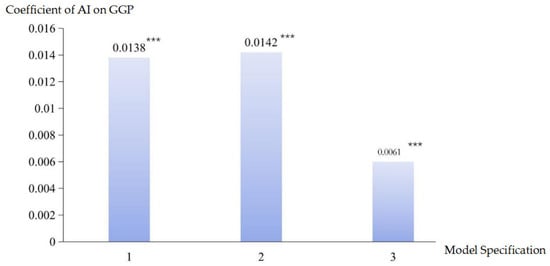
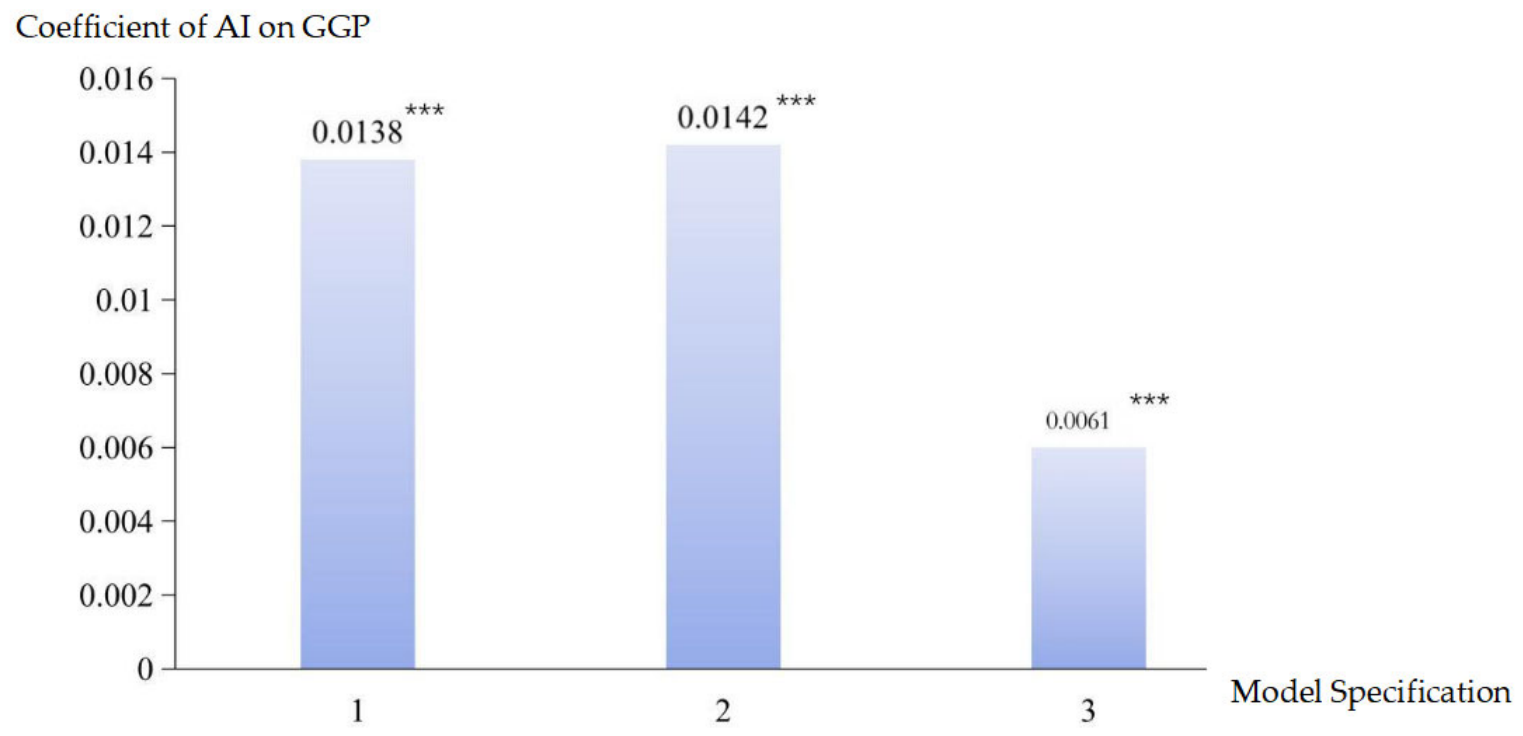
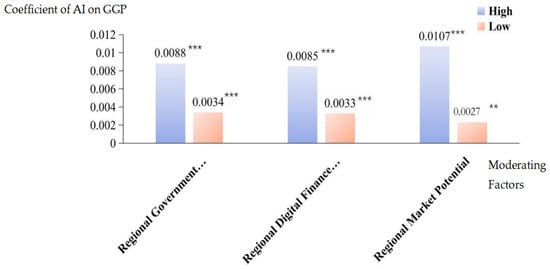
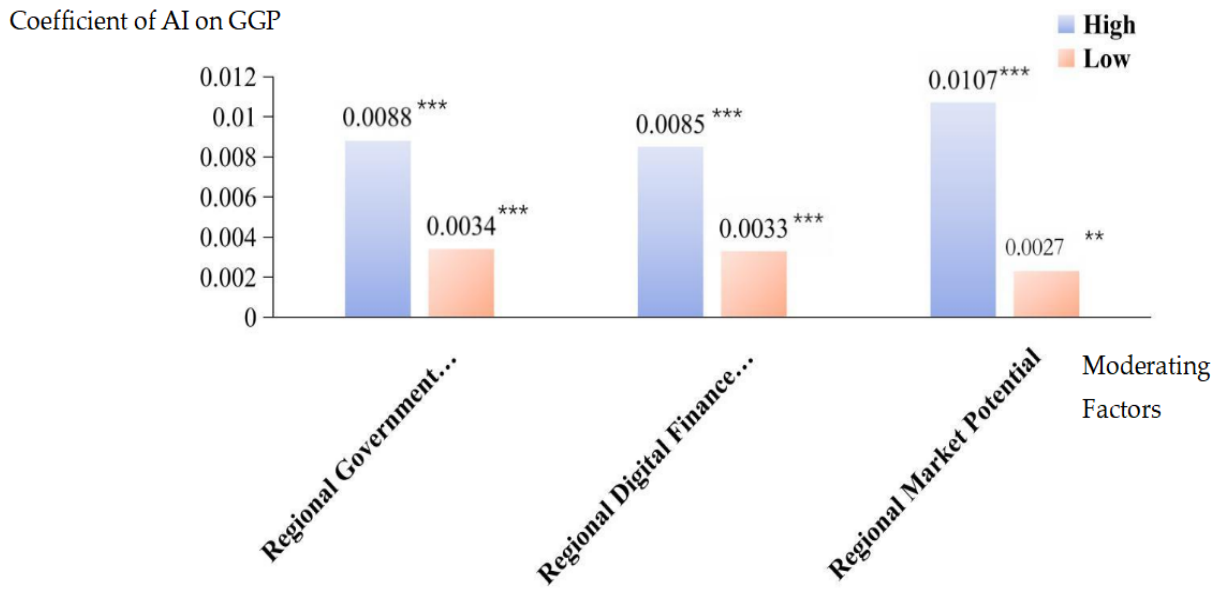

Disclaimer/Publisher’s Note: The statements, opinions and data contained in all publications are solely those of the individual author(s) and contributor(s) and not of MDPI and/or the editor(s). MDPI and/or the editor(s) disclaim responsibility for any injury to people or property resulting from any ideas, methods, instructions or products referred to in the content. |
© 2026 by the author. Licensee MDPI, Basel, Switzerland. This article is an open access article distributed under the terms and conditions of the Creative Commons Attribution (CC BY) license.